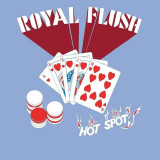
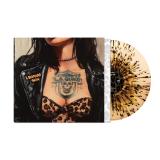
Chicago funk band Royal Flush release sonly one full length on their local Texas label Lucky and that was Hot Spot. They did so in 1980 before later reissuing it via GEC and although it isn't one of the most well known albums amongst funk heads, we think that is rather a crime because it is a top notch if not underrated album. It is couched in the traditions of the genre but with nods to styles like P-Funk. If you can find an OG copy you will have to shell out plenty of money and although this same label put out a CD version in 1994, it has not been reissued on vinyl before.
out of Stock
Last delivered 3 months ago available to reorder, subject to availability
"Chance animates the smallest parts of the universe: the scintillation of the stars is its power, a wildflower its incantation."
—Georges Bataille, Le Petit
"Even on my way to the gambling hall, as soon as I hear, two rooms away, the clink of the scattered money I almost go into convulsions." —Fyodor Dostoevsky, The Gambler
Video gambling addicts, academic researchers, and industry professionals alike describe the trancelike state into which problem gamblers suspend themselves with remarkable consistency: they unanimously call it the machine “zone,” a kind of inner experience during which the rhythmic flow of human-machine collusion borders on mysticism. Time is abolished in the act of contemporary video gambling —simulated slot reels roll, virtual poker decks deal, and all worldly concerns are lost—leaving only the aura of total zone immersion in its wake. Sometimes characterized as the crack cocaine of gambling, the intensity of the machine zone is a symptom of casino ergonomics: emotionally manipulative fragrance-saturation, mesmerizing lights, subtly controlling walkways and, as captured here, meticulously engineered sonic environments all play a role in evoking the timeless void of the zone.
Although I was not yet aware of the extent to which casinos tailor their environments for maximum comfort (and, correspondingly, profit), I did know as I crossed the threshold of my first casino floor last year that I would be back for more. Hit by a cornucopia of slot machine tones, triggering aleatorically and coalescing into shimmering masses, I was struck by the need to return and record the sounds that so entranced me. It wouldn't prove to be easy—casino security is intense—and due to the clandestine nature of the operation, my recording techniques were by no means sophisticated. Equipped with nothing but an Olympus LS-11 recorder's internal microphone stashed in a sweaty coat pocket, I allowed the lure of the zone to guide me through a series of ambling recording sessions, the best of which are included here.
I learned a lot about casino sonics in the process: game designers, for example, once tuned all their machines to the key of C major in order to optimize harmonic cohesion (strict adherence to the key is no more but C still dominates the game floor); one team of designers, the story goes, even spent a month perfecting a single 'ding' sound on one machine. In the interest of preserving the true ambient sounds of the casino these recordings are untreated, but lost in the sea of chance I did exert some affirmative control by means of meandering intent and my actual playing of the machines. And by participating in the games myself I got a taste of the financially debilitating consequences that accompany the enchantment of video gambling. The cassette in your hands represents my endeavor to bring you the zone experience without the harsh comedown of its unfortunate reality.
HMC returns with 3 killer tracks for Reflector 03!
Acid Trac #1 & #3 were originally released in 1996 on the Dirty Acid Tracks label these go for big money on Discogs (if you can find a copy) a no-mercy acid assault built for peak-hour damage.
As an added bonus we have Cum On which was the flip side of Phreakin’ released in 1995.
Limited pressing act fast!
out of Stock
Last delivered 16 days ago available to reorder, subject to availability
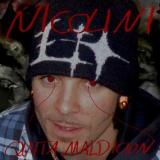
Nicolini is back with 'Quita Maldicion' - an album of hyper riddim tracks, mixing up Memphis-tinged beats, pitched vocal chops, blown-out bass, and fever dream Dembow. With guest appearances from Chimira, Sharp Shin, Cheba Tmax, and Toff Youth, 'Quita Maldicion' hits like the zaps of an alien rave defibrillator, reanimating your lifeless body for the dance. Remove the curse on this world!
out of Stock
Last delivered 4 months ago available to reorder, subject to availability
House favourites Kai Alce, JKriv, Sean McCabe and Medlar debut on Universo Positivo with their masterful reworks from Universo Positivo’s catalog. After two years of agenda-setting sounds, the label is set to drop this classy remix EP, and in that time, founder Joseph Salvador has established the label with a mix of his own music and fresh grooves from carefully A&R’d pioneers and new school names. He has been doing much the same since the 90s with various projects from his cult TINK Records and the Tomorrow Is Now Kid! nights in Amsterdam, in collaborative production outfits like Black Tulip & Wendell Morrison, and releasing records by DJ Steaw, Malin Genie, Fabio Monesi and more. This latest release brings together some of the most respected names in the scene for four standout reworks.
First up, Atlanta-based NDATL label head Kai Alce, who has long been one of deep house's most influential architects. He flips 'Sonido Latino' into a smooth groove with jazzy, Roy Ayers-style melodies that bring a soft-focus glow and late-night intimacy. Then comes Bristol-based don Sean McCabe, a master of vintage synths with a 20-year back catalogue on seminal labels like Local Talk, Strictly Rhythm and Z Records. His take on 'Ipanema Jazz' maintains the original's samba shuffle but reframes it in a deep house groove with extra expressive jazz keys, dainty chords and playful trumpet motifs.
Brooklyn-based groove architect and Razor-N-Tape co-founder JKriv brings his many years of experience as a guitarist, producer and songwriter to his take on 'Caparica Sunset'. It's a deep, driving sound that's playful and romantic with flirtatious horns and soft acid, dusty breakbeats and luscious grooves for loved-up good time sessions. Last but never least, is Medlar, the South London underground maverick with a wide-ranging sound and album credits on the likes of the hallowed Delusions Of Grandeur. He remixes 'U R The Revolution' into a warm, euphoric rush of throwback house that's warm, melodic and sure to get the floor going right off.
out of Stock
Last delivered 10 days ago available to reorder, subject to availability
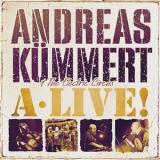
A.LIVE ist das erste offizielle Livealbum von Andreas Kümmert und zeigt ihn in seiner stärksten Disziplin: der Bühne. Das Doppelalbum bündelt einen kraftvollen, straighten Blues-Rock-Sound mit internationalem Anspruch und dokumentiert die Energie eines Künstlers, der seit Jahren 80-100 Shows jährlich in D/A/CH spielt. Mit einer gewachsenen, loyalen Fanbasis steht Kümmert für handgemachte Musik mit Wiedererkennungswert.
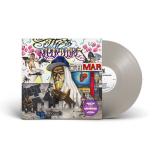
“The Repertoire” LP, the debut album from LA based artist Cousin Feo (Death At The Derby) officially comes to vinyl May 10th. The project was originally released in September of last year & is the first installment on his own indie imprint, Alumni Records. The album is entirely produced by the beat making French assassin Keor Meteor & furthermore establishes their connection from Mid City 2 Marseille.
Truly a unique body of work, this personal piece plays like a graphic novel in the form of rhyme, a short film on wax with cinematic word play & story telling fit for a classic film. A 27 minute audio experience, each joint layered into the next, thus creating a collage of moments & life experiences lived by him & his loved ones. It’s like mixing the heralded French film “La Haine” with scenes from “Training Day” & “The Professional” & setting it all in South Central LA.
More known & recognized for his famed footy themed projects like “Provoleta” & “Choripán” & creating “Death At The Derby”, Cousin Feo laces us with a more traditional sounding rap album, stepping outside the 20 yard box & showcasing the skill set extends beyond his niche artistry and sound. Tap in.
“The Repertoire” LP, the debut album from LA based artist Cousin Feo (Death At The Derby) officially comes to vinyl May 10th. The project was originally released in September of last year & is the first installment on his own indie imprint, Alumni Records. The album is entirely produced by the beat making French assassin Keor Meteor & furthermore establishes their connection from Mid City 2 Marseille.
Truly a unique body of work, this personal piece plays like a graphic novel in the form of rhyme, a short film on wax with cinematic word play & story telling fit for a classic film. A 27 minute audio experience, each joint layered into the next, thus creating a collage of moments & life experiences lived by him & his loved ones. It’s like mixing the heralded French film “La Haine” with scenes from “Training Day” & “The Professional” & setting it all in South Central LA.
More known & recognized for his famed footy themed projects like “Provoleta” & “Choripán” & creating “Death At The Derby”, Cousin Feo laces us with a more traditional sounding rap album, stepping outside the 20 yard box & showcasing the skill set extends beyond his niche artistry and sound. Tap in.
aja monet ist eine surrealistische Blues-Dichterin, Musikerin und Bandleaderin, deren Werk fließend zwischen Poesie, Musik und politischem Ausdruck wechselt. Aus der Spoken-Word-Szene der Lower East Side in New York City hervorgegangen, wurde sie die jüngste Gewinnerin des Nuyorican Grand Slam Poetry-Titels, bevor sie ihr Schaffen auf genreübergreifende musikalische Darbietungen ausweitete, die ihre Wurzeln im Jazz, Blues und experimentellen Sound haben. Ihr Debüt-Poetry-Album ,when the poems do what they do" wurde 2024 für einen Grammy Award in der Kategorie ,Best Spoken Word Poetry Album" nominiert und etablierte Monetas als einzigartige Stimme in der zeitgenössischen schwarzen Musik- und Performance-Szene. Das Projekt verbindet Poesie mit Live-Instrumentierung und Improvisation und erkundet Themen wie Widerstand, Liebe und Freude durch einen kollaborativen, ensembleorientierten Ansatz. Als tourende Bandleaderin ist sie weltweit bei großen Festivals und in bedeutenden Veranstaltungsorten aufgetreten, darunter das Newport Jazz Festival, das North Sea Jazz Festival, das Montreal Jazz Festival, das Guggenheim, das Lincoln Center, das Barbican Centre und die Fremantle Biennale. Neben ihrer musikalischen Arbeit ist monet eine gefeierte Dichterin und Autorin. Ihr erster vollständiger Gedichtband, ,my mother was a freedom fighter" (2017), wurde für den NAACP Image Award in der Kategorie Poesie nominiert. Ihr jüngstes Buch, ,florida water", erschienen bei Haymarket Books, schöpft aus mehreren Jahren des Lebens und der Organisationsarbeit in Südflorida und setzt ihre Auseinandersetzung mit Ort, Bewegung und kollektivem Gedächtnis fort. Zu ihren Auszeichnungen zählen der Marjory Stoneman Douglas Award für Poesie, der Nelson Mandela Changemaker Award, der Harry Belafonte Voices for Social Justice Award, der EBONY 100 Artist in Residence Award sowie der Malcolm X & Dr. Betty Shabazz Vanguard Award. Zudem ist sie künstlerische Kreativdirektorin von V-Day, der globalen Bewegung zur Beendigung von Gewalt gegen Frauen und Mädchen, und Schöpferin von VOICES, einem Hörspiel aus dem Jahr 2022, das die Geschichten schwarzer Frauen in der Diaspora und auf dem afrikanischen Kontinent in den Vordergrund rückt. aja monet's zweites Studioalbum, ,the color of rain", wird im Mai 2026 bei drink sum wtr erscheinen.
"Blinded by Fame", das zweite Studioalbum von Dutch Interiors, ist ein Fan-Favorit. Es wurde noch nie zuvor auf Vinyl gepresst. Die sechsköpfige Band aus Long Beach begleitet sich schon seit fast zwei Jahrzehnten. Jack Nugent, Conner Reeves, Shane & Hayden Barton, Davis Stewart und Noah Kurtz waren alle Freunde aus Kindertagen, und die Band ist das Ergebnis einer kreativen Verbindung, die durch bereits bestehendes Vertrauen und vertraute Verbundenheit entstanden ist. Man kann die unterschiedlichen Stile und Persönlichkeiten der Bandmitglieder an den Songs erkennen, die sie unabhängig voneinander schreiben, bevor sie sie der gesamten Band vorstellen, wo die Stücke oft zu ganz neuen Formen heranwachsen. Trotz dieser individuellen Herangehensweise an das Songwriting beschreiben sie sich gegenseitig als ,Zweige desselben Lebensstamms", deren aufeinanderprallende Einflüsse und Erfahrungen alle in die Songs einfließen. Mit Einflüssen, die von Ambient über Southern Rock und Jazz bis hin zu Dance-Musik reichen, wandelt sich die Band und oszilliert zwischen Alternative Country, kantigem Indie-Rock und Anklängen an dissonante Ambient-Klänge, während sie dennoch wie eine Band klingt, die sowohl ihre eigene private Sprache spricht als auch diese in etwas Universelles übersetzt. Nach der Veröffentlichung ihres jüngsten Albums ,Moneyball" und einer neuen EP, ,It's Glass", über Fat Possum ist Dutch Interior gekommen, um zu bleiben. Lob für Dutch Interior kommt von Pitchfork, Rolling Stone und anderen.
Bruiser Wolf’s razor-sharp wit meets Harry Fraud’s luxury street sound on Made By Dope, a collaboration that feels both raw and refined. Fraud laces the project with his signature hazy loops, velvet drums, and smoked-out soul, giving Bruiser the perfect canvas to deliver his off-kilter flows, animated storytelling, and punchline-heavy bars. The result is a record that balances Detroit energy with high-end production polish. Now available on vinyl, Made By Dope is pressed for collectors and connoisseurs alike, bringing the album’s textured sonics to life in full analog warmth. From the cinematic instrumentals to Bruiser’s unmistakable voice cutting through each groove, this physical edition captures the chemistry of two distinct styles meeting at their sharpest point. A must have for fans of the Wolf, and the Wave alike.
Der sudanesisch-amerikanische Künstler Dua Saleh setzt seinen unaufhaltsamen Aufstieg mit ,Of Earth & Wires" fort, einem durchweg warmherzigen, spirituellen und mitreißenden Album, das sich mit den Themen Heimat, Menschlichkeit und Erneuerung auseinandersetzt. Mit Beiträgen von Justin Vernon (Bon Iver), aja monet, Gaidaa und anderen verwebt und dekonstruiert Saleh Indie, R&B und elektronischen Pop mit Einflüssen aus sudanesischer Volksmusik, britischer Dance-Musik und elektronischer Popmusik. ,Of Earth & Wires" ist ein Album, das sich durch seine Vielseitigkeit und seine Fähigkeit auszeichnet, die Zuhörer in seinen Bann zu ziehen. Mit Beiträgen von Justin Vernon (Bon Iver), aja monet, Gaidaa und anderen verwebt und dekonstruiert Saleh Indie, R&B und elektronischen Pop mit Einflüssen aus sudanesischer Folk-Musik, UK Dance und Reggaeton - Klänge, die untrennbar mit ihrer Geschichte verbunden sind und durch eine ambitionierte, zukunftsorientierte Produktion und klare Lyrik zusammengehalten werden. Salehs gefühlvoller, kraftvoller und wandlungsfähiger Stil hat Fans von der New York Times bis zum NME überzeugt, ebenso wie ihre Durchbruchrolle in der Netflix-Serie ,Sex Education". Salehs gefühlvoller, kraftvoller und wandlungsfähiger Stil hat Fans von der New York Times bis zum NME gefunden, ebenso wie ihre Durchbruchrolle in der Netflix-Serie Sex Education, die das Debüt von Ghostly International im Jahr 2024, I SHOULD CALL THEM, zu einem echten Erfolg machte. Das mit Spannung erwartete Album ,Of Earth & Wires" ist sowohl ein Meilenstein in ihrer Karriere als auch ein dringender Dialog mit den Herausforderungen, denen man sich auf universeller Ebene gegenübersieht. Zusätzlich zu ihren musikalischen Aktivitäten ist Dua ein aufstrebender Schauspieler, der mit einer Durchbruchrolle in der beliebten Netflix-Serie ,Sex Education" bekannt wurde, in der er drei Staffeln lang die Rolle des Cal Bowman spielte.
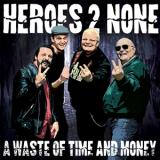
Dänemarks Streetpunk-Aushängeschild HEROES 2 NONE liefern mit A WASTE OF TIME AND MONEY ihr bislang stärkstes Statement. Lauter, schärfer, kompromissloser. A WASTE OF TIME AND MONEY ist Streetpunk mit Haltung, Humor und Fäuste-hoch-Refrains. Produziert von Tue Madsen. Oi! lebt! Heroes 2 None ist eine Street-Punk-/Oi!-Band aus Aarhus, Dänemark, und reiht sich damit in eine lange Tradition von Bands dieser Art von dort. Geradliniger, unkomplizierter Sound, der einfach gehalten bleibt und dem Geist des Punk treu bleibt. Nenn es, wie du willst (Oi!, Street-Punk, Hardcore-Punk, Punkrock usw.) - wenn es gut klingt, dann machen HEROES 2 NONE es trotzdem, auch wenn es ein bisschen vom Genre abweicht. Die Bandmitglieder verfügen über einen reichen Erfahrungsschatz aus verschiedenen Bands wie The Zero Point, War Of Destruction, Skaloot, The Hoolies, The Guv'nors, The Outfit und Last Seen Laughing aus den letzten 35 Jahren. 180g transparent blue vinyl, 300 Stück ww, handnummeriert mit Einleger oder als CD im Digipak mit Booklet & Bonustrack.
Work of Art is not merely a sophomore album; it is a victory lap run with the precision of a master artist. Following the stratospheric global ascent of his debut, Mr. Money with the Vibe, Asake faced the kind of pressure that usually demands a pivot. Instead, he treated that intensity like clay, sculpting a project that feels at once more expansive in scale and more intimate in spirit. Released in 2023, the album serves as a definitive statement on Asake’s sonic identity, deepening his signature fusion of Amapiano, Fuji-inspired percussion, and Afrobeats while moving with a newfound sense of deliberate poise.
If his debut was a high-octane sprint to introduce his sound to the world, Work of Art is a confident stroll through his own creative museum. Anchored once again by the masterful production of Magicsticks, the album serves as the perfect architectural space for Asake’s erratic, infectious flows. The record feels richly textured—brimming with pulsating log drums, soulful samples, and the specific, ecstatic chaos of Lagos nightlife. Asake successfully bridges the gap between traditional Yoruba heritage and the deep, percussive basslines of South African Amapiano, resulting in a sound that feels simultaneously ancestral and futuristic.
The project thrives on a unique duality: it is introspective, yet undeniably club-ready. Tracks like "Amapiano," featuring Olamide, provide the anthemic energy his fans crave, while cuts like "Basquiat" showcase a lyrical swagger that frames his life as high art set to a relentless four-on-the-floor beat. By leaning into his "Mr. Money" persona with added vulnerability and a clearer focus on the craftsmanship of his vocal delivery, Asake avoids the dreaded sophomore slump entirely. He proves that he isn't just making pop songs; he is curating a moment. Ultimately, Work of Art captures the feeling of an artist standing at the peak of his powers, looking out at the landscape he has helped reshape, and confirming that, indeed, he belongs there. It is not about reinventing the wheel—it’s about proving that the wheel he built is a masterpiece.
When The Style Council’s debut album Café Bleu was released in 1984, Weller and wing-man Mick Talbot unveiled a cosmopolitan blend of jazz, soul, and pop that felt effortlessly sophisticated and daringly fresh. Café Bleu was more than a debut—it was a statement of intent, redefining what British pop could sound like in a new decade.
Since then, fans have been waiting for a deep dive into the Style Council vaults eager to hear any unreleased material. And now the wait is over.
The Café Bleu Special Edition is a treasure trove for Style Council devotees and music lovers alike - an immersive journey into one of the most inventive eras of Paul Weller’s career. This lavish release unveils a wealth of previously unheard material, including early demos, alternate takes, and unreleased songs that showcase the band’s restless drive for experimentation and evolution.
out of Stock
Last delivered 4 months ago available to reorder, subject to availability
On Dreams ’24 / ’25, Scottish composer Bill Wells turns his nocturnal imagination into a sequence of delicate musical miniatures. The album brings together 24 short pieces, most of them under two minutes, unfolding in just under half an hour like a quietly drifting dream diary.
The album is split into two parts. On the Dreams 2024 side, Norman Blake lends his voice to Wells’ dream-born melodies. Blake, best known as a founding member of Teenage Fanclub, recorded the songs with Wells in a single afternoon at his home, capturing their fragile immediacy in direct and unadorned performances.
For Dreams 2025, Aby Vulliamy — one of Yorkshire’s best kept musical secrets — takes over vocal duties. In mid 2025, Wells sent her a batch of demos; Vulliamy recorded them at home and sent them back to him. The result is a second chapter that feels more introspective, intimate and gently surreal.
The songs themselves are born directly from dreams. Wells wakes from the dream, records it on his mobile and later shapes it into a brief, lyrical composition. One piece, Mackenzie’s Return, was inspired by a dream in which Elvis Costello marched through the streets of a suburban town complaining that he had run out of song ideas, a detail that perfectly captures the album’s blend of humour, strangeness and quiet melancholy.
Dreams ’24 / ’25 is not a collection of fully formed pop songs, but rather a series of fleeting emotional snapshots: soft voices, simple motifs, and melodies that appear and vanish before they can fully settle. It is an album that rewards close listening, inviting the listener into a private, half-lit space somewhere between memory and imagination.
The album is accompanied by a striking cover artwork by Annabel Wright.
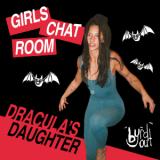
New album from Girl"s Chat Room which is Zillas On Acid and Babystar"s project.The band"s chug-pop style combines jaunty basslines, tight drum machine programming, and sage observations on modern life (the ease of depleting your bank account).
Eric Burdon: Vocals, Chas Chandler: Bass, Alan Price: Keyboards, John Steel: Drums, Hilton Valentine: Guitar, Steve Grant: Guitar and Zoot Money: Keyboards.
Recorded 31st December 1983 at Wembley Arena, London. Produced and engineered by Keith Grant. Advertising in Shindig & Record Collector
Two turntables and a microphone. There is a truth in the clarity of that simple coda, a truth that also belies the breadth of what is possible within its confines. Sometimes you gotta get reminded. I Guess U Had To Be There, the new album from NYC rapper ELUCID and veteran producer Sebb Bash, is one of those ones. So fresh it sounds like it was made tomorrow, but bet money you could put this on in ’89 and get heads bopping.
There are moments in music when masters of their craft cross paths at the height of their respective powers—records like Madvillainy, Liquid Swords, Dr. Octagonecologyst, and Hell Hath No Fury—where the result is more than the sum of its parts. ELUCID and Sebb Bash find themselves in this heady, seemingly effortless ephemera on I Guess U Had To Be There. Everything is both familiar and groundbreaking. The beats shift and flip under ELUCID’s feet but he tightropes it all, delivery nimble as a mountain goat, producer and rapper moving in perfect synchronization. Some shining stars make memorable appearances: billy woods, Breezly Brewin, Estee Nack, Shabaka Hutchings. But this is a two-man show, and the duo keep the spotlight where it belongs. I Guess U Had To Be There is a captivating, convention-defying listen and a high-water mark for two of the best artists in the genre.
“100 M.P.H.”, Vardis' debut album, recorded live at London's Electric Ballroom and released in 1980 by Logo Records, is now considered one of the milestones of the immortal NWOBHM. However, Vardis' roots go back to 1977, when they formed in Wakefield under their original name, Quo Vadis. The trio quickly began recording demos, followed by their first 7“ EP ”100 M.P.H.," which was released in 1979 on Redball Records and is now considered a valuable collector's item. In addition to the raw, almost punk-like original versions of “100 M.P.H.,” “Blue Rock,” “Destiny,” and “The World's Insane,” “100 M.P.H. '79 Revisited” compiles five other early recordings by Vardis. The audio data for “100 M.P.H. '79 Revisited” was restored and mastered by Patrick W. Engel at his Temple Of Disharmony in September 2025. The CD version of “100 M.P.H. '79 Revisited” includes exclusive versions of “Blue Rock,” “Dirty Money,” and “The World's Insane,” recorded at Ohm Studios in July 1978.
For if their first album ALLOMBON could be seen as the opening of a secret passage, this second record, FLOWERS TOO, is something else entirely: no longer the discovery of a world, but its methodical exploration, its feverish mapping, its deepening down to the underground layers. At a time when contemporary psychedelia seems at a standstill, when ecstasy has lost its effect, when the vast territories of the imagination have been parceled out, signposted, monetized they keep digging. And deeper still. Esoteric pop the noblest, the most dangerous kind is no longer practiced on the surface. It has abandoned the grand avenues to retreat into hidden laboratories, mental back rooms, basements more deeply buried than those of garage, punk, or black metal. It is there that the secret society Dorian Pimpernel has been working for years, with a stubbornness that feels less like a career than a calling.
Orange is an unstill life, a bowlful of new White Fence concepts for guitar band, grown larger through thoughts, feelings/SONGS. Rock "n balladry play with genre in uncrowded space. Orange is KILLER POP thru clean lines of power, outlined with an emphatic/unalterable (minimalist) frame. Dark magik at its most bright! A trance-like chronology of consciousness/SONGS captained by producer Ty Segall in opalescent diamond tightness and ice fidelity.
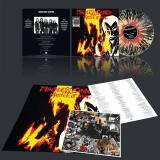
Purple Haze started out in Linköping in 1981. When singer Christer Göransson joined them towards the end of the year, they soon changed their moniker to Genocide (after the Judas Priest song of the same name) and supported local metal heroes Axewitch. A final name change was to follow: In August 1983, the band, now called Mindless Sinner, recorded a four-track demo entitled »Master Of Evil«, consisting of the title track, “Broken Freedom”, “Key Of Fortune” and “Screaming For Mercy”. This attracted Swedish label Fingerprint Records, and they in turn released the NWOBHM-inspired material as a mini-album with an awful cover and getting the band’s name wrong (spelling it Mindless Sinners). By then, the line-up of the band was Anders Karlsson (bass), Magnus Danneblad (guitar), Jerker Edman (guitar), Tommy Johansson (drums) and vocalist Christer Göransson. »Master Of Evil« originally saw the light of day on Fingerprint in January 1984. Christer Göransson takes us back to the early days of Mindless Sinner saying: “We wanted to record an album, but we couldn’t afford the studio cost. We were lucky to win a music contest, and the price money paid for the studio. I remember walking into the studio, and we thought it was like a spaceship in there, with all the buttons and flashing lights everywhere. We recorded the four songs that would become »Master Of Evil«. We then gave the tape to the Axewitch guys, and they played it to their record label at the time Fingerprint/Web Records and they liked it so much that they signed us as well.” Over the years, the music of Mindless Sinner has often been compared to the Tygers Of Pan Tang from England but Christer Göransson doesn’t see too many similarities: “We really love Tygers Of Pan Tang but I don’t think they were a big influence. It was more Judas Priest, Iron Maiden, Saxon, Black Sabbath, Ozzy, Dio etcetera. That kinda stuff.” In addition to the four tracks of the original edition of »Master Of Evil«, the current High Roller Records pressing also contains the five songs of the band’s first demo tape from early 1983 (including “Mindless Sinner”, “Higher And Higher”, “We All Go Back”, “Heavy Metal Will Never Die” and “City Games”). All nine tracks were mastered by Patrick W. Engel at his Temple Of Disharmony in November 2025. Cutting by SST Germany on Neumann machines for maximum quality on all levels ... The ultimate audiophile re-issue of this Swedish metal classic!
That’s My Story“ ist das 1960 erschienene Album der Blues-Ikone John Lee Hooker, das ursprünglich bei
Riverside Records veröffentlicht wurde. Das Album zeichnet sich durch einen für einen Country-BluesSound rohen, reduzierten Ansatz aus. Hooker spielt Akustikgitarre in Titeln wie „I Need Some Money“
und „No More Doggin’“, um eine fesselnde Sammlung zu schaffen, die sein Können gekonnt zur Geltung
bringt. Diese Ausgabe wurde bei QRP auf 180-Gramm-Vinyl gepresst und von Matthew Lutthans bei The
Mastering Lab von den Originalbändern remastert (AAA).
Naive Melodies is a bold and visionary tribute to the music of Talking Heads, reinterpreted through the lens of Black musical innovation. Curated by Drew McFadden — the creative mind behind BBE’s acclaimed Modern Love (David Bowie tribute album) — this new collection dives deep into the Afro-diasporic rhythms and experimental soul roots that helped shape Talking Heads’ unmistakable New Wave sound. Inspired by artists like Fela Kuti, Parliament, and Al Green — whose influences loomed large in the band’s rhythmic DNA — Naive Melodies shines a light on the Black music traditions that underpinned their artistry. Far from a conventional tribute, Naive Melodies reframes the band’s catalog through the voices and visions of a new generation of genre-defying artists. These interpretations illuminate the foundational grooves and sonic textures that fueled Talking Heads’ rhythm-forward aesthetic, bringing them full circle with authenticity. “With Naive Melodies, I wanted to spotlight the deep and often overlooked influence of Black music on the sound of Talking Heads, drawing from the rhythmic foundations of Afro-diasporic traditions, soul, gospel, Latin, and spiritual jazz. This project is a chance to reimagine Talking Heads’ legacy through the lens of the very innovations that helped shape it, bringing those influences to the forefront through the voices of today’s most forward-thinking artists.” — Drew McFadden The album features a globally minded lineup, including Liv.e, Bilal, Rogê, Miguel Atwood-Ferguson, Aja Monet, Georgia Anne Muldrow, Theo Croker, Kenny Dope, Rosie Lowe, Pachyman, W.I.T.C.H., and more — spanning Afrobeat, jazz, soul, funk, gospel, dub, electronica, orchestral, and Latin styles. It reflects not only the boundary-pushing ethos of Talking Heads, but also the influence of Black music as a cultural force that helped shape it. This is not just a tribute album — it’s a recontextualization. A cultural conversation. A rhythmic reawakening.
Über Jahre hinweg hat Cactus Lee still und leise ein einzigartiges Werk geschaffen, indem er in Honky-Tonks rund um Austin auftrat und gleichzeitig in einem gleichmäßigen, selbstbestimmten Tempo Alben veröffentlichte. Lee's Dream, sein zweites Album für Western Vinyl, wirkt wie die natürliche Essenz dieser Reise - unterwegs geschrieben, zu Hause verfeinert und geprägt vom Spannungsfeld zwischen der Hingabe zur Musik und der Hingabe zur Familie. Die Songs entstanden während einer einmonatigen Solotournee durch den Mittleren Westen und den Süden und begannen als Skizzen, die in Transportern und Motelzimmern geschrieben wurden, teilweise inspiriert durch einen Besuch in Guy Clarks rekonstruiertem Keller in der Country Music Hall of Fame. Die Songs entstanden während einer einmonatigen Solotournee durch den Mittleren Westen und den Süden und begannen als Skizzen, die in Transportern und Motelzimmern geschrieben wurden, teilweise inspiriert durch einen Besuch in Guy Clarks rekonstruiertem Keller in der Country Music Hall of Fame. Die Songs entstanden während einer einmonatigen Solo-Tournee durch den Mittleren Westen und den Süden und begannen als Skizzen, die in Transportern und Motelzimmern geschrieben wurden, teilweise inspiriert durch einen Besuch in Guy Clarks rekonstruiertem Keller in der Country Music Hall of Fame. Als Kevin Dehan nach Hause zurückkehrte und dort persönliche Umbrüche erlebte, wandte er sich nach innen und schrieb Songs, die Unruhe mit Entschlossenheit, Sehnsucht mit Verantwortung in Einklang bringen. ,Lee's Dream" wurde in den Fort Horton Studios mit Produzent Billy Horton aufgenommen und lehnt sich an klassische Country-Formen und die Sensibilität der Sun-Ära an, geleitet von Vorbildern wie John D. Loudermilk, Glen Campbell und dem frühen Gordon Light Aufgenommen in den Fort Horton Studios mit Produzent Billy Horton, lehnt sich Lee's Dream an klassische Country-Formen und die Sensibilität der Sun-Ära an, geleitet von Vorbildern wie John D. Loudermilk, Glen Campbell und dem frühen Gordon Lightfoot. Das Album, das mit Beiträgen eines engen Kreises von Mitwirkenden fertiggestellt wurde, wirkt gemeinschaftlich und lebendig - gleichermaßen fröhlich und melancholisch. Verwurzelt in texanischen Bildern und Country-Folklore, wirkt Lee's Dream wie ein vertrauter Fiebertraum, der die Tradition ehrt und sie gleichzeitig leise an Dehans unverwechselbare Stimme anpasst.
Writings on the topic that go off in all directions, mind-numbing lectures given by academics, and testimonies, most of them heavily doctored, from those who “lived through that era”: so many people today fantasize about the early days of punk in our country… This blessed moment when no one had yet thought of flaunting a ridiculous green mohawk, taking Sid Vicious as a hero, or – even worse – making the so-called alternative scene both festive and boorish. There was no such thing in 1976 or 1977, when it wasn’t easy to get hold of the first 45s by the Pistols or the Clash. Few people were aware of what was happening on the fringes of the fringes at the time. Malcolm McLaren was virtually unknown, and having short hair made you seem strange. Who knew then that rock music, which had taken a very bad turn since the early 1970s, would once again become an essential element of liberation? That, thanks to short and fast songs, it would once again rediscover that primitive, social side that was so hated by older generations? Who knew that, besides a few loners who read the music press (it was even better if they read it in English) and frequented the right record stores? Many of these formed bands, because it was impossible to do otherwise. We quickly went from listening to the Velvet Underground to trying to play the Stooges’ intros. It’s a somewhat collective story, even though there weren’t many people to start it.
The Guilty Razors were among those who took part in this initial upheaval in Paris. They were far from being the worst. They had something special and even released a single that was well above the national average. They also had enough songs to fill an album, the one you’re holding. In everyone’s opinion, they were definitely not among the punk impostors that followed in their wake. They were, at least, genuine and credible.
Guilty Razors, Parisian punk band (1975-1978). To understand something about their somewhat linear but very energetic sound, we might need to talk about the context in which it was born and, more broadly, recall the boredom (a theme that would become capital in punk songs) coupled with the desire to blow everything off, which were the basis for the formation of bands playing a rejuvenated rock music ; about the passion for a few records by the Kinks or the early Who, by the Stooges, by the Velvet mostly, which set you apart from the crowd.
And of course, we should remember this new wave, which was promoted by a few articles in the specialized press and some cutting-edge record stores, coming from New York or London, whose small but powerful influence could be felt in Paris and in a handful of isolated places in the provinces, lulled to sleep by so many appalling things, from Tangerine Dream to President Giscard d’Estaing...
In 1975-76, French music was, as almost always, in a sorry state ; it was still dominated by Johnny Hallyday and Sylvie Vartan. Local rock music was also rather bleak, apart from Bijou and Little Bob who tried to revive this small scene with poorly sound-engineered gigs played to almost no one.
In the working class suburbs at the time, it was mainly hard rock music played to 11 that helped people forget about their gruelling shifts at the factory. Here and there, on the outskirts of major cities, you still could find a few rockers with sideburns wearing black armbands since the death of Gene Vincent, but it wasn’t a proper mass movement, just a source of real danger to anyone they came across who wasn't like them. In August 1976, a festival unlike any other took place in Mont-de-Marsan – the First European Punk Festival as the poster said – with almost as many people on stage as in the audience. Yet, on that day, a quasi historical event happened, when, under the blazing afternoon sun, a band of unknowns called The Damned made an unprecedented noise in the arena, reminiscent of the chaotic Stooges in their early adolescence. They were the first genuine punk band to perform in our country: from then on, anything was possible, almost anything seemed permissible.
It makes sense that the four+1 members of Guilty Razors, who initially amplified acoustic guitars with crappy tape recorder microphones, would adopt punk music (pronounced paink in French) naturally and instinctively, since it combines liberating noise with speed of execution and – crucially – a very healthy sense of rebellion (the protesters of May 1968 proclaimed, and it was even a slogan, that they weren’t against old people, but against what had made them grow old. In the mid-1970s, it seemed normal and obvious that old people should now ALSO be targeted!!!).
At the time, the desire to fight back, and break down authority and apathy, was either red or black, often taking the form of leafleting, tumultuous general assemblies in the schoolyard, and massive or shabby demonstrations, most of the time overflowing with an exciting vitality that sometimes turned into fights with the riot police. Indeed, soon after the end of the Vietnam War and following Pinochet’s coup in Chile, all over France, Trotskyist and anarcho-libertarian fervour was firmly entrenched among parts of the educated youth population, who were equally rebellious and troublemakers whenever they had the chance. It should also be noted that when the single "Anarchy in the UK" was first heard, even though not many of us had access to it, both the title and its explosive sound immediately resonated with some of those troublemakers crying out for ANARCHY!!! Meanwhile, the left-wing majority still equated punks with reckless young neo-Nazis. Of course, the widely circulated photos in the mainstream press of Siouxsie Sioux with her swastikas didn’t necessarily help to win over the theorists of the Great Revolution. It took Joe Strummer to introduce The Clash as an anti-racist, anti-fascist and anti-ignorance band for the rejection of old-school revolutionaries to fade a little.
The Lycée Jean-Baptiste Say at Porte d’Auteuil, despite being located in the very posh and very exclusive 16th arrondissement of Paris, didn’t escape these "committed" upheavals, which doubled as the perfect outlet for the less timid members of this generation.
“Back then, politics were fun,” says Tristam Nada, who studied there and went on to become Guilty Razors’ frontman. “Jean-Baptiste was the leftist high-school in the neighbourhood. When the far right guys from the GUD came down there, the Communist League guys from elsewhere helped us fight them off.”
Anything that could challenge authority was fair game and of course, strikes for just about any reason would lead to increasingly frequent truancy (with a definitive farewell to education that would soon follow). Tristam Nada spent his 10th and 11th unfinished grades with José Perez, who had come from Spain, where his father, a janitor, had been sentenced to death by Franco. “José steered my tastes towards solid acts such as The Who. Like most teenagers, I had previously absorbed just about everything that came my way, from Yes to Led Zeppelin to Genesis. I was exploring… And then one day, he told me that he and his brother Carlos wanted to start a rock band.” The Perez brothers already played guitar. “Of course, they were Spanish!”, jokes their singer. “Then, somewhat reluctantly, José took up the bass and we were soon joined by Jano – who called himself Jano Homicid – who took up the rhythm guitar.” Several drummers would later join this core of not easily intimidated young guys who didn’t let adversity get the better of them.
The first rehearsals of the newly named Guilty Razors took place in the bedroom of a Perez aunt. There, the three rookies tried to cover a few standards, songs that often were an integral part of their lives. During a first, short gig, in front of a bewildered audience of tough old-school rockers, they launched into a clunky version of the Velvet Underground's “Heroin”. Challenge or recklessness? A bit of both, probably… And then, step by step, their limited repertoire expanded as they decided to write their own songs, sung in a not always very accurate or academic English, but who cared about proper grammar or the right vocabulary, since what truly mattered was to make the words sound as good as possible while playing very, very fast music? And spitting out those words in a language that left no doubt as to what it conveyed mattered as well.
Trying their hand a the kind of rock music disliked by most of the neighbourhood, making noise, being fiercely provocative: they still belonged to a tiny clique who, at this very moment, had chosen to impose this difference. And there were very few places in France or elsewhere, where one could witness the first stirrings of something that wasn’t a trend yet, let alone a movement.
In the provinces, in late 1976 or early 1977, there couldn’t be more than thirty record stores that were a bit more discerning than average, where you could hear this new kind of short-haired rock music called “punk”. The old clientele, who previously had no problem coming in to buy the latest McCartney or Aerosmith LP, now felt a little less comfortable there…
In Paris, these enlightened places were quite rare and often located nex to what would become the Forum des Halles, a big shopping mall. Between three aging sex workers, a couple of second-hand clothes shops, sellers of hippie paraphernalia and small fashion designers, the good word was loudly spread in two pioneering places – propagators of what was still only a new underground movement. Historically, the first one was the Open Market, a kind of poorly, but tastefully stocked cave. Speakers blasted out the sound of sixties garage bands from the Nuggets compilation (a crucial reference for José Perez) or the badly dressed English kids of Eddie and the Hot Rods. This black-painted den was opened a few years earlier by Marc Zermati, a character who wasn’t always in a sunny disposition, but always quite radical in his (good) choices and his opinions. He founded the independent label Skydog and was one of the promoters of the Mont-de-Marsan punk festivals. Not far from there was Harry Cover, another store more in tune with the new New York scene, which was amply covered in the house fanzine, Rock News (even though it was in it that the photos of the Sex Pistols were first published in France).
It was a favorite hang-out of the Perez brothers and Tristam Nada, as the latter explained. “It’s at Harry Cover’s that we first heard the Pistols and Clash’s 45s, and after that, we decided to start writing our first songs. If they could do it, so could we!”
The sonic shocks that were “Anarchy in the UK”, “White Riot” or the Buzzcocks’s EP, “Spiral Scratch” – which Guilty Razors' sound is reminiscent of – were soon to be amplified by an unparalleled visual shock. In April 1977, right after the release of their first LP, The Clash performed at the Palais des Glaces in Paris, during a punk night organised by Marc Zermati. For many who were there, it was the gig of a lifetime…
Of course, Guilty Razors and Tristam were in the audience: “That concert was fabulous… We Parisian punks were almost all dressed in black and white, with white shirts, skinny leather ties, bikers jackets or light jackets, etc. The Clash, on the other hand, wore colourful clothes. Well, the next day, at the Gibus, you’d spot everyone who had been at this concert, but they weren’t wearing anything black, they were all wearing colours.”
It makes sense to mention the Gibus club, as Guilty Razors often played there (sometimes in front of a hostile audience). It was also the only place in Paris that regularly scheduled new Parisian or Anglo-Saxon acts, such as Generation X, Siouxsie and the Banshees, the Slits, and Johnny Thunders who would become a kind of messed-up mascot for the venue. A little later, in 1978, the Rose Bonbon – formerly the Nashville – also attracted nightly owls in search of electric thrills… In 1977, the iconic but not necessarily excellent Asphalt Jungle often played at the Gibus, sometimes sharing the bill with Metal Urbain, the only band whose aura would later transcend the French borders (“I saw them as the French Sex Pistols,” said Geoff Travis, head of their British label Rough Trade). Already established in this small scene, Metal Urbain helped the young and restless Guilty Razors who had just arrived. Guitarist for Metal Urbain Hermann Schwartz remembers it: “They were younger than us, we were a bit like their mentors even if it’s too strong a word… At least they were credible. We thought they were good, and they had good songs which reminded of the Buzzcocks that I liked a lot. But at some point, they started hanging out with the Hells Angels. That’s when we stopped following them.”
The break-up was mutual, since, Guilty Razors, for their part, were shocked when they saw a fringe element of the audience at Metal Urbain concerts who repeatedly shouted “Sieg Heil” and gave Nazi salutes. These provocations, even still minor (the bulk of the skinhead crowd would later make their presence felt during concerts), weren’t really to the liking of the Perez brothers, whose anti-fascist convictions were firmly rooted. Some things are non-negotiable.
A few months earlier (in July 1978), Guilty Razors had nevertheless opened very successfully for Metal Urbain at the Bus Palladium, a more traditonally old-school rock night-club. But, as was sometimes the case back then, the night turned into a mass brawl when suburban rockers came to “beat up punks”.
Back then, Parisian nights weren’t always sweet and serene.
So, after opening as best as they could for The Jam (their sound having been ruined by the PA system), our local heroes were – once again – met outside by a horde of greasers out to get them. “Thankfully,” says Tristam, “we were with our roadies, motorless bikers who acted as a protective barrier. We were chased in the neighbouring streets and the whole thing ended in front of a bar, with the owner coming out with a rifle…”
Although Tristam and the Perez brothers narrowly escaped various, potentially bloody, incidents, they weren’t completely innocent of wrongdoing either. They still find amusing their mugging of two strangers in the street for example (“We were broke and we simply wanted to buy tickets for the Heartbreakers concert that night,” says Tristam). It so happened that their victims were two key figures in the rock business at the time: radio presenter Alain Manneval and music publisher Philippe Constantin. They filed a complaint and sought monetary compensation, but somehow the band’s manager, the skilful but very controversial Alexis, managed to get the complaint withdrawn and Guilty Razors ended up signing with Constantin with a substantial advance.
They also signed with Polydor and the label released in 1978 their only three-track 45, featuring “I Don't Wanna be A Rich”, “Hurts and Noises” and “Provocate” (songs that exuded perpetual rebellion and an unquenchable desire for “class” confrontation). It was a very good record, but due to a lack of promotion (radio stations didn’t play French artists singing in English), it didn’t sell very well. Only 800 copies were allegedly sold and the rest of the stock was pulped… Initially, the three tracks were to be included on a LP that never came to be, since they were dropped by Polydor (“Let’s say we sometimes caused a ruckus in their offices!” laughs Tristam.) In order to perfect the long-awaited LP, the band recorded demos of other tracks. There was a cover of Pink Floyd's “Lucifer Sam” from the Syd Barrett era – proof of an enduring love for the sixties’ greats –, “Wake Up” a hangover tale and “Bad Heart” about the Baader-Meinhof gang, whose actions had a profound impact on the era and on a generation seeking extreme dissent... On the album you’re now discovering, you can also hear five previously unreleased tracks recorded a bit later during an extended and freezing stay in Madrid, in a makeshift studio with the invaluable help of a drummer also acting as sound engineer. He was both an enthusiastic old hippie and a proper whizz at sound engineering. Here too, certain influences from the fifties and sixties (Link Wray, the Troggs) are more than obvious in the band’s music.
Shortly after a final stormy and rather barbaric (on the audience’s side) “Punk night” at the Olympia in June 1978, Tristam left the band ; his bandmates continued without him for a short while.
But like most pioneering punk bands of the era, Guilty Razors eventually split up for good after three years (besides once in Spain, they’d only played in Paris). The reason for ceasing business activities were more or less the same for everyone: there were no venues outside one’s small circuit to play this kind of rock music, which was still frightening, unknown, or of little interest to most people. The chances of recording an LP were virtually null, since major labels were only signing unoriginal but reassuring sub-Téléphone clones, and the smaller ones were only interested in progressive rock or French chanson for youth clubs. And what about self-production? No one in our small safety-pinned world had thought about it yet. There wasn’t enough money to embark on that sort of venture anyway.
So yes, the early days of punk in France were truly No Future!
out of Stock
Last delivered 6 months ago available to reorder, subject to availability
Hip Hop’s golden era constituent, Queens’ native, the godfather of Mafioso rap, legendary and influential emcee, Kool G Rap, broke out in the late 80s and early 90s as one half of the duo with DJ Polo. Together, Kool G Rap and DJ Polo released three undisputed classic albums; beginning with their debut album, Road To The Riches (1989), Wanted: Dead or Alive (1990) and Live and Let Die (1992).
Simultaneously, G Rap and DJ Polo gained notoriety as members of the Juice Crew, whose noteworthy membership includes DJ Marley Marl, Big Daddy Kane, Masta Ace and Roxanne Shante At the height of hip-hop’s golden age, The Juice Crew was the definition of innovative and not only influenced the culture as a whole (style, lyricism, creativity), but also impressed the importance of style, substance and technique upon the next wave of street ambassadors.
After a successful run with DJ Polo and the Juice Crew, G Rap embarked on a solo-career, with his solo debut, 4, 5, 6, (1995), which was preceded by Roots of Evil (1998) and The Giancana Story (2002). Since then, we’ve only been intermittingly blessed by bodies of work from the Kool Genius Of Rap; Half a Klip (2008), Riches, Royalty, Respect (2011), Return Of The Don (2017) and Son Of G Rap with 38 Spesh (2018).
Now, the recent National Hip-Hop Museum inductee returns with his first solo-album in
five-years with Last Of A Dying Breed, entirely produced by Domingo, which features collaborations with AZ, NEMS, Vado, 38 Spesh, Royal Flush and Big Daddy Kane; with production supplied by Domingo. Kool G Rap’s "Last Of A Dying Breed" is now available on limited edition vinyl, digipack CD and cassette.
Originally released in 2012, Lord Giveth, Lord Taketh Away captures a defining early chapter in Freddie Gibbs’ rise, pairing his unfiltered street narratives with Statik Selektah’s raw, boom-bap-driven production. Stripped of excess and heavy on realism, the project reflects an era where Gibbs’ sharp lyricism and moral tension took center stage.
The original seven-track lineup features a strong cast of underground heavyweights including Slaine, Daz Dillinger, Reks, PUSH! Montana, Termanology, Fred The Godson, Trae Tha Truth, Smoke DZA, and Chace Infinite—anchoring the album firmly in the early 2010s hip-hop underground.
This limited edition vinyl reissue expands the original release with three bonus tracks: “Carry On” featuring Joey Bada$$, “Serve Or Get Served” (available on vinyl for the first time ever), and “Crushin’ Feelings.” Featuring brand new artwork by Alejandro Torrecilla and mastered for vinyl by Davide "Bassi Maestro" Bassi, this edition stands as an essential archival release for fans of Freddie Gibbs, Statik Selektah, and uncompromising hip-hop.
Pleasure, shame, and survival often arrive tangled together, indistinguishable in the moment. Camgirl, from Crippling Alcoholism, takes that entanglement as its starting point. Rather than separating desire from damage, the record allows them to coexist, tracing a path through obsession, performance, and persistence without offering clean resolution.
Camgirl is the 2025 breakthrough album from Boston’s Crippling Alcoholism, a record that frames pop immediacy against obsession, endurance, and collapse. Built from ear-wormy hooks and abrasive noise rock textures, the album smuggles grotesque and confrontational subject matter into songs that remain deliberately melodic. Pleasure and revulsion blend throughout, with choruses that linger even as the lyrics refuse comfort.
Released on September 12, 2025, Camgirl follows a loose narrative centered on a sex worker moving through cycles of exploitation and survival, treating intimacy as spectacle and visibility as threat. Songs flicker between desire and despair, confession and performance, flooded with artificial light. Despite its subject matter, the record resists nihilism. Its closing moments arrive quietly triumphant, not through escape or redemption, but through persistence itself.
Originally released on vinyl by Portrayal of Guilt Records, the first pressing of Camgirl sold out quickly. The Flenser reissue makes the album widely available for the first time, reaffirming it as a defining statement from a band operating at the intersection of pop form, noise, and lived experience.
Press Quotes
Camgirl proves that Crippling Alcoholism can evolve without losing their edge, and this record is a dark, irresistible bop. - Lambgoat
Elements of goth rock and melancholic vocals call back to loud rock while blending with an overall instrumental field brimming with energy. - Outside noise
Blurring the lines between outsider noise rock and dark glamorous synth-laden pop under a deceptively alluring glow… compulsively, squirmingly catchy. - The Progressive
Pleasure, shame, and survival often arrive tangled together, indistinguishable in the moment. Camgirl, from Crippling Alcoholism, takes that entanglement as its starting point. Rather than separating desire from damage, the record allows them to coexist, tracing a path through obsession, performance, and persistence without offering clean resolution.
Camgirl is the 2025 breakthrough album from Boston’s Crippling Alcoholism, a record that frames pop immediacy against obsession, endurance, and collapse. Built from ear-wormy hooks and abrasive noise rock textures, the album smuggles grotesque and confrontational subject matter into songs that remain deliberately melodic. Pleasure and revulsion blend throughout, with choruses that linger even as the lyrics refuse comfort.
Released on September 12, 2025, Camgirl follows a loose narrative centered on a sex worker moving through cycles of exploitation and survival, treating intimacy as spectacle and visibility as threat. Songs flicker between desire and despair, confession and performance, flooded with artificial light. Despite its subject matter, the record resists nihilism. Its closing moments arrive quietly triumphant, not through escape or redemption, but through persistence itself.
Originally released on vinyl by Portrayal of Guilt Records, the first pressing of Camgirl sold out quickly. The Flenser reissue makes the album widely available for the first time, reaffirming it as a defining statement from a band operating at the intersection of pop form, noise, and lived experience.
Press Quotes
Camgirl proves that Crippling Alcoholism can evolve without losing their edge, and this record is a dark, irresistible bop. - Lambgoat
Elements of goth rock and melancholic vocals call back to loud rock while blending with an overall instrumental field brimming with energy. - Outside noise
Blurring the lines between outsider noise rock and dark glamorous synth-laden pop under a deceptively alluring glow… compulsively, squirmingly catchy. - The Progressive
Pleasure, shame, and survival often arrive tangled together, indistinguishable in the moment. Camgirl, from Crippling Alcoholism, takes that entanglement as its starting point. Rather than separating desire from damage, the record allows them to coexist, tracing a path through obsession, performance, and persistence without offering clean resolution.
Camgirl is the 2025 breakthrough album from Boston’s Crippling Alcoholism, a record that frames pop immediacy against obsession, endurance, and collapse. Built from ear-wormy hooks and abrasive noise rock textures, the album smuggles grotesque and confrontational subject matter into songs that remain deliberately melodic. Pleasure and revulsion blend throughout, with choruses that linger even as the lyrics refuse comfort.
Released on September 12, 2025, Camgirl follows a loose narrative centered on a sex worker moving through cycles of exploitation and survival, treating intimacy as spectacle and visibility as threat. Songs flicker between desire and despair, confession and performance, flooded with artificial light. Despite its subject matter, the record resists nihilism. Its closing moments arrive quietly triumphant, not through escape or redemption, but through persistence itself.
Originally released on vinyl by Portrayal of Guilt Records, the first pressing of Camgirl sold out quickly. The Flenser reissue makes the album widely available for the first time, reaffirming it as a defining statement from a band operating at the intersection of pop form, noise, and lived experience.
Press Quotes
Camgirl proves that Crippling Alcoholism can evolve without losing their edge, and this record is a dark, irresistible bop. - Lambgoat
Elements of goth rock and melancholic vocals call back to loud rock while blending with an overall instrumental field brimming with energy. - Outside noise
Blurring the lines between outsider noise rock and dark glamorous synth-laden pop under a deceptively alluring glow… compulsively, squirmingly catchy. - The Progressive
long content, you may need to expand row to see all... • Warren Zevon’s final concert, recorded August 9, 2002 at the Edmonton Folk Music Festival, available for the first time
• Features “Werewolves Of London,” “Poor Poor Pitiful Me,” “Lawyers, Guns & Money,” “Play It All Night Long,” and more
• Double LP with etched 4th side and liner notes fromlongtime Zevon band member and friend Matt Cartsonis, who accompanied Warren during this performance
• Available for on opaque metallic silver vinyl
One of my favorite repeatable moments in our sets was looking over when he was singing that line from “Don’t Let Us Get Sick”: “I’m lucky to be here with someone I like . . .” to find him looking at me. That’s some pure and precious stuff, and I’m immensely grateful for the memory.
—Matt Cartsonis from his liner notes
Luckily, 2025 Rock & Roll Hall of Fame inductee, Warren Zevon left us with a treasure trove of nearly four decades of incredible songs and performances. Neither Warren, nor his long-time band member, accompanist, and friend Matt Cartsonis, nor the 14,000 people in attendance at the Edmonton Folk Music Festival knew this would be Warren’s final concert—it was just another great performance from an exceptional songwriter and artist. Epilogue: Live At The Edmonton Folk Music Festival offers you the chance to experience it for the first time, or relive it if you were there.
Featuring Warren on guitar, harmonica, and piano, with Cartsonis adding guitar, dulcimer, fiddle, harmonies and more, the pair run through classics like “Werewolves Of London,” “Poor Poor Pitiful Me,” Lawyers, Guns And Money,” and “Play It All Night Long.” The set also features a performance of the song “Dirty Life And Times,” only ever played twice! The pair found room in the set to pay tribute to Canada with a cover of Joni Mitchell’s “A Case Of You” and the traditional, “Canadee-i-o.”
Available on double metallic silver Vinyl (with etched fourth side), Epilogue: Live At The Edmonton Folk Music Festival has been mastered and restored by multiple Grammy-winning engineer Michael Graves and Jordan McLeod of Osiris Studio with Matt Cartsonis. Cartsonis also adds poignant liner notes about the performance, and insight into his musical relationship and friendship with Zevon.
Epilogue: Live At The Edmonton Folk Music Festival is a gift from a truly legendary singer and songwriter. Play it all night long, indeed.