Harlem's legendary Disco label Queen Constance has long been a cult favourite among fans of underground dance music for decades.
One of many labels operating under the equally legendary P&P family of imprints Queen Constance was operated by one Peter Brown, a truly colossal figure in NYC's music scene, it's catalogue still fascinates music lovers to this day. Covering a wide range of styles including Gospel, early Rap and Disco the label's output continually finds it way into the playlists of respected DJ's and selectors across the globe. High Fidelity will be the first in a series of Queen Constance rarities to be reissued, an extremely rare and coveted record that can change hands on the second hand market for big big money, avoid those low rent bootlegs that are out there and cop this fully licensed repress.
The group's self-titled sole long-player is a fantastic 6 track set of gritty, soulful and uplifting funky Disco with a DIY edge. Not too much is known about the artists themselves, or even when the record was performed, recorded or released but it certainly sounds like a group who knew their craft inside out. The energy is high across the record and the group sound like they're on fire, just check the outrageously funkified 'Magic Carpet' and you'll see what we mean. Amazing. The whole project has that enchanting lo-fi, back-street feel to it in terms of production and the mind boggles as to how such a record would have come off had it been recorded at a Motown or any other 'big' studio, but no matter as this release is perfect the way it is, an essential piece of street-level NYC Disco straight from the underground.
This is a 100% legit reissue, made in conjunction with Above Board distribution and the Demon Music group, lovingly remastered with love by Optimum Mastering, Bristol UK.
Buscar:mone music
- A1: Desmond Dekker & Aces - Israelites
- A2: Dave & Ansel Collins - Double Barrel
- A3: The Maytals - Monkey Man
- A4: Harry J All Stars - Liquidator
- A5: The Pioneers- Longshot Kick The Bucket
- A6: The Upsetters - Return Of Django
- B1: The Paragons - The Tide Is High
- B2: Desmond Dekker & Aces - It Mek
- B3: Tony Tribe - Red Red Wine
- B4: Desmond Dekker & Aces - 0.0.7 Shanty Town
- B5: Dave & Ansel Collins - Monkey Spanner
- B6: The Maytals - 54 46 Was My Number
- C1: Ken Boothe - Everything I Own
- C2: Dennis Brown - Money In My Pocket
- C3: John Holt - Help Me Make It Through The Night
- C4: Susan Cadogan - Hurt So Good
- C5: The Pioneers - Let Your Year Be Yeah
- C6: Sophia George - Girlie Girlie
- D1: Althea & Donna - Uptown Top Ranking
- D2: Desmond Dekker - You Can Get It If You Really Want
- D3: Bob & Marcia - Young, Gifted & Black
- D4: Greyhound - Black And White
- D5: Nicky Thomas - Love Of The Common People
- D6: Errol Dunkley - Ok Fred
To mark the 50th anniversary of Trojan Records comes 'Trojan Ska & Reggae Classics', a double vinyl album comprising 24 of the most celebratory Jamaican music hits from the iconic label's legendary catalogue.
Released in tandem with the TV advertised 3CD version of the same name, this joyous collection showcases the very best in classic Caribbean sounds, from rude boy ska to dancehall anthems, with the set featuring an incredible 22 Top 50 UK chartbusters, including 4 UK Number 1s and 13 Top 10s.
The perfect musical accompaniment for the summer of 2018 and beyond, this blistering 2LP vinyl collection compilation ably demonstrates just what makes Trojan so special and why it remains the world's greatest reggae label, half a century since its launch.
As an integral part of the Trojan 50 marketing campaign, the LP will be heavily promoted via the label's website, Facebook & Twitter pages, Instagram and YouTube channel.
[T] D2 | Desmond Dekker - You Can Get It If You Really Want
First Ever Vinyl Reissue, Limited Edition To 500 Copies Only, Bonus Tracks Not On The Original Lp, Remastered Sound, Insert With Liner Notes By Nick Rossi And Photos, Beautifully Housed In Three Back-flapped 1960s Uk Style Picture Sleeve ! The Wynder K. Frog Story Evolves Around Mick Weaver. After He Switched From Piano To Organ He Joined A Band Named The Chapters That Would Soon Be Renamed Wynder K. Frog And Perform Material From James Brown's Flames, Booker T. And The Mgs Or Even Songs Learned Through Georgie Fame's Recordings And Graham Bond's Repertoire. Wynder K. Frog Moved To London And Became Regulars In The City's R&b Scene Playing At Swingin' London's Clubs Like The Tiles Or The Marquee. A Contract With Island Records Was Secured And -under The Wings Of Producers Like Chris Blackwell, Guy Stevens, Jimmy Miller Or Gus Dudgeon- Wynder K Frog, A Name That Would Eventually Be Used As A Pseudonym For Weaver More Than A Proper Band Name, Did Some Some Amazing Hammond Organ-ized Recordings And Issued In Three Lps And A Bunch Of Cool 45s.
At The End Of The 1960s, Weaver Would Quit The "band Scene" To Become One Of The Most In Demand Session Musicians And Throughout His Career He'd Be Heard Backing Names Such As Eric Burdon, Roger Chapman, Dave Gilmour, Keef Hartley, Alexis Korner, Ralph Mctell, Taj Mahal Or Otis Rush A.o, But His Lps As Wynder K Frog Are Classic Hammond Sound From The 1960s Uk And Will Appeal To Those Into Brian Auger, Graham Bond, The Artwoods, Zoot Money, Jimmy Mcgriff, Booker T. & The Mgs And The Likes.
Out Of The Frying Pan
Released At The End Of The Summer Of 1968, And With A Host Of Session Musicians That Included The Brass Section Of John Mayall's Bluesbreakers, Producer Gus Dudgeon Helped Weaver / Wynder K Frog To Improve The Results Obtained On The Debut Lp And Get One Step Closer To The Live Action. The Formula Was More Or Less The Same, Instrumental Hammond A Go Go Covers Of Hits From The Era, Including The Rolling Stones' "jumping Jack Flash", A Funked Up Version Of The Classic Tommy Tucker Blues Number "hi Heel Sneakers", An Exploding Cover Of "tequila" Or The Standard "green Door", But It Also Included The Sensational Weaver-penned "harpsichord Shuffle".
Michael Beharie (new York) And Teddy Rankin-parker (chicago) First Met More Than 10 Years Ago While Attending Oberlin College. Since Graduating, Beharie And Rankin-parker Each Veered Into Markedly Different Avenues. In Addition To A Consistent Output Of Solo Releases On Nyc-label Astro Nautico, Beharie Also Recently Joined Up With The Ever-confounding New York Ensemble Zs (northern Spy, The Social Registry, Troubleman Unlimited), Recently Performed On Albums By Laurel Halo, Greg Fox & Colin Self, And Is A Regular Composer For Dance And Film. Rankin-parker Became An In-demand Cellist For His Prowess In The Work Of Improvisation, Avant-garde Music, And The More Exploratory Realms Of Indie Pop, Lending His Talents To A Wide Array Of Bands And Collaborators, Such As Primus, Iron & Wine, Steve Reich, Pauline Oliveros, Glen Hansard, Father John Misty, International Contemporary Ensemble (ice), Chicago Sinfonietta, And Nicole Mitchell's Black Earth Ensemble.
180-gram vinyl record, limited
Label devoted to old school house music. Every release will have an original version and one or more remixes coming from the artists that made our life worth living in the last 30 years. House music is our religion. We are not interested in hype. We are not interested in becoming famous. We are not interested in djing worldwide. There won't be any repress since we are not interested in making money. We'll release music for personal pleasure only if it' ll satisfy our minimum quality standard. Finally, we won't release any digital download, 'cause we didn't grow-up listening to music that we couldn't touch.
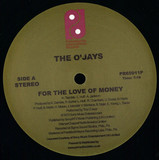
Two incredible 70's soul cuts from The O'Jays get the reissue treatment for 2018. The A side contains the mighty 'For The Love Of Money', a near 7 minute cautionary tale to the dangers of greed and exploitation. "For the love of money. People will lie, Lord, they will cheat. For the love of money. People don't care who they hurt or beat." As pertinent now as it was in the 70's if not more so considering current affairs. A much sampled record, loved by many! On the flip 'Darlin' Darlin' Baby (Sweet, Tender, Love)', the second hit single off the O'Jay's album 'Message In The Music', is a romantic soul serenade with that killer Gamble and Huff production - Philly's finest!
- A1: A Min We Vo Nou We - Les Sympathics De Porto Novo
- A2: Asaw Fofor - Ignace De Souza & The Melody Aces
- A3: Dja Dja Dja - Stanislas Tohon
- B1: L´enfance - Elias Akadiri & Sunny Black´s Band
- B2: Mé Adomina - Picoby Band D´abomey
- B3: Nounignon Ma Klon Midji - Antoine Dougbé
- B4: Moulon Devia - Orch. Poly-Rythmo De Cotonou
- C1: Paulina - Black Santiago
- C2: Glenon Ho Akue - Lokonon André Et Les Volcans
- C3: Sadé - Sebastien Pynasco And L´orchestre Black Santiago
- C4: Baba L´oke Ba´wagbe - Super Borgou De Parakou
- D1: Gangnidodo - Cornaire Salifou Michel Et L´orchestre El Rego & Ses Commandos
- D2: How Much Love Naturally Cost - Gnonnas Pedro And His Dadjes Band
- D3: Idavi - Orchestre Poly-Rythmo De Cotonou
African Scream Contest 2
A great compilation can open the gate to another world. Who knew that some of the most exciting Afro-funk records of all time were actually made in the small West African country of Benin Once Analog Africa released the first African Scream Contest in 2008, the proof was there for all to hear, gut-busting yelps, lethally well- drilled horn sections and irresistibly insistent rhythms added up to a record that took you into its own space with the same electrifying sureness as any favourite blues or soul or funk or punk sampler you might care to mention.
Ten years on, intrepid crate-digger Samy Ben Redjeb unveils a new treasure- trove of Vodoun-inspired Afrobeat heavy funk crossover greatness. Right from the laceratingly raw guitar fanfare which kicks o Les Sympathics' pile-driving opener, it's clear that African Scream Contest II is going to be every bit as joyous a voyage of discovery as its predecessor. And just as you're trying to get o the canvas after this one-punch knock out, an irresistible Afro-ska romp with a more than subliminal echo of the Batman theme puts you right back there. Ignace De Souza and the Melody Aces' Asaw Fofor" would've been a killer instrumental but once you've factored in the improbably-rich-to-the-point-of-being-Nat-King-Cole-influenced lead vocal, it's a total revelation.
The screaming does not stop there, in fact it's only just beginning. But the
strange thing about African Scream Contest II's celebration of unfettered Beninese creativity is that it would not have been possible without the assistance of a musician who had been trained by the Russian secret services to "search and destroy" enemies of the country's (then) Marxist-Leninist president Mathieu Kerekou.
Already familiar to fans of the first African Scream Contest as a mainstay of ruthlessly disciplined military band Les Volcans de la Capitale, Lokonon André vanished in a cloud of dust at Ben Redjeb's behest with a list of names and some petrol money, only to return a few days later having miraculously tracked down every single name he'd been given. The source of this Afrobeat bounty-hunter's impressive people-finding skills - his training with the KGB - highlights the tension between encroaching authoritarian politics and fearless expressions of personal creative freedom which is the back-story of so much great African music of the 60s and 70s. Happily, in this instance, Lokonon was tracking the artists down to oer them licensing deals, rather than to arrest them.
Where some purveyors of vintage African sounds seem to be strip-mining the
continent's musical heritage with no less rapacious intent than the mining companies and colonial authorities who previously extracted its mineral wealth, Samy Ben Redjeb's determination to track this amazing music to its human sources pays huge karmic dividends.
Like every other Analog Africa release, African Scream Contest II is illuminated by meticulously researched text and eortlessly fashion-forward photography supplied by the artists themselves. Looming large - alongside Lokonon André - in the cast of biopic-worthy characters to emerge from this seductive tropical miasma is visionary space-nerd Bernard Dohounso, who laid the foundations for Benin's vinyl predominance by importing and assembling the turntables that would play the products of his Bond villain-acronymed pressing plant SATEL, a factory that would revolutionise the music industry in the whole region.
The scene documented here couldn't have been born anywhere else but in the Benin Republic , and the prime reason for that is Vodoun. It's one of the world's most complex religions, involving the worship of some 250 divinities, where each divinity has its own specific set of rhythms, and the bands introduced on the African Scream Contest series and other compilations from that country were no less diverse than that army of dierent Gods. At once restless pioneers and masters of the art of modernising their own folklore, the mystic sound of Vodoun was their prime source of inspiration.
One especially irascible Vodoun-adept was Antoine Dougbe, who styled himself The devil's prime minister' while turning ancestral rhythms into satanically alluring modern beats. As Orchestre Poly-Rythmo songwriter Pynasco has observed sagely, Evil is not elsewhere, evil extends into the house'. And African Scream Contest II is a gloriously cinematic road-trip through an undiscovered realm of music lore whose familiarity is every bit as thrilling as its otherness.
Written by Ben Thomson, March 2018
originally released in 1990-with Liz Lamere - Never released on vinyl-
Born in Brooklyn, Alan Vega was reared on the rock 'n' roll sound of Elvis Presley and Roy Orbison, but originally struck out on a career as a visual artist and light sculptor, making pieces out of electronic debris. But on the occasion of seeing Iggy Pop fronting the Stooges at The Stooges at the New York State Pavilion in 1969 was an epiphany for Vega. It showed me you didn't have to do static artworks, you could create situations,' he said. That show was the first time in my life the audience and the stage merged into one." It was that eradication of barriers between the two that Vega took to heart.
Their first two albums, 1977's Suicide and their 1980 follow-up, remain two of the era's greatest touchstones, beacons for others seeking to transform their worlds with sound. And even during the group's hiatus through the 1980s, Vega continued to pursue his singular vision across an individualistic solo output. From his 1980 self-titled debut and rockabilly-infused albums like Saturn Strip, through bracing albums like Power On to Zero Hour and IT, Vega forged his own singular path.
For all the darkness and despair that encompasses this moment in our world - and despite his work being depicted as bleak and nihilistic - for Vega there was always a sense of hope and a place for dreams to become reality. People have always told me that my music is angry,' he said. To me, it was always just an energy. It was the way I perceived the world. The key Suicide song was 'Dream Baby Dream,' which was about the need to keep our dreams alive. I knew back then that something poisonous was encroaching on our lives, on all our freedoms.' He fought to his very last breath for that freedom.
- Disc 1: The Beginning A1 | The Beginning
- A2: Floating
- B1: Klonopin
- B2: Klonopinless
- Disc 2: U Know How I Feel A1 | U Know How I Feel
- A2: Festival
- B1: Your Place Or Mine
- B2: For Love
- Disc 3: Imagine A Nation A1 | Imagine A Nation
- A2: Imagine A Nation Instrumental
- B1: Imagine A Beat
- B2: For The Crazy I
- B3: For The Crazy Ii
- Disc 4: Welcome To The Future A1 | Welcome To The Future I
- A2: Welcome To The Future Ii
- B1: Blast Me
- B2: Jovial
Following the completely sold out 'Imagine - A - Nation' and 'Le Fusion' reissues, Anotherday brings you a very special release from the vault of the enigma that is Spencer Kincy, AKA Gemini - we are very proud, and extremely excited to present Gemini's first 4 releases, lovingly re-mastered and packaged together in a very limited box set!
Originally released on Relief Records; the Chicago techno label headed up by Cajmere, these releases were Gemini's introduction into the worlds of house and techno, and contain some of his most vital works.
As one of Chicago's most mysterious and revered characters, the story of Gemini, aka Spencer Kincy has become something of a myth in recent years - blazing a trail throughout the 90's, prolifically releasing over 200 tracks from 1994 to 1999, Spencer's music had shades innovation and soul few of his peers could match. Then, suddenly, at the peak of his career, he disappeared.
As before, this album has been licensed directly from the man himself, and the money made from its exploitation will go directly to him.
This box set is limited to 500 UNITS ONLY - the last Gemini reissues sold out 4 x that amount in weeks, so put in your pre orders before they're gone forever.
"The kind of melancholia I'm talking about, by contrast, consists not in giving up on desire, but in refusing to yield. It consists, that is to say, in a refusal to adjust to what current conditions call 'reality' - even if the cost of that refusal is that you feel like an outcast in your own time." (Mark Fisher, Ghosts Of My Life, Zero Books 2014, p. 24) In Ghosts of My Life: Writings on Depression, Hauntology and Lost Futures', the author Mark Fisher outlines - to put it in a big way - a resistant melancholy. This stands in contrast to leftist melancholy resignation', as well as something which Fisher does not talk about: its common masculine counterpart, habitual post-left cynicism - as in seen it all before'. Fisher calls this hauntological melancholy. Haunting, spooks, ghosts and apparitions are an almost constant presence on I Started Wearing Black', the second album by the Cologne-based artist Sonae (pronounced so-nah'). The term hauntology shares a fate with retro-futurism when it comes to inflationary overuse and abuse. It's a conceptual container that looks good and can hold a lot, indeed, too much. Furthermore, hauntology has its peak season behind it, a term on the threshold of its expiration date. Nevertheless, I would like to rehabilitate hauntology and use it properly to characterize I Started Wearing Black', because the term is rarely as compelling to describe music as is the case here. The most recent other example could be Asiatisch' by Fatma Al Qadiri, but with a completely different frame of reference. What are the ghosts of this music It rustles, crackles, ruffles, crunches, rattles, scrapes, sometimes a beat emerges from the constant noise, sometimes an obscure voice mumbles incomprehensibly, sometimes a melancholy piano figure is prevented by this noise from coming too much to the foreground. It definitely is eerie - to bring into play another term used by Fisher in the title of his latest book, The Weird and the Eerie'. In British pop-jargon, eerie first occurred to me more often when referring to particularly leftfield, spooky and... well... ghostly dub, a bass-heavy, echoing noise, from Augustus Pablo to Creation Rebel to Burial. Unlike the Wald & Wagner records by Wolfgang Voigt, Sonae is not a kind of neo-romantic veiling with a tendency for escapist nebula. It is more a noise of latency. The noise signals a latent - not necessarily acute - threat, a latent uneasiness about... yes... about what About a System Immanent Value Defect' That's the name of a track on I Started Wearing Black' where something that sounds like a French Horn (or a foghorn) battles for attention through or against the background noise. An email from Sonae: The piece 'System Immanent Value Defect' should actually be called 'I See Turkey'. I wrote it for my fellow student Elif - she is a pianist and Gezi Park activist from Istanbul. Through her I witnessed the inner conflict and agitation that political circumstances can create: her feelings of guilt when there was an attack, with her safe in Germany as a student, watching the events from afar. It was horrible. When her mother begged her not to come home because she feared for her safety, I felt a cold shiver run down my spine. I started with the piece from this mood, beginning with the piano, then the noise (modulated sinusoidal curves), which reminded me of waves and the then heatedly discussed Mediterranean sea: atmospheric, melancholy motifs. In contrast is the anger, the pressure, represented in corresponding sounds - hopefully audible! - During this time I started to think about world views as they can be found around the globe, in how far they held by societies and their political representation. I realized that I know of no political system that is actually about the people and what would do them good. It's always about positions, power, money. I thought that was a lot more frightening on a global scale than merely viewing Turkey in isolation. That's why the piece is called "System Immanent Value Defect", because our world suffers from precisely that. Everywhere, it's all about the wrong things.' Between the wrong things there are happy moments. In the title track, after 184 seconds of rattling and hissing, a beat is unleashed, like an arrow released from a spanned bow, a beatific relief, if there is such a thing. White Trash Rouge Noir' first meanders along spookily, then after 144 seconds it transforms itself into a distant cousin of Einstu¨rzende Neubauten's Yu¨ Gung', but there is no Big Male Ego to be fed here, and the black in the album title is a completely different type of black from that of the Neubauten. Furthermore, I Started Wearing Black' was finished long before the black dresses were worn at the Golden Globes as a sign of protest against sexual violence. Sonae writes that she herself started wearing black some time ago. Her reasons are so-called personal ones: ... resulting from an individual situation (lovesickness), I started to wear black (gaining weight and feeling ugly).' The political dimension of gaining weight, feeling ugly and therefore dressing in black in I Started Wearing Black' lurks within the noise and never becomes explicit and only rarely manifest - or a manifesto. Sonae writes about the track We Are Here': A piece for minorities... in this case, considering the current pop-feminist discourse, explicitly for women. Female artists have long been saying loud and clear that 'we are here' and 'electronic music is not a boys club!' But this pop-feminist moment should only be seen as one part of the dedication of the piece. It is for minorities, for the oppressed, who didn't belong enough.'
Klaus Walter
- A1: The Fatback Band - Yum Yum (Gimme Some)
- A2: The Philly Armada Orchestra - For The Love Of Money
- A3: Ray Camacho - Movin', On
- A4: Billy Garner - Brand New Girl (Part 1)
- A5: Robert Jay - Alcohol (Part 1)
- A6: King Floyd - Baby Let Me Kiss You
- B1: Uncle Louie - I Like Funky Music
- B2: 87Th Off Broadway - Moving Woman
- B3: Tommy Stewart - Bump &Amp, Hustle Music
- B4: T-Connection - Do What Ya Wanna Do
- B5: Little Beaver - Concrete Jungle
- B6: The Barons Ltd - Making It Better
Darren Cunningham's eagerly~awaited new album is an adventurous, ultramodern, thoroughly British affair, rummaging about in the inner lives of house and techno, and brilliantly elaborating the accomplishments of his debut, Hazyville.
Determinedly off~the~map and resistant to pigeonholing, Cunningham is an enigmatic and playful figure, citing Francis Bacon and Monet as inspirations longside Theo Parrish, Anthony 'Shake' Shakir, Daft Punk, 'binary codes and numeral systems', and The Avengers. He's a hard man to pin down - somehow a key player in the post~dubstep diaspora and yet not there at all - but everything comes across in his shape~shifting, richly textured music.
The South Londoner's acclaimed debut lived up to its name: a series of dreamlike sketches and ideas. For Splazsh the fog has lifted, the sounds are less submerged than before, but still sticky and close - a signature combination of exuberance and introversion, luminescence and puzzlement. Unconstrained by the formal cliches of the dance music he loves, Actress' melodies and arrangements are enthralled by their own genies. Worlds of disturbance and melancholy revolve giddyingly inside the insidious funk of tracks like Get Ohn and Lost. A range of musical influences is redrawn, from speed garage (Always Human) to grime (Wrong Potion), with none crowned king. There is a reflectiveness - the ambient drift of Futureproofing, the radiophonic judder of
Supreme Cunnilingus - in amongst the industrial, synth~wave flavours of Casanova, and the stirring, stately Maze.
Actress has quickly and justly become one of the most respected names in the UK's new dance music underground. His own label, Werk Discs, has proven itself one of the most formidable and taste~making UK independents of recent times, bringing the world extraordinary albums from Zomby, Lukid, Lone and Actress himself. In love with the mysteries of groove and repetition, Splazsh is both a culmination and a new beginning for Actress, a substantial and eccentric work from a brave and coolly individual artist.
With international press interest gathering - photo features in Dazed And Confused, and Fader in the US, and a session with Wolfgang Tillmans for the cover of the German magazine Groove - the stage is set for Actress.
Alien Ensemble's trombone man Mathias Goetz caused quite a splash when he released his eponymous debut LP under his Le Millipede moniker back in 2015: The multi-instrumentalist's initial offering was clearly something else, impossible to grasp, a musical vessel beyond genre, beyond style or era, seemingly beyond space and time even, a vessel that carried an almost cosmic kind of song-craft - music with no fixed stamp of origin, though it did somehow feel like an Alien Transistor release. Followed by remix album Mirror Mirror, which comprised reworks by 1115, Protein, LeRoy, Olaf Opal, and Saroos, to name a few, it's now time for album #2: The Sun Has No Money.Let's face it: There's nothing as majestic as the sun. At least not in our world. If it runs out of juice one day, it's game over: The End. Light's out. For everyone. At that point, it wouldn't even matter if you're rich or poor. We're all equal under the sun. Same level. And yeah, this might not be major news, but then again... we're talking about the sun. The sun! Guess it's about time to acknowledge its power and superiority, right In fact, you can feel it on your bicycle: pedaling at night, when it's on duty in other hemispheres, and you're working hard at the dynamo, sweating, you can actually feel how powerful it is. In the end you get off the bike all recharged, a tune on your lips - and somehow feeling like a miniature version of the sun yourself. And whenever you feel like that, that's exactly the right moment to grab a melodica and get to work.Following an initial warm-up round sans electricity, this new album soon begins to glow: Mathias Goetz aka Le Millipede doesn't need pedals, he boosts circulation by single-handedly* playing tons and tons of different instruments - it actually feels like thousands, easily. And thus begins a show that has countless levels to it: There are various sonic illusions... and yet Le Millipede doesn't hide anything: He's also willing to show the inner workings, the actual recording process and everything else. In short: he goes meta. Makes songs about making songs. That's right: why not use all these beautiful means to address the issue of money It's not the sun that casts shadows, all it does is recharge, fuel: growth & thriving, that's the sun's area of responsibility. And yet there came a man whose plan was simple: steal the fruit from your garden, only to sell it right back to you, for money. We can hear the sea gulls crying in the distance, as somebody is throwing breadcrumbs up into the wind that carries their voices...It's not the sun that casts shadows - all it does is radiate light. And yet there came a time when someone blocked those rays of light. Now if you're some kind of Diogenes, you'll simply say, Move at least a little out of the sun.' But if you're a teacher, you'll maybe light up your pipe and use that to lighten up. What matters is that the percussion parts, in this case, resemble some serious musique concréte. The sun doesn't know shadows - all it knows, is itself. And yet somebody entered the picture and built an entire city. A city full of streets, so that houses can cast shadows into these avenues. Plus, there's music in the streets, music originally written inside the walls of said houses.One of those streets is known as the Tin Pan Alley: a place that got its name from a music writer who compared the sound of so many pianos to the banging of tin pans. That sound: that's one side of the road that is this album. Some of these melodies appear to be shadows of earlier tunes, dating back to, say, 1898 or even before that, melodies that were first registered in the Tin Pan Alley publishers' offices back in 1912 or 1917. We actually get to see this Alley at that point in time. We see the ropes, the workings. How things come together, the actual act of creation. Suddenly, we can hear the shadows!
Okay, so one side of this street is America. The US of A. The opposite side: Russia. And smack dab in the middle: Europe. A pothole in the center. All the back-and-forth that occurs between these two poles ultimately depends on the movement of the sun. Night and day, taking turns, commuting in and out of sight. We get to meet Prokofiew's and Scriabin's ghost, among other spirits, reframed and published by Le Millipede's own imaginary label imprint on the historic Tin Pan Alley. Indeed there are moments on this album when Le Millipede seems to be playing Scriabin's clavier a` lumie`res (tastiera per luce), when his performance seems to be based on synesthesia, a wild cross-pollination of colors and sounds. In case you didn't know this: In the States, Prokofiew goes by the name Brian Wilson, and Scriabin's also known as Sun Ra - yet another guy who's usually broke, but gets to spend a lot of time out in the sun. Together, these assorted protagonists ask the people of the Antilles for Mutabor dance-tokens and send postcards to Moondog in Germany, right back into the darkness. On the postcards you can see people dancing the Biguine...Firing foreign fossil fuels from all pipes (Brennelementsteuer!), Le Millipede controls the very center of this hustle and bustle: going as far as to employ some southern Chopped & Screwed styles, he's 100% current and zeitgeisty! Houston, we've got a problem: there's some kind of myriapod, centi- or millipede on the loose! Well, give me another sip of lean, sizzurp, dirty Sprite, and on goes the journey in the Pullman coach. Let's follow the sun! Keep on moving, keep things motorik! Here comes the Trans-Eureka-Express. Cherish the backpacking days! A piercing rhapsody of sound (bohrende Rhapsodie), we'll remember them fondly! And thus things move on, the sun, the days, the earth: rise, set, action, round and round... onwards eternally. The sun: the biggest loop known to mankind. As if it was some kind of sonic Rube Goldberg contraption, time seems to be stretching out while listening to that hmmm. After all: time is a lot (a lot!) more than just money. And yeah, the sun is the real big shot on (or rather: above) Planet Earth. Le Millipede's live line-up also includes Markus & Micha Acher (The Notwist etc.), Nico Sierig (Joasihno), and Manuela Rzytki (G. Rag & die Landlergschwister, Kamerakino etc.).
*sole exception: Evi Keglmaier (Zwirbeldirn, Hochzeitskapelle) plays the viola. Words/sun worship: Pico Be
SHE'S GONE' is the very awaited debut of London trio S.A.D. As bandcamp inmediately noticed and announced as one of the top 5 'new and notable' worldwide release of the week, their music is 'dark post-punk with irresistible melodies, big synths washes, and punchy rhythms, designed for the modern goth club dancefloor'. It arrives on 12 Maxi-Single EP format and produced in a ONE-OFF truly limited edition of 300 copies lacquered pressed on 180 gr. high quality solid black vinyl. All tracks have been specially remastered for LONG CUT vinyl by Eric Van Wonterghemand remastered for LONG CUT vinyl by Eric Van Wonterghem
raw, soulful and agitating: glenn astro, the humble house sorcerer from berlin, produced four tunes and a sweet interlude for mule musiq that point out: house music is still heading for the future.
with countless eps, album's and collaborations for labels like ninja tune, tartlet or his own co-owned imprint money $ex records, the dj and producer already emphasized that he thinks house counter to the trend.
his new ep shows this anew with unpolished, speedy, even techno-like rhythms and deep gentle melodies. dance music for jagged movers that have enough of high gloss sounds.
if house music is a spiritual, a body, a soul thing, then glenn astro delivers some real fresh groov-ing prayers.
- A1: Anyway The Wind Blows
- A2: Cadillac Woman
- A3: Can't Get My Rest At Night
- A4: Days Like This
- A5: Down Home Girl
- B1: Gee Baby Ain't I Good To You
- B2: Hit That Jive Jack
- B3: I Can't Dance
- B4: Jealous Girl
- B5: Just For A Thrill
- C1: Keep On Truckin
- C2: Do You Or Don't You I Wanna Know
- C3: Motorvatin' Mama
- C4: Rhythm King
- C5: Rough Cut Diamond
- D1: Streamline Woman
- D2: The Joint Is Jumping
- D3: Tomorrow Night
- D4: Walking One & Only
- D5: Where's The Money
- E1: A True Romance
- E2: Bad To Be Alone
- E3: Bye Bye Blues
- E4: Crazy He Calls Me
- E5: Cry Baby
- E6: Every Sixty Seconds
- F1: Groovin
- F2: He's A Real Gone Guy
- F3: I Put A Spell On You
- F4: I Want To Be Evil
- F5: Long Walk To Dc
- F6: Love Letters
- G1: Snap Your Fingers
- G2: Mojo Boogie
- G3: My Handy Man
- G4: Oh Baby
- G5: Ring My Bell
- G6: Spooky
- H1: That's How Heartaches Are Made
- H2: This Ain't United Nations
- H3: Trust In Me
- H4: When Hollywood Goes Black And Tan
- H5: Yesterdays
- This four LP box set features some of the best studio recordings by Bill Wyman's Rhythm Kings, the ten-piece band that Bill
put together after leaving the Rolling Stones in 1992. Whilst the band features guest appearances by all-star musicians (including
Mick Taylor, Eric Clapton, Chris Rea, George Harrison,Gary Brooker and Peter Frampton on these recordings), it has an all-
star core line-up that features Georgie Fame, Beverley Skeete, Albert Lee, Terry Taylor and Bill Wyman himself of course.
- For this compilation, Bill Wyman has chosen forty three tracks that showcase the fantastic lead vocals of both Beverley
Skeete, perhaps the UK's busiest session singer, and Georgie Fame, a star (and legend) in his own right since 1964 of course.
- Each singer has two LPs: Georgie's features his renditions of songs by the likes of J.J. Cale, Mose Allison, Dan Hicks, and Bill
Wyman & Terry Taylor, while Beverley's features her take on songs by Nellie Lutcher, Screamin' Jay Hawkins, J.B. Lenoir and
The Rascals.
- This box set marks the first appearance of any Rhythm Kings recordings on vinyl. The four LPs are housed in an attractive rigid
outer slipcase and the inner sleeves feature all themusician credits.
I have no words to say about this album but, wow... Simply, Wow.
What is this Who is this dude
He (Atle) got the funk. Atle got the soul. Atle got the smooth sound of Westcoast. When he was in his teens, he spent all his money on music, women and party. Here is the result of 10 handpicked demos from his vast archives. This stuff has been sitting on the shelves since late 70's and has been carefully restored, mastered and produced exclusively for this album.
Bewitching Avant-Pop album from impromptu supergroup built around acclaimed Japanese duo, Tenniscoats. Featuring members of Notwist, Jam Money and Joasihno.
In these dark and uncertain times, there's an ever-growing collective of peaceful, loving types, bound together by an understanding of one peculiar word: Tenniscoats. Aside from being the name of an influential Tokyo-based duo, it represents fun, artistic freedom, experimentation and - perhaps most important of all - inclusivity.
A Tenniscoats gig is rarely the audience watching the performers. Instead, Saya and Takashi regularly shun the stage in favour of any particular spot that takes their fancy, whether it's an empty seat in the auditorium or the roof of a neighbouring cafe. In the world of Tenniscoats, music can happen anywhere, and everyone is invited to join in.
During the winter of 2016, the music happened in Munich. As a long-time fan, Markus Acher (Notwist) jumped at the chance not only to put Tenniscoats on the bill at the Alien Disko festival he was organising, but also to invite Saya & Takashi to a small apartment studio, together with Mat Fowler (Jam Money) and Cico Beck (Aloa Input, Notwist). This is where Spirit Fest was recorded over the following 14 days.
Tenniscoats are known for their collaborations - some of their finest work was done in conjunction with Tape, The Pastels, Jad Fair and many others - so making good use of the time and friends available was natural to them. For me, timing is important,' Saya said. We met in season, and the song flowers are now blooming!' Mat Fowler recalls the Spirit Fest sessions taking place in an idyllic, festive atmosphere. Every morning we'd all share breakfast, chat and learn about German Christmas customs. We'd catch the bus in the morning and walk home in the evening. The journey ran parallel to the beautiful flowing Isar River that bubbles, ebbs and flows right through the middle of Munich.'
While Tenniscoats sit at the heart of proceedings, it isn't their album alone. Markus, Mat and Cico also brought songs, providing a solid base on top of which the artistry could evolve. Mat explains that, a melody would begin, and slowly, each of us - in our own time - would find our way into the music.
Producer Tadklimp would sensitively set-up around us in this narrow window of time, so as to document that first and intuitive moment of collective discovery.' Nearly everything was recorded live,' agrees Markus, playing and singing together in one room with piano, guitars, percussion and some keyboards.' The collaborators came from Germany, Japan, the UK, Greece and beyond. That sense of inclusivity is palpable.
From the tender beauty of Markus's River River' and Saya's Mikan' to the electro-Merseybeat of Tenniscoat's Nambei' and the half-crazed pianica-reggae of Shuti Man', the resulting album is a testament to the manner of which these musicians are able to channel their songwriting through their spontaneity. It's also a snapshot of a gentle and intuitive moment in time - a beautiful meetup that expands this community, happily, even further.
Jon Willks (Grizzly Folk)
Fresh from wowing us with that crazy limited promo 45, Krikor Kouchian delivers 11 tracks of expertly executed, shimmering boogie funk. BIG TIP!
.
Think of the neon lights of the boulevard or a late nite drive through the lonely hills, Krikor Kouchian's "Pacific Alley" propels you to a world of sleaze and excitement, where passion, money, and illicit substances take precedent and the sun beats down in a relentless unforgiving fashion.
Spending time as a youth in Southern Cailifornia, the French-born Kouchian developed an obsession with this Americana and the magic of everything California. The music on the radio, from pop, to funk, to hip hop fueled his impressionable mind, later on taking influence in his own music.
Pacific Alley is a snapshot of this lost period, full of juicy low slung basslines, slow bpm cruisers, Linn drum crashes, and ride or die melodies. The elements all meld together through this 11 track lp, it's equal parts uplifting and melancholic, downtrodden, yet not without rays of light; the soundtrack for days hanging in front of the corner stores and nights on the strip, both a naive love affair and backstabbing doublecross.
This is boogie funk for the grift, a dollar here buys a bottle there so step into the shade, pop the tape in the deck and enter into the concrete dreamworld.
Music has always coursed through Roman Lindau's blood. Even if he weren't the accomplished producer and respected DJ he is today, the German audiophile would still be spending all his money on the stuff; giving over all his time to the art form. ''I'm a music junkie. I need music to live'' he states matter-of-factly. ''For me it's the elixir of life.''
Good job, then, that he gets to spend his ..
Roman Lindau is a German techno DJ, artists and producer, as well as being a core member of the infamous Fachwerk Records from Berlin.
Music has always coursed through Roman's veins ever since he was a young boy so it is no suprise that he became the accomplished producer and highly respected DJ that he is today.
In the late 2000´s Lindau became active in the Berlin electronic music scene, beginning to play music in clubs as well as producing his own music. The first track he released in 2008 on his home label Fachwerk Records appeared in one the world famous Berghain Mix Compilations, mixed by Len Faki. Following from this Berghain invited Roman to contribute an exclusive Track for Ben Klock´s Berghain Mix in 2009. After this success the gates opened for him to play regularly as a DJ at Berghain.
At the same time he continued to work on music for Fachwerk Records. He produced dance floor smashers like ´Crasse´ in 2011 and ´Rave on´ in 2014, which were charted by the likes of Ben Klock, Sven Väth & Chris Liebing, afirming his deserved place amongst the techno elite.
More recently in 2015 the well known Victor Calderone from NYC invited Roman to release on his label Matter+.
The reason why Roman is such a great DJ is because of the fact he knows what the people want! ''I love to dance and that's very important: as DJ you need to feel what the crowd want so you can help them to party and have fun.'' Combining a varied selection of raw house and techno in his sets, recent bookings have taken Roman across the world; from the hallowed techno Mecca that is Berghain to dark underground clubs as part of the recent Fachwerk label tour. He has performed at every legendary Berlin venue, past and present from Tresor to Berghain, and it is this that gives Roman the edge above the rest. If you can do it there, you can do it anywhere! From 2014 Till the closing he was a resident DJ at Stattbad, one of Berlins findest adress for Electronic Music.