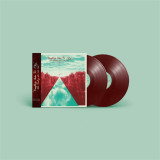
Needless, Monoder & TM Shuffle join forces on VUO Records for a deep excursion into the realms of dub-infused techno and stripped-back house. Echoing chords, warm low-end pressure, and hypnotic grooves form the backbone of this release - a sonic journey where raw analog textures meet subtle swing and spatial depth. Crafted for sound system lovers and late-night explorers alike, this is a record that resonates far beyond the dancefloor.
Buscar:mono tec
Standard redefined The professional RMX-95 4+1 channel club mixer blurs the lines between analogue workflow and digital technology. The RMX-95 is a cutting-edge, extraordinarily versatile creative tool thanks to its dual-USB 2.0 interface, redesigned effects section, optional MIDI mapping of all controls and smooth integration of the djay Pro DJ software. The club mixer has a familiar and user-friendly interface, making it suitable for both professional and hobby DJs.
Surgical sound manipulation in every detail Will you go for ''Classic'' or ''Kill''? The RMX-95's 3-band EQ can be adjusted to allow maximum sound control for unique results. Echo, Reverb, Flanger, Phaser, Vinyl Brake, Loop Roll, Noise, Pitch Shift, Delay, Ping Pong Delay, Tape Delay, Bit Crusher and Transformer are just some of the many studio-quality effects included in the brand-new Beat FX unit. The dedicated FX frequency control (LPF/HPF) lets you apply the effects to a specific frequency range for a more unique sound. And that's not all: Each channel also features a bipolar filter unit (LPF and HPF) with real-time resonance adjustment. This allows for even more complex sound productions. Two digital displays show parameter changes in real time for precise control that goes beyond hearing. Connections galore The RMX-95 also excels in terms of connectivity: Four CD, two line, and two phono inputs are available on the four input channels. The separate microphone channel has two microphone connections (1 x jack, 1 x jack/XLR combination jack) and an additional AUX input. The master output offers RCA or balanced XLR cable connections. The booth output has two jack connections for stereo operation. However, it can also be used in mono mode.
A recording device can be connected to the Rec output via RCA jacks to record DJ sets regardless of the master output level. Last but not least, the DJ mixer has two jacks for headphones. Crisp cuts and smooth blending The adjustable curve of all faders provides DJs with the creative flexibility they want while mixing. Turntablists and scratch wizzards can also upgrade the crossfader with the contactless RMX innoFADER. Maximum flexibility: dual-USB audio interface Superior 24-bit sound quality is provided by the ten inputs and outputs of the high-quality dual-USB 2.0 interface. The two USB ports allow smooth transitions between DJs and maximum flexibility when using different setups in a single club night. In addition, the active USB hub enables the connection of additional USB devices. Fully digital architecture The RMX-95's digital architecture transforms the DJ mixer into an individually mappable MIDI controller. As part of this, the setup menu provides a wealth of customisable options, such as EQ frequency range, Neural Mix EQ mode, audio interface routing, and zone routing for the booth output. DVS-enabled for djay Pro & Neural Mix The RMX-95 works with Algoriddim djay Pro via plug and play. The DJ app's ground-breaking Neural Mix function lets you isolate beats, melodies, and vocals in the mix in real time. The RMX-95 supports djay Pro's advanced DVS integration with Mac, PC, iPhone and iPad.
The DJ software is also compatible with streaming services like Apple Music, Tidal, SoundCloud, Beatport and Beatsource. Indestructible design The club mixer's sleek black metal surface is not only eye-catching but also highly durable. The solid metal housing and hard-wearing metal shafts in all of the built-in potentiometers and switches provide a long service life, even with heavy club use. An internet connection and a separate Apple Music, Tidal, Beatport, Beatsource or SoundCloud subscription is required to use this service.
Professional 4+1-channel DJ club mixer - DUAL 10 In/Out USB 2.0 audio interface with superb, 24-bit sound quality
New Beat FX unit with multiple effects in studio quality: Echo, Reverb, Flanger, Phaser, Vinyl Brake, Loop Roll, Noise, Pitch Shift, Delay, Ping Pong Delay, Tape Delay, Bit Crusher,Transformer - FX frequency control (LPF/HPF) for manipulating effects in selected frequency band -
Sound filters: Bi-polar filter unit with LPF and HPF - Realtime resonance control for channel filters - Active USB hub to connect USB accessories
3-band EQ with adjustable behaviour (classic/kill) -
Two digital displays showing real-time information of parameter changes -
Digital mixer architecture with extensive adjustment options - Extensive setup menu, including:
- EQ frequency range (low, high)
- Neural Mix EQ mode
- Audio interface routing
- Booth output zone routing (matrix)
- Cue solo option
- RMX innoFADER compatible
- Adjustable linefader and crossfader curves
- MIDI-compatible control elements
- 2x High-retention USB 2.0 port, especially durable
- 2x Headphone outputs via 6.3/3.5 mm stereo jack with split cue
- 2x Mic inputs with dedicated MIC ON button
- Booth output in stereo or mono
- High-quality and hard-wearing, pure black metallic finish
- Sturdy construction in a metal housing with bolted metal shafts
- Kensington lock to secure the device
- Incl. instruction manual, power cord and USB cable
- Frequency Range: 20 Hz - 20 kHz +2/-3dB - Inputs: 7x line RCA, 2x phono RCA, 1x mic combo-XLR/jack, 1x mic 6.3mm jack (TR), 2x USB port - Outputs: master XLR (balanced), master RCA (unbalanced), booth (TRS) (balanced), rec RCA (unbalanced), 1x headphones 6.3mm jack, 1x headphones 3.5mm jack - EQ range classic at 70 Hz, 1 kHz, 13 kHz: -26 dB/+9 dB - EQ range isolator at 70 Hz, 1 kHz, 13 kHz: -90 dB (total kill)/+9 dB - EQ range mic at 100 Hz, 10 kHz: -12 dB/+ 12dB - EQ headphones at 100 Hz, 10 kHz: -29dB - Power Source: AC100-240V, 50/60Hz - Power Consumption: 29 W - Dimensions: 322(W) x 387(D) x 107.5(H) mm - Weight: 6.8 kg
dimensions (LxWxH) in mm
445x442x153
dimensions outerbox in mm
460x452x327
After persistently fine crafting their sound in the studio for two years, the dynamic duo Blame The Mono return to Molekul with a powerful second opus.
Pulse Persisters is an explosive 4-track EP showcasing their vision of fun, creative and genre-bending techno.
Podgorica sets the tone of the EP with its swelling lowend, 2000s evocative acid bassline and intense breakbeat build-up.
Flip The Phase sends you on a face melting journey strewn with stuttering dub chords, playful vocal chops and a jungle section that completely flips the script.
Digital Diva loops a catchy 80s pop diva vocal and combines it with a frantic dub-tinged groove for effective dancefloor results.
Molly Pop sees the duo collaborate with German producer Lifka on an unrelenting psy-influenced peaktime weapon that closes the EP on a strong note.
- Something Incomprehensible
- Law Enforcement Agency
- Reptition Of Human Errors
- Let Me Explain
- Save Your Dignity
- No Brain /No Pain
- Discord
- Monofaces
- Better To Forget
Ende der Achtziger hatte sich Thrash Metal auch in Deutschland etabliert und spielte weltweit sogar eine führende Rolle. Bereits zu dieser Zeit war es einigen Bands nicht mehr genug, einfach nur schnell und aggressiv zu spielen. Der Thrash Metal wurde in vielen Fällen anspruchsvoller und technischer. In den USA trieben das Watchtower auf die Spitze, in Deutschland folgten gleich mehrere Bands auf dem Aaarrg-Records Label (Mekong Delta, Target).
Während andere Acts erst noch straight agierten und dann im Verlauf ihrer Karriere mit progressiven Elementen liebäugelten (Holy Moses, Deathrow, Destruction), schnürten die Hamburger MEGACE schon nach der Bandgründung 1988 ein anspruchsvolles Thrashpaket. Mit der Sängerin Melanie Bock hatte man zudem ein besonderes As im Ärmel, denn sie kann Beides: Das kehlige Thrash-Shouting und melodischen Gesang. Das hob MEGACE direkt von anderen Bands ab, was ihnen direkt eine Chancen bot, die auch genutzt wurden.
Nach einigen Demotapes, die auch von der internationalen Presse gelobt wurden, erhielten sie einen Plattenvertrag bei 1MF Records, das Label des ehemaligen Sänger von Angel Dust und Scanner, S.L. Coe. Im Juli 1991 wurde dann in den Dust Music Studios (Dark Millenium, Torchure, Morbid Jester, Sacrosanct) das Debütalbum „Human Errors“ aufgenommen, welches in der Presse durchweg gelobt wurde und auch heute noch Fans auf der ganzen Welt hat. 2025: Golden Core veröffentlicht die erste (offizielle) Neuauflage dieses Genreklassikers. Die CD-Version enthält die bisher unveröffentlichten Aaarrg Records Demos, die im Studio von Ralph Hubert (Mekong Delta) 1989 aufgenommen wurden. Die CD enthält ein 16seitiges Booklet, die LP einen bedruckten Einleger. Separate Master für LP und CD!
- Osmium 0
- Osmium 1
- Osmium 2
- Osmium 3
- Osmium 4
- Osmium 5
- Osmium 6
- Osmium 7
Limited edition white vinyl (800 copies) The self-styled ritualistic electro-mechanical ensemble OSMIUM is a veritable supergroup. Made up of Oscar-winning composer and instrumentalist Hildur Gudnadóttir, veteran engineer and producer James Ginzburg, Senyawa's idiosyncratic vocalist Rully Shabara and Grammy-winning sound designer / producer Sam Slater, while each member brings along a laundry list of accolades, the project is far greater than the sum of its parts. Alloying burnished electroacoustic soundscapes with dense, metallic drones, barbed rhythms and buckled, bio-mechanical vocalizations, OSMIUM's eagerly awaited debut album doesn't try to cast a rigid future. Rather, it tempers a viscous flow of unorthodox speculations that smolders through the distant past, blazing a trail all the way to the frontier of fate. Absorbed by questions about the relationship between humans and technology, tradition and progression, the individual and the group, OSMIUM channel their experience and expertise into a set of forward-thinking sonic interrogations that skewer established cultural preconceptions. And although genre is acknowledged - the album draws from folk, doom metal, 20th century minimalism, industrial music and extreme noise - there's never a sense that it's riveted firmly in place. Widely known for her soundtrack work (including `Joker' and `Chernobyl') Gudnadóttir plays the halldorophone, a unique cello-like electroacoustic instrument designed by Halldór Ulfarsson that allows the performer to harness unstable feedback loops. Taking his cues from this process, Slater (who has worked alongside Jóhann Jóhannsson, Ben Frost and others) generates rhythms using a self-oscillating drum he designed with KOMA Elektronik and Subtext boss and Emptyset member Ginzburg responds in kind, producing booming tambura-like sonorities from a device he developed himself based on the monocord, an ancient single- stringed resonator. OSMIUM synchronize the three unique instruments using a custom system of robotics to generate basic rhythms that underpin their improvisations and experiments, and Shabara's alien tones supply the band with their conceptual fulcrum. The vocalist is one of South Asia's most recognizable underground artists, and the sounds he's able to create using exhaustively rehearsed extended techniques are so distinctive that he's been studied by scientists back home in Indonesia. Never weighed down by needless sound design or modish ornamentation, it's music that feels authentically experimental; OSMIUM have figured out an awkward symmetry between their discrete approaches, concentrating their gaze on the outcome rather than the process. The result is a work of science fiction that's driven by interaction, conversation and sensation.
- 1: Love Will See Us Through This
- 2: Bergab
- 3: Die Bestie Mit Dem Brennenden Schweif
- 4: Ich Hab Von Der Musik Geträumt
- 5: Die Satanischen Fersen
- 6: Mein Eid
- 7: Pervert The Source
- 8: Fka M & M 1
- 9: Wheelgreaser
- 10: Hab Gnade!
- 11: Funke & Benzin
- 12: Your Fears Are Well-Founded
- 13: Mein Mo(Nu)Ment (Feat. Sophia Blenda)
- 14: Inkomplett
- 15: Rosa
- 16: Nation Of Resignation
- 17: Ein Haus
Man singt und es wird: Im Zuge eines Zusammenbruchs hat Max Gruber den Soloartist Drangsal gekillt und die Band Drangsal gegründet. Am Ende des Tunnels steht das im Juni 2025 erscheinende Album, Aus keiner meiner Brücken die in Asche liegen ist je ein Phönix emporgestiegen.
Seit über zehn Jahren sichelt Max Gruber mittlerweile die Zick-Zack-Schneise Drangsal durch die deutsche Poplandschaft: Harieschaim aus 2016, Zores aus 2018 und zuletzt Exit Strategy – das ihm 2021 Platz 6 der Albumcharts bescherte – erdachte Gruber größtenteils im Alleingang. Und dann war da noch etwas nach seiner Exit Strategy: Ein Zusammenbruch. Max Gruber wusste nicht mehr, ob und wenn ja, wie er weiter Drangsal machen will, veröffentlichte im Ullstein-Verlag sein literarisches Debüt »Doch«, gründete Die Benjamins, holte so gemeinsam mit Charlotte Brandi, Thomas Götz und Julian Knoth Hans-A-Plast Frontfrau Annette Benjamin aus dem Ruhestand und reaktivierte unlängst das 2016 mit Stella Sommer gegründete Duo Die Mausis.
Und doch, von innen wie von außen, immer wieder die Frage nach einem neuen Drangsal-Album. Wenn es denn überhaupt nochmal eines geben soll, erkannte Gruber, musste er die Arbeitsweise, auf deren Grundlage Drangsal-Songs entstehen, fundamental verändern. Auf alles Ringen folgte, was unvermeidbar war: Der Reset. Max Gruber hat den Soloartist Drangsal gekillt und die dreiköpfige Band Drangsal gegründet – zusammen mit zwei Mitmusikern, die ihn aus seinen Gewohnheiten gelöst haben: Lukas Korn und Marvin Holley.
Erstgenannter ist Gitarrist und Produzent, spielt in der Band Lyschko, produzierte zuletzt das Album silber von Mia Morgan und hat seit 2020 als Bassist an der Drangsal-Liveband partizipiert. Zweiterer studierte Jazz- und klassische Gitarre sowie Komposition in Stuttgart und Wien, stand mit Sam Vance-Law und Fil Bo Riva auf der Bühne und arrangierte für Film und Theater. Lukas Korn und Marvin Holley haben dafür gesorgt, dass sich die zentrale Figur im Kosmos Drangsal dreiteilt.
Das Liedermachen in Bandkonstellation ließ alle Angst platzen: Getragen von Euphorie nahmen Gruber, Holley und Korn ab Ende 2022 etliche Songskizzen und damit den Unterbau eines siebzehnteiligen Albums auf. Nach Kreativurlauben an der polnischen Grenze und Ostsee stand eine von Max Rieger produzierte und von Lukas Korn Co-produzierte vierte Drangsal-LP. Sie trägt den schwergängigen Titel Aus keiner meiner Brücken die in Asche liegen ist je ein Phönix emporgestiegen und erscheint im Juni 2025. Gruber, Holley und Korn haben sich auf das Credo so wenig wie möglich, so viel wie nötig verständigt – und dadurch einen Umbruch im Klangkosmos Drangsals manifestiert, der völlig neue Dynamiken mit sich bringt. Aus keiner meiner Brücken die in Asche liegen ist je ein Phönix emporgestiegen hält Leerstellen aus, in seinem Zentrum stehen, statt Synthesizer, Akustikgitarren, die immer wieder an der Grenze zu Blues und Jazz wandeln. Wo speziell auf Exit Strategy noch überzuckerter Synth-Pop preschte, ist nun Klavier zu hören; Orgel, Klavinet und Cembalo; Xylophon, Violinen und Celli; von Ralph Heidel gespielte Querflöten und Saxophone.
Dazwischen drei Episoden, in denen sich Gospel Chöre und Technobeats breitmachen. Max Rieger hat die drei dazu motiviert, Echtheit, auch Imperfektion im Moment der Aufnahme zuzulassen – und großen Anteil daran, dass »Aus keiner meiner Brücken die in Asche liegen ist je ein Phönix emporgestiegen« ein realistisches Abbild des Trios bietet. Die Stimmung? Dagegen eher ein Wechselbad. Max Gruber singt von Selbstentfremdung, vom Für und Wider des Stillstands, vom Sichhingeben und Sichwegschmeißen – mal auf deutsch, mal auf englisch, mal zart, mal angewidert. Grubers Stimme klingt, nach einer klassischen Gesangsausbildung, die der Einunddreißigjährige angetreten hat, zielbewusster. Umarmungen Marke »Ich hab von der Musik geträumt und Inkomplett treffen auf Gewitterwolken à la Mein Eid und dem Sophia-Blenda-Feature Mein Mo(nu)ment. Entlang rigoroser Entkernung und Hexenjagd geht es Bergab – für dich, für mich, für Max Gruber sowieso. Er ist über weite Teile der Platte hinweg auf der Flucht vor sich selbst, den alten Geistern, dem leidigen Wachzustand: Wär’ ich doch bloß nimmermehr erwacht, ich schliefe in ewigem Glück. Gruber sucht und sucht: Nach innerem Frieden, nach Gnade, nach unverbranntem Boden, nach neuen Versionen seiner Selbst – und das vergeblich. Immerhin scheinen Erinnerungen mit der Zeit zu verschwimmen: Grubers Worte – zu sich und zur Welt – klingen im hinteren Teil der Platte sanfter, vergebender, resümierender. Ein Schlüsselmoment? Das von der Schauspielerin Rosa Lembeck eingesprochene, Monolog artig formulierte Klanggedicht Rosa – Es ist so: Man singt und es wird.
The undisputed, inimitable techno pioneer of Finland, Kim Rapatti, returns with an EP of his trademark dark, soulful and raw sound. IÄTI marks his solo debut for Cold Blow and we couldn't be prouder to present this new music from the legend.
IÄTI is what techno can be when breathing humanity and soul into every inch of it. The EP has lineages to Mono Junk's 2019 album Vanished, moving between deep swirling stompers, emotional compositions and raw, uninhibited electro.
Alongside his own DUM Records established in 92, Kim has over the years released music on labels such as Heckmann's Trope, Skudge White, Forbidden Planet, Rat Life, Plug Research and Stilleben. His breakthrough in the early 90s was ushered in by tracks Monotone Fantastique and Channel B. The latter became a techno classic spotted in mixes and compilations by Richie Hawtin, Marcell Dettmann and others.
A special Japan connection for the next release on DJ Nobu's Bitta label. Osaka-based Erik Luebs joins the roster with an EP of iconic, tranceinfluenced techno melancholia. Having released most of his work through his own DIY channels, Luebs' sounds have reached many dancefloors worldwide. He now teams up with Bitta for something special. On Nontemporal Void, Luebs delivers four tracks that perfectly showcase his diverse sound palette. Each track hits a different box of energy--all while injecting a healthy dose of hypnotism. With a keen eye for detail, the EP moves from slowly built-up tension to eyes-closed techno grooves and synth-heavy euphoria, showcasing the many sides of a magnificent sound designer and creative artist.
Repress!
Sought after instrumentals for critically acclaimed album Sour Soul, by Toronto jazz / hip hop band BadBadNotGood and Staten Island rap champ, Ghostface Killah. Inspired by 1960's and 70's music and taking inspiration from the recording techniques and production of that era, they embrace live instrumentation and zero sampling. BadBadNotGood with producer Frank Dukes created a dramatic, cinematic musical staging for Ghostface's vivid storytelling and this is the first and only time the instrumentals will be available as a standalone album.
- Pursuit
- I Miss My Dog
- You Are Temporary, But The Internet Is Forever
- Dm:am
- E8: N16
- Vin Diesel
- Clementine
- Snare
- Ibs
- 1800: Call-Me-Back
- Coda
"Something Soft", das zweite Album der irischen Post-Punk-Brandstifter M(h)aol, ist alles andere als soft. Von der ersten Note des Eröffnungsstücks von "Something Soft" bis zu den verzerrten Schreien des letzten Stücks fühlt sich die Platte antagonistisch gegenüber dem Konzept der Sanftheit an, klanglich und thematisch. Es ist eine unapologetische Annäherung an intersektionellen Feminismus, Tierschutz, Konsum und den Kampf um einen Platz in einer Welt, der es an Empathie mangelt. Was M(h)aol bietet, ist Katharsis in zwei Formen: die Art, die man bekommt, wenn man anderen gegenüber offen ist, und die Art, die man bekommt, wenn man mit Recht etwas kaputt macht. Wut und Empathie effektiv zu kanalisieren ist ein Akt der Widerstandsfähigkeit, und um "Something Soft" zu machen, mussten M(h)aol besonders widerstandsfähig werden. Nach ihrem gefeierten Debüt "Attachment Styles" änderte sich das Line-up von M(h)aol und bestand nun aus dem Kerntrio Constance Keane (Schlagzeug/Gesang, sie/ihr), Jamie Hyland (Bass/Gesang, sie/ihr) und Sean Nolan (Gitarre, er/ihm). Dieser Prozess veränderte die Herangehensweise der Band an das Songwriting und die Auftritte und führte zu einem unerwarteten Durchbruch. "Something Soft" zeichnet sich durch einen dringlicheren Sound aus, der sich eng um den Rhythmus von Hyland und Keane legt. In Songs wie "Pursuit" und "Snare" verbindet sich Keanes Gesang mit dem Schlagzeug, als würden ihre Worte durch ihr Spiel zum Leben erweckt und direkt aus ihrem Körper kommen. Vor dem Hintergrund dieser ängstlichen und schwadronierenden Tracks nimmt ihre Stimme den Raum eines inneren Monologs ein, in dem sie von einem angespannten Heimweg und von der Misogynie im Green Room aus einer Position der drolligen Beobachtung heraus erzählt - eine universelle Erfahrung, die in spezifischen Details wiedergegeben wird. Wie seine Vorgänger "Attachment Styles" und die "Gender Studies" EP wurde auch "Something Soft" von Jamie Hyland aufgenommen. Es ist die technisch ausgefeilteste der bisherigen M(h)aol-Aufnahmen, denn die Band, zu der auch Sarah Deegan vom Pixie Cut Rhythm Orchestra am Bass gehört, zog in das Dubliner Ailfionn Studio, wo sie die räumlichen Gegebenheiten und das Studio-Equipment nutzten, um ihrem Sound mehr Nuancen zu verleihen. Die zusätzlichen Sessions und das Können hinter den Reglern waren ein Segen, aber für eine Band, die es gewohnt ist, unter extremem Zeitdruck zu arbeiten, war dies eine unerwartete Herausforderung: Konnten M(h)aol das Gefühl der Unmittelbarkeit beibehalten, das ihre Musik bis zu diesem Zeitpunkt geprägt hatte? Songs wie "DM:AM" zerstreuten diese Sorge schnell, indem sie innerhalb von 20 Minuten aus einem Drone entstanden, den Nolan spielte, während Hyland ihr Aufnahme-Equipment aufbaute und sich beeilte, den Song einzufangen, sobald Keane und Deegan dazukamen. Eine der geisterhaften Hymnen von "Something Soft", "1800-Call-Me-Back", begann als Scherz, dass die Band einen Fußballgesang schreiben sollte, wurde aber weitaus komplexer - die köstliche Balance aus Chaos und Klarheit, die sie gefunden haben, wäre ohne Zeit unmöglich gewesen. "I Miss My Dog" ist weniger spontan, aber seine Meditation über Trauer baut sich in einem halsbrecherischen Tempo auf, von Rückkopplungen über Keanes Schlagzeugspiel und Gesang bis hin zu einem spektakulären Schluss, der die Trauer in Bass und Gitarre erstickt, eine der größten technischen Leistungen von M(h)aol bis heute. Der Feinschliff unterstreicht den schelmischen Charme von M(h)aol und lässt das Intime hymnisch wirken, indem persönliche Erfahrungen genutzt werden, um die allgemeinen Systeme, unter denen wir leben, zu beschreiben. Für diejenigen, die sich in den Songs von M(h)aol wiedererkennen, ist das Hören von "Something Soft" wie ein Sprung in einen lang laufenden Chat-Thread, voller Wut und Humor.
- A1: Music With Changing Parts (1) 13'17
- B1: Music With Changing Parts (2) 13'56
- C1: Music With Changing Parts (3) 13'56
- D 1: Music With Changing Parts (4) 13'45
Founding work of minimalism, Music with Changing Parts is a piece with free instrumentation.The musicians choose which part to play among the 8 staves of the score. At each indicated cue, the musicians can change part, which produces an abrupt change of instrumentation. While the music is based on a melodic material limited to a few notes that are repeated in patterns that expand or contract, the changes in orchestration refresh the listening experience by producing sonic contrasts. These techniques at work
in Music with Changing Parts , written in 1970, will lead Philip Glass to renew his language and move from the monochromatic works that precede it to more dramatic works such as music in 12 parts and especially the opera Einstein on the Beach. When Philip Glass began rehearsing the piece, he was surprised to hear long notes when everything was written in eighth notes. After making sure that none of the musicians were playing held notes, he realized that the fact that the same notes were played by all the instruments in the ensemble produced, through a psycho-acoustic effect, a harmonic substrate of resonant frequencies. He then decided to add to
the score the possibility of playing long notes to reinforce this effect
A fully licensed, analogue reissue -- sure, on cassette and not on vinyl, that's a
long story -- of the first Index LP, originally released in 1967
The "Black Album" is one of the all-time holy grails of psychedelia, with originals going
for more than $4,000. It is an album "with a really druggie sound, full of feedback and
fuzzy guitars. The vocals, when present, are not easily heard. The cover of 'Eight Miles
High' is very good, probably one of the best cover versions I have ever heard. The
original songs all follow a similar pattern as the covers, with hazy guitar riffs and loud
rhythms. The last track is particularly noisy and unstructured. Hidden in amongst the
echoing canyons of sound there's some really snotty punk attitude wrapped up in
trippy velvet fuzz."
This record is magnificent-- bizarre, atmospheric, amateurish (in the best of all
possible ways). It has a wonderful bleak sound, both droning and murky... the atonal
sound of 1960's rock that would leave the most lasting impression on what would
become future punk, post-punk and indie rock artists.
"Much has been written about this incredible band. Much of it isn't true. Index was
formed in the early spring of 1967 in Grosse Pointe, Michigan. I was 18 years old
when I met a chain-smoking 16-year-old named Gary Francis. Our conversation soon
got around to rock and roll. He told me that he and his friend, John Ford, were forming
a band. I told him that I played drums and we arranged a jam session at John's home
on Lakeshore Drive. Our first meeting was incredible. Our sound was full and
powerful. John's lead guitar techniques were fresh and innovative. After our first
sessions we knew we had something special. Index was born. Soon we hit the local
'sock hop' circuit, playing at high schools and teen clubs in the area. We poured our
unique sound out at The Hideout, Undercroft and G.P. War Memorial every weekend.
One afternoon John pulled out a new album he had been listening to. It was a new
band with a mind-shattering sound called 'The Jimi Hendrix Experience.' John played
some songs he had written inspired by this 'psychedelic' sound. Over the next few
days, 'Fire Eyes,' 'Shock Wave' and 'Feedback' were written. This album was recorded
in December of 1967 at the Ford estate. It is recorded in mono with literally one
microphone and with all instruments and vocals recorded at the same time. The cover
photo is of founders of a singing group John joined at Yale. The stiff, board- like
figures seem to characterize the exact opposite of this musical collection. This
reissue is taken from the original recordings. Nothing has been added and all songs
are in their original length. Over the years various bootleg copies of this album have
surfaced but this is the original work." --Jim Valice
- 1: Control
- 2: Eyes Of Sorrow
- 3: Monolith
- 4: Labyrinth
- 5: River To The Abyss
- 6: The Path
- 7: Incarnation
- 8: The Snake Devours The Wolf
- 9: Beyond The Dead
- 10: My Demise
For the quartet led by NIGHTRAGE frontman Konstantinos Togas, 2025 is shaping up to be a stellar year. In February, Greek progressive metallers HERTA toured Eastern Europe. On May 2, 2025, the playful Athens-based group will release their debut album, “Crossing The Illusion” (LIFEFORCE RECORDS). HERTA’s sound is characterized by groove- and rhythm-driven compositions that continually offer surprises and fresh impressions. Despite the complexity and technical prowess of their music, the songs remain accessible and catchy. The band’s keen sense of atmosphere and melody shines through, creating ten eventful tracks that captivate listeners from start to finish. “Crossing The Illusion” immediately enchants with its sophisticated creativity. The band delivers impressively majestic songs that blend heaviness and pathos in a compelling mix. Guest appearances by Sakis Tolis (ROTTING CHRIST) and George Prokopiou (POEM/MOTHER OF MILLIONS) further attest to HERTA’s approach to expanding the variability and complexity of their prog metal continuously. The album was produced and mixed by Fotis Benardo at Devasoundz Studios and mastered by Johann Meyer at Silver Cord Studios. FFO: GOJIRA, LAMB OF GOD, MASTODON and MACHINE HEAD
Chris Ryan Williams (trumpet & electronics) and Lester St. Louis (cello & electronics) work together as HxH (H by H). Their skills have seen them move smoothly across various situations, constantly carving out new terrain and working in new configurations of musicians at a rapid pace. While worth reading, their biographies capture only a part of their complex rhizome.
HxH started about three years ago. The project is a direct response to all their activity with others and more importantly all their future leaning sonic desires. Their debut album STARK PHENOMENA is both their first studio recording and their first physical release. The album is appropriately set to be released by KMRU on his growing label OFNOT. It’s an ideal introduction to their sound world and their approach.
HxH describe their music as “electroacoustic,” but until recently the presence of Black musicians in this field has been greatly overlooked and largely ignored, making this phrase only partially appropriate. What HxH do really is to always be unpredictable. Every gig is a new soundscape. Sometimes you might hear echoes of Autechre or Robert Hood but then the sound-field will open up into a new terrain all their own. Chris and Lester bring together techniques from across the sound spectrum of electronic music and also draw on their deep backgrounds in Jazz, Improvisation, Classical and Noise scenes to create a sound that is true to them. After all, these two have worked with the likes of Bennie Maupin and the music of Black Fluxus artist Ben Patterson. Their rhizome is deep.
One of the ways that their unique approach manifests is in their merging of both acoustic instruments and electronic instruments in real time. This is something few have managed to do – but their spontaneous leanings work in both complex and accessible ways because of their deep understanding of landscape crafting. You can hear this clearly on the track “Pyrex Vision.” Their approach makes it tempting to compare their music to Sun Ra jamming with Laurel Halo – a comparison that would be only partly accurate.
Chris and Lester note that the sounds on STARK PHENOMENA are “imbued with such hopeful, gracious care; one that is far flung from obsessive carefulness or fuck the world carelessness, but more a caring embrace without the fuzziness of nostalgia.”
They note that when they began working together, they would “always come back to speaking on our concepts of an architecture of the expanse,” noting that their live sets often take on the joyfully noisy task of “dreaming big.” For HxH it was essential that STARK PHENOMENA have a quality that is “almost sculptural.” They consider the album “an object to be viewed from all sides.” This kind of thinking has resulted in them directly engaging with numerous sculptors and artists including Torkwase Dyson. Shape wise HxH’s sound fields work in a parallel to Dyson’s black architectural works.
They also note that the opening cut “BEACH” (the opening and longest track from the album) was “written weeks after our first gig in a studio session donated to us by our dear friend jaimie branch.” And that Pyrex Vision “was continually being edited months after sending our ‘final mixes’ to KMRU.” Their sound sources and samples come from studio sessions, live gigs, durational installations, 3am improvised downloads and more.
KMRU notes: "I think there is an in-between layer on this record. I was first caught by the Pyrex Vision track which organically flows between monologue, subtle field recording, and instrumentation. It's such a beautiful track, evoking deep emotion through simplicity. STARK PHENOMENA effortlessly glides in between imaginative mosaics of sounds — free yet complex — unlocking memories within its layers."
On a creative roll of late, Linkwoods productions have branched out in many directions, a collaboration LP with jazz Genius Greg Foat, Another with Local Edinburgh Legend Other lands and a load more yet to surface. Linkwood now comes back to solo work with a hyper focused piece of electro goodness. Lo-fi but all the better for it, Mono comprises 14 deeply distilled tracks. After producing some more complex records it was time for a pure palate cleanser so we locked Nick in the Athens of the north studio for a week with his friends Moog and Oberheim to see what might happen. Somewhere between Electro, Early 80s Synth pop and techno the album is an extremely listenable piece as a whole, unpretentious and timeless. Sprinklings ofDave Stewart pop noodles, Newbuild, Early Era Nu Groove but very much Linkwood at the same time, I cant recommend this enough.
Toy Tonics Music Berlin presents "Para Mytho Disco". The 2nd "Kapote" album of label founder and creative director Mathias Modica.
Keyboarder, DJ, producer, music nerd, graphic designer, multi-instrumentalist, sub-culture impressario and artist (formerly known as Munk of Gomma records.)
Kapote & Toy Tonics
In the last years Kapote was in the spotlight mainly for building the Toy Tonics label with his friends. Developing a platform for new positive quality dance music with a human touch. Toy Tonics is the opposite of the dark, druggy Techno and Trance sounds of the last years.
The warm inclusive music of Toy Tonics represents a new vibe that a young generation of diverse, stylish and culturally intersted generation of dancers loves now. Kapote's Toy Tonics became the key label for that vibe. (In 2024 Toy Tonics made 150 Toy Tonics events in 18 countries. With more than 150.000 people dancing. 90 millions streams on their music.)
Toy Tonics is more than a music label: It's a audio - visual universe. A community, almost a movement.
Based on a new positive attitude and aesthetic diversity. Mixing musicianship with DJ culture, analogue music with electronic, ideas from the past with sounds from now. To create something new. Connecting dance music with graphic design, art and underground fashion.
Kapote and his gang release vinyl, posters, shirts, art fanzines and make exhibitions and partys.
Toy Tonics started in Berlin as a underground niche project. But now became the key label of the new house, wild style disco and organic dance music scene.
Probably one of Berlin's biggest electronic music phenomena along with Keinemusik and Live from Earth.
It went fast: 2020 Kapote's crew started to make small parties in Berlin's off spaces. The "Toy Tonics Jams". The parties became "talk of the town", and Berlin clubs like Griesmühle and Panorama Bar invited the crew. Then international clubs and festival called. Toy Tonics were invited to SONAR (playing the mainstage with Kaytranada and DJ Tennis), KALA festival, Montreux Jazz festival.
Now TT has a residency at Panorama Bar Berlin and sold out events in Europe leading clubs like Phonox in London, Rex Club in Paris, Tunnel in Milan.
Toy Tonics now is the reference brand of a new generation of music loving dancers. Similar to Gomma records, Kapote's former label (2003 - 2015) that was one of the key labels of the "indie dance" scene of the Y2K years (along with DFA and Output Records).
Kapote created a multi-cultural movement with graphic designers, photographers, illustrators from the Berlin scene.
They publish the Toy Tonics Pocket Poster magazine, posters and design shirts. They organize the Toy Tonics Pop Up Galleries mixing music and art. In underground venues in Berlin and in new gallery spaces and museums around Europe.
Toy Tonics has been invited by Palais de Tokio museum in Paris, Triennale Museum Berlin, Design week Milano to create events.
The new Kapote album
The 12 tracks have a very own style. Based on dance music, but going much further. "Para Mytho Disco' is a futuristic mix of sounds. It's far away from the dark monotone techno and trance music from Kapote's hometown Berlin. Instead, he creates warm friendly atmospheres full of sonic colours and little musical surprises.
Kapote's knowlege of music history and his backround as a jazz piano student and son of classic music composer is clearly inside this music. Before turning into a DJ and electronic music producer he has been playing in bands since he was 13 years old.
The album is full of emotional chord progressions played by Kapote on various keyboards. Sometimes reminding music from the past, without being retro at all. The basslines and melodies are inspired by jazz fusion from the 1970ies. And he programmed syncopated grooves that come from afro-american dance music. There are influences from Japanese electronic music (Yellow Magic Orchestra), from 1980s Synthwave and from 1990s electronica (like Squarepusher and Luke Vibert).
Kapote plays keys, bass, flutes and percussions, he plays synth solos and sings on a few tracks. The complexity of the arrangements makes this music never boring. Lot of melodies and solos that catch the listener. Colourful soundscapes that make you want to listen or dance to this album more, and discover details also after you heard it several times.
Kapote background
Before starting Toy Tonics, Kapote used to run a label called Gomma. He produced four albums under the name Munk and music for other artists.
He produced music with Peaches, Franz Ferdinand founder Nick McCarthy, with New York street art legend The Rammellzee, Italian actress Asia Argento, the first three albums of WhoMadeWho and worked with LCD Soundsystem (listen to "Kick out the chairs", the Munk song with James Murphy )
In those "Gomma days" Kapote aka Munk was also one of the main DJs for VICE magazine parties and made music for art projects and fashion brands (Margiela, Prada, Colette).
In 2015 he stopped Munk and Gomma and started Toy Tonics. He found young producers and helped to develop their sound (Coeo, Cody Currie, Gee Lane, Barbara Boeing, Sam Ruffillo). Later he founded the sublabel Kryptox to release music by Berlin based bands that make new forms of jazz or neo classical sounds.
Under the name Kapote Mathias didnt release much:
Only his Kapote debut album "What it is" (2019) and an EP called "Electric Slide" (2022) and a collabo EP with Italian producer Sam Ruffillo ("Robot Salsa").
An although his Munk and Kapote music was an underground phenomena his music has always been a favourite of many great people from the scene.
Supported by DJs like Harvey, Chromeo, Moodymann, Jennifer Cardini, Gerd Janson, MYD, Andrew Weatherall to Blessed Madonna, Justice and Laurent Garnier… to name just a few.
There are records that come from the soul. No matter how primitive may be the recording techniques the musician has access to, the soul gets its way to the heart and mind of the listener. Samtvogel' is one of those records. Günter Schickert recorded that amazing piece of human greatness in 1974, using the media he had at the time, putting his brain at work to find the best way of taping everything he had to say. When I was recording Samtvogel' in 1974 I had only 2 Taperecorders. I played one track and while listening I added the second one. And so on. Four times. When I mixed all together I borrowed a 3rd taperecorder. And still added the last track to the master. I had a small mixer with 2 stereo and 1 mono but it was possible to pan tracks. No equalization. It all came out of my still living G2000 Dynacord guitar amplifier, of course valve, with no master, even the voice recorded through it. If I made a mistake in 1 track I had to repeat it from the beginning. And if while mixing I was not fast enough in changing the tape I had to start again. So it took me more than 3 months to get ready.'
Thanks to these three months of work, between June and September of 1974, 'Samtvogel' was privately issued that same year. It would later be issued on the Brain label, with a small change in the artwork -titles added to the front cover, which weren't on the original private pressing. Brain also reissued it on the label's Rock On Brain' LP series, this time with a completely different sleeve. The album contained two tracks on side one and just one on side two, and its sound has often been compared to the most explorative works of Syd Barret - however it must be pointed that Schickert did not need any mind spreading substances to allow his sounds float out of his mind & soul, they just came out in the most natural way. It will also appeal to fans of the echoed athmosferic guitar work of other kraut innovators such as Ash Ra Tempel, Manuel Götsching or A.R. & The Machines, and some may find on the vocal passages certain resemblances to Damo Suzuki on Can's 'Tago-Mago' era.
The Wah Wah reissue is housed in a quality sleeve that reproduces that of the original 1974 private pressing and features a 4 page insert with liners and photos - sound remastered at Eastside mastering Berlin. Get this bird now, before it flies away again!
There are records that come from the soul. No matter how primitive may be the recording techniques the musician has access to, the soul gets its way to the heart and mind of the listener. Samtvogel' is one of those records. Günter Schickert recorded that amazing piece of human greatness in 1974, using the media he had at the time, putting his brain at work to find the best way of taping everything he had to say. When I was recording Samtvogel' in 1974 I had only 2 Taperecorders. I played one track and while listening I added the second one. And so on. Four times. When I mixed all together I borrowed a 3rd taperecorder. And still added the last track to the master. I had a small mixer with 2 stereo and 1 mono but it was possible to pan tracks. No equalization. It all came out of my still living G2000 Dynacord guitar amplifier, of course valve, with no master, even the voice recorded through it. If I made a mistake in 1 track I had to repeat it from the beginning. And if while mixing I was not fast enough in changing the tape I had to start again. So it took me more than 3 months to get ready.'
Thanks to these three months of work, between June and September of 1974, 'Samtvogel' was privately issued that same year. It would later be issued on the Brain label, with a small change in the artwork -titles added to the front cover, which weren't on the original private pressing. Brain also reissued it on the label's Rock On Brain' LP series, this time with a completely different sleeve. The album contained two tracks on side one and just one on side two, and its sound has often been compared to the most explorative works of Syd Barret - however it must be pointed that Schickert did not need any mind spreading substances to allow his sounds float out of his mind & soul, they just came out in the most natural way. It will also appeal to fans of the echoed athmosferic guitar work of other kraut innovators such as Ash Ra Tempel, Manuel Götsching or A.R. & The Machines, and some may find on the vocal passages certain resemblances to Damo Suzuki on Can's 'Tago-Mago' era.
The Wah Wah reissue is housed in a quality sleeve that reproduces that of the original 1974 private pressing and features a 4 page insert with liners and photos - sound remastered at Eastside mastering Berlin. Get this bird now, before it flies away again!
There are records that come from the soul. No matter how primitive may be the recording techniques the musician has access to, the soul gets its way to the heart and mind of the listener. Samtvogel' is one of those records. Günter Schickert recorded that amazing piece of human greatness in 1974, using the media he had at the time, putting his brain at work to find the best way of taping everything he had to say. When I was recording Samtvogel' in 1974 I had only 2 Taperecorders. I played one track and while listening I added the second one. And so on. Four times. When I mixed all together I borrowed a 3rd taperecorder. And still added the last track to the master. I had a small mixer with 2 stereo and 1 mono but it was possible to pan tracks. No equalization. It all came out of my still living G2000 Dynacord guitar amplifier, of course valve, with no master, even the voice recorded through it. If I made a mistake in 1 track I had to repeat it from the beginning. And if while mixing I was not fast enough in changing the tape I had to start again. So it took me more than 3 months to get ready.'
Thanks to these three months of work, between June and September of 1974, 'Samtvogel' was privately issued that same year. It would later be issued on the Brain label, with a small change in the artwork -titles added to the front cover, which weren't on the original private pressing. Brain also reissued it on the label's Rock On Brain' LP series, this time with a completely different sleeve. The album contained two tracks on side one and just one on side two, and its sound has often been compared to the most explorative works of Syd Barret - however it must be pointed that Schickert did not need any mind spreading substances to allow his sounds float out of his mind & soul, they just came out in the most natural way. It will also appeal to fans of the echoed athmosferic guitar work of other kraut innovators such as Ash Ra Tempel, Manuel Götsching or A.R. & The Machines, and some may find on the vocal passages certain resemblances to Damo Suzuki on Can's 'Tago-Mago' era.
The Wah Wah reissue is housed in a quality sleeve that reproduces that of the original 1974 private pressing and features a 4 page insert with liners and photos - sound remastered at Eastside mastering Berlin. Get this bird now, before it flies away again!
- A1: John Martyn - Small Hours
- A2: Stephen Whynott – A Better Way
- A3: April Fulladosa - Sunlit Horizon
- B1: Sylvain Kassap - Plancoët
- B2: Manu Dibango - Night In Zeralda
- B3: Henri Texier - Hocoka Time
- B4: Nivaldo Orneleas - O Que Ha
- B5: 808 State – Pacific State (Massey’s Conga Mix)
- C1: Magma - Eliphas Levi
- C2: Homelife - Stranger
- C3: Michael Gregory Jackson - Unspoken Magic
- D1: Dora Morelenboum - Avermelhar
- D2: Simone - Tudo Que Você Podia Ser
- D3: Experience Unlimited – People
- D4: Otis G. Johnson - I Got It
- D5: Mel & Tim - Keep The Faith
Black Vinyl[39,08 €]
Exploring late-night, after-hours meditations on sound; ‘Everything Above The Sky (Astral Travelling with Luke Una)’ is a new compilation by the titular DJ, promoter and enigmatic cultural curator. Off the back of the E Soul Cultura phenomena, this compilation comes at a timely point in Luke’s rich career as he soars the heights of playing all over the world. Avoiding any chance of his sound being pigeonholed, Luke has put together a tracklist of songs and music that have a transcendental feel, after coming off the grid, going back to source, outside the city walls .
Music has long been believed to aid out of body experiences and many of us have searched long and hard for a combination of those elusive ingredients that might alleviate some of the monotony of everyday life, our daily routines and obligations, and those things that seem to block us from the spirit of the universe. In this collection, Luke selects music with all the right ingredients in just the right quantities, allowing the listener to engage in an esoteric journey of enlightenment through sound. Being a prolific collector of music, Luke initially delivered enough tracks to compile several compilations, making the licensing process the biggest effort to date for the label. The music moves softly and slowly, never becoming too intrusive, exemplifying the wonderful elevating properties of simple songs played from the heart.
Luke’s Everything Above The Sky manifesto reads, “Astral Travelling in the meadowlands with acid folk, spiritual jazz, around midnight hocus pocus, cosmic psychedelic soul, magical spellbound whirling swirling love songs, Brazilian ballads of light into machine soul gospel utopia dreaming, Balearic bossa, Outer Space ancient African drum, the breath of trees, escaping the big bad modern world, gathering round winter fires, walking amongst the bracken in Padley Gorge in late summer twilight, overlooking the Hope Valley, escaping ego, detaching and finally letting go amongst the stars with the slowly floating people. It’s beautiful beyond. Everything above the Sky”.
Beginning his career as an original Sheffield house young blood in the mid 1980s, Luke’s move to Manchester and partnership with Justin Crawford saw the birth of Electric Chair, a cornerstone cult night in the UK underground club scene. Then came Electric Elephant, a Croatian festival paying homage to their wild eclecticism from Balearic to Brazilian to É Soul, house, disco and techno. Luke’s much loved, long-running Homoelectric night and more recently Homobloc sell out festival for 10,000 souls has been at the forefront of Manchester’s LGBTQ+ cultural landscape. Luke’s Friday evening show on Worldwide FM captured imaginations and became a cult four-hour must-listen monthly journey for fans all over the world. Today, Luke remains, as ever, at the forefront of a changing milieu, pairing the momentous legacy of Manchester’s 80s and 90s scene with the delivery of what today’s club communities need to get down.
- A1: B-Rock & Mono Junk - My Mind Is Going
- A2: Orchestra Guacamole & Mika Vainio - Theme For The Lost Diamonds
- A3: Mr Velcro Fastener& Mesak - Robotic Appliances (Original Demo)
- B1: Jori Hulkkonen - Whispers (Extended Dance Version)
- B2: Markus & Kristian - Hän Malli On
- B3: Spektor - Rubic`s Cube
- C1: Imatran Voima - It`s Time To Testify
- C2: Decepticons - We Are The Decepticons
- C3: Dr Robotnik - Own Commands
- D1: Feng Shui - Hao Hao (I`m Back)
- D2: Brothomstates - Naeae Eletrok
- D3: Tero - Music
Cold Blow proudly presents Bonus Beats: Rare & Unreleased Finnish Electro 1990–2002, a landmark compilation capturing Finland's underground electro scene from the late 1990s and early 2000s. This double-LP features 9 rare and 3 previously unreleased tracks from pioneering Finnish artists, showcasing a distinctly Nordic approach to the genre. With contributions from notable names such as Jori Hulkkonen, Mr. Velcro Fastener, Mono Junk, and the late Mika Vainio, this release highlights the experimental and DIY ethos that defined Finland's electronic music scene during this period.
Carefully curated by Erkko Lehtinen, a key figure in Finland's electro scene as a DJ and promoter, the compilation explores a broad sonic palette, spanning early techno influences, robotic allure, and dark, bass-heavy tracks. Standout contributions include Decepticons and Dr. Robotnik's unreleased dark electro cuts, with the latter veering into minimal wave territory. Feng Shui feat. Monsieur delivers a striking collaboration that fuses a trance-like lead with raw, industrial beats, uniting members of Huoratron, Nu Science, Polytron, and Op:l Bastards. Keeping alive the legacy of Perttu Häkkinen (aka Randy Barracuda), this release wouldn't be complete without Imatran Voima's bass-driven anthem from their debut EP. Also featured are Spektor's retro synth experiments, Tero's Commodore 64-based creations, Brothomstates' (later a Warp signee) futuristic soundscapes, and a rare cover of Kraftwerk's The Model by the anonymous duo Markus & Kristian. Erkko's extensive liner notes provide additional insight into this culturally and musically significant era. Available in double-LP, this collection is a must-have for electronic music aficionados and vinyl collectors.
j 10: Feng Shui - Hao Hao (I`m Back) feat. Monsieur
Stock Found !
Member from the Monom, Robbert kept the label alive by changing his name into Sensory Overload since 2000 (SO08). On in this record he showed up some of his best Electro tracks. 1 Techno and 2 Breakz. Notice the second one (B1) is a live exerpt that we'll try to get on a complete version as a CD soon...
Russian titan Monokle is back to once again traverse many different sound worlds with his new album Ultraflowers. It is one of a number of superb albums landing on Constellation Tatsu this summer and one defined again by its warmth. The title track is a lo-fi, scruffy and deep opener with persuasive breakbeats, while 'Glassy Eyed' is an ambient jungle trip that drips with watery melody. 'Night Objects' offers some introspection and 'Moths' is a glitchy future techno cut with smeared synth soul. '1000Work' layer sup more breaks with elegant ambient melodies and 'Predteche' casts you admit in the deepest corners of space.
Alkisah Versi Hitam is a radical deconstruction and reimagination of Indonesian duo Senyawa's most recent album Alkisah by Hamburg's Marc Richter aka Black To Comm. The original album was released to critical acclaim in February of this year as a decentralized release on a multitude of labels from all corners of the world, Germany’s Dekorder being one of them. Richter is now completely reinventing the original album from scratch by doing an almost Teo Macero-level production job here, cutting up the originals and (re)constructing new material from scratch.
Arcane chants and vocal cut-ups, fierce freeform percussion, grimy No Wave collage, monochrome drones exploding into multicolour streams, unearthly psychedelic Noise and sheer sonic mayhem, warped discordant rhythms between moments of calming beauty - it's never easy to digest but the outcome is both ecstatic and transcendental - never sounding anything less than a fully formed singular album.
A special cassette version of the album will be released by Jordanian label Drowned By Locals.
BLACK TO COMM is the moniker of Hamburg composer/musician Marc Richter who is creating intricate multi-layered collage based works for labels like Thrill Jockey, Type and Dekorder. His 2019 album "Seven Horses For Seven Kings" revealed an increasingly angry, transcendental and fearless approach, attaining new levels of urgency through noise, volume, rhythm, repetition, atonality and beauty.
Jogjakarta’s SENYAWA embody the aural elements of traditional Indonesian music whilst exploring the framework of experimental music practice, pushing the boundaries of both traditions. Their music strikes a perfect balance between their avant-garde influences and cultural heritage to create truly contemporary Indonesian new music. Their sound is comprised of Rully Shabara’s deft extended vocal techniques punctuating the frenetic sounds of instrument builder, Wukir Suryadi’s modern-primitive instrumentation. Inventions like his handcrafted ‘Bamboo Spear’; a thick stem of bamboo strung up with percussive strips of the animal skin along side steel strings. Amplified it fuses elements of traditional Indonesian instrumentation with garage guitar distortion. Sonically dynamic, the instrument can be rhythmically percussive on one side whilst being melodically bowed and plucked on the other.
They have collaborated and performed with many notable musicians such as Stephen O'Malley of Sunn o))), Otomo Yoshide, KK Null, Keiji Haino, Rabih Beiani, Trevor Dunn, Greg Fox, Arrington De Dionysus, Melt Banana, Damo Suzuki and Oren Ambarchi.
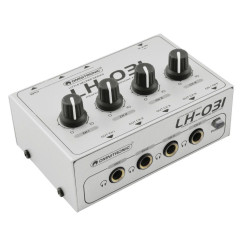
4-channel headphone amplifier, RCA and 6.3 mm jack
Distributes the signal of 1 audio source to 4 sets of headphones
1 stereo input (switchable to mono) via RCA, 3.5 mm and 6.3 mm jack connectors
4 separately controllable headphone outputs via 6.3 mm jacks
Technical specifications
Power supply: 100-240 V AC, 50/60 Hz
12 V DC 150 mA
Power connection: Mains input Coaxial power connector (M) Power supply cord with AC adapter (provided)
Frequency range: 20 - 20000 Hz
S/N ratio: >90 dB
THD: 90 dB
Klirrfaktor: <0,008 % bei 1 kHz
Impedanz: Eingang 100 kOhm , unsym.
Ausgang 51 Ohm
Gain: 20 dB
Max. Pegel: Eingang: +14 dBV
Farbe: Silber
Maße: Breite: 11,3 cm
Tiefe: 8,5 cm
Höhe: 5,5 cm
Gewicht: 570 g
Gerät
Gewicht: 390 g
Soulful dubs is Tm Shuffles outlet for sophisticated, atmospheric & deep house/techno. Soulful Dubs 02 A-side brings you Velvet by Tm Shuffle, Monoder and Tapani Rinne. Both two versions serve you soft tender moods backed by deep bass and strong earthy vibrations. Move your body into nightly hours, whether in the bedroom, balcony or a sweaty basement club. B-side takes you on a flight further commanded by Aleksi Myllykoski and Tapani Rinne. Slowburn turns the strobelights on and your flight into darkness is powerful and pleasant. Tm Shuffle has you diving even further into distance with his trademark echos and moods.
Building on the promise of his standout Vacuum EP, Brendon Moeller returns to Samurai Music to dial his expert dub techno up to 170 for a full-length trip. Moeller is celebrated as a versatile operator applying cavernous sound design and decades-deep machine soul to a broad sweep of tempos and styles, and his pivot to D&B territory is as natural as it is original. It's a perfect fit on Samurai, where palettes, pressure and rhythms are continually yielding fresh results in this highly fertile zone of modern club music.
It's no secret Moeller is a prolific producer, and following his initial connection with Samurai he offered up a vast folder of tracks created in this latest furrow of his production. The label has since sifted through and puzzled out a sonic narrative, first realised on the Vacuum EP in June 2024 and now extended with Further. For anyone keyed into the deep, techno-informed innovations taking place at 170, there is a logical connection to Moeller's take on the sound, but at the same time these tracks stand apart from anything else out there right now. In the particular textures, the unfolding arrangements and monolithic reverbs Moeller threads together with hypnotic poise, his accomplished legacy shines through.
Whether it's the snarl of a delay feedback pushed a little further, a soaring synth swell sculpted into artful noise or a particular shuffle applied to a particular drum rack, Moeller's tracks unfold with a masterful poise, hitting the sweet spot between club-spirited physicality for the deepest of dance floors and introspective headphone trips. Teeming with detail, swathed in soul and engineered to perfection, the inspiration driving Moeller is palpable across the LP, and it's resulted in some of his finest work in a career studded with highlights.
The prolific, virtuosic original Bjarki Sigurðarson returns to the concept album format, with ‘A Guide To Hellthier Lifestyle’. It’s the first LP to be released on Differance.
‘A Guide To Hellthier Lifestyle’ explores the psychological landscape of contemporary social issues, offering a sideways rumination on lifestyle dilemmas and wellness obsessions, presenting itself as a response to the modern condition. It combines storytelling with innovative sound textures – encouraging listeners to pause and contemplate the absurdities of contemporary life. Neither a critique nor an endorsement, it represents an honest exploration of our world through Bjarki’s sonic lens, gleaming a heart of darkness, but eventually finding light.
The album utilises hyper-stereo techniques, soothing melodies, complex audio structures, AIgenerated voices and sampled vocals – influenced by Coil, Genesis P- Orridge, and Paul Lansky. Bjarki investigates how specific frequencies can impact consciousness, awareness, mood, and mental state, thereby influencing our perception of reality. His vaporous sound design provides a listening experience that bridges the physical and imaginative realms; sometimes placing the listener in contemplative sanctuary, and at others making them lost – somewhere strange, uneasy, disconnected.
Bjarki on his Guide To Hellthier Lifestyle
“This new album has been two years in the works. It’s sort of my take on all the social weirdness and wellness obsessions happening right now. It kicked off with a track I started in California – the story of a soul that got born into the wrong womb. During that time, I was noticing more and more of this whole ‘wellness religion’ everywhere – people trying to sell you ‘good vibes’ and random people offering you life coaching sessions on Instagram who maybe have less life experience than a houseplant. All these apps that track our every move; it’s like they’re repackaging control and calling it ‘self care’. Capitalism in yoga pants. Thats when I started putting ‘A Guide To Hellthier Lifestyle’ concept together. A never ending, self improvement rabbit hole. We are all being sold this idea that we are not quite enough and we need to buy our way out to being better.
At one point, I took a break from the album and started working on another album full of satirical speeches, AI generated voices, where I create my own voices and type in some ideas of speeches, taking the piss out of wellness gurus and life coaches. I messed a lot with these AI voice generators, creating these deep, faux serious monologues. Proper weird stuff, but it cracked me up. Reminded me of the early days, when I was 13, making tracks on Fruity Loops, mucking around with text-to- speech generators. After the break I came back to finish ‘The Guide’ on a much deeper level.
I moved part of my studio to Latvia and continued in the countryside for few months. I realised that I just wanted something beautiful. So, yeah, this album is all of that. It’s spiritual, bits and pieces from the past, all these weird cultural moments, and whatever strange places my head goes. It’s a reflection, a rebellion, a bit of a piss take. But mostly, it’s just me, doing what I do.” - Duncan Clark
The album will be released only in its entirety, December 13th digi, with no advance singles.
Robert Hoods interstellares Projekt Monobox gab 2003 mit diesem Debütalbum gleichzeitig seinen Einstand bei Logistic. Der Meister des Minimalismus nimmt uns mit auf eine Reise durch eine andere Ecke seines Universums, irgendwo zwischen "Minimal Nation" und "Nighttime World". Eine tiefe und hypnotische Reise durch Zeit und Raum. Ein Meilenstein des Minimal Techno.
Introducing the Headliner R4, a 4-channel analog rotary mixer
designed to elevate your DJ experience. Continuing the
tradition of precision, warmth, and affordability, the R4 is
packed with enhanced features and top-notch components,
including genuine ALPS potentiometers, ensuring an unparalleled mixing experience.
Crafted with four Line inputs, three Phono inputs, and one
Mic input on four stereo channels. Each channel boasts
essential features like gain control with peak LED, a 3-band
isolator EQ, headphone cue selector, generous channel volume
knob, and a filter activation switch, granting DJs precise control
over their sound.
At the heart of the R4 lies the Master channel, equipped with
an analog filter, headphone monitoring, and a comprehensive output control section.
Seamlessly toggle between High Pass / Low Pass Filter modes
with Frequency and Resonance controls to shape your signature sound.
Featuring independent Master and Booth outputs, both
equipped with volume controls and balanced XLR and
unbalanced RCA connectors, the R4 ensures seamless connectivity across various sound systems. Dual LED level meters for the Master output facilitate precise monitoring and
adjustment of audio levels. Additionally, the mixer boasts a
dedicated Record output with unbalanced RCA jacks, and an
additional microphone input with level control located on the
front panel.
The Headliner R4 stands as a testament to precision and
warmth in the DJ realm. Whether spinning house, techno, or
the timeless funk/soul/disco beats, this versatile mixer elevates
your setup, ensuring your mixes stand out with exceptional
quality and control
• Three stereo channels with selectable Line and Phono RCA inputs and one channel with selectable stereo Line and mono Microphone.
• Each channel features Gain control with Peak LED, 3-Band Isolator EQ, Headphones Cue selector with LED, channel
volume control and filter activation switch with LED.
• Master channel features analog filter, headphone monitoring and output control section.
• Analog filter features selectable High Pass / Low Pass Filter modes with Frequency and Resonance controls.
• Genuine ALPS potentiometers.
• Headphone Cue control section features headphones volume control, headphones mix control (Cue/Master), and split
monitor switch.
• High current headphone amplifier with dual 1/4” and 1/8” jacks.
• Independent Master and Booth outputs with volume controls, balanced XLR outputs and unbalanced RCA outputs.
• Additional Record output with unbalanced RCA jacks.
• Dual LED level meters for the Master output.
• Microphone input with level control on front panel.
• Sturdy metal enclosure with stained wood side panels for a classic look
• Modular internal construction for superior audio performance
• External split rail power supply connected via locking Mini XLR connector.
• Push-button power switch on rear panel
Microphone Input
Nominal Input Level: -50dBu
Frequency Response: 20Hz – 20kHz (+/- 0.1dB)
THD + N: 100dB (A-Weighted)
Crosstalk: 100dB
Übersprechen: < -65dB
THD + N: < 0,05%
Kopfhörerausgang
Maximaler Ausgangspegel: 70mA/Kanal in 150Ω
Minimale Lastimpedanz: 32 Ohm/Kanal
Stromversorgung
Typ: Extern mit verriegelbarem Mini-XLR-Stecker
Eingangsspannung: 100-240v ~ 50/60Hz
Ausgangsspannung: +/-15V; 500mA
Spezifikationen:
Abmessungen: 320 x 310 x 106 cm / Gewicht: 3,5 kg
Known for the monolithic force of their music and their inventive production techniques, The Body"s albums are benchmarks in the expansion and evolution of heavy music. Tightly packed with deceptively nuanced arrangements and exhilarating, challenging distortion, their compositions are possessed of an unmistakably singular sound. The Crying Out of Things is no exception; a culmination of all that The Body have done before, highlighting their mastery of dynamic and monumental music that pushes toward the unmistakable sound of oblivion The Body have produced a wealth of groundbreaking collaborations with the likes of Full of Hell, Thou, Uniform, BIG|BRAVE, OAA, and Dis Fig. The duo"s benchmark albums have, over the past 2 decades, changed the perceptions and directions of heavy music. The Crying Out of Things" embrace of noise is a comprehensive display of the multitude of expressions possible with abrasive sound, a skill that The Body have pioneered and refined. "I think for us the key to the way we use noise is, it"s not the only element," says Buford. "You"ve gotta really listen if you"re into noise. But it also has to have dynamics. Where, say, BIG|BRAVE (who have a similar ethos) expresses it in this more intellectual, minimalist way, The Body comes from an instinctual, maximalist way. We"re trying to cover it ALL." The Body stand alone in their ability to connect disparate influences and collaborators into a wholly original, potent and singular work. Alongside producer/engineer Seth Manchester, the duo"s voracious and omnivorous musical appetites have pushed the studio as an instrument into new avenues to conjure profound feelings from the music. The Crying Out of Things cements The Body"s place as a leader of heavy new music, their boundless creativity, their defining ability to convey anguish, created with a visceral clarity to devastating impact.
Mysterious, multifaceted collective i Häxa have unveiled their epic self-titled, full length debut; a ground-breaking conceptual double album shaped by a collision of ancient gods and bleeding-edge technology_ Released as four distinct Parts over the course of the year, `i Häxa' now comes together as a singular vision that weaves together genre-defiant soundscapes, abstract cinema and ancient meteorological mythologies from singer-songwriter and visual artist Rebecca Need-Menear (also of electronic alt-rock duo Anavae) and forward-thinking producer Peter Miles (Architects, Dodie, Fizz). i Häxa is a ritualistic dissection of the world as we know it, a forceful separation of the monotony of modernity from the rites and rituals that for centuries formed the foundations for who we are, how we came to be and where we claim to belong. Disjointed fragments of time collide. Two sides, one of logic and one of chaos, seeking unity and balance through an expression of freedom. This is i Häxa. Whilst the album is composed of four distinct movements, each consisting of four distinct tracks themselves; pulling them apart into easily digestible, standalone singles isn't an easy feat and, as is now clear from the project's sprawling cyclic nature, was never the intention. In an age of fast fun and instant gratification, the ties that bind these works together are intended to transcend tracklisting. With aural, visual and lyrical themes freely intertwining, i Häxa is something to be consumed whole; just as it will, in time, consume you. Charting an existential journey to the very depths of what makes us who we are, with every dark corner illuminated in glitched out, discordant glory; i Häxa is a project years in the making that draws simultaneously from rituals for old gods and the modern day deification of data. i Häxa is both heartwarming and horrifying; i Häxa is ancient history and hyper-real; i Häxa is everybody and no one at all. Check out if you like Radiohead, Julie Christmas, Agnes Obel, Bjork, Fever Ray, Massive Attack, Dead Can Dance, Emma Ruth Rundle, Jenny Hval, Cult of Luna, Eivor, Zola Jesus, Marissa Nadler, Soft Moon
The debut recording from the duo of multi-award-winning Scottish author David Keenan and Bruce Russell, the guitarist from the greatest underground rock band of the late 20th century, New Zealand’s The Dead C, was recorded live in Christchurch, NZ, as part of the WORD festival in August 2023. A series of live improvised settings that pair readings from Keenan’s monolithic and critically-acclaimed modernist masterpiece, Monument Maker (White Rabbit 2021), with guitar and electronics from Russell, the music takes off on the kind of post-VU fantasy of punk-primitive free music posited by Russell in projects like A Handful of Dust while expanding on Russell’s no-technique blues w/scalpel sharp riffs and aformal blats of pure electricity that match the religious eroto-mania of the text. Keenan reads w/shamanistic intensity and with a sonorous, incantatory rhythm, while Russell conjures the very ghost of the book straight out of the air. Think the early Patti Smith/Lenny Kaye spoken word/guitar jams informed by religious painting, Bach cantatas, Pierre Reverdy, Goya, Charles Olson, Arthur Doyle and Rudolph Grey. Features full colour photography by musician and artist Heather Leigh taken in-situ during the writing of Monument Maker in France in 2018. Bruce Russell is a practitioner in sound, who for forty years has been a member of The Dead C and A Handful of Dust. He mixes rock, electro-acoustics, noise and improvisation in equal measures. Also directed two of New Zealand’s vanguard independent labels, Xpressway and Corpus Hermeticum. His solo guitar practice reconfigures the blues as a form of improvisational auto-destruction. He is also a writer and his next book is titled ‘Rock’n’roll: my part in its downfall’. David Keenan is the author of six novels; This is Memorial Device (Faber & Faber) which won the London Magazine Prize for Debut Fiction and was shortlisted for the Gordon Burn Prize; For the Good Times (Faber & Faber), which won the Gordon Burn Prize and was shortlisted for the Encore Award for Second Novels; Xstabeth (White Rabbit), which was shortlisted for the Dublin Literary Prize; The Towers The Fields The Transmitters (White Rabbit); Monument Maker (White Rabbit), which was a Rough Trade Book of the Year; and Industry of Magic & Light (White Rabbit). Edna O’Brien has said of him “I sometimes think David Keenan dreams aloud. His prose has the effortless, enigmatic, unsettling quality of dreams… reading him feels like being cut open to the accompanying sound of ecstatic music.”
. By his early 20s, Kurious was already an in-demand voice on the mic. His 1994 major label debut album, A Constipated Monkey, is a classic of its style, marked by heavy beats and nimble rhymes that are razor-sharp yet frequently hilarious. Despite being hailed as one of hip-hop's most compelling lyricists, he didn't release another solo IP for the rest of that decade, but he continued to be sought after. Rap fans the world over know him for his verse on "?," one of the standout songs from his longtime friend and collaborator MF DOOM's heralded Operation: Doomsday. As he prepares for the release of his new album, Majician-the nickname his peers blessed him with a generation ago-Kurious is well on his way to establishing the legacy he's long deserved. The LP, which was executive produced by MF DOOM before his passing, is a mesmerizing blend of technical wizardry and personal introspection. Take "Eye of Horus," where the pulsing drums convey an urgency that borders on panic; Kurious weaves a complex tapestry of history and insight, but does so while ducking through and under each pocket in the beat. Produced in its entirety by Mono En Stereo, Majician is filled with songs like "Eye of Horus," which dance on the line between confession and confrontation. "Separation Anxiety" is a personal bloodletting in the form of lyrical exercise; "Par For the Course," which features the elusive Mr. Fantastik, makes drum breaks from the early Reagan era sound totally revitalized. Through the radical amount of work Kurious put into the writing and recording of this material, he's removed all ambiguity from the question of whether he can stand as one of the premier MCs of his time.
- A1: John Martyn - Small Hours
- A2: Stephen Whynott – A Better Way
- A3: April Fulladosa - Sunlit Horizon
- B1: Sylvain Kassap - Plancoët
- B2: Manu Dibango - Night In Zeralda
- B3: Henri Texier - Hocoka Time
- B4: Nivaldo Orneleas - O Que Ha
- B5: 808 State – Pacific State (Massey’s Conga Mix)
- C1: Magma - Eliphas Levi
- C2: Homelife - Stranger
- C3: Michael Gregory Jackson - Unspoken Magic
- D1: Dora Morelenboum - Avermelhar
- D2: Simone - Tudo Que Você Podia Ser
- D3: Experience Unlimited – People
- D4: Otis G. Johnson - I Got It
- D5: Mel & Tim - Keep The Faith
Oxblood Coloured Vinyl[36,09 €]
Exploring late-night, after-hours meditations on sound; ‘Everything Above The Sky (Astral Travelling with Luke Una)’ is a new compilation by the titular DJ, promoter and enigmatic cultural curator. Off the back of the E Soul Cultura phenomena, this compilation comes at a timely point in Luke’s rich career as he soars the heights of playing all over the world. Avoiding any chance of his sound being pigeonholed, Luke has put together a tracklist of songs and music that have a transcendental feel, after coming off the grid, going back to source, outside the city walls .
Music has long been believed to aid out of body experiences and many of us have searched long and hard for a combination of those elusive ingredients that might alleviate some of the monotony of everyday life, our daily routines and obligations, and those things that seem to block us from the spirit of the universe. In this collection, Luke selects music with all the right ingredients in just the right quantities, allowing the listener to engage in an esoteric journey of enlightenment through sound. Being a prolific collector of music, Luke initially delivered enough tracks to compile several compilations, making the licensing process the biggest effort to date for the label. The music moves softly and slowly, never becoming too intrusive, exemplifying the wonderful elevating properties of simple songs played from the heart.
Luke’s Everything Above The Sky manifesto reads, “Astral Travelling in the meadowlands with acid folk, spiritual jazz, around midnight hocus pocus, cosmic psychedelic soul, magical spellbound whirling swirling love songs, Brazilian ballads of light into machine soul gospel utopia dreaming, Balearic bossa, Outer Space ancient African drum, the breath of trees, escaping the big bad modern world, gathering round winter fires, walking amongst the bracken in Padley Gorge in late summer twilight, overlooking the Hope Valley, escaping ego, detaching and finally letting go amongst the stars with the slowly floating people. It’s beautiful beyond. Everything above the Sky”.
Beginning his career as an original Sheffield house young blood in the mid 1980s, Luke’s move to Manchester and partnership with Justin Crawford saw the birth of Electric Chair, a cornerstone cult night in the UK underground club scene. Then came Electric Elephant, a Croatian festival paying homage to their wild eclecticism from Balearic to Brazilian to É Soul, house, disco and techno. Luke’s much loved, long-running Homoelectric night and more recently Homobloc sell out festival for 10,000 souls has been at the forefront of Manchester’s LGBTQ+ cultural landscape. Luke’s Friday evening show on Worldwide FM captured imaginations and became a cult four-hour must-listen monthly journey for fans all over the world. Today, Luke remains, as ever, at the forefront of a changing milieu, pairing the momentous legacy of Manchester’s 80s and 90s scene with the delivery of what today’s club communities need to get down.
The thirteenth drop from Curtis Electronix comes courtesy of veteran of the electronic music scene. Edward Upton has been producing music since 1994 and much has changed since he unveiled his debut release under the DMX Krew alias. Warp Zone LP showcases the great mastery of his studio, his technical expertise and his exceptional ability to create monolithic soundscapes using very few elements. Each layer contributes to a rich, immersive experience, each element resonates with depth, highlighting his deep understanding of club music, sonic texture and space.
2024 Repress
The unassuming maestro of techno music Donato Dozzy returns to Tresor Records on its 30th year with a new EP entitled 124.
The record follows a majestic appearance on the Tresor 30 anniversary compilation and his expert devotion to the Roland TB-303, Filo Loves The Acid. True to form, 124 meddles sharp rhythmic minimalism and diverse textures, each track pushing at the epiphanic threshold as the boss of Spazio Disponibile allows his deeply intuitive productions to take effect.
messy kafka world introduces a frenetic and concentrated atmosphere of rhythmic forces, hallucinatory and euphoric in effect. Its dizzying staccato loops are given structure by strengthening beats and bleak synthetic pillars. synthi chase emits radical powers, as buzzing rhythms and monotone synths make raw gestures towards altered states. It shares a kindred spirit with cassiopeia 36, seen in particular through its determined and primitive pulses, nested within wobbling wood percussion and nervous synth repetitions. wooden dolls don’t cry stamps a warm groove, its tempered percussion taking centre stage as shimmering melodic loops threaten spiralling feedback.
These dark, hypnotic tracks are flawlessly programmed to cast mesmeric momentums onto club floors and into loosened limbs. 124 represents Donato Dozzy ever-expanding his powers and musical freedom. His innate groove and inventive sound design push minimal and serene techno with a substantial weight and voice that sets him apart from others.