
Buscar:monologue
- 1

11
Described as a musician's musician, Allen's sound is built on a foundation of pop, rock, Americana, Roots and Blues influences. Jon Allen has a soulful, whiskeysoaked voice and a striking gift for melody. He has never been content to be pigeonholed, as demonstrated by the eclecticism of his albums to date.Of the album Jon writes ''The last few years have felt like a pressure cooker slowly increasing to boiling point. There is sense of threat and a feeling of impending doom. Living in a large urban centre during a global pandemic brought out a sense of paranoia. We became more aware of our need for space, our need for silence and to be close to nature to get above the noise of a city. I'm absorbing all the time and everything from the famous Will Smith slap to missing people inspired the songs. How close are we all to the tipping point? What are we likely to do in heat of the moment? What will stress do to us when pushed? But light
follows dark, and there are the moments of simplicity and you can count your blessings for the simple things life has to offer".

In the last ten years Jon has carved out a niche as a recording artist and live performer supporting such acts as Damien Rice, Brian May, Seal and Dionne Warwick whom he supported at the Albert Hall. His songs and distinctive voice can be heard across films and TV both here and in America. In the UK he has appeared on the iconic Later With Jools Holland TV show and as part of the BBC’s coverage of Glastonbury. When not working on his own material Jon has written songs for Petula Clarke, Engelbert Humperdinck and Record producer Guy Chambers. “…meanwhile” is Jon’s new album, packed with radio friendly hits (CD format released 21/05)


15

4
The motorcity boys are back with LOVEiT003 a fresh sounding 4 tracker strongly reflecting the diversity of styles found at their parties. lds kicks thing off with 909 To Heaven, a jacking and balearic workout with a rootstrax, Chicago style bassline keeping the floor hypnotised until the small hours of the morning. Snares, Kicks & Rhodes is a more laid back jam. Lazy warm pads and a slow winding sub bass rise and fall intermittently only to be interrupted by a lo-fi distorted bass that snaps you right out of that trance. Nico Brun opens the flip side with an absolute banger, hazily reminiscent of that 90's warehouse rave. lds and Nico Brun close the EP with an atmospheric collaboration perfect to start or end the night with. Splashy beats keep up the footwork whilst pulsating synth sounds slowly wind together and drop with a beautifully crafted sample that's guaranteed to bring some sexyness back to the dance floor. This EP will definitely be a regular addition to your record bag to spread those warm summer party sounds. - Bruno Farace Early Support: XDB (Echochord / Dolly): "Debut ep" Congrats! End Monologue is my favourite.

11
In discotheques and dark rooms across Europe, Boys’ Shorts have earned the trust of the queer and wider clubbing communities as generous stewards of a timeless sound that, like themselves, never stops moving forward. The duo of Vangelis and Tareq initially met at an underground club in their native Greece. Sensing a rare sonic connection, the pair became friends, forming Boys’ Shorts to meet again and again, travelling from their adopted cities of Thessaloniki and London to appear as far afield as Berlin’s Panorama Bar and New York’s Le Bain, as well as supporting Goldfrapp and Hot Chip on tour. Their motivation? In their own words, “we make people dance!”
Following years of gradual, thoughtful studio sessions, and EP releases on tastemaking electronic labels including Phantasy Sound and Live At Robert Johnson, Boys’ Shorts establish their own imprint, ALL SORTS, in order to deliver a fantastically ambitious debut album, ‘What Does It Take To Make These Men Happy?’
The LP opens with the grandiose, cosmic vista of ‘The Space Between Us’, a classic passage of strings and synthesis, before the shared Boys’ Shorts vision falls back to earthier territory with deep groove of ‘Let’s Fall In Love’, mixing universal sentiment with a patient vision of human potential and the voice of Greek electronic pioneer, K.BHTA. ‘Come’ aligns with NYC’s Michael Cignarale, offering an excitable invitation to the mind and body sculpted by the way of a throbbing, warehouse-sized statement of nineties house sensuality. Channeling heroes Lowe and Tennant at their most introspective, ‘Short Life’ maintains the dance, yet dares to ask, “what if the parties aren’t enough anymore… Can you ask for something more?”
Out of the pet shop and straight into the strobe lights, ‘Disco Romantica’ makes true on the promise of its title, a lovelorn monologue giving way and slipping into rave stabs and whirring synthesis that looks forward to a memorable, emotionally-charged night ahead. Underpinning this feeling of anticipation, ‘Going Out Hoping To See You’ introduces the voice of Justin Strauss to Boys’ Shorts' musical world. A certified icon of club culture, spinning from The Mudd Club to modern day DJ booths, Strauss’s generation spanning experience of nightlife leans into the fundamentals of human connection and the pleasure of musical discovery, wrapped in irresistible chug.
Another transformative figure in club music, Fischerspooner’s own Casey Spooner dips into French for the Motorik cyber sleaze of ‘MECANIMAUX’, their own vocals pitching up and down with playful EBM abandon. ‘Montage’ offers a different kind of composition, conjuring an ecstatic club banger that finds inspiration in nineties indie rock motifs alongside the rave scene, while ‘Run’ promises to blow out sound systems before its weighty electro bassline succumbs to waves of glistening synths.
Such bombast into beauty perfectly sets up the record’s blissful conclusion; ‘The Stars Are Out For You’ is electro-pop so delicate as to heal aching feet (and mend broken hearts), while offering the final tender moments of the album as a form of tribute on ‘Untitled (For Mitsi)’. It’s a thoughtful ending to a thrilling trip through a shared passion for electronic and pop music in all its glorious potential. What does it take to make these men happy? It’s a pleasure to find out.


- A1: Be Your Husband (Live)
- A2: Lover, You Should've Come Over (Live)
- A3: Mojo Pin (Live)
- A4: Monologue - Duane Eddy, Songs For Lovers (Live)
- B1: Grace (Live)
- B2: Monologue - Reverb, The Doors (Live)
- B3: Strange Fruit (Live)
- B4: Night Flight (Live)
- C1: If You Knew (Live)
- C2: Monologue - Fabulous Time For A Guinness (Live)
- C3: Unforgiven (Last Goodbye) (Live)
- C4: Twelfth Of Never (Live)
- C5: Monologue - Café Days (Live)
- D1: Monologue - Eternal Life (Live)
- D2: Eternal Life (Live)
- D3: Just Like A Woman (Live)
- D4: Monologue - False Start, Apology, Miles Davis (Live)
- D5: Calling You (Live)
- E1: Monologue - Nusrat, He's My Elvis (Live)
- E2: Yeh Jo Halka Saroor Hai (Live)
- E3: Monologue - I'm A Ridiculous Person (Live)
- E4: If You See Her, Say Hello (Live)
- F1: Monologue - Matt Dillon, Hollies, Classic Rock Radio (Live)
- F2: Dink's Song (Live)
- F5: Monologue - The Suckiest Water (Live)
- G1: The Way Young Lovers Do (Live)
- G2: Monologue - Walk Through Walls (Live)
- G3: Je N'en Connais Pas La Fin (Live)
- G4: I Shall Be Released (Live)
- H1: Sweet Thing (Live)
- H2: Monologue - Good Night Bill (Live)
- H3: Hallelujah (Live)
- F3: Monologue - Musical Chairs (Live)
- F4: Drown In My Own Tears (Live)

4
Monologues Records concludes its celebration of a decade on the dancefloor with a punchy selection of raw, underground tracks that channel the infallible sound of acid through varying refractions. DECIUS / Paranoid London's Quinn Whalley and Posthuman's Joshua Doherty team up as True Pleasures for the throbbing crunch of 'Pump', Japanese wizards Iori Wakasa and Keita Sano go oddball disco on 'Teachers', label boss Ben Gomori jacks the groove on the hip house flavoured 'Gomorish' and Burnin Music chief Pegasvs nails it on the 303 electro of 'Ridley Road Market Preacher'.

6
Tell me something that makes a difference’ demands Gaia Weiss in Tenashee’s debut single. Something that immerses crisp melody into stodgy bass, collides warm dub with icy sound design, all the while slowly expanding like a supernova. ‘Tell me something’ takes the sounds and styles of the past and places them in a gravity-free future, while evoking an ethereal and precise atmosphere.
Gaia Weiss is an actress - not a singer by trade - and summons Charlotte Gainsbourg & Brigitte Bardot to deliver the spoken words as a fractured monologue, guiding us through splintered visions, and detuned chord progressions, in pursuit of the seemingly unattainable; ‘something that can make a difference’.
With this six-chapter journey on the newborn Street Cinema label, Tenashee (DJ Tennis and Ashee, Manfredi Romano and Joseph Ashworth) have crafted and refined - like two artisans from another era - a unique creation: a creature that reconnects electronic music with complexity and richness, fully aware of hyper-contemporaneity, yet capable of resisting surrender to it.
“Blink To Check It’s Real” featuring artist Campbell King - poet and beautiful soul - immediately immerses us in an electronic reality check, with 90s-inspired tweaking and glitching, all woven together with a poem from Campbell that contrasts the dizzying intensity of lust and connection with the comfort of being able to ‘loosen their grip’ and ‘make it safe.’
In ‘I Can See Now,’ Aurelia Ray (the stage name of pop-music-writing powerhouse Caitlin Stubbs) evokes a sense of serenity, pure love, and trust within a refined, spacious piece of minimalist electronica. “Blindsided” is a journey through pure, airy abstraction, a dance floor companion to the glacial trip-hop instrumental “Cold Logic”.
Finally, in “Memories,” the last track in the setlist but actually the first song the duo worked on, conceived and developed five years ago in 2020, the voice of Chinese German artist Mona Yim transports us to a place that is both emotionally introspective and intense, balancing on the edge between desire and reality.
“You should know where I go when I dream,” she states.
Over the course of five years, through exchanges, writing sessions, and fine-tuning in Paris, London, Saint Martin, and Ibiza, the world evolved, but Tenashee’s musical mission remained unchanged. The mini-album reflects the musical backgrounds of its two creators, their unique sensitivity to the present, and their desire to challenge each other with sharp, emotional, yet weightless styles and sounds. It is no longer just DJ Tennis; the successful DJ touring worldwide, organising events, and founding influential labels like Life & Death; nor only Joseph Ashworth with his scientific approach and creativity as a
producer and writer in the competitive world of pop; nor Ashee, with his releases on Circoloco and Aus Music. No, Tenashee is something more.
It is a duet searching for a thread that connects electronic music—past, present, and future—through experimentation, craft, and artistry. The moment has truly arrived for Tenashee to ‘tell us something.’


Greville returns to Mad Habitat, consorting with the enigmatic Lonely Voices to realize a four-song suite steeped in vivid acoustic psychotomimesis. Each track is underpinned by Greville’s unerring sensitivity to sonic texture and atmosphere. The snappy, febrile drum programming of “I Miss Terry” is a deft counterpoint to the thrumming bassline. The chords of “Purgatory” swirl around the stereo field like hypnopompic hallucinations. On the flip side, vocals bleed in and out of the mix, spectral and elusive, threading through both tracks. “Electric Push” follows the monologue of “Dad’s Folk,” nudging it into even more surreal territory. It evokes a chance encounter between Ifach-era Baby Ford & the occult industrialism of late-period Coil.


For the fourth release we called on another Italian talent, Giuseppe takes us back to the sounds of the late 80s, warm sounds and powerful grooves influence every track, Italo house, post punk, techno, synth pop are some of the nuances that characterise this record.
hardware : Yamaha DX7 - Yamaha TG 500 - Korg monologue - Jomox xbase 999 - Alesis SR 16 - Behringer crave - RME Fireface 800 - Alesis 3630 - lexicon mx200 - Mackie 32.8
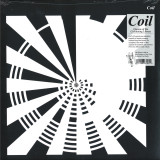
Queens Of The Circulating Library stands alongside Time Machines and Nurse With Wound's Soliloquy For Lilith as a post-industrial pinnacle of sensory-warping long-form drone.
Crafted by the distilled duo of Thighpaulsandra and John Balance, the 49-minute piece unfurls in swirling, cyclical waves, tidal as much as textural, channeling the spirit of levitational minimalism pioneered by La Monte Young. Touted as the first part in "a continually mutating series of circulating musickal compositions" upon its initial release in 2000, the album remains a compelling case study in Coil's exceptional capacity for mutation and extremes. The theatrical introductory monologue delivered by Thighpaulsandra's mother - a career opera singer, in her 80's at the time of recording - sets the stage for a grandiose ascension. Written by Balance, the text is declamatory but dreamlike, refracted through megaphone echo: "Return the book of knowledge / Return the marble index / File under "Paradox" / The forest is a college, each tree a university." As her voice fades, the lulling synthetic infinity deepens, congealing into transient crests of volume and haze, like slow-motion surf misting in moonlight. Thighpaulsandra describes their aesthetic intention as a "bliss out," static but shape-shifting, an amniotic drift towards an eternal vanishing point. A supreme sonic embodiment of the slogan on the sleeve of Time Machines, two years prior: "Persistence is all."

4
"Killer edits!" - Gilles Peterson
Monologues boss Ben Gomori has found acclaim far and wide with his official edits of African gems for labels like Sterns Music and Analog Africa (for artists including Orchestra Baobab, Amadou Balake, Oby Onyioha). Here he rounds up four of his reworks of tasty tracks from artists across the Afro-Caribbean spectrum on four edits licensed from the good folk at Mr. Bongo, Soundway Records and Analog Africa.
South African legends Marumo's joyous 'Khomo Tsaka Deile Kae' gets a good juicing, full of triumphant energy, while Black Truth Band's infectious 'Umbala' is stripped back to a slinky, bumping disco groove. An exuberant slice of 1980s Camerooon comes from Emmanuel Kahe Et Jeanette Kemogne on 'Ye Medjuie', where rousing trumpet refrains meet undulating bass funk. Peter Britto's gorgeous lo-fi soca anthem 'I Want Your Love' rounds off the package, its sweet melancholy given an extra bit of energy for maximum dancefloor effect.
Support comes from the likes of Gilles Peterson, The Blessed Madonna, Make A Dance and Tigerbalm.
Or

4
Nottetempo are welcoming a new artist into their fold. Caramel Chameleon will be known already to many, his fluid brand of braindance having graced imprints like 030303 and Undersound’s NOUN sublabel. The sonic shapeshifter, Francesco Pio Nitti, arrives at the Milan label with Compact Demons.
Distorted beams and a steady kick introduce “…And You Feel So Lucky.” Drums descend into a glitchy soup of snare rolls before gentle notes take hold, a melody of soft synth warmth is dappled with breathy samples. Pound and thump are given a full workout in “Monologue Duetto,” echoes of glowsticks glimmer before the floor is calmed by silken keys. “d-_-b Future Is Blind” opens with oozing basslines and skittish beats. Tender pads and playful melodies bob and weave, breaks creating generous spaces for string-filled meditation to bloom in this absorbing work. Kicks return for “Inter27wined (cottage mix)”, a nervous energy soothed by globular synth-lines. A late evening feel permeates the piece, a comfort countered by Nitti’s bending and stretching of percussive patterns. For those needing a little more, Nottetempo have drafted in Legowelt for a remix of “…And You Feel So Lucky.” The track, available digitally, sees Wolfers sideline his own trademark sound to focus on the essence of the original. The result is considered interpretation, beats are relaxed and steady with a touch of analogue dreaminess coming to the fore.
There’s a sense that Caramel Chameleon is building up a head of steam. With each release, the Italian artist is further honing his sound as he crafts ever more intricate melodies and structures. Compact Demons is proof of this. In the same breath, Nottetempo continue to fortify their catalogue and roster with a release of excellent electronics. Quality cuts from Milan.

9
"Trauma and the shock effect of it - the leftover residue of harsh reality so impactful that it shapes the way you imagine, envision and calculate your position in regard to everything and everyone around you.
A new type of psychological radius evolves. Boundaries are reinforced. Relationships are recessed. A damaged brief system float aimlessly. Vulnerable to and for anything reminiscent of a worthy cause. The truth about facts became satirical monologue, dead end expressions that have no critical arrangement. We all know someone that either has been or will be"
- Jeff Mills
The Eyewitness reveals a habitual pattern in the way it symbolizes a mirror reflection of mankind in our most vulnerable moments. It is the forthcoming album of Jeff Mills and it is composed from the perspective of an unknowingly complicit bystander and it is at the very least, psychologically pathological in nature. What this release is essentially proposing is an admission to the diagnosis that no one is immune to shock and trauma. Not the accuser or the accused. And this abnormality s culturally and generally transmittable - handed down and passed over to one another disguised as righteous theatre.
As an artist, what Mills is notoriously known for is the perspectives and paths he chooses to approach hefty, complex, and sometimes, awkward subjects. The best way to recognize the narratives of his mostrecent album works such as "The Clairvoyant", an eerie transcending album that plays through like a Seance for creating a bridge to reach another dimension or "Mind Power Mind Control", a cautionary warning about the consequences of supporting deceit, mind control and mass mental persuasion is to start by first taking a moment to look at yourself in a mirror. He's suggesting sound as a reflection and what we might be able to see in ourselves. Proposing that we might be the problem and a solution. In the same vicinity of his recent solo albums, the direction, scope or target of The Eyewitness is first about us, then about it.
More than the few previous albums he's released lately, this one has a unique relationship in terms of imagery and visual treatments that represent the concept. The front cover shows Mills, neatly dressed in a black suit that appears to be caught in the act of doing something methodically as he cohorts to supportwith a bright white type of surgical light towards the viewer. Stark and in the act of.......something offensive - it could be some type of hypnotic machine at work. Other photos show him in darkened spaces. Remote and deep in thought.
Other clues are the titles of the tracks such as "Sacred Iridescent Mirror (The Pledge)": this refers to the act of installing value and credit to something ambiguous and "Menticide" which means the systematic effort to undermine and destroy a person's values and beliefs. In the opening track, "in A Traumatized World" we hear the narration spoken by Mills. In a language he specifically created for this album. It's a dialect that is designed to be undistinguishable, but spoken with a compassion that it could be sympathized with. In the latter part of the track, it reaches a climatic point. Meaning, "it" has happened. And the album is the evidence.
On extra note:
In this day and age,it's comforting to see a musician like Jeff Mills administer music conceptually without any conditions attached. The artistry and craft of using sound and rhythm to bring forth a concern, a warning or the result of a diagnosis to the listener.

5
Another EP from the vaults of West Coast rave scene specialists, Michael Kandel and Tom Chasteen. A side has two versions of a fast passed dancefloor oriented production tactfully presenting woven layers of rhythmic elements underneath dubbed out effects, “Crazy Jane” possibly channeling moments of Debbie Harris' “Heart of Glass” on LSD. B side gets more aggressive on many levels with a bit of a downtempo Gabber feel to it, raging synths and generous cymbal action all around, 3 versions, one of them featuring samples from Jimmy Stewart's 1946 monologue in “It's A Wonderful Life”, another one with very non-western elements mixed in, and finally Juan Ramos bringing a very dancefloor friendly version with a slight Euro-Dance late Hi-NRG edge to it.
"Recorded in Heaven".

The Lovely Eggs return with new single 'My Mood Wave' to be released February 9th digitally & on a 7" single to follow March 15th. New album due in May. It's been four years since the world heard any new music from our heroes in psych-punk-power duo The Lovely Eggs. Four long years since the release of their Number 1 Independent Chart topper, 'I Am Moron'. But it's not like they've been lazy, oh no. They made their own TV series EGGS TV and hosted it on YouTube, they duetted with Iggy Pop, piled into their van and played a load of sold out gigs and festivals, spent two years fighting to save Lancaster Music Co-Op (a community rehearsal rooms and recording studio where they live), and then they got their heads down and wrote a new album_ Due in May, the new Lovely Eggs album was recorded by the band at home in Lancaster with production work from Flaming Lips producer Dave Fridmann. They flew to America in December 2023 to mix the album in Fridmann's studio in upstate New York and we'll all get the chance to hear the first results of these sessions on the 9th of February, when the band will unveil the album's first single, 'My Mood Wave'. "My Mood Wave is kind of an internal thought monologue," says Eggs singer and guitarist Holly. "It's a brain on a surfboard, trying to navigate the barrage of daily shit that gets washed up each day. It's a coping mechanism handbook for people who sometimes find the world too much." 'My Mood Wave' has an uplifting contemporary feel, haunted by a West Coast retro vibe that pulses and shimmers with a gorgeously addictive melody that will float around your head for days. Although the single will be released digitally on February 9th, there will also be a physical 7" with the customary mind-bulging artwork from Casey Raymond, and an exclusive track tantalisingly titled 'Crab Shell' on the flipside. The 7" will be released on Aquamarine transparent vinyl and in true Lovely Eggs style. More details on The Lovely Eggs new album to follow...

"We entered the shadowy mouth of a new space, descending into a realm that precedes the underworld, the arcane, far from our time. We met beasts that gave us lessons about their language which we started learning without grammar."
'The animal world is a constant in the work of Milan improvisational duo Rosso Polare. If Cani Lenti was guided by the diaphanous birdsong integrated into their sparkling mix of folklore, ambiences and occasional humming, on Bocca D’ombra the themes go darker, textures are harder to pin down and the animal presence takes on new connotations.
Instead of an anonymous, patchworked outdoors we enter a cavernous space that invokes the collective unconscious with bestial and funereal undertones, as the animals take on the role of the psychopomps, ancient guides through the shadow realm.
The album is influenced by Timothy Morton’s Dark Ecology, a thinker who sees the constant exchange between the human and natural world as an ongoing dialogue, the two influencing each other, in a series of reverberating loops. This looping is also reflected in their compositions, where improvisations with traditional instruments like electric and acoustic guitars, monophonic synths, horns or flutes meet natural noise-making tools like branches, rocks or nuts that amount to lugubrious, often dissonant textures. Bocca D’ombra is built on a series of whispers, breaths, panting and rustling, creating a feeling of closeness sometimes verging on the claustrophobic, ingeniously set against sounds evoking space – fireworks crackling, crows echoing, church bells reverberating, indistinct cries from a children’s playground.
Distance and repetition are deeply ingrained in their own understanding of sound and their surroundings, becoming the building blocks of their practice. Just like Gregory Bateson in the ‘70s, the duo believes in a more romantic approach to ecology, seeking a porous border between self and environment, human and animal, internal monologue and external ambient hum.
If earlier releases were noisier and denser, Bocca D’ombra is tight and focused - every sound and melody is given room to breathe and develop on its own, enhancing the haunting, otherworldly aspect of the music. The result is heady, intoxicating mix which sublimates chaos into sparkling compositions of contemporary animism.'

Blue Vinyl / Vinyl only
ix3m and Denis Andreev team up for a two track release on 123.ro. They have shared their common interests and taste in music for the best possible result.

11
"We Are Power", Galaxian's first album in over a decade, cuts a new path. On this Foul-Up and Shipwrec joint release, Kastner presents a rumination on the confrontation and power clash between humankind, nature, the spiritual and mechanistic industrial growth societies. What is authentic power? What is granted power? What is innate natural power? How is power accessed, wielded, utilised, felt? On this album the blistering beats and razor-edged rhythms that characterise the Glaswegian's productions have been softened, the menace melted, the angst soothed (well almost.) Across eleven tracks, distinct audio vistas are surveyed. The human form takes centre stage from the opening monologue of "Out of Balance" with the entire record searching for balance between humankind, nature, orthodox culture & the machine. At times the machine wins. "We Are Power" is a corruption of voice, samples chopped, sliced and fed into controllers and sequencers to produce a dense decibel wall. That wall grows ever higher in the terrifying drone of "Anatomy of a Modern Lie." At other points, a perfect symmetry between artist and tool is found. The racing interchanges and pulses of "Universal Truths" give rise to dawning reprises and warmth. For those after an electro fix, Galaxian abides. The speed snares of "Messianic Delusions" or dripping drums of "Fields of Meaning" are soaked in the history of machine music, yet they are grander in their delivery and more nuanced in their composition. Fresh territories are explored, the playful solar dreams of "Without Form" or the cinematic grandeur of "In Reverse". This album is unmistakable Galaxian, it marks a high-point and brings with it a culmination of intense expression.

- A1: Extended Monologue Mix
- A2: Reprise
- B1: Dimitri From Paris Tsop - The Sound Of Paris - Remix Club Dub
- B2: Dimitri From Paris Tsop - The Sound Of Paris - Remix Pts I & Ii Instrumental (Vinyl Edit)
- C1: David Penn Extended Remix
- C2: Catz 'N Dogz Extended Pride Mix
- D1: Dimitri From Paris Tsop - The Sound Of Paris - Remix Pts I & Ii
- D2: Accapella
8
The Shapeshifters’ studio mastery and dedication to his craft has resulted in singles that stand up alongside golden era disco records as much as they sound fresh on dancefloors today. His rich relationship with Glitterbox has yielded instant classics that epitomise the label’s ethos for preserving disco’s mission to uplift and empower, especially with his latest release and debut collaboration with the Grammy, Tony and Emmy Award-winning Billy Porter, ‘Finally Ready’. Now this special 2 x 12” vinyl package includes an array of remixes from some of dance’s most esteemed artists. A real record box essential, the first disc features the original, as well as previously unheard versions from The Shapeshifters and two remixes from disco master and Glitterbox regular Dimitri From Paris. The second disc features housier, club-friendly versions from long standing friend of Defected David Penn and ubiquitous Polish duo Catz ’N Dogs, as well as Dimitri’s ‘The Sound of Paris Remix’ and the Acapella, an essential DJ tool. This is a stand-out package, with remixes you will want to keep hold of, securing ‘Finally Ready’ a position as a modern-day disco essential.

The fourth single from Okinawa Delays (singer Satoko Ishimine and Okinawa-based producer Mizuki) is I Can't Sleep, a collaboration with Tokyo-based Balearic evangelist Max Essa.
This is a Balearic disco tune with a bassline reminiscent of the 80's electro-disco of Klein and M.B.O. and Gino Soccio, and a Japanese monologue that sounds like a daydream.
The Japanese monologue, penned by producer Mizuki himself, was inspired by his stay in Ibiza, and is an insomniac, daydream-like monologue of a girl after she returns from a party. (There is an English translation on the back of the vinyl sleeve.)
As always, her voice is great, but it's also interesting that the content is far from her innocent image.
The single features an original mix for the midnight dance floor as well as a dub version by Balearic master Leo Mas and a remix by Pete Herbert, perfect for the beach club or poolside.
12
Ruff Kutz presents 'Found Sound', a debut solo album by Pugilist.
At a time where art has become readily reproduced and seemingly disposable, I have made something longer-form to be enjoyed as a complete piece, rather than it's single elements.
Found Sound delves into my internal monologue, which I hope results in a personal and introspective listening experience. Building on my previous discography - you can expect versatile sounds and tempos, with a washy dub-wise feel, intoxicating atmospherics, all in a genre-free structure. The album is floaty, euphoric and perhaps a surprisingly light listen compared to my normal output, but with notably huge bass and intricate percussion throughout.
The album taps into nostalgic reference points without leaning on retrograde tropes. While sculpted by contemporary production and FX, the sound remains raw and not overly polished. The album is best described as a collage of sounds that I have steadily collected over the last decade, which have inspired me, some very cheeky sampling and many a late night working on my studio tan. It is a tribute to the music I grew up with and love the most, from past to the present. It is fitting that this release marks the 10 years since I started the Pugilist alias.
This wouldn't have been possible without Umeya, who the album is dedicated to.

Following a triumphant first release, Archivio Records returns with another slab of golden era UK Techno House from a true master of the sound: Mark Ambrose
This versatile three track EP made up of 2 previously unheard and unreleased lost DAT productions, paired with a monstrous modern creation, from a man known for his uniquely trippy and boundary pushing take on the genre, presents the listener with a smorgasbord of peak time Tech House, hypnotic Techno and emotive Acid House.
The A side Mountain Storm is nothing short of an epic, instantly recognizable future classic! Punchy, percussion laden drums set the tone upfront, before a titanic, rumbling bassline blows the doors clean off! Disorienting vocals drift in and out before an eerily familiar string arrives by special delivery directly from the State of 808, building the tension required to set the stage for the main event: a haunting, poignant and highly relevant monologue for the times we find ourselves in today, delivered by a renowned, yet uncredited Jamaican poet.
B1 Get On Down takes the listener to the middle of the dancefloor, mid-set at a Techno-leaning after hours. Think Christian AB in a mischievous mood…
Obscure, industrial, fizzing drums start the show, followed by a stomping yet playful bass line, hip hop vocals urging you to get busy on the floor swirl around you, before a piercing arpeggio sends the listener to the cosmos, as the track peaks.
B2 Deep Sea couldn’t have a more appropriate name if it tried. A chugging, melancholy, submarine journey to the bottom of the Atlantic, presented at a lower BPM, making it equally perfect for the very beginning or very end of a set.
The Brooklyn-based record store proves their record label is no one hit wonder with this outstanding release from the Crayon Records head honcho. Unmissable.

13
Whilst remaining leftfield in spirit, there is a musical vulnerability to the latest iteration of Legss, and a newfound pop sensibility to their writing, which reflects a move to a more accessible sound. There is a security in inaccessibility, and shedding this cloak opens the band up to an earnestness at once exciting and nerve-wracking. Twinned with their signature world-building aesthetic, the new direction is reflected sonically by drummer Louis Grace, who co-produced the album with Balazs Altsach (Ugly, Katy J Pearson, Broadside Hacks) - set to be distributed by The state51 Conspiracy.
On the announcement of their debut album, Unreal, the band say:
“Unreal feels like the work of a lifetime. We can’t believe we’re still here to see it through, but we are and we couldn’t be prouder. The album is about miscommunication and feelings of unreality/the uncanny in everyday life; the tragic and the comic.”
ABOUT LEGSS
Merging intricate guitars, disquieting monologues and a rhythm section both technical and unruly, London’s Legss create a wholly unique sound.
After meeting and forming in London, Legss released their experimental, darkly satirical debut EP Writhing Comedy in 2019, which received heavy airplay on BBC 6 Music. A year later the band’s much-anticipated, genre-bending sophomore EP Doomswayers was released in the shadow of the pandemic, championed by BBC Radio 1’s Jack Saunders and BBC 6 Music’s Steve Lamacq.
After the release of their single ‘Hollywood’, Legss signed to The state51 Conspiracy and released their third EP Fester in 2023, recorded at The Church, which saw critical acclaim from the likes of the Sunday Times, Quietus, Independent, Line of Best Fit, So Young Magazine, DORK, L&Q, and DIY.
In 2024 the band were included by Simon Reynolds in the afterword to a republished edition of Mark Fisher’s seminal Ghosts of My Life (Zero Books).
Legss are Louis Grace (drums, synth), Ned Green (vocals, guitar), Jake Martin (bass) and Max Oliver (guitar)

- A1: Piano 17 04:47
- A2: Come With Me 04:23
- A3: American Dream 03:32
- A4: Waiting For A Sign 04:03
- A5: Miles & Miles 05:04
- A6: Age Of Aquarius 03:51
- B1: My Lady’s Chords 03:26
- B2: Let’s Be Love 04:07
- B3: Feeling Safe 04:26
- B4: The Heart’s Monologue 03:54
- B5: Long Way Home 04:10
- B6: Law Of One 05:39
Master composer-pianist RIOPY returns with his fifth album “Be Love” - his first key music release since 2023’s “Thrive”. RIOPY’s releases have a history of RIAA Gold certifications, breaking records for topping the Classical music charts, and reaching over a billion streams. His music explores healing and resilience through sound. “Be Love” sees RIOPY sing for the very first time on a release. Through partnering with Lana Del Rey in 2023, RIOPY discovered the powerful, symbiotic connection between singing and the piano, leading to tracks like "Feeling Safe", "Long Way Home", "Come With Me". The 12 track album is comprised of 6 cinematic piano-instrumental tracks - a return to his roots of cinematic solo piano - and 6 more expansive tracks where RIOPY experiments with his voice: from meditative whispers stimulating his vagus nerve, to raw and emotive lyricism. The composer-instrumentalist has utilised numerous ways to produce sound, just never his own voice. “I had this compulsion, this need to use my voice, because I think it’s one of the biggest fears I’ve had through my life. I started just whispering… it’s not a new me, it’s just an expansion of what I do. It felt right. I needed to do this.”
- A1: Oliver Dollar & Nils Ohrmann - The New Is Here Feat. Apropos
- A2: Oliver Dollar - Downtown Feat. Phil Wzk
- A3: Oliver Dollar & Hazmat Live - Ought To Be Love Ft. Billy Love
- B1: Oliver Dollar - What Cha' Gonna Do? Ft. Apropos & Boog Brown
- B2: Oliver Dollar & Admn - Before You Ft. Apropos
- B3: Oliver Dollar & Seven Davis Jr. - Speaker's Bleed
- C1: Oliver Dollar & Austin Ato - Portamento Track
- C2: Oliver Dollar & Brillstein - Pill Popper
- C3: Oliver Dollar & Harvard Bass - Funky Brewster
- D1: Oliver Dollar, Ben Silver & Boogs - Cosmic Weapon
- D2: Oliver Dollar - Funked Up
11
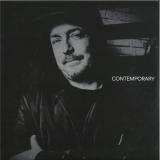
Oliver Dollar presents the ‘Contemporary’ LP on Rekids. The album features collaborations with producers and vocalists like ADMN, Seven Davis Jr., Brillstein, APROPOS, and more, releasing on 21st November 2025.
German House artist Oliver Dollar announces his ‘Contemporary’ LP on Rekids, arriving 21st November 2025. Since 2024, he has released four EPs on Radio Slave’s label, featuring collaborations with over a dozen artists and singer-songwriters, supported by the likes of Dam Swindle, Louie Vega, Honey Dijon, Hunee, Kai Alce, and more.
Since 2011, Industry Standard label boss Oliver Dollar has become a trusted name in House music, he was one of the leading proponents of its Fidget subgenre in Berlin at the height of its popularity, propelling him towards releases on labels such as Snatch!, Classic Music Company, and Defected, alongside a reputation as a formidable collaborator that’s worked with the likes of Crazy P, Mousse T, and Todd Edwards. For the ‘Contemporary’ LP, he doubles down on this spirit of partnership, bringing together a transatlantic cast of friends and peers, linking Berlin and Detroit through a shared House vision. The album begins with ‘The New Is Here’, where Oliver Dollar teams up with Nils Ohrman for a soulful sermon that sets the tone with warmth and gravity, which was previously reimagined into a club-focused dub for ‘Contemporary Part Four’. From there, the mood shifts into ‘Downtown’ with Phil WZK, a deep, Jazz-inflected groove underpinned by a spoken monologue that feels both intimate and eternal Vocalists like APROPOS, Boog Brown, and Billy Love then bring soul and gospel fire, while producers including ADMN, Seven Davis Jr., Harvard Bass, Brillstein, and Austin Ato shape grooves that range from Disco-tinged uplift to deep, dubby hypnotism. Rather than a showcase of features, the album flows as one unified statement, a celebration of community, connection, and the timeless energy of House music.
Founded in 2006, Radio Slave’s Rekids has since launched the Techno-focused Rekids Special Projects in 2017 and its latest sublabel, REK’D, in 2024. With Matt Edwards as the sole A&R, Rekids has been instrumental in developing emerging artists and remains a trusted home for House and adjacent sounds, recently featuring names such as Hilit Kolet, Tal Fussman, Frankey & Sandrino, Mathias Kaden, Huxley, and many more. Oliver Dollar’s ‘Contemporary’ LP on Rekids is a genuine team effort, bringing together some of the brightest voices and producers for a masterpiece that seamlessly blends modern and classic House, Dub, and Disco.
6
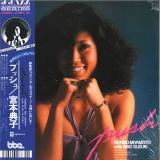
BBE Music is proud to present the latest J Jazz Masterclass Series reissue, 1978 soul/jazz tour de force album ’Push’ by Noriko Miyamoto. For the first time, this critically acclaimed series that delves deep into the history of Japanese Jazz will be releasing an album by a Japanese female singer, Noriko Miyamoto produced by one of the legendary figures in Japanese Jazz, Isao Suzuki. The release of her incredible debut album, ‘Push’, coincided with a surge in popularity for local female jazz singers such Kimiko Kasai, Yasuko Agawa, etc. that crossed over into the pop market. It was originally released by the now-defunct label, Yupiteru Records in 1978. Since then, it has been reissued a few times in Japan but recently, along with a surge of worldwide interest in old Japanese music, ‘Push’ has been gaining a cult status among foreign music heads, with the price for an original pressing skyrocketing in the second hand record market. This reissue of ‘Push’ will be the first time ever that this album will be officially released worldwide. Long before R&B music went onto enjoy mainstream success in Japan, a soul music and disco loving lady, Noriko Miyamoto who started her music career working as a dancer at the legendary Tokyo disco, ‘Mugen’, was inspired by Tina Turner’s performance there and decided to became a soul singer. It was at a time in the early 1970s when there were only a handful of female songstresses who sang soulfully in Japan. In 1977, Miyamoto was scouted by Isao Suzuki to join his band, Soul Family and subsequently, with their backing, he produced Push, an album that kickstarted her career. It is an album that exquisitely combines her jazzy and soulful vocals with Suzuki’s acoustic bass and precocious playing from his youthful and vibrant group at the time. Along with Sadao Watanabe, Terumasa Hino, Masabumi Kikuchi and George Otsuka, bassist, cellist, multi-instrumentalist, composer, arranger, producer and band leader, Isao Suzuki was considered to be one of the most influential figures in Japanese jazz history. Beloved by many in the Japanese jazz scene as “Oma-san”- Suzuki was renowned for developing young talent.

- A1: Words Drenched In Acid
- A2: South Still Speaking (Feat. Killer Mike)
- A3: Broadcasting
- B1: Mirror Discussions
- B2: Native Tongues
- B3: Shredded Speach (Feat. Bun B)
- B4: Talk Of Mane And Bruh
- C1: Strange Slanguistics (Feat. Termanology)
- C2: Concrete Idioms (Feat. Passport Rav & Propain)
- C3: Wine Glass Remark (Feat. Jay Worthy)
- D1: A Love Language (Feat. Everyday Saints)
- D2: Monologue For My Dogs (Feat. Stooky Bros & Everyday Saints)
- D3: My Sermon (Feat. 8Ball)
- D4: Power Dialogue (Feat. Adajyo)
Lukah’s unprecedented trajectory shatters new heights with A Lost Language Found, his most thoughtful, sonically-diverse record yet. With the multiplatinum OG Statik Selektah on production duties, Lukah’s by now iconic, razor-sharp pen-game goes toe-to-toe with some of the best. Trading verses with Houston innovator Bun B, Memphis legend 8 Ball, and the larger than life Killer Mike, all parties involved operate at the peak of their skill. The first of what will be multiple collaborations with heavyweight hip-hop producers, this new LP establishes what we already knew in our hearts: Lukah is here to take over.
The stage set to deliver this latest opus is intensely personal: in the heart of his community, Lukah holds court with his trusted fellows at his great grandmother’s house in French Fort, Memphis, a historically black neighborhood long rec-ognized as a stately, proud vision of Black suburbia in a city still healing from deep racial trauma. Recently laid to rest in Elmwood Cemetery, the pain and strength of mourning her influence is present in the deep lyrics of A Lost Lan-guage Found, where Lukah traces not just his own legacy, but that of the linguistically rich and diverse dialects of his people. The cover image depicts the game room of the house, a place that once hosted civil rights leaders and revolu-tionaries, now a monument both to a history of leadership and to its future. For the first time, Lukah himself appears on the album art to mark this significant occasion, flanked by his partners, the symbolic source of knowledge in his hand. Listening to Lukah spit has always been a privilege and a revelation. His artistic power lies in uncovering secrets thru torrents of lucid, poetic rhymes. The listener is invited to share in this bountiful feast. Witness the real god expansion.
The album is available as a limited edition vinyl release of 500 copies in gatefold jacket.

Lénok’s 'Langue of Tongue' is a descent. An unhinged pinballing down a realm of incomprehension and lunacy, a darkly psychedelic ego-death-spiral into a world of pure, deranged disquiet. It is, and this cannot be emphasised enough, a truly fucked up place. It comes complete with clearly marked borders delineated by its opening and closing tracks '(Entrance' and 'Exit)’. The message is clear: this is less album than zone.
There's no comfort to be found here. It’s like the inner monologue of some insectile, cyborgian abomination, something unfeeling and hostile, something that could only thrive in a mirror world that perverts light and sullies warmth. It's a netherworld: tracks jut out and stab like cold, craggy wastelandscapes, tangled meshworks of alienic transmissions bleed out into deformed knots of gurgling white noise, lacerations of sound roil and heave and claw as if imprisoned within oppressive waveforms.
‘Tongue’ is marked by a kind of wackiness, a demented slapstick that renders its darkness all the more sinister. Voices wail and taunt like schizophrenic spirits trapped between torment and cackling ecstasy. Tracks giggle and skitter as if populated by grinning, snaggletoothed shadows.
‘Langue of Tongue’ is recommended for the curious and advanced listener. This is music for whatever the opposite of escapism is — it’s REAL twisted. But sometimes morbid fascination takes hold. Sometimes you lift the rock, because you can’t help it, and you observe the squirming mess of life it plays host to. What you experience may not be pleasant, but you might just struggle to tear yourself away.

4
“…I still don’t understand what is the meaning of these Poppers records, please unsubscribe me from this newsletter.”
• Hans Zimmer
If you’ve ever been in the countryside and happened to lift a larger rock that might have been laying about for a while only to find an entourage of many different insects scrambling about in awe of the existence of sunlight and wondered what music they might have been listening to in that moment, the A-side tries to explore ways of responding to such curiosities. While the B-side, to end things on a good note, offers a convenient edit of live Japanese cover version of Paul McCartney’s “Silly Love Song” along with the quintessential prelude (or interlude) to a Horse Meat Disco party with the opening monologue of Sidney Lumet’s Equus. All in all, a Swiss Army knife packed with an assortment of most likely useless tools, courtesy of DJ Dipshit.

12
The American gothic rock/post-punk band She Wants Revenge was founded in 2004 by Adam Bravin and Justin Warfield. Their self-titled debut studio album, released in 2006, featured the singles "These Things" and "Tear You Apart." Upon its release, the album reached #38 on the Billboard 200, #3 on Billboard's Top Dance/Electronic Albums chart, and #9 on the Top Rock Albums chart in the U.S._x000d__x000a_She Wants Revenge is available as a 2LP, and is packed in a gatefold sleeve.

4
Monologues Records continues its 10th anniversary celebration with a collection of some magical balmy blissed-out Balearic grooves from its catalogue. Label boss Ben Gomori's 'Inside Melody' featuring Daisybelle makes it onto wax after being the lead single from his debut album 'Collapsing Time', Laurence Guy's first ever EP puts in a shift with the hazy 'Sunlite', Gomori remixes Danish prodigy Ghosten's melancholic 'Abandoned Planet' in euphoric piano house style, and Glasgow dons Manakinz (aka Sub Club / Subculture legend Harri and Max Raskin) do their chuggy thing on the spinge-tingling throbber 'Electric Bob'.

- As I Watch My Life Online
- She Came For A Sweet Time
- Day 2
- Opening A Door
- American Church
- Modern Entertainment
- Uncensored On The Internet
- If I Fall (Would You Crawl Under My Skin)
- Deadstar
- If I Knew I Was Dying (I Would Stare At The Sun)
- Last Seen Online
- Terabyte
- She'll Sleep It Off
late night drive home have never known a world without Wifi - without access to the endless stream of joy, sorrow, heartbreak, and hope that we all tune in and tune out to on the daily. In many ways, the guys can"t really extricate themselves from that reality - even their band name comes from a random Wikipedia page - but they"re trying to at least grapple with it. "Most of us grew up on the internet with unsupervised access at a very young age," says singer Andre Portillo. "As we started foreseeing all the outcomes - both good and bad - of this kind of access and advancement, we started writing... forming a sound and message that would become our next record." The culmination of that, then, is the buoyant yet ominous as I watch my life online, the band"s debut album. late night drive home was born in El Paso, Texas, and Chaparral, New Mexico, hardworking communities where folks built their houses by hand and collars were mostly blue. Comprising guitarist Juan "Ockz" Vargas, singer Andre Portillo, drummer Brian Dolan, and bassist Freddy Baca, the entirely self-taught quartet released their first digital EP as a full band, 2021"s Am I sinking or Am I swimming?, and blew up with the single "Stress Relief," a blast of early-Aughts indie that racked in tens of millions of streams. After they signed with Epitaph Records in 2023 - and releasing 2024"s grunge-inspired 3 song EP i"ll remember you for the same feeling you gave me as i slept - they found themselves playing stages their indie idols previously shredded: Coachella, Shaky Knees, Austin City Limits, and Kilby Block Party. Since the end of the pandemic, though, the band had been dreaming up as i watch my life online. "I started thinking about the time after the pandemic and how much things were changing," says Vargas. "So the whole album is a critique of social media and the way we use the internet to distance ourselves from each other." The resulting suite of tracks is a series of online vignettes that hammers home the band"s message: the photos on your phone shouldn"t be your identity; your posts aren"t your inner monologue. A bigger life is lived where there"s no service - in your hometown on a late night road with your friends, and on stage, where the band finally found their destination after that long drive.

- A1: Impressions; Bass – 田中晋吾*; Composed By – John Coltrane; Drums – 柴田 亮*; Piano – 上原ひろみ*; Tenor Saxophone – 本間将人*
- A2: Omelet Rice; Bass – Marty Holoubek; Clarinet – 小林未侑; Guitar – 國田大輔*; Percussion – 石若 駿*; Piano – 上原ひろみ*; Viola – 中 恵菜*, 古屋聡見; Violin
- A3: Day By Day; Bass – Marty Holoubek; Cello – 向井 航*, 下島万乃; Conductor – 挾間美帆*; Drums – 伊吹文裕*; Flute – 野津雄太; Guitar – 井上 銘*; Piano – 上原ひろみ*; Viola – 中 恵菜*, 古屋聡見; Violin
- A4: Kawakita Blues; Bass – 田中晋吾*; Drums – 柴田 亮*; Guitar – 田辺充邦*; Piano – 上原ひろみ*
- A5: Ambition; Bass – Marty Holoubek; Cello – 向井 航*, 下島万乃; Conductor – 挾間美帆*; Guitar – 井上 銘*; Piano – 上原ひろみ*; Viola – 中 恵菜*, 古屋聡見; Violin
- A6: Blue Giant ~Cello & Piano~; Cello – 向井 航*; Piano – 上原ひろみ*
- A7: Motivation; Bass – Marty Holoubek; Clarinet – 小林未侑; Drums – 菅野知明*; Electric Piano – 上原ひろみ*; Flute – 片山士駿; Guitar – 國田大輔*; Percussion – 石若 駿*; Violin
- A8: In Search Of...; Bass – Marty Holoubek; Drums – 菅野知明*; Electric Piano – 上原ひろみ*; Guitar – 國田大輔*
- A9: The Beginning; Bass – Marty Holoubek; Drums – 菅野知明*; Guitar – 國田大輔*; Piano – 上原ひろみ*; Trumpet – 佐瀬悠輔*
- A10: Monologue; Bass – Marty Holoubek; Cello – 向井 航*, 篠崎由紀*; Piano – 上原ひろみ*; Trombone – 三原万里子; Viola – 中 恵菜*, 古屋聡見; Violin
- A11: Forward; Bass – Marty Holoubek; Cello – 向井 航*, 篠崎由紀*; Drums – 菅野知明*; Flute – 片山士駿; Piano – 上原ひろみ*; Trumpet – 佐瀬悠輔*; Viola – 中 恵菜*, 古屋聡見
- Violin
- A12: Another Autumn; Bass – 中林薫平*; Drums – 井川 晃*; Piano – 上原ひろみ*; Tenor Saxophone – 馬場智章*
- B1: Next Step; Bass – Marty Holoubek; Drums – 菅野知明*; Electric Piano – 上原ひろみ*; Guitar – 國田大輔*; Percussion – 石若 駿*; Violin
- B2: Challenge; Cello – 向井 航*, 下島万乃; Conductor – 挾間美帆*; Guitar – 國田大輔*; Trumpet – 伊藤 駿*; Viola – 中 恵菜*, 古屋聡見; Violin
- B3: Kick Off; Bass – Marty Holoubek; Drums – 菅野知明*; Guitar – 國田大輔*; Piano – 上原ひろみ*; Trombone – 三原万里子; Viola – 中 恵菜*, 古屋聡見; Violin
- B4: Samba Five; Bass – 田中晋吾*; Composed By, Arranged By – 陣内一真*; Drums – 柴田 亮*; Keyboards – 上原ひろみ*; Tenor Saxophone – 本間将人*; Trumpet – 村上 基*
- B5: N.e.w.; Drums – 石若 駿*; Piano – 上原ひろみ*; Tenor Saxophone – 馬場智章*
- B6: Recollection; Bass – Marty Holoubek; Cello – 向井 航*, 下島万乃; Conductor – 挾間美帆*; Guitar – 國田大輔*; Piano – 上原ひろみ*; Viola – 中 恵菜*, 古屋聡見; Violin
- B7: No Way Out; Cello – 向井 航*, 下島万乃; Conductor – 挾間美帆*; Guitar – 國田大輔*; Viola – 中 恵菜*, 古屋聡見; Violin
- C1: New Day; Bass – Marty Holoubek; Cello – 向井 航*, 下島万乃; Conductor – 挾間美帆*; Drums – 伊吹文裕*; Flute – 野津雄太; Guitar – 井上 銘*; Piano – 上原ひろみ*; Viola – 中 恵菜*, 古屋聡見; Violin
- C2: Reunion; Bass – Marty Holoubek; Cello – 向井 航*, 下島万乃; Conductor – 挾間美帆*; Drums – 伊吹文裕*; Flute – 野津雄太; Piano – 上原ひろみ*; Viola – 中 恵菜*, 古屋聡見; Violin
- C3: Count On Me; Alto Saxophone – 本間将人*; Bass – 田中晋吾*; Drums – 柴田 亮*; Piano – 上原ひろみ*
- C4: Faith; Cello – 向井 航*, 下島万乃; Conductor – 挾間美帆*; Guitar – 井上 銘*; Piano – 上原ひろみ*; Viola – 中 恵菜*, 古屋聡見; Violin
- C5: Nostalgia; Bass – Marty Holoubek; Piano – 上原ひろみ*; Violin
- C6: What It Takes; Bass – Marty Holoubek; Cello – 向井 航*, 下島万乃; Conductor – 挾間美帆*; Guitar – 井上 銘*; Oboe – 神農広樹; Viola – 中 恵菜*, 古屋聡見; Violin
- D1: We Will; Drums – 石若 駿*; Tenor Saxophone – 馬場智章*
- D2: From Here; Cello – 向井 航*, 下島万乃; Conductor – 挾間美帆*; Cymbal – 伊吹文裕*; Oboe – 神農広樹; Piano – 上原ひろみ*; Trumpet – 伊藤 駿*; Viola – 中 恵菜*, 古屋聡見
- Violin
- D3: First Note; Drums – 石若 駿*; Piano – 上原ひろみ*; Tenor Saxophone – 馬場智章*
- D4: Blue Giant; Drums – 石若 駿*; Piano – 上原ひろみ*; Tenor Saxophone – 馬場智章*
[b] A2 Omelet Rice; Bass – Marty Holoubek; Clarinet – 小林未侑; Guitar – 國田大輔*; Percussion – 石若 駿*; Piano – 上原ひろみ*; Viola – 中 恵菜*, 古屋聡見; Violin [1st] – 田中笑美子, 田村直貴, 西江辰郎; Violin [2nd] – ビルマン聡平*, 松崎千鶴
[c] A3 Day By Day; Bass – Marty Holoubek; Cello – 向井 航*, 下島万乃; Conductor – 挾間美帆*; Drums – 伊吹文裕*; Flute – 野津雄太; Guitar – 井上 銘*; Piano – 上原ひろみ*; Viola – 中 恵菜*, 古屋聡見; Violin [1st] – 田中笑美子, 田村直貴, 西江辰郎; Violin [2nd] – ビルマン聡平*, 松崎千鶴
[e] A5 Ambition; Bass – Marty Holoubek; Cello – 向井 航*, 下島万乃; Conductor – 挾間美帆*; Guitar – 井上 銘*; Piano – 上原ひろみ*; Viola – 中 恵菜*, 古屋聡見; Violin [1st] – 田中笑美子, 田村直貴, 西江辰郎; Violin [2nd] – ビルマン聡平*, 松崎千鶴
[g] A7 Motivation; Bass – Marty Holoubek; Clarinet – 小林未侑; Drums – 菅野知明*; Electric Piano – 上原ひろみ*; Flute – 片山士駿; Guitar – 國田大輔*; Percussion – 石若 駿*; Violin [1st] – 田中笑美子, 田村直貴, 西江辰郎; Violin [2nd] – ビルマン聡平*, 松崎千鶴
[j] A10 Monologue; Bass – Marty Holoubek; Cello – 向井 航*, 篠崎由紀*; Piano – 上原ひろみ*; Trombone – 三原万里子; Viola – 中 恵菜*, 古屋聡見; Violin [1st] – 田中笑美子, 田村直貴, 西江辰郎; Violin [2nd] – ビルマン聡平*, 松崎千鶴
[l] Violin [1st] – 田中笑美子, 田村直貴, 西江辰郎; Violin [2nd] – ビルマン聡平*, 松崎千鶴
[n] B1 Next Step; Bass – Marty Holoubek; Drums – 菅野知明*; Electric Piano – 上原ひろみ*; Guitar – 國田大輔*; Percussion – 石若 駿*; Violin [1st] – 田中笑美子, 田村直貴, 西江辰郎; Violin [2nd] – ビルマン聡平*, 松崎千鶴
[o] B2 Challenge; Cello – 向井 航*, 下島万乃; Conductor – 挾間美帆*; Guitar – 國田大輔*; Trumpet – 伊藤 駿*; Viola – 中 恵菜*, 古屋聡見; Violin [1st] – 田中笑美子, 田村直貴, 西江辰郎; Violin [2nd] – ビルマン聡平*, 松崎千鶴
[p] B3 Kick Off; Bass – Marty Holoubek; Drums – 菅野知明*; Guitar – 國田大輔*; Piano – 上原ひろみ*; Trombone – 三原万里子; Viola – 中 恵菜*, 古屋聡見; Violin [1st] – 田中笑美子, 田村直貴, 西江辰郎; Violin [2nd] – ビルマン聡平*, 松崎千鶴
[s] B6 Recollection; Bass – Marty Holoubek; Cello – 向井 航*, 下島万乃; Conductor – 挾間美帆*; Guitar – 國田大輔*; Piano – 上原ひろみ*; Viola – 中 恵菜*, 古屋聡見; Violin [1st] – 田中笑美子, 田村直貴, 西江辰郎; Violin [2nd] – ビルマン聡平*, 松崎千鶴
[t] B7 No Way Out; Cello – 向井 航*, 下島万乃; Conductor – 挾間美帆*; Guitar – 國田大輔*; Viola – 中 恵菜*, 古屋聡見; Violin [1st] – 田中笑美子, 田村直貴, 西江辰郎; Violin [2nd] – ビルマン聡平*, 松崎千鶴
[u] C1 New Day; Bass – Marty Holoubek; Cello – 向井 航*, 下島万乃; Conductor – 挾間美帆*; Drums – 伊吹文裕*; Flute – 野津雄太; Guitar – 井上 銘*; Piano – 上原ひろみ*; Viola – 中 恵菜*, 古屋聡見; Violin [1st] – 田中笑美子, 田村直貴, 西江辰郎; Violin [2nd] – ビルマン聡平*, 松崎千鶴
[v] C2 Reunion; Bass – Marty Holoubek; Cello – 向井 航*, 下島万乃; Conductor – 挾間美帆*; Drums – 伊吹文裕*; Flute – 野津雄太; Piano – 上原ひろみ*; Viola – 中 恵菜*, 古屋聡見; Violin [1st] – 田中笑美子, 田村直貴, 西江辰郎; Violin [2nd] – ビルマン聡平*, 松崎千鶴
[x] C4 Faith; Cello – 向井 航*, 下島万乃; Conductor – 挾間美帆*; Guitar – 井上 銘*; Piano – 上原ひろみ*; Viola – 中 恵菜*, 古屋聡見; Violin [1st] – 田中笑美子, 田村直貴, 西江辰郎; Violin [2nd] – ビルマン聡平*, 松崎千鶴
[y] C5 Nostalgia; Bass – Marty Holoubek; Piano – 上原ひろみ*; Violin [1st] – 田中笑美子, 田村直貴, 西江辰郎; Violin [2nd] – ビルマン聡平*, 松崎千鶴
[z] C6 What It Takes; Bass – Marty Holoubek; Cello – 向井 航*, 下島万乃; Conductor – 挾間美帆*; Guitar – 井上 銘*; Oboe – 神農広樹; Viola – 中 恵菜*, 古屋聡見; Violin [1st] – 田中笑美子, 田村直貴, 西江辰郎; Violin [2nd] – ビルマン聡平*, 松崎千鶴
[xc] Violin [1st] – 田中笑美子, 田村直貴, 西江辰郎; Violin [2nd] – ビルマン聡平*, 松崎千鶴

Indifferent Engine is a post-hardcore punk band from Cambridge, UK, known for their genre-defying sound and visceral live performances. Drawing inspiration from early hardcore, art punk, post-rock, ambient music, pulp science fiction and obsolete electronics, the band creates a soundscape that is as eclectic as it is intense. Originally conceived as a solo project by frontman Adam Paul, Indifferent Engine evolved into a full band in 2019, bringing their unique blend of chaotic energy and experimental sound to stages across the UK. Their performances are a sensory experience, often featuring the largest rig of vintage CRT TVs in the UK live scene, bathing the stage in the soft, eerie glow of static. This visual backdrop, combined with Adam's commanding stage presence -- fluctuating between Mark E. Smith-esque monologues and raw, visceral screams -- creates an emotional atmosphere that is equal parts unsettling and captivating.

4
Ben Gomori's Monologues Records imprint celebrates its first decade with a slew of activity including a party at fabric, the launch of its own sound system in the crypt of a church, the release of a digital compilation and a clutch of vinyl releases across 2025. First up, this volume digging through some of the deeper moments from their catalogue, including Laurence Guy's very first release 'Les Mur', the balmy bliss of Devante Embers' 'When You Focus On The Good The Good Gets Better', the propulsive stomp of Damian Rausch's 'Roots' and Gomori's deep 'n' smoky 'What Is Jazz?' under his G. Markus alias. Dig and ye shall find...

- 1900: S Theme
- The Legend Of The Pianist
- The Crisis
- The Crave
- A Goodbye To Friends
- Study For Three Hands
- Playing Love
- A Mozart Reincarnated
- Child
- 1900: S Madness #1
- Danny's Blues
- Second Crisis
- Peacherine Rag
- Nocturne With No Moon
- Before The End
- Playing Love
- I Can And Then
- 1900: S Madness #2
- Silent Goodbye
- Ships And Snow
- Lost Boys Calling (Feat Roger Waters & Eddie Van Halen)
Ennio Morricone composed and arranged scores for more than 500 film and television productions, making him one of the most influential and best-selling film composers since the late 50s. The Legend of 1900 (Italian: La leggenda del pianista sull'oceano) is a 1998 Italian drama film directed by Giuseppe Tornatore and starring Tim Roth, Pruitt Taylor Vince, and Mélanie Thierry. The film is inspired by Novecento, a monologue by Alessandro Baricco. The Legend Of 1900 was nominated for a variety of international awards, winning several for its soundtrack, including a Golden Globe for Best Original Score - Motion Picture. This release includes the song “Lost Boys Calling” featuring Roger Waters & Eddie van Halen. Throughout his career, Morricone received an unprecedented amount of awards, including Grammys, Golden Globes and BAFTAs. Ennio Morricone has influenced many artists including Danger Mouse, Dire Straits, Muse, Metallica, Radiohead, Hans Zimmer, and many more. The Legend of 1900 is available as a limited edition of 2500 numbered copies on green coloured vinyl and contains an insert and is housed in a deluxe sleeve with silver foil finish.
Chris Ryan Williams (trumpet & electronics) and Lester St. Louis (cello & electronics) work together as HxH (H by H). Their skills have seen them move smoothly across various situations, constantly carving out new terrain and working in new configurations of musicians at a rapid pace. While worth reading, their biographies capture only a part of their complex rhizome.
HxH started about three years ago. The project is a direct response to all their activity with others and more importantly all their future leaning sonic desires. Their debut album STARK PHENOMENA is both their first studio recording and their first physical release. The album is appropriately set to be released by KMRU on his growing label OFNOT. It’s an ideal introduction to their sound world and their approach.
HxH describe their music as “electroacoustic,” but until recently the presence of Black musicians in this field has been greatly overlooked and largely ignored, making this phrase only partially appropriate. What HxH do really is to always be unpredictable. Every gig is a new soundscape. Sometimes you might hear echoes of Autechre or Robert Hood but then the sound-field will open up into a new terrain all their own. Chris and Lester bring together techniques from across the sound spectrum of electronic music and also draw on their deep backgrounds in Jazz, Improvisation, Classical and Noise scenes to create a sound that is true to them. After all, these two have worked with the likes of Bennie Maupin and the music of Black Fluxus artist Ben Patterson. Their rhizome is deep.
One of the ways that their unique approach manifests is in their merging of both acoustic instruments and electronic instruments in real time. This is something few have managed to do – but their spontaneous leanings work in both complex and accessible ways because of their deep understanding of landscape crafting. You can hear this clearly on the track “Pyrex Vision.” Their approach makes it tempting to compare their music to Sun Ra jamming with Laurel Halo – a comparison that would be only partly accurate.
Chris and Lester note that the sounds on STARK PHENOMENA are “imbued with such hopeful, gracious care; one that is far flung from obsessive carefulness or fuck the world carelessness, but more a caring embrace without the fuzziness of nostalgia.”
They note that when they began working together, they would “always come back to speaking on our concepts of an architecture of the expanse,” noting that their live sets often take on the joyfully noisy task of “dreaming big.” For HxH it was essential that STARK PHENOMENA have a quality that is “almost sculptural.” They consider the album “an object to be viewed from all sides.” This kind of thinking has resulted in them directly engaging with numerous sculptors and artists including Torkwase Dyson. Shape wise HxH’s sound fields work in a parallel to Dyson’s black architectural works.
They also note that the opening cut “BEACH” (the opening and longest track from the album) was “written weeks after our first gig in a studio session donated to us by our dear friend jaimie branch.” And that Pyrex Vision “was continually being edited months after sending our ‘final mixes’ to KMRU.” Their sound sources and samples come from studio sessions, live gigs, durational installations, 3am improvised downloads and more.
KMRU notes: "I think there is an in-between layer on this record. I was first caught by the Pyrex Vision track which organically flows between monologue, subtle field recording, and instrumentation. It's such a beautiful track, evoking deep emotion through simplicity. STARK PHENOMENA effortlessly glides in between imaginative mosaics of sounds — free yet complex — unlocking memories within its layers."

Ten years on, Joana Gama and Luís Fernandes show no signs of slowing down. Over the past decade, the duo has released five albums, composed soundtracks for film and television, and created pieces for performing arts. With “Strata”, they embark on a bold exploration of their musical identity, breaking new ground by seeking the primordial, the raw, and forging a deeper creative synergy. This evolution makes their music feel less like a conversation and more like a unified, introspective monologue.
Until now, their work has largely been defined by dialogue - a dynamic exchange of ideas evident in their earlier records. However, in their relentless drive to push boundaries, they now turn inward, embracing a monologue as a pathway for growth, innovation, and celebration of their journey so far. Two key elements shape this transition: Joana’s growing affinity for synthesizers over piano, a direction initiated in “There’s no knowing”, and her integration of field recordings gathered from diverse locations around the world. Rather than stepping into each other’s domain, the duo finds common ground, creating music that thrives on harmony and introspection.
“Strata” stands as Joana and Luís's quieter and most cohesive record to date. It reflects their desire to craft music that resonates with the natural world, unfolding as a seamless stream of sound that enhances their connection and invites the listener into their creative process. While their previous works were compelling, they often felt distant, as if the listener was observing from the sidelines. “Strata”, by contrast, draws the listener in, encouraging them to fill the spaces and find their own place within the duo’s monologue.
This process climaxes in the closing track, "Geode," where the subtle sounds of debris underscore the tightly woven structure of “Strata”. It’s a testament to the duo's commitment to evolution and their ability to surprise both themselves and their audience. A decade into their collaboration, “Strata” reaffirms Joana and Luís's creative vitality, offering a record that feels both fresh and deeply rooted in their artistic vision.

We are fired up to bring you House music icon Nail of Robsoul, Classic and Diy fame. The Fleng Ep is the first release of the soon to be sought after Nail Series. Get it while ya can as we have numerous Nail EP’s to follow.
Starting off with Late At Night, Nail hits it hard with this funky stomper that’ll spank any dance floor.
Follow up the A Side with Hey! and we stay moving and shaking with a catchy monologue over a driving baseline that bobs and weaves with solid energy.
Kicking off the B Side we have grinding, dirty low-end on Peanuts 3 with complimentary vocal chants that’ll surely have dance floors strutting to the tune.
U Know What 2 Do closes us out and whoa, does it ever. Deep, funky, House music with a dash of r&b delight. Don’t sleep!
Early plays from DJ Sneak and Austin Ato.
- A1: A Monologue 2 50
- A2: Jin-Roh - Main Theme - Opening Version 2 37
- A3: Dark Star 2 06
- A4: Sting 0 37
- A5: Mad Black 0 47
- A6: Damp 0 19
- A7: Gray Black 0 36
- A8: Blue Clouds 3 10
- A9: Silence & Wind 1 19
- A10: Fragrance Rain 1 09
- A11: Latest Flame 3 01
- A12: Curse 2 50
- A13: Pride 2 51
- A14: Unit One 1 57
- B1: Long Destiny 0 57
- B2: The Force 3 41
- B3: Keel 3 12
- B4: Angel 1 34
- B5: Shadow Of Rainbow 1 36
- B6: Seal 2 41
- B7: The Top 4 37
- B8: Grace ~ Jin-Roh - Main Theme ~ Omega 7 18
22
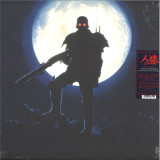
WRWTFWW Records is overjoyed to present the first ever vinyl release for the outstanding soundtrack of 1999 Japanese action-political-thriller anime Jin-Roh: The Wolf Brigade by Hajime Mizoguchi. The epic full-lenght album is available as a limited-edition LP cut at Emil Berliner Studios and housed in a heavyweight 350gsm sleeve.
Legendary animation film Jin-Roh was penned by Palme d’Or and Leone d’Oro award winning filmmaker, television director and writer Mamoru Oshii whose filmography includes Ghost in the Shell, Patlabor 2: The Movie, and Angel’s Egg – critically acclaimed works praised worldwide, notably by luminaries such as James Cameron, Steven Spielberg and The Wachowskis. The film was directed by leading studio Production I.G. affiliate Hiroyuki Okiura (Record of the Lodoss War, A Letter to Momo…)
The film’s score, courtesy of famed anime and tv score composer, cellist and arranger Hajime Mizoguchi, evokes the dystopian world in which Jin-Roh takes place and captures the Little Red Riding Hood theme that carries the story – a dark, atmospheric, and immensely emotional soundscape that takes you on a grand and immersive journey and stays with you forever. It blends classical, orchestrated ambient, and poignant melodies carried by ominous strings.
This new project by WRWTFWW Records follows previous Japanese soundtracks from the catalogue: Ghost in the Shell, Patlabor 2, Evil Dead Trap, Violent Cop and precedes the upcoming release of Takeshi Kitano’s Sonatine soundtrack by Joe Hisaishi.

4
This is another vital instalment of Get Physical Music's classic reissue series, which is now scheduled for a vinyl release. It features a track first released in 1994 and was also part of DJ Pierre's Wild Pitch: The Story album back in 2017. It comes with an Emmanuel Satie edit of the Ricardo Villalobos Dub and a stellar remix from South Africa's Jazzuelle, first released in 2017.
DJ Pierre's name is forever synonymous with house music, particularly the acid sound he pioneered in the' 80s. Staying true to the underground since then, he's consistently released vital tracks, innovated with his Wild Pitch style and now his Afro Acid label. Pierre continues to push boundaries with each new outing while this reissue proves that his earliest works are still some of house music's best ever.
'What is House Muzik' is an almost 10-minute masterpiece that's perfectly designed for gritty warehouse spaces and comes complete with an anthemic vocal monologue. It's dark and distorted with monstrous kicks and oversized hi-hats, a frazzled lead synth line and a marching groove that is lit up with strobe-lit details to get hands in the air. The original also comes alongside an acapella version.
Next up, we have an edit from melodic master Emmanuel Satie, who takes Fellow Ricardo Villalobos's epic 36-minute 'What Is Dub' version and splices it into a floor-friendly and perfectly paced 7-and-a-half-minute edit. Originally dropping in 2015, it now sees its way onto vinyl for the first time. Finally, South Africa electronic production don Jazzuelle drops a remix that lives up to its name with a dive into the deeper realms of acid.

13
The prolific, virtuosic original Bjarki Sigurðarson returns to the concept album format, with ‘A Guide To Hellthier Lifestyle’. It’s the first LP to be released on Differance.
‘A Guide To Hellthier Lifestyle’ explores the psychological landscape of contemporary social issues, offering a sideways rumination on lifestyle dilemmas and wellness obsessions, presenting itself as a response to the modern condition. It combines storytelling with innovative sound textures – encouraging listeners to pause and contemplate the absurdities of contemporary life. Neither a critique nor an endorsement, it represents an honest exploration of our world through Bjarki’s sonic lens, gleaming a heart of darkness, but eventually finding light.
The album utilises hyper-stereo techniques, soothing melodies, complex audio structures, AIgenerated voices and sampled vocals – influenced by Coil, Genesis P- Orridge, and Paul Lansky. Bjarki investigates how specific frequencies can impact consciousness, awareness, mood, and mental state, thereby influencing our perception of reality. His vaporous sound design provides a listening experience that bridges the physical and imaginative realms; sometimes placing the listener in contemplative sanctuary, and at others making them lost – somewhere strange, uneasy, disconnected.
Bjarki on his Guide To Hellthier Lifestyle
“This new album has been two years in the works. It’s sort of my take on all the social weirdness and wellness obsessions happening right now. It kicked off with a track I started in California – the story of a soul that got born into the wrong womb. During that time, I was noticing more and more of this whole ‘wellness religion’ everywhere – people trying to sell you ‘good vibes’ and random people offering you life coaching sessions on Instagram who maybe have less life experience than a houseplant. All these apps that track our every move; it’s like they’re repackaging control and calling it ‘self care’. Capitalism in yoga pants. Thats when I started putting ‘A Guide To Hellthier Lifestyle’ concept together. A never ending, self improvement rabbit hole. We are all being sold this idea that we are not quite enough and we need to buy our way out to being better.
At one point, I took a break from the album and started working on another album full of satirical speeches, AI generated voices, where I create my own voices and type in some ideas of speeches, taking the piss out of wellness gurus and life coaches. I messed a lot with these AI voice generators, creating these deep, faux serious monologues. Proper weird stuff, but it cracked me up. Reminded me of the early days, when I was 13, making tracks on Fruity Loops, mucking around with text-to- speech generators. After the break I came back to finish ‘The Guide’ on a much deeper level.
I moved part of my studio to Latvia and continued in the countryside for few months. I realised that I just wanted something beautiful. So, yeah, this album is all of that. It’s spiritual, bits and pieces from the past, all these weird cultural moments, and whatever strange places my head goes. It’s a reflection, a rebellion, a bit of a piss take. But mostly, it’s just me, doing what I do.” - Duncan Clark
The album will be released only in its entirety, December 13th digi, with no advance singles.

- Mixing The Colors
- Louie Louie
- I Wanna Be Your Dog
- Pablo Picasso
- Loose
- Gloria
- Social Life
- Highway Song
- Beside You (Sputnik Tv 1993, Barcelona)
- Nightclubbing
- Miss Argentina (Acoustic)
- Planet Of Dogs (Monologue)
- Butt Town
- Foolish Dreams (Otherwise Unreleased Song)
- Beggar (Otherwise Unreleased Song)
- The Wind (Otherwise Unreleased Song)
- Starry Night
- Brick By Brick
- I Am (Otherwise Unreleased Song)
- Think Alone (Otherwise Unreleased Song)
- La Blues (Studio Demo La, 1990)
- Down On The Street
- I Won't Crap Out
- Loose
- Butt Town
- 1969: (Paris Megastore 1990, Electric Solo)
- I Wanna Be Your Dog
- Brick By Brick
The first time on vinyl for this double-album, capturing Iggy without any band in various environments, mostly acoustic and also electric, but - just as rock"n"roll as ever! Stripped down versions of I Wanna Be Your Dog, Louie Louie, Nightclubbing, Jonathan Richmond"s Pablo Picasso with just 4-strings on his guitar and many other favourites as they"ve rarely been heard - and five otherwise unreleased songs. The 2LP set comprises a solo acoustic show from Barcelona, an acoustic studio session, a solo electric gig from Paris, plus more solo tracks from elsewhere. Skydog Records" first Iggy release was in 1976 with the riotous "last ever Stooges show", Metallic KO; this is its alternative hidden gem. Iggy Pop continues to tour the world as well as presenting radio shows.

The new Wolfed EP sits in the Grumpy discography as their most confident and self-flourished work to date. Delivered in the serene clarity of a vulnerable voice inviting you to share in their world, the record glitters in its yearning for another, in its most jubilant highs and successes, and its most intimate internal monologues. We fall and hit the wrong notes, say the wrong thing. But we do it for love. For Grumpy, those missteps are not avoidable speed bumps in a relationship, but the highlights of the journey itself. For in those painful moments of a relationship, we find Truth about ourselves. There is simple serenity found in realizing your imperfections the hard way. But we can't get too comfortable_ as Wolfed fades out, the jittering, chopped-up melodies leave you on edge in a delicate balance of mistrust and unease. Can we hold on to this love forever? Grumpy has the answer.

For fans of Michael Kiwunaka, Jon Batiste, Leon Bridges, Gregory Porter, and Mg.Kee. Full tour in the works for 2025 in North America and Europe. Collaborated with a wide range of artists including Jack White, Dwele, Slum Village, Black Milk, Foreign Exchange, 14KT, and Daru Jones. Former musical director for tours for Black Milk and Slum Village, throughout North America, Europe, Australia, and Japan. “From the Throne Room” is Abernathy’s fourth official LP, following the trilogy of “Monologue,” “Dialogue,” and “Epilogue,” released between 2016 and 2019. Aaron Abernathy has been firmly established in the modern soul scene for almost two decades, and he continues to elevate his craft as a songwriter and performer. His latest LP “From the Throne Room” once again demonstrates a rare ability to seamlessly shift between lyrical themes and musical styles, and it is his most inspired and uplifting album to date.
The turmoil caused by the pandemic was especially hard on touring musicians, and as a veteran musical director and bandleader who has regularly traversed the globe, Abernathy was certainly affected. Instead of wallowing in grief and darkness, he tapped into his gifts as a songwriter and lyricist to manifest light and optimism in his own life. As expressed on the opening track “New Relationship,” this “new way of seeing” kicked open some new creative doors for him as a musician and producer, with a wide variety of influences. The four-to-the-floor push of “A Reason to Smile” brings to mind 80’s post-disco boogie, “Show Off” shows off a modern rock edge, and the booming, driving energy in tunes like “Hope Song” and “Joy” is reminiscent of the electric 60’s soul of Wilson Pickett and Otis Redding. With its catchy hooks, powerful lead vocals, and slick self-produced arrangements, “From the Throne Room” proves that Aaron Abernathy remains one of the most talented singer/songwriters of his generation in contemporary soul music.

Her tracks have been played and recommended by Iggy Pop, Mary Anne Hobbs and Nine Inch Nails. ZAMILSKA, one of the most original artists on the European electronic scene, announces a new album, "United Kingdom Of Anxiety" – out October 4.
Combining the rawness of techno and the trance-like nature of world music, industrial sound and a fine blend of trip-hop, the Polish producer created a dystopian, post-apocalyptic,
fascinating vision of a collapsing world. "United Kingdom Of Anxiety" begins with a sonic assault. The breaks and powerful bass in "Phantom" awaken from hypnotic slumber, numbness caused by the daily hustle, serve as a reminder that to survive in an unfriendly world, concentration, willpower and perseverance are essential. This is the beginning of a journey through "United Kingdom Of Anxiety" - the new album by Zamilska, a sensitive outsider.
"I’m here to ruin you again," announces a voice in "Mummy," while the crescendo of beats and noise in "Better Off" further amplifies the tension. It's hard to find peace when hell lurks just around the corner. Is it the horror of civilization or perhaps cosmic dread? The answer depends on the listener's sensitivity.
The much-needed balance and coolness are brought by huskie vocals - that is Ola Myszor - an incredibly talented young artist who appears in several tracks on the album. Besides huskie, there are other guests on "UKOA": Natalia Przybysz, who, with a robotic voice, delivers a manifesto of indomitable, proud solitude in "Persist" and Lukasz Pach, the charismatic frontman of the grindcore band Hostia. His growling is heard in the intense, uncompromising "No Gods," which was presented by Iggy Pop on his BBC6 Music radioshow.
The sonic spectrum is also filled with anonymous voices: echoes of quarrels, media messages, sounds of war clamor, monologues - looped, accelerated, manic, psychotic, but also a wistful singing coming from the depths, from afar. The metaphysical horror of Lovecraft on one hand, and the sober, no less gloomy diagnosis of George Orwell on the other, constantly correspond here.
This entire album is a story about society as a whole and the contemporary, dystopian world, which is inevitably heading towards war. The track "1984" clearly defines the inspiration for the artist's post-apocalyptic vision. A distorted radio signal, alarm siren and gabba/techno beats driving into the head like nails serve as an expression of the fear and anger born in a world of impending totalitarianism.

Rick Holmes’ breath-taking track, ‘Remember To Remember’ gets its first ever officially licensed, remastered reissue on Gold Mink Records. With prices of the original topping £60 this one will be a welcome sight for many.
Title track, ‘Remember To Remember’ is a celestial, emboldening downtempo cut. Beginning with the timeless line, ‘Pass the information, extend the knowledge…’ Rick dives into a spoken word stream of inspirational black artists and key figures whose most memorable words and song titles are framed into snippets of wisdom that get ever more significant the greater in number they become. A powerful monologue, in Rick’s warm reassuring tones, shining a light on those men and women who have made ‘strong contributions to mankind because of their compassion and humanitarianism’, laid over instrumentation you lose yourself in just as easily.
‘Remember to remember, to never forget.
How Long… how long… how long will it take man?
For us to come together.
It will take us as long as you make it…’
Words that ring just as true today, as they did 40 years ago, yet with a new sense hope in the air and prospect of progress approaching.
The B side houses another of Rick’s mesmerising monologues – ‘To The Unknowledgeable One’ motivational, moving and smooth as you like.
Licensed from Uno Melodic Records, Inc, courtesy of Expansion Records.

2
Few jazz funk classics have been as iconic as 'Life On Mars' by keyboard legend, songwriter, producer and architect of the 'Philly Sound' Dexter Wansel. First released in 1976 it became an immediate fixture on the dance floor and remains an evergreen to this day with a generation of disco, soul and jazz funkateers.
Now comes an extremely special exclusive release for Record Store Day. This is the first ever remix of the track, all parts taken from the original masters tapes and added to courtesy of remixer Paul Simpson (Paul Simpson Connection, Serious Intention, Adeva etc). Dexter Wansel himself contributes on an exclusive extended mix of 'Theme From The Planets' which includes an extra monologue section with the man himself telling the story of these tracks.
This 12' released on original Philadelphia International Records label artwork through Expansion.

12
Civilistjävel! returns with »Brödföda«, the successor to 2022’s »Järnnätter« and his fourth release for FELT. The record features collaborations with Laila Sakini, Mayssa Jallad, Thommy Wahlström, ELDON, and Withdrawn.
Tomas Bodén is a revered figure of the aural murk, known primarily for his work as Civilistjävel. It’s an alias that has spawned a catalogue of self-released peculiarities, featuring music that scorns traditional form, instead opting for unfussed symphonies of ice-hued minimalism; soft murmurs that emanate from his studio in the High Coast of Sweden.
On »Brödföda«, his latest album for Fergus Jones’s FELT imprint, subtle new developments in mood prevail. Across its 75 minutes, Civilistjävel! unveils a breadth of emotions that on previous releases seemed distant. He also invites collaborators on record for the first time: Beirut-based singer Mayssa Jallad mournfully croons on »IV«, »VIII« hosts Coldlight’s ELDON & Withdrawn for an abstracted session of dub-hop murk, Laila Sakini offers a hallucinogenic monologue amidst melodica, sticks & bells playing on »IX« and Thommy Wahlström floats scant acid dub stylings on »VI«. These additions and developments bring a forlorn intimacy to the music, and suggest an ambition that few artists of his ilk strive for.
FELT’s (un)reliable cast of audio ghouls routinely summon the odd, with Civilistjävel! often its primary culprit; »Brödföda« gently modifies this path to pursue some of his and the label’s most quaintly beautiful music yet.

Get Nuff Nuff Data is a series of books exploring positive forces in contemporary music in relation to place and culture.
This book opens the series with the stories of musician I Jahbar and his surrounding community, set in the outskirts of Spanish Town, Jamaica. In 2011 I Jahbar collaborated with a duo of California based experimental musicians, and his acrobatic performance on their track ‘Spy’, inspired the founding of a record label named ‘Duppy Gun’. Their music captivated me like nothing had before. It was difficult to frame, drawn towards an innovation in sound, while embodying some ancient energy. 'Duppy Gun’ has paved its own unique path in dancehall music ever since, showcasing the power of international creative collaborations, by linking Jamaican lyricists with producers from different parts of the world.
There’s a little family formed around those musical projects, of goodhearted, talented individuals.
Led by a growing curiosity, I came to Jamaica, offering to create a visual aspect to the ongoing dancehall movement. During 3 weeks of collaborating with I Jahbar, we worked on a shared vision of promoting the voices of emerging vocalists and documenting their creative spirit.
The feeling of being welcomed to step into an unfamiliar narrative inspired the creation of this series, examining the perceptions of ones belonging and idea of home. Through segments of monologues and conversations, nature and portrait photographs, the book portrays a bond between people and their surrounding land, what they seek to change or wish to cherish and preserve. Get Nuff Nuff Data is dedicated to the simple lines that connect us all, each individual story exists as a universal one.
* Part of the book takes place online, including access to ‘unprintable data’. Exclusive video, audio, and downloads.
Details:
Self published
Designed by Matúš Hnáts
Printed by Tiskárna Helbich
500 copies, Swiss binding, 120 pages, 16x24cm
Printed on Fedrigoni 135gsm Symbol Tatami White
ISBN 978-965-598-736-2
(Barcode on the Last page of the book)

11
Repress!
Condition is the 2019 debut, full-length album from Natty Reeves. 11 tracks painting internal monologues and complex feelings across mesmerising groove-driven melodies and brightly coloured guitar soundscapes.
“I wanted to create an honest musical reflection of my past year. Condition is an attempt to balance my perfectionist approach and the imperfections in day-to-day life. The album was made in my bedroom with some help from close friends.”
All music throughout is written, performed, mixed and mastered by Natty, with the exception of Living Lonely & Living Lonely (Reprise) in which he brought in his good friend and long-time collaborator, Simon Jefferis. As well as being an expression of himself as a musician, it was also an opportunity for Natty to show off his artistic side with a paintbrush – Using paintings he has created himself as the artworks throughout.
- - - - - -
Natty Reeves is a multi-instrumentalist, producer and singer-songwriter currently residing in Brighton, UK. Taking inspiration from the likes of Chet Baker, Blake Mills and Antonio Carlos Jobim, Natty produces music riddled with charm and honesty that blurs the lines between Soul, Jazz and Hip-Hop. Drawing from real-life events and human interactions, Natty's song-writing is simple but potent, often cutting straight to the core of an emotion with a single turn of phrase.

8
Experience the divine power of gospel music with the reissue of the legendary album Together by Gloster Williams and The King James Version. Originally released in 1977 on Gospel Roots Records, this seminal work is now re-released for the first time on vinyl, courtesy of Regrooved Records.
Together captures a moment in gospel music that is both timeless and transcendent. Led by the dynamic Gloster Williams, The King James Version choir brings an electrifying blend of traditional gospel with hints of soul and R&B, creating a sound that uplifts and inspires. This album is famed for its stirring harmonies, powerful lyrics, and the passionate delivery that fans and newcomers alike will find deeply moving.
Highlights of the album include the soaring title track, "Together," which has been a staple in gospel music playlists for decades, celebrated for its message of unity and spiritual upliftment. Each song on the album is crafted with care, featuring intricate arrangements and a raw emotional energy that captures the essence of gospel music's golden era.
This reissue is a meticulously remastered version that enhances the original recordings while preserving the authentic sound that made Together a must-have for gospel collectors and enthusiasts. It's pressed on high-quality vinyl to deliver the best listening experience, ensuring that the richness of the choir’s vocals and the depth of the instrumentation are beautifully rendered.
Don't miss this opportunity to own a piece of gospel history. The reissue of Gloster Williams and The King James Version’s Together is a testament to the enduring power of gospel music to console, celebrate, and connect us. Add this vital record to your collection and let its messages of faith and fellowship fill your home with joy and inspiration.
10
Julian Cope's second album of 1984 - Never re-pressed in its original format, this re-issue faithfully replicates the original Mercury Records UK release with poster, and is pressed onto high quality 180g vinyl. Fried is one of Julian Cope's boldest. It made many think that after a while teetering on the edge, Julian Cope had finally tipped over into an artistic madness, amplified by his wearing a turtle shell and staring at a toy van on a landscaped spoil tip in Warwickshire on the album's sleeve. Opening track Reynard The Fox added to it all, a six-minute psychedelic garage rock tour-de-force, breaking down to a Cope monologue where he gravely intones English folk tales from his vantage point, referring also to an onstage stomach-slashing incident from 1983. Sunspots, the sole single taken from the album, is one of his greatest recordings in a career that spans over 40 years. Fried is up there with some of the very best works of the singular British eccentric.
13
This 2020 film has already become an indie classic, and it’s taken on a timeliness that its creators could not have foreseen. Teenage Autumn has to flee her rural Pennsylvania town in seach of an abortion, leaving behind her abusive partner, her indifferent parents (singer Sharon Van Etten plays her mother), and her callous community as she embarks on a journey to New York City accompanied by her cousin Skylar. No matter your stance on the subject, Autumn’s harrowing odyssey provokes compassion and contemplation, two states of mind in short supply these days. And accompanying Autumn every step of the way on her journey is the mesmerizing and, at times, achingly sad score by cult favorite composer Julia Holter. So much of the film is made up of shots of Autumn’s face as she attempts to process what is happening to her and around her; seldom has a film score captured a character’s interior monologue with such insight and grace. Never before released in any physical format, we at Real Gone Music are proud to present the soundtrack to Never Rarely Sometimes Always on vinyl, with the full consent and cooperation of Julia Holter.

11
When Man Man released its last album, "Dream Hunting in the Valley of the In Between," frontman Honus Honus (née Ryan Kattner) was in a state of unrest, oscillating between hope and cynicism. Perhaps fittingly, the album dropped during the pandemic, a time at which we could all relate. But, much like that bizarre turn of events, the ennui now seems so distant to Man Man. A revived sense of purpose washes through Man Man's new album, Carrot on Strings, radiating a mix of calm and confidence. Kattner always embodied a wild-man pied-piper vibe: his melodic, unhinged art-rock was at once intriguing and angsty. He was so alluringly creative that you went along with it, even if you were never sure where Man Man would take you. Carrot on Strings is no less inventive, but its ethos is radical in context of the band's two-decade career. "When I was younger, I would feed off of chaos. I would, you know, be upset and get drunk and smash chairs," Kattner explains. "Now those chairs are in my head: It's less of an outward projection, more of an interior monologue." The name "Carrot on Strings" came to Kattner while experimenting with the sound of someone munching on the vegetable, which you can hear in the cacophonous, similarly named song. It alludes to how success always seemed to dangle uncertainly before him, often just out of reach. But listen intently and you'll hear a more content Kattner finding an uneasy peace: "Life, as far as I've known it, has always been side hustles. Would it be great if I could go into a studio and record for a year without figuring out how to finance it? Yeah, it would be," he says. "But ultimately, I need to keep making music because art is an extension of my psyche. It's how I have learned to translate the palpitations of my heart. Simply put, I'd go insane without it." Growing up as a multiracial Hapa kid (half Filipino, half white) with a father in the U.S. Air Force, Kattner lived an itinerant childhood that included a few pivotal years in Germany, where he honed in on an appreciation for out there German cinema and art. His film obsessions and screenwriting background were crucial to Carrot on Strings. The album nods to the films of Werner Herzog and Rainer Werner Fassbinder as much as Italo-disco, Randy Newman, goth rock, and avant pop. (Kattner continues to work in the film industry with an acting role in the upcoming horror-comedy movie Destroy All Neighbors, for which he also served as composer; music supervising season 1 & 2 of the Interview With The Vampire AMC TV series; and shopping around, with director Matthew Goodhue, a script he wrote that he describes as a Wim Wenders road movie on acid.) In a bid to not overthink anything - his last album took seven years to make - he recorded the bulk of Carrot On Strings in five days in Mant Sounds studio in Glassell Park, Los Angeles with "very chill" producer Matt Schuessler, who had worked on Man Man's cover of Neu!'s "Super" for the seminal Krautrock band's box set. The resulting album represents a newfound sense of self for Kattner, who finds himself inspired and at peace both personally and artistically in ways that eluded him for most of his first 15 years playing music. When, on Carrot On Strings, you hear Kattner croon humbly, or sing of the tension between his outsize stage persona and the thoughtful, soulful guy he actually is, you're hearing Kattner liberate himself. "I first got into music to escape from myself," he says. "And now, it sounds so corny, but I have zero doubt that music ended up saving my life."


Operating from the depths of London’s musical underground since the late ‘90s, Infinity Plus One has been quietly toiling away, letting his music do the talking for the past two and a half decades. Cyphon Recordings draft in the veteran producer for a rare four-track EP of Detroit-infused, future-facing house and techno laced with the compelling lyricism of JaronX.
The Rebellion EP sees Infinity Plus One in some of his finest form to date. Leading the charge, ‘Context is Broken’ opens with JaronX’s poignant and passionate lyric on the state of global media, where sensationalism sells more copies than facts. From there, you dive headfirst into a hit of heavy-duty, contorted house. Crisp hats, punchy kicks and echoing stabs are interspersed with twisted electronics and JaronX’s arresting vocals. A sub-rattling bassline hits you square in the chest taking this neural club cut to the next level.
‘Say The Truth’ follows. A glitching, syncopated roller, woven with an entrancing monologue that is modulated and layered into tripped-out harmonies that echo around your brain.
On the flip side, ‘Identity Keeps Changing’ is a morphing techno weapon, where voices and synthesisers oscillate through different forms with every new turn. Rave-infused synth lines, breakbeats and a warped bassline channel that ‘90s warehouse flavour for a kinetic dose of dancefloor bedlam.
Rounding off the EP, the surging chords of ‘Utopia’ ping between your ears. A pulse that rides the kick drum, as dizzying arps and heavenly strings are layered into the mix to form a transfixing, gravity-defying techno immersion.
Fusing lyricism with the depth and dynamism of house and techno’s roots, Infinity Plus One hardwires meaning within his music. Visceral and thought-provoking, it’s a welcome respite in a sea of conformity.

9
"I'll Be Okay" ist das Debütalbum des beliebten Belfaster Slowcore-Lo-Fi-Bedroom-Musikers Sign Crushes Motorist (Liam McCay), der auch unter dem Namen Birth Day veröffentlicht. Das Album erschien ursprünglich im August 2022 und gewann stetig an Aufmerksamkeit in der Slowcore-Welt. Der damals 18-jährige McCay hat sich seitdem eine grosse Internet-Fangemeinde mit heute 58.000 Instagram-Followern und über 4,2 Mio. monatlichen Spotify-Hörern auf. Ltd. Auflage auf Ultra Clear Vinyl mit Pink Splatter.

- 1: Sorry
- 2: Miss You
- 3: Won't Be There
- 4: Good Enough
- 5: Never
- 6: Change
- 7: A Place In Your Heart
- 8: Rainbow
- 9: Taken Over
- 10: Lifeline
- 11: Feel
- 12: Conqu
From the early ‘90s to the turn of the millennium, Gabrielle was one of the UK’s most successful and beloved artists. With two unforgettable #1 smashes (‘Dreams’ and ‘Rise’), a back catalogue full of Top 10 hits, two albums which reached 4 x Platinum status, two BRIT Awards, two MOBOs and an Ivor Novello, everything she touched seemed to turn to gold. In recent times, Gabrielle has enjoyed a remarkable resurgence, one that proves that timeless, empowering songwriting and a distinctive voice that is the very definition of soul will never go out of fashion.
The first single from the album, "A Place in Your Heart" will be released on the 18th January (9:30am timed release), and will be premiered on BBC Radio 2 - Zoe Ball that morning. The new single retains Gabrielle's signature sound, opening with her instantly recognisable vocal and provides an anthemic hook fans will no doubt sing along to.
A big part of that resurgence comes from the love shown to her by the current wave of iconic artists. Adele recalls being inspired by the lyric “Dreams can come true” as a child and has been a life-long fan of Gabrielle since, saying, “I remember being mesmerised by her, so pure and so delicate and gentle with her voice and in the way she moved.” And when Adele’s own dreams came true, she returned to her first inspiration and invited Gabrielle to join the bill for her two rapidly sold-out Hyde Park shows in the summer of 2022. The result was a sea of faces - some older fans, but many more who would’ve been too young to remember her the first time around - singing Gabrielle’s songs back to her.
Another high-profile supporter emerged that same year. Stormzy invited Gabrielle to cameo in his ambitious video for ‘Mel Made Me Do It’, where she joined a host of artists including Dave, Little Simz, Headie One and Jazzie B. She was also referenced in its midpoint monologue, when ‘Black Panther: Wakanda Forever’ star Michaela Coel narrated Wretch 32’s words: “Gabrielle once told us dreams can come true, and that sentence emancipated the minds of our pioneers.”
2018’s ‘Under My Skin’ in 2018 was heralded as “a heartfelt comeback” by The Guardian on its way to the Top
10. It wasn’t long before she was discovered by a brand new audience too, winning fans with a memorable stint as Harlequin in ‘The Masked Singer’ in 2021.and followed by ‘Do It Again’, an album of which mixed original songs, new takes on all-time classics, and her interpretations of more modern pop favourites from the likes of Billie Eilish, Harry Styles and Rihanna. It shot to #4 on the Official Album Chart - Gabrielle’s highest chart position in twenty years.
With Gabrielle’s star again in ascendance and her high profile live presence, 2024 seems the perfect time to release a new album. She’s consolidated her original audience and found a whole new one.
Autumn / Winter 2023 saw Gabrielle embark upon the ‘30 Years of Dreaming’ headline tour which was extended to a phenomenal 33 dates following overwhelming public demand. Many shows sold-out more than six months in advance, including London’s prestigious Royal Albert Hall.

9
Standing in a Greyhound Bus station, wearing a Sylvester t-shirt and huge duct-tape-covered glasses, Baltimore ’s Dan Deacon doesn't invoke the image of a composer to the other bus riders. The two suitcases he loads under the bus, which accompany him from city to city, hold the sweat-and-grime-soaked electronics that he uses to craft his raging, maxed-out party music and light show. After 12 tours and 300+ shows in little over 2 years, the gear is beaten and battered, but the show and the energy it produces is anything but.
Dan Deacon has garnered a reputation in the underground as an intense performer and classic showman. The table top full of pedals, a sine wave generator, vocoder and casio blasting through the PA, joined by a makeshift light board with various bulbs and green skull strobe light, make his all out dance-til-you-drop performance a complete experience.
But it isn't all fancy feet and bouncy beats. Deacon is a classically trained composer with a Masters degree in electro-acoustic composition. He has released 7 albums from 2003 to 2006, but those self-produced recordings do not contain the vocal-based experimental pop that he has fine-tuned in live performance. His latest full length, Spiderman of the Rings is the first album bridging the gap between party performer and genuine composer. A mixture of his live show dance anthems, intricate instrumentals and humorous monologues, Spiderman of the Rings establishes Dan Deacon as a new type of entertainer in the contemporary underground.

10
From the cold corners of the Canadian soil, Illect's Newselph returns with some fiery furnace baked heat in the form of a remix album. On If It Ain't Broke, Remix It, Newselph carries on tradition in the spirit of Hip Hop legends like Pete Rock, Erick Sermon and Buckwild in the sacred art of remixing and refixing. Like the boom baptists before him, Newselph's ear hears transmissions reserved for angels and dolphins. He takes tracks that in their original incarnations are perfectly fine, banging even, and gets all up in the inner workings of said slaps to create something entirely different. For his latest release, he mines his backyard and reworks ten tracks from his Illect labelmates. The lead single, Those Were The Days, features the UK's Kinetik and BREIS. Newselph turns breezy into bluesy, and the track morphs into a makeshift teleportation device to a simpler time when fat laces, arcade games and handwritten letters reigned supreme. The Flowers remix features Jurny Big and Brand Nubian's most recognisable voice, Sadat X. The two emcees come together to the world and the roles they play within it. Newselph's push-and-pull guitar groove would fit perfectly as the backdrop for a campfire convo filled with nostalgic stories and witty anecdotes. Things get deeper than Atlantis on Matters Of Man, where Newselph again links up with his man, Sareem Poems, and one-third of the Ugly Heroes crew, Chris Orrick. Serving up a healthy slice of adult contemporary musings, the two rhyme writers break down this thing called life with the kind of knowledge, wisdom and understanding that would make King Solomon chill. Like watery clay in the hands of Sam Wheat and Molly Jensen, Newselph scrapes and shapes a rubbery bassline, dreamy droplets of keys and pensive melodies into a reassuring ode of optimism. Other guest appearances on the album include Sivion, Sojourn, MidCentury Modern, Ozay Moore, Dre Murray, DJ Because and many more. Like the classic TV show The Wire, all the pieces matter, and the sum of parts come together seamlessly to form something more meaningful.
[h] 9. Matters of Man (Remix) [

The composer, percussionist and instrument builder Limpe Fuchs has spent six decades exploring the outer limits of sound and its effects on the listener. Born in Munich in 1941, Fuchs is part of a generation of German artists who sought radical new approaches to art, music and social organisation in the period following the Second World War.
Alloa, Bavarian for alone. Limpe likes to be alone, because she is never lonely. When she is not on concert tours, she cultivates the garden in front of the door or playfully handles her instruments in the house. Among these has recently been a restored concert grand piano, which she found orphaned at a performance venue in Switzerland and rescued from being scrapped in Peterskirchen. Since then it has been the center of Limpe's attention, is played daily, and can be heard on the recordings of this LP.
The music alternates between free improvisation and impromptu compositions, played also around fragmented recited poems. Beyond the boundaries of jazz, art song and classical music lies the freedom Limpe takes at the piano, laughingly commenting on her unorthodox, even carefree way of making music with a quote from Friedrich Gulda: "From seventy on, all pianists are bad."
Well, so what, Limpe is not a pianist anyway, she is much more than that. She is the most vivid proof of a long-lasting, versatile and intrepid musical career, the next chapter of which will also consist of Limpe no longer exclusively traveling through Europe heavily laden with all her self-made instruments, but every now and then light-heartedly from grand piano to grand piano, to then make music for everyone, as always but not necessarily alone.

13
With Scream If You Don’t Exist, Richie Culver metamorphoses from outsider musician to underground fixture, feeling his way from the fringes towards a growing community of musicians that have gravitated towards his singular sound world. Building upon the stark catharsis of his previous dispatches, on his sophomore album the artist draws from grimdark drone, industrial noise, experimental hip-hop and UK rave to map out a space for himself, caught between genre and discipline. While on his debut, I Was Born By The Sea, Culver took a last glimpse back at his grey, salt-flecked past while struggling towards somewhere brighter, here, he documents the process of finding fresh waters, parsing through the complexity of inhabiting a more open and optimistic place while contending with the weight of his resolve, staring hard won self-acceptance in the face. The album’s title speaks to this creative and emotional work, serving both as the foundational paradox from which the artist’s new discordant sound emerges and as a call to action, a defiant cry in the face of existential angst.
Part of this process involves visiting familiar territory with renewed focus. Macabre opener ‘Hottest Day Of The Year’ signals an unpleasant memory with crow caw, queasy, gas leak ambience and dental drill whir as Culver recalls a life lived in nihilism: “Everything is just something that happened / Reductionism, muscles spasms, a mother’s first contraction.” Yet, on Scream If You Don’t Exist, Culver’s irresistible formula for ragged machine poetry is shot through with palpable urgency. No longer listless and despairing, he finds new intricacies for these compositions, tracing a stark interplay between crushing bass excavations and penetrating vocal clarity, a contrast picked out in the delicate threads of rhythmic pulse suggesting themselves in the blunt pressure and skittering creep of ‘Weakness’, on which Culver offers up vulnerability as a tentative solution to self-described emotional constipation: “Please do / Do take my kindness for weakness / For I am weak / And that is ok.” The amniotic soundscape of ‘YOLO (then u die)’ gives way to depth charge drone and unnerving machinic improvisations, like a noise show heard from deep in the Mariana trench, while on ‘Underground Flower’ the low-end fog lifts to reveal a brighter, colder scene. “Love me for who I could be / Not who I am,” he pleads, tending gently to his own tenacious bud.
Scream If You Don’t Exist gives us a glimpse of this flower in bloom. On the album’s cursed self-help tape title track stuttering loops of off-kilter keys and childlike repetition make light of the very real risk of disappearing all-together, a nervous breakdown rendered as a malfunctioning nursery rhyme. Paranoiac anthem ‘Say 4 Sure’ introduces bit-crushed boom-bap stomp, as though hammered out on a water-logged Game Boy, swarms of loose-wire noise sparking up against guttural grunts and ragged exhalations, while ‘On The Top’ enacts a seance for the hardcore spirit, with loops of rave piano and hiccuping vocal chops pirouetting through knackered samples, air raid sirens and the ghostly crash of breakbeat cymbals. As though in response to the solitary nature of much of his musical exploration, this time, the artist invites other voices into the world of Scream If You Don’t Exist. On ‘Swollen’, the unflinching, brimstone prophecy of Billy Woods sounds clear through an expanse of spirallic bass, preaching the same frayed gospel as Culver when he issues the quietly devastating contemporary diagnosis: “Computer broke but it still works for now / That’s the best you can say for most of us anyhow,” while another fearless correspondent from the fringes, Moor Mother, brings earthbound heft to the ambient drift and obliterating barrage of ‘Restaurants,’ teasing out meaning with elongated intonation and pitch-shifted intensity.
It’s during the album’s most meditative moments that we might recognise this space Culver has found for himself for what it really is. ‘OMG They’re Gone’ follows a chopped and slowed monologue from Culver’s wife, who works as a death doula, reflecting on her own experiences with grief and the reality of living within a culture both terrified and ignorant of the process. Floating over glistening ebb, etherised croons and luminous chimes, her words stand as a prescient reminder of the power of ephemerality. Just as Culver flourishes in imperfection, here we can find enormous strength in transcience. But it’s with ‘Just Jump In,’ which unfurls like a buoyant counterpart to the sparkling oil rigs of ‘I was born by the sea’, that Culver illuminates the hopeful waters we realise we’ve been making our steady way towards. “I know now / That you loved me,” he admits, a revelation a lifetime in the making. Through the rawest reflection Culver has found a way forward, driven by an optimism drawn from a resolve to be better, to love and be loved, an admission to weakness and the discovery of a new kind of strength. “Don’t test the water,” he reassures us and himself, “just jump in.”
Scream If You Don’t Exist will be released in November 2023 by Participant, on limited edition vinyl, and digital download . The release will be accompanied by a series of films directed by Mau Morgo, Josiane M.H Pozi, William Markarian-Martin, Simon Bus, and Bruxism.

- A1: 1900’S Theme
- A2: The Legend Of The Pianist
- A3: The Crisis
- A4: The Crave
- A5: A Goodbye To Friends
- A6: Study For Three Hands
- A7: Playing Love
- A8: A Mozart Reincarnated
- A9: Child
- A10: 1900’S Madness #1
- B1: Danny’s Blues
- B2: Second Crisis
- B3: Peacherine Rag
- B4: Nocturne With No Moon
- B5: Before The End
- B6: Playing Love
- B7: I Can And Then
- B8: 1900’S Madness #2
- B9: Silent Goodbye
- B10: Ships And Snow
- B11: Lost Boys Calling (Feat Roger Waters & Eddie Van Halen)
21
También disponible
Black Vinyl[34,41 €]
Ennio Morricone composed and arranged scores for more than 500 film and television productions, making him one of the most influential and best-selling film composers since the late 50s. The Legend of 1900 (Italian: La leggenda del pianista sull’oceano).
The Legend of 1900 is a 1998 Italian drama film directed by Giuseppe Tornatore and starring Tim Roth, Pruitt Taylor Vince, and Mélanie Thierry. The film is inspired by Novecento, a monologue by Alessandro Baricco. The Legend Of 1900 was nominated for a variety of international award, winning several for its soundtrack, including a Golden Globe for Best Original Score - Motion Picture. This release includes the song “Lost Boys Calling” featuring Roger Waters & Eddie van Halen.
Throughout his career, Morricone received an unprecedented amount of awards, including Grammys, Golden Globes, and BAFTAs. Ennio Morricone has influenced many artists including Danger Mouse, Dire Straits, Muse, Metallica, Radiohead, Hans Zimmer, and many more.
The Legend of 1900 is available limited edition of 5000 numbered copies on smoke coloured vinyl. The package includes an insert.

- A1: Unseen Small Steps
- A2: Light Years
- A3: Noon At The Moon
- A4: The Other Side Of The Moon
- B1: Tsukiyo
- B2: Between Worlds
- B3: Authentic Love Song
- B4: Oasis
- C1: Light Years (Daydream Dub)
- C2: Noon At The Moon (Daydream Dub)
- C3: The Other Side Of The Moon (Daydream Dub)
- D1: Tsukiyo (Daydream Dub)
- D2: Authentic Love Song (Daydream Dub)
- D3: Oasis (Daydream Dub)
14
Following on from the warm reception to Hell Yeah and Music Conception reissuing Calm's cult Before album, the labels have come together once more to offer up a reissue of the Japanese master's highly sought-after long player Moonage Electric Ensemble. The hard-to-find original has been given an all-new mixdown from original stem files and then re-mastered by Calm himself, and the double LP will also come with a bonus 12" featuring his very own Daydream Dubs plus an obi-strip and original artwork by FJD.
The blissful yet soul-stirring Moonage Electric Ensemble, which landed first in 1999, was Kiyotaka Fukagawa's stunning sophomore album and the one that kept the bar high following his debut Shadow of the Earth. It investigated all new worlds of future jazz, ambient and downtempo and has since become a cult classic that often fetches three figures on secondhand markets. He has released over 18 albums since including Before which was reissued in 2022, though Moonage Electric Ensemble remains a favourite with those who enjoy the most accomplished and innovative sounds from the first wave of chillout.
This escapist charmer opens with the suspensory synths and piano keys of 'Unseen Small Steps' featuring spoken words from Dan Gamble, then 'Light Year' has gently tumbling rhythms and shimming synth moving about the soothing mix. 'Noon At The Moon' brings gorgeously fizzing future jazz drums and mellifluous piano playing full of subtle joy, and 'The Other Side Of The Moon' then layers up melancholic chords and chunkier rhythms that are detailed with gorgeous persuasive details and mystic flutes. 'Tsukiyo' is a new age charmer with paddy hand drums and romantic interplay between sax and trumpet, 'Between Worlds' is an ambient interlude with distant winds blowing and intimate whispers from Gamble before closer 'Authentic Love Song' rides on dusty trip hop breaks as lazy piano chords melt the heart and Gamble serves up another aloof monologue.
This is another welcome reissue of a sublime album that is not only one of Calm's finest but also a true gem in the wider world of downtempo music.

“coming of age” motif flows freely through She’s In Parties’ debut EP, End Scene. The four piece wanted to construct a record that’s influenced by the idea of a final, reflective monologue scene in a movie, and would fit nicely in an 80’s coming of age film like The Breakfast Club, but with their own generational twist to it. The listener can expect quintessential developmental milestones interwoven throughout the listening experience, with themes centering platonic and romantic relationships, mental health battles, illicit substance experimentation and more.
“We’re coming of age ourselves - apart from Granddaddy Matt,” the members joke, with 3⁄4 of the band having just begun their journey into their 20’s. “It’s something we relate to and, whether we like it or not, reflects itself in our music writing".

These sonic stories emerged from a gathering of artists concerned with alternative uses of everyday objects, subversive anti-aesthetics, sensual-absent poetry, moving optical discs, and echoes of activities occurring in the Earth's orbit. It was a performative celebration of entangled audio-visual events that enabled us to learn once again how to tune in to a place: with our eyes, with our ears, with our minds. While listening to the record, I remember what it sounded like in the space. I remember monologues of chairs that were given voice, phones eavesdropping and speaking back to us, cassettes falling on the floor (intentionally): some visions unfolding in front of our very eyes and others in our minds. Try to imagine all that these short pieces might still contain. As Peter Fengler exclaims in his chorus: it will all work out. Just choose a bicycle, low on emissions and also better for the tummy and the legs! (Lucija Gregov)

10
"Neural transmissions of crisis on the eve of WEB 3.0"
Net Prophet finds the band moving deeper into the vaporous territory of 21st century excess, where power casually corrupts absolutely and the mental netscape is more deranged in the membrane than we ever knew possible. A world on the edge, where imminent ecocide and violent social upheaval lurk beneath every minute mental distraction. The doomscroll gets longer and the attention span shorter as a disconnected global internet life takes over with its scepters of promise and looming evasiveness.
The sound is rich in variety from the darkwave pulsing synths of "Lichtenberg Monologue" reminiscent of Shape / Shifting's "Tomahawk" to the growling, slowdriving bass of "A New Dawn" which harks back to the bands S/ T 1st record, albeit with a synth instead of guitar. Even with the stark contrasts of murder-punk "AR-15" and jangle- pop "Purgatory Mall" the record never strays from the prime colors of the band: Vox, Drums, Bass, Guitar, Synth.
Recorded live in the Berlin studio Monoton, the record demonstrates the band in its prime - tightened up and influenced by their extensive touring, who have honed their sound from simple elements into a rich and tasty nugget, easily digestible for the modern consumer. Always true to their company slogan "tight, loose and evil".

8
These are the kinds of things I learned from my teacher and mentor, the incredible Ukrainian pianist Mikhail (Misha) Alperin. Misha turned my world upside down from the moment we met. I was 19 then, and he continued to have a huge influence on me ever since. We didn't see each other very often in later years, but every time we did, I was filled with energy and inspiration. And in every meeting, he said at least one little thing that I would think about for months afterwards, whether it was during a brief conversation in the academy hallway, or a two-hour monologue in his office. He was intense. He celebrated life and love.
He was singing, dancing and certainly living through his music. His death has left a void in our world that can never be filled, and he is sorely missed. Helge Lien, December 2022

From Alehouse to Playhouse Bjarte Eike and his barnstorming Barokksolistene capture the vital spark of Restoration London’s entertainment scene with a captivating new recording for Rubicon Classics! The Playhouse Sessions will be released on 23 September 2022 to coincide with Barokksolistene’s concert double-bill at London’s Southbank Centre.
‘A smattering of Purcell, dances from Playford’s Dancing Master, shanties, reels and ballads succumb to a nine-piece ensemble drawing on Baroque, jazz and folk styles for a no holds barred hooley of riotous improvisatory give and take,’ (BBC Music Magazine review of The Alehouse Sessions, August 2019)
London’s musicians, pushed in the 1650s, to the margins of society by order of Oliver Cromwell, found room for new forms of entertainment in city-centre taverns and alehouses. They remained there long after the restoration of the monarchy, performing sets of dances, theatre songs and bawdy ballads to audiences glad to be free from Puritan constraints on pleasure.
Norwegian violinist Bjarte Eike and his Barokksolistene have restored the spirit and substance of those long-forgotten performances with their Alehouse Sessions, hailed by The Times as ‘irresistible’ and ‘fabulously unrestrained’ by The Guardian. Five years ago the Norwegian violinist and his band scored a best-selling album with The Alehouse Sessions on Rubicon Classics. They return to the label with another compelling collection of music and words of the kind on offer more than three centuries ago at Henry Purcell’s favourite Westminster watering holes. The Playhouse Sessions, set for release on Rubicon Classics on 23 September 2022, reflects the uplifting energy and engaging emotional contrasts of Barokksolistene’s Alehouse performances.
“The album contains a sort of inner narrative that runs through the recording,” says Bjarte Eike. “It has become like a play in its own right, with each track being a small tale within a larger story.” The recording’s tracklist includes Eike’s beguiling arrangements of music from Purcell’s semi-opera The Fairy Queen and his own original compositions on words from the play on which it is based, Shakespeare’s A Midsummer Night’s Dream; popular songs and ballads such as ‘The Irish Washerwoman’, ‘I often for my Jenny strove’ and ‘The Three Ravens’; tunes from Purcell’s welcome odes and stage shows, Come ye sons of art and Dido and Aeneas among them; the ‘Willow Song’ from Shakespeare’s Othello; Eike’s own voice in Puck’s monologue from Act 5 of A Midsummer Night’s Dream; and John Dowland’s sublime air ‘Can she excuse my wrongs’.
London’s theatres were closed at the start of the English Civil War in 1642 and remained shut until the Restoration. Alehouses offered redundant musicians, actors and dancers a place to scrape a precarious living and soon became their creative refuge. “Although a few surviving theatres reopened in 1660 with the return of Charles II, there was little money around to rebuild those that had been demolished,” observes Bjarte Eike. “And a generation of musicians had already found an audience in places like the Black Horse in Aldersgate Street. So popular were their alehouse sessions that Cromwell tried to abolish them! But they outlived him and became part of Restoration musical life.” The form of a Barokksolistene Alehouse, he adds, is like a creative room. “Within its framework I can frequently refurbish the show with new contents. The Playhouse project is likewise an extension of the ever-evolving Alehouse Sessions. Together they tell the story of music and theatre in London during Cromwell’s time and after the Restoration. Of course there’s an historical context to what we do. But there’s also the practical context – which is even more important to me – of connecting with a contemporary twenty-first century audience. An Alehouse / Playhouse performance is not something for the museum; it's about music made in the present moment, just as it was in the London alehouses of Purcell’s day -- with their playhouses annexed to the rear of the beer-drinking saloons. The encounter of musicians onstage and the audience in the hall is the real magic of it. We have to fuse the audience into the action of our performance!”
The Playhouse Sessions will be launched on Friday 23 September with a late-night concert at the Purcell Room and a post-concert Alehouse Session in the foyer of the Queen Elizabeth Hall. Soprano Mary Bevan is set to join Eike and his Alehouse Boys for the first half of their Southbank Centre double-bill, offering unique interpretations of songs from Purcell shows and other hits from the late seventeenth-century London stage. “The Southbank Centre is a direct descendant of concerts given in the 1650s in the alehouses of London,” notes Eike. “These alehouses after all staged some of the world’s first public concerts. Later, after the Restoration, it became common for promoters to advertise alehouse concerts in the press and offer subscription tickets. Purcell and his fellow musicians were thus just as at home performing there as they were in the chambers of the royal court or in London’s new theatres.”
Bjarte Eike launched his Alehouse Sessions in company with like-minded musicians 15 years ago. The ensemble comprises a core of regular performers, all of whom have committed to memory a huge setlist of up to four hours of music. Typically they meet a day or so before a concert tour to share a meal and make music together; then next day, re-grouping thirty minutes before the show, they discover Eike’s select-menu for the evening. “That ensures that every show is fresh,” he notes. “I make sure we never repeat the same programme twice. It’s therefore essential to work with people who share my outlook and dare to adventure. We’re into a high-risk sport, with lots of traps and places where the unexpected appears - for good or for ill. And so the audience knows we’re vulnerable. But our skill is seen in how we re-act on the hoof to the unpredictable. That’s authenticity and honesty - and above all it’s a performance that’s genuine.”
Armed with a classical training and a background in folk music and improvisation, Bjarte Eike was drawn naturally to Early Music in all its stylistic variety. “I never really felt at home with only one genre,” he recalls. “Early Music allowed me to study profound, complicated compositions, but performing it has also opened up the chance of rebellion and uproar! Early music offers wide, multi-faceted areas of musical exploration for me. You find, for instance, links to different types of music wherever you look in seventeenth-century English repertoire. And I am fascinated by all these connections. They offer a foundation for the Alehouse Sessions and for all Barokksolistene performance more generally. Every member of the group plays, sings, dances and improvises without limitation. We’re all interested in the many different fields of being a stage performer and pushing hard at the ‘normal’ boundaries of what it means to be a classical musician.”

8
Tucked in the heart of Koreatown, Los Angeles, lies The Libra Hotel—the titular architecture of Nick Malkin's new album and site of his musical and psychogeographic exploration. Unlike most musical "site-specific" studies, Malkin remains wholly ambivalent to the documentarian approach, instead sharpening an auteur-like focus on the site as a conceptual and highly expressive backdrop. The Libra is musically explored as a space that houses a noir fragmentation of identity—the exhausted trope of a complicated protagonist walking through rain-soaked street corners and fumy neon lights—where an inner monologue is rendered in both miniature and at a cosmic scale. Casting aside stifling tropes around field recording, ambient, and improvised music, Malkin's work finds its own unique fidelity and emotional core through the assembly and reassembly of memory. Nearly every sound on the album—from frayed saxophones, lambent pianos, and dissected jazz drum kits—are multiplied, shattered, and reconstituted into shapes that adorn The Libra in a motion-blurred fog. The narrative of the Hotel suddenly appears as if out of the mist, with intersecting characters interacting within its walls by happenstance. Adminst the languid set pieces, wraith-like sonic grains gravitate around wide subbass beams that give structural form to The Libra, a narrative tension like when a scene is shot from hundreds of different perspectives: an image both luminous and veiled.
Much like Frank Sinatra's own spatial residency immortalized on "Live at The Sands," "At The Libra Hotel" showcases an exuberant view of entertainment, hospitality, and a form of masculinity, one that can quickly detourn into darkness. Knowing this, Malkin extracts a melancholic core out of The Libra locale. The flickering shadows of American decadence are shown in their ephemeral honesty, lines that trace how even in everyday life virtue is tested, sanity is tested, even reality is tested within the confines of desire, within the night. The album is draped in fleeting textures, carefully arranged with a trance-like microtonality, the faint inflections and articulations of a jazz band cascading into dissipated stillness. Voicemails about changed locations and covert eavesdropping on guests' whispered conversations provide an atmosphere of missed connection and voyeurism—a purloined letter of desire receding into a vanishing point. Like the music itself, The Hotel, a chapel perilous at the intersection of desolation row, the center of it all, yet simultaneously at the edge of town, becomes a structure between libidinous virtuality and actuality—our inevitable half-light.
Ultimately, the pensive atmosphere of "At The Libra Hotel," powerfully asserts a plea for the kinds of intimacy only possible in transient spaces. Here, memory cascades into a force that feels like something supernatural, perhaps even religious, yet always subject to the infidelity of our imagination. Here, the album opens into its primary psychodrama, the transient nature of subjectivity itself and how this becomes fractured in the tumult between our commitments and desires. Within this nocturnal space, to quote Louise Bourgeois, "you pile up associations the way you pile up bricks. Memory itself is a form of architecture."

6
Merging a dynamic curio of melodic guitars, disconcerting monologues and a rhythm section both technical and unruly, London’s Legss create a wholly unique and mesmerising sound. New EP Fester is a literary and disarmingly lyrical collection of art-rock songs laden with ideas and sun-licked beneath the bus smog of anxious skies.
Even when leaning into more melodic territory, there’s a pervasive uneasiness that underpins both the vocals and instrumentation. Just as you drift into the relaxing arpeggio flow, vocalist Ned Green’s soft soliloquy accelerates to an exasperated yelp and we’re jolted by discordant noise-rock stabs dragging us into Legss’ deliciously feverish and poetic world.
“The lyrics were written in the summer, when you’re sun-drunk and romantic, and the buses look like they’re kissing as they cross each other, and everyone’s got a cold sore. But beneath all the sunny games there’s a bittersweet desire to be someone or something else.” - Legss
Fresh from supporting the likes of Pom Poko and Hotel Lux, Legss release Fester via The State51 Conspiracy on 16th June. Pressed on 12” black vinyl in a sealed polybag liner.

9
Standing in a Greyhound Bus station, wearing a Sylvester t-shirt and huge duct-tape-covered glasses, Baltimore ’s Dan Deacon doesn't invoke the image of a composer to the other bus riders. The two suitcases he loads under the bus, which accompany him from city to city, hold the sweat-and-grime-soaked electronics that he uses to craft his raging, maxed-out party music and light show. After 12 tours and 300+ shows in little over 2 years, the gear is beaten and battered, but the show and the energy it produces is anything but.
Dan Deacon has garnered a reputation in the underground as an intense performer and classic showman. The table top full of pedals, a sine wave generator, vocoder and casio blasting through the PA, joined by a makeshift light board with various bulbs and green skull strobe light, make his all out dance-til-you-drop performance a complete experience.
But it isn't all fancy feet and bouncy beats. Deacon is a classically trained composer with a Masters degree in electro-acoustic composition. He has released 7 albums from 2003 to 2006, but those self-produced recordings do not contain the vocal-based experimental pop that he has fine-tuned in live performance. His latest full length, Spiderman of the Rings is the first album bridging the gap between party performer and genuine composer. A mixture of his live show dance anthems, intricate instrumentals and humorous monologues, 'Spiderman of the Rings' establishes Dan Deacon as a new type of entertainer in the contemporary underground.

3
First release of this label featuring Gehlektek, Pozek and SPK
A1 "Gruntler" from Gehlektek with a long 9 minutes track at 45rpm, mega bomb at 150 bpm! Super HQ sound, stompy kick, melodic themes and delicious ear candy. Proper crowd control tool !
B1 "MR.Kubickeh" is a track from the super talented Pozek 33rpm this side with a very easy but super effective Acidcore tune at 150 bpm! Clean mix and driving atmosphere with a very important kick! The track was composed to support the victims of Redon party in 2021, parts of the revenues will go to the crews involved in that party. Massive support to Pozek for this pearl track!
B2 "We Are The Resistance" is a driving nu school Tribecore banger! It starts with a long monologue with a very well done crescendo bringing to a massive sentimental and impressing drop. Synths arrangements drive you dancing crazy with a very persistent, solid distorted kick. 165 bpm. Amazing production from the notoriously skilled SPK.

4
Third release in the 'first time on vinyl' trilogy, following the quickly sold out 'Pink Lady Lemonade - You're From Outer Space' (REPOSELP102) & 'Myth Of The Love Electrique' (REPOSELP111)
Here we have the bands classic 2007 double album 'Acid Motherly Love' pressed on vinyl for the first time.
This 2LP set is pressed on transparent orange vinyl, and comes housed in a fully redesigned gatefold sleeve complete with obligatory nudity.
'Acid Motherly Love' is another OUT-THERE ride through Acid Mothers weird and psychedelic world. Guitars howl, riffs grow BIGGER with each minute and brains get fried along the way. Recorded under falling ash and burning roof tiles, 'Acid Motherly Love' features every dimension of their legendary underground sound - from wild riff heavy jams, to quieter acoustic passages and spoken monologues, all capped by the trance inducing 15 minute-plus epic 'Santa Sanrodriguez'.

9
Very Limited GREEN SKULL Vinyl.
Standing in a Greyhound Bus station, wearing a Sylvester t-shirt and huge duct-tape-covered glasses, Baltimore ’s Dan Deacon doesn't invoke the image of a composer to the other bus riders. The two suitcases he loads under the bus, which accompany him from city to city, hold the sweat-and-grime-soaked electronics that he uses to craft his raging, maxed-out party music and light show. After 12 tours and 300+ shows in little over 2 years, the gear is beaten and battered, but the show and the energy it produces is anything but.
Dan Deacon has garnered a reputation in the underground as an intense performer and classic showman. The table top full of pedals, a sine wave generator, vocoder and casio blasting through the PA, joined by a makeshift light board with various bulbs and green skull strobe light, make his all out dance-til-you-drop performance a complete experience.
But it isn't all fancy feet and bouncy beats. Deacon is a classically trained composer with a Masters degree in electro-acoustic composition. He has released 7 albums from 2003 to 2006, but those self-produced recordings do not contain the vocal-based experimental pop that he has fine-tuned in live performance. His latest full length, Spiderman of the Rings is the first album bridging the gap between party performer and genuine composer. A mixture of his live show dance anthems, intricate instrumentals and humorous monologues, Spiderman of the Rings establishes Dan Deacon as a new type of entertainer in the contemporary underground.

3
First release of this label featuring Gehlektek, Pozek and SPK
A1 "Gruntler" from Gehlektek with a long 9 minutes track at 45rpm, mega bomb at 150 bpm! Super HQ sound, stompy kick, melodic themes and delicious ear candy. Proper crowd control tool !
B1 "MR.Kubickeh" is a track from the super talented Pozek 33rpm this side with a very easy but super effective Acidcore tune at 150 bpm! Clean mix and driving atmosphere with a very important kick! The track was composed to support the victims of Redon party in 2021, parts of the revenues will go to the crews involved in that party. Massive support to Pozek for this pearl track!
B2 "We Are The Resistance" is a driving nu school Tribecore banger! It starts with a long monologue with a very well done crescendo bringing to a massive sentimental and impressing drop. Synths arrangements drive you dancing crazy with a very persistent, solid distorted kick. 165 bpm. Amazing production from the notoriously skilled SPK.

3
First release of this label featuring Gehlektek, Pozek and SPK
A1 "Gruntler" from Gehlektek with a long 9 minutes track at 45rpm, mega bomb at 150 bpm! Super HQ sound, stompy kick, melodic themes and delicious ear candy. Proper crowd control tool !
B1 "MR.Kubickeh" is a track from the super talented Pozek 33rpm this side with a very easy but super effective Acidcore tune at 150 bpm! Clean mix and driving atmosphere with a very important kick! The track was composed to support the victims of Redon party in 2021, parts of the revenues will go to the crews involved in that party. Massive support to Pozek for this pearl track!
B2 "We Are The Resistance" is a driving nu school Tribecore banger! It starts with a long monologue with a very well done crescendo bringing to a massive sentimental and impressing drop. Synths arrangements drive you dancing crazy with a very persistent, solid distorted kick. 165 bpm. Amazing production from the notoriously skilled SPK.

F# A# ∞ was recorded at the original Hotel2Tango in spring 1997 on a rented 16-track tape deck and supplemented with various field recordings. In the preceding year, the band had taken shape as a quasi-orchestral outfit involving most of the players that would go on to make three more records and tour the world many times. This is the first recorded document of Godspeed as a large band and is soaring, fragile, awkward, heartbreaking stuff. Constellation released a vinyl-only pressing of 500 copies in August 1997, with LP jackets hand made by the label, the band, and various local artisans. It has since gone through dozens of re-presses, with virtually all of the original packaging elements preserved. The opening monologue on Side One ("Dead Flag Blues") is taken from Incomplete Movie About Jail, an unfinished film by Efrim.

- A1: The Water Seems Changed To Mist And Vapor
- A2: Ropes Sing In The Air
- A3: Waiting And Watching (Version
- A4: Warm Murmur In The Room
- A5: It Moves Swiftly Forward, Throwing Up Great Waves
- B1: On The Quay Now, Waiting And Watching
- B2: Someone Squeezes A Concertina, Sailors Begin To Sing
- B3: Drawn Toward The Whirlpool's Center
- B4: It Moves Swiftly Forward (Version)
- B5: On The Quay (Version)
10
One of the most notorious hatemongers in movie history is Captain Ahab from John Huston’s 1956 classic Moby Dick. His manic monologues cast a spell on generations of viewers. Berlin based musician and sound artist Jan Jelinek has now turned the voice of Ahab into a musical instrument.
Faitiche presents Jan Jelinek's soundtrack for SEASCAPE – polyptych, an audio-visual software developed in collaboration with Canadian new media artist Clive Holden in 2022.
SEASCAPE – polyptych is based on image and acoustic source material from Moby Dick. While Holden works on manipulating film sequences, the voice of Ahab plays a central role in Jan Jelinek’s soundtrack. The dynamic volume and tone of the captain's speech control a synthesizer system that turns Ahabs voice into ten abstract soundscapes.
In this production the voice gives the impulse and controls things but is not the sound of spoken word itself that we hear. Only occasionally can snippets of speech be heard so that syllables or sounds are recognisable. Instead we hear compositions made of hissing, soundscapes and eruptive sounds. The atmosphere is dark and sinister. Still every piece has a clear sonic structure and follows an understandable dramatic composition. This music is abstract but not overwhelming. Quite the opposite, SEASCAPE – polyptych is an invitation to listeners to let themselves be carried by the stream of sonic events. Although part of a media art work, the soundtrack can be enjoyed without any of this connecting superstructure. It works with no previous knowledge. But what happens when one does know that it’s the sonic waves of a human voice that is controlling a network of synthesizers?
If you want to hear Ahab, you will hear a choir of Ahabs in every piece of sound. The subliminal threatening as well as the conjuring Ahab. Finally the Ahab who whips up his crew and tears them with him into their downfall. The majestic „on the quay now, waiting and watching“, the oppressive “drawn towards the whirlpools center” - they are all music as well as sonic discourse.

Veils Of Transformation 1972 - 1980 is a collection of the earliest works of Gregory Kramer, one of the 20th century masters of textural electronic music. This collection is available on CD and cassette with liner notes from Gregory Kramer and Kaitlyn Aurelia Smith, who first brought this fascinating work to the attention of Important Records.
“Greg is one of the pioneers of electronic music and these pieces are unique opportunities to discover how intricate and dynamic early synthesizers are.” Kaitlyn Aurelia Smith
Kramer developed a musical language focused on continuous transformation of timbre, yielding a continuity of attention. This musical language, formed of timbral change, is a compelling aesthetic in its own right and a source of meditative experience. The four works on this album share a deep sense of order derived not from organizing pitches or rhythms, but from the evolution of timbre itself.
Gregory Kramer (b. 1952) is a pioneering electronic composer, inventor, researcher, teacher and author. In 1975 he co-founded Electronic Musicmobile, a synthesizer ensemble later renamed Electronic Musicmobile, a series of synthesizer concerts in New York from which he formed the Electronic Art Ensemble, a highly regarded all electronic quartet. His work extended to developing synthesizers and related equipment. Kramer also co-founded the not-for-profit arts organization Harvestworks in New York City. He is recognized as the founding figure of the intensely cross-disciplinary field of data sonification. Since 1980, Kramer teaches Buddhist meditation.
The four compositions collected here each represent Kramer’s unique approaches:
The structure of Meditations on 32 Parts of the Body (1978) is derived from the means of its production. Recording 5 people chanting an ancient meditation text, then layering to gradually achieve more than one million voices. The layering was all done using analogue tape recorders. The decomposition of the sound reflects the anomalies of tape machines out of sync, and the build up of artifacts from the audio tape itself, such as uneven response curves and tape hiss, are all engaged as musical materials.
Role (1972) was generated using one complex patch on a large hybrid Buchla 200/100 system. Emerging from a zeitgeist that valued pure synthesis as a combined artistic and technological research. At the time this piece was realized its as exceedingly difficult to produce electronic sounds that were internally complex.
Blue Wave (1980) is built on Kramer’s timbral development technique Veils Of Transformation which allows for disparate timbres to be woven into a continuously developing sound.
Monologue (1977) is a virtuosic performance of a massive patch on a Buchla/Electron Farm hybrid electronic instrument. Built into the patch is a pathway for continuous transformation of voice and voltage-controlled synthesizer. The blunt, raw and sometimes harsh sounds of this piece reflect an attitude prominent among composers that music can, or even should, be difficult, contrary to what’s already been done and, by all means, new.

5
Serenades returns with the continuation of a series of split-format releases that talk about living, working, creating and interacting with completely different people from different parts of the world.
Odopt and Dolphins have created enchanting and enigmatic pieces for different experiences – whether you’re left alone with your deep thoughts or on the contrary trying not to think about anything on a full dance floor. That’s the magic of music, in its monologue or dialogue with you, it can answer many of your questions.
Things were different when we started preparing this release and we couldn’t imagine what the year 2022 would throw us into, but we still try to remain committed to love, peace and mutual understanding.
No war!
Dolphins: Benedikt Frey, Markus Woernle, Nadia D'Alò.
Odopt: Grigory Nelyubin, Ivan Maslov.

2
Clear Vinyl
Queens Of The Circulating Library stands alongside Time Machines and Nurse With Wound's Soliloquy For Lilith as a post-industrial pinnacle of sensory-warping long-form drone. Crafted by the distilled duo of Thighpaulsandra and John Balance, the 49-minute piece unfurls in swirling, cyclical waves, tidal as much as textural, channeling the spirit of levitational minimalism pioneered by La Monte Young. Touted as the first part in "a continually mutating series of circulating musickal compositions" upon its initial release in 2000, the album remains a compelling case study in Coil's exceptional capacity for mutation and extremes. The theatrical introductory monologue delivered by Thighpaulsandra's mother - a career opera singer, in her 80's at the time of recording - sets the stage for a grandiose ascension. Written by Balance, the text is declamatory but dreamlike, refracted through megaphone echo: "Return the book of knowledge / Return the marble index / File under "Paradox" / The forest is a college, each tree a university." As her voice fades, the lulling synthetic infinity deepens, congealing into transient crests of volume and haze, like slow-motion surf misting in moonlight. Thighpaulsandra describes their aesthetic intention as a "bliss out," static but shape-shifting, an amniotic drift towards an eternal vanishing point. A supreme sonic embodiment of the slogan on the sleeve of Time Machines, two years prior: "Persistence is all.

15
In the wake of their acclaimed comeback album Figures (2020), Aksak Maboul took a playful sideways step to create this total work, a 63-minute, continuous suite of fifteen pieces, which could be described as an experimental audio play. The thread running through Une aventure de VV (Songspiel) is Véronique Vincent"s text, an enigmatic philosophical-poetical tale unfolding through monologues and dialogues, spoken and sung by a series of characters. The music was written & arranged by Marc Hollander and features his characteristic genre-hopping tendencies: strands of electronica, pop, jazz, collage, techno, ambient, improv, krautrock, contemporary classical & systems music are merrily woven together, in the inimitable Aksak Maboul style. The album"s subtitle, Songspiel, highlights its theatrical/musical aspect: the work pays oblique homage to the those experimental radio plays that once emerged from the creative workshops of the BBC, the RTF and the RAI, and especially to those German Hörspiels which, at their best, might combine spoken word, instrumental or electronic music, songs and sonic research. The album features appearances by Alig Fodder, Audrey Ginestet & Benjamin Glibert (Aquaserge), Lætitia Sadier (Stereolab), Blaine L. Reininger (Tuxedomoon), Don The Tiger, and the members of AKsak Maboul"s current live line-up.

4
También disponible
Part 1[10,71 €]
Orlando Voorn is back on Heist after his 2022 ‘Heist mastercuts’ EP and comes in with a heavy dose of soulful machine funk. ‘Heist mastercuts part 2’ has the techno & house veteran showing his eclectic style with the vocal cut ‘Soundsystem’, Midwest inspired sample jam ‘High’ and his Boo Williams collaborative drum workout ‘909’.
On the first Heist mastercuts, Orlando dove deep into his archives and presented a collection of old and new tracks, showing us that his music has aged well and reminding us that he’s a producer still on the top of his game. He kept busy in 2022 with releases on our own label Transient Nature, Kompakt, a handful of Bandcamp only tracks, and a self-released album. Somehow, he found the time to work on his follow up ep on Heist and managed to completely blow us away with the music.
The EP kicks off with Soundsystem: a masterclass in simplicity. A steady and minimalistic groove guides you through the track, where silky vocals and woozy chords take you on a trip through Orlando’s sonic universe. Orlando moves into freak mode with a trippy lead and dubbed-out keys to add some playfulness to an already outstanding track.
‘High’ is Orlando’s take on what could easily be an old Andrés track. Here, he samples a female vocal (I get high, I get high, I get high), and cleverly adds his own vocals to add depth and originality to the track. The percussion on high grooves in an effortless way and underlines the feel of this track: It’s fun, cool and incredibly funky. There’s a bit of Dam Swindle sauce on the mix to make sure this track hits the right spot on any dancefloor.
On the flip, there’s ‘Day by day’: A classic Orlando Voorn cut with a live bassline, plenty of chopped samples and a Rhodes loop that could have come straight from a B-roll of a ‘First Choice’ recording session. The b-side ends with a collab with Orlando’s close friend Emil and legendary Chicago producer Boo Williams. The producers take a monologue from Boo Williams about working the 909 and deliver a drum workout -yes with the 909- that keeps on building energy, showing exactly what Boo is talking about.
The digital package also includes an instrumental mix of Soundsytem and an alternative mix to 909, just for good measure. This is the first artist release in our 10 years of Heist anniversary year and this EP perfectly encapsulates the Heist Sound: varied, deep, soulful, and banging.
Yours sincerely,
Maarten & Lars

2
Queens Of The Circulating Library stands alongside Time Machines and Nurse With Wound's Soliloquy For Lilith as a post-industrial pinnacle of sensory-warping long-form drone. Crafted by the distilled duo of Thighpaulsandra and John Balance, the 49-minute piece unfurls in swirling, cyclical waves, tidal as much as textural, channeling the spirit of levitational minimalism pioneered by La Monte Young. Touted as the first part in "a continually mutating series of circulating musickal compositions" upon its initial release in 2000, the album remains a compelling case study in Coil's exceptional capacity for mutation and extremes. The theatrical introductory monologue delivered by Thighpaulsandra's mother - a career opera singer, in her 80's at the time of recording - sets the stage for a grandiose ascension. Written by Balance, the text is declamatory but dreamlike, refracted through megaphone echo: "Return the book of knowledge / Return the marble index / File under "Paradox" / The forest is a college, each tree a university." As her voice fades, the lulling synthetic infinity deepens, congealing into transient crests of volume and haze, like slow-motion surf misting in moonlight. Thighpaulsandra describes their aesthetic intention as a "bliss out," static but shape-shifting, an amniotic drift towards an eternal vanishing point. A supreme sonic embodiment of the slogan on the sleeve of Time Machines, two years prior: "Persistence is all.

2
Transparent Blue Vinyl
Queens Of The Circulating Library stands alongside Time Machines and Nurse With Wound's Soliloquy For Lilith as a post-industrial pinnacle of sensory-warping long-form drone. Crafted by the distilled duo of Thighpaulsandra and John Balance, the 49-minute piece unfurls in swirling, cyclical waves, tidal as much as textural, channeling the spirit of levitational minimalism pioneered by La Monte Young. Touted as the first part in "a continually mutating series of circulating musickal compositions" upon its initial release in 2000, the album remains a compelling case study in Coil's exceptional capacity for mutation and extremes. The theatrical introductory monologue delivered by Thighpaulsandra's mother - a career opera singer, in her 80's at the time of recording - sets the stage for a grandiose ascension. Written by Balance, the text is declamatory but dreamlike, refracted through megaphone echo: "Return the book of knowledge / Return the marble index / File under "Paradox" / The forest is a college, each tree a university." As her voice fades, the lulling synthetic infinity deepens, congealing into transient crests of volume and haze, like slow-motion surf misting in moonlight. Thighpaulsandra describes their aesthetic intention as a "bliss out," static but shape-shifting, an amniotic drift towards an eternal vanishing point. A supreme sonic embodiment of the slogan on the sleeve of Time Machines, two years prior: "Persistence is all.

5
There is an endless abundance of variations that the clarinet can use in changing the colour of a single note. As a privileged listener - and - experiencer, Ben Bertrand through his favourite instrument shared the musical blueprints with me, which resulted in this album. His music has become a vivid part of my almost daily thoughts - allowing what I hear to clash and sing with the patterns and rhythms already established in my mind. A voluntary trip, an absorbing experience in our Brussels vibrant cultural life. With his instrument and countless machines, Ben creates a web of sounds that are hard to pin down but easy to absorb as a whole. Ben Bertrand happened to me. His music, full of beauty, is good to listen to and pleasant to follow. A sense and perception of continued growth too illuminated and overwhelming to resist. While I sense when a new composition is coming, Ben was able in our daily conversations, to progressively untangle a musical mystery and layout the puzzle of a new creation. Listening to his music is like sitting at the sea, watching a slow motion of our crazy life sailing by. You, as a listener, with this record stepped in an early stage of his career, with hardly any involvement of other people, composition wise. Besides composing alone, there have been countless hours when Ben Bertrand worked and interacted with Christophe Albertijn for the recordings. There is also the essence of our regular exchanges and the visions we knit. These are in my opinion just the starting points of plural interactions and musical endeavours to be. It is a matter of his artistic trust and let go, while Ben creates his own language, package and macrocosm. The excellence of Ben Bertrand's music lays in its involving and easily accessible nature, regardless of your personal or musical past experience. Ben Bertrand is all before you for you to dig, and nobody is asking you to file him away under any category. - Tommy Denys

5
Repress.
There is an endless abundance of variations that the clarinet can use in changing the colour of a single note. Ben creates a web of sounds that are hard to pin down but easy to absorb as a whole. A sense and perception of continued growth too illuminated and overwhelming to resist.
- A1: Second Chance Ft. Kimberly Davis (Club Mix)
- A2: Try My Love (On For Size) Ft. Teni Tinks (Club Mix)
- B1: Life Is A Dancefloor Ft. Kimberly Davis (Club Mix)
- B2: Look, Don't Touch Ft. Teni Tinks (Extended Mix)
- C1: Bring On The Rain Ft. Joss Stone
- C2: When Love Breaks Down Ft. Teni Tinks
- D1: Slippery People Ft. Ramona Renea & Fiorious
- D2: Tell Me It's Not Over Ft. Adi Oasis
- E1: Love's Been Waiting Ft. Kimberly Davis
- E2: You Ain't Love Ft. Teni Tinks (Club Mix)
- F1: Finally Ready Ft. Billy Porter (Extended Monologue Mix)
- F2: The One That Got Away Ft. Obi Franky (Extended Mix)
12
From an aspiring b-boy to working with luminaries Billy Porter, Joss Stone, Kimberly Davis and Teni Tinks, The Shapeshifters, Simon Marlin announces the release of his brand-new studio album “Let Loose”.
Wrapped in a defining optimistic mood and colourful palette, “Let Loose” plays with the friction between musical persona and influence, delivering a masterclass in Simon’s flourishing depth of integrity as a producer and admiration to those that exert their enduring influence upon him.
“I'm a facilitator of talent. I'm blessed that over the years I've managed to put a team of people together - as a producer, that's what I do, very much in the old school sense like a Quincy Jones or Gamble & Huff, they’re the guys I try to emulate - and make something magic out of nothing, but do it in a contemporary way. That’s what really floats my boat, and that's what this whole project is about.” Simon Marlin – The Shapeshifters
Across the latest and long-awaited studio album “Let Loose” The Shapeshifters pledge rhythmic allegiance to the golden era disco records and their spellbinding qualities; embracing the tension often found between tradition and future to craft a euphoric, certifiable body of work presented to the devoted audience he deserves. The Shapeshifters exemplify a scene in rude health one that is now switching on an ever-younger fan base, and with Marlin being the beating heart of it it’s easy to see why The Shapeshifters are more in demand in the clubs than ever.
The twelve-track album is illuminated with vocal collaborations including the recently released and debut collaboration with the Grammy, Tony and Emmy Award-winning Billy Porter.
Layers of rushing strings, flares of brass and hedonistic grooves provide refreshing dancefloor power dynamics and deliver a liberating, triumphant and inherently uplifting record.
Taking an impeccably smooth course through disco-infused house, The Shapeshifters continue the rich relationship with Glitterbox and its record label; one that has yielded instant classics that epitomise the label’s ethos for preserving disco’s mission to uplift and empower.
- A1: J'ai Perdu La Tête
- A2: Tu Étais Trop Jolie
- A3: On Ne Sait Jamais
- A4: Lucie
- A5: L'amour C'est Comme Un Jour
- A6: Trousse Chemise
- B1: Je M'voyais Déjà
- B2: Monologue Sur Viens
- B3: Viens
- B4: Deux Guitares
- B5: Alléluia
- B6: La Marche Des Anges
- C1: L'enfant Prodige
- C2: Esperanza
- C3: Plus Heureux Que Moi
- C4: Parce Que
- C5: Tu N'as Plus
- C6: Je Veux Te Dire Adieu
- D1: C'est Merveilleux L'amour
- D2: Comme Des Étrangers
- D3: Le Carillonneur
- D4: Il Faut Savoir
- D5: Tu Te Laisses Aller
23

Ultramarine & Anna Domino meet again for a reworking of their collaborative track '$10 Heel'.
The song originally appeared on the Ultramarine album Signals Into Space (Les Disques du Crépuscule, 2019). $10 Rework replaces the urgent, jittery rhythm of the original with a straighter House backbone and then proceeds to disassemble the structure with a pair of freestyle, hands-on-the-desk, on-the-fly dub mixes.
Anna Domino's stream-of-consciousness lyrics tell the impressionistic tale of post-club after-hours chaos in Times Square, NYC circa 1979. Anna raps off studio equipment brand names like passing neon signs glimpsed in a blur through a taxi cab window.
Iain Ballamy wields his saxophone like a graffiti artist with a spray can; scrawling and skronking across the canvas. Ric Elsworth lurks in a side alley, unraveling a trash can monologue of wild flamming bongos.
Ultramarine is the UK duo of Ian Cooper & Paul Hammond. Formed in 1989, their albums include Every Man and Woman is a Star (Rough Trade, 1991), United Kingdoms (w/ Robert Wyatt) (Blanco Y Negro, 1993) and Signals Into Space (w/ Anna Domino) (Les Disques du Crépuscule, 2019).
Anna Domino is an American musician based in LA and NY, best known for her classic run of releases on Belgian label Les Disques du Crépuscule in the 1980s and '90s.
Iain Ballamy is a composer and saxophonist; a member of the Loose Tubes collective in the 1980s and more recently with several albums to his name on ECM.
Ric Elsworth is UK-based percussionist and vibraphone player.

10
Sometimes progress can feel like you’re falling upwards. But one thing to remember is not everyone’s story plays out the same. We’ve been through a lot during our time as a band. With a rich history of ups and down it’s safe to say that we’ve take our fair share of L’s. Imposter Syndrome is a record about us overcoming those L’s all the while battling our inner monologue. We keep telling ourselves things like “this has got to be a fluke,” or “how did we even get on this show, we don’t belong here.” This record is about us leaving self deprecation behind and starting the next chapter of Action/Adventure.

We return with the second Glenn Davis” 12”, a year on from his last Yore twelve-inch “Soul On My Side”, Dublin-based DJ and producer Glenn Davis returns with its sequel, the as-stellar Better Daze. The EP's melodic, soulful sound. The dynamic title cut locks in instantly with a pumping kick drum and builds layer by layer thereafter. Percussion, hi-hats, electric piano chords, and synthesizers add to the thrust of the production as it grows ever more urgent. As the track advances, Davis drapes a jazzy keyboard solo across the booming base as the swing swells to a near-ecstatic level. “Your Time” rounds out the A-side with a cut that suggests pure energy at its outset before quickly morphing into a sleek house strut. With percussion included and late-night synth atmospherics folded in, the breezy tune starts to sound like something you'd hear banging out on the Dancefloor thats surrounding you.
On the flip, Davis brings the skipping house groove of "Inner Monologue” to a fever while. Moody chords, hand drums, and a snappy groove set the scene. The female vocalist's soulful delivery and vibes-like earworm that make the tune the standout it is. Think of a dark Room and a red light bulb & House Music forever and a day.

4
También disponible
Vol. 17 - Special Remix EP[14,24 €]
Vol. 18[12,56 €]
Vol. 20[13,40 €]
Vol. 22[14,50 €]
Vol. 24[17,61 €]
The 21st Attack The Dancefloor is brimming with Class-A disco boogie action.
Heading things up is the brand new Jimpster remix of Mistura featuring a tongue in cheek monologue from Canadian poet Jemini. Jimpster’s Jazz'd Up mix starts off stripped right back, based around a 303 bassline, it builds and builds and builds ending with a deep powerful version that satisfies both the soul and dance floor.
Backing this side up is Birdee’s euphoric, piano stomping, hands in the air remix of the ZR classic ‘Do What You Feel’ from 1991.
On the flip is Lakeshore Commission's latest floor burner ‘In 2 The Light’ featuring Bluey from Incognito. Shuffling Philly drums, soaring strings and a phunked out bass guitar make for a late night dancefloor heater.
Finishing off the 12” is the appearance of Destiny II’s ‘Play 2 Win’ on wax for the first time. It’s a serious menagerie of driving live bass, Prelude style boogie synths & the occasional vocoder. Add in anthemic vocals courtesy of Angela Johnson and you have one of the years most played new disco songs.

- A1: Rock This Mother
- A2: Talk To Me Girl
- A3: You Can Find Me
- A4: Check This Out
- A5: Jesus Going To Clean House
- A6: Hope You Understood
- A7: Is It What You Want
- A8: Love Is Everlasting
- A9: This Is Hip-Hop Art
- A10: Opposite Of Love
- A11: Do You Know What I Mean
- B1: Saving All My Love For You
- B2: Look Out Here I Come
- B3: Girl You Always Talking
- B4: Have A Great Day
- B5: Take My Hand
- B6: I Need Your Love
- B7: Your Town
- B8: Talk Around Town
- B9: Booty Head/Take A Little Walk
- B10: I Love My Mama
- B11: I Never Found Anyone Like You
22
También disponible
Vinyl LP[23,49 €]
As the sun sets on a quaint East Nashville house, a young man bares a piece of his soul. Facing the camera, sporting a silky suit jacket/shirt/slacks/fingerless gloves ensemble that announces "singer" before he's even opened his mouth, Lee Tracy Johnson settles onto his stage, the front yard. He sways to the dirge-like drum machine pulse of a synth-soaked slow jam, extends his arms as if gaining his balance, and croons in affecting, fragile earnest, "I need your love… oh baby…"
Dogs in the yard next door begin barking. A mysterious cardboard robot figure, beamed in from galaxies unknown and affixed to a tree, is less vocal. Lee doesn't acknowledge either's presence. He's busy feeling it, arms and hands gesticulating. His voice rises in falsetto over the now-quiet dogs, over the ambient noise from the street that seeps into the handheld camcorder's microphone, over the recording of his own voice played back from a boombox off-camera. After six minutes the single, continuous shot ends. In this intimate creative universe there are no re-takes. There are many more music videos to shoot, and as Lee later puts it, "The first time you do it is actually the best. Because you can never get that again. You expressing yourself from within."
"I Need Your Love" dates from a lost heyday. From some time in the '80s or early '90s, when Lee Tracy (as he was known in performance) and his music partner/producer/manager Isaac Manning committed hours upon hours of their sonic and visual ideas to tape. Embracing drum machines and synthesizers – electronics that made their personal futurism palpable – they recorded exclusively at home, live in a room into a simple cassette deck. Soul, funk, electro and new wave informed their songs, yet Lee and Isaac eschewed the confinement of conventional categories and genres, preferring to let experimentation guide them.
"Anytime somebody put out a new record they had the same instruments or the same sound," explains Isaac. "So I basically wanted to find something that's really gonna stand out away from all of the rest of 'em." Their ethos meant that every idea they came up with was at least worth trying: echoed out half-rapped exhortations over frantic techno-style beats, gospel synth soul, modal electro-funk, oddball pop reinterpretations, emo AOR balladry, nods to Prince and the Fat Boys, or arrangements that might collapse mid-song into a mess of arcade game-ish blips before rallying to reach the finish line. All of it conjoined by consistent tape hiss, and most vitally, Lee's chameleonic voice, which managed to wildly shape shift and still evoke something sincere – whether toggling between falsetto and tenor exalting Jesus's return, or punctuating a melismatic romantic adlib with a succinct, "We all know how it feels to be alone."
"People think we went to a studio," says Isaac derisively. "We never went to no studio. We didn't have the money to go to no studio! We did this stuff at home. I shot videos in my front yard with whatever we could to get things together." Sometimes Isaac would just put on an instrumental record, be it "Planet Rock" or "Don't Cry For Me Argentina" (from Evita), press "record," and let Lee improvise over it, yielding peculiar love songs, would-be patriotic anthems, or Elvis Presley or Marilyn Monroe tributes. Technical limitations and a lack of professional polish never dissuaded them. They believed they were onto something.
"That struggle," Isaac says, "made that sound sound good to me."
In the parlance of modern music criticism Lee and Isaac's dizzying DIY efforts would inevitably be described as "outsider." But "outsider" carries the burden of untold additional layers of meaning if you're Black and from the South, creating on a budget, and trying to get someone, anyone within the country music capital of the world to take your vision seriously. "What category should we put it in?" Isaac asks rhetorically. "I don't know. All I know is feeling. I ain't gonna name it nothing. It's music. If it grabs your soul and touch your heart that's what it basically is supposed to do."
=
Born in 1963, the baby boy of nine siblings, Lee Tracy spent his earliest years living amidst the shotgun houses on Nashville's south side. "We was poor, man!" he says, recalling the outhouse his family used for a bathroom and the blocks of ice they kept in the kitchen to chill perishables. "But I actually don't think I really realized I was in poverty until I got grown and started thinking about it." Lee's mom worked at the Holiday Inn; his dad did whatever he had to do, from selling fruit from a horse drawn cart to bootlegging. "We didn't have much," Lee continues, "but my mother and my father got us the things we needed, the clothes on our back." By the end of the decade with the city's urban renewal programs razing entire neighborhoods to accommodate construction of the Interstate, the family moved to Edgehill Projects. Lee remembers music and art as a constant source of inspiration for he and his brothers and sisters – especially after seeing the Jackson 5 perform on Ed Sullivan. "As a small child I just knew that was what I wanted to do."
His older brother Don began musically mentoring him, introducing Lee to a variety of instruments and sounds. "He would never play one particular type of music, like R&B," says Lee. "I was surrounded by jazz, hard rock and roll, easy listening, gospel, reggae, country music; I mean I was a sponge absorbing all of that." Lee taught himself to play drums by beating on cardboard boxes, gaining a rep around the way for his timekeeping, and his singing voice. Emulating his favorites, Earth Wind & Fire and Cameo, he formed groups with other kids with era-evocative band names like Concept and TNT Connection, and emerged as the leader of disciplined rehearsals. "I made them practice," says Lee. "We practiced and practiced and practiced. Because I wanted that perfection." By high school the most accomplished of these bands would take top prize in a prominent local talent show. It was a big moment for Lee, and he felt ready to take things to the next level. But his band-mates had other ideas.
"I don't know what happened," he says, still miffed at the memory. "It must have blew they mind after we won and people started showing notice, because it's like everybody quit! I was like, where the hell did everybody go?" Lee had always made a point of interrogating prospective musicians about their intentions before joining his groups: were they really serious or just looking for a way to pick up girls? Now he understood even more the importance of finding a collaborator just as committed to the music as he was.
=
Isaac Manning had spent much of his life immersed in music and the arts – singing in the church choir with his family on Nashville's north side, writing, painting, dancing, and working various gigs within the entertainment industry. After serving in the armed forces, in the early '70s he ran The Teenage Place, a music and performance venue that catered to the local youth. But he was forced out of town when word of one of his recreational routines created a stir beyond the safe haven of his bohemian circles.
"I was growing marijuana," Isaac explains. "It wasn't no business, I was smoking it myself… I would put marijuana in scrambled eggs, cornbread and stuff." His weed use originated as a form of self-medication to combat severe tooth pain. But when he began sharing it with some of the other young people he hung out with, some of who just so happened to be the kids of Nashville politicians, the cops came calling. "When I got busted," he remembers, "they were talking about how they were gonna get rid of me because they didn't want me saying nothing about they children because of the politics and stuff. So I got my family, took two raggedy cars, and left Nashville and went to Vegas."
Out in the desert, Isaac happened to meet Chubby Checker of "The Twist" fame while the singer was gigging at The Flamingo. Impressed by Isaac's zeal, Checker invited him to go on the road with him as his tour manager/roadie/valet. The experience gave Isaac a window into a part of the entertainment world he'd never encountered – a glimpse of what a true pop act's audience looked like. "Chubby Checker, none of his shows were played for Black folks," he remembers. "All his gigs were done at high-class white people areas." Returning home after a few years with Chubby, Isaac was properly motivated to make it in Music City. He began writing songs and scouting around Nashville for local talent anywhere he could find it with an expressed goal: "Find someone who can deliver your songs the way you want 'em delivered and make people feel what you want them to feel."
One day while walking through Edgehill Projects Isaac heard someone playing the drums in a way that made him stop and take notice. "The music was so tight, just the drums made me feel like, oh I'm-a find this person," he recalls. "So I circled through the projects until I found who it was.
"That's how I met him – Lee Tracy. When I found him and he started singing and stuff, I said, ohhh, this is somebody different."
=
Theirs was a true complementary partnership: young Lee possessed the raw talent, the older Isaac the belief. "He's really the only one besides my brother and my family that really seen the potential in me," says Lee. "He made me see that I could do it."
Isaac long being a night owl, his house also made for a fertile collaborative environment – a space where there always seemed to be a new piece of his visual art on display: paintings, illustrations, and dolls and figures (including an enigmatic cardboard robot). Lee and Issac would hang out together and talk, listen to music, conjure ideas, and smoke the herb Isaac had resumed growing in his yard. "It got to where I could trust him, he could trust me," Isaac says of their bond. They also worked together for hours on drawings, spreading larges rolls of paper on the walls and sketching faces with abstract patterns and imagery: alien-like beings, tri-horned horse heads, inverted Janus-like characters where one visage blurred into the other.
Soon it became apparent that they didn't need other collaborators; self-sufficiency was the natural way forward. At Isaac's behest Lee, already fed up with dealing with band musicians, began playing around with a poly-sonic Yamaha keyboard at the local music store. "It had everything on it – trumpet, bass, drums, organ," remembers Lee. "And that's when I started recording my own stuff."
The technology afforded Lee the flexibility and independence he craved, setting him on a path other bedroom musicians and producers around the world were simultaneously following through the '80s into the early '90s. Saving up money from day jobs, he eventually supplemented the Yamaha Isaac had gotten him with Roland and Casio drum machines and a Moog. Lee was living in an apartment in Hillside at that point caring for his dad, who'd been partially paralyzed since early in life. In the evenings up in his second floor room, the music put him in a zone where he could tune out everything and lose himself in his ideas.
"Oh I loved it," he recalls. "I would really experiment with the instruments and use a lot of different sound effects. I was looking for something nobody else had. I wanted something totally different. And once I found the sound I was looking for, I would just smoke me a good joint and just let it go, hit the record button." More potent a creative stimulant than even Isaac's weed was the holistic flow and spontaneity of recording. Between sessions at Isaac's place and Lee's apartment, their volume of output quickly ballooned.
"We was always recording," says Lee. "That's why we have so much music. Even when I went to Isaac's and we start creating, I get home, my mind is racing, I gotta start creating, creating, creating. I remember there were times when I took a 90-minute tape from front to back and just filled it up."
"We never practiced," says Isaac. "See, that was just so odd about the whole thing. I could relate to him, and tell him about the songs I had ideas for and everything and stuff. And then he would bring it back or whatever, and we'd get together and put it down." Once the taskmaster hell bent on rehearsing, Lee had flipped a full 180. Perfection was no longer an aspiration, but the enemy of inspiration.
"I seen where practicing and practicing got me," says Lee. "A lot of musicians you get to playing and they gotta stop, they have to analyze the music. But while you analyzing you losing a lot of the greatness of what you creating. Stop analyzing what you play, just play! And it'll all take shape."
=
"I hope you understood the beginning of the record because this was invented from a dream I had today… (You tell me, I'll tell you, we'll figure it out together)" – Lee Tracy and Isaac Manning, "Hope You Understand"
Lee lets loose a maniacal cackle when he acknowledges that the material that he and Isaac recorded was by anyone's estimation pretty out there. It's the same laugh that commences "Hope You Understand" – a chaotic transmission that encapsulates the duality at the heart of their music: a stated desire to reach people and a compulsion to go as leftfield as they saw fit.
"We just did it," says Lee. "We cut the music on and cut loose. I don't sit around and write. I do it by listening, get a feeling, play the music, and the lyrics and stuff just come out of me."
The approach proved adaptable to interpreting other artists' material. While recording a cover of Whitney Houston's pop ballad "Saving All My Love For You," Lee played Whitney's version in his headphones as he laid down his own vocals – partially following the lyrics, partially using them as a departure point. The end result is barely recognizable compared with the original, Lee and Isaac having switched up the time signature and reinvented the melody along the way towards morphing a slick mainstream radio standard into something that sounds solely their own.
"I really used that song to get me started," says Lee. "Then I said, well I need something else, something is missing. Something just came over me. That's when I came up with 'Is It What You Want.'"
The song would become the centerpiece of Lee and Isaac's repertoire. Pushed along by a percolating metronomic Rhythm King style beat somewhere between a military march and a samba, "Is It What You Want" finds Lee pleading the sincerity of his commitment to a potential love interest embellished by vocal tics and hiccups subtlely reminiscent of his childhood hero MJ. Absent chord changes, only synth riffs gliding in and out like apparitions, the song achieves a lingering lo-fi power that leaves you feeling like it's still playing, somewhere, even after the fade out.
"I don't know, it's like a real spiritual song," Lee reflects. "But it's not just spiritual. To me the more I listen to it it's like about everything that you do in your everyday life, period. Is it what you want? Do you want a car or you don't want a car? Do you want Jesus or do you want the Devil? It's basically asking you the question. Can't nobody answer the question but you yourself."
In 1989 Lee won a lawsuit stemming from injuries sustained from a fight he'd gotten into. He took part of the settlement money and with Isaac pressed up "Saving All My Love For You" b/w "Is It What You Want" as a 45 single. Isaac christened the label One Chance Records. "Because that's all we wanted," he says with a laugh, "one chance."
Isaac sent the record out to radio stations and major labels, hoping for it to make enough noise to get picked up nationally. But the response he and Lee were hoping for never materialized. According to Isaac the closest the single got to getting played on the radio is when a disk jock from a local station made a highly unusual announcement on air: "The dude said on the radio, 107.5 – 'We are not gonna play 'Is It What You Want.' We cracked up! Wow, that's deep.
"It was a whole racist thing that was going on," he reflects. "So we just looked over and kept on going. That was it. That was about the way it goes… If you were Black and you were living in Nashville and stuff, that's the way you got treated." Isaac already knew as much from all the times he'd brought he and Lee's tapes (even their cache of country music tunes) over to Music Row to try to drum up interest to no avail.
"Isaac, he really worked his ass off," says Lee. "He probably been to every record place down on Music Row." Nashville's famed recording and music business corridor wasn't but a few blocks from where Lee grew up. Close enough, he remembers, for him to ride his bike along its back alleys and stumble upon the occasional random treasure, like a discarded box of harmonicas. Getting in through the front door, however, still felt a world away.
"I just don't think at the time our music fell into a category for them," he concedes. "It was before its time."
=
Lee stopped making music some time in the latter part of the '90s, around the time his mom passed away and life became increasingly tough to manage. "When my mother died I had a nervous breakdown," he says, "So I shut down for a long time. I was in such a sadness frame of mind. That's why nobody seen me. I had just disappeared off the map." He fell out of touch with Isaac, and in an indication of just how bad things had gotten for him, lost track of all the recordings they'd made together. Music became a distant memory.
Fortunately, Isaac kept the faith. In a self-published collection of his poetry – paeans to some of his favorite entertainment and public figures entitled Friends and Dick Clark – he'd written that he believed "music has a life of its own." But his prescience and presence of mind were truly manifested in the fact that he kept an archive of he and Lee's work. As perfectly imperfect as "Is It What You Want" now sounds in a post-Personal Space world, Lee and Isaac's lone official release was in fact just a taste. The bulk of the Is It What You Want album is culled from the pair's essentially unheard home recordings – complete songs, half-realized experiments, Isaac's blue monologues and pronouncements et al – compiled, mixed and programmed in the loose and impulsive creative spirit of their regular get-togethers from decades ago. The rest of us, it seems, may have finally caught up to them.
On the prospect of at long last reaching a wider audience, Isaac says simply, "I been trying for a long time, it feels good." Ever the survivor, he adds, "The only way I know how to make it to the top is to keep climbing. If one leg break on the ladder, hey, you gotta fix it and keep on going… That's where I be at. I'll kill death to make it out there."
For Lee it all feels akin to a personal resurrection: "It's like I was in a tomb and the tomb was opened and I'm back… Man, it feels so great. I feel like I'm gonna jump out of my skin." Success at this stage of his life, he realizes, probably means something different than what it did back when he was singing and dancing in Isaac's front yard. "What I really mean by 'making it,'" he explains isn't just the music being heard but, "the story being told."
Occasionally Lee will pull up "Is It What You Want" on YouTube on his phone, put on his headphones, and listen. He remembers the first time he heard his recorded voice. How surreal it was, how he thought to himself, "Is that really me?" What would he say to that younger version of himself now?
"I would probably tell myself, hang in there, don't give up. Keep striving for the goal. And everything will work out."
Despite what's printed on the record label, sometimes you do get more than one chance.

- 1: Flounder
- 2: Once Upon A Time
- 3: Fight
- 4: Fisherman
- 5: Illsebill.com & Marcel De Champignon
- 6: Bruno The Architect
- 7: Mantje Mantje
- 8: Illsebill Blues
- 9: Interlude
- 10: Timpe Te Shuffle
- 11: Servus Servus Schuhplattler
- 12: No
- 13: How Could That Be?
- 14: The End
- 15: No1
- 16: Nosferatu
- 17: Last Tango Of Harry The Hamster (Monologue)
- 18: Harry Sanchez
- 19: Maharani
- 20: Dmitri
- 21: Return Of Hans Schmitz
- 22: Slacker's Fanfare
22
Am besten immer schön zwischen alle Stühle setzen, das ergibt - nicht zwangsläufig, aber oft - die interessantere Musik. Und im Falle von Kuhn Fu definitiv die lustigere. Seit 2012 hat die Band um den Gitarristen Christian Kühn eine singuläre und sehr eigensinnige Form von Jazzrock (oder Rockjazz) entwickelt, zwischen Parodie und einer großen Ernsthaftigkeit, mit der sie gegen musikalische Scheuklappen anspielt. Kühns mit John Dikeman (Saxofon), Tobias Delius (Saxofon, Klarinette), Ziv Taubenfeld Bassklarinette), Sofia Salvo (Saxofon), Esat Ekincioglu (Bass) und George Hadow (Drums) international besetztes Ensemble spielt die vor Melodien und kompositorischen Ideen überbordenden Stücke, als ginge es ums Ganze. Die Komik, die in der Musik Kuhn Fus immer präsent ist, nimmt ihr nichts von ihrer Intensität. "Ich liebe tonale Musik", erzählt Christian Kühn. "Tonal gespielt und dann überspitzt, darum geht es, deswegen klingt es immer wieder mal parodistisch." Parodie - aber auch Klamauk. Auf Jazz Is Expensive erzählt Kühn das Märchen "Vom Fischer und seiner Frau" noch einmal neu und anders. Der Vortrag Kühns trägt sein Übriges bei: Mit forciertem deutschem Akzent wird auf Englisch die Geschichte zu einem modernen Märchen umgeformt. Hauptfigur ist der Fischer Marcel De Champignon, ein Hornspieler, der auf der Suche nach der perfekten Melodie ist - "the melody that makes millions". Diesen Wunsch soll ihm der Fisch erfüllen, "Bruno the Architect" der Name.

- A1: Nothing To Declare
- A2: Totally Spies (Feat Lafawndah)
- A3: Nightflame (Feat Orion Sun)
- A4: Anthology
- A5: Discipline
- A6: Blessgrips
- A7: Easy Jet
- A8: Candace Parker (Feat Muqata'a)
- B1: No More Kings
- B2: Capitol (Feat Alli Logout)
- B3: Sixteen
- B4: Spirit Airlines
- B5: Crown
- B6: More Victories (Feat M Tellez)
- B7: Seven
- B8: Lead Level 15 (Feat Ase Manual)
16
The LP version is limited to 1000 copies, pressed on blue vinyl, in a high grade spot-varnished gatefold sleeve.
700 Bliss is the forward-thinking duo of DJ Haram and Moor Mother. Their first full length for Hyperdub is an album of noise rap that ties together the raw edges of club music and hip hop with punk energy, jazz, house-party catharsis, percussion-heavy analogue sound design, and cheeky skits, ranging from experimental rap tracks with rolling hi hats and lyrical bravado, to poetry set to noise and sound collage.
Moor Mother and DJ Haram started collaborating in 2014 and eventually formed 700 Bliss, a blistering live act in Philly's DIY scene, releasing their 2018 debut, Spa 700 on Halcyon Veil / Don Giovanni Records. Since that time, both artists have grown global followings. Moor Mother is a prolific solo artist and collaborator, writer, and member of Black Quantum Futurism while Haram has been curating and creating radio shows, DJing, and producing (including an EP for Hyperdub in 2019).
‘Nothing To Declare’ is a smart, danceable revelation, a chiseled soundscape of dive bombing bass, piercing bleeps, crunchy distortion, and wavering synth lines. Welcoming in a variety of voices from their extended, cross-genre scene, 700 Bliss also bring along a cast of collaborators, including vocalists Orion Sun, Lawfandah, Ase Manual, and Ali Logout (from the band Special Interest), plus Palestinian producer Muqata'a, and writer M Téllez who delivers a surreal sci fi monologue over a pounding kick drum on ‘More Victories’.
‘Nothing To Declare’ is a deeply layered rewriting of hip hop and electronic music that gives more with each listen. You won't hear another rap album like it in 2022.

- A1: Rock This Mother
- A2: Talk To Me Girl
- A3: You Can Find Me
- A4: Check This Out
- A5: Jesus Going To Clean House
- A6: Hope You Understood
- A7: Is It What You Want
- A8: Love Is Everlasting
- A9: This Is Hip-Hop Art
- A10: Opposite Of Love
- A11: Do You Know What I Mean
- B1: Saving All My Love For You
- B2: Look Out Here I Come
- B3: Girl You Always Talking
- B4: Have A Great Day
- B5: Take My Hand
- B6: I Need Your Love
- B7: Your Town
- B8: Talk Around Town
- B9: Booty Head/Take A Little Walk
- B10: I Love My Mama
- B11: I Never Found Anyone Like You
22
También disponible
Cassette[11,72 €]
As the sun sets on a quaint East Nashville house, a young man bares a piece of his soul. Facing the camera, sporting a silky suit jacket/shirt/slacks/fingerless gloves ensemble that announces "singer" before he's even opened his mouth, Lee Tracy Johnson settles onto his stage, the front yard. He sways to the dirge-like drum machine pulse of a synth-soaked slow jam, extends his arms as if gaining his balance, and croons in affecting, fragile earnest, "I need your love… oh baby…"
Dogs in the yard next door begin barking. A mysterious cardboard robot figure, beamed in from galaxies unknown and affixed to a tree, is less vocal. Lee doesn't acknowledge either's presence. He's busy feeling it, arms and hands gesticulating. His voice rises in falsetto over the now-quiet dogs, over the ambient noise from the street that seeps into the handheld camcorder's microphone, over the recording of his own voice played back from a boombox off-camera. After six minutes the single, continuous shot ends. In this intimate creative universe there are no re-takes. There are many more music videos to shoot, and as Lee later puts it, "The first time you do it is actually the best. Because you can never get that again. You expressing yourself from within."
"I Need Your Love" dates from a lost heyday. From some time in the '80s or early '90s, when Lee Tracy (as he was known in performance) and his music partner/producer/manager Isaac Manning committed hours upon hours of their sonic and visual ideas to tape. Embracing drum machines and synthesizers – electronics that made their personal futurism palpable – they recorded exclusively at home, live in a room into a simple cassette deck. Soul, funk, electro and new wave informed their songs, yet Lee and Isaac eschewed the confinement of conventional categories and genres, preferring to let experimentation guide them.
"Anytime somebody put out a new record they had the same instruments or the same sound," explains Isaac. "So I basically wanted to find something that's really gonna stand out away from all of the rest of 'em." Their ethos meant that every idea they came up with was at least worth trying: echoed out half-rapped exhortations over frantic techno-style beats, gospel synth soul, modal electro-funk, oddball pop reinterpretations, emo AOR balladry, nods to Prince and the Fat Boys, or arrangements that might collapse mid-song into a mess of arcade game-ish blips before rallying to reach the finish line. All of it conjoined by consistent tape hiss, and most vitally, Lee's chameleonic voice, which managed to wildly shape shift and still evoke something sincere – whether toggling between falsetto and tenor exalting Jesus's return, or punctuating a melismatic romantic adlib with a succinct, "We all know how it feels to be alone."
"People think we went to a studio," says Isaac derisively. "We never went to no studio. We didn't have the money to go to no studio! We did this stuff at home. I shot videos in my front yard with whatever we could to get things together." Sometimes Isaac would just put on an instrumental record, be it "Planet Rock" or "Don't Cry For Me Argentina" (from Evita), press "record," and let Lee improvise over it, yielding peculiar love songs, would-be patriotic anthems, or Elvis Presley or Marilyn Monroe tributes. Technical limitations and a lack of professional polish never dissuaded them. They believed they were onto something.
"That struggle," Isaac says, "made that sound sound good to me."
In the parlance of modern music criticism Lee and Isaac's dizzying DIY efforts would inevitably be described as "outsider." But "outsider" carries the burden of untold additional layers of meaning if you're Black and from the South, creating on a budget, and trying to get someone, anyone within the country music capital of the world to take your vision seriously. "What category should we put it in?" Isaac asks rhetorically. "I don't know. All I know is feeling. I ain't gonna name it nothing. It's music. If it grabs your soul and touch your heart that's what it basically is supposed to do."
=
Born in 1963, the baby boy of nine siblings, Lee Tracy spent his earliest years living amidst the shotgun houses on Nashville's south side. "We was poor, man!" he says, recalling the outhouse his family used for a bathroom and the blocks of ice they kept in the kitchen to chill perishables. "But I actually don't think I really realized I was in poverty until I got grown and started thinking about it." Lee's mom worked at the Holiday Inn; his dad did whatever he had to do, from selling fruit from a horse drawn cart to bootlegging. "We didn't have much," Lee continues, "but my mother and my father got us the things we needed, the clothes on our back." By the end of the decade with the city's urban renewal programs razing entire neighborhoods to accommodate construction of the Interstate, the family moved to Edgehill Projects. Lee remembers music and art as a constant source of inspiration for he and his brothers and sisters – especially after seeing the Jackson 5 perform on Ed Sullivan. "As a small child I just knew that was what I wanted to do."
His older brother Don began musically mentoring him, introducing Lee to a variety of instruments and sounds. "He would never play one particular type of music, like R&B," says Lee. "I was surrounded by jazz, hard rock and roll, easy listening, gospel, reggae, country music; I mean I was a sponge absorbing all of that." Lee taught himself to play drums by beating on cardboard boxes, gaining a rep around the way for his timekeeping, and his singing voice. Emulating his favorites, Earth Wind & Fire and Cameo, he formed groups with other kids with era-evocative band names like Concept and TNT Connection, and emerged as the leader of disciplined rehearsals. "I made them practice," says Lee. "We practiced and practiced and practiced. Because I wanted that perfection." By high school the most accomplished of these bands would take top prize in a prominent local talent show. It was a big moment for Lee, and he felt ready to take things to the next level. But his band-mates had other ideas.
"I don't know what happened," he says, still miffed at the memory. "It must have blew they mind after we won and people started showing notice, because it's like everybody quit! I was like, where the hell did everybody go?" Lee had always made a point of interrogating prospective musicians about their intentions before joining his groups: were they really serious or just looking for a way to pick up girls? Now he understood even more the importance of finding a collaborator just as committed to the music as he was.
=
Isaac Manning had spent much of his life immersed in music and the arts – singing in the church choir with his family on Nashville's north side, writing, painting, dancing, and working various gigs within the entertainment industry. After serving in the armed forces, in the early '70s he ran The Teenage Place, a music and performance venue that catered to the local youth. But he was forced out of town when word of one of his recreational routines created a stir beyond the safe haven of his bohemian circles.
"I was growing marijuana," Isaac explains. "It wasn't no business, I was smoking it myself… I would put marijuana in scrambled eggs, cornbread and stuff." His weed use originated as a form of self-medication to combat severe tooth pain. But when he began sharing it with some of the other young people he hung out with, some of who just so happened to be the kids of Nashville politicians, the cops came calling. "When I got busted," he remembers, "they were talking about how they were gonna get rid of me because they didn't want me saying nothing about they children because of the politics and stuff. So I got my family, took two raggedy cars, and left Nashville and went to Vegas."
Out in the desert, Isaac happened to meet Chubby Checker of "The Twist" fame while the singer was gigging at The Flamingo. Impressed by Isaac's zeal, Checker invited him to go on the road with him as his tour manager/roadie/valet. The experience gave Isaac a window into a part of the entertainment world he'd never encountered – a glimpse of what a true pop act's audience looked like. "Chubby Checker, none of his shows were played for Black folks," he remembers. "All his gigs were done at high-class white people areas." Returning home after a few years with Chubby, Isaac was properly motivated to make it in Music City. He began writing songs and scouting around Nashville for local talent anywhere he could find it with an expressed goal: "Find someone who can deliver your songs the way you want 'em delivered and make people feel what you want them to feel."
One day while walking through Edgehill Projects Isaac heard someone playing the drums in a way that made him stop and take notice. "The music was so tight, just the drums made me feel like, oh I'm-a find this person," he recalls. "So I circled through the projects until I found who it was.
"That's how I met him – Lee Tracy. When I found him and he started singing and stuff, I said, ohhh, this is somebody different."
=
Theirs was a true complementary partnership: young Lee possessed the raw talent, the older Isaac the belief. "He's really the only one besides my brother and my family that really seen the potential in me," says Lee. "He made me see that I could do it."
Isaac long being a night owl, his house also made for a fertile collaborative environment – a space where there always seemed to be a new piece of his visual art on display: paintings, illustrations, and dolls and figures (including an enigmatic cardboard robot). Lee and Issac would hang out together and talk, listen to music, conjure ideas, and smoke the herb Isaac had resumed growing in his yard. "It got to where I could trust him, he could trust me," Isaac says of their bond. They also worked together for hours on drawings, spreading larges rolls of paper on the walls and sketching faces with abstract patterns and imagery: alien-like beings, tri-horned horse heads, inverted Janus-like characters where one visage blurred into the other.
Soon it became apparent that they didn't need other collaborators; self-sufficiency was the natural way forward. At Isaac's behest Lee, already fed up with dealing with band musicians, began playing around with a poly-sonic Yamaha keyboard at the local music store. "It had everything on it – trumpet, bass, drums, organ," remembers Lee. "And that's when I started recording my own stuff."
The technology afforded Lee the flexibility and independence he craved, setting him on a path other bedroom musicians and producers around the world were simultaneously following through the '80s into the early '90s. Saving up money from day jobs, he eventually supplemented the Yamaha Isaac had gotten him with Roland and Casio drum machines and a Moog. Lee was living in an apartment in Hillside at that point caring for his dad, who'd been partially paralyzed since early in life. In the evenings up in his second floor room, the music put him in a zone where he could tune out everything and lose himself in his ideas.
"Oh I loved it," he recalls. "I would really experiment with the instruments and use a lot of different sound effects. I was looking for something nobody else had. I wanted something totally different. And once I found the sound I was looking for, I would just smoke me a good joint and just let it go, hit the record button." More potent a creative stimulant than even Isaac's weed was the holistic flow and spontaneity of recording. Between sessions at Isaac's place and Lee's apartment, their volume of output quickly ballooned.
"We was always recording," says Lee. "That's why we have so much music. Even when I went to Isaac's and we start creating, I get home, my mind is racing, I gotta start creating, creating, creating. I remember there were times when I took a 90-minute tape from front to back and just filled it up."
"We never practiced," says Isaac. "See, that was just so odd about the whole thing. I could relate to him, and tell him about the songs I had ideas for and everything and stuff. And then he would bring it back or whatever, and we'd get together and put it down." Once the taskmaster hell bent on rehearsing, Lee had flipped a full 180. Perfection was no longer an aspiration, but the enemy of inspiration.
"I seen where practicing and practicing got me," says Lee. "A lot of musicians you get to playing and they gotta stop, they have to analyze the music. But while you analyzing you losing a lot of the greatness of what you creating. Stop analyzing what you play, just play! And it'll all take shape."
=
"I hope you understood the beginning of the record because this was invented from a dream I had today… (You tell me, I'll tell you, we'll figure it out together)" – Lee Tracy and Isaac Manning, "Hope You Understand"
Lee lets loose a maniacal cackle when he acknowledges that the material that he and Isaac recorded was by anyone's estimation pretty out there. It's the same laugh that commences "Hope You Understand" – a chaotic transmission that encapsulates the duality at the heart of their music: a stated desire to reach people and a compulsion to go as leftfield as they saw fit.
"We just did it," says Lee. "We cut the music on and cut loose. I don't sit around and write. I do it by listening, get a feeling, play the music, and the lyrics and stuff just come out of me."
The approach proved adaptable to interpreting other artists' material. While recording a cover of Whitney Houston's pop ballad "Saving All My Love For You," Lee played Whitney's version in his headphones as he laid down his own vocals – partially following the lyrics, partially using them as a departure point. The end result is barely recognizable compared with the original, Lee and Isaac having switched up the time signature and reinvented the melody along the way towards morphing a slick mainstream radio standard into something that sounds solely their own.
"I really used that song to get me started," says Lee. "Then I said, well I need something else, something is missing. Something just came over me. That's when I came up with 'Is It What You Want.'"
The song would become the centerpiece of Lee and Isaac's repertoire. Pushed along by a percolating metronomic Rhythm King style beat somewhere between a military march and a samba, "Is It What You Want" finds Lee pleading the sincerity of his commitment to a potential love interest embellished by vocal tics and hiccups subtlely reminiscent of his childhood hero MJ. Absent chord changes, only synth riffs gliding in and out like apparitions, the song achieves a lingering lo-fi power that leaves you feeling like it's still playing, somewhere, even after the fade out.
"I don't know, it's like a real spiritual song," Lee reflects. "But it's not just spiritual. To me the more I listen to it it's like about everything that you do in your everyday life, period. Is it what you want? Do you want a car or you don't want a car? Do you want Jesus or do you want the Devil? It's basically asking you the question. Can't nobody answer the question but you yourself."
In 1989 Lee won a lawsuit stemming from injuries sustained from a fight he'd gotten into. He took part of the settlement money and with Isaac pressed up "Saving All My Love For You" b/w "Is It What You Want" as a 45 single. Isaac christened the label One Chance Records. "Because that's all we wanted," he says with a laugh, "one chance."
Isaac sent the record out to radio stations and major labels, hoping for it to make enough noise to get picked up nationally. But the response he and Lee were hoping for never materialized. According to Isaac the closest the single got to getting played on the radio is when a disk jock from a local station made a highly unusual announcement on air: "The dude said on the radio, 107.5 – 'We are not gonna play 'Is It What You Want.' We cracked up! Wow, that's deep.
"It was a whole racist thing that was going on," he reflects. "So we just looked over and kept on going. That was it. That was about the way it goes… If you were Black and you were living in Nashville and stuff, that's the way you got treated." Isaac already knew as much from all the times he'd brought he and Lee's tapes (even their cache of country music tunes) over to Music Row to try to drum up interest to no avail.
"Isaac, he really worked his ass off," says Lee. "He probably been to every record place down on Music Row." Nashville's famed recording and music business corridor wasn't but a few blocks from where Lee grew up. Close enough, he remembers, for him to ride his bike along its back alleys and stumble upon the occasional random treasure, like a discarded box of harmonicas. Getting in through the front door, however, still felt a world away.
"I just don't think at the time our music fell into a category for them," he concedes. "It was before its time."
=
Lee stopped making music some time in the latter part of the '90s, around the time his mom passed away and life became increasingly tough to manage. "When my mother died I had a nervous breakdown," he says, "So I shut down for a long time. I was in such a sadness frame of mind. That's why nobody seen me. I had just disappeared off the map." He fell out of touch with Isaac, and in an indication of just how bad things had gotten for him, lost track of all the recordings they'd made together. Music became a distant memory.
Fortunately, Isaac kept the faith. In a self-published collection of his poetry – paeans to some of his favorite entertainment and public figures entitled Friends and Dick Clark – he'd written that he believed "music has a life of its own." But his prescience and presence of mind were truly manifested in the fact that he kept an archive of he and Lee's work. As perfectly imperfect as "Is It What You Want" now sounds in a post-Personal Space world, Lee and Isaac's lone official release was in fact just a taste. The bulk of the Is It What You Want album is culled from the pair's essentially unheard home recordings – complete songs, half-realized experiments, Isaac's blue monologues and pronouncements et al – compiled, mixed and programmed in the loose and impulsive creative spirit of their regular get-togethers from decades ago. The rest of us, it seems, may have finally caught up to them.
On the prospect of at long last reaching a wider audience, Isaac says simply, "I been trying for a long time, it feels good." Ever the survivor, he adds, "The only way I know how to make it to the top is to keep climbing. If one leg break on the ladder, hey, you gotta fix it and keep on going… That's where I be at. I'll kill death to make it out there."
For Lee it all feels akin to a personal resurrection: "It's like I was in a tomb and the tomb was opened and I'm back… Man, it feels so great. I feel like I'm gonna jump out of my skin." Success at this stage of his life, he realizes, probably means something different than what it did back when he was singing and dancing in Isaac's front yard. "What I really mean by 'making it,'" he explains isn't just the music being heard but, "the story being told."
Occasionally Lee will pull up "Is It What You Want" on YouTube on his phone, put on his headphones, and listen. He remembers the first time he heard his recorded voice. How surreal it was, how he thought to himself, "Is that really me?" What would he say to that younger version of himself now?
"I would probably tell myself, hang in there, don't give up. Keep striving for the goal. And everything will work out."
Despite what's printed on the record label, sometimes you do get more than one chance.

- A1: Nothing To Declare
- A2: Totally Spies (Feat Lafawndah)
- A3: Nightflame (Feat Orion Sun)
- A4: Anthology
- A5: Discipline
- A6: Blessgrips
- A7: Easy Jet
- A8: Candace Parker (Feat Muqata'a)
- B1: No More Kings
- B2: Capitol (Feat Alli Logout)
- B3: Sixteen
- B4: Spirit Airlines
- B5: Crown
- B6: More Victories (Feat M Tellez)
- B7: Seven
- B8: Lead Level 15 (Feat Ase Manual)
16
The LP version is limited to 1000 copies, pressed on blue vinyl, in a high grade spot-varnished gatefold sleeve.
700 Bliss is the forward-thinking duo of DJ Haram and Moor Mother. Their first full length for Hyperdub is an album of noise rap that ties together the raw edges of club music and hip hop with punk energy, jazz, house-party catharsis, percussion-heavy analogue sound design, and cheeky skits, ranging from experimental rap tracks with rolling hi hats and lyrical bravado, to poetry set to noise and sound collage.
Moor Mother and DJ Haram started collaborating in 2014 and eventually formed 700 Bliss, a blistering live act in Philly's DIY scene, releasing their 2018 debut, Spa 700 on Halcyon Veil / Don Giovanni Records. Since that time, both artists have grown global followings. Moor Mother is a prolific solo artist and collaborator, writer, and member of Black Quantum Futurism while Haram has been curating and creating radio shows, DJing, and producing (including an EP for Hyperdub in 2019).
‘Nothing To Declare’ is a smart, danceable revelation, a chiseled soundscape of dive bombing bass, piercing bleeps, crunchy distortion, and wavering synth lines. Welcoming in a variety of voices from their extended, cross-genre scene, 700 Bliss also bring along a cast of collaborators, including vocalists Orion Sun, Lawfandah, Ase Manual, and Ali Logout (from the band Special Interest), plus Palestinian producer Muqata'a, and writer M Téllez who delivers a surreal sci fi monologue over a pounding kick drum on ‘More Victories’.
‘Nothing To Declare’ is a deeply layered rewriting of hip hop and electronic music that gives more with each listen. You won't hear another rap album like it in 2022.

- A1: Tender Surrender (3:59)
- A2: Let's Talk About Privileges (4:03)
- A3: Mona-Lisa's Smile (3:10)
- A4: Memory Foam (3:45)
- A5: American Express (4:34)
- A6: Money Never Dreams (3:09)
- B1: Not Today Satan (4:28)
- B2: Think Pink (3:14)
- B3: Modern World (2:46)
- B4: Inner Cities (3:59)
- B5: Theory Of Life (3:41)
- B6: Afterlife (3:34)
12
Red Vinyl
That we live in a world changed is beyond question. Since 2015's Zenith, Berlin-based songwriter Molly Nilsson has surrendered to the world, traveling from Mexico to Glasgow, observing the changing socio-political landscape and imagining a better world. For an artist who has so successfully created her own environment and gradually let others in, her 8th studio album Imaginations sees Nilsson directly engaging with her surroundings, engendering change and allowing love in. Imaginations dreams big, recasting storming, stadium-sized pop into the internal language of the solo auteur. Imaginations is not escapism, it's a kaleidoscope and an alternative view, an agent of change.Opener Tender Surrender encapsulates Imaginations, a tango on the ruins of the past, like many of Nilsson's best songs a collision between the political and personal. Though potentially a love song, there's a glowing anger in the lines I want your ruin, I want destruction, I won't be through until we mend this...' this is rapturous transformation, order and chaos. Molly has built an almost 10 year career on perfectly summing up how we feel and this is no different... Who else could write a song about privilege (Let's Talk About Privileges) and make a heart-rending chorus of It's never being afraid of the police, it's expecting every thank you, every please.' The artist's vision on this album is perhaps more forceful than the emotionally fragile moments of previous album Zenith, at times exemplified on songs like Memory Foam, a bright, driving pop song that belies themes of nostalgia and the past, reminding us that Molly alone can make us feel so welcome in loneliness. If there's overt anger in songs like Money Never Sleeps, an anthem for a post-capitalist utopia if ever there was one, there's also seams of optimism sewn into the album's genetic code. Any revolutionary will tell you that anger alone achieves nothing - Nilsson's mission on Imaginations is to offer some alternatives we can hold close. Not Today Satan is a song about accepting love as the agent of change, Don't be sad, but do get mad at all the small men who act so tall, in the end they always fall, there ain't no sin in giving in to love, that's just how we're winning the fight.' Love can be visceral, a weapon with which to fight the power.On Imaginations Molly is recasting her interior monologue as a prism through which to see the world, a means to live differently and to reject the status quo. We can Think Pink, change our destiny together. This is an optimism about the future when we need it the most. New boys, new girls.. give me your smile and I'll give you mine' Clearly, we are living through a transformation but with alchemists like Molly Nilsson, we're never alone in the process.
Felicia Atkinson’s music always puts the listener somewhere in particular. There are two categories of place that are important to »Image Langage«: the house and the landscape. Inside and outside, different ways of orienting a body towards the world. They are in dialogue, insofar as in the places Atkinson made this record—Leman Lake, during a residency at La Becque in Switzerland, and at her home on the wild coast of Normandy—the landscape is what is waiting for you when you leave the house, and vice-versa. Each threatens—or is it offers, kindly, even promises? —to dissolve the other. Recognizing the normalization of home studios these days, she revisited twentieth-century women artists who variously chose, and were chosen by, their homes as a place to work: the desert retreats of Agnes Martin and Georgia O’Keefe, the life and death of Sylvia Plath. Building a record is like building a house: a structure in which one can encounter oneself, each room a song with its own function in the project of everyday life.
At times listening to »Image Langage« is immediate, something like visiting a house by the sea, sharing the same ground, being invited to witness Atkinson’s acts of seeing, hearing, and reading in a sonic double of the places they occurred. In an aching moment of clarity in »The Lake is Speaking,« a pair of voices emerge out of the primordial murk of piano and organ, accompanying the listener to the edge of a reflective pool that makes a mirror of the cosmos. "I open my feet to fresh dirt, and the wet grass. I hold your hand. You hold his hand. In the distance without any distance. The comets, the stars." At other times, listening to »Image Langage« is more like being in a theatre, the composition a tangle of flickering forms and media that illuminate as best they can the darkness from which we experience it. On »Pieces of Sylvia,« a noirish orchestra drones and clatters beneath and around a montage of vocal images, stretching the listener across time, space, subjectivities. Atkinson says that "Image Langage" is like the fake title of a fake Godard film. There is indeed something cinematic about Atkinson’s work—not cinematic in the sense that it sounds like the score for someone else’s film, but cinematic in the sense that it produces its own images and langage and narratives, a kind of deliberate, dimensional world-building in sound.
»Image Langage« is built from instruments recorded as if field recordings, sound-images of instruments conjured from a keyboard, instruments Atkinson treats like characters, what she calls “a fantasy of an orchestra that doesn’t exist.” And then, speaking of Godard, there are the monologues, operating as both experimental-cinematic device and a literary style of narration. Voice can be a writerly anchor or a wisp of a textural presence. Atkinson’s capacious and slippery speech plunges into and out of the compositional depths, shifting shapes, channelling the voices of any number of beings, subjectivities, or elements of her surroundings—not unlike her midi keyboard, able to speak as a vast array of instruments.
»Image Langage« is an environmental record, in the vastest sense of the world. It is about getting lost in places imagined and real; it registers, too, the dizzying feeling of moving between such sites. It puts forth a concept of self that is hopelessly entangled with the rest of the world, born of both the ache of distance and the warmth of proximity.
For Félicia Atkinson, human voices inhabit an ecology alongside and within many other things that don’t speak, in the conventional sense: landscapes, images, books, memories, ideas. The French electro-acoustic composer and visual artist makes music that animates these other possible voices in conversation with her own, collaging field recording, MIDI instrumentation, and snippets of essayistic langage in both French and English. Her own voice, always shifting to make space, might whisper from the corner or assume another character’s tone. Atkinson uses composing as a way to process imaginative and creative life, frequently engaging with the work of visual artists, filmmakers, and novelists. Her layered compositions tell stories that alternately stretch and fold time and place, stories in which she is the narrator but not the protagonist.

Halb orange/halb violettes Vinyl. Exklusiv für den Indiehandel! Das einzigartige und von der Kritik gefeierte norwegische Quartett Blood Command meldet sich mit einem brandneuen Album "Praise Armageddonism" über Hassle Records zurück. Das neue Album ist das erste, auf dem Nikki Brumen, ehemals Mitglied von Pagan, als Frontfrau und Leadsängerin der Band zu hören ist. Mit einer Distanz von 10.000 Meilen zwischen Nikki (in Melbourne, Australien) und dem Rest der Band (in Bergen, Norwegen) verlief 2020 nicht ganz nach Plan. Nachdem die ursprünglichen Pläne für die Aufnahmen in Norwegen auf Eis gelegt werden mussten, entschied sich die Band im Januar 2021 dazu, das neue Album aus der Ferne aufzunehmen; die gesamte Musik wurde in Norwegen aufgenommen, während Nikki den Gesang in einem lokalen Studio aufnahm, sobald die regionalen Beschränkungen dies zuließen. "A Villain's Monologue" ist der erste Track des neuen Albums, bei dem Nikki zeigt, warum sie bei Pagan so hoch angesehen war, was Kerrang dazu veranlasste, ihren Gesang als "eine krawallige Zurschaustellung von unbändigem Talent zu beschreiben, die sie zweifelsohne als zukünftigen Star auszeichnet". Die Band, die ihren Sound selbst als als "Deathpop" bezeichnet, ist ein einzigartiges Projekt. Hardcore trifft auf Metal trifft auf Pop trifft auf Punk. Die Band wurde bereits von Rock Sound als "eines der bestgehüteten Geheimnisse der Welt" bezeichnet, erhielt die Auszeichnung als eines der Alben des Jahres in Kerrang! und wurde vom Metal Hammer gelobt.

Halb orange/halb violettes Vinyl. Exklusiv für den Indiehandel! Das einzigartige und von der Kritik gefeierte norwegische Quartett Blood Command meldet sich mit einem brandneuen Album "Praise Armageddonism" über Hassle Records zurück. Das neue Album ist das erste, auf dem Nikki Brumen, ehemals Mitglied von Pagan, als Frontfrau und Leadsängerin der Band zu hören ist. Mit einer Distanz von 10.000 Meilen zwischen Nikki (in Melbourne, Australien) und dem Rest der Band (in Bergen, Norwegen) verlief 2020 nicht ganz nach Plan. Nachdem die ursprünglichen Pläne für die Aufnahmen in Norwegen auf Eis gelegt werden mussten, entschied sich die Band im Januar 2021 dazu, das neue Album aus der Ferne aufzunehmen; die gesamte Musik wurde in Norwegen aufgenommen, während Nikki den Gesang in einem lokalen Studio aufnahm, sobald die regionalen Beschränkungen dies zuließen. "A Villain's Monologue" ist der erste Track des neuen Albums, bei dem Nikki zeigt, warum sie bei Pagan so hoch angesehen war, was Kerrang dazu veranlasste, ihren Gesang als "eine krawallige Zurschaustellung von unbändigem Talent zu beschreiben, die sie zweifelsohne als zukünftigen Star auszeichnet". Die Band, die ihren Sound selbst als als "Deathpop" bezeichnet, ist ein einzigartiges Projekt. Hardcore trifft auf Metal trifft auf Pop trifft auf Punk. Die Band wurde bereits von Rock Sound als "eines der bestgehüteten Geheimnisse der Welt" bezeichnet, erhielt die Auszeichnung als eines der Alben des Jahres in Kerrang! und wurde vom Metal Hammer gelobt.

4
Sofatalk & XL Regular have come up with a wonderful jazzy EP for Outplay. Filled with warm chords and broken house beats.
Italy’s Piero Paolinelli and Alessandro Giacchi are the newest addition to our Outplay family. They have released music previously on Omena, ANMA, Cognitiva Records (Sofatalk’s own label), INI Movement, Nómada and Monologues. Their EP for Outplay is called Afro Quarters EP and contains 4 electronic jazzfunk infused house
tracks and make for a perfect testimony of their musicianship.
Rumble Strip kicks off with broken beats turning into a 4x4 house beat filled with percussion, dreamy keyboard licks and sultry vocals to underline the floaty vibe.
The title track, Afro Quarters, is up next pushing us further into their signature jazz infused broken beat house style. With the funky bassline and the stabby keys it’s hard not to move. Throw in tastefully done flute and Rhodes solos for the mature sound they’re known for.
The third piece is called Easy and contrary to its name it’s not as chilled out as you’d think. It’s incredibly groovy, with heavy staccato bass and keys, while keeping the dreamed out jazzy chords to balance it out. It makes us think of the masterful work of Kaidi Tatham.
“On The Run” concludes the EP and continues the vibe displayed throughout the release filled with arpeggiated and stabby keys and vocal bits.
It’s our absolute pleasure to be able release this and we are excited to share it with you!

The Entertains were a vocal group from Cleveland Ohio whose line up at different times varied between four to five members. Initially signed to Belkin Productions in Cleveland the group were persuaded by Nick Holiday to move to his Pittsburgh Steel Town Records Label. The group had already been working on two songs penned by C-Way Productions Richard Calloway who had strong links with Cleveland through his work with Jesse Fisher and Lester Johnson at Way Out Records. The two songs in question being “Love Will Turn It Around” and Why Couldn’t I Believe Them”, demo cuts of both songs where touted around to several major labels with 20th Century showing some serious interest, but the owner reputedly turned down 20th Century’s advances and instead chose to release the songs on his own Steel Town Label. Recorded at Jerree’s Studio in New Brighton P.A with the musical arrangements being provided by Don Groton, The Entertains 45 received limited local airplay reputedly due in part to Holiday’s refusal to provide a set of Dining Room furniture for an influential local radio promotion man. Greater radio play was eventually received with “Love Will Turn It Around” gaining air time on WANN, Annapolis Maryland’s largest Black radio station, courtesy of Disc-jockey Charles “Hoppy” Adams. For a time, a popular tune throughout Baltimore, Washington and Delaware without breaking out nationally. Wider appreciation of the Entertains 45 would come from foreign shores as copies of the 45 found their way in the UK. The effervescent dance side of the 45 “Love Will Turn It Around” was heavily championed by Legendary DJ Colin Curtis and became a firm favourite with the dancers within the Highland Room of the Blackpool Mecca and subsequent Northern Soul venues of the time. The Entertains line up on the Steel Town sessions where Donald Rice, Howard Rice (the cousin of Donald) Alfred Wilson and Andrew Wright the lead vocalist on all The Entertains songs. During 1978 Richard Calloway held a second recording session on The Entertains again at Jeree’s Studio’s which yielded a further two songs “I’ll Answer You With Love” and “Your Love I Give It Up” which due to lack of finance at the time of their conception remained in the can. These two songs have now been brought to life through Soul Junction’s licensing deal with C-Way Production’s in the format they originally intended for. The A-side of the release is the emotional charge stepper “I’ll Answer You With Love” with the opening monologue parts been performed by Howard Rice. While the B-side “Your Love I Give It Up” is a punchier up-tempo version of Richie Merrett’s earlier C-Way Records recording “I Gave It Up”, the flipside to “You’ll Always Have Yesterday Standing By” (C-way 103).
In later life Donald Rice would perform with Lonnie Turner Jr a former member of the Detroit groups The Mighty Lovers (Boo-Ga-Loo and Soulhawk) and Innervision (Private Stock and Ariola America) and his daughter Africa Turner in a vocal combo known as The Ambassadors Of Soul, sadly Donald has now passed. It is believed that the other members of The Entertains are still out there performing solo or as members of other different groups.

- A1: 1900’S Theme
- A2: The Legend Of The Pianist
- A3: The Crisis
- A4: The Crave
- A5: A Goodbye To Friends
- A6: Study For Three Hands
- A7: Playing Love
- A8: A Mozart Reincarnated
- A9: Child
- A10: 1900’S Madness #1
- B1: Danny’s Blues
- B2: Second Crisis
- B3: Peacherine Rag
- B4: Nocturne With No Moon
- B5: Before The End
- B6: Playing Love
- B7: I Can And Then
- B8: 1900’S Madness #2
- B9: Silent Goodbye
- B10: Ships And Snow
- B11: Lost Boys Calling (Feat Roger Waters & Eddie Van Halen)
21
También disponible
Black/Gold Vinyl[34,41 €]
Ennio Morricone composed and arranged scores for more than 500 film and television productions, making him one of the most influential and best-selling film composers since the late 50s. The Legend of 1900 (Italian: La leggenda del pianista sull’oceano).
The Legend of 1900 is a 1998 Italian drama film directed by Giuseppe Tornatore and starring Tim Roth, Pruitt Taylor Vince, and Mélanie Thierry. The film is inspired by Novecento, a monologue by Alessandro Baricco. The Legend Of 1900 was nominated for a variety of international award, winning several for its soundtrack, including a Golden Globe for Best Original Score - Motion Picture. This release includes the song “Lost Boys Calling” featuring Roger Waters & Eddie van Halen.
Throughout his career, Morricone received an unprecedented amount of awards, including Grammys, Golden Globes, and BAFTAs. Ennio Morricone has influenced many artists including Danger Mouse, Dire Straits, Muse, Metallica, Radiohead, Hans Zimmer, and many more.
The Legend of 1900 is available limited edition of 5000 numbered copies on smoke coloured vinyl. The package includes an insert.

- 1: Panspermie
- 2: No One Around
- 3: Blob On The Lawn
- 4: The Gardener
- 5: They Shoot Horses
- 6: Blob Lands
- 7: Sisyphus
- 8: Perseids
- 9: Anabolic Alien
- 10: Magnetic Kiss
- 11: Alien Lullaby
- 12: Pink Pool
- 13: Meat Carpet
- 14: Liminal Ménage À Trois
- 15: Wraith
- 16: Gerasene Demoniac
- 17: Crawling Tentacles
- 18: Venutian Offspring
- 19: Face Sponged
- 20: Xenomorph Killing
- 21: Chasing Heather
- 22: Chasing Dee
- 23: O! Bad Shot
- 24: Black Matter Tears
- 25: Squid Lady
- 26: Leonids' Temple
26
Lucrecia Dalt’s debut film score to ‘The Seed’, a sci-fi horror
film directed by Sam Walker on Shudder.
Pressed on black vinyl and housed in a deluxe spined sleeve
with printed insert with digital download card included.
“The score is heavily based on pulses that I made from tape
loops from my Copicat tape delay, using various pieces of
metal to create the sound of the horror parts by bowing them
alongside digital synths and the Korg Monologue.” - Lucrecia
Dalt
“I wanted to play with the feeling of multiple paces in it, a
voice pulse that keeps us grounded in the subjectivities of
the women who are losing their sanity, a synth line that
places us in the sci-fi side of the film,” she explains.
‘The Seed’’s release follows the Colombian artist’s
collaboration with Aaron Dilloway, Lucy & Aaron, her
acclaimed 2020 album ‘No era sólida’ (RVNG Intl), a site
specific performance for the Mies van der Rohe Pavilion in
Barcelona, plus sound installations for CTM Festival and
Medellín’s Museum of Modern Art. Often seeking inspiration
in the worlds of fiction, poetry, geology and desire,
excavating nuanced references to untangle and respond to
in her music, Dalt’s debut score is incredible stand-alone
piece of work.
In ‘The Seed’, lifelong friends Deidre (Lucy Martin / Vikings),
Heather (Sophie Vavasseur / Resident Evil: Apocalypse) and
Charlotte (Chelsea Edge / I Hate Suzie) travel to the Mojave
Desert for some time away, with the upcoming meteor
shower as the perfect social media backdrop. But what starts
out as a girls’ getaway descends into a battle for survival with
the arrival of an invasive alien force whose air of mystery
soon proves to be alluring and irresistible to them.

10
At its essence BAIT is a band that has become a long distance relationship. For 18 months it’s lived in the cloud, with a rope around its neck. We’ve all had enough restrictions but restrictions force you to work with what you’ve got. Restrictions are precisely what BAIT needed to breathe out, sink to the bottom and propel itself back into the light of day clutching a new record.
‘Sea Change’ is the debut full-length album from BAIT. It’s a digital post-punk lockdown docu-record which watches the clock, gets the jitters, and lashes out just like the rest of us. It’s an internal monologue that accounts the anxiety, the struggles, the pressures experienced living by the sea during a global pandemic.
“This record is true to the environment it was created in, everything was developed remotely and we were forced to collaborate through isolation. I had to sing lower to avoid fucking off the neighbours…At one point I drove out to the middle of nowhere to demo some screaming parts in the driver’s seat of my car, I’m lucky I wasn’t arrested.” - Michael Webster

Cassandra Jenkins' An Overview on Phenomenal Nature emerged from the blue earlier this year. With pandemic unknowns and political upheaval leaving most at frayed ends, the New York-born musician’s assuring voice and expansive fresh take on songwriting created a much needed reflective space for listeners worldwide. As 2021 comes to a close, Jenkins revisits those flowing textures and refrains with (An Overview On) An Overview On Phenomenal Nature, a collection of previously unreleased sonic sketches, initial run-throughs, demos, and sound recordings from the cutting room floor that provided the scaffolding for what became one of this year’s most critically acclaimed albums.
When Jenkins visited Josh Kaufman’s studio this summer, they opened up their original sessions to uncover the ideas that were shed in the creative process. The new collection, (An Overview On) An Overview On Phenomenal Nature, isn’t merely a retrospective; it acts as a clear-eyed addendum as well as a compelling origin story, coming to life as a subconscious companion to the original album.
First takes of “New Bikini” and “Hailey” are born from opposite starting points; while “New Bikini” began as an airy alto meander, “Hailey”’s origins lie in an upbeat dance track. On “Crosshairs (Interlude),” Jenkins’ pitched vocal delivers a straight monotone, recasting the format as poetry with music highlighting her words, and “Ambiguous Norway (Instrumental)” lifts the ambient nature of the mournful song into glimmering waves. The demo version of “Michelangelo” contains alternate lyrics “I’m Michelangelo, a Teenage Mutant Ninja Turtle,” a lost contrast to the later verse where Jenkins’ likens herself to the sculptor. On “Hard Drive (Security Guard),” we join Jenkins as she listens to a passionate museum guard whose promised “overview” of the exhibit on view builds into a monologue of observations on art, politics, feminism and the human condition. This candid interaction evolved into the cornerstone and title of Jenkins’ album.
Before they decided to make an album together, Jenkins brought Kaufman a song called “American Spirits.”The dusky ballad takes us to the Texas plains via a voicemail from the payphone of a county jail (“Miss Cassandra”). Cassandra sings, “Time here burns through the sunsets / Like you and a pack of American Spirits” over warm instrumentation with a vocal delivery that reinforces Jenkins’ unwavering tenderness towards her subjects.
(An Overview On) An Overview On Phenomenal Nature bookends Cassandra Jenkins' musical output this year with nuance, coloring in the corners, and giving us another window into her ever-expanding world of chance encounters, experiences, and sonic textures. They glimmer like the sun’s changing patterns on the wall as a new day gets going.

- A1: Sightseeing In The Apocalypse
- A2: War Painted Valentine
- A3: Celebremos Lo Inevitable
- A4: Speed Dating An Arsonist
- A5: Jig Of The Century
- A6: The Sound Of An Unconditional Surrender
- A7: Malign Monologues
- A8: Out Came The Hummingbirds
- A9: Snake Oil Baptism
- A10: Les Invulneables
- A11: Saluting The Reckoning
- A12: The Prima Donna Gauntlet
- A13: Overture To A Ceasefire
13
También disponible
Coloured 2LP[27,31 €]
Diablo Swing Orchestra is an Swedish eight-piece ensemble known for pairing elements of jazz, swing, classical, progressive rock with just about everything in between. Since the start in 2003 the band has released four studio albums pushing musical boundaries with humor, creativity and a healthy dose of positive aggression. Together they have dug deep into each genre explored on the 13 tracks on the album and worked hard to find the appealing characteristics within that genre and forged it into their own sound. This approach has resulted in a impressive list of guest musicians and some very interesting clashes between sounds which, at least on paper, shouldn’t work. But listeners with an open mind will be rewarded since there are a lot of goodies to be found on the album ranging from the tribal assault that is “War Painted Valentine” to the Zeppelin gospel infused “Snake Oil Baptism”. The band presents new interesting ways of looking upon rock and metal music while managing to stay quite accessible in spite of the fact they’re often described as avant-garde metal.

- A1: Sightseeing In The Apocalypse
- A2: War Painted Valentine
- A3: Celebremos Lo Inevitable
- A4: Speed Dating An Arsonist
- A5: Jig Of The Century
- A6: The Sound Of An Unconditional Surrender
- A7: Malign Monologues
- A8: Out Came The Hummingbirds
- A9: Snake Oil Baptism
- A10: Les Invulneables
- A11: Saluting The Reckoning
- A12: The Prima Donna Gauntlet
- A13: Overture To A Ceasefire
13
También disponible
Black 2LP[27,31 €]
Diablo Swing Orchestra is an Swedish eight-piece ensemble known for pairing elements of jazz, swing, classical, progressive rock with just about everything in between. Since the start in 2003 the band has released four studio albums pushing musical boundaries with humor, creativity and a healthy dose of positive aggression. Together they have dug deep into each genre explored on the 13 tracks on the album and worked hard to find the appealing characteristics within that genre and forged it into their own sound. This approach has resulted in a impressive list of guest musicians and some very interesting clashes between sounds which, at least on paper, shouldn’t work. But listeners with an open mind will be rewarded since there are a lot of goodies to be found on the album ranging from the tribal assault that is “War Painted Valentine” to the Zeppelin gospel infused “Snake Oil Baptism”. The band presents new interesting ways of looking upon rock and metal music while managing to stay quite accessible in spite of the fact they’re often described as avant-garde metal.

Crossing over to Adelaide, odd wave minor players The Frenzied Bricks completely bypassed the history books with indifference. This madcap union of school friends Chris Merchant and David McCarthy cut void-entering motorik and weirdo monologues in bedrooms and suburban rehearsal studios. Rumoured to be an individual, they never bothered to disprove the gossip with live perfor-mance. They did however submit aspiring demos to community radio station 5MMM, where they were fortuitously stored for four decades.
The 7” marks the non-band’s debut release, combining two should-be classics from the vault. ‘(Can I) Bridge The Gap’ apathetically tunnels with Neu! Order energy, dual bass and McCarthy’s laconic vocal delivery, while their only instrumental ‘Entropy’ calls in guitarist and unofficial Brick Dave Warren to send the TR-808 into the stratosphere. Unknown until now, this is down under synth-wave at it’s fin-est.
The Frenzied Bricks is pressed in an edition of 300 hand stamped white labels, wrapped in white ink printed coloured card.

9
Tripe. It’s what graces the cover of Cassels’ third album, A Gut Feeling. It looks gross. And Cassels are a rock band who’ve often sounded gross. You know the adjectives. ‘Discordant’. ‘Angular’. ‘Cynical’. Shellac quickly mentioned. I’ve done it already, see?Listening to A Gut Feeling, though, Cassels sound different. Not too different – the molten riff of advance single ‘Mr Henderson Coughs’ puts paid to the idea that the London-based duo have taken a hard 180. But instead of writing as quickly as possible, riding the churn forced on DIY bands by an indifferent ecosystem, the Covid-19 pandemic gave the brothers Beck (Jim, guitar/vocals, and Loz, drums/BVs) some time to mull things over. Instead of sticking with the stripped-back recording approach of previous LPs, Jim and Loz spent time at Tom Hill’s Bookhouse Studios in South London, considering tone, layering tracks, and bringing new instruments into the fold. Lyrically, the approach has changed too. Rather than presented as personal experience, Jim notes that his words this time around “are an intentionally muddy mix of experience, opinion, red herrings and fiction,” adding, “I found that setting myself the brief of writing character pieces offered a nice way of sneaking quite personal things into the songs without being explicitly autobiographical.” The result is the most satisfying and unexpected collection of songs in the Cassels catalogue. Instruments at turns razor-sharp and bludgeon-blunt provide the backing track to a savage, hilarious, and tender collection of short stories. Jim notes that “writing can be a great way of unearthing hang-ups and becoming acquainted with your own anxieties”. Hardly new ground for a rock band, but presented in this third person format – unbiased and filled to the brim with human warmth – these songs are more empathetic than anything the band have written before. You might have been Michael on his daily commute. Perhaps you’re Sarah, or have a mum like her. And many of us will recognise ourselves in the heart-breaking ‘Family Visits Relative’. It’s clear that the band still aren’t afraid to tackle weighty subjects too, with A Gut Feeling picking up where their previous album, The Perfect Ending, left off. ‘Charlie Goes Skiing’ pulls a similar trick to Future of the Left’s ‘Goals in Slow Motion’ – setting a screed against consumerism to one of the most propulsive, catchy tracks on the record. It’s followed by ‘Dog Drops Bone’, a rustling loop overlaid with sad, simple chords reminiscent of a Sparklehorse tune, which uses the internal monologue of a beloved canine companion to question the true depth and sincerity of human relationships. This kicks into the breakneck ‘Beth’s Recurring Dream’ – a track exploring a sexual identity crisis which owes as much to early Los Campesinos! as it does Steve Albini. Of ‘Your Humble Narrator’, the album’s punishing, pulsing opener and A Gut Feeling’s thematic frame, Jim explains: “I liked the idea of introducing an unreliable narrator who frames the album as an exercise in manipulation for personal gain. When a person engages with a piece of art they are invariably being manipulated by the artist to some degree – that’s part of the fun. The artist aims to elicit some sort of emotional response, the audience buys into the conceit at the promise of experiencing some form of escape.” as listeners, we experience that manipulation first-hand on A Gut Feeling. But the fact Cassels have packaged it up as offal feels like another bleak wink. This is far from a stinking by-product, salvaged and sold to maximise profit. It’s nothing less than the most complete, relatable, and fully realised piece of art the duo has produced to date. Emotional response elicited. Conceit embraced.

4
Rocksteady Disco returns with a package of officially licensed remixes of Brasilian master percussionist Dudu Tucci. As you’ve come to expect from the Rocksteady Disco family the release is a diverse one, starting with the peak hour acid vibes of “Luana (Pontchartrain Tuluminati Dub)”. Rounding out the A-side is the pensive and moody driving afro house of “Pai Benedeto (Kiko Navarro Remix feat. Carlos Mena)”, complete with a monologue reminding us why we get together in front of soundsystems and dance. On the B-side Blair French puts his foot in “Luana” only the way he can, with tons of drums and a dread bassline for the after hour freaks. Peter Croce closes out the release with his sensual Balearic-meets-Donald-Fagen remix of “Shakehands” featuring a stellar synth solo from Topher Horn. Cut loud to high quality wax, don’t sleep.

Back In Stock!
The debut collaboration between techno alchemists Ben Klock and Lucy will probably provoke quivers of anticipation before a single note has been heard. After all, both producers have carved out names for themselves as scene innovators at what they do, and both have already proven that they can more than capably work in a duo format without sacrificing an iota of their unique aesthetics: in Lucy's case, there has already been the sublime Zeitgeber pairing with Speedy J., and Klock has joined forces with the likes of Marcel Dettmann to craft some of the more memorable output from the Ostgut Ton label. This new release makes good on each producer's talent for working with epically unfolding tracks, maintaining a strong command of both 'drone' and melodicism, and envisioning sound as a kind of inter-dimensional mass transit. As the record indicates, things can get very interesting when the two working methods superimpose perfectly, but can be just as interesting when the two fall slightly out of phase with one another.
Listeners familiar with the classic kosmische feel will be taken immediately by the opening gambit "Bliss," whose feeling of floating through the coldness of space is accompanied here by nicely warm production values. The bassline that introduces the subsequent track ("War Lullaby") is close to being a continuation of the opener's leitmotif sequence, although with a change in atmosphere that will keep curious ears from turning away too soon: an FX-shrouded voice delivers a monologue at once seductive and foreboding, followed by a confident kick thump with ephemeral trailing clatters in tow. This affective orientation pulses through the whole record well, building up to the second rhythmic track ("Santeria") which is the busiest and most engaging of the bunch. Here a variety of sonic flavorings are ritually thrown into the pot and allowed to simmer - fleeting snatches of conga, phasing zaps and rhythmic ricochets all make for a rich concoction that epitomizes the progress that has been made in techno music within this decade. The closing "A Ghost Love story," like the opener, is a non-'dance' piece, but is no less compelling for that fact: as a foam of white noise pans between the listener's ears, a slurred / pitch-bent refrain conjures the feeling of either entering or exiting from some erotically tinged hypnagogic state.
Speaking of which, the overall impression given off by this record is that of a special kind of reciprocity: that is, of dreams influencing reality and reality feeding back into dreams. The rhythmic intensity of these tracks, at once an indicator of a hard and immediate reality, is regularly complemented by oneiric flourishes that make the partitioning line between these two realms of consciousness less distinct. As the next chapter in the Stroboscopic Artefacts saga, and in the personal journeys of both Ben Klock and Lucy, it will contribute to the ongoing mission of all these parties: giving longtime fans what they want while expanding their consciousness and inquisitiveness.

13
**LIMITED BLACK VINYL** Rival Consoles returns with a resonant
and explorative soundscape of original
music, composed for renowned
choreographer Alexander Whitley’s
contemporary dance production
Overflow.
Exploring themes of the human and emotional
consequences of life surrounded by data, the piece
echoes the concept of social media, advertising,
marketing companies and political factions
exploiting our data to gain wealth, political
advantage and sow division. Key reading for the
project was based around the contemporary
philosophical work Psychopolitics: Neoliberalism
and New Technologies of Power by Byung-Chul
Han.
“The piece opens with Monster which has a kind of
drunken madness to it, highly repetitive to mirror the
repetitive nature of how we as humans engage with
technology such as social media. It’s sometimes
edging towards chaos but yet always returning back
to the same starting point, but eventually giving way
to exhaustion. I wanted to create a bold opening
piece for Overflow,” states West.
I Like features the mapping of data from dancer Tia
Hockey’s personal monologue, which allows chords
to be heard - but only based on the activity of her
voice, drawing attention to things happening behind
the curtain, invisible systems, algorithms.
The album also features the previously released
standalone slice of euphoria, Pulses of Information
— described by UK mag Clash as “typically
entrancing, Pulses of Information seems to
encourage a form of internal dialogue, between our
inner and outer selves.”
Overflow was premiered by the Alexander Whitley
Dance Company in May 2021 at the Sadler’s Wells
in London and is scheduled to tour through theatres
in Europe in spring 2022. The score will be released
by Erased Tapes on limited edition vinyl and CD as
well as digital formats on December 3.

LIMITED RED VINYL.
“I think my music provides space for me to say the things I can’t always say in real life.” says Virginia native songwriter and multi-media artist Corrinne James. “That’s what I love about songwriting—There’s room in music for all of the conversations that can’t exist in reality.”
While studying New Media and Cinematography at the University of Virginia, James created a secret Bandcamp under the alias Naomi Alligator, and began uploading her intimate home recordings online. Inspired by the sparse and confessional qualities of Liz Phair’s early portastudio recordings, James decided to create her own musical journal to share and process personal anecdotes.
Her modern folk production and poetic songwriting links the sounds of classic folk artists like Joan Baez and Steeleye Span to a 21st century context. James wrestles with guilt, purpose, and jealousy through vivid narratives in the songs that make up her vast self-releases. This fall, five years since her first upload and over a dozen releases later, James will share her new four-track EP, Concession Stand Girl, while making her debut on Carpark.
On the title track for Concession Stand Girl that opens the EP, James sings the inner monologue of an unappreciated ticket-taker at a high school football game. James plucks a sparkly banjo and sings details of the concession stand girl’s relationship to each of the spectators who must go through her to enter the game. “Although seemingly insignificant, the concession stand girl must interact with each spectator as they enter the football game. Despite being unable to physically see the game, inside of her head she narrates her relationship to the people at the game.” The track “Anywhere Else” sits in contrast to the rest of the EP, being the only song where James plays guitar instead of banjo.
The last song written for the EP, “Anywhere Else” describes the tense emotions that come from comparing yourself to others in the eyes of your partner. “The protagonist is convincing herself, as well as her partner, that she could leave at any moment. She doesn’t want to be taken for granted anymore.” “Big Blue World” is a touching closer to the EP, where James sings about finding her way back to the place that feels most like home. James examines the fleeting nature of ambition and asks what really creates the feeling of contentment. Describing the song’s lyrics James says, “You can achieve everything you want, but sometimes it doesn’t feel like anything compared to just feeling at home and feeling who you are deep down.”

8
Prior to his release this record was simply ‘labeled’ as Punk-Rock but this one comes from the New York Dolls side of Glam Punk. Storm the Gates of Heaven reveals unusual aspects of County's work: serious, reflective and profound. The monologue introducing the title track is the only part that may be considered offensive. The sound is a blend of bass, lead & rhythm guitar, drums & percussion by the versatile Electric Chairs.
Embellished by Hammond organ, the title track rages against and laments the suffering caused by religious wars. Cry Of Angels is an eloquent, even anthemic defense of Enlightenment values on which the guitar textures and the hook around the chorus superbly complement one another. An artful blend of County's characteristic outrage and the pure pop genius that lay behind the garish accoutrements, Storm the Gates of Heaven jams its eight tracks between two undisguised classics, the anthemic title track and a so-optimistic reading of "Tomorrow Is Another Day, not to mention a stunning cover-version of the Electric Prune´s "I had too much to dream last Night"

2023 Repress
Black Truffle is pleased to announce the first-ever vinyl reissue of Alvin Curran’s classic Fiori Chiari, Fiori Oscuri, originally issued in 1978 on Ananda, the cooperative label run by Curran, Roberto Laneri, and Giacinto Scelsi. Fiori Chiari, Fiori Oscuri (Light Flowers Dark Flowers) – its title inspired by an intersection in Milan – is the second in the series of four solo recordings Alvin Curran issued in the 1970s and early 1980s, preceded by Songs and Views from the Magnetic Garden (1975), followed by The Works (1980) and Canti Illuminati (1982).
Each of these solo works combines field recordings with performances on synthesiser, various acoustic instruments, and voice, arranged in languorously paced, dreamy sequences. Far from the bracing pointillism of much musique concrete, the elements encountered on the meandering course followed by Fiori Chiari, Fiori Oscuri – whether a frenetic piano improvisation, dense layers of Serge synthesiser and ocarina, or a monologue from Frederic Rzewski’s five-year old son, Alexis – often occupy the foreground of our attention for minutes at a time. As Curran explains, his approach is like that of a filmmaker in the editing process, working with “whole blocks of recorded time”. The purring of a cat, toy piano, a child counting, plaintive synthesiser tones, the cacophony of exotic birds at the London Zoo – each disappears into the next, until, on the LP’s second side, a solo piano performance takes centre stage, moving unexpectedly from percussive minimalist permutations to a halting rendition of Georgia on My Mind. A subtle yet stunning work that more than forty years on still seems charged with possibility, Fiori Chiari, Fiori Oscuri arrives in a loving reproduction of the original sleeve, featuring Edith Schloss’ beautiful cover painting, remastered audio and with new liner notes by Alvin Curran and Francis Plagne.

Written in the wee hours of the night, the late
Richard Swift’s ‘KFC’ is a winding sardonic
monologue about a rough night of food poisoning
following a quick dinner of fried chicken.
On the track, Swift’s vocal is pitched down and
distorted while accompanied by cooing vocal
harmonies and drums.

Good things come to those who wait! A commonplace that is also true in the case of Perel’s Running Back debut. Ever since „Die Dimension“ appeared on DFA, our own CEO couldn’t wait for a call from the lady herself. Star is the consequence of said call and not only that.
Picturing Perel’s development as a recording artist on the one hand and the hardships everyone had to experience since the world has been changed by a pandemic on the other, making it - in her word words - „an EP about crossing the „physical distance between the people I miss and love“. Opening with the riveting vocals of Star („This song is literally a love song for my people“), the three pieces also show Perel's growing versatility as a producer. The tried and tested neon disco lights interchange with darker tones, uplifting and affirmative moments (Tour De Perel) rotate with contemplative and pondering intervals (Internal Monologue). Yet, by no means Perel is whistling a sad tune. Her melodies are as always deep, distinguishable and delightful to dance to. Wherever that may be.

This journey, this slowly drifting sonic meditation, is an 'inner soundscape', a dialogue between the senses, the conscience and the world, inside / outside, interconnected. Like waking up from a long dream, and being stuck into its echo. The April Sessions immerges the listener into a drone-ish universe, full of random acousmatic events, inner monologues and a vast and unwritten subjective map to be drawn.
The April Sessions has been living in a seedy hotel in Brussels for a few months. She listens to the sparse traffic outside her window, locked in and locked down. 'Everything is constructed', she says to herself, 'even the sound of a solitary aircraft at 25,000 feet traverses the sky no further out than the inside of my skull'. Other weird sonic phenomena criss-cross the inner cosmos of her brain and streak across her private sky like comets. And then there is the unshakeable presence of that inner monologue, known to her variously as the Tacit Dictator, the Subvocaliser and, nightmarishly enough, the voice of the Merlucid Hake. (Anthony Moore, St Leonards, 10th of March 2021)
Anthony Moore, Dirk Specht and Tobias Grewenig have known each other and worked together since the early 2000s. They have collectively participated in a number of projects including live performances and recordings. In 2016, as part of The Missing Present Band, they released the live LP 'The Present Is Missing' on A-Musik. The following year they released 'Ore Talks', a double LP, realised in collaboration with Therapeutische Hörgruppe Köln.
Anthony Moore was born in 1948, founded the band Slapp Happy (circa 1972) with Peter Blegvad and Dagmar Krause, then worked alongside a.o. Fred Frith and Tim Hodgkinson in the unclassifiable band Henry Cow. He released several solo albums, composed soundtracks for experimental movies. His path also crossed Kevin Ayers's, Pink Floyd's, Richard Wright's. He was appointed professor for research into sound and music in the context of new media at the Academy of Media Arts in Cologne, Germany. He still continues to write and perform.
Dirk Specht is a sound artist, musician and curator. He studied architecture and media art and is active in the fields of sound works for choreography, radio drama, sound art, film and video art soundtracks. He published releases with several bands and projects. He has been an assistant for research into sound from 2011 to 2016 at the Academy of Media Arts in Cologne, and is a founding member of Therapeutische Hörgruppe Köln.
Tobias Grewenig studied at the Academy of Media Arts in Cologne. He primarily deals with non-linearity in his audiovisual installative works and performances, including projects with the artist group 'Therapeutische Hörgruppe Köln', the ensemble 'The Knob, The Finger & The It' and the improvisation collective "Frequenzwechsel". The conception and development of electronic instruments and code is a key component of his artistic work. He lives and works in Cologne.

9
Olafur Arnalds' highly anticipated second full-length album '...and they have escaped the weight of darkness', continues his mission to lure an indie-generation of pop and rock fans into an emotive world of beguiling electronic chamber music and delicate classical arrangements. The sense of an organic crossover recording is reinforced by the involvement of co-producer Bar?i J?hannsson of eccentric pop/rock/electronica-formation Bang Gang. Bar?i has successfully coloured the brittle minimalism of previous releases through the addition of an array of new instruments.
Those expecting a mere continuation of the minimal melancholia of his previous albums are therefore in for a surprise, as the record may be the most uplifting and richly orchestrated work of his career: "The album has a very clear theme", Arnalds relates, "which is that there is always light after darkness. To me, it has a more positive note than my previous works." When ?lafur saw how the opening scene of a Hungarian indie film metaphorically described a solar eclipse, he instantly connected it to the concept, naming the album after a key line of the film's introductory monologue. Staying true to this positive note, '...and they have escaped the weight of darkness' will herald another intense year for ?lafur Arnalds, with the album being accompanied by a world tour, starting in China in March 2010.
Born in the suburban Icelandic town of Mosfellsb?r, a few kilometres outside of Reykjav?k, the 23-year old composer has always enjoyed pushing boundaries with both his studio work and his live-shows. His new opus is set to again challenge his fan base, which is still growing rapidly. Over the past eighteen months Arnalds has advanced from a former support-act for Sigur R?s to an internationally respected artists in his own right. He was privileged to be invited to write the 'Dyad 1909' score for award-winning choreographer Wayne McGregor, aired on BBC Four and on ITV1's South Bank Show. 'Found Songs', a collection of pieces each written, recorded and released in a single day via the Erased Tapes label website, as well as the video for 'Lj?si?' have since managed to generate half a million downloads and video views.
In many ways, the new record is clearly inspired and informed by these events. Several of the pieces were, in fact, written on and off throughout his tour and benefit directly from the intensity of the live situation and the emotional roller-coaster-ride of life on the road: "The first half of 'Gleypa okkur' was written in a sound check in Munich, for example", Arnalds relates, "while the second part was scored in Braunschweig, Germany." On the other hand it is the result of meticulous studio work, of refining compositions in close co operation with compatriot Bar?i Johannsson, known for his eccentric personality and unique electro-acoustic sound: "I definitely wanted to do something a bit different this time, something more. Working with a producer was a part of that." The enthusiasm translates to arrangements displaying a new sense of sonic diversity.
?lafur Arnalds has created an even more open and spacious sound and taken his distinct style to a new level. Compared to his previous works, '...and they have escaped the weight of darkness' makes use of diverse instrumentation ? drums, guitars, voice, Rhodes, a selection of subtle synthesisers, alongside Arnalds' trademark piano as well as Tony Levin on bass. Traditional terminologies become void on his latest offering, which blends contrasting elements into an original, entirely organic new language and a sensitive ballet of the mind.
Arnalds fusion of 21st century electronics and classical vocabulary thereby continues to decisively unwrap the sealed-off world of classical music.

- A1: 1900’S Theme
- A2: The Legend Of The Pianist
- A3: The Crisis
- A4: The Crave
- A5: A Goodbye To Friends
- A6: Study For Three Hands
- A7: Playing Love
- A8: A Mozart Reincarnated
- A9: Child
- A10: 1900’S Madness #1
- B1: Danny’s Blues
- B2: Second Crisis
- B3: Peacherine Rag
- B4: Nocturne With No Moon
- B5: Before The End
- B6: Playing Love
- B7: I Can And Then
- B8: 1900’S Madness #2
- B9: Silent Goodbye
- B10: Ships And Snow
- B11: Lost Boys Calling (Feat Roger Waters & Eddie Van Halen)
21
Ennio Morricone composed and arranged scores for more than 500 film and television productions, making him one of the most influential and best-selling film composers since the late 50s. The Legend of 1900 (Italian: La leggenda del pianista sull’oceano).
The Legend of 1900 is a 1998 Italian drama film directed by Giuseppe Tornatore and starring Tim Roth, Pruitt Taylor Vince, and Mélanie Thierry. The film is inspired by Novecento, a monologue by Alessandro Baricco. The Legend Of 1900 was nominated for a variety of international award, winning several for its soundtrack, including a Golden Globe for Best Original Score - Motion Picture. This release includes the song “Lost Boys Calling” featuring Roger Waters & Eddie van Halen.
Throughout his career, Morricone received an unprecedented amount of awards, including Grammys, Golden Globes, and BAFTAs. Ennio Morricone has influenced many artists including Danger Mouse, Dire Straits, Muse, Metallica, Radiohead, Hans Zimmer, and many more.
The Legend of 1900 is available limited edition of 5000 numbered copies on smoke coloured vinyl. The package includes an insert.

Cardinal Fuzz and Feeding Tube Records are pleased to announce ‘DATALAND’, a collaboration between Dead Sea Apes, Black Tempest and Adam Stone achieved mainly through internet data transfer during the Covid lockdown of 2020. Insistent, evolving electronic sounds encounter a variety of guitars and percussion, from the clockwork kosmische of 'Lost Hours' to the stumbling nosie dub of 'Shop Soiled', while Adam Stone's words meditate on life in the post-industrial west, our increasingly atomised and data-driven society and its logical conclusion in a corporatised dystopia.
'Dataland' is a meditation upon the average existence of a 'developed-world' human in the early 21st century. Whilst not struggling with the harsh physical demands of industrial labour as we did in the recent past, our plight continues to embody the melancholia and confusion of alienation. Under the bewildering complexity of rationalised social and economic systems, we may indeed have become unwitting prisoners within, what the sociologist Max Weber termed, "the iron cage of bureaucracy" - tripping the minutes away in a daily pantomime of data-driven surrealism. This six song collection is a fusion of electronica, monologue, 'real drums' and guitar, and was recorded at various locations in sad old England over the last two years or so. An almost psychedelic sense of puzzlement, nausea and fatigue accompanies being lost in the omnipresent number-generating machines and anti-human modelling systems that now run our world. This is the realisation that defines the essence of the album - that your life is now only as real as what is displayed on the screen of your constant technological companion.

BACK IN 2001, when Detroit exploded all over the airwaves, the Dirtbombs’ released this album.. it flew out.. and here it is again on glorious vinyl format. Mick Collins and his merry band of Dirtbombs (which, this time around, features Bantam Rooster's Tom Potter and Detroit studio wiz Jim Diamond) bring the soul on their sophomore album Ultraglide In Black, named after Ultraglide in Blue, a cool late-nite flick from your youth. All the influences that helped shaped his sonic psyche are in the forefront here - Sly & the Family Stone, Marvin Gaye, Curtis Mayfield, Stevie Wonder, Parliament, the Miracles and host of others too obscure to mention all have their presence felt. If the Temptations owned fuzz pedals and read too many comic books they might've sounded something like this. There are a lot of young bands claiming to be creating "soul" music and "testifying" (we won't name names) but this here is the authentic item - accept no substitutes. "The Dirtbombs' combination of squealing feedback-driven guitar, dual drumming and walloping bass presence rivals that of the Velvet Underground. Imagine the Velvets, Gories and Oblivians battling to the death inside a tuna fish can, their raw and ultra crude instrumentation blazing away with hell-bent fury. Led by Mick Collins (who spent time fronting the Gories and the rockabilly grunge outfit Blacktop), the Dirtbombs' distinctive Motown howl and wicked axe slingin' escapades shred like one of Dolemite's rapid-fire, X-rated monologues.… Collins executes some snarling, self-professed "cyclone" guitar riffs underneath the stomping, mummified mayhem. These Detroit cavemen have found their place in a fuzz-drenched, garage band sound reminiscent of Question Mark and the Mysterians fused with the sonic annihilation of the Stooges." -Tucson Weekly
Every shop /home NEEDS THIS ALBUM.

"Don't Turn Me From Your Door" - John Lee Hooker (g, voc), Earl Hooker, Eddie Kirkland (g), a.o
John Lee Hooker is not only a mystery but also an interesting man to study. Some, like the author Jacques Demêtre called the musician from Mississippi »the most raw and African of all blues players from a musical point of view«, while the critic Net Hentoff was awestruck by Hooker’s unfiltered power of expression that could scare the pants off a listener taken unawares. The numbers on this LP bear witness to the fact that Hooker’s musical language could stir one’s emotions deeply, even without the meaty 'boom boom'. Each title is like a raw diamond, which is intentionally uncut and is to be perceived with directness. With a stutter and a slur in his speech, the singer declaims his song over a twangy guitar, which is driven along by the rhythmic meter. A final farewell is taken sluggishly and sullenly in the forthright text of "You Lost A Good Man", and even a song without words ("Misbelieving Baby") ponders a question in a purely instrumental monologue. Apart from a dash of boogie ("Pouring Down Rain") Hooker avoids all manner of sweet sounds and harmonies. He remains austerely raw, mercilessly honest, occasionally unforgiving and denies all thoughts of any kind regarding going 'back to the roots'. This sound IS the root of it all.
This Speakers Corner LP was remastered using pure analogue components only, from the master tapes through to the cutting head. More information under pure-analogue.
All royalties and mechanical rights have been paid.
Recording: 1953 in Cincinnati (OH) and July 1961 in Miami (FL)
Production: Henry Stone

Utter presents the debut album ‘Taiyō’ by Vādin, a new collaborative project from Lucie Štěpánková (Avsluta) and Christian Duka.
They describe the record:
“Vādin is a shapeshifter formed through sound, a seismic energy. ‘Taiyō’ is Vādin’s first word. It was improvised and recorded in the Welsh wilderness over three days within a makeshift yurt studio using analogue and digital synthesizers, voice, location field recordings and amplified objects. ‘Taiyō’ is an entity emerging from the process of opening up, inviting, curiously exploring and being vulnerable; it is inspired by the flow of life in all its finite magic, intangibility and imperfection.
The album opens with the drizzling drone scenery interweaved with shivering whispers of ‘The Seven Laws’ followed by the disintegrated rhythms and warm ripples of ‘First Contact’. ‘Merging’ is a multi-layered organism of spiralling undulations, astral droplets and hypnotic pulsations while ‘The Forest’ narrates a sensuous connection with the world where the suggestive monologue and extra-terrestrial pearls float atop galloping liquid rhythms. ‘Sufi Trance’ is a slow-burning cyclone, an ecstatic rite, a hypnotic pilgrimage into the centre of the Sun - ‘Taiyō’ - which brings the journey to a stirring climax with its morphing drops and electrifying trills.”

10
2022 Repress
Raster presents »Il Quadro di Troisi«, a project by Andrea Noce (Eva Geist) and Donato Scaramuzzi (Donato Dozzy). The record is a colorful ode of an Italian scented vision, overflowing of details and profound intensity. The contemporary world condition, the pandemic in Italy and around the world define »Il Quadro di Troisi« as a unique and right-on-time release.
This record is a enigmatic collaboration between the two Italian natives Andrea Noce and Donato Scaramuzzi. Andrea Noce takes lead on the vocals, with Donato Scaramuzzi carving the dreamlike soundscapes of the record. The record was born with a correspondence between the two artists about the late actor and director Massimo Troisi, and this exchange soon became an inspirational source of identification. Andrea Noce’s lyrics are sensitive and multi-faceted, they perfectly cling to the musical phrases and flow like a filmic monologue from the oeuvre of that very Troisi.
In a highly creative and confident manner, entire decades of national music history are comprehended and transformed into the here and now. The record takes its cue from the italo-disco, synth pop tradition corroborated by the contribution of artists such as the legendary Twilight Music co-founder, Paolo Micioni, as well as Stefano Di Trapani who wrote »L’ipotesi«. With »Il Quadro di Troisi«, Noce and Scaramuzzi prove their eclecticism, and passion for their home country.
»Il Quadro di Troisi« is a collaboration between Raster and the Milan-based festival Terraforma. With this release, the first with a purely Italian focus on the label, Raster celebrates its long standing relation with Italy and the Italian audience, encapsulated in the label's project ›Electric Campfire‹ held in Rome for ten years. Terraforma is an international experimental and sustainable music festival taking place since 2014 in the park of Villa Arconati, where Dozzy has been invited at every edition in different forms, DJing, live performing both in solo and with Voices from the Lake (together with Neel).

11
In these dark times of Covid we still have our music. We have the sounds to soothe us, distract and take our minds away from the chaos and uncertainty.
We can't dance like we used to but we can hear and feel. Our release must be found in another way, we must look within. We find solace and grant ourselves space and time in the music.
Sam McQueen (Indio co-producer with John Beltran, Indigo Aera, Delsin Records, Furthur Electronix) presents his debut album Dreams In Sepia for Mojuba sub label a.r.t.less and hits us with a real time soundscape of the moment, an epic-like document of these times. The rhythms are subtle, sometimes broken, the time structures often complex, this is not primarily dance floor orientated music. These sounds are way more cerebral, for the heads. They reflect perfectly the complexities of life we are experiencing in 2020.
The edges are rounded with occasional strolling bass lines and comfy chords. Slabs of keys and spaced out female vocals like a psychedelic journey that scares you at first yet comforts you soon after. Sam McQueen's mediatory sounds give an overwhelming sense of the moment. The music makes you take time out and listen. Its purposeful manner suggests there are more hours in the day, like time slowing down a pause, like the sun slithering slowly behind the horizon. These are sunset sounds for dark back-rooms.
Daytime or night, it works. This is the soundtrack for the other room, the deeper sounds not designed to make you dance. This music doesn't get in your face, it creeps up and smacks you on the ass. There are elements of early nineties UK Techno, a warmth and delicateness that pervades a distinct lack of four four dance floor in the beat structures, a softer tone throughout than the harder Detroit techno sounds of the same era but still nods and acknowledgements to the D in the layout and way the sounds present themselves. Think John Beltran, Symbols and Instruments, Black Dog or Kirk DeGiorgio, mid 90s Berlin sounds from Basic Channel / Rhythm & Sound, but in lockdown. Music for today's modern lacking landscape. The sounds often familiar, analogue, the drums, hi hats and snares, shimmer, jazz style. They accentuate and push the rest of the elements around them.
?In a bygone era this would be crudely classed as Chill Out music. In 2020 Covid era its about how it makes you feel as you relax and really listen to it. It is about emotion and empathy, a oneness, a new unknown and a deeper train of thought for the listener. Much like 2020, Sam McQueen lays the pieces round the edge of the jigsaw and lets you fill in the rest.

- A1: Kirilik - The Beginning Of Everything
- A2: John Beltran - The Morning Moves The Sun
- B1: Sebastian Mullaert - In The Mist We Appeared
- B2: Jakojako - Deine Augen
- C1: The 7Th Plain - For Cocteaux And Budd
- C2: Len Faki - Find Your Way
- D1: The Persuader - Remembering Water Pearls
- D2: Ralf Hildenbeutel - April
- E1: Moritz Von Oswald - Silence
- E2: Kangding Ray - Treize
- F1: Tin Man - Lovely Acid
- F2: Antigone - Indiana Police
12
In a year of global shift and continuous changes, Figure takes a leap of faith and extends its catalog by introducing a completely new compilation series to the label. The Open Space series will feature forward-thinking Electronica and Ambient from a well-curated list of seasoned producers. Compositions that invite to let the mind wander, weaving stories, and conjuring up emotions.
While these softer genres have already played a respected role in former Figure releases, for the first time in the label’s history they are now being given the center stage. Volume 1 sets the mark by providing producers whom we’ve come to love for their dancefloor-centric output with an open space to showcase another side of their skillset. Open Space remains open to various strains of Electronica and Ambient, ranging from the introspective synth-monologues (Sebastian Muellaert / Kirilik), drony dub-experimentalism (Moritz Von Oswald), alive and breathing takes on the genre (JakoJako), to singular compositions which slowly build their own lasting narrative and thus develop a genuine, emotive quality (John Beltran / Tin Man ). Len Faki himself proves the artistic breadth of Open Space, sharing a powerful and conscious message through a rare and delicate moment of him exploring the form of spoken words. Other contributions include Jesper Dahlbäck as The Persuader, Luke Slater as 7th Plain, or Ralf Hildenbeutel - a former production partner of Sven Väth and now a successful composer of film soundtracks. Unfairly reduced to background music, it is not the kind of Ambient featured on the Open Space series. It is an engaging body of music, bonded by its contemplative, enveloping nature. Open Space bands together an array of fascinatingly skilled producers, finally given the opportunity to present some of their most creative and emotional material yet to date.

5
Part inspired by the prose of his favourite author James Baldwin, South Brooklyn's Korre 's experience of being a black man in America forms an integral part of his work, even if it's largely instrumental. "I always make sure my music has elements of pain, beauty, and darkness," says Korre in his bio. That vibe is certainly felt across his stunning debut EP for Utrecht's 030303 Records. 'End of Time' is a deep, dystopian piece of club music, as much suited for the floor as it is for the introverted mind. With virtually no intro, the listener gets sucked into the intenseness of the track right away. 'Crimson' is equally dark, filled with spooky vocal snippets and washed out acid sounds. 'Don't Wanna Wait' is a heartfelt ambient spacer, not unlike the eeriest work of Burial. 'Silver Exo' then is probably the best track on the record even if it's hard to pick a favourite. Korr? slowly brings the dancefloor back with this beautifully crafted builder, again filled with abstract vocal snippets. Closing this beast of a debut record is 'St Blues', consisting of a male monologue, captivating droney melodies and acid bubbles in the background. It's the conclusion of the first chapter by this artist we will no doubt hear more of in the future.

- A1: Donde Esta The Donner Party?
- A2: How Many Contracts Do I Have, Linda?
- A3: Cannibal Cowgirl
- A4: How Many Fur Coats Do I Have, Edith?
- A5: Archetypal Unitized Seminar
- A6: How Many Head 'O Cattle Do I Have, Sally?
- A7: Gold Gush Epilogue
- B1: You Pay Rent On Your Brain
- B2: I Feel Like A Martian
- B3: Japanese Disease
- B4: I'm Hungry
11
Unreleased album from 1981, a collaborative project by David Behrman, Paul DeMarinis, Fern Friedman, Terri Hanlon and Anne Klingensmith recorded at Mills College in 1981.
Previously known only to cognoscenti through an obscure self-released three-track 7”, this is the first publication of the complete album, an outrageous confection that mixes art-song and theatrical monologue with live electronics. Starting life as a performance art piece described by the artists as ‘Western Performance Noir’, the record centres on a series of texts written by Friedman and Hanlon in which female narrators comically embody a series of iconic roles (The Recording Artist, The Former Movie Star, and The Rancher). Other lyrical themes include recurring references to the notorious cannibal pioneers, the Donner Party, an ironic take on Japanophilia, and the luscious “Archetypal Unitized Seminar,” a satirical poke at self-help culture, whose lyrics are rendered in Indian raga style to the accompaniment of electronic glissandi and toy noisemakers. Delivered by Friedman, Hanlon, Klingensmith and special guest Maggi Payne in forms ranging from spoken monologue to Country & Western waltz, the texts are accompanied by instrumental and electronic contributions by Behrman and DeMarinis. Musically, She’s More Wild is truly unique, demonstrating these two pioneers of live-electronic performance adapting their signature processes to something approaching a ‘pop’ format: we hear the gliding, frequency-sensitive electronics familiar from Behrman’s classic On the Other Ocean and the mutant hacked Speak n’ Spell heard on DeMarinis’ Songs Without Throats propelled by drum machines and twisted into song forms. Perhaps comparable only to the David Rosenboom and Jacqueline Humbert’s contemporaneous Daytime Viewing in its interweaving of performance art tactics, high-tech electronics and pop sensibilities, She’s More Wild is an essential document, both immediately gratifying and ultimately thought provoking.

5
SIS003 welcomes Boston's deadliest modern wave duo Dead Husband to the SISTERS family across the murky waters of the Northern Atlantic for a host of dance-floor focused workouts.
A mixture of syncopated drum work and reverb drenched arpeggiators define Dead Husbands debut on the label across a capricious collection of tracks/music.
Doug Lee gives Facial Recognition the usual An-i treatment drawing out a monologue of emotion through the sub bass and sweet undulating use of distortion which constantly helps the track and the low end move forward, whilst electro aficionado Privacy offers up his take on the track with a rolling 4x4 composition true to his unique modus operandi, slowed down powerful.
And a remix debut for Papers, 5 years after down tooling from their white label series, they round off the record bridging the Atlantic gap with their distinctly steezey techno sound.

9
Montreal-based Common Holly (Brigitte Naggar) appeared a few years back with the surprisingly accomplished debut album, Playing House. Holding fast to the honesty of her debut, her impending follow-up is a look outward, a submergence into the dark and the dissonant with consolation found in harmony and humour. Like a ticking internal monologue, the nine labyrinthian yet catchy tracks observe the complexities of mental health, the precarity of life and the challenges of finding strength in the face of grave misunderstanding.

No one sculpts volts & frequencies into a story quite like David Morley. For Futurepast’s third release, he has delivered a precise rendering of its vision to transcend temporal associations and perceptions. In the title track Boundary Travels, he ascends quickly into a weighty melodic line that oscillates like the natural intonations of an inner monologue, built upon a foundation of tightly knit hits and bleeps. The story of Limbo unfolds in the infinitesimal margin where intensity becomes softness, hesitation becomes resolution, and boundaries become intersections. Sounds drift past, above, and below in Crushing Pressure as if a city, or its memory, was suddenly suspended in a black hole. Boundary Travels might be the closest we can get to such a horizon.
- DVK

14
Jac Berrocal, David Fenech and Vincent Epplay return with Ice Exposure, their second album for Blackest Ever Black. A sequel and companion piece of sorts to 2015's Antigravity, its title couldn't be more apt: sonically it is both colder, and more exposed - in the sense of rawer, more volatile, more vulnerable - than its predecessor, capturing the combustible energy and barely suppressed violence of the trio's celebrated live performances with aspects of noir jazz, musique concrète, no wave art-rock, sound poetry and spectral electronics all interpenetrating in unpredictable and exhilarating ways. While there are moments of great sensitivity and even a cautious romanticism, the prevailing mood is one of anxiety, paranoia, and mounting psychodrama: close your eyes and Ice Exposure feels like a dissociative Hörspiel broadcasting from the seedy backstreets of your own troubled mind. Before he picks up an instrument or opens his mouth, Berrocal's unique and compelling presence can be felt: a combination of studied, glacial cool and anarchic, in-the-moment intensity that has served him well over a long and storied career. It was honed during his time as a theatre and film actor, and in the 70s Paris improv scene, it powered his influential Catalogue group in the 1970s, numerous seminal, sui generis solo sides, and far-sighted collaborations with the likes of Nurse With Wound, Lol Coxhill, Pascal Comelade and James Chance which have seen him come to be valorised by two generations of avant-garde agitators and eccentrics. Now in his eighth decade, it comes with an added gravitas, perhaps, but no less energy or vitality. On Ice Exposure, his lyrical, instantly recognisable trumpet playing is a key feature - see especially the ghostly, dubwise take on Ornette's 'Lonely Woman', the dissolute exotica of 'Salta Girls', and the sublime echo-chamber soliloquy 'Opportunity'. But more often it's his voice that commands centre-stage, whether casually discharging surreal poetic monologues or moaning in animal despair - a vocal tour de force that transcends language and culminates in the Dionysian frenzy of 'Why', Berrocal's half-spoken, half-howled exclamations jostling with David Fenech's slashes of dissonant guitar, over Badalamenti-ish, panther-stalk drums. Fenech's origins are in the mail-art scene of the early '90s, when he led the Peu Importe collective in Grenoble, and since then, in addition to his own recordings he has worked as a software developer at IRCAM and played with Jad Fair, Rhys Chatham and many others. Together with Vincent Epplay he is responsible for Ice Exposure's inspired arrangements and vivid, vertiginous sound design. Epplay is a visual artist and composer with particular interest in aleatory composition, concrete, and the reappropriation of vintage sound and film material. He and Fenech fashion a remarkable mise-en-scene for Berrocal to inhabit, one that embraces cutting-edge electronics while also paying homage to the best traditions of outlaw jazz and libidinous rock'n'roll ('Soundcheck' invokes the brutish spirit of Berrocal's hero Vince 'Rock N Roll Station' Taylor). On 'Blanche de Blanc', Berrocal's voice is framed by a groaning, ghoulish orchestra of industrial drones, while 'Equivoque' evokes the most humid and hostile Fourth World landscapes and 'Panic In Surabaya' lives up to its name, a hectic, pulse-quickening concrète collage that leaves you gasping for air. This is a searching and singular trio operating at the absolute peak of their powers, with an interplay that transcends studio and stage and occurs at an almost telepathic level. Ice Exposure is a triumph of that group mind, an underworld dérive as life-affirming as it is unnerving and psychologically precarious.
Panic In Surabaya

9
In 1975, the prolific and multi-talented Brazilian comedians Chico Anysio and Arnaud Rodrigues recorded an album based on the protagonist of one of their most celebrated TV series. Sporting a dodgy moustache and an equally troubling haircut, Carioca conman Paulo Maurício Azambuja (played by Anysio) would flog his own mother's leg if he could, and his ever-ridiculous scams are inevitably always destined to fail. This soundtrack/musical re-imagining of the series combines jazz-funk with samba soul and MPB, with the help of cult Brazilian trio Azymuth. Keyboard maestro Jose Roberto Bertrami, who arranged the album alongside renowned conductor and composer Jose Menezes, elevates the groovy odd-ball sound to another dimension, with his set up including Fender Rhodes, Arp Strings, Arp Omni, Clavinet and Hammond organ. Remaining Azymuth members Ivan Conti (drums) and Alex Malheiros (bass) provide the signature Azymuth foundation, and saxophone prodigy Victor Assis Brasil and legendary multi-instrumentalist producer Durval Ferreira also feature.As well as its distinctly comedic character, what makes the music so special is the coming together of traditional samba roots, and Azymuth's ahead-of-its-time psychedelic funk influence. Each side ends with a comedy monologue, complete with live audience laughter, but before that you get seven tracks of weird and wonderfully emotive Brazilian groove music.

8
The Land of Look Behind soundtrack returns to vinyl in a remastered and expanded edition that includes a download of three previously unheard and unreleased tracks from the original sessions. Alan Greenberg, who wrote and directed this film documenting the funeral of Bob Marley, provided K. Leimer with location tapes which were used to originate many of the rhythmic patterns for Land of Look Behind. Loops of the monologues and phrases that exhibited more distinctive cadences and pacing, the words, glottal stops, clicks and coughs of witnesses were used as cues for the percussion instruments. In effect, speech became the organizing principle of the musical score. By eliminating the accuracy of click tracks, musicians were prompted to rove through the inconsistent intervals of the voice-derived patterns. Also included is a four-page insert featuring an essay by Paul Dickow.
K. Leimer founded Palace of Lights in 1979. Leimer's early work has recently been reissued by Autumn and RVNG, and his early cassette work is in the critically acclaimed VOD box set American Cassette Culture. Leimer has been actively producing music since the mid 1970s — his current catalog includes seventeen albums plus two collaborative albums with Marc Barreca.
Leimer's work is included in the collection of The British Library.
8
DsorDNE (pronounced Disordine) is a project from Torino, Italy that evolved as group out of the electronic experimental post punk project Novostj in 1987. At the core of DsorDNE is Marco Milanesio, musical engineer and co-founder of the HAX record label, joined by a revolving cast of musicians. Their spectrum ranged from experimental to structured electro-poetry and Soundtrack like instrumental electronic music. In 1987 they released their first track on a split-single with The Legendary Pink Dots. Between 1987 and 1994 they released 6 full length albums, 3 split-EPs and appeared on various cassette compilations. à Un Sole (Itâs a Sun) was the groupâs only vinyl full length originally released in 1990 on HAX. Itâs 8 tracks of electro-beat poetry and experimentation recorded between July 1989 and January 1990 by Marco Milanesio (music) and Roberta Ongaro (vocals) with guests Claudio Burdese (guitar), Danilo Beltrame (guitar) and Cristiana Bauducco (vocals). The album is broken up into two distinct halves. Side A contains four chunks of hard hitting, percussive patterns and rushing bass sequences. Dark, moody female vocals force their monologues through the machinery in their native Italian tongue. The traditional song structure is carefully avoided by giving lyrics equal opportunities be they recited, half-sung, whispered or spoken. Side B displays moodier moments, less savage attacks and subtler sensuality, veering towards the more melodic and existential. All songs have been remastered by George Horn at Fantasy Studios in Berkeley. The record is housed in an exact replica of the original jacket featuring a black and white drawing with silver metallic spot color housed in a clear PVC plastic cover with a three color screen-printed design. Each copy includes a 11x11â double-sided lyrics sheet with English translations as well an 8x11â sheet with original press notes from 1990 by Marco Pustianaz.

8
Air Lows is the debut solo album by Silvia Kastel. The Italian artist has been a fixture of the underground since her precocious teens, clocking up many miles in Control Unit with Ninni Morgia ('It's like Catherine Deneuve dumped two cases of post-Repulsion psychiatric notes over Pere Ubu's Dub Housing, lit the fuse and, ahem, stood well back" - Julian Cope), including collaborations with the likes of Smegma, Factrix, Gary Smith, Aki Onda and Gate (Michael Morley of The Dead C). Both solo and in her work with others, Kastel has explored the outer limits and inner workings of no wave, industrial, dub, extreme electronics, free rock and improvisation. Air Lows is both her fullest and most refined offering to date, a work of vivid, isolationist electronics which draws deeply on her past experience but assuredly breaks new ground. Prompted by a late-flowering interest in techno and club music, Kastel sought to create something which combines a steady rhythmic pulse with the otherworldly sonorities of musique concrete, and avant-garde synth sounds inspired by Japanese minimalism and techno-pop (Haruomi Hosono's Philharmony being a particular favourite). The formal artifice of muzak / elevator music, the intros and outros of generic popular songs, the extreme light-heavy contrasts of jungle, the creative sampling of hardcore, and the very 'human' synths in the jazz of Herbie Hancock's Sextant and Sun Ra: all were touchstones for Air Lows' conception and composition, and all strains of music addressing - or complicating - the relationship between the human and the technological. By extension, visual inspirations also proved important: anime, and the avant-garde fashion of Rei Kawakubo. What does that shirt or dress sound like Though used sparingly, Kastel's voice remains her key instrument, whether subject to dissociative digital manipulations as on 'Bruell', delivering matter-of-fact spoken monologues, or providing splashes of pure tonal colour. Recorded between her expansive Italy studio and a more compact, ersatz set-up in Berlin, Air Lows gradually takes on some of the character of the German capital: you can hear the wide streets and uninhabited spaces, the seepage of never-ending nightlife, the loneliness. Air Lows is The Wizard of Oz in reverse: the glorious technicolour J-pop deconstructions of its first half leading inexorably to the icy noir of 'Spiderwebs' and 'Concrete Void'. These later tracks are reminiscent of 2015's magnificent 39 12', Kastel in the role of numbed, nihilistic chanteuse stalking dank, murky tunnels of reverb and sub-bass. But in fact there is contradiction and emotional ambiguity to Air Lows from the outset, and throughout - a sense of both infinite space and acute claustrophobia; energy and inertia; fluency and restraint.

- A1: Tender Surrender (3:59)
- A2: Let's Talk About Privileges (4:03)
- A3: Mona-Lisa's Smile (3:10)
- A4: Memory Foam (3:45)
- A5: American Express (4:34)
- A6: Money Never Dreams (3:09)
- B1: Not Today Satan (4:28)
- B2: Think Pink (3:14)
- B3: Modern World (2:46)
- B4: Inner Cities (3:59)
- B5: Theory Of Life (3:41)
- B6: Afterlife (3:34)
12
That we live in a world changed is beyond question. Since 2015's Zenith, Berlin-based songwriter Molly Nilsson has surrendered to the world, traveling from Mexico to Glasgow, observing the changing socio-political landscape and imagining a better world. For an artist who has so successfully created her own environment and gradually let others in, her 8th studio album Imaginations sees Nilsson directly engaging with her surroundings, engendering change and allowing love in. Imaginations dreams big, recasting storming, stadium-sized pop into the internal language of the solo auteur. Imaginations is not escapism, it's a kaleidoscope and an alternative view, an agent of change.Opener Tender Surrender encapsulates Imaginations, a tango on the ruins of the past, like many of Nilsson's best songs a collision between the political and personal. Though potentially a love song, there's a glowing anger in the lines I want your ruin, I want destruction, I won't be through until we mend this...' this is rapturous transformation, order and chaos. Molly has built an almost 10 year career on perfectly summing up how we feel and this is no different... Who else could write a song about privilege (Let's Talk About Privileges) and make a heart-rending chorus of It's never being afraid of the police, it's expecting every thank you, every please.' The artist's vision on this album is perhaps more forceful than the emotionally fragile moments of previous album Zenith, at times exemplified on songs like Memory Foam, a bright, driving pop song that belies themes of nostalgia and the past, reminding us that Molly alone can make us feel so welcome in loneliness. If there's overt anger in songs like Money Never Sleeps, an anthem for a post-capitalist utopia if ever there was one, there's also seams of optimism sewn into the album's genetic code. Any revolutionary will tell you that anger alone achieves nothing - Nilsson's mission on Imaginations is to offer some alternatives we can hold close. Not Today Satan is a song about accepting love as the agent of change, Don't be sad, but do get mad at all the small men who act so tall, in the end they always fall, there ain't no sin in giving in to love, that's just how we're winning the fight.' Love can be visceral, a weapon with which to fight the power.On Imaginations Molly is recasting her interior monologue as a prism through which to see the world, a means to live differently and to reject the status quo. We can Think Pink, change our destiny together. This is an optimism about the future when we need it the most. New boys, new girls.. give me your smile and I'll give you mine' Clearly, we are living through a transformation but with alchemists like Molly Nilsson, we're never alone in the process.

Madeira-born Robert S makes his Konstruktiv debut after appearances on Sleaze, Arts, Planet Rhythm and his own Robert Limited imprint.
Moderna is straight shooting techno, hard-hitting with hints of rolling funk and a bleak contrast to the sun-drenched Portuguese setting that saw its inception.
The synth stabs of EP opener Moderna steadily rise and open up, driving the track forward while low-slung drums keep the beat in check. Label-boss Rekord 61 drops in on A2 with his remix of the title-track. The original stabs take an aerial backseat and a compact beat powers through vapor and wear.
Trilha Acida sets things straight from the first second on the flip. A threatening acid line pummels the listener with mechanical consistency while a startling chord rehearses a monosyllabic monologue. Black Jocker, the fourth and final cut closes on a dystopian note, with austere drums and a dark souvenir triggering arpeggiator.

4
Once upon a time...in the midst of masked identities, artist pseudonyms and the like, Midnight Shift introduces a creature not even of human form.
Tapirus conjures music reflecting the duality of his soul. On one hand, rough and acidic to tell of the terrain of his past. And on the other, pure ethereal sounds borne of another place. This EP, showcasing 3 songs of the Tapirus alongside a remix by label artist Basic Soul Unit, is just the introduction to his tale.
The wiggly 'Acid Love Story' enters the room with its tight drum programming and infectious bassline commanding attention. A voice speaks of a love lost: 'She left...she left. Dark time ahead. Dark times in my head.' But perhaps the story is not yet over.
'Trying to Make Something of Life' continues the monologue, conveying an acidic almost bitter experience. Freaked out and haunting, this track is literally inspired by the dead. It lays as atribute to losing yet another close companion in life.
On the flipside, 'To Live in the Hearts...' and its remix comes through. Ascending the scales of life, its Asianic influence and soaring chords take one beyond the clouds. Basic Soul Unit's transforms the track helter-skelter, a frantic pace turning the peaceful tune into beautiful art of war.
- 1
Artículos por página
