Continuing our quest to get all of the classic early AMT albums released on vinyl, we turn to 2004’s 'Mantra Of Love’, and with the help of Makoto Kawabata’s studio wizardry, we’ve made it possible.
This latest instalment in the ‘Acid Mothers Temple Vinyl Archives - First Time On Vinyl’ series (as with the three previous SOLD OUT releases in the series) have all been meticulously put together with the help of Makoto Kawabata with the original CD artwork recreated for these vinyl editions from archive photos stored in the vaults at the Acid Mothers Temple in Osaka, Japan and the original audio remastered by James Plotkin.
Here’s what others had to say upon it’s original CD only release back in 2004 …
“Acid Mothers are strong folk. You'd think they'd tire quickly, all tucked away on their island, strewn about on tree roots while baking their lungs and throats to a knotty green tinge. But instead of waltzing through life like hippies, they manage to not only tour and put out records every year, but also to fill those albums with 30-minute jams and assorted freakouts. And while evil jam bands would fill that space with guitar work taken from the Classic Rock Manual of Clichés, Makoto Kawabata and company assault listeners with frighteningly dense walls of white noise, psychedelic swirl effects and, yes, even guitar solos-- albeit ones that are more Merzbow or Keiji Haino than Gary Rossington. Truly, AMT's endurance and threshold for cosmic lashings are both worthy of admiration.
But how much AMT can you take in one sitting? If there's anything this band has taught us-- via records such as 2002's Electric Heavyland and the ferocious Acid Mothers Temple & the Melting Paraiso U.F.O-- it's that they're not afraid to reach for the upper regions of consciousness. On Mantra of Love, they offer two titles over the course of one hour, never faltering along the way, and it's as if we listeners are just brief visitors passing through a never-ending, spontaneous group trip. For all I know, Kawabata has hundreds of hours of this stuff on his hard drive-- at any single moment, this record's sheer volume of sound is a clamor to behold. However, if you aren't dialed into that the particular space AMT inhabits (for me, it's the mystical fire-baptism standby), you might not hear their glorious noise for all the, well, glorious noise.
"La Le Lo" begins as a lengthy psychedelic ballad sung by Cotton Casino (who doubles on "beer & cigarettes"), who is accompanied by her own ghostly backing vocals. The band is playing a mantra as Casino waxes earth-mother stylings to the moon. The serenity is broken by a patented AMT rave led by Kawabata's electric sitar (!) solo. Ace rhythm section Tsuyama Atsushi ("monster bass") and Koizumi Hajime hold things together, as does the generally decent recording quality (not a given for these guys), but the real money is in effects-- lots and lots effects. Much like France's Richard Pinhas or AMT's countrymen in Les Rallizes Denudes and High Rise, the band understands the collaborative power of solo + overdriven Moog sirens and screams. And, also like those artists, Acid Mothers can go on all night if need be. About 25 minutes into this piece, any hell that hadn't already broken loose gets its due, and the band speeds to a fiery climax before winding down into glimmering astro-ambience.
The second track, "L'Ambition dans le Miroir", also begins as a minor ballad featuring Casino's haunting solo vocal. The Mothers set her up with a faux-blues drag and a thick buffer of synth-rays; when Casino actually enters, she fights for airtime with an array of falling stars and cosmic dust. However, this time there is no overwhelming solo to power the comedown. Casino intermittently coos in the background while droning horns keep the auxiliary pixie haze from evaporating. As they showed on In C and La Novia, AMT are more than adept at creating calmer storms-- listeners just have to catch them in the right light. Mantra of Love doesn't necessarily capture the most inspired moments in their canon but as usual with this band's records, it's rarely at a loss for moments of horror or grandeur.”
Acid Mothers Temple & The Melting Paraiso U.F.O. : Cotton Casino - Vocal, Beer & Cigarettes - Tsuyama Atsushi - Monster Bass, Vocal, Cosmic Joker - Higashi Hiroshi - Synthesizer, Dancin' King - Koizumi Hajime - Drums, Percussion, Sleeping Monk - Kawabata Makoto - Guitar, Bouzouki, Electric Sitar, Violin, Hammond Organ, Speed Guru
Suche:moo
Dean Bryce, one of London's best-kept secrets on the DJ circuit, brings his magic touch to this latest release for Extra Soul Perception.
As the founder of Technicolour Records, the label behind early releases from Peggy Gou, Actress, and the recent standout Barry Can't Swim, Dean's reputation is undeniable.
On this record, he dives deep into his re-edit arsenal to deliver three timeless gems. The highly sought-after "H.E.R." makes a triumphant return after becoming a Discogs favourite (£$£), while the flip side unveils "TEAZE" and "Winner"—two stunning cuts that capture Dean's signature sound.
File next to the likes of Moodymann and Theo Parrish. Dean Bryce is truly certified!
Available on limited aquamarine vinyl only, from November 8th 2024.
lim. to 200 180Gr Vinyl!
Schnieke is rich and fruitful, yet carries a sadness within. A 5-string violin charts its melodious journey from Istanbul to Belin, accompanied by electronics, breakbeats, live drums and percussions. An authentic oriental funky mood keeps you in a trance or gets your body moving tribally…
This is Schnieke, a.k.a. Özgür Akgül, with his first studio album Hediye, or Gift. The album is intended as a gift to Özgür's grandmother, Hadiye, who was very important to him and to whom he dedicates a song. But his debut album will also come as a gift to anyone interested in how a sophisticated musical sensibility brings together electronic elements with stringed instruments of all kinds. Özgür plays the violins himself, as well as the analogue synths and drum machines. Guest musicians include Hasan Gözetlik (trumpet and trombone), Göksun Çavdar (saxophone), Korhan Erol (electric guitar and bass), Burhan Hasdemir and Baris Güney (live percussion), Zafer Tunç Resuloglu (live drums), John Gürtler (church organ) and the Istanbul Strings, Turkey’s most vibrant string ensemble.
Their diverse influences create a wide emotional range on Hediye - sometimes dark and melancholic, sometimes wild, groovy and danceable, somewhere between jazz, dub and electro, each song surprising in its own way. Despite the variety of the individual songs, a captivating pulse runs like a thread through Schnieke's first album. Incidentally, Özgür came up with the band name during a night out in a bar, when a friend explained to him what Berlin slang he absolutely had to know. He liked the sound of the word ‘schnieke’ – it means something approximating ‘snazzy’ - and perhaps he secretly also wanted to flatter himself a little! Well, shouldn't we all do that much more often?
Hediye consists of eight tracks, three of which are traditional: Aman Doktor comes from Istanbul, Özgür's birthplace, and is a homage to his own origins. Kadioglu comes from the Aegean region and features the zeybek dance form which, despite its ‘standardisation’ in recent times, still summons up the ecstasy, inspired improvisation and musical finesse of its historical roots. The other five tracks are Özgür's own compositions, with Pasali providing the soundtrack for the 2010 Turkish feature film Memleket Meselesi. Creating compositions for film has been Özgür’s primary passion since his time as a student at the Filmakademie Baden-Württemberg. You can hear that in his music, because on his debut album Özgür does completely without vocal support, the instrumental depth stands for itself, and, in the style of The Cinematic Orchestra, space is created for us to develop our own images while listening – it is a soundtrack for the film we want to make of it.
Just a little over two years since the release of his debut album Opening the Door, Jack re-emgerges with a new full length album. On Blue Desert, the Australian-born Vancouver-based multi-instrumentalist, singer, songwriter and producer wades deeper into the stylistically prismatic pool of his own creation: melancholy dub-funk, jangling psychedelia, moon-burnt sophisti-pop and stained glass folk mutations float freely together.
Entirely self-produced at Mood Hut Studios in Chinatown, Vancouver between 2022 and 2024, the album picks up where Opening the Door left off; the songwriting concise and refined, the voice front and centre on almost every song, the pensive mood irresistible and dense.
The apparently effortless melodic interplay of voice, guitar, synthesizers and bass that Jack is well known for is ever present but despite the clear-eyed harmonies and energetic rhythms there is a shadow that quietly haunts the album. The lyrical buoyancy of his early EPs and even some of the more explicitly sunburnt instrumental moments of his last record have continued to fade and peel like paint. Regret, remorse and melancholy are woven into almost every turn of phrase; the self-deprecating longing of Tracey Thorn and Sade Adu can be heard alongside the plaintive echos of Mark Hollis and Arthur Russell. The Mood Hut Records founder and NTS host digs deeper in all the directions that he only brushed upon on Opening the Door, creating a kaleidoscopic index of his omnivorous listening habits: from Underworld to Kate Bush, Disco Inferno to Bryan Ferry, Julian Cope to Arthur Verocai.
The LP will be released on Jack’s own Mood Hut Records on November 1st and will be followed by a live tour in the UK and Europe in November and December, featuring a string of dates opening for revered Los Angeles artist Jessica Pratt.
- Mood Hut Records, Vancouver
Produced by Jack Jutson at Mood Hut Studios, Chinatown Vancouver
Mixed by Jack Jutson and CZ Wang
Saxophone by Linda Fox
Strings on Falling Down a Well by Aiden Ayers
Bass on Down the Line by Diego Herrera
Additional synth on Red Cloud by Liam Butler
Artwork by Mela Melania + Jack Jutson
e A5. Pink Shoes Part I
Part II
Bei der Veröffentlichung von Blue’s Moods im Jahr 1960 stellte DownBeat fest, dass das Werk ”ein gewisses
Maß an Selbstvertrauen und Zurückhaltung widerspiegelt, Markenzeichen... des reifen Künstlers”. In diesem
Sinne ist diese Veröffentlichung von Mitchell (sowohl an der Trompete als auch am Coronet) nach wie vor
ein Klassiker, da sie sich auf die temperamentvolle Leichtigkeit des Hard-Bop stützt, die durch den Groove
unterstrichen wird.
Unterstützt von einer soliden Rhythmusgruppe (Pianist Wynton Kelly, Bassist Sam Jones und Schlagzeuger
Roy Brooks). Blue’s Moods verströmt Wärme und Neugierde in Titeln wie dem entspannten, schlendernden
”Sweet Pumpkin” und dem kantigeren, lebensbejahenden ”Avars”. Blue’s Moods ist so scheinbar mühelos,
wie mühelos nur sein kann.
- A1: The Hub (Freddie Hubbard) 16’44
- A2: Blue Moon (Rogers/Hart) 7’44
- B1: Crisis (Freddie Hubbard) 24’46
Re-mastered from the original Mono Master Tapes. Limited repress 1000 copies.
180 gr vinyl pressed by Pallas in Germany.
Deluxe high-gloss flipback album jacket.
Essay written by Brian Priestley.
Double insert using an original photo by JP Leloir from the concert.
Artwork by Jean-Louis Duralek.
Each record has been visually checked to prevent defects.
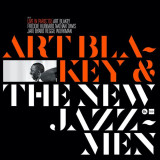
A never-before released Art Blakey 1965 live recordings.
First official release with the full permission and cooperation of the Art Blakey Estate & INA (Institut National de l’Audiovisuel).
Art Blakey, Live in ’65 boasts an exceptional one-hour concert from Paris in 1965. This performance showcases one of the few undocumented Blakey bands, the New Jazzmen, featuring Freddie Hubbard on trumpet, Jaki Byard on piano, Reggie Workman on bass, Nathan Davis on sax, and, of course, Blakey on drums.
Freddie Hubbard’s incendiary playing on “Blue Moon” and the blistering 24-minute version of his own “Crisis” shows that he was one of the most innovative trumpeters in jazz history.
On this live session, the audiences seem to have been enthusiastic and appreciative. “Everywhere we’d go people would say, This is the best Jazz Messengers we’ve heard!”, according to Davis. “And because of the way Jaki would play and Reggie would go, it was like a semi-freedom thing – with Messengers heads, you know, but when we got to soloing…! And Blakey was ridin’ and floatin’ the time…but he would always be loose enough to follow, to keep it going. He’s one helluva musician.”
Recorded at Palais de la Mutualité, Paris, France, November 3, 1965.
Freddie Hubbard (Trumpet)
Nathan Davis (Tenor saxophone)
Jacki Byard (Piano)
Reggie Workman (Bass)
Art Blakey (Drums)
2024 repress
The immobile odyssey. For a long time before the success of Nôze led him to discover the rest of the world, Ezechiel Pailhès remained a prophet in: his country. For a long time as well, he worked on creating what became his first solo album, waiting for the right moment when he could no longer contain all the melodies that populate this 14-leg epic. A voyage in a free world, where creation knows no formal constraints, where everything mutates according to the determined inspiration of the moment. Transforming the original pieces without knowing in advance how they will end up, disguising the instruments so that they are mistaken for others, nothing frightens this intrepid sailor whose ship is nevertheless securely moored at home, Ezechiel composes and plays at home in Paris. Sole master on board, the tinkerer illusionist prepares his piano with mechanic's tools (scotch tape, rubber, percussion, wooden claves adrift over the strings), obtaining instruments that do not sound where we expect them. This adventure is, he says, a fiction he wants to believe in.The result is equal to the creator and his character.14 captivating melodies like siren songs, sometimes dressed in a simple lala or lyrics by David Lafore, 14 ports of call offering a sweetness that is at times extremely melancholy, 14 pieces whose implacable refrains take root the first time you listen to them.
A sequel to the cult 1975 Australian Space Rock album 'Monster Planet' by Steve Maxwell Von Braund.
Previously unreleased tracks from the Cybotron founder.
Will appeal to fans of Krautrock and Cosmic Electronic music.
100 random copies of coloured vinyl.
A Blue and Yellow 'Cosmic Joiker' colourway.
Artwork by Andy Votel from Finders Keeperss.
Repress!
You know it's going to be a heavy record when DJ / collector Mr Thing asks you to keep a look out for a copy on your next digging trip to Brazil. Add on top of that, being sampled by Madlib on the track 'Curls’ on his Madvillain album!
Taken from Waldir Calmon's 'Waldir Calmon E Seus Multisons' album on Copacabana (1970), from looking at this unassuming record cover featuring a middle-aged man sporting an impressive pair of glasses you wouldn't expect it to become the fabric to one of the songs from the iconic 'Madvillain’ album. But… like many things in life, you shouldn’t judge a book by its cover. 'Airport Love Theme’, like its name suggests, falls into full-on lounge territory. It’s feel-good music made to be the soundtrack for a utopian world that never really was. Yet behind the silky-smooth groove is an addictive earworm waiting to be heard.
'Afro Son' taken from the same album, pushes things in a different direction towards a sound that is more firmly rooted in the Brazilian tradition. This quirky 60's-breakbeat-funk groove is reminiscent of French artist Jean Jacques Perrey's 'E.V.A.', also from 1970, in its melody and backbeat, where the Moog synthesizer of Perrey is replaced with a more orchestrated sound by Calmon. This track is magical, cinematic and breakbeat-laden with a hidden unknown exoticism.
Waldir Calmon had an active career in music working from the '50s right up until his passing in 1982. His career started early, forming his first ensemble at the age of fourteen, originally working in bands in nightclubs and writing jingles. He progressed in the early '50s to a long-running career working in television. In addition to his television work, he had success with his recording vocation, mixing in the same musical circles as greats such as Tom Jobi, João Gilberto and Doris Monteiro.
• Next installment in BRAZIL 45 Series.
• Sampled by Madlib on the track ‘Curls’ from his ‘Madvillain’ album.
• Quirky, cinematic, breakbeat-laden exoticism.
Bloody Mary Vinyl[29,20 €]
This concert marks an important moment in the history of The Flower Kings, as they
masterfully perform their classic material and showcase their strength as a melodic,
tight and incredibly dynamic unit. Each band member is given plenty of room to
shine, resulting in a stunning musical experience. This album captures the essence
and energy of the band like never before.
Despite being tracked from the PA board on just one night, this recording and mix
stand out as the finest live recording document of The Flower Kings ever. The mix is
perfected to highlight every detail. The album will be released on vinyl on Nov 15.
Mirko DeMaio: Drums & Percussion / Michael Stolt: Bass, Moogbass & Vocal / Lalle
Larsson: Keyboards / Hasse Fröberg: Guitars, Vocal & Percussion / Roine Stolt:
Guitars, Vocals
Mixed By Roine Stolt February/March 2023
This concert marks an important moment in the history of The Flower Kings, as they
masterfully perform their classic material and showcase their strength as a melodic,
tight and incredibly dynamic unit. Each band member is given plenty of room to
shine, resulting in a stunning musical experience. This album captures the essence
and energy of the band like never before.
Despite being tracked from the PA board on just one night, this recording and mix
stand out as the finest live recording document of The Flower Kings ever. The mix is
perfected to highlight every detail. The album will be released on vinyl on Nov 15.
Mirko DeMaio: Drums & Percussion / Michael Stolt: Bass, Moogbass & Vocal / Lalle
Larsson: Keyboards / Hasse Fröberg: Guitars, Vocal & Percussion / Roine Stolt:
Guitars, Vocals
Mixed By Roine Stolt February/March 2023
The eighth and latest slate of refined retro-futuristic synth-pop by Liz Wendelbo and Sean McBride aka Xeno & Oaklander is named after and inspired by "the study of what not to do, a negative image of a positive, the other side, the other:" Via Negativa (in the doorway light). Recorded in the fall of 2023 at their modernist Connecticut home fashioned into a two-story synthesizer laboratory and mixing studio, the album is uniquely visionary in spirit yet precision in execution, a contrast central to the duo's enduring chemistry. Embryonic piano sketches were translated to nuanced modular systems, which McBride weighted with "harmonic padding," tuned percussion, and a spectral transfer device capable of "rendering spasms of rhythmic overtonal filigree." Despite the technological complexity of their craft, emotively the songs require no deciphering - these are technicolor widescreen anthems of the cybernetic age. The eponymous opening track sets the pace, soaring sleekly over glittering synths and call-and-response vocals about arias, shattered light, and faces in stereo. From there the record expands and contracts, cycling through a gallery of moods and masks, animated by the band's fascination with drama, "the idea of personae," and theatrical characters. Track by track, a murky, tragic backstory reveals itself: forlorn figures navigating a treacherous mercury mine, alternately poisoned by fumes or buried in collapsing caverns. The tension between Teutonic, utopian synthetic pop and lyrical narratives of ghosts in silos, ruined mills, and the traumas of mineral excavation creates a compelling friction, alternately futurist and obsolete, elevated and subterranean. Wendelbo describes the music's polarities perfectly: "The heavy machinic din of extraction in contrast with the enchantment of the mined precious gems and metals." From bilingual odes to bloodstones ("O Vermillion") to cosmic chrome dance floor classics ("Lost & There" "The present tense can never feel real / So many pasts conspire in the burning sun") to strutting EBM sensualities ("Actor's Foil"), Xeno & Oaklander re-prove themselves masters of the axis of technology and poetry, snaking cables and synesthesia, mining melodies and myths across 15 years of focused artistry. Theirs is a muse still gilded and gleaming, burnished red and silver, attuned to "the unobservable, the unfamiliar, that which you don't see directly."
Description:
Varèse Sarabande presents the first-ever vinyl release of Hans Zimmer’s GRAMMY® nominated score for the classic comedy-drama, Driving Miss Daisy. This Transparent Violet LP features Zimmer’s unforgettable original compositions for the Academy Award-winning film, as well as songs performed by Eartha Kitt and Louis Armstrong.
On his latest full-length, Low End Activist swerves towards weightless grime and suspended hardcore miniatures to tell a very personal story. The UK-rooted producer continues his habit of zeroing in on a distinct approach for each release, leaving a logical breadcrumb trail of soundsystem science in his wake as he channels decades of bass absorption into 14 atmospheric cuts that prize patience and precision over obvious club functionality.
Municipal Dreams plays out as a semi-autobiographical tour through the Blackbird Leys estate that the Activist grew up on. It’s a lived reflection on inequality and the ripple effect it has in working class communities, using the sonic palette to set the mood and scattering pointed samples throughout to spell out the story.
In sampling the exhaust of a stolen Subaru Impreza, ‘TWOC’ looks back to the recreational car theft which was standard entertainment for the kids in his community. There’s an underlying idea that this ‘council estate sport’ wouldn’t have been so prevalent if there were public services and opportunities presented to the scores of disaffected youth looking for somewhere to direct their energy and frustration.
In ‘Just A Number (Institutionalised)’ LEA alludes to the shattered juvenile detention system, growing up seeing friends and family members locked up at ease with little to no support on being released back into society, just meant that the same cycles of behaviour would play out over and over.
‘Violence’ samples from a short film shot by the drama division of the Blackbird Leys Youth Club to evoke the physical threat which formed a background hum to life on the estate. The industrial mechanics of the local car factory, which served an integral role as a workplace for many in the community, gets sampled in ‘They Only Come Out At Night’ while the ‘Everyone I look up to are either junkies or criminals’ sample in ‘Broke’ looks to a lack of positive role models.
Municipal Dreams isn’t a one-note indictment of life on the estate, ‘Innocence’ captures the simplicity of a child at birth before their environment has time to shape them. The Hope interludes cut through the grim honesty of the longer tracks while a subtle thread of wry humour finds its way into some of the talking heads cutting through the signature LEA murk.
But honesty is the operative word here, and the message feels all the more meaningful at a time when the UK’s social divisions are laid bare in the wake of a devastating stretch of austerity. Returning to Blackbird Leys to shoot images for the photo-zine and album cover, the Activist found the local community centre being demolished. The local pub stands derelict, its faded Welcome sign a grimly ironic portent of the options facing children of the estate in the wider world.
Funnelling his memories, hopes and fears into a singular twist on the bass weight tradition, LEA captures evocative scenes that land somewhere between kitchen sink realism and rave futurism.
Indignation Meeting are punky rail fans from Leeds. 15-year-old Peter is the driver - he's the drummer and lead singer, writes most of the songs, and also plays bass and trumpet on the album. The rest of the crew is his dad Michael on guitar, Hugo on bass, and with Keith, Heather and Sally often along for the ride when they play out. Here at DGHQ we loved listening to their self-released debut album Trouble In The Shed so much we eventually released it on vinyl for the first time. They now have a second album! Vocalist/drummer Peter very kindly talks us through the (train) tracks_ * "The Trainspotting Song" - Now, as a train geek, I go out filming trains an awful lot, and one thing you can't help noticing whilst out in the wilds of Staffordshire or the moors of Lancashire are a whole load of unnecessary 'Private Land' signs. This song is my response_ * "The Talyllyn Railway" - The history of the Talyllyn Railway is a fascinating one that I've long since wanted to explore, due to its unique nature as the first railway to ever be taken over by volunteers. This is the result! * "The Middleton Railway" - As a volunteer at the Middleton Railway, I had felt that a song needed to be written for quite a while. However, our guitarist Michael, ended up beating me to it! * "A Model World" - It was late one night, and I was lying on my sofa, trying my hardest to gain an ounce of enjoyment from 'Hornby; A Model World.' It was proving quite hard, due to the alarming lack of substance in the programme, so instead I decided that its name was rather good, and could be the basis of a song explaining my 'model world.' And, well, here it is! * "The Fifth Black Five" - This song is dedicated to the railway preservationists of old, who spent countless hours in cold, damp, dreary sidings, all to make sure us future generations would be able to enjoy the smell of a steam train. Thanks guys! * "Case Study" - This song is a commentary on the sensationalisation of disasters, when there's a massive tragedy and people at home just sit in their comfy sofas, watching the news and drinking tea. We know what's going on, but we can just choose to turn off the TV and forget it ever happened and continue with our lives. It also relates to the dehumanisation of those disasters you experience in school, where you have to write essays on someone who's just become homeless. It seems quite heartless sometimes_ * "Loco Motives" - This song is a fictional story of a man's personal struggle with a railway company, and the drastic measures he took to fix them_ * "That Would Never Suit His Grace" - With model railways, you always seem to get a few people who can never be satisfied with a layout or a model - no matter how hard someone's tried, there's always something to improve on, and they're never nice about it either. This song is a reality check for them_ * "Small Black Shunter" - This is our second homage to Zounds - Electrification would never be truly complete without its B-side. And this B-side is the story of a little loco who wanted to see the world. * "Rhydyronen" - Slowly but surely, we're going to pick off all of the stations on the Talyllyn Railway. Starting where Abergynolwyn left off, this is the story of our second favourite station on the TR. * "Typically English Day" - This is an homage to Mark Astronaut, a true punk genius who was gone before his time. Although there were many songs we could've picked to cover, it only seemed right to punk up one of his most popular tracks, and one of the main ones that got me into the Astronauts in the first place - Typically English Day, a heart-wrenching tale of an elderly couple trapped in the middle of a nuclear war, following their last moments before their inevitable demise. * "Just For The Record" - There is too much misinformation in the media these days, and one case I found particularly egregious was the gross misrepresentation of the strikers, who aren't so evil as the media want you to believe_
After more than a decade of lighting up Australia's soul scene and stages across the country, Fulton Street is all grown up with the release of their sophomore album 'Hard Truths' – and they aren't holding back. Raw and real, 'Hard Truths' is forthright funk that shoots straight from the heart.
Made with great reverence to the roots of funk and soul, 'Hard Truths' is made up of 11 songs recorded directly to tape. Produced and mixed by Fulton Street's very own Jamie Stroud, the album was recorded with Alex Bennett from Sound Recordings in Castlemaine and is a tribute to the rawness of analogue recording, resulting in a sound that makes you feel like you are right there in the room.
From their Uni days, Fulton Street has retained a truly vibrant sound that has only grown into a lion's roar. Recorded and produced to perfection, 'Hard Truths' is a record for retro music lovers who are looking to hear something true.
Fulton Street has lit up festival stages across Australia's biggest events, as well as continuously selling out feature shows. They have enthralled crowds at Moomba Festival, Tasmanian Wine Festival, Caloundra Music Festival, Boogie Festival, Brunswick Music Festival, St Kilda Festival, Melbourne Music Week, Stonnington Jazz Festival, as well as Bluesfest sideshow support slots.
Coming to full form in Melbourne's most iconic and sweatiest soul venues, Fulton Street is regularly featured nationally on the stations where the true music aficionados live: PBS, Triple R and Triple J.
Blake Lee has always been fascinated by the unknown, and space, in its isolating, mysterious vastness, embodies this theme immaculately. The open void, captured so memorably by Stanley Kubrick in '2001: A Space Odyssey', is Blake's far-reaching canvas on 'No Sound In Space', a cinematic meditation on the cosmos that's painted in nuanced, emotionally sincere colors. The Los Angeles-based composer has been contemplating his full-length debut since 2021, using his guitar as a sonic paintbrush rather than find himself snared in its traditional aesthetic constraints. Transforming its characteristics with effects and subtle processes, he layers sustained tones and intimate improvisations, creating richly visual polychromatic utopias teeming with unknown life.
Since 2011, Blake has been most known for being the guitarist and a music director for Lana Del Rey, notching up three songwriting credits on her acclaimed ‘Ultraviolence’ full length. He sees his solo work is a form of escapism, a place where he can experiment and find comfort and catharsis outside of expectations and formal structure. The album was written instinctively, and Blake made sure he didn't force anything, letting go and getting out of his own way, listening intently as sounds and textures materialized organically. "I didn't want to ruin it by being a perfectionist," he laughs. And his collaboration with Kenyan sound artist KMRU, who runs the OFNOT label and contributes to two of the tracks on the album, occurred similarly organically.
Blake was moved to reach out to KMRU when he caught a performance of 'Natur' at Los Angeles' Zebulon in 2022, leading to a prolonged back-and-forth. They didn't meet in person until earlier this year, by which time they'd become firm friends, continuously sharing music and conversation. KMRU had lent a valuable ear to Blake, who sent early playlists of 'NSIS' that, over the months, slowly evolved into the finished album. It's the first release on OFNOT that's not by KMRU himself; the label emerged last year with the release of KMRU's own 'Dissolution Grip', and Blake's debut immediately expands its sonic universe. Alongside the playlists, Blake also provided KMRU with the tracks' raw stems, which KMRU began to edit and expand in his Berlin studio. 'Miura' and 'Waiting' are the result of this process, two sublime abstractions that augment Blake's dreamlike, euphoric tones with KMRU's pebbly distortions and booming low-end rumbles. And this same playful sense of freeness seeps into Blake's other compositions.
On the misty 'In A Cloud', he surrounds cascading string tones with soft-focus pads that swell until they're like crashing waves, and on the two 'Echoplexx' pieces, he uses delay and reverb to smudge his sounds until they're viscous residue, the harmonies obscured by whooshes of white noise and distant chimes. The mood is quieted somewhat on 'Moving Air', as Blake's swirling tones form half-heard lullabies, coalescing into a dense, melancholy crescendo, and he fills out the sound with reverberant airport recordings on 'Pan Am', letting pitchy My Bloody Valentine-esque drones warble beneath the transitory chatter. Each track melts into the next, forming a billowing, cryptic narrative that leaves more questions than answers. Blake is constantly searching, and fills his unoccupied space with warmth, perception and sensitivity.
Blake Lee has always been fascinated by the unknown, and space, in its isolating, mysterious vastness, embodies this theme immaculately. The open void, captured so memorably by Stanley Kubrick in '2001: A Space Odyssey', is Blake's far-reaching canvas on 'No Sound In Space', a cinematic meditation on the cosmos that's painted in nuanced, emotionally sincere colors. The Los Angeles-based composer has been contemplating his full-length debut since 2021, using his guitar as a sonic paintbrush rather than find himself snared in its traditional aesthetic constraints. Transforming its characteristics with effects and subtle processes, he layers sustained tones and intimate improvisations, creating richly visual polychromatic utopias teeming with unknown life.
Since 2011, Blake has been most known for being the guitarist and a music director for Lana Del Rey, notching up three songwriting credits on her acclaimed ‘Ultraviolence’ full length. He sees his solo work is a form of escapism, a place where he can experiment and find comfort and catharsis outside of expectations and formal structure. The album was written instinctively, and Blake made sure he didn't force anything, letting go and getting out of his own way, listening intently as sounds and textures materialized organically. "I didn't want to ruin it by being a perfectionist," he laughs. And his collaboration with Kenyan sound artist KMRU, who runs the OFNOT label and contributes to two of the tracks on the album, occurred similarly organically.
Blake was moved to reach out to KMRU when he caught a performance of 'Natur' at Los Angeles' Zebulon in 2022, leading to a prolonged back-and-forth. They didn't meet in person until earlier this year, by which time they'd become firm friends, continuously sharing music and conversation. KMRU had lent a valuable ear to Blake, who sent early playlists of 'NSIS' that, over the months, slowly evolved into the finished album. It's the first release on OFNOT that's not by KMRU himself; the label emerged last year with the release of KMRU's own 'Dissolution Grip', and Blake's debut immediately expands its sonic universe. Alongside the playlists, Blake also provided KMRU with the tracks' raw stems, which KMRU began to edit and expand in his Berlin studio. 'Miura' and 'Waiting' are the result of this process, two sublime abstractions that augment Blake's dreamlike, euphoric tones with KMRU's pebbly distortions and booming low-end rumbles. And this same playful sense of freeness seeps into Blake's other compositions.
On the misty 'In A Cloud', he surrounds cascading string tones with soft-focus pads that swell until they're like crashing waves, and on the two 'Echoplexx' pieces, he uses delay and reverb to smudge his sounds until they're viscous residue, the harmonies obscured by whooshes of white noise and distant chimes. The mood is quieted somewhat on 'Moving Air', as Blake's swirling tones form half-heard lullabies, coalescing into a dense, melancholy crescendo, and he fills out the sound with reverberant airport recordings on 'Pan Am', letting pitchy My Bloody Valentine-esque drones warble beneath the transitory chatter. Each track melts into the next, forming a billowing, cryptic narrative that leaves more questions than answers. Blake is constantly searching, and fills his unoccupied space with warmth, perception and sensitivity.
Lily Seabird is a perceptive songwriter who can channel moments when everything feels raw and overwhelming into something healing and galvanizing. With Alas, the Burlington, VT-based artist's sophomore album, she confronts grief with palpable clarity on tracks that careen from delicate folk to blistering indie rock. While it's her second LP, it serves as a proper introduction to an undeniable and idiosyncratic voice. "Alas, sounds way more like me," she says. "This is the album I wanted to make in the first place." Though Seabird is now known as a solo artist and collaborator in Burlington's vibrant music community as the bassist for Greg Freeman and other acts, her journey started in Pennsylvania when she picked up the saxophone as a kid. At 14, she learned guitar and started performing as Lily Seabird. After a brief stint in New York City playing in bands, she moved to Vermont, which has been her home since 2018. "When I came to Vermont, I was playing solo a lot but then I started a band with Greg Freeman," she says. "Since 2018, it's been me and Greg and a bunch of different casts of characters have been in the band since then it's an ever-evolving thing. It's just us playing my songs."The songs on Alas, came from a particularly unmoored period for Seabird. "I wrote this album in 2021 and 2022 on the road, trying to figure out who I am," she says. "A lot of them also deal with the time when my close friend passed away. The title Alas, meant a lot to her." Even if the songs don't always directly tackle this specific loss, there's a sense of mourning in how relationships change and dissolve. Take "Grace," a reflection on female friendship, which features the lines, "I hope she's happy now she should be 25 / She taught me something that I thought I'd always hide." Elsewhere, the knotty and unpredictable "Dirge" finds her singing, "I don't know if I believe in god / I don't know if I know how to go on." Seabird and Benny Yurco produced Alas, which was recorded at Burlington's Little Jamaica Studios with Freeman and drummer Zack James (Benny Yurco). It's a quietly expansive album full of subdued, organic textures and moods. Songs like "Cavity" are lush and inviting with silky guitar and Seabird's expressive saxophone playing. The 10 songs on Alas, stretch out and leave space for introspection and deep listening with some tracks taking nearly seven minutes to mesmerizingly unfold. It's a remarkably assured and vital statement from one of the most promising new songwriters alongside peers Merce Lemon, Squirrel Flower, and Allegra Krieger."The album is about loss, coming of age, and sadness but there are also all these moments where happiness takes over," says Seabird. "It can be two things at once: life isn't just pain and sadness, there's also joy. They can all exist at the same time. Alas, is an expression of grief but it's also for letting go."