Compiled onto one vinyl album for the first time, Landlocked (Numbers, 2026) presents Hallucinator’s 1999 debut album originally released under Mark Ernestus and Moritz von Oswald’s label Chain Reaction. Writing much surrounding the culture of what would be later considered ‘Dub Techno’ and its’ primary distribution center, Hard Wax, leads one down roads of shifting primary sources and decades old overheard smoke break recollections. Maybe brevity primes the listener to the paralinguistic to approach the sound on its terms; focusing on how things are uttered and not what.
This theory will remain unconfirmed. Hallucinator original press release left us with three or so gestures to consider over the years since:
“A new act on CHAIN REACTION”s distinct productional thesis. HALLUCINATOR are 3 people from he UK/London and this their first release ever- that’s all what the artists want to let us know…. This record is dedidacted to the memory of Stephen Lawrence!”
The first gesture is one of personnel. Since ’99, we’ve gotten to learn a bit more about the artists behind the Hallucinator project. All London-based, all writers, composers, and sound-designers— Anna Piva, Edward George, Trevor Mathison. These three seem to flow between parameters as aesthetic tactic and tacit structure to the work itself. For example, other collaborative shapes have come from this lineup including Flow Motion (Piva, George and Mathison) as well as the now defunct Black Audio Film Collective of which George and Mathison are founding members.
The second gesture is in the second line of the previous press release, “distinct productional thesis.” Much of Landlocked’s affect and sequencing seems to suggest an emotional study of entropy at the level of sediment. Rhythms play with space and capacity through polyvalence. The production chose subtractive vertigo, often switching and bringing back in elements that vanished from the track 6 minutes ago. Dubbing out so much of a track, one begins to associate sound akin to memories held in the experience of running your hand across a concrete block as a child. Felt (re)memberance in lieu of narrative tale. Using textures that flicker between colour and percussion, Hallucinator’s 12-tracker of loudspeaker perception music might be a mediation on the psychic wake of the Cold War. Intermittent strata of ambience and groove convects an active margin rifting event underneath a scorched geology of power in Western Europe. Again, this is all grapevine hearsay.
But it’s silence that voices the third gesture. The album’s sparse application of the written word touches on the ennui paradox of being landlocked on an island. Stuck. Trapped in the psychosis of occidental hypercentricism. A looping silence of Black British tragedy: “to the memory of Stephen Lawrence”. 18 year-old Lawrence was stabbed to death at a bus stop in southeast London by six white men in 1993. The rift of grief and implicit reiteration of modern subordination left by this hate act went legally silent for almost two decades until Lawrence’s killers were ultimately sentenced to virtually life in jail in 2012. Only six years removed at the time of Hallucinator’s initial invocation of rememory, the mind-numbing accretion of what Black Studies Professor Denise Ferreira da Silva might call “unpayable debt”, finds demonic ground across Landlocked, forming an aural sense of what continues to be refused.
The album ventures through spaces of overactive non-happenings: ‘Red Angel’’s factory floor dub flashes between smokestack and jungle visions, or the halfway mark’s stilted breath of ‘Dusk’ lending its mood to the sort of sedated dreams built from daily life under colony rule for instance. That linked rhythm links us back to our linked fates across Black and Brown folk is real, thus the syncopated signals through this work behave on the level of transnational radiotelegraphy, sounding out its windswept tension of a body negotiating a meat-grinder schema of linear production and wage for others to know that unspeakable thing can be broadcast in every drum tongue.
As the silence continues to reverb, we return to the sort of meaning-making that cannot be told but felt. Soothing to some, disturbing to others. Landlocked, a Rorschach test for a crumbled empire.
Yesca is back on Shall Not Fade with ‘Paint on Walls’ 12” EP.
2024’s Yesca EP on SNF - “Mood Loops” - set a high bar, so when we say this record is something special you should take note. Of course if you already know Yesca’s music or have had the pleasure of a Yesca DJ set then you will have already this queued up.
Sweet Spot: Ben Sims, Deetron, Oliver Ho, Vince Watson, Grain (Artwork’s Techno alias). Planet-E, Primate Recordings, Paul Mac & Stimulus Recordings found the sweet spot.
According to the OED the first use of the phrase “Sweet Spot” was in 1976 in reference to tennis rackets and golf swings. It’s where everything hits just right. And that’s what this EP does, hits just right. What strikes me is how descriptive the phrase ‘Sweet Spot’ is. Given enough swings and some luck we all know what it feels like to hit the sweet spot in some regard. Finding the sweet spot regularly though takes time and skill. But being able to hit the sweet spot by design every time, well that’s something different. That’s what makes the greats great.
For us at SNF there’s a consensus that in the lineage of electronic music there have been many moments where artists & labels converged on a sweet spot. One such sweet spot for us is in Techno
around 2003 when at the tail end of Hardgroove tempos began to slow and a groovier more refined tech house infused goodness appeared in the racks from a group of killer techno labels & artists (some mentioned above) that moment before the fuller emergence of the 2nd wave of Tech House in the mid 00’s.
That sound, while often emulated, never quite hit the same for us at least – until Yesca came along. His music has everything that we love about that sweet spot. Raw driving groove, rolling basslines and hip shaking percussion. What’s different on ‘Paint on Walls’ is that Yesca stepped on - he had already found the sweet spot on 2024’s Mood Loop EP - now his sound (or swing) is natural. Repeatable, refined and seemingly effortless. To revisit the tennis and golf analogy, this is the start of a Grand Slam run from an artist ready to etch their name in dance music history. Tiger..... Serena......Yesca.
Run the Tracks:
‘How I Do It (They Wonder)’ - A masterclass in less is more, and a serious DJ tool. Full of groove - slow it down and it will light the touchpaper in a house set - speed it up and you’ve got techno weaponry. Forget gatekeeping, this will make you feel like you just found a 2004 techno white label from the likes of Grain or Ben Sims.
‘I Desire’ - House music that I reckon Deetron would be proud of... Blissed out machine funk, whispered vocals, slick jazzy chords and dubbed out techno stabs are all grounded by Yesca’s impeccable, loopy drum programming. The best tunes always end too soon.
‘Domination’ - The ever rising bass, err, dominates this track and this track will dominate on many a dancefloor, but Yesca's knack for dubbed out swinging synth lines has to get a shout out here too. He turns what would be melodic elements into what feels like part of the percussion. Double Threat. Hands Up and Heads Down business.
‘Paint on Walls’ - It would be a tough call to say Yesca’s saved the best til last with the EP’s eponymous track given what’s come before, but Paint On Walls works all the highlights from the rest of the EP into a latin techno/house infused anthem. Skittering percussion, a hint of Detroit goodness and a deep deep rolling bassline and THAT vocal. In every way hopeful yet resistant, and that is what techno is all about.
Rio de Janeiro producer, composer and multi-instrumentalist Fabio Santanna returns with Copa Astral, an eight-track journey through modern Brazilian boogie, disco and Balearic grooves. Released by Rio’s Onda Boa, a label founded by Joutro Mundo, the album captures the warmth of the city's sunlit days and the cinematic glow of its nights, blending lush synths, live horns, percussion and rich vocal arrangements into an unmistakably Brazilian sound.
Opening with the slow-burning title track, introduced by the unmistakable cry of a cuíca, Copa Astral sets the mood before unfolding into the rolling grooves of "Ponto de Areia" and the Afro-Brazilian pulse of "Odoya Beat". Elsewhere, "Nesse Tempo" drifts into dreamy nostalgia, while side B moves effortlessly through the carefree boogie of "Jabuticaba", inspired by Brazil's beloved fruit; the warm, enveloping feeling of longing in "Senti Saudade"; the seaside romance of "À Beira Mar"; before closing with "Cantagalo", a heartfelt tribute to the neighbourhoods, memories and spirit that continue to shape Santanna's music.
Inspired as much by Rio's beaches as its neon-lit avenues, Santanna draws from Brazilian boogie, 1980s cinema, vintage record sleeves and classics such as Junior Mendes' Copacabana Sadia, filtering those influences through the city's unique rhythm. Produced at his Copacabana studio with live brass, percussion and vocal harmonies, Copa Astral is both timeless and contemporary - an album equally at home on the dancefloor, by the ocean or during a late-night drive along the coast.
LIP020: Ferdinger – Easy Warmth & Quiet Menace Life In Patterns marks its 20th release, and its last of 2026, with an EP from label head Ferdinger himself. "Easy Warmth & Quiet Menace" sees him move into darker, more textured territory without losing his signature relentless drive. From the sombre melodies of "Tears Will Dry" and the distorted, haunting synths of "Back At It" to the analogue modular textures of "Front Toward Enemy" and the gritty dub stabs of "Ruminations", the EP covers a lot of ground across its moods. Closing track "Fresh Impetus" ends things on a different note, with a driving old-school electro groove. "Easy Warmth & Quiet Menace" is out on 13 November 2026 on vinyl and digital.
WRWTFWW Records is very excited to announce the first ever release for the Cyberpunk 2077: Future Sound of Night City soundtrack - atmospheric music from one of the most celebrated video games of the decade! The compilation, showcasing a who's who of Polish electronic underground, is available as a limited edition 45rpm-cut yellow vinyl 3LP in heavyweight 3-panel gatefold with a sticker sheet. The album is also available on CD with super jewel case, and in digital formats.
Dive deep into the pulsating world of Cyberpunk 2077 with an immersive soundscape perfectly capturing the gritty and neon-soaked streets of Night City. Curated by Rafa? Grobel and Wojtek Sokó? of Most Records, the epic 15-track compilation features a diverse offering of electrifying Polish beats, cohesively flowing between techno, ambient, synthwave, bass music, industrial, and IDM. Ominous, powerful, evocative, and filled with futuristic nostalgia, the music of Night City is a thrill ride in a dystopian urban landscape, heavy hearts riding through the night, menacing streets surrounded by infinite skyscrapers. The music transports you, soul-stirring, cinematic, and timeless, the most beautiful kind of escapism.
The award-winning Cyberpunk 2077 action role-playing game was developed by CD Projekt Red and published in 2020 and has since become one of the most recognized and best selling video games of all time. With a cast including Keanu Reeves and Idris Elba, unmistakable visuals, music, and atmosphere, CP77 has earned a spot in the pantheon of 2020s pop culture.
Points of interests
- For fans of video game soundtracks, ambient, techno, synthwave, vaporwave, industrial, dark electronic music, retro-futuristic moods, neon lights, Tech Noir, Keanu Reeves, bass music, All Foods, cities by night, skycrapers, urban adventures, dystopian universes.
- The soundtrack for Cyberpunk 2077: Future Sound of Night City available for the first time everrrr !
Few producers embody the soulful heart of House Music quite like Move D. Being a mentor of the label since day one, All That Jelly brings together two defining and desirable cuts from David Moufang’s recent history to one record.
'To The Disco ’77' 2013 original version for the A-side and the 2017 live rework finds its way to the B-side, both freshly remastered by the amazing and sought after Andreas Kauffelt. 'To The Disco ’77', opens with a clean, electro-styled beat that has a restrained power and a controlled tension that gradually blooms as the keys start to lift the mood into something lighter. When the iconic 'to the disco' vocal sample cuts through, it’s like a wink
from the past, threading disco’s golden exuberance through the disciplined swing of classic house. The track is a seamless blend of Funk, Disco, House and Electro with each element raw yet playful, woven into a groove that never stops urging you forward. It’s a masterclass in balance: sleek but deeply human, nostalgic but alive in the moment. It's like listening to the history of dance music in one special track.
'To The Disco ’77 (Move D Live Rework)' stretches the idea out into something even more fluid. The groove loosens, the funk rises to the surface and the extended runtime gives space for guitar and bass lines to share center stage, riffing around each other with organic warmth. The 'to the disco' mantra remains, grounding the track in its celebratory intent. It’s the kind of tune that closes a night perfectly and makes you not want to leave the dancefloor. Reissued together, these versions show Move D’s masterful ability to bridge eras and genres, reminding listeners that the dancefloor is as much about emotion as it is about motion.
There was nothing in contemporary music like Chris Isaak’s Heart Shaped World when it hit shelves in June 1989. More than three decades later, the singer-songwriter’s third album still sounds unique — and claims a backstory nearly as fascinating as the retro-leaning material and standout performances that propelled it to sales of more than 2.5 million copies. Home to the Top 10 smash “Wicked Game,” the set remains a masterful mood piece that invites you to pour a late-night drink, sit in a dimmed room, and relish Isaak’s elegant albeit raw ruminations on love, relationships, and questionable decisions.
Sourced from the original master tapes, pressed at Fidelity Record Pressing, strictly limited to 3,000 numbered copies, and featuring the bonus track “Diddley Daddy,” Mobile Fidelity's UltraDisc One-Step 180g 45RPM 2LP box set of Heart Shaped World unearths the staggering inner details, saturated tones, and brilliant atmospherics of the crisp production. It brings you up close and personal with Isaak’s spectacular singing — impeccably controlled, tense, brooding, steamy, smoldering, haunted — situated amidst stripped-down backdrops that allow every note to fully bloom and decay.
While Isaak’s ever-steady baritone remains the anchor, the contributions of his trusty backing band, the aptly named Silvertone, come across with just as much cool, command, and realism. The indispensable playing of guitarist James Calvin Wilsey particularly emerges with superb clarity and dimensionality. The character of his 1965 Fender Stratocaster, shivering twang of his spring-coiled fills, and his signature use of reverb, delay, and vibrato seamlessly match Isaak's patient deliveries and the band’s unhurried rhythms. Experienced on UD1S with ultra-black backgrounds and a nearly invisible noise floor, Heart Shaped World is in every regard a demonstration disc.
The premium packaging of this UD1S pressing befits its elevated status. Housed in a deluxe slipcase, it features foil-stamped jackets and faithful-to-the-original graphics. Aurally and visually, this reissue is for discerning listeners who desire to immerse themselves in everything involved with the album, not the least of which is the cover art depicting a lost-in-thought Isaak staring ahead and sitting in what appears to be an efficiency apartment. The image epitomizes the record’s lonesome temperaments and pensive themes.
Of course, if not for director David Lynch hand-picking two cuts from Heart Shaped World for his 1990 film Wild at Heart, the record would’ve probably suffered the same fate as Isaak’s prior efforts and gone unnoticed by the mainstream. Despite receiving raves from outlets such as NME, Chicago Tribune, and Rolling Stone upon its original release, the album stalled in the lower quadrants of the Billboard charts and, after a few weeks, dropped off.
Cue the ear of Lee Chesnut. Then the music director for a large Atlanta radio station, Chesnut heard the instrumental version of “Wicked Game” on Lynch’s soundtrack and started airing the album rendition at all hours of the day. Aided by a sensual video featuring Isaak and supermodel Helena Christensen, the song found its way into the public consciousness by early ‘91 and helped make Isaak a most unlikely mainstream star in an era where his techniques had little to nothing in common with popular tastes.
Despite its vintage vibes and shared DNA with legends such as Roy Orbison, Chet Baker, and Glen Campbell, Heart Shaped World transcends nostalgia, rockabilly, and throwback tropes. For all the melodrama and sadness at hand, Isaak’s gorgeously transparent singing dives deep underneath emotional surfaces. He mines subtleties that indicate his feelings go beyond heartbreak and anguish, and occasionally suggest frustration, menace, and anger. You can hear it in his quivering falsetto, and the slow and methodical ways he allows delicate whispers to break into shadowy phrasing that crosses over to the darker sides of romance and desire.
That approach bolsters the title track, which suggests calm yet moves on ominous currents — its simmering pace and snare-drum snappiness foreshadowing Isaak raising the volume and urgency during the coda. The southwestern-tinged “Wrong to Love You” plays with similar concepts of hesitation, unease, and discord, Isaak careful never to fully erupt and give anything away. His poised deliveries offer a master class in the art of insinuation and hurt on “Nothing’s Changed,” sent up with a wordless backing chorus and crackling guitar lines straight out of a Memphis blues joint.
Heart Shaped World further boosts its merit via its abundant stylistic variations, from the upbeat country-and-western trot of “I’m Not Waiting” and Spanish acoustic shimmer of the jazz-based ballad “Blue Spanish Sky” to the swinging horn-accompanied grooves of “Don’t Make Me Love You” and desert smokiness of the understated “Kings of the Highway.” On the latter, Isaak comes across as resigned and absolute. His singing and pain worm their way into your soul, and echo akin to the way the music prepares to strike when you least expect.
“Trouble going 'round,” Isaak croons right as the album begins. “Trouble going down.” Damn straight.
Back after its first release, Life Enigma returns for a second chapter: a dark and warped dispatch from the void.
This time, the London-based artist of many aliases Zuul takes the reins, exploring moodier territory at the low end of the frequency. The result is three slow-burning, horror-flecked cuts that sit somewhere between electro and new wave, each driven by a sinister vocal. The release is rounded off by a more dancefloor-oriented remix from C.ru.z on the B2.
On the A-side, My Mind Is Mean is a driving, sub-heavy opener with menacing synths that do the title justice. It's Hell In There, It's Horror shifts into something more melodic and upbeat, with eerie textures and an ominous undercurrent.
And when we thought things couldn’t get any meaner, Ask Me sinks into haunted, mid-tempo bass hypnosis on the flipside, while C.ru.z’s remix leans further into its darker side with an even nastier groove.
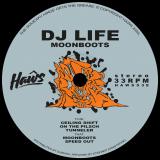
Weight meets wriggle on DJ Life's five-tracker for Haŵs, and oh boy is it hefty. Gritty basslines get right under the skin, swinging drums sit deep in the pocket, and skippy FX keep things light on their feet. A murky, moody streak runs through the record, with an electric tension giving even the loosest grooves a touch of menace. Fat low end and a restless edge, with enough bite to leave a mark. Serious tackle with a wicked sense of swing, primed for the dancefloor. Use at your own peril, you’ve been warned!
As Selofan's fifth studio album, Vitrioli, from 2018, is a testament to the tragedy of life. The Greek duo, Joanna Pavlidou and Dimitris Pavlidis, who recorded the album in the Fabrika Records home studio, continue on in their poetic, but heartbreaking, music set to a dance beat. Between languages (Greek, English, German, and Spanish), Selofan feels on the brink of mania with Vitroli. However, the madness is controlled, the songs are restrained hysterics that culminate into the alchemic perfection of the band's specific moody sound.
From synthpop to synthpunk elements, the twelve-track LP leads listeners through dark corridors and into haunted, empty beds. There is a resignation to a doomed destiny with Vitroli—a trait that connects all Selofan releases—as a bitter pain and loneliness that cannot, or will not, subside.
The album begins with "Give Me a Reason" whose lyrics feel universal in this day and age: Give me a reason, to get out of bed / I could just watch the ceiling instead. Its heartbreak is profound as bells and voice pads echo under Joanna's voice. The adjacent music video for the song was directed by Dimitris Chaz Lee, and the band describes the video as "depicting the fragile nature, conflicts, emotional demands, and vulnerability of each person in a relationship."
"Billie Was a Vampire" is a story about an undead creature who works at a nightclub followed by the urgency of "Black Box." Brass sounds moan against the fast beat and suggest a frenzied need to escape.
"I'm Addicted" became the second single for the LP. I am addicted, you are mine, Joanna demands of the lover. The music video, also directed by Dimitris Chaz Lee, depicts a clean, white photoshoot primed for the most beautiful creatures of the Athenian wave scene. Alex Macharias, from the legendary Greek band In Trance 95, acts as the photographer for the session, as the models pose and flail under the bright bulbs. The director states: "Addiction is a mental state, something inside all of us. It altered our perception and created a parallel world of avant-garde beings and flashy lights making us part of this everlasting bond."
Obscura Pulse I marks the start of a new label series delving into contemporary pulsating sounds of underground wave-infused music. Selected tracks of previously unreleased material or available on vinyl for the first time.
The first edition moves through the realms of European wave music, with support from German EBM act XTR Human, Dutch/Romanian synthpunk act Badtime, Italian darkwave/post-punk duo Schonwald, German Age O.P.F., Dutch darkwave queen Camy Huot, Austrian minimal synth duo Mitra Mitra, Dutch minimal wave act Raderkraft, Belarusian goth/coldwave act Tout Debord, Dutch synthwave wizard Adam Tristar and Croatian minimal synth maestro Neon Lies.
Explore the shadow frequencies of the underground pulse: from the hard hitting warehouse EBM energy in opener “Sledgehammer” by XTR Human (remixed by Dancing Plague). The analog machinery mastered by Raderkraft in future minimal wave classic “Virtual Reality Check” or Adam Tristar exploring cinematic synth landscapes balancing between retro futurism and dark club momentum in “Goosebumps”. On the flipside, Schonwald’s “Starless” bolts menacingly on gritty drones, metallic drum programming and rumbling bass lines. Mitra Mitra crafts suspense in the elegantly synth-driven soundscape “The Lure of the Naïve” and Neon Lies closes the circle with moody synthwave melancholy in “Heavens”
LP,180, 2018 REISSUE - REMASTERED FROM ORIGINAL TAPES, CAREFULLY REPRODUCED ORIGINAL ART
The two sides of 1973's Big Business / Wind of Change are mainly the work of thegreat Keith Mansfeld but there's a killer cameo each from Alan Hawkshaw and David Snell to help deliver a thematic suite, diverse in mood, applicable to dramatic and environmental situations'. A Be With favourite and truly one for the heads.
The Big Business of side A is all the work of Keith Mansfeld. It's heavy on the suspense and features the vital Hot Property', an insistent groove so good that Madlib sampled it to lace the ace Long Awaited' by Lootpack with Dilated Peoples.
Sleeping Giant 1' is a more feshed out version of the equally-dazzling Fatal Error', evoking the orchestral magic of David Axelrod. Indeed, it conjures images of Diamond D falling over himself in the early-to-mid 90s to loop its intoxicatingly
eerie soundscape. Complete with guitar flls that recall Paris, Texas-era Ry Cooder, you need this record for this piece alone.
The horn-and-fute-led "Tycoon" is a head-nodder and "Power Complex" has some fantastic percussion. Other highlights include the breezy glide of Whistle Stop Tour' and its sister groove Clean Air.'
Over on Side B is the more expansive Wind Of Change, which includes the David Snell and the Alan Hawkshaw contributions. But these ain't no fller. Snell's shufing International Flight' sounds like a smooth Dorothy Ashby track tossed from the heavens. Hawkshaw's Road And Rail' is about as luxurious and strung-
out as the great man gets and it might just be the highlight of this whole set.
Not to be outdone, if Mansfeld's Balance Of Power' doesn't make you feel like king of the world then you must be playing it wrong. Oh, and did we mention World In Action'!
As with all ten re-issues, the audio for Big Business / Wind of Change comes from the original analogue tapes and has been remastered for vinyl by Be With regularSimon Francis. We've taken the same care with the sleeves, handing the reproduction duties over to Richard Robinson, the current custodian of KPM's
brand identity.
Following his previous appearances on Figure, French producer Arkan returns with Mad Race, a four-track EP that further sharpens his distinct vision of mental techno. Balancing hypnotic restraint with driving intensity, the release finds the artist navigating deeper into textured, immersive territory while maintaining a strong sense of propulsion throughout.
The title track Mad Race opens the record in forceful fashion, locking into a tightly wound groove as restless synth movements and looming atmospheres continuously build pressure around the rhythm section. Revival follows with a more spacious approach, letting emotive chords and swelling layers unfold gradually over a firm, rolling foundation, capturing a feeling of momentum suspended somewhere between tension and release.
On the flipside, Sawlim pushes further into trippy terrain. Dense percussion and spiralling effects interact with pulsing low-end pressure to create a heads-down club tool filled with subtle movement and detail. Closing track Interlude shifts the focus once more, exploring a more restrained and introspective mood through cavernous textures and hypnotic repetition while still holding onto the EP's underlying drive.
Digital bonus track Make You Horny rounds out the package with a rawer and more playful energy, bringing punchy drums and jagged synth work together into a functional late-night workout.
With Mad Race, Arkan continues refining his own blend of deep, atmospheric and cerebral techno, further cementing his place within the evolving sound of Figure.
GALA announce Ten Years of GALA – a compilation marking a decade of independent culture
Ten Years of GALA is both an archive and a horizon: a reflection on where GALA has come from, and a signal of what lies ahead.
Founded in 2016 as a one-day gathering in South London, GALA has grown into a global point of reference for dancers, artists and collectives drawn together by a shared commitment to independence, collaboration and underground music culture. Rather than charting success through scale alone, the festival has consistently prioritised integrity, community and musical curiosity – values that underpin this release.
Spanning fifteen tracks, Ten Years of GALA unfolds as a considered journey. It opens with an intimate spoken contribution from Charlie Dark, grounding the compilation firmly in GALA’s home of Peckham before gradually expanding outward into fuller, club-focused terrain. From there, the record moves between moods and tempos, tracing a path from reflective moments into the physical language of the dancefloor.
The compilation brings together longtime friends of the festival alongside newer voices drawn into its orbit in recent years. Each artist contributes a distinct perspective, but collectively the tracks form a coherent portrait – not of a single sound, but of a shared ethos shaped over ten years of gatherings, collaborations and days spent dancing together.
Rather than a retrospective in the conventional sense, Ten Years of GALA functions as a living document. It captures fragments of past editions, scenes and relationships, while remaining firmly oriented toward the future. These are not museum pieces, but records designed to be played, shared and folded back into the spaces from which they came.
Together, the compilation holds a piece of GALA’s first decade – not as a closed chapter, but as a foundation for what comes next.
Produced by Masters At Work (Kenny Dope and Louie Vega).
'Collaboration is stimulating, it's in my blood.' Thus speaks Brian Jackson and his philosophy for making music and it's indeed collaboration that runs through this amazing album of reimagined and revisited songs from his artistic past. Featuring artists such as Black Thought, Rahsaan Patterson, Josh Milan, Moodymann, Omar, J. Ivy and others and being produced by Masters At Work, Now More Than Ever takes the enduring classic tracks that Brian made with Gil Scott-Heron and places them in the now over nineteen tracks and across a triple vinyl LP or double CD.
Songs such as Lady Day & John Coltrane, The Revolution Will Not Be Televised, Home Is Where The Hatred Is, Winter In America, The Bottle and more soundtracked a generational movement of Black Consciousness in the 70s and 80s. As Brian says, 'This album is one way to connect to what we were about in the 70s; we were about change and this is part of the lineage of resistance. These tracks mark a period of time when resistance was essential and now a younger generation has picked them up.'
'As young men in their twenties we (Brian and Gil) just wrote about what we saw and were feeling and people interpreted these songs in ways we never thought about but as Sly stone said the song comes from me but it's for you.' This statement from Brian perfectly sums up the collaborative nature of Now More Than Ever and the relevance of these songs in a contemporary perspective can be perfectly summed up by the songs themselves. The formidable stable of artists contributing to each track and the excellent production from Louie Vega and Kenny 'Dope' Gonzalez make this album an event in itself. However, these songs are there to be enjoyed as a canon or as individual masterpieces, whether on the dancefloor or on a home system. ‘Now More Than Ever’ just has to be in everybody’s music collection.
Surrrealism label boss EdOne returns to HABITAT with the ‘Show Me Love’ EP, following the release of his track ‘Madness Diary’ on the ‘METAFLORA III’ compilation in April 2025. Dropping on 26th February,
‘Show Me Love’ is a striking four-track EP that captures the full emotional range of his meticulously crafted sound. With multiple top ten Beatport chartings and releases on respected imprints such as Innervisions, Bedrock, Global Underground, and Renaissance, EdOne now brings his signature intensity, tension, and melodic precision into one of his most complete and expressive works to date, with the package featuring a collaboration from Rotterdam’s Beswerda.
Title track ‘Show Me Love’ opens the EP, delivering a backbeat-driven, clap-heavy groove, with soothing maracas, sundrenched synths, and warm pads creating an inviting, melodic house cut. ‘DTS’ serves as a moodier counterpart; its thudding bassline, rattling central synthline, and atmospheric low-end strings build a deep, cinematic tension. On the flip side, ‘The Next Men’ leans into EdOne’s progressive, hypnotic sound, featuring preaching vocals, minor-key progressions, and steadily building emotional weight. Closing with ‘Lahn’ , EdOne and Dutch mainstay Beswerda descend into a raw aesthetic, blending industrial grit with dub-like textures for a brooding final statement.
Fides Records proudly presents the second last chapter of its 10-year anniversary series: X6. Here, the narrative pivots toward groove and immersion between Detroit-rooted sounds, jazz-infused flair, glitchy futurism, and deep dub meditation. This chapter highlight the label’s love for movement, texture, and long-form atmosphere.
Side A opens with Fireground’s “Aquaria”, a sexy, bouncing techno cut carrying old-school Detroit spirit and harmonic fluidity: funky yet refined, shaped by the Italian duo’s live-set mentality, live improvisation and vintage synthesisers. Human Safari’s “Havanas” follows, merging jazz and techno through a standout trumpet solo and lush groove work, carving out a vibrant, genre-crossing mood that feels both bold and effortless. Closing the side, 1morning’s “You Heard Me The First Time” delivers early-2000s techno DNA with a modern edge: glitchy rhythms, unpredictable sequencing, and a playful sense of tension-and-release.
Flipping to Side B, Macedonian master Stojche leads with “Perpetual Sin”, a dub techno lesson in restraint: evolving through spacious layering and emotional subtlety until it fully envelops the room. The record closes with Z.I.P.P.O & Mareena’s “Moonchild”, a tribal, dub-infused deep techno immersion where percussive drive meets meditative energy—an internal journey built for big systems and late hours.
Twenty Years Ago, Jan Jelinek's Debut Album Personal Rockwas Released By Source Records. Under The Pseudonym Gramm, It Brings Togethereight Tracks That Have Not Been Available On Vinyl Since Their Original Release.faitiche Is Very Glad To Announce The Re-release Of The Album: Personal Rockwill Appear As A Double Lp Featuring The Original Cover Artwork. What People Wrote About Personal Rock Two Decades Ago: "situated Somewhere Between Jelinek's Much Loved Loop-findingjazz Records, Farben, Move D's Conjoint Project And Atom Heart's Most Immersivework For Rather Interesting, It's A Late Night Album Full Of Subtle Productiontricks And Melodic House Structures That Belong To The Pre-millennial Idmheyday, But Which Transcend Its Overly-masculine Templates." (boomkat) "a Serene Little Masterpiece" (de:bug) "though Many Producers Have Pushed Forward Theclicks-and-cuts Style Of Experimental Ambience Developed By Germanexperimentalists Oval (among Others), Few Have Been Able To Matchtheir Knack For Making Abstract Cuts Into Pieces Of Undeniable Beauty. Janjelinek's First Lp As Gramm Is One Of The Precious Few, And It'sobvious From The Opener." (allmusic) "organized In Organic Structures And Minimal Movements, Thetracks Get Into Utopian States And Super-desirable Moods, Offering Superiorcontentedness And Dependable Taste Of The Kind Seldom Sustained For A Wholealbum. (...) Subway-escalator-soul." (spex)
The 38th Earwiggle release comes from one of our favourites, and a debutant on the label, Serbian studio supremo Commissar Lag. The "Absolution EP" finds Lag delivering his playful vision of techno, dipping into the past while also pointing us to the future, all framed through an exquisite production gleam. Dense, rolling rhythms reminiscent of early '00s Stockholm techno, combined with a catchy repeating vocal sequence (one of Lag's trademark techniques) and rising sirens, result in the monster opening title track "Absolution". "Aim Without Mercy" is another club destroyer - jabbing keys, broken jagged beats, and a series of rising pressure points making it another winner. "The Blessed" meanwhile, shifts the mood from mental to majestic, with interchanging leads and reverb-drenched climaxes marking the big-room peak of the record. Rounding things off is Irish wunderkind Dylan Fogarty, who reimagines "Aim Without Mercy" through a deep and psychedelic lens, layering textural collages over surging, jacking
909s.
Stonie Blue and Stephen Carmona come from house music's true school and combine here for a set of timeless, tough, but emotive jams steeped in Midwest magic. 'Joyful Noise' is a playful tease that rides mid-tempo kicks but is buzzing with little synth details that want you to go faster. 'Embrace The Night' is moody, smoky late-night house swing, 'Max Potential' has analogue drums coated in dust with plenty of room left for the sparse chords to make an impact way beyond their minimal design. 'Stone' ramps up a gear with more dense grooves and 'About Time' is all about pinging kicks and fuzzy pads as conscious spoken words bring the mental heat.
As Poorly Knit completes it's first arc of the Sun, it's children become four, as a new mini LP is born.
Tending to his crop with dreams of rotation, Bruce sows and scythes four new grains in the porky mill. Of this strange fruit, that further explores his increasingly familiar, hyper-real and sonically surreal work within this current “movement,” he finds his foothold once more in a wild world intensity: fear and fury grappled in equal measure.
What's more, in celebration of the plentiful harvest thus far, (let alone in the interest of seed diversity), Bruce invites four fellow reapers to the farm, offering their recipe from the spoils of the label's yield:
Vancouver based Brit-abroad, dj_2button pulls apart 'The Hand,' with his 'Accidental Mood Mix,' to be reborn as an Odyssian 13 minute stomper: "a fight of emotions, of light and dark; in quiet protest to the incessant fear mongering that slowly numbs us on a global scale." Balearic shores can be seen glimmering in the distance, whilst you are dragged by part man part (very horny) bull into the depths of dancefloor madness.
re:ni proves she is the captain of her own ship as sweet SSRI numbness billows in the sheets and fraying, dubwise halyards tether and tear through her devilishly elegant 'sertraline queen mix'. polyrhythms plotted and percussion plundered; the vocal from 'Golden Water Queen' sounds oh so sweet in the claws of its new Regina.
Hotly titted deep house reviver, fka boursin empties clips with their bubblegum 'boomkat mix,' of 'The Price,' swivelling the original's brash and bawdy bonce, to face a 120 reality we all need to wake up and start sniffing. Sprinkled with trauma on an icing of a bassline more than a little rood, boursin is packing enough cake for the whole function to take home in (dreadful) goody bags (and even allowed compression in the mastering - mental).
Last and indubitably not least, from lying somewhat dormant in the depths of UK dance music legend, none other than flippin' Untold (!?) rises to seal the release with typically megalithic prowess. Proving he was just resting his eyes for a bit, his 'A1 Mirabelle Mix,' weaves and whips an otherworldly beauty, technically tantalising 'Dham's Jam' in adornments both sour and sweet. It's nothing short of a cloaks and daggers banger, primed for the darkest of dancefloor cosmic moments, and serving as a little less-than-warm-reminder that Untold’s presence in the world of dance music is crucial as ever.
Frankly, if you couldn't tell from all the verbose waffle, they have all absolutely smashed and finessed it: they were all approached after expressing a real resonance from the previous releases and it's such an honour to have them and their fantastic visions on the label.
Available digitally or on high quality cassette, the final chapter of the Poorly Knit's first act has been woven whimsically into the fraying folds.
a A1. It Ain’t Over Till… 04:37
b A2. Wesley’s Sniped All Our Bleeding’ K (Re-Vamped) 05:40
c A3. Rockfall 05:06
[d] A4. You Were Right [10:00
[e] B1. The Hand (dj_2button's accidental mood mix) [13:07]
[f] B2. Golden Water Queen (re:ni's sertraline queen mix) [05:36]
[g] B3. The Price (fka boursin's boomkat mix) [08:30]
[h] B4. Dham's Jam (Untold's A1 Mirabelle Mix) [09:42]
[a] A1. It Ain’t Over Till… [04:37]
[b] A2. Wesley’s Sniped All Our Bleeding’ K (Re-Vamped) [05:40]
[c] A3. Rockfall [05:06]
[d] A4. You Were Right [10:00
[e] B1. The Hand (dj_2button's accidental mood mix) [13:07]
[f] B2. Golden Water Queen (re:ni's sertraline queen mix) [05:36]
[g] B3. The Price (fka boursin's boomkat mix) [08:30]
[h] B4. Dham's Jam (Untold's A1 Mirabelle Mix) [09:42]
The Éthiopiques series returns! Essential archive recordings from an extremely fruitful period in Ethiopian music.
Before “Swinging Addis” took over the world, there was Moussié Nerses Nalbandian — the Armenian-born composer who shaped modern Ethiopian music. Mentor, arranger, and pioneer, he laid the foundations of Ethio-jazz.
This Éthiopiques volume revives his forgotten legacy, recorded live by Either/ Orchestra First issue ever with new exclusive photos and in depth liner 8-page insert.
“Ethiopian jazzmen are the best musicians that we have seen so far in Africa.
They really are promising handlers of jazz instruments.”
Wilbur De Paris
(1959, after a concert in Addis Ababa)
አዲስ፡ዘመን። *Addis zèmèn* **A new era.**
The time is the mid-1950s and early 1960s, just before "Swinging Addis" bloomed – or rather boomed – onto the scene. Brass instruments are still dominant, but the advent of the electric guitar, and the very first electronic organs, are just around the corner. Rock’n'Roll, R’n’B, Soul and the Twist have not yet barged their way in. Addis Ababa is steeped in the big band atmosphere of the post-war era, with Glenn Miller's *In the* *Mood* as its world-wide theme song, neck and neck with the Latin craze that was in vogue at the same period. Life has become enjoyable once again, with the return of peace after the terrible Italian Fascist invasion of Ethiopia (1935-1941). The redeployment of modern music is part and parcel of the postwar reconstruction. *Addis zèmèn* – a new era – is the watchword of the postwar period, just as it was all across war-torn Europe.
The generation who were the young parents of baby boomers** were the first to enjoy this musical renaissance, before the baby boomers themselves took over and forever super-charged the soundtrack of the final days of imperial reign. Music is Ethiopia's most popular art form, and very often serves as the best barometer for the upsurge of energy that is critical for reconstruction. Whether it be jazz in Saint-Germain-des-Prés or the *zazous* who revolutionised both jazz and French *chanson* after the *Libération*, be it Madrid's post-Franco Movida, or Dada, the Surrealists and *les années folles* that followed World War I, the periods just after mourning and hardship always give rise to brighter and more tuneful tomorrows. Addis Ababa, as the country's capital, and the epicentre of change, was no exception to this vital rule.
**Two generations of Nalbandian musicians**
Nersès Nalbandian belonged to a family of Armenian exiles, who had moved to Ethiopia in the mid-1920s. The uncle Kevork arrived along with the fabled "*Arba Lidjotch*", the** "*40 Kids*", young Armenian orphans and musicians that the Ras Tafari had recruited when he visited Jerusalem in 1924, intending to turn their brass band into the official imperial band. If Kevork Nalbandian was the one who first opened the way of modernism, pushing innovation so far as to invent musical theatre, it was his nephew Nersès who would go on to become, from the 1940s and until his death in 1977, a pivotal figure of modern Ethiopian music and of the heights it. Going all the way back to the 1950s. Nothing less. And it is Nersès who is largely to thank for the brassy colours that so greatly contributed to the international renown of Ethiopian groove. While the younger generations today venture timidly into the genealogy of their country's modern music, often losing their way amidst a distinctly xenophobic historiographical complacency, many survivors of the imperial period are still around to bear witness and pay tribute to the essential role that "Moussié Nersès" played in the rise of Abyssinia's musical modernity.
Given the year of his birth (15 March 1915), no one knows for sure if Nersès Nalbandian was born in Aintab, today Gaziantep (Turkiye/former Ottoman Empire) or on the other side of the border in Alep, Syria... What is certain is that his family, like the entire Armenian community, was amongst the victims of the genocide perpetrated by the Turks. Alep, the place of safety – today in ruins.
Before Nersès then, there was uncle Kevork (1887-1963). For a quarter of a century, he was a whirlwind of activity in music teaching and theatrical innovation. *Guèbrè Mariam le Gondaré* (የጎንደሬ ገብረ ማርያም አጥቶ ማግኘት, 1926 EC=1934) is his most famous creation. This play included "ten Ethiopian songs" — a totally innovative approach. According to his autobiographical notes, preserved by the Nalbandian family, Kevork indicates that he composed some 50 such pieces over the course of his career. This shows just how much he understood, very early on, the critical importance of song as Ethiopia's crowning artistic form. Indeed, for Ethiopian listeners, the most important thing is the lyrics, with all their multifarious mischief, far more than a strong melody, sophisticated arrangements or even an exceptional voice. (This is also why Ethiopians by and large, and beginning with the artists and producers themselves, believed for a long time — and wrongly — that their music could not possibly be exported, and could never win over audiences abroad, who did not speak the country's languages).
Last but not least, one of Kevork's major contributions remains composing Ethiopia's first national anthem – with lyrics by Yoftahé Negussié.
Nersès Nalbandian moved to Ethiopia at the end of the 1930s, at the behest of his ground-breaking uncle. Proficient in many instruments (pretty much everything but the drums), conductor, choir director, composer, arranger, adapter, creator, piano tuner, purveyor of rented pianos,... he was above all an energetic and influential teacher. From 1946 onwards, thanks to Kevork's connexion, Nersès was appointed musical director of the Addis Ababa Municipality Band. In just a few years, Nersès transformed it into the first truly modern ensemble, thanks to the quality of his teaching, his choice of repertoire, and the sophistication of his arrangements. It was this group that would go on to become the orchestra of the Haile Selassie Theatre shortly after its inauguration in 1955, which was a major celebration of the Emperor's jubilee, marking the 25th anniversary of his on-again-off-again reign.
At some point or other in his long career, Nersès Nalbandian had a hand in the creation of just about every institutional band (Municipality Band, Police Orchestra, Imperial Bodyguard Band, Army Band, Yared Music School…), but it was with the Haile Selassie Theatre – today the National Theatre – that his abilities were most on display, up until his death in 1977. To this must be added the development of choral singing in Ethiopia, hitherto unknown, and a sort of secret garden dedicated to the memory of Armenian sacred music, and brought together in two thick, unpublished volumes. Shortly before his death (November 13, 1977), he was appointed to lead the impressive Ethiopian delegation at Festac in Lagos, Nigeria (January-February 1977).
His status as a stateless foreigner regularly excluded him from the most senior positions, in spite of the respect he commanded (and commands to this day) from the musicians of his era. Naturally gifted and largely self-taught, Nerses was tirelessly curious about new musical developments, drawing inspiration from the very first imported records, and especially from listening intensely to the musical programmes broadcast over short-wave radio – BBC *First*. A prolific composer and arranger, he was constantly mindful of formalising and integrating Ethiopian parameters (specific “musical modes”, pentatonic scale, and the dominance of ternary rhythms) into his “modernisation” of the musical culture, rather than trying to over-westernise it. It even seems very probable that *Moussié* Nerses made a decisive contribution to the development of tighter music-teaching methods, in order to revitalise musical education during this period of prodigious cultural ferment. Flying in the face of all the historiographical and musicological evidence, it is taken as sacrosanct dogma that the four musical modes or chords officially recognised today, the *qǝñǝt* or *qiñit* (ቅኝት), are every bit as millennial as Ethiopia itself. It would appear however that some streamlining of these chords actually took place in around 1960. It was only from this time onward that music teaching was structured around these four fundamental musical modes and chords: *Ambassel*, *Bati*, *Tezeta* and *Antchi Hoyé*. A historical and musical “details” that is, apparently, difficult to swallow, especially if that should honour a *foreigner*. Modern Ethiopian music has Nersès to thank for many of its standards and, to this day, it is not unusual for the National Radio to broadcast thunderous oldies that bear unmistakable traces of his outrageously groovy touch.
The latest release from the Villains Inc. camp delivers an Italian-made electro gem.
And as the saying goes: Villains do it better! After the soulful "Time To Go Back EP" back in 2022, the "Generation V EP" (limited to 300 copies) marks the arrival of fresh talents joining the collective. This new wave steps in after the tragic loss of some of the label key figures, carrying the torch and keeping the Villains Inc. spirit alive.
Side A opens with "Vaccin", a hypnotic yet funky electro-bass track by Deepvision and Lefka. Despite their young age, the duo U.A.G.L.I.O. shows remarkable musical maturity and delivers a powerful debut. Expect to hear much more from this awesome team in a near future.
Next comes "FM Resistance" by Jack Bags (half of Dr. Boomer). A synthetic ride of swirling URish style sequences, darkened by moody strings. Breakdance moves guaranteed on the dancefloor!
On the flip, Index Case teams up once again with the late X-Beat (RIP) to provide a furious "Against" anthem, calling for "revolution against the government, against the police". The frantic rhythm and unsettling atmosphere push the track into gloomier territory in a powerful way.
Closing the record, Antizer0’s founder Zora Neti concludes the 12" with "Stereocash_(Pt.2)", a downtempo storm built upon eerie voices and mental sororities. A haunting yet masterful finale.
The legacy of the original V members lives on. Special mention to Simonloop aka Urbanmagic, one of the OG Villains, whose artwork on the B-side captures the grit of the music and makes the vinyl worth owning on its own.
From start to finish, Generation V EP is a masterclass. Crafted with the unmistakable Villains Inc. sound by label owner Gab.Gato, it’s pure underground quality. This record is dedicated to the memory of X-Beat and Yo Flava. Once a Villain, forever a Villain. Support the underground!
Revolution 1988 EP is an innovative interpretation of early House and Acid House vibes. Clocking in at 125 Bpm on the A side, it sets the mood for the sonic exploration of naturally expressed, impactful and upbeat classic house piano riffs and a tight rhythm section, contaminated with a punchy bassline and rich percussive elements. To complete the journey, it’s also worth mentioning the effortless contribution of well worked out vocals and dubby kind of FXs that will lift the dancefloor to the very last beat.
The Red Pill can’t be labelled as a B side, in that it is a dancefloor filler of its own. Creating an 80s feel, it’s driven by funky, low rumbling bassline, and an articulated, snappy, sharp percussions, it infuses pure dancefloor energy with disco vibes and organic grooves. It encapsulates the listener/dancer in an immersive sonic bubble of exquisitely full range textures, emotional layers and sound stage experience. Again, meaningful vocals and piano grooves intermix with reggae/dub FXs and delays. Stick around for the finale and get ready for the unexpected ....
It's time for a new compilation in our house and we have some good music to fill it up. This collection of talent is going to be served in two flavours, the physical one a four cut vinyl EP featuring previously only digital tracks and the second one a ten track selection from our back catalogue featuring some of the best producers in our family.
Asier Morillas ( A4 ) is probably one of the most original sci fi specialists out there and he's been part of our sound since his first steps into production. His track Kynosoura is a perfect example of hi tech jazz.
David Reina is also a science fiction specialist, also featured with a full length work in our catalogue, our pick for this collection is Autoscopy, a mental and complex sonic voyage into the best outer space techno.
From Mod 21 we have selected one of his most played tools, Escalation of Violence, the perfect hypnotic drill to boost your mixes properly.
Vertical Spectrum brings us to hyperspace in BALN006 combining a distorted groove with floating alien bleeps in a sci-fi techno masterpiece.
This four cuts will be pressed on wax, let's talk about the next eight:
From his Idle Ep we have chosen Temudo's Spiritual Song, a merciless floor weapon heavily tested on the best clubs and big stages out there.
Next comes BiiBii by Null Forms approaching a more abstract and sci-fi terrain, maintaining the danceable pulse and well-managed distortion. The result is more mental and synthetic. A kind of controlled chaos.
Axial Rotation from Translate starts with a fast paced groove, heavily bass fuelled with a continuous synth line moving across the basement. All sound elements are constantly mutating and evolving although the mood is linear and loopy.
Eight cut comes from Dutch veteran Dimi Angelis, the third from his
A Journal of Impossible Things EP from 2023. The hypnotic bleep penetrates your mind while the dirty sound of the old drum machine sets the pace for your feet. Special mention to the occasional resonant sweep that appears from time to time creating the required tension.
On the ninth, Ruman's Lizard from Where The Ring Ends LP, mental and hypnotic, perfect for adding tension to a mix, again heavily tested on the best dancefloors extensively.
Closing the release, CONCEPTUAL with Red Sun a magnificent closing anthem, no more words needed here.
With this collection you get a tiny snapshot of the sonic palette of Warm Up Recordings sound. Check our full catalogue to get the proper picture.
Barcelona-based record label Hot Plates, founded by Nico and Dom of Suicide After 7, is thrilled to present its debut release: a four-track EP distributed by Runas. The record is a dynamic journey through analog textures and genre-blurring rhythms, unified by a shared spirit and sonic identity. Crafted with vintage gear like the TR-808, Juno-106, FM synths, and Prophet, the EP showcases a range of moods and energies:
“Blanked” sets the tone with crisp pads, a subtle Chicago house rhythm, and a blend of futuristic and retro synths. It carries an ominous yet invigorating feel—an understated dancefloor burner that slowly creeps in.
“Fish Fry” pushes into darker territory, with an edgy, slightly menacing EBM vibe. Anchored by a gritty FM bass and splashes of sharp percussion, it rolls forward with underground intensity and eerie momentum.
“Orion” shifts the tone into something romantic and nostalgic, channeling classic Italo influences. Soft pads and a hypnotic, pulsing synth create a dreamy, forwardmoving energy that feels both futuristic and wistful.
“Sole Seller” closes the EP with a disco-inspired banger—playful, stripped-back, and built to move. Sparse vocals float above the groove, giving it just the right hint of attitude while keeping it firmly locked in dance territory.
Each track opens a different window into the Hot Plates universe. Together, they form a cohesive, well-rounded EP—diverse in style, but united by that
unmistakable Suicide After 7 essence
Berlin techno talent Regent returns to Mutual Rytm with second 12" release, 'Delta Hyve' - a five-track package lined with peak-time heat.
Regent is an ever-growing voice in the global techno conversation. His tracks have found their way into high-profile sets worldwide and are renowned for their impressive blend of the past and the present. Versatile but always designed for maximum impact, delivering an impressively crafted sound made for powerful systems, this new outing offers a wealth of different moods and grooves for various parts of the night. Returning to SHDW's Mutual Rytm imprint following 2023's successful 'Coral Knife' EP, he unveils a fresh selection of cuts that emphasise his emergence with 'Delta Hyve'.
The title cut 'Delta Hyve' opens up with devastating low ends and busy synths that scurry about the mix to bring dynamism to the rooted drums, while 'Ophaal' delivers thumping kicks and coarse, textured hits scrape and scratch, while supersized hi-hats bring the intensity to all new levels. 'Hygea Core' brings the pressure with hunched-over drum patterns and a sense of urgency in the bass, while creepy pads create an unsettling atmosphere. 'New Narrative' powers on like a train with high-speed rhythms and metallic percussive surfaces, all sweeping you off your feet, before 'Ree 54' switches things up with bright synth flashes and more extraverted grooves that hark back to the machine soul of early Detroit techno.
The first digital bonus, 'Presence', is intense and tinged with the grit of a warehouse and menacing vocals, while 'Rheplica' delivers unrelenting loopy drum funk with shattered glass melodies to close the show.
"Bordeaux-based emerging talent Salomee deals in menacing and moody atmospheres, drawing on a range of techno, electro, house, and the ill-lit corners in between. Hypnotizing and neon-tinged melodies drive her tracks: these are bare bones, high on repetition, and very compelling. They come backed by elaborate and agile drum rhythms, composed with a rawness that references the most seasoned inspirations. The Before Time Began EP sees the artist further develop her sangfroid aesthetics with four tracks that assuredly reach beyond bunkers and basements. On Sacred Gatherings, several entrancing, alternating arpeggios work up a spark against a backdrop of tightly choreographed kicks and SH101 patterns. When the cut rises to a peak, a salvo of vocal chops drops - a rare event in Salomee's discography, even though the samples are rearranged beyond recognition. Before Time Began utilizes a similar palette, but this time, an undercurrent of melancholy seems to propel the track. A leisurely modulated, dubby sub segment amplifies the theme. By The Sea combines dark bass sequences and strings as gloomy as a fog horn with vivid 909 drums. The highs of the lavishly programmed hats and claps and the intense lead provide a slug of energy. It is a rendition of trance, manipulating both the genre's and the artist's signifiers. On Love Prevails, a slowly filtered, heavily delayed lead is spread atop a Bristol techno style beat. An array of cinematographic chords and subtly mixed gasps inject this closing track with a precarious balance, one that explores the tension between yearning and relief."
Silver Tears is the new joint venture by Berlin-based gent Luca Venezia and Damian Shilman, respectively of Curses and Skelesys’ fame.
The duo first debuted in 2023 on Next Wave Acid Punx Deux (Chapter 2) compilation delivering one track rich with deep bass lines, crystal clear guitars and captivating mechanical drums. One somehow classic formula enriched by an universal allure that left you hoping for more. And here we are: these charming men have been working hard for the past two years and their first, self-titled full-length album is now ready.
Eight new cuts of elegant electronic beat-driven coldwave with baritone vocals, sharp arpeggios and no lack of slow passages, recalling 90’s shoegaze or moody grunge. A subtle play of juxtaposition of dancing moments and introspective retreats, dancefloor-oriented grooves and caustic precipices, sometimes crowned by the two dueting at vocals. One wide musical cape to cloak all the angles of the Goth subculture and prove how this can still be relevant some many years after it first bursted out.
LOCKJAW is up first with a moody yet optimistic progression through the traffic. There are upbeat and urgent tones just on the dry side of squelch, with arpeggiators emerging from the white noise of the hats’ long tails into clean synth work, as elongated tones gently push their way out of the filter, drawing out against the shorter synth loops that shimmer and echo with tight delays.
AROUND comes in punchier and with more pronounced percussion, gives a sense that something is up, and haze has been left behind.It acts as a precursor to more arpeggiated bass tones, gently meandering as they make their way to menacing metallic chords and modulations, allowing the keys which follow to have a sense of place before you’re pushed back into grooves and reprise.
ADAPT builds a slow and steady groove layered with, rather than punctuated by, metallic soaked chords like Basic Channel in bed with a fever. Vocal loops and lead lines creep their way out of the filter and cymbals gently exhale into, then inhale out of existence, blending with the reverberating chords and sedated pads which weave their way among the foggy reflected tails.
CONTACT slows things back down but punches through harder, with expansive sinister tones from the word go, in a Carpenteresque fashion that suggests it’s now time to make that Escape From Los Angeles. A feeling perpetuated by the vocal samples, pulsing synths and slower arpeggiated bass which act as groundwork for clean, moody strings and chords which perfectly round out this dystopian futurescape.
Limbo Tapes boss Titus XII returns with a sample-rich album of feral beats, degraded meditations, and graphic dubwise. Blurring hip-hop and dub techniques with a taste for the melancholy, this is cinematic armchair listening with its own corner of moody nostalgia, macabre humour, and the menace of sound system culture.
Spanish imprint Clock Poets returns with its sixth release, a nicely curated three-track V.A. that brings together Dan Andrei, Root, and label founders Marco and Javier (Clock Poets). Aptly titled Surrealism, the EP explores different shades of minimal techno and micro-house, offering a dynamic range of textures and grooves.
Dan Andrei sets the tone with 'Si Un Ecou' (A1), a stripped-back, bass-heavy roller with a raw, hypnotic energy. Laced with eerie, Hitchcockian tension, the track simmers with understated menace until a burst of heavily modulated synth chords cuts through the groove like a sudden flash of light — turning the mood on its head. Subtle yet striking creative decisions like these highlight Andrei's refined sonic evolution. On (A2), Root's 'Apophis' is a swing-heavy slice of classic micro-house. Shuffling drum patterns dart unpredictably, locking the dancefloor into a stealthy groove while growling synth textures add an air of mystique and atmospheric tension. A nod to the golden era of the genre, yet firmly grounded in the present.
Clock Poets close the EP with 'Galaxy' (B1), a sprawling 14-minute live-recorded behemoth, through microscopic sound design and intricate rhythm programming. Filtered, syncopated drum patterns weave through evolving bass stabs and delicate melodic fragments, crafting a hypnotic groove that pulls listeners deeper with every loop.
"Surrealism" is a carefully balanced record with a range of moods and styles for the lovers of thoughtful minimal dance music, and yet another compelling addition to the Clock Poets catalogue — refined and immersive.
Lorenzo Fortino continues his journey arriving at the fifth vinyl of his Futop Musica label…4 tracks always between techno and ambient with different moods and bpm…perfect to play in any moment of a DJ set.
A1. Album track “Isoma Per Sempre” is a hypnotic deep techno track with an eternal melody dedicated to the producer's own record store.The record continues with “Armonia Solare” (A2) techno loop with an almost irregular progression but that mixes with the drums perfectly. On the B side instead opens “Il Visionario Della Periferia” (B1) with a soft techno mood that slowly rises in a mental growing up where minimalism and psychedelia intersect. The EP closes with “Bangerang” (B2) an ambient piece that unfolds in a hypnotic and positive melody.
A sense of destiny hangs over Sentir Que No Sabes, Mabe Fratti’s fourth solo-credited album released in a five year span. Her work has always possessed a finely tuned sense of drama capable of expressing a range of emotional states, and across this new album, she conveys the struggle to process various relationships or situations–and the actions that come next. Sentir Que No Sabes is urgent and clear, poppy, generous and approachable, while showcasing a considerable emotional hinterland. It is also, as Fratti is quick to mention, “groovy.”
Written and recorded with her partner, multi-instrumentalist, and co-composer Héctor Tosta (I.La Católica, Titanic), Sentir Que No Sabes is the result of an intense, detail-oriented process. Fueled by a new confidence gained in their collaborative project, Titanic, and its critically acclaimed 2023 LP, Vidrio, the two hunkered down in the familiarity of their studio (aka Tinho Studios) to bash out the initial sonic coordinates of her new record. “We talked and talked, and discussed ways of playing and recording, until things became inevitable,” Fratti explains. “We recorded a bunch of demos at our home studio and that meant we had a lot of time to re-edit and experiment. We really dug in. We were super focused on detail.” Tosta also took up the controls as producer and arranger-in-chief for all additional instruments. The album was later completed at Willem Twee Studios in Den Bosch in the Netherlands, and Pedro y el Lobo Studios and Soy Sauce Studios, in Mexico City.
For the final studio recordings, the pair were joined by drummer Gibran Andrade and trumpetist Jacob Wick to fill out and expand on Tosta’s percussion and brass arrangements. This small group of friends were able to work quickly and openly, and without fear: a testament to the exhaustive groundwork put in at Tinho Studios. This can be heard in three short, intermediary tracks that also manage to be the most aggressive on the record: “Kitana” (a scratch-laden instrumental that acts as a strange prelude for the last track, “Angel nuevo”) and a pair of two-minute instrumental interludes, “Elastica” I and II. None are throwaway mood pieces; rather they act as emotional cue cards, and hint at the way Fratti and Tosta created the overall atmosphere of Sentir Que No Sabes.
A strong sense of rhythm irrigates the sound from the jump, as heard on the glorious opening track, “Kravitz.” Here, the brilliant plucked cello line acts as a bassline and props up the steady thump of the kick drum. The cello’s growl serves as a conduit for a set of slightly paranoid lyrics that tell us “Quizás haya oídos en el techo” (“maybe there are ears in the ceiling”), while the song also introduces another staple of the record: the clever brass stabs, whistles, parps, and other interjections that paint a canvas of traffic in a city. It’s a postmodern, widescreen sound that for some might recall The Blue Nile’s Hats.
Sentir Que No Sabes is a record full to the brim with a modern pop sensibility, invoked by the sort of magpie spirit that ensnares anything it can find, repositioning sounds for the here and now. The keys and melody on the melancholy “Pantalla azul” (“Blue screen error”) transport us back to the glossy mid-1980s. “Oídos” (“Ears”) is a beautiful slice of contemporary, hybrid pop, in which Fratti’s vocal lines delicately spin themselves around the lean structures erected by the brass and drums, and the descending “plink” of a set of piano chords. Then we have a gloriously strong ending with the swell of “Angel nuevo” (“New angel”), another cinematic track full of gentle, instrument-rich swells and eddies that manages to be almost endless in its range–and yet intensely personal, as Fratti’s voice is close, almost whispering in your ear. A much needed lullaby for our fractious times.
The lyrics, for their part, have a stop-start quality to them, and hint at the small, incremental emotional taxes we pay through just living our lives. They circle around the music like birds waiting to swoop. There is something of the spiritual in all of Fratti’s work that expresses itself in a form of yearning: she looks to new horizons while personal dramas find themselves internalized, contextualized, and then dealt with through metaphor. Here, she was keen to mention Tosta’s constant encouragement in her finding a path to best sing or phrase her words to impart their maximum effect. “Hector was super inquisitive about my lyrics and asked me questions about what I meant, which sometimes is something you don't wonder so much about in isolation,” Fratti explains. “Besides, he is a great poet, and you can see that in what he did on the Titanic record. This made me go deeper into my lyric writing and definitely transformed it into something that I feel super happy about now.”
Take “Enfrente” (“In Front”), a track that initially comes across as a languid, glossy number, with plucked cello strings standing in for a bass line and brittle synth parts. Soon we catch on to a brilliant minor chord switch, which mirrors the fear and doubt expressed in the lyrics as someone “trembles up to the podium” in a “search for meaning.” There’s also the startling introduction of a vocoder in “Quieras o no” (“Whether you want it or not”); it comes precisely at the point Fratti sings “Quieras o no es un desastre” (“Whether you want it or not, it's a disaster”). Moments like these leave room for interpretation and, over time, create a strong bond between the listener and the record.
In fact, across Sentir Que No Sabes, each phrase–whether instrumental or vocal–becomes at some level emblematic of acts and moods that impart deep emotional significance. We see this best on “Intento fallido” (“Failed attempt”), which could be the score to feeling trapped in self-doubt, only to suddenly be sprung free by the song’s gloriously upbeat ending. On “Márgen del índice” (“Index margin”), the quicksilver switch between initial disharmony and a beautiful melody is breathtaking, all augmented by evocative arrangements, textured production, and the slightly playful, gnomic lyrics. The track’s emotional ecosystem allows another brilliant ending, which uses the simple repeated phrase, “Cómo lo va a ver?” (“How are you going to see it?”).
So what to make of Sentir Que No Sabes? High gloss Pastoralism? The sound of a city-bound, post-post modern soulscape? No matter the emotions evoked, it's the work of an artist coming into their own, and creating a benchmark record.
From Chillán, Chile, emerges Marcelo, a genuine talent,
He started in a band, singing and playing bass, now embracing electronic music's element.
His first EP "Got a Pineapple," a very organic and groovy, complete jazzy concept with intricate details, setting the mood smoothly.
"Rolling Out", brings a genuine bass killer, Perfect for the dance floor, a track that delivers thrill and thrillers.
Completing the debut is the legendary Losoul, a Playhouse icon, No introduction needed; his catalog speaks for quality, his talent not gone, minimal touch you can enjoy. Minimal master piece from Gathaspar for second remix very mental like he do always.
Together, they form an excellent combo, continuing our mission,
To print records of quality music, transcending shallow ambition.
For cover the daughters of Carmen Piemonte, Carmen Valbuena Piemponte.
Standard version on 2LP black vinyl in gatefold sleeve. ‘Lefto presents Jazz Cats' is back with volume 3 and still doing what it does best: putting you in the front row of what the thriving Belgian jazz scene currently has to offer and revealing a melting pot of the musical talent.
'Lefto presents Jazz Cats' is back with volume 3 and still doing what it does best: putting you in the front row of what the thriving Belgian jazz scene currently has to offer and revealing a melting pot of the musical talent coming out one of the smallest countries in Europe. Never change a winning team they say, so we're happy to have Belgian DJ and eclectic connoisseur Lefto on board again.
Although you expect thecompilation to be talking jazz, volume 3 explores a broader array of styles, genres, and sounds than ever before, arriving at a point where the 'young cats' of today don't bother no more. It may focus on the Belgian scene, but let's face it, seeing the influences, this one could be compiled from all over the world. From the empowering and bittersweet voices of Oriana Ikomo and Adja, over the more acoustic-electronic productions of Moodprint, Ciao Kennedy, Kassius and echofarmer. It's even expanding the Jazz Cats universe to dub and bass-heavy tracks with Kin Gajo and Le Ministère, Ethio-jazz from Azmari, while sending you back to earth with bodies' swirling sax and drums. That saxophone still rings in your ears when you end up in the orbit of the march-like drums of Bodem, Orson Claeys' piano testing your ability to follow him, slamming the breaks to go smooth cruisin' with HONEY (Morricone meets Khruangbin, anyone?), to crashing in a raging tempo on that last track of Bruno x Soet x Moene. And there you are, back with us.
2018's 'Lefto presents Jazz Cats' included tracks from some of Belgium's biggest hitters, including Black Flower, STUFF. De Beren Gieren and Glass Museum who have all gone on to receive global acclaim. The album was given the accolade of 'Album of the Week' on Worldwide FM and also received further radio support from Jazz FM in addition to numerous glowing reviews. The 2022 follow-up 'Jazz Cats volume 2' paved the way for a new generation inspired by its peers, entering another era of very talented individuals and collectives. Maybe even more so than 4 years before. It uncovered a beautiful balance of more established but also obscure musicians and artists. Opening up to electronics and dance, enter bands like ECHT!, Stellar Legions and TUKAN. Thrilling innovative soundscape grooves and jazz fusion with Bandler Ching and L?p?GangGang, not to forget about the weaving musical odyssey that is M.CHUZI. In addition, there's the balanced unease of One Frame Movement, the laidback 'acoustic electronica' of Boombox Experiments, the classic funky jazz stylings of Cargo Mas and cinematic The Brums, all of these have set volume 2 on the map as an essential release for any jazzhead with a passion for new sounds.
Tastemaker, selector, curator, DJ and producer, these words often get mentioned when Lefto's name pops up in discussions. And rightly so. If you've ever had the pleasure to listen to one of his incredible Boiler Room sets or one of his many radio shows, you'll know why. Famed for his gloriously eclectic taste on the decks, he switches effortlessly between hip hop, funk, breaks, neck-snapping beats, future bass, South-American influences, bruk riddims, some wild African rhythms and of course, jazz.
Growing up as a child, his father would have the sounds of jazz flowing through the speakers. Which led him to bars around town to hear the latest jazz ensembles. Falling in love with the genre, he would later refine his knack for record digging and fine ear for music working at Belgium's legendary Music Mania record store in his hometown Brussels. Which makes that Lefto is consistently a couple steps ahead. He doesn't wait for the next thing to land in his lap, but actively seeking it out.
Lefto on Jazz Cats volume 3:
"Another release in less than two years! I am very impressed by the amount of creative "jazz" talent we've managed to compile over the last couple of years. Thanks to the internet, young musicians find inspiration from around the globe and incorporate diverse influences into their work. Given the history and heritage of jazz in this country, it has managed to create a healthy jazz scene supported by festivals, venues, press, and labels. Therefore, I am very proud to present to you the thirdinstallment of Jazz Cats. This compilation is dedicated to the young and hardworking musicians who are the present and the future of Belgium's jazz scene."
naive's 20th release epitomizes what the Lisbon-based label, run by Violet, has become cherished for: imaginative yet timeless, soothing yet moody, melodic yet sonic music. Entitled 'Computer Hermetics', this new record is an EP by UrbnMowgli, a fairly new Berlin-based artist who began releasing music in 2020. The opening track, 'Fast Love Life', is a 145 bpm electro-bred, breakbeat-driven emotive dancefloor banger. It features menacing stabs juxtaposed with beautiful pads and acid-drenched arpeggio motifs that lend it a oneiric quality. 'Oracle Algorithm' picks up the 303 spirit and delves into trippier territories, densening the dreamlike, expansive atmosphere while infusing the record with electro-driven grit. Closing side A is 'Warschauer Rush-Hour', a futuristik, high-tempo twisted electro banger that's both tough and playful. 'Immaterial Desires' inaugurates side B--an ode to adventurous drum programming and intricate sound design in the form of a percussion-punctuated curveball belter. 'Digital Dawn' brings it all back home to the heart and closes the record with its deepest, most immersive moment, giving us big bass lines that alchemically converse with angelic bleepy melodies as if soundtracking a soulful sci fi movie that doesn't exist yet.
Coral Morphologic and Nick León’s Projections of a Coral City marks a series of collisions between distant
worlds: the organic and the artificial, the Eocene and the Anthropocene, sea and cement—and even, perhaps, ambient music and activism.
Coral Morphologic are the Miami duo of marine biologist Colin Foord and musician J.D. McKay; since 2007, they have used a variety of multimedia projects to generate environmental awareness of marine biodiversity—most notably Coral City Camera, an underwater webcam streaming live from an urban reef ecosystem in PortMiami.
Their citymate Nick León is a linchpin of South Florida’s contemporary leftfield electronic scene, with releases for Tra Tra Trax, Future Times, and NAAFI, and credits on records by Rosalía, GAIKA, and Iceboy Violet, among others.
This collaborative project dates back to 2022, when Coral Morphologic mounted a monumental projection-
mapping installation on Biscayne Boulevard. For five nights in late November and early December, macroscopic films of corals played out across the exterior of Knight Concert Hall. The installation was, on the one hand, a glimpse into a possible future, imagining how the city’s skyline might appear if unchecked global warming and rising seas led coral reefs to colonize the built environment. But it also represented a look back into the deep past, a reminder that Miami is literally built from marine limestone mined from the Everglades. Its concrete foundations began life, eons ago, as a marine ecosystem—the same ecosystem that may one day reclaim them. As above, so below.
As an album, Projections of a Coral City is a suite of interconnected movements spread across two sides of vinyl. The tones are watery, the mood elegiac, the colors a washed-out pastel. Forms that appear static on the surface gradually open up to reveal hidden depths teeming with microscopic movement. You might detect resonances with other aquatically minded works—Jürgen Müller’s Science of the Sea, Harold Budd’s liquid piano compositions, even the slow-moving melancholy of Dr. Roger Payne’s Songs of the Humpback Whale. But ultimately Projections of a Coral City creates the impression of a world unto itself—a hauntingly beautiful space at the meeting point between sorrow and hope.
——-
Balmat is a label with a cloudy outline. Jointly shepherded by Albert Salinas and Philip Sherburne, two friends living in Cardedeu, Catalonia, and on the Balearic island of Menorca, Balmat grew out of Lapsus Radio, a weekly show born almost ten years ago. Balmat’s mission is simple: to foster new ideas, expand upon personal obsessions, and put enveloping sounds out into the world.
“Balmat” means “empty” or “void” in Catalan. But quite apart from any negative connotations, we prefer to think of it in terms of possibility: a space waiting to be filled.
Josh Milan has been recording music professionally for over 30 years.He's played every role from artist to engineer in the studio.This project, Honeysweet, focuses on his production and musicianship.Utilizing only one musician on sax, Josh plays every instrument and sings every note on this project. His songs are packed with soulful dance floor grooves inspired by iconic, soulful groups like Brian Auger, Cymande, Pleasure, Africano, Santana and others.
"I wanted to do music that made me and my family feel good when I was growing up. It's the kind of music that families dance to at gatherings with a record player and no DJ”, says Josh. “Intros, Accents, Breakdowns, Bridges, and endings were all part of the music.” This music will transport Josh's audience to a place of musical freedom. This is music with, seemingly, no rules.
Josh Milan describes each track on the Honeysweet EP “Exodus” in his own words :
"Last Night Changed It All featuring Lawrence Clark on sax is the kind of groove that keeps its dance floor value while holding up the banner of true musicianship. This song was written after hearing a DJ set,where the DJ didn’t seem to be concern about staying within a musical box. He played all sorts of music in one set. I knew then that I’d branch out musically when recording.Rhodes, picked bass guitar, rhythm guitar and drum kit is all that's needed on this one.”
"Exodus the manipulation of major and minor chords in this groove make it complex and interesting. The listener is lead by the organ solo featured here. The song is a mental escape. A mental exodus complete with bongo section.”"Being Free is a message that captures the point of this entire project. Musical freedom and expression is where this project gets its
fuel. Horns, are included on this production. A true expression of soulful music. Being free should be all the time I'm your mind all the time.”
“Cranberries and Cream is my tribute to funk grooves as they were featured on records in 70’s. I’m a fan of that sound and I like to play by own funk grooves when I’m alone. This is one of the tracks on the ep I prefer to rock.”
“And So She Waits has eerie sounding pads in the background. They linger throughout the track. Popping in and out, as though they’re waiting for something. You will hear the change in mood once she is no longer waiting. The groove returns to it’s original state. Only she is no longer waiting, he is.”
“Crazy is me bringing the funk to dirty house music. Complete with house piano in the mix. The chords are unsettling. They are, in fact,Crazy. I though adding a horn arrangement to a house track like this would sound interesting and different.”Honeysweet “Exodus” out at all digital outlets and double pack vinyl set.
Altered Circuits dives deeper in the world of playful and versatile club music with roots in the early 90's! There's an obvious parallel between Ildec's DJ performances and his own music.
Part of a scene with a focus on extended, broad-minded sets, the Ibiza-based artist lets his yearning to unearth and play obscure gems flood into his production process. The "Ahora Si EP" is testament to this adventurous spirit as it tackles a wide array of tempos, styles and moods.
Opener "El Principio" and closer "Grt Plschr" display Ildec's fondness of hazy, recondite atmospherics. With its sustained ambient chord, delay-washed newsreader samples and manipulated themes, the former sounds like a fever dream radio bulletin.
On the latter, a broody motif meanders alongside loosely played drums, while a buried bass guitar occasionally reveals itself. "El Break Del Dia" furtherly explores some of these elements, but this time with the dance floor front of mind.
Languidly morphing bass sequences and staccato synth salvos build up anticipation. When a slowly emerging, ceaselessly arpeggiating organ lead finally materialises, the track explodes. Natural flow is partly traded for sturdier form on the remainder of the EP. "El Break De La Noche" lets an ever-modulating lead groove alongside rigid, dry drum beats.
Descending tom fills, truncated squeaks and a top layer LFO gone haywire complete this sparse yet exciting cut. "La Nueva Version" has a similarly efficient bassline as its bedrock. An interplay of zaps, risers, transposed percussion, and other dusty cartridge samples pulls it left and right while subtle disorienting hints of speech thicken the mix.
On "Modificacion", Ildec moulds his take on progressive and tech house into its toughest shape. A druggy, bleepy lead twirls in and out of the track, carried by the road-tested combo of a taut drum pattern and a piercing backbeat bass. Ominous chords and equally menacing vocals mark its aim: to create tension in the club. It is a standout on a diverse, daring EP we are delighted to present as the fifth release on our label.
Tapping into the seductive unease of the unexplained, Modula lands on Tartelet Archives with Paranormal Phenomena – The Icelandic Expedition, a nine-track album that evokes alien synth- electro and New Age soundscapes.
During a trip to Iceland in February 2020, Naples native Filippo Colonna Romano (Modula) experienced the raw power of the island’s otherworldly natural forces. Inspired by his field recordings and a rekindled interest in sci-fi, Paranormal Phenomena – The Icelandic Expedition was born. Steeped in haunting LA synthesis and cinematic tension, the album is an imagined soundtrack to a supernatural thriller, cast in the icy tones of the Roland JD-800.
“When I went to Iceland I was so excited about the ambience and sounds,” says Modula. “I felt everything was stronger than normal; the wind was brutal, the waves fast and noisy. I came to the conclusion that what I had captured all sounded strangely eerie and otherworldly. I decided to compose music that had the same vibe as the field recordings – cold and strange, mysterious and alien.”
The album includes nine tracks each representing a scene in the “movie” ranging from alien synth-electro to New Age ambient moods and soundscapes, inviting the listener on a journey through cold landscapes and into dark caves where unknown creatures lurk in the shadows. Paranormal Phenomena leads logically on from Modula’s previous work for Bordello A Parigi and Firecracker, not to mention his Alba – Tempesta – Notturno EP on Tartelet Records which drew on field recordings from the jungles of South America. Merging extreme environments with a rich palette of classic outboard gear, Modula’s music transports listeners through space and time. Given the heavy motion-picture theme present in Paranormal Phenomena – The Icelandic Expedition, the album is a fitting release to inaugurate Tartelet Archives, a new sub-label to Tartelet Records focusing on electronic obscurities and sounds from the past.
Releasing solo for years on his self-titled imprint, Berlin-based DJ/producer Amotik launched AMTK+ earlier this year to feature other artists via split EPs. Following the first instalment with the label boss and Deluka, Berlin-based Arthur Robert and Decka team up for the next EP, bringing another dose of deep and grooving techno to the table across four new tracks.
Unterwegs co-founder Decka kicks off the A-side with 'Bridging the gap', bringing punchy kicks under oscillating tones and razor-sharp hats. 'Sulphur' follows with reverberating synths, rattling percussions and moody bass textures, delivering another menacing techno workout.
On the flip, Figure affiliate Arthur Robert provides deep, dark and hypnotic productions with 'Husk' blending warping stabs over a rumbling bass, while 'Charisma' takes us on a futuristic trip, embracing metallic bleeps and staggered hits, luring us into the early hours.
After the successful 7-inch release of Agip, Roman producer and composer Azzurro 80 is back on Four Flies with another triple-single that continues his love affair with dreamy synth-pop and Italian Eighties culture and society.
"Notte Inchiesta", on side A, could be the title music to an imaginary '80s investigative/true-crime program broadcast on late-night television. Clearly reminiscent in mood and texture of the soundtracks of late-70s/early-80s Italian detective-action films, it brings back the jazz-funk, post-prog and fusion overtones that characterized the music of those films. In short: a contemporary-retro sound nestled somewhere between Goblin's funk-oriented recordings, Azymuth's "Jazz Carnival", and electronic disco with a sprinkle of new wave.
Side B opens with "Equilibrio", which could serve as additional, more dynamic music for the same TV program mentioned above. The style is once againelectronic jazz-funk, but here we have abreak built upon a trail of notes chasing each other.
In contrast, "Sambuca", the single's closer, is deliberately nostalgic and melancholy. Perfectly suitable for visual narratives of an Italy that no longer exists, it sounds like one of those great Italian soundtrack themes that are able to convey tension and calm at the same time. The track is titled after the anise-flavoured liqueur that Italians often drink after their espresso, because "making references in my music to things that are part of our national popular culture is really important to me", as the artist has explained.
For this uniquely personal retrospective spread over twelve vinyl discs, Sven Väth takes us back to the early days of his DJ career. On What I Used To Play we meet great pioneers of electronic music, gifted percussionists, obscure wave bands, and innovative producers of a bygone 'new electronic' era. Rough beats and irresistible grooves from the identification stage of house, techno, and acid remind us not just how far electronic music has evolved over the past four decades, but how great it was to dance to EBM, techno, and house for the very first time.
If there is one protagonist of the electronic music scene who has remained curious, innovative and at the very cutting edge of music for over four decades, it's Sven Väth. His multi-layered artist albums and Sound of the Season mix compilations have been defining the genre for over two decades, and even today, he is constantly on the lookout for the next top tune to add to the highlights of his next set. At least, that's the case when he's not producing them himself as an artist or remixer. "Actually, it's always been part of my DNA to think ahead," and nothing had been further from his mind than looking back at his past, but when in spring of 2020 the international DJ circuit had to be scaled down to virtually zero, the 'restless traveler' suddenly had time. Time to stop and reflect on "how it actually was back then, at the very beginning of my career..."
"It was a great trip and with every track, beautiful memories came flooding back".
In the London apartment, he had just moved into, Sven has set up a "little music room", where he cocooned himself for several days, "to look way back for the first time and review my musical journey through the eighties, so to speak."
The interim result was six thematically oriented playlists with a grand total of 120 tracks from 'early 80s' to 'Balearic late 80s', together with excursions into afrobeat, European new wave, and EBM sounds and a few epochal techno/house tracks from the USA in between. From these 'Best of Sven Väth's favorites', the project What I Used To Play crystallized. Sven remembers how the Cocoon team reacted to his proposal: "They found the idea of making a compilation out of it MEGA from the beginning and everyone said 'Sven, go for it', but then, of course, the work really started, namely, to clear the rights and to get clean sounding masters of the up to 40-year-old tracks. There was also disappointment, of course. We couldn't clear certain titles because the rights holders in the USA had fallen out with each other or simply disappeared from the scene. In short, it wasn't easy, but now I can safely say we got the most important tracks."
Finally, after two years of research, curation, design, and administrative fine-tuning, the "little retrospective" from 1981 to 1990 is available. The exquisitely packaged, and three-kilo heavy box set is not only physically impressive, WIUTP is also the definitive record of Sven Väth's musical development. On each of the twenty-four sides of vinyl, you can trace track by track, what influenced him during which phase, and how he took off as a DJ from his parents' Queen's Pub straight into the spotlight at Dorian Gray. There and at Vogue (later OMEN), Sven became the style-defining player in the DJ booth that he still is today.
1981 - 1990: Future Sounds of Now
In the early eighties, the crowd in clubs like Vogue and Dorian Gray danced to what nowadays we call 'dance classics' - mainly disco, funk, soul, and chart pop. It was up to a new generation of DJs, including Sven Väth, the youngest protagonist in the Rhine-Main area at the time, to create their own club-ready music mix. Good new tracks and potential floor-fillers were rarities that had to be sought out and found, in order to prove oneself worthy.
Without MP3s, internet streaming, or other digital download possibilities, music didn't just gravitate to the DJ, instead, it had to be tracked down. In well-stocked record stores in Frankfurt and Wiesbaden or even in Amsterdam, London, or New York, Sven and friends sourced the material for countless magical nights. On WIUTP we can follow Sven's very personal journey through this wild, innovative era in which synth-pop, funk, hip-hop, and disco were successively replaced as 'club music' by house, techno, acid, and breakbeat. By the end of the decade, it was clear to see that these once exotic 'fringe' phenomena would soon become 'mass' phenomena.
Early 80s
Dirty Talk by the Italian-American duo Klein & M.B.O. represents the most innovative phase of the Italo-disco genre in the early eighties like no other track. Mario Boncaldo (I) and Tony Carrasco relied entirely on the original synthetic drum and percussion sounds of the Roland TR-808, coupled with the raunchy vocals of Rossana Casale and guitar accents of Davide Piatto. Of course, other tracks from this period were also influential in style, most notably Unit by Logic System, which worked as the perfect soundtrack to the laser lighting system at the legendary Dorian Gray club. With stomping beats and robotic rap interludes, Bostich by Yello also belongs on Sven's eternal playlist - after all, it caught the attention of Afrikaa Bambaataa, who invited the Swiss duo to perform at the Roxy in New York in 1983.
EBM Wave - Mid 80s
From today's point of view, the almost ten-minute-long, downtempo track Giant by Matt Johnson's band project The The, would probably not be considered an obvious club classic. However, a closer (re)listen reveals the rhythmic intricacies of the percussion overdubs by JG Thirlwell (aka Foetus) on Johnson's composition, and it becomes clear why this exceptional piece of music is one of Sven's absolute favorites. Other classics from this phase include Kaw-Liga by the mysterious The Residents, the hypnotic-synthetic Our Darkness by Anne Clark (and David Harrow), and last but not least, the somber, monotonous anthem Where Are You? by 16Bit, one of Sven Väth's projects together with Michael Münzing, Luca Anzilotti from 1986.
US House - Late 80s
You certainly can't talk about Chicago house without mentioning Frankie Knuckles. The resident DJ at the Warehouse not only gave the name to an entire genre, but also produced epochal floor fillers on the Trax label like the timeless Your Love, sung (and moaned) by Jamie Principle. Acid house protagonists Phuture also hail from Chicago, and on We Are Phuture (also released on Trax) we hear the chirping acid sounds of the legendary Roland TB-303 in full effect. Another featured classic is No UFO's by Detroit's Model 500 aka Juan Atkins, who is rightly considered the 'Godfather of Techno' even if the genre-defining track from 1985 still breathes with the spirit of hip-hop and electro from the first breakdance era.
Afrobeat
Le Serpent, by Algerian-born Abdelmadjid Guemguem, is a track that sounds completely different from everything else on WIUTP. Made in 1978, it's a monumental, rousing groove created without bass or synths, just with five congas! Even though Guem sadly passed away in 2021, his immortal, acoustic beats are understood all over the world and will continue to enrich many thousands of DJ sets for years to come. Another classic that not only Sven appreciates beyond measure is Hugh Masekela's Don't Go Lose it, Baby. In addition to being one of the most important jazz pioneers, the trumpeter and freedom fighter from Johannesburg was very experimental, integrating electronic sounds into his music in later years, in a similar vein to Miles Davis and Herbie Hancock. Dutch jazz pianist Jasper van't Hof's afrobeat project Pili Pili has also aged well. The trance-like, almost sixteen-minute-long track of the same name, manages to fill a whole side on the seventh of twelve vinyl discs in the WIUTP box.
UK-US-Euro - Late 80s
Time for a change of scene, in the truest sense of the word, and from a musical perspective, this section is like landing on another planet. First up is Andrew Weatherall's classic remix of Primal Scream's Loaded, featuring the iconic Peter Fonda sample (lifted from the 1966 biker film Wild Angels) that came to personify the mood triggered by the British Second Summer of Love in the late eighties: "We wanna be free to do what we wanna do, and we wanna get loaded...". This period also saw the emergence of M/A/R/R/S whose only single, 1987's Pump Up The Volume, became a club classic with support from DJ legend CJ Mackintosh. In this most eclectic of sections, we also encounter New York house and reggae producer Bobby Konders and his seminal Nervous Acid.
Balearic - Late 80s
Those who know him, know that Sven had already lost his heart to the 'magic island' of Ibiza as a teenager, so with that in mind, the WIUTP project couldn't end without a Balearic chapter. Inspired by Manuel Göttsching's E2-E4, the immortal, eponymously titled Sueño Latino belongs in there without question. Equally popular on the island was, and still is Break 4 Love by Raze, which thinking about it, would also fit perfectly into the house chapter. Last, but not least, there's an overdue reunion with Sven Väth himself, in his role as frontman of the successful Frankfurt trio OFF. Together with Michael Münzing and Luca Anzilotti (later of Snap!) this 'Organization For Fun' created the off-the-wall club hit Electric Salsa in 1986 which incidentally turned into an international chart smash, putting Sven in the enviable position of having to decide between pop stardom and a DJ career. Well, we all know how that decision turned out and the rest, as they say, is history. A not insignificant part of his story is What I Used To Play. Enjoy!
SAISEI founder Junki Inoue continues his vital archival work uncovering the riches of Japan’s distinctive electronic music scene and bringing them to new audiences around the world.
The PMA EP compiles four dynamic tracks recorded around 30 years ago by the duo of Shigeru Nakamura (drums/vocals) and Mikio Kato (synths) aka B-2DEP’T.
Nakamura and Kato’s first album as B-2DEP’T, Products Plus, appeared on cassette in 1993 on Trigger Records, the predecessor label to Transonic (given a retrospective on SAIS004). Its bright yellow and blue retro-futurist artwork – which is echoed in the design for this reissue on SAISEI – matched the sounds held within: inventive, out-of-the-box dance music blending overseas influences with an idiosyncratic Japanese sensibility.
Two tracks from Products Plus appear on this EP, All tracks re-edited by Junki Inoue and regular collaborator Yuzo Iwata for vinyl extended play and available now for the first time on vinyl. ‘Clockwork Giant Panda’ appearing in a version co-produced with Yoshinori Sunahara (ex - Denki Groove), merges a breezy US house groove and bassline with twinkling, almost parodic Japanese keys that act as a kind of meta commentary on Western perceptions of Japan (a concept pioneered by Yellow Magic Orchestra). The two parts of ‘BSMH’, or Body Sonic Mental Health from ‘Products Plus’, were originally remixed by Daishi Hisakawa of Tanzmuzik, who draws on darker sounds from Europe and the UK: restless Depeche Mode synth harmonies spiral above a pacy EBM pulse, with robot vocals intoning the titular slogan. The package is completed by the unreleased track ‘PMA’, whose driving, bass-heavy mood falls somewhere between Sheffield bleep and the ambient techno of early Biosphere.
SAISEI is a Japanese word which translates to ‘reproduction’ and ‘to play’ (as in playing records). Japanese culture is widely known for its traditional nature just as much as it is for being forward into the future and this label’s concept does justice to exactly that. Having started digging for records as early as 16 years old, Inoue delved into productions from 1990s Japan to uncover these native gems. SAISEI’s core concept is to recapture and reintroduce unique pieces of Japanese electronic music onto vinyl, to an audience it never reached before as most of this music was only released in Japan.
"The haunting ambience of Beat fit somewhat with the then-popular Massive Attack and Portishead, but the album's subsonic drone made it more of a minimal mood piece than a collection of songs." MAGNET
The second in a trio of albums released by the core duo of Lawrence Chandler and Martha Schwendener, Beat is without doubt their definitive artistic statement.
Coming 20 years to the day of its original release, this is the first time this album has been available on vinyl in almost two decades, and the first ever U.S. vinyl release. (Was released here on Beggars Banquet, original copies very hard to find..)
The second album from New York City's Bowery Electric was released in late 1996, less than 15 months after their self-titled debut, but it found them having traveled light years musically in the interim, the group having seemingly decided to see how far they could take the guitar/ bass/ drums/ vocal setup into the atmosphere.
Every aspect of their approach had been refined and focused: squalling, distorted guitars had been transformed into hazy, sensual sheets; the live drums transmuted to sampled rhythms more in debt to the blossoming downtempo sound of the day; bass lines reduced to their most basic diagrams; vocals submerged to become one with the narcotized fog of the instruments; even the lyrics were reduced to a few minimal lines used sparingly so as not to overshadow the dynamic.
Beat is a lush and dense mantra of shadowy percussion, barely-there vocals and immersive drones that envelops the listener in an opiated blanket of sound.
quotes:
"Bowery Electric have made something utterly astonishing here. So deep, so wide, and somehow as intimate as a train crash. The first six tracks are just the most crushingly beautiful thing I've heard in 1997; the last five are even better. Good god, THIS IS IT." Melody Maker
"While cymbals shower down over the songs like a torrent of shattered glass, their austere beauty is never static. Ambience has rarely sounded so messy." Exclaim
A near-perfect mix of shifting dance beats, menacing electronic drones, analogue bleeps,
syncopated rhythms and ethereal vocals." Now UK
Some people are just not destined to have enough sleep.When you don't sleep enough the world appears to be a different place, compared to the way it is when the mind is fully rested. In such cases very different scenarios may occur.
Starting with a dreamy melody of Roma Zuckerman's 'Sleep not found', which inspired the entire 008 album, and ending with a thirteen minute live recording by a_000, the side project of Alex Backdrop, the entire record has a dreamy and tripped out flow. 008 continues the tradition of gatefold double EPs as conceptual album.All tracks are selected around a particular story, a trip, and presented as a continuous sonic landscape.All tracks are structured in a way that they can be mixed one with another an endless amount of times making a continuous loop, a trip, that needs only end when the party stops. Kraviz works without release dates or deadlines, enabling her to achieve a certain sound bank to shape the story, unmasking the thoughts and unravelling like a dream. A1. Roma Zuckerman - Sleep Not found (North Edit) Apart form the fact that he leaves in Krasnoyarsk in the middle of Russia, very little is known about Roma (short version of the name Roman). But listening to his music and engaging in random short conversations late at night makes it clear that there are really a lot of things going on Romas mind... Minimalistic yet emotionally complex, his music always stands out with it's murkiness and signature moodiness that Roma creates like nobody else.
A2. Deniro - G Deniro continues the record's journey with his new live cut that like pretty much everything he did so far is a beautiful sparse atmospheric groover. He says he wanted it to be angry and it its done with triggering synths from the tr909 and tr808.
B1. Maayan Nidam - Infinite Rattle
Maayan was born in Tel-Aviv. She does not like computers and prefers to record her music live using hardware only. In order to do so she built her incredible studio in Berlin where she recorded "Infinite Rattle'.There is much more to come from Maayan on
B2. Bbbbbb - Prins Polo Caramel milkshake.
Side project by Bjarki-bbbbbb. Like any other normal Icelander, Bjarki really likes ice cream. In Iceland they are absolutely crazy about it.They walk the streets, ice cream in hand, even when its freezing cold outside. But even more than that Icelanders like Milkshakes with all sorts of added cookies and candies. Bjarki's favourite is called Prince Polo after the name of a chocolate bar. He always believed Prins Polo was an Icelandic brand but a couple of months ago somebody proved him wrong.
C1. Exos- dub jazz
In Iceland Exos is a legend. Everybody knows him there. He's been playing incredibly powerful and technically advanced techno sets since the late 90s and releasing delicious dub techno on Icelandic label Thule. Nina always appreciated his subtler, dubbier side, and this short recording a the continuation of it.
C2. Maaayn Nidam - Justice for some
This second live recording was a perfect fit for this album. Maayan has managed to create a particular mysterious night time dreamer here. Sound wise it's even more unique. It took a few times to get the master right, because we wanted to keep the original breathing of the machine that has captured a seriously freaky vibe. Maayan has always been one of Nina's favourite DJs as they share a similar attitude towards music. But after this tune she has also reserved a place in Nina's collective of favourite producers. D1. A_000
This is a side project of Italian native Alessio Meneghello (Alan Backdrop) & Enrico Voltan. . A beautiful 13-minute sonic journey.
"Do you feel what I feel too?" Brijean Murphy floats the question at the start of Feelings, the full-length Ghostly International debut from Brijean, her collaborative project with Doug Stuart. Guided by a lush mix of charismatic keyboard chords, grooving bass lines, and radiant bongo-driven rhythms, the "Day Dreaming" lyric doubles as an invitation and a statement of intention. Brijean want you to move, physically, mentally, dimensionally; this is dance music for the mind, body, and soul. With Feelings, they've manifested a gentle collective space for respite, for self-reflection, for self-care, for uninhibited imagination and new possibilities. The album cultivates a specific vibe, a softness Murphy has come to call "romancing the psyche." Growing up in a family immersed in jazz, Latin and soul music, Murphy would become an accomplished DJ, session and live player in Oakland's diverse music scene and one of indie's most in-demand percussionists (Poolside, Toro Y Moi, U.S. Girls). In 2018, she began recording songs with multi-instrumentalist and producer Doug Stuart, who shares a background in jazz and pop in bands such as Bells Atlas, Meernaa, and Luke Temple. Following their first sessions, which resulted in the mini-album Walkie Talkie (released in 2019 on Native Cat Recordings), the duo continued freeform hangs in Oakland, inviting friends Chaz Bear, Tony Peppers, and Hamir Atwal. "We improvised on different feels for hours," says Murphy. "Nothing quite developed at first but we had seeds. We re-opened the sessions a couple months later, after returning from tours, and spent a month developing the songs in a little 400 square foot cottage." Aforementioned album opener "Day Dreaming" is a dynamic celebration of newness: the excitement in finding deeper understandings of yourself as you get to know someone, something, or somewhere new. "Wifi Beach" drops a pin in pure psych-pop exotica. With Atwal on drums, Stuart on bass, Peppers on keys, and Bear engineering, the group improvised the track's intro sequence based on the vision of a lavish 1970s pool party. Establishing the scene is a mid-frequency drum kit disco shuffle augmented by tight congas and timbale effect, as Murphy sings in spurts: "I want to be / Deep in love / I want to be / Say you love me too / I want to be / Honey." The stanzas cut between "reflective moments of wants and being overwhelmed by feelings of the present," she explains. "A lot of the `love songs' I write are to my psyche, self-reflections on how to encourage tender perspectives and make more time for the sweet stuff." Though there is a loose, dance-oriented motif throughout, the material gives way to somnolent turns. On "Ocean," Brijean's anodyne lyrics, reminiscent of Astrud Gilberto's airy croon, float atop a brushed drum pattern, sparkling rhodes lines, and pittering and softly funky woodblock bops. The opening line sets up the rest, "In this gentle space we lay" _ among the album's propensity for movement, tracks like "Ocean" stand out by leaning back for momentary sways of blissful introspection. Murphy calls the charming "Hey Boy" a "psychedelic guide _ the exploration of finding what feels good _ through sorrow, anxiety, apathy." This mentality applies to Feelings on the whole: in these nebulous and verdant worlds of hazy melodies, feathery hooks, and percussive details, the songs simply want us to feel alive. They radiate in wonderful abandon and with a sense of devotion to the self. RIYL: Stereolab, Astrud Gilberto, Air, Little Dragon, Broadcast, Khruangbin, Poolside.
It took 2 years to finally release these reworks for the debut album by Philogresz. Taped wall of sound kinda drift from The Cyclist aka Buz Ludzha complemented by ZK Bucket's straight on moody jam gives the EP a strained contrast. Not to mention peak time euphoric Philogresz remake of his own Asakusa that is dedicated to the Japanese eels in that neighborhood. Gazing cutsz!
Jan Kincl, a Croatian producer, DJ and live performer with releases on BBE Records, Far Out Recordings, Sonar Kollektiv, and Get Physical, returns to his own Cycle Records with "Lights Out", the label's sixth release. Written and produced at Cycle Studio in Zagreb, it arrives in Main and Alternative mixes. The remixes come from Trinidadian Deep, a deep house producer and DJ mentored by Ron Trent, with releases on Neroli, Vision Recordings, Toto and Makin' Moves, as well as his own Native Bush - Many Moods of Music imprint. "An appropriate title. This is definitely a tune you want to hear when you closes your eyes on the dance floor, the vibe gets deep and you the lights go down." - said DJ Kemit. Intergalactic Gary called the record "Deep, atmospheric and emotional", while DJ Lady D summed up the contrast at the heart of the release: "Love the original, gives classic house vibes and TD offers a modern deep take." Early supporters include DJ Deep, Volcov, Ian Friday, DJ Kemit, Intergalactic Gary, Michael Reinboth, DJ Lady D, Bill Brewster (NTS Radio), Iron Curtis, Delfonic, ?me, Rohan Rakhit (Worldwide FM), Laani (Rinse FM / Worldwide FM / Jazz re:freshed) and Sebastian Hampf (ByteFM), among others.
"Die Neuauflage zum 10-jährigen Jubiläum: Feiern Sie zehn Jahre „Ojos Del Sol“, das gefeierte Album von Y La Bamba aus dem Jahr 2016, das nun um den neuen Song „Sin Tu Amor“ erweitert und von Adam Gonsalves remastert wurde. Das Album, das von NPR zu einem der 50 besten Alben des Jahres 2016 gekürt wurde, fängt Luz Elena Mendozas einzigartige Stimme an einem strahlenden Wendepunkt ein. NPR lobte Mendoza als „eine der innovativsten und spannendsten jungen Sängerinnen der Szene“, während KEXP das Album später als „ein Werk voller Poesie, Erinnerung und Heilung“ bezeichnete. Ab sofort als limitierte Auflage von 1.000 Exemplaren auf 180 g schwerem, splatterfarbenem Vinyl vorbestellbar, inklusive eines von Luz entworfenen Posters im Format 18x24. Sichern Sie sich Ihr Exemplar, bevor sie vergriffen sind.
Im September auf Tour mit Hermanos Guitierrez.
Thu, Sep 24, 2026 - Vancouver, BC - Queen Elizabeth Theatre Sun, Sep 27, 2026 - Woodinville, WA - Chateau Ste. Michelle Winery Tue, Sep 29, 2026 - Portland, OR - Arlene Schnitzer Concert Hall Sat, Oct 3, 2026 - Denver, CO - Mission Ballroom Mon, Oct 5, 2026 - Albuquerque, NM - Popejoy Hall Sun, Oct 18, 2026 - Austin, TX - Moody Amphitheater Tue, Oct 20, 2026 - Dallas, TX - South Side Ballroom Wed, Oct 21, 2026 - Houston, TX - The Lawn at White Oak"
Some recordings herald the future in ways that are impossible to see in real time. Teodros Makonnen With His Organ (ቴዎድሮስ መኮንን ከኦርጋኑ ጋር), by the artist Teodros Makonnen, also known as Teddy Mak, is one of those. Today, electronic sounds, synthesizers, and digital production are taken for granted in Ethiopian music, but in the early 1980s, they were novelties that polarized opinion. Even to this day, the story of Teodros Makonnen’s legacy has never been properly told. He played a decisive role in defining the sound of the digital era of Ethiopian music that emerged in the 1980s and beyond, both as a keyboard player and as a producer, songwriter, performer, and sound designer.
Ethiopian music was at a crossroads in the early 1980s. Much like music in the rest of the world, technology and automation heralded either a quantum leap in musical development or the annihilation of musicianship, depending on who you’d ask. The changes were incremental nonetheless, but with the benefit of hindsight one can clearly see that the changes meant different things in different contexts. Drum machines and electric organs came to replace many hotel bands because, all of a sudden, one musician could control drums, melody, and accompaniment. Teodros was one of the first musicians in Ethiopia to explore the possibilities this opened up.
Teodros’ father, Captain Makonnen Beri, was a chief pilot at Ethiopian Airlines and a music enthusiast at that. This would prove important to his development, as Makonnen brought back a piano from Germany, which would lead to the first steps in Teodros’ long musical career. Captain Makonnen’s work as Head of Flight Operations and as a pilot exposed him to the wider world that was far from commonplace for most Ethiopians. In a house where music captivated the whole family, the piano gave Teodros’ talent an outlet. Not only was a piano at home rare in Ethiopian households, his father also brought an Indian teacher to their home to teach Teodros and his brother, Captain Samuel Makonnen, music theory (solfeggio or ear training) and piano. Teodros and his youngest brother, the late great Dereje, a member of both the legendary Ibex Band and the Ethiopian reggae group Dallol, took up music from that point onward, with Teodros beginning to develop his proficiency at the age of eight. His father encouraged him to practice tirelessly at home, and Teodros later received musical schooling at the German School in Addis Ababa. His obvious talent led to studies and formal education at the Yared School of Music, followed by continued studies in American jazz at Northern Virginia Community College in Virginia. Teodros cut his teeth professionally in his mid-teens, not only as a keyboardist, but also as an arranger for the Wabi Shebelle and Dahlak bands in the 1970s. He mastered electronic sequencing early, rising to prominence through the midnight recording sessions held during the military curfew. The pressures imposed by the curfew required precise and disciplined recordings, and Teodros delivered just that. This, in turn, led to collaborations with iconic artists such as Mulatu Astatke, Aster Aweke, Menelik Wossenachew, Tilahun Gessesse, Mahmoud Ahmed, and Alemayehu Eshete. In those days, he sat in as a keyboardist with the Dahlak Band when Dawit Yifru took a hiatus to study in Russia, and also with the Ethiostar Band. He secured a residency at the Wabi Shebelle Hotel with the Shebele Band, together with Zelalem Tadese (drums), later succeeded by Elias Bekele, Mulugeta Hailu (bass), Teferi ‘Bibisha’ Mengesha (guitar), Kumelachew G/Selassie (trumpet), and Teshome Deneke (saxophone). A friendly competition developed between the bands associated with the Ras Hotel (the Ibex Band), Ghion Hotel (the Dahlak Band), and Wabi Shebelle Hotel (the Shebele Band). The music scene at Wabi Shebelle saw teenagers commanding the spotlight in an industry otherwise dominated by musicians of an older generation. At the Wabi Shebelle Hotel, Teodros met a diplomat from Saudi Arabia and later visited him at his home in Addis Ababa, a meeting that had unexpected musical consequences. The man owned a Yamaha double-deck keyboard. That evening, they recorded Teodros Makonnen With His Organ (ቴዎድሮስ መኮንን ከኦርጋኑ ጋር) in one take. This recording, a cornerstone in the early digital sound of Ethiopian music, came about almost by chance, simply because Teodros got the opportunity. Traditional Ethiopian songs were cast in a wholly electronic style. Once freed from backing duties, Teodros’ keyboards could explore dreamlike soundscapes that took Ethiopian music in new directions. Even though the cassette contained well-known Ethiopian songs, they were given highly original arrangements, performed on an electric organ with drum machine backing and rhythm patterns that left the listener with suggestive, lingering sounds. “Libesh Kabashen” (also known as “Anchi Bale Game”) and “Odu Gol Golesa” wrap you in the very stuff that dreams are made of. Originally released on cassette only, this recording exudes a mystique that surpasses even some of the most obscure Ethiopian recordings of the day. It remained more or less unknown outside of Ethiopia until now. Some of the tracks, like “Addis Fikir,” are permeated with an almost naive buoyancy, free-floating sounds that lost contact with the ground the moment they were conceived. Others, like “Meche New Hageren Yemayew” and “Lelitu Alnega Alegn,” carry a moodier, quirkier timbre, with pulsating rhythms in the background. Yet even the darker pieces contain an unmistakable wave, something essentially Ethiopian. If most recordings of Teodros’s contemporaries at the time were teeming with atmosphere, his songs seem instead at home in the stratosphere, almost ethereal. Some of the music here could be filed under “lullabies,” were it not for the recurring, almost brooding feeling that engulfs the listener on the aforementioned tracks. You could easily be forgiven for drifting into a blissful haze as the music washes over you.
Up to the advent of electronic music production, Ethiopia was totally dominated by big bands on the one hand, and small groups on the other. The former were tied to large institutions such as the military, the latter emerged from the entertainment industry, in hotel bars and nightclubs. These groups were commercially driven, and bands ultimately had to foster a mercenary approach to employment, albeit not to the passion for music. In the light of this, Teodros’ musical legacy can be seen in two ways. On the one hand, he is a key player in Ethiopian music from the 1970s onwards, leaving an indelible mark through hundreds of compositions and arrangements, including soundtracks for numerous documentary films and advertisements for different companies. On the other hand, the way he and others employed electronics brought Ethiopian music onto a fork in the road.
The replacement of traditional instruments with electronic equipment was seen as impending doom by some. Others, like Teodros, saw new avenues for performance, production, and creativity. Just as later producers like Abegasu Shiota of Admas, Teodros was a trailblazer who opened paths that it took Ethiopian music as a whole more than a decade to rush into. The hotel scene had already been pushed toward electronic music by financial necessity and cost-cutting. Today’s revived global interest in Ethiopian music from the seventies and eighties, alongside a broader resurgence, has changed the reasons for using digital means of music production. They have become tools for musical dreaming. This is where the dreaming began.
out of Stock
Last delivered 11 days ago available to reorder, subject to availability
Noch bevor Brian Eno dies tat, schuf Mort Garson zurückhaltende Musik. Garson, der an der Juilliard School ausgebildet wurde und in der Nachkriegszeit als Session-Musiker tätig war, komponierte Lounge-Hits, schrieb die Musik zur Mondlandung von 1969 und schuf opulente Arrangements für Doris Day sowie die sehnsuchtsvollen ,Countrypolitan"-Streicherbegleitungen für Glen Campbells ,By the Time I Get to Phoenix". Mitte der 1970er Jahre fegte eine Naturgewalt über die kontinentalen Vereinigten Staaten hinweg, die alle Schichten unabhängig von Rasse und Klasse durchdrang und sich in unseren Köpfen, unseren Häusern und unserer Kultur festsetzte. Es war weder ,Der Exorzist", noch ,Goodbye Yellow Brick Road" oder gar Schlaghosen, sondern ein Buch mit dem Titel ,Das geheime Leben der Pflanzen". Das Werk des Okkultisten/ ehemaligen OSS-Agenten Peter Tompkins und des ehemaligen CIA-Agenten und begeisterten Wünschelrutengängers Christopher Bird schoss an die Spitze der Bestsellerlisten und breitete sich wie Kudzu über das Land aus, bis es zu einem Phänomen wurde. Scheinbar über Nacht blühte das Geschäft mit Zimmerpflanzen in voller Pracht auf, und photosynthetische Eukaryoten aller Gattungen hingen an den Wänden, thronten über Bücherregalen und sonnten sich auf sonnigen Fensterbänken. Die wissenschaftlichen Ansätze hinter ,Secret Life" waren fadenscheinig: Pflanzen können unsere Gebete hören, sie sind Lügendetektoren, sie sind telepathisch, in der Lage, Naturkatastrophen vorherzusagen und Signale aus entfernten Galaxien zu empfangen. Doch das hielt Millionen Menschen nicht davon ab, ihre neuen Pflanzen zu kaufen und zu pflegen. Die vielleicht verrückteste Behauptung des Buches war, dass Pflanzen auch Musik mögen. Und ganz gleich, ob Sie eine Schlangenpflanze, einen Spargelfarn, eine Friedenslilie oder was auch immer bei ,Mother Earth" auf der Melrose Avenue in Los Angeles erwarben (oder eine Simmons- Matratze bei Sears kauften) - Sie nahmen auch ,Plantasia" mit nach Hause, ein Album, das speziell für sie aufgenommen wurde. Mit dem Untertitel ,Warm Earth Music für Pflanzen _ und die Menschen , die sie lieben" war es voller idyllischer, charmanter, kiff-freundlicher und entschieden unwissenschaftlicher Melodien, die auf einem neumodischen Gerät namens Moog eingespielt wurden. Das Album erlangte Jahrzehnte nach seiner Veröffentlichung eine enorme Kult-Anhängerschaft. Die Neuauflage von Sacred Bones aus dem Jahr 2019 trug dazu bei, ,Plantasia" einem breiteren weltweiten Publikum bekannt zu machen, und bescherte Garsons ungewöhnlichem Meisterwerk ein bemerkenswertes zweites Leben. Was einst ein seltsames Relikt der Pflanzenbegeisterung der 1970er Jahre war, ist zu einem geliebten Evergreen geworden, der von einer neuen Generation von Hörern wiederentdeckt und neu geschätzt wird und weit über seinen ursprünglichen Moment hinaus gedeiht, wobei er sich von einer obskuren Kuriosität zu einem geliebten Kultklassiker und einem Meilenstein des Streaming-Zeitalters entwickelt hat. Nun, 50 Jahre nach seiner ursprünglichen Veröffentlichung, markiert ,Plantasia" von Mother Earth einen bedeutenden Jubiläumszeitpunkt. Ein halbes Jahrhundert später hallt es weiterhin nach - eine bleibende Erinnerung an Mort Garsons Fähigkeit, das Synthetische seltsam lebendig und das Skurrile auf merkwürdige Weise tiefgründig wirken zu lassen.
out of Stock
Last delivered 21 days ago available to reorder, subject to availability
Die Compilation vereint ikonische Tracks aus Tarantinos gesamtem filmischen Werk: von Pulp Fiction über Kill Bill bis Once Upon a Time in Hollywood. Mit dabei sind musikalische Größen wie Dick Dale, Johnny Cash, Joe Tex, The Coasters, The 5.6.7.8"s, Dee Clark, Keith Mansfield und viele mehr. Tarantino Sounds entführt in eine Welt aus Surf-Rock, Soul, Rockabilly und Retro-Vibes - genau wie Tarantino sie liebt und inszeniert.
out of Stock
Last delivered 52 days ago available to reorder, subject to availability
For Fuse's fifth release, Brussels' Altinbas returns for a whirlwind of meditative and harmonious techno. Solidifying his identity of focused yet vibrant club music, the Fuse resident and label co-curator offers his second contribution 'Sustain' as a dancefloor-enveloping take on modern techno. Known for rich chords, whipping pads, and dry percussion, Altinbas proves once again that his touch as a producer revolves around balance and calculated effect.
'Trail of' kick starts the EP with flourishing synthwork and a taste of dub as has become the Belgian artist's signature. Dotting toms as rhythmic accents and a low to the ground shaker make for a swaying introduction with an infectious groove. Breaking things up in the second track, 'Life Force' presents Detroit style chord stabs and playful rhythmic work. With a mental synth at the foundation, the track presents 909 drums to reinvigorate atmospheric synths that make 'Life Force' a subtle hybrid of classic club genres. With a wink at Fuse's heritage and a peak into its future, Altinbas' focus on enduring music can be felt throughout 'Sustain' and truly understood in the Brussels club. As a fitting follow up, 'Purpose' opens the B-side with illuminating chords and rounded sound design and a pulsating low-end. With almost a lighthearted tone, the record fits across genres and rooms, claiming movement instead of mood as its sole medium. The title track 'Sustain' proves just that - a melodic sequence and progressive arrangement make for an intensely euphoric closing. Evolving melodies, opening filters, and big but calculated buildups sum up Altinbas's work for Fuse's fifth release on the new label. The record brims with warmth and yet it finds its way on darker dance floors with ease, providing a refined style of music that belongs only to him across the international scene.
out of Stock
Last delivered 9 days ago available to reorder, subject to availability
Soul Music legend Candi Staton returns to her down-home Alabama roots on her 32nd album, Back to My Roots. The twelve-track Americana set features an array of Staton-penned originals and some well-chosen covers.
"These songs represent my roots," Staton adds as she reflects on her many trials and triumphs. "Even the new songs on some level represent something I've experienced and that's what real soul music is about." Back to My Roots was produced by Staton with her second eldest son, Marcus Williams, a professional drummer who has toured with the likes of Peabo Bryson, Isaac Hayes, and Tyler Perry. They brought in Mark Nevers of Lambchop fame, who produced three of Staton’s prior Americana albums for Honest Jon’s and Thirty Tigers, to sweeten certain tracks. “Some of the first songs I ever heard were songs like `Peace in the Valley’ and `It’s Gonna Rain,’” says Staton. “The new songs or cover songs are tracks that remind me of that era when I was growing up as a child and evolving as a young woman. That’s why I named the album Back to My Roots because I’m going back to the roots that made me who I am.”
Staton received the Americana Music Association UK’s highest honour, the International Lifetime Achievement Award, at the UK Americana Music Awards ceremony at Hackney Church in London last year for her southern soul work that stretches from her 1969 Muscle Shoals hits to her more recent collaborations with the likes of Americana kings Jason Isbell and John Paul White.
The album opens with a mid-tempo Bonnie Raitt-styled contemporary blues “I Missed the Target Again” that finds Harry Connick Jr.’s longtime guitarist Jonathan DuBose Jr. (aka the Prophesying Guitarist) showing off his skills that set the tone for the song and the album.
Staton’s older sister, Maggie Staton Peebles (who alongside Staton was a member of the Jewel Gospel Trio in the 1950s), joins her for two duets. The first, “It’s Gonna Rain,” features just a drum, steel guitar and vocals. “My mother used to sing that song to us all the time when I was a child,” Staton recalls. “It’s a really soulful kind of song I wanted to revisit.” They then take turns leading Thomas Dorsey 1939 gem “There Will Be Peace in the Valley” that Elvis Presley popularized in the 1950s.
“Hang on in There” is a new, mid-tempo song that has an old school gospel flavour and features vocals from veteran bluesman, Larry McCray.
While in Europe in 2023 for her farewell concert tour that took her to the Glastonbury Festival and Love Supreme, Staton and her British band, PUSH, went into a London studio to record a new version of The Rolling Stones’ 1972 gem, “Shine A Light.” “I love the way that came out,” Staton says. “We put a big choir on it and put our own twist on it.”
From there, Staton revives another Thomas Dorsey classic, “The Lord Will Make a Way Somehow,” with a bluesy vibe. When Al Green started recording gospel in the early 1980s, he re-introduced this song into the culture.
“God’s Gonna Use Me Anyway” is a new mid-tempo blues with subtle Caribbean influences.
The mood takes a turn on “1963.” It’s a poignant, spoken-word reflection on September 15, 1963, when four black girls were killed in the Birmingham Church bombing. “I was in the city that day and I remember the chaos and horror after the bombing,” Staton recalls. “Just thinking of how racism and hatred caused those men to kill those girls was so emotional for me that I could only do it in one take.”
It's a perfect segue into "Reach Down and Touch Heaven," a haunting, plea for divine intervention into the affairs of mankind. "That's straight Baptist," she says. "I used to be a church pianist back in the 1960s. I've never played piano on one of my records before so that's a unique song for me because I’m finally playing on one of my records. The message of that song is about the homeless. It came to me when a homeless person on the street asked me for $5. When God touches your heart to help somebody else that’s heaven to God’s hears. So, when we reach into our purse or wallet to help someone, we’re touching heaven."
Staton offers love as an antidote to hate on the bouncy, Motown-styled, “Love Breakthrough.”
Her publicist brought Aaron Frazer & the Flying Stars of Brooklyn NY’s 2017 cut “My God Has a Telephone” to Staton’s attention. She shifts the track from a retro 1960s groove to more of a 1980s Malaco Records arrangement, a subtle but distinct variation. Staton brought in her longtime friend and STAX Records legend, William Bell (“I Forgot to Be Your Lover” and “Trying to Love Two”), to add raspy seasoning to the track.
The album closes with the wistful, “In God’s Hands We Rest Untroubled,” that was originally written and recorded by the late country star, Lari White, who died in 2017 at the age of 52. “Lari sent me that song to consider at least ten years ago and I always loved it,” Staton says. “The record label didn’t want it on the album or something, so I just held it.”
Staton says, “I grew up hearing a lot of these old songs when they were new songs. I toured with the Jewel Gospel Trio in the 1950s and we got to know people like Mahalia Jackson, Sam Cooke and others who sang these types of songs. So, I’m sort of paying tribute to them and the influence they had on me by refreshing these songs and making new songs in the old style.”’
H- side is etched
The American cable-television industry exploded in the 1980s, pushing broadcasts of diverse programming and emissions of low-laying cultures into homes. Community stations piggybacked on the digital developments of the time, extending their existence through telephony and broadcast a iliates. For those growing up in this time, in locations such as New York City, the localized communications beamed into their homes exposed them to an impressionable array of disparate sounds and visions.
Move into the 1990s and New York was filled to the brim of emergent cultures drawing from this ebullition of communication. From Rammellzee’s shapeshifting to the late Judy Russell and Frank and Karen Mendez’s Nu Groove imprint fusing reggae, poetry and house, nascent ideas emanated from the city walls, from within stores such as Sonic Groove store and on VHS releases such as Stakker’s The Evil Acid Baron Show, a legendary technicolor psychedelic trip along the wildest frontiers of acid house. As scenes expanded and identities developed, such individuals weather the events of the visceral now, expressing themselves right into an unpredictable future.
Function’s long career has seen him uncover a vast range of sonic identities, a mainstay through house, techno and industrial with collaborations with the likes of Regis, Damon Wild alongside his highly influential Infrastructure imprint. With influences deeply tied to pop art, rave and gay scenes, and early memories of block-parties emitting Kraftwerk and Strafe, he found himself seeking out the undercover illegal nights of the 90s on a quest of sexual unearthing, mixing the ever-yearning escapology mission of disco with the influential DJ sets of Jeff Mills.
For his new album Existenz, he marks a clear step away from the corporeal techno of his recent releases. Pivoting around themes of religion, sexuality, trauma and healing, it is a work expansive and celebratory, a clear liberation from a deeply internalized past. Formed from a collection of recordings made in a period from late 2016 to mid 2019, Existenz takes the form of a creative outburst in reaction to a number of traumas - recent, childhood and throughout Function’s life. Life partner Stefanie Parnow assisted the production process in its entirety, providing inspiration, spiritual healing and featuring vocal contributions.
Cosmic synths soar and swoop in ‘Pleasure Discipline’ through towering stacks of rhythm that stutter and creak to a halt before rebooting, a firm robotic response to human intervention. ‘Zahlensender’ reflects a spatial tetris of urban life, as digitalization set within an XYZ matrix confronts the sprawling city. Constant arpeggiated meditations echo synaptic transmissions, e ecting a dissolution of boundaries. ’The Approach’ recalls the unification of the self, a state of delirium non-subjective and smooth, as all connections and functions give way to simple intensities of feeling, crossing the threshold into spirituality. ’Golden Dawn’, featuring Stefanie Parnow, marks a further elevation of dubbed-out euphoria, as once more positive rays emerge. His ode to the effortless short-trip urban navigation 'Kurzstrecke' finds Function in motion, upfront and bold, snapshots of conversation and flickers of light. 'Ertrinken' finds metallic bass jabs swamping snipped synthetic voices, with hidden stores of emotion set as a nod to the history of vocoders as a tool for encrypted military communication. House icon Robert Owens features on 'Growth Cycle' and 'Be', entrenching a celebratory atmosphere over Function's clubwise leanings. Closing track 'Downtown 161' reflects the unmistakeable filtered and squashed interjections of television, and sampled dance vocals - a sound for the curious, dreamers and dancers.
With Existenz, Function reveals an essential body of work, spread over 4LP - thought experiments on the role of identity and spirituality after a lifetime of upheaval and trauma. Leading up until the release date, Function will undertake an album promo tour with select dates - A/V shows at Berlin Atonal and Rural festival in Japan, and three dates as part of his Bassiani residency.
out of Stock
Last delivered 31 days ago available to reorder, subject to availability
Every so often in music, we come across voices that achieve a certain timelessness, so naturally do they encapsulate both past and present. Laure Briard is one of these voices, retro in form but contemporary at heart, spanning a career rich in aesthetic twists and turns, never without her signature magic, a special kind of eternal filter. Her first album, Révélation (2015), reveals her yé-yé influences, a testament to her love for ‘60s French pop music. Her second studio album, Sur la piste de danse (2016), follows in this vein and finds Laure accompanied as always by her long-time bandmates who share an affinity for warm, catchy arrangements that never lose their appeal. Her tour of Brazil marks a turning point in her career, introducing her to the local indie scene and thus launching her collaboration with the band Boogarins, as well as inspiring the release of multiple EPs composed and performed in Portuguese. Today, her music is embellished by touches of bossa nova and a folk sensibility, boasting increasingly intricate arrangements, as exemplified by her 2019 release, Un peu plus d'amour s'il vous plaît. Several years later, the Californian desert captures the musician’s imagination with Ne pas trop rester bleue, a poignant musical journey inspired by the rich history of Western legends and the role they play in shaping our collective consciousness.
In Voyage Mental, Laure Briard draws upon an inner energy unearthed during a new stage in her life, where the thrill of spontaneous adventure is not accessible in quite the same way. The result is a collection of sophisticated, introspective songs, narrating a young mother’s quest for balance in the face of routine. The album, nostalgic but always tethered to the present moment, is also the fruit of her collaboration with Gaëtan Nonchalant, a talented musician known for coaxing poetry out of the mundane. The two of them co-wrote and recorded five tracks at Studio Nocturne, accompanied by her long-time sidekick Pieuvre, aka Vincent Guyot, Léo Blomov, Pierre-Louis Vizioz, and Hedi Bensalem. The gentle pop opener “Rocking Chair” sways steadily to the rhythm of dynamic drums, followed by “Train,” a ballad that extends an invitation to set sail and daydream alone. The folk escapade continues with “Golden Sun,” a duet featuring the 1960s cult American musician F.J. McMahon, who Laure contacted via the internet on a whim. “Golden Sun” is an unlikely encounter between two generations and two cultures, giving new life to an old forgotten demo on the other side of the Atlantic. And while Laure sings of wide open spaces, cowboys, and sunsets sinking into the sea, we feel the city surrounding her in “Miroir,” a song composed by Hedi Bensalem that laments the suffocation of living in a crowded metropolis where the sky is a distant gray smudge. This pressing need for air, this search for rest and total disconnection, is one of the album's central themes. It may also explain the ever-present sense of nostalgia that pervades the songs, a welcome respite in our current era of doomscrolling and darkness. Along the way, Laure soothes us with melancholy guitar, delivers poetry set to scattered piano notes, and takes us by the hand during lively, uptempo passages. We climb onto her wings, never straying too far from the ground, soaring joyfully above her moods.
Full colour sleeve with rare use of the Italian only movie artwork.
A few years ago I issued the soundtrack to Virgin Witch, the score to an underground 1971
kinky British London / posh stately home horror that seemed more like an excuse to show as
many racy cars and devilish nude scenes as possible. This fleapit film was written by Hazel
Adair - the writer of legendary long-running TV series Crossroads, and her business partner at
the time Ken Walton (yes, the wrestling commentator). Virgin Witch was cheap and successful
enough to allow the whole team another go at the sexploitation game through their newly
formed production company Pyramid Films. Sex Clinic was the quick follow up; I say Sex Clinic,
the initial cinematic title was Clinic Xclusive, which was also called With These Hands, which
was also called La Masseuse Perverse. This film also came out in 1971 and they used the
musical services of Ted Dicks once again. Dicks had originally met Adair in 1960 through a cast
member performing in his first musical, Look Who’s Here.
If you are not aware of the great Ted Dicks, his quick bio reads as follows: born London 1928,
was educated through both grammar and art school and after National Service flirted with both
art and music. He worked with a series of very talented song writers - including Barry Cryer -
finally sparking properly with writer Myles Rudge. Together “Dicks and Rudge” had a hit with
their musical And Another Thing which starred Lionel Blair and Bernard Cribbins. Their talents
were spotted by producer George Martin and they followed this show success up with a series
of truly classic novelty pop chart hits, again with Cribbins - “Hole In The Ground” and “Right Said
Fred”. If you are not aware of the classic A Combination Of Cribbins LP they wrote, go and find
it. It includes “Gossip Calypso”, a triumph of novelty song writing that somehow manages to
squeeze in the lyric “Oxy-aceteline welder”, and is possibly the only song ever to do so. They
wrote further hits (winning an Ivor Novello for “A Windmill In Old Amsterdam”) and were in
constant demand throughout the 1960s and 1970s, working with artists such as Petula Clark,
Matt Munro, Bruce Forsyth, Topol and Kenneth Williams.
By the late 1960s Ted had also penned a handful of instrumental library cues including the
classic “Busy Boy” for the Standard Library company that got picked up as the theme for the
brilliant TV kids fantasy show Catweazle in 1970. It’s a light, kooky, hummable tune that lodged
its way deep in the mind of any child under 12 over the following decade.
When I first got the reels for Sex Clinic I’m not sure what I was sonically expecting - much of
Dicks’ music blends musical hall with jazz and some brilliant novelty - and maybe I was also
imagining a different kind of film to the one that was actually made. Turns out Sex Clinic is more
like a sleazy drama than an erotic adventure - I’ve read reviews that call it “nothing more than a
naked Crossroads”. Even knowing this I had no idea what the music was going to sound like. So
I was thrilled when it was almost the musical opposite of what I imagined. We have here a great,
easy jazz score. Not a proggy, wild or free jazz score, this is lightish, vibes-led, bluesy and really
charming, which gets slightly more lively when the naked pool party sequence kicks off, and
drifts effortlessly into more seductive midnight moods as and when required. And having now
seen the film, musically it’s unusually at odds with the on screen nudity, blackmail and revenge.
But like most of Ted’s work, the music sticks in your mind. Unlike the film. Which I suggest you
try and avoid unless you like watching plump randy middle aged men with terrible hair pursue
women half their age.
TRACKLISTING: There were no notes or titles to any of the cues on the reels. So I have just simply labeled the sides as per the reels that came in:
Born 2 Be Free celebrates the naughtier end of the house and garage spectrum with a first volume in this new Low End Guerrillas series. Mista Men's 'Corner' has muggy blasts of bass that cocoon you in warmth as lively garage drums and nimble synth motifs keep things fresh. Mella Dee brings his usual sonic filth to the rugged analogue grind of 'A Way Of Life'. No Brainers then layer up a bubbly mix of top and hits over driving bass notes on 'Not Again', then Lvpica's 'Funky:Mission' keeps it deep and moody with a shadowy bassline and slick drums for cool cats. Live From The Moon shuts down with the more eerie and suspenseful 'Parrot In The Studio.' Characterful tools from font to back.
As Selofan's fifth studio album, Vitrioli, from 2018, is a testament to the tragedy of life. The Greek duo, Joanna Pavlidou and Dimitris Pavlidis, who recorded the album in the Fabrika Records home studio, continue on in their poetic, but heartbreaking, music set to a dance beat. Between languages (Greek, English, German, and Spanish), Selofan feels on the brink of mania with Vitroli. However, the madness is controlled, the songs are restrained hysterics that culminate into the alchemic perfection of the band's specific moody sound.
From synthpop to synthpunk elements, the twelve-track LP leads listeners through dark corridors and into haunted, empty beds. There is a resignation to a doomed destiny with Vitroli—a trait that connects all Selofan releases—as a bitter pain and loneliness that cannot, or will not, subside.
The album begins with "Give Me a Reason" whose lyrics feel universal in this day and age: Give me a reason, to get out of bed / I could just watch the ceiling instead. Its heartbreak is profound as bells and voice pads echo under Joanna's voice. The adjacent music video for the song was directed by Dimitris Chaz Lee, and the band describes the video as "depicting the fragile nature, conflicts, emotional demands, and vulnerability of each person in a relationship."
"Billie Was a Vampire" is a story about an undead creature who works at a nightclub followed by the urgency of "Black Box." Brass sounds moan against the fast beat and suggest a frenzied need to escape.
"I'm Addicted" became the second single for the LP. I am addicted, you are mine, Joanna demands of the lover. The music video, also directed by Dimitris Chaz Lee, depicts a clean, white photoshoot primed for the most beautiful creatures of the Athenian wave scene. Alex Macharias, from the legendary Greek band In Trance 95, acts as the photographer for the session, as the models pose and flail under the bright bulbs. The director states: "Addiction is a mental state, something inside all of us. It altered our perception and created a parallel world of avant-garde beings and flashy lights making us part of this everlasting bond."
What's the first thing you think of when someone mentions Thee Oh Sees? Probably their riot-sparking live show, right? Visions of a guitar-chewing, melody-maiming John Dwyer careening across your cranium, rounded out by a wild-eyed wrecking crew that drives every last hook home like it's a nail in the coffin of what you thought it meant to make 21st-century rock 'n' roll? Yeah, that sounds about right. But it misses a more important point-how impossible Thee Oh Sees have been to pin down since Dwyer launched the project in the late '90s as a solo break from such sorely missed underground bands as Pink and Brown and Coachwhips. (While Dwyer still records songs on his own, Thee Oh Sees is now a five-piece featuring keyboardist / singer Brigid Dawson, guitarist Petey Dammit, drummer Mike Shoun and multi-instrumentalist / singer Lars Finberg.) That restlessness extends to everything from the towering, thirteen-minute title track of 2010's Warm Smile LP to the mercurial moods of 2008's The Master's Bedroom Is Worth Spending a Night In. Now, Thee Oh Sees chase the home-brewed symphonies of Castlemania with the scrappy, high-wire hooks of Carrion Crawler / The Dream. Originally envisioned as two EPs, it was cut live to tape in less than a week at Chris Woodhouse's Sacramento studio in June, reflecting the battering-ram bent of the band's live show better than any bootleg ever could. "As I'm sure most would agree," explains Dwyer, "Castlemania was more of a vocal tirade. This one's meant to pummel and throb." That it does, whether one blasts the slow, speaker-bruising build of "The Dream," the sunburnt organs and dovetailing guitars of "Crack in Your Eye" or the interstellar instrumental "Chem-Farmer," a perfect example of what happens when one takes a well-oiled machine-a gang of rabid road warriors, really-and adds a second, groove-locked drum set to the mix. To listen is to realize that Dwyer's music is as manic as the underground comic inclinations of his artwork; colorful and confusing in a way that's more than welcome. It's downright refreshing, like a slap in the face at 5:00 in the morning. Or, as Dwyer puts it, "You have to leave a mark somehow."
Ruff n’ ready torque collides with the nocturnal as Argentinian donny JUAAN enters the fray.
A properly intoxicating melange of boisterous, straight-for-the-jugular biz and late-night seduction. Four distinct, durable traxxx tailor-made for the witching hour. Icily moody with a bit of menace and dread about it. It’s also very slick, optimised and fine-tuned for maximum dancefloor impact.
Critics often highlight his ‘90s-indebted approach, and while those influences remain ever-present, this one has more in common with dancefloor styles prevalent a decade prior. Shades of darkwave, Detroit In Effect and the nascent years of Chi-Town house depending on the track, but never do we run the risk of falling into pastiche.
Pure forward momentum with a decidedly mean streak coursing throughout. Plenty of sci-fi flourish, funked-out where it counts. Flush with dystopian romance and a decent dose of weirdo flex.
Quintessentially Kalahari.
out of Stock
Last delivered 66 days ago available to reorder, subject to availability
Blu:sh back in Kalahari orbit for a third bite of the cherry.
This one’s dark and dank, with sultriness off the scales. The antithesis of the Frenchman’s output as Terra Utopia, it’s everything we’ve come to love from the project in 6 deadly traxxx.
Moody but never unruly. Taught, tough and rendered in the same seductive, turbulent vortex that’s defined all the Blush material to date.
Strapping earworm grooves set pace, as is tradition with these records. Not sparing on the menace either. Some of it sounds like Blu:sh on a villain arc. Whether you’re a cut-throat stalking the backstreets or looking for a mean streak of pure sci-fi dystopia, we got you covered.
Proper late nite hedonism. Oscillating between sensuous clubland fantasy and a volatile astral kinda flex, the sense of impending danger is unabating.
out of Stock
Last delivered 5 months ago available to reorder, subject to availability
Entdecken Sie eine Auswahl der kultigsten Songs aus Quentin Tarantinos Kultfilmen auf einer atemberaubenden Picture Disc Vinyl. Diese exklusive Zusammenstellung umfasst legendäre Künstler wie Dick Dale, Johnny Cash, The Coasters, The 5.6.7.8"s und viele mehr - und deckt Tarantinos gesamtes filmisches Universum von Pulp Fiction bis Once Upon a Time in Hollywood ab. Ein Sammlerstück voller Surf-Rock, Soul, Rockabilly und Retro-Vibes - genau so, wie Tarantino es liebt.
out of Stock
Last delivered 9 months ago available to reorder, subject to availability
The song titles on Van Halen's aptly titled Fair Warning don't lie. The likes of "Unchained," "Mean Street," "Push Comes to Shove," "One Foot Out the Door," and more indicate the mood the band channels on its double-platinum 1981 record — the nastiest, darkest, and fiercest album of the group's storied career. For the fourth time in four years, Van Halen throws down the gauntlet to all challengers and emerges victorious.
Sourced from the original analog tapes, pressed on MoFi SuperVinyl at Fidelity Record Pressing, and strictly limited to 5,000 numbered copies, Mobile Fidelity's UltraDisc One-Step 180g 45RPM 2LP set plays with unfettered clarity, dynamics, and immediacy. Benefitting from superb groove definition, an ultra-low noise floor, and dead-quiet surfaces, this vinyl edition captures what went down in the studio with tremendous realism and involving presence.
Taking a more controlled approach in the studio and still completing everything in less than two weeks, Van Halen and producer Ted Templeman relied on studio amplifiers to direct the sound. Further diverging from the live-on-the-floor approach of its earlier albums, the ensemble also employed overdubs to great effect. The result: Dense, stacked architecture that underlines the hard-hitting tenor of the songs — and which comes alive like never before on this reference edition that looks as good as it sounds.
The premium packaging and gorgeous presentation befit the reissue's select status. Housed in a deluxe slipcase, it features special foil-stamped jackets and faithful-to-the-original graphics that illuminate the splendor of the recording. Aurally and visually, it is made for listeners who want to immerse themselves in everything involved with the album, including the iconic cover art adopted from William Kurelek's haunting painting, "The Maze."
Isolated frames from Kurelek's childhood-inspired work — including a man bashing his head into a brick wall, a guy pinning down an adversary as he delivers bare-fist blows to his face and others watch with apparent glee, a boy tied down on a conveyer belt and being sent through the equivalent of a meat saw — adorn the front and back covers. The sunnier visual disposition of Van Halen's prior efforts gives way to something sinister and tortured, traits reflective of the music within. The band members, too, are visually depicted not in glamorous shots but in a serious black-and-white portrait in which the quartet is clad in black leather jackets.
Tough, aggressive, stark: Fair Warning comes on like a series of bare-knuckled punches to the solar plexus and boasts lyrical narratives to match. Though not a concept record, the concise album revolves around themes of roughing it on the streets and struggling to survive amid dim prospects. Singer David Lee Roth reportedly penned many of the initial lyrics after traveling to Haiti and observing extreme poverty. The characters and situations populating Fair Warning reflect hardscrabble existence, last-chance desperation, and underlying danger.
Witness the crazies, poor folks, and hunters of “Mean Street”; the former prom queen turned pornographic actress on “Dirty Movies”; the menace and vice of “Sinners Swing!”; the streetwise hustle of “Unchained”; the isolation and alienation of “Push Comes to Shove”; the desire for escape on “One Foot Out the Door”: A carefree California beach party Fair Warning is not.
Having said he felt angry and frustrated during the sessions, guitarist Eddie Van Halen uses the forceful arrangements as a playground for his seemingly unlimited arsenal. Supported by a crack rhythm section and a hyped-up Roth, he performs with an almost impossible combination of punk-like intensity, technical finesse, lyrical fluidity, and unbridled emotion. The virtuoso was increasingly butting heads with Templeton and seeking a freedom in the studio he believed denied him.
No wonder he plays like a bat out of hell. Listen to the rapid-fire manner in which he slaps the high and low E strings on the 12th fret of his instrument on “Mean Street,” instilling the tune with funk flair and metal-spiked sharpness. For the pouty strut of “Dirty Movies,” Eddie Van Halen contributes slide guitar magic made possible after he sawed off the lower portion of a Gibson SG so he could reach further down the fretboard.
Related intensity, urgency, and daredevil momentum punctuate the surging “Sinner’s Swing!” A heavily flanged, delicately melodic introduction frames the attitudinal “Hear About It Later,” among the most creative arrangements of Van Halen’s career. And do riffs come any bigger or magnetic than those on the high-wire kick of “Unchained”? As for the out-of-left-field “Sunday in the Park,” an instrumental composed on an Electro-Harmonix micro-synthesizer: Who but Eddie Van Halen to supply creep factor in such an ingenious way?
Despite selling fewer quantities than Van Halen’s prior efforts, Fair Warning remains for many diehards the record that epitomizes all of the band’s immense strengths —Roth’s manic energy and tongue-wagging humor, Alex Van Halen’s rhythmic heartbeat-in-your-chest bombast, and Michael Anthony’s lucid bass lines included. Arriving when the New Wave of British Heavy Metal and new-wave movements were taking flight, it signaled a shot across the bow from a band determined to stay a step ahead and provide proof nobody could touch what it delivered.
More than four decades later, Fair Warning still sounds that alarm.
Biz brings the heat to Subjekt for a second time here with another textured EP of acid-laced techno. Various different moods and tempos are explored, with 'No Way Back' tapping into the original Chicago jack vibes of the track with the same name with prickly 303s and bristling percussion. 'No Turning Back' is deeper and more roomy with eerie distant bells and molten acid lines, 'Feel The Flow' brings some widescreen synth landscapes that are rather serene but for the menacing acid which gurgles in the foreground and 'Charlotte' cuts loose on a more fluid and uplifting slice of deft groove magic. 'Way Too Hard' closes with a mix of punchy drums and reflective chords that encourage your mind to wander.
out of Stock
Last delivered 7 months ago available to reorder, subject to availability
Only two years after its inception in 2023, the ominous entity hailing from Germany has come up with their first full-length. Consisting of 6 songs with the first one being an instrumental intro, "Fiery Paths" is a very convincing effort on all levels. Notwithstanding the fact INFERNAL PRESENCE has only been active for 2 years, their hybrid of Black and Death Metal sounds as if it had been composed by a seasoned band. Unlike many outfits whose songs consist of a salad of riffs randomly thrown together, INFERNAL PRESENCE are apt at cleverly composing their material by frequently alternating between different tempi and moods. Fast tremolo picked riffs akin to DISSECTION or MAYHEM are alternated with palm muted Thrash riffs or atmospheric slow-paced arpeggios reminding of WATAIN or ONDSKAPT.
In so doing the two-piece creates dynamic songs that succeed in truly capturing the listener's attention. Just listen to standout tracks like "Eternal Exodus" or the exceptional "Tomb Procession" with its slithering groove and you will see our point proven. Although, only sharing certain musical elements with said bands, the suffocating atmosphere of "Fiery Paths" reminds of NEGATIVE PLANE's first album or early SECRETS OF THE MOON. Fortunately, the production fits the material just splendidly, too. While being gritty and raw, thus emphasising the album’s ferociousness, it's still polished enough so that no detail gets buried in the mix.
INFERNAL PRESENCE unleashed a record suffused with unrelenting darkness! If you consider yourself a fan of some of the bands mentioned above, do yourself a favour and listen to this beast of an album!
Die Musik aus Quentin Tarantinos Filmen ist längst Kult - und mit der neuen farbigen Vinyl-Edition von Tarantino Sounds wird diese legendäre Soundwelt jetzt noch einmal besonders zelebriert. Die Compilation vereint ikonische Tracks aus Tarantinos gesamtem filmischen Werk: von Pulp Fiction über Kill Bill bis Once Upon a Time in Hollywood. Mit dabei sind musikalische Größen wie Dick Dale, Johnny Cash, Joe Tex, The Coasters, The 5.6.7.8"s, Dee Clark, Keith Mansfield und viele mehr. Tarantino Sounds entführt in eine Welt aus Surf-Rock, Soul, Rockabilly und Retro-Vibes - genau wie Tarantino sie liebt und inszeniert. Nach der erfolgreichen Veröffentlichung der Standard-CD und der schwarzen Vinyl-Ausgabe folgt nun die farbige Sammleredition - exklusiv für den deutschen Markt und streng limitiert. Ein besonderes Highlight: Die Farbe des Vinyls ist eine Überraschung! Erst beim Auflegen auf den Plattenspieler zeigt sich, welche Farbe du erwischt hast - jede Edition ist ein Unikat und macht das Sammlerlebnis noch spannender.
out of Stock
Last delivered 6 months ago available to reorder, subject to availability
NAIVE020 epitomizes what the Lisbon-based label, run by Violet, has become cherished for: imaginative yet timeless, soothing yet moody, melodic yet sonic music. Entitled 'Computer Hermetics', this new record is an EP by Berlin-based UrbnMowgli.
The opening track, 'Fast Love Life', is a 145 bpm electro-bred, breakbeat-driven emotive dancefloor banger. It features menacing stabs juxtaposed with beautiful pads and acid-drenched arpeggio motifs that lend it a oneiric quality. 'Oracle Algorithm' picks up the 303 spirit and delves into trippier territories, densening the dreamlike, expansive atmosphere while infusing the record with electro-driven grit. Closing side A is 'Warschauer Rush-Hour', a futuristik, high-tempo twisted electro banger that's both tough and playful.
'Immaterial Desires' inaugurates side B—an ode to adventurous drum programming and intricate sound design in the form of a percussion-punctuated curveball belter. 'Digital Dawn' brings it all back home to the heart and closes the record with its deepest, most immersive moment, giving us big bass lines that alchemically converse with angelic bleepy melodies as if soundtracking a soulful sci fi movie that doesn't exist yet.
After establishing himself as one of Europe's most distinctive voices in instrumental hip-hop, Mr. Käfer is ready to tell a different story. His third solo album, A Past Sense, arriving via Melting Pot Music on 11th November, shows a bold creative evolution from his signature lo-fi aesthetic into lush, collaborative territory that spans continents and genres.
His sixth project for Melting Pot Music marks a creative leap from the mood-driven, jazz-tinged instrumentals that built his reputation on releases like Lost Reflections (2019), Orientation (2020), and Now/Again I and II (2021, 2023). Now he's orchestrating a 14-track journey that weaves together hip-hop, soul, jazz, and North African rhythms through collaborations with carefully selected artists including Novine (GER), J-Tek (US), Kenji (US) and Cloudhead (AT).
Thematically, the album explores how memory reshapes identity, questioning the gap between who we were and who we've become. The visual side comes courtesy of acclaimed photographer and art director Robert Winter, capturing this nostalgic-yet-progressive spirit. A Past Sense will also be released on LP.
With A Past Sense, Mr. Käfer steps out from behind the boards and into the spotlight—trading lo-fi playlist comfort and algorithm-driven streams for something deeper. A past sense, maybe. But definitely a future sound.
Infotext DE
Europas instrumentaler Hip-Hop bekommt einen neuen Sound. Mit seinem dritten Soloalbum „A Past Sense“ verabschiedet sich Mr. Käfer von seiner lo-fi-geprägten Vergangenheit und erschafft ein Werk, das über Genres und Kontinente hinausgeht.
Wo frühere Veröffentlichungen wie „Orientation“ (2020) und die „Now/Again“-Serie (2021/2023) durch intime, jazzgetränkte Instrumentals bestachen, öffnet sich „A Past Sense" neuen Horizonten. Auf 14 Tracks verschmelzen Hip-Hop-Fundamentals mit Soul-Harmonien, Jazz-Improvisationen und nordafrikanischen Rhythmus-Patterns.
Die Kollaborationen mit Novine (Deutschland), J-Tek und Kenji (beide USA) sowie Cloudhead (Österreich) sind dabei keine Gastauftritte, sondern organische Begegnungen, die Mr. Käfers Musik in unerwartete Richtungen lenken. Er bricht bewusst aus der Blase algorithmusgetriebener Lo-Fi-Playlists aus und setzt auf echte musikalische wie menschliche Verbindungen.
Thematisch kreist „A Past Sense" um die Macht der Erinnerung und die Frage, wie Vergangenheit unsere Gegenwart formt. Diese konzeptionelle Tiefe spiegelt sich auch in der visuellen Umsetzung wider: Fotograf und Art Director Robert Winter entwickelte eine Bildsprache, die Nostalgie und Zukunftsvision in perfekter Balance hält.
Mit „A Past Sense" positioniert sich Mr. Käfer neu im internationalen Beat-Kosmos. Das Album erscheint am 11. November über Melting Pot Music – digital und auf Vinyl.
Recorded in a remote cabin on the Devon coast, STILL OUT is an album-length collaboration between musician-filmmakers – and childhood friends – Will Cookson and Tom Haverly. A reflection on friendship, landscape and the passing of time, it inspired a road trip from North Yorkshire to North Devon they took together in the summer of 2024, and forms the soundtrack to a film of the same name which had its premiere screening as part of Stroud Film Festival in March 2025.
Like the film, STILL OUT is also an oblique homage to The KLF’s iconic 1990 album Chill Out, which the Gloucestershire-based pair revisited after it turned up unexpectedly a few years back in Tom’s dad’s record collection. Inspired to create their own recording using a similarly free-spirited process, Will and Tom relocated to the Devon coast in late summer 2023, splicing together a 40-minute mix from their personal archive of recordings and found sounds in a remote cabin with no electricity or mobile reception.
"It came together using cut-and-paste techniques, with ongoing shifts and tweaks,” says Will. “The final result was an audio collage that felt like something legendary hip hop producers The Bomb Squad might make - if ambient music was the only material in their sample library."
Using ‘ambient’ as a starting-point rather than an end in itself, they took inspiration from across the musical spectrum – classic-period Brian Eno, Philip Glass, Bill Evans, plus outliers such as 80s singer-songwriter Virginia Astley and the late DJ-producer Andrew Weatherall. The connections, though, are anything but obvious as the audio shifts seamlessly from field recordings and spoken-word interludes to mood pieces and snatches of vintage pop.
Edited and assembled using freely available open source programs, the source material was often radically altered using tools such as “PaulStretch”, a digital sound-morphing algorithm that allows users to stretch audio files to extreme lengths.
"When we found ourselves in a creative slump or unsure how to navigate a tricky part, we'd say, ‘Let's put some syrup on it and slow it down,’” says Tom. “That always helped us get back on track during late-night recording sessions at the cabin."
Part-soundtrack, part-meditative experiment, STILL OUT is intended as a reflection on the mental and emotional shift that occurs when stepping away from the routine of daily life – an album that forms a celebration of our ever-changing relationship to the world around us and the mystery of what it means to pass through time and space.
“The true follow up, 35 years later, to The KLF’s ‘Chill Out’”.
JD Twitch (Optimo).
An ambient journey reflecting on friendship, the British landscape - and The KLF’s landmark album Chill Out
"This record and film are just lovely. You need this in your life. Moo-Moo!” Balearic Mike (Down To The Sea & Back)
"The album is a perfect companion to the KLF classic, utilising the British countryside as the setting, occasionally reminding you that Mother Nature is not to be messed with.” Strictly Kev (DJ Food)
"A beautiful ambient journey into the landscape, taking the listener from reality to dream state and back again. A mystical realm full of mysterious chanting, rattling trains and sounds from the very depths of the earth."
Lally MacBeth & Matthew Shaw (Stone Club)
out of Stock
Last delivered 11 months ago available to reorder, subject to availability
In October 2025, Västkransen Records releases its 10th output — a milestone double 12" vinyl compilation featuring eight dance tracks from some of Stockholm’s finest producers and DJs. A celebration of the city’s underground electronic music scene, Västkransen 10 brings together familiar names from the label’s past as well as producers making their record debut. What they all share is a vital role in the sound and spirit of Stockholm’s dance music today.
Launched in 2017, Västkransen Records grew out of Gården – a seasonal open-air party held beneath a highway on the border between the neighborhoods of Västberga and Midsommarkransen. Set in a place where industrial landscapes meet nature, this location has shaped both the party’s unique atmosphere and its blend of groovy sounds and rawer beats. Starting a label was a way to keep that energy going and showcase artists and selectors with few outlets in a city, at the time, often drawn to darker and harder strains of dance music.
out of Stock
Last delivered 7 months ago available to reorder, subject to availability
There is a new artist from Japan followed by the name Kakeru who is giving his Shaw Cuts debut with ãRaw CourageÒ, telling the story of an emperor besieged by an army who then entrusts his child to the Black Dragon Clan heading off to a dangerous journey.
An attempt to usurp the Ming Emperor's throne by the sinister martial artist simply known as ãold monster" and his armies results in most of the palace being massacred. ãQuagmireÒ and its vibrant percussive pattern carried by a heavy broken kick and a driving bassline help the emperorÕs infant son to escape and put in care of the Black Dragon Clan.
En route they are attacked by government forces but rescued by two knights. They prove to be a valuable addition to the party in subsequent encounters with their pursuers. ãMirror ForestÒ and its laid-back atmosphere, mysterious vocal snatches and shining pads carried by an expressive drum pattern help the travellers parrying every sneaky attack on their journey.
Trying to head to the White Dragon Clan in order to seek for help, the squad has to masquerade and take several battles, always protecting the baby in tow. The razor-sharp percussions, corrosive bass and thrashing kick of ãSwayingÒ tremendously supports the warriors in each fight.
Finally they make it to the temple of the White Dragons where they show their Black Dragon seal as a sign of solidarity. But all of a sudden the mood changes. ãBroken BubblesÒ and its menacing atmosphere built up by a monstrous sub bass, reduced but impactful drums and subtle synth elements underline the potential threat. Did they walk into a trap? Is there enough energy left for one big fight? Raw courage is vital now.
out of Stock
Last delivered 9 months ago available to reorder, subject to availability
Chris Menist pares his sound right back for A book of imaginary beings, his fourth Awkward Corners outing with a project of electronic and abstracted global grooves. Experimenting with simple melodies and uncluttered arrangements, as well as taking inspiration from the Borges' short stories alluded to in the title, the project took shape in the early part of 2025, in the shorter days and dark evenings of January.
The initial challenge was to knock a basic track into shape each evening after work, then refine it later. There's a melancholy in the air in late winter, compounded by the creeping threat of national and geopolitical instability. Ulla, Natural Information Society, Jabu, Torso and Dawuna formed some of the background soundtrack as each tune took shape.
The track titles came after sitting with the sounds for a while, giving shape to images of people, creatures and their stories for a book that is yet to be written.
Two former friends sets the tone for the album perfectly as a minimal electronic piece with a slowly simmering synth bassline underpinning the groove whilst the trademark Awkward sound of the Shahi Baaja enters drenched in effects. It's the first demonstration of Chris' unique ability to create a world from apparently very little.
Dance of the silver beetles is completely unique in that we can hear chopped up Illimba samples seemingly playing backwards and forewords sometimes alone, sometimes together in duet with Chris' conga rhythms. Add to that a more conventional Illimba melody and added shaker percussion and you have one of A book of imaginary beings most curious chapters.
Anxious shadow puppets is closer to the Awkward Corners sound from previous albums as electronic pulses move around the arrangement with the urgency that the track title suggests. Chris' percussive roots move to the fore with the congas that tie down the Paradise Bangkok Molam International Band's sound. Here, the bassline is more playful and works together with one of Chris' many African Illimbas.
Fans of Chris' adventures on his Roland 808 will dig A leopard with no spots, although the minimal mood continues to flow through on this track. The lolloping, but hard-hitting rhythm track provides the grounding for strange and twisting feedback-sounding tones to work the soundscape.
Abandoned boy (left in charge of the family business) is Awkward Corners at his atmospheric best. Drift off to the sublime sounds of Chris exploring the Shahi Baaja, whilst a soft, repetitive synth line and abstracted pads give the listener that feeling of meditation and peace.
Flamingo with bandaged neck is A book of imaginary beings' perfect coda and is exclusively Shahi Baaja draped in reverbs and delays. It feels like the resolution and the closing of a book that – as of yet – remains unwritten.
Awkward Corners is Chris Menist, a musician, DJ and writer. It started life as a small project in Islamabad, where Chris was living at the time. Initial recordings were made with local musicians in Pakistan and then subsequently in Thailand. This culminated in the Sweet Decay LP that came out on Finders Keepers' Disposable Music in 2014, and in turn led to a limited tape release on Boomkat/Reel Torque of original compositions and re-edits of Thai 45s the same year. Chris released – Dislocation Songs – his second LP proper with Shapes of Rhythm in May 2020, collaborating on many of the tracks with award-winning performer Sarathy Korwar. The LP was picked up by many radio stations including NTS, Resonance FM, BBC 6 Music, Balamii and many more. It made Tom Ravenscroft's LPs of 2020. Amateur Dramatics, Chris' second LP arrived just a year later in 2021 and was a more ambitious project featuring more jazz-focussed compositions and featuring Tamar Osborn and Kitty Whitelaw. Shortly after that came another pivot with the heavier, dancefloor-friendly EP Somebody Somewhere. Somebody Somewhere is Dancing in a Field brought the House (yes House!) vibes, whilst Hector Plimmer turned in a remix of No Words in the same club mood.
As one of NTS Radio's longest-standing presenters, Chris continues to hold down the Paradise Bangkok show. Playing drums and percussion since he was a kid, Chris is the percussionist for The Paradise Bangkok Molam International Band as well as co-founding the record label of the same name. Chris has curated compilations for labels such as Finders Keepers, Soundway and Dust-To-Digital. He has been featured on the Boiler Room, Vinyl Factory Collections, played at the Four Tet curated Nuits Sonores festival, and has put together an edition of Volumes which featured unreleased Awkward Corners compositions.
[d] 04: All the Goodbyes (You Tried to Defer) [Original]
[j] 10: Abandoned Boy (Left in Charge of the Family Business) [Original]
Punk pioneer/Eater main-man, Andy Blade's 7th solo album and follow up to 2024's critically acclaimed & heavily rotated, Sparks bros endorsed "Being Alive Is Fun". It is imbued with the usual left-of-centre Blade-ism's & themes: star maps, UFO's & a slightly twisted nod to tragic 70's heroine Karen Carpenter. You get what you deserve with Blade, and with Tiny Specks you are rewarded with a rich code to decipher at your leisure. Most of all, however, it is all about the quality of his songwriting. Opening track 'Karen Is The Drummer' (featuring Blade's regular singing collaborator - PseudoPomp's Katerina Sharkova) seems unsettlingly self-explanatory, but all does not seem well in the Carpenter M.O.R world - 'It's just her & her brother & her folks indifference to that girl'. Occasional Dinosaur Jr vocalist Tiffany Anders gives 'I'm Not Myself' a poppy but eerie nuance. PollyPikPocketz's Myura Amara pops up on the short but very sweet 'About That'. Matilda Scotland, Quick Romance's uber-cool punky-chanteuse - adds her Gen Z aura to the summery 'I Like It When You're Happy'. Former Generation X guitarist Bob 'Derwood' Andrews, with whom Blade has worked with consistently of late, once again features heavily on 'Tiny Specks'_ Like with Katerina Sharkova's voice, Derwood guitar lines interweave with Blade's honeyed vocal as though they made for each other. 'This Place' is another key track, capturing the claustrophobic-genocidal mood of what has been taking place in Gaza/Palestine for over two years now, and counting. 'This is not so much a protest song as it is the noise in my head'. If John Lydon is the Widow Twanky of Punk, and Billy Idol, its Elvis, then Andy Blade must surely be the Sinatra of Punk.
Two of Lamp's masterpieces will be released on vinyl at the same time! Two of Lamp's masterpieces from the 2010s, "Tokyo Utopia Tsuushin" and "Yume",
will be reissued on vinyl! After becoming a viral hit on TikTok in the 2020s, Lamp now has over 2.1 million monthly listeners on Spotify.
In addition to his deep-rooted popularity in Asia (China, Taiwan, Hong Kong, Korea, Indonesia, etc.), he was selected as a support act for Mitski last year
and accompanied them on their North American tour. At the same time, his solo tour "FUTURE BEHIND ME" North America 2024, which visited 17 locations
in North America, was all sold out. This summer's solo show at LINE CUBE SHIBUYA was also sold out immediately, and Lamp's two masterpieces,
which are currently gaining worldwide acclaim, will be released on vinyl at the same time!
This is the sixth album by Lamp, a mixed-gender trio that has inherited the Japanese pop music of each era and sublimated it into new pop music by sprinkling
elements of 70's pop and Brazilian music throughout.
This album depicts the mental landscape of a man and woman passing each other in a certain place in a city.
It suddenly reminds us of the cold and warmth of winter, a nostalgic feeling that everyone has experienced at least once.
The jacket features many illustrations by Suzuki Oji, who was active in the manga magazine "Garo," which had a great influence on young artists in the 70s and
produced many geniuses in the manga world, and is known for his representative work "Motorcycle Girl."
The unique, fantastical illustrations resonate with Lamp's music to create a fantastical world.
To All That We Lose And All We Fight For is the debut album by Vera Logdanidi - the
culmination of nearly two decades of musical evolution. Her journey began in the world of drum & bass and jungle, gradually expanding into deep explorations of house, dub techno, and techno. Over the years, Vera has performed on leading stages across Ukraine and internationally, while also mentoring a new generation of DJs and producers, hosting radio shows, and supporting the scene through her label and community work.
This album was written during a time of deep upheaval. The outbreak of full-scale war forced Vera to leave behind a well-established life and begin again on the international stage. While the music often feels dreamy and introspective, To All That We Lose And All We Fight For is a profoundly personal record - a sonic refuge shaped by grief, uncertainty, and resilience.
The album doesn't follow formulas; it's driven by intuition, texture, and a genuine connection to sound. It's rich, emotional, and occasionally unexpected. The tracks form the core of Vera's current live set, which has resonated at major festivals such as Draaimolen or Strichka - captivating audiences with its depth and subtle, immersive energy.
The cover art, created in close collaboration with Vera's longtime visual team, is a real
photograph - not a digital effect. It captures the tension between anxiety and hope: a glance back, and a step forward into the unknown. This visual metaphor reflects the emotional landscape of the album - the fragility of what's been lost, and the courage to embrace what lies ahead.
This release also marks a new chapter for Rhythm Buro Records - one that moves towards music that is more personal, intimate, and unconstrained by expectations.
To All That We Lose And All We Fight For is released alongside another important Rhythm Buro release: RB011 - Your Curves EP by Na Nich. Ukrainian producer Oleksandr Pavlenko, formerly known as Sunchase, returns to his roots in broken beats and bass music, blending them with house and techno sensibilities. The four-track EP ranges from deep grooves to melancholic late-night moods - a compelling counterpoint to Vera's album and a testament to the label's evolving identity.
Order RB012 n
out of Stock
Last delivered 5 months ago available to reorder, subject to availability
The latest by Andrew Clinco's acid punk alias VR SEX takes its title from an architectural phrase but more importantly refers to the warped, wicked underworld the songs both chronicle and condemn. Donning the moniker Noel Skum - an acerbic anagram of Elon Musk - Clinco vents his scorn for and fascination with the seedy, surreal margins of low-life Los Angeles, doomed to dead ends of vanity, lust, and technology. Although initially launched as an outlet for "heavier sounds" beyond Clinco's duties in new wave fantasists Drab Majesty, the project has ripened into a compelling exercise in world building, weaving themes of gritty city neofuturist sleaze within a framework of driving, distorted guitars and cathode-blasted synths. Echoes of Chrome, Wire, Minimal Man, and Sisters Of Mercy ripple through the collection but ultimately Rough Dimension charts its own twisted vision of "our unforgiving reality." Written and demoed across two weeks alone in a Marseille flat using his prized 1980's Gibson "Invader" and a laptop, Clinco then took the tracks to Strange Weather studios in Brooklyn to record with Ben Greenberg (Uniform, The Men) who helmed 2019's debut, Human Traffic Jam. The results are notably ripping, refined, and riveting. Riffs in alternate tunings chug and churn over mid-tempo drums punctuated by spikes of sci-fi electronics while the vocals swagger and spit venom ("where we walk is also where we shit / but if we bark at our reflections are we hypocrites? / impulses bleed right into our seed / where hate culminates the apple rotted on the tree"). It's a bristling mix of the melodic and the macabre, absurdist observations of fast living and desperate measures, the clock of youth ticking towards midnight as dreams unravel in Babylon. VR SEX's specialty is making these cautionary tales of psychic decay and tainted love a thrill rather than a drag. There's a sunglasses at night glamor to Clinco's choruses and solos, a wit to his black leather judgements ("what is the answer / to cancerous people / walking in my line of sight?"). The music's milieu tends towards parasites and predators but its mood skews refreshingly accelerated and amused, cruising the strip with a cigarette, watching goths and limousines crawl in gridlock beneath digital billboards. The Rough Dimension may be a cesspool, but it's home.
Los Angeles trio Faetooth sophomore album Labyrinthine is a deeply felt exploration of emotional weight: grief, memory, uncertainty, and the quiet work of growing around your own wounds. Following the band's 2022 debut Remnants of the Vessel, which introduced the band’s signature blend of heaviness and mysticism, Labyrinthine pushes further inward. True to its name, the album winds through a maze of feeling and form, where meaning is never handed over easily. It’s rooted in self-discovery through disorientation, the idea that understanding comes not from escape, but from getting lost. Ari May (guitars and vocals), Jenna Garcia (bass and vocals), and Rah Kanan (drums) manage to stay grounded in the immediate in parallel with fantasy themes of the band's namesake. Labyrinthine holds space for this contradiction; tenderness and intensity, restraint and release. The band's self-branded “fairy doom” sound fits between shoegaze, doom, and grunge. It isn’t just texture; it’s a framework for navigating the unsaid. Like the myth that inspired its title, Labyrinthine doesn’t end in victory, but in confrontation—not with escape, but with the Minotaur. Only here, the Minotaur isn’t a monster. It’s something quiet and more familiar: unresolved feelings, old memories, and sadness that refuse to stay buried. The album winds like a maze, sometimes heavy, sometimes hushed, always intentional. Faetooth isn’t chasing catharsis. They’re creating space to reflect, to feel, and maybe to get a little lost along the way.
Artist quote: "White Noise" emerged from a diary entry, and is a relentless and intense reflection on inner turmoil. We’re often drawn to the familiar, even when we don’t realize we’re reaching out for it. It is an emotional upheaval, carrying harsh truths that weigh heavily on the heart. Guitarist, Ari May mentions, “Performing the song always takes me back to a specific place, even if just for a moment.”
“Riffs and melodies brimming with loneliness and longing… this band’s incantations affect my mood the whole day after listening.” — The Sleeping Shaman
“Bringing otherworldly hazy doom goodness… dreamy clean vocals, echoing harsh vocals, entrancing riffs, meditative shoegaze melodies.” — Nine Circles
“Slow, lumbering behemoths of great weight… couched in a melancholy atmosphere and explosions of crushing heaviness.” - Where Strides The Behemoth
Los Angeles trio Faetooth sophomore album Labyrinthine is a deeply felt exploration of emotional weight: grief, memory, uncertainty, and the quiet work of growing around your own wounds. Following the band's 2022 debut Remnants of the Vessel, which introduced the band’s signature blend of heaviness and mysticism, Labyrinthine pushes further inward. True to its name, the album winds through a maze of feeling and form, where meaning is never handed over easily. It’s rooted in self-discovery through disorientation, the idea that understanding comes not from escape, but from getting lost. Ari May (guitars and vocals), Jenna Garcia (bass and vocals), and Rah Kanan (drums) manage to stay grounded in the immediate in parallel with fantasy themes of the band's namesake. Labyrinthine holds space for this contradiction; tenderness and intensity, restraint and release. The band's self-branded “fairy doom” sound fits between shoegaze, doom, and grunge. It isn’t just texture; it’s a framework for navigating the unsaid. Like the myth that inspired its title, Labyrinthine doesn’t end in victory, but in confrontation—not with escape, but with the Minotaur. Only here, the Minotaur isn’t a monster. It’s something quiet and more familiar: unresolved feelings, old memories, and sadness that refuse to stay buried. The album winds like a maze, sometimes heavy, sometimes hushed, always intentional. Faetooth isn’t chasing catharsis. They’re creating space to reflect, to feel, and maybe to get a little lost along the way.
Artist quote: "White Noise" emerged from a diary entry, and is a relentless and intense reflection on inner turmoil. We’re often drawn to the familiar, even when we don’t realize we’re reaching out for it. It is an emotional upheaval, carrying harsh truths that weigh heavily on the heart. Guitarist, Ari May mentions, “Performing the song always takes me back to a specific place, even if just for a moment.”
“Riffs and melodies brimming with loneliness and longing… this band’s incantations affect my mood the whole day after listening.” — The Sleeping Shaman
“Bringing otherworldly hazy doom goodness… dreamy clean vocals, echoing harsh vocals, entrancing riffs, meditative shoegaze melodies.” — Nine Circles
“Slow, lumbering behemoths of great weight… couched in a melancholy atmosphere and explosions of crushing heaviness.” - Where Strides The Behemoth
Los Angeles trio Faetooth sophomore album Labyrinthine is a deeply felt exploration of emotional weight: grief, memory, uncertainty, and the quiet work of growing around your own wounds. Following the band's 2022 debut Remnants of the Vessel, which introduced the band’s signature blend of heaviness and mysticism, Labyrinthine pushes further inward. True to its name, the album winds through a maze of feeling and form, where meaning is never handed over easily. It’s rooted in self-discovery through disorientation, the idea that understanding comes not from escape, but from getting lost. Ari May (guitars and vocals), Jenna Garcia (bass and vocals), and Rah Kanan (drums) manage to stay grounded in the immediate in parallel with fantasy themes of the band's namesake. Labyrinthine holds space for this contradiction; tenderness and intensity, restraint and release. The band's self-branded “fairy doom” sound fits between shoegaze, doom, and grunge. It isn’t just texture; it’s a framework for navigating the unsaid. Like the myth that inspired its title, Labyrinthine doesn’t end in victory, but in confrontation—not with escape, but with the Minotaur. Only here, the Minotaur isn’t a monster. It’s something quiet and more familiar: unresolved feelings, old memories, and sadness that refuse to stay buried. The album winds like a maze, sometimes heavy, sometimes hushed, always intentional. Faetooth isn’t chasing catharsis. They’re creating space to reflect, to feel, and maybe to get a little lost along the way.
Artist quote: "White Noise" emerged from a diary entry, and is a relentless and intense reflection on inner turmoil. We’re often drawn to the familiar, even when we don’t realize we’re reaching out for it. It is an emotional upheaval, carrying harsh truths that weigh heavily on the heart. Guitarist, Ari May mentions, “Performing the song always takes me back to a specific place, even if just for a moment.”
“Riffs and melodies brimming with loneliness and longing… this band’s incantations affect my mood the whole day after listening.” — The Sleeping Shaman
“Bringing otherworldly hazy doom goodness… dreamy clean vocals, echoing harsh vocals, entrancing riffs, meditative shoegaze melodies.” — Nine Circles
“Slow, lumbering behemoths of great weight… couched in a melancholy atmosphere and explosions of crushing heaviness.” - Where Strides The Behemoth
Das Debütalbum von Leroi Conroy, das zu gleichen Teilen von der Sensibilität des goldenen Hip-Hop-Zeitalters und verlorenen Filmszenen aus den 60er und 70er Jahren geprägt ist, wiegt schwer und hat Jahre der Entwicklung hinter sich. Die ersten beiden Tracks des Albums wurden 2017 als 45er veröffentlicht und in den folgenden Jahren von DJ Premier, Raekwon, Ghostface Killah, Macklemore, Phantogram und vielen anderen gesampelt. Aber nach der Veröffentlichung verbrachte Terry Cole alias Leroi Conroy einen Großteil seiner Zeit damit, sein Indie-Soul-Label Colemine Records zu vergrößern und Platten für andere zu produzieren (Okonski, Parlor Greens, Wesley Bright, BlackMarket Brass, Kendra Morris, Rudy De Anda, Delvon Lamarr Organ Trio, Andrew Gabbard), anstatt seine eigenen zu machen. Jetzt, acht Jahre nachdem viele der Rhythmustracks auf dem bewährten Tascam 388 aufgenommen wurden, erscheint Leroi Conroys Debüt-LP, "A Tiger's Tale". Das Album ist als hypothetischer Soundtrack zu einer alternativen Erzählung von Rudyard Kiplings The Jungle Book konzipiert. Die Erzählung ist das Bestreben des Menschen, die Natur zu zähmen und sie seinem Willen zu unterwerfen... und die Antwort der Natur. Das Album ist eine Mischung aus triumphalen Instrumentalpartituren und absolut düsteren, dunklen und manchmal dissonanten Moodytracks. Das zugrundeliegende Element der Hip-Hop-Sample-Kultur ist durchweg offensichtlich, und es besteht kein Zweifel, dass viele dieser Tracks in den kommenden Jahren geflippt werden. Klanglich reiht sich die Platte nahtlos in die Reihe vieler anderer Colemine Instrumentalisten ein: dreckige Lo-Fi-Drums, schmetternde Bläser, Wah-Gitarre, Hammond-Orgel und jede Menge cineastische Einsprengsel wie Flöte, Nylongitarre und Vibraphon. Das Schlagzeug stammt von Coles langjährigem Mitarbeiter Rob Houk und ist das Rückgrat des Albums. Und mit einigen Beiträgen der Colemine-Künstler Kelly Finnigan und Jimmy James ist die Platte wirklich eine Familienangelegenheit. File Under: To Be Sampled.
Das Debütalbum von Leroi Conroy, das zu gleichen Teilen von der Sensibilität des goldenen Hip-Hop-Zeitalters und verlorenen Filmszenen aus den 60er und 70er Jahren geprägt ist, wiegt schwer und hat Jahre der Entwicklung hinter sich. Die ersten beiden Tracks des Albums wurden 2017 als 45er veröffentlicht und in den folgenden Jahren von DJ Premier, Raekwon, Ghostface Killah, Macklemore, Phantogram und vielen anderen gesampelt. Aber nach der Veröffentlichung verbrachte Terry Cole alias Leroi Conroy einen Großteil seiner Zeit damit, sein Indie-Soul-Label Colemine Records zu vergrößern und Platten für andere zu produzieren (Okonski, Parlor Greens, Wesley Bright, BlackMarket Brass, Kendra Morris, Rudy De Anda, Delvon Lamarr Organ Trio, Andrew Gabbard), anstatt seine eigenen zu machen. Jetzt, acht Jahre nachdem viele der Rhythmustracks auf dem bewährten Tascam 388 aufgenommen wurden, erscheint Leroi Conroys Debüt-LP, "A Tiger's Tale". Das Album ist als hypothetischer Soundtrack zu einer alternativen Erzählung von Rudyard Kiplings The Jungle Book konzipiert. Die Erzählung ist das Bestreben des Menschen, die Natur zu zähmen und sie seinem Willen zu unterwerfen... und die Antwort der Natur. Das Album ist eine Mischung aus triumphalen Instrumentalpartituren und absolut düsteren, dunklen und manchmal dissonanten Moodytracks. Das zugrundeliegende Element der Hip-Hop-Sample-Kultur ist durchweg offensichtlich, und es besteht kein Zweifel, dass viele dieser Tracks in den kommenden Jahren geflippt werden. Klanglich reiht sich die Platte nahtlos in die Reihe vieler anderer Colemine Instrumentalisten ein: dreckige Lo-Fi-Drums, schmetternde Bläser, Wah-Gitarre, Hammond-Orgel und jede Menge cineastische Einsprengsel wie Flöte, Nylongitarre und Vibraphon. Das Schlagzeug stammt von Coles langjährigem Mitarbeiter Rob Houk und ist das Rückgrat des Albums. Und mit einigen Beiträgen der Colemine-Künstler Kelly Finnigan und Jimmy James ist die Platte wirklich eine Familienangelegenheit. File Under: To Be Sampled.
How would you like to hear it? This project is the brainchild of Andy Baxter, a multi-talented musician and multi-instrumentalist from London. His recording career began in 2018 when he released his first album, Green, on Village Live.
Buoyed by this initial recognition by his peers, he quickly released a second self-produced opus the following year, entitled Dusk. But it was his third LP, Shapes, released by KingUnderground, that took him to the next level.
Conceived during the first period of confinement, Andy played almost every instrument on the album (a few musicians joined in here and there): drums first and foremost, his instrument of choice, but also bass, guitar, keyboards and even the flute, which he had just learnt at the time of the album's creation. Largely inspired by the library music of the 70s, including some of his mentors such as Piero Umilani, David Axelrod and Brian Bennett, the album is nonetheless resolutely modern. But there's no denying the cinematic atmosphere that emanates from his compositions.
From the opening track "We're From Nowhere", with its heavy, funky bass, you get the impression of being plunged into the Harlem blaxploitation of the heyday, and you can't help but see a musical nod to Roy Ayers' "We live in Brooklyn, baby". But you soon realise that far from being a nostalgic musician, Baxter also listens to his contemporaries like Khruangbin and BadBadNotGood, as can be heard on tracks like 'Leaves', 'Odysea' and 'Ikigai', with their atmospheric guitars and Fransesca Uberti's haunting backing vocals, which instantly invite you to travel and escape! But there are times when the mood gets a little tense, like on the more angst-ridden 'Villains', with its almost free jazz flights of fancy. Finally, his drumming also comes to the fore on the last track, 'Stay Free', with its Afrobeat rhythm reminiscent of a certain Tony Allen and evoking creative freedom as a common thread running through his values.
In nine tracks, Shapes takes us on a neo jazz journey that once again demonstrates the vitality of the English scene in this field for several years now! At the start of 2022, Robohands released their latest album, Violet, on the same label, confirming all the good things we thought about them! By allowing a number of musicians to join him on this new opus, Andy Baxter has shown a willingness to work with more accomplished collaborators.
out of Stock
Last delivered 12 months ago available to reorder, subject to availability
New R&B discoveries continue to emerge and entertain the many followers of the New Breed musical cult; nobody finds more than the Kent connoisseurs.
Berna Dean’s two previously unheard recordings are by far her best. They were laid down at Cosimo Matassa’s New Orleans’ studios by GNP Crescendo but eschewed in favour of two relatively average sides. The great 50s R&B songwriter Jesse Stone provides a rocker for the much-admired Jimmy Breedlove and a super-catchy ‘This Morning’ for an unknown mixed vocal group that has a joyous gospel feel. Jesse also penned ‘Private Eye’, a classic early 60s story-song, for Buddy Wilkins which was issued on Al Sears’ Tri-Ess imprint.
The title track is used twice, on two very different Fraternity recordings. Kenny Smith’s version was issued in 1964 and has many followers, but the equally meritorious Coasters-inspired composition by the Citations is newly discovered. Win Menifee’s ‘I’m Runnin’ Around’ from the same Cincinnati label comes complete with a fascinating back-story.
There are three cover versions. Vermettya Royster’s ‘All Around The World’ is backed by James Brown’s 1961 band, while Roosevelt Lee's 1970 update of the 1947-originated ‘Hey Little Girl’ funks the tune up a la Godfather of Soul. The cover that will make the biggest noise is undoubtedly west coast band the Afterglows’ version of Barbara Lynn’s evergreen dancer ‘I’m A Good Woman’ – this is a future monster.
Golden Crest provides two fabulous male vocal group sides – the swinging ‘What’s On Your Mind’ by Eddie Daye’s Four Bars and the delightful harmonies of the appropriately-named, but unknown Delights ‘Mary Don’t You Weep’.
Blues still thrived into the 70s as Albert Washington’s mean and moody ‘Case Of The Blues’ proves. Smokey Wilson took the music into the late 70s with the storming ‘Goin’ Away Baby (Round Like An Apple)’, which benefits here from a 45-style edit. His Pioneer Club on 88th Street in South Central L A provides the atmospheric photo for this collection.
More early 60s movers come from Wilbur “Hi-Fi” White with ‘Don’t Look Now’, future hit songwriter Johnny Madara’s raucous ‘You Make Me Mad’ and Big Boy Groves ‘Bucket O’ Blood’ which brilliantly describes the kind of club these tracks would fit right into.
The LP version loses a few tracks, but so many collectors have strong preferences we’ve thrown the vinyl junkies a lifeline.
DESCRIPTION
Having endured no less than three long-players and a brace of singles featuring the caterwauling of Messrs Hampshire and Childish, the Milkshakes’ audience figured it might be time for an instrumental outing. In response the group gave them just that. But this was to be no run-of-the-mill effort – no Dick Dale-esque surf marathons or Shadowsy twangers are apparent here. These tunes are more ‘rhythm-and-mood’-based compositions; occasionally leaning more towards the Link Wray end of the spectrum – as you would probably expect. This IVth album (hence the name) was recorded in 1983 at Oakwood Studios – as were all previous releases – but this was the first in their new facilities in a converted church near Canterbury, which opened up a whole new golden vista of shimmering, silvery sounds in atmospheric conditions. Of course, the Milkshakes were having none of that. We suggest you plonk the wax on your gramophone and let whatever happens happens. Hasty bananas.
More than 20 years after their debut, Witchcraft's seventh album, 'IDAG,' is an awaited full accounting of who they are as a band. Those who have clamored for the return to an earlier sound rooted in '70s classic progressive and heavy rock will delight to the strut of "Irreligious Flamboyant Flame" while the eight-minute opening title-track is the heaviest the band have ever sounded, and a succession of interspersed acoustic-based pieces helps create a vision of a new, soulfully folkish doom taking shape as they continue to move inexorably forward. Founding guitarist/vocalist, Magnus Pelander, says of 'IDAG': "This album will reap souls and destroy wicked minds. And perhaps mend a couple of broken ones." These enigmatic few words from the Swedish band's main songwriter give clues as to the songs' intentions; a reference dropped to Coven's 1969 album, 'Witchcraft Destroys Minds and Reaps Souls.' Coven also had a folkish, proto-doomed take at that point in their history, and that multifaceted nature has been a part of Witchcraft all along. On one level, Magnus is winkingly telling you it's a Witchcraft record. The actual meaning of that becomes clear when you hear the album and find out just how much 'a Witchcraft record' can encompass. The storyline of Witchcraft's growth, from Pelander's starting the band in Örebro in 2000 in the wake of his prior outfit Norrsken's disbanding. A generational landmark of a 2004 self-titled debut helped spark a retroist movement that has become its own subgenre, but Witchcraft never stopped growing. 2005's 'Firewood' and 2007's 'The Alchemist' introduced more progressive sounds, and five years later, the pointedly modern 'Legend' established in 2012 that they had moved beyond the analog worship they had been a part of pioneering within the contemporary heavy rock and doom scene. In 2016, the 2LP 'Nucleus' introduced fuller-toned doom, and 2020's 'Black Metal' diverged into moody acoustic minimalism familiar to some fans from Pelander's early solo work, but different from anything Witchcraft had done prior. 'IDAG,' then, is the tie that draws all of this - more than two decades of exploring and growth - together. Whatever they've done in the past and whatever they'll do in the future, 'IDAG' feels like a nexus for defining who and what Witchcraft are. Even crazier, that might be the point of the thing. JJ Koczan
More than 20 years after their debut, Witchcraft's seventh album, 'IDAG,' is an awaited full accounting of who they are as a band. Those who have clamored for the return to an earlier sound rooted in '70s classic progressive and heavy rock will delight to the strut of "Irreligious Flamboyant Flame" while the eight-minute opening title-track is the heaviest the band have ever sounded, and a succession of interspersed acoustic-based pieces helps create a vision of a new, soulfully folkish doom taking shape as they continue to move inexorably forward. Founding guitarist/vocalist, Magnus Pelander, says of 'IDAG': "This album will reap souls and destroy wicked minds. And perhaps mend a couple of broken ones." These enigmatic few words from the Swedish band's main songwriter give clues as to the songs' intentions; a reference dropped to Coven's 1969 album, 'Witchcraft Destroys Minds and Reaps Souls.' Coven also had a folkish, proto-doomed take at that point in their history, and that multifaceted nature has been a part of Witchcraft all along. On one level, Magnus is winkingly telling you it's a Witchcraft record. The actual meaning of that becomes clear when you hear the album and find out just how much 'a Witchcraft record' can encompass. The storyline of Witchcraft's growth, from Pelander's starting the band in Örebro in 2000 in the wake of his prior outfit Norrsken's disbanding. A generational landmark of a 2004 self-titled debut helped spark a retroist movement that has become its own subgenre, but Witchcraft never stopped growing. 2005's 'Firewood' and 2007's 'The Alchemist' introduced more progressive sounds, and five years later, the pointedly modern 'Legend' established in 2012 that they had moved beyond the analog worship they had been a part of pioneering within the contemporary heavy rock and doom scene. In 2016, the 2LP 'Nucleus' introduced fuller-toned doom, and 2020's 'Black Metal' diverged into moody acoustic minimalism familiar to some fans from Pelander's early solo work, but different from anything Witchcraft had done prior. 'IDAG,' then, is the tie that draws all of this - more than two decades of exploring and growth - together. Whatever they've done in the past and whatever they'll do in the future, 'IDAG' feels like a nexus for defining who and what Witchcraft are. Even crazier, that might be the point of the thing. JJ Koczan
Purple Vinyl, limited to 450 copies. More than 20 years after their debut, Witchcraft's seventh album, 'IDAG,' is an awaited full accounting of who they are as a band. Those who have clamored for the return to an earlier sound rooted in '70s classic progressive and heavy rock will delight to the strut of "Irreligious Flamboyant Flame" while the eight-minute opening title-track is the heaviest the band have ever sounded, and a succession of interspersed acoustic-based pieces helps create a vision of a new, soulfully folkish doom taking shape as they continue to move inexorably forward. Founding guitarist/vocalist, Magnus Pelander, says of 'IDAG': "This album will reap souls and destroy wicked minds. And perhaps mend a couple of broken ones." These enigmatic few words from the Swedish band's main songwriter give clues as to the songs' intentions; a reference dropped to Coven's 1969 album, 'Witchcraft Destroys Minds and Reaps Souls.' Coven also had a folkish, proto-doomed take at that point in their history, and that multifaceted nature has been a part of Witchcraft all along. On one level, Magnus is winkingly telling you it's a Witchcraft record. The actual meaning of that becomes clear when you hear the album and find out just how much 'a Witchcraft record' can encompass. The storyline of Witchcraft's growth, from Pelander's starting the band in Örebro in 2000 in the wake of his prior outfit Norrsken's disbanding. A generational landmark of a 2004 self-titled debut helped spark a retroist movement that has become its own subgenre, but Witchcraft never stopped growing. 2005's 'Firewood' and 2007's 'The Alchemist' introduced more progressive sounds, and five years later, the pointedly modern 'Legend' established in 2012 that they had moved beyond the analog worship they had been a part of pioneering within the contemporary heavy rock and doom scene. In 2016, the 2LP 'Nucleus' introduced fuller-toned doom, and 2020's 'Black Metal' diverged into moody acoustic minimalism familiar to some fans from Pelander's early solo work, but different from anything Witchcraft had done prior. 'IDAG,' then, is the tie that draws all of this - more than two decades of exploring and growth - together. Whatever they've done in the past and whatever they'll do in the future, 'IDAG' feels like a nexus for defining who and what Witchcraft are. Even crazier, that might be the point of the thing. JJ Koczan
Oi Va Voi verbinden Dance-Grooves, Singer/Songwriter-Sensibilitäten und kosmopolitische Rhythmen aus Osteuropa und Nahost. Trotz (oder gerade wegen) der zerrissenen Zeiten strahlt ihr neues Album "The Water's Edge" Optimismus aus und weckt Erinnerungen an ihr bahnbrechendes Debüt "Laughter Through Tears" (BBC World Music Award, NYT Top 10 Alben 2003). Oi Va Voi sind bekannt für prominente Kollaborationen wie mit KT Tunstall, Bridgette Amofah (Rudimental) oder der Violinistin Anna Phoebe. "The Water's Edge" wurde zum Teil von Mike Spencer (Rudimental, Tom Walker, Ellie Goulding) produziert und erscheint auf dem eigenen Label Parallel Skies. Es ignoriert Kategorisierungen zugunsten dauerhafter musikalischer und sozialer Werte und ist ein Ausdruck der Notwendigkeit, Spaltungen hinter sich zu lassen und eine gemeinsame Menschlichkeit zu finden.
Oi Va Voi fuse dance grooves, singer-songwriter sensitivity and a rock’n’roll sensibility with the group’s Jewish cultural heritage and a cosmopolitan rhythmic inspiration drawn from Eastern Europe, the Middle East and beyond. Despite the fractured times we are living in, a theme of optimism through pain is there throughout Oi Va Voi’s new album ‘The Waters Edge’.
We’re reminded of the title of the breakthrough first album, Laughter Through Tears. The Bacon & Quarmby-produced debut won a BBC World Music Award, was listed as a New York Times Top Ten Album Of The Year, and launched the career of a young KT Tunstall. The tradition of world-class musicianship continued with Bridgette Amofah (Rudimental) as the featured vocalist on Travelling the Face of The Globe, and noted violinist Anna Phoebe, who recorded and performed with the band for over a decade.
Every member evolves the Oi Va Voi sound; but through each change, the core themes and vision have remained constant. 2018’s album, Memory Drop, introduced the unique voice of Zohara Niddam, and it’s Zohara who returns here on The Water’s Edge, featuring on ‘Shine A Light’, ‘Lay Your Head’ and ‘Wave’. Also featuring across the new album is composer, violinist and singer Sarah Anderson, who co-wrote seven tracks on the album, with her emotionally poignant lyrics, evocative layered vocals and uplifting violin parts. Guitarist John Matts and Trumpeter David Orchant also return, with Orchant bringing deep colour and expression to the stirring waltz ‘Oceans’.
The album opener ‘Sad Dance’ was written after the devastating earthquake that struck Turkey and Syria in early 2023 impacting many of the band’s friends, fans and colleagues. Finding themselves in the studio the day after the tragedy, the band searched for ways to respond. Sarah’’s mournful, pulsating violins create an ever evolving soundscape on top of which her own vocal, and Steve’s earthy clarinet express sorrow and hope. Says Sarah - “It’s about human connection - a metaphorical hand held through trauma, and the preservation of ‘old worlds’ through relics, reminding us of where we came from”.
‘Shine a Light’ was also a chance to welcome back producer Mike Spencer (Rudimental, Tom Walker, Ellie Goulding), who produced their second album. Here his Pop experience can be felt in the hooky dance loop, which you can hear becoming one of Oi Va Voi’s trademark live encores. Along with the melodic pop sheen of ‘Lay Your Head’, this song shows the band in an uplifting mood, pointing at the years of high-energy tours which have become their signature. These tracks, and the poignant ‘Josephine’, offer a release - a more escapist mood and a sign of the hope underneath everything.
Oi Va Voi have never been easy to categorise, and they’ve made a point of ignoring genre in favour of more enduring musical and social values. The Water’s Edge is the first album to be released on the band’s own Parallel Skies label, which will sign artists from a diversity of cultures, nations and musics in the coming years. The album title refers to an old custom from the Jewish New Year of going down to the waterside - casting off the baggage of the past, and letting it wash away on the tide. As the first release on this label it’s an expression of the need to put divisions behind us, and find a shared humanity.
(10x12" box set, limited to 1000 copies, with premium finishing, uniquely numbered, incl. 10 records in individually printed sleeves, a booklet detailing the club's history & exclusive stickers) Boccaccio has secured its place among legendary venueslike Paradise Garage in New York and The Hacçinda in Manchester. Its bold fusion of emerging electronic genres such as New Beat, Acid, House, and Techno was way ahead of its time, drawing music lovers and clubbers from across Belgium and beyond.
Belgian label Music Man Records presents Boccaccio Life 1987-1993, a new compilation offering a fresh perspective on the legacy of the iconic Belgian club Boccaccio - often associated with the short-lived New Beat movement. The 40-track compilation highlights the raw and futuristic early house and techno sounds that were heard in the pioneering club.
Located in rural Destelbergen (Belgium), just a stone's throw from Ghent, Boccaccio has secured its place among legendary venues like Paradise Garage in New York and The Hacçinda in Manchester. Its bold fusion of emerging electronic genres such as New Beat, Acid, House, and Techno was way ahead of its time, drawing music lovers and clubbers from across Belgium and beyond. Sundays at Boccaccio were unlike anywhere else-offering sounds you couldn't hear anywhere else.
Boccaccio Life 1987-1993 is carefully curated by resident DJ Olivier Pieters and club regular Stefaan Vandenberghe, standing as the ultimate testament to a club that was more than just a venue. For those who experienced it, it was a community - a way of life. Hence the club's full name: Boccaccio Life.
This compilation stands as a testament to an innovative time in electronic music, capturing the raw, futuristic sounds of early house and techno. It sheds light on another side of Boccaccio, one that goes far beyond the short-lived New Beat scene. A carefully curated selection of 40 tracks, resonating with those who were there by offering familiar classics, while also reaching a new generation-those who never experienced it firsthand.
With tracks from Blake Baxter, Virgo, Frankie Knuckles, Tyree, and A Guy Called Gerald, the unmistakable influence of black American pioneers is clear-the originators of the firstanalog house and techno sounds. On the other hand, UK sound innovators such as The Orb and LFO bring both sharp textures and rough breakbeats to the table.
Club staple tracks include dreamy excursions from Roger Sanchez under his Egotrip moniker, the relentless basement house of Circus Bells by Robert Armani on Dance Mania, an uplifting take on a hip-house cut from The D.O.C. (Portrait of A Masterpiece in the CJ Ed-Did-It Mix), a timeless remix of UK Formation's Age of Chance from 1994, and an alternate take on The Tape by Boccaccio club regular and Belgian producer Frank De Wulf, taken from his B-Sides project.
While not always the obvious hits, these tracks have gracefully withstood the test of time, and were exclusive to Sundays at Boccaccio. Now, they are finally available to experience together in one collection, offering a timeless snapshot of a unique era.
out of Stock
Last delivered 14 months ago available to reorder, subject to availability
EC Underground is back with more inquisitors of low-end heavy sounds on Bass Scene Investigation vol 1 and again digs deep into the worlds of electro, techno, breakbeat and IDM. The compilation kicks off with the skittish percussive patterns of Illektrolab's 'Making Heads Dip', then heads into moody ground with ADJ, Pablo Funk brings some menacing synth work and Errorbeauty gets all weird and trippy with some mad electronics. Francois Dillinger offers a dystopian electro sound full of irresistibly jacked-up drums. A fine investigation indeed.
out of Stock
Last delivered 13 months ago available to reorder, subject to availability
Bells Are Ringing is the debut EP by Melbourne Funk 10 piece outfit Mondo Freaks, released following on from the single of the same name and a thrilling Dub Version by Harvey Sutherland.
Mondo Freaks formed originally as a concept band, equipped with an ever-evolving setlist of late '70s and early '80s Funk classics, their journey has seen them invited to be the backing band for the Australian tours of such luminaries as Leroy Burgess (the producer and artist behind Boogie and Disco favourites Black Ivory, Logg, Aleem, Inner Life, and Universal Robot Band) and the iconic Evelyn "Champagne" King. Having performed at the iconic local Meredith Music, Golden Plains and Panama festivals and at numerous residencies Mondo Freaks have carved their mark, returning now to ring in a new era of groove-soaked original music.
The band revolves around the rhythm section of in demand session bassist Luke Hodgson and drummer Graeme Pogson (GL, The Bamboos). Gathering some of the finest musicians from Melbourne's legendary Soul scene, they're accompanied by five incredible vocalists including Jade McRae, Susie Goble, Francisco Tavares, Aaron Mendoza and Jason Heerah.
New tracks on the EP include "Find A Way", which hits straight away with a percussion and synth hook, blending Jade McCrae's vocal delivery with an uplifting message about finding hope in trying times.
Also included is the Harvey Sutherland Vocal Mix of "Bells Are Ringing", which keeps much of the spaced out Larry Levan, Shep Pettibone re-edit approach that was on his much lauded Dub Version.
It's easy to see why his remix skills have been in demand and utilised by Disclosure, Khruangbin, BadBadNotGood, Tycho, Boston Bun, Lucius, Jungle Giants, Genesis Owusu and Franc Moody. On his own releases Sutherland has collaborated with the likes of DāM FunK and Nubya Garcia.Tightening its hold on the dancefloor, the beefed-up rhythm section rolls deep into the nocturnal hours, as mesmerising reverb loops elevate the track skywards.
Luke and Graeme got to know Harvey Sutherland when they played together backing Leroy Burgesson his Australian tour in 2018. After that Luke and Graeme played in Harvey's live band across the world and then contributed his 'BOY' album. "We were thrilled when he turned in his Dub of "Bells"", Luke said. "A kind of 'what would Shep Pettibone or Larry Levan do?' moment. It's like being transported to Compass Point Studios in '81!"
Mondo Freaks make Funk inspired by late '70s / early '80s era as it gently moved beyond Disco. That era has continued to inspire many artists, but what sets Mondo Freaks apart is their live instrumentation plus a focus on vocals and great songwriting, creating something beyond simply instrumental grooves.In the studio and in their full live lineup Mondo Freaks are a formidable ensemble who take their sound beyond mere homage, without a hint of irony or any knowing winks. Mondo Freaks simply breathe life into a timeless sound and make it feel more relevant than ever.
out of Stock
Last delivered 18 months ago available to reorder, subject to availability
»Re:Polyism« is a track-by-track reinterpretation of Friedrich »Fritz« Brückner’s 2022 debut solo album as Modus Pitch, »Polyism,« through artists affiliated with Altin Village & Mine and/or former collaborators of the prolific Leipzig-based musician and producer. Each track from »Polyism« has been remixed or reworked by different artists such as Modeselektor, Angel Bat Dawid, Maya Shenfield or Mouse on Mars member and HJirok producer Andi Toma, but the album—mastered by Tim Roth a.k.a. Sin Maldita and released as a strictly limited vinyl LP with reimagined artwork by Carmen Orschinski—follows the original record’s tracklist. This makes »Re:Polyism« a veritable musical prism, refracting the creativity inherent to Brückner’s genre-transcending original works through other people’s artistic lenses to create an even more colourful end result.
First off are the Gebrüder Teichmann with their take on opener »Drive,« carefully adding more depth and uncanny sounds to the jazzy, drum-focused piece. Unsurprisingly, Modeselektor go a lot further with their remix »Rainbow,« turning the two-minute track into a dubstep-adjacent banger with infectious synth work that is twice as long and comes with a mind-melting breakdown. With their take on »Hilltop Jacuzzi,« Peaking Lights turn the blissful original into a piece that calls to mind experiments at the intersection of dub, ambient, and industrial music in the mid-1990s. Cloud Management radically transform the eerie »Compound Eye Dialogue« into a rhythmically charged mid-tempo post-krautrock epic, while the Seekers International’s »Jelly Roll Dub« of »Gelée Royale« uses the original’s lush textures to turn up the intensity even further.
On the flipside, Andi Thoma gives the intricate synth pop/breakcore fusion of »Suspender« a similarly dubwise treatment before venturing into gqom territory, pulling it out of the leftfield and straight onto the dancefloor—peak-time use only. Maya Shenfeld then brings her trademark modular synth work to »Outer Veil,« accentuating the focus on Hendrik Otremba’s uncanny spoken word performance even further. This sets the mood perfectly for vocal experimentalist Agnese Menguzzato working her singular magic. Under her hands and with her voice, the multi-layered ambient soundscapes of »Lava Fans« become even larger-than-life-like than before. When Angel Bat Dawid takes the menacing drones of »Iridescent Path« as a template for a trap-inspired beat over which she lets loose on the clarinet, that serves as both the ultimate counterpoint and perfect coda to »Re:Polyism.«
These nine reinterpretations of the highly diverse source material underline Brückner’s singular approach to music-making while also emphasising their makers’ idiosyncratic talents. This makes »Re:Polyism« more than simply a remix album—it’s a polylogue between visionary minds.
The Tubs' second album, Cotton Crown, sees the Celtic Jangle boyband venture into darker, more personal territor y while continuing to hone their highly addictive brand of songcraft. It 's a true level up album which sees the band expand their sonic palette to take in a kaleidoscopic range of influences: everything from soulful pub rock (Chain Reaction) to Husker Du aggression (One More Day) to melancholy sophisto-pop (Narcissist) gets a look in. As Pitchfork noted, The Tubs see jangle as a `vast world of moods and muses' and Cotton Crown sees them continuing to explore this world and creating a distinctly Tub-ular sound in the process. This is in no small part down to Owen `O' Williams' vocal performance- often compared to a young Richard Thomson- and his frank, bleakly funny lyric writing. Cotton Crown sees him delve further into his favourite themes of love-psychosis, unsympathetic mentally ill behaviour, and the humiliations of being a musician in London. This time around, however, there's a palpable sense of risk in his self assessments/confessions. No more so in the track's closing track Strange- an accounting of the clumsy, intrusive, well-meaning social interactions that took place in the period following the suicide of his mother (the folk singer Charlotte Greig.) As Williams says: "I'd tried a few times to write a song about it. The result had always seemed either mawkish, simplifying or like I was hawking my trauma. But then this one came out, and it felt right because it looked at something smaller: the weird, unsatisfying, strangely funny ways everyone, including myself, acted after the dust settled." The album artwork features an image of Williams as an infant being breastfed by Greig in a graveyard- a promotional shot taken around the release of her debut album (the re-issue of which was featured in The Guardian in 2023.) The essential trick Cotton Crown plays is to offset Williams' lyrical bleakness with joyous, hook-laden blasts of pop perfection. This is largely down to the guitar work of George Nicholls, who, across the album, effortlessly slips between the virtuoso jangle of Marr, the driving folk-rock of Pentangle and the chorus-heavy hi-fi grooves of contemporary bands like Tops or The 1975. Add to that the breakneck rhythm section of Taylor Stewart (Drums) and Max Warren (Bass)- who attack each song with power-pop ferocity, recalling Guided by Voices at their drunken-yet-tight best- and you've got yourself a recipe for indie rock greatness. The band's debut `Dead Meat' was a word-of-mouth sensation that saw the band earn accolades from Pitchfork, The Guardian, MOJO, SPIN and more. They even gained some celeb fans: the inimitable Mark Proksch (The Office (US), Better Call Saul, What We Do in the Shadows) starred in the video for their "Round the Bend" single & punk legend Iggy Pop has praised them on his BBC 6Music radio program. Standing in opposition to the UK norm of post punk, and hookless high-minded indie prog, the album was described by Kitty Empire (Observer) as a "shot in the arm for indie rock". The band's hard touring and raucous, beer y live show have seen them stand out at festivals like Greenman, End of The Road, Melbourne Rising and Canela Party. The band (minus Stewart) were previously members of Joanna Gruesome- who won the Welsh Music Prize, toured the UK and US extensively, and were praised in Pitchfork, Rolling Stone, The NY Times, The Guardian and others. Lan Mcardle (Joanna Gruesome, Ex-Void) also provides backing vocals on several tracks. The Tubs are part of the Gob Nation collective- the London-based network of bands, writers and promoters who were recently profiled in The Guardian.
The Tubs' second album, Cotton Crown, sees the Celtic Jangle boyband venture into darker, more personal territor y while continuing to hone their highly addictive brand of songcraft. It 's a true level up album which sees the band expand their sonic palette to take in a kaleidoscopic range of influences: everything from soulful pub rock (Chain Reaction) to Husker Du aggression (One More Day) to melancholy sophisto-pop (Narcissist) gets a look in. As Pitchfork noted, The Tubs see jangle as a `vast world of moods and muses' and Cotton Crown sees them continuing to explore this world and creating a distinctly Tub-ular sound in the process. This is in no small part down to Owen `O' Williams' vocal performance- often compared to a young Richard Thomson- and his frank, bleakly funny lyric writing. Cotton Crown sees him delve further into his favourite themes of love-psychosis, unsympathetic mentally ill behaviour, and the humiliations of being a musician in London. This time around, however, there's a palpable sense of risk in his self assessments/confessions. No more so in the track's closing track Strange- an accounting of the clumsy, intrusive, well-meaning social interactions that took place in the period following the suicide of his mother (the folk singer Charlotte Greig.) As Williams says: "I'd tried a few times to write a song about it. The result had always seemed either mawkish, simplifying or like I was hawking my trauma. But then this one came out, and it felt right because it looked at something smaller: the weird, unsatisfying, strangely funny ways everyone, including myself, acted after the dust settled." The album artwork features an image of Williams as an infant being breastfed by Greig in a graveyard- a promotional shot taken around the release of her debut album (the re-issue of which was featured in The Guardian in 2023.) The essential trick Cotton Crown plays is to offset Williams' lyrical bleakness with joyous, hook-laden blasts of pop perfection. This is largely down to the guitar work of George Nicholls, who, across the album, effortlessly slips between the virtuoso jangle of Marr, the driving folk-rock of Pentangle and the chorus-heavy hi-fi grooves of contemporary bands like Tops or The 1975. Add to that the breakneck rhythm section of Taylor Stewart (Drums) and Max Warren (Bass)- who attack each song with power-pop ferocity, recalling Guided by Voices at their drunken-yet-tight best- and you've got yourself a recipe for indie rock greatness. The band's debut `Dead Meat' was a word-of-mouth sensation that saw the band earn accolades from Pitchfork, The Guardian, MOJO, SPIN and more. They even gained some celeb fans: the inimitable Mark Proksch (The Office (US), Better Call Saul, What We Do in the Shadows) starred in the video for their "Round the Bend" single & punk legend Iggy Pop has praised them on his BBC 6Music radio program. Standing in opposition to the UK norm of post punk, and hookless high-minded indie prog, the album was described by Kitty Empire (Observer) as a "shot in the arm for indie rock". The band's hard touring and raucous, beer y live show have seen them stand out at festivals like Greenman, End of The Road, Melbourne Rising and Canela Party. The band (minus Stewart) were previously members of Joanna Gruesome- who won the Welsh Music Prize, toured the UK and US extensively, and were praised in Pitchfork, Rolling Stone, The NY Times, The Guardian and others. Lan Mcardle (Joanna Gruesome, Ex-Void) also provides backing vocals on several tracks. The Tubs are part of the Gob Nation collective- the London-based network of bands, writers and promoters who were recently profiled in The Guardian.
The Tubs' second album, Cotton Crown, sees the Celtic Jangle boyband venture into darker, more personal territor y while continuing to hone their highly addictive brand of songcraft. It 's a true level up album which sees the band expand their sonic palette to take in a kaleidoscopic range of influences: everything from soulful pub rock (Chain Reaction) to Husker Du aggression (One More Day) to melancholy sophisto-pop (Narcissist) gets a look in. As Pitchfork noted, The Tubs see jangle as a `vast world of moods and muses' and Cotton Crown sees them continuing to explore this world and creating a distinctly Tub-ular sound in the process. This is in no small part down to Owen `O' Williams' vocal performance- often compared to a young Richard Thomson- and his frank, bleakly funny lyric writing. Cotton Crown sees him delve further into his favourite themes of love-psychosis, unsympathetic mentally ill behaviour, and the humiliations of being a musician in London. This time around, however, there's a palpable sense of risk in his self assessments/confessions. No more so in the track's closing track Strange- an accounting of the clumsy, intrusive, well-meaning social interactions that took place in the period following the suicide of his mother (the folk singer Charlotte Greig.) As Williams says: "I'd tried a few times to write a song about it. The result had always seemed either mawkish, simplifying or like I was hawking my trauma. But then this one came out, and it felt right because it looked at something smaller: the weird, unsatisfying, strangely funny ways everyone, including myself, acted after the dust settled." The album artwork features an image of Williams as an infant being breastfed by Greig in a graveyard- a promotional shot taken around the release of her debut album (the re-issue of which was featured in The Guardian in 2023.) The essential trick Cotton Crown plays is to offset Williams' lyrical bleakness with joyous, hook-laden blasts of pop perfection. This is largely down to the guitar work of George Nicholls, who, across the album, effortlessly slips between the virtuoso jangle of Marr, the driving folk-rock of Pentangle and the chorus-heavy hi-fi grooves of contemporary bands like Tops or The 1975. Add to that the breakneck rhythm section of Taylor Stewart (Drums) and Max Warren (Bass)- who attack each song with power-pop ferocity, recalling Guided by Voices at their drunken-yet-tight best- and you've got yourself a recipe for indie rock greatness. The band's debut `Dead Meat' was a word-of-mouth sensation that saw the band earn accolades from Pitchfork, The Guardian, MOJO, SPIN and more. They even gained some celeb fans: the inimitable Mark Proksch (The Office (US), Better Call Saul, What We Do in the Shadows) starred in the video for their "Round the Bend" single & punk legend Iggy Pop has praised them on his BBC 6Music radio program. Standing in opposition to the UK norm of post punk, and hookless high-minded indie prog, the album was described by Kitty Empire (Observer) as a "shot in the arm for indie rock". The band's hard touring and raucous, beer y live show have seen them stand out at festivals like Greenman, End of The Road, Melbourne Rising and Canela Party. The band (minus Stewart) were previously members of Joanna Gruesome- who won the Welsh Music Prize, toured the UK and US extensively, and were praised in Pitchfork, Rolling Stone, The NY Times, The Guardian and others. Lan Mcardle (Joanna Gruesome, Ex-Void) also provides backing vocals on several tracks. The Tubs are part of the Gob Nation collective- the London-based network of bands, writers and promoters who were recently profiled in The Guardian.
Producer, songwriter and director Sevdaliza releases her highly anticipated sophomore album Shabrang in roaring 2020. Produced entirely by herself together with long-time collaborator Mucky, the 14- track album is the long awaited follow-up to the 2017 debut album ISON.
In just a few years time Sevdaliza established herself as an iconic, highly creative, versatile and independent artist who has landed on many celebrity moodboards. Her stunning visual for HUMAN of her debut album ISON has collected over 25 million YouTube views to date and masterpiece Shahmaran about mental slavery, won 2 UK Music Video Awards. Sevdaliza toured 35 countries in the last 2 years and amassed thousands of fans globally (Spotify 200.000, Youtube, 300.000, IG 230.000). In 2020 Sevdaliza will return with her follow up album Shabrang.
“Shabrang” is mentioned In Persian mythology, although there is no direct translation to capture it’s essence, the Farsi phrase Shabrang literally translates to color-palette of the night. This “palette” is visualized in the tones in Sevdaliza’s black eye on the album cover. The black eye represents the years of physical and emotional turbulence. In Sevdaliza’s words “This album represents to me that the essence of it all to me is love. It is a deep letter to myself, my own bible I have to write in order to trust and believe in life. Trust in myself and my character as a human being.”
Born in Iran and residing in the Netherlands, Sevdaliza has been a strong independent force in the creation of her art. She is a producer and engineer, an independent art director with critical eye for detail and storytelling and an unique songwriter. Her music has been described as “genre- bending”, drawing on various genres including alternative electronic, indie, triphop, alternative R&B and the avant-garde.
Shabrang is available on grey vinyl and the package contains a large poster and photograph ID-sheet.
out of Stock
Last delivered 19 months ago available to reorder, subject to availability
DOVS are the duo of Vienna’s Johannes Auvinen, aka Tin Man, and Mexico City’s Gabo Barranco, aka AAAA. Psychic Geography is their second album together, but it differs considerably from both their respective solo work and their 2019 debut LP together, Silent Cities: Where that album’s hardware-based acid kept its gaze focused squarely on the dancefloor, Psychic Geography is a strictly ambient affair.
The album has its roots in a trio of beatless tracks that peppered Silent Cities; this time, the duo decided to try making an entire album with no drums. “It opened up the chance to make a different, more narrative style of music with more complex structures,” Auvinen says. Ambiguity and uncertainty are key watchwords for their music, which moves with eerie, liquid grace. Untethered from 4/4 kicks, their music drifts and morphs; familiar acid sequences give way to surprising shifts in tone and mood. And with no drums to distract the ear, the seeming simplicity of their silvery synth lines opens up to reveal remarkable depth and dynamism.
Barranco and Auvinen recorded the album together in the studio utilizing machines like the Roland TB-303, Juno G, Prophet 5, Elektron Octatrack MKII, Make Noise DPO and René, Mutable Clouds, Roland SH-101, Behringer TD3, and Sherman Filterbank. Listen on good speakers or headphones, and you can tell: Their gear yields a tonal richness that recalls the ambient and cosmic music of decades earlier. You can practically feel the heat from their circuits warming the air.
The meaning behind the name DOVS is as ambiguous as the duo’s music. (Dig, if you will, the picture of Picasso’s dove of peace—or, perhaps, the outline of a bird pressed into a small white pill.) But Psychic Geography needs little explanation. DOVS’ album is a collection of mental maps of imaginary places. Set your coordinates for the mirage on the horizon and prepare to dissolve.
out of Stock
Last delivered 7 months ago available to reorder, subject to availability
Denison Witmer returns with a new collection of ten vibrant and pensive folk-pop songs recorded and produced by Sufjan Stevens, his long-time friend and collaborator. Anything At All finds Denison in a suitably reflective mood, mining sublime revelation from an ordinary, domesticated life. Topics like bird watching, carpentry, houseplants, and hiking offer insights into bigger, existential questions about life, death, meaning, and purpose. What are we doing with the precious time we have left on this earth? Whether it's spent making clocks, gathering berries, planting trees, or putting the kids to bed at night, these songs suggest that a life lived with thoughtfulness and care can lead to deeper joy and fulfillment. Recorded sporadically over a period of two years, Anything At All was primarily created at Sufjan's Catskills studio during the pandemic, with additional sessions recorded by Andy Park, in Seattle, WA. Contributors include Stevens and Park as well as Sam Evian, Hannah Cohen, Sean Lane, and Keenan O'Meara, amongst others. The album's musical aesthetic marries Denison's folksy, Mennonite vibe with Sufjan's signature bells and whistles: lush strings and woodwinds, women's choir, and an occasional jazzy saxophone weave their way around Denison's matter-of-fact vocals and acoustic guitar. These are simple folk songs with bursts of awe and wonder.
House of Flying Daggers is a multiple Satellite, LA Film Critcs & Boston Film Critics award winning 2004 wuxia romance film directed by Zhang Yimou and starring Andy Lau, Zhang Ziyi and Takeshi Kaneshiro. Unlike other wuxia films, it is more of a love story than purely a martial arts film. The film features the theme of a beautiful woman who brings woe to two men. The soundtrack is produced and created by legendary Japanese composer Shigeru Umebayashi and features vocals by Zhang Ziyi and Kathleen Battle. Shigeru Umebayashi is perhaps best known for “Yumeji’s Theme” (originally from Seijun Suzuki’s Yumeji), included in director Wong Kar-wai’s In the Mood for Love. In celebration of Umebayashi’s 70th birthday on February 19, 2021, the House of Flying Daggers soundtrack is released on vinyl for the first time. It is pressed on green marbled vinyl as a limited edition of 2000 copies. The packages comes with an exclusive replica of the movie poster and a 4-page booklet.
Vintage-Pariser Jazz. Vintage-Pariser Ambiente. Paris hat schon immer Jazzmusiker aus aller Welt in seine Clubs & Cafés gelockt. Paris ist insbesondere die spirituelle Heimat des Gypsy-Jazz, wo viele Jazzmusiker in der ersten Hälfte des 20. Jahrhunderts in den Bals-Musettes der Stadt spielten. Django Reinhardt machte sich in den 1930/40ern mit dem Geiger Stéphane Grappelli und seinem Quintette du Hot Club de France einen Namen, ebenso wie mit den Bands von Alex Renard, Alix Combelle, Ray Ventura, Claude Bolling und Jerry Mango. Dieser LP-Sampler gibt einen hervorragenden Überblick über die damalige Szene, als kurz nach dem Krieg die Viertel Saint-Germain des Prés und Latin zahlreiche berühmte Jazzclubs beherbergten. Alle Tracks wurden remastert.
It’s safe to assume no one in the audience at Carnegie Hall on March 30, 1974 anticipated what Miles Davis would play at the concert documented on Dark Magus: Live at Carnegie Hall. Recorded near the tail end of his electric period, the double album remains the darkest, most ferocious statement of Davis’ career — a visionary effort that foresaw developments in jungle, noise-rock, funk, and drum ‘n’ bass.
Initially issued in Japan in 1977, Dark Magus waited two decades for U.S. release. Now, more than 50 years after Davis and his ensemble blew minds at the famous New York venue, it gets its first-ever domestic issue on vinyl — and on a definitive-sounding pressing at that.
Mastered at Mobile Fidelity's California studio, housed in a Stoughton gatefold jacket, and pressed at Fidelity Record Pressing, this numbered-edition 180g 33RPM 2LP set of Dark Magus invites you to pull up a seat and wrap your head around an exhilarating performance that simultaneously functions as an audition, experiment, release, and magnificent explosion of jazz-rock fusion. We hope your turntable and speakers are up to the challenge.
This collectible reissue presents the improvisational magic that unfolded onstage — the skronking tonalities, wah-wah-pedal bluster, acid-washed effects, furious drumming, run-the-voodoo-down grooves, menacing riffs, crashing cymbals —with incredible detail, color, and pace. It also captures the band’s unbelievable energy, rendering both instruments and on-the-fly changes with revealing depth, definition, and dynamics. At its core, MoFi’s audiophile set takes you deep into the boundless mystery, promise, and uncertainty of Davis and company’s efforts like never before.
The story behind Dark Magus is nearly as unbelievable as the spur-of-the-moment compositions that resulted when Davis brought drummer Al Foster, bassist Michael Henderson, percussionist James Mtume, horn virtuoso Dave Liebman, and guitarists Pete Cosey and Reggie Lucas together, and, in a new twist for the concert’s second half, added guitarist Dominique Gaumont and tenor saxophonist Azar Lawrence to mix. That the latter two instrumentalists had never seen each other until that night adds to Davis’ legend — and penchant for bold, unorthodox moves.
Ditto Davis’ own actions that spring evening, which reportedly included showing up to the show an hour late and taking the stage with his back facing the crowd. The strategy worked. Davis inspired the group to play in a bold manner that few, if any, had heard before. Dark Magus is a rhythmic bonanza. Rooted in Afro-centrist techniques, avante-garde sensibilities, and exploratory moods, the songs eschew set arrangements and solos, and, for the most part, melodic devices.
For Davis, Dark Magus represented a personal triumph amid a period marked by health issues, addictions, and critical decline. The latter slight would be corrected, but not until decades later when Dark Magus saw Stateside release in 1997 via a CD reissue. Of course, the free-form patterns, unpredictable passages, dense structures, and distorted blues that course through the songs — titled after Swahili numerals — are not for everyone. And certainly not for the fainthearted. Though Dark Magus contains majestic moments marked by quiet restraint and something on the level of balladry, its rich and radical concoction of tormented thwacks, thumps, cracks, clatters, wails, bleeps, burbles, stomps, and enigmatic beats remains its adventurous heart and soul.
Primal and enigmatic, fierce and jagged, forceful and revolutionary, jolting and terrifying, Dark Magus seemingly attacks from any and all directions. Turn it up loud and let the prophetic brilliance of this inimitable and relentlessly funky album wash over you.
"When it travels, the voice is a double agent, a trickster, or a dubious guru, but when it pauses for a recording, it's historical, capturing a mood or an emotion for all time. I didn't expect that I would hardly recognize the people who made Salt — myself and Hessel Veldman — a year and a half after recording it, but this is where I find myself now, so I'll say a few words about this temporary prosopagnosia.
Twelve years ago, when I moved to the Netherlands from Japan, I made a piece called How to Lose Your Voice. It was a YouTube hit because people wanted to learn how to actually lose their voices, though I doubt they found what they were looking for in the video. But I mention it because it's like a diary for me: my voice simply isn't the same now as it was then.
I wonder where my voice has gone.
I just listened to a radio interview with a woman who had her larynx removed.
About fifteen minutes after listening to her new voice, altered by the use of a voice prosthesis to make her audible, the interviewer played a recording of her pre-surgery voice. Of course, I was curious to hear it, and although it was immediately obvious that the gentle ease of her first voice was gone, this new voice, with its raw, gravelly sound, was even more intriguing because of its determined power to express that which needed to be expressed.
When Hessel and I first listened to the Salt in its entirety, I said in astonishment, "who wrote this?"
Marianna Maruyama, sure, but this artist goes by more than one name. Many voices spoke through me in this album. You might even recognize one of them as yours."
out of Stock
Last delivered 20 months ago available to reorder, subject to availability
Lungu Boy is the third studio album from global superstar and Nigerian singer/songwriter, Asake. The album promises to captivate fans with its vibrant rhythms, soulful melodies, and poignant lyrics that reflect Asake's unique artistry and cultural roots. Lungo Boy showcases Asake's signature blend of Afrobeats, Amapiano, hip-hop, and highlife, creating a rich tapestry of sound that is both innovative and deeply rooted in African musical traditions. Each track on the album tells a story, weaving personal experiences with universal themes of love, struggle, and triumph. The album features collaborations with some of the biggest names in the music industry, like Travis Scott, WizKid, Central Cee, Stormzy, and LUDMILLA – adding exciting dynamics to Asake's already impressive sound.
Produced by a team of top-notch producers, Lungo Boy is a testament to Asake's commitment to quality and his relentless pursuit of musical excellence. The album also narrates the transition of Asake growing up on the streets of Lagos to becoming a global icon and living life in urban cities around the world. It identifies with the sights and sounds of Lagos (Eko, Lagos Island, Idumota Street), London (Hackney, Shoreditch, Brixton, Peckham), and New York (Brooklyn, Harlem).
Pope Adrian 37th Psychristiatric is the third LP by RUDIMENTARY PENI. Recorded in 1992 but not released until 1995, it was the first music the band recorded after their already leftfield Cacophony album. It is an underrated and difficult masterpiece of truly outsider music. Full of harrowing and morbid songs based on repetition, repetition and repetition, pushing the listener into a trance like mood. Pope Adrian 37th Psychristiatric shows the most experimental side of RUDIMENTARY PENI testing the punk song concept, turning it into a mantra chant at times while sounding like only RUDIMENTARY PENI could. The album opens with lead track 'Pogo Pope', which sets the tone, with Blinko repeatedly singing 'Pogo Pope' ad nauseam, and the whole of the album has a continual loop of the phrase 'Popus Adrianus' running through its entirety. At the time Nick Blinko was experiencing severe delusions and believed that he was Pope Adrian the 37th and was detained in a psychiatric hospital under Section 3 of the 1983 Mental Health Act. The album is unhinged and challenging but 100% pure and idiosyncratic. This official reissue comes on a single sleeve with printed inner and 16 page booklet with Nick Blinko artwork and has been remastered from the original tapes by Arthur Rizk. Genre: Alternative / Punk
The prolific, virtuosic original Bjarki Sigurðarson returns to the concept album format, with ‘A Guide To Hellthier Lifestyle’. It’s the first LP to be released on Differance.
‘A Guide To Hellthier Lifestyle’ explores the psychological landscape of contemporary social issues, offering a sideways rumination on lifestyle dilemmas and wellness obsessions, presenting itself as a response to the modern condition. It combines storytelling with innovative sound textures – encouraging listeners to pause and contemplate the absurdities of contemporary life. Neither a critique nor an endorsement, it represents an honest exploration of our world through Bjarki’s sonic lens, gleaming a heart of darkness, but eventually finding light.
The album utilises hyper-stereo techniques, soothing melodies, complex audio structures, AIgenerated voices and sampled vocals – influenced by Coil, Genesis P- Orridge, and Paul Lansky. Bjarki investigates how specific frequencies can impact consciousness, awareness, mood, and mental state, thereby influencing our perception of reality. His vaporous sound design provides a listening experience that bridges the physical and imaginative realms; sometimes placing the listener in contemplative sanctuary, and at others making them lost – somewhere strange, uneasy, disconnected.
Bjarki on his Guide To Hellthier Lifestyle
“This new album has been two years in the works. It’s sort of my take on all the social weirdness and wellness obsessions happening right now. It kicked off with a track I started in California – the story of a soul that got born into the wrong womb. During that time, I was noticing more and more of this whole ‘wellness religion’ everywhere – people trying to sell you ‘good vibes’ and random people offering you life coaching sessions on Instagram who maybe have less life experience than a houseplant. All these apps that track our every move; it’s like they’re repackaging control and calling it ‘self care’. Capitalism in yoga pants. Thats when I started putting ‘A Guide To Hellthier Lifestyle’ concept together. A never ending, self improvement rabbit hole. We are all being sold this idea that we are not quite enough and we need to buy our way out to being better.
At one point, I took a break from the album and started working on another album full of satirical speeches, AI generated voices, where I create my own voices and type in some ideas of speeches, taking the piss out of wellness gurus and life coaches. I messed a lot with these AI voice generators, creating these deep, faux serious monologues. Proper weird stuff, but it cracked me up. Reminded me of the early days, when I was 13, making tracks on Fruity Loops, mucking around with text-to- speech generators. After the break I came back to finish ‘The Guide’ on a much deeper level.
I moved part of my studio to Latvia and continued in the countryside for few months. I realised that I just wanted something beautiful. So, yeah, this album is all of that. It’s spiritual, bits and pieces from the past, all these weird cultural moments, and whatever strange places my head goes. It’s a reflection, a rebellion, a bit of a piss take. But mostly, it’s just me, doing what I do.” - Duncan Clark
The album will be released only in its entirety, December 13th digi, with no advance singles.
out of Stock
Last delivered 14 months ago available to reorder, subject to availability
"In Game of Thrones Season 5, nine noble families fight for control of the mythical land of Westeros. Political and sexual intrigue is pervasive. Robert Baratheon, King of Westeros, asks his old friend Eddard, Lord Stark, to serve as Hand of the King, or highest official. Secretly warned that the previous Hand was assassinated, Eddard accepts in order to investigate further. Meanwhile the Queen's family, the Lannisters, may be hatching a plot to take power. Across the sea, the last members of the previous and deposed ruling family, the Targaryens, are also scheming to regain the throne. The friction between the houses Stark, Lannister, Baratheon and Targaryen and with the remaining great houses Greyjoy, Tully, Arryn,Tyrell and Martell leads to a full-scale war. All while a very ancient evil awakens in the farthest north. Amidst the war and political confusion, a neglected military order of misfits, the Night's Watch, is all that stands between the realms of men and icy horrors beyond. Game of Thrones has always featured excellent music. The opening theme is practically iconic at this point, having been played and covered so many times. Composer Ramin Djawadi’s heavy, atmospheric tunes have always helped set the mood, no matter what tone the show is going for at any given time. Game of Thrones Season 5 (Music From The HBO® Series) is available as a limited edition of 750 numbered copies on translucent red coloured vinyl and includes an insert."
Oase is the sophomore album from Berlin-based progressive rock collective Weite, and the follow-up to the band’s 2023 debut LP Assemblage. Clocking in at almost an hour, Oase—German for "Oasis"— takes listeners on an intricate and textured journey that draws inspiration from the pioneering spirit of 70s psychedelic rock, blending influences from “Canterbury scene” prog, Krautrock, early electronica, post rock, and Americana. The new album show cases Weite's ability to merge the old with the new, creating an immersive, exploratory sound that moves from contemplative and pastoral to riffy and doomy without ever sacrificing melody. Oase is characterized by longer expansive, atmospheric compositions yet is undoubtedly more composed than the band’s debut, with more of a focus on songs, albeit in the broader sense of the word. With the focus on melody, texture and mood—although not necessarily always in that order—Weite create a sound that’s intricate and meditative, inviting the listener to embark on a journey through shifting soundscapes and evolving musical narratives. Weite was formed in Berlin in winter 2022 by bassist Ingwer Boysen (delving) recruiting drummer Nick DiSalvo (Elder, delving) and guitarists Michael Risberg (Elder, delving) and Ben Lubin (Lawns). Initially intended as a one-of recording session, the four recognized an obvious musical chemistry and common ground and decided to turn the project into a proper band. Keyboardist Fabien de Menou (Perilymph) joined in 2024.
In Game of Thrones Season 5, nine noble families fight for control of the mythical land of Westeros. Political and sexual intrigue is pervasive. Robert Baratheon, King of Westeros, asks his old friend Eddard, Lord Stark, to serve as Hand of the King, or highest official. Secretly warned that the previous Hand was assassinated, Eddard accepts in order to investigate further.
Meanwhile the Queen’s family, the Lannisters, may be hatching a plot to take power. Across the sea, the last members of the previous and deposed ruling family, the Targaryens, are also scheming to regain the throne. The friction between the houses Stark, Lannister, Baratheon and Targaryen and with the remaining great houses Greyjoy, Tully, Arryn,Tyrell and Martell leads to a full-scale war.
All while a very ancient evil awakens in the farthest north. Amidst the war and political confusion, a neglected military order of misfits, the Night’s Watch, is all that stands between the realms of men and icy horrors beyond.
Game of Thrones has always featured excellent music. The opening theme is practically iconic at this point, having been played and covered so many times. Composer Ramin Djawadi’s heavy,
atmospheric tunes have always helped set the mood, no matter what tone the show is going for at any given time.
Game of Thrones Season 5 (Music From The HBO® Series) is available as a limited edition of 750 numbered copies on translucent red coloured vinyl and includes an insert.
Following a fallow 2023, a rejuvenated Growing Bin return to your turntable with this sublime collaborative LP from Gosha Martynov & Natasha Sinyakova. On their first foray into the physical, the duo expand the spectral ambience and medicated breaks of their earlier work with lithe touches of organic jazz and Cafe Del Mar cool, creating a complex assemblage of dreamy downbeat and emotive electronica that's entirely easy on the ears.
Opener "Pozhaluysta" seduces with smart syncopation and beguiling melody, its flute and fretwork finding ample space to slip around Natasha's voice, equal parts Cocteau operatics and jazz-club coquette, in an expression of a want beyond words. The mood shifting "Osvobodi Menia" sees the solemn, snaking sound of a sampled duduk drift into an optimism of airy pads and escapist mantra, suspended in reverb until the end of time. "Ya Tebia Zhdala" began life as a break-led experiment, gradually evolving into a romantic and naive sketch rich with splashes of piano and dynamic chorus pads. Naturalist hymn "O Dereve" weaves a dark and intimate tale from the point of view of a veteran tree as its buzzsaw guitar loops blossom into multilayered vocals full of emotion.
Awash with sonar sweeps, sumptuous pads and rolling subs, the titular "Imena Rek" channels post-rave bliss into the hypnagogic anthem the contemporary IDM-ographic have been searching for. Infectious hooks and spaced out pads ride the breakbeat rhythm for a dreamy experimental pop banger from another planet. The sombre sway of "Rany", filtered through the fog of a broken cassette recorder, trance djembe and unpredictable bass tones rivals the finest Motion Ward or In:dex releases for crepuscular charm, while "Smeshno" sees serrated drones sink into a slinking rhythm, playing counterpoint to the tender chords and yearning vocals.
"Iskra" closes out the chiasmus with a return to the organic experience of the opener, the flute and acoustic guitar augmented with nuanced hand percussion and a music box refrain. Listening to this album is like a midnight walk through an ancient forest - an experience which both scares and tempts you at the same time. From touching damp moss to feeling the thick fog with your body and watching mushrooms glow in the dark, 'Imena Rek' guides you through the terrain.
Flawlessly arranged and executed, this LP alludes to a long lineage of innovative downbeat, feels absolutely essential in the present and pushes the trip hop revivalists towards a fascinating future - Gosha Martynov & Natasha Sinyakova have created a timeless piece of music,
but what else do you expect from the Bin?
out of Stock
Last delivered 9 months ago available to reorder, subject to availability
Die Schachtel Records is proud to present Ifigenia/Oreste, a new vinyl LP by celebrated Italian composer Paolo Spaccamonti. This album marks the seventh installment in the label's renowned Decay Music series, which has become synonymous with deeply emotive, abstract, and electronic/ambient music, which has so fare featured works of such names as Stefano Pilia, Giovanni di Domenico, Sandro Mussida, Vértice, Damavand and Claudio Rocchetti. Aim of the series is composing a fascinating scenario of the most interesting names of experimental musicians – mainly of Italian origins - working at the intersection of sound and music, abstract and visual, storytelling and abstract composition.
Paolo Spaccamonti has long been a significant figure in the contemporary music scene, known for his ability to bridge the worlds of instrumental, electronic, and experimental music. His most recent release, Nel Torbido (2023), is a testament to his ever-evolving artistry. With Nel Torbido, Spaccamonti delivered a haunting and immersive sonic experience that oscillates between tension and release, bringing together moody soundscapes, unsettling textures, and his signature understated guitar work. His exploration of silence, noise, and melodic tension has earned him recognition as one of the most unique voices in modern composition.
Composed by Spaccamonti, Ifigenia/Oreste is the original score for the theatrical production IFIGENIA / ORESTE, directed by Valerio Binasco and produced by Teatro Stabile di Torino. The music, both haunting and subtle, mirrors the play's minimalist and intense staging, immersing listeners in an evocative soundscape that blends ambient textures with guitar-driven melodies. The music was recorded and processed by Filippo Conti, with additional production and mixing by Stefano Pilia. The vinyl’s design has been crafted by Bruno Stucchi of Dinamomilano, making this release a fusion of sound, visual, staging and cultural reference.
In reflecting on his collaboration with director Valerio Binasco, Spaccamonti said: "From the first meeting with Valerio, it was clear that we aimed to create a production stripped of any unnecessary stylistic embellishments. Ifigenia and Oreste had to be severe, devoid of visual distractions, simple yet extreme in its own way. I sought to follow the same path with the music. The foundation is always the guitar, but I wanted to avoid overloading it, either harmonically or sonically. Sometimes, I treated it like a fragmented background noise; other times, I ventured into more aggressive, melancholic, or even melodic terrains, but always in a very human way. The text demanded an atmosphere that lived in the alternation of silence and rarefaction, like in the films of Bresson and Lanthimos. Short scenes interrupted by moments of darkness. In a marked rhythm, a suspense constantly suggesting the advance toward death, announced from the very first scene. Hence, the emphasis I wanted to place on silence through the music, even within individual tracks. Long, granular tails, like the (few) lights on stage."
A followup to his 2022 debut Dayyani released on his own label, Trop Op " sees the drummer delve deeper into the mood of pedal steel, trumpet and Nordic folk he discovered early in his writing practice and develop it into a bigger, more comprehensive vision. Featuring eight original compositions and an arrangement of a traditional Swedish folk song, Dayyani s simple yet sophisticated writing style is focussed on lyrical thematic melodies, rich folk harmony, and showcasing each member of the sextets musical identity.With years of playing together in a number of up and-coming Danish jazz groups including Tigeroak, Nordlys trio and Vingborg/Valencia Quartet, the ensemble is well versed in giving each other space to express their voices freely. Soaring reverberated arcs from the pedal steel, subtle drum grooves and expressive, tasteful improvisations offer up an imaginative fresh perspective on contemporary Nordic jazz. The records title translates to Step Up ", referring to Dayyani s view that we all need to step up for our communities and share more of ourselves to the people around us. "We live in a time where there is an increasing focus on our mental health, and personal growth where we need to take care of ourselves. In doing so, I think we can sometimeswithdraw too much into ourselves, focus on the inner self and forget to stand up for eachother and the community surrounding what we do.
Scored by the legendary Italian film composer Armando Sciascia, Sea Fantasy is a conceptual suite of twelve exotic themes evoking the many moods and dramas of life under the sea. Recorded in 1972 for Sciascia's own Vedette label, the album is a key recording within the micro-genre of Italian underwater library music. A mosaic of evocative modern classical, flamenco textures and a surge of raw analogue synthesizers. Mysterious aquatic music that sits comfortably alongside other Italian Soundtrack and Library recordings including the lush bossa of Daniele Patucchi's Men Of The Sea (CAM) as well as the experimental electronics of Biologia Marina by Amedeo Tommasi & Alessandro Alessandroni (Rhombus). With several cues used for the English-version soundtrack to Harald Reinl's 1976 (Erich von Däniken inspired) mondo-documentary Mysteries Of The Gods, Sea Fantasy is reminiscent of the exotic mood-music scored for Folco Quilici's documentary Oceano composed by Ennio Morricone as well as Luigi Scattina's legendary tropical sexploitation film Il Corpo composed by Piero Umiliani. This new 2019 edition has been newly remastered and expanded with additional liner notes and photos.
Remastered and expanded edition.
Legendary Italian underwater Library recording
Replica vinyl reissue of the rare 1972 LP
Mysterious aquatic mood music
out of Stock
Last delivered 23 months ago available to reorder, subject to availability
It is summer dawn . . . and you are alone. Here is music for your strange mood. The piano starts the first track, slow tempo beat, a strict beat, a swinging beat. Lillemor—here minor harmonies give the tune a rural, romantic feeling of some place in Spain or France. The tempo changes to medium fast—the flute solos. Light phrasing contrasts beautifully to the earthy, swinging beat of the rhythm section and the repeating piano figures. The trombone adds a new color, a counterpoint of sound and phrasing, backed by the pulsating beat of this wonderful rhythm and the driving piano. Summer dawn . . . This music has more to offer, because it shows the personality of Sahib Shihab at its best. Sahib is a universal musician who reflects musical experiences in jazz since the end of the thirties. He lived through the important periods of modern jazz with his heart and mind wide open toward everything that was good music, regardless of being termed "Mainstream", "Bop", "Cool", "Westcoast", "Eastcoast", "Hard Bop'', et cetera. When you listen closely to his music, you will find traces of all these, but they are immersed in his deep musicianship and his true jazz personality. Sahib Shihab's background reads like the record of a master of advanced studies. Furthermore he played and collaborated with the coolest jazz musician of that period. Above all let's name Budd Johnson, Theolonius Monk, Tadd Dameron, Milt Jackson, Dizzy Gillespie, Illinois Jaquet, Elmer Snowden, Luther Henderson, Larry Noble, Fletcher Henderson, Roy Eldridge. In his early professional years, Sahib was heard mostly on alto sax; later, more often on baritone sax and flute. Today, his name is inseparably connected with these two instruments. The unity of his jazz performances is not alone bound up with the com¬positions and the arrangements of Sahib Shihab, though in their understated simplicity they have a melodic beauty that is seldom found in jazz of today. The rhythmical subtleties add to the overall qualities of being relaxed vehicles for free-blowing, but there is an immediacy that you hear and feel every moment when listening which defies analysis. The playing of the rhythm section helps greatly to promote the sense of flux and contrasting constant renewal that makes listening to this record so invigorating an experience. Well, this is no surprise, with Kenny Clarke as the nucleus of the rhythm group. Kenny 'Klook' Clarke is a major figure and contributor in jazz, one of the founders of modern jazz, and is ranked as one of the all-time great drummers. He influenced a whole generation of musicians with his playing, though living in Paris since the middle of the fifties somewhat dimmed his name to the general American public. Nevertheless, his name alone will assure a connoisseur to expect top class musical experiences. Talking of the rhythm section we have to name Jimmy Woode's bass, which together with Kenny's drumming, is the driving force for the group and the reliable harmonic anchor for the improvisors. By the way, Jimmy has been with the Duke quite a while, and this alone is an award for extraordinary craftsmanship and artistry. The good sounding rhythm with its full-bodied color is also a result of the added bongos of Joe Harris, who manages to stay out of the way of the players—a quality not often found with drummers—but his playing is felt through the set. There are two members of the group not yet mentioned. Two Europeans, pianist-composer-arranger Francy Boland from Belgium, and trombonist Ake Persson from Sweden. Francy Boland this time is a sideman, though normally he is a leader of recording sessions, both as composer-arranger and as musical director of the band. In the fifties he was in the States writing arrangements for different name-bands, such as Basie and Goodman. In Europe, he is famous for his swinging modern big band arrangements; and his inventiveness as a writer is reflected in his piano playing. He has the talent of using the right dynamic approach every moment, thus making his playing helpful to soloists and interesting for listeners as well. Ake Persson has been Scandinavia's out-standing trombone player for about ten years. There are only a few trombonists in Europe who might match his talents at times, but they lack the consistency of his playing. He is impressive, whether playing in a big band, or whether main soloist in his own small groups. American musicians love the sound of his slide trombone and his easily flowing romantic improvisations, so he often joins American name-bands as they travel in Europe. The music speaks alone . . . , we said it before. You have your soul to feel the beauty, to follow lines and structure, and to enjoy the spiritual excitement. Whether you enjoy the flowing, easy sounding theme of "Please Don't Leave Me", or the climaxing piano solo in the same piece—the bass solo in "Waltz For Seth" or the swinging baritone sax—listen to the first bars of this solo and pay attention to Kenny. Whether you listen to "Campi's Idea", (named after Gigi Campi, the well known Cologne jazz enthusiast who organized this recording) with the romantic flute solo of Sahib, the interesting tempo changes, the piano comping, the moving trombone solo; or to the up-tempo "Herr Fixit", with the cooking Kenny and humorous, driving flute solo, you know that these six musicians where in the right mood, in the right stimulating surroundings to feel what we all feel when it's: SUMMER DAWN.
RAT BOY have recorded in Los Angeles with T im Armstrong of Rancid, played festivals as far afield as Japan and China, and toured North America with The Interrupters. Yet for all those globe-trotting adventures, there"s no place you know quite as well as home. That"s the central topic that R AT BOY explore on their upcoming third album "SUBURBIA CALLING", which will be released on October 4th via Hellcat. "SUBURBIA CALLING" sees RAT BOY exploring stories from their roots in Essex. It"s the land of wheeler -dealers and dodgy geezers, and home to nosey neighbours, rowdy clubs and Joey Essex. For readers outside of the UK, it"s the land of Blur, Depeche Mode and The Prodigy: a place not so far outside of east London, but in other ways it"s a world away. And it"s not only an immense font of inspiration for RAT BOY, but the place where ever ything happens for them.. Just outside of Chelmsford sits a converted barn where the band can jump in and be creative whenever the mood takes them - a HQ that is a recording studio, a rehearsal space, an art studio, a storage space and a hangout spot all-in-one. Frontman Jordan Cardy says, "I wanted to sing about Essex. Essex is where we live and when you"ve grown up somewhere you notice things about it. There"s so much to draw on. Essex is really close to London but it"s different in a lot of ways. We"ve got a lot of freedom here, we built a place where we can record and rehearse and hang out, somewhere you wouldn"t be able to have in London." RAT BOY - completed by Liam Haygarth (bass), Harr y Todd (guitar) and Noah Booth (dr ums) - approached the making of the al - bum in unorthodox fashion. They recorded a home demo and a live performance of each song, which were then sent to producer Stephen Street (The Smiths, Blur) to edit together like a tapestry puzzle.
RAT BOY have recorded in Los Angeles with T im Armstrong of Rancid, played festivals as far afield as Japan and China, and toured North America with The Interrupters. Yet for all those globe-trotting adventures, there"s no place you know quite as well as home. That"s the central topic that R AT BOY explore on their upcoming third album "SUBURBIA CALLING", which will be released on October 4th via Hellcat. "SUBURBIA CALLING" sees RAT BOY exploring stories from their roots in Essex. It"s the land of wheeler -dealers and dodgy geezers, and home to nosey neighbours, rowdy clubs and Joey Essex. For readers outside of the UK, it"s the land of Blur, Depeche Mode and The Prodigy: a place not so far outside of east London, but in other ways it"s a world away. And it"s not only an immense font of inspiration for RAT BOY, but the place where ever ything happens for them.. Just outside of Chelmsford sits a converted barn where the band can jump in and be creative whenever the mood takes them - a HQ that is a recording studio, a rehearsal space, an art studio, a storage space and a hangout spot all-in-one. Frontman Jordan Cardy says, "I wanted to sing about Essex. Essex is where we live and when you"ve grown up somewhere you notice things about it. There"s so much to draw on. Essex is really close to London but it"s different in a lot of ways. We"ve got a lot of freedom here, we built a place where we can record and rehearse and hang out, somewhere you wouldn"t be able to have in London." RAT BOY - completed by Liam Haygarth (bass), Harr y Todd (guitar) and Noah Booth (dr ums) - approached the making of the al - bum in unorthodox fashion. They recorded a home demo and a live performance of each song, which were then sent to producer Stephen Street (The Smiths, Blur) to edit together like a tapestry puzzle.
Transversales Disques proudly presents PANORAMA, an excursion through rare French soundtracks & other rarities mostly never reissued or compiled.
11 forgotten nuggets recorded between 1969 and 1980 by famous masters like Francis Lai, Alain Goraguer and Michel Magne alongside underrated composers like Jean Schwarz, Christian Gaubert or Maurice Lecoeur. A cinematic journey overflowing with moody strings arrangements, funky drum breaks, typical French basslines and psyched atmospheres.
Deluxe Tip-On jacket LP including exclusive and extensive liner notes.
Vinyl Only / No Digital
Remastered from the original master tapes
out of Stock
Last delivered 72 days ago available to reorder, subject to availability
As Freerange hits another landmark release with their 300th EP we see label head Jimpster join forces with Philippa who together deliver 3 original tracks which epitomise the labels’ sound over the past (almost) three decades.
With recent releases appearing on Slothboogie and Razor n Tape, remixes for Roach Motel on Faith, and James Curd and Robert Owens on Pronto, not to mention her recent Panorama Bar debut, it’s safe to say Philippa is making waves. The Berlin-based New Zealander has a sound all her own with an organic, deep and musical style winning her many fans from Terry Farley and Aroop Roy to DJ Spen and Dave Lee.
Lead track All I Wanted sees the duo pooling their influences with both producers sonic touches shining through. Chunky drums and bassline are the bedrock for pulsing synths and MON’s vocal which is chopped up and looped bringing a rolling momentum to the track.
Dreaming features the wonderful vocals of Care and goes on a floaty vibe with chiming synths and crusty Rhodes keys layering up to produce a densely textured track. The mood is powerful yet subtle and refined and will work as nicely on a chilled house playlist as it will on a discerning dance floor at 4am.
Closing out the EP we have Say What which goes on a jazzed out, UKG inspired excursion. Shuffling beats, bouncing square wave bassline and big brash synth chords all combine to form a track which sounds both retro and contemporary.
out of Stock
Last delivered 85 days ago available to reorder, subject to availability
"Mountain Music is Nina Nesbitt as fans have never heard her before. Having risen to fame at a young age with her disarming, candid pop – the Scottish musician is now found in an entirely new realm. It is inspired in part by the two years she spent touring the States in support of her second studio album: the critically acclaimed Top 40, The Sun Will Come Up, The Seasons Will Change, which has now accrued over a billion streams. These songs are permeated with gorgeous nods to US folk and Americana. It’s made all the more extraordinary by the face that, not long ago, Nesbitt was considering quitting music altogether. Produced by Peter Miles and Nesbitt, mixed and mastered by Miles at his stunning studio MiddleFarm in south Devon, and released via her own label, Apple Tree Records. A playful nod to her 2012 debut EP, TheApple Tree, this marks the start of an exciting new era for Nina Nesbitt. While it might sound strange that Nesbitt was drawn to the music of Appalachia, heard echoing through the vast, verdant mountain ranges of the eastern United States, it makes more sense when you consider how traditional Scottish ballads and hymns are threads in that rich tapestry.
Empathy is one of Nesbitt’s greatest strengths. We hear it on “Painkiller”, a Joni Mitchell-indebted ballad on which her heart breaks for the men who believe they have to suppress their own feelings. One of the album’s standout qualities is, perhaps, the dynamic that Nesbitt creates from one song to the next. Where many folk artists might lean into quiet introspection, she craves the full spectrum of emotion – so ensconced around “Painkiller” you have the tender “On the Run’, with its distant shivers of percussion and crystalline piano, but also “Anger”. She’s in a nostalgic mood on the rousing “Coming Home”, a Springsteen-inspired, driving-with-the-top-down journey back to the places and people she loves. We all lose ourselves sometimes. The trick is learning how to find our way back, pushing those clouds away to see the blue skies beyond. For artist Nina Nesbitt, hard-hitting truths and revelations take precedent on her remarkable, career-best album, Mountain Music. Nesbitt knows exactly who she is, and now, she’s ready to tell the world."
Duncan Forbes returns to 49North with a super fresh sounding 4 track EP, all killer no filler !
First up is ‘Moods Shift And Flicker’ which eUortlessly fuses Duncan’s love of Detroit and dub techno with his love of Chicago house music and spoken word all underpinned by an infectious disco bass line. Following on and taking things up a level or two we are treated to the uplifting peak time monster that is ‘Time Is Now !’. Peak time melodic techno that will be just as at home in any large open-air space as it will in a dark basement. Third on the menu is Spectra, a no holes barred sonic battle weapon that will take you to the stars and back as it builds and builds. Desert is served up in the form of ‘I Wanna Know’ a solid 808 electro workout with one foot in the 80’s and the other somewhere in the future which asks the questions ....How Come The Quantum ? How Come The Universe ? ....... I Wanna Know !
out of Stock
Last delivered 21 months ago available to reorder, subject to availability
Big Crown Records is proud to present Dave Guy’s debut album Ruby. Having lent his talents both on stage and in the studio to artists like Amy Winehouse, Lizzo, Pharrell, and Sharon Jones to currently playing every night on The Tonight Show as a member of The Roots, Dave steps out on his own with a jazz record that is both unique and modern. Ruby mixes his musical influences with the energies of the city that raised him, capturing different moods and inviting the listener into the world as Dave Guy sees and feels it. Recorded in Queens at The Legendary Diamond Mine, the album is produced by Homer Steinweiss and Nick Movshon and features musical contributions from Leon Michels, Marco Benevento, Claire Cottrill, and more.
Ruby instantly sits with the classics as an album that is fully realized and not simply a collection of songs. Lead single “7th Heaven” opens the album with an anthemic energy as Dave’s horn lines soar over thundering drums, ethereal vocals, and dancing piano. Keeping the energy high, “Footwork” is a Latin inspired number that is sure to soundtrack many a dance floor from SoHo to Harlem. The synth intro of “Pinky Ring” cleanses your palate for the mood shift when the track drops. Deep bass tones underline the impeccable drumming and
Dave effortlessly finds the pocket wasting no notes as the verses and choruses trade off. The record leans into spiritual jazz vibes on “Diamond Encore” with a dark and deep almost “Axelrodish” rhythm track then picks the energy back up with the stomper “Still Standing”. “Dave Wants You” has a bop all its own with an unorthodox drum pattern that Dave anchors with his trumpet hits. The otherworldly arrangement of “Drony Boy” puts the production on a pedestal. The first intro almost serves as an intermission on the album while the second
intro sets up the neck snapping track that is about to drop. A menacing guitar signals the builds and the whole thing is juxtaposed by Dave’s beautiful trumpet riffs. “Quesodillas” & “Green Door” begin the autumn of the album with their mellow & intimate energy and “Ruby’s Rubies”, the album’s closer is the perfect ending to the journey.
out of Stock
Last delivered 2 years ago available to reorder, subject to availability
Emmy-winning composers Kyle Dixon & Michael Stein, best known as the duo behind the score for Netflix’s 'Stranger Thing', have composed the original score for 'The Retaliators' (made by Better Noise Films). The revenge-driven horror thriller is Certified Fresh on Rotten Tomatoes with an audience score of 89% and stars Michael Lombardi (FX’s Rescue Me, the Deuce) and Marc Menchaca (Ozark, Black Mirror), alongside featured appearances from a who’s who of modern active rock chart-leading musicians including Tommy Lee (Motley Crue), Ivan Moody and Zoltan Bathory (Five Finger Death Punch, plus Jacoby Shaddix (Papa Roach).
Alice Taylor was a popular session singer who sang background vocals for several local Philly groups including The Delfonics during the height of the Philly Soul boom of the early to mid-1970’s.
In 1974 Alice under the auspice of producer Emanuel ‘Manny’ Campbell Jr and fellow Philadelphian musician/composer Charles R. Bowen entered the famed Sound Room Studios in Upper Dardy PA, to record a session of her own. This session yielded two songs. The more commercial pop soul orientated “(I’m In Love With A) Rock ‘n’ Roll Singin’ Superstar”. A song which took influences from other popular songs of the time that mentioned one’s love for Rock ‘n’ Roll singers and taking road trips to L.A (Los Angeles) in an attempt to cash in. Although the elongated song title may at first be a tad off-putting the recording showcases Alice’s vocal talents to the full and in itself is a very good record. The second song “Sounds Ridiculous” is based around the theme of a girl falling in love with a guy who spends most of his time daydreaming rather than getting a regular 9-5 job. An excellent record that should find favour with 70’s/crossover soul fans alike.
Manny Campbell Jr used some of Philadelphia’s finest musicians on Alice’s session, notably session drummer Earl Young, reputedly the first exponent of the hi-hat cymbal a style of drumming used extensively throughout the disco period. Young had honed his skills during the 1960’s with his band The Volcanos, recording sessions for the Arctic and Harthon Record Labels. The Volcanos later became The Moods before morphing into The Trammps who Young recorded on his Golden Fleece Label with the group recording several further disco hits for Buddah Records prior to their worldwide hit “Disco Inferno” for Atlantic Records. Young’s strumming can be found on many other Philadelphia International, Sal Soul and MFSB recordings. The string and horn arrangements on the session were provided by another MFSB (Mother Father Sister Brother) pool of musician’s member, Don Renaldo.
“I’m In Love With A) Rock ’n’ Roll Superstar/Sounds Ridiculous” came out in November of 1975 as an initial pressing run of 500 copies for promotional use which sadly were not of the best quality with some background noise being present in the introduction on both sides of the single, a possible detrimental factor in the release gaining any significant airplay. It’s was the second and final release on Emandolynn Music’s short lived, Stage-Art label. The first release being another of Manny Campbell’s acts The Nu-Rons & Co “Disco Hustle/Can’t Do Enough Girl” (Stage-Art 1001). Sadly, Alice Taylor passed away sometime during the 1980’s. Soul Junction through its ongoing relationship with Emandolynn Music have taken the opportunity to license these now very sort after Alice Taylor songs, which have been remastered to remove the aforementioned sound problems present on the original release. Which are now presented to you as a 3 track EP which also includes a previously unissued alternative mix of “(I’m In Love With A) Rock ’n’ Roll Singin’ Superstar, a recent master tape discovery.
out of Stock
Last delivered 2 years ago available to reorder, subject to availability
Since first splashing on to the Southern California circuit in the mid-aughts, Geneva Jacuzzi (née Garvin) quickly cemented herself as the queen of the Los Angeles underground. Her immersive and unhinged multimedia performances are the stuff of legend, a psychotropic gallery of masks, costumes, confrontation, and massive art installations. Jacuzzi’s recordings are equally revered, catchy hooks and cryptic moods dusted in 4-track grit. The arrival of her third official full-length, and Dais Records debut, is cause for such celebration. Triple Fire vividly expands and crystallizes Jacuzzi’s signature fusion of midnight melody and mutant aerobics across a 12-track hit parade of wildcard synth-pop and sly post-apocalyptic camp. Her enthusiasm for the album is as bold as her body of work: “Halfway through, we started calling this the record of the prophecy, the record that’s going to save mankind.”
Opener “Laps of Luxury” sets the template – a strobe-lit dreamer’s delight of swaggering synth bass, Haçienda drum machinery, and sultry vocal spellcasting (“Tragic mysteries I’ve known for centuries / I burned all memories and turned to fantasy”). The collection burns through shades of sardonic strut (“Art Is Dangerous,” “Nu2U,” “Keep It Secret”), coldwave kiss off (“Speed Of Light,” co-produced by Andrew Clinco of Drab Majesty), retro-futurist body music (“Dry,” “Scene Ballerina,” “Bow Tie Eater”), and cheeky glitterball pop (“Take It Or Leave It,” “Heart Full Of Poison” co-produced by Roderick Edens and Andrew Briggs). She likens the eclectic spectrum of moods to the continuum of human emotions: “Funny, sexy, sad, scary, witty, hopeful, menacing. Eventually it deconstructs, turns into a party, and then ends sweet and soft.”
Taken as a whole, Triple Fire comes as close as any document yet to capturing Jacuzzi’s kaleidoscopic alchemy of pop sugar and chaos energy, flickering between icy and ironic, chic and surreal, hungry and heartsick. Hers is a muse as rare as it is regenerative, forever reborn at the precipice of the next chorus: “Someone said that Alcatraz had fallen into the sea / Almost sounded like an angel calling me in a dream / I felt an electric shock when I picked up the microphone.”
out of Stock
Last delivered 2 years ago available to reorder, subject to availability
Steve Moore returns to the library music fold and it's a total doozy: Cursed Objects is truly sensational prog-synth-wave. Featuring epic electronic explorations with chamber music and symphonic flourishes, it's our favourite thing Steve has ever done. In keeping with the horror heat of the music contained within, this vinyl release is frighteningly limited, with just 500 pressed for the world.
New York-based multi-instrumentalist/producer/film composer Steve Moore is probably best known for his synthesizer and bass guitar work as Zombi, together with Anthony Paterra. But he is also part of Miracle and Titan as well as being a prolific solo artist releasing music as Gianni Rossi, Lovelock and under his own name. Steve’s music has found a home across hallowed labels like Future Times, Mexican Summer, LIES, Static Caravan, Kompakt, Death Waltz, Ghost Box and, of course, Be With Records.
Steve released Cursed Objects for fresh library label Fold. Run by ex-KPM head Paul Sandell, it's a library with values we can all get behind. It's the first production music platform working exclusively with independent labels, publishers and artists to create a truly authentic artist-led sound, at production music rates. Here's what Steve had to say: "I had worked with Paul before, at KPM. After he left, he mentioned that he had started a new library - Fold - and I was very interested in being a part. And I happened to be working on a bunch of music at the time that I thought could fit." So here we are!
The LP opens by letting in "The Uninvited One". Calm and relaxed arpeggiated synths build around sweeping strings and plucked harp to create a mystical and hopeful feel. The title track sees dark synths merge and swell with a piano, string and harp melody that is dark, mysterious and brooding. "Evolutionary Steps" is an electro synthwave track that builds with epic strings and beats, offering an expansive and dreamy approach with a mystical and driving rhythm. Next up, "The Icarus Feather" is daring, pulsing and cinematic synthwave that builds with arpeggiated synths to a hopeful end. "Daily Affirmations" offers calm and meditative ambient synths with plucked harp and strings for a reflective, peaceful, daydreamy feel.
“Mesmer's Bauble” ushers in side two, its dark synth backing builds with plucked harp and strings building with a sense of unknown and dread; it's introspective and heartfelt. "Quiet Springs" is all mystical synths, harps and strings, building to an epic panoramic scope with a hopeful and poignant atmosphere. "Festival Of Samhain" presents a dark and brooding piano melody which builds with synths and strings to create a slow and desolate feel. "The Icarus Feather (Revisited)" is epic building synthwave with arpeggiated synths and strings and a driving rhythm - the beat builds with the strings entering a forceful and marching mood. To close, "Shard Of Medusa" rides a serious and dark piano melody and, in concert with harp and strings, it creates a suspenseful and solemn atmosphere.
Steve recorded Cursed Objects, as always, at his home studio in Albany, NY. For synths, he mostly used his trusty Prophet 6, as well as his Moog Minitaur and lots of Korg Polysix too. But he also utilised a lot of virtual instruments - he doesn't have the budget for a full string section, or a harpist, alas.
The album’s cover was designed by Chris Stevenson. The artwork is a nod to first wave cyberpunk and in particular Neal Stephenson’s Snow Crash and the idea of mind viruses and cursed data. Mastering for this vinyl edition was overseen by Be With regular Simon Francis, and it was cut by the esteemed Cicely Balston at AIR Studios to be pressed in the Netherlands by Record Industry. Far from being cursed, this is another future classic library LP.
out of Stock
Last delivered 2 years ago available to reorder, subject to availability
Santiago Uribe is back with a deep and elaborate musical oeuvre, further exploring his signature sound of bright timbres and complex harmonic lines. In this double-record, eight track rendition of a variety of moods, he delivers a wide array of ideas and conceptual statements that get their message through. A complete overview of his different style explorations past and present, this collection satisfies the most demanding connoisseurs.
out of Stock
Last delivered 2 years ago available to reorder, subject to availability
Since first splashing on to the Southern California circuit in the mid-aughts, Geneva Jacuzzi (née Garvin) quickly cemented herself as the queen of the Los Angeles underground. Her immersive and unhinged multimedia performances are the stuff of legend, a psychotropic gallery of masks, costumes, confrontation, and massive art installations. Jacuzzi’s recordings are equally revered, catchy hooks and cryptic moods dusted in 4-track grit. The arrival of her third official full-length, and Dais Records debut, is cause for such celebration. Triple Fire vividly expands and crystallizes Jacuzzi’s signature fusion of midnight melody and mutant aerobics across a 12-track hit parade of wildcard synth-pop and sly post-apocalyptic camp. Her enthusiasm for the album is as bold as her body of work: “Halfway through, we started calling this the record of the prophecy, the record that’s going to save mankind.”
Opener “Laps of Luxury” sets the template – a strobe-lit dreamer’s delight of swaggering synth bass, Haçienda drum machinery, and sultry vocal spellcasting (“Tragic mysteries I’ve known for centuries / I burned all memories and turned to fantasy”). The collection burns through shades of sardonic strut (“Art Is Dangerous,” “Nu2U,” “Keep It Secret”), coldwave kiss off (“Speed Of Light,” co-produced by Andrew Clinco of Drab Majesty), retro-futurist body music (“Dry,” “Scene Ballerina,” “Bow Tie Eater”), and cheeky glitterball pop (“Take It Or Leave It,” “Heart Full Of Poison” co-produced by Roderick Edens and Andrew Briggs). She likens the eclectic spectrum of moods to the continuum of human emotions: “Funny, sexy, sad, scary, witty, hopeful, menacing. Eventually it deconstructs, turns into a party, and then ends sweet and soft.”
Taken as a whole, Triple Fire comes as close as any document yet to capturing Jacuzzi’s kaleidoscopic alchemy of pop sugar and chaos energy, flickering between icy and ironic, chic and surreal, hungry and heartsick. Hers is a muse as rare as it is regenerative, forever reborn at the precipice of the next chorus: “Someone said that Alcatraz had fallen into the sea / Almost sounded like an angel calling me in a dream / I felt an electric shock when I picked up the microphone.”
out of Stock
Last delivered 2 years ago available to reorder, subject to availability
Pirates Press Records is proud to re-release Close My Eyes, the 2002 album by NYC ska-reggae legends The Slackers - a complex and nuanced album that shows the band's versatility and capacity for both commentary and introspection. It is often said - to the point of cliche - that New York City is a "character" in the work of the city's most noted filmmakers. A similar statement could be made about the artistic symbiosis between the city and The Slackers. From the Bronx-born accent of lead vocalist Vic Ruggiero to the band's embrace of cosmopolitan musical traditions from a melting pot of cultural origins, New York defines The Slackers at least as much as the band have contributed to defining the sound of New York for well over 30 years.Therefore, it bears mentioning that - aside from a 2002 collaborative album by "The Slackersand Friends" - Close My Eyesis the band's first proper studio LP released after the traumatic terrorist attacks on their home city in 2001, and the band took enough time to reckon with the global fallout of this tragedy. "So feel free go steal and rob, revolution ain't my job," sings Ruggiero on the title track. "And if I sing your happy song, please don't tell me I am wrong." It is the statement of an artist searching for a way to still sing about joy and life in uncertain times of great upheaval. And ultimately the band must reckon with these times. On "Real War," toaster Marq Lyn takes lead vocals as the band addresses the march to war that was omnipresent in those early days of the 21st century, stating in no uncertain terms that it was "Time to fight the real war_ Against hunger and poverty_ For racial equality." The Slackers make it clear that while the machinations of hawkish politicians grind on, the real needs of people all over the world are left behind. This tension between a dangerous world and the struggles of one's personal life are present throughout the record, and the band weaves stories from the whole spectrum of human emotion, war, heartbreak, joy, and everything in between. Bookended by instrumental tracks, opening with the energetic "Shankbon" and ending with moody dub reggae, these veteran virtuoso players ultimately take listeners on a masterful journey through the human experience.
Fera’s trajectory sticks out like a sore thumb, you need to invest time, carefully divided between body & mind, to truly take a deep dive into his audacious output. After the acclaimed ‘Stupidamutaforma’ and ‘Corpo Senza Carne’, Fera is back with ‘Psiche Liberata’, an oblique, imperfect and broken record, in other words, exactly the type of magical voyage you want to be on. The mind, finally liberated.
Fera is Andrea De Franco, electronic composer from Southern Italy now residing in Bologna, also known for his work as visual artist/designer and member of the Undicesimacasa collective. His musical cosmos is profound and imaginative, intergalactic atmospheres that condense fragmented IDM, scintillating textures, distorted synthscapes, crunchy technoid rhythms and swirling abstractions that weave gently, sometimes moody and stark, more often celestial and awe-inspiring.
Mixed in Berlin by Steve Scanu ‘Psiche Liberata’ encapsulates Fera’s dense and intricate thought process in contrast with his simple and direct approach to writing and recording that finds its more natural output in his rapturous live sets where a mono signal runs through a few analog pedals transforming instantly into menacing alien grooves and fluid ecstasis.
Like ‘Psiche Liberata’s artwork, hand-drawn by Fera, every detailed miniature leads to a single cell of sound, tracks collide against each other in a psychotic kaleidoscope where every safe space is confronted with subsequent noise, alterations or interruptions. The black terror of ‘Celestial Anacusma’ is followed by the space-jazz banquet of ‘Milk Tears In The Hug Chamber’ doped up cyber Sun Ra extravaganza featuring Laura Agnusdei and Luigi Monteanni (Artetetra) on saxophones and flutes; ‘Silenzio Solare’ sprinkles Mille Plateaux era minimalism all over hallucinations, while ‘Diluvia’ crosses industrial acid with perpetual motion; title track ‘Psiche Liberata’ murmurs mechanically, a downtempo drifter for the wide-eyed 7AM comedown: ‘Simulacrima’ melts Boards Of Canada’s mellow pastoralism with dystopian meta-level dreamland and ‘Riposa’ showcases an overwhelming melancholy executed with elegance in a slo-mo world where the ineffable transcends notions of ambient and becomes a warm embrace.
Created on a Monotribe, MS20 & Volca Sample/fm, ‘Psiche Liberata’s velvet heaviness was achieved by re-amping many of the instruments through a Leslie Rotary Speaker and a reel-to-reel Telefunken. Fera’s sonic tapestry is in constant flux, underlying themes of love longing and affection run through the record but in a turbulent, volcanic, unleashed fashion, almost on the brink of utter noise or complete silence, reminding us that this is an artist like no other amidst the ever changing electronic scene. These are transmissions from the gutter, where the inevitable meets the unattainable and collapses.
"Fera’s tarnished materials are destined for ruin; “Stupida,” full of longing and regret, sounds like an elegy for a fallen world." Pitchfork
"A cut of dark magic that fits like a glove to overcast days, wild winds and lashing rains. Insistent, the treacle-thick bassline oozes out, soaking the space between the melancholic synth lines." Inverted Audio
"The songs on Stupidamutaforma feel hypnotizing...it establishes De Franco as a composer who uses space and time to create a set of rich, immersive works." Bandcamp 'Album Of The Day'
“Dreaming With Alice” by British folk musician MARK FRY was released only in Italy in 1972.
This album has been quite an obscurity already by the time of its release. Recorded by 19 year old Mark Fry for an Italian sub label of RCA it presented a beautifully naive kind of psychedelic folk similar to what the INCREDIBLE STRING BAND laid down at the same time just a bit more straight forwarded. We saw originals in good condition go for about 1600 Euros already, therefore such a reissue is always welcome among fans of totally psyched out music ,done by mostly acoustic instrumentation and vocals. Young Mark enchants his listeners with dreamy vocal melodies of utter beauty which create an outmost peaceful atmosphere. The picturesque tunes take you onto a trip out to the English countryside on a gentle and warm spring morning and into a fairytale world. You might get lost within this colorful dream and not be willing to return to grey reality anymore but this music indeed burns on as the flame of love within your heart. The direction despite all psychedelic elements is definitely determined by British folk music of the 60's and 70's. One charmingly odd aspect of the album is that the title track has been split up over the whole album as short sections flanking the longer tunes. I cannot recall anybody else ever doing that, so this is making this nifty little record a unique effort. If you are a fan of PERRY LEOPOLD or the above mentioned INCREDIBLE STRING BAND this record will fulfill your wildest dreams but will also please those into STEELEYE SPAN, WOODS BAND or PENTANGLE. Mark Fry plays his acid folk from the bottom of his soul without thinking about satisfying the demands of the mainstream audience. This is a must have for all fans of acid folk from the late 60s to the early 70s era. This music is intriguing, keen and absolutely one of a kind with a mood changing from rainy days to sunny mornings out in the meadows.
Filipovich is one of a kind. The Belarus-born, Paris-based artist works in a multitude of media - found footage films, painting, silkscreening and performance to name a few. It's her musical output that has caught the attention of late, though, with Filipovich dropping a run of releases in recent years which began with 2021's Magnificat on Time Released Sound. Filipovich takes as much of a novel approach to her music-making as she does with her other artistic endeavours - Magnificat was centred around treated samples of Sergei Rachmaninov's All-Night Vigil, and she's also combined classical composition with contemporary electronic techniques on her subsequent drops.
For Idealized, Filipovich's debut on Sheffield's Central Processing Unit, she maintains the gothic air which characterised her previous releases and applies it to a record of widescreen contemporary techno joints. These tracks represent something of a gear shift for CPU, a label which has long made its name by delivering top-quality electro and machine-funk jams, but such is the quality of Idealized that these superbly-executed techno productions are sure to win over label fans both old and new.
Idealized is very much schooled in the German tradition of minimal/dub techno. Tracks like 'Physical', 'Wave' and 'Dance Minor' all anchor themselves on single, steady drum pulses and delay-drenched single-chord loops. Filipovich generally lets the central idea of these tracks play out across several minutes while introducing increasingly disorientating elements into the rest of the mix - wiccan atmospherics, clashing chords, spiralling delays and so forth. It's an approach at once respectful of Filipovich's predecessors - Basic Channel, Deepchord, Ellen Allien and so on - but also full of idiosyncrasies and individuality.
Many of the club cuts here hardwire us into the moody, murky environs of the darkest Berlin Basements. 'Ultra Red' rides forward on a crisp drum machine snap, a menacing burble of bassline and an eerie single-note synth whistle in the upper end of the mix; 'Dance Minor' shows off a bit of KiNK in the brain-bending modular loop that waxes and wanes at its centre; the second-half run from 'Wave' to closer 'Small Cave' travels ever-further out into deep space - the kick drums remain insistent, yet the textural elements are delivered with an edge and flair that evidences Filipovich's ability to think outside the box.
Filipovich's unusual methods, and the influence of sound art and electroacoustic composition on her music, are drawn out further when Idealized steps away from the dancefloor. 'Hydra' comes off like a more gothic version of Pole - its central pulse draws from dub techno but never quite settles into a danceable groove, and this beat is combined with the kind of unnerving keyboard work that would make John Carpenter proud. Although closer 'Small Cave' eventually locks into another dark-room techno roller, the opening section of the track delivers a weightless soundscape of bright, tinny chords and a scene-setting field recording.
Idealized, the first drop on Central Processing Unit from Paris-based Belarusian Lina Filpovich, broadens the label's horizons with a selection of finely crafted minimal/dub techno joints.
RIYL: Andy Stott, Deepchord, Ellen Allien, Moritz von Oswald
out of Stock
Last delivered 16 months ago available to reorder, subject to availability
Veyl is pleased to welcome Velvet May for his debut LP on the label. Enchanted By The Muse marks a new and exciting direction for the Italian-born, Berlin-based artist whose aesthetic focuses on post-punk, techno and industrial music. This album embodies May’s exploration and experimentation of various musical directions, reflecting a fusion of industrial, rock and electronic elements. It also symbolizes a new approach, spanning genres and styles and exploring his sound from every angle.
Conceptually, the album reflects a realm of emotional dissonance in an industrial desolation - where harsh electronic textures mingle with gritty industrial and rock elements. Also present are echoes of punk's raw energy and adrenalinic drive, a musical journey through shifting moods and atmospheres, serving as a soundtrack to different aspects of life and capturing the essence of its high and lows.
From the opening track, “Now That You Have Left It All”, we are lured into a thrilling sonic dimension with a shot of energy that sets the stage for journey ahead. “Keep On Falling” injects a dose of rock which we find throughout the record fused with the artist’s signature blend of postpunk, industrial and techno strains. Tracks like “The Outsider” and “Slithering Serenade” conjure raw, distorted rhythms and a menacing fuzz which bleeds out of the speakers while “Scales of Gold” traverses back through infectious body and wave. “Illusion In Control” is the perfect climax, a musical assault that shatters boundaries and blurs the lines between reality and fantasy.
out of Stock
Last delivered 2 years ago available to reorder, subject to availability
"To change your mood or mental state - change your Vibration" A fragment from the Kyballion has deeply resonated with the band in recent years. Everything is mental, as Above so Below. BALTHVS deeply believes in these tenets, and their manifestation is through music. Melodies that try to resonate deep within and generate a different type of Vibration.
From the psychedelic experience arises a more balanced lifestyle, and from arduous and uncertain times arises the desire to have inner peace of mind. Music is medicine for the soul and the trio plays this music to wind down, relax, and be more present. It's music from the 21st century, a time when the world has deeply connected to one another via the digital realm, cultures are now free from geographic boundaries, they influence, mesh, and collide with one another. Turkish melodies meet Latin rhythms, from instrumental tunes to Spanish and English lyrics.
The band freely takes from all corners of the world, and it reflects on the global audience they have slowly amassed in the past 4 years. Third Vibration is a celebration of life; a deep respect for the power of music.
out of Stock
Last delivered 2 years ago available to reorder, subject to availability
"To change your mood or mental state - change your Vibration" A fragment from the Kyballion has deeply resonated with the band in recent years. Everything is mental, as Above so Below. BALTHVS deeply believes in these tenets, and their manifestation is through music. Melodies that try to resonate deep within and generate a different type of Vibration.
From the psychedelic experience arises a more balanced lifestyle, and from arduous and uncertain times arises the desire to have inner peace of mind. Music is medicine for the soul and the trio plays this music to wind down, relax, and be more present. It's music from the 21st century, a time when the world has deeply connected to one another via the digital realm, cultures are now free from geographic boundaries, they influence, mesh, and collide with one another. Turkish melodies meet Latin rhythms, from instrumental tunes to Spanish and English lyrics.
The band freely takes from all corners of the world, and it reflects on the global audience they have slowly amassed in the past 4 years. Third Vibration is a celebration of life; a deep respect for the power of music.
out of Stock
Last delivered 2 years ago available to reorder, subject to availability
180 Proof Records & BBE Music continue to bring new life to the Strata catalogue, this time with the short-lived label's swan song: Larry Nozero’s 1975 passion project, Time. The final album to be released on Strata Inc., Time is a dream- like mix of mood, an album full of range, tempo, and feeling; from the impulsive and airy rendition of the jazz standard “All The Things You Are” to the brooding melancholia of “Tony,” Nozero’s Time is destined to become known among aficionados as a classic of 1970s jazz. Like time itself, each song is open to individual interpretation - something Nozero himself confessed to on the album’s original liner notes, saying “It got so deep that we decided to call the group and our album after that concept of TIME, because it seemed to mean something to just about everyone.” A native of Detroit, Nozero spent time in Charles Moore’s Detroit Contemporary 5 (part of Strata Inc.) before being drafted into the military. While enlisted, Nozero capitalised on his time by honing his craft in the Army Band. By the time he returned to Detroit, Nozero had little trouble landing high-profile gigs. No stranger to success, Nozero’s previous credits and collaborators include Henry Mancini, Sergio Mendes, and playing Soprano sax on Marvin Gaye’s iconic 1971 album, What’s Going On. Working with his cousin and collaborator Dennis Tini, Time is unlike many albums of the era in that it truly feels like a work fuelled by freewheeling expressionism. The pieces are funky, soulful, strange and soothing all at once. Tini’s stand-out contribution to the album is “Tune for L.N.”, a funk-fuelled piece of rhythm-centric jazz. A distinguishing feature of the album is the use of wordless vocals. The scat work on part two of “Chronicle Of The Murdered House” adds a distinct counterpoint to Nozero’s reed work, while the high pitch bebop of “Baubles, Bangles and Beads” closes out the album with a carefree and buoyant groove. Time has been remastered by the Grammy nominated studio The Carvery, along with the artwork, which has been restored and includes never seen before photos.
The world moves faster than ever these days, and even in the digital age, things can always be counted on to go in cycles. Despite all of the advances in computer recording technology, home studios, and electronic instruments, there is a flourishing interest in analog recording techniques and in recreating the mood and sound of vintage soul records. With one foot in the past but their eyes firmly set on the future, El Michels Affair are among the leaders of a resurgent funk & soul movement from New York City that’s sweeping both the music community and the charts.
Led by saxophonist/organist Leon Michels and producer/engineer Jeff Silverman, El Michels Affair began as a loose collaboration of session musicians (including members of top-selling acts Sharon Jones & the Dap Kings, the Budos Band, and Antibalas) that looked to blend some of the vibrant quality of soundtrack records with the recording aesthetic of early reggae, and the rawness of 60's rock--they called it 'Cinematic Soul.' This delicate balance was evident on their 2005 debut album Sounding Out the City, which earned critical acclaim and acted as the inaugural full-length release for Michels and Silverman’s burgeoning label Truth & Soul (also the moniker for the duo as a production team).
The buzz generated from the album and a series of moderately successful 7” vinyl singles from Truth & Soul led to an invitation by Toyota’s Scion division for El Michels Affair to accompany the rapper Raekwon of Wu-Tang Clan for a promotional concert. As avid Wu-Tang fans, not only were the band leaders thrilled with the opportunity, but Michels found that the ‘Cinematic Soul’ sound was consistent with the moods of RZA’s gritty soundscapes on the classic Wu-Tang releases. The concert was such as success, El Michels Affair went oan to play several more concerts nationwide backing Raekwon and other members of the Clan, and the shows led to the recording of two smash 7” singles featuring instrumental reinterpretations of the Wu-Tang classiac songs “C.R.E.A.M.” and “Bring Da Ruckus.” The singles combined to sell an extraordinary amount of over 7,000 units worldwide, and their success led to a contract in 2007 with indie hip hop powerhouse Fat Beats Records to record an entire album of Wu-Tang Clan interpolations entitled Enter the 37th Chamber.
Since the contract was inked, a worldwide explosion of retro soul led by Amy Winehouse, Mark Ronson, and Sharon Jones and the Dap-Kings has transformed the pop music landscape, and the Truth & Soul production duo have been in strong demand, recording with everyone from breakthrough Grammy-nominated artist Adele to punk rock innovator Iggy Pop. They’ve been commissioned for official remixes of Amy Winehouse and Dinah Washington (for the popular Verve Remixed series), and produced for Australian multi-platinum acts Jet and Gabriella Cilmi.
Despite the eclectic group of clients for the Truth & Soul production company, El Michels Affair continued to build an audience within the hip hop community. A track from Sounding out the City was sampled for Ghostface Killah’s 2007 track “Shakey Dog Lolita,” and a horn part written and performed by Michels (for Menahan Street Band) was famously lifted for Jay-Z’s smash single “Roc Boys.” Truth & Soul also worked in the studio on original productions with multi-platinum producer Just Blaze (T.I.’s “Live Your Life,” Jay-Z, Usher).
With their increasing presence behind the scenes in the industry, El Michels Affair looks to have their status as recording artists rise significantly in 2009. With the release of their finally-completed album Enter the 37th Chamber, they can finally step out of the shadows of the retro-soul trend and establish their status as one of the most exciting and versatile bands in modern recorded music.
out of Stock
Last delivered 2 years ago available to reorder, subject to availability
DJ Subaru has already made their name exciting dancers with offbeat anthems and obscurities as part of their luminous Pleasuremaxxx parties, alongside similarly inclined soirees in Leeds, London, Berlin and beyond. Making their accomplished production debut on CWPT with 'Lots of Love', DJ Subaru instinctively mines the expressive, outsider strains of disco, Italo and pop pleasures in their record bag, revealing an EP that throbs with the pleasures, pain and potential of a life in strobes and smoke.
Vocalist and muse Tiss Vampiric emerges from London’s shadowy underground to lend their voice to the brooding, disco-Gothic track, ‘My Love’. Stalking a moody paradise amongst DJ Subaru’s EBM-oriented synthesizers, their baroque lyrics conjure an atmosphere that bridges the energies of subversive pioneers such as Soft Cell and Ministry, a sensual maze where denial only leads to more devotion, as well as more dancing.
Keeping the lights dim but brightening the corners, the prolific cosmic disco pioneer Prins Thomas reinvigorates his legendary ‘Discomiks’ approach for a euphoric remix of ‘My Love’. Incorporating DJ Subaru and Tiss Vampiric into a dancefloor canon that also includes Lana Del Rey, Pet Shop Boys and the Chemical Brothers, this classic arrangement has been road-tested to build euphoria, joyfully reflecting menace from mirrorballs.
The latter portion within 'Lots of Love' leaves us entirely in DJ Subaru’s musical visions. The only voice on ‘I <3 You’ is soft and robotic, intoning the track’s simple title over a lush, caramelized groove that’s pure circuits and sentiment. In contrast, the moody pads of ‘Just Visiting’ build to a crescendo of breaks and basslines that capture more urgent early hours energy, while ‘She’ provides a beautifully naive melody and a slightly balearic touch for a wide-eyed kiss goodbye.
out of Stock
Last delivered 16 months ago available to reorder, subject to availability
In 2002, the American heavy metal band Mudvayne released their sophomore album The End Of All Things To Come, which expanded their sound with a more versatile range of sounds, dynamic, moods and vocalization. The band wrote the album's songs in less than a month, drawing inspiration from their self-imposed isolation during the songwriting process, and crafted a more mature sound which drew from jazz and progressive rock influences, as well as elements of death metal and thrash metal. For the production, Mudvayne worked with three-time Grammy Award winner David Bottrill. The album spawned two singles: “Not Falling” and “World So Cold”, which were both a commercial success and charted well. The End Of All Things To Come is available as a limited edition of 1500 individually numbered copies on purple marbled vinyl. The 2LP is housed in a gatefold sleeve and includes a 4-page booklet.
Tangential Music is pleased to present the new album from veteran Spanish DJ and producer, Dj Toner (aka Antonio Herrera). Alongside his co-writer/arranger Daniel Molina and with guests that include the legendary Blue Note Records innovator Erik Truffaz and Grammy winning flautist and saxophonist Jorge Pardo, he has created a 10 track collection of slow-burning instrumentals that straddle the worlds of hip hop, jazz and electronica.
With a personal, precision tooled approach to his craft, the Andalusian has offered up an album of finely modelled downbeat moods.
At first glance, ‘Out Side’ is made up of recognisably superior hip hop instrumentals but if you listen carefully, and with patience, one can hear a craftsman at work. A wooden box is just a box until you look closer. The hidden joints, the perfect lining up of the grain, the years of artisanal graft and laser-focussed attention to detail that go into making something that has nothing present, that doesn’t deserve to be there. This is how Dj Toner operates.
The two singles that preempt the album’s release reveal different sides of his craft. ‘Camina’ struts with tough intentions. Soundtrack-y in an exploitation police drama manner, the get-out-of-my-way drum break and tension-filled chords suggest the bad cop, Erik Truffaz’s piercing lyrical trumpet lines, the good. The Afro-jazz horns led second release ‘Surprise’ is an altogether more playful, sunbaked affair. Sensual and slow-burning, there’s still an edge but it’s too hot to quarrel.
Dj Toner’s minimalist attitude to creation is shared with his co-composer Molina - an individual’s contribution may be cut to the bone, leaving just its aura or tone. The echo of a piano, a single blast of tuneful wind from a flute, a perfectly positioned drum hit.
Since the Wu-Tang Clan’s RZA began applying his beatmaking prowess to movie soundtracks, the hip hop instrumental has been acknowledged as something to listen to, as much as being used as a DJ tool or backing for an MC. Dj Toner’s instrumentals can, therefore, be seen as soundtracks. Soundtracks to his life and craft, vignettes of his environment in both the urban sprawl and the wider and slower spaces of “el campo”.
The sweet-tempered jazz-blues of ‘La Rimosa’ is a gentle welcome to the album. A simple, laid back groove with the most romantic of piano hooks that one could imagine Common dropping rhymes on. You’re kept on your toes with the odd purposeful moment of discordant interruption but the tender heart of the composition is never far away.
‘O’Beat’ hints at John Coltrane with the sparse but full-sounding upright bass before a head-snap break leads into a curious piano groove, a vintage organ swirls into a psychedelic fractal, whilst the bluesy female vocal snippets add the spice, that zing in the Granadan gazpacho.
The flamenco guitar driven ‘Flama’ is an excellent example of intricate sample placement and musicality. Old school (school yard) scratch interludes, sweet piano hooks, a minimalist but knife sharp flute contribution from Jorge Pardo, and the crunchiest of drums taking us for an intriguing walk round the corner.
We’ve mentioned them before but it’s on ‘Sweetband’ that we can feel that Wu-Tang dread hanging off its shoulders. A brooding orchestral number with powerful horns and a cavernous piano hit. The title of the piece is in stark contrast to the dark shadows of the tune.
Erik Truffaz returns in fine form on the super lethargic jazz-funk-hop of ‘The Day’. His instantly identifiable muted trumpet sound paints dazzling colours over the more earthy tones of the filtered down keys as a rubbery upright bass keeps the forward momentum. Dj Toner’s ‘Blessed Are The Weird People’ album, was rated in Jazz Magazine as one of the 20 jazz albums of 2021, so he isn’t some dilettante when it comes to playing with the complex hues of jazz but he does like to strip it to its bare essentials.
‘Fanega’ sees a gorgeous flute contribution from Jorge Pardo. An eerie boom-bap groove with sprinkles of electronic pulses and washed out chords is the canvas on which the award-winning multi-instrumentalist evokes the heat shimmer of the savannah.
‘Esperanza’ translates as ‘hope’ in English and this lovely slow, swinging jazzy groove really does provoke feelings of positivity and belief. Sublime vibraphone and another stunning trumpet offering from Erik Truffaz, take us on a journey of warm days and possibilities, the shuffling drums and sweet chord patterns are nicely finished off by a tranquil horn chorus towards its unhurried end.
‘Under Beat’ ends on a beefy boom-bap groove with a liquid funk bassline, elegant synth strings and old school scratching. Again, there’s that undisputable soundtrack edge, action and motion, the smell of the city.
There you have it, 10 tracks that go beyond the surface, deep into the dedicated craft of Dj Toner. Decades of experience and collaboration purified and refined into beat-heavy emotions, listen closely or crank it up, it’s down to you!
The Prodigy Carlos Nilmmns Is Back on Skylax With Once Again a Splendid 12 Inch! His Style Is a Mixture of Refinement and the Most Beautiful Things That House Music Has Ever Produced, Moodymann, Theo Parrish in the Lead but Not Only That, We Must Also Add the Masters Lalo Schifrin, Donald Byrd and Even Henry Mancini. This Ep Starts With a Bang With the Sublime "Nes", Three Letters Which Alone Sum Up the Small Miracle of Bringing Together Both the Ghosts of Detroit and the Most Beautiful Cinematic Music Directly Inherited From the Glorious 70s. "Believe" Plows the Same Furrow With a More Mental Universe and to Conclude "Parisian Nights" (Jazz Version) Which We Swear Would Not Have Been Missing on an Impulse Album. Side B Opens With "Celebration" Which Sounds More Club Tool for Once With Obviously This Je Ne Sais Quoi That Is Far Superior to All Current House Productions. and This Ends With the Club Version of "Parisian Nights", a Real Volute of Sound. His Style Reminds Us Very Strangely and Quite Paradoxically of the Illustrious Terre Thaemlitz Aka Dj Sprinkles. Music for the Soul and the Body....
out of Stock
Last delivered 3 days ago available to reorder, subject to availability
witching seaside ambience for a sound shaped by inner-city living, Atelier’s second full-length studio album, Lights Towards The Exit, channels the mood of a sleepless cityscape.
Lights Towards The Exit is Atelier’s second full-length studio album. After the release of Varsam Court at the end of 2019 on Lossless, run by mentors and friends Mathias Schober and Thomas Herb, the duo experimented with different ideas in the studio, and at the start of 2020 a common thread began to appear between a few of the tracks which laid the foundation for the sound of their second album.
Both Alexander and Jas moved to Berlin in the period before the release of Varsam Court from their hometown of Cape Town, South Africa, where their first album was written and recorded. Moving provided some challenges, particularly with what was the most essential equipment to bring from their previous studio set-up, but those limitations proved to be useful in incorporating new instruments and techniques to the recording process.
Lights Towards The Exit was written and recorded in different spaces in Berlin – from bedrooms in apartment blocks to three different studios across the city. The different locations all had a specific ambience – such as 4th- and 5th-floor bedrooms with busy street views; a studio with no windows in a typical old Berlin backyard complex forever under threat of being sold and gentrified; and a bigger studio with windows on the opposite side of the corridor overlooking the backyard of a mechanic workshop. The final details and edits were completed in Atelier’s current studio, in a contrasting area surrounded by office blocks, plazas, 9-5ers and, most importantly, their friends and colleagues.
Swapping the mountains, sea and seclusion for tall buildings, backyards and a new community, Lights Towards The Exit channels the sensation of being surrounded by people, but still feeling like you're on your own. The album was written through three years of cold winters, sweaty summers and a period where the world stood still during the pandemic. Frustrated with the cease of momentum, but still optimistic, Atelier disappeared from public view, abandoning social media to focus on recording, songwriting and experimentation.
It was a difficult time: the duo longed to perform and continue producing music, and the imposed limitations sometimes felt like an impossible obstacle. Ultimately, though, this would provide inexpected inspiration and influence the sound and direction of the new album.
The sound of Lights Towards The Exit is not a departure from their first album, but a progression: influenced by the new surroundings in the duo’s adoptive city, Atelier’s second album is an ode to first-time experiences, new languages, challenges, club culture and the shift from youth to maturity, as well as a balm to those stuck somewhere in between.
The overall sound is a lift not in tempo, but in energy, matching the openness needed to make a new start in a new place.
out of Stock
Last delivered 12 months ago available to reorder, subject to availability
THE 1968 ALBUM ON WHICH JOHNNY CASH BECAME A LEGEND: AT FOLSOM PRISON AMONG THE MOST IMPORTANT AND POTENT STATEMENTS OF THE 20TH CENTURY
Johnny Cash already knew his way around Folsom Prison when he and his band stepped inside the institution’s forbidding walls on the morning of January 13, 1968 to record At Folsom Prison. He’d played there two years prior. But this time was different.
Cash took the stage that day for two shows amid a darkening sociopolitical atmosphere and a raging war in Vietnam, as well as the knowledge his career and health hung on by a thread. The Arkansas native shared many of the long odds and abject failures of the inmates for which he performed. The songs he chose, and the conviction with which he delivered them, say as much. The point at which Cash transformed from a country star into a legendary artist, and a bold statement about the American prison state and its commitment to rehabilitation, the triple-platinum At Folsom Prison remains one the most important, potent, and fabled records of the 20th century.
You can hear it echo off the walls of the room; pulse through the itchiness of the Tennessee Three’s acoustic-based boom-chick rhythms; crackle in the announcements conveyed over the intercom; ring in the comedy of the off-cuff remarks and pair of novelty tunes; sense it in palpable energy that wells up within Cash and his audience. And you can experience it like never before via Cash’s knockout singing. The bedrock foundation of all his music, the singer’s baritone resonates with profound degrees of depth, pliability, and passion that underscore how much this appearance meant to him — and the extent he was living the narratives.
Indeed, every song on At Folsom Prison serves a purpose and speaks to the conditions — mental, emotional, physical, geographical, legal, social — the inmates confronted on a daily basis. Beginning with the explicit messages of the opening “Folsom Prison Blues,” Cash makes it clear he understands and shares many of their plights. Not for nothing did the myth of Cash having done hard time persist for decades once this record hit the streets. That’s how real it is, and how dedicated Cash remains to conveying every note with the same truth he invests in the impromptu comments he makes between and amid songs.
Listen to the sorrow, regret, pity, and loneliness of Merle Travis’ “Dark as the Dungeon,” Cash pulling syllables til they threaten to break and inhabiting the mood of bleak phrases such as “pleasures are few” and “the sun never shines.” Witness the isolation, dejection, and sadness punctuating the walking-blues “I Still Miss Someone,” matched in gravity by a solemn reading of “The Long Black Veil” — a traditional dirge that involves murder, cheating, and deception. Cash cuts even deeper on a heartbreaking solo rendition of “Send a Picture of Mother” and plainspoken version of Harlan Howard’s “The Wall,” detailing a suicide disguised as jailbreak through cliched-jaw deliveries that softly curse the impossible situation.
In chronicling temptations, mistakes, mortality, punishment, and life “inside” — for better or worse, the stories of the disenfranchised, forgotten, written-off, and unrepentant — At Folsom Prison also has a blast playing the outlaw role. Cash captures wild-eyed craziness and out-of-control mayhem on a revved-up take of “Cocaine Blues,” taking extra satisfaction in its dastardly tales by way of voice that shifts into character for the sheriff and judge. The gallows humor and racing drama of “25 Minutes to Go”; quicksilver accents and resigned acceptance of “I Got Stripes”; train-whistle blare and twangy locomotion of “Folsom Prison Blues” — all fight the law only to see the law win.
Cash remains deeply committed at every moment, and inseparably connected with the tortured souls removed from the goings-on of the outside world. No wonder all but two songs here stem from the day’s first performance that saw Cash, Luther Perkins, Marshall Grant, and company give everything. As does the Man in Black’s soon-to-be-wife, June Carter. The couple’s fiery duet on “Jackson” scorches; their combination of surrender and fortitude “Give My Love to Rose” puts us in the dying protagonist’s shoes.
And with the closing “Greystone Chapel,” famously penned by convict Glen Sherley, who watched it all happen under the watchful eye of guards, Cash separates the corporeal from the spiritual, relaying lessons about salvation and survival. Heady themes to which he’d return for the remainder of his illustrious career.
"Everything's been fucked since David Bowie died or they started up the Hadron Collider" say The Janitors. This feeling is epitomised in the title of their riveting new album: An Error Has Occurred. Marking over two decades of activity for the Swedish psych-rockers, the recording is informed by heartbreak and loss as well as the dismal state of the entire planet. For The Janitors, these two polarities intertwine constantly: "What's personal is political and vice versa." To channel their frustration and anger, the band revived certain songs they'd shelved during the pandemic when working on the acclaimed Noisolation Sessions. They added others, written since, that suited the mood of sticking a middle finger up to the oppressive world around us. Whereas previous recordings were often layered up gradually, this time the full band (Henric Herlenius, Jonas Eriksson, Anders Thorell and Wilhelm Tengdahl) rehearsed intensely together before laying down everything live, over two days and nights, in a converted missionary church. The songs on Side A have the menace of Melvins, the swagger of The Stooges and the cosmic heft of The Heads. These are the more simply constructed and poppier pieces... or so the band believe. (One friend of theirs did consider this "delusional".) 'In A Bliss' acts as the album's radiant centrepiece. A palette-cleansing love song which recalls The Jesus And Mary Chain at their most starry eyed, it finds The Janitors searching for solace and strength in straightforward companionship. After this come the dronier numbers, drawn out with soundscapes and textures influenced by The Velvet Underground's sonic experiments and the equally immersive atmospheres of electronic acts like Massive Attack. Hence, 'Operator' swings threateningly like a space-rock Swans, while the approach on 'Farewell Spacegirl' is jazzier and more meditative. "It can be hard to muster up some, or even any, positive energy at this point in time," says Henric. "We are eternally grateful to have the creative output that this constellation gives us. Neither me or Jonas would probably be here, or be the same people we are, if it wasn't for The Janitors. We'll leave you with a quote from an old anarchist: 'Every society gets the criminals it deserves.'"
The Mental Groove Classic series returns with a treasure trove of rare and hard to find tracks plucked from the personal collection of label founder Olivier Ducret, a pivotal figure in Switzerland's acid house and rave-era party scene.
On Volumes Two and Three of the series - the first installment hit stores in 2017 - the Mental Groove and Musique Pour La Danse label founder takes us back to the turn of the '90s, a time he spent promoting parties in fields, squats, forests, warehouses and former factories in and around Geneva and behind the counter of a record shopof the same name. While others in Switzerland's emerging dance music scene gravitated towards US house and garage, Olivier and his crew opted for a bass, breaks and techno-focused sound inspired by regular trips to clubs, raves and record shops in the UK.
Drawing directly from his own record box and a memory bank full of snapshots of euphoric dancefloor moments, Mental Groove Classics volumes Two and Three sees Olivier reaching for cuts of near-mythical rarity, genuinely overlooked gems, and undeniably brilliant tracks that have left a long-lasting impression on the local raving landscape. It's an autobiographical audio document, historical archive and personal musical statement all rolled into one, inspired by a moment in time where musical boundaries were being redrawn in a wave of carefree optimism and freedom inspired new rave scenes across Europe and far beyond.
Matt Anniss
Original artwork by Soho's Brain Club co-owner and artist of early British club culture Mark Wigan.
File under house, breakbeat, techno and warehouse rave music
out of Stock
Last delivered 10 months ago available to reorder, subject to availability
Mit "Eggsistentialism" kehrt das Psych-Punk-Pop Duo The Lovely Eggs nach einer fast vierjährigen Pause seit ihrem Indie-Nummer-Eins-Album "I am Moron" zurück. In dieser Zeit haben sie ihre eigene Fernsehsendung Eggs TV gemacht (mit Ian McKaye, Stewart Lee, Katie Puckrik, Maxine Peake, David Shrigley und anderen), ein Duett mit Iggy Pop gegeben, eine Menge ausverkaufter Konzerte und Festivals gespielt und eine Kampagne zur Rettung der Lancaster Music Co-op (ein gemeinschaftlicher Proberaum und Aufnahmestudio, in dem sie leben) geführt.Wie der Titel schon andeutet, erforscht "Eggsistentialism" eine viel persönlichere, introspektivere und nachdenklichere Seite der Welt von The Lovely Eggs und lässt die Eggs neue Klänge erforschen und in unerforschten musikalischen Gebieten experimentieren."Wir haben seit 2020 keine neue Platte mehr veröffentlicht und in der Zwischenzeit haben wir hier versucht, das Recht auf einen Lebensstil zu verteidigen, den wir hier in dieser Stadt in den letzten 30 Jahren als arbeitende Musiker genossen haben, die sich weigern, einen "normalen" Job zu bekommen. Es geht darum, an etwas zu glauben und nicht loszulassen. Aber dieser Unwille, aufzugeben, fordert letztendlich seinen Tribut. Es fängt an, dich zu zerstören, und das Album ist eine Art Dokumentation dieser Zerstörung und des Zusammenbruchs sowie der Stärke, die wir haben, um das alles zu überstehen. Letztendlich ist dies ein hoffnungsvolles Album über das Überleben." Aufgenommen zu Hause in Lancaster, produziert zusammen mit Dave Fridmann (u.a. MGMT, Sleater Kinney, Mercury Rev sowie Grammy für Flaming Lips), wurde das Album in den Tarbox Road Studios in New York mit von ihm und der Band abgemischt. Atemberaubendes Artwork wieder von Illustrator Casey Raymond.
Mit "Eggsistentialism" kehrt das Psych-Punk-Pop Duo The Lovely Eggs nach einer fast vierjährigen Pause seit ihrem Indie-Nummer-Eins-Album "I am Moron" zurück. In dieser Zeit haben sie ihre eigene Fernsehsendung Eggs TV gemacht (mit Ian McKaye, Stewart Lee, Katie Puckrik, Maxine Peake, David Shrigley und anderen), ein Duett mit Iggy Pop gegeben, eine Menge ausverkaufter Konzerte und Festivals gespielt und eine Kampagne zur Rettung der Lancaster Music Co-op (ein gemeinschaftlicher Proberaum und Aufnahmestudio, in dem sie leben) geführt.Wie der Titel schon andeutet, erforscht "Eggsistentialism" eine viel persönlichere, introspektivere und nachdenklichere Seite der Welt von The Lovely Eggs und lässt die Eggs neue Klänge erforschen und in unerforschten musikalischen Gebieten experimentieren."Wir haben seit 2020 keine neue Platte mehr veröffentlicht und in der Zwischenzeit haben wir hier versucht, das Recht auf einen Lebensstil zu verteidigen, den wir hier in dieser Stadt in den letzten 30 Jahren als arbeitende Musiker genossen haben, die sich weigern, einen "normalen" Job zu bekommen. Es geht darum, an etwas zu glauben und nicht loszulassen. Aber dieser Unwille, aufzugeben, fordert letztendlich seinen Tribut. Es fängt an, dich zu zerstören, und das Album ist eine Art Dokumentation dieser Zerstörung und des Zusammenbruchs sowie der Stärke, die wir haben, um das alles zu überstehen. Letztendlich ist dies ein hoffnungsvolles Album über das Überleben." Aufgenommen zu Hause in Lancaster, produziert zusammen mit Dave Fridmann (u.a. MGMT, Sleater Kinney, Mercury Rev sowie Grammy für Flaming Lips), wurde das Album in den Tarbox Road Studios in New York mit von ihm und der Band abgemischt. Atemberaubendes Artwork wieder von Illustrator Casey Raymond.
"Philadelphia’s So Totally are a portrait of utmost devotion, and how longevity in any kind of relationship can’t occur without it. Since 2015, the band originally called So Totally In Love has humbly studied their surroundings and themselves, perfecting a sound that from inception was present. So Totally’s shimmering guitars and melodies typically sit underneath lush vocals that concurrently embed themselves in a listener’s subconscious, haunting them with heavy mood and nostalgia for 90’s rock groups like Swirlies, Pixies, and The Breeders. Previous releases, and their dedication to spending years playing regionally, brought So Totally to the point of singular focus on drafting a third album, entitled Double Your Relaxation, while in quarantine in 2020.
Upon formation, So Totally collectively bonded over an admiration of Land of Talk. While the influence is certainly present in vocalist/guitarist Roya Weidman’s sugary vocals, the band's love of comfortably resolving melodies, and auxiliary percussion, So Totally sonically have more in common with bands like Sonic Youth, My Bloody Valentine, and Spirit of the Beehive…creating massive walls of sound on each record that plainly implies the quartets towering live experience. Such huge tones aren’t only because of Weidman and guitarist/vocalist Matt Arbiz playing, but the collective effort of the band, which is rounded out by bassist Ryan Wildsmith and drummer Joe McLaughlin.
Lyrically and thematically, Double Your Relaxation explores where influence and “hypnosis” exist in life, specifically in environment, media, relationships, and self (via mental illness), bouncing between perspectives of witnessing, interacting with, and contributing to illusion and how that ultimately affects our idea of identity. The moody and, at times, surreal nature of the songs lends itself very appropriately to the shoegaze and heavy indie style So Totally plays, making them a perfect addition to the canon of the genre."
As mood changers go, this track is up there with the best. Last year whilst DJing with miche at Shapes festival in the snow-capped mountains of Switzerland, a breathtaking yet ominous Alpine sky suddenly became a picture postcard moment. The clouds parted and a double rainbow formed, as miche dropped Studio Rio's bossa nova remake of Bill Withers’ all-time classic 'Lovely Day'. From there, the dancefloor shifted gears and morphed into full-swing feel-good vibes, in a beautiful, spontaneous moment nobody could have planned for.
Mr Bongo now proudly presents a reissue of this brilliant, bossa-channelling Bill Withers reinterpretation from Studio Rio’s 2014 release ‘The Brazil Connection’. Masterminded by the German Grammy award-winning Berman Brothers, the project was born out of their deep love of Brazilian music. “Our goal was to bring the Brazilian joie de vivre to iconic performances by well-known artists. What would these classic songs sound like had they been recorded in the studios of Rio de Janeiro in the first place, with the best Brazilian musicians and arrangers?” the brothers reflect.
Capturing the life force of Brazil, the beating heart that is its music, they set out to find the musicians who would fit best with their concept. Landing in Rio in 2013 a series of coincidences led to them being introduced to their idols Marcos Valle and Roberto Menescal, who both agreed to come on board. The Berman Brothers also wanted to find some of the musicians who recorded with one of Brazil’s most influential composers Tom Jobim. “Fifty years after Jobim made the music that really defines bossa nova, we found that many of his sidemen were still active, including Paulo Braga of Jobim’s famed rhythm section. It was magic; everything just fell into place.”
There's no question that the original of ‘Lovely Day’ is up there as one of the most feel-good, spirit-lifting anthems of all time. Here the brothers, with the help of a whole host of Brazil’s finest musicians, rework Bill’s soul-fuelled groove into a bossa nova slice of sunshine. With the blessing of Bill and Sony, they were given access to the original multitracks so they could incorporate Bill’s vocals perfectly into the new arrangement.
Joy-injected horns and bouncing double bass blend with the smile-inducing samba flavour of Pretinho da Serrinha’s cavaquinho playing. Tying it all together Torcuato Marinao who worked with the likes of Gal Costa, Gilberto Gil and Caetano Veloso, completes the line-up as arranger of the songs.
The perfect end-of-the-night track, mood lifter or soul warmer, remakes don’t get much better than this.
out of Stock
Last delivered 20 months ago available to reorder, subject to availability
Limted version on 2LP transparent violet vinyl in gatefold sleeve, 300 copies! ‘Lefto presents Jazz Cats' is back with volume 3 and still doing what it does best: putting you in the front row of what the thriving Belgian jazz scene currently has to offer and revealing a melting pot of the musical talent.
'Lefto presents Jazz Cats' is back with volume 3 and still doing what it does best: putting you in the front row of what the thriving Belgian jazz scene currently has to offer and revealing a melting pot of the musical talent coming out one of the smallest countries in Europe. Never change a winning team they say, so we're happy to have Belgian DJ and eclectic connoisseur Lefto on board again.
Although you expect thecompilation to be talking jazz, volume 3 explores a broader array of styles, genres, and sounds than ever before, arriving at a point where the 'young cats' of today don't bother no more. It may focus on the Belgian scene, but let's face it, seeing the influences, this one could be compiled from all over the world. From the empowering and bittersweet voices of Oriana Ikomo and Adja, over the more acoustic-electronic productions of Moodprint, Ciao Kennedy, Kassius and echofarmer. It's even expanding the Jazz Cats universe to dub and bass-heavy tracks with Kin Gajo and Le Ministère, Ethio-jazz from Azmari, while sending you back to earth with bodies' swirling sax and drums. That saxophone still rings in your ears when you end up in the orbit of the march-like drums of Bodem, Orson Claeys' piano testing your ability to follow him, slamming the breaks to go smooth cruisin' with HONEY (Morricone meets Khruangbin, anyone?), to crashing in a raging tempo on that last track of Bruno x Soet x Moene. And there you are, back with us.
2018's 'Lefto presents Jazz Cats' included tracks from some of Belgium's biggest hitters, including Black Flower, STUFF. De Beren Gieren and Glass Museum who have all gone on to receive global acclaim. The album was given the accolade of 'Album of the Week' on Worldwide FM and also received further radio support from Jazz FM in addition to numerous glowing reviews. The 2022 follow-up 'Jazz Cats volume 2' paved the way for a new generation inspired by its peers, entering another era of very talented individuals and collectives. Maybe even more so than 4 years before. It uncovered a beautiful balance of more established but also obscure musicians and artists. Opening up to electronics and dance, enter bands like ECHT!, Stellar Legions and TUKAN. Thrilling innovative soundscape grooves and jazz fusion with Bandler Ching and L?p?GangGang, not to forget about the weaving musical odyssey that is M.CHUZI. In addition, there's the balanced unease of One Frame Movement, the laidback 'acoustic electronica' of Boombox Experiments, the classic funky jazz stylings of Cargo Mas and cinematic The Brums, all of these have set volume 2 on the map as an essential release for any jazzhead with a passion for new sounds.
Tastemaker, selector, curator, DJ and producer, these words often get mentioned when Lefto's name pops up in discussions. And rightly so. If you've ever had the pleasure to listen to one of his incredible Boiler Room sets or one of his many radio shows, you'll know why. Famed for his gloriously eclectic taste on the decks, he switches effortlessly between hip hop, funk, breaks, neck-snapping beats, future bass, South-American influences, bruk riddims, some wild African rhythms and of course, jazz.
Growing up as a child, his father would have the sounds of jazz flowing through the speakers. Which led him to bars around town to hear the latest jazz ensembles. Falling in love with the genre, he would later refine his knack for record digging and fine ear for music working at Belgium's legendary Music Mania record store in his hometown Brussels. Which makes that Lefto is consistently a couple steps ahead. He doesn't wait for the next thing to land in his lap, but actively seeking it out.
Lefto on Jazz Cats volume 3:
"Another release in less than two years! I am very impressed by the amount of creative "jazz" talent we've managed to compile over the last couple of years. Thanks to the internet, young musicians find inspiration from around the globe and incorporate diverse influences into their work. Given the history and heritage of jazz in this country, it has managed to create a healthy jazz scene supported by festivals, venues, press, and labels. Therefore, I am very proud to present to you the thirdinstallment of Jazz Cats. This compilation is dedicated to the young and hardworking musicians who are the present and the future of Belgium's jazz scene."
Jimpster dons his Franc Spangler cap and joins forces with up and coming London-based producer and DJ Hudson’s Choice for a four track EP entitled Myatts Field. Touching on trippy slo-mo electronic grooves, tropical moods and percussive house jams it brings a more experimental and left field sound to Delusions Of Grandeur which we’re sure you’re going to love!
Opening track AcidMan sets the tone of the EP with a bubbling 303 line taking centre stage while pitched down vocals add a hint of menace, heightening the psychedelic mood. Dubby FX and analogue synth lines drift in and out of focus and give a live jam feel to the arrangement reminding us of something that might grace the decks of A Love From Outer Space. Heavily Percussed continues offering up a crazy percussion tool loaded with wonky cross rhythms, glitchy found sounds and a hypnotic synth sequence for good measure.
Flip over for Myatts Field, another slower tempo mutant discoid house groove which takes us on a deep trip into the jungle. Echoing sax and hazy vocals transport us to another world where Weather Report experimented with rolling four on the floor grooves and spacious dub.
Closing out the EP Roots picks up the pace with another percussion-heavy slice of tropical sounds which doffs a cap to masters such as Gregory and Osunlade. Steel pan melodic lines intersperse with chiming synth sequences making for an unusual yet hooky club track which will lock the dancers into its incessant groove.
out of Stock
Last delivered 15 months ago available to reorder, subject to availability
Sleap-e is reclaiming herself. The Italian singer-songwriter’s second album, 8106, captures the spirit of play; the child-like instinct to pursue what you love without compromise - and here it is, that particular magic that rarely survives adulthood, remarkably intact. Each of its eleven songs are vibrant shards which build a mosaic of Asia Martina Morabito’s world: the growing pains of your early twenties, remaining faithful to your dreams despite the hostility of adulthood, places of escape both real and imagined - and the pulse of Bologna, her home and north star. As a student of old-school iconoclasts like The Fall and inspired by the outsider streak of Jimmy Whispers and Daniel Johnston, it was not any particular musical quality of theirs which Asia wanted to channel in Sleap-e, but their confidence to “explode in a raw, free and authentic way.” Though her sound has shifted from the tender bedroom pop of her 2020 EP Mellow and her 2022 debut album Pouty Lips which was bedecked with jubilant brass and Mediterranean rhythms, it’s her self-belief which endures. 8106 is Sleap-e’s most raucous, unpolished and playful offering to date, steeped in the influence of “egg-punk”, an internet-grown genre which seeks to satirise the tropes of punk with its danceable irreverence. There is joy to be found, Asia feels, in refusing to conform, and it has brought her closer to herself than ever before. But to gain her sense of self, first, she had to lose sight of it. Summer of 2023, when the outlines of the record were made, was a difficult time for her. 8106 was the number of the hotel room she felt confined to, alone and adrift from comfort when she was working away from home. Writing this album was her getaway car. “It represents an important choice I made,” she explains. “I chose happiness. I chose myself.” The title represents a kind of mental post-it note reminding herself to stay focused on what she loves; it’s a talisman to protect her from hard times. She returned home, and there she began recording the album in residency at the Bronson Club, a hive of like-minded creatives and mentors who helped it take its final form. At home, her own music was played freely and instinctively. The artwork for 8106 is by Noemi Vola, a prolific Bolognian illustrator and author who specialises in designs for children, which reflects the “funky, fairytale mood” of the record itself.





![Ferdinger - Easy Warmth & Quiet Menace [Incl. DL Codes]](https://www.deejay.de/images/l/0/4/1268804.jpg)