Tape
The occult and folk music have been friends for a while. In the 21st century, hauntology and the resurface of some cult soundtracks from the 1970s and 1980s helped to create a new sense of folk, not associated with the typical acoustic feeling, but more relatable with library, krautrock/kosmische and industrial music. João Kyron and Tony Watts, long time collaborators since the late 1990s with their band Hipnótica, and more recently with Beautify Junkyards (Ghost Box) are well acquainted with this friendship. Hidden Horse is their new project as a duo and “Opala” their first release.
With eight tracks and almost thirty minutes, their first release explores dense and greyish urban utopias. The song titles explore ideas that mix sci-fi, horror, science, space and urban phobia, and the music Kyron and Watts create delivers, using electronics and drums with great relish. Their relationship as musicians, which spans more than two decades, can be felt in the way their music flows with a continuous dialogue.
“Opala” is always keen to take you to another dimension. It lives in its own twilight zone, where the obscure entangles the most obvious senses of reality. It sounds like Jacques Tati “Playtime” with a hauntology soundtrack: it kind of feels that this imaginary world is real, but it’s not. And it sucks you in to be a part of it and enjoy it: close your eyes and let yourself go while listening to “Levitação Magnética” or “Fantasmas do Planeta”. You will feel like a foreigner in a new city.
Suche:more relation
- A1: Chamber Spins Three
- A2: Punishment
- A3: Shades Of Grey
- A4: Business
- A5: Black And White And Red All Over
- B1: Man With A Promise
- B2: Disease
- B3: Urban Discipline
- B4: Loss
- C1: Wrong Side Of The Tracks
- C2: Mistaken Identity 4
- C3: We’re Only Gonna Die (From Our Own Arrogance)
- C4: Tears Of Blood
- C5: Hold My Own
- D1: Business (Demo)
- D2: Urban Discipline (Demo)
- D3: Loss (Demo)
- D4: Black And White And Red All Over (Demo)
BIOHAZARD formed in Brooklyn in 1988 and soon after released their first demo. The band consisted of founding members Billy Graziadei (vocals, guitar), Bobby Hambel (lead guitar) and Evan Seinfeld (vocals, bass). After the release of their second demo in 1989, drummer Anthony Meo left the band and drummer Danny Schuler replaced him. BIOHAZARD released their combined the urban sounds of hard-core, metal and rap with scorching lyrics describing the forces at work in our modern urban lives. With an impressive career spanning over 20 years with 10 albums (on both indie and major labels), the band sold over 5 million records. In 1990, Biohazard signed a recording contract with Maze Records. The band's self-titled debut album was poorly promoted by the label and sold approximately 40,000 copies. The album's subject matter revolved around Brooklyn, gang-wars, drugs, and violence.
In 1992, Biohazard signed with Roadrunner Records and released Urban Discipline, which gave the band national and worldwide attention in both the heavy metal and hardcore communities. The video for the song "Punishment" became the most played video in the history of MTV's Headbanger's Ball, and the album sold over one million copies. The band also began opening for larger acts such as Pantera, Suicidal Tendencies, House of Pain, Fishbone, and The Cro-Mags. In 1993, the hardcore rap group Onyx brought on Billy Graziadei for an alternate "Bionyx" version of their hit single "Slam" with Biohazard as their backup band. This led to a collaboration on the title track of the Judgment Night soundtrack. The soundtrack would go on to sell over two million copies in the United States. Months later, the band left Roadrunner Records and signed with Warner Bros. Records Inc. who released their third studio LP, State of the World Address. The album was produced by Ed Stasium in Los Angeles and contained the single "How It Is" featuring Sen Dog of Cypress Hill, for which a video was also shot. During their 1994 tour, the band made an appearance on the second stage at the Monsters of Rock festival held at Castle Donington. State of the World Address went on to sell over one million copies, and Rolling Stone magazine selected the Biohazard logo as the best logo of the year.
This was the last Biohazard album with Bobby Hambel, who left due to differences with the rest of the band. The band recorded their fourth studio album, Mata Leao, as a three piece in 1996. It was produced with the help of Dave Jerden. For the 1996-97 Mata Leao Tour, former Helmet guitarist Rob Echeverria joined the band. The band also played on the Ozzfest mainstage alongside Ozzy Osbourne, Slayer, Danzig, Fear Factory, and Sepultura. While touring Europe in support of the Mata Leao album, the band recorded their Hamburg, Germany, show for their first live album, No Holds Barred (Live in Europe), which was released in 1997 through their former label, Roadrunner Records. The band signed to Mercury Records and released their fifth studio album, New World Disorder, in 1999, once again with Ed Stasium as a producer.
The relationship with Mercury Records soured quickly as the band felt betrayed and misunderstood by the label. They severed their ties with the label amidst the merger of Mercury Records, Island Records, Def Jam Records, and Polygram into the Universal Music Group. The following year, Biohazard signed two new record deals with SPV/Steamhammer in Europe and Sanctuary Records for the remainder of the world. Despite the new record deals, the band took some personal time in order to work on other projects. Graziadei and Schuler also collaborated in transforming the band's rehearsal Brooklyn studio into a digital recording studio, known as Rat Piss Studios and soon after changed the name to Underground Sound Studios. Re-investing into the band, Graziadei and Schuler honed their engineering and productions skills while recording and producing local acts and new Biohazard demos. The band then undertook the process of writing, recording, and producing their own music. Their studio work led to the band's sixth studio album, Uncivilization, released in September 2001.
The album featured several guest appearances by members of bands such as Agnostic Front, Hatebreed, Pantera, Slipknot, Sepultura, Cypress Hill, Skarhead, and Type O Negative. Shortly after the release of Uncivilization, guitarist Leo Curley left the band and was replaced by former Nucleus member Carmine Vincent, who had previously toured with Biohazard as part of their road crew. The band had to cancel scheduled European festival dates when Carmine Vincent underwent major surgery. The band did manage to find a temporary guitarist, Scott Roberts, formerly of the Cro-Mags and the Spudmonsters, in time to join the Eastpak Resistance Tour with Agnostic Front, Hatebreed, Discipline, Death Threat, Born From Pain and All Boro Kings. Biohazard completed their seventh studio album in seventeen days; Kill Or Be Killed was released in 2003. While touring North America with Kittie, Brand New Sin and Eighteen Visions, Biohazard announced that Roberts would remain as their permanent lead guitarist. The tour was curtailed when it was announced that Seinfeld had fallen ill. With more downtime due to Seinfeld's illness, Graziadei and Schuler collaborated to mix Life of Agony's live comeback album, River Runs Again: Live 2003. Once Seinfeld was healthy again, the band toured Japan and North America, headlining over bands such as Hatebreed, Agnostic Front, Throwdown, and Full Blown Chaos.
By the end of 2003, the band had begun recording its eighth studio album, Means To An End. The completed album was lost in a studio disaster, forcing the band to completely re-record the album, which was finally released in August 2005. In October 2004, Graziadei announced that Means To An End had been the final Biohazard album and that he would continue playing with his new band Suicide City as his main focus. One month later, on the Biohazard website, it was announced that there would in fact be a 2005 Biohazard tour. On December 15, 2005, Seinfeld and Graziadei participated in the Roadrunner United conglomerate event at the Nokia Theater in New York for an all-star event. The show opened with Biohazard's "Punishment," performed by Seinfeld, Graziadei, Sepultura's Andreas Kisser, former Fear Factory member Dino Cazares, and Slipknot's Joey Jordison. Graziadei and Schuler relocated their recording studio to South Amboy, New Jersey and renamed it Underground Sound Studios. The studio was renovated to include a live room with 20-foot (6.1 m) ceilings and 4,000 square feet (370 m2) of studio space. After Schuler's departure from the studio business, Graziadei relocated the studio to Los Angeles and changed the name to Firewater Studios. In January 2008, the classic lineup of Evan Seinfeld, Billy Graziadei, Danny Schuler and Bobby Hambel made the announcement that rehearsals had begun for a 2008 summer tour to commemorate the band's 20th anniversary. They toured Australia and New Zealand in April with Chimaira, Throwdown, Bloodsimple and headliners Korn to celebrate their newly declared reunion. The band also took part in Persistence Tour 2009, and announced at one of their shows that they were working on a new record. Biohazard brought in producer Toby Wright to work on the album and after several months at Graziadei's Firewater Studios in Los Angeles, the band completed their recording sessions. In June 2011, Biohazard announced that Evan Seinfeld had quit the band and Scott Roberts returned to replace Seinfeld for two UK dates but no decision regarding a permanent replacement was made. In January 2012, the band decided that Scott Roberts would remain with the band as a permanent member. The new album, Reborn In Defiance, was released worldwide, with the exception of North America, on January 20, 2012 through the Nuclear Blast label. In support of the album, Biohazard embarked on a short co-headlining tour of Europe with Suicidal Tendencies in the latter half of January 2012. After touring the world in support of Reborn in Defiance, the band entered the studio to work on a new release and after a falling out, Roberts departed the band.
Biohazard remains as it’s core founding members of Graziadei, Shuler and Hambel. Graziadei has since ventured off onto a solo career as BillyBio and teamed up with Cypress Hill frontman Sendog to start Powerflo. Both groups are working on their second releases due out late 2021 and early 2022.
Tripe. It’s what graces the cover of Cassels’ third album, A Gut Feeling. It looks gross. And Cassels are a rock band who’ve often sounded gross. You know the adjectives. ‘Discordant’. ‘Angular’. ‘Cynical’. Shellac quickly mentioned. I’ve done it already, see?Listening to A Gut Feeling, though, Cassels sound different. Not too different – the molten riff of advance single ‘Mr Henderson Coughs’ puts paid to the idea that the London-based duo have taken a hard 180. But instead of writing as quickly as possible, riding the churn forced on DIY bands by an indifferent ecosystem, the Covid-19 pandemic gave the brothers Beck (Jim, guitar/vocals, and Loz, drums/BVs) some time to mull things over. Instead of sticking with the stripped-back recording approach of previous LPs, Jim and Loz spent time at Tom Hill’s Bookhouse Studios in South London, considering tone, layering tracks, and bringing new instruments into the fold. Lyrically, the approach has changed too. Rather than presented as personal experience, Jim notes that his words this time around “are an intentionally muddy mix of experience, opinion, red herrings and fiction,” adding, “I found that setting myself the brief of writing character pieces offered a nice way of sneaking quite personal things into the songs without being explicitly autobiographical.” The result is the most satisfying and unexpected collection of songs in the Cassels catalogue. Instruments at turns razor-sharp and bludgeon-blunt provide the backing track to a savage, hilarious, and tender collection of short stories. Jim notes that “writing can be a great way of unearthing hang-ups and becoming acquainted with your own anxieties”. Hardly new ground for a rock band, but presented in this third person format – unbiased and filled to the brim with human warmth – these songs are more empathetic than anything the band have written before. You might have been Michael on his daily commute. Perhaps you’re Sarah, or have a mum like her. And many of us will recognise ourselves in the heart-breaking ‘Family Visits Relative’. It’s clear that the band still aren’t afraid to tackle weighty subjects too, with A Gut Feeling picking up where their previous album, The Perfect Ending, left off. ‘Charlie Goes Skiing’ pulls a similar trick to Future of the Left’s ‘Goals in Slow Motion’ – setting a screed against consumerism to one of the most propulsive, catchy tracks on the record. It’s followed by ‘Dog Drops Bone’, a rustling loop overlaid with sad, simple chords reminiscent of a Sparklehorse tune, which uses the internal monologue of a beloved canine companion to question the true depth and sincerity of human relationships. This kicks into the breakneck ‘Beth’s Recurring Dream’ – a track exploring a sexual identity crisis which owes as much to early Los Campesinos! as it does Steve Albini. Of ‘Your Humble Narrator’, the album’s punishing, pulsing opener and A Gut Feeling’s thematic frame, Jim explains: “I liked the idea of introducing an unreliable narrator who frames the album as an exercise in manipulation for personal gain. When a person engages with a piece of art they are invariably being manipulated by the artist to some degree – that’s part of the fun. The artist aims to elicit some sort of emotional response, the audience buys into the conceit at the promise of experiencing some form of escape.” as listeners, we experience that manipulation first-hand on A Gut Feeling. But the fact Cassels have packaged it up as offal feels like another bleak wink. This is far from a stinking by-product, salvaged and sold to maximise profit. It’s nothing less than the most complete, relatable, and fully realised piece of art the duo has produced to date. Emotional response elicited. Conceit embraced.
The Slow Show release their fourth studio album, their first for three years, entitled ‘Still Life’,
via PIAS. The four-piece, who first formed in Manchester, will support the release with a
European tour in February and March 2022, culminating in an already sold-out hometown show
at Manchester’s Hallé St Peters on 4th March.
Lead track ‘Blinking’ is a perfect taster to the new direction ‘Still Life’ offers. Same but different
again. “An ode to love and loyalty. The song is a defiant pledge to never giving up on the
people you love. Musically we wanted the song to have impact, a directness and powerful
punch that we’d previously shied away from.” - Robert Goodwin (vocals)
The making of ‘Still Life’ has been quite the ride. Following their breakthrough album, ‘White
Water’, it was clear The Slow Show were not just ‘another band from Manchester’. The legacy
of The Smiths, Joy Division and all those other great predecessors is not something to be trifled
with, but The Slow Show didn't need to wear their address on their sleeve: this was something
else, fully formed, with a mesmerising sound, rich in atmosphere and melody.
With the band’s desire to push each other outside of their respective comfort zones during the
recording process, ‘Still Life’ subsequently offers a more diverse, rich and interesting sound
than previous albums.
“We did develop our sound,” says Rob Goodwin. “We had to try something else. We felt we
owed that to ourselves, and to the people that come and enjoy the music. We explored a lot of
stuff: different sounds, different feelings, different ideas, different processes as well. Some of
them didn’t work at all, but some did. It was difficult and challenging, but it felt good in the end.”
This experimental side to the creative process allowed the band to introduce new elements to
their work. “Some new approaches and sounds crept in,” keyboardist Frederik ‘T Kindt admits.
“Some were far from our older work. For instance: after some initial encouragement from me,
Rob was keen to sing a bit higher on this record. Chris was encouraged to make his drums a
bit more present; some things almost sound like a breakbeat to my ears.”
Recorded remotely over the course of the past year, with Goodwin recording vocals from
Dusseldorf in Germany and the rest of band recording in the UK, ‘Still Life’, as a concept, takes
inspiration from the experiences of lockdown: “Before the virus arrived, I had a busy life;
spending two weeks in Germany with my girlfriend, and then flying to Manchester to work with
Fred or to a gig.” Goodwin remarks: “And then all of a sudden, life came to a halt. It took a little
getting used to, but I actually had a really nice realisation during that time. I understood that the
slower life got, the more I saw. I spent a lot of time in nature, seeing things in a different
perspective. And that's what you need when you're trying to create. You have to really look,
and then you see things happening everywhere.”
The tracks themselves are brimming with emotion and reverence towards the significant
relationships we encounter in life. Stand-out anthem ‘Blinking’ is a defiant pledge to never
giving up on the people you love. Musically the band wanted the song to have impact, a
directness and powerful punch that they’d previously shied away from. Whilst ‘Woven Blue’
deals with the aftermath of uncoupling. The idea that meaningful relationships are very often
woven and complex, making resolve difficult.
These very personal tracks are counterbalanced with the more topical, ‘Breathe’, which
documents some of the unjust and heart-breaking scenes of 2020 with spoken word references
to John Boyega’s emotional rallying cry in support of Black Lives Matter movement in London’s
Hyde Park.
In all, Still Life marks another evolution of a band that have never tried to fit in any particular
box but have inhabited their own unique universe.
LP pressed on white viny
"Laurel Hell" ist ein Soundtrack zur Transformation. Eine Landkarte für den Ort, an dem Verletzlichkeit und Widerstandsfähigkeit, Trauer und Freude, Fehler und Transzendenz in unserer Menschlichkeit Platz finden und als würdig angesehen werden können - um letztendlich anerkannt und geliebt zu werden. "I accept it all," verspricht MITSKI. "I forgive it all." Auf "Laurel Hell" festigt MITSKI ihren Ruf als Künstlerin, die die Kraft besitzt, unsere wildesten und zwiespältigsten Erfahrungen in ein heilendes Elixier zu verwandeln. "I wrote what I needed to hear. As I've always done." Nach der Veröffentlichung von "Be The Cowboy", einem der meistgelobten Alben des Jahres 2018, das von Outlets wie Pitchfork (u.a.) zum Album des Jahres gekürt wurde, stieg MITSKI vom Kultliebling zum Indie-Star auf. Mit spürbaren Folgen: Die Schinderei des Tourlebens und die Fallstricke die mit der erhöhten Sichtbarkeit einhergingen, beeinflussten ihre Musik ebenso wie ihren Geist, die sich in der ersten Single "Working For The Knife" niederschlägt. Ein Song, wie ein Prüfstein für das Gesamtgefühl von "Laurel Hell": "I start the day lying and end with the truth / That I'm dying for the knife." "Be The Cowboy" wurde von weiblicher Stärke und Trotz angetrieben, lebte jedoch von seinem Spiel mit Masken. Wie der Berglorbeer bzw. die "laurel hell", nach dem das neue Album benannt ist, kann die öffentliche Wahrnehmung, wie das berauschende Prisma des Internets, eine verlockende Fassade bieten, hinter der sich eine tödliche Falle verbirgt. Die sich immer enger zieht, je mehr man sich anstrengt. "I got to a point, where I just knew that if I kept going this way, I would numb myself to completion." Erschöpft von diesem verzerrten Spiegel und unserer Sucht nach falschen Binaritäten, begann MITSKI, Songs zu schreiben, die die Masken abstreifen und die komplexen und oft widersprüchlichen Realitäten dahinter offenbaren. MITSKI dazu: "I needed love songs about real relationships that are not power struggles to be won or lost. I needed songs that could help me forgive both others and myself. I make mistakes all the time. I don't want to put on a front where I'm a role model, but I'm also not a bad person. I needed to create this space mostly for myself where I sat in that gray area." Die daraus entstanden Songs verkörpern genau diesen Raum. Wie die zweite Single des Albums, "The Only Heartbreaker", die gemeinsam mit Dan Wilson geschrieben wurde und der erste Song dieser Art in ihrer Diskografie ist. "The Only Heartbreaker" verbindet treibenden 80er-Pop mit einem trügerisch einfachen Text, dessen aufrichtiger Refrain ins Ironische kippt, sobald dieser "the person always messing up in the relationship, the designated Bad Guy who gets the blame," beschreibt und sich zugleich fragt, ob "the reason you're always the one making mistakes is because you're the only one trying." MITSKI schrieb viele Songs für "Laurel Hell" während und teilweise vor 2018. Das Album wurde allerdings erst im Mai 2021 final abgemischt. Es ist die längste Zeitspanne, die MITSKI jemals für ein Album gebraucht hat und für die Musikerin inmitten einer radikal veränderten Welt endete. MITSKI nahm "Laurel Hell" mit ihrem langjährigen Produzenten Patrick Hyland in der Zeit der Isolation während der Pandemie auf, als einige der Songs "slowly took on new forms and meanings, like seed to flower." Das Album als Ganzes entwickelte sich "to be more uptempo and dance-y. I needed to create something that was also a pep talk" erklärt MITSKI. Die Spannung, die zwischen ihren raffinierten, aber wehmütigen Texten und dem sprudelnden Pop-Sound der 1980er Jahre entsteht, ist eine dringend benötigte Infusion in Zeiten wie diesen und das Werk einer reifen wie unwiderstehlichen Künstlerin, die auch zu fröhlich ansteckenden Dance-Beats immer noch etwas Profundes beizutragen hat.
- A1: Black Slate - "Sticks Man
- A2: Dee Sharp - "Rising To The Top
- A3: Asher Senator - "One Bible
- A4: Cymande - "Fug
- B1: Digital Mystikz - "Misty Winter
- B2: Winston Curtis - "Be Thankful For What You've Got
- B3: Trevor Hartley - "It Must Be Love
- B4: Shut Up & Dance - "Java Bass
- C1: Brown Sugar - "Black Pride
- C2: The Terrorist - "Rk1
- C3: Black Harmony - "Don't Let It Go To Your Head
- D1: Pebbles - "Positive Vibrations
- D2: Ragga Twins - "Ragga Trip
- D3: Janet Kay & Alton Ellis - "Still In Love
- E1: Funk Masters - "Love Money
- E2: Cosmic Idren - "Compelled
- E3: Harry Beckett - "No Time For Hello
- F1: Sandra Reid - "Ooh Boy
- F2: Tabby Cat Kelly - "Don't Call Us Immigrants
- F3: Brown Sugar - "I'm In Love With A Dreadlocks
Soul Jazz Records new ‘Life Between Islands’ collection coincides with the launch of Tate Britain’s exhibition of the same name. This landmark exhibition explores the links between Caribbean and British art and culture from the 1950s to now.
Soul Jazz Records album, sub-titled “Soundsystem Culture – Black Musical Expression 1973-2006,” focuses on the most important Black British musical styles to emerge out of the distinctly Caribbean world of sound systems. The album features an all-star line-up including Dennis Bovell, Shut Up and Dance, Cymande, Digital Mystikz, Brown Sugar, Funk Masters, Janet Kay, Ragga Twins and more.
The album is a lightning-rod journey across Roots Reggae, Jungle/Drum & Bass, Jazz-Funk, Lovers Rock, Jazz, Dubstep and more. Much of Soul Jazz Records’ catalogue comes out of these genres and this album is partly an overview of some of Soul Jazz’s earlier releases (including Digital Mystikz’ long-deleted groundbreaking and now highly-collectible single, ‘Misty Winter’) alongside some choice rare and classic tunes that span over 30 years of sound system culture.
Many of the tracks represent how Black British artists defined their own identity with songs such as Brown Sugar’s righteous ‘Black Pride’, ‘I’m In Love with A Dreadlocks’ and Tabby Cat Kelly’s powerful ‘Don’t Call Us Immigrants’. Aside from being musically rooted in the distinctly Jamaican-born phenomenon of the sound system, much of this identity is also shaped by the triangular relationship of being British-born, of Caribbean heritage, and with an equal love of African-American Jazz, Funk and Soul, as evidenced with many Lovers Rock tunes reggae covers of American soul tunes (such as those of Jean Carn, William de Vaughan and Rose Royce featured here). This stateside influence can also be heard in groups such as the Funk Masters, a group formed by reggae radio DJ Tony Williams, whose jazz-funk music successfully crossed over into New York’s clubland, as well as the great Cymande, whose unique street-funk became staple material for numerous US hip-hop artists in the years that followed.
In the early 1990s, jungle and drum and bass artists took the essence of reggae’s soundsystem culture – MCs, dubplates, crews – and applied them to their own music, applying heavy reggae bass lines to intense double-speed drum breakbeats. At the forefront of this new movement were the duo Shut Up and Dance, working closely with The Ragga Twins, aka Deman Rocker and Flinty Badman, both MCs for North London’s infamous Unity reggae soundsytem. In the early 2000s, dubstep, spearheaded by Digital Mystikz, became the latest instalment in this ever-evolving soundsystem culture.
Tara Nome Doyle is a 24-year old singer-songwriter with Norwegian-Irish roots. In April 2018 her first release, the song Down with You came out. Since then it has been streamed more than four million times. More singles and an EP called Dandelion followed. In January 2020 her debut album Alchemy was celebrated by the German press (“… like Kate Bush singing songs by Nick Cave at Berghain”, SPIEGEL). TND’s second album, Værmin, will be released in January 2022 on Modern Recordings. The album was produced by Simon Goff, a Grammy-award winning producer (for his work for Hildur Guðnadóttir’s Chernobyl score), violinist and engineer.
TND likes to collaborate: In spring 2021 she co-wrote an original song with Isobel Waller-Bridge (Fleabag) for the upcoming Netflix feature film Munich - The Edge Of War. In July 2021 the EP The Moments We Keep, which she co-wrote and co-produced with the Italian pianist Federico Albanese, came out on Mercury KX. In late 2020 TND released recordings with Malakoff Kowalski (Bad Dreams) and 1k Flowers (Clemency). TND has also collaborated twice with Max Rieger (Die Nerven; producer of e.g. Caspar and Drangsal).
On Væermin TND tells a tragic love story, rich in symbolism and nuances, orchestrated with piano, violin and synthesizer and sometimes pulsating beats – and with singing that is both intense and varied, sometimes angelic, sometimes rough and threatening. Væermin is touchingly beautiful – and yet it also celebrates the supposed ugliness that lives in all of us and that we like to suppress and ignore. All songs are named after animals that are considered undesirable pests: leeches, caterpillars, snails and worms. Væermin celebrates their beauty and thus also asks a political question: What would happen if we welcomed these vermin instead of rejecting them? Wouldn't we then arrive at a much richer, balanced relationship with ourselves, to a more differentiated relationship to the world around us and to other people?
Værmin is a grand, wise, deeply moving album. And the songs get stuck in your head immediately, pulling you into their depths: existential music by an extraordinary artist.
As songwriters we spend a lot of our lives trying to bottle up a feeling into a song, and often, the biggest feelings, the best ones... the complicated, detailed, messy, incredible ones... just aren’t going to fit. Line by Line is our recognition of that... of how one song just isn’t enough to capture it all, but how we’re just going to keep writing, futilely and lovingly, anyway". - JP Saxe ABOUT JP SAXE Toronto-born, Los Angeles-based singer-songwriter, JP Saxe always finds a way to cut beyond the surface, tapping into a deep connectivity with universal emotion and human experience. His powerful duet with Julia Michaels titled “If The World Was Ending,” led to his late-night TV debut on The Tonight Show Starring Jimmy Fallon last November. JP and Julia also performed the song while quarantined for The Late Late Show With James Corden. Idolator proclaimed the song ‘packs a strong emotional punch,’ and PEOPLE Magazine praised the song as a “beautifully stripped back piano ballad.” JP has also amassed fans at The FADER, following his single “Women Who Look Like You”, featuring rapper Guapdad 4000. In February, JP released his anticipated six-track debut EP, Hold It Together. TIME Magazine praised the project for “exploring the weird – sometimes lovely – sometimes painful – emotions that bubble up in relationships” and included “3 Minutes” off the EP in their ‘5 Best Songs of the Week’ roundup. Over the last year, JP completed a nationwide summer/fall tour with Noah Kahan and joined Lennon Stella on her European tour.
The album ‘Romeo’ explores Sega Bodega’s relationship
with his fictional girlfriend, Luci (after Lucifer: bringer of
light), who is a being made entirely from light.
Featuring some of Sega’s best production work to date,
with a few real sonic curveballs. His vocal performance
is brought more to the forefront than ever before.
The album shows Sega really coming into himself as a
multifaceted artist and independent great after a couple
of years of building a solid core fanbase and producing
for some impressive names in the alternative space
(from Shygirl to Caroline Polachek, for instance).
‘Romeo’ features guest appearances by acts including
Arca and Charlotte Gainsbourg.
Previous press support for Sega comes from Dazed,
L’officiel (cover), Fader, Office Mag, NME, DIY, i-D plus,
at radio, Annie Mac (Radio 1), Matt Wilkinson (Apple
Music 1) and Nemone (6 Music) have previously
championed Sega’s work.
Born in Ireland, raised in Glasgow and now based in
London, producer, performer and labelhead Sega
Bodega - aka Salvador Navarrete - has built a reputation
as being one of the UK’s most innovative and precocious
creative minds.
Inspired as much by his close network of peers as his
love of cinematic soundscapes, Sega has made impacts
spanning across music, fashion and film, soundtracking
some of the most important cultural moments in recent
years, as well as building a catalogue of prolific and
critically acclaimed solo releases that traverse genre,
style and composition.
Charlottefield put you on alert - ears pricking, pupils dilating, fur-on-end - like all the good stuff does. It happened every time I saw them. Fizzing and spitting like power lines in fog, tendons bulging through your skin, moments of calm, rip currents of colour. Sometimes you think you’re staring into the heart of the machine. Then panels shift, cogs twist and you’re facing in the opposite direction. Some kind of elastic relationship between guitars, drums and voice, desperately pulling away and snapping back to the centre. Disorientating and beautiful. I wish I could see Charlottefield again. Once more. - M Edward Cole.
A year after his debut on Atomnation, Milio unveils his exceptional first album Nachtzon. Due for release on October 8th, the 12-track album showcases the Dutchman's flair for escapist melodic sounds.
Email van den Dungen started this solo alias in 2020 after previous success as part of the Tunnelvisions duo. But he has ways been a skilled pianist from a musical family, which explains why his well-crafted, emotive melodies always make such an indelible mark. He has a love of beautiful voicings, coloring, melody and harmonies. Personal relationships and close friendships also instill his music with a sense of fun and honest connection and he is someone who spends hours honing his craft, practicing theory and growing ever more conformable with his array of both vintage and modern synths, pianos, guitars and drums. All of this translates to this debut album, which is an expansive affair stuffed with gorgeous grooves and real musicality.
Nachtzon is a widescreen record that proudly wears its heart on its sleeve.
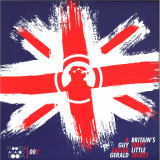
For a number of years now, A Guy Called Gerald has largely made music only for himself. But this special EP is borne from Gerald’s unique and long-lasting friendship with Analog Room founders Mehdi Ansari, Siamak Amidi and Salar Ansari. They first met in 2013 when Siamak booked Gerald to play his Analog Room party in Dubai – a leading underground light in the UAE’s then emergent scene. Away from the glossy VIP hotels and expensive bottle service parties
typically associated with Dubai, Analog Room only deals with quality bookings of the caliber of Move D, Roman Flügel, Moritz Von Oswald and the likes. Gerald immediately fell in love with the party. Its strict music-first, no-nonsense policy appealed to him and he’s returned many times over the years.
By then, of course, A Guy Called Gerald’s musical legacy was already assured. The Manchester icon is best known for his 1988 hit single Voodoo Ray – the touchstone of his hometown’s dawning acid house scene. As well as being an early member of 808 State, Gerald embraced breakbeat and jungle, ran his own Juice Box Records label and worked with the likes of Columbia, Perlon, K7! and many other vital labels. His skills on everything from synths to keys, samplers to
drum machines stood him apart then – and still do today.
“This release is based on a real friendship,” Gerald explains. “I feel part of the Analog Room family. Back in the early days, that’s how it was. These days, it’s like, ‘Oh, you’re famous, let’s do something.’ I’m not interested in that. I’m not interested in being a celebrity or living that life. I’m the same as I was 30 years ago, all I care about is the music. With Mehdi, we have spent hours jamming in private in Dubai, we have partied together. We’ve vibed together for so long and he’s shown me new parts of the world I should be making and playing music in, away from the trendy scenes in other places. So this is an exclusive just for him.
I’m not looking at doing anything else with anyone, and the music is just about celebrating individuality rather than trying to fit in anywhere.”
When Iranian-born Mehdi decided to start Moozikeh Analog Room – which translates from Farsi as “the music of the Analog Room” – Gerald was one of the first artists he asked to release on the label. It might have taken some time for Britain’s Dirty Little Secret to materialize, but boy it’s been worth the wait.
Says Mehdi, “The magic comes through proper relationships and friendships.
That’s why Analog Room worked. It was a great room, an amazing sound system, with amazing artists doing their thing. Bookings were so on-point because we had agents around the world, on the dancefloors, spying up artists who were killing it,
and Gerald was one of them. He was a perfect fit from the first gig and our friendship grew from there. He’s always been very kind to me. We have this common language of music without any bullshit, and that is where this EP comes from.”
The EP is a mixture of different things. Some of it is unreleased material from the vaults revisited, some of it is brand new. It opens up with the devastating Old Skool – a writhing, physical track with naughty bass. The drums hark back to Gerald’s early days of making jungle but reimagined through a modern perspective. As the synths spray about the mix and the percussion bounces atop the jostling drums, muttered vocals draw you in deeper. Sugoi is an experimental
track that fuses ambient synth design with the spacious and eerie atmospheres of jungle. Nimble drums get you on your toes as the spangled synths twist and turn in all directions. It is a thrillingly original, impossible to define track.
Flash Fight is built on a captivating rhythm that sits in the area where house, techno and jungle intersect. It is warm and cavernous, physical yet elegant as it bounces on rubbery kicks and lithe synths roam in and out of earshot. Perfect for those sweaty, cozy back rooms, it’s another masterclass from Gerald. Closing out the EP is False Religion, a deep-rooted house track with elastic drums and
haunting, wispy pads. As a subtle acid bassline rises and falls way down below,
Gerald’s own mystic whispers leave listeners hypnotized.
Following on from Analog Room co-founder Salar Ansari’s debut release on the label, this EP is a statement of intent. More releases will follow from some of Analog Room’s most frequent international guests, but only when the time is right. Moozikeh Analog Room is a label of love, one that is focused on putting out the best possible music at all times rather than chasing hype.
A timely reminder of why A Guy Called Gerald is one of the world’s most enduring electronic artists.
By the time of their second album, 1989’s ‘Unfinished Business’, EPMD were firmly cemented in the rap stratosphere. With one certified classic album under their belts, they proved they were no one-hit wonders, with the sequel possibly even better. A concise 12 tracker once again produced by the artists themselves, it saw them adhering to the ‘if it ain’t broke, don’t fix it’ maxim, while going somewhat ‘bigger’.
In other words, guests started to appear – not just on the records, but in the videos – and marketing budgets were higher. None of which watered down their sound. In fact, this is the ultimate EPMD record: a beat that’s simple but perfect, and two top-of-their-game MC’s going back and forth. But the appearance of NWA in the video for ‘The Big Payback’ hints at their reputation at the time – and at the cordial relations between coasts before the deadly beef that was to come.
‘Payback’ takes both its title and core sample from James Brown’s ‘The Payback’ from 1973, and then weaves two more JB elements with it, including the addictive stabs from ‘Baby, Here I Come’. It’s a golden track from the golden age.
The B-side is another gem from the same album, and only released before on 7” in a very rare, limited pressing. ‘So Wat Cha Sayin’ was the album’s lead single, and shows EPMD’s wide sampling palette. There’s bits of BT Express, a whole lot of Funkadelic and, brilliantly, some drums lifted from Soul II Soul’s gem from just the year before, ‘Fairplay’. Lyrically, it’s just all about threats to sucker’s MC’s – what else do you want from EPMD?
• A certified Hip Hop classic.
• Samples James Brown’s ‘The Payback’ from 1973.
'My first deep exposure to LEONARD COHEN was the "Bird on a Wire" documentary by Tony Palmer, which was, against the odds, broadcast on public television in New Zealand around 1974 or 1975. At age 15 or 16 I thought it was too dark. A few years later, in the late '70s, I wanted things darker. The first Cohen LP was very clever but a little too "up." The second was too public and political for me. Songs of Love and Hate seemed more honest, more about personal failure. I liked it, although Cohen tended to disown it, especially 'Dress Rehearsal Rag' and 'Last Year's Man', neither of which he performed live later on. I like 'Last Year's Man' for the same reason I like Nick Drake's 'Poor Boy'. It wallows and parodies at the same time. I came across the Suzuki OMNICHORD OM-27 because it was mentioned in relation to another Canadian, Joni Mitchell. It looked like a mystery box of potentially very good or very bad sounds, like a Bontempi chord organ customized for space travel in a Stanley Kubrick film. Irresistible... I was fortunate to meet JESSICA MOSS because of the 12 hour Drone event at Le Guess Who Festival in Utrecht in November 2017. I thought it would be cool to jam with some of the other people scheduled to play their own pieces so I asked the organisers, Bob Helleur and Jacob Hagelaars, to sound out the other droners a few weeks before the festival. Jessica replied, I sent a sample piece, and we talked, more than rehearsed, a day before the performance. We did our piece live and then some months later I sent her a recorded piece to which she added her magical playing.'
Roy Montgomery
In 1958 the painter Isson Tanaka (22 July 1908 – 11 September 1977) moved to Amami Ōshima, an island in the Ryukyus. There, in self-chosen isolation, he committed himself exclusively to his art until his sudden passing in 1977. In 2018 Seiha Kurosawa, Kanako Azuma and Hideki Umezawa visited Amami Ōshima to create a video installation about Tanaka’s insular life. The work, entitled “Dokkyaku” (tr. The Lone Visitor), shifts between the texture and materiality of Tanaka’s paintings in relation to the natural world of Amami Ōshima and its people. The video invites viewers to understand—poetically—the artist’s sensitivity to nature and the expressivity of his works.
During his stay on Amami Ōshima, Hideki Umezawa recorded a lot of natural sounds to recreate a sort of simulated ecology of Tanaka’s mind – or: of the painter’s mind. On this long playing record these recordings are blended with electronically generated sounds. Next, Andrew Pekler, who has never actually visited Amami Ōshima, upon hearing Umezawa’s field recordings creates - in the spirit of Isson Tanaka - a complementary dreamscape of the island’s phenomena. Of what could be.
This is a work that doubts between site specific and creative imagination. With sounds echoing between the anecdotic and the imaginary. It is a sensitive and highly stylized interpretation of a world that Isson Tanaka had also carefully studied. A painter at work; a way of seeing. So, after Christophe Piette’s ‘Six Tableaux de Quelpaert’, released by Edições CN in 2019, we again moore an island in the nautical footsteps of a painter. While Piette drew a story through – among other things - recording dialogues at his island home, at the restaurant table, et al. Pekler and Umezawa paint their pictures in a more musical fashion. Where natural sounds evaporate into electronic clouds of imagination.
Hideki Umezawa (b.1986, Gunma) is Japanese artist / composer. He won 1st prize at Luc Ferrari’s international competition – Presque Rien Prize 2015 (France), and the Contemporary Computer Music Concert 2015 (Japan). “Dokkyaku” was originally created for "Fukami – Une plongée dans l'esthétique japonaise", an exhibition at Hôtel Salomon de Rothschild in Paris, France as part of ‘Japanismes 2018’.
Andrew Pekler (b. 1973, Samarkand) works with techniques of digital sampling and analog synthesis to re– contextualize found sounds and archival musical materials. In addition to numerous album releases, Pekler has also produced a number of video, installation and web-based works, as well as music for theater, dance, and film.
- A1: 20/20 Vsn 00 03:11
- A2: Karþýlýklý (Talk To Me) 00 02:19
- A3: Holy Waters Feat Mulay 00 04:06
- A4: Being Alive Feat Sedric Perry 00 03:17
- A5: Dayrunner Feat Ndo 00 02:14
- A6: Power Feat Young Naughty Soul 00 03:00
- A7: Dream On 00 04:02
- B1: Interlude 00 01:12
- B2: On Me Feat Mike Nasa 00 03:18
- B3: Sex'n'ghetto 00 02:37
- B4: Wholesome Feat Barne 00 03:04
- B5: Resilience 00 04:01
When Berus debuted in January 2021 on Kommerz Records with his “Voyage EP”, he had no idea how precise the title would be for the coming months. A little over a year before the release of “Voyage” the Berlin based multi-instrumentalist and producer had taken his focus away from his, more than a decade lasting, house and techno career towards a new sound, inspired from neo soul and hip-hop. Whilst his electronic projects found home on Kerri Chandler's Madhouse Recordings and DVS1’s infamous Mistress and gained his moniker Frag Maddin worldwide attention, it was part of his progress to focus on himself and Berus, his real name. He took this step not knowing it would lead him into a dark journey of self revelation, identity finding and for the foremost new hope: blue hope.
Berus was born to a Zaza family in Kurdistan, which eventually migrated to Germany escaping prosecution and discrimination of the nationalist regime in Turkey. The family settled in Hamburg and Berus grew up to be a New Release Information
musician. He played the drums, formed teen punk bands and started producing at an early age experimenting and shaping his future as an artist.
Since the beginning of his career Berus releases can be seen like a diary, always expressing his very personal state at the time. For the work on “Blue Hope” two main topics fall into the production of the album: love relationships and seeking identity.
There is a blue melancholy and reflection leading through the album. On “Talk to Me (Karþýlýklý)” Berus opens up about his feelings of true love and the need to set free when they are not answered. Whilst the incredible Mulay who is featured on “Holy Waters” answers with her female perspective. And there is hope. The hope (“Dream On”) and fears (“Being Alive” feat. Sedric Perry) of a young migrant generation. “Blue Hope'' is a coming of age story that’s relatable and yet unique, honest but vulnerable and for the foremost: 100% Berus.
The album is a neatly curated mixtape and delivers a wide range of styles like the jiggy sounding Mike Nasa on “On Me” all the way to “Wholesome” on which Barne delivers a John Mayer-esque performance.
On “Blue Hope” Berus gathered a mixture of old friends and new talent around him to produce the record. The outcome is an LP referencing different influences without the use of any samples.
New solo record from Philip Frobos of Omni (Sub Pop, Trouble in Mind), this record is released in conjunction with a novel by Philip of the same name.
Philip Frobos' ‘Vague Enough to Satisfy’ will be released on 180g black vinyl - Only 500 Pressed Worldwide October 1st 2021. The novel will be published by Hex Enduction Books in Seattle on the same day.
‘Vague Enough to Satisfy’, is Philip Frobos’ debut solo album, it is also the original soundtrack to his debut novel of the same title. This lounge-inspired punk album acts as the musical bedrock for the story of a young man who revels in the day to day details (both romantic and mundane) of his experiences in Leipzig and Atlanta. The tone of the record reflects the tides of the protagonist’s confidence and self-doubt throughout the novel.
‘Vague Enough to Satisfy’ rushes straight to the point with it's bossa nova beat and seductive lo-fi musings. ‘Vague Theme’ opens the album with a groove reminiscent of ‘Whammy’ era B-52s while the vocals tell the story of a young romantic confused of his place within a relationship and the city around him.
‘Vacant Street’ proceeds with a hooky bassline, the revolving, cryptic sort that Frobos is known for as a member of Atlanta post-punks Omni. ‘No Packages Today’ is similarly sprightly and circuitous, sounding like the Au Pairs refining an obsession with Bowie’s ‘Lodger’. “I’m afraid that you need more than I can offer” opines Frobos bedecked by shuffling beats and burgeoning waves of saxophone. ‘Never Noticed’ and ‘Through with Buzz’ introduce notes of tension and intrigue to the frisson of the story, “you’re stuck in the same day” confesses Frobos in the former.
Instrumental tracks help to prolong an uneasy feeling of ambiguity too, with compositions like ‘Pool Disturbance’ and ‘Inflatable Flamingo’ taking their musical cue from Henry Mancini. Curious flourishes, a metronomic headiness and shuddering xylophones bring to life the intensely vivid imagery and cynical humor that suffuse the novel.
‘Pathetic’ collides the casual, magnetism of Serge Gainsbourg with tight Cars-style vocals and choruses. Meanwhile ‘Singer Not The Song’ and ‘Saturn Return’ showcase a more sedate approach, languid and arch. ‘Vague Enough to Satisfy’ is a trip, plunging you into a curious world populated by the unexpected.
Editions Mego is proud to welcome Powell to its roster with a bizarre and strangely emotive new LP of synthetic computer works entitled Piano Music 1-7.
Via his own Diagonal Records imprint, his work on XL Recordings and, most recently, the opening of audio/film platform A Folder afolder.studio, Powell has firm footing in the contemporary electronic landscape. During a wry and obstinate musical life he has twisted myriad synthetic forms into shapes that explore and expand upon the districts of post-punk, techno, noise + computer music, and in the the last year alone he has released four albums of hi-def abstractions, each inspired by a formalisation of music proposed by Iannis Xenakis.
As an extension of this intense period of work/research/play with stochastic functions using probabilities to compose music, various processes emerged that Powell then began to apply to more traditional musical events. Where ordinarily in his work the probabilities and relationships are used to define parameters such as wave-shape, folding, FM, filter modes etc., he now began to use them to create musical formations and visual scores that could be played back using any software/MIDI instrument one of these can be seen on the rear cover of the LP release. While mapping out this cartography of relations, he used a basic Grand Steinway sampler as a placeholder instrument; the longer the process went on, though, the more he began to embrace the acoustic properties of the synthetic piano and make it the bedrock for this new constellation of work.
Piano Music 1-7, subtitled 'Music for Synthetic Piano and Assorted Electronics', consists of seven different synthetic islands strung together into a single composition. All were composed using the aforementioned processes that allowed Powell to play a piano, even if he never learned to do so with his hands. After all, 'In writing electronic music,' Robin Mackay once wrote, 'you also have to direct the invention of new tools.'
At times the piano skips gleefully over shadowing synthesis, whilst at others the synthetic sheets swarm and envelope the keys. The interplay between the two create a fantastical alternate reality, a cosmic machine in which time is eroded, shrunk and expanded, like a wax upon which operations and relations are inscribed or engraved. Many of the pieces express a playfulness or optimism verging on vitalism, as bundles of piano notes dance and interpolate with a never-repeating range of electronic gestures. The feel is of a brightly coloured flower-bed in various stage of bloom. This interplay of the artifical acoustic and the electronic builds on the pioneering processes developed by David Behrman in works such as Leapday Night, and Piano Music 1-7 could also be posited as a modern take on Conlon Nancarrow's investigations for player piano. Similarly, the razor-sharp sonic properties and unfolding of non-human events recall the computer works of Xenakis and the surgical precision of Mego mainstay Florian Hecker.
Recorded in late 2020, these new Powell works propose not just a bold and bright vision of electronic music but serve also as a map with which, for 35 minutes at least, we can navigate our way out of the current milieu. As the artist himself remarks in the sleeve-notes, '. . . What emerged from this fog or soup for me were ideas and processes that felt affirmative and life giving — sensations I had always hoped to convey in my music. Perhaps the optimism or positivity I felt at these musical events unfolding, these clusters and knots tumbling in different directions across time, can also be felt by you.'