A year after the release of the acclaimed Bright Magus album, the first remixes of the project dedicated to Miles Davis' electric turn in the 70s are out. The Bright Magus 'Super' Team, a sort of super group of musicians from the Italian alternative indie scene, has received unanimous acclaim from European critics and this positive wave has also struck many musicians and producers in the industry, including Luca LTJ Xperience Trevisi and Luca Dj Rocca Roccatagliati
who in this single remix respectively the title track of the album Jungle Cover, As Way (with Enrico Gabrielli from Calibro 35 as a super guest) and Selim/Miles, the most Davisian track of the project. Nu Fusion could be a new musical genre term suitable for this unusual sound that comes from it. Dance, Funk and Fusion mixed together.
Поиск:most
Все
On this new EP by Lithuanian producer Pletnev on space•lab, we’ve got four tracks bristling with hypnotic rhythms and driving basslines. Each track is infused with warm and bouncy groove, punchy drum programming with a sprinkling of Pletnev's signature EFX and unique one shots.
On space•lab 013, Pletnev continues to push the boundaries, solidifying his reputation as one of the most exciting new producers on the scene.
Hassan Abou Alam is next to step up to the unconventional Nerve Collect label with six tracks of futuristic club-ready chaos. The finely crafted EP arrives in August and comes on 12" vinyl and via all digital platforms.
Hassan Abou Alam has established himself as one of Egypt's most innovative underground musicians over the last 10+ years. His music is a meeting of disparate worlds - organic and synthetic designs, digital and analogue tools, the traditional and the futuristic, and it has come on the likes of YUKU, Rhythm Section, Banoffee Pies and Casa Voyager. His versatile sound pulls apart existing genres and reconstructs them as something entirely new.
Opener '3asabi' is a stylish sonic assault with thumping rhythms and trippy oscillations that will get any dance floor bouncing. It's fun yet functional, serious yet seductive and 'Basha' Ft. ZIAD ZAZA, Ismail Nosrat & Aly B is another kinetic fusion of hand claps and complex drum funk, Egyptian vocal gymnastics and punchy bass. 'Ghalat' has lurching drums and plunging bass driving on beneath mangled synths, odd vocalisations and percussive splatters drawn from a unique sound palette. The drilling low ends of 'Khalsana' Ft ZIAD ZAZA are offset by fluttering percussive details up top while spare but booming kicks shake every bone in your body and the bassline devastates.
There is no let up on 'Mesh Mafhoom' which is a ritualistic workout with moments of melancholic synth soul shining through the jumble of tin-pot percussion and crashing hits. Closer 'Zein' is more body-popping brilliance that channels ancient spirits into warped synths and rhythms so complex they melt the mind.
Hassan Abou Alam's blurring of the lines between the real and the imagined is second to none on this EP. It's a sub-heavy mix of the human voice, machine-made sounds and inventive rhythms that make for something new, weird and wonderful.
Riding a wave of critical praise and positive feedback for his most recent Emperor Machine album, the fabulous Island Boogie, Andrew Meecham returns with a typically wild and dancefloor-focused set of dubs, ‘versions’ and remixes.
According to Meecham, Island Boogie is his most personal set to date – a full-length excursion that not only delivers perfectly formed expressions of his dub-tinged, off-kilter synth-boogie sound, but also tracks that draw deeply on his earliest influences and long-held musical expressions.
It’s fitting, then, that this remix EP begins with his own sparse, stripped-back ‘version’ rework of ‘S-S-S-Single Bed’, a fine cover of the mid-80s Fox single featuring the vocals of Michelle Bee. Meecham’s dub-wise revision is a skeletal and driving affair, with snippets of echoing guitar, colourful synths and Bee’s distinctive vocalisations rising above a weighty dub disco bassline and rock-solid percussion.
It's followed by two revisions of album favourite ‘Wanna Pop With You’ from A Love From Outer Space main man Sean Johnston under his now familiar Hardway Brothers alias. Combining his own love of raw, analogue-sounding electronics and trippy dancefloor psychedelia with select elements of Meecham’s original – percussion, synth sounds, crisp guitar licks and elements of Severine Mouletin’s lead vocals, Johnston’s main ‘remix’ is a weighty, mid-tempo treat. Arguably even better is his accompanying dub, which is more groove-and-effects focused and makes more of Beecham’s superb original bassline. It’s heavy, spaced-out and undeniably intoxicating.
To round off the package, long-time friend of the label (and sometime contributor) Rose Robinson dons her Tigerbalm pseudonym and gets to work on ‘La Cassette’. Brilliantly cutting up Severine Mouletin’s vocals, she delivers a driving slab of spaced-out, synth-heavy dub disco that adds more weight and energy to Meecham’s original. It’s a fittingly on-point way to close out a superb selection of club-ready revisions.
After Prince Istari finished the Dub Encounter with Erik Satie, he
immediately set to work on expelling the evil curse of artificial intelligence. While the encounter with Satie was guided by the original
compositions, this album delves deeper into dub science.
The opening track is "Curse Of Machine Learning," a grinding cumbia dub track that sucks you into the curse of machine learning. It's followed by "Artificial Neural Network," arguably the album's most nerve-wracking track, with wild snare rolls colliding with offbeat echoed riddim sections. "Large Language Models" offers a more relaxed, arabesque one-drop riddim with speech synthesis vocals. "Fake Image" closes the first side with a full trombone solo contributed by Eugene Rosebud.
Side B starts with the one-drop killer tune "Haunted By Delusion,"
featuring an organ solo by Prince Istari. Drum and bass in your face.
"Evil Forces," on the other hand, is a fusion of jazz and dub; after the
brass section breakdown, it rolls into a crazy synth solo. Then next „I
Want Your Data" pulls your data into the AI's guts with a vibraphone.
This is maybe the ambitious tune on the record speaking of chord
progressions. The final track sees Eugene Rosebud return with a double trombone solo in "Transhuman Feedback Rock" assisted by a saz cooling the blues pattern with a hookline. Here we have beautifull springreverb and harmonizer dub effects on the snare twirrling around the trombone solos.
All tunes composed, arranged, conducted and engineered by Prince Istari and played by his house band The Virtualistics. Trombone Solos by Eugene Rosebud. Packaged in a nice cover drawn by Markus Schäfer and frequency shift and cut by LXC.
Alice Taylor was a popular session singer who sang background vocals for several local Philly groups including The Delfonics during the height of the Philly Soul boom of the early to mid-1970’s.
In 1974 Alice under the auspice of producer Emanuel ‘Manny’ Campbell Jr and fellow Philadelphian musician/composer Charles R. Bowen entered the famed Sound Room Studios in Upper Dardy PA, to record a session of her own. This session yielded two songs. The more commercial pop soul orientated “(I’m In Love With A) Rock ‘n’ Roll Singin’ Superstar”. A song which took influences from other popular songs of the time that mentioned one’s love for Rock ‘n’ Roll singers and taking road trips to L.A (Los Angeles) in an attempt to cash in. Although the elongated song title may at first be a tad off-putting the recording showcases Alice’s vocal talents to the full and in itself is a very good record. The second song “Sounds Ridiculous” is based around the theme of a girl falling in love with a guy who spends most of his time daydreaming rather than getting a regular 9-5 job. An excellent record that should find favour with 70’s/crossover soul fans alike.
Manny Campbell Jr used some of Philadelphia’s finest musicians on Alice’s session, notably session drummer Earl Young, reputedly the first exponent of the hi-hat cymbal a style of drumming used extensively throughout the disco period. Young had honed his skills during the 1960’s with his band The Volcanos, recording sessions for the Arctic and Harthon Record Labels. The Volcanos later became The Moods before morphing into The Trammps who Young recorded on his Golden Fleece Label with the group recording several further disco hits for Buddah Records prior to their worldwide hit “Disco Inferno” for Atlantic Records. Young’s strumming can be found on many other Philadelphia International, Sal Soul and MFSB recordings. The string and horn arrangements on the session were provided by another MFSB (Mother Father Sister Brother) pool of musician’s member, Don Renaldo.
“I’m In Love With A) Rock ’n’ Roll Superstar/Sounds Ridiculous” came out in November of 1975 as an initial pressing run of 500 copies for promotional use which sadly were not of the best quality with some background noise being present in the introduction on both sides of the single, a possible detrimental factor in the release gaining any significant airplay. It’s was the second and final release on Emandolynn Music’s short lived, Stage-Art label. The first release being another of Manny Campbell’s acts The Nu-Rons & Co “Disco Hustle/Can’t Do Enough Girl” (Stage-Art 1001). Sadly, Alice Taylor passed away sometime during the 1980’s. Soul Junction through its ongoing relationship with Emandolynn Music have taken the opportunity to license these now very sort after Alice Taylor songs, which have been remastered to remove the aforementioned sound problems present on the original release. Which are now presented to you as a 3 track EP which also includes a previously unissued alternative mix of “(I’m In Love With A) Rock ’n’ Roll Singin’ Superstar, a recent master tape discovery.
A highly talented artist who has grown to make a notable impression amongst the scene’s most revered tastemakers, DJ/producer and label owner Jhobei is an individual who continues to blossom. His deep, expansive sound has already welcomed material on Up The Stuss, Limousine Dream, Mindhelmet and Picnic Records, amongst others, while featuring as a co-founder of London-based collective and label Bizarre Trax. In addition, his work as one-third of dynamic trio Felon5, coupled with his unique sound, has taken him from Albania’s ION Festival to Los Angeles, alongside making a handful of appearances for FUSE and its sister brands on home turf at fabric, The Cause and Village Underground - plus 2024’s Open Air event at Barking Park earlier this year. Building on that relationship, late September brings fresh music as Enzo Siragusa invites the exciting selector to make his label debut with an array of impressive productions across his ‘Age Of Virality’ EP. A-side opener ‘Swarming’ is all action and kicks things off with authority as a snaking bassline guides a garage-influenced trip through bumping low-ends and hooky vocal samples, while ‘Machine Language’ delivers a mix of playful tones amongst sweeping melodies while delivering a heavy dose of robot funk. On the flip, ‘Defusion Solution’ is a heady late-night excursion through skippy percussion and cosmic tones, with ‘Rising Sun’ stripping things back to deliver a classy, hazy journey as organic percussion grooves unravel effortlessly. Digital buyers are treated to a bonus cut in the form of ‘Kontrol Urload’, a sci-fi leaning cut merging glistening neon synth motifs with punchy kicks and zipping effects for maximum impact.
"In a trajectory full of about-faces, Music for Four Guitars splices the formal innovations of Bill Orcutt's software-based music into the lobe-frying, blown-out Fender hyperdrive of his most frenetic workouts with Corsano or Hoyos. And while the guitar tone here is resolutely treble-kicked—or, as Orcutt puts it, 'a bridge pickup rather than a neck pickup record'—it still wades the same melodic streams as his previous LPs (yet, as Heraclitus taught us, that stream is utterly different the second time around). Although it's a true left-field listen, Music for Four Guitars is bizarrely meditative, a Bill Orcutt Buddha Machine, a glimpse of the world of icy beauty haunting the latitudes high above the Delta (down where the climate suits your clothes)..."—Tom Carter
- A1: Juan Piña Y Sus Muchachos - Toquen Cumbia
- A2: Los Corraleros De Majagual - La Pollera Colorá
- A3: Aníbal Velásquez Y Su Conjunto - La Negra Celina
- A4: Cumbia Cipote Vaina - Soledad
- A5: Calixto Ochoa Y Su Conjunto - Recordando El Pasado
- A6: Lucho Campillo Y Su Conjunto - Me Dejaste Solo
- B1: La Sonora Del Caribe - Gaita Colombiana
- B2: El Sexteto Miramar - Cumbiamba
- B3: Pello Torres Y Sus Diablos Del Ritmo - Lucy
- B4: Combo Los Galleros - Suena La Timba
- B5: Los Guacharacos - Baila Rosita
- B6: Combo Sampuesano - Cumbia Monterian
- C1: Conjunto Típico Vallenato - Cumbia Sampuesna
- C2: Pedro Laza Y Sus Pelayeros - Esperma Y Ro
- C3: Andrés Landero Y Su Conjunto - La Pollera Rosada
- C4: Los Golden Boys - Se Trabó La Banda
- C5: Orquesta Nuñez - La Samaria
- C6: Los Candelosos - Cumbia De Amores
- D1: Morgan Blanco Y Su Conjunto - Cumbia De Colombia
- D2: Pacho Galán Y Sus Sabaneros - Caracoleando
- D3: Los Gavilanes De La Costa - Lorenza
- D4: Las Estrellas De Tolú - Cumbia Al Amanecer
- D5: Los Warahuaco - El Pescador De Barú
- D6: Rodolfo Aicardi Y Su Tipica Ra7 - La Colegiala
A selection of 24 Colombian cumbia bangers for the dance floor from the deep vaults of Discos Fuentes, the most emblematic and best remembered label in the golden age of the genre. An invitation to enjoy and be amazed, above and beyond ethnographic and academic concerns. Double LP. The historical origins of cumbia in Colombia are nebulous and imprecise. The mythology surrounding it suggests an ancient past when Amerindian, African and European musical sounds were mixed together. The main record companies in Colombia such as Discos Fuentes, Discos Tropical, Sonolux, Zeida-Codiscos, Silver, Ondina, Discos Atlantic, Vergara and Curro were created between Barranquilla, Medellín, Cartagena and Bogotá from 1936 to 1954. All of them, without exception, recorded Colombian tropical music that over the years was given different names such as porro, gaita, fandango, paseaito, merecumbé, mapalé, bullerengue or, of course, cumbia. This first volume in the series “Cumbia Cumbia Cumbia!!!” comprises 24 Colombian cumbia bangers for the dance floor from the deep vaults of Discos Fuentes, the most emblematic and best remembered label in the golden age of the genre. This is complemented by a selection of cumbias recorded by the label Discos Tropical, which sold most of its catalog to Discos Fuentes in 1990. Discos Fuentes concentrated on recording cumbias played on the accordion and by orchestras and ensembles. The label produced a prodigious number of albums devoted to cumbias between 1962 and 1979, which served to define ambiguous stereotypes, rooted as much in authenticity and modernity as in demure sensuality and joyful nostalgia. “Cumbia Cumbia Cumbia!!!” combines well-known classics and rarities that are difficult to find in their original formats. An invitation to enjoy and be amazed, above and beyond ethnographic and academic concerns.
Lovers of Italo disco music will consider Cyber People as one of the most important acts in its scene. The Space-synth sound Cyber people brought in the mid 80’s, was highlighted by their 1985 ‘Void Vision’ release, which became a hit both in Europe, as well as in South America. On top of that, Cyber People paved the road for acts like Koto, Laserdance and Hipnosis, just to name a few. Cyber People were disbanded though in 1988, but left behind a series of most important Italo Disco records.
Now, build on the ashes of the former and legendary ‘Memory Records label from Parma – Italy, Memix International is pleased to announce its return, and the return of Cyber People. In its original form, headed again by the Maestro Giorgio “Theo” Spagna himself, as leader of the pack, with a tribute to Anfrando Maiola, the founding father of Mamory Records’ most important act, Koto, who left us in 2023.
As a tribute, Anfrando’s “Dragon’s Legend” get’s a complete new overhaul by Cyber People, respecting its original structure, concept and spirit, bringing it however into the 21st century.
Besides the almost 8-and-a-half-minute tribute of Dragon’s legend on the MEM-side, on the MIX-side you will find the DJ friendly ‘DJ DUB’, bringing you the compact essential of ‘Dragon’s Legend’ for any up-to-date Italian Disco set. (And if you want to call it Italo Disco, that’s perfectly fine with us too!)
With this release, Memix International continues where it’s predecessor stopped in 1989. Paves the road into a new era, and pays with this rerelease it’s respect to Anfrando Maiola and his Koto releases , such with full support from his heir.
With this release Memix International also brings a tribute to Alessandro Porta, the great Italian designer and visual artist, whose heirs were as kind to participate also, and made one of Alessandro’s drawings available for the sleeve of this unique release. It was Porta who was, on many occasions, responsible for the characteristic artwork of various Koto releases and, all together it will for sure make this release a well sought item which comes in a strictly limited edition of 500 units, so distributed on a ‘first to come, first to serve’ basis. Expected release and shipment: end of September/begin of October 2024.
Ltd Edition!
The Mystery Lights return with their most ambitious offering to date. With Wayne Gordon back in the producer's chair, the group delivers an eclectic mix of real-deal psychedelia, punk, art rock, and even a splash of country via the Kinks(y) pop earworm "I'm Sorry I Forgot Your Name". The psychedelic highlights of the album, "Purgatory", "Cerebral Crack" and "Can't Sleep Through the Silence", are dark and trippy, landing somewhere between the guitar-driven, lysergic mayhem of the 13th Floor Elevators and the punked-up, tongue-in-cheek insanity of The Monks. But throughout there's a cohesiveness threaded by the elevated musicianship, earnest lyrics and attention to detail that make for a fiercely raw, yet unabashedly catchy album-dripping with all of the sing along hooks that have made Mystery Lights one of the most exciting live bands on the scene.
Ltd Edition!
The Mystery Lights return with their most ambitious offering to date. With Wayne Gordon back in the producer's chair, the group delivers an eclectic mix of real-deal psychedelia, punk, art rock, and even a splash of country via the Kinks(y) pop earworm "I'm Sorry I Forgot Your Name". The psychedelic highlights of the album, "Purgatory", "Cerebral Crack" and "Can't Sleep Through the Silence", are dark and trippy, landing somewhere between the guitar-driven, lysergic mayhem of the 13th Floor Elevators and the punked-up, tongue-in-cheek insanity of The Monks. But throughout there's a cohesiveness threaded by the elevated musicianship, earnest lyrics and attention to detail that make for a fiercely raw, yet unabashedly catchy album-dripping with all of the sing along hooks that have made Mystery Lights one of the most exciting live bands on the scene.
By 1963, great Latin American artists such as Lucho Gatica, Felipe Pirela, Bienvenido Granda, Leo Marini, Benny Moré, Tito Rodríguez, Toña La Negra, Blanca Rosa Gil and the so- called queen of boleros, Olga Guillot, had enriched the musical landscape, giving personality to the bolero. That year, in the midst of a new panorama, a bolero star was born from the depths of Venezuelan radio: Estelita Del Llano. “Sensual”, her debut album, is one of the greatest gems of the genre, with arrangements and orchestration by Porfi Jiménez. The backing of the Porfi Jiménez Orchestra and his arrangements made “Sensual” one of the most successful albums of its time. The selection of the twelve songs on the album was also a success. Although the years of the bolero's greatest splendor seemed to have passed, the bolero continued to spread throughout Latin America. The great success of “Sensual” lay in the arrangements and the choice of boleros with elements of the cha-cha-cha, another genre that was enjoying great popularity.
Tip!
Polido has been fantasizing with the idea of free music throughout his artistic career. Free from restraints, logos, musical genres, but also from this modern obsession with narratives, plans, business plans, algorithms and bubble wrapped ideas for comfort of those of you that can’t breathe without everything making sense.
“Hearing Smoke” has nothing of that. It has been four years since Holuzam released the double album “A Casa e os Cães / Sabor a Terra” and for four years I have been daydreaming about what would come next. This is it, eleven new pieces about the future of the future of music. It is the result of years of study, research and sound consolidation. Sound as matter, mutating, transforming, absorbing all around, a shapeshifting entity connecting with the principles of freedom.
"Polido has been researching Portuguese contemporary composition, its very own sounds and ideas. Its origins, the web of repression, tension and censorship before the April 25th revolution in 1974; secondly, as an afterthought, freedom, equality and a unique sense of community and belonging screaming through the music. He absorbed those states of mind and made an album that listens to the current world and presents globalization as a mental trap.
If the music that inspired him somehow comes from a post-colonial world, “Hearing Smoke” questions how we can create something new in this permanent state of cultural colonization, where new trends or forms of music only thrive if they are accepted by the dominant cultures. The physical world has been transformed, but ideas like “world music” or “ghetto music” still show that dominance, the Strange can only be accepted if it incorporates the rules and codes of that dominant force. What I am saying is that it is hard for Portuguese musicians to present themselves as original. They will never have that credit unless the music relates to something that exists in another
realm. Never for their benefit, but for the power of association. I may sound arrogant here, but Polido is unique, original, one of a kind (all those words, all those redundant synonyms). I knew it four years ago when I got lost in the way “A Casa e os Cães” is assembled and how he makes something memorable out of the most commonplace conversations. “Hearing Smoke” continues the flow and puts us in the centre of these ever evolving masses of sound.
Somehow his music finds you, it starts speaking with you until it asks you to be a part of it. Polido’s beats and harmonics are combined in such a tender way that you mellow out while listening to these beats - thinking of the brilliant “Saque”. Even when he exposes you to something more harsh - “Canto D’Amorte” or the closing moments of the last track “Custa A Crer” - there’s still a cradle effect.
But what keeps me returning to this album is how it seems to transform in my ears. Not every time I listen to it, but while I am listening to it. The sound seems to move, embracing me and controlling my inner thoughts. These start to move along at the same pace, with the same feeling of cloudiness. Nothing new here, the thing is how it feels different from time to time, how the music, because of something that changes or moves, comes as a catharsis/revelation. It drives me nuts how the beats come and go in tracks like “Fogo Firme (Encomendação)” or “The More I Think, The Less I Can Speak“, leaving everything suspended and, simultaneously, relieved. When dramatic - ”Prova De Existência“ - it is sad af and gorgeously epic.
Trap, bass music, dubstep, ambient, hauntology and contemporary music flow side by side here, no pushing around, free of interpretation, and you are free to feel or listen to whatever you want in “Hearing Smoke”. That’s free music for you. Not a hard concept, something for you to enjoy, feel, reflect about. This is what the future will sound like."
André Santos // Holuzam
"Glossolalia" ist das dritte Solo-Album von Dale Crover, dem weltbekannten Schlagzeuger der Melvins, Nirvana und Redd Kross sowie Sänger und Gitarrist von Altamont. Das von Crover und Toshi Kasai produzierte Werk strotzt nur so vor Nuggets-Garagenrock, Proto-Metal-Riffs und herrlich verschwommenem Psych-Pop. Die erste Single des 11-Song-Albums ist "Doug Yuletide". Der Track ist einer von zwei "Glossolalia"-Songs, bei denen Crover mit dem Gitarristen Dan Southwick zusammenarbeitet, seinem langjährigen Freund und Altamont-Bandkollegen. Aber Southwick ist nicht der einzige Freund, der auf Glossolalia zu hören ist: Kim Thayil von Soundgarden (Leadgitarre bei "I Quit" und "Rings"), Ty Segall (Leadgitarre bei "Spoiled Daisies" und "I Waited Forever"), Rob Crow von Pinback ("Don't Worry About It", "Rings" und "I Waited Forever") und Tom Waits' ungelenkes, in Zungen gesprochenes Intro beim Titelstück. "Glossolalia" ist Crovers bisher fokussiertestes Statement als Solokünstler. In seiner Gesamtheit zeigt das neue Album, dass Crover, so wie die Melvins in ihrem vierten Jahrzehnt weiter wachsen und sich entwickeln, auch als Solokünstler neue Schritte unternimmt. Inmitten des inspirierten Geplappers von Waits, des glorreichen Schredderns von Segall und Thayil und vielem mehr, sticht vor allem die Robustheit von Crovers Vision hervor. Diese Platte zeigt, dass seine Gesamtästhetik genauso stark wie sein legendärer Schlagzeugdonner ist. ENGAs he began plotting his new solo album, Dale Crover _ world-renowned drummer for the Melvins, Nirvana and Redd Kross, and singer-guitarist for Altamont _ realized that, unlike with his prior two full-lengths, he was starting from scratch. "I didn't have any songs," he says, "so I just went on this writing spree." The result is Glossolalia, Crover's third LP under his own name and arguably his most focused statement yet as a solo artist: 11 catchy yet eccentric tracks that move from Nuggets-y garage rock to crafty proto-metal riffage and gorgeously hazy psych-pop, touching on everything from a bad teenage trip to the charms of the late, great Jane Birkin, and featuring input by illustrious guests including Ty Segall, Soundgarden's Kim Thayil and none other than Tom Waits. What stands out across the record is the sturdiness of Crover's vision. He's modest about his ambitions _ "It's just kind of like extra credit," he says, about having a solo outlet apart from his main band _ but as this record shows, his overall aesthetic hits just as hard as his legendary drum thunder.
- 1: I Feel Alright
- 2: You Take My Money
- 3: Help
- 4: Born To Kill
- 5: Stretcher Case
- 6: Feel The Pain
- 7: I Fall
- 8: Fan Club
- 9: Alone
- 10: Fish
- 11: 1 Of The 2
- 12: Problem Child
- 14: Stab Yor Back
- 15: Sick Of Being Sick
- 16: See Her Tonite
- 17: You Know
- 18: New Rose
- 19: Pills
- 20: The Last Time
- 21: So Messed Up
- 13: Neat Neat Neat
The long awaited reunion show! Founded in London in 1976, The Damned became one of the most successful and influential bands in the British punk rock scene of the 70s.
Their debut single "New Rose" (1976) is considered to be the first punk single ever released in the UK. Over the course of their 45-year career, The Damned have experimented with different musical styles and integrated elements of gothic rock, psychedelia and new wave into their sound. In October 2020, more than 40 years after the founding members split up, The Damned announced a series of reunion shows with the original line-up consisting of Dave Vanian (vocals), Brian James (guitar), Captain Sensible (bass) and Rat Scabies (drums).
However, due to the pandemic, they were forced to postpone the shows until 2022. On November 3, 2022, the original line-up performed at the sold-out O2 Apollo in Manchester, UK, and presented an energetic 21-song set from the first two 1977 albums "Damned Damned Damned" and "Music for Pleasure"; the only albums to feature all four founding members. "AD 2022 - Live In Manchester" presents not only a legendary reunion show, but also the unique magic surrounding The Damned.
- A1: Primordial Forest (The Lost World Jurassic Park)
- A2: Medal Of Honor
- A3: Bristow And Bristow (Alias)
- A4: Secret Weapons Over Normandy
- A5: The Incredibles Suite
- A6: Take A Hike (Lost)
- B1: Life And Death (Lost)
- B2: Sky High
- B3: Space Mountain
- B4: The Family Stone Waltz (The Family Stone)
- B5: Le Festin (Ratatouille)
- B6: Ratatouille
- B7: Roar! (Cloverfield)
- C1: Casa Cristo (Speed Racer)
- C2: Land Of The Lost
- C3: Enterprising Young Men (Star Trek)
- C4: Married Life (Up)
- C5: Let Me In
- C6: Lax (Lost)
- D1: The Turbomater (Cars 2)
- D2: A Man, A Plan, A Code, Dubai (Mission: Impossible - Ghost Protocol)
- D3: Monte Carlo
- D4: Super 8 Suite
Mutant is proud to present Academy Award-winning composer Michael Giacchino's latest album, Exotic Themes for the Silver Screen – Volume 1, featuring iconic scores from Giacchino's extensive portfolio rendered in the retro lounge style of Exotica from the 1950s.
“It's no secret that we at Mutant are huge fans of Michael Giacchino,” says Spencer Hickman, Co-Founder of Mutant. “We're excited to release a retrospective of his astonishing three decades as a composer. Rather than just curating a simple compilation of his previous works, Michael went back into the studio, rearranged and re-recorded every major theme from his career. These tracks have been recorded in an Easy Listening style inspired by such greats as Martin Denny and Les Baxter, creating not just a unique and incredible look back at some of the most beloved movie and television themes of the modern age, but also bringing a fresh, exciting take to the beautiful journey he has taken us all on with him. It feels like you are discovering these songs for the very first time: timeless, beautiful, and a joy to listen to. These newly recorded themes transport you to a far-off sunset, looking out at the ocean, complete with a cocktail in hand, providing a much-needed escape from the stress of modern times, and we can all agree that is something we all crave right now.”
Exotic Themes for the Silver Screen – Volume 1 spans nearly two decades of Michael Giacchino’s music, from his early video game scores to his television hits and blockbuster films. The album transforms these works through the lens of Exotica, replacing epic strings and thundering drums with vibraphones and marimbas.
“This album was inspired by the work of Arthur Lyman and Martin Denny,” says Giacchino. “What would they do with the Star Trek theme? Or video games like Medal of Honor? It was a way for me to play in that world I loved so much growing up. I thought it would be fun to create a fantasy world, where this album was recorded back in 1967 and then lost, only to resurface today.”
The album showcases Giacchino’s unerring talent for melody, stripping down grand symphonies to their essential elements while retaining their aesthetic and emotional core.
“So much was rooted in the big orchestral sound, so it was really about scaling it back. The real trick is figuring out the little fun hooks and things you can add along the way. There were no rules; I was up for anything. It was a way to re-engage with the material and be creative in a new way.”
Exotic Themes for the Silver Screen – Volume 1 includes an array of reinterpreted pieces from Michael Giacchino’s career. Highlights include ‘Primordial Forest’ from the 1997 video game The Lost World: Jurassic Park, ‘Life and Death’ from Lost, the theme from Ratatouille, ‘Roar!’ from Cloverfield, ‘Enterprising Young Men’ from Star Trek (2009), ‘A Man, A Plan, A Code, Dubai’ from Mission: Impossible - Ghost Protocol, and a Super 8 suite.
Featuring package design by Luke Insect, and liner notes by Charlie Brigden.
- A1: Grateful (Instrumental)
- A2: Glorious Game (Instrumental)
- A3: I'm Still Somehow (Instrumental)
- A4: Hollow Way (Instrumental)
- A5: Protocol (Instrumental)
- A6: The Weather (Instrumental)
- B1: That Girl (Instrumental)
- B2: I Would Never (Instrumental)
- B3: Alone (Instrumental)
- B4: Miracle (Instrumental)
- B5: Glorious Game (Reprise) (Instrumental)
- B6: Alter Ego Feat Brainstory (Instrumental)
Sky High Coloured Vinyl[24,16 €]
Blood Smoke Vinyl. The Instrumental version of the underground classic El Michels Affair & Black Thought collaborative album Glorious Game When Leon Michels and El Michels Affair released their rst record, Sounding Out The City, in 2005, it was hard to guess what was next for Michels and his then-introduced, now-patented "cinematic soul" sound. Now, four EMA studio albums and scores of tribute and remix projects later_all while producing for some of the biggest names in the industry_Michels has trademarked his sound, with each project taking audiences somewhere new and pushing the boundaries of what he is known for. The man is a river, not a lake and this time he takes his golden touch into the realm of hip-hop laying down a musical bed for one of the greatest to ever rhyme into a microphone: Black Thought of The Roots crew. Releasing on Big Crown Records, the LP is called Glorious Game and it is a remarkable debut partnership in more ways than one. Michels provides his bottom-heavy, soul-tinged production for Black Thought who gives us some of the more personal and transparent verses we've ever heard from him. Michels and Black Thought have been in each other's orbit for a while now. The two rst met in the 2000s when Thought was rst getting familiar with the contemporary soul scene. "Out of that whole world, Menahan Street Band was probably my favorite," recalling the funk and soul group Michels was a founding member of back in 2007. Fast forward a few years and musicians from that collective_Dave Guy on trumpet and Ian Hendrickson-Smith on sax _are now full time players with The Roots. This connection eventually led Leon and Thought to doing a few fundraising events around NYC and Philly together. "Before long, Black Thought was coming around the studio and would jam with us from time to time," Michels explains. "Then, fast forward to 2020 and COVID lockdowns, he just hit me up out of the blue, wanting me to send him stuff to write to. We both were looking to stay busy." Being that Black Thought is the co-founder and emcee for, hands down, the best live-band group in hip-hop. Michels took a decidedly different approach to this project and instead of sending recorded tracks of live compositions, he pulled out the sampler and sampled himself and some records from his collection. "I'm a big fan of soul music," as if Michels has to remind us. "And part of hip-hop's appeal to me has always been the sample-based production" For Glorious Game, Michels would make wholly composed and recorded soul songs in his studio, sample himself, then chop and/or loop up his sounds and create instrumentals for Black Thought. On some tracks he took a more traditional hip-hop approach, starting from samples of other people's music but then adding live instrumentation on top. But for the most
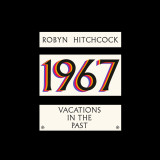
Robyn Hitchcock is a rock’n’roll surrealist. Born in London on March 3rd, 1953 he describes his songs as “pictures you can listen to”. As much a child of Dali, De Chirico, and JG Ballard as of his 1960s musical heroes, he is a master of the absurd, reveling in the beauty of the unexpected. His first publicly visible band The Soft Boys (1976 - 81) has remained an influential art-rock touchstone for generations of musicians. “I just want to be an obscure cult fringe,” he told the NME in 1978; the NME didn’t believe him, but he’s been true to his ambition. Without ever breaking the surface of pop culture Hitchcock has floated at a tangent to the mainstream for nearly 5 decades. His songs have been performed by REM, The Replacements, Neko Case, Gillian Welch & David Rawlings, Lou Barlow, Grant Lee Phillips, Sparklehorse, and Suzanne Vega with the Grateful Dead among others. A confirmed outsider, he nonetheless has devoted listeners around the world who attend his concerts, and also tune into the online streaming shows Robyn seasonally does with his wife, the singer Emma Swift. In 1996 he was the subject of Jonathan Demme’s in-concert film, ‘Storefront Hitchcock’. Robyn Hitchcock came of age in the 1960s when he attended Winchester College, an eccentric hothouse boarding school in the south of England. This is the subject of “1967”, which is both a memoir and an album, due for release in June this year. The memoir is a book “1967: How I Got There And Why I Never Left”, describing how the music of Bob Dylan, The Beatles, Jimi Hendrix and others drastically transformed the direction of his life when he left home for this strange new world. The companion record album “1967: Vacations In The Past” is a selection of the (mostly) hit songs of that year, re-recorded acoustically by Robyn with the help of some friends in Cambridge, San Francisco, and Sydney. He is currently preparing new material to release in 2025. “I like to keep busy”, he says: “We have all eternity to not exist”.
- A1: Effroyables Jardins (Générique)
- A2: Sabotage
- A3: Arrestation
- A4: Le Trou
- A5: Effroyables Jardins Par Leszek Mozdzer (1Ère Version Piano)
- A6: Métamorphose À L'hôpital
- A7: Une Vie Pour Une Vie
- B1: Effroyables Jardins (Générique 2Éme Variation)
- B2: Reminiscence
- B3: Mariage
- B4: Clown
- B5: Effroyables Jardins (Ge?Ne?Rique De Fin)
- B6: Effroyables Jardins Par Leszek Mozdzer (2Éme Version Piano)
- B7: Effroyables Jardins Par Leszek Mozdzer (3Éme Version Piano)
A Colourful Storm presents Effroyables Jardins, a soundtrack composed by Zbigniew Preisner for Jean Becker's eponymous film. Given limited distribution during its initial release, the soundtrack's lustre has only strengthened and it is now considered a lost gem of contemporary chamber composition. An understated triumph of the oeuvre of Preisner, who closely collaborated with Polish director Krzysztof Kie?lowski and was responsible for the film scores of Dekalog, The Double Life of Véronique and the Three Colours trilogy.
"Krzysztof and Zbigniew really found each other, as they were deeply complementary in their need of emotional expression," reflects actor Juliette Binoche upon her work in Three Colours: Blue. A Colourful Storm cites no other film leaving a greater impact on them than Three Colours: Red. These would be the last films the duo worked on together, before Kieslowski's retirement and untimely death.
Effroyable Jardins marks Preisner's post-Kieslowski era of solo composition, shifting from devotional harmonies into a beautifully restrained style of neo-Romanticism. It is his second soundtrack for Jean Becker, following Francis Ford Coppola's commission for The Secret Garden, the César-winning Élisa, and Edoardo Ponte's Between Strangers. Its leitmotif - a delicate, sparse melody for piano and organ, appears only during the opening sequence and, like Preisner's most powerful soundtracks, takes on a life of its own. Compositions for violin, harp and percussion are interspersed with haunting variations on a theme and a masterful use of silence. His music haunts the grieving Julie in Blue, soundtracks Valentine's epiphany in Red, and evokes the sublimity of moments in everyday life.