Death and the Maiden’s Uneven Ground draws back the velvet curtain on the trio’s crepuscular dreamworld with nine songs of their distinctive shadowy slow-motion fusion of underground electronic dance music and post-punk guitars washed through with psychic unease. The trio’s name is taken from that of a nineteenth century engraving by Edvard Munch: an artwork steeped in mythology, exploring the dark boundaries between love and death, strength and frailty, beauty and decay. Their three albums to date each reinforce the symbolism of the name, and Uneven Ground’s title could apply as much to their own journey in the years since Wisteria, their previous album, as to the times in which we live. Bassist and vocalist Lucinda King is the bedrock, guide and storyteller. Guitarist Hope Robertson weaves swooping, soaring motifs and sometimes deconstructed layers of noise to build analogue atmosphere for these alternate worlds. Danny Brady’s beats mix old-school drum machines with electronic tones and distortion, while his synth arrangements blend elements of psy-trance and acid house with more amniotic ambient and industrial textures. While Uneven Ground may be the most overtly “pop”-sounding album in their catalogue, it also ratchets up the ominous atmosphere, noise and experimentation. Once again King’s evocative lyrics appear as cryptic stories, built from events, memories, dreams, moments, warnings, regrets; where questions raised are left unanswered, and possibilities remain open.
Cerca:most
2024 repress
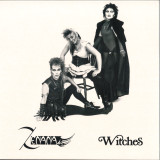
Rush Hour’s RSS series excels in unearthing buried treasure, offering a second chance for artists and releases that have long been overlooked. That’s certainly the case with ‘Witches’, the superb sole single by British 1980s wave trio Zenana.
Originally released on seven-inch by the tiny PRM label in 1986, ‘Witches’ was the product of a sister-brother songwriting team whose music was mostly recorded in the front room of a terraced house in Nanpean, a small industrial village in Cornwall, England’s most south-westerly county. While the single was infectious, impeccably produced and dancefloor-ready, it sold in limited quantities at the time.
Zenana’s story can be traced back to the early 1980s, when singer-songwriter Anita Tedder founded the all-female trio as a vehicle for her musical ambitions. To bring her songs to life, she joined voices with her brother Mike, an early adopter of electronic music who had built a studio – nicknamed MFR, short for ‘Mike’s Front Room’ – in his Cornish home.
Countless Zenana tracks were recorded at ‘MFR’ between 1984 and ’86, with the resultant demo cassette securing the band a management contract, a slew of live bookings, a video shoot and even a television appearance. Buoyed by this underground success, they headed to the remote Sawmills Studio in Cornwall – famously only accessible by boat – to re-record ‘Witches’, a song inspired by local folk tales of witches gathering near Mike’s home.
While this version of ‘Witches’ failed to make an impact at the time, it has become something of a cult classic following its’ rediscovery by crate digger Kiernan Abbott – and subsequent championing by other dusty-fingered DJs including Antal, Skyrager, Trevor Jackson and Luke Una – in early 2023. The buzz inspired Zenana to perform live again for the first time in decades, with the story of their surprise comeback being covered by British media outlets including the BBC and (more surprisingly) the Daily Mail.
Now presented in re-mastered form, ‘Witches’ is a genuinely slept-on gem. Propelled forwards by punchy drum machine beats, a killer synth bassline and fizzing keyboard sounds, the song benefits greatly from strong vocals and an extra-percussive middle eight layered with vocalisations, cosmic spoken word sections and swirling noises.
It comes backed by a brand-new extended ‘spell of love’ courtesy of Bristol duo Bedmo Disco, AKA music journalist Matt Anniss (author of Join The Future: Bleep Techno and the Birth of British Bass Music) and DJ/production partner Gareth Morgan. Anniss is a long-time friend of Mike and Anita Tedder who has fond memories of visiting Mike’s home studio with his family around the time that ‘Witches’ was recorded.
Working from Zenana’s original MFR eight-track recording (tapes of the single version were lost years ago), Anniss and Morgan have turned in the extended ‘dance mix’ the track never had first time around. More atmospheric, clandestine and dancefloor-focused, it offers authentic nods to New York proto-house, mid-80s Shep Pettibone dubs, and the pioneering synth-pop productions and dub mixes of Factory Records regular Martin Rushent.
A momentous signing for DDD, as the label welcomes one of the most influential artists in dubstep’s history: CASPA.
On his Inner Space EP, which drops on September 6th, the producer takes refuge within his introspective sanctuary of ice cold beats, deep pulsating bass and futuristic sound design - presenting a four-track tour de force of 140 that is at once impactful as it is cohesive and holistic.
This one is also available as a limited edition picture disc vinyl.
- A1: Tonpei Hidari - Tonpei No Hey You Blues
- A2: Chu Kosaka & Ultra - Kimagure Party
- A3: Kazushi Inamura - Go Yojin
- A4: Fumio Karashima - American Tango
- B1: Takao Uematsu - Mysterious Jump
- B2: Maximum - Ashita Tenki Ni Nare
- B3: Jun Miyauchi - Heartbreak Highway
- B4: Hiroshi Murakami & Dancing Sphinx - Baby, It`s Trivial
- For this brand new chapter in the highly acclaimed Wamono series, DJ Chintam goes digging into the vaults of one of the most revered Japanese labels, Trio Records, and unearths some killer drum breaks, dope bass lines and funky horns, for an essential selection of jazz funk fusion and rare groove vibes produced on Trio between 1973 and 1981!
- 180g heavy vinyl pressing, reverse board jacket.
- Fully licensed Trio Records masters.
- Mastering and lacquer cut by Jukka Sarapää at Timmion Cutting Lab, Helsinki, Finland.
- Signature artwork by Yoxxx.
---
After many years working as a buyer for several record stores, DJ Chintam opened his own Blow Up shop in 2018 in Tokyo's Shibuya district. A member of the Dayjam Crew and a specialist of soul, funk, rare groove and disco music, Chintam is also an expert of the home-brewed Wamono grooves. He supervised and wrote the legendary Wamono A to Z records guide book together with DJ Yoshizawa Dynamite.
For this brand new chapter in the highly acclaimed Wamono series, our man Chintam goes digging into the vaults of one of the most revered Japanese labels: Trio Records. Established in 1969 by audio manufacturer Trio Electronics, now known as Kenwood, the label - and its subsidiaries such as Showboat and Trash - released high quality music spanning a large variety of genres including rock, jazz, fusion, soundtracks and popular songs, until its end in 1984. Through the eight tracks selected here, Chintam unearths some dope drum breaks, heavy bass lines and funky horns, for an essential selection of jazz funk fusion and rare groove vibes produced on Trio between 1973 and 1981.
Put the needle on the record, turn up the volume and dig right now into the Wamono sound - the cream of the Japanese jazz, funk, soul, rare groove and boogie music developed throughout the years since the sixties in Japan!
---
180GWALP05 - Manufactured and distributed by 180g.
Wildly acclaimed Grammy-winning artist Flume returns with a
new album, ‘Palaces’, on Transgressive Records.
‘Palaces’ began to take shape when Flume returned to his
native Australia after struggling to write music in Los Angeles at
the beginning of the pandemic. Settling in a coastal town in the
Northern Rivers region of New South Wales, Flume quickly
found the inspiration he needed through reconnecting with the
nature around him - the rolling hills, walking around barefoot,
the green colour the sky turns before a big storm, growing and
eating his own vegetables, the smell of rain.
He and his neighbour and long-time collaborator, the visual
artist Jonathan Zawada, became fascinated by the local wildlife,
in particular the birds, collecting field recordings that ultimately
worked their way in to the album. As Flume continued to forge a
strong connection to his surroundings, the album he wanted to
make started to form, eventually adopting a title to properly
highlight the luxury and magic of the natural world.
‘Palaces’ is his most confident, mature and uncompromising
work to date, a true testament to nurturing the relationships that
make us whole and bring us peace.
The album features a host of vocalists and collaborators, its
cast list spanning new and household names from around the
world - breakout US star Caroline Polachek, British polymath
icon Damon Albarn, Spain’s Vergen Maria, France’s Oklou and
fellow Australian Kučka, who returns following her standout turn
on ‘Skin’.
Deluxe CD including two exclusive bonus tracks in 6-panel
heavyweight board digipack with tube pocket and 8-page
booklet. Matte finish on digipak board with glossy spot UV
finish.
CD digipack with poster insert.
Black 180G double vinyl in widespine jacket with full colour
centre labels and digital download card.
The Petersons’ were a vocal trio from Waycross, GA, their performing name came from their founder, lead vocalist and drummer Kenneth Peterson, along with Keyboard player Salem Chatman and vocalist/bassist Johnny Members. The trio regularly performed shows along America’s East Coast, and it was while working in Philadelphia during early 1973 that the group answered an advertisement in Billboard Magazine quote “Masters Turned Down? We Are Looking for New Acts to Sign, Contact Omega Sound Productions, Philadelphia, PA”.
Omega Sound was a fledgling independent Recording Company formed by Frank Fioravanti a budding songwriter and former Encyclopedia Britannica Salesman for the initial purpose of find some extra work for the musicians of The Philadelphia Orchestra who were looking to earn some side money. As a result of answering the Billboard advertisement ‘The Petersons’ found themselves booked into Frank Virtue’s recording studio to record two Fioravanti and the late Alan Felder penned songs, the up-tempo “What’s It Gonna Be” backed by the melodic “Just What I’ve Been Looking For” Mel Omega (1833). With the release failing to make much noise, The Petersons returned to their native Georgia where they continuing to perform and record but under the group name of ‘Toll Darkness’. Fast forward circa 30 years and a couple of copies of this obscure Mel Omega 45 was introduced into the UK by Soul Bowl’s John Anderson where they gained belated recognition initially at the Soul Essence Weekenders through resident DJ Steve Guarnori with “Just What I’ve Been Looking For” being his chosen side. These initial copies had a paper sticker on them crediting the Artist as ‘Toll Darkness’ but the subsequent find of further copies with no sticker coverings, revealed the real artist to be ‘The Petersons’, intriguing? The reason behind the differing artist names is reputedly assumed to be that Ken Peterson took some copies of the Mel Omega 45 back to Georgia and pasted the ‘Toll Darkness’ group name stickers over the Petersons label credits to enable him to sell them at shows with his other ‘Toll Darkness’ 45 “Party/Love Makes Me Do Foolish Things on Alpha Records. The up-tempo backing track of The Peterson’s “What’s It Gonna Be” was a Frank Virtue arrangement that he had great faith in, hence it’s usage on plethora of other Philly artists recordings, i.e. Fred Mark, Liza Mae, Michael Christian, Cody Michaels etc over different record labels, Melomega, Concept, Fox Century Plaza and Merben.
Frank Fioravanti also founded the Sound Gems label which brought us the timeless classic “Your My Main Squeeze” recorded on the New Beford, MA group ‘Crystal Motion’. Omega Sound’s most notable achievement would be William DeVaughn’s 1974 hit “Be Thankful For What You Got”.
Hittin your decks in 4 weeks time on a Cannonball Records' 7"/45rpm, “U need me” by the LA Propinquity surfaces as part of a body of productions initially meant to be put out all together on an album. As often seen, for many reasons this didn’t happen and we are offered the privilege to release it on our flagship label first time ever. A modern soul dancerof the highest order out of a couple of premium recording studios in Los Angeles (included Hit City West with award winning engineer Avi Kipperat the controls) by the hands of Maestro Sanifu Hall and his Aljoni Music Co. featuring what could easily be defined the L.A. Dream Team of musicians, to include the infectious groove of drummer supreme James Gadson (previously featured also on our long sold outs with Mike James Kirkland) and many other stellar players from the area. I know I’m a weirdo so, to my taste, the most remarkable stuff sits on the flipside. Sanifu’s slick instrumental arrangement enriched by the flute of Todd Del Giudice, seamlessly in and out from the verses, makes it a sublime slice of original Soul Jazz from the late 70’s. Actually we really struggled to put this version on the back up side of this release as, with that hint of west coast fusion, it’d be worth a main side on its own. Just listen to both versions, judge by your excellent selves and make your move accordingly. Full links and presale details on our website for your consideration. ***The full cover above is an artwork done exclusively for digital & social media promotion.
- A1: Free Form (Feat. Lojii, Ill Camille)
- A2: How I Live (Feat. Lil B, Vic Spencer)
- A3: For The Family (Feat. Awon)
- A4: Daybreaks (Interlude)
- A5: Running (Feat. Pink Siifu)
- A6: Out Of Time (Feat. Ill Camille)
- A7: Black Sabbath (Feat. Billy Woods, Tha God Fahim)
- A8: Change The World (Feat. Moruf)
- B1: Peace (Feat. Yungmorpheus)
- B2: For You (Feat. Moruf)
- B3: The Last Of Us (Feat. Quelle Chris)
- B4: Count Your Blessings (Feat. Lojii)
- B5: Pgo (Feat. Oliver The 2Nd)
- B6: Stories (Feat. J’von, Vuyo)
- B7: Recuperating (Feat. Gabe ‘Nandez, Fly Anakin)
- B8: Discipline 74 (Interlude)
- B9: Holler Back (Feat. Kooley High)
Album packaging features 24pt reverse board jackets and illustrated inner board sleeves, with silver printed center labels. All artwork created by acclaimed designer, Håvard Gjelseth. Ol’ Burger Beats’s new opus, 74: Out of Time, is a multifaceted and stunning exploration of sounds and eras. In addition to every track being produced at 74 beats per minute, the album harks back to the year 1974; particularly the music, the records, the activism, the artwork, and the aesthetics. But it’s also incredibly current, as the Out of Time portion of the title very much refers to the present. It promotes a sense of urgency in the face of current affairs such as the COVID-19 pandemic, climate change, as well as contentious politics sweeping across the US and Europe. Beyond those deeply resonating elements to the record, 74: Out of Time is a truly gorgeous representation of hip-hop through the lens of the Norwegian composer, which is undoubtedly his most ambitious undertaking to date. Using 74bpm as his basis, he constructs sublime, jazzy instrumentals that feature some of hip-hop’s finest emcees and vocalists. And to say they all gel perfectly together is an understatement—and it would be underselling OBB’s meticulous approach here. Each song blends seamlessly from one to the next spread across the album’s 17 tracks, with the help from a standout supporting cast that includes Fly Anakin, Awon, Quelle Chris, Pink Siifu, Yungmorpheus, Lojii, billy woods, Tha God Fahim, Vic Spencer and Vuyo, among several others. “An avid record collector, the producer's first release was 2014's High Rhodes which led to comparisons to his heroes such as J Dilla, Madlib and Pete Rock.” Okayafrica // “With music teachers for parents, it was perhaps inevitable that Ole-Birger Neergård would follow their path and become a student of the game.” Passion of the Weiss
Northern Soul’s most loved and hardest working DJ looks back at his pioneering Rare Soul Uncovered album series that shook the scene in 1984. Compiled and researched by Dave shortly after Wigan Casino had closed its doors where he was a main-stage DJ for eight years. At the time Dave hosted a weekly Northern Soul show on Signal Radio and was the Midlands regional sales manager for Charly Records. Now, forty years on, Dave Evison is reunited with Charly to present the ultimate in Rare Soul Vinyl – 16 unreleased at the time recordings – some of which have never been heard before.
Limited Gray Marble Vinyl. This vinyl edition includes two EPs, one on each side: 'By the Ash Tree' and 'Upstream Dream', originally recorded and released in 2020 and 2021 respectively. To connect these compositions, Matt Kidd (Slow Meadow) composed new segues/crossfades from song to song, allowing the pieces to be experienced in one cohesive and harmonious flow. From Marc Weidenbaum's 'Disquiet' review: "Slow Meadow's new album, 'By the Ash Tree', opens with cascades of delays and proceeds through three tracks of reflective piano". The title track of 'By the Ash Tree' is one of Slow Meadow's most popular and enduring compositions. 'Upstream Dream' was composed around the time of 2019's Happy Occident. Soft electronics, bearing otherworldly tones and, at times, a sense of playful mischief, subtly shift expectations and bring discovery and wonder at every turn. It bookends a period of creative output that introduced Kidd's vision of calming and meditative ambient music. With a foundation of piano, string orchestration, and an ever-evolving electronic palette, Slow Meadow traverses the borders of neoclassical and minimalist electronics and delivers a deeply personal and transportive experience that speaks directly to the ebbs and flows and mundanity and marvels of life.
Music taken from the Carte Blanche performance »Monument 0.10 : The Living Monument« by Eszter Salamon. This album contains selections from Carmen Villain's score for the two-and-a-half hour performance, most of them edited down from the long-form versions that accompanied the ultra-slow scenes of the performance. These are Carmen Villain's first compositions for dance.
Acclaimed Choreographer Eszter Salamon’s dance performance The Living Monument is built on still life, slowness and the presence of the body. In the performance, the theatrical elements are equal and interdependent, and it develops into an installation of sound, movement and figures. Each tableau is bound together by Carmen Villain’s hypnotic score in which the audience is taken on a meditative journey through vibrant tableaus in a dreamlike universe. Carmen Villain's score is a suspension of time where her music is seeking a new form of slow-moving minimalism. credits
Rain and experimental music have had an interesting connection for decades. Under the umbrella of American film music promotion, Hanns Eisler was already looking for "Vierzehn Arten, den Regen zu beschreiben” (fourteen ways to describe the rain) in 1941. A good 20 years later, The Cascades interpreted the periodicity of rain as a rhythm of mourning. For the Beatles ("If the rain falls, they run and hide their heads"), the precipitation inspired the band to use backward running tapes. However, it seems that there has always been a lot of rainfall in popular music. In the early seventies, David Toop and Paul Burwell even had a band project with the great name Rain In The Face...
That was a long time ago and today, rain, which in the age of climate catastrophe mainly occurs as heavy rain or an enervating endless loop, has lost a great deal of its inspiring quality. Perhaps as a reminder of the musical quality of rain, but knowing full well that it can only be enjoyed in theory, Razen call their new album "Rain Without Rain". In the music of the Brussels collective led by the two multi-instrumentalists Brecht Ameel and Kim Delcour, it certainly pours down on the roofs. In fact, the album opens with the sound of pouring rain before we hear the sequence of an oscillator played through a guitar amp on the first track „Lazy, Lazy Eye“.
The album is the captivating result of an one-night mobile studio field recording in an abandoned pedestrian tunnel in the centre of Düsseldorf, and it is finding beauty with brutal(ist) means: recorder, oscillator, guitar amp and reverberation, two musicians and four microphones, early electronics versus Early Music. “Suicide meet Hildegard von Bingen”, as Stefan Schneider, who recorded the session, admits. “Ghostly occurrences”, he adds.
Brecht Ameel states: “We do put a lot of weight and care on acoustics. On some of our recordings, the room acts as another band member, or as the main ‘mixing board’. Most of the albums we have recorded so far are not mixed in the traditional sense: they are simply „captured”, and we let the room decide what is left on the tapes. The studio recordings, then, give us the possibility of bringing other elements to the fore; precision of interplay, or tiny variations in breathing.”
The group Razen exists since 2010 and has since released numerous records on labels such as KRAAK, Marionette and Hands In The Dark. "Rain Without Rain" is their debut on the Düsseldorf label TAL. If there has been an increased international interest in experimental music from Belgium in recent years, this is not least due to musician collectives such as Razen. In terms of its electro-folkloristic intensity and instrumentation, Razen's music is quite unique worldwide. What does Razen actually mean? “We took the word from a poem by Paul Van Ostaijen, not specifically because of its meaning but because of the way it looked on paper”, Ameel explains. “But the meaning goes in the direction of ‘thundering / raging / speeding’ … although we prefer playing with a strong notion of restraint, building our world from (and with) silence.”
Olaf Karnik, Köln 2024
Red Rack’em returns with a surefire summer smash ‘Italo Disco Banger’ which immediately evokes the most euphoric festival vibes ever.
The feedback has been INSANE with Gerd Janson immediately responding ‘Sounds like a hit!’ and huge support from a wide range of artists including DJ Harvey, Crazy P, Roman Flugel, Luke Una, Leon Vynehall, Avalon Emerson, Jamie 3:26 and many more.
Italo Disco Banger does what it says on the tin and more. Tailor made for Tisno and Adriatic vibes, from the first few bars of the heart tugging, eyes closed intro, you’re locked into a beautiful, sun kissed joyous ride.
Hotline is another party starter anthem. No soft B sides here. A heads down filtered disco sub bass club wrecker.
Iconoclastic Buddhist Línjì Yìxuán once remarked, "The miracle is not to walk on water. The miracle is to walk on earth." This profound statement serves as a reminder of the sheer beauty of our planet. We often take for granted the ground beneath our feet and the simple wonders that our ecosystem supports. Everyday activities like walking under a blue sky, feeling the breeze on our skin, or listening to a songbird's melody remind us that Earth is a precious host offering endless marvels.
"Breath," the latest album by Bordeaux-based producer Franck Zaragoza under his Ocoeur project, is a heart-felt tribute to these earthly wonders. This album, perhaps his most sincere and ambitious to date, comprises seven tracks that reflect Zaragoza's deep appreciation for the world around us. "Breath" is tranquil, peaceful, and meditative, yet its expansive, cinematic scope evokes vivid images of Earth's stunning landscapes. The album is both elegantly captivating and a poignant call for peace on our planet.
With "Breath," Zaragoza elevates his Ocoeur project to new heights, celebrating the marvels of the physical world around us.
A collection of scene-shattering singles from some of the most heavyweight names in drum and bass, Elevations Vol.1 brings together four of the biggest tracks from the Elevate Records catalogue on vinyl for the first time.
Packed with solidified fan favourites that have continuously shut down raves worldwide, this limited-edition vinyl is a must for any drum and bass fan who loves their music packed full of energy...
Features music from Friction, Turno, Kanine, Emily Makis, SOTA, Freaks & Geeks, Circadian and Mila Falls.
“Tu non hai questo suono. Non avrai mai questo sound”
Blank Mind presents three sublime versions of Big Hands’ ‘Girde Maye / Astere’ from Tammo Hesselink, Notte Infinita and Paperclip Minimiser - originally released on the Ossario EP in 2021.
Though playful in nature, and not overtly political - the lyrics explore identity and geographical boundaries. As the artist explains - it is written by an Italian and a Türk that talks in Italian, released in Britain in times of Brexit “and that’s why I chose to have a title in Kurdish in a song “sung” by a Türk.”
The vocal provides endless scope for reshaping and is entrusted to some of the most distinctive producers in electronic music; each of whom sensitively reimagine the original.
On the flip, the esteemed and prolific Tammo Hesselink produces a robust, and heavy version in his angular, crystalline style. Finally, Cong Burn wizard Paperclip Minimiser slows the tempo with a futuristic roller, an impressive creation by a man deeply immersed in technological innovation and at one with his machines.
- Hole In One 04:34
- Call Your Mom 03:59
- Girly Face 04:16
- From The Streets 04:27
- Fo Sho 04:10
- Aces 04:41
- Careless Whisper 05:34
- Right Place, Right Time 04:33
- I Don't Know 05:12
Delvon Lamarr Organ Trio—or as it is sometimes referred to, DLO3—specialize in the lost art of “feel good music.” The ingredients of this intoxicating cocktail include a big helping of the 1960s organ jazz stylings of Jimmy Smith and Baby Face Willette; a pinch of the snappy soul strut of Booker T. The M.G.’s and The Meters; and sprinkles Motown, Stax Records, blues, and cosmic Jimi Hendrix-style guitar. It’s a soul-jazz concoction that goes straight to your heart and head makes your body break out in a sweat.
The band features organist Delvon Lamarr, a self-taught virtuosic musician, with perfect pitch who taught himself jazz and has effortlessly been able to play a multitude of instruments. On guitar is the dynamo Jimmy James who eases through Steve Cropper-style chanking guitar, volcanic acid-rock freak-out lead playing, and slinky Grant Green style jazz. From Reno, Nevada is drummer Dan Weiss (also of the powerhouse soul and funk collective The Sextones). Dan’s smoldering pocket-groove drumming locks in the trio’s explosive chemistry.
Founded by Lamarr’s wife and manager Amy Novo, the trio started from humble beginnings in 2015, but since then has released two Billboard charting albums and toured the world to sold out venues. The trio returns now with their second studio album, I Told You So, with even heavier grooves and more confidence. It may have been several years since their most recent studio effort, but they haven’t missed a beat.
On August 16, Toronto-based musician and producer David Psutka aka ACT! (fka Egyptrixx / Anamai / Ceramic TL) will release his latest project ‘Face to Face, Day by Day’ for his own Halocline Trance imprint.
This is is Psutka’s third album proper as ACT! following the release of the “sonic mixtape” ‘Universalist’ in 2018 and the augmented reality soundtrack ‘Grey Matter AR’ in 2021; a series of Snapchat filters created by artist Karen Vanderborght and soundtracked by ACT! which explored the poetic and existential potential of AR and social media.
“Aesthetic accidents in the periphery of the ‘work’ can be the message. In 2018, at an Egyptrixx concert at Bagni Misteriosi de Teatro Franco Parenti - a gorgeous, sprawling outdoor pool theatre in Milan - I had a clarifying moment. Gigs around then had mostly been in pummelling, dark music venues, so I wasn't prepared for this expansive space (and the thoughtful work of the organisers who had layered sheets of plastic film on the pool to parallel eco-materialist themes from a previous album). It was the midday soundcheck that struck me most - brittle digital sounds from the set echoed off the colonial Milanese facades and ricocheted down the Via Carlo Botta, pinging off buildings in the distance and clashing with the noise of traffic, tourists and whatever else. It was a strange, collisionist moment, and a reminder that my essential approach to music is, above all, a preoccupation with the materiality of sound.
Everything on Face to Face, Day by Day began as an improvisation. Openness to accidents and the emotional complexity that comes from centering them in composition has become important to my work, and helps the music go beyond the possibility of what is playable, imaginable. I also wanted to channel adventurous solo pop records of the 1970’s and 80’s, like Yasuaki Shimizu, Jon + Vangelis and Stevie Wonder. These came from an interesting era in commercial music as studio production techniques became increasingly formalised as compositional devices, like AMS RMX16 percussion sounds and early digital stereo effects.
Like many musicians, I’ve been travelling and performing less since the pandemic and as a result, have wanted studio sessions to feel more collaborative and improvisational. There were great writing and recording sessions for this album. Vox, synth, sax and guitar jams - much of what ended up on the record isn’t edited much, if at all. I jammed a sm57 into Colin Fisher’s sax bell and created feedback loops using various preamps and distortion units. The clunky sounds were sampled and used as percussion elements. I also had a great synth jam session with Jeremy Greenspan at Barton Building Studio in Hamilton, which was recorded by filmmaker Liz Adler.
I’ve had a few months to sit with this album and see clear throughlines connecting it to previous projects. There are aspects of the experiential and structuralist sound design ideas from the EGYPTRIXX records; and also some arrangement tricks borrowed from ANAMAI - specifically, the use of interruptionist sound events. Perhaps most of all, it feels connected to the Ceramic TL + Ipek Gorgun record ‘Perfect Lung’ and its splattered take on musical complexity. “ (David Psutka)
In addition to ACT!, Psutka has released music with numerous projects including Anamai, Egyptrixx and Ceramic TL, he has collaborated widely with artists such as Junior Boys, Ipek Gorgun, and Kuedo as well as Jessy Lanza (2016) and an official remix for Massive Attack’s ‘Hymn of the Big Wheel (2012). The contributions on this album, from Robin Dann and Ben Gunning, reflect the deeply collaborative nature of the Halocline Trance label and the Toronto creative scene more broadly.
Many of Psutka’s releases have received critical acclaim from media outlets such as Pitchfork, Exclaim, The Quietus and Resident Advisor. As a live performer, he has toured extensively including performing at Sonar Festival, Roskilde, Mutek, MOMA PS1 Warm-UP and CTM Festival. He’s also presented sound installations at various institutions such as Galeria Civica Commune di Modena, and Art Gallery of Ontario (AGO).
In 2015, Psutka launched Halocline Trance as a home for his various sound projects, events and collaborations. Now a creative collective and label, it has grown to include a diverse array of artists including Casey MQ, Xuan Ye, Myst Milano, Colin Fisher and others. The label is described as “genre-agnostic” and conceptually open, supporting work across a wide spectrum of creative fields including soundtrack recording, AR design and traditional artist albums. Their impeccable roster also includes, theorist/improviser Eldritch Priest, and AR/VR artist Karen Vanderborght. In recent years, Halocline Trance has established itself as a platform that facilitates many of Canada’s most exciting creative music projects. Many of the releases have received critical acclaim from outlets including Pitchfork, Exclaim, Bandcamp and Resident Advisor.
`Think Differently' is the debut LP by the duo of Callahan & Witscher. Jeff Witscher has been one of the most daring voices in underground American music for two decades, highlighted by releases on Pan and NNA Tapes. Jack Callahan's focused, uncompromising approach to sound caught the attention of both Demdike Stare's DDS label and Swiss composer Jürg Frey, who took Callahan on as his first composition student. Fans of their individual work might expect opacity, disruption, or rhythmic irregularity from their collaboration, but `Think Differently' sounds like a pitbull in a convertible, a sand-kicking beach party, the dopamine hit you get from 311 or Smash Mouth. It's a punchy, crunchy, highly infectious record. How did Callahan & Witscher cut the path from the ghostly margins of avant garde musics to the gutters of post-grunge American hard rock? In the words of Callahan, "at some point, you start to need a stronger drug." The most potent characteristic of this stronger drug is the guitar. And not just any guitar, but a sassy, contagious, blithe guitar. Its presence is a drastic shift for two guys who've combined to make dozens of records over the years, not a single one of which has a recognizable guitar sound on it. Alongside the cool breezes and hyperactive fretwork of Callahan's guitar playing, the songs are backboned by strutting, groove-happy vocals: all bark, all bite. Every song is a careful collage, light but dense, ornate with gang choruses, soulful femme vocals, autotune and whisper scratches. This accumulation almost manages to hide the record's potent undertow of dread. `Think Differently' unfolds carefully, a slow-motion demolition that reveals the anxiety of second guessing, the exhaustion of tour, creative bankruptcy, willful misunderstanding, the pain of caring. Setting this lyrical cynicism against such sonic glee isn't a spoonful of sugar, it isn't a bait-and-switch, it isn't a prank. After all, the dumb bliss of Sugar Ray's "Fly" shades a song about Mark McGrath's mom dying. "All Star" is about climate change. Most Sublime lyrics are a bummer. But there's still room for a raised beer, for a dumb grin. Like these ancestors, Callahan & Witscher aim at maximum uplift, at sounds that warm and dazzle like a sped-up sunrise. In spite of overdraft fees, in spite of bad art, in spite of self-doubt.
Black Truffle is thrilled to present a Song for two Mothers / Occam IX the first ever solo release from Laetitia Sonami. Born in France in 1957, Sonami studied with Éliane Radigue in Paris before moving to California in 1978 to study electronic music at Mills College, going on to make important innovations in the field of live electronics interfaces and multi-media performance. Sonami is perhaps most closely associated with one of her inventions, the Lady’s Glove, an arm-length tailored glove fitted with movement sensors allowing the performer fluidly to control digital sound parameters and processing, as well as motors, lights and video playback. Having performed with the Lady’s Glove for 25 years, Sonami retired it in 2016, turning her attention to the interface/instrument heard and pictured here, the Spring Sprye.
In Sonami’s own description, “The Spring Spyre is composed of three thin springs that are attached to reverb tank pickups, mounted on a metal ring. The audio generated when the springs are touched, rubbed or struck is analyzed in Max/MSP. The extracted features are then used to train machine learning models in Wekinator and Rapidmax and control the audio synthesis in real time. We never actually hear the springs.” After decades of aversion to documenting her work on recordings, a Song for two Mothers / Occam IX treats listeners to two side-long performances with the Spring Spyre: the very first piece developed for the instrument and the most recent, the two contrasting remarkably in sound palette, energy and form. A Song for two Mothers (2023) spins an intricate web of rippling synthetic burbles, rapid sweeps and fizzing textures. Performed in real time with the sensitive and partly uncontrollable Spring Sprye ("a bit tyrannical," Sonami calls it), the music is delicate yet chaotic. Abrupt gestures hover against a backdrop of silence, "devoid of spatial or temporal direction". After several minutes, the sound-world becomes metallic and percussive, tapping and ticking in pointillistic flurries before a wavering harmonic cloud emerges, sprinkled with resonant drips and pops.
Occam IX is a radically different proposition. At the outset of Sonami’s exploration of the Spring Sprye, she asked her former teacher Éliane Radigue to compose a piece for it—and her: like all of Radigue’s work since she ceased working with analogue electronics at the beginning of the 21st century, Occam IX is written not only for an instrument but also for a particular performer. These scores are developed verbally, through meetings and conversations between performer and composer; each is grounded in an image (usually kept from listeners, to avoid influencing their experience); all magnify the subtlest acoustic phenomena and require great commitment and patience from the performer. Sonami’s is one of the few Occam pieces to make use of electronics, bringing it closer to Radigue’s famous longform pieces for ARP 2500. Beginning from a rumbling low tone, the listener is gradually immersed in slowly lapping waves of synthetic tones, eventually thinning out into delicate bell-like pings against a background of white noise, reminiscent of one of the most beautiful sections of Kyema from the Trilogie de la Morte.
Accompanied by notes from Sonami, her longtime collaborator Paul DeMarinis, and Radigue, and illustrated with scores, photographs and images of the Spring Spyre, a Song for two Mothers / Occam IX is an essential document celebrating an under-recognised pioneer of electronic music and performance.