What better time to resurrect and regurgitate one of the most extreme (and downright indefensible) releases in Alternative Tentacles history? OG Grindcore/Death Metal to the max, here’s their second-ever, from ‘92. Whole concept at the time was one big celebration and tribute to those super-gory Mexican crime weeklies, like Alarma, Peligro and Alerta. Where do you think the cover came from?? Identities were secret, all lyrics en Espanol. Rumors link some big names, from Fear Factory, Faith No More, Sepultura, and more... Why the name? Besides the obvious "Witchcraft" translation, “Santeria = animal sacrifice, but Brujeria = human sacrifice!” Or so they say. Featuring 6 amazing tracks this is Mexican death grind at its best. Enjoy.
Suche:most
As Country music continues broadening its influence in every corner of the modern soundscape, the quickly growing 'Red Dirt' genre, which encapsulates the Western lifestyle and outlaw sound, is taking centerstage lead by acts such as the influential Randy Rogers Band. For over 20 years, the band's roster and traditional approach has remained unchanged and inspired the surge in a new generation of artists. Acts such as Parker McCollum, Koe Wetzel, Flatland Cavalry, and William Beckmann all began their musical careers on the building blocks set forth by Randy Rogers Band.
The band's second album, Rollercoaster, is applauded as one of the most impactful collections in the Texas music scene. The influence of this record garnered the band bookings in venues once thought out of reach and made them a pillar of 'Red Dirt' Country music.
Now, as the record prepares to celebrate its 20th anniversary, the Randy Rogers Band is releasing a newly re-mastered/re-sequenced edition of Rollercoaster to commemorate the music that ignited their long-lasting journey as a Texas music staple act.
Sasha returns with atmospheric gem 'How to Wear Raybans Well' Featuring remxes from heavyweights Roman Flügel and Nathan Fake.
Electronic luminary Sasha has had a busy 2024 that has so far yielded standout collaborations with the likes of Super Flu & Sentre and a solo single 'Florian Drift' that proves he remains at the cutting edge. His Last Night on Earth label continues to serve up a rich mix of melodic house and techno from the most exciting names in the scene and this latest solo single finds the boss head into new realms once more.
The superb 'How to Wear Raybans Well' is awash with fizzing dub chords and electric lines that flash about the mix. The deep rooted drums have a subtle bounce as they serve to sweep the floor off its feet and lock them into a state of melodic techno bliss.
First to remix is Nathan Fake, a UK talent who has always had his own unique sound. It's based on his mastery of synths and melody and has arrived on labels like Ninja Tune and Border Community as well as his own Cambria Instruments. His remix ups the ante and strips things away to bring more defined drums and crisp hits. The synths bring a range of emotions as they unfold with a mind of their own throughout this most captivating track.
Roman Flügel has been an ever present in the electronic world almost since the start. The German's output has covered endless ground from micro house to acid to techno on the most tasteful labels from his own Playhouse to Mule, Dial and Live At Robert Johnson. His remix is timeless surging techno that comes with waves of warming synths and unrelenting drum pressure designed for peak time dance floor wig-outs.
- A1: Kotms Ii (Feat Kingpin Skinny Pimp - Intro)
- A2: Ultra Shxt (Feat Key Nyata)
- A3: Set It (Feat Maxo Kream)
- A4: Hot One (Feat Tiacorine & Asap Ferg)
- A5: Black Flag Freestyle (Feat That Mexican Ot)
- A6: Headcrack (Feat Kingpin Skinny Pimp - Interlude)
- A7: G'z Up (Feat 2 Chainz & Mike Dimes)
- A8: Lunatic (Interlude)
- B1: Sked (Feat Kenny Mason & Project Pat)
- B2: Choose Wisely (Feat Kingpin Skinny Pimp - Interlude)
- B3: Cole Pimp (Feat Ty Dolla Sign & Juicy J)
- B4: Wishlist (Feat Armani White)
- B5: Hit The Floor (Feat Ski Mask The Slump God)
- B6: Hoodlumz (A$Ap Rocky & Playthatboizay)
- B7: Kotms Ii (Feat Kingpin Skinny Pimp - Outro)
Black Vinyl[32,98 €]
Denzel Curry's forthcoming King Of The Mischievous South Volume 2 finds him presenting a sequel to the project, and bringing back the sound, that helped launch his career. While the first installment of King Of The Mischievous South was performed from the perspective of his Raven Miyagi persona, a name bestowed upon him by Raider Klan founder SpaceGhostPurrp, Volume 2 finds Curry operating under his Big Ultra persona -- an elevated version of Raven Miyagi that is bragadocious and revels in the success that Curry has seen over the last decade of his career. Creating King Of The Mischievous South Volume 2 has been a goal of Curry's for some time, though his earliest attempts to do so ultimately morphed into other projects, namely his 2016 album Imperial and 2020's 13LOOD 1N + 13LOOD OUT. It wasn't until he stopped overly attempting to create Volume 2 that its songs started to emerge naturally.
Given the project's sound, which pays homage to the great musical heritages of the South -- from Memphis to Houston and Curry's own South Florida -- its features include the region's greats, both old and new, as well as others whose style is indebted to the South's musical legacy. Features include fellow former Raider Klan member Key Nyata, Memphis stalwarts Juicy J and Project Pat, Texas' Maxo Kream, That Mexican OT and Mike Dimes, North Carolina’s TiaCorine, Atlanta's 2 Chainz and Kenny Mason and South Florida's Ski Mask The Slump God and PlayThatBoiZay, as well as ASAP Ferg and ASAP Rocky, among others. The project more broadly and the intentional inclusion of Rocky and Ferg is Curry's attempt to show what could have been had relationships not soured with SpaceGhostPurrp, fulfilling the promise that existed at the rise of their respective careers in the early 2010s.
With all of the otherworldly adventures Denzel has taken listeners on over the course of his last few conceptually-driven albums, this project serves as a showcase for the fun, spontaneity and technical mastery that has made him one of rap's most in-demand talents over the course of the last decade.
Rio-born, Joyce Moreno, is one of the greatest Brazilian artists of all time. The voice, the playing, the writing, they all combine to make her a true allrounder. She possesses the ability to transport, captivate and transcend listeners. With a career that has spanned more than 30 albums and over 50 years, she continues to record and tour the world.
‘Aldeia de Ogum’ is one of her most well-known songs. With a joyfully jazzy arrangement, building Latin percussion, Brazilian flute and tropical atmosphere, this full-bodied samba smash became an anthem amongst London’s DJs and dancers in the Acid Jazz days. A favourite of Patrick Forge and Gilles Peterson, it was regularly spun at their legendary Dingwalls sessions.
Originally featured on her sought after Feminina LP from 1980, it also appears on our 'Essential' Joyce compilation from 1997. The original pressing of this Brazil 45 was the first time the track had been released on 7".
A fellow Rio native, Rosinha was a highly acclaimed composer, arranger and guitarist who played with legends including Baden Powell, Sérgio Mendes and Sivuca.
Here we present her stunning cover of the Gershwin classic, ‘Summertime’. Rosinha’s elegant, instrumental interpretation showcases her majestic guitar playing, and what a player she was! Backed with beautifully arranged, emotion-drenched strings, this track is guaranteed to stir your soul.
'Summertime' is taken from her 1975 RCA LP entitled Um Violão Em Primeiro Plano. The original pressing of this Brazil45 was the first time the track had been released on 7".
Remastered with refreshed artwork.
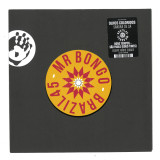
Two 1980s Brazilian boogie bombs from Sandra de Sá and Equipe Rádio Cidade get a remastered reissue as part of Mr Bongo Brazil 45’s series.
Sandra de Sá’s ‘Olhos Coloridos’ is an ‘80s MPB/boogie jam, taken from her self-titled 1982 LP on RGE Brazil, that sits perfectly alongside the likes of Tim Maia, Marcos Valle, Robson Jorge and Lincoln Olivetti. No surprise then that Lincoln Olivetti and Robson Jorge feature on the track, backed by some of the members from Banda Black Rio. A joyous combination of funk basslines and dreamy Rhodes that marry with jubilant horns and Sá’s incredible vocal tones.
On the B side, Equipe Rádio Cidade ‘Bons Tempo Sao Paulo (Good Times)’ was originally released on a rare promo only 7 inch from 1980. Giving a Brazilian boogie makeover to Good Times by Chic / Rapper’s Delight by Sugarhill Gang, the track is voiced by radio DJs from Sao Paulo wishing their listeners a Merry Christmas and Happy New Year.
This replayed version, heavy on the clavinet with a samba-infused, cuica-laced percussion breakdown, gives a true Brazilian spin on one of the most distinctive melodies out there.
Remastered with refreshed artwork.
Two classic cuts from Jorge Ben and Miriam Makeba take either side of this Mr Bongo Brazil 45 reissue.
’Xica Da Silva’ is one of Jorge Ben’s most well-known and well-loved cuts, housed on the legendary Africa Brazil LP that deserves a place in every collection. A magical MPB cut, it instantly transports you to the shores of Rio de Janeiro. With a low-slung funky samba flavour, Ben’s absorbing vocal recounts the legend of one of Brazil's oldest black icons.
On the flip side, Miriam Makeba serves up an entrancing, slowed-down, grooved-out version of ‘Xica da Silva’. A highly influential singer, songwriter, and civil rights activist from South Africa, this low and slow interpretation is doused in strutting guitar, off-beat piano stabs and hypnotic drums providing the perfect platform to let Miriam’s vocal shine through.
Remastered with refreshed artwork.
Absolutely electrifying and timeless, the 1973 Philly disco anthem is back! Now fully licensed and repressed for 2024 on a premium 12" single, "The Love I Lost" shines brighter than ever. This all-time classic showcases the extraordinary vocals of a young Teddy Pendergrass, who was on the cusp of becoming one of the era's most successful male performers. This full-length LP version, generously spread across an entire side of the 12" single, is an essential addition to any collection. It's one of those formative tracks that laid the foundation for the disco explosion—pure perfection!
Flip the record, and you'll find another landmark tune: "Wake Up Everybody." This 1975 mellow dancer carries a powerful, heartfelt message and stands as another monumental hit in the Blue Notes' impressive catalog. With socially conscious lyrics that resonate even today, this track has solidified its status as a timeless classic, exuding depth and soul. The entire B-side is dedicated to this one track, providing ample room for its message to resonate and ensuring top-quality sonic playback for DJs and dancers alike. If you appreciate soulful sounds, this record is a must-have—peerless and unforgettable!
After releasing my album 'ÖÐRUVÍSI,' which was a very personal and emotionally challenging project, I felt the need to make something weird and energetic for the club. I’m really into tunes that feel both slow and fast simultaneously.
The first track on the EP, 'Let’s be Havin u,' was initially hard to place genre-wise, i ended up sending it to Darren, who loved it and wanted to sign it. Releasing on Exit kinda feels like earning a black belt as a producer hah. I never imagined that a decade after buying Exit 12”s in 2014, I’d be releasing my own music on the label.
When I started making the EP, I had just begun performing again. I often saw people on the dance floor, too out of it to enjoy the music and often some of them having to be carried by their friends to backstage. This made me wanna make tunes for the dance floor as a bit of a statement on this. I first tested 'Let’s be Havin u' at Prikið in Reykjavik, sounded mad on the little old funktion one. The moment I knew that I was onto something with the EP was when I was Performing in Bristol at Thekla for my friend Boofy. It was wild, the ceiling started leaking during the show. I Love Bristol, feels like home to me.
Most of the percussion and hats on the EP are made with an Elektron Model Cycles, and the synths and pads are from a 80s Yamaha hybrid FM/sample synth I found at a thrift store. It doesn’t have MIDI, so I have to record perfect takes for chords and melodies. I often use pedals afterwards or resample the sounds for more tonal control.
I enjoy digging for records with unique breaks to sample, as I feel this is lacking nowadays. I usually make all my drums from scratch but when I use breaks I like it to be something I haven’t heard before. The alien percussion sound in the last track is actually me biting my teeth together, resampled repeatedly and ran through pedals and interfaces. I also recorded myself chewing gum for the second track to give it that hand on the hip feel. Most of the EP is made with hardware, outboard gear, or real-life recordings.
I’m not concerned about the EP fitting a specific genre or playlist. Too many artists play it safe by focusing on their Spotify stats and abandoning projects that don’t work instantly. I think also Obsessive nostalgia stifles innovation, keeping things stuck in a loop by replicating to the tee, tunes from 2 decades ago. I get it, but there has to be a middle ground sometimes.
Typically, a band's big indie label debut doesn't come 15 albums into its career, but with Constant Smiles' Paragons, here we are. Primary songwriter and sole "constant" member Ben Jones_who considers Constant Smiles a collective_sees its impressive output as a way to document the group's evolution. Since its live debut as a noise duo on Ben's home of Martha's Vineyard in 2009, Constant Smiles has grown to include contributions from 50 other members, all of whom have personal connections to the group's extended family. And while the collective has indulged an array of musical whims along the way - including Ben's penchant for penning a new set's worth of material for each live performance - Constant Smiles' sound has tightened up considerably over their past couple of albums, in large part as a result of Ben's working relationship with Mike Mackey, who has become his main creative partner. This increased focus manifests on Paragons in the band's most cohesive batch of songs to date, ranging from shimmering psych-pop excursions to bittersweet, piano and string-accented strummers, and an execution that feels like a massive step forward for the band. Through its recent forays into dream pop and shoegaze (Control) and synth-pop (John Waters), Constant Smiles has learned how to incorporate its experimental inclinations more fluidly into the mix. Artists like Yo La Tengo, and the more recent Rat Columns, are good touchstones for Constant Smiles' musical approach - tethering to an indie-pop core while perennially mining genres, always finding new ways to intrigue listeners and pursue a unique vision. Paragons was produced and engineered by Ben Greenberg in the last two weeks of December 2020 at Gary's Electric, with additional recording done by Ben Jones at his home studio, The Void, and his Aunt Leanne's house. The album was mixed at Circular Ruin Studio and mastered by Josh Bonati. The band on Paragons consists of Jai Berger (who performed "Introduction"), Spike Currier (bass and synth), Matthew Addison (drums), Emma Conley (violin), Nicky Wetherell (cello), Adam Lipsky (piano), and Ben Greenberg (guitar and Mellotron).
This is the quartet's second LP, recorded in 1971, and contains mostly Peruvian songs with a strong Cuban flavor where Pancho Acosta’s electric guitar reaches vertiginous heights and is combined with outstanding conga and timbales playing. Extremely rare and hard to find in its original issue, this is the first-time reissue. Remastered from the original tapes. The guitarist Francisco "Pancho" Acosta Angeles (1946) played a significant role in spreading love for Cuban rhythms across Peru, those sunshine beats breaking through the cloudiness that hangs over Lima most of the year, as the city bears a closer resemblance weather wise to London than to Havana. In 1967, after making a name for himself with his six-stringed skill, he made his vinyl debut with Compay Quinto. Shortly after Pancho left Company Quinto, he joined Los Kintos. When Los Kintos disbanded, Pancho Acosta swiftly moved on to his next project for MAG: the Cuarteto Yemayá, formed by tumba drummer and singer Miguel Montoya, bassist Máximo Pecho and timba drummer José Luis Fiallega, all under Pancho's direction and arrangements. The quartet's debut album, "Ecos del Trio Matamoros", was a tribute to the Cuban trio of the title and comprised cover versions as well as a couple of their own songs. This is the quartet's second LP, recorded between July and August 1971. "El Tic Tac" contains mostly Peruvian songs. The foreign versions on the album include the classic 'Compay Gallo', written by Miguel Matamoros; 'Toribio carambola' and 'El Tic Tac', from the repertoire of the Cuban Trio Servando Diaz; and 'Sandunguéate', best known in Celia Cruz’s version. ‘Oye Mi Son' and 'Oye Mi Guitarra' were composed by the album's lead vocalist, Miguel Montoya. Percussionist Jorge Mariazza (Los Pachas, Manzanita y su Conjunto) co-wrote 'Descarga Yemayá' with Pancho, which features outstanding conga and timbales playing. Pancho also composed tracks on his own: 'Me Voy a Monsefú', 'Mi Provinciana', 'Yo Me Voy de Aquí' and 'Flaca y Fea', the latter
with a Beatle-like intro where his Japanese electric guitar reaches vertiginous heights (he never used sound effects in his recordings). Cuarteto Yemayá released one more album for MAG. In 1973 Los Kintos reformed, with the addition of the bass, percussionist and guitarist from Cuarteto Yemayá. Pancho Acosta has continued his career as a composer and arranger to this day
At once a spiritually-charged journey and a shit-kicking party record, American Cream Band comes to Quindi covering all the bases.
American Cream Band was formed by Twin-Cities musician Nathan Nelson around 10 years ago, taking the form of improvised live shows and albums Frankensteined from these sessions into exultant, fully-formed records you can sink your teeth into. The trick with improvised music is to start with intentions, however abstract they might be, and Nelson leads his rolling cast of collaborators into the creative fray with subtle guidance which drives the impulsive musical moment forward.
The band's previous records have manifested on labels like Moon Glyph and Medium Sound, and now Presents arrives in a freewheeling flash of snappy new wave, skronky sax, call and response sass and some krautrock-minded sonic cosmology. The album came together in December 2021, when Nelson took ten musicians to legendary studio Pachyderm in Cannon Falls, Minnesota. Living together, eating together, and with Nelson quietly setting up his low-key magick intentions around Jupiter's planetary frequency and the studio's abundance of elephant statues and carpets, they laid down some drum-heavy sessions that became the building blocks of the record.
'Taste What We Taste' is the perfect example of an exuberant groove pounded on skins as a vessel for a joyous get-down, with the singers and players free to freak out on top. Nelson remains at the centre of the melee, throwing half-sardonic, half-heartfelt calls out for connection. 'Banana' celebrates nonsense and holds down the most serious of beats - a disco-not-disco deadeye dripping in late night sleaze and lysergic potential. On 'Royal Tears', the jagged guitar chops call back to Gang Of Four, while the hot n' heavy sax from Cole Pulice baits James Chance and all the other angular New York un-jazz misfits.
Amongst his other implied intentions for the recordings, Nelson wanted to channel opposites, not least the distinct male-female energies in his vocal sparring with the girls on assistance duties. It wouldn't be right to call them backing singers as they shoot back at his punchy mantras, bringing a certain fierce femininity that tips its hat to The B-52's Cindy Wilson and Kate Pierson, not to mention iconic post-punk bands like Au Pairs, Delta 5 and Bush Tetras.
There's space for the dreamier kosmische which has crept into the American Cream oeuvre in the past, as 'Sirens' opens the album up in a swirling pond of rag tag percussion and molten synths. 'Words Would Handcuff Us' cools the whole riotous assembly down in unmoored perfection, a strung-out Bossa nova seance dusted with celestial drips from analogue spaceships.
Equally treading the line between light and dark, conscious and unconscious, the sacred and profane, Presents is a life-affirming, creep-under-the-skin listening experience - a joyously transient chapter in the evolution of American Cream Band.
The impact, influence, and importance of Run-D.M.C.'s self-titled debut – the album that invented hardcore hip-hop and bridged rap, rock, and funk in then-unparalleled ways – cannot be measured. The first full-length record released by Profile Records, the 1984 set permanently changed the sound of music, broadcast streetwise wisdom to every corner of the country, and made the notion of a one-man band a distinct reality. Bolstered by an incendiary blend of staccato deliveries, stark beats, aggressive exchanges, evocative hooks, and socially conscious messages, Run-D.M.C. still hits listeners in the jaw with the same intensity it did nearly 40 years ago when it could be heard booming from ghetto blasters carried around city blocks nationwide.
Sourced from the original master tapes, pressed on MoFi SuperVinyl, and strictly limited to 3,000 numbered copies, Mobile Fidelity's 180g SuperVinyl 33RPM LP is the definitive-sounding version of the groundbreaking work cited by Rolling Stone as the 378th Greatest Album of All Time. This reissue also represents the first time this gold-certified effort has been presented in audiophile quality. Benefitting from the ultra-low noise floor, superb groove definition, and dead-quiet surfaces of SuperVinyl, Run-D.M.C. now plays with a clarity, immediacy, punchiness, and directness worthy of the artistry, urgency, and intellect of the trio's material.
The brilliance of Russell Simmons and Larry Smith's production comes into view as if the music is being broadcast on a giant system in a small club — only more focused, lively, and unlimited. Free of dynamic constraints and fatiguing harshness, this LP invites you to turn up the volume and experience the raw, rough, invigorating songs that changed the look, sound, and feel of hip-hop overnight. Think the trio’s sparse framework of drum machines, tag-team rhymes, keyboard accents, and turntable scratches is stuck in the mid-80s? Spin MoFi’s SuperVinyl LP and gain new appreciation for the music, messages, and production on display on Run-D.M.C.
Recorded in the wake of two successful and pioneering singles, both included on the album, Run-D.M.C. effectively took a sheet of coarse-grit sandpaper to the polish, sheen, and linear presentation of all the hip-hop that preceded it. Stripped to bare-bones foundations, the songs grab your attention and shake you by the collar with a combination of industrial-leaning rhythms, staggered deliveries, dance drama, and hard, minimalist percussion. Then there are the lyrics.
The LP broadcasts a smart mix of boots-on-the-ground reports, uplifting advice, and then-nascent b-boy culture. In one fell swoop, its narratives and music rendered the scene’s proclivity toward glamor and softness passé. Run-D.M.C.’s tough, cool-minded fashion sense showed the trio walked its talk and gave fans — particularly those living in long-ignored urban areas — heroes which with they could identify. Kangol hats, black jeans, leather jackets, Adidas sneaks, and gold chains were the new currency.
In every regard, Run-D.M.C. signifies the birth of modern hip-hop. Never more obviously than on the groundbreaking “Rock Box,” where rap and rock were first fused. As the first hip-hop video to receive regular rotation on MTV, the track eviscerated racial and social boundaries, awakened musicians and listeners to new possibilities, and redefined both popular music and, ultimately, popular culture. As the Roots’ Questlove has stated, it “ knocked down many obstacles, enabling hip-hop to become the new gospel."
Such teaching includes the real-world scripture of “Hard Times,” utopian hopefulness of “Wake Up,” and observational truths of “It’s Like That.” Released as the group’s debut single well before its eponymous album, the latter tune established themes and outlooks Run-D.M.C. would embrace during its career. Namely, the keen awareness of various prejudices, economic ills, and disruptive violence as well as the knowledge that education, self-motivation, and hard work were the ways to escape disadvantages and disillusionment.
Inspired and inspirational, the song reflects the spirit and shrewdness that courses throughout Run-D.M.C. That includes a detailed account of the trio’s not-so secret weapon (“Jam-Master Jay”), purpose statement (“Hollis Crew (Krush-Groove 2)”), and a revolutionary hybrid autobiographical narrative-dis track (“Sucker M.C.’s (Krush-Groove 1)”) widely regarded as one of the best hip-hop songs ever created. The same can be said for every moment on Run-D.M.C.
MoFi SuperVinyl
Developed by NEOTECH and RTI, MoFi SuperVinyl is the most exacting-to-specification vinyl compound ever devised. Analog lovers have never seen (or heard) anything like it. Extraordinarily expensive and extremely painstaking to produce, the special proprietary compound addresses two specific areas of improvement: noise floor reduction and enhanced groove definition. The vinyl composition features a new carbonless dye (hold the disc up to the light and see) and produces the world's quietest surfaces. This high-definition formula also allows for the creation of cleaner grooves that are virtually indistinguishable from the original lacquer. MoFi SuperVinyl provides the closest approximation of what the label's engineers hear in the mastering lab.

Mindgames' commitment to capturing the essence of golden era Jungle while infusing it with updated production techniques perfectly complements ASC's approach. On these two EP’s, ASC bridges the expansive soundscapes of his Spatial releases and the raw dynamism of his 2020 jungle trilogy for Samurai Music.
From the heads down launchpad of Shadow Of The Beast, to the deep stepping glide of Phaaze, and onto the epic scapes of Cells Interlinked, ASC writes a sonic manifesto of his mastery of deep jungle. Snowblind is a reverent nod to Photek’s fascination with space jazz, while Flux is a floating groove that snakes itself around one of the most infectious b lines you will hear anywhere.
Seven timeless entries in the Jungle story book that embody the spirit of the 90s while reshaping it’s framework into entrancing new forms.
Mindgames' commitment to capturing the essence of golden era Jungle while infusing it with updated production techniques perfectly complements ASC's approach. On these two EP’s, ASC bridges the expansive soundscapes of his Spatial releases and the raw dynamism of his 2020 jungle trilogy for Samurai Music.
From the heads down launchpad of Shadow Of The Beast, to the deep stepping glide of Phaaze, and onto the epic scapes of Cells Interlinked, ASC writes a sonic manifesto of his mastery of deep jungle. Snowblind is a reverent nod to Photek’s fascination with space jazz, while Flux is a floating groove that snakes itself around one of the most infectious b lines you will hear anywhere.
Seven timeless entries in the Jungle story book that embody the spirit of the 90s while reshaping it’s framework into entrancing new forms.
Dubstep's origins lie in dark 2-step mutations that evolved on dancefloors and in studios in the early 2000s. That same fusion of swing and space and subs can be found by the bucketload throughout the new EP by one of DNO’s staples, Kercha.
Skippy speed garage hats and slippery globules of bass animate the otherwise sparse production on the opening track ‘Feature’, while the wild beat on ‘Absurd’ could catch out any DJs not giving it their full attention. Wrapped in Kercha’s signature sonic debris, it delivers three and a half minutes of rattling, clicking, squelching wizardry.
The B-side gives us ‘Stimulate’, a collaboration with new-gen rising star Hypho. Indebted to trap, it’s full of militant 808 hi-hat rolls and the kind of firing synth tones that spell doom in a sci-fi movie (and tear up festival stages).
Finally, ‘Saturday’ is classic Kercha: sub-bass from the Seventh Circle, and so many suspicious chirps, whistles and hoots that it could soundtrack a nighttime stroll through the woods just as easily as skanking in a smoked-out sweatbox. The track is peppered with voice notes from a friend — snatches of funny, halfcut chatter, as random in content as Kercha's non-vocal sampladelia. The final snippet, which translates to “Saturday dictates its rules”, gives the track its name. A statement that can be read in all sorts of ways, it could even confer a motto for this whole collection, reflecting Kercha’s trademark originality.
The ‘Absurd’ EP is one of Kercha’s most dancefloor-directed releases to date, and whether conjuring the ghosts of club nights past or envisioning the raves of the future, it’ll be dominating sound systems for a long time to come.
Rhythms of postmodern realism at the very bottom of the DNO.
Dam Swindle return to Heist in excellent form with a 4-track EP in their signature style.
The iconic Amsterdam duo returned to the studio after their much-lauded ‘Minor Fools’ EP, where the lead track ‘That’s Right’ became one of the most heartwarming tracks 2023. Their recent contribution to the Phonica 20-year compilation -‘Allright (just a tribute)’- is turning into one of the biggest hits of this year with big plays on pretty much every festival around, whether it’s Glastonbury or Dekmantel. The guys are known for their ability to bend different styles into something very much their own and their newest addition to the Heist catalog is no different. The ‘Touch Me Again’ EP sees them go from sample-heavy house to classic 90’s piano-driven tracks with a touch of acid and it’s one you don’t want to miss.
The record starts with ‘Touch Me Again’, a house jam with chopped vocals, energetic synth stabs and a big breakdown. Add to that a touch of acid and you’ve got a follow-up to their Phonica hit of 2023.
‘Hang On’ takes you back into classic Swindle territory, with their signature sampling style and knack for finding those lush vocals. The synth chops and bassline give the track its upbeat energy and the distant filtered pads move in an ever so subtle way, that there’s always something new happening while keeping the attention on that catchy main hook.
On the flip, we see the guys take things a bit deeper with emotive vocals and introverted keys layered over a steady groove on their track ‘The Joy of Melancholy’. Fast-forward to the drop and all that energy comes free with a huge piano break, which propels the track into a blissful ‘hands-in-the-air’ dancefloor moment.
The EP closes with ‘Forever and Ever’, a gospel-inspired Deep house tune full of organ hits and off-kilter sample chops. This 4-track EP gives you jam upon jam upon jam and sees Dam Swindle solidify their position as the go-to artist in the house scene and keeps them at the forefront of electronic music.
Grab this record while you can and share the love,
Heist Recordings.
- A1: Moon's Milk Or Under An Unquiet Skull (Part One)
- A2: Moon's Milk Or Under An Unquiet Skull (Part Two)
- B1: Bee Stings
- B2: Glowworms/Waveforms
- B3: Summer Substructures
- B4: A Warning From The Sun (For Fritz)
- C1: Regel
- C2: Rosa Decidua
- C3: Switches
- C4: The Auto-Asphyxiating Hierophant
- C5: Amethyst Deceivers
- D1: A White Rainbow
- D2: North
- D3: Magnetic North
- D4: Christmas Is Now Drawing Near * Featuring – Robert Lee, Rose Mcdowall
- E1: Copal
- E2: Bankside
- F1: The Coppice Meat
- F2: Ü Pel (Insense Offering)
Black Vinyl[54,58 €]
Red in Clear Vinyl. First compiled as a double CD in 2002, Moon's Milk (in Four Phases) is a suite of four EPs that Coil released seasonally via their in-house Eskaton imprint across 1998. The line-up for these sessions were John Balance, Peter "Sleazy" Christopherson, Drew McDowall, and William Breeze. Recorded primarily at their home studio in Chiswick, London on the eve of a permanent relocation to the small seaside town of Weston-super-Mare, the collection has long loomed as a pivotal and pinnacle work in the group's discography, but has never been officially reissued, or repressed on vinyl. Time has only ripened its tapestry of regal strangeness.Arranged sequentially in tribute to the equinoxes and solstices, Moon's Milk captures Coil at a revelatory crossroads, leaning deeper into improvisation, spontaneity, and sound design. "Moon's Milk or Under an Unquiet Skull" initiates the proceedings on Spring Equinox, a two-part netherworld organ séance woven from vocal drones, cathedral keys, seasick strings, and opiated undertow. From there, Summer Solstice skews lighter but no less incantational, with Balance embracing his voice-as-instrument across lucid dream torch songs ("Bee Stings"), purgatorial spoken word ("Glowworms/Waveforms"), sultry chamber pieces ("Summer Substructures"), and falsetto ravings ("A Warning From The Sun (For Fritz)").Autumn Equinox exudes more of a pensive and twilit mood, from the Rose McDowall-sung folk ballad "Rosa Decidua" ("I hear your voice sing near to me / I've put away the poisoned chalice (for now) / And lie down amongst the flowerbeds") to hall-of-lords hallucination "The Auto-Asphyxiating Hierophant" to the liminal string-plucked classic "Amethyst Deceivers," featuring excellent alien guitar by Breeze layered with Balance's oft-quoted couplet: "Pay your respects to the vultures / For they are your future."The album's final chapter, Winter Solstice, is its most swooning, remote, and ceremonial. Opener "A White Rainbow" stirs strings, layered choral vocals, and shivering rhythm into an imploding burial hymn. "North" oscillates bleakly, a ghost in the machine murmuring opaque prophecy ("This black dog has no owner / This black dog has no odour"), while "Magnetic North" is its inverse, a guided meditation of gently flickering software and surreal chakra poetics ("Red rose filling the skull / Yellow cube in the lower pelvis / Silver moon crescent below the navel"). The suite fades to grey with a traditional English carol ("Christmas Is Now Drawing Near"), rendered like an executioner's song by Rose McDowall's doomed, beautiful voice.The Dais box set includes the entirety of the rare Moon's Milk Bonus Disc CD-R / 2019 Threshold Archives CD, which includes three collaborations with Thighpaulsandra. This material is as rich and intoxicating as the previous four phases, ranging from electro-acoustic singing bowl rituals ("Copal") to dissonant electronic recitations of visionary Angus MacLise poetry ("The Coppice Meat") to ominous classical melancholia ("Bankside"). Once again, Coil confirm the vastness of their confounding, infinite alchemy, explored and refined across decades of experimentation - both sonic and bodily. From post-industrial to post-everything, theirs is an art untethered, in the wilds of its own design.
2024 Repress
Thomas Fehlmann remains as one of the most endearing and respected artists on Kompakt. He has inspired generations of fans and musicians over the course of his 30+ year career. From his early days as part of the legendary band Palais Schaumburg, and the pioneering Detroit/Berlin act 3mb (With Juan Atkins and Moritz Von Oswald), to his longstanding membership with The Orb, combined with his contributions as a solo artist to esteemed imprints R&S, Plug Research and of course Kompakt, where we have proudly released two full length solo albums: Visions Of Blah (Kompakt CD 20/Kompakt 67) and Honigpumpe (Kompakt CD 59 / Kompakt 157), his musical works have been prolific, not to mention four singles and a full serving of tracks found on our Pop Ambient and Total collections. Now, after 3 years, Fehlmann returns with 'Gute Luft'…
'Gute Luft' is the result of months of work scoring the hit German TV film 24h Berlin - the longest documentary film in history which featured 80 camera teams following the lives of berliners over a 24 hour period. Obviously a huge challenge for Fehlmann, beyond the scope of the project and hours of music involved in a 24 hour film, there was dealing with the decision making process that went with working with such a large production team. As he shared scoring duties with another musician (separately), inevitably a lot of his music ended up not making the final cut. 'Gute Luft' is about re-tweaking and editing material from the countless hours of recording he had created. In a sense, 'Gute Luft' is Fehlmann's ideal soundtrack to the 24h Berlin documentary.
“while scoring the film and subsequently shaping it into a album, i found myself questioning what holds it all together in Berlin. I figured that 'Air', the good old 'Berliner Luft', is something that is guaranteed to touch everyone and everything in the city. Also with that Berlin is very green, the combination with the unavoidable city dirt makes for a distinctive blend which seems to infuse its vibrant scene unknowingly with a constructive drive. Besides that, 'Gute Luft' was also the title of a song from my old band Palais Schaumburg, of which I have very fond memories. Also (as he says with a wink) “Gut” is one word I have a profound relation to…”
Fans shall rejoice as Thomas Fehlmann doesn't feer far from his signature path of trailblazing the finer links of classic Detroit House and Techno with the submerged beauty of Berlin Dub. One will immediately recognize the classic scoring techniques Fehlmann brings to 'Gute Luft' - various themes and sounds resonate in various forms and versions throughout the tracks. As Thomas states, “There are also More Subtle Connections That Should Give An Overall Feel To The Score. I Also Brought In Elements From Tunes From My Previous Albums In recognition of the fact that I often feel that there would be so many more ways to explore and experiment with certain ideas than just on a single track”. Fehlmann clearly succeeds in synergizing the best of the past 20 years of Berlin's expansive history of electronic and dance music with 'Gute Luft'. A recreational album in every way in which he hopes will make you “Feel at peace with you and your environment, inspire you to lush, imaginative dinners, make babies, or just walk your own way with open eyes”. Well put Thomas!
This is a re-release of " Gute Luft " orginally released in 2010 on Kompakt.
Thomas Fehlmann ist nach wie vor einer der liebenswertesten und gleichzeitig angesehensten Künstler bei Kompakt. Im Laufe seiner über 30-jährigen Karriere hat er Generationen von Fans und Musikern inspiriert. Von seinen frühen Tagen als Teil der legendären Band Palais Schaumburg und dem bahnbrechenden Detroit/Berlin Act 3MB (mit Juan Atkins und Moritz von Oswald), bis hin zu seiner langjährigen Mitgliedschaft bei The Orb, kombiniert mit seinen Arbeiten als Solokünstler für Imprints wie R&S, Plug Research und natürlich Kompakt: Sein musikalisches Gesamtwerk ist beeindruckend. Wir sind stolz, bereits zwei seiner Soloalben veröffentlicht zu haben: “Visions Of Blah“ (KOM CD 20/KOM 67) und “Honigpumpe“ (KOM CD 59 / KOM 157). Ganz zu schweigen von vier Singles und jeder Menge Tracks, die sich auf diversen Pop Ambient- und Total-Sammlungen finden lassen. Jetzt, nach drei Jahren, kehrt Fehlmann mit “Gute Luft“ zurück ...
“Gute Luft“ ist das Ergebnis monatelanger Arbeit für den deutschen Fernsehfilm “24h Berlin - Ein Tag im Leben“ - der wohl längste Dokumentarfilm der Geschichte. 80 Kamerateams verfolgen das Leben der Berliner*innen über einen Zeitraum von 24 Stunden. Die größte Herausforderung stellte für Fehlmann dabei nicht die Komposition für einen solchen Film dar; vielmehr waren es die Entscheidungsprozesse im großen Produktionsteam, die ihm die meiste Arbeit abrangen. Da er sich die Aufgabe mit einem anderen Musiker teilte, endete es unweigerlich so, dass einige seiner Tracks nicht in den Final Cut kamen. Bei “Gute Luft“ ging es nun darum, Material aus den unzähligen Stunden an Aufnahmen neu zu bearbeiten und zu editieren. In gewissem Sinne ist “Gute Luft“ Fehlmanns eigentlicher Soundtrack zum 24-Stunden-Dokumentarfilm.
"Während ich den Film vertonte und anschließend zu einem Album geformt habe, habe ich mich gefragt, was hier in Berlin alles zusammenhält. Ich habe mir gedacht, dass 'Luft', die gute alte Berliner Luft, etwas ist, das garantiert jeden und alles in der Stadt berührt. Die Tatsache, dass Berlin sehr grün ist; gleichzeitig die Kombination mit dem unvermeidlichen Dreck einer solchen Stadt – das ergibt eine unverwechselbare Mischung, die ihrer lebendigen Szene unterbewusst einen bestimmten Drive zu verleihen scheint. 'Gute Luft' war übrigens auch der Titel eines Liedes meiner alten Band Palais Schaumburg, an das ich mich sehr gerne erinnere. Außerdem (das sagt er mit einem Augenzwinkern) ist ‚Gut‘ ein Wort, zu dem ich eine enge Beziehung habe ..."
Seine Fans können sich freuen, denn Thomas Fehlmann entfernt sich nicht weit von seinem charakteristischen Sound, mit dem er die feinen Verbindungen von klassischem Detroit House und Techno mit der versunkenen Schönheit des Berliner Dubs aufspürt. Man wird sofort klassische Soundtrack-Techniken erkennen, die Fehlmann auf “Gute Luft“ verwendet - bestimmte Themen und Sounds durchziehen in unterschiedlichen Formen und Versionen die einzelnen Tracks. Thomas sagt dazu: "Es gibt subtile Verbindungen, die der Erzählung ein zusammenhängendes Gefühl geben sollten. Ich habe Melodie-Fragmente aus früheren Alben einbezogen, um der Tatsache Rechnung zu tragen, dass ich oft das Gefühl habe, es gäbe so viele weitere Möglichkeiten, bestimmte Ideen weiterzuverfolgen und mit ihnen zu experimentieren, als nur in einem einzigen Track.” Fehlmann gelingt es hier, das Beste aus den vergangenen 20 Jahren Berliner Elektronik- und Tanzmusik-Geschichte zu bündeln. Ein wohltuendes Album in jeder Hinsicht, von dem er sich selbst erhofft, dass es seinen Hörer*innen "ein Gefühl des Friedens mit sich selbst und ihrer Umgebung vermittelt, sie zu phantasievollen Abendessen inspiriert, zum Babys machen oder sie einfach nur mit offenen Augen Ihren eigenen Weg gehen lässt." Gut gesagt, Thomas!
Dies ist die Wiederveröffentlichung von “Gute Luft“, erstmals erschienen 2010 auf Kompakt.
Dark Entries and Honey Soundsystem Records have teamed up once more to release the final volume of gay porn soundtracks by San Francisco-based musician and producer, Patrick Cowley. One of the most revolutionary and influential figures in the canon of disco, Cowley created his own brand of Hi-NRG dance music, The San Francisco Sound.' Born in Buffalo, NY on October 19, 1950, Patrick moved to San Francisco in 1971 to study at the City College of San Francisco. He founded the Electronic Music Lab at the school, where he would make experimental soundtracks by blending various types of music and adapting them to the synthesizer.
By the mid-70's, Patrick's synthesis techniques landed him a job composing and producing songs for disco superstar Sylvester, including hits like You Make Me Feel (Mighty Real)', Dance Disco Heat' and Stars.' This helped Patrick obtain more work as a remixer and producer. His 18-minute long remix of Donna Summer's I Feel Love' and his production work with edgy New Wave band Indoor Life were both of particular note. By 1981, Patrick had released a string of dance 12 singles, like Menergy' and Megatron Man'. He also had founded Megatone Records, the label upon which he released his debut album, Menergy'. Around this time Patrick was hospitalized and diagnosed with an unknown illness: that which would later be called AIDS. Throughout 1982, he recorded two more Hi-NRG hits, Do You Wanna Funk' for Sylvester, and Right On Target' for Paul Parker, as well as a second solo album Mind Warp'. On November 12, 1982, he passed away.
In 1979 Patrick was contacted by John Coletti, owner of famed gay porn company Fox Studio in Los Angeles. Patrick jumped on this offer and sent reels of his college compositions from the 70s to John in LA. Coletti then used a variable speed oscillator to adjust the pitch and speed of Patrick's songs in-sync with the film scenes. The result was the VHS collections Muscle Up' and School Daze' released in 1979 and 1980. Afternooners' is the third collection of Cowley's instrumental songs, recorded in May 1982. These recordings were culled from two 23-minute reels in the Fox Studio vaults. All songs were originally untitled, so we've used the titles from Fox Studio's 8mm film loops. This compilation also includes three bonus tracks found in the archives of fellow Megatone Records recording artist Paul Parker and the attic of teenage friend Lily Bartels. Influenced by Tomita, Wendy Carlos, and Giorgio Moroder, Patrick crafted a singular sound from his collection of synthesizers, percussion, modified guitars, and hand-built equipment. The listener enters a world of forbidden vices, evocative of Patrick's time spent in the bathhouses of San Francisco. The songs on Afternooners' reflect the advances of the equipment available at the onset of the 1980s. Cowley's unadulterated electronic forms are stripped down and dubbed up. Lush electronic percussion, soaring synthesizer riffs and low slung funk grooves comingle on these magnificent soundscapes.
Featuring 70 minutes of music never before released on vinyl. All songs have been remastered by George Horn at Fantasy Studios in Berkeley, CA. The vinyl is housed in a gatefold jacket designed by Berlin-based artist Gwenael Rattke, featuring black and white photos of Patrick in his studio that opens to a full color array of x-rated scenes from the Fox Studio vaults. Included is a fold-out poster featuring a handmade collage using photography and xeroxed graphics of classic gay porn imagery and an essay from Drew Daniel of Matmos. For Patrick's 67th birthday, Dark Entries and Honey Soundsystem Records present a glimpse into the futuristic world of a young genius. These recordings shed a new light on the experimental side of a disco legend who was taken too soon.