The RIOT DJ-Stashpack XL Plus is a versatile and lightweight gig bag that and was designed to be flexible in order to accommodate a variety of equipment. It features a practical, height-adjustable Rolltop opening to easily stash a battle-mixer, records, production gear or a DJ-controller. With its durable material, solid processing and a unique design, the new RIOT DJ-Stashpack XL Plus is perhaps the most versatile gear bag in the market.
+ FITS
Laptop up to 17"
Akai MPK-25
Akai MPC Renaissance
Denon MC-4000
NI Kontrol S4 MK3
NI Kontrol S2 MK3
NI Kontrol S5
NI Kontrol S4
NI Kontrol S2
NI Kontrol Z2
Numark NS6II
Numark NV2
Numark Mixtrack Pro 2
Numark Mixtrack Pro 3
Rane Seventy-Two
Rane Sixty-Two
Rane Sixty-Eigth
Reloop Elite
Reloop Terminal Mix 4
Roland DJ-202
Pioneer DDJ-REV1
Pioneer DDJ-SR2
Pioneer DDJ-RR
Pioneer DDJ-SB2
Pioneer DDJ-RB
Pioneer DJM-S11
Pioneer DJM-S9
Pioneer DJM-S7
Pioneer DJM-900 SRT/NXT
Vestax VCI-400
Vestax VCI-380
12“ Vinyl
Accessories
+ BASICS
Crafted from hardwearing and 100% waterproof PVC Tarpaulin
Soft-fleece lining
PVC-coated (waterproof zippers)
Lockable zippers on main and laptop compartment
Flexible height adjustment through variable Rolltop Closure
Main compartment includes removable bottom foam and padded side walls
The included (removable) Protection Panel protects jog wheels and faders and the folding top part works like an additional lid when e.g. battle-mixers are stowed.
Separate side entry compartment provides quick access to your laptop (up to 17’’)
Large front pocket with internal zip-pouches and organizers
1 side quick-access side pocket for small accessories and personal belongings
1 side bottle holder
Padded back panel with airflow system, ergonomic backpack straps and chest straps
Detachable trolley sling
Hand-luggage compatible (up to 56 cm height)
+ SPECS
+ Outer dimensions: (H/B/T): 49-65 x 38 x 26 cm
+ Inner dimensions: : 47-56 x 32 x 20 cm
+ Weight: 2,4 kg
quête:most
If you can judge an artist's quality by the company they keep, then FaltyDL is up there with the best of them. The label history of the producer known to his friends as Drew Lustman reads like a "who's who" of 21st century electronic music imprints - Ninja Tune, Unknown to the Unknown, Planet Mu, Studio Barnhus, the list goes on.
WithIn the Wake of Wolves, we can now add Central Processing Unit to this illustrious roster. The Sheffield label joins the party at a notable juncture - while FaltyDL has kept up an impressive clip of releases throughout his career,In the Wake of Wolvesis both the NYC-based producer's first LP for two years and his first full-length release away from his own Blueberry Records for almost a decade.
In the Wake of Wolvesproves to be both a great match for CPU and also further evidence of the label's burgeoning sonic palette. While CPU has built its reputation on top quality electro joints, recent releases have delivered adventurous electronica experiments (Proswell'sPeople Are Giving And Receiving Thanks At Incredible Speeds), hard-wired breakbeat techno (Baby T'sI Against I) and golden-age synth explorations (twenty-fifth anniversary reissues of Bochum Welt'sDesktop RoboticsandFeelings on a Screen, both of which first emerged via the legendary Rephlex Records).In the Wake of Wolvestakes things further still - this is a brilliantly genre-voracious record, one which marries the rhythmic cut-and-thrust that we have long known FaltyDL for with all manner of adventurous stylistic choices.
Those familiar with the FaltyDL experience will recognise the trademark blend of synthetic grit and harmonious softness in album opener 'I Need You'. This could pass for Four Tet or even Hannah Diamond at points, the steady build of pulsing synths and looped vocals recalling a more mysterious version of the PC Music sound. 'I Need You' stands shoulder-to-shoulder with any of FaltyDL's other great atmospheric album openers - no small feat given the competition. 'Further', the following number, is yin to 'I Need You's yang. This is a pulsating track which gleefully skitters between machine-funk, tubing darkside bass and breakcore-adjacent drum programming, all of which is peppered with some genuinely beautiful work in the higher synths.
'Further' sets the scene for several of the more club-facing cuts here. 'Minds Protection' similarly features all manner of strange percussive sounds to surprise the ear, and it also boasts a thrilling mid-section in which the bottom falls out the track to incorporate a short snippet of blown-out junglism. With its tunnelling low-end and clattering drums, 'Full Spectrum' kicks off a delightful run of grime-influenced joints which take cues from Mr. Mitch, Logos and many of those other producers who took the Eski sound to exciting new places in the 2010s. 'Forget Me Not', the album's longest track which is placed three spots from the end, feels like the record's climactic point - a pitter-patter post-house joint that has a hint of Caribou in its DNA, it'll take the clubs by storm.
But as much as FaltyDL may consistently bring the heat in terms of the beat programming, the thing which has long marked Lustman out as a special talent is the musicality of his compositions. No matter how much drums clatter or bass bangs, FaltyDL always hooks the ear back in with a sonorous synth or pleasing nugget of melody. Nowhere is this more apparent than onIn the Wake of Wolves' more weightless numbers, each startling in their prettiness. 'Half Spectrum' is a new-era beat track packed full of ear candy; the keening keys of 'GasGas' are potent with feeling; and on the album's closer, the evocatively-titled 'Mila Stans In A Meadow For The First Time Eating Strawberries', we get a gorgeous synth vignette that joins the dots between the modern mastery of Yung Sherman and the most emotionally affecting moments of Aphex's Twin's catalogue.
At once wistful and hopeful, archival and futuristic, FaltyDL's brilliantly unpredictableIn the Wake of Wolvesis a feather in the cap for both this seasoned producer and the Central Processing Unit label.
RIYL: AFX, Bochum Welt, Mark Fell, Mrs Jynx, Boards of Canada
"Espontaneamente se Tenta: Aventuras Sonoras de Djalma Corrêa is an album of deeply exploratory pieces by legendary percussionist and composer Djalma Corrêa. This double-LP set features previously unreleased recordings that cover a wide range of sonic experiments, revealing an unknown side of the prolific and groundbreaking Brazilian artist. Most of the tracks on this album were digitized for the first time – directly from the original tapes – and were compiled in collaboration with Corrêa just before he passed.
The result is a wild and unsettling collage that shows us just how original and intense Corrêa could be: from the unorthodox electroacoustic piece Evolução (Para Fita e Filme), which channels ancestral African inspirations to create a sonic cosmogonical narrative, to the proto-mixtape Exemplo de Sintetizadores, in which he transitions from transcendental drones to astral cha-cha-chas.
While the compilation might seem disjointed at first listen, it is in fact the most accurate translation or representation of his central concept: spontaneous music. Djalma's relationship with sound was always guided by his fearless approach to listening, and by his audacious and dynamic interaction with both musicians and equipment, which enabled him to work across a wide array of genres: from jazz to completely abstract music, always through a personal DIY ethic.
Corrêa developed a strong bond with experimentalist and inventor Walter Smetak, with whom he shared a studio during his formative years at Universidade Federal da Bahia. Suite Contagotas, featured in this collection, is no less than a sonic materialization of that bond: an experiment revolving around dripping water and its randomness – a tentative exploration of the ideas and possibilities envisioned by Smetak for his audacious, albeit unrealized, Estúdio OVO.
Djalma, however, is best known for his studio work in historical albums, including many by Caetano Veloso, Gilberto Gil and Jorge Ben, and for his own polyrhythmic opus Baiafro. The last track is an early recording called Bossa 2000 dC, first performed by Djalma at the 1964 Nós, Por Exemplo concert, an event which is often cited as marking the beginning of the Tropicalia movement. At the time, he was the only artist in the lineup using electronic devices to create sounds, e.g. medical oscillators and contact mics to augment his percussive palette.
The artwork is an amalgamation of material found in the Djalma Corrêa Archive (currently managed by his son Caetano Corrêa) and other material created during the period in which the record was being put together. The intention is to guide the listeners through this possibly tempestuous soundscape, giving them additional resources so that they may draw their own meanings and make their own sense of this extremely immersive and original experience – which is like nothing we've ever heard before."
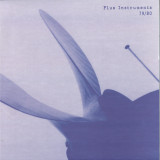
While she was still a member of Nasmak, one of the leading bands of the Dutch ultra-movement, Truus de Groot started Plus Instruments in 1978 with herself as the sole member. When the project evolved, she found a wide range of rotating collaborators like Michel Waisvisz, Lee Ranaldo and James Sclavunos. Plus Instruments was about freedom and the live performances were largely improvised. The sound minimal but captivating. The music always came from within, but De Groot was also triggered by bands like Red Crayola, Suicide, DAF, Wire, Per Ubu, Devo and the No Wave scene in NY. She was always experimenting with primitive multi-track recording and whatever crappy gadgets she could find. Always looking for a gritty, dirty sound and bizarre overtones.
At a young age she travelled to New York and began to immerse herself in the nightlife of the city that never sleeps. Here she found true creativity, passion and expression. The club scene was alive but highly competitive, so this fearless Dutch girl would just knock on promoter’s doors to get gigs booked at places like CBGB’s, Peppermint Lounge, Underground and the Pyramid. De Groot eventually settled in the United States and never stopped experimenting with sound. In recent years she reinvented Plus Instruments and led the group into new territory.
The recordings for this LP were made by De Groot at home and the music is experimental, minimal, industrial but also playful, sounding nothing like most of the later material. 14 tracks in total of which 7 are taken from the elusive and impossible to find self-released debut cassette as ‘Truss Plus Instruments’ which was sparingly distributed by Nigel Jacklin and his legendary Alien Brains fanzine in 1980. The remaining 7 tracks are from the same period (1979-1980) and were carefully selected from the vast archive of De Groot. We are glad to present this anthology that serves as a long overdue testimony to the formative phase of a unique female pioneer of electronic music.
A landmark publication celebrating the life and work of American musician and composer Arthur Russell, the man the Guardian called 'One of the 20th century's true musical visionaries'
The music of Arthur Russell defies classification. From his pioneering compositions as part of New York's vibrant avant-garde scene (alongside artists including Philip Glass, David Byrne, Laurie Anderson, John Cage, and Allen Ginsberg) to his genre-expanding disco productions, from his new wave and art pop to his posthumously released folk songs, Russell crafted timeless and foundationally influential work until his premature death in 1992 from AIDS-related illnesses.
Now, in a landmark publication assembled by critically-acclaimed writer Richard King, Travels Over Feeling collects the extensive ephemera found in Russell’s New York Public Library archive, along with pieces from the personal collections of those who were closest to him. Combining unseen visual material—handwritten scores, lyrics, photos, letters, and drawings—with new texts by King and extensive original interviews with Arthur’s collaborators, contemporaries, family, and friends, Travels Over Feeling paints a portrait of Arthur Russell unlike any which has come before, revealing a true picture of one of the most distinctive artists of the last fifty years.
Charles Arthur Russell Jr., better known as Arthur Russell (May 21, 1951—April 4, 1992) was an American cellist, composer, producer, singer, and musician from Iowa whose work spanned a disparate range of styles. After studying contemporary composition and Indian classical music in California, Russell relocated to New York City in the mid-1970s, where he became involved with both Lower Manhattan's avant-garde community and the city's burgeoning disco scene. His eclectic music was often marked by adventurous production choices and his distinctive voice. He died from AIDS-related illnesses in 1992.
Richard King was born in South Wales and for the last twenty years has lived in the rural county of Powys, in mid-Wales. He is author of Original Rockers (2015), which was shortlisted for the Gordon Burn Prize, and How Soon Is Now? (2012), which was Sunday Times Music Book of the Year. The Lark Ascending was published in 2019, and was a Rough Trade, Mojo, and Evening Standard Book of the Year. His latest book, Brittle with Relics, was published in February 2022.
Galaxy Orange/Black Vinyl. Limited to 500 copies. Data Diamond is the sound of FOUR STROKE BARON at their most confidently unhinged. Originally conceived as two separate EPs (one purely electronic - Data, one heavy - Diamond) that would then meld together on one full length release, the idea morphed into what is now the succinct sucker punch of an album that is heading our way at speed. Heavily inspired by their own work on Data Diamond's predecessor, Classics, Witt and Vallarino got to work in their laboratory creating the most potent, concentrated form of FOUR STROKE BARON possible. Data Diamond - a dizzying sub-40 minute dive into the deranged psyches of its creators. The tracks on Data Diamond are lithe yet still allow enough room for idiosyncratic flourishes that mark this out as a true FOUR STROKE BARON opus. If Classics was a Man vs. Food belly busting plate of indulgence, Data Diamond is an upmarket Gordon Ramsay dish, served with a side of insanity. Finding a co-conspirator in Cynic's Paul Masvidal, the trio get somewhat psychedelic on the album's eponymous closing - and most expansive - track, which also features Vola's Adam Janzi on drums. Thematically, this is their most murderous anthology to date. Those who find themselves embroiled in these bloodthirsty tales include a Radio Shack CEO, an internationally acclaimed cyborg, an accidental trafficker of human body parts, and the leader of a death cult located in a convenience store. FOUR STROKE BARON's anomalous view of the world takes a particularly dark turn across the songs on Data Diamond, yet, as ever the macabre tragedies are dressed up with catchy melodies, pop hooks for days and a big shimmering bow of positivity.
Data Diamond is the sound of FOUR STROKE BARON at their most confidently unhinged. Originally conceived as two separate EPs (one purely electronic - Data, one heavy - Diamond) that would then meld together on one full length release, the idea morphed into what is now the succinct sucker punch of an album that is heading our way at speed. Heavily inspired by their own work on Data Diamond’s predecessor, Classics, Witt and Vallarino got to work in their laboratory creating the most potent, concentrated form of FOUR STROKE BARON possible. Data Diamond - a dizzying sub-40 minute dive into the deranged psyches of its creators. The tracks on Data Diamond are lithe yet still allow enough room for idiosyncratic flourishes that mark this out as a true FOUR STROKE BARON opus. If Classics was a Man vs. Food belly busting plate of indulgence, Data Diamond is an upmarket Gordon Ramsay dish, served with a side of insanity. Finding a co-conspirator in Cynic’s Paul Masvidal, the trio get somewhat psychedelic on the album’s eponymous closing - and most expansive - track, which also features Vola’s Adam Janzi on drums. Thematically, this is their most murderous anthology to date. Those who find themselves embroiled in these bloodthirsty tales include a Radio Shack CEO, an internationally acclaimed cyborg, an accidental trafficker of human body parts, and the leader of a death cult located in a convenience store. FOUR STROKE BARON’s anomalous view of the world takes a particularly dark turn across the songs on Data Diamond, yet, as ever the macabre tragedies are dressed up with catchy melodies, pop hooks for days and a big shimmering bow of positivity.
In The Red Records is proud to announce a previously unreleased new album by Brooklyn-born master of minimalism Alan Vega, Insurrection. The eleven songs here showcase the unparalleled vision and uncompromising force from one of the most influential artists of all time. Alan Vega was born in Brooklyn in 1938. He co-founded the legendary New York City punk band Suicide with Martin Rev in 1970. Suicide’s groundbreaking 1977 debut is considered one of the most influential albums of all time. Vega considered his solo records the audio counterpoint to his visual art that reflected the world around him while simultaneously exploring universal themes. It makes his work as relevant today as it was when he created them. It was during his highly experimental period beginning in the late ’80s that he began working with Liz Lamere, who became the most crucial collaborator of his solo career until his death in 2016. Lamere, along with Jared Artaud, resurrected these newly unearthed collection of lost recordings, which they co-produced and mixed. Lamere and Artaud spearhead the Vega Vault project, which aims to bring rare, unreleased and back catalog work spanning Alan Vega and Suicide’s career to the public for the first time. On Insurrection, Lamere says: “Insurrection was created in the time period around 1997/98, after Mutator and prior to Vega’s 1999 release of 2007 and captures the intense energy of NYC in the ’90s rife with crime, killing, hate, fascism, racism, and moral bankruptcy. You can hear the tortured souls floating through this album. Post-Gulf War angst still enveloped Alan. He was having premonitions about a major terror attack in the US, well before 9/11. The upcoming birth of his son raised further awareness of the state of our world. All these emotions are mirrored in the sounds he magnetized. And true to Vega form, there remains hope and empowerment coursing through the tracks. In the almost three decades of going into the studio with Vega, we recorded significantly more material than the seven albums released. Vega’s intention was to experiment with sound which would become the canvas for the poetry that reflected his vision of the universe. Because the goal wasn’t to make albums, he had no timeline or constraints and would freely follow new paths uncovered along the way.”
Andrea has his roots in the independent musical scene in the first decade of the 2000s. In addition to his compositional and live experience as the first Nadàr Solo drummer, he is one half of the Turin duo Anthony Laszlo with Anthony Sasso, ex guitarist and singer of Milena Lovesick. Andrea Laszlo De Simone made his debut in 2012 when he released his first homemade album, Ecce Homo. Recorded at home by makeshift means and accompanied by the following videos: Solo un uomo, 11:43, I nostri piccoli occhi, Perdutamente.
At the beginning of 2014, he met some experienced musicians from Turin’s underground scene that later, after a few months in a rehearsal room, became his band: Damir Nefat (guitar/backing vocals), Dani C (bass guitar/backing vocals), Filippo Cornaglia (drums/backing vocals), Zevi Bordovach (keyboards/backing vocals) and Anthony Sasso (keyboards/backing vocals/percussions).
Anticipated by the individual tracks Uomo Donna, Vieni a salvarmi and La guerra dei baci on June 9, 2017 - for 42Records - Uomo Donna came out. It’s Andrea Laszlo De Simone’s first real album, a well received work by both audience and critics. It also was pointed as one of the best albums of 2017 by several national music magazines.
Uomo Donna is a complex, articulate and vital album that lives in its own time - where past, present and future coexist. It’s a time in which a sonic world takes shape blending classic and modern, Italian songs with psychedelia, Battisti and Radiohead, Modugno and Verdena, the Beatles and Tame Impala, the magical flight of Claudio Rocchi and the earthly flight of IOSONOUNCANE.
The album was self-produced and then post-produced by Andrea in collaboration with Giuseppe Lo Bue, a sound engineer from Bologna. The recordings were made between October 2014 and the end of 2016 with experimental techniques straddling digital and analogic.
After playing in some important Italian festivals as Siren Festival and TOdays -- that earned him a special mention in the live scores by Rolling Stones -- on October 28, 2017 the first Uomo Donna album tour started in the clubs of the major Italian cities.
On November 30th 2017, Andrea Laszlo De Simone presented his video, Sogno l'amore, during the Torino Film Festival as a short film, shot in Sicily and directed by Francesca Noto and Andrea Laszlo De Simone.
On March 15th 2018 the music video of Gli uomini hanno fame was released, the most political song of the album, an overlook through ferocious human emotions, an eleven and fifty minutes trip within human nature portrayed even in its most ferocious instincts. The music video was directed by Andrea Laszlo De Simone and the mysterious duo Sans. The official cycle of Uomo Donna ends on 31 December 2018 with the music video of Sparite Tutti created by the creative collective Irene&Irene.
2019 was a year of new goals for Andrea, in fact, the album Uomo Donna leaves national borders and got a special mention on social media by the famous American band The Lumineers which included Andrea Laszlo De Simone and Uomo Donna among the most interesting discoveries of the international musical underground and inserts Solo un Uomo in the Spotify playlist “Inspirations”. A few days later, Solo un Uomo was broadcasted by KEXP Radio. On November 4th Andrea and his band were chosen to open for The Lumineers’ only Italian show at Alcatraz, in Milan.
On November 8th Andrea released a brand new work, digitally and on vinyl for 42Records, Immensità, a ‘suite’ of four singles: Immensità, Conchiglie, Mistero and La Nostra Fine. Turned into a medium-length film using Immensità as the soundtrack.
Immensità was presented with four special sold out concerts in Rome, Turin, Padua and Milan. For these shows Andrea Laszlo De Simone was accompanied on stage by a mixed orchestra composed of synths, electronics, choirs, strings and woodwinds. Classic and modern instruments that are intertwined in a nine elements formation: an immersive concert, a contemporary version of chamber music.
In March 2020 Immensità was released also in France, UK, Canada, Belgium and the United States with Ekleroshock/ Hamburger Records (Roster: Benjamin Clementine, Polo & Pan, Limousine and many others). The response of the transalpine press and media, sector and not, was unexpected: major French newspapers and magazines - from Le Monde to Liberation, Vanity Fair and Les Inrockuptibles - dedicated entire pages and rave reviews to Immensità and Andrea Laszlo De Simone. The track Immensità entered, after a few days, at the fourteenth rank of Spotify’s Top viral 50 playlist and broadcasted on France Inter and Radio Nova.
“Immensità” is a complex cross media work of music and images. A project divided into four chapters (the songs) for nine tracks (each chapter has a prologue or a conclusion). A true suite, using the classic term that best describes an instrumental composition in several stages, that can be enjoyed in its entirety only by listening to vinyl or digitally in the innovative single track format, without pauses: a single symphony of 25 minutes and 6 seconds.
In September 2020, Dal giorno in cui sei nato tu was released on all italian platforms, a song dedicated to Andrea’s children, a real love letter in the form of a small speech, where he tries to give them the three keys to approaching life: fantasy, music and irony. Martino, 8 years old, replies to his father’s love letter by making the video accompanying the song, created in Super 8. It's the story of the world through the eyes of the child. It is also an homage to the new little girl in family, Lucia.
It's time! The Dark Master, III Machine, Signal 2 Noise, Known Unknown - Dom & Roland lands on Samurai Music for his first single for the label.
A foundation Drum and Bass artist, Dom's productions have retained their distinctive identity as his music progressed through his storied career for most of the genres most influential labels. Dom has made his fair share of the most important records in the genre and continues to do so with his dedication to the craft unwavering after 30 years.
His Samurai debut harnesses his experience and prowess with two capsule examples of raw Dom and Roland power.
The Prodigy Carlos Nilmmns Is Back on Skylax With Once Again a Splendid 12 Inch! His Style Is a Mixture of Refinement and the Most Beautiful Things That House Music Has Ever Produced, Moodymann, Theo Parrish in the Lead but Not Only That, We Must Also Add the Masters Lalo Schifrin, Donald Byrd and Even Henry Mancini. This Ep Starts With a Bang With the Sublime "Nes", Three Letters Which Alone Sum Up the Small Miracle of Bringing Together Both the Ghosts of Detroit and the Most Beautiful Cinematic Music Directly Inherited From the Glorious 70s. "Believe" Plows the Same Furrow With a More Mental Universe and to Conclude "Parisian Nights" (Jazz Version) Which We Swear Would Not Have Been Missing on an Impulse Album. Side B Opens With "Celebration" Which Sounds More Club Tool for Once With Obviously This Je Ne Sais Quoi That Is Far Superior to All Current House Productions. and This Ends With the Club Version of "Parisian Nights", a Real Volute of Sound. His Style Reminds Us Very Strangely and Quite Paradoxically of the Illustrious Terre Thaemlitz Aka Dj Sprinkles. Music for the Soul and the Body....
Darning Woman is an intentional, beautiful, sometimes confrontational album that shreds expectations of DIY, bedroom music, and feminine themes. There's a lushness and maternal instinct at play, as Coope connects the dots between physicality, ephemera, and the ultrafeminine. "I don't really like to deal that much with themes of personal hardships, or heartache and love," says Anastasia Coope. "Ultimately, I work most honestly with the language of what is happening in a moment and the passage of time around it. That, coupled with my reaction to entering the artistic landscape, and my thoughts about what does and doesn't get representation, comprises most of this album." Darning Woman explores, among other things, the meditative aspect of sewing, patching and embellishment, care and repair, collection not as modern, craven consumption but as a counterpoint to materialism. This sort of collection - the good kind, the gathering of things to make a home - can be, in Coope's words, "A very baby way to critique capitalism. Birds make nests, right? It can be a new life for a thing that was made. What you surround yourself with matters." To that end, Anastasia Coope is also the founder and leader of the Bonzo collective and show series, an exciting new home for the type of expansive, profoundly creative scene that New York has been missing for some time. And while Bonzo may well be the ascent of a new community, Darning Woman is the story of Anastasia Coope, herself. It is the sound of Coope entering the world as an artist, acknowledging the tangle of what changes - the gaze of the world, Coope's art in reaction and community to art in general - and what does not: her ideas and her own self.
witching seaside ambience for a sound shaped by inner-city living, Atelier’s second full-length studio album, Lights Towards The Exit, channels the mood of a sleepless cityscape.
Lights Towards The Exit is Atelier’s second full-length studio album. After the release of Varsam Court at the end of 2019 on Lossless, run by mentors and friends Mathias Schober and Thomas Herb, the duo experimented with different ideas in the studio, and at the start of 2020 a common thread began to appear between a few of the tracks which laid the foundation for the sound of their second album.
Both Alexander and Jas moved to Berlin in the period before the release of Varsam Court from their hometown of Cape Town, South Africa, where their first album was written and recorded. Moving provided some challenges, particularly with what was the most essential equipment to bring from their previous studio set-up, but those limitations proved to be useful in incorporating new instruments and techniques to the recording process.
Lights Towards The Exit was written and recorded in different spaces in Berlin – from bedrooms in apartment blocks to three different studios across the city. The different locations all had a specific ambience – such as 4th- and 5th-floor bedrooms with busy street views; a studio with no windows in a typical old Berlin backyard complex forever under threat of being sold and gentrified; and a bigger studio with windows on the opposite side of the corridor overlooking the backyard of a mechanic workshop. The final details and edits were completed in Atelier’s current studio, in a contrasting area surrounded by office blocks, plazas, 9-5ers and, most importantly, their friends and colleagues.
Swapping the mountains, sea and seclusion for tall buildings, backyards and a new community, Lights Towards The Exit channels the sensation of being surrounded by people, but still feeling like you're on your own. The album was written through three years of cold winters, sweaty summers and a period where the world stood still during the pandemic. Frustrated with the cease of momentum, but still optimistic, Atelier disappeared from public view, abandoning social media to focus on recording, songwriting and experimentation.
It was a difficult time: the duo longed to perform and continue producing music, and the imposed limitations sometimes felt like an impossible obstacle. Ultimately, though, this would provide inexpected inspiration and influence the sound and direction of the new album.
The sound of Lights Towards The Exit is not a departure from their first album, but a progression: influenced by the new surroundings in the duo’s adoptive city, Atelier’s second album is an ode to first-time experiences, new languages, challenges, club culture and the shift from youth to maturity, as well as a balm to those stuck somewhere in between.
The overall sound is a lift not in tempo, but in energy, matching the openness needed to make a new start in a new place.
THE 1968 ALBUM ON WHICH JOHNNY CASH BECAME A LEGEND: AT FOLSOM PRISON AMONG THE MOST IMPORTANT AND POTENT STATEMENTS OF THE 20TH CENTURY
Johnny Cash already knew his way around Folsom Prison when he and his band stepped inside the institution’s forbidding walls on the morning of January 13, 1968 to record At Folsom Prison. He’d played there two years prior. But this time was different.
Cash took the stage that day for two shows amid a darkening sociopolitical atmosphere and a raging war in Vietnam, as well as the knowledge his career and health hung on by a thread. The Arkansas native shared many of the long odds and abject failures of the inmates for which he performed. The songs he chose, and the conviction with which he delivered them, say as much. The point at which Cash transformed from a country star into a legendary artist, and a bold statement about the American prison state and its commitment to rehabilitation, the triple-platinum At Folsom Prison remains one the most important, potent, and fabled records of the 20th century.
You can hear it echo off the walls of the room; pulse through the itchiness of the Tennessee Three’s acoustic-based boom-chick rhythms; crackle in the announcements conveyed over the intercom; ring in the comedy of the off-cuff remarks and pair of novelty tunes; sense it in palpable energy that wells up within Cash and his audience. And you can experience it like never before via Cash’s knockout singing. The bedrock foundation of all his music, the singer’s baritone resonates with profound degrees of depth, pliability, and passion that underscore how much this appearance meant to him — and the extent he was living the narratives.
Indeed, every song on At Folsom Prison serves a purpose and speaks to the conditions — mental, emotional, physical, geographical, legal, social — the inmates confronted on a daily basis. Beginning with the explicit messages of the opening “Folsom Prison Blues,” Cash makes it clear he understands and shares many of their plights. Not for nothing did the myth of Cash having done hard time persist for decades once this record hit the streets. That’s how real it is, and how dedicated Cash remains to conveying every note with the same truth he invests in the impromptu comments he makes between and amid songs.
Listen to the sorrow, regret, pity, and loneliness of Merle Travis’ “Dark as the Dungeon,” Cash pulling syllables til they threaten to break and inhabiting the mood of bleak phrases such as “pleasures are few” and “the sun never shines.” Witness the isolation, dejection, and sadness punctuating the walking-blues “I Still Miss Someone,” matched in gravity by a solemn reading of “The Long Black Veil” — a traditional dirge that involves murder, cheating, and deception. Cash cuts even deeper on a heartbreaking solo rendition of “Send a Picture of Mother” and plainspoken version of Harlan Howard’s “The Wall,” detailing a suicide disguised as jailbreak through cliched-jaw deliveries that softly curse the impossible situation.
In chronicling temptations, mistakes, mortality, punishment, and life “inside” — for better or worse, the stories of the disenfranchised, forgotten, written-off, and unrepentant — At Folsom Prison also has a blast playing the outlaw role. Cash captures wild-eyed craziness and out-of-control mayhem on a revved-up take of “Cocaine Blues,” taking extra satisfaction in its dastardly tales by way of voice that shifts into character for the sheriff and judge. The gallows humor and racing drama of “25 Minutes to Go”; quicksilver accents and resigned acceptance of “I Got Stripes”; train-whistle blare and twangy locomotion of “Folsom Prison Blues” — all fight the law only to see the law win.
Cash remains deeply committed at every moment, and inseparably connected with the tortured souls removed from the goings-on of the outside world. No wonder all but two songs here stem from the day’s first performance that saw Cash, Luther Perkins, Marshall Grant, and company give everything. As does the Man in Black’s soon-to-be-wife, June Carter. The couple’s fiery duet on “Jackson” scorches; their combination of surrender and fortitude “Give My Love to Rose” puts us in the dying protagonist’s shoes.
And with the closing “Greystone Chapel,” famously penned by convict Glen Sherley, who watched it all happen under the watchful eye of guards, Cash separates the corporeal from the spiritual, relaying lessons about salvation and survival. Heady themes to which he’d return for the remainder of his illustrious career.
Originally released in 1976, the War compilation album Greatest Hits contains a monster set of Chicano funky grooves from L.A., most of which forever transformed the sound of funk. The album includes most of the band's best cuts — such as "Slippin Into Darkness," "Cisco Kid," "World Is A Ghetto," "All Day Music," "Me & Baby Brother," "Why Can't We Be Friends," and "Low Rider." One of the hippest funk, rock and soul groups on the Cali scene of the '70s, who just kept on making great music as the years went on!
Now with our 45 RPM release, plated and pressed at QRP, the best-sounding version of this historic album gives listeners an even richer sonic experience. The dead-quiet double-LP, with the music spread over four sides of vinyl, reduces distortion and high frequency loss as the wider-spaced grooves let your stereo cartridge track more accurately.
Clean, balanced, richly detailed. Just the way an Analogue Productions reissue should sound.
Deluxe black on white splatter 2LP edition (double LP with gatefold sleeve and printed inner sleeves!). Including original sleevenotes by Byron Coley and a new introductory essay from Dinosaur Jr. fan Henry Rollins! First issued in 2002 only in the States and Australia,
‘Ear Bleeding Country’ is the only career-spanning compilation of Dinosaur Jr. Dinosaur Jr. are one of the most successful and influential alternative guitar bands from America, and fronted by laconic singer/guitarist J. Mascis, they’ve enjoyed global success and inspired generations, from Grunge onwards.
The first six tracks are drawn from the band’s early career in the 1980s, when they recorded for independent labels like Homestead and SST. Among them are the classic single ‘Freak Scene’ and the follow- up cover of The Cure’s ‘Just Like Heaven’. Most of the compilation
samples the best of Dinosaur Jr.’s output after signing with Warner Bros in 1990, including hit singles such as ‘The Wagon’, ‘Whatever’s Cool With Me’, ‘Out There’, ‘Start Choppin’ and ‘Feel The Pain’. ‘Ear Bleeding Country’ ends with ‘Where’d You Go’, a track by J. Mascis’
post-Dinosaur Jr. band The Fog.
LAKE's 2009 album Let's Build A Roof KLP213, produced by Northwest legend Karl Blau, is sweet, funky and nostalgic - a paragon of psychedelic pop. Originally, this landmark album had overlooked sonic anomalies now corrected by REMASTERING. Five bonus songs have been added to the DIGITAL ALBUM, creating a whole new Let's Build a Roof.Let's Build A Roof is LAKE's most popular album with many fan favorites, though every track is unique. After extensive touring in 2009, LAKE entered Dub Narcotic Studio (Olympia, Wash.) to record fresh with their live energy. In the studio they were able to fill out their jingly pop aesthetic, enhanced with the vintage sounds of instruments available at Dub Narcotic and the local community. Blazing synth solos, timpani, flutes, saxophones, cello, and marimba, are just some of the featured sounds on Let's Build a Roof.Some of the album's most requested songs: "Madagascar," a dubby, slow-groove track; "Christmas Island" a surfy Phil Spector-sounding song used as theme music for the television in show Adventure Time; and "Don't Give Up", an upbeat motivating dance song with Blau performing the hook on harmonized saxophones; "Gravel" is the first single and has that a driving intensity that we can all deeply relate to - trying to keep up.
True audiophile joy — now cut at 45 RPM 2LP for better tracking, exceptional bass!
Remastered by Kevin Gray at Cohearent Audio from the original master tapes
Plated and pressed on 180-gram vinyl at Quality Record Pressings!
Stoughton Printing gatefold tip-on heavyweight cardboard jacket
Praise for the 33 1/3 version of The Smoker You Drink, The Player You Get:
"(Side one) ends with the appropriately titled 'Happy Ways,' a Latin-tinged guitar-fest with lovely chunky bass lines that sounds absolutely glorious on this Analogue Productions pressing. The zing of steel string guitar almost sounds dead on the CD and tired on my ancient vinyl pressing, so this is clearly not one of those remasters that's based on an umpteenth generation copy of the tapes. ... You owe it to yourself to hear this album — and it will not sound any better than this spectacular pressing." — Recording = 8/10; Music 10/10 — Jason Kenedy, Hi-Fi+, Issue 148
"An outstanding new 180gm LP reissue from Analogue Productions, with improved sound thanks to a sparkling new remaster by Kevin Gray at Cohearent Audio, makes it clear that this 1973 release remains — with the possible exception of 1978's But Seriously, Folks . . . — the undisputed highlight of Walsh's solo career. ... Another week, another beautiful-sounding, wonderfully packaged reissue from Analogue Productions." Read the whole review here. — Robert Baird, May 2017
In between his stints with the James Gang and the Eagles, Joe Walsh tackled his second solo studio album The Smoker You Drink The Player You Get which became his most successful solo outing. The 1973 LP continued the heavy and light rock mix of tracks found on his previous release, Barnstorm.
Analogue Productions has done reissue justice to the album that AllMusic decries "features some of the most remembered Joe Walsh tracks, but it's not just these that make the album a success. Each of the nine tracks is a song to be proud of. This is a superb album by anyone's standards."
To obtain the best sound possible we turned to Kevin Gray at Cohearent Audio to remaster this superb album from the original analogue tapes. Next we plated the lacquers and pressed LPs on 180-gram audiophile vinyl at the world's best LP maker, Quality Record Pressings. Top it all off with a deluxe Stoughton Printing gatefold tip-on jacket and you've got the makings for audiophile joy.
But would we stop there? Hardly. Now with our 45 RPM release, the best-sounding version of this rock music gem gives listeners an even richer sonic experience. The dead-quiet double-LP, with the music spread over four sides of vinyl, reduces distortion and high frequency loss as the wider-spaced grooves let your stereo cartridge track more accurately.
This amazingly eclectic rock album has Joe's smash "Rocky Mountain Way," his hit "Meadows," plus "Bookends," "Wolf; Dreams" and more! Walsh's ability to swing wildly from one end of the rock scale to the other is unparalleled and makes for an album to suit many tastes.
A band who have justifiably been championed across the world, Tokyo’s Melt-Banana have been responsible for some of the most complex punk rock ever made … that far outshines ninety-nine percent of most other bands out there. The band once described their live show as “Shooting machine gun and laser beam, chaos in order.” And I think that pretty much sums them up. — Olli Siebelt, BBC No wave without the self-conscious pretension, avant garde composition compressed into one-minute-or-less bursts, urgency, intricate destruction, pure glorious abandon. Melt-Banana play the same way that Repulsion, Naked City, The Ruins, or The Boredoms all make you want to scream and dance and kill your neighbors. This is not music that we are conditioned to accept. This is you delirious with joy scraping your five senses off the floor. —Matthew Moyer, Ink19 Melt-Banana are in a league of their own. There are other extreme hardcore bands out there who are experimental and unique but Melt-Banana are more than that. They area giants amongst infants. Masters amongst pupils. Kings amongst serfs. Nobody can do what they do and nobody can adequately use words to describe them. —Jeb, Crass Menagerie