
In Stock
On Stock and ready to ship
Last In: 3 months ago
30,04 €
On Stock and ready to ship

On Stock and ready to ship
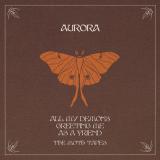
Ten years after All My Demons Greeting Me As A Friend introduced AURORA’s extraordinary musical universe to a global audience, The Moth Tapes takes listeners back to where it all began.
Built from intimate early recordings, demos and previously unreleased material from the original era, ‘All My Demons Greeting Me As A Friend (The Moth Tapes)’ opens AURORA’s archive to offer a new perspective on the creative foundations of her landmark debut and on the beginnings of an artistic journey that has since taken her around the world.
Unrefined and deeply personal, The Moth Tapes is both a celebration of where AURORA began and a bridge to the artist she has become.
expected to be published on 25.09.2026
Earlier in the year, Washington, D.C-based Sol Power Allstars launched the Sweet Breeze Sound imprint, seemingly as a vehicle for oddball re-edits and nostalgic, sample-rich productions. Handling side A on release number three in San Fran's King Most, who crafts a hybrid 80s electro/proto-house jam out of echoing electronics, bobdypopping beats, and all manner of effects-laden samples (including a wealth from InDeep classic 'Last Night a DJ Saved My Life' ). Over on side B, Sol Power's own Marc Meistro takes over, laying down his own sparse, lo-fi, analogue-rich tribute to electro-era synth disco that once again nods to a variety of cult classics from the early 1980s.

"The Moth" ist Devin Townsends bislang ambitioniertestes Werk, ein Projekt, das er als sein Lebenswerk betrachtet - ein immersives Orchester-, Chor- und Theaterprojekt, an dem er über ein Jahrzehnt lang gearbeitet hat. Was als fernes Ziel begann, wurde Wirklichkeit, als Townsend zur Zusammenarbeit mit dem North Netherlands Orchestra and Choir eingeladen wurde.
Im Gegensatz zu seinen früheren genreübergreifenden Werken wurde "The Moth" von Grund auf als vollständig orchestrierte Erzählung konzipiert. Townsend verbrachte Jahre damit, die Grundlagen der Musik neu zu erlernen, um die Partitur selbst zu schreiben: Harmonie, Kontrapunkt und Orchestrierung wurden von Grund auf neu aufgebaut, fachkundig unterstützt von Joseph Stevenson. Das Ergebnis ist ein sorgfältig ausgearbeitetes, emotionales Werk, in dem jedes Instrument und jede Stimme ihren Platz hat.
Das Album wurde in mehr als zehn Ländern aufgenommen und vereint eine außergewöhnliche internationale Besetzung: das bereits erwähnte North Netherlands Orchestra and Choir, die langjährigen Mitwirkenden Darby Todd, Mike Keneally, James Leach und Gäste wie Steve Vai, Anneke Van Giersbergen und Lynn Wu (Ou). Hunderte von Musikern, Toningenieuren, Mixern und Künstlern haben zu dem riesigen kreativen Ökosystem dieses Projekts beigetragen.
Im Kern handelt "The Moth" von Transformation. Durch seine hochfliegenden Arrangements und intimen Momente erkundet das Werk Selbstakzeptanz, Hingabe und den Mut, sich Unbehagen zu stellen, ohne sich abzuwenden.
"The Moth" handelt von der Reise - aber auch von der Ankunft.
"The Moth" wird in verschiedenen Formaten erhältlich sein, darunter als limitiertes Deluxe-Artbook mit 3 CDs + Blu-ray (CD1: Studioalbum, CD2: "The Moth - The Afterlife" Redux Orchestra & Choir Version), CD3: "The Moth - The War (Live)"). Die Blu-ray enthält den kompletten Live-Film "The Moth - The War" sowie Dolby Atmos- und hochauflösende Stereomischungen von "The Moth" und "The Moth - The Afterlife". Es wird
expected to be published on 29.05.2026
expected to be published on 22.04.2026

Pumpin South France sound...
With a collab between Uzi and Keja for the opening, creative drops and mental effects.
Then comes a Jarotek and Trizia Moth versus with a Old School inspiraly sound... And a deep drop. tribe is tribe...
The Flip starts with a Keja long 145 BPM tune. Mental Twirler at a sweet tempo... boostable.
Last tune is a superb ragga jungle banger from Uzi. A master piece... Short but wicked !!
Record comes with an Insert and a sticker.
expected to be published on 30.03.2026

expected to be published on 14.11.2025

Coloured Vinyl[29,20 €]
Maud the moth, the solo project of Spanish-born and Scotland-based pianist, singer and songwriter Amaya Lopez-Carromero announces her new album, The Distaff, to be released via The Larvarium (digital +CD) and La Rubia Producciones (vinyl) Amaya has long used the mantle of Maud the moth as an alter-ego, a séance-like conduit to explore themes of rootlessness, identity and trauma. The Distaff in particular refers to the stick or spindle onto which wool or flax is wound for spinning, and an object which has historically been used across multiple cultures as a symbol wielded by the “virtuous woman”, an authoritarian ideal around which much of the trauma surrounding the feminine coalesces. The album takes the form of a sort of self reflective and surreal autobiography. It was in part inspired by the poem of the same name written by the Greek poet Erinna, as she mourns her friend's loss of individuality and agency in exchange for marriage - and therefore safety and acceptance in the eyes of society. The album exists in an ethereal but violent world of aesthetic overlaps where time stands still and fictional and reimagined folk sits at the table with Maud the moth’s usual sonic menagerie. It is the result of a lifetime of obsession with sound and music, where glimpses of musical genre offer insight into Amaya’s artistic interests and her participation in the underground European scene for many years, in bands such as healthyliving. Heavier, darker, and more exposed than any of her previous works it features some highly accomplished artists, such as Seb Rochford (Patti Smith, Polar Bear, Sons of Kemet, Pulled by magnets, etc.) on drums, Alison Chesley (Helen Money) on cello, Fay Guiffo on violin and Scott McLean (Ashenspire, healthyliving, Falloch) on guitar, saxophone and synthesiser. Maud the moth shares the video for "Siphonophores". About the track, Maud the moth says; I wrote "Siphonophores" on guitar, during the first lockdown, a period where I was kind of trapped between an almost empty flat in Edinburgh and Dresden. It was an incredibly harrowing time, but also one of hope and where important new things were being birthed. I felt incredibly sensitive to everything, almost like life was happening in slow motion. I´m not a confident guitarist since I am completely self-taught, but, probably because of this, I feel that this instrument allows me to focus on aspects of the songwriting that I normally overlook when writing on piano, and I think it was a necessary step for this song to exist. Something else which I've been really exploiting lately and features strongly in the album is the percussive capabilities of the piano, and in particular, of the sustain pedal when mic'd up. This can be heard very clearly at the beginning of "Siphonophores". Written and arranged by Amaya, with some contributions in the later role from the aforementioned collaborators, the album presents nine tracks originally written entirely on acoustic piano as accompanied voice pieces, in pure singer-songwriter fashion. The album was co-produced and recorded by Scott and Amaya in different studios across the UK between January and July of 2024, in a process that started shortly after the 2020 pandemic and finished alongside the album recordings in a detailed, organic and at times obsessive process aimed primarily at capturing the natural dynamics and expression of free performance. The Distaff was mixed in its entirety by Scott and mastered at Abbey Road by Alex Wharton (Radiohead, My Bloody Valentine, Aurora, Kathryn Joseph etc.) Despite being born of a very personal point of view, the album lacks a specific narrator and was conceived almost as a sonic trousseau, where the needle point, silks and other family heirlooms have been swapped for out-of-the-corner-of-the-eye memories of rural Spain by the vineyards, family disputes, old tales of wartime pains, generational breaches and finally the conflict of migration and estrangement. The songs paint dystopian pastoral scenes which evolve throughout the span of one fictional day outside of time and coherent locations and where imagination (often the only account surviving from traumatic events and gaslighting) has become indistinguishable from fact. The Distaff attempts to acknowledge past trauma, comprehend and process some of the more difficult aspects which have contributed to our darker self and offer closure and solace through creative catharsis.
expected to be published on 21.02.2025

Maud the moth, the solo project of Spanish-born and Scotland-based pianist, singer and songwriter Amaya Lopez-Carromero announces her new album, The Distaff, to be released via The Larvarium (digital +CD) and La Rubia Producciones (vinyl) Amaya has long used the mantle of Maud the moth as an alter-ego, a séance-like conduit to explore themes of rootlessness, identity and trauma. The Distaff in particular refers to the stick or spindle onto which wool or flax is wound for spinning, and an object which has historically been used across multiple cultures as a symbol wielded by the “virtuous woman”, an authoritarian ideal around which much of the trauma surrounding the feminine coalesces. The album takes the form of a sort of self reflective and surreal autobiography. It was in part inspired by the poem of the same name written by the Greek poet Erinna, as she mourns her friend's loss of individuality and agency in exchange for marriage - and therefore safety and acceptance in the eyes of society. The album exists in an ethereal but violent world of aesthetic overlaps where time stands still and fictional and reimagined folk sits at the table with Maud the moth’s usual sonic menagerie. It is the result of a lifetime of obsession with sound and music, where glimpses of musical genre offer insight into Amaya’s artistic interests and her participation in the underground European scene for many years, in bands such as healthyliving. Heavier, darker, and more exposed than any of her previous works it features some highly accomplished artists, such as Seb Rochford (Patti Smith, Polar Bear, Sons of Kemet, Pulled by magnets, etc.) on drums, Alison Chesley (Helen Money) on cello, Fay Guiffo on violin and Scott McLean (Ashenspire, healthyliving, Falloch) on guitar, saxophone and synthesiser. Maud the moth shares the video for "Siphonophores". About the track, Maud the moth says; I wrote "Siphonophores" on guitar, during the first lockdown, a period where I was kind of trapped between an almost empty flat in Edinburgh and Dresden. It was an incredibly harrowing time, but also one of hope and where important new things were being birthed. I felt incredibly sensitive to everything, almost like life was happening in slow motion. I´m not a confident guitarist since I am completely self-taught, but, probably because of this, I feel that this instrument allows me to focus on aspects of the songwriting that I normally overlook when writing on piano, and I think it was a necessary step for this song to exist. Something else which I've been really exploiting lately and features strongly in the album is the percussive capabilities of the piano, and in particular, of the sustain pedal when mic'd up. This can be heard very clearly at the beginning of "Siphonophores". Written and arranged by Amaya, with some contributions in the later role from the aforementioned collaborators, the album presents nine tracks originally written entirely on acoustic piano as accompanied voice pieces, in pure singer-songwriter fashion. The album was co-produced and recorded by Scott and Amaya in different studios across the UK between January and July of 2024, in a process that started shortly after the 2020 pandemic and finished alongside the album recordings in a detailed, organic and at times obsessive process aimed primarily at capturing the natural dynamics and expression of free performance. The Distaff was mixed in its entirety by Scott and mastered at Abbey Road by Alex Wharton (Radiohead, My Bloody Valentine, Aurora, Kathryn Joseph etc.) Despite being born of a very personal point of view, the album lacks a specific narrator and was conceived almost as a sonic trousseau, where the needle point, silks and other family heirlooms have been swapped for out-of-the-corner-of-the-eye memories of rural Spain by the vineyards, family disputes, old tales of wartime pains, generational breaches and finally the conflict of migration and estrangement. The songs paint dystopian pastoral scenes which evolve throughout the span of one fictional day outside of time and coherent locations and where imagination (often the only account surviving from traumatic events and gaslighting) has become indistinguishable from fact. The Distaff attempts to acknowledge past trauma, comprehend and process some of the more difficult aspects which have contributed to our darker self and offer closure and solace through creative catharsis.
expected to be published on 21.02.2025

expected to be published on 13.12.2024

expected to be published on 11.10.2024

expected to be published on 11.10.2024

expected to be published on 11.10.2024

Musical innovators, Red Snapper, have announced that they will release a new album on Lo Recordings on the 20th of October 2023.
‘Live at The Moth Club’, the follow up to 2022’s acclaimed ‘Everybody Is Somebody’ long player, features nine tracks from a vast and impressive back catalogue on Warp Records and Lo Recordings and captures perfectly the energy of their celebrated sold out London show from May 2022 in Hackney.
With an incredible and genre bursting career that spans nearly thirty years, the new album demonstrates the band’s ability to constantly rework classic and new tracks, keeping them impassioned, experimental and relevant. The collection includes a version of ‘Suckerpunch’ which originally appeared on their 1998 album ‘Making Bones’ and will now be released as a single on the 15th of September 2023.
Notorious for casting convention aside, and remaining one of the UK’s most forward thinking and rule breaking live bands, Red Snapper embrace a unique blend of live, euphoric Afro-Jazz, Future Funk, Dub, Dark Hip-Hop and fragile soundscapes.
Formed in 1994, the original line up of Rich Thair (drums), Ali Friend (double bass) and David Ayers (guitar) released three EPs on Rich Thair and Dean Thatcher’s label Flaw Recordings. The first EP ‘Snapper’ featured Beth Orton on vocals.
Over the initial years the band released the sonically pioneering albums; ‘Reeled and Skinned’, ‘Prince Blimey’, ‘Making Bones’ and ‘Our Aim Is To Satisfy Red Snapper’ (Warp records), touring globally and supporting the likes of Massive Attack, Bjork, The Prodigy, De La Soul and The Fugees. They also acquired a reputation for innovative and expansive remixing – reworking tunes by Trouble Funk, David Holmes, Sabres of Paradise, Garbage, Lamb, S-Express and Edwyn Collins amongst others.
Since then the band have released the eponymous ‘Red Snapper’ and ‘A Pale Blue Dot’ on Lo Recordings followed by ‘Key’ on V2 Records which featured the track ‘Spikey’ which was on the soundtrack for El Camino, the Netflix Breaking Bad film directed by Vince Gilligan in 2019.
In 2013 Red Snapper composed a new soundtrack to the 1970’s Senegalese, psychedelic road movie Touki Bouki which had been restored by Martin Scorsese. The band toured Europe performing the soundtrack live to the film, culminating in the celebrated sell-out show at The Queen Elizabeth Hall on London’s Southbank. In 2014 the album ‘Hyena’ was released on Lo Recordings featuring all the music from their original film score.
expected to be published on 27.10.2023

expected to be published on 21.04.2023

Pumpin South France sound...
With A collab between Uzi and Keja for the opening, creative drops and mental effects.
Then comes a Jarotek and Trizia Moth versus with a Old School inspiraly sound... And a deep drop. tribe is tribe...
The Flip starts with a Keja long 145 BPM tune. Mental Twirler at a sweet tempo... boostable.
Last tune is a superb ragga jungle banger from Uzi. A master piece... Short but wicked !!
Record comes with an Insert and a sticker.
Order now and we will order the item for you at our supplier.

Berlin based artist WHT MOTH made three strong and irresistible tracks for Eclectic driven by an aggressive techno groove. We discovered this artist 2 years ago when he made an EP via the digital line of Eclectic. Now is the time to release his project on vinyl alongside the epic remix of the big artist Pfirter.
Order now and we will order the item for you at our supplier.

Total Error. Trueness. Uncertainty. Can these terms coexist? Will defining an allowable error for a test become unacceptable? Will the embrace of Krigets forthcoming album mandate the rejection of all non-ISO-conforming terminology and concepts?
The debate - and the future - is uncertain.
Order now and we will order the item for you at our supplier.

For the third in its fifth anniversary release series, Stroboscopic Artefacts brings together tracks from Xhin, Tommy Four Seven, Kangding Ray and Dsrcd. Xhin's Blade Moth', previously released digitally by Meerestief, finds today new (and remastered) life on SA. It is deep and propulsive, with scattershot percussion reverberating around finely tuned kicks and sci-fi oscillations. The detailed sound design and experimental quirks are typical of the producer; they made for a stunning debut album on SA in 2011, and here elevate the functional 4x4 skeleton into a fantastically ethereal piece of dance music. On 'FFFFF', an incessant bass groove channels pounding kicks and high-end distortion into powerful form. Tommy Four Seven's experience in the DJ booth informs the less-is-more approach, as carefully selected elements roll dynamically and to gripping effect. Flip the record over and Kangding Ray provides the most dramatic offering in 'Luna'. Warehouse-style synths slide from behind drums and throbbing pulses of sub bass, driving the track forward with vigour. 'Luna' closes with an extended and euphoric outro, it heightens the peak-time force and lends itself to spellbinding mixes. Parisian act Dscrd end the EP with slow, grinding techno cut 'Apparition Hill'. It opts for tension over release, ebbing and flowing with restrained arrangement and masterful guile. Illusory vocal samples and washes of noise rise from the murky atmosphere, filling the mid-range with harsh textures. Dscrd's contribution offers something slower and more heady, finishing a special record with finesse.
Order now and we will order the item for you at our supplier.

"In The Midst Of The Storm" brings together two exceptional talents and two generations of reggae musicians. Jah9's previous release "9" was critically heralded as one of the most re-freshing reggae albums of 2016. And now, fans will get the fully de-constructed, dubwise version of the album with nine newly recorded dub sessions from the legendary dub master, Mad Professor. He's renown for hundreds of productions with the who's who of jamaican veteran artist like i.e. Lee Perry, U-Roy, The Congos, Horace Andy, and did also great dub re-mixes for Massive Attack, Sade, Depeche Mode, Grace Jones and many more. This release marks the first Mad Professor title with VP Records as well as the first commercial recording of Mad Professor and Jah9 together. The press and media coverage will include interviews with Mad Professor and Jah9. The great original cover illustration is by artist Richard Nattoo!
Order now and we will order the item for you at our supplier.

Double LP heavyweight vinyl, gatefold sleeves, printed inserts and download code.
Metallica will release their eleventh studio album, Hardwired...To Self-Destruct, on November 18th, via Blackened Recordings. The 2 CD / 2 Vinyl set is the Grammy® Award winning Rock and Roll Hall of Fame inductee's first studio album since 2008's multi-platinum Death Magnetic. Hardwired...To Self-Destruct is available on various configurations including: CD, Vinyl, Digital, Deluxe, and Deluxe Deluxe Versions. The album is produced by Greg Fidelman, who engineered and mixed Death Magnetic.
Order now and we will order the item for you at our supplier.

Cititrax present the second in a series of four song samplers showcasing the talents of some of the most innovative producers of the moment. Cititrax: Tracks Volume Two features the fearless and ultra-talented Chinese producer Tzusing, the raw avant-garde electronics of London based producer L/F/D/M, creative West Coast powerhouse Silent Servant, and prolific underground French producer Maelstrom. The overall sound can be described as modern, uncompromising and guttural. Each artist reinvents dance music by bringing their own unique vision to the floor.
Order now and we will order the item for you at our supplier.

The Nu’rons were a family group consisting of two sets of brothers and cousins, the four young men in question being brothers Daryl Howard and Raymond Gibson (Daryl’s mother registered him under his father’s surname of Howard and Raymond under her maiden name of Gibson) together with Otho Bateman and Charles Bateman. They were all born and raised in Salem, New Jersey and from the age of ten and eleven began singing with a fifth member and Gibson brother Rudolph as a group called The Gospel 5. They eventually decided to crossover to secular music and as a group known for their energetic dance routines they came up with the new performing name of ‘The Nu’rons’ (taken from the word ‘Neuron’ which is a cell that transmits nerve impulses). However Rudolph was soon to leave the group due to physical illness. Also Daryl Howard and Charles Bateman had also been part of a working group known as The Devotions prior to becoming The Nu-Ron’s.Following hours of practice The Nu’rons eventually felt confident enough to put their own shows together and began to perform at local dances and parties around New Jersey and Philadelphia, often being used as a non-paid warm up act for bigger named artists. They moved between several different managers including Jimmy Bishop (Duo Dynamic Productions) until they came under the tutelage of WDAS radio DJ Georgie Woods (his wife Gilda, being the owner of the Philadelphia Gil, Dion and Top & Bottom record Labels). It was Georgie who introduced them to Manny Campbell who in turn invited them to an audition at his and partner Charles Bowen’s Emandolynn Music studio in Chester P.A. The song The Nu’rons chose to audition with was the self penned “I’m A Loner”, the audition went well, as during late January/early February of 1970 Manny and Charles took The Nu’rons into the Sigma Sound Studio’s with Tom Bell and the TSOP musicians to record “I’m A Loner” and “All My Life” which was released on the Nu-Ron label in April of the same year. The two studio takes presente don this release came short after the band moved on from the collaboration with producer Emanuel Campbell to take music matters in their own hands. Beside recording "Disco Hustle" to be part of the disco boom in Philly of the times, they recorded also “You Came Thru”, a rough yet beautiful heavy bassline driven soul funk recording, and the just amazing “Hurry Up Tomorrow”, here presented in one of the original Studio takes.
expected to be published on 05.10.2026

Kassie Krut is comprised of Kasra Kurt and Eve Alpert — former members of Philadelphia math rock institution Palm — alongside Matt Anderegg (Mothers, Body Meat). On their self-titled debut EP, the newly minted Brooklyn three-piece have retained the fangled snarl of their prior work, outlining sugary melodies with visceral flourishes. Front to back, 'Kassie Krut' smudges starkness & filth, settling into a commanding partnership fit for muddy raves, basement punk spaces, and festival stages alike.
After years of twisting rock instrumentation into unknown shapes, the first release by Kassie Krut represents a transformative refocusing of energies. These tracks evince the kind of wisdom that only comes from experience—and the kind of experience that can only be scored by new sounds, still glittering with the metal filings of their making
expected to be published on 05.10.2026

Midway through Martin Luther King, Jr's historic speech at the 1963 March on Washington, a voice rang out from behind him: "Tell them about the dream, Martin!" That voice belonged to Mahalia Jackson, King's close friend and one of the most revered gospel singers of the 20th century - Glorious Mahalia, a visionary tribute to Jackson's life by the internationally renowned Kronos Quartet, uses that moment as a springboard to explore the depth of Jackson's musical craft and its impact on the Civil Rights Movement, including her relationship with Clarence Jones and Studs Terkel, other luminaries of the time
expected to be published on 05.10.2026

expected to be published on 06.10.2026
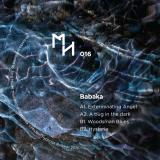
Modern Hypnosis is proud to introduce Babaka, the new alias of esteemed German producer Jörg Müller.
Reigniting his passion for physical, visceral sound system music, Jörg uses classic analog gear and a few self-built instruments to create a unique, potent dub sound. While reminiscent of Jörg’s earlier ambient and dub techno styles on his 2019 album Drawn From Memory and 2022’s Groundworks LP on The Moth Club, his new direction has evolved those techniques and primed them for sound system use. His debut release as Babaka showcases four masterful tracks that differ widely from one another while remaining within his new realm.
The opening track, "Exterminating Angel," is a pulsating, supernatural dub experiment featuring a deeply infectious bassline, ghostly key stabs, tight percussive delays and an oddly dramatic vocal sample creating a profound sonic climax before tapering off, allowing you to escape its vacuum and recalibrate. The most skank'n track of the EP, "A Bug in the dark" with its murky half-time swagger feel, bouncy hats, dub saturation and mega sub-driven riff has become an all-time favourite at Modern Hypnosis HQ.
Featuring precise production with decorative atmospherics and swung drums, "Woodsman Blues" has an almost Boxcutter feel to its intro before plunging off the deep end, hitting the dub floorboards, and revealing its true self as a reincarnated, stoned dubstep track. Closing out the release is "Hysteria," a perfectly executed, dark, chugging techno steppa that remains a popular track for many early-access DJs and selectors around the globe.
In the words of Jörg Müller himself:
After my first Album "Heavy Heart”, I tried to push my music more into abstract territory, especially sound-wise, ignoring mixing and mastering rules... this culminated in the eerie, roomy, off-atmosphere on "ground works" on The Moth Club.
After that, my focus shifted further towards freeform electro-acoustic ambient music. I built a couple of instruments myself and released two albums on Shimmering Mood as Kaleidophon. This was during the pandemic as nightlife came to a stop.
In 2023 and 2024, I started to go to dances again. I saw The Bug on his Pressure System, Al Wootton at Meaksuma Festival, Channel One and Iration Steppas on Young Veteran Hifi Soundsystem. Especially impressive were Mark Ernestus, Mark Ainley and Aba Shanti on the infamous sound system at Open Ground in Wuppertal.
This reignited my passion for dub/sound system music; I wanted to make tracks with the physical, visceral quality of sound systems.
expected to be published on 07.10.2026
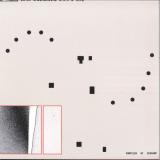
Compilation of lost Dutch synthesizer and wave music from 1982 to 1987. All collected and compiled by Rutger Nijkamp, who inherited many tapes from his musician-mother Veronique (Verque on the compilation). This led to the collection of more cassettes, found in second hand shops and through connections from his mother. Comes with a beautifully risograph-printed zine featuring the stories and photographs of the acts and bands included on the compilation.
On Stock and ready to ship
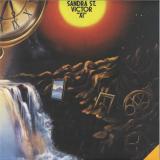
Powerhouse vocalist Sandra St. Victor returns with Eleven, her eleventh studio album and first solo release in over a decade. From her years with The Family Stand to collaborations with Roy Ayers, Curtis Mayfield, Chaka Khan, Prince and Lalah Hathaway, Sandra has built a remarkable career that has consistently blurred the lines between soul, funk, jazz and gospel.
Executive produced by Sandra St. Victor and Patrick Gibin for Mother Tongue, Eleven brings together Sandra's longtime collaborators alongside the Mother Tongue family, bridging her rich musical legacy with a fresh, forward-looking sound rooted in soul, jazz, boogie and soulful dance music.
The album combines brand new compositions with inspired reinterpretations, from Kaidi Tatham's stunning reimagining of Captain Sky's Moonchild and his masterful reinvention of the Leon Ware/Syreeta underground gem Tiki Tiki Donga, to a beautifully understated new version of Sandra's own Dizzy, originally released on Gemini: Both Sides in 2001 featuring Questlove, Roy Ayers and Donald Byrd, here reimagined by Mark de Clive-Lowe. Along the way, the lo-fi soul of Black Ice, the timeless duet No More Water featuring Lalah Hathaway, and the straight-up funk of Makes Me Wanna Fall In Love Again and What Would Miles Do showcase an artist continuing to evolve while remaining true to her artistic voice.
Rooted in experience yet driven by curiosity, Eleven bridges Sandra's remarkable musical legacy with the creative vision of Mother Tongue, resulting in an album that feels both timeless and unmistakably
On Stock and ready to ship
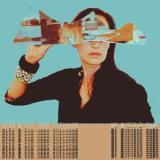
Mit My Mother's Name veroffentlichen Nive Nielsen & The Deer Children am 9. Oktober 2026 ihr erstes Album seit zehn Jahren. Die in Nuuk geborene gronlandisch-inuitische Musikerin zahlt zu den pragenden Stimmen einer zeitgenossischen Folk- und Songwriter-Generation, die kulturelle Identitat, personliche Geschichten und moderne Klangasthetik miteinander verbindet. Das neue Album bewegt sich zwischen akustisch gepragtem Songwriting, feinen elektronischen Elementen und einer vielschichtigen Instrumentierung, die auch traditionelle gronlandische Einflusse einbezieht. Thematisch stehen Fragen von Herkunft, Selbstverstandnis und Zugehorigkeit im Mittelpunkt. Nive Nielsen verbindet dabei ihre Erfahrungen zwischen Gronland, Europa sowie internationalen Kunst- und Filmprojekten zu einem ebenso zuganglichen wie facettenreichen Werk.
expected to be published on 09.10.2026

2 legendäre John Peel-Sessions nur auf LP
The Fall, 1976 in Manchester gegründet, ist im Kern das Projekt von Mark E. Smith, der als konstantes Bandmitglied den Charakter der Gruppe prägte. Musikalisch bewegen sich die frühen Peel‑Aufnahmen im rauen Post‑Punk‑Spektrum: schroffe, gitarrengetriebene Arrangements, repetitiver Aufbau und Smiths markante, oft kryptische Vocals zeigen die ästhetische Direktheit, die den Sound der Band auszeichnet.
Die Zusammenstellung dokumentiert die Session vom 30. Mai 1978 mit "Futures And Pasts", "Mother‑Sister!", "Rebellious Jukebox" und "Industrial Estate" sowie die Session vom 27. November 1978 mit "Put Away", "Mess Of My", "No Xmas For John Quays" und "Like To Blow". Produzentisch zeichneten Tony Wilson und Bob Sargeant verantwortlich; als Toningenieure werden Mike Robinson, Mike Dave Dade und Brian Tuck genannt.
Als historische Momentaufnahme fängt die LP die rohe Studio‑Performance einer Band ein, die sich Anfangsphasen und Entwicklung bereits in diesen frühen Auftritten ablesen lässt. Die Zusammenführung beider Sessions auf einer schwarzen LP betont den dokumentarischen Charakter der Veröffentlichung.
expected to be published on 09.10.2026
On Stock and ready to ship

2023 Repress!
Les Disques du Crepuscule presents a new 180 gm vinyl edition of Fidelity, the 1996 studio album by cult Manchester ensemble The Durutti Column.
Limited to just 500 copies, this special double disc edition is pressed on heavyweight 180 gm vinyl and features cover artwork by Crepuscule design director Benoit Hennebert, based on a portrait by Vini Reilly of filmmaker Carol Morley.
Originally released by Crepuscule on CD only in April 1996, Fidelity featured 10 tracks written and performed by Vini Reilly, with occasional guest vocals by Eley Rudge. In addition to Vini’s trademark guitar stylings, the album showcased sleek electronic textures and programmed beats.
This 2019 vinyl re-master features two bonus tracks: My Only Love was originally released in 1995 on a covermount CD with a specialist guitar magazine, while experimental piece The New Fidelity was issued on a Portuguese compilation album from 1992 called Hare, Hunter, Field.
expected to be published on 09.10.2026

"I Don't Know How But They Found Me...Again! (Deluxe)" ist die Deluxe-Version von Jensen McRaes von der Kritik gefeiertem Album ,I Don't Know How But They Found Me!" aus dem Jahr 2025 (,Das atemberaubende zweite Album der jungen Singer-Songwriterin McRae markiert den Durchbruch eines großen Talents." - Esquire), das am 18. September auf pinkem Vinyl erscheint. Neben der Trackliste des Originalalbums enthält die Deluxe-Ausgabe zwölf neue Songs, die zum ersten Mal in großem Umfang erhältlich sind: reduzierte Versionen von Songs, die vor den Aufnahmen zu ,I Don't Know How But They Found Me!" fertiggestellt waren, Live-Favoriten, die bei McRaes jüngsten Headliner-Tourneen und Festivalauftritten zu hören waren, eine neue Version von ,Mother Wound" mit Maisie Peters sowie weitere neue Titel, an denen Brandi Carlile und Brittany Spencer mitgewirkt haben. ,I Don't Know How But They Found Me...Again! (Deluxe)" ist eine pulsierende, eindringliche Sammlung von Songs, getragen von messerscharfer lyrischer Präzision und zeitlosen Pop-Melodien.
expected to be published on 09.10.2026

“Sacred Aeolian music capturing and harnessing the divine power of the wind”
Aeolian Harp is somewhere between a string instrument and a receiver. Its strings are agitated by the wind without any human interference, producing tones entirely of its own volition. Archer toured the British Isles setting up his harp in various sacred and loosely mystical locations. Where he let the Devaharp transmit an otherwise unknown sacred music that has ALWAYS existed around us.
Listening to the natural swells of the strings and their unusual tonalities, the billowing wind and bird song overhead, it feels divinely calm and comforting. Something like tapping into the natural resonance of Mother Gaia or being back inside the womb.
DELUXE 2LP REISSUE
Housed in it’s original gatefold sleeve with original inserts, 2 new special colour inner sleeves, a new 2026 insert and a BONUS UNRELEASED album recorded in 1983 on Robert’s previously UNHEARD pyramid-shaped Aeolian harp the DEVAHARP 2.
expected to be published on 09.10.2026
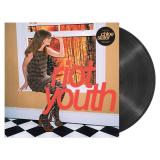
eco blue vinyl[30,88 €]
Chloe Slater’s debut album ‘Riot Youth’ unfolds in the fleeting, chaotic moments before doomsday – a coming of age record fit for the modern world. Arriving right on time in an era when hopelessness and nihilism run rife, painting the truest portrait of what it is to be young, British, and brave enough to be hopeful today. Across 10 tracks, she departs her signature, succinct commentary on the issues plaguing her generation: social divide, toxic internet culture, our dwindling sense of community, the climate crisis and, ultimately, the vampirish billionaire class cashing in on our collective misery. She playfully shifts from these frank descriptions of society to moments of gorgeous, gut-punching poetry, crafting anthemic choruses and intoxicating one-liners from the gripes many of us can barely muster the words for.
expected to be published on 09.10.2026
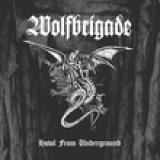
Red & Black Marbled Vinyl[27,94 €]
With the amps still warm from 2024's coruscating comeback Life Knife Death, veteran Swedish punk-metal masters Wolfbrigade strike back like a wounded cobra with their loudest, fullest, thickest-sounding record yet. And that's no happy accident. On their twelfth LP (the first three released under the Wolfpack monicker, 1996–99), the quintet concertedly resolved to shake up their habitual processes and interrogate their customary methodology. "As the songs started to fall into place, we decided to do something we hadn't done in many years," explains the band. "For the last decade we've recorded, produced and mixed our albums ourselves. This time we wanted to work with someone from outside the band whose work we respect and who we felt would understand what Wolfbrigade is about."
expected to be published on 09.10.2026
With the amps still warm from 2024's coruscating comeback Life Knife Death, veteran Swedish punk-metal masters Wolfbrigade strike back like a wounded cobra with their loudest, fullest, thickest-sounding record yet. And that's no happy accident. On their twelfth LP (the first three released under the Wolfpack monicker, 1996–99), the quintet concertedly resolved to shake up their habitual processes and interrogate their customary methodology. "As the songs started to fall into place, we decided to do something we hadn't done in many years," explains the band. "For the last decade we've recorded, produced and mixed our albums ourselves. This time we wanted to work with someone from outside the band whose work we respect and who we felt would understand what Wolfbrigade is about."
expected to be published on 09.10.2026
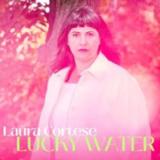
Nearly a decade after relocating to Belgium, Cortese channels the profound shifts of marriage, motherhood, and dual citizenship into a collection that moves fluidly between chamber folk, roots rock, and indie pop. Recorded at Betty's - the rural North Carolina studio opened by Sylvan Esso - and produced by LOLLIES , with sessions centered on Laura Cortese 's voice and fiddle alongside reed instruments from longtime collaborator Matt Douglas (The Mountain Goats, Hiss Golden Messenger), Lucky Water transforms uncertainty and displacement into an affirmation of the relationships and communities that sustain us.
expected to be published on 09.10.2026