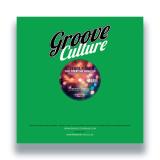
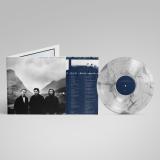
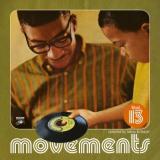
Refined, trippy, and beautifully hypnotic. PIRAT005 marks a deep and elegant statement from Pirat Records and delivers exactly the kind of timeless, hypnotic minimalism that turns heads on first listen and stays in the bag for years. A record built on restraint, texture, and atmosphere: rolling, seductive, and deeply functional for long sets and late hours. With a clear nod to that unmistakable Perlon-inspired aesthetic, Venedig moves with precision, subtle tension, and groove-driven detail, stripped back, but full of character. The collaboration spirit on this release gives it a special depth, while the overall sound remains focused, classy, and unmistakably underground.
Поиск:move d
Все
ZHERAV unleashes hypnotic Middle Eastern grooves on NAJA / BAZAAR 45 for Batov’s highly collectable 45 series.
New Zealand-based producer ZHERAV announces his debut release, NAJA / BAZAAR, a double single and 45 on Batov’s Middle Eastern Grooves series. The record fuses psychedelic rock, hypnotic rhythms, and electronic production influences, creating a sound that moves between swung grooves and cinematic, reverb-soaked textures.
ZHERAV draws from his background in house and techno, layering live guitar, bass, and synths over programmed drums. “I had a production template for house music on Ableton” he explains, “and I thought about how to switch to this Middle Eastern sound using the same format”. Most of ZHERAV’s tracks developed through improvisation - starting with programmed drums, then experimenting around scales on instruments until something works. ZHERAV has already received support from independent radio in Australia and New Zealand, and encouragement from international artists like Ko Shin Moon.
Both tracks explore Middle Eastern scales, bringing a distinct flavour to the grooves, while maintaining ZHERAV’s signature hypnotic layered sound. ZHERAV had something in mind related to snakes and their charmers when creating the A-side, NAJA (“Indian Cobra”). An ominous bassline loops repeatedly over snapping drums and percussion, whilst ZHERAV improvises guitar riffs and effects over the top.
Originally released in 1994.
The legendary album from South Africa’s House and Kwaito master Doctor House being reissued for the first time with a full remaster from the original DAT tapes. Nelson Phetole Mohale released a series of albums as Doctor House. Cutting his teeth in the 80s as a session player for a host of big names like Volcano, Senyaka and Obed Ngobeni, he moved on to programming for acts like La Viva and Jivaro, also contributing to Carlos Djedje and others. Still barely out of his teens he became one of South Africa’s first rappers as part of PT House, co-written and produced by Danny Bridgens. Their debut album Big World was released in 1991 and followed by Big City Taste a year later.
Belgian artist, label boss and DJ, End-jy, glances back at one of his most revered releases to date, the 2003 ‘Red Alert’ EP, originally released on Lupp Records it marked a defining moment, earning widespread support from scene-shaping artists including Carl Cox, Tiësto, Marco Bailey, Dave Clarke and Mark Broom. Long regarded as a personal milestone, the track now returns in renewed form on the artist’s own label as MV08. This forthcoming EP revisits the original with fresh perspective, featuring a powerful remix from Pig&Dan alongside a newly reworked version by Dimitri Andreas and the artist himself, bridging the track’s enduring legacy with a contemporary evolution.
Pig&Dan take the reins first, extracting fragments of the original version of ‘Red Alert’ and reshaping them into a dub tinged, deep techno cut fuelled by circling synth stabs, robust percussion, tension building atmospherics and a driving bottom end. Following on is ‘Red Alert’ (Dimitri Andreas & End-jy 2026 Remix), the pair lay down a deeper, more hypnotic and minimalist interpretation courtesy of crisp, stripped-down drums and oscillating resonant synth flutters underpinned by the original’s dark, dubby aesthetic.
The original version of ‘Red Alert’ opens the flip side, capturing the essence of the underground at the turn of the millennium, the track fuses, gritty stabs with organic percussive elements, hypnotic siren like synths and a subtly evolving feel throughout.
‘Flexibeat’ then concludes the release, a composition that veers into the realms of early Detroit techno and electro via an amalgamation of twitchy synth pops, cinematic strings, saturated 808 drums and murky bass tones.
Already Supported by Jamie Jones, Calao, Amé, Marco Faraone, Timo Maas, Nick Varon, Steve Parry, Just Her, Dax J, Perc, Massimiliano Pagliara, Alex Neri.
MonsieurWilly – “Stomp” (Nu-Disco Remake of The Brothers Johnson) – 7" Vinyl Single Get ready to move your feet: MonsieurWilly revitalizes the timeless funk anthem “Stomp” by The Brothers Johnson with an electrifying Nu-Disco makeover. Pressed on a high-quality 45 RPM 7" vinyl, this remake blends vintage groove with modern dancefloor energy, delivering an irresistible combination for DJs, collectors, and funk-disco lovers alike.
MonsieurWilly’s production pays homage to the original’s infectious basslines and uplifting spirit while injecting fresh synth textures, crisp beats, and a stylish contemporary polish. The result is a vibrant re-imagining that feels both nostalgic and brand new— perfect for setting the tone at any party or adding standout flair to your vinyl collection. This is another special and exclusive 45/7“ release via Soulkitchen Distribution…
66 pages, 175 x 129mm paperback w/ litho printed cover & french flaps.
The second outing for our short run book publishing imprint, The End books, takes the form of a reprint of Spanish Cante Jondo and Its Origin in Sindhi Music, originally published in Spanish in 1955 under the name Cante Jondo: Su Origen y Evolución and later in this English translation.
Aziz Balouch here presents his theory on the roots of flamenco's 'deep song' in modern-day Pakistan, a cultural journey that mimics the routes of his own life, having been brought up among the Islamic mysticism and devotional songs of Sindh before travelling to Gibraltar in the early 1930s and becoming transfixed with the cante jondo across the border in southern Spain. Positing this concept through personal accounts rather than solid theoretical backing, this text provides a valuable account of an extraordinary existence that crossed remarkable geographical, musical, and spiritual boundaries. Issued here with a new introduction from anthropologist of sound, the senses and Islam, Stefan Williamson Fa.
"It would be easy to place Balouch on the fringes, as an eccentric footnote in flamenco history. But that misses the shape of his life and work. He was a figure who moved intuitively across boundaries that our present categories of nation, genre, discipline tend to fix in place. His work predates the founding of the academic discipline of ethnomusicology, the global circuits of world music, and the marketplace logic of fusion projects by decades. He was not an ethnographer or a proto–world musician, but someone for whom the deep song of Andalusia and the devotional song of the subcontinent resonated along the same fault lines of feeling, and who spent his life trying to trace them.
This book is one of the few surviving traces of that attempt. To read it now is to encounter a perspective that resists tidy narratives of influence or origin, despite its title and what he claims to do. It stands instead as evidence of an idiosyncratic musical imagination, one that relied less on proof than on listening, and on the belief that certain echoes carry farther than history can easily explain."
— Stefan Williamson Fa
- 1: Hold It
- 2: Life Slime
- 3: Toxic Spillage
- 4: Battery Pack
- 5: Another Way
- 6: Sorry Eyes
- 7: Infinity Ooze
- 8: Crystal Cave
- 9: Torch Song
- 10: Werewolf Ending
New album from Pictish Trail, AKA Johnny Lynch, known for his wildly inventive electro-acoustic psych-pop. Life Slime is the sixth full-length album by Pictish Trail (AKA Johnny Lynch) - a strange, tender, psychedelic electro-pop record shaped by transformation, exhaustion, hope, guilt, and renewal. Written at home on the Isle of Eigg and recorded at Mike Lindsay's studio down in Margate (Tunng / LUMP), the album follows 2022's critically acclaimed Island Family, further refining Lynch's world of lo-fi electronics, warped pop melodies, baggy psych rhythms and emotionally direct songwriting. It's a record that balances woozy synth-pop, motorik propulsion and intimate acoustic songwriting, all infused with the emotional messiness that gives the album its title. Across the album's singles - the guilt-stained psych-pop ballad 'Hold It', the life-affirming shimmer of 'Infinity Ooze', the late-night confession of 'Torch Song', the expansive eight-minute centrepiece 'Another Way', and the cinematic closer 'Werewolf Ending' - Life Slime charts a journey from emotional fracture to uneasy release. 'Sorry Eyes' brings a punchy electro-pop strut with a sharp emotional edge, 'Crystal Cave' drifts through crystalline guitars and shoegaze haze into transformation, and the title track 'Life Slime' moves with a slow, weary swagger toward bittersweet acceptance. Together, these tracks form a cohesive album statement about surrender, resistance, change and renewal. "Wonderfully weird pop"- Brooklyn Vegan For fans of Hot Chip, The Flaming Lips, Liars, Mercury Rev, Beck, John Grant, Empire of the Sun, Grandaddy. Colour vinyl and digisleeve CD
- A1: Ita Ayelala
- A2: Yanga
- B1: Kwanini
- B2: Nakupenda
- C1: Summerskin
- C2: Vanguard Drive
- D1: Cruisin Kruga
- D2: Dala What We Must
Marking twenty years since South African producer and DJ Esa Williams left Cape Town, Dala What We Must is a deeply personal and expansive debut LP, an exploration of movement, memory, and sound shaped by two decades of creative evolution.
Co-created with collaborator and multi-instrumentalist Robin G. Breeze, the album deftly combines field recordings, layered instrumentation, and emotionally resonant compositions into a nuanced, globally influenced body of work. It also stands as Esa’s most collaborative release to date, featuring contributions from musicians across London, Oaxaca, Nairobi, and Cape Town, each adding their own creative energy to a project built on openness, trust, and shared experience.
The album draws inspiration from Esa’s recent ventures into documentary scoring and soundtracking, with projects like Cursed (Audible) and The Invisible Hand teaching him to listen differently, to honour space, to serve the story. That sensibility permeates the album, resulting in music that breathes, lingers, and listens as much as it speaks.
The title, Dala What We Must, is a South African call to action: a reminder to do what’s necessary, even in uncertainty. Finalised in the months leading up to Esa’s transition into fatherhood, the record carries a sense of grounding, care, and quiet transformation.
Dala What We Must is a sonic reflection of journey and community, a deeply collaborative project rooted in connection and guided by intention.
- A1: Kwanini
- A2: Ita Ayelala
- A3: Yanga
- A4: Nakupenda
- B1: Summerskin
- B2: Cruisin Kruga
- B3: Vanguard Drive
- B4: Dala What We Must
Marking twenty years since South African producer and DJ Esa Williams left Cape Town, Dala What We Must is a deeply personal and expansive debut LP, an exploration of movement, memory, and sound shaped by two decades of creative evolution. Co-created with collaborator and multi-instrumentalist Robin G. Breeze, the album deftly combines field recordings, layered instrumentation, and emotionally resonant compositions into a nuanced, globally influenced body of work. It also stands as Esa’s most collaborative release to date, featuring contributions from musicians across London, Oaxaca, Nairobi, and Cape Town, each adding their own creative energy to a project built on openness, trust, and shared experience. The album draws inspiration from Esa’s recent ventures into documentary scoring and soundtracking, with projects like Cursed (Audible) and The Invisible Hand teaching him to listen differently, to honour space, to serve the story. That sensibility permeates the album, resulting in music that breathes, lingers, and listens as much as it speaks.
The title, Dala What We Must, is a South African call to action: a reminder to do what’s necessary, even in uncertainty. Finalised in the months leading up to Esa’s transition into fatherhood, the record carries a sense of grounding, care, and quiet transformation. Dala What We Must is a sonic reflection of journey and community, a deeply collaborative project rooted in connection and guided by intention.
First time reissue of JP / US free jazz rarity.
The 1970s were Marion Brown’s most searching decade, a period during which he sought to move beyond the free jazz of the previous era and find more personal approaches to structuring improvisation and composition. After leaving New York for Europe in 1967, Brown began reshaping his music into what he described as “a more deliberate kind of music that had more structure to it,” pacing it so that moods and modes could develop over time. Albums such as In Sommerhausen, Afternoon of a Georgia Faun, Geechee Recollections, and Sweet Earth Flying trace this evolution: rhythmic structures moved to the foreground, harmony receded, and composition became a matter of orchestrating interlocking rhythmic parts as one would polyphonic lines.
Released in 1976, Awofofora is an overlooked but crucial entry in that sequence. At the time, its use of funk and reggae beats, electric guitars, and grooves drawn from contemporary Black popular music led some to misread it as a jazz-rock detour. In retrospect, it is entirely consistent with Brown’s methodology. As he admired in the Art Ensemble of Chicago, the stimulus comes from within the community. Here Brown filters Afro-Caribbean rhythms and funk through his own sensibility, abstracting their structural qualities rather than adopting surface style.
“La Placita,” making its first recorded appearance, layers distinct rhythmic phrases in a manner reminiscent of African drum ensembles, over which Brown and trumpeter Ambrose Jackson spin extended improvisations. The standard “Flamingo” is reshaped through diasporic rhythm and lyrical soloing, while “Pepi’s Tempo” and “Mangoes” harness crisp funk and reggae grooves to generate what Brown called a “manifestation of community” through collective improvisation. Even the overdubbed solo feature “And Then They Danced” reflects his structural thinking, ingeniously re-voicing a duet composition for two alto saxophones performed by one player.
This was the only recording by a short-lived band that briefly polarized audiences during festival appearances in 1976. Yet Brown consistently sought unity across change: different sounds, same principles — rhythm as structure, melody as architecture, collective improvisation, and above all, the primacy of tone. Awofofora stands not as a departure, but as a vivid synthesis of the elements he had been refining since the late 1960s, its grooves and golden alto lines conveying a sound drawn, in his words, “from life and from the world of experience.”
First time reissue of JP free jazz rarity, pre-Seikatsu Kōjyō Iinkai group.
The single album self-released by the quartet Shūdan Sokai in 1977 is one of the most vital documents of mid-seventies Japanese free jazz, documenting Tokyo’s free scene at the precise moment when it began to shift to a handful of tiny venues on the western fringes of the city. In Free Jazz in Japan, Teruto Soejima identifies the extant venue Aketa no Mise in Nishi-Ogikubo as the pioneer of this decamping from the centre: a cramped basement beneath a rice shop, seating just 20 people. Musician-run, operated on a shoestring, these spaces offered a vital site for community, creativity, and a small measure of financial independence — “even though it was in a basement, in spirit it was a loft.”
Among the most active of the new venues was Alone in Hachiōji, nearly an hour from Shinjuku, in a district shaped by universities, lower rents, and a thriving counterculture. Originally opened in 1973 as a jazu kissa, Alone was unusually spacious and equipped with a stage, grand piano, and drum kit. Around 1974, Junji Mori and Yasuhiro Sakakibara began working there, booking free jazz players on weekends and establishing the venue as a crucial hub. Mori recalls early appearances by figures including Kazutoki Umezu, Toshinori Kondo, and others who would define the scene.
In early 1976, Umezu and pianist Yoriyuki Harada — recently returned from New York’s loft jazz environment, where they had played with musicians such as David Murray and William Parker — formed Shūdan Sokai with Mori and drummer Takashi Kikuchi. The name, meaning “mass evacuation,” pointed to their self-chosen exile in Hachiōji. With Alone as their home base, the quartet developed a music characterized by an infectious sense of enjoyment and a willingness to integrate free jazz with elements of song structure. Harada switched between piano and bass; the group experimented with rap-like vocal pieces, jabbering nursery rhymes over bass rhythms.
They returned to Alone on December 24 to record Sono zen’ya (Eve), releasing it on their own Des Chonboo Records, partially funded by advertisements from local businesses printed on the rear cover. The closing “Ballad for Seshiru,” dedicated to Harada’s newborn son, unfolds over a delicate piano melody that moves into emphatic chords as intertwining alto lines rise and spiral.
Alone closed in September 1977, and Shūdan Sokai soon dissolved, later morphing into the expanded Seikatsu Kōjyō Iinkai Orchestra. What remains is a recording rooted in a specific place and moment: a fiercely independent scene sustained by small rooms, close listening, and collective commitment.
- A1: Bwi-Bwi - Nu Sides
- A2: Ayo B - Impact
- A3: Nico Belic - La Discoteca
- B1: Joziciu - Teknik
- B2: Prince De Takicardie - Free Love (Take Off 1 Mix)
- B3: Tibahuult - Alone With Me
- C1: Lamalice - Fiction
- C2: Dynasty Of Dreams - Syunik Horizons
- D1: Man/Ipulate - Voidance
- D2: Curtis Od - Electrical Energy
- D3: Djon Bull - Tidal Wave
11 artists. 11 tracks. 1 city.
From the heart of the most vibrant French city, Marseille, comes a project that redefines the enthusiasm, energy and growing talents around the underground music scene.
Consisting of eleven djs/producers bound to the Phocaean city, this 2x12LP is not just an ordinary album: It is a cultural marker in a city deeply rooted in urban music, reasserting its young and strongly emerging electronic landscape. It is a celebration of Marseille’s musical identity through house, techno and electro.
Originally a record shop, Mindtrip has been promoting and advocating for the electronic movement for 4 years. Olivier aka HI.lo now invites you to deep dive into Marseille’s sonic uproar with his new born label, an extension of the music he has been playing and representing through his shop, putting marseille on the map with an essential first release gathering the city’s finest: MAN/IPULATE, TIBAHUULT, LAMALICE, PRINCE DE TAKICARDIE, JO’Z, CURTIS OD, DJONN BULL, BWI-BWI, DYNASTY OF DREAMS, NICO BELIC & AYO’B.
British electronic music pioneers Graham Massey (founding member of Manchester legends 808 State) and Brian Dougans (the mind behind acid house milestone Humanoid and one half of The Future Sound Of London) join forces for their debut collaboration In Place Of Language, released on Belgian label De:tuned.
Both 808 State and Humanoid helped shape the UK's early rave and acid house movement. Here, Massey and Dougans channel that legacy into a beautifully balanced four-track EP that radiates warmth and energy, drawing on more than three decades of experience in electronic music. Inspired by key elements of the '89-91 era while embracing a contemporary edge, the duo merge their distinct sonic identities into a sound that feels both timeless and forward-looking.
In Place Of Language is not a nostalgia trip, but a natural evolution: a meeting point between foundation and future, and a blueprint for a new wave of electronic experimentation!
Kevin Foakes (Openmind, DJ Food, Ninja Tune) created all the graphic work. Mastered by Matt Colton at Metropolis. A separate digital release will also be available at the usual digital shops. Stay tuned!
Mechatronica proudly presents "Ants" by UK Producers Mani Festo & K-65.
A six-track electro EP shaped by heavy basslines, sharp transitions, and broken rhythmic structures. The tracks unfold with precise sound design and evolving melodic patterns, creating constant motion and tension throughout the release.
"Ants" is focused, mechanical, and immersive - music designed to be felt through rhythm and movement.
A strong statement from Mani Festo and K-65, delivering forward-thinking electro with weight, edge, and purpose.
Worldwide Connexion (JGRVWAX007) is the seventh vinyl release on Junked Groove, bringing together five artists from four countries on one deep house / house record.
Side A opens with BMB SpaceKid, delivering an explosive cut driven by swinging percussion, vocal chops, and a heavy low-end. His beat-making roots are front and center, resulting in an undeniable dancefloor mover. Next up, DFRA & Nick Weaver take things into a more hypnotic territory: jazzy, minimal, and smooth, with flowing harmonies and subtle synth movements that quietly reveal a solid classical foundation behind the music.
On Side B, Detroit’s own Javonntte offers a raw house anthem. Pure groove, timeless energy, and that unmistakable feeling of being locked inside the track from the very first synth line. Closing the record, Junky Palms brings a UK-rooted groove built around classic house chords, layered with psychedelic and slightly tense synths. Cold Manchester air and rave nostalgia drift through the mix.
One record, four countries, five perspectives, one groove.
Mutant Volt emerges from the depths of the underworld with Bona Vista, a six track EP built from unreleased DAT recordings made during the early 90s. Drawn from a vast archive, much of the material had been long forgotten, written at a time when electronic music moved fast and rarely looked back.
Mutant Volt is one of several aliases used by Dan Piu, whose roots sit firmly in early European rave and club culture. The name was originally used to explore a stripped, machine driven sound shaped by early trance structures and bleep influence. Aside from a single release on Superluminal in 2020, much of this material has remained unheard. Recorded on a hardware setup that has changed little since 1991, the tracks were made instinctively and left behind to gather dust.
Today the tracks carry a different kind of weight. What was once made quickly and left behind now feels immediate, proof that some music does not belong to the past, it simply arrives there first.
Trinidadian Deep is back with yet another deeply rooted house vibes EP entitled “Dub Nasty” EP!
This powerful collection of three independent tracks starts with the title track, Dub Nasty a seriously deep house excursion with captivating harmonies sonics complimented with a guitar solo which washes over you as you loose yourself to the music.
Track 2 “Sonics and Steel Drums” think sun sea and beach as this one brings up the tempo induced with a groovy bass line and heavily played steel pans that immediately uplifts the vibes which progress into a Caribbean crescendo!!
Head to side b, where Trini brings it back to Native African roots to loose yourself on the dance floor with it’s layered percussion, deep stabs & chords, captivating keys. Along with enchanting and soothing African vocals of serenity that will surely keep you mesmerised !
As always, Trini’s production is infectious, and this EP is no exception! Take a deep breath, listen and enjoy !!
Dreamweavers II sees Mark de Clive-Lowe reunited with Italian rhythm masters Andrea Lombardini and Tommaso Cappellato for the next chapter in their electro-acoustic trio journey.
Recorded at Sotto il Mare Recording Studios in Verona, Italy in summer 2024, the album builds on the cosmic, hypnotic language established on Dreamweavers (2020) while pushing deeper into groove-driven terrain, dancefloor jazz and textural improvisation. Across eight tracks, the trio explore the elastic space between jazz tradition, beat culture, and club-influenced momentum – without samples or looping – relying purely on live interaction, feel and shared intuition.Opening with the Azymuth-inspired “Terra de Luz,” the album immediately signals its global outlook. “Kaze no Michi” follows with late-night Tokyo energy – dancefloor jazz that feels equally at home in jazz clubs or after-hours rooms. Two intentional reinterpretations bridge jazz and beat culture: J Dilla’s “Raise It Up” (from Slum Village – Fantastic Vol. 2) is reimagined with its original groove and bass line as the launch pad, while “The Bass That Don’t Stop” becomes a lush house-jazz tribute to the late Phil Asher, originally co-created by Asher and de Clive-Lowe in 2002 under the moniker musiclovelife.Bassist Andrea Lombardini’s “Pam” brings the album inward – introspective, spacious, and deeply melodic; while “Lucid Dreams” draws on the trio’s shared love of jungle, drum’n’bass and the exploratory spirit of greats like Chick Corea, amplifying the journey with forward motion and harmonic curiosity.Dreamweavers II is a concisely intentional sound narrative: a trio record rooted in jazz lineage, shaped by beat culture and guided by a collective curiosity for texture, rhythm, and movement.
Audial is a party in Leeds that has made great moves in recent times and has become an essential night out for those who like heady underground sounds. It now takes the natural next step by branching out with a new label and a fresh VA to kick it off. City mainstay Keefy G serves up the first cut 'After Diz' - a raw, gritty garage house slammer with naughty bass. Joejoemojo's 'Moneymaker' spins out on dusty breaks and warped low ends that bring the filth and on the flip Kerouac drops the late night and eerie tech of 'Broken' with bleepy synths and sultry spoken words. Geeson3003 shuts down with a rework of a Streets classic that hits hard with a UKG twist.
JNJS are Jay Nortown and Jacobo Saavedra, Ibiza residents and a dynamic duo who have made moves on the likes of Dias De Campo, Nothing But and UVAR. This time out they land on the influential Politics Of Dancing with three crisp, twisted takes on tech house. 'Between Us Two' is an easy to latch onto groove with fleshy bass and lithe chords darting about up top. 'Infection' has a swirling and rapping lead that brings more off-balance movement and 'Go Back' shuts down with some psychedelic leads smudged and smeared across the sky as the fulsome drums work down low. A Terence :Terry: remix brings bigger drums and more swag to this effective EP.
The Illegal Disco Limited series never misses. It's all about the king of cheeky edits adding his own spin to a carefully curated mix of disco and funk nuggets and, once again, here Monsieur Van Pratt is back with the goods. Though he always nods to the past with these reworks, he beefs them up with grooves designed for loud systems and to move floors. This one opens with the funk licks and disco stylings of 'Watcha Gonna Do' then gets celebratory with the feel good hands in the air vibes of 'The Contest'. Last but not least, 'Dance With Me' explores a more lavish sound with big vocals and lavish string stabs for good times only. Another doozy from Mr Pratt.
We Release JAZZ is very happy to announce the limited vinyl edition of Ill Considered's transcendent new live album Live in Jura, an expansive document of the trio's 2023 performance at Spiegelberg Festival - now available as a double LP with a bonus D-side, housed in a heavyweight sleeve with obi and an original artwork by Vincent de Boer.
Captured in the heights of Saignelégier, Switzerland, in the middle of a pasture overlooking the Jura mountains, Live in Jura bottles the singular Ill Considered live experience at its most open, responsive, and elemental. From Idris Rahman (sax, flute), Liran Donin (bass), and Emre Ramazanoglu (drums), this is deep free improv built from intuition and heart - an ever-evolving conversation of groove, texture, and spirit. Whispered motifs bloom into towering climaxes; earthy bass surges meet shimmering cymbal work; woodwind lines move from meditative invocation to ecstatic release. It is music shaped by the audience, the environment, and the moment : alive, unrepeatable, and deeply organic.
The bonus D-side extends the album's world with a unique ambient composition made from field-recorded organic sounds of the forest surrounding the concert area. Re-composed into a drifting, luminous piece, it features The Voices of the Alpenglow, blurring the boundary between performance and landscape, human gesture and elemental presence.
Ill Considered - known for forging improvised music around simple themes or spontaneously created structures - here reach a new level of sensitivity and power. Live in Jura follows We Release JAZZ's release of Shoals by Ill Considered members Earth and Bones, continuing a line of exploratory, heart-forward music grounded in profound listening and spontaneous creation.
For the ninth installment of his Hardspace series, Len Faki once again dives into his personal vault to present four reworks that bridge the gap between raw funk and modern, high-impact club dynamics. True to the project's ethos, Faki has selected tracks that have been reshaped through his specific sonic signature to maximize their energy on today's dancefloors.
A1. DJ Assault - U Can't See Me (Hardspace Mix) The release opens with a relentless edit of Detroit legend DJ Assault. Faki takes the raw Ghetto-tech energy of the original and embeds it into a massive, modern framework. While the iconic vocal hook retains its street-level grit, the Hardspace update provides a significantly tighter groove and a powerful low-end presence, propelling the track from the warehouse straight into the present.
A2. Myles Sergé - Trans Milenio (Hardspace Mix) With Myles Sergé, Faki explores more hypnotic territory. He extracts the driving, repetitive elements of the original and sharpens the rhythmic angles. The result is a prime example of the Hardspace sound: a deep, almost meditative loop that gains entirely new spatial depth through subtle filter movements and a crystal-clear percussion layer.
B1. Jad & The - Deep Dark Grimey Dancefloor Moment (Hardspace Mix) On the flip side, Faki leans into the brooding atmosphere of Jad & The. As the name suggests, this mix is crafted for the "wee hours". Faki amplifies the "grimey" textures and contrasts them with a stoic, forceful beat. The trippy, almost menacing synth elements are rearranged within the stereo field, creating an immersive pull that is impossible to escape.
B2. Deepchild - Baller (Hardspace Mix) To close out the EP, Faki brings the jacking spirit of Deepchild's "Baller" back into the ring. Through meticulous re-arrangement and quantization, he gives the track the "tightness" essential for a modern DJ set. The playful, bouncing synths remain, but are now grounded by a heavy-duty beat foundation.
H009 is a hand-picked collection that demonstrates how Len Faki unites diverse musical personalities and eras under the Hardspace umbrella. Whether it's raw ghetto vibes or hypnotic deepness, every track has been transformed with technical precision and deep respect for the original to meet the demands of global dancefloors.
- A1: Intro + Dreams Feat Liv East
- A2: Fruits Of The Universe Feat Douniah
- A3: Define Us Feat 30/70 & Dreamcastmoe
- A4: High Feat Cor.ece
- B1: Vibin Feat Ben Westbeech & Sanity
- B2: Without The Sun Feat Oliver Night
- B3: Bells
- C1: Rearrange Yourself Feat Ben Westbeech & Obi Franky
- C2: Downstream With Life On Planets
- C3: Be Real Feat Life On Planets
- D1: Looks Like It (Space Talk)
- D2: Illusions (Midnight Dub) Feat Ava Lavá & Life On Planets
- D3: Simulate Feat Goya Gumbani & Javonntte
DJ Support: Laurent Garnier, Dennis Cruz, Girls Of The Internet, Horse Meat Disco, Stacey Pullen, Elliot Schooling, Solomun,Marco Carola, Joseph Capriati, The Martinez Brothers, Dam Swindle, Soul Clap, Luke Solomon, Riva Starr, Franky Rizardo, Archie Hamilton, Silvie Loto, Fouk, Austin Ato, Salomé Le Chat, Blackchild, Jean Pierre, Black Loops, Kassian, Seamus Haji, Melvo Baptiste, Rimarkable, Sophie Lloyd
In-demand Amsterdam-based duo Makèz step into new ground with the release of their album ‘Arriving Home Elsewhere’, via ANOTR’s No Art label. A kaleidoscopic project that moves between deep house, cosmic jazz, R&B, broken beat, and club-ready energy, the record is both a declaration of identity and a dissolution of boundaries - proof of the duo’s rare ability to merge worlds without diluting or compromising their true essence.
Where most albums that span electronic realms lean on functionality, ‘Arriving Home Elsewhere’ reaches for something much more expansive. The project is a true hybrid: half shaped for the intimacy of a headphone listen, half designed for the electricity of the dancefloor. together forming a seamless continuum between reflection and release. Tracks like ‘REARRANGE YOURSELF’, ‘BE REAL’, and ‘LOOKS LIKE IT (SPACE TALK)’ are stripped to the core of house music’s driving pulse, made for bigger systems and peak-time release. In contrast, ‘Dreams’, ‘Fruits of the Universe’ (with douniah), and ‘Without The Sun’ (with Oliver Night) explore lush, textured arrangements where live instrumentation and improvisation carry equal weight to rhythm and groove.
Collaboration is at the heart of the LP, with Makèz inviting a constellation of voices who each expand the project’s palette. Ben Westbeech, Liv East, and SANITY bring soulful intensity; 30/70 and dreamcastmoe connect Amsterdam to Melbourne and DC; Cor.Ece and Oliver Night weave delicate threads of emotion; Goya Gumbani and Javonntte guide the production with their vibey, groove-led performances; while Life on Planets reprises his role as a core creative partner, appearing across the album on tracks including the standout ‘BE REAL’ and the previously released ‘ILLUSIONS’ alongside rising Amsterdam talent AVA LAVÁ. Together, these contributions shape an album that feels less like a singular statement and more like a living, breathing ecosystem.
For Makèz, ‘Arriving Home Elsewhere’ is as much about philosophy as it is about music. The title encapsulates a tension central to their art: the feeling of belonging to multiple worlds without ever being confined to one. Jazz, house, soul, and experimental club sounds are not separate influences but parallel languages, and in merging them, the duo has created a record that mirrors the fluidity of contemporary identity and expression. And while it may speak in many voices, the LP tells one clear story - that of Makèz, arriving, again and again, home elsewhere.
Sicilian-born, Amsterdam-based Fran LF returns to Nastia's imprint with three Techno tracks built over a year of studio work, each one telling part of a single story that unfolds across the EP. The narrative moves through different chapters, starting with tracks that shift and transform as they play out, building tension through evolving elements rather than straightforward drops. These are straight-up warehouse cuts - the kind that start one way and shift into something heavier as they unfold. Dubby atmospheres that harden into driving rhythms, basslines that anchor the groove, and synths that evolve throughout.
Closing the record is a remix from Sicilian producer LPV, a close friend and admirer who reworks "Tsufuru Relaxation" with his signature dark, driving approach. He strips it down, adds a relentless bassline, and gives the track a completely different, moody and ethereal energy while respecting what made the original work.
Solid dancefloor techno with enough depth to keep things interesting.
Skyjoose and Johnnie Clark set out to push the boundaries of UK Garage and 2-Step, crafting a sound that was raw, souldful, and ahead of its time. The project became known as The Stalker – a name that would quietly echo through the underground. Though countless tracks emerged from those sessions, only two saw the light of day on the original Stalker EP released in the year 2000.
Now, 25 years later, The Stalker returns from the depths of the DAT archives – remastered, reawakened, and ready to move dancefloors once again. This special repress features the two original vocal mixes from the Stalker EP, plus four additional club weapons forged in those same legendary sessions – three of which have never been released…until now.
Back once more, Digwah supplies dancefloor weapons for the movers, shakers, and after-hours heroes.
A limited edition collector’s piece to mark 10 years of Girlz B Like - the vinyl-only, female-led London-based party.
Side A unleashes ‘Love Echoes’, a genre bending underground heater from GBL founder Marcia DaVinylMC with additional keys from Uschi Classen. Afrobeat rhythms, lush keys, drum-pad grit, and a hypnotic bassline collide under a vibrant vocal hook - an irresistible, raw catalyst for freestyle dancers and left-field club devotees.
Side B delivers ‘Joy’ from Bristol’s DJ Emma - a bouncy, gospel-fired house stomper built to ignite any floor. Infectious energy, uplifting vocals, and classic vinyl flair collide in a radiant
celebration of rhythm and spirit, guaranteed to move feet, and supercharge the dance.
Limited Pressing Act Fast!
Deep Steppe 003 moves boldly into the next level, honoring the roots while bridging California & Arizona's underground with a cast of rising selectors shaping tomorrow's sound. The A-side opens with west coast legend, Halo Varga's "Logan Square," a slow-burner built for the late hours, followed by Crypt Keepers' "Bomba," a percussive trip balancing swing and tension in equal measure. On the flip, Pily & Paul West unleash "Chandelier Swing," a drum-machine workout described by early listeners as a shiny Charizard of a tune. JJ Selects closes with "Here We Are," an acid-tinged roller that unravels with hypnotic precision, locking the record into a final pulse. Limited to 300 copies.
SNOMIR is the collaboration between Mirko Iobbi and Sabatino Matteucci, blending live musicianship with clubfocused electronic production. The A-side features “Air” and “Fire,” two jazz-driven house tracks where expressive sax lines glide over warm, groove-led rhythms. Organic, fluid and built for movement. On the B-side, “Caveman” shifts into deeper dub techno territory. Hypnotic structures, textured low-end and sax riffs woven directly into the sonic fabric.
The accompanying remix pushes the track further inward — stripped back, immersive and late-night focused.
DJ 3000 BRIDGES CONTINENTS WITH "SO SHEIK": A CINEMATIC MIRAGE ON MOTECH #178
DETROIT / GLOBAL — Motech Records founder DJ 3000 returns with "So Sheik," a release that operates in the shadows between the Motor City and the Mediterranean. Having carved out a unique sonic identity among Detroit’s elite producers, DJ 3000 moves away from standard tropes to craft a cinematic mirage that blends the mechanical pulse of Detroit with a haunting, orchestral depth.
The production is anchored by the rhythmic drive of the shekere and deep percussion, layered with a haunting fusion of analog strings and horns. Rather than traditional brass, the horns blend seamlessly with the strings to create a lush, otherworldly atmosphere—making "So Sheik" a masterclass in global techno mystery.
True to the label’s roots, Motech #178 is a limited vinyl-focused release, continuing the label's unwavering commitment to the wax tradition in a digital age.
Music To Watch Seeds Grow By continues its second season with Seoul-based left of centre ambient duo Salamanda - Uman Therma (Sala) and Yetsuby (Manda) - and their meditation on the inner life of a basil plant. Seeds 008 is an ambient composition born from quiet domestic observation: a single basil on a windowsill, its days shaped by light, warmth, and the slow passage of time.
The album moves through a full day in the plant's life opening with ‘introduce my atom which is my favorite one’, an act of quiet self-declaration in morning light, before settling into the unhurried rhythmic pulse of ‘to to ki toki tok’- the drip of water, the tick of a clock, the slow beat of photosynthesis. ‘allez, pousse!’ - one of the standouts in this journey - carries the basil's gentle will to grow, to push, to tilt toward the sun, while ‘hungry snail’ captures a moment of creaturely encounter on the glass: an uninvited visitor, moving slowly, wanting. As the afternoon deepens, 'Basil's Ritual' traces the daily ceremony of light and warmth, repeated with calm devotion from root to leaf. Night falls across 'Basil's Dream', and in the stillness something like sleep arrives - the plant resting, imagining tomorrow's sun. The album closes with ‘the blue wine’, a final mysterious reverie in which the basil seems to contemplate its own fate, somewhere between acceptance and wonder.
About Alec Pace’s “Respiro 22:16”
Breath as rhythm. Breath as memory. Respiro 22:16, the debut album by Alec Pace, is a world suspended between intimacy and impact — where personal confessions are carried by low-end frequencies and fragile melodies are shaped into physical space.
Written, produced and mixed between London and Turin, this record reveals Alec Pace not only as a producer but as a storyteller through sound. Layer by layer, his voice, guitars, piano, synthesizers, drum machines, samplers, and field recordings converge to form a sonic diary — one that whispers, cracks, shimmers and erupts.
The album moves fluidly between dream pop, modern UK bass, breaks, jungle, and club music, yet its essence lies in emotion: love, memory, anticipation, release. Each track is a breath, an exhale, a fragment of something lived.
“The30th” opens with nostalgic warmth, darkness and breaks; “For You (Hello)” captures the tender rush of a love song over a drum & bass heartbeat; “Venus Winds” floats in a balance of techno pulse and harmonic light. “Angular Invariance” reshapes the floor beneath your feet, while “Respiro” pauses to listen inward — piano and air, fragile and close. “Anticipation” closes it all with a forward surge: emotional, propulsive, unresolved.
Respiro 22:16 is not just a collection of tracks, but a portrait of an artist learning to breathe out loud.
Alec Pace said:
“This album is about putting myself out there — letting every sound, chord and rhythm breathe,” says Pace. “Respiro is both a personal archive and a release.”
“Respiro 22:16” is available across all platforms on Friday 6th March 2026.
Drumcode returns with its flagship A-Sides series, led by a huge new Adam Beyer single that highlights the 20-track compilation.
If you want a snapshot of techno in any given year, look no further than Drumcode’s annual A-Sides compilation. The release broadly charts the evolution of the genre, while giving a platform to standout demo’s Adam Beyer has received across the course of the year with many emerging artists finding their music on Drumcode for the first time. Case in point – Wehbba, Charles D and Raxon who all debuted on the label via a track on the A-Sides series and have gone on to become regular contributors to Beyer’s influential labels.
This year’s compilation features an exciting mix of established heavy-hitters, alongside a slew of new faces set to make their mark on the genre. ‘We Don’t Say Please’ – is emblematic of Adam Beyer’s sound in 2025 – fresh, experimental and thriving on cross-genre pollinations, as elements of bass music, rap and techno collide, underpinned by a distinctive UK vocal. The results are inspiring.
Elsewhere, the 20-track compilation brims with highlights. HI-LO’s ‘NYC to Amsterdam’ has inflections of New York house fused with driving techno elements. Nicole Moudaber returns to DC in cahoots with the rising ZLATA for the super-charged ‘Report to the Dancefloor’. Oscar L & Charles D mint a new collaborative partnership with the immersive, spacey cut ‘Lift Me Up’. LUSU continue their red-hot run following the recent ‘Move 2 the Groove’ EP, and craft a straight-up mind-mashing single ‘LIKE THIS’. Mark Reeve is in trademark strong form with hypnotic ‘My Mind’, which comes to life via a massive synth led. The fantastic Kaufmann shares her ‘People are Strange’, a nod to a classic vox, re-contextualised for a modern techno audience.
As is tradition, a troupe of ascendant producers land on Drumcode for the first time. They include Uruguay’s Enzo Monza, who delivers the crisp ‘Late Night’ – a favourite of Beyer’s; Mattia Saviola, whose ‘Parallel Dimension’ is a powerful cut with fantastic sound design; Romanian artist Tao Andra, who shares the celestial ‘Unity’; and long-time industry stalwart AdamK, who makes a richly deserved Drumcode debut in partnership with Vikthor feat. MC Stretch on the stunning ‘Silence + The Sound’.
Even in these most turbulent of times, dub musician and fatigued onlooker Elijah Minnelli remains an inexplicable stalwart on the lower rungs of the Breadminster County Council.
His latest record ‘Clams As A Main Meal’ continues his astute siphoning of council funds, this time with help from the Breadminster Board of Abstinence. As a further mark of respect, the original head of the Board, Dr. K'houldoux, graces the cover art in his infamous ‘Looming Moon of Desire’ guise.*
As fine a backdrop as any for Minneli’s off-brand dub experiments, and ‘Clams...’ is the truest representation of his varied wheelhouse yet...
We find vocal appearances from dub goliath Dennis Bovell and Welsh-language singer Carwyn Ellis. A pair of tracks which build on 2024’s acclaimed ‘Perpetual Musket’, a collection of folk songs reworked alongside reggae vocalists, released by FatCat Records. It garnered glowing reviews, with nods from The Guardian and The Quietus concluding with prominent appearances on their respective yearly round-up lists.
Elsewhere, the album finds Minnelli in a more experimental mode, all wheezing contraptions and cockeyed bass, creaking with the weight of creation, a satisfying tactility laid seam-side up.
As well as ‘Perpetual Musket’, the new album follows years of sold out 7" singles, handmade and self-released. Online, the tracks have amassed global streams numbering in the millions. His tracks have found play across an eclectic range of radio mixes and dance floors, most notably the likes of Andrew Weatherall, Batu, Optimo and Zakia Sewell (BBC6Music).
It is perhaps worth mentioning that this everbuilding interest in his work is at great odds with the growing suspicions amongst his fellow townsfolk, who see his Breadminster County Council Music Initiative as nothing more than an empty cash-grab.
Further Reading on the Breadminster Board of Abstinence
In the late 70s, Breadminster was awash with the last vestiges of the hippy era. Though the flared silhouette of the lower leg remained, the utopian ideals that had once flowed merrily around the youth's shaded ankles had begun to wane. LSD and free love had led to a sharp spike in population and a generation of children raised by air-headed psychonauts unprepared for the bleary-eyed strictures of parenthood.
Aware of the crisis, the County Council entrusted Dr. Paulinque K'houldoux to spearhead a pushback, and it was his pro-abstinence movement - a mixture of education initiatives and radical renutrition campaigns - that came to impact Breadminster's census deep into the new millennium.
Being a pseudo-archipelago Breadminster has fundamentally limited resources, however deep-seated ties to distant coastal villages meant that oysters were a regular part of the local diet. K'houldoux pinpointed this as a factor in the town's overpopulation, and believed that simply replacing these with clams (a “lesser mollusk”) would help lower the erotic urges of the people. It was his “anti-aphrodesia” movement that first championed the idea of “Clams As A Main Meal,” and the slogan “Consider Abstinence” carried the message yet further.
The Breadminster Board of Abstinence soon became involved in all cultural happenings in the area, with K'houldoux MCing at prominent festivals and performances, sometimes dressed as the “Looming Moon of Desire” - an idea of his relating to the tide, seafood, menstrual cycles, and his privately held celestial predilections.
It was in 1981 that it was revealed Dr. K'houldoux had never fully qualified as a doctor and was seeking exile in Breadminster due to a series of botched bracelet heists in which he had previously been involved. K'houldoux was subsequently extradited to Basingstoke, where he served 3 of a 12-year sentence, owing to the lunar-oriented prisoner health campaigns he helped implement.
It has been a strange twist of bureaucratic fate that the Breadminster Board of Abstinence has never stopped receiving public funding, despite its lack of clear utility. And while its roots are tied to a rose-tinted past, the Board continues to sponsor cultural events and projects to this day.
An extract from: Eugeniq Schooner's article in Sydney Parishioner: “Clams, Breadminster and Countercultural Abstinence Trends” (2008)
BLUE & WHITE COLOUR IN COLOUR VINYL
In the culinary arts, it’s easy to overcomplicate the final product. Theme, presentation, texture…they’re important but should work to complement the raison d'etre of any food. At the end of cooking a dish, it should taste good and feed people. Some dishes, like barbeque or provoleta, resist the tendency towards hollow showmanship. One of their expressions can be more or less aesthetic, but the first purpose is to be simple and tasteful. Argentinian provoleta goes so far as to blur the line between ingredient and dish. It relies on the inherent flavor of provolone being heated at the right speed for the perfect amount of time. You can add garlic or chives or red pepper to the slice, but ultimately they serve to bring out an essence that’s already there.
Los Angeles’ Cousin Feo has developed his rapping acumen in the five years since releasing Provoleta, but returning to the project today shows that he always had the penmanship, grit and delivery that christens an emcee worthy of remembrance. Like the bubbles rising up in the appetizer that is the album’s namesake, Feo showed that true profundity is found in the simple gestures.
Since dropping the project in 2019, Cousin Feo has expanded his vision of a world where hip-hop and football, two proletarian art forms, mingle in creative and compelling ways. He has collaborated across multiple continents, chronicled football histories, aided in canonizing legends, kept the flames high in age-old rivalries and constantly forced his audience to search for the last time they heard bars this hard. In anyone else’s hands it would be too great a task.
The maturity he showed on Provoleta wasn’t nascent, it was an inherent quality forcing itself to the surface. The songs refract his experience as a working class Angeleno through the archetypes of Argentinian football legends. The kernel that unites the two worlds is hustle. When Feo was coming up, missteps had greater consequences than crashing out in the group stage and street deals had the weight of a Boca-River Plate match.
Each track uses slightly different ingredients to let Feo’s underlying talent shine. “Maradona” feels salvific, fitting for a football legend canonized from the Andes to the Alps and a Los Angeles rapper looking to inspire similar hope in the neighborhoods that raised him. On “Di Stefano” Feo massages the instrumental with the same composure of the late forward, until he pierces through the headphones like one of Di Stefano’s arrows. It’s also refreshing to hear a song celebrating Messi before his meme-ification, focusing on the universal truths contained in his footballing talent instead of using number 10 as a stand-in to make a point in a fruitless argument. And he still finds space to show deference to Batistuta, Kempes and other members of the Argentinian pantheon who’ve been erased from the popular imagination by the national team's contemporary success.
Real ones know that true players, true rappers, and true artists will always stand the attacks of time and consensus. In Provoleta’s first verse, Cousin Feo says he moves with the hand of God. Maybe one day he’ll tell the whole truth and let us know how he was able to wrestle the pen away too. Limited edition of 300 hand-numbered copies.
- A1: The Bird
- A2: Heart Don't Stand A Chance
- A3: The Waters (Feat. Bj The Chicago Kid)
- A4: The Season / Carry Me
- B1: Put Me Thru
- B2: Am I Wrong (Feat. Schoolboy Q)
- B3: Without You (Feat. Rapsody)
- B4: Parking Lot
- C1: Lite Weight (Feat. The Free Nationals United Fellowship Choir)
- C2: Room In Here (Feat. The Game & Sonyae Elise)
- C3: Water Fall (Interlude)
- C4: Your Prime
- D1: Come Down
- D2: Silicon Valley
- D3: Celebrate
- D4: The Dreamer (Feat. Talib Kweli & Timan Family Choir)
Ten years ago, Anderson .Paak didn't just release an album; he staged a full-scale takeover of the soul and hip-hop landscape. Released on January 15, 2016, Malibu served as the definitive arrival of an artist who had spent years grinding in the underground before a star-making turn on Dr. Dre’s Compton. While his previous work hinted at his potential, Malibu was the moment the world met the "Cheeky Andy" persona in full—a virtuosic drummer, a raspy-voiced crooner, and a sharp-witted rapper all rolled into one. The album is a sprawling, sun-drenched journey through the Southern California coast, blending 1970s funk, church-reared gospel, and gritty boom-bap into something that feels both nostalgic and entirely futuristic. With a heavyweight production lineup including 9th Wonder, Madlib, Kaytranada, and Hi-Tek, the record maintains a warm, analog texture that was a breath of fresh air in an increasingly digital era. It’s an album that breathes, full of intentional imperfections and the kind of "in-the-pocket" groove that can only come from a seasoned live performer. Beyond the infectious, dance-floor-ready energy of tracks like "Am I Wrong" and "Come Down," the album is a deeply autobiographical masterwork. .Paak uses the 65-minute runtime to unpack his life story with startling clarity, touching on his mother’s gambling addiction, his father’s incarceration, and his own brushes with homelessness with a sense of resilience that never feels heavy-handed. He weaves these heavy themes through a lens of triumph, grounded by vintage surfing documentary samples that give the project its cinematic, coastal atmosphere. It’s a celebratory record born out of struggle, anchored by his impeccable technicality on the drums and a guest list—featuring ScHoolboy Q, Rapsody, and The Game—that feels hand-picked to complement his specific brand of West Coast swagger. A decade later, Malibu stands as a modern classic and the blueprint for the soulful revivalism that would eventually lead .Paak to global superstardom and Grammy-winning heights. It remains a testament to the idea that the most profound music often comes from the most personal places, proving ten years on that the best way to move forward is to stay rooted in the groove.
- A1: The Bird
- A2: Heart Don't Stand A Chance
- A3: The Waters (Feat. Bj The Chicago Kid)
- A4: The Season / Carry Me
- B1: Put Me Thru
- B2: Am I Wrong (Feat. Schoolboy Q)
- B3: Without You (Feat. Rapsody)
- B4: Parking Lot
- C1: Lite Weight (Feat. The Free Nationals United Fellowship Choir)
- C2: Room In Here (Feat. The Game & Sonyae Elise)
- C3: Water Fall (Interlude)
- C4: Your Prime
- D1: Come Down
- D2: Silicon Valley
- D3: Celebrate
- D4: The Dreamer (Feat. Talib Kweli & Timan Family Choir)
Ten years ago, Anderson .Paak didn't just release an album; he staged a full-scale takeover of the soul and hip-hop landscape. Released on January 15, 2016, Malibu served as the definitive arrival of an artist who had spent years grinding in the underground before a star-making turn on Dr. Dre’s Compton. While his previous work hinted at his potential, Malibu was the moment the world met the "Cheeky Andy" persona in full—a virtuosic drummer, a raspy-voiced crooner, and a sharp-witted rapper all rolled into one. The album is a sprawling, sun-drenched journey through the Southern California coast, blending 1970s funk, church-reared gospel, and gritty boom-bap into something that feels both nostalgic and entirely futuristic. With a heavyweight production lineup including 9th Wonder, Madlib, Kaytranada, and Hi-Tek, the record maintains a warm, analog texture that was a breath of fresh air in an increasingly digital era. It’s an album that breathes, full of intentional imperfections and the kind of "in-the-pocket" groove that can only come from a seasoned live performer. Beyond the infectious, dance-floor-ready energy of tracks like "Am I Wrong" and "Come Down," the album is a deeply autobiographical masterwork. .Paak uses the 65-minute runtime to unpack his life story with startling clarity, touching on his mother’s gambling addiction, his father’s incarceration, and his own brushes with homelessness with a sense of resilience that never feels heavy-handed. He weaves these heavy themes through a lens of triumph, grounded by vintage surfing documentary samples that give the project its cinematic, coastal atmosphere. It’s a celebratory record born out of struggle, anchored by his impeccable technicality on the drums and a guest list—featuring ScHoolboy Q, Rapsody, and The Game—that feels hand-picked to complement his specific brand of West Coast swagger. A decade later, Malibu stands as a modern classic and the blueprint for the soulful revivalism that would eventually lead .Paak to global superstardom and Grammy-winning heights. It remains a testament to the idea that the most profound music often comes from the most personal places, proving ten years on that the best way to move forward is to stay rooted in the groove.
- A1: The Bird
- A2: Heart Don't Stand A Chance
- A3: The Waters (Feat. Bj The Chicago Kid)
- A4: The Season / Carry Me
- B1: Put Me Thru
- B2: Am I Wrong (Feat. Schoolboy Q)
- B3: Without You (Feat. Rapsody)
- B4: Parking Lot
- C1: Lite Weight (Feat. The Free Nationals United Fellowship Choir)
- C2: Room In Here (Feat. The Game & Sonyae Elise)
- C3: Water Fall (Interlude)
- C4: Your Prime
- D1: Come Down
- D2: Silicon Valley
- D3: Celebrate
- D4: The Dreamer (Feat. Talib Kweli & Timan Family Choir)
Ten years ago, Anderson .Paak didn't just release an album; he staged a full-scale takeover of the soul and hip-hop landscape. Released on January 15, 2016, Malibu served as the definitive arrival of an artist who had spent years grinding in the underground before a star-making turn on Dr. Dre’s Compton. While his previous work hinted at his potential, Malibu was the moment the world met the "Cheeky Andy" persona in full—a virtuosic drummer, a raspy-voiced crooner, and a sharp-witted rapper all rolled into one. The album is a sprawling, sun-drenched journey through the Southern California coast, blending 1970s funk, church-reared gospel, and gritty boom-bap into something that feels both nostalgic and entirely futuristic. With a heavyweight production lineup including 9th Wonder, Madlib, Kaytranada, and Hi-Tek, the record maintains a warm, analog texture that was a breath of fresh air in an increasingly digital era. It’s an album that breathes, full of intentional imperfections and the kind of "in-the-pocket" groove that can only come from a seasoned live performer. Beyond the infectious, dance-floor-ready energy of tracks like "Am I Wrong" and "Come Down," the album is a deeply autobiographical masterwork. .Paak uses the 65-minute runtime to unpack his life story with startling clarity, touching on his mother’s gambling addiction, his father’s incarceration, and his own brushes with homelessness with a sense of resilience that never feels heavy-handed. He weaves these heavy themes through a lens of triumph, grounded by vintage surfing documentary samples that give the project its cinematic, coastal atmosphere. It’s a celebratory record born out of struggle, anchored by his impeccable technicality on the drums and a guest list—featuring ScHoolboy Q, Rapsody, and The Game—that feels hand-picked to complement his specific brand of West Coast swagger. A decade later, Malibu stands as a modern classic and the blueprint for the soulful revivalism that would eventually lead .Paak to global superstardom and Grammy-winning heights. It remains a testament to the idea that the most profound music often comes from the most personal places, proving ten years on that the best way to move forward is to stay rooted in the groove.
Niagara return to Discrepant with Buxtehude, a new work bending the legacy of Dietrich Buxtehude into their own fractured, electro-organic language.
Rather than a tribute, Buxtehude feels like an abstract dialogue with the Baroque composer’s sense of structure and flow—reimagined through Niagara’s raw synth work, off-grid rhythms and subtly warped melodic cycles. The trio let the music grow from the inside out: patterns expand and contract, harmonies tilt slightly off their axis, and small details accumulate until each piece reveals its own internal gravity.
There’s a clarity to Buxtehude that feels carved rather than composed. Tracks move with a quiet insistence, like mechanical organisms finding coherence through repetition and drift. Melodic fragments surface briefly, disappear, then return transformed, lending the album a strange balance between austerity and warmth.
With Buxtehude, Niagara continue to refine their unmistakable approach—playful yet rigorous, minimal yet full of life— remaining entirely their own.