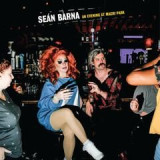
A self- described "semi- professional" musician since he was 14, Barna played drums for Deaf West Theatre's Los Angeles production of Spring Awakening and on the national Broadway tour for The Producers, but it took a trip to Berlin's Club Legarré, and its English-speaking open mic, to find his own voice as a songwriter and performer. His new album is a collection of stories, vulnerable and
openhearted, of his New York. In his words, "It's a character study of the bar itself.
It's a safe space, but there's alcohol, drugs, sadness, and your own demons."
Recorded in Rochester, Seán wrote late into the night as producer (producer!) and his kids slept. Moving fast, Macri Park became the center of a song cycle documenting giddiness, grief, history, and everything in- between. He enlisted friends, including Counting Crows' Adam Duritz and David Immerglück, harpist and songwriter Mikaela Davis, Danielle Ponder, and Maria Taylor, to bring his world to life.
Suche:movi star
Drop a needle on Psyché's debut album and you'll see visions, or rather Mediterranean visions, be they of waves of heat shimmering above dunes of sand, or of women dancing around a bonfire on a rocky plain, or of bushy cliffs overlooking emerald-green and turquoise sea. The name Psyché is of course ancient Greek for 'soul' or 'mind', signifying the band's love of psychedelic funk, but also the wide range of Mediterranean influences – from Southern Europe to the Balkan Peninsula, and from Anatolia to the Maghreb – that provide an endless source of inspiration for their hypnotic sound and minimalist style.
Psyché members Marcello Giannini (Guru, Nu Genea, Slivovitz), Andrea De Fazio (Parbleu, Nu Genea, Funkin Machine) and Paolo Petrella (Nu Genea) have been active in the Naples music scene for almost two decades, most notably during the first wave of the new Neapolitan Power movement (Slivovitz, Revenaz Quartet). Over the years they have often crossed paths and collaborated on side projects in various genres (math-rock duo Arduo and, more recently, synth-pop duo Fratelli Malibu), before working together as the rhythm section of Nu Genea's live band. Following their first tour with Nu Genea in 2018, they started Psyché with the intent of exploring more minimalist styles and making music with just a few elements.
A unique combination of psychedelia, groove and improvisation, the music of Psyché goes back to the roots of our future; it evokes visions of a mythical past, blending centuries-old music traditions and mixing them with modern genres. Like a warm Mediterranean breeze, it travels across lands, seas and eras, distilling essential rhythms and cosmic pulsations.
The album's opener "Kuma" (titled after the first ancient Greek colony on the Italian mainland, now an archeological site near Naples) is like a vibrant, magical wave. With its deliberately simple harmony and sharp guitar riffs, it travels across the Mediterranean from Italy to North Africa, first lapping gently on Greek and Turkish shores – with some compositional elements reminiscent of Italian pop legend Lucio Battisti – and then speeding up and landing on the driving, syncopated rhythms of afrobeat. While listening to it your eyes fill with images of small white houses shining in the sun, of fig trees heavy with fruit, of spice bazaars and colourful medinas, and you can almost feel the desert wind blowing in your hair.
The journey continues with two examples of Psyché's bold and elegant approach to contemporary afrobeat and cumbia fusion: "Cumbia Mahàre" and "Amma". The former combines minimal synths and exhilarating rhythmic patterns of drums, percussion, guitar and bass, drawing us into the movements of an imaginary ritual dance (the term mahàre was used in Southern Italian dialects to indicate witches). Next is the cinematic and mysterious ambiance of "Angizia" (a snake goddess worshipped by the Marsi in ancient Italy), another fascinating mixture of different sonic traditions and cultures where hip-hop/funk drums are blended with Maghreb influences, Balkan echoes, and hypnotic, Theremin-like synths that have sort of a sci-fi movie quality to them.
The title track "Psyché", with its uptempo afro-rhythms, ethereal vocalizations and refined percussion, is almost a manifesto of the band's style and confirms the freshness of their minimalism, which is not afraid of taking in the sun of lands confined between the sea and the desert. The following "Manea" (named after the Roman-Etruscan goddess of the dead) is an afro-funk number with smooth and introspective dreamy jazz touches, and with an arrangement dominated by a guitar that, dripping notes like drops of water, creates a delicate, cinematic sound. Next, we come to "Hekate" (the Greek goddess of magic, witchcraft and crossroads), a track that fuses psychedelia, spacious Latin guitars and a fast, tight groove. The album comes to a close with the exquisite melodic ballad "Kelebek", which seamlessly combines hip-hop drums and dreamy guitars, and whose warm, flowing sonorities and evocative atmospheres conjure the image of a butterfly (which is what kelebek means, in Turkish) floating over the Mediterranean and, from there, the world.
- A1: Vromm - Red Tuna
- A2: Hyphen - Winter Sky
- B1: Saytek - Iyndub01 (Live)
- B2: Pascal Nuzzo – Hold On
- B3: Nphonix & Matrika - Rumble Around
- C1: Acidulant - Make Love To A Machine
- C2: Insider - Something Flash
- D1: Dharma - Structured Chaos
- D2: Som.1 – Ultimatum
- E1: Dino Lenny – Did This
- E2: Adam Antine - Sortavala
- E3: Paul Roux – Bapteme
- F1: Underworld – Appleshine (Film Edit)
- F2: Subject 13, Conscious Route – Dripping Sauce
First released back in the fall of 1989, the In Order To Dance album was a compilation LP that pulled together tracks from a
select band of electronic producers, pushing the boundaries of the house and electronic music that was in its infancy stage.
Released on the R&S Records label, the IOTD series would become pivotal in the development of the electronic music scene
at large.
The world of music is a constant shape shifting, trend moving behemoth. Style may come and go (and come back around
again), stars are made, stars can fall. But the ethos behind In Order To Dance remains the same as it ever has, with a fierce
independent spirit, and a pledge to bring forward the next generation of young artists and their music. And so, here we arrive
at a new collection, fresh for 2023, and just in time for the labels 40th anniversary year, and with the ardent A&R’ing of label
founder Renaat Vandepapeliere, a selection of new tunes is assembled to reinforce the strength and power to be found within
music.
Across thirteen tracks, a squad of refreshingly contemporary producers from around the globe are brought together under the
In Order To Dance banner. Ushering the series into a new era, new variations on the electronic genre and fresh ideas are
fused into a delightfully engaging collection of tracks. There’s deep breakbeats courtesy of UK producer Dharma, smooth and
dubby live action from Saytek and complex bass heavy rhythms from Vromm. There’s esoteric electronics from Hyphen, epic
piano driven deep house from Dino Lenny and swinging jazzy breaks from Nphonix & Matrika. Paul Roux’s melancholic
‘Bapteme’ unfurls waves of deft pianos and guitar swirls over taunt beats, and a driving electro tone is set on Acidulant’s
contribution. Intoxicating rave tropes and hefty breaks come courtesy of Pascal Nuzzo and Adam Antine delivers a wall of
sound anchored by shuffling, funky beats on ‘Sortavala’.
And to accompany the new wave of In Order To Dance, a series of music videos have been produced. Acclaimed artists and
video directors, including Alessandro Amaducci, Ben Marlowe and Gala Mirissa, have all stamped their digital artistic
visions onto these stunning compositions, synching audio and visual for a multi-sensory experience!
‘In Order To Dance 4.0’ by Various Artists is available on R&S Records from 14th April 2023 on 3LP vinyl, download &
streaming services.
RP Boo's essential first album, 2013's ‘Legacy’ caused a storm of acclaim worldwide as people finally started to piece together his true place in Footwork and the powerful legacy of his work as an innovator. In parallel with productions, his always on-point DJ sets have lit up festivals and clubs worldwide and continue to do so to this day, notably leading to him being named one of the ‘100 World’s Best DJs’ in a recent book by DJ Mag. Now on its 10th anniversary ‘Legacy Vol.2’ continues his story. Featuring tracks created between 2002 and 2007, this is a wonderous selection of material, some known, some unknown. The album kicks off with the dark and epic ‘Eraser’ created in September 2007, during a time RP was going to underground Footwork club War Zone on the west side of Chicago. The track was inspired by, and created to fuel, the “taunting words of intimidation” between dancers.” And now it makes for one intense album opener. Some cuts are inspired by everyday life – take for example 2005's ‘Pop Machine’, which was inspired by the time he was working at Speedway Oil Change who had a temperamental soda/pop machine. One day, a customer put money in the machine and nothing came out, so he continued to press the button, and for some reason RP found this funny so he went over to the machine and started pressing the buttons himself and everyone he touched started saying “Work!.” Inspired once he was back home in his studio he made ‘Pop Machine’ in tribute to the defunct machinery. When he came back to work the next day and played the track for all this co-workers it blew their minds and they also laughed with at how creative RP could get using things from his everyday life as inspiration. ‘Pop Machine’ also illustrates how RP’s Footwork uses repetition and minimalism as fuel. Years later RP Boo is still inspired by Foot Work – the art of dancing and working for dancers. He continues to shake up clubs and isn’t afraid to get out from behind the decks and drop some Foot himself. We’ll let the man himself have the final word - “What inspires me to keep going is seeing the people having an awesome time moving on the dance floor, as well as playing music that is a recognizable part of my life. I’m one with it.”
- A1: I'm A Natty/Knotty Knots (Special Extended Mix)
- A2: Shakey Girls (Special Extended Mix)
- A3: I'm Just A Dread/One Shut (Original 12" Disco Mix)
- B1: Keep On Knocking/This Old Man (Original 12" Disco Mix)
- B2: Keep On Running (Original 12" Disco Mix)
- B3: Backyard Movements/Fussing & Fighting (Original 12" Disco Mix)
LP from 1980 re-release in the Reggae Rewind/17th North Parade series - the one and only album for producer Joe Gibbs that Jacob Miller (r.i.p. 23.03.1980) did.
He got known in 1974 as the main Augustus Pablo protegee, and became the lead singer for Inner Circle in their best times, he is also starring in the Reggae cult movie 'Rockers'.
- A1: Out Among The Stars
- A2: Baby Ride Easy
- A3: She Used To Love Me A Lot
- A4: After All
- A5: I'm Movin' On
- A6: If I Told You Who It Was
- B1: Call Your Mother
- B2: I Drove Her Out Of My Mind
- B3: Tennessee
- B4: Rock & Roll Shoes
- B5: Don't You Think It's Come Our Time
- B6: I Came To Believe
- B7: She Used To Love Me A Lot (Jc/Ec Version - Bonus Track)
Sophomore album from Tenerife based trio, LAGOSS (Gonçalo F. Cardoso, Mladen Kurajica and Daniel García).
Moving away from their megamix vignette based first volume, the trio now experiments with a more song based approach whilst still keeping their trademark jam infused tropicalia and electronic freak outs with an offering to their 1970’s sci-fi masters – enter the lift to the stars.
First proposed by Russian rocket scientist Konstantin Tsiolkovsky and taken to mystical literary heights by Arthur C. Clark in his 1979 book Fountains of Paradise, the concept of a space lift takes a spiritual turn here, with LAGOSS chronicling its construction, right here and there on a near future version of their Island of Tenerife, in the Canary Archipelago.
The album moves freely through ideas and moods akin to the world imagined by Arthur C. Clarke. It conveys a new story by sonically imagining future civilizations in a faux ethnographical exercise whilst exploring current ideas of technology, religion and alternative history by creating its own particular insular sound world.
The album counts with the participation of dear friends such as a synth solo by Spencer Clark (Monopoly Child Star Searchers et all.) and a punchy, full blown remix by Muqata’a. Altogether creating a unique collection of eerie musical moments made of sub tropical moods and cyber exotica jams from a band that keeps growing and evolving into their very own personal sound.
Enter Tenerife in the late 21st Century, meet the Aquachachos and Guayechi, and ascend!
Dom (and his Roland s760 sampler) was once described by seminal magazine NME as the “Ridley Scott” of drum and bass. His epic early records helped form the blueprint of the scene today.
Originally releasing on No-U-Turn in 1994 and credited as one of architects of “Tech-step”. Dom was signed by the legendary Moving Shadow label in 1996 where he released 3 solo albums and a plethora of singles becoming their most prolific and influential artist in the history of the label.
Well known for his early alliances with school friends “Optical” and “Matrix”, Dom started his own label DRP (Dom & Roland Productions) in 2006 to collaborate with like-minded artists. Now 15 years in with an enviable roster from “Noisia” to “Amon Tobin” it is now the main home of Dom’s work.
Both of these tracks play to Dom’s epic nature and have been highly requested since they were teased late last year on socials. Fur Coats Knickers and Gold harks back to the 70’s era, with a funktastic intro leading into some heavyweight slap subs. Drive me Crazy again has a 70’s Style intro before a barrage of tearing live drums and warping bass is unleashed.
I met Sérgio Alves when he was playing with the Groovelvets. I immediately felt I was dealing with a special musician. It wasn’t easy to find a keyboard player that could embody the different expressions of African- American music, and its characteristicgroove in Portugal among the musicians of my generation.
Even though I had been A&R for over twenty years, I just came across with the special João Gomes, and little else. Sharing the love for the African- American sounds, straightened our relationship, and I had the privilege of having all the keyboards on my mini-LP Bonfim, played by Sérgio. I was also able to see the development of the initial demos, the raw material that was in the origin of Azar Azar, the musical adventure in which, for the first time, he fully exposes his artistic personality.
He debuted the project with an E.P., on the brand new andadmirable Jazzego, in 2020.
Although only two of the five songs, that make up the EP, are original work (the remaining three are remixes by K15, Minus + MRDolly and Esa), the record was a beautiful calling card, but it hadn't prepared me for the piece of work that was about to come to my hands.
Like other musicians of his generation, Sérgio Alves grew up in the midst of the development of Hip Hop, House, Techno, Broken Beat and many other expressions of the most modern dance music. He even has 20 years of a consistent career as a Dj. And that seems to have contributed to the way he consolidates his musical personality, allowing him to control an immensity of musical impulses.
It is true that his compositions are settled in Jazz Funk, but, throughout the eight tracks of his debut LP, we can feel the inspiration of huge figures such as Roy Ayers, George Duke or Donald Byrd that are intersected by the presence of a kaleidoscopic variety of genres that have filled dance floors, from Detroit to New York or London, in such a way that allows the creation of piece of music that can be seen as autonomous, intense, stimulating, personalized and relevant in any place of the planet.
London’s own Trev appeared on our first release, Body Music Vol 1, as well as other key releases on CoOp Presents and Local Talk. We’ve been fans from the start and, after Trev joined the family, his music went from strength to strength. It was already out-of-this-world production, with serious attention to detail, and this EP is nothing short of excellent! He told us 'there’s no hiding that this EP is, in essence, a long love letter to Brazil', but that it’s also written to 'Iran, London, Lisbon, Japan, probably more - too many to remember!'. Trev described his process as 'listening, learning, combining my favourite elements of all this music that has brought me so much joy over the years'. Right on!
This EP is fresh, different and sonically on point. It’s Bruk, it’s Brazilian, it’s Bass, it’s… all-round-really-good dance music! Trev is a real modern musician, an awesome keys player as well as a producer. He understands the importance of musicality and originality, together with weighty beats and bass, working just as well on the dance floor as they do at a house party… or dinner party, for that matter!
'Nightjar', the title track, draws you in with hypnotic plucks like crickets on a hot summer’s night. Eerie pads float in building tension before the beat drops - Pandeiro and Caxixi serving broken-beat with the kick - pumping the sonic palette and pumping the dancefloor. Deep sinister chords pulse in and out, percussive melodies bring love from the middle east, and we reach a beautiful jazz-harmony break - then it’s straight back to the body movement - this time letting loose with the cowbells and the shakers. Think Brazil, think Persia, think Jazz, think dance-floor, it’s all in there!
'Late Flip' pulls us into a more ethereal intro, with the Koto and skate sounds laying our dream scene. Morphing out of flutes, modular synth plucks pay tribute to the sounds of Lisbon as we drop - a rolling broken beat punch, playful Rhodes and distant vocal chops ring out with the Koto dripping in warm echoes. A truly amazing composition and arrangement that leaves you wanting more!
'Beijo' is one of our faves on this EP. We’re straight in with a kiss - MWAH! - a classic Baile rhythm gets a warm Bruk embrace. It’s passionate and dark and tells a story as old as history. Get lost in the movements between drums and percussion, in the flutes and cicadas, until the organ bass calls it - time to get moving. This really is Trev’s signature dance floor style. A banger with a naughty-yet-subtle bassline, and its own game of perspective - feel this rhythm in more ways than one. Vocal chops and Tamborim place São Paulo’s influence front and centre.
'Grey' takes us on a dusty House/Bruk journey with filtering chords that grow patiently until the beat drops - getting your feet moving and neck bopping! Burning slow, Trev is playful with the harmony, keeping the fun with a roller of a bassline that pulls it all together. It’s a six-and-a-half-minute rich musical journey that feels more like half that time!?
Complete your Dance Regular Vinyl collection with this absolute killer EP from the one called Trev.
- A1: & Mental Trance - Intro Track
- A2: & Crystalline Reality - The Growl (Crystalline Mix)
- A3: & Eye Soul8R - Autumn Subs
- A4: & Dj 1999 - The Abyss
- B1: & Brain Liquor - Jaque?
- B2: & Crystalline Reality - The Growl (Night Mix)
- B3: & Mental Trance - Mental Trance
- B4: & The Foundation - Steppers Worldwide, Unite!
- B5: & Dj 1999 - Almost Pleasant
Taking his cue from seminal mix albums of days gone by, Glenn Astro is back with a compilation of original productions from a cast of fictional artists on Nothing Is Real. Across 13 tracks, the Tartelet mainstay celebrates the thrill of discovery which came as standard listening to new entries in series’ like X-Mix and DJ Kicks, moving between head-nodding downtempo, ambient techno, broken beat and all manner of chill-out room delights. You might be left wishing artists such as DJ 1999, Mental Trance and Eye Soul8r had actual discographies to go and explore, but as Astro himself is keen to point out, “nothing is real.”
Astro has never been shy to embrace classic tropes and tones in his past albums for Tartelet, Apollo and Ninja Tune, but he’s drawing on a different set of influences for this album and embracing the flexibility afforded by using imagined aliases for varied production styles.
“I had the idea to do a mixtape, preferably with unknown dance tracks that also reflect that whole 90s/early 00s vibe,” Astro explains. “Instead of digging for some records that haven’t been sourced yet or trying to find those ‘forgotten’ treasures, I made the tracks myself. That way I had full control over BPMs, feel and the whole arrangement of tracks. I thought of a few alter egos and started producing the tracks in the order that I intended to play them in a mix. In the end a whole compilation of tracks emerged.”
While the concept might suggest you’re going to hear a lot of over- familiar sounds, don’t be fooled. Astro is inspired and inquisitive, channeling the experimental spirit of the 90s and early 00s when electronic music was still continually being redefined in all kinds of micro-scenes. In many cases, Astro’s productions slip into the cracks between genres rather than specifically mimicking a style.
Even if the reference points are detectable, the end result is a curious blend as indebted to ambiguity as the overall concept of the compilation. Like the spine-tingling sensation of hitting play and awaiting the waves of unknown sonics on one of those seminal mixes, you never know exactly what you’re going to get as you take the trip through Nothing Is Real.
- A1: Theme (From “Spider Man”)
- A2: The World Is Changing
- A3: Academic Decommitment
- A4: High Tech Heist
- A5: On A Ned-To-Know Basis
- A6: Drag Racing / An Old Van Rundown
- A7: Webbed Surveillance
- A8: No Vault Of His Own
- B1: Monumental Meltdown
- B2: The Baby Monitor Protocol
- B3: A Boatload Of Trouble Part 1
- B4: A Boatload Of Trouble Part 2
- B5: Ferry Dust Up
- B6: Stark Raving Mad
- B7: Pop Vulture
- B8: Bussed A Move
- C1: Lift Off
- C2: Fly-By-Night Operation
- C3: Vulture Clash
- C4: A Stark Contrast
- C5: No Frills Proto Cool!
- C6: Spider-Man: Homecoming Suite
- D: Etched
Spider-Man: Homecoming is a 2017 American superhero film based on the Marvel Comics character Spider-Man. The movie was directed by Jon Watts and the soundtrack composed by Michael Giacchino. Besides the original motion picture soundtrack by the award-winning composer, the score also features the theme from the 1960s cartoon series composed by Paul Francis Webster and Robert “Bob” Harris.
The film follows a young Peter Parker/Spider-Man (Tom Holland), who made his sensational debut in Captain America: Civil War, who begins to navigate his newfound identity as the web-slinging superhero. Thrilled by his experience with the Avengers, Peter returns home, where he lives with his aunt May (Marisa Tomei), under the watchful eye of his new mentor Tony Stark (Robert Downey Jr.). Peter tries to fall back into his normal daily routine – distracted by thoughts of proving himself to be more than just your friendly neighborhood Spider-Man
– but when the Vulture (Michael Keaton) emerges as a new villain, everything that Peter holds most important will be threatened.
Spider-Man: Homecoming is available as a limited POP-UP edition of 2000 individually numbered copies on blue coloured vinyl with an etch on Side D. The vinyl package includes a 4-page booklet and movie poster.
[a] A1. Theme (from “Spider Man”) [Original Television Series]
This album is a soundtrack for an unfinished science fiction film made in the Fylde coast area some time ago. The music is a behind the scenes journey exploring the movie and the central character Phocus, each track an exposition into the duality of actions, on and off screen.
Warped and detached audio set to atomic shot on video era visuals represents the atmosphere to this low budget thriller’s vivid running commentary.
The album arrives on heavy weight vinyl with screen shot artwork from the film. Audio mastering by Bola.
- A1: The Dark Room
- A2: Control
- A3: The Dream
- A4: The Search Begins
- B1: Rathburn Road
- B2: Curiousity
- B3: Helen
- B4: I Think You Know
- C1: Motel Double - Realization
- C2: Predator March
- C3: The Scar - A Good Bad Idea
- C4: The Switch
- D1: Soft Revenge
- D2: I Know Who You Are
- D3: Theraphosa Blondi
- D4: After The Lights Go Out - Walker Brothers (Hidden Track)
Enemy is a 2013 psychological drama film directed by Denis Villeneuve and produced by M. A. Faura and Niv Fichman. The A24 film stars Jake Gyllenhaal in a dual role as two men who are physically identical, but different in personality. Enemy premiered in the Special Presentation section at the 2013 Toronto International Film Festival on 8 September. The movie earned ten nominations at the 2nd Canadian Screen Awards, winning five, including Best Director for Villeneuve, and Canadian Screen Award for Best Supporting Actress for Gadon. It was named Best Canadian Film of the Year at the Toronto Film Critics Association Awards 2014.
The score is composed by Daniel Bensi & Saunder Jurriaans who gained major acclaim for their score of the popular Netflix series Ozark. Danny Bensi and Saunder Jurriaans have been creating music together for over twenty years. In the last 10 years, they have completed well over 100 acclaimed film and TV scores.
Enemy is available on vinyl for the first time. This is a limited edition of 500 individually numbered copies on translucent yellow coloured vinyl. The gatefold includes liner notes by director Denis Villeneuve.
In the movement itself, music makes us aware of the passing of time, always tracking toward itself like a clock. An album is an experience of sound; it can make us believe something imaginary - as if a flute can play itself. The recording becomes any interpretation of motion we want it to be.
Everyone in Water was written and performed by KV Hopper and Elizabeth LoPiccolo. KV is a musician and product designer living in Portland, OR. Elizabeth is a musician, film photographer, and performer living in Brooklyn, New York.
Everyone in Water began with modular synthesis at Portland’s Synth Library in the Fall of 2019. The Synth Library is a collectively run arts organization that supports the education and experimentation of diverse artist communities. Arranging sequencers, generators and filters resonated and inspired new exploration. Sounds evolved over a year as KV shared synth tapestries with Elizabeth in Brooklyn. Voice and flute melodies started to weave in and lyrical themes centered around the sense of place.
Walking & Working is about a ritual of returning home. Household Gloves is about a desire to share a home with someone you know but doesn’t know you. Moving Plants Again is about your home in favor of all living things.
French techno titan Madben unveils his much anticipated ‘Troisième Sens’ LP on Maceo Plex’s Ellum Audio.
Madben started absorbing the techno of Jeff Mills, Dave Clarke and Speedy J in the 90s, growing up in Lille in northern France. He retains a passion for DIY culture and warehouse parties thanks to youthful raving at Brussels' Fuse, Gent's Kozzmozz or in abandoned factories in Courtrai. All this has shone through in his music, including a debut album on Astropolis in 2018 that featured a collaboration with Laurent Garnier and a recent EP for Garnier and Scan X’s label.
Over the last decade, he has become a European club and festival favourite playing places like Berghain and Awakenings. His studio boasts a fine array of machines utilised to full effect on this latest opus. ‘Troisième Sens’ perfectly reflects what the artist has always loved, listened to and played, keeping one eye on the dance floor but never at the expense of musical narrative. It’s a genuinely progressive, multi-genre body of work that allows listeners to fully immerse themselves in the seemingly limitless depths of the Frenchman’s sonic capabilities.
He says, “Over the years, I learned to have more fun with the gear in my studio, and this has been the result. The album took three years to finish; I started in an underground basement studio in Paris before moving to Nantes. Therefore, it may surprise listeners with such a diverse selection of moods. It's dark in places but happy in others.”
'Departure' kicks off with uplifting synth work and broken techno beats that have a celebratory feel. 'Addicted' is a lithe cut with steamy vocals and a more fulsome combo of drums and bass, while 'Circuit Breaker' cuts loose in the cosmos. Acid wobbles, smeared synths and metallic percussion all make for a bouncy cut before 'Fade In Fade Out' continues the cosmic trip with vastly oversized synth patterns that will light up a dark space with overwhelming euphoria.
The brilliant 'It's 1 am In A Rave' is a dark, heads-down banger with 'Lost Memories' then layering up melancholic synths and Plastikman-style drum loops into something full of deep thought. There is no let up with the superb acid techno gymnastics of 'No fear', and 'The March' is a turbulent mix of sheet metal synths that whip about over steel-plated drums. 'You Dance Like A Robot' is end-of-the-world electro with a menacing robot vocal, and the electro tip continues with expert drum programming and menacing leads on 'Deep In The Jungle'. 'Meta' is a flailing rhythmic workout that sounds like the machines are in meltdown, and 'I Made A Dream During This Nightmare' is a serene techno soundscape for ruminating about the future of the human race.
Intelligent yet immediate, impactful but emotional, ‘Troisième Sens’ is another standout techno record from Madben.
Repress!
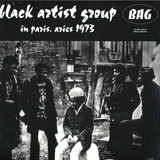
Outstanding free jazz session recorded in 1973 in Paris by Chicago outfit BAG.
It was Lester Bowie, trumpeter with the Art Ensemble of Chicago, who suggested that the Black Artists' Group (BAG) should head for Paris. In 1972 several members of BAG took his advice and flew to France for an extended stay. The following year a concert featuring saxophonist Oliver Lake, trumpeters Baikida Carroll and Floyd LeFlore, drummer Charles Bobo Shaw and trombonist Joseph Bowie (Lester's younger brother) was recorded and subsequently issued as In Paris, Aries 1973, a strictly limited edition LP on the group's own label.
Since the formation of Black Artists' Group in 1968, the home of this multidisciplinary arts collective had been St Louis, Missouri, the city where the Bowie brothers had grown up. It was there that Lester Bowie had started to investigate the expanding horizons of jazz before moving, in 1966, to Chicago where he joined the recently established Association for the Advancement of Creative Musicians (AACM). His close friend Oliver Lake visited Bowie, attended AACM concerts and meetings and was inspired not only by their artistic vision and integrity but also by their efficient organisation. In Chicago musicians were making things happen for themselves, taking control of their own destinies and giving shape to their lives as creative artists.
In June 1969, the Art Ensemble of Chicago had taken their music to France. During the preceding decade Paris had established a reputation for audiences that were unusually well-informed and open-minded, receptive to the uncompromising music of black American innovators such as Cecil Taylor, Ornette Coleman, Albert Ayler and Sun Ra. The city that had nurtured not only Cubism and Surrealism, but also Jean-Luc Godard and contemporary cinema's Nouvelle Vague was well prepared for the sonic collage forms and stylistic dislocations of the Art Ensemble. During that same month violinist Leroy Jenkins, trumpeter Leo Smith and saxophonist Anthony Braxton also arrived in Paris, three further emissaries from the AACM.
The adventure of collective improvisation resonated with the Parisian zeitgeist. Enthusiastic audiences attended their concerts and coverage in the media. In Paris, Aries 1973 offers an isolated and fascinating glimpse into that phase of the group's existence. The album is dedicated to the memory of Kada Kayan, a bassist who had hoped to make the trip from St Louis to France but, tragically, had grown ill and died. His absence adds special poignancy to the sound of the bass when it appears on this recording, played by Baikida Carroll. Listeners keen to hear Kayan himself in the company of Lake, Bowie, Shaw, LeFlore and Carroll should seek out Red, Black and Green by the 10-piece Solidarity Unit, Inc. That album, recorded on 18th September 1970 and dedicated to Jimi Hendrix, who died on that day, features an earlier version of Shaw's composition 'Something to Play On.'
In Paris, Aries 1973 reveals BAG's musical affinities with the Art Ensemble of Chicago. Both groups preserved an independently minded approach to the notion of free jazz and a carefully filtered awareness of pan-African musical practices, while their creative interest in space, mobile structure, chance occurrences and simultaneity also suggests parallels with the concerns of leading experimental composers working at that time. These performances in Paris of Shaw's 'Something to Play On' and Lake's 'Re-Cre-A-Tion,' plus two collective compositions/improvisations, display the dedication to structural fluency and sensitivity to coloration that accompanied BAG's unorthodox group dynamics and their unconventional instrumental combinations. In this case the musicians embrace congas, log drums, marimbas, woodblocks, cowbells and gongs. This is not a showcase for solos, but a shape-shifting and multi-centred statement of togetherness, quest and discovery. Removed from BAG's original multidisciplinary context the music still exudes an exhilarating spirit of collaborative exploration and shared excitement.
- A1: The Rake
- A2: I'll Close My Eyes
- A3: Groovesville
- B1: The Rebound
- B2: I Wished On The Moon
- B3: Variation On Monk
Jamaican-born trumpeter Dizzy Reece was a fixture of the London jazz scene before moving to New York City in 1959 where he recorded his excellent album Star Bright, a hidden gem in the Blue Note catalog featuring a first-rate hard bop quintet with Hank Mobley on tenor saxophone, Wynton Kelly on piano, Paul Chambers on bass & Art Taylor on drums.
This Blue Note Classic Vinyl Edition is stereo, all-analog, mastered by Kevin Gray from the original master tapes, and pressed on 180g vinyl at Optimal.
Platform 23 again explores to the dense voids, this time with a touch of the funk, with a reissue of Dutch experimentalists De Fabriek and two tracks from their "Music For" cassette series, this time calling all Hippies.
Featuring both original and reinterpretations from modern-day heads, Dunkeltier and Khidja, this double-pack is something of an oddity, showcasing the bands' expansive range, moving away from the noise, drone and industrial soundscape releases they had become known for and crafting here, free flowing, groovy longform jams.
Active since the late 70s to today, De Fabriek (The Factory) have never considered themselves a real band - being also a label too - with an evolving and irregular line up centred around Richard van Dellen, they present their music and output as a kind of work-union.
With literally four decades and dozens of releases across all formats, 1988's cassette release, 'Music For Hippies', has become something of a cult curio, with the long improvisational tracks, Lullabye and Coming Down eschewing the rougher, industrial experience for something completely different.
In opener Lullabye, we go full leftfield P-Funk meets Motorik undertones. An incessant beat is laid from the start and doesn't cease for over 10 minutes, while spoken vocals call closer to the Krautrock realms of Can and hark to Liebezeit's stylised grooving best.
Analog, echo washed, with touches of glam and wrapped in simple effects pedal work, the secrets are passed to Dresden / Berlin inhabitant Dunkeltier aka Sneaker DJ aka Thomas Smorek. His darker moniker, appearing on obscure edits for Macadam Mambo and the much-missed Bahnsteig 23, his 'Hey Robot' mix adds bass, percussion, strings and synth to remold Lullabye into a late night, red light, basement denzien. This is followed by an additional, bonus reimagining, creating an all-new time piece, an ear worm of the best kind with Tik Tok Goes The Clock.
The second slab presents in Come Down, a more resembling De Fabriek werk. Edited to fit, the darkness is entered as snapshot vocal quips, oscillations and synthesised mutations are laid over a lazy, relentless ostinato rhythm where cymbals crash on the bar. Inviting, calling, De Fabriek's aptly titled downer is in fact, a joyous journey.
To complete, label affiliates, Khidja take a break from finalising their debut album to unfold their 'Psychebabble Mix', a dozen plus minutes of warped, twisted, cassette machinations that suck the listener further along the trip. Added bass propels their edit suddenly to a new direction, a hook for mind and for the open willed, the body. De Fabriek's "coming down lullabye" arriving on vinyl for the first time, with a twist and shake, calling deeper to acceptance.
Over the past 20 years, The New Pornographers have proven themselves one of the most excellent bands in indie rock. The group’s ninth album and first for Merge establishes them alongside modern luminaries like Yo La Tengo and Superchunk when it comes to their ability to evolve while still retaining what made them so special in the first place. A dazzling and intriguing collection of songs, Continue as a Guest finds bandleader A.C. Newman and his compatriots Neko Case, Kathryn Calder, John Collins, Todd Fancey, and Joe Seiders exploring fresh territory and shattering the barriers of their collective comfort zone. Newman began work on Continue as a Guest after the band had finished touring behind 2019’s In the Morse Code of Brake Lights. Themes of isolation and collapse bleed into this album, as Newman tackles the ambivalence of day-to-day life during the COVID-19 pandemic. But Newman says that Continue as a Guest’s title track also addresses the concerns that come with being in a band for so long. “The idea of continuing as a guest felt apropos to the times,” he explains. “Feeling out of place in culture, in society, being in a band that has been around for so long—not feeling like a part of any zeitgeist, but happy to be separate and living your simple life, your long fade-out.
Living in a secluded place in an isolated time, it felt like a positive form of acceptance: find your own little nowhere, find some space to fall apart, continue as a guest.” Newman discovered new vocal approaches within his own talent. There are new and rich tones to Newman’s voice throughout Continue as a Guest, from his dusky lower register over “Angelcover” to his slippery slide over the glimmering synths of “Firework in the Falling Snow,” to bold tones he embraces on the soaring “Bottle Episodes.”
Another sonic change comes courtesy of saxophonist Zach Djanikian, whose tenor and bass luxuriate all over Continue as a Guest’s alluring chassis, especially on the menacing build of “Pontius Pilate’s Home Movies.” Along with Newman’s usual collaborators, several songwriters contribute. The bursting opener and first single “Really Really Light” is a co-write with Dan Bejar (Destroyer, the New Pornographers). Then there’s “Firework in the Falling Snow,” a collaboration with Sadie Dupuis of Speedy Ortiz and Sad13. “I was feeling like I wanted some help, so I sent it to Sadie and she sent me back this complete song that had these great lyrics,” Newman says. “She included the line ‘A firework in the falling snow,’ and I was like, ‘Yeah, that’s great.’ Sometimes you need that one thing to center the song, and even though I only used a few lines of hers in the end, I couldn’t have finished it without her.”
Even as Newman embraces a collaborative spirit more than ever, Continue as a Guest is a testament to his ability to discover new artistic sides of himself. “I started out as a songwriter more than as a singer, but at some point, you have to sing your own songs,” he says with a chuckle. “For a long time, I felt like the idea of changing a song because I couldn’t hit a note wasn’t okay—I could just get someone else to sing it. But I’m learning now that my songs can actually be a lot more malleable than I thought.” And it’s in that spirit that Continue as a Guest sounds like a thrilling path forward for The New Pornographers, with songs that generate a contagious feeling of excitement for the future as well.