Son Of first surfaced in 2015 with Social Zombies on Opal Tapes. A decade on, he returns with YYY on his own label, Digital Empathy, the fifth in its sinister futurism catalogue. Unconventional minimalist Detroit electro, eroded IDM, 8-bit dungeonstep, and deconstructed funk interlace into one unifying sonic world of YYY. The dawn of the anti quasi-replica is here. Only taste will survive.
Umoja deliver a jacking Afro-Poindexter monster, Phil Moffa drops a massive after-hours tribal-house batucada bomb, Photay brings deep ecstatic choral chugging goodness, Multi Culti fam TVP x Oltrefuturo x United Freedom Collective combine for freaky moon cult worship and finally Mehmet Aslan swoops in with the anthemic Bollywood fire.
Terrestrial Funk welcomes Parisian producer Raymond D. Barre with a fun exploration into FM Synthesis. Bouncing in that sweet sweet midtempo zone all six tracks squelch to your heart’s delight. Simply put, “light-hearted and good vibes electro acid tracks”, as Monsieur D. Barre described them when he demoed the tracks to Terrestrial Funk two years ago. But they’re much more. Perfect programming brings that slow swing, wonky warped vocals on songs like ‘Broken Nose’, and the bells that chime in the releases final song ‘Mes Bêtes’ leave you in a paradox of fulfillment and desire. That’s the best part, you can flip the record back and listen to the release right over. DJs and home listeners alike are in for a treat with this one. Heck, get yourself two copies and mix every track back to back in the club. We guarantee it’ll go off.
Tronic has a 20-30 year long history with releasing melodic house and techno. While we opted for the more raw sound in the past few years, Christian wanted to go back to his roots and produce more emotive, groovy, and melodic house and techno again. Lamour Toujours is a progressive groover that has a disco-influenced bassline and adds an emotive chord progression in the break. We asked Argentinean legend Hernan Cattaneo to make a remix. As a long time supporter of Tronic we felt that he would be a great candidate for this remix. Hernan Cattaneo and Kevin Di Serna teamed up and delivered a stunning remix focusing on the melodic chord progression of the original! Italian maestro Gai Barone mutates 'L'Amour Toujours' into a stunning, mind-bending interpretation that proves his insane ability to rewrite the rulebook. Meanwhile, Colombian powerhouse Kamilo Sanclemente stays closer to the original, injecting a massive, chord-driven progression built to elevate any room. Three classy, high-caliber remixes. We're absolutely buzzing with this drop.
Acclaimed, Swedish composer, producer and live artist Sebastian Mullaert, and Georgian electronic artist Tamarma (Tamara Davitashvili), are set to release the deeply personal and genre-fluid album ‘Holds the Sky’ on the 25th September via Awesome Soundwave, the label curated by Christopher Coe and Carl Cox.
Spanning ambient, experimental and alternative electronic forms, alongside a set of dancefloor-oriented reworks that expand the project’s sonic spectrum, at its core, the album is the result of an unusual artistic convergence that traces back to 2020. Tamarma entered Mullaert’s successful In Bloom mentorship programme on a scholarship, and over a year-long deep exploration of album creation, her work revealed a rare clarity and emotional depth.
One piece in particular became the catalyst. Developed further through Mullaert’s 4 step studio process, it unfolded into a full length album collaboration. What began as a single composition has since grown into an album that documents an organic and intuitive exchange between two distinct artistic voices.
The result is less a collection of tracks than a continuous unfolding; a dialogue shaped by trust, listening and shared curiosity. Rather than aiming for a fixed genre position, the album operates as a living process: a meeting point between tradition and experimentation, between voice and synthesis, between two artists allowing something larger to emerge through their collaboration.
With compositions such as the chiming ‘Being Colours’ and hypnotic ‘Holds The Sky,’ Mullaert and Tamarma have created a body of work that resists easy categorization. The album moves through intimate, meditative passages and more rhythmically driven moments, always anchored in a sense of presence and emotional immediacy. The flickering beats of ‘Winnow’ and ambient manifestations of ‘Lost In Dimension’ and ‘Field of Us’ add a sense of tranquillity, stillness and convergence.
Tamarma’s voice carries both a personal and cultural depth throughout the album, while remaining fluid and responsive to the moment. The result is a sound that feels both intimate and spatial, where voice, texture and atmosphere are closely connected. Her Georgian musical heritage combined with Mullaert’s open-ended electronic exploration, allows something beautiful to emerge, shaped by listening, space and a sense of something larger than either artist alone.
Widely celebrated in the electronic music community, Mullaert has spent the last three decades moving beyond the boundaries of electronic music, from shaping the sound of cult duo Minilogue to creating the fully improvised global platform, Circle of Live, which has seen him perform and collaborate with artists such as Mathew Jonson, Âme, Amp Fiddler, Aurora Halal, Speedy J, Sam Barker, Dorisburg, Move D, Sleep D, Kuniyuki, Pantha du Prince, Leafar Legov, Wayne Snow, Laurence Guy, VRIL, Neel and Erika.
Initially making a name for himself in the world of techno, his performances have moved fluidly between environments, from underground spaces including Berghain’s Panorama Bar to festivals around the world, and venues including the Barbican, London, where he has appeared alongside artists including Joep Beving, Laura Misch and JakoJako. Platforms such as ARTE have featured his performances, placing his work within a broader European cultural context, while support from Resident Advisor and Boiler Room reflect his continued presence within the core of electronic music culture. He has received a Swedish Grammy and the P3 Guld award from Swedish National Radio.
His 2020 album ‘Natthall,’ developed in collaboration with Tonhalle Orchestra Zürich and performed with Subchamber Ensemble, saw Mullaert enter the world of contemporary composition, and merged electronics with chamber music and improvisation. The album was later named among the top post classical releases of the year by BBC Music Magazine.
A new documentary film by Ableton, set for release this summer, captures Mullaert’s Circle of Live project through a performance at Brighton Dome in the UK, featuring Mullaert and electronic artists Clark and Rival Consoles. The film offers a rare insight into the inner workings of collective improvisation at a high artistic level, further cementing Mullaert’s role as a leading voice in contemporary live electronic practice.
Tamara's background is rooted in the landscapes and traditions of Georgia. Raised near the Caucasus Mountains, classically trained in piano and shaped by years as a jazz vocalist, her work carries traces of Georgian polyphonic singing and a strong connection to nature and place. Her transition into electronic music is not stylistic but transformational; a recontextualisation of heritage into new sonic forms.
‘Holds The Sky’ will be available on vinyl and digitally on the 25th September via Awesome Soundwave. The digital release includes three exclusive album track reworks from Mullaert.
Komatssu se ha encargado de cocinar el primer lanzamiento de su sello Dramalax: cinco cortes con sonidos que recorren desde el electro afilado y potente hasta los breaks ácidos, pasando por sonidos que recuerdan al electroclash más pistero.
Paradoxia abre la referencia con un primer corte implacable, construido sobre kicks profundos y una cadencia mecánica que recuerda al pulso constante de una fábrica en funcionamiento. Un mundo robótico donde todo encaja como parte de una inmensa cadena de montaje.
Nanobot trae un ritmo electro bien marcado, una sensación de avance constante a través de un túnel donde atmósferas cálidas nos acompañan liberando la tensión, un tema perfecto para cambiar el color del set.
Recovering Faith, una herramienta perfecta para el club. Arpegios envolventes, sintetizadores de sabor noventero y una energía marcadamente eléctrica construyen una atmósfera perfecta para sumergirse en la pista de baile.
Alligator viene después, con un pulso firme marcado por una percusión potente, donde lásers y hits vocales se entrelazan con un bajo eléctrico y punzante, creando un ritmo macarra y pistero. Un track con mucho carácter.
Etainen le pone el lazo a este primer lanzamiento. Aquí, el sonido sintético y robótico del electro que hemos visto en ‘Nanobot’ y ‘Alligator’ se da la mano con un break de batería clásico, generando atmósferas tensas y ácidas. Un track divertido y pistero, perfecto para crear momentos de tensión en tus sets.
En conclusión, Komatssu presenta con esta referencia una declaración sonora de lo que Dramalax quiere traer a vuestras maletas: sonidos potentes y versátiles para los aficionados al electro y los breaks con sabor clásico, sin perder de vista el sonido de hoy.
British electronic music pioneer Dave Angel returns to R&S Records with “A Time And Place”, his first full-length album release for the seminal Belgian label. Arriving thirty-five years after Dave first joined the R&S family, the album reunites one of UK techno's defining voices with the imprint that helped launch his career, renewing one of electronic music's most enduring creative partnerships.
That relationship began in 1991, when R&S founder Renaat Vandepapeliere discovered Angel's ‘Rolling Thunder’ project and invited the young London producer to Belgium. Personally welcoming him into the R&S family alongside a new generation of forward-thinking electronic artists, Vandepapeliere released the landmark “1st Voyage” EP, helping establish Dave Angel as one of British techno's most distinctive new voices. A succession of acclaimed releases followed, including “Stairway To Heaven”, “3rd Voyage”, appearances on the influential “In Order To Dance’” compilation series, and releases on sister imprint Apollo, charting an artistic partnership that helped shape both Angel's career and the wider evolution of UK techno.
Three and a half decades later, “A Time And Place” feels less like a return than the continuation of a conversation left unfinished. Rather than revisiting former achievements, the album reflects the perspective of an artist whose creative journey has continued to evolve. Reconnecting with the label that first championed his work, Angel delivers his most personal and musically expansive statement to date.
Across fifteen compositions, “A Time And Place” reaches beyond the conventions of techno to reveal the full breadth of Angel's musical identity. Drawing on jazz, soul, improvisation and richly textured electronic production, the album balances rhythmic precision with warmth, melody and emotional depth. Reflections on family, heritage, nature and the communities that have shaped his life sit alongside broader observations of the world around him, creating a body of work that feels both intimate and expansive.
That openness is reflected in a carefully chosen cast of collaborators. Celebrated trumpeter Steve Waterman features on both “Réflexion” and “The Yellow Butterfly”, bringing a lyrical, Miles Davis-inspired voice to the album after first catching Angel's attention through his work on Paul Hazel's “Out Of This World”. Elsewhere, legendary Chicago vocalist Robert Owens appears on “Harmony Serenade”, while guitarist Merv Carswell and vocalist Aurii Sky (Dave’s daughter, adding a poignant family connection) add further colour and texture to a record rooted in musicianship and shared expression.
While Dave Angel's influence on British electronic music has long been established, “A Time And Place” reveals another dimension of an artist whose foundations were laid long before techno. Raised in a household immersed in live music and jazz culture, Angel has spent a lifetime absorbing sounds beyond the club, allowing those influences to surface naturally throughout a career defined by curiosity rather than convention.
For R&S Records, the album renews a relationship that stretches back to the label's formative years. For Dave Angel, it reflects both the path travelled and the road ahead. Thirty-five years after “1st Voyage” first announced his arrival, “A Time And Place” reunites artist and label with the same forward-looking spirit that brought them together in 1991, proof that the strongest creative partnerships continue to evolve.
After decades contributing to records where a single riff could transform a dancefloor, Charlie May turns that instinct inward on Trusted Farms.
For over thirty years, Charlie has occupied a position that seems increasingly rare in electronic music: the musician’s musician, the person behind the machines, the extra pair of hands in the studio, and quite often, the person responsible for the melody you end up carrying around in your head for weeks on end.
Alongside Duncan Forbes as Spooky, Charlie helped shape some of the most important electronic music to emerge from the UK in the early ’90s. That partnership would also sow the seeds for one of Sasha’s defining records: the central riff behind Xpander began life in Spooky’s live material, before Charlie brought the idea into the studio with Sasha and helped transform it into one of electronic music’s most enduring anthems.
Listen closely to Charlie’s work and there’s a particular instinct that keeps returning: knowing when a simple synth line is enough. Knowing which note needs to change. Knowing when repetition stops being repetition and starts becoming the entire reason a track works. More recently, as one-third of Quiet Places on ASIP, he’s taken those same instincts somewhere looser — beatless, gridless and led by improvisation.
Trusted Farms puts those instincts front and centre.
Tiny melodic phrases appear and refuse to leave. Synth lines repeat just long enough to become lodged in your head. Parts rub against each other without being tidied into submission. There’s a sharpness and directness to it all amongst the purposeful analogue warmth.
Some of these tracks feel almost ridiculously simple at first. But simplicity is difficult when you’ve spent decades learning every possible way to complicate something. Many of the parts on Trusted Farms were performed live with minimal editing. A synth line might be doubled, distorted, re-recorded and pushed back through another piece of equipment, but it remains the same idea. Instead of filling the gaps, Charlie works on the weight and character of what is already there. The melodies become physical; slightly worn around the edges.
For someone whose fingerprints can be found across some genuinely monumental moments in electronic music, Charlie has spent decades knowing what to add.
Trusted Farms is about knowing exactly what to leave alone.
Available on black 12”, mastered by Andreas Lupo LOOP-O Lubich and featuring artwork by Peter Skwiot Smith,
In Living Color proudly presents Wasi Wasi EP, the debut label release from
Kenyan-born, Berlin-based artist Emo Rugene.
A striking first statement from one of the most exciting emerging voices in African electronic music, Wasi Wasi introduces Rugene's distinctive sound while reflecting the bold, forward-thinking vision at the heart of Living Color. Blending deep cultural roots with contemporary electronic production, the EP marks the arrival of an artist helping shape the future of the genre.
Deeply rooted in African rhythm and musical heritage, Wasi Wasi is a body of work that embraces the past while looking confidently toward the future. Blending hypnotic grooves, organic percussion, and contemporary electronic production, the EP reflects a new generation of artists drawing inspiration from their roots while carving out their own unique artistic identity.
The release features two compelling vocal collaborations that enrich its storytelling. “Wasi Wasi (Vocal Mix)” features Alai K, whose deep ancestral vocal brings a powerful spiritual presence to the title track. “Sahara Dena” features Soukou, whose soulful vocal performance adds warmth, emotion, and depth, creating a beautiful dialogue between tradition and contemporary sound.
With Wasi Wasi EP, Emo Rugene stands among a new generation of African electronic music artists redefining the future on their own terms. His music is deeply connected to where it comes from, yet unafraid to explore new ideas, proving that heritage is not something to preserve behind glass, but something to carry forward with imagination and purpose.
More than a collection of tracks, Wasi Wasi EP is a celebration of movement, identity, and possibility, a record that honours the voices of those who came before while contributing to the sound of tomorrow.
Across the past decade, KAS has established herself as a unique voice in experimental electronic music, a composer and synthesist whose work dissolves the boundaries between ambient electronica, contemporary classical, composition, and immersive sound design. Her new album “Ruin: It’s Not Just Music” arrives with a distinctive gravitational pull. The record moves with greater physical force, placing rhythm and impact at the centre of its architecture, revealing a more confrontational and embodied dimension of KAS’s musical language.
The first single “Ruin” arrives May 22nd, with the full album released October 2nd via SOMEONE SPECIAL the new label co-founded by KAS.
Where much of KAS’s earlier work explored harmonic environments, the forthcoming album is built around tension and release. Inspired by the sound of drum and bass, breakbeats fracture through dense fields of synthesis, percussive patterns and her signature melodic fragments – motions that feel closer to the kinetic language of club music than the meditative spaces often associated with her past catalogue. The result is a body of work that feels both recognisably hers and newly charged, music that moves through the body as insistently as it engages the mind.
For listeners who first encountered KAS through the glowing synthesis of “Ears” (2016) or the intricate experimental pop of “The Kid” (2017), this direction may feel initially surprising, yet the shift has been quietly unfolding across the past several years. KAS’s practice has steadily expanded beyond the expectations placed upon experimental electronic artists, moving between orchestral composition, audiovisual installations, film scoring, and large-scale commissions while retaining the unmistakable sonic signature that defines her work.
The 2022 albums “I Could Be Your Dog / I Could Be Your Moon” (2022) and “Let’s Turn It Into Sound” (2022) explored a deeply immersive approach to composition, expanded her reputation and instinct for constructing detailed sonic ecosystems while continuing to blur the lines between experimental electronics and contemporary pop structures. KAS’s most recent output has continued to widen that field including the rhythm oriented electronic album “Gush” (2025) and her return to more orchestral roots with “Thoughts on the Future” (2025). Together these releases underscored the breadth of her practice.
Her prolific collaborators and creative partners have ranged from Patti Smith and Suzanne Ciani to Danny Elfman, Tycho, Glass Beams, RY X, Caribou, Four Tet, Reggie Watts, and Max Richter, while her compositions have appeared in projects with Apple, Chanel, Meow Wolf, the BBC Orchestra, and major film and television productions.
On “Ruin: It’s Not Just Music”, that vocabulary becomes more kinetic than ever before. The record draws energy from jungle, drum and bass, and dance-floor focused electronic music while retaining the intricate synthesis and tonal curiosity that have defined KAS’s work from the beginning. The result is a record that feels equally at home within club culture, contemporary composition, and the experimental spaces that have long championed her artistry.
On May 27th KAS will present a major performance at London’s Barbican Centre alongside the London Contemporary Orchestra, marking the ten-year anniversary of her landmark album Ears. The evening will trace the arc of her creative evolution while also introducing material from the new album.
Major figure in electronic music and pioneer of cosmic disco, Space was founded in 1977 by Didier Marouani.
"Magic Fly", its first single, embodies its futuristic DNA (a melodious, cosmic and disco-inspired composition). Following its worldwide success, 3 albums were released in 2 years :
- "Magic Fly" (1977), blending melodic richness with synthetic innovation, delivered both dancefloor hits and midtempo tracks.
- "Deliverance" (1977) is a typical 70s concept album, ranging from disco to cosmic electronic music.
- "Just Blue" (1978) is a more melancholic album featuring broader orchestrations and complex harmonies.
These 3 records sold over 10 million copies worldwide.
"The Art Of Space Disco (1977-1978)" presents Space's most iconic tracks and sums up two fruitful intense years of musical innovation.
- The Vinyl comes in as 1LP Crystal Clear. It includes 4 edits : Carry On Turn Me On, My Love Is Music, Deliverance & Running In The City.
- The Double CD features original versions . It includes 2 additional tracks (Symphony, Velvet Rape) and 8 remixes (never released physically before) produced in 2026 by artists whose musical careers were shaped by Space.
- CD & Vinyl Exclusive liner notes by Jean-Yves Leloup.
- All tracks have been remastered by Alex Gopher
Argentinian artist Juan Hansen presents his debut album 'Ultrasonido'; twelve tracks spanning indie dance, tech house, and soft melodic house, released on his own newly founded label Ultrasonido, with the second single 'Inside My Mind' coming out via belonging by Innellea.
After his breakthrough Boiler Room appearance in 2019, Juan has been on a relentless quest to push the boundaries, playing major stages around the globe, becoming one of the figureheads of the Argentinian electronic music world. As an exceptional live artist, multi-instrumentalist and vocalist, Juan brings a real sense of groove to the stage, merging two worlds effortlessly: deeply emotional songwriting and direct, dancefloor-focused club tracks. 'Ultrasonido' brings both sides together. The album is a clear evolution of Juan Hansen, presenting a wider range of his sound, which he also presents in his live performances. A journey through the musical world of Juan Hansen.
Across twelve tracks, with contributions from Clér Letiv, Santi Portillo, Franco BA, Rocio Giorgi, Miko Franconi, Brigado Crew and Marley Waters, Juan shifts between club-focused tracks and more intimate, song-driven moments, moving naturally between Spanish and English. It’s a debut album that captures both his roots and the direction he’s evolving toward.
Juan Hansen's story doesn't start on the dancefloor, it starts with acoustic instruments. He built his foundation in the indie and rock scenes of Argentina before crossing into electronic music, a journey that's still audible in every track he makes. After years of building his profile with live performances, mesmerizing audiences from Cosquín Rock and Ultra in Argentina to Watergate in Berlin, Burning Man in the Nevada desert, and Grand Factory in Beirut.
His search is real and visceral; a search for the different, mixing genres without prejudice, with a seriously playful attitude. Positioned within a new generation of artists dedicated to improvising on stage, Juan fuses electronic sounds with analog instruments and organic soundscapes. There's no genre cage. 'Ultrasonido' is his debut album and the launch of his own label, also named Ultrasonido. A long-form statement after years of singles, EPs, and shows around the globe.
Balvanera is the project of Agustina Vizcarra and Lucas Palavecino from Buenos Aires, Argentina.
Since 2016, the duo has been building a sonic narrative that moves between the corporeal and the spectral, exploring waves and minimal synth as well as more intense and rhythmic directions closer to Body music, all while sharing the stage with artists such as Clan of Xymox, Boy Harsher, Die Selektion, Kontravoid, NNHMN and Ashcode.
New album Hasta tocar el fondo vacío del lenguaje arrives as an attempt to push expression to the limit, focused on language and sound as expressive forms.
With all tracks sung in Spanish, the album is a declaration of identity and at the same time an exercise with Spanish itself: how to play with a language that sometimes feels baroque and turn it into something stark while retaining its richness. Musically direct, the album occasionally returns to some minimalism reminiscent of the band’s early releases while preserving the intensity and club-oriented feel of their later work. At times intensifying in speed, the record brings the energy of their live performances to visibility, while other tracks feel like an unsettlingly dreamlike atmosphere. The title – meaning Until Touching the Empty Bottom of Language – borrowed from a fragment of Arturo Carrera’s poem Escrito con un nictógrafo, offers a clue to Balvanera’s nocturnal sensibility: those thoughts and images that can only emerge in the sleepless hours of the night, when they reach their most revealing edge.
Hasta tocar el fondo vacío del lenguajen explores death as something hidden within language while allowing each track to find its own form rather than adhering to genre conventions.
Split released with DKA. Out October 1st, 2026 on aquamarine vinyl LP limited to 500 with lyrics insert.
Healing Patterns is the debut full-length release on Appendix.files from Clima, following 2025's Transient State EP. Written between 2025 and 2026 during a period of chronic illness, the seven-track LP translates physical restriction into deep, spacious electronic compositions. Using palatial pads, slow-decaying echoes, and bodily low-end, Clima reminisces over residual club ambience and shared listening experiences with friends.
The record moves from the gradual, dub-heavy pressure of "Weight" through ASMR-like vocal glitter and tight rhythmic clusters, before dissolving into the quiet introspection of the title track's theme. Healing Patterns is a patient study in focus, repetition, and the spaces left behind.
Artist Info: Clima is an experimental electronic music project exploring spatial sound, texture, rhythm and the emotional residue of club culture. Their work moves between ambient environments, dub-weighted rhythm and abstract electronic composition, with a focus on deep listening and subtle shifts in perception.
Detroit techno visionary Keith Tucker returns through his acclaimed alter ego Optic Nerve with AUGMENTATIONS EP, a forward-thinking exploration of minimalist machine funk, futuristic sound design, and deep electronic movement.
Crafted with precision and unmistakable Detroit character, AUGMENTATIONS merges hypnotic analog sequences, mechanical rhythm structures, atmospheric synth textures, and driving electronic beats into a powerful sonic statement rooted in the city’s enduring techno legacy. Sparse yet immersive, the EP balances raw underground energy with cinematic futurism — designed equally for dark warehouse floors and deep headphone listening.
Pressed as a Limited Collector’s Edition Clear Vinyl 12-inch, PBX-38 captures the sleek, transparent aesthetic of the music itself: pure signal, machine emotion, and uncompromising Detroit innovation.
A1 — Augmented 1 (Optic Nerve Original Mix)
A deep, stripped down Detroit techno workout driven by pulsing drum programming, evolving synth modulation, and hypnotic minimalist sequencing. Functional futurism engineered for late-night motion.
B1 — Augmented 2 (Infinite Worlds Mix)
Built around a rolling funky bass line and eerie flowing string textures, this expansive composition moves through layers of atmospheric electronics and mechanical groove architecture. The track creates an immersive sense of drifting through endless digital landscapes while maintaining a sharp rhythmic intensity designed for the underground dance floor.
B2 — Augmented 3 (Visual Shapes Mix)
Abstract melodic fragments, and precision electronic rhythms collide to form a futuristic minimalist soundscape filled with movement, tension, and cinematic pulsed chords.
Limited White Label reaches a milestone with LTDBLBL025 – our first ever LP. For the occasion, we’re handing the catalogue over to Boris Graus aka Borka & The Gang for a 12-track journey through House, Jazz-House and Deep House Electronica. The double LP brings together years of Boris’ work and collaborations, connecting electronic production with the feel of live musicianship. Across the record, House grooves meet jazz, disco, funk and deeper electronic textures, moving between warm, rhythmic cuts and more atmospheric moments. Boris plays the keyboards, glockenspiel and percussion himself, while the record features contributions from a wide range of musicians from both his local circle and further afield – including Malou de Sel on vocals, Jürgen Leutnant on saxophone, Bruno dela Rosa on bass, Dario Cei on flute and Bruno Freitas on guitar.
Pressed on double 12” white vinyl, LTDBLBL025 is not only the first LP in the Ltd, W/Lbl catalogue, but also a milestone for Borka & The Gang – bringing together a body of work that reflects Boris’ long-running connection between electronic music and live musicianship. LTDBLBL025 – 2×12” White Vinyl / 12 Tracks
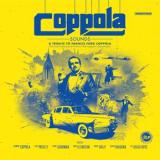
Mit Music From The Films Of Francis Ford Coppola erscheint eine sorgfaltig kuratierte Doppel-LP, die die unverwechselbare Klangwelt eines der einflussreichsten Regisseure des modernen Kinos wurdigt. Von Der Pate uber Apocalypse Now bis hin zu The Conversation und The Outsiders vereint diese Sammlung Musik aus Filmen, die das amerikanische Kino seit den 1970er Jahren nachhaltig gepragt haben. Die Zusammenstellung zeigt eindrucksvoll, wie entscheidend Musik fur die emotionale Wirkung von Coppolas Filmen war. Neben den Kompositionen von Carmine Coppola finden sich Aufnahmen von Kunstlern wie Buddy Holly, The Beach Boys, Elvis Presley oder Richard Wagner. Die Doppel-LP beleuchtet das Zusammenspiel von Bild und Ton und richtet sich gleichermaßen an Filmfans, Soundtrack-Sammler und Liebhaber klassischer Filmmusik.
There is a hush most of us only knew as children, the warm drift between familiar household sounds and being carried to bed, a place that belongs to you and to some self you have not met yet. June McDoom’s debut full-length, Follow the Light, lives in that dream space and then keeps walking, slipping out of time and waking somewhere new, barely familiar enough to feel like home yet wholly your own. She came up in a Jamaican household on the edge of the Florida Everglades, an existence built of extended family, communal care, bass and harmonics. Her father, a carpenter and a student of sound, built his own speakers and kept three sound systems going across as many rooms. His low end would rise through her bedroom floor like some wayward cat while she lay above it with folk records, finding harmonies that were new and hers alone. Two musics in one room. Lushness as past and premonition. She found folk on her own, somewhere between the cast recording of The Sound of Music and Simon and Garfunkel, while everyone around her called it sleepy music. She did not mind being the only one. The solitude let her fall for harmony first, before words, before anything else, and harmony is still the thing she reaches for. Generationally speaking, the music was already in the air. Her grandfather, Colin Smith, is a distinguished mento man who played banjo and guitar and built his own rumba boxes, worked to keep Jamaica’s oldest acoustic folk form alive. Mento is the root of all of it: ska, rock steady, reggae, dub and everything after. He is the one who put a guitar in her hands. An inheritance, a gift and a map. Even her name is part of it, though she will tell you she landed on it more by feel than reason. She records as June McDoom, born Alyssa, June being a nickname one of her grandmothers, Joan, went by, a name she thought was cool to carry and simply liked the sound of. An etheric channel that reverberates all the same. A dub all its own.
Made slowly and by hand with her longtime partner Evan Wright, Follow the Light lays the harmony of folk over the rhythm of dub, with Dionne Warwick, Minnie Riperton, Pentangle and the washed guitars of Cocteau Twins haunting its outer edges. Voice and guitar seeking each other out first, then everything else stacked across long days in the studio they keep at home, restraint kept on purpose. The lead single “Without You” is the whole method surfacing, split open and sparkling like a geode in a creek bed. Angelic heroics, and nothing less.
At the heart is family. Her grandmother Aggie, the light behind “Memory,” guiding still. And underneath, the quieter truth the record keeps: none of us are only one person, but a continuum of selves, the ones who shaped us and the ones we have yet to meet. Future you is an ancestor your current self gets to greet. Press play and the same invitation is yours: A few minutes out of time, a place that turns familiar the longer you stay until you surface somewhere new and find it was yours all along
There is a hush most of us only knew as children, the warm drift between familiar household sounds and being carried to bed, a place that belongs to you and to some self you have not met yet. June McDoom’s debut full-length, Follow the Light, lives in that dream space and then keeps walking, slipping out of time and waking somewhere new, barely familiar enough to feel like home yet wholly your own. She came up in a Jamaican household on the edge of the Florida Everglades, an existence built of extended family, communal care, bass and harmonics. Her father, a carpenter and a student of sound, built his own speakers and kept three sound systems going across as many rooms. His low end would rise through her bedroom floor like some wayward cat while she lay above it with folk records, finding harmonies that were new and hers alone. Two musics in one room. Lushness as past and premonition. She found folk on her own, somewhere between the cast recording of The Sound of Music and Simon and Garfunkel, while everyone around her called it sleepy music. She did not mind being the only one. The solitude let her fall for harmony first, before words, before anything else, and harmony is still the thing she reaches for. Generationally speaking, the music was already in the air. Her grandfather, Colin Smith, is a distinguished mento man who played banjo and guitar and built his own rumba boxes, worked to keep Jamaica’s oldest acoustic folk form alive. Mento is the root of all of it: ska, rock steady, reggae, dub and everything after. He is the one who put a guitar in her hands. An inheritance, a gift and a map. Even her name is part of it, though she will tell you she landed on it more by feel than reason. She records as June McDoom, born Alyssa, June being a nickname one of her grandmothers, Joan, went by, a name she thought was cool to carry and simply liked the sound of. An etheric channel that reverberates all the same. A dub all its own.
Made slowly and by hand with her longtime partner Evan Wright, Follow the Light lays the harmony of folk over the rhythm of dub, with Dionne Warwick, Minnie Riperton, Pentangle and the washed guitars of Cocteau Twins haunting its outer edges. Voice and guitar seeking each other out first, then everything else stacked across long days in the studio they keep at home, restraint kept on purpose. The lead single “Without You” is the whole method surfacing, split open and sparkling like a geode in a creek bed. Angelic heroics, and nothing less.
At the heart is family. Her grandmother Aggie, the light behind “Memory,” guiding still. And underneath, the quieter truth the record keeps: none of us are only one person, but a continuum of selves, the ones who shaped us and the ones we have yet to meet. Future you is an ancestor your current self gets to greet. Press play and the same invitation is yours: A few minutes out of time, a place that turns familiar the longer you stay until you surface somewhere new and find it was yours all along
Wewantsounds it delighted to announce a deluxe reissue of Frank Foster's 'The Loud Minority' LP. Released on Bob Shad's Mainstream Records in 1972, it's a landmark album and one of the key political works of the 70s. Featuring an all-star cast of superb musicians including Elvin Jones, Stanley Clarke, Airto, Cecil Bridgewater and Marvin 'Hannibal' Peterson, it is also Dee Dee Bridgewater's earliest full recordings. This special edition includes a 20-page booklet featuring amazing unseen session photos recently unearthed, an introduction by Judd and Mia Apatow (Shad's grandchildren), an essay by British journalist Kevin Le Gendre and an exclusive interview of Cecil and Dee Dee Bridgewater by Paul Bowler. The album's original artwork as been recreated with original photos and the audio newly remastered from the original tapes.
When he recorded "The Loud Minority" in 1972 for Bob Shad's Mainstream Records, Frank Foster had been a solid sax player for nearly twenty years, playing with the likes of Donald Byrd, Thelonious Monk and The Count Basie Orchestra. For this special session, he gathered a stellar line up of old fellow musicians like Elvin Jones and Harold Mabern and young turks including Stanley Clarke, 'Hannibal' Marvin Peterson, Cecil and Dee Dee Bridgewater. Cecil Bridgewater remembers: "Frank, his thing was, any group that he had he wanted to give young musicians a chance." As usual for Mainstream sessions, the studio was booked for two days and the record was cut live, supervised by Bob Shad's trusted men, arranger Ernie Wilkins and engineer Carmine Rubino.
What came out of these two days is now the stuff of legend, four long funky jams fuelled by two distinct line ups playing simultaneously augmented with a powerful 6-piece brass section led by Foster. The album kicks off with the anthemic "The Loud Minority" (sampled by United Future Organization and DJ Shadow) with its long brass introduction followed by Dee Dee Bridgewater fiery poem, a politically charged statement expressing the fight for civil rights, before the whole group comes together for a funky explosion clocking at 14 minutes. "That was a period where we were really into our African consciousness" reminisces Dee Dee in the interview.
The album continues with the funky uptempo "Requiem for Dusty" while "J.P.'s Thing" adopts a slightly more spiritual feel, with a beautiful Fender Rhodes solo and Foster's soprano sax improvisation. The album ends with "E.W. Beautiful People", a long dreamy improvisation climaxing with Dee Dee Bridgewater's poignant vocals.
The Loud Minority is a key militant jazz manifesto and one of the landmark jazz funk albums of the 20th Century. The album was recorded in two days but its legacy lives on and still resonates loudly in the BLM days. Wewantsounds is delighted to reissue this major works with newly remastered audio and a deluxe 20-page booklet full of breathtaking unseen session photos and insightful texts telling the whole story of this superb album.