Mucha, AKA Amanda Butterworth presents a stunning double header for Frequency Domain's tenth birthday release. But when up against one of the most thoughtful, precise, yet loose and rave inducing producers in the history of synthesisers, there was only ever going to be one opening point being made here. Surgeon's remix is typically essential for any techno fan. So while the original 'Skin' is this patient, rhythmic but beat-less slice of post- (or pre-)club stuff, full of ecstasy moods and comedown overtures, Surgeon's take refocuses us on the repetitive vocal patterns and slaps a wonderful compelling broken kick underneath to create a proper dancefloor builder. B-side 'You Make Me Go Under' goes for a neo-Bjork style IDM leaning piece, which then gets a moody, apocalyptic Datassette cut to top off an exceptionally strong package. Buy it. Buy it now.
Suche:mucha
Für Maria Raquel gibt es keine Angst, wenn es darum geht, ihrer Leidenschaft zu folgen. Ob sie nun von Kolumbien nach New York zieht, um ihrem Traum zu folgen, oder ob sie mit den Größen der lateinamerikanischen Musik auf der Bühne steht, Maria kennt keine Bedenken. Auf ihrem Debütalbum 'Mucha Mujer' taucht Maria kopfüber in die klassischen Klänge von Boleros und Cumbias ein und bringt ihre rauchige Altstimme inmitten eines 16-köpfigen Live-Orchesters aus Perkussion, Streichern, Bläsern, Bass und Gitarre zur Geltung. Das Album besteht ausschließlich aus Eigenkompositionen und wurde auf analogem Band aufgenommen. Es erinnert an klassische Aufnahmen von Künstlern wie Omara Portuondo, Celia Cruz und La Lupe, doch Maria Raquel haucht diesen klassischen Genres neues Leben ein - die eindringliche Sehnsucht der Boleros kontrastiert mit der pulsierenden Beharrlichkeit der Cumbia. Mit einigen der besten Latin-Musiker New Yorks wie Reuben Rodriguez (Tito Puente), Marcos Lopez (Marc Anthony) und Ivan Renta (Eddie Palmieri), arrangiert und produziert von Mike Eckroth (Orquesta Akokán) und Jacob Plasse (Los Hacheros), stellt Mucha Mujer der Welt ein fesselndes neues Talent vor.
After More Than A Decade Turning Knobs Around Colombia, Gladkazuka Delivers His First Solo 12": Mucha Pimienta. Across Four Tracks, The Medellín Producer Displays The Lose, Genuine, Take On Machine-driven Funk And Electro That Earned Him The Reputation As An Essential Artist Of The South American Circuit. A Collection That Speaks Loudly For An Otherwise Reclusive Artist, This Record Provides Rare Insight Into One Of Colombia's Most Lauded Performers.
Indian Summer of Love finds The Bongolian immersed in a new set of sounds and influences for a new Belle Epoch. It’s a musical landscape informed by the Sixties psychedelia of India via a Haight Ashbury happening.
It’s a kaleidoscopic vision that takes us from a 20th century Fin de Siècle and lands us in the here and now of the 21st Century. It’s for dancers, for seekers and is all underscored by The Bongolian’s trademark heavy rhythms and breaks. It’s another fine instalment of essential cuts for the dancefloor and for high fidelity listening, quality is guaranteed.
From the East to the West, welcome to the Indian Summer of Love. Nasser Bouzida performs drums, percussion, guitars and keys whilst the album features several new flavours to the Bongolian sound with the prominent instrumentation of sitars and bansuri, along with flute, trumpet, saxophone and trombone performances from several stellular international guest musicians.
- A1: Fruko Y Sus Tesos - El Vidriero
- A2: Climaco Sarmiento Y Su Orquesta - Guiro Y Guacharaca
- A3: Afrosound - El Regresso De E.t
- A4: Los Corraleros De Majagual - Cumbia Campesina
- A5: Wganda Kenya - Shakalaode
- B1: Afrosound - La Sampuesana
- B2: Peregoyo Y Su Combo Vacana - Descarga Vacana
- B3: Fruko Y Sus Tesos - Salsa Na Ma
- B4: Wganda Kenya - Fiebre De Lepra
- B5: Latin Brothers - Duelo De Picoteros
- C1: Pedro Laza Y Sus Pelayeros - Navidad Negra
- C2: Afrosound - Carruseles
- C3: Los Alegres Diablos - La Magdalena
- C4: Latin Brothers - No Es Negra Es Morena
- D1: La Sonora Cienaguera - La Piojosa
- D2: Fruko Y Sus Tesos - Cantando Mi Son Muero
- D3: Juan Piña Y Sus Muchachos - La Nena
- D4: Afrosound - La Danza De Los Mirlos
- D5: Michi Sarmiento Y Su Combo Bravo - Salsa Con Monte
- D6: Conjunto Lirico Vallenato - Cumbia Cienaguera
Soul Jazz Records delve into the vast vaults of Discos Fuentes, one of the oldest and largest record companies in Latin America, known as "the Motown of Colombia". Discos Fuentes played a major role in spreading Afro-Latin sounds both to Colombia and around the world and this album explores that legacy. Latin Fire! features legendary Colombian artists such as Fruko, The Latin Brothers, Michi Sarmiento, Afrosound, Pedro Laza, Wganda Kenya and more and showcases the wide-ranging variety of styles that Discos Fuentes made unique to their sound. The album features music from the golden era of Fuentes; from late 50s and 1960s Cumbia through to the emergence of heavyweight and hardcore salsa and Afro-funk in the 1970s and up to the early 1980s.
Mexican enfant extraordinaire Iñigo Vontier is rolling in with his debut EP for Feines Tier and it’s a match made in heaven. Just judging on the name alone, as he seems to be from some kind of royal Tier family descent. But enough with the mind-numbingly bad puns and on to some brain-meltingly good music.
Rolling. Everything’s rolling. Zongato is rolling. We don’t know who or what a Zongato is (a Google search just led to a Twitch streamer with that name and 0 followers), but they are definitely rolling. It’s got this special combination of straight and uncompromising beat and bass paired with psychedelic synth sirens floating around your head that somehow only the Mexicans really know how to nail.
Astrolo is rolling. Like a well-oiled machine. Well, maybe like a not so well-oiled machine, one that’s shrieking and creaking, but has been running since forever and reliably will do so until we’re all gone from this Earth.
If you ask Google Translate, Mucha Onda means „very cool“ in English, „molto bello“ in Italian or „valde frigidus“ in Latin and there is nothing more to add to that.
The psychedelics are back (were they ever gone?) and kick in in full swing on Hedonist Lizard. A dangerous cocktail of high-proof alcoholic drum and bass patterns paired with some sugary spicy herbals of unknown origin, better not down it in one go. You were warned.
On The Sounds Are Good, the sounds are good indeed! And rolling.
Joel “Pibo” Márquez is a renowned Venezuelan percussionist, who specializes in salsa and Latin jazz. He has been part of projects of artists such as Chico Free-man, Arturo Sandoval, David Valentin, Dominic Miller, Cheick Tidiani Seck, Juanes, Alfredo De La Fe, Guayacán Orquesta and Aterciopelados. 5to Aniversario
This album draws inspiration from the sounds of 1970s New York salsa and en- gages with the contemporary language of Colombian salsa. Featuring a four-trombone arrangement, it showcases solo performances and musical inter-ludes. The album also includes collaborations with prominent figures in today's salsa scene, such as Ray Bayona, Eliazar Medina, Marcial Istúriz, and Wason Bra-zobán, among others.
Danger! High Voltage Music!
Reality is overwhelming. The future remains a big question mark while the present seems to be increasingly crude, twisted and bleak. Inevitably witnessing and feeding off this malaise, Bruno presents "Quemando Iglesias," an EP born in the vertiginous years of 2020 and 2021. It will be the first of many manifestos that Desencanto will have to deal with the disillusions of today's world: political, social, economic and also those left by old loves.
Gente Seria Viste Chándal ataca de nuevo con el Volumen 7, esta vez con motivo del supercoche Renault 5 Copa Turbo. Como siempre, motivos que hemos vivido en nuestros barrios.
En el Vol. 7 encontrarás 6 cortes de puro electro, que van desde el New Old School hasta el sonido más espacial o contundente, con un guiño/homenaje a los padres de todo esto: los robots alemanes.
Da Vektah_ Chandalwerk – No hace falta decir nada más; solo con escuchar, lo entenderás. Todo un homenaje a Kraftwerk.
Sace2_ La malla (The Mesh) – Un grande del New Old School, con una canción cargada de ritmos electro-funk, voces con pitch y mensaje directo.
David Pasajero_ The Knight of the Revolution – Canción combativa y muy espacial que invita a coger la nave y viajar por el universo musical.
Carlos Native_ Sculpture – Temazo con subgraves que te penetran hasta el fondo de la médula. Delays, leads y pads y voces místicas… todo un rompe-pistas.
Slit Observes_ Biodex – Este dúo gallego nos entrega un tema contundente y pistero, con bajos punzantes y mucha mala leche. Este dúo promete.
Gerard Braions & The Bandit_ Cortocircuito en la ciudad – Toda una declaración de intenciones. Electro-rap que promete ser (y será) un nuevo himno para nuestra escena.
“Si no escucho electro me da ansiedad”. The Bandit y Gerard Braions lo han vuelto a hacer.
- A1: La Muchacha Y Santiago Navas – No Me Toques Mal
- A2: Gato 'E Monte – Cumbia Fumanchera
- A3: Conjunto Media Luna – Cumbia Providencia
- A4: Felipe Orjuela – Manos Limpias (Cuentas Claras)
- A5: Mau Gatiyo – Telekinea
- A6: Las Hermanas – Laura Palmer
- A7: Karen Nerak Y Cristal Prodigia – Pa La Calle
- B1: Briela Ojeda – Doña Justicia
- B2: Julián Mayorga – La Gente Que Yo Conocía Toda Se Está Muriendo
- B3: Mariscos - Garotinha
- B4: Buha 2030 – Dolor Internacional
- B5: Los Clamores – Insectos De La Asamblea
- B6: Zarigüeya – El Arriendo
- B7: Ana Mariía Vahos – Los Días
In-Correcto 15–25 marks the first vinyl compilation by Bogotá’s independent label InCorrecto, created in collaboration with Austrian imprint discos elgozo. Celebrating ten years of sonic exploration and creative resistance from the Global South, this special edition brings together a vibrant constellation of artists that define the label’s sound: La Muchacha, Ana María Vahos, Felipe Orjuela, Mau Gatiyo, Conjunto Media Luna, Briela Ojeda, Zarigüeya, Buha 2030, and many more. Between mutant cumbia, Latin American folk, introspective electronics, and borderless sonic experiments, 15–25 is both a party and a statement: a manifesto of the in-correct as an artistic and collective force.
Since 2015, In-Correcto has grown from a cultural magazine into one of Latin America’s most vital independent hubs, operating as a record label, publishing house, and creative collective. With more than 160 releases ranging from punk and ambient to trip-hop and experimental cumbia, the label has supported a generation of artists whose work is as socially engaged as it is sonically daring. Through compilations, anniversary concerts, and political projects, In-Correcto has solidified its reputation as a catalyst for collaboration, solidarity, and cultural cross-pollination in Bogotá and beyond. Based in Vienna with roots on Colombia’s Caribbean coast, discos elgozo shares this vision. Founded in 2024, the label works with Colombian artists and their diaspora, releasing music that fuses ancestral knowledge, queer-feminist expression, sonic experimentation, and joy as a political force—as a way to resist cultural erasure, reactivate traditions, and recover collective vitality. Its catalog spans salsa brava, bullerengue, psychedelic cumbia, and experimental jazz, with a strong focus on vinyl as an act of listening, memory, and resistance.
Carefully pressed, In-Correcto 15–25 is more than a record: it is a bridge between Bogotá’s underground and a global network of listeners. A sonic archive and an invitation to dance, it reaffirms that joy, experimentation, and community remain powerful tools to imagine the world otherwise.
- A1: Burning Man Of Calcutta
- A2: Master Blaster Tendulkar
- A3: Nehru Jacket Required
- A4: Indian Summer Of Love
- A5: Kathakali Eye Dancer
- B1: Acid Test Angel
- B2: Baadshar Of Bollywood
- B3: Mucha Mushroom Man
- B4: Beyond The Perfumed Garden
- B5: Human Be In
- B6: Farewell To Varanasi
Black Vinyl[23,32 €]
Indian Summer of Love finds The Bongolian immersed in a new set of sounds and influences for a new Belle Epoch. It’s a musical landscape informed by the Sixties psychedelia of India via a Haight Ashbury happening.
It’s a kaleidoscopic vision that takes us from a 20th century Fin de Siècle and lands us in the here and now of the 21st Century. It’s for dancers, for seekers and is all underscored by The Bongolian’s trademark heavy rhythms and breaks. It’s another fine instalment of essential cuts for the dancefloor and for high fidelity listening, quality is guaranteed.
From the East to the West, welcome to the Indian Summer of Love. Nasser Bouzida performs drums, percussion, guitars and keys whilst the album features several new flavours to the Bongolian sound with the prominent instrumentation of sitars and bansuri, along with flute, trumpet, saxophone and trombone performances from several stellular international guest musicians.
Durango 95 releases his new album on Discos Tabú. He shares with the world his unique sound which has been in the works for years. This album tells a personal story, inspired by remote places in Mexico and the roots of all its traditions; with a synergy of chaos and order. An inner fight between man and wolf in a remote place, in another time. There is a strong connection between the stories of the of land, his personal experiences and a journey through sintheseizers that gave life to Durango’s music. As Robert Moog; one of the most important pioneers of sinthesis once said. 'Everything has some consciousness and we tap into that. It is about energy at its most basic level.' This is an important philosophy behind Vamonos Muchacho.
The vinyl is a collaboration between two indie labels KXNTRAST and U JAZZ ME.
The record was pressed on 180g vinyl with printed innersleeve.
HER NAME WAS YUMI is the title of hoshii's second studio album, created by saxophonist Kuba Więcek in late 2022. On this album, the musicians deliberately free themselves from the burden of European music genres, exploring sounds that carry a spark of hope and a free spirit. In the musical layer, they focus on deep synthesizer basslines, intensification of electronic sounds and an extensive layer of samples, redefining their approach to composition.
The album title refers to YUMI (夢美 - from Japanese "beautiful dream") - a friend of hoshii who brings him to Earth when he feels tired of life on the distant planet Versus. However, even among earthly sounds, loneliness becomes inevitable. At the right moment, YUMI, overcome with longing, decides to fly and find her friend.
HER NAME WAS YUMI is a musical journey full of experiment, freedom and a new sonic identity. The album shows hoshii in a new version - even more conscious, bold and not limited by genre frames.
Kuba Więcek - alto saxophone, electronics
Grzegorz Tarwid - synthesizers
Max Mucha - bass guitar, synthesizers
Miłosz Berdzik - drums, glockenspiel
In the Andes of Peru, in a valley formed by the Huallaga River, lies the city of Huanuco. There, a little over fifty years ago, the emblematic cumbia band Los Darlings de Huánuco was born, and since then their compositions have gone around the world, bringing their homeland to the ears of music lovers and collectors. Adversities kept them away from music for two decades, but in spite of this, they marked a parallel path and created their own history in the maximum splendor of Peruvian cumbia. In a valley formed by the Huallaga River lies a temperate land located on the eastern slopes of the central Andes of Peru: Huánuco. A little more than seventy years ago, in that land of mountains and starry skies at almost 2,000 meters above sea level, Juan Nájera was born. A multifaceted musician by profession, he did not always have the privilege of being able to dedicate his life to music. For almost ten years he ran a family hardware store in Huánuco and then a mechanic shop on La Marina Avenue in Lima. He was also a truck driver. A decade of military dictatorships in Latin America made the artist's path very hard in the region, and Peru was no exception. Nájera was only nineteen when his first son was born. He had to make a living and the possibilities for entrepreneurship were slim. But if we go back in history, Juan Nájera was, first and foremost, a boy who dreamed of becoming a musician. Later, he was a boy who made it. Los Darlings de Huánuco managed to cross borders, not only in the capital of Peru, but also abroad. There are many collectors and music lovers around the world who seek and appreciate their songs, musical gems that have toured different latitudes and have managed to position this band from the Peruvian countryside in the most remote places on the planet. In a country characterized by its centralism, where opportunities in the countryside are much scarcer than in the capital, where the foreigner is greeted with more warmth than the local, and where getting ahead, especially in the musical field, implies an extraordinary effort, Los Darlings de Huánuco managed to take their sound to where they never thought it would be possible. From the Andes to the skyscrapers, from the heart of Huánuco to the immensity of other continents.
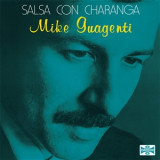
- Salsa Con Charanga
- Sonaremo El Tambo
- Delirio
- La Peluca
- La Puerta Del Dolor
- A Los Muchachos De Belén
- Ensaya Chamaco
- El Tibiri Tabara
"Salsa con charanga" is really a feast for all salsa music lovers, a true jewel, which deserved much better when it originally came out in 1978. In addition to being a great salsa album, has the distinction that was released on Orfeon, a Mexican record label, due to the diligent work of the extraordinary producer Bobby Marin, and which miraculously received air play when powerhouse Fania label and few others ruled radio in the salsa music world. It comprises eight great, solid tracks; some, new interpretations from other albums in which Mike Guagenti participated with his handsome and captivating voice - a crooner with a salsero soul -, that, at times, could remind us of the late Tito Rodríguez, and even Ray Ramos. "The Mike Guagenti album," as indicated by Marin, "is a compilation of recordings by other artists. Originally a salsa album, I brought in Cuban Pupi Legarreta (violin and flute) and [Panamanian] Mauricio Smith (flute) to give it a charanga sound." With the exception of the cut 'Salsa con charanga,' which is an instrumental, the rest feature vocals by Guagenti. "Salsa con charanga" has developed a cult following, and finding a copy of the original could be quite expensive. Luckily, this officially licensed and restored edition will fill that void.
Marina y su Melao is a band from Barcelona led by Puerto Rican Marina Molina. After a period of live activity, in 2025 they will release their debut album, "Rezo al agua", where Puerto Rico's bomba, an eminently rhythmic genre, expands to fuse with the colours and flavours of other Afro-Caribbean sounds. Tradition and folklore are embodied in a powerful and innovative conception.
In "Rezo al agua", Marina Molina expresses an attachment to the land, the landscape, the culture, the beliefs and the environment where she was born, Puerto Rico. She does this through bomba, one of the country's most identifying musical expressions. Bomba is as old as the slavery of those who gave birth to it in order to tell their tribulations and hopes, armed with the instrument they had at hand: the drums. It is a kind of meta-genre that includes a multitude of rhythmic varieties.
But Marina is something more than bomba, the legacy she received from her elders and which she does not wish to turn into a frozen object of veneration, an untouchable totem, mystical and ruled by norms bequeathed by the years. Marina, who has Colombian blood in her veins, is an artist of today, of a world in which cultures can mix, people migrate, influence each other, travel, exchange their cultural traces, can see online what happens at the other end of the world and thus open the window that facilitates the mixing of identities. These mixtures redraw borders and genres, allowing popular music to avoid its fossilization.
Marina grows in this fertile territory. She has a ductile and powerful voice, as clear as her strong, independent mindset. This is a remarkable element in the lyrics of the album, which despite being written from a current perspective, contain the sense that popular lyrics have always had: they explain life with the small letters of the everyday. And all this is presented in the bomba genre. Impure. There is an African guitar, a pedal steel guitar, a Wurlitzer, an accordion and everything that Marina and Miguelito Superstar, the album's producer, thought was necessary to accentuate the musicality of a full voice and drums that resonate raw with the vibration of tradition. A tradition now in the hands of a woman who aspires to her own space in life, to write her own chapter.
- Sun Arise! (An Invocation/An Introduction) (Live)
- A New Anhedonia (Live)
- Terror In The Canyons (The Wounded Master) (Live)
- The Quotidian Beasts (Live)
- Tell Me Baby (Have You Had Enough)(Live)
- Nothing Was Stolen (Love Me Foolishly) (Live)
- Dead Heart (Live)
- Down To Go (Live)
- Song For Zula (Live)
- Ride On/Right On (Live)
- A Picture Of Our Torn Up Praise (Solo, Live)
- Muchacho's Tune (Solo, Live)
- Wolves (Solo, Live)
- Joe Tex, These Taming Blues (Live)
- Los Angeles (Live)
- A Picture Of Our Torn Up Praise (Live)
- South (Of America) (Live)
- Wolves (Live)
- At Death, A Proclamation (Live)
Opaque Gold Vinyl. Recorded over four nights at The Music Hall of Williamsburg, this triple LP is a veritable best-of from a band at the height of their performative powers. Featuring scorching renditions of the best-loved songs of the Phosphorescent catalog, from Los Angeles to Song for Zula, Phosphorescent delivers a live album for all-time. Comes with album download.
- A1: Corazón Contento
- A2: Mi Pequeña Estrella
- A3: Tómbola
- A4: Lavanderas De Portugal
- A5: Estando Contigo
- A6: Carnaval En La Pampa
- A7: Una Nueva Melodia
- B1: Rumbita
- B2: Bossa Nova Junto A Ti
- B3: Cabriola
- B4: Hay Quién Dice De Jaén
- B5: Ola, Ola, Ola
- B6: Chiquitina
- B7: Me Conformo
- B8: Amor Y Juventud (Wakaite Subarashi)
- C1: Tiene La Tarara
- C2: Colores
- C3: Dos Unidos
- C4: Yo A Ti También
- C5: La Boda
- C6: Ya No Me Importas Nada
- C7: No Me Quiero Casar
- D1: Ay Vagabundo
- D2: Muchachita Mary
- D3: Aquel Verano
- D4: Mamy Panchita
- D5: Ven, Ven (Rain, Rain, Rain)
- D6: Háblame Del Mar, Marinero
- D7: Balada Para La Soledad De Mi Guitarra
- A1: Juan Piña Y Sus Muchachos - Toquen Cumbia
- A2: Los Corraleros De Majagual - La Pollera Colorá
- A3: Aníbal Velásquez Y Su Conjunto - La Negra Celina
- A4: Cumbia Cipote Vaina - Soledad
- A5: Calixto Ochoa Y Su Conjunto - Recordando El Pasado
- A6: Lucho Campillo Y Su Conjunto - Me Dejaste Solo
- B1: La Sonora Del Caribe - Gaita Colombiana
- B2: El Sexteto Miramar - Cumbiamba
- B3: Pello Torres Y Sus Diablos Del Ritmo - Lucy
- B4: Combo Los Galleros - Suena La Timba
- B5: Los Guacharacos - Baila Rosita
- B6: Combo Sampuesano - Cumbia Monterian
- C1: Conjunto Típico Vallenato - Cumbia Sampuesna
- C2: Pedro Laza Y Sus Pelayeros - Esperma Y Ro
- C3: Andrés Landero Y Su Conjunto - La Pollera Rosada
- C4: Los Golden Boys - Se Trabó La Banda
- C5: Orquesta Nuñez - La Samaria
- C6: Los Candelosos - Cumbia De Amores
- D1: Morgan Blanco Y Su Conjunto - Cumbia De Colombia
- D2: Pacho Galán Y Sus Sabaneros - Caracoleando
- D3: Los Gavilanes De La Costa - Lorenza
- D4: Las Estrellas De Tolú - Cumbia Al Amanecer
- D5: Los Warahuaco - El Pescador De Barú
- D6: Rodolfo Aicardi Y Su Tipica Ra7 - La Colegiala
A selection of 24 Colombian cumbia bangers for the dance floor from the deep vaults of Discos Fuentes, the most emblematic and best remembered label in the golden age of the genre. An invitation to enjoy and be amazed, above and beyond ethnographic and academic concerns. Double LP. The historical origins of cumbia in Colombia are nebulous and imprecise. The mythology surrounding it suggests an ancient past when Amerindian, African and European musical sounds were mixed together. The main record companies in Colombia such as Discos Fuentes, Discos Tropical, Sonolux, Zeida-Codiscos, Silver, Ondina, Discos Atlantic, Vergara and Curro were created between Barranquilla, Medellín, Cartagena and Bogotá from 1936 to 1954. All of them, without exception, recorded Colombian tropical music that over the years was given different names such as porro, gaita, fandango, paseaito, merecumbé, mapalé, bullerengue or, of course, cumbia. This first volume in the series “Cumbia Cumbia Cumbia!!!” comprises 24 Colombian cumbia bangers for the dance floor from the deep vaults of Discos Fuentes, the most emblematic and best remembered label in the golden age of the genre. This is complemented by a selection of cumbias recorded by the label Discos Tropical, which sold most of its catalog to Discos Fuentes in 1990. Discos Fuentes concentrated on recording cumbias played on the accordion and by orchestras and ensembles. The label produced a prodigious number of albums devoted to cumbias between 1962 and 1979, which served to define ambiguous stereotypes, rooted as much in authenticity and modernity as in demure sensuality and joyful nostalgia. “Cumbia Cumbia Cumbia!!!” combines well-known classics and rarities that are difficult to find in their original formats. An invitation to enjoy and be amazed, above and beyond ethnographic and academic concerns.
Leonardo Del Vita and vocalist Sabrina Anselmi, epitomized the sun-soaked italo grooves of the 1980s. This short-lived group unleashed only a handful of singles between 1985 and 1988.
Their debut single, “Sombrero” surfaced in 1985 as a promo-only 12” on the Roman label LGO, in exceedingly limited quantities, garnered relatively little attention.
Fast forward nearly four decades, it has become one of the most coveted Italo 12”s, fetching exorbitant sums in collector’s circles.
“Sombrero” stands out among aficionados of obscure Italo-disco, embodying a distinct vein: that of summer-themed tracks. With its tantalizing blend of airy arpeggios, Juno 60 synth lines and bass, punchy percussions adorned with claps, DX 7 cowbells and a seductive saxophone solo. “Sombrero” has it all to seduce new discerning listeners, also thanks to the infectious alternating vocals in English and Spanish, featuring hilariously sultry hooks such as “Te quiero, Sombrero!” or “I love muchachas!”
Disco Segreta fulfils another Italo disco dream by reissuing this absolute gem for a broader audience, presented in a meticulously remastered 12” edition featuring the original vocal and instrumental versions, along with the stellar “Estate Dub” by the Chilean-Swedish maestro of Italo-disco, Claudio Burgos, aka Mr. Fantasy, which we are sure will become an absolute dance classic.
Sombrero, te quiero!
The self-titled “Orquesta Olivieri” was originally released in 1972, just when the Fania Records revolution and the explosion of salsa music, was reaching its peak. Very few copies were distributed at the time. Produced by boogaloo-don Bobby Marin, the album comprises a variety of Latin rhythms, including the much in-demand vocal harmonies-led ‘There is No Other Girl,’ a lowrider soul gem. Side A opens with the slow-paced Latin soul song ‘There is No Other Girl’, that style-wise connects to their previous LP, released when the boogaloo trend was still around. In fact, this song had been previously released two years earlier on a 45 and was then overdubbed (adding an organ on top) for this LP version. The song is very much in demand these days in the lowrider soul scene due to the breath-taking vocal harmonies and appealing production. The album also comprises spicy guaguancós on ‘Cuando llegué a Borinquen’, the classic ‘Los Muchachos de Belén’ and ‘Tabaritiando’. There is also room for a cha-cha-chá, ‘María Isabel, and a guaracha ‘Perrito sabueso’, and the album closes with the Latin soul ballad ‘Preferí perderte,’ interpreted in Spanish. First time official reissue.
Hard salsa with rocking tropical electric guitar! Príncipe's 1967 debut album, featuring powerful Afro-Latin rhythms like guaguancó and pachanga played with youthful exuberance and originality. Truly unique sound from the dawn of salsa in Venezuela. Príncipe y Su Sexteto, from Caracas, Venezuela, were early pioneers of "salsa con guitarra eléctrica" (salsa with electric guitar), a subset of the salsa genre where the electric guitar is the main melodic rhythm instrument, often taking the spotlight in place of the piano and brass section. They were the perfect combination arriving at the right moment, when salsa spontaneously emerged as a new musical movement coming from working-class youth of the barrios in Caracas. All the compositions are original to the band, and hold up really well more than 50 years later. Though the arrangements and playing are deceptively simple, the effect is both mesmerizing and energizing, like early rock 'n' roll fed through a Caribbean filter. This first time reissue has been remastered directly from the original tapes and licensed from Discomoda. With in-depth liner notes it has also been augmented by three smoking bonus tracks that were never released during Príncipe y Su Sexteto's existence as a band. 180g vinyl.
A Dream Team of folclóricas covering the wide spectrum of African-American influenced 1970s dance music spiced with flamenco. The hits of Isaac Hayes, Billy Preston or The Temptations in the charts showed the way to go. An almanac for 20th Century Rosalías headed by Lola Flores, Isabel Pantoja, Rocío Jurado and a bunch of female singers, copleras, cantaoras and rumberas. A black and white lysergic dream amidst post-Franco’s Spain. Stick your ears to the speakers. Here comes an emotional rollercoaster!
Antes de presentarte esta novedad, hay que entender que en la segunda mitad de los años setenta, algo estaba cambiando en la escena musical. Los grupos musicales estaban en su auge hasta que llegó la llamada al servicio militar obligatorio. Entonces, todo el mundo volvía de él sin sus largas melenas y sin dinero. Los baladistas sin personalidad tomaban el control de la música, según lo dictado por las discográficas. Es entonces cuando las copleras, cantaoras y rumberas se convierten en la respuesta necesaria para combatir la insípida melosidad. A pesar de un contexto sociocultural desfavorable, arreglistas y productores invertían horas de sueño para revivir un sonido que estaba al borde de la extinción. A pesar de los cambios que haya podido haber desde entonces, el más significativo es que ahora la inmediatez digital dicta el rumbo.
Es por toda esta importancia que finalmente ha llegado un álbum que reúne a un elenco de folclóricas en una combinación única, fusionando el concepto del groovy funk; con canciones que abarcan todo el espectro afroamericano de la música de baile de los setenta, con toques de gritos y susurros aflamencados que le dan un giro impresionante. Podríamos considerarlo el álbum destacado de las Rosalias del siglo XX, una especie de viaje lisérgico en blanco y negro a la España de la posfranquista. Con su hiperrealismo revolucionario, este disco nos ofrece a una una estirpe de artistas sin igual.
En este encontrarás las joyas ocultas de artistas como Flores, Pantoja, Jurado, Polaca, entre otras. Aunque se mantuvieron fieles a sus estilos, todas ellas fueron famosas por otras facetas de sus extensas discografías, y muchas incluso aparecieron en la portada de Interviú en más del cincuenta por ciento de los casos, como las feministas de los años setenta según Francisco Umbral.
The concept behind the debut album by Neapolitan producer Paolo Petrella, (also known for Fratelli Malibu, SuperMegaFuckinMachine, and Nu Genea's live band bass player) is both straightforward and unparalleled. It involves re-imagining Renato Carosone's iconic hits infused with the vibrant essence of Cumbia. An original and fresh perspective of the history of Napoli, re-thinking traditions while blending cultures, like an imaginary colony of South Americans living in Napoli’s fishermen neighborhood of Santa Lucia.
Cumbia Luciana sounds like the manifestation of a dream, as the poem on the liner notes recites:
“It's 3pm in the afternoon, the sea is calm and there are some clouds in the sky from time to time the sounds of mopeds can be heard in the street. A boy is in his bedroom and out of boredom keeps time by tapping his fingers on the bed frame.
He leaves the house for a walk keeping the sea on his side. Rumor has it that ten days ago immigrants arrived from Peru,
the boy walks and listens it's Sunday, day of celebration, it's 3.30pm the boy walks and listens he is interrupted by a whole new sound, never heard before from a window of a ground floor house men are playing, the boy stands under that window for a while”
First solo LP by the talented Peruvian artist Betico Salas, lead trumpet player of the great Sonora de Lucho Macedo, one of the best ensembles playing Cuban repertoires in the early '60s. This 1966 album features Alfredo Linares on piano and sonero vocals by Benny del Solar, and combines a mix of guarachas, guanguancó and even cumbias. Betico Salas would later release two more albums and become a legendary trumpet player in Peruvian musical history. First time reissue.- DETAILS: Alfredo Linares on piano and sonero vocals by Benny del Solar stand out on this album. Benny del Solar sings lead vocals on the cumbia of Argentine origin 'Nos vamos a casar'; the Colombian 'Lo que pasa es que la banda está borracha', a continental hit since the early sixties; the guaracha 'A los muchachos de Belén', by Puerto Rican musician Tito Rodríguez; the guaracha 'Ritmo del amor'; the elegant Cuban guaguancó 'Así namá', also well known for Tito Rodríguez's rendition; and the cumbia 'Qué le digo a mi mujer'. Singer, César Gonzales, who would have an extensive career in Peruvian tropical music, sang lead vocals in the guaguancó by the Sonora Matancera 'Lindo Omelenko' and the bolero 'El árbol', a hit for the singer Roberto Ledesma, also recorded that same year by Peruvians Carmita Jiménez, Anamelba, Raul del Mar and Lucho Macedo himself, who decided to sing for his new record label. The mythical singer Johnny Arce, years later known as Mr. Macondo, also appears on the album on the two guarachas: 'La renga', a composition by Esther Forero, known as La novia de Barranquilla; and 'Yo soy candela', a composition by the Colombian Ray Rodríguez. Finally, 'La chola' is a cumbia by Peruvian composer Tomás Benítez; and 'Mambo Jazz' is a version of the descarga 'Yayi's instant mambo', an innovative instrumental track performed by Puerto Rican Willie Rosario, who recorded it in the United States at the start of 1966 with his own orchestra. Betico Salas would later release two more albums and become a legendary trumpet player in Peruvian musical history.
- 1: Un Sandpiper
- 2: Shine
- 3: 50 Million Year Trip Downside Up
- 4: Mudfly
- 5: Demon Cleaner Best Of Edit
- 6: A Day Early And A Dollar Extra
- 7: I'm Not
- 8: Hurricane
- 9: Flip The Phase
- 10: Fatso Forgotso
- 11: El Rodeo
- 12: Gardenia Live - Edit Version
- 13: Thumb Live
- 14: Conan Troutman Live Edit Version
- 15: Freedom Run Live
The members of short lived Palm Desert, CA stoner/desert rock trailblazers Kyuss went their separate ways in 1995 after only four genre defining albums with Josh Homme and Nick Oliveri forming Queens of the Stone Age, John Garcia founding groups Unida, Slo Burn, and Hermana, and Brant Bjork joining Fu Manchu. 2000 posthumous compilation Muchas Gracias: The Best of Kyuss gathered a selection of 15 rare tracks, B-sides and live cuts. Available for the first time on vinyl in the U.S., Run Out Groove offers up a colored 2LP pressing of the hard to find album with deluxe packaging.
One of pianist Ray Pérez's rarest releases and his first on his own label Pyraphon, "They Do It" (1971) was also his final collaboration with Perucho Torcat, a talented sonero who died tragically young in NYC the following year. The record sports an impressively diverse array of rhythms and genres, including the popular Cuban, Puerto Rican and New York sounds that the young Venezuelan salsa groups excelled in at the time (guaguancó, bolero son, son montuno and Latin soul / boogaloo). Other Caribbean modes like calypso (the coast of Venezuela is very near Trinidad and Tobago), pambiche (a slow form of Dominican merengue developed for tourists), and even traditional Venezuelan merengue (a completely different rhythm from the Dominican genre of the same name) appear on the album. Full of classic dance floor burners, the album has been lovingly restored, mastered from the original tapes, fully licensed, with its original artwork intact, preserving the legacy of this great Venezuelan music for today's generation of salsa dura lovers everywhere. The LP is highly collectible and is now being reissued by Vampisoul for the first time.
Salsoul is the 9th studio album by trailblazing Filipino-African American singer Joe Bataan, featuring his classic single ‘Mujer Mia’.
Re-issued for the first time since 1973 on limited edition blue translucent vinyl, Salsoul was born out of Bataan’s love for salsa & soul, which developed during his youth in New York’s Spanish Harlem.
Such was the impact of Bataan’s new sound, that Salsoul served as the catalyst for the creation of a label by the same name. Formed by brothers Joseph, Kenneth & Stanley Cayre, Salsoul Records spearheaded a new generation of charismatic artists that, influenced by soul, funk & Latin dance rhythms, gave the label a signature sound.
Re-emerging in samples and remixes, the Salsoul Records catalogue is proof of the label’s enduring legacy and it’s crucial role in shaping the sound of a new wave of disco.
Based in Winnipeg, Manitoba, an "inland island that floats on infinite
prairie ground," Living Hour has always been a band that's thrived in
seclusion.Helping to foster a thriving local community, and taking
inspiration from the faces and places of their hometown, the band have
always been motivated by the belief that their own music only gets more
interesting when it includes other voices
For their new album, Living Hour called upon friends from near and far.
The result is "Someday Is Today", the band's third full-length effort and the muchanticipated follow- up to their 2019 "Softer Faces" LP, acclaimed by the likes of
NPR, Stereogum, Paste, Vice, Bandcamp, and more. On "Someday Is Today", the
group's sound is collaborated with a variety of drummers including Jason Tait
(The Weakerthans, Broken Social Scene) and is fleshed out further with the help
of three producers: Melina Duterte (Jay Som, Bachelor, Chastity Belt), Jonathan
Schenke (Parquet Courts, Snail Mail, The Drums), and Samur Khouja (Cate le Bon,
Deerhunter, Regina Spektor) all of whom impart their own backgrounds on the
album's finished glow.
"Someday Is Today" is Living Hour at their most pensive and longing. It was
recorded over seven straight days during the dark depths of a Manitoba winter,
with the band cocooned in the sounds they were making as the temperature hit
-30 outside the door. The album thrives by keeping just enough connection
across its varied palettes to feel like one cohesive world. Whether it's the album's
soft and gorgeous harmonies or the captured sound of wind tubes being swung
above their heads, the songs here feel bound by something bigger than
themselves; an energy that flourished in spite of it all, a human connection that
grips just strongly enough even when pushed to its frayed, unreachable extremes.
- A1: Pepe Velasquez Y Su Arpa Paraguaya - Santo Domingo
- A2: Pedro Salcedo Y Su Orquesta - La Pollera Colora
- A3: Pedro Laza Y Sus Pelayeros - La Compatible
- A4: Los Alegres Diablos - La Magdalena
- A5: Juan Pina Y Sus Muchachos - Zapatico Viejo
- A6: Pello Torres Y Sus Diablos Del Ritmo - El Lunatico
- A7: Los Satlites - Pa La Playa
- B1: Julio Erazo Y Su Conjunto - El Indio Chimila
- B2: Ariza Y Su Combo - Ariza En Descarga
- B3: Pedro Jairo Garces Y Su Guitarra Estereofonica - Fajardos Charanga
- B4: Los Claves - El Dulcerito
- B5: Los Super Star De Colombia - El Toro Pusnaix
- B6: Peregoyo Y Su Combo Vacana - Salsa Pa Ti
- B7: La Carnaval Swing - Descarga Colombiana
- C1: El Sexteto Miramar - Cumbia De Serenata
- C2: Tono Y Su Combo - Con El Tambor
- C3: Los Corraleros De Majagual - Amaneci Tomando
- C4: Juancho Vargas Al Organo - La Murga Panamea
- C5: El Super Combo Los Diamantes - Salsa Sabrosa
- C6: Csar Pompeyo Y Su Sonora - Marcela
- D1: La Integracion - Wah Wah
- D2: Dimension Caribe De Pedro Conde - Atruku Truku Ta
- D3: Michi Y Sus Bravos - Corazon De Arana Negra
- D4: The Latin Brothers - La Noche
- D5: Wganda Kenya - El 77
- D6: Afrosound - Zaire Pop
Third volume in our series of Afro-Latin sounds from the golden period of the seminal Discos Fuentes label in Colombia. An outstanding selection of 26 hard-to find-tracks, many reissued for the first time, covering a wide array of Afro-rooted genres, with an stronger focus on the music's folkloric origins than in previous volumes, comprising recordings by the likes of Michi Sarmiento, Wganda Kenya, The Latin Brothers, Los Corraleros De Majagual, Peregoyo_ It's been a few years, but Vampisoul is back with the next installment of Colombian tropical bangers from the deep vaults of Discos Fuentes. The term Afrosound denotes an always exciting, sometimes surprising soundtrack chronicling the embrace, development, dissemination, and commercialization of the country's rich Afro-Coastal musical heritage over more than four decades. It is the proud sound of African-rooted culture translated, transformed, and transmitted through the commercial enterprise of Discos Fuentes, and this third collection offers an even more diverse and chronologically wide-ranging array of tracks than the previous two volumes, with an even stronger focus on the music's folkloric origins. The unifying factor this time is the same: African roots or influences and the period of experimentation, self-expression, upheaval, rebellion, and rebirth in the industry, nurtured by the label and its stable of musicians, song-writers, producers, and engineers. Although this volume does not list Fruko Y Sus Tesos in the track-by-track credits, the presence of Julio Ernesto Estrada Rincón can be felt throughout, with the first half setting the stage for his artistic birth, schooling and eventual emergence at the label, and the second half featuring bands that he was an integral part of or had a hand in creating, producing, and composing for. And with that said, we dedicate this collection to Fruko: long may he reign as The King of Afrosound. This incredible stream of black gold adorned and enriched the public airways of Cali, Buenaventura, Cartagena, Baranquilla, to become a symbol of pride and part of Colombia's collective identity. It includes an extended booklet with notes by compiler Pablo Yglesias aka DJ Bongohead.
Romperayo is back, with a brand new tropical 9 track album full of tropical riddims and humid Caribbean jams.
After two long sold out albums, Romperayo (Discrepant, 2015) and Que Jué? (Souk, 2019), Pedro Ojeda’s unique update on classic Colombian music returns for a full long player of future tropical instrumental tunes, heavy on the drum grooves mixed with slow, languid experimental interludes.
This is 21st century Colombian popular music taken to the next level by one of the most singular figures currently active on the Colombian scene. Romperayo’s, aka Pedro Ojeda (Los Pirañas, Chupame el Dedo) solo project uses his irreverent drumming techniques and filters them through a lens of new school psychedelia, historical sampling and acid synth solos.
With his sound obsessions clearly present over all of his work (and this record), Pedro effortless mixes the old school with the new with an avant-garde collage approach to composition, never forgetting his academic studies on Latin American drumming styles. The result expands the frontiers of Colombian tropical music and provides a new, multicultural dialogue whilst using many of the rhythms and melodies of the Colombian historical repertoire to a new generation. The Colombian Caribbean coast sonido never sounded so fresh!
- A1: Mentiras Con Carino (Feat Ile)
- A2: El Paraguas (Feat Gabriel Garzon-Montano)
- A3: Idolo (Feat Angelica Garcia)
- A4: Hielo Seco (Feat Marc Ribot & Money Mark)
- A5: El Payaso (Feat Girl Ultra)
- A6: Tus Tormentas (Feat Mireya Ramos)
- B1: Puedes Decir De Mi (Feat Gaby Moreno)
- B2: Eso No Lo He Dicho Yo (Feat College Of Knowledge)
- B3: Esclavo Y Amo (Feat Natalia Clavier)
- B4: Ya No Me Quieres (Feat Jaron Marshall)
- B5: El Leon (Feat Rudy De Anda)
- B6: El Muchacho De Los Ojos Tristes (Feat Tita)
Adrian Quesada announces the release of ‘Boleros Psicodélicos’,
a sprawling and singular tribute to the golden era of balada music.
The brand-new album from the GRAMMY-nominated guitarist,
producer and Black Pumas co-founder serves as a celebration of
the super funky, slightly delirious and deeply soulful sounds that
transcended the cultural boundaries of Latin America throughout
the late 1960s and early 1970s.
Featuring vocals from Puerto Rican icon, GRAMMY-winner and
former Calle 13 member iLe, Colombian-American visionary
Gabriel Garzón-Montano, Mexican R&B star Girl Ultra, as well as
Angelica Garcia, Gaby Moreno, contributions from living legends
such as Marc Ribot and Beastie Boys musician Money Mark, and
many more, ‘Boleros Psicodélicos’ consists primarily of original
Adrian Quesada compositions, as well as covers of La Lupe’s
‘Puedes Decir De Mí’, Jeanette’s ‘El Muchacho De Los Ojos
Tristes’ and other balada classics.
All twelve tracks were produced, engineered, mixed and largely
performed by Adrian Quesada, honouring and extending the
influence of a personal obsession that he has cultivated over the
past 20 years.
Similar to his acclaimed 2018 album ‘Look At My Soul’, which
traced the deep roots and relationship between Latin and Texas
music, Adrian Quesada sees every song on ‘Boleros Psicodelicos’
as both a history lesson and a step towards a newly imagined,
more united future: “I always wanted to pay tribute to that sound
that I was already hearing in my head without realizing that people
had already done it. Balada changed the face of Latin music
forever. If something like that happened today, it would be normal
because everyone’s connected on Instagram. Think how powerful
this sound had to be for everyone to be connected through the
songs. As someone who grew up speaking two languages and
living on both sides of the border, I love how much music can
transcend barriers and boundaries. It really is a universal
language, especially back then.”
Ephat Mujuru exemplifies a unique generation of traditional musicians in Zimbabwe. Born under an oppressive colonial regime in Southern Rhodesia, his generation witnessed the brutality of the 1970s liberation struggle, and then the dawn of independent Zimbabwe, a time in which African music culture - long stigmatized by Rhodesian educators and religious authorities - experienced a thrilling renaissance. Under the tutelage of his grandfather, who was a respected spirit mediumand mbira master, Ephat showed an early talent for the rigors of mbiratraining, playing his first possession ceremony when he was just ten years old. By then, guerilla war was engulfing the country and his grandfather Muchatera tragically became a victim of the violence, a devastating blow to the young musician. In the midst of the liberation struggle, mbira music became political. Eventually, the Rhodesians were defeated, but rather than return to the past, the nation of Zimbabwe was born and a new future unfolded. Ephat threw himself into the spirit of independence, singing of brotherhood, healing, and unity: crucial themes during a time when the nation's two dominant ethnic groups, the Shona and the Ndebele, were struggling to reconcile differences. Ephat's band would eventually follow the popular trend and add electric instruments. But before that, he and Spirit of the People released two all-acoustic albums, and they may well be the most exciting and beautiful recordings he made in his career. Mbavaira, the second of these albums, was released in 1983. As the independence years moved on, there would be fewer and fewer commercial mbira releases. But for the moment, Ephat had the required stature and reputation. Also, with the energy and drive we hear in these recordings, the album could easily rival the pop music of its day. Within a few years after the release of Mbavaira, it and albums like it became harder to find in Zimbabwean record stores. Ephat adapted to the times and formed an electric band. They recorded more albums over the years but none of them have the particularly delicious energy of Spirit of the People in the first years of Zimbabwe's independence.
Compilation of all the recordings by this legendary punk band prior to their LPs: the sessions for their single 'Mucha Policía', taken for the first time in 27 years from the original tapes, which has unearthed two studio recordings unissued until now; plus rehearsals, demos and live recordings. Completely remastered. A furious, noholds-barred sonic account of a period of immense changes for Spain and the Basque Country. The origins of the most important Spanish punk group, regarded as one of the essential bands of the genre all over the Spanish speaking world.It was a time when the walls were teeming with socio-political proclamations, where the hammer and sickle - alongside the illegal Ikurriña (the flag of the Basque Country) - were the most widely used symbols. A time of general strikes and protests on the streets that often ended in an ugly manner. A time also of smoky joints, where huge speakers played loud rock and there were dreams of strawberry fields. In Santurtzi, on the left bank of the Nervión estuary, a unique band was born: ESKORBUTO. Iosu Expósito and Jualma Suarez lived in working class neighbourhoods that had grown fast. Both Kabiezes and Mamariga were, in the 50s, mainly rural areas of Santurtzi. In the 60s, industrialization and rampant development transformed them into urban areas without any investment in urbanism. Some elements for the alchemy led to the explosion: intelligent young guys who were nevertheless incapable of adhering to school discipline, a country in full swing towards freedom after 40 years of dictatorship. It was a context very familiar with the turbulence of the "Basque conflict", with neighbours seduced by the "armed fight" and the "liberation of Euskal Herria", with the question of "identity" constantly present, traumatic episodes of killings, tortures and imprisonments .One day at the end of the 70s they decided to start a band. The first period of Eskorbuto's life, before the damage done by the needle became noticeable, was incredibly fruitful. They soon found a rehearsal space, thanks to their first drummer ("Gu"), and there the first songs were born: 'Enterrado vivo', 'Busco en la basura', 'Éste es el porvenir', 'Mucha policía, poca diversión'. It was a period of line-up changes. Iñaki Laiseka played bass for them, and that role was also taken by "Seni" and "Garlopa", two precursors of "left bank" punk. Later on they found Paco Galán, who also came from a similar neighbourhood to theirs (Repélega, in Portugalete). Paco always was the necessary engine, the piece around which the rest revolved, which guaranteed continuity. His drumming also added an apparently chaotic element to the already unbridled guitar melodies and visionary texts, halfway between dirty realism and Edgar Allan Poe's nightmares. These recordings are taken from those early times of excitement and vertigo, of journeys to Madrid under a train's seat and endless trips up and down the left bank looking for "someone that I've heard is selling an amp". Now the Reina Sofía Museum exhibits their "Impuesto Revolucionario" LP and there's no Spanish speaking country without legions of fans.
- A1: Mama Josefina - Ilunga Patrice & Misomba Victor
- A2: Masengu - Ilunga Patrice & Misomba Victor
- A3: Muleka Mwene Yombwe - Ngoi Nono & Kabongo Anastase
- A4: Muleka Mwene Ngoie - Kaseba Anatole
- A5: Waifwe Bantu - Stephen Tsotsi Kasumali Ematambo
- A6: Banakatekwe - Stephen Tsotsi Kasumali
- A7: Wafwa - T. Muntali & M. Sapao Mayo
- B1: Nifwe Ba - The Four Pals
- B2: Maselino Yaya Yoyayu - The Four Pals
- B3: Bamgufya Ba Kwati - John Lushi
- B4: Katikalepuke Katikatobeke - Isaac Matafwana & Sunkutu
- B5: Chilomendo Chakumena - Luson Mwape Muchalo
- B6: Nashe Nsapato - Willem Sivale
- B7: Amatstotsi Mama Amaononge Chalo - F. Musonda
These are the historical recordings by the great ethnomusicologist Hugh Tracy. The fruit of his researches in southern Congo and in northern Zambia between 1957 and 1958. That was the time when the guitar became a popular instrument and slowly achieved the status of cultural symbol. This collection stands as an important document of the emergence of a totally new sound in African music. A unique blend of African roots and Pop music imported from the West. A must for all guitar music fans around the globe.
With XXI Century remastering: "La Ventana" (1973) by Los Jaivas is released now on vinyl format for the very first time. Los Jaivas has often been considered one of the most important rock bands in Chile and South America. This influential Chilean band formed in 1963 mixes psychedelic rock and progressive rock with Latin American folk instruments and rhythms. In this album Los Jaivas shows many different artistic facets from improvisation and song writing to the first steps of symphonic creation. "La Ventana" version 2020, is the first work of a series to rescue the musical heritage of the band, which includes the search for archival material saved for years and the reissue of other historical titles of Los Jaivas. More info: Finally available on vinyl, 47 years after its original release on the Chilean label IRT, here it is Los Jaivas' "La Ventana", the iconic album that includes the anthems 'Todos juntos' and 'Mira niñita'. Original master tapes have been used for this reissue, following the reels find at the IRT vaults after years unavailable. State of the art technology has also been used to guarantee a top-quality remastered sound that shows music details barely noticeable in the original pressing. The artwork restoration process has been undertaken by Martín Uribe, a member of the band's team, with great attention to detail, by using several copies of the original issue. According to Felipe Domínguez (Al Albordaje Muchachos SPA), supervisor of this reissue project, "we aimed to publish a top-quality release, improving on previous rather average reissue editions. So, when we opened the box containing the tapes of "la Ventana" and found the reels with all the annotations made at the time, we knew we would be able to make a difference." This is the first in a series of various projects that will make the musical heritage of Los Jaivas available again, including recordings that have remained archived for years and the reissue of other historical titles of the band. This is the aim of the Los Jaivas Cultural Foundation: "to pass on its experience to new generations, along with encouraging a love for music without distinction of race, faith, political color or gender", highlights Mario Mutis, bassist and vocalist of the band. This 2020 reissue is presented in its original artwork and complete tracklist.
No Tengas Miedo' es un disco que se gestó durante los recientes tiempos de pandemia y que nos hace recordar que no debemos de tener miedo de vivir ni de morir, que tenemos que replantear las formas de vida que teníamos antes de que todo el mundo se detuviera pero que sigue siendo un privilegio seguir vivos. Creemos que esta es
una nueva oportunidad de remediar todos los daños que le hemos hecho a la Madre Tierra, a nuestro cuerpo, a nuestra alma, a nuestros semejantes. Creemos que debemos de tener fe y esperanza en el humano, aún cuando nuestros gobernantes nos dan demasiados motivos para creer lo contrario gracias a sus acciones (y sus inacciones). Todos enfrentamos diferentes obstáculos en nuestras vidas, pero debemos de saber que no estamos solos, que nos tenemos los unos a los otros, todos como hermanos y hermanas, sin banderas ni fronteras. Muchas veces pensé en no realizar este disco por el miedo que la sociedad y gobiernos nos inculcan a siempre esperar los peores escenarios, pero estoy harto de vivir con miedo, de vivir aguantándome las ganas de averiguar lo que puede ser o no ser. Además, desde que yo recuerdo, mis abuelos ya hablaba de crisis, mis padres también, y siempre hemos sabido salir adelante, porque nuestro espirítu es más fuerte que todos sus intentos por derribarnos. He decidido que no voy a parar de luchar por lo que quiero hasta el último día de mi vida. Queremos que todo aquel que compre este disco sienta el mismo espíritu con el que fue hecho y quenos ayude a esparcir la esperanza y fe que tanta falta le hace al mundo. Queremos salir adelante junto con todos ustedes, hombro a hombro, corazón con corazón.