Belgian psychedelic jazz collective Compro Oro are pleased to announce a new collaboration with Murat Ertel, co-founder and frontman of Istanbul's cult psychedelic folk band BaBa ZuLa and his singer partner Esma Ertel. Entitled 'Simurg', the album is set for release on the 19th June via Sdban Ultra and follows Compro Oro's critically acclaimed sophomore album 'Suburban Exotica', released last year.
Compro Oro's introduction to Turkish psychedelics came off the back of a live performance between guitarist Bart Vervaeck and Murat Ertel at Istanbul Express in 2016. Connecting both musically and spiritually, they headed into the studio and under the watchful eye of producer and multi-instrumentalist Dijf Sanders, Compro Oro and Murat recorded several tracks during an intense recording session that would make up 'Simurg'. "The new music is entirely based on improvisation. In contrast to 'Suburban Exotica', which is built more from song structures and where there was more overdubs," explains frontman Wim Segers.
The story of Simurg is a story of attraction, existential research, purification and rebirth. In a mysterious search for fulfilment, millions of birds embark on a journey, crossing several valleys, each representing a human characteristic. While some yield to the attractions of love, ego or grow ignorant and faithless, others remain curious and continue their expedition. Slowly but surely this murmuration of birds thins out and a selection of 30 birds reach Mountain Kaf and the nest of the Simurg. There and then they become one, they are reborn and reincarnated in an almighty and omniscient phoenix.
The strength of Simurg as a result of its power to resurrect from its own ashes reflects the resilience of every human being. We all have the power to strengthen and improve ourselves, not in the least in our contact with others, and this is exactly what this project is about: a spontaneous dialogue, a quest for new musical horizons, a gathering of liberal spirits to reach for the unknown. From the Anatolian rhythms and reverb-smothered funk rock of 'Ben', to the mystical atmospherics of 'Ignorance Is Bliss (Valley Of Ignorance)' and the dark, dub-infused grooves of 'Valley Of Disbelief', 'Simurg' is an allegory about the noise that you can create as a person.
Buscar:murat
Murat Uncuoglu, a prominent figure in the Turkish electronic scene for over two decades, delights us with four tracks that fully represent the current state of contemporary dance music inclined to overcome genres and characterized by great melodies and atmospheres of intense suggestion.
- 1: Naomi Chiaki - Yoru E Isogu Hito
- 2: Yumi Murata - Ranhansha
- 3: L-E-V-E-L - Bagdad No Atari Nite
- 4: Gam - Lake In The Forest
- 5: Nami Shimada - Mitsumeteirunoni
- 6: Bread & Butter - Memory
- 7: Minoru Koyama - After Image
- 8: Chikara Ueda & The Power Station - Island Cuckoo
- 9: Higurashi - Anata Wa Doko Ni Irundesuka
Hot on the heels of the Tokyo bliss and Funk Tide sets, Tokyo-based DJ Notoya delivers Tokyo Pulse a new juicy selection of Funk and Modern soul recorded in Tokyo in the 70s and 80s. Most tracks here are making their debut outside of Japan and the album, like its predecessors, has been designed by Manuel Sepulveda (Optigram) and is annotated by DJ Notoya. The audio has been newly mastered in Tokyo by Nippon Columbia Records and remastered for vinyl by Colorsound in Paris.
- A1: Never Change Your Mind - Harada Yoshio
- A2: American Night - Asakawa Maki
- A3: Goodbye Transfer - Rajie
- A4: Dream Is Alive - Hamada Kingo
- B1: Uwaki Na Kare - Kazami Ritsuko
- B2: Soradaki - Kado Asami
- B3: Heart And Soul - Ito Ginji
- B4: Loves Super Magic - Inagaki Junichi
- C1: Eternal 1/2 - Ishikawa Seri
- C2: Yokaze No Information - Hamada Kingo
- C3: Cold Field - Ueda Masaki
- D1: Scrambled Eggs - Noguchi Goro
- D2: Gardenia - Kato Kazuhiko
- D3: Natsu/Kimi Ni - My Love Bluew
- D4: Good Morning Kiss - Kazuto Murata
EU/UK Exclusive
Japanese pressing
From Universal Music's vast catalogue, the essence of Japanese AOR, all tracks are selected and played in Muro's mix cd 'Diggin' Japanese AOR' released in 2017 and now released on 2LP.
This includes some of hidden gems such as Maki Asakawa's 'American Night', Yoshio Harada and more from the late 80's to early 90's - the golden time of Japanese AOR.
- A1: Moondata – Let The Moonshine In (Dub)
- A2: Dhuo – Walkin’ (Dub Version)
- A3: Luc Van Acker / Anna Domino – Zanna
- A4: Roger Rönning – Cecilia
- B1: The Quick – One Light In A Blackout (Special Version)
- B2: Colourfool – Hey You
- B3: Amy Cooper – Music
- B4: Maxisand – Don’t Be Talking About That (Vocal)
- C1: Michael Heart – Some Girls (Instrumental)
- C2: Jean Louis Murat – Te Garder Près De Moi (Dream Remix)
- C3: Mind Fair Presents … Sundown Drive – Give It Up (Mark Seven Parkway Dub)
- D1: Gregg Brown – Baby Talk (Club Mix)
- D2: Yeah Bo! – Yeah Bo! (Groove On Mix)
- D3: J Dalton – Game
Leng Records proudly presents Everything You’re About to Hear Is True: Volume 1, a compilation carefully curated by Rotation Soundsystem. Brought together by Rotation founders Dean Meredith and Ben Shenton, alongside the Wrekin Havoc trio of Rob J, Stuart Robinson, and Rich Hall, this debut volume captures the collective’s shared vision – shaped by decades of crate-digging.
Founded in 2013, Rotation has grown from a modest gathering in Staffordshire into a thriving community of like-minded music lovers, attracting heads and partygoers from across the UK – and well beyond. What began as an intimate affair has evolved into a full-scale, three-day celebration, now held in a grand yurt and powered by a bespoke six-way sound system. The rig features four Klipschorns, two JBLs with twin 18” and 15” sub reinforcements, compression horns, and an Isonoe 420 mixer.
Meredith explains: “With the help of my brother, Martin, I’m constantly looking at ways to improve the setup. I love the way Larry Levan did that at The Paradise Garage. We have a few things that are custom-made. I want our system to be unique to us.”
According to regular attendee, DJ and writer Steve KIW: “In the right hands, the sound system at Rotation – very much Dean’s labour of love – is untouchable. The comparisons with Mancuso’s Loft come easily because they are deserved. There isn’t a bad spot in the yurt. Wherever you are, it sounds incredible.”
As the dancing continues through the weekend, the DJ line-up has grown to match the occasion. Guests and headliners have included a roll call of legendary selectors: Bill Brewster, Colleen “Cosmo” Murphy, Phil Mison, Nick The Record, Ruf Dug, Mark Seven, and The Idjut Boys — the latter playing a marathon 10-hour set in 2024. The parties have also featured live performances from Emperor Machine, Quinn Lamont Luke, Reuben Vaun Smith, and Orbs of Light.
Presented on gatefold double vinyl, this lovingly assembled collection is the result of decades spent digging through dusty crates, reflecting the selectors’ deep-rooted passion for uncovering rare gems and overlooked treasures. Decidedly European in spirit, the album brings together 14 rarities with standout selections from Belgium, Sweden, Italy, Germany, and France. The vast majority of tracks are true obscurities, and nearly every one is a mid-tempo bumper.
“This has been a long time coming – something we’ve always dreamed of doing. We’re incredibly thankful to Leng Records, who understand our vision and what we’re trying to build. This compilation pulls together some of our favourite tracks from over the years. It’s not just a playlist – it’s a journey, a window into the sound of Rotation,” says Meredith.
Following the success of his recent single "Just A Flute Thing," DJ Scientist returns with his latest release, "The Baku Files". This project delivers another stunning instrumental Hip-Hop gem, built on rare samples.
The first track features one of Scientist's most captivating and jazzy Boom Bap beats in years, sampling Azeri jazz from the Soviet era. With vocal cuts taken from old rap records he crafts a unique fusion of cultures and eras.
Side B of the single is entitled "To See You," a DJ-friendly rework of a track by the renowned Soviet composer Murat Kashlaev, originally re-issued a few years ago on Spasibo Records.
These two standout tracks are available on the vinyl, while the digital EP offers additional material.
"The Baku Files" is a beautiful Rare Groove Hip-Hop release, perfect for DJs and Soviet groove enthusiasts alike. It comes with beautifully designed artwork inspired by Soviet-era aesthetics.
- A1: Vajolet (Feat Lukas Lauermann, Wolfgang Pfistermüller & Flip Philipp)
- A2: Autostrada Del Brennero (Feat Diggory Kenrick)
- A3: Latzfonser Kreuz (Feat Mamadou Diabate & Hamidou Koita)
- A4: Lago Di Garda (Feat Roger Robinson)
- A5: Alfa Romeo 145 (Feat Kwame Yeboah)
- A6: Feltuner Hütte (Feat Osman Murat Ertel)
- A7: Avrupa Köprüsü (Feat Osman Murat Ertel)
- A8: Europabrücke (Feat Susanna Gartmayer)
- B1: Ancient Atoll (Feat Reinhilde Gamper, Martin Mallaun & Flip Philipp)
- B2: Latemar (Feat Reinhilde Gamper & Martin Mallaun)
- B3: Brennerautobahn (Feat Taka Noda)
- B4: Echoes Part I (Feat Flip Philipp)
- B5: Echoes Part Ii (Feat Flip Philipp)
- B6: Transit Tribe (Feat Didi Kern)
- B7: Latemar (Reprise)
12"[23,49 €]
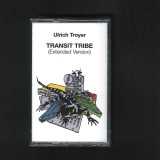
Ulrich Troyer has been producing music now solidly for over twenty years within a largely genre free framework, but whilst navigating forms such as avant-garde, techno, leftfield, field recording, electronica, glitch and ambient it is the aesthetics of dub that guide his creative direction. Not really recognisable in an orthodox form as remixed versions of roots reggae songs but in the way sonics are manipulated with space, the application and layering of delay, reverb and echo that fixes his output well within the scope of what might be called futurist dub.
The nearest comparisons to his new album TRANSIT TRIBE can only be established by a synthesis of some of the more adventurous explorations in modern music such as African Head Charge, Jon Hassell, Pole (Stefan Betke), Bill Laswell or even Miles Davis; featuring a diverse selection of artists and friends not only from Vienna and environs but also from around the world, sounds are not so much fused but allowed to float along the continuous flowing tide of warm waves of bass.
Rather than to allow the names of Ulrich Troyer's collaborators be merely listed in the album credits, what they bring to this joyful affair needs to be outlined, albeit briefly: Co-producer credits go to Osman Murat Ertel from Istanbul, who employed a variation on the old foolproof Nick Lowe method for checking out the impact quality of his own sound productions by playing tracks through his car sound system speakers!
Murat is a member of the electro-psych-folk group Baba Zula where he plays electric saz, oscillators and theremin and played a key part in the creative development of the album. Mamadou Diabate, the balafon master originally from Burkina Faso and now resident in Vienna, has developed his own unique technique of playing solos that replicate the sound of three instruments playing in unison; however the multi-talented Mamadou is engaged here on singing and playing the talking drum. From South Tyrol Reinhilde Gamper is a member of the experimental trio Greifer who are bringing the sound of the zither into the twenty-first century using new playing techniques and electronic gadgets. Susanna Gartmayer is an Austrian composer and bass clarinetist specialising in improv and multimedia sound research. Diggory Kenrick has been engaged with creating new dub fusions and also re-energising classic rocksteady and roots reggae classics, renowned for his interventions on flute. Didi Kern is an electronic dance musician and drummer from Vienna with a focus on free improvised music. Hamidou Koita, a singer and multi-instrumentalist, is from a traditional Griot family in Burkina Faso but now resident in Vienna and a regular musical partner of Mamadou Diabate playing drums and calabash. Austrian Lukas Lauermann is both a studio and live musician playing cello, also working on electronic sound design and writing string arrangements. He has recorded extensively and appeared on stage with both Mark Lanegan and Hans-Joachim Roedelius. Martin Mallaun is a Tyrol-born specialist in both the development of the zither in modern music and also as a researcher in the effects of climate change on the vegetation of Alpine ecosystems. Mystica Tribe is the musical alias of Tokyo-based dub/techno producer Taka (Takafumi) Noda. He collaborated with Vienna's own Vegetable Orchestra on 2020's "Transplants (Mystica Tribe Version)". After studying classical percussion Flip Philipp is now a jazz vibraphone player and member of the Vienna Symphony Orchestra. Wolfgang Pfistermüller is a member of the Vienna Trombone Quartet and the developer of the incredible bass-trombone Aurora with its uniquely warm and resonant sound. Roger Robinson is a renowned British poet, winner of many contemporary poetry prizes and member of the experimental music group King Midas Sound. Kwame Yeboah is a Ghanaian born UK based keyboard wizard who tours regularly with Yusuf / Cat Stevens, Ms. Dynamite and Pat Thomas.
So contained on the album is an astonishing mix of musicians and instruments: sounds of cowbells recorded in the South Tyrolean alps processed by modular synthesizers and heavy analogue bass synths combined with instruments such as zither, bass-zither, electro saz, flute, talking drum, trombone, cello, vibraphone, marimba, djembe, contra-alto clarinet, melodica, Farfisa - all bound together by organic live-drums and dub effects.
Liner notes by Steve Barker
- A1: Vajolet Feat Lukas Lauermann, Wolfgang Pfistermüller & Flip Philipp
- A2: Autostrada Del Brennero Feat Diggory Kenrick
- A3: Latzfonser Kreuz Feat Mamadou Diabate & Hamidou Koita
- A4: Lago Di Garda Feat Roger Robinson
- A5: Alfa Romeo 145 Feat Kwame Yeboah
- B1: Feltuner Hütte Feat Osman Murat Ertel
- B2: Avrupa Köprüsü Feat Osman Murat Ertel
- B3: Europabrücke Feat Susanna Gartmayer
- B4: Ancient Atoll Feat Reinhilde Gamper, Martin Mallaun & Flip Philipp
Cassette[14,92 €]
Ulrich Troyer has been producing music now solidly for over twenty years within a largely genre free framework, but whilst navigating forms such as avant-garde, techno, leftfield, field recording, electronica, glitch and ambient it is the aesthetics of dub that guide his creative direction. Not really recognisable in an orthodox form as remixed versions of roots reggae songs but in the way sonics are manipulated with space, the application and layering of delay, reverb and echo that fixes his output well within the scope of what might be called futurist dub.
The nearest comparisons to his new album TRANSIT TRIBE can only be established by a synthesis of some of the more adventurous explorations in modern music such as African Head Charge, Jon Hassell, Pole (Stefan Betke), Bill Laswell or even Miles Davis; featuring a diverse selection of artists and friends not only from Vienna and environs but also from around the world, sounds are not so much fused but allowed to float along the continuous flowing tide of warm waves of bass.
Rather than to allow the names of Ulrich Troyer's collaborators be merely listed in the album credits, what they bring to this joyful affair needs to be outlined, albeit briefly: Co-producer credits go to Osman Murat Ertel from Istanbul, who employed a variation on the old foolproof Nick Lowe method for checking out the impact quality of his own sound productions by playing tracks through his car sound system speakers!
Murat is a member of the electro-psych-folk group Baba Zula where he plays electric saz, oscillators and theremin and played a key part in the creative development of the album. Mamadou Diabate, the balafon master originally from Burkina Faso and now resident in Vienna, has developed his own unique technique of playing solos that replicate the sound of three instruments playing in unison; however the multi-talented Mamadou is engaged here on singing and playing the talking drum. From South Tyrol Reinhilde Gamper is a member of the experimental trio Greifer who are bringing the sound of the zither into the twenty-first century using new playing techniques and electronic gadgets. Susanna Gartmayer is an Austrian composer and bass clarinetist specialising in improv and multimedia sound research. Diggory Kenrick has been engaged with creating new dub fusions and also re-energising classic rocksteady and roots reggae classics, renowned for his interventions on flute. Didi Kern is an electronic dance musician and drummer from Vienna with a focus on free improvised music. Hamidou Koita, a singer and multi-instrumentalist, is from a traditional Griot family in Burkina Faso but now resident in Vienna and a regular musical partner of Mamadou Diabate playing drums and calabash. Austrian Lukas Lauermann is both a studio and live musician playing cello, also working on electronic sound design and writing string arrangements. He has recorded extensively and appeared on stage with both Mark Lanegan and Hans-Joachim Roedelius. Martin Mallaun is a Tyrol-born specialist in both the development of the zither in modern music and also as a researcher in the effects of climate change on the vegetation of Alpine ecosystems. After studying classical percussion Flip Philipp is now a jazz vibraphone player and member of the Vienna Symphony Orchestra. Wolfgang Pfistermüller is a member of the Vienna Trombone Quartet and the developer of the incredible bass-trombone Aurora with its uniquely warm and resonant sound. Roger Robinson is a renowned British poet, winner of many contemporary poetry prizes and member of the experimental music group King Midas Sound. Kwame Yeboah is a Ghanaian born UK based keyboard wizard who tours regularly with Yusuf / Cat Stevens, Ms. Dynamite and Pat Thomas.
So contained on the album is an astonishing mix of musicians and instruments: sounds of cowbells recorded in the South Tyrolean alps processed by modular synthesizers and heavy analogue bass synths combined with instruments such as zither, bass-zither, electro saz, flute, talking drum, trombone, cello, marimba, djembe, contra-alto clarinet, Farfisa - all bound together by organic live-drums and dub effects.
"LATZFONSER KREUZ / FELTUNER HÜTTE scheduled for release on September 20th 2024 is the third single to be lifted from Ulrich Troyer's TRANSIT TRIBE due later this year.
Mamadou Diabate, originally from Burkina-Faso and now resident in Vienna, who is also a world-famous virtuoso balaphon player, collaborates on "Latzfonser Kreuz" with fellow countryman Hamidou Koita to produce a remarkable percussion track, both singing and employing talking drum and djembe to come up with a sound that can only be described as dubbed-out Nyahbinghi-style electro-beats! The track references the little church at Latzfonser Kreuz, which is the highest pilgrimage spot in South Tyrol, one of the highest in Europe; every year in June, the Black Lord, a black carved Gothic wooden cross, is brought from the village church in Latzfons to thepilgrimage church, where it remains throughout the summer.
On the flip for "Feltuner Hütte" Ulrich Troyer is joined by co-producer Osman Murat Ertel, founding member of the electro-psych-folk group Baba Zula from Istanbul, who has worked internationally for many years collaborating with the likes of Jaki Liebezeit, Fred Frith and Mad Professor. But here Murat takes us on a dub psych-out trip with his favoured electric saz, with wha wha FX, delay and echo, like Link Wray meeting King Tubby on the old streets of Istanbul."
Steve Barker (DJ, Radio Presenter - On the Wire, BBC 1984 – 2023, now Slack City Radio & reggae/dub columnist and contributor to The Wire)
Credits:
Mamadou Diabate: vocals (A) & talking drum (A)
Osman Murat Ertel: electric saz (B)
Hamidou Koita: vocals (A), djembe (A)
Didi Kern: percussion (A), drums (B)
Flip Philipp: percussion (B)
Ulrich Troyer: analog synthesizers & drum-machines, sampler, field recordings, dub effects (A+B)
A written by Mamadou Diabate, Hamidou Koita & Ulrich Troyer
B written by Osman Murat Ertel & Ulrich Troyer
Recorded by Ulrich Troyer at 4Bit Studio & 4Bit Bungalow, Vienna - except electro saz on track B recorded by Osman Murat Ertel at Saniki Studio, Istanbul
Mixed & arranged by Ulrich Troyer at 4Bit Bungalow, Vienna
Produced by Osman Murat Ertel & Ulrich Troyer
Mastering & Lacquer Cut by Kassian Troyer at Dubplates & Mastering, Berlin
Cover Drawing by Ulrich Troyer
Special thanks to Steve Barker, Mamadou Diabate, Osman Murat Ertel, Diggory Kenrick, Eva Kelety, Didi Kern, Hamidou Koita and Flip Philipp
Kindly supported by the City of Vienna (MA7 - Kultur), Federal Ministry Republic of Austria (Arts, Culture, Civil Service & Sport), SKE-FONDS (AT) & Amt für Kultur, Bozen (IT
"Following on from May's "ECHOES Part 1 & 2" this is the second single of three to be released as an introduction to the next album project of Ulrich Troyer - TRANSIT TRIBE - to be released later this year.
This time it's one for the reggae fans and dubheads with contributions from Diggory Kenrick who has been busy over the last few years adding the distinctive sound of his flute to many new reggae productions. He is also an associate of the U.K. reggae label Pressure Sounds that specialises in reviving classic sounds from the roots and dancehall eras of the genre. Also joining the production is Takafumi Noda aka Mystica Tribe, a Japanese producer and musician who has specialised in a new form of dub techno and is known for adding the signature sound of his melodica to productions of dub friends from around the world.
The subject of travel, especially along modern, fast routes has long been subject to fascinate musicians, from the days of Kraftwerk's "Autobahn" and now the whole genre of dub techno seems to be one built for listening on long journeys. The Autostrada Del Brennero / Brennerautobahn is one of the most important motorways in Italy, as it connects the Po Valley with Austria through the Brenner Pass and features many modern bridges and overpasses that are ready built illustrations for the covers of dub techno albums! On this release this major European truck route is celebrated musically by Ulrich Troyer with inputs from Diggory and Taka to create two modern dub classics."
Steve Barker (DJ, Radio Presenter - On the Wire, BBC 1984 – 2023,
now Slack City Radio & reggae/dub columnist and contributor to The Wire)
Credits:
Diggory Kenrick: flute
Taka Noda: melodica
Didi Kern: drums
Ulrich Troyer: analog synthesizers, analog drum-machines, sampler, dub effects
A written by Diggory Kenrick & Ulrich Troyer
B written by Taka Noda & Ulrich Troyer
Recorded by Ulrich Troyer at 4Bit Studio & 4Bit Bungalow, Vienna - except flute recorded by Diggory Kenrick at Holloway Studio, London / melodica recorded by Taka Noda at Mystica Sound Studio, Tokio
Mixed & arranged by Ulrich Troyer at 4Bit Bungalow, Vienna
Produced by Osman Murat Ertel & Ulrich Troyer
Mastering & Lacquer Cut by Kassian Troyer at Dubplates & Mastering, Berlin
Cover Drawing by Ulrich Troyer
Special thanks to Steve Barker, Osman Murat Ertel, Diggory Kenrick, Eva Kelety and Takafumi Noda
Kindly supported by the City of Vienna (MA7 - Kultur), Federal Ministry Republic of Austria (Arts, Culture, Civil Service & Sport), SKE-FONDS (AT) & Amt für Kultur, Bozen (IT)
The Viennese audio-architect with South Tyrolian roots delivers two exciting new tracks, co- produced by Osman Murat Ertel (Baba Zula) from Istanbul.
Ulrich Troyer's MOMENTS transforms classical & acoustic guitar recordings through tape machine treatment, guitar effect pedals, analog & digital effects into a shimmering soundscape. The combination of textures and effects generates excitement and invites to listen repeatedly, surprising each time with new details.
Fractured tones, beautifully rooted and held together by the tune underneath.
Credits:
Guitars, Tapemachine & Electronics: Ulrich Troyer
Recorded & Mixed by Ulrich Troyer @ 4Bit Bungalow, Vienna
Written by Ulrich Troyer
Produced by Osman Murat Ertel & Ulrich Troyer
Mastering & Lacquer Cut by Kassian Troyer at Dubplates & Mastering, Berlin Cover Art © Eva Kelety & Ulrich Troyer
Period of creation: 2021-2022
- A1: Ryuichi Sakamoto - The End Of Asia
- A2: Mariah - Shinzo No Tobira
- A3: Chika Asamoto - Self Control
- A4: Jun Fukamachi - Treasure Hunter
- B1: Yumi Murata - Watashi No Bus
- B2: Hitomi 'Penny' Tohyama - Rainy Driver
- B3: Yumi Seino - La Maison Est En Ruine
- B4: Kyoko Furuya - Tokyo
- C1: Kazue Itoh - Chinatown Rose
- C2: Kazumi Watanabe - Tokyo Joe
- C3: Juicy Fruits - Jenie Gets Amgry
- C4: Haruo Chikada & Vibra-Tones - Soul Life
- D1: Colored Music - Heartbeat
- D2: Akira Sakata - Room
- D3: Yasuaki Shimizu - Semi Tori No Hi
- D4: Shigeo Sekito - The Word Ii
Repress!
A MAJOR EXPLORATION OF TOKYO'S CUTTING EDGE 80S SOUND THROUGH THE MUSIC OF CULT JAPANESE LABEL NIPPON COLUMBIA AND ITS BETTER DAYS IMPRINT, SELECTED BY BRITISH RADIO PRESENTER AND DJ NICK LUSCOMBE.
‘Tokyo Dreaming’ is a superb selection picked from the highly collectible Nippon Columbia label and its Better Days sub-label. For the occasion, we’ve teamed up with journalist and Japanese music expert Nick Luscombe who was granted rare access to the much-guarded Nippon Columbia's vaults for a masterful selection encapsulating the fascinating sound of Tokyo in the late 70s and 80s. The selection mixes electro, synth-pop, funk and ambient and features such artists as Ryuichi Sakamoto, Mariah, Shigeo Sekito, Juicy Fruits, Hitomi "Penny" Tohyama and Yumi Murata. The tracklist includes many sought-after rarities and hidden gems which have never been released outside of Japan and the set has been newly remastered by Nippon Columbia. The album has been designed by famed London-based designer Optigram and is annotated by Nick.
Nippon Columbia, one of Japan's oldest music labels is also one of its most collectible thanks to its sub-label Better Days which, in the late 70s, became a hotbed for Tokyo's new generation of pop artists eager to experiment with ambient, electro and funk. Armed with a string of new Japanese-made synthesizers and drum machines that would soon take the world by storm, they made cutting-edge music, which has since become highly sought-after by a new generation of Japanese music lovers. Nick Luscombe, who has long been a leading advocate of Japanese music from this era, has handpicked a selection of some of the sharpest music released on these labels at the time.
According to Nick, “Tokyo Dreaming is a look back to an incredible era of Japanese music, that still sounds and feels like the future. It was a moment when brand-new music tech from Japan helped forge new ideas and experiments that permeated pop, soul and jazz and helped create new forms of music including electro and techno. The perfect meeting point that would help create a new soundtrack for modern living.“
?The selection starts with "The End of Asia" by Ryuichi Sakamoto from his 1978 ground-breaking debut "Thousand Knives Of" (reissued last year by Wewantsounds). The track became a staple of Sakamoto's and YMO's live shows and was even re-recorded by the group for their 1980 album 'X Multiplies'. The track is followed by Mariah's cult Armenian folk flavoured synth pop classic "Shinzo No Tobira" (1983), which first spread outside of Japan when the Scottish DJ duo Optimo started playing the track regularly at their shows.
?Chika Asamoto's "Self Control" (1988) and Jun Fukamachi's "Treasure Hunter" (1985) are perfect songs in the synth-pop canon, while Yumi Murata's rendition of Akiko Yano's "Watashi No Bus" and Hitomi "Penny" Tohyama's "Rainy Driver" both from 1981, move closer towards the slicker, funkier sound of City Pop.
?'Tokyo Dreaming' superbly showcases the breadth of 80s Japanese music and the way electro pop was a playing ground for musicians to experiment with many styles, as showcased by Akira Sakata's dub-enfused "Room" from 1980, Kazumi Watanabe's discoid "Tokyo Joe" (1980) and Juicy Fruits' "kawai" robotic Techno pop song "Jenie Gets Angry".
?The selection flows effortlessly between many shades of synth and ends with two cult classics in the form of Yasuaki Shimizu's "Semi Tori No Hi" and Shigeo Sekito's ambient-jazz masterpiece "The Word II" from his highly sought-after album "Kareinaru Electone (The Word) Vol.2" which, although recorded in 1975, perfectly announces the synth revolution to come. Tokyo Dreaming showcases the groundbreaking sounds of a city turned giant sonic lab which was restlessly inventing the music of the future.
Nick Luscombe is a highly respected and in-demand music influencer who discovers great music from all over the world and shares it internationally through his many radio shows and DJ sets. He has been in charge of music selection for various radio programs since 1999, and from 2010 - 2019, was the DJ for the popular BBC Radio music program "Late Junction”. He has also curated and presented music shows for Monocle and British Airways radio stations. He has worked as both Chief Music Editor at iTunes and Director of Music at London’s Institute of Contemporary Art, and is the founder of MSCTY.
- A1: I Want A Lover (Mixed By Mighty Massa)
- B1: Empty Wind (Mixed By Mighty Massa)
THE SILVER SONICS, led by Ryo Murata who also plays keyboards for THE SKA FLAMES, release their long-awaited 7-inch single after a hiatus of about
12 years.
Side A features “I WANT A LOVER,” whose catchy melody and vocals grab your heart.
Side B includes the mellow Caribbean instrumental ska track “EMPTY WIND,” whose rhythm, punctuated by the guiro, makes you want to sway your body.
"It may surprise some that, after two decades of silent films, when Alam Ara broke the silence in 1931, it and every South Asian talkie that followed was what we in the West think of as a "musical." Music had been integral to the culture's staged drama going back to the Gupta Dynasty — sometime between the 4 th and 6 th Century CE. Since its inception, South Asian cinema drew heavily from Marathi, Parsi, and Bengali musical theatre and silent film screenings were often accompanied by live music to mimic a live staged experience.
When sound films arrived, actors with serious singing skills became the next wave of stars. Songs were performed live while shooting, with musicians hidden off-camera, to the side or sometimes even in trees. Playback singing — the practice of dubbing a real singer's voice over a lip-syncing actor — didn't become standard until the 1940s.
Thus, the biggest stars of the 1930s were also the greatest singers, with some, like Govindrao Tembe and Pankaj Mullick, excelling as both composers and vocalists. None, however, were more beloved than K.L. Saigal, whose emotional, untrained crooning captivated audiences across the subcontinent. Saigal's voice inspired a young Lata Mangeshkar, who vowed to become India's greatest filmi singer to win his heart. Sadly, Saigal grew increasingly addicted to alcohol, unable to perform without it, and passed away at age 42, seven months before the Partition. Lata never married.
This collection features some of the earliest songs from South Asian cinema, sourced from CDs and LPs found in Jackson Heights, Queens, Coney Island Avenue in Brooklyn, Lexington Avenue in Manhattan, and Oak Tree Road in Iselin, New Jersey — areas home to vibrant immigrant communities. South Asian immigration to New York and New Jersey surged after the 1965 Immigration and Nationality Act, which lifted non-European quotas. By the 1990s and 2000s, the region's Indian, Pakistani, and Bangladeshi media outlets flourished, especially in Jackson Heights, where such stores outnumbered the total number of regular record shops throughout the five boroughs.
The nascent period of sound film featured a limited palette of musical styles, predominantly Marathi Bhagveet, like the Ghazal, but with greater flexibility of subject matter and rhythm, and Rabindra Sangeet, the approximately 2,000 songs and poems composed by Bengali Nobel laureate Rabindranath Tagore. But there was some evolution as well, with the success of South Asian cinema's first woman composer, the classically trained Saraswati Devi, and the introduction of Western instruments including the piano and Hawaiian guitar.
While much of the music was dark and brooding, perhaps exemplified best by Devika Rani's interpretation of Saraswati Devi's "Udi Hawa Mein" from 1936's Achhut Kannya (Untouchable Maiden), there were moments of brightness, such as R.C. Boral's "Lachhmi Murat Daras Dikhaye" sung by Kanan Devi in Street Singer, an otherwise thoroughly depressing film from 1938 that cemented Devi's and co-star K.L. Saigal's superstardom.
This selection was chosen to emphasise a range of expressivity, instrumentation and style achieved even within the decade's relatively limited scope, setting the listener up for the relative explosion of possibility in the 1940s, to be covered in the next installment of this series."
In 2022, Meral Polat released her debut album "Ez Ki Me" as a singer under the name Meral Polat Trio. "Ez Ki Me" roughly translates to "Who am I?". The album was a search by the singer for her Alevi Kurdish roots. In her lyrics, Meral incorporated many poems from her late father, Adi Ihsan Polat. The album received positive reviews and was nominated for a Music Award by Songlines.
On her new album MEYDAN, Meral primarily showcases her own voice, that of a woman exercising her right to live on her own terms, free from the oppressive interference of patriarchy. The album celebrates female strength, inspired by the philosophy of "JIN, JIYAN, AZADI" (WOMAN, LIFE, FREEDOM), a phrase originating from Kurdish-led women's movements. JIN, JIYAN, AZADI symbolise resistance to oppression and the fight for women's rights.
Musically, MEYDAN takes it a step further than the debut album. Meral welcomes drummer Jens Bouttery to the band, along with many inspiring guest musicians. The track "Cenek" features a determined choir of 26 women of various ages and cultural backgrounds. In "Çiya Icaro", Meral shares a duet with Bolivian artist Ibbelise Guarda Ferraguti.
On MEYDAN, Meral and her band continue their exploration of Anatolian and Mesopotamian music, particularly the Turkish psychedelic rock revolution of the 1970s and the ancient Kurdish Dengbej traditions. The band travelled to Istanbul to record with Murat Ertel from Baba Zula and trumpet player Can Omer Uygan. In addition to Anatolian music styles, influences from Mali Blues and Nigerian Afrobeat are embraced. Another notable guest is Senegalese musician Mola Sylla, who lent his voice and improvisational talent to the track "Govend".
While the drums, keyboards or guitar, and Polat's voice still form the core of the album, each track also contains its own collage of synthesisers, vocal harmonies, percussion, organ, piano, distorted guitars, and guest musicians. All tracks were mixed by the exceptional Belgian mixing engineer Pieterjan Coppejans, who added depth to their sound. All of this results in a particularly rich and uplifting album with a message.
- A1: Nobuo Yagi - Mi Mi Africa
- A2: Nobuyuki Shimizu - Silver Spot
- A3: Piper - Samba Night
- B1: Haruko Kuwana - Akogareno Sundown
- B2: Aru Takamura - Koi Wa Saikou
- B3: Hitomi Tohyama - Love Is The Competition
- B4: Homma Express -What The Magic Is To Try
- C1: Colored Music - Colored Music
- C2: Shohjo-Tai & Red Bus St Project - Electric City
- C3: Yumi Murata - Krishna
- D1: Eri Ohno - Live Hard, ,Live Free
- D2: Minnie - Rocket 88
- D3: Shoody - Tokyo Melody
2024 Repress
at mule musiq, we've focused on shining light on the many aspects of what electronic music can be, putting out house, techno and ambient releases on our main label, while releasing alternative-leaning dance music through our endless flight imprint. but with the launch of our new label, studio mule, we are stepping away from electronic club music for a bit. the label will not be tied to a specific genre, as we will instead focus on releasing any kind of music that we feel is a little bit different and interesting, but somehow make sense in this day and age. for our first batch of releases, we will be focusing on japanese music.
to be honest, i have been watching the recent rise of global interest in japanese music with a skeptical eye, not sure of how to feel about all these labels overseas licensing great albums that were birthed in our country. but then, i was told by somebody i greatly respect that i should do something similar with mule, and put our own spin on it, which sounded like a good idea to me. after a period of procrastination, i finally got around to doing it. we are starting things off with a compilation of japanese disco, boogie and soul music that we selected from a modern dance music perspective — the kind of songs that we feel would intrigue music fans across the world.
at first, i started seeking authentic-sounding disco that sound like it could have been recorded in the states, but after struggling to get licensing rights for many of those tracks, i started to wonder if that was really the direction we should be going in. when we start new labels or projects, we often come up with the title or artwork first, before deciding on the actual music. we came up with the title midnight in tokyo first, which dictated that we needed to find music that would be a perfect soundtrack to listen to at night in tokyo. we ended up compiling a selection of tracks that you could both listen to at home, and play in clubs at certain time slots. the compilation also ended up sounding a lot more pop than we initially imagined...
during the selection process, we did not care whether the tracks have been reissued already or not, and how rare the original copies of the records were. our sole purpose was to gather a handful of songs from across labels, major or otherwise, that we felt could be listened to for many years to come — even after this whole japanese music trend dies down. although we put together this release mainly for listeners outside of japan, the compilation can also be a chance for japanese music lovers to rediscover the greatness of domestic music, as we did during the process.
the compilation starts off with the afro disco classic 'mi mi africa' by harmonica player nobuo yagi, which was also included in the compilation mastercuts.
'silver top' is a jazzy fusion disco taken from composer, arranger and multi-instrumentalist nobuyuki shimizu's first album, which he released when he was 19. the track features singer epo, whom he worked with many times over the years as an arranger.
'samba night' is by vocalist keisuke yamamoto and his band piper, from their masterpiece second album summer breeze. a delightful city pop number that should appeal to tatsuro yamashita fans.
'akogareno sundown' is a japanese soul classic, sang by singer haruko kuwana (the sister of well-known musi-cian masahiro kuwana). recorded in hawaii and produced by mackey feary band, known for the soulful classic 'a million stars.'
'koiwa saiko (i'm in love)' is a mellow and groovy track by singer aru takamura, the great-grandchild of sculptor kouun takamura, whose son kotaro takamura is a famed poet and sculptor. can be thought of as japan's answer to cheryl lynn's 'got to be real.'
'what the magic is to try' is a cult electropop track by honma express, a project helmed by producer kanji honma. hailed as japan's trevor horn, he is also known as the producer of legendary techno pop band tpo.
'colored music' is a song by colored music, a duo of pianist ichiko hashimoto and her partner atsuo fujimoto, who have gone on tour with ymo. taken from colored music's sole album, the japanese rare groove treasure is a mesh of new wave, synth pop and jazz influences.
the dubby electronic new wave disco 'electric city' is a b side of pop idol group shohjo-tai's debut 12' single, but the girls aren't actually singing on it, making the instrumental one of japan's greatest '80s dance tracks.
'love is the competition' is a breezy disco jam by okinawa-born bilingual artist hitomi tohyama. featured on her album next door, the song's melody seems like an interpolation of the whispers' 'it's a love thing.'
taken from mariah project's diva yumi murata's first album, 'krishna' is a funky and soulful rockin' disco cut.reminiscent of chaka khan's 'i know you, i live you,' 'live hard, live free' is a song by jazz vocalist eri ohno who is known for her work with dj krush and singing on the soundtrack to anime rupin the third.
'rocket 88' is a melancholic disco number by singer minnie. though the track was released through sapporo's independent label paradise records, the superb production quality suggests otherwise.
closing out the 13-track compilation is japanese disco staple 'tokyo melody,' sang by half african and half swedish american singer shoody and backed by tetsuji hayashi's disco band the eastern gang.
- A1: Volta Semantron (Inre Kretsen Grupp & Prins Emanuel)
- A2: Athos Dub (Holy Tongue)
- A3: Garden Of Kibele (Esma & Murat Ertel)
- A4: Doxology (Daniel Paleodimos)
- B1: Idän Kuoromiehet (Jimi Tenor)
- B2: Synaptic Riddles (Jay Glass Dubs)
- B3: L'île Météore (Gilb'r)
- B4: I Swim In Your Dreams (Organza Ray)
- C1: Vatopedi Semantron Vespers (Gregoriou Monastery)
- C2: Axion Estin, Mode Plagal B (Daniilaioi Brotherhood Choir)
- C3: Christos Anesti, Mode Plagal A ((Daniilaioi Brotherhood Choir)
- C4: Theoteke Parthene, Mode Plagal A (Daniilaioi Brotherhood Choir)
- C5: Doxologia Chourmouzioy, Mode Varys (Daniilaioi Brotherhood Choir)
- C6: Osoi Eis Christon, Mode Plagal A (Daniilaioi Brotherhood Choir)
- C7: Tas Esprinas Manouel Chrysafis, Mode Plagal A (Daniilaioi Brotherhood Choir)
- D1: Doxastikon Idiomelon, Mode Plagal A (Father Lazaros Of Gregoriou Monastery)
- D2: Anoixantos Sou; Koukouzelis, Mode Plagal D (Father Germanos Of Vatopedi Monastery)
- D3: Cherouvical Hymn, Third Mode (Iviron Monastery Choir)
- D4: Axion Estin, Seventh Mode (Father Antipas)
- D5: Koinonikon, Mode Plagal A (Simonopetra Monastery Choir)
Mount Athos, known as the «Holy Mountain,» is a monastic peninsula in northeastern Greece, central to Eastern Orthodox monasticism for over a millennium. Its twenty monasteries house around 2,000 monks dedicated to prayer and worship, which songs have echoed across the Aegean Sea for centuries, heard only by visiting pilgrims, isolated from conventional time and global events.
After several years of research, and several visits to the retired community, we are happy to present our new project «Athos : Echoes from the Holy Mountain» dedicated to this liturgic music and repertoire that seems to be evolving outside the usual boundaries of time and space. Rooted in Byzantine chant, this a cappella tradition essential to monastic life featuring intricate yet serene melodies designed to facilitate prayer and contemplation, using a system of modes and scales to create a meditative atmosphere.
Trans-disciplinary, this effort of documentation also comprehends an artistic re-interpretation aspect inviting contemporary Greek and foreign artists to reflect on the subject.
A musical compilation which captures original field recordings from the 1960s and from today capturing the essence of liturgical music on Mount Athos, but also new compositions inspired by them by artists such as Holy Tongue (UK), Jay Glass Dubs (GR), Prins Emanuel & Inre Kresten Grupp (SWE), Jimi Tenor (FI), Gilb’r (FR), Daniel Paleodimos (GR), Esma & Murat Ertel (TUR) and Organza Ray (GR/US).
A trilingual book in English, Greek and French, featuring essays, articles, photographs and artistic comissions reflecting around the theme giving a voice to contributors such as , Stratos Kalafatis, Theodore Psychoyos, Tefra90, Father Damaskinos Ulkinuora, Prof. Thomas Apostolopoulos, Makar Tereshin, Phaedra Douzina-Bakalaki, Michelangelo Paganopoulos and Alberto Cameroni.
The release of the book and the record will be followed by a cycle of exhibitions and conferences, deploying FLEE’s year-long research on Mount Athos, as well as its numerous commissioned artworks.
"ECHOES PART 1 and 2 scheduled for release on 17th of May is the first of three singles set to introduce the next album project of Ulrich Troyer - TRANSIT TRIBE - to be released later this year.
Featuring the jazz vibes of Flip Philipp of the Vienna Symphony Orchestra, "ECHOES" has all the resonance of pure gamelan in dub, stately, processional and instrumentally rhythmic with its sparser second part isolating contrasting pulses as the complexity unfolds and dazzles.
Twenty years in the making, now the fully developed vision of multi-instrumentalist Vienna-based Ulrich Troyer can be heard coming to its final fruition. The interface of electronics and the unique warmth of human interplay is apparent on this track as well as all the other sounds to be heard on the album where a remarkable array of new and old friends contribute to the proceedings. Thematically the album, as may be gathered from its title, is a clear appeal for humanity to be shown as the people of the world struggle to cope with increasing problems, whether caused by movement or lack of movement."
Steve Barker (DJ, Radio Presenter - On the Wire, BBC 1984 – 2023,
now Slack City Radio & reggae/dub columnist and contributor to The Wire)
Credits:
Flip Philipp: vibraphone, c-marimba
Ulrich Troyer: analog synthesizers, drum-machine, sampler, field recordings, dub effects
Written & arranged by Ulrich Troyer
Recorded by Ulrich Troyer at 4Bit Studio & 4Bit Bungalow except Vibraphone, C-Marimba recorded by Ulrich Troyer at Konzerthaus, Vienna
Mixed by Ulrich Troyer at 4Bit Bungalow, Vienna
Produced by Osman Murat Ertel & Ulrich Troyer
Mastering & Lacquer Cut by Kassian Troyer at Dubplates & Mastering, Berlin
Cover Drawing by Ulrich Troyer
Kindly supported by the City of Vienna (MA7 - Kultur), Federal Ministry Republic of Austria (Arts, Culture, Civil Service & Sport), SKE-FONDS (AT) & Amt für Kultur, Bozen (IT)
Special Thanks: Steve Barker, Osman Murat Ertel, Eva Kelety & Flip Philipp
- A1: Godiego - The Birth Of The Odyssey - Monkey Magic
- A2: Ikue Sakakibara - This Is Hot
- A3: Soul Media - I Will Give You Samba
- A4: Hatsumi Shibata - Purple Shadow
- B1: Yumi Murata - Krishna
- B2: Yoshito Machida, Godiego - Ame Wa Knife No Yo Sa
- B3: Pink Parachute - Disco Great Tokyo
- B4: Hatsumi Shibata - Hazumi De Daite (A Woman In A Man's World)
Mitte der 1970er erlebten Diskotheken in Tokio und ganz Japan einen Boom, als die Disco-Welle aus den USA zu ihnen rüberschwappte. Bis in die frühen 1980er hinein wurde die Musik von erfahrenen Studiomusikern - und nicht per Computereinspielung - aufgenommen, was für einen soliden Sound auf dem Dancefloor sorgte. Disco-Musik lief auch in TV-Serien, Werbespots und Animes. Von Godiegos Monsterhit 'The Birth Of The Odyssey – Monkey Magic' bis zu Pink Parachutes obskurem (und ausgezeichnetem!) 'Disco Great Tokyo' erkundet diese Auswahl einige der besten Disco- & Boogie-Tracks, die Ende der 1970er/Anfang der 1980er auf dem legendären Nippon Columbia-Label veröffentlicht wurden.