"Self-released avant garde jazz – reissued for the first time! Recalling Kraftwerk precursor the Organisation, or contemporaries like Faust, Hünerberg employs flute, organ, bass and balloon to his DIY compositions.
Over top of Gillespie's nimble, pointillist drumming (he also plays piano and harpsichord), Hünerberg employs flute, organ, bass and balloon (that’s not a saxophone on “Cucumber”). The disorienting opener “Cro Magnon/Two” recalls Kraftwerk precursor the Organisation, or contemporaries like Faust. There’s a strange, disconsolate atmosphere to the proceedings, almost as if the air had been sucked out of a recording session booked for some avant-garde jazz heavies.
Instead of Impulse, Phase Murmur should have been bound for ESP-Disk. Alas, the duo were experimenting out in the relative vacuum of southwestern Ohio. Far from any bustling metropolis or curious record labels, Phase Murmur was truly a DIY affair. Not only did the duo press the LP up themselves (down the road at Cincinnati's Rite Record Productions), but the evocative and mysterious photo on the cover is by Gillespie while the layout, with accompanying poem on the back, was assembled by Hünerberg.
It was on Phase Murmur where Hünerberg first found his voice, and the rest is the sound of history, unspooling on a reel-to-reel tape machine.
Includes new liner notes by Erick Bradshaw (Host of Spin Age Blasters with Creamo Coyl on WFMU)"
Cerca:murmur
Kalakuta Soul Records joins forces with waf80music to proudly present Kai Niggemann's solo debut, an all original album of outrageous poetically abstract music created live and without overdubs on a Buchla 200e Electric Music Box, one of the rarest and most sought after electronic music instruments. Working on the platform since 2013, Kai Niggemann has become one of Germany's leading artists who perform live with a Buchla 200e. His style is an electro-acoustic storytelling, a clubby dreamscape and a poetically-abstract kraut-infused energetic mix of new Elektronische Musik with contemporary club culture. Nerds love the technology and clubbers love the throbbing drive of the basslines. It's all improvised and recorded live in Berlin — yet it sounds meticulously crafted in a dark basement studio throughout the entire last winters. Kai is a member of the 30-piece kraut-noise-jazz collective "The Dorf" and the electronics duo "The Last Books" (with Achim Zepezauer), performs and records with Mia Zabelka (Vienna) as "Redshift Orchestra", cofounded the internet-computermusic "European Bridges Ensemble" (EBE, e-b-e.eu) and the electroacoustic duo "Resonator". His most recent releases were the CD/vinyl "Lux" (feat. the noise drone artist N), "EviL/EvyL" and the cassette "Made in Österreich" with The Dorf (feat. Caspar Brötzmann & FM Einheit (Ex-Einstürzende Neubauten) or "Thinking Light" by Redshift Orchestra (duo with Mia Zabelka). He performed concerts with Mia Zabelka (Wien), Yoshio Machida (JP), Trap & Zoid (BE), Stian Westerhus or Shahzad Ismaily (with The Dorf) among many others.
- A1: Dyl - Opening Credits
- A2: Boot - Welcome To Meta City
- A3: Broken Promise - The Mission
- A4: Survey - Fermi Paradox
- A5: Rakoon - The Hidden Agenda
- A6: Robotic - The Dose
- A7: Survey - Secret Journey
- B1: The Subdivision - Voyage To Charon
- B2: Hlz - Asteroid Belt
- B3: Rakoon - The Void
- B4: Commit - Sita's Theme
- B5: Fre4Knc - Arrival
- B6: Fre4Knc - Outpost D37
- B7: Bisweed - Dark Matter Manipulation
- C1: Rak - The Gates Of Charon
- C2: Dyl - The Betrayal
- C3: Murmur - Droid To The Void
- C4: The Subdivision - Interdimensional Flashback
- C5: Gremlinz - Confrontation Pt. I
- C6: Survey - Into The Rabbit Hole
- D1: Dyl - Strategy
- D2: Gremlinz & Jesta - Confrontation Pt. Ii
- D3: Twisted - The Void Answers
- D4: Rakoon - Isolation
- D5: Boot - Closing The Gates
- D6: Aeon Waves - Order Of The Sixth Chakra (Closing Credits)
2x12"
The Gates of Charon, an original soundtrack, is the long-awaited result of two years of work by a multitude of outstanding producers from the bass music and drum 'n bass scenes. This deep, dark and weighty release comes at you with 26 tracks of professional soundscape production to tell a story of the fusion of the mystic and scientific to manipulate dark energy and explore the multiverse. This unique project will take listeners on an interplanetary journey of the highest order through sound and emotion. This is a limited edition release in a double gatefold full-art cover with 2 X 12" two-color 180g vinyl (limited to first 300 copies), with download codes (including bonus instrumental versions).
All tracks written & produced by Solune in a sonic hut nestled
underneath the intense flow of a grey western european city.
After their recent LP Mirages (Kraak Records, 2025) with French turntablist Guilhem’All, the group continues to explore collaborations with artists and instruments from diverse musical traditions. Building on decades of uncompromising acoustic exploration, Razen delves deeper into their practice with five improvisational pieces that unfold slowly in time and space. The duo’s radical core - Brecht Ameel and Kim Delcour - finds in Van der Harst a longtime kindred spirit, united by the impact of sound, intonation, and the sheer joy of playing.
To be released on April 24 via VIERNULVIER Records, the artwork for Stained Glass Starling was created by American visual artist Robert Beatty (Oneohtrix Point Never, Christina Vantzou, The Weeknd, Tame Impala). The physical release comes with a 16-page booklet including artwork and an interview.
A long-standing artistic kinship lies at the heart of this project, with first encounters dating back to the early 2000s in Belgian musical improv theatre. Van der Harst’s lifelong experience in improvised music and music theatre, spanning back to the 1980s, combined with a vast arsenal of rare and historical instruments, opens new tonal territories within the Razen universe.
These explorations are not incidental: his family roots in the former Dutch East Indies — through his great-grandfather — provide a quiet backdrop to his enduring affinity for Asian musical traditions. Instruments such as erhu, Javanese kacapi, and others introduce timbres
that bring the music its most pronounced Asian inflections to date.
Yet despite this shift in colour, the underlying ethos remains unmistakably Razen. Working from sound rather than form, the ensemble approaches music as painters approach a canvas: adding layers, contrasts and shades with care. There is no soloist’s ego here; all voices are equal, echoing principles found in gamelan traditions.
Over the decades, Razen and Dick Van der Harst have crossed paths repeatedly, notably through cult theatre productions by Belgian theatre maker Eric De Volder, including Zwarte vogels in de bomen (2002) and Huis der Verborgen Muziekjes I–II (2000–2006). Recording an albumtogether had long been a shared aspiration — a wish that crystallised after a 2024 concert at Concertzaal Miry in Ghent, part of the Ruiskamer series by VIERNULVIER Art Centre.
An EP of the darker side of electronic dance music is always a welcome addition to Especial. Up and coming producer / DJ Miles J Paralysis steps away from releasing on his own Crying Outcast label to explore left of centre, new wave and cosmic sounds; songs woven from his own vocals and samples.
A love of Dub, Hip Hop and Electro-Funk led into electronic music. Sampling TV shows, making beats, jamming. Exposed to Leeds and Manchester club cultures, seeking the more experimental. African Head Charge, Muslimgauze, The Rootsman and Weatherall were early influences in forming a no rules philosophy.
Born and raised around West Yorkshire, the beauty and bleakness of the moors have a strong bond on Miles Henry aka Miles J Paralysis and his music. Folklore and the occult link and connect an interest in Northern Hauntology. Unresolved histories, stuck between past glory and phantoms of possible futures.
The EP starts with It’s Only Shadows Talking. A play on the Paralysis persona, the spectral dub house groove meets industrial overtures, encasing his own eerie and unsettling vocals to begin the narrative.
Don’t Forget The Ritual takes a direct link from British folk traditions. Sacred and ceremonial; the laid-back breakbeat, samples and delays are the transition to the evocative embrace of melancholia.
Come On Fleet, the hypnotic Latin (vocal) sample creates a lurking murmuration, rimshot percussion meets gothic sound design for the EPs’ most straight forward and direct club cut.
Surreal and dreamlike soundscape, closing track The Delicate Fairytale is the perfect platform for Miles own phantasm. Inspired by the stories of Dorothy K Haynes and Robert Hickman, the pervading sense of a David Lynch aesthetic, exploring the nostalgic nature of memory.
Y-3, the pioneering sports-fashion collaboration between adidas and Yohji Yamamoto, has for three decades dwelled calmly within the ''tensions of existence''. In conceiving the brand's long-awaited return to runway format at Paris Fashion Week, these codes laid the groundwork leading up to the Spring/Summer 2025 season. Whilst the focus for runway is traditionally placed on garments, models, styling, environment, and the pageantry in between, it was crucial that music play an integral role in the conversation. Three seasons later, sound has informed creative direction from the very earliest phases of ideation. Commissioning all-original compositions has become a natural part of this ideology. The return to runway has invited the opportunity to define a new sonic palette for the brand, and beyond that, to usher in a new era of sound for Y-3 that echoes across music & culture. Following this ethos, and with a mandate to support obscure talent, Montreal duo Solitary Dancer have emerged as the first collaborators in shaping the intimate brand architecture of noise & feeling. With a body of work now spanning over a trilogy of seasons, the genre-defying Y-3000 imprint provides an outlet to disseminate & recontexualize the original compositions beyond the traditional runway. The label embodies Y-3's enduring commitment to explore innovation within opposing cultural forces. The works, originally released on Y-3000 as a series of white labels, are now being featured as a 6x 12'' vinyl compilation. Designed by Trevor Jackson and limited to just 99 examples, the recordings will also be made available both digitally and on streaming services for the very first time.
- 1: Murmure Des Eaux
- 2: Cloches Fossiles
- 3: Murmure Des Abeilles De Pierre
- 4: Bouche D'ombre
- 5: Rverie De La Multiplication
- 6: Le Vaisseau Nadir
- 7: Oracle / 1
- 8: Murmure Des Eaux / 2
- 9: L'eau Verticale
- 10: Ailleurs
- 11: Rverie De La Résonance
- 12: ? Eau-Forte »
- 13: Murmure Des Dentelles D'eau
- 14: Intervalles D'eau
- 15: Écritures Murmurées
- 16: Oracle / 2
- 17: Murmure Des Eaux / 3
,Jeîta ou murmure des eaux", ein Hauptwerk im Repertoire von François Bayle, bietet eine Reise und ein Eintauchen in eine Welt entfesselter Energien, wobei die Jeîta-Höhle sowohl als Kulisse als auch als Teilchenbeschleuniger dient. Hier steht die Höhle in der Tat ebenso sehr für die konkrete Quelle der Inspiration des Komponisten wie für den geistigen Raum, in dem Metamorphosen stattfinden. Durch die Verbindung solcher bildlicher Räume und immaterieller Klangprojektionen beschwört François Bayle ein weiteres Subjekt herauf, einen Bewohner der vielschichtigen und symbolischen Höhle: das hörende Subjekt, das sich immer implizit im Zentrum von François Bayles musikalischen Anliegen und dem von ihm stets vertretenen Weg offenbart: dem akusmatischen Ansatz. - françois J. Bonnet, Paris, 2025
Expanding beyond the West Coast with release number three, Goodtunes invites master of the craft Rob Pearson for a dark & moody EP.
Opener “Odd Job Mischief” bends itself over dubbed out low end pressure as echoic LFOs rip through the groove. A2 “Dodgy Brass” doubles down, forcing hazy horns through truncated rhythmic cracks split from beneath its own weight.
On side B, “The Right Speed” is all gas, no breaks. A moody, stripped back weapon with detailed texture & the dark, tripped out aesthetics of Jayson Walker’s murmurs over the top. “Beautifully Mangled” wraps up the EP with a dark minimal groove & lush atmosphere that slowly builds into a warm driving force.
Third time’s certainly the charm on GT003, with Pearson pushing his productions into new territory with meaningful intention.
- A1: Walk Walk Walk
- A2: Too Much Noise (Feat Joe Yorke)
- A3: Dem Try (Feat Nazamba)
- B1: Machines
- B2: In & Out (Feat Marina P)
- B3: This Is Music (Feat Nazamba)
- C1: Lsd Explosion (Feat Jah Thomas)
- C2: Waterhouse Club
- C3: Shaka
- D1: Dem Try (Jeanville Remix)
- D2: Lsd Explosion (Mad Profesor Dub Mix)
- D3: Too Much Dub (Androo Re-Interpretation)
New Stand High Patrol album, featuring Joe Yorke, Nazamba, Jah Thomas - and remixes from Mad Professor, Androo & Jeanville.
Dub and House Music. Two aesthetics born in the shadows, shaped far from the mainstream music industry. Two underground cultures where independence is often a necessity and ingenuity is essential. Two scenes rooted in the margins of society, with dance, sound systems and minorities at their heart.
From the Jamaican sound system sessions of the late sixties, through the nights at Chicago's Warehouse, to the murmurings of the New York house scene in the early eighties — history shows that house, reggae and dub share far more than many people may assume. Collective action, resistance as a driving force, music moving straight from studio to turntable, shared messages: these are the threads that bind these landmark musical movements together. It is at this crossroads, driven by the spirit of experimentation that defines them, that the members of Stand High Patrol found yet another territory worth mapping.
"Skanking & Jacking", the new Musketeerz album, reveals a side of the Dubadub sound never heard on record before. Built for the dancers and for DJs, the LP brings together the pulse of house music and the vibrant groove of reggae. Uncharted territory, never interfaced like this before. The result of a meticulous blending of styles, house, reggae and dub intertwine across 12 extended tracks. The sound is carefully crafted. Built on immersive loops and interlaced with micro-variations that give it an organic texture. Born from the interaction between being and machine. This is not about simply bringing worlds closer together; it's about mobilising influences to chart a new sonic galaxy.
Beyond it's aesthetic statement, "Skanking & Jacking" also stands out for its international cast. The most extensive Stand High Patrol have ever assembled on an album. From England, Italy, Switzerland and Jamaica, the guest vocalists, producers and MCs deepen the sense of dialogue between cultures and styles. At the mic, Joe Yorke, Marina P, Nazamba and Jah Thomas join the Dubadub Musketeerz on their explorations. Each appearance subtly reshaping the contours of the project.
Never fixed, always in motion, "Skanking & Jacking" pays tribute to the traditions that shaped it and closes, as a final nod, with remixes from Jeanville, Androo and the legendary Mad Professor. The album stands as further proof of a crew that shows no signs of stopping its reinvention. Available on stream, digital and double LP on May 29th.
With Cliknopium I, Dr.Nojoke opens a new 12-inch series marking 20 years of CLIKNO — the artistic concept built entirely on field recordings and found sounds. Since its foundation in 2005, CLIKNO has focused on transforming everyday sonic fragments into electronic microcosms, guided by a strict manifesto: no presets, no templates, no classic machines, and every sound crafted from scratch. This approach has shaped Dr. Nojoke’s unmistakable aesthetic — detailed, tactile, and rhythmically unconventional.
Influenced early on by the click-and-glitch lineage of Villalobos, Jan Jelinek, Akufen, and Alva Noto, Dr. Nojoke has long expanded his palette to include dub-infused basslines, delicate percussions, and hypnotic textures. The result is a body of work he describes as “CLIKNO,” where organic sounds meet electronic precision.
Treguja opens the record with a playful, slightly wonky funk, evoking the atmosphere of a clandestine backyard rave. Gragada shifts into deeper territories, its bird calls and floating chords unfolding like a memory of a vanished paradise. On the B-side, Wesikwa propels the listener into a dreamlike, ritualistic groove, carried by Jew’s harps, murmured voices, and a steady, immersive pulse.
Twenty years after the concept began, CLIKNO remains as vital and imaginative as ever. Cliknopium I is both a celebration of this legacy and the beginning of a new exploratory chapter — an invitation to flip the record and let the trip continue.
Already in its title, Plume Girl’s debut thoroughly lets things go and takes them in – all at once. “In the End We Begin” is the first solo full-length from Sowmya Somanath, a Hindustani classical singer/composer and half of alt-pop duo Felt Out. Plume Girl’s music takes inspiration from the semi-regular musical form of the rāga (translated as ‘tinting’), invoking mood and atmosphere, each rāga thought to have its own distinct nature and personality, brought to life through improvisation. String swells and Somanath’s searching vocalisations envelop every track’s own blissful chamber. Exploring imagined binaries along the way — eastern vs. western, traditional vs. experimental, acoustic vs. electronic, Sowmya sees music as a curious dialogue between divine Self and an invisible reality. Beneath the illusion of a chromatic world, there remains a blissful oneness.
Plume Girl’s songs sit between ambient Hindustani music and emotionally-encumbered pop. In front of backdrops comprising sundrenched drones or glitches, sketched out beats, and criss-crossing glissandi or flutes, Somanath both murmurs intimately and spirals upwards into soaring choruses. The lyrics ponder innermost thoughts, never more literally than on the blissful emo folk closing track: ‘In my heart I know / what’s in my heart / I know what’s in my…’
“When I began writing this music, I was fresh off of an experience that completely twisted my reality,” explains Somanath. It was the end of a years-long relationship, and the blossoming of a long-buried love hidden in plain sight: “a best friend of a decade, my musical partner, someone who had always seen me completely…At once, I felt grief and loss. At once, excitement and love.”
Irradiated is the second LP on Appendix.files from Berlin-based sound artist and producer Kurt Reinartz Salgado. Across eight tracks, Reinartz explores the space between dub-techno lineage and ambient experimentation — what he describes as “ADHD-ambient.” Drawing from ’90s German techno and Chain Reaction-era dub, the album blends elastic 4/4 rhythms, fractured breaks, submerged bass pressure, and patient, detail-driven atmospheres.
The record moves from deep dub openings through porous rhythmic studies and warm melodic ruptures, before closing with hydrophone and geophone recordings from Berlin’s Kaulsdorfer See — grounding the LP in physical space and material listening.
Four years on from their landmark Grassroots, visionary half-time heavyweights The Untouchables return with their third album, Lost Knowledge. The duo of Kate McGill and Ajit 'Nitrox' Steyns have carved out a space in modern D&B all their own, building on a legacy that reaches back to the late 00s to keep pushing into unexplored terrain with an assured and deadly line in rhythmic intrigue and atmospheric immersion.
Lost Knowledge launches into action instantly with the high-pressure drum science and dubby splashes of 'Drunken Bells', capturing the loopy techno propulsion and rolling intensity that drives so much of the output on Samurai Music. Where The Untouchables excel is in finding variety and nuance in their relatively forbidding, pared down sound. The heads-down groove of 'Mafia Town' owes as much to dembow and dancehall as D&B, while 'Lost Knowledge' spirals out into psychoactive flurries of synth strafes and organic percussion slathered in tight-locked delay trails. There's no light relief from strident hooks or riffs, just a pure, unshakeable commitment to the power of the beat and deeply designed layers of sound shaping out the space around.
'Busy Bones' makes space for carefully deployed hints of pad tone while the snares snap out of the mix with a sharp set of teeth. 'Four Eared Demon' baits the gabber crowd with its rapid-fire 4/4 hats atop seasick creaks across the midrange, keeping subtlety and patience in the lower frequencies to maintain the signature elegance readily associated with The Untouchables. 'Phase Correlation' teases an artfully unhinged ripple of synth that stands out amongst the murky murmurs filling out the middle distance, but it's still exercised with brutal precision.
Nothing happens by accident or feels out of place - McGill and Steyns are in total control, and they demonstrate incredible range and inventive approaches within their focused style. The accent of the grooves shifts, and individual sounds carry all kinds of artefacts, yet everything gets folded into the exacting Untouchables sound with a liberal dubwise sensibility. Brimming with inspiration and immaculately produced, on Lost Knowledge their one-of-a-kind sound is stronger than ever.
“sitting in the terminal at Barcelona airport, health safety warnings echo through empty architecture. feeling slow, and fast, out of sync with rituals and routines. structure and rhythm disintegrate into micro gestures appearing in random order, a daily psychedelia... amid all of the chaos and distraction in the last few years, it’s only through letting go that I've found solid ground to stand on.”
These are some of the experiences and reflections that gave shape to Slipstream, a hallucinatory mini-album by the artist PVAS and the fourth release on Objekt's label, Kapsela. Slipstream is an aural document of PVAS's interior life, conceived not as a grab-bag of DJ-friendly tracks (although it’s clearly inspired by the club) but as a single, delicately crafted artistic statement. The entire record is shrouded in a flickering haze, worn through by smudged breakbeats and wiry drum machines. “Wetland”, with its swampy percussion and crystalline arps, echoes T++ and Kraftwerk. The radiant incandescence of “Gathering Drift” recalls GAS or Monolake's “Hong Kong.” Sampled breakbeats dip and swerve asymmetrically through “Boba” and “Terminal”. Across the record, textures and voices are reshaped by PVAS's homemade algo-software, UMT, which, in PVAS’ own words, “reconstructs one audio file by sampling another, resulting in output that merges their aesthetic qualities, creating rhythm with non-rhythmic sound files and abusing the stereo field.” But the most striking union of technology and poetic self-exploration comes at the end of the record, in the title track, from words murmured through a classic vocoder:
“when i stop framing myself as a boundaried stone
immovable, and powerful, and heavy
when i stop figuring my deepest space as my own
something which i am solely responsible
i surrender, i surrender”
PVAS is Jordan Juras, a Berlin-based artist who grew up outside of Windsor, Ontario. He has released solo EPs on Isla and xpq?, and is half the duo NUG (3XL, West Mineral Ltd.). In addition to developing music software professionally, he has used his UMT software on records by Lyra Pramuk and Dylan Kerr. Slipstream was recorded from 2022 to 2025.
Written and produced by PVAS
Mixed by TJ Hertz
Mastered by Anne Taegert at D&M
Artwork and design by Brodie Kaman
Detroit's MotorCity Wine offers a uniquely histaminergic POV on dance music, doubling as a one-stop wine shop, record label and vinyl store, and in so doing highlighting a real economic reality: music often really does sound best when paired with powerful, sense-boggling beverages. Here they welcome local Eddie Logix for a thematic chuggers' chaiiwala, from the laggard and slap-happy homebrew 'Moonshine Mandala' to the background noisy, bustling B-side blear, 'Brooklyn Street Sunrise', which works street sounds and knowing urban chant-murmurs into a serious post-Afro stew.
A Walking Contradiction resurfaces with a new release by their friend & collaborator Katatonic Silentio, channeling a collection of tracks submerged in echoes and pressure-shaped pulses. AWC011 traces fluid architectures built from delay, decay, and deep resonance--each composition unfolding like sediment in motion. Sounds sway with tidal pull, suspended in chambers where space thickens and time refracts. Basslines emerge like sonar beneath shifting layers, while percussive elements flicker at the edges, softened by current and drag. Elastic and disorientated, these underwater constructions are tuned to the language of depth and dissolution.
Book[37,40 €]
In the final month of 2024, Meitei arrived in Beppu, a city long steeped in vapor, myth, and mineral memory. Invited to create onsen ambient music commemorating Beppu’s 100th anniversary, he immersed himself in the city’s geothermal psychogeography, where sound rises from the ground and time clings to mist.
Known for his Lost Japan (Shitsu-nihon) works, which channel forgotten eras into flickering auditory relics, Meitei took residence in the warehouse of Yamada Bessou, a century-old inn perched by the bay. Over two weeks, he listened intently to steam, to stone, to the atmosphere itself. The resulting work, Sen’nyū, traces the inner spirit of onsen culture. Like water finding its path, the music emerged with quiet inevitability, shaped by Meitei’s synesthetic sensibility and deep attunement to place.
Equipped with a microphone, he wandered Beppu’s sacred sites: Takegawara Onsen, Bouzu Jigoku, Hebin-yu, and the private baths of Yamada Bessou. There, he captured the breath of the springs, bubbling mud, hissing vents, wind against bamboo, and the murmurs of daily visitors. These field recordings became the sonic bedrock of Sen’nyū, an act of deep listening that attempts to render even the rising mist and shifting heat into sound.
Unfolding as a single, continuous piece, Sen’nyū drifts like fog through sulfur and stone. It traverses the veiled madness of Bouzu Jigoku, the spectral resonance of Yamada Bessou’s inner bath, and the hushed voices of Takegawara Onsen. It is a gesture of quiet reverence, for water’s patience, the land’s memory, and the hands that have bathed here for generations.
Where Meitei’s earlier works conveyed his personal impression of a fading Japan, Sen’nyū is grounded in tactile presence, music not imagined but encountered. Here, his practice moves closer to the spirit of kankyō ongaku, environmental music born from place, shaped by it, and inseparable from it.
As part of the project, Meitei conceived a two-day public sound installation inside Takegawara Onsen, culminating in a live performance. Bathers soaked in mineral-rich waters while submerged in sound, an embodied ritual of place, body, and listening.
Sen’nyū marks Meitei’s first full-length work centered entirely on onsen and opens a new chapter of his Lost Japan project under the expanded title 失日本百景 (One Hundred Lost Views of Japan), a series exploring extant sites of longing still quietly breathing within contemporary life. The album will be accompanied by Meitei’s first photo book, a visual document of his time in Beppu. A new layer is added to the world he has, until now, built only through sound.
Sen’nyū continues Meitei’s devotion to Japan as subject, while opening new terrain: both ritual and remembrance, an immersion into the mineral soul of Beppu.
- A1: ) | Green Wash
- A2: ) | Green Breaking
- A3: ) | Superstar
- A4: ) | Bleeding Building
- A5: ) | Running Dreams
- A6: ) | It’s 450
- A7: ) | Probe
- A8: ) | Bo
- A9: ) | Head Phone Hospital
- A10: ) | Sensual Dismay
- B1: ) | Aden Murmur
- B2: ) | Captive Bliss
- B3: ) | Vending Machine/ Portal
- B4: ) | Non Specific Interview
- B5: ) | Tangent Cloak1
- B6: ) | Tangent Cloak2
- B7: ) | Exhausted
- B8: ) | Green Blood
- B9: ) | Blue Blood
- B10: ) | Blood
green vinyl[19,96 €]
Originally released in September 2024 we continue the re-release of Clark’s recent catalogue with the chance to get some limited vinyl versions of ‘In Camera’. Since his first composition credit in 2016 with The Last Panthers (Warp) Clark has built a reputation for expanding film and TV scores into intricate, exhilarating soundworlds of their own. Here Clark has expanded his score for Naqqash Khalid’s award-winning debut feature ‘In Camera’ stretching out the film’s surreal ‘modern fairy tale’ atmosphere with reversed vocals and gauzy synthpop-esque chords. Of the recording process Clark says: “Using my vocals but abstracted in a way that totally matched the film was the most unique challenge. I was going to just include the cues but got far too into recording new stuff that fitted the tone and emotion of the film. The record has a very distinct colour/ feel. It’s drenched in muted joy/ dark euphoria”. This includes a gnarly cover of the Carpenters’ ‘Superstar’ that burns closer to the frazzled Sonic Youth version.
2026 Repress
Kerouac presents a captivating five-track vinyl-only EP on Murmurations, showcasing groove-rich basslines, intricate percussion and deep rhythmic textures into a dancefloor-ready package. The A-side kicks off with "Gravity", a hypnotic excursion of looping stabs and rolling percussion, before sliding into "Active Meditation", a deep, driving cut built on smooth stabs and an elastic bassline. The flip opens with "Official Line", a tumbling low-end roller with layered vocal chops and crisp percussion. "Chugs" lives up to its name, a relentless groove packed with vocal hooks and a thick, chugging bass. Finally, "Too Sea Bee" winds things down with warm chord progressions and a funky, laid-back vibe that leaves a lasting glow.
Finally… Awakening, kissed by the first tender rays of light, refracting in the small puddles along the cobblestone streets, we murmur into the glowing spring air — a quiet invocation of what began as a spark.
Guided by a subtle sense of sound, unchained by boundaries, Katia Curie, Finona Rider, Ilja Franz and Lara reshape the path ahead. Each of them a weaver of moods and layered narratives, moving effortlessly between depth and lightness. Phantasia 002
- A1: Allysha Joy & Finn Rees - Murmuring
- A2: Chip Wickham - Last Day On Earth
- A3: Amanda Whiting - The Other Side
- A4: Emanative - Space Is The Place
- B1: Edbl & Raelle - Enough
- B2: Matt Wilde & Miranda Joan - Like You
- B3: Blue Lab Beats - Item
- B4: Melodiesinfonie - Sa Ka Fête (Ft. Keza)
- B5: Matters Unknown - Dream Of The Contest (Ft. Megiapa)
- C1: Opek - Delight
- C2: E. Lundquist - Yellow
- C3: Isolde Lasoen - Things Left Unsaid
- C4: Sholto - Manzana
- C5: Momo. - Cavalo Marinho
- C6: Charif Megarbane - The Cartesian Joint
- D1: Yarni - Smile
- D2: Bamia
- D3: Teymori - Manu Vision
- D4: Divorce From New York - Merzouga (Ft. Arturo Martin)
- D5: Marla Kether - Morning Light (Ft. Naima Adams)
RE:WARM Records are very pleased to announce their next release 'Rituals', a new compilation series from the curator and DJ, Josh Mason-Quinn, aka Somewhere Soul.
For Volume 1 Josh takes us on a journey through the various shades of his ritualistic listening habits across twenty-four hours. From rising first thing in the morning, radiating positive energy throughout the day, retreating into the evening before finally releasing your inhibitions on the dancefloor.
The compilation spans four sides of vinyl and is presented in a double gatefold sleeve. The release will also be available on CD and digital formats.
The album is a celebration of new and emerging talent from the underground Jazz, Soul, World and House Music spheres, sitting neatly alongside artists already carving their way into the collective conscience of those who have been curious enough to dig deep.
The record is due for release on 25th July 2025 with the pre-order available 23rd April 2025 via the Warm Agency Bandcamp and selected record stores.
A name that breathes, a voice that whispers and howls in soliloquy. Collecting the echoes that follow—field recordings from Colombia, murmured poems, the spectral songs of birds—she stitches together a sonic diary, an audible thread between past and present.
Like the shifting landscapes of Colombian magical realism, she bends nature as memory bends truth. From this alchemy arises Un Pensiero Intrusivo: seven folk incantations, captured live in Cagliari, Italy.
A new genre, steeped in something unnameable—a haunted flamenco, spectral invocations, a piano unmoored from time.
The air thickens, the horizon tilts. A slow descent into vertical tropics, where distant sensibilities collapse into a single, hypnotic pulse.
INDEPENDENT RECORD SHOP AND LABEL KLANG TONE RECORDS RE-ISSUE DEBUT ALBUM BY 8 PIECE INSTRUMENTAL EHTIOPIAN JAZZ/AFRO-BEAT/PROG COLLECTIVE;
TEZETA
“Absolutley gorgeous from start to finish…”
- Deb Grant, BBC 6 Music
“An instant obsession. Impeccable rhythms and hypnotic melodies—Tezeta crafts a spellbinding fusion of Addis and Avon that takes you on a journey."
- Don Leisure
“Gorgeous mood music with more than a nod to Addis. Lovely tapestries and textures”
- Matt Temple, Matsuli Music
'Formed in Bristol back in2014 Tezeta were an experimental 8 piece instrumental group effortlessly combining Ethiopian jazz, Afrobeat, prog and improvisation. The band spawned out of the much loved Bloom Collective - a collective of musicians and friends from an experimental corner of the city’s buzzing music scene.
Led by composer, pianist and bandleader Daniel Inzani (Spindle Ensemble, Cosmo Sheldrake) the band also featured tenor saxophonists Andrew Neil Hayes (Run Logan Run) and Lorenzo Prati (Count Bobo, the Evil Usses, Itchigo Evil), Harriet Riley (Spindle Ensemble, Paraorchestra) on Marimba, vibraphone and percussion, Pete Gibbs (Count Bobo) on bass, Conrad Singh (Alabaster dePlume, the Evil Usses) on electric guitar and finally two(!) drummers Matthew Jones (The Brackish, Slate Trio) and Daniel Truen (Yama Warashi, The Evil Usses, Rozi Plain, Count Bobo).
They initially got together to play music from ‘The Ethiopiques Volumes’, in particular, the work of Mulatu Astatke, hence the name Tezeta (Ethiopian for nostalgia) but quickly evolved into their own style with all original material, incorporating many other influences along the way. Their much loved, debut album 'Seventh Place' was released in Sept 2016.
“We at Klang Tone have been admirers of Daniel Inzani’s work with Spindle Ensemble and I was fortunate to catch Tezeta perform before they disbanded. I bought one of the last available copies of their home released cdr at their gig at local Stroud venue The Prince Albert. It became a firm favourite - a recording I keep playing and never got tired of. It’s such a beguiling mix of styles - always evolving and resolving in different ways to what you might expect - some thrilling ensemble playing rhythmically propelled by two drummers and a percussionist with Daniel’s evocative melodies at the centre. I was convinced this was a recording that deserved a bigger audience and felt it needed to be heard on vinyl so I started a conversation with Daniel about releasing it on Klang Tone as it perfectly encapsulated the raison d'être of the shop and label. We didn’t want this recording to languish online barely listened to - I felt it was in danger of becoming a lost classic. I hope that this vinyl release is a worthy testament to this great band and helps draw attention to the creative genius of composer Daniel Inzani and the talented ensemble of players featured on the recording.” - Sean Roe, Klang Tone Records
Tezeta had a cult following among other musicians and were known for their wild group solo wig outs, virtuoso musicianship and creative use of unusual rhythm, harmony and melody. They toured across the UK at various venues and festivals including Glastonbury, Shambala and Green Man, and subsequently released an EP named ‘Curious Bubble’ in 2020.
In 2023 Tezeta performed a sold out final show at Strange Brew, Bristol as Inzani decided to pursue solo releases, notably his critically acclaimed triple vinyl album ‘Selected Worlds’ released on Hidden Notes Records which landed in the Guardian Top 10 Contemporary Albums of the Year in 20204. The third disc ‘Play’ was a clear continuation and development of the music Inzani had developed with Tezeta and featured many of the same musicians.'
The cover image is from ‘Project Rewind’, a double exposure photography collaboration between Karen Dews and Paul Blakemore.
Graphic design by Adam Hinks.
Repress!
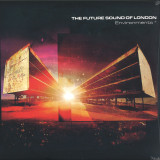
This is the fourth release in the critically acclaimed Environments series and continues where the third left off. It is a fourteen track journey from the river's delta to no-man's land where murmurations lead across supercontinents and back to the clear light of reality. Strings meet choirs - cascading down to the glass valleys of synthesised biophany.
'Murmurations' was the track featured on an exclusive vinyl 10' release for Record Store Day in 2012, it coincided with the CD version of this album's release that year. The album also has collaborations with Riz Maslen (Neotropic) and Ivor Novello award winning composer Daniel Pemberton.
Hitting release number three, Slush Records remaster and reissue Spacer IV aka James Zeiter’s sought-after 1997 EP on Pleasure Records. The man behind a slew of lauded records under a variety of different aliases, his sound is one that is cherished for orbiting the spheres of progressive trance and atmospheric dub techno. This four-track EP, however, saw James venture into unchartered territory, exploring a more melodic, house-tinted spectrum, before flipping back into the progressive techno-trance underbelly.
Having started life in 1995, Spacer IV had already gone from the leagues of limited white labels, to being the name stamped on one of Pleasure’s biggest-selling records by the time this EP came out. With only 195 white labels of his first record ARC 1/ARC 2 pressed, a copy was passed to Pete Robinson at Robs Records. ‘ARC 2’ was plucked from that release, supplemented with a new cut ‘ARC 3’ and given a proper pressing on Robs Records offshoot label Pleasure to notable success.
Fast forward to 1997 and James chose to depart the trance-infused techno sound of those first releases. Absorbing elements by osmosis, this EP sees James dipping his toes into fresh waters. Using what limited hardware he had available, including an Akai S950 sampler, Ensoniq ESQ-1 and Novation Bass Station 1, James laid down four distinctive and versatile club cuts.
‘Sirocco’ opens the EP, a tingling hit of endorphins that only the most timeless of tracks can elicit. Echoing pads feed acid murmurings, that sit atop dusty breakbeats and rattling sub-bass. An aural exploration, that is equal parts ethereal and empowering, taking cues from breaks, ambient, chill out and house. It’s one of those rare tracks that has the power to float you away or fuel your buzz, giving a healthy tug on the heartstrings in the process.
‘Mono’ follows, merging heads-down dancefloors with the embrace of warmer climates. It’s deep and Detroit-infused yet bolstered by a dream house bassline straight out of the Italian riviera. A dose of eyes-closed euphoria that hits just right.
The flipside sees James in more familiar territory with ‘Jetson’ and ‘Dust’. The former is a hit of space-age progressive house. Trippy, hypnotising, driving goodness, showcasing James’ ability to lock your body into a groove, yet send your mind to another world. The latter rounds out the EP, serving up an acid-swirling club stomper, forever building in intensity before dropping you into the vacuum of deep space.
Nearly two decades after it was first released, Norken’s sleek cult classic album ‘Our Memories Of Winter’ is being reissued on vinyl via Hydrogen Dukebox on 6th December 2024.
With its unique sonic blueprint of early 2000s electronica, ‘Our Memories Of Winter’ is a record that is at once both deeply reminiscent of a particular era and place, yet remains a timeless invocation of Norken’s idiosyncratic palette of minimal, techno, house and British IDM.
This vinyl reissue presents all 12 tracks from the original release, with the inclusion of 'Df23' and 'Flirt' making this the first time that ‘Our Memories Of Winter’ is available on vinyl with the complete album tracklisting.
Norken is one of the many pseudonyms of Lee Norris, a producer who is considered by those in the know as one of the unsung heroes of UK electronica. With a slew of releases throughout the years as Man-Q-Neon, Nacht Plank, Norken, Tone Language and Metamatics, this reissue shines a light on his soulful, immersive output under the Norken name.
As Norris explains, “The release of ‘Our Memories Of Winter’ has a nostalgic, warm feeling for me. I made his album in a garden shed with a wood burner, an Atari computer and a few synths in the depths of an English winter. I still had the thought process of making emotional style techno that would warm any soul on a cold day.”
First released in 2005, ‘Our Memories Of Winter’ carries the echoes of electronic luminaries such as the Detroit ambient techno of John Beltran, through to the immersive atmospherics of Biosphere and the innovative IDM of fellow British outfits Autechre and The Black Dog. Yet as Norken, Norris retains a distinctive musical voice that has continued to deepen in stature over the years since the album’s initial release.
Opening with the brief intro cut ‘Fern 2’, the album slides into the dreamlike groove of ‘Memories’, where rich, resonant chords wrap around cool, galactic-sounding synths and a compelling bass undertow.
On ‘It Might Have Been Rain’, that signature bass texture again propels a luxuriant mid-tempo rhythm, while Norken layers in hypnotic washes of string-like synths, gentle electronic pulses and the brief murmur of a vocal, across seven-plus immersive minutes.
Vocal textures, often subtly looped and distorted, also add a distinctive depth and personality to tracks like ‘Eastern Soul’ and ‘Here’. Throughout the album, there’s a feeling of intricate microcosms unfurling, as Norken coaxes a myriad of contemplative moods and emotions from his machines.
Whether shaping the smooth, lulling ambient gauze of ‘Ty Canol’, or letting the kaleidoscopic, dancefloor-leaning drive of ‘Audic Strable’ loose like a coiled spring, ‘Our Memories Of Winter’ presents the singular voice of an artist whose innovative contribution to UK electronic music has only become heightened with the passing of time.
Schlammpeiziger, who had previously only been known to us for his top hits and T-shirts, burst upon us like a wild boar in search of affection in the middle of the coronavirus lockdown. He nested in our fully vaccinated home, drank our Eversbusch, ate from our plates, slept in our bed (wait - wrong fairy tale) and repeatedly urged us to organise egg runs with his testicles (after some contortions, we gave up trying). Childish faecal humour, far-fetched obs(t)enities, juicing, a desire to dissolve, composting of thoughts. In excesses of lack of concentration, the chains of associations curled and meandered like Jo's famous curlicue drawings. Every evening, after we had forcibly levered him out of our flat, he would ‘walk’ home to put together very unique , dreamy pieces. In the blissful brainfog of those days, for example, ‘Handicapfalter’ was created, for which the congenial °Bär° made our flat into the corresponding video. Among other quirks of the little gut-breather, we were fascinated to observe his phobia of literature and books. Just hold a printed page in front of his face for a few seconds and he writhes on the floor crying. A level of phobia that only my own laughable disgust and fear of writing myself can compete with. Jo shudders at the thought of reading sentences that build on each other in a meaningful way, and I shudder at the thought of having to write them down because I have something ‘to say’. A certain affinity cannot be denied. We are much, much more pleased by snatched-up, misunderstood or misheard snippets, hollow but unforgettable phrases, the diamond stoner humour of our ancestors. ‘From one turn/ I stop/ to walk on/ in all directions’ (as it murmurs in “Selten Gesehenes”), describes the process quite nicely. After all, Jo is ahead of me in that he can simply break off every tedious sentence and let it fade into music. Back to the essentials. It's five to 12 for the Schlammpeitzger (scientifically Misgurnus). The shy goby is under threat from climate change, so perhaps this vinyl is the last expression of life of the specimen that we have been allowed to look after sporadically since the lockdown phase of the corona epidemic. And it's turned out pretty. Even the aesthetically gutted like me and my beloved husband can THINK about sex when they see these sublime, silvery fart bubbles! It's tender as a fart. Make love!!!!!
Schamlose Dubtöse: Do you have words. Do you have sounds. Impertinently harmless piano tinkling turns into tugging zounds of increasing severity. It is not dubbed (would be unethical) but dubbed. Sounds dubby, as you can imagine. (Instrumental)
Loch ohne Licht: Possibly vaguely misogynistic. Could also be that there was simply no light in the hole. The sparse snippet of lyrics (‘du biss mir och esu e Loch ohne Licht’) sounds like one of those stroppy Cologne replicas whose anti-charm is hard to resist. Buzzing and grooving.
Selten Gesehenes: Casual. Confident. Soft. Fragrant. Thoughtful but lively.
The Arabian Vietmanese (instrumental) is probably the food we trust in the case of the munchies we get when we watch other people smoking weed. Transcendental and psychedelic states casually permeate the humdrum of everyday life. Klar Knuspermarsch: Marches and floats at the same time. Klebt Runner: Soundtrack to the cult film of the same name. Tyrrell Corporation loosens up. Ungenutzte Sätze: Stinks somehow, because there is dangerous proximity to comprehensible and then also critical statements here. Instead, the sinister electronic cheapness of Carpenter soundtracks can be heard. Parzipan: Actually, the time of origin was not so roaringly funny and simple, but for Jo it was also a gruelling, slow letting go of his brother. Here he sends him off with a gentle nudge into the vastness of a hopefully happy beyond.
Clara Drechsler
Schlammpeiziger, der uns bislang nur durch seine Top-Hits und seine T-Shirts bekannt gewesen war, brach mitten im Corona-Lockdown über uns herein wie ein wilder Eber auf der Suche nach Zuwendung. Er nistete sich in unserem durchgeimpften Zuhause ein, trank unseren Eversbusch, aß von unseren Tellerchen, schlief in unserem Bettchen (Moment - falsches Märchen) drängte uns wiederholt dazu, mit seinen Hoden Eierlauf zu veranstalten (nach Verrenkungen gaben wir den Versuch auf). Kindischer Fäkalhumor, weit hergeholte Obs(t)zönitäten, Entsaftung, Auflösungswunsch, Gedankenkompostierung. In Exzessen der Konzentrationsschwäche ringelten, kringelten und schlängelten sich die Assoziationsketten wie bei Jos berühmten Kringel-Schlängel-Zeichnungen. Jeden Abend, nachdem wir ihn gewaltsam aus unserer Wohnung gehebelt hatten, „ging“ er dann heim, um dort sehr eigene, verträumte Stücke zusammenzubasteln. Im seligen Brainfog dieser Tage entstand z.B. „Handicapfalter“, für das der kongeniale °Bär° aus unserer Wohnung das entsprechende Video machte. Neben anderen Marotten des kleinen Darmatmers beobachteten wir fasziniert seine Literatur- bzw. Bücherphobie. Halt ihm nur sekundenlang eine bedruckte Seite vors Gesicht, und er windet sich weinend am Boden. Ein Grad an Phobizität, mit dem sich nur meine eigene lachhafte Abscheu und Angst vor dem Selberschreiben messen kann. Jo schaudert beim Gedanken, sinnvoll aufeinander aufbauende Sätze lesen, mir wiederum beim Gedanken, sie hinschreiben zu müssen, weil ich irgendetwas „zu sagen“ habe. Eine gewisse Verwandtschaft ist nicht zu leugnen. Viel, viel mehr freuen uns aufgeschnappte, falsch verstandene oder misshörte Fetzen, hohle, aber unvergessliche Phrasen, der diamantene Kifferhumor unserer Vorfahren. „Aus einer Drehung/bleibe ich stehen/ um in alle Richtungen/weiter zu gehen“ (wie es in „Selten Gesehenes“ raunt), beschreibt den Prozess schon ganz schön. Immerhin hat Jo mir voraus, dass er jeden leidigen Satz einfach abbrechen und in Musik ausplempern lassen darf. Zurück zum Wesentlichen. Es ist fünf vor 12 für den Schlammpeitziger (wissenschaftlich Misgurnus). Die scheue Grundel ist von Klimawandel bedroht, vielleicht haltet ihr mit diesem Vinyl also die letzte Lebensäußerung des Exemplars in Händen, das wir seit der Lockdownphase der Corona-Epidemie sporadisch betreuen durften. Und die ist hübsch geworden. Selbst aus ästhetischer Erwägungen Entdarmte wie ich und mein geliebter Mann, können bei diesen sublimen, silberhellen Pupsbläschen DENNOCH an Sex denken! It´s zart as a fart. Make love!!!!!
Schamlose Dubtöse: Hast du Worte. Hast du Töne. Impertinent harmloses Klavierplätschern geht über in ziepende Zounds von zunehmender Strenge. Es wird nicht domptiert (wäre unethisch) sondern dubtiert. Klingt dubtig, wie ihr euch vorstellen könnt. (Instrumental)
Loch ohne Licht. Möglicherweise vage misogyn. Könnte auch sein, dass im Loch einfach kein Licht war. Das sparsame Textfetzchen („du biss mir och esu e Loch ohne Licht“) klingt nach einer jener pampigen kölschen Repliken, deren Anticharme man sich schwer entziehen kann. Schwirrt und groovt.
Selten Gesehenes: Lässig. Souverän. Softig. Duftig. Nachdenklich aber beschwingt.
Beim Arabischen Vietmanesen (Instrumental) gibt es wahrscheinlich die Speise unseres Vertrauens im Falle der Munchies, die wir kriegen, wenn wir anderen Leuten beim Kiffen zusehen. Transzendentale und psychedelische Zustände durchziehen beiläufig den schnöden Alltag. Klar Knuspermarsch: Marschiert und schwebt zugleich.
Klebt Runner: Soundtrack zum gleichnamigen Kultfilm. Tyrrell Corporation macht sich locker. Ungenutzte Sätze: Stinks irgendwie, weil hier gefährliche Nähe zu nachvollziehbarer und dann auch noch kritischer Aussage gegeben ist. Dafür klingt die sinistre elektronische Billigkeit von Carpenter-Soundtracks an.
Parzipan: Eigentlich war die Entstehungszeit gar nicht so brüllend lustig und einfach, sondern für Jo auch ein zermürbendes, langsames Loslassen des Bruders. Hier schickt er ihn mit sanftem Schubs hinaus in die Weiten eines hoffentlich schönen Jenseits.
Clara Drechsler
Downloads
Multi-instrumentalist, producer and composer Calcou is set to share his sophomore album Murmuration on July 5th, 2024 via MfRD+C. Calcou's latest singles were picked by worldwide Spotify editorials for playlists like Fresh Finds, Late Night Vibes, metropolis or by Apple US for focus playlists like Today's Chill. He has received support from numerous blogs and magazines such as CLASH Magazine, Stereofox, Cercle, House Music With Love, Majestic Casual and ElectroPosé to name a few. Calcou finds inspiration in the works of Kiasmos, Bonobo, and Four Tet. TetTethlatest release calls to mind the likes of Four Tet, Maribou State and George FitzGera
The widely beloved Romanian producer and DJ Barac delivers his new EP ‘Hypnotic Grayscale’ via Yecad this May, comprising three original compositions across the vinyl only release.
Since his debut release over a decade ago, Bucharest, Romania’s Barac has grown to become one of the most prized producers and DJ’s in the microhouse movement coming out of his home turf. A name synonymous with high quality, subtly nuanced and hypnotic grooves tightly woven together to create a sound that’s distinctly his and has found a home on many reputed labels such as Meander, Pressure Traxx, Adam’s Bite and of course his own Shamandrum. Here though, we see Barac joining the roster of Yecad, a fledgling London based imprint that has played host to music from Sepp, Vlad Arapusu, Mihai Pol, Dragutesku and Constratti since its inception in 2023.
The title-track ‘Hypnotic Grayscale’ opens the EP and encapsulates all that is loved about Barac’s productions, delicately unfurling atmospherics, haunting voices and softly reverberated chimes intertwined with airy dub chords and stripped back drums.
Following to open the B-Side is ‘Everything that is seen comes from the unseen’, stripping things back to a rawer, percussive driven state with crisp drums and a bubbling acid- tinged bass line carry the groove while sporadic resonant flutters and vocal murmurs ebb and flow within. ‘He restores my soul’ then rounds out the EP and sees Barac explore his more experimental side, fusing together ghostly synth melodies, echoing chords, spiraling resonant swells and a hypnotic Romanian spoken word vocal.
Airrica makes her Crosstown Rebels debut with ‘Hi Speed Lover’, featuring Nick Morgan and KinAhau remixes.
Balancing experimental musical curiosity with her playful take on house and techno, Los Angeles’ Airrica may only be two releases into her blossoming journey as a producer, but she has already showcased her growing sound and vision while aligning with her own powerful DJ sets. Following her collaborative release alongside Ashee on Diplo’s Higher Ground and building on her debut via Crosstown’s sister label Rebellion, Damian Lazarus now welcomes her to Crosstown Rebels for the first time ahead of her appearance alongside the label boss at Hï Ibiza as she unveils her ‘Hi Speed Lover’ EP - accompanied by remixes from Canadian-born DJ/producer Nick Morgan and hotly-tipped talent KinAhau, as both also make their label debuts.
Bumping and trippy, ‘Hi Speed Lover’ is a snaking, bass-heavy cut loaded with energy as warped vocals are accompanied by slinking drums, icy hats and resonant chords and strings, while Nick Morgan’s take brings a stylish, hazy glow to the track as dubby low-ends and delicate keys work amongst the mix. Second original ‘Cherries’ is another impactful production merging metallic drums with further vocal murmurs and an infectious acid-dipped bassline, while KinAhau’s remix strips things back to deliver a classy journey through rich textures with an ethereal trip to close the package.
A mysterious release, not only for its unique expressive style but also because it isn't even known when it was initially recorded let alone its release date. According to non profit Studio Piccolo owner Vincent Bruley, it could have been recorded during the 70s and eventually released in the early 90s, sometime throughout Nilton Castro's time in Paris making music for contemporary dance classes (often led by his wife). This album was originally intended for accompanying dancers in classes with an emphasis on rhythm and coordination. Given Nilton's background and expertise in percussion, the focal point of this album is to present an array of Afro Brasilian rhythms performed by himself with additional moments of choir, flute and keys/metallophone. Effortless due to Nilton's prowess and unburdened by typical financial pressures (often behind the release of a record), the result feels like charmingly unadulterated and pure expression throughout the entire album. But what really takes the listener to places of unheard-of bliss is “Ondes (Les Vagues)” a track that has plagued the curiosity of diggers and collectors for a while now. With its harmony crescendos elegantly coming and going as per the title, overlayed on Nilton's subtle percussive patterns, an aural landscape of illusory beauty - listening is believing. Remastered and officially re-issued with its original artwork.
Four years ago, Francesco Strippoli debuted on Bordello A Parigi with Universal Oneness followed by the analogue rich Prison Planet EP. Once again, donning his Armonics alias, the Bari based producer returns with four tracks for Future Echoes. The synthesizer warmth that has characterised past releases is immediately present. At the heart of “Floating High” is Strippoli’s keyboard work. Beats are crisp and understated as waves of melodic murmuration bob and weave to perfectly complement each other. A steady kick introduces the textured title work. Warbling notes give way to bolder chords, chords that are blurred by shimmering arpeggios as layers of harmony expand and unfold. Nostalgia meets the needle on the flip. “Retrospectiva” blends subtle shades with brassy extravagance, the sun and romance of southern Italy radiating in tempered brilliance. The energy of “Music and Lights” closes. Throbbing keys are further fortified by swirling synth stabs, the intensity being ratchetted up to boiling point in this dancefloor delight. Quality through and through.
For SPACEDUST7, we welcome Jay Gadian to the label, who steps up 4 forward-thinking electro cuts for 'The Mispress' EP.
On side A, murmurs from beneath the warbling top line of 'Sensory' evoke memories of dark, heady corners of the dance floor, whilst the fog clears with the sharp percussion work of Green Dimension.
The flip opens in a more subdued manner with the circuitry of '20 or More' gently weeping, before 'East' closes off the record with laser beam synths cutting through washes of tense strings alongside further crisp drum work.
Manda Moor steps out on Mood Child for the first time as the label co-founder links with mysterious talent Trangaz for four fresh productions on their collaborative ‘Peligro’ EP.
Ever since dropping her debut release in 2020, Danish-Filipino talent Manda Moor has been on an impressive upwards curve and one that doesn’t seem to be slowing anytime soon.
Having dropped back-to-back releases on Jamie Jones and Lee Foss’ iconic Hot Creations imprint, the hotly-tipped DJ/producer and label founder heads to her Mood Child label for the first time. Founded and created alongside Sirus Hood, the label serves as an artistic platform, a community-focused label, and an events series that delivers quality music via digital and physical formats, plus NFTs, unique experiences, and more. An ‘invitation to a journey that blends feelings, emotions and desires’, with takeovers at Hï Ibiza, Café Mambo, Lovefest, Fabrik and more, the first release saw Sirus partner with fellow Frenchman Malikk, and now the second arrives in perfect time for the peak summer months as Manda combines with Boogeyman and Pakate signee Trangaz.
New York City born-and-raised, he draws lines between primitive and futuristic sounds and rhythms influenced by world travel and different cultures, and the two reunite for their four-track ‘Peligro’ EP.
Crafted together in Ibiza, the EP showcases sonics capturing the island’s unique magic. Lead cut ‘El Peligro (Ibiza Mix)’ is a production made after a special day at the coves and hidden treasures of Atlantis, under full moonlight near Talamanca, with the rolling organic drums grooves, playful vocal murmurs and vibrant melodies journeying deep into the night.
Next, ‘Tagalog’ keeps the energy bubbling with another percussive workout sprinkled with vocal interjections and spoken words in the native Filipino language it is named after, while B1 ‘Chatita’ is a slinking production as wonky stabs meet and snaking low-end grooves. Closing the EP, the pair deliver the most stripped-back track with ‘Buena Vibra’ as a killer groove guides vocal chants to wrap things up in fine fashion.
Manda Moor & Trangaz ‘Peligro’ EP drops via Mood Child in July 2023.
"We find ourselves venturing into the depths of a rugged terrain. In our hands, we hold stones and minerals, each possessing its own distinct texture, weight, and sonic potential. It is through the artistic touch and through the musical instruments that these earthly treasures, once dormant, are awaken to life." — Sara Oswald + Feldermelder
The 3rd collaboration of prolific cellist Sara Oswald and electronic musician Feldermelder evokes captivating sensations that oscillate between impending doom and hope. The albums' sonic journey is highly immersive, transporting the listener from one cerebral landscape to another. The transformative nature of metallic elements being integrated in sustained orchestral tones weaves the sonic tapestry, resulting in a captivating experience for the listeners. The organic sounding — reminiscent of minerals' timbres — brings a touch of brightness and a distinctive edge, while the orchestral harmonic structures lend a sense of grandeur and continuity. The origins of this music remain enigmatic, while the tracks of the album gradually unveil concealed aspects and the hidden truth.
One can step into a realm where melodies are reborn, as Sara Oswald's cello spins tales and emotions burst forth. Nature's eternal splendor intertwines with the essence of music, as she infuses harmonies with the soul of mountains. Vibrant hues come alive with delicate strokes, and cascading notes resonate with a select few. Feldermelder conjures profound echoes that swirl like ancient whispers of the earth's primordial past. He sculpts textures, from fragmented glitches to expansive atmospheres, that warp the fabric of reality. The two musicians merge together harmoniously, blending the acoustic and electronic worlds into a transcendent unity. This fusion of contrasting elements adds a unique and intriguing quality to the music. The cello's warmth merges with pulsating electronic beats, creating a symphony of contrasts and sonic upheaval. Each composition is woven in intricate layers, combining electroacoustic architecture with delicate precision. A subtle balance of chaos and control permeates the music as it meanders through the labyrinth of the mind. The soundscape unfolds like a grand tapestry, distant echoes murmuring like grains of sand.
Trained in baroque cello and advocating improvised music, Sara Oswald is the perfect match for sound artist and electronic musician Feldermelder. She plays solo, composes for film and theatre and collaborates with musicians like The Young Gods, Pascal Auberson, Sophie Hunger and Julian Sartorius. Feldermelder is a polymathic creative whose artistry spans composition, sound design, installation and code. He is co-founders of -OUS and part of Encor.studio, a collective of artists who specialise in creating immersive audio-visual installations. Through his work, he explores the idea of secrecy and its impact on our lives, using music and sound to create a thought-provoking and immersive experience for his audience.
Since Interstellar Space, John Coltrane's posthumously released duo album with Rashied Ali, the combination of sax and drums has received an aura of sublime spiritual ambition. It is where tireless truth seekers come together to aim for something transcendental. Something too big for words. Of course, a lot has happened in the meantime.
The available options - philosophically, stylistically, temperamentally - are endless. Musicians are aware of those historical turning points, yet they also try to add their own twists and interpretations. Some of them succeed. One of reed player Mattias De Craene's many projects - MDC III - is a project involving drums and saxophone. A striking difference: De Craene invited two drummers (Simon Segers, Lennert Jacobs), that have been active in the worlds of jazz, pop, free improvisation and experimental music. They are the ideal foil for De Craene's vision, which seems to exclude no opposites. While the use of a recorder, electronics and percussion steers the music beyond the classic acoustic limitations, the result becomes strikingly rich with contrasts. What is abstract and introspective the first moment can switch - gradually or abruptly - to moments of fierce ecstasy the next.
The music feels free (free from limitations, free to choose its own logic), but also invites. Shifting moods and textures are combined with intricate rhythmical patterns, as the drummers lock together in dense, complex and/or ritualistic grooves. A minimal pulse, accompanied by murmuring hisses of brushes and a serenading sax is contrasted with moments of exuberance. The result is many things at once, but despite these wildly varying colors, sounds, textures, rhythms and moods, they are all linked, part of a generous, iridescent whole.
The trance-inducing trio MDCIII is back. And that equals yet another delicious load of modular drums, wildly processed saxophone sounds, improvisation & pulsating grooves.
After their first EP, MDCIII ft. Sylvie Kreusch, and their subsequent first (internationally) acclaimed album 'Dreamhatcher', the 'double drums' saxophone trio with Mattias De Craene, Simon Segers & Lennert Jacobs is all set to show what angle rock 'n roll can really come from. On their new album 'Drawn In Dusk' (release: end of September via W.E.R.F records) the trio delivers a whole new palette of sounds that are just as mystical, energetic and wild as 'Dreamhatcher'.
The next release in CUE Music's catalogue sees Butane teaming up once more with Riko Forinson for "Brainstorm" EP alongside Nima Gorji on remix duties. The record definitely adds extra magic to the label's discography, lining up to the previous releases from Elchinsoul, Sascha Dive, Sascha Sonido, Danilo Schneider, Dubphone, Heerd and label head Sven Jaeger, among many many others.
A firm believer that the long hours of studio work keep a musician grounded, Butane boasts an impressive discography, released by some of the most highly regarded labels in the business, such as Crosstown Rebels, Sci+Tec, Hottrax, Fuse Records, Lauter and Get Physical. As a label owner, he's the founder of three influential underground dance music imprints of his own, Alphahouse, Little Helpers and Extrasketch.
Riko Forinson is an Italian artist passionate about the sound of drums and piano which he studied intensively from an early age. After a while of exploring the acoustic dimensions of music, he immersed himself in the world of digital electronica, performing as a DJ at various events and releasing with labels like Orpheus Recordings, Lucidflow, Dushe Label and Bar 25 Music. Nowadays he's an author, composer and producer who loves to play with various techniques while integrating jazz, reggae or classical aspects into his compositions or sets.
In charge of the reinterpretation of the title track, Ibiza-based Nima Gorji is well-known on the international scene, with a career that spans more than three decades. In 1999 he founded Welt Recordings followed by NG Trax and Need For Sound, relentlessly following his passion for electronic music by releasing numerous personal works as well as promoting other artists. His rich discography includes materials published through labels like Sci+Tec, Deeperfect, Fuse London, Bondage Music, Out Of Orbit, Love Letters From Oslo, Indigo Raw, Out Of Orbit, Cocoon, Murmur, Natural Rhythm, Bla Bla Records, ÉTÉ,
In The Land of Silence is the first full length album by experimental artist Ireen Amnes. The founder of the London based collective Under My Feet. debuts on Sonic Groove with an immaterial journey contemplating suffering, liberation, the importance of affection and unity. This ambient album reveals a hidden connection between these human emotions. From anger and rejection, to love and unity, the sounds explored by the artist represent a recent journey within. Recollections of distant memories are expressed with nostalgic sounds; by contrast, darker tracks are symbolic of those moments when it is more dif ficult to accept reality for what it is. Ireen expresses in this album that there wouldn’t be any joy without suffering.
Sounds created out of emotions that cannot be spoken. Beats that pulse out of gestures that can no longer be performed. Tones that screech out of bodies that can no longer be human. Echoes of all unspoken words reverb into the wounds of time; that constant ebb and flow of existence; that relentless stomping of exchanges. The slur of life is now noise – she collects its torn pieces with her bare hands and holds them close to her pounding flesh. She now sways in and out of consciousness, transported by nothing but his will to life, his ecstatic memory, his murmured love that now forms this soundtrack to her life.
Gentle waves lap the soft white sand. The limitless ocean fills the view as the sun slowly sinks below the horizon. As the day ends in blue and orange tones, the heat begins to subside, a sure sign that the slow evening migration from the beach will soon begin. A pleasant, yet formidable music comes from the radio tuned into a frequency transmitted from Paris. Maybe it was written and recorded in the 70s, or maybe it has simply soaked in that aesthetic all the way down to the pauses. It doesn't really matter. Delving deep to explore the roots of Brazil’s musical tradition, the Camarão Orkestra has tapped into Candomblé and its rhythms. Born on the drums of enslaved Africans in a ritual that invokes numerous deities, they lay the foundation for this new album, Nação África. The eleven musicians, guided by Amanda Roldan’s silky voice and guest appearance by Anthony Joseph (“Canto De Bahia”), explore and embrace the murmuring polyrhythm of Brazilian percussion instruments, vibrating berimbau and squeaking cuícas, pouring their tightlywound funk bass into the groove and letting their jazz fly free, together and solo. The seven nonchalant tracks get your hips swaying, whether you’re in a comfortable armchair or surrounded by other dancers. They take your mind far away, on a journey paved by analog synths with Fender Rhodes crystals to the horizon where the sun’s last glimmer has finally faded away. The brass section’s shiny bells, valves and keys reflect the images and ambiance of the soft Brazilian night air.
Mid-July signals the arrival of Rossko’s debut solo EP on his home imprint FUSE, delivering two tracks accompanied by a remix from Burnski in the form of his ‘Blossom’ EP.
An artist immersed within London’s rich electronic scene for the last 20 years, Rossko remains a central figure at the heart of the city’s ever-evolving sound. A DJ first and foremost, known for his slick and powerful sets and his ability to unearth forgotten gems from across the electronic sphere, his journey as one of FUSE’s core residents now stretches over 10 years, with the Berlin-based talent also featuring as a head resident DJ and A&R for the label’s sister imprint Infuse as well as heading up his own label ‘Late Night Skanking’ and ‘Arkityp’, the project with Archie Hamilton. Following on from his recent collaborative EP alongside Swedish talent Per Hammar on Infuse, here we him step out on home turf to offer up his debut solo EP and the most complete and matured example of his sound to date via the aptly titled ‘Blossom’, whilst Constant Sound boss Burnski also joins on remix duties.
A-side production ‘The Step Up’ opens the EP in slick fashion, as rolling organic percussion arrangements weave amongst slinking bass licks to reveal a stripped back yet dynamic lead cut. Next up, second original ‘Cerca Trova’ takes things a little deeper as off-kilter sonics and vocal murmurs work amongst skipping hats and rich low-end tones, before Burnski’s remix of ‘The Step Up’ sees the production paired back even further to reveal swinging drum grooves, floating, hazy melodies and playful synth flourishes throughout.
Laputa, a title taken from the fantastical floating island of Gulliver's Travels is aptly named as 'The album that never landed' for, apart from a limited touchdown in Japan, Laputa was never released. This mystical world is a summation of Yokota's journey so far, a complex and at times challenging work but immeasurably rewarding. Beguiling and bewitching in equal measure.
Over fifteen undulating sonic fugue states, he guides listeners round a liminal world, made up of familiar materials but formed in a way defying all laws of perspective and physics. Background murmurings give way to almost uncomfortably foregrounded chattering, and one perceived soundstage segues into another impossible tableau of sonic apparitions, some recognisable in form, but all boldly decontextualised and arranged in expertly cluttered amalgams.
Laputa's obscurity was a prime reason Lo Recordings decided on the Skintone retrospective. Falling as it did between The Boy and the Tree on The Leaf Label and our own debut of Symbol. It was something of an audio crime that the album had never been properly explored and discovered. Lo Recordings hope Laputa can now ascend to its rightful place... hovering above us.
- A1: People Move On
- A2: Planets
- A3: Winter
- A4: Not Alone
- A5: Did I Say
- B1: Last Ship On The River
- B2: Me & Magdalena
- B3: Souvenir
- B4: Does It All Add Up To Nothing
- B5: Lonely Night
Following on from Butler, Blake & Grant's eponymous 2025 debut for Bernard Butlers' 355 Recordings, the trio reassembled at Norman Blake's home studio. 'Murmurs' is in some ways going back to where it all began for Butler, Blake & Grant, with the trio reimagining songs from their individual back catalogues which was in fact the premise for the very early shows that they played together. It all begins with 3 guitars, 3 voices and blooms from there.
Limited edition initial pressing of 1000 copies on silver vinyl in individually numbered sleeve.
"Scottish fireside Supergroup' - Uncut
"A uniquely pastoral musical summit...the tone feels perfectly integrated and cohesive. Imagine a mostly-Caledonian CSN&Y and you get the idea" - Record Collector
Pioen is the second album by Elisabeth Klinck & Nils Vermeulen, released on blickwinkel. It was recorded in a small chapel of a monastery in the city center of Ghent. A chapel by nature is a place of contemplation and meditation, which automatically had influence on the music. Movements slow down, attention is sharpened and the overwhelming silence of the space becomes part of the music. Sound and silence are meticulously woven into each other. Even when the music grows at times dense and heavy, there is an ever-present sense of closeness and intimacy. This is reinforced by the use of the voice, which naturally appears throughout the album, not as a separate layer but as an extension of the instruments.
The pieces – this time more curated than on their previous album Pair, Paire – arose from hours-long improvisations where sound became space and space became sound. Bringing together violin, double bass and voice, Pioen unfolds as a serene and honest journey, inviting the listener into a state of contemplation.
Elisabeth Klinck is a contemporary violinist, composer and performer based in Brussels, known or her timeless, deep-listening sound worlds. Her album Picture a Frame (2023) and Chronotopia - selected by The Quietus as one of the best albums of 2025 - were released on the Swiss label Hallow Ground. A big part of her work revolves around tactility, fragility, and a very physical approaches to sound.
Nils Vermeulen is a Belgian double bass player active in all varieties of adventurous music. He has played with Paul Lytton, Martin Küchen, Seppe Gebruers, William Parker, John Dikeman, Luis Vicente, among others. He works across many scenes, from free improv to jazz to contemporary classical music, and in many distinct constellations, such as his own groups Kabas and Jukwaa, a Norwegian free jazz trio with Tollef Østvang and Heidi Kvelvane, a string duo with Elisabeth Klinck, and as the double bassplayer of Nemo ensemble. In 2023, he released his debut solo album on Aspen Edities.
To decay is also to transform. Rusting metal is the visible traces of passing time, as the oxidation process accumulates dampness in our atmosphere and imprints it as unpredictable patterns onto hard iron and steel. Working in construction for a year now, Kensho Nakamura sees rust all the time, clambering up ageing chunks of material. Normally discarded as waste, Nakamura began discerning beauty in the phenomenon, organically spiralling around and consuming some of the very hardest of manufacturing stuffs into unique new forms.
‘Electric Rust’ continues the conceptual electronic composition mode of Nakamura’s previous works with a series of fractured musical dioramas. These scurrying notes, sparse hums, and quivering bleeps explore the topics of rust and the accumulation of time. The music ticks like a clock, drips like a tap, and manifests unknowable inorganic shapes. Recognisable musical snippets of bells, pianos, or murmured voices are buried inside counterintuitive synthetic rhythms and tension.
On ‘wet air’ piano notes tinkle and pipes gargle, digital detritus tap dances and arpeggios stumble. On ‘unique faces’, idle marimbas and malfunctioning animalistic squeaks flounder. This is music from the promethean space between being forgotten and being conceived. ‘Electric Rust’ is a topography of a world of rust, where corroding structures evolve into new — and beautiful — patterns of life.
ince its opening in spring 2021, JUBG, a still young Cologne gallery for contemporary art, has specialized in the broad field of artists and collaborations working along artistic interfaces, especially those between visual art and experimental and/or electronic music. For example, JUBG has already hosted exhibitions by Markus Oehlen, Kim Gordon, Wolfgang Voigt, Matthias and Aksel "Superpitcher" Schaufler, Sven-Åke Johansson, and Emil Schult. Albert Oehlen, who is a kind of mentor and supporter of the gallery, was also a guest at Albertusstraße this summer, where he presented the exhibition D-I-E ORPHEUSMASCHINE together with Michael Wertmüller, Thomas Stammer and the poet Rainald Goetz.
It is only logical that the gallery now expands its sphere of activity to include its own label, on which music appears that comes from similar contexts as the artists listed above already suggest.
As catalog number 1, JUBG is now releasing the official soundtrack to "The Painter" from 2021. The film, German title "Der Maler", is a mixture of feature film and documentary and a collaboration between German director Oliver Hirschbiegel, best known for his Oscar-nominated film "Downfall", and Albert Oehlen, with whom Hirschbiegel has a long friendship, as they both once studied together at the Hochschule der Bildenden Künste in Hamburg.
The docu-fiction shows Oehlen struggling with a painting and pondering the meaning of his work. Oehlen is played by German actor and musician Ben Becker, accompanied by the off-screen voice of Charlotte Rampling. In the film, Becker makes a painting that Oehlen himself creates step by step behind the camera, while the actor improvises the process in front of the camera.
The wonderful music for this film comes from no less than two outstanding personalities whose individual biographies and musical signatures could hardly be better suited to this project. On the A-side it is Gudrun Gut, icon not only of the German electronic music scene since at least the 90's, singer, composer, DJ, label owner (Monika Enterprise) and of course founding member of the legendary 80's New Wave band Malaria. On the B-side it’s the world famous and award winning US avant-garde trumpeter and improvisational musician Nathan "Nate" Wooley, who has played with Fred Frith and John Zorn among others.
Gudrun Gut's tracks bear such beautiful titles as "Bewegung", "Küste" or "Weinen" and she once again pulls out all the stops of her great skills and decades of experience as a producer of the most diverse electronic music genres. These are unusual and much more experimental musical paintings that she creates here than on her recent solo works. Edgy, angular, raw and unpolished, yet always elegant and clever, she subverts the male artist madness depicted extensively in the film in her own unique way.
Nathan Wooley answers with the instrument he has been familiar with since childhood, the trumpet, with which he is able to create a ravishingly virtuosic noise. His pieces are more like sketches, often only 90 seconds or a few minutes long, but in all their abstractness underpin the narrative of the film almost perfectly.
A limited edition of 20 copies in total, painted and signed by Ben Becker, can be purchased directly through JUBG.
JUBG, eine noch junge Kölner Galerie für zeitgenössische Kunst, hat sich seit ihrer Eröffnung im Frühjahr 2021 auf das weite Feld von Künstler:innen und Kollaborationen spezialisiert, die entlang künstlerischer Schnittstellen tätig sind, insbesondere an denen zwischen bildender Kunst und experimenteller und/oder elektronischer Musik. So hat JUBG bereits Ausstellungen von Markus Oehlen, Kim Gordon, Wolfgang Voigt, Matthias und Aksel "Superpitcher" Schaufler, Sven-Åke Johansson und Emil Schult gezeigt. Auch Albert Oehlen, der eine Art Mentor und stiller Unterstützer der Galerie ist, war im Sommer dieses Jahres zu Gast in der Albertusstraße, wo er zusammen mit Michael Wertmüller, Thomas Stammer und dem Dichter Rainald Goetz die Ausstellung D•I•E ORPHEUSMASCHINE präsentierte.
Es ist nur logisch und folgerichtig, dass die Galerie ihren Wirkungskreis nun um ein eigenes Label erweitert, auf dem Musik erscheint, die aus ähnlichen Zusammenhängen und Sphären stammt, wie es die oben aufgezählten Künstler:innen bereits vermuten lassen.
Als Katalog-Nummer 1 veröffentlicht JUBG nun den offiziellen Soundtrack zu "The Painter" aus dem Jahr 2021. Der Film, deutscher Titel “Der Maler”, ist eine Mischung aus Spiel- und Dokumentarfilm und eine Zusammenarbeit zwischen dem deutschen Regisseur Oliver Hirschbiegel, vor allem bekannt für seinen Oscar-nominierten Film "Der Untergang", und Albert Oehlen, mit dem Hirschbiegel eine lange Freundschaft verbindet, studierten sie doch beide zusammen einst an der Hochschule der Bildenden Künste in Hamburg.
Die Doku-Fiktion zeigt Oehlen, wie er mit einem Gemälde kämpft und über die Bedeutung seines Werks nachdenkt. Oehlen wird vom deutschen Schauspieler und Musiker Ben Becker gespielt und von der Stimme von Charlotte Rampling aus dem Off begleitet. Im Film erstellt Becker ein Gemälde, das Oehlen selbst hinter der Kamera Schritt für Schritt anfertigt, während der Schauspieler den Prozess wiederum vor der Kamera improvisiert.
Die wunderbare Musik zu diesem Film kommt von gleich zwei herausragenden Persönlichkeiten, die mit ihren individuellen Biographien und musikalischen Handschriften kaum besser zu diesem Projekt passen könnten. Auf der A-Seite ist dies Gudrun Gut, Ikone nicht nur der deutschen elektronischen Musikszene seit mindestens den 90er Jahren, Sängerin, Komponistin, DJ, Label-Betreiberin (Monika Enterprise) und natürlich Gründungsmitglied der legendären 80er Jahre New Wave-Band Malaria, auf der B-Seite der weltberühmte und Preisgekrönte US-amerikanische Avantgarde-Trompeter und Improvisationsmusiker Nathan “Nate” Wooley, der u.a. mit Fred Frith und John Zorn zusammengespielt hat.
Gudrun Gut’s Tracks tragen so schöne Titeln wie “Bewegung”, “Küste” oder “Weinen” und sie zieht hier einmal alle Register ihres großen Könnens und ihrer jahrzehntelangen Erfahrung als Produzentin der verschiedensten elektronischen Musikspielarten. Es sind ungewöhnliche und sehr viel experimentellere musikalische Gemälde, die sie hier entwirft als auf ihren jüngsten Solo-Werken. Kantig, eckig, roh und ungeschliffen und dabei immer elegant und schlau, unterläuft sie den im Film ausgiebig dargestellten männlichen Künstlerwahnsinn auf ihre ganz eigene Art und Weise.
Nathan Wooley antwortet mit dem ihm seit Kindesbeinen vertrauten Instrument, der Trompete, mit der er in der Lage ist, einen hinreißend virtuosen Lärm zu erzeugen. Seine Stücke sind eher Skizzen, oft nur 90 Sekunden oder ein paar wenige Minuten lang, die in all ihrer Abstraktheit das Narrativ des Films nahezu perfekt untermalen.
Eine auf insgesamt 20 Exemplare limitierte Edition, bemalt und signiert von Ben Becker, ist direkt über die JUBG zu erwerben.
- A1: Roudi Vagou - Gleisende Lichter
- A2: Roudi Vagou - Halb So Schwer
- A3: Roudi Vagou - So Sueß
- A4: Roudi Vagou - Lila Gibt Es Nicht
- A5: Roudi Vagou - Iss Mich Ganz Auf
- A6: Roudi Vagou - Grenzueberschreitung
- A7: Roudi Vagou - Aufgeben Ist Kein Verzicht
- B1: Läuten Der Seele - Komischer Anruf
- B2: Läuten Der Seele - Punkt Mitternacht
- B3: Läuten Der Seele - Nur Fuer Uns Zwei
- B4: Läuten Der Seele - Mineralwasserflasche 1
- B5: Läuten Der Seele - Glaskopf Mit Watte
- B6: Läuten Der Seele - Rathausdach
- B7: Läuten Der Seele - Ein Kitzeln In Den Graebern
- B8: Läuten Der Seele - Mineralwasserflasche 2
- B9: Läuten Der Seele - Mondraetsel
Across an extensive suite of enchanting miniatures, Matthias Kremsreiter and Christian Schoppik present the hypnagogic vision of Taghelle Nacht. Recording under their respective Roudi Vagou and Läuten der Seele aliases, Kremsreiter and Schoppik combine their distinct but equally accomplished instrumental practices into a new collaboration that weaves swooning samples amongst instrumental passages. They lead us through 16 vignettes that revel in the cognitive dissonance and seductive magic of moonlight at midnight.
Both artists have past form within the folds of contemporary experimental electronic music in Germany. Kremsreiter's work as alibikonkret has manifested on DIY tape releases created with a methodical, technically-minded approach. Debuting his Roudi Vagou pseudonym on Taghelle Nacht, he pivots to a more playful, instinctively felt method that allows the compositions to flow with a natural cadence. Schoppik has been a key figure in the celebrated dark-ambient-folk scene, not least as part of the group Brannten Schnüre. His work as Läuten der Seele includes the acclaimed 'water trilogy' of LPs between 2022 and 2024, with a greater emphasis on instrumental, atmospheric production, and a last, stunning collaborative album with Nový Sv?t's Jota Solo.
On Taghelle Nacht the precise ingredients of each piece soften at the edges as tape loops and swathes of reverb seal the joints between spellbinding melodic refrains. Opening track and lead single 'Gleisende Lichter' sets the tone with ghostly murmurs, spine-tingling string refrains and splashes of cymbal that cut through the gloom with stark clarity. A lilting romanticism stirs at the heart of the orchestral samples that populate the likes of "Grenzu?berschreitung" - old-world beauty sometimes buried in dust, elsewhere rendered with startling clarity. 'So Süß' lets buzzing, sustained drones and dissonant sweeps of extended technique glide in and out of each other. Granular processing subtly breaks apart the mellow swell on 'Komischer Anruf', and forlorn sax calls out into heavy-hearted space on 'Glaskopf Mit Watte'. At every turn a new scene is painted, distinct from the last and yet all bound up in the pervasive, pale blue light cast over the sleeping landscape Kremsreiter and Schoppik have sculpted.
Snatches of song drift by like dreamlike fragments, and achingly tender flourishes fleetingly appear and retreat - ideas and expressions momentarily caught in the light before retreating into the shadows once more. This is the evocative world of Taghelle Nacht - an unsettling depiction of the surreal blend of memories and imagination that merge into each other once the sun goes down.
- Firefly Pharology
- Murmuration
- Soft Animal
- Blowing On Embers
- Eternity Perspective
- Phthalo Green
- The Call
- Mourning Dove
Bellbird hat seinen Namen und seine musikalische Inspiration von dem Vogel, der für einen der lautesten und markantesten Rufe im Tierreich bekannt ist. Die Band beschäftigt sich mit Themen wie der Verbundenheit zwischen Musikern, Genres und der Natur. Ihr zweites Album und erstes für Constellation, The Call, ist direkt vom Weißglockenvogel inspiriert, dessen extremer, unverwechselbarer Ruf analysiert und direkt in den explosiv schönen Titeltrack des Albums eingewoben wurde. Das in Montréal ansässige Quartett bestehend aus Claire Devlin (Tenorsaxophon), Allison Burik (Altsaxophon, Bassklarinette), Eli Davidovici (Bass) und Mili Hong (Schlagzeug) begann während der Pandemie bei Park-Jams zusammen zu spielen, inspiriert von der Jazz- und Free-Improvisationsszene, die sich um das Café Résonance gebildet hatte. Aber die vier Montrealer Neuzuzügler fanden erst nach einer Einladung zum Ottawa Jazz Festival 2021 als Bellbird zusammen und haben seitdem ihre Harmonie und ihren gemeinsamen Sound durch jahrelanges Touren und Zusammenspiel verfeinert. Das Quartett geht über sein gefeiertes, 2023 selbst veröffentlichtes Debütalbum ,Root in Tandem" hinaus und setzt auf einen stark kollaborativen Kompositionsprozess. Nachdem sie zuvor die Kompositionsaufgaben aufgeteilt hatten, entstanden die acht Songs auf The Call aus musikalischen Workshops und Improvisationsspielen, wobei sie sich auf Gedichte und Gespräche stützten, die sie während ihrer Aufenthalte außerhalb der Stadt ausgetauscht hatten. Das Ergebnis ist ein kraftvolles, stimmiges Statement, das ihre jazzzentrierte Instrumentierung mit Einflüssen aus Rock, Fusion und Folk verbindet, von Mingus und Eric Dolphy bis hin zu Ornette Colemans Prime Time und Indie-Rock. Ein wesentliches Merkmal ihres Sounds ist, wie sie die üblichen Rollen ihrer Instrumente umkehren, wobei die Blasinstrumente rhythmische Muster und unterstützende Texturen einsetzen, während Akustikbass und Schlagzeug die Form bestimmen. Dieser Ansatz ist ein Mikrokosmos der egalitären Ethik der Band: Sie agieren als echtes Kollektiv, ohne ihre individuellen Stimmen zu opfern. Das Album schafft einen Ausgleich zwischen kraftvollen Kompositionen wie dem Titelsong ,The Call" und Momenten, in denen die Band das Tempo drosselt, um sich der thematischen Einfachheit hinzugeben, wie in ,Soft Animal" und ,Phthalo Green". Im Gegensatz zu ihrem Debütalbum, das in der Stadt erarbeitet, aber auf dem Land aufgenommen wurde, wurde ,The Call" im legendären Hotel2Tango in Montréal von der Toningenieurin Sylvaine Arnaud aufgenommen, die die rohe Energie der Live-Auftritte der Band einfängt. Die Produktion verzichtet weitgehend auf eine traditionelle Ästhetik und setzt stattdessen auf kraftvolle Drums und einfallsreiche analoge Bearbeitung, die die viszerale Wirkung der Musik unterstreichen. Obwohl die Musik oft melodisch reichhaltig und zugänglich ist, scheut sich die Band auch nicht vor ,hässlichen" Klängen und nutzt Multiphonics, gestrichenen Bass und metallische Texturen, um eine Klangpalette zu schaffen, die ebenso eindringlich und naturalistisch wie explosiv ist. Das Album ist sozial und politisch engagiert und ein Beweis für die tiefgründige Musik, die nicht von einem einzelnen Leader, sondern von einem zutiefst einfühlsamen Quartett geschaffen wurde, das als Einheit zuhört, reagiert und kreiert. The Call vermittelt die Gefühle der Band zur Klimakrise und zur globalen Solidarität, wobei einer der zentralen Titel des Albums, ,Blowing on Embers", ausdrücklich einem freien Palästina gewidmet ist. The Call ist ein entscheidender Schritt nach vorne, ein einheitlicher Aufschrei einer Band, die ihre kraftvolle kollektive Stimme voll und ganz gefunden hat.
Prolific beat pharmacist par excellence Brendon Moeller continues his hot streak with a return to Samurai to serve up the exquisite craftsmanship of Shadow Language. Across 15 fresh productions the seasoned house and techno producer demonstrates yet more variations on his rejuvenated sound since pivoting towards 160 tempo zones. Heavyweight dub techno pulses collide with D&B pressure and dubstep snarl, delivered with devastating restraint and mediative warmth.
Moeller's dub-informed, high-grade production hit a hot streak as he started to experiment with faster tempos and more broken rhythms, reaching into thrilling new sound fields where fast-slow rhythmic intrigue meets with spatial subtlety and constantly evolving synth voices. The past year has seen him release a swathe of albums, from Further on Samurai to outings on Constellation Tatsu, ESP Institute and Quiet Details that all burst with inspiration, each distinct from the last and offering an original perspective on this rich seam of crossover electronics.
Shadow Language shows Moeller burrowing even deeper into this new era of his work, continuing the hypnotic approach set out on Further while edging more forthright ingredients into the mix. From the outset 'Division By Zero' hits with immediacy even as it dips into a dubwise breakdown, with snatches of vocal and even the iconic loom bird making the slightest of appearances. 'Feral Hymn' finds a curious kind of uplift in the synth chord that twists in and out of the mental techno murmurations of the rhythm section. 'Impermanence' has some snarling bass that belongs in the gnarliest tech-step, while the nagging hats ticking through 'Junkyard Syntax' hint at a shockout without resorting to brute force. The majestic dub techno chords of 'Driftform' create a through-line across Moeller's extensive catalogue, but here they dominate the mix above a spongy bed of sub bass throb and framed by the tiniest slithers of percussion.
Throughout the album, it's the implications Moeller suggests with the tools at his disposal that create a powerful energy. Restraint governs the delivery, guiding the listener in deeper until they find a maximal experience from each elegantly understated roller. The weight and presence is abundant across every track, fuelled by the invigorating power of each tone and frequency while avoiding the clutter of overloaded arrangements.
Finding the notes in between and half-hidden rhythms, Moeller himself perfectly summed up his latest opus as he continues to develop his own compelling Shadow Language.
- 1: Jack Buenfeld, Louis Alexander Campbell, Luka Kilgariff-Johnson - "Crossways
- 2: Radio All Day - "A Needle Sings In Her Hands (Demo)
- 3: Gilly & Bede - "Dawn
- 4: Georgia Oatley - "Time Passes Murmur
- 5: Swan Reach - "Dumb
- 6: The Mule Trade - "Thief
- 7: Jachin Mee - "Spanish Time
- 8: Short Snarl - "Landline
- 9: Ebop - "Master Axeman (Demo)
- 10: Resting Mind Flowers - "Hollow Hearts
- 11: Koleh - "Mande
- 12: Swapmeet - "Collision
- 13: Cagefly - "And The Earth Swallowed Them
- 14: Twine - "Deer In The Headlight
- 15: War Room - "Ballad
- 16: That's Not Us! - "You Deserve
- 4: Lalo's Bossa Nova
- 10: Samba Do Perroquet
- 1: The Wave
- 2: Insensatez
- 3: You And Me
- 5: Silvia
- 6: Murmurio
- 7: An Evening In Sao Paulo
- 8: Maria
- 9: Rapaz De Bem
- 11: Rio After Dark
- 12: Time For Love
- 13: (I'm Looking Over A) Four Leaf Clover
- 14: Desafinado
Best known for his film and TV scores ( Dirty Harry, Enter The Dragon , Mission Impossible , The Eagle Has Landed , to name just a few) Lalo Schifrin (1932-2025) began as a jazz pianist who worked with some of the most important musicians of his day. The Insensatez session was cut during Schifrin's involvement in Dizzy Gillespie's band, which explains the participation of musicians from that aggregation. First issued as Piano, Strings & Bossa Nova in 1962 (produced by Creed Taylor), this album was reissued with one less title, as Insensatez on Verve in 1969. Featuring 12 Brazilianized themes and four Lalo Schifrin originals - 'The Wave', 'Rio After Dark', and 'Silvia' from Schifrin's movie score El Jefe, and 'Lalo's Bossa Nova' written for Quincy Jones' 1962 album Big Band Bossa Nova. Insensatez offers a rare insight to Schifrin's superb musicianship, not only as a composer, but also as a pianist
c 3 You And Me [voce E Eu]
[d] 4 Lalo's Bossa Nova [samba Para Dos]
[j] 10 Samba Do Perroquet [parrot Samba]
[c] 3 You And Me [voce E Eu]
[d] 4 Lalo's Bossa Nova [samba Para Dos]
[j] 10 Samba Do Perroquet [parrot Samba]
- A1: Low Clouds Hang, This Land Is On Fire
- A2: Murmur
- A3: Burn The Throne
- A4: We Overflow The Streets And Squares Like The Sea In A S
- A5: Black Flag Anthems
- B1: They Fall Because They Must Fall
- B2: Gathering
- B3: Still
- B4: But Go Not "Back To The Sediment" In The Slime Of The M
- B5: Storm The Heavens
- B6: 1A New Morning Breaks
Tashi"s latest punk anthems: electric guitar improvisations to brutally impact us with... gentle lyricism and introspective depth! In a time of extraordinary institutional inhumanity, seeing the faces of the many deprived, what is there to feel but exhaustion? What to want but silence? Tashi seeks it all out actively, with intention. Hard truths absorbed, he enjoins power to reconstitute as spirit, to disseminate to everyone outside the walls.
- A1: Tonic
- A2: Murmuration
- A3: Orange
- B1: Cascade
- B2: Sun
- B3: Tapestry
- B4: Ensō
‘No Fixed Point In Space’, the third full-length album by Jack Cooper’s Modern Nature, takes the palette of sound and themes that were honed on 2021’s ‘Island Of Noise’ and launches them into an expansive world of openness and vivid technicolour.
It’s a music that hasn’t been heard before; as melodic as anything Cooper has produced but framed by rhythms and instrumentation that reflect the chaos, unpredictability and colour of the natural world.
Certain moorings - woodwind, percussion, strings and Cooper’s lambent voice - are still present and recognisable from No Fixed Point In Space’s predecessor, ‘Island Of Noise’, but the new record marks a shift to utilising musical notation as a point of departure, from which the group explore the space around suggested notes and rhythms to create a semiimprovised, semi-composed ensemble performance.
These explorations of partly organised chance were recorded live and directly to tape.
This approach gives the music a remarkably fresh feel; songs pulse and evolve. The changes between movements, verse and choruses are almost all ambiguous. During the album’s opener, ‘Tonic’, a verse of hushed brevity washes away into a passage of overwhelmingly vibrant orchestration.
CD in four-panel digisleeve with 10-panel booklet with lyrics. LP pressed on 140g black vinyl with printed inner
sleeve and stamped postcard.
- A1: Pointless Anguish
- A2: Asphyxiate In Exile
- A3: Cries From The Ether
- A4:
- B1: The Depths Of Lividity
- B2: Yizkor
- B3: Living Funeral
Galaxy Pink Green Vinyl[32,73 €]
ROTTEN, FOUL, DERANGED!
Around the end of the 1980s and the first years of the 1990s bands like PUNGENT STENCH, DISHARMONIC ORCHESTRA, DISASTROUS MURMUR or MIASMA made a name for themselves by putting out some classic albums. "Been Caught Buttering", "Changes" or "Expositionsprophylaxe" were records spawned by Austrian hordes which were globally hailed by devotees of Death Metal. As fertile a soil Austria once seemed to be, throughout the last 30 years not one single Death Metal album was put out that would match the quality of the pioneers.
Apparently, it took Brenton, an Australian settling in Vienna, to eventually put Austria on the map again. After having founded FESSUS with 3 other members in 2023, the quartet put out their first demo "Pilgrims of Morbidity" in the same year.
Now, two years after the very promising demo, FESSUS return with their first full-length. Cryptically entitled "Subcutaneous Tomb" the album's six lengthy songs stylistically continue where the demo left off. Whereas other bands focus on hyper-speed, over-technicality and brutality, FESSUS' brand of Death Metal is mostly played in moderate tempi with outbursts of speed and aggression scattered throughout the album. The songs are foremost characterized by memorable compositions and groove. Every song literally oozes with morbidity and conjures a dense macabre atmosphere. Brenton's vocals which are partly reminiscent of NECROPHAGIA's Killjoy are one of the highlights of the album. With his performance being equal parts versatile and deranged, Brenton spews vile bile and brimstone like not many lunatics before him. Although there are hints of other bands like AUTOPSY or PURTENANCE found on the album, FESSUS actually managed to come up with a sound that’s distinctly their own.
"Subcutaneous Tomb" is a perfectly produced album that those worshipping at the altar of morbid, rotten Death Metal can't afford to miss out on.
Recording, mixing, mastering: Thomas Taube (Five Lakes Studio)
Four years on from their landmark Grassroots, visionary half-time heavyweights The Untouchables return with their third album, Lost Knowledge. The duo of Kate McGill and Ajit 'Nitrox' Steyns have carved out a space in modern D&B all their own, building on a legacy that reaches back to the late 00s to keep pushing into unexplored terrain with an assured and deadly line in rhythmic intrigue and atmospheric immersion.
Lost Knowledge launches into action instantly with the high-pressure drum science and dubby splashes of 'Drunken Bells', capturing the loopy techno propulsion and rolling intensity that drives so much of the output on Samurai Music. Where The Untouchables excel is in finding variety and nuance in their relatively forbidding, pared down sound. The heads-down groove of 'Mafia Town' owes as much to dembow and dancehall as D&B, while 'Lost Knowledge' spirals out into psychoactive flurries of synth strafes and organic percussion slathered in tight-locked delay trails. There's no light relief from strident hooks or riffs, just a pure, unshakeable commitment to the power of the beat and deeply designed layers of sound shaping out the space around.
'Busy Bones' makes space for carefully deployed hints of pad tone while the snares snap out of the mix with a sharp set of teeth. 'Four Eared Demon' baits the gabber crowd with its rapid-fire 4/4 hats atop seasick creaks across the midrange, keeping subtlety and patience in the lower frequencies to maintain the signature elegance readily associated with The Untouchables. 'Phase Correlation' teases an artfully unhinged ripple of synth that stands out amongst the murky murmurs filling out the middle distance, but it's still exercised with brutal precision.
Nothing happens by accident or feels out of place - McGill and Steyns are in total control, and they demonstrate incredible range and inventive approaches within their focused style. The accent of the grooves shifts, and individual sounds carry all kinds of artefacts, yet everything gets folded into the exacting Untouchables sound with a liberal dubwise sensibility. Brimming with inspiration and immaculately produced, on Lost Knowledge their one-of-a-kind sound is stronger than ever.
Munich-based duo Glaskin, brothers Jonathan and Ferdinand Bockelmann, have become pivotal voices in modern techno, known for their residency at the legendary Blitz Club and standout releases on labels like Mutual Rytm and Figure. Their live sets channel dynamic, forward-thinking energy, and now they bring that momentum to FJAAK's ever-expanding CROWD family. With the Blue Light EP, Glaskin deliver four impeccably groovy tracks that balance stripped-down flair and shimmering texture. "Blue Light" opens the EP with mellow synth tones, a lean, hypnotic beat and a vocal loop murmuring 'here we go' that signals the underground journey ahead. Next up is "Captcha", releasing as the single, where a spoken female voice is layered atop rhythmic percussion, marrying atmosphere with groove-driven momentum. On the B-side, "Tape", digs deep into rolling uncompromising techno territory, strict in structure yet irresistibly danceable. The EP rounds out with "Prophat Tool Board", stepping slightly into house-leaning warmth, its broader rhythm and melodic warmth offering a fitting counterpoint to the brooding energy before it. The Blue Light EP is Glaskin's debut on CROWD and a shrewd expansion of the label's sound palette: richly textured techno made for both peak-time impact and immersive listening. To celebrate the release on the label, Glaskin will join label-founders FJAAK for a CROWD night at Nitsa Club in Barcelona on October 10, an event primed to showcase the raw energy and precision behind their studio work. Don't miss this one!
For the third time, they had been sent to this forsaken land. It was neither east nor west, neither north nor south. They said it had once been a kingdom, somewhere in the heart of the old continent, something they had pieced together from the ruins scattered across jagged hills sprouting here and there from the ground. Everyone else went islands, dived to the seabed, drilled at the poles, and explored waste in the east, but these two were sent here again, as if someone were trying to get rid of them, just to keep them out of the way.
What were they really supposed to find here? They wandered the land, aimless and bored, like the last bird watching from the sky. Sometimes they landed, took samples for the lab, and then caught a nap by the river bend. They avoided the hot fumes of active volcanoes. Compared to those on other planets, these were more like small, whispered fumaroles, but even so, they had to be careful.
They felt as if they had stepped into a scene from a movie they had once glimpsed. A mad and exhausted conqueror screamed and wildly flailed his arms on a ridiculous wooden raft in the middle of a raging river. It was somewhere in the south of this planet, deep in the jungle. There were many movies made on this planet, but only fragments of the reels survived, and this one quickly became iconic.
When a trumpet sounded in the distance and flooded the land with a booming murmur, when all the fumaroles hissed together, and when wind rolled in, covering the land in heavy fog, both of them knew the third expedition would not be like the previous ones.
At that moment, Kult Masek and Petr Vrba were flying over the land that was once called České středohoří.
Pruillip is a new Belgian band founded by Louis Evrard (Bert Dockx Band, Grid Ravage, Ottla) and Annelies Van Dinter (Echo Beatty, Takh & Naga Ghost). The duo started about 2 years ago after a request to play at De Nor, the open air sculpture park and venue of Dennis Tyfus. For this occasion Annelies and Louis decided to do a position switch and play each other's instruments: Annelies beating the hell out of the drums and Louis ripping up the guitar.
Pruillip: the record
Visceral meditation: that's what the self titled debut album of Pruillip is all about. Eight songs channeling elemental emotions, kickin' deep into the internal organs of the body. Low end frequency swagger droning up from Louis Evrard's amp, ready to slip into 'Place All Your Cards', slow burning sludge nugget, bolstered by the steady drum kicks of Annelies Van Dinter, where every note and strike seems to carry the weight of the world. Navigating through life, seducing you with her gloomy voice. Entering a quest into the unknown, a place you don't want to leave. A feeling increased by the abrasive and brutal 'Boterham': a punk sludge anthem for the hungry and the wild at heart, countered with the reverb-shrouded murmur 'Distracted Enthusiasm'. The lonely 'Zonnedauw' sets the mark of an apparently more resigned B-side, stretching the Pruillip universe with primitive, but so addictive, riffs in 'Mirrors', echoing vibes of 90's desert sessions while 'Offload' and the lucid state of Ataraxia seems to drift on raw emotions and a sweaty claustrophobic tension, which would fit perfectly in Wim Wenders Paris Texas movie. A whirlwind of a record, straight to the bone, leaving you flabbergasted and wanting for more.
Developed over three years across residencies, tours, and periods of deep listening, “Your Whistle Tells of Landscape” finds Australian sound artist Alexandra Spence continuing her investigations into the perceptual entanglements of sound, place, memory, and imagination. Like much of the artist’s work, it unfolds at the liminal edge between the real and the imagined — between what is heard and what is remembered.
Composed from a constellation of materials gathered across sites and seasons — snowscapes recorded in Vancouver, insect choruses from a Sydney backyard, ceramic fragments unearthed while mudlarking with tinysound — it renders an intimate cartography of experience: one shaped equally by ecological resonance and internal drift. Each piece traces a kind of imaginary geography, where sonic ephemera become proxies for topography, weather, or myth.
The album is informed by time spent at EMS (Stockholm) and MESS (Melbourne), where Spence deepened her engagement with microtonality and tuned feedback systems, and by dialogues with sympathetic artists such as Tashi Wada and Patrick Farmer. Sound materials were sourced from Serge Modular systems, a custom lyre built by Tim Wall, amplified objects, handmade electronics, and Spence’s own field recordings captured within rockpools, beneath sand, and among a flock of sheep in the French Pyrenees. On “Magenta,” a collaboration with Delphine Dora, the domestic and mythic intertwine, as layers of voice, environmental recordings, and Halldorophone feedback drift in and out of one another like overlapping weather systems.
Despite its diverse material palette, the album resists spectacle or accumulation. Instead, it moves with a quiet sense of continuity and a rich interiority — less a sequence of compositions than a set of situated attunements. Across its duration, sounds seem to murmur, glint, or hover right at the edge of presence, invoking a listening practice that is as much about orientation as it is about reception. These are pieces not simply about place, but of place — etched with the grains of time, vibration, and breath.
D: Zaho de Sagazan und die fünfzig Musiker des Orchestre National de Lyon haben sich zusammengetan,
um ein einzigartiges Meisterwerk zu schaffen: „La symphonie des éclairs (Orchestral Odyssey)“.
Ein symphonisches Album in vier Sätzen und sechzehn Liedern, dass die Tür zu einem ganz neuen Horizont
öffnet. Eine eindringliche Stimme, die zwischen Schreien und Flüstern wechselt, eine transzendente Partitur,
ein beispielloser Wirbelwind der Emotionen... Von intim bis grandios – das ist das Versprechen dieser Reise.
Erhältlich ist „La Symphonie des éclairs“ als 2LP und CD.
F:
Zaho de Sagazan et les cinquante musiciens de l’Orchestre National de Lyon unissent leurs forces pour
créer un chef-d’œuvre exceptionnel : « La Symphonie des éclairs (Orchestral Odyssey) ».
Un album symphonique en quatre mouvements et seize chansons qui ouvre de nouveaux horizons sonores
et emmène l’auditeur dans un voyage unique.
Les chansons sont issues de l’album studio, mais ont été entièrement réenregistrées avec l’orchestre, dé-
ployant ainsi une puissance et une dimension qui leur sont propres.
Une voix pleine d’intensité, oscillant entre murmure et cri, portée par une partition bouleversante – un
tourbillon d’émotions insoupçonnées.
De l’intimité à la grandeur majestueuse, cette œuvre promet une expérience inoubliable.
”La Symphonie des Eclairs” est disponible en vinyle (2LP) et CD.
- A1: Green Wash
- A2: Green Breaking
- A3: Superstar
- A4: Bleeding Building
- A5: Running Dreams
- A6: It’s 450
- A7: Probe
- A8: Bo
- A9: Head Phone Hospital
- A10: Sensual Dismay
- B1: Aden Murmur
- B2: Captive Bliss
- B3: Vending Machine/ Portal
- B4: Non Specific Interview
- B5: Tangent Cloak1
- B6: Tangent Cloak2
- B7: Exhausted
- B8: Green Blood
- B9: Blue Blood
- B10: Blood
clear vinyl[22,48 €]
Originally released in September 2024 we continue the re-release of Clark’s recent catalogue with the chance to get some limited vinyl versions of ‘In Camera’. Since his first composition credit in 2016 with The Last Panthers (Warp) Clark has built a reputation for expanding film and TV scores into intricate, exhilarating soundworlds of their own. Here Clark has expanded his score for Naqqash Khalid’s award-winning debut feature ‘In Camera’ stretching out the film’s surreal ‘modern fairy tale’ atmosphere with reversed vocals and gauzy synthpop-esque chords. Of the recording process Clark says: “Using my vocals but abstracted in a way that totally matched the film was the most unique challenge. I was going to just include the cues but got far too into recording new stuff that fitted the tone and emotion of the film. The record has a very distinct colour/ feel. It’s drenched in muted joy/ dark euphoria”. This includes a gnarly cover of the Carpenters’ ‘Superstar’ that burns closer to the frazzled Sonic Youth version.
Repress!
The latest by Chicago trio Purelink unspools an alchemical suite of fractal ambient, dusted dub tech, and interstitial electronica, born from a spirit of unity and flux: “All hands on the mixer, forever finding the sound.” Since forming in 2020, Tommy Paslaski (aka Concave Reflection), Ben Paulson (aka Kindtree), and Akeem Asani (aka Millia) have convened regularly in a shared studio to workshop, swap samples, and hone their collective muse via “the endless possibilities of a laptop,” seeking “something different than we would make on our own.”
Distilled from extended compositions prepared and performed across 2022 in Chicago, Kansas City, New York, and Los Angeles, Signs captures their chemistry at its most liquid and immaterial, mapped in mutating systems of glitch, glass, rhythm, and space. It’s music alternately subdued and subterranean, elevated and remote, attuned to the flickering sentience of outer spheres.
- 1: Bun Bo (Higher)
- 2: Der Erste Dritte Tag (We Were Young)
- 3: Striezl Stuck
- 4: Feed Lala
- 5: Die Risikobegegnung
- 6: Snare Fingers
- 7: Last Orders
- 8: Fast Cash (Up In Stratosphere)
- 9: Da Anda Koana
- 10: Verschwende Den Tag
- 11: Even Higher
Are you ready for seconds? Feed LA are back once again with their sophomore full-length album, "More Feed’.
With each release, Feed LA lifts away from familiar forms, offering listeners both inventive improvisations and unexpected harmonic textures. Based in Berlin, the band weaves freely across experimental jazz, punchy funk, and low rock treadings. Sidestepping neat categories and market gridlines, the group leans into the joy of jazz music—rich in wandering detours and pivoting surprises. Feed LA's tracks unfurl before our ears, inviting listeners to the intricate conversations between players, where every murmur, pause, and sudden spark waits to be discovered.
They describe their style as "Free Pop”, a blend of jazz, funk, and pop instrumentation, with a touch of vocal accompaniment.
Get a second helping of Feed LA's unique musical sounds with their newest album, "More Feed,” now available on black vinyl LP and compact disc. Only on Mighty Eye Records!
- 1: Bufadeiros De São Vicente (São Vincente, Cabo Verde)
- 2: La Cueva Scuba Libre (La Gomera, Canarias)
- 3: Chá Da Gorreana (São Miguel, Açores)
- 4: Noite Em Rabo De Peixe (São Miguel, Açores)
- 5: Pardelas - Dueto (La Gomera, Canarias)
- 6: Rãs Em Xoxo (Santo Antão, Cabo Verde)
- 7: El Chat Gracioso (La Graciosa, Canarias)
- 8: Cozido Na Caldeira Velha (São Miguel, Açores)
- 9: Salinas De Pedra Lume ( Sal, Cabo Verde)
- 10: Noche En Punta Brava (Tenerife, Canarias)
- 11: A Lagoa Do Combro (São Miguel, Açores)
- 12: Piedras Húmedas En Castro (Tenerife, Canarias)
- 13: Digestão Nas Furnas (São Miguel, Açores)
- 14: O Peixe Tá Congelado (Santo Antão, Cabo Verde)
After impressions of Unguja and Borneo islands, Discrepant's chieftain Gonçalo F. Cardoso continues his sonic travelogue on insularity with 'Impressões de Várias Ilhas’.
Literally translated as "impressions from various islands", this third tome dwells on recordings and inspirations from three archipelagos of Macaronésia. Soaking in the sounds and recollections from Azores, Cape Verde and Canary Islands these diaristic endeavours spread throughout a number of real environments, from water caves and black stone beaches and lagoons to small harbours and everyday life scenarios, to project them into this not quite imaginary but not quite real memory haze that goes from a deeply personal impression to a resonating one.
Melding raw field recordings with processed ones and synthesized landscapes, Cardoso never falters into sonic tourism, conjuring small-ish takes both vivid and dreamy, infused with a sense of wonder that feels both bewildering, comforting and escapist. The breaking waves of 'Bufadeiros de São Vicente' soothing in their irregular pattern, mingling with the lone echoing tones not completely removed from Black Dice's 'Beaches & Canyon's most pensive passages, flow into the underwater ambience and suspended pads of 'La Cueva Scuba Livre', as reflections of the same sea crashing in on different lands, nature’s psychogeography. Further on, the queasy warm chord and scraping murmurs of 'Noite em Rabo de Peixe' mirror their nighttime framing while 'Rãs em Xoxo' veers closer to pure musique concréte, crossed by a subdued feeling of unease that lingers in the nostalgia of 'Cozido da Caldeira Velha', brimming within the haze of a Boards of Canada vignette. Summoning the past lives and future hauntings of its scenery, 'Salinas de Pedra Lume' is like the quiet epic of the album, meandering into the unknown among crackling field recordings, decaying synths and flute-like howls - or is it howl-like flutes? - recurring as glimpses from foregone existences, not necessarily Gonçalo’s own. Maybe ours?
Music & Photography by Gonçalo F. Cardoso
Artwork layout by Jeroen Wille
Master by Rashad Becker
Discrepant 2025
Pressed in Spain
Manchester’s sferic label return with a debut from ungoogleable Greco-Canadian anomaly Anastasia Patellis, aka Any, featuring additional instrumentation and co-production from Klein/Lolina cohort LA Timpa. It's a set of "squat pop" experiments that thread nocturnal soundscaping and pop hooks through hallucinated outlines written on harp and broken synth.
Greco-Canadian artist Any was bedding down in a Cretan squat when the album's title, μέγα ελεός in Greek, boomed from loudspeakers next to a bonfire, courtesy of a midnight Orthodox church sermon. Moving to the sunny, ancient island had provided her with an escape from big city burnout, but she ended staying far longer than expected - years rather than months. It’s this prolonged sense of suspension that provides the album with its wandering spirit, using harp as an emotional core.
Listening to Breton music made on the Celtic harp from artists like Kristen Noguès and Alan Stivell, Any sketched out song outlines that were then tweaked by Lagos-born, Toronto-raised journeyman LA Timpa, who flew out to Crete last summer to put his idiosyncratic stamp on the record. Like the dusty songs on Astrid Sonne's 'Great Doubt, ‘MEGA MERCY' sounds as if its drum line was duped on dictaphone from an old beat tape, then spliced with field recordings and vocals.
Half sung, half spoken, she murmurs around the beat, not exactly over it, adding circuitous, boss-tuned harp twangs when necessary. It's music that's spartan rather than lo-fi; a sort of bare-bones reaction to electroacoustic experimentation and outsider folk. It makes perfect sense that an artist as thematically on-point as LA Timpa is involved - Any's instrumental vamps are roughly pasted around pinprick boom-bap snaps and crunchy foley denouements, eventually cooled into contemplative Nala Sinephro-esque meditations.
Sections bring to mind Tirzah's most psychedelic early excursions, with dry asides set against a slurping, off-axis beatbox loop and distant, barely-audible synths. The record is tied up on 'WEATHER LIKE TIDE', an instrumental callback to the opener, book-ending the album with a melancholy, humid kinda ambient folk, purposefully melting the timeline.
For her second full-length as Plume Girl, Sowmya Somanath crafts a space where boundaries of language, feeling, and sound start to dissolve. ‘Unnameable Glory’ ruminates on the limits of expression, and the luminous freedom that emerges when we let go of the need to name. Elaborating on the exploratory songs of her debut, Plume Girl continues to bring together Hindustani classical improvisation, ambient soundscapes, and experimental pop.
Somanath’s voice—from gentle murmur to radiant call—guides the listener through dreamlike arrangements: sunrise guitar arpeggios, humming choirs, heartbeat kickdrums, and synths tremble. Elsewhere field sounds and old family recordings are collaged, a woman’s giggle transposed into a piano melody, a sloshing body of water mirrored by synth bleeps. Plume Girl conjures moments of revelation, drawing from the natural beauty and intuition, that unnameable glory.
Is there a divinity or a wholeness that exists beyond language, belief, or tradition? Unnameable Glory both celebrates and gently challenges the notion: Can we honour the creative richness of culture while also seeing through the divisions it creates? Can we meet the world—and each other—without assumption, without fear, with eyes made new? In these songs, the sacred is found not in grand gestures, but in the anonymous freedom of simply being: the iridescence of oil and water on a street, the smile of a stranger, the hush that settles by a creek.
At the heart of the album is a sense of curiosity and surrender—a willingness to listen without judgment, to let the moment be unnameable, to allow wonder to arise and dissolve. And yet, as Somanath notes, there’s an impulse to capture that’s tough to ignore; a need to replicate and remember. Unnameable Glory dwells in this tension: between holding and letting go, between the urge to define and the beauty of what cannot be contained. There is a quiet, revolutionary joy in simply living and sensing together. Music becomes a meeting place for the whole, the holy, and the unnamable.
Known for her delicate, subtly psychedelic approach to production - all subtlety is thrown out of the window on the opener, “Parents and God”. We are immediately confronted with a slamming Chicago house style beat in style of Mr Fingers at his most utilitarian. It slams, jerking in and out of tempo like Ron Hardy in beast mode.
Out of nowhere a soulful church organ arrives - at first for a brief respite - but then for an extended solo, which gives way to an 80s electro style breakdown before reverting back to form. It shouldn’t work, but somehow it does - to a dizzying extent - and heirin lies Mayurashka’s magic: a blatant disregard for norms and a deft touch that makes the unorthodox so compelling.
“Notango" takes another big left turn - sitting somewhere between tribal seance and rain dance, it’s mostly organic drums and otherworldly sound effects that combine to drag us deeper into the wormhole before “ Vat Murmur” takes us back into the light with its uptempo disco energy and giving way to heavy chugging bass. This one is equally for fans of idjut boys and Larry Levan.
The EP rounds off with the title track “ LSI dreaming” - to try and describe it is almost impossible, but let’s say it starts of with a mid 2000s Perlon-era tech house energy before things quickly escalate beyond all recognition and then just hover with lysergic intensity. If I ever closed panorama bar, this is the track I’d end with.
Mannequin Records reissues "My Government Is My Soul", a searing 1989 statement from Bourbonese Qualk, one of the UK’s most defiant and politically engaged experimental acts. Originally released on the group’s own label, this LP captures the uncompromising spirit of a band deeply embedded in the resistance movements of 1980s Britain.
Recorded during a turbulent period of social unrest, "My Government Is My Soul" stands as a fierce response to authoritarianism, surveillance, and the neoliberal decay that defined the Thatcher era. Bourbonese Qualk fused industrial rhythms, minimal synth, distorted tape loops, and spoken-word polemics into a sound that was both confrontational and deeply physical—a weaponized form of music rooted in activism and direct action.
Widely regarded by fans as one of the band’s strongest works, "My Government Is My Soul" has earned a near-mythic status in underground circles. Fans have praised the album’s stylistic breadth—“sometimes it kisses the hem of rock, at others it bows towards the likes of Steve Reich & Philip Glass".
This reissue, fully remastered by Rude 66, reintroduces a critical work of post-industrial dissent to a new generation. Still as urgent and unflinching as ever, the album resonates with today’s climate of mass disinformation and systemic control. It is a timely reminder that sound can still be a form of resistance.
2023 Repress
It's the quiet ones we should watch, they always say. Which is particularly astute advice right now, when loud, constant self-declaration and saturated 'brand' visibility have become the norm. But above the babble and brightness, some voices will always speak quiet volumes - with calm eloquence and the kind of certitude that comes from valuing the playing out, not just the prize.
Sweden's José González is just such a voice. He first charmed his way into the UK's earshot via the murmurous and elegant, classically finger-picked folk pop of his 2005 album, Veneer, which has since sold over a staggering 430, 000 copies in UK alone. Two years later came In Our Nature, a further exploration of José's influences (Argentinian Folklore, the '60s US folk tradition and the British pastoral folk-pop style of the same era), on which he resisted the temptation to beef up his alluringly introvert aesthetic. The albums made the UK Top 10 and Top 20 respectively.
Conceived as the natural third part in an acoustic trilogy, Vestiges & Claws is a(nother) hushed and delicate solo set that forefronts the artist and guitarist's compellingly intimate vocal style and intricate playing technique, but it's often strikingly rhythmic in nature and cohere's perfectly, with hand claps and taps on the body of his instrument underlining the songs' mantric rise-and-fall pattern, while elsewhere, over-dubbed guitar parts and multi-tracked vocal harmonies entwine to sweetly immersive effect.
The title refers to both cultural practices and biological features that survive despite having lost their original function, and to currently useful tools, ie the 'claws' of modern life.
Vestiges & Claws was recorded almost entirely by José and self-produced, mostly in his Gothenburg home, using computer plug-ins to achieve a warm, analogue sound. He prefers working alone, mainly for artistic reasons. 'There were a couple of things that enabled me to complete this record: one was curiosity, to be able to play percussion and do a lot of harmonies and also to produce and mix the album; the other was aesthetics. I love to listen to Arthur Russell and Shuggie Otis, to music that has been done mostly by one person in their solitary state.'
As José sees it, the record is his personal, 'zoomed-out eye on humanity on a small, pale blue dot in a cold, sparse and unfriendly space. The amazing fact that we are all here, an attempt at encouraging us to understand ourselves and to make the best of the one life we know we have - after birth and before death.
- Crystal Cave
- New New San Antonio
- The Cloud And The Snail
- Dark Pleasure Of Endless Doing
- Remember The Night
- Mustand Island
- The Gate
- Murmuration
- The Great Divide
- The Golden Hour
Mustang Island, the third album from Austin-based band Little Mazarn, is a gentle force. Waves of grief crest like surf on the Texas coast. Wild horses break through long-shuttered gates, only to come back around. Lead songwriter, vocalist, and multi-instrumentalist Lindsey Verrill (she/her) joins bandmates jeff Johnston (he/him) and Carolina Chauffe (they/thern), The tensong, collection continues work with Dear Life Records. A full-throated romp through the capabilities of community-minded songcraft, Mustang Island is both naturalistic and futuristic, completely recasting Little Mazarn's origins in primitive folk. Instead, the band reaches towards sonic experimentation and spacious expansion. Lindsey's heart-opening vocals and jeff's singing saw, both trademarks of the project, mix with unexpected bombastic drums, dissonant synthesizers, and a chorus of orchestral oddities. This mid-career ode dances confidently in the creative liberties granted by decades in the game - more dazzlingly lively, and honestly somber, than ever before. The band's crossroads branch across prominent Southern outsider music: On cello, Lindsey has recorded with Patty Griffin and Dana Falconberry. The longtime side player wouldn't write her first song until age 34, Jeff has played in Bill Callahan's band, as well as with LIl Capin Travis and Orange Mothers. Carolina is known for prolific solo project hemlock, Little Mazarn has also collaborated with Lomelda to release their last EP, Honey Island General store (2023), following past LPs Texas River Song (2022) and lo (2019). Alongside silliness and reverence, including covers from Kate Wolf and Bob Wills * His Texas Playboys, griet directs much of Mustang Island. Lindsey left her job of seventeen years teaching cello at a local school, Recording also aligned with the passing of Jeff's facher, a career educator in Jeff and Lindsey's hometown of Dallas. "Grief, and the avoidance of grief, is a big part of being human," says Lindsey. "You make a choice, and then you grieve for the other choice. Or you finish a meal and literally grieve that it was so good. If you really befriend griet, you re like, 'Oh, it's here, in this pancake, which I loved so much that I ate the whole thing, and now it's gone.**
- Man Under Erasure
- Murmur Within The Skull Of God
- New Creatures Replace Our Names
- Decider
- Sunkindling
- Invocation
- Until It Goes Away
- Kindred Spirit
Man was meant to replace God as the universal measure. The events of the 20th and 21st centuries, however, have brutalized the creature once known as Man beyond recognition. There is no going back. We are left with an erased image, a misnomer-a sacred animal wasting away in a profane world. Man is both insufficient and irreplaceable. Man Under Erasure is a musical exploration of this new, uncertain universe, where the last remnants of humanist hopes and dreams have been reduced to embers-barely legible carvings etched into eroding earth. Our trust in ourselves has been misplaced. Everything we ever knew will be erased. Feversea is a post-metal band from Oslo, Norway drawing on influences from black metal, sludge metal and shoegaze. Their music lies in the intersection of fast black'n'roll ferocity, heavy and fierce metal riffage and ritualistic and ethereal soundscapes. Musically, their debut album Man Under Erasure draws from various forms of metal while incorporating influences from neofolk and post-punk. The album is melancholic, despairing, and cathartic. Haunting and melodic while maintaining a strong sense of structure with recognizable riffs-an element often lacking in atmosphere-driven music. Fluctuating between song and scream, the voice is both from beyond and from below. Lyrically, it is deeply personal but delivered through impersonal images, parables, and riddles-like a spiritualist or Orphic medium carrying messages from beyond. A muffled scream buried under several inches of ice. The album begins in sardonic despair and ends with uneasy, desperate acceptance.
- 1: Blue Moon
- 2: Lake Charles
The 20th installment of Saddle Creek’s Document series features Dean Johnson, the Seattle-based singer/songwriter whose heartfelt storytelling and undeniable charm have been quietly building a devoted fanbase across the globe.
For years regulars at Al’s Tavern might murmur to each other about Dean Johnson behind the bar. There were nudges and whispers that he might just be the best songwriter in town. They spoke of his talent like a family secret –Seattle folklore. How many times, and for how many years, did Dean elusively reply to some variation of the question, “When will there be a record?”
In May of 2023, there finally was. Nothing For Me, Please, Dean Johnson’s debut album, was released on his 50th birthday.
Calling him a “hidden gem” doesn’t quite fit, because there’s nothing hidden about him—he shines in plain sight. It was only a matter of time before people stopped to take notice.
Dean’s music feels like a conversation with an old friend—warm, honest, and deeply human. His songs bridge the past and present, weaving modern sensibilities with a timeless appeal. With razor-sharp wit and an uncanny ability to make you laugh and cry in the same breath, Dean’s songwriting reminds us why music matters, offering proof that a song can be more than the sum of it’s parts. Hear just a phrase of his melody, catch even a moment of the sobering depth in his voice, and you’ll feel it—like a letter written, signed, sealed, and delivered just for you.
Go see him live, and you’ll understand. That’s how he won us over—one song, one story, one unforgettable moment at a time.
Looking behind the obvious, forming an orchestra out of everyday surroundings.
Finding the essence in the trivial, clarity in the complex, poetry in simplicity. All of this is part of the goal, meaning and character of Oh No Noh, the project of Leipzig-based guitarist, robot programmer, magnetic tape crumpler and composer Markus Rom. All of this floats and shines through "As Late As Possible", the third Oh No Noh album, which will be released on April 4th, 2025.
The focus of this album, as the title "As Late As Possible" suggests, was patience. A creative lingering, the selfimposed principle of letting ideas mature, consciously leaving them lying and looking at them again in order to discover and refine new things. Always looking for new ways of producing musical sounds, Markus Rom has been blurring the boundaries between LoFi, Indietronica, Postrock, Kraut and Pop with his solo project for several years. His main instruments for this are electric guitar, MIDI robots, tapes and samples. For “As Late As Possible”, Rom expands his setup with a new sound sources (acoustic guitar, banjo, organ) and musical guests: Damian Dalla Torre (Squama) on bass clarinet and Andi Haberl (the Notwist, Sun) on drums.
“As Late As Possible” continues the signature of past releases and adds new facets. Rom's distinctive looping in and over each other is particularly evident in the tracks “Missing the Point”, “Orb” and “Almost Everywhere”. With "Loot", a straightforward and folk-pop piece finds its way onto the album and coexists with math-trained tracks like "Dog Years" or "Dot", which conjure up associations with Weilheim bands like COUCH. The tracks "Bliss of Disconnect" and "Fawn" were created in collaboration with the featured guests Liz Kosack and KMRU. The confidently unplanned is one of the principles around which Oh No Noh itself is also continuously evolving. Part of this development: the radio series "Oh No Noh Radioh", which has so far consisted of over 40 parts, for which Rom invites a guest in each episode to research music together along roughly defined concepts, ideas and inspirations. Together with technology composer Hainbach, free jazz artist Limpe Fuchs and sound artist Elsa M’Bala, for example, encounters were created whose patient search and find and whose controlled coincidences also characterize “As Late As Possible” – but here concentrated, concise, and with all the love of sound and experimentation always committed to the song. With this will to create a song-like narrative, to move, to develop, “As Late As Possible” remains suspended and searching. Its concentration seems light-footed, its happy accidents well-placed, the melancholic beauty of outdated technologies, forgotten musical toys and broken noise sources always forward-looking. Music like the one that comes about when someone programs an entire robot band, which then becomes just a friendly part of the whole.
The artwork for “As Late As Possible” was created by Leipzig comic artist Anna Haifisch. The album was mixed by Adam Lenox and mastered by Frida Claeson Johannsson.
LORCO aims to evoke an ancient Naturalism, like a relic brought back to light from the depths of the sea, a buried simulacrum rescued from the pyre that sought to erase the philosophical legacy of Giordano Bruno.
"Stories are battle axes to be unearthed" (Wu Ming).
In Giordano Bruno Will Have His Revenge on Rome, the human presence is sparse. Voices are rare, words remain in listening.
It’s industrial music played “as forests think” (Eduardo Kohn), speaking the language of waterfalls, hurricanes, and serene lakes Far from the factories, it listens to something we still belong to.
Containing a ltd 12" 300gsm artwork print! Inspired by the foothills of the Sierra de Guadarrama mountains north-west of Madrid, his home since August 2022, Milo Fitzpatrick presents "Sierra Tracks" the new album from his expansive, cinematic, chamber-jazz project Vega Trails. Having cut 2022"s beautifully resonant debut album "Tremors in the Static" as a duo, alongside saxophonist Jordan Smart (Mammal Hands and Sunda Arc), Milo now substantially expands upon that blueprint with his follow-up, "Sierra Tracks", which, as the title suggests, was conceived at his new home in central Spain and adds piano, vibraphone and strings to the mix. The beautiful Spanish countryside offered inspiration too.
- Glare Of Us
- Melting
- Mr. Squirrel
- Murmuration
- Agatha's Letter
- Evening Bell
- Zapad Slunce
- Ticket To The Rome
- Outro
- Things From The Past
- It's Foggy Today
- On The Waves
- Velvet Elephant
- See You Tomorrow
- Grass, Dew And
- Marmalade
- Petrel Bird
- Velvet Elephant (Band)
- Tomorrow / Hunter In Love (Live)
The album was conceived as a response to his EP Winter Sunshine. The record, recorded at his home in Istanbul, finds Evgeny in a highly intimate setting. His piano and atmospherics are complemented by his long- time collaborators Iana Chekina (cello) and Pavel Mackevitch (viola, violin). The first notes of "Glare of Us" greet the listener warmly and invite her to relax into a tour through the seasons and different moments of the day.
- I Forget How To Remember My Dreams (Ft. Lia Kohl)
- Tsukiji
- Murmuration/Memorization
- Spring Becomes You, Spring Becomes New
- Stairwell (Before And After)
- What Fills You Up Won't Leave An Empty Cup
- In Between
- Disintegration
"When the Distance is Blue" is Macie Stewart"s International Anthem debut. The Chicago-based multi-instrumentalist, composer, and improviser describes the collection as "a love letter to the moments we spend in-between" - a letter realized via an intentional return to piano, her first instrument and the origin of her creative expression. Here Stewart creates a striking and cinematic work through collages of prepared piano, field recordings, and string quartet compositions, one that gives shape to a transient universe all its own while tracing the line of her musical past, full circle.
Denude is made up of members from the bands Piglet, Murder In The Red Barn,
Fuiguirnet, and Credentials.
Recorded by Shane Hochstetler in Milwaukee, WI. Mastered by Carl Saff in Chicago,
IL.
Their debut album, A Murmuration of Capitalist Bees, was recorded with minimal
production over three days at Howl Street Recording in Milwaukee. Engineered by
long-time friend Shane Hochstetler (Child Bite, Call Me Lightning), the album captures
the raw, immediate energy of the band's live sound. With just 14 hours of live tracking
and very few overdubs, the result is a tight, visceral eight-track LP that reflects the DIY
ethos Denude embodies.
Its a grinding, strutting, semi-broken kind of sound, and honestly we love it- we think you
will too. It manages to feel heavy without relying on heaps of distortion or growled
vocals, which don't get us wrong, we love. But it's fascinating to hear Denude's unusually
limber take on what feels like real emotional weight."- Fecking Bahamas
Tuning the Wind was created in 2022 as an installation piece. Since then, it has been adapted into multichannel, 4DSOUND, and stereo installations, as well as performed live on numerous occasions around the world. The piece has a duration of 36 minutes and 15 seconds. For the vinyl pressing, it has been divided into two parts.
Composer Aimée Portioli, known professionally as Grand River, recorded various types of wind and then reworked them through layering and pitch adjustment to create a musical piece where the wind itself becomes a prepared instrument. At times, the sound of the wind is tuned to the 440 Hz reference, while at other times, the instruments are tuned to the sound of the wind. In Tuning the Wind, nature and music merge seamlessly. Synthesizers and wind recordings become indistinguishable, blending natural sounds with human-made instruments. The boundary between a gust of wind and an instrument-generated sound fades away. Human artistry and nature’s symphony merge to become one.
Wind is air in motion. It makes no sound until it encounters an object. The sounds it produces depend on the strength of the wind and the shape and material of the object it touches. When the wind blows, trees sway, buildings rattle, materials move, and sound waves are generated. Some believe that temperature changes create layers of air, and that the friction between them forms a unique sound—perhaps the true voice of the wind, which birds may be the only creatures capable of recognising. Sometimes the wind howls; at other times, it sings or whistles, shifting from a gentle murmur to an angry roar. The wind’s range of frequencies, tones, and timbres is vast and varied. Tuning the Wind is a piece about the wind, made with the wind—an abstract expression of our ongoing conversation with nature.
Concept, composition and production by Aimée Portioli. Wind recordings by Aimée Portioli and Pablo Diserens.
Mastered by Rafael Anton Irisarri. Front cover photo by Bárbara Cameán and Aimée Portioli. Back cover photo by Maria Louceiro. Design by Daniel Castrejón.
- A1: Satans Rötter
- A2: Metamorfos
- A3: Urgravens Grepp Är Hårt Och Kallt
- B1: Hem
- B2: Vindar Från Förr
- B3: Den Sanna Modern Talar
"From the remote reaches of Haparanda, Sweden, Häxkapell presents a black metal masterpiece that resonates with the eternal rhythms of nature and the cyclical dance of life and death.
“Om jordens blod och urgravens grepp” (‘Of earth’s blood and the grave’s grasp’) is a powerful blend of black metal, folk, and atmospheric darkness, interwoven with classical and progressive influences. Traditional instruments such as the violin, viola, willow flute, and hand drum infuse the music with ancient, primal energy. The lyrics, crafted through subconscious writing, serve as a conduit to the mystical and otherworldly.
The album was engineered, produced, and mixed by Oraklet. Drums were recorded at Nordvis Ljudstudio, with the remaining tracks laid down at Studio HMH. Mastering was handled by Tore Stjerna at Necromorbus Studio.
Founded in 2015 in the northernmost part of Scandinavia, Häxkapell is the creation of Oraklet, who embarked on an inward journey to explore the philosophical, spiritual, and mystical aspects of existence. Following the 2016 demo “Om sanningen,” Häxkapell released their debut album, “Eldhymner”, in 2021.
On “Om jordens blod och urgravens grepp”, Häxkapell’s music evolves much like the earth itself: slowly, imperceptibly, yet ever-changing. It reflects the cycle of birth and bereavement, with death and life beginning anew as earthen folk melodies murmur ancient slumbers into dawn. Oraklet channels these profound truths into lyrics and music."
From minimalistic murmurings to swarming walls of sound... 113 is an experimental ambient(electronic)/drone(rock) project from The Netherlands. One can liken the Tilburg-based trio Drone Assembly as much to an ongoing science expedition as a musical project. Standing over an impressive assortment of instruments and gear, the members coalesce until becoming - in their own words - a ‘living organism’; synths, looping stations, effect pedals are combined with organic percussion, acoustic instruments and vocals in a probing, conversational way.
Indeed, each performance by Drone Assembly is a completely unique sensory experience. Over the five years since the project’s beginnings, Drone Assembly have performed in all kinds of unusual settings. And in doing so, they defy conventional hierarchies between performer and listener. Each show comes from a level of improvisation, Drone Assembly use the impressive collection of sounds and textures at their fingertips with utmost care and conviction. The result is music that ebbs and flows along the emotional beat of the moment, veering from soft mellow passages, hypnotic swells to resonant walls of noise.
Vinyl release, hand numbered with an unique silk screen printed cover, including insert, download code (also to an exclusive live video of the first four tracks) and sticker.
Matthew Herbert setzt seine Soundtrack-Produktionsreihe mit der Musik für den britischen Horrorfilm "Starve Acre" des Regisseurs Daniel Kokotajlo mit Matt Smith und Morfydd Clark in den Hauptrollen fort, der im September 2024 erscheinen soll - eine düstere Untersuchung von Trauer, Glauben und Übernatürlichem, die stark auf Folklore und Mythologie zurückgreift. Der OST folgt auf Arbeiten für Independentfilme wie "The Wonder", "The Cave" oder den Oscar-nominierten "A Fantastic Woman" und ist eine minimalistische Übung in Spannung und Zerbrechlichkeit, die geduldige Instrumentierungsfäden mit atmosphärischem Sounddesign verbindet – romantische Wogen der Orchestrierung gegen drohenden Druck im unteren Frequenzbereich und körperlose, unnatürliche Stimmen, die die bösartigen Kräfte darstellen, die im gesamten Film angedeutet werden. Er enthält zusätzlich zwei Versionen von "Let Me In", einer Interpretation des englischen Volksliedes "It Hails, It Rains, It Snows, It Blows" aus dem frühen 20. Jahrhundert, gesungen von Matt Smith und gespielt vom Folk-Elektronica-Duo Crewdson & Cevanne (Hugh Jones & Cevanne Horrocks-Hopayian) - ein bezauberndes Finale für die allgegenwärtige Düsterkeit der weiteren Partitur.
A third Punctuality enters the chat; its latest member Maara proclaiming Drama On for Spray’s ever-evolving label. The Montreal maverick cues up a psy-eyed sesh for the ages, 5 wily thumpers shaded sapphic for those enthralled by the mischievous dance.
Since 2021, Maara has operated on an ‘all pills, no frills’ basis. Her prolific run of EPs for the likes of Kalahari Oyster Cult, Step Ball Chain and Radiant Records has cemented her rightful place within the club pantheon of the prog and divine. Spray and his Punctuality cohort reside there also, teasing clubland salvation for those who dare. Maara giddily joins for the ride, offering a gift in the name of Drama On; an EP of direct dancefloor transmissions that map out kinetic paths to sordid euphoria.
The curtains rise as What U Do 2 Me skips, gallops and jumps across theatrical plains, breaking for a titular reflection before reuniting with its ravey chaos. Drama On swings sharper, riding a sleazy donk through a dimly lit groove of pulsating vulgarity. An outright sassier affair celebrates Sigmund Freud’s Big Day Out; an unconscious slip of the hard house tongue that feeds an otherwise techno-driven delirium with wry glee. Give Me Ecstasy eases the tempo while raising the temperature, commanding your gaze with a noxious roller that seductively writhes in sexed-up delight. The house lights beckon, and Not My Web, Not My Problem she retorts with an unforgiving groove thrusting its charged-up rump through a cauldron of salacious murmurs and groans.
It’s Maara’s world, and we’re all just dancing in it.
"In Murmuration is the ninth album by the Von Hertzen Brothers, which will be released on October 25, 2024. The album is
a blend of progressive rock and melodic hooks, and features a variety of musical styles including stadium rock anthems,
art-rock, and power-pop. The album's themes include resilience, personal growth, and the global political landscape"
Forgetting You Is Like Breathing Water, the self-titled debut from the duo of trumpeter Will Evans and guitarist, synthesist, producer and multi-instrumentalist Theo Trump, arrives like a vault revelation. It feels like a decades-old yet newly unearthed masterwork of gorgeous ambient improvisation, the sort of thing scholars live to research and shepherd into deluxe reissue.
The patient, crystalline chords that swell and resonate like a series of confessions; the textured brass murmurs that suggest a ’60s or ’70s Fire Music master at their most poignant. Provocative found-sound experiments threading arcane religious recordings through dystopian soundscapes. Ear-shattering free-noise tumult. Where and when did this music come from? Who are these voices?
As it turns out, Forgetting You Is Like Breathing Water springs from an engrossing human story, though it isn’t necessarily the one you’d expect. This work of stunning maturity is in fact an entrance by two little-known explorers in their early 20s, who grew up together in Virginia, in the shadow of the Blue Ridge Mountains. It documents one of those perfect, sparkling moments in post-adolescence when big decisions and responsibilities are right around the corner, but for a spell, two young artists are able to create among the comforts and nostalgia of their shared past.
It also represents a reunion of sorts, as Evans and Trump connected as toddlers, became inseparable as boys, then pursued independent lives and creative paths as young adults. “Theo is my oldest friend,” Evans says, “and I feel like that’s what this band is — us meeting right in the middle of our interests.”
Now, having conjured this magic, they’ve detached once again: Evans, whose other works include the indie/avant-jazz unit Angelica X, is currently based in New York City. Trump recently moved to England, where he’d participated in his family’s theatre company, to go to school and further his solo ambient project. “This album didn’t start out as something super ambitious,” Evans explains. “It was more just an excuse to spend time together again and make music.”
***
In conversation, Evans and Trump are a delight, especially for cynics who might think that Gen-Z is only capable of doomscrolling. They come across as kindly young intellectuals who grew up using the internet as it was intended, for exposure to ideas and art across genres and generations. Trump points to indie-folk and the oracular post-rock of late Talk Talk, Bark Psychosis and Gastr del Sol. Pressed for his guitar heroes, he cites Bill Orcutt, Mary Halvorson and Marc Ribot, and mentions his devotion to alt-country. Heyday electro-industrial stuff like Skinny Puppy and Nine Inch Nails also meant a lot to him.
Evans is equally intrepid, though his background has a greater jazz focus. Ambrose Akinmusire, among today’s most thoughtfully commanding trumpeters, is a favorite. As for the soulful murmur he offers throughout Forgetting You, Pharoah Sanders’ wistful and lyrical contributions to Floating Points’ work is a touchstone.
The two grew up down the street from each other in the northern Piedmont town of Batesville, Virginia. Their families were friends, holidays were celebrated together and they became the most loyal of pals. As children they had a pretend band.
Then life unfolded, they attended different schools and their paths diverged. Evans discovered John Coltrane and became a jazz obsessive, as Trump found punk and hardcore and later began making ambient music. As a dedicated jazz trumpeter, Evans studied formally and widely; Trump was an autodidact, teaching himself guitar and absorbing synthesis and production techniques. The late teens and very early 20s brought moves away from home and back to home, as well as plenty of listening and learning. The Covid pandemic meant an opportunity to reconnect on long walks. Through it all, together and apart, they remained reverent of each other.
By early 2023, they found themselves living again among the Blue Ridge Mountains. In the evening, after giving trumpet lessons in Charlottesville, Evans would make the eerily beautiful trek “over the mountain” to Trump’s home in Staunton, Virginia. They’d talk and eat and begin to improvise, deep into the night. Evans played trumpet and sometimes drums. (Given the wee-hours recording schedule, the neighbors didn’t appreciate the latter.) Trump plugged a rickety, junk-store Telecaster-style guitar into a cheap solid-state amp and explored open tunings; he also layered on lap steel, electric bass, synths and electronics.
They locked in and relished each other’s gifts. In Trump, those include patience and intentionality and sonic decision-making; for Evans, a distinctive trumpet sound that both musicians think of as a singer’s voice. “Will’s playing is so thoughtful and well placed,” Trump says. “My goal from a producer’s mindset is that the trumpet will occupy the space that vocals would take.”
Often, they got lost in the best way. “The thing I look for most when I’m playing is that feeling of disappearing into what you’re doing,” Evans says. “Usually when that happens, the music is good.”
By the same token, they didn’t pursue free improvisation as an ethic, or as a pure process. Their goal was something closer to spontaneous composition. “We were trying to make good songs,” Evans says simply. Later, Trump did brilliant post-production work, expanding a modest setup into an enthralling soundworld. Under his judicious editorship, music that was wholly improvised sounds at times like a carefully composed new-music commission.
The results speak for themselves. “A Happy Death” summons up a swath of American desolation through the viewfinder of Wim Wenders. “Flesh of Lost Summers” and “Partings” are highlights from an essential ECM LP that never was. “A Collapse of Horses” infuses those seminal post-rock influences with the plod of doom metal or slowcore. The album’s final track, “The Mountains Are a Dream That Calls to Me,” was in fact the first thing the duo recorded, as an evocation of those twilit drives across the Blue Ridge Mountains. “Looking back at what we chose to name the songs,” Evans says, “and some of the sounds and how they make me feel, there is an air of impermanence and loss to this album.”
“I’m excited for everything that’s to come,” he adds, “but I recently thought, ‘Damn — that’s not going to happen again.’ It was a privilege for us to have that time together.”
Discover Backbone (Remixes) by Bestial Mouths, electrifying remixes that blend darkwave, industrial, and post-punk elements. With haunting vocals, pulsating beats, and eerie synths, this release delivers an intense and immersive sonic experience.
Civilistjävel! returns with »Brödföda«, the successor to 2022’s »Järnnätter« and his fourth release for FELT. The record features collaborations with Laila Sakini, Mayssa Jallad, Thommy Wahlström, ELDON, and Withdrawn.
Tomas Bodén is a revered figure of the aural murk, known primarily for his work as Civilistjävel. It’s an alias that has spawned a catalogue of self-released peculiarities, featuring music that scorns traditional form, instead opting for unfussed symphonies of ice-hued minimalism; soft murmurs that emanate from his studio in the High Coast of Sweden.
On »Brödföda«, his latest album for Fergus Jones’s FELT imprint, subtle new developments in mood prevail. Across its 75 minutes, Civilistjävel! unveils a breadth of emotions that on previous releases seemed distant. He also invites collaborators on record for the first time: Beirut-based singer Mayssa Jallad mournfully croons on »IV«, »VIII« hosts Coldlight’s ELDON & Withdrawn for an abstracted session of dub-hop murk, Laila Sakini offers a hallucinogenic monologue amidst melodica, sticks & bells playing on »IX« and Thommy Wahlström floats scant acid dub stylings on »VI«. These additions and developments bring a forlorn intimacy to the music, and suggest an ambition that few artists of his ilk strive for.
FELT’s (un)reliable cast of audio ghouls routinely summon the odd, with Civilistjävel! often its primary culprit; »Brödföda« gently modifies this path to pursue some of his and the label’s most quaintly beautiful music yet.
- A1: Moon's Milk Or Under An Unquiet Skull (Part One)
- A2: Moon's Milk Or Under An Unquiet Skull (Part Two)
- B1: Bee Stings
- B2: Glowworms/Waveforms
- B3: Summer Substructures
- B4: A Warning From The Sun (For Fritz)
- C1: Regel
- C2: Rosa Decidua
- C3: Switches
- C4: The Auto-Asphyxiating Hierophant
- C5: Amethyst Deceivers
- D1: A White Rainbow
- D2: North
- D3: Magnetic North
- D4: Christmas Is Now Drawing Near * Featuring – Robert Lee, Rose Mcdowall
- E1: Copal
- E2: Bankside
- F1: The Coppice Meat
- F2: Ü Pel (Insense Offering)
Black Vinyl[54,58 €]
Red in Clear Vinyl. First compiled as a double CD in 2002, Moon's Milk (in Four Phases) is a suite of four EPs that Coil released seasonally via their in-house Eskaton imprint across 1998. The line-up for these sessions were John Balance, Peter "Sleazy" Christopherson, Drew McDowall, and William Breeze. Recorded primarily at their home studio in Chiswick, London on the eve of a permanent relocation to the small seaside town of Weston-super-Mare, the collection has long loomed as a pivotal and pinnacle work in the group's discography, but has never been officially reissued, or repressed on vinyl. Time has only ripened its tapestry of regal strangeness.Arranged sequentially in tribute to the equinoxes and solstices, Moon's Milk captures Coil at a revelatory crossroads, leaning deeper into improvisation, spontaneity, and sound design. "Moon's Milk or Under an Unquiet Skull" initiates the proceedings on Spring Equinox, a two-part netherworld organ séance woven from vocal drones, cathedral keys, seasick strings, and opiated undertow. From there, Summer Solstice skews lighter but no less incantational, with Balance embracing his voice-as-instrument across lucid dream torch songs ("Bee Stings"), purgatorial spoken word ("Glowworms/Waveforms"), sultry chamber pieces ("Summer Substructures"), and falsetto ravings ("A Warning From The Sun (For Fritz)").Autumn Equinox exudes more of a pensive and twilit mood, from the Rose McDowall-sung folk ballad "Rosa Decidua" ("I hear your voice sing near to me / I've put away the poisoned chalice (for now) / And lie down amongst the flowerbeds") to hall-of-lords hallucination "The Auto-Asphyxiating Hierophant" to the liminal string-plucked classic "Amethyst Deceivers," featuring excellent alien guitar by Breeze layered with Balance's oft-quoted couplet: "Pay your respects to the vultures / For they are your future."The album's final chapter, Winter Solstice, is its most swooning, remote, and ceremonial. Opener "A White Rainbow" stirs strings, layered choral vocals, and shivering rhythm into an imploding burial hymn. "North" oscillates bleakly, a ghost in the machine murmuring opaque prophecy ("This black dog has no owner / This black dog has no odour"), while "Magnetic North" is its inverse, a guided meditation of gently flickering software and surreal chakra poetics ("Red rose filling the skull / Yellow cube in the lower pelvis / Silver moon crescent below the navel"). The suite fades to grey with a traditional English carol ("Christmas Is Now Drawing Near"), rendered like an executioner's song by Rose McDowall's doomed, beautiful voice.The Dais box set includes the entirety of the rare Moon's Milk Bonus Disc CD-R / 2019 Threshold Archives CD, which includes three collaborations with Thighpaulsandra. This material is as rich and intoxicating as the previous four phases, ranging from electro-acoustic singing bowl rituals ("Copal") to dissonant electronic recitations of visionary Angus MacLise poetry ("The Coppice Meat") to ominous classical melancholia ("Bankside"). Once again, Coil confirm the vastness of their confounding, infinite alchemy, explored and refined across decades of experimentation - both sonic and bodily. From post-industrial to post-everything, theirs is an art untethered, in the wilds of its own design.
Fera’s trajectory sticks out like a sore thumb, you need to invest time, carefully divided between body & mind, to truly take a deep dive into his audacious output. After the acclaimed ‘Stupidamutaforma’ and ‘Corpo Senza Carne’, Fera is back with ‘Psiche Liberata’, an oblique, imperfect and broken record, in other words, exactly the type of magical voyage you want to be on. The mind, finally liberated.
Fera is Andrea De Franco, electronic composer from Southern Italy now residing in Bologna, also known for his work as visual artist/designer and member of the Undicesimacasa collective. His musical cosmos is profound and imaginative, intergalactic atmospheres that condense fragmented IDM, scintillating textures, distorted synthscapes, crunchy technoid rhythms and swirling abstractions that weave gently, sometimes moody and stark, more often celestial and awe-inspiring.
Mixed in Berlin by Steve Scanu ‘Psiche Liberata’ encapsulates Fera’s dense and intricate thought process in contrast with his simple and direct approach to writing and recording that finds its more natural output in his rapturous live sets where a mono signal runs through a few analog pedals transforming instantly into menacing alien grooves and fluid ecstasis.
Like ‘Psiche Liberata’s artwork, hand-drawn by Fera, every detailed miniature leads to a single cell of sound, tracks collide against each other in a psychotic kaleidoscope where every safe space is confronted with subsequent noise, alterations or interruptions. The black terror of ‘Celestial Anacusma’ is followed by the space-jazz banquet of ‘Milk Tears In The Hug Chamber’ doped up cyber Sun Ra extravaganza featuring Laura Agnusdei and Luigi Monteanni (Artetetra) on saxophones and flutes; ‘Silenzio Solare’ sprinkles Mille Plateaux era minimalism all over hallucinations, while ‘Diluvia’ crosses industrial acid with perpetual motion; title track ‘Psiche Liberata’ murmurs mechanically, a downtempo drifter for the wide-eyed 7AM comedown: ‘Simulacrima’ melts Boards Of Canada’s mellow pastoralism with dystopian meta-level dreamland and ‘Riposa’ showcases an overwhelming melancholy executed with elegance in a slo-mo world where the ineffable transcends notions of ambient and becomes a warm embrace.
Created on a Monotribe, MS20 & Volca Sample/fm, ‘Psiche Liberata’s velvet heaviness was achieved by re-amping many of the instruments through a Leslie Rotary Speaker and a reel-to-reel Telefunken. Fera’s sonic tapestry is in constant flux, underlying themes of love longing and affection run through the record but in a turbulent, volcanic, unleashed fashion, almost on the brink of utter noise or complete silence, reminding us that this is an artist like no other amidst the ever changing electronic scene. These are transmissions from the gutter, where the inevitable meets the unattainable and collapses.
"Fera’s tarnished materials are destined for ruin; “Stupida,” full of longing and regret, sounds like an elegy for a fallen world." Pitchfork
"A cut of dark magic that fits like a glove to overcast days, wild winds and lashing rains. Insistent, the treacle-thick bassline oozes out, soaking the space between the melancholic synth lines." Inverted Audio
"The songs on Stupidamutaforma feel hypnotizing...it establishes De Franco as a composer who uses space and time to create a set of rich, immersive works." Bandcamp 'Album Of The Day'
OTOROKU is proud to reissue Evan Parker's first solo LP "Saxophone Solos". Recorded by Martin Davidson in 1975 at the Unity Theatre in London, at that time the preferred concert venue of the Musicians' Co-operative, Parker's densely woven and often cyclical style has yet to form; instead throaty murmurs appear under rough hewn whistles and calls - the wildly energetic beginnings of an extraordinary career. Reissued with liner notes from Seymour Wright in an edition of 500. "The four pieces across the two sides of Saxophone Solos - Aerobatics 1 to 4 - are testing, pressured, bronchial spectaculars of innovation and invention and determination. Evan tells four stories of exploration and imagination without much obvious precedent. Abstract Beckettian cliff-hanging detection/logic/magic/mystery. The conic vessel of the soprano saxophone here recorded contains the ur-protagonists: seeds, characters, settings, forces, conflicts, motions, for new ideas, to delve, to tap and to draw from it story after story as he has on solo record after record for 45 years. 'Aerobatics 1-3' were recorded on 17 June 1975, by Martin Davidson at Parker's first solo performance. This took place at London's Unity Theatre in Camden. 'Aerobatics 4' was recorded on 9 September the same year, by Jost Gebers in the then FMP studio in Charlottenburg, Berlin. Music of balance and gravity, fulcra, effort, poise and enquiry. Sounds thrown and shaken into and out of air, metal and wood. It is - as the titles suggest - spectacular." - Seymour Wright, 2020.
Scottish experimental/electronic musician Drew McDowall's lifelong interest in an elegiac solo bagpipe style called pibroch (ceòl mòr in Gaelic) has been an inspiration for much of his previous work (including Coil's legendary Time Machines). This form, often traditionally used for laments and for tributes to the dead, fuses modal drones with flickering dissonance and plaintive melody evoking an ancient, solemn mood. His latest work, A Thread, Silvered and Trembling, both incorporates and transforms these elements via exploratory electronic processing, weaving an electro-acoustic tapestry of strings, shudders, voids, and voices, alternately disembodied and displaced. Co-produced with engineer Randall Dunn at Circular Ruin Studios in Brooklyn, the collection's four pieces capture McDowall at his most elevated and elusive, in thrall to "the ineffable - that which refuses to be spoken." McDowall's palette here is unusually eclectic, sourced from a dynamic orchestral ensemble arranged by Brent Arnold and comprised of cello, viola, violin, harp (Marilu Donovan of LEYA), and french horn. Ebbing between shrouded electronics and enigmatic, sometimes spectralist orchestration, the album moves with a seething, simmering energy, surging into elegant, uneasy crescendos. The first two pieces are inspired by a liberatory hijacking and inversion of a grim biblical story (and by a cryptic and strange UK simple syrup branding). Opener "Out of Strength Comes Sweetness" shivers with short echo and resonant pads, before shifting into the album's centerpiece: the 14-minute saga "And Lions Will Sing with Joy." A murmuring electrical storm of keening strings and disorienting drones gradually grows darker and denser, until suddenly there's a crack in the clouds, revealing mutated choral voices and sparkling harp. McDowall describes the track as "an incantation to help usher in a break, and a new beginning." The record's latter half evokes a deep untamed animism shot through with spiraling radiance. "In Wound and Water" sways with harp, plucked strings and eerie cello undertows while lush layers of disorientated electronics hang in the dusk. There is no resolution, only a faint gradient of fragile dissipation, leading into the album's harrowing and climactic closer, "A Dream of a Cartographic Membrane Dissolves." Processed voices (credited on the liner notes to "The Ghosts Who Refuse to Rest") contort, whisper, and gather as the rest of the ensemble sharpens, poising to strike. Then it does - grand, tragic stabs of strings and horns lashing the sky, storming heaven by force. The fallout is poetic and inevitable, raining embers into a dark sea. But the journey and catharsis of A Thread linger long after it goes silent. Like so much of McDowall's multifaceted catalog, this is music of immanence and alchemy, attuned equally to the sacred and the profane, to the tile and the mosaic.
My Back Was A Bridge For You To Cross, ANOHNI"s sixth studio album, expresses a world view by shape-shifting through a broad range of subject matter. Through a personal lens, ANOHNI addresses loss of loved ones, inequality, alienation, acceptance, cruelty, ecocide, devastation wrought by Abrahamic theologies, Future Feminism, and the possibility that we might yet transform our ways of thinking, our spiritual ideas, our societal structures, and our relationships with the rest of nature. On her first full album since 2016"s HOPELESSNESS, she explains the creative process was painstaking, yet also inspired, joyful, and intimate, a renewal and a renaming of her response to the world as she sees it. "Some of these songs respond to global and environmental concerns first voiced in popular music over 50 years ago." ANOHNI"s approach since her last record has shifted from someone tasked with challenging global denial, to an artist seeking to support others on the front lines. "I learned with HOPELESSNESS that I can provide a soundtrack that might fortify people in their work, in their activism, in their dreaming and decision-making. I can sing of an awareness that makes others feel less alone, people for whom the frank articulation of these frightening times is not a source of discomfort but a cause for identification and relief. On "It Must Change," ANOHNI soulfully describes systems in collapse with a note of compassion for humanity: "The truth is I always thought you were beautiful in your own way // That"s why this is so sad." ANOHNI"s voice is sensual and smoothed, selectively reaching to the edges of what it can contain. "We"re not getting out of here // No one"s getting out of here // This is our world," she murmurs. A portrait of legendary human rights activist Marsha P. Johnson taken by Alvin Baltrop features on the cover, reflecting a 25-year relationship with the memory of Johnson that ANOHNI has held space for in the presentation of her own work. Elsewhere, the album artwork states "IT"S TIME TO FEEL WHAT"S REALLY HAPPENING". In some ways it feels as if she is reaching across her life"s expression, and has found a moment of unique composure, wearing her long exploration of disarming intensity, with the maturity of a painter carefully choosing her colors. "I want the work to be useful, to help others move through these conversations we are now facing, to move with dignity and resilience through this bitter dawning."
Over the past decade Tuccillo has steadily honed his craft as a producer and is now widely known and beloved for his contemporary twist on raw groove driven House music which has found a home on the likes of Nu Groove, Kwench, Melodeum, Holic Trax his own Unblock label and of course Kaoz Theory where he returns here following 2023’s ‘The Waves’ EP.
Title-cut ‘Sundown’ leads the release on a deep house tip with a swinging drum groove, airy chord sequences, intricate filtered vocals and a funk-infused bass line. ‘Holding On’ then shifts gears into Chicago House territory via a bouncy bassline and dubbed out vocal chops, intertwined with a playful organ melody, tension building strings and skippy percussion.
‘Whatever’ then opens the b-side with a more stripped-back feel, laying focus on crisp, low-slung drums, hypnotic atmospherics, choppy dub stabs and an amalgamation of vocal murmurs. ‘Velvet City’ then concludes the EP, encapsulating the core aesthetic of deep house with wandering jazzy keys, ethereal pads, organic drums and rumbling subs all silkily ebbing and flowing amongst one another.
Eszaid imagines the sonic paranoia of discovery with Brumes, a 9 part movement for FELT that coalesces industrialised murmurs from the currents of cavernous creep.
An electronic complexion shaded dusk haunts Eszaid’s output. Previous releases on L.I.E.S., Worship and his own Collapsing Market label exemplified a shutters-closed style of rhythmic and melodic variance that teetered on techno-related realities with the lights kept firmly off. The Avignon-based artist lands at Fergus Jones's FELT stable to further the imprint’s unpredictability, coaxing some of his most perturbed oddities yet with Brumes.
The mythologized voyage of Pytheas to the island of Thule provides the abstracted blueprint for Brumes’ 9 parts. Each movement is born of soundscapes inspired by envisaged scenes of his trip to the North, an aural construction of interpretation. Eszaid unwinds tense metronomic rhythms within sparse sound environments, sprung with globular textures of motorik warbles and darkside atmospherics. Its minimalist beat complexions are buoyant by an abstracted fear of the unknown, tracks defined by bobbling industriale, Gregorian dub and atonal menace. It’s an alternative experience to the often faux-jubilance of expeditious revelation, and something that will resonate long after Nord’s beatless modulation fade out.
- A1: Mirage Theme 3 33
- A2: The Shadows We Walk 1 38
- A3: Madinat Al-Salam 2 32
- A4: Daughter Of No One 3 47
- A5: Tales Of Baghdad 2 26
- A6: Bloodflower 2 27
- A7: Nightshade 2 14
- A8: Retribution 1 37
- B1: Leaving For Alamut 1 31
- B2: Serpent's Kiss 1 38
- B3: Outside The Walls 2 00
- B4: Sand Drift 2 22
- B5: Hushed Blades 2 07
- B6: The Wild 0 26
- B7: City Under Stars 1 50
- B8: The King Sun 2 06
- B9: Singing Dunes 2 18
- B10: Whispers 2 09
- B11: True Sight 1 45
- C1: Pools Of Blood 2 55
- C2: A Path Of Shadows 1 21
- C3: A Path Of Heat 1 55
- C4: The Round City 0 31
- C5: Incense Trails 2 07
- D1: The Center Of Science 0 24
- D2: Without Mercy 1 54
- D3: Deadly Shade 2 07
- D4: Noxious 1 44
- D5: Truth Of Masks 1 33
- D6: The Jinni 0 47
- D7: You Are Never Alone 1 59
- D8: A New World Awaits 2 14
- D9: Ezio's Family (Mirage Version) 2 15
- D10: Mirage Theme (Menu Version) 2 53
- D11: Onerepublic Feat Mishaal Tamer Mirage 2 13
- C6: Assassin's Lament 2 03
- C7: The Escape 2 04
- C8: The Bureau (Mirage Version) 1 27
- C9: Spices 1 46
- C10: Marketplace 1 28
- C11: Baghdad Murmurs 2 25
Seit 2007 erfreut sich die Videospielreihe "Assassin's Creed" großer Beliebtheit. Jede der Stories versetzt uns dabei zurück in verschiedene bedeutende Epochen der Geschichte. In der rätselhaften Welt von "Assassin's Creed Mirage" durchleben die Spieler das konfliktreiche Schicksal von Basim Ibn Ishaq im goldenen Zeitalter Bagdads, der sich vom Straßendieb zum Meister-Assassinen entwickelt. Der "Assassin's Creed Mirage"-Soundtrack erscheint auf Doppel-LP und enthält den Titelsong "Mirage" von One Republic sowie die Musik von Brendan Angelides. Der Soundtrack, gepresst auf bernsteinfarbene Platten, schafft eine klangvolle Verbindung zu einer Welt, in der Mythen und Realität miteinander verschmelzen. Das exklusive Artwork erweckt die Geschichte mit ihren geheimnisvollen Charakteren visuell zum Leben.
The opening line of Emily Dickinson’s short poem ‘‘Hope’ is the thing with feathers’ inspired the central image of Emily Barker’s new single ‘Feathered Thing’, written while she navigated cumulative grief.
When Barker was first introduced to producer Luke Potashnick (Gabrielle Aplin, Jack Savoretti, Katie Melua) in May 2022, she brought with her a full album’s worth of songs. But after visiting Potashnick’s storied studio, The Wool Hall and hearing his ambitious production ideas, she was inspired to write one more song.
“I also needed to process some heavy news” she comments. Barker and her husband Lukas Drinkwater had been trying to start a family. Following a couple of failed IVF cycles (and other “starts that we’d lost”), they investigated adoption and had decided to relocate to Australia to be closer to Barker’s family.
“It felt like we couldn’t work out what we wanted, but we finally reached a point where we both felt at peace with not having kids,” Barker recalls. “It had been an incredibly intense time, coinciding with a house move and the pandemic.”
And then Barker found she was pregnant. “We’d done all these things to try to make it happen, and then it happened naturally (and against all biological odds). Having previously navigated losses throughout our pregnancy journey, we now had to get our heads around what having this new person in our lives might look like - emotionally and practically.”
Soon after work began on the album, Barker had a miscarriage.
“Songwriting has always been a way of processing throughout my life.” Barker reveals how the new song came quickly as she sat at her piano at home. She shared an early version with Potashnick and remembers him politely asking, “Do you mind telling me what this is about?”
“I think I’d left it too abstract, initially,” she reflects. “It was difficult to open up about the miscarriage, but Luke was very supportive and encouraged me to dig a little deeper without necessarily being specific. I revisited the lyrics, and the result is much stronger.”
“I went to the burnt-out woods/ A tourist with some damaged goods/ Remembered how the trees withstood fires before…”
“The opening line is a metaphor for knowing that I’ll get through this,” Barker clarifies. “It’s about recovery and hope, allowing yourself both the space to grieve and permission to move on”. But Barker’s optimism is never misplaced – she knows the imprint of imagined futures and lost children are carried in hearts and minds forever:
“It’s so hard to let go, wanted to know wanted to know you …”
“I think that it's important to share and normalise these stories, which are all too common, yet not openly spoken about. People hide their pain and don’t want to burden friends and family. I think behind all this anguish, there’s a deep, often untold story.”
Now that Barker is settled back in Western Australia, she’s embracing being an auntie. “I’ve got three younger siblings over here who I’m close to, and they all have kids,” she enthuses. “I look after my brother's kids, aged two and five, one morning a week.”
Recorded - along with the entirety of the new album - at The Wool Hall, ‘Feathered Thing’ begins gently, with oscillating piano and distant drums, until the arrangement gradually transforms into an instrumental dervish of vibrant strings, bass drones and cymbal crashes. Throughout, Barker’s vocals float tantalisingly like a slipstreaming feather.
Watch the video, filmed at The Wool Hall here. The Wool Hall is a studio in Beckington, Somerset, set up by Tears for Fears in the 1980s and used by artists including The Smiths, Pretenders, Joni Mitchell and many more.
Emily Barker is an award-winning singer-songwriter, best known as the writer and performer of the theme to the hugely successful BBC crime drama ‘Wallander’ starring Kenneth Branagh.
Her last album, 2020's ‘A Dark Murmuration of Words’, was produced by Greg Freeman and recorded at StudiOwz, a converted chapel in the Welsh countryside. Lyrically probing, by turns both dark and optimistic, Barker searches for meaning through the deafening clamour of fake news and algorithmically filtered conversation, delivering a timely exploration of the grand themes of our age. It garnered widespread acclaim, with Uncut calling it “…a kind of Australian equivalent of PJ Harvey’s Let England Shake”.
Barker has released music and toured as a solo artist as well as with various bands and collaborations, most notably her long association with Frank Turner, and has written for TV and film, including composing the soundtrack for Jake Gavin’s lauded debut feature ‘Hector’ starring Peter Mullan and Keith Allen.
‘Fragile as Humans’ is scheduled for release on May 3rd 2024 through Everyone Sang/Kartel Music Group. The album will also feature earlier singles: the vast, cinematic ‘Wild to be Sharing This Moment’ and the meditative, crestfallen ‘Loneliness’.
The collaborative project from Vincent Lemieux and Guillaume Coutu-Dumont, Flabbergast, returns this March with a new EP, entitled ‘Default Mode Network’ and coming via Swiss imprint Adam’s Bite.
Vincent Lemieux is a staple of the Montreal, Canada underground and a widely beloved DJ for his impeccable technique and selections, he’s also offered up productions on the Studio Club and DISDAT labels and a collaborative EP alongside Ohm Hourani for Jigit and co-founding the Musique Risquée alongside Akufen, Deadbeat and Stephen Beaupré.
Guillaume Coutu-Dumont, a fellow Montrealer has long been a prized producer for his unique spin on micro house and
deep house music with his music finding a home on the likes of Mule Musiq, Meander and Dokutoku among others. In 2015 the two joined forces for their Flabbergast debut on Circus Company, have gone on to release with Yoyaku and Copier/Coller, and here makes a triumphant return for Switzerland’s Adam’s Bite with four fresh original cuts.
Opening the EP is the playful ‘Peppermint Poddle’, fuelled by oscillating synth tones, twitchy percussion and saturated bass alongside a spoken word vocal. ‘Manger Du Bon Manger’ then
shifts focus to cinematic organ lines, jazzy drums and a snaking bass groove throughout.
‘Mou D’état’ kicks off the B-side and sees the duo dive deeper via ethereal atmospherics, their signature wonky, mind bending synths and an amalgamation of processed vocal murmurs. Lastly
‘Dans L’oeil’ sees César Merveille join the party, the trio working collectively to create a unique slice of percussion fueled microhouse with intricately intertwined organic percussion, dubby
synth flutters, cinematic pads and pulsating subs.
Memories are, to say the least, complex. They can weigh us down like stones or be treasured in their unresolved ambivalence. In Ciro Vitiello’s debut album, they take on a dynamic and elusive nature, both bouncy and tricky, moving away when approached and dipping into the haze of the subconscious. Dreams, in turn, find their shape through memory itself. The Island Of Bouncy Memories is, for Vitiello, a place populated by reveries and hypnagogic impressions, interwoven with the imprints of childhood experiences—a threshold between the comforting embrace of nostalgia and the acceptance of adulthood.
The album's inception traces back to a collection of toy recordings initially amassed by Vitiello as a backdrop for his wide-weave synthetic fabric. Evolving these initial sketches, the Naples-born artist intended the 13 tracks to form a continuous flux of undeciphered impressions. Repeating motifs phase in and out of the cloudy ambience, punctuating the inevitable waves of melancholy with delicate melodic structures.
Crucial to the album's development were contributions from vocalist Zimmy, vocalist/guitarist CRÆBABE and guitarist Attilio Novellino. Their input not only expanded the sonic palette but also cultivated themes and poetic scenarios through intense and sincere exchanges of personal experiences, recurring dreams, and childhood remembrances. CRÆBABE’s lyrics, in particular, provide an adult counterpoint to the album's more childlike elements—a map of murmured relics and epiphanies as she sits in conversation with herself.
The music's emotional depth envelops Vitiello's Island in an ocean of pure sensitivity, its tides drifting through apparitions of talking animals, reminiscent of those in his recurring dreams. At other times, it reflects the tragic echoes of Nisida—an island off the coast of Naples, infamous for hosting a youth detention center.
The Island of Bouncy Memories is a meditative reconnection with the past, a puzzling journey through pain and acceptance. Notably it marks the first-ever co-production between Hundebiss and Haunter Records, uniting two main players in the Italian electronic and experimental scene in an unprecedented collaboration.
Dwell Time II is the second part of a three-part project on Past Inside The Present from T.R. Jordan. Each of the albums was made using the same material in the same time frame, and they are all part of one overarching and coherent suite that he refers to as "musical composting." This is the cassette tape version and it is full of grainy, fluttering howls, soft warbling pads, pastoral references like flowing streams and mossy rocks and plenty of grand spatial elegance that harks back to the likes of Hiroshi Yoshimura and early Brian Eno experiments. Another immersive offering from this fine label, then.
What a difference a year makes, right? HOUSE Of ALL's follow-up to their self-titled debut came about at some risk to band and label . . . so absolutely sure of their debut, Martin Bramah asked for an advance on recording costs for the follow-up before their self-titled album had even been released. Needless to say, things went pretty well with the debut, which led to a few sold-out tours, wildly enthusiastic press and great sales. Follow-ups do come with perils, but perhaps Bramah's presumption was the very thing which has allowed CONTINUUM to escape the dread second album syndrome, because . . . it's fantastic! Whatever initial re-establishment of synaptic connection was needed to get things grooving on their debut, after many years since they'd last played together (excepting Peter Greenway, whose genuine bravery in joining four former members of The Fall whom he alone had never played with before) is history now. The grooves are bigger, the lyrics brilliant, Tomos Williams' production is top-notch and the necessity sitting on this album while the first one kept on rolling offered the advantage of allowing Dave Trumfio (of The Mekons and Pulsars) time to fine-tune the mixing and mastering . . . and it sounds HOT.
My Back Was A Bridge For You To Cross, ANOHNI"s sixth studio album, expresses a world view by shape-shifting through a broad range of subject matter. Through a personal lens, ANOHNI addresses loss of loved ones, inequality, alienation, acceptance, cruelty, ecocide, devastation wrought by Abrahamic theologies, Future Feminism, and the possibility that we might yet transform our ways of thinking, our spiritual ideas, our societal structures, and our relationships with the rest of nature. On her first full album since 2016"s HOPELESSNESS, she explains the creative process was painstaking, yet also inspired, joyful, and intimate, a renewal and a renaming of her response to the world as she sees it. "Some of these songs respond to global and environmental concerns first voiced in popular music over 50 years ago." ANOHNI"s approach since her last record has shifted from someone tasked with challenging global denial, to an artist seeking to support others on the front lines. "I learned with HOPELESSNESS that I can provide a soundtrack that might fortify people in their work, in their activism, in their dreaming and decision-making. I can sing of an awareness that makes others feel less alone, people for whom the frank articulation of these frightening times is not a source of discomfort but a cause for identification and relief. On "It Must Change," ANOHNI soulfully describes systems in collapse with a note of compassion for humanity: "The truth is I always thought you were beautiful in your own way // That"s why this is so sad." ANOHNI"s voice is sensual and smoothed, selectively reaching to the edges of what it can contain. "We"re not getting out of here // No one"s getting out of here // This is our world," she murmurs. A portrait of legendary human rights activist Marsha P. Johnson taken by Alvin Baltrop features on the cover, reflecting a 25-year relationship with the memory of Johnson that ANOHNI has held space for in the presentation of her own work. Elsewhere, the album artwork states "IT"S TIME TO FEEL WHAT"S REALLY HAPPENING". In some ways it feels as if she is reaching across her life"s expression, and has found a moment of unique composure, wearing her long exploration of disarming intensity, with the maturity of a painter carefully choosing her colors. "I want the work to be useful, to help others move through these conversations we are now facing, to move with dignity and resilience through this bitter dawning."
- A1: Moon's Milk Or Under An Unquiet Skull (Part One)
- A2: Moon's Milk Or Under An Unquiet Skull (Part Two)
- B1: Bee Stings
- B2: Glowworms/Waveforms
- B3: Summer Substructures
- B4: A Warning From The Sun (For Fritz)
- C1: Regel
- C2: Rosa Decidua
- C3: Switches
- C4: The Auto-Asphyxiating Hierophant
- C5: Amethyst Deceivers
- D1: A White Rainbow
- D2: North
- D3: Magnetic North
- D4: Christmas Is Now Drawing Near * Featuring – Robert Lee, Rose Mcdowall
- E1: Copal
- E2: Bankside
- F1: The Coppice Meat
- F2: Ü Pel (Insense Offering)
Red in Clear Vinyl[57,35 €]
First compiled as a double CD in 2002, Moon's Milk (in Four Phases) is a suite of four EPs that Coil released seasonally via their in-house Eskaton imprint across 1998. The line-up for these sessions were John Balance, Peter "Sleazy" Christopherson, Drew McDowall, and William Breeze. Recorded primarily at their home studio in Chiswick, London on the eve of a permanent relocation to the small seaside town of Weston-Super-Mare, the collection has long loomed as a pivotal and pinnacle work in the group's discography, but has never been officially reissued, or repressed on vinyl. Time has only ripened its tapestry of regal strangeness. Arranged sequentially in tribute to the equinoxes and solstices, Moon's Milk captures Coil at a revelatory crossroads, leaning deeper into improvisation, spontaneity, and sound design. "Moon's Milk or Under an Unquiet Skull" initiates the proceedings on Spring Equinox, a two-part netherworld organ séance woven from vocal drones, cathedral keys, seasick strings, and opiated undertow. From there, Summer Solstice skews lighter but no less incantational, with Balance embracing his voice-as-instrument across lucid dream torch songs ("Bee Stings"), purgatorial spoken word ("Glowworms/Waveforms"), sultry chamber pieces ("Summer Substructures"), and falsetto ravings ("A Warning From The Sun (For Fritz)"). Autumn Equinox exudes more of a pensive and twilit mood, from the Rose McDowall-sung folk ballad "Rosa Decidua" ("I hear your voice sing near to me / I've put away the poisoned chalice (for now) / And lie down amongst the flowerbeds") to hall-of-lords hallucination "The Auto-Asphyxiating Hierophant" to the liminal string-plucked classic "Amethyst Deceivers," featuring excellent alien guitar by Breeze layered with Balance's oft-quoted couplet: "Pay your respects to the vultures / For they are your future." The album's final chapter, Winter Solstice, is its most swooning, remote, and ceremonial. Opener "A White Rainbow" stirs strings, layered choral vocals, and shivering rhythm into an imploding burial hymn. "North" oscillates bleakly, a ghost in the machine murmuring opaque prophecy ("This black dog has no owner / This black dog has no odour"), while "Magnetic North" is its inverse, a guided meditation of gently flickering software and surreal chakra poetics ("Red rose filling the skull / Yellow cube in the lower pelvis / Silver moon crescent below the navel"). The suite fades to grey with a traditional English carol ("Christmas Is Now Drawing Near"), rendered like an executioner's song by Rose McDowall's doomed, beautiful voice. The Dais box set includes the entirety of the rare Moon's Milk Bonus Disc CD-R / 2019 Threshold Archives Copal CD, which includes three collaborations with Thighpaulsandra. This material is as rich and intoxicating as the previous four phases, ranging from electro-acoustic singing bowl rituals ("Copal") to dissonant electronic recitations of visionary Angus MacLise poetry ("The Coppice Meat") to ominous classical melancholia ("Bankside"). Once again, Coil confirm the vastness of their confounding, infinite alchemy, explored and refined across decades of experimentation - both sonic and bodily. From postindustrial to post-everything, theirs is an art untethered, in the wilds of its own design.
Jeb Loy Nichols describes 'parish bar' as "some covers, some jazz, some country, some soul... what it sounds like at my house". if so, nichols's house sounds like the place to be, never more so than when he's spinning 'countrymusicdisco45', the infectious lead-off track. over what sounds like a swamp-funk version of the 'superstition' riff, nichols explains how he was getting down at a club when a country record came on and killed the mood, everywhere except in his head, and how he tried to convert the throng to 'the new country style' by demonstrating a ridiculous dance - "roll like the wind and scoot like a rooster / skip around the room like you usta". fun, funky. elsewhere, his familiar crossover style is in full effect, with dancehall twitches enlivening the country standard 'i'm blue i'm lonesome too' and the country-funk groove 'whole thing going on'; the classic 'just a country boy' whispered over an itchy drum shuffle in his baritone murmur; 'foggy road ride' sounding like 'family affair' -era family stone; 'neath the cold ground' and 'so sad' navigating the area between dub, blues, country and funk, and nichols's own booze warning, 'satan's helper', done lambchop style. his best collection since 'lover's knot'.
- Lost In A Dream
- The Spark
- Going Underground
- History Repeating
- Bae
- Godstar
- The Imajinary, Nameless Everybody In The World
- Pilgrimage
- On Our Own
- Another Year Gone
Straddling the elusive boundary between the corporeal and the transcendent, Montreal-based psych-pop band Elephant Stone has cemented its reputation as a band deeply invested in probing the contours of dreams and consciousness. Over a 14-year odyssey, their sonic tapestry has evolved into a rich and intricate form of art, capable of capturing the boundless terrain of human emotion and cognition. Set for release on February 23rd 2024, their upcoming album, ‘Back Into the Dream’, serves as the ultimate culmination of this musical evolution, offering listeners an entrancing passage through realms of introspection and wonder. The band's driving force, Rishi Dhir, has an innate ability to bare his soul through music, plumbing the depths of his vulnerabilities and musings. "I'm often caught in the web of intense, recurring dreams, which I think reflect my ongoing quest for identity and a sense of belonging," Rishi divulges. Centred on the enigma of dreams—whether they're subconscious murmurings or portals to parallel universes—’Back Into the Dream’ encapsulates the eternal cycle of waking and dreaming. “We're perpetually oscillating between two realms, trying to comprehend each," says Rishi. "If our music can serve as a bridge between these worlds, then we've accomplished our mission
Following on from their contribution to theButter SessionsCome Togethercompilation released in March this year, Melbourne'sPolitodeliver their debut EPUltraparallel.Politois the collaboration between musicians Robert Downie and Finnian Langham and dancers Arabella Frahn-Starkieand Hillary Goldsmith. The ensemble integrates improvised techno and contemporary dance to form well-considered and captivating performances. The spirit of these performances are masterfully captured on the 12" record. On the transition between mediums, the group states; "we always aim to capture the unpredictability and liveliness of our improvised performances when we record, and try to sculpt the feeling of continuous movement which is so intrinsically tied to Polito's identity."
Ultraparallelconsists of four tracks that were extracted from studio sessions, emerging organically whilst jamming. The EP's introductionHornet's Webwields mutilated samples of vocals and spoken word, paired with abrupt rhythms to forge anomalous techno. The eponymous trackUltraparallel, recorded in 2018, is a dark and brooding arrangement with a murmuring melody and an infectious recurring bassline. Polito reflects; "this track is from the first batch of studio sessions we had as Polito where our intention was to create more discrete 'tracks' which could be played by DJs, rather than the longform compositions more similar to the live performances which we had recorded up to that point."
Turning the record over,Seventh Limbembodies the music for dance nuance by infusing dub with sounds from outer-space. Polito reveals; "we wanted to explore creating something more in line with the mood of our live performances, which are typically slower and have a rather meditative atmosphere. The more relaxed tempo allows the dancers to move at a sustainable pace and gives the musicians more space to prepare and manipulate the various musical elements in real-time. The result is our first formal exploration of 'the chugger.'"Ultraparallel'sfinaleSublunaryis a playful sequence mingling electronics with an airy clarinet and saxophone.
Attuned to their audience,Politoimagines how their music will be consumed throughout the creative process. They comment "while making music in the studio, we try to transport ourselves mentally to hypothetical dancefloors the music we're making could be played on, adding moments and sounds which would excite, energise, disorient, or have some other desired somatic effect. We're also considering not just how the music sounds, but how it would 'feel' when played on large sound systems."Ultraparallelultimatelypresents a refreshing visual take on literal dance music; a considered and holistic approach to enhancing the experience of listening and moving.
Thee Alcoholics are the brainchild of Rhys Llewellyn, a longtime Rocket Recordings alumnus whose background leans as heavily into the bassbin-shaking realms of electronic music as it does the tinnitus-inducing world of howling, cranked-up ampstacks. Not content with hammering drumskins for numerous floor-shaking records on the Rocket discography from the likes of Hey Colossus and The Notorious Hi-Fi Killers, he’s also been responsible for brain-rearranging electronic works under the Drmcnt and Acidliner monikers. Thee Alcoholics, however - which initially gestated as a result of Rhys himself wanting to pursue the somewhat hostile sound in his own head during lockdown - maps out a collision course between all of the above. Cranky and cantankerous yet lysergically aligned, Feedback is mesmeric rock with swagger, warped into sci-fi shapes by the spirit and sonics of bass and soundsystem culture. The psychedelic shapes here are redolent of the ur-klang of The Fall and the monolithic lurch of The Heads, the motorik malevolence less an uplifting trip to the heavens than a drill down to the earth’s core. Discernible in these jackhammer beats, grimly murmured vocals and delirious dirges to certain heads may be the trash futurism of Chrome, the decomposed stomp of unsung legends Earl Brutus and the electro-punk attack of Six Finger Satellite, yet all of the above co-ordinates are waylaid effortlessly by a balls-out intensity and a 6 fearsome intent on aural oblivion at all costs. Feedback may be elemental and primal, yet this is no psych comfort-blanket nor retrofetishism, rather a repetition-driven journey headlong into intimidating territory unknown. Get on board and strap yourselves in for a bumpy ride.
Part of a (very) loose but somewhat like minded kaleidoscope where one can trace something like a Portuguese hauntology, centred around labels like Russian Library or Prisma Sonora Records, Alexandre Centeio joins Discrepant with the surefire release of 'Panorama'. A multi-instrumentalist and sound artist based in Porto, Centeio - who is also part of Stellarays and The Murmurous Playground - delivers his second album under his own name after 2022's 'Movanta'.
Signalling a departure from the intimate synth driven beautifully soothing landscapes of 'Movanta' while still working within a realm where space and memory play a significant part of both escapism and connection, 'Panorama' opens itself up to a "surrealistic soundscape filled with real and dreamt sound", perfectly illustrated by Ruca Bourbon’s artwork. A sonic fiction conjured from a variety of sources - hand drums, disembodied voices, scraps of unknown realities, skewed loops, oneiric collages, flutes, spectral synths - that float freely between disruption and continuity but within their own internal logic. A very particular and hallucinatory one at that, mind ya. Collapsing notions of time and geography in an aural canvas totally aligned with Discrepant's ethos. 'Panorama' indeed.
Canadian artist Jay Tripwire delivers his new three-track EP ‘Gone Insane’ via Jamie Clarke’s Either imprint this February.
Vancouver, Canada’s Jay Tripwire has long been a beloved producer in the world of stripped back house and techno with releases dating back to the turn of the millennium on the likes of Steve Bug’s Pokerflat, D’Julz’ Bass Culture, Roger Gerressen’s Irenic and of course his own Witching Hour among many others. Here though, we see him joining the roster of Irish artist Jamie Clarke’s Either imprint which has played host to numerous releases from the label boss himself and featured remixes from Silverlining, Ryan Crosson, Barac and more.
Title track ‘Gone Insane’ opens the release and perfectly sets the tone with Tripwire’s signature murky atmospheric style, crisp driving rhythm, gritty bass and intricately programmed effects. ‘Workhorse’ follows next and diverges into haunting minimal realms with swirling synth textures, glitched out bass flutters and crunchy low-slung drums.
‘Still A Raver’ then rounds out the EP, shifting things back up a gear with bouncy, twitchy synth melodies, twisted vocal murmurs and pulsating subs all underpinned by heavily shuffled, raw percussion.
Telephone Explosion proudly presents the self-titled debut LP from Toronto’s UH HUH, out physically and digitally on April 14, 2023. The album features eight tracks of dub-damaged art rock which conjure a potent vision of spaced-out 1980s post-punks feeding their angular rhythms and bass-heavy grooves through layer upon layer of grime-spattered spring reverb.
There is a palpable sense of discovery and exploration throughout UH HUH’s 37 heady minutes. Elastic basslines and serpentine guitar phrases throb and glide, cutting through dubwise reverberations like hands moving through an opaque cloud of reefer smoke.
Formerly known as Teenanger, the reconfigured (and reinvigorated) group’s newfound sense of sonic identity is put on display the moment the door kicks open. The percolating spaciousness of opener “Somewhere Beyond” is followed by the cyclical grooves of “Redemption Pause.” Vocalists Christopher Swimmings and Melissa Ball each take respective turns at lead vocal duties, showcasing their contrasting yet complimentary styles.
“Babylon”, a slab of overcast, loping funk features both singers on the same track, alternating between Swimmings’ stoned syncopation and Ball’s saccharine melancholy. This juxtaposition leans against a backdrop of reverb-soaked drums, watery guitar chords and rippling trumpet.
The slinking, fractured grooves of “Rain (In The Afternoon)” and “Citrus Song” call to mind the deranged minimal dub-wave of Naffi or Vivien Goldman. Both songs feature lyrical content heavily inspired by the Florida swamplands, although the aural landscape on these tracks is decidedly more brutalist than Boca Raton. Two of the songs included here are reworkings of previously released Teenanger numbers. “Blinds Drawn” is reduced to its core elements of bottom-heavy rhythm, spliced guitar shanks and Swimmings’ murmured ruminations. “Good, You”, on the other hand, is completely re-imagined as a blissed-out melt of opiated bossa nova.
After countless hours of experimentation during the album’s recording sessions at Toronto’s Studio Z, the band decided to send their drum machines, snare drums and percussion through an obscure 1960’s Japanese Guyatone guitar amp with a notoriously ecstatic spring reverb sound. The result was immediately inspiring.
The dank, busted and clanking tones produced by the Guyatone evoke a muggy, humid atmosphere that mimics the photo on UH HUH’s cover. The process of re-amping is literally the means through which UH HUH found the sound of this record. UH HUH is a record that asks more questions than it does provide answers. This is searching music that requires that the listener lean into it, the more time you spend in between the beats, bars, notes contained within, the more vivid the picture becomes.
2023 Repress
It's the quiet ones we should watch, they always say. Which is particularly astute advice right now, when loud, constant self-declaration and saturated 'brand' visibility have become the norm. But above the babble and brightness, some voices will always speak quiet volumes - with calm eloquence and the kind of certitude that comes from valuing the playing out, not just the prize.
Sweden's José González is just such a voice. He first charmed his way into the UK's earshot via the murmurous and elegant, classically finger-picked folk pop of his 2005 album, Veneer, which has since sold over a staggering 430, 000 copies in UK alone. Two years later came In Our Nature, a further exploration of José's influences (Argentinian Folklore, the '60s US folk tradition and the British pastoral folk-pop style of the same era), on which he resisted the temptation to beef up his alluringly introvert aesthetic. The albums made the UK Top 10 and Top 20 respectively.
Conceived as the natural third part in an acoustic trilogy, Vestiges & Claws is a(nother) hushed and delicate solo set that forefronts the artist and guitarist's compellingly intimate vocal style and intricate playing technique, but it's often strikingly rhythmic in nature and cohere's perfectly, with hand claps and taps on the body of his instrument underlining the songs' mantric rise-and-fall pattern, while elsewhere, over-dubbed guitar parts and multi-tracked vocal harmonies entwine to sweetly immersive effect.
The title refers to both cultural practices and biological features that survive despite having lost their original function, and to currently useful tools, ie the 'claws' of modern life.
Vestiges & Claws was recorded almost entirely by José and self-produced, mostly in his Gothenburg home, using computer plug-ins to achieve a warm, analogue sound. He prefers working alone, mainly for artistic reasons. 'There were a couple of things that enabled me to complete this record: one was curiosity, to be able to play percussion and do a lot of harmonies and also to produce and mix the album; the other was aesthetics. I love to listen to Arthur Russell and Shuggie Otis, to music that has been done mostly by one person in their solitary state.'
As José sees it, the record is his personal, 'zoomed-out eye on humanity on a small, pale blue dot in a cold, sparse and unfriendly space. The amazing fact that we are all here, an attempt at encouraging us to understand ourselves and to make the best of the one life we know we have - after birth and before death.
Corey Fuller and Tomoyoshi Date are the Illuha duo but for this new Tobira album they link with percussionist Tatsuhisa Yamamoto. He is a skilled drummer who has worked alone on Black Truffle but has also collaborated with Jim O'Rourke, Eiko Ishibashi, Keiji Haino, Phew and Oren Ambarchi among others. This new record focusses on electro-acoustic sounds that are run through with all manner of precise sonic details and are carried by Yamamoto's unique playing style and singular sense of groove which were recorded over two sessions. That playing style finds him playing very lightly with closely mic'ed drums so plenty of softness is captured and then interwoven with layers of Rhodes, piano, distant synths and metallic murmurations.
Ben Sterling joins Damian Lazarus’ renowned Crosstown Rebels imprint, partnering with Caitlyn Scarlett for ‘Don’t Truss’.
Building on the release of arguably one of the tracks of 2022 with his remix of Tiga’s iconic ‘Mind Dimension 2’, UK hotshot and Planet X boss Ben Sterling has made 2023 another year of raising the levels, with his debut on Solomon’s Diynamic becoming an instant summer anthem in the midst of his busiest summer to date. Adding yet another huge label debut to the mix, he continues to showcase his range across house music as Damian Lazarus invites him to Crosstown Rebels for the first time, partnering with singer/songwriter Caitlyn Scarlett for ‘Don’t Truss’ on the revered imprint.
A rolling and crisp production with Scarlett’s alluring and hooky vocals at its core, it’s easy to see why ‘Don’t Truss’ has become a stand-out track from Sterling’s own sets across the globe over the past 12 months. Fusing tightly programmed percussion, warped murmurs, and a slinking, snaking groove, it’s a track crafted for the dancefloor, moving crowds unison and leaving a lasting impact. On the flip, ‘Bring Me To The Surface’ is a groove-led and bubbling cut that keeps the energy levels with skittering drums, acid-dipped basslines, resonant synths and yet more vibrant vocals.
"Creating this record took me around 2 years, I was moving quite a bit, without a steady working or living space, travelling and playing live again for the first time since the pandemic. At first there was creative insecurity and many abandoned ideas, I wanted to make something special for YUKU but everything felt dry and soulless. In my head this was supposed to be a dancefloor record, but this idea quickly became an obstruction in my creative flow.
During this time I started learning modular synthesis, and although there was definitely a learning curve this method of making music gave the record direction and refreshed my way to approach composition. It is also very fun to learn. What came out is a collage of sorts that is more honest and reflective of my emotions and those of the people and spaces that I have exchanged with. Thanks to YUKU and the amazing people that took part in this record and in my life in the past two years. Hope you all enjoy."
- Joaquin Cornejo
Whispers is the first proper P.G. Six album since 2011"s Starry Mind. Time passes slowly, as they"ve been known to say out in the country, and before you know it, there"s a bunch of it behind you. After five releases in the first decade of P.G. Six, it may seem a bit of a surprise to have not heard something new in the past twelve years - but a cursory listen to Murmurs & Whispers will answer why, as the deep acoustic focus of the tracks imply an investment of the type of compassion and understanding that takes time and concentrated effort to conjure. Additionally, Pat Gubler"s always got a few pots going at once in his ever-expanding musical universe. He"s been active since the mid-90s, first with Memphis Luxure and Tower Recordings, then as P.G. Six, and as a member of Metal Mountains, Wet Tuna, Garcia Peoples and Weeping Bong Band. Additionally, some time was spent making collaborative records with Dan Melchior (in 2019) and Louise Bock (in 2021). Pat"s been playing the harp for more years than he"s been in bands, but when he realized that he was writing a set of songs centered around harp compositions, he spent some time in the woodshed with his instrument, a late 80s model Triplett Celtic 34 String Harp (which replaced a lovely Paraguayan harp he"d played for years previously). After the previous P.G. albums of electric band arrangements, he was in a place of writing songs with more silence in them. He ended up playing a lot of the parts himself on Murmurs & Whispers, adding guitar, bass, keyboards, recorder and hurdy gurdy, in addition to his harp and vocals. Clark Griffin and Wednesday Knudson, who Pat plays with in Weeping Bong Band, played and sang a bit themselves, and the record was recorded piece by piece in houses around upstate New York by Mike Fellows. Returning to the quiet acoustic sound of the first couple of P.G. Six albums, Parlor Tricks and Porch Favorites (which has seen a much-needed reissue in the past year after too many years OOP) and The Well of Memory, Murmurs & Whispers is more straightforward in expressing its vision of rural celestial wonder. Bucolic and comfortably lived in, Murmurs & Whispers nonetheless projects the transcendent heart of P.G. Six once again, and as ever, it is magnificent to hear it passing through us.
Black Vinyl[25,17 €]
In the late 2000s a sprawling catalog of what is now genre-defining music was emanating from an unlikely place. Cleveland, Ohio has a broad reputation for many things, but in the aughts, psyche-expanding Kosmische wasn’t necessarily Cleveland’s calling card… until Emeralds. The trio of John Elliott, Steve Hauschildt, and Mark McGuire had released a profusion of limited-run cassettes, CD-Rs, and vinyl titles that had been passed around basement shows and then migrated to niche music communities online, creating a unique kind of murmur, even in the height of the DIY blog era. Three kids from the rust belt were crafting a distinctive and truly far-out strain of music on their own terms in the Midwest. They were flipping lids in wood-paneled basements and circulating around the underground with soaring sounds stylistically indebted to deep German electronic music pioneers and released with the ethos and twisted fervor of renegade Midwestern noise freaks. After several releases garnered a die-hard fandom in niche circles of internet/music culture, and then catching the attention of the late Peter Rehberg, the renowned artist and curator of the Editions Mego label, an expectation was set that the next Emeralds record was going to be a big one. And in 2010, Does it Look Like I’m Here? was it.
mp3s of this album; they can finally get a fresh copy on vinyl. Does It Look Like I’m Here? became a hallmark that would carve a path for an entire scene. Ghostly International is thrilled to reissue the album, remastered by Heba Kadry, including 7 bonus tracks exclusive to the digital album and CD. The limited edition 2xLP includes extensive liner notes by Chris Madak (Bee Mask).
In the late 2000s a sprawling catalog of what is now genre-defining music was emanating from an unlikely place. Cleveland, Ohio has a broad reputation for many things, but in the aughts, psyche-expanding Kosmische wasn’t necessarily Cleveland’s calling card… until Emeralds. The trio of John Elliott, Steve Hauschildt, and Mark McGuire had released a profusion of limited-run cassettes, CD-Rs, and vinyl titles that had been passed around basement shows and then migrated to niche music communities online, creating a unique kind of murmur, even in the height of the DIY blog era. Three kids from the rust belt were crafting a distinctive and truly far-out strain of music on their own terms in the Midwest. They were flipping lids in wood-paneled basements and circulating around the underground with soaring sounds stylistically indebted to deep German electronic music pioneers and released with the ethos and twisted fervor of renegade Midwestern noise freaks. After several releases garnered a die-hard fandom in niche circles of internet/music culture, and then catching the attention of the late Peter Rehberg, the renowned artist and curator of the Editions Mego label, an expectation was set that the next Emeralds record was going to be a big one. And in 2010, Does it Look Like I’m Here? was it.
mp3s of this album; they can finally get a fresh copy on vinyl. Does It Look Like I’m Here? became a hallmark that would carve a path for an entire scene. Ghostly International is thrilled to reissue the album, remastered by Heba Kadry, including 7 bonus tracks exclusive to the digital album and CD. The limited edition 2xLP includes extensive liner notes by Chris Madak (Bee Mask).
If your brain has a shortlist of bands that instantly evoke New Wave, Suburban Lawns deserve a slot right next to the likes of Devo, Talking Heads and the B-52’s. After putting out two singles on their own Suburban Industrial imprint, the Lawns signed to I.R.S. Records and released their debut LP in 1981. While the band gained cult status thanks in part to a Jonathan Demme-produced music video which aired on Saturday Night Live, their self-titled album would sadly be the five-piece’s only full-length statement. Suburban Lawns’ asymmetrical aesthetic is personified by co-vocalist Su Tissue, whose mesmerizing stage persona was at once childlike and terrifying. Her unique style embodies the awkward/arty female singer of the Reagan era, while the group’s male vocals—courtesy of Frankie Ennui, Vex Billingsgate and John McBurney—maintain the satirical themes of Southern California’s postwar mirage of limitless sprawl. Suburban Lawns’ catchiness can be attributed to their drum-tight performance and taut songwriting. Listen to the vocal trade-offs on “Anything,” which could have easily come out on any purely Punk label from LA at the time, while Tissue’s deadpan delivery on “Janitor” glides into the best art-warble this side of Lene Lovich, broaching the possibility of nuclear annihilation with a murmured “Boom, Boom, Boom, Boom.” From a West Coast scene dominated by 7-inch singles and EPs, the Suburban Lawns’ lone LP remains in a class with precious few. It’s not surprising that they found acceptance in the Hollywood punk scene, despite their Long Beach roots, and would influence other bands such as Minutemen. This is not a disc that will get parked in your collection hoping to get pulled once in a while; this is a record you will play.
Catorce reflexiones sobre el fin (Fourteen Reflections on the End) originated from an installation exhibited at the Museo de Arte Contemporáneo de Oaxaca, Mexico, in 2019. Fourteen magnetic bodies of tape that dialogued with the fourteen pieces of electroacoustic music now contained in this album composed from the sound anthology of Angélica Castelló. Thus, Catorce reflexiones sobre el fin is a complex piece consisting of multiple parts that, although articulated with each other, hold a life of their own.
Like every body, these have a unique history made up of mixed fragments spun by Angélica, ranging from field recordings, references, and self-references to previous pieces, experiences, and voice recordings made specifically for these compositions re-recorded in various formats, from lo to high fidelity, analog and digital, composed, decomposed and recomposed (Castelló, A., 2019). Likewise, as any body, they also reflect on their end, whether absolute or temporal, of the many ways of being finite and of saying goodbye.
During the Catorce reflexiones sobre el fin, Castelló takes you on a journey that is difficult to locate. An ethereal space between shattered glass, stridulation of cicadas, war drums, murmurs in French, Italian maledictions, and soft recitations in Spanish. From uproar to solace, all wrapped in a soft abstraction that only allows access to the subtle whisper of these expressions. A gesture between invitation and sharing because who does not recognize oneself in this emotional storm?
First, the approach of the winds, the first breeze that caresses the body. Then the bewilderment announced by the scent of uncertainty condensed in the air’s humidity. The prelude to the storm, to something that will shake you from head to toe, something from which there will be no return.
To the acceleration of the winds comes the percussions, the tremor of the storm with its lightning. la Ira (1). A vibration running through the whole body, unstoppable. This reverberating sound, resulting from its re-percussion with our body acoustics, owes its tones and echoes to the cavities and organs of different masses. From what is hollow and what is full; what is void and what is matter. There is no turning back. It is a dive into the void; to fight and resist because there is no other way to go. It is a matter of survival.
Ma fin est mon commencement Et mon commencement ma fin (2)
After this, the cicada resumes at the crack of dawn, a gentle breeze, and solitude, that temporarily musical silence of embraces (3) with hints of harpsichord and bells.
The breaking of the waves in Sicily is accompanied by the antenna that picks up radio transmissions that already invite other tastes. The Mediterranean and its currents mingle and divide tense routes of escape, exchange, and struggle between Blutorangen, tides, and birdsongs.
An immersion into deep waters.
And in the end, we all commit sins! Queste maledette! (4)
Lorena Moreno Vera, 2023
Black Vinyl[16,77 €]
A Colourful Storm presents Seance, a new set of songs by Maxine Funke.
Following a productive recording period beginning with Silk (2018) and ending with Forest Photographer (2020), Seance marks a remarkable levitation of Funke’s tender, softly spoken songcraft first documented on Lace (2008) and Felt (2012) into new creative heights. Folksong confessionals with the burden of memory. Ghostly confines, murmurs from the cracks. Soil, blood and skin. The beauty and mundanity of the everyday.
The voice of Funke is a distinctive instrument, one which perfectly elucidates her sometimes confessional, at other times deeply inward allusions to love, loss, joy and disquiet. Lyrics grounded in observation and adventure (“Eyeballs, asphalt, grass clippings, peppercorns”) unravel into uneasy truths daubed in self-consciousness and forbidden desire (“I’m not shy / There's just a sparkle in your eye and I don't feel right”). The simplest things can be the most difficult to express.
Opener ’Fairy Baby’ and ‘Homage’ are sensuous and probing, celebrating new beginnings while cautiously closing old chapters. ‘Quiet Shore’, a seven-minute reverie of guitar strum and poetry, conjures spirits long forgotten and shines as Funke’s first solo foray into longform songwriting. A perfect accompaniment to the album’s centrepiece, ‘Lucky Penny’, a euphoric, entrancing rush foreshadowing the delicate dreamspeak still to come.
An assertive, visionary recording by one of New Zealand’s most extraordinary voices, Seance is a lover’s lament, a revealing of self and a secluded wander through fields of enchantment.
The next chapter of the Natural Information Society is here. Since Time Is Gravity, credited to Natural Information Society Community Ensemble with Ari Brown, presents a newly expanded manifestation of acclaimed composer & multi-instrumentalist Joshua Abrams nearly 15 year, 7 albums &-counting flagship ensemble. Joining the core NIS of Abrams (guimbri & bass), Lisa Alvarado (harmonium) Mikel Patrick Avery (drums) & Jason Stein (bass clarinet) are Hamid Drake (percussion), Josh Berman & Ben Lamar Gay (cornets), Nick Mazzarella & Mai Sugimoto (alto saxophones & flute), Kara Bershad (harp) & Chicago living legend of the tenor saxophone Ari Brown. Recorded live to tape at Electrical Audio & The Graham Foundation, cover painting Vibratory Cartography: Nepantla, by Lisa Alvarado. 2xLP on Eremite USA, 2xLP & CD on Aguirre/Eremite Europe. Out 14-04.
Since first developing Natural Information Society in 2010, Joshua Abrams has been gradually expanding the group’s conceptual underpinnings, its musical references & the sheer number of the group’s members. Its music is, in a sense, an expansive form of minimalism, based in repeated & overlaid rhythmic patterns, ostinatos & modality. Its roots, its scale & its meaning become clearer in time. If time is gravity, it also allows us to carry more. Having begun as fundamentally a rhythm section with Abrams’ guimbri at its core, the version here can stretch to a tentet, including six horns.
Abrams has been expanding his minimalism gradually, but he has long understood a key to minimalism’s potential: the breadth of its roots in the late 1950s & early 1960s, ranging from the dissatisfaction of young European-stream composers with the limitations of serialism to the simultaneous dissatisfaction of jazz musicians with the dense harmonic vocabulary of bop & hard bop. The former began exploring rhythmic complexity & narrow tonal palates in place of harmonic abstraction (Steve Reich’s Drumming, Philip Glass’ Music with Changing Parts; perhaps above all Terry Riley’s In C & his late ‘60s all-night organ & loop concerts); the later reduced dense chord changes to scales (signally with Miles Davis' Kind of Blue, but rapidly expanding with John Coltrane’s vast project). In the 1950s the LP record opened the world with documentation of Asian & African musics, key influences on both minimalists & jazz musicians. If John Coltrane’s soprano saxophone suggested the keening shehnai of Bismillah Khan, the instrument was rapidly taken up by two key minimalists, LaMonte Young & Riley, similarly appreciative of its flexible intonation, the same thing that kept it out of big bands.
If the guimbri, the North African hide-covered lute that Abrams plays with NIS, involves a rich tradition of hypnotic healing music associated with the Gnawa people, Abrams’ music also touches on other musics as well — other depths, memories & healings, different drones, rhythms & modes. As the group expands on Since Time Is Gravity, he has made certain jazz traditions in the same stream more explicit as well. If there is a mystical & elastic quality involved in the experience of time, both in direction & duration, you will catch it here. The parts for the choir of winds expand on the roles of Abrams’ guimbri, Mikel Patrick Avery & Hamid Drake’s percussion & Lisa Alvarado’s harmonium: at times, the winds are almost looping in the tentet version, each hitting a repeating note in turn, at once drone & distinct inflection on temporal sequence. The brilliance of the work resides in Abrams’ compositions, the NIS’ intuitive execution & in Ari Brown’s singular embodiment of the great tenor saxophone tradition, including the oracular genius of Eddie “Lockjaw” Davis, & Yusef Lateef. The three pieces by the expanded NIS featuring Brown —the opening “Moontide Chorus” & “Is” & the ultimate “Gravity”— have an immediate impact, & togther might be considered a kind of concerto for tenor saxophone. Here Brown presses almost indistinguishably from composed melody to improvised speech, getting so close to language that he might have a text. Everything here is a sign. Note the tap of the Rhythm Ace that links “Moontide Chorus” to “Is”, the attentive heart always present, even when signed by a machine. There’s a link here to the methodologies & meanings of dub music & the linear & vertical collage of beats, textures & tongues: treated with reverence, a sample of a beat-box can be as soulful, as hypnotic, as a mbira or a tamboura. If those pieces with Brown are heard as a suspended concerto, the three embrace & enfold the other works, like the sepals of a flower. That placement will also touch on the mysteries of our perception of time.
Particularly in “Is”, but elsewhere as well, a phenomenon of transcendence arises in which time appears to be tripartite, at once moving backwards & forwards & standing still. This is an act of technical brilliance certainly, but also an illumination of music’s ability to represent temporal consciousness through polymetrics. This particular listener has only heard it before in a few places, including the horn shouts & bowed basses of Coltrane’s Africa, in moments of Charles Mingus’ The Black Saint & the Sinner Lady, in certain pieces where tapes were literally running backwards, & earlier still in Dizzy Gillespie’s Cubana Be, Cubana Bop, in which the composer George Russell & conguero Chano Pozo found a music that spoke at once in the voices of Stravinsky’s Rite of Spring & the vestigial rites, rhythms & songs of the Yoruba language & Santeria religion of inland Cuba.
In Joshua Abrams’ compositions & the realization of them by the NIS, in the time of one’s close listening & memory thereof, distinctions between the “natural” & the “social”, the “quotidian” & the “transcendent” are erased, suspended or perhaps irrelevant. Consider two of the ensemble pieces, one named for nature, the other social science. In “Murmuration” the repeated wind figures of flute & alto saxophone combine with the interlocking patterns of harp, guimbri & frame drum (tar) to create a perfect moving stillness, not an imitation but a witness to the miracle of the starlings’ astonishing collective art, a surfeit of beauty that might be the ultimate defense tactic.
“Stigmergy” takes its name & concept from the Occupy movement’s Heather Marsh, who proposes a social system based on a cooperative rather than competitive models, one in which ideas are freely contributed & developed as ideas rather than an individual’s property. In its form, Abrams’ “Stigmergy” is the closes thing to traditional jazz, a series of accompanied solos by each of the wind players. However, the composed accompaniment is a radically collectivist notion: a repeated rhythmic figure, call it ostinato or riff, in which the different winds each play only a note or two of the figure, a concept both more collectivist & individualistic in its conception than any typical unison figure. It suggests another of the underlying recognitions that propel the Natural Information Society, the group as social organism, the teleology of hypnotic anarchy, all parts in place, functioning systematically, evolving & expressing itself, its nature & society, as a transformative organism.
George Lewis has described music as “a space for reflection on the human condition”. This suggests that, rather than a “distraction”, at least some music might serve as a distraction from distraction. It’s a focus, a clarity, a awareness, an external invitation to interiority, as if music itself is a model for form & contemplation, an organism contemplating for us or as us. If that is a possibility, & I am sure I have heard such musics, than this music is among them. How many of our rhythms, melodies & harmonies (cultural, historical, biological, psychic) might such music carry, translate & transform in the particulate ecstasy of our own murmuration? (Stuart Broomer, April 2022)

Kusōzu : Nine Death Stages is the second album by the Tokyo trio Archeus, which consists of Keiko Higuchi (voice, percussion, trombone, shamisen), Shizuo Uchida (bass strings), and TOMO (hurdy gurdy, voice). It follows their debut, self-titled and self-released CD and cassette from 2021 and is further proof – if any were needed – that these musicians, who’ve known each other for some time, but only started playing together relatively recently, share a telepathic communication, improvising together, fully in the moment, and as one. Where their debut album featured four extended improvisations, Kusōzu is an object lesson in economy and clarity – nine tracks, thirty-three minutes, everything that needs be said and nothing more.
All three musicians are incredibly active in the Japanese underground. Higuchi currently plays with Sachiko in Albedo Fantastica, adding Uchida for Albedo Gravitas; Uchida and Higuchi team up with Masami Kawaguchi (guitar) in vDBG. She’s also recorded with improvisers such as Naoto Yamagishi, Yasumune Morishige, and Shin-Ichiro Kanda. Uchida is also a member of MAI MAO, Kito-Mizukumi Rouber, Hasegawa-Shizuo, UH, and TERROR SHIT, and he’s recently recorded with improvising guitarist Takashi Masubuchi; TOMO has previously been a member of Tetragrammaton and Pouring High Water, and has recently performed live with Mick of Kousokuya, Mitsuru Tabata, Keiji Haino, and Daisuke Takaoka.
While Higuchi and Uchida have been making music together for some time now, they appear careful not to impose their previously articulated lexicon to bear on Archeus. There are trace elements of their playerly voices still present – the stretchy, plastic scrabbling on bass strings from Uchida; Higuchi’s murmurations of tone, and sudden plunges back down to earth, vertiginous and woozy – but there are other things going on here, particularly with TOMO joining in the action. His hurdy gurdy is a wild card in a group of wild cards, here cranking out burred, purring drones, there fidgeting through floods of notes, cranked up really high, ducking and weaving between Higuchi and Uchida as the three pursue the eternal now that is core to the best improvised music.
Archeus seem to work alchemically, transmuting their base matter into gold. Named after the Buddhist art practice of kusōzu, the graphic painting of nine stages of a decaying corpse in the open air, “to demonstrate the effects of impermanence,” as scholar Gail Chin once wrote.
Kusōzu : Nine Death Stages is Archeus at their most rigorously attentive to each other’s playing, and by the end, the music is itself thinking and feeling.
Birds chirp through a tape-hiss breeze atop a bed of airy pads, and a cleareyed, forlorn guitar springs forth: this is the beginning of the debut album from Sans Merit, a new rock project from Griffin James, otherwise known as Francis Inferno Orchestra.
For over a decade, the Melbourne-raised—and now L.A.-based—producer has been indulging his indie and alt interests, and this fuzzed-out bedroom janglepop and shoegaze LP, Early Grave, is his first extensive deliverance.
The album represents a gestalt of sorts: years of approaching different genres and songwriting styles, and producing not “in the box,” with soft synths and
samples, but with live instruments (and sometimes a band), has led to this focused and succinct thirteen-track musical journey.
In pursuit of a pure and low-key aesthetic, James recorded demos on phones and chose to rely heavily on budget instruments, clapped-out synths, and
crappy amps, and would often cut tapes live in bedrooms, lay down vocal takes in closets and put microphones to broken speakers, all in part of the quest of using limited resources to create a truthful body of work. The finishing touch is a thick coating of nostalgia ooze; soundbites from internet clips flitter throughout the record, and goofy sound effects flicker above like dying incandescent bulbs.
A dream-pop album for our times: its lyrics are off-kilter romantic musings, sarcastic self-loathing mumbles, reflections on the unrealness of real life.
Constantly evolving and adapting his sound, Shackleton has releases
spanning labels such as Honest Jon’s, Perlon and his own imprints, Skull Disco (co-founded with Appleblim) and Woe to the Septic Heart!.
Shackleton now finds a home for a brand new project on the Barcelona-based, Modern Obscure Music.
Undoubtedly Shackleton, but taking the meditative aspects of his sound to a new plane, The Purge of Tomorrow, is an alias born to transmit a less dancefloor-orientated experience to whomever is ready to receive it.
‘The Other Side of Devastation’ is an investigation into a novel form of
deepness. Adverse to the reductive label of ‘Ambient’, these tracks are spawned from a live performance context. The essence was to create an immersive encounter where listeners are called on to actively unburden their mind of unnecessary thoughts. Staying true to the trance elements that Shackleton is renowned for, this EP is not dependent on traditional structures or a linear narrative.
‘Time Moving’ presents itself through a journey of disquieted moments and contemplative states. Hypnotic strings provided by Kathy Alberici construct pastoral phrases that mesh with the larger looming drones,
culminating to conjure a daydream-like energy. Following on, ‘Waves’
twists through various forms, awash with cascading vocal splices and
soothing murmurs contrasted with rousing sub pressure.
Reflective and sometimes provocative, as an artist who resents the
pigeon-holes of genre, The Purge of Tomorrow presents an exciting new direction for Shackleton. Bursting-at-the-seams with emotional
complexity as to echo the woes of the human condition, this EP is
steeped in feelings of forgone events doomed to be replicated.
Coherence is overrated. Especially if keeping things hazy, and not smoothing away all the rough edges, and allowing all the seeming contradictions to find their own unique harmony with each other in their own time can result in the heady magic of Lock Eyes & Collide, the second EP from South London-based quintet Moreish Idols. Across these four tracks, Moreish Idols deal in tangles of hyper-melodic guitar, sleepy-eyed murmurs glowing with unassuming poetry, blossoms of wise saxophone, rhythms that pulse and purr to their own inarguable logic. You could spend days trying to define what exactly it is they are doing over these fifteen or so minutes, but you’d be wiser to just lose yourself within Lock Eyes & Collide’s laser-guided twists and turns.
Pulling into focus. They passed tracks from initial collaborative song-writing sessions along to Dan Carey, who signed Moreish Idols to his Speedy Wunderground label and produced their first release on the label, the Float EP, in the summer of 2022 (they’d released a pair of self-released 7”s before lockdown). Restless, jerky, jagged and rhythmically centred, many of Float’s energetic pleasures bore the influence of their earlier flirtation of post-punk, but the ruminative When The River Runs Dry spelled deeper treasures lay within, while the erratic, wonderful Speedboat spoke to Moreish Idols’ essential gift for mystery. Lock Eyes & Collide is something else altogether, though – a looser constellation of ideas, a clearer hint of the group’s future.
The elements that compose the EP – swooning tremolo guitars, prickly melodic riddles, erudite saxophone improvs, loose and flexible rhythms – make perfect sense together, on vinyl if not on paper, sounding like Watery, Domestic-era Pavement one second and some bucolic Canterbury Scene prog the next, but always, always like Moreish Idols most of all.
The future that is undefined is limitless. If Lock Eyes & Collide captures Moreish Idols’ present, what do they see in their future? “If we’d just made Float II for our second EP, people would be, ‘Oh, they’re the band that does that,” says Tom. “I’m so glad we’ve made this weird alter-ego of our first EP; now we feel we can do whatever we want.”
- A1: The Water Seems Changed To Mist And Vapor
- A2: Ropes Sing In The Air
- A3: Waiting And Watching (Version
- A4: Warm Murmur In The Room
- A5: It Moves Swiftly Forward, Throwing Up Great Waves
- B1: On The Quay Now, Waiting And Watching
- B2: Someone Squeezes A Concertina, Sailors Begin To Sing
- B3: Drawn Toward The Whirlpool's Center
- B4: It Moves Swiftly Forward (Version)
- B5: On The Quay (Version)
One of the most notorious hatemongers in movie history is Captain Ahab from John Huston’s 1956 classic Moby Dick. His manic monologues cast a spell on generations of viewers. Berlin based musician and sound artist Jan Jelinek has now turned the voice of Ahab into a musical instrument.
Faitiche presents Jan Jelinek's soundtrack for SEASCAPE – polyptych, an audio-visual software developed in collaboration with Canadian new media artist Clive Holden in 2022.
SEASCAPE – polyptych is based on image and acoustic source material from Moby Dick. While Holden works on manipulating film sequences, the voice of Ahab plays a central role in Jan Jelinek’s soundtrack. The dynamic volume and tone of the captain's speech control a synthesizer system that turns Ahabs voice into ten abstract soundscapes.
In this production the voice gives the impulse and controls things but is not the sound of spoken word itself that we hear. Only occasionally can snippets of speech be heard so that syllables or sounds are recognisable. Instead we hear compositions made of hissing, soundscapes and eruptive sounds. The atmosphere is dark and sinister. Still every piece has a clear sonic structure and follows an understandable dramatic composition. This music is abstract but not overwhelming. Quite the opposite, SEASCAPE – polyptych is an invitation to listeners to let themselves be carried by the stream of sonic events. Although part of a media art work, the soundtrack can be enjoyed without any of this connecting superstructure. It works with no previous knowledge. But what happens when one does know that it’s the sonic waves of a human voice that is controlling a network of synthesizers?
If you want to hear Ahab, you will hear a choir of Ahabs in every piece of sound. The subliminal threatening as well as the conjuring Ahab. Finally the Ahab who whips up his crew and tears them with him into their downfall. The majestic „on the quay now, waiting and watching“, the oppressive “drawn towards the whirlpools center” - they are all music as well as sonic discourse.
Artesian Sounds welcomes Cicada Ensemble to the label with his debut EP 'Murmuration Clip', featuring a remix from London-based producer Otik.
The title track is light and nimble, swelling with shimmering arps, weighty subs and no kick drum in sight. 'Kepler' layers intricate sound design with head-spinning breaks and an aggressive bassline. 'Buchla & C7' is a five minute epic, patiently building to its climax for almost half of the runtime - a true exercise in tension and restraint. Last but not least, Otik's remix of Kepler slows the original, combining dub infused atmosphere with driving percussion.
Second Editions is pleased to present two new complementing works by René Margraff and Malte Cornelius Jantzen, as a double a-side split album.
Margraff utilizes various beautiful ramblings from the one and only AL and weaves them together two floating pieces that are both a reflection and caricature on what punk (what about ambient?) actually is in the age of ever-bloodsucking tabloid consumerism and commercial image branding, and how to keep your head up as a protagonist/heroine.
Jantzen's side pays homage to a time when a kickflip down a flight of stairs mostly ended in bruised hands and knees. In what can barely be considered field recording, the sound of skateboard decks and wheels on cement and railing, the occasional shouts and murmurs form a "real-time listening piece" (aka a moment), most aptly titled after AL's acclaimed debut album.
Second Editions is coming full circle and is calling it a day. Limited to 100 copies. Half on "not punk pink" and other half on "complicated green" cassette shells. For good luck and good vibes!
A1 - French artist aka Dylan Dylan hits first on the record with energetic groove, breaks and deep synths - that's how we do it!
A2 - HATT.D is a Belgian music maker. A truly moving track with a soothing bass and both broken and straight rhythms. The tune may conjure up images of tropical flora and fauna.
A3 - Dawn Again, a faraway Australian artist, hits with the charming track “I’m Like a Bird" - a minimalistic style house tune with catchy rhythms.
B1 - Manhood is a collaboration of two Russian artists, Denis Kazakov and Lachetto.
The boys wrap us in delicate breaks with cosmic sounds, as if to remind us that we are not alone in this universe.
B2 - German musician Palmate continues the vibe with his dreamy and slightly lo-fi deep house "departure," which sounds like you're going home with happy recollections after a fantastic time with old friends.
B3 - The conclusion of this story will be presented to us by Dj Bigspin, a musician originally from France who now lives in Copenhagen.
He reminds us with his melancholic deep acid hous
Star Funeral is the full-band solo project of Nikki Es- posito. Stepping into the spot light from behind the bass in Secret Tapes, Esposito adds guitar and lead vocals to her list of duties while drums are handled by Ethan Kreidemaker. Sonically, Star Funeral walks a fine line between pleasant and somber tones- dreamy guitars splash through plodding bass and drums with Esposi- to’s vocals driving them forward through a flurry of aching longing and regret. This is indie rock at its finest and Star Funeral feel set to be a standard bearer for a long time. “In the Dark” came together in 2020 after urging from close friends and producer Billy Mannino (Bigger Better Sun, Oso Oso). Singer/multi-instrumentalist Nikki Es- posito built this solo project from the ground up, per- forming all instruments alongside Ethan Kreidemaker’s studio percussion. It’s a lightning bolt of intensity and harrowing growth set to honor and expand upon her primary influences, a flash of self-understanding while re-entering a lightless era. Star Funeral’s debut is a potent discovery of new ways to shoulder old wounds, such as the murmurs of body dysmorphia trailing be- hind double-jaw surgery (“Mouth Bleeder”), the lack of closure in lost friendships (“Outgrow”), and the anxiety of letting others in after these hurdles (“Breather”).
After his superlative and rather unexpected foray into Afro and Latin fusion with his Sol Set project, John Beltran returns to more familiar territory with a rendition of his classic mid-90s album 'Ten Days of Blue' recorded at this year's Dekmantel in Amsterdam. We get a real feel for the whole gig experience, from the sound of murmured anticipation and intro tape to the resolution at the outro and the main meat of the music itself - lively, optimistic, groovy but understated and chilled at the same time - sits somewhere between his ambient and harder techno work. Among Beltran's very finest output.
When the pandemic hit, Hannah van Loon adopted a dog named Gizmo, who became a much-needed companion while the Bay Area musician wrote her second album as Tanukichan. Aptly Named after her new four-legged friend, GIZMO is an exercise in release, whether from situational hindrances—a forced lockdown, for one—or from self-imposed hedonistic coping mechanisms.“ A theme I always had floating around was escape,” van Loon explains of her follow-up to 2018’s Sundays. “Escaping from myself, my problems, sadness and cycles.”
To channel the more uplifting spirit she wanted for GIZMO, van Loon turned to the radio pop-rock of her childhood: “I was struck by the in-your-face positivity of the lyrics,” she adds,referencing artists like 311, The Cranberries, and Tom Petty. “I wanted to bring that positivity while writing about the sad and helpless emotions I’d been grappling with.” But GIZMO’s lightheartedness doesn’t make it shallow: “I think that I could let it go, as beautiful as snow,” she murmurs on “Don’t Give Up,” a nu metal-meets-Cocteau Twins groove about the sudden awareness that all the relationships you depend on could vanish instantaneously. Van Loon’s main collaborator on GIZMO was Toro y Moi’s Chaz Bear, and the jangly pop earworm “Take Care” showcases the heavily distorted, in-your-face guitar work reminiscent of Bear’s own psych joints What For? And Mahal. On the hypnotic, wall-of-sound-rocker “Thin Air” featuring Enumclaw, van Loon channels the triumphant grit of The Smashing Pumpkins as she ponders the impermanence of even the most impactful relationships: “I’ll always have the memories/Of how you used to make me see/Until they fell in the ocean/They’re not swimming/They’re not floating.”
Existentialism aside, GIZMO also sees van Loon break out of her sonic comfort zone. “One ofthe main changes of how I’m approaching music now is that I want to have more fun in the process,” she says, and she walks the line between melodrama and whimsy gracefully: “I can learn something because I’ve been here before,” she sings on the soaring, bittersweet “Been Here Before.” Deftones-inspired thrash drums and screeching electric guitars are gracefully contrasted with van Loon’s hypnotic, almost deadpan vocal style and a crystal clear acoustic guitar she describes as “cute.” Gizmo the dog suddenly passed away right as van Loon finished the album, but he’s immortalised with his photo on the cover—a fitting emblem of this new era of Tanukichan.
Still transmitting from Lockdown in the UK. Banoffee Pies Records 14th release in the original series comes from London based ANGEL D'LITE. A deep passion for rave and NRG with an established high-octane approach to music, heavily influenced by hardcore and early pop bangers, her debut EP further reflecting this mood. Three heavy club tracks and a broken beat dubbed remix from JAY to round things off.
The A side is laced with harmonic 90's vocals and euphoric trance synth lines with two versions of "CRYSTALZ". The original, heavily packed with punching drum patterns and UK hardcore builds, followed neatly by the "DIAMANTÈ MIX". A nostalgic UK Garage take with building pads and rolling hats, partnered by murmuring emotional vocals. Perfect late night club fodder.
The B side flips the mood with "DANCE LIKE DOLPHIN" - the original version setting the tone for early AM adventures. Junglists, sonic communications and club lazers setting in throughout the growing euphoric 90's blends, aquatic frequencies and swirling sub bass. The remix from JAY, another London based producer, follows with an energy shift to a more minimal and rough edged depth of textures and colour, with splatters of surprise elements throughout. Everyone has a crystal and dolphin side right? Love core music from BP xx
- A1: Daniele Bussoleni - One Another
- A2: Funkytino - Mango
- A3: Cajal - Summer Days
- B1: Shane Mahon - London
- B2: Parsec - Activate
- C1: One Over - Asap's Groove
- C2: Wodda - Bonga Bonga
- D1: Christian Bistany - Murmur
- D2: Lotrax - Juicy
- E1: Matichap - Endless Hole
- E2: Thebens - Cloud 9
- E3: Blurry Slur - Instigator
- F1: Lucio Agustin - Andona
- F2: Xxx Culture - Power Plant
We are excited to welcome French avant-garde metal duo WuW to our ever-expanding roster of for- ward-thinking artists. Inspired by classical music, free jazz and drone the two classically trained brothers Benjamin and Guillaume Colin have been creating lo-f experimental post-doom epics in the vein of Year of No Light, Dirge and Omega Massif since 2016. "WuW is the sound wind makes when it blows on a hot night," explains the band, "It's a low-end murmur that grabs you by the guts, a blast of air rushing through the mountains and the oceans." Their upcoming third album Orchaostre is an anthem to a restless journey, a fve-part doom symphony that creates a shroud of oppressive atmospheres with only a pinch of light. With their third studio album, WuW deliver a veritable post-metal odyssey, one that takes you on a journey through rhythm and texture and that lets your soul wallow in a soft shell of desolation. The marching rhythm of «Orchaostre 1» and the swaying rhythm with the slow chugging patterns of «Orchaostre 2» take you along on this intric- ate journey, slowly numbing the senses in the throes of repetition. Nevertheless, for those who manage to keep their eyes peeled on this descend into forgetfulness, there is a world of beauty and a spark of hope to be found. The atmosphere is thick, the mood is heavy, and across the slow rifs and funerary drumbeats, the wailing e-bow guitars and myriad of synthesisers evoke kafkaesque at- mospheres as well as strange poignant textures that inspire desolation. Evoking the work of early electronic music innovators, notably during the climactic fnale of «Orchaostre 1» but also halfway through «Orchaostre 3» WuW breed a sense of pristine beauty, like unadulterated nature. In fact, the beauty of Orchaostre feels so un- spoilt, so devoid of any human infuence, it becomes alien, resulting in a harrowing ex- perience of the exquisite in the eye of a hot and hazy storm. FOR FANS OF Russian Circles, Year of No Light, Dirge, Omega Massif, Neurosis, Telepathy, Celeste, Tangled Thoughts of Leaving Limited (100 copies ww) Single Colour Orchaostre 4 (Pink Vinyl) Edition!
FUSE launches its new ‘X Series’, a new instalment on the label centred around collaborations, with the first four-track offering courtesy of anonymous partnership eb_flow.
Continuing to evolve, adapt and blossom as an imprint leading the way across house, minimal and beyond, London favourites FUSE have undeniably levelled up once again as they approach a decade and a half in the game. Adding to their global events and long-standing sub-label INFUSE with sister imprint LOCUS, the brand has delivered quality productions across the electronic sphere from a mix of label regulars and emerging names, with founder Enzo Siragusa heading up and curating the subtle nuances and directions across their wide-reaching ventures. A new project for 2022, late August, welcomes the arrival of the label’s ‘X Series’ - a collaborative introduction which will see label favourites and special guests combine to unveil a string of unique releases in partnership with one another. The inaugural release sees anonymous pairing eb_flow join the label, delivering four cuts which have been essential records amongst the head honcho’s sets this year.
Opener ‘Transmission’ welcomes an otherworldly trip through hazy vocal murmurs and sweeping lead melodies as skippy percussion and rumbling sub-bass take hold before ‘Show Me’ delivers an impactful, bottom-heavy anthem fusing murky basslines beneath garage-tinged drums, funky grooves and dubby sonics.
The vinyl package comes loaded with two further cuts in the form of ‘Elevate’ and ‘Space’, with the former delivering a dreamy, mind-altering trip guided by bright stabs and loose, free-flowing drum shuffles, while the latter serves up a late-night skittering ride through resonant electronics, elongated pads and rubbery bass.
Jon K and Elle Andrews’ MAL imprint returns with a new LP from one of the London experimental underground's best kept secrets, Rory Salter aka Malvern Brume. His music is rare, eccentric and mysterious - somewhere between Coil's bleak ritual magick and the BBC Radiophonic Workshop's most experimental, minimal fringes.
Malvern Brume operates just beneath the radar, occasionally turning up at Café OTO lineups and on a smattering of releases for Low Company, Alter, Infant Tree and Kasual Plastik - but he’s never one to shout too loudly about his work. ‘Body Traffic’ is his most interesting set to date, laying bare a process melting found sounds, field recordings and spoken word into throbbing, pulsing rhythms. It’s an evocation of a fraught mindset during the early weeks of lockdown in 2020; sequestered in his flat next to a trainline, the infrasonic - and more audible - rumbles of rolling stock and a nagging sense of dread infecting his ambiguously discomfiting recordings.
Operating in a headspace that values world-building and vivid, visual emotionality, Salter’s careful melodies are familiar - the distant, weeping melancholia of 1970s British TV hangs off the recordings like net curtains, and his atmosphere loops into experiments that weave through bare traces of industrial music, blank-faced electro pop, and hedonistic Brummie techno, all reduced to a cinder.
The mood is set on the bellyaching resonance and crawling walls of the title tune, while 'Through Beaked Fog Horns' is drowned beneath morning mists: lopsided synth drones choke and drift, percussion mutates into inebriated bubbles, and tape-f*cked environmental whirrs create an atmosphere that’s hard to decipher in one take.
‘Moss Spines Clenched’ follows cryptic stains on peeling flocking, and the icy creep of ‘Tense Branches Waver’ quivers beyond a cracked windowpane. The artist’s voice appears from beneath a cardboard box fort in the imaginary world of ‘Cornered Into Sleat’ as a distant drum beats out a marching thud and traffic squeals are sculpted into chirpy whistles, before ‘Bri Dun’ resolves the eerie tension in an OOBE-like ascent above the dado-rail and across the tracks, watching himself fade into a dissociative bliss.
"All chatter falls quiet…” Salter murmurs thru saturation and white noise. It’s a sound that’s gonna stick with us for a while.
Tape
The Manchester based artist Craig Tattersall aka The Humble Bee returns to Dauw with 2 longform compositions centered around piano. The recordings were partly captured by a contact mic attached to his garden bird feeder adding an organic and intimate touch to the music. Hence, the album presents itself as a more outside experience and complements the Autumn season quite well. Susurration is available as a limited risograph cassette edition and digitally with artwork for Skrew Studio.
For the occasion, the label decided to reissue Craig's earlier Dauw cassette releases including "Instruction booklet n. 1232", "Deathless songs" and "Things are sweeter when they're lost". These albums sold out shortly after their release or were not even available publicly until now. The original silkscreen artwork by Femke Strijbol has been reinterpreted with risograph techniques. These albums will be available separately on limited cassette editions.
- A1: Breathe (Feat Lily James)
- A2: Coconut Grove (Feat Homeboy Sandman)
- A3: Don't Even Try It (Feat Liam Bailey)
- A4: Lesson 1956 (Feat Jamie Cullum & Dj Woody)
- A5: My Energy (Feat Eva Lazarus)
- B1: Feel Like Home (Feat The House Gospel Choir)
- B2: Airplane Mode (Feat Lily James & Choosey)
- B3: Harder I Rock (Feat Choosey)
- B4: Way Home (Feat O Love)
- B5: Don't Mean A Thing (Feat Beardyman)
Dressed in a powder blue suit with the frilly shirt to match, DJ Yoda invites you to be his +1 for ‘Prom Nite’, his new album promising retro Americana full of daydreaming reverie, international megastar guests, trip hop acknowledging the likes of Morcheeba and Nightmares on Wax, and the turntable extraordinaire’s bread and butter of cuts, beats and rhymes.
Certainly no stranger to retro sounds having famously peppered his DJ and AV sets with the unexpected the world over, and his ‘How to Cut n Paste’ mix series going all the way back to the 30s, Yoda’s harp-laden puppy love vibe spreads from the sweet and mellow sound of 2019’s ‘Home Cooking’, an album described as ‘boundary-breaking’ by Mojo upon slotting nicely into the UK’s blooming jazz canon. Think deliciously harmonised doo-wop murmuring ‘Goodnight Sweetheart’ with an eye for dreamboats en route to Makeout Point – on ‘My Energy’, Eva Lazarus takes the form of an earth angel, with Yoda on jukebox cut-ups, taking it back to starry-eyed, clean cut days of wonder (or more recently, Little Mix’s ‘Love Me Like You’).
Beginning enigmatically with the assistance of Hollywood A-lister (and former next-door neighbour) Lily James, ‘Breathe’ demonstrate Yoda’s continued evolution as a musician (not to mention shrewd decision maker), with James’ vocal confidence - a little Lana del Rey to her breathiness - returning on the velvet-smooth ‘Airplane Mode’. It’s a smartly executed soundclash accentuated by LA rapper Choosey, the star of the album’s straightest hip-hop shooter ‘Harder I Rock’. Homeboy Sandman adds some kick to the prom punch with typical wordplay sent down ‘Coconut Grove’, and Liam Bailey is perfectly cast for the darkly cinematic sway of ‘Don’t Even Try It’.
On an album of many talking points, the LP’s crowning glory is opening single ‘Feel Like Home’: featuring the vocal comforts of the House Gospel Choir, it’s your go–to pick-me-up when the chips are down, targeting the hairs on the backs of necks like a softer focus version of Jamie xx’s ‘Loud Places’. Extended into an alternative, equally uplifting form by Beardyman’s ‘Don’t Mean Thing’, summer festival season already has its homecoming anthem.
With tongues wagging, the twists and turns step away from Heartbreak Ridge when O Love tucks into the mouthwatering shopping list funk of ‘Way Home’; and ‘Lesson 1956’, featuring Jamie Cullum and DJ Woody, jauntily pays homage to classic Cut Chemist alchemy, Yoda’s celebrated turntable tomfoolery back in full effect and extending the flavours found in ‘Home Cooking’.
Again maximising the experience and enjoyment gained from recording live instruments and prioritising songs over beats, Yoda continues to progress with a mixture of risk-taking, elite musicianship, nostalgia brought bang up to date, and ultimately, good clean fun capable of stirring your soul, making ‘Prom Nite’ a date to remember.
Magpie artwork supplied by London’s ENDLESS, whose signature style has tagged Liberty and Lagerfeld as but two high profile clients, Yoda again maximises the experience and enjoyment gained from recording live instruments and prioritising songs over beats. His continued progress mixes risk-taking, elite musicianship, nostalgia brought bang up to date, and ultimately, good clean fun capable of stirring your soul, making ‘Prom Nite’ a date to remember.
Featured 7” Vinyl singles:
Feel Like Home (feat. The House Gospel Choir)/ Don’t Mean A Thing (feat. Beardyman)
My Energy (feat. Eva Lazarus)/Lesson 1956 (feat. Jamie Cullum & DJ Woody)
Das 2021 erschienene Dream Unending-Debütalbum "Tide Turns Eternal" stellte für Derrick Vella (Tomb Mold) und Justin DeTore (Innumerable Forms, Sumerlands) eine deutliche Veränderung ihrer musikalischen Ambitionen dar. Obwohl das Album fest im Death/Doom-Bereich angesiedelt war, zeichnete es sich durch eine weitaus höhere Zielsetzung und Progressivität aus und distanzierte sich damit von anderen Vertretern dieses Stils. Jetzt, nur ein Jahr später, kehrt die Band mit dem atemberaubenden "Song of Salvation" zurück und lässt diesem Erkundungseifer wesentlich mehr Raum, sich zu entfalten und zu glänzen.
Der 14-minütige Opener des Titeltracks beginnt wie ein morgendlicher Sonnenaufgang über einem ruhigen Meer, bevor er sich zu ätherischer Schwere steigert wie die reich strukturierten Wellen eines plötzlichen Meeressturms. Der Schwung des Songs zieht sich nie in mühsame Wiederholungen zurück, sondern öffnet immer wieder neue Türen, ebbt und fließt wie das Wasser eines Flusses aus seiner Quelle.
Wie ein einsamer Blick aus dem Fenster eines abgedunkelten Zimmers auf die nächtlichen Lichter der Stadt, so bietet "Secret Grief" die Gasttalente des Sängers Phil Swanson und Leila Abdul-Rauf an der Trompete, was die Bandbreite der beteiligten musikalischen Talente und die Tragweite der unverwechselbaren Erzählung von "Song of Salvation" noch weiter vergrößert.
Das ruhige Zwischenspiel "Murmur Of Voices" weicht dem beschwörenden "Unrequited", das mit einem einsamen Gitarrensolo beginnt, bevor es in eine treibende Nachmittagsträumerei und unterbewusste Meditation übergeht.
Schließlich kommt das epische Ende des Albums, der 16-minütige Abschluss 'Ecstatic Reign'. Es enthält die vielleicht schwersten Doom-Momente des Albums sowie die Rückkehr von "Tide Turns Eternal" mit den Gaststimmen McKenna Rae und Richard Poe. Tomb Mold-Schlagzeuger / Kehlkopf Max Klebanoff taucht ebenfalls auf und liefert sich ein beeindruckendes Vocal Battle mit DeTore. Die cineastische Vision des Albums und die akribische, farbenfrohe Detailtreue bringen diese fesselnde Reise zu ihrem dauerhaften Höhepunkt.
Nur ein Jahr nach "Tide Turns Eternal" bieten Dream Unending auf dem grenzenlosen Panorama von "Song of Salvation" eine fortgesetzte Abkehr von begrenzenden Genre-Normen - und gleichsam eine geschickte Neudefinition derselben.
- Decibel Magazine Album des Monats November 2022 Ausgabe
- Gastauftritte von Phil Swanson (Solemn Lament, ex-Sumerlands, ex-Hour of 13), Leila Abdul-Rauf (Vastum, Ionophore) und Max Klebanoff (Tomb Mold, Death Kneel)
- Die Vinyl-Edition enthält ein riesiges 24x36-Zoll-Poster
- Aufgenommen von Sean Pearson und Arthur Rizk. Gemischt und gemastert von Arthur Rizk (Gravesend, Daeva, Eternal Champion, Power Trip, Kreator).
- Wunderschönes Cover-Artwork von Benjamin A. Vierling (Joanna Newsom, Nightbringer, Aosoth)
- Hauptmitglieder sind Derrick Vella (Tomb Mold) und Justin DeTore (Innumerable Forms, Sumerlands, Solemn Lament)
- FFO: Anathema, Evoken, Tiamat, Opeth, Trouble, Blue Nile, Live, Alice In Chains, Kings X
The Discomfort Of Evening is the incredible and original soundtrack by prolific Belgian composer Michiel de Malsche to 2020 International Booker Prize winner The Discomfort of Evening by Marieke Lucas Rijneveld. Visceral and virtuosic, Rijneveld's novel follows Jas, a girl growing up in a devout Christian family that runs a Dutch dairy farm, whose brother dies in an accident after she wishes he would die instead of her rabbit. Lost in grief, her family falls apart as she becomes consumed by increasingly dangerous fantasies.
Michiel de Malsche has captured the atmosphere and spirit of Rijneveld's book perfectly, moving through moments of confrontation and introspection, sinking into spirals of despair, stasis and subtle hope and change. Brooding ambient basslines, driven by droning murmurs, are offset with melismatic electro-acoustic pieces that embody the novel's haunting and dissonant world, whilst also incorporating manipulated field recordings such as animal sounds and a church service, allowing for a full manifestation of Jas’s world in a completely new way.
De Malsche achieves this by rallying an unusual combination of acoustic instruments (16 in total) played by top-of-their-field musicians, creating a truly unique sound world and tonal palette, including an Ondes Martenot, a 7-stringed Chinese instrument called a guqin, a marimba, a string 6-tet, a toy piano and a bass flute.
De Malsche always confronts all emotional levels of his source material head-on, making his soundtrack into much more than just a fever dream. It is a precise description of, and accompaniment to, a devastatingly impactful book.
Michiel De Malsche is a Belgian composer, multi-instrumentalist and sound designer. He studied classical composition at the conservatories of Rotterdam and Ghent. His music has been performed all over the world and he has composed and produced dozens of soundtracks for contemporary dance, theatre, movies and documentaries.
Besides his work as a contemporary classical composer, he is active as a studio musician and producer in the world of electronic music.
Oscean comes out firing from the outset on their new 12” entitled Multirays. The Argentinian duo of Andrés Zacco and Sebastián Galante are following up on the first release of their collaboration, Ideoma, also released on Tresor Records. With Multirays, this burgeoning collaboration reveals a promising evolution, moving into
more rhythmically diverse environments and playful structures.
The opening track, Multidimensional, strikes with confronting beats and a searching, woolly bass sound.
Constantly growing, it moves confidently with its skittering percussion work, ebbing and flowing through filter movements and expansive synths. Invisible Rays draws in breathing techno pulses, as Zacco and Galante cast drenches of feedback across the spectrum. A
deceptively mellow melody, recalling Spiral from their debut EP, teases at a deeper melodic progression, but the focus stays locked on the animated rhythms, tempting towards divergent grooves but expertly keeping feet on the floor.
In Drivion, Oscean investigates electro territories, simultaneously bubbling and driving. Echoed arpeggiations and upfront beats funnel impulses between neurons. Broad synth gestures oer gateways into abstraction before, without barely a hint, the rhythms beat once more.
On the closing track, Horizonsz, the duo drive forth through skipping rhythms and soul-searching bass murmurs. Synth pads beckon with fresnel lens reflections and rising warmth, motioning towards a
stunning moment of euphoria, where futurist mirages coexist with distant memories.
Drawing the night in around his private, unnerving vigil, Ellis Swan returns to Quindi Records with an album of cracked beauty and haunted balladry. The Chicago-based singer-songwriter debuted on the label last year with a collaborative project called Dead Bandit, a vividly produced instrumental set in thrall to the badlands and a laconic, languid Americana.
Under his own name, Swan records intimate, poetic songs in a stark fashion, so fragile they might disintegrate in between your fingers were you to pick them up. He draws the microphone close to pick up every whisper and drags the music through layer upon layer of tape fuzz, leaving room for atmospheric impressions which loom out of the walls like the ghosts of past misdeeds. These pieces play on the natural distortion and delirium which occurs at the farthest end of the night - the hour before dawn might hope to break the veil of darkness.
Swan's is a hauntological sound, but like the late Israeli rockabilly icon Charlie Megira his process strikes a spooked tone past revivalism and out of time or place. The only anchor which places Swan anywhere is the subtle presence of Katherine Swan providing lyrics to '3am' and lyrics and backing vocals to 'It Could Be Worse'.
The impression cast is of one man and his guitar, but there are other textures tucked into the music - the muffled murmur of a drum machine or a low frequency organ hum, some desolate piano, other treated percussive impulses which might well have been the work of incidental sprites while the four-track was rolling.
There are fuller cuts like 'Evening Sun' and the title track '3am' which play with structural dynamics and creep out of the shadows a touch, while passages of plaintive, instrumental unease such as the hypnotic, mantra-like 'Chinatown' protract the space between songs. 'Swing' lolls between moments of bottomless silence and a discernible, rickety funk, and 'Puppeteers Tears' teases out a buried drama. But primarily, it's the light touch of 'Horses Bones' and tin can tenderness of 'She's My Sweet Summer Storm' which spell out the spellbinding character of 3am; a singular creation fusing the best qualities of folk, blues and Americana with a fearlessly experimental sound palette.
Björk announces her tenth studio album Fossora -
each album always starts with a feeling that i try to shape into sound
the feeling was landing ( after my last album utopia which was all island in the clouds element air and no bass ) on the earth and digging my feet into the ground it was also woven into how i experienced the "now" this time around 7 billion of us did it together
nesting in our homes quarantining being long enough in one place that we shot down roots my new album "fossora" is about that
it is a word i made up it is the feminine of fossore ( digger, delver, ditcher ) so in short it means "she who digs" ( into the ground )
so sonically it is about bass , heavy bottom-end , we have 6 bass clarinets and punchy sub i would like to especially thank bergur þórisson and heba kadry and side project , el guincho , hamrahlíð choir , soraya nayyar , clarinet sextet murmuri , siggi string quartet ensemble , emilie nicolas , serpentwithfeet viibra and last but not least : sindri and dóa .
visuals were made by viðar logi , james merry , m/m , nick knight , andy huang , edda , isshehungry , tomi , sayaka , sunna , sara and heimir and my ever so loyal and magnificent team : derek , rosamary , catherine , chiara , hilma and móa
Björk announces her tenth studio album Fossora - each album always starts with a feeling that i try to shape into sound the feeling was landing ( after my last album utopia which was all island in the clouds element air and no bass ) on the earth and digging my feet into the ground it was also woven into how i experienced the "now" this time around 7 billion of us did it together nesting in our homes quarantining being long enough in one place that we shot down roots my new album "fossora" is about that it is a word i made up it is the feminine of fossore ( digger, delver, ditcher ) so in short it means "she who digs" ( into the ground ) so sonically it is about bass , heavy bottom-end , we have 6 bass clarinets and punchy sub i would like to especially thank bergur þórisson and heba kadry and side project , el guincho , hamrahlíð choir , soraya nayyar , clarinet sextet murmuri , siggi string quartet ensemble , emilie nicolas , serpentwithfeet viibra and last but not least : sindri and dóa .
visuals were made by viðar logi , james merry , m/m , nick knight , andy huang , edda , isshehungry , tomi , sayaka , sunna , sara and heimir and my ever so loyal and magnificent team : derek , rosamary , catherine , chiara , hilma and móa
After Dinner’s Paradise of Replica is a concise nugget of tomfoolery that occupies a whimsical no man’s land between art pop, Japanese folk music and full-assed Art Zoydian avant proggery. Gentle, arcane and covertly sweeping, it typifies that friendly strain of experimentalism that Eastern music seems so predisposed towards and which curious minds find such great delight in.
Assembled by the enigmatic chanteuse and composer known simply as Haco, After Dinner was less a band and more of a loose art collective that utilized a plurality of different musical disciplines stapled together through free improvisation sessions. And some of this does come through on Paradise of Replica—the record is a scrapbook of bells, strings and koto humming under Haco’s ethereal vocals, and the effect, while perfectly tuneful, does come off more as a musical project than a conventional album.
But Paradise of Replica is far from an impenetrable scholastic endeavor—in fact, there’s something of an Elephant 6-like quality in its ability to warp conventions while still coming off more or less like pop music. Counter to the ramshackle hostility of much improvised music, After Dinner’s choices are melodious and feel deliberately sequenced. Even crescendos don’t tend to rise above a murmur, and there are even apparent hooks on tracks like “A Walnut” and “Ironclad Mermaid.”
Ultimately, there’s not much to be said about Paradise of Replica that can elucidate more than actually hearing it will be able to. Proggy, playful and lush, it’s a brief glimpse into something in the vicinity of genius, and just outside the realm of commercial music. It’s a quietly bold project that shows a softer side of the avant-garde, and makes a perfect companion to Stereolab and Magma at once.
The four tracks that comprise Giving Water to the Dead were composed using sound materials originally recorded for the sound installation Histories of the Present, a public artwork commissioned by the City of Berkeley in 2019. But where the installation was about a melding of practices and sounds into a single gesture, Crouch and Novak wanted to take the opportunity of a split release to exploring divergent paths starting from common ground. For Giving Water to the Dead, each artist started with the same source material and plotted their own direction without direct influence from the other. As artists in a relationship and sharing a studio this was no easy feat. Despite the planned divergence the resulting tracks compliment each other, as the artists do.
Yann Novak and Robert Takahashi Crouch are a creative and romantic couple living and working in Los Angeles. Their collaborative practice incorporates field recordings, photography, and video as tools to investigate the relationship between site and subject. Their performances and installations have been presented at the AxS Festival, Pasadena; California Museum of Photography, Riverside; Desert Daze Festival, Southern California; Downtown Berkeley BART Plaza, Berkeley; Gays Hate Techno, Northern California; Hammer Museum, Los Angeles; LACMA, Los Angeles; PØST, Los Angeles; Tanya Bonakdar Gallery, New York and others. Their compositions have been published by The Tapeworm, Murmur Records, Estuary Ltd., IO Sound, and Untitled & After.
Black Truffle is pleased to announce World in World, the latest solo offering from prolific Berlin-based guitarist-composer Julia Reidy. Where the recent trilogy of LP releases – brace, brace (Slip, 2019), In Real Life (Black Truffle, 2019), and Vanish (Editions Mego, 2020) – focussed on increasingly lush electronic settings for Reidy’s propulsive fingerpicking and auto-tuned vocals, arranged into wide-ranging side-long epics, World in World finds Reidy refocusing on the core elements of their approach while simultaneously pushing into challenging new areas. Comprising nine pieces ranging between two and seven minutes in length, the album’s opening title track promptly introduces the distinctive palette of just-intoned electric guitars, subtle electronic processing, and voice that is rigorously explored throughout. Where much of Reidy’s guitar work on previous recordings explored rapidly pulsed cycling figures, here notes often hang in the air in a more spacious, lyrical fashion. The elasticity of rhythm and non-linear repetition of pitches initially suggests improvisation until the listener becomes aware of the precise arrangements of spatialised lines. At times, World in World suggests classic bedroom electric guitar works of the 1990s such as Loren Connors’ Airs or Roy Montgomery’s Scenes from the South Island; like those works, Reidy’s possesses a wonderfully live ambience, with frequent pedal clicks adding to the music’s powerful sense of intimacy. In Reidy’s case, however, the yearning, melancholic mood of Connors or Montgomery is tempered by the unorthodox guitar tuning, which at points produces a unique and uncomfortable effect somewhere between the hyper-precision of Harry Partch or Lou Harrison and Jandek’s slack-stringed descent into the void. While World in World plots out its terrain with a bold single-mindedness that allows some pieces to appear almost as variations on a common theme, subtle changes in emphasis distinguish each track. Tactile percussive interjections skitter across the tremolo tones of ‘Paradise in Unrecognisable Colours’, while ‘Ajar’ ramps up the role played by the electronics, with glitching pitch-shifted and back-masked textures threaded through the guitars and thickly harmonised vocal layers. Ranging from autotuned melodic lines to buried murmurs, Reidy’s voice is a frequent presence throughout these nine pieces, at times creating the impression that a more conventional series of songs lurks underneath the chiming microtonal guitars. On the stunning ‘Poised’, whispers and distant, ghostly wails surround the layers of guitars, at times suggesting the foggiest outer reaches of Liz Harris’ Grouper. Both rigorously experimental and emotive, World in World is undoubtedly Julia Reidy’s finest work yet.
"Sound Space Variations" is a delicate and restrained sound bath. A mix of atmospheric, suspenseful drone sounds and meditative aspects. It is an album made for those moments when we just are.
zake has managed to capture the moments that lie between sounds; the unagitated murmurs and atmospheric hisses. The artist connects this in-between-world and our earthly one with calm and sonorous scores, making us think about everything and nothing.
The six pieces on the record do not seem heavy-headed or overloaded but much more airy, wide and open for interpretations. They stimulate the imagination - in a wonderfully unbiased way. In the last track. James Bernhard mixed and mastered the album, written and produced by drone artist zake, at Ambient Mountain House Studio. zake himself provided the artwork and photos himself."
The latest offering from French shape-shifter Maxime Primault (High Wolf, Black Zone Myth Chant, etc.) is both a distillation and deepening of psychedelic soundsystem strategies honed across a decade plus of production and performance, in crisscrossing trenches of vibrational exploration. The four cuts comprising IN D EV IL were born of bass and syrup, designed as anthems for baser desires: “I just wanted to make bangers really.” Alien squelches and insectoid chatter pulse above thick swells of low end, intercut with sirens, screwed voices, and seasick wobble, alternately pummeling and prismatic. Masterfully disorienting, flickering with FX, drops, and narcotic murmuring, at the threshold of dissociative and dubstep.
Recent years spent performing in clubs influenced Primault’s listening habits, both in taste and production methods, skewing towards a starker contrast of highs and lows. IN D EV IL encapsulates this evolution, hallucinatory but urgent, like DJ tools for an underworld afterhours: tight, tripped, and lightless. The EP’s tracks vary in energy and density but share Primault’s premise of “tunes that sound fat and heavy.” Club music as dimensional gateway, booming and liminal, rippling with tremors, texture, and undertow. Whether deployed in public or private, these designs manifest vividly altered states, testament to their creator’s omnivorous vision of rhythm and sound.
The Queen of Soul Aretha Franklin released her seventh studio album Yeah!!! in 1965. Despite the overdubbed sounds of audience murmurs, the album is not a live album. Instead, the album was recorded live at New York's Columbia Studios and produced by Clyde Otis. Yeah!!! features “Misty”, “If I Had a Hammer” and “There Is No Greater Love” amongst other
- First vinyl reissue, available on LP for the first time in 20 years - Completely remastered audio and restored artwork - Side D lunar vinyl etching art // After leaving London in 1999 for the sleepy seaside retiree town of Weston-super-Mare, Coil co-founders John Balance and Peter "Sleazy" Christopherson set up shop in a palatial eight-bedroom estate to pursue the outer reaches of the group's heightening cabalistic chemistry. Among the staggering string of late-era masterpieces they produced is lunar opus Musick To Play In The Dark, widely hailed as an artistic zenith upon its release. The sessions that birthed it were in fact so fruitful that a second LP took shape during the creation of the first one. Aided by the recent addition of Welsh multi-instrumentalist engineer Thighpaulsandra, Coil mined further into the recesses of surrealist eldritch electronica Balance termed "moon music" - post-industrial spellcasting at the axis of narcotic and nocturnal energies. Musick To Play In The Dark² spans a full witching hour of bad acid sound design, synthesizer voyaging, opiated balladry, Luciferian glitch, and subliminal hymnals, alternately ominous, oracular, and absurd. Scottish gothic icon Rose McDowall guests on vocals for two tracks but otherwise the album is a hermetic affair, tapping into the group's limitless insular synergy. Opener "Something" is stark and incantational, a spoken word experiment for windswept voids. "Tiny Golden Books" unspools an aerial whirlpool of cosmic synth, both whispery and widescreen. "Ether" is an exercise in funeral procession piano and intoxicated wordplay ("It's either ether or the other"), while "Where Are You?" and "Batwings - A Liminal Hymn" lurk like liturgical murmurings heard on one's death bed, framed in granular FX and flickering candlelight. As a whole the collection skews more muted and remote than its predecessor, as if having grown accustomed to the nether regions of these darkening seances. But music box hallucination "Paranoid Inlay" captures the group's oblique comedic side, always glimmering beneath: over a warped, wobbly beat Balance intones an opaque narrative of serenity, Saint Peter, and suicidal vegetables, accompanied by spiraling harpsichord and stuttering squelches of electronics. "It seems concussion suits you," he repeats twice, like a macabre pickup line, before dictating a dear diary entry about risks and failures, finally concluding with as close to a self-portrait as Coil ever came: "On a clear day I can see forever / that the underworld is my oyster."