He slowly but steadily builds his songs into rewarding crescendos, filled with both melancholia and cheeriness and always entrenched in catchy melodies.
Repetitive and intriguing, playful but sincere. Sandqvist takes us on a musical trip to northern and rural Bergvik, once home of the world's biggest sulphite factory but now left with a population of just a few hundred people, country houses and beautiful views combined with industrial footprints.
The record will be released alongside a full album music video showing the places that inspired this unique and ambitious album.
quête:music factory s
Manchester's Avant-Jazzy-Funk outfit Swamp Children were enviably eclectic and Taste What's Rhythm is their mini masterpiece. Flitting gracefully through a feast of genres with consummate ease, the band were almost indefinable and, accordingly, nigh-on impossible to market. So whilst this cult EP, originally out in 1982 on Factory Benelux, remains in demand for those in the know, it has also glided under the radar of many otherwise clued-up heads for over 40 years. If you don't know, get to know...
The Taste Whats Rhythm EP was originally released in 1982 on Factory Benelux (an informal partnership between the legendary Manchester-based Factory Records and Belgium-based Les Disques du Crépuscule). With it's kaleidoscopic brightness, silky panache and superb execution, it remains one of the most startling documents of a remarkable time and place.
The EP opens with the oh-so-Balearic title track. "Taste Whats Rhythm" gently unfolds with a Spanish guitar, hazy, drifting vocals and sun-bleached Latin percussion. After this most sumptuous of intros, the tempo is raised, the rhythms grow in complexity as horns jostle amidst the restrained chaos quite wonderfully. And then it winds down again. Proper fluctuating rhythms and tempos throughout. I guess that was the point - taste the variety!
“You’ve Got Me Beat” is a *perfect* piece of post-punk pop-jazz. A mysterious, after dark jazz-dancer, the aching vocals serve as a touching, tender resignation to love. A guitar hook which seems to elegantly reference The Blackbyrds' "Rock Creek Park" and a flowing pulse from New York's No Wave scene. It still sounds so fresh all the years later.
Closing out this most perfect of EPs, the twisted synths and nimble rhythms of bass-heavy roller "Softly Saying Goodbye" combine to create a super-slinky gem; Brit-Funk of the highest order.
Swamp Children formed in Manchester in 1980, around core members Ann Quigley (vocals), Tony Quigley (bass, metalaphone, percussion), John Kirkham (electric & acoustic guitars, metalaphone, percussion), Ceri Evans (keyboards, bass, percussion, background vocals), Cliff Saffer (saxaphone, clarine) and Martin Moscrop (drums, percussion, trumpet). They initially practised at a rehearsal space shared with fellow post-punk funkers A Certain Ratio and Joy Division/New Order. Young and relatively inexperienced upon getting together, the ages of Swamp Children's members ranged from just 16 to 19. Talk about the brilliance of youth.
From the outset, Swamp Children shared DNA with A Certain Ratio. Martin Moscrop was a founder member of Ratio, while Ann provided artwork for them. Although the close association with ACR led some to assume that Swamp Children were simply a splinter group, the new band pursued a more overt latin and jazz tinged direction, at the same time adopting a post-punk attitude towards making music, influenced by the records they were listening to at the time: Miles Davis, Brazilian jazz fusion and heavy funk dancefloor sides.
The band made their live debut at Manchester's infamous Beach Club in May 1980. Thanks to a double-booking blunder another support band turned up and were turned away, having travelled all the way from Dublin for a string of British dates. The name of the unlucky band was U2...
With arrangements that emphasised Tony Quigley’s darkly-coloured basslines (and Ann Quigley’s impressionistic vocals as another instrument in the mix) Swamp Children possessed an easygoing grace and a bubbling energy which indicated that the band's true strength was as an ensemble. The band’s musical sophistication (a fusion of funk, jazz, and bossa nova) would prove to be a strong influence on later UK acts like Sade. Indeed, Swamp Children themselves later mutated into the more known and acclaimed latin jazz outfit Kalima.
Working directly with James Nice, custodian of Factory Benelux, means that the audio for this re-issue of the classic EP comes from the original tapes. Cut at 45 RPM and released in the house Be With disco sleeve, we’ve made sure this record is well up to the job of having a permanent place in every DJ’s bag. As far as we’re concerned, this is essential stuff.
Jean-Luc Mocard met Jean Ronde in September of 2009, while working at the CASIO Palaiseau factory, near Paris. Before, they were both active musicians with a particular taste for synthesized music, touring extensively through European and Asian underground venues and clubs. Eventually, their furious passion for collecting 80’s keyboards brought them together to become the fabulous duo Vive Les Cônes.
Presently based in Porto, Portugal, by a matter of pure chance, Vive Les Cônes is a CASIO explosion, the fuel of a dancing machine that never stops and cherry picks moments from dance and pop music culture along the way. Their live concerts are non-stop hit parades featuring their very own local cult classics, such as “Bonaparty” or “Brocoli-Rave”, and medleys of pop-culture classics ranging from video-game soundtracks, to dance hits, to classical music.
“De France”, their debut album, is the product of years of playing live, training and mastering the perfect CASIO technique. Every track in this album is played live using only pure unmodded Casio PT-380 and Yamaha PSR-37 keyboards, thrift store fx pedals, bringing to the recorded form the meticulously crafted tracks that set dancefloors on fire all throughout the world.
The album is an eclectic journey through electronic and dance music on cheap keyboards, from traces of House Music in “Maillon” and the instant hit “Je Ne Sais Pas”, fumes of vaporwave in “Machine à Vapeur”, and, of course, baguettes of French electro in “Brocoli-Rave”, the track that usually andeuphorically ends Vive Les Cônes’ set.
The Quietus has referred to the duo as a “weird John Shuttleworth take on house music”, but them being French, a better comparison would be something like “Daft Punk lost all their gear on tour and had to play a gig using some old keyboards”. But could they even do it? Maybe a “Pascal Comelade on molly live set for Boiler Room” could make thembetter Justice. We’re not really sure what to compare them to though, and probably there’s no need to compare them to anything, as the best thing you can do is to give them a go and check them out for yourself.
Jean-Luc Mocard met Jean Ronde in September of 2009, while working at the CASIO Palaiseau factory, near Paris. Before, they were both active musicians with a particular taste for synthesized music, touring extensively through European and Asian underground venues and clubs. Eventually, their furious passion for collecting 80’s keyboards brought them together to become the fabulous duo Vive Les Cônes.
Presently based in Porto, Portugal, by a matter of pure chance, Vive Les Cônes is a CASIO explosion, the fuel of a dancing machine that never stops and cherry picks moments from dance and pop music culture along the way. Their live concerts are non-stop hit parades featuring their very own local cult classics, such as “Bonaparty” or “Brocoli-Rave”, and medleys of pop-culture classics ranging from video-game soundtracks, to dance hits, to classical music.
“De France”, their debut album, is the product of years of playing live, training and mastering the perfect CASIO technique. Every track in this album is played live using only pure unmodded Casio PT-380 and Yamaha PSR-37 keyboards, thrift store fx pedals, bringing to the recorded form the meticulously crafted tracks that set dancefloors on fire all throughout the world.
The album is an eclectic journey through electronic and dance music on cheap keyboards, from traces of House Music in “Maillon” and the instant hit “Je Ne Sais Pas”, fumes of vaporwave in “Machine à Vapeur”, and, of course, baguettes of French electro in “Brocoli-Rave”, the track that usually andeuphorically ends Vive Les Cônes’ set.
The Quietus has referred to the duo as a “weird John Shuttleworth take on house music”, but them being French, a better comparison would be something like “Daft Punk lost all their gear on tour and had to play a gig using some old keyboards”. But could they even do it? Maybe a “Pascal Comelade on molly live set for Boiler Room” could make thembetter Justice. We’re not really sure what to compare them to though, and probably there’s no need to compare them to anything, as the best thing you can do is to give them a go and check them out for yourself.
Murmer is the long-standing project for Estonian field recordist and composer Patrick McGinley, and in Tether, The Helen Scarsdale Agency welcomes Murmer back to our roster, over a decade since he graced us with his last production for the Agency. His field recordings often center upon the amplification and activation of resonance from a particular space, landscape, or object. Such sounds emerge from a condition as begin fleeting, inconsequential, or ephemeral and explode into that which alien, sublime, and profound. Here lies the tremendous prowess of the contact microphone, as wielded by an accomplished musician! The source material cited by McGinley includes cables, fences, wires, and vents.
There is a heft to many of these sounds as heard throughout all of "Taevast" with deep throbbing pulsations from arctic wind generating subharmonic patterns upon thick high-tension wires. Elsewhere the subtle dissonance from a rasping cooling fan blooms into a brooding ambience that is sublimely rich in its metallic timbres and complex reverberations. McGingley has long been an exemplary artist in the field of phonography even as he is less prolific than others. On Tether, he has produced a majestic if occasionally foreboding work on par with the mythic wire recordings of Alan Lamb, Jacob Kirkegaard's haunted resonance from Chernobyl, and much of the Touch catalogue for that matter!
Patrick McGingley on Tether:
In 2006, I made a collection of recordings at a mobile phone mast in Mooste, southeast Estonia. It is a guyed tower, 80 meters tall, affixed to 3 support points with heavy cables. I attached my self-made contact microphones to these cables with poster tack, and spent many hours over several weeks recording the various wind and weather variances (it was summer), and the birds that passed or settled on the tower or cables. This was one of my first visits to estonia, where i now live, and one of the things that marked me about that experience was the access: the tower had no fences or protections around it (I have not been back there recently to answer my own question of whether or not this is still the case); it stands in the middle of a field of tall grass along a dirt road in the countryside, just out of view of the few nearby houses, and during all the hours I spent there I was never disturbed or shooed away.
For more than 16 years, I have been thinking about this location and these recordings, and have made several attempts to work with them. I have used the sounds in installations a handful of times, and uploaded one short edit to the Aporee soundmaps, but have never managed to use them in any composed work. They always seemed too big for any structure I could provide them, whether I left them on their own, or partnered them with other sounds. Finally, in 2019, after putting them down and picking them up again repeatedly over so many years, they seemed to allow me in, although it took me another few years before they were happy with what I could offer. They stand now not quite alone - the majority of the layered sounds in the piece come from various edits of those cable recordings, but I added two other contrasting sounds, related to one another: one is snowflakes landing delicately on a plastic cakebox with microphones inside it, and the other is a frosted field of grass thawing on a lightly warming autumn morning (both these recordings can also be heard on their own on the Aporee maps).
Coming back to those cables brought to mind so many other wind-driven sounds that I had spent time with and recorded, but never returned to, that I began digging through my archives looking for them. I ended up with a pool of sounds from resonant wires, cables, fences, poles, fans, and vents, which became the basis for the 2nd work on this release. One of these sounds is among the first sounds I ever recorded, possibly within a month or so of buying my first microphone and minidisc recorder: the rhythmic fan of a beer cooler in a pub where I worked in North London in 1999. Other sounds in the piece include another phone tower, recorded on the northern coast of France in 2008, a telephone pole recorded in the Beaujolais region in 2010, the drone of ventilator fans at a factory in Tezno, Slovenia in 2012, an electric sheep fence in the Scottish borders in 2013, a hanging wire in a storage space in Rovaniemi, Finland in 2016, and, with no relation to cables or wind at all, calcium deposits being cleaned from the inside of an electric kettle here in Estonia in 2019.
I offer these two new pieces as my first solo publication since 2018, the first release on a physical medium since 2016. No one has ever accused me of working too fast, or being too prolific. I have a need, it seems, to leave a physical space of time around my work, before I can consider it 'finished'. Perhaps it is a simple need to forget how I did something, or that I did something; perhaps I have a need to be able to hear a work as a first-time listener would, before I can consider it ready for such an encounter. In some part of my mind I have to forget it before I can let it go. Well, I've just about forgotten that London beer cooler now, and that walk in the Beaujolais (with my father, who has since passed away), and that sheep fence next to our campsite in the borders, and that kettle that is now leaky. So I guess it's time.
Essential UK experimental composer Richard Skelton returns to Phantom Limb for new album selenodesy, interweaving his newfound love of electronics and synthesis with mastery of gritty organic texture.
Skelton’s music has always been rooted in landscape, in the loam and grit of the earth: from his 2009 Pennine Moors-inspired modern classic Landings to his more recent Moraine Sequence of geological excavations, his work has been bound inexorably with the stark and untended wilderness of northern landscapes. With this new album, however, Skelton shifts his gaze skyward — in part the result of a move in 2017 to the countryside near the Kielder Observatory, and to a so-called ‘dark sky’ region of the UK. In this remote landscape, light pollution is minimal, allowing the austere majesty of the night sky to be seen with greater clarity.
The resulting album, selenodesy, reveals a new, reverberant spaciousness to Skelton’s use of electronics. It marries the twin worlds of his previous Phantom Limb release - 2020’s These Charms May Be Sung Over A Wound, and its abandoned-factory threnody - with the landscape-revering arcana of his earlier work, which saw him bury instruments in the soil to return months later to recover and record with them, newly imbued with the land they occupied. selenodesy was prefigured by a period of insomnia and the relief found
in stargazing, during which Skelton tried to transcribe his hypnagogic visions: “much of this music came to me in the early hours, in that nowhere state between dreaming and waking. I’d look out the window and the night sky would be swirling with stars. Mars or Venus would be hovering in the corner of the room. I’d lie there and watch the Aurora Borealis dance across the ceiling.”
In selenodesy, we find the lingering, distorted sine waves of album opener “Albedo” that thrum and fizz with an icy, foreboding moonlight, rays of subtle movement that illuminate and darken alternately. Next follows lead single “The Plot of Lunar Phases”, whose passive shrieks echo about a cold, yawning space, reaching an ecstatic crescendo of hissing sonics and swirling celestial drone. Its dynamic range acts like the light of a lunar passage, from utmost darkness to radiant luminosity. Elsewhere, the pulsing, precessional bass of “Faint Ray Systems” gradually opens to reveal mournful, elegiac synthesis that reaches high into the night sky with an unearthly beauty. It is as if, during those long months of lockdown in the Scottish countryside, Skelton tapped into a series of sidereal electromagnetic transmissions, and transposed them into musical form.
- A1: Springtime
- A2: Sitting In The Park (Feat. Jaedan Camstra)
- A3: Give Me A Chance
- A4: La Fonda (Feat. Peter Kuli)
- A5: Boardwalk
- A6: Beautiful Sight
- B1: Austin Drizzle
- B2: Tropical Storm
- B3: Soul
- B4: As The Sun Goes Down
- B5: Lighthouse
- B6: Gnomo
- B7: Sea Song
- C1: Pink Lemonade
- C2: Miller Time (Feat. Ian Ewing)
- C3: Sweet Serenade
- C4: Loungin
- C5: Delfino Plaza
- C6: Neon Dreams
- C7: Streetlights
- C8: Memories Of You
- D1: Blue
- D2: Mellow Out
- D3: Sand Dune (Feat. Goosetaf)
- D4: Downtown Downpour
- D5: Midnight Pursuit
- D6: Late Night Stroll
- D7: Dusk
- D8: Meet Me By The Lake (Ft. Jaeden Camstra)
- E1: Good Evening
- E2: Stadium Sauce (Feat. Ian Ewing)
- E3: Kirkland Jeans
- E4: I Miss You Baby (Feat. Funkmammoth)
- E5: Hotel Rio
- E6: Costa Del Sol
- E7: Daisy (Feat. Cloudchord)
- E8: Steppin Out
- E9: Revisitingthe Dune
- F1: Sentimentality
- F2: Aqua Teen
- F3: Piano Bar
- F4: Antigua Supermarket
- F5: Sundown
- F6: Come With Me
- F7: Mako
- F8: Twinkle
- F9: Go To Sleep
OVERVIEW: Engelwood, or Matt Engels, is a viral 24 year-old future funk, lo-fi, hip-hip and electronic music producer from Brooklyn, NY. Drawing on influences from producers like Flamingosis and Vanilla, as well as Japanese Funk and Soul music, Engelwood’s music could best be described as the soundtrack to your trip to the beach. The blends of funk, soul and tropical music, together, creates a unique fusion of sounds you can relax or dance to. Engelwood is also known for his productions for Dillon Francis, bbno$, Cuco, sophie meiers, Mia Gladstone, and Yung Gravy’s biggest hits such as “Knockout” and “Yung Gravity.”
"Morphing Chinese traditional music with bass, Chicago footwork and AI-manipulated birdsong. It's quite a feat to sound this ancient and futuristic simultaneously." The Guardian
"The album presents a world where flute and guanzi find common ground with choral vocals, ambient and AI- manipulated birdsongs." Vinyl Factory
"There has never been a record that sounds like this. And, very possibly, never will be again" Bandcamp
'At once fine-grained and expansive, Lee's work combines traditional Chinese music and historical references with wild electronic experimentation" Pitchfork, 7.6
'Island Birdy' samples Bollywood vocals, 'Foreign Flowers' has hints of warped drum & bass and 'Feather Signifier' is steeped in jazz fusion....Lee's most organic work has plenty of diverse influences" Resident Advisor, Album Of The Day
Swirling layers of OST-style sound design, dreamy choir vocals and traditional Chinese folk combine across eight dynamic and transportive tracks on Birdy Island, the latest album by Beijing-based producer/artist, Howie Lee.
On Birdy Island Lee's intricate brand of traditional pan-asian exploration meets experimental bass weight sound via stripped-back UK Grime sonics and ceremonial taoist music.
“Shambly Television Personalities/Swell Maps style earworm indie rock.” Brooklyn Vegan
“RIPPER! Melbourne’s TERRY return to complete a hat trick of three albums in three years (TERRYilogy?) that leaves the piss streak that is the rest of indie pop in 2018 dribbling down its own leg in the dust.” 8/10 CLASH
Call me Terry! It’s been a hot minute since we last heard from Terry, what’s he been up to? Five years on from their last album, ‘I’m Terry’, the Australian post-punk quartet proudly present their new record, ‘Call Me Terry’, for release on April 14th 2023.
Terry is made up of pairs Amy Hill & Al Montfort, and Xanthe Waite & Zephyr Pavey who started playing together for the fun of it in 2016. Seven years, four albums and three EP’s later, Terry is ready to pick up the phone again. Over the past few years Terry have kept themselves busy - but not only with Terry things. On top of numerous releases with alternating side projects (Constant Mongrel, The UV Race, Primo!, Sleeper & Snake, Chateau, Rocky, the list goes on… ) members of Terry have moved interstate, undertaken studies, had children and started new fields of work.
Terry began sharing the demos for ‘Call Me Terry’ online with each other in 2020 - as we all did - before getting together in 2021 at their trusty rehearsal space to record the beds. Overdubs were completed at Terry’s homes over the following year. Lyrically, in true Terry fashion, the record wastes no time in scrutinising Australia’s corrupt, colonial history. They sing it loud and sprawl it across the jacket of this record, highlighting the greed, privilege and entitlement of white, wealthy “Australia” which they won’t stand a second for.
Musically, ‘Call Me Terry’ still has the classic Terry sound; the four vocals singing as one gang, sharp guitars and quirky, burbling synths, the rolling bass and drums, all amidst their clever, dancey pop songs. Since day dot it’s been hard to reference a band that really sounds like Terry, which is always amazing. Truly a sound of their own!
But the sugar on top here may just be some of their finest horn, string and piano performances to date - all of which never feel crowded, cluttered or over-involved. More just excellent, necessary melodies. Rest assured Al still gives his famed Fuzz Factory a workout - and throws his tremolo into the pedal chain. It goes off. Tremolo is the order of the day for Amy and Xanthe too who also embrace the wobble, whilst Zephyr keeps the pulse of their politico-pop anchored.
Terry isn’t afraid to call the shots and Terry isn’t afraid to point the finger. Listen to what Terry has to say.
Red Vinyl
“Shambly Television Personalities/Swell Maps style earworm indie rock.” Brooklyn Vegan
“RIPPER! Melbourne’s TERRY return to complete a hat trick of three albums in three years (TERRYilogy?) that leaves the piss streak that is the rest of indie pop in 2018 dribbling down its own leg in the dust.” 8/10 CLASH
Call me Terry! It’s been a hot minute since we last heard from Terry, what’s he been up to? Five years on from their last album, ‘I’m Terry’, the Australian post-punk quartet proudly present their new record, ‘Call Me Terry’, for release on April 14th 2023.
Terry is made up of pairs Amy Hill & Al Montfort, and Xanthe Waite & Zephyr Pavey who started playing together for the fun of it in 2016. Seven years, four albums and three EP’s later, Terry is ready to pick up the phone again. Over the past few years Terry have kept themselves busy - but not only with Terry things. On top of numerous releases with alternating side projects (Constant Mongrel, The UV Race, Primo!, Sleeper & Snake, Chateau, Rocky, the list goes on… ) members of Terry have moved interstate, undertaken studies, had children and started new fields of work.
Terry began sharing the demos for ‘Call Me Terry’ online with each other in 2020 - as we all did - before getting together in 2021 at their trusty rehearsal space to record the beds. Overdubs were completed at Terry’s homes over the following year. Lyrically, in true Terry fashion, the record wastes no time in scrutinising Australia’s corrupt, colonial history. They sing it loud and sprawl it across the jacket of this record, highlighting the greed, privilege and entitlement of white, wealthy “Australia” which they won’t stand a second for.
Musically, ‘Call Me Terry’ still has the classic Terry sound; the four vocals singing as one gang, sharp guitars and quirky, burbling synths, the rolling bass and drums, all amidst their clever, dancey pop songs. Since day dot it’s been hard to reference a band that really sounds like Terry, which is always amazing. Truly a sound of their own!
But the sugar on top here may just be some of their finest horn, string and piano performances to date - all of which never feel crowded, cluttered or over-involved. More just excellent, necessary melodies. Rest assured Al still gives his famed Fuzz Factory a workout - and throws his tremolo into the pedal chain. It goes off. Tremolo is the order of the day for Amy and Xanthe too who also embrace the wobble, whilst Zephyr keeps the pulse of their politico-pop anchored.
Terry isn’t afraid to call the shots and Terry isn’t afraid to point the finger. Listen to what Terry has to say.
Platform 23 again explores to the dense voids, this time with a touch of the funk, with a reissue of Dutch experimentalists De Fabriek and two tracks from their "Music For" cassette series, this time calling all Hippies.
Featuring both original and reinterpretations from modern-day heads, Dunkeltier and Khidja, this double-pack is something of an oddity, showcasing the bands' expansive range, moving away from the noise, drone and industrial soundscape releases they had become known for and crafting here, free flowing, groovy longform jams.
Active since the late 70s to today, De Fabriek (The Factory) have never considered themselves a real band - being also a label too - with an evolving and irregular line up centred around Richard van Dellen, they present their music and output as a kind of work-union.
With literally four decades and dozens of releases across all formats, 1988's cassette release, 'Music For Hippies', has become something of a cult curio, with the long improvisational tracks, Lullabye and Coming Down eschewing the rougher, industrial experience for something completely different.
In opener Lullabye, we go full leftfield P-Funk meets Motorik undertones. An incessant beat is laid from the start and doesn't cease for over 10 minutes, while spoken vocals call closer to the Krautrock realms of Can and hark to Liebezeit's stylised grooving best.
Analog, echo washed, with touches of glam and wrapped in simple effects pedal work, the secrets are passed to Dresden / Berlin inhabitant Dunkeltier aka Sneaker DJ aka Thomas Smorek. His darker moniker, appearing on obscure edits for Macadam Mambo and the much-missed Bahnsteig 23, his 'Hey Robot' mix adds bass, percussion, strings and synth to remold Lullabye into a late night, red light, basement denzien. This is followed by an additional, bonus reimagining, creating an all-new time piece, an ear worm of the best kind with Tik Tok Goes The Clock.
The second slab presents in Come Down, a more resembling De Fabriek werk. Edited to fit, the darkness is entered as snapshot vocal quips, oscillations and synthesised mutations are laid over a lazy, relentless ostinato rhythm where cymbals crash on the bar. Inviting, calling, De Fabriek's aptly titled downer is in fact, a joyous journey.
To complete, label affiliates, Khidja take a break from finalising their debut album to unfold their 'Psychebabble Mix', a dozen plus minutes of warped, twisted, cassette machinations that suck the listener further along the trip. Added bass propels their edit suddenly to a new direction, a hook for mind and for the open willed, the body. De Fabriek's "coming down lullabye" arriving on vinyl for the first time, with a twist and shake, calling deeper to acceptance.
Hailing from Essex, the six-member band officially formed in 2015. What originally started off as a few studio sessions between producer Tom and vocalist Alex Osiris, soon turned into a full-blown musical project. The established band line up was finalised after the additions of producer and musicians Tom Donovan, Cameron Morrell and Jonny Poole for what was meant to be a one-off festival performance which subsequently turned into a full-time project due to the undeniable chemistry shared on and off stage. The addition of in-house production and live instruments allowed the band to develop their alternative style of hip-hop that is truly unique and undeniably authentic.
12” Reissue of the Hard House legendary classic from 1998 with a new remix from Fergie on the B side. Tony De Vit & Fergie met in the early 90s when Fergie was DJing at age 14. Tony then went on to become Fergie's mentor and they both rose to fame in the 90s by bringing hardcore/hard house and techno into the mainstream. For 2023, the mentorship comes full circle, with Fergie taking on remixing Tony De Vit's beloved track 'The Dawn', giving it fresh modern Techno vibes. TDV unfortunately passed away in 1998, so this remix is a real special heartfelt project that Fergie has created. The Dawn is easily Tony’s most iconic track in not only Hard House but electronic music. Originally was released in 1998 and featured on disc two of the Trade EP. Elements of trance, house and techno can all be found in this historic track that brings the listener on a mesmerising journey.
Last year, Tony become the first DJ in history to receive the illustrious honour of a Blue Plaque Memorial. It’s located on the site of the Custard Factory recording studios where Tony produced and remixed more than 100 tunes between 1994 and 1998 — including 11 UK singles chart hits under his own name. It was an official recognition of the cultural and social impact of '90s clubbing as spearheaded and symbolised by DJs such as Tony de Vit, who did much to break down barriers in society.
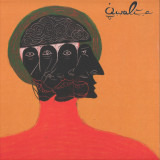
New London based quartet Qwalia, led by drummer Yusuf Ahmed, offer a plethora of influences whilst remaining resolutely itself. Assembled from musicians who play with David Byrne, Joy Crookes, Nubiyan Twist, Frank Ocean, Jordan Rakei, Sampha, Cat Stevens and more; Yusuf is joined by Tal Janes on guitars and vocals, Ben Reed on bass and keyboardist Joseph Costi. Qwalia’s debut album ‘Sound And Reason’ is set for release by Alberts Favourites on 24th March 2023.
The name Qwalia stems from the same sounding word Qualia, a philosophy of mind with the property of being an ineffable experience. Qwalia’s music is an instinctive aural expression of how things seemed in the moment of creation.
In April ‘21, Qwalia spent two days recording completely improvised music at the Fish Factory in North West London. There was no plan or preconceived idea of what the music should sound like or what was going to happen.
“We set up altogether in one room, dimmed the lights, pressed record and just played,” says Yusuf. “We came away with over 13 hours of music, which was consolidated into three albums worth of material. The final record is mainly a result of pulling faders up or down to create space and structure out of what was already there from the live recording. The production process felt akin to a sculptor chipping away excess stone to reveal a statue that was already there, and occasionally putting some makeup on it!”
The band members are Pakistani, Italian, Venezuelan, Jewish and English. A reflection of the fact that cultural categories are infinite; Qwalia’s music unconsciously explores identity, exposing what this can mean. Or perhaps that it doesn’t mean anything at all.
Early support from Mary Anne Hobbs and Gilles Peterson, support to come from Huey Morgan, Cerys Matthews.
- A1: Maggie's Theme 1
- A2: Juke Box Source
- A3: Evelyn Story
- A4: Beetle Search*
- A5: Rosehaven Motel
- A6: Trip To La
- A7: Maggie's Theme 2
- A8: Stressed Out/Choked Up
- A9: Janet's Mazurka
- A10: Maggie Retraced
- A11: Factory Vibe
- A12: A Wet Nothing
- A13: Suspense*/Wills' Trance Pt. 1
- A14: Bell Signals
- A15: Taken Away
- A16: Radio Source
- B1: Fm Groove
- B2: Forest Finale
- B3: Penultima Trance
- B4: Parking Lot Shuffle
- B5: Dialatone
- B6: Wills’ Trance Pt. 2/Wills’ Trance Pt. 3
- B8: Gratitude
- B9: Empty Torch/Mailman/Phone Voice
- B10: On The Move
- B11: Wills' Last Trance
- B12: End Credits
- B13: Radio Source Rhythm
- B14: Juke Box Source
By the time Lalo Schifrin composed the soundtrack for Frank Perry's psychological thriller in 1974, starring Cliff Robertson and Joel Gray (who'd just won an Oscar for his role in Bob Fosse's Cabaret) he was Hollywood royalty having worked on such iconic films as Bullitt and Dirty Harry. Perry on his side, had caused a stir with The Swimmer in 1968 starring Burt Lancaster (although he would dismiss the film after being fired from the production) and followed up with a string of great cult movies including ‘Last Summer’ (1969), Diary of a Mad Housewife (1970) starring Carrie Snodgress - whom Neil Young famously fell in love with upon seeing the film and "Play It as It lays" in 1972, adapted from Joan Didion's eponymous novel.
Breaking from the social dramas from of his previous films, Perry decided to shoot a thriller based on journalist William Arthur Clark's book "The Girl on The Volkswagen Floor." The film follows a police officer investigating a murder with the help of a strange ambiguous clairvoyant played by Gray. For the score Perry went to Lalo Schifrin who'd just come out of a bad experience on The Exorcist working with William Friedkin who'd rejected his music in favour of Tubular Bells by Mike Oldfield! The score was recorded in LA with the Wrecking Crew and, although the full line up is not known, it included Emil Richards, Howard Roberts, Bud Shank and of course Schifrin on piano.
'Man on a Swing' is pure undiluted Schifrin from the early 70s. The score plays like a long suite alternating Bossa Nova ("Juke Box Source"), Lounge Jazz ("Trip to LA") and groove ("FM Groove") with superb "suspense” soundscapes like "Rosehaven Hotel". The label has gone back to the Paramount 3-track tape transfers and come up with an updated tracklist (a CD version briefly appeared in the 2010s) - re-sequenced and augmented with a handful of bonus tracks and alternate takes. A highlight is certainly "Radio Source Rhythm" which, losing the guitar and organ, reveal a jaw dropping funk breakbeat that is in the league of Dirty Harry and Enter the Dragon. This and the whole soundtrack, will ravish all the funk diggers and Lalo Schifrin fans around the world.
- A1: The Band - Up On Cripple Creek
- A2: Big Star - The Ballad Of El Goodo
- A3: Steve Earle - Copperhead Road
- A4: Lucinda Williams - Can't Let Go
- A5: Gene Clark - For A Spanish Guitar
- A6: Delta Spirit - People, Turn Around
- B1: America - Ventura Highway
- B2: Whitley - Big Chris Sky Country
- B3: Alison Krauss - Gentle On My Mind
- B4: John Mellencamp - Small Town
- B5: The Flying Burrito Brothers - Sin City
- B6: Poco - Rose Of Cimarron
- C1: Band Of Horses - Factory
- C2: Gram Parsons - A Song For You
- C3: John Hiatt - Georgia Rae
- C4: Gordon Lightfoot - Sundown
- C5: Lynyrd Skynyrd - Free Bird
- D1: The Allman Brothers Band - Midnight Rider
- D2: New Riders Of The Purple Sage - Lonesome La Cowboy
- D3: John Prine - Sam Stone
- D4: Bonnie Raitt - Thing Called Love
- D5: Townes Van Zandt - Pancho & Lefty
- D6: Jonathan Wilson - Desert Raven
- A1: Biohazard "Punishment
- A2: Madball "Set It Off
- A3: Stormtroopers Of Death "March Of The S.o.d
- A4: Life Of Agony "River Runs Red
- A5: Obituary "The End Complete
- B1: Mercyful Fate "Curse Pf The Pharaohs
- B2: King Diamond ''Abigail”
- B3: Annihilator "Alison Hell
- B4: Deicide "Dead By Dawn
- C1: Trivium "Pull Harder On The Strings Of Your Martyr
- C2: Killswitch Engage "My Last Serenade
- C3: Chimaira “Pure Hatred
- C4: Fear Factory "Replica
- D1: Type O Negative "Black No. 1
- D2: Roadrunner United “Tired ‘N Lonely
- D3: Stone Sour "Brother
- D4: Roadrunner United "The Rich Man
- E1: Roadrunner United "The Dagger
- E2: Roadrunner United "The End
- E3: Soulfly "Eye For An Eye
- E4: Sepultura "Refuse/Resist
- F1: Slipknot "Surfacing
- F2: Machine Head "Davidian
- F3: Slipknot "(Sic)
- F4: Sepultura "Roots Bloody Roots
We have opened the vault to bring to you for the first time on a 2CD set Roadrunner United ‘The Concert (Live at the Nokia Theatre, New York, NY, 12/15/2005)’, featuring members of Slipknot, Anthrax, Trivium, Machine Head, Fear Factory, Sepultura & more. Roadrunner United was a project organized by the heavy metal record label Roadrunner Records to celebrate its 25th anniversary. On December 15th, 2005, in New York City, the label produced the Metal Concert to end all Metal Concerts: 39 musicians, representing 25 different Roadrunner bands, performed 25 songs from 19 different bands’ repertoire. This unique and unprecedented aggregation of musicians was no jam session. Each song was studiously rehearsed and arranged, coming together with exuberant perfection, to produce a concert that can only be called “Legend.”
Conceived as a follow-up to the Roadrunner United All-Star recording sessions, the label recruited the core team of musicians (Dino Cazares, Adam Duce, Paul Gray, Joey Jordison, Andreas Kisser and Roy Mayorga) as the backbone of the performance. Sure enough, as they fine-tuned the songs and rehearsed them tirelessly, dozens of other musicians came on board.
This 3LP set represents the gathering of a community of musicians that spans the heavy metal history of the first 25 years of Roadrunner Records: from King Diamond to Slipknot and beyond. Those who were lucky enough to be there experienced a night they will never forget. For the first time as a live concert album, this 3LP set on red, white and black coloured vinyl is a chance to relive that special night again and again.
Mexico city based, Guatemalan cellist Mabe Fratti releases second album (translated Can We Understand Each Other Now) on new experimental label Unheard of Hope (Peter Zummo, Military Genius). Reconciling Mabe's steps throughout her musical past, the LP features pop and experimentation that reflects her time working amongst the improvisation scene in Mexico City. Mabe Fratti's sensibility is the triumph of experimentation over technical do-minion of an instrument. The experimentation of sound with feelings, with ex-istence itself, with an open heart, letting herself to be transformed by what she lives and hears. This is what has led Mabe Fratti from Guatemala to Mexico City. From the crea-tion of pop songs to free improvisation, from the academy to noise, from col-laborations in ensembles and duos to the profound personal journey that is reflected in her solo works. This album was created during May 2020 in an old juice factory in a place in Veracruz called La Orduna. We were quarantining with many musician friends who had moved into the place some months before everyone went into lock down. The general lyri-cal idea of the album was inspired by a conversation about how we are some kind of funnel and how we need to simplificate in order to communicate. Even when we want to communicate things to ourselves. The idea of understanding becomes complicated but based in this fact of omission and clumsiness.
Joe Lewandowski is back on skylax records after the 2020 release of his supercharged "Egosexual" EP. This time, the young French prodigy is tackling another of his influences : the New Wave ! And for this new release, he is accompanied on the vocal by the wonderful voice of STOLT on the brilliant “Here I Am” which invokes on the dancefloor the ghosts of Human League, Visage as well as the grandiloquence of the Associates or even David Bowie (yes sir !). In A2 “Casual” invites us for an extremely powerful and trippy black techno road trip that will turn more than one dancefloor. On the B-side, we find at the controls a long-time friend of the skylax team, the brilliant Lauer with 2 Dantesque remixes of “Here I Am”, vocal and instrumental, which are one of the best thing in music we heard for the last 10 years at least, remembering the legendary french club “le pulp”, Blackstrobe (from the first era) and early electrolash with little touches of EBM and Italo-disco. A twilight MASTERPIECE.