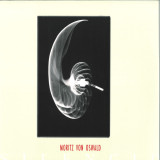
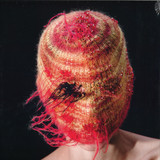
Arto Lindsay's 7 Types of Ambiguity - A Parade is a stereo mix of an original sound installation that was installed at ECAL / University of Arts and Design, Lausanne, Switzerland, in 2022 as part of a research project led by Thibault Walter and Stéphane Kropf called Phantom Power. The idea was simple, and yet the process and level of collaborative work implied was enormous: how to recreate a carnival parade -of the kind Arto had witnessed in the streets of Bahia in Brazil numerous times- inside a white cube and using only sound. How to replicate the complex intrications of those stories, heard or fantasized, the smaller blocos of musicians crossing the path of blasting sound systems mounted on trucks, those religious rythmes mingling with popular traditions, class and race struggle at street level " prime example of the proximity of sexuality and religion, of tradition and novelty and a place for true social innovation " and the effect it all has on the bystanders that are completely part, or even become the subjects of the whole?
Arto went to Salvador de Bahia with a narrative of a parade in his mind, and recorded excerpts in a terreiro, a temple of Afro-Brazilian religion, with four musicians leader of blocos, three of which he had previously worked with. Those mixed tracks were crafted into a sound sculpture directly in the room in Lausanne on a 27 channels immersive installation, adding layers of meaning within the room itself, hallucinations, weather patterns or places, like when the parade stops during a rain shower or gets so close to the ocean as to lose the sound of the percussions in waves.
This 26'30'' composition was later remixed, the spiral of speakers on the floor of the room engraved on a vinyl, and the position of the listener defined for your experience of this record, Arto Lindsay 7 Types of Ambiguity - A Parade, out on February 2nd 2024 on No Salad Records.
2001, Yorkshire, England. SUBDUB is in full strength shaking down Leeds' city walls with regular parties, community events & sound system sessions. Active since 1998, the devoted crew push UK Dub music forward, inviting key players of the scene to play at their events powered by the mighty Iration Steppas sound system. Session after session, the SUBDUB imprint nurtures a loyal community of skankers while building close ties top artists in the field. A solid reputation that resonates amongst dub-heads around the globe. After 3 years of existence and having already put out 3 singles on their Tandori Space Records label, the idea of putting out a SUBDUB compilation album sparks. Producers get involved and the ‘Digital Africa’ project takes shape! But when the test presses finally arrive, the difficult financial situation and bleak state of the vinyl market at the time force the project to get shelved…
22 years on, while on a pilgrimage to SUBDUB and stopover at the Tribe Records HQ, the Dubquake team see the dusty test presses emerge from the record store vaults and get a taste of the incredible music through the shop's speakers… Unreleased & exclusive tracks by Iration Steppas, Jah Warrior, D.BO General, Vibronics, The Disciples, Tena Stelin, Nucleus Roots, The Bush Chemists & Freedom Masses. 12 undiluted UK Dub cuts from the 90s pressed on to 2x12” vinyl discs, with a 13th bonus digital track. Pure sound system business, raw dubs inna vanguard style!
‘Digital Africa’ is finally coming out on Dubquake Records in time to celebrate SUBDUB’s 25th birthday. A forgotten compilation full of history, curated by Simon Scott & Mark Iration. Guaranteed to bring back sweet memories to veterans of the dance, a great piece of dub music education for the rest of us!
out of Stock
Last delivered 2 years ago available to reorder, subject to availability
As with all albums on Shabaka Hutchings' Native Rebel Recordings the plan was the same: the musicians gather at the RAK Studios for three days, without rehearsal and consider the rehearsals part of the recording, with Shabaka producing
The performers featured here are Jas Kayser who has performed with Alfa Mist, Nubya Garcia and Jorja Smith among others, Alexander Hawkins of the Convergence Quartet and Decoy, Daisy George, and Ross Harris of Speakers Corner Quartet.
The features on the album are incredible too, and highlight the eclectic nature of Native Rebel. We have billy Woods on album opener “Apothecary", TS Elliot prize winning poet Anthony Joseph on "By Now", Confucius MC of Speaker's Corner Quartet and Con & Kwake on "Flowers In The Dark", Elucid on "Show Me", ganavya on "Increase Awareness", and Siyabonga Mthembu of The Brother Moves On and Shabaka and The Ancestors on “Aim".
As always with Native Rebel releases, the physical product is on double heavyweight vinyl, in high quality sleeves with printed inner sleeves and with side D on this release featuring etched artwork.
Considered one of the most innovative groups on the Colombian musical circuit in 1973, Columna de Fuego forged its sound by creatively and organically mixing elements of heavy rock with rhythms rooted in the music of the Pacific and Caribbean coasts of the country. Columna de Fuego, the first Colombian rock band to tour outside South America, was the supporting act for Leonor González —La Negra Grande de Colombia— for months and featured members of Los Young Beats, Los Speakers and Siglo Cero. Their only LP, recorded in Spain and released in Colombia only in 1974, was a turning point in the history of Colombian rock, an album full of funk, soul, cumbia and currulao that maintains a fast pace from start to finish. After unsuccessful attempts to establish themselves in Europe, the group parted ways; some members returned to Colombia and others stayed in Europe as part of La Banda Salsa, a vibrant and little mentioned chapter in the history of Latin rock. Roberto Fiorilli, the stand-out drummer of Colombian rock, returned to his native Italy. Over the following five decades, the myth of Columna de Fuego, that wonderful Bogota rock band that dared to experiment with the music of the Colombian coastline, grew. The curiosity of musicians interested in the traditional music and folklore of the coasts since the late 80's, the consequent mixture of different musical genres (modern and roots) at the end of the 20th century and the almost impossible desire of collectors to find a copy of the album or one of the band’s singles, gave it the status it should always have had as a pioneer, milestone and beacon. After remaining unavailable for five decades, we are proud to now present the first-time reissue of this obscure gem with its original artwork, including an insert with notes and rare photos. Sleeve
out of Stock
Last delivered 2 years ago available to reorder, subject to availability
In the decade or so that hard-working New York quartet Sunwatchers have operated, the group has steadily & subtly refined their sound - a brain-blasting mixture of jazz, psychedelia, krautrock, punk, noise, & Saharan blues - into something that is avant-leaning enough to appeal to the discerning jazz & experimental music fan & weird & wooly enough to get the true heads' toes tapping. "Music Is Victory Over Time" is the band's 5th album, and fourth for Chicago-based Trouble In Mind Records, seeing the long-running lineup of Peter Kerlin (bass guitar), Jim McHugh (guitars), Jason Robira (drums), and Jeff Tobias (alto saxophone and keyboards) in prime form. Album opener "World People" is a classic Sunwatchers number whose title expresses their Anarcho-Internationalist ideology (and the atypically multi-culti make up of their crowds), with an underlying melodic resonance to New Orleans funeral marches à la Albert Ayler _ a triumphant call to arms to all peoples. Live fave "Too Gary"'s gang vocal shout punctuates a motorik rager named for a phrase often uttered by a badass eight year old skateboarder McHugh knew with a speech impediment (it means "that's too scary"). "T.A.S.C." (or "Theme For Anarchist Sports Center") is inspired by Sonny Sharrock's maligned 80's output & sounds exactly like a wrathful, mutant version of a prime-time athletic show theme, replete with the requisite "sitcom ending." The sun- scorched "Foams" - a longform piece intended to depict natural stuff like tides, nightfall, and time slowly passing, ancient, peaceful and slightly gross all at once - practically jumps out of the speakers, its palpable intensity crackling in your eardrums. The title of "Tumulus" might reference an ancient burial mound, but the music itself might be the group's most high-tech song to date, complimented by an arpeggiating sequencer, three different forms of tape delay and an electric saxophone; ecstatic, fiery & deeply spiritual. "There Goes Ol' Ooze" is a smoky creeper that lets Tobias & Kerlin take a walk for a while, with respectful nods to the Stones and Steve Reich. "Song For The Gone" closes out the album, showcasing a sincerely tender moment for the gang, as an expression of love and resolve for dear friends who had recently, tragically died. Its cascading, bluesy melody attuning itself to our own collective unconscious grief. Having the distinct pleasure of being the first band to record in John Dwyer 's new LA-based recording studio Discount Mirrors, "Music Is Victory Over Time" boasts a beefed up sound. The band worked closely with in-house engineer Eric Bauer - facilitator, troubleshooter, sonic obsessive, a legendary freak and a DIY lifer. The band also had full access to the studio's epic armory of gear: amps, axes (it's Dwyer's Eddie Harris model electric sax), synths, a bass guitar once belonging to Klaus Flouride of the Dead Kennedys. Crucial for the sounds and the vibe. The album art was created by Josh MacPhee, the activist artist, author, archivist and founding member of both the radical artist collective Just Seeds and Interference Archive, a public collection of materials from social movements based in Brooklyn. MacPhee's participation in the project works as a statement of Sunwatchers' progressive utopian intentionality, and organically underscores their involvement in revolutionary projects within and without of their hometown. Listening to "Music Is Victory Over Time", Sunwatcher's rebellious spirit & unbridled enthusiasm remain fully intact, but the secret sauce is their infectious irreverence in the face of the horrors of this world. Much of our best cultural commentary is Trojan-horsed to the general public via humor & satire & the band has a knack for lacing the ridiculous with the radical. It's good to have them back. "Music Is Victory Over Time" is released worldwide digitally via most DSPs, on CD, black vinyl & a limited "Sunflare" blue/red splatter vinyl while supplies last.
In the decade or so that hard-working New York quartet Sunwatchers have operated, the group has steadily & subtly refined their sound - a brain-blasting mixture of jazz, psychedelia, krautrock, punk, noise, & Saharan blues - into something that is avant-leaning enough to appeal to the discerning jazz & experimental music fan & weird & wooly enough to get the true heads' toes tapping. "Music Is Victory Over Time" is the band's 5th album, and fourth for Chicago-based Trouble In Mind Records, seeing the long-running lineup of Peter Kerlin (bass guitar), Jim McHugh (guitars), Jason Robira (drums), and Jeff Tobias (alto saxophone and keyboards) in prime form. Album opener "World People" is a classic Sunwatchers number whose title expresses their Anarcho-Internationalist ideology (and the atypically multi-culti make up of their crowds), with an underlying melodic resonance to New Orleans funeral marches à la Albert Ayler _ a triumphant call to arms to all peoples. Live fave "Too Gary"'s gang vocal shout punctuates a motorik rager named for a phrase often uttered by a badass eight year old skateboarder McHugh knew with a speech impediment (it means "that's too scary"). "T.A.S.C." (or "Theme For Anarchist Sports Center") is inspired by Sonny Sharrock's maligned 80's output & sounds exactly like a wrathful, mutant version of a prime-time athletic show theme, replete with the requisite "sitcom ending." The sun- scorched "Foams" - a longform piece intended to depict natural stuff like tides, nightfall, and time slowly passing, ancient, peaceful and slightly gross all at once - practically jumps out of the speakers, its palpable intensity crackling in your eardrums. The title of "Tumulus" might reference an ancient burial mound, but the music itself might be the group's most high-tech song to date, complimented by an arpeggiating sequencer, three different forms of tape delay and an electric saxophone; ecstatic, fiery & deeply spiritual. "There Goes Ol' Ooze" is a smoky creeper that lets Tobias & Kerlin take a walk for a while, with respectful nods to the Stones and Steve Reich. "Song For The Gone" closes out the album, showcasing a sincerely tender moment for the gang, as an expression of love and resolve for dear friends who had recently, tragically died. Its cascading, bluesy melody attuning itself to our own collective unconscious grief. Having the distinct pleasure of being the first band to record in John Dwyer 's new LA-based recording studio Discount Mirrors, "Music Is Victory Over Time" boasts a beefed up sound. The band worked closely with in-house engineer Eric Bauer - facilitator, troubleshooter, sonic obsessive, a legendary freak and a DIY lifer. The band also had full access to the studio's epic armory of gear: amps, axes (it's Dwyer's Eddie Harris model electric sax), synths, a bass guitar once belonging to Klaus Flouride of the Dead Kennedys. Crucial for the sounds and the vibe. The album art was created by Josh MacPhee, the activist artist, author, archivist and founding member of both the radical artist collective Just Seeds and Interference Archive, a public collection of materials from social movements based in Brooklyn. MacPhee's participation in the project works as a statement of Sunwatchers' progressive utopian intentionality, and organically underscores their involvement in revolutionary projects within and without of their hometown. Listening to "Music Is Victory Over Time", Sunwatcher's rebellious spirit & unbridled enthusiasm remain fully intact, but the secret sauce is their infectious irreverence in the face of the horrors of this world. Much of our best cultural commentary is Trojan-horsed to the general public via humor & satire & the band has a knack for lacing the ridiculous with the radical. It's good to have them back. "Music Is Victory Over Time" is released worldwide digitally via most DSPs, on CD, black vinyl & a limited "Sunflare" blue/red splatter vinyl while supplies last.
What are the differences and similarities between human and artificial sound, between oscillations generated by vocal cords and synthesizer voices, voltage amplified by speakers? On Silencio, his latest album for Tresor Records, Moritz von Oswald works with a 16-voice choir to explore this concept.
Drawing from the ensemble works of long-standing inspirations Edgard Varèse, György Ligeti and Iannis Xenakis, von Oswald and Vocalconsort Berlin delve into the space between sounds, creating a deeply textured collection that shifts between light & ethereal and
dark & dissonant.
As masterfully demonstrated in the early work of von Oswald and Mark Ernestus’ influential Basic Channel project, repetition and reduction are key elements here, much in the tradition of techno and minimalism. The vast dynamism of the human voice adds to the
profound weight of electronics while offering up a rhythmic source and sonic noise palette unexplored in von Oswald’s repertoire. In Silencio, von Oswald dredges a dank murk, pulling clouds over a distant pulse. It hangs, ready to take on new forms.
The compositions were written in von Oswald’s Berlin studio on classic synthesizers, such as the EMS VCS3 & AKS, Prophet V, Oberheim 4-Voice and the Moog Model 15. These abstract recordings were transcribed to sheet music for choir by Berlin-based Finnish composer and pianist, Jarkko Riihimäki and performed by Vocalconsort Berlin in Ölberg church in the city’s Kreuzberg district, only few metres down the road from where Dubplates & Mastering and Hard Wax opened their doors for music enthusiasts for many years so long. The recordings of the choral versions were then incorporated into the synthesized parts of the album and brought into anew electronic context; in Silencio, the focus is not on using one means to imitate the other, but to sonically discuss the tensions and harmonies between the two worlds and create a dialogue between them.
The relationship between von Oswald and Tresor Records goes back thirty years, all the way to Blake Baxter’s Dream Sequence in 1991 - which von Oswald engineered alongside Thomas Fehlmann. The collaboration with Fehlmann lived on, seeing the duo team up as 3MB with Eddie Fowlkes or Juan Atkins. More recently, the Detroit-Berlin connection continued as Juan Atkins & Moritz von Oswald present Borderland.
For von Oswald, Tresor Records and also the participating guest musicians of the choir, this release brings together audiences from other musical areas, cross-pollinating; Silencio is an album that stands for itself beyond the musical genre boundaries.
out of Stock
Last delivered 17 months ago available to reorder, subject to availability
If there’s a secret to time travel, Kool Keith owns the patent. Even a flying DeLorean seems too
conventional for the Bronx legend. He’d more logically orbit throughout the galaxy in a gleaming
chrome spaceship, teaching the stars and aliens new forms of originality. He is too weird to live, too
rare to die, too uniquely ultra-magnetic to be accurately mimicked. Released on Mello Music Group,
Time? Astonishing! is the latest dimensional warp from hip-hop’s premiere astral traveler. His union
with MMG producer L’ Orange finds him exploring uncharted terrain: choppy volcanic rock planets, ice
glacier moons, new surgical procedures, and fresh rappers to toss into the ether. The scalpel remains
eternally sharp. The beats glow with radioactive grit. Hard enough to knock from your car speakers,
cinematic and plutonium-propelled enough to transport you to strange terra firma. Buck Rodgers
movie serials meet boom-bap. And along for the odyssey are a cast of the best underground MC’s of
the last decade: Blu, Open Mike Eagle, Mr. Lif, J-Live, and more. These are space symphonies and
occult odysseys, fuel for wanderers, wonderers, and all the a-likes. Welcome to the new world, even
more sinister and suspenseful than the last one. We live in astonishing times: abstract, absurd, and
indelibly Kool.
Did you know there are horses on the cover of Earth 2: Special Low Frequency Version? There are at least three in the right hand corner, gathered inexplicably near a white canvas tent, a human possibly perched among its folds. As widescreen and vast as the cover may seem, those little details-the horses, the possible human, the faint wisp of white clouds-give it depth and wonder, something to which the imagination can return. Did you know that the music on Earth 2-repressed now for its 30th anniversary, back in its original artwork, and accompanied by a riveting set of remixes that demonstrate the reach of what Dylan Carlson long ago called "ambient metal"-works much the same way? The surface is massive and obvious, the meatpaw riffs of Carlson and bassist Dave Harwell pounding and swiping and pawing at the speakers, a true bludgeon in three-dimensional sound. Listen, though, for the details in the corners, for the finesse beneath the force, and Earth 2 reveals new levels of depth and wonder. The widespread impact of Earth 2 suggests that others have indeed been leaning in, listening to these minutiae and making something new of them. A masterpiece without many genre precedents, Earth 2 surely helped send doom metal down its more modern drone, ambient, and avant-garde avenues. Those descendants are obvious. Perhaps more surprising and gratifying are the ways it has influenced electronic music, modern composition, and even hip-hop by realigning our senses of tempo, time, and texture. Earth 2 engendered a rearrangement of expectations, regardless of preferred form.
A Dream Team of folclóricas covering the wide spectrum of African-American influenced 1970s dance music spiced with flamenco. The hits of Isaac Hayes, Billy Preston or The Temptations in the charts showed the way to go. An almanac for 20th Century Rosalías headed by Lola Flores, Isabel Pantoja, Rocío Jurado and a bunch of female singers, copleras, cantaoras and rumberas. A black and white lysergic dream amidst post-Franco’s Spain. Stick your ears to the speakers. Here comes an emotional rollercoaster!
Antes de presentarte esta novedad, hay que entender que en la segunda mitad de los años setenta, algo estaba cambiando en la escena musical. Los grupos musicales estaban en su auge hasta que llegó la llamada al servicio militar obligatorio. Entonces, todo el mundo volvía de él sin sus largas melenas y sin dinero. Los baladistas sin personalidad tomaban el control de la música, según lo dictado por las discográficas. Es entonces cuando las copleras, cantaoras y rumberas se convierten en la respuesta necesaria para combatir la insípida melosidad. A pesar de un contexto sociocultural desfavorable, arreglistas y productores invertían horas de sueño para revivir un sonido que estaba al borde de la extinción. A pesar de los cambios que haya podido haber desde entonces, el más significativo es que ahora la inmediatez digital dicta el rumbo.
Es por toda esta importancia que finalmente ha llegado un álbum que reúne a un elenco de folclóricas en una combinación única, fusionando el concepto del groovy funk; con canciones que abarcan todo el espectro afroamericano de la música de baile de los setenta, con toques de gritos y susurros aflamencados que le dan un giro impresionante. Podríamos considerarlo el álbum destacado de las Rosalias del siglo XX, una especie de viaje lisérgico en blanco y negro a la España de la posfranquista. Con su hiperrealismo revolucionario, este disco nos ofrece a una una estirpe de artistas sin igual.
En este encontrarás las joyas ocultas de artistas como Flores, Pantoja, Jurado, Polaca, entre otras. Aunque se mantuvieron fieles a sus estilos, todas ellas fueron famosas por otras facetas de sus extensas discografías, y muchas incluso aparecieron en la portada de Interviú en más del cincuenta por ciento de los casos, como las feministas de los años setenta según Francisco Umbral.
Having been re-discovered as a groundbreaking slice of proto-grime from 1994, Dylan Beale’s legendary soundtrack for the SNES game Wolverine: Adamantium Rage finally gets the reissue treatment it deserves via Sneaker Social Club.
When the game came out in 1994, Beale’s soundtrack for the SNES edition stood out from the pack for its gritty beats, deceptively weighty low end and edgy orchestra stabs, but few would have guessed how certain tracks would predict the shape of music to come. Around 2016, the ‘Tri-fusion’ track in particular was picked up on by London-based producer Sir Pixalot as a mind-blowing slice of Eski beat coldness. To prove his point, Pixalot ran an acapella from J-Wing over the track and the results spoke for themselves.
While ‘Tri-Fusion’ is a straight-up accidental grime sheller, there’s scores more heat packed away in Beale’s soundtrack for Adamantium Rage. The limitations of the space on the game cart meant Beale had to get creative with the most limited samples. Fortunately his background producing UK hardcore and jungle in Rude & Deadly and Stuck To Your Lips meant he knew his way around the restrictions of an Akai s950. Fuelled by the inspiration of jungle and West Coast rap, he worked on the game soundtrack with a similar spartan attitude, limited to 200kb with which to load up the music engine for the game, samples and all.
Given the importance of minimalism in the effectiveness of soundsystem music, it’s not surprising tracks like ‘Cyber’ and ‘Dark Queen’ pack a punch which could absolutely set a dance off. Watch out for ‘Weapon X Lab’ too - another stand out bomb creating a deadly machine funk out of the tightly clipped bass samples and weird animal groan loops. Alongside the full, original soundtrack, this first issue of Wolverine: Adamantium Rage OST comes with additional tracks never used in the original game which widen out the styles Beale was exploring within the shockingly limited means at his disposal.
“I vividly remember when we first played the soundtrack on a bigger set of speakers to the boss,” Beale recalls, “his initial reaction was one of amazement that we had created something so ‘real’and different in comparison to everything else out there in terms of video game music, which I remember with great pride and fondness. Comparing to everything out there, it was totally unique- a moment in time.”
out of Stock
Last delivered 2 years ago available to reorder, subject to availability
You will definitely be blown away by RAVE IN FIRE and their album "Sons Of A Lie". Featuring a stellar production and a classic '80s vibe, "Sons Of A Lie" sets RAVE IN FIRE as one of the most promising acts in the Spanish Metal scene. Let's be honest: if they sound like this now, imagine how they will sound in 4 or 5 years!
Put some fire in your speakers and get lost in the atmosphere of this incredible album. A unique musical journey comprising a total of eight songs, "Sons Of A Lie" will be available in an ultra limited edition on vinyl LP, with all the extras our followers are used to.
Betamax of The Comet Is Coming and Pete Bennie of Speakers Corner Quartet are Coma World. They have come together again to produce a further batch of rhythmically enlightened Dystopian Jazz, alongside illustrious graphic and sound artist Raimund Wong (Floating World Pictures) for this record - 'Coma Wong' (out 6 October 2023 on Byrd Out). The storm clouds are gathering at sea, with the white horses dancing ever faster on the waves. Coma World chose to ride out the tempest, sail up, speeding along together towards who knows what… Expect drums precision engineered with just the right degree of insouciance, drone-bathed sounds rippling and depth charge bass that explodes beneath the surface across 12 tracks. The Wire on their first album, the self-titled ‘Coma World’: “a bold drum ‘n’ bass affair, a nervy meeting between dub and jazz experimentations with new channels explored track by track”. Tom Ravenscroft on BBC 6 Music on ‘Calamari’ from the new album: “I think this is like my favourite track right now… Love it.”
Wolastoqiyik Lintuwakonawa is the debut album by Canadian composer and tenor, Jeremy Dutcher – which involves post-classical rearrangement of his Wolastoq First Nation traditional music. Granted access to the Canadian Museum of History, Jeremy discovered wax cylinders from 1907 of his ancestors singing forgotten songs and stories that had been taken from the Wolastoqiyik Nation generations ago. The album is Jeremy’s contribution to his heritage and community in attempts to revitalize the Wolastoq language to the world, which has less than 100 speakers alive today. This collection of ground breaking post-classical arrangements is truly one of a kind and recalls the mood of Rufus Wainwright's operatic performance or the haunting pop of Anthony & The Johnsons.
In our little history, the number 7, besides a kind of esoteric fascination, has marked important milestones in our evolutionary journey. This is why Raw Culture has decided to pay homage in grand style to its seventh year as an independent sound guarantor. To do so, it weaves a co-production with Oderso Rubini, historical memory of the Italian New Wave and head of Italian Records in the 80s. Out of this synergy comes our 24th release, Ping Pong, a dancefloor of dissonant bounces, where free-form suggestions, electronics and rhythmic improvisation find synthesis in a high-intensity competitive match. Starting from the sampling of Korean ping pong matches and the voices of the speakers, Renzini and Passini build a framework where the sound or voice of the electronically harmonised hoover amalgamates with powerful and syncopated drumming, a sound experiment poised between improvisational heavy jazz and Korean-style electronics.
The record is ideally divided into two converging visions highlighting the duplicity of the game, side A or Master Ping collects the first improvisations made by the duo in 2018 leaving almost unchanged the improvisational spirit close to a kind of degenerate free jazz. Side B or Master Pong made later explores more musical forms, with influences of the krautrock and electronic disco matrix, and sees the collaboration with other musicians from Bologna’s historic rock scene such as Gianluca Patini (Surprize, Slava Trudu, Volkwerk Folletto) on guitars, Giorgio Lavagna on vocals (Gaznevada, Stupid Set) and Enrico Serotti on electronic samples (Confusional Quartet, Stupid Set).
out of Stock
Last delivered 18 months ago available to reorder, subject to availability
Out on 6 October, the music for Certainty of Tides was initially recorded with the Norwegian Broadcasting Orchestra with Nils Petter Molvaer as a soloist in 2020. He had asked several wonderful Norwegian composers to arrange a set of music from his back catalogue. “Have a listen to the recordings I did with the orchestra and tell me what you think” he told Norwegian composer, musician, and producer Jan Bang. Since the original recording was close mic’ed for broadcasting purposes, Bang saw an unfulfilled potential in the material due to lack of space in the initial recordings.
Bang came up with the idea of re-amping the mixes playing the music through speakers in a concert house followed by re-recording of the result through distant microphones. With 76 speakers (one per instrument) carefully placed exactly like the orchestra would have been seated onstage, Certainty of Tides was recorded from microphones strategically placed in the large hall of Kilden Concert House with phenomenal acoustics.
The re-amping and re-recording produced astonishing results. Some of the pieces needed additional color. Bang invited two of his highly talented electronic music students at the University of Agder (Kristian Isachsen and Even Sefenias Sigurdsen Frodesønn Røsstad). Both given freedoms to create their own sound based on their own personal taste.
The final mixes were put together by Øyvind Kurszus at Kilden Studios supervised by both students, Molvaer and Bang. Helge Steen has mastered the recording. Knut Sævik has re-sampled the drum track (played by Peter Baden) on “Simply so” and mixed the Song as well.
The most potent memories I have of music are from my early childhood listening to the oldie's station, riding in the back of my Pops' 1975 Cadillac Seville to work alongside him moving plants in Sacramento at the now long gone Capitol Nursery during white hot summer afternoons, and then the drives back home in the purple twilights and oily blue-oranged nights. I'm talkin' The Temptations, War, Earth Wind and Fire, Al Green, Sly and the Family Stone, The Delfonics, Stevie Wonder, Chaka Khan...soul music. I loved the melodrama of it all. The world outside refracted and transmuted through the crackling speakers past Pops' thumping thumb and my tiny whirring mind and left whatever road behind us fundamentally changed in our wake. Through the years other sounds too left its imprint well before I picked up a guitar. Rap, Punk, hardcore, dub, R&B--and a little later in middle school, blues, folk and country. But those early Cadillac memories always remained the bedrock. With folk and blues music, I fell in love with the immediacy of it and found the acoustic guitar economical for all the solitary roaming of my early 20's. All the while I knew that one day, when I had something I felt like I could add, I wanted to incorporate the sound of those early Cadillac memories. But only after I felt established as a songwriter in its most simple form, banging on a wooden guitar and yodeling up some melody did I feel comfortable exploring other sounds and only recently did I find the time and space to do that. The pandemic trapped all the world in their rooms. While recording my last record in the height of it and at the behest of my friend and You, Yeah, You producer Brad Cook and his friend Justin Vernon, I bought my first keyboard. A Roland Juno DS. I started tinkering on it throughout the past couple of years and as I became more stationary started writing songs on different instruments that I accumulated. Layering sounds on garageband in my apartment writing bass and horn parts, making drum loops, adding synth... I became pretty obsessive with the endless possibilities it brought and got quicker and quicker at making songs that way. It was just so fun and limitless.
The most potent memories I have of music are from my early childhood listening to the oldie's station, riding in the back of my Pops' 1975 Cadillac Seville to work alongside him moving plants in Sacramento at the now long gone Capitol Nursery during white hot summer afternoons, and then the drives back home in the purple twilights and oily blue-oranged nights. I'm talkin' The Temptations, War, Earth Wind and Fire, Al Green, Sly and the Family Stone, The Delfonics, Stevie Wonder, Chaka Khan...soul music. I loved the melodrama of it all. The world outside refracted and transmuted through the crackling speakers past Pops' thumping thumb and my tiny whirring mind and left whatever road behind us fundamentally changed in our wake. Through the years other sounds too left its imprint well before I picked up a guitar. Rap, Punk, hardcore, dub, R&B--and a little later in middle school, blues, folk and country. But those early Cadillac memories always remained the bedrock. With folk and blues music, I fell in love with the immediacy of it and found the acoustic guitar economical for all the solitary roaming of my early 20's. All the while I knew that one day, when I had something I felt like I could add, I wanted to incorporate the sound of those early Cadillac memories. But only after I felt established as a songwriter in its most simple form, banging on a wooden guitar and yodeling up some melody did I feel comfortable exploring other sounds and only recently did I find the time and space to do that. The pandemic trapped all the world in their rooms. While recording my last record in the height of it and at the behest of my friend and You, Yeah, You producer Brad Cook and his friend Justin Vernon, I bought my first keyboard. A Roland Juno DS. I started tinkering on it throughout the past couple of years and as I became more stationary started writing songs on different instruments that I accumulated. Layering sounds on garageband in my apartment writing bass and horn parts, making drum loops, adding synth... I became pretty obsessive with the endless possibilities it brought and got quicker and quicker at making songs that way. It was just so fun and limitless.
Aurora Records proudly presents Temporal Gardening, featuring
composer and performer Stephan Meidell and the baroque ensemble
Bergen Barokk
The new album will be available on vinyl and digital platforms on15th of
September 2023.
Temporal Gardening was originally a commission written in 2020 for Bergen
Barokk. The idea was to explore using early music instrumentation in dialogue
with new electro-acoustic technology. The unique and remarkable ecology grew
from pseudo- baroque music playfully reimagined, reinterpreted, disassembled,
remixed, and resampled.
The trio has been expanded with drums, functioning as speakers for the
electronic manipulations of the ensemble. A double-bass recorder vibrates a subwoofer speaker mounted inside a bass drum, and a live sampled harpsichord
sounds through cymbals, gongs, and a snare drum. Meidell himself part takes as
a musician in the performance, doing live sampling and electronic contributions.
Musician-composer Stephan Meidell is a musical adventurer who, in a nomadic
fashion, improvises his way through a plentitude of styles. Meidell's music exists
where genres dissolve into fragments that canbe picked apartand combined in
new ways. He frequently combines sounds from electronic, acoustic, and
electromechanical instruments and machines and then recontextualises them
with his finely tuned intuition and sense of detail. Meidell has a plentitude of
releases and commissions, including with Erlend Apneseth Trio, Strings &
Timpani, Cakewalk, and TRIGGER on labels such as Hubro, Clean Feed, Playdate,
and Ideophone.
Bergen Barokk was established in 1994 and is today one of Norway's leading
early- music ensembles. The group has concertized and appeared in radio
broadcasts in Europe, Russia and USA. Their recordings on Simax Classics, BIS,
Bergen Digital Studio and Toccata Classics include German, English, Italian and
French repertoire. Bergen Barokk has collaborated with several ensembles
through the recent years, some of them are Pratum Integrum (Moscow),
Norwegian Soloists' Choir and Barokksolistene (Norway). Bergen Barokk has
performed in festivals like Festspillene i Bergen, Bach Festival of Philadelphia,
Moscow Early Music Festival and Janacek International Music Festival (Czech
Republic).
As for the music: no sophomore slumping to be
found here. Back then Matador wrote, “With
impossibly huge hooks and an innate
understanding of every pop trick in the book, this
follow-up to 2000’s breakthrough ‘Mass Romantic’
is the most exciting pop record we’ve heard in a
long while.”
For once, tastemakers of the day shared the
label’s enthusiasm: “The New Pornographers mix
the pop purism of the Beach Boys, the power
charge of Cheap Trick and the gentle psychedelia
of Syd Barrett,” wrote the New York Times, who
labelled ‘Electric Version’ “Some of the best pop of
the year.”
Blonde on Blonde: A double album that transcends time, defies space, suspends reality, and looks through the human soul and tells the listener characteristics about themselves they didn't know. Professor Sean Wilentz, historian-in-residence for Bob Dylan's Web site, comes as close to summing up its brilliance in his superb Bob Dylan In America as any who've tried: "The songs are rich meditations on desire, frailty, promises, boredom, hurt, envy, connections, missed connections, paranoia, and transcendent beauty – in short, the lures and snare of love, stock themes of rock and pop music, but written with a powerful literary imagination and played out in a pop netherworld." No lie.
As part of its Bob Dylan catalogue restoration series, we are thoroughly humbled to have the privilege of mastering the iconic LP from the master tapes and pressing it on 45RPM LPs at RTI. We feel that the end result is the very finest, most transparent edition of Blonde on Blonde ever produced. Forever renowned for what the Bard deemed "that thin, that wild mercury sound," the album's famed aural character lives and breathes on this superb version, with wider and deeper grooves affording playback of previously buried information and lifelike presentation of the studio sessions.
Prized for a unique sound that cultural critic Greil Marcus tagged "the most glamorous record imaginable; listening you can see the chequered jester's suit Dylan had worn on stage for the nine previous, furious months," Blonde on Blonde is to music, production, prose, and performance as what hydrogen is to water. The secret to its inimitable aural character partially stems from Dylan's request in Nashville to producer Bob Johnston to remove the baffles from the studio room, allowing the musicians to interact as well as the music to assume a more organic quality that drifts from one microphone to another.
The story of Blonde on Blonde is almost as compelling as the music within. Dylan, frustrated with how initial attempts fared in New York, relocating to Tennessee and pairing with Nashville's top session players as well as members of what would become the Band, feverishly chasing perfectionism while also arriving at an on-the-fly feel that remains a reference point for recorded music. The Bard sweated over lyrics, demanded his band get the exact sounds he heard in his head, and limited most takes to a handful at most. A majority of songs were recorded long after midnight, the post-A.M. vibe reflected in the nocturnal aura, woozy optimism, inversion of intervals, and spiritual soulfulness of the playing.
There are different ways to celebrate an anniversary. We can look back and reflect on where we've been and how far we've come. Or we can look forward towards future possibilities. Alternatively, we can simply pause for a moment and be present - right here, right now. Rather like we are aware and mindful of what is happening at this very moment when we're enjoying superb music, excellently recorded and played.
That's how Clearaudio is celebrating its 45th anniversary. To mark the occasion, Clearaudio are delighted to present an album of music that embodies their passion for perfection, for nuanced and detailed sound, and for an intimate marriage of creativity and technical finesse. In other words, an album that reflects the key principles by Clearaudio.
"Take the best, make it better - only then it is just good enough." This well-known quote is as valid today as it was 45 years ago, and has inspired a host of colleagues and collaborators along the way. Ever since the release of Delta and Sigma speakers in 1978 and the development of the first moving coil cartridges, not a day has passed when Clearaudio didn't strive to set new standards for higher fidelity. This mindset continues to underpin their work to this day.
No matter where you've come from or where you are going, if your heart beats to the drum of truly authentic sound, then you'll find Clearaudio spirit, will and drive in every single one of their products - from the most towering turntable to the smallest cable.
While some creators may be content with merely looking closely, Clearaudio has always looked and listened closely. Very closely - and at both ends of the spectrum, from top-quality record engineering to excellent playback. So the early stages of every Clearaudio musical recording begin with questions like: "Does it sound exactly like in a concert hall?" and "Does the music feel as was intended when it was written and composed?"
In addition to their own recordings, a number of their favourite legendary productions from Deutsche Grammophon have also found their way onto this album. So why not take a pause, "take five," and enjoy these moments of exceptional music, lovingly produced? And join Clearaudio in celebrating 45 years of loving music!
Deena Abdelwahed's first album is shifting the epicenter of contemporary electronic music south: 'Khonnar' will be released on November 16, 2018 by InFiné. Pronounced 'Ronnar' (an essential detail so as to avoid facile misinterpretation by French-speakers) it is a term that makes the most of Tunisia's cultural and linguistic spectrum. It evokes the dark, shameful and disturbing side of things, the one we usually seek to hide, but which Deena instead sticks our noses in with her debut. It is a testament to Deena's coming into her own as a world citizen, and as an artist. A self-construction made of frustrations and constraints, borne of retrograde mindsets, which are not the prerogative of either the East or the West, and which she tirelessly strives to expose and break. Throughout the 45 minutes of 'Khonnar", Deena breaks down the codes of bass, techno and experimental music, and writes the manifesto for a generation that does not seek to please or to conform, taking back control of its identity - with all the attendant losses and chaos. A new creative world order is taking shape, a new tilting point between north and south, the response of a connected and liberated youth who takes the control of the new decolonization. About Deena Abdelwahed A Tunisian producer and DJ, Deena Abdelwahed arrived in France at the age of 26 after earning her stripes on the Tunis scene and as part of the Arabstazy collective.
Das französische Label Infiné ist dafür bekannt, elektronische Musik jenseits ausgetretener Pfade zu veröffentlichen - hier wird Techno und House neu definiert. So passt es ganz gut, dass die aufstrebende tunesische DJ und Underground-Produzentin Deena Abdelwahed bei dem Lyoner Imprint eine Veröffentlichungsplattform gefunden hat. Abdelwahed performte in den letzten Jahren zwischen Boiler Room und Berghain in allen namhaften Clubs und hinterließ bei der globalen Dance-Gemeinde mehr als staunende Münder. Nach der im Frühjahr 2017 veröffentlichten EP "Klabb" präsentiert die Tunesierin mit "Khonnar" jetzt ihr sehnlichst erwartetes Debütalbum.
Was beide Tonträger vereint: sie verbinden nordafrikanische Klangelemente mit elektronischen Sounds, haben jedoch mit Weltmusik nichts am Hut.
Big Crown Records is proud to present the debut full length offering from Les Imprimés, Rêverie. The stirring and ethereal sounds of Les Imprimés have been making fans of anyone who hears them since their first 7" single hit the speakers. Morten Martens is the man behind the band. Born, raised, and working in Kristiansand, Norway, he keeps a low prole while making his heart felt, highly infectious, and unique music. This album is a long time coming for Martens and it is sure to make him a name to be reckoned with. The first thing you notice listening to Les Imprimés is the high level of musician-ship. Martens plays nearly every instrument on the recordings and handles the production and arranging. He has been making records for decades, winning a Spellemann Award (aka, the Norwegian Grammy) in 2006 for producing a HipHop album as well as getting nominations across three other genres. While awards and accolades speak to the level of his talent, this new album really shows who he is an artist on his own terms. Moving away from being a hired gun on the touring scene naturally led him to start doing more studio work. Slowly collecting gear and getting more experi-ence behind the boards he built his own studio on the island of Odderoya and was making a living playing with and recording other people's music. As the story goes, after those sessions would end he would work on his own project into the wee hours of the night. From these late night sessions, Les Imprimés was born and Rêverie began to take shape. However, "it wasn't until COVID, when things locked down, that I was really able to nd the time to focus on Les Imprimés" Morten says about creating and leading his own solo project. "It was a scary time. But I knew I had to do something with it." He took the sum of his inuences, combined them with his own vibe and got busy writing the music, playing the instruments, and singing the songs. "It's soul music, but I don't exactly have the soul voice," Morten explains humbly. "But I do it my own way, in a way that's mine. "It is his sound, his fingerprint, his sensibility, that makes his music hard to put in a box. The album showcases both Martens' range and his ability to make a cohesive album. The lead single "Falling Away" starts with a raw drum break and turns into a lushly arranged tune that paints the picture of love when it slips away. On "Still Here" he professes his resilience through life's twists and turns over a thundering track that puts a new spin on the B side ballad genre. Songs like "You" and "Our Love" mix tones from 60s and 70s Soul with arrangement nods to Doo Wop records while Martens' lyrics and delivery leave you singing the melodies long after they finish. "Love & Flowers" finds Martens in a moment of clarity with a song that ts the niche sub genre of happy break up tunes, the four on the floor track will move the dancefloor or while the message will resonate with anyone who put too much effort into the wrong situation in their lives. However, it is songs like "Muse" and "Chess" that really encapsulate the uniqueness of Les Imprimés as they push the boundaries of genre, one a profession of love for music and the other a cover of an electronic record respectively. Martens' lyrics, emotion, and delivery truly make the whole thing come together and stand out from any of his peers. There's an infectiousness and a pop sensibility in the writing that is done with the utmost class and taste giving Les Imprimés the rare quality of immediate attraction that only deepens the more you listen.
Big Crown Records is proud to present the debut full length offering from Les Imprimés, Rêverie. The stirring and ethereal sounds of Les Imprimés have been making fans of anyone who hears them since their first 7” single hit the speakers. Morten Martens is the man behind the band. Born, raised, and working in Kristiansand, Norway, he keeps a low profile while making his heartfelt, highly infectious, and unique music. This album is a long time coming for Martens and it is sure to make him a name to be reckoned with.
The first thing you notice listening to Les Imprimés is the high level of musicianship. Martens plays nearly every instrument on the recordings and handles the production and arranging. He has been making records for decades, winning a Spellemann Award (aka, the Norwegian Grammy) in 2006 for producing a Hip Hop album as well as getting nominations across three other genres. While awards and accolades speak to the level of his talent, this new album really shows who he is as an artist on his own terms.
Moving away from being a hired gun on the touring scene naturally led him to start doing more studio work. Slowly collecting gear and getting more experience behind the boards he built his own studio on the island of Odderøya and was making a living playing with and recording other people's music. As the story goes, after those sessions would end he would work on his own project into the wee hours of the night. From these late night sessions, Les Imprimés was born and Rêverie began to take shape.
However, "it wasn't until COVID, when things locked down, that I was really able to find the time to focus on Les Imprimés" Morten says about creating and leading his own solo project. "It was a scary time. But I knew I had to do something with it." He took the sum of his influences, combined them with his own vibe and got busy writing the music, playing the instruments, and singing the songs. "It's soul music, but I don't exactly have the soul voice," Morten explains humbly. "But I do it my own way, in a way that's mine."
It is his sound, his fingerprint, his sensibility, that makes his music hard to categorize. He has crafted an album of songs with different energies that all fit together to make one gorgeous record. The lead single “Falling Away” starts with a raw drum break and turns into a lushly arranged tune that paints the picture of love when it slips away. On “Still Here” he professes his resilience through life’s twists and turns over a thundering track that puts a new spin on the B side ballad genre. Songs like “You” and “Our Love” mix tones from 60s and 70s Soul with arrangement nods to Doo Wop records while Martens’ lyrics and delivery leave you singing the melodies long after they finish. “Love & Flowers” finds Martens in a moment of clarity with a song that fits the niche sub genre of happy break up tunes, the four on the floor track will move the dancefloor while the message will resonate with anyone who put too much effort into the wrong situation in their lives. However, it is songs like “Muse” and “Chess” that really encapsulate the uniqueness of Les Imprimés as they push the boundaries of genre, one a profession of love for music and the other a cover of an electronic record respectively. Martens’ lyrics, emotion, and delivery truly make the whole thing come together and stand out from any of his peers. There’s an infectiousness and a pop sensibility in the writing that is done with the utmost class and taste giving Les Imprimés the rare quality of immediate attraction that only deepens the more you listen.
"Released in May 1986 on SST Records and Blast First! in the UK, EVOL was the third studio album by Sonic Youth and showed the first signs of the band transforming their No Wave past into a greater alt-rock sensibility. “EVOL … marks the true departure point of Sonic Youth’s musical evolution,” noted Pitchfork, “In measured increments, Thurston Moore and Lee Ranaldo … bring form to the formless, tune to the tuneless, and with the help of Steve Shelley’s drums…, impose melody and composition on their trademark dissonance.” ""If Daydream Nation is Sonic Youth’s opus, EVOL was crucial research. There’s a directness that makes everything feel close. It is pure tension with little release. The entire record is a shadow." Stereogum likewise praised the album as one, “full of suspense…, the cornerstone Nico-evoking monotone [by Kim Gordon]. ‘In The Kingdom #19,’ featuring Mike Watt on bass and … vocals [by Ranaldo]…, is a harrowing story of a highway wreck over a suitably edgy instrumental backing punctuated by … live firecrackers in the vocal booth.” For Popstache, “EVOL slithers into the unconscious. Once the....detuned melodies and haunting riffs and final whispers of feedback depart from the speakers… the music [leaves] a faded footprint, forever reeling the listener back for another strange trip.” // “The seeds of greatness…” Pitchfork (who placed the album #31 of the Top 100 Albums of The 1980s) // “A near-masterpiece.” Trouser Press // “A stunningly fluent mixture of avant-garde instrumentation and subversions of rock’n’roll.” All Music Guide"
RAR001 was featured in Resident Advisor's Best music of July list
RANT & RAVE
An enigmatic new sound is oozing out of your speakers. Seemingly self-tasked with reviving the essence of the techno rave style, Rant & Rave Records presents the world with an updated vision that sounds exactly like it should. Based in Berlin, the techno epicenter, It's a dangerous new label, unafraid to stir things up and break the rules. Run by Tresor resident and Sonic Groove recording artist Maedon, the label intends to inject some hard-hitting fun back into the techno underground. About to be revealed; EPs from Maedon, Lady Starlight, JoeFarr (of Turbo fame), and veteran industrial techno guru Mark Crumby, (aka Codex Empire, Konstruktivitis). Look for Rant & Rave records this summer at all fine record shops.
RAR 001
Berlin-based American expat Maedon (Tresor, Sonic Groove) ushers in the arrival of Rant & Rave Records with a slickly produced debut EP entitled 'Cease and Desist'. '1989' opens with booming kicks, driving mechanical percussion, and hallelujah samples interspersed throughout. The droning rave synths sound eerily akin to kamikaze dive bombers heading directly for your brain. 'Grandstand' and the title track 'Cease and Desist' continue in this direction, abundant with hypnotic electronics and relentless energy. On 'The Worlds So', Maedon shares her thoughts on the state of world current events with looped vocals 'The worlds so fucked... all we can do is dance'. Gritty, dark rave tracks for peak time workout that provide a nice blueprint of what to expect from this label. No prisoners taken.
out of Stock
Last delivered 2 years ago available to reorder, subject to availability
Fourth release for the London-based E2-E8 Records. Whilst continuing on the path set by Orphic’s widely acclaimed “Shelter EP”, this one marks a return to the label’s beginnings. Music comes from rapture wizard Miro Sundaymusiq, who featured on E2-E8’s first release and previously appeared on Carl H’s Animals On Psychedelics. And the Animals On Psychedelics sound is very much what’s channelled here with ITWT (we’ll let you figure out what the acronym stands for!). A suspended number with plenty of tension in the first minutes, with a change in atmosphere when you least expect it.
On the B-side we are delighted to have S.O.N.S providing his interpretation of ITWT. One for peak times and booming speakers, a sea of low and high frequencies blending together. This one will appeal to discerning dance floors while firmly standing the test of time.
out of Stock
Last delivered 2 years ago available to reorder, subject to availability
One of Japan’s most riveting artists follows that KAKUHAN mindmelt from last year (our number 5 album, 2022) with an engrossing suite of wild field recordings and polymetric percussion featuring a whole raft of additional players weaving drums, wind and brass instruments, cello and electronics into a bewildering Acousmatic matrix. Highly recommended listening if you’re into Marginal Consort, Beatrice Dillon, Will Guthrie, Mark Fell, François Bayle.
Having made his mark on these pages over the last few years with appearances as part of Japan’s cult entities Goat and YPY, Koshiro Hino’s turn last year as KAKUHAN took things to a whole other level with an album that felt like some alchemical mix of elements borrowed from Autechre, Photek, Arthur Russell and Mica Levi - a complete stylistic futureshock that worked as well in the club as it did fuelling extended flights of the imagination.
For 2023, Hino takes us into a completely different headspace, assembling a cast of 11 players - the mighty Joe Talia and KAKUHAN’s other half Yuki Nakagawa among them - for a suite of untamed field recordings, clanging percussion, brass and synthesis that are about as far removed from the diaristic ambient de jour as you could possibly imagine. Instead, the ensemble conjure vibrant sound ecologies teeming with detail, mirroring the natural world and communal traditions to form shapeshifting, organismic soundworlds.
‘Geist II’ was written for 20 speakers, referencing François Bayle’s acousmatic music and David Tudor’s electro-acoustic environments. It paints a richly detailed scene of a nocturnal rainforest, replete with avian hoots and a skin-crawling patina of insectoid chatter that moves around the soundfield, stealthily growing in density with a more “musical” presence of super low end drone and drums converging form the peripheries to a ritualistic climax. In the second part, focus shifts to remarkably pure percussion-like tropical rain, invaded by swarms of scuttling and winged invertebrates that give way to a water music-like polymetric slosh, resolving to ringing tones and more mellifluous gestures that hark back to GRM’s most poetic, romantic urges.
It's a deeply psychedelic experience that harmonises tiny electronic fluctuations with bird calls and scraped, resonant drones that phase in-and-out of the mix. It's sound you can practically chew, and another crucial despatch from the contemporary Japanese avant-garde.
Cory Hanson"s third solo LP follows upon 2020"s luminescent Pale Horse Rider, upping the heat to molten levels, six strings at a time. In search of further adventures, Cory draws with vampiric glee from the madness coursing through the world outside; a spiraling shitshow that"s reawakened a compulsion in him - an old ambition, even! - to crush brutality and elegance together into a fresh set of rocks to hail down upon us. Western Cum is a high-stepping, hard-dancing, first love/heartbreak, tonight"s-the-night, future nostalgia kind of good time - the sound of guitars through the speakers of luxury cars. Like the dream you had once, alone, asleep in an amplifier, blasting Guns N" Roses through every last orifice in your body. And it"s coming through! Western Cum"s map to the treasure is less about pastiche, though; more toward executing the songs by executioner"s axe, rolling their decapitated rhythm heads and soaring melodies, the panoply of Cory"s melodic impulses with guitars, guitars, guitars. Harmony leads are just the tip of the iceberg, but be quick - the guitars like to melt everything in their path! The eight songs of Western Cum are driven by the stalwart bass of brother Casey Hanson and the drums of Evan Backer with a few passing acoustics from Cory and the intermittent spirit-moans of Tyler Nuffer"s steel guitar. The quartet sound - two guitars, bass and drums - acts as beat-making principle/phrasing device, as well as template for Cory"s layers of six-string and vocal textures. From the rooftop of their musical safe house - the band in their makeshift hut and Cory ensconced in an outhouse - they let loose with a blast both face-melting and mind-blowing: a social service that gives constipation a good name.
Fredfades is finally ready with his second album as a solo artist. The producer and DJ and has remained active as a musician ever since his debut single in 2008. Since he released his debut solo album 'Warmth' six years ago he's ben diving into a bunch of different genres and cross-ing musical landscapes such as ambient, hip-hop and house, which has led to releases and productions across labels like his own Mutual Inten-tions imprint, as well as bigger labels like Stones Throw, Fresh Selects and Jakarta Records. This sonic voyage has resulted in ‘Caviar’ - an album that tells the story of a producer who's ready to let go of his youthful love and indulge himself to electronic music.
Fredfades name is more often seen on foreign club posters than back home in Norway. This has colored the musical expression of the Oslo-born multi-artist, and on ‘Caviar’ he is gathering inspiration from every corner of the world where he has traveled. You can clearly hear the inspi-rations from the sounds of Rome, Manchester, South-Africa, Detroit, New York, Berlin, Paris and the Balearic ocean, which are all well repre-sented throughout the album's eight tracks. If you close your eyes and put your ears close to the speakers you will hear loons, running water, African percussion instruments, roaring saxophones, bit-crushed samples, moaning women, TB 303’s, bottom-heavy basslines and recordings of whales communicating at the bottom of the ocean. Everything seamlessly put together for Fredfades’ own sonic world view. The album features a bunch of talented friends of Fred, such as Telephones or the vocalists MoRuf and Kristian Hamilton.
Despite being known as more of a progressive and edgy DJ that haunts down a lot of indie and private press electronic music, Fredfades has cultivated a more elegant and controversial output in his own music. His progressions often consist of dwelling jazz chords from electric pianos or mellow sub-filtered synth patches that creates space where he can unleash rowdy basslines, rhythm sections and leads just as confident and captivating as the man himself. On the jazzy ‘Tenerife 1994’ you can hear a tribute to one of Fred’s greatest heroes in music: Pharoah Sanders, while on ‘My Heart Is On The Edge’ and ‘Summer of Love’ the energy and euphoria is boiling over and directs your mind towards the summer raves which Fredfades is known to throw down in Oslo.
On the LP covers backside Fredfades is posing with a Korg Wavestation in front of the block where he grew up in the suburbs outside Oslo, while the front cover is showing an airbrushed illustration of Caviar from sturgeon - ‘From block to Beluga’. The black vinyl contains magic grooves created by an electronic musical convertite, with the power to transport the listener from a perpetual winter to the 90s warm dance floors and the 'Second Summer of Love’.
out of Stock
Last delivered 2 years ago available to reorder, subject to availability
Black vinyl pressing 2022! "Funny to think there was a time not so long ago when Stiff Richards was a name that required explanation - but not to you, of course, o punk connoisseur. This is your territory, after all. Music is your oxygen and the sound of the underground is your clarion call. You can explain the distinction between 'Know Your Product' and 'No, You're Product'. Hey, you're probably pretty good-looking too. You know your shit, either way. So no wonder you're drawn to this relative holy grail of modern garage rock - the 2017 self-titled debut album by the aforementioned Stiff Richards. Originally released on their own Stiff Records (and again by Legless in 2020), it lays down all the elements that made last year's mighty 'State of Mind' LP such an instant classic. OK, we've established you know the drill, but let's recap: scintillating Aus-punk that recalls the heroic high-speed riffs of their countrymen The Saints and Radio Birdman. It sounds like Royal Headache covering Motörhead, or maybe the other way around. It's a full-on riot in 30 minutes - the rawest of rock'n'roll bleeding into the grimiest of power chords with hooks for days. You already know you're gonna love it. Whether going full-throttle and aiming straight for the nerve receptors that get your head a-nodding and your toes a-tapping - like on sub-three-minute highlight 'Strung Out' - or sludgin' their way through groovier cuts like 'Bustin' Out', they're never less than a treat that's guaranteed to get your serotonin flowing and your speakers up to 11 (or beyond). As a certain similarly-named record label once said, if it ain't Stiff, it ain't worth a fuck. Frightfully rude, but that's rock music for you, I suppose. Get it in your ears." - Will Fitzpatrick.
Their masterpiece? With breaks for dayyyyyys and an almost ambient, heavy jazz atmosphere throughout, *this* is the apex of British jazz-rock fusion. We'll Talk About It Later was first released on Vertigo in 1971 and original copies are now very tricky to score. Like all the Nucleus records, it’s aged ridiculously well and this Be With re-issue, re-mastered from the original analogue tapes, shows off just why this deserves to be back in press.
Genius trumpeter and visionary composer Ian Carr was one of the most respected British musicians of his era. He was a true pioneer and saw the potential in fusing the worlds of jazz with rock, just as Miles Davis and The Tony Williams Lifetime did in the US. In late 1969, following the demise of the Rendell-Carr quintet, and tiring of British jazz, Carr assembled the legendary Nucleus. Regarding music as a continuous process, Nucleus refused to “recognise rigid boundaries” and worked on delivering what they saw as a “total musical experience”. We can get behind that.
Under bandleader Carr, Nucleus existed as a fluid line-up of inventive, skilled musicians. This constant evolution and revolution was all part of the continuous musical exploration and discovery that took jazz to new levels. And the music has kept relevant. To steal a line from a review of our re-issue of Roots, when it comes to anything Nucleus “it’s basically already hip-hop”.
We'll Talk About It Later is arguably Nucleus's best album. Not only that, it's in the top 5 of all fusion albums. By the time Nucleus entered Trident Studios in September 1970 to record Elastic Rock's successor, they had already won a best group award at the Montreux Jazz Festival. Once again presented in a Roger Dean designed die-cut gatefold sleeve it continued to demonstrate the chemistry and interplay that worked so brilliantly on Elastic Rock; Carr's sumptuous trumpet and flügelhorn lines, Karl Jenkins's funk-filled electric keyboards, Chris Spedding's wah-wah guitar, Brian Smith's sax and the rhythmic foundation of drummer John Marshall and bassist Jeff Clyne.
The group work and insane musicianship Nucleus were famed for is in evidence from the off. The intensely funky "Song for the Bearded Lady" is absolute FIRE, blasting out the speakers to leave listeners floored. Counterpoint riffing segues into a spacious groove and a Carr trumpet solo demonstrating the influence of electric Miles from the period. The stop-start funk of "Sun Child" would appeal to Soft Machine devotees whilst the genuinely touching "Lullaby for a Lonely Child" is a lovely downtempo ballad. Featuring an understated, reflective horn line from Carr and Smith and atmospheric, shimmering bouzouki from Spedding, there's an exotic flavour which contributes to the bliss. The ominous, sleazy title track retains a swaggering menace and is not the only track to lend a sort of heavy stoner rock atmosphere. The guitars and bass are deep and low throughout, conjuring heavy psych moments to go with the actual jazz and even funk. To say this album was in conversation with Bitches Brew would not be overstating the sheer brain-frying brilliance.
The Weather Report-adjacent "Oasis" opens Side B, a colossal track featuring nearly 10 minutes of steadily building melodic horns, keys and choppy guitar riffs. So ace, it could easily go on for another 10. Mesmeric. Spedding adds unique vocals to the undeniable groove of "Ballad of Joe Pimp" whilst saxophonist Smith's duet with drummer Marshall at the conclusion of "Easter 1916" - inspired by the Yeats poem about the Irish nationalist uprising in Dublin - adopts the wildness of the most incendiary free jazz.
This Be With edition of We'll Talk About It Later has been re-mastered from the original Vertigo master tapes, Simon Francis’ mastering working together with Cicely Balston's cut at AIR Studios to weave their usual magic with these wonderful recordings. The stunning die-cut sleeve has been restored with the original gatefold window pane depicting the Irish uprising in 1916. Incredible, timeless, guaranteed spine-chills.
out of Stock
Last delivered 3 years ago available to reorder, subject to availability
Birds chirp through a tape-hiss breeze atop a bed of airy pads, and a cleareyed, forlorn guitar springs forth: this is the beginning of the debut album from Sans Merit, a new rock project from Griffin James, otherwise known as Francis Inferno Orchestra.
For over a decade, the Melbourne-raised—and now L.A.-based—producer has been indulging his indie and alt interests, and this fuzzed-out bedroom janglepop and shoegaze LP, Early Grave, is his first extensive deliverance.
The album represents a gestalt of sorts: years of approaching different genres and songwriting styles, and producing not “in the box,” with soft synths and
samples, but with live instruments (and sometimes a band), has led to this focused and succinct thirteen-track musical journey.
In pursuit of a pure and low-key aesthetic, James recorded demos on phones and chose to rely heavily on budget instruments, clapped-out synths, and
crappy amps, and would often cut tapes live in bedrooms, lay down vocal takes in closets and put microphones to broken speakers, all in part of the quest of using limited resources to create a truthful body of work. The finishing touch is a thick coating of nostalgia ooze; soundbites from internet clips flitter throughout the record, and goofy sound effects flicker above like dying incandescent bulbs.
A dream-pop album for our times: its lyrics are off-kilter romantic musings, sarcastic self-loathing mumbles, reflections on the unrealness of real life.
out of Stock
Last delivered 3 years ago available to reorder, subject to availability
Gatefold Green Vinyl Double LP with design by Dian Vandermeulen, the popular Canadian visual artist
(limited edition cassette version will be released by Not Not Fun).
Between December 2018 and 2019, Stefana Fratila embarked on a series of research trips across North America (including to NASA Jet Propulsion Laboratory and NASA Goddard Space Centre), meeting with astronomers and scientists in order to address a complex question: “If each planet in our solar system were a different room, what would each room sound like?”
Her ongoing creative research culminated in Sononaut, eight open-source VST plug-ins created for digital audio workstations (DAWs) that emulate the atmospheric conditions of the planets in our solar system (made in collaboration with artist and coder Jen Kutler, using calculations by NASA astronomer and planetary scientist Dr. Conor Nixon).
Her forthcoming album I want to leave this Earth behind is the sonic extension of her creative research.
In her own words: “The album is conceptual, in that it centres on outer space exploration and my understanding of 'Crip futurity'. My vision is for the album to engage listeners in an exercise of imagining the sounds of interplanetary atmospheres– conditions which are inherently unlivable, unbreathable, converting all human body-minds into disabled-bodied-ness. Since I identify as Crip, or disabled, this idea deeply resonates with me. I am the first artist (a disabled producer/musician, no less) to have worked with NASA researchers on a sonic imagining of the solar system’s atmospheres that incorporates real scientific data. If we are all 'disabled' in (or by) outer space, my music is concerned with propelling all listeners into space, leaving Earth behind them, through my music.”
The solar system’s planetary bodies are inherently prohibitive even in regards to Earth’s most ‘able-bodied’ subjects. Her project seizes upon a form of radical agency and science-fictive ambition, placing all human subjects within new worlds, into the interplanetary bodies of our solar system, through her own sonic imaginings.
The album will be released by Toronto-based label Halocline Trance (Casey MQ, myst milano, ACT!).
During a 2019 residency at CMMAS (Centro Mexicano para la Música y las Artes Sonoras) in Morelia, Mexico, Fratila began writing the album on an octophonic sound system (8 planets = 8 speakers).
Afterwards, from her home studio in Toronto, she recorded additional synthesizer parts, finalized arrangements, and incorporated Sononaut (her 8 solar system VST plug-ins) into the album’s production. The album was recorded, written, and produced by Fratila. She worked with mixing engineer Jeremy Greenspan (Jessy Lanza, Caribou, Junior Boys), as well as mixing engineer Lisa Conway and mastering engineer Sage Kim.
Underlining each track is a five-minute soundscape representing the weather on that planet, based on Fratila’s research at NASA. The weather patterns are interwoven with layers of synths and time-stretched samples.
There are very few disabled femme electronic artists gaining exposure in Canada today.
"A Place For Love" is a captivating electronic house music endeavor, expertly crafted by the synergistic partnership of San Proper and Figi, hailing from the vibrant city of Amsterdam. The project boasts an impressive roster of guest contributors, including Tom Trago, Seth Troxler, and the esteemed label heads of Guti & David Gtronic, each imbuing the compositions with their signature style. The project exudes a funky, charming, and inviting energy, inviting listeners to fully embrace their individuality and lose themselves in the hypnotic beats. Whether it be the electrifying dubby techno, the shimmering and ethereal twists, or the razor-sharp edges injected into the club-ready tracks, "A Place For Love" offers a diverse array of auditory delights. It is truly a sanctuary for those seeking to indulge in the boundless beauty of electronic music and the euphoria of self-
out of Stock
Last delivered 11 months ago available to reorder, subject to availability
Summer Forever And Ever succeeds Blue Gene Stew, 2019’s debut by the Wolfmanhattan Project, a collective unit co-starring three musicians familiar to In The Red listeners: singer-guitarist Mick Collins, front man of the seminal Detroit-bred garage units the Dirtbombs and the Gories, singer-guitarist Kid Congo Powers who played in such legendary bands as the Gun Club, the Cramps, and Nick Cave and the Bad Seeds, and drummer-vocalist Bob Bert, whose skin work has distinguished albums by Sonic Youth, Pussy Galore, Lydia Lunch’s Retrovirus, and Jon Spencer and the HITmakers. The group was founded as a studio project by three musicians who are kept busy by their primary bands. Blue Gene Stew was written and recorded quickly. Powers says, “I think that the new record was much more a group effort. I think there’s more of a group kind of sound, as eclectic as it is. I feel like we all played together, as opposed to playing on each other’s songs.” Bert notes that the band’s music is grounded in spontaneity: “Me and Mick went in and had a couple of rehearsals, and I would come up with a beat, he would come up with a riff. I still have a cassette Walkman, believe it or not, and we’d put it down on that. It wasn’t even a full song. We’d just put down a bunch of ideas. When it came to recording we’d lay down the basic tracks and work out different things, and a lot of it was made up on the spot. It really is a great collaboration.” Recorded and engineered by Mark C. of Live Skull at his studio, Summer Forever And Ever finds Powers playing piano and the Kaoss touch-pad effects unit and Collins playing synthesizer, in addition to their usual instruments. The album reflects the same eclectic mix of musical styles heard on the debut. References and sometimes even direct quotes from sources as diverse as the Andrea True Connection, Captain Beefheart, the Count Five, and Eurythmics leap out of the speakers.
Swing Family's Music Force is dramatic mid-80s synth-funk. From the maverick mind of Sauveur Mallia, it's a thrilling and uniquely brilliant album from start to finish. It's undoubtedly known and revered for its unbelievable standout track, "Mission Africa". Those that know, know. And if you don't know, get to know. It's the reason this record has been hugely sought-after for the best part of two decades. Originally released on Tele Music in France in 1985 but now tear-inducingly rare, this is the definition of "a welcome reissue."
Swing Family is basically a supergroup of French Funk royalty. Led by French disco lord and Arpadys maestro Sauveur Mallia, they were augmented by trombonist Alex Perdigon from legendary French funk rock collective Godchild, trumpeter Kako Bessot from funky fusion group Synthesis and saxophonist Pierre Holassian, a member of Giant, Janko Nilovic's French jazz orchestra. So, about as heavyweight as it gets for funky French goodness. Mallia handles, of course, bass duties throughout, as well as utilising his arsenal of synths including his E-mu, Yamaha Dx7, Roland MSQ 700, Mini Moog and Oberheimm.
The maximalist disco fusion of "Exorcistor" is perhaps a bit too 80s French cheese for most tastes, so either linger on its singular style or head straight to the soundtracky typo-funk of "Greewich Boulevard". A deep, swaggering powerhouse, it comes on like mid-80s Chic jamming on the set of Beverly Hills Cop with Kashif. Yes, *that* good. It's followed by the vital "Music Force", a synthy, sleazy instrumental full of sax and flute and those 80s drum fills. Just the right side of acceptable.
OR! You can even choose to forget all the rest and just stick "Mission Africa" straight on. A rumbling, strutting, afro-cosmic low-profile banger. The slick drums hit hard, the synth strings warm things up, overlapping horns add swagger whilst electric guitar flourishes and a chanted refrain sit in the mix quite perfectly. A track that's almost impossible to describe and do justice to. You just need to hear it. Preferably as you saunter into your favourite after-hours club, after spotting all your friends at once, as you cut a swathe to the bubbling dance floor. A track quite like no other, it makes you sit up within its first bars and, to us at least, sound like something you'd have heard on a Print Thomas mix from the mid 00s. Basically, it's cosmo-galactic.
The B Side opens with "Musical Stars", an oh-so-80s funk-lite track which, at times, sounds like something Daft Punk may have left on the cutting room floor during their Discovery sessions. Another unimpeachable favourite of ours is the druggy brilliance of "Gentleman & Musician". You can almost hear the white powder through the speakers, as soaring, acidy synths, slick, heavy beats and the irresistible interplay of the primo horn players create a real sleazy wonder. "Film Action" follows, a galloping horn-heavy synth romp with moments of extreme bass breakdown brilliance before the drama-synths of "Episode Double" take things up another notch as it oscillates between gorgeous funky horns and urgent bleepy magic. Super tense, super funky and super stylish. Just ace. The elctro-tinged horn workout "Fatal Lady" closes things out majestically.
The audio for Music Force has been remastered by Be With regular Simon Francis, ensuring the punch of Sauveur's bass and those sick drums come through to the fullest. Pete Norman’s expert skills has made sure nothing is lost in the cut whilst the original and iconic sleeve - complete with perky Liberty Belle - has been restored here at Be With HQ as the finishing touch to this long overdue re-issue.
out of Stock
Last delivered 3 years ago available to reorder, subject to availability
Roadburn festival is arguably the world's most cutting edge boutique music festival out there, and has been a fertile breeding ground for innovative acts from a broad spectrum of musical genres for many years. Last year saw the unique collaboration of Danish electro-industrial duo John Cxnnor and Hungarian doom-folk artist The Devil's Trade take the stage to deliver a sonic journey into the void of deep space. Today, we are ex- cited to release this iconic set on vinyl to immortalise this one-time convergence of three akin artistic minds. John Cxnnor is made up of one half of Danish sci-fi-sludge metal juggernaut LLNN and sees the brothers Rasmus G. and Ketil G. Sejersen collaborating with numerous fellow artists to explore the synth side of their main project. Inspired by the Terminator-franchise and the scores of other sci-fi movies, the Sejersen brothers have been creating menacing industrial electronic opuses, the frst of which a crushing rendition of a The Devil's Trade track. "We've been enjoying the music from The Devil's Trade for quite some time now," commented the duo on the release of «Dead Sister Merope», describing it as "an interesting match of musical expressions formed by the same DNA." Indeed, the haunting atmospheric folk compositions of The Devil's Trade mastermind Da'vid Mako' carry a similarly cavernous quality which, when taken to the stage of Roadburn, is only reinforced by the sonic violence of John Cxnnor. Unlike many other live records, this set is captured and excellently produced down to the finest level of detail. On centrepiece «Lullaby», the trio seem to have perfected their definition of heaviness, with heavy bass blasts beyond anything you've heard before booming from the speakers. Together John Cxnnor and The Devil's Trade reach new heights in their respective trades capturing both the pressing darkness that gathers `round a bonfire at night as well as the void darkness of deep space. FOR FANS OF Author & Punisher, Godfesh, Lustmord, LLNN, The Devil's Trade, The Body, Uniform Ltd Gold (single colour) edition!
Liberation is the latest evolution by David West, a dedicated underground dweller and traveler with his groups Rat Columns and Rank/Xerox and previously spotted in Lace Curtain and Total Control. Many familiar elements of West's songwriting creep out from the speakers this time around, albeit in a sonically more adventurous and personal manner. Swathed in analogue and FM synths, pinned down by near-funk drum machines, and with a vision expanded into the past and future. While in previous incarnations, West's alienated and fragile vocal has battled with jangling guitars and distortion, Liberation sets free his woes and ruminations into space. Taking inspiration from the heyday of Mute Records, the beginnings of electronic dance music's rudimentary sampling, broken and sound art, Liberation's debut LP is 10 songs of the road, about the nameless ghosts on the highway, accidental lovers, the alienation of the stranger in a strange land, the unbearable weight of freedom.
Beginning with a curveball, Liberation's first vocal sets out the position of the forever-cuckold, the sad lover hanging on: Looking For A Lover combines a Roland 707's loping mid-tempo with creeped-out synth lines as West intones his intentions close to the ear. Continuing in a more baroque manner, Move Me makes astounding use of string samples and space, with esteemed engineer Mikey Young's (Total Control / Eddy Current Suppression Ring) production prowess making for a distilled yet inviting loneliness. Forget is the night-drive centerpiece of the album, a 7 minute that erupts into a nihilistic sub-disco darkness. A constant theme of Liberation is the friction between West's characters: a frustrated love in victim-status paired with a menacing intent. The adorable, fragile stalker in the moonlight, illuminated by Whatever You Want, a
subjugated protagonist offering they have while the city burns. The brightest pop moment of the album has this in abundance: Cold And Blue, a classic synth pop jam to be played on repeat til the end of time, like New Order played by one man in his bedroom, with no drugs for a cushion, coming down the stairs, she looks like a perfect fear and Im a monument to your existence. But West has moments of touching sincerity that speak direct to the listener, as in album highlight Leaves Falling; a sparse string arrangement frames his vocal, "why do I keep falling for you I must just really like to be alone." Liberation is the freedom from attachments, about how sometimes they're what you want most.