Jnbo ist der Künstlername von Henry Jenkins, einem Komponisten, Produzenten/Toningenieur und Bassisten aus Melbourne/Naarm. Jenkins ist den meisten als Produzent/Toningenieur hinter Surprise Chef, Karate Boogaloo und der für den Grammy nominierten Frollen Music Library bekannt. Als hauseigener Toningenieur für Aufnahmen und Abmischungen bei College In-House-Aufnahme- und Mix-Ingenieur bei Knowledge Records hat Jenkins die klangliche Grundlage für die instrumentale Cinematic-Soul-Bewegung von Melbourne/Naarm geschaffen. Auf ,& Friends" setzt Jenkins seine Fähigkeiten für seine eigenen brillanten Kompositionen ein. Das Album umfasst 12 introspektive Instrumentalstücke - tiefe, cineastische Odysseen, die von Romantik und Aufrichtigkeit durchdrungen sind und jenen unverkennbaren ,Freak Funk Bump" haben. Jenkins erklärt die Konzeption von ,& Friends": ,Ich wollte ein Album schreiben, auf dessen Aufnahme ich mich mit meinen Freunden freuen würde. Die Musik, die ich schrieb, hatte eine Funk-Sensibilität in Bass und Schlagzeug, kontrastiert durch einen eher cineastischen Ansatz in Bezug auf Harmonie und Melodie, mit Gitarren, die sich dazwischen schlängeln und gleiten. Ich habe versucht, diesen Kontrast zum Charakter des Albums zu machen. Ich fand, dass jeder Song die gleiche Instrumentierung und die gleichen Musiker haben sollte. Das wurde zu einer angenehmen kreativen Herausforderung: Wie viel Variation konnte ich im Laufe des Albums aus denselben acht Instrumenten herausholen? Ich wollte innerhalb dieser engen Grenzen so viel Vielfalt wie möglich finden." Jenkins hat diese Prinzipien bei den Aufnahmen zu ,& Friends" angewendet und langjährige Musikpartner wie Hudson Whitlock, Darvid Thor und Callum Riley (Karate Boogaloo), Lachlan Stuckey und Jethro Curtin (Surprise Chef), Lewis Coleman und Lena Douglas (The Cactus Channel) zusammen, um unkonventionelle Arrangements für drei Gitarren, Klavier, Streichersynthesizer, Hammondorgel, Schlagzeug und Bass zu verwirklichen, wobei Jenkins selbst den Bass und die Produktion übernahm. Das Ergebnis ist ein auffallend einzigartiges Album: Mal gibt's malerische Stimmungen, mal funkige Rhythmen, die zum Mitwippen einladen, wobei die drei Gitarren und drei Keyboards genau im Stereofeld angeordnet sind. Das Album zeigt die Einflüsse des Filmkomponisten Bernard Herrmann, des Lounge-Pioniers Les Baxter und Lamont Dozier von Motown, zusammen mit den exzentrischen Eigenheiten von JNBO. Für Fans von Surprise Chef, El Michels Affair, Menahan Street Band, Les Baxter, Bernard Herrmann.
Roland Leesker Remixes Inner City Classic ‘Pennies From Heaven’
Definitive Recordings presents a powerful new remix by Roland Leesker of ‘Pennies From Heaven’, the timeless house classic by Inner City, originally released in 1992.
Founded by Kevin Saunderson, one of the legendary Belleville Three and a key architect of Detroit techno, Inner City shaped the sound of electronic music with global hits like ‘Big Fun’ and ‘Good Life’. With over six million records sold and decades of influence, their catalogue remains a cornerstone of dance music culture.
On his remix, Roland Leesker transforms ‘Pennies From Heaven’ into a driving, floor-focused house weapon. Built around a heavy, straight TR-909 groove, the track gradually introduces elements from the original in a layered, loop-based arrangement.
The remix reaches its peak in a powerful breakdown, where the full main theme and vocals unfold, creating a classic hands-inthe-air moment before dropping back into the stomping groove. The result is a modern interpretation that stays true to the spirit of the original while delivering maximum impact on today’s dancefloors.
Roland Leesker, a long-standing figure in house music, has been active since the late 80s, with roots in Frankfurt’s club scene and later key roles in New York, Berlin, and the global music industry. From his early days at Delirium Records to his work with Get Physical Music and beyond, Leesker has consistently contributed to shaping electronic music culture.
This remix brings past and present together, offering a respectful reimagining of a classic for today’s house music dancefloors. The vinyl release is completed by an additional Acapella Tool on the B-side, offering DJs a stripped-back version focused on the iconic vocal elements of the track — perfect for creative mixing and extended club moments.
Ākāśa Studio is the sonic extension of a long-form exploration, a project dedicated to creating a sanctuary in nature for the expansion of consciousness in the hills of Sardinia. The label is the byproduct of a decade spent digging through records and making music, driven by a persistent refusal to settle for the expected.
For our debut, we’ve reached into the archives of George Saunders (SolarQuest). On the A side, we have selected three recordings from the mid-90s that embody the driving, emotional core of techno- trance with a touch of Goa. These pieces are remarkably lean, stripping away the excess of the era to focus on pure melodic momentum. They are high-energy club tracks that prioritise atmosphere over complexity. Functional, yet deeply resonant.
The B-side explores the after-hour sound that has become a staple of our gatherings. These tracks, produced between the late 90s and early 2000s, lean into spacious dub-inflections and warm, marinating, ambient textures. While the tempo recedes, SolarQuest’s distinct character remains, unfolding slowly to suit the transition from the dance-floor back to the self.
House is the Religion. The DJ is my Deacon. The Music is my God and James Bangura is cool af.
Genuine, passionate, clear, authentic and real…. He isn’t trying, he just is. And his music is the same. It’s fucking cool. It’s real and authentic and it just is James Bangura. So it’s a real honour to add him to the Shall Not Fade roster; from Techno to Jungle to House and everything between the DC native can extract the true essence of a genre and simultaneously make it his own & pay homage to its roots.
So on Jack Sermon there’s no surprise when he flexes a seemingly generationally inherited knack for all things House (and Techno) and delivers four tracks of raw, real, genuine House music. OG shit.
‘House is the Religion, and the DJ is my Deacon, but the music is my God” says the Evangelical vocal on title track ‘Jack Sermon’. Never has there been a more aptly named track…This is a jack sermon… an OG inspired Chi town cut channeling early house music’s soulful beginnings delivered with straight up jacking house beat offset with laidback dusty dub chords….. We don;t say this lightly but we’re calling anthem on this one.
‘Scat Pack’ takes a more percussive and drum forward House motif. Thunderous kicks tease techno but this is still house, NY at heart complete with voguing diva vocals . Blown out and choppy we could say ‘this could have been ripped from a late 90’s club recording on a lost tape’ but that would do disservice to the precise but invisible fusion that's been laid down here..
‘Funk To Berlin’ opens the flip side and in Bangura’s journey to explore classic forms of house and techno, this track may well have taken root from Dub techno pioneers from the past. Deep dub chords and deeper subs lead the track but that jacking percussion makes this more than homage. Machine Funk, Machine soul. AA side business.
‘The Green Line’ closes out the EP in style.. rolling it out with skittering synths that work like percussion, ethereal pads and a faint vocal ‘Chicago’ spiralling into itself making this track one you can get lost in. Some might argue that this one is techno but who cares. It’s the journey not the destination. Two tickets please.
If you don’t know James Bangura’s music already (or even if you do) do some digging.. Look for releases on Mister Saturday Night, K7! and Floorspeed and check his output as part of “Black Rave Culture” with Amal and Nativesun and as a member of Groovedeep with Toronto’s Ciel and fellow DC native Jackson Ryland.
To close, we’ll leave you with this note from James……. told he is cool af.
House music, to me, exists on a wide spectrum. I’m inspired by its many forms: stripped-back minimalism, percussive drive, hypnotic textures, and soulful undertones. Rather than confining myself to one approach, I treat each track as an exploration—testing structure, pushing rhythm, and allowing subtle details to carry emotional weight. The studio becomes a space where groove and atmosphere meet intention. This body of work highlights that process. It reflects how I balance technical precision with feel, tension with release, and tradition with forward motion. Every decision—from drum programming to spatial design—is part of shaping a sound that feels honest and instinctive. - James Bangura
Impressive Collective, BBE Music and Mark de Clive-Lowe present: Remixes & Reimaginations World-renowned for decades, Mark de Clive-Lowe is a New Zealand-born, Tokyo-based pianist, composer and producer, widely recognised as a pioneer in nu-jazz, broken beat and electronic music. In contrast to his previous release on Impressive Collective, the contemplative solo project 'past present (tone poems across time)', this collection brings together MdCL’s extraordinary reinterpretations of other artists’ work. As he explains: “Remixing has always meant more to me than just rearranging stems - it’s about uncovering a new reality inside the music.” From the uplifting gospel-house of Close Counters’ 'I’ll Be There For You', recontextualised for the broken beat dancefloor, to the timelessly angelic tones of We Are KING’s ‘Supernatural'; from Omar’s 'This Is Not A Love Song' reimagined almost 30 years later, to the politically charged intensity of Anthony Joseph’s 'Maka Dimweh' - every remix has been crafted with the progressive dancefloor in mind, while still resonating for the deep listener and always in service to the original artist’s essence. “I’m grateful to every artist who’s invited me to dive into their work - to deconstruct it and reimagine it with love, curiosity and respect. This compilation isn’t just a retrospective, it’s a celebration of the remix as an art form.”
Original Gravity Records returns with a fresh take on one of the most enduring songs in Jamaican music as Donnoya Drake breathes new life into "You Don't Love Me (No No No)."
The song's remarkable journey begins with Bo Diddley's 1955 recording "She's Fine, She's Mine," before evolving into Willie Cobbs' blues classic "You Don't Love Me." It was then embraced in Jamaica, where it became a foundation stone of the island's musical heritage through Dawn Penn's original Studio One recording.
Rather than recreating any single version, Donnoya Drake's recording draws together the defining moments in the song's evolution. The unmistakable Bo Diddley-inspired riff, popularised by Willie Cobbs, is reimagined by the horn section, while the middle eight pays tribute to Dawn Penn's original Jamaican arrangement. The result is an infectious ska recording that honours every chapter of the song's evolution while bringing a fresh energy of its own.
On the flip, Prince Alphonso & The Fever present "You Don't Love Me Pt.2", an instrumental version that proved far too good to keep in the vault. Stripping away the vocals allows the arrangement to shine in its own right, creating the kind of infectious ska instrumental that selectors and DJs are always searching for.
Produced by Original Gravity Records founder Neil Anderson, the single continues the label's tradition of creating new recordings inspired by the golden era of Jamaican music—not as museum pieces, but as vibrant records made for today's dancefloors. Respectful of the past while unmistakably original, this is another release that bridges the gap between vintage authenticity and fresh interpretation.
“One foot out the door, another in the otherworld…”
So begins Hannah Lew’s debut, self-titled solo record, soaked in imperious, wide-eyed pop songwriting and a girl-group/post punk aesthetic that belies the artist’s history in the U.S. underground. A towering, hook-laden album, it’s infused with an optimism and surrealism that conversely deals with the times we find ourselves in.
Recorded at home in Richmond, CA and in The Best House studio with Maryam Qudus in Oakland CA, with the assistance of a crack team of West Coast musicians, this album sees Hannah Lew stepping out from behind the legacy of her two groups Grass Widow and Cold Beat. While musically bearing similarities with her previous work, “Hannah Lew” is a bold leap into direct pop territory, making ample use of a vocal style that teases out the inherent melancholy in her melodies. Mastered by Sarah Register, each song is a perfectly honed nugget that frequently pulls the heart in two directions at once.
Themes of change, breaking up, shattering old ways of being are shot through the record. For the front cover, a photograph of the artist’s face was printed, ripped up and re-assembled, resembling the creative process embarked upon by Lew for her first “solo” material. The album feels instinctual, almost dream-like in its assemblage of sweeping synths and pulsating, propulsive drum machine beat patterns with Lew’s vocal performances sensitive and caressing over the top. Increasingly relying on the subconscious and dreams to guide her creative process, Hannah Lew frequently abandons literal interpretations or linear narratives, the songs seeming to exist in a swooning, effortless flow-state while remaining emotionally hard hitting.
On an album where every song could be a single, there are kaleidoscopic shades and varying emotional tones in abundance. First single Another Twilight is carried along a pumping, Italo-disco-style 4/4 beat and mono-synth bass line, the low end pulling at the heart and body. Lew’s vocal melody teases the track before swan-diving into a gorgeous chorus as she sings “it’s all over baby and I don’t mind… in decline, I take my time…” The album is suffused with moments like this. On slow builder Damaged Melody, an arpeggiated synth elongates the verse before a cascading synth showers down melodic glitter. The stunning Replica uses dual swirling synth patterns before a driving, synthpop chorus for the ages carries Hannah Lew’s vocal into the stereo field, sailing in on a high register singed with the embers of a break up.
In a departure from previous groups, her solo songs are guided by dreams and free association inspired by Dada and the Surrealist movement and sculpted afterwards. As such, the songs reveal themselves on repeated listens, revealing traces of heartbreak inspired by both personal and global elements - Hannah Lew regards the album “a wartime album.” On Move In Silence, Lew intones “there’s a war outside, just out of view,” revealing the dichotomy at play throughout. With the songs evolving naturally and in a flow state, the pressures and sadnesses of the modern age bleed through, mixed in with Lew’s inherent love, sensitivity and fractured-but-intact optimism. On the swooning, sublime Sunday layers of Numanoid synths open up for the commanding vocal performance pontificating on grief, love, pain as she “feels the ache on Sunday…” As the chorus builds and Lew’s call-and-response vocal adds to the emotional tension, it almost feels like too much to take.
Elsewhere, there are echoes of Hannah Lew’s previous work. On Time Wasted a bass guitar comes in with a heavy, punk attack before the synths and vocal harmonies reminiscent of later Cold Beat elevate everything. The glassy, sweetly resigned closer The Clock sounds like so classic it could be cover, a sweetened Jesus & Mary Chain tune perhaps, before it erupts into volcanic chorus that could only come from Hannah Lew in 2026.
Nippon Psychedelic Soul 1970-1979 is Time Capsule’s continuation of the deep dive into Japan’s rich history of folk and psychedelic soul music.
Vinyl LP with 4 page insert, original artwork and photos
The kaleidoscopic psychedelia of 1970s Japan captured a fragile and fertile moment as the country sought its future in funk grooves, heavy reverb and lyrical hallucinations.
The follow-up compilation to Time Capsule’s Nippon Acid Folk, Nippon Psychedelic Soul takes myriad pathways into the tripped-out undergrowth of 1970s Japan. Finding their feet at home and looking for inspiration abroad, the musicians featured here were engaged in the communal soul-searching that followed the breakdown of the 1960s protest movements. Some made it big, others drifted into oblivion. The music they left behind shimmers with intensity.
At the core was Happy End, the first project of YMO’s Haroumi Hosono, whose distortion-heavy guitar and crisp back-beat laid the foundations for Japanese lyrics that flipped the paradigm of Japanese rock music on its head. With it came a new found sonic ambition, such as in the bold Philly-soul style arrangements of producer Yuji Ohno, whose work with occult wandered Yoshiko Sai shares some of the bittersweet grandeur of Rotary Connection or David Axelrod.
Then there was Jun Fukamachi, a pioneer of Japanese synthesis, whose debut album was a carnival of orchestral funk, euphoric horn lines and rich production, complete with soaring guitar solos, psychedelic organ and a truly cinematic finale. The first and only time Fukamachi would sing on record, ‘Omae’ rips like the ultimate end-of-nighter.
Influenced by giants of the US soul scene, maverick composer Hiroshi “Monsieur” Kamayatsu (otherwise known as ‘the Brian Wilson of Japan’) went one step further, enlisting Tower of Power to play on ‘Have You Smoked Gauloises?’ The B-side to Monsieur’s biggest-selling single, it coasts with sophisticated cool - a liquid bassline and suave keys comping under a roaring trademark ToP sax solo. No surprise it found favour once more on the Acid Jazz dance floors of ‘90s London.
Such was the spirit of experimentation that big studio productions and private press releases sat side-by-side, with the likes of Momotaro Pink and Kazushi Inamura, taking their hopes of success into their own hands with the resources available to them. More reflective but no less robust, theirs was a heavy, fat-backed drum sound, soaked in dramatic, soulful psychedelia.
If some were dreamers and others space cadets, none were further out than sci-fi writer, musician, activist and self-made scientist Tadashi Goino, who transformed his own fantasy novel Messenger from the Seventh Dimension into an operatic prog odyssey with few discernible musical reference points – a majestic and completely bonkers outlier even among company as strange and brilliant as that which is collected here.
Less a compilation of a scene, as a compilation of a sentiment, Nippon Psychedelic Soul is a wild ride from start to finish, shattering the narratives of the Japanese folk and rock tradition into a million tiny pieces.
2026 Repress
The Greek artist comes back with a fully realized EP this time, that goes deeper into his personal world. This is not pointless or flashy music. It has soul and character.
It is music that you can listen the personality of the artist beneath the layers and sound design.
Another strong statement from a producer who is quietly building his own language.
Luca “DJ Rocca” Roccatagliati isn’t just a producer, he’s a shapeshifter of sound. Emerging from the late ’90s under the Maffia Soundsystem alias, he’s spent decades bending genres, dissolving boundaries, and reconfiguring the DNA of club music.
From cosmic disco to leftfield house, Rocca’s catalogue reads like a map of underground excellence. He’s collaborated with a roll call of innovators—Howie B, Dimitri From Paris, Daniele Baldelli, François K, Jazzanova, Zed Bias and many more. Crafting releases for some of the most respected imprints in the game: like Rekids, Toy Tonics, International Feel, Defected, Rush Hour, Hell Yeah, Rotters Golf Club among others.
His output is prolific, restless, constantly evolving.
Partnership is central to Rocca’s universe. With Dimitri From Paris, he co-created Erodiscotique, a sleek electro-disco project that fuses vintage sensuality with future-facing production. Alongside Daniele Baldelli, he’s explored deeper, more psychedelic terrain, delivering albums like Podalirius and Quagga—records that blur the line between Balearic mysticism and dancefloor propulsion.
His aliases Ajello, Supersonic Lovers, Crimea X are parallel auditory dimensions. Each one pushes a different facet of his sound, from Italo-tinged grooves to raw, analog-driven club cuts. As a remixer, Rocca has reworked everyone from Andrew Weatherall to Soul Clap, always imprinting his unmistakable signature.
To say we are excited about this new EP is kind of a massive understatement……
Having been huge fans for over two decades, when he reached out to us it was a bit of an eye rubbing and arm pinching moment.
We have been graced with a 3 track EP titled “Tonight is the Night”
A1. Sun Deck – A link-up with Athens mainstay Lex, drifting somewhere between yacht funk and late-night boogie. Sun-washed grooves, crisp synth leads, and just enough 80s energy to keep it moving without trying too hard.
B1. Italo Boogie Stomp – Does exactly what it says. Rolling Linn drums, sharp synth lines, and a nostalgic flute motif that nods to NYC’s street soul era without getting stuck in it.
B2. Ferroso – Picks up the pace slightly. Deep house drums meet a driving electro bassline, with arpeggiated synths and warm pads rounding it out—focused, functional, and built for the floor.
This has been a very personal project and a mammoth undertaking for us folks here PACE HQ: 12 tracks unearthed from the cult Scottish figure’s completely overlooked back catalogue. Collected archive material from the past 25 years, originally composed as an OST for the feature length film The Flesher (1992) which was also written, shot and directed by Rae. No copies remain. Deep cuts that span G-funk, hip-hop, house, synth-pop, electro, dub, downtempo, funk/soul, R’n’B with appearances from Rae’s heavyweight list of frequent collaborators… Bernie Worrell, Adrian Sherwood and Jimmy Douglass.
"In 1991, the Scottish Rugby Union & the Royal Bank of Scotland, commissioned me tae make the world's first Scotland World Cup music video... they didn’t pay me so I fought back. It took 18 years tae win, and I nearly lost everything. I turned to audio visual art: under the pseudonym Jock Pleasure - I wrote and directed a feature length film called The Flesher as well as creating 100s of full length DVDs and tracks” (Jesse Rae).
One man took on the banks and won, but it took its toll and in this totemic corpus of work Jesse Rae counts the cost. The Flesher is art as pure defiance: “this stuff is very dark and deep, it is such a vast body o’ work, but when I won my battle against the bank, I secretly returned tae Hodge Close (in the Scottish borders) and dropped the entire work sealed in stone intae the deep deep murky depths of that water, where it has remained since 2009. There are no mair copies."
What we have here then is the salvaged remains. A hopeful dunt of Scottish erotica that gets you right in the pits.
Splice DJ Screw with Dean Blunt, Moodymann, Prince, Cocteau Twins, MF DOOM, Luther Van fuckin’ Dross, Barry fuckin’ White; run that through the B-movie videotape static meets Harmony Korine, Les Blank & early Grand Theft Auto. Empty boulevards. Small-town strip joints. Late-night dial-up. Sacrifice and solace. Outside of the OST, there’s a cast of forgotten characters: primary school kids making house jams, teenage popstars from the Scottish Borders, and the rhapsodic Ayrshire soprano NIKA laying down haunting vocals in Miami.
Celebrated as a cult figure in the USA, Jesse’s work has never fully had the appreciation it deserves at home. Not really. Aye, we know Inside Out and The Thistle. But he’s too easily fobbed off as an eccentric outsider: a helmet-wearing, claymore-wielding gimmick. But do we really know the extent of what this man has done - and gone through - for the sake of art?
GLITCH001 is the inaugural release from Glitch Festival. A various artists compilation celebrating ten years of the festival. Curated to mark the occasion, the release brings together thirteen exclusive tracks from artists who have played a defining role in the Glitch story. From long-standing collaborators to a new generation shaping today's dancefloors, the compilation reflects the sound that has evolved with the festival over the past decade. More than a commemorative release, GLITCH001 captures the artists, relationships, and musical vision that continue to define Glitch. Pressed as a limited-edition double vinyl and available digitally, the compilation features exclusive music from Alarico, ANNĒ, Human Safari, Chlär, Sera J, Yazmin, Thelma, Mac Declos, Kenji Hina, Benwal, Kyle Starkey, Entasia, and Pegassi.
Here comes the next revelation in our ongoing journey of uncovering true artistry, with KAIR stepping again into the spotlight for his debut EP on Real Talks Records. After touching our hearts with his appearance on our first VA, it became clear that his sound and his message deserved a deeper exploration. The result is the Salsa! EP, a stunning reflection of his talent.
We couldn’t be more thrilled with this release. KAIR has been consistently recognized for his highly creative music productions, brimming with his colorful personality, endless groove, and heart. This follows a stream of successful releases on 5511, K7 Records, Banana Gold, Miura Records, theBasement Discos, Real Talks Records, and more.
The first three songs on the EP deliver some serious heat, setting their sights straight for the dancefloor. With well-structured drum rhythms that move the body and stir the soul, crafted with love and dedication, he delivers a succinct slice of tech-housey goodness that keeps it tight throughout.
While these 3 bangers won't fail to make you dance and feel good, the B-side holds a hidden gem. Closing out the release, “GTA” embodies an entirely different energy, delivering emotional vibes that keep things slick and grooving all the while.
The Salsa! EP captures the essence of what we stand for at Real Talks Records: music with intention, depth, and soul. It’s an EP built not just for the dance floor, but for meaningful moments.
Following the massive, multi-platinum success of the global hit "A Bar Song (Tipsy)" and his breakout contributions to Beyoncé’s COWBOY CARTER, Shaboozey returns with his most ambitious work to date: the new concept album, The Outlaw Cherie Lee & Other Western Tales. Building on the genre-bending foundation of Where I've Been, Isn't Where I'm Going, this project cements Shaboozey’s status as a pioneer of New Americana through a cinematic outlaw revenge story with a tragic love at its center.
The narrative follows Cherie Lee, who, after witnessing her sheriff father’s murder by the Bootcut Boys, abandons the badge to hunt the gang down one by one. In the heat of her vengeance, she falls for an outlaw—not the killer, but a man guilty by association. While he seeks redemption through her love and she seeks a cure for her darkness, both find that violence is not so easily escaped. When her lover kills the real murderer in her name, he proves that bloodlust doesn’t end; it only evolves. In a devastating final act, Cherie chooses her vendetta over her heart, killing the man who loves her most and fully becoming the very monster she set out to destroy. Gritty, soulful, and narratively daring, The Outlaw Cherie Lee is a bold evolution from one of music's most dominant current forces.
Can’t go over it. Can’t go under it. Gotta go through it. And somewhere out there in the Pitch black beyond all darkness lies Peace & Purpose. The horizon you never quite crest until the inevitable end. Breathe deep — this fearful moment is the most alive you’re ever gonna feel. For the last decade, Crack Cloud’s vision has grown ever more expansive, more cinematic. Last go around, they dropped from The Heavens and then performed with their bare backs to an endless darkening desert. Now they’ve crammed all that life into some metallic and strange object called Peace & Purpose. All the terror of living. All the helplessness. All the raw human will. All glued and screwed and locked into this impossible tactile shape of dungeon dub; sour milk vox; Avant-protest music. Music arm wrestling itself to the ground. Far afield of beauty. The discordant symphony of factory farming and grim timber of the meat processing plant. The grinding din of the cogs. And yet, never giving up in spite of all good sense. Even in death, we are a coterie of survivors. Look now: There’s Terry Fox on his one-legged Marathon of Hope across The Great White North while cancer spreads through his lungs. A self-annihilating drive to feel alive. Rage against the dying of the light, they say. Well, how ‘bout it then!??! Peace & Purpose is not in any way some art project meditation on Punk Rock. It is Punk Rock. Terrifying, inspiring, vital, invigorating and most importantly, utterly unexpected. Every goddamn stupid day is a sublime slice of fresh hell. That’s the point. Gotta go through it. Wishing you Peace & Purpose — if only in that last big breath.
Mit "Tourist History" veröffentlicht die britisch-irische Indieband Two Door Cinema Club eines der einflussreichsten Debütalben der 2010er Jahre in einer besonderen 15th Anniversary Edition. Das Album, das 2010 erschien, gewann den Choice Music Prize als Irish Album of the Year und markierte den Start einer Weltkarriere, die von Festival-Headliner-Shows bis zu über 1 Milliarde Streams von "What You Know" führte.
Zur Feier des Jubiläums erscheint Tourist History in drei liebevoll gestalteten Formaten - inklusive bisher unveröffentlichter Remixe und Raritäten.
Seit dem Garageprojekt in Bangor haben Alex Trimble, Sam Halliday und Kevin Baird eine beeindruckende Karriere hingelegt - mit Top-10-Alben wie Beacon, Gameshow, False Alarm und Keep On Smiling und ausverkauften Touren weltweit. Diese Jubiläumsausgabe ist ein Muss für Indie-Fans und Sammler - ein Meilenstein moderner Gitarrenmusik.
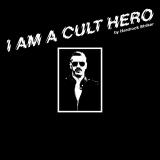
Some records are collections of tracks. Others are fragments of a life. I AM A CULT HERO is not a debut. It is a return to origin. Before Skylax Records. Before Los Angeles. Before the architecture of house music became clear. There was Sarcelles. Concrete towers. Invisible youth. Yet a coded multicultural energy where funk, soul, early hip-hop and primitive electronics coexisted before categories existed. Sarcelles was not Compton, but spiritually it was the same frontier.
95200 is not just a postcode. It is the birthplace of Hardrock Striker. 368 was the bus to the train station — the crossing line between isolation and possibility. Each journey toward Paris felt like entering another system. Those nights required discipline. Instinct. Strategy. Music was not distraction. It was structure.
Years later, Los Angeles revealed the hidden architecture behind those early intuitions. House music was not a genre but a living mechanism — built on vinyl culture, extended mixes, dubplates and repetition as language. That system had already been shaped and transmitted by pioneers such as Ron Hardy, Larry Levan, Frankie Knuckles, Electrifying Mojo, Hot Mix 5, Mark Kamins and Ron Murphy. Hardrock Striker did not imitate that language. He internalized it. The tracks on I AM A CULT HERO operate as transmissions.
Gospel For Dancers (95200 Mix / Dub) is vertical — ritual energy, lift and controlled expansion. Dance here is elevation. Erotic Loop (368 Mix / Dub) is horizontal — hypnotic repetition, circular bass motion and gradual immersion. Repetition becomes destination.
95200 and 368 are coordinates. Origin and transit. Memory and motion. Anchor and crossing.
From Sarcelles to Paris to Los Angeles to Skylax & now, back to the source.
This record closes the circle. Hardrock Striker has transformed origin into signal. Signal into structure. Structure into permanence.
A cult hero is not declared. A cult hero is revealed. Vinyl is the only truth.
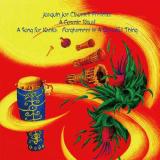
An exciting announcement - The Return Of Cosmic Ritual by Joaquin Joe Claussell.
The Return of Cosmic Ritual
Kanita- Forgiveness is a Beautiful Thing Featuring a Cosmic Tribute to Nujabes
Cosmic Ritual, the early recording alias of Joaquin Joe Claussell, emerged during the formative years of his journey-with at the time the young and visionary Spiritual Life Music label. From those beginnings came For The Loft in You, a composition whose atmospheric language would travel far beyond its original moment-helping shape a sonic vocabulary that continues to resonate throughout the deeper realms of contemporary dance music.
Its influence can still be felt today: in the spaces between rhythm and silence, in the textures of deep house, ambient soul, spiritual jazz, and in productions created by artists who continue to explore the unseen dimensions of sound.
Now, after its long journey through the cosmos, Cosmic Ritual returns.
At the heart of this new chapter is “Kanita (Forgiveness Is a Beautiful Thing)”, a composition that journeys even further inward-toward the more atmospheric, introspective, and soundscape-oriented side of Joaquin Joe Claussell’s musical spirit.
It is music for the inner traveler.
And as another celestial passage, the release also offers a special Cosmic Tribute to Nujabes Titled "Heaven", Nujabes is a deeply admired artist whose work transcended boundaries and whose musical spirit continues to inspire generations across cultures and continents-even after his untimely departure.
This tribute is more than an acknowledgment. It is a meeting of frequencies, a quiet conversation between kindred spirits who understood that music could exist beyond genre, beyond geography, and beyond the limitations of ordinary perception.
And Finally " Myths Across Tribes " A Trance Dance Percussion number that takes the listener into the jungles of Africa.
As with all of Joaquin Joe Claussell’s work, The Return of Cosmic Ritual l invites the listener to go deeper.
For those who seek mind travel.
For those who listen between the notes.
For those drawn toward cosmic ambience, spiritual resonance, and the deeper dimensions of sound.
Kora Koumakan, or Word of the Kora, is a boundary-pushing Afro-Manding group from Conakry, Guinea. Led by master kora player and composer Sekouna Conte, Kora Koumakan channels Guinea's rich musical heritage into modern compositions, creating a sound that is both deeply rooted and forward-looking. Inspired by Guinea's iconic Ballets Africains and legendary artists like Bembeya Jazz National and Mory Kante, the band masterfully blends contemporary instrumentation with traditional West African instruments - handmade by the band themselves - including the kora, djembe, and balafon. Since 2018, they have been touring extensively across West Africa, honing their sound and earning a nomination for Best Band at the 2025 Guinea Music Awards.
This inaugural limited edition vinyl release on Jambulance Movement Records features two standout remixes by London's Tigerbalm and Ben Gomori, which transform the band's original Afro grooves into hypnotic house tracks already making waves on dancefloors worldwide. Tigerbalm's remix expertly layers the original percussion around a driving 4/4 beat, with the ethereal kora and powerful vocals weaving through the rhythm to create compelling dancefloor energy. Ben Gomori's remix takes a more atmospheric route, anchored by a groovy bassline loop with layered guitar and keyboard melodies that add depth and movement, gradually building into immersive moments of tension and release. The record also includes instrumental versions of these remixes, with the band's EP of original tracks set to drop in early 2026.
Jambulance Movement Records is a social enterprise record label and recording studio based in Guinea. Their mission is to empower the next generation of emerging African artists by providing free professional recording services. Operating a solar-powered mobile studio and a static studio in Conakry, the label discovers new talent through casting events across the country. Selected artists receive comprehensive training and mentorship, with the overall aim to foster sustainable careers for young African artists.
On Explorations 03, Sam Goku continues his journey into deep, left-field club music, delivering four tracks that drift between dubby house and finely tuned electronica. Warm basslines, spacious rhythms and subtle melodic details form the foundation, while his unmistakable Sam Goku twist adds an emotional, exploratory edge throughout. Designed for late-night floors as well as introspective listening, Explorations 03 captures a fluid, forward-thinking sound that feels both grounded and otherworldly—another refined chapter in Sam Goku’s evolving sonic universe on Permanent Vacation.
"Potency rolls into double figures with a new release from Malik Kassim, aka Retromigration. Following albums and singles on labels including Love On The Rocks, Rhythm Section and Wolf Music, the tenth release on Cromby's rapidly-evolving, floor-focused imprint locks into the sound of one of house music's most consistent and consistently exciting producers, seamlessly bridging the established Potency energy with a luxurious vision of the genre. 'Love Rock' summons an instant block party energy, showcasing the expert weight of Kassim's basslines, as well as hinting at the fusion of hip-hop and jazz that bubbles through the textures of the German-Nigerian producer's studio work. Meanwhile, 'I Do Dance' stays true to the promise of its title, delivering blissful sun showers of synths amid emotional pads and hints of the classic Korg M1 organ sound, a universal signal to party. Ushering in the flip, the more tightly-wound percussion of 'Neighbourhood' maintains Kassim's driving groove, while dancehall samples and dub influences expand the established Retromigration sound into new spaces. Finally, 'Go 2 Nowhere' completes the dance, masterfully blending pillowy breakdowns and wistful keys with the EP's most urgent groove. Rich in detail while keeping the floor in constant motion, 'I Do Dance' reinforces Malik Kassim's timeless touch for unmistakably modern house music."
In 2023, Kraków-based composer Martyna Basta and Los Angeles-based sound artist claire rousay were invited to Poland by Unsound for a short residency, where they spent a few days trading ideas and concepts, and brainstorming their first collaboration. Initially motivated to create lengthy, expansive pieces together, they also ended up experimenting with shorter vignettes, and ‘hotel room’ expresses these two extremes, featuring three long-form tracks and three brief, euphoric songs. “It wasn’t something we specifically planned,” explains Basta. “It just unfolded that way.” The most important stage of the process, however, was the period that followed the residency, when rousay and Basta began working on their sketches in isolation, trading drafts and sculpting the sounds independently before rousay handled the final mixdown. In the comfort of their own bedrooms, they were better able to reflect their individual creative routines, organically reaching a junction where their music felt truly unified. Even while they were in Poland, the duo joked that it might have been easier if they’d been holed up in separate rooms emailing each other.
Both artists have had an energetic few years: after steadily building a reputation for her diaristic and candid concrète experiments, rousay signed to Thrill Jockey in 2023, releasing the acclaimed ‘sentiment’, ‘a little death’ and the more eaze collaboration ‘no floor’; Basta, meanwhile, followed up 2023’s hallucinatory ‘Slowly Forgetting, Barely Remembering’ and her debut for Belgium’s Stroom imprint, ‘Diaries Beneath Fragile Glass’ with a studio album on !K7’s 7K sublabel: ‘Winged in Collapse’. The title of their collaboration reflects rousay and Basta’s hectic touring schedules in the wake of these releases, the constant feeling of displacement and the emotions that emerge when the environment is in flux. “I know we aren’t the only musicians traveling and creating work at the same time,” says rousay, “but being able to speak about that experience and all the things that come with it was comforting.” And the music itself, assembled from hypnagogic field recordings, spectral voices, electronics and filtered instrumental improvisations, sounds bewitchingly unmoored, not tied to a specific location but hovering around the uncanny space in-between.
Scratchy ASMR sounds introduce us to the opening track ‘zoom’, initially obscuring the duo’s elegiac harmonies. They are careful to let the various elements evolve at their own pace, with the fictile guitar drones melting into the foreground while Basta’s dissociated whispers and rousay’s illusory synths pick out the subtlest subliminal shades. It all builds to the piece’s dramatic third act, when layered chords ring out like organ blasts, enveloping the negative space. The shorter, more anxiety-provoking ‘denim’ is remarkably divergent, a dismantled folk memory pieced together from skeletal piano notes, vaporous choral echoes, haunting string plucks and pulsating feedback. Where the music aligns is in the mood itself, capturing a feeling that’s neither completely abstract nor fully referential. Not ambient exactly, ‘hotel room’ is a suite of soundscapes that gesture towards structure while repeatedly folding in on themselves.
On ‘Lost and Found’, wordless Autotuned ad-libs spiral around delicate guitar plucks and washing waves, coalescing into a faded Polaroid of opiated Americana, and on ‘Where Are You Now’, operatic squeals and corroded orchestral scrapes are juxtaposed with nauseous low-end tones. Evaporating until only industrial whirrs and music box chimes remain, the latter encapsulates the entire album’s chilling liminality, smudging saturated voices with casual electro-acoustic interjections before it erupts abruptly, transforming into a dense, pitch-skewed hymn. ‘hotel room’ plays like a surreal travelogue, teasing listeners with airy familiarities as it humidifies dry, awkward spaces. More a labyrinth of catacombs than a single, fixed chamber, it’s Escher-like – cryptic and seductive – and decked out with personal asides and intimate details that reward the most patient, curious listeners.
"Neulust," the latest EP from Neuzeitliche Bodenbeläge, introduces listeners to the talents of Joshua Gottmanns and Niklas Wandt. Wandt's captivating voice invokes a sense of nostalgia, reminiscent of the era when Thorsten Fenslau was active, infusing tracks with poetic recitations. Wandt's drumming harmonizes perfectly with Gottmanns' warm chords and captivating melodies. Together, they debuted on Zurich's Lustpoderosa label with "Neulust," aiming to redefine their musical connection. Their presence in the central European underground scene has been marked by releases on Themes for Great Cities or Bureau B, accompanied by their vintage German Wave sound and lively performances. Regular touring has been part of their journey. "Neulust," recorded with minimal intervention, delves into themes of love, estrangement, and consumerism, blending haunting electro, deep house, NDW, and Euro Dance Elements. The EP signifies a significant stylistic shift and stands as the band's most compelling offering yet in their ongoing musical evolution.
The Pleased As Punch crew have every right to be as they roll out another eccentric disco 12". It's Saison that kicks off with the expressive and true 'I Can Make Good Music', a freewheeling collage of excitable loops, florid strings and disco drums with loopy vocals building the heat. 'You Are The One' from Fresco Edits is a chunky, drum-first sound with bobbling bass notes and great swing. Mainline's 'Heat Up The House' calms the vibe and sinks into a deeper, more smooth house sound for when the mood switches once the sun sets and DiscoPlex's 'The Funk' then brings a big finish with monstrous kicks and chopped and smeared synths bring the colour to a Kerri Chandler style groove.
The moment the instantly recognizable intertwined guitar passage on the title track to the Eagles' Hotel California begins, the record's genius becomes obvious all over again. Ranked the 118th Greatest Album of All Time by Rolling Stone, certified by RIAA as the third best-selling LP in history, and considered the foundation on which the Golden State's mid-‘70s music scene was built, the 1976 landmark is a music staple immune to shifts in trends, eras, and styles. Fearlessly addressing the chaos and consequences of American life, its songs remain strikingly prescient and gain creedence with each passing day.
Mastered from the original analogue master tapes, pressed on MoFi SuperVinyl, and limited to 17,500 numbered copies, Mobile Fidelity's UltraDisc One-Step 180g 45RPM 2LP vinyl box set ensures you will want to permanently check into and never leave this particular Hotel California. Up to the herculean task of standing head and shoulders above all prior reissues, this collectible edition plays with extreme clarity, organic richness, tube-like warmth, massive dynamics, and microscopic levels of detail. You'll be able to practically smell the colitas and feel the breeze in your hair. Songs come across with an epic sweep and feature immersive, front-to-back soundstages that allow the music unprecedented air, roominess, and separation. As for the noise floor? It's basically as invisible as the spirits that waft in the corridors of the unforgettable title song.
Aesthetically, the premium packaging and presentation of the UD1S Hotel California pressing befit its esteemed status. Housed in a deluxe box, it features gorgeous foil-stamped jackets and faithful-to-the-original graphics that illuminate the splendour of the recording. From every angle, this UD1S reissue exists as a curatorial artefact meant to be preserved, touched, and examined. It is made for discerning listeners that prize sound quality and production, and who desire to fully immerse themselves in the art – and everything involved with the album, from the renowned cover art to the meticulous finishes.
Indeed, the opportunity to zero in on all the particulars of the 26-million-selling Eagles record dubbed "a legitimate rock masterpiece" by vaunted Los Angeles Times scribe Robert Hilburn has never been better. A global phenomenon that marked the band debut of guitarist-singer Joe Walsh, Hotel California continues to resonate and connect with listeners of all generations taken by its narrative depth, stark directness, picturesque melodies, daring majesty, and ardent emotionalism. Adorned with a breathtaking exterior photograph of the Beverly Hills Hotel that serves as the simultaneously haunting and alluring cover art, and rounded out by a rear-cover shot of the Lido Hotel lobby that reinforces a notion that teeters between permanence and transience, Hotel California is brilliantly tied to a specific place that functions as a universally understood metaphor for the American Dream.
Confronting the darker undercurrents and oft-ignored constructs attached to that romantic notion, the record's songs revolve around a host of shared themes: excess, mobility, stability, illusion, fame, destruction, and idealism included. Notably, Hotel California appeared at a crucial junction in American history: During the country's bicentennial and amid escalating controversies related to the Vietnam War, energy crisis, and governmental corruption. That the Eagles manage to channel such cultural, social, and economical matters into a cohesive, stately, big-picture statement is alone a stupendous feat. That the album's reach, boldness, vitality, accessibility, and understated intensity have never waned make it a marvel.
Reflecting on Hotel California 40 years after its original release, and indirectly explaining its enduring appeal and increasing relevance, singer-songwriter Don Henley confirmed the record pertains to the "loss of innocence, the cost of naiveté...the difficulties of balancing loving relationships and work, trying to square the conflicting relationship between business and art; the corruption in politics, the fading away of the Sixties dream of ‘peace, love and understanding.'"
It can be argued that Henley and company squarely hit on and drove home those ideas in the surreal title track, chart-topping "Life in the Fast Lane," and grand "The Last Resort" alone. But that would miss the forest for the trees. Experienced as an unbroken whole, complete with the pristinely shot imagery and physical grooves, Hotel California unfolds like a geography-conscious saga by James Michener and plays like colour-saturated movie shot on 70mm film by Martin Scorsese. It's about our collective and individual decisions – and the shape of our past, present, and future. And, just like that conjured by our imaginations, Hotel California continues to take on a life of its own.
More About Mobile Fidelity UltraDisc One-Step and Why It Is Superior
Mobile Fidelity Sound Lab's UltraDisc One-Step (UD1S) technique bypasses generational losses inherent to the traditional three-step plating process by removing two steps: the production of father and mother plates, which are created to yield numerous stampers from each lacquer that is cut. For UD1S plating, stampers (also called "converts") are made directly from the lacquers. Since each lacquer yields only one stamper, multiple lacquers need to be cut. Mobile Fidelity's UD1S process produces a final LP with the lowest-possible noise floor. The removal of two steps of the plating process also reveals musical details and dynamics that would otherwise be lost due to the standard multi-step process. With UD1S, every aspect of vinyl production is optimized to produce the best-sounding vinyl album available today.
MoFi SuperVinyl
Developed by NEOTECH and RTI, MoFi SuperVinyl is the most exacting-to-specification vinyl compound ever devised. Analogue lovers have never seen (or heard) anything like it. Extraordinarily expensive and extremely painstaking to produce, the special proprietary compound addresses two specific areas of improvement: noise floor reduction and enhanced groove definition. The vinyl composition features a new carbonless dye (hold the disc up to the light and see) and produces the world's quietest surfaces. This high-definition formula also allows for the creation of cleaner grooves that are indistinguishable from the original lacquer. MoFi SuperVinyl provides the closest approximation of what the label's engineers hear in the mastering lab.
There was nothing in contemporary music like Chris Isaak’s Heart Shaped World when it hit shelves in June 1989. More than three decades later, the singer-songwriter’s third album still sounds unique — and claims a backstory nearly as fascinating as the retro-leaning material and standout performances that propelled it to sales of more than 2.5 million copies. Home to the Top 10 smash “Wicked Game,” the set remains a masterful mood piece that invites you to pour a late-night drink, sit in a dimmed room, and relish Isaak’s elegant albeit raw ruminations on love, relationships, and questionable decisions.
Sourced from the original master tapes, pressed at Fidelity Record Pressing, strictly limited to 3,000 numbered copies, and featuring the bonus track “Diddley Daddy,” Mobile Fidelity's UltraDisc One-Step 180g 45RPM 2LP box set of Heart Shaped World unearths the staggering inner details, saturated tones, and brilliant atmospherics of the crisp production. It brings you up close and personal with Isaak’s spectacular singing — impeccably controlled, tense, brooding, steamy, smoldering, haunted — situated amidst stripped-down backdrops that allow every note to fully bloom and decay.
While Isaak’s ever-steady baritone remains the anchor, the contributions of his trusty backing band, the aptly named Silvertone, come across with just as much cool, command, and realism. The indispensable playing of guitarist James Calvin Wilsey particularly emerges with superb clarity and dimensionality. The character of his 1965 Fender Stratocaster, shivering twang of his spring-coiled fills, and his signature use of reverb, delay, and vibrato seamlessly match Isaak's patient deliveries and the band’s unhurried rhythms. Experienced on UD1S with ultra-black backgrounds and a nearly invisible noise floor, Heart Shaped World is in every regard a demonstration disc.
The premium packaging of this UD1S pressing befits its elevated status. Housed in a deluxe slipcase, it features foil-stamped jackets and faithful-to-the-original graphics. Aurally and visually, this reissue is for discerning listeners who desire to immerse themselves in everything involved with the album, not the least of which is the cover art depicting a lost-in-thought Isaak staring ahead and sitting in what appears to be an efficiency apartment. The image epitomizes the record’s lonesome temperaments and pensive themes.
Of course, if not for director David Lynch hand-picking two cuts from Heart Shaped World for his 1990 film Wild at Heart, the record would’ve probably suffered the same fate as Isaak’s prior efforts and gone unnoticed by the mainstream. Despite receiving raves from outlets such as NME, Chicago Tribune, and Rolling Stone upon its original release, the album stalled in the lower quadrants of the Billboard charts and, after a few weeks, dropped off.
Cue the ear of Lee Chesnut. Then the music director for a large Atlanta radio station, Chesnut heard the instrumental version of “Wicked Game” on Lynch’s soundtrack and started airing the album rendition at all hours of the day. Aided by a sensual video featuring Isaak and supermodel Helena Christensen, the song found its way into the public consciousness by early ‘91 and helped make Isaak a most unlikely mainstream star in an era where his techniques had little to nothing in common with popular tastes.
Despite its vintage vibes and shared DNA with legends such as Roy Orbison, Chet Baker, and Glen Campbell, Heart Shaped World transcends nostalgia, rockabilly, and throwback tropes. For all the melodrama and sadness at hand, Isaak’s gorgeously transparent singing dives deep underneath emotional surfaces. He mines subtleties that indicate his feelings go beyond heartbreak and anguish, and occasionally suggest frustration, menace, and anger. You can hear it in his quivering falsetto, and the slow and methodical ways he allows delicate whispers to break into shadowy phrasing that crosses over to the darker sides of romance and desire.
That approach bolsters the title track, which suggests calm yet moves on ominous currents — its simmering pace and snare-drum snappiness foreshadowing Isaak raising the volume and urgency during the coda. The southwestern-tinged “Wrong to Love You” plays with similar concepts of hesitation, unease, and discord, Isaak careful never to fully erupt and give anything away. His poised deliveries offer a master class in the art of insinuation and hurt on “Nothing’s Changed,” sent up with a wordless backing chorus and crackling guitar lines straight out of a Memphis blues joint.
Heart Shaped World further boosts its merit via its abundant stylistic variations, from the upbeat country-and-western trot of “I’m Not Waiting” and Spanish acoustic shimmer of the jazz-based ballad “Blue Spanish Sky” to the swinging horn-accompanied grooves of “Don’t Make Me Love You” and desert smokiness of the understated “Kings of the Highway.” On the latter, Isaak comes across as resigned and absolute. His singing and pain worm their way into your soul, and echo akin to the way the music prepares to strike when you least expect.
“Trouble going 'round,” Isaak croons right as the album begins. “Trouble going down.” Damn straight.
Drop Music marks a marvellous quarter of a century of releases with this new slab of vinyl featuring some gems from disco funksters Crazy P and the house mainstays Inland Knights. Crazy P go first with 'Disc Odyssey' which is perfectly indicative of their much beloved sound with its low slung kicks and funky bassline. Inland Knights then offer a trio of in demand & unreleased tracks. 'Overnight' is a bumming deep house joint, 'Walk On' has an icy late night vibe and balmy pads and 'Do It Again is a more playful closer, with some killer b-line action. All four, needless to say, are timeless gems, and the fact the last two are appearing on vinyl first the first time makes it an even more desirable cop.
LILDAVE215 is a proud Philly representative who channels funk, soul and acid jazz into his delicious take on disco. For this new outing on the young but already promising Sweet Breeze Sound label, he kicks off with 'Music Takes Me' which rides on slinky drums that slide irresistibly on nice dusty cymbals and has funky riffs down low. The vocals add simple but effective colour that adds to the feel-good nature. 'Carnaval Del Tiempo' is more Latin influenced, with prickly percussion and big vocals, even bigger drums and sax energy all added for when the sun shines down hot.
The fourth release from 5511 Records brings together seven different producers, each contributing their own interpretation while staying true to the label’s musical vision and distinctive identity. Across the EP, four original tracks explore a range of sounds and styles connected by a common direction, a mix of Brazilian music, eclectic, and groove driven influences. The fifth track come by a remix from Otis, adding a fresh and energetic perspective to the EP.
Almost 25 years after its original release, "How Low Can You Go?" by Darran Nugent under his Aruba alias remains a dancefloor weapon for underground DJ’s. The track has endured as one of Nugent's most sought-after productions and as one Discogs user noted “in my opinion - one of the best basslines, presses directly on the chest”.
Over the years, it has been championed by some of electronic music's most respected selectors, including Jamie Jones (featured in his legendary Time Warp set), tINI featured on her Cocoon Ibiza Compilation), Traumer, who featured the track in his set for the Resident Advisor, Chaos In The CBD, Mr. G, Laurent Garnier, Lee Burridge etc.
For this re-release Darran has completely re-recorded the original, refining it for more modern DJ systems. A tasty re-edit fills out the A side with a pulsating hi-hats that twist and turn the energy but remains true to the original.
Legendary German producer Losoul delivers the goods for the remix on the B Side with ten minutes of deep, dark hypnotic magic for fans of pure minimal done right.
SKYLAX RECORDS proudly unveils the fourth and final chapter in its epic, conceptual 4-part saga — SKYLAX BLACK 4 – Vision Quest. This secretive series brings together two pillars of French electronic music, ARNAUD REBOTINI and ACID WASHED, in a bold tribute to the essence of rave, electro, and techno. Following the critically acclaimed Winter Sequences and Musical Component, this last installment pushes even deeper into the roots and futures of the underground. On the A-side, Vision Quest opens the EP with a pulsating journey of progressive electronics — cinematic and sleek, evoking the robotic spirituality of Kraftwerk and the expansive textures of early kosmische music. Next, TOI 700-d channels the golden age of acid house with infectious 303 lines and jacking grooves. Think DJ Pierre, Phuture, and Ron Hardy at their most transcendental — raw, euphoric, and timeless. Flip to the B-side and dive into Black Star Liners — a dub techno masterclass in the lineage of Maurizio, Basic Channel, and Chain Reaction. Deep, minimal, and full of ghostly delay, it’s a meditative immersion in pure sound system hypnosis. Closing the EP, Trojan Asteroids fires into classic Metroplex territory — icy, futuristic, and funk-laced. A perfect nod to Cybotron and Model 500, this is hi-tech soul with a razor’s edge. Once again, SKYLAX RECORDS delivers a visionary release — timeless, intelligent, and essential. The final piece of the puzzle is here. The journey ends… or just begins.
Eclection’s lack of commercial success remains a mystery to this day. This selection of BBC Top Gear recordings demonstrates their song-writing strength and musical prowess. Only three tracks appeared on the band’s sole studio LP: the remaining nine songs suggest what a second LP might have sounded like. Highly recommended to fans of Fairport Convention, with whom Eclection share some musical DNA.
Comes with full recording credits and extensive sleeve notes.
Recording Quality Very Good/Excellent throughout.
Recorded in 1970 with a host of young blues and rock musicians, Blue Memphis is recognized as one of the best dates released by fellow blues artists in that era. On this album, the famous American blues pianist, singer, and composer Memphis Slim (John Peter Chatman) is backed by several British musicians, including Chris Spedding, John Paul Jones, Duster Bennett, and Peter Green.
First published in 1978 by Cetra, in this work Antonio Infantino continues to express his ritualistic and shamanic relationship with the musical traditions of Southern Italy. The recordings focus on the mystery of death and the sacraments, the light of the spirit and the divine that descends and conquers souls. The phenomenon of Tarantism is still strong, the power of dance as a symbol of transformation and revolt, a therapeutic process of final healing. Folk music celebrates a deep sense of community, the memory of a peasant world that no longer exists but is still alive in the collective memory. Behind the tight and insistent rhythm of the percussion, the voices of the people, the colours of the squares and the scratchy string arrangements always emerge. The magical sound of the bagpipes is lost in the alleys of the villages. Infantino sings of minor cultures, the poor and oppressed classes, who share joys and sorrows, dance and music as secular forms of liberation.
Obelix is the brainchild of UK producers Richard George and Corine Trembath, whose timeless take on house and techno has long been cherished by underground heads and vinyl collectors alike.
With releases on Pacific Records, Mosaic and Stickman, their music occupies a distinctive space between early house and techno, raw, hypnotic and deeply musical, built around rolling 909 rhythms, expertly programmed 303 acid lines and the unmistakable character of analogue hardware.
Following an extensive dive into their DAT archives, Pariter presents The Lost Tapes, a collection of previously unreleased recordings made in the mid-1990s. Carefully restored and curated by Yossi Amoyal, the material retains all the rawness, warmth and analogue
character of the original tapes, offering a rare glimpse into a particularly fertile period of UK underground dance music.
The two part release is completed by Whatever, their sought after classic originally released on Offshoot, a timeless slice that stands alongside the unreleased recordings as an essential piece of the Obelix story.
The Lost Tapes documents a sound that has lost none of its power, raw, hypnotic and unmistakably timeless.
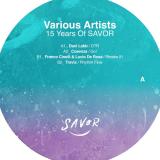
Savor Music celebrates a landmark 15 years in the scene with a three-part compilation series. This second installment continues the momentum, bringing together a powerhouse selection of artists that define the label's sophisticated, groove-oriented sound.
Side A opens with a major track on A1, as Dani Labb unveils a hypnotic Detroit meets Aphex Twin spiritual bomb. This track serves as a masterclass in production, delivering a fluid, dark room ready flow. Following this, A2 showcases the refined artistry of Cosenza, who brings a groovy funky stylish number to the record. His contribution is characterized by an infectious energy that keeps the groove effortlessly sophisticated.
Side B shifts into deeper territory, starting on B1 with Franco Cinelli teaming up with Lucio de Rosa for a classy subtle morning piano house track. True to their reputation, they deliver a detailed number that showcases the technical precision and steady momentum for which they are renowned. Finally, B2 rounds out the EP with a deeper hypnotic track by Shine On You boss, Travis. Combining unique creative perspectives, Travis weaves together profound atmosphere and mysterious depth while keeping a steady groove to close out this chapter.
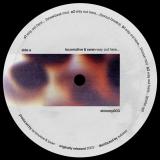
Paul Guido and Laron McNally, AKA Locomotive & Swan, conjured up ‘Way Out Here…’ in the living room of a tiny apartment in San Francisco in 2003. The duo were part of a bustling West Coast scene inspired by the pioneers that came before them, pushing the music into a more experimental direction. Their sound was a hybrid of looping tech-house with a freshly dubbed-out soul, soft-edged pumpers made with long sessions on the dance floor in mind.
The four versions of ‘Way Out Here…’ contain the same tripped-out samples and driving percussion, but with their own distinct attitude. The ‘Breakbeat Mix’ provides the most bone-rattling bassline of all time, balanced by the more restrained and stripped back ‘Bonus Breaks’. The ‘House Mix’ subtly plays with pressure and release, while ‘Posse Up’ goes full throttle lift-off.
With this four tracker all bases are covered - each track is suited to different moments across a night’s arc from warm up, to peak time, to after hours. This EP is a testament to the grooves and groovers of the time, reflecting an era of music that informed much of what we cherish today. The shimmy is strong with this one, and we are happy to give it another lap.
The Doobie Brothers faced a serious predicament as they prepared to record Takin’ It to the Streets. That the group navigated a potentially serious personnel problem that would’ve tanked lesser bands and scored its fourth straight Top 10 album — while again expanding its range — speaks to the collective’s chemistry, broad-mindedness, and songwriting abilities. Known as the effort on which vocalist-keyboardist Michael McDonald makes his debut, the 1976 set stands as an all-encompassing representation of the various styles the Doobie Brothers explored during their heyday.
Sourced from the original analog master tapes, mastered by engineer Krieg Wunderlich, pressed at Fidelity Record Pressing in California, and housed in a Stoughton gatefold jacket, Mobile Fidelity’s numbered-edition 180g 45RPM 2LP presents Takin’ It to the Streets in definitive sound. Given the luxurious room of a 45RPM version for the first time and benefiting from the wider grooves, the music unfolds amid large soundstages replete with ultra-quiet backgrounds, big dynamics, and accurate imaging. By then a key component of the Doobie Brothers' success, Ted Templeman’s production is brought to light with stellar clarity and definition.
As is the case on Mobile Fidelity's four other acclaimed Doobie Brothers 45RPM reissues, myriad facets that help make Takin’ It to the Streets timeless, natural, and organic — minimal overdubs, voices that realistically rise and fall, notes that properly carry and decay, warm tones, bass lines that pop with color, well-placed percussive accents, defined separation between the players — emerge with incredible presence, openness, and fullness. Nothing is overdone or out of place. No small feat given Templeman and company didn't know how everything would unfold when they first met up in Southern California.
Confronted with a change in plans by co-founder Tom Johnston, whose contributions to the band up to that point in its career identified him as an indispensable member, the Doobie Brothers were thrown for a loop when he curtailed pre-planning work and retreated home to deal with ongoing health problems. Thankfully, Jeff "Skunk" Baxter, the group's newest full-time recruit, had a possible solution in his former fellow Steely Dan colleague McDonald. The singer-keyboardist had already sat in with the Doobie Brothers on their recent tour. So, why not give it a shot?
McDonald's prodigious talents notwithstanding, he couldn't technically replace Johnston. For starters: McDonald's soulful timbre bore little resemblance to Johnston's grittier voice. And McDonald played keyboards, not guitar. No wonder Templeman initially expressed reservations. He also knew the Doobie Brothers needed additional material before they could consider wrapping the record. Yet the skepticism began to dissipate on the first day of the sessions. Still waiting for second drummer Keith Knudsen, the band gathered in the studio with former roadie Bobby LaKind on congas and Little Feat drummer Richie Hayward for a live run through "Wheels of Fortune." The instrumental parts of that take landed on the record. Johnston would even return to share the lead vocal duties with Patrick Simmons.
Those magical results, and the experience of hearing McDonald woodshed the title track at the piano, turned Templeman into a believer and cheerleader. Spurred by their veteran producer's encouragement and McDonald's ideas for songs, the Doobie Brothers embraced new directions just as they did after their debut LP and on subsequent efforts with orchestral and horn treatments. The latter return on Takin’ It to the Streets courtesy of the five-piece Memphis Horns. Yet outside of viola accompaniment on "Losin' End," string elements step aside in favor of McDonald's pianos, synthesizers, and clavinet. And, on five cuts, lead singing.
As the new face of the band, McDonald ended up crafting all or portions of four tunes. His fingerprints are all over two of the singles, including the jazzy, blue-eyed-soul delight “It Keeps You Runnin’” and irresistibly melodic title track, which cracked the Top 15 and became one of the Doobie Brothers’ signature numbers. He and Baxter’s penchant for smoothness, and a precursor to the band’s coming transition into rhythmically oriented yacht rock, informs the brassy sway of “Carry Me Away.”
Further enriched by Tiran Porter’s gorgeous, time-signature-shifting ballad “For Someone Special,” Simmons’ peppy, spring-loaded “8th Avenue Shuffle,” and Johnston’s “Turn It Loose” — the move-your-feet boogie serving as kind of apt farewell to the band’s prior rock ‘n’ roll sound — Takin’ It to the Streets spun uncertainty into gold. Altered yet unbowed, the Doobie Brothers once again offered countless listeners “the best kind of remedy” with feel-good music that holds up amid any era.
Move in Stereo: The Cars’ Eponymous Debut Album Functions as a Greatest-Hits Set with Classics Such as "You're All I've Got Tonight," "Good Times Roll," and "Just What I Needed"
Experience the Six-Times-Platinum Record in Definitive Sound on
Mobile Fidelity’s UltraDisc One-Step 180g 45RPM 2LP Box Set:
Strictly Limited to 4,000 Numbered Copies,
It Plays with Reference Definition and Presence
1/4” / 15 IPS analogue master to DSD 256 to analogue console to lathe.
Among the most critically and commercially successful debuts in history, the Cars' eponymous album doubles as a greatest-hits collection. Not one song on it is widely unrecognized or unknown. Consider the list: "You're All I've Got Tonight." "Good Times Roll." "Just What I Needed." "Moving in Stereo." "My Best Friend's Girl." "Don't Cha Stop." “Bye Bye Love.” Just call The Cars the best new-wave rock album ever made. And a natural candidate for preservation on a Mobile Fidelity UltraDisc One-Step pressing.
Sourced from the original analog tapes, pressed at Fidelity Record Pressing in California, mastered by engineer Krieg Wunderlich, and strictly limited to 4,000 numbered copies, MoFi’s UD1S 180g 45RPM 2LP box set presents the six-time platinum record in the most vivid, wide-spanning, three-dimensional sound it has enjoyed on vinyl. Compared to the label’s outstanding and out-of-print 180g 33RPM version, this collectible edition features richer textures, broader openness, greater presence, and bigger dynamics.
Benefitting from the extra groove space on 45RPM by playing with enhanced definition, deep-black backgrounds, and ultra-quiet surfaces, this reissue portrays the band’s oscillating rhythms, futuristic keyboard passages, and panned images with stunning realism. Songs take on an absolutely surreal quality. The Cars and producer Roy Thomas Baker manipulate arrangements at will to mesmerize listeners' senses. The concept of "moving in stereo” has likely never been truer.
The industry-leading packaging of the UD1S set gives fans another reason to gravitate towards the 1978 album. A deluxe slipcase, two foil-stamped jackets, faithful-to-the-original graphics, and MoFi inner sleeves make for a premium tactile experience. It invites you to immerse yourself in everything about the record, including the now-familiar cover art depicting Nataliya Medvedeva behind the wheel. Enhanced by her glistening ruby-red lips, her face flashes an expression caught between surprise, ecstasy, and disbelief — an apropos way of responding to The Cars whether you’re hearing it for the first or 1,115th time.
Introduced in 2024 into the National Recording Registry for its significance, and ranked the 353rd Greatest Album of All Time by Rolling Stone, The Cars explodes with emotion, energy, and hooks. Its songs unite then-disparate styles: bubblegum melodies, art-rock angularity, progressive structuralism, terse minimalism, and power-pop sheen. The stylish arrangements also benefit from a laidback cool and understated irony that remain uncommon in the world of contemporary mainstream music.
Equally rare is the deep chemistry the members shared before they entered London’s AIR Studios and knocked out the record in less than a month. Benjamin Orr and Ric Ocasek began their first band together in the early ‘70s. A subsequent group with future Cars keyboardist Greg Hawke preceded Orr and Ocasek bonding further by temporarily performing as a duo. One final pre-Cars ensemble, Cap’n Swing, brought guitarist Elliot Easton into the fold. A decision by Ocasek to take the band in a rock direction, a crucial lineup shuffle, and a name change begat the Cars so many listeners know and love.
Already a going concern in Boston, the quintet cut its teeth and woodshopped songs for nearly a year and a half before signing with Elektra and partnering with Baker. The Cars enjoyed success right out of the gate, hitting No. 18 on the Billboard Top 200 chart and netting a pair of Top 40 singles in the form of “Just What I Needed” and deceptively happy “My Best Friend’s Girl.” The sarcastic “Good Times Roll” climbed to No. 41, but soon enough, almost every track on The Cars became a radio staple — an honor far more meaningful than chart positions.
Obsessed with incorporating the latest technologies and sounds into its palette, the band spiced tunes with delightful and quirky accents — country-tinged guitar fills, echoing Syndrums, reggae splashes, hard-rock tones, robotic pulses. Orr's low, nuanced deliveries and Ocasek's cool, detached vocals lend shades of doubt and double meaning to the lyrics, which are further counterbalanced by synthesizer flourishes and electronic beats.
Accessible and eccentric, edgy and catchy: The results comprise a landmark whose characters come to vivid life with nuclear boots, dry-drip gloves, ribbon-festooned coiffures, suede-blue eyes, and rock ‘n’ roll hair. It's practically impossible to avoid humming along to every song, all enhanced by Baker's stellar production. Best known for his work with Queen, he ensured the record packed a punchy midrange, opened up with instrumental and vocal separation, and breathed with airy harmonies.
Indeed, from the timeless music to the sleek production and sonic restoration, The Cars on UD1S is just what you needed.