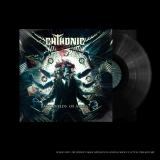
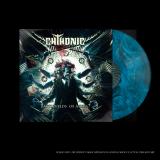
CHTHONIC's award-winning 2018 album Battlefields of Asura reissued on vinyl in September via Svart Records CHTHONIC is a Taiwanese metal band formed in Taipei in 1995, with the members nowadays split between Helsinki and Taipei. Their 2018 album Battlefields of Asura is an award-winning release. With this album, CHTHONIC won their second Golden Melody Awards, Taiwan’s equivalent of the Grammy Awards. CHTHONIC's lyrics are inspired by Taiwanese mythology, folk stories, and history, while its music incorporates elements of traditional Taiwanese folk music, enka, and the sorrowful melodies of Taiwanese opera. These are accompanied by traditional instruments such as the hena and koto. Also integral to CHTHONIC's sound are elements of symphonic black metal and melodic death metal, along with intense riffs and solos. Critics have attempted to categorize CHTHONIC as death metal, folk metal, or black metal, but the band has opted for the simpler label of metal. They've performed at many major festivals around the world, including Fuji Rock and Summer Sonic in Japan, Ozzfest in the US, Download in the UK, and Wacken Open Air in Germany, as well as having toured extensively across Europe, North America, and Asia over the years. Prior to this album, CHTHONIC was signed to Spinefarm Records / Universal Music Group, under which they released three albums and toured internationally. After their 2014 European tour, the band decided to slow down, and vocalist Freddy Lim began his political career. He was elected to Taiwan's Parliament in 2016 and re-elected in 2020. During his tenure, he pushed for LGBTQ rights and gender equality, helping Taiwan become the first Asian country to legalize same-sex marriage, along with advocating for Indigenous rights and other human rights issues..
CHTHONIC's award-winning 2018 album Battlefields of Asura reissued on vinyl in September via Svart Records CHTHONIC is a Taiwanese metal band formed in Taipei in 1995, with the members nowadays split between Helsinki and Taipei. Their 2018 album Battlefields of Asura is an award-winning release. With this album, CHTHONIC won their second Golden Melody Awards, Taiwan’s equivalent of the Grammy Awards. CHTHONIC's lyrics are inspired by Taiwanese mythology, folk stories, and history, while its music incorporates elements of traditional Taiwanese folk music, enka, and the sorrowful melodies of Taiwanese opera. These are accompanied by traditional instruments such as the hena and koto. Also integral to CHTHONIC's sound are elements of symphonic black metal and melodic death metal, along with intense riffs and solos. Critics have attempted to categorize CHTHONIC as death metal, folk metal, or black metal, but the band has opted for the simpler label of metal. They've performed at many major festivals around the world, including Fuji Rock and Summer Sonic in Japan, Ozzfest in the US, Download in the UK, and Wacken Open Air in Germany, as well as having toured extensively across Europe, North America, and Asia over the years. Prior to this album, CHTHONIC was signed to Spinefarm Records / Universal Music Group, under which they released three albums and toured internationally. After their 2014 European tour, the band decided to slow down, and vocalist Freddy Lim began his political career. He was elected to Taiwan's Parliament in 2016 and re-elected in 2020. During his tenure, he pushed for LGBTQ rights and gender equality, helping Taiwan become the first Asian country to legalize same-sex marriage, along with advocating for Indigenous rights and other human rights issues..
Founded in Germany in 2019, CONSVMER. have spent the last few years carving out a space that’s entirely their own: progressive metal, beatdown, and metalcore delivered entirely in German, with an unflinching focus on subjects most people would rather look past. Their 2024 record Seelenfrieden turned heads inside and outside the German metal scene, with coverage from outlets including Nik Nocturnal and a collaboration with Paleface Swiss that confirmed the band were operating at a level far beyond their years. Live, they have earned their place on stages at Summer Breeze, Core Fest and Bembel X Core Festival. Now, with new vocalist Jacques Gronert and a vision sharpened to a point, CONSVMER. return with Abgrund.
Where Seelenfrieden refined the template, Abgrund dismantles it. Across eleven tracks the band push further into territory that feels genuinely unique and uncompromising: the title track opens the record on collective collapse and a society steering towards the edge with no intention of stopping, while songs like "Gier" tear into systemic greed and exploitation with brutal clarity, "Willenlos" descends into dissociation and the erasure of identity, and "Sucht" confronts addiction and self-destruction with a rawness that is hard to shake. Closer "Gottverlassen" leaves the listener exactly where the title suggests. The collaboration with brutal deathcore veterans Acranius on "Sucht" hits like a freight train, their English-language verses locking into CONSVMER.'s German delivery to devastating effect. Fellow German hardcore outfit DOGBITE also appear, adding another dimension to a record that never loses focus.
Originally released in 1978. A Classic Reggae album re-released on 180 gram vinyl and produced by Linval Thompson with extensive sleeve notes.
Recorded at Channel One Recording Studio & Harry J's Recording Studio.
Cornell Campbell is one of an elite group of Jamaican reggae singers who has weathered the changes throughout the music's development - in his case, from the ska era to right up to date - whilst retaining their relevance. Witness his recent alliance with UK Afrobeat/reggae band The Soothsayers or Jazmine Sullivan's R & B hit Need U Bad, which sampled his classic 'Queen Of The Minstrel' -a song that still sounds fresh more than thirty years later.
Sweet Baby was pressed on bright red vinyl, which only added to the excitement when you saw the selector position it carefully on the deck.
On the LP cover was a painting of Cornell wearing an emerald green shirt and framed by a lurid sky, which might have left some people wondering if it was a soul album. It wasn't, although there is certainly soul in the grooves, and especially on R&B covers like Gonna Take A Miracle - first recorded by the Royalettes -and Darling You Send Me, which Sam Cooke had introduced to the US Billboard charts some twenty years earlier.
Both are among the highlights but then the whole album is good in truth, and a heartfelt I Need Somebody and My Sweet Baby, plus the two-step favourite Just Enough were regularly played on sound system. Blinded By Love, I Didn't Know and Can't Hide My Love are tinged with melancholy and like the seductive Whenever You Need Me, display all the hallmarks of a classic Cornell Campbell side -swooping vocals, a driving rhythm and seductive lyrics included.
Nearly forty years later, it is gratifying to know there is still no mistaking him when his records are played in a dance. That relaxed vocal style draws you in but it's his falsetto, quivering with understated emotion that hooks you and turns you into a lifelong fan.
Simplicity floods itself in textured imperfection and anointed noise on the debut oracular folk guitar album released under the UK’s 5 Gate Temple.
A roughly recorded stack of improvisations on a classical-style guitar, God Spill embodies the broken, all while un-doing the expectations around traditional guitar folk. Mingot's fingerpicked tones meld with unsteady pedal loops and hissed drones rotating through flawed circuitry. A slow to becoming repair that is translucent, cryptic and oblique.
Mingot's misty glitched landscape paints the polarity of both presence and disappearance, all cyclically mirroring the unseen. Honesty, discordance, impatience, and certainty all find home alongside blurred vocal drones.
Since 2022, the EU-based, Queens NY native has released music elusively as hardcore high priestess St Agnis and now swims waters of the acoustic - with soft rage and pursuit.
There are some first times you never forget. The first time one hears Syd Matters’ captivating voice is one of them.
From “End & Start Again”, his first single in 2003, Jonathan Morali’s warm, soulful vocals and timeless melodies revealed an artist in a league of his own. Success in France and abroad was immediate and has never waned.
Four albums followed between 2004 and 2011, along with a host of unforgettable songs: “Black & White Eyes”, “Obstacles”, “To All Of You” or “I Might Float” left their mark on an entire generation, racking up nearly 200 million streams and 100,000 physical sales. Drawing equally from the songwriting of the 60s, the creativity of the 70s and the modern synthetic era, Syd Matters has developed a unique musical universe, building a loyal and ever-growing audience over the years.
On stage, accompanied by his band, audiences recall intense concerts where the artist and his musicians deliver performances that were at once epic and intimate. Lush and spectacular on stage, their music never lost its center of gravity, gaining even in depth. Syd Matters toured France and Europe (England, Germany, Scandinavia...) for nearly ten years, as well as in the United States and Latin America. In 2011, the tour for his album Brother Ocean culminated in Paris at the mythical venue l’Olympia.
Jonathan Morali then took a step back from the spotlight but remained just as prolific, writing for film, theater, radio, and television and collaborating over the years with directors such Éric Rochant, Rémi Chayé, Thomas Litli, Patrick Mille, and Mélanie Laurent to name but a few. When scoring for films, the musician gives free rein to his desires and intuitions. He works with the very fabric of sounds and their underlying emotions, as if freed from the constraints imposed by the song format.
Between 2015 and 2019, he also composed the soundtracks for the remarkable video games Life Is Strange and Life Is Strange 2, which were massive global hits. Several Syd Matters tracks appeared in the game, and the success was such that it revived the band’s career, introducing their music to a new audience.
After an extended hiatus, Syd Matters will make a major comeback with a new album - their fifth - set for release in September 2026 on Créature - also home to Flora Fishbach and Chassol. They will then tour France and Europe, returning to the legendary stage of the Olympia on November 17, 2026, where they will perform their new songs. And others that we know by heart and haven’t forgotten.
Kosuke Mine’s electric album, with a strong rock and funk flavor, is set for reissue as part of "Spin This Now!" Vol. 9. This classic album shines with the outstanding combination of Mine’s saxophone with a wah-wah pedal and Mikio Masuda’s psychedelic keyboards.
East Wind was a groundbreaking jazz label established in 1974 through the full cooperation of Ai Music, as it was then known, and Nippon Phonogram, as it was then known. Over a period of about five years, the label produced albums not only by Japanese musicians such as Masabumi Kikuchi, Sadao Watanabe, and Terumasa Hino, but also by musicians who were engaged in creative activity on the global jazz scene at the time. In addition to the quality of the performances, the artwork, created with leading designers and photographers, brought a fresh new image to jazz albums and had a major influence on later record production.
World-famous pianist Tsuyoshi Yamamoto’s second East Wind release, "Life," appears in the lineup for "Spin This Now!" Vol. 9. Backed by a golden rhythm section with Sam Jones on bass and Billy Higgins on drums, Yamamoto delivers a supremely swinging performance. His delicate ballad playing on "If You Could See Me Now" is also essential listening.
East Wind was a groundbreaking jazz label established in 1974 through the full cooperation of Ai Music, as it was then known, and Nippon Phonogram, as it was then known. Over a period of about five years, the label produced albums not only by Japanese musicians such as Masabumi Kikuchi, Sadao Watanabe, and Terumasa Hino, but also by musicians who were engaged in creative activity on the global jazz scene at the time. In addition to the quality of the performances, the artwork, created with leading designers and photographers, brought a fresh new image to jazz albums and had a major influence on later record production.
Gilla Band are happy to announce their brand new album ‘Pugnello’ released on the 25th September 2026 on Rough Trade Records. The album was recorded from 2022 - 2026 across three studios, Hellfire, Yellow Door Music Studio, & Sonic Studios in Dublin, the album was produced by Gilla Band & it was recorded and mixed by Daniel Fox.
Gilla Band never know where they’re going next. For over ten years now, the Dublin quartet (vocalist Dara Kiely, guitarist Alan Duggan Borges, bassist Daniel Fox, and drummer Adam Faulkner) have been redefining what you could loosely call “rock music” in the 21st century, influencing a wide swath of similarly forward-thinking guitar acts along the way. Across 2015’s Holding Hands With Jamie, 2019’s The Talkies, and 2022’s Most Normal, the band perfected a vision that wasn’t quite post-punk, wasn’t quite noise-rock, wasn’t quite anything besides an idiosyncratic, ground-breaking hybrid that could only come from the four of them.
In the four years since Most Normal, each member embarked on other artistic endeavors. Kiely fostered a newfound love of painting, Faulkner played drums for Lankum on the road, Fox became an increasingly in-demand producer guiding ascendant acts like Sprints, Lambrini Girls, and Mandy, Indiana, while Duggan Borges launched his solo project the Null Club with collaborations featuring Mandy, Indiana’s Valentine Caulfield, the Horrors’ Faris Badwan, Miss Grit, and Brooklyn MC Elucid. All their extracurricular activity existed in parallel with the exploratory route towards Pugnello, but also informed the band as they reconvened to crystallize the album’s vision.
Gilla Band are happy to announce their brand new album ‘Pugnello’ released on the 25th September 2026 on Rough Trade Records. The album was recorded from 2022 - 2026 across three studios, Hellfire, Yellow Door Music Studio, & Sonic Studios in Dublin, the album was produced by Gilla Band & it was recorded and mixed by Daniel Fox.
Gilla Band never know where they’re going next. For over ten years now, the Dublin quartet (vocalist Dara Kiely, guitarist Alan Duggan Borges, bassist Daniel Fox, and drummer Adam Faulkner) have been redefining what you could loosely call “rock music” in the 21st century, influencing a wide swath of similarly forward-thinking guitar acts along the way. Across 2015’s Holding Hands With Jamie, 2019’s The Talkies, and 2022’s Most Normal, the band perfected a vision that wasn’t quite post-punk, wasn’t quite noise-rock, wasn’t quite anything besides an idiosyncratic, ground-breaking hybrid that could only come from the four of them.
In the four years since Most Normal, each member embarked on other artistic endeavors. Kiely fostered a newfound love of painting, Faulkner played drums for Lankum on the road, Fox became an increasingly in-demand producer guiding ascendant acts like Sprints, Lambrini Girls, and Mandy, Indiana, while Duggan Borges launched his solo project the Null Club with collaborations featuring Mandy, Indiana’s Valentine Caulfield, the Horrors’ Faris Badwan, Miss Grit, and Brooklyn MC Elucid. All their extracurricular activity existed in parallel with the exploratory route towards Pugnello, but also informed the band as they reconvened to crystallize the album’s vision.
The Veils' first three albums are returning to vinyl thanks to Rough Trade Records.
The Runaway Found (2004), Nux Vomica (2006) and 2009's Sun Gangs established the New Zealand band as purveyors of lush, romantic indie, able to sweep through cinematic vistas into intimate emotional corners, via gothic orchestration and atmospheric driving rhythms.
Founded and fronted by singer-songwriter Finn Andrews while still a teenager, over their first three albums, The Veils carved out a musical landscape of their own that was in turn deep and enveloping yet emotionally raw and direct.
Having only enjoyed a limited vinyl run on their releases, due to the format's neglected commercial status during the 2000s, the repressing of The Runaway Found, Nux Vomica and Sun Gangs, offers audiences a fresh opportunity to enjoy these records with the full depth, fidelity and artwork they deserve, and reminding listeners of the musical secrets The Veils revealed to the world.
“It is a sincere joy to see these records that are so important to us and to so many others reissued on vinyl by the label that nurtured us right from the start. I remain hugely grateful to them and to all the songs on these searching, impassioned, and magnificently youthful first attempts.” - Finn Andrews, The Veils
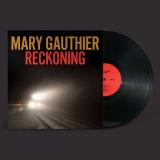
Reckoning is a dense, carefully nuanced, profoundly complex text, though all nine songs are presented as directly as possible: Mary's voice, her guitar, bits of harmonica. Folk music, of a kind, but not a broadside. Nothing so easy as that. Topical songs with a long view, because she's seen and lived too much of it. Mary's most celebrated songs — “I Drink,” “Mercy Now,” “Drag Queens in Limousines” — are confessional stories, closely observed, clear-eyed and compassionate. She sings with the unmistakable languor of her native Louisiana, writes with the bluntness of Boston, where she was once a successful restauranteur, and rewrites with the fierce precision of Nashville, her home for many years. Her 2018 release, Rifles & Rosary Beads, co-written with wounded Iraq war veterans, received a Grammy nomination for Best Folk Album, and an Americana Music Association nomination for Album of the Year. During Covid she wrote and saw published (by MacMillan) Saved by a Song: The Art and Healing Power of Songwriting, part memoir, part reflection on songwriting, through the lens of her most impactful songs. “A reckoning,” Mary Gauthier writes on the outer sleeve to her newest album, “can be personal, political, or spiritual. These songs inhabit all three realms at once.”
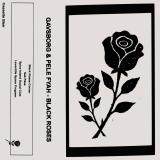
Picture the scene - October 2025, while staying at a friend’s apartment in Chennai, Gavsborg created umpteen ideas and contacted his good friend and bassist from back home, Delroy Pele Fyah Hamilton to collaborate. Hamilton, now based in Singapore performs and records regularly with F.Y .A.H. (successor band from Raging Fyah).
Both Blair and Hamilton share a love for Caribbean music. With this foundation the two set out to create something a bit different that sits between Bouyon, Dancehall & Dennery. The amalgamation resulted in this unique four-track instrumental EP . While the track titles are packed with broader Caribbean references, the project name and title track is an ode to the 90s dancehall pioneers, “Black Roses Crew” , who were based in Arnett Gardens (aka Jungle), Kingston, Jamaica, one of the important homes of 90s dancehall. Roses helped shape dancehall culture through dance, style, crew affiliation, and performance, largely soundtracked by Computer Paul’s Corduroy Riddim with Gerald Levy aka Bogle being the poster human.
Arnett Gardens (Jungle) is one of the key engines that produced the version of dancehall both Gavsborg and Pele draw here from. Think tight, bubbling, bouncing riddims, rolling basslines unlike anything you’ve heard before. Jamaican Dance Music for the movers and shakers
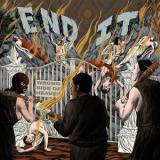
Baltimore's End It is telling it like it is on their debut album, Wrong Side Of Heaven, set for release this summer. The hardcore band has built a reputation through being unapologetically outspoken, playing fast, ripping songs, and putting on an electrifying live show. Now they're ready to enter their next era. Formed in 2017, the band consists of vocalist Akil Godsey, drummer Chris Gonzalez, guitarist Ray Lee, and bassist Patrick Martin. Signed to Flatspot Records, End It came out strong with the release of their self-titled EP the same year they started, and followed it up with 2020's One Way Track EP. In the summer of 2022, the band took the hardcore world by storm with their Unpleasant Living EP, solidifying the Baltimore outfit as one of the most exciting acts in the genre. Following the release, End It embarked on a packed touring and festival schedule across North America and Europe, playing alongside No Warning, Terror, Cold World, Drain, Speed, Angel Du$t, Scowl, and many more. The band's reach goes even farther with breakout single "New Age Slavery" featured on the soundtrack for Tony Hawk's Pro Skater 3 + 4. No matter where they are and what they're doing, End It is true to keeping things authentically them and that shines through on the forthcoming Wrong Side Of Heaven. Entering Salad Days Studio with renowned producer Brian McTernan (Turnstile, Snapcase, Hot Water Music) the band came in with a few demos and wrote the majority of the album during the two month recording process in early 2025. Taking direction from classic hardcore, thrash, and soul music, End It has crafted a 15 song magnum opus centered on "Spreading awareness of the change that's coming to Americans, personal growth, and maintaining the ethics and integrity of hardcore."
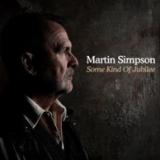
For acclaimed folk artist Martin Simpson, this release reflects not just a remarkable 50-year recording career, but over six decades shaped by song, tradition, and continual artistic growth. Yet this is not a retrospective, it's a forward-looking work, carrying the depth, skill, and passion of a lifetime into the present. Marking 50 years since his debut album Golden Vanity, Simpson describes Some Kind of Jubilee as "my best work to date." To realise this landmark project, he brings together an exceptional group of collaborators drawn from across his long and distinguished career. Among them are renowned pedal steel guitarist Greg Leisz, guitarist Zac Hobbs, cellist Liz Hanks, guitarist Louis Campbell, and double bassist Ben Nicholls. Together, they create a rich and textured soundscape that honours tradition while embracing fresh perspectives. Recorded at Groovemaster Studio in Santa Monica and completed in Yorkshire, the album blends newly written songs with reimagined traditional material and inspired reinterpretations from Simpson's own catalogue. The result is a deeply rooted yet vibrant collection that reflects both heritage and innovation. As Greg Leisz puts it, "This music has some profoundly deep roots - so dig in." With Some Kind of Jubilee, Martin Simpson honours his past while continuing to shape the future of folk music, reaffirming his place as one of the genre's most respected and enduring voices.
»Pipe Dreams II & III« presents two new, side-long organ works by Mary Jane Leach, extending the sonic investigations of her 1989 landmark »Pipe Dreams«. Recorded in Ghent and Cologne, the two side-long pieces use shifting stops, resonance and beating tones to turn the pipe organ into a vivid, physical field of sound.
When »Pipe Dreams« was issued on vinyl for the first time by Blume in 2017, it was effectively the first time many of us encountered Mary Jane Leach’s music, finally placing her work in its proper historical context amid the searching Downtown milieu of Julius Eastman, Arthur Russell, Arnold Dreyblatt, Ellen Fullman, Philip Corner, Daniel Goode, and Peter Zummo. Leach collaborated with most of these artists at one point or another, either in Downtown Ensemble or as a guest on their records.
Now »Pipe Dreams II« and »Pipe Dreams III« arrive, recorded in 2023 and 2024 at Miry Concertzaal in Ghent, Belgium, and Kunst-Station Sankt Peter in Cologne, respectively.
»When I was a young child, my family lived next door to a church, where my mother was the organist. I spent many hours lying on the floor of the sanctuary listening to the music, letting the sound of the organ envelop me. I also liked to play the piano loudly with the pedal down, producing clouds of sound, much to my family’s annoyance. These two organ pieces explore some of my earliest musical interests and aesthetics.
In 1989, I lived in a tower attached to St Peter’s Church in Cologne, where I had access to its organ. It had two sets of pipes, front and back, which could create antiphonal effects. I spent countless hours exploring the possibilities of all the permutations of notes, space, and the resulting sound phenomena. I wrote »Pipe Dreams« for that organ. Fast forward to 2023, when I was asked to create a piece for organ for a concert at the Miry Concertzaal in Ghent, Belgium: »Pipe Dreams II«. I had a few days to familiarise myself with the organ, its available stops, and the layout of the console. I choreographed stop changes for a volunteer, as I couldn’t reach them myself. Some amazing sounds began to happen, and at one point the sound was so visceral that I felt as though I were taming a wild beast.
»Pipe Dreams III« was performed in 2024 on the organ that I had spent so much time playing in 1989–90. One big difference, though, was that the console was totally new and computerised. Having access to the organ for only a few hours before the concert, I decided that I did not have enough time to feel comfortable with the console and should not attempt to recreate the piece I had written in 1989. I would instead use the same sequence of stops and perform an improvised piece. I loved the sounds that were being created, and I was having so much fun that at one point I even started to laugh quietly. I began to visualise the beating notes as if they were atoms, opening them up to expose their innards, with the beating, higher-pitched notes — neutrons and protons — shimmering at the top, and the lower notes — the electrons — throbbing away at the bottom. I was playing notes not so much for their pitch value, but for how they affected the notes and sound phenomena already being played. Instead of a time signature, I timed the entries by listening to the beating patterns, waiting for the right moment to enter. And no, I wasn’t hallucinating.«
The mastering was done from the master tapes from the studio recording of the album. The cover is a reproduction of the original. The LP includes a printed sleeve. The cover includes a Glossy finish in order to respect the original edition as much as possible.
Released in 1981, "Sibou Odja" is Orchestra Baobab's second studio album produced at the Golden Baobab in Dakar by the young producer Ibrahima Sylla. After their masterpiece "Mouhamadou Bamba" recorded the same year, "Sibou Odja" would once again mark the history of Senegalese music by propelling the group's success into a new musical decade. Under the direction of the hard-hitting saxophonist Issa Sissokho and the irremovable guitarist Barthélémy Attiso, it is notably the young singer future icon of Senegalese salsa Médoune Diallo who will deliver one of his masterpieces with the irresistible "Autorail", song locomotive which celebrates the opening of the railway line connecting Dakar to Niamey. The Baobab symbolizing both rooting in traditional Senegalese values and the tree's ability to reach new heights, the group's sound is a perfect syncretism of Senegalese and Afro-Cuban imaginaries in which the montunos of electric guitars and the Vocal improvisations in the Wolof language subtly blend with the rhythms of Cuban sound and other boleros.
The Yummy Fur’s first album of new material in over 25 years is seductive and ambiguous; a fast-paced flip through scenes from art, myth, life and fantasy; a witty whole made from glittering scraps. The band’s original incarnation – fronted by singer, songwriter and guitarist John McKeown from 1992 to 1999 – morphed from making quick-hit cartoon-art songs to Eno and Cale-influenced creepers, populated by characters from McKeown’s life in Glasgow and the films, books and poetry that he lived a parallel life through. Everybody Talks About The Weather delights in using every past iteration of the band as potent collage material: a melee of sounds and ideas existing at once, revealing themselves then dipping back into hiding.
Recorded by the original core trio of McKeown, Brian MacDougall (guitar) and Paul Thomson (drums), Everybody Talks About The Weather comes 17 years after the band reformed for sporadic live shows, and seven years after the release of their sorta-greatest hits compilation Piggy Wings (Rock Action). Ten tracks long with nothing to spare, it is as condensed and vital as their best songs, with a new clarity of sound that allows their ambiguities to come into the light.
The album begins with “Cogs”, a taunting inquisition from within. As McKeown stages a fight between his id and ego, the tension heats up between conversational guitar lines and minimalist repetition; threatening sing-song melody and real, palpable menace. The band members are forced in tandem only to break apart, sustaining a genuine sense of just-hidden danger throughout the whole record – except, arguably, “Headphones”, a looser moment which sees McKeown make an existential something out of nothing while waiting for someone in the car (“I should have brought a book.../My ears are bleeding from the compression on your album”)
The songs are riots of reference: “Unity Over Europe” is a slyly complex two act play about the Mitford sisters – Diana, Unity, and Nancy, in a wink to the YF canon – smashing tragic biographical detail together with allusions to Thomas Pynchon and Francis Bacon. Pynchon is also lifted to serve “Blue Sunshine”, a collision of school shooters, serial killers and fictional fuck-ups (“Fast forward to Compton/Fast forward to Pynchon/Fast forward to Columbine'”) whose buzzy guitar lines are taunting and confrontational like a smarmy teenager. The innocuous title of “My Lasagne” belies a song that exists in several time periods at once: a visit to see Guernica, 50 people with their backs to the portrait of Dora Maar; the time that Picasso painted from; the Reina Sofia and the dirty streets of the Malasaña; myth-making musicians and the myths they’re riffing off overlapping and leering at each other.
All this could be laboured in lesser hands, but cultural verbosity is second nature to The Yummy Fur, who transform all this source material into songs that are weird, sexy, funny and absurd. Meaning is not happily understood or flattened. Susan Sontag's essay Against Interpretation accompanied McKeown as he wrote this album, and she’s paraphrased in “Semolina Ballerina”, the album’s justification of artistic ambiguity. Thomson’s motorik beat leads a gathering of back-and-forth instrumental phrases – including a wiry contribution on saxophone – embodying the futility of trying to parse something definitive from repeated action. “Listen to the very first thing that’s in your head,” Sontag-via-McKeown commands directly, then slinks sideways: “Interpretation is a conversation in an unmade bed”
The album features two more focused portraits, or at least The Yummy Fur’s version of such a thing. “Wanda” merges the life of filmmaker Barbara Loden and the title character of her semi-autobiographical 1970 feature film, with Loden’s then-husband Elia Kazan joining the fray of no-good men in her film. It’s a mix of adaptation and avant-criticism, with McKeown’s wordplay and mannered pronunciation mirroring the way that non-fiction and fiction twist around each other in the song. The title track is a series of vignettes and impressions from the lives of the band’s ‘90s inner circle, positing painter Mac McNaughton as a kind of Falstaffian ringleader. As with Piggy Wings and the recent single “New T-Shirt”, McNaughton painted the cover of Everybody Talks About The Weather – like the album’s music, the image of a coy girl in a white dress is an uncanny amalgamation of styles, suggestions and references just out of reach, as though seen in an art museum in a dream.
The album ends with two reads of the same frustration. “King of Nothing” is the closest The Yummy Fur will ever get to sludge-rock: the band melts together into a dusty, dreary haze as McKeown drowns in a drudgery of personal struggle (“Two jumpers on in Babylon/And only cats to talk to”) and the rhythmic toppling of heroes (Rowlands, Duvall, Munro). The majority of visible dirt is cleaned off for “Say Hello”, an uncharacteristic depiction of throwing the windows open after a dark night of the soul. Here, the situation is still cold and hard (“When the sun burns gold, but the heat never reaches your fingertips”) but it feels surmountable. Everybody Talks About The Weather is an unpredictable album from an unpredictable group, but ending on a moment of almost uncomplicated light is maybe its biggest surprise. - Claire Biddles (2026)
The Yummy Fur’s first album of new material in over 25 years is seductive and ambiguous; a fast-paced flip through scenes from art, myth, life and fantasy; a witty whole made from glittering scraps. The band’s original incarnation – fronted by singer, songwriter and guitarist John McKeown from 1992 to 1999 – morphed from making quick-hit cartoon-art songs to Eno and Cale-influenced creepers, populated by characters from McKeown’s life in Glasgow and the films, books and poetry that he lived a parallel life through. Everybody Talks About The Weather delights in using every past iteration of the band as potent collage material: a melee of sounds and ideas existing at once, revealing themselves then dipping back into hiding.
Recorded by the original core trio of McKeown, Brian MacDougall (guitar) and Paul Thomson (drums), Everybody Talks About The Weather comes 17 years after the band reformed for sporadic live shows, and seven years after the release of their sorta-greatest hits compilation Piggy Wings (Rock Action). Ten tracks long with nothing to spare, it is as condensed and vital as their best songs, with a new clarity of sound that allows their ambiguities to come into the light.
The album begins with “Cogs”, a taunting inquisition from within. As McKeown stages a fight between his id and ego, the tension heats up between conversational guitar lines and minimalist repetition; threatening sing-song melody and real, palpable menace. The band members are forced in tandem only to break apart, sustaining a genuine sense of just-hidden danger throughout the whole record – except, arguably, “Headphones”, a looser moment which sees McKeown make an existential something out of nothing while waiting for someone in the car (“I should have brought a book.../My ears are bleeding from the compression on your album”)
The songs are riots of reference: “Unity Over Europe” is a slyly complex two act play about the Mitford sisters – Diana, Unity, and Nancy, in a wink to the YF canon – smashing tragic biographical detail together with allusions to Thomas Pynchon and Francis Bacon. Pynchon is also lifted to serve “Blue Sunshine”, a collision of school shooters, serial killers and fictional fuck-ups (“Fast forward to Compton/Fast forward to Pynchon/Fast forward to Columbine'”) whose buzzy guitar lines are taunting and confrontational like a smarmy teenager. The innocuous title of “My Lasagne” belies a song that exists in several time periods at once: a visit to see Guernica, 50 people with their backs to the portrait of Dora Maar; the time that Picasso painted from; the Reina Sofia and the dirty streets of the Malasaña; myth-making musicians and the myths they’re riffing off overlapping and leering at each other.
All this could be laboured in lesser hands, but cultural verbosity is second nature to The Yummy Fur, who transform all this source material into songs that are weird, sexy, funny and absurd. Meaning is not happily understood or flattened. Susan Sontag's essay Against Interpretation accompanied McKeown as he wrote this album, and she’s paraphrased in “Semolina Ballerina”, the album’s justification of artistic ambiguity. Thomson’s motorik beat leads a gathering of back-and-forth instrumental phrases – including a wiry contribution on saxophone – embodying the futility of trying to parse something definitive from repeated action. “Listen to the very first thing that’s in your head,” Sontag-via-McKeown commands directly, then slinks sideways: “Interpretation is a conversation in an unmade bed”
The album features two more focused portraits, or at least The Yummy Fur’s version of such a thing. “Wanda” merges the life of filmmaker Barbara Loden and the title character of her semi-autobiographical 1970 feature film, with Loden’s then-husband Elia Kazan joining the fray of no-good men in her film. It’s a mix of adaptation and avant-criticism, with McKeown’s wordplay and mannered pronunciation mirroring the way that non-fiction and fiction twist around each other in the song. The title track is a series of vignettes and impressions from the lives of the band’s ‘90s inner circle, positing painter Mac McNaughton as a kind of Falstaffian ringleader. As with Piggy Wings and the recent single “New T-Shirt”, McNaughton painted the cover of Everybody Talks About The Weather – like the album’s music, the image of a coy girl in a white dress is an uncanny amalgamation of styles, suggestions and references just out of reach, as though seen in an art museum in a dream.
The album ends with two reads of the same frustration. “King of Nothing” is the closest The Yummy Fur will ever get to sludge-rock: the band melts together into a dusty, dreary haze as McKeown drowns in a drudgery of personal struggle (“Two jumpers on in Babylon/And only cats to talk to”) and the rhythmic toppling of heroes (Rowlands, Duvall, Munro). The majority of visible dirt is cleaned off for “Say Hello”, an uncharacteristic depiction of throwing the windows open after a dark night of the soul. Here, the situation is still cold and hard (“When the sun burns gold, but the heat never reaches your fingertips”) but it feels surmountable. Everybody Talks About The Weather is an unpredictable album from an unpredictable group, but ending on a moment of almost uncomplicated light is maybe its biggest surprise. - Claire Biddles (2026)
This album is the soundtrack to Absolum, a fully hand-drawn universe with a unique story, created by the team behind Streets of Rage 4, TMNT: Shredder's Revenge, and more.
Known for Ori and the Blind Forest and Halo Infinite, lead composer Gareth Coker brings his signature emotional depth, blending dark fantasy orchestration with medieval-inspired themes and somber atmospheres.
From orchestral soundscapes to thrilling boss battle themes, this soundtrack features guest tracks from Mick Gordon (DOOM 2016, Wolfenstein: The New Order, Atomic Heart), Yuka Kitamura (Elden Ring, Dark Souls III, Dark Souls II), Motoi Sakuraba (the Dark Souls series, Mario Golf, Star Ocean), and Rachel Hardy (Stray Gods, Eternal Strands), setting the tone for the events unfolding in this cute yet twisted fantasy world.
Magic may be forbidden in these lands, but the music is no less enchanting!
The debut vinyl release from New Jersey–born, Brighton-based alt rock weirdo Lonnie Gunn, a 7-track EP on flesh slice coloured vinyl strictly limited to 300 copies. Hip new music for gingers and children of divorce.
Boom Boom by Belgian photographer Jente Waerzeggers offers a unique glimpse into his work at night over recent years. In this book, Waerzeggers explores his deep fascination with self-expression in all its possible forms. Clothing, make-up, tattoos, piercings, hairstyles and accessories all reveal something about the individual. Presented as a series, the images reflect contemporary nightlife culture.
As an integral part of the nightclub’s scenography, the dancer becomes a body of symbols. Waerzeggers’ photographs are filled with bootlegged corporate logos, wordplay, subversion and references to pop culture.
Waerzeggers builds a relationship with his subjects that is entirely mutual. He documents while participating, and his subjects want to be seen. The night is dark and not easily captured, but Boom Boom succeeds remarkably well in doing so.
Jente Waerzeggers (•1999) is a Belgian photographer and musician. He is part of Not So Difficult Magazine, the label Kontakt Group, the band Lieve Jongens, and is the founder of (Y)-Publishing.
From 2018 until 2026 Jente Waerzeggers worked as a nightlife photographer; this book marks the end of that endeavour. Starting out at friends’ parties and ‘nacht’ in Stelplaats, Leuven, he has gone one to photograph for venues and collectives in Brussels, in Belgium and abroad such as V23, Slagwerk, Horst, C12, Listen Festival, Celebration of Life, and Dekmantel.
Waerzeggers is interested in the ways people consciously and unconsciously present themselves in society. What do their houses look like, their trash, their advertisements, their selfies? By sifting through his archive of photos and screenshots, he looks for through lines that paint a bigger picture.
280 pages
150x210mm
Soft cover with remarkable textile texture
Repress auf goldenem Vinyl. Limitiert auf 300 Exemplare. Vergesst alles, was ihr dachtet, über Postpunk zu wissen - BERLIN 2.0 zünden die Endstufe in der Punk-Evolution. Nach dem szeneübergreifend gefeierten Debüt "Scherbenhügel" droppt die Stuttgarter Band mit "Kaltental" jetzt ein zweites Mal eine Bombe über Postpunk Germany - und mit diesem Monster eines Longplayers ist klar: Hier wird keine Welle geritten. Hier wird eine Welle ausgelöst werden. "Kaltental" ist der dystopische Soundtrack einer brennenden Welt im Endspiel kapitalistischer Ideologie, zwischen Endzeit und Aufbruch, Resignation und Kampfbereitschaft. Härter, düsterer, dringlicher. Mit einer Mischung aus rasenden Hardcore-Ausbrüchen, klassischen Rock-Elementen, Post-Hardcore-Gitarrenwänden und melodischem Endzeitpop kracht "Kaltental" unverschämt souverän durch Genremauern und zerbombt mit radikal-klarsichtigen Texten von Ausnahmesängerin Elena Wolf Gabionenzäune in Vorgärten und Köpfen "ganz normaler" Deutscher im Aufrüstungswahnsinn. Ferdinand Führer von Fieser Schwan Recordings hat "Kaltental" aufgenommen, gemixt und gemastert und in eine rohe, dröhnende Elegie verwandelt, die aber auch keine Gefangenen auf dem Dancefloor macht. Die antifaschistische Bladerunner-Jeanne d'Arc in mittelalterlicher Rüstung auf dem Cover ist dabei mehr als eine Reminiszenz an revolutionäre Frauenfiguren in Geschichte und Kunst. Das neo-retrofuturistische Artwork der Wiener Fotografin Doris Himmelbauer ist die cineastische Visualisierung eines Albums, das Gewalt, Verletzbarkeit und die Sehnsucht nach einer besseren Welt verhandelt. "Kaltental" ist Krieg. Innerlich wie äußerlich. Aber auch ein Urschrei nach Liebe und Solidarität in der unbeirrbaren Überzeugung, dass alles auch ganz anders sein kann.
Ancient spirits come alive as SKÁLD extend an invitation into times long gone but not forgotten. Ørlǫg, coming September 25, 2026, is their first album via Napalm Records, and it is our destiny. As the Norns weave our future, this album is a fascinating passageway into our pristine origins and the consequences of our choices. Ten new songs as stepping stones, Ørlǫg is an offering to listen, to dwell, to reflect—and to find something within yourself previously unknown. SKÁLD don’t just play music, they awaken ancient ways.
The third album from Max McNown, Leave On A Light, reveals a rare artist whose breakout success has brought him even closer to his truest instincts. Amid an explosive ascent that solidified his status as one of his generation’s most compelling singer/songwriters, the Oregon native came to a deeper conviction in music’s power to honor what matters most, such as the people and values who anchor his life. Born from a year of extraordinary momentum—including completing his sold-out, continent-hopping headline tour—Leave On A Light ultimately finds McNown more grounded than ever in his artistic vision, arriving as the fullest expression yet of his singular songwriting voice.
Mit der neuen Ausgabe der Vintage Sounds Vinyl Collection steht diesmal die traditionsreiche Welt der Country Music im Mittelpunkt. Die sorgfältig zusammengestellte Compilation vereint 18 zeitlose Klassiker und präsentiert einige der bedeutendsten Künstlerinnen und Künstler des Genres in klanglich überarbeiteten Versionen. Von den unverwechselbaren Stimmen von Dolly Parton und Patsy Cline bis zu den legendären Interpretationen von Kenny Rogers und Willie Nelson bietet diese Sammlung einen repräsentativen Querschnitt durch die Geschichte der Country-Musik. Zwischen Nashville-Sound, Honky-Tonk, Country-Pop und klassischen Balladen entsteht ein stimmungsvolles Hörerlebnis, das die Vielfalt und den nachhaltigen Einfluss des Genres eindrucksvoll dokumentiert. Eine hochwertige Zusammenstellung für Vinyl-Liebhaber, Sammler und alle, die die großen Songs des amerikanischen Country neu entdecken oder wieder erleben möchten.
Soulful, future-leaning house & hip hop distilled into wax form. Standout cuts by AKA ZEB & LIL DAVE 215, with appearances from J-LIVE, BLU and BLOOMY MEADOWS, bridging the gap between classic andy with contemporary with warmth and depth. Support from CRACKAZAT
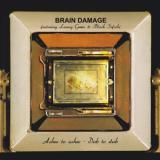
By 2004, dub had a history stretching back more than thirty years. This remarkable longevity can easily be explained by the evolving nature of this musical genre, which is constantly changing both artistically and technically, from Kingston to London, New York, and more recently Berlin, Paris, Lyon and Saint-Étienne. For example, it is worth noting that for some years now, in France and elsewhere, a good number of artists have been thinking in terms of dub from the outset, breaking free from the original Jamaican model, which involved drawing inspiration almost systematically from an existing vocal track. Thirty years on, with the release of their second album, Brain Damage aim to reconnect with this tradition. Recent collaborations with the two vocalists, Learoy Green and Black Sifichi, have indeed provided the ideal source material for the creation of five tracks, each rendered in their respective dub versions, thus forming an album with a symmetrical, even geometric character - from its very structure right down to its title: 'Ashes to ashes / Dub to dub'. At the heart of the project lies the astute choice of two guests, each operating in diametrically opposed spheres yet brought together for the occasion, thereby emphasising a certain 'unity of the circle': 'the unity of the circle'. Born of a genuine artistic vision, this geometric, symmetrical aesthetic-omnipresent in every detail of the album, both auditory and visual-complements Brain Damage's 'square' and robotic side, with its three-dimensional evocations. Always working in close collaboration with the very latest digital technologies. This brings to mind 'the balance of the cube'. Finally, the title itself, 'Ashes to ashes / Dub to dub', should be understood as a reference to the transience of all things in this world, against a backdrop of widespread, globalised, international, national and local crises_
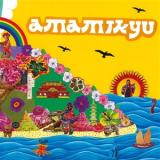
Tropical East Asian folk fused with psychedelic electronic rock and noise driven by a winding and jagged Sanshin guitar, shape forming vocals, odd percussion and spacey sounds. A Sgt. Peppers tour through the folklore of Okinawa. Amamikyu is the creation Goddess of the colourful Island of sound visited by Phil MFU ( formerly Vanishing Twin ) on his journeys through expanding his scope of experimental electronic music effortlessly locking style in with master Sanshin player and vocalist Yuko Tsubame to create a psychedelic trippy island of sound, revisiting classic folk songs in a new far out funky light. Amamikyu are a London based band of Phil MFU ( ex Vanishing Twin ) and Okinawan electric Sanshin player and singer Yuko Tsubame, with an expanding group of live musicians.
Released 50 years on from the bands' formation, the forthcoming Psycho Tornado features 10 blistering new tracks recorded in 2025. Psycho Tornado will be unleashed on coloured vinyl and CD, and will rumble into your home in September 2026. The Rezillos are a new wave/ punk band formed in Edinburgh, Scotland in 1976. Known for their colourful, retro-futuristic style and playful attitude, they stood out from the darker punk acts of the time. Their music blended fast punk rhythms with pop melodies, sci- fi themes and a sense of humor. Their debut album, Can't Stand The Rezillos (1978) is considered a classic of the era. The band initially split in 1978 and with some members going on to form The Revillos, with a similar name and sound. But The Rezillos later reunited in 2001 and continue to perform live, maintaining a cult following for their energetic performances and distinctive style.
Released 50 years on from the bands' formation, the forthcoming Psycho Tornado features 10 blistering new tracks recorded in 2025. Psycho Tornado will be unleashed on coloured vinyl and CD, and will rumble into your home in September 2026. The Rezillos are a new wave/ punk band formed in Edinburgh, Scotland in 1976. Known for their colourful, retro-futuristic style and playful attitude, they stood out from the darker punk acts of the time. Their music blended fast punk rhythms with pop melodies, sci- fi themes and a sense of humor. Their debut album, Can't Stand The Rezillos (1978) is considered a classic of the era. The band initially split in 1978 and with some members going on to form The Revillos, with a similar name and sound. But The Rezillos later reunited in 2001 and continue to perform live, maintaining a cult following for their energetic performances and distinctive style.
Entre Nous is the debut album from Eden Aurelius. A beautifully poised collection for Short Span. A gorgeous showcase of her singular talent within a sparkling scene. Recorded in Brooklyn, NY, this is an innovative, and graceful body of music that feels truly contemporary.
This album felt important for us to have out in time for summer. Emerging out of the heat, a feeling brought alive with the sun. Music that evolves throughout seasons and carries a spectrum of emotional range.
Entre Nous is tight, but expansive. Its depth and complexity is languid but has gravitational pull. Like much of her work, this record feels so refreshing because its tracks are both sensory and illusory tones built in gossamer and transitory layers of satin. They have a remarkable sense of presence and pressure - floating rhythmically without sharp edges. There is guidance and gentle control that lead throughout the record.
The B side opens with “Ion” featuring Pontiac Streator. The song is formed out of a textural haze. A glistening, iridescent light appears, broken through fabric, projecting a blurred image onto the surface nearby. A hypnotic and evocative collaboration. The shared connection between the two artists’ command of rhythm and ambient language.
Mastered and cut by Mike Grinser at Manmade.
Art by Lucas Dupuy.
out of Stock
Last delivered 23 days ago available to reorder, subject to availability
The late sixties and early seventies spectacle of Jamaican Deejays taking their live performances out of the dance halls and translating them into hit records, not only marked the beginning of forty years of dance hall driven music on the island but also provided the original inspiration and template for the global dominance of rap and hip hop.
The art of deejay was now rightly recognised and the toasters or talk over artists advanced from introductions and interjections to stringing complete sets of lyrics together and riding the rhythm for the entire length of the song.
Deejays including U Roy, I Roy, Dennis Alcapone, Big Joe ,Little Joe and Prince Jazzbo who built their reputations working live on sound systems,now went one step beyond and moved on to become recording deejays with entire catalogues of hit singles and albums to their credit.
Throughout the seventies a whole host of mic men followed in their wake including Dillinger,Dr.Alimando,Clint Eastwood and Jah Stitch.
Talking records were not new, but 'talk over' records were...the repercussions of this uniquely Jamaican phenomenon would go on to reverberate worldwide...
Trance music fans, get ready to experience Push’s iconic anthem “Universal Nation” like never before with this exclusive 2 x 12" vinyl release repress.
Strictly limited to 500 copies worldwide, this special edition features a unique Inside Out cut pressed on stunning Starlight vinyl — black with striking coloured speckles, giving every copy its own distinctive look.
Featuring an array of incredible remixes, including Airwave’s Vocal Theatrical Version, James Harcourt’s remix, Gai Barone’s remix, and DJ Ghost & Danny C’s remix, this release is a must-have for any Push and trance collector.
Presented in it's original modern remastered artwork and pressed in the exclusive Starlight colour, this highly limited release offers a fresh way to rediscover the magic of “Universal Nation.”
Only 500 copies available — once they’re gone, they’re gone.
Gi Gi describes his process as “dubwise sampledelia.” It begins with fragments and ends somewhere else entirely, destabilizing its source material until it stops pointing backward. A borrowed sound, looped and bent, eventually forgets where it came from; it stops referencing anything but itself.
This liquid sensibility shaped his earlier work, music that hovered between drift and propulsion, suggesting the dance floor without fully stepping onto it. Presence was implied, edges stayed soft. The center was always there, but diffused like mist on a screen.
With In Lieu, that center comes into focus. Half written in Texas, half in Australia, the shift isn’t simply geographic, but internal. The record moves with a coiled, anticipatory energy; the drums arrive with more force and the bass organizes the room instead of melting into it. It's dense with the feeling of more bodies in the frame. Textures still smear and refract, but they move around a clearer axis.
Where past records circled their core, these inhabit it, pulling closer to the body. “Some Of” and “Arque” lean into low-end pressure without abandoning his instinct for drift. "Pink Dirt" circles around mechanical drums and dizzying vocal chops, head-down and visceral. Elsewhere, voices gain newfound contour, materializing in “Downswept” with intimate musings and nearly forming a lead vocal on the title track before dissolving again.
In Lieu moves with a newfound confidence, compressing inward, sounding closer to the source of its own pulse.
out of Stock
Last delivered 18 days ago available to reorder, subject to availability
Some recordings herald the future in ways that are impossible to see in real time. Teodros Makonnen With His Organ (ቴዎድሮስ መኮንን ከኦርጋኑ ጋር), by the artist Teodros Makonnen, also known as Teddy Mak, is one of those. Today, electronic sounds, synthesizers, and digital production are taken for granted in Ethiopian music, but in the early 1980s, they were novelties that polarized opinion. Even to this day, the story of Teodros Makonnen’s legacy has never been properly told. He played a decisive role in defining the sound of the digital era of Ethiopian music that emerged in the 1980s and beyond, both as a keyboard player and as a producer, songwriter, performer, and sound designer.
Ethiopian music was at a crossroads in the early 1980s. Much like music in the rest of the world, technology and automation heralded either a quantum leap in musical development or the annihilation of musicianship, depending on who you’d ask. The changes were incremental nonetheless, but with the benefit of hindsight one can clearly see that the changes meant different things in different contexts. Drum machines and electric organs came to replace many hotel bands because, all of a sudden, one musician could control drums, melody, and accompaniment. Teodros was one of the first musicians in Ethiopia to explore the possibilities this opened up.
Teodros’ father, Captain Makonnen Beri, was a chief pilot at Ethiopian Airlines and a music enthusiast at that. This would prove important to his development, as Makonnen brought back a piano from Germany, which would lead to the first steps in Teodros’ long musical career. Captain Makonnen’s work as Head of Flight Operations and as a pilot exposed him to the wider world that was far from commonplace for most Ethiopians. In a house where music captivated the whole family, the piano gave Teodros’ talent an outlet. Not only was a piano at home rare in Ethiopian households, his father also brought an Indian teacher to their home to teach Teodros and his brother, Captain Samuel Makonnen, music theory (solfeggio or ear training) and piano. Teodros and his youngest brother, the late great Dereje, a member of both the legendary Ibex Band and the Ethiopian reggae group Dallol, took up music from that point onward, with Teodros beginning to develop his proficiency at the age of eight. His father encouraged him to practice tirelessly at home, and Teodros later received musical schooling at the German School in Addis Ababa. His obvious talent led to studies and formal education at the Yared School of Music, followed by continued studies in American jazz at Northern Virginia Community College in Virginia. Teodros cut his teeth professionally in his mid-teens, not only as a keyboardist, but also as an arranger for the Wabi Shebelle and Dahlak bands in the 1970s. He mastered electronic sequencing early, rising to prominence through the midnight recording sessions held during the military curfew. The pressures imposed by the curfew required precise and disciplined recordings, and Teodros delivered just that. This, in turn, led to collaborations with iconic artists such as Mulatu Astatke, Aster Aweke, Menelik Wossenachew, Tilahun Gessesse, Mahmoud Ahmed, and Alemayehu Eshete. In those days, he sat in as a keyboardist with the Dahlak Band when Dawit Yifru took a hiatus to study in Russia, and also with the Ethiostar Band. He secured a residency at the Wabi Shebelle Hotel with the Shebele Band, together with Zelalem Tadese (drums), later succeeded by Elias Bekele, Mulugeta Hailu (bass), Teferi ‘Bibisha’ Mengesha (guitar), Kumelachew G/Selassie (trumpet), and Teshome Deneke (saxophone). A friendly competition developed between the bands associated with the Ras Hotel (the Ibex Band), Ghion Hotel (the Dahlak Band), and Wabi Shebelle Hotel (the Shebele Band). The music scene at Wabi Shebelle saw teenagers commanding the spotlight in an industry otherwise dominated by musicians of an older generation. At the Wabi Shebelle Hotel, Teodros met a diplomat from Saudi Arabia and later visited him at his home in Addis Ababa, a meeting that had unexpected musical consequences. The man owned a Yamaha double-deck keyboard. That evening, they recorded Teodros Makonnen With His Organ (ቴዎድሮስ መኮንን ከኦርጋኑ ጋር) in one take. This recording, a cornerstone in the early digital sound of Ethiopian music, came about almost by chance, simply because Teodros got the opportunity. Traditional Ethiopian songs were cast in a wholly electronic style. Once freed from backing duties, Teodros’ keyboards could explore dreamlike soundscapes that took Ethiopian music in new directions. Even though the cassette contained well-known Ethiopian songs, they were given highly original arrangements, performed on an electric organ with drum machine backing and rhythm patterns that left the listener with suggestive, lingering sounds. “Libesh Kabashen” (also known as “Anchi Bale Game”) and “Odu Gol Golesa” wrap you in the very stuff that dreams are made of. Originally released on cassette only, this recording exudes a mystique that surpasses even some of the most obscure Ethiopian recordings of the day. It remained more or less unknown outside of Ethiopia until now. Some of the tracks, like “Addis Fikir,” are permeated with an almost naive buoyancy, free-floating sounds that lost contact with the ground the moment they were conceived. Others, like “Meche New Hageren Yemayew” and “Lelitu Alnega Alegn,” carry a moodier, quirkier timbre, with pulsating rhythms in the background. Yet even the darker pieces contain an unmistakable wave, something essentially Ethiopian. If most recordings of Teodros’s contemporaries at the time were teeming with atmosphere, his songs seem instead at home in the stratosphere, almost ethereal. Some of the music here could be filed under “lullabies,” were it not for the recurring, almost brooding feeling that engulfs the listener on the aforementioned tracks. You could easily be forgiven for drifting into a blissful haze as the music washes over you.
Up to the advent of electronic music production, Ethiopia was totally dominated by big bands on the one hand, and small groups on the other. The former were tied to large institutions such as the military, the latter emerged from the entertainment industry, in hotel bars and nightclubs. These groups were commercially driven, and bands ultimately had to foster a mercenary approach to employment, albeit not to the passion for music. In the light of this, Teodros’ musical legacy can be seen in two ways. On the one hand, he is a key player in Ethiopian music from the 1970s onwards, leaving an indelible mark through hundreds of compositions and arrangements, including soundtracks for numerous documentary films and advertisements for different companies. On the other hand, the way he and others employed electronics brought Ethiopian music onto a fork in the road.
The replacement of traditional instruments with electronic equipment was seen as impending doom by some. Others, like Teodros, saw new avenues for performance, production, and creativity. Just as later producers like Abegasu Shiota of Admas, Teodros was a trailblazer who opened paths that it took Ethiopian music as a whole more than a decade to rush into. The hotel scene had already been pushed toward electronic music by financial necessity and cost-cutting. Today’s revived global interest in Ethiopian music from the seventies and eighties, alongside a broader resurgence, has changed the reasons for using digital means of music production. They have become tools for musical dreaming. This is where the dreaming began.
out of Stock
Last delivered 12 days ago available to reorder, subject to availability
Death Is Not The End present the first volume in a survey of a form of Brazilian country music known as música caipira ("hillbilly music") - a stripped-back forerunner to música sertaneja, the Brazilian equivalent to US country & western which in it's contemporary form has come to dominate the domestic music industry in recent decades. This collection covers some of the earliest recordings made by the pioneering folklorist Cornélio Pires at the end of the 1920s, through to records from the 30s, 40s & 50s and the beginning of the 60s.
Somewhat rooted in Portuguese troubadour folk traditions, música caipira is typically performed by a duo singing in parallel thirds and sixths, drawing upon a Portuguese-Brazilian style known as moda de viola - with the viola being the viola caipira, a Brazilian-style ten-string guitar that is the core instrument of the music. Born out of the "outback"-style region in north-eastern Brazil, these songs tell stories of pain, love, loss & betrayal - often backed by homemade guitars using invented tunings. Away from the polished pop country & western-stylings of the sertaneja, these recordings could be viewed as the Brazilian equivalent to the roots music of the American dustbowl or Appalachia.
je prie pour que la goutte ne tombe pas
(I pray that the drop does not fall) is the first international release by Japanese trio Chi To Shizuku. While they have released five albums and a 7” in Japan, their spectral, haunted rock songs haven’t yet reached a much wider audience overseas. With this album, then, a live recording taken at Koenji HIGH, Suginami, Tokyo on 23rd November 2021, the unique, quartz-like character of Chi To Shizuku’s music is writ large, the bleak bliss of their songs carved onto twelve-inch vinyl.
Perhaps the best-known member of Chi To Shizuku, at least for audiences with an ear turned to Japanese psychedelia, is drummer Takahashi Ikuro, known for his membership of almost every group worth a damn from that scene – Fushitsusha, Nagisa Ni Te, Ché-SHIZU, Kousokuya, High Rise, Maher Shalal Hash Baz, LSD March, the list goes on. But the core of Chi To Shizuku’s music is the collaboration between vocalist, bassist and lyricist Morikawa Seiichirou, and guitarist and arranger Yamagiwa Hideki. Morikawa is a member of long-running punk/goth group Z.O.A., and has also played with YBO , Zzzoo, and as collaborator with Takeshi and Atsuo of Boris in A/N; he’s also recently been performing with Mitsuru Tabata. Yamagiwa’s history takes in stints with Katsurei and Cock C’ Nell, and he also recently guested with la scene 裸身.
All this contextual information does relatively little, though, to prepare you for the unique vibration of Chi To Shizuku’s lustrous songs. They shimmer in the same half-light, perhaps, as Shizuka and the quieter moments of LSD March, sharing a similar poise and classicism, and there’s a tenderness and wracked poetry to Morikawa’s voice that reminds of the emotional intensities both of traditional Japanese folk, and of British folk music: on “Musuu No Nemuri No Naka De Kumo Wo Tukamu”, the combination of his singing, backed with gorgeously plangent guitar, reminds of no-one so much as it does The Pentangle or Spriguns Of Tolgus. Chi To Shizuku’s love for the ballad as form gifts their music an archaic, sometimes arcane resonance, and from what you can hear on this album, it’s clear they’re in love with graceful melancholy.
But this is not a folk album, by any means; it just shivers with the same eternal spirit. There are also hints of prog rock, and you can catch some passages of scratchy, distended free rock, on the extended spirit invocation of “Nanhito Hanhito”. je prie pour que la goutte ne tombe pas is an extraordinary album, a melancholy surprise, that reminds dedicated listeners of the seemingly bottomless well of great music to be found via the Japanese underground in its many forms. Perhaps Michel Henritzi says it best, though, in his liner notes, when he writes, “Chi To Shizuku’s music reminds us that our life is a dream that lasts only a season, and that oblivion will follow.”
Recorded at Koenji High Suginami, Tokyo, 23 November 2021
Mix & Mastering: Taku Unami, photography : Noriko Akiyama
Liner notes by Jon Dale Printed by Alan Sherry
Children of Zeus return with their third studio album ‘As The World Burns…’
Five years on from their highly-acclaimed sophomore album ‘Balance’, Manchester’s kings of hip hop soul, Tyler Daley and Konny Kon, bring us a brand new 16-track opus.
Sonically the duo continue their story where they left off; crafting an amalgamation of street soul, alternative r&b and boom bap hip hop, with a sprinkle of flavours taken from their original multi-genre pirate radio influences, and a dash of forward-thinking new sounds, ensuring all tracks are destined to become future classics.
The features are sparing but powerful, enlisting the talents of revered UK rapper Knucks (‘Before We Drown’), Colorado-native Young Old Soul (‘Dopamine’), MCR family K S R (‘Do You Want To Get High’, & Australian/Mauritian up & comer Anieszka (‘Water & Vibes’).
As with previous projects, this album is largely produced by the duo themselves, though there are guest productions from previous collaborators too, including Grammy Award-winner Beat Butcha, Grammy-nominated Teo, and broken beat pioneer K15, along with an assortment of new players making moves in the underground neo-soul & beats circuit.
Conceptually, this project continues on with the story to date. An eternal search for sunsets and soulfood, as a respite to the anxieties of the modern world; personally, professionally and globally. Assertive swagger is matched with brutal but sincere candidity. As ever, it encapsulates the rough with the smooth, with reflections on where they’ve been, where they’re at and where they’re headed. There’s no preaching to be found here; just an acceptance of things as they are, an embrace of the environment and people they were nurtured by, and a celebration of some of the finer things in life; slow jams, weed & rum, water & vibes. Raps for listeners, blunt heads, fly ladies and prisoners. All packaged together as another perfect sonic love letter to sound system culture. 50 minutes of big people music.
Since the release of their anthemic debut single ‘Still Standing’ a decade ago, to the subsequent EP ‘The Story So Far’, and their critically-lauded debut album ‘Travel Light’, the duo have received numerous accolades, including nominations for AIM Awards & Worldwide Awards both, along with tons of ‘Album of the Year’ nods care of Clash Magazine, Bandcamp, Complex, Wordplay and many more. This along with huge swathes of support from DJs, radio stations, press outlets, tastemakers, luminaries & fellow artists across the globe.
Children of Zeus have performed sessions for COLORS, Soulection (Apple Music), DJ AG, Boiler Room, BBC 6 Music and at the infamous Maida Vale studios for BBC 1Xtra as well as touring across Europe, Australia and South Africa. This is in addition to collaborating & touring with Mercury Award Winner’s Ezra Collective, including a Wembley Arena show. Other collaborations over the years have included Shy FX, Juls, Goldie, Black Milk, Kofi Stone and the late great Lenzman.
From the Broke ’n’ English / Hoodman-era, to the present day, Children of Zeus have been omnipresent in the fabric of British black music. Proud ambassadors of Manchester music, and of UK soul, it really is “Zeus to the world”.
Children of Zeus have been adorned with plenty of flowers over their career. The unbridled quality and poignance of the music and the message on display throughout this project will see the algorithmic needle move some more. It’s undoubtedly set to be a Zeus Summer. As the world burns…
Available on all digital platforms and physical formats, Friday September 4th 2026.
t 07: Do You Want To Get High? (feat. K S R ) - Children of Zeus03:26
t 07: Do You Want To Get High? (feat. [ K S R ]) - Children of Zeus03:26
[t] 07: Do You Want To Get High? (feat. [ K S R ]) - Children of Zeus03:26
[g] B3 | Do You Want To Get High? (feat [ K S R ]) - Children of Zeus03:26
out of Stock
Last delivered 11 days ago available to reorder, subject to availability
Japanese acid pop outfit Cho Co Pa Co Cho Co Quin Quin channel the globe-trotting spirit of Haruomi Hosono’s 1970s tropical boogie on their debut album, Tradition.
Named after one of the basic rhythms of Cuban folk music and drawing on influences from across the globe, Cho Co Pa Co Cho Co Quin Quin are quite simply a world unto itself.
Comprised of three childhood friends, Daido, Yuta and So, who reconnected during the coronavirus pandemic, Cho Co Pa initially emerged as a playful way for the three 23-year-olds to pass the time. Tapping into their youthful connection, they created a sound that exudes confidence and curiosity, a homage to the masterful world of YMO’s and Happy End’s Haruomi Hosono, rooted in the trio’s own idiosyncratic experience of the present.
Recorded at home and promoted on hugely popular DIY TikTok videos, their debut album Tradition is a technicolour exercise in armchair travelling – a kind of lockdown exotica for the housebound whose nostalgic flights of fancy are laced with a sense of whimsical melancholy for the lost freedoms of youth.
Referencing everything from Afro-Cuban percussion to lo-fi beats, Buddhist spirituality to trap, each member of the band brings different musical inspirations to the table. Latin American and Middle Eastern styles sit adjacent to a fascination for the electronic music of Aphex Twin, Dorian Concept, Underworld and Daft Punk. At times, the music verges on acid pop bliss, at others, it grooves with the instrumental funk sensibility of BADBADNOTGOOD.
“In the first place, when I create a song, my goal is to transport the listener to a mysterious place,” vocalist Daido explained in a recent magazine interview. Using lyrics as another sonic texture in the composition of ideas, Cho Co Pa paint beguiling sonic postcards of far-flung moods across 12 highly original tracks.
Marrying the organic and the electronic on rhythmically sophisticated compositions like ‘Chichibu’ and ‘Watatsumi’, it is on the album’s standout track ‘Gandhara’ that the experimental sound of Cho Co Pa comes to the fore. Referencing the ancient city of Gandhara through which Buddhism made its way from India to China, the track is a vocoder-trap-inspired, Udu drum-driven pop jam that lilts with unmistakable Balearic flair. If that’s difficult to imagine, then know simply that ‘Gandhara’ sounds like nothing else on this side of Saturn. Even Daido seemed surprised by the outcome: “I feel like we were able to create something that exceeded our abilities. That was huge!”
Hugely popular in Japan, with festival appearances lined up alongside BADBADNOTGOOD at Asagiri Jam in October, it's safe to say the success of Tradition has taken Cho Co Pa by surprise. You won’t have heard anything like it."