Just when you thought Kevin Richard Martin's music couldn’t go any slower, lower or deeper, Sub Zero emerges. A slow-motion excavation of drug-tech, dub, dreamy noise and frozen ambience, the album gradually mutates into hypnotic pulsations and melodic melancholia. It is arguably Martin’s most striking release to date under his given name.
Originally released digitally on Bandcamp only in the depths of winter 2022, amid the final year of the COVID-19 pandemic and Russia’s initial invasion of Ukraine, this desolate epic went on to become KRM's best-selling digital album on the platform. With persistent demand for a vinyl pressing and a full DSP release from fans, Martin thought the time was right for Sub Zero to finally surface in its full glory: remastered and paired with fresh new artwork.
Unnervingly, the album is as beautiful as it is solemn, as glacial as it is relentless, and as subtle as it is terrifying. A trip into a sonic abyss, with a tour of a philosophical void, it’s to my ears, KRM’s most seductive work yet, and also his most emotionally resonant. Martin expertly balances tear-jerking motifs with heavier than hell rhythmic weight. With its melodic fog, eternal drones and eerie atmospherics, the peripheral throb of distant kick drums, the heartbeat punctuation of cavernous subs and the snowstorm blizzard of fuzz absolutely envelopes the mind, whilst crushing the soul.
In terms of lineage, Sub Zero might recall a more paranoid Porter Ricks, a dystopian GAS, or a brutally dubbed-out Pan Sonic. Most fitting, however, is its kinship with the deepest dub terrain Martin previously explored on In Blue, The Bug’s acclaimed 2020 collaboration with Dis Fig for Hyperdub, where he obsessively probed subaqueous pulses and low-end modulations.
Sub Zero is possibly the most minimal, desolate, and deviant dub record yet released on Martin’s PRESSURE label. It marks the point at which dub disappears into its own effects trails. Dub music capturing frozen moments in time. Dub as an addictive painkiller, that sounds both sacred and ocean deep.
Miles Borghese’s Direct Styles, up next on Jupiter’s Depth, explores a meditative dub techno palette that sits somewhere between dub, tech-house, and minimalist club music. Following a run of standout releases on 9FINITY and Squid Recordings, among others, we’re thrilled to welcome that alien modern club sound to the label.
The floor-focused Direct Styles opens with the title track, driven by a hyperactive bassline and layered with delay-drenched synth chords, galloping through time with restless momentum. On A2, a more tempestuous techno side of Miles Borghese reveals itself on “Dark Plan,” charging the release with a mind-bending looped groove, pulling everything on earth into a hypnotic, blitzed state.
“Climber” — a storm of immaculately constructed, phase-shifting textures that drags us deep into the B-side; a real dub-techno delight made for outer space. Closing the EP, Miles joins forces with Pipo Renault on the lush “Parapluie”: warm and groove-focused, a captivating, house-leaning masterclass built to keep you moving.
A Bandcamp-only digital bonus, Substance, awaits those willing to dig a little deeper.
Marking his return to Mind Against’s HABITAT imprint, German DJ/producer Sam Shure steps forward with ‘Best Of Me’ - a sophisticated four-tracker that reflects his continued evolution as a producer and performer. Known for fusing adventurous electronic design with melody-driven storytelling, Shure’s latest EP captures both the energy of the dancefloor and the introspective moods that define his sound.
Title track ‘Best Of Me’ opens with warmth and precision, balancing vivid melodies with propulsive rhythm and infectious vocals to form an emotionally charged journey. ‘CV Winds’ dives deeper into hypnotic territory, layering fluid percussion and enveloping synths in a piece built for late-night connection. On the B-side, ‘The Vibe’ sees Shure link with Turkish pairing Drumstone for a magnetic collaboration, a heady, trippy, and earworming dive into both artists’ sonic worlds. Closing with ‘Together’, the EP’s finale brings a sense of unity and release, blending tension and release with intricate grooves to round out the journey.
Having begun his musical journey under the guidance of his father, the Egyptian jazz musician Basem Darwisch, Sam Shure has evolved into an artist renowned for his expressive and forward-thinking sonic approach. Following releases on TAU, Cercle Records, and Magnifik, ‘Best Of Me’ reaffirms Shure’s reputation as a unique voice within the modern electronic landscape, making him a perfect fit for HABITAT’s expanding vision.
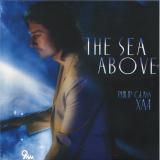
Dutch composer and pianist Xavier Boot, also known as XA4, joins Philip Glass for the second release on the New York-based record label Orange Mountain Music, owned by Philip Glass.
“Xavier is really a wonderful pianist, and I am thrilled by how he now tackles my compositions, with that elegant electronica touch.” – Philip Glass
The Sea Above features not only Glass compositions but also several original pieces by Xavier: “I recorded this album inspired by all the musical influences I’ve experienced in my life, including classical, electronic (club) music, ambient, minimal, and even Indonesian music. The title track of the album is inspired by Philip Glass’s composition Mad Rush. He told me that he wrote this piece for an event with the Dalai Lama, where it was unclear when the Dalai Lama would arrive. That’s why Mad Rush was composed to last either five minutes or an hour. I tried to convey this idea of timelessness in my music, embodying this endless portal of time and space, which was also scientifically described by Albert Einstein. Another track on the album, Train I, is a reworking from Philip Glass’s opera Einstein on the Beach. You can experience the music on this album as a kind of journey, a trip where you are energetically drawn in at the beginning and later enter more of a fantasy world where dreams and unconscious elements of your mind can emerge.”
Credits:
Tracks 1 & 3 are original compositions by Philip Glass remixed by XA4
Tracks 2 & 9 remixed by XA4 and Jaro.
Tracks 4, 5, 6, 8,10 are original compositions by XA4
Track 7 is composed by XA4 and Tenzin Choegyal.
Vocals track 1: Julia Rosenhart.
Remix, production and playing: XA4.
Piano arrangement track 3: Michael Riesman and XA4.
Remix, production track 2 & 9: XA4 and Jaro.
Production assistance track 3: Jaro.
Mixing: Studio Karakterbak.
Mastering: Laura de Rover.
Cover foto: Angelina Nikolayeva.
Graphic design: Yesser Khalefa
Stepping up for Punctuality number 8 is the dynamic duo of Ciel and Matthis Ruffing. Needing little introduction, both artists are prolific producers and collaborators across tempos and genres. Toronto-based Ciel has released music on labels like NAFF, Peach Discs, and !K7, while Berliner Matthis Ruffing’s work can be found on International Chrome, Infinite Drift, and Strictly Strictly, to name just a few.
Bonding over a shared love for the techno stylings of Claude Young and early 2000s tech/prog house from labels like Future Groove and Slide, the duo’s collaboration began with a spontaneous jam in Ruffing’s Berlin studio during the summer of 2022. With an organic studio chemistry, the pair continued to jam over the following years. Hot Squid is the result of these studio experiments: five tracks of sleek, muscular, contemporary tech house that fluidly distill the creative visions of both artists—slick, shimmering grooves, heavily weighted for the dancefloor.
The title track, Hot Squid, weaves dubbed-out waves of FX and low-end sonics around metallic, staccato drum bursts, sci-fi pads, stuttered vocals, and syncopated snares that flit and flicker around a rolling bassline reminiscent of golden-era UK tech house from the late ’90s. Roza Terenzi’s remix flips the original into a modern, low-stepping tek roller—a mind-bending re-fix that puts more focus on the snaking vocal groove and a sparser percussion arrangement, filled out with lustrous textures and razor-precise sound design.
On Little Voice, glossy synths and spiraling atmospherics cascade around a mesmeric vocal line, while tightly wound, minimal drum loops give way to a swaggering bassline that barely relents throughout the track. The result is a satisfyingly boshy, groove-driven roller, fit for the dancefloor at any time of day.
Late Summer maintains the EP’s high-grade production standard in the form of a dreamy, electro-leaning tech house number, resplendent with deep, pummeling kick drums, woozy low-end, and organic sonics. Its plucked melody and introspective pads nod to halcyon-era IDM and the Detroit techno that inspired the duo in creating Hot Squid.
The release culminates in Bong Bong—a meditative dancefloor tool suffused with ASMR-like nature documentary samples that lend the track a psychedelic intimacy. Careening percussion lines and swooning chord stabs anchor the rhythm, while the title’s “Bong Bong” mantra hums beneath the surface, carried along by barely perceptible sub fills and ultra-processed percussion. A cohesive, unique, and enduring take on seminal tech house and Detroit techno from Ciel and Matthis Ruffing.
Sounds Over Seas is ready to release its very first LP by label founder Julian Bainbridge. The album covers aspects of the Deep House genre in its classic definition, pushing certain boundaries, whilst maintaining the spirit of the genre through feeling and utilising melodies and rhythm to evoke emotions which go beyond the dance floor. Keeping it raw throughout the nine tracks, each one incorporates different elements of the music spectrum. Implementing jazzy tweaks, minimalistic rhythms, haunting melodies as well as ambience and global sounds in a full dancing and listening experience.
“We know what jazz is when we hear standards or music that is close to the same source, to a recognized pattern. But what is jazz? Here, a starting point. "Blow" showcases an accumulated CITIZEN:KANE techno vocabulary but it quickly tones down the sensation by introducing frequent breaks in the rhythm, as in "Peiote". But even there we are able to "feel" techno by recalling Wolfgang Voigt's M:I:5 and its parallel yet contrasting rhythmic grids. Elsewhere, manifestations of opposite forces: the beat keeps a body firm on the floor, eminently physical but not commanding; and melodies, cosmic threads, suggest ascension as well as a drive towards the within, creating space for feelings and/or rationalization. "The Fence" or "Montreal" stand as good examples. One less evident aspect of beauty in this record is the apparent coldness of the music, almost rigid and devoid of passion, and thus we declare it more true. As the mind performs a synthesis of what was learned after a class, last track "Family" (expressively) gathers impressions of what went before, adding poetry to the moment. "Blow" may be a reference to the most familiar instruments used in jazz but it can also figuratively mean an explosion, an aesthetic liberation, even with (our) knowledge that for now, and theoretically, the artist chose to concentrate on this thing called jazz.”
Daniele Baldelli and Jolly Mare come together for a record that feels less like a collaboration and more like a shared state of mind. Flusso Uno moves through Afro-cosmic kraut-inflected psychedelia and cinematic electronics with a natural, unforced flow, where rhythm, texture and narrative all pull in the same direction.
Rather than referencing the past, the EP treats it as a living language. The longform, ritualistic percussion of early cosmic dance culture meets the hypnotic motorik pulse of krautrock and the more structured, sample-driven tribalism that followed in later decades. What ties it all together is a deep sense of atmosphere and intention: music that feels physical, emotional and quietly transportive.
“We particularly focused on ritual percussions, hypnotic grooves and suspended atmospheres, trying to blend musical anthropology, auteur electronics and narrative instinct.”
Dhol Parade opens the journey like a slow-burning procession, drums circling and expanding as if guiding the listener into another space. With Icari the perspective lifts, melodic lines drifting and tilting, constantly searching for balance between gravity and flight. Huldufolk pulls everything back into a shadowy, nocturnal zone, where textures feel half-real, half-imagined.
Finally, Viaggio Tascabile loses the record in a quietly reflective way, a compact voyage that sums up the EP’s philosophy: small in scale, deep in meaning. Flusso Uno is not about nostalgia or revivalism. It is about taking the spirit of cosmic culture and letting it breathe in the present, where storytelling, dancefloor intuition and sonic exploration still meet. A record made for open ears, open minds and long nights.
After the last release ‘Innocence’ with Nathan Cable gaining support from John Digweed on his renowned Apple Music Compiled & Mix Series, we bring forth one of the remixers for his own single release ‘Snake Altar’.
Richie Blacker Northern Ireland’s progressive house & breaks prodigy who’s seen releases on Sasha’s Last Night On Earth, Scream’s Of Unsound Mind, Franky Wah’s Shen, Armada, Anjuna Deep and so many more including his own imprint Mess Express. We were super excited to sign the original breaks mix of ‘Snake Altar’, an amazing ethereal & euphoric progressive breaks track with its haunting ethnic vocals we just knew who could step up as the originator (this time) to remix the third Break-The-Future project.
Ray Keith delivered his signature sound system Jungle / Drum & Bass sound to which we think you’ll absolutely love, just oozing in class. The way it flows from euphoric to his heavy hitting signature darkness to deep jungle roots and back is exactly what we wanted from the big man himself and absolutely buzzing to have Ray on the label for our third release.
To finalise the package Richie Blacker delivered a 4x4 mix, now the lead track and to close off the release a beatless mix & acapella giving you some serious tools to work with… THIS IS ESSENTIAL!
InDepth Imprint launches its debut release with a forward-thinking V.A. bringing together UFO95, Hadone, Raar, Initial Code and Clara D. The label focuses on bridging avant-garde sound exploration with club-driven functionality. This first release is built on audio material recorded during a collaborative residency at Willem Twee Studios, using its unique collection of mid-20th-century scientific instruments repurposed for music. Each artist was invited to explore their own creative path, resulting in a highly distinctive record where experimental textures meet precision-engineered techno. The outcome is a coherent yet diverse sonic statement that sets the artistic direction for InDepth Imprint: immersive, concept-driven and deeply connected to contemporary club culture.
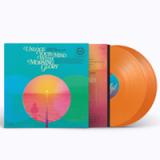
Crate digger and music enthusiast James Endeacott compiles ‘Unlock Your Mind With Morning Glory’ for Two-Piers Records – A glorious heady mix of the weird and wonderful eclectic music from his radio show ‘Morning Glory’
“One weekday afternoon towards the end of 2017 I sat in The Lyric pub on Great Windmill Street, Soho with my dear friend Raf. I’d just finished another of my weekly Soho Radio shows and was starting to think about the next one. Raf had been on as a guest playing some of his favourite tunes of the day. We had a few drinks, told a few stories and started to plot and scheme. It was always a dream of mine to have a daily radio show. Radio had always informed and excited me from my early teens listening to John Peel under the blanket when I should’ve been either sleeping or revising right up to the present-day musical excursions of NTS, WFMU and numerous internet based stations.
We decided to speak to Adrian and Dan who ran Soho Radio to see if they’d be up for us doing a daily morning show. To our surprise they were into the idea and within 5 minutes Adrain came up with the name Morning Glory. We all liked it. We were all excited. It was all systems go. In December 2017 Raf and myself started a daily 2 hour show. We did the show together, got guests in and the musical policy was whatever we felt like that day. After several months Raf found the mornings too much. Off he went into the distance occasionally coming back with a smile, and a bag of new music. I carried on alone and then suddenly in March 2020 the world stopped, and we went into lockdown.
We set up in my house in Catford, Southeast London and carried on. The show became 3 hours a day and I started to invite friends, record labels, record shops, bands etc.. to supply me with hour long mixes that I played every day. The show took off during this time. My musical tastes expanded as I spent all day long searching for new sounds from around the globe. People started to send me more and more music. I became obsessed with the show. The audience started to take to social media and ask for certain tracks or artists to be played. I got listeners to make me mixes to play on the show and I did several phone interviews with musicians while playing some of their favourite tunes.
I was grateful that Soho Radio left me to my own devices. They never told me what to do or what to play – they trusted ma and I trusted my instincts.
The music on this compilation is not a ‘best of’ it’s just how I felt when I compiled it at the start of 2025. Apart from a couple of tracks they are all things I’ve come across since the show started in December 2017. If I did a list of tracks now I’m sure it would be completely different. Surely that’s the point. We never stick in one place. We are always moving and searching. Always trying to unlock our minds. Put it on. Take your time and let it take you somewhere” James Endeacott 2025
Also Playable Mono, the nom de guerre of Rafał Lachmirowicz, channels musical greats and the romance of Italy with the Firenze EP. “Neverland” reimagines Giorgio Moroder’s iconic introduction of “I Feel Love”, undulating arpeggios and clean kicks giving way to an addictive tongue-in-cheek melody of laser futurism and eastern influences. “Firenze” follows. Broad analogue bars call to mind the works of Patrick Cowley, disco funk flirting with a spoken word tribute to Florence in this bright and bold track. Our next stop off is “Bergamo.” Low-slung, this smoky number is primed for the night. Thick thrums of bass are punctured by piano keys and toms, robotic pulses and trills adding a 1970s sci-fi groove to the proceedings. Turning the tables is “Breakfast Date.” Slow and dreamy, this early morning lounge affair lowers the tempo. Considered and thoughtful, meandering melodies border the blurred lines of jazz and funk. The words of “Firenze” are left in the wings for the instrumental close, Lachmirowicz’s synthesizers taking the limelight in this uplifting finale. A 12” that encapsulates the expansive sound of Also Playable Mono.
Modeight proudly adds another chapter to its vinyl legacy with Fedo - a Ukrainian artist with deep Greek roots, known for his meditative groove architecture, percussive depth, and the raw spirit of live music. On Nuke Hook EP, Fedo delivers four deep and dynamic cuts that strike a perfect balance between minimalistic precision and emotional richness.
Each track feels lived-in - jammed rather than programmed - crafted to resonate both on the dancefloor and in the mind. "Life is Life" opens with a thick, dubby beat and a jagged, growling bassline.
Midrange sequences curl around the low-end like vapor trails, creating a shadowy, hypnotic space built for late hours and strobe-lit intimacy. "Madam from Athens" pays homage to his Hellenic roots - dipping into dreamy chords, textured atmospheres, and modular motifs wrapped in velvety vocals. Warm and transportive, it's a love letter to place and memory.
On the flip, "After Out" hits hard. Sub-heavy, percussive, and driven by acidic synth lines, it's a peak-time weapon that doesn't ask - it commands.
Rounding off the EP is the cerebral yet groovy "Nuke Hook," where crisp percussion dances around mysterious piano phrases and immersive textures. A subtle but magnetic closer that lingers long after the drop.
Fedo joins the Modeight family with a statement of intent - deep, expressive, and forged in the heart of the underground. The journey continues.
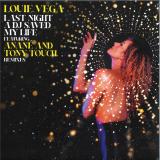
The world renowned “Maestro” of the dancefloor Louie Vega continues to deliver Dance Floor gems at a rate almost impossible to conceive, given that he also maintains a weekly touring schedule that regularly takes him around the world. Louie’s upbringing in the Boogie Down Bronx exposed him to the entire evolution of Disco and Funk at a time when those genres were at their peak in the 80’s, and he brings that wealth of knowledge and passion when it comes to remakes of the classics. His remake of “Last Night A DJ Saved My Life” featuring Anané and Tony Touch in its original version on the NYC Disco Album was a masterful update that kept the essence of the original classic, but was imbued with the irresistible House Music energy that Louie and featured vocalists Anané and Tony Touch can bring to a project like nobody else. The remix from Louie himself gives this peak house groover even more pump, while the Dub from Anané demonstrates that this talented performer has a big future as a producer as well. The bonus track on the B-side “In Search Of Peace Of Mind” shows Louie once again creating a unstoppable groove that respects the foundation of House Music but once again inspires an originality that places him firmly at the forefront the Dance Music Producer community.
Were FEX the Wildest & Weirdest German New Wave Band in 1984?
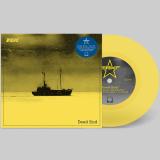
Few cult mysteries in modern music have captured the internet's imagination quite like "The Most Mysterious Song on the Internet." Eventually identified as "Subways of Your Mind" by the elusive German band FEX, the track became a viral sensation decades after its creation-and even made its way into a recent Hollywood blockbuster (Black Phone 2).
Now, two more lost FEX recordings have emerged from an old demo cassette: "Dead End" and "Sarah." And they're every bit as electrifying as the legend suggests.
On both songs, guitarist and main songwriter Ture Rückwardt joins forces on lead vocals with his former wife and musical partner Ilona Rückwardt, forming a vocal pairing that channels raw energy and eerie chemistry. What they deliver are two of the most urgent, adrenaline-fueled post-punk artifacts you're likely to hear this year-even if they were recorded more than forty years ago.
Opening with a sharp, melodic guitar solo, "Dead End" bursts forward with uptempo drive-catchy, fierce, and full of momentum. Apparently inspired by Orwell's 1984, its lyrics depict urban desolation-loneliness, homelessness, hopelessness-yet still shimmer with defiance in lines like, "Truth is amazing - hoping is like waiting."
The second track, "Sarah," dives even deeper into darkness. Mixing post-punk intensity with psychedelic textures, Rückwardt tells an imaginary story of a couple lost in drugs and spiraling through a bad trip, only to wake and realize that sobriety offers little comfort-the real world itself can be just as brutal and offers no easy escape.
Neither song makes the slightest concession to commercial trends. Instead, they feel utterly uncompromising-wild, strange, and defiantly timeless. In a world obsessed with polish and playlists, "Dead End" and "Sarah" sound like transmissions from a different planet.
Both tracks were originally recorded as demos in 1984 in the band's rehearsal room, with Hase engineering. The newly restored versions preserve the raw spirit of the original tapes while adding subtle layers to enhance their atmosphere without losing the authentic 1980s sound. FEX hint that the untouched demo versions might surface later, possibly on a second volume of their archival
Label welcomes Tunisian-based artist Ahmet Mecnun to the label for the first time with open arms and with sincere hope it is not the last due to high level admiration for his artistic output. Ahmet has crafted M.E.S.S.A with dark flavour oozing throughout the EP that has unified the audio trips together in a complete story. The remix duties of the A-side track have been taken by none other than Uruguayan mastermind Marcos Coya who has provided his take on this matter and has done it flawlessly so. The synergy between the two artists from different backgrounds and cultures but same ideology of music has resulted in M.E.S.S.A to take the shape it has now. The dark times are coming so it is best to go into the loop state of mind to avoid or to welcome psycho override depends on the mood and current feeling one might be going through.
Two Lisbon mainstays from contiguous generations join forces as Scam Dust for the new Paraiso record: Tiago, Lux Fragil resident, world-renowned DJ's DJ and all-round music whizz plus Shcuro, Paraiso's co-founder, scene documenter and impeccable selector & producer. Funnily enough they also live in contiguous beach towns in the outskirts of the capital, Parede and Carcavelos. That's where they zig-zagged amid home-studios and, four hands in various machines, concocted this refreshingly to-the-bone record. Like a non-local entanglement between Lisbon, Sheffield, The Hague and somewhere in the American Midwest, 'Gastric Pulse' EP opens with a saturated, modulated acid line over a tight, industrial-tinged techno beat, peppered with sonic dirt of the highest order. It sounds like music projects like Downwards and Mathematics would put out. 'Enzyme Breaks' follows suit with a comparably raw spirit, adding some mysterious atmospheric scintillation and drum variations. A certain recluse techno (is that a thing?) comes to mind (and heart), Unit Moebius style. Toms abound in 'Pepsin Drive' - always a promising sign in our book - and the playfulness continues in the cheeky bassline and the intricate clap work. Soulful stabs give the tune extra magic via the mantra-like structuring power of repetition. The final track in the record comes from Pacific North-West transplant Doc Sleep and her collaborator Elias FS step in for remix responsibilities and flip the B1 into a hypnotic, dubby - and yes, jazzy - piece complete with a dive into glitchy, sonic sculpture territories towards the end of the arrangement. Quite the brilliant take. Music still counts (and always will), after all is said and done - and nothing like two hard-working music-makers to remind us of that.
Before the Khmer Rouge took power in 1975, unleashing a horrifying genocide, Cambodia had one of the most vibrant and exciting music scenes in Asia. With a mixture of traditional Khmer music and a myriad of western genres (from French and latin music, to rock-and-roll , rhythm-and-blues, surf, psychedelia, soul and many more) the few pre 75 Cambodian recordings that survived -most of them were destroyed- are enough to make anyone with a taste for good music shocked by the amazing quality of the sounds created during those golden years. Gathered in this amazing album are some of the most talented and unique musicians from that amazing era with an explosive collection of tracks sure to blow the mind of the listener. A celebration of some of the best music ever made.
The second chapter after “neverlost”, “closer” blends samplebased production with classic songwriting – like a sonic mosaic of warmth and groove. Lyrically “hippiesque,” Sepalot explores natural beauty, unity, equality, and self-determination. Guest features shine: Blu delivers sharp lyricism, and Illa J surprises
with soulful vocals on “My Own Way.” For fans of The Avalanches, Caribou, and Madlib – Closer is lush, human, and unforgettable.
Sepalot is one of those rare artists whose sonic palette refuses to be boxed in. His music exists in the fertile space between multi-layered sophistication and playful unpredictability – a quality rooted in his eclectic upbringing. From skate-punk beginnings to soul all-nighters, from obsessive vinyl digging to
deep immersion in hip-hop’s golden era, Sepalot has carried the art of sampling like a badge of honor. His beats are mosaics – meticulously pieced together fragments of sound forming an intricate whole. Beyond the studio, he’s explored these influences as DJ, producer, and live performer, leading the
Sepalot Quartet across Europe’s jazz festivals, and more recently with his experimental band Tikhet alongside Angela Aux
With “closer”, the upcoming second chapter following his 2023 album “neverlost”, Sepalot distills his broad musical world into a sample-based yet song-driven statement. The production feels warm and tactile – think needle-on-vinyl crackle meeting modern songwriting clarity. Lyrically, it’s “hippiesque” in the best
way: themes of natural beauty, unity, democratic awareness, equality, and spiritual introspection weave through the tracklist.
The guest list is just as inspired: legendary wordsmith Blu delivers razor-sharp verses, while Illa J – brother of the late J Dilla – steps away from his signature rap to surprise with soulful vocals on “My Own Way.” Together, they amplify the album’s humanist core, balancing groove-heavy production with
lyrical depth.
Fans of artists like The Avalanches, Caribou, DJ Shadow, or Madlib will find plenty to love here, but Closer carries its own unique fingerprint – a testament to Sepalot’s ability to merge hip-hop grit with songwriting grace. If “Neverlost” was a map, “Closer” is the destination: lush, thoughtful, and deeply human.
Highly recommended for anyone ready to hold hands, open their mind, and let the beat guide them.
‘Let’s take a trip’ – with major names on the psytrance scene Avalon and GMS releasing on KNTXT for the first time, combining forces for a full-on attack, 4-track EP ‘The Underground’, out December 11th. Their joint mission? ‘Combining two worlds where psytrance meets techno, a fusion which will take you on a mind-expanding journey! Welcome to The Underground…you have arrived!
London DJ/Producer Avalon was recently awarded the number 1 top-selling psytrance artist on Beatport with over 30+ psytrance chart #1s and 5 top-selling LPs to his name, and performs at the likes of Tomorrowland, Boom, EDC Las Vegas, Glastonbury, Exit, Burning Man, Ultra, ASOT, Ministry Of Sound,... GMS (Growling Mad Scientists) was founded by Dutch Ibiza-based DJ/Producer Riktam with the sadly late Bansi, to establish pioneering psytrance label Spun Records and to have director Tony Scott no less, using GMS tracks on three of his films. A prolific producer with over 300K album copies sold, GMS holds the most psytrance records released overall.
‘I'm beyond honoured to release this stunning four tracker from psytrance legends Avalon and GMS. With this release, friendships were formed and worlds truly started colliding. I have massive respect for both these artists and their long standing impact on electronic music. This release feels like a bridge between generations and genres. It carries an energy that deserves to be heard, experienced, and felt on dancefloors around the world.’ Charlotte de Witte
Title track ‘The Underground’: hyperspeed trance beats support a wild variety of acid-dripping pulsations, spacey arps, otherworldly swoops, mind-teasing stabs, it’s like a lightshow in sound. That transports its listeners into another dimension. On ‘Horizen’, psytrance thrives, while ethereal vocals call, with intricate sound design painting a mythical soundscape. On ‘Machines’, it’s driven by hypnotic acid lines, pulsating Kick & Bass with sprinkles of techno infused percussion! Its choral notes and alien-like spoken lyrics, both gripping and disorientating as builds & breaks come thick and fast. ‘Rave to the Grave’: constant pulsing high synth and vocals with twanging acid together with frantic percussion create a sustained, agonizing build, build, build – until ‘On the 7th day, the Lord said ‘Let the beat drop!’’ Phew!
‘We are very excited about our debut release on KNTXT ‘The Underground’ and can’t wait to share this 4 track EP with you all. We hope you enjoy it as much as we did creating it. This fusion of techno/psytrance is brought together by all of our mutual love for acid & driving hypnotic dance music! Enjoy… Play it loud! Welcome to The Underground… You have arrived!’- Avalon & GMS
A mind-bending EP, with racing beats that give the ‘trance’ in psytrance a huge adrenalin shot. This is high energy reaching new altitudes; hold on to your brain cells, they’re going for a ride!
Les Enfants Terribles presents LETM011 by DJ Real Madrid with the new EP No Smoking:
Dear readers and listeners,
My name is Tillmann Ostendarp, others know me as DJ Real Madrid. I love to play instruments, I love to play with machines. And this is something I did in May 2024, when I spent one week in my beautiful studio. Over the course of the week I recorded „NO SMOKING“ which is going to be my first Vinyl Release as „DJ Real Madrid“. No Smoking contains 4 Tracks: „Ta Ta“ which is a Juno-driven deep homage to the god of funk „Johnny Guitar Watson“. „Leave It Be“ is a big percussive jam that tells you to mind your own business. When I knocked out „GGGGGG“, I invited Dino Brandao and Mel D over to jam on the microphone, which led to a dark humorous ode to the insanity of our world. The last track is called „Merlasco“ and brings back the hope that we all will come together in the morning sunrise!
First split EP from Katia & Nizar - one of the most prominent and aspiring duos in underground electronic music right now. High Tide EP delivers 2 collabs and 2 solo tracks from each artist produced over the last 3 years. Mind-tickling, quirky and deep - this record sits somewhere between techy minimal, electro and breaks. Made for the dancefloor, its different moods and contexts.
The Éthiopiques series returns! Essential archive recordings from an extremely fruitful period in Ethiopian music.
Before “Swinging Addis” took over the world, there was Moussié Nerses Nalbandian — the Armenian-born composer who shaped modern Ethiopian music. Mentor, arranger, and pioneer, he laid the foundations of Ethio-jazz.
This Éthiopiques volume revives his forgotten legacy, recorded live by Either/ Orchestra First issue ever with new exclusive photos and in depth liner 8-page insert.
“Ethiopian jazzmen are the best musicians that we have seen so far in Africa.
They really are promising handlers of jazz instruments.”
Wilbur De Paris
(1959, after a concert in Addis Ababa)
አዲስ፡ዘመን። *Addis zèmèn* **A new era.**
The time is the mid-1950s and early 1960s, just before "Swinging Addis" bloomed – or rather boomed – onto the scene. Brass instruments are still dominant, but the advent of the electric guitar, and the very first electronic organs, are just around the corner. Rock’n'Roll, R’n’B, Soul and the Twist have not yet barged their way in. Addis Ababa is steeped in the big band atmosphere of the post-war era, with Glenn Miller's *In the* *Mood* as its world-wide theme song, neck and neck with the Latin craze that was in vogue at the same period. Life has become enjoyable once again, with the return of peace after the terrible Italian Fascist invasion of Ethiopia (1935-1941). The redeployment of modern music is part and parcel of the postwar reconstruction. *Addis zèmèn* – a new era – is the watchword of the postwar period, just as it was all across war-torn Europe.
The generation who were the young parents of baby boomers** were the first to enjoy this musical renaissance, before the baby boomers themselves took over and forever super-charged the soundtrack of the final days of imperial reign. Music is Ethiopia's most popular art form, and very often serves as the best barometer for the upsurge of energy that is critical for reconstruction. Whether it be jazz in Saint-Germain-des-Prés or the *zazous* who revolutionised both jazz and French *chanson* after the *Libération*, be it Madrid's post-Franco Movida, or Dada, the Surrealists and *les années folles* that followed World War I, the periods just after mourning and hardship always give rise to brighter and more tuneful tomorrows. Addis Ababa, as the country's capital, and the epicentre of change, was no exception to this vital rule.
**Two generations of Nalbandian musicians**
Nersès Nalbandian belonged to a family of Armenian exiles, who had moved to Ethiopia in the mid-1920s. The uncle Kevork arrived along with the fabled "*Arba Lidjotch*", the** "*40 Kids*", young Armenian orphans and musicians that the Ras Tafari had recruited when he visited Jerusalem in 1924, intending to turn their brass band into the official imperial band. If Kevork Nalbandian was the one who first opened the way of modernism, pushing innovation so far as to invent musical theatre, it was his nephew Nersès who would go on to become, from the 1940s and until his death in 1977, a pivotal figure of modern Ethiopian music and of the heights it. Going all the way back to the 1950s. Nothing less. And it is Nersès who is largely to thank for the brassy colours that so greatly contributed to the international renown of Ethiopian groove. While the younger generations today venture timidly into the genealogy of their country's modern music, often losing their way amidst a distinctly xenophobic historiographical complacency, many survivors of the imperial period are still around to bear witness and pay tribute to the essential role that "Moussié Nersès" played in the rise of Abyssinia's musical modernity.
Given the year of his birth (15 March 1915), no one knows for sure if Nersès Nalbandian was born in Aintab, today Gaziantep (Turkiye/former Ottoman Empire) or on the other side of the border in Alep, Syria... What is certain is that his family, like the entire Armenian community, was amongst the victims of the genocide perpetrated by the Turks. Alep, the place of safety – today in ruins.
Before Nersès then, there was uncle Kevork (1887-1963). For a quarter of a century, he was a whirlwind of activity in music teaching and theatrical innovation. *Guèbrè Mariam le Gondaré* (የጎንደሬ ገብረ ማርያም አጥቶ ማግኘት, 1926 EC=1934) is his most famous creation. This play included "ten Ethiopian songs" — a totally innovative approach. According to his autobiographical notes, preserved by the Nalbandian family, Kevork indicates that he composed some 50 such pieces over the course of his career. This shows just how much he understood, very early on, the critical importance of song as Ethiopia's crowning artistic form. Indeed, for Ethiopian listeners, the most important thing is the lyrics, with all their multifarious mischief, far more than a strong melody, sophisticated arrangements or even an exceptional voice. (This is also why Ethiopians by and large, and beginning with the artists and producers themselves, believed for a long time — and wrongly — that their music could not possibly be exported, and could never win over audiences abroad, who did not speak the country's languages).
Last but not least, one of Kevork's major contributions remains composing Ethiopia's first national anthem – with lyrics by Yoftahé Negussié.
Nersès Nalbandian moved to Ethiopia at the end of the 1930s, at the behest of his ground-breaking uncle. Proficient in many instruments (pretty much everything but the drums), conductor, choir director, composer, arranger, adapter, creator, piano tuner, purveyor of rented pianos,... he was above all an energetic and influential teacher. From 1946 onwards, thanks to Kevork's connexion, Nersès was appointed musical director of the Addis Ababa Municipality Band. In just a few years, Nersès transformed it into the first truly modern ensemble, thanks to the quality of his teaching, his choice of repertoire, and the sophistication of his arrangements. It was this group that would go on to become the orchestra of the Haile Selassie Theatre shortly after its inauguration in 1955, which was a major celebration of the Emperor's jubilee, marking the 25th anniversary of his on-again-off-again reign.
At some point or other in his long career, Nersès Nalbandian had a hand in the creation of just about every institutional band (Municipality Band, Police Orchestra, Imperial Bodyguard Band, Army Band, Yared Music School…), but it was with the Haile Selassie Theatre – today the National Theatre – that his abilities were most on display, up until his death in 1977. To this must be added the development of choral singing in Ethiopia, hitherto unknown, and a sort of secret garden dedicated to the memory of Armenian sacred music, and brought together in two thick, unpublished volumes. Shortly before his death (November 13, 1977), he was appointed to lead the impressive Ethiopian delegation at Festac in Lagos, Nigeria (January-February 1977).
His status as a stateless foreigner regularly excluded him from the most senior positions, in spite of the respect he commanded (and commands to this day) from the musicians of his era. Naturally gifted and largely self-taught, Nerses was tirelessly curious about new musical developments, drawing inspiration from the very first imported records, and especially from listening intensely to the musical programmes broadcast over short-wave radio – BBC *First*. A prolific composer and arranger, he was constantly mindful of formalising and integrating Ethiopian parameters (specific “musical modes”, pentatonic scale, and the dominance of ternary rhythms) into his “modernisation” of the musical culture, rather than trying to over-westernise it. It even seems very probable that *Moussié* Nerses made a decisive contribution to the development of tighter music-teaching methods, in order to revitalise musical education during this period of prodigious cultural ferment. Flying in the face of all the historiographical and musicological evidence, it is taken as sacrosanct dogma that the four musical modes or chords officially recognised today, the *qǝñǝt* or *qiñit* (ቅኝት), are every bit as millennial as Ethiopia itself. It would appear however that some streamlining of these chords actually took place in around 1960. It was only from this time onward that music teaching was structured around these four fundamental musical modes and chords: *Ambassel*, *Bati*, *Tezeta* and *Antchi Hoyé*. A historical and musical “details” that is, apparently, difficult to swallow, especially if that should honour a *foreigner*. Modern Ethiopian music has Nersès to thank for many of its standards and, to this day, it is not unusual for the National Radio to broadcast thunderous oldies that bear unmistakable traces of his outrageously groovy touch.
Originally released in 1972, Toni Tornado's self-titled debut is a landmark in Brazilian soul and funk - a gritty, groovy record that helped define the sound of the Black Rio movement. Blending deep soul, psychedelic funk, and bold orchestration, this album channels the revolutionary energy of James Brown with the tropical swagger of Rio's streets. From the urgent rhythms of 'Torniente' to the undeniable strut of 'Mané Beleza' and 'Tornado,' Toni's music pulses with a fierce sense of pride and liberation. It's the sound of a new cultural identity taking shape - where African-American soul met Afro-Brazilian reality. Often compared to the legendary Tim Maia, Tornado brought his own explosive edge to Brazil's growing soul scene. By the 1970s, other Brazilian musicians, such as Banda Black Rio, Cassiano, Gerson King Combo, Jorge Ben and Gilberto Gil, began making soul records. DJs started throwing soul-only parties. Toni Tornado's voice carries grit and passion, his grooves hit hard, and his message is crystal clear - Black is beautiful, and the funk is real. Back on vinyl for a new generation, this reissue is more than a collector's gem - it's a time capsule from an era when music moved bodies and minds. Essential listening for fans of vintage soul, global funk, and revolutionary sounds. Reissue on 180g vinyl.
Welcoming London-based artist House on the Strand to the Eastern Nurseries fold following his impressive 2024 debut, "Heroine", Ruben Elbrond-Palmer channels a sombre, cinematic sense of sound with "Unrest".
Interpolating the visual sensibilities of some of his favourite artists, filmmakers, and photographers into the sonic field, Elbrond-Palmer’s palette cuts loose from the percussive elements of his previous work, blending analogue synthesis with repurposed guitars, haunting melodies, and field recordings that call to mind the hazy delirium of a dusty summer’s day. Sitting at its core, "Unrest" places harmony front and centre, with each sombre movement rising and falling as electric fences hum, helicopters hover overhead, and unknown events are set in motion.
Deceptively simple, the resultant album is gestalt—an elegy of melancholic moments, lost to the world.
Mastered by Ike Zwanniken of Hysterical Love Project - mainstay mastering engineer behind majority of INDEX, Co:Clear & Theory Therapy Releases
Established in 2019, Eastern Nurseries is a platform for deeply emotional contemporary electronic music based between Porto and Newcastle upon Tyne. Curated by Rui P. Andrade (aka Canadian Rifles) and Christopher Macarthur Owen (aka Burning Pyre).
The label has released a steady yet considered magna of records from Hasfeldt, Emma Acs, innerinnerlife and VAs encompassing the likes of Conna Harraway, Severin Black & Slowfoam.
To mark Grid's second anniversary back in 2023, the label brought together 13 tracks from the bass scene's most forward-thinking artists, all of which sank you into deep sonic chambers. Now, six of those tracks are available on wax for the first time in what is an essential sampler featuring boundary-pushing contributions from forward-thinking artists. Sister Zo opens with the percussive pressure of 'EMP,' Ronan lays down a lithe rhythm that befits its 'Shadowbox' title and Seekersinternational drill down into warped low-end chaos. There is a deftness to Jonny From Space's tumbling perc and E-Unity brings clean lines and a futuristic sheen to his deep dub workout 'Of All The Places I Could Be'. Tammo Hesselink brings ambient soundscaping with his floating delight, 'Paint Reduce Trick.' This is high-quality, original music that moves both mind and body.
Bangalore-based producer Chaz (IN) makes a striking debut on KUJE002 with Soul Contract, a four-track EP that marks a shift from his industrial roots into mental techno with a driving edge. These tracks aren't just meant to be heard; they're body music, built to be felt as much as listened to.
The EP opens with Hardwired, a percussion-heavy trip that builds tension through progressive hihat patterns, bleeps, and raw energy. Sling Hook follows with a composition that's both driving and mind-bending.
On the B-side, Wiggle Room taps into an almost animalistic dimension; a jungle of percussive textures that breathe, shift, and pull you in. The record closes with Retroactive, where shimmering synths and ghostly, wailing tones sketch out a post-human vision of Bangalore.
Soul Contract is mental techno with a pulse, designed to inhabit your body while captivating your mind.
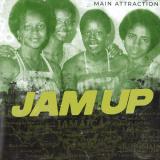
Emerging from the University of the West Indies (UWI) in Jamaica during the late 1970s, Main Attraction was a group of talented singers whose music captured the social and political energy of their time. With a sound that blended reggae and soulful ballads, their songs were both a reflection and a response to the challenges of the era.
The group originally featured Sonia Copeland, a gifted writer, arranger, and back-up singer, alongside Sharon Jones, whose velvet voice led many of their reggae tracks. They were joined by Allison Smith, Marjorie Smith, and Shahiba Ali, forming the group’s first lineup. As time passed, Michelle Thompson and Lileth O’Connor joined, further enriching the group’s dynamic harmony.
Main Attraction’s musical journey began with their debut recording, a cover of Once Upon a Time, produced by David Haughton under the management of Clayton Downie. Later, with Owen Palmer as their manager and producer, the group expanded their horizons, performing in cabaret gigs with the band Mind Benders and embarking on an overseas tour that showcased their talent in New York City. While Sharon Jones led reggae tracks like Jam Up, Allison Peart and Shahiba Ali brought their soulful touch to R&B songs, creating a rich, versatile repertoire that captivated audiences.
Jam Up was the group’s first original recording, composed and arranged by Sonia Copeland. Performed as part of the Reggae Song Competition during Carnival in 1978, the song is a rallying cry for unity and progress. With powerful lyrics and a Shaka rhythm, Jam Up calls on Jamaicans to come together, strive for economic growth, and uplift the nation collectively.
Sonia’s vision was clear: that Jamaicans from all walks of life would find inspiration in the song’s message, motivating them to improve their standard of living and contribute to the country’s growth and prosperity. Decades later, the lyrics remain just as relevant — a timeless call to action for social and economic strength.
Hold this record in your hands, let the music play, and feel the enduring power of reggae music to transform, uplift, and connect.
Psychedelic electronica, which breathes the open mindset of early 70s German synth pioneers, but the music still the signature of Brian Dougans and Gary Cobain, The Future Sound of London. The album breathes and feels organic beside the electronic and in many respects partners FSOL's Synthi a album. Plenty of digitana synth on this expanded edition of the digital only 4 track release from 2017 here on CD and LP.
Finally out is this eagerly-awaited release of SUNANDBASS Recordings, Hits Me In Waves EP by Mark System. Friends and close members of the SAB family know it's been brewing for the last decade, appearing in bits in aftermovies and we are beyond excited to now share it with the world.
'Hits Me In Waves' unveils three currents at once, the surging pull of inspiration, the sweep of new love, and the beautiful embrace of La Cinta's waters, all washing over in unison. Thus, each track of the EP explores a wide range of emotions and moods, expressed in multiple styles within drum & bass; the lead single 'On An Island', sets the tone with unmatched sound design, rich musical elements, and raw, uncompromising production. Next comes 'Point Of Reference', built for the dancefloor and eternally young in its refined appeal. 'Celebration' follows, a powerful track that ties the listening journey together, pairing heavy low-end weight with slick musicality to keep it both melodic and full of energy. 'Where's The Dog' stands out for its playability and tough bass synthesis, making it the hardest-hitting cut on the record. Closing the EP is the beautiful and introspective 'Started At The End', a deep dive into Mark's musical mind, offering a classic, emotive finale.
Hits Me In Waves is more than just a collection of tracks, it's a reflection of Mark's long-standing relationship with SUNANDBASS and our shared vision for music that speaks to the soul and stands the test of time. Spanning from Ibiza, this release embodies the SAB spirit: pushing the boundaries of drum & bass while fostering connection through rhythm, movement, and community.
Dies ist das erste Release von Saxophonist, DJ und Produzent Marc Spieler auf seinem neu gegründeten Label FLOVE.
Ein wahres Meisterwerk, das seine einzigartige Art elektronische Musik zu produzieren und seinen unverwechselbaren Style präsentiert.
Jeder einzelne Track ist ein wahres Kunstwerk. Gönn dir diese Platte und lass dich von seiner emotionalen und echten Musik treiben und verzaubern.
Hol dir jetzt dein eigenes Exemplar der limitierten Vinyl Auflage inklusive einem im Bleisatz handgefertigten Kunstdruck Cover.
This is the first release from saxophonist, DJ, and producer Marc Spieler on his newly founded label FLOVE.
A true masterpiece that showcases his unique way of producing electronic music and his unmistakable style.
Every single track is a true piece of art. Treat yourself with this record and let yourself be carried away and enchanted by his emotional and authentic music.
Get your own copy of the limited vinyl edition now, including a handcrafted art print cover in lead type.
»High Times – Singles 1992–2006« erschien 2006, erreichte Platz 1 der Charts und wurde mit Dreifach-Platin ausgezeichnet. Die Tour Edition 2025 erscheint als stahlfarbenes Doppel-Vinyl mit Kunstdruck, Booklet und einem von fünf zufällig beigelegten Sammler-Laminaten mit dem Buffalo-Man-Icon.
Das Album umfasst 20 Songs, darunter den Nummer-1-Hit »Deeper Underground«, sieben weitere Top-10-Titel wie »Virtual Insanity«, »Cosmic Girl« und »Canned Heat« sowie weitere bekannte Singles wie »Seven Days in Sunny June« und »Space Cowboy« viele davon feste Bestandteile der aktuellen Live-Shows.
'Yara Asmar’s new album presents 11 pieces recorded over the past year between the small town of Alfred in upstate New York and Beirut. These sometimes fragile and tentative sound sketches reflect the times as Yara steps out, as if onto ice, into a new life on a new continent during a time of tragedy, turmoil and upheaval. She works with unfamiliar instruments, new materials and new sounds to build on her intimate style; homemade mechanical music boxes and a personal archive of family recordings form the backbone of its delicate textures. Asmar explores the peculiar resonance of the metallophone and her collection of deconstructed toy pianos, and guides her music into ever more surreal territories. The result is a work that is dreamlike, fragmentary and strangely timeless.'
Vibe Ride is the sixth release of Adam Rudolph's Hu Vibrational project and marks his 60th release as a leader or co-leader. Comes with insert and download code.
“With every record, the goal is to explore new creative territory,” explains Rudolph. Vibe Ride continues a deeper exploration of a trance-like groove and a conceptual framework known as Sonic Mandala. This album marks the most complete realization of that idea, partly due to the group's experience touring beforehand. That time on the road helped to refine ideas and strengthen musical chemistry. The recording process unfolded organically—likely due to the long-standing collaboration within ensembles like Go: Organic Orchestra and Moving Pictures, where the musicians have developed a deep familiarity with the shared musical language.
Sonic Mandala refers to a musical approach distinct from traditional linear structures of theme and development. Found in cultures across the globe, it may represent one of the oldest forms of musical expression—predating written history by tens of thousands of years. Today, it is most vividly preserved in the music of the Ituri Forest peoples (Aka, Baka, Ba Benzele, Mbuti), whose sound traditions revolve in cyclical, orbit-like patterns. Vibe Ride seeks to bring that ancient sense of circularity into a contemporary—and perhaps even futuristic—context.
The ensemble of Vibe Ride—Alexis Marcelo, Jerome Harris, Harris Eisenstadt, Neel Murgai, Tim Kieper, and Tripp Dudley—brings exceptional creativity and skill to the project. While grounded in the sonic languages of today, their performance channels an ancient vibrational lineage, connecting with ancestral sound makers who were attuned to the rhythms of the sun, moon, stars, and seasons. Human beings have always been deeply responsive to natural cycles.
Like a mandala, where the circle reveals itself as a spiral—always returning, but never to the exact same point—the Sonic Mandala musical experience spirals through motion. Refined signal patterns emerge through overtone-rich instrumentation. The groove becomes a threshold, shifting the listener from passive observation into active, even transcendent, participation. With open ears and an open mind, the sound spirals inward—toward a primal center—and outward into the cosmos. When this elevated state is shared among participants, it creates what mystics describe as resonance.
Vibe Ride thrives on the distinctive sonic voices of its players, interwoven with care and nuance into the compositions. Hu Vibrational merges elements of world music, electronica, and improvised jazz into something both funky and spiritual, intense and soothing.
Using signature techniques of organic orchestration, layered arrangement, and electronic processing, the compositions are sculpted from percussion, electronics, and ethereal textures. Rhythmic foundations drawn from diverse traditions serve not as endpoints, but as building blocks. As the saying goes, “Orchestration is the key.” In shaping the sound, the aim was to discover fresh ways of balancing structure and sonic color. As Don Cherry once said: “The swing is in the sound.”
The audiophile LP was carefully recorded, mixed, and mastered by James Dellatacoma—longtime engineer for both Bill Laswell and Rudolph—at Laswell’s Orange Studio.
“This crew artfully blends together to create a seamless tapestry of rhythm… the end results are mesmerizing. Hu Vibrational is all about communing with the groove spirits and creating worlds where earthy rhythms and other-worldly sounds are one.”
— Dan Bilawsky, All Music Guide
“You can be sure that when Adam Rudolph and an ensemble of breathtaking drummers get together mystical and wonderful things will happen.”
— Raul da Gama,
“A stunning effort, enjoyable and grows with repeated listening.”
— Stefan Wood, Freejazzcollective
F_Phono is an artist who has spent a significant part of his life immersed in the vibrant atmosphere of clubs, where he discovered a deep passion for electronic music. Through years of exploration across various musical genres, he found his true voice in a sound that blends Electro and Synth Pop, drawing clear inspiration from the iconic styles of the '80s and '90s. The result is a modern and distinctive sonic identity—deeply rooted in the past yet forward-looking in its execution.
"Santi e Peccatori" is an album that tells a story—one of ancient duality, where light meets shadow, the sacred meets the profane, and the physical collides with the spiritual. It explores the timeless tension between opposites: black and white, yin and yang, raw and ethereal. Through a seamless blend of driving, hard-edged beats and dreamy, melodic textures, this sonic journey invites both the mind and body to move. Each track is a chapter in a narrative of contrast and connection, where electronic music becomes the language of balance and transformation. Santi e Peccatori isn't just an album—it's a rite of passage through the grey spaces between extremes.
Various Small Whistles and a Song, the new album by Chicago-based artist Lia Kohl, incorporates notions of space, social relations, and humor. As the title suggests, the album responds to Ed Ruscha’s 1964 photographic artist book Various Small Fires and Milk, which Kohl sees as a wondrous celebration of ordinariness, one that reveals Ruscha’s trademark deadpan humor and depth. In the spirit of that publication, Kohl created her own series of sonic vignettes, with guest appearances from her close community of collaborators including claire rousay, Macie Stewart, Patrick Shiroishi, and others, reflecting the same sense of humor and mundanity.
The structure of the album—16 one-minute tracks—directly mirrors Ruscha’s book, which comprises 15 photographs of fire and one of a glass of milk. Ruscha’s “small fires” are represented here by recordings of whistles—mostly human whistling, with occasional appearances by train whistles, emergency whistles, and a woman selling penny whistles on the street in Guangzhou, China. About this choice of material, Kohl writes: “I’ve always been captivated by whistling—it’s musical but often a bit unconscious; usually solo but often done in public places. There’s something tender and human about hearing someone whistle, a socially acceptable version of hearing their mind wander.” As with Ruscha’s photographs, the whistles are not random snapshots but windows into social situations, narratives, or spaces.
The “milk” of the title — the 16th photograph in Ruscha’s book — is interpreted here as a single recording: a group of people singing together in Barcelona around 6 a.m. on New Year’s morning, captured through the floor of an Airbnb. Kohl describes this as a social, collective sound that contrasts with the solitary nature of whistling. The song functions as a counterbalance—a quiet celebration of shared experience.
Lia Kohl is a composer and sound artist based in Chicago. Her wide-ranging practice includes composition and performance, installation, improvisation, and collaboration. She tours nationally and internationally, working in theater, jazz, rock, and experimental contexts. Her work centers curiosity and patience, an exploration of the mundane and profound possibilities of sound.
Chicago legend Boo Williams returns to the spotlight with a stunning collection of brand-new, unreleased tracks. This record is a true gem, showcasing the timeless artistry and unmistakable groove that have defined his career. Drawing on deep Chicago influences, Boo masterfully blends soulful textures and hypnotic rhythms into an elegant house journey fit for any dancefloor. Sophisticated, inspired, and beautifully produced, this release once again highlights the endless class and musical vision of a true master of the craft.
The electronic producer Franz Kirmann returns to Bytes for his eighth solo album. The “Almadies” are long wooden boats used by Senegalese fishermen. It is also the name of the neighborhood where Kirmann grew up, in the suburbs of Dakar, Senegal, near the Atlantic Ocean. "These new compositions are the result of sound experiments conducted over the past few months and reflections on the concept of mind-constructed geographies," Kirmann explains. "The way memories and souvenirs shape an image of a place or country that is part reality, part fantasy, part cliché, yet also deeply personal. This experience is influenced by education, social background, history, and other socio-economic factors. " The ten tracks are crafted from collages of electronic sounds blended with field recordings from various places Kirmann has visited — from Dakar to the Caribbean, as well as London and Paris. His aim is to blur the line between electronically generated sounds and real soundscapes, creating music where it becomes difficult to distinguish the real from the constructed. All the sounds on the album were produced using synthesizers and field recordings. No drum machines, percussion or traditional acoustic instruments were used. Influences include Brian Eno and John Hassell’s Fourth World, Vol. 1: Possible Musics (1980), described by Hassell as "a unified primitive/futuristic sound combining features of world ethnic styles with advanced electronic techniques" , which also works in the context of Almadies. Another big influence was Ariel Kalma’s Le Temps Des Moissons (1975) as well as artists including O Yuki Conjugate and Robert Aiki Aubrey Lowe to Susumu Yokota and Michael Banabila.
Danny Krivit pairs a powerful reworking of a rare groove classic with a NYC boogie classic on this highly useful single from the ever-reliable Most Excellent Unlimited. Billy Paul’s ‘East’ was the opening track on the very first Philadelphia International Records LP release from Gamble and Huff’s legendary label. Written by bassist Tyrone Brown, it naturally has a monster bass groove that Mr. K makes the centerpiece of his DJ-friendly rework, which tightens the tempo while retaining the spiritual vibe of the original. Final Edition move us to the dancefloors of early 80s NYC with their ‘Can’t Keep Running Away’, a musical halfway point between the disco funk of the 70s and the boogie sound to come. Krivit’s edit pares the song down to its propulsive highlights, with the catchy chorus taking centre stage. As always, these handpicked classics from the crates of the renowned Mr. Krivit are mastered and pressed to the highest standards with the dancefloor in mind!