The sounds across these four tracks were made by SIM and NAP from 2021 to 2023 with lots of love and bass... the sessions started from the first time they met at NAP's studio, point always to kick it, jam and see what happens. After a couple months of that of course a sound develops, a process shines and a friendship grows. After a year or so trust built and a language made present. Transcending the spoken word and feeling unique to both...things start to really go off and the jams turn to songs. Two years pass and it’s time to celebrate with the marker and archive of all those deep sessions, now in edited form to be shared with all. And yeah, you can have all in common with someone when it comes to digging wubs, riddims and drum machines but add vulnerable earnest meetings with meals in between and good conversation about things other than music (or maybe how other things relate to it) and then you get something really special, something like SINNAZ. SIM and NAP journeying into collaboration with a debut EP of rhythmic noise, driving bog beats, swampy dembows, radioactive Dancehall and unhinged experimentalia.
out of Stock
Last delivered 3 years ago available to reorder, subject to availability
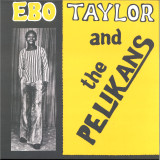
A Ghanaian funk LP from the afrofunk master. one of Ebo Taylor's rarest and most sought-after!
Ebo Taylor and The Pelikans is being reissued on vinyl by Comet Records, pressed on high quality vinyl, with label designs and artwork as per the original release.
Originally released by Ghanian Abookyi label in 1976, Ebo Taylor and The Pelikans is one of Taylor’s most elusive releases, and marked the first time he sang on the seminal Ghana Funk anthem “Come Along”.
The album saw the legendary musician, producer, composer and arranger joining forces with 12-piece Cape Coast Ghanian band ‘The Pelikans’ led by Bessa Simmona with rhythm guitarist Fifi Orleans Lindsay.
Put simply, there has never been a musician and artist quite like Ebo Taylor. As an artist, arranger, musician and producer he’s a combination of James Brown, Nile Rodgers and Quincy Jones: He not only created some of the greatest funk songs ever recorded but as much if not more than that, his genius as an arranger gave the signature sound to high life and afrobeat that was made famous by his one-time London roommate (from when they were both music students, in The early 1960s) Fela. And his funky guitar brought a percussive sound to the rhythm section that didn't exist before.
out of Stock
Last delivered 3 years ago available to reorder, subject to availability
Unseelie is celebrating the one year anniversary of goddexx by galen tipton, an Ohio-based electronic producer who continues to push boundries in the world of pop experimentalism.
Since releasing goddexx last year, galen has appeared as a guest on Rinse FM, contributed a mix to TANK Magazine, interviewed by PAPER, and featured on The Needledrop's Best of 2021 Spotify playlist as well as Anthony Fantano's official YouTube Channel.
goddexx was instantly met with positive reviews upon its release, with Our Culture magazine giving it 4/5 stars and saying "goddexx rightfully claims its own place in today's flourishing experimental music scene".
The EP was written by galen in her homestate of Ohio with cover art by Sam Rolfes. It was originally released on unseelie in Summer of 2020 and quickly became a best-selling release on Bandcamp.
The deluxe edition includes galen's second single on unseelie called pixie ring, and another song of hers called elf fetish that introduce the listener to the next chapter of the goddexx story. The remaining songs on side B are remixes by Orange Milk artists Seth Graham and Giant Claw (Keith Rankin) ft. Tamanaramen, as well as a dancefloor heater by Cologne-based DJ and producer Swan Meat.
out of Stock
Last delivered 3 years ago available to reorder, subject to availability
‘’Ace Todmorden label makes a significant discovery on its own doorstep: a superb cache of ‘loner folk’ songs recorded in the early-70s by Hebden Bridge’s answer to Nick Drake’’ UNCUT PLAYLIST
"This is music that can confidently hold its own with pioneers such as Davey Graham, Michael Chapman, Bert Jansch and Jackson C Frank, as influenced by jazz, blues and steel guitar as any of the old songbook classics from ancient Albion.” Benjamin Myers
"Defiantly Northern and out of this world" Folk Radio
Anti-counter culture loner folk from a teenage attic in the heart of rural Northern hippiedom.
Today the valley town of Hebden Bridge in West Yorkshire is world-renowned as something of a bohemian backwater. It wasn’t like this back in the late 1960s and the early 1970s, when a disparate selection of radicals, drop-outs, heads, musicians, artists and writers started to be attracted to the Calder Valley. Local lad and future poet laureate Ted Hughes called the area “the fouled nest of industrialisation”.
Over time, those seeds of radicalism and collectivism ensured Hebden Bridge evolved into a place where people could be themselves and all shades of individual oddness not only tolerated but actively encouraged. But back at the turn of the dreary 1970s it remained a monochrome world defined by its unforgiving surrounding landscapes, where the old gritstone over-dwellings were stained with soot and rain lashed down for weeks.
It was here that Trevor Beales, who was born in 1953, grew up, and from where he drew musical and lyrical inspiration.
Perhaps it was this dual nationality heritage, unusual in the valley’s largely white working class population at the time, that gave the teenager Trevor Beale’s music an outsider’s perspective. The discovery of Bob Dylan, Django Reinhardt, The Byrds and James Taylor at a young age, lead to him picking up a guitar at the age of ten, and he was soon writing his own originals and performing them at local (though often remote) folk clubs and pubs.
Recorded in the attic of the family home at Ivy Bank in Charlestown on the verdant wooded slopes at the edge of Hebden Bridge between 1971 and 1974, these early recordings are collected here for the first time and mark Trevor Beales long-overdue solo debut.
In these songs is a suffer-no-fools sense of realism that is defiantly Northern, yet also expresses a worldliness that belies Beales’ young years, whilst also showcasing an inherent storyteller’s ear for narrative. Here is a postcard from the past at that crucial musical period of transition, when the idealistic exponents of the 1960s emerged into an austere new decade that was to be shaped by strikes, rising unemployment and economic upheaval.
Two aspects of this music make it remarkable: Beales’ natural ability showcases a sophisticated guitar-picking style that was leagues ahead of many of his (older, more recognised) contemporaries. This is music that can confidently hold its own with pioneers such as Davey Graham, Michael Chapman, Dave Evans, Bert Jansch and Jackson C Frank, as influenced by jazz, blues and steel guitar as any of the old songbook classics from ancient Albion.
Secondly, his lyrics are a far cry from either the naïve bedroom scribblings of a teenager who has barely left his upland home, nor do they fall foul of the type of lazy cliches and sub-Tolkien imagery that was still in abundance in the early 1970s. Most remarkably the earliest songs here were laid down less than a year after he left school (an unearthed report written by his headteacher on July 3rd 1970 noted he had “a considerable ability and interest in music”, though his education ended abruptly when he simply walked out of a science lesson one sunny day while at sixth form, never to return).
Trevor’s music is grounded in reality – his reality. ‘Then I’ll Take You Home’, for example, considers the Guru Marajai, who encouraged his acolytes to give over their worldly possessions, yet who drove a Rolls Royce and lived like a playboy. Unsurprisingly, this latest in a long line of spiritual charlatans found several followers in Hebden Bridge, and Beales casts a disdainful eye over the growing popularity for such false prophets.
With its ancient narratives and propensity for myth-making, folk has certainly produced it’s fair share of cult figures who have enjoyed rediscovery or career resurgence and with this debut compilation of home recordings, rescued from cassette tapes, Trevor Beales might just be the latest addition. Certainly he was the real deal.
Crucially, Beales' music is never jaded or cynical, but instead possesses a poet’s ear, a strong sense of self and some sound critical faculties. And much of it recorded at an age when he could neither vote nor order a pint of heavy.
Trevor Beales died suddenly and unexpectedly on March 29th 1987, aged 33. He left behind Christine and their young child Lydia.
Angelo is an EP, named after a car, featuring nine songs Brijean have crafted and carried with them through a period of profound change, loss, and relocation. It finds percussionist and singer Brijean Murphy and multi-instrumentalist/producer Doug Stuart processing the impossible the only way they know how: through rhythm and movement. The months surrounding the acclaimed release of Feelings, their full-length Ghostly International debut in 2021 which celebrated tender self-reflection and new possibilities, rang bittersweet with the absence of touring and the sudden passing of Murphy's father and both of Stuart's parents. In a haze of heartache, the duo left the Bay Area to be near family, resetting in four cities in under two years. Their to-go rig became their traveling studio and these tracks, along with Angelo, became their few constants. Whereas Feelings formed over collaborative jams with friends, Angelo's sessions presented Murphy and Stuart a chance to record at their most intimate, "to get us out of our grief and into our bodies," says Murphy. They explored new moods and styles, reaching for effervescent dance tempos and technicolor backdrops, vibrant hues in contrast to their more somber human experiences. Angelo beams with positivity and creative renewal _ a resourceful, collective answer to "what happens now?". Angelo the car is a 1981 Toyota Celica they got off Craigslist during their first stint in Los Angeles, where Murphy and Stuart have since settled. "Such a bro-y, `80s dude car, it's been super fun to drive around in a new town," Murphy says. "He's older than us, he's a classic, he's got a story." It is a spiritual vehicle with a cinematic appeal, first dropping them off in an alleyway for the scene-setting intro, "Which Way To The Club." The question is quickly resolved by "Take A Trip" as a cruising bassline mingles with crowd sounds, hand-claps, cuíca hiccups, whip-cracks, even a horse neigh. Brijean have found some club on this cross-dimensional trip - the kind of imagined space or chamber within one's self capable of "shifting a fraction of who you are," says Murphy. They wrote the track with the simple intention to be "as free as we could be," adds Stuart, likening the flip on the B section to a realm unlocked: "What if the world changed completely? You open the door to a new room." Next is "Shy Guy," a motivational anthem for the wallflowers among us. Murphy sets up the daydream: "We are in junior high, we're on the dance floor, what's going down, who is dancing, who is not, how are we gonna make them dance?" The narrator, the MC, hypes up the room as conga-driven rhythms bounce between languid synth and guitar lines. "Show me how to move...I feel something...I know you feel it too," Murphy sings sweetly, calling back to the opening lines of Feelings, and this time the audience chants it back. It is easy to picture Brijean performing this one - something they only got to do a handful of times until more recently, opening shows for Khruangbin and Washed Out, an experience they found informative. Murphy explains, "It was inspiring to be out there and let loose more. To see how people can expand their expression on stage gave me more liberty with how I viewed my musicianship. My role for so long was to be a backup percussionist, so why would I ever leave the drums, you know? But then after playing all these runs, you see these artists and realize you can, you have permission." "Angelo" and "Ooo La La" deliver the danciest stretch in Brijean's catalog to date. The title track adopts a deep house pulse replete with strings, hi-hats, and kicks. The latter opts for a funkier groove that foregoes verses in favor of warbled hums and extended breakdowns. What follows is perhaps the duo's dreamiest run, a comedown initiated with the honey-hued interlude "Colors" drifting into "Where Do We Go?", a tropicália reverie where Murphy contemplates the passage of time and space. It all culminates in "Caldwell's Way," a fond farewell to their Bay Area community - "a part of my life that I knew couldn't come back," says Murphy. Above shimmering organ sounds, lush strings, and the birdcall of their former neighborhood, she wistfully articulates the uncertainty of moving on by remembering the characters dear to them. There's the wisdom of their neighbor, Santos, who refused payment when helping them move out: "I'd rather have 100 friends than 100 dollars." And the song's namesake, Benjamin Caldwell Brown, a friend and club night cohort for many years. "I'm only miles away, maybe I'm just feeling lonely," the line resigns to warm nostalgia, and "Nostalgia" runs the closing credits to this healing and transportive collection.
out of Stock
Last delivered 3 years ago available to reorder, subject to availability
Light in the Attic Records is proud to present the next installment of the Nancy Sinatra Archival Series with the first ever reissue of the classic 1972 album Nancy & Lee Again. Recorded during a 1972 reunion between Nancy and the enigmatic Hazlewood, the album contains some of the pair's most enduring and ambitious duets including the epic "Arkansas Coal (Suite)," the sensual "Paris Summer" and the incredibly powerful Dolly Parton-penned "Down From Dover." Equal parts daring, psychedelic, cinematic, and sweet, Nancy & Lee Again reveals with each track a timeless, natural chemistry between two artists who would remain influential for generations to come. Nancy & Lee Again is available in a variety of formats, including vinyl and CD. The vinyl LP is presented in an expanded gatefold jacket and is accompanied by a 20-page booklet, featuring an array of photos from the legendary singer, actress, and activist's personal collection, as well as in-depth Q&A with Nancy Sinatra, conducted by the reissue's GRAMMYr-nominated co-producer, Hunter Lea (also available in the CD package). All formats have been beautifully designed by Darryl Norsen of D. Norsen Design, and include two bonus tracks, "Machine Gun Kelly" (first time on vinyl) and the previously unreleased "Think I'm Coming Down." Nancy, the eldest daughter of Frank Sinatra, had been working with the Oklahoma-born songwriter since 1965, when she topped the pop charts with "These Boots Are Made For Walkin'." Over the next five years, the two artists forged a prolific relationship in the studio, with Hazlewood writing and producing many of Nancy's solo hits. Soon, the duo found success with a series of duets, including "Sand," "Summer Wine," and "Some Velvet Morning" - all of which appeared on their highly-influential 1968 debut. Not long after the critical acclaim and chart success of Nancy & Lee died down, however, Hazlewood unexpectedly relocated to Sweden, leaving his musical partner in the proverbial dust. America, meanwhile, was in the midst of a cultural shift, as the Vietnam War waged on. By the turn of the decade, the musical landscape had changed significantly. "Trivial music and not profound music became unimportant," recalls Nancy, speaking to Hunter Lea. "It was a tough time." And yet, despite the circumstances, the stars somehow aligned for the duo to record some of their most magnificent music together. Returning to Los Angeles for the project, Hazlewood - who reprised his role as producer - chose to take a new direction with the duo's sophomore album. Nancy recalls, "It was more dramatic; it was more fun to do, more challenging to do_. It was more grandiose." Nancy & Lee Again remains a creative high point in the careers of Sinatra and Hazlewood and, upon its release, garnered rave reviews from Billboard, Record World, and Cash Box, among others. Yet, Nancy & Lee Again never received the spotlight it so utterly deserved. "We didn't have label support at all in those days," recalls Nancy. "Without the strength of a label, records die. We were old. We were old-fashioned. We were just not what was happening. It's a very ageist kind of business." Nevertheless, she adds, "I think it's a very good album. I think it's timeless." Now, after years of being a sought-after rarity, this gem in the Sinatra-Hazlewood canon can finally get its due.
Light in the Attic Records is proud to present the next installment of the Nancy Sinatra Archival Series with the first ever reissue of the classic 1972 album Nancy & Lee Again. Recorded during a 1972 reunion between Nancy and the enigmatic Hazlewood, the album contains some of the pair's most enduring and ambitious duets including the epic "Arkansas Coal (Suite)," the sensual "Paris Summer" and the incredibly powerful Dolly Parton-penned "Down From Dover." Equal parts daring, psychedelic, cinematic, and sweet, Nancy & Lee Again reveals with each track a timeless, natural chemistry between two artists who would remain influential for generations to come. Nancy & Lee Again is available in a variety of formats, including vinyl and CD. The vinyl LP is presented in an expanded gatefold jacket and is accompanied by a 20-page booklet, featuring an array of photos from the legendary singer, actress, and activist's personal collection, as well as in-depth Q&A with Nancy Sinatra, conducted by the reissue's GRAMMYr-nominated co-producer, Hunter Lea (also available in the CD package). All formats have been beautifully designed by Darryl Norsen of D. Norsen Design, and include two bonus tracks, "Machine Gun Kelly" (first time on vinyl) and the previously unreleased "Think I'm Coming Down." Nancy, the eldest daughter of Frank Sinatra, had been working with the Oklahoma-born songwriter since 1965, when she topped the pop charts with "These Boots Are Made For Walkin'." Over the next five years, the two artists forged a prolific relationship in the studio, with Hazlewood writing and producing many of Nancy's solo hits. Soon, the duo found success with a series of duets, including "Sand," "Summer Wine," and "Some Velvet Morning" - all of which appeared on their highly-influential 1968 debut. Not long after the critical acclaim and chart success of Nancy & Lee died down, however, Hazlewood unexpectedly relocated to Sweden, leaving his musical partner in the proverbial dust. America, meanwhile, was in the midst of a cultural shift, as the Vietnam War waged on. By the turn of the decade, the musical landscape had changed significantly. "Trivial music and not profound music became unimportant," recalls Nancy, speaking to Hunter Lea. "It was a tough time." And yet, despite the circumstances, the stars somehow aligned for the duo to record some of their most magnificent music together. Returning to Los Angeles for the project, Hazlewood - who reprised his role as producer - chose to take a new direction with the duo's sophomore album. Nancy recalls, "It was more dramatic; it was more fun to do, more challenging to do_. It was more grandiose." Nancy & Lee Again remains a creative high point in the careers of Sinatra and Hazlewood and, upon its release, garnered rave reviews from Billboard, Record World, and Cash Box, among others. Yet, Nancy & Lee Again never received the spotlight it so utterly deserved. "We didn't have label support at all in those days," recalls Nancy. "Without the strength of a label, records die. We were old. We were old-fashioned. We were just not what was happening. It's a very ageist kind of business." Nevertheless, she adds, "I think it's a very good album. I think it's timeless." Now, after years of being a sought-after rarity, this gem in the Sinatra-Hazlewood canon can finally get its due.
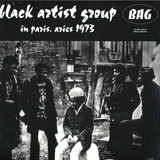
Outstanding free jazz session recorded in 1973 in Paris by Chicago outfit BAG.
It was Lester Bowie, trumpeter with the Art Ensemble of Chicago, who suggested that the Black Artists' Group (BAG) should head for Paris. In 1972 several members of BAG took his advice and flew to France for an extended stay. The following year a concert featuring saxophonist Oliver Lake, trumpeters Baikida Carroll and Floyd LeFlore, drummer Charles Bobo Shaw and trombonist Joseph Bowie (Lester's younger brother) was recorded and subsequently issued as In Paris, Aries 1973, a strictly limited edition LP on the group's own label.
Since the formation of Black Artists' Group in 1968, the home of this multidisciplinary arts collective had been St Louis, Missouri, the city where the Bowie brothers had grown up. It was there that Lester Bowie had started to investigate the expanding horizons of jazz before moving, in 1966, to Chicago where he joined the recently established Association for the Advancement of Creative Musicians (AACM). His close friend Oliver Lake visited Bowie, attended AACM concerts and meetings and was inspired not only by their artistic vision and integrity but also by their efficient organisation. In Chicago musicians were making things happen for themselves, taking control of their own destinies and giving shape to their lives as creative artists.
In June 1969, the Art Ensemble of Chicago had taken their music to France. During the preceding decade Paris had established a reputation for audiences that were unusually well-informed and open-minded, receptive to the uncompromising music of black American innovators such as Cecil Taylor, Ornette Coleman, Albert Ayler and Sun Ra. The city that had nurtured not only Cubism and Surrealism, but also Jean-Luc Godard and contemporary cinema's Nouvelle Vague was well prepared for the sonic collage forms and stylistic dislocations of the Art Ensemble. During that same month violinist Leroy Jenkins, trumpeter Leo Smith and saxophonist Anthony Braxton also arrived in Paris, three further emissaries from the AACM.
The adventure of collective improvisation resonated with the Parisian zeitgeist. Enthusiastic audiences attended their concerts and coverage in the media. In Paris, Aries 1973 offers an isolated and fascinating glimpse into that phase of the group's existence. The album is dedicated to the memory of Kada Kayan, a bassist who had hoped to make the trip from St Louis to France but, tragically, had grown ill and died. His absence adds special poignancy to the sound of the bass when it appears on this recording, played by Baikida Carroll. Listeners keen to hear Kayan himself in the company of Lake, Bowie, Shaw, LeFlore and Carroll should seek out Red, Black and Green by the 10-piece Solidarity Unit, Inc. That album, recorded on 18th September 1970 and dedicated to Jimi Hendrix, who died on that day, features an earlier version of Shaw's composition 'Something to Play On.'
In Paris, Aries 1973 reveals BAG's musical affinities with the Art Ensemble of Chicago. Both groups preserved an independently minded approach to the notion of free jazz and a carefully filtered awareness of pan-African musical practices, while their creative interest in space, mobile structure, chance occurrences and simultaneity also suggests parallels with the concerns of leading experimental composers working at that time. These performances in Paris of Shaw's 'Something to Play On' and Lake's 'Re-Cre-A-Tion,' plus two collective compositions/improvisations, display the dedication to structural fluency and sensitivity to coloration that accompanied BAG's unorthodox group dynamics and their unconventional instrumental combinations. In this case the musicians embrace congas, log drums, marimbas, woodblocks, cowbells and gongs. This is not a showcase for solos, but a shape-shifting and multi-centred statement of togetherness, quest and discovery. Removed from BAG's original multidisciplinary context the music still exudes an exhilarating spirit of collaborative exploration and shared excitement.
Eric D. Johnson rarely lingers at one location too long. As a kid growing up in the Midwest, Johnson's family moved around a lot, but it wasn't until he became a touring musician years later that motion became a central part of his identity. That transient lifestyle stoked an enduring reverence for the world he watched pass by through a van window. A sense of place is a unifying theme he's revisited with Fruit Bats throughout its many lives. From the project's origins in the late '90s as a vehicle for Johnson's lo-fi tinkering to the more sonically ambitious work of recent years, Fruit Bats has often showcased love songs where people and locations meld into one. It's a loose song structure that navigates what he calls "the geography of the heart." "The songs exist in a world that you can sort of travel from one to another," says Johnson. "There are roads and rivers between these songs." Those pathways extend straight through the newest Fruit Bats album, aptly titled A River Running to Your Heart . Self-produced by Johnson_a first for Fruit Bats_with Jeremy Harris at Panoramic House just north of San Francisco, it's Fruit Bats' tenth full-length release and one that finds the project in the middle of a creative resurgence. After two decades of making music, hard-earned emotional maturity has seeped into Johnson's songs, resulting in a more complex sound that's connected with audiences like no other previous version of Fruit Bats. A River Running to Your Heart represents the fullest realization of that creative vision to date. It's a sonically diverse effort that largely explores the importance of what it means to be home, both physically and spiritually. And while that might seem like a peculiar focus for an artist who's constantly in motion, for Fruit Bats, home can take many forms_from the obvious to the obscure. Lead single "Rushin' River Valley" is a self-propelled love song written about Johnson's wife that clings to the borrowed imagery of the place where she grew up in northern California. Then, there's the gentle and unfussy acoustic ballad "We Used to Live Here," which looks back to a time of youthful promise and cheap rent. But the wistful "It All Comes Back" is perhaps the most stunning and surprising track on the album, Johnson's production skills on full display. Built upon intricate layers of synths, keyboards, and guitars, it's a pitch-perfect blend of tone and lyricism that taps into our shared apprehensions and hopes for a post-pandemic life. "We lost some time / But we can make it back / Let's take it easy on ourselves, okay?" sings a world-weary but ultimately reassuring Johnson in the song's opening lines. It's the kind of performance that makes you hope Fruit Bats stays in this one place, at least for a little while longer.
Eric D. Johnson rarely lingers at one location too long. As a kid growing up in the Midwest, Johnson's family moved around a lot, but it wasn't until he became a touring musician years later that motion became a central part of his identity. That transient lifestyle stoked an enduring reverence for the world he watched pass by through a van window. A sense of place is a unifying theme he's revisited with Fruit Bats throughout its many lives. From the project's origins in the late '90s as a vehicle for Johnson's lo-fi tinkering to the more sonically ambitious work of recent years, Fruit Bats has often showcased love songs where people and locations meld into one. It's a loose song structure that navigates what he calls "the geography of the heart." "The songs exist in a world that you can sort of travel from one to another," says Johnson. "There are roads and rivers between these songs." Those pathways extend straight through the newest Fruit Bats album, aptly titled A River Running to Your Heart . Self-produced by Johnson_a first for Fruit Bats_with Jeremy Harris at Panoramic House just north of San Francisco, it's Fruit Bats' tenth full-length release and one that finds the project in the middle of a creative resurgence. After two decades of making music, hard-earned emotional maturity has seeped into Johnson's songs, resulting in a more complex sound that's connected with audiences like no other previous version of Fruit Bats. A River Running to Your Heart represents the fullest realization of that creative vision to date. It's a sonically diverse effort that largely explores the importance of what it means to be home, both physically and spiritually. And while that might seem like a peculiar focus for an artist who's constantly in motion, for Fruit Bats, home can take many forms_from the obvious to the obscure. Lead single "Rushin' River Valley" is a self-propelled love song written about Johnson's wife that clings to the borrowed imagery of the place where she grew up in northern California. Then, there's the gentle and unfussy acoustic ballad "We Used to Live Here," which looks back to a time of youthful promise and cheap rent. But the wistful "It All Comes Back" is perhaps the most stunning and surprising track on the album, Johnson's production skills on full display. Built upon intricate layers of synths, keyboards, and guitars, it's a pitch-perfect blend of tone and lyricism that taps into our shared apprehensions and hopes for a post-pandemic life. "We lost some time / But we can make it back / Let's take it easy on ourselves, okay?" sings a world-weary but ultimately reassuring Johnson in the song's opening lines. It's the kind of performance that makes you hope Fruit Bats stays in this one place, at least for a little while longer.
out of Stock
Last delivered 3 years ago available to reorder, subject to availability
Maltese musician & producer Joon’s galactic debut arrives on our shores fully formed a decade after she first set sail. 12 cuts of uniquely addictive Synthesized Pop twist & turn on the rocky waters of life.
Her story begins after a life-changing car crash on the streets of Malta many moons ago. She was lucky to walk away in one piece. “That car crash was a wake-up call,” she says. “It made me realize how precious life is & I started living the life I felt was worth living.” Inspired to finally pursue her love of music full time, she began collecting instruments. Starting with a Stylophone& a vintage rhythm box, she started documenting ideas. Returning home to Malta after a few years in London, she only met one other woman making electronic music on the island. Driven by the desire to make music possible & accessible for the next generation, Joon co-founded the Malta Sound Women’s Network.
Ten years later, she sends us messages in a bottle from across the Mediterranean Sea. Armed with a Moog & her ethereal voice, she transmits hope & joy from a bedroom somewhere between Sicily & North Africa. Her music is right at home alongside outsider pioneers like Fever Ray, Grimes, Laurie Anderson & Molly Nilsson. Dream Again glides across heavy rhythms & eclectic electro. Telling stories of alienation with a throbbing heartbeat & space-age melodies, she lets us into her ultra-vivid world where anything is possible. Produced by Johnny Jewel, the album shines bright like comet orbiting the label’s dark sky, a much-needed vision of light on the horizon.
“Even if I’m sad or heartbroken, I remain optimistic. I want to grow old with no regrets.”
We’re still harvesting the fruits of those past days in seclusion, the cabin fever induced creative outbursts, ideas that would probably have never surfaced without these enforced trips to our inner minds. Lockdown transcendence.
“Don’t Cry” by Italo-Brazilian DJ producer Stephan Barnem and Futuristant is another impressive testament of those days. Secluded in Stephan’s studio in Northern Italy, the duo subconsciously conjured the spirits of one of their mutual favorite bands, Depeche Mode and created a fierce, boombappy Neo New Wave smasher contrived to send rays of hope into the darkest corners of this mad world. We had to add a gratuitous beatless version to the EP that amplifies the cinematic depth and healing potency of this song.
If “Don’t Cry” echoes the dark brooding euphoria of Depeche Mode’s “Music For The Masses” era, the flipside cut “Elysium” harks back to the synthwave happy days of their debut “Speak & Spell”. It’s a wonderfully careless track that’s bringing a dearly needed breeze of fresh air to today’s discerning dancefloors.
Boys don’t cry for me Argentina. Save your tears for another day.
Wir ernten immer noch die Früchte jener vergangenen Tage in Abgeschiedenheit, der vom Lagerkoller verursachten kreativen Ausbrüche, Ideen, die ohne diese erzwungenen Reisen in unser Inneres wahrscheinlich nie entstanden wären. Lockdown-Transzendenz.
„Don’t Cry“ des italo-brasilianischen DJ-Produzenten Stephan Barnem und Futuristant ist ein weiteres beeindruckendes Zeugnis jener Tage. In der Abgeschiedenheit von Stephans Studio in Norditalien, beschwor das Duo unbewusst die Geister einer ihrer gemeinsamen Lieblingsbands, Depeche Mode, herauf und schuf einen wilden, boombappigen Neo-New-Wave-Smasher, der Licht in die dunkelsten Ecken dieser verrückten Welt senden wird. Wir mussten der EP eine Beatless-Version von “Don’t Cry” hinzufügen, die die filmische Tiefe und heilende Kraft dieses Songs noch verstärkt.
Wenn „Don’t Cry“ die dunkle, grüblerische Euphorie von Depeche Modes „Music For The Masses“-Ära widerspiegelt, erinnert der Flipside-Cut „Elysium“ an die Happy Synthwave-Tage ihres Debüts „Speak & Spell“. Es ist ein wunderbar sorgloser Track, der den dringend benötigten frischen Wind auf die anspruchsvollen Tanzflächen von heute bringt.
Boys don’t cry for me Argentina. Save your tears for another day.
out of Stock
Last delivered 2 years ago available to reorder, subject to availability
Rupert Marnie’s debut album “Evocative Rhythm” is a singular object to begin with. Split over two parts, each one working as an individual piece and under seemingly endless configurations when played together on a pair of record players, “Evocative Rhythm” is an elusive piece of musical abstraction you will play a crucial role in shaping, fashioning it as you dabble with it - certainly curious and cautious at first, then manipulating its raw clay more firmly as you envision it with a clearer idea of where to go with it. Or is that just a mirage?
Fruit of geographical meanderings through Hamburg’s tentacular architecture, Rupert Marnie’s maiden full-length effort reflects that of the city’s tonal, rhythmic and harmonic structures in a uniquely vibrant way: dancy and not, ethereal and full-bodied, oneiric and anchored. From field recordings garnered here and there across town, then either truncated, morphed, stretched out beyond recognition via a wide palette of technical means (granular synthesis, time-stretching, use of resonators, delay, reverb, pitch-shifting…), Marnie weaves a narrative that bridges the gap continually betwixt non-formulaic beatless meditation and proper club-focused functionality, plus the countless possible creations that will emerge when combining both sides of the disc to form your own story out the battery of elements at reach.
Evocative Rhythm” is much more than the sum of its parts. A mirage of ambient, techno, electro, whatever style and labels that could be stuck all over it, yet never managing to say a true word of it.
out of Stock
Last delivered 3 years ago available to reorder, subject to availability
More in tune now with the rhythm of the sun and moon, Xylouris White (Dirty Jim White and George Xylouris) speak to each other across great distances with the intuition and fellowship that can only be found over years in each other"s company. With fewer distractions, appreciative of the freedom to play with new sounds and spaces, they carve The Forest In Me from unbelievably thin air. Once you set the needle down on the record and hear for yourself, the intimacies and impressionism, abstraction and unfiltered emotion found in The Forest In Me, you may wonder what was the mood of the room in which this music came to be. George, Jim and long-time producer (and secret third member) Guy Picciotto share their thoughts: Guy Picciotto: "In late 2019, we had begun taking steps to working on new material. In a haphazard fashion, Jim and I started tracking drums in my basement, cutting them up into shapes with no set landing in mind. Some of it we sent to Giorgos in Crete - he responded with his lyra and his lute. Without intention we had initiated a process that would soon become more ruthlessly mandated by the world events that separated and isolated us to three corners of the globe in the following year." Giorgos Xylouris: "While we were recording, I noticed that the music had a certain solitude about it, both from the title and from inside. That led us to find more music from within that we had not yet discovered." Jim White: "The idea emerged, naturally nourished and nourishing a record with none of our usual angles and themes, no verbal language, no angst nor sudden dynamics, a more subtle structure. And we found The Forest In Me." The first revelation from The Forest In Me is "Latin White", in which Jim"s jaunty pattern sets the stage for George"s Cretan lyra and lute figurations, giving this short dance piece the feel of a welcome hoedown around the campfire, warding off the encroaching darkness of an emptied world. The repetitions, gathered to induce joy, have a glassy-eyed mechanical drive to them; their dervish-istic seeking betrays any suggestion of balm.
the remix release of japanese jazz fusion masterpiece of eiki nonaka which was released in the last summer.
uk balearic master “faze action” chosen one of the best track “flanged vortex” from the album(this track is licensed for great compilation “heisei no to” on music from memory). the result is timeless summer feel balearic slow house.
our new favorite artist in milano “simone du kunovich” chosen very emotional tune which is remind us pat metheny. his remix is stripped down no beats emotional house music. it will be your all time favorite closing track!
out of Stock
Last delivered 3 years ago available to reorder, subject to availability
First release on this Milan-based reissue label fueled by a passionate interest for visionary genre-crossing music,
A young, free-reined musician with a rich music vocabulary and avant-garde sensibilities pours his heart out on cutting-edge musical equipment. Recorded in Northern Italy in 1989 by Michele Tadini, this release effortlessly fuses ambient and library overtones with the influence of early digital electronic music, underlined by an ethereal atmosphere eerily reminiscent of the best soundtracks by John Carpenter. Seemingly unplaceable in time and space, it is both Italian and world-spanning.
out of Stock
Last delivered 19 months ago available to reorder, subject to availability
Batmobile is founded in 1983 by Jeroen Haamers, Johnny Zuidhof and Eric Haamers. They’re considered the seminal Dutch psychobilly band and celebrate their 40th anniversary in 2023. To mark this milestone, they present their 15th studio album, entitled Brace For Impact, which features 13 killer tracks. Grab yourself a Batmobeer and brace for impact!
The cover artwork is created by the illustrator and designer Pieter
M. Dorrenboom, who has worked with Batmobile before.
BraceForImpact is available as a limited edition of 750 individually numbered copies on crystal clear vinyl.
One of the main figures in Alabama’s music scene, Frederick Knight arrived at Stax in 1972 and hit with the country soul of "I've Been Lonely For So Long", making number 8 on the R&B chart, and the subsequent album was a real milestone in his career.
Prior to this he played a significant part as a producer/writer at Neil Hemphill's Sound of Birmingham Studios where the Stax album was cut. Later that decade Knight would again achieve commercial success with his own record label, Juana, and the recordings of The Controllers and, most notably, Anita Ward.
These early 70s tracks have never surfaced on vinyl before, both of which were also recorded in Birmingham. The plaintive ballad "You've Never Really Lived" with its subtle tempo will have you hooked from the off, while "How, When Or Where" is a mid-tempo opus that will please the dancers out there.
On Giver Taker, the gorgeous debut album by Anjimile, death and life are always entwined, wrapping around each other in a dance of reverence, reciprocity, and, ultimately, rebirth. Giver Taker is confident, intentional and introspective. Anjimile Chithambo (they/them, he/him) wrote much of the album while in treatment for drug and alcohol abuse, as well as while in the process of living more fully as a nonbinary trans person. Loss hovers over the album, whose songs grieve for lost friends ("Giver Taker") and family members ("1978") along with lost selves ("Maker," "Baby No More," "In Your Eyes.") But here, grief yields an opening: a chance for new growth. Each song on the album is its own micro-journey, adding up to a transformative epic cycle created in collaboration with bandmate Justine Bowe of Photocomfort and New-York based artist/producer Gabe Goodman. "1978" and "Maker" both begin as Sufjan Stevens-esque pastoral ballads with Chithambo's mesmerizing voice foregrounded against minimal instrumentation and swell into the realm of the majestic through the addition of warm, steady instrumentation (informed by the mix of 80's pop and African music Chithambo's Malawi-born parents played around the house) and harmonies by Bowe. "In Your Eyes" starts out hushed and builds to a crescendo via a mighty chorus inspired by none other than the Lion King. The allusion is fitting: each song encapsulates a heroic voyage, walked alone until accompanied by kindred souls. The choirs present throughout are equally deliberate. Chithambo grew up as a choir boy himself, and several songs (notably "Maker") grasp not only towards reconciliation between his trans identity and his parents' strong religious beliefs, but towards reclaiming his trans identity as an essential part of his own spirituality.
In his South London flat, James Howard gestures apologetically at the mess of books, lined A4 paper and stationary at his desk. “I butcher poetry for a living,” he explains, “It isn’t a pretty job, but someone has to do it.” This being 2022, every emerging musician needs a side-hustle to keep the house warm. In the daytime, our host writes study guides to help teachers teach poetry to pupils who would rather be elsewhere. “I make sure the poems are clinically dead by the time they reach the schools.”
An explanation punctuated by a mildly contrite shrug makes you want to lean forward and remind Howard about some of the stuff other people are doing for a living. And, more to the point, aren’t doing. Which brings us to the real matter at hand. For Howard, foregrounding his own songs hasn’t always come naturally. An enthusiastic collaborator, he made two well-received albums with his previous band Blue House and played with the likes of Rozi Plain, Alabaster dePlume and his wife Dana Gavanski, as well as running his own music night with Sam Tyler in London, Incredible Society. It’s important to mention these creative hook-ups because Howard feels that, in one way or another, they all helped to give form and shape to the lilting lunar lullabies that would ultimately comprise his ravishing solo debut Peek-A-Boo.
Recorded in a little bedroom studio out in Durham, North Carolina, Amelia Meath and Nick Sanborn's debut LP as Sylvan Esso arrived in 2014 at the juncture of pop and experimental. Even now, years later, the LP remains an urgent and fitting introduction to a push-and-pull that would go on to inform the duo's sound - a thoughtful headiness that also wants you to get out on the dance floor. A blend of analog and digital, Meath and Sanborn were two unexpected puzzle pieces fitting together with singular ease, producing a ten-track LP that was both minimalist and shimmering, with dark undulations rippling beneath the synthy-surface and crystalline quality of Meath's voice. Before all of the international touring and festival headlining and critical acclaim, Sylvan Esso was just a shot-in-the dark of musical chemistry gone right. The original album bio for the self-titled presciently sets the stage for the thesis that has gone on to guide Meath and Sanborn's writing since then: "a collection of vivid addictions concerning suffering and love, darkness and deliverance" arriving as "a necessary pop balm, an album stuffed with songs that don't suffer the longstanding complications of that term." And so, even as the band continues to evolve and becomes amorphous, there's still that argument about what pop can be at its core. This is just the beginning of that conversation captured on tape.
out of Stock
Last delivered 3 years ago available to reorder, subject to availability
King Creole was the fourth of Elvis Presley’s Hollywood movies, released in June
1958. Loosely based on Harold Robbins’ novel A Stone For Danny Fisher, about a
struggling young Boxer. Producer Hal Wallis decided it would make a perfect vehicle
for Elvis Presley, and so the lead character became a Singer instead of a Boxer, and
the whole project was promptly transformed into a musical. It’s one of the best of the
Presley soundtracks opening with the title track King Creole penned by Leiber &
Stoller, followed by R&B number Crawfish, and the contrasting Rock'n'Roll track
Dixieland Rock which is reminiscent of Jailhouse Rock. Sadly, it was to be the last
truly dramatic role Elvis was ever given, and Presley himself would always cite King
Creole as his personal favourite out of all the films he made.
Malice was one of the more noteworthy bands of the ‘80s Los Angeles metal scene. License to Kill was their second album and was originally released in 1987. Max Norman produced, engineered, and mixed the album, he’s best known for producing several Ozzy albums during the ‘80s, as well as Megadeth’s Countdown to Extinction, and albums of various other metal bands like Y&T, Armored Saint, Savatage, and Lynch Mob a.o.
Old-school Megadeth fans will be tickled to discover that Mustaine and Dave Ellefson are credited with background vocals on two songs. Another guest appearance was made on this album by Tommy Thayer of Kiss. Founder Jay Reynolds later joined Dave Mustaine’s band Megadeth for a brief spell, and after that became a member of Metal Church.
License To Kill is available as a limited edition of 1000 individually numbered copies on translucent blue coloured vinyl
With the verve of the early onset of a love affair, Julian Muller’s and MRD’s first release on NALI isn’t shy of evoking deep feelings on the backdrop scattered bass lines. The four-track EP draws from transcendental soundscapes and blends them with well-crafted solid techno. Hopeful, revolutionary and yet club driven, the vocals are pop-leaning with a hint of the aesthetics of popularized club culture that came up in the late 90ies. A promising kick-start for the freshly conceived label and its musical agenda.
out of Stock
Last delivered 3 years ago available to reorder, subject to availability
The album The Skatalite was originally released in 1969 and contains some of the best tracks from the Skatalites cut for producer Duke Reid. It was recorded with the classic line-up, featuring Don Drummond on trombone, Jackie Mittoo on piano, and Jonny “Dizzy” Moore on the trumpet. This 12-track set includes “Eastern Standard Time”, “Dan-De-Lion” and “Yard Broom” amongst others.
The Skatalite is available as a limited edition of 750 individually numbered copies on turquoise coloured vinyl.
It seems like a long time since we last heard anything from the talented Secret Circuit aka Eddie Ruscha!
Truth is he's been more prolific than ever...just not with his Secret Circuit alias.
For those of you unfamiliar with his work Secret Circuit is audiovisual artist and L.A. native Edward Ruscha V (yes indeed, son of THEE Ed Ruscha, legendary pop artist) who’s been on the music scene since time immemorial. He has been a member of innumerable bands and projects over the years including Medicine, Maids Of Gravity, Radar Bros and punk-dub outfit Future Pigeon to name a few as well as managing to squeeze in time for his equally multifarious and highly productive solo ventures. In just the last few years he's released a string of records under his own E Ruscha V moniker for labels such as Beats In Space, Good Morning Tapes and Fourth Sounds as well as finding time for several collaborations including Doctor Fluorescent (Crammed Discs), The Parels (Lal Lal Lal) and XLNT (DFA). You could say he's prolific!
So it's definitely a long overdue and most welcome return for Secret Circuit. The "Green Mirror" album is a double LP comprised of 21 new pieces (80+ minutes of music) recorded between 2020 and 2022. It captures that spacey otherworldly quality Secret Circuit is known for, but the music also veers towards the warmer, ambient textural territories that his recent E Ruscha V and Only Thingz projects explored...an altogether softer sensibility.
Yet nevertheless this album is very much "Secret Circuit". Invisible Inc wanted to explore a side of Ruscha's that hadn't been captured so clearly before, focussing on his more emotive yet at the same time experimental side (is that a paradox?). Very rarely do we hear musicians using modular synths to create something so human sounding, and when juxtaposed alongside slide guitars, live bass and vocodered vocals, we have something very special indeed.
Then there's the artwork...all lovingly drawn by the bubbling mind and deft fingers of Eddie himself. The package is made complete with a double-sided colour insert with liner notes (which happen to be written in reverse, naturally, so you'll need a mirror to read them) and another of Eddie's mind-warping doodles.
This is not like anything else you will hear...it's true art and you'll definitely need a very open mind to reap the rewards of this beautiful piece of work. A future weirdo classic in the making
out of Stock
Last delivered 3 years ago available to reorder, subject to availability
When we established Balmat in 2021, neither of us could have imagined that within two years, we’d be putting out an album by one of our musical heroes: Mike Paradinas, aka µ-Ziq. The British producer has been an inspiration to label co-founders Albert Salinas and Philip Sherburne since the 1990s. In fact, his album-length remix project The Auteurs Vs µ-Ziq was one of the very first pieces of electronic music that Philip bought, way back in 1994. To have the opportunity to release his music now feels like a real full-circle moment.
Paradinas, of course, needs no introduction. Under a slew of aliases, chief among them µ-Ziq, the British artist revolutionized leftfield electronic music in the 1990s—coincidentally, this year marks the 30th anniversary of his debut album, Tango N’ Vectif, for his friend and sometime collaborator Aphex Twin’s Rephlex label—and his label Planet Mu has built up a formidable catalog of visionary, forwardlooking records, mapping virtually every corner of the electronic spectrum. With 1977, he turns the clock backward in a sense, and not just with the album’s title: Rooted in classic ambient and electronic sounds, these 15 tracks evoke the anything-goes spirit of the early ’90s, before the tools and tropes had calcified into cut-and-dried styles.
There’s no shortage of familiar sounds on 1977. There are echoes of raves and chillout rooms and transmissions from the fringes of techno; there are detuned synths and glistening reverb tails and, above all, gauzy vox pads, the eerie glue that holds it all together. The title, he says, is meant to invoke a general sense of nostalgia, bookmarking a year in his boyhood when he became more selfaware. More than anything, 1977 sounds like µ-Ziq distilled: Stripped of his signature breakbeats and customary chaos, Paradinas’ first-ever strictly (well, mostly) ambient album presents the essence of his music in a whole new light.
Along the way Paradinas touches on dark-ambient drones (“Marmite”), horror-film themes (“Belt & Carpet”), jungle breaks (“Mesolithic Jungle”), and even house music (“Houzz 13”), which marks the first bona fide dance-floor moment on Balmat to date). Yet the album never—to our ears, anyway— feels expressly retro. Rather, Paradinas plucks timeless sounds out of the ether and gives them a gentle tap, spinning them into unexpected new orbits. At times, 1977 feels like an experience of extended déjà vu: When we first listened to it, we had the sense that we already knew this music. It was as though we had heard it years ago, perhaps on a battered cassette tape lent to us by a friend, and been searching for it ever since. We hope you feel the same.
out of Stock
Last delivered 3 years ago available to reorder, subject to availability
Mammal Hands announce spell-binding new album 'Gift from the Trees', their fifth studio album, pointing to subtle shifts and exciting new departures for the unique trio
"We're at a point now where playing and writing together can sometimes feel almost telepathic, that as individuals we can tune in to a collective resonance..."
Mammal Hands fifth album 'Gift from the Trees' offers a fresh perspective on the unique trio's singular music. The first to be recorded in a residential studio, the band enjoyed the opportunity to go late into the night searching for a deeper, more organic experience, closer to both their writing process but also their trance-like live performances. While some of the music was pre-composed and had even been performed live, the band also enjoyed the opportunity to improvise ideas in the studio. Drummer Jesse Barrett explains:
We wanted to have a more immersive experience that felt closer to our writing process. One thing that was really important to us was feeling free to jam out ideas as they came to us. We're at a point now where playing and writing together can sometimes feel almost telepathic, that as individuals we can tune in to a collective resonance and just follow that thread where it wants to go. Sometimes it's something as simple as a rhythmic, textural flow, like in Sleeping Bear.
There was also a conscious decision to move away from the sound and ambiance of the recording studio, with the band opting to engineer the record with their go-to live engineer Benjamin Capp before mixing the sessions with Greg Freeman in Berlin. The idea was to try and capture more of the energy of the band's captivating shows, saxophonist Jordan Smart explains:
Considering the group of tracks we had, it made sense to try and capture this process as organically and honestly as possible, and so a change in studio environment felt like the right move to us. Some of the tracks have a raw joy and energy that came with being able to play together again after a long period of time of having been apart, and capture that feeling of just being happy to be in a room with our instruments altogether again.
Whereas for pianist Nick Smart there was also the chance to really go deep into the band's music:
The new studio environment really opened us up to different ways of working and thinking because we could record at any hour of the day or night. I think this allowed us much more freedom to try unusual ideas and push elements of the music to extremes because we had the time to really focus in on the detail and work on things without time pressure. With some tracks, we were trying to find the boundaries of our playing ability and push beyond that point. With others, it was just getting into the right mindset and putting as much energy and emotion into the take as possible.'
The Welsh environment outside the studio doors seeped into the music presented on Gift from the Trees, with two recording sessions (one in winter and one in the spring) bringing different moods: one bleak and wintery, the other more hopeful and bright – an energy that permeates through tracks such as Kernel and Dimu.
Gift from the Trees opens with wonderfully elevating The Spinner which grew from one of Nick's piano parts and was developed and arranged into a complete tune without losing the feeling of constant flow and motion. It is almost like a dance, with the interaction of different melody parts and the doubling of certain parts melding together and fitting into the overall energetic flow, while Jesse's drums are both floating and deeply melodic. Riser aims to capture the band's raw energy and intriguingly is influenced by both breaks and modern drum production but also minimalist classical composition. Nightingale features the band at their most delicate and lyrical – a band favourite it draws heavily on modern folk with a beautifully realised melody that came unforced to pianist Nick Smart before being jammed out together. It was recorded early one morning, bringing an extra light and brightness to this beautiful performance.
Another album highlight is Dimu which utilises one of drummer Jesse Barret's favourite rhythmic devices from the Tabla repertoire and draws inspiration from Indian, Greek and Arabic music as well as modern folk arrangements. Dimu starts with saxophone over a bed of drones and percussion and moves through many different sections that frame and present the melodies in unique ways. The beguiling, intimate Deep within Mountains aims to place you in the room with the band as they play; it was recorded late at night to capture a dreamlike, liminal ambiance. The piano solo really reflects this mood and energy while the tenor is some of the softest and closest on the recording. Elsewhere, the remarkable Labyrinth started with what Nick describes as "some weird recording on my phone from a soundcheck, where Jordan was playing some crazy sounding bass clarinet part and I quickly recorded him", giving birth to a captivating, complex slice of propulsive 'almost' contemporary classical that like so much of the music on Gift from the Trees really couldn't be any other band than Mammal Hands.
Finally, the album draws to a close with the glorious Sleeping Bear, a tune that was wholly improvised in the studio. Nick and Jesse entered a simple but 'weird' locked groove and Jordan improvises melodies over the top. The track came about without any planning or thought; it was one of those special things that came by surprise and the band felt offered the perfect ending to their latest gift to us all: a deeply enthralling album that captures so much of what makes Mammal Hands a special band while mapping out new routes and paths for their beautiful, beguiling music.
out of Stock
Last delivered 3 years ago available to reorder, subject to availability
Welcome to the "Consume Land Flea Market". This is the atmospheric setting and at the same time the luminous title of the debut album of young producer Noayama. "It centers on the contradiction between turbo-capitalist consumerism and the desire for vintage stuff in all kinds of shapes and colors to escape reality for a bit. I think it's quite a nice and suitable metaphor for the position my generation is in right now" says the 21-year-old producer, musician and interdisciplinary artist.
On about 40 minutes, Noah Berger, who grew up near Munich, spans a wide musical arc with his alter ego Noayama. He combines Hip Hop aesthetics with playful Electronica and acts skillfully in the interstices of Pop. Hints of 70s Funk hedonism, Old-School House vibes and modern J-pop sensibilities can also be found on "Consume Land Flea Market." The binding agent of the album is Noayama's "Punk Attitude" which comes through clearly on his tracks and beats and is an elementary part of his producer DNA. "I just like to drift, it's very central to the way I work" adds Noah.
Just as important for him are intergenerational collaborations, which adorn his debut work in numerous ways. An illustrious round of artists is therefore represented on CLFM. It starts with young female rap artist Maassai from the New York underground scene who can be heard on the pulsating opener "Get You Back". Also from N.Y.C is Hprizm, a member of the legendary avant-garde rap group Anti-Pop Consortium, who is featured on the dark and gritty "I Went Left" and the bouncer "War." Funkstörung is also involved here. Not too much of a coincidence as Noah has been encouraged since his teenage days by his father Michael Fakesch, one half of the Glitch-hop pioneers who became famous in the late 90s. With "The Legendary Godmother of Japanese Electronica" Coppe' on "Majesty" and the German singer-songwriter her tree on the song "Flâner", introverted pieces have also found their place on CLFM. In addition multilingual verses with Silo Inf3rnx from the townships in Gugulethu on "Ingozi" and on top "the homies from the neighborhood" Anothr and Taprikk Sweezee who give the album further facets through their contribution.
Noayama combines elements and working methods of the last five decades in a relaxed manner and bundles them into a genuine piece of work. Emblematic of this approach is the choice of features. So is the gear he uses. He incorporates old synths (Roland Jupiter 8, Nordlead) and drum machines (Roland 808, Roland 909) with playful ease with common software tools. It's also pretty convenient that he's currently studying Digital Arts at the Kunstuni Linz. In fact, his semester project is the visualization of his own album which means that every single track and every interlude gets its own video. Well, Noayama is just a gambler.
out of Stock
Last delivered 3 years ago available to reorder, subject to availability
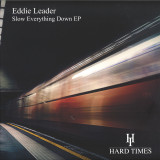
Its been some years since HARD TIMES dropped new music in our laps, but having kick started a new wave with March’s release of Steve ’Silk’ Hurley’s stunning ‘All I Need’, featuring Sara Garvey on vocal duty, the label follows up swiftly with more precision groovemanship.. this time from Hudd Traxx label boss and core HARD TIMES family member, Eddie Leader.
As a DJ, producer, promoter and label boss Eddie has, over a twenty five year career, become a standard bearer for UK House Music. His own productions have graced seminal labels including Classic, Robsoul, Plastic City, Morris Audio and Balance Alliance, while his own Hudd Traxx imprint has become a go-to for many a discerning disc jockey. Its roster boasts releases that feature Matthew Herbert, Rolando, Jovonn, Rick Wade, Agnés and More.
Fresh from remixing Hurley’s ‘All I Need’, Leader now looks to ’Slow Everything Down’ with four fresh jams of his own that all stay true to the Hard Times ethos of quality, deep underground sounds.
Preaching from the front is ’Stand Up’, with its warm groove, piercing piano chords and soulful sermon. So come on… Stand up, to get down. On ‘Gratitude Power’ a seismic kick drum and bass combo pave the way, garnished with keys, synth stabs, bongos and a sprinkling of vocal as the track winds things on smoothly.
‘Slow Everything Down’ is where its at. A calmer, warmer groove, built from raw beats, spoken word and glistening piano. Coolness personified. This is where we're at. Leader slows and closes with final cut ’To Me To You’, icing the EP to perfection with its drowsy and hypnotising keys.
HARD TIMES continue to deliver the good times.
out of Stock
Last delivered 9 months ago available to reorder, subject to availability
Like many debut solo albums from musicians in bands, Jared Mattson’s Peanut didn’t originally come from a need to break away. As a composer for the Mattson 2, Jared Mattson was working up a batch of new songs through the winter of 2019-2020, looking ahead to the next album he and brother Jonathan Mattson, the blitzkrieging drummer, would record. As the pandemic hit stateside, Jared holed up in his home studio and kept developing the new music. And during that process it became increasingly clear to them that this wasn’t shaping up to be the next Mattson 2 album. This was a Mattson 1 album.
Jared had been absorbing the guitar work on records by reggae stalwarts Aswad and Burning Spear, and also the Police’s Andy Summer and the ways he gives songs space. And Jared wanted a prominent bass sound, too, where the guitar itself sometimes settles into the passenger seat so that the bass can drive. Lyrically, the album taps into our rattled world, where anxiety, loss, violence, and regret are sometimes pierced by the promise of love. The time spent working on the album was a profoundly introspective time as he reflected on past relationships while living through and writing during the pandemic, he also never lost sight of this truth about himself: Life is great with music.
One of the album’s standout highlights is “Burn Down Babylon,” which is propelled by the bass’s funk-you-say groove. You don’t often encounter many pop songs with so blunt an opening line as, “I got punched in the face last night by a neo-Nazi,”—a true experience that was delivered many years ago in a bar brawl in Carlsbad, California. But to hear the music that goes along with this tale manages a vibe that is less melee and more backyard jubilee.
When “Please Come Here,” with an intro that slinks along like a Cadillac on a Sunday morning drive, kicks in, it’s typical of the album’s melodic pop flourishes, but the twist here is that the vocals are in Japanese (The Mattson 2 have toured Japan 20 times and covered many Japanese pop songs on 2018’s Vaults of Eternity: Japan). Ween’s “She Wanted to Leave” is the lone cover, but the way Jared reimagines the song makes it fits seamlessly within the album’s sonic template. The song’s inclusion was also a personal way to honor one of Jared’s best friends, who died from cancer two years ago. The two had always bonded over the song and marveled at its inherent beauty. Ultimately, Mattson’s solo debut unfolds like a string of fascinating clouds: These are not songs in a hurry; they shift around as they float by, and, most notably, they carry their unique kind of electric charge.
Potent, seductive, and raw, Love You Anyway, the new album from singer, songwriter, multi-instrumentalist Devon Gilfillian is an intoxicating, genre-blasting game changer. A musical polymath with a deep knowledge and love of vintage soul, R&B, rock and hip-hop, the Philly-born, Nashville-based artist’s second full-length LP re-imagines modern soul music by redefining its possibilities. With an incisive eye and unassuming swagger, Love You Anyway, ignites the mind, and makes the body move. Produced by Jeremy Lutito (Joy Oladokun, NEEDTOBREATHE) and recorded in Nashville, Love You Anyway, confronts as well as comforts. Chronicling Gilfillian’s journey as a Black artist living in the tumult of 21st century America, the album’s 10 original tracks, (all co-written by Gilfillian) are as much about fighting for what you believe in, equity and representation, as it is about love: finding it, making it, and channeling it into every facet of our lives.
Hawthorne is the powerful new album and short film from Queens-by-way-of-Detroit emcee Motown Priest, a gifted lyricist with a penchant for writing gripping narratives. More than just a gifted storyteller, he also has a phenomenal ear for production that helps to take this project to another level. It’s a cohesive, poignant, and incredible piece of art that serves as a searing look at the world we all live in today. “This album and film weren’t about cheap moralism or heady preaching, it's a very simple idea of confronting who we are, and who we are affects the world around us,” Motown Priest explains. “This is where Hawthorne, in both music and film, connects.” He’s true to his word, too, because the album’s 12 tracks bang just as hard as they make you think. They’re the type of songs you can sit with and unpack, or you can blast them at full volume to make your system rattle - or both. Tracks like “For Sale” and “The Calogero Effect” boast soulful, nostalgic production that fits their more meditative narratives of succumbing to vices and childhood innocence. On the other hand, “Pandora’s Box” straight-up slaps thanks to its distorted guitars and live drums, while “New Religion” is an aggressive, teeth-gritting banger. It’s all part of Motown Priest’s plan to fully engage with his audience while delivering one of the year’s best releases, regardless of genre and medium. In addition to the album, Hawthorne exists as a short film that further explores many of the same themes (ceaseless desire, identity, and capitalism) through the visual format.Within its 35-minute runtime, the film follows the same protagonist as the album, a young man who seeks change and fulfillment but doesn’t consider the pain and damage he causes along the way. It makes for a damning look at so many cultural ills, and it couldn’t have arrived at a more fitting time.
Award-winning Vibraphonist Lewis Wright with Matt Brewer (Double-Bass) and Marcus Gilmore (Drums) partnered together in 2019 on their 'The Color of Intention' CD album. We believed that the recordings deserved release on vinyl.
“The Colour of Intention refers to the creative process itself: that in order to express yourself honestly in music, you have to generate clear intentions developed from thoughts and emotions which then colour the work rather than explaining every aspect of it. In the moment of performance, the goal then becomes to put all these previous investigations out of mind and exist in the present. The colour of intention is describing everything except performance; the slower processes of development, reflection and refinement and how they’ll seep, often unpredictably, into everything that ends up being realised. Working with Matt (Brewer) and Marcus (Gilmore) adds the last and most engaging dimension. How they interpret the music, interact and bring their own highly developed languages to bare, creates something that’s both a reflection of my intentions and also infinitely more sophisticated than it’s possible for me to conceive of. I think in this sense, human connection is the greatest element of what it is we do as musicians.” – Lewis Wright
For the lowriders, the souleros, and for any armchair drag racer who still has a record player within reach, Mid-Atlantic Story pays tribute to the aftermarket sounds of soul music, inspired by the record industry's metric trunkload of cruising compilations, legitimate and otherwise, that soundtracked an entire subculture. This getaway ride mixtape strips aesthetics from the timeless East Side Story series, and poaches music from the greater Chesapeake Bay region. Roll with a jacked-up masterpiece.
For the lowriders, the souleros, and for any armchair drag racer who still has a record player within reach, Mid-Atlantic Story pays tribute to the aftermarket sounds of soul music, inspired by the record industry's metric trunkload of cruising compilations, legitimate and otherwise, that soundtracked an entire subculture. This getaway ride mixtape strips aesthetics from the timeless East Side Story series, and poaches music from the greater Chesapeake Bay region. Roll with a jacked-up masterpiece.
’Military Arms’ is the debut output by Gothenburg-based sound-smith Irma Krook. Up until now primarily known as bass player & founding member of death pop vanguards Makthaverskan, Krook has composed four tracks of ethereal beauty, in the sanctity of her own home.
Limitation is the mother of invention and recording from a flat in Masthugget narrows the possibilities even more. Recording her vocals on her phone & making all instrumentals in GarageBand on an iPad - Krook has succeeded in making a big sound from small means.
Uniquely her own, while still honoring the inspirations. Kate Bush á Hounds Of Love-era, Anna Domino, 90’s era Talk Talk, This Mortal Coil & Julee Cruise.
Music you’ll need to take out your furniture before listening, for it to even fit in the room it’s occupying.
’Military Arms’ is available physically on a black vinyl 12” & digitally through all streaming.
It will be forerun by the double-single ’Find Me’ on the 15th of February, containing the B-side track ’I Keep On You’ which will not be available on the full-EP release.
"Released in April 1966 by Decca Records, Aftermath was the Rolling Stones’ fourth British studio album. It was issued by London Records in the US in June 1966. Recorded at the RCA Studios in California, it was their first album released in true stereo.
It is also one of the first ‘popular’ albums to eclipse the 50-minute mark, and contains one of the earliest rock songs to exceed 10 minutes (the blues jam Goin’ Home). The album’s release was briefly delayed by controversy over the original packaging idea and title – Could You Walk on the Water? – due to London Reocord’s fear of offending Christians in the US.
The album was considered an artistic breakthrough for the band, being the first to consist entirely of Jagger–Richards compositions, (after their maverick young manager, Andrew Loog Oldham, had shut them in the kitchen of their flat until they had written some more original songs!).
It also featured strongly the immaculate guitar work of Brian Jones and the remarkably wry, observant song-writing of Jagger–Richards
Jones played a variety of instruments not usually associated with their music, including sitar, dulcimer, marimbas and Japanese koto, as well as guitar, harmonica and keyboards, though much of the music is still rooted in Chicago electric blues. The burgeoning influences of psychedelia, Bob Dylan and the tensions around the world, are evident in classics like Paint It Black, an eerily insistent number one hit, available on the US version of the LP.
Other classics included the jazzy Under My Thumb, where Jones added exotic accents with vibes, and the delicate Elizabethan ballad Lady Jane, with distinctive dulcimer, the wry observational Mother’s Little Helper with its unashamed lyrical drug references, and the overlooked gem – the brooding, meditative I Am Waiting.
The American edition was issued with a shorter track listing, substituting the single Paint It Black in place of four of the British version’s songs, in keeping with the industry preference for shorter LPs in the US market at the time."
"Released in April 1966 by Decca Records, Aftermath was the Rolling Stones’ fourth British studio album. It was issued by London Records in the US in June 1966. Recorded at the RCA Studios in California, it was their first album released in true stereo.
It is also one of the first ‘popular’ albums to eclipse the 50-minute mark, and contains one of the earliest rock songs to exceed 10 minutes (the blues jam Goin’ Home). The album’s release was briefly delayed by controversy over the original packaging idea and title – Could You Walk on the Water? – due to London Reocord’s fear of offending Christians in the US.
The album was considered an artistic breakthrough for the band, being the first to consist entirely of Jagger–Richards compositions, (after their maverick young manager, Andrew Loog Oldham, had shut them in the kitchen of their flat until they had written some more original songs!).
It also featured strongly the immaculate guitar work of Brian Jones and the remarkably wry, observant song-writing of Jagger–Richards
Jones played a variety of instruments not usually associated with their music, including sitar, dulcimer, marimbas and Japanese koto, as well as guitar, harmonica and keyboards, though much of the music is still rooted in Chicago electric blues. The burgeoning influences of psychedelia, Bob Dylan and the tensions around the world, are evident in classics like Paint It Black, an eerily insistent number one hit, available on the US version of the LP.
Other classics included the jazzy Under My Thumb, where Jones added exotic accents with vibes, and the delicate Elizabethan ballad Lady Jane, with distinctive dulcimer, the wry observational Mother’s Little Helper with its unashamed lyrical drug references, and the overlooked gem – the brooding, meditative I Am Waiting.
The American edition was issued with a shorter track listing, substituting the single Paint It Black in place of four of the British version’s songs, in keeping with the industry preference for shorter LPs in the US market at the time."