
Cerca:my everythi

- A1: April In Paris
- A2: Summertime
- A3: If I Should Lose You
- B1: I Didn’t Know What Time It Was
- B2: Everything Happens To Me
- B3: Just Friends
- C1: Laura
- C2: They Can’t Take That Away From Me
- C3: Out Of Nowhere
- C4: East Of The Sun (& West Of The Moon)
- D1: Dancing In The Dark
- D2: Easy To Love
- D3: I’m In The Mood For Love
- D4: I’ll Remember April
- E1: Bloomdido
- E2: My Melancholy Baby
- E3: Relaxing With Lee
- E4: Passport
- F1: Leap Frog
- F2: An Oscar For Treadwell
- F3: Mohawk
- F4: Visa
- G1: Tico Tico
- G2: Un Poquito De Tu Amor
- H1: Begin The Beguine
- H2: La Paloma
- H3: La Cucuracha
- H3: Mama Inez
- I1: Now’s The Time
- I2: I Remember You
- I3: Confirmation
- I4: Chi Chi
- J1: I Hear Music (A K.a. The Song Is You)
- J2: Laird Baird
- K1: Kim
- K2: Cosmic Rays
- G3: My Little Suede Shoes
- G4: Estrellita
38
Fünf legendäre Charlie-Parker-Klassiker in einem luxuriösen LP-Set!
Würde man diese Alben als Original-LPs kaufen wollen, müsste man einen Kredit aufnehmen. Deshalb erscheinen die legendären Charlie-Parker-LPs jetzt als Special Collector’s Edition Box-Set! Fünf der größten (und meist-verkauften) Bebop-Alben aller Zeiten als Neuauflage im Original-10-inch-Format.
Neu gemastert von Alex Abrash bei AA Mastering, 180g- Vinylpressungen, originalgetreue Reproduktionen des Original Artworks von David Stone Martin. Im Schuber befindet sich auch ein 10x10-inch großes Buch mit neuen und exklusiven Linernotes von Ethan Iverson, einem neuen Aufsatz von Autor David Ritz und vollständigen Track-by-Track-Notizen.
Die Alben: „Charlie Parker With Strings“ (1950), “Bird & Diz” (1952), “Plays South Of The Border” (1952), “Charlie Parker With Strings Vol. 2” (1953), „Charlie Parker” (1954)

12
Kombinat 100, the suspiciously band-like live act from northern shores, are set to unleash their eagerly awaited debut album ‚Wege Übers Land’ (ways across the land). Here, everything we know and love about these notorious dancefloor smashers reemerges from the studio, squeaky clean and freshly rinsed, polished and arranged. An irresistible retrospective of Kombinat 100’s countless live gigs, there is no other way this album could have come about: All of the four Mecklenburgers’ tracks have their origins on stage.
So don’t be surprised if you find yourself moshing along from beginning to end! Kombinat100’s eclectic mix and match of influences touches on more genres than you could possibly think of, from techno, house, dub and pop to jazz and beyond, interspersed with plenty of lovingly crafted moments of homemade bliss. And it is precisely those moments, when the boys reach for their acoustic sidekicks, from accordion and melodica to congas and hammond organ, that our hearts miss a beat. Unafraid to flaunt grand emotions, melancholic opener ‚Flieg kleine Taube’ (fly away, dove’) and the sun-drenched sounds of ‘Hanne Nüte’ meet their match in the rocking grooves of ‘Out Of My Space’. In-between, the boys invariably return to their gig-inspired dancefloor roots – ‘Woterfitz’, ‘Del Maritim’ and ‘Der Pomel’ are set to move your heart, feet and mind. So, finally: a breath of fresh, Open Air for your living room!
Kombinat 100, der bandverdächtige Liveact aus dem Norden, veröffentlicht nun mit "Wege übers Land" sein lang erwartetes Debüt- Album. Das, was bisher den Dancefloor zum Einstürzen brachte, bekommen wir nun sauber im Studio aufpoliert und arrangiert. Dabei handelt es sich um eine Retrospektive der unzähligen Live-Gigs der vier Jungs aus Mecklenburg. Ihre Tracks entstehen auf der Bühne, sind für die Bühne konzipiert. Deshalb muss es auch niemenaden verwundern, wenn man von Anfang bis Ende mitgeht. Kaum ein Genre wird ausgelassen, wenn Kombinat 100 seine Einflüsse aus Techno, House, Dub, Pop und Jazz reflektiert. Aber auch die heißgeliebten handgemachten musikalischen Augenblicke dürfen natürlich nicht fehlen. Denn genau dann, wenn sie ihre akustischen Instrumente, wie Akkordeon, Melodika, Conga`s und Hamond Orgel zum Einsatz bringen, schlägt unser Herz am höchsten. Diese Tracks stehen zu ihren großen Gefühlen, wie der melancholische Opener-Track "Flieg kleine weiße Taube" oder das sonnenverwöhnte Stück "Hanne Nüte". In der Mitte wirds dann mit "Out Of My Space" shufflig und rockig. Dominiert wird das Album jedoch durch die Tracks "Woterfitz", "Del Maritim" oder "Der Pomel", welche ganz klar für den großen Floor zugeschnittenen sind. Endlich: Kombinat 100 gibt uns ein Stück Open Air-Feeling für's Wohnzimmer!

No shortage of colorful characters emerged from Cameroon’s bikutsi scene in the 1980’s and early 90’s. Gibraltar Drakus is one of the most enduring and enigmatic of the artists who helped transform bikutsi into a beautifully endless fabric of triplet rhythms that eventually reached ears around the world.
Following the advent of Cameroon Radio Television in 1987, bikutsi began to supplant makossa and soukous for domination of the local airwaves and the attention of cosmopolitan, thrill-seeking residents of Cameroon’s capital Yaoundé and beyond. Biktusi perfectly fused Beti traditional music and increasingly electronic, highly rhythmic guitarbased bikutsi. Mimicking the sound of village-based xylophone music by rigging a mute to electric guitar strings, bikutsi artists provided a relentlessly energetic dance format for those with a taste for music steeped in their hometown sensibility (countering the popular makossa that many felt sounded less indigenous).
By the early 1990’s, Les Tetes Brûlées were indisputably the most famous and influential artists in bikutsi, due in part to the innovations of their incendiary guitarist Théodore Zanzibar Epeme. Following their first European tour in 1987, the band blew up internationally but Zanzibar tragically, and mysteriously, passed away, which nearly brought an end to the band completely. In hindsight, the consensus among most Cameroonians is Zanzibar’s contributions to biktusi were transformational and immeasurable.
“Zanzibar is the one who taught me how to compose a song, and I learned a lot from Zanzibar musically. We spent whole nights working on methods and other approaches to compose beautiful songs. I owe half of everything I have today to Zanzibar!”
Swept up in all this was Gibraltar Drakus, who was the youngest member of Les Têtes Brûlées and was also the protégé of his biggest supporter, Zanzibar. So it was fitting that he dedicate his 1989 debut to their groundbreaking late guitarist who had meant so much to him. Drakus literally exploded from his first album Hommage A Zanzibar (1989), which sold over 100,000 copies despite rampant piracy. For the recording, Drakus made sure he engaged prolific producer Mystic Jim to record and mix the album. The innovation musically rests both within the guitar interplay and the discipline in the orchestration, which result in a mind-bending clockwork of cross-rhythmic harmony.

Julian Cannonball Adderley's only Blue Note album, Somethin' Else, would likely forever be famous in music lore if just for the presence of Miles Davis. The iconic composer/trumpeter steps into the role of sideman on the 1958 set, one of just a handful of times he'd make such a move after the calendar passed the mid-1950s. Yet evaluating Somethin' Else strictly on Davis' involvement misses the big picture. Plain and simple, Adderley's jubilant work remains a jazz landmark due to the chemistry of its Hall of Fame personnel, enthusiasm of its participants, and sophistication of its arrangements – not to mention the reference-grade production and inclusion of the definitive renditions of two all-time jazz standards.
Limited to 6,000 numbered copies, pressed on dead-quiet MoFi SuperVinyl at RTI, and mastered from the original master tapes, Mobile Fidelity's ultra-hi-fi UltraDisc One-Step 180g 45RPM 2LP collector's edition pays tribute to the record's merit and includes the bonus track "Allison's Uncle." Offering reference-calibre sonics, this spectacular collector's version provides a clear, transparent, ultra-dynamic, and up-close view of a cornerstone effort that witnesses Adderley and Davis sharing horn duty alone for the only time in their fabled careers – an arrangement that occurred as a result of Adderley having joined Davis' majestic sextet a year prior.
The premium packaging and beautiful presentation of the UD1S Somethin' Else pressing befit its extremely select status. Housed in a deluxe slipcase, it features special foil-stamped jackets and faithful-to-the-original graphics that illuminate the splendour of the recording. No expense has been spared. Aurally and visually, this UD1S reissue exists as a curatorial artefact meant to be preserved, touched, and examined. It is made for discerning listeners that prize sound quality and production, and who desire to fully immerse themselves in the art – and everything involved with the album, from the iconic photos to the gorgeous finishes.
The vibrant potency reveals itself openly on an analogue set that provides full-range reproduction of an ensemble that also includes pianist Hank Jones, bassist Sam Jones, and drummer Art Blakey. Each and every snare hit, downbeat, and cymbal splash registered by the latter take on realistic proportions, blooming and decaying as they would right in front of you on a stage. Jones' foundational bass lines register with uncommon depth and palpability, the litheness of the strings and fullness of the instrument epitomizing the definition of rhythm. Stellar, too, are the surefooted 88s. Sublime in scale, tonality, and attack, with the delineation such you can practically separate the white and black keys in your mind. As for that liquid interplay between Adderley and Davis? Breathtakingly lifelike in timbre, naturalism, purity, and presence. This collector's version takes you there – there being Rudy Van Gelder's legendary New Jersey studio in March 1958 to witness it all unfold, again and again.
For reasons that extend far beyond the outstanding playing and flawless repertoire, Somethin' Else is without question a record you'll always want to watch and hear come together. As veteran critic Bob Blumenthal observed writing about the album four decades after its release, "The instant rapport achieved by the quintet is thus the product of much shared and common history, though the tensile strength that they create throughout created a totally unique feeling that can be attributed to the sensitive musicianship of all concerned, including the supposedly hard bopping leader and drummer." Such inimitable feeling, or emotion, courses throughout every passage, and no where more obviously than on "Autumn Leaves" and "Love for Sale."
Without question, the discreet interpretations of the Johnny Mercer and Cole Porter songs, respectively, found on Somethin' Else have long been considered part of jazz's alluring mystique. Adderley and Davis bring contrasting approaches to the table yet sound of a singular mind on "Autumn Leaves," with the latter's muted trumpet and the headliner's lush alto saxophone dovetailing into a performance that endures as a blueprint for expression, counterpoint, sophistication, fluidity, and linearity. Blues, melody, and romance pour from their horns. Their bandmates, picking up on the intimate vibe and calm mood here – as well as on the spry, head-over-heels spirit of "Love for Sale" – join in on the conversation with sharp economy and float-on-air roundedness.
Not to undersell the other three numbers, all deserving five-star status. Twelve measures in length, the title track offers a slow burn in swing. Written by Adderley's brother, Nat, the 12-bar "One for Daddy-O" transmits funk flavors. The closing "Dancing in the Dark" pops with lushness and temptation, its stream of bold colours and understated textures calling for a moonlight twirl, or at least fantasies suggestive of a memorable night. Somethin' else, indeed.

- 1: All I Can Think About 0:47
- 2: My Year (This Is Going To Be) 03:03
- 3: Private Spies 04:2
- 4: Comfortable Situation 05:11
- 5: The Beating 03:48
- 6: Hide Without Delay 05:13
- 7: Twice 04:41
When Ryan Olcott, songwriter and frontman of Twin Cities’ iconic indie rock band 12 Rods, found unfinished Rods demos during lockdown, he was surprised. When he realized they were good, he was shocked. He quickly set to finishing and recording the compositions, which became If We Stayed Alive, the first 12 Rods album in twenty-one years. “These are songs that I forgot about,” he explains, “but upon finding them, I thought, ‘Wow, these are actually okay.’” That was the easy part. Reacquainting himself with twenty-year-removed craft and technique took some getting used to -- some parts longer than others. He recorded all the instruments in a week, but vocals took a bit longer. “Oh my god!” he laughs, “it took a couple days to get my voice back with that range and that power, but I could do it.” Any cobwebs that needed dusting are long gone. If We Stayed Alive is everything longtime fans have wanted, and the perfect introduction to what some called “America’s Radiohead" and what others have called one of the best indie bands of the ‘90s.

*REISSUED ON LIMITED EDITION BLUE VINYL*
London-based electronic songwriter Ryan Lee West aka Rival Consoles to release his most personal work to date in the form of a mini-album titled ‘Night Melody’ through Erased Tapes on 5th August 2016. During the release of his acclaimed full-length album ‘Howl’ and heavy touring in late 2015, Ryan came out of a 13-year long relationship and found himself making music throughout the winter months. The result of his efforts is a 34-minute, 6-track mini album ‘Night Melody’, born out of and shaped by long hours working into the night. It’s nocturnal in sound; mysterious in the way that the early hours so often are.
“I found myself, in a silent home, with the days getting dark very early. I’ve never before in my life been affected by the lack of light so much. I just remember it always being night time. I would either make music into the night, go out drinking with friends, or go to parties and dance into the early hours, every day, week after week, month after month, until eventually the days became brighter again.” The opening statement ‘Pattern of the North’ starts off with a collage of spliced synth melodies, inspired by anxiety that accompanies going home for Christmas. It’s followed by ‘Johannesburg’, an early sketch gradually filled out during his tour in South Africa.
“After playing it around some of the cities, I got a lot of inspiration to bring it to life and push it into something that really moves me. I think this is one of my most colourful pieces of music, with its driving rhythm and almost a homage to Terry Riley’s ‘In C’ towards the end, with a build of very simple, hypnotic parts. I especially love that for over five minutes the piece is tied to just one note. This makes the ending very dramatic, because all of a sudden there is this harmonic change.” ‘Lone’ started life around the time Ryan was working on his ‘Sonne’ EP in 2014. It’s the result of constant adjustments to find the perfect balance of fragility and assurance. As everything on the album, it’s a carefully considered, emotionally mature piece. “I think, as I get older, I need music to represent something and not just sound interesting, though of course the two are connected.” The closing statement ‘What Sorrow’ is a fitting end to the album, building from gentle melancholia to a joyous crescendo. It’s a sensibility that’s central to the record; joy and sorrow both find their counterpoints.
“This record is very personal to me and I hope it offers something for other people, as it helped me to make it and to listen to it. Almost every synth line was recorded intuitively, without perfection but with a lot of intention and expression. I’m not interested in making something sad or making something happy. I want music to be bittersweet, to be more complex, like life – containing moments of vibrant colour and hope, as much as darkness and sadness.” This summer will see Ryan follow on from his recent North American Tour with the appearance at many festivals including Lovebox, Secret Garden Party, La Route Du Rock, Sea Change and Tale of Us-curated Afterlife party at Space, Ibiza.

13
The debut album, "Won’t Die This Way," from Cleveland-bred singer/songwriter/guitarist Erin Viancourt brings her lived-in storytelling to a gritty but gorgeously detailed batch of songs, encompassing everything from Americana to Western swing to classic outlaw country. Rooted in the warm and radiant vocal presence she’s shown onstage in touring arenas with Cody Jinks (who recently made Viancourt the first signing to his Late August Records), Won’t Die This Way ultimately reveals her rare capacity to soothe the soul and leave the listener newly empowered to live each day to the absolute fullest.

12
Challenging the critics that put them in a box, PVRIS defied genre and past expectations with songs like the fearless and valiant ‘GODDESS’,
the effervescent ‘ANYWHERE BUT HERE’ and the Mike Shinoda-produced anthem, ‘TAKE MY NIRVANA’. With a huge year ahead playing Sad Summer Festival with Taking Back Sunday, rooms
with POPPY, and UK arenas with Fall Out Boy, PVRIS are ready to burn down the everything you think you know and unleash the album of the Summer.

10
‘Dear Departed’, the second album from Sam Burton, arose from a time of rebirth. In the last few years, Burton basically started over. There’s a freedom in leaving everything behind, and Burton embarked on a wandering phase. He went and stayed at a friends’ family home in a rural region further north in California, where he holed up in a cabin and helped the grandmother farm to earn his keep. He crashed with friends all around Los Angeles, until he found himself a new gig and a new apartment of his own. Along the way, he was writing songs.
‘Dear Departed’ was produced by Jonathan Wilson (Angel Olsen, Father John Misty, Margo Price), and recorded at Wilson’s Topanga Canyon studio with some of the best studio players in LA.

12
The follow up to the band’s celebrated 2020 release Fish Pond Fish and Darlingside’s fourth LP marks a subtle but remarkable departure for the Boston-based quartet NPR once described as “exquisitely arranged, literary minded, baroque folk- pop.” While the album retains much of the lushness and sophistication of Extralife (2018) and Fish Pond Fish, the band’s latest work highlights the individuality of the four songwriters in a way that adds a fitting element of reinvention to an album that captures brilliantly the quality of the moment in which it was made. Grappling with change both personal and universal, with quandaries domestic and existential, Everything Is Alive is an album about loss and the struggle for a semblance of redemption; themes of grief, distance and hope permeate an album filled with vivid imagery and lyrical creativity. Comprised of Don Mitchell, Auyon Mukharji, Harris Paseltiner and David Senft, four likeminded multi-instrumentalists who first met at Williams College in 2009, Darlingside’s career has been defined by the elegance of their compositions and the remarkable unity of their four voices. Their talent for harmony and melodic world-building is part of what garnered praise from outlets like NPR, Rolling Stone and The New Yorker, and what has created demand worldwide for their extraordinary live performances. Becoming beautifully unindividualized has, in other words, worked very well for Darlingside in the past. With a vigor and discipline more common to graduate-level writing workshops than to indie rock, Darlingside have, over the years, experimented with all manners of idiosyncratic methods for elevating and upholding a truly democratic process of songwriting—processes that include multiple rounds of group writing and recording exercises—all with the aim of escaping the trap that bands with multiple songwriters often fall into: the ruse of ego-driven infighting and artistic incoherence. Everything Is Alive is Darlingside taking a risk. Nudged by the limitations created by pandemic isolation, as well as through other more voluntary catalysts, the album, which was produced and recorded by the band and mixed by Tucker Martine (My Morning Jacket, Sufjan Stevens, Iron and Wine), foregrounds in a sustained and heretofore untried way the individual voices of each member.

8
Borrowed Tongue is the debut solo album by Korean singer-songwriter Minhwi Lee. It’s a mysterious, strangely compelling thing, an album of rare poetry, and remarkably self-assured. Originally released in November 2016, the album made waves, winning best folk album of 2016 at the 14th Korean Music Awards. Its eight songs, written and predominantly arranged by Lee, don’t reveal their secrets easily, or at first blush; rather, they take their time slowly to unfurl in her listeners’ worlds. There are hints of other music here, from time to time: the intimacy of Stina Nordenstam, perhaps; the gauzy haze of Hope Sandoval, on the blissed-out pop of “Broken Mirror”; there are touches of acid-folk, and ECM jazz, and a slyly filmic approach to songwriting and arrangement that makes every song fit perfectly into the album’s arc.
Lee arrived at her solo music through a complex, circuitous route. After studying musicology in Seoul, she learned her trade, film scoring, in New York and Paris. She also studied classical music, blowing off steam in a wild punk duo, Mukimukimanmansu, who released one album, 2012, on Korean indie label Beatball. Subsequently, Lee has been refining her music, focusing both on her solo songs, and on writing for television series and films; she’s written scores for films by such directors as Sangmoon Lee, Jeongwon Kam, and Wanmin Lee. She also plays in the jazz outfit Cubed, and recently joined doom metal group Gawthrop on bass.
Since its release in 2016, Borrowed Tongue has slowly bewitched listeners with its idiosyncratic arrangements and evocative songwriting. It’s an album that hints at plenty, but refuses to make grand statements, something Lee seems intent to pursue: in correspondence, she’s very clear that she wants these songs to enact a kind of transmutation, to be adopted into the listeners’ lives and exist within their own imaginings. She does, however, offer a few hints to what propels these mercurial songs, explaining, “this album is about a person who again opens their mouth, which was once shut. The album deals with what it means to speak: things that are known but not said, things that should be said but are not, things that cannot be said but nonetheless are.”
This may well explain the curious mood of Borrowed Tongue, the multiple ‘voices’ that inhabit the album; Lee’s singing voice is pliable and mutable, approaching each song as its own diorama and ensuring the song is sung with just the right tone. The arrangements Lee conjures for her songs are all in service to narrative and melody; they appear to her alongside the composition, which is surely why everything here fits together so beautifully. From there, Lee approaches her songs carefully, in deference to their ‘need to be sung’ a certain way. There isn’t a moment wasted: everything on Borrowed Tongue is as it needs to be, whether a melancholy folk song taking to the air, or a psychedelic reverie dreamed into being. It’s a beautiful, poised and confident debut.

- 1: The Rain Comes Falling Down
- 2: Funeral Intro
- 3: Where Waters Wall Frozen
- 4: Ever-Frost
- 5: Sun Won't Shine
- 6: May Today Become The Day
- 7: Neverlasting
- 8: Dead Moon Rising
- 9: Bleed
- 1: The War Ain't Over
- 2: Despair-Ridden Hearts
- 3: Nepenthe
- 4: Broken
- 5: The Suicider / Excuse Me While I Kill Myself
- 6: Northern Lights
- 7: The Way I Wanna Go
- 8: Dance On The Graves (Lil' Siztah)
- 1: Noose
- 2: Drown Together
- 3: Cross My Heart And Hope To Die
- 4: Aika Multaa Muistot (Everything Is Nothing)
- 5: Farewell
- 6: Brief Is The Light
- 7: Vengeance Is Mine
- 8: No One There
- 9: End Of The Road
26
This live recording of Sentenced's last live performance in 2006 has been only briefly available on vinyl previously in a very small edition. This official new edition by Lipposen Levy ja Kasetti with Svart Records is officially licensed from Century Media. Split over three LPs, this is the full two hour show with 26 tracks. The pressing is limited to 700 copies.

- A1: Can't Touch Us Now
- A2: Good Times
- A3: Mr. Apples
- A4: I Believe
- B1: Grandslam
- B2: Blackbird
- B3: You Are My Everything
- B4: Another Version Of Me
- C1: Mumbo Jumbo
- C2: Herbert
- C3: Don't Leave The Past Behind You
- C4: (Don't Let Them) Catch You Crying
- D1: Pam The Hawk
- D2: Given The Opportunity
- D3: Soul Denying
- D4: Whistle In The Dark
16
Can't Touch Us Now ist das elfte und jüngste Studioalbum der britischen Ska-Pop-Legenden Madness.
Ursprünglich im Oktober 2016 veröffentlicht, markiert es die Rückkehr von Gründungsmitglied Mark Bedford und ist das letzte ihrer Alben, auf dem die gesamte Originalbesetzung vertreten ist. Das Album kam bei Fans und Kritikern gleichermaßen gut an und beinhaltete die Klassiker-Single "Mr Apples", die ein fester Bestandteil des Live-Sets der Band geworden ist. Für diese spezielle Neuauflage wurde das Album auf schwerem Doppelvinyl gepresst, in einer Gatefold-Verpackung präsentiert und enthält brandneue exklusive Liner Notes mit Interviews mit den Bandmitgliedern Suggs, Mike Barson, Chrissyboy Foreman und Lee Thompson.

Malmo-based producer Sacred Grove takes care of the second release of French label Parodia.
Taking his name from an important feature of mythological landscapes, Sacred grove music is like a hole in our dimension, a moment of levitation where everything stops for a minute.
« Through the Mire » is a fantastic 4 track EP of untouchable, fascinating sounds of dance music, taking influences in early deep house and twisting it in a very unique way.
Enter the trip with the EP opener « Dusk » , a mysterious track full of hazy pads and stabs blending together to make you enter into an imaginary forest. Subtle and classy, « Dawn » is the second track of the record, 9 minutes of introspective sounds yet dancable, with an unstoppable groove. If you're not already tripping, your mind is a about to hallucinate with the third track Neusea (Delay mix), the most impactful track of the record, with a laidback peak time roller keeping the same cinematic atmosphere as the other tracks.
Last but not least, B2 track « Loverz » is like reaching the Sacred Grove that you were looking for when you entered this forest, and finally your mind is going in a total trance.

10
After the release of 2001's 'Fuck Art', The Dirty Nil jammed in their practice space for weeks, not overthinking anything or taking any external input. They didn’t sweat the small details or fret over transitions and arrangements. Less second guessing, more reckless abandon. It’s the same approach to rock they’ve taken since they were kids. “We had the best time pulling these songs together. It made me feel like a teenager in my parents’ basement again,” Bentham says. What came out was the appropriately titled Free Rein to Passions. Their youthful rock-worship approach is immediately apparent on the album’s opener “Celebration,” which cuts in via a chugging metal riff, a subtle ode to one of the Nil’s influences, Power Trip’s late frontman Riley Gale. From there, the band indulges their loudest, gnarliest inclinations, making casual nods to their more chaotic favorites, including everything from the Jesus Lizard to the Blood Brothers. And on the album’s catchiest single, “Nicer Guy,” the Nil reminds listeners that they also still wield the power to stitch a perfect, infectious pop hook into their rock fabric. Free Rein to Passions keeps things simple lyrically as well, and doesn’t get bogged down with overly complicated messaging. Nothing overwrought, nothing didactic. Just songs about working soul-sucking jobs, shredding on guitar, and striving to be a kinder person. “The only real central theme of the album is an acknowledgment of the crazy circumstances that we all occupy at this point in time, and being nice,” Bentham stresses. “It’s about being nice to everyone around you, and enjoying your silly little life and not getting too smashed down by prevailing negativity in the air.”

To celebrate its fifteenth anniversary, Gondwana Records proudly announces a highly limited edition series of exclusive coloured vinyl pressings by label peers Matthew Halsall, Portico Quartet and Hania Rani plus newcomers Jasmine Myra and Svaneborg Kardyb and catalogue favourites from GoGo Penguin and Caoilfhionn Rose.

- A1: Intro
- A2: Lost Ones
- A3: Ex-Factor
- A4: To Zion
- A5: Doo Wop (That Thing) (That Thing)
- B1: Superstar
- B2: Final Hour
- B3: When It Hurts So Bad
- B4: I Used To Love Him
- C1: Forgive Them Father
- C2: Every Ghetto, Every City
- C3: Nothing Even Matters
- D1: Everything Is Everything
- D2: The Miseducation Of Lauryn Hill
- D3: Can’t Take My Eyes Off Of You
- D4: Tell Him
16
10
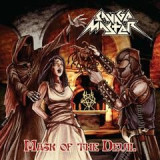
With absolute electricity at every turn as well as the rough 'n' ready charisma of frontwoman Stacey Savage, Savage Master strutted and surged with a power and poise redolent of early '80s US metal. Uniquely, the hooded Louisville quintet put a concertedly occult spin on everything, making them stand out amongst all those trying to reignite a 'Metal Massacre'. Swift and succinct were the eight songs
across the half- hour 'Mask of the Devil'; for however much "star power" was already here early on, Savage Master knew that heavy metal ultimately lived or died on the strength of songs - and they were just beginning to realize their massive potential.

Santana's self-titled debut album announces the arrival of a new Guitar God. Made during the legendary bandleader's most fruitful and creative period, the classic 1969 set functions as an accessible entry point into the tangy worlds of Latin music by way of an intoxicating blend of Afro-Cuban percussion, jazzy tempos, exotic leads, bluesy riffs, and psychedelic accents.
Indeed, separation between Carlos Santana's fluid fills, spicy solos, and broiling grooves and pianist Gregg Rolie's soulful Hammond organ runs allows the music to come alive with a newfound freshness and radiance. Songs simmer, with each passage bursting forth with vibrant colour. Just like the equally essential follow-up Abraxas, Santana also lays claim to one of the biggest (and unfortunate) production gaffes in music history.
For nearly four decades, copies were produced with the left and right channels reversed, meaning that everything was placed in a backwards manner. This even extended to compilations on which individual songs from Santana were included. Rest assured that, in addition to boasting reference audiophile sonics, this 180g 45RPM 2LP set gets all the specifications exactly right. And with a record of this magnitude, you want everything to be perfect.
Bound by natural chemistry and earthy spirituality, the record's innovative synthesis of myriad styles goes beyond anything that came before – as well as nearly everything that's followed. Playing with the finest band that the iconic guitarist ever had, Santana doesn't water down any exotic roots or simply incorporate mainstream Western styles into a Latin framework. This is a true hybrid, responsible for opening up borders, transcending cultural divides, and, most importantly, exhilarating the senses.
Released just weeks after the band blew minds at Woodstock, the groundbreaking record stands alongside Miles Davis' Bitches Brew and Jeff Beck's Beck-Ola as a pillar of rock fusion. Featuring the Top Ten radio smash "Evil Ways" and jam favorite "Soul Sacrifice," it hasn't aged a day. Hear like never before why Rolling Stone says Santana is #149 on its list of the Greatest Albums of All Time.
