Force Placement's AEROBICIDE EP is a killer workout of afterhours acid and galaxian breakbeat.
Four hypnotic bangers from Los Angeles with remix support from DJ Manny, D.I.E., and Martyn Bootyspoon
Los Angeles – Following releases on 100% Silk, Clave House, BANK NYC and Lost Soul Enterprises, FORCE PLACEMENT arrives on EVAR Records with four tracks of naughty squelching acid and breakbeat techno hypnotically calling you to the afterhours, backed by a trio of remixes from Martyn Bootyspoon, Detroit In Effect, and DJ Manny, representing North American excellence in techno, electro, and footwork, respectively.
A longtime friend of the EVAR crew from renegade breakcore parties in Santa Barbara to underground experimental electronics happenings in Los Angeles, Into the Woods and The Black Lodge resident Jason "Force Placement" James taps into his love of weird trippy atmospherics, rhythmic complexity and DIY punk/noise aesthetics to create this quartet of mystic, mysterious bangers, crafted with the MPC1000, Elektron's Octatrack sampler, the Korg minilogue, and Ableton.
The AEROBICIDE EP begins its killer workout with "Yeeks," a cabalistic ass-mover driven by a haunted female vocal sample floating atop locomotive bass and shakers – a factory's worth of industrial sounds and eerie accents move in and out of the mix, adding intrigue and interest.
Moving to the main room of the rave, "Balloon Animal" shoots you through an inflatable tube of squelchy acid techno as knives cut the air around you, while "Upsetter" adds a shuffling breakbeat rave bounce into the acid mix. "Quartered" chops it up with Clone-style dark analog electro that gets increasingly deconstructed by dirty, stretched percussion and rivulets of synth reverb raining down the walls.
Rounding out this occult aerobics class, some of North America's most compelling forces in dance music are called in for remix duty. Unsung electro hero Detroit In Effect aka D.I.E. – the man behind such classics as "RU Married" and "Get Up" – leans deep into the classic Motor City palette, pairing lush, spacey pads with that hard-swung Detroit bounce to create a mellow groover that will keep you going all night. Montreal's world-class party starter M. Bootyspoon recalls Substance Abuse-era Hawtin and mid-'90s Midwest techno on his "Balloon Animals" remix, with nasty claps and concentric loops of hard acid bleeps and squelches. And who better to tackle "Upsetter" than Southside Chicago's footwork futurist DJ Manny? The Teklife king eschews the romantic R&B tones of his recent Planet Mu album for a tough-as-nails rework that ups the tension and the tempo to create an otherworldly saga for the dance circle.
Moff & Tarkin is back on Lagaffe Tales with a record that marks the 9th release in the Lagaffe series. The Austrian based Icelander provides two originals as well as a remix from label friend Uffe. The record starts off with Tension a break inspired banger with that special Moff & Tarkin twist. If you spot the sample let us know and you might win a coupon. The second track "Waisting my what?" feels like something that would work wonders at your local bowling arena or even shopping mall, some piano samples and vocals, you know the drill. The b side is dedicated to a massive Uffe remix, I tell you man, we had to write him back like 5 times and ask him to reduce that bass. Uffe takes Tension and turns it into a jungle journey a la Indiana Jones.
The Covid Pandemic hit Germany in March 2020 and by the 15th of March all of the public life was shut down. It was the same day where my son Rio was born.
For me, this early stage of the pandemic had something very intimate and private, since I was forced to stay at home with my young family for weeks. In Mai 2020 I started to leave the house, for other occasions then just going to the shop or taking a walk and that was the time I started working on “Hotel Solaris”. It was an intense creative rush: in 8 weeks the album was written, performed and produced in one flow. I had two days every week, where I could go to the studio for 4 hours and that time the album was done. It had a corpus in a sense that I
knew I wanted a faster or a slower track at points, but the whole hotel idea came when I saw photos of the old Hotel Arkada on the Croatian island Hvar, that my extremely talented friend Marcella Zanki shot on her holidays.
They show a well preserved socialist-brutalist hotel architecture in the middle of the beautiful Adriatic and for me it was like looking at pictures from a timeless place, without knowing where and when it exactly was, totally surreal.
I liked that idea of a hote that stands as an escape symbol from the real world, which was something everyone needed when the pandemic was building stronger and stronger. I decided to call it Hotel Solaris, inspired by the novel from Stanislav Lem, where Solaris is a planet covered by an ocean which triggers our subconscious mind to
become reality. It all fit at the end and “Hotel Solaris” was done.
“I wanted to try and showcase as many people as I knew on this mix. My idea of Late Night Tales was to distil a series of relaxing moments; the whole conceptual sonic of relax- ation. So, I was trying to think of all the collaborators and friends that I knew, who’d recorded stuff with this horizontal vibe. Plus, I was also trying to help my friends' stuff get into the world. I know the story of Khruangbin blowing up after appearing on the series (in fact, I think that's how I discovered them). So, the main idea was to create a certain atmosphere, but also to help some of my favourite collaborators and bud- dies to give their songs a little push out into the world. Hope you like it” Jordan Rakei
Due for release on 9th April, Late Night Tales celebrate their 20th anniversary with the release of multi-instru- mentalist, vocalist and producer Jordan Rakei’s majestic compilation. The 28-year-old modern soul icon effortlessly stamps his own jazz and hip-hop driven sound all over this gorgeous array of handpicked tracks. A beautifully layered blend that is mirrored in the music he’s made, itcomes as no surprise that such a supremely gifted songwriter should deliver a mix that is all about the song.
Rakei, born in New Zealand, but raised in Australia, moved to the UK in 2015; he released his debut album, Cloak, with Oz label Soul Has No Tempo, but his two subsequentLPs, Wallflower and Origin, came out on Ninja Tune, the former#2 in Album Of The Year for Gilles Peterson’s Worldwide poll, while Origin was nominated for Best Album at the AIM Awards. Jordan had this to say on his upcoming mix:
As Jordan says,there’s so much more to the song selection on Late Night Tales’latest outing than a random collection of artists. Many have some sort of personal connection, so just as Bonobo provided a platform for the breakout of Khruangbin on a previous LNT, this may have the same ef- fect for Rakei’s friends. After a soothing opener from Fink, good friend and big influence Alfa Mist (part of the Are We Live collective) delivers ‘Mulago.’ “I want to champion their sound and show the world how good he is, and I thought it’d be fitting to start the mix with family,” says Jordan.
Next up is Charlotte Day Wilson with ‘Mountains,’ followed by ‘Count A Heart’ from Moreton, an exclusive collab- oration with Jordan, who grew up on the same street in Brisbane, Australia. “She was the first artist I ever collabo- rated with, and one of the first artists to be involved in mycareer,” he explains. Elsewhere we hear Scottish producer and multi-instrumentalist C Duncan’s haunting ‘He Came from the Sun,’ Barcelona collective Oso Leone deliver a dreamy ‘Virtual U’ and Bill Lauren’s ‘Singularity,’ which evokes a striking sense of time and place.
Snowpoet’s ethereal ‘Evitenity’ is a “long mediative nar- rative over a beautiful soundscape,” which at times seems chaotic, nicely juxtaposed with undeniable beauty, and Maro’s kooky songwriting shines on ‘Always And Forever.’ Long-time buddy Armon-Jones contributes ‘Idiom,’ and Jordan’s exclusive cover version is a two-for-one, Radio- head’s ‘Codex’ merging with ‘Lover, You Should’ve Come Home’ by Jeff Buckley and another exclusive,original com- position by Jordan, ‘Imagination.’ The latter works as a piece with the spoken (Spanish) word voiced by movie director Alejandro González Iñárritu (Babel, Birdman, and The Reve- nant,) who is a big fan of Jordan’s. “He messaged me when I went to L.A and asked to come to my show. I was in such shock and we hung out after. I thought it would be nice to get him to do this in his native tongue, because I don’t think that’s been done yet on the series.” It certainly is a familyaffair. Not theblood is thicker than water kind, but certainly musical kindred spirits.
Sam Interface (formerly known as SNØW) returns to the seminal R&S Records following the success of last year’s R&S Presents: More Time Records Vol 1, which was a 4 track compilation featuring Ahadadream, Bala Bala Boyz, Bryte & SNØW.
He is the co-founder of London’s More Time Records, on which he has released much of his own music as SNØW (including collaborations with Zed Bias, Fox, Dread MC & more) and can also be found monthly on Rinse FM and Reprezent Radio playing a range of percussive genres including UK Funky, GQOM, Kuduro, Afrobeats and more.
The name change takes him closer to his first alias Interface, under which he had DnB hits with the likes of DJ Die and more, he explains: “When i first released music back in my early DnB days I used the alias “Interface” and so many people still call me Sam Interface - it feels like the most natural name for me.”
The lead track “Underground” (which samples an announcement from the tube) references a range of London-centric genres, combining polyrhythmic percussion with an extremely upfront bass sound which draws influence from and exxagerates recent drill productions.
“Finally”, a collaboration with an old friend & prolific DnB producer Break follows, bringing frantic motion to the release. The third track “Crud” utilises Sam’s signature gully bass production, flooding the speakers with low end on the drop. The EP wraps up with “Pink Dolphins” - a euphoric dancefloor moment which channels the energy and emotion of jungle, drawing on some of Sam’s earliest rave influences.
Instant is the trio of Bernd Schöll (Bass, Vocals, Rhythm), Mike Hauer (Guitar, Synth, Percussion), and Marion Siekmann (Vocals) from Munich, Germany. They formed in 1980 after meeting through mutual friends attending the local art and graphic design school. The trio were dissatisfied with their surrounding musical environment. Inspired by the Velvet Underground, Kraftwerk, and Giorgio Moroder, they set out to create their own brand of Neue Deutsche Welle fusing Dada, disco, and Krautrock.
Over the course of 2 weeks in Summer 1980 the band teamed up with local producer Mario Strack to record 6 songs. These would make up their debut eponymous album that was originally self-released on 10' vinyl in 1981. They utilized a simple set up of guitar, bass, and keyboards, plus the BOSS DR-55 Dr. Rhythm drum machine. Metal scraps clanging appear on the tracks 'Do Not' and 'Optimate Minimum', and a washing machine was sampled on the track 'Joyboy', which features Marion reading from the appliance's instruction manual. The A-side features 4 tracks in 11 minute, while the B-side hosts 2 songs in the same stretch of time. 'Charade' features no wave saxophone accompaniment from Kai Taschner of Munich New Wave band Luna Set. Marion's vocals are between Nico's Teutonic chill and Alison Statton's (Young Marble Giants) playfulness, while Bernd takes a monotone approach. Lyrics for 'My Boy' and 'Everybody's Gotta Mutate' were adapted from 'Rotwang', a fragmented novel written by Tim Hildebrandt, one of the brothers famous for illustrating the works of Tolkien.
All songs have been remastered for vinyl by George Horn at Fantasy Studios in Berkeley. The vinyl comes housed in a replica of the original jacket design, which features a neon red screen-printed drawing of a cut-out doll family on a stark white background. Each LP includes a postcard insert with lyrics.
Signing on the second release of the label Blue Night Jungle, the duo DudMode disturbs its machines and inspirations around a wild and mystical acid techno - sometimes minimalistic, sometimes extravagant. Two faces of a same coin which the Lyon guys are trying to explore by inviting, for the whole B face, two french artists they feel very close with : Jibis, head-speaker of a new techno beat both dense and aerial , Vardae, owner of the label Allegorythme Records and great defender of a more mental and obscure vibe. « Une Nuit Dans l'Herbe » (« One Night In The Grass ») EP marks the strong come back of lyonnese rave culture's children, already sanctified by a long and sensual experience on the stage.
With S.I.K. (Sociedad Internacional de la Kumbia), Conjunto Media Luna maps a constellation of sounds, friendships, and underground connections stretching across Colombia, Mexico, the United States, and beyond.
Produced in Bogotá between 2024 and 2026 by Iván Medellín, the album draws energy from rebajada culture, low-end frequencies, vinyl obsession, rap, and the hypnotic pull of cumbia. Accordion melodies, sampled fragments, drum machines, and sound system pressure intertwine throughout the record, creating a world where tradition is constantly reimagined through contemporary urban culture.
Featuring contributions from artists such as La Gallo 3:20, Turbo Sonidero, Amantes del Futuro, Mextape, León Pardo, Mismo Perro, and Hito de Piedra, S.I.K. unfolds as a dialogue between scenes that have spent years exchanging records, ideas, aesthetics, and frequencies.
The artwork comes from Mateo Rivano, one of the key visual architects of Bogotá's experimental tropical underground, whose imagery perfectly captures the album's blend of street mythology, sonic futurism, and tropical psychedelia.
Part sound system manifesto, part love letter to the global kumbia underground, S.I.K. is dedicated to everyone expanding the culture from their own corner of the map, through music, dance, graphics, fashion, and noise.
Edition of 600 copies, not sealed
Made with Love by Little Beat More 2026
Published by Little Beat More
Come Back Down, the new album by Nashville experimental-pop duo Total Wife, was born from the edge of sleep. When composer and producer Luna Kupper would begin to fall asleep during late-night mixing sessions, the songs would follow her into the halfway place between dream and lucidity. Like Dale Cooper in Twin Peaks, she'd wake with a new perspective on the puzzle she was piecing together. "I'm a psychological mixer - I'm trying to think of how someone's experiencing the sound, versus getting stuck in trying to make all these different tones and using all this gear to make something sound a certain way," Kupper says. And like a spiral from waking life into dream, the songs on Come Back Down are endlessly self-referential, building whole universes from a single point. Kupper sold all of her synths to make rent before she started working on the album, and so every inorganic sound is instead built from samples of the band's own work. A guitar on one song may be reprocessed and used as a synth on the next, while everywhere on the album vocal samples are taken from a single unreleased cover of Elliott Smith's 'Between the Bars.' In tribute to this process, the album was almost named The Julia Set after the mathematical equation which feeds into itself again and again, creating beautiful fractal images. The intention was to create something complex but accessible; experimental, yet precise and without abstraction. In her lyrics, too, lyricist and vocalist Ash Richter is as straightforward as she's ever been. She drew on her experience of pandemic isolation to write about connection and disconnection, using her lyrics as a tool for the communication that was missing in everyday life. On the soaring, shoegazey track 'peaches,' a storm that forced the cancellation of a recording session became a metaphor for emotional distance. 'still asleep' chronicles Richter's euphoria after Total Wife's first tour, and watches it begin to curdle into paranoia. "Thank the full moon, my heart is overflowing," she sings, before: "Is there such a thing as too happy?" The experience of isolation was prompting Richter to think back to her childhood, a time marked for her by solitude and natural play - climbing trees, making mud pies, getting lost in the woods. On tracks like 'in my head' and 'second spring,' she uses the imagery of nature to recall that time and forge a connection with her lonely inner child. "I feel connected with transcendentalist writing and magical realism - trying to convey things in a concrete way, but with that element of psychology and mystery," she says. Richter and Kupper, friends from high school, formed Total Wife in 2016, relocating from Boston to Nashville in 2020. Both are visual artists as well as musicians, which they incorporate into their work with Total Wife via layered and purposeful visuals. A DIY streak underpins everything that they do - from handling their own artwork and music videos to recording their own music, releasing tapes through their label Ivy Eat Home, and hosting house shows in the basement they've christened Ryman 2. In Nashville they've settled into a weirdo scene living under the record industry's floorboards, a hive of collaborative and creative energy that has made them excited to call the city home. They also assembled a live band for the first time shortly after moving to Nashville, consisting of Ryan Bigelow, Sean Booz and Billy Campbell - injecting their creative process with a jolt of spontaneity and aliveness that has fed back into Come Back Down.
Come Back Down, the new album by Nashville experimental-pop duo Total Wife, was born from the edge of sleep. When composer and producer Luna Kupper would begin to fall asleep during late-night mixing sessions, the songs would follow her into the halfway place between dream and lucidity. Like Dale Cooper in Twin Peaks, she'd wake with a new perspective on the puzzle she was piecing together. "I'm a psychological mixer - I'm trying to think of how someone's experiencing the sound, versus getting stuck in trying to make all these different tones and using all this gear to make something sound a certain way," Kupper says. And like a spiral from waking life into dream, the songs on Come Back Down are endlessly self-referential, building whole universes from a single point. Kupper sold all of her synths to make rent before she started working on the album, and so every inorganic sound is instead built from samples of the band's own work. A guitar on one song may be reprocessed and used as a synth on the next, while everywhere on the album vocal samples are taken from a single unreleased cover of Elliott Smith's 'Between the Bars.' In tribute to this process, the album was almost named The Julia Set after the mathematical equation which feeds into itself again and again, creating beautiful fractal images. The intention was to create something complex but accessible; experimental, yet precise and without abstraction. In her lyrics, too, lyricist and vocalist Ash Richter is as straightforward as she's ever been. She drew on her experience of pandemic isolation to write about connection and disconnection, using her lyrics as a tool for the communication that was missing in everyday life. On the soaring, shoegazey track 'peaches,' a storm that forced the cancellation of a recording session became a metaphor for emotional distance. 'still asleep' chronicles Richter's euphoria after Total Wife's first tour, and watches it begin to curdle into paranoia. "Thank the full moon, my heart is overflowing," she sings, before: "Is there such a thing as too happy?" The experience of isolation was prompting Richter to think back to her childhood, a time marked for her by solitude and natural play - climbing trees, making mud pies, getting lost in the woods. On tracks like 'in my head' and 'second spring,' she uses the imagery of nature to recall that time and forge a connection with her lonely inner child. "I feel connected with transcendentalist writing and magical realism - trying to convey things in a concrete way, but with that element of psychology and mystery," she says. Richter and Kupper, friends from high school, formed Total Wife in 2016, relocating from Boston to Nashville in 2020. Both are visual artists as well as musicians, which they incorporate into their work with Total Wife via layered and purposeful visuals. A DIY streak underpins everything that they do - from handling their own artwork and music videos to recording their own music, releasing tapes through their label Ivy Eat Home, and hosting house shows in the basement they've christened Ryman 2. In Nashville they've settled into a weirdo scene living under the record industry's floorboards, a hive of collaborative and creative energy that has made them excited to call the city home. They also assembled a live band for the first time shortly after moving to Nashville, consisting of Ryan Bigelow, Sean Booz and Billy Campbell - injecting their creative process with a jolt of spontaneity and aliveness that has fed back into Come Back Down.
The practice of dub techno and its tendrils is a fundamental for me, both aesthetically and from an engineering perspective.
I start every recording session with a dub inspired jam, the first piece I ever recorded in 1996 was an effort to recreate Phylyps Trak with only a Korg X3 and an Ibanez PUE5 (borrowed from Gary Howell). It was an awesome introduction to jamming, and the footing stones of noise, delay and saturation were explored with my foot hard on the enthusiasm pedal.
These practice jams are in some sense cathartic, the first step taken again & again, which helps me move forwards each session and additionally helps to 'warm the circuits' both of myself and the machines.
After realising the genius of Basic Channel is akin to the genius of peasant food, using every ingredient with nothing left to waste, (up to and including the oft maligned working noise of the machines themselves), this was a watershed moment for my own subjective progression. No longer tied to just emulation of something inspiring, but taking these learned tools into other areas of music helped to break free from a strong current of influence and also to progress into other areas with the new toolbox.
Dub:
The importance of the dub pioneers should never be understated, in modern music and my own practice. Yet with my initial inspiration being two german dudes issuing extreme techno variants with obscured label designs, who then signposted their listeners to their own inspirations (via their Wackies re-issues or nodded to on their Rhythm & Sound/Burial Mix sub-labels), meant that I started late and travelled backwards.
Learning to notice the live mixing of Mikey Dread or Lee Perry when the faders are bleeding through even when turned down, (echoed in BC's Quadrant Dub), or the brash send effects literally thrown into the mix also taught me that 'rough' mixing can inject a recording with life, uniqueness and the most right wrongness. Looking back Basic Channels very few elements helped me realise that the rules to be understood, are also the best ones to be broken.
Push the mixer into the red.
Amp that noise up from the tape delay cos it sounds sick.
Pseudo side-chain effects cos the kicks are way too loud and the mixer can't sum it nicely.
Spam the send knob into the delay units now, now and now.
Carelessness.
Noise:
Once I wrapped my head around the intrinsic 'noise' element that set those records apart, this became a torchlight into the alt noise movements which I was tentatively exploring at the time, and also is evidently a connection or thread into them.
Whether the Industrial/Post Punk UK scene (This Heat, TG, A Tent, F.E.) or the prolific output of the US Noise scene (Wolf Eyes, Live & Shave in LA, and subsequently following the lineage all the way back to Chrome's Alien Soundtracks), I had finally discovered a connection from techno to this 'free for all' corner of music.
This input from the Noise arena of sound is, in my experience, an all important step for a sonic artist, taking it's roots and extending out from Stockhausen/Pierre Henry and utilised/warped/mangled by thousands of adventurous pioneers ever since, I now see the line separating the high brow and the low brow is actually an artery carrying information from the head to the heart.
Vault is a selection of these jams that precede each of my solo recording sessions, for 30 years I've recorded hundreds of these 'workouts'. They are never intended as serious statements, just moments of naive enjoyment, yet most importantly they are time & space captured as practice.
The objective is always a warm up exercise, but sometimes those exercises turn a different corner, with a certain focus or direction dependent on what random samples are left in my machines from the previous session, instead of conscious choices, these unconscious elements can facilitate those 'positive mistakes' that make a piece of sound retain a different feel or colour and thus become special, or at least special to the creator.
I am quite conscious that the 'record everything' aspect of my ethos has been invaluable in cataloguing and saving these jams, while the attitude of carelessness during this process (after all, it's only a warm up jam) invites more enjoyment than seriousness ever could. Even if you don't feel the piece at the time, record it, because some years later it may well fit, or become relevant in a way you never intended.
-Miles
out of Stock
Last delivered 13 days ago available to reorder, subject to availability
Some recordings herald the future in ways that are impossible to see in real time. Teodros Makonnen With His Organ (ቴዎድሮስ መኮንን ከኦርጋኑ ጋር), by the artist Teodros Makonnen, also known as Teddy Mak, is one of those. Today, electronic sounds, synthesizers, and digital production are taken for granted in Ethiopian music, but in the early 1980s, they were novelties that polarized opinion. Even to this day, the story of Teodros Makonnen’s legacy has never been properly told. He played a decisive role in defining the sound of the digital era of Ethiopian music that emerged in the 1980s and beyond, both as a keyboard player and as a producer, songwriter, performer, and sound designer.
Ethiopian music was at a crossroads in the early 1980s. Much like music in the rest of the world, technology and automation heralded either a quantum leap in musical development or the annihilation of musicianship, depending on who you’d ask. The changes were incremental nonetheless, but with the benefit of hindsight one can clearly see that the changes meant different things in different contexts. Drum machines and electric organs came to replace many hotel bands because, all of a sudden, one musician could control drums, melody, and accompaniment. Teodros was one of the first musicians in Ethiopia to explore the possibilities this opened up.
Teodros’ father, Captain Makonnen Beri, was a chief pilot at Ethiopian Airlines and a music enthusiast at that. This would prove important to his development, as Makonnen brought back a piano from Germany, which would lead to the first steps in Teodros’ long musical career. Captain Makonnen’s work as Head of Flight Operations and as a pilot exposed him to the wider world that was far from commonplace for most Ethiopians. In a house where music captivated the whole family, the piano gave Teodros’ talent an outlet. Not only was a piano at home rare in Ethiopian households, his father also brought an Indian teacher to their home to teach Teodros and his brother, Captain Samuel Makonnen, music theory (solfeggio or ear training) and piano. Teodros and his youngest brother, the late great Dereje, a member of both the legendary Ibex Band and the Ethiopian reggae group Dallol, took up music from that point onward, with Teodros beginning to develop his proficiency at the age of eight. His father encouraged him to practice tirelessly at home, and Teodros later received musical schooling at the German School in Addis Ababa. His obvious talent led to studies and formal education at the Yared School of Music, followed by continued studies in American jazz at Northern Virginia Community College in Virginia. Teodros cut his teeth professionally in his mid-teens, not only as a keyboardist, but also as an arranger for the Wabi Shebelle and Dahlak bands in the 1970s. He mastered electronic sequencing early, rising to prominence through the midnight recording sessions held during the military curfew. The pressures imposed by the curfew required precise and disciplined recordings, and Teodros delivered just that. This, in turn, led to collaborations with iconic artists such as Mulatu Astatke, Aster Aweke, Menelik Wossenachew, Tilahun Gessesse, Mahmoud Ahmed, and Alemayehu Eshete. In those days, he sat in as a keyboardist with the Dahlak Band when Dawit Yifru took a hiatus to study in Russia, and also with the Ethiostar Band. He secured a residency at the Wabi Shebelle Hotel with the Shebele Band, together with Zelalem Tadese (drums), later succeeded by Elias Bekele, Mulugeta Hailu (bass), Teferi ‘Bibisha’ Mengesha (guitar), Kumelachew G/Selassie (trumpet), and Teshome Deneke (saxophone). A friendly competition developed between the bands associated with the Ras Hotel (the Ibex Band), Ghion Hotel (the Dahlak Band), and Wabi Shebelle Hotel (the Shebele Band). The music scene at Wabi Shebelle saw teenagers commanding the spotlight in an industry otherwise dominated by musicians of an older generation. At the Wabi Shebelle Hotel, Teodros met a diplomat from Saudi Arabia and later visited him at his home in Addis Ababa, a meeting that had unexpected musical consequences. The man owned a Yamaha double-deck keyboard. That evening, they recorded Teodros Makonnen With His Organ (ቴዎድሮስ መኮንን ከኦርጋኑ ጋር) in one take. This recording, a cornerstone in the early digital sound of Ethiopian music, came about almost by chance, simply because Teodros got the opportunity. Traditional Ethiopian songs were cast in a wholly electronic style. Once freed from backing duties, Teodros’ keyboards could explore dreamlike soundscapes that took Ethiopian music in new directions. Even though the cassette contained well-known Ethiopian songs, they were given highly original arrangements, performed on an electric organ with drum machine backing and rhythm patterns that left the listener with suggestive, lingering sounds. “Libesh Kabashen” (also known as “Anchi Bale Game”) and “Odu Gol Golesa” wrap you in the very stuff that dreams are made of. Originally released on cassette only, this recording exudes a mystique that surpasses even some of the most obscure Ethiopian recordings of the day. It remained more or less unknown outside of Ethiopia until now. Some of the tracks, like “Addis Fikir,” are permeated with an almost naive buoyancy, free-floating sounds that lost contact with the ground the moment they were conceived. Others, like “Meche New Hageren Yemayew” and “Lelitu Alnega Alegn,” carry a moodier, quirkier timbre, with pulsating rhythms in the background. Yet even the darker pieces contain an unmistakable wave, something essentially Ethiopian. If most recordings of Teodros’s contemporaries at the time were teeming with atmosphere, his songs seem instead at home in the stratosphere, almost ethereal. Some of the music here could be filed under “lullabies,” were it not for the recurring, almost brooding feeling that engulfs the listener on the aforementioned tracks. You could easily be forgiven for drifting into a blissful haze as the music washes over you.
Up to the advent of electronic music production, Ethiopia was totally dominated by big bands on the one hand, and small groups on the other. The former were tied to large institutions such as the military, the latter emerged from the entertainment industry, in hotel bars and nightclubs. These groups were commercially driven, and bands ultimately had to foster a mercenary approach to employment, albeit not to the passion for music. In the light of this, Teodros’ musical legacy can be seen in two ways. On the one hand, he is a key player in Ethiopian music from the 1970s onwards, leaving an indelible mark through hundreds of compositions and arrangements, including soundtracks for numerous documentary films and advertisements for different companies. On the other hand, the way he and others employed electronics brought Ethiopian music onto a fork in the road.
The replacement of traditional instruments with electronic equipment was seen as impending doom by some. Others, like Teodros, saw new avenues for performance, production, and creativity. Just as later producers like Abegasu Shiota of Admas, Teodros was a trailblazer who opened paths that it took Ethiopian music as a whole more than a decade to rush into. The hotel scene had already been pushed toward electronic music by financial necessity and cost-cutting. Today’s revived global interest in Ethiopian music from the seventies and eighties, alongside a broader resurgence, has changed the reasons for using digital means of music production. They have become tools for musical dreaming. This is where the dreaming began.
out of Stock
Last delivered 7 days ago available to reorder, subject to availability
Remastered limited edition double vinyl with double-sided screenprinted poster-cover (sleeve folds out to be one huge poster). A real collectors item!
When Off Off came out around June 1984, one couldn’t speak of an independent music scene in Portugal. Warm Records’ vague existence didn’t have any impact and Dansa do Som’s inaugural release appeared only in December. 10 years after the revolution, after two IMF interventions, a lot of political instability (not to say turmoil, in the first couple of years) and the natural excesses of a sudden burst of freedom, the Portuguese consumer had more choices but a generally poor standard of living. There was no entrepreneurial culture and serious second thoughts about investing private money in risky ventures.
After many complaints about the whole music scene (institutions, critics and record label executives, popular and classical music alike), something that would continue well beyond the end of the decade, Telectu decided to finance, record, produce, release and sell an album with complete independence from outside structures. Their karmic reward was profit. According to Vítor Rua, Off Off was the only album fully payed by the duo and the only one that really payed off. Not an easy accomplishment for a double LP housed in a large (also double-sided) screenprint with complicated cuts and folds. The artwork was conceived by António Palolo, a friend and multidisciplinary artist. It was based on a collage of heavily saturated and xeroxed polaroids framed in shocking pink and green. Palolo was considered the third member of Telectu, regularly producing slides, video and other visual support for their shows. The inspiration for the type of cover came from GRM’s Gramme series.
Off Off is divided in four distinct sides, each one corresponding to a “theme” or “function” related to Telectu’s manifold artistic interests and interactions. The titles are also gateways to influences and a small portion of Portuguese cultural life:
- Side 1 / “Diagonale” is dedicated to Egídio Álvaro, art critic and gallery director (he opened Diagonale in Paris). Performance art was arguably his main artistic concern over the years, so the music on this side is suggested for use by one or more performers in live or playback situations. The three tracks segue into each other, linked by a synth arpeggio much in the same way as Telectu’s previous “Belzebu” álbum (1983);
- Side 2 / “Anarké” is dedicated to the composer Filipe Pires, one of Jorge Lima Barreto’s recurring invocations when asked about worthwhile contemporary music in Portugal. It is subtitled “concert music”, proposing «a new form of listening». Three tracks also, and these are separated by “clap interludes”, which basically consisted in the following: JLB and VR each had a pair of headphones on, and they clapped their hands according to the rhythm of the music each one was listening. Both musicians were interacting with a different Steve Reich piece: Vítor with “Music for Mallet Instruments”, Jorge with “Six Pianos”. The result is disjointed clapping, an awkwardly deliberate celebration of their own music. Telectu applauded themselves.
- Side 3 / “Cornucópia” is subtitled “music for theatre” and dedicated to Luís Miguel Cintra and Luís Lima Barreto (JLB’s brother), both connected to the Cornucópia theatre company. The side consists of several short pieces previously used as interludes in the Cornucópia staging of “Mariana Espera Casamento” (1983). Field recordings, mood pieces, ambience and a numeric poem (“Soneto Soma 14x”, by E.M. de Melo e Castro) read by João Perry, a quite well-known stage actor. His voice is treated with a flanger effect;
- Side 4 / “Palolo” is “video music”. It’s a one-take mix recorded from cassette sources (Telectu studio experiences) and done live while watching António Palolo’s Om film (1978) projected on the living room wall. It’s a deep, immersive, quasi-mystical 20-minute piece perfectly suiting the meditative, abstract, fluid images created by Palolo by mixing paint and water inside a bathtub. One imagines the Cosmos, hardly suspecting the technique. The film is 90 minutes long, so the music on the LP is of course edited.
The six titles on sides 1 and 2 evoke demons, all of them with conflicting symbolism, since it varies from culture to culture, religion to religion. No explanation is given and Vítor Rua has no idea where this imagery comes from. During virtually the whole stretch of the 1980s, Jorge was the one in charge of titles and concepts, and Vítor didn’t bother too much even reading the liner notes :) In any case, when you synchronize the listening experience with the imagery, a powerful impression emerges, a feeling of being in the presence of these entities while placing yourself inside the sonic narrative.
Off Off is undoubtedly a seminal album in the history of electronic music, as much Heldon as Fripp & Eno, jazz and American minimalism, cosmic out-thereness, mantric miniatures. Telectu at the height of their powers, still very early on, delivering an album-manifesto advocating intermedia art and the fierce independence of Portuguese musicians «from the scum of capitalist music industry monopolies. It’s a path to follow, albeit one that requires enduring hardships and retaliation from music industry gangsters.» Despite a few journalists deemed «capable of being free», the media are «enslaved by the dominant and fascist imbecility of the speculators of light music.» Off Off is addressed to those journalists «and to an audience angry at the cultural misery imposed upon us ..., certain that this music will open new horizons of musical pleasure in the conception of Portuguese avant-garde music, and in the open consciousness of us all. OFF OFF repeats Freedom.»
Those two words are a direct lift from Alberto Arbasino’s 1968 book Off Off, the basis of which is a critical analysis of Theodor Adorno’s and Dwight MacDonald’s ideas concerning the stratification of culture in different levels (high, mid and low) and the pervasiveness of mass culture in the form of a culture industry. In very simplistic terms, and that is precisely the point that inspired Jorge, Arbasino argued that it was possible and desirable to effect a revolution from below, cultivating alternative circuits completely cut-off from what he termed the in-in reality. Telectu’s record was a deliberate demonstration that it could be done, displaying Freedom in the face of all the gatekeepers and other human obstacles.
Friends of Jesse Malin: I Would Do It For You – Vol. 1 brings together musicians from the worlds of rock, punk, Americana, and the underground to celebrate one of modern rock's most respected songwriters. "I've been a fan of Jesse Malin for decades now so I was thrilled when Valley Lodge was asked to be a part of the tribute album,”says Dave Hill. The song originally appeared on D Generation’s 1996 album, No Lunch. "'Too Loose' has always been one of my favorites—a great and timeless rock song that we had a blast re-interpreting." Produced by Lyle Hysen, Friends of Jesse Malin: I Would Do It For You Vol 1. is the first in a two-volume series of nearly 80 songs (!) recorded by Jesse’s friends and community. Proceeds from the album will benefit Malin’s healthcare as he recovers from a paralyzing spinal stroke. Vol. 2 will feature Thurston Moore, Willie Nile, and many more. "Friends, collaborators, and artists from every corner of Jesse's world wanted to be involved," says Hysen. "The songs just kept coming. What started as a single collection quickly grew into something much bigger, encompassing almost the entire Malinverse. We're excited that this is only the first chapter." The compilation features contributions from Amanda Cross, Bebe Buell, Trapper Schoepp, Valley Lodge, Danny Sage, James Maddock, Gogol Bordello, Ursa Minor, Sami Yaffa, Prima Donna, Das Damen, Rene & Grace Mata, Dead Milkmen, Cat Popper & Sasha Dobson, Robinlee Garber, The Seashore Sharks featuring Jesse and Alexei Sanoff, Derek Cruz, Jill Fiore, Matt Madly & Co., Davey La, American Dream, Joe McGinty, Randy Schrager, Stephen Chopek, Ben Foley, and Kelley Swindall. Friends of Jesse Malin: I Would Do It For You – Vol. 1 will be available digitally, on vinyl, and as a deluxe double-CD edition. The vinyl release features twelve tracks across two sides and includes a download code for the complete digital collection, while the CD edition presents all 26 songs across two discs.
A first-generation Nigerian-American hailing from Katy, TX, singer-songwriter Blessing Jolie creates pop music that straddles the line between introspective indie-folk and R&B. Like Tracy Chapman and Alanis Morissette before her, her songs are stories steeped in the vulnerability and messiness of a young woman growing up– from experiencing love for the first time to the effects of imposter syndrome to finding your place in between cultures and expectations. "I watched all my old friends graduate college while I was still chasing a dream. I wondered who I would’ve been if I took the same four-year route—but I’m learning to stand by myself through clarity, mistakes, and every detour. My life is mine to build and experiment with however my heart leads." - Blessing Jolie on Software Developer "Software Developer" is the third single leading up to Blessing Jolie's debut album with Thirty Tigers, 20Teens.
It is virtually impossible to describe with mere words how emotionally powerful this work of art is. Just listen. Listen, listen, listen...
A blissed-out 80-minute epic, Hatchback's Phaser For The Ocean, Chorus For The Moon is his magnum opus, a sprawling masterwork that encompasses ambient, new age and environmental music to wondrous effect. Moving, hypnotic and deeply meditative, it's FFO Mike Brooks, Deuter, Klaus Weiss, Innovative Communication, Harmonia, Cluster, Ashra's New Age of Earth, Stomu Yamashta, Haruka Nakamura, Yoshimura, Hosono, the works.
A record truly deserving of the deluxe Be With treatment, the vinyl was specially cut at Abbey Road Studios whilst the original stunning artwork has been pleasingly expanded. Now, an eye-catching holographic-foil layer moon is set against the original tones, wrapped up in a sumptuous double-gatefold jacket.
Soaked in Californian consciousness and limited to a run of just 500 copies for the world, this release is a treasured balm like no other for these troubled times.
Hatchback is the atmospheric, melodious ambient alias of California-based artist Samuel Milton Grawe. Sam creates music that sings of the Cosmos, full of deep resonant tones, glistening arpeggios, lush pads and harmonic motifs.
"When I first was getting into the creative side of music making in my teens, I was heavily influenced by concept albums like Quadrophenia and The Lamb Lies Down on Broadway, as well as epic pieces that took up an entire side of a record: Pink Floyd’s Echoes, Yes’ Close To The Edge, Klaus Schulze’s Nowhere Now Here, Miles Davis' Shhh/Peaceful and He Loved Him Madly. In the extreme, these ideas coalesced in double albums where each side of each record is occupied by a single title - Yes’ Tales From Topographic Oceans and Tangerine Dream’s Zeit being primary examples. When I returned to making music after moving back to Northern California in 2020, the first piece I recorded landed around the 20-minute mark, and the idea of creating three other long pieces to realize a full album felt like a natural - if indulgent - goal. From there, each new piece followed sequentially. Four songs. My fourth album." - Sam Grawe
Phaser For The Ocean Chorus For The Moon is a pure expression, informed by a lifetime of deep listening unbound by algorithms or AI. These are songs for the sunrise and the sunset - and every colour in between.
out of Stock
Last delivered 10 days ago available to reorder, subject to availability
With S.I.K. (Sociedad Internacional de la Kumbia), Conjunto Media Luna maps a constellation of sounds, friendships, and underground connections stretching across Colombia, Mexico, the United States, and beyond.
Produced in Bogotá between 2024 and 2026 by Iván Medellín, the album draws energy from rebajada culture, low-end frequencies, vinyl obsession, rap, and the hypnotic pull of cumbia. Accordion melodies, sampled fragments, drum machines, and sound system pressure intertwine throughout the record, creating a world where tradition is constantly reimagined through contemporary urban culture.
Featuring contributions from artists such as La Gallo 3:20, Turbo Sonidero, Amantes del Futuro, Mextape, León Pardo, Mismo Perro, and Hito de Piedra, S.I.K. unfolds as a dialogue between scenes that have spent years exchanging records, ideas, aesthetics, and frequencies.
The artwork comes from Mateo Rivano, one of the key visual architects of Bogotá's experimental tropical underground, whose imagery perfectly captures the album's blend of street mythology, sonic futurism, and tropical psychedelia.
Part sound system manifesto, part love letter to the global kumbia underground, S.I.K. is dedicated to everyone expanding the culture from their own corner of the map, through music, dance, graphics, fashion, and noise.
Edition of 600 copies, not sealed
Made with Love by Little Beat More 2026
Published by Little Beat More
Joaquin ‘Joe’ Claussell returns to the Spring Revisited project, and he delivers another jazz-infused house mix of a classic funk track by the iconic Fatback Band. Spring Revisited is collaborative project between Ace Records and Acid Jazz, inviting influential house music producers to reinterpret classic tracks from seminal New York label Spring Records, a pioneer in funk, soul and disco. After a series of sell-out and chart-topping 12” and 7” releases, as well as a 2LP compilation, the project continues with these two new mixes of the Fatback Band’s ‘(Do The) Spanish Hustle)’. Claussell combines the original classic funk elements with Latino percussion and samba-styled trumpets.
First up is his 'Sacred Rhythm Version’, which lifts the tempo and loops a section of the original's percussion. Keeping the trumpets, and soulful vocal phrases, he adds a DJ-friendly kick drum and shows off his improvisation skills with a vibrant synth line. On the flip, he strips back some of the drums and horns and focuses on the bassline with the 'Spanish Harlem Dub,' which is a moody rework utilising some funk-infused organ chords. On the original track Joe says: "I can vividly recall the very first time I heard Spanish Hustle blasting through my brother Jackie’s stereo system. Not long afterward, I experienced its energy again on the dance floor at a discotheque known as The Inferno, where it was masterfully delivered by the legendary René Hewitt. The record left an imprint on my spirit that never faded.’ A spectacular continuation of the series, presented in the nowsignature Spring Revisited housebag, resembling an original worn-in promotional 12”, pressed in a strictly limited run!
out of Stock
Last delivered 14 days ago available to reorder, subject to availability
Hatchback is the alias of Samuel Milton Grawe. Sam creates music that sings of the Cosmos, full of deep resonant tones, glistening arpeggios, lush pads and harmonic motifs. ‘Phaser For The Ocean, Chorus For The Moon’ is his magnum opus, a sprawling masterwork that encompasses ambient, new age and environmental music to wondrous effect. Soaked in Californian consciousness, the album is a balm like no other for these troubled times.
When I first was getting into the creative side of music making in my teens, I was heavily influenced by concept albums like ‘Quadrophenia’ and ‘The Lamb Lies Down on Broadway’, as well as epic pieces that took up an entire side of a record: Pink Floyd’s ‘Echoes’, Yes’ ‘Close To The Edge’, Klaus Schulze’s ‘Nowhere Now Here’, Miles Davis' ‘Shhh/Peaceful’ and ‘He Loved Him Madly’. In the extreme, these ideas coalesced in double albums where each side of each record is occupied by a single title - Yes’ ‘Tales From Topographic Oceans’, and Tangerine Dream’s ‘Zeit’ being primary examples. When I returned to making music after moving back to Northern California in 2020, the first piece I recorded landed around the 20-minute mark, and the idea of creating three other long pieces to realize a full album felt like a natural - if indulgent - goal. From there, each new piece followed sequentially. Four songs. My fourth album. - Sam Grawe
‘Phaser For The Ocean Chorus For The Moon’ is a pure expression, informed by a lifetime of deep listening unbound by algorithms or AI.
These are songs for the sunrise and the sunset - and every colour in between.
a 01. And The Walls Became The World All Around [18:53]
[b] 02. Phaser For The Ocean, Chorus For The Moon [21:48]
[c] 03. Other Desert Cities [20:19]
[d] 04. Friendship Fountain [18.33]
out of Stock
Last delivered 6 days ago available to reorder, subject to availability
Hazel Eyes, the highly anticipated fifth studio album from multi-Platinum, GRAMMY®️, BRIT, Golden Globe and Oscar winning artist and songwriter Sam Smith, is released on 21st August 2026 via Capitol Records UK.
A heartfelt ode to the city of New York Sam now calls home, Hazel Eyes captures themes of emotional vulnerability, artistic freedom, and self-reflection. Created alongside longtime collaborator and friend Simon Aldred, the album includes the new single My Guy, along with To Be Free and Love Is A Stillness.
Maverick folk artist and touring veteran Rev Hammer has been writing and releasing music for over 40 years. He regards his music not so much as a passport to fame and fortune but as a ticket to ride and has enjoyed numerous tours, collaborations, and projects over his long and varied career. The Old Crow Folk Club album features 23 of his songs re-imagined by friends and artists including Justin Sullivan (New Model Army), Mark Chadwick (Levellers), Maddy Prior (Steeleye Span), Simon Friend (Levellers), Seth Lakeman, John Jones (Oysterband), Dan Donnelly & Jon Sevink (Levellers), Nick Harper, Kathryn Roberts & Sean Lakeman, Nick Parker,
This limited vinyl edition of Brain Invaders offers another chance to experience the album in
its most iconic format. Faithful to the original release, it features high-quality pressing andpackaging, making it a must-have for collectors and fans alike. Part of Be the Change, a project conceived and developed by Rude Cares to raise awareness about climate change and environmental sustainability within the music
community, this exclusive eco-friendly variant is more than just a vinyl release. Created in collaboration with artists who share this vision, each edition supports a more sustainable future: a donation is made to Green Future Project for every release, and 100 new trees are planted to fully offset the project's residual environmental footprint. A timeless album with the same energy and impact that made it a fan favorite, Brain
Invaders remains an essential addition to any punk rock vinyl collection—now with a positive
impact beyond the music.
Soul Music legend Candi Staton returns to her down-home Alabama roots on her 32nd album, Back to My Roots. The twelve-track Americana set features an array of Staton-penned originals and some well-chosen covers.
"These songs represent my roots," Staton adds as she reflects on her many trials and triumphs. "Even the new songs on some level represent something I've experienced and that's what real soul music is about." Back to My Roots was produced by Staton with her second eldest son, Marcus Williams, a professional drummer who has toured with the likes of Peabo Bryson, Isaac Hayes, and Tyler Perry. They brought in Mark Nevers of Lambchop fame, who produced three of Staton’s prior Americana albums for Honest Jon’s and Thirty Tigers, to sweeten certain tracks. “Some of the first songs I ever heard were songs like `Peace in the Valley’ and `It’s Gonna Rain,’” says Staton. “The new songs or cover songs are tracks that remind me of that era when I was growing up as a child and evolving as a young woman. That’s why I named the album Back to My Roots because I’m going back to the roots that made me who I am.”
Staton received the Americana Music Association UK’s highest honour, the International Lifetime Achievement Award, at the UK Americana Music Awards ceremony at Hackney Church in London last year for her southern soul work that stretches from her 1969 Muscle Shoals hits to her more recent collaborations with the likes of Americana kings Jason Isbell and John Paul White.
The album opens with a mid-tempo Bonnie Raitt-styled contemporary blues “I Missed the Target Again” that finds Harry Connick Jr.’s longtime guitarist Jonathan DuBose Jr. (aka the Prophesying Guitarist) showing off his skills that set the tone for the song and the album.
Staton’s older sister, Maggie Staton Peebles (who alongside Staton was a member of the Jewel Gospel Trio in the 1950s), joins her for two duets. The first, “It’s Gonna Rain,” features just a drum, steel guitar and vocals. “My mother used to sing that song to us all the time when I was a child,” Staton recalls. “It’s a really soulful kind of song I wanted to revisit.” They then take turns leading Thomas Dorsey 1939 gem “There Will Be Peace in the Valley” that Elvis Presley popularized in the 1950s.
“Hang on in There” is a new, mid-tempo song that has an old school gospel flavour and features vocals from veteran bluesman, Larry McCray.
While in Europe in 2023 for her farewell concert tour that took her to the Glastonbury Festival and Love Supreme, Staton and her British band, PUSH, went into a London studio to record a new version of The Rolling Stones’ 1972 gem, “Shine A Light.” “I love the way that came out,” Staton says. “We put a big choir on it and put our own twist on it.”
From there, Staton revives another Thomas Dorsey classic, “The Lord Will Make a Way Somehow,” with a bluesy vibe. When Al Green started recording gospel in the early 1980s, he re-introduced this song into the culture.
“God’s Gonna Use Me Anyway” is a new mid-tempo blues with subtle Caribbean influences.
The mood takes a turn on “1963.” It’s a poignant, spoken-word reflection on September 15, 1963, when four black girls were killed in the Birmingham Church bombing. “I was in the city that day and I remember the chaos and horror after the bombing,” Staton recalls. “Just thinking of how racism and hatred caused those men to kill those girls was so emotional for me that I could only do it in one take.”
It's a perfect segue into "Reach Down and Touch Heaven," a haunting, plea for divine intervention into the affairs of mankind. "That's straight Baptist," she says. "I used to be a church pianist back in the 1960s. I've never played piano on one of my records before so that's a unique song for me because I’m finally playing on one of my records. The message of that song is about the homeless. It came to me when a homeless person on the street asked me for $5. When God touches your heart to help somebody else that’s heaven to God’s hears. So, when we reach into our purse or wallet to help someone, we’re touching heaven."
Staton offers love as an antidote to hate on the bouncy, Motown-styled, “Love Breakthrough.”
Her publicist brought Aaron Frazer & the Flying Stars of Brooklyn NY’s 2017 cut “My God Has a Telephone” to Staton’s attention. She shifts the track from a retro 1960s groove to more of a 1980s Malaco Records arrangement, a subtle but distinct variation. Staton brought in her longtime friend and STAX Records legend, William Bell (“I Forgot to Be Your Lover” and “Trying to Love Two”), to add raspy seasoning to the track.
The album closes with the wistful, “In God’s Hands We Rest Untroubled,” that was originally written and recorded by the late country star, Lari White, who died in 2017 at the age of 52. “Lari sent me that song to consider at least ten years ago and I always loved it,” Staton says. “The record label didn’t want it on the album or something, so I just held it.”
Staton says, “I grew up hearing a lot of these old songs when they were new songs. I toured with the Jewel Gospel Trio in the 1950s and we got to know people like Mahalia Jackson, Sam Cooke and others who sang these types of songs. So, I’m sort of paying tribute to them and the influence they had on me by refreshing these songs and making new songs in the old style.”’
born (literally) in fire, soma flared briefly as the alchemical pairing of two unique and dynamic musicians. david thrussell and pieter bourke met through mutual friends in the artistic melting-pot of early 1990s elwood, melbourne, australia. bourke was an integral member of the gothically ambient eden, thrussell frontman of anarchic industrial combo snog. both admired each others work, and though some considered them an unlikely combination, something rather potent was brewing which drew them inexorably together.
initially bourke joined snog live and then in the studio, contributing mightily to their epic second album ‘dear valued customer’. as a natural result of their friendship and muse, thrussell and bourke instituted their own project, soma, to explore the intersections of arcane and mysterious technologies. the first soma album “hollow earth” was released to acclaim.
soon after, thrussell was awoken by a 3am knock on his door. bourke was now homeless - the result of a devastating fire that had just torn through his apartment and studio - and he needed somewhere to sleep. this is when work on ‘the inner cinema’ began, with bourke and thrussell ensconced in the same dwelling, able to write and record around the clock (often only leaving to plan the next session while dining at local vegan eateries).
at the time thrussell was obsessed by the testosterone bravado and haunting alienation of ‘spaghetti-western’ theme songs, while bourke brought his love of all things percussive and the other-worldly atmospherics of arvo pärt (with the outer-space dub of king tubby) to the mix. together, on a diet of blood-plum sago, fortean times and lingering smoke fumes, they concocted their dadaist brew.
magical and unforgettable, ‘the inner cinema’ stands apart and outside of the musical mainstream. since its 1996 release the album has developed a mythical reputation and is spoken of in hushed and adulating tones among acolytes of atmospheric and electronic music. you hold in your hands a lovingly remastered deluxe reissue of this sonorous gem.
time marches on, and after a few more sporadic soma recordings bourke and thrussell moved on to other pastures. bourke would work with dead can dance, lisa gerrard and hollywood auteur michael mann, as thrussell toured regularly with snog and black lung, cut some interesting soundtracks and birthed the idiosyncratic omni recording corporation.
expelled from its fiery crucible, this dark jewel of sound, this soundtrack of the mind, has lain in the soft earth awaiting rediscovery. fluid metabolic rhythms and breathy washes of timeless melancholy pulsing, inviting, in the warm soil. now is your chance.
In his most self-aware and sonically refined work to date, JORDY returns with In Retrospect—an 11-track journey through the clarity of hindsight. Transitioning from a breakup record into a manifesto on healing, the album captures the "push-and-pull" of turning 30 and finding power in the wreckage of the past.
Known for his unmistakable blend of "pop precision" and vulnerable storytelling, JORDY moves past the guilt of time wasted to celebrate the person he has become. This is an album about finding yourself again after the noise fades.
In Retrospect is a love letter to the music that shaped a generation. Sonically, JORDY pays homage to his roots, blending the infectious energy of early 2000s pop-punk and Hilary Duff-era bubblegum with the high-gloss production of modern synth-pop.
JORDY commented, “In Retrospect started as a breakup record, but it quickly became something much bigger. It turned into an album about healing. About growing. I think when people find themselves stuck in bad relationships, they often blame themselves for not leaving sooner. They carry guilt over the time they feel they’ve wasted. But writing this album helped me see it differently. The moment I chose to leave the toxicity behind, I felt like I found myself again. I got healthier, mentally and physically. I gave myself permission to mourn the life I thought I’d be living at 30, the future I imagined as a kid. I found peace in remembering that nothing is ever as serious as it feels. I found my power again. In retrospect, the pain and suffering may have been the very thing that saved me.
“Sonically, this album pays homage to my roots - to my younger self blasting Hilary Duff and pop punk bands alone in his room. It’s nostalgic. It’s the kind of music I love to listen to. It feels more like me than anything I’ve made in a long time. It’s funny and catchy, vulnerably heartbreaking, and beautifully hopeful all at the same time. It’s exactly where I am right now,” he added.
Ever since the late 1950s bossa-nova revolution, Brazil’s influence on French music has been undeniable. Pierre Barouh, Georges Moustaki and a vast array of lesser known artists, all made the Musica Popular Brasileira (MPB) an axis of promotion at the service of a cool and metaphysical, modern and mixed Brazilian lifestyle. Some were seduced by the poetic languors of the bossa, some were looking for fun, and others just loved the American hybridization of jazz-bossa, jazz-samba.
What is bossa nova? One of its creators, Joao Gilberto said: "Its style, cadence, everything is samba. At the very start, we didn't call it bossa nova, we sang a little samba made up of a single note - Samba de uma nota so .... The discussion around the origins of bossa nova is therefore useless”. It is nevertheless useful to remember that these magnificent Brazilian songs, which the guitarist describes as samba, were shifted and balanced around improbable chords. "I like things that lean, the in-betweens that limp with grace," said Pierre Barrouh, quoting Jean Cocteau.
With emotion, arrangements for violin and supple guitar licks, bossa nova rapidly changed. A transformation that can be heard in the Tchic, tchic, French Bossa Nova 1963-1974 compilation, the result of a cultural reappropriation, which traveled through the United States and supplemented itself in France.
A musical revolution that has remained significant, bossa nova was born in Rio. From 1956 to 1961, Brazil lived through its golden years. In five years, the country had invented its modernist style. Elected president in 1956, Juscelino Kubitschek de Oliveira, an elegant man with a broad forehead, brandished a promising slogan: "Fifty years of progress in five years". He quickly got to work. Not worried about increasing debt, he launched the project for a new federal capital, Brasilia, designed by the communist architect Oscar Niemeyer. Volkswagen opened state-of-the-art factories and created the “fusquinha”, the Beetle. In Rio, the Vespa made its first appearance. The Arpoador Surf Club crew run into the “girl” from Ipanema, Helô Pinheiro - the tanned garota ("chick"), between a flower and mermaid, who at 17 walked by the Veloso bar, where the fiery author and composer, Tom Jobim and Vinicius de Moraes, were getting drunk on whiskey. From then on, bossa symbolized cool.
In 1958, Joao Gilberto recorded Chega de Saudade, which the directors of Philips denied, calling it "music for fagots". The marketing director, who believed in it, secretly pressed 3000 78-inch vinyls and distributed them at schools around Rio, creating a tidal wave.
American jazzmen then took over. In particular, trumpeter Dizzy Gillespie and guitarist Charlie Byrd. In November 1962, the Brazilian Ministry of Foreign Affairs funded a "Bossa-Nova" concert at Carnegie Hall in New York, inviting the genre’s pioneers. Unprepared, the show soon turned to disaster. But the troupe was invited to the White House by Jackie Kennedy. The first lady loved "the new beat" and in particular Maria Ninguem, a song by Carlos Lyra, later covered by Brigitte Bardot.
In Brazil, the 1964 military coup quickly ended this euphoria. The destructive atmosphere that ensued pushed many Brazilian musicians to leave, if not to exile. Thus, Tom Jobim, Sergio Mendes and Joao Gilberto arrived to the United States. In New York, Joao Gilberto met saxophonist Stan Getz. At the time, he was married to the Bahianese Astrud Weinert Gilberto, who had a German father. She had never sung before, but she knew how to speak English. Getz therefore asked her to replace her husband on The Girl From Ipanema. The Getz/Gilberto record with Tom Jobim on piano, was released in March 1964. Phil Ramone, the "pope of pop" was in charge of sound.
Bossa nova arrived in Paris through the classic “guitar-voice” channel (Pierre Barouh, Baden Powell, Moustaki…) But France loved jazz and Paris had already welcomed its American contributors. All these good people were to pass through Saint-Germain-des-Prés. The cabaret l'Escale became the Mecca of Latin American sound where one could find Pierre Barrouh and his friends, such as the Camara Trio, samba-jazz aces, whose only record was published by the Saravah label. With a band strangely called Les Masques (a band that included Nicole Croisille and Pierre Vassiliu, among others), the Camara Trio recorded an interesting Brazilian Sound, including the track Il faut tenir which is present on this tasty compilation of rarities.
Other enlightened musicians can also be found on the compilation, such as Jean-Pierre Sabar (songwriter for Hardy, Auffray, Leforestier ...) and the French pop rock organist Balthazar. In 1975, Sabar recorded Aurinkoinen Musiikkimatka on a Finnish label, which featured the crazy Vai, Vai, included on this record. We are now following the footsteps of Brazilian electronic musicians such as Sergio Mendes, Eumir Deodato or Marcos Valle who created funk and disco sounds on their keyboards and synthesizers. A style that influenced Véronique Sanson when she wrote Jusqu’à la Tombée de la nuit in 1969 for Isabelle de Funès, the niece of Louis and a great friend of Michel Berger - Sanson did end up singing this track on her 1992 Sans Regret record.
The pinnacle of exoticism and travel, Sylvia Fels’ Corto Maltese includes bongos, sea mist and ocean sounds. The title was taken from Jacky Chalard’s concept album written in 1974, Je suis vivant, mais j’ai peur (I am alive, but I am scared), based on Gilbert Deflez’s science fiction novel.
However, bossa nova extended the scope of popularity. "In the 1970s, I was a fan of Sergio Mendes, Getz / Gilberto. I fell in love with this music that I knew because I had been an orchestral singer, " explained Isabelle Aubret, who in 1971 delivered a composite record of covers by the very funky Jorge Ben, Orfeu Negro, Tom Jobim, Vinicius de Morais and Jean Ferrat. "I recorded this album for Meys Records in Paris, far from Brazil, with wonderful musicians, François Raubert, Roland Vincent, Alain Goraguer...". The latter wrote the arrangements for Casa Forte, a very percussive title borrowed from Edu Lobo, one of the initiators of the bossa who spent time in California. "Jazz and bossa came together and produced very rhythmic music. I love singing, it allows me to dream, to have fun, to feel a high on stage, and these songs brought me joy, made me swing, my singing felt like a dance.”
The world tours of French singers and their desire for the tropics, often brought them to Rio with its hills, forests, caipirinhas and tanned bodies. There are surprises though, like this Iemenja (Iemenja is the goddess of the sea in the Afro-Brazilian candomblé religion). Not unlike the composer and musician Jean-Pierre Lang, based in Sao Paulo, Claire Chevalier taught Brazil to Brazil. In 1970, the singer and painter published a 45-inch vinyl, Mon mari et mes amants (My husband and my lovers), under the improbable pseudonym of Clarinha (little Claire). She was then living in Rio, with her husband, Joël Leibovitz, who founded a band called Azimuth, and who owned a record label specialized in "sambas enredos" songs for samba school parades.
For its B side, she asked Pierre Perret to come up with lyrics for a song composed by Carlos Imperial: "Oh goddess of the sea, o goddess Iemenja, I bring a white rose to adorn your long hair ..." . "Perret came to see us, and we had fun, remembers Joël Leibovitz. We wrote Lemenja for fun, we recorded it at the Havaí studio, behind the Central do Brasil the central station. Erlon Chaves, the arranger who worked with Elis Regina, joined us" adding his share of Afro-Brazilian percussions and funky brass to the mix.
There is a common misunderstanding in Franco-Brazilian history: that bossa, admittedly hedonistic, is perceived as funny, even though the poets who wrote the texts are often philosophizing on the human condition. Its French interpreters pull it towards a carnival inspired universe, far removed from its fundamental essence. Thus, Jean Constantin covered the famous Samba da minha terra, an ode to the art of samba written by the classic Bahian composer Dorival Caymmi, renaming it with the enticing title of Pas tant de tchi tchi pompon: "On your pier there is no tchi tchi / when you arch your back, you know everything is alright ”(lyrics by Gérard Calvi). This expedited bossa aims for the absurd, but retains a certain elegance.
Indeed, Jean Constantin was not an idiot, the rather large man had a huge mustache and liked fantasy, (Les pantoufles à papa, Le pacha, inspired by cha-cha-cha-cha, salsa and jazz) but he was also the lyricist of Mon manège à moi interpreted by Edith Piaf, the composer of Mon Truc en plume by Zizi Jeanmaire and the soundtrack of François Truffaut’s 400 Blows. Le Poulpe, published in 1970, from which this bossa is extract, was arranged by Jean-Claude Vannier, an accomplice of Serge Gainsbourg’s Melody Nelson. In short: "There is enough of samba / By looking at the parasol / Because my poor cabeza / Is going to die in the sun".
Even the American actress Marpessa Down, who was at the heart of the bossa nova revolution with her role as Euridyce in Marcel Camus’ film Orfeu Negro, winner of the 1959 Cannes Palme d'or, fed the clichée with Je voudrais parler au petit cuica - "Tell me how you manage to always make people want to dance / It's true, I must admit that I cannot resist your magic" - in consequence, once can hear the cuica, a little drum inherited from the Bantu.
But bossa nova had many angles. Societal, of course, pushing actresses who were symbols of women's liberation like Brigitte Bardot, Jeanne Moreau, or Sophia Loren to engage in the exercise of accelerated bossa. In February of 1963, Sophia Loren made a record in French in Rome, Je ne t'aime plus, featuring the song De jour en jour, a bossa written by two Italians, Armando Trovajoli and Tino Fornai, which was released a little later by Barclay. Bossa accompanied the 1960s, a decade of moral liberation. Ann Sorel, who interpreted La Poupée des favellas, caused a sensation with L’amour à plusieurs, a provocative song written by Frédéric Bottom and Jean-Claude Vannier. As for the actress Andrea Parisy, she displayed her bourgeois cheekiness in Marcel Carné's Les Tricheurs before interpreting Les mains qui font du bien. And Magalie Noël, the friend of Boris Vian, who sung Johnny fais-moi mal, was hired to sing Une énorme Samba, composed by Alain Goraguer (arranger to Gainsbourg, Bobby Lapointe and Jean Ferrat) with lyrics by Frédéric Botton.
But in the end, of what wood is bossa nova made of? The answer is given by Christianne Legrand, daughter of Raymond the conductor, and sister to Michel the composer: "With me, with jà" - jà means "immediately" in Portuguese. In 1972, the singer, an expert in vocal jazz and a member of the Double Six, published Le Brésil de Christianne Legrand. Two songs included on the Tchic Tchic compilation that demonstrate how bossa, jazz, funk, rock, etc. work like a swiss army knife: the music is used to denounce broken systems, or miracles, HLM et ciné roman, Cent mille poissons dans ton filet, two songs from the O Cafona soundtrack, a successful telenovela broadcast, at the time in black and white, on TV Globo. The first was adapted in French by the fighter and friend of the Legrand tribe, Agnès Varda. The second is content with a play on words, jostling them into a summer fun.
Véronique Mortaigne
out of Stock
Last delivered 3 months ago available to reorder, subject to availability
After ten years 12 Inch Lovers has become a household name not only because of their parties but also because of the fantastic vinyl samplers they released over the past few years, which were sold out in no time and have become true collector's items.
They now continue in the same vein and once again bring a fresh and contemporary mix of hard to find, original house classics or even classics that never had a vinyl release.
These samplers should therefore not be missing from any 12 Inch Lovers collection.
"Gregor Salto" is at it again! Sampler 6 opens with that other and hard to find classic of his "Your Friend". A club classic that has won the hearts of countless clubbers and house fanatics around the world since 2009. And speaking of hearts; Belgian dj-producer "DJ Wout" released this beautiful and emotional remix of "D. Van Horn's" "Somebody Now To Love". A true trance classic and typical in sound for that period that you can find on A2.
On B1 we find a more recent track but which you can already say is a future classic. "MZ" from "Sascha Funke" is still played to this day by top DJs like Solomun and very hard to find on vinyl. A must have! Dutch producer "Karmon" delivered this catchy deephouse remix of "Fabo's" "Where I Stand" in 2012. You can find it on B2.
On C1 we find the beautiful "Andain" classic in the "Gabriel & Dresden Unplugged Mix". "Beautiful Things" was picked up by "Tiësto" at the time and has made it a true classic. Hard to find on vinyl.
"Moko" "Fly" on C2 is a very catchy and quirky track from 2010 that never had a vinyl release! Highly recommended!
D1 brings the dreamy and highly sought after "Today" from "POB & Taylor" in the "Seismic" remix after which we close with D2 with a true classic.
"My Moon My Man" by "Feist" is probably that record which remix is better than the original. "Boys Noize" was responsible for this in 2007 and the rest is as they say history.
out of Stock
Last delivered 88 days ago available to reorder, subject to availability
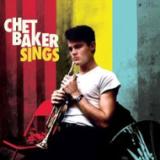
The complete album + 2 bonus tracks - limited edition pressing 180g red coloured vinyl Contains new specially prepared liner notes by Penguin Guide to Jazz's writer Brian Morton and by Paris' prestigious Jazz Magazine . Unique cover photograph by renowned American jazz photographer Bob Willoughby (1927-2009). The complementing talents of Chet Baker (1929-1988) both as a trumpet player and as a singer are now well known. His trumpet and voice are extensions of the same musical personality, and once you have become familiar with both facets of Baker, you expect to hear them both. However, Chet Baker Sings was a revelation at the time and won Baker new fame and a new audience, which was less familiar with jazz than with pop music. Includes the bonus tracks "Let's Get Lost" and "Just Friends"
Written and recorded throughout 2025 in their longtime ex-taxi-office-turned studio 'Cherry Lips', and produced by frontman Richard Archer alongside longtime collaborator Wolsey White.
The album looks outside the window to the fractured present, and paints it in bold musical strokes, with the same sharp- eyed social commentary that powered their classic debut Stars of CCTV, but with fresh perspective, new sounds and hard-earned freedom.
Written and recorded throughout 2025 in their longtime ex-taxi-office-turned studio 'Cherry Lips', and produced by frontman Richard Archer alongside longtime collaborator Wolsey White.
The album looks outside the window to the fractured present, and paints it in bold musical strokes, with the same sharp- eyed social commentary that powered their classic debut Stars of CCTV, but with fresh perspective, new sounds and hard-earned freedom.
The Bug Club sind mit einem neuen Album zurück. Seit ihrem letzten Album sind ganze sieben Monate vergangen. Wo waren sie denn? Every Single Muscle, das fünfte Album der Band, ist das dritte, das von Sub Pop, dem angesehenen Label des walisischen Duos aus Seattle, veröffentlicht wird. Seit Very Human Features, das im Juni 2025 rauskam, sind die Lieblinge von BBC 6 Music und KEXP auf ihrer Nonstop-Tour quer über den Atlantik geflitzt, wie sie es früher auf der Severn Bridge gemacht haben. Verschiedene Festivalauftritte im Sommer haben sie davon abgehalten, Urlaub zu machen - wer braucht schon Urlaub, wenn man in Wales lebt? - bis es Zeit war, wieder ins Songwriting-Studio zu gehen. Das ist wahrscheinlich immer noch ein Schlafzimmer in Caldicott, das von einem Windhund namens Ted frequentiert wird (aufgepasst - er taucht in einem der Songs auf). Die Songwriter Sam (Gitarre, Gesang) und Tilly (Bass, Gesang) sind immer bescheiden und behaupten sogar, dass sie während des Songs ,It's Our Manager David" nur ,herumsassen und nichts taten". Das ist eindeutig eine Lüge. Every Single Muscle startet mit ,Miss Wales 2012" voll durch und bezieht sich dabei auf einen Wettbewerb, den sowohl Tilly als auch Sam tatsächlich gewonnen haben. Es ist der erste von vielen Tracks auf dem Album, die weniger als zwei Minuten lang sind, und gibt den Ton für das bisher punkigste Album von The Bug Club an, das sowohl an die kurzen, knackigen Snaps ihrer allerersten Singles als auch an das Grunzen ihrer jüngsten Veröffentlichungen erinnert. Das Album ist so vollgepackt mit Riffs und eingängigen Hooks, dass Sam tatsächlich um Erlaubnis bittet, im zweiten Track ,A Good Day For Dying" ein Solo einbauen zu dürfen. Er bekommt zwei Sekunden Zeit. Glücklicherweise fragt Sam später noch einmal und bekommt mehr Zeit. Auf achtzehn Songs gibt's genug klassisches Gitarrenspiel von Sam und Tilly, um selbst die lautstärksten Bug Club-Fans zufrieden zu stellen und die Behauptung der Band, sie seien ,nur technisch versiert auf ihren Instrumenten", klar zu widerlegen. Dieses Album ist ein Beispiel für effizienten Maximalismus - so wie wenn dein Vater das Auto für den Urlaub vollpackt. Bring mit, was du willst; der Platz ist knapp, aber sie kriegen es irgendwie rein. Zu den Texten: Während ,Very Human Features" hervorragend alltägliche Dinge aufzeigte und ihre Absurdität hervorhob, schauen The Bug Club auf ,Every Single Muscle" genauer auf sich selbst. Allerdings nicht so sehr auf introspektive Weise, sondern eher so, wie ein Außerirdischer ein gefangenes Exemplar auf einer intergalaktischen Trage untersuchen würde. Horrorfilme haben ihr ,Body"-Subgenre, jetzt bekommen auch Garage-Rock-Alben ihres. In einem völlig neuen Sinne des Wortes selbstbezogen, wird die menschliche Form und Verfassung im Laufe des Albums aus jedem Blickwinkel beleuchtet und untersucht. Wir spüren eine surreale Distanz zum Selbst, die den allgegenwärtigen, von Langeweile geprägten Humor hervorbringt; im letzten Song verkündet Sam, dass er ,es satt hat, ein Mensch zu sein". The Bug Club scheinen dem Konzept, ein Mensch zu sein, fast misstrauisch gegenüberzustehen - als wären sie in einem Kostüm aufgewacht, das sie nicht anziehen wollten und nicht ausziehen können. Ist drei die magische Zahl? Wahrscheinlich nicht. Aber Every Single Muscle - das dritte Sub-Pop-Album von The Bug Club - kommt dieser Vorstellung nahe genug, um den durchschnittlichen seltsamen Menschen davon zu überzeugen, dass es so sein könnte.
More than a decade into one of contemporary folk’s most quietly extraordinary careers, Alela Diane returns with Who's Keeping Time? The Portland songwriter’s seventh full-length came as the consequence of intuition, coincidence, and community. “I came to the end of a season last year,” Alela shares. “My daughters had grown a bit. I no longer had babies waking me in the middle of the night. I could hear myself think again.” More and more, those thoughts circled music.
The ultimate spark for Alela’s return to her music community came in April of last year with the death of her close friend and mentor Michael Hurley — folk legend and indispensable presence in the Portland music scene. Tracked live in the attic of her 1892 Victorian home, Who’s Keeping Time? was produced by Sam Weber (Madison Cunningham, Anna Tivel) and brought to life with staples from the local music orbit, including members of the bands Lucius and Blind Pilot and fellow singer-songwriters Anna Tivel and AC Sapphire. Over the years, Alela's lustrous discography has gathered major critical acclaim from the likes of Pitchfork, NPR Music, The Guardian, and plenty more. UNCUT counted her work in their ambitious “50 best singer-songwriter albums” of all time roundup—a canon comprising John Lennon, Joni Mitchell, Joan Baez, Paul Simon—with Consequence echoing that significance, declaring, “Hers is a timeless sound, that of a wayfaring troubadour, which only seems to come a few times a generation.” The Portland songwriter’s seventh full-length album, ‘Who’s Keeping Time?’ will be available on LP, CD and Digitally.
In Sheep’s Clothing announces the long-awaited vinyl pressing of Marc Leclair’s beloved 2005 album Musique pour 3 femmes enceintes. The album will also be available on streaming for the first time via Community Music Group.
For years after Marc Leclair released Musique pour 3 femmes enceintes, he heard from listeners who had lived with the record in an unusually intimate way. Many described how the music became part of the emotional landscape of the months leading to birth. “I never expected that,” Leclair says. “Many women told me they listened to the record throughout their pregnancies. They said it made a real difference, that it helped them. It became more than just a record.”
First issued on CD in the early 2000s, Musique pour 3 femmes enceintes (Music for Three Pregnant Women) now returns in a new edition from In Sheep’s Clothing Hi-Fi, appearing on vinyl for the first time as a double LP. The record is being pressed in Detroit at Archer Record Pressing, the historic plant behind deep-groove classics by Juan Atkins, Kevin Saunderson, Underground Resistance, UR’s Jeff Mills, and J Dilla.
Listeners who know the Montreal-based Leclair through his better-known work as Akufen might be surprised by the tone here. During the same years he was shaping the intricate micro-sampling tracks that made Akufen a cult figure on labels including Perlon, Force Inc. and Trapez, Leclair was quietly developing this far more personal project. The meticulous craftsmanship remained the same, though the focus shifted from the hyper-detailed cut-up rhythms of his dance records toward something slower and more atmospheric. “I always compare my work to a jeweler,” Leclair says. “It’s really very precise. I’m a bit of a detail freak. I can spend hours or days on just one phrase in one song. Everything has to be perfectly put together.”
The project began almost accidentally. A few members of Leclair’s circle became pregnant nearly simultaneously, including one who had long believed she couldn’t conceive. The first track he recorded for the project wasn’t meant to advance a larger concept, he says. “It was meant to highlight the fact that three of my closest friends became pregnant at exactly the same time.”
Leclair was already a father with a three-year-old daughter, so the emotional terrain of early parenthood was familiar. Gradually the idea expanded. “I began thinking, why not make a whole album that celebrates this and also follows the entire pregnancy, the nine months,” he says. The music developed piece by piece, including a track originally commissioned by the Berlin experimental duo Rechenzentrum that would later become the album’s opening movement.
Nearly seven years passed between the first composition and the finished album, and the music mirrors the strange arithmetic of pregnancy itself. What begins as a single idea multiplies outward, sounds layering and branching until the album feels less like a sequence of compositions than a living process unfolding in time. “I work very slowly,” Leclair says. “Everything has to be something I’m completely behind. I never want to rush anything. I want things to come naturally.” Across its 72 minutes, the album blossoms with the patience of a long meditation on time, growth and emergence.
When Musique pour 3 femmes enceintes first appeared via Mutek, it circulated quietly but steadily. Critics who discovered it later recognized its unusual scope. In a 2006 Pitchfork review, Mark Richardson gave the record an 8.1, calling “150e Jour” “an unfailingly gorgeous and tightly sequenced quilt of guitar and piano samples reminiscent of Tangerine Dream,” and describing “85e Jour” as infused with “viscous pop ambient drift, the gauzy synth pads ebbing and flowing with rhythm.” Boomkat described the album as “a majestic opus from a producer that's always promised so much — here delving into a panoramic construction of almost visibly radiant music that works so beautifully through each and every second of its 72 minute lifespan.”
The new In Sheep’s Clothing Hi-Fi edition finally presents the record in the format Leclair long imagined. “I always thought that record deserved a vinyl edition,” he says. Spread across two LPs, the music now has room to unfold at its natural pace. More than twenty years after it first appeared, Musique pour 3 femmes enceintes remains what it was from the start: a carefully shaped meditation on transformation and the quiet miracle of life beginning.
Lately, it feels like the world is one endless bad news cycle. Joshua Idehen isn’t here to pretend otherwise – but on the spoken word artist’s new album, I Know You’re Hurting, Everyone Is Hurting, Everyone Is Trying, You Have Got To Try, he provides a phenomenal sonic, poetic space. Made with his creative partner, musician Ludvig Parment, the album (out 6 March 2026) is an urgent but transcendent collection that holds you through it all, filled with grief, euphoria and hope.
I Know You’re Hurting… comes after the virality of Idehen’s track Mum Does The Washing, a wry and whipsmart poem examining how the world works (which started life as a Twitter thread), set to Parment’s spacious beats. The song has seen the pair propelled beyond Idehen’s wildest dreams this past year.
Across the album, that means uplifting choirs, cozy samples and exuberant, sometimes house-tinged beats. “I am personally drawn to music that transports you to a place, or scene or mindset,” says Parment. This is topped with ruminative musings on morality and human connection; about the longer loves in life – like friendships, family – that sustain us. These come from Idehen and Parment, along with a host of friends and collaborators, including writers Leone Ross and Charlotte Manning, and vocalist Amanda Bergman, to help expand on the topics of the record without sounding preachy. Similarly, there are musical guests including saxophonist Pete Fraser and Shabaka Hutchings on flute, each helping to imbue the album with a rich warmth.
out of Stock
Last delivered 4 months ago available to reorder, subject to availability
Mysticisms’ Dubplate series reaches number 10 with the first in a series of specials, taking the genre blurring music of Persian and presenting updated remixes and versions by up-and-coming producers, as well as friends and family of the label.
Started as a sporadic offshoot of Mysticisms’ main releases, with the idea to highlight the wonderful sounds of dub influenced dance music, Dubplate has now become an integral part of the mission.
To start, South London’s Picasso joins the label, showcasing his declared abstract grooves and an EP of Dub and Tech House movers. While his productions aim for the dance floor, they are often characterized by complex rhythms and unconventional structures, prioritizing atmosphere and texture over traditional melodies.
Drawing inspiration from ambient, jazz, experimental influences and the heavy hand of dub, Sam “Andrews” McKay has crafted an EP of immersive “soundscapes”. Joining the legendary Persian (Peter Reilly) as co-selector, his retakes are all warped grooves, wide bass and dubby atmospherics.
Opening with Space Within Art, the street soul meets reggae rhythms are jettisoned, and a Dub House swing drives the track. The love, homage and vibration for Sound System culture remains, enchanting trippy reggae sampledelic vocals weaving in the brain.
Dunya 2 sees a shift, minds expanding. A jazz influenced breakbeat, harp, strings, building to a psychedelic swirl, driven by a dub bass in a clash, morph and glow.
The deep Digi Dub of D Dub Twist grows, warping the ‘JA riddim meets English hedonism’ in true Soundclash style. Touches of drone underlay, highlighting Sam’s experimental leaning, utilising Persian’s love of Eastern mystical samples to marry perfectly for a deep dub excursion.
The self-prescribed “odd-fellow” completes his versions, exploring his love of depth and abstract sound in closer, Jacob’s Dub. The warm roots vibrations in original form develop into a scatter gun House bumper. Dubwise, Lovers, Stepper, all merge around shuffling, trippy beats and skippy hats, Picasso’s groove is laid bare, driving the EP to finale.
Abstract the Mystery.
out of Stock
Last delivered 3 months ago available to reorder, subject to availability
Mysticisms’ returns to the music of the Conscious Sounds label and their short-lived but highly prized Dub meets Funk project, Dub Specialists. Created by label head Dougie Waldrop and Chris Petter (Love Grocer) to explore their interest in samplers and a love of Funk and Jazz.
A hugely respected “Digital” and “Roots Reggae” label, Conscious Sounds has been a mainstay of the East London digidub sound for over 30 years. Dub Specialists released 3 albums on the Crispy Music sub label, they have recently gained considerable interest in digger circles, with rising prices to match.
As with their first Dubplate outing, the release features extended re-edits by the label and friends, this time featuring versions by Lexx, Miles J Paralysis, Chuggy and Vanity Project. Working with the simplicity and skill of his studio craft, Dougie utilised the Atari 1040, Cubase and Soundcraft mixer to effect. Petters’ chords sit atop reggae basslines, funk samples, loops and this time, a heavy dose of cut up vocals in to the mix.
While the first EP came from their debut album, Breat To Break, here the source material for the re-edits comes, in the main, from their second outing “Dub To Dub Beat To Beat”. A more expansive album that also dipped in to 4/4 rhythms and touches of House / Techno.
Opening track Dynamic Duo is a 4/4 stepper bomb – with samples from Adam West’s iconic interpretation of Batman – expertly extended by long-standing DJ, producer and edit master, Zurich’s own Alex Storrer aka Lexx, who dials things to max for a club stop. A new name on many lips, Miles J Paralysis takes it all back down with a beautifully drawn out, acid-tinged tripper. Bumpin’, the mid-tempo groove sucks you in, psychedelic and mind expanding.
The flip returns to the more traditional Dub Specialist vibes of Breaks’n’Funk’ cut ups, first with (co-)label head Chuggy’s faithful extension of Heavy Dub. Featuring the classic Ijahman Levi’s vocal, the breaks flow and piano / horns stab, a dance floor shaker for the discerning. To close, secret studio fixer to many, Matt Bruce again dons his Vanity Project moniker to perfectly tease and live dub (out) the half-stepper, Reality Dub and close this latest in the Dubplate series.
Beat The Mystery.
out of Stock
Last delivered 40 days ago available to reorder, subject to availability
In The Wee Small Hours Of The Morning / Mood Indigo / Glad To Be
Unhappy / I Get Along Without You Very Well / Deep In A Dream / I See Your Face
Before Me / Can't We Be Friends / When Your Lover Has Gone / What Is This Thing
Called Love? / Last Night When We Were Young / I'll Be Around / Ill Wind / It Never
Entered My Mind / Dancing On The Ceiling / I'll Never Be The Same / This Love Of
Mine / The Girl Next Door
Primordial Mind forms the mysteries and intensity of inner life into eight mandalic instrumentals where Mas Aya and Khôra, artists who share 15 years of music making, orchestrate an inspired, prismatic palette of percussive and melodic sources. Each composition presented stages a vigorous meshwork of colours and textures, contrasting riveting polyrhythms with towering arrangements for flutes, synths, and processed acoustic instruments. Tendencies which the artists trace in their solo practices are amplified, blended, and refracted sublimely in unison, serving as energetic portals to the collective awareness.
Combining trans-ethnic scaling alongside a heady brew of rhythmic influences and advanced electronic processing, the recordings on this album operate with a tactility that vaults between free jazz, dub, raga, ambient, and ritual music. Assimilated powers of primal drum patterning and psychoactive, ceremonial melodies, invoke fourth world adjacencies with the work of Don Cherry, Jon Hassell, Popol Vuh et al. There is an alchemical, Buddhist/Taoist/Hindu inflection that guides the record’s narrative, formed through dialogue between the artists over lifelong shared interest in spiritual modalities generally and the tantric approaches of the global east in particular. The album title is derived from an unexcelled esoteric work known as the Kalachakra (Wheel of Time)Tantra and its associated commentary the Ornament of Stainless Light which detail forms of inner and outer transubstantiation within its complex cosmology and metaphysiology.
Mas Aya is the moniker of Brandon Miguel Valdivia, acclaimed Nicaraguan-Canadian composer, producer, and musician whose electronic and jazz inspired works creatively interlace Colombian, Cuban, and a wide array of traditional music. Khôra is the name of the occult entity that uses multi-instrumentalist, producer, and writer Matthew Ramolo to pronounce itself. Returning to Marionette following 2024's monumental Gestures of Perception, Primordial Mind reinforces the rigorous and magical approach to creation which defines Khôra’s two decades of sonic output. Brandon and Matthew met back in 2011 and the pair toured around eastern Europe with Toronto band Picastro in 2013, also performing as a duo with Brandon contributing drums to Khôra's opening sets. After a short spate composing and playing in the ensemble Bespoken together, they continued to discover shared inspiration in psych/art rock, jazz, experimental and electronic music, providing a fertile soil for friendship and collaboration resulting in their collaged, lo-fi album Tangled Roots in 2017. Mythic and talismanic, the duo's Marionette debut weaves a luminous tapestry of organic pulses, offering itself as a support for resonant meditation and a motor for lucid action and intuition.
Brandon Miguel Valdivia: Percussion, Flutes, Log Drum, Korg Lambda, Angklung, Tambor Alegre, Udu
Matthew Ramolo: Modular Synth, Archival Samples, Angklung, Guitar, Duduk, Bass, Percussion, Arrangements and Mix
The Story — From the Streets of Rome to the Male Productions Label
In the early 1990s, Rome lived in a kind of suspended moment. The city was still tied to its historic clubs, yet in the outskirts—inside abandoned warehouses, quarries along the coastline, and the wooded parks north of the capital—something new was beginning to stir. A nocturnal, constantly shifting movement fuelled by a hunger for freedom and a sonic curiosity that reached far beyond the mainstream.
Moving through this ferment was Francesco “Chicco” Furlotti. First an organizer of unconventional parties and underground nights, he soon became one of the driving forces behind Rome’s itinerant rave scene. Furlotti sensed that a wave of change was about to sweep across the city. It wasn’t just about parties: it was the rise of a culture, a new way of thinking about music, community, and belonging.
It was within those nights—later held with official permits, properly built sound systems, and an ever-growing crowd—that Furlotti recognized the existence of a distinctly Roman sound, and the need to capture it, preserve it, and give it tangible form.
So, in 1991, he decided to take a bolder step: to found an independent record label—small, determined, and far removed from the commercial logic that dominated at the time.
That was the birth of Male Productions.
Male was not a label like any other: it was a workshop, a gathering point, a creative hub where DJs, producers, friends, and wanderers converged. Within that environment, an artistic core took shape—Stefano Di Carlo, Leo Young, and Mauro Tannino, along with other collaborators orbiting around Furlotti. From their synergy emerged a project whose very name declared its mission:
The True Underground Sound of Rome.
The collective did not simply aim to release music; it sought to tell a story of Rome through sounds that defied categorization: house, techno, ambient, electronic mysticism, psychedelic visions… a unique blend, instantly recognizable, emotional, and experimental. The sessions unfolded using essential yet razor-sharp gear: Roland drum machines, analogue synthesizers, Akai samplers, stripped-down mixers. Few tools, endless imagination.
The first result of this work was the 12” Secret Doctrine, released in 1991 in an extremely limited run—around 500 promotional copies, according to accounts. The record captured something that until then had floated only in the air of Roman raves: enveloping atmospheres, deep rhythms, melodies built to make the mind travel far beyond the dancefloor. A sound that did not imitate what was happening in Detroit, London, or Berlin, but absorbed those influences and re-sculpted them with a distinctly Roman sensibility.
Yet, precisely because it was independent and detached from commercial circuits, Male’s output remained sparse: few EPs, few copies, irregular distribution. Over time, those records became rare artifacts—almost mythical objects within the Italian electronic scene. The legacy of Male Productions seemed destined to survive only in the memories of those early years, in the stories told after raves, and in the private archives of a handful of collectors.
Many years later, thanks to the almost accidental rediscovery of a few original copies of the first two releases issued by Male Productions, it became possible to undertake a meticulous process of recovery and restoration of the audio etched into those grooves, with the aim of preserving as fully as possible the quality and character of that unrepeatable sound.
We are therefore able today to present — at last in a complete and faithful form — the first two mixes created for Male Productions, now released on a double vinyl that brings back into the present the exact moment when it all began: the nomadic nights of the raves, Furlotti’s vision, the creativity of Di Carlo, Young and Tannino, and the sonic identity of a Rome in the midst of transformation.
This is not merely a reissue.
It is a historical document.
A fragment of a culture that changed the city.
The authentic sound of the Roman underground, finally returned to the world.
out of Stock
Last delivered 42 days ago available to reorder, subject to availability
They Came Like Swallows is the first album-length collaboration between Thurston Moore and Kramer (now officially Bonner Kramer), two giants of alternative/ experimental music. The accomplishments and influence of these two artists in the world of independent music cannot be overstated and the result of their artistic union is a startlingly cohesive statement that burns through landscapes of primitive outsider rock, avant-garde composition, progressive ambient and further locales boldly and beautifully unnamable. “Kramer and I reconnected in Miami, Florida, a few years back, many many years after each of us had departed NYC on separate life adventures. It was only a matter of time before Kramer and I started making plans to record together and with his irrepressible due diligence he quickly set up a mobile recording contraption in the pad I was decamped in, the Florida sunshine flowing through the palm leaves, lithe lizards skittering across the windowsills, and we just went for it.
Kramer had the idea to cover a Joy Division tune, a left turn from the improvisations we had been tracking, though wholly in keeping with both our sensibilities of light and dark unifying in transcendent songwriting, both of us devotees of 'the song' as well as 'the freedom.’ What transpired is They Came Like Swallows, a session we immediately felt should exist as a prayer to the war-torn souls of the families of Palestine continually decimated by the brutality of genocide. We agreed beyond words to offer our music as a sonic activism and as a beneficent energy. This album is our duo exchange for human dignity, it is our soul music for any semblance of a peaceful planet.” ~ Thurston Moore “For the first time in our nearly 45 years of friendship, we had identical time windows open to make a record together,” recounts Kramer. After all this time not a moment is wasted as the duo immediately taps into the heightened core of improvisational tension across these seven offerings. Volcanic opener “Urn Burial” notches a similar historic union (John Cale and Terry Riley) to meet the circumstances of the moment, with swirling mists of organ and pounding toms over guitar that thickens the atmosphere with jagged, grimy dissonance.
Solemn strings open the second track, “The Redness In The West,” with Kramer’s cello and viola in dueling bow beneath the high tension drive and sustain of Thurston’s electric guitar, tapping out a Morse code of tension that mounts endlessly into a fog of inevitable war by the end. Moore and Kramer’s sense of experimentalism is in free and full grandeur throughout They Came Like Swallows, though the duo keep a strong and constant sideways eye on melody, composition and architecture, to the ends that any strict lines between song and improvisation are blurred beyond qualification.
As if to punctuate this point, Swallows closes with a nightwork cover of Joy Division’s “Insight,” a doleful coda that breathes out with a solemn inner grace under Thurston’s instantly stylistically recognizable guitar melodies as they weave into he and Kramer’s unison voices. As the lone vocal piece and only traditional ‘song’ form on the album, “Insight” is unique to this set and as a closing statement draws connective lines back to the kind of dynamic, electrified melodicism that wove deep, melancholy patterns into the untamed fire of Sonic Youth’s Sister and Daydream Nation. In the album’s final moments, the two voices repeat the lyric “I’m not afraid anymore” as mantra, underscoring the heavy, unsettled themes and methods that preceded it. Kramer describes the creative process of They Came Like Swallows: “I had composed and recorded a few pieces at my home studio over the course of a couple weeks. Thurston was spending the winter in South Florida, so I flew down and spent a few days recording his guitar parts in his home there. Watching him spontaneously compose his parts was pretty astonishing, to say the least. Once we'd finished working on those pieces, we began improvising and following wherever the music pointed us, and another few pieces were born. We got straight to it, without anything driving us other than the joy of finally working together.
My personal goal was to remain present and catch as many surprises as I could from Thurston's guitar work, and there were plenty during those few days. We had a fucking blast.” Thurston’s contributions here will be readily familiar to any acolytes of his other works, the through-line between his inspired playing, cradled in Kramer’s meticulous, solid arrangements. “If I had to make this record again, I'd do it all exactly the same way,” Kramer says. “It’s like jazz, you don't think about it. You just do it. It was miraculous, and you don't fuck with a miracle.”
They Came Like Swallows is the first album-length collaboration between Thurston Moore and Kramer (now officially Bonner Kramer), two giants of alternative/ experimental music. The accomplishments and influence of these two artists in the world of independent music cannot be overstated and the result of their artistic union is a startlingly cohesive statement that burns through landscapes of primitive outsider rock, avant-garde composition, progressive ambient and further locales boldly and beautifully unnamable. “Kramer and I reconnected in Miami, Florida, a few years back, many many years after each of us had departed NYC on separate life adventures. It was only a matter of time before Kramer and I started making plans to record together and with his irrepressible due diligence he quickly set up a mobile recording contraption in the pad I was decamped in, the Florida sunshine flowing through the palm leaves, lithe lizards skittering across the windowsills, and we just went for it.
Kramer had the idea to cover a Joy Division tune, a left turn from the improvisations we had been tracking, though wholly in keeping with both our sensibilities of light and dark unifying in transcendent songwriting, both of us devotees of 'the song' as well as 'the freedom.’ What transpired is They Came Like Swallows, a session we immediately felt should exist as a prayer to the war-torn souls of the families of Palestine continually decimated by the brutality of genocide. We agreed beyond words to offer our music as a sonic activism and as a beneficent energy. This album is our duo exchange for human dignity, it is our soul music for any semblance of a peaceful planet.” ~ Thurston Moore “For the first time in our nearly 45 years of friendship, we had identical time windows open to make a record together,” recounts Kramer. After all this time not a moment is wasted as the duo immediately taps into the heightened core of improvisational tension across these seven offerings. Volcanic opener “Urn Burial” notches a similar historic union (John Cale and Terry Riley) to meet the circumstances of the moment, with swirling mists of organ and pounding toms over guitar that thickens the atmosphere with jagged, grimy dissonance.
Solemn strings open the second track, “The Redness In The West,” with Kramer’s cello and viola in dueling bow beneath the high tension drive and sustain of Thurston’s electric guitar, tapping out a Morse code of tension that mounts endlessly into a fog of inevitable war by the end. Moore and Kramer’s sense of experimentalism is in free and full grandeur throughout They Came Like Swallows, though the duo keep a strong and constant sideways eye on melody, composition and architecture, to the ends that any strict lines between song and improvisation are blurred beyond qualification.
As if to punctuate this point, Swallows closes with a nightwork cover of Joy Division’s “Insight,” a doleful coda that breathes out with a solemn inner grace under Thurston’s instantly stylistically recognizable guitar melodies as they weave into he and Kramer’s unison voices. As the lone vocal piece and only traditional ‘song’ form on the album, “Insight” is unique to this set and as a closing statement draws connective lines back to the kind of dynamic, electrified melodicism that wove deep, melancholy patterns into the untamed fire of Sonic Youth’s Sister and Daydream Nation. In the album’s final moments, the two voices repeat the lyric “I’m not afraid anymore” as mantra, underscoring the heavy, unsettled themes and methods that preceded it. Kramer describes the creative process of They Came Like Swallows: “I had composed and recorded a few pieces at my home studio over the course of a couple weeks. Thurston was spending the winter in South Florida, so I flew down and spent a few days recording his guitar parts in his home there. Watching him spontaneously compose his parts was pretty astonishing, to say the least. Once we'd finished working on those pieces, we began improvising and following wherever the music pointed us, and another few pieces were born. We got straight to it, without anything driving us other than the joy of finally working together.
My personal goal was to remain present and catch as many surprises as I could from Thurston's guitar work, and there were plenty during those few days. We had a fucking blast.” Thurston’s contributions here will be readily familiar to any acolytes of his other works, the through-line between his inspired playing, cradled in Kramer’s meticulous, solid arrangements. “If I had to make this record again, I'd do it all exactly the same way,” Kramer says. “It’s like jazz, you don't think about it. You just do it. It was miraculous, and you don't fuck with a miracle.”
Fifteen years after their first album "Time for a Change", and drawing on the experience of two others ("Elephanz" 2017, and "Rien de personnel" 2023), ELEPHANZ now returns with a fourth album that carries the scent of first loves, the kind you sing from the heart with your hands gripping a guitar.
"Love. Hurt. Repeat." tells, across ten songs, the story of a return to oneself, like coming home after years spent roaming the world, only to realize that everything you needed to understand yourself was already there at the starting line.
To help you understand what this new album makes me feel, I'd like to tell you about my first meeting with Jon and Max in 2009, when I became the band's bassist. Sixteen years ago, I discovered these two young men and set off in their family Kangoo van on my very first tour.
Through our early rehearsals around the piano of their childhood, I discovered their love for pop music in all its breadth, always in search of harmonies and melodies that touch the heart in the simplest way and gently ease your sorrows along the way. With them, I learned to appreciate the mainstream hits I had previously dismissed on principle, and I discovered the demanding art of melody as I listened to them sing about love and friendship through unforgettable catchphrases.
Listening today to some of the songs from their new album, I think back to those two young men with a big-city rock look, shut away in the living room of their family home, talking only about leaving that dull countryside behind to live the big life in the capital (Streets of Rage). What I once took for a kind of revenge against the hostile environment of their adolescence was in fact an almost vital need to find their place among others, to feel understood in order to feel at ease in their own skin.
Today, I find them again with the same guitar and the same inexpensive Juno as back then, but with the confidence shaped by years of concerts, writing, studio encounters, and all kinds of experimentation. The music of this fourth album has never been so close to that of their earliest days, but their voices have been set free. They no longer sing about who they dreamed of becoming, but about who they have always been, their most distant concerns, sometimes even their darkest ones, yet always in search of the light.
It is as if ELEPHANZ had to travel all the way around the world to come face to face with themselves again. There is no longer any shame in being who you are, and it is even the best way to understand yourself, to exist and to heal. To heal from grief and heartbreak, to understand the child you once were and the one who carried them (Mother), to forgive yourself and finally learn to love yourself.
That is what makes this record as sensitive as it is powerful and strikingly truthful. It was written and recorded like a cry, live, in just a few weeks, using the instruments of their beginnings: sharp bass and drums, powerful guitars, and synthesizers that are at times soaring, at times carriers of liberating melodies. The art of ballads remains, as does that of universal pop songs.
There is a beautiful urgency here, the urgency of finding oneself again in order to understand oneself through both pain and beauty, and "Love. Hurt. Repeat." is its most perfect expression.
DOODSESKADER clearly haven’t had enough of redefining boundaries – they’ve only just gotten started. Tim De Gieter and Sigfried Burroughs return on April 3rd, 2026 with their third full-length album, The Change Is Me, a rollercoaster that can only be described as the unstable lovechild between witch house, hip-hop, industrial dream pop, and stadium rock that can’t decide if it wants to watch the world burn or shout from the rooftops that we need to save it. Their combination of grungy 90s melodies with distorted synths, sludgy bass, hard tuned vocals, rapping, singing, and explosions of undiluted rage at the current state of the world leave you wondering just exactly what it was you smoked last night, and if it was too much or not enough. The Change Is Me is an album that grabs you by the arm and asks if you’re ready to go on a grand adventure, then pulls you into its chaos before you can say “yes” or “no.”
Tim and Sigfried aren’t just breaking the boundaries between genres; they’re breaking out of their own Year cycle, a path they had laid out for themselves at the band’s inception in 2020. Up until now, the duo had set out to document their “journey to getting better” through writing one album each year: Year Zero (2020), Year One (2022), and most recently Year Two (2024). After spending eight months throughout 2024 and 2025 writing, recording, producing and mixing Year Three, the band scrapped the finished record entirely. Playing shows while simultaneously navigating the process of mixing Year Three created a sort of disconnect – the people that they were when they wrote that record and the people that playing shows made them become were no longer one and the same. “We’re people with faults and strengths, and we realized we needed to accept it. That’s equal parts bleak and liberating. If you’re so focused on self-improvement, you can’t even applaud yourself for how far you’ve come,” the band explains. “This project is meant to be a document of us and of the human condition, not a self-improvement handbook designed to keep us all stuck on what may or may not have happened to us or because of us in the past.”
DOODSESKADER chose instead to embark anew on a week-long creative journey in Tim’s own Much Luv Studio with one goal in mind: to make an album that captures who they are right now. Finally writing everything together in the same room for the first time in years, the process of bringing "The Change Is Me" to life was captured by Diana Lungu in their latest documentary, "Now I Know You See Me", out December 2nd, 2025.
"The Change Is Me" marks the beginning of DOODSESKADER’s shift into a more positive era, both musically and conceptually. Over the course of the 40-minute record we hear the two friends unite in a fight against a world that grows more and more disappointing, a concept made crystal clear in tracks like “Celebrity Culture Simp Farm,” “It Keeps On Stinging,” and of course the album’s epic closer “Suffering In Technicolor.” While their previous albums saw them trying to outrun their pasts and arrive at a better version of themselves, here the search for some external or internal revelation that will “make them better” is no more. It’s been replaced by the realization that change isn’t something we force: it’s gradual, and more importantly, it’s something that’s already there – we just need to reach out and accept it.
The band’s live appearances over the last several years have been instrumental in shaping their ideology. On stage is where the duo find connection; not only with the audience, but also with each other. Their sold-out release shows at Ancienne Belgique (2022) and VierNulVier (2024) have proven that they are one of Belgium’s must-see acts. Abroad, their energy has translated into a month-long EU/UK tour with French band Alcest in 2024, as well as appearances at festivals such as Roadburn Festival (NL), Eurosonic (NL), Hellfest (FR), Mystic Fest (PL), Jera On Air (NL), ArcTanGent (UK), Fluff Fest (CZ) and more.
"The Change Is Me" is out April 3rd, 2026 on DOODSESKADER’s own label, 45 Records.
Twice Grammy-nominated, Mercury Prize and BRIT Award-winning artist Arlo Parks announces her new album, Ambiguous Desire, due April 3rd via Transgressive Records.
Ambiguous Desire is Parks at her most confident and experimental, supplanting live band sessions for modular synths, ableton plugins and samplers that channel the frenetic, vibrant spaces she was immersed in, all while spotlighting the acclaimed poetry and lyricism she’s beloved for.
Reflecting on the making of the record, Parks shares, "I danced more than ever as I made this record, I made more friends than ever too, found myself in the weird underbelly of New York juke nights, unleashed, laughed and laughed and laughed. This record has desire at its centre. Desire is a life force, it’s a wanting, a yearning, a momentum - we are all alive because there is something or someone we want - desire is an engine. But it is also mysterious, tangled, random, enlightening and HUMAN."
Parks crafted the album with producer Baird (Brockhampton, Kevin Abstract). Their process unfolded between NYC’s vibrant, community-rooted nightlife and long, introspective days spent in Baird’s downtown loft. The result is Parks’ most vulnerable, self-affirming, and euphoric work to date.
Die zweifach Grammy-nominierte, mit dem Mercury Prize und BRIT Award ausgezeichnete Künstlerin Arlo Parks kündigt ihr neues Album „Ambiguous Desire“ an, das am 3. April über Transgressive Records erscheinen wird.
„Ambiguous Desire“ zeigt Parks von ihrer selbstbewusstesten und experimentellsten Seite. Live-Band-Sessions wurden durch modulare Synthesizer, Ableton-Plugins und Sampler ersetzt, die die frenetischen, pulsierenden Räume widerspiegeln, in denen sie sich bewegte, während gleichzeitig ihre gefeierte Poesie und Lyrik, für die sie so geliebt wird, im Vordergrund stehen.
Über die Entstehung des Albums sagt Parks: „Ich habe während der Arbeit an diesem Album mehr getanzt als je zuvor, ich habe mehr Freunde gefunden als je zuvor, ich habe mich in den seltsamen Untergrund der New Yorker Juke-Nächte begeben, mich gehen lassen, gelacht und gelacht und gelacht. Dieses Album dreht sich um das Thema Begehren. Sehnsucht ist eine Lebenskraft, sie ist ein Verlangen, eine Dynamik – wir alle leben, weil es etwas oder jemanden gibt, den wir wollen – Sehnsucht ist ein Motor. Aber sie ist auch geheimnisvoll, verworren, zufällig, erleuchtend und MENSCHLICH.“
Parks hat das Album zusammen mit dem Produzenten Baird (Brockhampton, Kevin Abstract) produziert. Der Entstehungsprozess fand zwischen dem pulsierenden, gemeinschaftsorientierten Nachtleben von NYC und langen, introspektiven Tagen in Bairds Loft in der Innenstadt statt. Das Ergebnis ist Parks' bisher verletzlichstes, selbstbewusstestes und euphorischstes Werk.
Twice Grammy-nominated, Mercury Prize and BRIT Award-winning artist Arlo Parks announces her new album, Ambiguous Desire, due April 3rd via Transgressive Records.
Ambiguous Desire is Parks at her most confident and experimental, supplanting live band sessions for modular synths, ableton plugins and samplers that channel the frenetic, vibrant spaces she was immersed in, all while spotlighting the acclaimed poetry and lyricism she’s beloved for.
Reflecting on the making of the record, Parks shares, "I danced more than ever as I made this record, I made more friends than ever too, found myself in the weird underbelly of New York juke nights, unleashed, laughed and laughed and laughed. This record has desire at its centre. Desire is a life force, it’s a wanting, a yearning, a momentum - we are all alive because there is something or someone we want - desire is an engine. But it is also mysterious, tangled, random, enlightening and HUMAN."
Parks crafted the album with producer Baird (Brockhampton, Kevin Abstract). Their process unfolded between NYC’s vibrant, community-rooted nightlife and long, introspective days spent in Baird’s downtown loft. The result is Parks’ most vulnerable, self-affirming, and euphoric work to date.
Die zweifach Grammy-nominierte, mit dem Mercury Prize und BRIT Award ausgezeichnete Künstlerin Arlo Parks kündigt ihr neues Album „Ambiguous Desire“ an, das am 3. April über Transgressive Records erscheinen wird.
„Ambiguous Desire“ zeigt Parks von ihrer selbstbewusstesten und experimentellsten Seite. Live-Band-Sessions wurden durch modulare Synthesizer, Ableton-Plugins und Sampler ersetzt, die die frenetischen, pulsierenden Räume widerspiegeln, in denen sie sich bewegte, während gleichzeitig ihre gefeierte Poesie und Lyrik, für die sie so geliebt wird, im Vordergrund stehen.
Über die Entstehung des Albums sagt Parks: „Ich habe während der Arbeit an diesem Album mehr getanzt als je zuvor, ich habe mehr Freunde gefunden als je zuvor, ich habe mich in den seltsamen Untergrund der New Yorker Juke-Nächte begeben, mich gehen lassen, gelacht und gelacht und gelacht. Dieses Album dreht sich um das Thema Begehren. Sehnsucht ist eine Lebenskraft, sie ist ein Verlangen, eine Dynamik – wir alle leben, weil es etwas oder jemanden gibt, den wir wollen – Sehnsucht ist ein Motor. Aber sie ist auch geheimnisvoll, verworren, zufällig, erleuchtend und MENSCHLICH.“
Parks hat das Album zusammen mit dem Produzenten Baird (Brockhampton, Kevin Abstract) produziert. Der Entstehungsprozess fand zwischen dem pulsierenden, gemeinschaftsorientierten Nachtleben von NYC und langen, introspektiven Tagen in Bairds Loft in der Innenstadt statt. Das Ergebnis ist Parks' bisher verletzlichstes, selbstbewusstestes und euphorischstes Werk.
GAMM REACH 200 !!
And what better way to celebrate than 3 unbelievably amazing remix 7's of their very first release ?
A track that defined GAMM's identity and helped pave the way for everything they've achieved since. Now, 23 years later, GAMM has reached its landmark 200th release.
To mark this anniversary and honour our dear friend Fredrik Lager (aka Red Astaire), who sadly and unexpectedly passed away three years ago, we are re-releasing 'Follow Me' alongside remixes from some of our favourite producers. The remixes will be released across three separate 7-inch EPs featuring Soul Supreme, DJ Spinna, Ukokos, and Kampinos.
On the first EP, Amsterdam-based keyboardist and producer Soul Supreme delivers a masterful cover version featuring live instrumentation, programmed beats, and fresh vocals. It is a beautiful tribute that honours the original while evolving the track from its sample-based roots into a full-scale production. The EP features two takes: a Jazz-Funk infused original and a Samba/Bossa-inspired version ('Follow My Samba').
Timeless music
out of Stock
Last delivered 4 months ago available to reorder, subject to availability
Abdou El Omari was born in 1945 in Tafraout, south of Agadir -- a village suspended between the pink granite peaks of the Anti-Atlas and the waves of the Atlantic. A landscape already musical in itself. He grew up in the dry mountain light, surrounded by the rhythms of nature and Berber's culture. Very little is known about the man -- a veil of mystery still surrounds his life, only deepening the fascination. In the 1970s, as Morocco was transforming, Abdou El Omari shaped a sound of his own -- a visionary blend of spiritual jazz, psychedelic funk, Moroccan traditions, and early electronic experimentation. Today, his work is resurfacing, rediscovered by a new generation of listeners in search of lost horizons. This record stands among its rarest and most precious fragments. At twenty-two, he founded his first group, Les Fugitifs, which gained him local fame. Soon after, he released records and cassettes on labels such as Cléopâtre, Hassania, Boussiphone, Hilali, and his own, Al Awtar, while performing on RTM (national radio and television). He also composed for artists like Naima Samih, Laila Ghofran, and Aicha El Waad. In 1976, through the label Gam, he released his only vinyl album, Nuits d'été -- a record that would become cult decades later, reissued in 2017 by Radio Martiko. In the 1980s, his music grew quieter, more secret. He tried to recover his old tapes from the studios he had recorded in, but gradually withdrew from the scene and returned to hairdressing. A pioneer of musical fusion, he opened paths that would remain unexplored for years. He passed away in 2010, never witnessing the rediscovery of his music by diggers, bloggers, and collectors online. One day, his close friend and poet Aziz Essamadi, rescued a cardboard box from the trash -- a box containing Abdou El Omari's personal archives. It was later entrusted to Casablanca based collector Ahmed Khalil, founder of the label Dikraphone. Inside were treasures preserved by chance: demos, rehearsals, private recordings, unseen photographs -- and a stunning, almost forgotten cassette. Here, El Omari sounds bolder than ever, exploring territories where pop, cosmic disco, electric blues, and Moroccan tradition merge without boundaries. Armed with his ARP Odyssey synthesizer, hypnotic grooves, and the celestial layers of his Farfisa, he expanded the dialogue between deep roots and electronic exploration. This album is the continuation of a vision -- a music of the Moroccan future: rooted, but reaching for the unknown. Colorful, magnetic and timeless, here is music for dancing as much as for dreaming.
Just one week after the outbreak of the First Intifada in 1987, Riad Awwad brought his sisters Hanan, Alia and Nariman together in their living room and began recording The Intifada album on equipment he had made himself. One of these was co-written with their friend, the acclaimed Palestinian writer Mahmoud Darwish. Riad printed 3000 copies of the cassettes which he began distributing in the Old City of Jerusalem and across the West Bank. The Israeli Army immediately confiscated all the copies they could find, the vast majority of which remain in the military archives to this day. Riad was arrested, interrogated and detained for several months. Straight after his release, he formed a band, Palestinian Union, and put out a new album. He then founded a school, offering kids in the West Bank an alternative musical education, teaching them how to create their own electronic equipment. In 2005, Riad was tragically killed in a car accident. His legacy lives on through his family, his timeless music and his powerful story, which continues to inspire to this day.
Over several years, Mo’min Swaitat has amassed an archive of rare tapes and vinyl from Palestine and beyond. Many of these were acquired from a former record label in his hometown of Jenin, in the north of the West Bank. The Majazz Project is a research project and record label borne out of the archive, focused around sampling, remixing and reissuing vintage Palestinian and Arabic cassettes and LPs, shedding new light on the richness and diversity of Arabic musical heritage.
out of Stock
Last delivered 4 years ago available to reorder, subject to availability
Our well received series of Golden Earring remastered and expanded editions continue with On The Double. The Red Bullet archive was turned inside out again by Wouter Bessels and he found the original first-generation quarter inch master tapes of this classic 1969 album. These particular tapes have never been used for any release before, as in the analogue days of mixing and mastering it was customary to run off a set of equalized tape copies - with compression and sometimes reverb added - for release on vinyl and cassette. Also, genuine stereo mixes of both ‘Dong-Dong-Di-Ki-Di-Gi-Dong’ and its B-side ‘Wake Up-Breakfast!’ were found.
As the On The Double album was mixed in glorious stereo, we've included these never-before released stereo mixes (instead of the original 1968 mono mixes), alongside the original stereo mixes of ‘Where Would I Be’/’It’s Alright, But I Admit It Could Be Better’, the single that came out after On The Double. All in all, this expanded release of On The Double contains everything released by Golden Earrings between the albums Miracle Mirror and Eight Miles High and, as it features all original stereo mixes, fills another important hole in the reissue programme of the band. On The Double (remastered and expanded) is now available as a individually numbered edition of 1000 copies on crystal clear vinyl. It contains an insert, printed inner sleeves with liner notes by acclaimed Golden Earring biographer & archivist Jeroen Ras and additional remastering notes and comes in a gatefold sleeve.
Since 2020, 12 Inch Lovers have been releasing new samplers every year, eagerly anticipated by collectors. These samplers have now become a staple and are easily added to vinyl collections across Europe. They offer timeless classics and rare tracks that are often hard to find elsewhere.
With Samplers 11 & 12, they surprise again with a mix of modern classics and tracks that have never been released on vinyl or are difficult to find. By adding unique and exclusive tracks, the 12 Inch Lovers samplers remain innovative and high-quality. They are a must-have for DJs, collectors, and fans of contemporary classics!
SAMPLER 11
A1) Paul Kalkbrenner - No Goodbye (2019)
Berlin techno producer Paul Kalkbrenner became world-famous with his 2008 hit Sky & Sand. Since then, he has released one record after another and performed all over the world in the biggest venues and at the most renowned festivals. No Goodbye is one of his more recent hits, released in the summer of 2019.
The track was created using an a cappella he received on a demo tape while on tour. He was immediately inspired by the vocal and built his own sound and production around it. Interestingly, Kalkbrenner rarely uses vocals, but for No Goodbye he collaborated with Australian singer Chiara Hunter, giving the track a unique and instantly recognisable character. The result is a stylish, dance-floor-friendly track with a rolling house groove that quickly became a modern classic on dance floors worldwide.
A2) Water World - Give Me Love (2000)
This trance classic by Water World appeared in 2000 on the French label Adequat Records and is the perfect tune for a sunny summer evening. Warm melodies and pulsing beats instantly create that beach feeling, as if you were dancing with your feet in the sand. The record recalls Beachball by Nalin & Kane, sharing the same dreamy, sun-drenched vibe.
Behind Water World were producers Laurent David and Frédéric De Backer-names well known to many trance fans. In the nineties De Backer was active with projects such as Global Trance Mission (Dream Mission) and Y-Traxx, the trio that released the 1997 classic Mystery Land.
Give Me Love clearly bears their combined signature: euphoric, warm and melodic, with a timeless build that perfectly balances emotion and energy. The track was released on vinyl as part of Trance E.P. Vol. 01 and remains a fixture in retro-trance sets to this day.
B1) Panoramic - Colors (1996)
Colors by Panoramic is a Belgian trance classic released in 1996 on the legendary label XTC Records, a sub-label of Bonzai Records. Panoramic was a collaboration between Belgian techno icon Marco Bailey and Mauro Mirisola. The duo, also known under playful aliases such as The Coke Man & Sniff, released an EP featuring two powerful trance tracks.
We chose Colors, a tune with pure Belgian trance DNA: driving rhythm, dreamy synths and a catchy female vocal. The combination of Bailey's production expertise and Mirisola's creative touch resulted in a timeless track that still appears in many classic playlists.
B2) Natasha Bedingfield - Pocketful Of Sunshine (StoneBridge Club Remix) (2008)
British singer-songwriter Natasha Bedingfield released the album Pocketful of Sunshine in 2008, featuring the title track as a single. The original pop version became a major hit in North America, reaching the Top 5 in the US. Swedish DJ and producer StoneBridge (Sten Hallström) reworked the song into a groovy house version, released in the summer of 2008.
StoneBridge gave the upbeat pop tune a club-ready beat and an infectious piano riff that made it shine on dance floors worldwide. It was not his first time transforming pop into house gold-he had already achieved global fame with his remix of Robin S - Show Me Love (1992), one of the greatest house anthems of all time. He also remixed Sia - The Girl You Lost to Cocaine in 2008, another club favourite.
The StoneBridge Club Remix of Pocketful of Sunshine appeared on a special remix EP in July 2008 and was played endlessly in clubs-by us too, in the venues where we performed. The result is a timeless, sun-soaked house classic thatmakes sitting still impossible.
C1) Y-Traxx - Mystery Land (Fred Baker vs Mr Sam's Magical Mystery Dub Mix) (original release 1995)
Y-Traxx was a nineties trance project by DJs Laurent David and Fred Baker. This trance classic first appeared in 1995 as a B-side but gained real attention when it featured on a Paul Oakenfold mix album. Thanks to that success it received an official re-release in 1998 on the respected French label FFRR (Full Frequency Range Recordings).
In 2003 an excellent remix by Mr. Sam & Fred Baker followed on the Nebula label. That version is highly sought after on vinyl by trance collectors, and we are proud to feature it on our new sampler.
C2) Weiss - Feel My Needs (2018)
Feel My Needs by British producer Weiss (alias Richard Dinsdale) is the tune with that unmistakable old-school piano and catchy vocal that instantly pulls you onto the dance floor. Released in May 2018on the UK label Toolroom Records, the track is pure feel-good house with a modern touch. From the very first piano riff, hands go up in the air.
Toolroom even called it a "future anthem" for the summer of 2018, and indeed Feel My Needs became a huge floor-filler. The record charted high on global dance lists and gained massive popularity at festivals and clubs that year. With its warm piano chords, tight beat and soulful vocal, this is a modern house classic that will stay in the collective club memory for a long time.
D1) The Killers - Mr. Brightside (Jacques Lu Cont's Thin White Duke Mix) (2005)
American band The Killers formed in 2001 and scored a massive hit a few years later with Mr Brightside. Taken from their debut album Hot Fuss (2004), it became their biggest and best-known track-a true rock-pop anthem.
In 2005 the song was given an electronic twist when renowned producer and remixer Jacques Lu Cont (the alias of Stuart Price) created an eight-minute dance version titled Mr Brightside (Jacques Lu Cont's Thin White Duke Mix). This remix replaced the raw rock energy with a more progressive and electronic vibe, driven by a steady beat and long build-up.
The track found a second life in club culture and quickly became a dance-floor favourite. For vinyl collectors it was an instant must-have, and to this day it stands as the perfect party closer. The Killers themselves loved it so much that they often used the remix live as an outro, followed by the original version. A remix that perfectly bridged rock and club culture-and has since become a genuine classic.
D2) Sia - Drink To Get Drunk (Different Gear Remix) (2001)
The legendary ice-cube sleeve says it all: Drink to Get Drunk was a huge club hit in the early 2000s. Released in 2001 on the UK label INCredible, a sub-label of Sony Music, it was a collaboration between British DJ duo DifferentGear (Gino Scaletti & Quinn Whalley) and singer Sia.
The producers took Sia's original song Drink to Get Drunk from her album Healing Is Difficult and gave it a complete transformation, keeping her distinctive vocal and placing it over a hypnotic progressive-house groove.
The combination of Sia's unmistakable voice and the deep, driving production hit hard: the track became hugely popular in Belgian clubs and turned into an anthem of its time. In Belgium it even reached number one in the dance chart in early 2001, and it also performed strongly in the UK and the Netherlands.
To this day it remains a nostalgic crowd-pleaser that perfectly captures the atmosphere of the early 2000s.
out of Stock
Last delivered 11 days ago available to reorder, subject to availability
Uw energieboost in plaatvorm: zo klinkt de nieuwe Admiral Freebee. Geboren uit een oerdrive om samen met zijn vrienden slash helden muziek te maken en de studio in te duiken. Openingstrack Seeking A Friend zet meteen de toon: drums zwellen aan, een snedige riff valt in en Tom Van Laere giet er een rauw ‘Armageddooon’ over uit. De wereld staat in brand en Admiral Freebee is er niet blind voor, maar het spelplezier staat voorop. Uptempo, groovy, dansbaar zelfs, met synths en welgemikte opzwepende HEY’s: negen songs lang spatten good times uit de muziek, van eerste single Q&A With Myself over knallers als Future Fathers Of Utopia en The Hunger. Zoals we van Admiral Freebee gewend zijn, is er ook ruimte voor humor en een introspectieve blik. Maar vergis je niet, een schoothondje is hij niet (No One’s Puppy). In slottrack Dog That Never Dies gaat de voet van het gaspedaal en legt het enige ingetogen nummer het album neer, als een synthese van alle thema’s die aan bod komen. En we mogen gerust zijn: met Admiral Freebee gaat het goed, en zowel hij als zijn muziek lopen over van het plezier. Even alle zorgen vergeten en genieten van pure fun.
——————————————————
Your energy boost in record form: that’s how the new Admiral Freebee album sounds. Born from a primal desire to make music with his friends aka heroes and dive into the studio. Opening track Seeking A Friend sets the tone: drums swell, a sharp riff takes centre stage and Van Laere lets out a raw ‘Armageddooon’. The world is on fire and Admiral Freebee does not turn a blind eye, but first we have some fun. Uptempo, groovy, danceable even, with funky synths and a bunch of infectious HEYs: for nine songs good times are all over the place, from first single Q&A With Myself to bangers like Future Fathers Of Utopia and The Hunger. As always with Admiral Freebee, there’s also room for humor and he doesn’t shy away from introspection either. And make no mistake: Tom Van Laere is no lapdog (No One’s Puppy). Closing track Dog That Never Dies is the only intimate song on the album and sounds like a synthesis of all the album’s themes. And rest assured: Admiral Freebee is doing fine, and both him and his music are bursting with joy. So leave your worries behind for a moment and have some raw fun.
Picture by Ed Templeton/ Courtesy Tim Van Laere Gallery
Artwork by Jelle Jespers
Admiral Freebee is Tom Van Laere – Tim Coene, Senne Guns en Laurens Billiet. Recorded in summer 2025.
Uw energieboost in plaatvorm: zo klinkt de nieuwe Admiral Freebee. Geboren uit een oerdrive om samen met zijn vrienden slash helden muziek te maken en de studio in te duiken. Openingstrack Seeking A Friend zet meteen de toon: drums zwellen aan, een snedige riff valt in en Tom Van Laere giet er een rauw ‘Armageddooon’ over uit. De wereld staat in brand en Admiral Freebee is er niet blind voor, maar het spelplezier staat voorop. Uptempo, groovy, dansbaar zelfs, met synths en welgemikte opzwepende HEY’s: negen songs lang spatten good times uit de muziek, van eerste single Q&A With Myself over knallers als Future Fathers Of Utopia en The Hunger. Zoals we van Admiral Freebee gewend zijn, is er ook ruimte voor humor en een introspectieve blik. Maar vergis je niet, een schoothondje is hij niet (No One’s Puppy). In slottrack Dog That Never Dies gaat de voet van het gaspedaal en legt het enige ingetogen nummer het album neer, als een synthese van alle thema’s die aan bod komen. En we mogen gerust zijn: met Admiral Freebee gaat het goed, en zowel hij als zijn muziek lopen over van het plezier. Even alle zorgen vergeten en genieten van pure fun.
——————————————————
Your energy boost in record form: that’s how the new Admiral Freebee album sounds. Born from a primal desire to make music with his friends aka heroes and dive into the studio. Opening track Seeking A Friend sets the tone: drums swell, a sharp riff takes centre stage and Van Laere lets out a raw ‘Armageddooon’. The world is on fire and Admiral Freebee does not turn a blind eye, but first we have some fun. Uptempo, groovy, danceable even, with funky synths and a bunch of infectious HEYs: for nine songs good times are all over the place, from first single Q&A With Myself to bangers like Future Fathers Of Utopia and The Hunger. As always with Admiral Freebee, there’s also room for humor and he doesn’t shy away from introspection either. And make no mistake: Tom Van Laere is no lapdog (No One’s Puppy). Closing track Dog That Never Dies is the only intimate song on the album and sounds like a synthesis of all the album’s themes. And rest assured: Admiral Freebee is doing fine, and both him and his music are bursting with joy. So leave your worries behind for a moment and have some raw fun.
Picture by Ed Templeton/ Courtesy Tim Van Laere Gallery
Artwork by Jelle Jespers
Admiral Freebee is Tom Van Laere – Tim Coene, Senne Guns en Laurens Billiet. Recorded in summer 2025.
Synthpop, minimal wave, post-punk, goth, new romantic - fans and critics alike have dug deeply into their vintage thesauruses to describe the beguiling work of Nation of Language. And if you can't precisely define the band, that's the point. Frontman Ian Richard Devaney has become prodigious in expanding what synthesizer-driven music can evoke, such that his output is as much an extrasensory journey as it is an all-too-human destination. With that experience in mind, he wrote the band's fourth album - the spectral, spacious Dance Called Memory - in the most humble of ways: chipping away at melancholia by sitting around and strumming his guitar. Nation of Language's first two albums, Introduction, Presence (2020), and A Way Forward (2021), came as pandemic godsends: gorgeous, relatable soundtracks to our collective doldrums. But it was their last LP, Strange Disciple (2023), that catapulted the group from cultural standouts to critical darlings, with the album being named Rough Trade's Album of the Year. With that release, Pitchfork wrote that the band "are learning what it means to get bigger and better." This is Devaney's calling: soulfully translating individual despair into a comforting, collective mourning. The single "Now That You're Gone," which radiates and reverberates with a devastating wistfulness, was inspired by witnessing his godfather's tragic death from ALS, and his parents' role as caretakers for this ailing friend. At its heart, the song is a reflection of how friends can be there for each other, and also highlights a theme throughout the record: the pain and lost promise of friendships that fall apart. On Dance Called Memory, the band once again collaborated with friend and Strange Disciple producer Nick Millhiser (LCD Soundsystem, Holy Ghost!). "What's so great about Nick is his ability to make us feel like we don't need to do what might be expected of us," says synth player Aidan Noell, who, along with bassist Alex MacKay, rounds out the Nation of Language lineup. They imbued Dance Called Memory with a shifted palette - sampling chopped-up drum breaks on "I'm Not Ready for the Change" for a touch of Loveless-era My Bloody Valentine or smashing all of the percussion of "In Another Life" through a synthesizer to cast a shade of early-2000s electronic music. Ultimately, the hope was to weave raw vulnerability and humanity into a synth-heavy album. "There is a dichotomy between the Kraftwerk school of thought and the Brian Eno school of thought, each of which I've been drawn to at different points. I've read about how Kraftwerk wanted to remove all the humanity from their music, but Eno often spoke about wanting to make synthesized music that felt distinctly human," Devaney says. "As much as Kraftwerk is a sonically foundational influence, with this record I leaned much more towards the Eno school of thought. In this era quickly being defined by the rise of AI supplanting human creators I'm focusing more on the human condition, and I need the underlying music to support that_ Instead of hopelessness, I want to leave the listener with a feeling of us really seeing one another, that our individual struggles can actually unite us in empathy."
out of Stock
Last delivered 7 months ago available to reorder, subject to availability
Emeralds, the sophomore long player from Parlor Greens, finds the trio serving up a beautifully curated sampler of what funky organ music can be. Three true masters of their respective crafts: Tim Carman (formerly of GA-20) on drums, Jimmy James (True Loves, formerly of Delvon Lamarr Organ Trio) on guitar, and Adam Scone (Scone Cash Players, The Sugarman 3) on organ. Seasoned and soulful pros coming together to make infectiously funky instrumental jams. Parlor Greens are truly in top form: tour tight and more confident than ever in who they are and where they’re going.
The first time these three met in Loveland at Colemine’s Portage Lounge studio was marked by a certain freshness. It was new, it was the first time they had all played together. It was exciting, it was unknown territory. The session for Emeralds weighed much heavier on all three members. All three dealing with personal tragedies in their individual lives, the session truly served as a genuine moment of joy for the group. Just three talented musicians, writing and playing music now as friends in a familiar environment. No moment is the weight of the session more obvious than with the album’s closer, “Queen Of My Heart,” a tune Jimmy wrote for his mother shortly after she passed away. So with a heavy and soulful heart, Colemine Records is beyond proud to present the sophomore effort from three maestros. Parlor Greens presents… Emeralds.
Alex Rex, the project of acclaimed musician and former Trembling Bells bandleader Alex Neilson, is set to release his fourth and final studio album, The National Trust, on March 28th. Written in the wake of the sudden death of his younger brother, Alastair, the album is a poignant reflection on loss, love, and renewal, deeply rooted in the landscape of Carbeth—a cabin community in the Scottish countryside that Alastair called home. For Neilson, the cabin became both a physical and emotional project, a symbol of restoration and reconnection.
"For the first four years after Alastair died, his cabin lay empty and exposed to the remorseless Scottish weather. It came to look like a rotten tooth in a beautiful mouth. Cladding was dropping off its veneer, the ashen baubles of dead wasps nests clung to the rafters, all his possessions were just as he'd left them but eaten by mice, moths and time. Ashtrays still carried the crushed centimetres of his old tab ends. The cabins are so joyfully animated by their host's specific personality and this one looked like a haunted house. Guilt, unrealised hopes and encroaching nature yoked together in a wandering sadness. Combined with the fact that I didn't know the right way round to hold a hammer made the project of its restoration seem hopeless.”
Neilson, however, gradually began chipping away at the task, determined to transform the cabin into something he hoped would resemble “a National Trust site occupied by a psychopath,” with a little help from some friends, including Lavinia Blackwall and Marco Rea.
“They poured love into the cabin and helped restore Alastair's original vision. The project also helped restore my relationship with Lavinia which had fractured after Trembling Bells broke up in 2017. Alongside long-term Rex lieutenant Rory Haye, we applied the same intensity of dedication that we did in renovating the cabin, into creating The National Trust.”
As with Neilson’s previous albums, the recording process was intentionally unpolished, with songs presented in the studio with no rehearsals and captured in just a few takes. This raw, immediate approach amplifies the emotional weight of the album, which Neilson describes as being at a “personal apex of sour self-reflection, mock misanthropy, and self-exposure.” Longtime collaborators Lavinia Blackwall, Marco Rea, and Rory Haye return, alongside guest musicians like Jill O’Sullivan (Jill Lorean) and Trembling Bells guitarist Mike Hastings, to bring Neilson’s vision to life. The result is a deeply personal and multifaceted work, blending acid wit with haunting introspection.
The songs on The National Trust traverse a wide emotional and thematic range. The title track opens the album with a sharp and confessional edge, exploring love, loathing, and cultural critique with Neilson’s signature wit. “Boss Morris” pays tribute to the all-female Morris dancing troupe that reinvents British folk with vibrant energy, while “Two Kinds of Song” turns self-referential humour into an avalanche of remorse, culminating in the unforgettable chorus: “I’ve got two kinds of song. Which one will it be; one where I hate myself or one where you hate me?” Elsewhere, tracks like “Psychic Rome” draw from the decadence and hysteria of ancient Rome, while “The Coward in the Tower” breaks new ground as the only song Neilson has composed on an instrument before recording.
Throughout the album, Neilson’s lyricism is as vivid as ever, transforming personal tragedy into poignant and often darkly humorous art. Yet, there is a sense of finality to this work. "Songwriting has encouraged me to see the whole world as a resource. The things people say and throw away can be chiselled and polished and plopped into a lyric. It’s the same with building the cabin- scouring the edges of society for pallets, discarded wood, ornaments for the garden. But while song writing brings to life orphaned parts of my personality, the cabin is a synthesis of all my interests – nurturing my emotional health instead of exploiting it. With that in mind, I think this will be my last album as Alex Rex.”
With The National Trust, Neilson closes a significant chapter of his career, blending masterful musicianship with deeply personal storytelling. Known for his collaborations with artists such as Bonnie "Prince" Billy, Shirley Collins, and Current 93, as well as his decade-long tenure leading the psych-folk outfit Trembling Bells, Neilson has long been celebrated for his eclectic and uncompromising vision. This final album serves as a fitting culmination of his journey as Alex Rex, capturing the essence of his artistry while offering a profound exploration of loss, renewal, and the enduring power of love.
Inspired by witnessing the broken tension and renewed possibilities of a laptop breaking down at a gig – not to mention the void left behind by the sudden end of a relationship – Pentu’s latest release is a jump-cut menagerie of musical moments. Sewn together into ‘And I Saw My Devil And I Saw My Deep Blue Sea’, these fifteen tracks continue the London-based producer’s active departure from the soundscapes and song structures that dominated their previous writing style. These disparate pieces slice themselves off into sudden silence, or veer into unpredictable sidebars, hopping from hyperactive instrumentals to beautifully deconstructed YouTube samples. Described by Pentu as “emotionally intuitive to write”, this is music by and for the endlessly scrolling modern mind – “navigating the world alongside the splintered, interruptive emotional hyper realities of social media.”
The sudden silences, drones, and interruptions are perhaps less surprising than the guitar-based textures of metal & shoegaze woven into several vital passages by Pentu. The result is a collage that encapsulates the erratic feeling, not only of a relationship’s end, but simply of navigating online mediascapes.”I found myself realising that my phone, the constant interrupter of nothingness and silence, was both a cause of depression (reliving memories, dating apps) and a relief from it (creating new friendships, distractions, also dating apps)”, says Pentu.
Pentu’s attempt to overcome content overload by actively curbing his setup of laptop-guitar--synth does little to reduce the scope of this album’s sonic palette. YouTube vlog samples (from videos with next-to-no views) are an attempt to recontextualise and dramatise material that “would have otherwise been throwaway moments lost in the internet”, adding staccato moments of reality to Pentu’s beautiful and jarring album-length paean to overstimulation.
out of Stock
Last delivered 7 months ago available to reorder, subject to availability
Allowing yourself to find meaning or beauty in the mundane is an act of generosity, Whether it’s seeing a smiling face in an electrical outlet socket, or discerning cosmic design amidst the forest floor detritus, it comes from a place of kindness to yourself and senses – and openness to hidden spirit of the world. These tracks came together during a period of intense personal change for adaa, rooted in a fruitful reflection on the connections between spirit and body, “feeling my flesh so I can feel and understand my spirit,” as adaa puts it. The sense of a crossover and clash of multiple connected realities – on-screens, on-line, on-earth, off-world, after-life – unites adaa’s multifaceted productions.
Ostensibly an assemblage of found sounds. scribbled thoughts and poems from diaries, and musial snippets, the album's scattered production reflects adaa’s own many mirror worlds. Field recording sit behind most tracks, alongside VST synths, guitars, and a variety of voices, from adaa’s own mangled vox to EVP samples taken from YouTube (recorded sounds believed to be spirits or paranormal activity), all processed to varying degrees.
While the music was mostly produced either in adaa’s studio in Providence, Rhode Island, or in bed, the field recordings bring the outside world in. The result of walks in the woods, hum of roads and highways, hiss of beaches, warmth of walks with friends and past lovers “around the East Coast”. It sits behind tracks like ‘sight’ where a lilting piano lin bobs atop a pond of rustling and distant whistles. Is that birdsong? Or ghosts? Saccharine hyperpop arpeggiation crossfades sharply into noise guitar squall. Angelic demon voices yawn into a hefty crescendo. Pure drones duet with gales of undefinable field sounds.
“Sometimes I feel like a seed in frosted soil,” says adaa. “If i choose to be optimistic.”
out of Stock
Last delivered 7 months ago available to reorder, subject to availability
Jadu Heart’s Wanderflower and Ezra’s Garden reissued together on vinyl for the first time.
Since their 2016 debut EP, Wanderflower, Jadu Heart has been slowly building a catalog of electro-pop, R&B, and psychedelic bops. The UK-based duo, consisting of Alex Headford and Diva Jeffery, now has roughly 30 songs that are a collective myriad of immersive soundscapes.
Jadu Heart's Wanderflower was a project released as part of a school project at The British and Irish Modern Music Institute in 2016. Diva described the project as a "story of two characters - Dina and Faro - who get cursed in a temple and every song in Wanderflower corresponds to a different chapter in their story." Their tutor sent the EP to Mura Masa who immediately took a liking to the duo and made them an opening act for his album release show. They were subsequently signed to his label and given the same manager.
The couple's sophomore EP, Ezra's Garden, is a continuation of Jadu Heart's now-signature DIY, psych-funk sound inspired by Jai Paul. The tracks are accompanied by a visual component on Youtube, as Spotify hadn't quite explored the necessity of visualizers yet. After the fantastical characters were introduced in Jadu Heart's first EP, the second EP explores the relationship between Dina and Faro when they are whisked out of the cursed temple and stumble upon a friend who takes them to a machine that shoots them through the galaxy.
out of Stock
Last delivered 8 months ago available to reorder, subject to availability
The journey through French-speaking pop archives continues with this fifth volume, packed with fuzz, gimmicks, and dissent. Far from the charts, the selected tracks display a great creative freedom, often backed by corrosive humor. Welcome to the surprising, kaleidoscopic, and colorful world of the late sixties and early seventies, Wizzz!
Born in Montauban, Robert Pico stumbled into music by chance when he met René Vaneste, then artistic director at Pathé-Marconi. René brought him to Paris to record his first 45 RPM EP in 1964. A year later, Pierre Perret introduced him to Vogue, where he recorded his second album with Claude Nougaro’s orchestra. Sylvie Vartan then introduced him to RCA, where he recorded four singles, including the astonishing "Chien Fidèle," a track backed by a hair-rising fuzz guitar. Alongside his solo career, he also composed for other artists like Alain Delon (the song was recorded but remains unreleased), Magali Noël, Bourvil, and Georges Guétary. In the Paris of the sixties, he mingled with Mireille Darc, Elsa Martinelli, Marie Laforêt, France Gall, Françoise Hardy, Petula Clark, Régine, Dani, Serge Gainsbourg, Joe Dassin, Franck Fernandel, Charles Level, and Roland Vincent. Despite his efforts and winning a Grand Prix Sacem for his final record, Robert Pico didn’t achieve the expected success in show business and decided to leave Paris and return to the Southwest, where he devoted himself to writing. He is the author of 23 books (including Delon et Compagnie, Jean-Marc Savary Editions 2025, a memoir about his youth and his many encounters). Today, he is relieved to never have become a celebrity and devotes himself to his work with passion.
In 1969, the Franco-Italian movie Erotissimo was released, directed by Gérard Pirès (who later directed Taxi in 1998, written and produced by Luc Besson). This pop comedy features Annie Girardot, Jean Yanne, Francis Blanche, Serge Gainsbourg, Nicole Croisille, Jacques Martin, and Patrick Topaloff. The soundtrack was written by Michel Polnareff and William Sheller, with lyrics by Jean-Lou Dabadie. "La Femme Faux-cils," performed by Annie Girardot. It recounts the feelings of a rich CEO's wife who seeks to develop her sex appeal under the influence of advertisement and magazines. Groovy, sparkling and light, this track, with ITS lush arrangements humorously critiques consumer society and feminine beauty standards.
“Je suis l’Etat” (1967) is the flagship track of the first EP by singer-songwriter Spauv Georges, aka Georges Larriaga, better known as Jim Larriaga (1941-2022). Born into a family of bakers, the young man was initially planning to become a hairdresser when he discovered English-speaking music through Elvis Presley and the Beatles. After this revelation, he decided he would become a songwriter and gave himself five years to succeed. He recorded his first two EP’s independently for RCA under the pseudonym Spauv Georges; meaning “that poor George”, a nickname given to him by the mother of her friend Jean-Pierre Prévotat (future drummer of the Players, Triangle, or Johnny Hallyday). Portraying a depressed and eccentric young man, Spauv Georges created corrosive and amusing songs that didn’t reach a wide audience, despite a TV appearance with Jean-Christophe Averty.
Supported by his loyal friend and fellow songwriter Jean-Max Rivière, Georges Larriaga met the future singer Carlos in the early '70s, then Sylvie Vartan’s assistant. He wrote songs for Carlos, including the popular "La vie est belle," "Y’a des indiens partout," and "La cantine", which went onto become a huge hit in 1972. He also composed for Claude François (“Anne-Marie”, 1971), Charlotte Julian (“Fleur de province”, 1972), helped launch child singer Roméo (who sold 4 million records), and later wrote the hit "Pas besoin d’éducation sexuelle" (1975) for the young Julie Bataille. In 1971, Jim recorded an album for Disc'Az: “L’univers étrange et fou de Jim Larriaga”, which featured pop gems like “La maison de mon père”.
The story of the song "Zoé" began when Pierre Dorsay, artistic director at Vogue Records, asked Swiss singer and musician Pierre Alain to write a song for a new female singer. The inspiration came when he realized that Zoé (the artist's name) was also the name of France's first atomic battery, created in 1948, which consisted of uranium oxide immersed in heavy water! The lyrics reflect a bubbling energy that must be handled with caution, while the instrumentation echoes this atomic theme, notably with the use of a theremin.
Zoé’s career lasted only as long as a single 45 RPM, but it seems Christine Fontane was the vocalist behind this pseudonym, who is known for several EPs, a good "popcorn" album in 1964, and a handful of children’s singles in the '70s. Regardless, the photograph on the cover is of a different girl entirely.
Later, Pierre Alain continued his career, writing songs for himself, Marie Laforêt, Danièle Licari, Alice Dona, Arlette Zola (3rd place in Eurovision 1982), and achieving multiple gold and platinum records in Canada. Also an inventor with several patents, president of the Romande Academy, and head of the French Alliance in Geneva, he now composes atonal music, books, and poetry. Moreover, he is also the host of "Les Mardis de Pierre Alain" at "Le P'tit Music'Hohl" in Geneva.
Filled with oriental choruses and fuzz guitar, "Fou" is from Jacques Da Sylva's only EP released by Vogue in 1967. Despite the quality of this recording, all traces of this singer disappear after this first effort.
Valentin is a baroque pop singer born in Belgium. He is the songwriter and composer of most of the tracks on his three singles released in the late 60s in Canada. A legend says that he reincarnated himself as Jacky Valentin during the 1970s for a rock'n'roll revival career in Belgium, but his older brother sadly debunked this story. Valentin's first two singles were arranged by Claude Rogen, a Parisian session pianist who had come to Canada to promote the song “Mister A Gogo”, a cover of David Bowie’s “Laughing Gnome”, adapted by singer Delphine, his wife at the time. Far from his usual network, Claude Rogen arranged music for Polydor, including the arrangements for “Je suis un vagabond” in 1969, a jerk tune with string arrangements and a furious optimism.
Jacques Malia wrote, composed, and recorded his only 45 EP for Festival in 1966. “Histoire de gitan” is an incredible beat track with bohemian scat that tells the story of a gypsy musician who came to Paris to make it in the Music-Hall, to no avail. The hero of the song and its author probably shared a similar fate, as Jacques Malia faded into anonymity after this remarkable attempt.
Bernard Jamet recorded two EPs for Barclay in the late sixties and co-wrote several songs with Christine Pilzer, Pascal Danel, and prolific songwriters Michel Delancray and Mya Simile. The track “Raison Légale” (1968), his masterpiece, immerses the listener in a courtroom right when a murderer is being judged, with jerk rhythm and free arrangements. A unique, paranoid, judicial, and psychedelic oddity.
Jean-Pierre Lebrot-Millers started his career in show business in 1967 as a singer and songwriter for the Philips label. After three singles, he wrote several songs of a new kind with his friend Pierre Halioche, in the midst of the sexual liberation movement and the democratization of drugs. With provocative lyrics, “Les filles du hasard” and “Barbara au Chapeau Rose” were released on a Philips singles in 1968. The character of Barbara was inspired by a queen of Parisian nightlife during the psychedelic years: model Charlotte Martin, who dated Eric Clapton from 1965 to 1968, then Jimmy Page from 1970 to 1983. Jean-Claude Petit’s arrangements, with a table-filled intro, soul brass, and Hendrixian guitar, emphasize the flamboyance of a hedonistic and sexy character, whose dog is named Junkie because “Junkie est un nom exquis”! The track was recorded live in three takes with a full orchestra.
Upon its release, the record was censored by Europe 1 and RTL due to its references to drug use. Jean-Pierre Lebrot was then banned from the airwaves and later dismissed by his record label. He changed his artist name to Jean-Pierre Millers, while his companion Pierre Halioche became D. Dolby for a new dreamy composition, “Chilla”, which Jean-Pierre produced himself with arrangements by Jean Musy. Once again, the song was immediately censored everywhere. After this setback, he decided to stop singing and started taking on odd jobs to support his Swedish wife and their son until the day he met Jean-Pierre Martin, then production manager at Decca, who had worked with Manu Dibango. Martin offered Jean-Pierre Lebrot-Millers, then employed at Rank Xerox, the position of artistic director at Decca. He accepted and became, a year later, promotion director (radio, press, TV). He worked on Julio Iglesias’s first album for Decca, which became a massive hit and allowed him to meet Claude Carrère. The latter asked him to write new songs and find their performers, much like a “talent scout.” It’s through him that Jean-Pierre discovered Julie Pietri and Corinne Hermès. He composed “Ma Pompadour” for Ringo, Sheila’s husband, and took the microphone again for the syncope hit “Rendez-Vous” in 1982.
That same year, Jean-Pierre Lebrot-Millers tried to release a track for which he had heavily gone into debt: “Si la vie est un cadeau”. Having recorded it in London, he presented it to numerous professionals, all of whom refused to get involved. The same thing happened with Antenne 2 and the Sacem when he proposed the song as France’s entry for Eurovision. He then met Haïm Saban, who was producing cartoon soundtracks and had just launched the Goldorak theme song. Saban, having listened to the song, declared it had the potential to become a hit. He sent Jean-Pierre and Corinne Hermès to meet the CEO of the Luxembourg radio and television network. The latter received them, asked to hear a verse and chorus a cappella in his office, and immediately hired them to represent Luxembourg at Eurovision 1983. They reworked the arrangements and recorded a new version with Haïm Saban as co-producer. The song ended up winning Eurovision 1983, a great comeback for our hero. He continued producing and hung out with the band Nacash in Belgium when a couple came to introduce their daughter for an impromptu audition in a hotel room. The girl sang “Les démons de minuit” while dancing to a radio cassette. Impressed, he had her take singing lessons for a year and composed a song for her (for which he had the melody and title, but no lyrics). This required him to go on the hunt for a lyricist, who ended up being Guy Carlier. They recorded the song, which was initially a ballad, at Bernard Estardy’s CBE studio, and gave the singer a new name: Melody. They showed the song around their industry network without success. Later, Estardy called Jean-Pierre to suggest changing the rhythm and making it pop-rock. Orlando, Dalida’s brother, liked the result and decided to co-produce the track. “Y’a pas que les grands qui rêvent » became a classic hit. The song has since been covered by Juliette Armanet (as a ballad, like the original) and Valentina.
Born into an aristocratic Breton family, Hervé Mettais-Cartier worked as a DJ at Queen Kiss, a nightclub in Poitiers, where he formed the band Les Concentrés with Michel (an actor) and Christian (a radio technician). Together, they created a repertoire of whimsical songs (“Ma bique est morte”, “J’suis un salaud”, “Fils de dégénéré”...) that they performed on stage dressed in white (in homage to “concentrated milk”). They performed at Bliboquet and Olympia in 1968 for the 10th edition of the “Relais de la chanson Française” organized by L’Humanité-Dimanche and Nous les Garçons et les Filles, sponsored by Pepsi Cola. Winners in the author-composer category, alongside Danish singer Dorte, their visibility allowed them to record a 45, and appear on television in Jean-Christophe Averty’s show. The A-side of the disc features Bruno le ravageur, a casatchok dedicated to Bruno Caquatrix, the director of Olympia, nicknamed in the song “Coq Atroce” or “croque-actrices”. The B-side is dedicated to “Fils de dégénéré”, a quirky tribute to Hervé's aristocratic roots, mixing absurdity with sophisticated vocal harmonies.
After Les Concentrés, Hervé Mettais-Cartier formed the duo La Paire et sa Bêtise with his friend Olivier Robert. They performed in Parisian cabarets and toured with Pierre Vassiliu. In the late 1970s, Hervé began a solo career. He recorded two albums for the Motors label in 1978 and 1979, which did not achieve their anticipated success due to lack of promotion. In 1980, he met Bernadette, with whom he started a family and created a “Chansons à voir” (songs to see) show that he performed until his death at the end of 2024.
Publicité comes from the final EP by the Missiles (Ducretet Thomson, 1966), a disc that also includes “La (nouvelle) guerre de cent ans”, featured on Volume 4 of our Wizzz! series. Please refer to the booklet for the story of the band.
“He’s 1.82 meters tall, 28 years old, weighs 135 kg, is black and Belgian”: this is the description of singer Hegesippe on the back of his sole single (Decca, 1967). He appears on the album cover wearing a Greek toga, like a hippie gag – we are at the end of the year 1967. In “Le crédo d’Hegesippe”, this former bodyguard of Antoine and the Charlots plays the delightful card of the thick brute converted to Flower-Power and non-violence, with arrangements by Jean-Daniel Mercier, aka Paul Mille.
“Ethéro-disco” was released on a promotional record for clients of the Maréchal company (Liège, Belgium) for the New Year 1979. Over a funky rhythm, celebrity impersonations (Brigitte Bardot, Jacques Dutronc, Fernandel…) deliver an enigmatic text about pharmaceutical products like ether, bismuth, and aspartate. The track was composed by Dan Sarravah (responsible for Joanna's “Hold-up inusité” featured on Wizzz! Volume 3) and Tony Talado, who was also a singer (one 45 in 1967), songwriter (with over a dozen credits between 1964 and 1985 in various styles from surf music to disco), author (Devenez Végétarien, Dricot Editions, 1985), ad designer, and psychologist.
Décollez-les is on the A-side of Mamlouk's only single, a pseudonym for Marsel Hurten, who is known for his work on several EPs in the late sixties, as well as composing music for Hervé Vilard’s “Capri, c’est fini”, Claude Channes' “La Haine”, Annie Philippe’s “On m’a toujours dit”, and Nancy Holloway’s “Panne de Cœur”.
This strange song, with Afrobeat horns and absurd dialogues between a chef and his kitchen staff, is the result of a collaboration between Marsel Hurten and one of his neighbors, a photographer from Pavillon-sous-Bois (93), where the musician settled after returning from the Algerian War. A music video was shot to promote the record.
Marsel Hurten was born in Tourcoing (59) into a musical family. At a young age, he joined the brass band founded by his grandfather, playing the piston before studying trumpet at the conservatory, as well as teaching himself how to play the guitar. As an orchestra musician, he toured in France, Belgium, Germany, and England. He released a series of solo 45’s between 1965 and 1968 for the DMF and Az labels before stopping recording to focus on working for other artists (Gilles Olivier, Noëlle Cordier…).
“L’amour nu” (Vogue, 1971) is the work of the short-lived Belgian band Mozaïque. The track, written by singer Jacques Albin, closely resembles another of his compositions, “Carré Blanc”, which he recorded in 1969 for Disc’AZ.
Represented by the Lumi Son micro-label based in Marignane (Côte d'Azur), Jean-Marc Garrigues released two 45 RPMs in the late sixties, defending the French jerk sound. The song “Je dis Non” is a short, joyful ode to youth, pop music, and rebellion.
Songwriter and performer Jacques Penuel released three singles. The first one, “Astronef 328” (Fontana, 1969), features a dizzying series of chords punctuated by sound effects, a sci-fi story, and arrangements by Jean-Claude Vannier.
We would like to sincerely thank Pierre Alain, Moon Blaha, Marsel Hurten, Bastien Larriaga, Jean-Pierre Lebrot-Millers, Bernadette Mettais-Cartier, Robert Pico, Olivier Robert, Claude Rogen, Micky Segura.
out of Stock
Last delivered 8 months ago available to reorder, subject to availability
Eddie Kendricks was the falsetto voice of The Temptations during the group’s heyday years at Motown Records. Signed as a solo artist with the Tamla label he achieved further success with an array of hits (including the No.1 single “Keep On Truckin’”) and popular album tracks that remain in demand today. “Date With The Rain” was originally released in 1972 (from the album “People…Hold On”), “Intimate Friends” later in 1977 (from the album “Slick”), a song written by Garry Glen who would go on to write for Al Hudson (“Spread Love”), Phyllis Hyman (“Be Careful How You Treat My Love”) and Anita Baker (“Caught Up In The Rapture”) among many. More. “Intimate Friends” has also been sampled over 80 times by artists including Alicia Keys (in “Unbreakable”), Erykah Badu and a significant number or r&b/hip hop artists. “Date With The Rain” has also been much sampled and covered most notably by Jamie Principle in 1990.
out of Stock
Last delivered 8 months ago available to reorder, subject to availability
Flickering in ultraviolet, there is an elusive place where blue pill meets red, ups become downs, and day merges with night. Those liminal spaces where anything is possible is where you’ll find Nightbus and their hypnotic debut album Passenger. Doom, uncertainty, and opportunity lurk in the shadowy corners of their murky existence with stops at disassociation, co-dependency, and addiction before reaching its final destination - a glimmer of hope.
The in-between of Nightbus’ own Gotham lies where Manchester’s city pulse meets Stockport’s outer realm. An audio-visual entity formed among a musical family of friends, freaks, and foes in messy mills and after hours on dancefloors alike, their sound bleeds from tension where collective creative forces are bound together and collide with the fallout of being torn apart. Before even playing a show, their So Young released single ‘Mirrors’ – a knowing nod of respect to some well-known gloomy Northerners - may have made old school indie heads shimmy at shows in Salford’s The White Hotel but also signalled the duo’s knack for offering listeners a Bandersnatch approach to hitchhiking their own personal Nightbus in whatever direction they choose to take. “Everyone can have their moment with our songs; the music is our response to who we are as young people, living in the city full of this energy right now,” they say.
Whilst reverb hefty melodies and dread-filled loops embody isolation from writing at each of their home studio set-ups, magic happens in the ether across 90s trip-hop, indie sleaze and electronica; Jake’s production layers Olive’s pop sentimentality with drums and samples whilst tales of a cast of faceless characters place Olive as puppet master; her severed self’s perspective manipulating their stringed limbs at arm’s length to see how their stories play out when scenes reflecting her own lie close to the bone. “It’s a bit fucked; like having this out of body experience with a made-up movie running through my head,” she says. “As I write I can see they’re all from a similar world, but they allow me to explore different feelings without giving away part of myself.”
Recorded at The Nave in Leeds with producer-engineer Alex Greaves (Heavy Lungs, Working Men’s Club), surprise and danger lies in every crevice. Brooding whispers turn to chants on 6-minute opus ‘Host.’ Improvised when performed live, its immersive shift in tempo leads to hefty dub courtesy of Jake’s pedals. Even then, you won’t know shit’s hit the fan until its mid-point reveal when ominous bass blasts a thunderous soundtrack as its protagonist defiantly walks away after committing the perfect crime. “It makes you wait, and more songs should have sirens,” Olive grins.
Leaning deeper into alter-egos via the video game-psychological horror of a Silent Hill dystopia, the band’s Fight Club moment ‘Angles Mortz’ turns its literal translation of death angles on its head as it reflects upon kink and internalised shame reincarnated as pride. Elsewhere the ice cool ‘Landslide’ is a Requiem for a Dream about the addiction of being in a band; ‘The Void’ explores co-dependency and estranged relationships; and carefully selected samples revive house track ‘Just A Kid’ from the band’s early incarnation. Passenger’s every direction is to face challenges head on. “That is what’s so great about horror; you can see through predictable patterns so when the unexpected occurs it's more realistic and uncomfortable… I want to own the dark stuff!”
As for Passenger’s first single, the pulsating ‘Ascension’ is a spiralling deep dive into death, suicide, and legacy around who or what we leave behind. A noughties club banger by way of NYC beats - ergonomically designed for those who like to stay out a little too often and too late - it throbs like a house party’s partition wall as the literal levelling up undergoes a neon transformation; blue glitching to pink, diffusing the white construct of the Nightbus Matrix. “It really does feel like the end of something and was purposely written that way,” they say, “the ascension is like a firework going off!”
With wheels in motion, Nightbus has become a movement surpassing sonic realms. Between shows from Porto to Brighton taking in The Great Escape, Rotterdam’s Left Of The Dial and Paris’ Supersonic; DJing; remixing; guesting (BDRMM’s Microtonic album); and even enlisting talented like-minds to craft a 3-part queer coming-of-age music video series which ties in with a new ‘hyperpop’ phase in the evolution of their popular Nightbus Soundsystem club night, heads are now being turned from sports brands to high-end fashion designers. “There are things we can’t reveal just yet,” tells Olive, “but we’re excited about the direction this beast we’ve created is heading.” As the album philosophises and asks one ultimate question; what does it truly mean to be ‘Passenger’? Nightbus may not claim to offer a definitive answer, but it might make you feel a bit better about those demons.
Roughly three years after the release of Balts, Schreel Van De Velde’s debut album on Blickwinkel, the guitar and drums improv-centered duo is happy to present their sophomore album A One And A Two.
The Brussels-based musicians sound more decisive than ever: the loud became louder, the quiet became quieter, the weird became weirder and the nostalgic became more nostalgic. The fruit peeled off one of its own shells, getting closer to its heart.
The album came about as a result of 2 separate studio sessions. For a first one, they restricted themself to solely electric guitar and drums, without overdubs, and with most songs ending up as one-takers. A second one took place some months later in a different recording space, using classical guitar with a matching small, cute drum set-up.
On both sessions, the duo played the same compositions, with some additional improvisations. Afterwards they made a blend of both sessions, mixing both energies: A One And A Two. A new language, organic and well-considered, was found.
Throughout the album, touches of minimalism, American primitivism, free-improv, and 90s indie rock can be found, but always within the limits of Schreel Van De Veldes freshly found voice: one that combines sentiment and cerebrality, overview, playfulness and mystery.
Lucas Schreel is a classically trained guitarist based in Brussels. His first solo album We're Never Afraid of Getting Up Every Morning was released through Sentimental Records in 2019 and was well-received both in written-press (Humo, Enola & Indiestyle) and radio (Duyster, Radio 1 & Klara). Besides his solo work, Schreel is also a member of the lo-fi indierockband Kloothommel.
Acclaimed Brussels percussionist Casper Van De Velde made quite a name for himself through his bands like SCHNTZL, Bombataz, Donder among others. His work received prices at International Jazz Contest d’Avignon and Storm! Contest (Jazzlab). Casper is currently also a member of the recently formed An Pierlé Quartet.
out of Stock
Last delivered 8 months ago available to reorder, subject to availability
This is the first new Andy Boay album since 2013’s In The Light. I recorded it in January 2024 to a Yamaha MT8X 8-track cassette recorder in my room at the New York Center for Creativity & Dance in the East Village of Manhattan.
I mixed it in June 2024 with Joe Santarpia and Roberto Pagano at the Idiot Room in San Francisco. The three songs on Side A (“HBM,” “If I Ever Come Off,” and “You’re In The Air Now”) were initially arranged over several live performances using a multi-track looper. When I then sat down to track them to my tape machine, I meticulously sang and played out all repeating parts, layering and ping-pong-bouncing each doubled take to another tape-track. In this way I hoped to maintain the hypnotic quality of the looped parts while keeping them organic, singular, and fleeting. Side B is a triptych of more carefully arranged pop songs: a tremolo & mod-delay elegy to youth called “Careless,” bookended by two variations on the same theme — the stark, mellotron prayer of “One & One” and the lonesome after-hours funk of “I Want More”. The line “You took that walk for the two of us” has a dual meaning. In 2011, my friend Spencer Gilley took a long walk through Montreal while listening to demos I’d recorded.
He described the experience to me as magical, ecstatic, inspiring. His encouragement from that moment still echoes every time I sit down to write or record. Less than a year later, I met Florida musician Thomas Fekete. We formed a deep, brief friendship that lasted until his death in 2016. Thom entered my life during a chaotic time and helped me find direction and courage. He took me on a tour that shifted the course of my life. We bonded over surviving cancer as young men, Florida’s noise scene, and the strange lives we led as touring guitarists (he in Surfer Blood, me in Mac DeMarco’s band). Thom could always warmly anticipate all of my joy, humor, and curiosity—and all of my pain, anxiety, and fear. In this way, it felt like he was also taking that walk for the two of us—gently guiding me down a path he had already traveled. Andy Boay (Andy White) began playing and recording music as a teen in Orlando during the early 2000s, exploring noise, psych, and pop in bands and solo projects.
He has played in the duo Tonstartssbandht with his brother Edwin since 2007. He spent six years playing guitar in the touring band for Mac DeMarco. Andy Boay’s music taps the euphoric and the sorrowful, both onstage amongst friends and strangers, and tracking alone at his 8-track in the studio. These days he lives and works in the East Village neighborhood of New York City.
Evolving further with each release, ASC delivers his latest monumental album on Spatial, a varied and memorable journey through stunningly realised fusion of modern and classic atmospheric breakbeats.
A1 - Mystic Street
Setting a murky tone with light cymbals and synthwork flecking the intro, Mystic Street calmly purrs and growls towards a drop of analogue kicks and a sparse, menacing drum pattern to kick off this incredible album. Enveloped by a dense cloud of darkly atmospherics, the track coils with tension, each element rippling through the mix like distant memories as the suitably enigmatic bassline rumbles beneath.
A2 - Convergence
Straight into the beats with a DJ-friendly two step intro, ASC utilises sparse, sci-fi hits and persistent danceable breakbeats with a melodic bassline. As the atmosphere builds, percussive tones punctuate the swirling pads, creating a luscious sense of forward motion with echoing samples and effects combining in the mix to create a dreamlike soundscape perfect for the dancefloor and headphones alike.
B1 - Invisible Borders
No ASC album would be complete without an amen workout, and we certainly have that here as Invisible Borders rushes into view with simmering intent, melodic samples tore from battlegrounds of yesteryear providing a truly epic atmosphere, rippling breakbeat trickery teasing the listener before crushing full contact amens arrive with panache and veracity - twisted across yearning bass with an unflinching fighting spirit.
B2 - Celestial Bodies
Up next a moment of calm as we soak up the charms of the dreamlike Celestial Bodies, a soothing journey of beats, breaks and atmosphere from Spatial's label head. Melodic notes ripple across the mix with old school breaks filtering to and fro, conjuring images of a cosmic journey unfolding, where old school breakbeat rhythms pulse like distant constellations, echoes shimmering in the vast expanse of ASC's versatility.
C1 - Losing Track Of Time
Into an absolute stunner next as ASC unleashes a modern classic which has a wonderfully instant familiarity to it - like it was lifted directly from the golden era of atmospheric drum & bass. The old school breaks have a distinctive feel while a variety of pads teaming with life swirl around above. A myriad of spirited melodies develop and maintain your attention with classic 808 basslines to complete this remarkable composition.
C2 - Slipstream
Switching up the vibe in style, ASC delivers an intense, cosmic intro to Slipstream which builds gradually with whooshing effects and long female vocals before a crisp, crunchy slice of Hot Pants breakbeat heaven tears through the mix, chock-full of excitable edits portrayed in a brilliant clarity. Warm sub bass punctuates the track while a reverberating earworm melody slowly etches itself into your mind.
D1 - Paradigm Shift
A good old fashioned roller up next as Paradigm Shift sees ASC blend a superb 2-step rhythm with a sumptuous smooth bassline - guaranteed to move the dancefloor. Atmospherics take no back seat either as elegant synthwork swirls and washes across the soundscape with subtly used vocal samples adding texture and warmth to an impressively layered mix that maintains its pace right through to an echoing conclusion.
D2 - Transmitter
Sending us back to interstellar space for an inspired mission through vast unexplored star systems, Transmitter sees ASC create a stunningly evocative, ethereal collage of atmospherics with sonar-like beeps punctuating and persisting throughout. Driving the track along are the superbly programmed drums, filtered and layered with twisted, distorted vocal samples to complete this exhilarating album in pure Spatial style.
out of Stock
Last delivered 8 months ago available to reorder, subject to availability
Following the acclaimed reissue of Sa Discossa earlier this year, Jo Tongo's third solo album Those Flowers returns to the spotlight.
Originally released just a year and a half after Sa Discossa, this 1982 gem came out on the small Context label and, in Tongo's own words, the two records are "like twins." Recorded with many of the same musicians, Those Flowers continues the vibrant fusion of disco-funk and reggae - this time dedicating one side to each, leaning slightly more into his Western influences.
But there's more than groove beneath the surface. Tracks like "People Need Peace" and "We Human Beings" channel his enduring themes of resistance, identity, and freedom. The synthesizer at the beginning of the song mimics the ominous drone of warplanes, and lyrics speak directly to global struggles - reminders that his music is both deeply personal and powerfully political. "I paid for these ideals in my career," Tongo reflects, alluding to the personal costs of his outspoken stance against colonialism and injustice.
Still, Those Flowers carries joy at its heart. Songs like "Ain't No Man Like A Real Friend" celebrate trust and loyalty, while the title track offers a tender ode to love and kindness - "picking flowers from the soul," as Tongo puts it. These songs reveal the inner world of a man who has always viewed music as a mirror of life.
This reissue marks the second installment in the African Edge series from The Outer Edge label. Fully restored and remastered, Those Flowers is now set to bloom again - another vital chapter in the legacy of Jo Tongo.
out of Stock
Last delivered 9 months ago available to reorder, subject to availability
From 1968 through to the mid 1970’s the reggae beat began to slow down,some say due to the extreme heat hitting down onto Kingston Town and its surrounding enclaves. People needed something less strenuous to dance to. The Ska and Rocksteady Sounds (see 101 Orange Street KS007) that rocked Jamaica previously, had now found a slower tempo and become more ‘Dread’ lyrically to suit the times. Reggae music has always moved within the social climate it found itself in and this set here, as we ‘Return To Orange Street’ was ROOTS ROCK REGGAE TIME....
The Rastafarian message that runs through this collection of ‘Reality’, sometimes labelled ‘Sufferers’ music,is strong and works on many levels. It can come across on a heavy rhythm and vocal cut. Its example represented here by Prince Jazzbo’s ‘Dread in a Earth’ and ‘I Roy’s ‘Roots Man Time’, moving through to the popular new sounds of the DJ’s working over an old rhythm and alongside its existing vocal. As with Busty Brown working with Delroy Wilson's ‘Know Your Friend’ and Mr Jah Stitch working over Johnny Clarke’s ‘Roots Natty Roots’ to produce an even more dreader ‘True Born African’. The heartfelt lyric can also convey this message as we can see when Horace Andy laments ‘Where is the Love’ and Delroy Wilson again shows us on his ‘Who Cares’ cut. The great Twinkle Brothers also put the message across on their two cuts we have here, ’Too Late’ one of their lost classics if ever there was one and the thoughtful ‘It’s Not Who You Know’,being another prime example.
Orange Street itself is always at the heart of all reggae's musical changes and some singers also ride these waves as Mr Cornell Campbell shows us here with two cuts. The mournful ‘Too Be Loved’ and his uplifting ‘Girl of My Dreams’, which uses the same rhythm as our previously mentioned Prince Jazzbo’s 'Dread in a Earth’. Showing us that firstly you can’t keep a good rhythm down and secondly that two if not more great songs can work from the same source point. The light hearted ‘Vengeful’ lyric also worked in this period when artists spared off to each other on records to vent their frustrations. As we can hear here with Mr Lee Perry’s ‘You Funny Boy’. The song snipping back at a previous employer over what he felt were his misdoings to an under appreciated Mr Perry. We have culled these tracks together to show that the Dread Roots feel of the 1970’s came across in many guises and even in earlier songs these sentiments were also prevalent. As represented in Slim Smith’s almost bluesy feel in ‘Trying To Find a Home’, never a truer statement in Kingston's ghetto areas.
Well we hope you enjoy this musical journey and make a connection with messages portrayed here, as Mr Monty Morris points out on his contribution to this collection ‘Times Are Dread’.... Dread indeed.....
Following the skewed-unself-help-brilliance of ‘Sus Dog’ (which marked his first full foray into songs, abetted by Thom Yorke), and its companion piece ‘Cave Dog’, Chris Clark returns to the dancefloor’s simple, but no less affecting pleasures, with ‘Steep Stims’.
“I found it hard to pull away from listening to this record, hard to stop making it, I had to remove myself from the Stims and stop enjoying it at some point. The album feels like nature to me. I love it when electronic music feels more naturalistic than acoustic music, more potent, that’s the devil’s trick, the promise of electronic music.” comments Chris.
“I used an old synth - the Virus on all of the tracks. I used it at Mess in Melbourne - run by my friend Robin Fox - I loved it so much I had to buy one when I got back to the UK, it took a while to find. They’re a bit clunky to program but make some of my most favourite sounds.”
‘Steep Stims’ marks a back-to-basics approach, invoking the early years of gung-ho creativity enforced by limitations in technology at the time. “Most of the tracks on this album capture the spirit of making music on old samplers, which don’t have much memory time”, explains Clark. “It reminds me of making ‘Clarence Park’, my first album, where I would have to finish tunes in the session, as they would be saved on floppy disks and I couldn’t easily go between tracks. This new record is just a few synths and a few choice sounds; the writing is the important thing.”
Made quickly, ‘Steep Stims’ reflects the immediate rave energy of his live show, but that’s not to say it’s basic floor fodder, as it’s rife with personality, synth magic, and knack for melody. Although swift and impressionistically captured rather than laboured over, it’s still formidably deft, with plenty of oddball weirdness lurking beneath the dancefloor.
Soft, orange, scorched, brutal, the opening track ‘Gift and Wound’ captures the classic dance music dread / awe / euphoria combo perfectly, before ‘Infinite Roller’ merges sparkly-minimalism with snarling bass and soft sines, which turn more dense and metallic as it progresses.
The melancholic smoke belch of ‘No Pills U’ gives strong classic vibrations, which is belied by its creation, made in just 20 minutes. “I love working quickly sometimes”, comments Clark. “Inspiration hits, rough and ready. It’s off the cuff but also screams ‘don’t gild the lily with nonsense, keep it simple keep it clean’”. Segueing into its elder brother, the piece becomes bigger and beatier on ‘Janus Modal’, where it permutates for over 7 minutes of fluttering, beatific club majesty.
At ‘18EDO Bailiff’ you inexplicably find yourself at a clearing, things have suddenly got much quieter. You enter a decrepit and eerie old house, and as you move through its unsettling interior, you arrive at ‘Globecore Flats’. A real piano tuned to 18 notes per octave gives the pair of tracks a haunted, olde worlde feel, which promptly gets eaten by a huge tech step tearout monster, birthing a strange but exotic beast.
The white hot ‘Blowtorch Thimble’ is all hooktasm-rave-hyper-amen-energy, whilst acidic flute leaps around like Ian Anderson on pingers throughout the catchily simple jump-up lurch of ‘Civilians’.
“‘In Patient’s Day Out’ is like some sort of Morricone-does-kraut-rock-with-drum-machines, but that’s probably just in my head” says Clark. “I made several versions of this then went with the early mix but cranked through some choice outboard because it just had something.”
Drumless, yet still full of exhilarating-big-trance-drama, ‘Who Booed The Goose’ flashes by in stroboscopic fast forward, then ‘5 Millionth Cave Painting’ gives a palate cleanser, letting “the virus with its delicious broken, luxurious reverb have a moment”, before ‘Negation Loop’ swoops down in all its glory, with Clark’s tweaked vocals leading deconstructed trance breakdowns, tape edits and brutal noisebursts.
An antidote to the bombast of its predecessor is ‘Micro Lyf’, which closes the set on a poignant note, of sorts. Muted staccato gives way to field recordings “that gradually put it in this outside space; alien in a meadow somewhere nameless. It feels like a sinkhole. The record kinda swallows itself up and then is gone”, ends Chris.
out of Stock
Last delivered 82 days ago available to reorder, subject to availability
The story begins with Kevin Morby absentmindedly flipping through a box of old family photos in the basement of his childhood home in Kansas City. Just hours before, at a family dinner, his father had collapsed in front of him and had to be rushed to the hospital. That night Morby still felt the shock and fear lodged in his bones. So he gazed at the images until one of the pictures jumped out at him: his father as a young man, proud and strong and filled with confidence, posing on a lawn with his shirt off. This was in January of 2020. As the months went on and the world dramatically changed around him, Morby felt an eerie similarity between his feelings of that night and the atmosphere of those spring days. Fear, anxiety, hope and resilience all churning together. The themes began twisting in his mind. History, trauma and the grand fight against time. Having the courage to dream, even while knowing the tragedy that often awaits those who dare to dream. While his father regained his strength, Morby meditated on these ideas. And then, he headed to Memphis. He moved into the Peabody Hotel and spent his days paying tribute and genuflecting to the dreamers he admired. In the evening, he would return to his room and document his ideas on a makeshift recording set-up, with just his guitar and a microphone. The songs, elegiac in nature, befitting all he had seen, poured out of him.Produced by Sam Cohen (who also worked on Morby’s Singing Saw and Oh My God), This Is A Photograph features musical contributions from longtime staples of Morby’s live band, as well as old friends and new collaborators alike. If Oh My God saw Morby getting celestial and in constant motion and Sundowner was a study in localized intent, This Is A Photograph finds Morby making an Americana paean, a visceral life and death, blood on the canvas outpouring. As Morby reminds us early on, time is undefeated. So what do we do while we’re still here? This is a photograph of that sense of yearning
Old-time and traditional music stay exciting for their contrasts. Exacting instrumentation honed through mentorships and late-night jams at fiddler's conventions tangles with a community-sourced inventiveness that influences variants and new sounds. Joseph Decosimo is a master of this genre for this very reason, blending deep technique with an openness and curiosity that keep his music crackling with life. A "marvelous fiddler" (No Depression) and banjo player who braids "exultation and veneration" (INDY Week) into his music, on his third solo album Fiery Gizzard Decosimo gathers a close-knit ensemble of friends from his musical career to infuse his interpretations of fiddle and banjo pieces with a contagious communal joy. As an artist working with traditional music from the South and Appalachia, Decosimo chooses songs based not only on historical significance and lineage but also his own sensory approach. For Fiery Gizzard, his ear was tuned to otherworldly tones and mystery, sourcing from field recordings such as Virginia fiddler Luther Davis' hypnotic version of "Shady Grove" while amping up the music's psychedelic potential. On the middle Tennessee banjo composition "Flowery Girls," a VHS of bluesman Abner Jay inspired Decosimo to rig up a pickup inside a fretless banjo and play it thr ough a tube amp to capture some of Jay's edge and funkiness. But to round out the sound and keep it kinetic meant galvanizing a genre-eschewing crew to jam out - and not in a "spaced-out drooly" kind of way, he laughs, but as a sort of "responsive conversation." Decosimo has always been a community-minded artist. He began playing as a seventh graderin Tennessee, fostering relationships with older players at jams and in homes, a learning mode natural to his inquisitive nature and desire for musical connection. A folklorist by intuition, he later became one by profession, studying with old-time legend Clyde Davenport, teaching in East Tennessee State University's renowned bluegrass program, and receiving his PhD at the University of North Carolina with a dissertation titled "Catching the `Wild Note': Listening, Learning, and Connoisseurship in Old-Time Music." In North Carolina, Decosimo kicked about in the verdant environment of Durham and Chapel Hill's folk and indie scenes, collaborating with artists including Alice Gerrard, Hiss Golden Messenger, and Jake Xerxes Fussell. This community has influenced his own music, including his "sublime and strangely heartening" (Bandcamp Daily) 2022 release While You Were Slumbering and Beehive Cathedral, Decosimo's 2024 "Appalachian mountain music treasury" (New Commute) trio album with Luke Richardson and Cleek Schrey for Dear Life Records. Continuing on this path, Fiery Gizzard is home base for a loose outfit of mostly Tarheel-based musicians from within and beyond traditional music. Inspired by a tour with fiddler Stephanie Coleman (Nora Brown), guitarist Jay Hammond, and synth builder and multi-instrumentalist Matthew O'Connell, Decosimo assembled studiomates based on close friendships and comfort. Coleman, O'Connell, and Hammond contribute to Fiery Gizzard, along with bassist and producer Andy Stack (Helado Negro, Wye Oak), horn player Kelly Pratt (Beirut, David Byrne), Mipso and Fust's Libby Rodenbough, Joseph O'Connell (Elephant Micah), and trad/experimental artist Cleek Schrey. Decosimo's fiddle and banjo work is virtuosic, intricate and simple simultaneously, a testament to his many years of study. On some tracks, his playing or lovely, plain-hearted singing is the centerpiece, such as on his interpretations of Texan street preacher Washington Phillips' 1929 recording "I Had a Good Father and Mother" or the Eastern Kentucky fiddle barn-burner "Glory in the Meetinghouse," famously played by Luther Strong for Alan Lomax. But there's also a trusting open-door policy, like where Southern Appalachian tune "Ida Red" relaxes into Coleman's sweet, confident fiddling and Hammond's loping guitar. As a bandleader, Decosimo's confidence and enthusiasm for the music reveal the heart of traditional music and how it can come to life through community. Fiery Gizzard is Joseph Decosimo as a powerful champion of traditional music - a sponge who soaks up as much as he squeezes out, a responsive artist who makes his genre accessible, and a magnet who can bring musicians of all sorts into his orbit with his same passion.
Recorded in a remote cabin on the Devon coast, STILL OUT is an album-length collaboration between musician-filmmakers – and childhood friends – Will Cookson and Tom Haverly. A reflection on friendship, landscape and the passing of time, it inspired a road trip from North Yorkshire to North Devon they took together in the summer of 2024, and forms the soundtrack to a film of the same name which had its premiere screening as part of Stroud Film Festival in March 2025.
Like the film, STILL OUT is also an oblique homage to The KLF’s iconic 1990 album Chill Out, which the Gloucestershire-based pair revisited after it turned up unexpectedly a few years back in Tom’s dad’s record collection. Inspired to create their own recording using a similarly free-spirited process, Will and Tom relocated to the Devon coast in late summer 2023, splicing together a 40-minute mix from their personal archive of recordings and found sounds in a remote cabin with no electricity or mobile reception.
"It came together using cut-and-paste techniques, with ongoing shifts and tweaks,” says Will. “The final result was an audio collage that felt like something legendary hip hop producers The Bomb Squad might make - if ambient music was the only material in their sample library."
Using ‘ambient’ as a starting-point rather than an end in itself, they took inspiration from across the musical spectrum – classic-period Brian Eno, Philip Glass, Bill Evans, plus outliers such as 80s singer-songwriter Virginia Astley and the late DJ-producer Andrew Weatherall. The connections, though, are anything but obvious as the audio shifts seamlessly from field recordings and spoken-word interludes to mood pieces and snatches of vintage pop.
Edited and assembled using freely available open source programs, the source material was often radically altered using tools such as “PaulStretch”, a digital sound-morphing algorithm that allows users to stretch audio files to extreme lengths.
"When we found ourselves in a creative slump or unsure how to navigate a tricky part, we'd say, ‘Let's put some syrup on it and slow it down,’” says Tom. “That always helped us get back on track during late-night recording sessions at the cabin."
Part-soundtrack, part-meditative experiment, STILL OUT is intended as a reflection on the mental and emotional shift that occurs when stepping away from the routine of daily life – an album that forms a celebration of our ever-changing relationship to the world around us and the mystery of what it means to pass through time and space.
“The true follow up, 35 years later, to The KLF’s ‘Chill Out’”.
JD Twitch (Optimo).
An ambient journey reflecting on friendship, the British landscape - and The KLF’s landmark album Chill Out
"This record and film are just lovely. You need this in your life. Moo-Moo!” Balearic Mike (Down To The Sea & Back)
"The album is a perfect companion to the KLF classic, utilising the British countryside as the setting, occasionally reminding you that Mother Nature is not to be messed with.” Strictly Kev (DJ Food)
"A beautiful ambient journey into the landscape, taking the listener from reality to dream state and back again. A mystical realm full of mysterious chanting, rattling trains and sounds from the very depths of the earth."
Lally MacBeth & Matthew Shaw (Stone Club)
out of Stock
Last delivered 10 months ago available to reorder, subject to availability
Skylax Records proudly presents the first release in our brand-new archival reissue project: the SKYLAX COLLECTOR'S SERIES. This collection is dedicated to unearthing rare and forgotten underground gems, pressed back to vinyl with love and respect for the original sound. We kick off this essential series with a deep cut from one of the UK’s most respected techno pioneers: AUBREY – WAREHOUSE, originally released in 1997 on his cult imprint Textures (catalogue: TEX2). This classic slab of wax features five tracks that masterfully blend deep house grooves with raw UK techno energy: A1. Warehouse / A2. Rift Zone / B1. Shot / B2. Insult My Friend / B3. Space Lead. Aubrey, real name Allen Saei, started his journey into music in 1990 under the alias Panic, with his first release Voices Of Energy on Sheffield’s Ozone Recordings, later licensed by Buzz in Belgium. That same year, he launched his first label Solid Groove Records, which went on to drop over 30 vinyl releases in 13 years, with tracks licensed and supported by heavyweights such as Derrick May, Carl Cox, Adam X, Pete Tong and Terry Francis. Aubrey also ran four additional underground labels: Textures, Dark, DOT and Cheap Knob Gags. A true lifer, he became a hip hop DJ at age 13, discovered acid house at 16 after hearing Mr. Fingers’ Washing Machine, and released his first vinyl at 17. By 18, he had a residency at Central Park in Portsmouth (a key spot that hosted the likes of Luke Slater, Carl Cox, Frankie Bones, Joey Beltram, Grooverider…), and quickly became a fixture in the UK rave circuit, playing regularly at London institutions such as The Astoria, Turnmills, The Gardening Club, The Pirate Club, and legendary events like Energy and Raindance. He also worked behind the counter at import store Razzles, one of the most important dance music shops in the South of England, before joining Luke Slater at Jelly Jam Records. In 1991, he created Solid Groove to push his unique production vision—a journey that continues today through releases on legendary techno labels such as Metroplex and Ostgut Ton. Still fully active and devoted to music—DJing, mastering, remixing, and working in record stores—Aubrey remains a cornerstone of the underground. This reissue has been carefully remastered from the original tapes, pressed with the utmost attention to quality. A vital release for collectors, DJs, and all lovers of true UK techno and deep house. Strictly limited. No repress. Just music.
Los Angeles-based artist Sam Wilkes is known for his genre-defying solo work and collaborations in the experimental and jazz community. His debut release for Psychic Hotline, 104.3 is part of the label's ongoing Singles Series. Stepping away from his bass guitar, Wilkes explores new territory on a borrowed Fender Stratocaster, lent to him by longtime friend Brian Robert Jones (Paramore, Vampire Weekend). On the very night he brought the guitar home, Wilkes recorded a live, loop-based version of Tom Petty's "Learning to Fly" in a single take, later layering in bass and background vocals. The whole thing started as an experiment; more about exploring an instrument than making a record. A few weeks later on his last night with the Strat, Wilkes recorded what would become the A-Side: his reimagining of Fleetwood Mac's "I Know I'm Not Wrong." "I just wanted to document what was happening without any other intention. Half of my time on bass is spent trying to make it sound not like a bass, so actually getting to play a different instrument felt incredibly liberating," says Wilkes. Both arrangements are intuitive and spontaneous. Captured without pretense, the result is a pair of understated songs, perfect for a summer drive. This release is the latest installment in our long-running Psychic Hotline Singles Series, which has featured standout tracks from artists like Kieran Hebden, Sam Gendel, Blake Mills, Flock of Dimes, Anjimile, and Bartees Strange. With each new entry, the series continues to showcase boundary-pushing work from across our extended creative family.
“sitting in the terminal at Barcelona airport, health safety warnings echo through empty architecture. feeling slow, and fast, out of sync with rituals and routines. structure and rhythm disintegrate into micro gestures appearing in random order, a daily psychedelia... amid all of the chaos and distraction in the last few years, it’s only through letting go that I've found solid ground to stand on.”
These are some of the experiences and reflections that gave shape to Slipstream, a hallucinatory mini-album by the artist PVAS and the fourth release on Objekt's label, Kapsela. Slipstream is an aural document of PVAS's interior life, conceived not as a grab-bag of DJ-friendly tracks (although it’s clearly inspired by the club) but as a single, delicately crafted artistic statement. The entire record is shrouded in a flickering haze, worn through by smudged breakbeats and wiry drum machines. “Wetland”, with its swampy percussion and crystalline arps, echoes T++ and Kraftwerk. The radiant incandescence of “Gathering Drift” recalls GAS or Monolake's “Hong Kong.” Sampled breakbeats dip and swerve asymmetrically through “Boba” and “Terminal”. Across the record, textures and voices are reshaped by PVAS's homemade algo-software, UMT, which, in PVAS’ own words, “reconstructs one audio file by sampling another, resulting in output that merges their aesthetic qualities, creating rhythm with non-rhythmic sound files and abusing the stereo field.” But the most striking union of technology and poetic self-exploration comes at the end of the record, in the title track, from words murmured through a classic vocoder:
“when i stop framing myself as a boundaried stone
immovable, and powerful, and heavy
when i stop figuring my deepest space as my own
something which i am solely responsible
i surrender, i surrender”
PVAS is Jordan Juras, a Berlin-based artist who grew up outside of Windsor, Ontario. He has released solo EPs on Isla and xpq?, and is half the duo NUG (3XL, West Mineral Ltd.). In addition to developing music software professionally, he has used his UMT software on records by Lyra Pramuk and Dylan Kerr. Slipstream was recorded from 2022 to 2025.
Written and produced by PVAS
Mixed by TJ Hertz
Mastered by Anne Taegert at D&M
Artwork and design by Brodie Kaman
out of Stock
Last delivered 8 months ago available to reorder, subject to availability
The word "amateur" originates from the Latin word "amator," meaning "lover" or "admirer". This Latin term is derived from "amare," which means "to love". The French adopted "amateur" from Latin, and the English then borrowed it from French, initially retaining the sense of someone who loves or is devoted to something. Over time, the English usage of "amateur" also developed a meaning related to a lack of professional skill or experience. How did a word derived from love become a slur? Is love really so defenseless? They say love conquers all, but in reality isn’t love quite ridiculous? It has no intention, no motive, no agenda. How could it possibly prevail? It can’t be bought or sold, or so they say.Its mere existence can't be proven or even measured. What an impossible thing. Trying and failing, time and time again, no wonder cynicism always seems to win. I see “amateurism” as a delighted, even foolish, protest. Protest against everything. Of what’s expected of someone, or expected of someone to desire or strive for. To be elite, to be expert, to be professional, to be a master, to excel and succeed. Where’s the joy in that? I just want to have fun. I want to want. I want to love. And keep doing it, forever. I want to have fun, even when it’s tiring and sometimes even heaven is boring as hell. I want to be bad. I want to do my own thing. “I vant to be alone”. I want to be someone so dedicated to their passion that it starts to seem like there’s something wrong with them. All the way. We can take it all the way, and never get it back. ” - Molly Nilsson Amateur is the 12th studio album by Molly Nilsson. Deep in the teeth of a career that threatens to tip into something resembling a “legacy,” Molly Nilsson celebrates with an album recorded instinctively, quickly and bursting with so many moments of emotional brilliance and clarity it may be her greatest yet. Hers has been a career spent reaching out, perennially powerful in her earnestness, a warrior ridiculously defenceless and armed with a glittering sincerity. Shearing herself of the machinations of the music industry, recording at home, writing direct to the heart. Amateur is a jubilee for losers. A treatise in 13 songs, Amateur states clearly that we should live our life with eternal curiosity, offers us an open hand of comradeship out of the rat race. The songs on the album are both some of the most personal of Nilsson’s career and the most anthemic. First single How Much Is The World asks us to re-evaluate value in the face of a Neo-liberal system squeezing the life out of our loves. Pulsing opener Die Cry Lie satirises the commercialisation of emotion in the form of a shout-along diss-track. With a pounding rhythm track held down by gorgeous chord changes, heartbreaker Valhalla carries the torch for the main themes of the album: never growing up, making mistakes with kindness, moving on. When the drums crash in on the line “It’s going to get better now, you’ll see, going to be much better off without me” there is a world of feeling swirling about in the vocal delivery. One reading of the track might be that it’s a break up song but the subtext is classic Molly Nilsson: by living truthfully, making mistakes, we’re active agents against the myriad oppressions of the world. All The Way takes the theme for a run into the eternal sunset. It’s a manifesto for living fully. “Take it all the way, and never get it back” - it’s the process that’s the important point. The journey not the destination. Big Life, follows on like a part 2: An ode not only to Molly Nilsson’s career of endless gigs, endless connections with people, it’s a massive ode for following your dreams, doing it yourself. Closer The Bitter End is a powerful anthem for friendship, another definition of love infused in Nilsson’s work, A beautifully poignant ode to comradeship til the end, it seems to be the songwriter approaching aging, approaching life’s inevitability with the same vigour and earnestness, the same love of life she enjoyed at the onset of her career. There are moments on Amateur shrouded in reverb, slightly out of focus, forcing the listener to step deeper into the Mollyverse.. Nilsson’s open-armed beseeching to the world permeates every beat, every chord. These are songs exploding with life: the chunky, aggressive bassline on the punker Get A Life can’t hide its massive, catchy chorus. The sweeping Swedish Nightmare might be a tongue-in-cheek self-reference, but at its heart it’s a song about the duality of living life large, what is a dream, what is a nightmare? Molly Nilsson says you can’t have one without the other, and why would you want to? Here’s to making mistakes.
out of Stock
Last delivered 11 months ago available to reorder, subject to availability
For more than thirty years, Arnaud Fournier has been shaping the landscape of the French expe-rimental scene. First within the duo HINT, a singular fusion of experimental, noise and indie music, he released three studio albums in the late 1990s and has continued to perform regularly ever since, including a live album with EZ3kiel in 2009. With La Phaze (1999), Dead Hippies (2013) and later Atonalist (2017), he has always instinctively sought to cross genres and stage dialogues bet-ween extremes. In 2025, with 100% Black Puzzle, he delivers his very first album under his own name, a work where saturated guitars, saxophones, trumpet, hypnotic loops and vast layers of drone meet. Mixed and mastered by Olivier "Cali" Fournier at Studioscope in Angers, 100% Black Puzzle gathers familiar faces around it. Its title resonates as an intentional echo, directly referencing 100% White Puzzle, HINT's debut album. Thirty years on, Arnaud Fournier rediscovers the same spirit of absolute freedom across these five tracks: no format constraints, no compromise on length. The title track, an eight-minute instrumental, sets the tone - a raw, urgent gesture, cap-tured in the moment. In his own words, it was about "finding myself once more in that first-song state of mind, without any confinement." With 100% Black Puzzle, Arnaud Fournier fully embraces signing the work under his own name. No pseudonym, no mask, but an unveiling: a profoundly intimate record, steeped in family and friendship, where noise and beauty constantly collide and entwine. Thirty years after shaking up the French indie scene with HINT, he delivers a body of work that is at once retrospective and forward-looking - a black puzzle that resounds like a rebirth. And what better way to "close the circle" than by heading back on tour?
'Find a Way' is the new album from Manchester-based pianist, composer, and producer Matt Wilde, released via his own imprint Hello World Records. The album serves as a reminder that creativity should be accessible and the importance of opening yourself to the unexpected as you 'Find a Way' through all endeavours. Digging into improvisation and jazz harmony on the LP, he crafts a sound that bridges jazz, hip hop, and electronic music, adding: "The creative act is not a matter of waiting for the perfect conditions, but of moving gently, insistently, through the imperfect".
Focus and title track "Find a Way" encapsulates this journey of process. Humans are known for adaptation and response when they face challenges, seeking solutions towards a better world. "Find a Way" leans into our instinctive reaction to improvise and reshape, taking the listener on an unexpected journey. The opening loop could as easily feel at home as part of an electronic soundscape, developing into a clock-like effect from the drums. This keeps time, allowing a duet between keys and trumpet to unfold, symbolising the individual, imperfect and non-linear paths we all carve out day to day.
The album was funded by Arts Council England and created in close collaboration with trumpeter and composer Aaron Wood, with the pair recording in Aaron's rural DIY studio in Huddersfield. Through improvising upright piano, Rhodes and trumpet over intricately programmed beats, the duo captured the spontaneity that makes jazz feel alive, but with the forward-facing touch of Ableton live production. "I actually had live drums recorded for this project and then deleted all of them and instead programmed intricate drums on Ableton live myself to create the kinds of drum sounds I could hear in my head," Matt adds, explaining the onerous process that truly made 'Find a Way' a labour of love.
Matt Wilde discovered jazz through an unconventional journey, and 'Find a Way' is an introspective map of this musical development. Starting out as a self-taught beatmaker, growing up Matt made tracks for friends in the grime scene before falling in love with jazz through the sample-heavy works of Madlib, J Dilla, and Pete Rock. Hints of this influence can be found on "Windup", driven by a deeper bass and a glitchy intensity not commonly associated with jazz. There are also nods to the weekly DJ residencies Matt had in his late teens, establishing a love for club music at iconic Manchester venues like Sankeys. "It's Ok, Feel it" incorporates pitched-up kicks and crisp, papery snares that pay tribute to UK dance culture and the foundation of connection in this world.
Guided by values of accessibility and creativity, Matt has become a key voice in the UK's boundary-pushing jazz and beats scene. His debut album 'Hello World' alongside EPs and single releases, have been championed by the likes of BBC Radio 1, Jamie Cullum and Soweto Kinch (BBC Radio 2), 'Round Midnight (BBC Radio 3), and across BBC 6Music, Jazz FM and Worldwide FM. He has performed headline shows at Band on the Wall (Manchester) and The Lower Third (London) and showcased his music at Brick Lane Jazz Festival and London's iconic Jazz Café.
A proud Mancunian with Polish roots, Matt's values-driven approach reflects his passion for community and empowering others through the arts. Matt founded the UK's first youth-led charity and is a trustee of Manchester music charity Brighter Sound. Driven by these values of equality and inclusion, Hello World Records strives to champion grassroots music with a backbone of fairness built into the business model. The imprint is named after Matt's debut album, released via Band on the Wall Recordings; simultaneously championing the music scene and global musical footprint of Manchester and highlighting the importance of artists reminding people: Hello World, I've made it. I'm still here.
- Martha Cleary, Glow Artists
out of Stock
Last delivered 6 months ago available to reorder, subject to availability
OOOOH! by Alex Bad Baby Lukashevsky with Cocoa Corner (2025)
Celebrated veteran of Toronto’s music scene, known for his boundary-pushing approach to folk and avant-garde music, twists rock music into strange and brilliant new shapes with the help of young jazz players, U.S. Girls, and his own immensely talented son.
OOOOH! is hard on the outside and soft on the inside. Made in the spirit of unity,
humanity, and poetry — disobediently renouncing the glory of personal triumph for the
generosity of an honest experiment. On the last track of the album you’ll hear “Or do you only ever never want to make a single enemy? / That’s not freedom or humility / It’s nothing, honestly.” Oooh, that's a bad baby!
A celebrated Toronto songwriter and performer, Alex Lukashevsky has always been disobedient. Which simply means, nothing is off the table when he’s looking for his
poetic voice; when trying to find the realest I of the teller. As he sings on the lead track “that musician that’s dead” The musician is radical/ it’s the world that’s demented/ listening with their eyes, the music looks dented/ they’re over-represented.
OOOOH! was recorded in January 2024 at Sound Department in Toronto, engineered by Patrick Lefler (ROY), mixed by Grammy-nominated producer Matt Smith. All the songs were tracked live off the floor in two days, with one extra day for recording vocals, to keep the recording fully alive and breathing. As leader of Deep Dark United, as a solo performer, and a sideman in Brodie Wests’ Eucalyptus and Luka Kuplowsky’s Ryokan Band, Alex has been an outsized influence on the Toronto music scene that spawned acts like Broken Social Scene and Owen Pallett. (Pallett, who has toured with Lukashevsky, went so far as to record an entire album’s worth of Alex’s songs, backed
by a full orchestra.)
Lukashevsky has approached each of his albums and projects as something completely new, using only the musical boundaries he creates with each song. Even when he
has recorded songs with nothing but his voice and his own acoustic guitar accompaniment, the results are never “stripped down” or “back to basics,”
Gong! How do you get to heaven / have fun! have fun!
It’s cool to approach music as a game of “spot the influence”; Burt Bacharach-meets-Black Flag; Lana Del Rey-meets-LCD Soundsystem etc. Glorified mash-ups are promising because of their conversational nature. But they can turn us into hyperboreans; blowing cold air beyond ourselves while doing what we can to remain warm. To devise a game or a narrative is to have a winner and a loser, but we all know that just as you win/ so you lose. And does anything really change? Alex Lukashevsky and Cocoa Corner are more at ease drawing blind contours or playing an old game like consequences. They let things add up without knowing particularly how. Cognition is recognition.
Lukashevsky, in addition to writing all the songs, plays guitar and sings on OOOOH!, doing both in ways that are soulful and spikey at the same time. Joining him on guitar and vocals is his oldest child, Charlie Lukashevsky, who, at 23, is already a talented performer and songwriter in his own right. Cocoa Corner also includes Aidan McConnell, an in-demand drummer and composer, Jack Johnston, a jazz bassist and Barry Harris acolyte, and percussionist Evan Cartwright (The Weather Station, U.S. Girls, Cola, Tasseomancy), who plays steel pan and marching drum.
Working with his son and with other younger musicians is central to the album’s
unpredictable aesthetic. It reinvigorated the sound in unexpected ways. Lukashevsky says, “I had to reconsider my own instincts. I had to deal with being 99 years old.”
In addition to these performers, the album includes a tasty contribution from Meg
Remy, the visionary musician and producer who is the leader of the critically acclaimed
project U.S. Girls. Remy duets with Lukashevsky on the imagistic and sprawling album
closer “things keep happening.”
About that album title: OOOOH! is taken straight from “that musician that’s dead” an
arch and unhinged comment on the exertion required to navigate a lifetime of music making.
Lukashevsky’s delivery of that one emotive word is a kind of cultural posture, but also a
hundred percent primitive expression. The impact is never less than visceral. His vocal
delivery ranges through rich baritone blues to keening falsettos to a kind of sprechstimme that periodically steps out from the music to grab the listener’s shirt. He
doesn’t sound too nice, but he is sincere. When life gives you lemons lament.
For OOOOH! his first official full-length album since 2012’s Too Late Blues, (a collection of knotty-yet-effervescent tunes built upon the enchantingly serpentine harmonies of Lukashevsky and his vocal collaborators, Felicity Williams (Bahamas, Bernice) and Daniela Gesundheit (Snowblink, HYDRA)), Alex has once again broken apart and rebuilt his own approach to music. Or rather (because that sounds too over-determined), he
has allowed his music to build itself into strange new shapes that only fleetingly and
coincidentally, but happily, resemble anything that might be called rock and roll. There is some editorializing within the song’s lyrics— Lukashevsky even cheekily contributes to the “spot the influence” game with the line “Muddy Waters, Rite of Spring!” a funny preemptive strike against anyone already reaching for some variation of avant-blues to describe what the song is up to here. In fact there are many names checked on this record (literally and in spirit); they are the lily pads that trace the path of this expression! Palestrina, Peter Pears and Benjamin Brittain, Andrés Segovia, Stravinsky, Lotte Lenya, Alice Coltrane, Skip James, Chuck Berry, D’Gary, Betty Carter, Mukhtiyar Ali, Chuck D, Yoko Ono, Hailu Mergia, David Bowie, Jane Siberry. rhythm is a skeleton mansion / haunted by melody / feckless prodigy / the world is under a spell / cast by some demon angel / Practice day and night / Try as hard as hell / no one can sing that well Musicians are often worried by the way in which they are prepared to fail rather
than how they would like to succeed; it’s such a deep concern that it tempers their creativity and shackles their process. Current cultural proclivities, tend to comfort a certain kind of artistic failure and abnegate another kind. How many testimonials, full of heartfelt care and investment, have you heard for Taylor Swift, and yet a craftsman like Chris Weisman is often dismissed easily as though he’s doing something anti-social. what’s throwing itself in my ears and my eyes / arrogant devil ad hominem christ.
The music you will hear on this recording veers off in multiple directions at once,
and features a rock and roll spirit with a divergent heart. This is no sclerotic clomp of the Average Rock Song, but in fact a flood of humanity in all its darkness and moodiness and unpredictability. If most performers make songs that are like sports cars or pickup trucks to drive around, Lukashevsky has built something more akin to a rowboat in a tree: it’s weird and beautiful.
Debuting on Curvature with an impressively deep EP, Reviver delivers a sound that aligns perfectly with the core ethos of the Spatial family - incredible atmospherics and classic breakbeats.
A1 - Call From Space
Opening the EP we are treated to a DJ-friendly intro with thick breaks and crackly backdrops reminiscent of classic sci-fi movies with a slightly oppressive aura. A tapestry of melodies created from intertwining synths and samples follows, as Reviver tells a story of intrigue and redemption through this wonderful medium - a
stunning, rousing melody soon develops and elevates things to otherworldly levels for the latter stages. Quite simply, you've got to hear this.
A2 - Way Of Paradox
Old-school, finely edited breaks open a DJ-friendly intro to Way Of Paradox, a track which quickly builds a darkly suspenseful vibe through synths and pads, rising and swirling across the soundscape with mystique and a sullen vigor, before a mournfully intense earworm melody joins the proceedings. The atmosphere builds and envelops the listener like gathering storm clouds leaving this one etched firmly in the memory.
B1 - Define Or Destroy
Strap in as there is no let up with the intensity - Reviver unleashes Define or Destroy which sees that classic amen break deftly programmed with a variety of filtering and editing techniques on show, while sumptuous operatic female vocals add further depth along with melodic keys. This track rolls and rolls with the best of
them as you appreciate the subtleties of Reviver's varied edits with each listen.
B2 - Journey Alone
Generating an immediate sense of unease straight out of The X Files with delicate pads and synths, Reviver closes the EP in style, serving up a track dripping with atmosphere and intrigue. A wonderfully old-school breakbeat drives proceedings along with sparse kicks and excitable snares, patterns filtered to perfection with swirling micro melodies adding layer upon layer to an already impressive piece. A fitting end to an incredibly intense EP.
out of Stock
Last delivered 35 days ago available to reorder, subject to availability
Here to dazzle you by the power of the disco ball, Lack of Afro is your friendly neighbourhood ‘Love Dealer’. Two years on from the funk & soul rebirth of ‘Square One’, powered by the ubiquitous ‘Loving Arms’ featuring Greg Blackman, Lack of Afro aka Adam Gibbons is now close to two decades deep in the game with soundtrack credits galore and online streams doing calculator-busting numbers. With extensive touring taking ‘Love Dealer’ up and down the country this Autumn, Gibbons’ ninth studio album is all for "the thrill of seeing people on a dancefloor, all collectively locked into a track that you've produced - there’s nothing like it!”.
‘Love Dealer’ is the authentic modern disco experience, packing a stacked sole’s worth of club beats full of stardusted sing-alongs, style-outs and French touch-style cool. Despite being “written during one of the longest winters in living memory”, ‘Love Dealer’, featuring some co-production from fellow South Coast dancefloor scholar Flevans (and influenced by producer du jour Barry Can’t Swim), exudes warmth and will make you sweat when its highs take effect.
Entering the scene with the radiance of ‘Make It Shine’ featuring Greg Blackman, washing over the airwaves of BBC 6 Music and Radio 2 and taking up a 10-week residency on the Jazz FM playlist, Gibbons and his crack line-up of discotheque players are your go-to team when you can’t wait for the weekend to begin, as subtle as they are straight down to business. ‘Love Dealer’ offers you nothing but the best in sparkling string symphonies, the hippest guitar licks, samples of those invited beyond the velvet rope and struts soaked in night fever.
Double A-side ‘Walls Start Rockin’ and ‘Heart & Soul’ guide the album’s glamour-and-groove, while ‘Love Saves The Day’ and ‘Plain to See’ dramatically take to the podium in a shimmer of pure peak 70s theatre. ‘Keeping Me Strong’ is the synergy of disco chic and the sound of a global advertising tie-in with Dyson, ahead of Gibbons taking a slightly Moroder/Cerrone-ish detour on ‘Idolising People Like Madlib’. “'Love Dealer' is aimed unequivocally at the dancefloor" says Adam. "As an artist, I wanted to push myself in a slightly new direction - more into the land of disco and a four to the floor sound. 'Love Dealer' is quintessentially an upbeat record, full of joy, optimism and hope for the future”. Seek your inner ‘Love Dealer’, kink your ‘fro and let your funk flag fly.
n B7. 14 Your Love (feat. Jonah Hitchens) BONUS TRACK
n B7. 14 Your Love (feat. Jonah Hitchens) BONUS TRACK
[n] B7. 14 Your Love (feat. Jonah Hitchens) [BONUS TRACK]
[BONUS TRACK]
out of Stock
Last delivered 11 months ago available to reorder, subject to availability
INTEMPORARY AND INDETRONABLE FRENCH COLD WAVE CLASSIC in a SPECIAL EDITION to celebrate the 40th anniversary of this mythical album.
This edition includes a 45T with 2 previously unreleased tracks, available nowhere else.
Thierry Müller, who initiated the RUTH project, is not at his first try when the album POLAROÏD/ROMAN/PHOTO including the eponymous track is released in 1985. His older brother Patrick along with one of their cousins make his musical education and he quickly becomes familiar with contemporary and experimental music. He starts quite early to tinker sounds on old tape recorders by himself but it is in 1977 that Thierry launches with some friends his first group, ARCANE, while studying at the School of Applied Arts. Their sound is weird, a mixture of saturated scratches and feedback tapes: there is no discographic or scenic testimony of this experience.
Alongside ARCANE, Thierry is already working solo on his ILITCH project / concept, an experimental and innovative work, whose first album Periodmindtrouble is released in 1978 on the Oxigène label. Despite insubstantial sales, this album brings Thierry recognition and success in the very elitist circles of experimental and underground music.
ILITCH’s musical bias was too narrow for Thierry’s ceaseless experimental curiosity, parallel to these activities, he therefore develops a Punk project called RUTH ELLYERI with the author, actress and photographer Murielle Huster. The title is an anagram of Thierry Müller (the complete name is Ruth M. Ellyeri). The character is meant to impersonate one of his schizophrenic facets and allows him to extend his field of expressions to musical styles differing from those in ILITCH.
From this work, the very cult punk piece Mescalito emerges, song that can be found on the mythical but unfortunately very rare compilation 125g de 33 1/3 tours (1979) of the Oxigène label (first “french punk” sampler). At the end of 1978, he meets Philippe Doray at the Oxigene office. Doray is another big name of French experimental music. Thierry moves to his home near Rouen, a remote farmhouse with a music studio made of odds and ends.
They work on their respective creations but meet from time to time on experimentations in common, including CRASH (a tribute to JG Ballard) As early as 1982, a first version of the track Polaroïd/Roman/Photo is out under the name of the project RUTH. “I wanted to write a piece to make the girls dance and make fun of the boys. I plugged a small handmade clock on my Farfisa organ as a sequencer. I had a small Roland synth-guitar, I put the organ in it and that’s how it started.” Philippe is quite amused by the idea of working on a more Pop project and offers to write the text. Thierry works on other tracks for the future LP and asks some friends to write other texts : Edouard Nono, visual artist, writes the lyrics of Mots, Frédérique Lapierre those of Misty Mouse and Tu m’ennuies . It is her voice you hear on these 2 tracks and on the first version of Polaroïd/Roman/Photo. Later, Thierry settles down in the Anagramme recording studio to carry out acoustic sound recordings. But when the sessions are over, the 2 musicians are not too happy with the results of Polaroïd/Roman/Photo: according to them, they lack “flamboyance”. They decide then to record a new female voice with a professional singer and the sound engeneer Patrick Chevalot offers to mix the track in the Synthesis studio “so that it blows out”.
With his tape ready and the help of Jacques Pasquier (S.C.O.P.A. / Invisible records where Ilitch’s second album, 10 Suicides, is released) he starts to contact record companies. “I visited almost all the major record companies and was thrown out every time. Only at RCA’s I found someone interested in my music. It was Francis Fottorino who had signed Kas Product but when it reached the the big boss, no way! Philippe Constantin from Virgin records raised some hope but in vain.
The album was finally released in 1985 with Paris Album, a small independant label.” The album barely sells 50 copies in 1985, despite the eponymous title as a potential success. « In 2004, 2 DJs Marc Colin and Ivan Smagghe discover the track Polaroïd/Roman/Photo and decide to exhume it from oblvion. They release it on a compilation called So Young but so cold (Tigersushi) and then with Born Bad records on the BIPPP compilation in 2008. Thanks to them, the track and the album start a new life.
Alongside his activity as graphic designer, Thierry Müller carries on producing music under his name, those of ILITCH and RUTH for his own creations and various collaborations.
out of Stock
Last delivered 8 months ago available to reorder, subject to availability