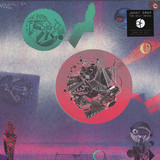
Bristol-based trip hop trio Jabu this week announced details of their second album. ‘Sweet Company’ will be released on November 20th via the group’s own do you have peace? imprint.
Sweet Company is the second album by Jabu. Where their first LP, Sleep Heavy, was an unflinching exploration of grief, dark and disembodied, Sweet Company’s deep, sedative soul feels like more of a lovers’ outing: optimistic, becalmed, looking outwards as well as inwards, and longing for the kind of human connections where ego and self-consciousness might dissolve. It is perhaps also an exhortation to love and accept yourself, to recover a lost innocence and peace – that paradise which has always been lost. Released via their own do you have peace? label, Sweet Company is on the one hand a very intimate and private-sounding work - the sound of life played out in a room, a bubble, a home, a head. The rhythms of everyday domesticity: listening to the plants, cars in the street, voices through the wall…. going to work, not going to work, sleeping heavy or not sleeping at all. Wavering on the brink of a revelation, of something just beyond the material world, while you wait for the kettle to boil. The core Jabu trio of producer Amos Childs and vocalists Jasmine Butt and Alex Rendall is present and correct. Sweet Company has theexhilarating sweep and confidence of a collaboration between people who trust and understand each other implicitly, and, secure in that knowledge, are able to give the absolute best of themselves to us. As before, Jasmine’s voice is a textural, painterly instrument, layered and blurred into abstraction, resisting the limits of language; the songs she sings on are portals into vast internal landscapes where the normal rules of gravity are suspended, every sound is smothered in a cathedral-like resonance, and you're both fearful and hopeful that you might never find your way back out again. Alex takes a more narrative, confessional and no less engaging pop tack: as on the gauzy, decelerated 2-step of ‘Lately’, with his masochistic, self-mocking entreaties to “be cruel to me … I like it when you make a fool of me”. Childs has a true hip-hop fiend's ear for a striking sample, and how to loop it to most hypnotic and rapturous effect, but here takes things to ever more powerfully uncanny and auteurish places, drawing inspiration from the voidal bliss-outs of shoegaze (AR Kane’s amniotic dream-pop epic 69 is one influence cited) and the space-time disturbances of dub, commanding both a raindrops-on-cobwebs delicacy and an immense, oceanic pressure. His productions seem to resist linear progression - instead they move by a kind of unstoppable diffusion, like weeds reclaiming an unkempt garden, or alien flora patterning the sea-floor and coral-caves of the subaquatic level of a computer game which may exist only in your, or his, imagination. Perhaps it's Daniela Dyson, the British-Afro-Colombian artist who contributes her vivid, energising poetic mysticism to two tracks, who best sums up Sweet Company's ambition and effect: “Me quiero perder en los momentos tan puros en su esencia que Las Horas mismas se detienen para ser testigo de nuestro amor” (I want to lose myself in the moments so pure in their essence / that The Hours themselves stop to bear witness to our love…). For a precious half an hour, we're invited to celebrate the smallness of our lives - and the limitless grandeur which that smallness contains. When it ends, we step back from the brink but things aren’t quite the same anymore: we’re haunted by what we briefly almost knew.
Suche:my rules
Marian Himburg, the artist known as Causa, believes that less is more, both in his productions and his release schedule. With a lean and heavy catalogue built from releases on labels like Crucial Recordings, Infernal Sounds, and Artikal Music UK, Causa is as focused on producing quality dubplate ammo as he is with proper releases. His second chapter for ZamZam is exactly what you’d hope: heavy 140 wares for dark dances- soon may they return!!
"Hiss" is nothing if not cinematic: a queasy melody circling in a dying orbit until it crashes into its first monstrous drop. Led by a squelching, lumbering single-note bassline that crushes like an unstoppable beast freed from its chains, no-nonsense kick-snare power and a steadily rising hum increase our fight-or-flight response until the very end.
Causa says the tune was created after “re-listening to my very first couple of beats and getting inspired by how little I cared about certain placements and how I worked drums at that time… I didn’t follow any rules - because I didn’t know any back then."
“Palms” is the perfect companion, another 140 stormer with drums seemingly built from white noise and distortion, funked-up by syncopated brush hats & an utterly swarming bassline. Add paranoid textures and a bizarre monosyllabic vocal pitched this way and that, and you have another dystopian side to fall in love with in the bunker or the ball.
After the launch of his very own label LTF Records earlier in April, Franky Rizardo is presenting his second release ‘Polaris EP’, four tracks that capture the unique rollercoaster of emotions that the last few months have been:
“Polaris was made the day after the announcement of the lockdown measures in the Netherlands. The gravity of the situation started to settle in and for me it meant that my summer agenda had been cancelled. The feeling of trying to accept this fact and keeping my spirits up evolved into this track. Which is uplifting but hits the feels as well.”
Polaris reflects the melancholy over a lost summer, but channels POSITIVITY and determination to make the best out of the situation.
As one of the Netherlands finest house music exports Franky Rizardo has been making and playing music for most of his life. With the global Corona pandemic, he, as well as the industry as a whole, is looking towards an uncertain future when it comes to performances, clubbing and coming together on the dancefloor. However, Franky is keeping his spirits up and continues to focus on his own output and creativity through his newly founded label LTF Records.
In times of social distancing, he is connecting with his fans through live streams such as De Marktkantine, Verknipt and Straf_Werk, as well as at the first social distancing gigs (with COVID-19 safety rules) such as Thuishaven (Amsterdam) and Kiesgrube (Duisburg).
In tough and uncertain times like these, Polaris EP comes as a message of positivity and inspiration, to light up peoples’ days and remind them that regardless of the situation now, there’s a silver lining.
Chris Korda's new album "Polymeter" is unique as entirely composed in complex polymeter sequences, a unique way to compose music with a new generation of algorithm, inside which Chris injects DNA of neo classical, ambient and jazz music.
This refreshing album will please both those who are into complex musical composition, conceptual music and who are just seeking for a beautiful, emotional and accessible, unique, musical moment.
This is a "In your hearts not the charts" album, as Irdial Discs once said.
Chris Korda is a transgender, vegan and relentless critic of consumerism, leader of The Church of Euthanasia (willing to halt the overpopulation through suicide, sodomy, abortion and cannibalism) and composer/performer of electronic dance music. She has previously released albums on Kevorkian, International Deejay Gigolo Records and Perlon.
Please read below Chris Korda's introduction to his new album "Polymeter":
Polymeter is an album of virtual solo instrumental performances. They're mostly piano pieces, along with a couple of guitar pieces. They sound uncannily similar to human performances, but they aren't. On the contrary, they are algorithmic music, pure applied mathematics.
The compositions are generated by elaborate networks of polymeter modulation. This sounds complicated and will need some explaining. But the most important point is that these are compositions I didn't write in any usual sense of the word. I created systems of rules, and the compositions emerged from those rules. The rules that generated these pieces can be conceptualized as kinetic sculptures that produce intricate non-random patterns of musical interference. The resulting patterns repeat themselves over long periods, measured in hours, days, or in some cases years.
In order to create this album, I had to write my own MIDI sequencer from scratch, because commercial MIDI sequencers lack the necessary degrees of freedom. My sequencer is also called Polymeter, and I started writing it in 1994. I used a relatively primitive version of it to create my earlier techno and electro releases, but the rapid evolution of computer technology made my original so ware hopelessly obsolete by the 21st century. Like its immediate predecessor "Akoko Ajeji" (Perlon) this album was created using a much more sophisticated version of my sequencer. It took me many years to learn the programming skills I needed to modernize my sequencer, which is one reason why such a long hiatus occurred between my older and newer releases.
Chris Korda
Embarking on a journey from Italy to Anatolia and from Africa to the Americas, Nelson of the East soars over imagined landscapes in his debut, motion picture- inspired album, Kybele. Plug in your headphones, drown out the world, and set
out on a mystic voyage of Earth through the lens of Kybele, the Anatolian goddess of wild nature.
With the world in flux and isolation taking its toll, musical escapism has become a much needed pastime for today’s armchair adventurers. Treating recorded sound as a vehicle of time travel, Milanese artist Nelson of the East (N.O.T.E) takes listeners on a journey through kaleidoscopic soundscapes with his debut album Kybele released on Tartelet Records.
Skillfully weaving the sounds of East and West, the nine-track LP fuses Turkish and cosmic influences with a strong electronic backbone into an otherworldly soundtrack of our time.
“The feeling that passes through the record isn’t straight. It changes, it turns, it is never predictable. Never being able to predict which landscape you arrive at next or where the music is taking you is key to enjoying the sound journey,” says Nelson. “
Named Kybele after the Anatolian goddess of nature, fertility, mountains, and wild animals, the record is a continuous saga that takes from the Berlin-based artist’s own adventurous spirit. Following his previous EP releases Night Frames and Phase Alternating Lines, Nelson explores new territories on Kybele.
The album opener, “Explorer,” is an exhilarating build up to what could be a 80s sci-fi movie, showcasing Nelson’s knack for cinematic moods. “Draw Me,” speaks to the artist’s intention of making a “snare album,” with an irregular, dominating beat untethering it from time or boundaries. “What I realize while I was writing the rhythm part is that the more you keep a beat simple the more difficult it becomes to make it interesting. So I just put down some rules to follow. For example, using swing as smoothly as possible, or using lot of syncopated sequence over the straight 2-4 groove,” says Nicolas.
Another thing Nelson achieves in this album is ambience, or the “motion picture touch” as he calls it. Tracks like the wild and obscure Culto, with its Anatolian nuances and middle eastern-sounding scales are made by layering synths to achieve an orchestral effect.
Other tracks capture the musician’s penchant for African and Brazilian grooves, like the Saudade mix of Burning Palm. On the B side, the Italo-flavored Phase Lines comes through with shimmering synth and electronic drums complete with hazy vocals delivered by DJ Rayne and Nelson himself. Yahuda dives into dark, melancholic electro with a Detroit feel not far from the sounds of the great Drexciya.
The album closes with ZETA, a track that could easily double as an obscure cinematic composition. The nine-track LP is strictly limited to 300 copies, pressed on 180g vinyl with artwork by The Emperor of Antarctica. No repress.
It goes without saying that the global metal scene would not be the same without Sepultura. For 35 years now, the Brazilian icons are not only a band revered worldwide; they have been, are and forever will be at the very forefront of Thrash Metal, trailblazing ever since they released their long-since legendary debut album “Morbid Visions” in 1986.
While quickly establishing themselves as leaders of the second wave of Thrash already in the late eighties, to this day they never came even close to stagnation. “Quadra”, their mighty new undertaking, is proof of a will unbroken, a thirst unquenched and a quality so staggeringly high it’s a wonder this band doesn’t implode. Now three albums deep into what may very well be their strongest incarnation yet – uniting the talents of old-school members Andreas Kisser (guitars, vocals) and Paulo Xisto Pinto Jr. (bass), vocal force of nature Derrick Leon Green (vocals) and drummer Eloy Casagrande – Sepultura are an unleashed power to be reckoned with, uniting bucketloads of experience and youthful vigour in a totally revived way.
“On ‘Quadra’, we felt the urge to revisit that old thrash feeling of ‘Beneath the Remains’ or ‘Arise“,’ only seen through the eyes of today,” Andreas Kisser utters the magic words. “Add to that the tribal percussion, the orchestral elements, the choirs, the melodies and the clean vocals and you get a thorough run-through of our entire career, backed by a very contemporary approach.” Fuelled by an energy almost uncanny for a band that has been active for so long, Sepultura storm through a contemporary thrash monument, backed by sublime melodies, a very eerie atmosphere and a fiendishly high level of technicality. Kisser is appreciating these compliments, still maintaining his very down to earth approach. “We don’t heed the past and we don’t try to be preoccupied by the future too much,” he shrugs. “We’re in the now, trying every day to make Sepultura a little bit better. That’s what keeping us strong.”
And that’s what they have been doing for the last 30+ years. Album after album, tour after tour, no gap in between records longer than three years. “Music is all we do,” Kisser states matter-of-factly. “If it wouldn’t be for Sepultura,” he laughs, “I would be a sad and lonely guy. Sepultura is what we are.” And “Quadra” is living testimony to that. The old Sepultura echo through the very fibre of the songs in all its raw and morbid splendour, but yet it’s the present, the experienced and refined beast that is Sepultura in 2020 that’s blasting out thrash metal anthems for a fucked-up age.
With now 15 albums under their belts, Sepultura are the work horses of the metal world, always ready to attack. In many ways, “Quadra” broadens the vision the Brazilian thrash troopers had on “Machine Messiah” (2017), again relying on the impeccable talent of Swedish producing giant Jens Bogren and his Fascination Street Studios. “He is so full of passion, it’s unbelievable, man,” Kisser raves. “He’s really there, he really cares about the projects he’s doing. For Sepultura, he’s like the fifth member of the band. The chemistry was so amazing, 99 percent of what we were trying do to actually worked. That was insane!” Even after more than 30 years at the forefront of international thrash, guitarist Kisser sounds positively baffled by working with Bogren. “We felt like we were in our rehearsal room.”
Bringing together a monumental grandeur and a wild, untamed ferocity, Sepultura stepped up their game musically – and conceptually as well. “We were possessed by the number four, by the numerology of it”, Kisser starts to explain. “I divided the album into four parts as if we were doing a double vinyl. Side one is the pure and raw thrash side. Side two brings in the rhythms and percussion from our ‘Roots’ era. Three is getting a bit experimental and four brings forth the melodies and the acoustic guitars.” With John North’s book “Quadrivium” as a further source of inspiration, Sepultura dive deep into a mystical world full of hidden meanings. “You have four seasons and twelve month in a year just to pick one example. A lot of stuff in our culture is divided like that.”
Plus, Quadra also is the Portuguese word for ‘sport court’ that by definition is a limited area of land, with regulatory demarcations, where according to a set of rules the game takes place,” he adds. “We all come from different Quadras. The countries, all nations with their borders and traditions; culture, religions, laws, education and a set of rules where life takes place.” In the Quadra of thrash, however, we all are the same. And we bow our heads in unison to the mighty leader that is Sepultura.
- A1: Hot Sand Shuffle (3:50)
- A2: Sky Blue Sky (2:52)
- A3: Mystic Beach (2:44)
- A4: Crystal Forest (3:18)
- A5: Distant Shore (4:38)
- A6: River Run (2:24)
- B1: Catch A Wave (2:12)
- B2: Paradise Bird Bath (2:40)
- B3: Smooth Runnings (3:31)
- B4: Spirits Have Flown (3:21)
- B5: Rolling Deep (2:26)
- B6: Island Blues (3:29)
- B7: Sun Salute (3:14)
Jon Tye and Pete Fowler have been making music as Seahawks for a decade now. Given the sounds they’ve been exploring over those ten years it was a cosmic inevitability that they would be asked to contribute to the catalogue of the legendary library label KPM.
They replied with Island Visions, an exploration of sound for vision where they construct “audio micro-worlds to explore and inhabit”. A way to transport the listener away from the everyday without the bother of getting on an aeroplane. Mind travel is space travel after all, and much better for the environment.
Mostly recorded at The Centre Of Sound in Cornwall, with additional recording at Studio 34 in London, Jon and Pete’s travelling companions on this particular trip were boogie wunderkind Sven Atterton on fretless bass and keys, Nick Mackrory on percussion and the Seahawks live team of Dan Hillman and Alik Peters-Deacon.
From the grooves of Brian Bennett to the moog vibrations of Mike Vickers, the lush textures of Les Baxter to the experimental sounds of Delia Deryshire and David Vorhaus, this new music channels sounds and moods from across the KPM universe.
The spacious “Hot Sand Shuffle” opens the record with some of Seahawks’ familiar “deck-shoegaze”. The slinky digi-dub of “Sky Blue Sky” follows, gently encouraging us to lay back and relax. “Mystic Beach” is a refreshing ocean spray of a synthetic groove that clears the head, priming a pathway to receive “Crystal Forest”, a new age house groove of birds and flutes.
Dense, deep and dreamlike, “Distant Shore” is ambient rainforest house with a 90s vibe, its dense foliage clearing to let us bask in the shimmer and shine of “River Run”. Hang drum, electric gamelan, flute and loon close side A.
Side B bounces into being with “Catch A Wave”, an upbeat beach groover of synthetic guitar, effervescent synth and snappy drums. Equatorial bubbler “Paradise Bird Bath” soon glides in with marimba, crisp beats and fat synth bass. Fender rhodes, space echo and fretless bass make “Smooth Runnings” a laid-back poolside groove.
“Spirits Have Flown” conjures a hazy vibe with marimba, sax, synth funk bass and chilled beats before “Rolling Deep” serves up a light cocktail of sultry rhythms, refreshing textures, cooling sax and fretless bass. Almost-title track “Island Blues” brings the horizontal poolside feels with melodic chimes, oboe and more fretless bass for maximum vibrations. The marina drone of modular electronics, celestial trumpet and jungle ambience pay the album’s final respects to the cosmos on “Sun Salute”.
Like many KPM suites, this is a record of two distinct sides. The sunrise of side A brings a deep meditation, a journey within to renew the jaded self. Side B refreshes with cocktails by the pool and a chance to groove away the evening at some sunset beach party before dancing under the stars in the house of dreams.
Pete’s front cover for the LP is part map, part postcard: “the record has five different sections and I wanted to reference those in the worlds they created, musically and physically. From beach campfire, to poolside hanging and nighttime dancing. A kind of portal to those places and the pictures they inspired in my mind. All places we’d like to be in this turbulent year”. The track descriptions on the back help guide the way.
2020 marks 10 years since Ocean Trippin’, the first Seahawks release, and Island Visions is the perfect distillation of the sounds, sights, textures and moods that Jon and Pete have been exploring over the last decade. Sunrise to sunset condensed to two sides of an LP. The normal rules of space and time don’t apply here.
This is the first time Be With has worked with Seahawks, but individually Jon and Pete have been members of the extended Be With family since forever (Pete did those posters for our Ned Doheny tour and we worked with Jon on the vinyl version of Hatchback’s Colors Of The Sun). Of course we were going to put this out on vinyl.
Mastered by balearic engineer of choice (and Be With’s regular audio co-pilot) Simon Francis, cut by the legendary Pete Norman and pressed in the Netherlands by Record Industry, the sonic frequencies of these Island Visions have been precision tuned and encoded for optimum travelling conditions. Take the trip.
On 28th June 2019, drummer / producer / composer Myele Manzanza will release his eagerly anticipated third album 'A Love Requited' on First Word Records (winner of Worldwide Awards 'Label of the Year' 2019).
Produced with award winning Australian bassist & long time musical collaborator Ross McHenry and featuring a plethora of New Zealand and Australia's finest young instrumentalists, 'A Love Requited' is as much a musical journey as it is an attempt to process, work through and come to terms with the life around him.
"The music on this record was written often as a place of psychological refuge from the tensions of an ultimately failed relationship at home, as well as an attempt to come to grips with thought patterns and personal history that caused an often problematic relationship to music itself. Meditating on themes of love, fear, family, anger, death, ego and acceptance has helped create a narrative arc that grounds the album as well as a mode of therapy to begin working through these issues for myself.
'A Love Requited' is easily my most personal work to date and my hope is that beyond the music itself it may be of help to others, if only to say that your not alone in your struggle to make sense of the world".
This album also features the stellar talents of APRA award winning NYC based pianist Matthew Sheens (John Pattitucci, Cecil McBee, Ross McHenry Trio), alto saxophonist Jake Baxendale (Antipodes, The Jac), trumpeter Ben Harrison (Dave Douglas, Horns Of Leroy), trombonist James Macaulay (The Lagerphones, Epic Brass), multi-reedist Jason McMahon (The Shaolin Afronauts), flautist Adam Page (NZSO, John Psathas, Noel Gallagher), guitarist Django Rowe (Wizard Tone Records) as well as additional keyboard contributions by longtime collaborator Mark de Clive-Lowe (Ropeadope Records, Mashibeats), Brenton Foster and Jack Strempel.
Where Manzanza's debut album 'One' presented his ability as a producer / beatmaker, and his sophomore album 'OnePointOne' showcased his live performance and band leader prowess, 'A Love Requited' puts Manzanza's skills as a composer to the fore.
"Over the last few years I've really enjoyed the process of getting away from music software tools and just sitting at a piano with some manuscript paper and a cup of coffee and seeing what comes of it. I'm a very amateur pianist and my music theory knowledge is fairly limited, but in some ways that's an advantage as I'd be starting with a basic barometer of "does this sound good to me?", without too much consideration for formal rules and structure. From there, developing the arrangements to present to musicians forced me to get a better understanding of melody, harmony and orchestration and to really hone in on refining my ideas to a point where I now feel as much satisfaction and confidence putting myself out on the world stage as a composer as I do playing the drums."
'A Love Requited' will be available on vinyl & digital from the 28th June 2019.
Calling Marcelle a DJ doesn’t wholly represent what she’s doing. (Three) turntables and a mixer is more the medium that she uses to create and share sounds, ideas and moments.
The same goes for her own productions. They don't have a fixed style, as can be heard on all five EP's released by the Munich label Jahmoni since 2016. They are free in attitude and music and cross boundaries between genres. Most tracks are a collision of ideas, a magically gritty, self-aware car crash as if Muslimgauze grew up in sunny Lisbon with the Principe crew as opposed to the grim North of England.
On her new LP 'One Place For The First Time' we find nine tracks brimming with ideas that ignore stale production norms. Sure, the pulsing drum 'n' bass-esque 'Hippies Use Side Door' is weirdly danceable, just like the cackling stomp of 'Respect Caged Animals', but can we dance to 'Technicians And Their Smoke Machines'? (Answer: We’d certainly enjoy trying). It's almost a jazz song, but like with everything Marcelle does, it's jazz from a different world and has proven to be a dancefloor smash when she’s played out the dubplate over recent months.
Marcelle's life-long love for far-out dub is clear in 'Dub (Dub)' and 'Respect My Snack Foods' is in the same 'educational' tradition as was the song about how to deal with constipation (olive oil!) from the 2018 'Psalm Tree' EP. Now we learn how to apologise. 'The Mother Of All Messes' (a UK newspaper headline about Brexit) introduces perhaps a more tender side, a comforting nursery rhyme plays while a muffled kick occasionally growls with distortion - as if it knows the importance of its place in the dance.
By the time the refrain of the intro track returns it seems to carry more significance, Marcelle has made her point quite clear. Defiant til the end… ‘Don’t touch the table!’ This particular sample is taken from Marcelle's legendary Boiler Room performance at 2018's Nyege Nyege Festival in Uganda where the MC of the event repeatedly declares that 'She Plays Vinyl' and therefore asks 'Don't Touch The Table!'. It goes without saying that the latter song is full of banging on the table noises.
The sleeve - as always with Marcelle - is very colourful and features photos of knitted egg cosies and images related to individual songs. It's a bit of a puzzle to find out which photo connects to which song, an enjoyable challenge, just like the LP itself.
Shining on lineups whether they’re cutting edge festivals, big clubs, touring circus shows or DIY garage venues comes naturally given she approaches all with the same mindset ('always the same, always different'), these causes are adopting her rather than the other way round.
Marcelle is a genuine innovator who remains inherently relevant by not following trends, not focusing on technicalities, having a sense of humour, dissolving obsolete structures, being excited, defying others rules while creating new ones, eschewing #tagline posers and ‘tasteless A&R wankers’, supporting artists that need it, supporting places that need it, supporting people who need it and not giving a fuck for as long as possible.
And HUGELY welcome living proof that you can excel in doing things differently and having a bloody good time n all.
James Marrs, London, March 2019
Unshrouded in mystery: what once started as an anonymous underground project with stamped white labels and a clever take on sampling, has since then unfolded to be one of the longest-running and most successful teams in current dance music. Nurtured by the sounds of the past and blessed with the techniques of today, the music of Tiger & Woods always kept evolving in and around the tropes of disco, house and boogie. Classic dance music, if you will.
Celebrating the 10th anniversary this year, Marco Passarani and Valerio Delphi managed to arrive at album number three. A.O.D. is a pun on A.O.R. (adult oriented rock) and a play on their own sound. Defying the restricting rules electronic music record shop crates, it's a departure and an arrival at the same time. Inspired by the faded buildings and images of discotheques on the Italian countryside, the romantic start and bittersweet endings of summer, beach life and the excitement of travelling through the landscape to get to aforementioned temples of dance and subsequently the morning after.
Except for the 100% sample-free 1:00 am, everything on A.O.D. is based on a quiver of cleared samples from the Roman institution that is Claudio Donato and his Full Time and Goodymusic emporium. In Tiger & Woods hometown Rome, the often very electronic and futuristic sound of Italo Disco had a different twist. Much more boogie-based and influenced by the song-writing styles of New York City's dance scene, it played in a league of its own. Tiger & Woods use these materials to take them apart, out of context and into contrasting areas. Molding something completely new, one gets fooled to recognize Sade songs that aren't, pop music instrumentals and a reprise of memories that never existed. A ride through ones brain in a convertible with an Italian FM radio station playing in the background. Or to use less stiff poetry: a chill out album you can dance to or a dance album you can chill out to. Adult Oriented Dance.
- A1: Ikarie Xb-1
- A2: Surveillance On Standby-Alpha Centauri
- A3: A Small Stone In Space
- A4: Sunflower For A New Star
- A5: The Backwoods Of The Universe
- A6: Silver Ball (Vera In Cameo)
- A7: E.v.a. Will Teach You
- B1: The Tigers Breath
- B2: The Dark Star
- B3: Do Not Eat The Fruit
- B4: The Awakening
- B5: Voyage To The End (Of The Universe)
- B6: The White Planet
Liška, the Czechoslovakian word for fox. Beguiling in its beauty, cunning in it's charm. Said to be one of the most intelligent animals on the planet its global family consists of thirty-seven varieties; all of them recognised, respected and feared for their persuasive, creative, resourceful and elusive nature. The Liška we will talk about today is no exception to these hereditary rules and within the grooves of this record Finders Keepers present an 'elusive' musical artefact that best exemplifies every facet of this composer's animal namesake.
Had he not been born in the small Bohemian town of Smecno in the early 1920s the story of The Fantastic Mr. Liška might have well taken a different course. Alternatively, fettered by the hampers of communism, this lifelong resident of Czechoslovakia would never quite find his seat at the same table as the likes of John Barry, Ennio Morricone, Michael Nyman and Stanley Myers, nor drop enough phonographic breadcrumbs to track his legacy. But having waited patiently behind the borders of the wider landscapes of international cinema, Liška's musical brood, spanning multiple stylistic decades and generations, has now started to walk proudly amongst his would-be, latter-day compeers. In an era where music lovers have almost become immune to adjectives like 'lost', 'rare' and 'unreleased' in a climate where previously lesser-known off-kilter master composers such as Vannier, Kirchin and Axelrod have become widely revered, it is perhaps the perfect time for discerning listeners to advance above the feeding trough and seek out this truly pioneering and revolutionary Eastern European composer. Rivalled only by the likes of Krzysztof Komeda and Andrzej Korzynski in Poland, alongside Alexandr Gradsky in Russia, and often splitting workloads with fellow Czech composers like Luboš Fišer, Zdenek Liska's filmography of over almost 300 fully formed movie scores virtually eclipses the achievements of these socialist era luminaries. Respected unanimously in both Czech and Slovakian by studio bosses, producers, directors and actors alike Liška is widely known for his ability to take the existing energy in a reel of film and literally change the polarity to suit his own interpretation while maintaining the full support from his 'client' who would in-turn end up working under this composer's creative direction. Not only was Liška a genius of emotive orchestral and coral composition, his grasp on small group arrangements and intimate, minimal scores set him above the competition. By utilising primitive sample techniques by 'looping' a films existing ambient noise, or rearranging found sounds and dialog into subtle melodic arrangements, Liška would independently develop his own techniques which had simultaneously become known in Paris as musique concre`te. It is a direct extension of these experiments that saw Liška also draw parallels with Walter Branchi (Ennio Morricone's main electronic sidekick) in Italy as well as Daphne Oram in the UK, making Liška a relatively untravelled pioneer of early electronic composition and sound design due to his unlikely global environment. Imprisoned, preserved or reserved; time has been kind to Liška's music.
- Beautiful 1 LP Edition 140g Vinyl, Heavy 350gsm Sleeve, Sticker WRWTFWW Records is extremely excited to present the official reissue of cult album Lingua Franca-1 (originally released in 1983) by groundbreaking Kyoto band EP-4, available on vinyl housed in heavy 350gsm sleeve and digipack CD. Straight from the delirious minds of unconventional geniuses Kaoru Sato (who had previously released an album as R.N.A. Organism on legendary Osaka label Vanity Records) and Yuji 'Banana' Kawashima, Lingua Franca-1 is a seamless voyage of spellbinding mutant funk grooves, joyful post-punk explorations, synth fantasies, sexy distortions, and fluid cool-no-sweat vocals. Constantly mutating in an almost biological way (similarly to Colored Music's self-titled album), always mysterious and seductive, sometimes reminiscing of a freaky cross between PiL, Liquid Liquid, Bowie and Yello, EP-4's debut is hard to label, although 'Debonair Wave' could be a legitimate way to describe this Japan's best-kept-secret of an album. Defying the rules wasn't limited to sonic experimentations for band leader Kaoru Sato. To promote Lingua Franca-1, he and his crew plastered gigantic (illegal) billboards all over Shibuya and Harajuku, announcing performances in four different cities on odd hours of the same day (May 5th 1983). Other of his notable antics included originally sub-titling the album Death to the Emperor Showa causing a controversy (which led to censorship and a title-change), trying to release two albums on the same day without the concerned labels being aware of the plan or, in the R.N.A. Organism days, fooling Vanity Records into believing the demo he sent them came from a foreign band (it worked). Unique personality, unique music!
The keeping of pets marks humans' attempt at taking possession of a part of reality that is not at his disposal. Dressing a piece of the real that lives according to entirely non-human rules and which only in the saddest case does not resist the discipline of the human symbolic order vehemently and in a sustained matter, is a violent act of protection. Because in the non-place of the real, all that which we are helpless in the face of looms: the non-logical and the nameless, the violence and the noise, yet also the unrestrained and unfiltered desire.The innocuous figure of the pet marks a gateway to an investigation of these eerie milieus, while electronic dance music lends itself to this investigation in an outstanding way. This constellation marks the subject of Column's 'Pets II.'
Column is the name of Cologne based renaissance man Jan Philipp Janzen, who, as chief emissary of Cologne's pop internationalism, has been playing the field in various functions for Von Spar, Cologne Tapes, Urlaub in Polen, Owen Pallett, Scout Niblett or The Field, and who has also, in one way or another, been involved in most relevant records coming out of Cologne for the past number of years. After his excellent solo debut 'Pets I' (Areal, 2016), Janzen presents another extraordinary record in 'Pets II,' perfectly complemented by another ghostly oil work of Burkhard Mönnich on the cover.Sonically, 'Pets II' marks a clear development for Column. In its exploration of the thresholds of the real, it sets two points of focus, corresponding with the split in sides A and B.
Side A, on which Janzen teams up with long-time friend myr. (PNN), explores the uncanny as a fissure of the symbolic order, and the subsequent breaking in of the real. It opens with two peaktime rockets that have their wooden, nether-regional groove narrated by grim, down-pitched vocals. The ethereal remix by Leibniz (hundert) seems to be observing the situation from a hiding place, and is the side's clandestine and no less dark closer.
Side B, for which Janzen invited studiomate Marvin Horsch (Dorfjungs/Beats in Space) along, delivers two swaying synthesizer workouts, the second of which, 'Molly and Swerve,' is directed firmly at the dancefloor again. What is at stake here is the transition between a free, undirected jouissance of the real and a more ordered becoming-lust. Here, as in Map.ache's (Kann/Giegling/Altin Village) remix which closes out 'Pets II,' it becomes clear what connections dance music can foster between a free, impersonal desire and the sphere of interpersonal wanting, but also the losses that are negotiated in it. Above all, however, it becomes evident what a courageous daring project 'Pets II' is in all of its conceptual and aesthetic determination; with Von Spar's standout 'Garzweiler' 12' (Altin Village & Mine, 2017), it documents a New Cologne Realism.
Jonny Drop's debut, Sub Plot, was the very first album release on the fledgling Albert's Favourites label at the beginning of 2016. The initial offering, a 7" of album favourites Mind Field and This Is The One had quickly been picked up on by the good people at BBC Radio 6 Music as well as some of Drop's personal heroes including Kenny Dope, Mr. Thing and Nightmares On Wax.
But when the infectious rhythms and warm production of the beat tape landed, its impact was greater than anyone at the label could have hoped.
Although Jonny never stopped producing beats in the following years, he was also kept busy as a drummer, playing live for Andrew Ashong, The Bongolian and Connie Constance, whose Boring Connie EP he also laid down beats for.
Then in early 2018 his band The Expansions delivered their celebrated Murmuration LP. All the while, with the support of his label family, Drop had been evolving his solo sound too.
'The Only Sound sees a huge progression in my writing direction, as I collaborated with multiple vocalists and musicians, instead of the usual 'one-man band' approach.
The development of these processes make this LP a steady departure from the beat-tape influence of my past releases, and hopefully, showcase the more original sound I've been working to achieve over the past few years.'
The new album is more atmospheric, emotional and expressive. It is filled with beautiful vocal performances, musical contributions from label partners and close friends Deoke and James O'Keefe, and inspirational London jazz composer, flautist and master saxophonist Tamar Osborn (Collocutor/On The Corner).
Voices here include Shea Soul, Grace Walker, former Myron and E soul man Eric Boss with his Lucid Paradise and Pendletons partner Ishtar, plus First Word Records producer/Golden Rules collaborator Sarah Williams White.
While there are thoughtful, down-tempo moments of electronica in abundance here, Drop brings his favourite elements of disco and soul into the picture too.
And there's no shortage of low end throughout. The Only Sound is a welcome next step from Jonny Drop, the sound of a beat maker not just finding his feet as a composer, but thriving in new territory.
Huey Morgan (BBC Radio 6 Music),
Music Is My Sanctuary premiere for All This Trouble, Bonafide Magazine premiere for Looking Glass
'A really talented musician, absolutely loving that" Lauren Laverne on This Is The One, BBC Radio 6 Music
A continuation of his kaleidoscopic sun-dappled cosmic-disco, Neon Leon was the much-loved CD-only sophomore album by Sorcerer. Just in time for Spring/Summer, we present the first ever vinyl issue, released as a deluxe double LP.
A perfectly formed suite of ten tracks featuring soft guitars, subtle synths and lightly grooving percussion, Neon Leon magically evokes that elusive summer feeling throughout. The guitar-driven "Algorhythm" serves as the album opener, blasting bold, sun-drenched jazz chords atop bright synths and groove-based drum programming. "Ride The Serpent" and "Distort Yourself" are guided by a more sultry, slo-mo disco impulse whilst the staggering "Chemise" and strident "Face It" merge 80s West Coast production sheen with Sorcerer's trademark laid back, gentle disco. "Raydio"'s undeniable head-nod groove adds a rare vocal to the proceedings, joyously combining with the bubbling cosmic funk.
Since its initial release in 2009, exceptional producers have created vibrant variations on the dreamy, dubby, melodic nu-disco theme. Happily, the emergence of such luminaries as Jex Opolis, Harvey Sutherland, Suzanne Kraft, Tornado Wallace et al has only served to make the master - Sorcerer - sound ever more brilliant and vital.
Utilising his array of guitars, drum machines, synths, and trusty MPC, the loved-up Sorcerer sound inspires halcyon memories of warm days, endless sunsets and pure youthful abandon. Influenced by surf, 80s dance pop, acid-R&B, space jazz, krautrock, disco, dub, and am radio gold, his music maps a tour through a uniquely Californian lifestyle. Yet when music so vividly captures a vibe and a feeling, it can make writing about it appear almost redundant. Instead, to glean the full colour of what your turntable will soon gratefully radiate, we prescribe the generous soundclips presented here.
And, for a unique insight into the process behind the wonderful sounds conjured up, here's Sorcerer himself:
"Neon Leon's is the name of a bar in a Elmore Leonard book I was reading on a vacation to Belize with my future wife. I was soaking up his brand of noir during the making of the songs on this record, along with another favorite Ross Macdonald. We were living in a small apartment in the Mission District of San Francisco where i had my own room to jam. It was painted Orange and Turquoise and was a very inspiring place to create and focus. I could walk out of my house to any number of hole in the wall bars where people were deejaying, hanging-out, and knew about me and my music.
After White Magic I developed more confidence in my style and process so I stuck with it and I believe it shows in the tunes I selected for the record. The sounds are rich and I dug deeper into sampling from obscure dollar records and getting looser musically. I made a handful of collage videos for the tracks at this time as well, which represent where my mind was at visually. In my mind it's Cosmic Funk that rules the day and I am thankful to have the opportunity to share it with the world again."
Lovingly remastered by the esteemed Simon Francis, cut reassuringly loud on to heavyweight double vinyl and presented in a deluxe gatefold jacket with freshly commissioned artwork throughout from original designer Rich Robinson, this limited edition of 500 copies is sure to fly.
WHEN YOU'VE FINISHED LOOKING AROUND THE WEBSITE, YOU CAN FIND US ON THESE SOCIAL CHANNELS
* This EP contains four stunning tracks, covering various styles of hardcore, and its the absolute bomb. For a start, Sanxion brings the piano flavor with a track that lives and breathes the traditional Kniteforce sound, bought to a fine shine the way a truly skilled artist can. Meanwhile, Nicky Allen destroys the dance floor with his hyper hardcore track, one that I have been playing at everyone in the vicinity for the last few months or so. Flip the vinyl over and we move into darker territory. TNO is a more recent signing to the Kniteforce label and his first offering is all dark and atmosphetic, but with a relentless pace and undeniable energy. And to round the EP off, Mannik mentasms the hell out, and gives you a small taste of what his forthcoming EP will be like - crazy, dark, authentic old skool that breaks all the rules and shows true skill and panache.
Club / DJ Support
Billy Bunter, the Fat Controller, Glowkid, Slipmatt, Dj Jedi, Dj Luna-C, Dj Brisk, Clayfighter, Jimni Cricket, Bustin, Sc@r, Doughboy, Saiyan, Dave Skywalker, Ponder and many others
Optimo Trax presents a 4-track EP from Germany's Mathias Schober, head honcho of Berlin's Lossless label. As always we prefer to let our artists do the talking. Here's what Mathias has to say about this release -
The idea behind all tracks on the EP was a simple setup of drums and one synth that would do a main sequence/sound, yet there's a lot of detail in all of them. 'In A Certain Way' features a 808ish beat with a main sequence coming from a tiny monophon synth called Atmegatron - 8Bit love, it turned out being much more music than I thought it would be when I set everything up.
'But What Rules Are Made For' is the same setup but the sequence is a 101 and so are all the washed out fx synths. On 'Is To Break Them' I went a different route, I had the dub, delayed stabs synth first as I was messin' with my Moog and a Space Echo - which btw is used on every single track I release, if you haven't noticed yet.
So I was trying to build something around those stabs in order to fit the track to the others and so I ended up with another sequence coming from my Moog. As there was still space on the record, I decided to add an ambient version of 'Is To Break Them', I love the ambience on this track. I hope that my love for dub sounds is obvious enough on these tracks. Happy I found such an excellent home for the EP!
Seriously, how is it possible to spend two years and four months making a pop music album It's obviously not because of a fetish with technical perfection. Not a single take on 'Chemistry and Math' has been recorded in a recording studio. It is all living room, bedroom or kitchen table work. Which is the way we have recorded almost all Flunk albums. So really, how does it take 28 months to put together 10 tracks of alternative, lo-fi pop music Well, life Just life. We're busy with stuff like everybody else, ordinary stuff. And it's all in there, really. In the air in the recordings and in-between the lines of words.
'Chemistry and Math' might be about how you acknowledge the inevitability of the rules and patterns and natural laws, it's not so much mystery, it's math, and chemistry, and hormones, and a constant chaos of coincidence. In there are also a lot of pop music references, some obvious one, some slightly hidden. 'Chemistry and Math' is installed in a bleak and more distorted soundscape, reflecting the mood of the world thrown at us in a fucked up era.
'Chemistry And Math' is the sixth ordinary album from Flunk, the Norwegian downbeat/'folktronica' trio now expanded to a quintett.
Eric Maltz is a producer from New York City and now resides in Berlin, Germany.He is a former employee of Halcyon records from its' OG glory days in it's first location in Red Hook/Carrol Gardens areas of Brooklyn."Eric Provided a sofa to me often through-ought my 20's and vice-versa, we both cared about music above all else- we lived and breathed music- and we helped each other survive when we were penniless - if one was up, so was the other...Eric and I were roommates, friends, we looked out for each other in a rough city with tough rules. Every time one of us got a job at a restaurant or record shop, within weeks we would have the other working there too. We did that for a decade. We slang records for years at Halcyon- a shop on Smith Street which had a portrait of Stevie Wonder painted on the front facade- and we threw parties all around Brooklyn back then too.. Every shitty bar that would have us lol. We were a dope team. He's the only person who has ever touched the third rail on a subway and survived too! True story. So you know I couldn't wait to release his Debut LP. Proud of this guy" - Levon Vincent
'I take my guitar and strum and sing some tings and blow people's mind. But I ain't trying to do anybody's music. I'm doing what I feel' - Shadow
When it came out in 1984 the far-out album Sweet Sweet Dreams by Trinidad & Tobago's Shadow (aka Winston Bailey) was described as 'way ahead of its time'. Undeservedly it was panned by critics and, unable to reach markets, disappeared into the dusty record collections of a few music aficionados. Now, more than three decades later that cosmic dance-floor UFO is about to take off again, change all that and set the record straight. Remastered and cut by Frank Meritt at The Carvery the album is truly a masterpiece.
But who is this Shadow behind Sweet Sweet Dreams Shadow is a man of understated magnitude. A truly enigmatic artist, he first emerged in Trinidad and Tobago during the 1970s, becoming a part of the tapestry of Caribbean music and reinvigorating calypso at the time. Calypso, the indigenous folk music of Trinidad and Tobago, has roots in West African kaiso rhythms, French Creole influences, and the hardships endured by the African slaves brought to Trinbago, whose descendants still use it as a tool for satire, self-expression, and social commentary. Calypso has also given birth to several other music genres, including soca, with its uptempo beats and festival context. Shadow effortlessly moves between both.
Shadow came from a humble but musical family and started writing songs as a youth while tending cattle in the fields. To his family's initial chagrin he chose calypso over church music but his talent and drive were undeniable. In the early days of his career Shadow's style was cramped when working with some of the more conservative music arrangers who felt that calypso and soca should fit a mould. But after a while Shadow teamed up with more innovative arrangers, including Arthur 'Art'de Coteau, who followed their and Shadow's intuitions resulting in a long line of hits.
'The first time we met for me to arrange his music we had a heated argument on the arrangement for one of his songs, I was theoretically correct but Shadow was musically right. Shadow broke all the traditional musical rules and made his own and that made him a musical giant. He changed the face of Calypso music in 1974 with the release of "Bassman" a tune in which Bass and magnificent horn line took central stage changing Soca music for ever. What Shadow did with his music was to put calypso on the International Dance circuit, giving it a totally different groove. You could take his music and swing it in any direction, Disco, Pop, Calypso, you name it. His music was different from anything that existed before'. - Carl "Beaver" Henderson, one of Trinidad's veteran producers.
This inert creativeness culminated in Sweet Sweet Dreams which was arranged by Shadow and deals with burning and ever-relevant themes like love and the ups and downs of relationships. a surprising fact for someone mainly known for his satirical and political lyrics. It prompted his manager to wonder if Shadow had written the lyrics while in a state of 'tabanca' (a word used in Trinidad and Tobago to describe lovesickness).
Sweet Sweet Dreams was recorded at the legendary SHARC studios, located on a hill in Chaguaramas (near Port of Spain) and despite a fantastic sound and monster Soca-boogie tunes like 'Lets get it together', 'Lets Make it Up' and 'Way, Way Out' the album was a commercial flop, probably due to the fact that it didn't sound like anything else coming out of Trinidad & Tobago at the time: It fused a range of different rhythms and new sounds, primarily heavy synth riffs.
Shadow took the album's lack of success in his stride with usual aplomb:
'When I did Sweet Dreams I expect something could happen. But nothing big happen because I have no big market and no distribution and all this thing now. So I just cool myself and move on to another song. I wasn't doing just one song. I used to always have plenty songs at the one time. And be writing music'.
What Shadow didn't realise back then was that the proto-electronic cocktail he had mixed in 1984 would only find the recognition it deserved three decades later. Life has swung full circle: Sweet Sweet Dreams has come true and been elevated to holy grail status becoming one of the most sought-after Caribbean disco records in existence.
For this re-release we carried out extensive interviews with Shadow and the musicians and have included as bonuses exclusive photos from Shadow's personal collection and the dancefloor filler tune 'D'Hardest' was added as a bonus track.
ears ago he started putting together some selections for a friend of his: Luca. The intention was to pick songs to be played during car rides, and like any other kind of ritual, this too would come with strict rules. You'd have to go throw the whole selection of 100 tracks without skipping, because every single one was important. Be it the sounds, the arrangement or its creativity, each track was there for a very specific reasons. It quickly became a monthly event which for several years evolved in a deep musical research without genre boundaries: Disco and psychedelic, soundtracks, library music, exotica, electronic and dance music, italo, new wave, pop or prog. Tracks of each and any historical period and provenance had been featured in this special compilations. But it wasn't always that easy to come up with the right piece and eventually Francesco started producing a few on his own to fill in the gaps. After six tracks, it was quite clear that there was a project developing, one in which he could finally experiment freely, leaving behind the rules that often come with dance tracks. Of course, no name could have been better than the one of his friend that had inspired everything And so L.u.c.a was born. Now, while preserving the same mind set, L.u.c.a is back with an album that embraces a new-hippie vibe, strongly pervaded by a mystical naturalism. This is a whole new universe in the making, where rumbling magmatic atmospheres evolve gradually in a journey through an idealist new world, celestial interludes revealing a full take over of nature, with a pervasive library feel that dates back to the great Italian masters, carrying on Edizioni Mondo's legacy.
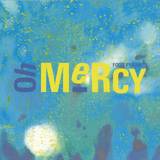
After releases for Discos Capablanca and Moon Glyth, Food Pyramid join Especial for a remix EP of their album-only track Oh Mercy. Updated by the inhouse team Apophenia, before being given the full italo treatment by SF's Inhalt and a true Especial twisted FX double mix by the man, the myth, Jamie Paton.
Minneapolis collective, Food Pyramid are welcomed to the label with the twisted psychedelic electronics of Oh Mercy. Taken from their Mango Sunrise album of 2012, its warped breakbeat jam-fusion has long been a secret favourite of the label, so it seemed right to present it on a unique EP.
Starting with a 2015 rework at the hands of the label's in-house production team of Apophenia, the original is extended with respect, keeping much and taking out little (the horns) so that the originals groove can ride and ride.
This is followed by a superb remix from Inhalt. After themselves appearing in the form a remix EP (EES009) it seemed now was the right time to get on board with their own take and in the process creating a pumping Italoesque classic. In the same way Timmy Regisford turned NOIA's Rules To Survive in to a mid-80s Chicago all time top 10, this remix harks to all that was good of that time, notably replaying much of the
instrumentation, while keeping it aimed squarely at today's floor. Who said Razormaid
On the flip are killer remixes from the label's main man Jamie Paton. Locked in an increasingly modular headspace, he digs deep and expansive. Premiered on the recent Beats In Space showcase, the Remix kicks far and wide, pushing club systems to the max, this yearns to be played at 7am Panorama. Sliding straight (and you'll miss it) in to the Dub, stripping it wayyy back, let the drums do the talking. Oh baby, have mercy on me.