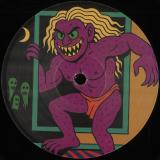
Dark, futuristic, fearless and built for those who understand that techno is not just style, but vision. Detroit Techno Records welcomes one of the true architects of Detroit electronic music: Suburban Knight. Known off-record as James Pennington, he is widely recognized as a foundational figure in the city?s history, an artist whose recordings helped define the darker, moodier and more cerebral edge of Detroit techno. His classic works such as ?The Groove? and ?The Art Of Stalking? remain touchstones of the form, while later activity with Underground Resistance further cemented his role in shaping the deeper mythology of the Detroit sound. Coming straight from Detroit, USA, DTRV011 is more than another catalogue entry. It is a new chapter from a genuine legend, an artist whose contribution to Detroit techno was never peripheral, but central. Suburban Knight remains one of the rare names whose music still carries the original weight of the city: dark, futuristic, fearless and built for those who understand that techno is not just style, but vision.
Cerca:myt
- A1: Dog Stream Connects
- A2: All For Nothing
- A3: The Emperor's Lapdog Part 1 - The Sultan's Pavillion
- A4: The Emperor's Lapdog Part 2 - Venusian Vip
- A5: The Emperor's Lapdog Pt 3 - The Bold Dragoon
- A6: Nothing Is Dead
- B1: Rise In A Thicket Of Thorns
- B2: The Shriek Of Pan
- B3: We Are The Asteroid
- B4: The Creak Of Insects' Knees
- B5: Dream In A Collapsing Sun
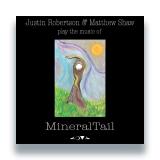
Renowned producer, dj, artist and author Justin Robertson fresh from the success of his Five Green Moons project joins forces with composer and Stone Club co-founder Matthew Shaw on their tribute to mythical band MineralTail. An 11 track cosmic trip through krautrock, weird ambience and loose-limbed grooves that accompanies the story contained in Justin's new novel of the same name. Expect hypnotic electronics and ritualistic rhythms, swirling melodies and glorious riffs.
'Critics agree that the greatest album ever recorded is the self-titled debut by the MineralTail. Recorded after the extinction of humanity by the combination of a Megalithic stone and two dogs, the record remains peerless in its ingenuity, passion and inventiveness. An album that consistently remains at the top of all rankings and charts. Though all such accolades are meaningless, nonetheless its enduring appeal is obvious. Here, at last is the first reliable account of how that record was made. The recording techniques, the creative disputes, the true source of the sound. It is a story of sublime inspiration, skulduggery, time travel, beauty and conflict. But most importantly it is the story of music itself. Because held within the grooves of the MineralTail's breathtaking debut is the voice of God's most dazzling accident. Music.'
Little is known about Em Vee, the elusive German editor and producer whose dusty vinyl crates have unearthed some of the most coveted disco and boogie reworks of the last decade. Born somewhere between the fading echoes of Berlin’s underground clubs and the hidden record shops of Hamburg, Em Vee’s story is as much about myth as it is about music.
From the funk fuelled hands in the air love bomb of Where Is The Love to the arms embracing body jam of Body to Body. On the flip the heavy disco balearic boogie monster, All Night Long takes it up a few gears before the rounding the EP off with the dramatic closer, Pleasure Island. Em Vee delivers an outstanding EP that covers all bases, that will no doubt appeal to late night disenfranchised Disco fiends.
Welcoming prolific and essential Mexican artist Andy Martin to Animalia, with his mesmerising, mind-bending musical interpretation of the Nahual, a common & integral figure of the belief systems of ancient Indigenous peoples of the Americas, which embodies the spiritual connection between humans & animals. In some traditional stories, this connection is so strong that they are said to transform into one of them. Tierra de Nahuales refers to a region of ancient America inhabited by these mythological beings, which in this EP become part of the Animalia universe, shaped by psychedelic broken rhythms, tribal sounds, and dub influences. A release that feels both deeply personal to Andy's musical & cultural identity as well as the label's own - a telling ode to the abilities of the depth & outer worldly sense to his music - a world-building, shapeshifting & one of a kind artist who feels truly at home in the Animalia family.
Following the digital release of the single “Meu Canto” in early February 2026, Gerardo Frisina and singer Luzia Dvorek return to Brazilian music with a new and compelling interpretation of a timeless classic, “A Lenda do Abaeté” by Dorival Caymmi; the release of this 45rpm single brings to a close a special project entirely dedicated to Bahia, the beating heart and symbol of Brazilian culture.
“Meu Canto” takes shape from an original composition by Gerardo Frisina, who signs both music and production, crafting a soundscape that is suspended between delicacy and depth upon which Luzia Dvorek - joined by songwriter Toco, whose refined backing vocals further enrich the song’s emotional dialogue - has drawn the melodic line and written the lyrics. A journey into roots and origins that tells the story of Luzia’s family, deeply embedded in the warm, fertile land of northeastern Brazil. “Meu Canto” sees also the participation of Alfonso Deidda on flute, whose airy timbre introduces new shades of color to the composition.
In “A Lenda do Abaeté”, the 45rpm B-side, Gerardo Frisina weaves an elegant and immersive rhythmic framework, evoking soundscapes that feel both deep-rooted and timeless. Within this setting, Luzia Dvorek’s voice unfolds with emotional intensity, balancing expressive strength and subtle delicacy as it narrates the ancient legend of the Abaeté lagoon. A place steeped in charm and mystery, suspended between myth and reality, whose stories have been passed down through generations in Salvador, in Brazil’s north-eastern region.
The project is further enriched by the acoustic guitar of Francesco Borrelli - who also took care of the tracks mixing and mastering - and Toco’s distinctive vocal contributions, which add depth and nuance to the overall sound.
- A1: Schmetterlinge Im Bauch (Mary Olivetti Remix) (5:52)
- A2: Children Of Zu Zu (Moodorama Remix) (4:08)
- A3: Zu Zu Music (Charles Petersohn Mystery Mix) (6:34)
- B1: Myth Versus Reality (Als420 Remix) (6:06)
- B2: Myth Versus Reality (Viktor Marek Remix - Extended Version) (6:06)
- B3: Myth Versus Reality (Greater Manchester Housing Authority A Spiritual Space Rework) (3:29)
Das Remix Paket für Charles Petersohn’s Children Of Zu Zu EP glänzt durch seine Vielfalt zwischen jazzy Broken Beats und Afro/Deep House, mit Re-Works von Mary Olivetti, Moodorama, als420, Viktor Marek, The Greater Manchester Housing Authority und Charles Petersohn selbst.
“Der gemeinsame Wunsch, dass die Tracks der EP an die Idee anknüpfen sollen, dass ein Remix ein eigenes Kunstwerk sein kann, ist voll aufgegangen. Alle Mixe haben eine persönliche Handschrift, nutzen die Originals als Material, mit dem nach Herzenslust gespielt wurde. Ich bin sehr glücklich!” Charles Petersohn
Format: Vinyl 12“ Full Cover mit schwarzer Innenhülle und rundem Sticker
- 1: Ever Softly You Go, Pt
- 2: Bidding
- 3: Reckless & Free
- 4: One Man On The Road
- 5: Shame Say
- 6: Gypsy Queen
- 7: Ricky's On The Dance Floor
- 8: Your Heart, It Is The Ocean
- 9: Serpents & Saviors
- 10: Impossible Things
- 11: Ever Softly You Go, Pt. 2
Kristin Diable ist ein Original aus dem Süden - ihre Stimme ist so launisch und unnachgiebig wie der Mississippi. Ihre zeitlosen Melodien und scharfsinnigen Texte fangen das Mystische im Alltäglichen ein und enthüllen den Silberstreif am Horizont ganz gewöhnlicher Momente. Das Ergebnis ist ein Sound, der sich sowohl geerdet als auch jenseitig anfühlt. Diables vorheriges Album ,Create Your Own Mythology", das in Nashville mit Produzent Dave Cobb aufgenommen wurde, wurde von NPR, American Songwriter und Southern Living als eines der besten des Jahres gelobt. Ihr kommendes Album ,Impossible Things" schreibt das nächste Kapitel. Aufgenommen in den legendären Dockside Studios im Süden Louisianas mit Produzent Ben Alleman (Dr. John, Ryan Adams, Jenny Lewis, Madi Diaz), klingt es wie ein Radio, das auf zwei Zeitachsen gleichzeitig eingestellt ist: Dream-Pop-Echos, die durch ein Shotgun-Haus schweben, die Gnade eines Sonntagmorgens, an deren Stiefeln noch der Glitzer des Samstagabends klebt. Diese Songs haben es nicht eilig. Sie ziehen einen Stuhl heran, schieben einen Kaffee über den Tisch und sagen: ,Sag die Wahrheit und zuck nicht zurück." Diable zuckt nicht zurück. Sie schrieb diese Songs in Zeiten des Umbruchs und der Neuerfindung, während sie Verluste, den Tod geliebter Menschen, häusliche Gewalt, das Leben als alleinerziehende Mutter und die Abrechnung bewältigte, die damit einhergeht, ein Leben nach eigenen Vorstellungen neu aufzubauen. Was dabei entsteht, ist ein Werk, das eine Art spirituelles Jiu-Jitsu praktiziert und Last in Anmut und Schmerz in Architektur verwandelt. Dies ist ein Album, das nahelegt, dass Transzendenz nicht auf der anderen Seite der Not wartet, sondern genau hier in der Gegenwart lebt, wenn wir nur genau genug hinhören. Wenn der Song endet, sieht die Welt vielleicht noch genauso aus, aber du vielleicht nicht mehr. So fangen unmögliche Dinge meist an.
Primordial Mind forms the mysteries and intensity of inner life into eight mandalic instrumentals where Mas Aya and Khôra, artists who share 15 years of music making, orchestrate an inspired, prismatic palette of percussive and melodic sources. Each composition presented stages a vigorous meshwork of colours and textures, contrasting riveting polyrhythms with towering arrangements for flutes, synths, and processed acoustic instruments. Tendencies which the artists trace in their solo practices are amplified, blended, and refracted sublimely in unison, serving as energetic portals to the collective awareness.
Combining trans-ethnic scaling alongside a heady brew of rhythmic influences and advanced electronic processing, the recordings on this album operate with a tactility that vaults between free jazz, dub, raga, ambient, and ritual music. Assimilated powers of primal drum patterning and psychoactive, ceremonial melodies, invoke fourth world adjacencies with the work of Don Cherry, Jon Hassell, Popol Vuh et al. There is an alchemical, Buddhist/Taoist/Hindu inflection that guides the record’s narrative, formed through dialogue between the artists over lifelong shared interest in spiritual modalities generally and the tantric approaches of the global east in particular. The album title is derived from an unexcelled esoteric work known as the Kalachakra (Wheel of Time)Tantra and its associated commentary the Ornament of Stainless Light which detail forms of inner and outer transubstantiation within its complex cosmology and metaphysiology.
Mas Aya is the moniker of Brandon Miguel Valdivia, acclaimed Nicaraguan-Canadian composer, producer, and musician whose electronic and jazz inspired works creatively interlace Colombian, Cuban, and a wide array of traditional music. Khôra is the name of the occult entity that uses multi-instrumentalist, producer, and writer Matthew Ramolo to pronounce itself. Returning to Marionette following 2024's monumental Gestures of Perception, Primordial Mind reinforces the rigorous and magical approach to creation which defines Khôra’s two decades of sonic output. Brandon and Matthew met back in 2011 and the pair toured around eastern Europe with Toronto band Picastro in 2013, also performing as a duo with Brandon contributing drums to Khôra's opening sets. After a short spate composing and playing in the ensemble Bespoken together, they continued to discover shared inspiration in psych/art rock, jazz, experimental and electronic music, providing a fertile soil for friendship and collaboration resulting in their collaged, lo-fi album Tangled Roots in 2017. Mythic and talismanic, the duo's Marionette debut weaves a luminous tapestry of organic pulses, offering itself as a support for resonant meditation and a motor for lucid action and intuition.
Brandon Miguel Valdivia: Percussion, Flutes, Log Drum, Korg Lambda, Angklung, Tambor Alegre, Udu
Matthew Ramolo: Modular Synth, Archival Samples, Angklung, Guitar, Duduk, Bass, Percussion, Arrangements and Mix
- 01: Two
- 02: Twelve
- 03: Nineteen
- 04: Nine
- 05: Fourteen
- 06: Thirteen
- 07: Twenty
- 08: Fifteen
- 09: Ten
- 10: Three
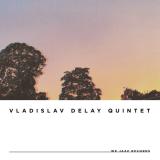
Vladislav Delay, primarily known as a highly regarded electronic music innovator, steps ahead with his acoustic jazz quintet. Echoing the forward-looking vd musical vision always ahead of the curve, the new album does not fit into any specific category, forging a path of its own across the 10 tracks. Recorded at Candybomber Studio in Berlin, the album brings vd together with Maria Bertel, Lucio Capece, Derek Shirley and Max Loderbauer. This is shape-shifting, elastic music that exists left of any given timeline.
Based in Hailuoto in Northern Finland, Vladislav Delay has never fit into any given mould as an artist. His prolific, at times mythical output has elevated him to a veritable legend status in all music cycles appreciating a unique artistic voice. Be it his forward-reaching recent releases as Vladislav Delay on his own Rajaton imprint, his Ripatti alias, or playing metallic percussion with the Moritz Von Oswald Trio, Vladislav Delay always has A SOUND. And that sound is ever-evolving, as his new jazz album shows. What "jazz" is this? There are certainly liquid elements there in the mix, not unlike the ones heard on previous vd productions. Then again, this is acoustic quintet music by and large, but not any specific kind we have ever heard before. Isn't that the whole point of "jazz"? Whatever came before is a springboard, not a limitation.
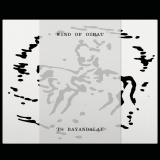
Wind of Oirat is the full length debut by Mongolian independent musician and sound artist Ts Bayandalai. Following his acclaimed 2020 EP Kimel, he now presents a further matured, composed and refined version of his signature sound, which combines traditional Mongolian music and instruments with influences from experimental music and post-rock. Deeply rooted in the cultural traditions of his homeland, Ts Bayandalai, who grew up in a nomadic family in the Mongolian steppe, explores nature and its myths, his ancestral roots, and the relationship between humans, animals and nature.
Artist Bio:
Ts Bayandalai is a Mongolian independent musician and sound artist. His childhood on the steppes shaped a deep sensitivity to natural and ethnic sound. To create his individual, deeply rooted yet modern soundscape, he combines traditional Mongolian musical elements with post-rock, experimental and electronic music, as well as from outernational music influences.
Born into a nomadic family on the steppes, Ts Bayandalai grew up wandering the vast grasslands with shepherds, absorbing the resonances of the horse fiddle and guitar — experiences that remain a primordial source of inspiration in his work.
Founder of the avantgarde band Horse Radio (2012) and the experimental project December3AM (2015), his compositions navigate cultural memory and contemporary aesthetics, reconstructing pastoral landscapes, temporal layers, and emotional spaces through sound.
His EP Kimel, released in 2020, manifested a delicate sculpting of sound, space, and cultural motifs, presenting a listening experience that is at once primal and modern.
Ts Bayandalai’s performances span China, Mongolia, and major independent music venues and festivals across Asia. His artistic vitality and creative autonomy have earned him critical acclaim and a devoted following in the international folk music and experimental music communities.
Todh Teri returns with a brand new record, and this time the spotlight falls on Hari Heart. The Return of Hari Heart marks the eighth release on Masala Movement Records and launches a fresh vinyl-only series that brings the mythical characters of Deep In India back to life in a bold new form. Todh Teri further expands his conceptual universe by focusing on deeper sonics & music explorations. Hari Heart guides the release with a delicious blend of nostalgia, analog warmth and a club-ready intentions - built for curious DJs (and listeners alike).
On the A side you will find Smriti (Remembrance) - a reimagined classic flipped into a peak-time driver - disco spirit, acid bite, and pure dancefloor release. Limited, loud, and made to move bodies. On the flipside we have ??a (Debt) - a deep, dubby slow-burn built around an evergreen melody which grows patiently - finally rewarding you with a sweet earworm.
The final tune on the record is Prem (Love) - a reinterpretation of a ’70s indie rock n roll gem. Unmistakably retrospective (if you know your history). Play it a bit longer into the dead wax, and you will catch a hidden acid sequence locked groove.
Art by Soju Aduckathil with creative direction from Masala Movement’s Manoj Kurian. This is the label’s eighth release, a vinyl-only exclusive, with more coming in 2026.
Convergence is an ambient album formed through a series of morning rituals during rehabilitation following a severe medical event and an extended hospital stay. After weeks immersed in the constant alarms, beeps, and environmental signals of medical equipment, the act of listening itself became recalibrated. The music was performed and assembled using glass marimba, flute, and analog synthesizers, with each instrument treated as a source of resonance and gradually dissected through spectral analysis—allowing melody to emerge from fragments through repetition, attention, and daily practice, where synthesis functions not as traditional composition but as an exchange of signals.
Working slowly and intuitively, Stardust Multiplier approaches sound as a communicative medium between humans, the natural environment, and non-ordinary states of perception. Motifs evolve through repetition and subtle variation, informed by ceremonial music, mythic structures, and speculative communication frameworks associated with non-human intelligence—not as narrative devices, but as metaphors for attuned listening and pattern recognition.
Rather than moving toward resolution, Convergence documents moments of alignment—instances where intention, system, and environment briefly synchronize. The result is a restrained, deeply focused record, less concerned with atmosphere than attention, where synthesis functions as both a grounding practice and a method of inquiry.
- 1: Hutterite Mile
- 2: Outlaw Song
- 3: Blessed Persistence
- 4: Alone And Forsaken
- 5: Single Girl
- 6: Beyond The Pale
- 7: Horse Head Fiddle
- 8: Sinnerman
- 9: Flutter
- 10: La Robe A Parasol
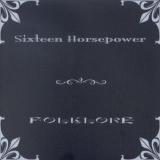
Mit "Folklore" vertiefen 16 Horsepower ihre unverwechselbare, düster-spirituelle Interpretation amerikanischer und osteuropäischer Traditionals. Das Album verbindet eigene Songs mit radikal neu gedeuteten Klassikern, die die Band in rituelle, minimalistische und zugleich kraftvoll aufgeladene Klanglandschaften verwandelt. Banjo, Cello, Hurdy-Gurdy und Bandoneon bilden ein archaisches Fundament, das David Eugene Edwards" intensiven Gesang eindrucksvoll trägt. Die Oxblood Vinyl Edition bringt diesen Meilenstein in besonderer Form zurück - passend zur Reunion-Tour 2026, bei der die Band erstmals seit zwei Jahrzehnten in ihrer Originalbesetzung auf europäischen Bühnen steht. Folklore bleibt eines der charakteristischsten und atmosphärisch dichtesten Werke der Band: dunkel, entrückt, hypnotisch - ein Album, das die Grenzen zwischen Tradition, Mythos und moderner Alternativkultur auflöst.
- A1: Little Hands
- A2: Cripple Creek
- A3: Diana
- A4: Margaret-Tiger Rug
- A5: Weighted Down (The Prison Song)
- A6: War In Peace
- B1: Broken Heart
- B2: All Come To Meet Her
- B3: Books Of Moses
- B4: Dixie Peach Promenade
- B5: Lawrence Of Euphoria
- B6: Grey/Afro
Canadian-born Alexander 'Skip' Spence was the co-founder of Moby Grape, and played guitar with them until 1969. In the same year he released his only solo album: Oar.
The album was recorded after Spence had spent six months in a mental institution following a delusion-driven attempt to attack his Moby Grape band mates with a fire axe, after having ingested LSD. As the urban myth goes, on the day of his release he drove a motorcycle - dressed in only his pyjamas - directly to Nashville to record his only solo album. Fact is that he recorded this album in seven days, playing all the instruments himself, and that the end result is now considered to be a classic psychedelic folk album. After this album Spence largely withdrew from the music industry.
Original copies of Oar fetch quite the sum nowadays, so Music On Vinyl teamed up with Columbia/Sony to make this psychedelic folk gem available for everybody to enjoy.
Oar is available as a limited edition of 1000 individually numbered copies on transparent vinyl.
- A1: When The Going Is Smooth & Good
- A2: This Kind Of World
- B1: Anything You Sow
- B2: Everyday B3. Try & Try
William Onyeabor was born outside Enugu, a small, rural town in Eastern Nigeria, he created his own genre of African electronic funk in the late 70s and early 80s, making music completely unique for his time. Today, he is reaching cult status among a growing list of admirers, including everyone from Damon Albarn and Hot Chip to Carl Craig and Madlib, with some likening him to the Kraftwerk of West Africa, or a precursor to LCD Soundsystem.
Among the crate-digging few that knew of him, he is considered a complete myth. While he has never performed live and almost never given interviews, his fantastical biography is scattered and has to this day not been verified. And, though he is still alive, he refuses to speak about anything regarding the past.
According to various rumors, he left home following the Biafran War and went to study cinematography in the Soviet Union, returning in the mid-70s to start his own film company and record label, Wilfilms. He then self-released eight remarkable records from 1978-1985. He wrote and produced everything on his own, and possibly played every instrument himself. Then, at some point of his life, he became born again and denounced his earlier music, deciding it is something he would never speak about.
- 1: Big Bang
- 2: Dusk
- 3: Library Copy Do Not Remove
- 4: Habitat
- 5: Arp Angels
- 6: Castle In The Moon
In ,Library Copy Do Not Remove" präsentiert JJ Weihl von Discovery Zone eine digitale Verzauberung der Realität, in der er das Materielle und das Immaterielle miteinander verwebt, um zu zeigen, dass es sich dabei tatsächlich um zwei Aspekte ein und desselben handelt. In Weihls Welt sind Natur und Technologie keine Feinde, sondern erschaffen sich gegenseitig in einem unendlichen Tanz aus Bedeutung und Reflexion. Ursprünglich als Raumsound für das Zeiss-Groß-Planetarium in Berlin geschaffen, ist ,Library Copy Do Not Remove" eine Schöpfungsmythologie für das simulierte Universum. Dabei handelt es sich jedoch nicht um eine trockene, bostromische, maskuline Fantasie einer digitalen Realität, der die Geheimnisse der Natur fehlen. Stattdessen fordert Weihl den Zuhörer auf, im Rahmen einer Simulation Raum für die beeindruckende Realität der natürlichen Welt zu lassen. Wenn unsere Welt simuliert ist, dann muss die Simulation in der Lage sein, die Schönheit und Pracht der Natur zu erschaffen. Auf diese Weise betreibt Weihl eine ambient-artige Alchemie, die eine große Versöhnung von Natur und Technologie fordert, während sie uns auffordert, darüber nachzudenken, wie und wo die Erfahrung transzendenten menschlichen Bewusstseins zwischen ihnen existieren könnte. Die Songs auf ,Library Copy Do Not Remove" entstanden, während Weihl gleichzeitig ihr zweites Album ,Quantum Web" fertigstellte, und spiegeln einen weitreichenden, inspirierenden Zustand aus Aufregung und Angst wider, der mit der Aufgabe einherging, Musik für einen so einzigartigen Raum zu komponieren. Die Songs selbst wurden durch Ambisonics geformt, ein spezielles Format für räumliches Audio, das direktional ist, anstatt auf Kanälen zu basieren (wie Stereo), und wurden über ein Mosaik aus 49 Lautsprechern übertragen. Da es für Live-Auftritte geschrieben wurde, war ,Library Copy Do Not Remove" nie als Album im eigentlichen Sinne gedacht, sondern als dreidimensionales Ereignis. Auf diese Weise spiegelte die Klanginszenierung wider, wie wir Klang in unserem Alltag wahrnehmen: uns aus allen Richtungen umgebend. Für diese Albumveröffentlichung hat Weihl alle Songs gemeinsam mit ihrem langjährigen Produzenten E/T von Grund auf neu abgemischt und die Konstellation der Tracks für ein Stereoerlebnis neu konzipiert und überarbeitet. Inspiriert von den Werken von James Gleick, LD Deutsch, Johannes Kepler und Jorge Luis Borges, erforscht ,Library Copy Do Not Remove" die kreative Spannung zwischen Realität und Wahrnehmung, Information und Mythologie, Harmonie und Unordnung. Im gesamten Album fragt Weihl, wie wir als Menschen das Universum um uns herum und den zugrunde liegenden Code, der es belebt, verstehen lernen. Was dabei entsteht, ist ein klanglicher Mythos, der von spiralförmigen digitalen Universen erzählt, die ineinander verschachtelt sind und in denen jeder teilnehmende Akteur gleichzeitig sowohl Teil als auch das Ganze der Realität ist. Auf diese Weise ist ,Library Copy Do Not Remove" ein cyber-Ausdruck zeitloser Weisheit: Anstelle von ,wie oben, so unten" könnte Weihl vorschlagen: ,wie der Input, so der Output".
A mythical deep house white label from Detroit, originally pressed in 1995 and long considered a grail among collectors.Two extended reworks of a Sade classic, blending hypnotic grooves and lush atmospheres in pure mid-90s US deep house style. Originally circulated only as obscure stamped or hand-written white labels, this elusive gem resurfaces after years in the shadows.
At the core of the creative process behind “HPC” and “Bor3d” lies meta-irony, a quality that permeates much of today’s digital content landscape.
Both tracks are a deliberate attempt to push the sound toward a barely perceptible absurdity and ironic unseriousness in their interpretation of well-familiar styles of dance club music. It is a play with form, expectation, and recognizability — balancing sincerity with sarcastic exaggeration.
Okay
Okay is built around interruption. Voices, fragments of dialogue, yawns, irritation — people seem to step inside the track uninvited. Someone is bored, someone is annoyed, someone tries to stop the flow entirely. Just like in real life, the process is constantly disrupted. The track reflects the experience of being surrounded by opinions, noise, and skepticism — especially the kind that will never be convinced, no matter what you do. “Okay” becomes a quiet, ironic response to this pressure: not agreement, not approval, but endurance. The track continues anyway.
Tripatura
Tripatura is a fictional creature — a warped echo of cryptid mythology. In this narrative, Tripatura doesn’t simply exist, it hunts. Once it finds you, it drags you into an endless trip with no exit point. Time stretches, perception blurs, and the track itself becomes the trap. Its prolonged, unresolved ending mirrors the experience of being stuck inside a loop that refuses closure. Tripatura doesn’t rush. It lingers, slowly pulling you deeper, until the trip no longer feels temporary.