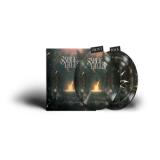
POD & Edward Richards return for the third and final of their series of hand stamped vinyl with a very unique outing. In contrast to the slower tempo of the the Polar Phase and Temporal Loop Trascendance EP’s, the pair up the ante with a blend of bass music meets dub techno. With the addition of drummer Miles Henry, the sound transcends basic genre descriptions into a liminal space between live music and the repetitive machine form of electronic music. Miles contributes both acoustic kit and electronic drums to the title cut and Nautilus, and in his own words he seeks to capture the impossibility of playing like a machine. On the flip side Quadratic Illumination progressively builds, with layers of hardware synths atop a foundation of deep sub-bass, broken beat drums, and hints of electro. And to cap of proceedings there is an incredible remix by Evigt Mörker that embodies a sense of serene bliss, and is a near perfect end to not only this record, but to the series as a whole.
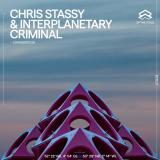
There are collaborations that make sense on paper, and then there are the ones that feel like they were always going to happen. CHRIS STASSY and Interplanetary Criminal now bring their first recorded meeting to Up The Stuss with ‘Dangerous’, a four-track EP that sees two artists with unmistakable identities find common ground somewhere between house, garage, breaks and pure dancefloor energy. With the sounds of this collaboration having quietly made their way into the world long before the full picture was revealed, its arrival feels like the moment the pieces finally fall into place.
Across the EP, the chemistry is immediate. STASSY’s knack for infectious grooves and vivid synth work meets IPC’s breakbeat-driven energy and distinctly UK-rooted sensibility, with neither side disappearing into the other. ‘I Just Can’t Get’ sets things in motion with skippy rhythms, breakbeat drums and those unmistakable STASSY synths, before ‘Movin’’ accelerates the pace with punchy percussion and a more restless, breaks-heavy charge. ‘From The South Coast Mate’ pushes the meeting point further, bringing weighty low-ends and unmistakable UK touches while keeping both artists’ distinct approaches clearly in view. Title track, ‘Dangerous’, brings the journey to its natural conclusion. Bright and dark elements pull against one another as the two approaches lock into a shared rhythm, delivering a track that feels simultaneously euphoric, gritty and slightly unpredictable. It’s the clearest expression yet of what makes the collaboration work: two established sounds remaining entirely themselves while discovering what happens when those worlds meet.
For CHRIS STASSY, ‘Dangerous’ marks the first EP to arrive on Up The Stuss under his new name, following the release of the euphoric ‘U know me’ on CCS, adding to this new chapter with a collaboration of serious weight. For Interplanetary Criminal, it adds another dimension to the Manchester artist’s ever-expanding take on UK garage, which has seen him become one of the defining forces of its current resurgence. It’s the sound of two worlds meeting at exactly the right point - and one that many have been waiting for.
Sol Novo is a tale of three parts, created by João Comazzi and Murrin of Púca Sounds & Jogada. In many ways a sequel—and a not-so-distant cousin—to 2022’s Cavalo, the pair return to blend their references into a new, ultra-visual language. Spinning through a sonic world mired as much in greenery as it is in the underground, Sol Novo invites you along for the ride.
The title track, "Sol Novo," whirls into a dubbed-out dawn break, collaging through samples and organic ear-catchers while sun-drenched choruses weave through the mix, reverberating as the light lingers.
On the second track, "Pindorama," Paszarinha’s call to the space-warp curls out from under dark blue bass. Fitting equal parts dreamland and dance floor, the track builds a world to get lost in through ever-orbiting breaks layered with Côco rhythms echoing in the deep.
The final track, "Brasia," arrives in full color: a story led by elements of Gagaku with Axêxê chants and a shimmer bathed in vintage synths. Landing like a call to movement that pulls you up and keeps you moving, it’s a kaleidoscopic sound caught between ancient ritual and electronic nostalgia.
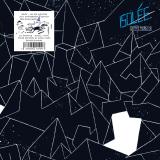
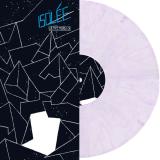
Originally released in 2005 on Playhouse, isolée's second album we are monster received widespread critical acclaim and was featured in numerous year-end lists, including Pitchfork's Best Albums of 2005, where it is praised for breathing "so carefree, years from now crits might accuse it of sounding timeless-- maybe even of being so." (Nick Sylvester in his Pitchfork review in 2005)
While closely associated with the minimal and microhouse movement of the mid-2000s, the sound on we are monster resists categorization; its musical vocabulary is too expansive to be confined to a single genre. Tracks such as schrapnell, mädchen mit hase, my hi-matic and enrico avoid many of the production conventions that define its period, allowing the record to retain a freshness that continues to resonate with listeners and music producers alike.
We are monster proved to be significant in more ways than one. Alongside its musical legacy, the album introduced the first record sleeve by Stefan Marx, whose artwork would become a familiar presence across countless releases on influential labels like Smallville or Mule Musiq, but also fashion labels like Comme des Garçons and many art galleries in the years that followed.
This anniversary edition revisits an album whose influence extends well beyond its original context!
Originally released in 2005 on Playhouse, isolée's second album we are monster received widespread critical acclaim and was featured in numerous year-end lists, including Pitchfork's Best Albums of 2005, where it is praised for breathing "so carefree, years from now crits might accuse it of sounding timeless-- maybe even of being so." (Nick Sylvester in his Pitchfork review in 2005)
While closely associated with the minimal and microhouse movement of the mid-2000s, the sound on we are monster resists categorization; its musical vocabulary is too expansive to be confined to a single genre. Tracks such as schrapnell, mädchen mit hase, my hi-matic and enrico avoid many of the production conventions that define its period, allowing the record to retain a freshness that continues to resonate with listeners and music producers alike.
We are monster proved to be significant in more ways than one. Alongside its musical legacy, the album introduced the first record sleeve by Stefan Marx, whose artwork would become a familiar presence across countless releases on influential labels like Smallville or Mule Musiq, but also fashion labels like Comme des Garçons and many art galleries in the years that followed.
This anniversary edition revisits an album whose influence extends well beyond its original context!
Originally created in 1987 as an image album for a luxury Sanyo air-conditioner, Get at the Wave stands as one of the most surprising and enduring works of Japanese ambient music. Recorded using synthesizers and natural field recordings, the album was designed to transport listeners far from the heat and noise of urban life — into open water, gentle wind, and unhurried space. Takashi Kokubo's mastery as an acoustic environment designer is present in every texture, blending electronic composition with an almost physical sense of atmosphere and place. Intimate, expansive, and quietly radical, Get at the Wave is an essential document of kankyō ongaku - and one that sounds more necessary than ever. The remaster and artwork of this vinyl edition were made by the artist. Takashi Kokubo (born 1956) is one of Japan's most influential ambient composers and acoustic environment designers. A pioneer of kankyō ongaku since the mid-1980s, his sound design work has reached virtually every corner of Japanese daily life - from the national mobile phone earthquake alert to the sign tone for iD e-money and the melody call tone for NTT DoCoMo. In 2020, he was included in the Grammy-nominated compilation Kankyo Ongaku (Best Historical Album), cementing his place as a foundational figure in environmental music worldwide.
The Tango N'Vectif: Sessions 2LP contains tracks from the original CD version, the 2001 2CD reissue, remixes and alternate versions of album tracks, music from the Phi*1700 u/v EP on R&S and other exclusives, selected by Mike, completely remastered from DATs by Beau Thomas. µ-Ziq's Tango N'Vectif was released in 1993, a classic year for auteurist electronic music that didn't always fit on the dancefloor. Written by Mike Paradinas in his late teens with some help from Frank Naughton, it still stands up really well today and its influence on electronic music in the decades since is obvious. Across an expanse of ideas, taking influences from early Aphex, Detroit Techno and UK Hardcore, Mike created this spirited, funky, jerry-rigged, lo-fi version of rave; with crunchy drums and a knack for melody that fell somewhere between John Barry and classic TV themes. Without owning a computer, Mike had been writing techno, house and industrial tracks on and off since 1990, playing live keys alongside drum machine rhythms on his 4-track recorder. µ-Ziq started when Mike linked up with Frank who was also writing dance-influenced music, and importantly owned an Atari 1040ST computer with Cubeat software. They pooled their equipment and Mike would travel up to Frank's house a couple of miles away in Wimbledon to record together. By 1992, and after a false start when a proposed EP for Mark Pritchard and Tom Middleton's Evolution label got shelved, Mike had started at Kingston University where he deejayed and met like-minded people including a couple of guys who knew Aphex Twin who was also a student at Kingston too, and they passed Aphex a demo of Mike's material. A few days later Mike got a message from his mum to 'call Aphex Twin' and he gave Mike some advice, and seemed interested in releasing something. So when Frank and his family went on holiday that summer Mike borrowed his Atari and synths and wrote the majority of the Tango N'Vectif album during that 2 weeks. By the end of 1992 a release with Aphex Twin and Grant Wilson Claridge's Rephlex label had been agreed - Aphex had moved to the house in Clissold Crescent where he recorded a lot of his early classic albums and Mike went over to collect his advance, in the form of his very own Atari computer.
Returning to Discrepant after 2023's 'Atheitsaregods', Humboldt County, California's most mystical entity continues to reshape its own patented processes of lysergic invocations on 'Squall Lines'.
Conjuring a vast array of sound sources, both organic and electronic, from vocals, violins or flutes to synths and pedals, the duo of Brian Pyle and Merrick McKinlay conveys a carefully sequenced and ritualistic aural tapestry from ancient futures. The synth beam and out of reach field recordings at the beginning of 'Sin Idioma' unfolding a dirge-like procession of drums and bells, flowing into the cave-like ambience of 'Nightshade', populated by echoes of unidentified origin, bleeding seamlessly through a foggy half-light drone into the fractured melodies and creeping voices of the pummelling 'No Chance'.
The B side sequencing from 'Squall Line' to closer 'Totality', drifting from faraway war cries, dissonant strings and crumbling percussion through post- apocalyptic landscapes, hazy pads and murky atmospherics to a final glimmer of processed flutes. A revelation. End time visions for the unquiet spirit.
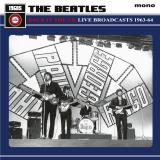
In April 1963, The Beatles stepped into a formal lunchtime ceremony at EMI Studios, where they were honoured with their first silver disc, for Please Please Me. This event, attended by EMI staff and the press, was likely recorded for Radio Luxembourg’s Friday Spectacular. Just one month later, the raw energy of Beatlemania exploded at the Walthamstow Granada. The 9-minute newsreel from this show is a time capsule of wild, full-throated screaming—a stark contrast to the relaxed EMI ceremony.
Fast-forward to 1964 and we feature TV performances from Shindig & Blackpool Night Out plus a Tyne Tees TV Interview where the interviewer tried—and failed—to pin down the band’s voting intentions on 15th October 1964, the day of the UK General Election. Whether you’re a longtime fan or a newcomer, these performances offer a unique lens into the group’s early years.
What makes a life well lived? Career, home, savings, family: these are the milestones that make adulthood legible as success. Friendship, meanwhile, is often treated as something that either endures or doesn’t, more a matter of luck than a relationship requiring its own devotion, maintenance, and care. When really, as the world becomes more isolated and artificial by the day, friendships may be the most important thing a person ever builds.
“A lot of times in life I feel like a late bloomer, like I'm still trying to get my shit together in a way that other people have already figured out,” says Chastity Belt drummer/vocalist Gretchen Grimm. “But then I reflect on my adulthood, and my top priority has largely been my friends, which I do not regret at all.” That priority feels like the guiding principle on the band’s sixth album, All My Friends. Not that they set out to make an album about friendship—during mixing the band's longtime collaborator and engineer, Samur Khouja, pointed out that a lot of the songs referenced the subject. Which makes a lot of sense.
Julia Shapiro (guitar/vocals), Lydia Lund (guitar/vocals), Hunter Truscott (bass/vocals), and Grimm have been making music together for 15 years. Friendship has sustained the Chastity Belt project as its members have grown alongside one another, both as people and as musicians. Across a resonant catalog, they’ve moved from the raucous wit of their early records toward the lush, introspective moods they’ve refined on each album since via trademark intertwining guitars, meticulous rhythms, and double exposure of melancholy and optimism.
All My Friends comprises songs recorded across multiple years, time zones, and studios, including Seahorse Sound in LA, Way Out in Woodinville, and a centuries-old house on the Greek island of Hydra. The oldest track dates back to around 2018; the newest were finished within the past year. These days, the band spans three cities (Los Angeles, Seattle, and Chicago); less writing/rehearsal time means songs are often worked out in the studio, relying on the spontaneity and instinct that comes from knowing one another so well. The result is rawer and less polished than their last couple of records, closer in spirit to the band’s roots.
Dutch-born and Singapore-based, Mike Risk has spent more than three decades immersed in house music. As a DJ, producer, promoter and agent, he has experienced the culture from multiple angles, building relationships and sharing dancefloors across Amsterdam, London, Ibiza, New York, Chicago, Singapore and beyond.
Now Is Forever is a full-circle moment. A statement. A celebration of a lifelong relationship with house music.
Mike first made his mark in the Dutch underground through Club Risk and later RiskSoundSystem, two platforms that helped shape nightlife culture in the Netherlands throughout the 1990s and 2000s. After decades spent championing the music of others, Now Is Forever is Mike adding his own chapter to the culture that shaped his life.
Created with longtime collaborator Greg van Bueren (Hardsoul) between Amsterdam and Singapore, the album is a deeply personal tribute to the music, people and places that shaped him. From the clubs of Amsterdam and London to the sounds of Chicago, New York and Detroit, it distils decades of dancefloors, record stores, studios and late-night conversations into one body of work.
From deep and soulful grooves to raw house cuts and acid-tinged late-night moments, Now Is Forever explores house music in its full spectrum. It reflects the way Mike has always approached a dancefloor as a DJ: not as a collection of tracks, but as a journey through the many moods and moments that make a greatnight unforgettable.
Featuring Mike Dunn, Bluey Robinson, Marc Evans and John Agesilas, the album brings together years of experience, inspiration and dedication. Crafted not out of commercial pressure but out of creative necessity, it is the product of pure love-for the culture, for the craft, for the music.
Now Is Forever is a past-forward record: rooted in the music, dancefloors and relationships that shaped Mike, while carrying their spirit firmly into the present. At its heart, it is about honouring the kid who first fell in love with house music-and never let go.
Because when you are truly lost in music, there is no past and no future. There is only now.
With “Homura”, Sable Hills take everything they have built over the years and push it into new territory.
Since winning the Metal Battle at Wacken Open Air in 2022 as the first Japanese band in the competition’s history to claim the grand prize, Sable Hills have continued to make their mark on the international metal scene. The victory led to a deal with Germany’s renowned label Arising Empire, followed by their global debut with their third album “Odyssey” in 2024. In 2025, their single “Namu”, incorporating traditional Buddhist chanting, became a global viral hit, surpassing 3 million streams on Spotify and 5.4 million views on YouTube, while live clips posted to Instagram and TikTok collectively exceeded 30 million views.
Rooted in the band’s signature blend of metalcore and melodic death metal, “Homura” expands that foundation with distinctly Japanese elements, from traditional instruments and melodies to the use of Japanese language and Buddhist chants. The result is an album that feels both unmistakably Sable Hills and unlike anything they have created before.
The title “Homura” comes from an old Japanese word meaning “flame.” It represents the intensity and aggression at the heart of metal, reimagined through a distinctly Japanese aesthetic. Throughout the album, heaviness and melody collide with the atmosphere and beauty of traditional Japan, creating a sound that is both fierce and deeply rooted in the band’s identity.
With its fusion of crushing riffs, melodic death metal intensity, traditional Japanese instrumentation, and powerful vocal performances, “Homura” marks a new chapter for Sable Hills, embracing their roots, building on their international rise, and setting the band on a path they have never taken before.
With “Homura”, Sable Hills take everything they have built over the years and push it into new territory.
Since winning the Metal Battle at Wacken Open Air in 2022 as the first Japanese band in the competition’s history to claim the grand prize, Sable Hills have continued to make their mark on the international metal scene. The victory led to a deal with Germany’s renowned label Arising Empire, followed by their global debut with their third album “Odyssey” in 2024. In 2025, their single “Namu”, incorporating traditional Buddhist chanting, became a global viral hit, surpassing 3 million streams on Spotify and 5.4 million views on YouTube, while live clips posted to Instagram and TikTok collectively exceeded 30 million views.
Rooted in the band’s signature blend of metalcore and melodic death metal, “Homura” expands that foundation with distinctly Japanese elements, from traditional instruments and melodies to the use of Japanese language and Buddhist chants. The result is an album that feels both unmistakably Sable Hills and unlike anything they have created before.
The title “Homura” comes from an old Japanese word meaning “flame.” It represents the intensity and aggression at the heart of metal, reimagined through a distinctly Japanese aesthetic. Throughout the album, heaviness and melody collide with the atmosphere and beauty of traditional Japan, creating a sound that is both fierce and deeply rooted in the band’s identity.
With its fusion of crushing riffs, melodic death metal intensity, traditional Japanese instrumentation, and powerful vocal performances, “Homura” marks a new chapter for Sable Hills, embracing their roots, building on their international rise, and setting the band on a path they have never taken before.
Praised by Rolling Stone, NME and the New York Times on release — the1996 debut from the members who went on to form bright eyes & cursive. Back on vinyl for its 30th anniversary!
Blanket Warm is a genuine buried-treasure reissue: a record contemporary critics compared to the Rolling Stones, Guided by Voices, and Tindersticks, and one a new generation of listeners has rediscovered as a missing link to Neutral Milk Hotel and Sufjan Stevens’ chamber-folk.
Lullaby for the Working Class formed in Lincoln, Nebraska in the winter of 1994, when multi-instrumentalist Mike Mogis and singer-guitarist Ted Stevens began writing together. Working from two home-recorded demos — and without having played a single live show — the band signed to New Jersey’s Bar/None Records in 1995. Blanket Warm was recorded and mixed by the Mogis brothers between December 1994 and April 1996 at their own Whoopass Recording Studio in Lincoln. Bar/None issued the album on CD in September 1996, while the vinyl LP went out through Lumberjack/Saddle Creek imprint in a pressing of just 1,000 copies — long out of print, and the edition this reissue restores to the format.
The result splits the difference between rustic and ornate: acoustic guitar, banjo, mandolin, and upright bass sit alongside a chamber ensemble of violin, cello, clarinet, trumpet, and trombone. Critics at the time reached for an unusually wide range of comparisons — the Rolling Stones, Guided by Voices, Tindersticks, Van Morrison — united mainly by the sense that nothing else sounded quite like it. Ted Stevens’ plainspoken, image-driven lyrics and unhurried delivery anchor songs that unfold with more patience and more instrumental color than the alt-country and lo-fi indie rock the band got lumped in with on release.
n resurrecting the band Krill—declared dead over 10 years ago—Jonah Furman considered the turritopsis nutricula: the “immortal jellyfish” that reverts to juvenile form instead of dying. “I was always afraid of coming home,” he says. “But home is inescapable.” Now living in the same Chicago suburb he grew up in, Furman ponders the passage of time on Secret Language, a nostalgic and cerebral exploration of family, fatherhood, and fated love.
From 2010 to 2015, Krill recorded three LPs and two EPs, growing into a cult project revered for its complex, rapturous compositions. Anxious, anthemic, mathy, propulsive, they were beloved by Frankie Cosmos, Girlpool, Horse Jumper of Love, and countless others. Personal lives took priority and brought the project to an official close, save for two reunion shows and a 2020 album under the name Knot, but that's retroactively a Krill album, “because it's easier that way.”
The project was revived “on a whim” as Furman puts it: “Theo from Ovlov asked if Krill wanted to open a Chicago show. Then I started writing new stuff.” He recruited Krill’s longtime drummer Ian Becker who, too, had just moved back to town. Both had known guitarist Andrew Clinkman (also of Spirits Having Fun and Moontype) during their collective years in Boston and growing up in Chicagoland, and soon he joined the fold. On Secret Language, the trio tap into their reclaimed city’s famed music community, drawing inspiration from current locals the same way Krill were inspired by their Boston contemporaries like Pile and Speedy Ortiz instead of Pixies or Mission of Burma.
On Secret Language, home can be anything: a place, a person, a feeling. But Krill is “very much” a Chicago band now; a new beginning where it all began.
Stitched together from organic percussion, field recordings, and textures gathered from across the globe, Vikmatic’s most recent TSoNYC EP, co-produced with label head Danilo Braca, plays like a love letter to New York City, penned in the language of friends and family scattered across its boroughs. Rooted primarily in house, jazz, and Balearic sounds, but pulling just as freely from the sounds of Brazil, Africa, and India, Neighbors moves to the rhythm of a city swept up in the collective pulse of its most lively season.
Playful and minimalistic, “W4 Street” is a jazzy house track that adds a scintillatingly smooth, beachy flair to a nostalgic New York energy for a combination that leaves us unsure of what is improvised and what has been rehearsed to absolute mastery.
The EP’s second track, “Flushing”, represents a dramatic departure from the airiness of the previous one. Haunting and mysterious, with a leaden kick and a capricious synth, there is no question that we are finding ourselves in an entirely different neighborhood.
Early in the track, “Sunset Park” transforms from a deep rumbling into a catchy warm-weather groove with satiny synth layers, textured rhythm, and unhurried guitar and synth solos, evoking a sense of pure ease and beach season contentment.
Sultry and dream-like, “Harlem River Drive” is the ideal send-off for Neighbors, an album firmly situated in the living memory of an iconic urban summer. Warm and bittersweet, with woodwinds comprising the heart of its instrumentation, it’s not hard to picture a sunset in Upper Manhattan.
“Interpretation”
The act of explaining, reframing, or otherwise showing your own understanding of something. This captured me. We can all look at the same thing but what we see, hear or experience may differ. This word ended up being the title of my new album. I want to share my interpretation of music with listeners and take them on a musical journey. Through my music, I hope to bring about many interpretations. Your interpretation.
With great joy and pride we announce that The Night Service Commute second album Interpretation is a fact. The release is set for November 13th. You can expect cinematic vibes driven by breakbeats, bass, rhodes, violin, poetry, trumpet and field recordings. This turned out fantastic, and gave the album the groove, feel and vibe I was looking for. During the making, It was so great to learn how to capture the sound and get it to sit well in the mix.
The cover was made by my dear friend Saša Ostoja. His illustrations resonate greatly with me and put a smile on my face. The setting of the cover artwork is urban with hints of forest. Behind the windows, you can see the characters playing music and doing studio stuff. It has loads of hidden jokes and details. I can look at it again and again and discover new things every time.
Next year the iconic anthem Cafe Del Mar will celebrate its 30th anniversary, a landmark that will be celebrated with a series of brand new remixes alongside the finest existing remixes in specially remastered versions.
Launching the series of vinyl releases in September is a remastered vinyl-only release of the original mix, as well as the best-known version of this classic track, the iconic Three ‘N One Remix.
Nearly 30 years ago, Paul M aka DJ Kid Paul recording as Energy 52 unleashed a record onto an unsuspecting public that would go on to define club culture for an entire generation of dance music enthusiasts. Named as an homage to the legendary Ibiza sunset spot, Café Del Mar broke down boundaries between the underground and
the mainstream, charting in the UK singles charts on three separate occasions and named as the “best tune ever” by Mixmag at the start of the new millennium. In terms of cultural and emotional impact in dance music, it’s hard to find a record that comes close.
Café Del Mar has come to represent the most euphoric and hedonistic pleasures of dancefloors - in Ibiza and all around the world - and has been remixed by some of the biggest names in the industry. Now, 30 years after its original release, Superstition Records will be putting out a new series of releases, with brand new remixes as well as remastered versions of some of the many remixes from across the last three decades. The vinyl-only remastered version of the original and Three ‘N One mixes will launch the series, with further details about the rest of the series announced in the coming weeks.
In 2021 Paul Van Dyk’s Café Del Mar remixes launched a series of vinyl and digital re-issues on the Superstition Records imprint after an almost 20 years hiatus. From 1993 until 2003 Superstition Records was a groundbreaking Techno, Tech-House and Trance Label and released some of the biggest and most revered records of the early German electronic scene.
Following the success of Under Tangled Silence last year which peaked at number one in the Dance Albums charts and peaked at 9 on the Albums Chart staying in for 21 weeks, DjRUM returns to Houndstooth with a 15 minute continuous EP pressed to side A and a custom etched picture disk on Side B.
Felix (DjRUM) was a child prodigy as an instrumentalist and his advanced musicality has always been prominent in his music, but here he has put himself front and centre as a composer. And this sense of exposure as a performer interweaves with an unflinching emotional openness too. Where sometimes electronic production as advanced as this can use intellect and techniques as shields from soul-baring, this is the sound of someone who can boldly say “I feel things, I cry all the time, and I'm not afraid to say it or show it in the music.” But this doesn’t mean there’s a move away from the soundsystems and dancefloors where Felix made his name as a uniquely innovative vinyl DJ, this EP encapsulates his musical upbringing weaving in percussive elements across the stereo field to create a truly mesmerising listening experience.
Dutch artist Maurits Verwoerd, aka Nachtbraker, makes his first outing on Up The Stuss with ‘Bodu Imchi’, a four-track collection that highlights the breadth and curiosity that have long defined his work. Drawing from a world that stretches from ambient and cinematic music to dub, jazz-inflected electronics and house, the Amsterdam native has developed a sound that can feel both deeply considered and completely instinctive. Releases across Aus Music, Peach Discs, Heist Recordings, Dirt Crew and his own Nachtbraker and Quartet Series labels have established him as one of the more distinctive voices within the Dutch house landscape, with support from artists including Jamie xx, DJ Seinfeld, Raresh, Shanti Celeste and Axel Boman.
Across ‘Bodu Imchi’, those influences come together in a record that feels fluid, slightly strange and constantly alive. Warmth sits alongside subtle unease, hypnotic grooves give way to more playful rhythmic ideas, and intricate melodies drift through low-slung foundations without ever becoming overly polished. There’s a sense of late-night discovery throughout, the kind of music that rewards close attention but still carries enough physicality to move a room and keep packed dancefloors moving with a locked-in approach. Four tracks, one evolving atmosphere, and a meeting of musical worlds that feels right at home on Up The Stuss. It’s a release that finds character in the fine details: unexpectedtextures, subtle rhythm shifts and elements that seem to appear out of nowhere before then disappearing again. It’s an EP that moves between heads-down focus and hazier hours, capturing the curious, nocturnal spirit that runs through his work.
Maryos Syawish (b. 1993, Iraq) is a Chaldean Iraqi artist and musician based in Naarm/Melbourne working fluidly across visual art, sound and curatorial practice. His creative work spans more than 15 years and is defined by a lawless, unorthodox approach that resists traditional genre boundaries.
His Research Records debut is an introspective and meandering exploration of place, legacy and personal history. It’s a marked change of pace for the Melbourne-based producer, who has carved his name into the Australian underground as one half of Sleep D and Butter Sessions Records, but his first full length under his own name feels like an extension rather than a departure from what those attuned to his productions will already know.
Qurmami – which translates to “my roots” – functions as an audio collage that bridges the artist’s dual experiences of growing up in Australia and his heritage as a Chaldean Assyrian. Developed over the course of eight years, the record is anchored by field recordings captured during a pivotal trip to Iraq which are sewn into lush ambient electronics over two sides.
Over 42 minutes the production swells and grows; a delicate and mind-transporting beginning gives way to a more rhythmic, body-moving tail end, drawing subtle influences from dub, ambient, and traditional music from the Northern Iraq region along the way. Syawish’s contemporary, friend and fellow Research artist Khaled Kurbeh features, as does Melbourne-based cellist Abby Sundborn, while Sarah Ujmaia – Maryos’ cousin – contributed the album art and a familial through line that rounds out a cohesive, evocative exploration of identity, memory and the spaces that shape who we are.
Was? Noch mehr Aufnahmen von den Headcoats und Headcoatees?! Gerade als man dachte, sie hätten mit ihren letzten Veröffentlichungen das Jucken der 25-jährigen Pause hinter sich gebracht... Wenn eine Schlägerei zwischen Bo Diddley, den Ramones und den Sonics am feuchten Grund eines Brunnens deine Vorstellung von Spaß ist, dann sind diese Platten vielleicht genau das Richtige für dich. Wenn das tatsächlich der Fall ist, empfehlen wir, sie horizontal neben einem nach Süden ausgerichteten Fenster oder - noch besser - neben einem Heizkörper zu lagern, denn jede Verschlechterung der Klangqualität dieser Schallplatten muss für eure ungeübten Ohren sicherlich ein noch größerer Segen sein. Lasst uns also alle beten, dass diese unglücklichen Seelen - anders als die meisten anderen langlebigen ,Kult"-Acts, die darauf bestehen, Nägel einzuschlagen, lange nachdem der Hammer seine Schlagkraft verloren hat - nicht glauben, es sei in Ordnung, Jahr für Jahr bis weit in ihre 90er hinein denselben alten Krach zu machen. Wie auch immer, auf die nächste! Hasty Bananas, Archibald Prong
Tara Cunningham’s guitar glitch miniatures draw patterns in negative space on new mini-album Warm Ground. Operating predominantly within improvisational and experimental music, guitarist Tara Cunningham has developed a discrete sonic language that reveals the full textural and timbral range of her instrument.
Marking a new chapter for Cunningham that builds on her solo debut, Almost – Not Exactly, released on Non Classical in 2025, Warm Ground unfolds across seven compelling instrumental dialogues - each a conversation of rhythms and found sounds, syncopated and juxtaposed, open to encounter.
Implied by the title of first single ‘Following a Thought’, Cunningham weaves an exploratory melody into the spaces between field recordings. At once introspective and highly relational, each track ushers the listener into a world of different scales, seeking beauty and meaning in the everyday, from the discrete mechanisms of ‘Fridgelight’ to the delicately unhinged organism of ‘Flying Ant Day’.
Cunningham finds a natural home on Odda’s roster of artists sensitive to the details of their materials and surroundings, finding kinship alongside the intimate songcraft of Kirk Barley and Fohn in the gaps between composition and improvisation.
In 2026 she released a self-titled LP as The Sleeves with Jack Cooper, performing at Cafe Oto ahead of a US tour in the autumn. She continues to pursue a range of projects as collaborator and side person with Modern Nature, Sebastian Rochford, Red Snapper, Liam Noble, Laura Jurd and Caius Williams.
The Swedish dream-pop masterpiece returns to vinyl - introducing the 20th Anniversary Edition of The Radio Dept.’s Pet Grief.
"In the right mood, there is something shy and lovely about Pet Grief, ghosts of the C86 sound that make you want to grab a cardigan and sway." – The Guardian
"Melodies so easy to fall for; they barely feel like effort." - Pitchfork
"A rich, evocative mood piece, still eminently worth hearing.” - Allmusic
Revelling in adventurous, malleable synthesis and a strong melodic instinct, long-standing techno heavyweight Oscar Mulero brings his Trolley Route alias to Dekmantel. Across four rush-inducing cuts of studio exploration the Spanish veteran showcases a lighter side to his muse without sacrificing maximal dancefloor impact.
Oscar Mulero first debuted Trolley Route back in the early 00s through albums and EPs for Pure Plastic, Minuendo and others, offering a more playful strain of machine music to contrast with the steely output under his own name. Embracing dub textures and Detroit-coded synth leads, the recently-revived alias has become a haven for the looser styles that spill out of his studio. It just so happens these outliers are as crucial as any of Mulero's primary club smashers.
From the swampy chord sequence that dominates 'New Visual Order' to the meaty sub-bass and delay-soaked synth sweeps of 'Relativity Of The Vision', the whole EP is spilling over with madcap charm and a casual boss-level quality that can only come from a true legend letting their hair down.
Revival House Project makes a triumphant return to Peppermint Jam with four essential, soulful house cuts. After months of intense anticipation and heavy ID requests, these highly sought-after tracks are finally receiving a proper, official vinyl release.
As a massive bonus, the record features the blockbuster collaboration AC Soul Symphony vs. Mousse T. – 'Dance To The Music' (feat. Kathy Brown), uniting two legendary forces on one unstoppable track!
For over three decades, Berlin-based DJ, producer, and curator Marcel Dettmann has remained a central force in electronic music, continuously pushing the boundaries of the craft. Deeply rooted in early influences ranging from post-punk and industrial to synth-pop, his dynamic DJ sets and expansive discography, including seminal releases on Ostgut Ton and Dekmantel, effortlessly weave together raw techno, Chicago house, electro, and avant-garde soundscapes.
Far beyond club booths and releases on his own imprints, MDR and Bad Manners, Dettmann’s multidisciplinary ethos has led him into artistic territories spanning gallery soundscapes, ballet compositions, and cinematic film scores. This relentless creative curiosity defines a career built at the intersection of dancefloor functionality, collaborative experimentation, and perpetual sonic evolution.
Dettmann introduced My Own Shadow last year, a project where music, visual art, and photography converged in two EPs, Approaching (2025) and Faultline (2026) prior to the release of the full album this coming Autumn. More than just a name, this project lets sound, image, and vision blend organically, reflecting his intuitive process of deconstruction, resonance, and emotional discovery.
Speaking about the project Marcel says “My Own Shadow wasn’t born from a big concept. I simply liked the idea of working under another name and started following it. Different things I was doing - music, photography, visual work - slowly began to connect.
It happened quite naturally. My Own Shadow is me - just seen from another perspective.” Neither an alter ego nor a departure, My Own Shadow: Album is an intimate reflection of the artist; a transient, ever-shifting form that dances with the light and subtly reshapes its contours to reveal new depths.
My Own Shadow: Album is built with textural minimalism through rhythm, tension and release, embarking on a path through the recollections and experience of the dancefloor. This space remains the ultimate proving ground where history, instinct, and transcendence collide, guiding Dettmann through his musical interests.
My Own Shadow - Album is driven by rhythm, texture, space and tension. Across tracks such as ‘Gravitational Scar’ and ‘Resolution Vector’, these elements are constantly reshaped, connecting Dettmann’s past with a sound that remains firmly in motion.
DJ Support: Boss Priester, Prozak, Kepler, Osmosis Jones, Bullet Tooth, Archie Hamilton, The Trip ,Reeshy, ADMNTI, M-High, Oldboy, Mattik, Ben UFO
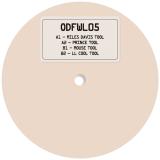
On Da Floor return with their second release, this time a 4 track EP: Helmed by Leeds-based DJ and producer ODF, this release captures the eclectic, genre-bending essence he’s become renowned for.
Veronica Everheart has just announced that her new project Lighter in the Morning (3/2) will be out on November 13th via Pack. Records. The news arrives alongside her link-up with Mumbai-raised electronic artist the sound chalk makes for their new collaborative single, “2222222222222222 + Climbing”. A colorful, club-ready take on “22 & Climbing” from Everheart’s Lighter in the Morning (2/2) EP, the track is also accompanied by an animated music video for the original song, which was made with Source Filmmaker software from the gaming developer Valve using models from their game series Half-Life.
Hailing from Phoenix, Arizona, Veronica Everheart writes and produces all of her own music alongside her creative partner, Justin "Juni" Neugeboren, and has built a cult following for a distinct sound that pulls from indie rock, electronic, and folk. Released in May, Lighter in the Morning (2/2) was led by singles "NO LOLITA SHIT", "Unknowable Distance", and "12/21” and serves as the sister tape to Everheart’s 2024 EP, Lighter in the Morning (1/2). Now, she’s gearing up to release Lighter in the Morning (3/2) (Deluxe Edition), curating a slate of leftfield producers that includes ideasforconversations, nikki nair, atlgrandma, E_DEATH, and Oskie (alongside the sound chalk makes) to craft remixes for the project.
California’s beloved Brainstory returns with a new EP celebrating the end of an era. Shoebox Days is an homage to the time spent and the recordings made at their now defunct Long Beach studio, aptly named Shoebox. As the name suggests, the space was tiny and stuffed with gear. While charming, it was riddled with constraints. But, as has been proven time and time again, great art often comes from difficult circumstances, and this new 7 song EP is further proof. The first track, “The Watchers,” opens with an earworm horn melody that immediately pulls you in. The crunchy drums and G Funk bass tones put a bop on it, lush orchestration weaves in and out and sets a mellow vibe. “Blend,” one of only two vocal tracks on the EP, is a California sunshine soaked love song walking the lines of psych rock ballad and B side soul. ”Twin Kitchen” leans you right back into your seat, with Eric Hagstrom’s in-the-pocket drumming carrying the tune.
“Home Alone” is singer Kevin Martin’s ever so relatable tribute to time by himself, time by today’s standards as “disconnected,” but in reality, much more connected… The fellas let some of the jazz background take front stage on “Lone Traveler,” starting out with an air tight groove, and letting loose over it as the track progresses. “Gravity Hill” named after the famed California oddity begins the ending of the EP as Brainstory takes it deep and brings us with them. “Necessary Loss” serves as the closer to this gorgeous journey.
California’s beloved Brainstory returns with a new EP celebrating the end of an era. Shoebox Days is an homage to the time spent and the recordings made at their now defunct Long Beach studio, aptly named Shoebox. As the name suggests, the space was tiny and stuffed with gear. While charming, it was riddled with constraints. But, as has been proven time and time again, great art often comes from difficult circumstances, and this new 7 song EP is further proof. The first track, “The Watchers,” opens with an earworm horn melody that immediately pulls you in.
The crunchy drums and G Funk bass tones put a bop on it, lush orchestration weaves in and out and sets a mellow vibe. “Blend,” one of only two vocal tracks on the EP, is a California sunshine soaked love song walking the lines of psych rock ballad and B side soul. ”Twin Kitchen” leans you right back into your seat, with Eric Hagstrom’s in-the-pocket drumming carrying the tune. “Home Alone” is singer Kevin Martin’s ever so relatable tribute to time by himself, time by today’s standards as “disconnected,” but in reality, much more connected… The fellas let some of the jazz background take front stage on “Lone Traveler,” starting out with an air tight groove, and letting loose over it as the track progresses. “Gravity Hill” named after the famed California oddity begins the ending of the EP as Brainstory takes it deep and brings us with them. “Necessary Loss” serves as the closer to this gorgeous journey.
Here is the debut, self-titled album from a.s.o., singer/songwriter Alia Seror-O'Neill, and producer Lewie Day. 'a.s.o.' is a thematic consolidation of the previous three singles and an impressive artistic progression. Day and Seror-O'Neill show they've mastered the format of the radio-friendly pop song and found how to subvert it completely. Across eleven songs, they have built a rich and compelling body of work.
We know where we are now, emotionally complex, trip-hop torch songs for club freaks. But the palette has broadened to encompass ethereal dream pop à la Cocteau Twins, slow- burning AOR-soul, and dubwise stylings. As a result, 'a.s.o.' is a satisfyingly coherent listen but never a musical monoculture. Variously there are nods toward Julee Cruise, Fleetwood Mac, and the uneasy listening of Portishead. It's an album that wears its influences lightly, is never weighed down by them, and always sure of its own identity.
It's anchored by Alia's unique voice. Her words speak of restraint and release, taking us from the elegiac to the euphoric. This elegantly crafted, perfect pop music sounds like it has had enough of your shit. And Day's music is the perfect foil; deep, slightly menacing, restrained, and powerful. The album has a cinematic texture, as with David Lynch; the seemingly familiar becomes uncanny and strange the closer we look. a.s.o. take our emotions for a joyride before leaving us floating in space.
'a.s.o.' is a journey; by its end, we all are changed
Det Gode Selskab continue their quest as they call on Berlin-based Italian artist Busso. An artist who continues to express himself through a multitude of vibes and sounds, fitting perfectly with the free-flowing DGS ethos. ‘Anna In The Jelly’ wanders between four different cuts, teasing animated deep house energy combined with stripped-back minimal flavours. A reflection of Busso’s versatile taste, he encapsulates four sure shots for your summertime record bag. A tale for the sun worshipping dreamers, soundtracking the warmer months.
Diving straight in with ‘Sexual Desire’, Busso delivers perky and playful peak-time action, with a clean-cut, feel-good energy from the word go. A vintage feel emerges through the vocals and crisp drums, working in sweet harmony. Slick hi-hats lead the way in ‘Don’t Be Afraid’ before you are confronted with a killer elasticated groove synonymous with the Italian’s sound. Beautiful chords appear at the midway point, spiralling into paradise.
The B-side kicks off with the title track, constructed in a distinct chunky manner. Squelchy mechanical tones manoeuvre around the mysterious drive of the track. Moody as it moves, it’s one for the darker nights on the road. Last but not least is ‘Red Print’, tightly packaged and incredibly detailed, with quirky obscurities flashing throughout. A steady motion perfectly sets the tone as you start to build the floor.
This record cements an exciting future for the label, as they look to continue elaborating on their catalogue, ever-evolving and expanding their width of sounds with one of the most exciting prospects currently in the German capital.
After a stellar debut on the No Guestlist label Blay steps back into the light with an ambitious new record Wave Formations. This record finds Blay pushing further into the space where afro-centric jazz and deep house collide, weaving together synth heavy production with organic rhythms and live instrumentation.
From its opening moments its title track ‘Wave Formations’ holds you captive. From field recordings blurring into a dreamy atmosphere, taking you on a 9-minute spiritual journey across the cosmos.
Its counterpart ‘Rhythm Of Love’ is equally dreamy; A reverb-soaked vocal track with live-band-like energy shape-shifts around its steady and forward pushing rhythm before unwinding into a meandering, melancholic piano outro.
On the flipside, ‘New Teacher’ is an invitation to dance — call-and-response synth phrases on top of driving percussive polyrhythms. What starts off simple and stripped down transforms into a full-on celebration; a boisterous rush of sonic afrofuturism that tries to reach the sun.
Keeping the joyful spirit high, the record closes off with the festive and playful ‘Faith In Us’. This highlife and afro funk inspired record reimagines band members feeding off of one another, switching from recognisable motifs to energetic solos pushing each other further into the light.
Tectonic Recordings presents Tectonic Sound: Vol. 2, the second instalment of the various artists series curated by label founder Pinch. Following the first Tectonic Sound collection, released in 2025 to mark the twentieth anniversary of the label, the series continues Tectonic’s forward-facing approach; bringing together artists from their wider family and connecting dots across the underground.
Longstanding figures of the UK Bass scene such as J:Kenzo and Roska sit alongside a new gen of artists including Ehua, Manami, Cimm, Denham Audio, Henry Greenleaf and SHXCXCHCXSH. Beatrice M. also returns following the release of their acclaimed debut album Sinking earlier this year, while Jay Carder and Sir Hiss make their first outings as solo artists on the label, after both appearing as collaborators on Sinking.
Pinch says: ““As Tectonic enters its third decade, the spirit and passion behind the music hold true to its roots. I love every single track on this compilation and how it shows off the various corners of the label's sound. Each artist has delivered something truly special!”
Each artist arrives with a distinct sound and history of their own, but across these twelve original tracks there’s a shared understanding of what Tectonic represents. Different strains of the UK bass continuum come together, creating a space where sounds collide, and new forms take shape.
Pinch leads the charge with ‘Hold On!’, an upfront, high-definition 4x4 propulsion tool that pairs rolling momentum with seismic bass pulses. Manami enters with ‘Turning Point’, further solidifying her newer direction, leaning into deep, dubbed-out territory with a sound that feels both vast and exploratory, while remaining heads-down and locked in. Henry Greenleaf steps in with ‘Whist’, an ominous and otherworldly offering, reminiscent of early dubstep productions that fell somewhere between the lines of dark garage, 2-step and grime.
Elsewhere, SHXCXCHCXSH’s ‘NexxxD’ and Sir Hiss’s ‘2TUFF’ form a middle climatic point of pure chaos, with Sir Hiss serving up a raw slab of gnarled grime waveforms and cascading claps. Beatrice M. & Cimm bring things back down with ‘Pad City’, a cool, meandering cut of shuffling house, while Lorem closes the compilation with ‘Console Corners’, exploring the outer rims of sound manipulation and deconstruction before tying it all together.
Since its formation in 2005, Tectonic has been a trailblazing force in electronic music, helping to define and continually redraw the boundaries of dubstep and its surrounding sounds. The compilation arrives in the middle of a serious run for the label. Earlier this year, Tectonic released Beatrice M.’s debut album Sinking, a major moment for the label that was embraced across the electronic music community. Pinch has also continued his long-running creative relationship with legendary grime MC Trim this year, following their joint 2025 EP No Caller ID, with recent single Striker.
Across Tectonic Sound Vol. 2, those different strands of Tectonic’s history and present day meet head-on. The music moves between familiar forms and stranger territory, with rhythms and frequencies refracting across the collection. It’s a record that feels cohesive without being uniform, reflecting a label whose sound has always been defined by forward movement.
Mit ihrem Solodebut "No Human Tongue Can Tell" gelingt Radie Peat eine eindrucksvolle Auseinandersetzung mit der Essenz der Folk Music. Die Sangerin von Lankum zahlt zu den pragenden Stimmen der sogenannten "Irish Green Wave" und verbindet auf diesem Album ihre außergewohnliche Kontra-Alt-Stimme mit tiefem Respekt fur die irische Gesangstradition. Als Interpretin und Multiinstrumentalistin haucht sie uberlieferten Liedern neues Leben ein und macht sie fur die Gegenwart relevant. Die ausgewahlten Songs erzahlen von Liebe, Verrat, ungewollter Schwangerschaft, Gewalt, Verlust und Widerstandskraft. In Stucken wie "The Moon and Stars" oder "Willow Garden" ruckt Peat weibliche Perspektiven in den Mittelpunkt und verleiht historischen Erzahlungen neue emotionale Kraft. Ihre prazise Stimmfuhrung, vielschichtigen Harmonien und sparsam eingesetzten Arrangements schaffen einen Raum, in dem individuelle Erfahrungen zu universellen Geschichten werden. Zugleich versteht Peat Folk als generationsubergreifenden Speicher menschlicher Erinnerung. Die Lieder tragen Spuren zahlloser Leben in sich, und genau diese Verbindung macht sie zeitlos. Atmospharische Stucke wie "Luisne", das melancholische "Same Old Man" oder das historische "Dark Horse on the Wind" zeigen ihre Fahigkeit, Tradition, Geschichte und personliche Interpretation miteinander zu verweben. Ein weiterer Hohepunkt ist "Still I Love Him", das die Ambivalenz von Liebe und Leid beleuchtet und aus einer Geschichte emotionaler Abhangigkeit eine Erzahlung uber Starke und Selbstbestimmung macht. Auch "Bonnie Boy" und das abschließende Triptychon "Cailin Deas" kreisen um weibliche Autonomie, gesellschaftliche Erwartungen und den Wert personlicher Freiheit. So entsteht ein Album, das archaisch und zeitgenossisch zugleich wirkt. Mit großer Empathie, musikalischer Raffinesse und kunstlerischer Eigenstandigkeit macht Radie Peat die Stimmen vergangener Generationen horbar und schafft eine Sammlung von Liedern, die Trost, Erkenntnis und Verbundenheit vermitteln. "No Human Tongue Can Tell" ist damit weit mehr als eine Bewahrung von Tradition: Es ist deren lebendige Weiterentwicklung.
Mit ihrem Solodebut "No Human Tongue Can Tell" gelingt Radie Peat eine eindrucksvolle Auseinandersetzung mit der Essenz der Folk Music. Die Sangerin von Lankum zahlt zu den pragenden Stimmen der sogenannten "Irish Green Wave" und verbindet auf diesem Album ihre außergewohnliche Kontra-Alt-Stimme mit tiefem Respekt fur die irische Gesangstradition. Als Interpretin und Multiinstrumentalistin haucht sie uberlieferten Liedern neues Leben ein und macht sie fur die Gegenwart relevant. Die ausgewahlten Songs erzahlen von Liebe, Verrat, ungewollter Schwangerschaft, Gewalt, Verlust und Widerstandskraft. In Stucken wie "The Moon and Stars" oder "Willow Garden" ruckt Peat weibliche Perspektiven in den Mittelpunkt und verleiht historischen Erzahlungen neue emotionale Kraft. Ihre prazise Stimmfuhrung, vielschichtigen Harmonien und sparsam eingesetzten Arrangements schaffen einen Raum, in dem individuelle Erfahrungen zu universellen Geschichten werden. Zugleich versteht Peat Folk als generationsubergreifenden Speicher menschlicher Erinnerung. Die Lieder tragen Spuren zahlloser Leben in sich, und genau diese Verbindung macht sie zeitlos. Atmospharische Stucke wie "Luisne", das melancholische "Same Old Man" oder das historische "Dark Horse on the Wind" zeigen ihre Fahigkeit, Tradition, Geschichte und personliche Interpretation miteinander zu verweben. Ein weiterer Hohepunkt ist "Still I Love Him", das die Ambivalenz von Liebe und Leid beleuchtet und aus einer Geschichte emotionaler Abhangigkeit eine Erzahlung uber Starke und Selbstbestimmung macht. Auch "Bonnie Boy" und das abschließende Triptychon "Cailin Deas" kreisen um weibliche Autonomie, gesellschaftliche Erwartungen und den Wert personlicher Freiheit. So entsteht ein Album, das archaisch und zeitgenossisch zugleich wirkt. Mit großer Empathie, musikalischer Raffinesse und kunstlerischer Eigenstandigkeit macht Radie Peat die Stimmen vergangener Generationen horbar und schafft eine Sammlung von Liedern, die Trost, Erkenntnis und Verbundenheit vermitteln. "No Human Tongue Can Tell" ist damit weit mehr als eine Bewahrung von Tradition: Es ist deren lebendige Weiterentwicklung.
The first new material from Krash Slaughta since last autumn finds our man dropping a tuff 45 featuring two dope ATCQ remixes. And what else to call that but ATCK a.k.a. ‘A Tribe Called Krash’! First up is Scenario which gets a gritty guitar-led new beat making it sound closer to something by Gravediggaz at their noisiest (or even DMX) than the Afro-centric jazz-hope vibes of Native Tongues. Over on the flip, a co-production with, and tribute to, the now sadly departed Del the Soul Condor, takes Low End Theory’s Buggin’ Out and sticks with the jazzy vibes but swaps Buggin’s minimal double-bass dominated shenanigans for something rather more Latinate and Bonita Applebum-esque. Naturally these are as cheeky as they come so it’s a strickly limited affair. Don’t sleep…
ORUMA is a trio formed by Ola Rzepka (drums, zither, percussion), Artur Rumiński (electric guitar) and Mat Barski (electric guitar). At its foundation is the musical dialogue previously developed by Rumiński and Barski as a guitar duo and documented on the albums “On the Margin” and “At the Junction”. Their encounter with Ola Rzepka during Kraków’s Kakofonie series opened this music to a new sense of dynamics, pulse and
collective form.
ORUMA’s music exists at the intersection of free improvisation, noise, experimental postrock and post-kraut repetition. It avoids the conventional division between soloist and accompaniment. Instead, two electric guitars and drums gradually abandon their individual roles to form a single, constantly shifting sound organism — moving from silence, open space and isolated gestures towards dense masses of sound.
The trio’s debut album consists of five pieces: “Satellites”, “Stranger”, “This Mountain Is Alive”, “A Rough Plan For Nostalgia” and “Hyperborea”. Together, they form a coherent journey: from distant signals and the first moment of contact, through friction and increasing physical intensity, to an expansive fourteen-minute finale.
Ola Rzepka
Drummer, pianist, composer and performer. She graduated from the Karol Szymanowski Academy of Music in Katowice, where she studied at the Faculty of Composition, Interpretation, Education and Jazz. She was also a scholarship student at the Rhythmic Music Conservatory in Copenhagen, studying piano and percussion. She teaches piano improvisation at the Wojciech Kilar State Music School Complex in Katowice and runs her own music lessons and workshops. As a composer, she collaborates with acclaimed theatre directors in Poland, Germany and Switzerland. Her musical collaborators have included Raphael Rogiński and Antoni “Ziut” Gralak. She has performed her original music at numerous avant-garde, popular, jazz, improvised and contemporary music festivals across Poland and Europe. In Jazz Forum magazine’s 2024 Jazz Top critics’ poll, she was named among Poland’s leading drummers.
Artur Rumiński
Guitarist and member of bands including Furia, Thaw and ARRM. He also composes and improvises under his own name and performs in the experimental duo Marmur, which he co-founded with Macio Moretti. He has released several solo albums on labels including Antenna Non Grata, Gusstaff Records, Zoharum and Szara Reneta.
Mat Barski
Guitarist associated with the Kraków and Tricity music scenes. His projects include the duo Ekotonika, the Rumiński / Barski duo. He has released albums through Gusstaff Records and Antenna Non Grata. Alongside music, he works in motion design and visual postproduction. He is a member of the Kraków-based Skład Solny Association, where he coorganises concerts and exhibitions.
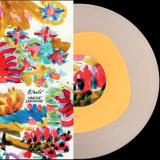
Spring Back, Ball Forward is the Soda Gong debut from Jung dj, nom de plume of shapeshifting multi-instrumentalist Randy Riback. Following a series of uniformly great self-releases and cassettes on the dearly missed Lillerne Tapes, this collection observes the spacious and angular dynamics of 1990s Midwestern post-rock through the lens of the bedroom electronic music producer.
Perhaps surprisingly, amp worship lies at the center of the album: a fascination with the grain, pressure, and emotional charge of amplification and gain, refracted through the strange remove of digital amp modeling. Tubes, speakers, sag, and in-the-red textures are a critical part of the album’s expressive vocabulary, imparting density and colorful saturation while lending even its most weightless passages a vital sense of physical presence. Over the course of twelve tracks, wistful ambience gives way to blunt heaviness and roiling catharsis, underpinned by a palpable sense of loss and grief.
The album’s auspicious cast of collaborators further complicates its emotional terrain. Spoken contributions from Natalia Panzer and Angelina Nonaj occupy strikingly different registers: Panzer’s diffuse and oblique, drifting in and out of the music’s contours; Nonaj’s a vivid travelogue, grounding the record in place and lived experience. Elsewhere, Soda Gong veteran Mister Water Wet joins a small constellation of guests whose playing folds naturally into Riback’s arrangements, blurring the boundaries between computer and ensemble music.
For all of its attention to texture, process, and the material qualities of sound, Spring Back, Ball Forward is first and foremost an emotionally potent work, possessed of a directness that can feel rare within experimental electronic music. Riback draws from a rich and idiosyncratic musical vernacular, arriving at something deeply felt and difficult to place: a singular statement whose pathos exceeds the sum of its references.