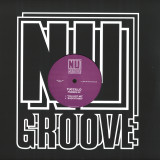
You cannot say Nu Groove without saying Burrell. The seminal New York House label that existed from 1988 until 1992 was at the helm of a sound that was as much traditional as it was transitional. Since the closure of the Paradise Garage in 1987 and before the „NYC House sound“ was well-defined and fenced, Nu Groove was a kaleidoscope and an amalgamation of everything that informed it until then: uptempo r&b, reggae, dub, disco, freestyle, techno, jazz, and the sound that was embossed by Larry Heard in Chicago that was so well picked up in the Big Apple, you name it. Ronald and Rheji Burrell provided its basis, first floor and roof. But that story has already been told by our dear friends from Rush Hour, including its most important chapters. But we are going to tell a new one.
Rheji Burrell presents N.Y. House’N Authority & The Utopia Project. Twelve tracks split over two EPs on Running Back. Named „Out of Body Experience“ and „The ’V’EP“, it features all new music that feels like modern garments cut out of a classic cloth. Almost as if the Nu Groove would have never stopped. And that it is - at the risk of self-praise - all that old or new fans and also we could hope for. Two EPs full of deep-that-doesn’t rhyme-with-sleep house music, has simple, yet clever arrangements, features jazzy sounds, but snappy drums, merry melodies and glossy grooves. An overall joy to listen or dance to. The difference in both EPs is for the Burrell-die-hards and Nu-Groove-scientists to decide.
Buscar:n y house’n authority
- A1: 4Th Measure Men - 4 You (Dj Steaw Remix)
- A2: Deadboy -Never Felt
- B1: N.y. House'n Authority - Apt. 2A (Hugo Massien Rework)
- B2: Jordan (Uk) - Apogee
- C1: Ejeca -Firework
- C2: Djaimin - Open The Door (Dj Octopus Mix)
- D1: The Utopia Project - File #3 (Mak & Pasteman Remix)
- D2: Innershades - Love At First Sight
Stepping up to continue Defected's In The House tradition is DJ Haus, a decidedly untraditional DJ, producer, originator and DIY label innovator. Recognised among the underground house community as being at the cutting edge with his imprints Unknown To The Unknown and Hot Haus Recs, DJ Haus' kaleidoscopic eclecticism and refreshing lack of ostentation makes him, in Defected's opinion, an ambassador for the future of house music.
Ahead of the release of the full compilation Defected presents DJ Haus In The House this vinyl double pack keeps things super fresh and direct with a whopping eight compilation exclusives. New material from Deadboy, Jordan (UK), Ejeca and Innershades is included, plus remixes from DJ Octopus and DJ Steaw. Demonstrating a colourful array of raw and jacking sounds that encompasses electro, Chicago house, disco, techno and UK garage, DJ Haus In The House does the UK's house scene immensely proud. It documents a moment in time when DJ Haus' quietly pioneering dedication to the underground is celebrated in suitably reverent fashion.
Timeless and built by one of the legends who helped define the language of house music. Huge support by Ricardo Villalobos. KBMV001 is not just a debut catalogue number on Shelby own label, it is a foundation stone. Authentic, timeless and built by one of the legends who helped define the language of house music. Klassik Blueprint Muzic opens its catalogue with a statement. Widely regarded as one of the pioneers of the Chicago house sound, Shelby?s history reaches back to the formative years of the culture, with early milestones including ?Essence Of A Dream? under his Risqué III alias in 1987 and ?All For Lee-Sah? on Derrick May?s Transmat in 1989.
That legacy is exactly what gives ?OMG (Oh My God)? / ?Who Wants It DEEP?? its force. This is not nostalgia packaged as heritage, it is a living connection to the raw machinery, groove science and emotional depth that made Chicago house a global language in the first place. Shelby has long been associated not only with classic Chicago house, but also with the tougher edges where acid, techno and Detroit-inspired futurism meet, a cross-current reflected throughout his discography and in the way later reissue culture continues to treat his catalogue as foundational. Pressed on 180g vinyl and coming straight from Chicago, USA, this is a release that connects past, present and future in one gesture: authentic house music from a genuine architect, still speaking with authority.
- A1: Schmetterlinge Im Bauch (Mary Olivetti Remix) (5:52)
- A2: Children Of Zu Zu (Moodorama Remix) (4:08)
- A3: Zu Zu Music (Charles Petersohn Mystery Mix) (6:34)
- B1: Myth Versus Reality (Als420 Remix) (6:06)
- B2: Myth Versus Reality (Viktor Marek Remix - Extended Version) (6:06)
- B3: Myth Versus Reality (Greater Manchester Housing Authority A Spiritual Space Rework) (3:29)
Das Remix Paket für Charles Petersohn’s Children Of Zu Zu EP glänzt durch seine Vielfalt zwischen jazzy Broken Beats und Afro/Deep House, mit Re-Works von Mary Olivetti, Moodorama, als420, Viktor Marek, The Greater Manchester Housing Authority und Charles Petersohn selbst.
“Der gemeinsame Wunsch, dass die Tracks der EP an die Idee anknüpfen sollen, dass ein Remix ein eigenes Kunstwerk sein kann, ist voll aufgegangen. Alle Mixe haben eine persönliche Handschrift, nutzen die Originals als Material, mit dem nach Herzenslust gespielt wurde. Ich bin sehr glücklich!” Charles Petersohn
Format: Vinyl 12“ Full Cover mit schwarzer Innenhülle und rundem Sticker
Audiojack and Kevin Knapp return to Crosstown Rebels with their ‘Get It’ EP. Out on 22nd May 2026, the longstanding collaborators serve up a heavyweight two-tracker on Damian Lazarus’ imprint.
Leeds-born, Ibiza-based duo Audiojack reunite with US mainstay Kevin Knapp for their third Crosstown Rebels collaboration together on 22nd May, adding to 2021’s impressive ‘Under Your Skin’ EP and 2017’s ‘Implications’ EP. Having spent two decades at the forefront of the scene, the Gruuv bosses’ blend of house, minimal, and garage influences has landed on labels such as Hot Creations, Solid Grooves, 8bit, and more. Meanwhile, house music stalwart Kevin Knapp continues to push his own chunky and vibrant take on house music via international performances at venues such as fabric, Circo Loco, and Elrow, as well as releases on labels like Cuttin Headz, Repopulate Mars, Desert Hearts, and his own Plump Recordings. Marking their return to Damian Lazarus’ iconic imprint once more, they serve up two punchy cuts that showcase their ability to balance attitude and authority into a house workout.
“Get It,' is all about momentum! A driving club track with a mantra-like vocal to lift you up and motivate you to go harder at whatever you’re doing in life.” - Audiojack
"I'm just enamoured with the concept of being in charge of our own destiny and the thought of getting out of things what you put into them. I feel like this record sonically presents those sentiments in a way I love and appreciate.” - Kevin Knapp
Title track ‘Get It’ is a rolling floor-focused cut, driven by a tightly wound bassline and rattling cowbells, while a brooding low-end foundation sets the stage for Kevin Knapp’s commanding vocal drops, elevating the cut into a full-throttle peak-time weapon. On the flip, ‘This Frequency’ is an equally potent club tool, built around an unfolding tracking groove and a wobbling melodic synth line, propelled by an electro-tinged bassline that steadily draws listeners further into its spell.
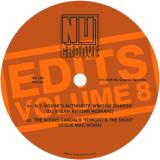
Nu Groove spotlights the artists that made this cult NYC label a favourite of crate diggers then and now with this special vinyl release of their vital tracks revisited by leading selectors of today. The label, born in 1988 by Frank and Karen Mendez as an outlet for the experimental works of the Burrell Brothers, quickly became a home for up-and-coming genre pioneers. ‘Nu Groove Edits, Vol. 8’ opens with DJ Steaw’s Autumn Reshape of ‘Window Guards’, originally by N.Y. House’n Authority - a moniker of Rheji Burrell. Next up is Steve Mac’s remix of NYC favourites The Sound Vandals’ ‘Tonight’s The Night’, followed by another seminal N.Y. House’n Authority record, ‘APT. 3B’ remixed by Dazzle Drums. A third track from the mind Rheji Burrell closes out this vinyl collection of future record box staples, with Seamus Haji reworking The Utopia Project’s ‘File #1’.
Incl. Remixes by Red Axes, Roman Flügel & Abe Duque
What does it mean to exist in sound?
It does not begin with a beat, but with a choice. With the moment when someone decides not merely to inhabit the space, but to shape it – and in doing so, makes themselves visible.
Roman Flügel stands as a constant in the background. Not as an authority, but as a collective consciousness. Since the 1990s, he has moved through club music like a seeker, never content with the first answer. House, techno, experimentation – these are not genres, but states of being. His remix thinks, hesitates, opens, strikes like a surging acid wave, warping reality and demanding true presence.
New York taught him that club music is never neutral. It is body, friction, attitude. Abe Duque’s remix carries a strangely enchanting relentlessness, a resistance to smoothness – as if the dancefloor were a place where freedom is not claimed, but fought for.
Red Axes do not enter this space; they conjure it. Their sound is raw, repetitive, circular, as if deliberately refusing linearity. House, dub, and acid elements become material for a movement that is more trance than structure. Their remix does not ask where it is going; it asks why one should ever stand still.
And then there is Tim Paris. Not at the center, but as a narrator. As someone who knows that the voice is an attitude. “That Boy” is not a pose, but a mirror, ironic, direct, vulnerable. Paris moves between new wave house and club, always aware that identity is never fixed, but formed in the moment.
This remix record is not a gathering of names. It is a situation, four perspectives on the same question:
What does it mean to exist in sound?
Yet sound alone does not tell the full story: like music, the visual is a space to be shaped, felt, and deciphered. The cover of Tim Paris feat. Foremost Poets – That Boy, created by Konstantin Fürchtegott Kipfmüller, a visual artist at the Hochschule für Gestaltung in Offenbach under Heiner Blum, embodies this principle. Drawing inspiration from the urban environment, Kipfmüller transforms traces of decay, weather, and time into abstract narratives that, like the music of Tim Paris, Roman Flügel, Abe Duque and Red Axes, unfold meaning layer by layer. The result is no mere adornment, but a mirror of the sonic landscape: every line, every surface an echo of the question of what it means to exist – fully, in the moment, in sound.
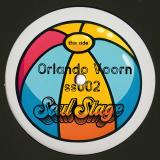
Soul Stage lands another essential chapter with Soulstage 002, a seriously classy and deeply authentic statement from the one and only Orlando Voorn. Carried by the unmistakable spirit of Detroit, this release is the kind of record that reminds you why true house music never loses its power, timeless, soulful, effortlessly cool and full of authority.
Nu Groove spotlights the artists that made the legendary NYC label a firm favourite of crate diggers then and now with this special vinyl release of their vital tracks revisited by leading selectors of today. The label, born in 1988 by Frank and Karen Mendez as an outlet for the experimental works of the Burrell Brothers, quickly became a home for up-and-coming genre pioneers. Nu Groove Edits, Vol. 7 opens with the NiCe7 Edit of ‘Feel It’ by NYC favourites The Sound Vandals. More monikers of Rheji Burrell appear in the collection too, as the seminal ‘APT. 2B’ by N.Y. House’n Authority is reworked by Steve Bug, followed by Darius Syrossian’s edit of ‘C’Mon’ by Rheji’s Avant Garde moniker. Make A Dance’s edit of the Rhano Burrell classic ‘I’ve Fallen And I Can’t Get Up’, under his You Know Who! alias, closes out this vinyl collection of future record box staples.
Part 1[10,88 €]
We All Jack – Part 2
Following the success of its inaugural vinyl release, We All Jack – Part 2 continues Heattraxx’s dedication to preserving and pushing forward the legacy of Chicago house music. This second chapter deepens the journey, bringing together foundational pioneers and trusted label family to expand the spirit of the series.
Leading the charge is an undeniable icon, Roy Davis Jr., an absolute legend whose influence on house music culture is timeless. His contribution brings soul, depth, and unmistakable Chicago authority to the record.
Joining him is DJ Merci, a Heattraxx resident and true family member, delivering a groove-driven remix that reflects both his long-standing connection to the label and his deep understanding of the dancefloor.
The release is further elevated by Jerome OR, whose refined, contemporary approach adds fresh momentum while staying rooted in classic house sensibilities, and Gettoblaster, bringing raw Chicago energy with their signature jackin’ sound and unmistakable attitude.
We All Jack – Part 2 is not just a follow-up—it’s a continuation of a vision. A vinyl series dedicated to house heritage, bridging generations, and carrying the Windy City spirit forward with respect, weight, and purpose.
- A1: Burns & Tubbs - Where Were U In 92?
- A2: ?-Ziq - 4Am
- A3: Arthur Verocai - Caboclo
- A4: Auntie Flo - Green City
- B1: Software - Present Voice
- B2: Point Zero - Coastal
- B3: Nina Simone - Come Ye
- B4: N.y. House'n Authority - Apt. 3B
- C1: Mark Barrott - When Devils Become Gods
- C2: Eric Serra - Protect Life
- C3: Mazzy Star - Fade Into You
- D1: Boards Of Canada - Open The Light
- D2: Aqua Bassino - When The Bird Flies
- D3: Talk Talk - Wealth
- D4: Yukihiro Takahashi - Present
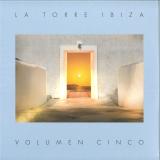
To mark a decade as one of Ibiza's most iconic musical sanctuaries, Hostal La Torre announces 'La Torre Ibiza Volumen Cinco', a new compilation curated by long-standing residents Pete Gooding and Mark Barrott. Released June 27 on CD and double vinyl, the 15-track collection captures the spirit of the venue that has come to define the golden-hour soundtrack ofthe island's west coast.
Since opening in 2015, La Torre has established itself as a bastion of Balearic culture-set high on the cliffs overlooking the sea, where music flows with the sun rather than the clock. The fifth volume in the celebrated La Torre series is a journey through Brazilian soul, ambient electronica, classic deep house, orchestral minimalism, and dusk-lit Detroit techno-an emotional arc designed to mirror the progression of an evening at the venue.
From timeless icons like Nina Simone, Mazzy Star, Talk Talk (with their Spirit of Eden closer "Wealth"), and Boards of Canada, to boundary-pushers like Auntie Flo, Eden Burns, and µ-Ziq (aka Mike Paradinas), Volumen Cinco weaves together deep-rooted classics and leftfield discoveries. Mark Barrott contributes a brand-new exclusive, 'When Devils Become Gods', while the compilation closes on a rare gem from Yellow Magic Orchestra's Yukihiro Takahashi. Also includedis Software's 'Present Voice', a quietly powerful tribute to the late José Padilla, the spiritual architect of Ibiza's sunset sound.
Volumen Cinco is more than just a listening experience-it's a tribute to La Torre's ethos: open-hearted, genre-fluid, rooted in place and time. Each track is carefully sequenced to evoke a feeling, a shift in light, or a shared memory beneath the fading sun.
Over the years, La Torre has welcomed some of the most influential names in Balearic and electronic music, from José Padilla, Alfredo, and Jon Sa Trinxa to DJ Harvey, David Holmes, Lovefingers, Heidi Lawden, Wolf Müller, Don Carlos, and Phil Mison. With each summer season and each release, the venue continues to build a musical legacy that has earned critical acclaim from Resident Advisor, Phonica Records, Juno, and Piccadilly Records, regularly featuring in their year-end lists.
As Test Pressing once wrote, "La Torre is not a party, it's a place of pilgrimage. It feels almost sacred." That spirit resonates deeply in this anniversary compilation-a celebration of music, community, and connection that spans a decade.
La Torre Ibiza Volumen Cinco is dedicated to the artists, friends, collaborators, and guests who've shaped its story so far-and to everyone who continues to gather, listen, and lose track of time as the sun slips beneath the horizon.
Strut proudly presents a new edition of one of Sun Ra's most celebrated albums, Sleeping Beauty, reissued in its original artwork for the first time.
Originally released in 1979 on his independent Saturn label, Sleeping Beauty captures Sun Ra and his Arkestra at their most soulful and serene. A masterclass in cosmic jazz, the album blends lush grooves, celestial soul, and meditative funk with Ra’s singular spiritual vision — a sound both grounded and otherworldly.
The album emerged during an extraordinarily fertile period for Sun Ra in late-‘70s New York. Between 1978 and 1982, Ra “occupied” Variety Recording Studios on West 42nd Street, often staging marathon sessions following late-night Arkestra gigs around the city — from the Village Vanguard to Sweet Basil and even a wedding in Central Park. These were not just recordings; they were rituals. Ra and his core players — John Gilmore, Marshall Allen, June Tyson, Michael Ray, and others — would begin sessions mid-morning, often continuing past midnight, much to the dismay of the studio owner. Out of this creative whirlwind came some of his most enduring work, including A Fireside Chat With Lucifer, On Jupiter, and Sleeping Beauty.
Across its three tracks, Sleeping Beauty showcases the Arkestra’s gentler side. From the dreamy sway of “Springtime Again” to the funk-deep uplift of “Door Of The Cosmos” and the title track’s meditative drift, this is music that floats, beckons, and unfolds. It’s a record of hypnotic beauty and quiet power — cosmic jazz for dreamers and seekers alike.
This new edition features a selected version of the hand-drawn original cover, embossed with the Sun Ra logo and housed in a heavyweight card sleeve. Liner notes come courtesy of Arkestra member Knoel Scott and Sun Ra authority Paul Griffiths. Remastered by Technology Works.
“Music is a language. You see, it’s not notes — it’s a language of the spirit. That’s why it’s so important.” – Sun Ra
Renowned UK producer and Freerange co-founder Jimpster steps back into the spotlight with a brand-new 5 track EP that dives deep into the raw, emotional core of underground house music. Blending masterful production prowess with soulful storytelling, this latest release features standout collaborations with two celebrated spoken word artists namely NYC’s OVEOUS and Atlanta via Detroit’s rising star Ash Lauryn. The North Atlantic EP captures the essence of late-night dance floors and a fusion of sounds, all wrapped in Jimpster’s signature warm, analog textures and rolling groove science.
FLO opens the EP with a vibrant pulse - an up-beat groove that wraps around you like incense smoke and island vibes in a Brooklyn basement. Anchored by filtering stabs and a rubbery bassline, the track unfolds with the commanding presence of OVEOUS, whose spoken-word cuts through the haze with razor-sharp clarity. His voice rides the beat like a sermon for the dance floor; straight talk that’s spiritual, and defiantly alive, this is deep house as ceremony for the streets. The accompanying Dub strips back the vocal and introduces additional harmonic elements in the form of piano, strings, and synth washes bringing a warm and musical touch.
On Feel Me, Jimpster crafts a rolling groove built on punchy drums, shuffling percussion, and a soulful vibe which feels both classic and futuristic. Ash Lauryn’s voice glides across the track with cool authority, bringing a seductive vibe to the party. Her voice is perfectly balanced with Jimpster’s atmospheric pads and dubby flourishes creating a contemporary and irresistibly danceable house anthem for the heads.
Two additional mixes of Feel Me bolster an already sturdy package bringing a more straight up, bumpy version on the House Mix as well as a darker, heads down - eyes closed take on the Freakin’ Club Mix.
This EP is more than just a meeting of minds — it’s a dialogue between continents, generations, and frequencies. With FLO and Feel Me, Jimpster continues to affirm his place as a producer deeply rooted in tradition yet always striving to push his sound forward.
Hailing from Spain, prolific producer Orion Agassi is known in certain circles as a house music authority. As he has been on our radar for many years we finally connected for a six track lp of straight up beat tracks for the club. Leaning heavily on the heyday of WBMX mixshows Agassi takes the razor to classic house breaks and acapellas with a specifically Latin feel turning them upside down. Total club gear for classic house enthusiasts and working djs. Not to be missed!
a1. 121 bpm
a2. 125 bpm
a3. 123 bpm
b1. 124 bpm
b2. 126 bpm
b3. 122 bpm
Italian Ibiza favourite Tuccillo returns to legendary NYC label Nu Groove with another four-track EP, ‘Frames’, including a feature from Chicago native Ron Carroll. With previous Nu Groove releases like the ‘Sunshine City EP’ and ‘I Believe’ with TradeCraft earning the respect of esteemed selectors including Archie Hamilton, Chloe Caillet and Laurent Garnier, Tuccillo’s expertly crafted sound is revered for its analogue approach. Similarly, his passion and respect for vinyl has earned him respect from crate diggers and house music tastemakers globally ever since the 90s. Tuccillo’s ‘Frames EP’ opens with the eponymous lead, showcasing his malleable sound that comes alive in underground scenes for heads in the know. Chicago house authority Ron Carroll lends his vocals to ‘Don’t Walk Away’, supported by Tuccillo’s fresh club-defining production that also permeates ‘You Got Me’. ‘Everything’ closes out this collection of pure house excellence, with expressive yet softer synthwork creating a cooler feel perfect for the afterhours.
Nu Groove spotlights the artists that made the legendary NYC label a firm favourite of crate diggers then and now with this 12” release of their vital tracks revisited by leading selectors of today.
The label, born in 1988 by Frank and Karen Mendez as an outlet for the experimental works of the Burrell Brothers, quickly became a home for up-and-coming genre pioneers. In this fashion, ‘Nu Groove Edits, Vol. 4’ opens with ‘Tonight’s The Night’ by NYC favourites How & Little, AKA The Sound Vandals, re-edited by Italian duo NiCe7.
More monikers of Rheji Burrell appear in the collection too, with N.Y. House’n Authority’s seminal classic ‘APT. 2A’ reworked by UK deep tech aficionado Hugo Massien, and The Utopia Project’s ‘File #3’ remixed by Leeds underground duo Mak & Pasteman. Closing out this collection of future classics, GRAMMY award winning production duo Honey Dijon & Luke Solomon return to edit ‘Luv 2 Luv U’ by A.B.T.
On the A side with ‘Joy’, Bruise head in a jubilant direction. Chanting vocal chops ride along deep cut kick grooves and vivid piano riffs; modernising the classic house sound and forming a track that would as likely go off in a club in the UK as it would on the sun-soaked beaches of Ibiza.
In ‘The Theme’, Bruise switches things up and offers up a weighty, bass-driven progressive techno heater; bolstered with rattling break chops and polyrhythmic analogue synth arpeggios. As the track progresses, rip-roaring, squelching acid-lines are introduced at the crescendo; creating a versatile club record; primed and ready for the clubs reopening.
On this single ‘When Pianos Attack’, the vibe is instantly recognisable. Piano chords lead the charge of yet another dancefloor destroyer, with that signature sound of swinging beats, layered pianos, lashings of strings, and hosts of heavenly soulful choirs. Just close your eyes, look up, feel the rush, and dance.
+ Includes the unreleased vinyl exclusive ‘Akiba Choirs’. A new school dance anthem!
Huge support from: Annie Mac, Pete Tong, Laurent Garnier, Severino / Horse Meat Disco, Sasha, A Trak, Andhim, Spiller, Graeme Park, DJ EZ, John Digweed, Fatboy Slim, Sam Devine, Laurence Guy, Gilles Peterson, Fred Everything, Soul Clap, James Lavel, Basement Jaxx, Francois K, Luke Solomun.
'Joy'
- Pete Tong’s Essential New Tune + Tong asked Bruise to record a Joy themed Essential Mix for BBC Radio 1.
- Premiered by leading dance authority Mixmag.
- Featured in Defected / Faith’s behind the counter.
‘When Pianos Attack’
- Played by Blessed Madonna as an artist to watch 2022!
- Played at Warehouse Project by Graeme Park, and then again by Terry Farley.
- Magnetic Magazines Best of Month
Bruise appeared in Faith Magazines taking a full page for interview with a heavy focus on When Pianos Attack.
UILTY RAZORS, BONA FIDE PUNKS.
Writings on the topic that go off in all directions, mind-numbing lectures given by academics, and testimonies, most of them heavily doctored, from those who “lived through that era”: so many people today fantasize about the early days of punk in our country… This blessed moment when no one had yet thought of flaunting a ridiculous green mohawk, taking Sid Vicious as a hero, or – even worse – making the so-called alternative scene both festive and boorish. There was no such thing in 1976 or 1977, when it wasn’t easy to get hold of the first 45s by the Pistols or the Clash. Few people were aware of what was happening on the fringes of the fringes at the time. Malcolm McLaren was virtually unknown, and having short hair made you seem strange. Who knew then that rock music, which had taken a very bad turn since the early 1970s, would once again become an essential element of liberation? That, thanks to short and fast songs, it would once again rediscover that primitive, social side that was so hated by older generations? Who knew that, besides a few loners who read the music press (it was even better if they read it in English) and frequented the right record stores? Many of these formed bands, because it was impossible to do otherwise. We quickly went from listening to the Velvet Underground to trying to play the Stooges’ intros. It’s a somewhat collective story, even though there weren’t many people to start it.
The Guilty Razors were among those who took part in this initial upheaval in Paris. They were far from being the worst. They had something special and even released a single that was well above the national average. They also had enough songs to fill an album, the one you’re holding. In everyone’s opinion, they were definitely not among the punk impostors that followed in their wake. They were, at least, genuine and credible.
Guilty Razors, Parisian punk band (1975-1978). To understand something about their somewhat linear but very energetic sound, we might need to talk about the context in which it was born and, more broadly, recall the boredom (a theme that would become capital in punk songs) coupled with the desire to blow everything off, which were the basis for the formation of bands playing a rejuvenated rock music ; about the passion for a few records by the Kinks or the early Who, by the Stooges, by the Velvet mostly, which set you apart from the crowd.
And of course, we should remember this new wave, which was promoted by a few articles in the specialized press and some cutting-edge record stores, coming from New York or London, whose small but powerful influence could be felt in Paris and in a handful of isolated places in the provinces, lulled to sleep by so many appalling things, from Tangerine Dream to President Giscard d’Estaing...
In 1975-76, French music was, as almost always, in a sorry state ; it was still dominated by Johnny Hallyday and Sylvie Vartan. Local rock music was also rather bleak, apart from Bijou and Little Bob who tried to revive this small scene with poorly sound-engineered gigs played to almost no one.
In the working class suburbs at the time, it was mainly hard rock music played to 11 that helped people forget about their gruelling shifts at the factory. Here and there, on the outskirts of major cities, you still could find a few rockers with sideburns wearing black armbands since the death of Gene Vincent, but it wasn’t a proper mass movement, just a source of real danger to anyone they came across who wasn't like them. In August 1976, a festival unlike any other took place in Mont-de-Marsan – the First European Punk Festival as the poster said – with almost as many people on stage as in the audience. Yet, on that day, a quasi historical event happened, when, under the blazing afternoon sun, a band of unknowns called The Damned made an unprecedented noise in the arena, reminiscent of the chaotic Stooges in their early adolescence. They were the first genuine punk band to perform in our country: from then on, anything was possible, almost anything seemed permissible.
It makes sense that the four+1 members of Guilty Razors, who initially amplified acoustic guitars with crappy tape recorder microphones, would adopt punk music (pronounced paink in French) naturally and instinctively, since it combines liberating noise with speed of execution and – crucially – a very healthy sense of rebellion (the protesters of May 1968 proclaimed, and it was even a slogan, that they weren’t against old people, but against what had made them grow old. In the mid-1970s, it seemed normal and obvious that old people should now ALSO be targeted!!!).
At the time, the desire to fight back, and break down authority and apathy, was either red or black, often taking the form of leafleting, tumultuous general assemblies in the schoolyard, and massive or shabby demonstrations, most of the time overflowing with an exciting vitality that sometimes turned into fights with the riot police. Indeed, soon after the end of the Vietnam War and following Pinochet’s coup in Chile, all over France, Trotskyist and anarcho-libertarian fervour was firmly entrenched among parts of the educated youth population, who were equally rebellious and troublemakers whenever they had the chance. It should also be noted that when the single "Anarchy in the UK" was first heard, even though not many of us had access to it, both the title and its explosive sound immediately resonated with some of those troublemakers crying out for ANARCHY!!! Meanwhile, the left-wing majority still equated punks with reckless young neo-Nazis. Of course, the widely circulated photos in the mainstream press of Siouxsie Sioux with her swastikas didn’t necessarily help to win over the theorists of the Great Revolution. It took Joe Strummer to introduce The Clash as an anti-racist, anti-fascist and anti-ignorance band for the rejection of old-school revolutionaries to fade a little.
The Lycée Jean-Baptiste Say at Porte d’Auteuil, despite being located in the very posh and very exclusive 16th arrondissement of Paris, didn’t escape these "committed" upheavals, which doubled as the perfect outlet for the less timid members of this generation.
“Back then, politics were fun,” says Tristam Nada, who studied there and went on to become Guilty Razors’ frontman. “Jean-Baptiste was the leftist high-school in the neighbourhood. When the far right guys from the GUD came down there, the Communist League guys from elsewhere helped us fight them off.”
Anything that could challenge authority was fair game and of course, strikes for just about any reason would lead to increasingly frequent truancy (with a definitive farewell to education that would soon follow). Tristam Nada spent his 10th and 11th unfinished grades with José Perez, who had come from Spain, where his father, a janitor, had been sentenced to death by Franco. “José steered my tastes towards solid acts such as The Who. Like most teenagers, I had previously absorbed just about everything that came my way, from Yes to Led Zeppelin to Genesis. I was exploring… And then one day, he told me that he and his brother Carlos wanted to start a rock band.” The Perez brothers already played guitar. “Of course, they were Spanish!”, jokes their singer. “Then, somewhat reluctantly, José took up the bass and we were soon joined by Jano – who called himself Jano Homicid – who took up the rhythm guitar.” Several drummers would later join this core of not easily intimidated young guys who didn’t let adversity get the better of them.
The first rehearsals of the newly named Guilty Razors took place in the bedroom of a Perez aunt. There, the three rookies tried to cover a few standards, songs that often were an integral part of their lives. During a first, short gig, in front of a bewildered audience of tough old-school rockers, they launched into a clunky version of the Velvet Underground's “Heroin”. Challenge or recklessness? A bit of both, probably… And then, step by step, their limited repertoire expanded as they decided to write their own songs, sung in a not always very accurate or academic English, but who cared about proper grammar or the right vocabulary, since what truly mattered was to make the words sound as good as possible while playing very, very fast music? And spitting out those words in a language that left no doubt as to what it conveyed mattered as well.
Trying their hand a the kind of rock music disliked by most of the neighbourhood, making noise, being fiercely provocative: they still belonged to a tiny clique who, at this very moment, had chosen to impose this difference. And there were very few places in France or elsewhere, where one could witness the first stirrings of something that wasn’t a trend yet, let alone a movement.
In the provinces, in late 1976 or early 1977, there couldn’t be more than thirty record stores that were a bit more discerning than average, where you could hear this new kind of short-haired rock music called “punk”. The old clientele, who previously had no problem coming in to buy the latest McCartney or Aerosmith LP, now felt a little less comfortable there…
In Paris, these enlightened places were quite rare and often located nex to what would become the Forum des Halles, a big shopping mall. Between three aging sex workers, a couple of second-hand clothes shops, sellers of hippie paraphernalia and small fashion designers, the good word was loudly spread in two pioneering places – propagators of what was still only a new underground movement. Historically, the first one was the Open Market, a kind of poorly, but tastefully stocked cave. Speakers blasted out the sound of sixties garage bands from the Nuggets compilation (a crucial reference for José Perez) or the badly dressed English kids of Eddie and the Hot Rods. This black-painted den was opened a few years earlier by Marc Zermati, a character who wasn’t always in a sunny disposition, but always quite radical in his (good) choices and his opinions. He founded the independent label Skydog and was one of the promoters of the Mont-de-Marsan punk festivals. Not far from there was Harry Cover, another store more in tune with the new New York scene, which was amply covered in the house fanzine, Rock News (even though it was in it that the photos of the Sex Pistols were first published in France).
It was a favorite hang-out of the Perez brothers and Tristam Nada, as the latter explained. “It’s at Harry Cover’s that we first heard the Pistols and Clash’s 45s, and after that, we decided to start writing our first songs. If they could do it, so could we!”
The sonic shocks that were “Anarchy in the UK”, “White Riot” or the Buzzcocks’s EP, “Spiral Scratch” – which Guilty Razors' sound is reminiscent of – were soon to be amplified by an unparalleled visual shock. In April 1977, right after the release of their first LP, The Clash performed at the Palais des Glaces in Paris, during a punk night organised by Marc Zermati. For many who were there, it was the gig of a lifetime…
Of course, Guilty Razors and Tristam were in the audience: “That concert was fabulous… We Parisian punks were almost all dressed in black and white, with white shirts, skinny leather ties, bikers jackets or light jackets, etc. The Clash, on the other hand, wore colourful clothes. Well, the next day, at the Gibus, you’d spot everyone who had been at this concert, but they weren’t wearing anything black, they were all wearing colours.”
It makes sense to mention the Gibus club, as Guilty Razors often played there (sometimes in front of a hostile audience). It was also the only place in Paris that regularly scheduled new Parisian or Anglo-Saxon acts, such as Generation X, Siouxsie and the Banshees, the Slits, and Johnny Thunders who would become a kind of messed-up mascot for the venue. A little later, in 1978, the Rose Bonbon – formerly the Nashville – also attracted nightly owls in search of electric thrills… In 1977, the iconic but not necessarily excellent Asphalt Jungle often played at the Gibus, sometimes sharing the bill with Metal Urbain, the only band whose aura would later transcend the French borders (“I saw them as the French Sex Pistols,” said Geoff Travis, head of their British label Rough Trade). Already established in this small scene, Metal Urbain helped the young and restless Guilty Razors who had just arrived. Guitarist for Metal Urbain Hermann Schwartz remembers it: “They were younger than us, we were a bit like their mentors even if it’s too strong a word… At least they were credible. We thought they were good, and they had good songs which reminded of the Buzzcocks that I liked a lot. But at some point, they started hanging out with the Hells Angels. That’s when we stopped following them.”
The break-up was mutual, since, Guilty Razors, for their part, were shocked when they saw a fringe element of the audience at Metal Urbain concerts who repeatedly shouted “Sieg Heil” and gave Nazi salutes. These provocations, even still minor (the bulk of the skinhead crowd would later make their presence felt during concerts), weren’t really to the liking of the Perez brothers, whose anti-fascist convictions were firmly rooted. Some things are non-negotiable.
A few months earlier (in July 1978), Guilty Razors had nevertheless opened very successfully for Metal Urbain at the Bus Palladium, a more traditonally old-school rock night-club. But, as was sometimes the case back then, the night turned into a mass brawl when suburban rockers came to “beat up punks”.
Back then, Parisian nights weren’t always sweet and serene.
So, after opening as best as they could for The Jam (their sound having been ruined by the PA system), our local heroes were – once again – met outside by a horde of greasers out to get them. “Thankfully,” says Tristam, “we were with our roadies, motorless bikers who acted as a protective barrier. We were chased in the neighbouring streets and the whole thing ended in front of a bar, with the owner coming out with a rifle…”
Although Tristam and the Perez brothers narrowly escaped various, potentially bloody, incidents, they weren’t completely innocent of wrongdoing either. They still find amusing their mugging of two strangers in the street for example (“We were broke and we simply wanted to buy tickets for the Heartbreakers concert that night,” says Tristam). It so happened that their victims were two key figures in the rock business at the time: radio presenter Alain Manneval and music publisher Philippe Constantin. They filed a complaint and sought monetary compensation, but somehow the band’s manager, the skilful but very controversial Alexis, managed to get the complaint withdrawn and Guilty Razors ended up signing with Constantin with a substantial advance.
They also signed with Polydor and the label released in 1978 their only three-track 45, featuring “I Don't Wanna be A Rich”, “Hurts and Noises” and “Provocate” (songs that exuded perpetual rebellion and an unquenchable desire for “class” confrontation). It was a very good record, but due to a lack of promotion (radio stations didn’t play French artists singing in English), it didn’t sell very well. Only 800 copies were allegedly sold and the rest of the stock was pulped… Initially, the three tracks were to be included on a LP that never came to be, since they were dropped by Polydor (“Let’s say we sometimes caused a ruckus in their offices!” laughs Tristam.) In order to perfect the long-awaited LP, the band recorded demos of other tracks. There was a cover of Pink Floyd's “Lucifer Sam” from the Syd Barrett era – proof of an enduring love for the sixties’ greats –, “Wake Up” a hangover tale and “Bad Heart” about the Baader-Meinhof gang, whose actions had a profound impact on the era and on a generation seeking extreme dissent... On the album you’re now discovering, you can also hear five previously unreleased tracks recorded a bit later during an extended and freezing stay in Madrid, in a makeshift studio with the invaluable help of a drummer also acting as sound engineer. He was both an enthusiastic old hippie and a proper whizz at sound engineering. Here too, certain influences from the fifties and sixties (Link Wray, the Troggs) are more than obvious in the band’s music.
Shortly after a final stormy and rather barbaric (on the audience’s side) “Punk night” at the Olympia in June 1978, Tristam left the band ; his bandmates continued without him for a short while.
But like most pioneering punk bands of the era, Guilty Razors eventually split up for good after three years (besides once in Spain, they’d only played in Paris). The reason for ceasing business activities were more or less the same for everyone: there were no venues outside one’s small circuit to play this kind of rock music, which was still frightening, unknown, or of little interest to most people. The chances of recording an LP were virtually null, since major labels were only signing unoriginal but reassuring sub-Téléphone clones, and the smaller ones were only interested in progressive rock or French chanson for youth clubs. And what about self-production? No one in our small safety-pinned world had thought about it yet. There wasn’t enough money to embark on that sort of venture anyway.
So yes, the early days of punk in France were truly No Future!