Mickey Pearce is back in business with 'One Hundred Smiles', a new album of swaggering UK club music experimentations, and a new label Box Of Toys.
His first album, 'Michael' (2016), saw him exploring new territory; crafting a strange and melancholic landscape of beatless textures and leftfield house and techno. Approached with a fresh perspective, 'One Hundred Smiles' slows the tempo and ups the collaboration.
'The last record was a reflection of my situation around that time. This one is like stepping out from under a cloud. It's about the joy of collaboration; meeting and working with new people. It's also about the ambiguity of smiles, and the complicated relationships we form.'
The album features appearances from rising UK talent Poté, Taiwanese vocalist Meuko Meuko and Greek electronic pioneer Lena Platonos.
'Poté is a crazy talent. We've done a bunch of sessions and made a load of tracks, two of which ended up here and one of which is going on his next record.
Meuko Meuko is an artist from Taiwan. We communicate entirely via Instagram. She'd send me translations of the lyrics in Instagram messages, but I'm still not sure if I've chopped them into any sort of sense. The instrumental was called 'Slime', and she misread that intentionally or unintentionally to mean 'smile' and sent me all these crazy lines about 'your lovely smile' and it was just perfect. I love her.
Lena Platonos is a legend, and someone I was honoured to work with. The day she told me she had been playing and enjoying the record around her friends was a good day.'
'One Hundred Smiles' is the first release on his own label Box Of Toys. The label is named the same as his 2017-2018 radio show series, which featured the album's guests as well as Randomer, Machine Woman, Airhead, The Maghreban and Object Blue.
'One Hundred Smiles' is released on LP and digital via Box Of Toys on 2nd November 2018.
Following on from the three highly-acclaimed CoOp Presents 'Selectors Assemble' compilation EPs from the past year, it's now time to focus on some of the individual talents from the ever-evolving movement. As the international foundation grows, we invite aboard the extremely talented Neue Grafik into the fold.
French producer, instrumentalist and DJ, Neue Grafik, has been building a strong rep for himself over the past few years, releasing records previously on labels such as Rhythm Section, 22a and Wolf Music. His sound is a hybrid of jazz, house, broken beat and hip hop, all with his unique geographical flavours of African ethnicity, Parisian roots and a love for London thrown into the mix.
So to the music - two brand new tracks, 'I Miss Something' and 'Bed Stuy's Mood', complete with remixes from EVM128, Danvers, Xtra Bruk and NameBrandSound (aka label bosses IG Culture & Alex Phountzi) respectively, making this one essential package for the bruk soldiers and beyond.
In Neue Grafik's words...
"I remember the first time I was at a CoOp party and met IG - I just said something like "unbelievable party, well done! Thank you, man". I didn't expect to be a part of this brilliant family a few months after that; it's totally insane to think about it now.
I began to hang properly with the CoOp fam during a DJ session at The Flex in East London. I was so happy to live in this moment; surrounded by these talented performers, artists and producers, excitedly talking about unreleased music on everyone's USB sticks.
This EP is a personal vision of the broken beat scene and my love for that. A meeting with artists who build my own taste, with friends keeping the same vibrancy and desire for this music. 'I Miss Something' and 'Bed Stuy's Mood' are two tracks dedicated to Porte Des Lilas (Paris), and Bedford-Stuyvesant (New York). One was made in my house, the other on holiday. These two tracks, as well as the remixes from the Selectors Assemble crew, represent a real and deep friendship."
More essential music from the CoOp Presents camp, available on limited vinyl and all digital services. Don't sleep.
Double LP on heavyweight 180 gram audiophile black vinyl in a wide spined sleeve with new artwork layout. Re-mastered by John Rivers at Woodbine Studios especially for vinyl release. Includes a bonus track not on the CD version and new artwork design. Never has a record been so aptly titled, or so perfectly descriptive of a band's particular vision of the universe. For all that, the original appearance of Taking Drugs was in fact a bootleg on the semi-legendary/semi-notorious Father Yod imprint in 1990, later supplemented with contemporary outtakes and cuts for the Bomp reissue in 1994 and one further song for the Space Age version in 2000. The original seven tracks, dated January 1986 and the first recordings to feature Pete Bain on bass, are collectively known as the Northampton Demos, understandably named for the recording location in a studio outside said English city. Both Sonic and Pierce have been on record as long preferring these takes to the eventual versions that surfaced for the most part on Sound of Confusion. Certainly it's a fine set of performances, showing a definite step toward the more familiar sound of the group and away from the rougher takes on For All the Fucked Up Children of the World. "The Sound of Confusion," aka "Walkin' With Jesus," rips along with fierce energy, Pierce's singing and the rampaging, primitive wail and rumble of the band just wonderful. "Losing Touch With My Mind" takes things to an even higher level, a huge wallop of feedback and beat (Natty Brooker's drumming in particular delivers just what the doctor ordered), Pierce delivering the lines with a flat, cutting drawl. On the slightly lighter tip, "Come Down Easy" is more or less fully in place (aside from singing about it being 1986!), possessing a more upfront but less vocally distinct feel than the Perfect Prescription take. The tracks that surfaced on the later reissues come from a variety of different sessions, including the original take on "Feel So Good" and a good live version of "Things'll Never Be the Same," one of several cuts featuring Brooker's drumming replacement Rosco.
Fringe Society Should Be A Familiar Name To Anyone Who Has Visited One Of Our Recent Wrong Era Parties. Channeling The Same Slick Electronic-funkiness Of His Dj Sets Into Four Tracks Of Wildly Different Music For Wrong Era's Vinyl Imprint, This Is A Record For All Occasions That Takes In Dreamy Cosmic-psychedelia, Chugging Dance-workouts And Explosive Peak-time Bangers.
Strut Present An Exclusive New Compilation Curated By Optimo's Jd Twitch, 'kreaturen Der Nacht', Bringing Together Classics, Rarities And Oddities From Germany's Original Post-punk And Diy Scene. 1979 To 1984 Was An Era Of Particular Artistic Upheaval In Germany As Strong Subculture Scenes Formed In Many German Cities. Emphasis Was Placed On Expression Rather Than Technical Perfection, Artistic Impact Rather Than Skill. Diy Self-organisation Prevailed With The Establishment Of Small Record Labels And Independently Produced Records And Cassettes. Bands Experimented Across Genres And Consciously Abandoned The English-speaking Mainstream With German Band Names And Lyrics. 'although We Had A Small Underground
Scene, It Was Very Vibrant,' Explains Gudrun Gut Of Malaria! 'bands Like Die Haut, My Frst Band Mania D., Malaria!... We Organised Gigs Ourselves Or Friends Would Open A Gallery And
Have Bands Playing. We Hung Around Together In A Handful Of Clubs Like Risiko Or Dschungel And Went To Gigs At So36. West Germany Had Other Regional Scenes Too: Düsseldorf And
Köln Around Der Plan And The Ata Tak Label And There Was The Hamburg Side With Abwärts. Germany Didn't Have A Real Music Industry Like The Us Or England Back Then.'
This New Collection Is A Personal Selection From Jd Twitch, Built Over Years Of Playing The Tracks In Club Sets. 'it Is Not Designed To Tell A Defnitive Story Of What Was Going On In
Germany In This Era,' He Explains. 'rather, It Is Simply An Arbitrary Collection Of Records I Adore From A Specifc Era With A Specifc Attitude That Hopefully Together Sum Up Some
Of The Musical Undercurrents In Germany At That Time.'
The Package Features A Host Of Rare And Unseen Photos From The Period Along With Extensive Interviews With Artists Including Beate Bartel (mania D.), Christoph Dreher (die Haut),
Michael Hirsch (p1/e) And Thomas Voburka (weltklang). All Tracks Are Remastered By The Carvery With Artwork By Optimo's In-house Design Man Andrew Beltran.
With her debut album Self Fulfilling Prophecy, released by InFiné last June, the French producer closed the loop on the first sequence of her life. A sequence filled with transformations, encounters and collaborations: her successive moves to Montréal and Berlin (where she was closely involved with feminist activism), and her foundational residency at Detroit's Underground Resistance, among others, informed her authentic, global-minded techno aesthetic. The aptly-named Self Fulfilling Prophecy is thus the honest expression of a artist who has found herself at the center of techno activism, an eloquent testimonial to 'how today's electronic is made.' With the necessary hindsight and application, La Fraicheur has created an opus that blends raging techno with more atmospheric moments. An opus that is now being reviewed in light of the electronic scene's main pillar: the dancefloor. 'Self Fulfilling Prophecy remixes' recasts in vinyl version the Techno esprit of La Fraicheur´s original album with four reworks, which condition the dancers to unstoppable footwork as much as they open the listeners 'minds up. On the A-side, an activist of the Polish scene, VTSS is a leading figure in the protest against conservatism, racism and ambient homophobia and one of the founders of the Brutaz parties in Warsaw. She rocks 'Eau Troubles' in an 'industrial' soundscape, as disturbing as fascinating
In the sweltering North-Eastern Brazilian state of Pernambuco lies the coastal city of Recife, where Amaro Freitas is pioneering the new sound of Brazilian jazz. For the prodigious young pianist, the spirit of his hometown runs deep. From the Afro-Brazilian maracatu born on the sugar plantations of slavery, to the high intensity carnival rhythms of frevo and baião, Amaro's heavily percussive approach to jazz is as indebted to these Pernambuco traditions as it is to Coltrane, Parker and Monk.
As with many of the greats before him, Amaro began playing piano in church aged 12, under the instruction of his father, leader of the church band. As his natural talents became obvious, the young prodigy quickly outgrew his father's instruction. He won a place at the prestigious Conservatório Pernambucano de Música but had to drop out as his family could not spare the money for the bus fare. Undeterred, Amaro gigged in bands at weddings and worked in a call centre to fund his tuition. The transformative moment came at age 15 when Amaro stumbled across a DVD of Chick Corea concert, 'he completely blew my mind, I'd never seen anything like it but I knew that's what I wanted to do with a piano'.
Despite not actually owning a piano, Amaro devoted himself to studying day and night - he would practice on imaginary keys in his bedroom, until eventually striking a deal with a local restaurant to practice before opening hours. By the age of 22 Amaro was one of the most sought-after musicians in Recife and resident pianist at the legendary jazz bar Mingus. It was during this time he met and begun collaborating with bassist Jean Elton and the pair went in search of a drummer. 'We kept hearing about this crazy kid who was playing in 7/8 or 6/4, we knew we had to meet him'. Hugo Medeiros joined, and the Amaro Freitas Trio was born.
'I want to show the simplicity of music, to break the stigma that the piano is for a particular social class. Yes, it's a difficult instrument, which many people do not have access to, but with it you can express everything.'
Following his critically acclaimed debut album Sangue Negro (black blood), the title of his sophomore release Rasif is a colloquial spelling of Amaro's home town. A love letter to his native northeast, Amaro explores its traditional rhythms through the jazz idiom, employing complex mathematical patterns reminiscent of some of the most challenging works by fellow Brazilian masters Hermeto Pascoal, Egberto Gismonti and Moacir Santos.
Preferring to see the piano as a though it were a drum with 88 unique tones, Amaro's intelligence and emotion intertwine on every track, from album opener 'Dona Eni': a scorching reconstruction of the baião rhythmic structure, played in seven measures instead of two, to the serene homage to the coastal reef and its ecosystems on the title track 'Rasif'. 'Aurora' is a suite of three parts, representing the sun's journey from the light and soft of the rise, to the aggressive dissonance at its midday zenith and descending chromatic cadences as the sun sets.
Due for an Autumn release on Far Out Recordings, Rasif sees Amaro Freitas take a deserved step onto the world stage. Having already made a name for himself in Brazil, Amaro and his phenomenal band will embark on their first European tour later this year.
Amaro Freitas - Piano
Hugo Medeiros - Drums & Percussion
Jean Elton - Double Bass
Henrique Albino - Baritone Sax, Flutes & Clarinet
All compositions by Amaro Freitas
Produced by Amaro Freitas
Recorded by Bruno Giorgi @ Carranca Studio, Recife, Brazil
Mixed and mastered by Bruno Giorgi @ Quarto Studio, Rio de Janeiro, Brazil
Matthew Dear is a shapeshifter, oscillating seamlessly between DJ, dance-music producer, and experimental pop auteur. He is a founding artist on both Ghostly International and its danceoor offshoot, Spectral Sound. He writes, produces, and mixes all of his work. He straddles multiple musical worlds and belongs to none, now nearly 20 years into his kaleidoscopic career, with ve albums and two dozen EPs plus millions of miles in the rearview of his biography.
Bunny is the name of Matthew Dear's fth album. His rst since 2012, it bounces into plain sight preceded by two slyly different singles in 2017: the moody, urgent "Modanil Blues' and the buoyant, blithe, Tegan and Sara-featuring 'Bad Ones.' Bunny follows both modes, among others, parading down a rabbit hole of unhinged phrasings, dreams, and interludes. It saunters in the shadows; it stands brightly in the moonlight. Bunny is a dual vision of avant-pop; an artistic reckoning from a 21st-century polymath; persona splintered, paradox paraphrased, a riddle rendered.
Fifteen track completion of deep biguines and Gwo Ka from the '60s French West Indies. The vinyl edition included a 4 page booklet + download code.
Biguine is a rhythmic style of music that originated in Guadeloupe and Martinique in the 19th century, which fuses 19th-century French ballroom
dance steps with African rhythms. Gwo Ka is found among all ethnic and religious groups of Guadeloupean society.
It combines responsorial singing in Guadeloupean Creole, rhythms played on the Ka drums and dancing. Gwo Ka is the musical and cultural product of the
region's African ancestry, forcibly brought to the Caribbean through slavery. Gwo Ka exists only in Guadeloupe, which is a very different island from much of
the Caribbean, in that it remains a 'department' of its original colonial master, France. Here the currency is the Euro and the baker sells croissants and café
au lait. This constant 'European-ising' of the island means that Gwo Ka plays a fundamental and important role in the defining of Guadeloupean identity.
'Antilles' Méchant Bateau', a low-tempo number with a bolero feel, indeed a pure case of the blues, and a terrific saxophone solo. What else would you
expect to set the tone for this selection, in which beguine regains its original colours, in the darkness of the Gwo Ka drums. This 45 by André Mahy, released
under the Aux Ondes sublabel, was recorded in the 1960s at Célini's, one of Guadeloupe's two main houses. Through its drum rolls and harrowing chant, it
recalled how, long before the mid-1960s, the Antilles' history was written in an ocean of teardrops - namely the Black Atlantic.
The elusive producer 'Nortasun' hasn't released a record since his debut 'One' through SAFT back in 2016. After two years, it's time for a follow up which is fittingly named 'Two'. The track titles also resume in a fashionable manner with the opening track being titled: 'Untitled 3'. On this track, Nortasun introduces a firm rhythm that is supported by the impossibly beautiful strings that serve as the tracks key element and appear throughout. Next up is the 'AntonZap' remix. AntonZap doesn't do the stereotypical remix take on the original. His version is dub laden, otherworldly, and only implements miniscule pieces from the original take. With just under 7 minutes, the remix version is a true sonic voyage.
On the B-Side, Nortasun takes a more dubbed out approach to modern day house music. 'Untitled 4' is a work of precision. The carefully crafted hats and dub elements sizzle throughout the entire track and help the track morph into a stunning piece of dance floor music around the four minute mark. Nortasun cleverly introduces a thumpientire ng bass that changes up the mood for the work.
Almost one year in the making, Bulgaria's outstanding techno talent lands his return to Drumcode with a four-track EP.
Timmo (aka Valeri Ivanov) doesn't do things in half measures. Since the release of his excellent 'System' EP last year and 'Muzik', his inclusion on A-Sides Vol.6, he's committed himself to crafting, refining and polishing a quartet of cuts inspired by the cosmic realms beyond planet earth.
Titled 'Meteorite', its release marks 10 years since he first began producing and stakes its claim as a resounding career highlight with tracks already highlighting gigs for Adam Beyer at Tobacco Dock, Awakenings, Future Kappa Festival and Junction 2.
Beginning with the title track, the streamlined work throbs with a searing synthetic pulse. 'Black Moon' sees the EP land its first blow, kicking with a mixture of undulating synths and understated hoovers.
'Spacetime' stays true to its name delivering intergalactic techno vibes.
'Cosmos' concludes the work, taking us into extra-terrestrial dancefloor territory, with a barrage of trippy synth work and a melodic underbelly the makes the track both beautiful and heavy-hitting in equal measure.
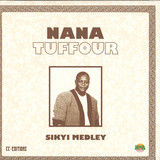
Kalita Records and CC:EDITIONS (a new venture by
Australia's CC:DISCO) jointly announce a 12' EP
comprised of four of Nana Tuffour's greatest electronic
burger highlife tracks, accompanied by interview-based liner
notes. Here, in partnership with Nana, we select two highly
sought-after songs from his 1993 release 'Genesis', namely
'Sikyi Medley' and 'M'Anu Me Ho', and pair them his with two
lesser known yet equally deserving tracks 'Asamando' and
'Jesus' from his 1997 CD-only release 'Highlife Tropicana'.
Hailing from Kumasi, the capital of the Ashanti region in Ghana,
Nana Tuffour is by far one of the most important exponents of
modern highlife music. He studied piano at college and cut his
teeth in the '70s as an organist and vocalist for the incomparable
Kyeremanteng Atwede and Dr. K Gyasi's Noble Kings Band.
Fast forward to 1981 and Ghana was at the apex of its golden age
of music. This era was brought to an abrupt end by political
upheaval when the military took over the government and as a
result a restrictive dusk to dawn curfew was imposed between
1982 and 1984. This resulted in a total obliteration of the country's
night life, and Nana just like many other prominent musicians
including Pat Thomas and George Darko left Ghana for greener
pastures, the most popular destinations being Nigeria and
Germany. The Rheinklang Studio in Düsseldorf run by a young
inimitable German sound engineer Bodo Staiger and another
'exiled' Ghanaian musician Charles Amoah played a crucial role
for those musicians who had chosen Germany. This studio
became the focal point for Ghanaian musicians and the birthplace
of a new sound, now known as 'Burger highlife' - traditional
Ghanaian highlife infused with the more up to date electronic and
disco sounds of the West. It is arguable that Nana has played a
crucial role in Burger highlife and developing the sound of
traditional Ghanaian highlife more widely to what it is today, with
his innovative use of electronic accompaniment pushing its
boundaries to its creative extremes.
It is Burger highlife's transcendence of traditional musical
boundaries that helps make it so accessible to listeners,
appealing not only to Ghanaians back home but now highly
regarded and sought-after by those in the West interested in
more occidental disco and electronic sounds. We hope that you
enjoy the four songs offered here, each chosen to demonstrate
Nana's singular influence on the development of Burger highlife.
'they've quietly found themselves elevated into the psych scenes premier league.' Drowned In Sound
'when they go pedal-to-metal it rarely fails.' Mojo Magazine
'The Lucid Dream are rapidly becoming major players in an ever-increasingly crowded psych scene..utterly seductive.' The Quietus
'one of the most enthralling bands in the UK.' Far Out Magazine
The Lucid Dream return in October with the release of their 4th album, 'Actualisation'.
Driven by fans raising £10,000 to help replace all equipment robbed after a Paris show in early 2017, a new album became the instant focus in the summer of 2017 for a rejuvenated The Lucid Dream.
'Actualisation' is soaked in the influence of acid house, amalgamated with dub and kosmische. It will again see them acknowledged for venturing into pastures new, setting themselves apart from 'genres', 'scenes' or what any other act are currently doing.
The album was penned over the summer of 2017 by Mark Emmerson (vocals/guitar/synths), using only the classic Roland 303/808 synths, bass and vocals as tools for writing. Inspiration for the writing was formed via continuous listening to the Chicago to UK acid house works of 1986-1992, the focus predominantly on the groove.
Several months on from those writing sessions and The Lucid Dream have completed their 4th album in 5 years. A record made for the dancefloor.
Recorded at Whitewood Studios, Liverpool, with Rob Whiteley, the album is produced alongside long-time collaborator Ross Halden (Ghost Town Studios, Leeds), with mastering via Dean Honer (All Seeing I/I Monster/The Moonlandingz).
The confrontational techno-punk of 'Alone In Fear' opens the album, a 9-minute attack fuelled by the frustration and anger spawned by Brexit, government and a realisation of what 2018 Britain currently is.
Recent single 'SX1000' (the first work from the album, unveiled via 12' vinyl in April this year) is the band's first move into pure acid house. The acid house fusion runs throughout the record, represented furthermore by 'Ardency', a track already praised by live critics when aired live for the first time earlier this year as 'even on first hearing, would've raised the roof of The Hacienda'.
The 2-part opus of 'Zenith' follows, commencing with a space-dub/house instrumental groove before building into a track that will go for your head as much as your hips. Only 'Breakdown' harks back to sounds of old for the band, a little reminder of the skull-crushing impact they can make when stripped to the bare bones. 'No Sunlight Dub' closes the album, a dark-dub that invites the classic acid-house tool (Roland 808) into the dub. The track makes a stop-off into drum 'n' bass/jungle along the way before rounding up in a manner suited to Lee Perry, King Tubby, Augustus Pablo and other Jamaican greats.
The Lucid Dream formed in Carlisle, Cumbria, in 2008. A string of sold-out 7s was followed by the debut longer player, 'Songs Of Lies and Deceit', in August 2013. The initial vinyl pressing of the debut album (500 copies) sold out within 2 days, and was backed by a main stage slot at Kendal Calling, and supports to Death In Vegas and A Place To Bury Strangers (full UK tour).
The bands 2nd album ('The Lucid Dream') was released in March 2015 to further acclaim. This included 2 BBC 6 Music sessions and plays across most shows on the station, as well as plays from BBC Radio 1 (Huw Stephens) and BBC Radio 2. Further press followed from Uncut, The Skinny, Louder Than War, and Drowned In Sound, who named the album #7 UK album of 2015. Supports to Clinic and A Place To Bury Strangers also coincided.
3rd album, 'Compulsion Songs' was released in September 2016, on Holy Are You Recordings. The vinyl pressing of the album sold-out within a day, prompting an immediate 2nd press, with pre-sales of the album topping 1,000 before release. The album was backed by a headline UK tour, and a main slot at Liverpool International Festival of Psychedelia (for which they were singled out for major plaudits from The Quietus, The Skinny and Drowned In Sound). The album again received acclaim from the likes of Mojo, Uncut, Classic Rock Magazine, BBC Radio 2 (Huey Morgan) and across the board on BBC 6 Music (Lauren Laverne, Marc Riley, Tom Ravenscroft, Gideon Coe, Stuart Maconie).
'Actualisation' is released on 19th October 2018 (CD/download/ltd red vinyl/standard black vinyl), via Holy Are You Recordings.
'they've quietly found themselves elevated into the psych scenes premier league.' Drowned In Sound
'when they go pedal-to-metal it rarely fails.' Mojo Magazine
'The Lucid Dream are rapidly becoming major players in an ever-increasingly crowded psych scene..utterly seductive.' The Quietus
'one of the most enthralling bands in the UK.' Far Out Magazine
The Lucid Dream return in October with the release of their 4th album, 'Actualisation'.
Driven by fans raising £10,000 to help replace all equipment robbed after a Paris show in early 2017, a new album became the instant focus in the summer of 2017 for a rejuvenated The Lucid Dream.
'Actualisation' is soaked in the influence of acid house, amalgamated with dub and kosmische. It will again see them acknowledged for venturing into pastures new, setting themselves apart from 'genres', 'scenes' or what any other act are currently doing.
The album was penned over the summer of 2017 by Mark Emmerson (vocals/guitar/synths), using only the classic Roland 303/808 synths, bass and vocals as tools for writing. Inspiration for the writing was formed via continuous listening to the Chicago to UK acid house works of 1986-1992, the focus predominantly on the groove.
Several months on from those writing sessions and The Lucid Dream have completed their 4th album in 5 years. A record made for the dancefloor.
Recorded at Whitewood Studios, Liverpool, with Rob Whiteley, the album is produced alongside long-time collaborator Ross Halden (Ghost Town Studios, Leeds), with mastering via Dean Honer (All Seeing I/I Monster/The Moonlandingz).
The confrontational techno-punk of 'Alone In Fear' opens the album, a 9-minute attack fuelled by the frustration and anger spawned by Brexit, government and a realisation of what 2018 Britain currently is.
Recent single 'SX1000' (the first work from the album, unveiled via 12' vinyl in April this year) is the band's first move into pure acid house. The acid house fusion runs throughout the record, represented furthermore by 'Ardency', a track already praised by live critics when aired live for the first time earlier this year as 'even on first hearing, would've raised the roof of The Hacienda'.
The 2-part opus of 'Zenith' follows, commencing with a space-dub/house instrumental groove before building into a track that will go for your head as much as your hips. Only 'Breakdown' harks back to sounds of old for the band, a little reminder of the skull-crushing impact they can make when stripped to the bare bones. 'No Sunlight Dub' closes the album, a dark-dub that invites the classic acid-house tool (Roland 808) into the dub. The track makes a stop-off into drum 'n' bass/jungle along the way before rounding up in a manner suited to Lee Perry, King Tubby, Augustus Pablo and other Jamaican greats.
The Lucid Dream formed in Carlisle, Cumbria, in 2008. A string of sold-out 7s was followed by the debut longer player, 'Songs Of Lies and Deceit', in August 2013. The initial vinyl pressing of the debut album (500 copies) sold out within 2 days, and was backed by a main stage slot at Kendal Calling, and supports to Death In Vegas and A Place To Bury Strangers (full UK tour).
The bands 2nd album ('The Lucid Dream') was released in March 2015 to further acclaim. This included 2 BBC 6 Music sessions and plays across most shows on the station, as well as plays from BBC Radio 1 (Huw Stephens) and BBC Radio 2. Further press followed from Uncut, The Skinny, Louder Than War, and Drowned In Sound, who named the album #7 UK album of 2015. Supports to Clinic and A Place To Bury Strangers also coincided.
3rd album, 'Compulsion Songs' was released in September 2016, on Holy Are You Recordings. The vinyl pressing of the album sold-out within a day, prompting an immediate 2nd press, with pre-sales of the album topping 1,000 before release. The album was backed by a headline UK tour, and a main slot at Liverpool International Festival of Psychedelia (for which they were singled out for major plaudits from The Quietus, The Skinny and Drowned In Sound). The album again received acclaim from the likes of Mojo, Uncut, Classic Rock Magazine, BBC Radio 2 (Huey Morgan) and across the board on BBC 6 Music (Lauren Laverne, Marc Riley, Tom Ravenscroft, Gideon Coe, Stuart Maconie).
'Actualisation' is released on 19th October 2018 (CD/download/ltd red vinyl/standard black vinyl), via Holy Are You Recordings.
An Island In The Moon is the perfectly conceived minimal ambient project from Italian composers Pier Luigi Andreoni (Doubling Riders, ATROX) and Silvio Linardi. Andreolina being a mix of the names of the two musicians who were both deeply involved with the label Auf Dem Nil on which the album was originally released in 1990.
The duo stick to a disciplined and simple palette using only two synthesizers and a Roland S50 sampler. They are joined by fellow electronic journeyman Riccardo Sinigaglia who contributes piano and samples on two tracks. Taking influences from Italian minimalism while adding some jazz hints Andreolina sprawls, weightless instrumentals that never stay soporific for too long on this singular rare album.
Auf Dem Nil or ADN was one of the most adventurous Italian record labels of the 80's and early 90's with releases by De Fabriek, Riccardo Sinigaglia and Pierre Bastien. Leaving their mark on the experimental music scene back than and influencing musicians worldwide up until today.
In line with the release of Blackfilm's new album "Zero One Seven", Denovali release the 2010 collaboration masterpiece "Along the Corridor" with Eraldo Bernocchi for the first time on vinyl.
"(...) From its heavy stone dropping bass to cinematic orchestration, beautiful piano melodies, and progressive dowtempo electronic beats, this collaboration between Eraldo Bernocchi and Blackfilm is an amazing find. Designed as a soundtrack for those lonely nights, walking through abandoned streets and skeleton buildings, Along The Corridors will keep you on the edge of your seat, with your imagination as the only projector for the cinema of your mind.
Italy's heavy dub producer Eraldo Bernocchi is not a new face to the scene. Starting out his career in the 90s, Bernocchi produced under many aliases. ... But it is the works under his real name that deserve the most attention. In 1999 he released Charged recording with Tashinori Kondo and Bill Laswell. In 2005 he appeared alongside Harold Budd in Music For 'Fragments From The Inside' on Sub Rosa. And in 2007 he recorded Manual together with Thomas Fehlmann for 21st Records. There are also numerous EPs with Bill Laswell under Apollo's Re-charged series....
Blackfilm, who continues to remain anonymous, is a Hungarian artist that was first introduced to us through his self-titled debut on the now defunct Spectraliquid Records. Since then, the album has been picked up by Denovali Records and repressed in 2010 on compact disc and vinyl. His dark atmospheric soundscapes and a bricolage of modern classical samples and instrumental hip-hop beats reminded me of my favorite works by Amon Tobin and Future Sound of London, for a brooding soundtrack enveloping your mind with heavy fog of penetrating sound. Since the release, Blackfilm has relocated to London where he has embedded himself with the heavyweights of dub and even darker journeys in the underground ..." Headphone Commute
Since 2008 Düsseldorf based producer and live wizard Stefan Schwander deeply concentrates on his always evolving electronic venture named Harmonious Thelonious. It besprinkles the world with fractional musical structures in the spirits of American minimal music, in order to immingle them with African rhythm patterns. Exceptional hypnotic opiates, enlarged with twisted harmonies and tricky rhythm archetypes. All heavy danceable!
After five magnetic albums for labels like Emotional Response and his old home base Italic as well as a highly acclaimed string of EPs for in-demand platforms like Asafa, Diskant, Disk, Kontra-Muzik, Meakusma, The Trilogy Tapes or Versatile Records, he now produced a heavy arresting 'Petrolia' LP for Marmo Music - a label that is not new to Harmonious Thelonious. Already on the label's second release Tru West: 'The DOWC part 2' his 'Sunset Liturgy' fingerprints are audible with a moving remix. Now he delivers six epic tunes that only partly dance the familiar Harmonious Thelonious dance. There are deeply traces from Africa and Arabia. There is the polyrhythmic witchery that makes his music special. But in contrast his new tunes are more mental then his former ones. They have a menacing industrial feel but yet continue to be enlarged with the enchanting spirits of the land of the Sahara. Furthermore, there is a slight manic touch arising from nervous electronic and foremost organic melodies. The live played jittery is coming from the Berlin based experimental musician Ghazi Barakat, also known under monikers like Pharoah Chromium or Crème de Hassan for mind shredding ambient, drone, experimental, noise, industrial, free jazz and free improvisation music from beyond. For Harmonious Thelonious Barakat, who also produced together with Marmo Music artist Günther Schickert the collaboration album 'OXTLR' in 2014, tuned his wind instruments Rauschpfeife and Kangling elflock-stricken the Master Musicians of Jajouka way. And instead of giving them a prominent lead position, Schwander deeply implements his tones into his propulsive creations to evoke a modern rhythmic meltdown of Occident versus Orient spheres that exhale a deeply absorbing soul.
A record, who's psychedelic energy fits perfect into the Marmo Music cosmos - a world where the progressiveness of the 70ties continues to live in the current to disband all white bread musical norms for the energy of music without classes. Dancers of the world, unite!
German producer and DJ Boys Noize has announced the release of his much-anticipated cover version of Adamski and Seal's 1990 rave classic 'Killer' on 12 vinyl, via The Vinyl Factory and Boysnoize Records.
Featuring vocalist Steven A. Clark, the original 12 version is backed by an instrumental, both of which you can listen to below:
As Boys Noize says: 'Being a '90s kid I kind of grew up with this song which later became one of these tunes I'd play out at the end of the night. When I met Steven and heard his voice for the first time I immediately thought of that track and the idea of doing a cover version was born. It was initially just for fun but it turned banging and lit the dance floors wherever I'd drop it.'
Adamski and Seal's original represented something of a breakthrough for both the producer and vocalist, spending four weeks at the top of the UK Singles Chart in the summer of 1990.
Speaking to journalist Dave Simpson in The Guardian in 2013 Seal explains the impact the song had on his career: 'Within a week, I went from being a relative nobody - this weird guy at raves, with silver bits in my hair - to a household name.'
Boys Noize' 'Killer' is out now digitally and on 12 vinyl, limited to 500 copies.
When Aretha Franklin joined Atlantic Records in 1967, it was the beginning of an unprecedented run that would ultimately cement her place as a music legend, a global household name, and one of the most influential singers of all time.
The Atlantic Singles Collection 1967-1970 features 34 singles which Franklin released during her first three years with Atlantic Records. Arranged chronologically, the songs on the new collection originally appeared on six studio albums: I Never Loved A Man The Way I Love You (1967), Aretha Arrives (1967), Lady Soul (1968), Aretha Now (1968), Soul '69 (1969), This Girl's In Love With You (1970), and Spirits In The Dark (1970). The only exception is Franklin's cover of Elton John's 'Border Song', which was released as a single in 1970 and later appeared on her 1972 album Young, Gifted and Black. The vinyl version is a double LP with 25 tracks.
The album is stacked with many of Franklin's best-known songs, including 'I Never Loved A Man (The Way I Love You)', 'Respect', 'Baby I Love You', 'Chain Of Fools' and '(Sweet Sweet Baby) Since You've Been Gone.' Several of the songs on this collection are cover versions that underscore Franklin's exceptional skill at reinterpreting music and making songs her own. Among the highlights are her versions of Sam Cooke's 'You Send Me', The Band's 'The Weight', The Beatles' 'Eleanor Rigby', and Dionne Warwick's 'I Say A Little Prayer', which became a Billboard Top 10 hit for Franklin in 1968.
tim jones, also known as Preacherman and recorded under midi man, ironing Board Band and t.j. hustler. he made one very rare lp, and two even rarer cD's. these tracks are from the cD's. he was a salesman for iBm in Las Vegas, where he sold selectric t ypewriters and then word processors during the day and at night he would perform in the Las Vegas lounges. he was somewhat of an engineer and adapted a hammond B3 organ to play a moog synth with some of the organ keys, (some still played the organ),
and he adapted the organ's foot controlled bass levers to play two moog synth bass pedals (a failed item moog made for a few years.) thinking he wasn't much of a live performer he had a wooden puppet made that he named t.j hustler, and together with the puppet, he would engage in long philosophical soliloquies, (some of which are featured on this album).if you meet tim, he is not someone who stops talking. in fact he even created a little book called universal Philosophy. he has a lot to say about everything. currently he lives with his 103 year old mother in
Oakland. there he infrequently plays shows on his casio where he fashions himself a live Karaoke performer, who comes complete with 5 wireless mics and P.a. and a list of about a 100 songs he can play. his invented organ contraption and puppet are in storage in Las Vegas, and he seems intensely
uninterested in getting them out, as 'the kids these days want to hear the sounds the casio makes.'
Edizioni Mondo as a label, has the goal to produce music that is descriptive of concepts, images and environments. Inspired by library music, a genre frequently used as theme or background music in radio, film and television in that very same period, the name MONDO has its roots in 'MONDO MOVIES", an Italian movie genre born in the 60's. Mondo movies are characterized by documentary-like content that addresses several topics from around the world ("mondo"). Numero nove comes courtesy of ROTLA. Also known as Mario Pierro and Raiders of the Lost Arp, 'Waves' is his third contribution to Edizioni Mondo. Downtempo, trippy, playful and pardon us, balearic, it's the soundtrack to the fading summer or the one starting somewhere else in this universe. Accompanied by remix works from label head L.U.C.A. and balearic (again!) mastermind Mark Barrott with his Sketches form an Island Healing Hands, it's the most balearic (three's a charm) record you will hear this side of the summer (wherever you are).
Nigh/Tmare's most recent EP, entitled 'Hypnagogia' on Thrènes Records, is the perfect example of the artist's uncompromising attitude. The integral work on this project is the perfect sublimation of experimental overtones, rugged beats, and techno punch, making for a candid, outstanding, and diverse approach with a lot of edge.
The opening track, 'Inside Me', perfectly encapsulates the dark, melancholic atmosphere and the robust dynamism we find throughout the EP. Operating a more technoid and ethereal approach on 'Without Believing', Nigh/Tmare successfully communicates his urge to express his dystopian feelings of loneliness and despair. The journey continues with "Deflagration of Hell", which comes as a daring lamentation from deep inside the darkness. Killawatt's rework on this one heads off a bit of the original and discharges its emotional intensity by offering a new audaciously powerful dynamic. Finally, 'Despite Everything' keeps the perfectly balanced feel of the EP; it offers a subtle touch of dreaming and a hidden optimism. The digital edition includes an exclusive track and a longer version of Killawatt's interpretation.
Set for release in both physical and digital formats on October 12th, Hypnagogia EP marks Nigh/Tmare's first EP for Swiss-based record company Thrènes (which takes its name from the Greek word for funeral lament) and are a label dedicated to the release of tenebrous electronica and techno.
Wir Freuen Uns Mit "uhuru" Das Debütalbum Der Summers Sons & C.tappin Zu Veröffentlichen. Das Trio Besteht Aus Turt (rap), Slim (beats) Und C.tappin (gesang + Keys) Und Lebt In London Und Bristol. Turt Und Slim Heißen Mit Nachnamen Summers Und Sind Brüder. Mit Tappin Sind Sie Seit Frühen Jugendtagen Befreundet. Die Musik Der Summers Sons Lässt Sich Als Rap Mit Viel Jazz Beschreiben. Wir Nennen Es Cool Bap. Fans Von Loyle Carner, Mos Def Und Alfa Mist Kommen Hier Genauso Auf Ihre Kosten Wie Beatheads, Die Gerne Flofilz Oder Twit One Hören (mit Letzteren Haben Die Sons Bereits Zusammengearbeitet). "uhuru" Heißt Auf Swahili "freiheit". "uhuru Peak" Ist Gleichzeitig Der Name Des Höchsten Gipfels Des Kilimandscharo-massivs, Den Die Band Während Eines Längeren Aufenthalts In Tansania Vor Drei Jahren Gemeinsam Bestiegen Hat. Der Trip Legte Den Grundstein Für Die Arbeit Am Gleichnamigen Album. Dass Die Sons & Tappin Ihre Ersten Musikalischen Gehversuche Mit Grime (turt), Uk Garage (slim) Und Indie Rock (tappin) Gemacht Haben, Hört Man "uhuru" Nicht An. So Entspannt Und Ausgejazzt Und Mit Viel Soul In Den Hooks Kommt Das Album Daher. Dazu Raps, Die Neben Cleveren Rhyme-patterns Durch Kluge, Persönliche Und Philosophische Texten Überzeugen. So Gesehen Sind Die Frühzwanziger Das, Was Man Auf Englisch "old Souls" Nennt. Dabei Fangen Sie Gerade Erst An ...
From the inheritor of John Coltrane's mouthpiece a re-integration of deep South African jazz roots with the Black Atlantic spiritual jazz continuum.
Celebration's release trumpeted the emerging dawn of South Africa's epochal changes. Sainted and blessed, Bheki Mseleku appeared as the herald of a new era, a prophet of rebirth and reconnection. This is a work signalling transition and change, and a sign of a South African music that was properly reconnected with global currents - a music that could journey far beyond the stifling combination of exile and oppression in which it had been bound.
Recognising Bheki as a kindred spirit to her late husband, Alice gave him the saxophone mouthpiece that John Coltrane had used during the recording of A Love Supreme. Coltrane was a permanent touchstone for the pianist, one of the few who Bheki felt had the same esoteric and spiritual focus as himself: 'the only musicians I know of who were deeply into this were Coltrane, and Pharoah and Sun Ra', he told an interviewer in 1992.
While the idioms of post-Coltrane spirit jazz are certainly to the fore on Celebration, they are energised by a swift and original musical vision, quite specific to Bheki's music, in which whole musical systems - the marabi and mbhaqanga jazz of the townships, American jazz, European classical, and more - are seamlessly mended together by the pianist's quicksilver musical sensibility and legendary technical ability.
Celebration was originally released on compact disc and cassette in the middle of 1992 by World Circuit. It was Bheki's first statement under his own name, and the first recorded presentation of his personal musical vision. This vision had been tempered across two decades which had combined intense professional playing with profound personal trials in both the spiritual and earthly domains, all set against the greater backdrop of South African political turmoil and exile in Europe.
The band brought together musicians hailing from three signally important points within the interconnected, communicating spaces of the Black Atlantic continuum - North America, post-colonial Britain, and southern Africa. With them, Mseleku created the first major South African-led musical statement to be produced after the sufferance of exile was ended. The ultimate and most egregious remnant of the centuries-long colonial era, apartheid, was finally being dismantled as they played. At this critical point, Mseleku's musical spirit work, channelled from a higher source, spoke of a time to come where all divisions might be transcended by a greater unity.
If you check the credits of The Rolling Stones' Goats Head Soup LP from 1973 you'll find a certain "Pascal" listed on the percussion section. That is none other than Los Angeles based artist Nicolas Pascal Raicevik (1933-1994), aka 107-34-8933, aka Head, aka Nik Pascal, aka Nik Raicevic. Besides his hitting the bongoes on the Stones album, Nik was a great artist on his own, both as a painter and as a musician. As a musician, he was a pioneer in the use of synthesizers, preceeding the Berlin school by some years when his Head LP was released on on Buddah in 1970. Buddah probably saw in Head the opportunity to cash in some money from the remains of the psychedelic scene - the three tracks on the LP are named after drugs used in the late sixties. The sounds, however, are accomplished works that show Raicevic as one of the most interesting pioneers in the use of synths. The album probably didn't do too well, since Buddah didn't renew the contract with Raicevic, who instead took his own way releasing his works on his very own Narco Records and Tapes label. Between 1968 and 1975 Narco would issue 4 LPs credited either to Nik Raicevic (Beyond The End... Eternity) or Nik Pascal (The Sixth Ear, Magnetic Web and Zero Gravity) plus one credited to 107-34-8933 (Numbers, which is in fact the same LP as Buddah's Head, albeit with different cover art). Copies of these LPs came with an ironic sticker over the shrinkwrap that read "Do not listen to this LP if you are stoned".
1972 saw the release of The Sixth Ear (Narco NR666), this time credited to Nik Pascal. A more complex work than Beyond The End..., it adds consistent rhythmic patterns to the mix with the addition of bongoes and also explores some interesting chord progressions.
Besides his musical explorations, Nik was also an interesting painter. His paintings are auctioned from time to time, and are consciousness expanding works influenced by abstract cubism and surrealism, some kind of Salvador Dalí on drugs exploring the outter and inner space. All the artwork on the sleeves of his LPs is done by himself. Spacey landscapes and psychedelic colours that fit perfectly to the music they contain.
"Nik Raicevic's music is at the intersection of radical psycho-electronic weirdness and kraut kosmische music (in particular the scifi-hypno-minimal modules of Conrad Schnitzler in Grun, Rot and Blau). It presents mega epic & tripped out electronic improvisations.
"This is an absolute must for collectors and fans of visceral, neurotic soundscapes." (progarchives)
"As far as late-60s / early-70s American Bedroom' Electronic Music goes, these LPS have to be among the first transmissions from this sector, made all the more attractive when coupled with Raicevic's alien topographIes - the covers are high-color portrayals of Venusian lanes, knotted growths, & future-past architecture in a style you might equate with Vintage' sci-fi pulp-novel covers - & copious Downer' sentiment. This music is imbued with a sort of lonely, anti-social sensibility that's about as far as you can get from the Academic' Early Electronic vector. I will say that if the Steve Birchall, Cellutron & the Invisible, and/or Pythagoron™ seed your garden, this will likely do the same." (twoheadeddog)
Never reissued before on vinyl format, the Wah Wah reissue features original sleeve artwork made of paintings and drawings by Nik himself and reproduction of the famous ironic "Do not listen if you are stoned" sticker. Limited edition, 500 copies only.
If you check the credits of The Rolling Stones' Goats Head Soup LP from 1973 you'll find a certain "Pascal" listed on the percussion section. That is none other than Los Angeles based artist Nicolas Pascal Raicevik (1933-1994), aka 107-34-8933, aka Head, aka Nik Pascal, aka Nik Raicevic. Besides his hitting the bongoes on the Stones album, Nik was a great artist on his own, both as a painter and as a musician. As a musician, he was a pioneer in the use of synthesizers, preceeding the Berlin school by some years when his Head LP was released on on Buddah in 1970. Buddah probably saw in Head the opportunity to cash in some money from the remains of the psychedelic scene - the three tracks on the LP are named after drugs used in the late sixties. The sounds, however, are accomplished works that show Raicevic as one of the most interesting pioneers in the use of synths. The album probably didn't do too well, since Buddah didn't renew the contract with Raicevic, who instead took his own way releasing his works on his very own Narco Records and Tapes label. Between 1968 and 1975 Narco would issue 4 LPs credited either to Nik Raicevic (Beyond The End... Eternity) or Nik Pascal (The Sixth Ear, Magnetic Web and Zero Gravity) plus one credited to 107-34-8933 (Numbers, which is in fact the same LP as Buddah's Head, albeit with different cover art). Copies of these LPs came with an ironic sticker over the shrinkwrap that read "Do not listen to this LP if you are stoned".
Magnetic Web was released in 1973. It appeared under the Nik Pascal monicker and showed a clear evolution in sound, favoured by the addition of an Arp 2600 and some rhythm boxes. It also included percussions and cymbals. The Two Headed Dog site thinks "this is his masterpiece in all of its acid-laced glory."
Besides his musical explorations, Nik was also an interesting painter. His paintings are auctioned from time to time, and are consciousness expanding works influenced by abstract cubism and surrealism, some kind of Salvador Dalí on drugs exploring the outter and inner space. All the artwork on the sleeves of his LPs is done by himself. Spacey landscapes and psychedelic colours that fit perfectly to the music they contain.
"Nik Raicevic's music is at the intersection of radical psycho-electronic weirdness and kraut kosmische music (in particular the scifi-hypno-minimal modules of Conrad Schnitzler in Grun, Rot and Blau). It presents mega epic & tripped out electronic improvisations.
"This is an absolute must for collectors and fans of visceral, neurotic soundscapes."
"As far as late-60s / early-70s American Bedroom' Electronic Music goes, these LPS have to be among the first transmissions from this sector, made all the more attractive when coupled with Raicevic's alien topographIes - the covers are high-color portrayals of Venusian lanes, knotted growths, & future-past architecture in a style you might equate with Vintage' sci-fi pulp-novel covers - & copious Downer' sentiment. This music is imbued with a sort of lonely, anti-social sensibility that's about as far as you can get from the Academic' Early Electronic vector. I will say that if the Steve Birchall, Cellutron & the Invisible, and/or Pythagoron™ seed your garden, this will likely do the same."
Never reissued before on vinyl format, the Wah Wah reissue features original sleeve artwork made of paintings and drawings by Nik himself, and reproduction of the famous ironic "Do not listen if you are stoned" sticker. Limited edition, 500 copies only.
If you check the credits of The Rolling Stones' Goats Head Soup LP from 1973 you'll find a certain "Pascal" listed on the percussion section. That is none other than Los Angeles based artist Nicolas Pascal Raicevik (1933-1994), aka 107-34-8933, aka Head, aka Nik Pascal, aka Nik Raicevic. Besides his hitting the bongoes on the Stones album, Nik was a great artist on his own, both as a painter and as a musician. As a musician, he was a pioneer in the use of synthesizers, preceeding the Berlin school by some years when his Head LP was released on on Buddah in 1970. Buddah probably saw in Head the opportunity to cash in some money from the remains of the psychedelic scene - the three tracks on the LP are named after drugs used in the late sixties. The sounds, however, are accomplished works that show Raicevic as one of the most interesting pioneers in the use of synths. The album probably didn't do too well, since Buddah didn't renew the contract with Raicevic, who instead took his own way releasing his works on his very own Narco Records and Tapes label. Between 1968 and 1975 Narco would issue 4 LPs credited either to Nik Raicevic (Beyond The End... Eternity) or Nik Pascal (The Sixth Ear, Magnetic Web and Zero Gravity) plus one credited to 107-34-8933 (Numbers, which is in fact the same LP as Buddah's Head, albeit with different cover art). Copies of these LPs came with an ironic sticker over the shrinkwrap that read "Do not listen to this LP if you are stoned".
Nik's last album, Zero Gravity (Narco NR123) came under the Nik Pascal name and had a fantastic side long piece on the title track which reminisces of the works of Cluster. B side features four tracks that also bear some Conrad Schnitzler reminiscences. This was to be Nik's last LP before he would sell all his synths to ex car racer and future electronic/ambient music star Steve Roach.
Besides his musical explorations, Nik was also an interesting painter. His paintings are auctioned from time to time, and are consciousness expanding works influenced by abstract cubism and surrealism, some kind of Salvador Dalí on drugs exploring the outter and inner space. All the artwork on the sleeves of his LPs is done by himself. Spacey landscapes and psychedelic colours that fit perfectly to the music they contain.
"Nik Raicevic's music is at the intersection of radical psycho-electronic weirdness and kraut kosmische music (in particular the scifi-hypno-minimal modules of Conrad Schnitzler in Grun, Rot and Blau). It presents mega epic & tripped out electronic improvisations.
"This is an absolute must for collectors and fans of visceral, neurotic soundscapes."
"As far as late-60s / early-70s American Bedroom' Electronic Music goes, these LPS have to be among the first transmissions from this sector, made all the more attractive when coupled with Raicevic's alien topographIes - the covers are high-color portrayals of Venusian lanes, knotted growths, & future-past architecture in a style you might equate with Vintage' sci-fi pulp-novel covers - & copious Downer' sentiment. This music is imbued with a sort of lonely, anti-social sensibility that's about as far as you can get from the Academic' Early Electronic vector. I will say that if the Steve Birchall, Cellutron & the Invisible, and/or Pythagoron™ seed your garden, this will likely do the same."
Never reissued before on vinyl format, the Wah Wah reissue features original sleeve artwork made of paintings and drawings by Nik himself, and reproduction of the famous ironic "Do not listen if you are stoned" sticker. Limited edition, 500 copies only.
Some time around 20 years ago, the artist known as Dub Surgeon made an absorbing album of beautiful dub infused with ambiance, found sounds and horizontal rhythms. The Lost Future was recorded at the former Amsterdam Film Academy where Dub Surgeon. The recording engineer for the project was Ricardo Villalobos. Dub surgeon and Ricardo Villalobos then mastered it together, putting it through several vintage mixers and recording it to 2 inch tape. Then, tragedy struck: a storm surged and ignited a fire that ravaged the studio. The master copy was thought to have been lost forever. Dub Surgeon stopped making music and disappeared into the shadows after just two EPs on Future Dub in 2002/3. But one day 15 years later, totally out of the blue, he received a demo of The Lost Future. "Pay attention to this," it said. Attached was a demo version of the long lost album and now, finally, it has a perfect and impossibly poetic home on Dubai's Ark to Ashes, which is named in homage to the story of Lee "Scratch" Perry burning down his Black Ark studio to rid it of demons. Sounding as fresh as ever, The Lost Future is an authentic dub experience with a story as special as the music itself
Previously on All City via The Smoke Clears, West 2 West & Night Christ John Daly a six 6 track edition of his 10 track digital album 'We Will Live Again'.
.
According to John:
"This music was made over a year and a half period, while i was losing my father to cancer. I don't usually work with concepts, and certainly didnt have one in mind making this, but with something this heavy as the backdrop it had to be an influence, especially since my musical gift came from him. This I am only truly realising now.
The drums and vocals were added later. Dan Walsh from Fixity and others in Cork played the drums. The vocals are by an Italian singer based in Galway, Barbara Vulso.
This is the third album under my own name, having worked with aliases for albums since 2012. It was always going to be so, and again I now realise that given the personal nature of the project it could only be that way, though i didn't know or question why at the time"
Through the years Intacto Records became a household name. The label was founded in Amsterdam in 2004 under the collaborative genius of Shinedoe and 2000 and One.It was nlaunched as a platform for the by then strongly emerging Amsterdam scene supporting a pack of local artists shaping a fresh distinctive sound which took over the electronic scene by storm. Intacto's defining sound included many styles and its catalogue is a melting pot of influences of which house and techno are the key elements. After running Intacto Records successfully for 14 years, Shinedoe and 2000 and One have joined forces on their very first collaborative release. A ten year old unreleased 2000 and One track 'World of Acid' have been played out by Shinedoe for years and received ecstatic feedback from the clubbing crowds. Convincing him to release this timeless tune to scorch the dancefloors worldwide, Shinedoe was inspired to do a remix. In return 2000 and One remixed her track 'Acidploitation' which she recently produced. 'Acidploitation' EP is the culmination of two Dutch legends, defining their brilliant take on music once again.
Artist From Guadeloupe, French Caribbean Island, That Has A More Than 20 Year Career, Despite Presenting His First Studio Album Now. He Has Lots Of Mixtapes And Shows Made In France And Spain, And Combinations With Artists And Producers Such As: Chulito Camacho (kinky Music), Sir Samuel (saïan Supa Crew) Or Morodo Among Many Others.
This Album Is A New Level, A High Quality Work Made At Oktopus Studios Madrid With Featurings Of Asante Amen, Ras Kuko, Yeyo Pérez, Ras Tewelde, Lion Sitté, B-man Zerowan, Apach And Nanou. Many Producers, Artists And Musicians Took Part Of The Project, For Example: Emeterians, Skamélia Band, Forward Ever Band, Infini-t Music, Positive Vibz Productions, Ed Bassie (okoumé Lions) Or Kinky Music Just To Name A Few.
12 Songs Plus A Bonus Track On The Digital Version Of The Album, Where Ti Polosound Proves His Versatility And Originality With Rythms Such As Roots, Ska, Newroots, Digital, Dancehall Or Even Afrotrap. Always With Positive Lyrics The Artist Transmits Conscious Messages With Tunes As "longtime" Feat. Asante Amen (jam), Lion Sitté (esp) & Ras Tewelde (ita), "la Guerre" Or "oh My Lord". This Last One Introduces The Album With An Incredible Video Made By Bumpy Films In, Aquitaine, France.
The Album Recorded And Mixed By Mista T (infini-t Music / Chalice Sound) And Mastered By El Chiky (positive Vibz Sound), Has Also Tunes For Dancing And Enjoying, Such As "mon Pied" Or He Big Hit "señorita" Feat. Yeyo Pérez... A Magnificent Album That You Can't Miss!
Depth.Request sees a new hat being thrown into the techno ring. The hat in question is the label's first EP Anvil—a post-tech five-tracker, and the person throwing it is Blasted—an Italian producer with a number of solid EPs to his name. Having had previously shared release credits with him on a number of occasions, Berlin's renowned noisemaker Unhuman fits into the picture as well, being the one charged with remixing duties regarding the titular track.
Setting common tact aside for a moment, the opener showcases Blasted indulging in esoteric inclinations by the means of concentrating on slick, abrasive sound design, cutting the number of kicks in half and utilizing a vocal sample to add a pinch of EBM into the mix. Unhuman's slowed-down rework in turn evokes gears' incessant grind at the backdrop of steam pressurizers going up and down in alteration, producing arrays of heavily plodding, whamming kicks. Breaking free of esoterism and leftfield production, the EP continues with Jawbreaker—a peak-time affair wherein the lows are ravaged by constant sub-bass pressure and ruthlessly striking, syncopated kicks, laid under the neatly-synthesized, impenetrable hats, pertaining to Blasted's signature sound. On Filthy Goat, the assault continues with a renewed strength as anxious synths and panning hats gradually invade the scene shortly before the devastating kicks storm down in a hail of obliterating projectiles, creating a battlefield-evocative environment within this decimating, explosive stomper. Lastly, demonic closer Belial bids its fair digital-only-money's worth of adieu with magnificent ambiance interwoven within the spectrum alongside meticulously arranged drumwork presented through plethora of varied, carefully picked samples.
* Alk-e-d is the first to get the 'Legacy' treatment on Kniteforce Records. One of the original KF crew, he has been with the label since 1991, and remains a fan favourite. The Legacy series is designed to showcase our most dedicated artists, those who have been with the label since the very early days. And if Kniteforce itself has a legacy, it is one where risks get taken and the love of good music is always at the front of our minds. This EP contains 4 remixes, and the highlight must be the first brand new remix in decades from legendary producer Sublove who went onto become huge with Way Out West. Sublove featured on the very first Kniteforce EP back in 1992, and was enticed to come back and make some old skool for the label as well as remixing Alk-e-d. And what a remix it is! Proper old skool with depth and class. Not only that, we have Darwin, one of the biggest names in the modern hardcore scene, Shadowplay, and Luna-C on remix duties too. All in all, this EP is stunning, and is nto to be missed.
Club / DJ Support
Billy Bunter, the Fat Controller, Glowkid, Slipmatt, Dj Jedi, Dj Luna-C, Dj Brisk, Clayfighter, Jimni Cricket, Bustin, Sc@r, Doughboy, Saiyan, Dave Skywalker, Ponder and many others
'Garage bands suddenly obtain cult status and become the antithesis of their initial appeal'
Garage Class were a group of reluctant outliers who produced one of the finest contributions to the wave of UK DIY music that emerged during the late 70s and early to mid-80s.
Hailing from Alsager in North West England and comprised of Tim Shutt (vocals) Phil Murphy (lead guitar) Clive Williams (guitar) Lynne Sanders (bass) and Phil Bourne (drums / bass on studio recordings) Garage Class originally went by the name of The Pits before their then manager Steve Hurt imposed an alias which, though unpopular within their ranks, would nevertheless reflect the shambolic art they would eventually capture on their first and only single.
As The Pits the group offered a loutish inflection on glam-punk flamboyance, evoking Johnny Thunder hitting the north and remaining disowned yet undeterred in a dreary old boozer. But as Garage Class the group distilled a roughcast and homespun primitivism that felt quintessentially their own. In this they proved too unruly to be assimilated into any wider scene. Early gigs descended into acrimony and recognition proved elusive. Yet what they managed to make back then now sounds like an extraordinary article of underdog ambition.
Released in 1984, four years after it was originally recorded, the Terminal Tokyo single is an unlikely triumph of exceptional messthetic punk. Though raw and unpolished the songs here are precariously pop-minded and indisputably anthemic. The titular A-side reveals the dry and detached drawl of Shutt aka The Subliminal Kid, a sharp, jaded and poetic voice that has some of the most iconic lines never heard in punk. Accompanied by second-hand guitars, on-the-fly handclaps and a chorus like a terrace chant this is the cult hit that never was, a heroically artless masterpiece that has all the ragged character and misfit euphoria of Swell Maps and The Buzzcocks if they were more impulsive and boisterous, and left to their own devices in the remote margins of a Cheshire town. The original B-side is here substituted for I Got Standards, a track that, until now, has somehow remained unreleased. An ideal twin to Terminal Tokyo there's the same brusque and dog-eared quality to the band's delivery, as well as the same upfront emphasis on strong hooks and insistent momentum. Yet again, Shutt is on impeccable form, perfecting an inflated, adolescent antagonism that has all the sardonic, malcontented charm of similarly 'shirty' buggers like Dan Treacy (Television Personalities), Patrik Fitzgerald and Mark Perry (Alternative TV).
Although never accepted in their own time both tracks represent a brief but inspired moment of fervent imperfection, one that epitomized the best of a diffuse and autonomous underground movement spearheaded by The Desperate Bicycles and built upon by the likes of Amos & Sara, The Homosexuals, The Cleaners From Venus and Family Fodder. Like them Garage Class were situated at a point where punk, art, humour and a sense of stubborn independence all intersected.
In the years since Terminal Tokyo has accumulated a retrospective appeal among certain trusted circles, with Jon Dale celebrating the single in his exhaustive and essential Story of UK DIY for Fact Magazine, and original copies regularly changing hands for a foolish forty quid or so. With this inaugural release on the Outer Reaches label Terminal Tokyo is not only restored for the very first time but given a worthy expansion courtesy of JD Twitch (Optimo).
Continuing his own fascination with the fringe history of UK DIY - documented on his own outstanding compilation Cease & Desist: DIY! (Cult Classics From The Post Punk Era 1978-1982) and in his re-edits of Crass Records classics for an early release on RVNG INTL - Twitch reinterprets I Got Standards as an incisive, dubwise outing that pictures Jaki Liebezeit and Muslimgauze on a bender in England's provinces, tasked with remixing the raw product of local punks. A new slant on Garage Class' crude magnificence, built to play loud on contemporary soundsystems.
Although the latter part of 1980 spelled the end for Garage Class with members moving on to other projects (Bourne fell in with The Colours Out of Time, Murphy went on to front The Regular Guys and Shutt eventually left to form Happy Refugees) this reissue attempts to give their fleeting time together and the unique single statement they made the treatment it deserves. If this means Garage Class have obtained cult status, their initial appeal remains. Just listen for yourself.
Takashi Kokubo - A Dream Sails Out To Sea (get At The Wave) (lagrec003)
Recorded In 1987 As Promotion For A Luxury Air Conditioning Line, Takashi Kokubo's Balearic Gem A Dream Sails Out To Sea Gets First Ever Official Release From Lag Records, Complete With Previously Unheard Music.
Originally Only Available As A Sought-after Promo By The Name Of Get At The Wave, Takashi Kokubo's Mini-masterpiece Of Halcyon Mastery Finally Re-emerges For The First Time Since 1987 With A Remastered Vinyl Edition Courtesy Of Uk Label Lag Records.
A Dream Sails Out To Sea (get At The Wave) Comes Not Only With A New Title, But Also A Brand New B-side As Taken From Get At The Wave's Original Recording Sessions. Never-before Released, The Epic Ocean Breeze Makes The Perfect Companion For The Sonic World Kokubo Created With His Original Release, Imbued As It Is With The Same Serene Sense Of Understated Beauty.
The Original Story Of A Dream Sails Out To Sea Is As Interesting As Kokubo's Own Backstory As A Musician And Sound Artist. Originally Composed To 'soundtrack' A High-end Air Conditioning Line From Japanese Electronic Giant Sanyo, The Album Was Meant To Transport The Consumer Into A Paradise Far Away From The Heat And Hurry Of Urban Life. One Listen To Something As Splendorous As Underwater Dreaming, And It's Mission Accomplished.
Takashi Kokubo Meanwhile Is A Musician Whose Work, Without Many Knowing It, Has Perhaps Touched The Most Lives In Japan. Composer Of Environmental Music Such As Nationwide Phone Alerts To Warn Of Oncoming Earthquakes, And The Fruitful Jingle Of A Standard Contactless Payment, Kokubo's Oeuvre Also Includes Anime Soundtracks And Works In The Avant Garde Realm.
It Is With Kokubo's Blessing And Original Masters That The Lag Records Release Has Been Made Possible, With A Remastering Courtesy Of Jerome Schmitt At The Airlab. A Dream Sails Out To Sea (get At The Wave) Also Comes With New Artwork By Ella Mclean In A Standard Sleeve On Clear Blue Vinyl Lp.
Children Of Tomorrow will celebrate soon its 10 years anniversary. The label was created by Emmanuel Ternois back in the day and being joined by Arnaud Le Texier in 2011. Since then they focused on Techno producing amazing artists, to name few: Terrence Dixon, Zadig, Tensal, Antigone, Oscar Mulero, Jonas Kopp, Samuli Kemppi etc... Children Of Tomorrow is now presenting the first album from Arnaud Le Texier. After almost 30 years Dj-ing around the world and almost 20 years producing. Signing many releases over the years and always busy delivering dance floor releases, it's been a long wait to finally get an album from ArnaudOn his first album we can feel that he wanted to tell a story and to express something deeper with his production experience. There is a different variety of Techno that stretches from ambient / broken beat / hypnotic / raw Techno along with subtles grooves, wondrous atmospheres & sonic textures. On A side the album opens with Dusk, an ambient atmospheric mid-tempo track with sonic sounds that is a perfect intro.Pattern 2 starts with drones and blip sounds and a broken beat groove follows with a pad that sounds like a voice coming from the space. The track ends with some modular click sounds that make the whole track clever. Followed by the album title Granular Therapy, a deep techno track with modular bass line and melancholic pad. A perfect track to play in after or to warm up a party.The B Side is more dedicated to the dance floor with Black Nympheas that is a proper dark modern techno with a grinding bass line and magic drones. A simple beat makes the track evolve in a nice way. Blade Pass frequency is 4/4 effective Techno with a 909 kick, a syncope acid bass line and a pad that sends you to another dimension. It is a powerful track but with a sense of deepness and sensibility that Arnaud can achieve sometimes. This side closes with Binary Sun Dawn which is an ambient track with melody that has a jazz feeling mixed with dark atmospheres, sonic drones and water drops. The C side opens with Mono Driver, a minimal track with a little synth that stays until the end repetitively until it makes you travel and lose your mind. Deep and dance floor at the same time.
Then Snapper is a more percussive track with some shinning bells and a grinding modular bass line.
The last track Virgo Consortium is a cosmic broken beat with dark atmospheric drone, simple bass and phasing efx. The D Side starts with Midi overdub which is a beauty. A mix between ambient and broken beat. The pad has the deepness that transports you somewhere else with an angel choir on top. The beat is spacial and groovy at the same time with smart high hats. This reminds Arnaud's past ambient production but with a modern approach. Surely a special track of the album.
Hideous Engine is more dance floor with metallic bass line and 4'4 beat going towards a sonic pad that closes the track.The last track Dawn is ambient with drones and blip sounds and an acid bass line modulate. A perfect end of the album.This album is an accomplished journey that makes you dance and travel from dusk till dawn. Arnaud Le Texier shows a coherent vision and illustrates his vast diversity in the techno world. Hopefully we won't have to wait 20 years to get another one.
pas en stock
Dernière livraison il y a 8 mois réapprovisionnement sans garantie
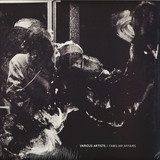
Following Induction's Liturgical Hymns Remixes EP, Ravage is proud to announce the next release on their White Series. It's a various artists release, containing tracks produced by artists who are very close to the label. Hence, it's title: Familiar Affairs.
A1. sees the return of Forward Strategy Group, with their track Pet a Burning Dog. It's hard not to think 'Sandwell District' when first laying ear on this minimalistic beauty. Bleeps, screeches and haunting synth-work with some outstanding rhythm laying underneath. Following on A2 we have Unbalance picking up the pace with his track Hard Solutions; a track very true to its name. Atmospheric, yet with a healthy dose of punch.
Kicking off his favourite position on the record, on B1 we've got Dutch techno legend Dimi Angélis. He produced a self-proclaimed 'Acid Bomb' which goes by the name of Tarazed. We dare you not to dance when this one hits the floor. Closing off the EP is Liverpool based artist Binny, who produced the wobbly-banger Relax. Proper techno from a man of whom you'd expect this kind of sound.
Daniel Terndrup Is A Los Angeles-based Dj And Producer. A Longtime Record Collector And
Digger, Daniel Has Become A Local Authority On Bygone Music. He Hosts Regular Radio Shows
On Dublab (crosseyed & Painless) And Nts (heat-wave) While Also Throwing A Weekly Party
For Heat-wave In Collaboration With Wyatt Potts At Former Hollywood Stripclub, Gold
Diggers. Daniel Started Making Music A Decade Ago As One Half Of Cosmic Kids. Alongside
Ron Poznansky, He Made A Name For Himself Producing Heady House And Astral Dance Tunes,
And Releasing Records With Cult Labels Throne Of Blood, Let's Play House And Dfa. In Addition
To Racking Up Plays On Original Cuts, The Duo Was Regularly Tapped To Deliver Remixes For
Heavyweights Like The Rapture, Holy Ghost!, Poolside And Superhumanoids.
After A Handful Of Releases With Cosmic Kids, Daniel Pivoted Toward His Own Project As Daniel
T. His Solo Output Is Inspired By Everything That You Might Find Leafing Through His Record
Collection: Funk, Post Punk, New Age And Pop Of Yesteryear (think: Compass Point All Stars To
Yellow Magic Orchestra). The Music He Releases As Daniel T. Is A Reflection Of His Global Taste,
But Indelibly Filtered Through His Southern California Surroundings
Blurb Attached
Following His 2015 Solo Debut Tetrachromat, Released On Friends Of Friends Sister Label
Young Adults, Daniel T. Returns With A New Album Called Heliotrope, Out This Summer On
Cascine. In Contrast To The Steady Dance-oriented Tempos Of Tetrachromat, Heliotrope
Moves Across More Dynamic Landscapes, All United Under Daniel's Sun-soaked Sensibility.
From The Breezy Bounce Of call,' To The Lithe Cover Of Tatsuro Yamashita's Classic windy
Lady,' He Effortlessly Wades Into Pop Territory. Elsewhere, On The Neon Glow Of moonlight
Bounce' (inspired By Dan's Near-religious Love Of Roller-skating) And The Ebullient First Single
'heat-wave', His Trademark Mid-tempo Swing Shines As Bright As His Synths. Heliotrope Is A
Reflection Of His Global Taste, But Indelibly Filtered Through His Southern California
Surroundings
In the '70s, Yan Tregger was far to believe he would become one of the most emblematic artists in the "sound illustration" scene. Yet today, his albums are highly coveted by "diggers" all around the world. At the time, nobody paid much attention to all those records that were classified as sound illustrations, or library music.
Yan Tregger started out in this environment in the late '60s. He was remarked after making several recordings for the credits of TV shows, and received a proposal to compose his first album. It was a small label (Marignan), the sleeve design was skimpy and the track titles were bizarre... Yet when you listened, the sound was seriously groovy. The album was called Freezing Point and a mere 300 copies were pressed. Thanks to this first test, other "illustration" professionals were convinced by Tregger's qualities.
During this period, there was no lack of work but there was no glory on the program either. In the '70s, many different labels such as Neuilly, Montparnasse 2000, or the Italian CAM label, called on
his services. Shortly afterwards, Philips released two of his records under the name Major Symphony, and then Polydor issued the two M.B.T. Soul albums, including one international
success, "Chase". Up until now, despite the interest shown in his discography, no reissue had been undertaken - an
omission that has just been fixed thanks to the release of a compilation that we are pleased to present. Let's start with the main information: the tracks included on the album were selected jointly by a number of collectors and Yan Tregger himself. The selection is rich and surprising. The A side is more "seventies", with an instrumental pop style and a psychedelic vibe, while the B side is more rhythmic and melodious, corresponding more with the funky disco moods of the eighties.7
In Sudan, the political and cultural are inseparable. In 1989, a coup brought a hardline religious government to power. Music was violently condemned. Many musicians and artists were persecuted, tortured, forced to flee into exile — and even murdered, ending one of the most beloved music eras in all of Africa and largely denying Sudan's gifted instrumentalists, singers, and poets, from strutting their creative heritage on the global stage.
What came before in a special era that protected and promoted the arts was one of the richest music scenes anywhere in the world. Although Sudanese styles are endlessly diverse, this compilation celebrates the golden sound of the capital, Khartoum. Each chapter of the cosmopolitan city's tumultuous musical story is covered through 16 tracks: from the hypnotic violin and accordion-driven orchestral music of the 1970s that captured the ears and hearts of Africa and the Arabic-speaking world, to the synthesizer and drum machine music of the 1980s, and the music produced in exile in the 1990s. The deep kicks of tum tum and Nubian rhythms keep the sound infectious.
Sudan of old had music everywhere: roving sound systems and ubiquitous bands and orchestras kept Khartoum's sharply dressed youth on their feet. Live music was integral to cultural life, producing a catalog of concert recordings. In small arenas and large outdoor venues, musical royalty of the day built Khartoum's reputation as ground zero for innovation and technique that inspired a continent.
Musicians in Ethiopia and Somalia frequently point to Sudan's biggest golden era stars as idols. Mention Mohammed Wardi — a legendary Sudanese singer and activist akin to Fela Kuti in stature and impact in his music and politics — and they often look to the heavens. A popular story is of one man from Mali who walked for three months across the Sahel to Sudan because the father of the woman he wanted to marry would only allow it if he got him a signed cassette from Wardi himself. Saied Khalifa is said to be the one of the few singers to make Ethiopian emperor Haile Selassie smile.
Such is the stature of Sudanese singers and the reputation of Sudanese music, particularly in the "Sudanic Belt," a cultural zone that stretches from Djibouti all the way west to Mauritania, covering much of the Sahara and the Sahel, lands where Sudanese artists are household names and Sudanese poems are regularly used as lyrics until today to produce the latest hits. Sudanese cassettes often sold more in Cameroon and Nigeria than at home.
But years of anti-music sentiment have made recordings in Sudan difficult to source. Ostinato's team traveled to Ethiopia, Somalia, Djibouti, and Egypt in search of the timeless cultural artifacts that hold the story of one of Africa's most mesmerizing cultures. That these cassette tape and vinyl recordings were mainly found in Sudan's neighbors is a testament to Sudanese music's widespread appeal.
With our Sudanese partner and co-compiler Tamador Sheikh Eldin Gibreel, a once famous poet and actress in '70s Khartoum, Ostinato's fifth album, following our Grammy-nominated "Sweet As Broken Dates," revives the enchanting harmonies, haunting melodies, and relentless rhythms of Sudan's brightest years, fully restored, remastered and packaged luxuriously in a triple LP gatefold and double CD bookcase to match the regal repute of Sudanese music.
A 20,000-word liner note booklet gives voice to the singers silenced by an oppressive regime.
Take a sail down the Blue and White Nile as they pass through Khartoum, carrying with them an ancient history and a never-ending stream of poems and songs. It takes two Niles to sing a melody.