Cosmin TRG is back on his white label operation, Sportiv. Brixtonstrasse explores an imaginary buffer zone between the urban angst of London's pirate transmissions and the warehouse logic of Berlin's post-Iron Curtain freedom and energy explosion. In line with the label's semiotics, Gloria is named after the rather unsuccessful 3rd League football club from Cosmin's home town. It's a high octane tribal workout with fuzzy chords, in the vein of 90s luminaries like Sterac, bringing back hints of the era's unbridled energy and enthusiasm.
With her debut album Self Fulfilling Prophecy, released by InFiné last June, the French producer closed the loop on the first sequence of her life. A sequence filled with transformations, encounters and collaborations: her successive moves to Montréal and Berlin (where she was closely involved with feminist activism), and her foundational residency at Detroit's Underground Resistance, among others, informed her authentic, global-minded techno aesthetic. The aptly-named Self Fulfilling Prophecy is thus the honest expression of a artist who has found herself at the center of techno activism, an eloquent testimonial to 'how today's electronic is made.' With the necessary hindsight and application, La Fraicheur has created an opus that blends raging techno with more atmospheric moments. An opus that is now being reviewed in light of the electronic scene's main pillar: the dancefloor. 'Self Fulfilling Prophecy remixes' recasts in vinyl version the Techno esprit of La Fraicheur´s original album with four reworks, which condition the dancers to unstoppable footwork as much as they open the listeners 'minds up. On the A-side, an activist of the Polish scene, VTSS is a leading figure in the protest against conservatism, racism and ambient homophobia and one of the founders of the Brutaz parties in Warsaw. She rocks 'Eau Troubles' in an 'industrial' soundscape, as disturbing as fascinating
In the sweltering North-Eastern Brazilian state of Pernambuco lies the coastal city of Recife, where Amaro Freitas is pioneering the new sound of Brazilian jazz. For the prodigious young pianist, the spirit of his hometown runs deep. From the Afro-Brazilian maracatu born on the sugar plantations of slavery, to the high intensity carnival rhythms of frevo and baião, Amaro's heavily percussive approach to jazz is as indebted to these Pernambuco traditions as it is to Coltrane, Parker and Monk.
As with many of the greats before him, Amaro began playing piano in church aged 12, under the instruction of his father, leader of the church band. As his natural talents became obvious, the young prodigy quickly outgrew his father's instruction. He won a place at the prestigious Conservatório Pernambucano de Música but had to drop out as his family could not spare the money for the bus fare. Undeterred, Amaro gigged in bands at weddings and worked in a call centre to fund his tuition. The transformative moment came at age 15 when Amaro stumbled across a DVD of Chick Corea concert, 'he completely blew my mind, I'd never seen anything like it but I knew that's what I wanted to do with a piano'.
Despite not actually owning a piano, Amaro devoted himself to studying day and night - he would practice on imaginary keys in his bedroom, until eventually striking a deal with a local restaurant to practice before opening hours. By the age of 22 Amaro was one of the most sought-after musicians in Recife and resident pianist at the legendary jazz bar Mingus. It was during this time he met and begun collaborating with bassist Jean Elton and the pair went in search of a drummer. 'We kept hearing about this crazy kid who was playing in 7/8 or 6/4, we knew we had to meet him'. Hugo Medeiros joined, and the Amaro Freitas Trio was born.
'I want to show the simplicity of music, to break the stigma that the piano is for a particular social class. Yes, it's a difficult instrument, which many people do not have access to, but with it you can express everything.'
Following his critically acclaimed debut album Sangue Negro (black blood), the title of his sophomore release Rasif is a colloquial spelling of Amaro's home town. A love letter to his native northeast, Amaro explores its traditional rhythms through the jazz idiom, employing complex mathematical patterns reminiscent of some of the most challenging works by fellow Brazilian masters Hermeto Pascoal, Egberto Gismonti and Moacir Santos.
Preferring to see the piano as a though it were a drum with 88 unique tones, Amaro's intelligence and emotion intertwine on every track, from album opener 'Dona Eni': a scorching reconstruction of the baião rhythmic structure, played in seven measures instead of two, to the serene homage to the coastal reef and its ecosystems on the title track 'Rasif'. 'Aurora' is a suite of three parts, representing the sun's journey from the light and soft of the rise, to the aggressive dissonance at its midday zenith and descending chromatic cadences as the sun sets.
Due for an Autumn release on Far Out Recordings, Rasif sees Amaro Freitas take a deserved step onto the world stage. Having already made a name for himself in Brazil, Amaro and his phenomenal band will embark on their first European tour later this year.
Amaro Freitas - Piano
Hugo Medeiros - Drums & Percussion
Jean Elton - Double Bass
Henrique Albino - Baritone Sax, Flutes & Clarinet
All compositions by Amaro Freitas
Produced by Amaro Freitas
Recorded by Bruno Giorgi @ Carranca Studio, Recife, Brazil
Mixed and mastered by Bruno Giorgi @ Quarto Studio, Rio de Janeiro, Brazil
Boofy hails from Bristol's fine heritage of progressive bass music producers. Having made a name for himself as part of the Bandulu crew and his own Sector 7 Sounds imprint, as well as dropping killer releases on Innamind Recordings and No Corner.
Lucky for us, he's saved some of his deepest, heaviest hitting cuts for Tectonic! This 4 track EP is a masterclass in minimal effectiveness, with rhythms ready to set the dancefloor off that reveal ever deeper subtitles on repeated listens.
'Back In The Box' sets the pace with swinging hats, thumping kicks and a bass line that will sound like an earthquake on the right system! Follow up for 'Herbie' which takes things in dissonant direction, before dropping hard and with authority.
Flip then for the EP title track, an exploration around the paranoid edges of a creative mind, stretched to capacity. Finally the EP closes up with 'Perfunktion', a rolling rhythm with a lighter mood, somewhat reminiscent of Mala circa 2006. Quality stuff from an excellent producer who is going from strength to strength right now.
DJ Support from: Kahn & Neek, Mala, Tubby, RSD, Joker & many more
Sarah Davachi presents her masterpiece, Gave In Rest. Her most fully studio-recorded album ever, she collaborates with Montreal heavyweights to create an album that uses both modern minimalism and early church music as departure points.
Sarah Davachi has quickly risen in prominence since her first release five years ago, and Gave In Rest represents her highest artistic achievement. By infusing her compositional style within a predilection for medieval and Renaissance music, Davachi unearths a new realm of musical reverence, creating works both contemplative and beatific, eerie yet essentially human. Gave In Rest is a modern reading of early music, reforming sacred and secular sentiments to fit her purview and provide an exciting new way to hear the sounds that exist around us.
Between January and September of 2017, Sarah Davachi lived in flux; storing her belongings in Vancouver, she spent the summer in Europe, occasionally performing in churches and lapidariums and seeking respite from her transitional state while surrounded by such storied history. This latest album echoes that emotional state of solitude and ephemerality, reaching towards familiar musical landscapes but from oblique perspectives.
'I named each track after a particular time of day as a way of expressing my experiencing different moments of quietude, how morning and night are both independent and interconnected entities in this regard,' she says. Her titles evoke canonical phrases referring to morning or evening prayers, as well as Latin and German phrasings for metaphors about the time of day. 'From my perspective, there is a lot of loneliness on this record, and I think it is as much about beginnings as endings,' she continues. 'In a way, it's about the prospect of the unknown as it manifests alongside a very inward form of grieving—really the essence of what constitutes a period of transition.
Davachi has mined a bottomless landscape where listeners can witness music's participation in their solitudes. Gave In Rest lends a voice to her personal exploration with a firm, intuitive stance.
Since 2010, Buyepongo has led a steadily growing Los Angeles underground movement that combines the vast influence of traditional tropical sounds with the streetwise edges of the Latin American diaspora. Much like their name implies (translation: to cause a ruckus), their hybrid style is focused on the celebration, an infectious, energetic vibe that is universally and rhythmically connected. It'll get your feet moving, and much like many of the records from the golden age of cumbia, these two offerings demonstrate an updated and adapted reverence for the roots that is truly distinct to their own unique place and time.
For the group's latest single, that place, the sprawling Latinx scene east of Los Angeles, met head on with the east coast hot pot of Brooklyn. Recorded and produced in collaboration with Names You Can Trust during the band's serendipitous 2017 trip to NYC, this new release takes two of Buyepongo's most fan-favored and party-tested original songs, two that had yet to be recorded, and combines them with the NYCT forty-five ethos: a stripped-down, warm analog recording that perfectly captures Buye's live, bring-the-ruckus style in the room as it happened. "Por La Vida" romps over the A-side, a modern-day classic in the making whose lyrics (how beautiful is life, always full of surprises...) compliment a sunny, easy-going house party vibe, while "Miri" on the flip evolves from a loping, almost reggae groove into a transcendent journey through Caribbean feel-good sounds.
Danish producer Asmus Odsat debuts on Iceland's FALK DISKS with four leftfield dancefloor cuts entitled 'Ecstatic Half Truth' this September.
Before moving to Iceland, Asmus Odsat was a key figure within Copenhagen's electronic music scene for nearly a decade. A former resident at Culture Box, Odsat was also co-founder of Ritual Malmö as well as the BULK club night, which has hosted artists like Surgeon, Dasha Rush, Lucy and Sleeparchive. Odsat now joins FALK DISKS, the club focused sub-label of FALK Records (Fuck Art Lets Kill) with his 'Ecstatic Half Truth' EP, receiving early support from names like Courtesy who included it in her guest mix on B.Traits' BBC Radio 1 show.
'Deal With It' sets the tone of the package with frenzied synths, warped atmospherics and a crunchy kicks before title track 'Ecstatic Half Truth' delivers a cacophony of percussion alongside twisted melodies and off-kilter breaks.
Up next, fast paced arpeggios meander alongside metallic top lines and a filtered 303 that unfolds throughout, making way for 'Soften The Clocks' which rounds off the package utilising disjointed rhythms, intense acid sequences and thundering low-end throbs.
Matthew Dear is a shapeshifter, oscillating seamlessly between DJ, dance-music producer, and experimental pop auteur. He is a founding artist on both Ghostly International and its danceoor offshoot, Spectral Sound. He writes, produces, and mixes all of his work. He straddles multiple musical worlds and belongs to none, now nearly 20 years into his kaleidoscopic career, with ve albums and two dozen EPs plus millions of miles in the rearview of his biography.
Bunny is the name of Matthew Dear's fth album. His rst since 2012, it bounces into plain sight preceded by two slyly different singles in 2017: the moody, urgent "Modanil Blues' and the buoyant, blithe, Tegan and Sara-featuring 'Bad Ones.' Bunny follows both modes, among others, parading down a rabbit hole of unhinged phrasings, dreams, and interludes. It saunters in the shadows; it stands brightly in the moonlight. Bunny is a dual vision of avant-pop; an artistic reckoning from a 21st-century polymath; persona splintered, paradox paraphrased, a riddle rendered.
Fifteen track completion of deep biguines and Gwo Ka from the '60s French West Indies. The vinyl edition included a 4 page booklet + download code.
Biguine is a rhythmic style of music that originated in Guadeloupe and Martinique in the 19th century, which fuses 19th-century French ballroom
dance steps with African rhythms. Gwo Ka is found among all ethnic and religious groups of Guadeloupean society.
It combines responsorial singing in Guadeloupean Creole, rhythms played on the Ka drums and dancing. Gwo Ka is the musical and cultural product of the
region's African ancestry, forcibly brought to the Caribbean through slavery. Gwo Ka exists only in Guadeloupe, which is a very different island from much of
the Caribbean, in that it remains a 'department' of its original colonial master, France. Here the currency is the Euro and the baker sells croissants and café
au lait. This constant 'European-ising' of the island means that Gwo Ka plays a fundamental and important role in the defining of Guadeloupean identity.
'Antilles' Méchant Bateau', a low-tempo number with a bolero feel, indeed a pure case of the blues, and a terrific saxophone solo. What else would you
expect to set the tone for this selection, in which beguine regains its original colours, in the darkness of the Gwo Ka drums. This 45 by André Mahy, released
under the Aux Ondes sublabel, was recorded in the 1960s at Célini's, one of Guadeloupe's two main houses. Through its drum rolls and harrowing chant, it
recalled how, long before the mid-1960s, the Antilles' history was written in an ocean of teardrops - namely the Black Atlantic.
The elusive producer 'Nortasun' hasn't released a record since his debut 'One' through SAFT back in 2016. After two years, it's time for a follow up which is fittingly named 'Two'. The track titles also resume in a fashionable manner with the opening track being titled: 'Untitled 3'. On this track, Nortasun introduces a firm rhythm that is supported by the impossibly beautiful strings that serve as the tracks key element and appear throughout. Next up is the 'AntonZap' remix. AntonZap doesn't do the stereotypical remix take on the original. His version is dub laden, otherworldly, and only implements miniscule pieces from the original take. With just under 7 minutes, the remix version is a true sonic voyage.
On the B-Side, Nortasun takes a more dubbed out approach to modern day house music. 'Untitled 4' is a work of precision. The carefully crafted hats and dub elements sizzle throughout the entire track and help the track morph into a stunning piece of dance floor music around the four minute mark. Nortasun cleverly introduces a thumpientire ng bass that changes up the mood for the work.
Almost one year in the making, Bulgaria's outstanding techno talent lands his return to Drumcode with a four-track EP.
Timmo (aka Valeri Ivanov) doesn't do things in half measures. Since the release of his excellent 'System' EP last year and 'Muzik', his inclusion on A-Sides Vol.6, he's committed himself to crafting, refining and polishing a quartet of cuts inspired by the cosmic realms beyond planet earth.
Titled 'Meteorite', its release marks 10 years since he first began producing and stakes its claim as a resounding career highlight with tracks already highlighting gigs for Adam Beyer at Tobacco Dock, Awakenings, Future Kappa Festival and Junction 2.
Beginning with the title track, the streamlined work throbs with a searing synthetic pulse. 'Black Moon' sees the EP land its first blow, kicking with a mixture of undulating synths and understated hoovers.
'Spacetime' stays true to its name delivering intergalactic techno vibes.
'Cosmos' concludes the work, taking us into extra-terrestrial dancefloor territory, with a barrage of trippy synth work and a melodic underbelly the makes the track both beautiful and heavy-hitting in equal measure.
"This is the first of many BERNADETTE TRAX vinyl only releases to come. Named after my mother who got me started in all this, Bernadette Trax is my personal label, a vehicle for my music and a labour of love, specifically my love for deep underground house music of all kinds. The culmination of 30 years of influences, clubbing and too many late nights, this EP features my wonderfully talented friend and vocalist Anna Krestense Gantelius Glahn. Hope you like it and play it."
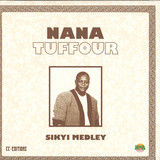
Kalita Records and CC:EDITIONS (a new venture by
Australia's CC:DISCO) jointly announce a 12' EP
comprised of four of Nana Tuffour's greatest electronic
burger highlife tracks, accompanied by interview-based liner
notes. Here, in partnership with Nana, we select two highly
sought-after songs from his 1993 release 'Genesis', namely
'Sikyi Medley' and 'M'Anu Me Ho', and pair them his with two
lesser known yet equally deserving tracks 'Asamando' and
'Jesus' from his 1997 CD-only release 'Highlife Tropicana'.
Hailing from Kumasi, the capital of the Ashanti region in Ghana,
Nana Tuffour is by far one of the most important exponents of
modern highlife music. He studied piano at college and cut his
teeth in the '70s as an organist and vocalist for the incomparable
Kyeremanteng Atwede and Dr. K Gyasi's Noble Kings Band.
Fast forward to 1981 and Ghana was at the apex of its golden age
of music. This era was brought to an abrupt end by political
upheaval when the military took over the government and as a
result a restrictive dusk to dawn curfew was imposed between
1982 and 1984. This resulted in a total obliteration of the country's
night life, and Nana just like many other prominent musicians
including Pat Thomas and George Darko left Ghana for greener
pastures, the most popular destinations being Nigeria and
Germany. The Rheinklang Studio in Düsseldorf run by a young
inimitable German sound engineer Bodo Staiger and another
'exiled' Ghanaian musician Charles Amoah played a crucial role
for those musicians who had chosen Germany. This studio
became the focal point for Ghanaian musicians and the birthplace
of a new sound, now known as 'Burger highlife' - traditional
Ghanaian highlife infused with the more up to date electronic and
disco sounds of the West. It is arguable that Nana has played a
crucial role in Burger highlife and developing the sound of
traditional Ghanaian highlife more widely to what it is today, with
his innovative use of electronic accompaniment pushing its
boundaries to its creative extremes.
It is Burger highlife's transcendence of traditional musical
boundaries that helps make it so accessible to listeners,
appealing not only to Ghanaians back home but now highly
regarded and sought-after by those in the West interested in
more occidental disco and electronic sounds. We hope that you
enjoy the four songs offered here, each chosen to demonstrate
Nana's singular influence on the development of Burger highlife.
'they've quietly found themselves elevated into the psych scenes premier league.' Drowned In Sound
'when they go pedal-to-metal it rarely fails.' Mojo Magazine
'The Lucid Dream are rapidly becoming major players in an ever-increasingly crowded psych scene..utterly seductive.' The Quietus
'one of the most enthralling bands in the UK.' Far Out Magazine
The Lucid Dream return in October with the release of their 4th album, 'Actualisation'.
Driven by fans raising £10,000 to help replace all equipment robbed after a Paris show in early 2017, a new album became the instant focus in the summer of 2017 for a rejuvenated The Lucid Dream.
'Actualisation' is soaked in the influence of acid house, amalgamated with dub and kosmische. It will again see them acknowledged for venturing into pastures new, setting themselves apart from 'genres', 'scenes' or what any other act are currently doing.
The album was penned over the summer of 2017 by Mark Emmerson (vocals/guitar/synths), using only the classic Roland 303/808 synths, bass and vocals as tools for writing. Inspiration for the writing was formed via continuous listening to the Chicago to UK acid house works of 1986-1992, the focus predominantly on the groove.
Several months on from those writing sessions and The Lucid Dream have completed their 4th album in 5 years. A record made for the dancefloor.
Recorded at Whitewood Studios, Liverpool, with Rob Whiteley, the album is produced alongside long-time collaborator Ross Halden (Ghost Town Studios, Leeds), with mastering via Dean Honer (All Seeing I/I Monster/The Moonlandingz).
The confrontational techno-punk of 'Alone In Fear' opens the album, a 9-minute attack fuelled by the frustration and anger spawned by Brexit, government and a realisation of what 2018 Britain currently is.
Recent single 'SX1000' (the first work from the album, unveiled via 12' vinyl in April this year) is the band's first move into pure acid house. The acid house fusion runs throughout the record, represented furthermore by 'Ardency', a track already praised by live critics when aired live for the first time earlier this year as 'even on first hearing, would've raised the roof of The Hacienda'.
The 2-part opus of 'Zenith' follows, commencing with a space-dub/house instrumental groove before building into a track that will go for your head as much as your hips. Only 'Breakdown' harks back to sounds of old for the band, a little reminder of the skull-crushing impact they can make when stripped to the bare bones. 'No Sunlight Dub' closes the album, a dark-dub that invites the classic acid-house tool (Roland 808) into the dub. The track makes a stop-off into drum 'n' bass/jungle along the way before rounding up in a manner suited to Lee Perry, King Tubby, Augustus Pablo and other Jamaican greats.
The Lucid Dream formed in Carlisle, Cumbria, in 2008. A string of sold-out 7s was followed by the debut longer player, 'Songs Of Lies and Deceit', in August 2013. The initial vinyl pressing of the debut album (500 copies) sold out within 2 days, and was backed by a main stage slot at Kendal Calling, and supports to Death In Vegas and A Place To Bury Strangers (full UK tour).
The bands 2nd album ('The Lucid Dream') was released in March 2015 to further acclaim. This included 2 BBC 6 Music sessions and plays across most shows on the station, as well as plays from BBC Radio 1 (Huw Stephens) and BBC Radio 2. Further press followed from Uncut, The Skinny, Louder Than War, and Drowned In Sound, who named the album #7 UK album of 2015. Supports to Clinic and A Place To Bury Strangers also coincided.
3rd album, 'Compulsion Songs' was released in September 2016, on Holy Are You Recordings. The vinyl pressing of the album sold-out within a day, prompting an immediate 2nd press, with pre-sales of the album topping 1,000 before release. The album was backed by a headline UK tour, and a main slot at Liverpool International Festival of Psychedelia (for which they were singled out for major plaudits from The Quietus, The Skinny and Drowned In Sound). The album again received acclaim from the likes of Mojo, Uncut, Classic Rock Magazine, BBC Radio 2 (Huey Morgan) and across the board on BBC 6 Music (Lauren Laverne, Marc Riley, Tom Ravenscroft, Gideon Coe, Stuart Maconie).
'Actualisation' is released on 19th October 2018 (CD/download/ltd red vinyl/standard black vinyl), via Holy Are You Recordings.
'they've quietly found themselves elevated into the psych scenes premier league.' Drowned In Sound
'when they go pedal-to-metal it rarely fails.' Mojo Magazine
'The Lucid Dream are rapidly becoming major players in an ever-increasingly crowded psych scene..utterly seductive.' The Quietus
'one of the most enthralling bands in the UK.' Far Out Magazine
The Lucid Dream return in October with the release of their 4th album, 'Actualisation'.
Driven by fans raising £10,000 to help replace all equipment robbed after a Paris show in early 2017, a new album became the instant focus in the summer of 2017 for a rejuvenated The Lucid Dream.
'Actualisation' is soaked in the influence of acid house, amalgamated with dub and kosmische. It will again see them acknowledged for venturing into pastures new, setting themselves apart from 'genres', 'scenes' or what any other act are currently doing.
The album was penned over the summer of 2017 by Mark Emmerson (vocals/guitar/synths), using only the classic Roland 303/808 synths, bass and vocals as tools for writing. Inspiration for the writing was formed via continuous listening to the Chicago to UK acid house works of 1986-1992, the focus predominantly on the groove.
Several months on from those writing sessions and The Lucid Dream have completed their 4th album in 5 years. A record made for the dancefloor.
Recorded at Whitewood Studios, Liverpool, with Rob Whiteley, the album is produced alongside long-time collaborator Ross Halden (Ghost Town Studios, Leeds), with mastering via Dean Honer (All Seeing I/I Monster/The Moonlandingz).
The confrontational techno-punk of 'Alone In Fear' opens the album, a 9-minute attack fuelled by the frustration and anger spawned by Brexit, government and a realisation of what 2018 Britain currently is.
Recent single 'SX1000' (the first work from the album, unveiled via 12' vinyl in April this year) is the band's first move into pure acid house. The acid house fusion runs throughout the record, represented furthermore by 'Ardency', a track already praised by live critics when aired live for the first time earlier this year as 'even on first hearing, would've raised the roof of The Hacienda'.
The 2-part opus of 'Zenith' follows, commencing with a space-dub/house instrumental groove before building into a track that will go for your head as much as your hips. Only 'Breakdown' harks back to sounds of old for the band, a little reminder of the skull-crushing impact they can make when stripped to the bare bones. 'No Sunlight Dub' closes the album, a dark-dub that invites the classic acid-house tool (Roland 808) into the dub. The track makes a stop-off into drum 'n' bass/jungle along the way before rounding up in a manner suited to Lee Perry, King Tubby, Augustus Pablo and other Jamaican greats.
The Lucid Dream formed in Carlisle, Cumbria, in 2008. A string of sold-out 7s was followed by the debut longer player, 'Songs Of Lies and Deceit', in August 2013. The initial vinyl pressing of the debut album (500 copies) sold out within 2 days, and was backed by a main stage slot at Kendal Calling, and supports to Death In Vegas and A Place To Bury Strangers (full UK tour).
The bands 2nd album ('The Lucid Dream') was released in March 2015 to further acclaim. This included 2 BBC 6 Music sessions and plays across most shows on the station, as well as plays from BBC Radio 1 (Huw Stephens) and BBC Radio 2. Further press followed from Uncut, The Skinny, Louder Than War, and Drowned In Sound, who named the album #7 UK album of 2015. Supports to Clinic and A Place To Bury Strangers also coincided.
3rd album, 'Compulsion Songs' was released in September 2016, on Holy Are You Recordings. The vinyl pressing of the album sold-out within a day, prompting an immediate 2nd press, with pre-sales of the album topping 1,000 before release. The album was backed by a headline UK tour, and a main slot at Liverpool International Festival of Psychedelia (for which they were singled out for major plaudits from The Quietus, The Skinny and Drowned In Sound). The album again received acclaim from the likes of Mojo, Uncut, Classic Rock Magazine, BBC Radio 2 (Huey Morgan) and across the board on BBC 6 Music (Lauren Laverne, Marc Riley, Tom Ravenscroft, Gideon Coe, Stuart Maconie).
'Actualisation' is released on 19th October 2018 (CD/download/ltd red vinyl/standard black vinyl), via Holy Are You Recordings.
Wonder Stories heads over the pond for their 24th release finding the Aussie/UK collaboration between Dawn Again (returning from his excellent EP on WS019) and UK underground champion Rothmans (known for his vinyl only label of the same name). Psychedelic, melodic, and grooving are the name of the game here with 'Timeless Odyssey' venturing into melancholic ethereal territory while 'Rainbow Perch' is an uplifting and bubbly affair. On remixes, Timothy J. Fairplay submits a jacked up sleazy version of 'Timeless Odyssey' while Emile Strunz tackles 'Rainbow Perch' into a 4/4 techno stomper with a new wave ethos.
Universal Eyes Ist Eine Experimentelle Noise-supergroup Der Detroiter Formationen Wolf Eyes Und Universal Indians, Bestehend Aus Nate Young, John 'inzane' Olson, Aaron Dilloway (pan, The Trilogy Tapes, Dais) Und Gretchen Gonzales Davidson (ex-slumber Party-mitglied/kill Rock Stars). "four Variations On Artificial Society" Ist Das Ergebnis Ihrer Reunion, Aufgenommen Und Produziert An Einem Wochenende Mit Der Detroiter Underground-legende Warren Defever (his Name Is Alive/4ad) Und Gepresst In Superlimitierten Auflagen. Cd Im Jewelcase, Lp Auf Farbigem Doppelvinyl Mit Download-code & Poster. Die Lp-erstauflage Erscheint Auf Weißem & Colaflaschen-klarem Vinyl, Eine Spätere Auflage Mit Roten Und Violetten Farbspritzern.
Neneh Cherry returns with Four Tet-produced LP Broken Politics
Following the release of her first earth-quaking single in 4 years at the beginning of August, counter-culture pop icon Neneh Cherry announces her fifth solo album Broken Politics, produced in its entirety by Four Tet.
Continuing her blurring and conflation of the personal and the political, the second single Shot Gun Shack tackles the link between violence and deprivation using poetic logic. The track deals with the ever-present and always-global issue of gun violence in society. The track's name was the result of inspiration that sprung from a half-remembered conversation Cherry had at the funeral of late jazz great Ornette Coleman.
Broken Politics pointedly asks the question; how do we conduct ourselves in extraordinary times In an era where the signal-to-noise ratio is more uneven than ever, what are the measures we must take to retain and remember our own personhood It searches for answers, patiently and with great care, and with a fearlessness to acknowledge that sometimes the answers don't even exist. It's a record that's equal parts angry, thoughtful, melancholy, and emboldening, as Cherry and her collaborators continue to expand her ever-widening sonic palette to craft truly singular and potent music.
An Island In The Moon is the perfectly conceived minimal ambient project from Italian composers Pier Luigi Andreoni (Doubling Riders, ATROX) and Silvio Linardi. Andreolina being a mix of the names of the two musicians who were both deeply involved with the label Auf Dem Nil on which the album was originally released in 1990.
The duo stick to a disciplined and simple palette using only two synthesizers and a Roland S50 sampler. They are joined by fellow electronic journeyman Riccardo Sinigaglia who contributes piano and samples on two tracks. Taking influences from Italian minimalism while adding some jazz hints Andreolina sprawls, weightless instrumentals that never stay soporific for too long on this singular rare album.
Auf Dem Nil or ADN was one of the most adventurous Italian record labels of the 80's and early 90's with releases by De Fabriek, Riccardo Sinigaglia and Pierre Bastien. Leaving their mark on the experimental music scene back than and influencing musicians worldwide up until today.
In line with the release of Blackfilm's new album "Zero One Seven", Denovali release the 2010 collaboration masterpiece "Along the Corridor" with Eraldo Bernocchi for the first time on vinyl.
"(...) From its heavy stone dropping bass to cinematic orchestration, beautiful piano melodies, and progressive dowtempo electronic beats, this collaboration between Eraldo Bernocchi and Blackfilm is an amazing find. Designed as a soundtrack for those lonely nights, walking through abandoned streets and skeleton buildings, Along The Corridors will keep you on the edge of your seat, with your imagination as the only projector for the cinema of your mind.
Italy's heavy dub producer Eraldo Bernocchi is not a new face to the scene. Starting out his career in the 90s, Bernocchi produced under many aliases. ... But it is the works under his real name that deserve the most attention. In 1999 he released Charged recording with Tashinori Kondo and Bill Laswell. In 2005 he appeared alongside Harold Budd in Music For 'Fragments From The Inside' on Sub Rosa. And in 2007 he recorded Manual together with Thomas Fehlmann for 21st Records. There are also numerous EPs with Bill Laswell under Apollo's Re-charged series....
Blackfilm, who continues to remain anonymous, is a Hungarian artist that was first introduced to us through his self-titled debut on the now defunct Spectraliquid Records. Since then, the album has been picked up by Denovali Records and repressed in 2010 on compact disc and vinyl. His dark atmospheric soundscapes and a bricolage of modern classical samples and instrumental hip-hop beats reminded me of my favorite works by Amon Tobin and Future Sound of London, for a brooding soundtrack enveloping your mind with heavy fog of penetrating sound. Since the release, Blackfilm has relocated to London where he has embedded himself with the heavyweights of dub and even darker journeys in the underground ..." Headphone Commute
Since 2008 Düsseldorf based producer and live wizard Stefan Schwander deeply concentrates on his always evolving electronic venture named Harmonious Thelonious. It besprinkles the world with fractional musical structures in the spirits of American minimal music, in order to immingle them with African rhythm patterns. Exceptional hypnotic opiates, enlarged with twisted harmonies and tricky rhythm archetypes. All heavy danceable!
After five magnetic albums for labels like Emotional Response and his old home base Italic as well as a highly acclaimed string of EPs for in-demand platforms like Asafa, Diskant, Disk, Kontra-Muzik, Meakusma, The Trilogy Tapes or Versatile Records, he now produced a heavy arresting 'Petrolia' LP for Marmo Music - a label that is not new to Harmonious Thelonious. Already on the label's second release Tru West: 'The DOWC part 2' his 'Sunset Liturgy' fingerprints are audible with a moving remix. Now he delivers six epic tunes that only partly dance the familiar Harmonious Thelonious dance. There are deeply traces from Africa and Arabia. There is the polyrhythmic witchery that makes his music special. But in contrast his new tunes are more mental then his former ones. They have a menacing industrial feel but yet continue to be enlarged with the enchanting spirits of the land of the Sahara. Furthermore, there is a slight manic touch arising from nervous electronic and foremost organic melodies. The live played jittery is coming from the Berlin based experimental musician Ghazi Barakat, also known under monikers like Pharoah Chromium or Crème de Hassan for mind shredding ambient, drone, experimental, noise, industrial, free jazz and free improvisation music from beyond. For Harmonious Thelonious Barakat, who also produced together with Marmo Music artist Günther Schickert the collaboration album 'OXTLR' in 2014, tuned his wind instruments Rauschpfeife and Kangling elflock-stricken the Master Musicians of Jajouka way. And instead of giving them a prominent lead position, Schwander deeply implements his tones into his propulsive creations to evoke a modern rhythmic meltdown of Occident versus Orient spheres that exhale a deeply absorbing soul.
A record, who's psychedelic energy fits perfect into the Marmo Music cosmos - a world where the progressiveness of the 70ties continues to live in the current to disband all white bread musical norms for the energy of music without classes. Dancers of the world, unite!
German producer and DJ Boys Noize has announced the release of his much-anticipated cover version of Adamski and Seal's 1990 rave classic 'Killer' on 12 vinyl, via The Vinyl Factory and Boysnoize Records.
Featuring vocalist Steven A. Clark, the original 12 version is backed by an instrumental, both of which you can listen to below:
As Boys Noize says: 'Being a '90s kid I kind of grew up with this song which later became one of these tunes I'd play out at the end of the night. When I met Steven and heard his voice for the first time I immediately thought of that track and the idea of doing a cover version was born. It was initially just for fun but it turned banging and lit the dance floors wherever I'd drop it.'
Adamski and Seal's original represented something of a breakthrough for both the producer and vocalist, spending four weeks at the top of the UK Singles Chart in the summer of 1990.
Speaking to journalist Dave Simpson in The Guardian in 2013 Seal explains the impact the song had on his career: 'Within a week, I went from being a relative nobody - this weird guy at raves, with silver bits in my hair - to a household name.'
Boys Noize' 'Killer' is out now digitally and on 12 vinyl, limited to 500 copies.
LAATE is a project from Clayton Guifford (Fragil / Recordeep ). Pierre Codarin is our guest on LAATE006. This British/
Italian guy with a french name is a big record selector and Hardware enthusiast. Pierre have perfect skills to producer
whatever he wants and he shows us! At the menu, 3 original tracks Deep & House with an Electro touch.To close the Ep , we
have the honor to welcome our friend Le Loup with a mental & spacy remix !!!!
out of Stock
Last delivered 12 months ago available to reorder, subject to availability
When Aretha Franklin joined Atlantic Records in 1967, it was the beginning of an unprecedented run that would ultimately cement her place as a music legend, a global household name, and one of the most influential singers of all time.
The Atlantic Singles Collection 1967-1970 features 34 singles which Franklin released during her first three years with Atlantic Records. Arranged chronologically, the songs on the new collection originally appeared on six studio albums: I Never Loved A Man The Way I Love You (1967), Aretha Arrives (1967), Lady Soul (1968), Aretha Now (1968), Soul '69 (1969), This Girl's In Love With You (1970), and Spirits In The Dark (1970). The only exception is Franklin's cover of Elton John's 'Border Song', which was released as a single in 1970 and later appeared on her 1972 album Young, Gifted and Black. The vinyl version is a double LP with 25 tracks.
The album is stacked with many of Franklin's best-known songs, including 'I Never Loved A Man (The Way I Love You)', 'Respect', 'Baby I Love You', 'Chain Of Fools' and '(Sweet Sweet Baby) Since You've Been Gone.' Several of the songs on this collection are cover versions that underscore Franklin's exceptional skill at reinterpreting music and making songs her own. Among the highlights are her versions of Sam Cooke's 'You Send Me', The Band's 'The Weight', The Beatles' 'Eleanor Rigby', and Dionne Warwick's 'I Say A Little Prayer', which became a Billboard Top 10 hit for Franklin in 1968.
tim jones, also known as Preacherman and recorded under midi man, ironing Board Band and t.j. hustler. he made one very rare lp, and two even rarer cD's. these tracks are from the cD's. he was a salesman for iBm in Las Vegas, where he sold selectric t ypewriters and then word processors during the day and at night he would perform in the Las Vegas lounges. he was somewhat of an engineer and adapted a hammond B3 organ to play a moog synth with some of the organ keys, (some still played the organ),
and he adapted the organ's foot controlled bass levers to play two moog synth bass pedals (a failed item moog made for a few years.) thinking he wasn't much of a live performer he had a wooden puppet made that he named t.j hustler, and together with the puppet, he would engage in long philosophical soliloquies, (some of which are featured on this album).if you meet tim, he is not someone who stops talking. in fact he even created a little book called universal Philosophy. he has a lot to say about everything. currently he lives with his 103 year old mother in
Oakland. there he infrequently plays shows on his casio where he fashions himself a live Karaoke performer, who comes complete with 5 wireless mics and P.a. and a list of about a 100 songs he can play. his invented organ contraption and puppet are in storage in Las Vegas, and he seems intensely
uninterested in getting them out, as 'the kids these days want to hear the sounds the casio makes.'
Edizioni Mondo as a label, has the goal to produce music that is descriptive of concepts, images and environments. Inspired by library music, a genre frequently used as theme or background music in radio, film and television in that very same period, the name MONDO has its roots in 'MONDO MOVIES", an Italian movie genre born in the 60's. Mondo movies are characterized by documentary-like content that addresses several topics from around the world ("mondo"). Numero nove comes courtesy of ROTLA. Also known as Mario Pierro and Raiders of the Lost Arp, 'Waves' is his third contribution to Edizioni Mondo. Downtempo, trippy, playful and pardon us, balearic, it's the soundtrack to the fading summer or the one starting somewhere else in this universe. Accompanied by remix works from label head L.U.C.A. and balearic (again!) mastermind Mark Barrott with his Sketches form an Island Healing Hands, it's the most balearic (three's a charm) record you will hear this side of the summer (wherever you are).
Nigh/Tmare's most recent EP, entitled 'Hypnagogia' on Thrènes Records, is the perfect example of the artist's uncompromising attitude. The integral work on this project is the perfect sublimation of experimental overtones, rugged beats, and techno punch, making for a candid, outstanding, and diverse approach with a lot of edge.
The opening track, 'Inside Me', perfectly encapsulates the dark, melancholic atmosphere and the robust dynamism we find throughout the EP. Operating a more technoid and ethereal approach on 'Without Believing', Nigh/Tmare successfully communicates his urge to express his dystopian feelings of loneliness and despair. The journey continues with "Deflagration of Hell", which comes as a daring lamentation from deep inside the darkness. Killawatt's rework on this one heads off a bit of the original and discharges its emotional intensity by offering a new audaciously powerful dynamic. Finally, 'Despite Everything' keeps the perfectly balanced feel of the EP; it offers a subtle touch of dreaming and a hidden optimism. The digital edition includes an exclusive track and a longer version of Killawatt's interpretation.
Set for release in both physical and digital formats on October 12th, Hypnagogia EP marks Nigh/Tmare's first EP for Swiss-based record company Thrènes (which takes its name from the Greek word for funeral lament) and are a label dedicated to the release of tenebrous electronica and techno.
Wir Freuen Uns Mit "uhuru" Das Debütalbum Der Summers Sons & C.tappin Zu Veröffentlichen. Das Trio Besteht Aus Turt (rap), Slim (beats) Und C.tappin (gesang + Keys) Und Lebt In London Und Bristol. Turt Und Slim Heißen Mit Nachnamen Summers Und Sind Brüder. Mit Tappin Sind Sie Seit Frühen Jugendtagen Befreundet. Die Musik Der Summers Sons Lässt Sich Als Rap Mit Viel Jazz Beschreiben. Wir Nennen Es Cool Bap. Fans Von Loyle Carner, Mos Def Und Alfa Mist Kommen Hier Genauso Auf Ihre Kosten Wie Beatheads, Die Gerne Flofilz Oder Twit One Hören (mit Letzteren Haben Die Sons Bereits Zusammengearbeitet). "uhuru" Heißt Auf Swahili "freiheit". "uhuru Peak" Ist Gleichzeitig Der Name Des Höchsten Gipfels Des Kilimandscharo-massivs, Den Die Band Während Eines Längeren Aufenthalts In Tansania Vor Drei Jahren Gemeinsam Bestiegen Hat. Der Trip Legte Den Grundstein Für Die Arbeit Am Gleichnamigen Album. Dass Die Sons & Tappin Ihre Ersten Musikalischen Gehversuche Mit Grime (turt), Uk Garage (slim) Und Indie Rock (tappin) Gemacht Haben, Hört Man "uhuru" Nicht An. So Entspannt Und Ausgejazzt Und Mit Viel Soul In Den Hooks Kommt Das Album Daher. Dazu Raps, Die Neben Cleveren Rhyme-patterns Durch Kluge, Persönliche Und Philosophische Texten Überzeugen. So Gesehen Sind Die Frühzwanziger Das, Was Man Auf Englisch "old Souls" Nennt. Dabei Fangen Sie Gerade Erst An ...
People Plus are CZ Wang and Joli B., signaling from a studio and or Hut in some remote location. Their debut EP consists of three trips into time in just as many styles.
Side A belongs to 'Olympus Mons', a song as big as the mountain its named from. Snake charmer synth lines and vocal roars backed by the baddest rhythm section in a while... wait for the solo! The B side holds 'Work It Out', with broken 4-off-the-floor drumz and revving echo effects. taking the coveted B1 spot is the always dancefloor smashing 'Second Cycle' - A verified banger that opens up with ground shaking acidish filter bubbles, and closes somewhere way up above the clouds.
From the inheritor of John Coltrane's mouthpiece a re-integration of deep South African jazz roots with the Black Atlantic spiritual jazz continuum.
Celebration's release trumpeted the emerging dawn of South Africa's epochal changes. Sainted and blessed, Bheki Mseleku appeared as the herald of a new era, a prophet of rebirth and reconnection. This is a work signalling transition and change, and a sign of a South African music that was properly reconnected with global currents - a music that could journey far beyond the stifling combination of exile and oppression in which it had been bound.
Recognising Bheki as a kindred spirit to her late husband, Alice gave him the saxophone mouthpiece that John Coltrane had used during the recording of A Love Supreme. Coltrane was a permanent touchstone for the pianist, one of the few who Bheki felt had the same esoteric and spiritual focus as himself: 'the only musicians I know of who were deeply into this were Coltrane, and Pharoah and Sun Ra', he told an interviewer in 1992.
While the idioms of post-Coltrane spirit jazz are certainly to the fore on Celebration, they are energised by a swift and original musical vision, quite specific to Bheki's music, in which whole musical systems - the marabi and mbhaqanga jazz of the townships, American jazz, European classical, and more - are seamlessly mended together by the pianist's quicksilver musical sensibility and legendary technical ability.
Celebration was originally released on compact disc and cassette in the middle of 1992 by World Circuit. It was Bheki's first statement under his own name, and the first recorded presentation of his personal musical vision. This vision had been tempered across two decades which had combined intense professional playing with profound personal trials in both the spiritual and earthly domains, all set against the greater backdrop of South African political turmoil and exile in Europe.
The band brought together musicians hailing from three signally important points within the interconnected, communicating spaces of the Black Atlantic continuum - North America, post-colonial Britain, and southern Africa. With them, Mseleku created the first major South African-led musical statement to be produced after the sufferance of exile was ended. The ultimate and most egregious remnant of the centuries-long colonial era, apartheid, was finally being dismantled as they played. At this critical point, Mseleku's musical spirit work, channelled from a higher source, spoke of a time to come where all divisions might be transcended by a greater unity.
Celebrating its 50th birthday this year, Westbound Records is the Detroit institution that discovered Funkadelic and the Ohio Players, with a rich catalogue that is probably amongst the most sampled in the world.
Our 'Super Breaks' series makes a welcome return, throwing the spotlight on the records which have been sampled on both Westbound and its Eastbound subsidiary. These come not only from the more obvious names such as the Detroit Emeralds, Denise LaSalle, Junie Morrison, Funkadelic and Ohio Players, but also the lesser-known Pleasure Web and the Magictones.
The list of artists who have sampled these records reads like a Who's Who of the hip-hop and dance worlds. These tracks will be recognised from well-known records by Kanye West, Dr Dre, Snoop Dogg, A Tribe Called Quest, De La Soul, Fatboy Slim, and many more.
Both the double vinyl and the CD come with extensive sleeve notes and a breakdown of where each track has been sampled.
Roberto Clementi delivers his 'Cadmio' EP on Echocord sub-label Echo Echo this October, containing four original tracks from the Italy-based artist. Kenneth Christiansen's Echo Echo imprint, offers up its fifth release here, accurately reflecting his appetite for the more celestial, dubbed out side of techno. This release sees the return of Roberto Clementi to the Echo platform after three releases on the parent imprint, Echocord plus 10 years worth of released music to his name, notably a number of EP's and an album on Soma. The EP kicks off with a fresh dub induced charmer entitled 'Conte', which in Italian translates to 'with you', and stands as an accurate tag for this warm and intimate opener. 'Irradi' follows, a more upbeat and industrious dance track - with euphoric synth lines sitting harmoniously in between the more uniform percussion before stimulating crashing symbols are introduced in the latter stages. Title-track 'Cadmio' is up next, a more dropped-tempo, electro tinged number, with off-kilter drum patterns gracefully balancing amongst the alluringly sedative melody. The B2 and final track 'Blue Growth' then provides a close to the EP with a lo fi 4/4 drum pattern together with hardened snares and crashes contrasted by delicate dub swells providing feelings of symmetry - a theme that is consistent throughout the whole EP.
French producer LB aka Labat returns with a new LP named “Fake Memories” on his own label Alélah Records. He surprises us with some more Hip-Hop and R’n’B music, liberating his love for jazz rythms and harmonics.
If you check the credits of The Rolling Stones' Goats Head Soup LP from 1973 you'll find a certain "Pascal" listed on the percussion section. That is none other than Los Angeles based artist Nicolas Pascal Raicevik (1933-1994), aka 107-34-8933, aka Head, aka Nik Pascal, aka Nik Raicevic. Besides his hitting the bongoes on the Stones album, Nik was a great artist on his own, both as a painter and as a musician. As a musician, he was a pioneer in the use of synthesizers, preceeding the Berlin school by some years when his Head LP was released on on Buddah in 1970. Buddah probably saw in Head the opportunity to cash in some money from the remains of the psychedelic scene - the three tracks on the LP are named after drugs used in the late sixties. The sounds, however, are accomplished works that show Raicevic as one of the most interesting pioneers in the use of synths. The album probably didn't do too well, since Buddah didn't renew the contract with Raicevic, who instead took his own way releasing his works on his very own Narco Records and Tapes label. Between 1968 and 1975 Narco would issue 4 LPs credited either to Nik Raicevic (Beyond The End... Eternity) or Nik Pascal (The Sixth Ear, Magnetic Web and Zero Gravity) plus one credited to 107-34-8933 (Numbers, which is in fact the same LP as Buddah's Head, albeit with different cover art). Copies of these LPs came with an ironic sticker over the shrinkwrap that read "Do not listen to this LP if you are stoned".
1972 saw the release of The Sixth Ear (Narco NR666), this time credited to Nik Pascal. A more complex work than Beyond The End..., it adds consistent rhythmic patterns to the mix with the addition of bongoes and also explores some interesting chord progressions.
Besides his musical explorations, Nik was also an interesting painter. His paintings are auctioned from time to time, and are consciousness expanding works influenced by abstract cubism and surrealism, some kind of Salvador Dalí on drugs exploring the outter and inner space. All the artwork on the sleeves of his LPs is done by himself. Spacey landscapes and psychedelic colours that fit perfectly to the music they contain.
"Nik Raicevic's music is at the intersection of radical psycho-electronic weirdness and kraut kosmische music (in particular the scifi-hypno-minimal modules of Conrad Schnitzler in Grun, Rot and Blau). It presents mega epic & tripped out electronic improvisations.
"This is an absolute must for collectors and fans of visceral, neurotic soundscapes." (progarchives)
"As far as late-60s / early-70s American Bedroom' Electronic Music goes, these LPS have to be among the first transmissions from this sector, made all the more attractive when coupled with Raicevic's alien topographIes - the covers are high-color portrayals of Venusian lanes, knotted growths, & future-past architecture in a style you might equate with Vintage' sci-fi pulp-novel covers - & copious Downer' sentiment. This music is imbued with a sort of lonely, anti-social sensibility that's about as far as you can get from the Academic' Early Electronic vector. I will say that if the Steve Birchall, Cellutron & the Invisible, and/or Pythagoron™ seed your garden, this will likely do the same." (twoheadeddog)
Never reissued before on vinyl format, the Wah Wah reissue features original sleeve artwork made of paintings and drawings by Nik himself and reproduction of the famous ironic "Do not listen if you are stoned" sticker. Limited edition, 500 copies only.
If you check the credits of The Rolling Stones' Goats Head Soup LP from 1973 you'll find a certain "Pascal" listed on the percussion section. That is none other than Los Angeles based artist Nicolas Pascal Raicevik (1933-1994), aka 107-34-8933, aka Head, aka Nik Pascal, aka Nik Raicevic. Besides his hitting the bongoes on the Stones album, Nik was a great artist on his own, both as a painter and as a musician. As a musician, he was a pioneer in the use of synthesizers, preceeding the Berlin school by some years when his Head LP was released on on Buddah in 1970. Buddah probably saw in Head the opportunity to cash in some money from the remains of the psychedelic scene - the three tracks on the LP are named after drugs used in the late sixties. The sounds, however, are accomplished works that show Raicevic as one of the most interesting pioneers in the use of synths. The album probably didn't do too well, since Buddah didn't renew the contract with Raicevic, who instead took his own way releasing his works on his very own Narco Records and Tapes label. Between 1968 and 1975 Narco would issue 4 LPs credited either to Nik Raicevic (Beyond The End... Eternity) or Nik Pascal (The Sixth Ear, Magnetic Web and Zero Gravity) plus one credited to 107-34-8933 (Numbers, which is in fact the same LP as Buddah's Head, albeit with different cover art). Copies of these LPs came with an ironic sticker over the shrinkwrap that read "Do not listen to this LP if you are stoned".
Magnetic Web was released in 1973. It appeared under the Nik Pascal monicker and showed a clear evolution in sound, favoured by the addition of an Arp 2600 and some rhythm boxes. It also included percussions and cymbals. The Two Headed Dog site thinks "this is his masterpiece in all of its acid-laced glory."
Besides his musical explorations, Nik was also an interesting painter. His paintings are auctioned from time to time, and are consciousness expanding works influenced by abstract cubism and surrealism, some kind of Salvador Dalí on drugs exploring the outter and inner space. All the artwork on the sleeves of his LPs is done by himself. Spacey landscapes and psychedelic colours that fit perfectly to the music they contain.
"Nik Raicevic's music is at the intersection of radical psycho-electronic weirdness and kraut kosmische music (in particular the scifi-hypno-minimal modules of Conrad Schnitzler in Grun, Rot and Blau). It presents mega epic & tripped out electronic improvisations.
"This is an absolute must for collectors and fans of visceral, neurotic soundscapes."
"As far as late-60s / early-70s American Bedroom' Electronic Music goes, these LPS have to be among the first transmissions from this sector, made all the more attractive when coupled with Raicevic's alien topographIes - the covers are high-color portrayals of Venusian lanes, knotted growths, & future-past architecture in a style you might equate with Vintage' sci-fi pulp-novel covers - & copious Downer' sentiment. This music is imbued with a sort of lonely, anti-social sensibility that's about as far as you can get from the Academic' Early Electronic vector. I will say that if the Steve Birchall, Cellutron & the Invisible, and/or Pythagoron™ seed your garden, this will likely do the same."
Never reissued before on vinyl format, the Wah Wah reissue features original sleeve artwork made of paintings and drawings by Nik himself, and reproduction of the famous ironic "Do not listen if you are stoned" sticker. Limited edition, 500 copies only.
If you check the credits of The Rolling Stones' Goats Head Soup LP from 1973 you'll find a certain "Pascal" listed on the percussion section. That is none other than Los Angeles based artist Nicolas Pascal Raicevik (1933-1994), aka 107-34-8933, aka Head, aka Nik Pascal, aka Nik Raicevic. Besides his hitting the bongoes on the Stones album, Nik was a great artist on his own, both as a painter and as a musician. As a musician, he was a pioneer in the use of synthesizers, preceeding the Berlin school by some years when his Head LP was released on on Buddah in 1970. Buddah probably saw in Head the opportunity to cash in some money from the remains of the psychedelic scene - the three tracks on the LP are named after drugs used in the late sixties. The sounds, however, are accomplished works that show Raicevic as one of the most interesting pioneers in the use of synths. The album probably didn't do too well, since Buddah didn't renew the contract with Raicevic, who instead took his own way releasing his works on his very own Narco Records and Tapes label. Between 1968 and 1975 Narco would issue 4 LPs credited either to Nik Raicevic (Beyond The End... Eternity) or Nik Pascal (The Sixth Ear, Magnetic Web and Zero Gravity) plus one credited to 107-34-8933 (Numbers, which is in fact the same LP as Buddah's Head, albeit with different cover art). Copies of these LPs came with an ironic sticker over the shrinkwrap that read "Do not listen to this LP if you are stoned".
Nik's last album, Zero Gravity (Narco NR123) came under the Nik Pascal name and had a fantastic side long piece on the title track which reminisces of the works of Cluster. B side features four tracks that also bear some Conrad Schnitzler reminiscences. This was to be Nik's last LP before he would sell all his synths to ex car racer and future electronic/ambient music star Steve Roach.
Besides his musical explorations, Nik was also an interesting painter. His paintings are auctioned from time to time, and are consciousness expanding works influenced by abstract cubism and surrealism, some kind of Salvador Dalí on drugs exploring the outter and inner space. All the artwork on the sleeves of his LPs is done by himself. Spacey landscapes and psychedelic colours that fit perfectly to the music they contain.
"Nik Raicevic's music is at the intersection of radical psycho-electronic weirdness and kraut kosmische music (in particular the scifi-hypno-minimal modules of Conrad Schnitzler in Grun, Rot and Blau). It presents mega epic & tripped out electronic improvisations.
"This is an absolute must for collectors and fans of visceral, neurotic soundscapes."
"As far as late-60s / early-70s American Bedroom' Electronic Music goes, these LPS have to be among the first transmissions from this sector, made all the more attractive when coupled with Raicevic's alien topographIes - the covers are high-color portrayals of Venusian lanes, knotted growths, & future-past architecture in a style you might equate with Vintage' sci-fi pulp-novel covers - & copious Downer' sentiment. This music is imbued with a sort of lonely, anti-social sensibility that's about as far as you can get from the Academic' Early Electronic vector. I will say that if the Steve Birchall, Cellutron & the Invisible, and/or Pythagoron™ seed your garden, this will likely do the same."
Never reissued before on vinyl format, the Wah Wah reissue features original sleeve artwork made of paintings and drawings by Nik himself, and reproduction of the famous ironic "Do not listen if you are stoned" sticker. Limited edition, 500 copies only.
Some time around 20 years ago, the artist known as Dub Surgeon made an absorbing album of beautiful dub infused with ambiance, found sounds and horizontal rhythms. The Lost Future was recorded at the former Amsterdam Film Academy where Dub Surgeon. The recording engineer for the project was Ricardo Villalobos. Dub surgeon and Ricardo Villalobos then mastered it together, putting it through several vintage mixers and recording it to 2 inch tape. Then, tragedy struck: a storm surged and ignited a fire that ravaged the studio. The master copy was thought to have been lost forever. Dub Surgeon stopped making music and disappeared into the shadows after just two EPs on Future Dub in 2002/3. But one day 15 years later, totally out of the blue, he received a demo of The Lost Future. "Pay attention to this," it said. Attached was a demo version of the long lost album and now, finally, it has a perfect and impossibly poetic home on Dubai's Ark to Ashes, which is named in homage to the story of Lee "Scratch" Perry burning down his Black Ark studio to rid it of demons. Sounding as fresh as ever, The Lost Future is an authentic dub experience with a story as special as the music itself
'Me Me Me is two... and in keeping with the name it seemed that I had no choice but to put out what is only my second ever release on my own label since launching with the debut release 'Tachyon' back in 2016.
(It's also the labels 13th release too. Spooooooky)
So here it is, a double A Side...
Side A is 'Valhalla' which attempts to be as majestic as the name suggests.
Side AA has 'Fidelity", which is me channelling big room house as much as I can, while trying to keep ahold of whatever heart strings I can tug on.
I'll let you judge if I've achieved what I'd set to do with either.
Past those brief descriptions, I still find talking about music to be mildly redundant when you can most likely listen while you're reading this, so instead I'd like to use this sales blurb to issue a massive heartfelt thanks to everybody who has supported the label in the last 2 years, as well as every artists who has trusted us with their music.
Big love to, Dj Tennis, Last Waltz, Red Axes, James Hadfield & Danny Linton, Axel Boman, Bird of Paradise, Pale Blue, Pional, Frank Butters / Cult of Glamour, Andrew Weatherall, Ess O Ess, Desert Sound Colony, Elliot Adamson, Rex The Dog, Forriner, Shit Robot, Raj Pannu, Cosmin TRG, Edmondson, Dauwd, ASOK, Vyvyvan, Paul Woolford, Christophe, Ian Blevins, Dharma, Jana, Pink Skull, Medlar, Ben Caldwell, Dos Attack, Force Majeure, Club Tularosa, Juan Maclean and AWOL!'
An Invitation To Disappear is the debut LP by British electronic musician Inland aka Ed Davenport - and his first release for A-TON. Based on his soundtrack for a video installation by conceptual artist Julian Charrière, Davenport has recast the material and field recordings into eight tracks of rhythmically intricate electronics and spectral, ambient techno, inspired by Charrière's visually striking, 76-minute tracking shot through a palm plantation toward a totemic soundsystem on full blast.
Both the album and original soundtrack were created in response to the 200th anniversary of the eruption of Indonesia's Tambora volcano in 1815, which plunged the world into darkness and caused a series of extreme weather conditions. At the time, the natural climate change crisis resulted in numerous global famines and is known throughout the northern hemisphere as 'The Year Without Summer', with global communities forced to adapt to sudden radical changes in temperature and weather.
An Invitation To Disappear offers a contemporary parallel, leading viewers - and listeners - down a seemingly endless direct path of gridded palms from dawn to dusk; a bio-commercial monoculture where ancient jungle once flourished. Light flickers between rows of fruit-laden trees and a distant fire burns in the undergrowth where the border between natural image and computer simulation breaks down. At the same time, formerly incoherent rumblings of sub-frequencies begin to transform into the contours of rhythm. This is reflected sonically in eight perspectives on the lush, synthetic jungle, made of myriad buzzing fauna, morphing melody and colossal bassweight. All paths lead toward an apocalyptic dancefloor, though speeds vary widely; rhythms dissolve from straight to broken, synth tempos operate by their own internal clocks (and logic). Juxtaposing industrial agriculture with rave culture, the album explores the industrialization and refinement of nature, and the new strange forms emerging from the synthetic grids of both.
As Inland, Davenport has previously contributed soundtracks to other installations by the Swiss-born Charrière, whose artistic practice focuses on bridging environmental science and cultural history, often taking place in remote geophysical locations, including ice fields, volcanos and radioactive sites.
Julian Charrière is a French-Swiss artist based in Berlin. A former student of Olafur Eliasson at the Institut für Raumexperimente, Charrière's art explores post-romantic constructions of nature, staging tensions between deep or geological timescales and those relating to mankind. His work has previously been shown across the globe, including at the main exhibition of the Venice Biennale in 2017, a solo show at Kunsthalle Mainz this past Spring and an upcoming solo show at the Berlinische Galerie opening September 26.
Inland (real name Ed Davenport) is a British producer, DJ and founder of Counterchange Records based in Berlin. Known for his detailed and explorative house and techno releases on his own label, Infrastructure, Naïf and more, Davenport has recently gravitated toward the contemporary art world, finding inspiration in the cross-pollination between Berlin's art and music scenes. Previous sound design collaborations with Charrière have been exhibited in institutions such as the Musée des Beaux-Arts de Lausanne in 2014 and Thyssen- Bornemisza Contemporary in Vienna in 2017.
The gallery version of An Invitation To Disappear premiered this past April at the Kunsthalle Mainz and will be on display at the Berlinische Galerie as part of Charrière's solo exhibition As We Used to Float, opening September 26, 2018. The LP will premier live together with the video installation during a special presentation in Berghain the same day for Berlin Art Week.