Dez Andrés, Detroit’s underground legend and genre-blurring maestro is back with another batch of reworked old skool bangers.
Since the late '90s, Dez has built a respectable catalog that blurs the boundaries between genres. One of motor city’s most prolific artists, his music can be summed up in one word: quality. Now he returns to DFM with a two-sided heater.
Dez flips Odyssey’s classic Native New Yorker into a gritty dembow style club weapon. With iconic vocal lines and signature piano riff, Dez injects his signature bounce and percussive punch, turning this disco anthem into a raw dancefloor destroyer.
Diving deeper, Dez revives Dr. Buzzard's Original Savannah Band’s classic Sun Showers, transforming it into a rhythmic, power groove tailor-made for sweaty basements, rooftop sets and smoke filled dance floors on red-lit nights that refuse to end.
Поиск:native red
Все
Siccar Point is the second album release from Intertoto, and is a study of the geographical extremes on the east coast of his native Scotland. The eight pieces of music on the album serve as vignettes portraying this ancient headland, while also acting as an allegorical reference to the pioneering work of Scottish geologist James Hutton, who proposed that geological features are not static but undergo continuous transformation over indefinitely long periods of time.
With this theory — and the striking landscape — in mind, Jamie Coull, aka Intertoto, imagines tectonic forces through tension, space, density, and texture. Divergent and convergent boundaries are realised in different moods throughout. Siccar Point opens with the irregular drift of Raw Lunar Concrete, a track that undulates asymmetrically, pulling you off balance before settling into the pulse of Condor Launch and Cloud Chamber — the more veiled club moments of the album.
Further into the strata, Siccar Point mines deep into the dense textures of Metallic Veins and Redox Dub, before closing with the cascading outro Foraber, shimmering with tones that imagine a view outward from the rocky promontory — beyond the vanishing point.
- A1: Native Love (Step By Step)
- A2: Jungle Love
- A3: I'm So Beautiful
- A4: Love Reaction
- A5: Alphabet Rap
- A6: T-Shirts And Blue Jeans
- B1: Shoot Your Shot
- B2: Psychedelic Shack
- B3: Kick Your Butt
- B4: Shake It Up
- B5: You Think You're A Man
- B6: Shout It Out
- B7: Walk Like A Man
Divine wasn’t just a singer, Divine was a phenomenon. Born Harris Glenn Milstead, Divine transformed drag, performance, and queer visibility long before it was mainstream. From the underground stages of Baltimore to international fame, Divine became a muse for filmmaker John Waters, starring in classic cult films like Pink Flamingos, Female Trouble and Hairspray, that redefined shock, satire, and queer cinema.
Native and Queer (The Complete Experience) brings together the full force of Divine's musical legacy in one explosive HI-NRG compilation. anthems,. Featuring the iconic anthems that shook dancefloors worldwide, “Native Love (Step By Step)”, the track that launched Divine into international stardom, “Shoot Your Shot”, “Walk Like A Man”, “You Think You’re Man” and more bold tracks. American producer Bobby Orlando aka Bobby “O” was the architect behind Divine’s most tracks and is regarded as an innovator in the HI-NRG genre, while Pete Waterman & Barry Evangeli produced “You Think You’re A Man” and “Walk Like A Man“ was a solo effort by Barry Evangeli.
All tracks are sequenced, edited and mastered by Ben Liebrand.
Native And Queer (The Complete Experience) is available as a limited edition of 1000 individually numbered copies on blue splatter vinyl.
2026 Repress
Anenon's tenor saxophone breathes an emotive contemplation on loss, meshed with sustained piano and field recordings. 'Moons Melt Milk Light' is a hyper-personal statement contained in a visceral beauty.
LA native Anenon returns with a highly anticipated new album 'Moons Melt Milk Light' on Tonal Union, bearing his most personal, expressive, and arresting works to date. Anenon is the ongoing solo studio and live project of Brian Allen Simon, whom since 2010 has released multiple albums and EPs to critical acclaim, including the highly revered 'Tongue' (2018) and 'Petrol' (2016).
'Moons Melt Milk Light' is direct, efficient, and unwavering in its immediacy. Anenon departs from the electronics of previous works, and embarks on a reductive, almost entirely acoustic approach consisting of piano, tenor saxophone, bass clarinet, and field recordings. All of the music was improvised with everything recorded as either a first or second take with no edits. Any layering happened fast and in the moment, and yet the sonic architecture of the whole feels both planned and refined.
"I feel a kinetic and messy honesty that doesn't exist in any of the other music I've ever made. There is also a sense of being settled, of calm. There is no faking it here."
A limited edition tribute to Chris Hill who recorded this record in 1979. Features Luther Vandross!
Recorded jointly in Germany and the USA, Mascara were the creation of soul legend and Mafia club DJ, the late Chris Hill. The vocalists are Ula Hedwig, David Lasley, and Luther Vandross . Ula was a former member of The Harlettes with Sharon Redd and Charlotte Crosley who used to support Bette Midler. David Lasley was also a supporting singer for Bette Midler, and later Luther Vandross, David Lasley’s prolific career as songwriter alone spans more than 30 years. He is best-known as a composer for the hundreds of songs he has written recorded by the likes of Anita Baker ("You Bring Me Joy"), Boz Scaggs ("JoJo"), He sang backgrounds on numerous classic disco hits for acts including Chic ("Everybody Dance", "Le Freak", "I Want Your Love"), Sister Sledge’s ("We Are Family", "He’s The Greatest Dancer") and together with Luther for Odyssey on "Native New Yorker".
Lost Gospel Gem - Exitiment "Rap For Jesus" by Columbus Native Kenneth Jordan Rediscovered Nearly 40 Years Later
Columbus, GA — In the late 1980s, Columbus native Kenneth Jordan was such a powerhouse on the local music scene that talent shows had to rewrite their rules. His voice was so captivating (and his wins so frequent) that some claimed the competitions were rigged.
Jordan, deeply rooted in the city's thriving R&B circuit, eventually turned his creative energy toward faith-based music. Teaming up with several local musicians, he recorded "Excitement (Rap For Jesus)", a gospel-infused rap track that aimed to connect with a younger audience enthralled by the sound of hip-hop. His goal was simple: to give youth something uplifting to rap about and listen to.
In 1985, following a personal health scare and a period of reflection, Jordan transitioned from R&B to gospel music. "I took it as a sign from above that it was time to make a change," he later shared. Though his lyrics found new purpose, his signature soulful style remained unchanged.
Fast forward to December 2022 in Little Rock, Arkansas, where record collector and producer Brian Sears stumbled upon a well-loved copy of "Excitement (Rap For Jesus)" while purchasing over a thousand vinyl records from the trunk of an SUV in a Lowe's parking lot. Struck by the track's energy and message, Sears went into "detective mode" to uncover the story behind the voice—and the man—on the record.
Today, Kenneth Jordan continues to share his gift with his community, leading spirited performances every Sunday at his local church in Columbus. Nearly four decades later, his music and message still resonate with the same joy and conviction that first made him a hometown legend.
Sticking a dirty thumb in the eye of fate, our third collaboration sees this marrow deep family malarky turn official as Pace Yourself teams up with YS’s own imprint ERF REC for a split release. As if our status as minor celebrities and footnotes of the underground could level off no further: the unification no one asked for is here. Sticking it to the man, handing your arse to ya on plate; cauterising infected suburban minds world over.
Burn is the second YS album and written as a direct follow-up album to Brutal Flowers. If their first album was an exercise in the incremental, a construction of poise and patience, Burn, should be taken way the fuck at it’s word: it quite literally finds catharsis in twisted reverse. Birthed out the malignant kick found in deconstruction and chaos. Evil twin, psychotic younger sibling, call it what the hell you like. It might take you a moment to get the lay of the land in this darkly mutated world. Like a bug eye’d native first confronted with a zippo, the hit is radical and instant: a new way for the world to go up in smoke.
Splice the Seattle slacker scene with the spliffhead soundsystem culture of the 90s Bristol trip-hop scene, then cross-breed that with the DIY optimism and glee in creation found in the cut-and-paste worlds of skate, graffiti and hiphop, now run that through the skitzo basement mind of John.T. Gast and you’re close to the kind of scorched earth and spiked suburbia that birthed Burn.
Dunno quite what YS have been ingesting of late but this massively twisted LP touches on a host of gloriously fucked totemic underground sources while not sounding much like any of them. It has the ballsy swagger and hard flipping of the script as Massive Attack’s seminal Blue Lines. Indeed, the eponymous album tracks sound similar - the opener ‘Burn’ is like a hard nosed jammed out redux of ‘Blue Lines’. Getting into a kind of slow-spinning overdubbed maximal euphoria ending with mumbled downer vocals, struggling to conceal their tongues in their cheeks there’s an air of paranoia and proto-conspiracy theory. It’ll leave you scratching your head, feeling like you’ve stepped into a New World Order governed by a cacophony of drop outs, dope fiends and apocalyptic stoners. A cracked out world somewhere between Richard Linklater’s movie Slacker (1990) and Marc Singer’s Dark Days (2001).
The rest of the album parts like a tongue on a wine glass: Smith and Mighty, Bandulu, ambient Luke Slater records, Wah Wah Wino, Nurse with Wound, Land of the Loops, Placid Angels, Adrian Sherwood, Urban Tribe and DJ Shadow can all be heard in momentary splatters - but Burn like other works by YS, is its own ritual beast. ‘Moth’, a track which has been knocking about the underground deejai circuit for many moons, is a real raw chopped and screwed slice of stoner erotica that reeks of obsession and unrequited desire. Elsewhere, on tracks like ‘Switch’, ‘Trying’ and ‘Drift’ the throughline from Brutal Flowers can be heard. Underneath the driving heavy gravity the trademark emotional intimacies of YS linger: eternal recurrence, ghosts of static and shortwave, worn memories of the playful and painful sort. The brief moments where flashes of orchestral ambience get out from underneath the swagger are so pure, personal and unguarded that for a moment they leave you completely lonesome. In the album’s closer ‘End’, you can hear the fleeting promise and DIY possibilities of an analogue world and embers of ash that flutter in its wake: where it seemed, for a brief moment, that collective of DJs, engineers, rappers, graffiti artists and skate crews were emerging from the streets, giving the middle fingers to the system, before just as quickly disappearing back to the doldrums of obscurity. ‘End’ is a bittersweet ode to early soundsystem culture, MCs and pirate radio - an out of step time where for a moment the underdogs and weirdos seemed to be kicking on the door of something bigger.
A veritable teenage doof suite dosed with desire, claustrophobia and deviance. Burn is a good old howl at the moon: lonely, raw, and out for blood; basement style exegesis at its best. A thump to the gut, a stud through your blood. A dubbed-to-death classic straight out of the annals of nowhere. A perfect post card from oblivion. A bleak, bold and personally ferocious vision of tomorrow and tomorrow and tomorrow.
This is everything that record collectors skip dates for. Fuck the scene and keep that shit underground. That’s what it is all about. Know what I mean, if you do? You’re in…
Le Chatroom, a record label established in 2016 by the English producer Kouslin, searches for the missing link between underground bass music and outer national sounds. Its music is defined by the blend of synthetic and organic tones, modern / classic instruments and low- end heavy percussive rhythms.
Pushing artists from all around the globe that share the same love for this newfound sound, Kouslin's aim with Le Chatroom is to promote musical diversity, open-mindedness and experimentation at a time when unity between cultures is crucial. With 'LCR001' the label advances into a new physical environment from which this release should be experienced.
Real talk and native percussion establish the steady climax of 'Brothers', the A-side of Le Chatroom's inaugural wax release. Kouslin cuts through this sediment with a bright flute, before the state of the sound switches into something far darker and meditative. By placing several samples at irregular intervals, the Londoner achieves a fascinating charm that'll unite us all.
Booming bass in 'Gyals' lingers with a steady pace while percy tribal hits forge a raw groove that's far from common. With this movement, the producer from Bristol disintegrates the sense of a generic production and sticks to his true nature. Through this it becomes clear that Galtier has his polyrhythms down to a science.
Londoner Sheik clinches the B-side with a craze that unveils a nearly psychotic sense of sample architecture. Pushing crystal clear 808 kicks in- between the haunting atmospheres and a wall of pressure simply becomes one of his most inventive takes documented on wax. If you love to swerve through a minefield, the odd 'Oxram' would be your favourite pick off this first outline.
The three producers that feature on 'LCR001' pass on their fundamentals to conjure Le Chatroom's philosophy red-handed. Together they do the imprint's name justice by handing over critical bass repertoire that'll excite many!
- A1: Patrick Bernard - Interieurs
- A2: Cecilia Angeles - Climax Our First Day Of Love Its A Love Day
- A3: Carla Music Orchestra - A Meet With Bond
- A4: Remy Boussengui - Coco Lando
- B1: Francisco Et Son Orchestre - Cafe Rete
- B2: Francis Bebey - Crocodile Crocodile Crocodile
- B3: Michel Lorentz - Zantye An Metro
- B4: Egide Sadey - High Emotion
- B5: Princess Erika - Trop De Bla Bla Dub Version
Isle of Jura teams up with French digger Switch Groove on the next compilation titled ‘Archipelago – Cosmic Fusion Gems from France (1978-1988)’.
Switch Groove explains the concept “When I seriously began to search for and collect records, I was mostly interested in sounds from african-american, afro-latin and UK contemporary scenes. Sounds from distant territories, faraway from my native Massif Central, a highland region in the middle of France. The grass is always greener, I guess however, as I was digging in fleamarkets in the early sunday morning light, as well as spending regular sessions in second hands record shops, I began to discover hidden treasures, underground gems and side-projects of an unknown French musical repertoire.
French music is often reduced to its most famous musical forms, characters and signatures : French songwriting and voices, 60s yéyé, prog rock concept albums and soundtrack explorations, 80’s indie rock scene or more recently electronic French touch. All these sounds have a common feature : a geographical link, forged on mainland French territory, following the contour of the so-called Hexagone, the border that shapes the grounds for an homogeneous cultural expression. But beyond this showcase lie more complex, hybrid and global French productions. From French Caribbean Antilles to Parisian suburbs - especially during the ‘Sono Mondiale’ era -, in French areas outside urban cultural centers, musicians have created fusion and cosmic musical expressions. As the mid-seventies meant a greater freedom to make and record music, a wider use of electronic instruments like synthesizers and drum machines helped to deliver some magical projects you could only find lost in the middle of cheap records during a sunny record digging session. I selected these tracks, in an attempt to shape an ARCHIPELAGO that highlights significative contributions of African diasporas and ultramarine territories into French musical borders. It is the map of a land I have gradually drawn, thanks to deep listening of amazing cosmic and fusion tunes. I hope you enjoy the journey.”
CASABLANCA first started as a party exploring the depths of Arabic grooves from Northern Africa and the Middle East, brought to life by two musical legends...Parisian digger Victor Kiswell, known for his journey through the world’s rarest records and influential NTS radio sets, and Dez Andrés, a Detroit native whose roots in the city's hip-hop and house scene are matched by his love for soul, fun, and jazz. The two artists have stepped into the studio to bring the same energy and ethos from their party to this album.
1. Watermelon Man
This track version actually came from an improvisation that Allesandro IIona (Keys) made on a live show at RonnieScott's at the start of the year. I think we were were having some issues with one of the monitors on stage and it juststarted making this beeping sound. Then I remember Alleh just came in with that piano riffat the start and the rest was history. This one of thefirst tracks we recorded for the EP and I'm super pleased with how this one turned out. Afterseeing Herbie Hancock live for thefirst time the year before, this felt like the perfect tribute to him!
2. Mandible
The majority of the writing on this album was done at my studio space in Hither Green, where I am every tuesday! I usethis space to record but mainly a space to develop my art. So this EP all came from a few sessions there. We all haveour own creative things going on so it was really great to collaborate as a band and trash out some ideas we had.Mandible is one of my favourite tracks on the EP. It's very simple but leaves us a lot of space to explore some more freeimprovisation. I think in some of my previous recorded music I was more focused on creating well crafted music withgreat melodies and harmony. Whereas here there's a bit more focus on playing as a group and being more explorative inimprovisation. We also didn't have a melody for this track until a week before the recording! Sometimes it just takes awhile tofind that melody or it might just pop into your head one day.
3. Slum
This is a tune that was actually written by myself in 2017/18. Round about that time, I had been playing at a jam night ata warehouse unit in Limehouse called Unit 31. The night was ran by Pianist Raffy Bushman and Drummer Sam Michnikand was focused on hiphop and Jazz fusion. We would usually play a set of instrumental music before it opened up forvocalists and other instrumentalists to come and jam. It was a great place to try out new ideas, so I wrote this tune for itbut we never recorded it. It was really nice to revisit this tune and get it recorded properly at 'That SoundStudios' (Seven Sisters). This track is all about dynamics and a slow build throughout. Descending to more chaos at theend!
4. Red Pistachio
For thefirst two sessions we wrote with a different bass player to Edmondo Cicchetti who is on the recordings. A greatbass player and friend of mine Tom Driessler. This track started kinda exactly how it starts on the record, with that basshook. I'm very influenced by Christian Scott Atunde Adjuah and his melodic writing. Particularly on his album 'StretchMusic'. So this felt really inspired by that album. The chords don't really move around too much until the solo sectionwhere it becomes more like a blues. Then Allesandro get's a bit more loose at the end with the descending sequence.
5. Jerome arrived Late
Quite simply we started writing this tune before Jerome (Drums) arrived late. In the recording session we were a bitundecided about what to do in the solo section. We tried out a few different options before we eventually landed onfeaturing Gabriele Pribetti on Sax. I'm really into his solo on this as it's rhythmically and dynamically really exciting. As Imixed the record it was also a great solo to mess with and run through lots of different plug-ins. There's some weirddelays and phasing going on that and I added some octaves too in places.
From London to Ibiza via Berlin, inspired by Chigago and Detroit, Ceri finds her truth in proper house music. ‘Can’t Pay My Bills’ EP provides a message of hope during uncertain times. Acknowledged as a “rising selector” by Crack Magazine, producer, label boss and record digger Ceri steps into 2024 with a brand-new EP ‘Can’t Pay My Bills” via her imprint “Find Your Own Records”.
“The title track is inspired by the current economic situation in the world, and also features a positive message that reflects the values and true origins of house music, reinforcing the belief that we can overcome our circumstances and improve our situation” - Ceri
The new four track EP drips with Chicago, New York and Detroit jackin’ house with garage influence, and a sprinkle of ripping UK breakbeat for good measure. The people’s producer D'Julz steps up, on remix duties, contributing not one but two remixes to the label’s ongoing message of artist authenticity and collaboration. The remixes will be vinyl only, and the originals will see a digital release later in the year.
“I have collected D'Julz music for many years, his label started around the same time I started DJing, and it was and still is, one of the few labels that I buy on sight. I know it will always be quality. Something I aspire to do with my label too.”– Ceri
As an artist led label 'Find Your Own Records’ has become a home for genuine house legends Mr G, Fred P, Alex Arnout, and has rightly gained support from Mixmag, Resident Advisor, BBC Radio 1, BB6Music and BBC1Xtra.
Support for the label so far comes from the likes of:
Midland, Ben UFO, Move D, K-HAND, Fumiya Tanaka, Fred P, Paranoid London, Steve O'Sullivan, Tristan Da Cunha, Ryan Elliot, Lakuti, DJ Deep, Kerri Chandler, Chloe Caillet, Fred P, Jeremy Underground, Cici, D’Julz, Chez Damier and more…
As a DJ Ceri has performed marathon sets at Fabric, Corsica Studios, Pikes Ibiza, Thisishaven, and recently made her debut at the legendary Panorama Bar/Berghain. Confidently sharing the booth with club favourites Ryan Elliot, Jeremy Underground, Paranoid London and Objekt it’s certain the next year of live shows will be ones to remember for the UK artist. Inspiring far beyond the dancefloor, Ceri also regularly steps up as a masterclass host / panelist on creativity, mental health, meditation and wellness with renowned platforms Beatport, ADE, RedBull, Point Blank and Native Instruments, earning her a distinctive reputation as a multifaceted artist and
thought leader.
Ceri – ‘Can’t Pay My Bils’ EP is out on Find Your Own Records. Vinyl end of Feb tbc. The remixes re vinyl only. And the originals will be released digitally in the summer.
SY Rockers is the new project from Ryan Aitchison aka Mella Dee and KALLIDA Festival bossman Reuben G. Their story goes all the way back to 2009, when Reuben invited Ryan to be a resident for his party LSS at Hi-Fi Club in Leeds.
The pair went on to bond over their shared love of bass-led music in the UK underground, a sound that was especially important to their native South Yorkshire. Fourteen years on, Ryan and Reuben revisit those early inspirations as SY Rockers. Their debut EP is a slickly produced expression of bleep, UK techno, bassline and dub, redrawing lines between the sound legacies of cities like Sheffield, Bradford and Leeds across three tracks.
True to those roots, the result is a hypnotic blend of raw drums and subsonic impact. ‘Windy Dub’ introduces the record with a hazy, heads-down bass, occasionally shivering into a cavernous space echo before it locks back into a haunting synth hook. ‘Modem’ does what it says on the tin: gameboy tones bounce around a warm sub, calling back the ‘less is more’ aesthetic of the original bleep era. Finally, ‘Rhythm Resonate’ zooms in on where it all started—the drum machine. 909s, lasers and a touch of perc combine to create the ultimate techno tool.
'Days of Glory' contains a relatable storyline, sweet soul vocals, and an up-tempo instrumentation flavored with a nostalgic soul scent'
No Kind of Pitiful is exemplary of 1960s soul with an important message! It is an upbeat song that will help you feel better
Brian Scartocci is a veteran soul singer and songwriter.
For more than a decade, the singer has been making a name for himself in the red-hot Austin music scene. The renowned vocalist has lent his voice to a series of popular local and regional bands including Austin Heat and Blind Lead The Blind.
In 2012 Brian Scartocci wowed an international audience as a contestant on the hugely popular competitive singing program, The Voice. Now based in Texas, the New Jersey native has established a reputation across the United States as a dynamic performer and gifted vocalist. Known for interacting directly with the audience, he can often be found offstage, getting down with the crowd.
- A1: Begrüßung Und Buntspecht
- A2: Afraid Of Seeing Stars? (Heimische Gefilde Edit)
- A3: Uhu
- A4: Adler (Heimische Gefilde Edit)
- A5: Rote Waldameise
- A6: Klangteppichverleger Wolle (Heimische Gefilde Edit)
- B1: Goldammer
- B2: Die Alpenstrandläufer Von Spiekeroog
- B3: Feldgrille
- B4: Björn Borkenkäfer (Heimische Gefilde Edit)
- B5: Eistaucher
- B6: Der Hecht Im Karpfenteich (Heimische Gefilde Edit)
- C1: Gelbbauchunke
- C2: Die Rotbauchunken Vom Tegernsee (Heimische Gefilde Edit)
- C3: Nachtigall
- C4: Gasthof "Zum Satten Bass" (Heimische Gefilde Edit)
- C5: Rauhhautfledermaus Und Großer Abendsegler
- C6: Der Buchdrucker (Heimische Gefilde Edit)
- D1: Waldkauz
- D2: Harzer Roller (Heimische Gefilde Edit)
- D3: Ein Stelldichein Des Westerwälder Vogelchores
2026 Repress
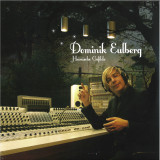
Originally released in 2007 on CD and now re-released on double vinyl. "Heimische Gefilde" was the second full-length release on Traum at that time from Westerwald based DJ, producer and park ranger, Dominik Eulberg. Dominik has since then expended his activities enormously now appearing as a book author with best selling books in the German official bestseller list. He ist he ambassador of the most popular Conservation Union in Germany NABU, he has created a bird quartet and a hand made insect hotel and appears on national German TV regularly next playing in clubs world wide and producing stunning music. "Heimische Gefilde" includes spoken words by the man himself and the release won the price of the German critic awards for music. It is the only compilation that comprises a selection of Dominik Eulberg’s best early works and it is for the first time available on vinyl now.
As Dominik Eulberg says in his own words: „After more than 16 years, "Heimische Gefilde" is finally released on vinyl. At that time it was still a daring experiment to combine music with lustful science communication. Quickly one was thrown into the pot of the "weird eco-techno sound owl". Today, we are increasingly finding that we cannot stop the impending ecocide in a cognitive way. For more than 60 years we have known about the concrete threats to humanity from global warming and species extinction; yet nothing changes. Many alarmist efforts fail miserably, red lists grow longer and longer each year, and global temperatures continue to rise unchecked. It is becoming clearer and clearer that we have to reach out to our fellow human beings in a positive emotional way in order to make a difference, because we only protect what we love. Then sentimental minorities become majorities that change something. Art and culture are low-threshold vectors to make things majority-friendly. They are a fertile and valuable breeding ground to sensitize people outside the eco-bubble and to let their environment become a co-environment again. Today my transdisipilnary work is inseparable. I write books, develop games, lecture, make film, and am a visiting scholar at museums. "Heimische Gefilde" was a valuable cornerstone for my creative work, a very intrinsic work to go my very own way.“
We would also like quote here the description of Forced Exposure done at the time when the album was originally recorded and released to keep the authentic feel: „The influence of nature (bird twitters, owl hoots, flowing water, crunching leaves) and other domestic sounds has made his music easy to identify with. „Heimische Gefilde" means "native habitat," and this release takes the concept of his debut a step further and at the same time is a retrospective of his major hits. Tracks like "Die Rotbauchunken vom Tegernsee" and "Björn Borkenkäfer" are included here in unreleased edits that are even stronger than the originals, and as a bonus, previously vinyl-only
Swan Song
The vinyl LP at the heart of this éthiopiques 31 tracks 2 to 11 was one of the very last vinyl records ever released in Ethiopia. But above all it represents, we felt, the absolute masterpiece of the Ethiopian Groove – the Swan Song of Swinging Addis. The album leaves a clear idea for posterity of the level of sophistication and mastery that modern Ethiopian music had achieved, before being crushed under the Stalino-military heel of the Derg – as the bloody revolution that was unfolding came to be called.
Ethiopia1976.
The Revolution that broke out in February 1974 rolled on in a ruthless march. The whole of Ethiopian society was utterly stunned. The bouquets of flowers handed joyfully to the first tanks of the coup d'état were to wilt very rapidly. From September 1976 to February 1978, 18 months of Red Terror (the name given by the junta itself) spilled blood throughout the country. This fratricidal conflict took its heaviest toll among students and youth. The shift from feudalism to a cruel and primitive Stalinism left the country's citizens deeply traumatised, and snuffed out any pretence of activism, whatever the sector of society. This ice age was to last for seventeen long years.
ሙሉቀን፡መለሰ Mulukèn Mellèssè Muluqän Mälläsä
It was three tracks by Muluken that served as the opener for éthiopiques-1 more than 25 years ago. Seven more tracks appeared on éthiopiques-3 and 13, all accompanied by The Equators, which was soon to become the Dahlak Band.
The first track, Hédètch alu, also the very first piece that Muluken ever recorded, left audiences both unsettled and amazed. Reflecting the singer's extremely young age (he was just 17 at the time), this angelic voice mystified many, who thought they were in fact listening to a feminine voice. He was not yet 22 when he released his last vinyl record in 1976 with Kaifa Records (KF 39LP), one of the very last to be issued in Ethiopia, before the cassette tape became the dominant medium for music distribution – and before the new revolutionary regime put a stop to all independent musical life, via an unspeakable barrage of prohibitions and other persecutions.
Mulu qèn, literally, “A well filled day”. This tender maternal intention wasn't enough to ward off the cruelty of fate. His mother's premature death drove Muluken to leave his native Godjam, in northeast Ethiopia, to live with an uncle in Addis Ababa. Born Muluken Tamer, he took his uncle's last name – Mèllèssè.
The spelling Muluken appeared in his administrative records. Transcription of Amharic to the Latin alphabet, both in Ethiopia and for scholars, gives rise to controversies and quibbles that can never be neatly settled. French allows for a closer approximation of the original pronunciation, thanks to its battery of accent marks, confusing as they may be to anglophones.
Between rather accommodating administrative record-keepers and the various versions that pop up in interviews given by the artist, Muluken's year of birth oscillates between 1953 and 1955…
1954? One thing is certain: the artist's talent made itself known very early indeed, because he got his start in 1966-67, at the age of 13 or 14. Photos from the period attest to his extreme youth. It's a strange sort of initiation for a very young teenager to become a sensation in the heart of Addis's nightlife at the time, Woubé Bèrèha – the Wilds of Woubé. And what's more, in the club of the Queen of the Night, the Godjamé Assègèdètch Alamrèw herself, the very same that was portrayed by Sebhat Guèbrè-Egziabhér in his novel-memoir Les Nuits d’Addis Abeba2… The legendary female club owner who is remembered to this day by the capital's ageing boomers.
Muluken first tried his hand at the drums, before he grabbed the microphone. He emigrated briefly to the Zula Club, across the street from the old Addis Post Office, one of the ground-breaking bars of the burgeoning musical scene, before joining the Second Police Band in 1968, for around three years. He spent a few months with the short-lived Blue Nile Band founded by saxophonist Besrat Tammènè. As the musical scene grew increasingly successful, and pulled slowly but decisively away from its institutional ties, Muluken released his first 45rpm single in February 1972 (Amha Records AE 440). It was included in two LP Ethiopian Hit Parade compilation albums in September of the same year. All in all, Muluken released eight two-track 45s and the same number of original cassette tapes between February 1972 and 1984, the year that he departed for permanent exile in the USA. After converting to Pentecostalism in 1980, Muluken gradually abandoned all secular musical activity. In 1985, at the end of a concert in Philadelphia, he decided to quit concerts and recording for good. Mèlakè Gèbré, the historic bass player from the Walias band who was playing with him that night, recalls that everything appeared so irredeemably diabolical in Muluken's eyes, that it was to be the end of his contribution to Ethiopian Groove.
The end of the story, the beginning of a legend.
Dahlak Band, forgotten by History
Aside from his personal history and vocal talents, it must be remembered that Muluken Mèllèssè was one of the biggest names in the musical innovations that marked the end of the imperial period. These éthiopiques aim to convince those who are just discovering this hidden gem... As for Ethiopians themselves, they are to this day captivated by this singular and atypical figure in the Abyssinian pop landscape – even though he withdrew from public life some 40 years ago. Incorrigible devotees of poetic twists, of more or less hidden meanings, Ethiopians appreciate above all the care Muluken took in choosing his lyrics and the writers who penned them, such as Feqerte Haylou, Alemtsehay Wodajo and, here, Shewalul Mengistu (1944-1977). Love songs, written by women, a far cry from the conventional drivel that pleases sappy sentimentalists.
Muluken is equally acclaimed for his perfectionism when it came to music, the opposite of the overly casual approach that is all too common. He remained a faithful partner of musicians who came from a lineage that borrowed from several inventive and pioneering bands (Venus, Equators, Dahlak). Amongst them were certain artists who began their musical lives with Nersès Nalbandian at the Haile Sellassie Theatre and who come of age in around 1973 – at just the wrong time, you might say. Among them were the pillars Shimèlis Bèyènè (trumpet), Dawit Yifru (keyboards) and Tilayé Gèbrè (sax & flute). Most notably Tilayé Gèbrè, certainly one of the most important musicians, composers and arrangers of his generation, of the end of the imperial era, and of the early years of the Derg.
It was only in 1981 that a miraculous opportunity arose for Tilayé to escape the Stalinist paradise of the dictator Menguistou Haylè-Maryam. Once again it was Amha Eshèté (1946-2021) who provided a solution. The spirited and courageous producer, who had been in exile in Washington since 1975, succeeded, thanks to his incredible perseverence, in bringing the Walias Band to the USA. It was, in fact an extended Walias Band comprising ten musicians3, six of whom chose to slip away after a few concerts and the recording of an LP (The Best of Walias, WRS 100). Tilayé Gèbrè was one of these. He has been living in the USA ever since. There he joined the then-nascent Ethiopian diaspora, which lived largely unto itself, and was making only very modest headway in the American musical market. It seems unfair that Tilayé Gèbrè and the Dahlak Band were not able to benefit earlier from the public recognition that they do deserve.
A similar draining away of the top-rate talents would lead to the reorganization of the major groups of the “Derg Time”. The remaining artists spread themselves around between Ibex Band (renamed Roha Band), Ethio Star Band and a remodeled Walias Band. That spelled the end of the Dahlak Band.
With this record, produced by the essential Ali Abdella Kaifa a.k.a. Ali Tango, we can appreciate everything that the Derg not only destroyed, but also prevented from flourishing. This gem of Ethiopian-style afrobeat came out in 1976 (and, by way of a parenthesis, before the FESTAC 1977 in Lagos, which was attended by an impressive delegation of Ethiopian musicians — although Fela was already personna non grata in his own country). Despite everything that might distinguish this ethio-groove from Fela’s music – no colonial axe to grind, no question of political confrontation with the authorities, no claims to negritude or Africanism for the Ethiopian musicians, and less extrovertion! –, this LP fits beautifully into the saga of intense and electrified soul of the new “African” groove that Fela and Manu Dibango embodied so well from that point onwards.
In restoring this record to its place in the afrobeat epic, it can be seen that, if nothing else, the timeline bestows a legitimate pedigree and a historical primacy to works that had no international impact when they were originally released.
Warning! Masterpiece!
2025 Repress
One for the heads as they say ... this deep Detroit Techno inspired 12" by UK Techno veteran Paul Mac was supposed to be released on Ben Sims' infamous Theory sub label Navite in 2003, but apart from 5 test pressings with the catalogue number NTV 04 it never made it to a proper release. When asking Paul about this 12" we were very happy that he agreed to release it on Mojuba sub label a.r.t.less. Some of his most soulful and deeper organic Techno EPs finally available and remastered by Redshape to current standards.
For illustration duties we are super grateful to have the one and only Kilian Eng on board for the next releases, showcasing some of his sketch work in a new context, some of you might remember his stunning artwork from the Sam McQueen album "Dreams In Sepia" for a.r.t.less. Enjoy! Limited edition in hand-pulled screen-printed cover.
In the two years since Parallel Minds’ Juno-Award-winning 5th release Homesick by label co-founder Ciel, we have taken our time reassessing our next moves as the larger dance music scene experienced a paradigm shift. What does it mean to release music made by underground artists from lesser-known scenes like Toronto at a time when bookers and A&Rs are taking fewer risks than ever before? How do we truly celebrate the musical diversity of electronic music when the bottom line threatens to reduce any and all forms of risk-taking?
You just do it, of course.
In truth, few artists have come to represent the music scene in the Big Smoke more than Phèdre, and having seen the duo’s progression from indie weirdo-pop to live hardware act to breakbeat wunderkind in the last decade has been nothing short of amazing. It’s really artists like these that inspired us to start the label in 2018, and we are super elated to usher in PM006 with their long-awaited album, Liquid Constancy.
On its face, Liquid Constancy is a breakbeat record. There are housier joints, to more bassy Baltimore club bangers, to breakneck footwork and jungle steeped in sunshine. All of them share a distinctly syncopated, dubwise rhythm that grounds the album’s tracks. With some having been developed as early as seven years ago, these tracks had their genesis in Phèdre’s mostly improvised live hardware sets from some of Toronto’s most notorious warehouse raves. Primarily powered by two Korg Electribe ESX-1s and the semi-modular Moog Mother-32, the jams found new life in the studio when the duo began recording them as tracks, which demanded a mindfulness of their permanence that Daniel Lee and apè Aliermo at first found intimidating.
Over time, the pair developed a synergistic workflow that pulls from Daniel’s background in drums and apè’s keen ear for texture and movement. They sourced samples featuring voices of BIPOC and feminist icons, drew from their shared love of sci-fi and kung fu movies, and from their Filipino, Chinese, German, and Surinamese backgrounds. Samples were manipulated via techniques like lowering bit rates and adjusting speed to maximize usage due to the Electribe’s limited sample time, which was a subtle way of injecting their interests into their music without being too on the nose. Growing up in the melting pot of the GTA, going to raves as teens, bumping post-punk, industrial, electro, hip-hop and 90s R&B — these experiences all had an undeniable influence on Liquid Constancy. As kids of immigrant parents, equally informed by both their adopted and native cultures, Phèdre makes music informed by sampling and defined by cultural hybridity. In times like these, what is more feel-good than believing in music as a universal language that brings our different backgrounds together?
François and Sylvain Rabbath have turned six years of touring into a joint album that patiently and intensely distills a variety of musical flavors gathered from around the world.
Since the early 1960s, François Rabbath's double bass has resonated through enough landmark recordings to fill several shelves in a record collection. As an arranger, composer, and musician, his imprint on music goes far beyond his collaborations with Barbara, Paco Ibáñez, Charles Aznavour, or Édith Piaf. Aspiring double bassists owe him a groundbreaking method for learning the instrument. Born into a lush musical universe that quickly became his own, his son Sylvain first accompanied him on his travels before settling at the piano and sharing stages around the world at his side.
Those years of accumulating visas in their passports were put to good use by father and son. The continents, countries, and cities they passed through became a rich source of inspiration for composing Amall, the album by the Rabbath Electric Orchestra.
Long hours spent in the air or on the road, watching passing landscapes that never stayed the same, were transformed into compositions imbued with the atmospheres of the places they crossed or visited. Inspiration sometimes struck with force, like a green oasis appearing in a desert of stone—unexpectedly, as glowing red rocks suddenly dominated an otherwise open landscape with an endless horizon, while the mind wandered into a state between meditation and introspection.
Born from these travels, the pieces took on their final colors once brought into the studio, refined, and finally arranged to welcome the guitars of Keziah Jones and Matthieu Chedid, the piano of Laurent de Wilde, the bass of Victor Wooten, the saxophone of Raphaël Imbert, and the percussion of Minino Garay. Enhanced by the scale of the jazz-soul orchestrations, by the richness of arrangements bursting from strings, brass, rhythms, or keyboards, the epic breath of vast plains became ingrained. The urban tension of funk, echoing their movements, found its place—alongside more electric expressions or the ambience of a darkened room.
Melancholic and melodious, expressive and edgy, the bowed double bass—played in the high register where few dare to go—emerged as the musical guide. One that draws a path between Seville and Minneapolis, connects François Rabbath's native Syria to France, and bridges South America to Europe. It sets the tone to follow—the emotion that will carry the piece, and if not filled with light, will carry it there nonetheless.
Musical visions packed in luggage, transported in cargo holds, or imprinted in their minds just long enough to cover the distances to the next stop—father and son deepened their bond, beyond family and art. And their hands have never held each other more tightly.
François et Sylvain Rabbath ont fait fructifier six ans de tournées pour un album commun distillant patiemment et intensément la variété de parfums musicaux récoltés autour du monde.
Depuis le début des 60’s, la contrebasse de François Rabbath résonne dans assez de références pour combler plusieurs étagères d’une collection de disques. Arrangeur, compositeur, musicien, l'empreinte laissée dans la musique va bien au-delà de ses collaborations avec Barbara, Paco Ibanez, Charles Aznavour, ou Edith Piaf. C’est à lui que les
apprentis contrebassistes doivent une méthode novatrice pour apprendre l’instrument.
Né dans un univers musical luxuriant qui est vite devenu aussi le sien, c’est d’abord dans ses voyages que son fils Sylvain l’a accompagné, avant de s’installer au piano, et parcourir les scènes du monde à ses côtés. Ces années où les visas se sont entassés sur leurs passeports, père et fils les ont mises à profit. Continents, pays, et villes qui se sont succédés sont devenues un gisement pour composer Amall, l’album du Rabbath Electric Orchestra.
Les longs moments passés dans les airs ou sur la route à contempler un paysage qui défile sans pour autant rester le même, se sont convertis en compositions habitées par les ambiances de ces endroits traversés ou visités. Là où l’inspiration s’est imposée parfois brutalement, sous
la forme d’un oasis de verdure surgissant au milieu d’un désert de pierres. Au hasard d’imposantes roches rougeoyantes s’invitant dans un paysage jusqu’alors dégagé sur un horizon sans fin, quand l’esprit se laisse aller à un mélange de méditation et d'introspection.
Nés de ces pérégrinations, les titres ont pris leurs couleurs définitives une fois ramenés en studio, peaufinés puis, enfin, pensés pour y inviter les guitares de Keziah Jones et de Matthieu Chedid, le piano de Laurent de Wilde, la basse de Victor Wooten, le saxophone de Raphaël Imbert, les percussions de Minino Garay. Sublimé par la dimension des orchestrations jazz-soul, par la richesse des arrangements jaillissant des cordes, des cuivres, des rythmiques ou des claviers, le souffle épique des plaines immenses s’est imprimé.
La nervosité citadine du funk rythmant les déplacements a trouvé sa place, non loin d’une expression plus électrique ou d’une atmosphère de salle obscure.
Mélancolique et mélodieuse, expressive et nerveuse, la contrebasse jouée à l’archet, dans les notes hautes du manche où peu s’aventurent, s’est érigée en guide musical. Celui qui trace le chemin entre Séville et Minneapolis, relie la Syrie natale de François Rabbath à la France,
réduit la distance entre l’Amérique du Sud et l’Europe. Donne la note à suivre, l’émotion qui traversera le morceau qui, s’il n’est pas habité par la lumière, le portera néanmoins jusque là.
Visions musicales mises dans le coffre, transportées en soute ou imprimées dans l’esprit le temps de couvrir les distances qui les mèneront aux prochaines, c’est côte à côte que père et fils ont prolongé leur lien par delà des seules limites familiales et artistiques. Et leurs mains ne se sont jamais serrées aussi fort.
credits
- A1: The Coming (Intro)
- A2: Do My Thing
- A3: Everything Remains Raw
- B1: Abandon Ship
- B2: Woo Hah!! (Got You All In Check)
- B3: It's A Party (Feat. Zhané)
- C1: Hot Fudge
- C2: Ill Vibe (Feat. Q-Tip)
- C3: Flipmode Squad Meets Def Squad (Feat. Jamal, Keith Murray, Lord Have Mercy, And Redman)
- D1: Still Shining
- D2: Keep It Movin' (Feat. Charlie Brown, Dinco D, And Milo)
- D3: The Finish Line
- D4: End Of The World (Outro)
In 1996, Busta Rhymes delivered his debut album, The Coming, three years after the Leaders of the New School unofficially disbanded. Though his talents were evident on those Leaders of the New School releases, Busta went on a series of features that only built up the public's desire for a solo Busta album. Right out of the gate, Busta dropped his classic debut single "Woo Hah!! (Got You All in Check)" that made it abundantly clear he was to be mentioned among Hip Hop's greatest solo artists. The energy and originality packed on that one song set a tone for the album that displays Busta's raw talent and ability to bend words with his ever rambunctious flow. The album features production by Easy Mo Bee, DJ Scratch, Q-Tip, and J Dilla. Songs such as "Everything Remains Raw", "Abandon Ship", and "Still Shining" all rise above as The Coming's stand-out tracks, but "Ill Vibe" is the album's crown jewel moment. Busta sounds right at home over this J Dilla beat, trading verses with his Native Tongue cohort Q-Tip. The Coming was a critical and commercial success for Busta Rhymes. It reached #6 on the Billboard 200 chart in 1996 and has since received a platinum certification from RIAA. As mentioned, The Coming boasts the hit single "Woo Hah!! Got You All in Check " which reached #8 on the Billboard Hot 100 chart in 1996. It was nominated for a 1997 Grammy Award for Best Rap Solo Performance. It also ended up sporting another hit single, It's a Party featuring Zhané. The Coming shows amazing variety where Busta can break free from the bells and the whistles of the Busta Dungeon Dragon flow to explore other ways of leaving our jaws open by his incredible lyricism. The Coming surely lives up to its title, as Busta delivers a performance that ignited his impeccable solo career.