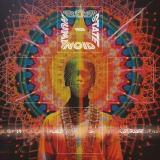
The single release from Jimi Tenor's second thematic album on Timmion Records offers two very different moods. "Summer of Synesthesia" takes us back to those dreamy summer days, a natural overpour of sensations mixing together, sounds becoming colors before turning into flavors. Synthesizers grow into delicate layers over Cold Diamond & Mink's rhythm, and when your heart can hardly bear the beauty of it all, Tenor's soft lyric places the cherry on top. "Tsicroxe" on the flipside couldn't be more different, kicking into gear with a demonic organ arpeggio that sounds like you've just been dropped into a Dario Argento scene. Even though the familiar funk from Cold Diamond & Mink eases the dread a bit, when Tenor busts in with the eerie flute solo, the ritual closes in on its conclusion.
The contents of the backwards vocal bits at the end shall be saved for your turntable so make sure to rewind that track, selector! Also Available From Jimi Tenor & Cold Diamond & Mink: Is There Love In Outer Space? 7", Gaia Sunset 7", Is There Love In Outer Space? LP / CD. The single takes listeners on a sonic journey: “Summer of Synesthesia” flows with warm, dreamlike beauty, while “Tsicroxe” dives into intense, mysterious depths, showcasing Tenor’s dynamic range. Blending synth layers with Cold Diamond & Mink’s classic funk rhythms, both tracks bring elements of 70s soundtrack-style tension and ethereal soul, appealing to fans of both cosmic grooves and suspenseful soundscapes. Tenor’s layered synthesizers, haunting flute, and even backward vocal elements add a captivating texture, making “Summer of Synesthesia” b/w “Tsicroxe” a must-have for fans of genre-blending, atmospheric music.
Buscar:natural element
Chapeau Music presents its second vinyl release, this time by Resonances (IT). "Signal" is a record that connects diverse shades of electronic music: from jazzy undertones to industrial techno, from punchy and intricate rhythms to straight and clean grooves. It's a collection of tracks that showcases the vision of the "man behind the Octatrack".
The title track "Signal" develops naturally, immersing the listener in its dynamic layers of piano stabs and synth elements with a fast-paced groove. The subtle distortion of the rhythmic elements injects raw energy without compromising the track's underlying elegance. It reimagines the genre's darker roots, offering a bold and innovative perspective.
Gene Richards Jr's remix of Signal intensifies the journey, delivering a high-impact, hard-groove edge that perfectly complements the EP.
"Please" concludes the A-side with a pulsating rhythm and a cadence that keeps the dancefloor in motion. Its energetic progression completes the A-side with an undeniable dancefloor weapon.
The flip side begins with "Randomizer", an exploration of atmospheric and industrial textures. The track builds around a solid kick drum and spatial synths, with scattered elements orbiting like satellites to create an extraterrestrial experience.
To close, "The Stand" merges classic influences with melodic, Detroit-inspired elements. Wide, reverberated synths fill the space, crafting a fusion of rhythm and melodies to deliver a standout closing track that feels timeless.
‘Subtle Bodies’ is the new album by US-based sound artist and composer Francis Morning, released on Ltd. cassette via Lo Recordings, which contemplates the concept of the non-physical, energetic layers of a person that exist alongside the physical body. Being the next installment of Lo Recordings' ongoing SPACIOUSNESS series, the album features 15 tracks that embrace the theme through hints of electric piano melodies buried under layers of tape hiss, meandering sine wave bass notes, and expansive ambient textures.
The compositions on ‘Subtle Bodies’ are meditations on impermanence, imperfection, and the natural process of decay, approached without judgment. They arise from moments of introspection, often inspired by the contemplation of inner channels, energies, mindfulness, breath, and other Tibetan Buddhist practices. Deliberately recorded using minimal equipment, each piece explores and pushes against the thresholds in an attempt to strike a balance of texture and noise. About Francis Morning:
Francis Morning is a US-based sound artist, musician, and composer known for crafting gently textured sonic environments using a simplified palette of musical hardware, including analog tapes and cassettes, field recordings, synths, pedals, pianos, and acoustic and electric guitars. His work embraces imperfection, human quality and touch, and the transient nature of life. The music began to take shape as simple, personal daybreak rituals with no audience or expectations. Each piece was recorded live in single takes, with the original elements eventually discarded or recorded over, as a statement and exercise in impermanence and letting go.
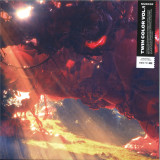
Twin Color - Vol 1 marks the grand return of Murcof to producing a full-length album in all its glory and generosity, nearly two decades after the release of Cosmos in 2007. Celebrated for his classical, minimalist textures and unique soundscapes, Murcof has established himself as a master of modern ambient music alongside Tim Hecker, Alva Noto, and Johann Johannsson. With this new album, Murcof takes a bold step forward, embracing a distinctly cinematic and dystopian narrative influenced by the great science fiction films of the 1980s. This new direction immerses the listener in atmospheres that are at times dark, at times filled with nostalgic brightness, drawing inspiration from post-punk and synth-wave, while partially reconnecting with his early experiments with the Nortec Collective.
Premiered at Mutek Montréal in August 2024, Twin Color is also an unprecedented audiovisual performance, created in collaboration with Simon Geilfus, based in Brussels, who has nourished and colored the album’s production. This immersive performance, conceived in the IRCAM studios in Paris in 2022, unfolds the album's tracks against a backdrop of moving natural landscapes, as mysterious as they are fascinating, highlighted in the album's visual elements.
Twin Color - Vol 1 will be available in vinyl, CD, and digital formats, each with track listings adapted to the listening experience. This album reaffirms Murcof’s unique sonic signature, blending analog synthesizers with modern production techniques to create a multisensory experience, propelling Murcof into an exciting new decade.
As the tenth candle flickers atop the torta alla panna, Archeo Recordings play the Uno reverse card, breaking with tradition to give us a gift in celebration of its birthday: the first in a series of exquisite EPs on which the label's favourite contemporaries pay homage to past masters. Each re-polished gem is plucked either directly from the beatific back catalogue of the fine Florentine label or is at least Archeo-adjacent, perhaps a sign of future wonders to come. Like a musical version of Janus, who can be found at the heart of Bertoldo di Giovanni's frieze in the Medici villa, Archeo Recordings will continue to look forwards and backwards to provide sublime sounds for us all.
Pepe Maina officially joined the Archeo family in 2019 with the much-needed reissue of his 1979 masterpiece Scerizza (AR015), but his astounding music has been a constant companion to label head Manu for much longer. An inter-dimensional, multi-instrumental maverick, Maina weaves the frayed edges of prog rock, new age, organic jazz and global minimalism into a shimmering tapestry all of his own. The results are spread across fifty years and almost as many albums, largely self-released and always absolutely untarnished by commercial concerns.
Based in a small village in the hills of Brianza, just north of Milan, Maina translates the beauty of his surroundings into transformative tone poems, and the folkloric fusion of "The Infinite", originally released on his 2014 CD Tales From The Hill, is the perfect example of his practice. It opens with a recitation of Giacomo Leopardi's 1825s poem "L'Infinito" by famed Italian actor Vittorio Gassman. A leading figure in the romantic movement, Leopardi explores the idea of time and space within the natural world, and the peace that comes with an appreciation of the immensity of eternity. Manu, longtime digger and now a burgeoning producer, expands upon the original with tribal percussion, chirping electronics and a spheric bassline, folding Maina's elegant strings and gossamer pads into a new arrangement suited for a slow dance under the stars.
Unless you had a well-trained ear tuned to Italy's avant-jazz scene, chances are your first encounter with innovative flautist Roberto Aglieri came via the 2017 Archeo reissue of hisalmost untraceable LP Ragapadani (AR011). It's a true testament to Manu's digging credentials that he snatched this masterpiece out of the esoteric atmosphere and brought it attention it so richly deserved. A delicate union of digital synthesis and versatile flute - be it soft and silvery or
brilliant and clear - the 1987 album was a shapeshifting masterpiece, replaying scenes from Virgil, Verdi, Visconti and Pasolini with a neon glow. Quintessentially Italian, but uncanny and previously unimagined - Penthouse and Portico perhaps. Powered by a percolating prototechno sequence, cascading keys, hallucinogenic vocal snippets and a variety of tonal timbres from Roberto's reed, "Danza N. 1" long deserved the praise reserved for Jean-Luc Ponty's pinnacle, so many thanks to Manu for our collective introduction. The tall task of reinterpreting this particular paragon falls to Perugian polymath Daniele Tomassini AKA Feel Fly, whose peerless skills as both producer and musician have delighted DJs and dancers alike. Hot on the heels of his diverse and definitive remixes of Tony Esposito for AR027, Daniele delivers a radical rework of "Danza N. 1" perfect for both day rave sunshine and full moon party alike. Enhanced by snapping breaks and a rattling kick, the bassline gurgle emerges as a progressive powerhouse, laying the foundation for the trilling flute and circular keys to cast a psychedelic spell. As the slow-Goa revival picks up pace, this one is way ahead of the pack.
Archeo take us all the way back to the start of its story here - well almost. Though it bore the stamp AR001 (2015), this Radio Band reissue actually hit shelves months after Tony Esposito's "Je-Na' / Pagaia"; a false start perhaps but a true classic all the same. Radio Band were a group of DJs from Florence who all sailed the airways of Radio Fantasy in 1984 and whose one and only release was this super groovy slice of Italo-boogie. Following the example of Milanese DJs Band of Jocks but far surpassing their formulaic funk fizzle, Radio Band employed an intergalactic bassline, cosmic keys and that undeniably Italian style of rapping to deliver a sophisticated party-starter which even found its way to disco deity Ron Hardy. Back to the here and now, and if you've found yourself pumping an ecstatic fist to a supercharged Italian epic of late, chances are its from the mind of the mysterious Radiomarc. Operating on the ascendent Popcorn Groove imprint, this shadowy figure steers his country's lost classics into peaktime territories, finding a sweet spot between late Italo-disco, early Italo-house and contemporary cool. Pushing the tempo with a club-ready 4/4, setting the sequencer to stun and supplementing the original melodies with a series of synth riffs, the mystery producer send this one into orbit. Radio Band - Radio Rap - Radiomarc, the circle is complete.
Few have done more to develop cross-cultural musical exchange than Futuro Antico. A collaborative venture from musician, archeologist and ethnomusicologist Walter Maioli, keyboardist and tonal theoretician Riccardo Sinigaglia and multi-disciplinary artist and composer Gabin Dabiré, Futuro Antico formed in Milan in 1979, combining ancient international folkloric traditions with otherworldly electronics. The result is an arresting melange of Mediterranean, African and Asian instrumentation, mimicked by esoteric synth tones and hypnotic minimalism, which the group perfected on their acclaimed 1990 LP Dai Primitivi All'Elettronica. The meditative and transportive "Pan Tuning" belongs to their largely overlooked 2005 CD only release Intonazioni Archetipe, and has been amongst Manu's most loved tracks from the first moment he heard it. Who else is better placed to reshape this evocative opus into an immersive, transcendental dance floor journey than label favourites Mushrooms Project? The duo sows the original elements into a sprawling fifteen minute fusion of séance and science, at times propulsive with a ritualist rhythm of tuned percussion and crunching drum machine at others drifting off into ethereal ambience. Mushrooms Project continue to push the boundaries of the Afro-cosmic style, and this remix marks a new zenith.
Glenn Astro leans into the twilight months of 2024 with a new album from his Delta Rain Dance project. Divining fourth world sensibilities from his restlessly curious studio workflow, Astro weaves a mesmerising tapestry of sound on Music For Autumn which treads the line between horizontal meditation and head- nodding, backroom-ready groove.
Amongst his constellation of myriad aliases, Delta Rain Dance spells out the inspiration Astro takes from fourth world pioneer Jon Hassell. The project first surfaced with a string of tapes, LPs and digital releases around 2018, all carried on a label of the same name to keep Delta Rain Dance enclosed in its own space
independent of Astro's many other musical endeavours.
"I’m really into the world building aspect in science fiction and fantasy," says Astro. "This is my way of creating worlds and spaces that co-exist next to each other. Sometimes they collide but mostly they exist peacefully next to each other or pursue some form of cultural exchange by collaborating with each other."
There's a strong sense of balance and cohesion throughout Music For Autumn, as organic percussion and instrumentation wraps around delicate synthesis and patient drum machine pulses so naturally it's hard to spot the joins. The sound has plenty of room to stretch out, from the mantra-like chimes and rattles of the album opener 'Green Light Fade' to the luxury funk of 'Mmmh, Nice' (featuring fellow Tartelet alumni Nelson of the East). At times the electronic elements seem to entirely dissolve, not least behind the loping strings and tumbledown percussion of 'Second Sleep', while achingly beautiful closer 'Plucked' centres on the fluttering movement and expression Astro elicits from his modular setup.
True to the project's influences, a consistent ambiguous mood lingers in the air over Music For Autumn somewhere between far- flung mystery and comforting familiarity, reliably calm but equally contemplative. It's an odyssey of serenity with enough nuance to make you really think, perfect for the days getting shorter, leaves crunching underfoot and the last fading rays of warmth from the sun.
EN:
I am thrilled to present my new musical work, "Oscillations" – an album that explores the harmonious connection between the natural world and electronic sound art. The title "Oscillations" symbolizes the vibrations and rhythms that are omnipresent in both
nature and music.
Nature is an inexhaustible source of inspiration. From the gentle waves of the ocean to the subtle oscillations of leaves in the wind – everywhere, there are rhythms and patterns that are music in their own right. These natural movements and sounds inspired me to incorporate them into my compositions and weave them with
electronic elements.
"Oscillations" attempts to bridge the organic world and the synthetic soundscape.
Electronic sounds meet acoustic instruments and merge into a new, fascinating unity.
It's about uniting the natural beauty and the technical possibilities of music to create something unique.
With a piano, a double bass, a harmonium and a Moog synthesizer, I would like to invite my listeners on a journey into my sound universe.
DE:
Mit großer Freude präsentiere ich mein drittes musikalisches Werk "Oscillations" – ein Album, das die harmonische Verbindung zwischen der natürlichen Welt und elektronischer Klangkunst erforscht. Der Titel "Oscillations" steht symbolisch für die Schwingungen und Rhythmen, die sowohl in der Natur als auch in der Musik
allgegenwärtig sind.
Die Natur ist eine unerschöpfliche Quelle der Inspiration. Von den sanften Wellenbewegungen des Ozeans bis hin zu den subtilen Schwingungen der Blätter im Wind – überall findet man Rhythmen und Muster, die auf ihre eigene Weise Musik sind. Diese natürlichen Bewegungen und Geräusche haben mich dazu inspiriert, sie in
meine Kompositionen einzubinden und sie mit elektronischen Elementen zu verweben.
"Oscillations" versucht, eine Brücke zwischen der organischen Welt und der synthetischen Klanglandschaft zu schlagen. Elektronische Klänge treffen auf akustische Instrumente und verschmelzen zu einer neuen, faszinierenden Einheit. Es geht darum, die natürliche Schönheit und die technischen Möglichkeiten der Musik zu
vereinen und daraus etwas Einzigartiges zu schaffen.
Mit einem Piano, einem Kontrabass, einem Harmonium und einem Moog Synthesizer möchte ich meine Hörer auf eine Reise in mein Klanguniversum einladen.
As a true Brazilian music aficionado, Skinshape was naturally captivated by Pedro Mizutani's charm. So, when Pedro visited Europe in the summer of 2023, Skinshape invited him to its London studio. Together, magic effortlessly unfolded.
Pedro sets the rhythm, while Skinshape sets the grain. With Skinshape weaving in basslines and other arrangements around Mizutani's mesmerizing guitar playing, the collaboration was a breeze. The two musicians understood each other in the blink of an eye.
Together, they crafted a true homage to bossa nova. Without overshadowing Mizutani's style, Skinshape brought out his full musicality. It was a seamless symbiosis. The duo created a one-of-a-kind work. In the spirit of the Afrobeats movement, one could even describe it as "bossa-pop," maintaining the essence of the genre while incorporating British aesthetic elements under Skinshape's discerning ear. A sprinkling of shimmering bells here, kicks dipped in reverb there, and jazzy basslines for that extra touch of groove. As for Pedro Mizutani, he excelled in delicacy as always and did not lose altitude, soaring to even greater heights.
Slave To Society (ex AnD) returns to Natural Selection with a white-hot industrial Techno EP, entitled 'Ai Invasion', accompanied by an IDM-infused remix from hard electronica duo; Somatic Responses.
Format : 12" Vinyl / Digital
Mastered by Dadub Studios, Berlin. Cut by Simon at The Exchange Vinyl.
After a decade of redefining techno dance floors as AnD, Andrew Bowen returned to his experimental, hardware-focused roots as Slave To Society in October 2019. Since then he has seen his music released by highly revered institutions in the world of hard techno, noise, breakcore, IDM and industrial electronica, such as PRSPCT, Pure Hate, Ohm Resistance and BANK Records NYC. After forming a close connection to Natural Selection in recent years, Slave To Society returns to the London based imprint after releasing via their VA compilation 'NSUKR' with his track 'Tundra', followed by his remix of Kamikaze Space Programme's 'Dust To Dust' from his physical EP entitled, "Ashes to Ashes, Dust To Dust", released on Natural Selection in 2022.
In the form of a 4-track physical and digital EP, 'Ai Invasion' is a sonic exploration of the symbiotic relationship between humanity and technology.
Slave To Society uses carefully designed futuristic soundscapes and atmospheric textures, layered with AI generated vocals, combined with heavy and fiercely unpredictable drum elements.
Expect advanced, experimental hard techno and noise, fused with powerful low-end muscle, raging hi-hats, fragmented percussion and augmented amens.
The release also features a razor sharp and well-placed remix of track B1 - 'Robot Dementia', courtesy of legendary hard industrial electronica duo; Somatic Responses.
In true Slave To Society fashion, all rules and boundaries are smashed to pieces and all tracks are equally suitable for blasting through the world's biggest club systems and rigs as they are for home listening.
'Ai Invasion' challenges listeners to question the impact of artificial intelligence on our society and the implications of our relentless pursuit of technological advancement.
Repress!
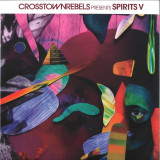
The release of Crosstown Rebels’ SPIRITS compilation is always a bastion moment for the label. The first edition came to prominence in 2017 and we’ve been graced with an annual compilation ever since, showcasing a consistent habit to champion established artists and breakthrough ones alike. Now, Crosstown Rebels’ lauded SPIRITS series will see the light of day once more in June, with the release of SPIRITS V.
NYC-native Layla Benitez leads proceedings with Fides, a progressive-leaning, introspective number that retains an inherent danceability throughout. It kicks off the compilation with a driving energy, one that’s perfectly matched by Trabajar - the Crosstown Rebels debut of recent Hot Creations inductee Mr.Diamond.
A techy-inspired cut, punchy four-four drum patterns create a distinctive late-night feel, as UK-talent Denney soon arrives with Kill The Soundboy. Showcasing the groove-laced house sound with which he’s become best known, the near seven-minute piece is sure to light up many a club setting this year, paving the way for Talk To Me. It’s a collaborative venture between Munich-based artist ASK:ME and El Muerto, with Soulfoot featuring on vocals. Retaining a vintage Detroit style, the fast-paced tempo creates a natural excitement before Romanian-born mainstay GruuvElement’s gifts us the minimal-toned Boom Room.
Building with tribal-like percussion and salsa-inspired instrumentals, it’s a playful excursion into dance music’s outer realms, paving the way for young Peruvian producer Chinonegro with My Moment. Whether it be the pluck of a guitar string or a jazzy trumpet solo, there’s an inherent authenticity to the six-minute piece, as a mid-track breakdown gives way to whispering hats and a rhythmic underlying backbone.
The penultimate offering comes from French-born, London-based regular Maglia, who serves up the enchanting Rayiys. The chirping of birds resides atop an ever-changing bassline, leaving us open and ready for the VA’s closing saga: Thanks Moon, by Spain’s I AM JAS. A heady combination of beautiful lyrical contributions combines with softly moving electronic elements, to leave us in a state of calm, inward reflection. Rounding off proceedings on a note of quietude, it reminds us of the final moments in clubland, transporting our psyche to sunrise, fond memories and everything in between.
Over a period of nineteen years, Damian Lazarus’ Crosstown Rebels has evolved into a world-renowned institution, garnering global audiences thanks to a consistent schedule of quality releases. In years since it’s earliest beginnings, the likes of Maceo Plex, Art Department, Seth Troxler, Ali Love, Mathew Jonson, Pier Bucci, Acid Pauli, Dennis Kurtel, Francesca Lombardo, Glimpse, Aphrohead, Fur Coat and a plethora of other figureheads have all found their home on the label.
The roster is international, showcasing how Crosstown has shaped a truly global scene. Releases are born in different continents by artists who hail from different countries, resulting in a sound that resonates worldwide. Perhaps most pivotal to the label’s success is its musical output: no part is governed by boundary or genre. It’s underpinned by a truly eclectic sound, one that reflects the diversity of Damian’s love for music itself. An album from drum and bass icon DJ Krust here, a maiden LP from Audiojack there… traversing genres has been Damian’s forte for decades - and Crosstown epitomises that as a result.
That true beauty lies in the essentiality and meticulous combination of a few elements is sometimes not just a cliché. The delicate blend of Roland CR-78, acoustic guitar and dissonant organs that intertwine in Open Windows is a vivid demonstration of this. It is these few elements, now distant and hinted at and now close and deafening, that paint the backdrop of melancholic nostalgia where laconic whispers move the listener within the paintings that bear the sonic signature of Human Figures. To Daniel Lewis’ new project, which has seen its springboard through releases on the label of his friends at Frigio Records, perhaps the adjective “new” is already quite tight. He has built a very recognizable sonic tibre, an influence of producers and listeners at different latitudes of the post-punk and wave scene.
In the 8 canvases of Open Windows the folk tradition is repainted in a more contemporary guise: the sweet and sad litanies are alternated with fast and frenetic stornelli in which the combination of tradition and experimentation constitutes the stylistic signature. The open window through which the listener has the opportunity to look out in this album does not, however, give onto a natural external panorama. It projects into an inner world where introspection and silence are the only chance to grasp its sublime beauty.
2024 Repress
The gang of four have a new waxed weapon in their arsenal and as expected, it bites. Three slices of complex futuristic beats with no mercy.
As in previous sound exercises, they have collided in the studio, each one with his preferred tools, recording bites, mutating audios, twisting frequencies, and this is the result:
"MG009" is a mechanical tool constructed over a concrete drum architecture, surrounded with bleeps, distorted drones and cutting hi hats. All the elements come and go wisely creating an obsessive atmosphere.
"SQMD3" follows on similar parameters, fast, distorted, enforced with the essential layers of sound required to make massive damage on a proper sound system.
"SNT0073" closes B side as an extension of the message proposed on the previous cuts: a few elements fighting in a frequency range quest in order to destroy any sign of easyness and vulgarity.
Only for the brave.
2026 Repress
The incomparable Deepchord is back on Soma and drops the first single from forthcoming album, Auratones due in October. As is expected from the Detroit based sound designer, the Campfire EP is everything we have come to know and admire about his productions, from the spaced out, ambient sound fields to classic Dub Techno.
Perfumes Of A Spring Mist delicately opens this latest EP with entrancing, processed soundscapes, beautifully haunting melody and simple rhythmic elements than seem to evolve naturally allowing you to get lost in the sea of vibrations. Xpan leans on the more classic Dub Techno sound from Deepchord of years passed. Sub heavy beats and jagged yet tranquil synths sweep across the palette as Deepchord plays with constantly fluctuating chords, bringing the quintessential 90s Deep Techno into his more modern, processed sound. Title track Campfire brings ambience to the forefront to close out the EP. Melancholic synth elements drift across an expanse of refined and uniquely crafted field recordings, offering an insight into the areas from which Deepchord draws his inspiration.
Once again Deepchord proves to be one of the most visionary artists the electronic world has seen.
Limited Natural w/ Black Swirl Vinyl 7". This new 45 from Karma Chief Records showcases two tracks from Pale Jay's latest LP, Bewilderment. The A side, In Your Corner is an Afrobeat inspired song that addresses a conversation with the self. An uplifting tune at first glance, the lyrics lay bare the internal struggle for self-acceptance. The song explores the push and pull between self-love and self-judgement that can often leave us feeling lost and uncertain. The B side and title track to Pale Jay's latest LP 'Bewilderment' showcases the main elements of his unique sound palette: silky falsetto over soulful harmonies and dusty hip hop beats. 'Bewilderment' tells the story of the disintegration of a family, creating a captivating and soulful musical experience and a journey into self discovery.
An adventurous percussion playground Trio inclassable qui explore les rythmes et les sons, Spëcht a ouvert un terrain de jeu singulier autour des percussions en donnant une nouvelle dimension à des instruments acoustiques.
Darbuka, gongs, kalimbas, riqq, doholla, bendirs,... sont à la base de leur univers percussif et mélodique qui oscille entre sons organiques et textures atmosphériques, paysages sonores aux accents de transe et grooves entraînants.
Après la sortie du premier EP "Dawn" sous le nom de groupe "Hands in Motion” », letrio sort « Triptyques » et propose une expérience évolutive en trois temps progressifs.
“The trio includes three of the top percussionists in Belgium Simon Leleux, Robbe Kieckens, Célestin Massot their music is a rich world of stimulating transglobal rhythms and transfixing sounds” World Music Central It's an exciting time for music lovers and fans of innovative sounds, as the band formerly known as 'Hands in Motion' makes a refreshing re-entry into the music world under a new name: Spëcht. With their latest album, 'Triptyques', Spëcht promises an immersive listening experience that retains the deep-rooted essence of the band while exploring new musical horizons.
After a period of artistic development and introspection, Spëcht has decided that the name change is a natural step in their musical journey. The name 'Spëcht' not only reflects their renewed focus and energy but also their commitment to creating music that is both powerful and sophisticated, just like the bird of the same name.
Triptyques' is an album composed of three parts, each highlighting a unique aspect of the band. This conceptual masterpiece takes the listener on a journey through various musical landscapes, from melodic harmonies and huge percussion elements with complex rhythms to bold experimental sounds. Each 'triptych' stands alone as an individual work of art, yet together they form a cohesive and captivating story.
With 'Triptyques', Spëcht demonstrates a maturity and depth in their musical expression that will surprise and charm both loyal fans and new listeners.
AI-36 comes from Ear to Ear - the debut collaboration between label regular Samuel van Dijk (Multicast Dynamics) and Ukrainian artist Yevgen Chebotarenko. Taken from a series of live recording sessions, the album explores in four parts a markedly darker realm of soundscape music. A cornucopia of abstract morphing scenes and heady synesthesia, the album brims with rich sonic detail and evocative gestures. Deftly blending organic sound textures with an experimental austerity, ‘Live Recordings’ displays potent and accomplished storytelling.
The album opens to a grey overcast vista, a natural landscape that slowly melts into a descending chasmic dysphoria. The mood transitions to a drone-based piece on the B-side, characterised by a more psychologically suspenseful framework and exotic blend of sound design. The atmosphere lightens, yet equally pensive as side C takes on a more elemental form, invoking water and its array of microbial and metabolic ecosystems. Brief cathartic moments in the final section pave the way for deeper wayfaring on the D-side. Stray signals and unknowable artefacts skitter across a vast subaqueous domain, a fathomless womb of potentialities that ebbs into eternity.
Juan Manuel Cidrón, hailing from Almeria (Andalusia), is a legendary Spanish synthesist who embarked on his musical journey in 1976. A veteran of analog electronic sounds, his early influences come from the Berlin School of the seventies (Tangerine Dream, Klaus Schulze, etc.) and American Minimal music.
Cidrón has independently released 16 albums on his label, Extrarradio, with very limited distribution. ‘Juan Manuel Cidrón has always been immersed in music. As a child, he fell in love with a radio adorned with flashing lights – radio is now one of his professions. He was equally captivated by the music that enveloped him. With whatever little money he had as a child and during his youth, he would spend all his money on records and analog machines. Music is everything to him, and that’s why we understand his compositions as a celebration of life. The vastness that his electronic keyboards offer us is akin to the immensity of the desert, snow, and wind. Albums like ‘Tau’ or ‘Sonido Para Acciones’ belong to the realm of Spanish electronic music and are cherished by enthusiasts of sonic poetry. This vinyl edition holds a special place as it marks a return to analog, a medium Cidrón reveres and continues to embrace. In this way, it becomes a classic, a testament to his unwavering commitment to the quality that arises from the harmonious blend of natural and artificial rhythms. The result is always him: a tangible presence that brings us closer to dreams and the unadorned face of the world.’ (F. Labordeta Blanco)
‘SLG3’ is a long-awaited double album with four lengthy tracks (one per side), available in a limited edition of 300 copies. It’s the first release exclusively on vinyl in over a decade (since ‘Patagón’ on Geometrik in 2012), considering that Cidrón has mainly released his recent works on CD.’The tracks S, L, and G evoke the personal perceptions that I could imagine for each of the three elements comprising our planet in all its forms, manifestations, and presences. The track ‘3’ evokes my unique interpretation of how an imaginary being from another world might perceive Earth – its discovery, journey to it, exploration filled with admiration, bewilderment, hope, and respect. However, all of this is open to free interpretation and imagination for those who listen.’ (Juan Manuel Cidrón, 2023)
All tracks were written, produced, and mixed by J.M. Cidrón between 2017-2019 at the Extrarradio Studio in Almeria.
In striking daubs of bled-out colour and finely sculpted layers of instrumentation, Lord of the Magi arrives on Tartelet Archives with an album of ambient reflections.
Copenhagen-based Theo Nicola Anker has different sides to his musical output. But on Soul Exchange, he shakes off stylistic concerns to focus on a purer emotional expression. It’s an instinctive paean to the pastoral life he grew up with, sent with love from his city-centre apartment. His chosen tools – guitars, pedals, synths – are the medium of the message. “I appreciate music with personality, character, and charisma,” Anker says, “so I always strive to create tracks that tell a story and evoke a specific atmosphere. No single idea for a track is solely melodic, rhythmic, compositional, or focused on mix techniques. It's always about the bigger picture, the overall vibe.”
On Soul Exchange, the overarching mood is an inviting, becalming one, but there’s plenty of space for melancholy and even a little friction. That’s apparent in the natural synergy of the organic and electronic elements as much as the emotional content, rounding out as a wholesome, holistic listening experience.
I Talk To Water, the fifth album for Kompakt by Danish producer Kölsch, is the artist’s most personal statement yet. While all the trademarks that make his music so popular and powerful are still present – lush, melodic techno; swooping, trance-like figures; sensuous, shivery texturology – I Talk To Water is also a deep and intimate rapprochement with family and history, a beautiful, finely detailed document of loss and memory, and a tracing of the long, unbroken thread of grief that runs through our lives once we’ve lost those we loved.
The emotional core of I Talk To Water, then, is a cache of recordings by Kölsch’s father, Patrick Reilly, who passed away in 2003 from brain cancer. With time rendered elastic by the pandemic and its associated lockdowns, its sudden, alienating shifts in everyday living, Kölsch found himself reflecting on his father’s passing and ongoing spiritual presence, thinking about how best to memorialise such a significant figure in his own life. Those recordings opened a gateway, of sorts, for Kölsch to move through – a way to bring past and present together and entwine them in a sensitive, poetic manner.
Kölsch’s father was a musician – “touring in the sixties and seventies, in the Middle East especially, he was doing the whole hippy trail, playing guitar, and wrote some songs over the years,” he recalls. “But all in all, he decided to focus on family rather than pursue a musical career.” Reilly kept playing and writing music over the years, though Kölsch hadn’t listened to the material for some time: “I’d never had the guts to listen to it, because I just felt too fragile listening to his voice. It’s such a tough thing to go through.”
During the pandemic, though, Kölsch listened through the fragmented body of work that his father had produced over the years. “I decided I’m gonna finally release my dad’s music twenty years after his passing,” he reflects. “This whole album is about the process of loss, and for me it’s been one of my main driving forces in my musical life, the whole emotional aspect of whatever I’ve done has been based in that feeling that he’s not there anymore.”
Recordings of Reilly appear on three songs across I Talk To Water. His guitars drift pensively across “Grape”, offering a lush thread of melody that Kölsch wraps with clicking, driftwood rhythms and droning, melancholy bass. “Tell Me” is a lovely three-minute art song, a sadly beautiful reflection, minimally adorned with gentle keys and a muted pulse. And on the closing “It Ends Where It Began”, Kölsch lets his father’s acoustic guitar take centre stage for a lament that’s unexpectedly folksy, a guitar soli dream, which Reilly originally recorded in 1996. “He actually recorded it for my first album that never came out,” Kölsch reveals, “and I had it sitting around forever. That is purely him.”
These three imagined collaborations between father and son are poised and delicate. But their relationship also marks the gorgeous music Kölsch has made across the rest of I Talk To Water, from the itchy yet lush “Pet Sound” (titled in tribute to one of Reilly’s favourite albums), the flickering synths and yearning vocal samples that slide through “Khenpo”, the ecstatic shuddering that marks “Only Get Better”, or “Implant”’s slow-motion pans and subtle reveals.
There’s also the title song, where Kölsch is joined by guest Perry Farrell (Jane’s Addiction, Porno For Pyros), singing a mantra for internal reflection: “I talk to water / Searching for myself / Looking for answers / Oceans of you.” Farrell’s appearance brings another timbre, another spirit to the album, aligning neatly with his recent interest in electronic music. “He was completely taken by this idea of talking to water,” Kölsch says, thinking about the ways we collectively lean towards the natural world as a comfort and a listener, a guide through mourning, a way to map out the terrain of the heart. This mapping is something that Kölsch has proven remarkably adept at through the years; dance music for both body and mind, but also both for the here-and-now, and for the hereafter.
“I Talk To Water”, das fünfte Album des dänischen Produzenten Kölsch für Kompakt, ist zweifellos das persönlichste Statement des Künstlers bislang. Während alle Markenzeichen, die seine Musik so beliebt und kraftvoll machen, immer noch präsent sind – üppige, melodische Techno-Tracks; schwebende, tranceartige Elemente; sinnliche, fiebrige Texturen – ist “I Talk To Water” auch eine tiefe und intime Annäherung an Familie und Geschichte. Es ist ein wunderschönes, fein ausgearbeitetes Dokument des Verlusts und der Erinnerung, und es verfolgt den langen, ungebrochenen Faden der Trauer, der durch unser Leben läuft, sobald wir diejenigen verloren haben, die wir liebten.
Der emotionale Kern von “I Talk To Water” besteht aus Aufnahmen von Kölschs Vater, Patrick Reilly, der 2003 an Hirnkrebs verstarb. Durch die Pandemie und ihre damit verbundenen Lockdowns, die plötzlichen, entfremdenden Veränderungen im Alltag, fand Kölsch sich in Gedanken an den Tod seines Vaters und seine fortwährende spirituelle Präsenz wieder. Er überlegte, wie er eine so bedeutende Figur in seinem eigenen Leben am besten verewigen könnte. Diese Aufnahmen öffneten ihm sozusagen ein Portal, um Vergangenheit und Gegenwart miteinander zu verbinden und sie auf sensible und poetische Weise zu verweben.
Kölschs Vater war Musiker – “er tourte in den sechziger und siebziger Jahren, vor allem im Nahen Osten, auf dem Hippie Trail, spielte Gitarre und schrieb im Laufe der Jahre einige Songs”, erinnert sich Kölsch. “Aber alles in allem entschied er sich, sich auf die Familie zu konzentrieren, anstatt eine musikalische Karriere zu verfolgen.” Reilly spielte und schrieb jedoch im Laufe der Jahre weiterhin Musik, obwohl Kölsch das Material lange Zeit nicht angehört hatte: “Ich hatte nie den Mut, es anzuhören, weil ich mich einfach zu zerbrechlich fühlte, seine Stimme anzuhören. Es ist so schwer, das durchzustehen.”
Während der Pandemie hörte sich Kölsch jedoch durch das fragmentierte Werk, das sein Vater im Laufe der Jahre produziert hatte. “Ich beschloss, die Musik meines Vaters zwanzig Jahre nach seinem Tod endlich zu veröffentlichen”, reflektiert er. “Dieses ganze Album handelt von dem Verlustprozess, welcher für mich generell eine der Hauptantriebskräfte in meinem musikalischen Leben ist. Der ganze emotionale Aspekt von dem, was ich getan habe, basierte auf dem Gefühl, dass er nicht mehr da ist.”
Auf “I Talk To Water” sind Aufnahmen von Reilly in drei Songs zu hören. Seine Gitarren ziehen nachdenklich durch “Grape”, bieten einen üppigen Melodiefaden, den Kölsch mit klickenden, treibenden Rhythmen und dröhnendem, melancholischem Bass umwickelt. “Tell Me” ist ein schönes dreiminütiges Kunstlied, eine traurig-schöne Reflexion, minimal geschmückt mit sanften Tasten und einem gedämpften Puls. Und auf dem Abschlusstrack “It Ends Where It Began” lässt Kölsch die akustische Gitarre seines Vaters im Mittelpunkt stehen, ein überraschend folkiger Klagegesang, den Reilly ursprünglich 1996 aufgenommen hatte. “Er hat es tatsächlich für mein erstes Album aufgenommen, das nie veröffentlicht wurde”, enthüllt Kölsch, “und ich hatte es ewig liegen.”
Diese drei erdachten Kollaborationen zwischen Vater und Sohn sind ausgewogen und zart. Aber ihre Beziehung prägt auch die wunderschöne Musik, die Kölsch im Rest von “I Talk To Water” geschaffen hat, angefangen bei dem nervösen, aber üppigen “Pet Sound” (benannt als Hommage an eines von Reillys Lieblingsalben), den flimmernden Synthesizern und sehnsüchtigen Vocal-Samples in “Khenpo”, den ekstatischen Erschütterungen in “Only Get Better” oder den langsamen Schwenks und subtilen Enthüllungen in “Implant”.
Es gibt auch den Titelsong, in dem Kölsch von Gast Perry Farrell (Jane’s Addiction, Porno For Pyros) begleitet wird, der ein Mantra für die innere Reflexion singt: “I talk to water / Searching for myself / Looking for answers / Oceans of you.” Farrells Auftritt bringt eine weitere Klangfarbe, einen weiteren Geist in das Album, der gut zu seinem jüngsten Interesse an elektronischer Musik passt. “Er war völlig fasziniert von der Idee, mit Wasser zu sprechen”, sagt Kölsch und denkt darüber nach, wie wir kollektiv zur Natur als Trost, Zuhörer, Führer durch die Trauer neigen, um die Gelände des Herzens zu kartieren. Diese Kartierung ist etwas, in dem Kölsch im Laufe der Jahre erstaunlich geschickt war; Tanzmusik für Körper und Geist, sowohl für das Hier und Jetzt, als auch für das Leben danach.
"Industrial punk from this mysterious duo, primitive but original and catchy.Punk as it used to be, confrontational, cynic, mean and with a dark sense of humour. Hailing from Barcelona they also are part of the infamous duo Ca de Bestiar, which is sort of the reverse of this project: while in Ca de Bestiar the punk component prevails over the industrial one in España the punk element is only left on the vocals and the attitude. And as with Ca de Bestiar, they enlist Viktor L.Crux as producer and mixer.
They avoid cliches but also avoid pretension, these tracks sound natural like there was not much thought put into it but pure instinct, which is an exceptional feature these days. Daring djs will find that tracks like ""Bushido"" or ""Ayudame"" are unexpected bangers.
FFO: Esplendor Geometrico, Dame Area, Liasons Dangerouses, Le Syndicat Electronique, Ca de Bestiarr"
John Ghost (Ghent, Belgium) is the sextet led by guitarist/composer Jo De Geest. As a group, they draw influences from jazz, rock, and contemporary classical music. Minimalism, electronics, and an overall cinematic quality characterize their instrumental sound. The ensemble's sound can be described as a symbiosis of Hidden Orchestra, Portico Quartet, and James Holden.
After the critically acclaimed “Airships Are Organisms” (4-star reviews in The Guardian and Financial Times, as well as airplay on BBC 6 and Worldwide FM) John Ghost is back with “Thin Air . Mirror Land”, to be released on October 6 via Sdban Ultra, the label of ECHT!, Black Flower, Glass Museum, STUFF. and more.
For this album, they continued their fruitful collaboration with legendary producer Jørgen Træen, known for his work with Jaga Jazzist, Electric Eye, Kaizers Orchestra, and numerous projects on the Hubro Record Label. The result is an album with a slightly more somber tone, focussing on a broader range of instruments and an emphasis on percussive elements."Thin Air . Mirror Land" unfolds as an aesthetic refuge in stormy times. It is a musical urge for introspection in a chaotic reality, and a longing to reconnect with a natural environment.
During the creative process, Jo drew inspiration from the music of artists such as Hans Zimmer, György Ligeti, Magma, The Residents, Disasterpeace, James Holden & The Animal Spirits, Do Make Say Think, William Basinski, and Jóhann Jóhannsson. The album title "Thin Air . Mirror Land" and the song titles are driven by a fascination with the artwork of Edvard Munch. Jo found inspiration in Munch's painting "The Storm" (1893) as a catalyst for the writing process, exploring a dystopian backdrop and the intriguing interplay between comfort and unrest. Heavily inspired by the music, Jaak De Digitale created the gloomy artwork for the album.
Members of the band are Jo De Geest (Endlingr), Rob Banken (Rapidman, HAST), Wim Segers (Compro Oro, PAARD.), Karel Ceulenaere (Black Flower), Lieven Van Pée (Echoes of Zoo, De Beren Gieren) and Elias Devoldere (Nordmann, Elias) who went through a thoughtful studio process, with the result being a conceptual and slightly dystopian atmosphere.
What comprises a dream?
An astral plane of our own making where thoughts, love, and desires of the inner mind abound with irreverence - ripe with connection & perspective beyond constraints of time, set, and setting.
Azu Tiwaline exists within the wonders of these interstitial worlds, diving deeper towards inner sanctums of mystic imagination, sublime intrigue, & profound understanding on her second full length LP “The Fifth Dream”.
Released again through her beloved partnership with I.O.T Records, “The Fifth Dream” finds Azu painting an expansive vision towards unified multitudes, mercurial realities, & abundant inner sanctums.
Where her first album “Draw Me a Silence” was a loving ode to her family & upbringing in the form of an elegant diptych, “The Fifth Dream" is the enactment of actualizing her roots into new routes, taking her multifaceted identity into new means of communication towards herself, the world, & the cosmic unknowns that surround her.
Throughout The Fifth Dream’s 54-minute runtime, we hear all elements of the uniquely transcendental sound that Azu is beloved for worldwide. “Antennae Opening”, “Blowing Flow”, & “Amen Dub” embody her talents for tectonic, dubwise soundscapes that channel the innately maternal elements of bassweight into bold & abstracted pulsations, indebted to the most psychedelic & body activating ends of dubstep.
Still attuned to the spatial awareness of dub sonics but giving way to the hypnotic syncopation & synaptic frequencies of techno, “Reptilian Waves”, “Long Hypnosis”, & “Mei Long” bring forth her spectacular expertise for entheogenic rave rhythms - guiding us warmly towards trance-inducing hyper states of dance & delight. Fluctuating between an adventurous velocity and enveloping stasis, the expansive abyssal planes of “Golden Dawn”, “Night in Palm Tree”, & “Canope Imaginaire” conjures a wondrously invigorating rhythmic enlightenment & celestial comprehension - simultaneously moving us forward, inwards, & outwards through Azu’s uniquely omnidirectional & kaleidoscopic musical visions.
Adorned with sampled field recordings of her deeply inspiring home in the desert of El Djerid in South Tunisia, Azu opens a portal into the synergistic inner sanctums of being, self, and the world around us that’s essential to her work as an artist - from the macro levels of humanity’s naturally intimate connection to the Earth we share, down to each of our own micro levels of culture, ancestry, and belonging. All of this is alchemized through a combination of timeless Saharan knowledge & modern cybernetic tools, creating new dimensions of bewitching, euphonious sonic energy. This is music that gives back as much as the listener wants to give themselves unto it - detailed and layered, orbiting a steady core as ethereal swirls and intonations of the natural world embrace us warmly within a spellbinding journey.
8 of the album’s 9 tracks feature a deep level of collaboration from innovative Franco-Iranian percussionist Cinna Peyghamy. Cinna’s use of Tombak, the principle drum of Iranian music throughout time, is beautifully sonorous - channeling the passion of centuries of Southwest Asian rhythm & expression into his own personalized flourishes, with Azu adding her own electrifying frequencies & undiluted artistic freedom to their shared interplay. This profoundly communicative diasporic essence is transmuted between Azu & Cinna, their expression, & the listener. Both are music lovers, intimately connected to their respected Iranian and Tunisian cultures - concurrently acknowledging the wisdom of their resonant pasts, while proudly bringing the sounds of their heritage into the present & future.
“The Fifth Dream” embodies a cosmic anodyne for those feeling caught in between life’s abyssal inbetweens, whilst aiming for a consonant awareness of where our home truly lies in the swells of life’s spiritual maelstrom. This dream belongs at once to none & to many, that of a common language unified in concentric depth - finding beauty in all aspects of our world, and ultimately, within oneself.
- A1: Om Mani Padme Hum
- A2: Bohemia After Dark
- A3: Companionship
- A4: Stoned Ghosts
- A5: Jay-Jay
- B1: Dijar
- B2: Con Alma
- B3: Ct & Cb
- B4: The Turk's Bolero
- B5: Talk Some Yak-Ee-Dak
- C1: Calypso Blues
- C2: Balafon
- C5: I'm A Fool To Want You
- C4: Insensatez
- C5: Invitation
- D1: Yah-Yah Blues
- D2: Serenata
- D3: Just Give Me Time
- D4: Birn To Be Blue
- D5: Sconsolato
Jazz music has more than its fair share of overshadowed figures that whilst contributing much to the music have little presence in its collective conscious. One such musician is the talented multi-reedist, Sahib Shihab. Born Edmond Gregory, as he was known before he adopted the Muslim faith in 1946, Sahib Shihab's music background shows a deep and significant evolution, influenced by Thelonious Monk, Dizzie Gillespie (his experience in Dizzie's band marked Sahib's switch to Baritone, the instrument he became most readily associated with), and above all by Charlie Parker's Bop. Had it not been for the post-war migration of many top American jazz musicians to Europe, it is quite likely that the legendary Clarke-Boland Big Band might never come into existence. Sahib, one of this musicians disillusioned with the politics and racism of the United States, accepted to join the band of Quincy Jones for an European tour in 1959. When the tour ended, Shihab he remained in Europe where he joined, in 1961, the Clarke-Boland Big Band. The collection 'Companionship', whose line up consists of seven elements which derives from this original band, spotlights the consummate musicianship and individuality of Sahib Shihab and is testimony to his special musical gifts - not only as a top-rank flautist and baritone saxophone but also as a composer. Furthermore, it provides a welcome reminder of the high quality of the Clarke-Boland Big Band's rhythm section, the lively style of vibraphonist Fats Sadi and the power and personality of two of the C-BBB's horn-playing stalwarts, Benny Bailey and Ake Persson. Here's a real rarity, surely a desert island disc. This double album has it all from frantic banging percussive workouts to modal numbers to beautiful ballads. It's a staggeringly good piece of music and worth every penny of the price tag it commands. Let's have a look to the most significant pieces. Francy Boland's "Om Mani Padme Hum", taken from a Tibetan prayer, shows Shihab in exuberant mood, playing against a vigorous percussion background and making dramatic use of his special technique of combining voice and flute. Boland contributes an incisive, effervescent solo. "Bohemia After Dark", a classic original by bassist Oscar Pettiford which he first recorded back in August 1955, finds Shihab in exultant form on baritone. "Companionship" has a Bossa Nova beat and features Bailey on flugelhorn and Shihab on flute, playing with a limpid, floating sound. Bailey's minor-key original, "Stoned Ghosts" was, he says, inspired by listening to some music written by Bela Bartok before he emigrated to the United States. The piece has an infectious back-beat pulse and showcases the superb walking technique of Jimmy Woode. In "Con Alma" Shihab's mellow flute set against a churning 12/8 beat in this stylish Boland arrangement. Woode's performance of the superb Mei Torme ballad, "Born To Be Blue", reveals his great affection for the song. "lt is the perfect combination," he says, "a beautiful melody married to a great lyric. I really love that tune." It is a song of rueful resignation, putting a brave face on the blues. "Balafon" is an up-tempo Francy Boland original written for the French mime artist, Marcel Marceau. The rhythm section really cooks on this track with Kenny Clarke's cymbal work outstanding. Boland's solo here is notable for its neat, left hand punctuations. "Calypso Blues" has been written by Nat King Cole and Don George. lt tells the wry and wistful tale of a Trinidadian in New York desperately homesick for the land where everything 5 so much cheaper (in New York "a dollar buy, a cup of coffee and a ham on rye") and the girls more natural than the artificial, painted beauties of New York. Woode's composition, "Sconsolato" is a haunting theme in A minor and it brings to a close a truly fascinating album. This is dynamic music played with vigour, verve and vitality - and it is an enormous pleasure to rediscover it. A shadowy fugitive from his home in the land of jazz, Sahib Shihab remains a true unsung figure, worthy of more attention. With his equally expert technique on Baritone, Flute, Alto and Soprano saxophones and his capacity to adapt easily to a variety of musical settings. His warm, individual, singsong sound in improvisation and his unusual and interesting compositions mark him out as a hidden treasure in the dusty corners of jazz archive.
‘Self Oscillation’ is made up of 5 club-ready psychedelic workouts swaying with natural momentum, from
Ecuadorian superstar Nicola Cruz, who makes his 2nd appearance on London’s Rhythm Section INTL.
The internationally renowned producer, Nicola Cruz, has been instrumental in pioneering the sound of Andean music over the last decade. Born and raised in Ecuador, Nicola has found his own unique way to tap into Latin America’s illustrious musical past to create something utterly contemporary. His previous projects have had the 4 elements running through as major themes: Fire and lava erupted during his sophomore album, Siku, with an Ecuadorian volcano doubling up as a recording space. And now, with his second Rhythm Section release, we are met with sounds of flowing water that Nicola describes as “aqueous explorations”. On this EP, ‘Self Oscillation’, Nicola Cruz fuses experimental production techniques with underwater, bass-heavy constructions. Moods change like the tides; from euphoric highs with acid riffs and latin drum patterns, the music quickly dives to moody submarine basslines and dark, frenetic rhythms.
‘Self Oscillation’ sees Nicola’s production move to new heights as he expertly bridges the gap between natural and mechanical sounds. With the help of iconic 80s and 90s synths and the retro colours of a Roland Space Echo, his newest work is a hybrid of electronic dance music and a synaesthetic image of nature. In the spirit of his previous EP on Rhythm Section INTL, ‘Self Oscillation’ showcases the synergy - or rather ongoing battle between the organic and inorganic, the analog and digital, civilisation confronted and confounded by nature. It’s within this dichotomy that Cruz revels, and manages to say so much, without words.
Reissue of Elizio De Buzios's "Tamanquiro". Remastered and pressed on 45 RPM!
Sitting a good 90-minute drive away from Rio de Janeiro’s crowded beaches and packed tourist hot-spots, Campo Grande is not a neighbourhood that attracts travellers from around the World. Traditionally it is home to the city’s lower middle-class, whose aspirations of moving up the social ladder were played out in a suburb that has always been solidly working-class.
Campo Grande is home to Elizio De Buzios, a Brazilian musician who started playing music in the late 1970s and early 1980s. De Buzios began as a drummer, before learning to play guitar and starting to compose and sing his own music. When he turned 18, De Buzios joined a local band formed by some of his friends and other like-minded local musicians: Sol da Terra. The band mostly played samba in neighbourhood bars and small venues around Camp Grande, but De Buzios was interested in more than just samba. While he naturally admired great samba composers such as Cartola and Beth Carvalho, his musical pass went far beyond Brazil’s national music. He also loved MPB and bossa-nova and at home he listed to Joäo Bosco, Milton Nascimento, Luis Melodia, Tom Jobim, and many bossa-nova singers.
In 1980 De Buzios was noticed by a local representative of international major label Polygram, who gave him the opportunity to record two songs. He was excited, so started searching for inspiration for the songs he would eventually lay down. He found that inspiration close to home while passing a neighbourhood shop which made and sold clogs. After noticing a display of then fashionable Portuguese clogs outside the store, De Buzios popped inside to talk to the owner. It turned out that he was a tamanqueiro – as clog-makers are traditionally called in his native Portugal – and was as passionate about music as he was about the footwear he made. Thus inspired, De Buzios returned home to work more on the lyrics and music.
The next day, he headed into the studio to record the song, with Vale Ribeiro, who later went on to produce tracks for Marcos Valle, behind the desk. With Ribeiro’s assistance, De Buzios managed to record two songs in one day: ‘Tamanqueiro’ and ‘Sou Um Louco’, a ballad with English lyrics blended into the mostly Portuguese text. From the start, it was clear that ‘Tamanqueiro’ would be the single’s A-side. Incredibly catchy and funky, with some subtle disco elements, the song remained distinctively Brazilian thanks to the use of the cuíca. Listening back all these years on, De Buzios’ lyrics seem almost spontaneous, carry the track forward, and make it almost impossible not to sing along. Its infectiousness and funkiness made it an instant hit with the first few people to hear it.
When it was released, responses to the song were enthusiastic, even if it never became the Brazil-wide smash it should have been. It resonated well in the local clubs and on the radio, but unfortunately the marketing was handled by an inexperienced Polygram employee who failed to adequately promote the track. As a result, the record sank without trace and De Buzios’ dreams of stardom evaporated. Having just started a family, he realized he could not live off the uncertainty of being a musician. Instead, he got a job at city hall as a civil servant, a role he continued until his retirement a few years ago. ‘Tamanqueiro’ and ‘Sou Um Louco’ remain the only two songs he ever recorded.
In the early 2000s, with the rise of diggers’ culture, ‘Tamanqueiro’ slowly surfaced again. It became a sought after, hard to find seven-inch single, finding its way onto the airwaves once more and into the ears of a new generation of listeners. Some started appreciating the song so much that it was referred to as the “best-Jorge-Ben-song-Jorge-Ben-never-recorded”. And they are right: ‘Tamanqueiro’ does have that Jorge Ben-straight-forwardness. It’s a completely honest song that’s almost impossible not to fall in love with. Thanks to this remastered reissue on Rush Hour, De Buzios may now get the props his sole record so richly deserves.
Now for the good news: De Buzios is still singing in local bars and clubs in and around Campo Grande. He is surprised, but also incredibly proud, that the record he had almost forgotten about is appreciated so much by a group of music lovers he didn’t even know existed. But above all, he is happy that more than 40 years after the recording session, the record lives on – not only on this re-release, but also in his weekend sets in the bars of Campo Grande.
TAU welcomes an enigmatic, esoteric entity to the fold with this stunning release from the one and only Rico Puestel. Rico’s artisan musings and wild outlook on life has resulted in the production of a stunning back catalogue, full of unique, emotionally-charged electronica. His music has found favour with industry heavyweight Sven Väth and his Cocoon imprint, so it’s a pleasure to have three new classy cuts from this in-demand producer.
The Chicanery EP begins with ‘Plentone’, a chugging atmospheric cut with a deep pulsating low end. Bright angelic twinkles impose a contrasting layer of emotion against the dour bassline. The mood is solemn, yet optimistic, punctuated by a scintillating breakdown. After the drop, ‘Plentone’ keeps pumping along as the expertly-crafted elements combine to create a mesmerising composition.
Next up is the title track, ‘Chicanery’. This one is a little more upbeat and strident, emitting a contagious charge of energy. A symphony of sparkling melodies dance above a groovy bassline. Rico demonstrates his virtuosity with this wonderfully whimsical cut. His playful use of layered melody gives the track depth, utilising his skills to really tantalise the listener.
Track three is ‘Whether’, a bluesy, eyes-down cut with a brooding exterior. A range of organic sounding instrumentation gives this track a very natural tone and appeal. Rico carefully increases the tension, teasing the energy levels up and up and up like a form of audio foreplay, leading us into an orgasmic breakdown. After that track continues its sultry jaunt, hypnotising you with its sensual allure.
Lastly, Theus Mago delivers a simmering remix of ‘Whether’. The Mexican maestro creates a whole new piece of music, with a driving rhythm, an urgent riff and a constant flow of new sounds. Theus’s reinterpretation is dramatic, compelling and deadly. Watch the dance floors explode to this one.
Fides Records is ready to introduce the 4th chapter of the10-year anniversary series with. X4 leans into momentum and contrast with its hard-groove pressure, dub-chord depth, and melodic release that showcases a side of the label where functional club tools and emotional storytelling sit naturally together.
Side A begins with Rebecca Delle Piane’s “Genomica”, a driving techno train powered by tightly layered elements and rhythmic tenacity, marking another step forward for one of Italy’s most exciting rising artists. Rorschack follows with “Primeriti”, weaving dubby chords and rolling basslines around a haunting female vocal. Closing the side, Berlin-based SLV lands with “Ritual Resonance”, a hard-groove banger that fuses percussive urgency with dub-chord sophistication.
Flipping to Side B, OFF GRID’s “The Roots” stands out as a colorful, mental hardgroove tool: elegant in detail yet built for drive, striking a heady balance between control and impact. Francesco Devincenti’s “Joanaz” brings trance tinged melodic techno with harmonic depth and cinematic intensity, opening the door to a more emotive register. The record closes with Endrew’s “Alright”, a powerhous
- 1: Channeling Elements
- 2: 300 Percent Density
- 3: Signs Of Discontent
- 4: Advancing Positions
- 5: Without Water
- 6: The Obvious Destination
- 7: Mass
- 8: Contents Under Pressure
- 9: Opposing Meter
- 10: Constant Velocity Is As Natural As Being At Rest
- 11: Words From The Lexicon
Violet Vinyl[24,33 €]
Candiria’s classic album 300 Percent Density reissued on vinyl in February Hailing from Brooklyn, New York, Candiria is one of the precursors of the mathcore genre. Formed in 1992 by vocalist Carley Coma, guitarists Chris Puma and Eric Matthews, and drummer/bassist/keyboardist/trumpeter Kenneth Schalk, the band was part of the second wave of New York hardcore, but subsequently expanded its performance to also play jazz, hip hop and progressive rock. 300 Percent Density is Candiria’s fourth studio album, originally released by Century Media in 2001. Critically praised for its experimental mix of metal, jazz, hip-hop, and hardcore, the album’s intricate arrangements and adventurous sound have made it a classic, stated by fans and critics as the band’s best work to date. The 25-year-old album is available on wax again in February 2026 via Svart Records. “Candiria have always been—and remain—a favorite among the group’s peers, because musicians already possess the vocabulary to understand the intricacy of the band’s arrangements and the tireless care and craft that went into perfecting them. Like the Dillinger Escape Plan and Converge, Candiria pressed hard to break through the monoculture of metal’s awkward transitional years and pave the way for similarly experimental bands.” -Decibel Magazine
- 1: Channeling Elements
- 2: 300 Percent Density
- 3: Signs Of Discontent
- 4: Advancing Positions
- 5: Without Water
- 6: The Obvious Destination
- 7: Mass
- 8: Contents Under Pressure
- 9: Opposing Meter
- 10: Constant Velocity Is As Natural As Being At Rest
- 11: Words From The Lexicon
Black Vinyl[23,49 €]
Candiria’s classic album 300 Percent Density reissued on vinyl in February Hailing from Brooklyn, New York, Candiria is one of the precursors of the mathcore genre. Formed in 1992 by vocalist Carley Coma, guitarists Chris Puma and Eric Matthews, and drummer/bassist/keyboardist/trumpeter Kenneth Schalk, the band was part of the second wave of New York hardcore, but subsequently expanded its performance to also play jazz, hip hop and progressive rock. 300 Percent Density is Candiria’s fourth studio album, originally released by Century Media in 2001. Critically praised for its experimental mix of metal, jazz, hip-hop, and hardcore, the album’s intricate arrangements and adventurous sound have made it a classic, stated by fans and critics as the band’s best work to date. The 25-year-old album is available on wax again in February 2026 via Svart Records. “Candiria have always been—and remain—a favorite among the group’s peers, because musicians already possess the vocabulary to understand the intricacy of the band’s arrangements and the tireless care and craft that went into perfecting them. Like the Dillinger Escape Plan and Converge, Candiria pressed hard to break through the monoculture of metal’s awkward transitional years and pave the way for similarly experimental bands.” -Decibel Magazine
- Saci Perere
- Miss Cheryl
- Melissa
- De Onde Vem
- Subindo O Morro
- Amor Natural
- Profissionalismo E Isso Ai
- Broto Sexy
- Tem Que Ser Agora
- Zumbi
Banda Black Rio is a Brazilian musical group from Rio de Janeiro that was formed in 1976. They were one of the first to undertake the fusion of Essential Brazilian Music with International Black Music. The songs are based on funk but also including samba, jazz and Brazilian rhythms. Compared to other soul-funk groups, such as Kool & the Gang and Earth, Wind and Fire, Banda Black Rio developed a particular style of instrumental soul music fusing together elements from a number of genres. With saxophonist Oberdan Magalhães, trumpet player Barrosinho, Cristovão Bastos on keyboards, Claudio Stevenson on guitars, Jamil Joanes on bass and Lucio Silva on trombone. Arrangements are from Cristovão Bastos and Claudio Stevenson. The album “Saci Pererê” was originally released in 1980.
- 1: Where The Seas Fall Silent
- 2: Kill Switch
- 3: Promised To Me
- 4: The Fallen
- 5: Looking Glass
- 6: Dead Ringer
- 7: Wretched
- 8: The Family
- 9: Killing Stone
Portland, Oregon dark rock trio HOAXED return with their stunning new album Death Knocks. Three years in the making, the group—featuring vocalist/guitarist Kat Keo, drummer Kim Coffel, and new bassist/vocalist April Dimmick—have honed their stygian craft to perfection. "We've added another element to the writing and collaboration process," says the band. "April comes from a classic heavy metal background, and her influence is in these songs. We've also had experiences on tour that have helped shape these songs. You can hear influence from the bands we toured with and learned from. We played together for three years as we wrote this album, and we learned a lot about our styles, and our sound evolved naturally together on stage. So, when we sat down to write this album, it didn't feel like a departure or a change." Anchored by the witchy spell of opener "Where the Seas Fall Silent," the rock-hardened groove of "Kill Switch," and the dimly lit power pop of "The Family," HOAXED upped the tempo, sawed the edges (Dimmick's raspy menace intimidates), and strengthened their ties to the golden gods of heavy metal. Indeed, cyclical riffs, dynamic rhythms, and bottom-heavy bass propel Death Knocks through its filmic, hard-nosed gloom, but Keo's sorcerous vocal hooks seal the deal. Often smartly paired with Dimmick's angels' n' demons, her performance effuses fragility and potency across the album's alluring expanse. HOAXED recorded Death Knocks at Falcon Recording Studios with producer/engineer Gabe Johnston (Unto Others, Vintersea) and enlisted Arthur Rizk (Power Trip, Kreator, and more,) for mixing and mastering. In total, the group spent eight days in February and March tracking Death Knocks. While most bands spend months ironing their metallic mettle, Hoaxed's expeditious time at Falcon engendered a polished, big-sounding force befitting their larger-than-life songs. Short: Portland, Oregon dark rock trio HOAXED return with their stunning new album Death Knocks. Three years in the making, the group—featuring vocalist/guitarist Kat Keo, drummer Kim Coffel, and new bassist/vocalist April Dimmick—have honed their stygian craft to perfection. FFO: Ghost, Tribulation, Bloody Hammers, Khemmis, Unto Others, GGGOLDDD, Katatonia. Pallbearer
Formerly one third of the much-loved trio Black Box Recorder, alongside The Auteurs’ Luke Haines and Jesus and Mary Chain guitarist John Moore, the British singer-songwriter Sarah Nixey has steadily gained acclaim as a solo artist who makes savvy, sophisticated and poised pop.
Delivering vocals with a detached elegance over opulent tracks, any perceived nonchalance in Nixey’s luxe, cut glass voice belies her empathy, where social commentary serves as protest, both explicit and implied. Like Billy Bragg deepfaked as prime Julie Andrews, this strange but effective juxtaposition radiates soft power. ‘Lies of the Land’ depicts a corrupt post-Brexit and Covid-19 world where inequality and division flourish. ‘England's On Fire’ delves into the nuanced concepts of patriotism and nationalism, and ‘Pleasure Bay’ narrates the story of a love affair with a deprived yet beautiful English seaside town, written after Nixey left London, drawn back to the Dorset coast.
More than just a political record though, Nixey was drawn to the poetic elements of living too, telling stories of life and death, love and loss, conflicts and symmetry, in an intimate and close-up way, as if whispering secrets to her listeners.
“Sea Fever explores the bittersweet beauty of human life amid a volatile world of changing seasons and brutal elements,” says Nixey. “These are songs of deep sorrow, remembrance, birth, and change, set against a backdrop of the sensuous natural world.”
‘Rolling Waves’ explores profound grief following her beloved grandmother's death, while ‘Spring Equinox’ celebrates the joy and awe of life after welcoming her first grandchild. ‘At the Edge of the Forest’ is a poignant story of someone losing their memory, and ‘On This Wide Night’ recounts the early hours return home of a teenage runaway.
Black[11,72 €]
Following his remix of Youthman by Echo Inspectors & Subset, Biodub returns to Primary Colours with his first original release for the label, the Dialogue EP.
The title track, Dialogue, shows Biodub’s familiar warmth and attention to detail, built around deep basslines, subtle textures, with a calm and reflective flow. It’s understated yet full of presence, a fine example of Biodub’s ability to communicate emotion through minimal elements.
Pablo Bolivar steps in for the Dream Dub Remake, offering a refined reinterpretation that expands the original into wider, dreamlike space. His version brings a smooth, rolling energy with gentle synth layers, flowing delays, and a steady, hypnotic rhythm that carries both warmth and clarity. It’s a standout moment on the release, highlighting the shared sensibility between both artists.
Grassland continues with a natural, organic movement, a balance of deep groove and open atmosphere, while Ubiport closes the record in a more introspective tone, marked by subtle echoes and restrained rhythm.Dialogue is a cohesive and thoughtful release that reflects the core sound of Primary Colours: immersive, detailed, and rooted in the deep dub tradition.
- A1: Skyscraper
- A2: Subways Of Your Mind
- A3: Goldrush
- A4: Heart In Danger
- A5: Dirty Slapstick
- B1: I Got My Eyes On You
- B2: Talking Hands
- B3: Strange Feeling
- B4: Jenny
- B5: Subways Of Your Mind (Tmms Darius Version)
Yellow Vinyl[25,17 €]
The incredible story that began with The Most Mysterious Song on the Internet (TMMS) now enters an exciting new chapter: Skyscraper, the debut album by FEX.
Skyscraper features ten original tracks recorded in the early to mid-1980s-carefully re-transferred, remastered, and brought back to life. The album cover, designed by Darius S., brings the story full circle. Darius is the very person who preserved the now-iconic track Subways of Your Mind by recording it from NDR radio in the mid-80s. Without him, FEX may never have been discovered.
FEX's debut opens with its namesake, Skyscraper-a brooding, previously unreleased track the band once described as part of their "psychedelic phase." With haunting synth-helicopter textures and deep guitar riffs, it immediately sets the tone and raises tension.
The release flows naturally into the energetic and fully remastered studio version of Subways of Your Mind. This version of the TMMS - re-discovered on the "yellow label tape" by Reddit user Marijn-was long believed to be from a smaller home studio, but was actually recorded in November 1984 at Hawkeye Studios in Ganderkesee, near Hamburg.
Goldrush, first teased in raw form on FEX's YouTube channel, bends toward mechanical rhythm and shimmering synths, a snapshot of the band's experiments with programmed drum machine sound. Rückwardt's lyrics point to greed and criticizes materialism, and while the music leans toward pop sensibilities, it carries a raw, fractured edge.
Heart in Danger and I've Got My Eyes On You offer contrasting experiences-one rooted in classic post-punk tension, the other floating in melodic synth layers. The latter in particular feels like a fragment from a parallel radio history: a precise and one of a kind synth pop love song with a progressive touch.
From a rehearsal tape comes Dirty Slapstick, its urgency intact. Missing keyboard parts were later reconstructed by Michael Hädrich using his original DX7 synthesizer-recovering lost elements without rewriting the past. The lyrics take a wry look at forced optimism. Also included are the songs Talking Hands, Jenny and Strange Feeling, the latter being a slower blues-tinged cut, revealing yet another facet of the band's reach and Rückwardt's songwriting diversity.
The album closes where the legend began-with the original radio recording of Subways of Your Mind from Darius' cassette. This version of The Most Mysterious Song features alternate vocal effects, contributing to the track's enigmatic aura. Digitally transferred using a high-end Revox machine and carefully remastered, it now has its long-deserved official release.
The cover features a photo of the Eichenberg Bunker in Kiel-one of FEX's original rehearsal spaces and a symbolic monument to their sonic legacy.
WRWTFWW Records is thrilled to unveil the limited edition vinyl reissue of Natural Sonic, the groundbreaking 1990 environmental percussion album by Japanese composer and performer Yoshiaki Ochi. Long a hidden gem of the kanky? ongaku movement, Natural Sonic finally returns in its full analog glory, housed in a heavyweight sleeve with obi and carefully remastered from the original archives of Wacoal Art Center / Spiral's visionary NEWSIC label.
Originally released only in Japan at the dawn of the 1990s, Natural Sonic is a mesmerizing exploration of earthly sound and rhythm - a sonic tapestry woven from wood, water, and stone, and skin. Ochi, who at the time was the in-house composer and performer for world-renowned designer Issey Miyake, created a series of elemental pieces that blur the line between avant-garde percussion, ritual music, and environmental sound art. The result is both deeply physical and profoundly meditative - an album that breathes with nature itself.
Echoing the organic minimalism of Midori Takada's Through the Looking Glass and the ecological grandeur of Geinoh Yamashirogumi's Ecophony Gaia, Ochi's compositions open portals into primal landscapes, evoking forests, rivers, and stones in flux. Part of NEWSIC's celebrated experimental catalog - alongside Yoshio Ojima's Une Collection des Chaînons, Motohiko Hamase's #Notes of Forestry, and Satsuki Shibano's Rendez-Vous - Natural Sonic now finds new life for contemporary listeners seeking sound that feels both timeless and vital.
A singular album of resonance and restraint, Natural Sonic is a treasure from the golden age of Japanese environmental music, finally available again over three decades later.
ugne&maria is a collaboration between Marija Rasa Kudabaite and Ugnė Vyliaudaite, both residing in Belgium. Their musical style is characterised by a multilayered, down-tempo, yet danceable approach, incorporating violin, synthesizers and sampling techniques.
We were completely blown away by the duo’s live performance at Meakusma Festival in August 2024. It was one of those rare moments when time seemed to stand still: the music, the atmosphere and the audience merged into a single warm, smooth and radiant aura of positive energy and vibes. This experience made us want to share such exceptional talent on Hands in the Dark and we are over the moon to announce the release of ugne&maria’s new album ‘Zotasphere’, dropping on 16th January 2026.
The 8 songs featured on the record came together slowly, bit by bit. Diary-like, each track reflects on different moments and life events that have followed ugne&maria over the past couple of years. Layers of sound and layers of memory are interlaced into the album, an embodiment of all that feels distant, yet still present. Most of the tracks move around a steady, unhurried pulse, never faster than 120 bpm. Some tracks even ended up being intentionally slowed down, as if the music itself wished to breathe more, mirroring life’s natural pace, with elements stretching, shifting and decelerating. Focused on bass and rhythm, influenced by the depth and warmth of classic house and low-end music, ugne&maria let the sounds drift elsewhere. The violin became a voice, the voice became a texture.
- A1: Les Arbres Grincent Pour Se Parler
- A2: Temple Bouddhiste Amidain, Ogimachi, Île De Sado
- A3: Les Démons S'absentent
- A4: Bulbul À Oreillons Bruns Et Autres Oiseaux De L'île De Sado
- B1: Kigi Ga Kotoba O Kawasu Tame Karada O Yusuri Kishima Seru
- B2: Fête Du Daimyō Gyoretsu, Hakone
- B3: Herbes Argentées
- B4: Criquets De Kurashiki
blickwinkel warmly welcomes Brussels-based composer Roxane Métayer to the label with her new album »Vies Sylvestres«, out on November 21 on vinyl and digital formats. The album was conceived and developed during performances and travels in Japan in 2023, where its sounds and ideas gradually came together.
»Vies Sylvestres« continues the direction of her previous release on Kraak, where Métayer built imagined narratives unfolding in forests or urban spaces inhabited by animal and plant characters. On this new album, however, the presence of these elements becomes more explicit and central. Field recordings are not solely used as backdrops but become compositions, complementing the instrumental works and expanding the album’s narrative into the realm of lived sound and place.
The listener encounters recordings of crickets and birds but we're also witnessing a scenery at a Buddhist temple. As such, combined with violin, electronics, and voice, Métayer explores the relationship between the natural environment and human culture. Her work bridges both worlds, showing how sound can connect different spaces and contexts.
An alto saxophone and acoustic piano engage in an intimate musical dialogue, reflecting on the current state of improvised music. Okuda and Dyberg’s album unites two artists at the peak of their musical collaboration, deconstructing jazz history into shimmering fragments, reassembling them in new forms that deliberately move away from traditional references. The music incorporates diverse influences—glimpses of classical composers like Webern and Prokofiev, abstract electronic elements reimagined acoustically, and a genuine spirit of exploration seeking a unique musical fusion.
Rooted in jazz, the Okuda / Dyberg Duo performs conceptual improvisations that include pulse, durations, interactions, natural/everyday life objects, soundalized: water dropping, light rain comes to a coffee-filter dripping, construction work or glass breaking sounds. Born in 2018. Glasscut is their third release – the first on vinyl – after Nigatsu 二月 (2019) and Naboer (2020).
What We Do When in Silence is the trio of Nicola Ratti, Alessandra Novaga and Enrico Malatesta.
Imagine a series of small movements in an empty space. Imagine their shadows on the floor, there’s a natural light sliding in from the 3 windows on your right side. There’s no silence here. There are people outside waiting for others, waiting for the people since what we do is not visible, since we do it when in silence and there is no silence here. Synthesizer, piano, whistling, electric guitar and percussions.
Nicola Ratti is a versatile musician and sound designer who has long been active across diverse experimental fields. His sound production creates systems shaped by repetition and expansion, with a particular focus on building environments that resonate with the spaces and architectures we inhabit, and on balancing the emotional and perceptual orientations to which we are accustomed.
Alessandra Novaga is a guitarist who has been exploring, for years, the possible territories her instrument can lead her to. She has crossed through the most classical worlds, reaching into intangible abstractions without setting boundaries between the two. Sound, meanings, encounters, and narratives are the elements that guide her path.
Enrico Malatesta is a percussionist and independent researcher working within experimental contexts that intersect music, performance, and territorial investigation. His practice explores the relationship between sound, space, and movement, and the vitality of materials, with a particular focus on surfaces, listening modes, and the articulation of multiple layers of information through an ecological and sustainable approach to percussion instruments.
An’archives presents Kagome Kagome, the first collaboration between France’s Delphine Dora and Japan’s Ayami Suzuki. Curious listeners might know Dora from the string of lovely, idiosyncratic albums she’s released over the past two decades, most recently for labels like Modern Love, Morc and Recital; she’s also worked with the likes of Michel Henritzi and Sophie Cooper. Suzuki’s performances, predominantly for voice, place her within a tradition of Japanese improvised music – see the music she’s made with artists such as Takashi Masubuchi, TOMO and Leo Okagawa – but her approach also takes in folk song, ambience and claustrophobic drone.
On Kagome Kagome, Dora and Suzuki play to their many strengths: a gentle, free-willed folksiness; long, aerated drone constructs; ghostly, time-warping explorations for voice. They met on Dora’s May 2024 tour of Japan, though they’d been in touch beforehand, with Dora proposing the collaboration to Suzuki, developed around “concepts of ‘otherworldliness’ and ‘impermanence’,” the latter says, “and explored the relationship between ‘the invisible’ and sound in Japanese culture – a common interest we share.”
They recorded across several days that month, with the sessions for Kagome Kagome taking place in Kanumi, in Tochigi prefecture, at a space named Center. “I was particularly looking forward to seeing Delphine encounter the vintage 104-year-old harmonium from Nippon Gakki Seizo Co. that had just been repaired at Center,” Suzuki recalls. “It was as if the harmonium had been waiting for Delphine to draw sound from it. I felt it was a beautiful relationship where they could guide each other.”
Indeed, there’s something channelled about the music that Dora and Suzuki made together in the session that constitutes Kagome Kagome. Dora’s harmonium might be the spine of the album, but Suzuki’s free- floating voice, and gaseous, muddied banks of electronics, wrap around the wheezing, ancient tonality of the harmonium beautifully – they, too, sound as though they were just waiting to be willed out of the daytime air. Their voices nestle together beautifully – “when we sang together in a tunnel,” Suzuki says, “there were times when we sang the exact same melody without planning. It happened so naturally that the boundaries between us became blurred.”
And that title? It’s drawn from a Japanese children’s song, and the song titles themselves constitute the song’s lyrics, in alternating Japanese (Romanized) and French language. Urban legend connects the song “Kagome Kagome” to the Nikko Toshogu Shrine, nearby Center, that Suzuki and Dora visited while they were in Kanumi. “The mysterious lyrics of ‘Kagome Kagome’ and its puzzle-like connection to Nikko Toshogu were a perfect fit for this mysterious album,” Suzuki reflects, “which I think has its own kind of puzzle-like elements.”
A deep album of prayer and magic, of divination and ritual, Kagome Kagome’s sense of serious play, its rich beauty, feels somehow dislocated from our time. If you’ve ever enjoyed the music of Nico, Kendra Smith, Charalambides, or other channelers of ghostly mystery, its eerie otherness will, somehow, feel oddly familiar.