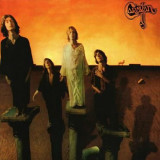
It’s a given that timing is everything in music – most obviously in terms of composition and production but often just as much in regard to conception and release – the latter two doubly poignantly so in the case of this massive DOOM vs The Sugarcubes mash-up LP from turntablist and producer Krash Slaughta.
Which is why the tale of this project’s gestation is perhaps what should be told about it before anything else.
Begun last August and finished on 25 October, the album started life as an idea born from a casual listen to final Sugarcubes album Stick Around For Joy that Krash had bought a copy of years before in a charity shop. Contemplating the cover art while listening to the LP and the track Hit in particular, it came to him that here might be the musical basis for a concept LP in the grand tradition of the hip-hop mash-up album. Thus the project was born, becoming something of an obsession as lockdown restrictions recommenced through a sanity-testing autumn. As it developed, the provisional title of Stick Around For DOOM morphed into Sugar Coated DOOM and Brighton artists Leigh Pearce and Rob Crespo were roped in to create the artwork. So pleased was Krash with the results that he decided to self-finance the pressing of the LP to vinyl which in turn would allow him to send a copy to DOOM in the most fitting format. On that basis, along with his dad’s advice that if you want something done properly; do it yourself’, he initiated the process for a limited press run as soon as the project wrapped and telephoned his dad (who’d been shielding and who he hadn’t seen for months) to say he’d done precisely that. In a tragic twist, this turned out to be their last ever conversation, for Krash’s dad died suddenly the next day. Two months later of course, while waiting for the Covid-slowed vinyl pressing process to complete, came a further tragic twist as the world received the delayed news that DOOM himself had also passed away back in October – in the event, only five days after Krash’s father. So it’s no understatement to say that Sugar Coated DOOM carries significant emotional resonance for its maker, forever linked as it will be to the deaths of two of his personal heroes.
Which brings us to the content. The album contains seven vocal tracks, with an alternate version of one and instrumental versions of five of the seven across two sides of an album with the music, track names, LP title and cover art mashing up musical, lyrical/ textual and visual elements of The Sugar Cubes’ Stick Around For Joy with DOOM acapellas, track names and references. Listeners won’t need long to appreciate that Krash Slaughta was right to be proud of his creation, almost certainly correct in thinking DOOM would dig it and no doubt The Sugarcubes too. Also, who would have thought The Sugarcubes had so much potential for beat-mining? But then seeing potential in the unexpected was always a vital skill from the golden era of sampling in hip-hop and those who follow in the tradition. The first track proper, for example, swipes Madlib’s lo-fi beat from underneath the vocals for Figaro and replaces it with the looped and beefed-up opening bars of the Cubes’ I’m Hungry. The result is a natural fit. But then the blending of elements in every track on this release provides evidence of the effort and love put into its creation, reinvigorating DOOM’s classic vocals while re-purposing The Sugarcubes in a manner that will delight. Indeed, if you’d didn’t know the work of Bjork’s former band, you’d be unlikely to pin an early 90s alt-rock LP as the sample source. I imagine listeners will have a hard time picking a favourite too. Perhaps Hit It (based on the track which triggered the project idea in the first) which splices the Bond-theme-ish Hit with My Favourite Ladies might prove the most popular, or the monkey’s favourite, Nurse Chong, which blends Happy Nurse with Raedawn (named for Tommy Chong’s daughter) from Viktor Vaughn LP Vaudeville Villain. Whichever one punters pick though, anyone who hears anything off this will know it’s one to rank alongside your other favourite hip-hop mash-up albums. And who knows – perhaps even Mr Daniel Dumile himself might have considered it a not unfitting epitaph.
Search:natural element
White Vinyl
The record opens out with clamouring field recordings taken on Vernon's travels in Japan; the cacophony melts effortlessly into the muted beauty of "Amber Fade", its cold synths and sombre chords striking a perfect emotional balance. "Tilted" similarly plays with ambient elements, lush pads easing their way out of the sounds of a waterfall but the natural sounds are contrasted by a touch of acidic 303. This hint of the club is forefronted in "Late Nights", which dials up the energy with chunky big room drum loops, a stirring piano section showing Vernon can turn up the heat without losing the emotional side.
On the B-side, "This Moment (I Feel)" toys with a muzak sound palette and dazed poolside beats. "Disappear" lean heavily on an electro beat; but for a hazy elongated drop it's a heady dancefloor number, before easing off again into the closing track. "Start Again" is full of texture and character, cleverly arpeggiated synths cascading over a soft house jam.
Lux' is what we use to measure the intensity of light as we perceive it, when it's hitting or passing through a surface.
The first track, that gives the EP its name, embodies exactly that - the fluctuating, ever-changing nature of light; from fragile and fleeting to overwhelming and powerful. 'Lux' kicks off with warm synths creeping in, like rays of sunlight breaking through the clouds. Dreamy crescendos take you for a ride and build up until they melt into a comforting blanket of piano chords, accompanied by a propelling hi-hat pattern that will make you want to move. The track is hopeful, the start of a journey, with compelling break downs, industrial rhythm elements and powerful build-ups such as the one to the final section, dominated entirely by its fusion between techno-beat and dance-feel.
Next up is 'Odyssee'. An unapologetic track that picks up the pace. Kicking off boldly with harmonic tension and enticing drum sounds, it's hard not to surrender to the rich and fast-moving soundscape. Proud drums meet steel sounds and tentative piano figures, all glued together by the driving beat, determined to get to the next stop of this lifelong voyage. Striking accents, in the form of short-lived breaths or staccato bass lines take you through a labyrinth of growing gritty synths. A track that easily leads you through space and time and makes it feel like the most natural thing in the world. We're greeted with standalone bright and sparkly synth movements as 'Phoenix' rises and wraps us in warmth. Gently, like raindrops, a rhythmic pattern starts dripping in. Definition, like in many of his other works, blends rhythmical sounds that couldn't be more different into one, making them sound like they were never meant to exist unless next to each other. The track is a symbiosis of modern and classical sounds, lets us bathe in analogue warmth but always rolls along with digital precision.
'Phoenix' starts softly and ends in roaring flames: in a repetitively enchanting party, fabricated out of dark, pumping beats and gritty synths. 'Raven', the final of the four tracks and the lead single (released alongside the Jonas Ratshman remix just 1 week ago), intrigues with chants and empowerment just as much as with its determination and fragility. Falling from the highest heights, Raven lets you rediscover who you are when you hit the ground. Carried by a throbbing four-on-the-floor kick drum and covered in a synth-haze that is hard to resist, you'll float along, fall and rise with the everlasting wave-like movement of human existence.
Delving into the recent past in order to revisit forward-thinking projects that, owing to the social, musical or outright political climate, struggled to find an audience, Lost Futures returns with a record from Cairo based project, PanSTARRS. An assured and intriguing blend of post-punk and electronics, 'Ghaby Ghaby Ghaby' is the confident and personal work of Youssef Abouzeid, a fixture within Egypt's unique underground music scene.
"At the time, I was actively occupied by arguments on the fusion of culture in creative context, specifically between western and arabic elements." recalls PanSTARRS founder, Youssef Abouzeid. "The goal was to find a point of natural expression within Arabic songwriting that meets electronic guitar music, and put out something seriously inspired by both and easy on my ear."
By far the heaviest release from the PanSTARRS project at the time, 'Ghaby Ghaby Ghaby' immediately establishes a superior sense of rhythm. 'Khally Balak Hatmoot' practises instant hypnosis, Abouzeid's earnest vocals beckoning outsiders forward over a layer of feedback occupied by a ghostly shift, one which breaks to release a crescendo of post-punk guitar. This sense of subtle drama continues on 'Men Gheir Wa7da', demonstrating a skill for songwriting that recalls the uncompromising approach of The Birthday Party or Lydia Lunch.
'Tortit Naml' is driven by skittish, rapid-fire drums and tense guitars, either subverting or confirming it's subtly anthemic status with a dramatic explosion of feedback. 'Sala Ya Khaifa' brings respite, a mellow and earnest slow-burner, the bubbling spoils of the PanSTARRS studio providing a wistful texture drenched in reverb. Finally, '70mar 3ala 7osan' sees Abouzeid give his voice over to those same machines, burying his barbed perspective in contrary analogue bliss.
Half a decade later, Abouzeid's optimism and experimentation are certain to resonate on a scale beyond that of Cairo's defiant underground music scene.
"Working on everything myself, I enjoyed total creative freedom and kept an organic flow of dirt and error, which was key on this record", recalls Abouzeid. "Sometimes vocals were recorded as lyrics came spontaneously, sometimes written on paper and then recorded on first takes, but I always prioritized the moment while keeping the perspective in check."
Ryley Walker currently resides in New York City. But his latest LP is a Chicago record in spirit. The masterful Course In Fable, the songwriter’s fi@h solo effort,
draws from the deep well of that city’s ferCle 1990s scene, when bands like Tortoise, The Sea and Cake and Gastr del Sol were reshaping the underground,
mixing and matching indie rock, jazz, prog and beyond.
Walker spent his formaCve years in Chicago, absorbing those heady sounds and finding ways to make them his own. Even though he emerged at first in folkrock
troubadour mode, it makes sense that he’s arrived at this point; each LP has grown more intricate and assured, his influences disClling into something
original and unusual. To put it simply: Course In Fable is Walker’s best record yet, full of acCve imaginaCon and endless possibiliCes.
Last October, Ryley went straight to one of the primary architects of the Chicago sound to make the LP. John McEn:re, Course In Fable’s producer/engineer/
mixer, can rightly be called a legend for his work with Tortoise, Stereolab, The Red Krayola, Jim O’Rourke and countless others over a prolific career that now
spans more than three decades. Seeing his name in an album’s liners is preVy much a trademark of quality.
Another Windy City exile, McEnCre is based on the west coast these days, working out of the Portland, OR studio he’s dubbed Soma West. On the seven songs
here, he delivers the signature shimmering and prisCne sonics he’s become known for over the years. But McEnCre was also inCmately involved with Course
In Fable’s overall creaCve process. “I told him to take the mixes and have at it,” Walker says.
The result is a rich, immersive affair — a headphones record if ever there was one. Course In Fable’s songs are twisty, labyrinthine things, stuffed full of ideas
(Walker half-jokingly calls it his “prog record”). But no maVer how complex it gets, the album is never overwhelmingly busy. Wiry guitars melt into gorgeous
string secCons (arranged by Douglas Jenkins of the Portland Cello Project). Tricky Cme signatures abound but feel as natural as can be. Melodies o@en dri@ in
unexpected direcCons but remain downright hummable. Like Walker’s beloved Genesis, the pop element is never too far from the surface even when shit
gets weird. (And speaking of weird, Ryley says that in addiCon to Genesis, much of the album’s inspiraCon comes from “Australian extreme scooter riders on
YouTube and balding gear heads on Craigslist.” Go figure.)
To help put together these various puzzle pieces, Ryley assembled a band made up of several longCme collaborators. Bill MacKay (another Chicago mainstay)
and Walker have made two excellent instrumental duo records of interlocking guitars and warm give-and-take — a rapport very much in evidence
throughout Course In Fable. The freakishly talented drummer Ryan Jewell has performed with Walker for years now in a variety of seangs, from
straighborward song-centric sets to blown-out improv extravaganzas. Bassist Andrew ScoJ Young (Tiger Hatchery, Health&Beauty) has logged many miles on
tour with Walker; he and Jewell are frequently astonishing, a buoyant-but-always-locked-in rhythm secCon, able to navigate someCmes dizzying turnarounds
with apparent ease. Listening to the interplay between Walker and these musicians and you might be fooled into thinking they’d spent a year roadtesCng
Course In Fable’s songs. But it all came together relaCvely fast, thanks to demos, rehearsals and the kind of musical empathy that comes from years of
playing together.
Beneath the wondrous interplay, you’ll find some of Walker’s most personal – if sCll typically crypCc — lyrics, hinCng at some of the trials the songwriter has
been dealing with in recent years. Balanced with necessary doses of dark humor and oddball poetry, Course In Fable feels most of all like a life-affirming
record, fresh air in the lungs, sun on your skin. “Fuck me, I’m alive,” Ryley sings at one point, a moment of both disbelief and pure joy.
Walker has released his albums on a who’s-who of independent labels over the past decade — Tompkins Square, Dead Oceans, Thrill Jockey and Drag City
among them. This Cme around, he’s doing it DIY-style, puang Course In Fable out on his own Husky Pants imprint. You’re in good hands. This is an album that
sounds great (mastered by Greg Calbi), looks great (artwork by Jenny Nelson and design by Michael Vallera). It probably even smells great. Whether you’ve
been onboard since the beginning or are new to the Ryley Walker universe, you’re in for a treat.
Recorded sporadically over five years from 2015 to 2019, Sixty Summers was shaped profoundly by Stone’s key collaborators on the album: Thomas Bartlett, aka Doveman, and Annie Clark, the Grammy-winning singer, songwriter and producer known as St. Vincent. Bartlett and Clark were the symbiotic pair Stone needed to realise her first pop vision. A wizard of production and songwriting, Bartlett helped coax Sixty Summers’ independent, elemental spirit from Stone, writing and recording over 50 demos with her at his studio in New York. Itself a thoroughfare for indie rock luminaries, some of whom, such as The National’s Matt Berninger and Bryce Dessner, ended up on the album, Bartlett’s studio was perfect fertile ground for Stone’s growth.
Clark was the incisive yang to Bartlett’s yin, a sharp musical polymath who, when presented with the work Bartlett and Stone had made together, quickly helped fashion Sixty Summers into the album it was destined to be. Contributing vocals and guitar in addition to production, Clark’s revered acidic touch ignited the sparks of Stone’s creations.
The scope of Sixty Summers is dizzyingly vast; miles away from Stone’s past work, it is a world unto itself, a surreal and breathtaking new landscape. Where Stone’s previous solo records, 2010’s The Memory Machine and 2014’s By The Horns, found her grappling with the natural darkness that comes with loving too much, Sixty Summers finds Stone claiming every part of herself: fire, fury, love, lust, longing. Touching on reference points as disparate as the avant-funk of Talking Heads (on ‘Break’) the romantic 2am musings of Serge Gainsbourg (‘Free’, ‘Dance’) and the sleek, ecstatic synth work of Lorde’s Melodrama (‘Substance’), Sixty Summers is an album you can dance to and one you can lose yourself in completely.
Zaumne's new album titled Élévation is a multifaceted yet subtle work, an abstract collage that is equally entrancing and immersive. Quoting passages from Baudelaire’s “Flowers of Evil”, the Polish musician promises to elevate the soul and consciousness “Beyond the sun / Beyond the ether”. Yet simultaneously, the artist wants us to stay where we are and focus on the immediate surroundings in search of our personal attachment to the world.
Initially recorded for the WET (Weird Erotic Tension) online community the four pieces are an exploration of erotic aspects of the environment and uncanny intimacy with other beings and objects that dwell in our nearest proximity. Just like on previous releases for labels like Czaszka Rec. or Perfect Aesthetics, on Élévation Zaumne maintains his interest in emotional aspects of sound and internet culture – he builds his compositions from fragments of ASMR-whispered poetry, samples of natural phenomena and field recordings from his family home and its environ.
What starts as an escapist exercise driven by uneasiness and ennui becomes an individual healing process, in which the subject rediscovers the strangely intimate relationship with the world and opens up to almost magical methods of communicating with other beings. ASMR samples and sounds of the artist touching, playing with and exciting different objects are an experiment in establishing contact with the non-human realm and a method of attuning the body and the mind to the reality in which everything is interconnected.
Zaumne tests Einstein’s “spooky action at a distance” through radical, sensual intimacy with what’s near, finding a glimpse of the absolute in his own room, again quoting Baudelaire: “To a child who is fond of maps and engravings / The universe is the size of his immense hunger”.
Zaumne is the moniker of Polish musician Mateusz Olszewski. In the past few years, he has released music on labels like Magia, Perfect Aesthetics, BAS or Czaszka Rec. Élévation, released by Mondoj and initially commissioned by WET, is his first vinyl release. Blending elements of genres like ambient, dub, minimalism and tape music with ASMR samples, field recordings and spoken word, he creates work with deep emotional focus and impact.
After making a name for itself through acclaimed reissues of forgotten gems, Lyon’s Tunnel Vision Records is back, this time with a previously unreleased cult EP from the Serbian underground: InnVision’s Lake produced by Welljam aka Velja Mijanović, one of the pioneers of electronic music in Serbia and host of the legendary “Liquid” show on Yu Radio.
While it is fairly common these days for tracks to reach cult status after being uploaded to Youtube and picked up by its recommendation algorithm, the story of the Lake EP is truly unique.
Picture this: it’s the summer of 94 in Serbia and despite US sanctions, something was going on in the country’s musical underground with open-air parties on lakesides and other natural locations, fuelled by a feeling of freedom and creativity. At the time, InnVision was a 26-year-old producer inspired by the likes of The Orb, Brian Eno, Underworld, and Spooky. Unconcerned with adhering to trends or finding ways to make commercially-viable music, he created the tracks on this EP with Cubase running on an Atari computer and several synths fairly common at the time.
But the result was beyond anything common or ordinary. Described by its creator as “organic (ambient) house, but you can call it trance”, LAKE is rapture in its highest form. Pure enthusiasm seems to be driving this uplifting track, with an abundance of heavenly arpeggios and positive energy, along with masterful arrangements that make it even more grandiose, while retaining a light and dreamy quality (perhaps it is no coincidence that Lake in Serbian evokes weightlessness). It is one of those rare tracks that have a deep impact on body, mind, and soul and for which the repeat button was created. While adhering to a central theme, it never feels stale and this is explained by the fact that it was arranged live, with InnVision muting and tweaking everything in one go, which makes this track a “deskmix”, to use dub terminology. In fact, the producer remembers jumping around and shedding occasional tears while he recorded the final take.
On the flipside is another previously unreleased track, the forward-thinking NIGHTY. By no means filler, this is a timeless track with a subaquatic feel. With lush pads and elements doused in delay and reverb, you’d think this is a purely ambient cut, but it’s much more than that. Subtle melodic and rhythmic elements are engaged in a dialogue, and distant breakbeat samples can be detected in the background, enough to induce movement but never overtaking the vibe carefully created by InnVision. The result is a track that is at the same time featherlight and impossible to listen to without some sort of movement. Once again, truly unique music that transcends time and place.
Absolutely stunning second album from Trees Speak new on Soul Jazz Records. Trees Speak's new album 'Shadow Forms' is a blend of 1970s German electronic and 'motorik' Krautrock instrumentals (think Harmonia, Can, Cluster, Popul Vuh, Neu!), haunting and powerful 1960s & 1970s soundtracks (think Italian prog-rock Goblin and John Carpenter horror movies, Morricone and existential John Barry spy movies), together with a New York no wave electronic synth and guitar analogue DIY-ness (think Suicide, anything on Soul Jazz's New York Noise series or Eno's New York No Wave)! Trees Speak' segue together all these elements into 'Shadow Forms,' which follows on from their critically-acclaimed debut LP 'Ohms,' released on Soul Jazz Records less than six months ago. Trees Speak are Daniel Martin Diaz and Damian Diaz from Tucson, Arizona and their music often draws on the cosmic night-time magic of Arizona's natural desert landscapes. 'Trees Speak' relates to the idea of future technologies storing information and data in trees and plants - using them as hard drives - and the idea that Trees communicate collectively. The album includes an exclusive bonus 45 single 'Outtake' and 'Transmitter' that will only be available with the first order of this amazing and ground-breaking new album.
The three players in Chicago’s Moontype orbited each other for years before they came in phase. Bodies of Water, their debut album for local label Born Yesterday, documents travel, insecurity, friendship, and the titular element—all of which are representative of the band members’ strong connection to place and to one another. “Being rooted in the landscape became important to me while studying geology, which completely changed how I think about the world,” offers songwriter, vocalist and bassist Margaret McCarthy of the album’s central themes. The arrangements themselves feel like open-hearted negotiations; sparse fingerpicking gives way to saturated tube-screaming as naturally as the changing of tides. Over twelve tracks, Moontype revels in the woozy concoction of its many influences, but always lands on punchy hooks, shifting between arrangements both spacious and mystifying without abandoning their conversational warmth.
Conservatory students at Oberlin College’s prestigious music program, each member focused on exploring different sounds. Guitarist Ben Cruz, who came up on classic rock shredding and migrated into jazz performance, admired the indie pop of Fountains of Wayne, the groundbreaking composition work of pianist Vijay Iyer, and the genre-morphing folk of heavy hitters like Neil Young and Joni Mitchell. He played in several projects alongside Emerson Hunton, who’d drummed from age six and entrenched himself in the Twin Cities improvised music scene before even heading to college. Margaret—who grew up outside of Boston playing piano, singing in choirs and writing on guitar—spent her time creating knotty, riot grrrl-and-hyperpop inspired songs for bass and voice, as well as noise soundtracks for art installations. Inspired by artists like Adrianne Lenker and Gillian Welch, she recorded the EP bass tunes at home in an apartment over the town’s optician, releasing it upon graduation. A week later she migrated even farther west to Chicago, where Ben and Emerson had already enmeshed themselves in several projects, from avant garde ensembles to a country group.
Ben was instantly impressed by Margaret’s songs, at once “challenging and unlike anything I had played before.” The duo decided to try performing together, but knew this special music would be even better fortified with drums. Emerson was the obvious choice—as Ben puts it, “He’s our great friend and also the best drummer we know. Who else do you call?” Moontype-as-trio gigged around town, eventually embarking on a first fall tour in Emerson’s Prius. On that trip, they felt the music morph into something living, and the care and trust between them intensified. They decided to put together songs for a record, recorded at the end of 2019 with Jamdek Recording Studio’s Doug Malone, a dependable collaborator whose patient process perfectly captured the magic of their newfound familiarity. While Margaret’s skeletal demos still informed the bulk of Moontype’s full-band debut (some of which are re-recordings of bass tunes cuts), the resulting arrangements are songs reborn and strengthened by the three musicians’ absorption of one another’s ideas.
On Bodies of Water, Margaret’s soothing, unadorned alto is often peppered by the gliding, eerie harmonies of her bandmates. “We love the act of singing together,” explains Ben, who describes it as “connecting and grounding and wholesome.” The push-pull search for common ground characterizes the instrumentals as well. Round basslines occupy higher octaves, trading space with guitars chugging in lower registers, and all the while drums break apart and glue back together in idiosyncratic grooves that never lose the pocket. Of the complicated rhythms that sometimes result: “Any mathy moments are based on how the lyrics fall naturally, which feels like it frees us up from having to stay in one time signature,” says Emerson. “Rhythmic elements never feel like they’re being added in, more like they’re already there and we just float on through.”
Touring’s restlessness informed these songs, but so did the DIY scene that welcomed Moontype to Chicago—including, according to Margaret, the “wild harmonies” of Ohmme, the “deadpan explanatory rock” of Ratboys, and the “luxe math rock pattern music” of The Knees. Working at beloved venue Sleeping Village inspired Margaret’s observational vignettes; “We are sitting at the desk and you are mixing all the bands,” she reports in the middle of the dextrous folk hammer-ons of “3 Weeks,” gently admitting, “I am trying to have fun and I am trying to get paid” in a world of bikes, trucks, and velvet. “About You,” a robust power-popper written about a post-gig romp around Richmond with artist Bebé Machete, opens with a Phair-ian quip: “Looking at you with my fuck me eyes / Do you wanna get inside of mine?” Meanwhile, the spectre of lost camaraderie looms over “Ferry,” an atmospheric and anthemic standout that questions, “If I’m not your best friend / then who am I to anyone?” Alongside water, this preoccupation with friendship is a focal concern lyrically, but the palpable love between Moontype’s players is essential in communicating that desire for connection, and all three members are dedicated to exploring sound and meaning organically and together. Care and generosity are at the core of Moontype, and Bodies of Water is a clever album full of insightful music, as cosily enveloping as it is incisively honest.
- A1: Missing Highs
- A2: Caveat Emptor
- A3: Ultra Blue (Feat Newborn Jr)
- A4: An Obstruction In The Clear Plastic
- A5: What Else Do You Want? (Feat Baltra)
- A6: Utica
- A7: Salvaged Copper (Feat Terrence Dixon)
- B1: Basic Needs (Feat Nick Murphy)
- B2: Asmr/Exhaustion
- B3: Cement Object, Vacuum Sealed
- B4: Pain Tolerance
- B5: Muscle/Maintain/Feen (Feat Danny Scales)
- B6: Faith For The Weak
- B7: Life Out Of Balance (Feat Santpoort, Shigeto & Krzysztof Wodiczko)
Since his 2012 debut as Heathered Pearls, Jakub Alexander has constructed art — music, objects, installations, performances — as a way of re-imagining fragments of his past and mapping ideas for his future. The Polish-born, Michigan-raised, New York-based artist and producer sees imagery and narrative framework as fluid components to his craft. Alexander’s first album, Loyal, mimicked the hypnotic motions of ocean waves at night, offering melodic, loop-based ambient music as a tribute to the tasteful influence of his mother and aunt. The second Heathered Pearls album, Body Complex, found inspiration from comfort, imperfection, and visions of interior architecture, transforming Loyal’s soft textures into driving 4/4 figures, glacial tone drifts, and starry synth plateaus. His 2017 EP, Detroit, MI 1997 - 2001, reflected on a formative era through ephem- eral dance music. The third Heathered Pearls full-length,
Cast, returns to moodier loop formats joined by the distinctly new presence of the spo- ken word. The move mirrors the multitudes of its namesake: collaborators comprise a cast, healing in the bind of a cast, complex emotions and the shadows they cast. Alexander started work on Cast when living in Berlin and in Queens.
“I hit a wall listening to these tracks when they were instrumental.” This is where he diverged from previous modes, deciding to integrate speech. With a healthy distaste for aspects of performance art, he invited strictly non-scripted recordings, a series of anti-performances. This new format adds a surprising human element to music that has previously operated as sea-shapes or infrastructure. These flashes of language, Alexander’s close friends speaking about things, narratively and cerebrally, casually and profoundly, turn the distinctive Heathered Pearls sound into some- thing surprisingly gritty, tangible, and in certain sweeps, cinematic. It is as if the world outside of these compositions bleeds into the music, casting their verbal being from just off the surface, like the album’s cover artwork where the light hits the plexi object but misses the wall.
Alexander sees his covers as naturally unfinished workstations; the gauzed and patinaed copper on Cast continues in this philosophy. This is all to say Cast deals with absence as much a presence. Among the guest storytellers is Alexander’s friend and tourmate Nick Murphy (formerly Chet Faker), who unwinds a series of tender observations on “Basic Needs.” The swirling synthesizer immerses a series of empathies; feeling like an egg yolk, a window’s view, his love for the color yellow, and wanting yellow to love him back.
Los ingenieros oníricos se sirven de los artefactos para poder manipular su conciencia y diseñar mundos oníricos por los que viajar. De origen incierto, los artefactos se encuentran dispersos entre planos y han intentado ser rediseñados en nuestro mundo mediante el uso de frecuencias, convirtiéndose en elementos de estudio plenamente funcionales para el ingeniero onírico del plano físico. La correcta correlación de uso entre artefactos permite al onironauta saltar entre los diferentes estados de la experiencia para la formación de universos.
El artefacto Onirógeno es capaz de inducir al sueño. Sirve de puerta de enlace al mundo onírico y está presente en un estado de semi-consciencia. Dicho artefacto esférico, de naturaleza cromada, reproduce de manera cíclica el proceso de encendido de la máquina de sueños por un operador en un espacio ilusorio. El ingeniero sucumbe a un estado aletargado que permite el vínculo con otros artefactos al ser testigo de una de estas reproducciones.
El artefacto Hipnagogia es capaz de provocar alucinaciones visuales de intensidad creciente. Permite formar protomundos inconexos. Es un artefacto propio del plano semi-consciente. Debido a lo efímero de los protomundos formados, el ingeniero es incapaz de controlarlos y dotarlos de sentido.
El artefacto Efialtes es uno de los más inestables y volátiles. Este ente del plano semiconsciente provoca la incapacidad transitoria para realizar movimientos voluntarios durante la transición entre el sueño y la vigilia. Permite al ingeniero crear un canal al plano transitorio. Su presencia o interacción puede darse en los primeros o últimos estadíos. Está muy presente en el mundo semi-consciente y puede ser atraído por el uso de otros artefactos. Emite un zumbido muy característico cuando interacciona.
El artefacto Proyector, toroide derivado de Efialtes, solo presente en el plano transitorio. Crea un canal y permite al ingeniero ingresar, precediendo a la separación física, y materializar la consciencia en el nuevo plano.
Extracorpóreo es un derivado del artefacto Proyector, presente en el plano transitorio y con influencia en el plano físico. Permite a la conciencia materializada del ingeniero comunicarse con los impulsos básicos motrices y órdenes cerebrales del plano físico, traduciendo los diferentes protocolos implicados.
El artefacto Vacío es un espacio unidimensional que interconecta el plano transitorio con el plano onírico.
El artefacto Arquitecto, presente en el plano onírico, forma y diseña espacios acorde con las órdenes del ingeniero onírico en el caso de que el canal de comunicación sea lo suficientemente consciente. Es una pequeña recreación esférica del universo elevado a infinito en forma de fractal.
El artefacto Escultor, de hormigón y presente en el plano onírico, crea las diferentes imágenes e inteligencias que habitan el mundo onírico en construcción. Aunque puede ser controlado, a menudo actúa con un mayor libre albedrío, creando imágenes recurrentes.
El artefacto Programador, de código en cascada y presente en el plano onírico, es la inteligencia encargada de dotar a los mundos oníricos de acontecimientos.
El artefacto Devoramundos es el artefacto más inestable conocido y con mayor rango de influencia entre planos. Destruye el mundo creado como un agujero negro engulle todo a su paso.
El artefacto Cordón, de plata y presente en todos los planos, sirve como nexo entre el cuerpo físico y la consciencia materializada. A menudo, debido al influjo de otro artefacto, o a la inestabilidad en el canal creado por correlación, es capaz de obligar a la regresión, clausurando el canal de comunicación. Existe un artefacto Cordón que une cada una de las conciencias proyectadas con sus correspondientes cuerpos así como del cuerpo físico. Se desconoce que ocurre en caso de fisión.
El artefacto Regreso, presente en el plano transitorio-semiconsciente permite al ingeniero recuperar la consciencia y restablecer sus signos vitales.
Standard Light Rose LP! 'Flock' is the record that Jane Weaver always wanted to make, the most genuine version of herself, complete with unpretentious Day-Glo pop sensibilities, wit, kindness, humour and glamour. A consciously positive vision for negative times, a brooding and ethereal creation. The album features an untested new fusion of seemingly unrelated compounds fused into an eco-friendly hum; pop music for post-new-normal times. Created from elements that should never date, its pop music reinvented. Still prevalent are the cosmic sounds, but 'Flock' is a natural rebellion to the recent releases which sees her decidedly move away from conceptual roots in favour of writing pop music. Produced on a complicated diet of bygone Lebanese torch songs, 1980's Russian Aerobics records and Australian Punk. Amongst this broadcast of glistening sounds is 'The Revolution Of Super Visions', an untelevised Mothership connection, with Prince floating by as he plays scratchy guitar; it also features a funky whack-a-mole bass line and synth worms. It underlines the discordant pop vibe that permeates 'Flock' and concludes on 'Solarised', a super-catchy, totally infectious apocalypse, a radio-friendly groove for last dance lovers clinging together in an effort to save themselves before the end of the night. The musician's exposure to an abundance of lost records served as a reminder that you still feel like an outsider in this world and that by overcoming fears you can achieve artistic freedom. Jane Weaver continues to metamorphise_ "A mind-expanding delight, devoid of retro posturing." The Guardian "Ominous and luminous, expansively spacious and sonically imploding, scientific, ephemeral and eternal" The Quietus
You could think of the collection of tracks here as a library record of sorts, and each track inhabits its own universe. Tropical fits various moods and situations, and it could soundtrack any number of activities at home or on a dancefloor - whether real, imaginary, or hallucinated. Strangely enough, it sounds like it could have been constructed from obscure Italian library breaks, when instead every instrument has been played and panned, several times over, across magnetic tape.
The genesis of many of these tracks began when CV Vision moved to Berlin in 2014. His flat had a small chamber where he could fit a drum set, so he treated the walls with foam, and in true DIY style, dived headfirst into recording these tracks. It was the natural next step on an audio adventure that first began when CV Vision picked up the guitar in his teens, and a couple years later started recording with friends in his home town of Bayreuth. Fast forward ten years and here is his debut - a culmination of practising chops and learning instruments, mastering recording techniques and fine-tuning the CV Vision sound.
It’s a sound that condenses elements of acid rock, psych soul, library funk and new wave oddities into a movie soundtrack for your mind. It’s a journey from ‘60s west coast LSD-drenched excursions to ‘80s synth and post-punk mutations. Tropical is a plunge into another time, another music you can simply swim around in and explore.
Side A opens up with Tropical Tune In, which rides in on a clave and a warm wind, blowing a distinctly herbal aroma and recalling exotica dons like Les Baxter and Martin Denny. Following on with the aural equivalent of a sea breeze through your mind, Spaziergang am Meer blows away the cobwebs and conjures some nice library moments like Stringtronics or F eelings . Next, Ba_c_k(Lava) bounces out of a cold wave post-punk melting pot and crashes through the speakers like a blazed Zebedee, with some sweet eastern synths for added flavour, before the rolling bass licks of Der Böse Schamane take us into another dimension, landing somewhere between a psych rock freak out and a Black Ark dub session. Mr Maze channels the arpeggiators of synth outsiders like Mort Garson and Bruce Haack, creating a glorious interlock of robotic electronics and freakbeat vocals. The side comes to a close with the guitars of Der Strand (außer Rand und Band) letting loose like syrupy springs, and setting a languid mood like the bedroom scene in Bedazzled (1967 version). Side B kicks off with Parallel Universum, which comes through like a woozy krautrock workout, all ducking synths with big chord shifts to create an epic deranged beehive of a soundtrack. Im Land der Ameisen evokes the spirit if not the sound of White Rabbit, when logic and proportion have fallen sloppy dead, before waking up and wandering through the side alleys of Marrakech with the West Coast Pop Art Ensemble and the Electric Prunes, as Ritual (No. 4) blares out the speakers of passing tuk tuks. Ein Wasserfall plumbs the deep synth depths, like Raymond Scott in scuba gear, modular rack strapped to his back delivering oxygen as he swims between connector cables and seaweed forests through a watery underworld. Banana King sounds like a lost soundtrack to Donkey Kong or Mario Cart, if the cart radio was tuned into a synth
documentary hosted by James Pants, while Das Kloster am Berg takes the baton from Brenda Ray and her Naffi cohorts, all dubbed-out niceness and post punk swagger. The LP closes out with Tropical Drop Out, a dreamscape rather than a wake up call, coaxing you deeper into the trek across the desert of your mind.
And that’s Tropical in its essence: capsules from another time, snapshots of another sound, messages from another mind - all in the service of inducing the visions in your head.
written by Max Cole
Gold Black Marble version....
Co-founder and label custodian Zanias makes her debut on Fleisch with a journey through climate catastrophe. Composed in Berlin and mixed in Queensland with the smell of bushfire smoke in the air, she addresses the primary anxiety of our time with four tracks designed to draw the body into movement and the mind into action. Body music elements are wrought with mournful melodies and studded with samples recorded from the fast-disappearing natural world, while her voice guides the way through the darkness.
Following the stellar trip through Woo’s Arcturian Corridor , Quindi Records continues to explore intimate, inviting sounds with an experimental bent by facilitating the return of overlooked Italian duo Cabaret du Ciel.
Initially formed in 1986, Cabaret du Ciel’s debut album Skies In The Mirror was a low-key and extremely rare cassette release of spellbinding electro-acoustic ambient music created by Gian Luigi Morosin and Andrea Desiderà. A reissue on Hybride Sentimento in 2018 brought renewed attention to the startling music contained within this unique project.
The Breath Of Infinity is an album comprised of new works recorded over the past year, either as new pieces or reworked from old ideas with the assistance of Giorgio Ricci. Morosin and Desiderà’s natural instincts as multi-instrumentalists shine through across the record as they did on Skies in the Mirror , although these tracks were in fact composed as raw live takes using electronic workstations (with a little additional fretless bass provided by a close friend Giampaolo Diacci on “Different Suns” and “Climatic Variations”).
There is a crisp, digital timbre to the worlds Cabaret du Ciel shape out on The Breath Of Infinity – utopian pastureswith an air of optimism similarly expressed in the first waves of ambient electronica. Folk traditions exert a guiding influence on the sparkling, ethereal melodies and full-frequency harmonisation, but this is music enamoured with timeless plateaus rather than hackneyed interpretations of the past, present or future.
It’s also an album of variety. “Different Suns” tumbles with a pastoral, elemental earthiness thanks to the interwoven rhythmic murmuring of percussion and live bass, while “Lakota” pivots in sharply rendered bio-mechanical formations.
There’s a widescreen bombast to “Theatre Azure” which calls to mind mid-90s US electronica, while “Meredith” reclines in a blissful bath of plush 80s FM synthesis. “Sunset Parade March” has a distinct sense of propulsion thanks to its overdriven, broken techno rhythm and “Highlands” skips with an infectious energy despite not using any formal
kind of percussion, but even in these more kinetic moments a preference for mellow musicality maintains the dreamlike mood.
Consider The Breath of Infinity like an archipelago, where each track functions as its own distinct island of ideas while being intrinsically interconnected to the others. In a similar fashion to acts such as Ultramarine (who appeared as remixers on Quindi 001), Cabaret du Ciel emphasise the musicality in their electronic music, shaping out an
evocative, imaginative environment to idly glide through or attentively explore.
Flaming Tunes' sole release is perhaps the finest elegy to the '80s home recording ethos that you've never heard. Originally released in 1985 on cassette (with individually hand-colored covers), this self-titled album grew out of the collaboration between childhood friends Gareth Williams and Mary Currie.
Williams is best known as a member of English art-rock band This Heat. After leaving the group in the early '80s, he travelled to India where he studied classical Kathakali dance – an experience that would profoundly shape the music of Flaming Tunes.
In an old Victorian house in South London, the duo recorded during the day while Currie's young son attended school and Williams conducted tape treatments at night. They were joined by various guests including This Heat guitarist Charles Bullen as well as long-term collaborators Martin Harrison and Rick Wilson.
Using whatever instruments they had on hand (clarinet, piano, bells, etc.), Flaming Tunes create lo-fi melodies around simple arrangements, oblique rhythms and densely layered natural sounds. The results are a mesmeric collage of instrumental daydreams and sideways pop songs, floating into one another in a hazy confluence of late '60s Canterbury psych-folk and early Residents experimentation.
All of these beguiling elements converge in a personal manner, quietly insistent in listeners' ears like the blood pulsing in one's veins on a warm summer day.
Subheim adds a new chapter to his catalog of shadowy raves with ΠΟΛΙΣ – the fourth long player. Pronounced "Polis," the Greek word for "city," ΠΟΛΙΣ doesn't so much evoke the rapid cadences of life in a modern metropolis as it does the unspoken tension between longing to escape and being trapped in some kind of concrete stasis – living together with millions of souls in an expansive emptiness.
Subheim uses ΠΟΛΙΣ as a vehicle to depart from traditional songwriting structures, crafting each track as a piece of a larger sonic collage. Songs come out of nowhere, abruptly come to end before they even get a chance to start or introduce new motifs and surprise reprises long after we expect the next track to cue up. These stutter-start forms reflect the four years it took for the record to take shape: a series of failed musical experiments, indecision, balancing an unstoppable creative drive with the unavoidable emotional ebb and flow of life.
Though this is clearly Subheim working at a new level, listeners will recognize the sound of ΠΟΛΙΣ instantly as his, with both hints of the IDM/electronica of Approach era and the unmistaken human element that is present in all his work. The natural, off-grid time feel of the record is effortlessly augmented with field recordings and found sounds, this time around with the addition of more grit and power, and with heavier use of analog synthesizers.
Despite the album being born out of a feeling of alienation from one’s surroundings, it's impossible to ignore the sense of hope that runs through this LP. In ΠΟΛΙΣ, we hear an arrival at a deeper understanding of oneself, an inner peace amidst the decay and a cautious optimism that comes from someone who just happens to feel most at home in darkness.
Celebrating 25 years as a recording artist and 15 years of his label Lazy Days Recordings, Fred Everything teams up with House Legend Robert Owens on ‘I’ll Take You In’. The track was recorded late last year when Robert was invited to perform with Fred in Montreal during a special event by Phil Collins (the artist not the singer!). The event was related to the art installation Bring Down The Walls, which examined racial injustice and the prison industrial complex in the US and Canada, through the unconventional lens of house music.
Robert Owens needs no introduction of course, being the voice behind so many House Classics such as ‘I’ll Be Your Friend’, ‘Mystery of Love’ and of course ‘Bring Down The Walls’. The song was written the night before the studio session after meeting with Fred for the first time.
‘When I meet you, If I meet you, I’ll take you in. You become. Family’
It all came together naturally and has all the elements of a modern House Classic. Bouncy beats, rich chords and a driven bassline but most important : a song with a positive message and purpose deeply rooted in the tradition of this music we call House. On top of the Classic mix, there are 2 BTDW (Bring Down The Walls) versions, more stripped down, inspired by the event that made it possible.
The choice of Remixer was easy, calling on one of his best friend and longest collaborator Martin ‘Atjazz’ Iveson who also collaborated with Robert in the past. Off the heels of his recent #1 remix of St-Germain ‘Rose Rouge’, he brought is A-Game incorporating a latin vibe with a quirk, thanks to his modulars and Moogs rig. Atjazz can do no wrong when it’s time to rework a nice song. A true master with a unique vision and dedication to sound.
“Easy rider, come and take me higher”. When the world seemingly crumbles around, music can provide an escape few other mediums can. For their debut self-titled LP, Velour effortlessly levitate you above the madness below, each track taking a new turn, cruising over hazy flecked skylines, bustling walkways and bleary eyed bedlam. A trajectory that takes in all of jazz’s vibrancies, blending elements of neo soul, broken beat and hip hop coupled with a much-needed sense of hope across nine deep, soul-searching tracks released via WOLF Music Recordings.
A style and sound taking influence from genres and moods, environments and experiences, Essen-based Velour stretch their legs for this, their first full length album. From the off, they nestle you under their wing with the rustling sax washes of opener ‘CLP’ before diving into an epic slo-mo burner, swooping down into the chaos as singer, Eva Czaya, wistfully narrates the scenes beneath.
Unafraid to shift pace within songs, the likes of ‘Pose’, sauntering from soulful summer groove into woozy late night affair, and ‘Tom's Garage’, that progresses from roadside recounting to grungy basement blowout, finished with a sample of jazz-tinged dusty beats, show that accomplished and adept heads rest on the shoulders of these relative newcomers.
WOLF Music mainstay Mr Fries continues to head up production for Velour, his trademark touch capturing the intimacy of Velour’s sound presenting it in a way that’s considered yet raw - nothing feeling rushed, nor cluttered. A separation and space that gives each element the room it deserves to breathe, with short interludes and skits providing the perfect bridge between tracks, guiding you through smokey jazz bars and twilight whisperings.
Moving through the album, Czaya at points wanders in a serene spoken dialogue, at others letting her voice loose, but always with an ethereal demeanour that comes off with natural ease. One of many highlights, ‘Anthony Davis’ shows off this celestial prowess whilst perfectly embodying Velour’s dream-like escapism. A pent up release of creativity, as moody bass tones mix with deft keys, rolling snares sit behind swirling saxophones.
The journey ends with ‘Luminate’, a transcendent closer laced with space-echoed vocals that reverberate around over-driven Rhodes and feverish drums. Cymbals crash, as modulated synths rise, building and building before easing you off into the night and on your way to a parallel universe.
As a body of work, ‘Velour’ is a shining example of the freedom, energy and enthusiasm of the new school of jazz that’s been captivating minds the world over. An instant on repeat staple - let go, feel the flow, it’s what we need in a time like this.
Fischgeist was recorded in a former water tank in Berlin-Prenzlauer Berg in August 2019. The nineteenth-century brick building consists of five layered circles, with a spiral staircase in the middle leading up to an exit to a hilltop. Inside, it’s humid and cold, the temperature always around 8–10 C°. The building’s acoustics produce a long reverberation that lasts up to 20 seconds.
‘One day between recording sessions, a man, a passerby, wanted to look inside the building. He told me that it used to be full of fish. For a second I imagined a huge round aquarium with loads of fish swimming around in circles. Then I realized that he meant dead fish were kept there, to be sold on markets during the GDR era. But the image of fish swimming in the space stayed with me.’
In conversation with the space of the water tank, Tomoko Sauvage searches beyond the limits of her self-invented ‘natural synthesizers’: porcelain and glass bowls, filled with water and amplified with hydrophones.
While she continues to develop some of the classic techniques heard on her previous album Musique Hydromantique (Shelter Press, 2017) – hydrophonic feedback (Kinetosis Study) and ‘fortune biscuits’ (porous pieces of terracotta that emit tiny singing bubbles) (Deluge) – here new elements are combined with delicate gestures to make curious noises: stroking bowls’ surfaces to imitate the voices of sea mammals (Metamorphosis), drawing dots and circles by rubbing stones against stones underwater (Exit) … The underwater amplification of quasi-inaudible sound is even more magnified in the air by the echo of the water tank. Not only tiny bubbles, but also micro-movements of the bones and veins of the hand holding the sonorous objects in the water, are intensely amplified – sounding like a tempest on the opening Deluge. Sauvage’s longtime research into hydrophonic feedback develops with her new obsession with natural harmonics and sympathetic resonance. In Flying Vessels, the percussive notes of struck bowls resonate and turn into feedback loops before decaying, fueled by electric signal gain. Kinetosis Study is a sonic etude on fluid dynamics – the flow velocity, pressure and density of manually shaped water waves directly controlling the aquatic synthesizer’s parameters.
August, when the mid-summer Ghost Festival is held, is traditionally known as the Ghost Month throughout East Asia. The spirits of the dead visit their living families, who welcome them with feasts, dancing and music. Miniature lantern-laden boats are released in rivers, to help lost ghosts find their way home.
Animated by formless matter – water, electricity, sound – Fischgeist celebrates a phantasmagoric journey, as the souls of aquatic lifeforms find their way out of the labyrinth of the water tank.
Credits
Composed, performed and mixed by Tomoko Sauvage
Recorded and produced by bohemian drips prior to ‘Speicher’ festival in Berlin, August 2019 (binaural recording with a KU-100 dummy head microphone)
Mastered by Andreas Kauffelt in Berlin
Cover drawings by Baien Mōri (1798-1851)
© Tomoko Sauvage and bohemian drips – all rights reserved
Multi Natural is a new example of Christina’s organic chamber music. We enter nine composed chambers. Nine rooms to inhabit, constructed out of elements that are slowly fusing. The album is a string of semi constant metamorphosis. A gesture appears, is elaborated upon—or is halted and replaced by a new gesture. Multi Natural has multi focal points, quite dissimilar to Christina’s other works that tend to have a more linear path.
Within this album lives a composer who is not afraid to let the content take over. In this, obviously composed work, there is still a large space for all those sounds to act freely. It is almost like Christina is waiting for the music to compose itself. This technique speaks of respect and trust for the listener, since it gives thelistener freedom to personally connect the lines.
When you put the needle on this record, everything turns to stone. The music flows and nurtures. Sounds that come from various realities—molded into a mutual understanding. With each spin, new events catch the ears. Like looking at alandscape, perceiving new details close and far with every gaze.
When Christina warps both time and space for you, it comes to you as a gift.
Part 2 of the compilation series sees the journey evolving, this time with a more upbeat affair. Not much has changed in terms of selection, as we continue to draw inspiration from the wider world, we bring to you the sounds of artists originating from Argentina, Japan, Netherlands, Portugal, Brazil and the UK. Beyond the restrictions of this physical realm, let you ears nourish the mind & soul as they traverse the world for you…
Argentinian resident Silvio Astier introduces us to the record with the aptly named ’Santa Maria del Buen Ayre’ - the former name of his hometown Buenos Aires. Easing us in with a wonderfully atmospheric piece, carefully mixing simple percussion patterns with his own well-crafted luscious guitar work.
Next up, we have Japan native/Berlin resident Kotoe continuing the flow of downtempo sounds that slowly settle us into this compilation. ‘Ondami’ conjures up images of a distant dream… the floating vocals and echoing chimes capable of drifting the listener to a place of blissful escapism.
The tempo is turned up a notch for the last track of side A, provided by UK born folklorica maestro El Buho. Renowned for his love of merging the traditional and natural sounds of South America with modern electronica, ’Swifts’ certainly ticks those boxes with an added touch of dance-floor-ready groove.
Portuguese native duo Oxhala continue to push the sounds on the flip side into heavier territory. ’Earth Spirit’ builds from an amalgamation of stomping tribal drums, hypnotically playful keys and distorted vocals, channeling the listener to our innate primitive spirit - this is one for the body & mind.
Dutch party-starter Mytron’s contribution ’Oil’ provides the fuel for the party as he turns to fast-paced conga rhythms, cowbells and elephant trumpets. These exotic sounds bounce along with ever-persistent energy to create the soundtrack to a hedonistic carnivalesque celebration of all things wild.
If you haven’t already peaked with the previous offering, Brazilian native El Peche wraps things up nicely with track ‘Rastro De Fogo’ (ft. Mari Branco). Tripped out vocals phase in and out as the track is dominated by a tight bassline before delicate keys bring in a softer element to finish.
Nimbus Sextet are a major new talent on the UK jazz scene. Led by pianist/keyboardist Joe Nichols, the Glaswegian contemporary jazz outfit play infectiously original music that spans the musical spectrum. Nimbus Sextet’s fresh take on jazz blends instantly relatable melodic hooks with driving grooves, sophisticated musicianship and episodic compositions.
The core of the Nimbus Sextet sound comes courtesy of Joe with long-time collaborators Alex Palmer and Mischa Stevens. The trio met while studying at Edinburgh University and have continued to perform together ever since. Nimbus Sextet was fully formed in 2018 with the addition of Martin Fell and Euan Allardice joining the line-up with James Mackay arriving later.
It was around this point the band started to compose and record the first shoots of what would become Nimbus Sextet’s blend. A decidedly wellbalanced alchemy, arrived at somewhat naturally
by way of the varied musical influences and contributions from each of its culturally diverse members. You’re as likely to hear elements of
Herbie Hancock and Gil Scott-Heron as easily as The Roots and Robert Glasper.
Rickard Jäverlings music can deservedly be described as playful and searching but for that sake not fumbling or too loose around the edges. On Album 4, the second album release from Jäverling on Höga Nord Rekords, he dwells more in dub than on his prior album release, and Jäverlings skillful songwriting is carried smoothly by the soft and fluffy production: the rhythm section sounds as if resting upon a sun warm bed of moss and elements flows in and out of the production like a freshly rippling stream of water deep in the summer forest. Echoes shoots through the pines, the hills and the valleys and makes the album a premium dub experience which dominates large parts of the album.
Aside the obvious references to nature that comes in mind listening to Jäverlings music, this album is more than a romantic view on the Swedish wilderness. It flirts, like all quality dub from the seventies and eighties with science fiction and space with broad synthesizer sweeps and delay drenched clouds like imploding and exploding stars somewhere in the outskirts of the Milky way, spreading dust over the Swedish forest. On the final three tracks, Ganjaman_72 takes the album out of the galaxy with spaced out-remixes on some of the songs.
With his feet steadily grounded in jamaican music tradition whit a non sentimental and curious view on production, Rickard Jäverling have together with Johan Holmegård (Dungen, Goran Kajfes), Andreas Söderström (ASS, Goran Kajfes) och Ganjaman_72 created the natural follow up to Album 3.
It's no big secret: The elements of trance music have always played a vital part in the music of Prins Thomas. In fact, there are scholars who argue that these stylistic attributes were the ramp that shot his disco into space. But let's not pour hot coffee onto the cold one. When the king they call Prins sent a loose bunch of tracks to Gerd Janson to get some sort of feedback, it was like an epiphany: the calling for the missing link between "Logic Trance" compilations of yesteryear and the honey for the strobe light bees of today has finally been answered. Naturally, it's not all ice cannons and glow sticks, endorphins and euphoria. The private and poetic Prins stands just one step behind the sweaty one - in alphanumeric track list order. If there has ever been something like thinking-(wo)mans-trance, this is the album for it.
- A1: The Hours Descend - Hojo+Kraft
- A2: Crossing Over Forest, Laho Lake, South Estonia - Tuulikki Bartosik
- A3: The Regent's Canal - Lain Chambers
- A4: Highway Bridge Drain Pipes, Saskatoon, Canada - Kate Carr
- A5: Yellow Flowers! (Feat Darren Hayman) - For Now
- B1: Risør Harbour - Mark Vernon
- B2: Get Yer Kicks! - James Greer
- B3: Tokyo Spring Birdsong - Nick Luscombe
- B4: Mr Slush - D/Bam
- B5: Ng Geen Yun" – No Police Here! (Nathan Road, Hong Kong) - Gabriel Prokofiev
Fieldwave is the new compilation from Nonclassical that unearths new compositions with field recording at their heart. Curated by DJ and sonic adventurer Nick Luscombe (Late Junction, Musicity), it highlights a new wave of sonic artists incorporating natural sound into their work.
The idea for this new compilation series is to reflect a burgeoning area of sonic creativity that has gone from very niche to something much more commonplace. As a DJ at BBC Radio 3's Late Junction, Nick would receive music every day that contained some element of field recording. Many of the artists contained within have received airplay on Late Junction as well as on Late Junction and other experimental programmes. The release features sound artists Kate Carr, Mark Vernon and Hojo+Kraft, singer-songwriter Daren Hayman (Hefner), and accordionist Tuulikki Bartosik.
Adam ‘Adred’ Baker is an imperative part of the US drum & bass scene, providing a home for its fans amongst the cultural hub of New York City. Alongside his work as a promoter for ‘Natural Selection NYC’, he’s also dropped music on labels such as Metalheadz, Soul:R and 31 Recordings, proving that he’s as multi-faceted as they come.
This is something which shines through on his forthcoming LP ‘KIM’ set to be released on Goldie’s Metalheadz; named after his late father whose Fender Rhodes features prominently in much of Adred’s music and is a central part of his inspiration.
The album is an introspective look at the producer’s history and one which will identify the elements which have made him both such a successful artist and drum & bass event host.
Releasing his first ever vinyl release 'El Sunset' on James Holden's, Border Community back in 2007, Chilean producer Ricardo Tobar has since been held in high regard by the seminal UK producer. Intricately constructing his way around the parameters of emotionally-lead, highly atmospheric electronic music, Ricardo has brought his sound forward to grace the rosters of Jennifer Cardini's, Correspondant, ESP Institute and MUSAR Recordings. Continuing to extend his already significant discography, he now returns to MUSAR Recordings for a third time with the 'After The Movie' EP.
Ricardo's 'After The Movie' EP forms a selection of cuts that have been held in his locker for quite some time. Uncovered by MUSAR Recordings label head, David on a podcast from way back, it seemed only natural that this unreleased music from Ricardo would find its home on the Amsterdam-Tel-Aviv label.
"This EP is quite special to me because it reflects a long timeline in my work. The 'After The Movie' track had been in the vault for ages until David from MUSAR found it in an old podcast; it really takes me back to those first steps in recording music." Ricardo Tobar
Across his EP, Ricardo plays with varying textures and arrangements that in turn provide a cross-section of his sound that has expanded and developed over time. 'After The Movie' presents the experimental ambience synonymous with his early works, whilst 'Parques' brings an idyllic, cinematic feel with strictly crafted synth arrangements riding high, post-rock influences also show through. 'Regain Your Power' represents a change of course, whilst also channeling a political message punctuated by social unrest taking place in Ricardo's home country, Chile. He abandons experimentalism in favour of tougher 4x4 elements, allowing his machines to run riot.
"The mixture of ideas and feelings on this EP have a politically charged spirit, as electronic music always does. A few weeks after I finished 'Regain Your Power' the whole Chilean social explosion took place with the same ideals I had in mind when recording the track." Ricardo Tobar
Stepping up on the remix is a pair whose names are etched into the history of UK electronic music, Andy Turner and Ed Handley a.k.a. Plaid. Reworking title track 'After The Movie', they produce an emotive, soundscape complete with droning basslines and ex-terrestrial flourishes.
Satin is the first solo EP from Lack, the alias of Manchester based artist Charlie Foy - having previously featured on various twelves for the Cong Burn collective. Recorded between 2016 and 2019, these tracks were started during long train journeys, before being finished in the studio. More introspective than previous material, these tracks offer a unique insight into the window of serenity that comes from movement and being in-between places.
These exceptionally balanced and well-crafted compositions use production techniques that explore the relationship between the natural and synthetic, using transients from field recordings to trigger machines, as well as granular synthesis and resampling techniques that further blur this distinction. Equally suited to listening at home or in a club context, these tracks reward deep listening and continually reveal details with each listen.
Minimal, elegant and supercharged with latent energy, Cop Envy & DJ Plead’s ‘Hinged’ EP consists of 3 tracks written over the course of two Melbourne summer nights. Luscious drums, sparse melodic elements and midnight-hued atmospheric flourishes are masterfully sequenced for maximum DJ enthrallment and dancefloor enjoyment. The release exudes depth and a natural balance of both artists’ respective styles that belies their long-standing friendship :) :) :) Rounding off a year that saw well-received solo EPs from both Cop Envy and DJ Plead (on Hypercolour and Nervous Horizon, respectively), their collaborative debut ‘Hinged’ will be released digitally and as a limited hand-stamped 12” vinyl on Friday 8 November.
WRWTFWW Records is insanely happy to announce the first ever vinyl reissue for both volumes of Yoshio Ojima's superb environmental music project Une Collection des Chaînons I and II: Music For Spiral, originally released in 1988 on CD only. Each volume is sourced from original masters and comes as a double vinyl LP with liner notes in English and Japanese . This marks the inaugural release from the ESPLANADE SERIES by WRWTFWW Records which focuses on the works of Yoshio Ojima and friends.
Une Collection des Chaînons II (along with its complementary predecessor Une Collection des Chaînons I) gathers selected music pieces conceptualized and produced for sound-designing the Wacoal Art Center in Aoyama (Tokyo) also known as Spiral, a hub for a wide range of sophisticated cultural proposals spanning visual arts, theatre, music, design, fashion, and lifestyle.
Named after its superb curled-shaped structures laid in a vast atrium, Spiral is a monumental work of architecture by Fumihiko Maki, designed according to the principles of Metabolism, a movement advocating the fusion of the notions of megastructures and organic biological growth - in essence, evolving designs and constructions, adapting to human needs naturally.
Evolving, organic, adapting, these are notions that perfectly describe Yoshio Ojima's divinely designed brand of environmental music. Continuing, embellishing and bringing the Collection des Chaînons (which translates as collection of links) full circle, this second volume approaches sound design in relation to various contexts, sizes, and shapes. The nanoscopic neoclassical lullaby "Les Trois Grâces" brings attention to the importance of small details, "Pulse at Soothe" starts with the minimalism of a Satoshi Ashikawa piece and slowly drifts into mystical landscapes and cavernous echoes, "Entomology" and its melancholic artificial forest feels like a Twin Peaks mirage, and "Atrium" literally feels like a floating visit of a gigantic open space structure. With each timbre selected with extreme precision, each element placed in space with the utmost care, and textures worked to allow a wide canvas of emotion for the listeners, Yoshio Ojima's music is the constantly transforming connecting point between humanity and architecture.
Sitting alongside Midori Takada's Through The Looking Glass, Satoshi Ashikawa's Still Way, Hiroshi Yoshimura's Green, or Yutaka Hirose's NOVA, Une Collection des Chaînons is a pivotal work of Japanese environnmental/ambient/minimalist music.
A note from Yoshio Ojima: "Please listen to this album at around the same volume as daily life sounds such as air conditioners and refrigerators."
“Experimental trio Giraffe crystalize time on ‘Desert Haze’, their new LP on Marionette. Giraffe is the musical project of Sascha Demand (guitar), Jürgen Hall (keys), and Charly Schöppner (percussion). Sascha Demand is a composer that comes from a contemporary and improvised musical background, collaborating with the likes of Ensemble Integrales and Vinko Globokar. Jürgen Hall works in electroacoustic experimental projects, theatre and film scores, with releases on Staubgold and Edition Stora. Charly Schöppner is known for his popular music releases such as Boytronic on major production companies in the 1980´s and composes for theatre, dance, and film scores. With only a couple of releases to date on the wonderful Meakusma imprint as well as an EP on Marmo, little is known about Giraffe. After letting go of other artistic projects, the trio now focuses solely on Giraffe by continuously searching for and finding their own unique language.
Sascha, Jürgen and Charly have quite diverse musical backgrounds, though morphing into Giraffe they tower into one single composer. Their music is a critical statement, not in a political sense but rather an artistic one. Being mindful about what it means to create and how to position themselves as artists nowadays (without the constant hassle of being en vogue and short-lived trends) shaped their rather rare and stoic artistic stance. It is refreshingly honest to see their expression develop so naturally.
On Desert Haze, they’ve created a vibrant and minimalistic tribal sound that feels inspired by the Saharan traditional music of the Tuareg, Jazz, and German psychedelic krautrock. Giraffe themselves also list the radical music of the Viennese School (Schoenberg along with his pupils Berg and Webern) as well as the Köln School with its early electronic experiments as their main influence and inspiration. More precisely the composition process and the organization of musical material within space and time, where a conceptual and intellectual approach melds with an experimental yet expressive sound searching method.
Side A focuses on the trios studio work; it is built around tone color and pitch analysis of resonating prepared guitar sounds. Through a unique mixture of free improvisation and a serialism "rule set”, they develop instrumental layers and structures to form their tracks. Side B sees Giraffe playing more freely with a reduced setup - representative of what you may hear when listening to them live.
Desert Haze, along with its track-titles, showcases an almost mimetic approach to art. The haptic music grabs the listener not as a passive recipient but as an active resonant body to vibrate through. One can almost feel the Elements, pressure and heat forming a diamond, hypnotic overtones ringing through windy caves, shamanistic rhythms conjuring up mysterious and ancient landscapes - where the constant cycle of sedimentation and erosion reveals structures of fragile beauty - always gentle to the hand’s touch and the mind’s eye.”
It's a strange new post-everything musical landscape we occupy.
The machines - you could argue - have been playing the humans for some time, and the conversation became pretty one-sided.
But you know, not everyone is singing from that hymn sheet. That Man Monkz enjoyed the apprenticeship at House PLC more than the opportunity to progress to middle management. Itchy musical feet meant extended exploration of fertile avenues of interest like the Madison Washington & Pan Amsterdam Hip Hop projects, meanwhile the pull of the 4/4 was never far from the studio door, and all accomplished with an assured versatility that shines.
Musical alliances formed in the disparate but related playgrounds of Detroit, Sheffield, Berkeley and Atlanta, all underpinned by an emphasis on seeking out collaborations and gigs, which represented a real exchange of energies, rather than a bank raid.
Letting things percolate in this more measured way means we've arrived here, a follow up of sorts to 2016's 'Columbusing'
This is Monkz allowing the ear ringing of gigs to feedback organically into bright dance floor flashes, which by virtue of their careful crafting are destined to last much longer.
On Zero Sum, we get a much greater economy of elements on the pared down dance floor ammo like 'Freaks N Prophets' & 'Chai Tea', a perfect counterpoint to beautifully realised pieces like 'Them Thangs feat Ms Fae' & 'After Dark with Nikki O' interspersed with funk-heavy workouts and sample jams like 'Easy Still', 'LvnLmtd' & the unashamedly KDJ influenced shamanism of 'WhatUthinkIDo'
It's a pick 'em and stick 'em ride of individual gems and a cohesive whole too. The opposite of thrown together, this has been worked and weathered, naturally. The House always wins, but sometimes...just sometimes.
What are the best non-physical landfills for discarded thought? Do waves transition between naturally occurring substrates and audio signals? Does adrenal fatigue and replenishment in the human brain relate to cycles of euphoria and dysphoria in music? What is the mental effect of visual versus aural repetition? Is all music fictional? Can the language of objects and memories impregnate sound? Are bodies out of fashion? What is the music production equivalent to a green screen in film? What is the best non-physical preservation method for sound? Is film editing a way of ordering memories? Is repetition therapeutic? Are all films fictional? Have physical forms slipped into obsolescence? Did Erik Satie have an anxiety disorder? Is background music parasympathetic? Are physical players more virtuosic than virtual instruments? Is thought finite? Is physical music a fetish? Is reality fictional? What is the most elegant way to float between corporeal and ethereal forms? Do memories deteriorate and fade like audio signals exposed to the elements? Can thought exist without the body?
A regular participant and core member of the CV family since
the very beginning, it was only a matter of time before Simon
Mann would unveil his first solitary vinyl release. Previously,
his appearances on CV’s introductory VA – CVR VI, the
stunning eight-track digital release titled the ‘Shadow Ranger
E.P.’, and performances representing the label both live and
DJing, have allowed Controlled Violence to decipher Simon’s
modus operandi, his artistic milieu, and his sound. Beneath
The Canopy is, however, Simon’s most synoptic work to date,
dancing between labyrinthine environs (natural or
otherworldly), heart-felt progressions, and playful percussion.
From start to finish, the organic elements of Simon Mann’s
artworks present themselves with a sense of wonderment.
The mind begins to lose itself between the defined sounds of
electronic devices, and those derived from reality. Beneath The
Canopy doesn't seek to confuse, but rather define, and
subsequently present the concepts of unity. It summarises the
duality between analogue and digital that occurs in our world,
proving that Simon Mann is both an elite musician, and a being
who is truly sync with the world around him.
Taking inspiration from a vast musical sphere, the Munich-Vienna pair Jorkes are widely recognised for their open-minded and passionate approach to electronic music which is translated through their Freeride Millenium imprint and own unique productions. ‘Cross The Line’ will be the duo’s first outing since 2016 seeing them join up with the Italian pair Hard Ton who are known for releases on Wonder Stories, Luv Shack Records, Toy Tonics and many more. Jorkes invite Live At Robert Johnson artist Massimiliano Pagliara and Philpot founder SoulPhiction aka Jackmate for remix duties which tops off this distinctive release highlighting the openness and sensibility of their musical philosophy.
‘Cross The Line’ begins the EP with alleviating pads balanced harmoniously with alluring, heart-warming vocals and gentle keys drifting throughout before Massimiliano Pagliara delivers an infectious remix focusing on hypnotic bass grooves, effervescent drums and undulating pads fluttering naturally with the stirring modulations.
‘Jackmate’s Dub Mix’ deploys low-riding resonations fused with muffled tones and thrilling, shuffling rhythms within whereas ‘Jackmate’s 90s Mix’ focuses heavily on organic percussion rolling throughout with robust musical elements and looping vocals. SoulPhiction’s ’Dub Mix’ completes the pack with a tranquil take on the original laying focus on funk-infused instrumentals and subdued jazz drums.
Glenn Astro conquers new territories with Naturals, fusing elements of Balearic and leftfield house with tribal and acid sounds on Tartelet Records.
In an impressively short amount of time, Glenn Astro has created a musical universe that’s entirely his. With full-length releases making waves on Ninja Tune and Apollo Rec, the sister label of R&SRecordings, the Berlin-based musician assembles a perfect pastiche of influences on his forthcoming EP Naturals, coming out on Copenhagen’s Tartelet Records this September.
Exploring the outer fringes of the Balearic sonic spectrum, Naturals delves into unexpected sound territories without losing touch with planet home. Sub-heavy drums mix with private oceanic field recordings, futuristic synth, and effect pedal workouts, delivering a four-track EP that is novel but honest to the bone.
“I tried not to take any direct influence from any particular music I was listening to,” Glenn Astro says. “Instead, I tried concentrating on where the instruments and effects were taking me, experimenting with different ways of using the gear that I know so well.”
Inspired by Sicily’s natural beauty, the juxtaposition of its rough landscapes and clear blue waters, Naturals takes listeners on a journey into unfamiliar sound; a conscious diversion from his usual style and yet an instant dance floor cracker infused with the artist’s signature panache.
“I made most of the record while being in Sicily,” he says. “In retrospect, it is easy to hear that the volcanic landscapes contrasting the idyllic beaches were a major influence.”
The EP opener “Naturals (Unsweetened Mix)” is a beautiful freak – a peak-time cut – starting out with tranquil ambient melodies and water drop percussion followed by a beasty acid line and slick drum programming. Next, “Naturals (Dance Mix)” slows it down to 116 BPM, taking a completely different route with a hypnotic dance between tribal and dub – a wonderfully weird closer.
On the flip side, “Slarutan (Pristine Mix)” emerges au natural with Sicilian field recordings, layered pads, playful melodies, and crisp drum programming. Saving the best for last, “Slarutan (Water Mix)” dips its toes into the early days of dance music, shifting into futuristic, ambient dub territory with divine melodies and filtered percussion.
“This one is for the plants and the trees. Return to planet Tartelet,” Glenn Astro says.
- A1: Reanimation Music
- A2: War Music, 1St Perspective
- A3: Fairytale Music, 1St Perspective
- A4: Dance Music, 1St Perspective
- A5: Death Music, 1St Perspective
- A6: Dance Music, 2Nd Perspective
- B1: War Music, 2Nd Perspective
- B2: Festivity Music
- B3: Art Music
- B4: Fairytale Music, 2Nd Perspective
- B5: Consolation Music
- B6: War Music, 3Rd Perspective
- B7: Death Music, 2Nd Perspective
Marcus Fjellström's second album Gebrauchsmusik, initially released a decade and a half ago, is a bizarre sound document that deserves a closer look. Listening back to it now only re-confirms the unique mind of the Swedish composer, who sadly died in September 2017, only 37 years old.
"Gebrauchsmusik" is German for 'Utility Music', and his second excursion into post-classical experimentation is exactly that; thirteen tracks with each one written to suit a certain theme. War, art, festivity, sadness, death and resurrection are all interpreted by Fjellström in his unique style, taking a classical framework and distorting, confusing and manipulating them into far fetching scenarios that is only limited by ones own imagination.
Marcus worked with the Swedish Royal Ballet, the Scottish Chamber Orchestra and Sinfonietta Cracovia as well as numerous other orchestras, ensembles and soloists, artists and filmmakers. He spent the last half year of his life scoring the AMC series The Terror. In his works, Marcus often aimed to combine opposites so that they don’t contradict each other, but rather fuse into a natural, third element - “High” and “low” culture, the naïve and the sophisticated, good and bad taste. These are all elements that comfortably blend together in his works. Musical influences range from electronic acts such as Aphex Twin and Autechre to 20th century composers such as György Ligeti and John Cage. Further influences include impressionist composers Maurice Ravel and Claude Debussy as well as film music composers Bernard Herrmann, Angelo Badalamenti and Zdeněk Liška.
Vinyl edition ltd. to 300 copies, incl. 8-page 12" booklet with drawings by Marcus Fjellström.
Our dream team is back in the studio for the new installment of the Seleccion Natural series. This limited 10 inch vinyl comes as an advance of a full-length work to be released this autumn as PoleGroup057.
We provide two cuts of raw and powerful techno cooked by Oscar Mulero, Exium and Reeko in Oscar's studio in the north of Spain. Modular synthesizers, samplers and drum machines expertly crafted on behalf of this proper techno workout.
On the A-side "Split Didactics" gives all the energy from the beginning, fast tempo, hard drums, obsessive sequences and a linear and hypnotic arrangement.
On the B-side "A New Description of Hell" runs in similar parameters, hi speed, harsh sound design, no breaks, no pads no useless elements, just energy and purity.
As an extra bonus, artwork by the mighty Silent Servant.