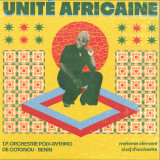
Formerly one third of the much-loved trio Black Box Recorder, alongside The Auteurs’ Luke Haines and Jesus and Mary Chain guitarist John Moore, the British singer-songwriter Sarah Nixey has steadily gained acclaim as a solo artist who makes savvy, sophisticated and poised pop.
Delivering vocals with a detached elegance over opulent tracks, any perceived nonchalance in Nixey’s luxe, cut glass voice belies her empathy, where social commentary serves as protest, both explicit and implied. Like Billy Bragg deepfaked as prime Julie Andrews, this strange but effective juxtaposition radiates soft power. ‘Lies of the Land’ depicts a corrupt post-Brexit and Covid-19 world where inequality and division flourish. ‘England's On Fire’ delves into the nuanced concepts of patriotism and nationalism, and ‘Pleasure Bay’ narrates the story of a love affair with a deprived yet beautiful English seaside town, written after Nixey left London, drawn back to the Dorset coast.
More than just a political record though, Nixey was drawn to the poetic elements of living too, telling stories of life and death, love and loss, conflicts and symmetry, in an intimate and close-up way, as if whispering secrets to her listeners.
“Sea Fever explores the bittersweet beauty of human life amid a volatile world of changing seasons and brutal elements,” says Nixey. “These are songs of deep sorrow, remembrance, birth, and change, set against a backdrop of the sensuous natural world.”
‘Rolling Waves’ explores profound grief following her beloved grandmother's death, while ‘Spring Equinox’ celebrates the joy and awe of life after welcoming her first grandchild. ‘At the Edge of the Forest’ is a poignant story of someone losing their memory, and ‘On This Wide Night’ recounts the early hours return home of a teenage runaway.
quête:natural elements
Black[11,72 €]
Following his remix of Youthman by Echo Inspectors & Subset, Biodub returns to Primary Colours with his first original release for the label, the Dialogue EP.
The title track, Dialogue, shows Biodub’s familiar warmth and attention to detail, built around deep basslines, subtle textures, with a calm and reflective flow. It’s understated yet full of presence, a fine example of Biodub’s ability to communicate emotion through minimal elements.
Pablo Bolivar steps in for the Dream Dub Remake, offering a refined reinterpretation that expands the original into wider, dreamlike space. His version brings a smooth, rolling energy with gentle synth layers, flowing delays, and a steady, hypnotic rhythm that carries both warmth and clarity. It’s a standout moment on the release, highlighting the shared sensibility between both artists.
Grassland continues with a natural, organic movement, a balance of deep groove and open atmosphere, while Ubiport closes the record in a more introspective tone, marked by subtle echoes and restrained rhythm.Dialogue is a cohesive and thoughtful release that reflects the core sound of Primary Colours: immersive, detailed, and rooted in the deep dub tradition.
Green Marbled[11,72 €]
Following his remix of Youthman by Echo Inspectors & Subset, Biodub returns to Primary Colours with his first original release for the label, the Dialogue EP.
The title track, Dialogue, shows Biodub’s familiar warmth and attention to detail, built around deep basslines, subtle textures, with a calm and reflective flow. It’s understated yet full of presence, a fine example of Biodub’s ability to communicate emotion through minimal elements.
Pablo Bolivar steps in for the Dream Dub Remake, offering a refined reinterpretation that expands the original into wider, dreamlike space. His version brings a smooth, rolling energy with gentle synth layers, flowing delays, and a steady, hypnotic rhythm that carries both warmth and clarity. It’s a standout moment on the release, highlighting the shared sensibility between both artists.
Grassland continues with a natural, organic movement, a balance of deep groove and open atmosphere, while Ubiport closes the record in a more introspective tone, marked by subtle echoes and restrained rhythm.Dialogue is a cohesive and thoughtful release that reflects the core sound of Primary Colours: immersive, detailed, and rooted in the deep dub tradition.
- A1: Skyscraper
- A2: Subways Of Your Mind
- A3: Goldrush
- A4: Heart In Danger
- A5: Dirty Slapstick
- B1: I Got My Eyes On You
- B2: Talking Hands
- B3: Strange Feeling
- B4: Jenny
- B5: Subways Of Your Mind (Tmms Darius Version)
Yellow Vinyl[25,17 €]
The incredible story that began with The Most Mysterious Song on the Internet (TMMS) now enters an exciting new chapter: Skyscraper, the debut album by FEX.
Skyscraper features ten original tracks recorded in the early to mid-1980s-carefully re-transferred, remastered, and brought back to life. The album cover, designed by Darius S., brings the story full circle. Darius is the very person who preserved the now-iconic track Subways of Your Mind by recording it from NDR radio in the mid-80s. Without him, FEX may never have been discovered.
FEX's debut opens with its namesake, Skyscraper-a brooding, previously unreleased track the band once described as part of their "psychedelic phase." With haunting synth-helicopter textures and deep guitar riffs, it immediately sets the tone and raises tension.
The release flows naturally into the energetic and fully remastered studio version of Subways of Your Mind. This version of the TMMS - re-discovered on the "yellow label tape" by Reddit user Marijn-was long believed to be from a smaller home studio, but was actually recorded in November 1984 at Hawkeye Studios in Ganderkesee, near Hamburg.
Goldrush, first teased in raw form on FEX's YouTube channel, bends toward mechanical rhythm and shimmering synths, a snapshot of the band's experiments with programmed drum machine sound. Rückwardt's lyrics point to greed and criticizes materialism, and while the music leans toward pop sensibilities, it carries a raw, fractured edge.
Heart in Danger and I've Got My Eyes On You offer contrasting experiences-one rooted in classic post-punk tension, the other floating in melodic synth layers. The latter in particular feels like a fragment from a parallel radio history: a precise and one of a kind synth pop love song with a progressive touch.
From a rehearsal tape comes Dirty Slapstick, its urgency intact. Missing keyboard parts were later reconstructed by Michael Hädrich using his original DX7 synthesizer-recovering lost elements without rewriting the past. The lyrics take a wry look at forced optimism. Also included are the songs Talking Hands, Jenny and Strange Feeling, the latter being a slower blues-tinged cut, revealing yet another facet of the band's reach and Rückwardt's songwriting diversity.
The album closes where the legend began-with the original radio recording of Subways of Your Mind from Darius' cassette. This version of The Most Mysterious Song features alternate vocal effects, contributing to the track's enigmatic aura. Digitally transferred using a high-end Revox machine and carefully remastered, it now has its long-deserved official release.
The cover features a photo of the Eichenberg Bunker in Kiel-one of FEX's original rehearsal spaces and a symbolic monument to their sonic legacy.
ugne&maria is a collaboration between Marija Rasa Kudabaite and Ugnė Vyliaudaite, both residing in Belgium. Their musical style is characterised by a multilayered, down-tempo, yet danceable approach, incorporating violin, synthesizers and sampling techniques.
We were completely blown away by the duo’s live performance at Meakusma Festival in August 2024. It was one of those rare moments when time seemed to stand still: the music, the atmosphere and the audience merged into a single warm, smooth and radiant aura of positive energy and vibes. This experience made us want to share such exceptional talent on Hands in the Dark and we are over the moon to announce the release of ugne&maria’s new album ‘Zotasphere’, dropping on 16th January 2026.
The 8 songs featured on the record came together slowly, bit by bit. Diary-like, each track reflects on different moments and life events that have followed ugne&maria over the past couple of years. Layers of sound and layers of memory are interlaced into the album, an embodiment of all that feels distant, yet still present. Most of the tracks move around a steady, unhurried pulse, never faster than 120 bpm. Some tracks even ended up being intentionally slowed down, as if the music itself wished to breathe more, mirroring life’s natural pace, with elements stretching, shifting and decelerating. Focused on bass and rhythm, influenced by the depth and warmth of classic house and low-end music, ugne&maria let the sounds drift elsewhere. The violin became a voice, the voice became a texture.
- A1: Les Arbres Grincent Pour Se Parler
- A2: Temple Bouddhiste Amidain, Ogimachi, Île De Sado
- A3: Les Démons S'absentent
- A4: Bulbul À Oreillons Bruns Et Autres Oiseaux De L'île De Sado
- B1: Kigi Ga Kotoba O Kawasu Tame Karada O Yusuri Kishima Seru
- B2: Fête Du Daimyō Gyoretsu, Hakone
- B3: Herbes Argentées
- B4: Criquets De Kurashiki
blickwinkel warmly welcomes Brussels-based composer Roxane Métayer to the label with her new album »Vies Sylvestres«, out on November 21 on vinyl and digital formats. The album was conceived and developed during performances and travels in Japan in 2023, where its sounds and ideas gradually came together.
»Vies Sylvestres« continues the direction of her previous release on Kraak, where Métayer built imagined narratives unfolding in forests or urban spaces inhabited by animal and plant characters. On this new album, however, the presence of these elements becomes more explicit and central. Field recordings are not solely used as backdrops but become compositions, complementing the instrumental works and expanding the album’s narrative into the realm of lived sound and place.
The listener encounters recordings of crickets and birds but we're also witnessing a scenery at a Buddhist temple. As such, combined with violin, electronics, and voice, Métayer explores the relationship between the natural environment and human culture. Her work bridges both worlds, showing how sound can connect different spaces and contexts.
An alto saxophone and acoustic piano engage in an intimate musical dialogue, reflecting on the current state of improvised music. Okuda and Dyberg’s album unites two artists at the peak of their musical collaboration, deconstructing jazz history into shimmering fragments, reassembling them in new forms that deliberately move away from traditional references. The music incorporates diverse influences—glimpses of classical composers like Webern and Prokofiev, abstract electronic elements reimagined acoustically, and a genuine spirit of exploration seeking a unique musical fusion.
Rooted in jazz, the Okuda / Dyberg Duo performs conceptual improvisations that include pulse, durations, interactions, natural/everyday life objects, soundalized: water dropping, light rain comes to a coffee-filter dripping, construction work or glass breaking sounds. Born in 2018. Glasscut is their third release – the first on vinyl – after Nigatsu 二月 (2019) and Naboer (2020).
What We Do When in Silence is the trio of Nicola Ratti, Alessandra Novaga and Enrico Malatesta.
Imagine a series of small movements in an empty space. Imagine their shadows on the floor, there’s a natural light sliding in from the 3 windows on your right side. There’s no silence here. There are people outside waiting for others, waiting for the people since what we do is not visible, since we do it when in silence and there is no silence here. Synthesizer, piano, whistling, electric guitar and percussions.
Nicola Ratti is a versatile musician and sound designer who has long been active across diverse experimental fields. His sound production creates systems shaped by repetition and expansion, with a particular focus on building environments that resonate with the spaces and architectures we inhabit, and on balancing the emotional and perceptual orientations to which we are accustomed.
Alessandra Novaga is a guitarist who has been exploring, for years, the possible territories her instrument can lead her to. She has crossed through the most classical worlds, reaching into intangible abstractions without setting boundaries between the two. Sound, meanings, encounters, and narratives are the elements that guide her path.
Enrico Malatesta is a percussionist and independent researcher working within experimental contexts that intersect music, performance, and territorial investigation. His practice explores the relationship between sound, space, and movement, and the vitality of materials, with a particular focus on surfaces, listening modes, and the articulation of multiple layers of information through an ecological and sustainable approach to percussion instruments.
An’archives presents Kagome Kagome, the first collaboration between France’s Delphine Dora and Japan’s Ayami Suzuki. Curious listeners might know Dora from the string of lovely, idiosyncratic albums she’s released over the past two decades, most recently for labels like Modern Love, Morc and Recital; she’s also worked with the likes of Michel Henritzi and Sophie Cooper. Suzuki’s performances, predominantly for voice, place her within a tradition of Japanese improvised music – see the music she’s made with artists such as Takashi Masubuchi, TOMO and Leo Okagawa – but her approach also takes in folk song, ambience and claustrophobic drone.
On Kagome Kagome, Dora and Suzuki play to their many strengths: a gentle, free-willed folksiness; long, aerated drone constructs; ghostly, time-warping explorations for voice. They met on Dora’s May 2024 tour of Japan, though they’d been in touch beforehand, with Dora proposing the collaboration to Suzuki, developed around “concepts of ‘otherworldliness’ and ‘impermanence’,” the latter says, “and explored the relationship between ‘the invisible’ and sound in Japanese culture – a common interest we share.”
They recorded across several days that month, with the sessions for Kagome Kagome taking place in Kanumi, in Tochigi prefecture, at a space named Center. “I was particularly looking forward to seeing Delphine encounter the vintage 104-year-old harmonium from Nippon Gakki Seizo Co. that had just been repaired at Center,” Suzuki recalls. “It was as if the harmonium had been waiting for Delphine to draw sound from it. I felt it was a beautiful relationship where they could guide each other.”
Indeed, there’s something channelled about the music that Dora and Suzuki made together in the session that constitutes Kagome Kagome. Dora’s harmonium might be the spine of the album, but Suzuki’s free- floating voice, and gaseous, muddied banks of electronics, wrap around the wheezing, ancient tonality of the harmonium beautifully – they, too, sound as though they were just waiting to be willed out of the daytime air. Their voices nestle together beautifully – “when we sang together in a tunnel,” Suzuki says, “there were times when we sang the exact same melody without planning. It happened so naturally that the boundaries between us became blurred.”
And that title? It’s drawn from a Japanese children’s song, and the song titles themselves constitute the song’s lyrics, in alternating Japanese (Romanized) and French language. Urban legend connects the song “Kagome Kagome” to the Nikko Toshogu Shrine, nearby Center, that Suzuki and Dora visited while they were in Kanumi. “The mysterious lyrics of ‘Kagome Kagome’ and its puzzle-like connection to Nikko Toshogu were a perfect fit for this mysterious album,” Suzuki reflects, “which I think has its own kind of puzzle-like elements.”
A deep album of prayer and magic, of divination and ritual, Kagome Kagome’s sense of serious play, its rich beauty, feels somehow dislocated from our time. If you’ve ever enjoyed the music of Nico, Kendra Smith, Charalambides, or other channelers of ghostly mystery, its eerie otherness will, somehow, feel oddly familiar.
- A1: Hey Bony - Malingan
- A2: Soumaé - Konemafa
- A3: Oogo & Akselaksel - Le Délire Bass
- A4: Kaval - Wussup
- A5: Dogzout - Dança Do Sol
- B1: Oogo & Blanka - Phô Real
- B2: R1D1 - Marsupilami
- B3: Mira Ló - Don't Lie
- B4: Yambow - Tracksuit & Loafers
- B5: Laaanky - Bloom
For over 11 years, Nowadays Records has been shaping the French electronic music scene with boundless energy and total artistic freedom. Much more than a label, Nowadays is a big musical family where every release, meeting and event becomes a real celebration. With over a hundred albums and nearly a thousand titles to its credit, Nowadays Records embodies musical diversity across a variety of genres: abstract hip-hop, house, electronica and alternative pop.
It's in this festive spirit that the Club Nowadays project is born, a true embodiment of the collective's vision. Through its club compilations and evenings featuring label artists and outside guests.
Today, the label continues to chart its course with the release of Club Nowadays Vol. 6, a new opus in its series of compilations, which fully embodies its vision of club music. This sixth volume brings together emblematic figures of the label and emerging artists around the following dance tracks.
Don't Lie, the first single from the compilation, is a heartfelt track born of a broken heart, but turned towards the light. Mira Ló composed this track as an act of resilience, following a break-up in love. She transforms her pain into positive energy, hoping that everyone can recognize themselves in it and find a little sweetness to soothe their own grief.
R1D1 brings together his groovy house and garage influences to create the track Marsupilami around a hand-crafted synth, sharp drums and deep bass. Influenced by hip-hop beatmaking, he incorporates vocals from radio and interviews, transformed into rhythmic elements. The name, a nod to the famous character, comes naturally through the sampled “houba houba”. Between offbeat textures and assertive groove, the track embodies R1D1's singular, hybrid universe.
OOGO & Blanka, two pioneers of the label, offer us Phô Real, a hybrid track between soulful deep house and hip-hop groove, mixing organic and digital textures. A track to get the dancefloor moving, with a delicious nod to La Fine Équipe's culinary universe.
With Tracksuit & Loafers, Yambow creates a bridge between groovy French Touch elegance and the effervescent energy of UK house, in the tradition of producers like Salute and Oppidan. The track is conceived like an acid cocktail: funky, euphoric and dancefloor-friendly. The title is a nod to cultural contrasts - between English tracksuits and French loafers - which translate into a musical interplay between sophistication and fervor.
Finally, Laaanky, the Parisian producer, breaks codes and gives free rein to his passion for raw sound, efficiency and groove on the track Bloom. Between textured house, dub echoes and Afro-tinged post-dubstep rhythms, he explores a danceable, minimalist and percussive electronica. Less is more.
- A1: You Can Never Tell
- A.your Imagination
- A3: Puzzled Into Pieces
- A4: Lattershed
- A5: When Things Come Falling
- B1: In Between And After
- B2: False From Above
- B3: Snowflake Eye
- B4: Emergency Turn Off
- B5: Paradigm Somehow
★Japanese obi-strip
★First time reissued on vinyl
Turning Into Small, the second album by shoegaze band All Natural Lemon & Lime Flavors from New Jersey, originally released in 1998 on local label Gern Blandsten,
is now being reissued on both CD and vinyl.
Formed in the mid-90s, All Natural Lemon & Lime Flavors were deeply influenced by UK shoegaze and alternative rock—most notably My Bloody Valentine—while
pursuing a uniquely experimental sound within the US emo and indie scenes. Their innovative spirit reached full bloom on Turning Into Small, which remains their
final album to date.
One of the standout tracks is the nearly eight-minute-long “Your Imagination,” a spacious sonic landscape that draws listeners into deep immersion.
It has become a signature song for the band, heralding a new wave of shoegaze that emerged in the late '90s and beyond. Even more noteworthy, however, are
tracks like “Puzzled Into Pieces” and “In Between And After,” which showcase the band's layered, synth-driven electronic textures, dynamic collage-like structures,
and occasionally buoyant melodies. These elements come together to create a strange and otherworldly sense of weightlessness—something rarely found even
within the shoegaze genre.
While resonating with the likes of My Bloody Valentine, Stereolab, and The Flaming Lips, the band's mutant-like blend of styles also draws parallels with acts like
Swirlies, Serena-Maneesh, and contemporary shoegaze innovators such as They Are Gutting a Body of Water.
This is a groundbreaking album in US shoegaze—one that still feels fresh and vital thanks to its timeless experimental spirit and originality. Now is the perfect time
to (re)discover it.
Italian producer, musician, DJ, and groove architect Sam Ruffillo drops his long-awaited debut album Tipo Così on Toy Tonics – a sun-drenched, genre-blurring statement that blends classic house with Mediterranean flair, romantic funk, and tongue-in-cheek Italo vibes. Over 11 expertly crafted tracks, Ruffillo delivers a dancefloor-ready, emotionally rich LP that connects deep musicality with irresistible rhythm and light-hearted elegance.
After three acclaimed EPs and collaborations with revered artists such as Barbara Boeing, Kapote, and Fimiani, Ruffillo has firmly cemented himself as a core artist on the Berlin-based label. Known for his unmistakable signature sound — a warm mix of vintage disco, 90s house, and Italian vocals — Sam’s music has garnered widespread DJ support from tastemakers like Gerd Janson, Palms Trax, Seth Troxler, and DJ Tennis, while becoming a staple on Italian airwaves. His infectious summer anthems like Danza Organica and Perfetta Così have soundtracked countless club nights and festivals, creating a loyal following that eagerly awaited this full-length debut.
Tipo Così is the natural culmination of a musical journey that’s both playful and profound — a travel diary written in grooves, synth stabs, and melodies that feel like postcards from a parallel Mediterranean universe. The album expands and deepens Ruffillo’s world into a fully immersive experience: lush emotional chords meet tight syncopated grooves, vintage synth textures collide with irresistibly catchy pop refrains, and the boundary between sincerity and playful irony is exquisitely blurred.
Entirely written, produced, and recorded in Italy, in his beloved hometown of Bologna, the album finds Ruffillo at the helm on keys, drum machines, and production, supported by a talented cast of musicians contributing live bass, guitar, and other organic elements — further enriching his trademark fusion of electronic grooves and natural instrumentation. There’s a tactile warmth in these tracks, a hands-on feel that adds soul and depth to every beat.
This album also marks Ruffillo’s heartfelt return to singing in Italian, with standout tracks like House Tipo Così, Mi Fa Volare, Ancora, and Dentro Di Me, where romantic naïveté meets pulsing club energy in a way that feels both timeless and refreshingly new. The vocal performances add an intimate, human touch to the music, reinforcing the personal stories woven into each song. There’s poetry in the casual, a bittersweet elegance in the way the lyrics float over groove-heavy production.
Having toured extensively across Europe, Australia, Indonesia, New Zealand, and Mexico — with sets at iconic venues like Panorama Bar and festivals such as Sónar Barcelona — Ruffillo has fine-tuned much of this album in front of live audiences. The real-world testing ground infused the record with a dynamic energy and immediacy that only comes from genuine crowd interaction. These songs weren’t just made in the studio — they were lived on dancefloors around the world.
Tipo Così is not just a collection of tracks. It’s a philosophy — playful, stylish and unmistakably personal. A modern club album bursting with heartfelt emotion and sophistication. Music for dancers with taste; for lovers of beauty, rhythm, and the little imperfections that make things feel real.
But what exactly is Tipo Così? More than just a phrase, it’s a way of being. It’s about embracing elegance without effort, mixing irony with sincerity, and letting nostalgia slip into the room without taking over the party. It’s Sam Ruffillo’s signature language: relaxed, confident, meticulous yet never rigid — where a chord progression can say as much as a lyric, and every beat carries intention.
The album’s visual identity complements this vision perfectly. The artwork and promotional materials lovingly reference Italian design from the ’80s and ’90s, combining bold graphic elements with playful pop culture nods. This aesthetic mirrors Ruffillo’s music — a fusion of vintage warmth and contemporary freshness, delivered with authenticity and charm.
Sam Ruffillo belongs to a new generation of European artists who are reshaping electronic music by blending past and present, analog and digital, groove and emotion — without nostalgia or pose. His artistic universe is coherent, vibrant, and alive; a rich tapestry of sound, images, and stories that coexist with lightness, precision, and a distinctive voice.
Reflecting on his artistic journey, Sam describes music as a vital, deeply human impulse — a tribal connection to rhythm and body that has driven him since he was a teenager. His creative process balances meticulous planning with room for spontaneity, usually sparked by clear melodic ideas that evolve naturally. Collaborations with close friends, especially vocalists like Ninfa, add warmth and authenticity, exemplified in tracks like “House Tipo Così.” For Sam, music is honest self-expression — crafted for listeners who crave memorable melodies and rhythms imbued with genuine feeling.
While technical perfection is tempting, Sam prioritizes emotion, knowing that what truly resonates is the soul behind the sounds. His long-standing partnership with Toy Tonics has been key in nurturing his vision, offering a blend of creative freedom and professional support. Looking ahead, Sam Ruffillo is excited to broaden his live performances, and release new projects that continue to blend electronic grooves with organic, heartfelt sounds — maintaining the delicate balance between playful irony and sincere emotion that defines Tipo Così.
Kurzversion:
Italian DJ, producer and musician Sam Ruffillo drops his debut album Tipo Così on Toy Tonics - a sunny blend of house, funk, Italo and pop, full of groove and emotion. Written and recorded in Bologna with live instruments and Italian vocals, it’s a playful, elegant journey shaped on dancefloors worldwide. A stylish, sincere club album where nostalgia, irony and rhythm meet in perfect harmony.
- Mi Fa Volare
Road-tested across continents and now finally released, “Mi Fa Volare” channels 90s uplifting euphoria with big breakbeats, lush chords, and Italian vocals built to stick. Somewhere between balearic bliss and piano house nostalgia, it’s a feel-good club weapon made for peak-time moments - already sung back by crowds after just one listen.
- Ancora
“Ancora” is a vibrant hi-NRG track inspired by 80s Italo disco, sung entirely in Italian. It blends driving rhythms with dreamy melodies, capturing the radiant spirit of the decade. This fresh yet nostalgic song delivers euphoric vibes and timeless energy, making it a perfect fit for both dancefloors and reflective listening moments worldwide.
- Dentro Di Me
“Dentro Di Me” channels ‘90s sensuality through a fast-paced, UK house-inspired lens. Entirely in Italian, it’s a bold and contemporary dance track where hypnotic vocals meet high-energy grooves. Blending nostalgic textures with forward-thinking production, the result is a seductive and euphoric trip - equal parts emotional and club-ready.
- Amigo
“Amigo” blends Latin groove, acoustic guitar-driven rhythm, and Mediterranean flair into a warm, magnetic, cross-cultural dance anthem. Sung in Spanish and Italian, it celebrates connection, inclusivity, and the joy of moving together - whether stranger or friend. With its unstoppable rhythm and vibrant energy, it’s a feel-good track with a unifying spirit.
- Ma Sei Fuori
“Ma Sei Fuori” is a tongue-in-cheek dancefloor bomb blending raw house energy with catchy vocal phrases and a nod to classic French touch. Driven by hypnotic vocal lines and a playful attitude, it doesn’t take itself too seriously - while still proving serious club impact. Built for late-night moments, it’s bold, bouncy, and impossible to ignore.
- A. Roots Man Foundation
- B. Prayer For A Good Harvest
NATURAL ROOTS MUSIC, tuned to the rhythms of the Earth! A special mix by Rooing SWE from the previous Roots & Foundation (CD) release, Side A: All
Those Who Love the Earth (Roots Man Foundation). Side B: The Danjiri Festival (Prayer for a Good Harvest) in Senshu, Southern Osaka. This first 7-inch release
pays tribute and gratitude to the local area.
As a DJ, I prioritize three key points when selecting music. I'll introduce this record in relation to those points.
The first is the power of the intro. I'm always grateful for killer tunes that get the floor moving naturally. The A-side, which begins with a catchy trombone, is a
perfect example of that. Natural Roots' performance is so dark that it almost makes you forget that you're in Osaka, the city of laughter.
The second is about the lyrics. Especially in times like these, I want to share a positive message with everyone. Frontman Livity Tabasuke sings straightforwardly
about his feelings for the Earth. It reminds us of the gratitude we often forget in our daily lives. Above all, his voice is soft and soothing.
The third is the 7-inch format. If you're going to take it to a venue, nothing beats a small, light record. The older I get, the more my hips instinctively tell me to.
The dub-inspired instrumental tunes on the B-side are also fantastic, and the album's functionality continues to increase. I also appreciate the addition of the
shinobue flute, a unique instrument unique to Senshu, a renowned Kansai reggae region, which adds to the local feel.
This album, which captures all of these elements, is extremely practical for me. I'm sure I'll be using it for a long time to come. I sincerely hope that the limited
edition of 300 records reaches reggae fans all over the country.
If there is one person, who has been causing a stir on the international club circuit recently, it is Barcelona's John Talabot. Already his debut “My Old School“ (which is meant literally by the way) on Permanent Vacation in 2009 and shortly after that the single “ Sunshine”, which he put out on his own Hivern Disc imprint, made him one of the most promising musicians of the Spanish electronic scene. And those two releases also already set the mark for John Talabot’s unparalleled music: raw, loopy, heavy on the kick drum, sample based, moderate on the tempo, distorted on the drums and light years away from the clean and ever revolving house sound of today. This unique style which also blends influences from afro beat, Detroit techno, Chicago house and cosmic disco, but also northern soul or the energy of Flamenco, immediately turned some heads around. James Murphy, Âme and Aeroplane started including Talabot music in their sets like it was the most natural thing. However - and this is quite rare - he not only gained legions of fans in the house and disco community, but also amongst the leftfield pop and indie rock followers. NME and Resident Advisor both had “Breakthrough“ features on John Talabot and he can be proud of a “Best New Music“ dubbing on
Pitchfork. (Being rather elusive on showing his face in magazines or the web it also came to some funny rumors that John Talabot was the alter ego of a well-known techno producer from Detroit).
At the same time he drew the attention of like-minded artists like James Holden and Luke Abott from Border Community, Blondes or Delorean, which lead to a bunch of fertile collaborations: Luke Abbott and Blondes remixed Talabot’s “Sunshine“ single , John Talabot remixed a track by Delorean and vice versa Delorean’s Ekhi contributed vocals to the track “Journeys “ on John’s album). Another example is the Young Turks Label (home of Jamie XX, Holy Fuck, El Guincho or SBTRKT ) on which he released the “Families“ EP in 2010. It was praised beyond limits. Pitchfork for
instance hailed: “… where pop and house influences sweetly buffer up against one another to provide an unyielding sense of elation“ and even brought Talabot a comparison with artists like Four Tet or Caribou.
While staying true to his sound, John Talabot has nevertheless shown a constant evolution as a producer since his first release. He has traced a solid musical path that has turned him into one of the big references of European House and has made him also a highly in demand Remixer (for the likes of The XX, Francesco Tristano’s “Aufgang” project, Shit Robot on DFA, Thaiti 80, Joakim or Teengirl Fantasy to name just a few ).
A progression that now crystallizes in “ƒin”, his first full-length album for Permanent Vacation. A record, in which the Barcelona mastermind sets aside the danceable immediacy to expand his stylistic palette more than ever. For that purpose, Talabot melts all the elements that have constructed his distinctive sound until now and makes them emerge from a new perspective, in which the construction of complex song structures, intricate rhythms and superpositions of ever-evolving melodies and atmospheres pick up the baton of the “a kick-drum and a sampler” philosophy of his initial productions. The result brings us 11 tracks (we should call them songs really!) dominated by dark ambiances, gaseous textures and bittersweet moods that, above all, reveal a kind of vivacity that’s really hard to find in contemporary electronics. “Fin” is far from being a track collection. From the majestic opener “Depak Ine“ to it’s solemn ending with
“So Will Be Now“ , one of the two tracks that features Talabot’s soul and label mate Pional, each song traces an overall dialogue with the rest, culminating a highly emotional journey through Talabot’s always compelling and unique musical vision.
After years of friendship and sound fragmentation, Felipe Valenzuela and Federico Molinari have succeeded in capturing and distilling their unique musical perspective into a single frame.Throughout this process, these two minds from across the Andes have developed numerous productions with a broad, multidirectional genre range.This release features four tracks, each with its own distinct identity. The A1 track, FORCED TO THE SCALES, which lends its name to the EP, blends elements of Spanish classical music with a futuristic edge, seamlessly adapting to various moments within a set.The second track on side A, RAPS TIGHT, is an experiment born from the same session, where a subtle sensitivity is expressed through a a slow beat, enveloped in a harmonious world.On side B, 503 emerges from a different creative process, combining two divergent paths that naturally intersect, resulting in a track full of energy and dynamism.The EP closes with DEAD MAN, a one-shot recording that, through its raw spontaneity, encapsulates the conclusion of a fragmented journey within a frame full of versatility.
Buh Records presents "El tiempo quiere cantar" ("Time Wants to Sing") the debut album by Pacha Wakay Munan, a duo formed by Peruvian musicians and researchers Dimitri Manga Chávez and Ricardo López Alcas. This album explores the sonic possibilities of pre-Hispanic instruments in a contemporary musical context. Through their performance, they explore their tonal possibilities, the interaction between their frequencies, and their ability to generate new dialogues. The work of Pacha Wakay Munan aligns with the tradition of sound explorers such as the Peruvians Arturo Ruiz del Pozo and Luis David Aguilar or the Colombians Yaki Kandru. The album's repertoire consists of pieces that explore diverse sonorities and musical concepts. "Pacha Wakay Munanqa" introduces the timbral variety of the instruments used. "El Taki Onkoy" draws inspiration from historical accounts and the meaning of its name ("Sick Song"), based on a Culina chant documented by Rodolfo Holzmann. It features vocals by the experienced singer Ximena Menéndez. "Mundo Posible" is a reinterpretation of an improvisation session with musicologist Chalena Vásquez Rodríguez, where the piano dialogues with ceramic antaras. Other pieces delve into the sonic construction of these instruments in relation to their cultural contexts. "Machu Tara" explores the concept of tara, a rough and vibrant sound quality found in certain Andean musical traditions. "Túpac Huaca" references the Huaca Aliaga in Lima, creating a sound palette where pututos, whistling vessels, and quenas converge. "Agua, Cuarzo y Viento" introduces quartz sikus and bowls tuned to different frequencies, evoking the interaction between natural elements and resonant vibrations. In the piece "Qinray Tema", Camilo Angeles plays the metal transverse flute, creating a contrast with the pre-Hispanic ceramic flutes and pelican bone flutes.
The incredible story that began with The Most Mysterious Song on the Internet (TMMS) now enters an exciting new chapter: Skyscraper, the debut album by FEX.
Skyscraper features ten original tracks recorded in the early to mid-1980s-carefully re-transferred, remastered, and brought back to life. The album cover, designed by Darius S., brings the story full circle. Darius is the very person who preserved the now-iconic track Subways of Your Mind by recording it from NDR radio in the mid-80s. Without him, FEX may never have been discovered.
FEX's debut opens with its namesake, Skyscraper-a brooding, previously unreleased track the band once described as part of their "psychedelic phase." With haunting synth-helicopter textures and deep guitar riffs, it immediately sets the tone and raises tension.
The release flows naturally into the energetic and fully remastered studio version of Subways of Your Mind. This version of the TMMS - re-discovered on the "yellow label tape" by Reddit user Marijn-was long believed to be from a smaller home studio, but was actually recorded in November 1984 at Hawkeye Studios in Ganderkesee, near Hamburg.
Goldrush, first teased in raw form on FEX's YouTube channel, bends toward mechanical rhythm and shimmering synths, a snapshot of the band's experiments with programmed drum machine sound. Rückwardt's lyrics point to greed and criticizes materialism, and while the music leans toward pop sensibilities, it carries a raw, fractured edge.
Heart in Danger and I've Got My Eyes On You offer contrasting experiences-one rooted in classic post-punk tension, the other floating in melodic synth layers. The latter in particular feels like a fragment from a parallel radio history: a precise and one of a kind synth pop love song with a progressive touch.
From a rehearsal tape comes Dirty Slapstick, its urgency intact. Missing keyboard parts were later reconstructed by Michael Hädrich using his original DX7 synthesizer-recovering lost elements without rewriting the past. The lyrics take a wry look at forced optimism. Also included are the songs Talking Hands, Jenny and Strange Feeling, the latter being a slower blues-tinged cut, revealing yet another facet of the band's reach and Rückwardt's songwriting diversity.
The album closes where the legend began-with the original radio recording of Subways of Your Mind from Darius' cassette. This version of The Most Mysterious Song features alternate vocal effects, contributing to the track's enigmatic aura. Digitally transferred using a high-end Revox machine and carefully remastered, it now has its long-deserved official release.
The cover features a photo of the Eichenberg Bunker in Kiel-one of FEX's original rehearsal spaces and a symbolic monument to their sonic legacy.
- 1: Coyote
- 2: Amelia
- 3: Furry Sings The Blues
- 4: A Strange Boy
- 5: Hejira
- 6: Song For Sharon
- 7: Black Crow
- 8: Blue Motel Room
- 9: Refuge Of The Roads
Mobile Fidelity's UltraDisc One-Step 180g 45RPM 2LP Set Plays with Authoritative Tonality, Airiness, and Clarity:
Pressed on MoFi SuperVinyl and Strictly Limited to
3,000 Numbered Copies
1/4” / 15 IPS Dolby A analogue master to DSD 256 to analogue console to lathe
Joni Mitchell is the only artist who could’ve made Hejira. The legendary singer-songwriter said as much when discussing the album decades after its release. Yet that fact seemed obvious from the moment the gold-certified effort streeted in fall 1976. An adventurous travelogue, probing narrative, and offbeat homage to freedom, Hejira remains an inimitable entry in the catalog of recorded music — a spare, gorgeous, meditative series of sonic vignettes comprised of floating harmonic pop, cool jazz, soft rock, and sensitive vocal elements that beckon feelings of motion, discovery, and self-examination.
Sourced from the original analog master tapes, pressed at Fidelity Record Pressing on MoFi SuperVinyl, and strictly limited to 3,000 numbered copies, Mobile Fidelity's UltraDisc One-Step 180g 45RPM 2LP set presents the record ranked the 133rd Greatest of All Time by Rolling Stone with definitive detail, richness, accuracy, and directness. Marking the first time the revered LP has received audiophile treatment, it's one of six iconic 1970s Mitchell records Mobile Fidelity is reissuing on vinyl and SACD.
Playing with a virtually nonexistent noise floor, dead-quiet surfaces, and superior groove definition, this collectible reissue reproduces in enveloping fashion the tones, textures, and craftsmanship that help Hejira function as the equivalent of a liberating trip down an open road with nothing but blue sky, natural landscape, and fresh air in the immediate vicinity. Passages bloom, carry, decay as they do amid an acoustically optimized environment. Soundstages extend far, wide, and deep, with black backgrounds and pinpoint images adding to the realism.
The reference-grade immediacy, airiness, and presence put in transparent perspective Mitchell’s dense strings of words, stream-of-conscious-like phrasing, and unhurried albeit forward momentum. Likewise, the instrumental contributions of her A-list support musicians — a cast that includes L.A. Express members John Guerin, Max Bennett and Tom Scott, plus Neil Young, Victor Feldman, and Abe Most — emerges with breathtaking clarity and dimensionality.
While Mitchell, whose intimate vocals and abstract guitar parts center everything, Mobile Fidelity's restoration of Hejira further reveals the visionary breadth of guitarist Larry Carlton and bassist Jaco Pastorius. Though heard on only four tracks, Pastorius' fretless bass epitomizes the fluid, subtle, flexible, roomy, and shape-shifting characteristics of songs that often appear to transpire out of nowhere akin to the formation of a puffy cumulus cloud overhead. In sync with Mitchell’s voice, Pastorius’ fusion hovers and floats, suspended in a fog you want to deeply inhale. The "grace notes" Mitchell desired on Hejira can now be heard in full. Ditto the luxurious tapestries of alinear lines, fills, and supplements unreeled on Carlton’s six-string.
Visually, the packaging of this UD1S set complements its identity as the copy to own. Housed in a deluxe slipcase, the LPs come in foil-stamped jackets with faithful-to-the-original graphics. This version is for listeners who desire to become immersed in everything about Hejira, including the unforgettable album cover — a pastiche of 14 different photos Mitchell used a Camera Lucida to assemble into one image that’s anchored by a portrait of her in a stoic pose — and the interior shots of Mitchell skating on a frozen Wisconsin lake wearing a pair of black skates, black shirt, and fur cape.
The notion of skating, feeling an awakening wind whipping against your face, and losing yourself to the surroundings are extremely apt for Hejira, which Mitchell wrote after a sequence of trips and relationships prompted her to reflect on the complicated conflicts between independence and marriage, success and satisfaction, duty and desire — and, more specifically, “the cost of being a woman.” The Canadian native delved into such themes before. But never as she does on Hejira, whose liberating, running-away aura doubles as another of Mitchell’s rejections of tradition as well as a suggestion of a better alternative.
At once observational and personal, expansive and insular, cheerful and poignant, Hejira spans a sea of human conditions, emotions, and circumstances. It addresses drifting, isolation, pleasure, place, time, and surroundings with strikingly poetic discourse matched with music that, save for the crooned ballad “Blue Motel Room,” forgoes conventional structures and choruses.
The jazz-based arrangements, marked by scaled-down percussion and all manner of bent, rounded, and unsettled notes, hint that Mitchell has no exact destination in mind. Excursions such as the moody “Furry Sings the Blues,” funky “Coyote” and edgy “Black Crow” throw open previously locked doors to possibility and journey. They signal it’s time for a welcome departure from norms and the past, one that leads to a heightened sense of clarity and perspective. Or, as Mitchell said upon choosing the album title, it’s time for “leaving the dream, no blame.”
Pioneering British electronic musician Mark Van Hoen is set to release his latest solo album, The Eternal Present, on 23 May 2025 via Dell'Orso, a remarkable collection of tracks spanning nearly three decades of recordings from 1998 to 2024.
The Eternal Present embodies its philosophical title, inspired by Joseph Campbell's concept that "Eternity isn't some later time... Eternity is that dimension of here and now that all thinking in temporal terms cuts off." The album explores music as the ultimate expression of existing in the present moment, transcending time and creating a sonic experience that is simultaneously "spectral, ghostly, melodic, harmonic, and decayed."
An influential contemporary of Aphex Twin, Autechre, LFO and Boards of Canada, Van Hoen is best known for his solo work as Locust in the mid-'90s, which helped push post-rave electronic music into newly challenging realms. His extensive discography spans releases on influential labels including R&S, Touch, and Editions Mego. Van Hoen has worked on numerous collaborations throughout his career, including with Nick Holton and Neil Halstead of Slowdive under the moniker Black Hearted Brother—their album Stars Are Our Home was released in 2013.
The Eternal Present continues the lineage of Van Hoen's most significant works, with artwork by Ian Anderson (Designers Republic) reflecting the album's "eternal present" concept with a mysterious visual approach, allowing listeners to form their own imaginary landscapes. The mastering by Stefan Betke (Pole) enhances this document of the evolution of the artist over the years as he continues to hone his signature sound. Using a host of instruments including analogue synthesisers and employing various recording approaches, Van Hoen's equipment changed dramatically over the years—from early DSP processing used on his first solo record on Apollo ‘Playing With Time’ to various synthesisers, modular systems, tape machines, and digital workstations—contributing to the album's rich sonic diversity.
Throughout The Eternal Present, ideas are woven together through spoken word quotations and abstract vocals featuring notable collaborations from Rachel Goswell on the Slowdive cover "Shine" (from 1998), Megan Mitchell (Cruel Diagonals) on "Somewhere", and session vocalists Clare Dove and Dorothy Takev on "No-One Leave" and "It's Not You (In A Way)" respectively. The use of cleverly assembled vocal samples from an "undisclosed but very famous female vocalist" on "Multiplex" (2016) and the indistinct vocalisations on the Cabaret Voltaire-influenced "Only Me" (2017), constantly challenges and disorientates the listener through fluctuating, ever-changing musical elements.
The album was recorded across multiple locations including Somerset, London, Los Angeles, and New York—even beginning compositions during flights and in airport lounges—reflecting Van Hoen's changing personal circumstances, environments, and situations throughout the years.
Of Indian-Jamaican descent, Van Hoen was born and raised in England, absorbing diverse musical influences from his neighbors—African-Jamaican on one side and Punjabi Indian on the other. "Each family played their own music frequently, and I absorbed it." His musical foundations include Brian Eno, Kraftwerk, OMD, Tangerine Dream, Japan, Cabaret Voltaire, and Cocteau Twins, later finding inspiration in My Bloody Valentine, LFO, and '90s producers Robert Leiner and CJ Bolland.
These eclectic influences are evident on The Eternal Present, which contains snapshots of different periods in his life, with changing circumstances across decades creating a variety of textures and sounds. As Mark explains: "It holds the same sonic signature as many of my solo releases and early Locust albums. It's a natural development that has taken place in the last few decades. It's even related to the earliest music I made as a teenager, although perhaps more sophisticated."
“What a remarkably affecting, majestically broad and captivating work it is..what strikes you most is the album’s myriad diversity. Outstanding” (Electronic Sound)
“Whether channelling mid- 70’s Eno, early Aphex Twin or Neu! his vivid sounds shimmer with emotional weight” (Mojo 4*)
"Musically, Van Hoen belongs to a distinguished family tree. Originally influenced by the likes of Brian Eno and Tangerine Dream, and later presaging both Autechre's glitch and Boards of Canada's pastoral IDM." (Pitchfork)
The Australian master of the dark synth arts is back and – boy – he is out for blood.
We’ve been missing Marc Dwyer solo project Buzz Kull since his latest single Last In The Club from late 2019 and since back then we knew he was up to something. At first glimpse, the minimal wave days of We Were Lovers seem far away now that Marc has gone full Club Body Music with his upcoming new album, but there is a thread that binds Buzz Kull hits from the past such as Into The Void, Avoiding The Light and New Kind Of Cross with these ten new cuts: a thread of darkness proper to the most handsome man in the game and that’s here to stay.
Echoes of 90’s era Front 242 and Front Line Assembly will resonate from tracks like Fascination and Dead Inside; elements of early body music flirting with the dark side of British synthpop will rave from the grooves of Dancing with Machines and Man on the Beat, while late 80’s Belgian new beat cellar-like vibes rise from Do You See and Burn it to the Ground.
But Buzz Kull’s third full-length is not just about music subgenres we all know and love, it’s about a feeling that comes alive only with the dark and drives you through the small hours just to leave you drained and filled at once. The creature of the night is on the loose, the sticky dancefloor its natural habitat, its lust for the upside-down world of the club can’t be cured.