Old Souls Carnival is the most accomplished Medline's album so far, presenting his new direction in composition and his multi-instrumentalist approach. The project is driven by a strong spiritual background with a deep 70's soul jazz fusion influence, raised into a movie soundtrack dimension.
Each piece reveals a facet of Medline's music, origins, tastes and character. Playing with shamanic and exotic harmonies, hybridized with distorded psych funk sound and solidely pulsed by unique polyrythmic drum beats.
The natural flows of his expression speaks deeply and truely to the senses, traducing 6 months of gathering emotions, traducing feelings, during meditative recordings sessions on the world evolution and reality. The entire album was produced, mixed and mastered by Medline at the family's house, in Messac, offering a perfect immersion in his spiritual and material universe.
The fabulous and mysterious handmade drawings of Stéphane Carricondo, are the perfect rendition of Medline's mestized artwork. Rich with a wide variety of colors and influences, channeled by Medline's own hands, this first 12" record released on his label My Bags lives up to expectation. This French-Chilean producer always works outside of boundaries and styles frames, and with this LP shows that extraordinary projects can be expected from him for years to come.
out of Stock
Last delivered 18 months ago available to reorder, subject to availability
A collection of Elvis Presley covers recorded by the duet David Fenech & Pierre Bastien. The idea of "Suspicious Moon" started at a party around the topic of blue color. David Fenech had chosen to play "Blue Moon" and Pierre Bastien asked to join in. It was a very enjoyable party and then they recorded the song and decided to plan an album exclusively based on covers of the King. Not that we were absolute fans of Elvis... but as a starting point to go somewhere else. And this is what we reached: in many aspects a premiere for the two musicians. Pierre focuses on (prepared) trumpet for the very first time, while David is heard extensively as a vocalist and is more than ever responsible for all arrangements and textures. Playing other people's material is also a premiere for both of them. 11 tracks around very well known standards. Like familiar places that are changed when seen in a different light. Please enjoy. "Our choice of the Elvis Presley song book for this record may seem strange to many. It seems strange to me as well. Not that I dislike the original music, but before our sessions it had never been a direct source of inspiration. Paradoxically, this distance gave me freedom and flowing ideas. I hear similar qualities in David's parts too. We hope that our relaxed attitude and its positive outcome will be reflected in this album" - Pierre Bastien "The strange thing about these recordings is that the creative process was so fluid and natural_ that it seems that through playing other people's music, we almost reveal something of ourselves. As if these tracks were our creation, as if they were our own children!" - David Fenech
“I like it when music builds itself up in an organic fashion,” says Duncan Marquiss. “When it just seems to emerge and almost writes itself.”
This natural, intuitive and free flowing approach is evident all across the debut solo album from the multi-disciplinary artist. From tender yet sweeping acoustic moments to experimental electronic guitar manipulations, the album feels like a ceaselessly sprawling exploration of texture and tone. Despite veering into what sounds like electronic ambient soundscapes, the entire album is rooted in the guitars. “I enjoy trying to stretch the guitar as an instrument,” says Marquiss. “That reflects my playing style, always trying to make the guitar sound different, or create non-guitar like sounds.”
Marrying earthy, textural acoustic instrumentals that feel rooted in open landscapes, with those that capture the pulse and hum of a populated metropolis (Marquiss resides in Glasgow). The album was recorded in Aberdeenshire in Marquiss’ parents' garage. “Apart from the wind and the swallows nesting in the eaves there’s not many distractions around,” he says. This is a solo record that goes right to the very essence of Marquiss as an artist. The expansive yet intimate sounds he’s created here stem from the same peaceful isolation of where it all began.
There’s a cosmic touch tracing back to 1970s Germany (Michael Rother solo, Cluster, Harmonia, Popul Vuh soundtracks) that infiltrates much of the album, alongside some of its more pastoral textures, with Marquiss citing a wide range of listening habits. These include Bruce Langhorne's The Hired Hand, Jim O Rouke's Bad Timing, Arthur Russell and Laurie Spiegel.
Despite containing no lyrics, the album feels rooted in narrative and development. As the album unfolds the acoustic guitar becomes more prominent over the electric, almost as if nature is slowly taking back and growing over abandoned human-made structures. A record that, despite being experimental in tone and essence, retains a very human and natural touch throughout.
New limited pressing on 180g Electric Blue Vinyl. L.A. Witch’s self-titled debut album unfurled like hazy memories of late-night revelries in the city center creeping back in on a hungover Sunday morning. Guitarist/vocalist Sade Sanchez purred and crooned over jangling guitar chords, painting pictures of urban exploits, old American haunts, and private escapades with a master’s austerity. Bassist Irita Pai and drummer Ellie English polished the patina of the band’s vintage sound, adding a full-bodied thump and intoxicating swing to the album’s dusty ballads, ominous invitations, and sultry rock songs. The album had an air of effortlessness like these songs were written into the fabric of the Western landscape by some past generation and conjured into our modern world by three powerful conduits. The band readily admits that L.A. Witch was a casual affair and that the songs came together over the course of several years. That natural flow hit a snag when the band’s popularity grew and they began touring regularly, so a new strategy became necessary for their sophomore album, the swaggering and beguiling Play With Fire
Ilmiliekki Quartet from Helsinki return with their new self-titled album on We Jazz Records on 11 February 2022. The group, including Verneri Pohjola (trumpet), Tuomo Prättälä (piano), Antti Lötjönen (bass) and Olavi Louhivuori (drums) is a mainstay in the Finnish scene and the band has been steadily developing their sound for nearly two decades now. It could be said that the group's musicians, each also a solo artist of note these days, has grown with and through performing together with this regularly working quartet. Ilmiliekki Quartet's music has a song-like melodic quality, which pairs naturally with their often freeform search for new musical landscapes.
As testament of Ilmiliekki Quartet being a Band with a capital B, the songs on the new album come from each of the four members. As before, the band also takes a borrowed tune in for a loving rendition, this time tackling "Aila" by the Finnish dream pop group Karina. All in all, there's a deep, moody element to the music, yet at the same time, their sound flows with remarkable ease and lightness of touch. This brings out a wide range of color in their music, which is easy to fall in love with.
Ilmiliekki Quartet from Helsinki return with their new self-titled album on We Jazz Records on 11 February 2022. The group, including Verneri Pohjola (trumpet), Tuomo Prättälä (piano), Antti Lötjönen (bass) and Olavi Louhivuori (drums) is a mainstay in the Finnish scene and the band has been steadily developing their sound for nearly two decades now. It could be said that the group's musicians, each also a solo artist of note these days, has grown with and through performing together with this regularly working quartet. Ilmiliekki Quartet's music has a song-like melodic quality, which pairs naturally with their often freeform search for new musical landscapes.
As testament of Ilmiliekki Quartet being a Band with a capital B, the songs on the new album come from each of the four members. As before, the band also takes a borrowed tune in for a loving rendition, this time tackling "Aila" by the Finnish dream pop group Karina. All in all, there's a deep, moody element to the music, yet at the same time, their sound flows with remarkable ease and lightness of touch. This brings out a wide range of color in their music, which is easy to fall in love with.
Ilmiliekki Quartet from Helsinki return with their new self-titled album on We Jazz Records on 11 February 2022. The group, including Verneri Pohjola (trumpet), Tuomo Prättälä (piano), Antti Lötjönen (bass) and Olavi Louhivuori (drums) is a mainstay in the Finnish scene and the band has been steadily developing their sound for nearly two decades now. It could be said that the group's musicians, each also a solo artist of note these days, has grown with and through performing together with this regularly working quartet. Ilmiliekki Quartet's music has a song-like melodic quality, which pairs naturally with their often freeform search for new musical landscapes.
As testament of Ilmiliekki Quartet being a Band with a capital B, the songs on the new album come from each of the four members. As before, the band also takes a borrowed tune in for a loving rendition, this time tackling "Aila" by the Finnish dream pop group Karina. All in all, there's a deep, moody element to the music, yet at the same time, their sound flows with remarkable ease and lightness of touch. This brings out a wide range of color in their music, which is easy to fall in love with.
out of Stock
Last delivered 4 years ago available to reorder, subject to availability
“For me music is not a calculation, when I play I follow my intuition.
The creative impulse always comes from within me. Me and my
piano, they’re at the centre of my musical world.” - Joel Lyssarides
For Joel Lyssarides, jazz is above all a language, a tool for
uniquely personal expression. He composed the pieces for ‘Stay
Now’ in a remote house in the forest, a good half-hour outside
Stockholm. And by preference at night, in silence, darkness and
deep concentration.
The atmosphere of this place is audibly reflected in the music,
which is strongly influenced by space, sound and mood -
reinforced by the highly concentrated, differentiated, subtle
interplay of pianist Lyssarides with bassist Niklas Fernqvist and
drummer Rasmus Blixt.
What these three young musicians have in common is their
capacity for great sensitivity and expressiveness. Their music is
based on a vocabulary that draws equally from European classical
music, jazz from both sides of the Atlantic and great songwriting,
with all its depth and accessibility.
And yet this has nothing to do with crossover. Everything flows
and swings, nothing seems deliberate or contrived, one can hear a
natural understanding for the infinite possibilities of every note.
This trio has the self-confidence to put the entirety of their efforts
into enhancing the expressiveness of the music. And it is in the
most intimate, quiet, focused and concentrated moments that the
most spectacular things happen.
The album title ‘Stay Now’, therefore, is above all an
acknowledgement of quite how precious the here and now is.
These are the moments when we start to understand the true
value of present and past encounters. As we listen, we can let the
moment linger… and allow ourselves to sink blissfully and
unforgettably into it.
This recording is dedicated to nomads, space travelers, free spirits that visits earth for a brief time to make a mark here on their way to other worlds. They leave traces on tram wagons, walls and in our minds in our cities before moving on into the unknown. Especially one.
A slow build up to a jungle crescendo is how “Iris” develops. This is a fine example of how Fontän effortlessly makes crossover music – no compromises needed in neither end of the spectrum, this music flows naturally. The dreamy music box-sounding intro of “Mast” falls into a deep half beat where warm E-bow guitars and sweeping synthesizers carries the music higher and higher away from the ground.
These two tracks are a peaceful homage to all the cosmic kings and queens that have spent time here on earth. Safe travels!
out of Stock
Last delivered 4 years ago available to reorder, subject to availability
The third instalment on O’Flynn’s club label Hundred Flowers is a collaboration between Spooky - J (Nihiloxica) and Ekhe.
Two high speed and energetic bangers in their rawest form, these are club weapons that can be used to spice up any set.
A distillation of dance floor energy, the record is the result of a live improvised performance over New Year’s Eve 2019/20.
Spooky - J: "We both enjoy jamming together and not planning too much ahead of time, so naturally it makes sense to improvise at live shows. It also leaves space for the music to go off on a tangent depending on what the crowd or we are feeling.”
Ekhe: “Live improv becomes a real antidote for my concerns about preparing music. Instead, you’re creating something in the moment, directly corresponding with the energy around you, which in turn is influenced by your sound. Getting caught up in that is unlike anything else."
Spooky - J is currently on tour with Nihiloxica and the pair have a gig planned for this NYE in Amsterdam.
It’s time to get high and live life (safely).
out of Stock
Last delivered 4 years ago available to reorder, subject to availability
For their first album, Caravan was surprisingly strong. While steeped in the same British psychedelia that informed bands such as Love Children, Pink Floyd, and Tomorrow, Caravan relates a freedom of spirit and mischief along the lines of Giles, Giles & Fripp or Gong. The band's roots can be traced to a British blue-eyed soul combo called the Wilde Flowers. Among the luminaries to have passed through this Caravan precursor were Robert Wyatt, Kevin Ayers, and Hugh Hopper and Brian Hopper (pre-Soft Machine, naturally). The Caravan album never sold in serious numbers, and for much of 1968 and early 1969, the members were barely able to survive -- at one point they were literally living in tents. Suddenly, Caravan was an up-and-coming success on the college concert circuit, even making an appearance on British television's Top of the Pops. With national exposure and a growing audience, the group was at a make-or-break moment in their history. They rose to the occasion with their second Decca LP, In the Land of Grey and Pink, which showed off a keen melodic sense, a subtly droll wit, and a seductively smooth mix of hard rock, folk, classical, and jazz, intermingled with elements of Tolkien-esque fantasy.
Legendary Brazilian group Orquestra Afro-Brasileira are reborn for first new album in over fifty years, produced by Beastie Boys collaborator Mario Caldato Jr.
Led by maverick composer Abigail Moura, Orquestra Afro-Brasileira were one of the most influential yet overlooked groups in Brazilian music history. Operating for almost thirty years until 1970, they released just two albums - the first of which, Obaluayê, has recently been reissued by Day Dreamer Records - and left behind a legacy of Afro-Brazilian consciousness that continues to resonate today.
Combining Yoruba spirituality, folk tales, Candomblé chants and West African percussion with the instrumentation of the big band jazz tradition in the United States, the Orquestra placed Afro-Brazilian heritage in a new and vital context. Weaving emancipatory narratives into complex poly-rhythms and powerful, syncopated horn lines, the group educated and enlightened all those who saw them perform.
For Abigail’s protégé and percussionist on the group’s 1968 album Carlos Negreiros, the message of the group’s music had a profound impact: “I became aware of what it is to be black,” he says, “discovering the extraordinary potential of the Afro-Brazilian culture in the making of the national ethos.” Now the last remaining member of the original Orquestra, Carlos was tracked down by producer Mario Caldato Jr. - whose credits include Beastie Boys, Marcelo D2 and Seu Jorge among others - to oversee the first new album of Orquestra Afro-Brasileira material since 1968.
“I was overwhelmed with the percussive rhythms, beautiful deep vocals and combined energy,” Caldato Jr. explains. “It felt like the most authentic Brazilian roots music I had ever heard. It was raw and dynamic, a pure organic sound and energy. It was a spiritual experience.”
Alongside arranger Caio Cezar, Carlos assembled his Orquestra to record five tracks at Berna Ceppas’ Estudio Maravilha 8 studio in Rio De Janeiro. With percussion, horns and vocals cut in single takes over three days, the session captured the intuitive, pure and natural spirit of the group in full flow.
Following the success of the initial session, five additional tracks were recorded at the iconic Estudio CIA dos Tecnicos in Copacabana to complete the album. Mixed by Caldato Jr., 80 Anos is a contemporary incarnation of Abigail Moura’s vision, bristling with the flair of the original recordings.
out of Stock
Last delivered 4 years ago available to reorder, subject to availability
Truly adventurous and life enhancing music that invigorates your soul. TIP!
Press Release:
Gordan join traditional Serbian singing with abstraction, energy and minimalism. Their music is marked by radical reduction, seemingly endless ascension and a passion for experiments.
The Serbian singer Svetlana Spajić is an internationally recognized and acclaimed artist. She, like almost no other contemporary singer, is a master of all the complex local stylistic variations of singing from Balkan music. Guido Möbius plays bass and various electronic sound generators. Additionally he uses guitar amps, microphones and effects to provoke feedback which either harmonize or are juxtaposed with the song. It is a dialogue between sound and noise which is accentuated or fragmented by means of Andi Stecher’s expressive drumming. With a rich pool of ideas the percussionist drives the sound forward breathlessly and grounds it. Together the trio form a dynamic body of sound.
Gordan recorded their debut during the first wave of the Covid19 pandemic in Europe in March 2020. Due to the lockdown in Berlin at that time the city didn’t have many distractions to offer, so the trio just concentrated on work. The atmosphere of being isolated in a recording studio had a big impact on the musical results. All three band members came up with ideas for new pieces, which were immediately tested, worked out and recorded. On abstract instrumentals provided by Stecher and Möbius, Svetlana Spajic sometimes reacted with personal interpretations of serbian traditionals, and the other way around. Most of the time it was as if the music just happend to the band; playing together felt natural from the first moment on.
Some of the old serbian traditional songs that Spajic sang are extinct forms with a specific local melodic mode. The skillful improvisation of their lyrics and ornaments was of great importance and very estimated among village singers. The title song Down In The Meadow for instance originally is a love song from the village of Odevce in eastern Kosovo, Serbia. The singing manner is of a great intensity and sonority, with lots of specific local ornaments. It disappeared along with the village communities from the area. Oh, my Rose flowers is from the region of Kopaonik mountain (southwest Serbia) and the mode, scale is known as ”kopaonički glas” (Kopaonik mountain air). Svetlana adopted the style from the late singer Veličko Veličković from the village of Ostraće. It is an old mountain solo chant, rich in fast ornamentation movements and microtonal intervals. Don’t ask how I live is Svetlana’s homage to the new popular folk music movement from the 80ies known as Južni Vetar (Southern Wind) led by a musician and composer Mile Ilić, known as Mile Bas (“Mile the Bass”) which revolutionized popular music introducing tabooed oriental music and original arrangements.
All music by Spajic Stecher Möbius except ‘Don’t Ask How I Live’ by Miodrag M. Ilić, original title Što me pitaš
All lyrics are traditional, except ‘Don’t Ask How I Live’
Recorded by Alberto Lucendo at UFO sound studios Berlin in March 2020 mixed by Morphosis
Mastering by Neel at Enisslab, Rome
Artwork by Lorenzo Mason Studio
out of Stock
Last delivered 4 years ago available to reorder, subject to availability
nown for her delicate compositions, soaked in dream-like surrealism, Icelandic musician Sóley has attracted a huge following since launching her solo career back in 2010. Her 2012 single ‘Pretty Face’ went on to generate an enormous amount of buzz, and quickly became a viral sensation. Now, with three solo LPs under her belt, Sóley is preparing to debut a completely new sound via the release of her new concept album, Mother Melancholia, on October 22nd.
Described by the artist as "Nosferatu meets Thelma and Louise in a vampire church under the watchful eye of David Lynch", Mother Melancholia is the soundtrack to the end of the world as we know it. As a self-confessed news addict, Sóley became obsessed with the idea that the world is ending. Having surrounded herself with real-life stories of global warming and patriarchal politics she couldn’t shake the feeling that she was going to die. This feeling was so all encompassing that it sparked the idea for a new project. Could there be a soundtrack for the last days of humans on earth? How would that sound?
“I read books about possible dystopian worlds and started writing poems about irrational and in love characters who live in gray and cold imaginary loneliness. In each other’s burning arms. Walking in circles with no way out” she explains. “After all, the album reflects our life here and now. Our life and reality is a kind of dystopian world.”
Whilst writing the album, which serves as a tongue-in-cheek eulogy to our planet, Sóley began reading about ecofeminism, a branch of feminism which uses the concept of gender to analyse the relationship between humans and the natural world. Ecofeminism emphasizes that both women and nature must be respected but also separated. Since the beginning of time, the natural world has been synonymous with female identity, phrases like Mother Nature are commonplace. “The patriarchy views women as volatile and hysterical. Earth and women are either our saviours or our destroyers,” explains Sóley. “It’s so easy to abuse the earth, like the patriarchy has abused women since the dawn of time, then ask for forgiveness afterwards and promise they´ll never do it again”.
The new album sees Sóley move away from the indie-pop of her previous releases. She began by experimenting with writing songs on the accordion, allowing her a new sense of freedom in her writing. The process allowed her to broaden her horizons even further and experiment with a whole range of new and exciting sounds. “I bought myself a theremin as I was really excited about the unpitched sound and there is no perfect pitch during the end of days,” she laughs. “I also bought a mellotron, my first moog and a cello and taught myself how to play each of them. All of these new instruments are particularly suitable for the kinds of aesthetic inconveniences which I have learned to embrace.”
Album opener ‘Sunrise Skulls’, one of the most cinematic moments on the album, was inspired by the Me Too and SlutWalk movements and tells the story of a group of women who rise up and fight the patriarchy. ‘Blows Up’, a track that would be at home on any horror soundtrack, is a sarcastic love letter from the Earth to humans. Standout track ‘Desert’ is an incredibly moving song dedicated to the next generation. “It’s about the guilt you feel, as a mother, for having children and leaving them on the frontline. My daughter, for example, will take over this inevitable war” explains Sóley.
In true soundtrack style, the album flows through the end of the world in chronological order, closing with the Earth’s final moments. ‘Sundown’ is a dark piano ballad detailing human kind’s final day on Earth. “And everyday, I dig my own grave, and as I dive in you´ll hold my hand” she sings, over twinkling piano and swirling synths. We then hear the world end on ‘XXX’, a dark and swirling soundscape that swells before fading to silence. On ‘Elegía’ the silence then turns to the sound of the ocean, as we hear the Earth, like a woman finally free from a violent relationship, healing on her own.
Mother Melancholia is the mark of an artist confidently striding into more experimental territory. With a lengthy and successful career behind her, Sóley felt compelled to try something new and express the real her. The music might be shrouded in darkness but it’s a move that fills her with joy and freedom. “I hope that people not only enjoy the new sound, but also that Mother Melancholia might raise some questions in people, particularly women,” she says. “I’m under no illusions that this album will change the world but I hope that people can connect with the idea”.
out of Stock
Last delivered 4 years ago available to reorder, subject to availability
The infinitive is the basic dictionary form of a verb when used
non-finitely. It is also the form chosen by Danieli and Purl
for the tracks of WHS 03: return to the basics, simplicity, pure nature distilled into music.
Pulsate starts with an ethereal soundscape, created to then open to a deeper underwater exploration. There´s a universe down there and the listener will be guided to appreciate its beauty: lanternfish giving the tempo of this journey, marine life to marvel at. We take a step back to observe and fill our eyes and ears. We come back to the surface, finding peace and calm.
Opening in a slow, thoughtful and majestic way, Compensate is a
hymn to balance. Since the very beginning, the listener will notice a contrast between gloomy atmospheres and lighter sounds, resulting in a chasing sensation that´s uncomfortable, yet fascinating. Desire to explore, together with acceptance, surrender to the things we simply can´t understand as humans.
The listener is then invited to explore darker, faster, more pounding atmospheres. Intimidate anticipate it all in its title : sounds, tempos, images, they all chase each other to create an atmosphere that's daunting and fascinating at the same time.
A track to accompany one's journey, be it real or spiritual, a trip where we let things happen as they come, accepting the flow of life.
Resonate closes the B side drawing with sounds the depth of our
natural state. Close your eyes and transport yourself in lost woods, alone in a tent at sunset, when the day is almost over and ready to make room for the night. The wood is speaking, the animals are awake, it's frightening but incredibly beautiful.
Crickets are singing their songs, frogs are bouncing from one pond to another, water connects with air, resonate with earth and with the smallnes of man in the face of nature.
out of Stock
Last delivered 4 years ago available to reorder, subject to availability
Love Wash opens with “Across the Flats” and closes with its title track, both upbeat ballads that build from scorched drones into momentous sprawling pop songs that help ease in and out of the album, which features contributions from co-PC Worship collaborators (LEYA’s Adam Markiewicz on violin and NYC drum shredder Greg Fox).
The second and third tracks “Drive” and “Saints” carry the subtle intensity that opens the album, with unpredictable instrumentation, chord changes and arrangements. This vibe is revisited later in the album on “Dune House” and “Hidden Away”, all of which are sonically rich, unraveling, dark, introspective and powerfully optimistic.
The rest of Love Wash is comprised of catchy, borderline alt-country hits with a twisted Nashville tele vibe (“December Sun”, “New Thing” & “East Side Walk”), featuring pedal steel and vocal contributions from fellow Dougie Poole band members Tristan Shepherd and Francesca Caruso. Love Wash has a natural flow throughout, however the one real outlier is the well placed and hyper paced middle child of the album “Dredging Up Old Blues,” a schitzo-synth-pop Mountain Dew Rock jam that feels like buying trucker speed at a digital gas station in Middle-America.
Love Wash has echoes of a post-Beatles solo record, recorded in the Northwest in the mid-90s; transient in its influences yet tied together with the aesthetic of its approach. Sequenced like the best, most damaged early K / Kill Rock Stars records and driven by fingerpicked acoustic guitar, sweeping drones, euphoric synths, lush vocals and soaring Dead Man leads, Love Wash is a beautifully rich pop record at its core and an ambitious journey of an album that started as bedroom demos and evolved into a layered studio exploration.
-- Justin Frye (PC Worship
Born in Brixton, a child of the Windrush Generation, Letts’ slippery and unorthodox career is somewhat hard to define, without taking a few detours around London, New York and Jamaica. He began his working life managing the dauntingly hip Acme Attractions on Chelsea’s Kings Road, where he made a mark with his attitude, dress and, especially, the pounding dub reggae that vibrated the shop’s walls. His first gig as a DJ at the short-lived Roxy in Neal Street, became mythical for turning a generation of punks on to reggae. They in turn hipped him to their DIY ethos resulting in his reinvention as a filmmaker. This led to a shed-load of music videos (Linton Kwesi Johnson, The Clash, Bob Marley) not
to mention documentaries on the likes of Gil Scott-Heron, George Clinton and Sun Ra.
In the ’80s, he was part of Mick Jones’ new venture, Big Audio Dynamite and his innovative use of samples were a core part of their sound. Listeners of his weekly 6 Music radio show are taken on a musical safari that moves seamlessly between time, space and genre. It’s not called Culture Clash Radio for nothing. So this latest bulletin from Letts HQ is merely one angle of a multifaceted personality, his take on the JA tradition of the cover version.
The history of Caribbean music owes a debt to R&B as many of the early island releases were cover versions of US 45s. Ska’s breakthrough commercially, Millie Small’s ‘My Boy Lollipop’, was originally recorded by Barbie Gaye in ’50s New York. Cover versions became quite a thing in Jamaica and Don, following in that tradition, has dug deep with a selection of interesting dubbed out covers including thirteen exclusives.
“A disciple of sound system, raised on reggae n’ bass culture my go to sound was dub. Besides being spacious and sonically adventurous at the same time, its most appealing aspect was the space it left to put yourself ‘in the mix’ underpinned by Jamaica’s gift to the world - bass. But that’s only half the story as the duality of my existence meant I was also checking what the Caucasian crew were up to not to mention the explosion of black music coming in from the States. That’s why this version excursion crosses time space and genre, from The Beach Boys to The Beatles, Nina Simone to Marvin Gaye, The Bee Gees to Kool & The Gang, The Clash to Joy Division and beyond. You’d think it impossible to draw a line between ‘em but not in my world. Fortunately, the ‘cover version’ has played an integral part in the evolution of Jamaican music and dub covers were just a natural extension.”
There’s a diverse mix of classic and new, with legendary figures like John Holt, The Tamlins and Cornell Campbell, mixed in with British veterans Mad Professor and the irrepressible Dennis Bovell, while (relatively) young striplings Kiko Bun, Emily Capell and Prince Fatty deliver the goods, with laidback Texan groovers Khruangbin also offering an exclusive bass heavy-delight.
The song choices are diverse, from French dubsters’ OBF’s renditions of ‘Sixteen Tons’, the miners’ paean popularised by Tennessee Ernie Ford in the 1950s, to Ash Walker’s refix of Omar’s ‘There’s Nothing Like This’ and ‘All I Do Is Think About You’, immortalised by the ill-fated Tammi Terrell and preserved here by Quantic (the latter two both exclusives). Being a Rebel Dread compilation, there’s a cover (by Wrongtom Meets The Rockers) of The Clash’s ‘Lost In The Supermarket’ while Don’s exclusive, naturally, is a rendition of Big Audio Dynamite’s debut hit, ‘E = MC2’.
“Truth be told I’ve wanted to work with the Late Night Tales crew from the get go. We’re talking nearly two decades such was the allure of their musical aesthetic typified by curators like Nightmares on Wax, The Flaming Lips, MGMT, Trentemoller, Khruangbin and countless others. Now being as old as rock n’ roll (born in ‘56) and having nearly 20 years of Culture Clash Radio under my belt I figured I was tooled up to musically juggle with the best of ‘em. But I wanted to carve out a space that was distinctly my own - something that reflected my musical journey and the culture clash that’s made me the man I am today.”
out of Stock
Last delivered 4 years ago available to reorder, subject to availability
Spirits Having Fun records are ones made from and for shows and spaces—arrangements rooted in a deeply collaborative process, that come to life through intuitive and locked-in live improvisation. Following their 2019 debut Auto-Portrait, Two finds the New York and Chicago based four-piece continuing to challenge ideas of what a rock band can be, pulling apart their musical experiences and reimagining them as kinetic compositions, equally studied but palpably organic.
Two is constructed around gut feelings and strong grooves, elastic rhythms and playful pacing. Its twelve songs expand, contract, and make sharp turns between melodies under singer-guitarist Katie McShane’s meditative lyrics. “Broken Cloud,” which was also released last year on a compilation in support of Chicago Community Jail Support, offers a glimpse into her reflections on the natural world: "A city grew out of the ground / to a mountain it's only a blur."
True to its name, the internal logic of the band is also just a lot of fun, built on trust and deep-rooted musical relationships. Before there was Spirits Having Fun, McShane, bassist Jesse Heasly, guitarist-vocalist Andrew Clinkman, and drummer Phil Sudderberg had performed together in various arrangements over the years. McShane, Heasly and Clinkman met in a specific corner of the Boston underground in 2013, a time when a scene had coalesced around students from local music conservatories frequently collaborating with punk bands and noise artists, exchanging ideas and warping musical worldviews. Heasly and Clinkman played together in Cowboy Band, making mutant, free jazz-inspired takes on old country tunes. When Clinkman moved to Chicago, Heasly and McShane played in experimental groups like EKP and Listening Woman; in Chicago, Clinkman met Sudderberg playing in projects like jazz scene fixture Ken Vandermark’s high-powered band Marker.
Spirits first came together as an attempt at a long-distance collaboration among friends in 2016, driven by the simple feeling of missing each other; they’d meet up for marathon weekends here and there to practice, playing small loops through dive bars and art spaces around the Midwest—just enough for McShane and Heasly to afford plane tickets back home. Being split between Chicago and New York forced the project into a deliberate pace. “We tried to take it slow and let it be what it was,” said McShane. That sense of patience unexpectedly prepared them for March of 2020, when their planned tours and the release of Two were indefinitely delayed.
Two was mostly recorded in the summer of 2019 with the help of omnipresent Chicago engineer Dave Vettraino and DPCD’s Alec Watson, whose contributions on organ, synths, and piano are laced throughout the record. The album reflects a synthesis of solitary and communal songwriting processes—each song drawing on fragments written by individuals, which McShane threaded together and shaped through her distinct compositional lens, making the songs whole before returning to them to the band to mature collectively. When composing, McShane writes first on the keyboard before adapting parts for guitars played by herself and Clinkman. Their dueling approaches to guitar are complementary: McShane, being a newer guitarist, brings a freshness to the project (“I'm just discovering the whole time,” she says) while Clinkman has been playing since childhood.
“There's a lot more collaboration on this record,” says Clinkman, “in terms of all of us letting stuff bloom a little bit more.” The record’s first single, “Hold The Phone” is a good example of this process—it started with a playful intro riff from Clinkman, a melody and bridge added by McShane, a wobbly outro groove added by Heasly, which Sudderberg brought to life. Another single, the dynamic “See a Sky,” written primarily by Heasly, underscores the rhythm section chemistry at play across the record, the song ebbing and flowing around Heasly and Sudderberg’s eclectic percussive palettes.
“Entropy Transfer Partners” is the only song on the record with lyrics by Clinkman, and the album’s most politically direct—a call for solidarity in the face of systemic failures, an acknowledgment of the shared material devastation caused by our country’s ongoing healthcare and housing crises: “These are not things we're experiencing individually. We struggle through them collectively. And we could actually declare, all of us, that it doesn't have to be this way, and fight and organize to ameliorate some of those conditions.” (“We won't work to create the shit you monetize, to run our lives,” they sing.)
From front to back, Two is an absorbing listen simply for its impressive range. But as the members explain themselves, the complexity of the record is about more than its intricate riffs, or how often they count out an odd time signature, but how they reject the notion of boxing the songs in, letting the melodies take on lives of their own. “Making music that feels alive is important to us,” says Clinkman. “Music feels most powerful to me when it deepens our sensation of feeling alive and connected to other humans. It’s so easy to feel worn down and isolated; that your life’s value is fixed to your productivity at your job, or the things that you have or don’t have. Making music that feels joyful and fun seems like one effective antidote to that feeling.”
Pioneering electric bluesman Albert King not only influenced
American guitarists like Robert Cray and Stevie Ray Vaughan, with
whom he played in later years, but made an indelible mark in
Britain. Cream-era Eric Clapton, in particular, was an early devotee
before Albert ever set foot on UK soil, while Gary Moore, who
unashamedly took his cues from Clapton, later shared a stage with
King in his ‘Still Got The Blues’ period. Enjoy his earliest
recordings as all his famous fans would have discovered them –
on vinyl!
After the release of ‘Kuarahy’ concurred with the blast of the worldwide pandemic and all the consequences it has generated, WHITE STONES - Martín Mendez’s project (OPETH’s bass player) - are ready to launch their second record.
When WHITE STONES released ‘Kuarahy’ they became the first Spanish band signed to Nuclear Blast Records, cementing their first album as an unprecedented milestone. Now, with ‘Dancing Into Oblivion’, the band returns with a more compact sound, having been hard at work ensuring the utmost attention to every detail for a result that is even better than the first record.
The topics covered on this second album draw on the feelings that Martín himself affirms he has lived through during the lockdown imposed by the covid-19 pandemic. “I started it very calmed in March when »Kuarahy« was released and the lockdown started. I wrote the new record and it just flowed so well. It’s my point of view, of the feelings I had during the lockdown period, in this weird year. I took advantage of the moment and I feel excited about it”, reveals the musician.
The most outstanding musical elements on this new record are the disparate genres that manage to co-exist. There is an element of aggression, that can be seen rearing its head in an instrumental frenzy, as well as soft and delicate intricacies that develop an atmosphere which surrounds the listener. There are distinct dynamics among the songs, with interludes allowing the listening to take a breath and appreciate what they’re hearing.
The writing process of ‘Dancing Into Oblivion’ has been pretty similar to the previous ‘Kuarahy’ but with some clear changes. Martín composed all of the instrumentals for the album but, as he says, “I’ve left sections open to the interpretation of each of the other musicians, both in the drums and in the vocals. Eloi wrote the lyrics this time and we then workshopped them together whilst working out the vocal parts to get the final result in the studio”.
WHITE STONES once again recorded at Farm Of Sounds Studios (Barcelona), owned by their singer Eloi. They were satisfied with the sound of ‘Kuarahy’ and the experience of the recording of that album and the comfort of making everything with their own tools made it all easier. “Everything has been ‘homemade’ because it’s a way of working and a philosophy I like. You have more control and you can better enforce your ideas”, Méndez explains -who also created the cover for ‘Dancing Into Oblivion’ together with Sandra, his partner for many years.
The final mix and mastering of this second album was done by Jaime Gómez Arellano at Orgone Studios (UK) because the band were more than satisfied with the work he did on ‘Kuarahy’ and they wanted to repeat that great experience. Eloi, as the singer and also the guy who recorded the music sent to Orgone Studios, acknowledges “the recording had more experience and a better sound quality because we made better decisions during the pre-production thanks to a higher level of self-awareness of ourselves as a band. Jaime knew us better too, so that simplified the process and in turn helped to make »Dancing Into Oblivion« as good as it can be”.
The line-up has been enhanced with the participation of the multifaceted Joan Carles Marí Tur on drums (who also plays in other bands like FACE THE MAYBE). The guitar solos were the job of Joao Sassetti (who was already a member of the touring line-up of WHITE STONES). Sassetti lives in Portugal and he couldn’t be in the studio in Barcelona, so he recorded his solos and digitally sent them over for integration into the final songs. The recording of the instruments has been more organic and as Boucherie says. “The original sound has been retained as much as posible in each and every element” and it has brought a natural/raw touch for ‘Dancing Into Oblivion’ just as the band had hoped and expected.
Post-punk/new wave hero Ann Margaret Hogan’s second album of solo piano and field recordings for Downwards is a box of subtle wonders, mastered by Veronica Vasicka and highly recommended if yr into Satie, Virginia Astley, Sarah Davachi.
A weight of history flows through Hogan’s keys with a stark intimacy, beautifully illuminated by naturally effortless, quietly grand songwriting. It’s a direct continuation of the landscaped themes
and atavism of 2020’s ‘Honeysuckle Burials’ and the ‘Reversing Into Tomorrow’ collaboration with Karl O’Connor, vividly capturing the slow passage of time in a way that has quite literally compelled
us to stop the relentless mind-grind for its 40 minute duration on more than one occasion.
After previous fixations on the iron age forts and burial mounds of the Clywdian Range in North Wales, Hogan transmutes the scenery of her more immediate locale, Oxton on The Wirral - from the cadence of its red sandstone landmark Thor’s Rock, to memories of its boating lake, for example - into a quiet yet ravishing suite inflected with traces of wildlife and industry recorded on long walks, all subsumed within a deep blue estuarial atmosphere silted by the strange reality of life in
the current era, echoing the surreal, sunny period when the album was conceived.
A generation on from her pivotal work with spar Marc Almond and likes of Deux Filles and Nick Cave, and forty generations since The Wirral hosted, as she says “a Norse parliament at Thingwall”,
Hogan weaves time and place into a reflective, funereal sort of parlour music, turning daily ambulations amid the gorse and under luminous skies into gorgeous, life affirming and intimate self expressions.
The eight pieces are mostly improvised and flow with a free, fleeting concision from the palpable warmth of ‘Forgotten Prelude’ and bluesy ache of ‘Fragile Elements’ to more funereal modes in ’Mesto’ and ‘Funeral Cargo’ suggestive of a Viking burial soundtrack. At its core, ‘Wolfswalzer’, a dedication to her one time collaborator and erstwhile Kraftwerk member Wolfgang Flür - is described by Hogan as “a simple waltz of coffee, food, friends and music”, and ‘Impromptu’ is the
album’s slowest, soaked in the feeling of atmospheric immanence that defines the album’s timeless appeal. It’s an unspeakably moving album, words really do it no justice.
out of Stock
Last delivered 5 years ago available to reorder, subject to availability
Synth legend Suzanne Ciani, Demdike Stare’s Sean Canty & Finders Keepers’ Andy Votel come together on this killer hour-long 2014 synapse popper of a collaboration pooling the occasional group’s esoteric collage-based approach into a remarkably foreboding session pregnant with a dread that’s never quite resolved. Think Vladimir Ussachevsky, Todd Dockstader, Spectre and Company Flow melted thru the Deutsch-Italo industrial DIY tape era and funneled thru an almost impenetrable fog of Ann Arbor basement noizze.
Hustling some of Neotantrik’s most amorphous gestures, ’241014’ is a four-segment movement of reduced Buchla treatments, destroyed vinyl loops and scraping foley suspense; like a cosmic dream diary layered into a collage of drones and clatters. Little in Ciani’s extensive catalogue has hinted at what’s on display here; the joyful lullaby-pop of “Seven Waves” or metallic alien soundscraping of “Flowers of Evil” are only hinted at. She instead paints new sonic vistas, allowing space for her collaborators to make themselves known; Votel’s chiming toy autoharp and Bubul Tarang (a Punjab string instrument) add a distinctive flavor, while Canty’s grimy drones and noise-soaked textures drizzle pitch-black molasses into the cracks and crevices. Together, the effect is a bit like hearing Philip Jeck improvising over Popol Vuh’s peerless Moog-led debut “Affenstunde” or Demdike Stare knocking out impromptu reworks of Tangerine Dream’s abstrakt early run.
Perhaps unusually, the trio have still never set foot in a studio together, exclusively maintaining their practice in-the-moment and on stage when schedules intersect. So it’s all the more remarkable that their improvisations naturally find a democracy of role and such a heightened level of intuition, beautifully converging their thoughts to mutual, open-ended conclusions that leaves billowing room for interpretation. In a most classic sense, it’s like the sensation of sleep paralysis or dream/nightmare ambiguity, with a level of suggestiveness that’s disorienting from end to end.
For the first time the recordings are now available in high fidelity (there was a tape version a couple of years back) - now remastered by Rashad Becker to better represent the otherworldly scope of their actions on stage, from the NWW-like queues and drone of ‘Scanned Accents’ and keening silhouette of ‘Second Action,’ to new sections of subaquatic Porter Ricks-like murk in ‘Anti-Contraction’ and the levitating webs of synth and tactile, sampled textures in ‘Last Canción.’ Tape music and synth music have long shared a passionate embrace, and here turntablism coolly slides in on the action. Canty and Votel’s background in beat tape assembly and crate digging pays off: they’re keenly experimental creators but bring an unfussy sense of rhythm and performance that’s miles beyond any facile repetition of a nostalgia for vintage glory. Combined with Ciani’s delicate Buchla work - it’s a unique proposition.
As one half of Red Axes, Dori Sadovnik could perhaps already stake a claim as one of the most prolific men in electronic music. A natural artist, Sadovnik is the sort of musician who never stops recording, a creator ahead of a consumer, well-adapted to a frenetic lifestyle.
This particular impulse has been funneled into a project known as Kapitan, an already expansive collection of tracks clocking in anywhere between 130 and 150 beats-per-minute.
As for a home, it just so happened that DJ Tennis, friend, collaborator and founder of Life and Death, was processing similar instincts, borne out of his love and association with the nineties heyday of IDM, pioneered by labels such as Warp and Rephlex.
“I don't really know what led me there but I had a feeling that I needed to be in the mountains”, explains Sadnovik. “I'm not a nature guy, nor do I feel particularly spiritual, but I was always struck by the harmony of it all. Everything is in the mix.”
This all-encompassing, blissful philosophy is deeply felt throughout this journey, a fluid blend of analogue and digital sounds rendered as organic as the landscape that inspires the album. Interlocking rhythms evolve into unexpected chamber pieces and bubbling acid lines blossom into rave psychedelia on opening tracks such as ‘Weird Day’ and ‘Flowers’, progressing to the sound of ‘Takak’, which inspires meditations on enormous bass weight, as mantras creep in from the surrounding forest of sound.
In the album’s second-half, this sincere sense of awe expands further still. Centrepiece tracks ‘In The Valley’ inspires a true sense of wonder and transcendence, complex rhythms blending with wide-eyed reverence. ‘Smile’ is trippy and innocent while ‘Elleven’ crackles with whispering energy over whiplash breakbeats. Concluding with ‘Heart’, Sadnovik reduces the pace to a stepping, heavy rhythm, commanding a deep sense of respect for the untamed wilderness that has served as such a unique muse.
out of Stock
Last delivered 5 years ago available to reorder, subject to availability
Yves Jarvis and Romy Lightman are a pair of idiosyncratic and restlessly creative artists. In the past decade, Jarvis's ever-expanding swatch have earned international acclaim, while Lightman's twin-sister-led band Tasseomancy has transfixed listeners since the late 2000s. The Lightman Jarvis Ecstatic Band marks the duo's first collaboration, slingshotting both musicians out of their comfort zones into spellbinding territories of lysergic folk and impressionistic rock. Banned was recorded in the tranquil environment of the Tree Museum, an outdoor art gallery in rural Ontario, Canada, hosting residencies for contemporary sculptors over the past 20 years. The pair credit its 200 acres of natural spaces intermingling with human-made creations as the fuel for their unfettered process. Recorded over two weeks in a free-flowing stream of improvisation, the album finds Lightman on synthesizer with Jarvis on drums and guitar, as their voices weave together into an electrified pastoral tapestry. For both musicians, the creation offered a chance to challenge themselves: Jarvis defying his solitary practice to record with another person, while open jams provided Lightman an alternative to her preference for thoroughly composed songwriting. "This album is a loose manifesto in our shared vision for a way of being," says Lightman. "It's about our relationship and the dynamics in that. There's an epicness to it and tension at times. It's like the ways particles collide. There's an alchemical aspect to it with these base components slamming together."
Backed by members of the David Nance Group, Rosali (Long Hots, Wandering Shade, Monocot) wades through the emotional mire with infectious, earworm melodies led by her luminous voice. With their rich, raw instrumentation, these rock ballads sound like the resilience discovered in facing one’s darkest moments, the assurance of the calm and clarity that comes after the storm. As she sings on the second track, “Bones,” “Through the darkness of the field / I walk through without yielding / To the rest of the feelings / I’m carrying.” With her confident song craft, Rosali illustrates the ability to push through, moving toward something greater without being destroyed by the weight of trauma.
Engineered by James Shroeder and featuring Kevin Donahue (Simon Joyner), James Shroeder (Simon Joyner, DNG, Connor Oberst), David Nance, Noah Sterba, Colin Duckworth, and Daniel Knapp, the album was recorded in ten days and the raw immediacy of the music is palpable across these ten tracks. Added adornment was contributed by Philadelphia's Robbie Bennett (War on Drugs) on organ and keys, and Matt Barrick (The Walkmen, Jonathan Fire Eater, Muzz) makes a percussion cameo on “Whisper,”which was tracked at Philly’s Silent Partner Studio, where No Medium was mixed by Quentin Stoltzfus (Mazarin, Light Heat). The open creative collaboration elevated the songs, resulting in the exciting, vibrant sound of the album.
Rosali wrote the bulk of these songs in January of 2019 while on a self-imposed two week residency in the hills of South Carolina. Alone in an old farmhouse, she experienced supernatural events and faced her own demons in the deepest darkness. Perhaps as a result, there is a boldness that permeates the album, a daring vulnerability in both the lyrical themes and their musical accompaniment. Rosali says, “I approach guitar playing the same intuitive way I sing, which is profoundly spiritual for me. Where words fail, the guitar becomes the conduit for raw feelings, providing a direct connection to them. I’m constantly working on being fearless in my work, which means showing the rough side, the mistakes along with the triumphs.”
While writing No Medium, Rosali was inspired by harmonographs—swinging pendulums that create beautiful illustrations of the mathematics of music—considering how the mind, too, creates images through song. She imagined herself as the swinging pendulum—“a body suspended from a fixed point” (Encyclopedia Britannica), governed by the forces surrounding her. She thought about the pendulum’s relationship to time, movement, and even its use in divination practices. The album’s title, lifted from Charlotte Brontë’s, Jane Eyre, resonated with this vision: “I know no medium: I never in my life have known any medium in my dealings with positive, hard characters, antagonistic to my own, between absolute submission and determined revolt. I have always faithfully observed the one, up to the very moment of bursting, sometimes with volcanic vehemence, into the other.” With the multiple meanings of “medium”—as middle ground, a term for psychics, and as the material of artistic expression—No Medium felt like the appropriate name, describing how the self is shaped by the patterns of life .
The influences for the sound of No Medium reflect this pairing of assured vulnerability, in the stylistic coherence of Bob Dylan’s Desire, the tender delivery in Iain Matthews’ Journey From Gospel Oak, the strut and swagger of Bowie’s Hunky Dory, the ambition and beauty of Gene Clark’s No Other, and the playful catharsis of Harry Nilsson’s Nilsson Schmilsson. The Richard and Linda Thompson-esque album opener “Mouth,” places Rosali within both a physical and emotional space. “East of the river I was travelling on / watch me lie, undone / rest me in a forest, overgrown / until I am free of all that I’ve known,” she sings. There is movement, both within a cityscape, and in her outlook on love. Speaking of her thought process when writing the song, she says, “I imagine confidently walking away from the past, toward a new approach to love and intimacy to achieve a closer relationship with myself.”
In “Pour Over Ice,” Rosali explores her relationship with alcohol and her former reliance upon it as a social lubricant to quell her social anxiety, an energizer to keep moving, a means to cope and self-medicate, and most addictively, to lure out her wild side as a free flowing, good time girl. While drinking helped her through some shitty times, it eventually got the upper hand and became an insatiable hole within. She says, “The ‘you’ in the song is really me, talking to that component of myself struggling with drinking and self-sabotage, caught up in the cycle, and all the bad choices I made.” She sings, “Maybe I didn’t care enough / or can’t remember / chasing small pleasures / making fire from embers.” Rosali wanted her lead guitar on this track to simultaneously sound like a slow motion car crash propelling her through the day, and the sound of a gnawing hunger for something more.
Rosali’s alliance with the Omaha musicians that orbit David Nance Group (including Nance himself) came about while on a Long Hots / DNG tour in the summer of 2019. Great friendships formed and one night after playing in Detroit, Dave suggested they be her backing band. The pairing was effortless and natural, and in November of the same year, they were recording No Medium in a basement in Omaha.
Fold Unfold is the debut album by violinist Katrine Grarup Elbo from the Danish collective We like We. As a solo artist she steps out from the safety of group performance and presents a vulnerable portrait using only her classical training and analogue electronic setup.
Peaceful scenarios of natural beauty that hover like calm mist over cold streams are interrupted by spine chilling forces. Naked passages and electroacoustic electronics together create ripples in time as the pieces mold into flowers reaching for the outer edge. Elbo summons the most time stopping affairs using only the most basic of ingredients, as a true master. Clouds of uncertainty and reason echoes infinitely into the ether as she moves in and out of acoustic and manipulated sonic landscapes. Imagine Jocelyn Pook´s captivating Masked Ball piece from Kubrick´s Eyes Wide Shut with its clouds of mystery, suddenly turning unmasked and fragile, as if abruptly standing vulnerable in the shadows listening only to the reverb of the room and ones own breath.
The album was recorded and mixed at Saal 3, Funkhaus, Berlin with Antonio Pulli. In the 29 minutes runtime, we are presented with transportations through silent, almost Baroque sounding pieces towards overpowering, processed alterations of her violin that vibrates like echoes springing off the stars. A stunning debut with all its natural purity and intimacy.
Delving into the recent past in order to revisit forward-thinking projects that, owing to the social, musical or outright political climate, struggled to find an audience, Lost Futures returns with a record from Cairo based project, PanSTARRS. An assured and intriguing blend of post-punk and electronics, 'Ghaby Ghaby Ghaby' is the confident and personal work of Youssef Abouzeid, a fixture within Egypt's unique underground music scene.
"At the time, I was actively occupied by arguments on the fusion of culture in creative context, specifically between western and arabic elements." recalls PanSTARRS founder, Youssef Abouzeid. "The goal was to find a point of natural expression within Arabic songwriting that meets electronic guitar music, and put out something seriously inspired by both and easy on my ear."
By far the heaviest release from the PanSTARRS project at the time, 'Ghaby Ghaby Ghaby' immediately establishes a superior sense of rhythm. 'Khally Balak Hatmoot' practises instant hypnosis, Abouzeid's earnest vocals beckoning outsiders forward over a layer of feedback occupied by a ghostly shift, one which breaks to release a crescendo of post-punk guitar. This sense of subtle drama continues on 'Men Gheir Wa7da', demonstrating a skill for songwriting that recalls the uncompromising approach of The Birthday Party or Lydia Lunch.
'Tortit Naml' is driven by skittish, rapid-fire drums and tense guitars, either subverting or confirming it's subtly anthemic status with a dramatic explosion of feedback. 'Sala Ya Khaifa' brings respite, a mellow and earnest slow-burner, the bubbling spoils of the PanSTARRS studio providing a wistful texture drenched in reverb. Finally, '70mar 3ala 7osan' sees Abouzeid give his voice over to those same machines, burying his barbed perspective in contrary analogue bliss.
Half a decade later, Abouzeid's optimism and experimentation are certain to resonate on a scale beyond that of Cairo's defiant underground music scene.
"Working on everything myself, I enjoyed total creative freedom and kept an organic flow of dirt and error, which was key on this record", recalls Abouzeid. "Sometimes vocals were recorded as lyrics came spontaneously, sometimes written on paper and then recorded on first takes, but I always prioritized the moment while keeping the perspective in check."
Zaumne's new album titled Élévation is a multifaceted yet subtle work, an abstract collage that is equally entrancing and immersive. Quoting passages from Baudelaire’s “Flowers of Evil”, the Polish musician promises to elevate the soul and consciousness “Beyond the sun / Beyond the ether”. Yet simultaneously, the artist wants us to stay where we are and focus on the immediate surroundings in search of our personal attachment to the world.
Initially recorded for the WET (Weird Erotic Tension) online community the four pieces are an exploration of erotic aspects of the environment and uncanny intimacy with other beings and objects that dwell in our nearest proximity. Just like on previous releases for labels like Czaszka Rec. or Perfect Aesthetics, on Élévation Zaumne maintains his interest in emotional aspects of sound and internet culture – he builds his compositions from fragments of ASMR-whispered poetry, samples of natural phenomena and field recordings from his family home and its environ.
What starts as an escapist exercise driven by uneasiness and ennui becomes an individual healing process, in which the subject rediscovers the strangely intimate relationship with the world and opens up to almost magical methods of communicating with other beings. ASMR samples and sounds of the artist touching, playing with and exciting different objects are an experiment in establishing contact with the non-human realm and a method of attuning the body and the mind to the reality in which everything is interconnected.
Zaumne tests Einstein’s “spooky action at a distance” through radical, sensual intimacy with what’s near, finding a glimpse of the absolute in his own room, again quoting Baudelaire: “To a child who is fond of maps and engravings / The universe is the size of his immense hunger”.
Zaumne is the moniker of Polish musician Mateusz Olszewski. In the past few years, he has released music on labels like Magia, Perfect Aesthetics, BAS or Czaszka Rec. Élévation, released by Mondoj and initially commissioned by WET, is his first vinyl release. Blending elements of genres like ambient, dub, minimalism and tape music with ASMR samples, field recordings and spoken word, he creates work with deep emotional focus and impact.
Luca Yupanqui was not yet born when she recorded her debut album. The music on the aptly titled Sounds of the Unborn is the expression of life in its cosmic state _ pre-mind, pre-speculation, pre-influence, and pre-human. It is the first album created by a person while they were still inside the womb, the expression of a soul that hasn't yet seen the light of day nor taken a single breath of air. It is a message that comes from a different realm, a sublayer of our existence. Sounds of the Unborn was made with biosonic MIDI technology, which translated Luca's in utero movements into sound. With the help of her parents, Psychic Ills bassist Elizabeth Hart and Lee Scratch Perry collaborator Iván Diaz Mathé, Luca's prenatal essence was captured in audio. They designed a ritual, a kind of joint meditation for the three of them, with the MIDI devices hooked to Elizabeth's stomach, transcribing its vibrations into Iván's synthesizers. They let the free-form meditations flow without much interference, just falling deeper into trance and feeling the unity. After five hour-long sessions, the shape of an album began to emerge. Elizabeth and Iván then edited and mixed the results of the sessions, respecting the sounds as they were produced, trying to intervene as little as possible, allowing Luca's message to exist in its raw form. This cosmic soul summoning created new sounds, striking into uncharted territory for Elizabeth and Iván as musicians. A new language was being created, a new form of communication. It was a music without intellect or intentionality behind it, with no preconception or attempt to create any specific sound or melody. Every note on Sounds of the Unborn occurred naturally. It is human nature to wonder what life is like inside another human being's consciousness. How does it feel? What does it sound like? All these questions became stronger and more important to Elizabeth and Iván while they were waiting for Luca to come into the world. At a certain point the questions turned into, What would she say if she could speak? How would she react to the outer world? And ultimately, What kind of music would she play if she was able to? This album is an attempt to answer those questions. RIYL: Brian Eno, Mort Garson, Kaitlyn Aurelia-Smith
Luca Yupanqui was not yet born when she recorded her debut album. The music on the aptly titled Sounds of the Unborn is the expression of life in its cosmic state _ pre-mind, pre-speculation, pre-influence, and pre-human. It is the first album created by a person while they were still inside the womb, the expression of a soul that hasn't yet seen the light of day nor taken a single breath of air. It is a message that comes from a different realm, a sublayer of our existence. Sounds of the Unborn was made with biosonic MIDI technology, which translated Luca's in utero movements into sound. With the help of her parents, Psychic Ills bassist Elizabeth Hart and Lee Scratch Perry collaborator Iván Diaz Mathé, Luca's prenatal essence was captured in audio. They designed a ritual, a kind of joint meditation for the three of them, with the MIDI devices hooked to Elizabeth's stomach, transcribing its vibrations into Iván's synthesizers. They let the free-form meditations flow without much interference, just falling deeper into trance and feeling the unity. After five hour-long sessions, the shape of an album began to emerge. Elizabeth and Iván then edited and mixed the results of the sessions, respecting the sounds as they were produced, trying to intervene as little as possible, allowing Luca's message to exist in its raw form. This cosmic soul summoning created new sounds, striking into uncharted territory for Elizabeth and Iván as musicians. A new language was being created, a new form of communication. It was a music without intellect or intentionality behind it, with no preconception or attempt to create any specific sound or melody. Every note on Sounds of the Unborn occurred naturally. It is human nature to wonder what life is like inside another human being's consciousness. How does it feel? What does it sound like? All these questions became stronger and more important to Elizabeth and Iván while they were waiting for Luca to come into the world. At a certain point the questions turned into, What would she say if she could speak? How would she react to the outer world? And ultimately, What kind of music would she play if she was able to? This album is an attempt to answer those questions. RIYL: Brian Eno, Mort Garson, Kaitlyn Aurelia-Smith
out of Stock
Last delivered 5 years ago available to reorder, subject to availability
Lingering at the remains of a campfire before dawn, with the politics of the personal burnt into ash, running his stick through what’s left, Wand singer/guitarist Cory Hanson is reflecting on a series of moments in which he steps farther into himself, finding the ultimate big sky country on the inside of his skull. It’s a combination of songs and sounds that journey
through bleak and broken territory and places of sweet, lush remove and it adds up to the best record he’s been involved in yet: his second solo album, ‘Pale Horse Rider’.
Cory’s first solo, ‘The Unborn Capitalist From Limbo’, was an intense affair, a grand experiment that produced inspiring,
nconventional music - but this time around, he wanted to breathe a bit easier, to feel that breath in the music as well. So he and his band drove out to the desert to record in a lowstress environment: Brian Harris’ Cactopia, a house surrounded by 6ft tall sculptural psychotropic cacti. They built a studio inside and then they made music and lived off pots of coffee and chili and cases of Miller High Life as they played guitars, bass, keyboards and drums in what seemed increasingly like a living biomech, their tech made out of fungal networks and cacti needles.
It was loose and flowed onto tape well. Recorded by Robbie Cody and Zac Hernandez (who assisted on Wand’s ‘Laughing Matter’), the sounds were great from the get-go. First takes were mostly best takes. Fuelled with DNA lifted from country-rock cut with native psych and prog strands, Cory guided his craft toward the cosmic side of the highway, a benevolent alien in ambient fields hazy with heat and synths, early morning fog and space echo spreading the harmonies wide.
‘Pale Horse Rider’’s got a lot to get out of its mind, looking around and seeing that, on the surface, things don’t always look like much. A lifelong Californian, Cory’s naturally found himself standing to the left of most of the
country. The west may be only what you make it; these days, the roadside view looks exceptionally sunbleached and left behind. ‘Pale Horse Rider’ eyes the city, the country and the fragile environment that holds them both in its hands - a record as much about Los Angeles as it can be with its back to the town and the sun in its eyes; as much about
ostalgia as new music can be with the apocalypse over the next rise.
On ‘Pale Horse Rider’, Cory Hanson moves ceaselessly forward. The old myths weave and waft, the shadows of tombstones flickering in the mirages and the light that lies dead ahead.
Lingering at the remains of a campfire before dawn, with the politics of the personal burnt into ash, running his stick through what’s left, Wand singer/guitarist Cory Hanson is reflecting on a series of moments in which he steps farther into himself, finding the ultimate big sky country on the inside of his skull. It’s a combination of songs and sounds that journey
through bleak and broken territory and places of sweet, lush remove and it adds up to the best record he’s been involved in yet: his second solo album, ‘Pale Horse Rider’.
Cory’s first solo, ‘The Unborn Capitalist From Limbo’, was an intense affair, a grand experiment that produced inspiring,
nconventional music - but this time around, he wanted to breathe a bit easier, to feel that breath in the music as well. So he and his band drove out to the desert to record in a lowstress environment: Brian Harris’ Cactopia, a house surrounded by 6ft tall sculptural psychotropic cacti. They built a studio inside and then they made music and lived off pots of coffee and chili and cases of Miller High Life as they played guitars, bass, keyboards and drums in what seemed increasingly like a living biomech, their tech made out of fungal networks and cacti needles.
It was loose and flowed onto tape well. Recorded by Robbie Cody and Zac Hernandez (who assisted on Wand’s ‘Laughing Matter’), the sounds were great from the get-go. First takes were mostly best takes. Fuelled with DNA lifted from country-rock cut with native psych and prog strands, Cory guided his craft toward the cosmic side of the highway, a benevolent alien in ambient fields hazy with heat and synths, early morning fog and space echo spreading the harmonies wide.
‘Pale Horse Rider’’s got a lot to get out of its mind, looking around and seeing that, on the surface, things don’t always look like much. A lifelong Californian, Cory’s naturally found himself standing to the left of most of the
country. The west may be only what you make it; these days, the roadside view looks exceptionally sunbleached and left behind. ‘Pale Horse Rider’ eyes the city, the country and the fragile environment that holds them both in its hands - a record as much about Los Angeles as it can be with its back to the town and the sun in its eyes; as much about
ostalgia as new music can be with the apocalypse over the next rise.
On ‘Pale Horse Rider’, Cory Hanson moves ceaselessly forward. The old myths weave and waft, the shadows of tombstones flickering in the mirages and the light that lies dead ahead.
Waking the Dreaming Body is the follow-up to Tucson artist Karima Walker's 2017 standout album Hands In Our Names, which garnered praise from Pitchfork, MOJO, and Bandcamp. The album includes dense harmonic arrangements of synthesizer, guitar, piano, percussion, field recordings, tape loops and Karima's dulcet singing voice. The final result is a 40-minute dream-narrative of her conscious and subconscious minds that oscillates between the rich textures of her ambient work and the melody and poetry of her melancholic, Americana-tinged songwriting, their ebb and flow recalling liminal states of half-sleep where images and emotions are recalled and forecasted from the previous night's dreams. Night falls in regular intervals throughout the album, forming a natural dialogue between waking and dreaming.
Waking the Dreaming Body is the follow-up to Tucson artist Karima Walker's 2017 standout album Hands In Our Names, which garnered praise from Pitchfork, MOJO, and Bandcamp. The album includes dense harmonic arrangements of synthesizer, guitar, piano, percussion, field recordings, tape loops and Karima's dulcet singing voice. The final result is a 40-minute dream-narrative of her conscious and subconscious minds that oscillates between the rich textures of her ambient work and the melody and poetry of her melancholic, Americana-tinged songwriting, their ebb and flow recalling liminal states of half-sleep where images and emotions are recalled and forecasted from the previous night's dreams. Night falls in regular intervals throughout the album, forming a natural dialogue between waking and dreaming.
Waking the Dreaming Body is the follow-up to Tucson artist Karima Walker's 2017 standout album Hands In Our Names, which garnered praise from Pitchfork, MOJO, and Bandcamp. The album includes dense harmonic arrangements of synthesizer, guitar, piano, percussion, field recordings, tape loops and Karima's dulcet singing voice. The final result is a 40-minute dream-narrative of her conscious and subconscious minds that oscillates between the rich textures of her ambient work and the melody and poetry of her melancholic, Americana-tinged songwriting, their ebb and flow recalling liminal states of half-sleep where images and emotions are recalled and forecasted from the previous night's dreams. Night falls in regular intervals throughout the album, forming a natural dialogue between waking and dreaming.
Residing at the base of Mount Yōtei on Japan’s geologically wondrous island Hokkaido - with it’s volcanoes, hot springs and national park - Masaki “mfp” Konagi is no stranger to natural beauty. Having resided in L.A. and Melbourne in the past, mfp (or mindfullpeace) settled in this natural haven as the place to set down some roots and create.
Having begun his musical journey over a decade ago, including an appearance on Gilles Peterson’s “Brownswood Electr*c 2”, we are proud to announce his debut full length album “Natural Law”.
Drawing on long time collaborators and friends from his travels, mfp has pulled on his foundation in hip-hop and pushed its boundaries to breaking point, embodying the true ethos of the genre as an ever expandable principle.
Featuring Melbourne stalwarts Simon Mavin (Hiatus Kaiyote) and ALIEN (Piette Aillion) plus Sydney’s Natalie Slade (Eglo), funk maestro sauce81 and hip-hop hero Stan Smith, mfp’s productions ebb and flow, building and releasing pressure, exploring discord and harmony through electronic polyrhythms and diverse explorations in slaps, swirls, lopes and kicks.
Masaki has also opened the very first organic food store in the area - Pyram Organics & Plants - embodying his, (and our) ethos in food and music as a way to bring ecological awareness to reconnect with nature and our planet for sustainable living.
“Instead of landscape sketches I wanted to go into more personal areas of my reality,” says Jim Ghedi of his third album In The Furrows Of Common Place. “To hold up certain aspects of society that were laying bare in front of me.”
Whilst Ghedi’s previous idiosyncratic take on folk has often been instrumental, exploring the natural world and his relationship to it through his music as seen on 2018's A Hymn For Ancient Land. His new album In The Furrow Of Common Place is a deeper plunge inside himself to offer up more of his voice to accompany his profoundly unique and moving compositions. “There were things I was seeing around me and being affected by in my daily life,” he says. “Socially and politically I saw defiance but also hopelessness. I wanted to be honest with the frustration and turmoil I was experiencing.”
The decision to include more of Ghedi’s vocals was a conscious one and driven by a need to say something. However, this isn’t a brash raging political polemic. As is now customary with Ghedi’s work, it is rich in nuance, history, poetry and allegory. Musically, the album is equally locked into this ongoing sense of evolution. Ghedi’s intricate yet deft guitar playing still twists and flows its way through the core, weaving in and out of gliding double bass, sweeping violin, gentle percussion and vocals that shift from tender solos to overlapping harmonies.
As with much of Ghedi’s work, there’s a rich connection between the past and the current. Musically, he continues to sit in a singular position of sounding distinctly contemporary yet also with a touch of traditional flair. This expands itself into the lyrical terrain here too. “I've been exploring contemporary issues and in that process discovering sources that correlate with similar issues in the past,” he says. “Which proves that these issues throughout history - environmental destruction, working class poverty etc - are ongoing.”
For all the socio-political and historical backdrop to the record it is not one that feels overwhelmed by it. Much like Ghedi’s work when it was largely instrumental - and some of it still is here - it flows and unfurls thoughtfully, with space still being utilised masterfully, creating room to pause and reflect. It’s another inimitable record from an artist that truly sounds like nobody else right now.
Sabaturin is Charles-Émile Beullac (Galerie Stratique, Canada) and Simon Crab (Bourbonese Qualk, United Kingdom). In the spirit of old school tape exchanges that resulted in musical collaborations developed over long periods of time but informed by the infinitely easier processes of the digital age, "Kenemglev" was assembled without the musicians ever meeting.
The title "Kenemglev" means "consensus" in Breton, something which quite naturally had to be achieved between both musicians. The other consensus was a sort of virtual middle ground symbolized by the Breton language, particular to a geographical area (Brittany) that both agreed would stand for a neutral meeting point between their respective native languages and, consequently, cultures. All titles are Breton words and the name Sabaturin ("standing on one feet", "to be off-balance") expresses mainly Charles' excitement: "Simon's bold approach has been some kind of a shock therapy for my music".
The sleeve was designed by Simon Crab, using a Chladni pattern simulation based on specific pitches. Looking like stained glass, it sort of reflects the way the music is presented: although including 9 titles, the album's tracklist flows uninterrupted on each side of the vinyl, semi-mixed, blended.
Detailed electronic ambience, glitches, loops and tiny details are augmented by a sort of signature rhythmic grid we recognize from "My Government Is My Soul"-era Bourbonese Qualk. It never settles into a formula and so the music remains loose, as much Mille Plateaux as classic 80s industrial shortwave-sampling or dub, rolled into one same entity, touching base with the gorgeous glitch dub "Morgouskus". This concludes a gentle and discreet album that doesn't require the validation of being associated with any of the current keywords in the electronic music scene.
out of Stock
Last delivered 5 years ago available to reorder, subject to availability
Joshua Abrams’ first album Natural Information from 2010, superb avant-jazz, newly remastered at Dubplates & Mastering.
In his book Powershift, published in 1990, writer and businessman Alvin Toffler predicted that the century ahead would be defined by speed and that time itself is destined to become our most valuable commodity. When Joshua Abrams recorded Natural Information, originally released by Eremite in 2010, he was reacting against such commodification of time and the diminishing attention span that accompanies it by offering music with an irresistible groove, rooted in the sinuous rhythms of the human body and the full play of our senses.
At the heart of this music is the sound of the guimbri, a North African three-stringed bass lute, which Abrams started to play following a visit to Morocco during the late 90s. Traditionally the instrument has a key role in mystical healing ceremonies. Abrams, already a well-established figure in Chicago’s vibrant musical communities, had no desire to repackage tradition. He recognized however that the involving, springy and percussive sound of the guimbri was just the right voice to communicate vital data, to relay the natural information we all need in order to get back in touch with the pulsating continuities of a world we all share.
With Natural Information Abrams entered a new phase of his musical life, extending an invitation to the trance, where time intersects with timelessness. He carried with him a wealth of playing and listening experience. As a bass player he had worked with a host of notable musicians including guitarist Jeff Parker and percussionist Hamid Drake, and had been a member of back porch minimalism outfit Town And Country and the improvising trio Sticks And Stones.
The guimbri is a shaping presence on this remarkable recording, but Abrams also plays bass, bells, kora, sampler and synthesizer. Sympathetic friends including guitarist Emmett Kelly, vibraphonist Jason Adasiewicz and drummers Frank Rosaly and Nori Tanaka join him for the project. They set out not to contrive some neat hybrid but to enable coordinated energies and enriching influences to pulse and flow through living, breathing music. Ten years further into a century seemingly dedicated, as Toffler foresaw, to the survival of the fastest, the deep involving groove of Natural Information seems still more relevant, more illuminating, more vital.


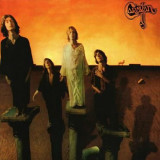


![Daniel[i] & Purl - WHS 03](https://www.deejay.de/images/l/3/6/985236.jpg)