
5
In Stock
Disponibile in Stock e pronto per la spedizione
Last In: 21 days ago
19,54 €
Disponibile in Stock e pronto per la spedizione

Sie maschen's noch einmal. THE SOUND OF MONEY mit "Two: Rhyme On". Die Band aus dem Münchner Pop-Underground - genauer: mit Albert Pöschl, direkt aus dem Kern des faszinierenden Echokammer Labels, Claudia Kaiser, ex-Moulinettes, mit der aparten Stimme, die an eine Münchener Nico ohne den Drogen BS erinnert und Martin Lickleder, der für Wortakrobatik, Referenzspielereien und flotte Discostreicher berüchtigt ist - mit der Weiterführung ihres spielerischen, nicht minder faszinierenden Konzeptes: An Anagrammatical Exorcism of the 70s. Sie nahmen die Titel ihrer 12 Lieblingsalben aus den 70ern als DNA - und schüttelten die Buchstaben kräftig durch! Heraus kamen 12 neue Titel, für neue Songs. Im Jahr 2017, auf ihrem Album MORE? WHY NOT! haben sie das Gleiche mit den 60ern gemacht. Jetzt toppen sie den Spaß sogar noch. Kurz zurückgespult, 2017: Pu?nktlich zum 50-ja?hrigen Jubila?um des Summer of Love 1967 pra?sentieren The Sound of Money 2017 ihre Konzeptplatte "More? WHY NOT! - AN ANAGRAMMATIC EXORCISM OF THE 60S". Dazu stellen sie die Titel von 12 ihrer Lieblingsplatten aus diesem Pop-Ur-Jahrzehnt zu Anagrammen um - und schwuppdiwupp hatten sie 12 Titel fu?r ganz neue Songs: Aus "Pet Sounds" wurde "Nude Spots", aus "Piper At the Gates of Dawn" wurde "Tiger T - Death Happens to a Few", aus Bobbie Gentry's "The Delta Sweete" wurde "Let's Eat The Weed",... 2025: Geradezu u?berpu?nktlich vor dem 50-ja?hrigen Punk-Jubila?um sind sie wieder zur Stelle: Am 23.5. wird, wieder über das Hamburger BB*ISLAND Label "TWO: RHYME ON - AN ANAGRAMMATIC EXORCISM OF THE 70s" erscheinen - mit Anagrammen von David Bowie bis Chic, von Nico bis Slits, von Bob Marley bis Kraftwerk. Beispiel? Aus "The Rise and Fall of Ziggy Stardust and the Spiders from Mars" wird "Dr. Dr. Themefart, Frustrating Himself, Posed as Gay Old Nazi SS".Exodus von Bob Marley wird zu Sex Duo. (Die beiden songs sind schon mal als Singles / videos veröffentlicht ) Und wie die Titel-Buchstaben haben sich auch Musik und Text zu einem schillernden, grotesken Kaleidoskop klassischer 70s-Popstile zurechtgeschu?ttelt: Landwirtschafts-P-Funk, Finanzcasino-Gospel- Disco, Anti-Pogo-Postpunk, zweifelnder Heimcomputer-Dub-Jazz, der gesamte Bowie in dreinhalb Minuten ru?ckwa?rts ... Nicht nur Live eine Wilde-Maus-Fahrt des Pop-Glam in Mu?nchner Underground-Allstar-Besetzung: CLAUDIA KAISER: Gitarre, Bass, Gesang ALBERT PO?SCHL: Bass, Gitarre, Gesang MARTIN LICKLEDER: Geige, Mundharmonika, Gesang TOM WU: Schlagzeug FRANZISKA ERDLE: Percussion SVENJA PFEIFER: Keyboards, Gesang
dovrebbe essere pubblicato su 23.05.2025

"The 1958 Miles Davis group wasn't a quintet but a sextet, with the addition of Julian ""Cannonball"" Adderley on alto sax to John Coltrane on tenor sax, Red GaIrTlaEndMoSn piaMnoA, YPaul NChOamTbersBoEn bass, Philly Joe Jones on drums, and Miles on trumpet. Milestones was the first studio album made by the sextet. It was recorded on February 4 and March 4, 1958, and the rhythm section was the same as the classic 1956 quintet.
THE COMPLETE ALBUM – 180-GRAM COLORED RED VINYL - LIMITED EDITION"
dovrebbe essere pubblicato su 11.04.2025

Edinburgh (via Bristol) producer, DJ and balearic psychonaut takes us on a playful exploration through his cosmic arboretum on the Memory of Stolen Bush EP, with four of his own tracks and a very tasty remix from Berlin’s Glenn Astro. Café Lotito draws us into a world of atmospheric chug with dreamy whistles, rich, saturated pads and sneaky acid lines sitting atop a tasteful break and a steady, thudding kick. Gottlieb's Lament drops the tempo further, into a shimmering, melancholic lagoon of dubby psychedel ia, with marimbas and melodicas dancing amongst the mournful, lysergic synth work.
The B side steps straight into the dance with the EP’s namesake In The Shadow Of The Oleander, a pulsing, acidic drum machine workout, bustling with percs and bleeps and cru nchy rhythms, all set to a backdrop of soaring pads and drifting harmonics. Glenn Astro’s remix of Oleander pumps things up into an epic, maximalist realm with huge synth lines and a squarely pounding rhythm section turning the playful roller into a peak ti me thumper. Finally the digital bonus track Memories of Hare uses surrealist snippets of colour to pay tribute to a much missed former Bristol haunt, dropping the tempo back down and putting melody and atmosphere front and centre, with a ghostly marimba l eading the procession beside staccato guitars and shimmering synths unknown
Ordina ora e ordineremo l'articolo per te presso il nostro fornitore.

Of the many great talents of the classic Nigerian highlife scene, none contained the existential depth, transcendence and grace of Celestine Ukwu. During his brief time in this world, he pursued education, music, and philosophy; first as a school teacher, then ultimately a singer, lyricist and musician, first as a member of Gentleman Mike Ejeagha's Premier Dance Band, and eventually fronting his own groups, The Music Royals and The Philosophers National. Beginning in the early 1970s, The Philosophers National established a radical shift in the possibilities of Nigerian highlife by moving away from the typical mid-century style and cutting a new path with a distinctly hypnotic and cerebral atmosphere. This sense of depth was apparent in the lilting, multi-layered and pulsing music of The Philosophers National, as well as the concise and clear-eyed lyrics sung so beautifully by Celestine Ukwu. The arrangements establish a living, breathing environment for each song; muted trumpet solos, hypnotic guitar runs, driving percussion; every instrument gracefully following a tide of patience, tranquility, wonder, climax, knowing and unknowing. "Celestine ditched the jaunty dance rhythms and relatively facile lyrics typical of the reigning highlife tunes, and ignoring the soul music tropes most of the highlife bandleaders were appropriating in an effort to inject new life to their ailing format. Instead Celestine concocted a new highlife style that was more contemplative and lumbering; with the layering of Afro-Cuban ostinato basslines and repetitive rhythm patterns that interlocked to create an effect that was hypnotic, virtually transcendental. Meanwhile, Celestine himself sang as he stood coolly onstage in a black turtleneck and a sportscoat, looking like a university professor. The message was clear: this was not necessarily music for dancing_even though the rhythms were compelling enough. This was music for the thinkers." - Uchenna Ikonne This LP compiles some of Celestine Ukwu's deepest and most affecting songs from the 1970s, which have been gorgeously restored and remastered by Tim Stollenwerk to highlight the brilliant details of Celestine and the entire Philosopher's National. Pressed on 160 gram black vinyl at Smashed Plastic in Chicago, and comes in heavy 3 spot-color jacket, with fold-over insert with bilingual lyrics and notes by Uchenna Ikonne (Comb & Razor Sound).
dovrebbe essere pubblicato su 05.08.2022

B•O•M is the fifth album by freak electronic producer NCHX (NOCHEXXX). A percussive planet of acid-techno, UK bass, house and electro-phonk, hosed down with a chemical wash of post-dubstep and UK bleep contaminants.
Departing with a tube station screech, HUNTING HIDES signals a lone defender’s ride through the underground - trace amounts of musique concrete dart around the tunnel walls, while sub-low cushions the rumble. ENTERCOL is perfect 3am mix fodder; saturation hot-points push beneath a middle eastern theme, whilst SEVENTH GUN TERRITORY is pure rapid-fire bongo bizness - a concrete terrain punctuated with corrugated metal grids and moving shadows: distorted poly-metered brutalism! CYBERTUSH is the perfect OST to a club littered with vape pens, while B-Boi bots flirt with promiscuous A.I.
Arguably the most fierce cut is TEFLONTUAN - an ode to NCHX’s favourite pro Antuan Dixon - the Deathwish skater lands bolts with the illest of steeze. Side-chained 303 squelch rattles alongside x0x sequenced drums as wavetable pads float above kinked rails. A nights gallop over city curbs. The LP signs off with LOCATION SCOUT, a SpaceX sample-return mission heading back to earth with a fistful of deep house red planet crumble.
“A dance floor’s dream and a mixing engineer’s nightmare” - Resident Advisor
Ordina ora e ordineremo l'articolo per te presso il nostro fornitore.

Three years after their critically acclaimed and sold out Abrada LP the great and joyful Japanese afro groovers Ajate are back with their much awaited brand new album Alo!
Ajate is a Japanese band who plays a unique blend of afro-groove dance music mixed with Japanese traditional festival music called "Ohayashi". Formed in 2011 by the band-leader John Imaeda, Ajate consists of 10 Japanese musicians.
Another unique feature of the band is the use of hand-made bamboo instruments as well as traditional Japanese percussion. The "Jahte" is a bamboo-made xylophone or balafon with a piezo pick-up mic attached to each key, connected to a pre-amplifier to obtain a loud sound and to add some touch of dirty distortion to its warm and natural acoustic sonority.
The "Piechiku" is also a bamboo-made string instrument inspired by the west-African "Ngoni" or Moroccan "Guembri" instruments. The Piechiku uses strings of the Japanese traditional "Shamisen". This instrument is also played through a pre-amplifier and John sometimes adds some wah-wah effect to it. All these bamboo instruments are designed, made and named by John Imaeda himself.
On Alo you will also be amazed by the exceptional sound of the Japanese Shinofue flute, which was not on the previous Abrada LP. Now, add to this unique sound some well-crafted Japanese female and male singing and you get a killer mix of Afro-Funk flavored grooves with traditional Japanese music!
Since the release in 2017 of their Abrada LP on the 180g label Ajate has toured Europe twice and has played a memorable concert at the world famous Trans Musicales festival in France in 2018, which has been followed by another great KEXP Live session.
Here is some music you will not be able to hear anywhere else, by one of the most joyful Japanese band to hear on record and to listen live!
Ordina ora e ordineremo l'articolo per te presso il nostro fornitore.
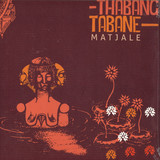
Beautiful contemporary African music. Deep percussion with great guitar playing and vocal chants on top. Driving basslines all over the album. Spiritual feel! Tip
.
Son of the legendary Dr Philip Nchipi Tabane and heir to the malombo sound that he originated and pioneered in the early 1960s, Thabang Tabane has been touring the world playing with his father's band and other South African luminaries (such as Thandiswa Mazwai, Madala Kunene and Mabi Thobejane) since he was 8 years old.
Emerging into his own with his debut solo album, Matjale, this energetic percussionist carves a driving, joyous and worldly version of the malombo genre that takes in his continental travels. The album brims with ambition and an appetite for life. Employing brisk tempos, nimble basslines and intersecting polyrhythms, Thabang crafts songs cognisant of the hardships of life, but chooses to deliver them with an irrepressible optimism.
Expanding parameters of what is essentially an artform patented by his father, Thabang and his cohorts seem unburdened by pedigree, infusing the sound with a modern sensibility. His reverence for the vibrational resonance and drive of the bass guitar, not to mention his explosive bursts of hand drumming, gives the album an undeniable, cathartic exuberance.
Ordina ora e ordineremo l'articolo per te presso il nostro fornitore.
