This deep soul-jazz double-sider, recorded on October 3rd 1972, was released as a seven-inch single on Motella, one of the many labels of the Mavuthela Music division of Gallo Africa (now Gallo Record Company). Mavuthela was founded by the talent scout and producer Rupert Bopape in 1964. This recording of 'The Toreadors', a one-off session group, was produced by Ray Nkwe who worked as an independent producer for several different companies and was responsible for organising many African jazz-oriented sessions in the 1970s and early 80s.
On first hearing the A-side ‘Thembi’ (written by Ray Nkwe) you’ll wonder why you haven't heard this song before, but simultaneously be struck with a sense of instant familiarity. It has a loose floating jazz vibe with echoes of 60's hippy, psychedelic soul-jazz qualities, and elements that remind us of acts such as The Deirdre Wilson Tabac. The vocal deliveries are stunning, hauntingly beautiful, and from a place where it is hard to pinpoint just where this song originates.
The B-side, ‘Gwinyitshe', is also absolute fire. This song has gained more coverage and notoriety among South African music fans / collectors and DJ's over the years. It is a deep, pulsing soul-jazz-funk groove with another exceptional vocal performance that is relaxed yet engaging and spiritual, whilst managing to surf the instrumentation to perfection. 'Gwinyitshe' was written by one of the sleeping giants of South African music, Teaspoon Ndelu, who also plays on the record and whose material we can't get enough of here at Mr Bongo.
When you think you have all the records you need a gem like this resurfaces from the past, reminds you that you've only scratched the surface and there is still a wonderful treasure trove out there to enrich you and your music collection. So dive into The Toreadors world briefly, your day will be the better off for it.
• Official vinyl replica
• South African soul-jazz obscurity
• 'Gwinyitshe' written by Teaspoon Ndelu
Search:ne hau
LTD. CLEAR BLUE VINYL
Fresh off of their 2020 offering Adult Themes, El Michels Affair is back with a new full-length release. Titled Yeti Season, this newest album has everything we've come to expect from EMA's patented cinematic style of instrumental soul music. Where Adult Themes inspired a soundtrack to an imaginary film, Yeti Season brings us to a different place in time_with new inspirations. Taken with Turkish-styled funk and an almost Mumbai-esque take on soul, El Michels Affair offers us a different kind of drama and imagination with Yeti Season. If you've been following along, this shouldn't be viewed as too far a departure for El Michels Affair. The first single off of Yeti Season showed their hand back in 2018. A double-sided banger, that release brought the musical textures to the fore that dominate this record. The first song, titled "Unathi," is fully realized with the beautifully haunting-yet-hopeful vocals of Piya Malik, formally of 79.5_another Big Crown artist. Singing in Hindi, Piya's ethereal voice is telling us to work and strive together toward progress. Even if you don't understand her language, you can still hear the urgency of purpose, creating a lasting vibe that sits on top of it all. Leon Michels explains that Piya had a vital influence on this record: "When Piya started singing in Hindi, she had a different voice, a different tone. I knew we had to do something together." And so Piya appears on three other songs on Yeti Season: "Zaharila," "Murkit Gem," and "Dhuaan." Each providing particular signatures to the album. "Zaharila" is a building and changing love song punctuated by blaring trumpets, driving drums, and Piya's pleading lyrics. While the more upbeat "Murkit Gem" opens with a fuzzed out, Wu-Tang-esque baseline that buoys Piya's stylings. The psychedelic guitar and Piya's changing tones and textures singing about an all-consuming love are what pushed "Dhuaan" on to the second single from Yeti Season. There is also a vocal appearance from Shannon Wise of The Shacks, yet another Big Crown artist. Her song called "Sha Na Na," lies more in the familiar EMA vein: melodic, hypnotic, soulfully visual. But between Shannon's airy singing, the jumpy baseline, moody vibes, the active drum lines, it sounds like a pensive walk home after a strangely dramatic night. So what is Yeti Season? It could be more of a feeling than an actual place or time of year. It's a heavy album_as evidenced by the signature musicianship and dramatic vocal expressions. But it's also a hopeful record, with phrasings, textures, and chord changes that hint at something better_or fuller_coming our way. You hear it in songs like "Ala Vida," with its stabby, pulsing chords laying a bedrock for EMA's bright, atmospheric horn lines. Or even in "Fazed Out," which leaves you with a feeling of determination, a striving for resolution even though the driving, march-like song structure should accompany some conquering army. This persistence has to come from the fact that Leon Michels and company finished this record during the lockdown. It was a tough and troublesome time. But look at what has come of it: Yeti Season_a record of high and heavy drama, but also one of hope and promise. It may take a year like 2020 behind us to find hope in a winter big footed creature like a Yeti, but that's where we are.
Stix Records, a sub-label of Favorite Recordings, proudly presents Scary Dub, a new project by Mato, made of exclusive Dub versions of some of the most famous horror movie soundtracks. Available as Vinyl LP & Digital on February 5th 2021.
Do you remember The Exorcist, Halloween, Jaws, Evil Dead, The Twilight Zone or The Return Of The Living Dead and their haunting musical themes? Imagine all and many more remixed by the French dub master, along with three original and scary compositions. Needless to say, Mato, who’s playing most instruments and synthesizers, did a fantastic job and you’ll be blown when hearing these versions.
Starting his reggae production career in 2006, Thomas Blanchot (aka Mato) has released music through various projects on EDR Records, Big Singles or Makasound... In the meantime, he developed a real trademark: taking over classics French, Hip-Hop, OST, Classical or Pop songs, into roots reggae-dub new versions. Besides, since 2010, Mato has built a solid reputation thanks to his hot remixes of Hip-Hop classics on Stix Records.
Das Broken Heart Syndrom ist keine erfundene Störung. Das Phänomen hat einen Namen: Tako Tsubo (oder "Krakenfalle" auf Japanisch). Es ist eine Erschütterung der Sinne, ein emotionaler Burnout... Es schwächt die Hauptpumpkammer des Herzens, ausgelöst durch intensiven emotionalen Stress: ein Erdbeben oder eine Naturkatastrophe oder etwas weniger (buchstäblich) Erderschütterndes wie der Verlust eines geliebten Menschen oder die Angst, die man empfindet, wenn man von einem Liebhaber verschmäht wird. Die moderne Wissenschaft hat noch kein Heilmittel gefunden. Tako Tsubo ist ein Trennungsalbum, und "Mataharis" romantische Ader, basierend auf der Idee einer idealisierten Heldin - ist einer mehr in der Realität verankerten Landschaft gewichen. L'Impératrice haben sicherlich ihre Vorliebe für Dance, Groove auf einem virtuosen Bass, Vintage-Synthies und glitzernde Melodien behalten. Aber sie haben sich die Freiheit gegeben, andere Länder zu erkunden, zur Seite zu treten. Was die Eleganz der Produktion angeht, so haben sich L'Impératrice wieder mit Renaud Letang (Jarvis Cocker, Liane La Havas, Feist) zusammengetan, wobei der mächtige Neal Pogue (Outkast, Stevie Wonder, Tyler the Creator) sein Können beim Mixing beisteuerte. Vielleicht am überraschendsten ist die tiefe Erkundung der Wege des Herzens, und insbesondere der linken Herzkammer. Ambivalente Liebe, Euphorie, Kummer und Wahnsinn: so viele Symptome, die zusammengenommen auf eine schlechte Dosis Tako Tsubo hindeuten. Es ist ein Syndrom, das das Herz beschädigt zurücklässt, überflutet, angeschwollen. Und lebendiger denn je.
A quick, spontané voyage to the French Riviera ca. 1968, good times long before things went south, Organi’s “Parlez-vous Français?” is a woozy, tripping, soothing sojourn: DIY dream pop, hazy psychedelia, blurred-but-steady beats dripping down the golden boulevard, complete with mystical chants, a dash of half-remembered Franglais that goes down like some vintage eau-de-vie. There’s a fine massage waiting behind those venetian blinds. Pay half an hour, you’ll be relaxed and revived after 22 minutes. Très irrésistible when streamed, Organi’s haunting, hard-boiled French lesson is even better with that classique vinyl crackle in the mix.
Following the cinematic title skit with its bass loop appendix, Oakland-based producer and multi-instrumentalist Mike Walti (and his songwriting partner Maryam) aka Organi invites singer Jessica Bailiff along for the majestic entrée, an interpretation of Philamore Lincoln’s 1970 tune “The North Wind Blew South” (doesn’t it always?), adding anticon. heavyweights Jel and Odd Nosdam on synths and bass for à la mode enhancements and additional bric-à- brac.
Whereas the theme tune “Organi” comes with big drums, big organ, seductive overtones, pure hypnosis, “Whispers” is the soundtrack to some kind of psychedelic campfire tableau vivant: all brumeux, hazy, with spare guitar, Gauloises or Gitanes dangling, a glass of Bordeaux waiting on the dusty old amp, and featuring guest vocalists Yea-Ming Chen & Susy Borhan. It gets even more Parisienne after that: a French woman just knows how to look classic, even when all she’s got is some attitude, a ramshackle tambourine, a craving for old Sukia weirdness and those budget-couture “4 Dolla Jeans”...
Clearly in love with analog equipment, Organi turn The Vaselines’ “Slushy” into a slow- moving, bottomless lullaby – “... you'll never miss what you never had” –, and the femme fatale minimalism of “Stay The Night” is too magnétique and alluring: A fuckin’ sexy chanson, très léger and yet such a hard-knockin’ head-nod anthem, it’ll make you stay for sure, hungry for la petite mort.
Before the expansive denouement – a bank robbery in style: with bangs and a bucket bag (“Danger Walked In”) – the session gets super loose on “The Getaway,” head scarves and berets shimmering in the cabriolet, and featuring Jena Ezzadine on vocals & Headnodic on bass.
Mike Walti aka Organi is an Oakland-based musician and producer. A third generation Bay Area native, Walti has been running wyldwood Studios in Oakland CA for 10+ years (recording artists like Why?, Latyrx, Del, Dan The Automator, and Big Freedia, to name but a few). A longtime friend of Odd Nosdam, he loves to work with analog equipment (“We just love us some analog!” “Just listen to those relays purr...”). Recorded and mixed by Mike Walti at wyldwood, and mastered by Odd Nosdam.
Limited edition vinyl re-press. Hand-numbered gatefold sleeve with updated liner notes. Pressed to blue vinyl. Limited to 500. 4**** The Times 4**** MOJO ”Songs as gloriously haunted as the land that spawned them” – Q 4**** The Magnetic North is made up of Erland Cooper, Hannah Peel and Simon Tong.
The mighty Channel One Studios,Kingston, Jamaica, has its place set in Reggae's Musical History.Its distinctive sound the studio created on opening its doors in 1972 to its closure in the early 1980's made it the Producers, Singers and Musicians studio of choice during this furtive period. Achieving that vibe and clarity, separated it from the other Kingston establishments.
Run by the Hookim Family's four sons, Jo Jo the eldest followed by Paulie, Ernest and Kenneth. Their father originally came from China and married a Chinese Jamaican lady and settled in the St Andrews district before moving to Kingston Town itself. The family business was built on jukeboxes and one armed bandit machines in and around Kingston. A lucrative venture until the gaming laws changed in 1970, outlawing the gaming machines. So the music side of the business would have to be expanded. So it was decided to open a studio to make the music to supply their already established Jukebox enterprise. The four brothers opened Channel One Recording Studios in 1972 at 29 Maxfield Avenue, Kingston 13. Initially as we stated the purpose of the studio was for the brothers use only, but this would soon change when the various Producers all looking for that Channel One sound came asking for studio time.
The brothers had used the services of Bill Garnet a renowned and well respected technical engineer on setting up the studio. They spent a lot of time laying out the space to get the right acoustics and picking the right quipment. They went with a four track API desk and the best quality microphones such as Neuman, Sony and AKG, vital in obtaining the quality sound and track separation that would prove so worthwhile after the music was recorded to give the best flexibility on the final mix downs. Jo Jo would take over the production duties after the initial hiring of Syd Bucknor a producer who had worked closely with Coxonne Dodds Studio 1 stable. The first release on the Channel One label would be 'Don't Give Up The Fight' by Stranger Cole and Gladstone 'Gladdy' Anderson.The initial two thousand run being swallowed up by their Jukebox interests and so the steady flow of hits would run up to the brake through hit of 1975 'Right Time' by the Mighty Diamonds.
1977 saw Jo Jo extending his stays in New York to a semipermanent status, returning mainly to oversee recording sessions and then taking the results back to America for worldwide distribution. His brother Paulies senseless killing in that year also added to Jo Jo's decision to spend more time with his Hit Bound Manufacturing set up in New York. The Channel One studio would be upgraded in 1979 to sixteen tracks and although Jo Jo and Ernest still covered the mixing and engineering duties Kenneth would now supervise sessions. An often untold part of Channel Ones history is the involvement of Producer Niney The Observer. The mid to late 1970's were heavy times both musically and politically and Maxfield Avenue was in the heart of this crossfire. Some artists and musicians were weary of using the establishment especially when sessions ended late at night and exiting the studio at these times could be somewhat dangerous. But Niney’s fearlessness seen him over running and in many cases running the all night sessions with his trusted set of musicians loosely called The Soul Syndicate. Having the run of the mighty Channel One studio's allowed Niney to build up and work on a stockpile of rhythms that he still has yet to unleash on the world. We have been lucky to select a bunch of material from Niney's vaults for this release. Some great unreleased rhythms and some different cuts to some tracks you might already know. Niney's work with Dennis Brown and his own distinctive heavy roots style productions have been documented and indeed his work on Channel Ones Yellowman releases stand tall also. We hope this fine set of Niney Productions set inside the hollowed walls of Channel One will sit beside them as they so richly deserve.
- A1: Engineering Systems
- A2: The Latent Space
- A3: Speech & Ambulation
- B1: Thousand To One
- B2: Walking & Talking
- B3: Youmachine
- C1: Doublekeyrock
- C2: Machine Rights
- C3: Go Tick
- C4: The Fear Of Machines
- C5: Artificial Authentic
- C6: Machine Perspective
- C7: Cut That Fishernet
- D1: Tools Use Tools
- D2: Loose Tools
- D3: Seven Months
- D4: Paymig
- D5: Borrow Signs
- D6: New Definitions
- D7: New Life Always Announces Itself Through Sound
Mouse on Mars, the Berlin-based duo of Jan St. Werner and Andi Toma, approach electronic music with an inexhaustible curiosity and unparalleled ingenuity. ‘AAI’ (Anarchic Artificial Intelligence) takes their fascination with technology and undogmatic exploration a quantum leap further.
Emerging from a primordial ooze of rolling bass and skittering electronics, hypnotic polyrhythms and pulsing synthesizers propel the listener across the
record’s expanse. Hidden in the duo’s hyper-detailed productions is a kind of meta-narrative.
Working with AI tech collective Birds on Mars and former Soundcloud
programmers Ranny Keddo and Derrek Kindle, the duo collaborated on the creation of bespoke software capable of modelling speech; text and voice from writer and scholar of African Studies Louis Chude-Sokei and DJ/producer Yağmur Uçkunkaya were fed into the software as a model, allowing Toma and Werner to control parameters like speed or mood, thereby creating a kind of speech
instrument they could control and play as they would a synthesizer.
The album’s narrative is quite literally mirrored in the music - the sound of an artificial intelligence growing, learning and speaking. This exploration of artificial intelligence as both a narrative framework and compositional tool, allowing the duo to summon their most explicitly science-fiction work to date. Original artwork by Casey Reas, inventor of the computer graphics language Processing.
Recently, Mouse on Mars received the 2020 Holger Czukay Prize for Pop Music.
Mouse on Mars have been regularly streaming performances throughout 2020, partnering with organizations like Goethe-Institut, Haus der Kulturen der Welt, Conditions of a Necessity and others and will continue these in 2021.
‘AAI’ is available on grey or black double LP packaged in a single sleeve with full colour insert / lyrics. CD comes with 8-panel poster booklet.
“Andi Toma and Jan St. Werner continue to create soundscapes that blur the line between programming and live musicianship, and sometimes between Earth and outer space.” - AV Club
“Enthralling and impossible to categorize.” - Pitchfork
“Sustained and ephemeral electronic sounds conjure unearthly open spaces… It’s not a song; it’s sound as a temporal phenomenon, a few minutes of sculpted attention.” - The New York Times
Swedish producer and electronic enthusiast Rivet (Mika Hallbäck Vuorenpää, Malmö) joins the Editions Mego fold with a dynamic and diverse album that pivots between the punctuated pop of Ivan Pavlov's COH project, the chromatic slink of Chris and Cosey whilst also bearing a degree of fruit birthed from Hallbäck's home country Sweden in skewered pop such as The Knife.
This is electronic music born from the worship of machines and the spirit of punk, mood music brooding with sophistication and subversive twists all underscored with a deep industrial pulse. Are these songs? Are these lyrics? Words melt as beat perpetually takes us deeper into flight.
Interpretation is flung open as the audience are invited to gauge what on earth is going on here. Are Sooty Wing Flecks a minuscule species of half keyboard half vocoder chatter? Is Gleitende Liebe to be trusted or simply laying out a guide for disorientation? Pearling Woes is a queasy ballad sung by a robot on a very special comedown. Keloid knows exactly where the party can be now whereas Sodden Healer is an uber ride sans mask to destinations dark and unknown. Throughout this trip sharp snares punctuate ghost melodies as vocals rise and vaporise. Shadows hover the walls leaving holographic traces of the duality between fun and fear, the unexpected drifts diagonally across the audio plane teasing and taunting the listener in a unique blend of industrial, techno, pop and experimental forms.
On Feather and Wire album is a deep absorbing trip through multiple moods, genres and guises, as mysterious as it is engaging and one to ingest in a single sitting, lying back, sitting up, standing up and yes, even dancing. Let the angels and angles, the voices and distorted faces take shape before your mind. Who is Ordine Kadmia? What are they saying to me, here we go, on and on...
With it's haunted vocals, coded linguistics and dark sensual propulsive atmosphere On Feather and Wire is a sublime contemporary techno pop trip both psychedelic and subversive.
Written and produced by Mika Hallbäck Vuorenpää
Post-production by Mika Hallbäck Vuorenpää and Benny Liberg at Inkonst Studio Malmö
Mixed by Oscar Mulero at Dead Souls Studio Gijón
Mastered by Stephan Mathieu
Images by Dimitrios Bizios
Artwork by Nik Void
“Nothing ever really disappears,” Cassandra Jenkins says. “It just changes shape.” Over the past few years, she’s seen relationships altered, travelled three continents, wandered through museums and parks, and recorded free-associative guided tours of her New York haunts. Her observations capture the humanity and nature around her, as well as thought patterns, memories, and attempts to be present while dealing with pain and loss. With a singular voice, Jenkins siphons these ideas into the ambient folk of her new album.
An Overview on Phenomenal Nature honors flux, detail, and moments of intimacy. Jenkins arrived at engineer Josh Kaufman’s studio with ideas rather than full songs — nevertheless, they finished the album in a week. Jenkins’ voice floats amid sensuous chamber pop arrangements and raw-edged drums, ferrying us through impressionistic portraits of friends and strangers. Her lyrics unfold magical worlds, introducing you to a cast of characters like a local fisherman, a psychic at a birthday party, and driving instructor of a spiritual bent.
Jenkins’ last record, 2017’s Play Till You Win, confirmed the veteran artist’s talent. Evident of Jenkins’ experience growing up in a family band in New York City, the album showcased her meticulous songwriting and musicianship, earning her comparisons to George Harrison and Emmylou Harris. Jenkins has since played in the bands of Eleanor Friedberger, Craig Finn, and Lola Kirke, and rehearsed to tour with Purple Mountains last August before the tour’s cancellation. Her new record departs from her previous work in its openness and flexibility, following her peripatetic lifestyle. “The goal is to be more fluid, to be more like the clouds shifting constantly,” she says. The approach allowed Jenkins to express herself like she never has.
On album opener “Michaelangelo,” before the heavy drum beat and fuzz guitars enter, Jenkins sings quietly “I’m a three-legged dog, working with what I’ve got / and part of me will always be looking for what I lost // there’s a fly around my head, waiting for the day I drop dead.” Phenomenal Nature thrives in this dichotomy between ornate sonics and verbal frankness, a calming guided tour to the edge. Later, on “Crosshairs,” amid lush strings, she sings conversationally: “Empty space is my escape / it runs through me like a river / while time spits in my face.”
“Hard Drive,” the third track and album centerpiece, opens with a voice memo Jenkins recorded at The Met Breuer: a guard muses about Mrinalini Mukherjee’s hybrid textile and sculpture works, which were then on display in a retrospective titled Phenomenal Nature. “When we lose our connection to nature, we lose our spirit, our humanity,” she explains. Stuart Bogie's saxophone & Josh Kaufman's glittering guitar make way for Jenkins' spoken word which constellates scenes from her life, gradually building and blossoming as she recreates a meditation guided by a friend who incants, “One, two, three.”
Sounds of footsteps and bird calls run through the album’s glittering conclusion, “The Ramble.” Meditative and bright, it recalls how Jenkins felt while writing and recording her new material: “Everything else is falling apart, so let’s just enjoy this time,” she said. If Phenomenal Nature has a unifying theme, it’s the power of presence, the joy of walking in a world in constant flux and opening oneself to change.
Electric Jalaba comprises six accomplished musicians with an empathy thatfeels telepathic and a groove that immerses. In Arabic, the mother tongue ofMoroccan-born singer and guimbri player Simo Lagnawi, a leading practitionerof Gnawa music in Britain, they call this indefinable quality, "El Hal" - "Thefeeling". "It's the feeling that comes when we're playing and totally forgetting where weare," says producer and bassist Olly Keen. "The feeling of being grabbed by themusic and lost in the groove." 'El Hal / The Feeling' is the new third album fromElectric Jalaba and their first release in five years. It's a multi-faceted work thatfinds the band tighter than ever, deploying a vast cache of influences across ninetracks improvised and developed in their south London studio then deftlyproduced by Keen. Some tracks pay homage to the origins of Gnawa music,whose repertoire of Arabic-language praise songs contains remnants of WestAfrican dialects - Bambara from Mali, Fulani and Hausa from the Sahel region -that point to a centuries-old migration. "The trance-inducing effect of Gnawa was what hit us first. It was visceral, heartstopping," continues Olly, whose siblings - producer / keys player Henry Keen,guitarist / multi-instrumentalist Nathaniel Keen and singer / multi-instrumentalistBarnaby Keen - make up Electric Jalaba alongside revered Anglo-Italian kitdrummer Dave De Rose and Simo on vocals, krakeb and guimbri. "Simoselected the chant from the traditional song suites and, as a band, we extendedthese short pieces of ceremonial music and experimented with sound andstructure," explains Olly. Tracks include the Juno-led dancefloor single 'CubailiBa', 'Agia Hausa', a multi-layered wig-out that partly takes its inspiration fromSenegal's fiercely percussive mbalax rhythms and 'Daimla', a gloriously dubbyode to Allah and iconic maalems including the late Mahmoud Guinea. "There's avery strong rhythmic element within the band but because of our differentperspectives but the melodic components are really unique as well," says Henry.That feeling of being outside of yourself but totally within yourself at the sametime... That's what all of us, collectively, are striving for."
Phoebe Bridgers veröffentlichte ihr Debüt 2017 als relativ unbekannte Singer-Songwriterin aus Los Angeles. Etwas mehr als zwei Jahre später ist sie eine international anerkannte Musikerin mit drei renommierten Werken unter der Haube: ihr Solo-Debüt "Stranger In The Alps", die boygenius-EP mit Julien Baker und Lucy Dacus im Jahr 2018 und Better Oblivion Community Center - eine überraschende Zusammenarbeit mit Conor Oberst 2019. Bridgers ist ein bemerkenswertes Talent und zugleich eine Künstlerin, die sich selbst und ihre kometenhaft wachsende musikalische Karriere mit ausreichend Humor begegnet. Das neue Album "Punisher" wurde zwischen den Sommermonaten 2018 und Herbst 2019 geschrieben und aufgenommen - die Songs offenbaren dabei einmal mehr Bridgers als unwiderstehlich kluge und gefühlvoll produktive Songwriterin unserer Zeit. Erneut arbeitete Bridgers - die auch als Produzentin die boygenius EP und das Better Oblivion Community Center-Album ko-produzierte - für die neuen Songs, wie auch für `Stranger In The Alps', mit Tony Berg und Ethan Gruska zusammen. Dabei fanden sich auch ihre eng verbundenen Musikerfreunde im Studio wieder ein - inklusive Bridgers Band bestehend aus Marshall Vore (Drums), Harrison Whitford (Gitarre), Emily Restas (Bass) and Nick White (Klavier) sowie Performances von Conor Oberst ("Halloween", "I Know The End"), Lucy Dacus ("Graceland Too", "I Know The End"), Julien Baker ("Graceland Too", "I Know The End"), Blake Mills ("Halloween", "Savior Complex" and "I Know The End"), Jenny Lee Lindberg ("Kyoto", "ICU"), Christian Lee Hutson ("Garden Song", "Halloween", "Savior Complex", "I Know The End"), Nick Zinner ("I Know The End"), den legendären Drummer Jim Keltner ("Halloween" and "Savior Complex") und Bright Eyes' Nathaniel Walcott an der Trompete ("Kyoto" and "I Know The End"). `Punisher' wurde wie zuvor auch `Stranger In The Alps' von Mike Mogis gemischt.
Mondo, in collaboration with Back Lot Music, is proud to present a vinyl pressing of James Newton Howard's Golden Globe Nominated score to Universal Pictures’ powerful new film from acclaimed filmmaker Paul Greengrass, News of The World.
Set five years after the end of the Civil War, News of the World follows Captain Jefferson Kyle Kidd (Tom Hanks), a veteran of three wars, who now moves from town to town as a non-fiction storyteller, sharing the news of presidents and queens, glorious feuds, devastating catastrophes, and gripping adventures from the far reaches of the globe.
In the plains of Texas, Kidd crosses paths with Cicada, aka Johanna Leonberger (Helena Zengel, System Crasher), a 10-year-old taken in by the Kiowa people six years earlier and raised as one of their own. Johanna, hostile to a world she’s never experienced, is being returned to her biological aunt and uncle against her will. Kidd reluctantly agrees to deliver the child to where the law says she belongs. As they travel hundreds of miles into the unforgiving wilderness, the two will face tremendous challenges of both human and natural forces as they search for a place that either can call home.
The film is a moving exploration of our present through the lens of our past, and the music by eight-time Academy Award® nominee James Newton Howard (The Hunger Games, The Sixth Sense, Signs, The Fugitive) is innovative, emotional, and beautiful, as it follows Captain Kidd’s journey from regret to redemption. A haunted, and healing sound of vintage Americana floods from your speakers as the tender strings and piano guide you over gorgeous landscapes.
When Linda Smith purchased a 4 track cassette recorder in the mid-1980s she was playing guitar in a band called the Woods, and thought it would be useful for sharing demos with her bandmates. In the end, the new hobby followed her from New York back to her native Baltimore, and over the next decade she’d release several albums worth of delicate, bewitching solo music on cassette. Till An- other Time: 1988-1996 is the first retrospective collection of Smith’s charmingly lo-fi music.
Sparse and gentle, Linda’s music is tinged with lovelorn melancholy despite the sweetness of her voice. Over ‘60s pop-indebted melo- dies on tracks like “A Crumb Of Your Affection”, she delivers ob- servations with an earnest softness. Elsewhere, her voice takes on a post punk deadpan, as on “I See Your Face.” The effect of both modes is a haunting charm, equally reminiscent of early Cherry Red Records and ‘60s yé-yé.
With a no-nonsense approach to recording, Linda recorded almost all of her songs at home. There was a creative freedom that came with recording on tape, and unbeknownst to her, this was a conclu- sion that many musicians were reaching at the time.
Unfortunately, the independence that made at-home recording ap- pealing to Linda also made it difficult for her to reach a wider au- dience. Relying on niche publications, cassette trading, and word of mouth to share music, Linda released a few 7”s on labels like Slumberland and Harriet but remained relatively local in terms of reach. Nevertheless, one can trace a direct line from Linda Smith to the ubiquity of bedroom recording today.
Both tracks produced by Robin The Fog at The Sticky Shed, Penge during lockdown 2020. Side A features a recording of a wine glass. Side B is created entirely from closed input sounds of the tape machines themselves. One take, no edits, no overdubs, no artificial FX. Mastered by Steven McInerney. A.H.M.F. and long live the Wyrm.
Robin The Fog is a sound designer, radio producer, audio archivist, educator and occasional DJ based in London. His work falls under the broad term "radiophonics" and includes composition, sound installation, field recording and documentary. Best known as founder and chief strategist of "tape loop quintet" Howlround, he also produces work alongside DJ Food and Chris Weaver as The New Obsolescents and with Ken Hollings as The Howling. Originally described as a "second wave hauntologist", his current obsession is attempting to use closed-input feedback loops to create primitive techno, which is quite a long way from where he started. His biggest fear is being swallowed by a python, but living in South London he appreciates the contingency is a remote one.
- A1: Paradise (Stay Forever)
- A2: Go!Go!Style
- A3: Lady Blue
- A4: Midori Eyes
- A5: Breeze With U
- A6: The Lemegton Bop
- A7: Knife & Crystal
- A8: Ego 24-7
- A9: Last Dance Xx
- A10: Sunset Song
- A11: To The Heart
- A12 17: 00 Under Red Skies
- B1: House Of Bliss
- B2: Headlights On The Shore
- B3 8: Th Street Rose
- B4: Leaving
- B5: End Of The World
- B6: Welcome
- B7: The Plateau
- B8: The Sarcophagus
- B9: Temple Of Tears
- B10: Idle Lands
- B11: Transit (Empyrean)
- B12: Transit (Perdition)
In Zusammenarbeit mit dem britischen Entwickler-Studio Kaizen Game Works veröffentlicht das Kölner Soundtrack-Label Black Screen Records im Frühjahr 2021 Barry "Epoch" Toppings funkigen "City-Pop meets Vaporwave"-Soundtrack zu dem von der internationalen Gaming-Presse gefeierten Open World Adventure Game Paradise Killer auf Vinyl. Barrys Toppings Soundtrack erscheint auf limitiertem 180g Curacao & Pink Doppel-Vinyl und kommt in einem von 80er Animes & City Pop-Alben inspirierten Artwork der deutschen Designerin Mizucat. Zudem enthält das Vinyl ein gefaltetes A2 Poster und einen Download Code. Die Sounds des Paradieses. Die Musik eines kosmischen Traums. Tracks einer anderen Realität. Das Tempo eines Verbrechens, dass alle Verbrechen beendet. Der Beat von lange verlorenen außerirdischen Göttern. Die Playlist des "Investigation Freaks". Lass dich von der Musik ins Paradies führen. Fühle die glühend heiße Sonne auf deiner Haut. Rieche unerträglich heißen Beton. Genieße den süßen Geschmack von Verbrechen, begangen, auf einer tropischen Insel in einer alternativen Realität. Erinnerst du dich daran, wie wir am Strand getanzt haben? Neben den paradiesischen Straßen? Du hast mir dieses Mix-Tape auf dem Dach deines Apartments gemacht. Wir haben den Mond angestarrt. Du sagtest, du würdest den Mond töten. Ich glaubte dir nicht. Wie falsch ich doch lag.
The Crown is a drama television series, created and written by Peter Morgan and produced by Left Bank Pictures and Sony Pictures Television for Netflix Original. The show tells the biographical story about the early reign of Queen Elizabeth II of the United Kingdom. The fourth season features Olivia Colman as Queen Elizabeth, as the story traces her life from her wedding 1947 to the present day. The main cast is further completed by Emma Corin as Lady Diana Spencer, Gillian Anderson as Margaret Thatcher, Helena Bonham Carter and Tobias Menzies as Prince Philip, and many more. Martin Phipps once again composed the haunting minimalistic soundtrack for this Golden Globe Award winning drama series. It is pressed on ‘royal’ purple marbled vinyl as a limited edition of 750 individually numbered copies and the package includes a 4-page booklet.
First run on silver marbled vinyl!
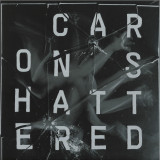
2020 was a year like no other. Thankfully, Shipwrec is slowly returning to normality. Not only is the label back to releasing form, but also the roster of artists is being expanded with the superb addition of Caron. Known for his releases on labels like 030303 and Brokntoys, Caron debuts on Shipwrec with a four tracker of sheer quality. Off-kilter percussion introduces the breathy pads and grandeur of "Ancestry," a piece of dreamy chords and acid undertones. The haunting "Common Sense" follows. Drums stagger next spectral vocals in this chilling electro piece. A similar stalking note continues on the flip with the 303 soaked "Lost." A steady kick offers a bedrock from which looming keys, bitter squawk and dancefloor paranoia take hold. Hopeful shades arrive with the brilliance of "Ruins." From industrial percussion and metallic rinses, a deep and intricate finale forms to bring "Shattered" to a terrific close.
What is the utility of pain? Can it do anything but fester? In Ferneaux explores pain in motion, building audio-spatial chambers of experience and memory. Using an archive of field recordings from a decade of global travels, isolation gave Blanck Mass an opportunity to make connections in a moment when being together is impossible. The record is divided into two long-form journeys that gather the memories of being with now-distant others through the composition of a nostalgic travelogue. The journeys are haunted with the vestiges of voices, places, and sensations. These scenes alternate with the building up and releasing of great aural tension, intensities that emerge from the trauma of a personal grieving process which has perhaps embraced its rage moment. An encounter with a prophetic figure on the streets of San Francisco presented the question of "how to handle the misery on the way to the blessing." This is the quandary of the impasse we now all find ourselves in, trapped in our little caves, grappling with the unease of the self at rest - without movement, without the consumerist agenda of "new experiences." The possibility of growth, always defined by our connections with others, held in limbo. Sartre said that "Hell is other people," but perhaps this is the Inferno of the present: the space of sitting with the self. A blessing is often thought of as a future reward, above and beyond the material plane. With In Ferneaux, Blanck Mass wrangles the immanent materials of the here-and-now to build a sense of transcendence. Here, the uncanny angelic hymn sits comfortably beside the dirge. The misery and blessing are one.
500 only LP. One of the first full-length recordings of Hauka ritual music. Praise songs and sacred incantations to the spirits to inhabit the body. Call and response chants, the pluck of a monochord lute and relentless pounding percussion combine in a dizzying nonstop session. The Hauka movement started nearly a century ago and has persisted on the fringes of Nigerien society. Documented in the 1955 Jean Rouch film Les maitres fous, the Hauka are a pantheon on spirits mirrored on colonial and military figures. Central to the religion is the "Holley Hori" possession ceremony, a ritual driven by militaristic percussive music, wherein spirits come into the body in powerful and violent manifestations. Lingo Seini has played ritual music for almost 60 years, learning from his father. He is joined by his son Youssouf on the calabass and Issaka Moulla, playing his homemade kuntigi. The group regularly accompanies Hauka priests in ceremonies. Recorded with a single microphone in the outskirts of Niamey.