Search:nep

Styles
All
Colorado - Colorado / Para Ti

"Matasuna Records" returns to Mexico for a third time to dig for rare treasures. They got their hands on a special gem - two obscure Latin/Jazzfunk tunes by a band called "Colorado" from "Mexico City". The songs were released in 1976 on the Mexican label Peerless and the super rare original 7inch is virtually unavailable. Fortunately, the release is finally available for the first time as an official reissue in a remastered edition. An unjustly under-the-radar Latin jazzfunk highlight!

The song "Colorado", named after the band, opens the "A-side" of the single. The hypnotic fender rhodes puts the listener in the right mood right from the start, before the drums and percussion set the rhythm. The horns also add depth and melodiousness before the song takes a turn and reveals its funky side with guitars, synths and bass. A nice guitar solo also reveals the affinity for rock music without losing sight of the vibe of the song or tipping it a different direction. Definitely a fabulous song that comes up with a lot of ideas and inspirations, offering an unexpected richness in the under 3-minute running time.

The "B-side" also continues musically energetic in the same way with "Para Ti". Here, too, you can feel and hear the playfulness and experimentation of these extraordinary musicians. Atmospherically dense passages alternate with quieter phases and solo parts, before the tension rises again and literally explodes. As in the song "Colorado", rhodes, brass, guitars & bass offer a great and varied interplay. The secret highlight, however, might be the drum and percussion parts in the middle of the track, which will surely enchant not only the B-Boys and B-Girls.

Artist info:

The internet, a source of almost endless knowledge, offers no information about the band Colorado. All the more fortunate that one of the band's founding members, "Emilio Espinosa Becerra", provides detailed info for the reissue.

In 1968 the three brothers "Luis", "Francisco" and "Emilio Espinosa Becerra" from Mexico City started to rehearse together to play wellknown rock & pop songs at friends or family parties. At first, they played on Japanese guitars and a Teisco bass borrowed from a school friend. They saved up money to then buy guitar & bass amps and a microphone, which they always had to rent until then. However, the budget was only enough for Mexican replicas of the legendary Fender Bassman and the Fender Super Reverb. Original equipment was simply unaffordable.

Shortly thereafter, more members joined the band. Three musicians from the school band "Tepeyac": "Marco Nieto Bermudez" (trumpet), "Raymundo Mier Garza" (tenor saxophone) and "Alfonso Romero" (trombone). Another classmate named "Carlos Mauricio Fernández Ordóñez", who studied piano, also joined the group. His father had a chemical factory in the United States and helped bring equipment (amplifiers and a Farfisa Fast 5 organ) - hidden in the back of a truck - to Mexico. In the time that followed, more instruments were acquired, including bass and guitars (from Gibson, Rickenbacher and Fender) and microphones (from Shure) for vocals and horns.

With a larger band and new equipment, they played many parties in their district of "Lindavista" in "Mexico City" and neighboring areas from 1970 to 1973, as well as gigs at various festivals and school events. The group's band name at the time was "Sound Core Brass". However, more and more often people with turntables and speakers showed up at parties, which were also able to heat up. The so-called "Sonideros", a sound system culture that was emerging in the 1960s, charged less than a multi-piece live band, so the band's performances declined.

During those years, three other "Espinosa Becerra" family members joined the band: "Jorge Rafael" (trombone), "Sergio Alejandro" (tenor saxophone) and "Felipe de Jesus" (drums and percussion).

A brother of the musicians, "Carlos Espinosa Becerra", studied electrical engineering at the University. Together with another fellow student, he designed and built a 10-channel console with a variety of functions and features that far surpassed the devices available at the time. They also went to the US again to buy JBL speakers & tweeters to build their own sound system. On another trip to Los Angeles, they bought Phase Linear amplifiers, which offered enormous power by the standards of the time and had an extremely low distortion factor. With this equipment they could turn up the volume really loud and noise-free.

This was also the time when they stopped playing music from English bands & youth groups and changed their repertoire completely. They played mambos, chachachas, pasodobles and tangos on special occasions in big ballrooms and halls. Also, every now and then they hired a string quartet of well-known Mexican violinists to provide the musical entertainment at dinner events.

During those years, classmate "Pablo Rached Diaz" joined the band, playing tenor saxophone. Pablo was very active and organized many parties. He was also the one who helped the band to record on the Mexican label "Peerless". So in 1975 they were asked by Peerles Records to record their own songs. They had recorded a total of 12 songs - six of these songs were released on three vinyl singles (45rpm). Most of the songs were composed by "Gustavo Ruiz de Chavez Sr.". The band was asked to adopt a more commercial name, and so they had chosen the band name "Colorado". In the course of the releases, the band made some promotional tours and appeared in shows on "Televisa", the most important television station in Mexico in those years.

Later, several members of "Colorado" graduated and began to pursue regular professions. They didn't stop playing at events, but priority was given to more formal duties and the band was no longer as active as it had been in its heyday.

About 8 years ago, the band got back together to play again. The next generation of musicians also joined the band: two sons, a nephew and a brother-in-law of the original band members. Currently, they are back playing at friends' parties and family gatherings in Mexico City.

out of Stock

Order now and we will order the item for you at our supplier.

10,71

Last In: 3 years ago
Seventh Storm - Maledictus LP (2x12")

Seventh Storm

Maledictus LP (2x12")

2x12inch4251981701325
Atomic Fire
12.08.2022

Die Allgegenwärtigkeit des Todes inmitten des blühenden
Lebens und der Kreativität steht im Mittelpunkt von
SEVENTH STORM. Mike Gaspar, der fast 30 Jahre lang
den Rhythmus auf der wichtigsten portugiesischen
Metal-Galeere Moonspell vorgab, hat endlich ein neues
Ventil gefunden, um seine Liebe zum Heavy Metal, sein
kulturelles Erbe und seine Leidenschaft für ungezähmte,
wilde Musik zu zelebrieren, deren Wurzeln tief in das
Gewebe unserer Welt reichen. Hier hebt sich eine
hungrige Band empor, die ihre Seele für ihre Musik
gegeben hat. "Ich wollte ein Album schreiben, von dem
Fans aller Kulturen sagen können ?das ist für mich?",
meint er über den primären Antrieb, der hinter
"Maledictus" steht. "Mein Traum war es, etwas von
diesem unschuldigen Neunziger-Jahre-Touch
zurückzubringen und dabei traditionelle portugiesische
Musik mit Metal zu mischen." Mit Einflüssen, die von
Bathory über Samael, Tiamat, Paradise Lost, Fields of the
Nephilim, Cradle of Filth und Dead Can Dance bis hin zu
Van Halen oder Mötley Crüe reichen, machen sich
SEVENTH STORM gerade erst auf ihre Reise durch die
wilden und wundersamen Gewässer der Heavy
Metal-Geschichte. Und obwohl es kein Konzeptalbum ist,
wird "Maledictus" von einem starken Gefühl des
Schmerzes und der Wut zusammengehalten, gepaart mit
einer flackernden Hoffnung auf Vergebung für unser

pre-order now12.08.2022

expected to be published on 12.08.2022

22,65
Ed Wynne (Ozric Tentacles) - Tumbling Through The Floativerse

OZRIC TENTACLES' ED WYNNE ANNOUNCES NEW ALBUM WITH GRE
VANDERLOO FROM 'GRACEROOMS'.Since 1983, the Ozric Tentacles have
woven psychedelic audio-tapestries that capture the almost dangerous
musical diversity of the free festival scene, blending acid rock with dub,
reggae, ethnic world music & electronic, jazzy experimentation
Ed Wynne, founding member & leader of the outfit, now presents a new project. A
long- term admirer & friend of Gre Vanderloo, better known from his project
'Gracerooms', the two have now teamed up to record 'Tumbling Through The
Floativerse'.
"I've always enjoyed the synth orientated musical worlds he creates with his
project 'Gracerooms'" says Ed of his new collaborator. "Shortly before lockdown
2020, whilst making the early stages of the recent Ozrics album 'Space for the
Earth', we decided to try & make some tunes together. Gre came over from
Holland where he lives, to the Blue Bubble Studio here in Fife & we started
recording pretty much straight away. We ended up with about six definite starting
points, which then developed & unfolded into a harmonic realm we referred to as
'The Floativerse'… A place where you might escape gravity for a moment".
Featuring guest appearances from 'Gracerooms' bassist, Paul Klaessen & longterm Ozrics synth player Silas Neptune, the entire album was recorded at Ozrics
headquarters; Blue Bubble Studios, engineered & produced by Ed Wynne &
mastered by Adam Goodlet. Mind- bending artwork comes courtesy of Valerie
Fangman.

pre-order now15.07.2022

expected to be published on 15.07.2022

26,26
Aki Onda - Nam June’s Spirit Was Speaking To Me

A spellbinding tribute from one multi-faceted artist to another. New York-based artist Aki Onda (b. 1967) conjured a transduction to the Korean multi-media pioneer Nam June Paik (1932-2006). Aki himself describes the project:

“Nam June’s Spirit Was Speaking to Me occurred purely by chance. In 2010, I was spending four days at Nam June Paik Art Center in South Korea for a series of performances and had plenty of free time to wander. The building was packed with Paik’s artwork and related material. I have always felt a close kinship with him as an artist, and so it was a great opportunity to immerse myself in his works and ephemera.

It was that night I made the first contact, via a hand-held radio in a hotel room in Seoul. It was literally out of the blue. Scanning through the stations, I stumbled upon what sounded like a submerged voice and I began to record it in fascination. I concluded this was Paik’s spirit reaching out to me.

The project continued to grow organically as I kept channeling Paik’s spirit over long distance and receiving cryptic broadcasts/messages. The series of séances, conducted in different cities across the globe, began in Seoul in 2010, and continued in Köln, Germany in 2012, Wrocław, Poland in 2013, and Lewisburg, USA in 2014. The original recordings were captured by the same radio which has a tape recorder, with almost no editing, save for some minimal slicing and mastering.

Paik is known for his association with shamanism, a practice that constantly surfaces in his works all through his career. In an interview, he stated “In Korea, diverse forms of shamanism are strongly remained. Even though I have created my work unconsciously, the most inspiring thing in my work came from Korean female shaman Mudang.” Paik himself was a master shaman and vividly used shaman rituals and symbols for staging his performances and installations.

These recordings also became a way for me to explore the mythic form of radio—a medium which is full of mysteries. The transmissions captured may be “secret broadcasts” on anonymous radio stations. There are in fact hundreds of those stations around the world, although the numbers dwindle as clandestine messages can now be sent via encrypted digital channels. Some of these stations were likely for military use or espionage or relics of the Cold War. But many others continue without apparent explanation. These are just some of the questions that remain unanswered.”

Commissioned in 2017 by documenta 14's radio program “Every Time A Ear di Soun,” these recordings were continually broadcast on eight radios stations around the world that year. Nam June’s Spirit is a beautifully formed homage, I cannot think of any other like it. An intimate, flickering language discovered through the air. The LP comes replete with a booklet of photographs of Paik on the set of Michael Snow’s unreleased film Rameau’s Nephew (1974).

Sean McCann, 2020
Aki Onda, 2017

20-page art booklet including rare photographs of Nam June Paik from the set of Michael Snow’s film Rameau’s Nephew (1974), two essays on radio-wave phenomenon (by Onda and Marcus Gammel), and a remembrance of Paik by Yuji Agematsu

pre-order now17.06.2022

expected to be published on 17.06.2022

25,17
Nelson Brandt - Knalleffekt

Nepumuk / Knowsum glides onto the Growing Bin under his given name, living his best life in this lush loungecore fantasy. Eyebrow raised and hips unlocked, Nelson strolls through affluent funk, sun-blushed boogie and slacker soul to deliver a playful pop masterpiece. A Revered MC and renowned beat maker, his syrup-smooth vocals are just the cocktail cherry on top.

out of Stock

Order now and we will order the item for you at our supplier.

19,96

Last In: 3 years ago

Alex The Fairy - Can I Hear The Sound Of A Falling Branch

Alex the Fairy is an artist based in Berlin producing music with an emphasis on electronic and concrete methods. Alex the Fairy is also part of the 3Ddancer trio, a live act focusing on improvisation and expression using electronics.

Alex The Fairy writes: "I had sent The Tapeworm tracks before, but I was being difficult so was asked to send a new bunch, with a deadline. I sent the new bunch, a fairly odd collection expecting perhaps some of them to be combined with the older stuff but not seeing any coherence in them. I figured The Tapeworm would find at least something. To my surprise the suggestion that came back was exclusively the tracks I had sent the second time, and, re-listening through the tracks in this new order after returning from a Christmas dinner lying on the floor of my nephews bedroom gave them a completely new context. Despite them being quite varied in terms of age (one had been flung together a few days earlier on the train while another was approaching Schulreife) they seemed to meld together in such a way that I hardly recognised them…

Last year my grandmother died. My last grandparent. I had put off seeing her during corona, as I thought it best not to put her at risk and had almost left to visit her days before her death but had delayed my departure because of a medical appointment. My failure to her weighs heavy on my mind - fates grimacing grin: too little, too late. The approaching march of death, one generation closer was a confrontation I wasn't prepared for.

While clearing out her flat in the following weeks I had kept some of my grandfathers cassettes, live recordings of jazz greats, Pink Floyd, Sade and some classical among them, none originals, several presumably from the radio e.g. a church organ rendition of Bach. At the time I wasn't sure why I was hanging on to them, other than the urge to hoard, and that it felt wrong not at least to keep some. Half a year later, half way through mixing this cassette, suffering from my first bout of COVID, I had the insatiable urge to hook up the cassette player I had received from my grandfather after his death around nineteen years earlier and had been dragging along with me since. I stuck a cassette in only to immediately return to the safety of my covers. I began to work my way into what I had saved, hearing the fruits of my grandfathers labour decades before. It felt like quite an intimate interaction with someone I had long lost contact to/was long gone. Quite a wonderful thing, these time traveling cassettes.

I returned to the tracks to mix them shortly before my corona/cassette experience, with a new mixing console at hand. I had been looking for one for several years, but nothing had ever clicked, until I found this old broadcast desk 30 minutes from my place (it also coincided with a payment from a job the sum of which matched the price identically… fates return). Installing became a massive hassle and I doubted my decision continuously, but the further it was implemented the more it made sense. The first track I recorded with the mixer is on this cassette. Shortly before the mixing I was introduced to an Effektgerät by a friend, Rapha. Another good friend Art lent me their one, and I ended up using copious amounts of it throughout mixing, alongside my usual space creators. All the tracks on this release were mixed again on this mixer and are in a sense all a bit of a dub of the originals. I wouldn't have worked this way without the mixer, and the effect gave me a dimension I hadn't had before, so, from a technical perspective, the mixer and this effect define this release, giving it a coherence, at least for me. Emotionally of course the chaos and turbulence of the preceding year and my newfound appreciation for the medium give it a meaning I will struggle to formulate." – Alex The Fairy, Berlin, 9 May 2022

out of Stock

Order now and we will order the item for you at our supplier.

10,88

Last In: 3 years ago
Koray Kantarcıoğlu - Loopworks 2

Discrepant presents Istanbul based audio/visual artist Koray Kantarcıoğlu's follow-up to his debut album Loopworks (CREP59, 2018).

Whilst the first volume used 60’s and 70’s Turkish records as it source material, Loopworks 2 expands the sampling pool to local records as well as snippets from 70's TV and 80's new age and jazz tapes. This disparate material is mangled and glued together with Koray’s very personal sampling techniques.

This result becomes a dreamy, haunted and enigmatic collection of floating vignettes. Koray also enlists the help of local musicians such as Ekin Fil, who contributed to the album with haunting vocals and sound textures as well as Berke Can Ozcan who adds drums and percussion into the haunted mix.

The LP comes with a bonus CD entitled 'Loopworks 2 Extras', that could be another album itself, created from extra material that couldn’t make it to the LP.
Composed in 2020 and 2021.

pre-order now20.05.2022

expected to be published on 20.05.2022

18,95
Soak - If I Never Know You Like This Again

 With their new album, If I Never Know You Like This Again, SOAK has
finally shaken the hangover of their starry debut ‘Before We Forgot How
To Dream’, and the pressures that came with it, hiding in the wings of
their ambitious follow up album, ‘Grim Town’.
 Having come up through BBC Introducing at the tender age of 15, before
signing to Rough Trade Records, as well as winning the RTE Choice
Music Prize and The Northern Irish Music Prize, in addition to being the
youngest ever Mercury Prize nominee, SOAK has again and again been
described as “the voice of a generation.”
 Showing, from a young age, an intensely artistic awareness of the poetry
of memory, Bridie Monds-Watson, aka SOAK, would incessantly
photograph and video everything, documenting and organising the
material so it was always there for them to revisit. “I always want to
remember exactly how I felt at a certain moment.” Now, at 25, SOAK’s
third album, ‘If I Never Know You Like This Again', is naturally made up
of what Bridie intimately calls ‘song-memories’.
 Working closely with Tommy McLaughlin (Villagers), with whom Bridie
has been collaborating with since the age of 15, and armed with
influences from Pavement to Radiohead to Broken Social Scene, they
wrote most of the album together before recording it with the rest of the
band in Attica Studios, Donegal.
 Throughout the album SOAK pushes and pulls at melodies, but never
milks their brilliance. Bridie masterfully glides their vocal melody slightly
off-kilter above excitable compressed high hats and flourishing guitar
lines. With the new direction of a grungier, more lo-fi production, the
swooning guitars are given a contemporary pop edge, reflected in the
rich and robust musicality of songs like ‘Bleach’, ‘Last July’ and ‘Pretzel’.
 There’s a constant pulsating beat at the album’s centre, propelling it
towards a kind of dewy happiness, like the end credits of a 90s comingof-age film. Bridie’s lyrics move through the songs almost as effortlessly
and they sing them, and the songs when read, read like poetry.
 With this album Bridie is, as the title suggests, freezing time in the
pursuit of truth: capturing their life into existence. In the world of ‘If I
Never Know You Like This Again’, a life is lived only because it's
remembered.

pre-order now20.05.2022

expected to be published on 20.05.2022

27,69
VARIOUS - AFRICA FUNK  ROOTS CHAPTER 2 (2x12")

Second volume of this collection of pure Funk, Afro Beat and African Funk music is out!
This chapter, as previous one, includes highly respected artists such as Mandrill, The Wild Magnolias, Manu Dibango, Fela Kuti, Tony Allen, Buddy Miles and many others, but also includes the very rare and exclusive long version of “Sangadongo” from Niagara.
All these artists guarantee the high quality of this collection, a record that any funk lover can’t miss: the real funk from the origins and the groove in its free form.

out of Stock

Order now and we will order the item for you at our supplier.

27,94

Last In: 3 years ago
Retromigration / Nephews - Jeffa / Reingelaxed

Retromigration returns to Ravanelli Disco Club with a brand new broken beat chanelling track 'Jeffa'. None other than Ron Basejam steps up on remix duties in signature disco don style.

He didn’t come alone though, bringing his friends Nephews to the dance on the B side who deliver sunset house grooves in the form of 'Reingelaxed'. To complete the EP Jkriv remixes 'Reingelaxed' into a synth swirling Balearic gem.

out of Stock

Order now and we will order the item for you at our supplier.

11,72

Last In: 13 months ago
Black Mango - Quicksand

Black Mango

Quicksand

12inchGRAM2202
Gusstaff Records
06.05.2022

Based in Bamako for sixteen years, Philippe Sanmiguel has been the producer of albums by the famous Malian bluesman Samba Touré since his international debut. Over the years, Philippe has expanded his work with other artists such as the legendary Tuareg band Tartit, Anansy Cissé, Mariam Koné or Djimé Sissoko among others.

While working on the albums of these artists, he often had the inspiration to add influences from his original rock culture but in small measures. That's how Black Mango was born, to gather his favorite musical collaborators around his own compositions and expand the vision. It started with an EP released on Glitterbeat Records in 2014 from which the idea for a full-length album was born.

Black Mango's Quicksand album was recorded in Bamako over a period of several years, in various recording sessions, giving each musician free range to play on a rhythmic and melodic basis prepared in advance. The alchemy was immediate in all cases, often from the first takes.

Philippe originally met producer and musician Hugo Race with Chris Eckman during their stay in Bamako for the recording sessions of Dirtmusic's Troubles & Lion City albums. Hugo loved the raw feeling of the tracks and offered to remix the album in his Melbourne studio, bringing his own unique touch.

The fruit is ripe!

Recorded at Akan Studio & Funhouse Studio in Bamako, Mali by Konan Kouassi & Philippe Sanmiguel
Produced, mixed and mastered by Hugo Race at Helixed Studio

A few words about the main " stars " :

- Samba Touré is Samba Touré.
- Anansy Cissé is a young songhoy artist for whom Sanmiguel has produced two albums, including the recent and acclaimed "Anoura".
- Mariam Koné is one of the most beautiful voices of Mali, who has a self-produced album and teaches music at the conservatory of Bamako.
- Singer Bocar Sana Coulibaly & Ali Traoré are singer and guitarist from Niafunké, nephews of the great Ali Farka Touré and have a band called Espoirs de Niafunké

pre-order now06.05.2022

expected to be published on 06.05.2022

19,54
Retromigration - WOLFEP064 EP

Retromigration

WOLFEP064 EP

12inchWOLFEP064
WOLF MUSIC
15.04.2022

Retromigration returns to WOLF Music for his 2nd solo outing on the label with a trademark, warm, jazz-flecked house journey.

Hot property by anyone’s standards, the Amsterdam-based producer stretches his legs across six MPC chopped and screwed heaters, from the punchy, deep deliciousness of ‘Hafenluft’ and sun-soaked vibrations of ‘Mad Fox’, to the bouncing bubbler ‘Tinger’ that features Nephews.

On the flip, the Dam-Funk channeling, keytar cruise ‘Be Alright’ sits side by side with ‘Disk Yard’ and ‘Nur Wir’, two twilight cuts that showcase Retromigration's love of the beats and hip hop scenes whilst putting his own unique spin on them. Another sure-fire example of why you’re seeing Retromigration’s name popping up all over the place right now – pure class from start to finish.

stock from20.05.2026

11,56

Last In: 49 days ago
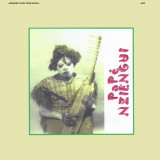
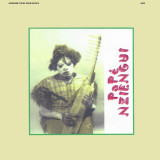
Papé Nziengui et son Groupe - Kadi Yombo LP 2x12"

Kadi Yombo, published in 1989, is the most successful album in the quest for a fusion between tradition and modernity in Bwiti harp music of the Tsogho people of Gabon. Combining beating rattles with a layer of synthesizers, Papé Nziengui blends in a contrapuntal dialogue characteristic of harp playing: male song in appeal and female choir in response, male voice of the musical arc and rhythms of female worship. But above all it’s Tsogho ritual music and modern studio orchestration. The result is an initiatory itinerary of 10 musical pieces which are all milestones likely to be simultaneously listened to, danced, meditated on, and soon acclaimed. In the years since, Nziengui has traveled he world from Lagos to Paris, from Tokyo to Cordoba, from Brussels to Mexico City to become a true icon, the emblem of Gabonese music.

Like Bob Dylan, "electrifying" folk and Bob Marley mixing rock with reggae, some purists have criticized Nziengui for having distorted the music of harp by imposing a cross with modern instruments. They even went so far as to claim that Nziengui was just an average harpist covering his shortcomings with stunts that were only good for impressing neophytes; like playing a harp placed upside down behind his back or playing two or three harps simultaneously. Sincere convictions or venomous defamations, in any case, Nziengui never gave in to such attacks, imposing himself on the contrary to pay homage to the elders (Yves Mouenga, Jean Honoré Miabé, Vickoss Ekondo) while instructing the maximum of young people. He is thus the promoter of many young talents, the most prominent of which is certainly his nephew Jean Pierre Mingongué. In a conservative society where the sacred is confused with secrecy, exposing the mysteries of Bwiti in broad daylight can be punished by exclusion or even execution.

Papé Nziengui has always claimed that he faces such risks because he never felt enslaved to a community that governs his life, that regulates his conduct, that has a right of censorship over his activities. Like Ravi Shankar, the famous sitarist, Papé Nziengui is a man of rupture but also of openness, a transmitter of culture. As proof, he has established himself in Libreville, Gabo’s capital, as the main harpist for sessions and concerts, accompanying the greatest national artists (Akendengué, Rompavè, Annie-Flore Batchiellilys, Les Champs sur la Lowé, etc.) as well as foreign artists (Papa Wemba, Manu Dibango, Kassav', Toups Bebey, etc.). In 1988, he was the first harpist to release an album in the form of a cassette produced by the French Cultural Center (Papé Nziengui, Chants et Musiques Tsogho). At the same time, he created his own group (Bovenga), combining traditional music instruments (musical bow, drums, various percussion instruments, etc.) in the framework of a true national orchestra, which gave the first concert and the first tours of a traditional music that was both modern and dynamic, thus "democratizing" the harp, to the dismay of certain purists.

On the other hand, in modern music, dominated by the logic of profit or even commercialism, artistic creation must often be adjusted for a specific audience based on reason rather than heart. But instead of allowing himself to be distorted, Papé Nziengui has always tried to produce music that is not a caricature, worthy in its expression as in its content, of the sacredness and transcendence of the music of the Origins. This is what makes Nziengui not only the musician, but the man someone whose age hasn’t altered any of his freshness or authenticity

pre-order now08.04.2022

expected to be published on 08.04.2022

32,73
Papé Nziengui et son Groupe - Kadi Yombo LP

Kadi Yombo, published in 1989, is the most successful album in the quest for a fusion between tradition and modernity in Bwiti harp music of the Tsogho people of Gabon. Combining beating rattles with a layer of synthesizers, Papé Nziengui blends in a contrapuntal dialogue characteristic of harp playing: male song in appeal and female choir in response, male voice of the musical arc and rhythms of female worship. But above all it’s Tsogho ritual music and modern studio orchestration. The result is an initiatory itinerary of 10 musical pieces which are all milestones likely to be simultaneously listened to, danced, meditated on, and soon acclaimed. In the years since, Nziengui has traveled he world from Lagos to Paris, from Tokyo to Cordoba, from Brussels to Mexico City to become a true icon, the emblem of Gabonese music.

Like Bob Dylan, "electrifying" folk and Bob Marley mixing rock with reggae, some purists have criticized Nziengui for having distorted the music of harp by imposing a cross with modern instruments. They even went so far as to claim that Nziengui was just an average harpist covering his shortcomings with stunts that were only good for impressing neophytes; like playing a harp placed upside down behind his back or playing two or three harps simultaneously. Sincere convictions or venomous defamations, in any case, Nziengui never gave in to such attacks, imposing himself on the contrary to pay homage to the elders (Yves Mouenga, Jean Honoré Miabé, Vickoss Ekondo) while instructing the maximum of young people. He is thus the promoter of many young talents, the most prominent of which is certainly his nephew Jean Pierre Mingongué. In a conservative society where the sacred is confused with secrecy, exposing the mysteries of Bwiti in broad daylight can be punished by exclusion or even execution.

Papé Nziengui has always claimed that he faces such risks because he never felt enslaved to a community that governs his life, that regulates his conduct, that has a right of censorship over his activities. Like Ravi Shankar, the famous sitarist, Papé Nziengui is a man of rupture but also of openness, a transmitter of culture. As proof, he has established himself in Libreville, Gabo’s capital, as the main harpist for sessions and concerts, accompanying the greatest national artists (Akendengué, Rompavè, Annie-Flore Batchiellilys, Les Champs sur la Lowé, etc.) as well as foreign artists (Papa Wemba, Manu Dibango, Kassav', Toups Bebey, etc.). In 1988, he was the first harpist to release an album in the form of a cassette produced by the French Cultural Center (Papé Nziengui, Chants et Musiques Tsogho). At the same time, he created his own group (Bovenga), combining traditional music instruments (musical bow, drums, various percussion instruments, etc.) in the framework of a true national orchestra, which gave the first concert and the first tours of a traditional music that was both modern and dynamic, thus "democratizing" the harp, to the dismay of certain purists.

On the other hand, in modern music, dominated by the logic of profit or even commercialism, artistic creation must often be adjusted for a specific audience based on reason rather than heart. But instead of allowing himself to be distorted, Papé Nziengui has always tried to produce music that is not a caricature, worthy in its expression as in its content, of the sacredness and transcendence of the music of the Origins. This is what makes Nziengui not only the musician, but the man someone whose age hasn’t altered any of his freshness or authenticity

pre-order now08.04.2022

expected to be published on 08.04.2022

10,29
Papé Nziengui et son Groupe - Kadi Yombo LP

Kadi Yombo, published in 1989, is the most successful album in the quest for a fusion between tradition and modernity in Bwiti harp music of the Tsogho people of Gabon. Combining beating rattles with a layer of synthesizers, Papé Nziengui blends in a contrapuntal dialogue characteristic of harp playing: male song in appeal and female choir in response, male voice of the musical arc and rhythms of female worship. But above all it’s Tsogho ritual music and modern studio orchestration. The result is an initiatory itinerary of 10 musical pieces which are all milestones likely to be simultaneously listened to, danced, meditated on, and soon acclaimed. In the years since, Nziengui has traveled he world from Lagos to Paris, from Tokyo to Cordoba, from Brussels to Mexico City to become a true icon, the emblem of Gabonese music.

Like Bob Dylan, "electrifying" folk and Bob Marley mixing rock with reggae, some purists have criticized Nziengui for having distorted the music of harp by imposing a cross with modern instruments. They even went so far as to claim that Nziengui was just an average harpist covering his shortcomings with stunts that were only good for impressing neophytes; like playing a harp placed upside down behind his back or playing two or three harps simultaneously. Sincere convictions or venomous defamations, in any case, Nziengui never gave in to such attacks, imposing himself on the contrary to pay homage to the elders (Yves Mouenga, Jean Honoré Miabé, Vickoss Ekondo) while instructing the maximum of young people. He is thus the promoter of many young talents, the most prominent of which is certainly his nephew Jean Pierre Mingongué. In a conservative society where the sacred is confused with secrecy, exposing the mysteries of Bwiti in broad daylight can be punished by exclusion or even execution.

Papé Nziengui has always claimed that he faces such risks because he never felt enslaved to a community that governs his life, that regulates his conduct, that has a right of censorship over his activities. Like Ravi Shankar, the famous sitarist, Papé Nziengui is a man of rupture but also of openness, a transmitter of culture. As proof, he has established himself in Libreville, Gabo’s capital, as the main harpist for sessions and concerts, accompanying the greatest national artists (Akendengué, Rompavè, Annie-Flore Batchiellilys, Les Champs sur la Lowé, etc.) as well as foreign artists (Papa Wemba, Manu Dibango, Kassav', Toups Bebey, etc.). In 1988, he was the first harpist to release an album in the form of a cassette produced by the French Cultural Center (Papé Nziengui, Chants et Musiques Tsogho). At the same time, he created his own group (Bovenga), combining traditional music instruments (musical bow, drums, various percussion instruments, etc.) in the framework of a true national orchestra, which gave the first concert and the first tours of a traditional music that was both modern and dynamic, thus "democratizing" the harp, to the dismay of certain purists.

On the other hand, in modern music, dominated by the logic of profit or even commercialism, artistic creation must often be adjusted for a specific audience based on reason rather than heart. But instead of allowing himself to be distorted, Papé Nziengui has always tried to produce music that is not a caricature, worthy in its expression as in its content, of the sacredness and transcendence of the music of the Origins. This is what makes Nziengui not only the musician, but the man someone whose age hasn’t altered any of his freshness or authenticity

pre-order now08.04.2022

expected to be published on 08.04.2022

32,73
JÓHANN JÓHANNSSON - Last and First Men LP (2x12")

(Re-Issue)

This reissued standard vinyl edition of Jóhannsson’s brilliant and seven years in the making work 'Last and First Men' is replacing the limited edition box set, that has originally been released with the album. Please note the Blu-Ray and art prints from the limited edition box set are not included. While composing haunting, elegiac concept albums of lost utopias and working for TV and film the Icelandic composer Jóhann Jóhannsson was thinking about a project on an even larger scale since 2010 - a multimedia work that would include his own visual concept, direction and music. Based on the cult science fiction novel by Olaf Stapledon, Jóhann Jóhannsson's opus magnum Last and First Men artfully combines music, film and narration from Tilda Swinton, sitting somewhere between fiction and documentary to form a poetic meditation on memory and loss.

out of Stock

Order now and we will order the item for you at our supplier.

31,05

Last In: 4 years ago
ORELSAN - Civilisation

Orelsan

Civilisation

12inch3407866
Wagram
18.03.2022

His last album " La fête est finie " (The Party is over) sold over a million copies worldwide. He is one of the top French rappers with unique lyrics The documentary TV series about his career now showing on Amazon France is the biggest show ever on this platform in France. This new album has 15 tracks with two featurings : one with the iconic duo The Neptunes (Pharrell Williams & Chad Hugo) and the other with Gringe, his friend from Casseurs Flowters

pre-order now18.03.2022

expected to be published on 18.03.2022

36,09
Items per Page:
N/ABPM
Vinyl