Over the last half decade, the music collective Constant Smiles has produced a prolific output of acclaimed music, culminating in their forthcoming record Kenneth Anger, masterfully brought to life by engineer Jonathan Schenke (Parquet Courts, Liars, Dougie Pool). The group is known most recently for their much-praised debut album for Sacred Bones records, Paragons, an emotionally resonant offering of indie folk masterpieces that all confront the internal ways we process our struggles with intimacies, addiction and humanity produced by Ben Greenberg. Constant Smiles' primary singer/songwriter Ben Jones uses the creative process as a tool for working through deeply transformative periods in his life. The band's indie folk music lays bare this internal process, but on Kenneth Anger, the music shifts to synth pop and looks externally, examining creativity, community, ritual, and their place in the healing process. Ritual takes a primary role in the eponymous Kenneth Anger. Not only is auteur Kenneth Anger himself known for his sensorial depictions of ritual, Jones often used the films as a silent visual back drop during his song writing sessions, a ritual that grounded the creation of the album. And while the director's use of saturated color inspired the warm `80s synth style production, the director's trailblazing spirit of authenticity also pushed Jones through his most vulnerable expression to date. While the narrative undertones of the songs deal with fear and isolation and anxiety, the songs themselves were created through the healing process of ritual, and enriched with collaboration, community and trust. The resulting music produces a balm that can genuinely recalibrate the nervous system. The listener journeys through the depths of every track while being lifted and guided by the music's transformative, hypnotic power and this illustrates one of the foundational accomplishments of the album. Just as a Kenneth Anger film explores the underbelly of the unconscious through often soothing visuals, Kenneth Anger the album conjures the underworld into a series of synth pop classics.
Search:nervo
- A1: Logic System - Unit
- A2: Kraftwerk - Computerwelt (2009 Remastered
- B1: Whodini - Magic's Wand
- B2: Rocker's Revenger - Walking On Sunshine (Feat Donnie Calvin
- C1: Klein & Mbo - Dirty Talk (European Connection
- D1: Liaisons Dangereuses - Los Niños Del Parque
- D2: Yello - Bostich
- E1: The The - Giant
- F1: The Residents - Kaw-Liga
- G1: Clan Of Xymox - Stranger
- G2: A Split - Second - Flesh
- H1: Severed Heads - Dead Eyes Opened
- H2: The Weathermen - Poison!
- I1: New Order - Blue Monday
- J1: Anne Clark - Our Darkness
- J2: 16 Bit - Where Are You?
- K1: Phuture - We Are Phuture
- K2: Model 500 - No Ufo's (Vocal
- L1: Frankie Knuckles Feat Jamie Principle - Your Love
- L2: Quest - Mind Games (Street Mix
- M1: Jasper Van't Hof - Pili Pili
- N1: Guem Et Zaka Percussion - Le Serpent
- N2: Hugh Masekela - Don't Go Lose It Baby
- O1: Sly & Robbie - Make 'Em Move
- Q1: The Ecstasy Club - Jesus Loves The Acid
- R1: Foremost Poets - Reason To Be Dismal?
- S1: Lhasa - The Attic
- S2: A Guy Called Gerald - Voodoo Ray
- T1: M/A/R/R/S - Pump Up The Volume - Usa 12" Mix
- T2: Bobby Konders - Nervous Acid
- U1: Meat Beat Manifesto - Helter Skelter
- V1: Raze - Break 4 Love
- W1: Sueño Latino With Manuel Goettsching Performing E2-E4 - Sueño Latino (Paradise Version
- X1: Off - Electrica Salsa
- O2: Brian Eno - David Byrne - Help Me Somebody
- P1: Primal Scream - Loaded (Andy Weatherall Mix
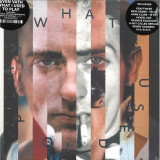
For this uniquely personal retrospective spread over twelve vinyl discs, Sven Väth takes us back to the early days of his DJ career. On What I Used To Play we meet great pioneers of electronic music, gifted percussionists, obscure wave bands, and innovative producers of a bygone 'new electronic' era. Rough beats and irresistible grooves from the identification stage of house, techno, and acid remind us not just how far electronic music has evolved over the past four decades, but how great it was to dance to EBM, techno, and house for the very first time.
If there is one protagonist of the electronic music scene who has remained curious, innovative and at the very cutting edge of music for over four decades, it's Sven Väth. His multi-layered artist albums and Sound of the Season mix compilations have been defining the genre for over two decades, and even today, he is constantly on the lookout for the next top tune to add to the highlights of his next set. At least, that's the case when he's not producing them himself as an artist or remixer. "Actually, it's always been part of my DNA to think ahead," and nothing had been further from his mind than looking back at his past, but when in spring of 2020 the international DJ circuit had to be scaled down to virtually zero, the 'restless traveler' suddenly had time. Time to stop and reflect on "how it actually was back then, at the very beginning of my career..."
"It was a great trip and with every track, beautiful memories came flooding back".
In the London apartment, he had just moved into, Sven has set up a "little music room", where he cocooned himself for several days, "to look way back for the first time and review my musical journey through the eighties, so to speak."
The interim result was six thematically oriented playlists with a grand total of 120 tracks from 'early 80s' to 'Balearic late 80s', together with excursions into afrobeat, European new wave, and EBM sounds and a few epochal techno/house tracks from the USA in between. From these 'Best of Sven Väth's favorites', the project What I Used To Play crystallized. Sven remembers how the Cocoon team reacted to his proposal: "They found the idea of making a compilation out of it MEGA from the beginning and everyone said 'Sven, go for it', but then, of course, the work really started, namely, to clear the rights and to get clean sounding masters of the up to 40-year-old tracks. There was also disappointment, of course. We couldn't clear certain titles because the rights holders in the USA had fallen out with each other or simply disappeared from the scene. In short, it wasn't easy, but now I can safely say we got the most important tracks."
Finally, after two years of research, curation, design, and administrative fine-tuning, the "little retrospective" from 1981 to 1990 is available. The exquisitely packaged, and three-kilo heavy box set is not only physically impressive, WIUTP is also the definitive record of Sven Väth's musical development. On each of the twenty-four sides of vinyl, you can trace track by track, what influenced him during which phase, and how he took off as a DJ from his parents' Queen's Pub straight into the spotlight at Dorian Gray. There and at Vogue (later OMEN), Sven became the style-defining player in the DJ booth that he still is today.
1981 - 1990: Future Sounds of Now
In the early eighties, the crowd in clubs like Vogue and Dorian Gray danced to what nowadays we call 'dance classics' - mainly disco, funk, soul, and chart pop. It was up to a new generation of DJs, including Sven Väth, the youngest protagonist in the Rhine-Main area at the time, to create their own club-ready music mix. Good new tracks and potential floor-fillers were rarities that had to be sought out and found, in order to prove oneself worthy.
Without MP3s, internet streaming, or other digital download possibilities, music didn't just gravitate to the DJ, instead, it had to be tracked down. In well-stocked record stores in Frankfurt and Wiesbaden or even in Amsterdam, London, or New York, Sven and friends sourced the material for countless magical nights. On WIUTP we can follow Sven's very personal journey through this wild, innovative era in which synth-pop, funk, hip-hop, and disco were successively replaced as 'club music' by house, techno, acid, and breakbeat. By the end of the decade, it was clear to see that these once exotic 'fringe' phenomena would soon become 'mass' phenomena.
Early 80s
Dirty Talk by the Italian-American duo Klein & M.B.O. represents the most innovative phase of the Italo-disco genre in the early eighties like no other track. Mario Boncaldo (I) and Tony Carrasco relied entirely on the original synthetic drum and percussion sounds of the Roland TR-808, coupled with the raunchy vocals of Rossana Casale and guitar accents of Davide Piatto. Of course, other tracks from this period were also influential in style, most notably Unit by Logic System, which worked as the perfect soundtrack to the laser lighting system at the legendary Dorian Gray club. With stomping beats and robotic rap interludes, Bostich by Yello also belongs on Sven's eternal playlist - after all, it caught the attention of Afrikaa Bambaataa, who invited the Swiss duo to perform at the Roxy in New York in 1983.
EBM Wave - Mid 80s
From today's point of view, the almost ten-minute-long, downtempo track Giant by Matt Johnson's band project The The, would probably not be considered an obvious club classic. However, a closer (re)listen reveals the rhythmic intricacies of the percussion overdubs by JG Thirlwell (aka Foetus) on Johnson's composition, and it becomes clear why this exceptional piece of music is one of Sven's absolute favorites. Other classics from this phase include Kaw-Liga by the mysterious The Residents, the hypnotic-synthetic Our Darkness by Anne Clark (and David Harrow), and last but not least, the somber, monotonous anthem Where Are You? by 16Bit, one of Sven Väth's projects together with Michael Münzing, Luca Anzilotti from 1986.
US House - Late 80s
You certainly can't talk about Chicago house without mentioning Frankie Knuckles. The resident DJ at the Warehouse not only gave the name to an entire genre, but also produced epochal floor fillers on the Trax label like the timeless Your Love, sung (and moaned) by Jamie Principle. Acid house protagonists Phuture also hail from Chicago, and on We Are Phuture (also released on Trax) we hear the chirping acid sounds of the legendary Roland TB-303 in full effect. Another featured classic is No UFO's by Detroit's Model 500 aka Juan Atkins, who is rightly considered the 'Godfather of Techno' even if the genre-defining track from 1985 still breathes with the spirit of hip-hop and electro from the first breakdance era.
Afrobeat
Le Serpent, by Algerian-born Abdelmadjid Guemguem, is a track that sounds completely different from everything else on WIUTP. Made in 1978, it's a monumental, rousing groove created without bass or synths, just with five congas! Even though Guem sadly passed away in 2021, his immortal, acoustic beats are understood all over the world and will continue to enrich many thousands of DJ sets for years to come. Another classic that not only Sven appreciates beyond measure is Hugh Masekela's Don't Go Lose it, Baby. In addition to being one of the most important jazz pioneers, the trumpeter and freedom fighter from Johannesburg was very experimental, integrating electronic sounds into his music in later years, in a similar vein to Miles Davis and Herbie Hancock. Dutch jazz pianist Jasper van't Hof's afrobeat project Pili Pili has also aged well. The trance-like, almost sixteen-minute-long track of the same name, manages to fill a whole side on the seventh of twelve vinyl discs in the WIUTP box.
UK-US-Euro - Late 80s
Time for a change of scene, in the truest sense of the word, and from a musical perspective, this section is like landing on another planet. First up is Andrew Weatherall's classic remix of Primal Scream's Loaded, featuring the iconic Peter Fonda sample (lifted from the 1966 biker film Wild Angels) that came to personify the mood triggered by the British Second Summer of Love in the late eighties: "We wanna be free to do what we wanna do, and we wanna get loaded...". This period also saw the emergence of M/A/R/R/S whose only single, 1987's Pump Up The Volume, became a club classic with support from DJ legend CJ Mackintosh. In this most eclectic of sections, we also encounter New York house and reggae producer Bobby Konders and his seminal Nervous Acid.
Balearic - Late 80s
Those who know him, know that Sven had already lost his heart to the 'magic island' of Ibiza as a teenager, so with that in mind, the WIUTP project couldn't end without a Balearic chapter. Inspired by Manuel Göttsching's E2-E4, the immortal, eponymously titled Sueño Latino belongs in there without question. Equally popular on the island was, and still is Break 4 Love by Raze, which thinking about it, would also fit perfectly into the house chapter. Last, but not least, there's an overdue reunion with Sven Väth himself, in his role as frontman of the successful Frankfurt trio OFF. Together with Michael Münzing and Luca Anzilotti (later of Snap!) this 'Organization For Fun' created the off-the-wall club hit Electric Salsa in 1986 which incidentally turned into an international chart smash, putting Sven in the enviable position of having to decide between pop stardom and a DJ career. Well, we all know how that decision turned out and the rest, as they say, is history. A not insignificant part of his story is What I Used To Play. Enjoy!
- A1: The Star Of A Story Ft. Lisa Fischer (Long Version)
- B2: Love Has No Time Or Place Ft. Elements Of Life (Patrick & Leroy Strings Dub Extended)
- C1: The Star Of A Story Ft. Lisa Fischer (Vamp Star Dub)
- C2: The Star Of A Story Ft. Lisa Fischer (Instrumental)
- D1: A Place Where We Can All Be Free Ft. Janine Sugah Lyrics Lyons (Expansions Nyc Vocal)
Louie Vega is launching a trio of Double Pack 12” releases that includes special unreleased versions of select titles from the Expansions In The NYC album project. Each package also features unique customized art by celebrated artist Andrew Thiele who also created the art for the album jacket as well. This package spotlights four of the very memorable vocalists on the album: namely Lisa Fischer (The Star Of A Story), Cindy Mizelle and Audrey Wheeler (Love Has No Time Or Place and Janine Sugah Lyrics Lyons (A Place Where We Can All Be Free).
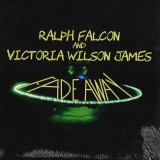
Ralph Falcon last collaborated with Victoria Wilson James on the Number 1 Billboard charting tune “I Need Someone.”
With its distinctively hypnotic, dark pulsating beat and haunting vocal, “I Need Someone” went from being a Club Space Miami anthem to a worldwide club hit. Now Ralph is back with Victoria Wilson James on a new song that is destined for greatness but with even more potential given the unending worldwide demand for fresh house sounds.
“Fade Away” has all the unique sonic elements that Ralph Falcon fans have come to expect over the years. Heavy Kick drums combined with synth sounds that you wont find in any software program. Ralph’s sounds are creations that only he could produce. This vinyl release gets a uniquely international remix treatment. Included are a remix from Ralph’s Murk partner Oscar G, rising Dutch producer star Dennis Quin, and emerging French producer star Ténéré.
Louie Vega is launching a trio of Double Pack 12” releases that includes special unreleased versions of select titles from the Expansions In The NYC album project. Each package also features unique customized art by celebrated artist Andrew Thiele who also created the art for the album jacket as well. This package is a tribute to two of Louie’s musical heroes, namely the late Patrick Adams and Larry Levan. Legendary producer Patrick Adams was the writer of Chimi and Atmosphere Strut, and equally legendary DJ Larry Levan was instrumental in breaking Bernard Fowler’s early releases with The Peech Boys at The Paradise Garage before Bernard was catapulted into worldwide fame as one of the featured back up singers on tour and in the studio for the Rolling Stones. Chimi and Atmosphere Strut also feature collaborations with Louie’s renowned Elements of Life band and New York based House and Hip Hop DJ / Producer extraordinaire DJ Spinna.
James Curd presents the fourth instalment from his already essential PRONTO label, delivering a hyper-infectious original alongside a bumper pack of top-drawer remixes on ‘I Am One, I Am Many’.
First up, Curd’s original version of ‘I Am One, I Am Many’ bursts from the blocks with its lively tempo and feel-good groove. Built around an empowering spoken word vocal and pitched somewhere in the fertile soil between disco and house, the funk-laden jam rolls over thick bass, dramatic strings and jaunty guitar licks, with irresistible horn motifs lifting spirits as the dance-ready arrangement unfolds.
Next, renegade UK collective Adelphi Music Factory maintain the uncompromising approach that has seen them garner universal tastemaker heat thanks to impactful releases on Shall Not Fade, Nervous, and their own Beat Factory label. Adding weight to the drums, they stay true to the intention of the original, retaining the track’s key parts while tastefully reforming them as an unfettered main room banger.
The UK remix flavour extends into the third iteration, with notorious party-starters Make A Dance continuing their club-focused manifesto with their brilliantly atmospheric revision. Here, M.A.D. carry on the fine work they’ve been manifesting on their eponymous label, constructing an almost entirely new track around the iconic vocal. A contagious organ hook drives the energy as saucer-eyed sweeps and off-kilter synths meander across the panorama, the sturdy house rhythm expertly powering the kinetically charged groove.
Tel Aviv’s Nenor rounds off the remixes, the esteemed producer and DJ showing the kind of sparkling form that has seen his work appear on benchmark labels including Mahogani, Strictly Rhythm, Heist, and Razor N Tape among many others. Transposing the track into deeper territory, Nenor strips back the instrumentation to serve a mesmerising heads-down roller. The vocal soars over brooding bass and syncopated chords, with loose rhythms and subtle textures combining to hypnotic effect.
- A1: Joy Universal Ft. Two Soul Fusion
- B1: Igobolo (Feelin' Love) Ft. Joaquin 'Joe' Clausell (Sacred Rhythm Tones Full Version)
- C1: Igobolo (Feelin' Love) Ft. Joaquin 'Joe' Clausell (Expansions Nyc Dub)
- C2: Joy Universal Ft. Two Soul Fusion (Axel Tosca Piano Solo Demo Ruff)
- D1: Joy Universal Ft. Two Soul Fusion (Joy Beats)
- D2: Igobolo (Feelin' Love) Ft. Joaquin 'Joe' Clausell (Joe & Louie's Mood Dub)
Louie Vega is launching a trio of Double Pack 12” releases that includes special unreleased versions of select titles from the Expansions In The NYC album project. Each package also features unique customized art by celebrated artist Andrew Thiele who also created the art for the album package as well. Joy Universal and Igobolo (Feelin’ Love) spotlight the profoundly soulful and musical energy that emerges when Louie collaborates with two of the stars of the House Music community namely Josh Milan and Joe Claussell.
Employing a vast array of advanced vocal and instrumental techniques, Broken Gargoyles is arguably Galas" most intellectually, sonically and viscerally formidable work to date. The album finds the visionary artist deftly probing the weaving, warping transformation on the nervous systems of her post-traumatic soldiers and dying diseas ed. Composed in 2020 during the beginning of the Covid-19 pandemic, the first presentation of Broken Gargoyles featured verses by German poet Georg Heym, "Das Fieberspital" and "Die Dämonen der Stadt." The work was finalized in 2020 in collaboration with the artist and sound designer Daniel Neumann. In "Das Fieberspital" Heym describes the horrific state of people suffering from yellow fever who live in paralyzing fear of death and swirling delirium owing to their brutal treatment and isolation in medical wards in early 20th-century Germany. "Die Dämonen der Stadt" also addresses such grim portents of World War I; in this poem, the god Baal observes (like a gargoyle) a town from a rooftop of a city block at nighttime and lets a street burn down during dawn. The final incarnation of the work was played as a sound installation at the Kapellen Leprosarium (Leper"s Sanctuary) in Hanover, Germany
- A1: Rounds (Feat Rick Ross)
- A10: Love (Feat Jazmine Sullivan)
- A11: One Last Dance
- A12: All She Wanna Do (Feat Saweetie)
- A2: Waterslide
- A3: Dope (Feat Jid)
- A4: Strawberry Blush (Feat Free Nationals)
- A5: Guy Like Me
- A6: All She Wanna Do
- A7: Splash (Feat Jhene Aiko & Ty Dolla $Ign)
- A8: You
- A9: Fate (Feat Amber Mark)
- B1: Memories
- B10: Good (Feat Ledisi)
- B11: I Don't Love U Like I Used To
- B12: Home
- B2: Nervous
- B3: Wonder Woman
- B4: Honey (Feat Muni Long)
- B5: I Want You To Know
- B6: Speak In Tongues (Feat Jada Kingdom)
- B7: The Other Ones (Feat Rapsody)
- B8: Stardust
- B9: Pieces
Amman-based Toumba announces ‘Rosefinch’, his first EP on wax, and the debut release from London-based record label Hypnic Jerks.
Key info about the artist:
His next release will be on Hessle Audio and then Nervous Horizons. His first release was a digital EP through All Centre.
Toumba is one of the creative minds behind MNFA, Jordan's most important underground music venue. He serves there as a booker and curator, bringing the likes of TSVI, Giant Swan and Parrish Smith to the venue.
He is also anationally respected artist and holds a residency at the MMAG Foundation in Amman. The foundation works with a selection of the most gifted artists in the Levant. By sponsoring Toumba's ongoing artistic practice, MMAG has furthered his research into Levantine music, which he synthesises with avant garde and electronic music.
He is a resident on Movement Radio in Athens and formerly Ma3azef Radio, with guests including Ben UFO, aya and Gabber Eleganza.
About the release:
Integrates elements from Jordanian and Levantine folk music into his left-leaning, low-end heavy club sounds.
The EP is named after the national bird of Jordan.
- A1: Serpico
- A2: Headless In A Beat Motel
- A3: Surreal Madrid
- A4: Doorstop Rhythmic Bloc
- A5: Burgundy Spine
- B1: Black Death Ambulance
- B2: Chill Blown
- B3: Hungarian Suicide Song
- B4: Tina This Is Matthew Stone
- C1: Psychotic Now
- C2: Pdf
- C3: Screws
- C4: Kilometrica Banca
- D1: Pull Thru Barker
- D2: Dirge
- D3: They Slept In Darkness
- D4: Eopo
- D5: Pile Tent
Deluxe reissue of their 1994 debut album.
Completely remastered under band supervision.
Pressed on burgundy vinyl and Presented in a gatefold matt laminated gatefold sleeve, with spot UV varnish .
Features the original LP plus a bonus disc with the Cherry Red E.P tracks, plus a 16-page booklet containing photos, reviews, and sleevenotes from Mick Derrick, Steve Mack & John Robb.
Combining a metronomic krautrock beat played by a monster drummer, looping guitars and a boy/girl vocal that sounded like a bickering bed-sit argument turned into song, Prolapse had all the manic intensity of a nervous breakdown set against a backdrop of inventive guitar work and a really tough rhythm section. There were hints of the Fall, krautrock, PiL and a touch of the pure golden pop of Blondie along with the sense of restless dislocation shared by many of the post-punk bands.
Prolapse arrived in the middle of the Britpop era and their tense, almost neurotic music clashed with the stadium-filling, jolly knees- up pop that dominated the indie mainstream of the time. By 1996 indie had become the mainstream in terms of record sales and sound and was strutting around at the opposite end of the cultural spectrum to the indie bands of the Eighties and their war against popular culture. Late arrivals Prolapse were the last gasp of this genuine independence.
nother all time DEAD MOON classic. The band really hit their stride on this one! The best rock band of the '90s and 2000s kicks out some of their finest rockers and ballads. Features all time greats like "Diamonds in the Rough," "Say It Isn't So," "Running out of Time," "Somewhere Far Away" and "Windows of Time." A must have for any fan of the band and rock music in general. A1 Diamonds In The Rough A2 Say It Isn't So A3 I Won't Be The One A4 Can't Let Go A5 Running Out Of Time B1 Psychodelic Nightmare B2 Area 51 B3 Somewhere Far Away B4 I'm Not Afraid B5 Windows Of Time
Originally released in 2004, El Ten Eleven’s self-titled LP has been embraced by fans of many genres - from math rock, to jazz, to lo-fi hip-hop. The duo's sound is sharply evocative in mood and feeling, yet simultaneously abstract and meditative. Back in print on Gold Vinyl. Brimming with breezy melodies, breakneck percussion, & electronic flourishes. Back in print, on Gold Vinyl. 181.8 k Spotify Listeners, 7.5 Million Streams. Recommended If You Like: Do Make Say Think, Explosions in the Sky, Ratatat, The Album Leaf, Mogwai, Positive/uplifting instrumental loopage ‘n riffage. Track Listing: My Only Swerving / Sorry About Your Irony / Lorge / 1969 Central Nervous Piston / Thinking Loudly / Fanshawe / Connie / Bye Mom
MUSTA presents an elaborate six track EP project, titled 'Tamburi
Parlanti' which translates to 'Talking Drums' in English. The body of
work marks a turning point in his career to make more than electronic
music, and delves into a plethora of live music and field recordings
recorded for the EP, ranging from polyrhythmic tribal drum-patterns to
Afro-funk bass chords, congas and jazz-keyboard, played by local
musicians as well as himself.
Musta's love for music began during his 11 years spent living in the
Dominican Republic. This encounter of Latin rhythms started the musical
genre contamination that to this day distinguishes his productions. In
this EP, like the rest of his releases, the music is diverse, tribal and
hypnotic. Respectful of the past yet constantly innovative. This love of
the past and future has led him to release edits and originals on staple
labels such as Nervous Records, Samosa Records.
Music aside the EP artwork has significant meaning, the mask shown is
that of the ancient Mamuthone icon of Sardinian folklore which goes back
further than 2000 years, defined as a representation of the collective
soul of Sardinia, the ancient ritual of the Mamuthone creatures is that
of a rhythmic dance where 12 of the creatures dance together,
representing the 12 months of the year. With this theme, Musta aims to
connect the dots of this pastime tradition into the EP, reflecting it
visually as well as through the music itself.
"Tamburi Parlanti EP is a collection of songs that I've made myself
around the world, recording and collaborating with various musicians of
many different nationalities. The music reflects my musical path in
recent years which draws strong inspiration from afro-funk and latin
disco from the 70s and 80s. My intent is to create music that presents a
journey between the hottest Latin sounds, over to more African disco
rhythms.
Timmy Regisford’s discography reads like a virtual timeline in the evolution of House. He’s been a central force since the genre first began in shaping the sound and helping it to become the worldwide cultural phenomenon it is today. Recently inspired by the afro-centric musical movements that have become increasing popular, he has gone back into the lab and created a collection of songs that are destined to move the genre once again.
Highlights of this essential double pack vinyl collection include “Good Morning,” which is an homage to his legendary Shelter parties that always last deep into the morning hours, “Hamballla” which features an inspired vocal performance from future star Toshi and the memorable “Hotel Cali” amongst many others.
In what's been a stand out year for the Berlin based, London born, DJ & producer, Amy Dabbs has dropped releases on Lobster Theremin, launched her own label 'Dabbs Traxx' and collaborated with junglist Coco Bryce on new label project 'LT CODA'. With a distinguished sound and undeniable flair, both behind the booth and in the studio, Amy's brand of classic house and radiant jungle now comes to Low Battery with her 'Baddest Gal' EP.
'Don't Go' opens the EP with shimmering synths and lighter than air percussion. The mood is light and understated, conjuring warm and affectionate emotions without the need for amplified design. 'No You' then welcomes us with mid-summer melodies and sprawling pads; vocal loops adding to that feeling of fuzziness and warmth.
The B side opens with title track 'Baddest Gal' an emotional percussive workout that combines thoughtful arrangement with euphoric and dreamy notes. It's one of those tracks that could work just as well in a DJ set or cloud watching as the world slowly drifts by. 'Your Move', The record's finale shows a different side to Amy's dynamic productions; the track ebbs and flows and could be likened to the mixed emotions of meeting an old friend: Excited but nervous, happy but always with a heartheavy goodbye.
With I was born by the sea, Richie Culver brings to a close a period of intense introspection and emotional reckoning with a debut album that serves as both an optimistic statement of intent and a final glance back at the painful places it explores. Following recent work with Blackhaine and Pavel Milyakov, I was born by the sea picks up where Culver’s EP for Italian label Superpang, Post Traumatic Fantasy, leaves off, painting an unabashed portrait of contemporary malaise, detailing a life lived behind closed doors, pinned under the crushing weight of austerity, sapped of the strength to do anything other than gaze out to sea and all the grey possibilities it represents. Where Post Traumatic Fantasy saw Culver returning to his hometown of Hull after a period spent entangled in London’s relentless sprawl, his first full length project reaches further back to his formative years working in a caravan factory and going to raves in and among Hull’s outskirts. Unspooling like a fever dream, I was born by the sea is the anxious clutter of a racing mind spoken clearly, a stark reflection on how it feels to have too many ideas and too much time to act on them.
Though unquestionably a snapshot of a time of significant difficulty, Culver reflects on this period with tender empathy and pitch-black humour, stitching together unflinching observations from England’s neglected corners, ‘there’s more mobility scooter repair shops and bookies than there are bookshops,’ and devastating vignettes of everyday struggle, ‘tears on the tin foil’, with surreal depictions of industrial grit, ‘skimming stones in a small pond by the slaughterhouse’. His DIY approach to production stretches the rough sinew that connects these fragments of memory, a process he describes as using a paired back collection of synths and drum machines to the best of his ability, ‘but to the least of their capabilities,’ wringing out visceral sound with self-taught urgency. During the album’s most impressionistic passages it’s as though Culver has transposed past internal turmoil into powerfully resonant noise, the Sisyphean sonics of ‘Create A Lifestyle Around Your Problems’, which evokes in its concrète clatter and MRI machine barrage the sound of making the same mistake again and again, or the stuttered jumble of ‘Its Hard To Get To Know You,’ its garbled vocal modulation and frayed edges of distortion channeling the paranoia of somebody listening to muffled voices through thin plaster, climbing the walls of their bedroom with the curtains closed, a nervous breakdown in stereo.
In counterpoint to this glides the ever-present spirit of the dance floor, which haunts the record from the moment it is invoked in its first few seconds. Opening onto a sea wall of bright synthesis, the stuttering vocals and bass tone chops of ‘Nervous Energy’ dump us directly into post rave ecstasy, the echoing cry of a voice amplified by loudspeaker carrying the loose energy and surge of crowds moving in darkness. The incessant, dead phone line beep of ‘Pigeon Flesh’ builds to a pulse that suddenly swells into an anxious technoid surge, shapeshifting at lysergic speed into head shrinking audio hallucinations, a descent into the void of the present via machine music hypnosis. Even ‘Its Hard To Get To Know You’ summons the ego death drive of hardcore techno within its scorched textures, flickering indiscernibly between attritional noise and frazzled hardware stomp. Paying homage to both the parties of his youth and a countless succession of Sundays spent offering himself up within Berghain’s hallowed architecture, Culver’s experiments in addressing his formative relationship with rave provide an energetic glimpse at where he might take his sound next.
Between spikes of propulsive energy and grim mood pieces Culver returns to suspended passages of aching, glacial drift, the cold swell of the North Sea, accompanied by some of his heaviest testimonials. The gauzy ebb of ‘Daytime TV,’ its tumbling loops reminiscent of boats bobbing off a distant shore, sees the artist at his most checked out, slumped in front of his television, seven days a week. ‘I used to dream of doing something,’ he admits, ‘anything to get out of this town.’ ‘Love Like An Abscess’ pairs swirling currents of ambient shimmer with violent images of baseball bats lying next to beds and blood-stained mattresses, next to which Culver pleads in a desperate mumble, ‘let our love grow, like a broken abscess.’ Yet it’s with the album’s final word and title track that Culver reveals a glimmer of cautious optimism, a parting gesture of exposition and closure. ‘I knew I had to get away,’ he asserts, ‘so I did and I never looked back.’ What follows builds from a low throb, the flutter of a tiny heartbeat, to a resonant glow, embellished with unfurling synthetic burbles, oil rigs sparkling in the distance, golden light spilling across the sea. In reckoning with the place he had to escape, Richie Culver is now free to look towards the promise of something new, something hopeful.
- A1: Ataxia - Detroit Gospel
- A2: Ataxia & Andres - Pine Island
- A3: Ataxia - Language
- B1: Ataxia & Dj Minx – Maxia
- B2: Ataxia - Spit In Your Percolator
- B3: Ataxia - 98 Degrees
- C1: Ataxia - Number Streets
- C2: Ataxia - The Formulator
- C3: Ataxia - The Pusher
- D1: Ataxia & Mister Joshooa - Feels Like
- D2: Ataxia – Wm
- D3: Ataxia - Dance The Bridge
Having torn up raves for well over a decade, the Detroit duo Rickers and Ted Krisko AKA Ataxia present their debut longplayer ‘Out Of Step’. Featuring guest spots from close peers DJ Minx, Andrés and Mr Joshooa, they twist house, techno, electro, breakbeat and rave into revitalized new shapes; embellished with a touch of soul, funk and hip hop. With backgrounds in hardcore and punk, Ataxia’s debut is suffused with that energy, attitude, and approach; this is raw, lean and unashamedly no-nonsense dance floor tackle that goes straight for the jugular. Heavily analogue, the album experiments with tape saturation, which harks back to the duo’s formative years in bands, recording demos to cassettes. These straight-up, in-the-red tracks give preference to overdriven drum machines, rather than generic polished sheen, but conversely, it’s all deceptively well-crafted too; ‘Out Of Step’ is a standout record that’s big in character, bringing to mind the renegade spirit of Underground Resistance, and the bombastic brilliance of The Prodigy and Chemical Brothers.
Defiantly optimistic despite the state of the world, a “life is good” vocal sample meets minor chords sliding over 808 hats on the exemplary house/techno pumper ‘Detroit Gospel’, before a lighter moment on the album, but no less impactful with its hefty low-end thump, is ‘Pine Island’ featuring Motor City hero Andrés. Together they cook up a Motown-inspired house cut awash with horn swells and backup singers, bouncing to wide swung funk bass, in classic 313 style. ‘Language’ turns the club on its head – busting out one of the most distinct basslines in recent times, and bristling with buzzy, undulating chords, whilst ‘Maxia’ features influential Detroit royalty DJ Minx. Inspired by her classic ‘A Walk In The Park’, with a fat distorted kick and stealthy bass groove, this is low-slung, stripped-back, heads-down coolness. The high-tech funk of ‘Spit In Your Percolator’, is laser-guided in its efficiency, with a strobe-like, increasingly intensifying energy, peppered with clever, tripped up vocal chops. With the next cut, conveyor belt noises and fast churning low-end gives way to a dubbed-out breakdown, on the deep breakbeat roller ‘98 Degrees’. Charged with a blistering, rave intensity, ‘Number Streets’, is a futuristic distorted techno workout that booms through the subs, whilst ‘The Formulator’ mixes filtered snippets, abstract synth noises and melodic bleeps with a bassline echoing Paperclip People’s ‘The Floor’. Closer to the UK definition of hardcore, combining 4/4 and breakbeat, ‘The Pusher’ evokes the spirit of late 80s orbital raves, adding a natty keys solo, and deadly bass used sparingly, for even deadlier effect. ‘Feels Like’ sees Rickers and Ted team up their studiomate and fellow TV Lounge resident and club booker, Mister Joshooa. Inspired by Photek but also almost UKG in style, this breakbeat session is stamped with MJ’s signature chopped vocals and intricate rhythmic interplay. The bubbling, wobbly loose swing of ‘WM’ is constructed around a classic chopped-up MTV cribs sample, with a filtered vocal creating a far out psychedelic effect – all of which is propelled apace by a huge bruising LFO. The LP concludes in fine style with ‘Dance The Bridge’, where bouncy beats and wigged-out keys meet bright, gently uplifting synth chords that bring a clear-skied mood; ending the record as it began, on an optimistic note.
‘Out Of Step’ marks another chapter in the ongoing relationship between Life and Death co-founder DJ Tennis and Ataxia. Their connection goes back to the earliest days of the label, where they played gigs together on some of Tennis’ initial visits to Detroit. It’s a friendship that’s blossomed organically over the last decade through their shared love of punk and hardcore, and led to the fruition of one of Ataxia’s most compelling projects to date. Labels to release Ataxia’s output include legendary Detroit techno imprints Planet E and KMS, plus the seminal American house label Nervous Records. Their catalogue also includes music for Visionquest, Leftroom, 20/20 Vision and Seth Troxler’s Play It Say It.
Sunda Arc are brothers Nick Smart and Jordan Smart. Best known as key members of folk and jazz influenced minimalists Mammal Hands, their Sunda Arc project takes inspiration from the likes of Jon Hopkins, Rival Consoles, Moderat and Nils Frahm as well as their own music world. Their debut EP 'Flicker' was released in December 2018 and now the duo are set to release their debut LP, 'Tides' on 7th February 2020.
Named for a volcanic arc in the Indian Ocean, created by the process of massive tectonic plates colliding, Sunda Arc strives to mingle electronic and acoustic sounds until they become almost indistinguishable from each other. It's a process where they draw the acoustic properties and quirks out of electronic sounds and find the electronic potential in acoustic sounds. "Finding the ghost in the machine or blending the human elements of playing live is something we are always trying to explore in our work.
Experimentation is a large part of our process and we tend to combine carefully composed material with chaotic ideas to find the balance between the two" — Sunda Arc 'Tides', their debut album, takes its name from the idea of unseen forces that can affect our lives in myriad ways, being pushed and pulled and at the whim of powerful forces outside of our control as well as offering a nod to things such as the tides on our planet, tectonic plate movements and weather systems. There are often chaotic elements in these systems that function in a way that produce a type of controlled randomness on a large scale. This is something they try to reflect in their music by adopting some of the ways these systems work into musical sequences, and using ideas such as chaos theory to control musical parameters. "Tides is a reference to themes we were thinking a lot about during the making of this album. These include the similarities between macro and micro systems, or the circulatory and nervous systems in the body. Things that produce a type of controlled randomness on a large scale". — Sunda Arc 'Hymn', the first single from the album, uses Nick's voice sampled and played back through a keyboard to create a human yet electronic feel.
It mixes soft vocals with heavier electronic elements to create a danceable yet human sound world. 'Dawn', is best described as uplifting-techno, its use of repeated phrases building in intensity and variations to put you into a hypnotic state whilst also being industrial and danceable. 'Daemon' is one of the tracks that really resonates live. Drawing on the sound of UK dubstep it's intense but fun and the bass clarinet blends with synths at the end to create a sound almost like a vocal. 'Secret Window' brings forward another side of the band, focusing around a lo-fi recording of felted piano and bass clarinet.
These are blended with granularised and processed versions of themselves which emerge like ghosts of the instruments throughout the track. 'Cluster' is another key track. It utilises a small group of notes looped in an unusual way to create a sense of cascading patterns over a solid danceable drum groove. It emphasises soprano sax blended into the sound world half-way through to lift into the final section.
Collapso Calypso is the long-awaited third album from dreampop artist Chorusgirl. Initially planned for release in 2020, but the pandemic and a nervous breakdown brought everything to a screeching halt. It took Silvi Wersing - aka Chorusgirl - the rest of 2020 and 2021 to rebuild her life and reconsider everything, including her music and the band. She decided to relocate from London to her small hometown in Germany, to become a carer for her increasingly ill father and to take Chorusgirl back to its roots as a solo project, just like in 2014. She revisited old demos and wrote a few more songs, and steadily worked to complete the album as an anchor at a time of turmoil. With the album charting her progress back to health, she decided to call it Collapso Calypso, a riff on taking her despair for a dance. The album includes a multitude of references from music and film and features Silvi's trademark self-reflective lyrics on the themes of coming through a crisis, grief, resilience, and ultimately letting go, or the inability thereof, all set to the sounds of 60s girl groups and her favourite bands from the 80s. The release follows on from 2018 album Shimmer and Spin (Reckless Yes) and the self-titled 2015 debut (Fortuna Pop). “Chorusgirl pertain to a certain kind of cold, detached dreaminess you’d associate with a label like 4AD in its prime: their overall sound being seemingly informed by Lush’s successful hybrid of classic pop, fiery punk and shimmering soundscapes. … Yet, rather than reliving a sound there’s a sense here that Chorusgirl are more intent on reinventing it. Look no further than their debut self-titled LP for conviction.” (8/10) Line of Best Fit “Chorusgirl’s sound is distinctly London (although, more the London of the 80s than of now) but it’s also the sound of escaping London. (…) It’s the feeling of sleeping with the bedroom window open for the first time in months and waking up with a fresh wafting across your face.” Noisey “Chorusgirl explore universal themes with the catchiest of tunes, thundering rhythms, a wry sense of self and fascinating multi-meaning lyrics.” (8/10) Louder Than War “There’s no slack on the album – from the starting gate to the finish line, Chorusgirl bristle with static and nerves.” … Chorusgirl are simple, until they’re not. You might recognise the distant spirits, the razor chords, the surfy snarls. But where other bands coast on borrowed sound, Wersing bends it to her own life, creating a space that resonates with insight and empathy. Ever felt separate from the human race? Be comforted, for here is your kind.” (7/10) Drowned In Sound This is a record with teeth… one of the most impressive first albums of a year rich in strong debuts.” (5/5) NARC Magazine “Sparkling with bright rhythms and jangling pop…with hints of something shadier, bittersweet and more potent.” London In Stereo “Lovingly smudged guitars” (7/10) Loud & Quiet