One of the highlights of the King Crimson 50th anniversary CD/Blu-ray editions to date has been King Crimson producer David Singleton’s series of Elemental Mixes as he utilises the full spectrum of available studio sessions for each album to produce very different takes on the familiar songs and pieces.
This is especially true of Lizard where the ambition of the material, the much-expanded line-up of musicians - the background of many of them in the jazz rather than the rock world - and the number of takes recorded, resulted in a large amount of material to be considered for this album.
There was enough material for David to be able to mix and produce alternate takes for every piece from the original album.
As well as giving great insight into the recordings, the nature of Elemental Mixes allows for different takes from individual musicians to be included – sometimes alongside one another - in a way that would never be considered in the formulation of the original album.
David comments that “When I was working on the Elemental mixes, I jokingly described them as ‘Lizard for those who don’t like Lizard’. They were a complete revelation. Lizard is the one album which, in its initial incarnation, never quite convinced me. And yet these Elemental mixes, with their opportunity to look ‘under the hood’ of the album, revealed something fresh, wonderful and astonishing. So, if you are a King Crimson fan, who like me, has never quite taken Lizard to your heart, then these are essential listening. And hopefully equally fascinating to those who already love the album”.
Presented as a single 200gram LP and including the complete album in Elemental Mixes form, running in the same sequence as the original album, this release showcases Lizard in a very different manner to how it’s previously been heard.
Lizard’s reputation has grown, deservedly so, in recent years as old and new audiences alike rediscovered the album, initially when it was first remixed for new Stereo and 5.1 Surround Sound editions in 2009 by Steven Wilson and then as much of it was performed live for the first time in concerts by the most recent King Crimson line-up between 2016 and 2018.
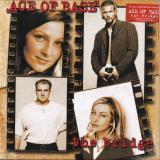
Rotes Vinyl, limitiert auf 1000 Exemplare. 4x A6-Postkarten mit Bandfotos Exklusives Interview auf den Innersleeves. Wir feiern das 30-jährige Jubiläum des legendären Albums ,The Bridge" von Ace of Base - jetzt als limitierte Auflage auf rotem Vinyl, in einem Gatefold-Sleeve und mit 4 exklusiven Postkarten mit Bandfotos. Das ursprünglich 1995 veröffentlichte Album markierte einen neuen Abschnitt für das schwedische Pop-Phänomen und verband unwiderstehliche Melodien mit einem reiferen und introspektiveren Sound. Mit Hits wie ,Beautiful Life", ,Lucky Love" und ,Never Gonna Say I'm Sorry" fing ,The Bridge" den Geist der 90er Jahre ein und bewies gleichzeitig die zeitlose Anziehungskraft der Band. Remastered und auf exklusivem rotem Vinyl gepresst - eine unverzichtbare Sammleredition für jeden Ace-of-Base-Fan.
Compiled by Philip King “And then came the rise of synth pop : blokes with dodgy haircuts hunched over keyboard-operated machines stuffed with wires and do-it-yourself tone oscillators making sounds like a brood of geese passing gas in a wind tunnel. Whoopee! This is the way the ‘70s ended : not with a blood-curdling bang bang but with a cheap, synthesized, emasculating whimper.” NICK KENT, NME. All The Young Droids: Junkshop Synth Pop 1978-1985 is a new compilation that charts the underbelly of the epoch-defining sound of the synthesiser in 80s popular music. Compiled by Philip King (previously seen compiling All The Young Droogs, Glitterbest and Boobs - The Junkshop Glam Discotheque), the music here connects the dots between DIY synth enthusiasts grappling with new, cheap synthesisers at the tail-end of punk and wannabe, jobbing songwriters enthral to the new music pioneered by Gary Numan, Depeche Mode and Daniel Miller’s Mute Records. Featuring rare tracks of auto-didactic progressive pop music, proto-techno punk, shoot-for-the-stars-land-in-the-gutter chart flops and heralded, underground synth classics, School Daze paints a picture of beautiful failure. Complete with extensive sleeve notes written by King and never before seen imagery, all 24 tracks were remastered by RPM in-house engineer Simon Murphy, many from vinyl copies due to lost master tapes. The story told on All The Young Droids is one of the dawning opportunity presented by both the emergence to the market of cheaper analog synthesisers and the distribution networks plus indie labels that exploded with the advent of punk music in 1976. While the music that sprouted out all over the globe in the wake of these factors was decried as fake, plastic, a refutation of punk’s guitar-led revolution, it’s telling that much of the music on All The Young Droids.. was created in bedrooms, ramshackle studios and home-made set ups with often borrowed equipment. In the era of record labels jumping to capitalise on the success of The Sex Pistols, The Clash (both on major labels, of course) these artists struggled to stand out from a new gold-rush with next to no budget or PR team. With radio and labels desperate for the new Yazoo, what resulted was a testament to necessity being the mother of invention. At the time, the synthesiser was the music of the future, a shiny new machine that could paint like an orchestra with a single finger and a 4-track. In the hands of Manchester avant-pranksters Gerry & The Holograms it’s a pulsing, sardonic weapon.. the only instrument on the Messthetics classic lampooning of New Wave fashion. In Hamburg, a 16 year old Andreas Dorau used it to write and record (with his female classmates on vocals) a global smash in Fred Vom Jupiter (later licensed to Mute Records). The hard-to-find English version (Fred From Jupiter, natch) is included here. Many artists with alreadystoried careers caught the bug and recorded synthesiser-fuelled peons to space, computers, the future and, of course, love-interests. Harry Kakoulli, late of Squeeze, recorded a solo album in 1979 that included the incredible power-synth-pop smash-that-never-smashed I’m On A Rocket. Similarly, Ian North of Neo and American Power Pop stalwarts Milk ’n’ Cookies bought a Korg MS20 and used a tape machine to record We’re Not Lonely, an absolute lost-classic of minimal synth pop. We’re Not Lonely also features on the Junkshop Synth Pop sampler 7” twinned with John Howard unreleased track You Will See, released April 12th 2025. There are plenty of compilation debuts in evidence. Sole Sister were a mysterious trio who were featured on the Scaling Triangles compilation of female-fronted, queer-adjacent post-punk / underground music that also featured The Petticoats. Selwin Image were from San Francisco and featured members of the recently defunct power pop/punk group The Pushups. Their stupidly catchy The Unknown fizzes with New Wave energy - think XTC to Sparks but remains unreleased until now. Dream Unit’s A Drop In The Ocean is an early synth wave cut, positively teaming with Joy Division instrumentation, previously only released on a long-forgotten and super rare, self-released EP. Incandescent Luminaire’s Famous Names belies an archetypal struggle of a small-town trying to make it in a cruel industry but is a thrilling New Romantic-Synth Wave cross over with a OMD gloominess that’s a joy to hear. Feminist Minimal Wave track I Am A Time Bomb by performance artist Peta Lilly and Michael Chance is a revelation destined for new found cult status. It was released on 7” and lost until now. The flipside to the subterranean, never-made-it synth pop mentioned above are the ambitious, even fruity attempts at success that have a perennial elegance to their confidence. New Jersey-ite Billy London (real name Ed Barth) tried to cash in on the synth boom with Woman, released by a major label, a lurching new wave track built on the Louie Louie rhythm and a wonderfully camp Lou Reedstyle sleazy vocal before exploding in the synthesised chorus. The song bombed but with a chorus like this, you have to wonder why? Ex-Glitter Band member John Springate’s My Life is truly epic, with doomed chord progressions and massive sounding drums turning into at least 3 different songs in the course of the track. Before you wonder what’s going on the song resolves with a glorious return to the main refrain. The dry-ice-dressed dance floor is well catered for too. Design’s Premonition and Vision’s Lucifer’s Friend are stone-cold minimal synth bangers, well loved but given a new lease of life here. The Warlord’s The Ultimate Warlord was released in 1978, a homespun proto Hi NRG banger that was later re-recorded by The Immortals in Canada who had a club hit with it. One-man- band Disco Volante’s No Motion was re-issued by Synth wave label Medical in 2012 but makes its first vinyl compilation appearance here. Close your eyes and you can imagine what Lawrence of Felt would have sounded like with some cheap Korgs a little earlier in his career. Gibraltar-based trio The Microbes imagined a computer programming people to dance - how prescient - and ended up with a propulsive, robo-funk track with splendid rubbery bass playing over a tectonic drum machine. Previously picked up by Belgian label Stroom TV, Dee Jay Bert & Eagle’s heavily Euro-accented I Am Your Master demands the listener to “come to paradise!” In a frankly terrifying manner. All The Young Droids is the first compilation to peel away from the narrative that dour, Minimal Synth and Cold Wave were the only musical children of the first rush of synth pop. Philip King and School Daze Records describe a much more complicated world: along with the austere, Brutalist children of Daniel Miller (who produced Alan Burnham’s Bowie-Low-influenced Science Fiction here) was a plethora of desperate cash-ins, accidental mainstream hits, ambitious pop dramas and major label punts that went nowhere. Crucially, the compilation blurs the line between junk and treasure. What if the two things are interchangeable. What if it’s all science fiction?
The 17th sonic tale on Childhood Intelligence is Written, Produced & Mastered by German Electro artist E-Control. The Debut album entitled “D.N.E.”, presents a lifetime legacy compilation of Traxx, which were written and programmed throughout various years, ranging from 1996 - 2010. Inspired by the passion for 80s Electro, early Bleep, Techno and House - E-Control transforms sounds and rhythms into his own sequence - his own powerful & mystic D.N.A. engineered to the future.
Party Tricks is back with a new release in their reissue series! This time, they bring back to life a sought-after progressive house gem from 1993 by Phunky Torso.
The next chapter hits different
FTWD002 — Piaggio Disco Club & DJ Gut on the groove, slicing dusty disco with the MPC into new dancefloor cuts.
Samples straight from the crates, chopped, flipped, and driven by heavy house drums — raw, sweaty, and full of groove.
Old spirit, new story. Built with love and full respect to the originals that made us move.
Pressed loud on limited 12-inch vinyl, cut for selectors, collectors, and the late-night dancers who never stop. Pre-orders open now.
“Feel So” available digitally for everyone to play.
A heavyweight library record delivered straight from the Gods; truly, we are all blessed: Dubmaster Dennis Bovell presents cLOUD mUsIc. A miraculous set of loose limbed, slinky funk-forward dub on the A-Side with totally blunted, spaced out trippiness on the grooving versions gracing the flipside.
A pioneer of dub and progenitor of lovers rock, genius producer-arranger Dennis 'Blackbeard' Bovell's prolific and eclectic career encompasses a huge range of music: from dub poetry to lovers rock, afro-beat to post-punk, disco to pop and beyond.
His production work encompasses such diverse figures as Ryuichi Sakamoto, The Slits, Fela Kuti, Linton Kwesi Johnson, The Pop Group, Janet Kay, Saada Bonaire, Orange Juice, Golden Teacher, I Roy, Maximum Joy, Steel Pulse and more.
cLOUD mUsIc features 8 new, deep, never-heard heaters, initially created for upstart UK library label FOLD. Dennis had written some music under the influence of Cloud-watching and presented it to FOLD with a view to them presenting it as Library Music to be utilised by anyone interested in having music for incidentals, films, TV and advertising etc.
cLOUD mUsIc represents Dennis expressing himself freely and inviting others to join and express themselves. As Dennis explains: "Library music is what makes the difference between creating for specific reasons and creating for your own individual enjoyment. cLOUD mUsIc was created whenever I felt the urge to create music that I wanted to, with no pressure. It was recorded at various times and in various studios around the world with various musicians’ assistance. Much sonic indulgence with many different recording devices."
Cat Power marks 20 years since her Memphis-shaped 2006 album The Greatest with 'Redux', a three-track EP cut in Austin with Stuart Sikes and the Dirty Delta Blues band, the same crew who toured that record. Marshall salvages material linked to The Greatest's early sessions, opening with a fresh take on James Brown's 'Try Me', attempted during the original run but never finalised. She then revisits her own 'Could We' in the looser, road-worn arrangement aired on tour. The flip holds her reading of Prince's 'Nothing Compares 2 U', recorded as a nod to Teenie Hodges, the Memphis guitarist whose playing underpinned The Greatest and whose influence threaded her writing.
Beautiful soulful album by George Smallwood - including original material from home sessions prior to George's 1980 self- released LP. The rest, a sampling from the Smallwood mind's library of classic song writers. Huge tip!
"Recorded Live in Hyattsville, MD 1975-2015. George really had no interest in releasing this record. 'Seeing Is believing, they don't need records, trust me I did that, today they getting it live.' So this record is that, live tapes from the house, recorded on a government issued cassette recorder from National Library Service for the Blind. George calls these his practice tapes for songwriting, and performance warm-up, and never beyond his ears were they intended to travel. 'You just got to see me live if you want to really see me.. so when we get there just plug me in, and point me at that crowd' Last time I saw George they had him wired to the club system. He unplugs his Yamaha keyboard, licks the tip of the power cord and taps a beat on it, finally plugging in, synth lights up, tones all at zero, beats at zero. Then he builds from there, counting blind through a preset one hunderd factory tones and rhythm patterns. 'I gotta start off at zero, and go from there.' After the Marshmellow Band disperesed, he got this Yamaha keyboard, same one he's been playing since 1990, endless scrolling over the same presets, trying to make them fit, tempo down, tapping while telling the story and asking if that feels right to you. 'This always gonna be different live.'
Andrew Morgan (Peoples Potential Unlimited)
After a hiatus of over 2 years Originals are back with a banger! Classic hip hop on side A Organized Konfusion's "Open Your Eyes" from their 1991 debut self titled LP never before on 45 flipped with Herbie Hancock's sample "Chameleon" edited down here from the original 15 minute+ LP version by DJ Matman into a DJ friendly 45 edit - over 215k views on DJ Koco' Instragram!
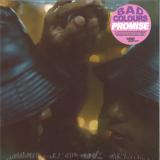
PROMISE is the latest album from Brooklyn-based producer Ibe Soliman, aka Bad Colours. Known for his blend of house, proto-techno, rap, and soul, Bad Colours delivers a dynamic, emotionally resonant record. Driven by hypnotic rhythms and personal storytelling, PROMISE explores themes of vulnerability, desire, and transformation. It's a versatile album designed for both dancefloors and introspective listening.
PROMISE is the fourth LP from Bad Colours on Bastard Jazz, following 2024's collaborative album with Cor.ece, Been Here Before. Soliman's career spans over a decade—DJing alongside artists like James Murphy, Mark Ronson, and Q-Tip, and producing for Kendrick Lamar, Faith Evans, Keyshia Cole, and Rick Ross. His work has received support from KCRW, KEXP (including multiple Midnight in a Perfect World mixes), and CBC Radio 3, and has charted on both the NACC Top Electronic and Top 200 charts. Bad Colours has been featured in press outlets like NYLON, Nonderland, Resident Advisor, Electronic Groove, and Fusicology. His music has appeared in Netflix's Escape from Spiderhead, Hulu's Woke, Disney's Chang Can Dunk, Showtime's American Gigolo, Valorant's Rising Stars, and more.
Don Cherry, armed with a voracious musical appetite and boundless imagination, first made a name for himself - though not always fully understood - alongside Ornette Coleman, playing trumpet or cornet. In Los Angeles and then New York, he stood at the heart of a revolutionary approach to improvisation based on melody rather than harmony, later baptized "Free Jazz," the final structural development of American jazz. Over time, he became a champion of improbable fusions - gradually integrating into his style a whole array of "exotic" instruments, and more importantly, the cultures from which they originated. Among them: India, Brazil, Africa, Indonesia, and even China. The time had come for the emergence of "world music": in hindsight, a patchwork rich in imagination and seduction, but once the novelty wore off, often lacking in substance.
In Don Cherry's case, however, the commitment ran deep - tied to his personal engagement with a global vision of art and the human condition. Ustad Ahmed Latif Khan, from the Delhi gharana (a musical lineage), was part of a new generation of accompanists - percussionists, sarangi players, flutists, etc. - who had extended both the technical and conceptual possibilities of their predecessors to gain recognition as soloists and soon to venture onto the international scene. Among them, Latif stood out for his taste for irregular, highly syncopated rhythmic patterns - rich in variety and originality. Don and Latif had never met before the recording session, but the two quickly recognised one another as kindred spirits - calm, focused... and full of laughter. Don clearly knew what he wanted to create, and nothing seemed to pose a challenge for Latif, who grasped the American's intentions immediately, warmed up his fingers at astonishing speed, and with his perfect pitch, naturally took on the role of tuning Don's diverse instrument collection to match whatever was found in the studio - from concert piano and Hammond B3 organ to chromatic orchestral timpani.
A gateway to the scene’s halcyon days, “Assembled Vol. 1” is a curated compendium of never-before-released private rarities, edits, and reworks by modern masters of the craft. Of unknown origins, unlisted, and in true underground spirit, “Assembled Vol. 1” embodies the creative and unbridled ethos of a scene built on reinvention, revamping cornerstone classics under a different kind of light, ushering them into an exciting new realm.
Hyperstellar returns on Bordello A Parigi with a nocturnal and deeply magnetic EP. In For a Flash captures the fleeting beauty of a moment stolen from the night, the tension of a glance that will never return, the sensation of having loved inside a dream. The record carves out a singular aesthetic through new wave, shady atmospheres, and early electronic influences.
The eponymous track, In For a Flash, opens the record like a sudden vision: a burst of light in the dark, propulsive, yet already fading. From its fatalist urgency to the longing of The Dance We Never Had, each piece suggests a different facet of the same mirage. Surrender unfolds like a slow implosion, a toxic war between release and control, while L’Amour sur Saturne drifts endlessly in a suspended space, like a tale where the impossible is still imagined.
Influenced as much by Burial as by New Order, the solitude of classical composers or eccentric glam rock acts, Hyperstellar continues to build his artistry on numbers, and intimate constellations.
Everyone knows the story of American disco. But few are aware that, between the late 1960s and the late 1980s, Italy wrote a parallel one — spontaneous, surprising, and incredibly creative.
It is a story that spans two distinct seasons: the Italian disco of the 1970s — melodic, handmade, sometimes naïve yet always original — and the emerging Italo Disco of the 1980s, electronic, futuristic, and lightheartedly projected toward the future. Two different languages, yet both driven by the same desire for freedom and modernity. Discoteca Sound — Italian Discoteca Underground 1975–1986 brings together 18 rare tracks — including two previously unreleased — that tell this story of transition: from the orchestral and sentimental disco of Italian dance halls to the synthetic and visionary sound of the first drum machines. A journey through private archives, local labels, regional studios, and forgotten voices — the sonic map of a country that has always danced, but to its own rhythm. From Mediterranean disco to the first Italo Disco, from the dim lights of provincial dance halls to the early home synthesizers, each track opens a window onto an Italy that dreamed of the dance floor as a universal language of connection during the brief season of revolutionary utopias.
This compilation celebrates ten years of work by Disco Segreta — a decade dedicated to the research, recovery, and appreciation of Italian disco and electronic culture. An act of justice owed to all those artists who had their moment yet were never remembered by history — bringing back to light an essential, still too little known part of our musical heritage. Because dancing today remains, more than ever, a living act of memory.
Limited edition 2LP, features 2 previously unreleased tracks and a new 2025 version of Coscarella & Polimeno – Station to Station.
f Grazia Vitale – Poi (1975) Previously Unreleased
q Daniel Sentacruz Ensemble – Vivo Solo Con Te (1982) Previously Unreleased
f Grazia Vitale – Poi (1975) Previously Unreleased
q Daniel Sentacruz Ensemble – Vivo Solo Con Te (1982) Previously Unreleased
f B2. Grazia Vitale – Poi (1975) Previously Unreleased
q D4. Daniel Sentacruz Ensemble – Vivo Solo Con Te (1982) [Previously Unreleased]
[f] B2. Grazia Vitale – Poi (1975) [Previously Unreleased]
[q] D4. Daniel Sentacruz Ensemble – Vivo Solo Con Te (1982) [Previously Unreleased]
[f] B2. Grazia Vitale – Poi (1975) [Previously Unreleased]
[q] D4. Daniel Sentacruz Ensemble – Vivo Solo Con Te (1982) [Previously Unreleased]
To mark Grid's second anniversary back in 2023, the label brought together 13 tracks from the bass scene's most forward-thinking artists, all of which sank you into deep sonic chambers. Now, six of those tracks are available on wax for the first time in what is an essential sampler featuring boundary-pushing contributions from forward-thinking artists. Sister Zo opens with the percussive pressure of 'EMP,' Ronan lays down a lithe rhythm that befits its 'Shadowbox' title and Seekersinternational drill down into warped low-end chaos. There is a deftness to Jonny From Space's tumbling perc and E-Unity brings clean lines and a futuristic sheen to his deep dub workout 'Of All The Places I Could Be'. Tammo Hesselink brings ambient soundscaping with his floating delight, 'Paint Reduce Trick.' This is high-quality, original music that moves both mind and body.
The Éthiopiques series returns! Essential archive recordings from an extremely fruitful period in Ethiopian music.
Before “Swinging Addis” took over the world, there was Moussié Nerses Nalbandian — the Armenian-born composer who shaped modern Ethiopian music. Mentor, arranger, and pioneer, he laid the foundations of Ethio-jazz.
This Éthiopiques volume revives his forgotten legacy, recorded live by Either/ Orchestra First issue ever with new exclusive photos and in depth liner 8-page insert.
“Ethiopian jazzmen are the best musicians that we have seen so far in Africa.
They really are promising handlers of jazz instruments.”
Wilbur De Paris
(1959, after a concert in Addis Ababa)
አዲስ፡ዘመን። *Addis zèmèn* **A new era.**
The time is the mid-1950s and early 1960s, just before "Swinging Addis" bloomed – or rather boomed – onto the scene. Brass instruments are still dominant, but the advent of the electric guitar, and the very first electronic organs, are just around the corner. Rock’n'Roll, R’n’B, Soul and the Twist have not yet barged their way in. Addis Ababa is steeped in the big band atmosphere of the post-war era, with Glenn Miller's *In the* *Mood* as its world-wide theme song, neck and neck with the Latin craze that was in vogue at the same period. Life has become enjoyable once again, with the return of peace after the terrible Italian Fascist invasion of Ethiopia (1935-1941). The redeployment of modern music is part and parcel of the postwar reconstruction. *Addis zèmèn* – a new era – is the watchword of the postwar period, just as it was all across war-torn Europe.
The generation who were the young parents of baby boomers** were the first to enjoy this musical renaissance, before the baby boomers themselves took over and forever super-charged the soundtrack of the final days of imperial reign. Music is Ethiopia's most popular art form, and very often serves as the best barometer for the upsurge of energy that is critical for reconstruction. Whether it be jazz in Saint-Germain-des-Prés or the *zazous* who revolutionised both jazz and French *chanson* after the *Libération*, be it Madrid's post-Franco Movida, or Dada, the Surrealists and *les années folles* that followed World War I, the periods just after mourning and hardship always give rise to brighter and more tuneful tomorrows. Addis Ababa, as the country's capital, and the epicentre of change, was no exception to this vital rule.
**Two generations of Nalbandian musicians**
Nersès Nalbandian belonged to a family of Armenian exiles, who had moved to Ethiopia in the mid-1920s. The uncle Kevork arrived along with the fabled "*Arba Lidjotch*", the** "*40 Kids*", young Armenian orphans and musicians that the Ras Tafari had recruited when he visited Jerusalem in 1924, intending to turn their brass band into the official imperial band. If Kevork Nalbandian was the one who first opened the way of modernism, pushing innovation so far as to invent musical theatre, it was his nephew Nersès who would go on to become, from the 1940s and until his death in 1977, a pivotal figure of modern Ethiopian music and of the heights it. Going all the way back to the 1950s. Nothing less. And it is Nersès who is largely to thank for the brassy colours that so greatly contributed to the international renown of Ethiopian groove. While the younger generations today venture timidly into the genealogy of their country's modern music, often losing their way amidst a distinctly xenophobic historiographical complacency, many survivors of the imperial period are still around to bear witness and pay tribute to the essential role that "Moussié Nersès" played in the rise of Abyssinia's musical modernity.
Given the year of his birth (15 March 1915), no one knows for sure if Nersès Nalbandian was born in Aintab, today Gaziantep (Turkiye/former Ottoman Empire) or on the other side of the border in Alep, Syria... What is certain is that his family, like the entire Armenian community, was amongst the victims of the genocide perpetrated by the Turks. Alep, the place of safety – today in ruins.
Before Nersès then, there was uncle Kevork (1887-1963). For a quarter of a century, he was a whirlwind of activity in music teaching and theatrical innovation. *Guèbrè Mariam le Gondaré* (የጎንደሬ ገብረ ማርያም አጥቶ ማግኘት, 1926 EC=1934) is his most famous creation. This play included "ten Ethiopian songs" — a totally innovative approach. According to his autobiographical notes, preserved by the Nalbandian family, Kevork indicates that he composed some 50 such pieces over the course of his career. This shows just how much he understood, very early on, the critical importance of song as Ethiopia's crowning artistic form. Indeed, for Ethiopian listeners, the most important thing is the lyrics, with all their multifarious mischief, far more than a strong melody, sophisticated arrangements or even an exceptional voice. (This is also why Ethiopians by and large, and beginning with the artists and producers themselves, believed for a long time — and wrongly — that their music could not possibly be exported, and could never win over audiences abroad, who did not speak the country's languages).
Last but not least, one of Kevork's major contributions remains composing Ethiopia's first national anthem – with lyrics by Yoftahé Negussié.
Nersès Nalbandian moved to Ethiopia at the end of the 1930s, at the behest of his ground-breaking uncle. Proficient in many instruments (pretty much everything but the drums), conductor, choir director, composer, arranger, adapter, creator, piano tuner, purveyor of rented pianos,... he was above all an energetic and influential teacher. From 1946 onwards, thanks to Kevork's connexion, Nersès was appointed musical director of the Addis Ababa Municipality Band. In just a few years, Nersès transformed it into the first truly modern ensemble, thanks to the quality of his teaching, his choice of repertoire, and the sophistication of his arrangements. It was this group that would go on to become the orchestra of the Haile Selassie Theatre shortly after its inauguration in 1955, which was a major celebration of the Emperor's jubilee, marking the 25th anniversary of his on-again-off-again reign.
At some point or other in his long career, Nersès Nalbandian had a hand in the creation of just about every institutional band (Municipality Band, Police Orchestra, Imperial Bodyguard Band, Army Band, Yared Music School…), but it was with the Haile Selassie Theatre – today the National Theatre – that his abilities were most on display, up until his death in 1977. To this must be added the development of choral singing in Ethiopia, hitherto unknown, and a sort of secret garden dedicated to the memory of Armenian sacred music, and brought together in two thick, unpublished volumes. Shortly before his death (November 13, 1977), he was appointed to lead the impressive Ethiopian delegation at Festac in Lagos, Nigeria (January-February 1977).
His status as a stateless foreigner regularly excluded him from the most senior positions, in spite of the respect he commanded (and commands to this day) from the musicians of his era. Naturally gifted and largely self-taught, Nerses was tirelessly curious about new musical developments, drawing inspiration from the very first imported records, and especially from listening intensely to the musical programmes broadcast over short-wave radio – BBC *First*. A prolific composer and arranger, he was constantly mindful of formalising and integrating Ethiopian parameters (specific “musical modes”, pentatonic scale, and the dominance of ternary rhythms) into his “modernisation” of the musical culture, rather than trying to over-westernise it. It even seems very probable that *Moussié* Nerses made a decisive contribution to the development of tighter music-teaching methods, in order to revitalise musical education during this period of prodigious cultural ferment. Flying in the face of all the historiographical and musicological evidence, it is taken as sacrosanct dogma that the four musical modes or chords officially recognised today, the *qǝñǝt* or *qiñit* (ቅኝት), are every bit as millennial as Ethiopia itself. It would appear however that some streamlining of these chords actually took place in around 1960. It was only from this time onward that music teaching was structured around these four fundamental musical modes and chords: *Ambassel*, *Bati*, *Tezeta* and *Antchi Hoyé*. A historical and musical “details” that is, apparently, difficult to swallow, especially if that should honour a *foreigner*. Modern Ethiopian music has Nersès to thank for many of its standards and, to this day, it is not unusual for the National Radio to broadcast thunderous oldies that bear unmistakable traces of his outrageously groovy touch.
(LP, purple cristallo vinyl, continuous mix) Legendary Belgian artist Push returns with a truly special project: an 18-track mini album, presented both on CD digipack and a special vinyl edition in a limited color, where every track connects into a seamless journey.
Each vinyl side plays as one continuous mix and so does the CD, a flowing soundtrack that guides you through deep, cinematic ambient electronica worlds.
Evolving strings, delicate rhythms, and immersive atmospheric layers blend into each other without interruption, creating a unified listening experience that feels more like a film score than a traditional album.
This is Push as you’ve never heard him before — pure emotion, timeless movement, and a full ambient chill out trip for the mind.
Groovin Recordings proudly announce the forthcoming release of "Back From Paradise", a track co-produced by the legendary Italian DJ Costantino “MixMaster” Padovano and renowned South Italian producer Antony Reale.
This record is a dedication to the enduring legacy of Costantino MixMaster Padovano. Originally produced in the late 90's but never officially released, this collaborative piece is finally seeing the light of day as a powerful celebration and tribute.
Costantino MixMaster Padovano needs no introduction to house music aficionados. He was one of the first Italian DJs to achieve deep respect in the 90s US house scene, regularly sharing the decks with titans like Frankie Knuckles, Kenny Dope Gonzalez, Louie Vega, and Todd Terry. His studio influence was massive, including official remixes for legends such as Marvin Gaye, Diana Ross, Gloria Gaynor, Chaka Khan, Mary J. Blige and many more.
Antony Reale is an established Italian DJ and producer with a large discography spanning the last two decades. He has produced and remixed a roster of top artists, including Chaka Khan, Mary J. Blige, Ultra Naté, and RuPaul.
"Back From Paradise": Originally created by Antony and Costantino during their creative prime in the late 90's, Antony has now decided to finally release the track. It serves as a beautiful and fitting monument to the memory and fantastic career of this iconic Italian DJ and producer who helped define the 90's house scene.
Belgian tastemaker Charlotte de Witte returns to her own KNTXT to serve up the well regarded label's seventh EP. Rave On Time is about reminding us of the joys of being lost on the dance floor and is another hard hitting EP filled with her distinctive techno energy.
Charlotte is at the centre of her own musical movement, with a hard hitting, no frills style. Her powerful grooves, whether solo or in collaboration with the likes of Chris Liebing, come laced with ambient and synth beauty. She has mesmerised crowds all over the world as well as at her own special KNTXT events, and has been as creative as ever during lockdown, as this new EP shows.
Says the artist herself of this latest offering, "Rave On Time. Three words that probably have never been more relevant. In a time where raving feels like a distant memory, it seems increasingly important to bring music back in our lives, in reverse. Let's not forget where we came from and let's not lose hope. We'll be together again soon. Rave On Time."
Opener Rave On Time is built on hammering, distorted kicks that bend you to their whim. Freaky vocals and monstrous hits add extra pressure and ensure you stay locked before shooting laser synths and retro hoover sounds bring the rave. There's No One Left To Trust keeps up the energy with scintillating synths rattling over rock solid drum programming that never lets up. The World Inside is brain frying material, with serrated synths firing out and growing ever more acid as the groove pounds on. Common Era is brilliant hands in the air acid-trance-techno that froths with energy and flashing strobes. Finally, vinyl only track 'Wahr Ist Sie Dann’ is a distorted, brain melting techno workout with brutalist kicks and vast walls of synths that are hugely powerful.
As ever from de Witte, this is pure, unadulterated club music that makes a gargantuan impact.
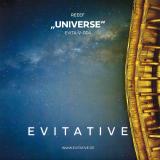
Manche sagen, diese EP sei wie eine Reise durch das Universum.
Andere sagen, sie ist einfach nur geil produziert.
Und dann gibt’s noch uns, REEEF, und wir sagen: Warum nicht beides?
Die „Universe EP“ ist der Beweis, dass Melodic Techno nicht nur tief und emotional sein kann, sondern auch richtig gut sitzt – wie dein Lieblings-Hoodie nach drei Tagen Festival.
Wir haben alles reingepackt:
Universe: Der Titeltrack. Ein epischer Opener, der mehr Stimmung macht als dein Barista mit Burnout.
Humanity: Technofrontalangriff mit Betonwänden – für alle, die es ernst meinen mit dem Raven.
Never Say Never: Melancholie auf House-Basis. Für den Moment, in dem du denkst: „Vielleicht bleib ich doch noch bis Montag.“
Daydreams: Der Track für 6:42 Uhr, wenn draußen der Nebel aufzieht und du kurz überlegst, ob das Leben nicht doch ein Musikvideo ist.
Bumblebee: Direkt im Ohr, klebt wie Honig im Hirn – nur eben clubtauglich.
Kryptonite: Der große Absch(l)uss. Melodic House mit Pop-Einschlag – emotional, energetisch, kein guilty pleasure, sondern einfach pleasure.
Für DJs. Für Hörer. Für Menschen mit Geschmack und funktionierendem Basssystem.
Auf 12” Vinyl gepresst, liebevoll angeordnet, Spielzeit optimiert – so wie Oma früher die Tupperdosen im Schrank. Nur mit mehr Kickdrum.
Fazit: Diese EP braucht keine Hype-Formulierungen. Die Tracks sprechen für sich. Und wenn nicht, übernehmen wir das Mikrofon – laut, tanzbar und mit einem leichten Hang zur Selbstüberschätzung.
REEEF – Universe EP! Jetzt überall, wo es gute Musik gibt. Und bald auch bei dir im Plattenkoffer.
The legacy of wipE′out′′ has transcended time and cemented itself as a true transgenerational phenomenon. Launched in 1995, it didn’t just revolutionise the gaming industry, it created a bridge between the gaming ecosystem and the raver community. Its futuristic aesthetics and forward-thinking sound left a mark not only on mainstream audiences but also on the most demanding corners of the underground.
Decades later, the game’s impact is still alive. The release in 2023 of The Zero Gravity Soundtrack on Lapsus Records proved once again that wipE′out′′’s accompanying audio will go down in history as much more than just an anti-gravity racing game soundtrack.
This is why we decided to go deeper into the slipstream and build the second volume you’re now holding in your hands. Drawn from the original archives of Tim Wright, aka CoLD SToRAGE, this new collection surfaces unreleased cuts, pieces that couldn’t fit on the first edition, and a suite of self-authored ambient reworks that translate pure velocity into wide-screen atmospherics engineered for the long straights, the drone of airbrakes, the blue hour between checkpoints. It also reconnects the circuit, gathering selections and variants tied to later chapters of the saga — wipE′out′′ HD and wipE′out′′ Pure — plus alternative mixes that, until now, only existed in the Sega Saturn dimension of the franchise.
Finally, the material takes a leap into the future in the hands of four remixers especially chosen for this release: Tim Reaper, SHERELLE, Mantra, and NikNak, who collectively forge links between CoLD SToRAGE’s pioneering musical vision, the sound world of the game, and the contemporary breakbeats and drum & bass vanguard.
Expect the DNA you remember — accelerated breaks, trance-vector synths, jungle influences, sub-bass rumbling neatly beneath the craft’s hull, and at times even echoes of classic hardstyle — now revealed with new angles and air. The previously unheard material carries the same aerodynamic design sense that made these tracks feel faster than the track map itself, while the ambient versions open the field of view with melodies hovering at the lip of overdrive. Without a doubt, here you’ll find a strong sense of nostalgia. But this isn’t just nostalgia; it’s also proof that this sound world continues to evolve when you ease off the throttle.
For the faithful — crate-digging ravers, speed-run obsessives, and design nerds — this is an essential expansion pack: compiling rarities, restoring context, and reframing the emotional core of wipE′out′′ for late nights and early mornings alike. Bridging memory and momentum, club and console, rush and afterglow. Strap in.
Detailed tracklist, with annotations by Tim Wright aka CoLD SToRAGE
· Scratch Pad 1: “This track was composed using incomplete tracks that were developed around the time of the first wipE′out′′. It’s so long because it was used for a marathon-length Psygnosis promotional video.”
· Messij Received: “Messij was a firm favourite with wipE′out′′ fans, so it made sense that there’d be more where that came from — this was one of those re-workings.”
· God’s Gift: “I was always very fond of Erasure’s track Love to Hate You with the canned crowd FX sounds. God’s Gift was a tongue-in-cheek reference to how some musicians think they are just that. This was way before I even played live as CoLD SToRAGE.”
· Tentative: “I wasn’t sure about introducing some wacky beats and distorted sounds into one of the tracks, because it was kinda heading away from the other tracks, hence Tentative — but it turned out OK.”
· Canada 2048: “When wipE′out′′ 2048 was launched I decided to re-make Canada as a kind of tribute, but in a slightly new-tech, laid-back way, using Propellerhead Reason and all software synths.”
· Wiped Out: “Based on a few riffs from a MIDI file unused at the time of the original wipE′out′′ game compositions, this featured on my debut album MELT.”
· Body in Motion (Body Plus Mix): “A more trippy interpretation of Body in Motion that featured on non PlayStation versions of the game e.g. Sega Saturn.”
· Onyx (“Dark Side of the Moon”): “Onyx was my sole contribution to wipE′out′′ Pure on the Sony PSP handheld gaming console. This version was something I developed in a darker style, that eventually erupts into a crescendo.”
· Messij Received (WSTWGBE Mix): “Like I say, Messij was a hit with most wipE′out′′ fans, so when I was asked to compose more music for non-PlayStation versions, I adapted this tune into a parallel-universe version for PC and Sega Saturn. By the way, WSTWGBE refers to Who Said This Was Going To Be Easy?”
· Canada (Drunken Ausländer Mix): “In early 2018 I released a fresh album called Ch'illout′′, a re-working of many of my wipE′out′′ tracks in an ambient, Sunday-morning vibe style — it was a few years’ work, here and there.”
· Tentative (Woffenfum Mix): “Another chilled re-working of one of my wipE′out′′ tracks, the mix named with a nod to a good friend of mine, Carl Woffenden — someone who I've worked with for many years in the games industry.”
· Messij (Bobbing Boat Mix): “A nice cheesy computer blip-blop start belies its deep and upbeat chilled-out melodic finale.”
· Body in Motion (Timeless Techno Mix): “Another classic track given the chilled-out vibe mix, as featured originally on my Ch'illout′′ album. This one’s a really trippy, deep-space take on the original.”
· DOH-T (AM / FM Mix): “The idea with this chilled-out mix was to imagine all the melodic parts of this varied track being broadcast on terrestrial radio, so each theme drifts in and out through the radio static.”
· ’95 Future Echoes: “Originally developed as a companion album for wipE′out′′ HD, this track actually has its roots in a tiny loop of a song that never progressed to anything special back in the mid-’90s when I was composing for the original game.”
· Turbine: “Also from my wipE′out′′ HD album, it leans heavily into the upbeat, uplifting tunes from the original game, but also steals a bit of vibe and energy from The Prodigy, with those distorted flute sounds.”
· Pencil Neck: “This excerpt from my wipE′out′′ HD album features lots of sounds centre-stage and forward from Propellerhead Reason’s Subtractor virtual synth. I learned to love this more than my JD-800!”
· Messij 2005 (New Science Mix): “Yet another take on the track that still raises a smile, this time through a mix of samples from the original and Propellerhead Reason — the ‘new science’ when compared to an Amiga 1200 running Bars and Pipes.”
Pharoah Sanders has been described as ‘probably the best tenor player in the world’, emerging as a star from playing saxophone with John Coltrane in the 1960s. As a solo recording artist he is best loved by fusion fans for the jazz dance classic “You’ve Got To Have Freedom”. It’s taken from his 1980 album “Journey To The One” featured here for the first time on the complete side of a 12” single.
“Got To Give It Up” is Pharoah’s outstanding rendition of the Marvin Gaye classic. It has previously been on 7” but never until now in its full length version on 12” single. It was originally a feature on the 1978 album “Love Will Find A Way” produced by Norman Connors. To have both of these masterful recordings on one 12” single is something special.
On “Cold Sweat,” James Brown famously called to “give the drummer some.” In 1974, Philadelphia vibraphonist Khan Jamal called to Give the Vibes Some, with superb results. Pianist and composer Jef Gilson’s PALM label gave Jamal the platform he needed to deliver a thorough exploration of contemporary vibraphone. After launching PALM in 1973, Gilson quickly demonstrated that he would only produce records not found anywhere else. Give the Vibes Some, PALM number 10, was another confirmation of this guiding principle.
Raised and based in Philadelphia, Khan Jamal took up the vibes in 1968, after two years in the army during which he was stationed in France and Germany. Decisively drawn to the instrument by the work of the Modern Jazz Quartet’s Milt Jackson, Jamal studied under Philadelphia vibraphone legend Bill Lewis and soon made his debuts in the local underground.
Early in 1972, Jamal made his first recording, with the Sounds of Liberation. The band attempted an original fusion of conga-heavy grooves with avant-garde jazz soloing. Saxophonist Byard Lancaster, an important figure in Jamal’s development, contributed much of the solo work. Later in 1972, Jamal made his leader debut with Drum Dance to the Motherland, a reverb-drenched, never-to-be-replicated experiment with live sound processing. Both albums appeared on the tiny musician-run Dogtown label.
“We couldn’t get no play from nowhere. No gigs or recording sessions or anything. So I took off for Paris,” Jamal recalled in a Cadence interview with Ken Weiss. “Within a few weeks, I had a few articles and I did a record date. It didn’t make me feel good about America.” That was in 1974, while Byard Lancaster was recording the music gathered on Souffle Continu’s recent The Complete PALM Recordings, 1973-1974.
Jamal’s record date delivered Give the Vibes Some. At its core, it was an exploratory solo vibraphone album, even if two tracks added (through technological resourcefulness?) a très célèbre French drummer very much into Elvin Jones appearing under pseudonym for contractual reasons. Another track, for which Jamal switched to the vibes’s wooden ancestor, the marimba, added young Texan trumpeter Clint Jackson III. The most notable article published on Jamal during this stay in France was a Jazz Magazine interview. Jamal’s last word there were “The Creator has a master plan/drum dance to the motherland.” “Give the vibes some” could be added to this programmatic statement.
Astropolis Records, the label born from the legendary Brest festival, marks a decade of electronic passion with a sprawling, heartfelt anniversary compilation — slightly delayed, but still delivered with flair.
It comes in two EPs, spotlighting the many facets of the Astropolis universe: in-house artists, long-time festival collaborators, and rising stars from France’s ever-bubbling scene. Eighteen artists guide us through a sonic journey where rave heritage, electronic dreamscapes, and collective fervor converge — true to a festival whose DNA has never recognized borders.
The second EP dives into darker territories, spanning original electro, multifaceted techno, and sunlit vibes toward the close.
Astropolis has always thrived on happy collisions, and this EP is a perfect demonstration.
For synth lovers, Legowelt & Cuften revive the spirit of early electroclash on Liar, a carnal fusion of analog synths and DIY attitude.
Zaatar & Trunkline inject raw energy on Come Into The Light, a sweaty, visceral banger bridging techno, dark disco, and EBM.
French scene stalwarts Scan X & Electric Rescue deliver a masterclass in elegant techno on Lost In Time.
When Manu Le Malin meets Kmyle, the result is as sharp as it is cinematic: Little Big Man builds dramatic tension, balancing raw emotion with contained fury.
On a more contemplative note, we’re thrilled to unveil one of the first productions from our dear Célélé with Théo Muller: the subtle Drum and Drift, threaded with dubby vibrations and sun-drenched bursts.
This anniversary compilation reaffirms the label’s openness to new generations and recent sonic hybrids while honoring the techno scene that shaped its beginnings. Like the festival itself, it embodies the same sincerity and collective energy: a small manifesto connecting generations, aesthetics, and territories — celebrating roots without nostalgia, and the future without bending to trends.
Astropolis Records, the label born from the legendary Brest festival, marks a decade of electronic devotion with a sprawling, heartfelt anniversary compilation — slightly belated, but executed with undeniable flair.
It also comes in two EPs, showcasing the many facets of the Astropolis universe: in-house artists, long-time festival collaborators, and fresh talent from France’s ever-bubbling scene. Eighteen artists guide us through a sonic journey where rave heritage, electronic dreamscapes, and collective fervor intertwine — true to the spirit of a festival that has never recognized borders
The first EP bathes in warm tones across electronica, house, g-tech, old-school rave, and melodic techno.
It opens with grace and magic via Rone, whose electronic touch conjures the intimate and the infinite. Between electronica and downtempo, The Dolphin Ambassador delivers luminous melancholy, offering a gentle calm before the storm.
The unlikely pairing of Mézigue and Swooh catapults house into a g-tech vortex with the unrestrained Broken Roll To Venice, a compact fusion of groove, hybrid sounds, and playful inventiveness.
Belaria & Madben continue this alchemical thread on Into The Void, an incendiary anthem where 90s rave, EBM, and modern intensity collide in hypnotic trance.
For old-school dancefloor loyalists, KiNK finally resurrects a cult live set staple: Give Me, a bona fide banger merging breakbeat and vintage house, engineered for late-night sweat sessions.
Oniris & Benjamin Rippert revisit the melodic techno roots of the label on Sonate, demonstrating a masterful command of harmony.
This anniversary compilation underscores the label’s openness to new generations and recent sonic hybrids, while paying homage to the techno scene that shaped its early days. Much like the festival itself, it embodies the same sincerity and collective energy: a small manifesto connecting generations, aesthetics, and territories — celebrating roots without nostalgia, and the future without bowing to trends.
We’re proud to present the sixth record of our limited series, which marks the 15th year of our label.
On the A side we have legendary Analogue Cops with their track “Iron fist”: a raw-acid jam with a funk sample which makes this so unique and special.
A2 is all about Bologna finest Dj Rou with his “051 Deep Journey”: the title speaks itself for this hot track that matches soulful pads and funky high keys.
On the B side we have Riviera resistance: label owner Alessio Collina and Deep House master Deep88.
“Spoken Randomly” by Alessio Collina is pure House without compromises: old-school bassline, floating pads and a neverending groove.
“Darlin” by Deep88 is a pure bliss: melancholic atmosphere, dreamy strings and arpeggiated synths which make this jam deeper than expected.
Hot on the heels of Luv (LuvLuv) comes a sublime new Drum Chums from midland's madlads Wrekin Havoc.
Over the years we've shared great tunes, fun times and A-grade dance floor debauchery with these permanent party people (our first encounter almost exactly like that Spiderman pointing meme) so it made more sense than we usually do to invite them aboard the V*nga bus for some Balearic-Disco edit excellence.
Things kick off with the sexy throb of 'Shine A Light', a stonewashed funk workout complete with Paisley guitars, Troutman bass grunts and some big time blue-eyed soul vocals. It's a bit like an extended and unheard collaboration between George Michael and Tears For Fears recorded immediately after a particularly heavy night at Future. Unsurprising perhaps that this one's been getting a whole lot of love from DJ Harvey.
'Mars Bar Party' grabs you by the hips from the first bar of its swaying Mediterranean house rhythm, then tugs at every single one of your heartstrings with melancholic pads and a silken vocal croon. Fuuuuuuckin' hell! Sorry, was totally bewitched by the primal power of piano house magic - it's like John Rocca was in the room for a second. Armed with an awesome arrangement and clocking in at ten massive minutes, this may be the ultimate Balearic house journey.
If all this wasn't enough to have you stocking up on 5-HTP and sinus rinse, those crafty cats close the set out with the shimmering disco euphoria of 'Leccy Meet Her'. The bottom end pulses endlessly, Cowley synths trill and a crystal clear Vox soar above, sending us far off into mirrorball orbit. If this isn't a hit at Horse Meat, we'll neck a bottle of poppers and never eat a tomato again.
Each and every track Wrekin Havoc touch is a pearler, but we're particularly chuffed with ourselves for snapping this top trio up.
Opsin- the new collaborative alias of longtime friends and producers Keydell and Kincaid - announce their debut LP on wax, Through The Wall, from London-based record label Hypnic Jerks.
Artist Info:
Opsin is the debut project between artists Keydell (Liam Keydell Myers-Cook) and Kincaid (Joe Arthur). The Pair have previously released on the following labels: Well Street Records, Banoffee Pies, Redstone Press & Bliss Print.
Both have extensive work in sound design and collaborated on the soundtrack for Mithridate at London Fashion Week 2024. Kincaid also produced the soundtrack for Alexander Whitley's Anti-Body Ballet.
Release Info:
The album is named after the birthplace of its creation. Sharing files between bedroom walls during COVID-19. Keydell's meticulous Ableton-based resampling of found audio and modular synth racks, and Kincaid's Reaktor-driven synthesis in Logic.
Draws on a wide spectrum of electronic influences the album infuses elements of rave, techno, industrial and ambient sounds, whilst never quite landing in any specific genre.
Second release from London label Hypnic Jerks on 4 sides of 180 gram vinyl, in a gatefold sleeve designed by Jacob Wise and mastered by Rashad Becker.
A followup from their first release - Toumba's debut physical release 'Rosefinch', which saw later releases from Hessle Audio and Nervous Horizon.
Our journeys into uncharted lands of the Reducerverse continue.
Essential must-buy shit for all disciples of: The Rootsman x Muslimgauze, Love's Secret Domain era Coil, Chris & Cosey, Meat Beat Manifesto, early Reinforced Recs, Shut Up & Dance, He Dark Age, Zombies Under Stress, SPK.
If you've just joined us: Reducer ARE the greatest lost dub punks. Rumoured to have almost signed to On-U Sound but told Sherwood to stuff it when he wanted his hands on the desk. Fame never found them, cos they didn't want it anyway. Living in the obscure memories of the select squatters and weirdos lucky enough to have had their minds blown, their first recordings were scraped off the linings of the cosmic dustbin recently through a series of self-released 12"s, cassettes, USBs and strangest of all a 3D performance screened at the Cube (in association with pals Bokeh Versions).
In short: Reducer's the most thrilling fairytale resurrection these pages have been privy to, joining 23 Skidoo, Killing Joke, PiL, Slits, Terminal Cheescake etc on the Mount Olympus of the Punky Reggae Party.
This latest slice of karmic justice comes from The Human Aerial aka Reducer's guitarist and prime mover Hooly. And ohhhh what a justice it is. Drawing on 40 years of private solo recordings across 7 tracks from Abu Ama style dabke jaguar steppas punishment to thumping bass-led electro, peak Depth Charge dubby big beat to careening breakbeat hardcore, trashcan gamelan spirituals and Jamie Vex'd style maximalist beats blissouts,
Tying together this jaw-dropping range of styles and fashions is a relentless sampladelic bombardment. The Human Aerial's habitual pilfering of TV and radio for into lovingly spliced tape loops and samples showcases humanity at its best and absolute worst. Tele-evangelists rub shoulders with long dead chieftans: "there is no death, only change of worlds" "We're MAD AS HELL AND WERE NOT GONNA TAKE IT ANYMORE" "THe land is sacred, a cathedral of the spirit". These wisdoms and grave sins slip into us subliminal through the dance, the needle drops like a waking dream.
While the Reducer archives may be running low, we assure you the Human Aerial coffers are full. And long may our minds be blown by this ongoing renaissance.
After a long hiatus, Eric Cloutier returns to his Palinoia label with three tribal techno groovers intentionally built to get the entire dancefloor moving.
Having grown up surrounded by the hardgroove sound, Eric latched on to the style and has regularly incorporated it into all his sets for the last few decades. Passionate about the style, and recognizing it being over-cooked and watered down as a current hype and trend, Cloutier felt the need to use his talents and knowledge of the history of the 90's tribal sound to refocus things in a manner only he could do.
This three-track EP - the first of two in the set - Perpetual Booty Grooves will do exactly what it says on the label and endlessly whip a room into a frenzy. All three cuts on this record end in perfectly locked grooves, allowing any DJ to keep the vibe going and never letting the audience exit their fugue state.
Celebrating its anniversary with a characteristically bold move, Kyiv-based vinyl label Artreform isn't closing a chapter - it's opening a new one. Rather than issuing a standard 50th release, the label jumps straight to release 51 with this striking 8-track mini-album - a sly nod to the new sounds and exciting events still to come.
Splitting the anniversary release into two parts (four tracks each) creates a liminal space between the past and the future; between canonical house sounds and futuristic sound experiments. Unwavering ambition and a daring vision have long defined Artreform - and are deeply embedded in the creative credo of its founder, DJ, producer, and vinyl connoisseur Joss.
After an impressive 13-year journey, it's fair to say that Artreform has never succumbed to the lure of fleeting trends, remaining steadfast in its dedication to quality tech house, deep house, and microhouse. At the same time, the label continues to stay sharp, hungry for new ideas, and firmly in step with the times - while many imprints of similar vintage slide into self-mythologizing mode, focusing on reissues and retrospective compilations.
The new release makes this abundantly clear. The second half of the celebratory mini-album features a vibrant, life-affirming dancefloor cut from JOSS; a peak-time rave-inspired killer by iO (Mulen) - an artist who's been with Artreform since day one; a stylish deep house groove from seasoned masters Gorje Hewek & Binu Raal; and an ethereal vibe courtesy of Swedish standout Cirkel Square, whose music sounds dreamy, arresting, and otherworldly.
We are excited to welcome Rill for the fourth installment on our label!
Rill's sound is rooted in a deep appreciation for early-2010s techno aesthetics: atmospheric yet driving, detailed but never overstated.
His tracks merge spatial textures, rolling percussion, and carefully sculpted synth work - creating an immersive flow that balances hypnotic rhythm with creative, futuristic sound design.
On his self-titled album POUYA, the Miami artist steps outside the world that built him and into one that’s been calling to him for years. Known for his hard-hitting, rapid-fire rap and underground roots, Pouya sheds expectations and dives headfirst into a grittier, more vulnerable sound—trading 808s for guitars, and hooks for raw emotion. This is not a rap album. This is something else.
Leaning into alternative rock, post-grunge, and even hints of early 2000s emo, POUYA is loud, emotional, and unfiltered. It's Pouya at his most sonically adventurous—and maybe his most personal. You can hear the freedom in his voice, the pain in the distortion, and the shift in his songwriting. It’s still Pouya through and through, but it’s a version of him that’s been brewing in the background, waiting for the right time to come alive.
With POUYA, he proves he doesn’t need to follow a formula. He never did.
1xLP, pressed on Graphite Eco Mix vinyl and housed in a single pocket jacket with polylined protective sleeves
Party thrower in the land of French volcanoes, BAZⱯR takes a wax turn with the release of their very first EP!
Bringing together artists and friends from across the globe, this record reflects the crew’s journey and showcases the full spectrum of their musical vision.
From peak-time tension to trippy after-hours vibes, and sunny open-air delights, this debut vinyl is crafted to find its place both on the shelf and at the heart of every dancefloor moment.
A testimony to years of shared experiences and late-night adventures, it embodies the spirit of community that fuels BAZⱯR. With this release, the crew opens a new chapter ; one that resonates far beyond the night.
Vibe Ride is the sixth release of Adam Rudolph's Hu Vibrational project and marks his 60th release as a leader or co-leader. Comes with insert and download code.
“With every record, the goal is to explore new creative territory,” explains Rudolph. Vibe Ride continues a deeper exploration of a trance-like groove and a conceptual framework known as Sonic Mandala. This album marks the most complete realization of that idea, partly due to the group's experience touring beforehand. That time on the road helped to refine ideas and strengthen musical chemistry. The recording process unfolded organically—likely due to the long-standing collaboration within ensembles like Go: Organic Orchestra and Moving Pictures, where the musicians have developed a deep familiarity with the shared musical language.
Sonic Mandala refers to a musical approach distinct from traditional linear structures of theme and development. Found in cultures across the globe, it may represent one of the oldest forms of musical expression—predating written history by tens of thousands of years. Today, it is most vividly preserved in the music of the Ituri Forest peoples (Aka, Baka, Ba Benzele, Mbuti), whose sound traditions revolve in cyclical, orbit-like patterns. Vibe Ride seeks to bring that ancient sense of circularity into a contemporary—and perhaps even futuristic—context.
The ensemble of Vibe Ride—Alexis Marcelo, Jerome Harris, Harris Eisenstadt, Neel Murgai, Tim Kieper, and Tripp Dudley—brings exceptional creativity and skill to the project. While grounded in the sonic languages of today, their performance channels an ancient vibrational lineage, connecting with ancestral sound makers who were attuned to the rhythms of the sun, moon, stars, and seasons. Human beings have always been deeply responsive to natural cycles.
Like a mandala, where the circle reveals itself as a spiral—always returning, but never to the exact same point—the Sonic Mandala musical experience spirals through motion. Refined signal patterns emerge through overtone-rich instrumentation. The groove becomes a threshold, shifting the listener from passive observation into active, even transcendent, participation. With open ears and an open mind, the sound spirals inward—toward a primal center—and outward into the cosmos. When this elevated state is shared among participants, it creates what mystics describe as resonance.
Vibe Ride thrives on the distinctive sonic voices of its players, interwoven with care and nuance into the compositions. Hu Vibrational merges elements of world music, electronica, and improvised jazz into something both funky and spiritual, intense and soothing.
Using signature techniques of organic orchestration, layered arrangement, and electronic processing, the compositions are sculpted from percussion, electronics, and ethereal textures. Rhythmic foundations drawn from diverse traditions serve not as endpoints, but as building blocks. As the saying goes, “Orchestration is the key.” In shaping the sound, the aim was to discover fresh ways of balancing structure and sonic color. As Don Cherry once said: “The swing is in the sound.”
The audiophile LP was carefully recorded, mixed, and mastered by James Dellatacoma—longtime engineer for both Bill Laswell and Rudolph—at Laswell’s Orange Studio.
“This crew artfully blends together to create a seamless tapestry of rhythm… the end results are mesmerizing. Hu Vibrational is all about communing with the groove spirits and creating worlds where earthy rhythms and other-worldly sounds are one.”
— Dan Bilawsky, All Music Guide
“You can be sure that when Adam Rudolph and an ensemble of breathtaking drummers get together mystical and wonderful things will happen.”
— Raul da Gama,
“A stunning effort, enjoyable and grows with repeated listening.”
— Stefan Wood, Freejazzcollective
With Rêves, Senbeï unveils the most intimate and ambitious work of his career. Known for his unique blend of electronic music, hip-hop, and Asian sounds, the beatmaker reinvents himself here in an orchestral and cinematic universe, a far cry from his previous albums.
Inspired by the great soundtracks of children's adventure films—The Goonies, The Neverending Story, Charlie and the Chocolate Factory—Rêves is a sonic immersion where childhood nostalgia meets the emotional power of an orchestra.
A unique symphonic production.
For the first time, Senbeï has called upon a 15-piece orchestra, recorded in conditions close to those of film music. Strings, wind instruments, and electronic textures echo each other to create a rich, evocative universe, filled with luminous melodies and magical tension. This album is not just a collection of tracks: it is an adventure to be listened to like reading a story or watching a film.
In 1978 a newly formed Augusta, Georgia group Marshall, Donovan and Broomfield chose to record cover versions of two songs previously recorded in 1973 and 1974 respectively by Florida siblings group Cornelius Brothers and Sister Rose. These Eddie Cornelius penned songs “Let me Down Easy” and “Since I Found My Baby” would form both sides of Marshall, Donovan and Broomfield’s first 45 single, released on group founder John Marshall’s own Augusta label. The flipside “Since I Found My Baby” would eventually gain popularity across the pond with aficionados of the UK modern soul scene of the early 1980’s and beyond.
John Marshall began his musical career in a high school group called The Fabulous Gardenias who recorded the doowop ballad “It’s You, You, You” backed with the up-tempo R n B mover “What’s The Matter With Me” released on Tommy Brown’s local Liz label (named after his wife future Motown recording artist, Liz Lands) in 1961.The Fabulous Gardenias featured John Marshall, the late Atlanta alumni Calvin Arnold, “Little” Joe Jones Jr (later of the Tams) and a fourth guy only remembered as Harold. John Marshall later sang with another Atlanta group The Tams of “Hey Girl Don’t Bother Me” fame from 1970 through to 1978.
Later in 1978, John Marshall having relocated to Augusta, GA the previous year was casually emptying the contents of his mailbox outside his home when a car suddenly pulled up. The driver called out “Hey I recognize you, you’re John Marshall you used to be with the Tams!” The driver continued to introduce himself as John Donovan stating that he too was a singer, followed by an impromptu performance, and hey! sure enough he could sing! A later introduction to Charles Broomfield (John Marshall’s next-door neighbour at that time) would lead to the formation of the group Marshall, Donovan, Broomfield with the addition of Mary Marshall and Pat Donavan (the then, two John’s respective wives) as backing vocalists. The previously mentioned group’s first release the John Donovan led “Let Me Down Easy/Since I Found My Baby” was recorded at the now defunct Jam Studio’s in Atlanta. Upon release, the “Let Me Down Easy “side received considerable local radio play but only led to the group performing a handful of local shows. On the strength of the group’s first release a second 45 release followed in 1980 “Let’s Dance/That’s Love” both sides of this 45 were penned by Charlston, South Carolina native, Harold Thomas who John Marshall knew from his time with the Tams, Thomas having once been part of Bill Pinkney &the Original Drifters and later the Tams management teams. This second 45 never gained the same local attention of “Let Me Down Easy” and after three years together the Marshall’s, Donovan’s and Charles Broomfield went their separate ways. John Marshall lost contact altogether with his former group members and left the music business taking up employment at International Paper Mill until his retirement in 2013.
Due to the current resurgence in popularity of “Since I Found My Baby” with copies regularly selling for four figure sums, Soul Junction have reacquainted ourselves with John Marshall to you bring you “Since I Found My Baby” backed with “Let Me Down Easy” with the addition of the excellent and lesser, known stepper “That’ Love” making this an excellent value 45 release.
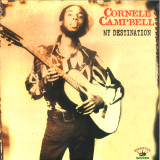
The mighty Falsetto voice of Mr Cornell Campbell is another we believe, unsung hero of the Jamaican music scene. Who in our opinion should have broke through to a wider audience, than his cult status currently provides. We have unearthed straight from the master tapes an album that was due for release around the mid 70’s. A few of these cuts, found their way out on limited 7”s, that were mainly for the domestic Jamaican market. But as a complete body of work, never found a release until now. We hope like us, once you have played the tracks, you will feel that this set of cuts, stands up amongst Cornell’s finest work. Cornell Campbell (born 1948, Jamaica), made his first recordings in the early 1960’s for Coxone Dodd at Studio 1. Tracks like ‘Under the Old Oak Tree’, ‘My Treasure’ and later as a duo with Roy Patton ‘Salvation’ and ‘Sweetest Girl’, were local hits on the Jamaican Sound Systems. A short spell with the Uniques was followed by his roll as lead vocalist with the Eternals, under the monicker of Don Cornell. Their finest moment being the classic ‘Stars / Queen of the Minstrels’ cuts which still stand up today as some of Jamaica’s finest.
The 1970’s saw Mr Campbell move on to work with producer Bunny ‘Striker’ Lee, for whom he cut most
of his big tunes. He and fellow singer Johnny Clarke, would become Bunny’s 70’s equivalent to his 1960’s stable of singers like Slim Smith, Pat Kelly and Ernest Wilson. They would provide the voice to his many hits of the day. Bunny not being called ‘Striker’ for nothing. Cornell also had a series of hits around his theme as the ‘Gorgon’. The mighty figure unbeatable at the dances in the Greenwich Town district of Kingston. ‘The Gorgon’, ‘The Conquering Gorgon’. ‘Natty Dread in a Greenwich Farm’. These were all firm favourites at the dances in Jamaica. He also worked with other notable producers around this time. Winston ‘Niney’ Holness “I Heart is Clean’, Tappa Zukie ‘Follow Instruction’
and culminating in a massive hit ‘Boxing’ in 1979 for producer Joe Gibbs. But it was his time with Bunny Lee that set the levels for his record output. This unreleased album is from this period in time, when Cornell Campbell never sounded sweeter......
Syncretic marks the debut full-length from Australian duo Bhairavi Raman, a Western and Carnatic violinist, and Nanthesh Sivarajah, a mridangam player and versatile percussionist. Both artists share a Tamil heritage, a current that hums across the album. Raman, from South India, and Sivarajah, from Sri Lanka, draw lines that connect Western practice and Carnatic tradition. This hybrid is central to Raman’s approach as a violinist, an instrument itself caught between East and West since the late 18th century. Her playing folds history, lineage and experimentation into music that acknowledges inheritance while gently rewiring its circuitry.
Expanding on traditional music can be a precarious practice, but Syncretic never feels heavy-handed. Raman and Sivarajah exercise measured restraint, letting the Carnatic framework breathe even as it is refracted through contemporary tools. Delays, looping, subtle layering and synthesized harmonies tilt tradition into a new light without disguising it.
Even within a contemporary framework, Raman’s rigorous Carnatic training under gurus Sri S. Varadarajan (India), Sri Murali Kumar (Australia) and Sri Gopinath Iyer (Australia) is unmistakable. She captures the spiritual and emotional essence of each raga: on Seven, the playful raga Bahudari becomes both centrepiece and conduit, while on the traditional piece Thunbam Nergayil, drawn from a Tamil poem, we hear a deeply personal iteration, a weeping euphony of mixed emotions hitting all at once. Tradition here is absorbed, expanded and reframed.
Sivarajah’s command of the mridangam, honed by his gurus Sri Jambunathan (Sri Lanka), Sri Balasri Rasiah (Australia) and Sri T. R. Sundaresan (India), is central to his original composition Guardian. He sustains tradition while extending it through layering and sound-spatialisation. The mridangam here functions as both a structural and ornamental force, mapping continuity between inherited form and contemporary sonic architecture.
Syncretic resonates as a space where Tamil heritage, diasporic memory and contemporary practice coalesce. Culture, like sound, circulates, transforms and persists. Tradition is not an archive but living material, a soundworld that lingers in the ears and the imagination.
a fascination flows down the chemical gradient. songbirds take flight from a colonial square in montevideo and fall as acorns in the foothills of the sierra nevada. the moon aches, holding a teeming darkness to the edges of the clearing as we make quick work for the machines. first a pulse, then an armature is spun up around it while the whipping plasma of virtual half-thoughts cools and hardens into something more familiar. a gleaming clash of frogsong begins to reveal its cadences, unspooling into regular striations. it forms a grid in the air, the water rises to meet it, and pressed between these mirrored planes of disappearance we find our vector and glide towards the horizon.
Some records are answers to questions no one asked out loud. With Where is Acid Eric, Cornelius Doctor & Tushen Raï deliver a psychedelic missive from a parallel timeline — a time-traveling tribute to Goa’s golden age, filtered through their unmistakable signature.
Returning to their home base, Hard Fist, the duo steps into new territory with this release, and yet, it feels like they’ve been heading here all along. This isn’t a retro-fetishist trip, nor a copy-paste homage. It’s a reimagination of a sound, a space, and most of all, a spirit.
The EP is rooted in the mythic nights of late-80s and early-90s Disco Valley, where British acid house collided with Indian hedonism, where freedom wasn’t a pose but a necessity, and where dancefloors became temporary utopias. But in the hands of Cornelius Doctor & Tushen Raï, this past gets warped, stretched and reanimated with 2025’s tools and sensitivities.
Across three extended tracks, the duo summons a sound that’s dense yet breathable, tribal yet precise, nostalgic yet futuristic.
They weave Goa’s swirling trance lines with broken rhythms, analog squelches, and post-industrial textures. The acid lines are sharp, but never cliché — more mantra than gimmick. Voices float in and out like half-remembered chants. Basslines slide, hypnotize, and then vanish in a cloud of smoke. It’s not a flashback. It’s a vision.
The title, Where is Acid Eric, feels like a lost broadcast — part question, part invocation. Eric is a symbol. IS Eric a ghost ? The true legend of a forgotten raver on a dusty Anjuna morning. What matters is the search. The longing. The dance.
Hard Fist, true to its form, continues to blur the lines between ritual and rave, tradition and invention. And with this record, Cornelius Doctor & Tushen Raï don’t just revive a genre — they reconnect with an ideal: dance music as exploration, as transcendence, as resistance.
One foot in the dust, one foot in the cosmos. The answer isn’t important. The trip is.
‘3' saw the core Lifted duo of Max D & Matt Papich unravel their visions of excess into their most divergent and wide-eyed collection to date. Presented here by Peak Oil in a vinyl edition featuring the painting of Jordan Kasey (yes, related to Martin Kasey, saxophonist on 2019’s LP 2) and packaged for a seamless listen.
First scene ‘Chefs’ places us squarely off-center, landing in a cinematic environment that feels a bit like steadycam Luis Bunuel , wine bottle whoo-ing and horn fanfare. Its music without a hard surface, defined more by its fluidity and characters, found sounds and performed dialogue. “Cymbecko” shifts gears into blissful ambient dub, and paves the way for a Luke Stewart led excursion into the uncanny that is ‘Trip Tongue’. Stewart’s upright bass never stops seeking, while Jordan GCZs Rhodes barely touches down before lifting back up into and out of Jacob Long’s (Earthen Sea, Esau) liquid tone sheets. An outside world of percussion accompanies.
The mood morphs and the scene cuts in hard with “Born in the Roof”, slacker techno that grows shimmering parts, Perlon for potheads. Voiceover slacks right with it, a half-convo caught in the billowing chorus of fx. “Macarena” snaps things into focus, working almost like an open window to airing out the heady fog. Simplicity in the vignette.
After “Mecha Perfume & Variety”, “Snow Dancing” reignites the drama, with burning guitar by Jonny Nash taking a plucky and sliding lead over wildly fused drums by Max D, we get a test of new depths for Lifted with the somber and exuberant “Whipped Cream”. Crackling like a radio but with modern propulsion in the form of richly evocative pads courtesy of Motion Graphics, it sounds like a dinner, a space trip, a storyboard, a scene, threaded together in bouncing, oblique ways.
"Bobby V" drops refreshingly, timed like a credit roll and leaving an afterglow that feels more tuned-in than ever.
Players on this album include: Luke Stewart (Irreversible Entanglements, Blacks Myths), Jeremy Hyman, Jonny Nash (Melody As Truth), Jordan GCZ, Matt Papich, Josh Levi, Mezey, Hirama, Dawit Eklund (1432 R), Motion Graphics, Max D, Jacob Long (Earthen Sea, Esau)
d 4.Born In The Roof Radio Mix
e 5.Macarena Radio Edit
Housewives, househusbands, ladies, gentlemen, and everyone in between… Avril A is ready for relaunch.
A - V - R - I - L
Never released Hi-NRG, synth-pop, wonky rock n' roll from a queer Manchester underground icon of the 80s and 90s.
By day, Avril Eventhal was a housewife in North Manchester's Orthodox Jewish community. By night, she was the fabulous Avril A, a larger than life cabaret performer who found a loyal audience in gay venues across the country and was adored for her outrageous live shows.
With her signature leopard print dress and feather duster in hand she delivered an unforgettable song and dance routine - as it was billed, “an audio-visual assault on the audience”.
She celebrated her unconventional style, finding joy and space for creative reinvention with the queer community.
Avril died in 2017, leaving behind a massive archive of material documenting every aspect of her career in songwriting and performance. For two years, Memory Dance has been working with Avril's niece and family on a digitisation and restoration project bringing these audio recordings back to life.
Legendary Mello Music Group producer Apollo Brown's feature packed album including Oddisee, Evidence, Freddie Gibbs, Masta Ace, Vinnie Paz, Westside Gunn, Sean Price and more! 19 full boom bap classics. A celebrated fan favorite with over 20 million streams is finally back on vinyl with this special double lp olive green edition.
N1_SOUND & Ras Yunchie join forces on an 8-track LP that transcends both definition and generation. INNA DJ STYLE, out November 7th, marks the Toronto veteran singer’s first-ever vinyl release.
Pairing four vocal cuts with four dub versions on the b-side, INNA DJ STYLE bridges experimental dub, digi, and roots, embodying what Ras describes as an “open” sound—one that draws from reggae traditions while boldly breaking new sonic ground.
N1_SOUND first encountered Ras’ distinctive voice and soaring falsetto at Toronto sound system parties. A cornerstone of the city’s reggae scene, Ras Yunchie has been performing since 1983 and remains a vital presence more than 40 years on. His contributions have been recognized with a Lifetime Achievement Award from the National DJ Association, alongside titles such as DJ of the Year, DJ Sound Champion, and winner of the 1985 DJ Sound Clash.
While the rhythms pulse with heavy bass and the three-dimensional lead melodies synonymous with N1_SOUND, it’s Ras’ vocals that make INNA DJ STYLE truly shine. Each track was recorded in a single take and left largely untouched—a testament to the raw talent and enduring artistry of the 61-year-old singer. Across the four vocal cuts, the alchemy of contrasting styles, influences, and lived experience highlights how collaboration can push sound and genre into bold, unexpected territory.
A Treasure Trove of NYC Post-Disco Gems from 1980–1983
New York City, early 1980s. Post-Disco and Boogie Funk pulse through the streets, clubs, and studios—and Richie Weeks stands at the heart of it all. A true force in the scene, Richie had just dropped the now-classic “Rock Your World” in 1981. Signed to the iconic Salsoul Records, he was riding high: performing at legendary venues like Paradise Garage, Studio 54, Roseland, and Bond International, touring Europe, and recording tirelessly with top-tier vocalists and musicians in studios across the city.
With his projects The Jammers and Weeks & Co. storming the charts both in the U.S. and abroad, Richie was unstoppable. Fueled by a relentless creative drive, he spent countless hours in the studio—writing, arranging, and producing a massive catalog of dancefloor anthems, many of which never saw release. Until now.
Jerome Derradji and Past Due Records are proud to present Richie Weeks – The Love Magician Archives: Boogie & Post Disco. NYC 1980–1983 Vol. 3, the third installment from Richie’s personal archive. Spanning 1980 to 1983, this collection features eight electrifying, previously unreleased tracks from The Jammers and Weeks & Co., as well as the futuristic grooves of Kaviar and Hot Cargo. Richie shines through the entire record—his writing, production, vocals, and arrangements are absolute killers.
Housed in a deluxe double LP package with an insert featuring the second chapter of Richie’s musical journey—penned by Jerome Derradji—this volume is a vital piece of New York’s post-disco history.
Essential for fans of Salsoul, Prelude, and deep crate-digging dancefloor gold diggers.
“I like him very much. He’s very special. He’s singing with a voice I never heard before” - Townes Van Zandt
“A conscious, soulful brother” - Horace Andy
“He’s a brother to me - one of the best singer/songwriters I’ve ever met” - Adrian Sherwood
“Unearthed mine of gems from inner Wales - a songbook of ideas - that's Jeb!” - Gilles Peterson
Jeb Loy Nichols is a bonafide Country (Got) Soul legend. The Music Maker presents 21 incredibly deep, grooving and soulful songs from the cream of Jeb's catalogue; from its earliest days to his latest unreleased gems via countless rare and unbelievably good lost-classics. This 2LP set is presented in a gatefold sleeve complete with freshly commissioned artwork courtesy of Jeb himself.
In collecting these uncut, under-heard gems, we hope to do justice to Jeb's jaw-dropping artistic brilliance. A man who, in working with Adrian Sherwood, Dennis Bovell, Dan Penn, Larry Jon Wilson and countless other legendary characters, has crafted some of the most deeply affecting folk, country, soul, funk, blues, dub, reggae, gospel, rap and electronic music, ever heard.
The first music Jeb really felt a connection with was southern soul: "I used to listen to the radio at night and fell in love with Bobby Womack and Al Green, The Staple Singers and Joe Simon – that whole Nashville/Memphis/Muscle Shoals thing.” But Jeb was so much more than a soul boy, Indeed, he "went to bluegrass festivals with my dad and come home and listened to jazz records with my mother.” And, when he was fifteen, he heard his first punk record: "God Save The Queen" by The Sex Pistols. “That and The Ramones completely changed me.” In 1979 he got a scholarship to go to art school in New York: “A great time. Punk was over but hip-hop was starting and I got into that in an obsessive way.”
His first recording, in 1980, was an unreleased rap song called "I’m A Country Boy". If that isn't an insight enough into Jeb's kaleidoscopic path through music, in 1981 he visited friends in London and found himself living in a squat with Adrian Sherwood, Ari Up (from the Slits), and Neneh Cherry. “Adrian put me to work immediately, moving boxes of records all across London. It was Adrian that was and is my biggest influence – in his complete disregard for genre purity.” So, presumably you're getting the picture? A veritable musical magpie with a voracious appetite and unimpeachable taste.
"Mine has always been a meandering career. I've done what I've done, and made the music I've made, due to chance meetings. I'm not particularly ambitious; it's more important to me that I work with friends and like-minded people. I've been a big fan of Be With for years. Everything they release is essential. When they asked about rereleasing "Countrymusicdisco45" I was both pleased and flattered. We began talking about how we'd do it; two years and twenty-one tracks later, here we are. I've always thought of the music I make as Country Music. Music conceived in the country, written in the country, recorded in the country. I left London and moved back to the country so I could live among the trees, the grasses, the animals, those things that don't go to war and get greedy. This compilation is the story of that life. Hand made, lo-fi, ramshackle, stripped down, real deal music. Heartworn and funky. Music made in the kitchen, not in the studio. As the great Skip Mcdonald said, Perfect ain't perfect. It's great to see all these tracks gathered together. It feels like a family reunion. Some older members of the tribe, some newer arrivals."
Opener "countrymusicdisco45" is a song Jeb wrote about how his crew lives, tucked up blissfully in the hills: "House parties full of country folk dancing to disco, reggae, soul, country, hip-hop. All night. I recorded it at home under the influence of Stevie Wonder." It's one of the funkiest records you'll ever hear. "Sometimes Shooting Stars" was recorded in Nashville and mixed by the legendary Dennis Bovell. It's deep, dubby, majestic. A thing of fragile, melodic beauty. The party ramps back up again with the undeniable groove of "Short Cut Home" before the profoundly moving "Disappointment" arrives. One of many songs he's recorded with good buddy Benedic Lamdin (aka Nostalgia 77): "We were going for a Leon Thomas meets Richard Brautigan meets Alice Coltrane kind of thing". We think they nailed it. "Days Are Mighty", like a lot of the tracks on this collection, "started life as a demo, an attempt to get something down while it was fresh. No frills, nothing fancy, just feel." And what feels!
The irrepressibly funky "Don't Dance With Me Tonight" is a deeply moving, slow-mo organ-drenched head-nod-funky country-ballad. Next up, the breezy "You Got It Wrong" was recorded in Wales with some of Jeb's good friends and neighbours, The Westwood All Stars, featuring Clovis Phillips and Will Barnes. Skanking fiddle-flecked gem "Ring The Bells" was the first thing Jeb recorded when he moved to Wales. A combination of all his loves; country, reggae, soul. It's followed by "Let's Make It Up", a truly sumptuous string-drenched emotional groover. "When Did You Stop Loving Me" is another Nashville track, written and recorded during a time Jeb was spending a lot of time with the Muscle Shoals crew, Donnie Fritts, Spooner Oldham, George Soule and Dan Penn: "It shows, I'm sure, their influence." Oh, you bet it does!
The swaggering country-funk of "Just Beginning" should grace many groove-focused DJs' sets whilst "Wintering Of The Year", again made with Clovis, is pastoral, campfire soul. The glacial, gorgeous "Let It Rain" is from an unreleased record Jeb made with the great British jazz bass player Andy Hamill and "We Tell Each Other Who We Are" is freaky country-soul made by a man with a love for strutting, wonky hip-hop stylings. Rounding out the side, "Trip To You" is pure, uncut amphetamine-propelled drum-machine soul.
The spare, beautiful "Dirt" is from an EP Jeb made with Julian Moore in his house in South London: "All first takes, straight to tape." Swoon! "Heaven Right Here" was a very minor league hit in America: "It was produced by the brilliant and much missed Wayne Nunes. It was started in the countryside of Missouri, finished in the countryside of Wales, and recorded in the countryside of Sussex." Double swoon! "If Later Ever Comes" is electronica meets J.J. Cale business whilst "Remember The Season" is truly wonderful and breezy guitar soul. "A Little Love" was made with Wayne Nunes as well, after a night of listening to Studio One and Northern Soul. Bouncy dub closer "Weary Traveller" was written by Bill Monroe, the hero of Jeb's youth: "Monroe's music was heavily influenced by black southern churches; I've tried to keep some of that feral feel." This was the final recording by Jeb's 1990s Country-Dub band, Fellow Travellers.
The name of this compilation comes from a time when Jeb lived in Peckham, south London and he used to DJ and sometimes perform at a local bar: "The owner of the bar, a Jamaican named Count Percy, once asked me what I called my music. I told him I wasn't sure, I guess just pop music. He thought about it for a minute and then said, 'no, more like mom and pop music'. Rather than call me a country singer or a folk singer he always referred to me as The Music Maker."
With the long overdue deluxe overview of his beloved music, we hope to finally shine a light on the unheralded genius of Jeb Loy Nichols. RIYL Larry Jon Wilson, Townes Van Zandt, Bobby Charles, country got soul artists, dub, deep soul, disco, dancing, heartbreak. This deluxe collection, spellbinding from beginning to end, should hopefully go some way to ensuring Jeb reaches an ever bigger, ever more appreciative crowd of followers. Mastering for this special double vinyl edition was overseen by Be With regular Simon Francis and it was cut by the esteemed Cicely Balston at Abbey Road Studios to be pressed in the Netherlands by Record Industry. The artwork has been lovingly put together by The Music Maker, himself, Jeb Loy Nichols. "Be With is the perfect home for this mongrel music. I am forever in their debt." The pleasure is all ours, Jeb.
Making this album was an absolute joy. We used Rothko’s artwork as a major influence. His use of colour fields, blending, mood and scale really helped us build an album of tracks that could stand on their own and also work together as a coherent whole across all the tones we had been working with. It was also a chance to fall back in love with our 909, 808 and 707.
While working on music for several other projects, the “Rothko” project got renamed Loud Ambient because it did not really sit right with the My Brutal Life series. We often talked about what people make of The Black Dog and whether they think we only make ambient music. We do not. Over the last year or so, one of us would be working on something and someone else would say, “That is a Loud Ambient track.” The name stuck. We liked the funny side of it.
With Loud Ambient, everything just fell into place creatively. Surprisingly for us, the tracklisting never changed, just small tweaks here and there. That rarely happens. It marks a first for us as a band. All the stars aligned and the confidence in this album is the strongest we have ever had.
Loud Ambient was made to dance to, something we have not done in a while. We welcome the return to the dancefloor with both hands. Will you join us?
BodyParts presents "We Need You" by Fabe, a four-track release that taps into raw club energy and brings a fresh vibe to the label’s Vinyl Series. Fabe delivers stomping grooves, creative vocal work, and vibrant textures that BodyParts fans will recognize, but with plenty of surprises.
'We Need You' opens the EP with a tech-house roller that nods to UK swingers. Slapping bass, processed vocal snippets, atonal melodies, and bit-crushed synths come together in a track that demands movement. 'Ah Gee' keeps the energy going with a spacious, deep-groove feel, filtered melodies, catchy vocals, and a nod of French Touch house, blending classic styles with a modern edge. 'Teach Your Body' brings tension with a breaky, bass-driven house cut, sensual vocal fragments, and sharp drums, all carried by syncopated grooves. 'Down With The Dolphins' wraps up the record with warmth and color, offering deep house and breakbeat energy that lights up the dance floor — perfect for those early morning moments when light cuts through the darkness of the club and new energy breaks through.
Over time, BodyParts has built a reputation for consistency, with a signature fusion of minimal, tech-house, and groove that always feels dancefloor-worthy but never formulaic. With "We Need You," Fabe delivers another peak-time ready record that sits comfortably in the label's legacy while pushing it just enough to keep ears alert and bodies engaged.
Ruta5 presents Yellow Fever, the debut EP from Chilean duo Yellow Fever — vocalist Nara Back and dj Haiti — a project born to ignite the dancefloor through hybrid sets that blend live vocals, DJ energy, and a visual world steeped in groove and color. Their first release channels over two decades of electronic roots into fresh, immediate form.
The record opens with ‘Díganle (Dandy Jack Remix)’, where Dandy Jack — a pioneering force in Chilean electronic music and co-founder of Ruta5 — transforms the track into a playful, stomping roller: punchy kicks, rolling bass, groovy percussion, and glitchy vocal fragments that nod to his legacy of bridging Chilean and European underground sounds. ‘Fiebre Amarilla’ (Yellow Fever) leans into space and motion, driven by growling bass stabs, modulated synths, and vibrant vocal energy that flirt with house textures while radiating raw dancefloor sensuality. ‘William Borrow’ brings crisp, electro-leaning drums and syncopated grooves that twist through dynamic shifts, hinting at synth-pop while maintaining tight club precision. Closing the EP, ‘Inspector (feat. Pier Bucci)’ folds in Pier Bucci’s unmistakable touch — a deep, minimal-house hybrid rich in warmth and Latin sensibility, connecting Santiago and Berlin with effortless lightness.
Founded to amplify electronic voices from underrepresented regions, Ruta5 remains a cultural bridge — its sound deeply Chilean yet globally resonant. Dandy Jack’s and Pier Bucci’s presence reaffirms that lineage, while Yellow Fever injects it with new energy: a reminder that consistency in quality need never mean predictability.
‘Made For The Dancefloor’ is Glitterbox’s first vinyl compilation since 2021’s ‘Where Love Lives’ release. Spread over three 12” with four tracks per record, ‘Made For The Dancefloor’ compiles some of the biggest and most loved releases on the Glitterbox label this year. Including the huge Tripolism remix of The Shapeshiters classic ‘Lola’s Theme’, Crackazat’s upbeat take on Ben Westbeech, big main room cuts from Harry Romero, Kiddy Smile, Dave Lee and lots more.
Deep Logics is the new imprint from Amsterdam´s Techno & House veteran David Labeij.
A long-lost track, never forgotten. Over 20 years ago, during the early 2000s, Swalmloop was created by two of
David’s close friends, Frodo & Pep, during a time when they briefly shared a studio. Though the track hadn’t
been heard since, it always lingered in David’s memory. Every few years, he would ask about it—and finally,
buried deep on an old, forgotten hard drive in storage, Frodo & Pep found the original file earlier this year.
And just as David remembered, the track was every bit as beautiful to him. Now, after two decades,
Swalmloop is finally being released—accompanied by two amazing remixes from Rotterdam’s own Tapirus and
Deep Logics own David Labeij.
On "The Afrodub Experience," Umberto Echo takes us on a ride across four continents, exploring 50 years of Afro-Caribbean music history with numerous collaborators.
The inspiration is the Afrobeat of the 1970s, which he discovered through original musicians from Fela Kuti's "Africa 70" band in the Berlin project "Afrobeat Academy" which he began to fuse with dub and reggae.
Mitwirkende
wird veröffentlicht am 17. Oktober 2025
Recorded by Umberto Echo and the musicians in Berlin, Hamburg, Munich, New York, Melbourne,
Kingston Jamaica & São Paulo between 2008 and 2024
Mixed by Umberto Echo & Silvan Strauss, November 2024 at Apollo Studio Berlin
assisted by DJ Tobi Neumann & Robin Ludyga
Produced by Umberto Echo, co-produced by Silvan Strauss
Mastered by Umberto Echo
Artwork by aDUBta
Umberto Echo published by KKBB Publishing/Edition Dubvibes
Drums: Silvan Strauss, Giuseppe Coppola
Drum Programming: Silvan Strauss, Gengis Don, Umberto Echo
Bass: Daniel Stritzke, Oghene Kologbo, Patrick Frankowski, Giorgi Kiknadze
Percussion: Samuel Wootton, Nicholas Ado-Nettey, Umberto Echo, Djakali Kone, Giuseppe Coppola
Guitars: Umberto Echo, Mandjau Fati, Ferdinand Kirner, Oghene Kologbo, Giovanni Agostini
Cora: Sebastian Cuevas, Djakali Kone
Saxes: Ben Abarbanel-Wolff, Florian Riedl, Giovanni Pecorini, I Sax
Trumpets: Benny Brown, Philip Sindy, Sebastian Kölbl
Trombone: Roman Sladek
Keys: Barney McAll, Lionel Wharton, Markus Kuczewski, Umberto Echo, Silvan Strauss, Milo Winter
Vocals: Lenna Bahule, Gengis Don, Vimbai „Vee“ Mukarati, Mark Wonder, Tydal Kamau
Backing Vocals: Runtendo Machiridza, Tariro neGitare, Erica Nevell
Looking back more than four years later at Haram, it is easier to see the forest for the trees. At the time, much of the attention fell on how this outsider duo would fare under the bright lights- which was fair, Armand Hammer had never done a single producer record before- and here they were working with a living legend. Now, with a little distance, it’s easier to see how Alchemist stepped out of his comfort zone to meet them where they were, and how all three artists then absconded for parts unknown. The flashbulb energy of “Bring The Stars Out”, asymmetric drone of “Chicharrones”, fugue-bounce of “God’s Feet”, and good luck finding analogues for “Peppertree” or “Stonefruit”. Haram doesn’t sound like anything else in the ALC discography, nor in Armand Hammer’s, for that matter. Haram was a one-shot kill that somehow contained some of the most accessible work ELUCID and billy woods had ever done, as well as some of their most experimental, and it all sounded cohesive.
Needless to say, they didn’t do this alone; KAYANA’s golden voice upps the wattage on “Black Sunlight,” while Fielded’s sultry alto gets chopped and screwed on “Aubergine”. Earl Sweatshirt’s cameo on the sun-soaked “Falling Out the Sky” is already a classic. Curly Castro, Amani, and Quelle Chris all turn up the heat when called upon.
But since we are talking about retrospect here, the thing about Haram isn’t that it still sounds as good as it did when it came out. The amazing thing is that it actually sounds even better than it did then. You don’t have to take our word for it either, run it up one time, with the lights low and something on ice, see if it doesn’t take you somewhere new, again.
Effortlessly charming, inquisitive and generous in spirit: 'Total internal reflection' is the beautifully crafted debut album from DJ ojo, returning to Blank Mind, following his acclaimed 2023 EP ‘Coiled up’.
The vivid sound design, irreverent flourishes and elastic rhythms of his past work remain, yet here he leans further into his enduring love of house and techno music. An impressionistic take on the forms, with a light, considered touch that allows his idiosyncrasies to shine through. There’s a synaesthetic quality here, that implies a gestural play between sound, colour and form.
It is functionality that is the key embrace: eight tracks, two discs, two tracks per side. A cohesive body of work purposefully presented to be played out. These guiding principles complement the uniquely skewed style of ojo: there’s always a groove, but it might trip over itself; there’s always a sense of cohesiveness, but it’s never clear; there’s always a dancefloor, but it’s slippery when wet.
The record features art by photographer Thomas Steineder, who interprets the record visually, by bouncing light through analogue film wrapped around a prism, capturing a reflection turned inward.
With ‘Total internal reflection’, ojo has somehow become even more himself, refining his vision into something playful, profound and enduring.
Delsin invites you to submerge into the prismatic electronica of Xenia Reaper. Across nine tracks of exquisitely rendered sonics, the shadowy producer engages in the time-honoured craft of introspective sound manipulation, folding gaseous pads into dissected breaks and running heavyweight machine pulses through achingly beautiful synthesis. The sound is sharply realised, modernist music that revels in the finegrain detail afforded by technology, but never at the expense of warmth and charm. It's nuanced electronica for deep listening, but it also hits on an instinctive, physical level.
“The Mire Chronicles,” the latest album by Spammerheads, was born from the difficult experience of the floods that hit Valencia on October 29, 2024. During this time, the duo lost part of their studio and actively participated in the cleanup efforts in their city.
This was an experience filled with a mix of emotions—shock, helplessness, fury, resistance, solidarity, and resilience, among others—that shaped what may be their best work to date. Written as a chronicle, the album explores the personal and collective states of people affected by tragedies or catastrophes. The Valencian duo
(through a carefully produced edition released by Banshees Records) offers six tracks (plus two digital bonus tracks) to remind us that despite the difficulties we may face, we must always fight to get ahead, get back on our feet, and not be swept away by the current.
This album is dedicated to the people and communities who face extreme situations and never give up.
Following on from the super-fast stock sell-outs of the 2LP of joyous Alfredo selections, Rebirth follow up with the first of the sample EPs of rare, cherished and formerly unreleased gems. Deep Joy of Brainiak (and Mo Wax) fame had their stunning “Fall” track remixed by lord Sabre, Andrew Weatherall himself; an often-missed indie-chug delight from the early 90’s. The Thrashing Doves and their scene stamping classic Je$u$ on the Payroll, needs very little introduction, but this Unreleased Instrumental Version, like it states, has never been on vinyl before. Flip over for another hip hop/club hybrid of a track with KC Flightt’s “Lets get Jazzy”, and its iconic sound which was remixed by the legendary Blaze; then finishing up with sunrise/sunset jamm, “Blinky Blue Eyed Sunrise”, by The Metaluna Mutant. A must for any lover of the white isle and it’s heritage.
Pearl River Sound - Selected Works 17-24 is a unique sonic archive of Roberto Semeraro, known as Pearl River Sound, one of the most eclectic experimenters in the Italian electronic scene. This collection compiles years of research and sonic exploration, featuring previously unreleased tracks that have never been pressed on vinyl. Moving fluidly between idm textures, deconstructed techno, glitch, breakbeat rhythms, and ambient incursions, each track represents a moment in Pearl River Sound's artistic journey between 2017 and 2024. This release is part of LOSTINLAYOUT GALLERY's participation in the exhibition at EXP - Palazzo delle Esposizioni in Rome, running from April 26, 2025, as part of the group show "THE ART OF TOMORROW. TODAY #1." The exhibition features works by four urban artists: LUCA FONT, JOYS, STEN & LEX, and V3RBO. Each print is randomly paired with a 10x15 cm postcard insert showcasing an artwork by one of the four visual artists.
Evelyne/Masao bring TESTPATTERN to Dark Entries for the label’s first foray into vintage Japanese electronics. Masao Hiruma and Fumio Ichimura’s project Testpattern is known for their release Apres-Midi, a cult slab of synthpop perfection released by Yukihiro Takahashi and Haruomi Hosono’s legendary Yen Records in 1982. While Hiruma and Ichimura parted ways following Apres-Midi, Hiruma’s musical endeavors would continue after meeting French/American model and vocalist Evelyne Bennu in 1984 at a café bar where she would sit and write poetry. Their collaborative efforts as Evelyne/Masao were fruitful, and the duo first performed together in June 1984 on a television program called TOKYO ROCK TV. The album TESTPATTERN comprises seventeen songs recorded in Hiruma’s home studio, which have never been released previously. The Evelyne/Masao duo continues building on the soundworld of Apres-Midi: lush, sophisticated electronics with intricate yet minimalist production. Tracks like “Sakuramochi” and “Bird Island” bear influence from Hosono most clearly, their soaring melodies revealing a subtly ironic redeployment of East Asian musical tropes. But TESTPATTERN is more than homage to Yellow Magic Orchestra. “Tabac” and “Le Soleil Se Leve” display oddball sensibilities closer to Sky Records icons Asmus Tietchens or Cluster. Elsewhere, the project shows affinity for the punkier ethos of continental DIY electronics, like on the quirky “Alien Go Home” and a positively skewed cover of “Singin’ in the Rain.” Bennu’s vocals provide a common thread through these explorations, as she alternates deftly between New Wave deadpan and unhinged chanson singer—check her waxing maximally Francophone on “Au Clair de Lune,” based on an 18th century French song. TESTPATTERN will be available on both double LP as well as CD, and includes a fold-out poster with liner notes with lyrics. This album is dedicated to Masao Hiruma, who passed away in 2011.
Klur (Patrik Kindvall) has quickly become one of the most exciting names in melodic and progressive house. Since his breakout debut, Summit / Odysée, the Swedish producer has captivated listeners with his signature blend of organic textures, meticulously crafted synths, and evolving melodies, garnering over 100 million streams across DSPs and a loyal fanbase of over 1 million monthly listeners on Spotify.
His music across labels including Colorize, Anjunadeep and This Never Happened, has found global resonance, earning radio support from SiriusXM Chill, where he is one of the most-played artists in the last few years, and DJ endorsements from Lane 8, Madeon, Tritonal, Above & Beyond, Black Coffee, Sultan + Shepard, and more. Recognised as one of Sweden’s fastest-rising songwriters (+100! by STIM), Klur continues to push boundaries, proving that electronic music can be both deeply emotional and sonically cutting-edge.
Beyond the studio, Klur has taken his immersive sound to stages worldwide, with performances in New York City, ADE, London, L.A., San Francisco, Seattle, Phoenix, Denver, Austin, Toronto, Montreal and beyond. His music is more than just sound—it’s an invitation to explore a world where the digital and natural coexist in harmony, stirring emotions and inspiring connection.
Klur drops his sophomore album ‘After The Rain’ on Colorize this October, followed by an album tour across Q4 and into 2026.
Interception, the second long player from Jensen Interceptor following 2018's Mother, is something of a state-of-the-nation that finds Melas consolidating several eras of his career, past and present, to form a distinct new sound that is the most experimental work he has produced to date.
In 2024, a freak accident at an event he was playing left him with multiple broken bones in his foot. The forced downtime became an opportunity for introspection, allowing him to revisit earlier projects and explore new musical territories. Blending his signature electro with genres such as IDM, footwork, and baile funk, Melas used this recovery period to fuse old influences with fresh global sounds. "Since I started making music I've always made music geared towards use in my DJ sets but there's always been an urge to explore the deeper side of electronic music.
That time off after the accident gave me the space to dive into genres and really experiment.
" The accident came at a time when he had already spent time, like so many others though the COVID-19 pandemic, assessing his next move. A full tour schedule had left him feeling constrained by the limitations of working in a single genre. As such, Interception is the end point of this reassessment and the start point of what Melas sees as the next stage of his musical evolution.
"I really wanted to challenge and, I guess, prove myself in other spheres, to take my music to a new place. I've never wanted to be too repetitive and found that expectations, imagined or real, were forcing me to get stuck on a specific sound both in my productions and DJ sets." This renewal is reflected in the title of the album, which eagle-eyed fans will note is the same as the first EP that was released under the Jensen Interceptor moniker, and the emotional and personal nature of the LP is likewise mirrored in the abstract impressionism of the artwork created by fellow Australian, Brodie Kaman, the artist behind the visual look of Lady Gaga's recent Mayhem LP as well as works for FKA Twigs, Nine Inch Nails, and more.
The design-resembling oil drifting across a microscope slide-uses a mix of vivid pastels and moody darks to express the album's emotional depth: a collection of distinct elements coalescing into something richer and more evocative.
Tokyo producer Yusuke Iguchi aka RGL makes his long-form debut with Touzan, an album that expands on the soulful, groove-rich sound introduced on his inaugural EPs for Breaker Breaker.
Named after the Kawagoe Tōzan fabric woven by Iguchi’s mother and featured on the artwork, the record weaves together house, hip-hop and jazz-tinged textures into RGL’s most distinctive statement yet - a deeply crafted vision of modern Japanese house music.
Canadian selectors The Patchouli Brothers are back for their 3rd instalment of edit heat on Razor-N-Tape. The duo truly never misses with their deep digs and careful retouches, and this record once again delivers the goods from the mid-tempo gospel synth boogie groove of The Spirit, the burning uptempo disco fire of C U Move, the wide-smiling party hook of Teddy’s Highlife, and soulful machine-funk of Do Ya Wanna. 4 killers, no filler, straight to the bag!
Come Clean is the the highly succesfull major-label debut and second studio album by the American rock band Puddle of Mudd. Originally released in 2001, the album's music was responsible for breaking Puddle of Mudd into the mainstream music scene. The album reached the Billboard 200 Albums chart peaking at #9. It has sold over 5,000,000 copies and was certified 3 times platinum by the RIAA.
The lead single Control' was also the theme song for WWE's Survivor Series 2001, which was critically acclaimed. The second single off the album, Blurry' turned out to be Puddle of Mudd's most successful single, reaching No. 5 on the Billboard Hot 100 and No. 8 in the UK Singles Chart, and also winning an ASCAP song of the year award. Drift & Die' was also released as a single spending six weeks at the No. 1 on the Mainstream Rock Chart. The fourth single, She Hates Me' reached the No. 1 spot on the Mainstream Rock Tracks chart and won the ASCAP award for most played rock song of the year.
In support of the album the band embarked on a European and American tour as the opening act for Godsmack and Deftones, and were also a part of the Family Values 2001 tour, alongside Linkin Park, Stone Temple Pilots, and Staind.
Available on vinyl for the very first time, Come Clean is pressed on clear vinyl, limited to 1.000 numbered copies!
Unearthed from the Crammed Discs vaults after nearly four decades (Originally recorded in 1987), a hidden gem finally sees the light. Maurice Poto Doudongo’s The Lost Album arrives on vinyl for the first time—limited to 500 copies, with printed inner sleeve featuring release notes and photographs.
Back in the hazy margins of late-’80s Brussels, where boundary-blurring sounds were seeping through the cracks of pop music, a young autodidact named Maurice Poto Doudongo was crafting music that didn’t quite belong to any scene. Born in Kinshasa and growing up in Belgium, Maurice was a sonic nomad—raised on Franco, Miriam Makeba, and Tabu Ley Rochereau, transfixed by James Brown and Prince, and shaped by the fertile collision between African music and experimental electronics occurring all around him.
Leaving school at 16 to concentrate on music full-time, he began recording on borrowed 4-tracks, using cardboard boxes for percussion, and absorbing whatever sounds the airwaves served him: “Music has no frontier,” he says. “You take what you like. Prince, Fela, Papa Wemba—there is no contradiction. It’s all part of the sound.”
The result? A record that’s equal parts analog drum machine funk, homegrown Afro-pop futurism, and new wave R&B-informed synth poetry. Marc Hollander, founder of Crammed Discs, met Maurice through his friend and associate, musician/producer Vincent Kenis and quickly recognized the spark. The two began working in earnest, preparing tracks intended for a full-length release that, for reasons lost to time and memory, never materialized—until now.
Marc remembers: “The album was never completely finished. “Bolingo” was the only track that came out on a Crammed compilation at that time… and the rest sat on the shelf for decades until we started opening the Crammed vaults.”
Maurice recalls the session as being, “like an unstoppable current”. Listening now, the Lost Album feels both of its time and well beyond it. While tracks like “Momo” sound not a million miles away from the slinky and sophisticated Balearic pop ambience of Wally Badarou’s Echoes album, "Passport Train" shakes itself loose of any genre boundaries, veering into free-form Afro-electronica and tough electronic rhythm. Others pulse with a sweet and soulful groove that suggests dance floors dreamed of but never reached.
In decades hence, Maurice never left music, and the music never left him. Now working mainly as an arranger, he describes his job as being like that of a musical psychologist: “Someone comes to me with their sound, and before anything I have to understand their mind and heart,” he explains. That same intuitive fluency can be heard across this entire album—music that listens before it speaks, that absorbs before it asserts.
This reissue is more than a remastering. It’s a second breath. Sourced from cassette roughs and 24-track demos, carefully restored with Maurice’s blessing, and released as a complete album on vinyl for the very first time, The Lost Album isn’t lost anymore.
It just took nearly 40 years to find its way to you. - Editions de Lux
DJ Support: DJ Harvey, Kelvin Andrews/ Balearic MIke (Down to the Sea and Back), Howler (Pikes/Totem Projects) Joe Morris (Shades of Sound/Pikes)
New vinyl only 4 track EP of reinterpretations on the fledgling Oswego Music label, from the mysterious Lovehandles.‘Unrequited Dub’ sees a quintessential eighties tune and Larry Levan favourite reframed as an epic 11 minute balearic slow jam- with scarce copies available digitally getting plays in recent months from Kelvin Andrews/ Balearic Mike (Down to the Sea and Back), Howler (Pikes/Faith/Totem Projects) Joe Morris (Shades of Sound/Pikes) and even Mr Harvey Bassett seeking out a copy. One for sunsets and heartbreak. Next up-‘Stars before the Sun’ is a recut of a thrift store Hare Krishna disco funk cut. WIth solina strings, drum breaks and a positive message to live for now. ‘Crystal Lites’ first on the flip; heads to the disco. Versioned here with whacked out pinging delays and reverbs. It’s been reworked before, but never like this. ‘It’s a Long Shot’ second on side two, is a 12” mix that never was- an eighties Balearic drum machine pop favourite,extended for djs. Its ethereal vocals, minor keys and spaced out fx perfect for late nights and early mornings. ‘The Drum-Set (skit)’ rounds things off here- a short and sweet reminder of the international, multiracial origins of rhythm. Perfect for mixtape intros and interludes.
The begena is a large ten-stringed lyre which is part of the traditional Amharic heritage of Ethiopia. The Amharas, who have long formed the politically and culturally dominant people of Ethiopia, mainly inhabit the central and northern part of the country. In the majority, they follow the monophysite Orthodox Tewahido Church established in the early fourth century AD.
Music plays a very important part in the life of the church. Most of the liturgy is sung and, contrary to secular music, it is accompanied by percussion instruments only. The begena occupies a special place because it is the one melodic instrument exclusively dedicated to the spiritual repertory. Because of its mythical origin, it is highly respected. Tradition holds that the begena was given to king David by God, and brought to Ethiopia by Menelik I, together with the Ark of the Covenant. It has always been the instrument of kings and nobles. Played by pious men and women of letters, it never became widespread. But it never disappeared either, not even under the Derg regime (1974-1991) which had banned the instrument.
Among Amhara string instruments, the begena is the most carefully crafted, especially with regard to the ornately sculpted crossbar. Its ten gut strings are cleaned and twisted several times. The characteristic buzzing timbre equalled by no other Amhara instrument is due to the enzirotch, that is, small bits of leather placed between each string and the bridge. This plays an important part in the sound production by creating a brief contact between the string and the upper rim of the bridge, thus modifying the vibrating properties of the string. In this manner, the spectrum of the sound is considerably enhanced (up to over 10 kHz).
The begena is a very powerful instrument, it keeps the devil thirty steps away, and its presence in the home wards off malicious spirits. Priests and preachers recommend its presence, especially during Lent (Fassika Tsom) when the Orthodox Amharas ponder their sins and repent. Because of its spiritual import, the begena generates intense emotion. According to some musicians, playing the begena brings them into direct contact with God or the Virgin Mary. The religious role of the begena is underscored by the shape of the instrument, each part symbolises an important element of the faith. The crossbar for instance, which reaches across the entire width of the instrument, represents God who is above all things. The belly which "gives birth" to the sound represents the Virgin Mary, and the ten strings recall the Ten Commandments.
Recorded by Stéphanie Weisser in Addis Ababa, Ethiopia, March 2002-December 2005.
Perhaps you've chanced upon a Number Station, unwittingly as you scour the shortwave bands, and heard a cold, disconnected voice repeating simple commands endlessly into the ether. Or maybe you've scanned past a series of bleeps and pips, or pockets of noise, thinking nothing of them, as you seek a favoured music station. These are messages, to those who know how to receive them, and are able decode them in their various forms and configurations.
Shropshire Number Stations - Recordings of Covert Shortwave Radio Stations charts the covert shortwave radio stations broadcasting silently through the air around us, to aspirant agents in the fields of Shropshire, UK and the counties which surround it. These two continuous sides include recordings of 19 such lay-stations, captured by Eric Loveland Heath at various points over the last few years. The true nature of these amateur networks may never be known, nor might their cyphers ever be revealed. These are recordings of their activities, made conceivably for the sake of posterity alone, offering a glimpse into clandestine worlds otherwise obscured from view.
A bit of backstory behind this release, I first met Hilton (Jack Horner) at an event in 2012 that took place in a venue called Crucifix Lane (also known as Jack's, now defunct due to expansion of London Bridge station). He's good friends with Krome & Time who were performing that night and I remember chatting with him about jungle (I was still a very eager young lad that was in his first year of raving and very keen to talk about jungle/hardcore/d&b to anyone that would be willing to endure it!) and he mentioned that he used to make jungle in the 90s. I asked who he was and when he told me he was Jack Horner, I went mental because I was a big fan of the 2nd release on Spectrum Records (The Hoover & I Got This Feeling) and to actually meet the person behind those tunes was a really special situation for me to be in.
Unfortunately, I was too shy to get any contact details for him and I never saw him again or knew anyone that had a way of getting in touch with him. That was until very recently, when he had started attending Distant Planet events in London & I got the chance to meet him again, only to be shocked by him telling me that he had been following me & my music and was a fan of me & my label! This time, I made sure that I was able to get contact details for him, I was not going to make the same mistake as last time!
Last December, he messaged me asking if I would be up for doing a remix of The Hoover & I was quite unsure about doing it because of how much I really enjoy the original and feel like it does pretty much everything it needs to do with the sounds used. But, I thought it would be worth a try so I gave it a go and Hilton really liked the outcome (which was a huge relief ????), even though I was a bit too scared to change too much of it haha.
He then asked if I would be interested in releasing it on Future Retro London, which I'd never considered doing because I thought he would have had his own plans for it but I was willing to try & see if we could make a release out of this. I messaged Dwarde & Kid Lib to ask if they'd be up for doing remixes of the same tune (at the time, we only had access to the samples from The Hoover) and they both were and they did great work taking the original track in different directions, each in their own way.
Around the time of making The Hoover, Hilton made another tune with similar samples called After The Pain, which was never released, but he still had the tune. The problem is that he only had it in the form of a cassette recording, which wasn't very good quality and probably would not be easily cleaned up for release. So, I decided to remake the tune from scratch, using the samples I had from The Hoover, as well as sourcing & recreating other sounds used. I was able to remake the whole tune arrangement & then Kid Lib mixed it down to make it sound more sonically similar to how it would have sounded when it was originally made back in 94/95.
Anyway, story time over, big thanks to Hilton for his co-operation & assistance on making this release happen, to Dwarde & Kid Lib for their remix work & a special shout going out to Hughesee for going through Hilton's collection of floppy disks to find & record the samples for The Hoover.
The occasion of possibility runs through Ben Bertrand's new album Relic Radiation. It is all backdrops and layers. Hints of the emotive and the distant. Confronting the classical with what is new, looking for an expressive space. Melancholy, not melancholy. Contemplation on a midnight blizzard. Dust motes in a sunbeam. Sand dunes and microwaves.
Ever since 2018 and the release of his first solo album, Ben Bertrand has been working up his own interpretation of the bass clarinet as an instrument of the avant-garde. Touching upon ambient and cosmic as well as earthy sceneries, his is a gentle musical paradox come to life. Let go of explicit pleasantries, Relic Radiation is the polymathic interpretation of a frozen intercom, of a subdued intent of contact. The music is competent and familiar, distant without being distant. There is no predefined form or context here. It is a different kind of colour.
As musical moments and modi become enormous, things break down into exploration. On the crystal shores of perception, Relic Radiation leaves a lot of space for interpretation. It is never loud, although it works loud. An at times almost sequenced feel to treated and overdubbed bass clarinet and clarinet notes adds to a feeling of paradox. Every voice, every gesture indicates a way in. The electron is now an immeasurable wave."