Foundation Music is proud to present ‘The Flowers EP’ by Foremost Poets aka Johnny Dangerous. Back in the news after being featured on the Grammy winning Alien Superstar from Beyonce’s latest album - but for those that know - he has never gone away as he is always on someone’s dance floor.
Foremost Poets productions and his vocals are simply devastating and label head, Ross Allen, has been a fan since he first heard the Nu Groove classic ‘Reason’s to Be Dismal’ on the reworked Richard Long Edition. It was a record that blew him away then and now, recently played by Pete Tong on Radio One, with Sven Vath including it on his anniversary compilation too. Ross signed this record when he hooked up with Johnny in New York 3 years, but wanted to wait until the time was right. That time is now.
‘Flowers In the Attic’ is no normal dance record, clocking in at thirteen minutes. It’s an epic Johnny D production, falling into that place where funk and house come together in the most magical, danceable way. It’s long but enticing, taking you through different phases and surprises you as it sucks you in, twists you up, and pulls you out.
‘Escape From Dubai’ is almost trance like but with that New York lean that keeps it very much on the right side of the Foundation Music fence. Full of funk, it has a deepness that builds and swells into an epic journey that takes you to another dimension.
The broken beat of ‘Don’t Shut Your Eyes’ closes out and is another piece of New York/ New Jersey up-tempo funk, syncopated and grooving with a repetitive hook, that goes deep via its Hammond organ solo and jazzy vocal.
Поиск:never never
Все
The Blowback is the new album by Emily Wolfe. Emily wrote or co-wrote most of the tracks with bassist Evan Nicholson. Produced by Emily Wolfe Engineered by Matt Gerhard (Spoon, Tennis, Future Islands) Mixed by Cian Riordan (St. Vincent, Sleater-Kinney, Paul McCartney, Lana Del Rey) Mastered by Chris Gehringer - Sterling Sound Emily Wolfe asserts her talent as a dynamic vocalist, sharp songwriter, and an accomplished guitarist and producer. She delivers a brand of rock ‘n’ roll that’s raw and relevant, anchored by emotionally charged lyrics and a powerhouse stage presence. This young and impassioned artist has amassed millions of streams and garnered widespread acclaim from The Wall Street Journal, MTV, Guitar Player, PASTE, American Songwriter as well as her hometown paper, the Austin-American Statesman and many others. Recognized as a force on the instrument, Emily has collaborated with Epiphone/Gibson Guitars on two signature Sheraton models which is a rarity for an artist that isn't yet selling out stadiums. After quietly emerging as a phenomenon, Emily projects her voice like never before on her third full-length album, which she produced
Green Vinyl[62,98 €]
The funk fans have been waiting for this one. Finally available on vinyl, Grant Green’s near perfect slice of jazz funk and soul, Live at Club Mozambique, remastered and rendered back in the Motor City. Grant Green’s band had been playing a series of live dates at Detroit’s Club Mozambique, (before it became a fabled Male dance club) when this session was recorded live on two cold January nights in 1971. Powerhouse drummer Idris Muhammad and soulful tenor star Houston Person were brought in to supplement Green’s current band featuring Ronnie Foster on organ and Clarence Thomas on Soprano and Tenor Sax and Blue Note producer Francis Wolff recorded. This treasure was never released, though, and (conjectures aside) remained in the Blue Notes vaults for 35 years before a 2006 CD release. Sounding incredibly fresh and live, you’d be hard-pressed to find a more real stamping of Grant Green at the top of his game. The lp blends extremely hypnotic and wild funk such as their opening cover of a local funk hit “Jan Jan” by the Fabulous Counts next to laidback renditions of early 70’s soul favorites “Walk on By”, “Patches” and “One More Chance” by the Jackson 5. It perfectly captures the magic of hearing a legendary band effortlessly doing their thing in a small club while the audience unwinds after a long work day. Green pulls it all together with his melodic genius and perfect delivery. Great artists make it seem so easy. No pretensions here, just a great band burning up the stage with unmistakable chemistry on what might be the ultimate jazz funk time capsule. Maybe you can’t go back in time, but if you close your eyes and light a cigarette, you might be convinced you’re sitting in a wood-paneled club on Detroit’s Westside enjoying Grant Green and his band tear it up. Grant Green - Guitar Ronnie Foster - Organ Idris Muhammad - Drums Clarence Thomas - Soprano Sax, Tenor Sax Houston Person - Tenor Sax Recorded live at Club Mozambique - Detroit, MI 1971 by Francis Wolff
Black Vinyl[57,77 €]
The funk fans have been waiting for this one. Finally available on vinyl, Grant Green’s near perfect slice of jazz funk and soul, Live at Club Mozambique, remastered and rendered back in the Motor City. Grant Green’s band had been playing a series of live dates at Detroit’s Club Mozambique, (before it became a fabled Male dance club) when this session was recorded live on two cold January nights in 1971. Powerhouse drummer Idris Muhammad and soulful tenor star Houston Person were brought in to supplement Green’s current band featuring Ronnie Foster on organ and Clarence Thomas on Soprano and Tenor Sax and Blue Note producer Francis Wolff recorded. This treasure was never released, though, and (conjectures aside) remained in the Blue Notes vaults for 35 years before a 2006 CD release. Sounding incredibly fresh and live, you’d be hard-pressed to find a more real stamping of Grant Green at the top of his game. The lp blends extremely hypnotic and wild funk such as their opening cover of a local funk hit “Jan Jan” by the Fabulous Counts next to laidback renditions of early 70’s soul favorites “Walk on By”, “Patches” and “One More Chance” by the Jackson 5. It perfectly captures the magic of hearing a legendary band effortlessly doing their thing in a small club while the audience unwinds after a long work day. Green pulls it all together with his melodic genius and perfect delivery. Great artists make it seem so easy. No pretensions here, just a great band burning up the stage with unmistakable chemistry on what might be the ultimate jazz funk time capsule. Maybe you can’t go back in time, but if you close your eyes and light a cigarette, you might be convinced you’re sitting in a wood-paneled club on Detroit’s Westside enjoying Grant Green and his band tear it up. Grant Green - Guitar Ronnie Foster - Organ Idris Muhammad - Drums Clarence Thomas - Soprano Sax, Tenor Sax Houston Person - Tenor Sax Recorded live at Club Mozambique - Detroit, MI 1971 by Francis Wolff
Dreamers have dreamt for as long as domes have fallen, bobbing musical swells from Stephen Foster to the Everlys. Now here comes that beautiful dreamer JOSEPHINE FOSTER and, sugarpie, she's not the same. She has donned her magenta vestiments, dreaming back, with mossy verses that haunt like a name never called. It's not just Jo and her shadow, though, this time around-she's got a gaggle of Nashville cats on hand to coax spidery cathedrals from these campfire jams. Folks will want to call this her "Harvest" - with its harp and pedal steel, its double bass and cascading piano. And it's true, "I'm a Dreamer" beckons with a gentle hand, each note clear and crisp so that one feels each grain. Amid such delicate charms, however, lurk muses with rotting flesh, ugly ducklings and Djuna Barnes, wooden floors upon which no babies will be rocked. Wily is the heart that wanders filled with duende and desire, that rides the thigh like a parlor guitar when a strap just isn't handy. These are songs comfortably at home in salon or saloon, dreams deep enough to bury your dread - as sorrowful, as sexy, as stirring a set of songs as anybody's dreamt up in ages.
- A1: Return To Sender
- A2: Kiss Me Quick
- A3: (Let Me Be Your) Teddy Bear (Let Me Be Your)
- A4: Wooden Heart
- A5: Stuck On You
- A6: Are You Lonesome Tonight
- A7: It's Now Or Never
- A8: Love Me Tender
- A9: Good Luck Charm
- A10: Don't Be Cruel
- A11: Don't
- A12: All Shook Up
- A13: Hound Dog
- A14: Heartbreak Hotel
- A15: Jailhouse Rock
- A16: Surrender
- A17: A Big Hunk Of Love
- A18: Loving You
- A19: I Want You, I Need You, I Love You
It’s been a little over ten years since Hailu Mergia re- emerged on the international music scene. Following the first in a series of his classic recordings reissued in collaboration with Awesome Tapes From Africa, Mergia assembled a band and began performing live again after many years driving a cab in Washington, DC. His first show back appeared on the front page of the
New York Times along with a stellar review and he took off from there performing his flavor of Ethiopian jazz all over the world in the years since, including Radio City Music Hall and Montreal Jazz Festival.
Finally, we have a recorded document of the keyboard player’s powerful DC-based trio—which practices each weekend in his basement—featuring Kenneth Joseph on drums and Alemseged Kebede on bass. Beautifully captured at one of their fiery live shows at the venerable Brooklyn non-profit cultural center Pioneer Works on July 1, 2016, the concert was recorded by PW staff and mixed by Ted Young with mastering by ATFA’s expert audio extraction collaborator Jessica Thompson. The performance clarifies what many people across the globe already know: in his fifth decade of music-making Hailu Mergia continues to push the boundaries of his remarkable abilities.
Mergia and his veteran band energetically and playfully unpeel layer after layer of harmonic and rhythmic interest out of a spectrum of Ethiopian repertoire. Modern jazz demands constant reinvention and improvisation, night after night creating new works out of known modes and classic standards. This band is unstoppable when it comes to turning age-old melodies (like “Tizita” or “Anchihoye Lene”) upside down and inside out until they emerge as molten new works, often spontaneously. Mergia’s original compositions (like “Yegle Nesh”) shine brighter than ever here as well. Moving from keyboard to organ to accordion to melodica, he deftly switches instruments—often during the same song. Mergia at 77 years old seems to be working harder than musicians half his age.
Pioneer Works Swing (Live) brings into focus the kind of onstage group improvisation and deadly solo passages that reach for places Mergia and the band have never gone, on festival and club stages across four continents.
Now that Mergia has released two new recordings along with four classic reissues, he is eager to let everyone hear what he’s been doing on the road since he re-took the global stage for his victory laps. So much more than an old act from yesteryear, Mergia balances his legendary Ethiopian recordings with good old fashioned sweat-soaked live concert triumphs such as the one we have here.
On January 10, 1963, recording sessions for this world premiere recording of Britten's War Requiem were completed in London. In 2023, sixty years later, Decca has made new high-resolution 24-bit/192 kHz transfers of the original quarter-inch stereo master tapes at British Grove Studios for the best possible sound quality. Conducted by the composer and featuring the three soloists (Galina Vishnevskaya, Peter Pears, Dietrich Fischer-Dieskau) for whom the work was written, this still remains for many the reference recording par excellence. The truly comprehensive companion book includes excerpts from John Culshaw's autobiography, "Putting the Record Straight," recollections from three members of the original 1963 Decca recording team, technical notes, extensive essays on the War Requiem and the recording sessions, and rare, never-before-seen photographs.
Reissued for the first time on vinyl, an amazing showcase of roots & reggae lovers, originally released on Trojan in 1977. Although his place as a reggae pioneer cannot be questioned, Owen Gray has felt for many years that he never got his due from Jamaica, his homeland. On August 6 2023, the government finally recognized his contribution awarding him with the honour of Order Of Distinction, Jamaica’s sixth-highest honour. Gray, now 87, is ecstatic about what he considers an overdue and deserved reward. In the rocksteady era, he recorded for producer Sir Clancy Collins AKA sir collins. His popularity continued throughout the 1960s, working with producers such as Clement Dodd, Prince Buster, Sydney Crooks, Arthur "Duke" Reid, Leslie Kong, and Clancy Eccles, including work as a duo with Millie Small, with songs ranging from ska to ballads. He continued to record regularly, having a big hit in 1968 with "Cupid". His 1970 track "Apollo 12" found favour with the early skinheads, and in 1972 he returned to Island Records, recording reggae versions of The Rolling Stones' "Tumblin' Dice" and John Lennon's "Jealous Guy", although they met with little success. During this period, he regularly had releases on Pama and Pioneer Internacional label, Camel Records, and one single on Hot Lead Records. He had greater success in Jamaica, however, with "Hail the Man", a tribute to Emperor Haile Selassie, which was popular with the increasing Rastafari following.
Bad Wolves refuse to follow. Instead, the platinum-certified Los Angeles band — John Boecklin drums, Daniel 'DL' Laskiewicz lead vocals, Doc Coyle [lead guitar, backing vocals] and Kyle Konkiel [bass, backing vocals] — circumvent convention by stretching the boundaries of hard rock with earthquaking heaviness, enigmatic experimentation and enthralling melodies. Bulldozing boundaries is nothing new for the boys and their upcoming album, 'Die About It, maintains that narrative. With a story that emphasises the sarcastic statement pointed towards those defending their own beliefs into absurdity, wrong or right, Bad Wolves believe that if you're gonna cry about it then you might as well Die About It,
1989 (Taylor’s Version) Vinyl , 21 Songs, Including 5 previously unreleased songs from The Vault, Collectible album jacket with unique front and back cover art, 2 Crystal Skies Blue vinyl discs, Collectible album sleeves including lyrics and never-before-seen photos
- A1: The House Of House (Original Mix) 7’38
- A2: The House Of House (Oliver Lieb Mix 1) 7’57
- B1: The House Of House (Jam El Mar Remix) 09’24
- B2: The House Of House (Mike Push Remix) 07’12
- C1: The House Of House (Moon Project Remix) 07’22
- C2: The House Of House (Dj Taucher Remix) 8’25
- D1: Let There Be House (Original Mix) 08’09
- D2: Conflictation (Original Mix) 10’37
The iconic electronic music masterpiece, "The House Of House" by Cherrymoon Trax, is set to make an electrifying return to the scene. Originally introduced in 1994, this timeless classic, helmed by the talented trio Axel Stephenson, Yves Deruyter, and Franky Kloeck, has been revitalized in a new remastered wax format. The eagerly awaited release is a special double 12", featuring mixes that have never graced vinyl before, alongside the cherished original and other mixes that have left an indelible mark over the years. As an added treat, collectors will find the inclusion of the original tracks "Let There Be House" and "Conflictation." Presented in a captivating 2 color vinyl format (black & white) that harmonizes seamlessly with the sleeve, this reissue is undoubtedly a must-have for electronic music aficionados and vinyl collectors alike. Brace yourselves for the resurgence of a true masterpiece that continues to shape the landscape of electronic music. It’s also the introduction to a new upcoming single with the return of Axel Stephenson.
Music lovers:inside will not have missed: Atlantic Records is celebrating its 75th anniversary this year. To mark the occasion, the label has teamed up with Rhino Entertainment for an extensive series of 90 vinyl releases coming out later this year, covering the company's entire history from its beginnings to the present day. You can look forward to iconic and acclaimed albums from virtually every popular music genre, including special editions and many titles never before released on vinyl. This album is now released as clear vinyl.
Run-D.M.C.'s Raising Hell remains the turning point at which hip-hop crashed through mainstream barriers and never left. Anchored by the crossover smash "Walk This Way," the 1986 blockbuster still sounds like a revolution unfolding in real time. It has everything – hard-rock riffs, turntable scratching, itchy rhythms, hit singles – not the least of which are the trio's invigorating raps and inseparable chemistry. And now it's the first rap record afforded audiophile treatment, courtesy of Mobile Fidelity.
Sourced from the original master tapes and pressed on MoFi SuperVinyl, the reissue label's numbered-edition 180g 33RPM SuperVinyl LP elevates Raising Hell to sonic heights on par with its musical and cultural significance. Ranked the 123rd Greatest Album of All Time by Rolling Stone, 43rd on Pitchfork's Greatest Albums of the 1980s, one of the Top 100 Albums of All Time by TIME – and included on "Best of" lists by Spin, Paste, XXL, Entertainment Weekly, and basically every other significant media outlet – the triple-platinum effort rocks the house.
Benefitting from the ultra-low noise floor and groove definition of SuperVinyl, Raising Hell unleashes a torrent of massive dynamics and tsunami of frequency-plumbing details underlined by Rick Rubin's taut, crisp, albeit raw and streetwise production. Just as the Queens-based group both defined what hip-hop could represent – and displayed just how big it could get – Rubin's work melded ear-worm hooks, savvy drum loops, metal-leaning guitars, and, of course, Run and D.M.C.'s cross-fire lyrical interplay into watertight frameworks bursting with ideas, tones, samples, and beats. Heard anew on Mobile Fidelity vinyl, Raising Hell is in every regard the aural equivalent of a direct-to-console 1970s classic. And it sounds as fresh as hell.
As for the music, it ranks among the most influential, inventive, and invigorating ever released – rap or otherwise. Vanguard artists such as Ice-T, Eminem, Jay-Z, and Public Enemy's Chuck D – who declared it his all-time favorite and "the first record that made me realize this was an album-oriented genre" – have testified on behalf of its brilliance. And never mind the presence of the Top 5 single "Walk This Way," whose power helped make Aerosmith's Steven Tyler and Joe Perry relevant for the first time in nearly a decade – and literally put Run-D.M.C. in bedrooms ranging from the Bronx to Bartlett to Bad Axe.
Look instead to the rest of the entirely filler-free set, be it the corkscrew turns, slippery wordplay, and "My Sharona"-meets-"Mickey" mixology of the boisterous "It's Tricky," the fat-but-minimized bass grooves and warped turntable wobble of the hysterical "You Be Illin'," chimes-accented inertia and boombox-on- shoulder thunder of the now-iconic "Peter Piper," or voice-as-percussion attack of the funky "Is It Live." With Raising Hell, the answer to the question is always affirmative – a sensation bolstered by the fact the group always had something to say.
The definition of Golden Age Hip-Hop in every way, Run-D.M.C. avoids the negativity and misogyny that later plagued the style, spinning assertive tales about identity (the biographical and culture-changing "My Adidas"), work ethics ("Perfection"), and, most notably, pride (the Harriet Tubman- and Malcom X.-referencing "Proud to Be Black"). Pavement-packed inner cities, tree-lined suburbs, and cornfield-rimmed rural areas would never again be the same. And rocking a rhyme that's right on time would become trickier than ever.
In the 1950s and 60s, the blues was the dominant form of Black vernacular music throughout Texas and the surrounding areas In segregated neighborhoods, community members gathered in saloons, dancehalls, and each other's homes to hear their neighbors sing their stories of sorrow, heartbreak, jubilation, and triumph. Robert "Mack" McCormick, an academically untrained but fanatical devotee of the blues, stepped into this world and became one of its most devout advocates and documentarians. By photographing Black and Latino Texans and their neighborhoods, as well as recording and interviewing musicians, many of whom never stepped foot into a proper recording studio, McCormick endeared and eventually embedded himself into these communities. By the time he died in 2015, McCormick had amassed a collection of 590 reels of sound recordings and 165 boxes of manuscripts, original interviews and research notes, thousands of photographs and negatives, playbills, and posters. Because McCormick never published or released most of these materials, his collection became a thing of legend and intense speculation among scholars, blues aficionados, and musicians alike. 'Playing for the Man at the Door..' is the first compilation of music drawn from this fabled collection, which indelibly documents a pivotal moment in African American history. It features never- before- heard performances not only from musicians who became icons in their own right, including Lightnin' Hopkins and Mance Lipscomb, but also, crucially, performers whose names may be unfamiliar to even the most devoted blues fans and scholars. Newly mastered recordings and accompanying photographs bring to life many of these forgotten figures: offering insight into their lives and illuminating in new, enlightening ways their joys and anguish, deep social connections, distinctive voices, and cultural networks. The collection spans gospel, ragtime, country blues dirges, the unclassifiable music of George "Bongo Joe" Coleman, and more, showing that no community, no matter how tight knit, is monolithic. Accompanying the music is a 128- page book, which contains breathtaking photographs by McCormick and his associates, as well as contextual essays by producers Jeff Place and John Troutman on McCormick's life, and by musicians Mark Puryear and Dom Flemons on some of the marginalized communities throughout "Greater Texas" to which McCormick devoted his life's work.
Repress!
In the mid-1970s, a force of nature swept across the continental United States, cutting across all strata of race and class, rooting in our minds, our homes, our culture. It wasn’t The Exorcist, Goodbye Yellow Brick Road, or even bell-bottoms, but instead a book called The Secret Life of Plants. The work of occultist/former OSS agent Peter Tompkins and former CIA agent/dowsing enthusiast Christopher Bird, the books shot up the bestseller charts and spread like kudzu across the landscape, becoming a phenomenon. Seemingly overnight, the indoor plant business was in full bloom and photosynthetic eukaryotes of every genus were hanging off walls, lording over bookshelves, and basking on sunny window ledges. The science behind Secret Life was specious: plants can hear our prayers, they’re lie detectors, they’re telepathic, able to predict natural disasters and receive signals from distant galaxies. But that didn’t stop millions from buying and nurturing their new plants.
Perhaps the craziest claim of the book was that plants also dug music. And whether you purchased a snake plant, asparagus fern, peace lily, or what have you from Mother Earth on Melrose Avenue in Los Angeles (or bought a Simmons mattress from Sears), you also took home Plantasia, an album recorded especially for them. Subtitled “warm earth music for plants…and the people that love them,” it was full of bucolic, charming, stoner-friendly, decidedly unscientific tunes enacted on the new-fangled device called the Moog. Plants date back from the dawn of time, but apparently they loved the Moog, never mind that the synthesizer had been on the market for just a few years. Most of all, the plants loved the ditties made by composer Mort Garson.
Few characters in early electronic music can be both fearless pioneers and cheesy trend-chasers, but Garson embraced both extremes, and has been unheralded as a result. When one writer rhetorically asked: “How was Garson’s music so ubiquitous while the man remained so under the radar?” the answer was simple. Well before Brian Eno did it, Garson was making discreet music, both the man and his music as inconspicuous as a Chlorophytumcomosum. Julliard-educated and active as a session player in the post-war era, Garson wrote lounge hits, scored plush arrangements for Doris Day, and garlanded weeping countrypolitan strings around Glen Campbell’s “By the Time I Get to Phoenix.” He could render the Beatles and Simon & Garfunkel alike into easy listening and also dreamed up his own ditties. “An idear” as Garson himself would drawl it out. “I live with it, I walk it, I sing it.”
But as his daughter Day Darmet recalls: “When my dad found the synthesizer, he realized he didn’t want to do pop music anymore.” Garson encountered Robert Moog and his new device at the Audio Engineering Society’s West Coast convention in 1967 and immediately began tinkering with the device. With the Moog, those idears could be transformed. “He constantly had a song he was humming,” Darmet says. “At the table he was constantly tapping.” Which is to say that Mort pulled his melodies out of thin air, just like any household plant would.
The Plantae kingdom grew to its height by 1976, from DC Comics’ mossy superhero Swamp Thing to Stevie Wonder’s own herbal meditation, Journey Through the Secret Life of Plants. Nefarious manifestations of human-plant interaction also abounded, be it the grotesque pods in Invasion of the Body Snatchers or the pothead paranoia of the US Government spraying Mexican marijuana fields with the herbicide paraquat (which led to the rise in homegrown pot by the 1980s). And then there’s the warm, leafy embrace of Plantasia itself.
“My mom had a lot of plants,” Darmet says. “She didn’t believe in organized religion, she believed the earth was the best thing in the whole world. Whatever created us was incredible.” And she also knew when her husband had a good song, shouting from another room when she heard him humming a good idear. Novel as it might seem, Plantasia is simply full of good tunes.
Garson may have given the album away to new plant and bed owners, but a decade later a new generation could hear his music in another surreptitious way. Millions of kids bought The Legend of Zelda for their Nintendo Entertainment System back in 1986 and one distinct 8-bit tune bears more than a passing resemblance to album highlight “Concerto for Philodendron and Pothos.” Garson was never properly credited for it, but he nevertheless subliminally slipped into a new generations’ head, helping kids and plants alike grow.
Hearing Plantasia in the 21st century, it seems less an ode to our photosynthesizing friends by Garson and more an homage to his wife, the one with the green thumb that made everything flower around him. “My dad would be totally pleased to know that people are really interested in this music that had no popularity at the time,” Darmet says of Plantasia’snew renaissance. “He would be fascinated by the fact that people are finally understanding and appreciating this part of his musical career that he got no admiration for back then.” Garson seems to be everywhere again, even if he’s not really noticed, just like a houseplant.
Vladislav Delay presents the fourth EP in his "Hide Behind The Silence" series with five 10" releases coming throughout 2023. Intuitive and raw music, momentary and reflective, released on Ripatti's own label "Rajaton".
Stillness is a myth. Consider concepts such as ”still water”, or ”still air” for that matter. Go to a restaurant, ask them for a glass of still water, hold it against the light and see where we’re at. Even though the water itself has been captured and imprisoned in the glass, it never stops breathing. It’s filled with tiny particles, dancing. Everything can be explained on a molecular level, but since we’re not scientists – and even if you happen to be – it’s the natural world of perception that moves me.
Still air is very similar. A hot summer’s day with zero wind feels completely still. It’s the closest I have felt to complete stillness. Or for a more urban adaptation, imagine the same vibe inside a normal apartment. In those moments, revelations and mind- blowing experiences can be had with experiments in stillness.
Try this: Just sit down for a minute on a sunny day, making sure there’s enough natural light. Do absolutely nothing. Try not to breathe for a bit. (If you need a mental anchor, you can play Cage’s 4’33” in your head but nothing else.) Watch the tiny dots of dust dancing :..’ ̈.:; ́ ́*°.,’:,. ̈ ̈ ̈ ̈:,.’
The movement is crazy, but the feeling of stillness comes from witnessing how subtle it is. In (perceived) complete stillness, every act of microscopic mobility seems to speak volumes. Yet, it feels both reassuring and oddly threatening that the stillness is never complete. What if we would need absolute stillness? Or is it just enough that we can perceive something as such? Extremes attract, so for both water and air, extraordinary movement is equally fascinating. That is also a luxury item of sorts. For us to enjoy a very ”loud” body of water or air, we need to be safe, in enough control of the situation. So when you are, it’s worthwhile to pay attention and take it all in.
A rapid flowing free with extreme strength and just barely in control. Look at that water go! No still water on this one, only ”sparkling”. A windy day when birds seem surprised how hard it is to fly, but in the end they make it. Trees bend but don’t break. The wind shows you its movement but doesn’t hurt you. It feels friendly, like a big clumsy dog that doesn’t quite understand its size.
It’s beautiful to be a guest of the elements, but not at the mercy of them. A new kind of dialogue forms.
Q&A with Sasu Ripatti:
1) Tell us something about the EP series ”Hide Behind the Silence”, what’s the idea and what can we expect?
Exploration of inaction. Of many kinds. In arts and in personal life, or at bigger and more serious levels. Questioning myself as a human being as well as an artist. Acknowledging the growing activism all around, and the very clear need for it, and how it reflects my own inaction.
Musically speaking, after Rakka, Isoviha and Speed Demon, I finally found some relief, but more importantly lost the need to go musically ever more outward and intensive. I felt quite strongly certain periods/moods from the past and they made me revisit some musical ideas or states of mind I was exploring early on.
It’s about live moments being captured, not much premeditation or editing. More intuitive and raw, even though the end result (to me) feels and sounds quite introspective and calm. It’s not very ambitious. Momentary and reflective.
2) Your music doesn’t sound very silent. Does it come from somewhere behind the silence?
Oh, this time to me it sounds quite quiet and playing with space if not silence. I don’t know what’s actually behind silence, but I think silence is the source of everything. We just don’t understand it yet.
3) What kind of thoughts or experiences gave inspiration to this series?
Writing this in Nov ’22, it’s not a stretch to say the world has been really unwell. Sometimes, like Mika Vainio put it, the world eats you up. I feel a bit like that. And I try to hide in my studio and stay away from it all, but it’s getting harder by the day. I’ve been questioning myself and thinking if what us artists are doing is worth anything, and whether it’s just a selfish thing I’ve been doing for the past 25 years, running away from everything. I haven’t come to a conclusion yet.
4) Is it easy for you to be in silence, or around silence?
Absolutely. I not only hide behind silence but I also love silence. It’s only since I started going back to nature as a grown-up person that I sensed and was enveloped by silence, true silence. I have begun to appreciate it a lot. I think all the people should spend more time in silence.
All tracks composed and produced by Sasu Ripatti.
Artwork by Marc Hohmann, photography by Shinnosuke Yoshimori.
Mastering by Stephan Mathieu for Schwebung Mastering.
Vinyl cut by SST Brueggemann.
Publishing by WARP Music Ltd.
White Vinyl[30,04 €]
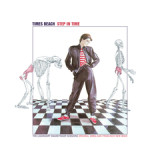
It's been 40 years since these tracks were recorded, but all the original studio and live recordings by Times Beach are finally available on CD & LP Times Beach came together in 1983 with a core of active members from San Francisco's vibrant theatre community. That background propelled the band to a kind of stage glamour that wasn't much seen during the era of post- punk, industrial, and goth music. They were striking to see and hear, with the songs to match. But, like so many excellent bands of the era, they suffered from the "home town curse" since they were not from New York or Los Angeles – but San Francisco. Over the course of two years, Times Beach performed throughout the Bay Area, playing most of the major (and minor) clubs such as The Stone, Baybrick Inn, Cotati Cabaret, Berkeley Square, Sound Of Music, Trocadero Transfer, Ashkenaz, Ruthie's Inn, Sleeping Lady Café, and the beloved Chi Chi Club. They had a legion of dedicated supporters, and many of their shows were real party events. When it came time to record, they accepted an invitation from the illustrious Snakefinger (aka Philip Lithman) and Eric Drew Feldman to produce them at Russian Hill Studio. The first part of their story ends just about there, as they never made enough money to actually produce the album from the recordings. And the various members started drifting off. The final public gig was like their first, at the Mabuhay Gardens, in November 1984. Side One of this LP is comprised of those glorious Snakefinger sessions. Side Two presents just a few of the other great songs they wrote and performed live – never captured in any other form. For fans of Jefferson Airplane, Mutants, Nuns.