On Labyrinth, Heather Woods Broderick serves as our reflective host, subverting expectations of conventional songcraft with impressionistic language and quietly relentless explorations of the human experience that's at once light and dark, more circular and less linear. "Many of us yearn for stillness and peace, as an escape from the movement all around us," she explains when asked about the themes of the album. "Yet movement is perpetual, happening all the time on some level. It's as wild as the wind, yet eternally predictable in its inevitability. It is linear in part, but infinite in its circuitry. Our lives just punctuate it." Broderick began crafting Labyrinth in March 2020, when most forms of move- ment were brought to a screeching halt. The Maine-born, Los Angeles-based songwriter _ who, in addition to her work as a solo musician, built a life playing and touring with acts such as Sharon Van Etten, Beth Orton, Damien Jurado, and Efterklang _ was suddenly forced off the road for the first time in her career. She used this disruption as an opportunity to pare down her creation process and construct the scaffolding for Labyrinth in her apartment. Employing only the most crucial tools at her disposal, Broderick found herself opening different artistic doors as she focused on sharpening her recording skills, capturing the majority of the album on her own before finishing the remainder with co-producer D. James Goodwin. For all of Broderick's sage lyricism and vocal authority, Labyrinth never provides the listener with any easy answers. If the image of the labyrinth represents the enormity of modern life and the difficulty of navigating it, Heather Woods Broder- ick provides a guide to its endless kinetic wonders _ of being present, aware, and connected despite its disconnects. She describes the texture of its walls, its indifferent rhythms, and the inherent poeticism of feeling lost amid the dead-ends and unexpected turns. At this point in our history, perhaps that's all we need to keep moving.
Поиск:never never
Все
Grey Vinyl
On Labyrinth, Heather Woods Broderick serves as our reflective host, subverting expectations of conventional songcraft with impressionistic language and quietly relentless explorations of the human experience that's at once light and dark, more circular and less linear. "Many of us yearn for stillness and peace, as an escape from the movement all around us," she explains when asked about the themes of the album. "Yet movement is perpetual, happening all the time on some level. It's as wild as the wind, yet eternally predictable in its inevitability. It is linear in part, but infinite in its circuitry. Our lives just punctuate it." Broderick began crafting Labyrinth in March 2020, when most forms of move- ment were brought to a screeching halt. The Maine-born, Los Angeles-based songwriter _ who, in addition to her work as a solo musician, built a life playing and touring with acts such as Sharon Van Etten, Beth Orton, Damien Jurado, and Efterklang _ was suddenly forced off the road for the first time in her career. She used this disruption as an opportunity to pare down her creation process and construct the scaffolding for Labyrinth in her apartment. Employing only the most crucial tools at her disposal, Broderick found herself opening different artistic doors as she focused on sharpening her recording skills, capturing the majority of the album on her own before finishing the remainder with co-producer D. James Goodwin. For all of Broderick's sage lyricism and vocal authority, Labyrinth never provides the listener with any easy answers. If the image of the labyrinth represents the enormity of modern life and the difficulty of navigating it, Heather Woods Broder- ick provides a guide to its endless kinetic wonders _ of being present, aware, and connected despite its disconnects. She describes the texture of its walls, its indifferent rhythms, and the inherent poeticism of feeling lost amid the dead-ends and unexpected turns. At this point in our history, perhaps that's all we need to keep moving.
Everything eventually turns to dust. Everyone knows this, but few want to acknowledge that our time on this mortal coil is fleeting, preferring to remain in stasis, in hopes that "the end" will pass them by. Chicago trio FACS (guitarist Brian Case, bassist Alianna Kalaba & drummer Noah Leger) have been perfecting their brand of intense, cathartic post-punk over the course of four ever-evolving albums, beginning with 2017's "Negative Houses" thru 2021's landmark "Present Tense', which saw the trio dig deep into the gaping maw of a black hole & pulling back whatever debris they could grasp onto. Their newest "Still Life In Decay" comes as an addendum to the last album - a "post-event review" if you will. "Still Life In Decay" starts with a squall of white noise before collapsing into the band already locked into "Constellation"s lumbering groove, with Case's guitar a ghostly presence, appearing & disappearing in washes of gauzy feedback throughout the track. FACS have never been more locked in as a unit, and "Still Life In Decay" is a decidedly more focused effort. The apocalyptic chaos that defined their previous album "Present Tense" is waved away in favor of an examination of events with cumbrous clarity. FACS are a heavy band, but they don't necessarily FEEL like one (see side two's "Still Life", where Case's fluttering, melodic guitar lines are buoyed by the insistent, underlying pulse of the bass & drums). As a rhythm section, Kalaba & Leger dance & twist around each other like a double helix, forming the DNA of what makes FACS special. Collectively they approach rhythm from outside the groove as opposed to inside it, creating a lattice where Case weaves guitar lines like creeping vines, which makes the moments on "Still Life In Decay" where the band DOES lock in even more powerful. When the guitar punctures the lock-step swing of "When You Say", it hits like a hammer. Case utilizes his lyrics like a person suffering from anterograde amnesia; repeating phrases & holding onto old memories in a desperate attempt to avoid the slide into oblivion. Freeform poetic missives touching on themes of resignation, cynicism, class warfare, and a search for identity & meaning in a crumbling society; A primal desire to hold onto anything in a post-pandemic barrage of sensory overload. The album is a decidedly local affair; recorded once again at Chicago's famed Electrical Audio by renowned engineer Sanford Parker & mixed at his Hypercube Studio in Chicago's Ravenswood neighborhood & mastered by Matthew Barnhart at Chicago Mastering Service.
Like many debut solo albums from musicians in bands, Jared Mattson’s Peanut didn’t originally come from a need to break away. As a composer for the Mattson 2, Jared Mattson was working up a batch of new songs through the winter of 2019-2020, looking ahead to the next album he and brother Jonathan Mattson, the blitzkrieging drummer, would record. As the pandemic hit stateside, Jared holed up in his home studio and kept developing the new music. And during that process it became increasingly clear to them that this wasn’t shaping up to be the next Mattson 2 album. This was a Mattson 1 album.
Jared had been absorbing the guitar work on records by reggae stalwarts Aswad and Burning Spear, and also the Police’s Andy Summer and the ways he gives songs space. And Jared wanted a prominent bass sound, too, where the guitar itself sometimes settles into the passenger seat so that the bass can drive. Lyrically, the album taps into our rattled world, where anxiety, loss, violence, and regret are sometimes pierced by the promise of love. The time spent working on the album was a profoundly introspective time as he reflected on past relationships while living through and writing during the pandemic, he also never lost sight of this truth about himself: Life is great with music.
One of the album’s standout highlights is “Burn Down Babylon,” which is propelled by the bass’s funk-you-say groove. You don’t often encounter many pop songs with so blunt an opening line as, “I got punched in the face last night by a neo-Nazi,”—a true experience that was delivered many years ago in a bar brawl in Carlsbad, California. But to hear the music that goes along with this tale manages a vibe that is less melee and more backyard jubilee.
When “Please Come Here,” with an intro that slinks along like a Cadillac on a Sunday morning drive, kicks in, it’s typical of the album’s melodic pop flourishes, but the twist here is that the vocals are in Japanese (The Mattson 2 have toured Japan 20 times and covered many Japanese pop songs on 2018’s Vaults of Eternity: Japan). Ween’s “She Wanted to Leave” is the lone cover, but the way Jared reimagines the song makes it fits seamlessly within the album’s sonic template. The song’s inclusion was also a personal way to honor one of Jared’s best friends, who died from cancer two years ago. The two had always bonded over the song and marveled at its inherent beauty. Ultimately, Mattson’s solo debut unfolds like a string of fascinating clouds: These are not songs in a hurry; they shift around as they float by, and, most notably, they carry their unique kind of electric charge.
The duo of Charles McCloud and Roslyn Johnson made only two albums during their career…but those two albums (Everything Must Change and Spirit of the Living God) are among the most collectible records ever made in the gospel genre. In fact, they are so hard to find that we’re still searching for Spirit of the Living God to scan the artwork, but we managed to snag a copy of their 1981 debut Everything Must Change on the obscure Cheri label (though we may have to pass a collection plate to recoup the cost!).
It’ll just take the first track to show you why these records are in such demand; you have never heard such a soulful (check out those harmonies!), slow-burning rendition of that hoary chestnut “Amazing Grace” in your sanctified life! And with able production by keyboardist Julius Brockington, who played with Larry Young and headed up several outfits of his own, Everything Must Change is a crossover album in the best sense of the word, blending the spiritual fervor of gospel with the danceable grooves of soul and—dare we say it?—disco. Don’t miss the Donny Hathaway cover “Someday We’ll All Be Free,” too. Black vinyl release, first ever reissue in any format…limited to 1000 copies!
Remastered Deluxe-Ausgabe von Braids legendärem Album 'Frame & Canvas' (1998) zum 25-jährigen, ein genredefinierendes Grundnahrungsmittel und laut Rolling Stone US Rang #5 der Top40 Emo-Alben aller Zeiten. Im neuen Mix von Originalproduzent J. Robbins (The Promise Ring, Against Me!). Braids Einfluss auf zahlreiche Bands und DIY-Szenen, die in ihrem Gefolge entstanden sind, ist enorm und unbestritten. Silberfarbenes Vinyl im neuen Packaging mit zusätzlichen Linernotes von jedem einzelnen Bandmitglied.
ElCamino, hailing from Buffalo, New York, had a huge 2022 with the release of his Bethlehem EP with Chase Fetti as well as two solo albums, Let There Be Light and ElCamino 3. ElCamino officially signed to Benny The Butcher’s Black Soprano Family imprint in 2022 and was featured on several acclaimed #BSF releases including “80 Bills,” “We Here” and “Saint Maurice” and the B$F album Long Live DJ Shay. Other collaborations with the likes of 38 Spesh, A$AP Ant, Curren$y, Harry Fraud, Jay Worthy and Keisha Plum have proven ElCamino to be one of the hardest-working artists in the game. His notable performance alongside Wiz Khalifa on “Back to Shore” off of the 38 Spesh and Harry Fraud Beyond Belief album was an easy fan-favorite. Here You Go is another high quality release featuring 9 new tracks with ElCamino standing alone and showcasing his supreme lyrical talent. Pressed On Splatter Colored Vinyl! Limited To 500 Copies Worldwide!
- A1: Def Leppard - "Love Bites" (5 42)
- A2: Queensryche - "Silent Lucidity" (5 46)
- A3: Kiss - "Beth" (2 47)
- A4: Alice Cooper - "Only Women Bleed" (3 32)
- A5: Poison - "Something To Believe In" (5 28)
- A6: Rush - "Closer To The Heart" (2 55)
- B1: Aerosmith - "I Don't Want To Miss A Thing" (4 54)
- B2: Journey - "Open Arms" (3 19)
- B3: Status Quo - "Rock 'N' Roll" (4 07)
- B4: Foreigner - "Waiting For A Girl Like You" (4 48)
- B5: Gary Moore - "Empty Rooms" (4 15)
- B6: Ugly Kid Joe - "Cats In The Cradle" (4 04)
- C1: Bon Jovi - "Never Say Goodbye" (4 49)
- C2: Vandenberg - "Burning Heart" (4 15)
- C3: Bryan Adams - "The Best Was Yet To Come" (2 58)
- C4: Marillion - "Lavender" (3 45)
- C5: Reo Speedwagon - "Can't Fight This Feeling" (4 55)
- C6: Extreme - "More Than Words" (5 35)
- D1: The Cult - "Edie (Ciao Baby)" (4 51)
- D2: Styx - "Babe" (4 23)
- D3: Nazareth - "Love Hurts" (3 54)
- D4: Pearl Jam - "Just Breathe" (3 38)
- D5: Tesla - "Signs" (3 12)
- D6: Zz Top - "Rough Boy" (4 51)
NeighbourSoul Rhythms ain't playing around with this one. The third installment of its acclaimed NeighbourSoul Edits ranges from space disco to funk, and it's guaranteed to get your booty shaking on the dancefloor! This fourth release to date is all about the disco vibes, and Mark Gursane delivers the goods. If you're a fan of Felipe Gordon, Rahaan, or Jacques Renault, you already know what's up. “NeighbourSoul Edits Vol.3” is a fourth track banger focused on one thing and one thing only - making you dance. These four disco-funk cuts are tailor-made for the club, and they're sure to get the party started.
Platform 23 again explores to the dense voids, this time with a touch of the funk, with a reissue of Dutch experimentalists De Fabriek and two tracks from their "Music For" cassette series, this time calling all Hippies.
Featuring both original and reinterpretations from modern-day heads, Dunkeltier and Khidja, this double-pack is something of an oddity, showcasing the bands' expansive range, moving away from the noise, drone and industrial soundscape releases they had become known for and crafting here, free flowing, groovy longform jams.
Active since the late 70s to today, De Fabriek (The Factory) have never considered themselves a real band - being also a label too - with an evolving and irregular line up centred around Richard van Dellen, they present their music and output as a kind of work-union.
With literally four decades and dozens of releases across all formats, 1988's cassette release, 'Music For Hippies', has become something of a cult curio, with the long improvisational tracks, Lullabye and Coming Down eschewing the rougher, industrial experience for something completely different.
In opener Lullabye, we go full leftfield P-Funk meets Motorik undertones. An incessant beat is laid from the start and doesn't cease for over 10 minutes, while spoken vocals call closer to the Krautrock realms of Can and hark to Liebezeit's stylised grooving best.
Analog, echo washed, with touches of glam and wrapped in simple effects pedal work, the secrets are passed to Dresden / Berlin inhabitant Dunkeltier aka Sneaker DJ aka Thomas Smorek. His darker moniker, appearing on obscure edits for Macadam Mambo and the much-missed Bahnsteig 23, his 'Hey Robot' mix adds bass, percussion, strings and synth to remold Lullabye into a late night, red light, basement denzien. This is followed by an additional, bonus reimagining, creating an all-new time piece, an ear worm of the best kind with Tik Tok Goes The Clock.
The second slab presents in Come Down, a more resembling De Fabriek werk. Edited to fit, the darkness is entered as snapshot vocal quips, oscillations and synthesised mutations are laid over a lazy, relentless ostinato rhythm where cymbals crash on the bar. Inviting, calling, De Fabriek's aptly titled downer is in fact, a joyous journey.
To complete, label affiliates, Khidja take a break from finalising their debut album to unfold their 'Psychebabble Mix', a dozen plus minutes of warped, twisted, cassette machinations that suck the listener further along the trip. Added bass propels their edit suddenly to a new direction, a hook for mind and for the open willed, the body. De Fabriek's "coming down lullabye" arriving on vinyl for the first time, with a twist and shake, calling deeper to acceptance.
Emotional Rescue is delighted to debut a first. Rather than a straight reissue of an (obscure) classic or a collection of music by an artist or label, here presented is a compilation of various artists centered around a sound and movement reggae-tinged music and how it influenced and spread from the Caribbean and diaspora.
Drawn from the off kilter digging of archivist, DJ and collector Bruno (perfectliv.es), Nowhere Like Here is not a follow up, but a sideways accompaniment, to his recent and already cult like 'Perfect Motion' collection of left field pop and new wave, recently self-released with Flo Dill (NTS).
This is a special release to celebrate the label's 10th year and beyond, offering a treasure trove of lo-fi and often pop inspired reggae cuts, mixing heartfelt Lovers Rocks style paeans and quirky private press oddities, all guaranteed to 'make-a-move and tap', these are, in the main ridiculously rare or impossible to find alternative bombs, that are just as sound system rocking and massive bass line quaking showcases of the enduring legacy of this Jamaican music phenomenon.
As with much of the early 80s period, the music community was in the throes of a Do-It-Yourself cultural renaissance as small labels, where crazy limited, one off White Labels Onlys came and went. Songs like Avalanche 's 'Your Love is Such a Good Thing 'or Warp Speed's 'Take It To The Night' were part of the claiming the means of production in to their own hands, pressing up the records and self-distributing. This raw, naive exuberance can be heard in the songs themselves. This is not reggae or Lovers as known, but something more expressive. Musical, simply produced, but with intelligible and uplifting optimism that is just superlatively catchy.
While Paul Thompson's 'Can I Take You Home' and Ras Ibuna's 'Black Beauty' are more straight-ahead Lover's style cuts, there is the parallel dance pop private pressing vibrations of the two Keith Robinson songs and Majority's 'Caroline' included all part of a thread; a joining the dots that Nowhere Like Here is at its most basic, a warmth the whole album exudes.
This is not a Lovers Rock Hits of some, but a left-of-center versioning, spread across Double Pack and cut loud for DJ play, fitting the ethos of Emotional Rescue by presenting something most will not have heard before and all the better for it.
Heels & Souls Recordings’ fifth reissue sees them reach across the Atlantic to Vancouver, pressing up Pilgrims Of The Mind’s 'What’s Your Shrine?' for the first time ever on vinyl, 25 years since its CD-only release on Map Music. A departure from the label’s previous releases, the LP is a beautiful smorgasbord of styles - progressive house, downtempo, ambient, tech house and trance all nestle together, a wiggling journey of sonic delight from the mind of Stéphane Novak.
Turn the dial back to ‘97 and Vancouver's underground had a distinctive buzz to its rumblings, an amalgamation of scenes and styles gave rise to a cohort of producers that were unconstrained by genre, offering up a heady mix of sounds to expand the mind. ‘Welcome To Lotus Land’ the key 1996 compilation on Robert Shea’s seminal Map Music, championed much of this output including two cuts from POTM. Stéphane then released his first and only full-length album, ‘What’s Your Shrine?’ on the same label the following year.
Picking out choice moments from an album as considered and complete as this is tough. Those horizontally inclined will be drawn to the ambient dwellings of ‘Sandcastle’ & ‘Following the Sofuto Kuriimo’, tracks like ‘Nothing Can Pull Us Apart’ and ‘L’Amour? Encore?!’ are perfectly suited to warming up limbs on the dancefloor, ‘My Baby Likes Rum’ and ‘Loosejaw’ prime for one in full swing. Yet to pick individual tracks misses the stunning sum of its parts that this 70+ minute cruise is, surely one of the finest albums from the American West Coast during its halcyon days of the ‘90s.
Digging deep in his vaults, Stéphane managed to uncover the original unmastered DATs that have been given a fresh mastering by Justin Drake at the Bakehouse Studios. This beautiful, double-disc gatefold comes complete with liner notes from Ciel, words from Stéphane himself, plus never-before-seen photography - the complete package this music always deserved.
Kerri’s Kaoz Theory label unlocks the vault to two key tracks from the early days of the label that have never pressed on vinyl before.
First up the man himself, Kerri Chandler with a deep, heads down stomper ‘Who’s Afraid Of The Dark’. Kerri at his hard hitting best, as vocal refrains wash over the chunkiest of synth stabs and basslines with crunched up percussion laying the basis for a track that is readymade for smoke filled clubs and pumping sound systems.
On the flip, Josh Butler ‘Sunday Club’ goes deep down the rabbit hole effortlessly moving from ethereal elegance to twisted machine energy, showcasing that light and dark can sit together seamlessly to produce something seriously special.
The Allergies hook up with The Pharcyde's Bootie Brown on their brand-new slab of throwback rap, 'Stanky Funk'. It's a match made in hip-hop heaven, with The Allergies channelling classic early 90's boom bap beat business. Beefed up lo-fi funk loops, neck-snap drums, cuts and rumbling bass lines provide the backbone for a legend to get busy over.
'Never Gonna Let Go' is on the B-side – a funky up-tempo breaks-heavy banger that sees The Allergies twin monster samba samples with roots reggae vocal rips, for full dance-floor destruction.
- A1: See You Tonite 3:08
- A2: Believe 4:27
- A3: How Many Times 2:48
- A4: I Don't Know Why I Love (But I Do) 3:40
- B1: Stop Making Love 3:49
- B2: I Don't Want To See You Crying 3:34
- B3: Wonderful Life 4:56
- B4: World's Fair 3:11
- B5: Coming In From The Cold 4:36
- C1: Gimme A Little Sign 3:44
- C2: Tell Me 4:21
- C3: Let Him Try 3:22
- C4: Desperate Lover 3:47
- D1: There's A Reward 3:22
- D2: Shot In The Dark 3:55
- D3: Never Never Never
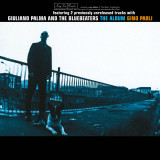
The Bluebeaters landmark debut album from 1999 receives a first-ever vinyl release. Featuring band's hits like Cher's "Believe" or Black's "Wonderful Life" all cooked in a strictly mid 60s Jamaican Blue Beat & Rock Steady style. Gatefold 2LP clear vinyl with printed inserts, limited to 500 copies, instant collector's item.
Record Kicks in collaboration with Universal Music Italy presents the release of The Bluebeaters seminal debut LP "The Album" for the first time ever on wax on a limited edition clear vinyl double LP on March 31. Way before the vinyl comeback of the 2010s, "The Album" was released in 1999 on CD and on two limited edition promo 12"s that are now very in-demand in the scene on V2 Records. "The Album" marked a generation of Soul, Rock Steady and Reggae fans in Italy selling over 40.000 physical copies and now 24 years after its original release, it gets published on full vinyl.
Fronted by "The King" Giuliano Palma on vocals backed with members of cult Italian bands of the 90s such as "Casino Royale", "Africa Unite" and "Fratelli di Soledad", The Bluebeaters' analog recordings finally find the vinyl format they deserve. On the album's track list you can find Jamaican music classics such as "World's Fair" from the Skatalites, Joe Higgs' "There's a Reward" or Bob Marley's "Coming In From The Cold" mixed with hits such as Cher's "Believe", Black's "Wonderful Life" or even 1978 "See You Tonite" by Gene Simmons from The Kiss that perfectly sound as if they were recorded by Clement "Coxsone" Dodd at Studio1 in Kingston in 1966.
The Bluebeaters are not newcomers on Record Kicks, the Milan label released their "Everybody Knows" album in 2015. Top Italian musicians in love with vintage Jamaican ska and reggae and blessed by Ken Booth, during the last 25 years of their career they headlined festivals like Rototom Sunsplash and International Ska Fest in London. Among their fans, they count the likes of Gaz Mayall, David Rodigan and the legendary late lamented Lloyd Knibb (The Skatalites).
The reissue of The BB's "The Album" is part of Record Kicks' 2023 initiatives to celebrate its 20th anniversary. Side by side with similar imprints like Daptone, Big Crown, Colemine or Timmion Records, under its motto "The explosive sound from Today's scene", Milan-based record label and music publishing Record Kicks, has been pitching the contemporary funk & soul scene since 2003. With over 250 physical releases under the belt, the label has released bands from all over the globe and earned support of VIP fans such as rap superstars Jay-Z, Tyler The Creator and Dr. Dre, who sampled the label's catalogue.
METALLIC SILVER VINYL[31,72 €]
- 2023 Edition - Pressed on Clear Red Wax - LP housed in an expanded Stoughton tip-on gatefold jacket - Includes fold-out poster, sticker and insert, along with a download card for full album, non-album single B-side "The Cowboy Song" and an unedited October 1978 BBC audio interview with John Lydon // Reissue of the pioneering group's debut album First Issue. In 1976 Johnny Rotten and the Sex Pistols set the agenda for punk's year zero with 'Anarchy In The UK', a song that summed up the spirit, sound and attitude of the band in one shocking package. Two years later, the Sex Pistols were in tatters, but Rotten was as unsentimental as you'd hope. He reverted to his real name - John Lydon - and set about forming a band whose very identity kicked against press and media manipulation. Featuring bassist Jah Wobble, drummer Jim Walker and guitarist Keith Levene, his new group were Public Image Limited. The public image would be limited. PiL were a very distinct prospect from the Pistols, founded with a greater thought for rhythm, and with a sound that turned the page from snarling punk to a more experimental sound fusing rock, dance, folk, ballet, pop and dub. But that's not to say Lydon's new outfit lacked vitriol. 'Public Image' hits out against the notorious British tabloid press, who never gave Lydon an easy ride, and against his own Sex Pistols public image - "You only saw me for the clothes I wore". The debut single (and the album that followed) operated as a theme song and a manifesto: "_my entrance/My own creation/My grand finale/My goodbye," as the lyrics had it. It is, essentially, the sound of four people letting loose in a studio - and not caring what anyone else thought. The album was never officially released in the USA back in the day, its sound considered too un-commercial by major-labels for an American release. First Issue has been lovingly reproduced from the original UK 1978 release and this special reissue also comes with a clutch of post-punk era treasures. The 2023 LP edition includes an expanded gatefold jacket, an archive replica fold-out poster, a PiL sticker, insert, and Download Card for the album, the archival BBC interview, and "The Cowboy Song." All of which were approved and coordinated with John Lydon and his personal management.
Steve Gunn and David Moore’s Let the Moon be a Planet is a volume of improvisatory exchanges between classical guitar and piano, and a meeting place where two artists become acquainted through instrumental dialogue without a single expectation distracting them from the joy and open field possibility of collaboration.
A project enveloped by an aura of reciprocity, Let the Moon Be a Planet unfolded from an invitation to connect between two New York-based musicians who admired each other’s work but had never intersected: guitarist and songwriter Steve Gunn, whose solo, duo, and ensemble recordings represent milestones of contemporary guitar- guided material, and pianist and composer David Moore, acclaimed for his minimalist ensemble music as the leader of Bing & Ruth.
The exchange began remotely as Gunn and Moore responded to one another’s solo improvisations, embarking on a synergistic progression of deep listening and connection through musical conversation. “We were both fans of each other’s music and this was a chance to try a different process which was much more open,” says Moore. “It felt like something I needed personally as an artist, to not be so controlling over the final output, and to truly collaborate with somebody else.”
Similarly for Gunn, who was exploring new pastures and passages in classical guitar when the dialogue began, the project was an invitation for pure conversation and exchange, creating space for him to revisit foundational forms with his playing: “I was trying to break out of what I was doing, to have something that just pulled away all the elements of usual structured things.”
Let the Moon Be a Planet intertwines the trajectories of two musicians acclaimed for pushing the boundaries of their instruments, unified by a shift away from what they recall as more “detail- oriented” approaches to composition. Fueled by the magnetism of their call and response exercise, Gunn and Moore set out on a nomadic songwriting venture without an intended destination.
“We didn’t know it was going to be an album,” Gunn explains. “There was never pressure on us to complete or make something. It was interesting to start realizing that this could be an album and to take a step back... to arrive at a project after the fact.”
- A1: Broken Home
- A2: Last Resort
- A3: Time & Time Again
- A4: She Loves Me Not
- B1: Scars
- B2: Getting Away With Murder
- B3: Just Go (Never Look Back) (Never Look Back)
- B4: To Be Loved
- C1: Reckless
- C2: Had Enough (Acoustic)
- C3: Forever (Itunes Live Session)
- D1: Hollywood Whore
- D2: Lifeline
- D3: Scars (Acoustic - Bonus Track)
Das Album ”To Be Loved (The Best Of)” von Papa Roach, einer der populärsten Bands im Bereich Alternative Rock/Nu Metal, wird diesen März zum ersten Mal auf Vinyl veröffentlicht. Diese Best-Of-Sammlung
aus dem Jahr 2010 umfasst die produktivste Zeit von Papa Roach und ihre ersten sechs Studioalben.
Die Hits ”Broken Home”, ”Scars”, “Last Resort” und ”She Loves Me Not” sind ebenfalls enthalten. Papa Roach gelang es, sich im Mainstream zu positionieren und zugleich unvergessliche Hits zu kreieren, die sich bis heute durchsetzen.
Das Best-of-Album ist als rote 2LP erhältlich, gepresst auf 180g