Around the year, the sturdy red brick walls of an old Cable Factory stand there like a mountain, facing weathers of all kinds rising from the Gulf of Finland. It might be freezing winter winds whipping the whole shore line into submission, fog heavy as concrete, or the relentless sun of the summer months, softening the asphalt to a boiling point. Whatever the weather may be, the narrow courtyard of the old factory embraces those musicians, who are looking to get down. They gather from all directions, making their way towards a pair of doors that lead towards a flight of stairs, again through a few doors all the way to the last portal, where an open padlock and a loosely hangin crossbar signal that Cold Diamond & Mink are inside, locked in a groove.
Who could it be with them this time, perhaps the jazz prophet Jimi Tenor beaming out of his space ship, maybe it's the golden voiced knight of soul Tuomo "Pratt" Prättälä, the number one trumpet wielding dandy Jukka Eskola or the saxman Pope Puolitaival, who loses nothing in coolness compared to the former? The reel to reel is always there in the monitoring room, catching each analog layer of sound, even the silences and banter between takes. Seppo lays down the guitar and tries to catch the riff on organ instead, Jukka throws a rare tune on the turntable, hoping to guide their unit through that wobbly chorus, Sami waits there bass in hand, maybe already thinking about the next production.
After a whole lot of playing instruments, arranging and taking care of business, after the moon has travelled around the old industrial building for some rotations, Carlton Jumel Smith comes waltzing through those same doors. There's a handful of unnamed tracks waiting for him. He sits there listening and then starts writing, maybe echoes of soul classics from his own record collection in New York projecting inside his mind. Then the tape is rolling again. Starting with a short intro rap Carlton lets it out, singing on the edge of shouting "Woman you made me...". After the vocals are in the can, Carlton ascends out of the basement and heads out to entertain an audience somewhere. Some months later, after the mix is said and done, there's the question of the instrumentals. It seems they're pretty good as they are. And here they are.
d 04: Help Me (Save Me From Myself) Instrumental
out of Stock
Last delivered 5 years ago available to reorder, subject to availability
In 1970, Kevin and David met whilst they were working in the Labour Exchange Office on Aytoun St, Manchester. Both played guitar and had been searching for other musicians who played atmospheric music. Kevin had been playing in small clubs in Manchester and David performed in a few local bands. One evening, they jammed together at Kevin’s family home, and quickly realized that their playing blended together to form the basis of the sound they had been looking for. In the late ‘70s, the music scene in Manchester was bursting with new bands and music.
However, Kevin and David had little in common with the local acts, being disciples of a more meditative approach. They followed a path of their own, reaching for an otherworldly sound that they heard from artists like John Martyn, David Crosby, Erik Satie, Terry Riley, Eberhard Weber, Alice Coltrane, and Ralph Towner. They experimented combining their acoustic guitars and David’s bass with various effects pedals and techniques to try and achieve a warm and expansive sound that rides the line between ambient, jazz, and psychedelic folk Music.
Towards 1981, they had written eleven songs and accompanied a few with Moog synthesizer laid down by Rob Baxter. All were recorded on cassette decks in their simple home studios. They named this collection of music “Light Patterns”, after a poem Kevin had written. With Light Patterns complete, they set out to find a label to represent their music. They started playing a few gigs in Manchester; Band On The Wall, the Gallery, and other venues, such as Rotters which local promoter Alan Wise had organized. They set up with small amps along with their effects and played as though they were back at home. As Kevin remarks, “It was unusual, to say the least, to play such venues in a low volume chilled out way. However, people listened, often in shocked curiosity, and some even asked for tapes.”
Peter Jenner, of Blackhill Enterprises, eventually picked up the album for his new label, “Sheet”. Peter had managed lots of experimental bands and solo artists, including Pink Floyd in their early Syd Barrett days. He always favored outsiders! The tapes were taken to Strawberry Recording Studios in Manchester, who were surprised when Kevin and David walked in with just a couple of home-produced cassette tapes. Fortunately, they liked them and agreed to master the album. It was then sent to Portland Recording Studios in London for final mastering to vinyl. George Peckham, aka “Porky”, did the pressing with a personal message in the deadwax; “Kaftans, Candles and be Cool Man”. The artwork for the album cover was done by the late Barney Bubbles, a truly visionary artist.
After the album’s release, the pair continued to play together regularly until David moved away from the city. Kevin still resides near Manchester in the rolling hills outside of the city. He continues to experiment with dreamy music in his loft, and we are set to share a selection of his ethereal archival and current compositions in the coming months. David lives a quiet life in a small coastal town in the South, he likes to sail and is an avid cricket fan. We’re excited to make Light Patterns accessible again for the first time in nearly 40 years, remastered from the original tapes. As the original press release said, “Put the album on, lie back and enter the land of no floors”.
out of Stock
Last delivered 9 months ago available to reorder, subject to availability
“One of the vital pieces in the jigsaw puzzle of ’90s British rock music.” Pat Gilbert, Mojo magazine While his own name has yet to grace an album front cover, for more than a twenty years Gem Archer has been a key contributor to some of the UK’s highest profile guitar bands, beginning with Oasis in 2000, Beady Eye in 2009 and the touring version of Noel Gallagher’s High Flying Birds since 2015.
Before all that there was Heavy Stereo, caught up in the mid ‘90s music maelstrom where their only album ‘Déjà Voodoo’ took its place alongside Paul Weller’s ‘Stanley Road’, The Charlatans’ ‘Telling Stories’, Super Furry Animals’ ‘Fuzzy Logic’, Supergrass’s ‘I Should Coco’, The Boo Radley’s ‘Giant Steps’, Ride’s ‘Carnival Of Light’ – and, of course, ‘Definitely Maybe’ and ‘(What’s The Story) Morning Glory?’ by Oasis. It is easy to understand why any album could get overlooked in such exalted company. ‘Déjà Voodoo’ and the four singles – ‘Sleep Freak’, ‘Smiler’, ‘Chinese Burn’ and ‘Mouse In A Hole’ – all display Gem’s deeply held affection for old-school rock’n’roll values. In 1994/95, the outside world came into sync with his fondness for The Jam, Sly Stone, Hendrix, The Beatles, the Stones, The Small Faces, Motown, Stax, glam rock, punk rock and all other points on the compass of rock’n’roll cool, which coalesced into what became known as Britpop. And while those influences are in ‘Déjà Voodoo’ for all to hear, the album is far from derivative; this is a collection of well-constructed pop songs that still retain their swagger and zest.
Unavailable since it was first released on Creation Records in 1996, this new 25th anniversary 180g clear vinyl edition is a faithful recreation of the original 12-track LP.
20 unforgettable hits from Dean Martin. Limited edition 180g vinyl LP,
housed in a gatefold sleeve.
One of the most popular and enduring American entertainers of the mid-20th
Century, Dean Martin was nicknamed the “King of Cool”. This collection presents his top 20 hits, including a mixture of swing standards, Italian songs, and
wonderful ballads.
Dean Martin, vocals. Orchestras conducted by Nelson Riddle, Dick Stabile &
Gus Levene. Recorded in Hollywood, Los Angeles, 1952-1961.
"The definition of a hidden gem" - John Peel / "The world seems finally to be catching up to Leslie Winer, whose startling intelligence and singular vision shine through her copious recording life." - Max Richter / "She might just be the coolest woman on the planet!" - Boy George "When I Hit You - You'll Feel It" is a 16-track anthology that celebrates the extraordinary work of musician, poet, and author, Leslie Winer. The collection spans Winer's three-decade-long musical career: from her groundbreaking solo work in the early '90s to her latest inspired projects. Featuring musical contributions from Jon Hassell, Helen Terry, Jah Wobble, Renegade Soundwave's Karl Bonnie, and others, the collection also spotlights Winer's diverse collaborations, unearths previously-unreleased recordings and was newly remastered by the GRAMMYr-nominated engineer John Baldwin. The album includes a new interview with Winer, captured by the compilation's co-producer, acclaimed author and critic Wyndham Wallace. Rounding out the package is an insightful essay by the award-winning writer and scholar Louis Chude-Sokei and an original cover collage by the renowned British photographer and artist, Linder, featuring photography by Mondino, and design by designer Christopher Shannon. Musician, poet, iconoclast, model, artist, enigma. Leslie Winer is many things. She grew up in Boston with a voracious appetite for music and the written word and embraced the city's lively jazz and folk scene in the '70s. Moving to New York for art school, she formed an unlikely friendship with writer and artist William S. Burroughs and lived on-and-off with Jean-Michel Basquiat. In London, where Winer began her musical ventures in earnest, she was a regular at Leigh Bowery's underground club Taboo, where she met many of her collaborators, including filmmaker John Maybury, Kevin Mooney (of Adam and the Ants), and Boy George. Winer's striking looks also attracted fashion designers and photographers. Throughout the early '80s, she was an in-demand model-appearing in campaigns for Valentino, Christian Dior, and Yohji Yamamoto, and serving as a muse for a young Jean-Paul Gaultier, who later dubbed Winer "the first androgynous model." She posed for Helmut Newton, Irving Penn, and Pierre et Gilles, and graced the covers of The Face, French and Italian editions of Vogue, and Mademoiselle. But music was Winer's true passion and, at the turn of the '90s, she would unknowingly help invent the massively popular genre known today as trip-hop. On her debut, Witch, Winer masterfully blended the uninhibited sampling of early hip-hop with dancehall basslines and programmed beats, while weaving mesmerizing - and coolly-detached - spoken-word vocals into her ambient tracks. It was unorthodox in the most delicious ways. While Witch was finished in 1990, it wouldn't be released for three years, due to the whims of Winer's label. By the time the album saw the light of day (released under the pseudonym "c"), trip-hop was gaining mainstream traction via acts like Portishead, Massive Attack, and Madonna. Although Winer eventually gained wider acknowledgment (prompting the NME to give her the dubious distinction of "The Grandmother of Trip-Hop"), Witch initially went sorely unnoticed. Winer continued to record, undeterred by the elusive nature of mainstream success in the modern music business. Her network of inspired collaborators continued to grow and expand, yet her influence remained largely a secret except to those in the know, such as Grace Jones and Sinead O'Connor, who would cover her songs. In the modern era, one is hard-pressed to find an artist who continues to push the creative envelope as much as Winer does. And yet, three decades after her revolutionary debut, her work remains just as startling and fresh.
A little over a year ago, Nathan Williams found himself back in San Diego, writing what would eventually become Hideaway, his seventh album as Wavves, in a little shed behind his parents’ house. It was also the place where he made some of his earliest albums, before he became known for his uncanny ability to write songs that sneered at the world while evoking pathos, sympathy, and a deep understanding of how sometimes we’re our own worst enemies, and that can be okay. Williams’ return to his childhood home was not just a symbolic attempt at jumpstarting creativity. It came as a result of a series of major life changes. A decade ago, Williams released King of the Beach on the maverick indie label Fat Possum. The album was a cocky collection of pop punk gems that catapulted him into the public consciousness, eventually prompting a jump from Fat Possum into the major label system, where he released two albums before becoming disillusioned by the lack of creative agency available to him. In 2017, Williams self-released You’re Welcome on his label, Ghost Ramp. Now, Williams has returned to Fat Possum with a barbed collection of anxious anthems that grapple with the looming sense of doom and despair that comes with getting older in an increasingly chaotic world. “He’ll always skew toward the Bart Simpson character,” says Matthew Johnson, founder of Fat Possum. “But that does not mean that he doesn’t have some commentary, and once in awhile, it’s totally spot on.” Across its brief but impactful nine tracks, Hideaway is about what happens when you get old enough to take stock of the world around you and realize that no one is going to save you but yourself, and even that might be a tall order. The album features Williams’ most universal and urgent songs yet. “Honeycomb” lopes along sunnily, as Williams sings affecting lines like “I feel like I’m dying, it’s cool, it’s great, just pretend I’m okay.” His directness is shocking, and proof that Williams is the kind of songwriter who can capture pain and uncertainty with resonant brutal force. “It’s real peaks and valleys with me,” Williams says. “I can be super optimistic and I can feel really good, and then I can hit a skid and it’s like an earthquake hits my life, and everything just falls apart. Some of it is my own doing, of course.” It’s this self awareness that permeates each of Hideaway’s songs, marking them each as mature reckonings with who he is. After realizing the material he’d been working on in the hideaway was starting to take shape, Williams, along with bandmates Stephen Pope and Alex Gates workshopped the songs in a series of now-abandoned studio sessions, before linking up with musician and producer Dave Sitek of TV on the Radio to help fully realize their new songs.
‘Teenage Gizzard’ is a newly unearthed collection
of some of the very first material ever recorded by
King Gizzard and The Lizard Wizard between 2010
and 2011.
It includes three early singles, two B-sides, four
tracks from the band’s first non-official EP
‘Angelsea’ and one track considered to be long lost
- until now.
‘Teenage Gizzard’ is a glimpse into the past of one
of the most prolific bands in rock history.
LP pressed on magenta and yellow vinyl with
yellow splatter in a die-cut jacket with front window,
rainbow foil inner sleeve and exclusive back cover
t by Ahmad Ok
Cinema – which features tracks in English and Spanish – draws inspiration from the classic films and directors that María and Josh grew up watching, including Pedro Almodóvar and Wes Anderson. The title also pays homage to how the band first began creating music in the first place.
The Marías have fast proven among the most visionary and entrancing new bands in recent memory. Born in Puerto Rico and raised in Atlanta, María Zardoya moved to Los Angeles in 2016 where she met drummer Josh Conway after a performance at the famed Kibitz Room Bar at Canter’s Deli. The two began writing together, crafting a remarkable collection of mesmerizing original songs fusing kaleidoscopic soul, gentle jazz, and imagistic, bilingual lyricism.
Last year saw The Marías unleash a series of new songs affirming their continued creative evolution. “Hold It Together” and “Jupiter” were released in the top half of 2020, accompanied by official music videos. The former received praise from The FADER, which wrote, “The pop-leaning and low-key love song features guitar and key lines that interlock hand in hand. Right in the pocket is the cotton candy-textured voice of vocalist María that coolly asks you to slow down with her. ”Meanwhile, “Jupiter” was hailed as “a soothing dream from retro outer-space,” by Melted.
In October of last year, the group released two new songs written and recorded during lockdown – “Care For You” and “bop it up!” – both joined by official videos co-directed by María with longtime visual collaborator Bethany Vargas. “Care For You” received acclaim from V Magazine, which praised it as “a slow, jazzy jam, both sensual and soothing,” while Órale enthused, “‘bop it up!’ is unlike any project The Marías have put out before... Although their signature tenderness is still recognizable, listeners will discover a newfound sense of invigoration. ”International art and fashion magazine Teeth added: “Both tracks are quarantine jams to dance and cry to, the kind of music we need during this endlessly trying time... The Marías have this incredible ability to transport you.”
They Say: “New directions in contemporary scoring”.
We say: Contempo is one of the best full album listens in the KPM 1000 library. Succinct smoking soul, super tight breaks and string-drenched sleaze composed by the library master, Keith Mansfield.
The creator of the romping tunes that became the iconic themes to the BBC’s Grandstand programme and their televised Wimbledon Tennis Championship coverage, Keith Mansfield was perhaps KPM’s most prolific artist from the mid 1960s right the way through the 1980s. As well as the sort of pop orchestral sound that is all over these classic library records, he could also turn his hand to raw, edgy rock and funk. Quentin Tarantino is a big fan, going as far as including some of Keith’s work on the soundtracks to Kill Bill and Grindhouse.
Many library records are a game of two halves and Contempo is certainly one of those. The first side cooks on a high funk breaks flame whilst the flip is something altogether more tranquil, yet no less groovy. It lays back with dreamier, post-coital grooves.
Rugged funk opener “The Fix” confidently displays its low slung languid grooves with heavy drums, horns and bass. Smokin’ in slow motion. The punchy “What’s Cooking” follows and has a lighter, more whimsical touch. But the drums still roll and the clavs wiggle in fascinating opposition to those horns. The dark and moody intro to “Cut To Music” gives way to a more inclusive, relaxed funk that’s all irresistible bass and stabbing horns. The mid-tempo “Man Alive” signals the time to really get down. A percussive monster jam. If you can’t strut to this then we really can’t help you! Closing out the A side, fresh guitar licks drip all over the slick drums of “Funky Footage”, with a New Orleans piano vibe coming on to really light a fire.
Whilst the dramatic crime funk of the A side is enough on its own to have earned this record its place in the great library record canon, it’s undoubtedly the more smoothed out B side for which Contempo is rightfully adored and celebrated. It’s so chilled and mellow, with beautifully arranged, sweeping strings, sax solos aplenty and a real 70s soundtrack feel. Think Love Boat, CTI label, Bob James, Grover Washington Jr.-type jams.
The super sleek and sexy jazz funk of “Breezin’” is as light and magical as you’d hope. An open-air masterpiece, its indulgent sound is just a taster of the sophisticated funk to follow. The elegant, romantic feels of “Good Vibrations” (used brilliantly by Odd Future’s Mike G for “Swiss Army”) is a string-drenched, wah-wah fuelled ode to living your best life. Nonchalantly. Whilst it keeps a very West Coast feel, the blaxploitation strut is certainly more Blackbyrds than Brian Wilson. “Sun Goddess” will blow your mind with the sensuous sound of glorious horns and beautiful keys. The luxurious “Love De Luxe” and its horizontal grooves have been much sampled, but here it proves that it doesn’t need any help to get you in an intimate mood. Closer “Snake Hips” is a cool mid-pace slouch. Just divine.
Originally released in 1976 but, like the very best KPM records, wonderfully timeless, Contempo is also no mere LP-length collection of loosely related tracks. This is a rare example of a library record that is a genuinely great listen from start to finish.
As with all of our KPM re-issues, the audio for Contempo comes from the original analogue tapes and has been remastered for vinyl by Be With regular Simon Francis. And as usual, the sleeve reproduction duties were handed over to Richard Robinson, the current custodian of KPM’s brand identity.
: Contempo (KPM) (LP)
out of Stock
Last delivered 5 years ago available to reorder, subject to availability
When a synth master like Steve Moore joins forces with the legendary KPM, magic must materialise. And so it does with Analog Sensitivity: cinematic, enigmatic synthscapes to both haunt and heal.
New York-based multi-instrumentalist/producer/film composer Steve Moore is probably best known for his synthesizer and bass guitar work as Zombi, together with Anthony Paterra. But he is also part of Miracle and Titan as well as being a prolific solo artist releasing music as Gianni Rossi, Lovelock and under his own name. Steve’s music has found a home across labels like Future Times, Mexican Summer, LIES, Static Caravan, Relapse, Kompakt, Spectrum Spools, Death Waltz and Ghost Box, and much of his recent work has been scoring films like The Guest and Cub. Prolific indeed.
The story of Analog Sensitivity starts with those soundtracks, or more specifically the time in between them. Rather than being commissioned by KPM, this LP comes from music Steve was recording sporadically and tinkering with for over three years during the downtime between his film projects. There were no ideas about what it was nor a plan for how it would be released, or even if it was going to be released at all.
However, after Jon Tye invited him to play on the Ocean Moon project for KPM Steve realised that the hallowed library label might be the perfect home for what he had been working on. The people at KPM agreed. Finishing production in late 2019 in Albany, NY, he came up with the track sequencing and suddenly, he had an album: Analog Sensitivity.
The LP opens with the dystopian electronic minimalism of “Eldborg”, its dark synth bass unfolding to ominous synth pads, shadowy sustains and glistening arpeggios. “At The Edge Of Perception” brings an unsettling retro-future of edgy analogue leads and desolate FX. The sound of a robotic core tears through the sparse textures of the enigmatic “Rose Of Charon”. A chilling breeze blows through a persistent, hypnotic synth sequence on “Time Freeze”. Title track “Analog Sensitivity” is a sparkling transcendental synthscape of melody, drones and celestial synth. The brooding “Behind The Waterfall” winds down the first side, building subtle strings and a desolate sound beneath its haunting organ.
“Mirror Mountain” ushers in side two, its woozy bass and arpeggio unfolding to envelop the muffled, muted echos of its organic leads. "Syzygy" emerges you in bubbling sequences, airiness and ambient electric guitar tones. It’s followed by the cinematic minimalism of “Pentagram Of Venus” and its trickling FX. The wind swirls through the otherworldly “Of Dust Thou Art” kicking up clouds of unsettling, plodding synth sequences leading to the uneasy atmosphere of “Message From The Beast” which builds to the echo of the last refrain of some choral incantation. Closing track “Urge Surfing” is as cool a climax as you’d hope from something so brilliantly titled, riding along hushed waves of brooding electronics.
With the clue right there in the title, Analog Sensitivity is built up from the quieter aspects of the sound Steve has been exploring and evolving for over 20 years. It’s a layering of ambivalently dense and airy, muffled and echoing sounds from his collection of synthesizers and other electronic music hardware. And whilst some of Steve’s other work uses this vintage equipment to conjure the past, that wasn’t his intention here. Steve explains “I wanted Analog Sensitivity to feel atemporal, as though it could have been released any time over the past 30 or 40 years. While not specifically in the spirit of any particular album, I’m really into old KPM artists like Alan Hawkshaw and Brian Bennett”.
out of Stock
Last delivered 18 months ago available to reorder, subject to availability
Nach Crazy Rhythms Of Mata Hari, Shake Your Bones, dem Cool Cat Club und Born To Hula! Folgt nun der 5. Teil der DJ-Set Serie auf Stag-O-Lee. Wie auch bei den Vorgängern handelt es sich hier um einen auf 80 Minuten eingedampftes DJ-Set von einem verdienten Recken der Zunft - Keb Darge. Gaz Mayall folgt direkt mit Volume 6. Linernotes: Rockabilly didn't cross my world until the early nineteen eighties at a Dirtbox weekender in Bournemouth, until then I was a pure northern soul boy. I didn't really get stuck into collecting the stuff until a decade later, but when I did what a wonderful world of tunes opened up to me, and I went wild on it. I was very lucky to be doing a record stall in Camden market at the time just across from Boz Boorer and Neil Scott's stall. They along with other serious collectors Dave Vickers, Barney Koumis, Cosmic Keith, Jim Fox, Dave Crozier, and many others taught me all I needed to know. I only ever made one great rockabilly discovery which none of them knew, "Little Bit Lonesome" by Charles Ross, but I was happy enough buying all their recommendations as they were all new and exciting for me. I have done several rockabilly comps before, but sadly the Philippines typhoon in 2013 destroyed my village and forced me to sell the bulk of my collection. Here are some of my favourites that I never got round to putting out before that happened. Two of the aforementioned collectors are no longer with us. I therefore dedicate this comp to Dave Vickers and Cosmic Keith who both had a huge influence on my life and my musical taste.
A folk/bluegrass troubadour from Vermont who delves into shape-note traditions and Appalachian ballads and makes it all beguilingly his own. His guitar lines have the fancy fingerwork of a crack banjo player and his banjo lines have the tugging suspensions of a jazzer.’ – Guardian
‘Amidon is a rare Americana artist whose … signature banjo-strewn style … and disparate mix of influences play into a sound that is at once archaically rootsy and savvily refined.’ – Wall Street Journal
Sam Amidon considers his new self-titled album the fullest realization to date of his artistic vision. It comprises his radical reworkings of nine mostly traditional folk songs, performed with his band of longtime friends and collaborators. Amidon produced the record, applying the sonic universe of his 2017 The Following Mountain to these beloved tunes, many of which he first learned as a child. ‘Pretty Polly,’ for example, was one of the first traditional tunes he learned to play, and ‘Time Has Made A Change’ is a song that his parents – singers who were on the 1977 Nonesuch recording Rivers of Delight with the Word of Mouth Chorus – sang around the house when he was young. Amidon will perform two concerts at Kings Place in London on October 3. A limited number of tickets will be available in the venue, as well as tickets to stream the event from home. Further details are available here.
Amidon and his frequent band of multi-instrumentalist Shahzad Ismaily and drummer Chris Vatalaro were joined in the studio by Belgian guitarist Bert Cools (who played on his last EP), as well as Amidon’s wife, Beth Orton, who adds vocals on three songs. Acoustic bassist Ruth Goller and saxophonist and labelmate Sam Gendel also play on the album, which was mixed by Leo Abrahams. Sam Amidon was mostly recorded live in the studio. Amidon arranged the songs, which are traditional tunes, with the exception of Taj Mahal’s ‘Light Rain Blues’, Harkins Frye’s ‘Time Has Made A Change’, and ‘Hallelujah’, which is an 1835 William Walker shape-note tune using earlier words by Charles Wesley, found in the Sacred Harp collection of early American folk-hymns.
Sam Amidon is Amidon’s fifth recording on Nonesuch and follows the 2019 EP Fatal Flower Garden (A Tribute to Harry Smith). Additional recordings include his 2017 album The Following Mountain and Kronos Quartet’s Folk Songs the same year, on which he was a featured singer along with Rhiannon Giddens, Natalie Merchant, and Olivia Chaney; Lily-O in 2014; and his label debut, Bright Sunny South, in 2013.
Rift Vision 001 is producer and stay-at-home-DJ Lauren Ritter’s latest record. It is the debut album from her own, newly-minted label, Rift Vision.
The album acts as vanguard of Rift Vision’s aesthetic: liminal, subconscious, and ultimately, synesthetic. At the outset, it’s apparent that Ritter has traded in the “cool” of her minimal dance music performances for deeply personal, dream-like compositions. Live instruments, spoken word (Tenesha the Wordsmith), and melodies written on Ritter’s modest collection of synthesizers are hallmarks of each bespokenly-titled track.
While it’s not hard to imagine hearing any of Rift Vision 001’s tracks on the dance floor, it is hard to imagine why Ritter waited so long to release music like this.
out of Stock
Last delivered 5 years ago available to reorder, subject to availability
Mort Garson’s road to cool cultural caché and the sublimity of Plantasia meant a decades’ long journey through an underworld of sophisticated, international, string-laced dreck (i.e., your great-grandparents’ record collection) to arrive at Music from Patch Cord Productions, this set of queasy-listening you now hold.
Music from Patch Cord Productions shows that Garson’s knack was to exist in both worlds, super-commercial and waaay out. He cut delirious minute-long blasts for commercials (as to whether or not they were actually ever aired remains unknown) and spacecraft-hovering études. Were there really account managers out there in the early ’70s that gave the greenlight to these commercial compositions which seemed to anticipate everyone from John Carpenter to Suicide? What were these campaigns actually for, Soylent Green? Regardless, Mort’s jingle work laid the groundwork for the future. As Robert Moog himself noted: “The jingles were important because they domesticated the sound.” Via Garson’s wizardry, the synthesizer transcended novelty to ubiquity and dominance.
Other curios and questions abound. How did Garson’s arrangement work for Arthur Prysock’s satiny body worship album This Is My Beloved transmogrify into the body-snatcher pulses of “This is My Beloved”? Are the two pieces even related? What is the IATA code for the airport of “Realizations of an Aeropolis”? What denomination is the “Cathedral of Pleasure”? If “Son of Blob” sounds like a hallucinatory melted ice cream truck theme, what on earth does Blob’s father sound like? Every sound wrangled out of that Moog by Garson pushes things further and further out.
Of course, these are all questions that may never get answers, as Garson wasn’t the most organized modern day composer, busy as he was conjuring strange new realms with his circuit boards and synths. He worked and wrote right up until his death in 2008, his daughter and Sacred Bones still going through all of the material left behind. He wouldn’t live to see it, but his renaissance was just around the corner, the seeds that had been scattered in record bins around the world suddenly coming to bear fruit. Take a bite!
out of Stock
Last delivered 5 years ago available to reorder, subject to availability
In the late-1970s Athens, Georgia was buzzing with a raw but sophisticated music scene. Traditional Southern rock had been the Georgia musical export for years before but the turn of the decade began producing new sounds from bands like the B-52’s, REM and Alt Rock luminaires Pylon.
Before they were a band, Pylon were art-school students at the University of Georgia: four kids invigorated by big ideas about art and creativity and society. However, Pylon were less of a band and more of an art project, which meant they had very specific goals in mind, as well as an expiration date.
While their time together as a band was short lived (1979-1983), Pylon had a lasting influence on the history of rock and roll. Throughout their brief history, they were able to create influential work that would help foster the post-punk and art-rock scene of the early 80s. Artists like R.E.M., Gang of Four, Sonic Youth, Sleater-Kinney, Interpol, Deerhunter and many more claim inspiration from the band.
Their 1979 single ‘Cool’ / ‘Dub’ reached legendary status, with Rolling Stone titling it one of the 100 Greatest Debut Singles Of All Time.
In 1980 the band released their first record, ‘Gyrate’, and began touring across the country in support of the release. The band would soon develop a following across the country and specifically in the bustling music scene in New York City. One of their earliest gigs was opening for the Gang of Four in the Big Apple.
Following the critical acclaim of their debut release, Pylon went back into the studio. They gleefully pulled their songs apart and put them back together in new shapes, revealing a band of self proclaimed nonmusicians who had transformed gradually but noticeably into real musicians. The resulting album, ‘Chomp’, was barely off the press when Pylon were booked to open a run of dates for a hot new Irish band called U2 (after previously playing two arena shows with them in the month leading to the album release). Most bands would have jumped at the opportunity but Pylon were sceptical. At a critical point in the life of Pylon, they opted to become a cult band rather than stretch their defining philosophy too far.
“We fully intended Pylon to be an almost seasonal thing that we were gonna do for a minute and then get on with our lives,” says Curtis Crowe, drummer for the band. “But it just never went away. It still doesn’t go away. There’s a new subterranean class of kids that are coming into this kind of music, and they’re just now discovering Pylon. That blows my mind. We didn’t see that coming.”
New West Records are proud to partner with Pylon to reissue ‘Chomp’ and ‘Gyrate’ back into the masses. Beautifully remastered from the original audio sources and pressed on vinyl (140g) for the first time in over 30 years.
New West Records also present ‘Pylon Box’, a comprehensive look at the band that features the remastered studio LPs ‘Gyrate’ and ‘Chomp’, the 11-song collection ‘Extra’ - which includes rarities and previously unreleased studio and live recordings - and ‘Razz Tape’, Pylon’s first ever recording: a 13-song unreleased session that pre-dates the band’s seminal ‘Cool’ / ‘Dub’ debut.
‘Pylon Box’ also includes a hardbound 200-page full colour book featuring pieces written by the members of R.E.M., Gang of Four, Steve Albini, Corin Tucker and Carrie Brownstein of Sleater-Kinney, Sonic Youth, Interpol, B-52’s, Bradford Cox of Deerhunter, Mission of Burma, Calvin Johnson of Beat Happening and K Records, Anthony DeCurtis, Chris Stamey of the dB’s, Steve Wynn of the Dream Syndicate and many more. Features an extensive essay chronicling the band’s history, with interviews with the surviving members of the band as well as members of R.E.M., B-52’s, Gang of Four, Method Actors and more. It also features never before seen images and artifacts from both the band’s personal archives as well as items now housed at the Special Collections Library at the University of Georgia and the Georgia Museum of Art, UGA.
out of Stock
Last delivered 5 years ago available to reorder, subject to availability
Mort Garson’s road to cool cultural caché and the sublimity of Plantasia meant a decades’ long journey through an underworld of sophisticated, international, string-laced dreck (i.e., your great-grandparents’ record collection) to arrive at Music from Patch Cord Productions, this set of queasy-listening you now hold.
Music from Patch Cord Productions shows that Garson’s knack was to exist in both worlds, super-commercial and waaay out. He cut delirious minute-long blasts for commercials (as to whether or not they were actually ever aired remains unknown) and spacecraft-hovering études. Were there really account managers out there in the early ’70s that gave the greenlight to these commercial compositions which seemed to anticipate everyone from John Carpenter to Suicide? What were these campaigns actually for, Soylent Green? Regardless, Mort’s jingle work laid the groundwork for the future. As Robert Moog himself noted: “The jingles were important because they domesticated the sound.” Via Garson’s wizardry, the synthesizer transcended novelty to ubiquity and dominance.
Other curios and questions abound. How did Garson’s arrangement work for Arthur Prysock’s satiny body worship album This Is My Beloved transmogrify into the body-snatcher pulses of “This is My Beloved”? Are the two pieces even related? What is the IATA code for the airport of “Realizations of an Aeropolis”? What denomination is the “Cathedral of Pleasure”? If “Son of Blob” sounds like a hallucinatory melted ice cream truck theme, what on earth does Blob’s father sound like? Every sound wrangled out of that Moog by Garson pushes things further and further out.
Of course, these are all questions that may never get answers, as Garson wasn’t the most organized modern day composer, busy as he was conjuring strange new realms with his circuit boards and synths. He worked and wrote right up until his death in 2008, his daughter and Sacred Bones still going through all of the material left behind. He wouldn’t live to see it, but his renaissance was just around the corner, the seeds that had been scattered in record bins around the world suddenly coming to bear fruit. Take a bite!
out of Stock
Last delivered 5 years ago available to reorder, subject to availability
In the late-1970s Athens, Georgia was buzzing with a raw but sophisticated music scene. Traditional Southern rock had been the Georgia musical export for years before but the turn of the decade began producing new sounds from bands like the B-52’s, REM and Alt Rock luminaires Pylon.
Before they were a band, Pylon were art-school students at the University of Georgia: four kids invigorated by big ideas about art and creativity and society. However, Pylon were less of a band and more of an art project, which meant they had very specific goals in mind, as well as an expiration date.
While their time together as a band was short lived (1979-1983), Pylon had a lasting influence on the history of rock and roll. Throughout their brief history, they were able to create influential work that would help foster the post-punk and art-rock scene of the early 80s. Artists like R.E.M., Gang of Four, Sonic Youth, Sleater-Kinney, Interpol, Deerhunter and many more claim inspiration from the band.
Their 1979 single ‘Cool’ / ‘Dub’ reached legendary status, with Rolling Stone titling it one of the 100 Greatest Debut Singles Of All Time.
In 1980 the band released their first record, ‘Gyrate’, and began touring across the country in support of the release. The band would soon develop a following across the country and specifically in the bustling music scene in New York City. One of their earliest gigs was opening for the Gang of Four in the Big Apple.
Following the critical acclaim of their debut release, Pylon went back into the studio. They gleefully pulled their songs apart and put them back together in new shapes, revealing a band of self proclaimed nonmusicians who had transformed gradually but noticeably into real musicians. The resulting album, ‘Chomp’, was barely off the press when Pylon were booked to open a run of dates for a hot new Irish band called U2 (after previously playing two arena shows with them in the month leading to the album release). Most bands would have jumped at the opportunity but Pylon were sceptical. At a critical point in the life of Pylon, they opted to become a cult band rather than stretch their defining philosophy too far.
“We fully intended Pylon to be an almost seasonal thing that we were gonna do for a minute and then get on with our lives,” says Curtis Crowe, drummer for the band. “But it just never went away. It still doesn’t go away. There’s a new subterranean class of kids that are coming into this kind of music, and they’re just now discovering Pylon. That blows my mind. We didn’t see that coming.”
New West Records are proud to partner with Pylon to reissue ‘Chomp’ and ‘Gyrate’ back into the masses. Beautifully remastered from the original audio sources and pressed on vinyl (140g) for the first time in over 30 years.
New West Records also present ‘Pylon Box’, a comprehensive look at the band that features the remastered studio LPs ‘Gyrate’ and ‘Chomp’, the 11-song collection ‘Extra’ - which includes rarities and previously unreleased studio and live recordings - and ‘Razz Tape’, Pylon’s first ever recording: a 13-song unreleased session that pre-dates the band’s seminal ‘Cool’ / ‘Dub’ debut.
‘Pylon Box’ also includes a hardbound 200-page full colour book featuring pieces written by the members of R.E.M., Gang of Four, Steve Albini, Corin Tucker and Carrie Brownstein of Sleater-Kinney, Sonic Youth, Interpol, B-52’s, Bradford Cox of Deerhunter, Mission of Burma, Calvin Johnson of Beat Happening and K Records, Anthony DeCurtis, Chris Stamey of the dB’s, Steve Wynn of the Dream Syndicate and many more. Features an extensive essay chronicling the band’s history, with interviews with the surviving members of the band as well as members of R.E.M., B-52’s, Gang of Four, Method Actors and more. It also features never before seen images and artifacts from both the band’s personal archives as well as items now housed at the Special Collections Library at the University of Georgia and the Georgia Museum of Art, UGA.
out of Stock
Last delivered 5 years ago available to reorder, subject to availability
Demon Records presents Distortion: 1989-1995, the first in a series of four expansive vinyl box sets chronicling the solo career of legendary American musician Bob Mould. Bob Mould’s career began in 1979 with the iconic underground punk group Hüsker Dü before forming the beloved alternative rock band Sugar and releasing numerous critically acclaimed solo albums. Volume one in this new series covers 1989 to 1995, beginning with Mould’s first post Hüsker Dü album Workbook and continuing through to Sugar’s final studio album File Under: Easy Listening.
Each album is presented with brand new artwork designed by illustrator Simon Marchner and pressed on 140g clear vinyl with unique splatter effects.
Includes a 28-page companion booklet featuring: liner notes by journalist Keith Cameron; a foreword by writer and actor Fred Armisen; a tribute from Richard Thompson; lyrics and memorabilia.
Mastered by Jeff Lipton and Maria Rice at Peerless Mastering in Boston.
Featuring an array of bonus tracks including Sugar’s 1995 collection of Bsides and non-album tracks Besides, along with Distortion Plus: 1989-1995 a new and exclusive collection of rarities and collaborations (pressed on clear vinyl).
Compilation album curated by Kaitlyn Aurelia Smith
The directive for the composers featured on Breathing Instruments was, in effect, to accentuate the ways in which instruments sound like they are breathing. Some have recreated the literal experience of feeling or hearing the human breath. Others take a more abstract approach, where “breathing” is more motif than object of emulation.
From hushed pulsations and distant vocals in Kathryn Shuman’s ‘Objects creating a womb-like environment to Julianna Barwick’s blissful ‘Newborn’ the tracks give sonic form to the experience of emerging from the womb.
There is also a striking concurrence of woodland sounds throughout this collection from the ghostly tones of Emily A Srague’s ‘Flew’ to Cool Maritime and Kaitlyn Aurelia Smith’s dew dripped ‘Daybreak’.
Meanwhile the undulating seascape of Geotic’s ‘Uncaught’ conjures moments of Evening Star by Fripp/ Eno, but supplants that album’s crystalline production with the warm crackle of vinyl.
If we learn anything from Breathing Instruments it is that we are inextricable from the natural world.
out of Stock
Last delivered 6 years ago available to reorder, subject to availability
A new sub-label of the longstanding Canadian electro imprint Suction Records, Ice Machine — focusing on old-school wave/post-punk sounds — is thrilled to present a new, deluxe reissue of “Pow Wow”, the debut 1982 solo LP from Cabaret Voltaire’s Stephen Mallinder. Now expanded to a double-LP, and also released on CD/digital, it’s a definitive reissue which now includes Mallinder’s early solo discography in its entirety. This collection of mutant dub/funk/postpunk sounds just as fresh and contemporary in 2020 as it did in 1982 (note Autechre’s inclusion of standout cut “Del Sol” in a mix earlier this year), and highlights Mallinder’s crucial contributions to Cabaret Voltaire.
Some words from Mr.Mallinder on the scene and era from which “Pow Wow” was born: “It was an interesting, and inspiring, time. The primal caterwaul of punk was dying and lots of really significant things were emerging from the fires. Much looser vibes were in the air and there was a much more exploratory feel. Punk had championed a visceral, anti-intellectual approach but in truth the real characters brought so much more to the table, and what began to happen - from people like The Pop Group to Throbbing Gristle, and emerging scenes from No New York to Factory Records - is we began to embrace the art of it all. There was acknowledgement of the importance of books, films, graphic art, and experimentation with all those mediums. We were just as interested in turning over rocks to see what lay beneath, as throwing them. There was a sense of new magik emerging.”
“Pow Wow” was commissioned by the Fetish Records label, and recorded at the Cabs’ Western Works studio, where Mallinder would spend his days recording with Cabaret Voltaire, and continue on alone into night recording his debut solo material. “I slept very little in those days,” he adds, continuing: “It was done on 8 track and very multi-tracked, so lots of recording, then bouncing, and overdubbing, to get the integrated feel of the tracks. I became very adept at pressing record then jumping onto equipment to play it - it was actually a very 'live' record in that sense. I've always seen rhythm at the core of what I do so I loved the layering of counter rhythms. The sequence/arpeggiator parts were all drum machine triggers that were played live. It was about creating a distinct groove so arrangements came from weaving in and out of those linear grooves. It was fun to play everything from drums, guitars, keys, trumpet, percussion, tapes… and record and produce it all. Prince got it from me!”
Surprisingly, Mallinder’s first solo LP would also prove to be his last - that is, until last year’s critically-acclaimed solo return “Um Dada”, on Dais.
This new edition of “Pow Wow” contains 14 songs, and is housed in a recreation of the original, iconic Neville Brody jacket, painstakingly recreated using scans of Brody’s original artwork elements. The 2LP vinyl edition is in a reverse board, thick-spine jacket, and adds a 12”x24” folded poster/insert, featuring unused elements from Brody’s original designs, sketches, and instructions for the LP. The CD edition comes in a reverse board, 6-panel digipack.
2-11 from the Pow-Wow LP on Fetish Records, 1982.
13-14 from the Temperature Drop / Cool Down 12” on Fetish Records, 1981.
12 from the Fetish Records compilation The Last Testament, 1983.
1 edit from the Pow-Wow Plus LP on Fetish Records (Japanese pressing), 1984.
out of Stock
Last delivered 6 years ago available to reorder, subject to availability
It’s that time of the year again: we’re finishing our 6th year of Heist Recordings with our annual potpourri of remixes with this
year’s artists on ‘The Round up part VI’. This year, we’ve got a few really cool newcomers on the label like Demuir, Perdu and
Makèz, as well as label mainstays Fouk and yours truly delivering a great collection of remixes.
The EP starts off with label heads Detroit Swindle giving their high-energy take on Fouk’s ‘Need my Space’. They’ve chosen for
a stabby club version of the more introverted original, with different layers of synths building up alongside a pumping drum track
and a punchy Moog bassline. Check the break for a nice dreamy broken beat section before the track comes back into full
dancefloor madness.
Makèz have only just released their well-received debut EP and now they’re flanking Detroit Swindle on the A-side with their
remix of Perdu’s hit ‘Sacramento’. They replace the broken beat vibe of the original and instead go for a 4x4 track with a driving
bassline, warm pads and subtle placement of Perdu’s original elements.
On the B-side, we have Fouk reinterpreting Demuir’s take on Detroit Techno with their remix of ‘3nity returneth’. Their version is
a tom-heavy high-energy club track with a strong nod to the past, whilst still keeping that strong Fouk signature intact. They
mangle the vocal sample in a drunk and twisted break before setting the track back on fire with an extra acid line for good
measure.
The B2 goes to Perdu’s dreamy slow burning remix of Detroit Swindle’s classic house bomb ‘Music for clubs’. His version takes
the tempo down and dials the dreamy level up a notch. A mellow but punchy acid line and worldly synth hits give this remix it’s
cool twist and it’s a great showcase of Perdu’s view on the broad world of house music.
This year’s Round up finishes with Demuir’s trippy ‘playboy edit’ of ‘Random Visits’ by Makèz. He takes the vocal sample and
layers it behind a haunting string, dreamy keys and a steady groove. It’s got a funky vibe where Demuir’s knack for a good
groove fits perfectly with the fresh original.
The Round up is a special moment for us each year and we’re excited to share these reinterpretations of another year’s worth of
house from the world of Heist Recordings with you.
Yours Sincerely, Lars & Maarten.
out of Stock
Last delivered 4 years ago available to reorder, subject to availability
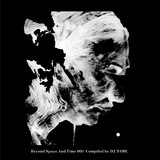
Beyond Space And Time is the new record label from Japanese music festival, Rainbow Disco Club (RDC). RDC has been welcoming music loving people to Japan for over a decade. Throughout the festival's history, RDC have been fortunate to constantly encounter performers and DJs who've collaborated with them in establishing a beautiful dance floor year in, year out. These relationships have lead RDC to start their own label, and now gives them the opportunity to reveal one of the best-kept secrets: What is in a DJ's record bag?
This time around, festival regular DJ Nobu kindly opens up his collection and shares the music he loves with us all. On visual duty we welcome Senekt - his representational yet contemporary drawing illustrates the emotion we feel from DJ Nobu.
We have much more music to come in future from artists that we trust and respect.
▼ DJ Nobu describes 10 tracks this way ▼
A1. Laurent Garnier - Water Planet
Highly respected French DJ/Producer Laurent Garnier has been releasing tracks for decades capturing the very essence of Detroit Techno and Breakbeat. He always manages to create something truly emotional. This is not his biggest hit, but it's my favorite.
A2. Mono Junk - Beyond The Darkness
This track represents the very early days of Techno with it's ravey atmosphere. It has a primitive feel, and the obscure mixdown sounds almost unbalanced. That said, this one really stands out when DJing. Very cool.
B1. Psychick Warriors Ov Gaia - The Valley
It was always my intention to include this track in a compilation if were I ever to do one. It has a fat underlying groove, with some indigenous spices thrown in. The whole thing is put together beautifully. No complaints!
B2. Melody Boy 2000 - Plenty Of Love
I wanted to include a track that had Jacking feel to it - that is my definition of dance music. This track mixes well in both Techno and House DJ sets.
C1. Drax Ltd. II - Amphetamine
This is my all time favorite track by Thomas P Heckman. It asks questions and strikes down all the boring 'wanna be cool' techno tracks. It is obviously a well known tune already, but I include it here because I'm often asked for it's track ID from new kids in the game. This is a classic that should be passed down.
C2. Dan Curtin - 3rd From The Sun
Curtin's refined synth grooves and bass lines make this a true timeless classic. It do not get tired of listening to his rhythms and melodies - he always gets it just right.
C3. Front 242 - U-Men.
The originator of Electric Body Music. Their husky vocals, hard rhythms and strong synth basslines made the group very popular at the time, and they are still to this present day. To me, this track represents what the Belgian New Beat scene is all about.
D1. The Prince Of Dance Music - E3 E6 Roll On
This is the track I played the most up until around 2006. It is a genuine house track that cuts through trends in music. A hidden floor killer.
D2. Pan Sonic - Lähetys / Transmission
Electronic music has existed for decades, and if you are to choose some of the best from all scattered & hidden places, Pan Sonic's 'Lähetys / Transmission' must be considered. The track emerges beautifully - breaking structures and transcending the past. Every layer of the piece is produced with such delicacy and care, that as a whole it magically drags you into the world of the unknown.
D3. Burial - Archangel
This track merges melancholic emotions with technological prowess at the highest level, and deeply impacted the dance music scene on it's release. I recently played this track at the end of my set at the forward thinking Terraforma Festival in Milan. It faded out to huge applause from the open minded crowd. A moment to be remembered.
out of Stock
Last delivered 4 years ago available to reorder, subject to availability
Following a string of releases via his own bbbbbb recors, along with bodies of work on трип Recordings, February 2019 saw Bjarki debut on !K7 Records with the ‘Happy Earthday’ album.
With the album considered to be the Icelandic producers first full debut LP, ‘Happy Earthday’ offered a conceptual collection of music which Bjarki thought he would never release. Influenced by his home country of Iceland as well as the planet’s environmental issues, the album received support across the board from the likes of The Quietus, DJ Mag, Pitchfork, XLR8R, FACT and CLASH Music, along with being crowned Mixmag’s ‘Album of The Month’.
As part of the limited edition 200 copy box set version of ‘Happy Earthday’, a secret album of original music was available to hear unbeknown to listeners. Now receiving a full release this December on double vinyl and digital platforms, Bjarki will release his second full album of the year via !K7 Records. ‘Psychotic_Window’ is a further extension of the experimental artists creative vision whilst continuing to address environmental themes and nature.
Combining influences from techno, breakbeat, IDM, electronica and more across all of his studio output, ‘Psychotic_Window’ is Bjarki’s final signoff for 2019. The new 14-track album follows in line with one of his most significant years to date, highlighted by performances at major events including Dekmantel and DGTL Festival, along with pioneering eclectic new sounds via his bbbbbb recors label.
“After ‘Happy Earthday’, people have been asking me about the secret tracks and it made me feel that they deserve a proper release. Each track means a lot to me as I made them during a depressing phase in my life; I was pretty broke, working many shit jobs and also just being super lazy, uninterested in leaving my apartment.
Before I started touring, I had these periods where I could write so much music without thinking, pouring my heart out to comfort my thoughts and feelings without trying. I doubt that this kind of window will come back to me anytime soon, my way of music making has changed a lot after going on tour. At that time, I was listening to a lot of Coil, Chris Carter and Cosey Fanni Tutti. I think every struggling artist goes through these phases of being sleep deprived, staying up and making music all night. This was my psychotic window.” -
Bjarki
out of Stock
Last delivered 12 months ago available to reorder, subject to availability
Around the year, the sturdy red brick walls of an old Cable Factory stand there like a mountain, facing weathers of all kinds rising from the Gulf of Finland. It might be freezing winter winds whipping the whole shore line into submission, fog heavy as concrete, or the relentless sun of the summer months, softening the asphalt to a boiling point. Whatever the weather may be, the narrow courtyard of the old factory embraces those musicians, who are looking to get down. They gather from all directions, making their way towards a pair of doors that lead towards a flight of stairs, again through a few doors all the way to the last portal, where an open padlock and a loosely hangin crossbar signal that Cold Diamond & Mink are inside, locked in a groove.
Who could it be with them this time, perhaps the jazz prophet Jimi Tenor beaming out of his space ship, maybe it's the golden voiced knight of soul Tuomo "Pratt" Prättälä, the number one trumpet wielding dandy Jukka Eskola or the saxman Pope Puolitaival, who loses nothing in coolness compared to the former? The reel to reel is always there in the monitoring room, catching each analog layer of sound, even the silences and banter between takes. Seppo lays down the guitar and tries to catch the riff on organ instead, Jukka throws a rare tune on the turntable, hoping to guide their unit through that wobbly chorus, Sami waits there bass in hand, maybe already thinking about the next production.
After a whole lot of playing instruments, arranging and taking care of business, after the moon has travelled around the old industrial building for some rotations, Carlton Jumel Smith comes waltzing through those same doors. There's a handful of unnamed tracks waiting for him. He sits there listening and then starts writing, maybe echoes of soul classics from his own record collection in New York projecting inside his mind. Then the tape is rolling again. Starting with a short intro rap Carlton lets it out, singing on the edge of shouting "Woman you made me...". After the vocals are in the can, Carlton ascends out of the basement and heads out to entertain an audience somewhere. Some months later, after the mix is said and done, there's the question of the instrumentals. It seems they're pretty good as they are. And here they are.
d 4 Help Me (Save Me From Myself) [Instrumental]
out of Stock
Last delivered 7 years ago available to reorder, subject to availability
Following 1 or 2 small run / mailorder lathe cuts, Polytechnic Youth follow it's hugely successful 'Popcorn Lung' label compilation LP, with it's first full length of the new year, and man... this one is just wonderful! A mighty record to kick off what promises to be another hugely productive, constantly busy year for the Crouch End based synth label.
PY often likes to quote the artist directly in it's press releases, and this one is no exception. Gabe's own words, more than adequately explaining the path leading to this killer set for 2019; 'It feels a little ridiculous to pretend that the person introducing you to Gabe Knox is some kind of bigwig press agent and not just Gabe Knox himself, so let me, Gabe Knox, tell you a little about myself in that hopes that you'll give my music a listen.
In 2014, after years of moderate success as a local musician and club DJ in Toronto, Canada, I looked at my collection of barely functioning analogue synths and drum machines and said to myself 'Instead of trying to unsuccessfully make music you think other people will like, why don't you make something that you'd actually want to listen to for once' I wanted to make music that had the drive shaft of Neu!, the punishing low end of King Tubby, the interleaved melodic lines of Vince Clarke, the melancholic, otherworldly whimsy of Raymond Scott and Delia Derbyshire, the hypnotic drone of Spacemen 3, and the analogue intimacy of Le Car. I wanted to bring the euphoria and hypnosis of dance music to the rock kids, and the energy and excitement of rock music to the dance kids.
This was going to be a tough sell in the clique-y Toronto music scene, so I figured the best way to get the music out there would be by recording when I can and self-releasing a steady stream of EPs online. They would all be a series, a snapshot of the evolution of that initial idea. ABC represents a compilation of the best songs of the first three EPs, subtly remixed and remastered to best suit vinyl. I hope you love listening to it as much as I loved making it.'
This really is a remarkable record. Displaying all the PY traits of icy cool blasts of minimal synth, motorik grooves, melodic pop via passing nods to early mute and sky records. Never before did label head Dom think he'd get the chance to namecheck 2 musical heroes from wildly differing poles -Vince Clarke and Spacemen 3- into one LP PR sheet, so he's understandably excited for this one's release!
250 copies on yellow wax in hand numbered, reverse board sleeves. Sure to go real quick....
Black Label Series 03 on Banoffee Pies Records welcomes new additions to the fold with another low slung collection of minimal house and breaks. Opening with patient mystery the label debut from Monotronique delivers 118 bpm sample heavy 'Baggage With A Secret'. Nicely warmed, the A2 turns for the floor with Freerotation resident Tom Ellis in control on 'Third Morning', a groovy roller with glitched vocal loops. The curveball of this release comes on the B1 with a garage inspired high tempo d&b track, '23 Ghettobee' from Filip Szostak - One to cool or shake the dance. The B2 invites Lyssna Records own Flord King with another micro gem for the head bopping late nights on 'Shanti'. Together the four tracks investigating different moods with a similar style. BP X
Silicone Soul welcome the return of old friend Justin Robertson as he brings his much- loved Deadstock 33s project back to Darkroom Dubs. Last spotted on the label only a matter of weeks ago with 'Infinite Interchange' on the 'Darkroom Dubs Presents Summer Love' collection, here he builds on the momentum with two more singular missions deep into the timeless analogue abyss. What's more, they come covered with a print of one of Justin's very own hand-drawn pieces. 'Dr. Spectro On The Frontier' marks the start of this new Deadstock trip. Celebrating the lesser spotted DC super villain who could control people's emotions with a brazen line or two of sinewy acid; what starts off dark and gnarly gradually unfolds into a much more emotional narrative. Watch out for the harmonic riff that rekindles feels of raving fields and a salvo of chords towards the climax that genuinely will control your emotions.'The Music Is Madness (To Those Who Cannot Hear It)', meanwhile, is more than just a poetic title. Already a summer anthem at A Love From Outer Space, it's a roomy, cosmic affair that's laced with layers of trippy textures and chugs at a cool 120. It's one of Justin's classic signature smouldering sessions; what ostensibly seems forlorn and introspective is actually coded with deep hope and positivity. You'd be mad not to hear it.You'd be mad not to stay tuned too... For the first time in Darkroom Dubs history, this release and all this year's vinyl dispatches will be released digitally as part of an end of year compilation, 'Tales From Underground Vol. 1' and will also feature an exclusive Silicone Soul remix of Rigopolar & Cannibal Ink's 'Thousand Years Before'. And to round the year off The long-awaited new single from Silicone Soul themselves.
This unique set brings together a treasure trove of R&B rarities enshrined by the $3,000 Lookin' For My Baby', recorded by The Nightriders in 1959 for Juggy Murray's Sue imprint.
Murray had co-founded Sue Records two years earlier with fellow New Yorker Bobby Robinson whose Fire label provides us with the equally compelling Keep A'Calling' by Paul Perryman (side 1, track 1), a snip at only $300!
The set bursts into life with Vernon Harrell's hot dance ticket Slick Chick', currently commanding a cool $400 on its original Lescay label. Northern Soul fans will be interested to know that Harrell co-wrote Seven Days Too Long' with J R Bailey (aka Chuck Wood) and Sweet Sweet Lovin'' for The Platters.
Mike Robinson ( Lula') also has a tenuous Northern Soul connection, he was originally in Bobby Thomas' Vibranaires before joining the Orioles alongside the legendary Sonny Til.
BOTH Earl King's make the playlist: Earl Connelly' with his hard Every Whicha Kinda Way' and the New Orleans native Earl King with Darling Honey Angel Child', an early prototype of the standard Come On'.
Look out too for rare soul sweetheart Baby Washington, Medicine Man'.
A Collection to Treasure...
In those times of newfound experimental conformity, it is sometimes needed to go back to simplicity. This may be where DJ OIL is leading us to. You think you know what you can expect but common ground is not always in your head, it is sometimes under your feet.
This is the second 12' of the BREF AVENIR collection (to be released digitally later this month), our Southern activist using well-known tropes and samples to provide necessary confusion.
TELEPHUNK is nothing else than a monster breakbeat funk (away from the new Lynn Collins dictatorship), unfashionably cool if you see what we mean. If PARESSE is its twin dark sister, locking electro in its black music roots whilst remaining strangely 'European', then FALL is its downer baggy brother.
Soul Jazz Records are releasing this new 10th anniversary 2017 edition of their classic album 'Dancehall - The Rise of Jamaican Dancehall Culture'. This long-out-of-print collection is now available as a triple-vinyl edition and double CD pack.
The album is a lightning-flash collection of all-time classic and definitive dancehall classics as well as a stellar selection of more obscure tracks. Featuring Yellowman, Tenor Saw, Sister Nancy, Ini Kamoze, Chaka Demus & Pliers, Michigan & Smiley, Super Cat, Cutty Ranks, Eek-A-Mouse, Gregory Isaacs and more, this album features non-stop floor-filling party tune rockers throughout!
Dancehall is released to coincide with the new 2017 edition of the stunning 400+ photos deluxe coffee table book 'Dancehall - The Rise of Jamaican Dancehall Culture', featuring Beth Lesser's amazing Dancehall photography (also newly published by Soul Jazz Records). This book has become the definitive cultural reference book for Jamaican dancehall and features hundreds of killer photographs, extensive text and interviews with many of the artists.
'A vibrant anthology of all that mattered: the sound systems, studios, producers, singers and deejays.' The Guardian
HQ Gatefold, 3x12 140g Vinyl, black innersleeve, download code
EXTRAWELT are back! Although in fairness, they were never gone. On the contrary, since their first release on James Holden's Border Community Label dropped in 2005, Arne Schaffhausen and Wayan Raabe have been responsible for a plethora of classics including "Schöne Neue Extrawelt" and "In Aufruhr", their two seminal albums on Cocoon Recordings. The duo are one of the most booked live acts worldwide, commanding a huge fan base. Their performances are the stuff of legend, making them the absolute highlight at every club and festival they play. So it's with great pride and respect, that we can announce the release of Extrawelt's third album for Cocoon Recordings. "Fear Of An Extra Planet" completes the Cocoon trilogy and the excitement growing among their fans represents a new high in the history of EXTRAWELT!
Musically, of course, there's enormous pressure on EXTRAWELT to deliver, but this is dismissed with a playful disregard and they are clearly focused on the job in hand. The album title "Fear Of An Extra Planet" sounds cinematic, like some art-house science fiction film, without giving too much away.
However, from the first seconds of the opening track "Superposition", the album title makes 100% sense and sets the scene for the rest of the trip. We are immersed in wide open spaces and invited to explore dark and dusky worlds that transport us back to their Border Community years. Timeless and elegant, "Superposition" perfectly captures the epic, dream like quality that made James Holden's label so influential.
New Release Information Second up, "Gott ist Schrott" takes a much more minimalist approach with its retro 80s drum programming, monster bass lurking in the breaks and playful Rhodes/synth riffs that span the divide between early German techno and deep Detroit electro with a distinctive film soundtrack aesthetic. "Oddification" continues this theme, adding extra spice reminiscent of the techno-synth vibe of Detroit with a punchy, almost Prodigy-style breakbeat complete with shredded vocal samples that gives us a taste of what's in store. "Gentle Venom" then takes the breakbeat motif to the next stage. The main focus here is the classy sprinter of a bassline, peppered with a flurry of intricate and subtle effects and modulations, that immediately trigger an intense, movie-like 'in pursuit' feeling.
With - Das Grosse Flimmern" we cautiously approach the album's high point. It's still in keeping with the soundtrack aesthetics, but faster and with more urgency. Almost hypnotically, Extrawelt invade us with an energy and impetus that always radiates from their music. Next in line is "Silly Idol" and here Arne Schaffhausen and Wayan Raabe opt again for a more minimal tack, focusing even more intensely on the dance floor to reveal a pulsing, twisted heart to the album.
"Punch The Dragon" is the hidden gem of the collection, utilising and melting together the most bombastic and playful elements. This one is totally off the hook, a sensory overload in an acoustic widescreen format! Then we have the title track "Fear Of An Extra Planet" which perfectly sums up the album concept. It opens up like a film score, with minimal passages following dark sequences that morph into dreamy melodies, all grounded by cool, constantly alternating analogue drum patterns. If you're not listening closely, you might get the impression that three or four different titles are mixed together; such is the effortless flow of the album.
As we near our destination, "The Friendly Coroner" really does honour its name. The morbid charm of the title is captured by a fluid bassline and melodic arrangements that border on the absurd, until the funky drum beat finally drops. In our mind's eye we see a cheerful medical doctor removing his bloody gloves, hanging his smock in the closet and vibing out in his neon drenched workspace. And there we sit, glued to our cinema seat, submerged in the different textures EXTRAWELT have conjured up on "Fear Of An Extra Planet". Over the course of the last title, the strings usher in the final acknowledgments as the credits roll. The dramatic end of "2084" leaves us transfixed in front of a black screen in a large, dark room safe in the knowledge that we've just witnessed a science fiction epic.
out of Stock
Last delivered 2 years ago available to reorder, subject to availability
'I take my guitar and strum and sing some tings and blow people's mind. But I ain't trying to do anybody's music. I'm doing what I feel' - Shadow
When it came out in 1984 the far-out album Sweet Sweet Dreams by Trinidad & Tobago's Shadow (aka Winston Bailey) was described as 'way ahead of its time'. Undeservedly it was panned by critics and, unable to reach markets, disappeared into the dusty record collections of a few music aficionados. Now, more than three decades later that cosmic dance-floor UFO is about to take off again, change all that and set the record straight. Remastered and cut by Frank Meritt at The Carvery the album is truly a masterpiece.
But who is this Shadow behind Sweet Sweet Dreams Shadow is a man of understated magnitude. A truly enigmatic artist, he first emerged in Trinidad and Tobago during the 1970s, becoming a part of the tapestry of Caribbean music and reinvigorating calypso at the time. Calypso, the indigenous folk music of Trinidad and Tobago, has roots in West African kaiso rhythms, French Creole influences, and the hardships endured by the African slaves brought to Trinbago, whose descendants still use it as a tool for satire, self-expression, and social commentary. Calypso has also given birth to several other music genres, including soca, with its uptempo beats and festival context. Shadow effortlessly moves between both.
Shadow came from a humble but musical family and started writing songs as a youth while tending cattle in the fields. To his family's initial chagrin he chose calypso over church music but his talent and drive were undeniable. In the early days of his career Shadow's style was cramped when working with some of the more conservative music arrangers who felt that calypso and soca should fit a mould. But after a while Shadow teamed up with more innovative arrangers, including Arthur 'Art'de Coteau, who followed their and Shadow's intuitions resulting in a long line of hits.
'The first time we met for me to arrange his music we had a heated argument on the arrangement for one of his songs, I was theoretically correct but Shadow was musically right. Shadow broke all the traditional musical rules and made his own and that made him a musical giant. He changed the face of Calypso music in 1974 with the release of "Bassman" a tune in which Bass and magnificent horn line took central stage changing Soca music for ever. What Shadow did with his music was to put calypso on the International Dance circuit, giving it a totally different groove. You could take his music and swing it in any direction, Disco, Pop, Calypso, you name it. His music was different from anything that existed before'. - Carl "Beaver" Henderson, one of Trinidad's veteran producers.
This inert creativeness culminated in Sweet Sweet Dreams which was arranged by Shadow and deals with burning and ever-relevant themes like love and the ups and downs of relationships. a surprising fact for someone mainly known for his satirical and political lyrics. It prompted his manager to wonder if Shadow had written the lyrics while in a state of 'tabanca' (a word used in Trinidad and Tobago to describe lovesickness).
Sweet Sweet Dreams was recorded at the legendary SHARC studios, located on a hill in Chaguaramas (near Port of Spain) and despite a fantastic sound and monster Soca-boogie tunes like 'Lets get it together', 'Lets Make it Up' and 'Way, Way Out' the album was a commercial flop, probably due to the fact that it didn't sound like anything else coming out of Trinidad & Tobago at the time: It fused a range of different rhythms and new sounds, primarily heavy synth riffs.
Shadow took the album's lack of success in his stride with usual aplomb:
'When I did Sweet Dreams I expect something could happen. But nothing big happen because I have no big market and no distribution and all this thing now. So I just cool myself and move on to another song. I wasn't doing just one song. I used to always have plenty songs at the one time. And be writing music'.
What Shadow didn't realise back then was that the proto-electronic cocktail he had mixed in 1984 would only find the recognition it deserved three decades later. Life has swung full circle: Sweet Sweet Dreams has come true and been elevated to holy grail status becoming one of the most sought-after Caribbean disco records in existence.
For this re-release we carried out extensive interviews with Shadow and the musicians and have included as bonuses exclusive photos from Shadow's personal collection and the dancefloor filler tune 'D'Hardest' was added as a bonus track.
When Kompakt came across Amsterdam-based Harm Coolen and Merijn Schotte Albers aka WEVAL back in 2014, we were blown away when we heard their slow-burning, darkly emotive tracks.
Their debut EP 'Half Age' on Atomnation featured painfully intimate and surprisingly kinetic electronic chamber pop that convinced us they were a perfect fit in Kompakt's family. Following two widely acclaimed EPs for Kompakt and playing numerous festivals including DGTL, Reeperbahn, Iceland Airwaves and Piknic Electronik, we now see the two tackle their self-titled debut full-length WEVAL. What you have before you is not a mere collection of tracks, but a complete listening experience with organic flow, emotional heft and a narrative thread.
Smitten with WEVAL's uniquely personal and catchy approach to producing dark electronic music, it didn't take much to win us over... and so came WEVAL's acclaimed 2014 label debut EASIER EP (KOMPAKT 318), followed by the bold and beautiful 2015 offering IT'LL BE JUST FINE / GROW UP (KOMPAKT 344) which saw the two soundsmiths digging deeper into the granularities of electronic funk than ever before. However, Harm and Merijn's music - while astonishingly fully-formed even in its earliest stages - always seemed destined for more, a bigger format, more space to explore the nooks and crannies of their rapidly evolving sound cosmos. Simply put, they needed to think about an album and their beloved living room studio wasn't cutting it anymore.
An old school building became WEVAL's new home, repurposed to house small creative businesses - but in the summer of 2015, it was abandoned most of the time, with everybody out in the sun while our heroes turned the building's attic into a sweet spot to make some noise, have 24-hour access and lose track of time. And apart from a sketchy tenant being evicted, the occasional soccer game with friends and live gigs across Europe, there really was no interruption to the focussed vibe. It's not like they were looking for distraction anyway: "working on the album all by ourselves in this bloody hot attic was all we had on our mind", the artists admit. And they decided that their album shouldn't sound too clean: "We try to find the beauty in imperfection. It makes things sound more human".
Weval draw their inspirations from no single genre of music but a cumulation of music that inspires them. The results present an astonishingly coherent vision - cuts like the dramatic THE BATTLE, bass growler I DON'T NEED IT or the trippy epic MADNESS share the same DNA of zestful nostalgia, a knack for immersive sound-sculpting and that certain kink in the groove. They also feed on deeply personal experiences and moods, as exemplified by the haunting electronic ballad YOU'RE MINE, the carefully layered, polaroid-tinted JUST IN CASE or the beautifully voiced closer YEARS TO BUILD. And sometimes, it's just an old, out-of-tune piano that stands in the hallway: "Whenever I'd pass by it, I couldn't resist playing it", says Merijn, "so Harm decided to start recording and it became an integral part of YOU MADE IT (PART I)". No doubt about it: this is WEVAL's most powerful and organic material yet - which means a lot, considering the amount of skill already on display in their small, but weighty portfolio.
(de) Als sich 2014 in Amsterdam Kompakts Wege mit denen von Harm Coolen und Merijn Schotte Albers aka WEVAL kreuzten, waren wir sofort Feuer und Flamme für ihre schwelenden, emotional aufgeladenen Tracks. Ihre Debüt-EP "Half Age" auf Atomnation präsentierte intimen und überraschend kinetischen, elektronischen Kammer-Pop, der wie angegossen zu Kompakt zu passen schien. Nach zwei vielbeachteten EPs auf dem Label und einer Reihe von Festvialgigs (inklusive DGTL, Reeperbahn Festival, Iceland Airwaves und Piknic Electronik) nehmen Weval nun mit dem gleichnamigen Release ihr erstes Album in Angriff. Und legen dabei nicht einfach nur eine Ansammlung von Tracks vor, sondern kreieren eine komplette Hörerfahrung mit organischem Flow, emotionalem Gewicht und einm roten Faden.
Angetan vom einzigartig persönlichen und mitreissend düsteren Klang WEVALs brauchte es nicht viel um uns zu überzeugen... und so kam es 2014 zum gefeierten Labeldebüt EASIER EP (KOMPAKT 318), gefolgt vom kühnen und wunderschönen 2015er Release IT'LL BE JUST FINE / GROW UP (KOMPAKT 344), für das die beiden Soundtüftler tiefer denn je in die Granularitäten des elektronischen Funks abtauchten. Nichtsdestotrotz - und obwohl sie schon von Anfang an ausgereift klang - schien die Musik von Harm und Merijn auf dem 12"-Format stets bestimmt für mehr: mehr Freiraum um auch die äussersten Winkel ihres rapide expandierenden Soundkosmos zu erkunden. Sie mussten schlichtweg zum Langspielformat wechseln, und ihr heissgeliebtes Wohnzimmerstudio konnte da nicht mehr mithalten.
Ein altes Schulgebäude wurde schliesslich WEVALs neues Zuhause, umfunktioniert für kleine Kreativunternehmen - doch im heissen Sommer 2015 stand es zumeist leer, da alle draussen in der Sonne badeten, während unsere Helden im Schweisse ihres Angesichts das Kellergeschoss in ein lärmfestes Aufnahmestudio verwandelten. Mit Studiozugang rund um die Uhr liess es sich bestens die Zeit vergessen. Und abgesehen von der Räumung eines zwielichtigen Nebenmieters, dem gelegentlichen Fussballspiel mit Freunden und natürlich Live-Gigs in ganz Europa, gab es auch keine Ablenkungen vom hochkonzentrierten Kreativfluss. Ablenkungen, die das Duo ohnehin nicht suchte: "ganz allein in diesem verdammt heissen Keller am Album arbeiten war alles, was wir im Sinn hatten", geben die Künstler zu. Und sie entschieden sich, dass ihr Album nicht zu sauber klingen sollte: "Wir versuchen die Schönheit im Makel zu finden. Es lässt die Dinge einfach menschlicher wirken."
Weval beziehen ihre Inspiration nicht aus einem einzelnen musikalischen Genre, sondern eher aus einer Akkumulation von Musik, die sie inspiriert. Die Ergebnisse zeichnet eine beeindruckend kohärente Vision aus - Aufnahmen wie das dramatische THE BATTLE, der Bassknurrer I DON'T NEED IT oder die Trip-Saga MADNESS teilen diesselbe DNA aus schwungvoller Nostalgie, einer Schwäche für immersive Klangschnitzerei und einer gewissen Delle im Groove. Sie nähren sich auch aus zutiefst persönlichen Erfahrungen und Stimmungen, wie zum Beispiel bei der eindringlichen elektronischen Ballade YOU'RE MINE, dem vorsichtig geschichteten, polaroid-gefärbten JUST IN CASE oder dem wunderschön gesungenen Schlussakt YEARS TO BUILD. Und manchmal ist es nur ein altes, verstimmtes Klavier, das im Flur herumsteht: "Immer wenn ich dran vorbei lief, musste ich darauf herumklimpern", erklärt Merijn, "also wurde es ein zentraler Bestandteil von YOU MADE IT (PART I)". Kein Zweifel: dies ist WEVAL's stärkstes und organischstes Material bisher - was durchaus was bedeutet, wenn man das Talent bedenkt welches bereits in schmalen, doch gewichtigen Portfolio der Band steckt.
out of Stock
Last delivered 5 years ago available to reorder, subject to availability