For the second release on the Galaxiid imprint, a label of electronic music archeology and quality, we are transported to the strange sonic world of an elusive 90s pioneer. Solar X's 1997 album X-Rated will be released for the first time on vinyl, as well as reissued digitally, with new artwork by the Japanese artist Keiichi Tanaami. Two worlds connecting sonically, visually and culturally.
Solar X enjoyed a burgeoning career in post-Perestroika Moscow making playful, low-tech electronica from Soviet analogue instruments, which he masterfully configured to forge animated compositions and dancefloor rarities. Fascinated by chaos and complexity, his music explores the ways in which our minds can be manipulated by structure - an endeavour quite plausibly linked to his other career as a lecturer and researcher of AI, information theory and cognitive science, his interest in which was in turn triggered by his young experiments in computer music.
Solar X gained international attention at a time when Russia was (quite unfairly) seen as a vacuum for electronic music, but was exploding in the period of piracy, poverty and freedom following the collapse of the USSR. Young Russians had benefited from the soviet education system and there was a strong DIY computer programming and music scene, fuelled by hackers, gear freaks and party animals. Viewed from today, the album is reborn at a time of further political and social strife, which many see as fuelling the huge creativity and radical thinking of modern Russia's young creatives.
X-Rated treats tempo and form as fluid concepts, administering sudden changes to its sonic landscape with disorienting effect, underlain with a subtle dose of humour and experimentation. Downtempo trip-hop sits alongside frenetic IDM and blistering electro, all bound together by peculiar melodic inflections and lively distortions. Warm, trippy harmonies and robotic synths are offset with angular drums, shifting erratically through moods and genres with cunning intent. Much like his contemporaries from the era, it's his ability to breathe life into a humble production setup that makes his music so compelling some twenty one years later.
The track titles are from a book of call girl cards in London phone booths, that reached the artist in Moscow in 1995. "I liked the titles from these cards, which were self-promoting and offering pleasure (e.g. "Mistress awaits you"). So, I thought since my tracks also offered some kind of pleasure, they might as well advertise this through their titles.'
Label head Nina Kraviz was introduced to the work of the 83 year old sensei Keiichi Tanaami by Ukawa Naoshiro, founder of Dommune in Tokyo, one of the brightest figureheads for the arts in Japan, responsible for the graphic design of the cover. In September 2017 Nina played for the opening of Tanaami-san's first exhibition in Moscow at Gary Tatintsian Gallery. Nina performed a live sound palette, to accompany the looping 7 minute animation, of experimental music from the Soviet Union, Russian pioneers of electronic music like Species Of Fishes and SolarX, Soviet-time pioneer Lev Termen, Kuryochin, avant-guard rock mixed with some Stockhausen and just pure abstract sounds, as well as treasured artists like Biogen.
Tanaami's illustrative work has strong sexual elements, so out of the five art pieces Nina selected and commissioned for Galaxiid, the first fits perfectly for 'X-rated'. The vertical line of text on the left is the traditional form for Japanese covers of foreign releases. The cover, together with the accompanying poster and sticker, are printed in Japan to ensure the highest print quality and purity of the colours.
Cerca:new found land
We are pleased and honored to finally introduce you our ninth release:
Carnera – Colpo Di Mano Nella Zona Grigia
The EP comes out with 4 original tracks and two stunning remixes from Esplendor Geometrico and Ancient Methods.
Carnera was founded in 2014 as a multimedia project by Giovanni Leonardi (Siegfried, Div. Sehnsucht, SNNC) and by visual artist Simone Poletti (Dinamo Innesco Revolution). In 2016 the sound designer Yvan Battaglia and Monica Gasparotto (Les Champs Magnétiques) joined the militant collective.
They have released two albums “Strategia della Tensione” (2015) and “La Notte della Repubblica” (2017), both released for the historic Old Europa Cafè, and several collaborations, remixes and singles.
A creature in continuous mutation, Carnera moves between dark ambient and soundtrack music, Martial and Techno Industrial, evolved EBM and Kosmische Musik, boldly combining new sounds and Old School attitude.
“Colpo Di Mano Nella Zona Grigia” is made by a robust and genuine dose of old-fashioned industrialism and postmodern manipulation, underpinned by a fascination with Futurism.
The EP ends up with two remixes. The first is a martial remix from Esplendor Geometrico recalling the old intelligence behind the industrial music, the epic and the aesthetics of Power, “the geometric splendor and numerical sensitivity” of Marinetti. The second is from Ancient Methods with his rare and own imprint transporting you in middle age landscapes full of metal and agony.
“The history of our country has taught us that terrorist eversion can not change things, in fact, it has often been used by power to address the fate of the community at will. It is not an exaltation of our armed struggle, we would miss it. But I do not see how it would be possible to reconstruct a civilization now in full decadence in a painless and non-gory way. It will not be the flags of peace, the barefoot marches, the fake humanitarian operations to restore dignity to our lineage. Nor are the old ideological contrasts of seventy years and the daughters of a civil war that has never really been overcome.”
credits
Mana Can Be Understood As A Powerful, Often Magical, Force Contained Within Objects. As These Objects Get Passed From One To Another, In A Cycle Of Gifting, They Retain The Spirit Of The Giver And Propel Themselves Onto The Next Recipient, Weaving A Network Of Social Bonds. In This Light, Mana Describes The Coming Together Of This Mixtape. The Exchanging Of Avant-garde, Traditional And Electronic Music--old And New--between Andrea Zarza, Curator At The British Library Sound Archive, And Matthew Kent, Founder Of Blowing Up The Workshop, Is What Makes Up The Language And Landscape Of Mana The Record Label, And Its Subsequent Arrival On A Cassette Tape For Queeste, Before Being Sent Onwards, As Our Gift To Listeners. Limited Edition Cassette Tape. Jelly Yellow Colorway. Comes In Resealable Bag With A5 Postcard Designed By Fallon Does And Mana X Queeste Sticker.
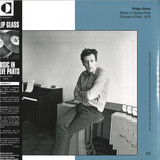
Lost PHILIP GLASS Recordings from 1975 - ORTF
The newly discovered and unreleased concert from 1975 recorded by the Philip Glass
Sextet at La Maison de la Radio, Paris.
The sextet is composed of Philip Glass, Jon Gibson, Dickie Landry, Michael Riesman, Joan
La Barbara and Richard Peck.
Music in Twelve Parts is a set of twelve pieces written between 1971 and 1974. This
performance in France includes part 1, 2, 3, 11 and 12 on a double LP.
Also included a very rare Philip Glass interview from 1974 in his NYC loft during the
rehearsals of this piece, produced for the French radio by Daniel Caux - musicologist and
co-founder of Shandar Records.
A never before released -Philip GLASS (1975) live recordings, released in partnership with
the National Audiovisual Institute - INA.
"A new sound and a new chord suddenly break in, with an effect as if one wall of a room
has suddenly disappeared, to reveal a completely new view." - A. Porter
YANGA brings a new dimension to the rapidly growing scene of Afro-Latin independent music taking shape in Los Angeles and concentrated in the fertile enclave known as the Inland Empire. Intertwined with other intrepid musical explorers who call the IE home, YANGA has sprouted their own distinct branch on the tree of Caribbean music and culture.
Much like their cousins and Names You Can Trust label mates of the same Southern California region (QUITAPENAS, EL SANTO GOLPE and BUYEPONGO), YANGA creates new recipes based on a traditionalbouillabaisseof Afro-Carib rhythm, sharing a few ingredients and musicians to develop a deeper chemistry and cohesiveness but cohering into their own piquant flavor.
YANGA's singular focus and strength is their inspiration from and adherence to the beloved rhythms found throughout the Caribbean coast of Colombia — rhythms like cumbia,garabato, tambora and zambapalo. These rhythms form a touchstone and a proud statement of purpose for their debut on Names You Can Trust.
Led by John D'Alessandro's accordion and the fiery female voice of Eddika Organista (El Haru Kuroi), this new recording is an intense ode to the band's fundamental influences, conceptually crystallized in the studio of Chicano Batman bassist Eduardo Arenas with veteran Marcos Garcia (Antibalas, Chico Mann, Here Lies Man) crafting the mix. It's a realized and impeccably executed scene of dark, gritty and saturated drums and bass, the entire sonic landscape dosed with subtle psychedelia and studio wizardry that never overshadows the band's natural performance or their reverence for the classic sounds of the tropical '70s. The finished product is a perfect juxtaposition between vintage and modern. This special edition, double-issue single packed with deep dancefloor grooves are a sure-shot entry into the timeless canon of Afro-Caribbean recordings.
YANGA brings a new dimension to the rapidly growing scene of Afro-Latin independent music taking shape in Los Angeles and concentrated in the fertile enclave known as the Inland Empire. Intertwined with other intrepid musical explorers who call the IE home, YANGA has sprouted their own distinct branch on the tree of Caribbean music and culture.
Much like their cousins and Names You Can Trust label mates of the same Southern California region (QUITAPENAS, EL SANTO GOLPE and BUYEPONGO), YANGA creates new recipes based on a traditionalbouillabaisseof Afro-Carib rhythm, sharing a few ingredients and musicians to develop a deeper chemistry and cohesiveness but cohering into their own piquant flavor.
YANGA's singular focus and strength is their inspiration from and adherence to the beloved rhythms found throughout the Caribbean coast of Colombia — rhythms like cumbia,garabato, tambora and zambapalo. These rhythms form a touchstone and a proud statement of purpose for their debut on Names You Can Trust.
Led by John D'Alessandro's accordion and the fiery female voice of Eddika Organista (El Haru Kuroi), this new recording is an intense ode to the band's fundamental influences, conceptually crystallized in the studio of Chicano Batman bassist Eduardo Arenas with veteran Marcos Garcia (Antibalas, Chico Mann, Here Lies Man) crafting the mix. It's a realized and impeccably executed scene of dark, gritty and saturated drums and bass, the entire sonic landscape dosed with subtle psychedelia and studio wizardry that never overshadows the band's natural performance or their reverence for the classic sounds of the tropical '70s. The finished product is a perfect juxtaposition between vintage and modern. This special edition, double-issue single packed with deep dancefloor grooves are a sure-shot entry into the timeless canon of Afro-Caribbean recordings.
- A1: Ikarie Xb-1
- A2: Surveillance On Standby-Alpha Centauri
- A3: A Small Stone In Space
- A4: Sunflower For A New Star
- A5: The Backwoods Of The Universe
- A6: Silver Ball (Vera In Cameo)
- A7: E.v.a. Will Teach You
- B1: The Tigers Breath
- B2: The Dark Star
- B3: Do Not Eat The Fruit
- B4: The Awakening
- B5: Voyage To The End (Of The Universe)
- B6: The White Planet
Liška, the Czechoslovakian word for fox. Beguiling in its beauty, cunning in it's charm. Said to be one of the most intelligent animals on the planet its global family consists of thirty-seven varieties; all of them recognised, respected and feared for their persuasive, creative, resourceful and elusive nature. The Liška we will talk about today is no exception to these hereditary rules and within the grooves of this record Finders Keepers present an 'elusive' musical artefact that best exemplifies every facet of this composer's animal namesake.
Had he not been born in the small Bohemian town of Smecno in the early 1920s the story of The Fantastic Mr. Liška might have well taken a different course. Alternatively, fettered by the hampers of communism, this lifelong resident of Czechoslovakia would never quite find his seat at the same table as the likes of John Barry, Ennio Morricone, Michael Nyman and Stanley Myers, nor drop enough phonographic breadcrumbs to track his legacy. But having waited patiently behind the borders of the wider landscapes of international cinema, Liška's musical brood, spanning multiple stylistic decades and generations, has now started to walk proudly amongst his would-be, latter-day compeers. In an era where music lovers have almost become immune to adjectives like 'lost', 'rare' and 'unreleased' in a climate where previously lesser-known off-kilter master composers such as Vannier, Kirchin and Axelrod have become widely revered, it is perhaps the perfect time for discerning listeners to advance above the feeding trough and seek out this truly pioneering and revolutionary Eastern European composer. Rivalled only by the likes of Krzysztof Komeda and Andrzej Korzynski in Poland, alongside Alexandr Gradsky in Russia, and often splitting workloads with fellow Czech composers like Luboš Fišer, Zdenek Liska's filmography of over almost 300 fully formed movie scores virtually eclipses the achievements of these socialist era luminaries. Respected unanimously in both Czech and Slovakian by studio bosses, producers, directors and actors alike Liška is widely known for his ability to take the existing energy in a reel of film and literally change the polarity to suit his own interpretation while maintaining the full support from his 'client' who would in-turn end up working under this composer's creative direction. Not only was Liška a genius of emotive orchestral and coral composition, his grasp on small group arrangements and intimate, minimal scores set him above the competition. By utilising primitive sample techniques by 'looping' a films existing ambient noise, or rearranging found sounds and dialog into subtle melodic arrangements, Liška would independently develop his own techniques which had simultaneously become known in Paris as musique concre`te. It is a direct extension of these experiments that saw Liška also draw parallels with Walter Branchi (Ennio Morricone's main electronic sidekick) in Italy as well as Daphne Oram in the UK, making Liška a relatively untravelled pioneer of early electronic composition and sound design due to his unlikely global environment. Imprisoned, preserved or reserved; time has been kind to Liška's music.
The compilation album The Best of the Guess Who is the ultimate collection of the best songs The Guess Who recorded in the '60s and early '70s. The multi-talented Canadian band created a masterpiece by recording their single hit "American Woman". The 11 track album shows a versatile band, starting with the keyboard hook and guitar accent of "These Eyes". Other Guess Who classics included on this album are "Laughing", "Share the Land" and "No Time".
The Guess Who is one of Canadian's most successful band's, originated in 1965. Fifty years later they're still performing live, with founding member drummer Gary Peterson sitting behind his kit.
The Best of the Guess Who includes an insert and exclusive poster.
Dark Entries is honored to release a 4-track EP by Swiss musician Carlos Perón, founding member of Yello. Carlos was born in 1952 in Zurich and began collecting music at a young age. Inspired after attending a concert of Karlheinz Stockhausen in the 1960s, he began to compose Musique Concrete pieces using a 4-track reel to reel and found sounds. In 1979 Perón founded the trio Yello with musician Boris Blank and vocalist Dieter Meier. Yello released their first album in 1980 and the following year Carlos released his first solo album 'Impersonator'. In 1983 Carlos left Yello in order to pursue a solo career and released the soundtrack to Die Schwarze Spinne" and 1984 his second solo album Nothing Is True, Everything Is Permitted'. In 1988, Belgian label LD Records released a 4-song EP of instrumental tracks from 1984 that predated, influenced and became staples in the New Beat scene.
Dirty Songs' is a collection of songs from Carlos Perón recorded between 1980 and 1986. The recordings were made with the core set up of an ARP 2600, Roland's Drumatix, TB-303 and TR-808. Nothing Is True, Everything Is Permitted (Instrumental)' recorded in 1984 is a slow burner with dark, gloomy atmospherics, presented here in an extended version with a bonus intro. The song was inspired by William S. Borroughs' Naked Lunch' and paints a bleak futuristic landscape. Breaking In (Instrumental)', from 1984, is a crossover of electronic body music and pitched down Chicago acid house featuring overplayed snares by hand though an Ovomaltine Box. Originally featured on the soundtrack for Die Schwarze Spinne', the song is about breaking into a large pharmaceutical company to steal drugs. On the B-side is A Dirty Song (Instrumental)', originally recorded in 1986 and released by Play It Again Sam in 1988. The song uses one of the earliest Roland SH synthesizers, the SH-1 A, as a solo instrument and is strikingly aggressive with percussive rhythms. Et' was recorded in 1980 on a 4-track and later and remixed to 8-tracks in 1984 for the Frigorex' EP, which is where this extended version comes from. Featuring eerie, cut up vocals and Dadaist lyrics by Isa Nogara atop a proto-Techno beat.
All songs have been remastered for vinyl by George Horn at Fantasy Studios in Berkeley. The jacket features a never before seen black and white photo of Carlos taken in 1988. Each album includes an double-sided postcard featuring the cover art from the Frigorex' EP. Prepare to make your own movie to the Swiss John Carpenter soundtrack vibes of Carlos Perón.
Lost Futures is a new label that explores experimental and often radical approaches to dance music from the past. In a musical landscape that increasingly claims to seek and reward new forms and ideas, Lost Futures delves into the recent past to revisit forward-thinking, optimistic projects that, owing to the social, musical or outright political climate, perhaps struggled to find an audience. Allowing only time to re-contextualise these leftfield, sometimes misunderstood and ultimately human bodies of work, Lost Futures taps into the inherent idealism of rave.
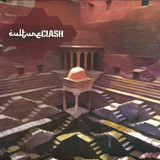
LF001 trips back until the early nineties to revisit the alternative scene emerging from the Dutch city of Utrecht. Here, three young men - DJ Zero One (Sander Friedeman), TJ Tape TV (Arno Peeters) and DJ White Delight (Richard van der Giessen) - joined forces to form 'The Awax Foundation'. Inspired by the transcendent and revolutionary electronic music arriving on their shores imported from Chicago and Detroit, combining their knowledge, gear and ever-expanding vinyl collection allowed additional freedom in paying sincere tribute to these intoxicating sounds, while also developing their tastes in a more personal, eclectic direction.
The musical flavours of Awax initially leaned toward acid house and the roots of techno. However, with three different mindsets in the mix, their tastes were rarely fixed. One thing each shared in common was a devotion to collecting rare sounds, specifically more adventurous and international samples than those emanating from the increasingly-hard, masculine dance music emerging from the Netherlands during the period. Inspired by the cross-over global sound of bands like Suns of Arqa, or 'World Music', as it was perhaps patronisingly termed at the time, the trio became interested in the idea of making techno with 'ethnic instruments'.
Of course, this being 1992, none of The Awax Foundation had access to such instruments, instead, they had a vast, collective library of samples from all over the world. There were no collaborations and no clear plan. Instead, they set to work using a Yamaha TX16W sampler, the legendary Atari 1040ST computer, a cheap mixing desk and a couple of low-end synths and FX machines. When Richard mentioned the project to his friend, Akin Fernandez, the London DJ and owner of cult label Irdial Discs, Fernandez was intrigued enough to invite the trio to record a one-hour show for his 'Monster Music Radio' series on London's then-burgeoning Kiss FM.
Forced to come up with a name, 'CultureClash' seemed like the obvious choice, even if the members of Awax were only creatively sparring among themselves. Along with the term 'ethno-techno', slightly dubious to a hopefully more conscious Western audience in 2017, these were the only guiding principles to the quietly ambitious project that soon combined cutting-edge machine rhythms with samples sourced from everywhere from Bolivia to Togo, and inspired by everything from Ravi Shankar's epic soundtrack to the Oscar-winning movie Ghandi, to the technical limits of their own setup requiring a dazzling degree of cut-and-paste work. Some tracks even emerged out of academic studies within the ethnomusicology department at The University of Amsterdam.
The show aired on October 2nd, 1992, recorded in one blistering take and without any rehearsals, traversing a huge variety of tempos and styles. If the performance wasn't seamless, it was undeniably thrilling, fresh and ambitious. As such, several labels, including Fernandez's aforementioned Irdial Discs expressed an interesting in commercially releasing CultureClash, while another imprint proposed a series of twelve-inches and an album. But the sheer complexity of the project meant that it never saw the light of day, while the trio embarked on different journeys ahead, both creative and personal.
Twenty five years later, and the original CultureClash lineup and founding members of The Awax Foundation provide the sound of the first release from Lost Futures. An otherworldly, ambitious and optimistic compilation, accompanied by extensive sleeve notes from the trio, CultureClash is a timeless ode to experimentation in dance music's ever-overlapping culture.
For the last 20 years London-based author and party organiser Tim Lawrence has dedicated himself to excavating the history of New York City party culture and bringing some of the most powerful aspects of that culture to London's dance scene, from where it has ricocheted around the world. Having conducted the first set of major interviews with David Mancuso, Lawrence started to put on Loft-style Lucky Cloud Sound System parties with David and friends in London in June 2003. In early 2004 he published Love Saves the Day: A History of American Dance Music Culture, 1970-79, which tracked the influence of the Loft on the wider New York DJ, dance and disco scene. In 2009 his biography of the iconic musician Arthur Russell became the first book to map the wider downtown music scene. These beautifully written and politically insightful histories have educated, inspired and celebrated the previously overlooked foundations of contemporary dance music.
Lawrence's most recent publication, Life & Death On The New York Dancefloor, 1980 - 1983, published in late 2016, shines a light on 'one of the most dynamic and creative periods in the history of New York City'. Falling between the more regularly celebrated sounds of disco, house and techno, the period produced a uniquely hybrid series of sounds that never acquired a settled name. This led them to be largely ignored by historians and even DJs, yet the power of the period's music and the scenes it birthed, Lawrence argues, remains undeniable. Met with a rapturous response, Life and Death On The New York Dance Floor saw Lawrence on the road for most of the next year as he spread the word about the characters, the records, the clubs and the bands that shaped the post-Disco, post-Punk, and burgeoning Hip Hop landscapes of New York City during the early 1980s—a period when freedom still ruled.
This, the first of a 2-part sonic tribute to the 1980 - 1983 era as well as a musical companion piece to Life & Death On The New York Dance Floor sees recognised musicians (David Byrne of Talking Heads) nestle up alongside the belatedly recognised (Arthur Russell's Dinosaur L and Loose Joints, and Suicide's Alan Vega) and the downright obscure (Gray, 2 Teens Kill 4 and Tuxedomoon). An indication of what's to follow, Dinosaur L's original album version of 'Go Bang' has been dramatically overshadowed by the definitive François Kevorkian remix yet received regular play by David Mancuso and remains an enthralling experimental Arthur Russell jam.
Lovingly curated across 2 slabs of vinyl, the album introduces listeners to a stunning array of sounds, styles, vibes and feelings that encapsulate this most fertile and forward-thinking era, when music, fashion, sound system innovations, leaps in music technology, a DIY attitude and a freedom from corporate politics combined with extraordinary expressivity. All music contained within this album has been hand-picked and programmed by Tim Lawrence. It represents a selective yet rich introduction to one of the most extraordinary periods in New York City's epic musical history.
This is the first release on Reappearing Records, a label led by Tim Lawrence and distributed worldwide by Above Board distribution. Licensing courtesy of Tracksuit Music. Mastering by Optimum Mastering, Bristol UK. Artwork & design courtesy of Atelier Superplus. 2018.
- 1: Lamb With A Wolf Mask
- 2: Museum Of The Two Of Us
- 3: Nari Yuko Jin
- 4: Nobody`s Gold
- 5: My Black Jacket
- 6: Friendly Enemies
- 7: The End Of Metaphor
- 8: Dirty Dirtiness
- 9: The Place Where Designers Go To Die
- 10: Bean Tale
- 11: The Night Before The Typhoon
- 12: Gangsters, Seoul
- 13: Day Drinking At A Seaside Town
- 14: Bats We Are
The demons of night are out again: Seoul's one-stop shop creative collective Byul.org returns this fall with its third international album, entitled Nobody's Gold, out via Alien Transistor (worldwide) and the group's own Club Bidanbaem imprint (South Korea). Comprising 14 new songs, it's a dizzying, haunting affair that channels the group's manifold influences and references points (from post-punk to Stockhausen and back via club culture) and yet sounds intriguingly coherent.
Moving in and out of the shadows, Nobody's Gold breaks forth as pure sonic landscape - a universe of its own, folding and unfolding into both more experimental patterns, yet also with occasional hooks and dark catchy structures, gracious build-ups flickering among the hazy roar and thunder. After the screak and squeal of 'Lamb with a Wolf Mask,' the foreboding sounds of 'The Museum of The Two of Us' segue into a synthesized party tune about a missing friend being chased by police ('Nari Yuko Yin'), one of several vocal tracks with a sinister edge. Taking things up another notch, 'Friendly Enemies' is probably the closest this group will ever get to creating a stadium-ready anthem. On the other end of the spectrum, 'The Place Where Designers Go To Die' is a magnificent void with an immense and irresistible undertow...
Never too jolly (not even while 'Day Drinking at a Seaside Town' or during takeoff via epic pop tune 'Bats We Are'), Nobody's Gold compiles soundscapes with a very tangible, corporeal presence - iridescent sonic sculptures placed in unlikely settings (e.g. outer space, see: 'Dirty Dirtiness'), born at the fringes where night blends into day and vice versa.
Inspired by everyday life, half-remembered drug/club experiences, Pascal Quignard's disturbing La haine de la musique, Stockhausen and Bill Evans, the new LP sees the collective remain true to its DIY foundations while repeatedly questioning our listening habits and 'the exaggerated love for the concept of love,' as they put it.
Founded around the dawn of the millennium as a group of poetry-loving friends who'd occasionally meet for drinks, Byul.org has long become an extremely prolific and versatile collective within Seoul's scene: Main song-writer TaeSang Cho and his mates Yu Hur, Jowall, YunYi Yi, SuhnJoo YI, HyunJung Suh, and SoYoon Hwang went from publishing to recording, from releasing tunes to design, art direction and more. Although their list of clients includes Atelier Herme`s and the Venice Biennale (they did the Korean Pavilion twice), the group still remains a drinking circle of close friends at its core: Pals who simply like to create and carouse and dream and live and perform and play tunes together.
- A1: A Winter In Los Angeles Feat. Private Agenda
- A2: Trust The Direction Of The Wind Feat. Peaking Lights
- A3: Feel Live
- B1: Villaggio Paradiso (On Acid)
- B2: I Promise
- B3: Geometric Crystal Spaces
- C1: Endless Change
- C2: Raving At The Acropolis
- C3: Fare Spazio
- D1: Properties Of Distance
- D2: Floating Room Feat. Fort Romeau
- D3: Two Weeks Later Feat. Kim Anh
The body never lies. Every dance is a graph of the heart. Nothing is more revealing than movement.
These are the words of Martha Graham, one of the greatest American dancers and choreographers of the 20th century. Massimiliano Pagliara might as well have them tattooed on his chest, close to his heart, being an accomplished dancer, too. He has studied contemporary dance in Milan and Berlin, and went on to dedicate his life to transforming experience into movement, be it musical, physical, or spiritual. Massimilano's message is clear: Don't stand still. Don't keep looking back. Know where you are coming from, but don't remain petrified by the past. Take a chance at Endless Change, instead. Move on! Just like Massimilano did.
Stemming from Lecce province, an area at the south-eastern-most tip of Italy, Massimilano has been based in Berlin for several years where he's been one of the main forces behind recombining the city's hardboiled techno scene with an often overlooked sensibility for the soft and the tender. Call it underground disco passion. Massimilano's last and sophomore album, With One Another, released in 2014, was about celebrating the joy of human encounters and in parts seemed like a big get-together with like-minded artists and friends (among them nd_baumecker, Lee Douglas, and Credit 00). The record quickly hit the number one spot in Groove magazine's album chart - and its creator hit the road.
Besides his busy DJ schedule and far from the usual club circuit routines, Massimilano dedicated himself to intense travelling and exploring the world anew. 'I felt like I have lived more than ever,' he states. 'Getting to discover all these beautiful places around the world and meeting so many lovely interesting people, has inspired me in many different ways. I feel enriched.'
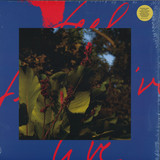
The result of these experiences is Feel Live, Massimiliano's third full-length endeavour. It was recorded in several intimate, sometimes improvised studio settings between Los Angeles, Portland, and Massimiliano's homebase in Berlin as well as at airports and on intercontinental flights high up in the sky. Featuring vocals by Private Agenda, Peaking Lights, Kim Anh and instrumental contributions by Fort Romeau, Tim K, and Jules Etienne, Feel Live is Massimilano's most playful and imaginative work to date. It's as emotional as sensual, as vibrant as the first ray of light after a thunderstorm has cleared the air.
Is it awkward or odd to call this record jazzy Presumptuous to pinpoint its spacial, almost orchestral qualities Unfair on the ruling Cosmic powers to highlight its aspirations of founding a new land of Balearic Harmonia and getting down at a huge fertility rite with electro enthusiasts and house lovers Not one bit. Feel Live is pure grandeur and elegance. It feels like an eternal movement.
Martha Graham has dedicated her whole life to dancing. 'It's permitting life to use you in a very intense way,' she said. 'Sometimes it is not pleasant. Sometimes it is fearful. But nevertheless it is inevitable.' Massimilano couldn't agree more. His advice when facing the inevitable: 'Live what you are feeling, feel what you are experiencing, good or bad, it is an experience.'
A lost ambient cosmic gem from Liquid Liquid founding member Dennis Young is getting a long-overdue vinyl reissue! Young, the percussionist and marimba player in the seminal New York art-wave group, recorded a series of cassette-only releases in the '80s after Liquid Liquid disbanded. A couple of these were picked up at the time for Korean release, which is where Daehan Electronics, a South Korea-based label dedicated to tracing the history of electronic music in the land of the morning calm, comes in.
Quest was one of these albums, part of a biorithmically-aligned New Age serie, each album meant to be heard on specific days of the week. DE has worked with Young to remaster the the album for this new release, bringing out the full warmth of the analog synthesizers used to create it. It is the first in a series of projected collaborations with Young, which will delve deeply into both the scarce cassette issues and other, unreleased material newly discovered on tapes. Liner notes outline the history of the record and include Young's own look back at the making of Quest.
Lixo - The Production Alias Of Alex Hislop, Founder Of Influential London Party Collective, Getme! - Returns To The Crew's Label Arm With New Ep 'cicada'.
The Follow-up To 2016's 'writer's Block'single Feat Trim And 2017's "ida" Ep In Collaboration With Quays.the "cicada" Ep Sees Lixo Explore The Gamut Of Electronic Music With Washed Out Vocal Sampling, Warm, Tribal Bass Sounds And Fluttery, Dreamscape Melodies That Tug At The More Experimental, Exploratory Corners Of London's Club Music Landscape.
With A Back Catalogue Already Spanning 19 Records - Including Key Releases From The Likes Of Lil Jabba , Slime, Trim And Dam Mantle - The London Party-come-label Getme! Have Established Themselves As One Of The City's Key Electronic Hubs Over The Last 10 Years. Formed By Alex Hislop (lixo) In 2006, The Brand Now Spans Events, Radio And Their Aforementioned Label Arm.
Limited Edition White with Red vinyl w/DL
For fans of Electronic / Jazz hybrids like: Anenon, Arve Henriksen and RinneRadio
Transformation is the debut album from Parisian multi-instrumentalist Axel Rigaud.
Rigaud's style as a whole is the exploration of the crossroads of electronic music and jazz. By blending steady big bottomed analog synth arpeggios, shuffling beats, and swirling jazz influ- enced reed instruments Rigaud makes the juxtaposi-tionional a compelling and interwoven whole.
Only a few moments on the album does one genre eclipse the other. Even when this happens one finds that the sax or flute are being electronically manipulated or the elec- tronics have that all to special swing.
While seemingly new ground for n5MD Miles, Coltrane and Weather Report are often in the rotation at n5HQ. So it makes perfect sense that Rigaud has found a home for his debut on n5MD.
Produced by Jenn Wasner of Wye Oak. LP is on coloured coke bottle green vinyl + inclues download code and 12x12' lyric sheet/ liner note insert.
Madeline will be on tour throughout the UK and Europe this Autumn.
'Building from understated beauty to dense guitar theatrics. It reminds me of Chicago circa '93 as remembered in a dream — a little bit of Liz Phair 'Exile In Guyville' - rendered in soft-focus with the graceful confidence of a young master. ' STEREOGUM
In January of 2018, five months after the release of her debut album Night Night at the First Landing, Madeline Kenney traveled from Oakland, California to the woods outside of Durham, North Carolina to record her sophomore album with a new collaborator, Wye Oak's Jenn Wasner.
The choice was a conscious decision to explore new methodology in writing, recording, production and even genre. Perfect Shapes sees Kenney leaping headfirst into fresh and adventurous territory, largely eschewing conventional rock structures in favor of theme and melody. Its ten songs are full of surprises big and small - from vibrant synth lines to taut bass figures and subtly modulated vocals - that instead of feeling fussed over, reveal Kenney's penchant for elegant and abstract composition.
Kenney's 2017 debut, Night Night at the First Landing, was a guitar-centric rock album, produced by friend and collaborator Chaz Bear of Toro Y Moi, Perfect Shapes leans on the foundational pieces of Night Night - fuzzed-out guitar tones, coy wordplay and Kenney's notably strong voice - but with an unconventional approach that allows them to bloom, reincarnated. Perfect Shapes marks Wasner's first foray into producing another artist's work and is permeated by the pair's collaborative spirit. Both Wasner and Kenney play multiple instruments on the record, and engineered the session alongside Kenney's touring percussionist, Camille Lewis.
An eagerness to explore and experiment is apparent from start to finish, as Kenney and Wasner weave endless sonic curve balls into the arrangements. From the delightfully warped percussion on opening track 'Overhead' to the burbling synths on the R&B-tinted 'The Flavor of the Fruit Tree' and the left-field trumpet solo in 'Your Art,' these rich and inventive ideas echo Yo La Tengo's everything-but-the-kitchen-sink mentality, as well as the surging soundscapes of Tame Impala and Wye Oak at their most impressionistic. Lead single "Cut Me Off" is a surprise of its own - the most pop-forward song Kenney has written yet. 'Bad Idea,' finds her balancing fragility as foil; later, 'I Went Home' manages to evoke both frustration and affection in a single breath.
The complex and open-ended questions that lay at the core of Perfect Shapes mark Kenney's arrival into a hard-hitting reflective space: How do you love another when it hurts to do so What is the physical limit to which one can carry the emotions of others How does a modern female artist reckon with the expectations demanded of her femininity Yet for all the notes of doubt and fear that Kenney raises, she delivers each song with confidence and poise, grounded by the pointedly laid and surging soundscape.
Kenney has always had a penchant for curiosity and experimentation. Raised in the Pacific Northwest, she began studying classical piano and dance in kindergarten, and grew to believe her future lay in modern dance choreography. Not one to be tied to a singular pursuit, however, Kenney took a hard left in college, studying Interpersonal Neurobiology and supporting herself with a career in baking. Music remained a constant however, and after moving to the Bay Area in 2013, Kenney quickly found footing in the supportive arts community in Oakland. There, she met and began collaborating with Chaz Bear (Toro Y Moi), which led to the production of her Signals EP and later her debut album, Night Night at the First Landing. Both releases were received with great critical acclaim, and saw Kenney exploring the sounds within her self-proclaimed twang-haze genre, defined by cathartic fuzz breakdowns and lyrical sensitivity.
Terence Fixmer's path through the changing techno landscape of the past 20 years has been anything but direct. Indeed, the French born producer, musician and Planete Rouge label founder has long been influenced by the periphery of continental European dance music subgenres from electronic body music, new beat and acid, before combining them into his own pioneering hybrid of futuristic, EBM-inflected techno with classic releases such as 2001's Muscle Machine or the collaborative Between The Devil LP with Nitzer Ebb's Douglas McCarthy as Fixmer/McCarthy. While the sound in recent years has been rediscovered and recast in diverse contexts by a new generation of producers, Through The Cortex sees Fixmer gravitating toward a different kind of industrial-tinged electronics, led as much (or more) by analogue sequencers, melodies and ultra-saturated sounds of synthesizers than drums and percussion. Across eight tracks at a compact but varied 40 minutes, the LP touches on an aesthetic hinted at in recent Ostgut Ton releases (2016's Beneath The Skin EP and 2017's Force EP), revealing a sonic narrative through noisy, screaming synth/vocal riffs with a jagged, guitar- like post-punk sensibility. Through The Cortex is techno with a voice - or rather multiple voices - guiding listeners through hypnotic, space- and social-themed terrain as a kind of dark soundtrack to darker days. The result ranges from the slow John Carpenter-inspired Escape From Precinct 13 funk of 'Expedition' and the patient yet muscular stomp of 'Fury' to the mesmerizing Suicide-like pop of single 'Accelerate', where Fixmer, using his voice as an instrument, chants the track's ambiguous title in an invocation of systemic change/collapse. Elsewhere, the story is told with more abstract and wailing vocals like on 'Shout in A Black Hole', or in the warm, entrancing chords floating across the stereo image in ostensibly changing time-signatures on 'A Halo Somewhere' - the LP's uncharacteristically kosmische musik come-down. The track, and Through The Cortex as a whole, reflect what can be described as Fixmer's idiosyncratic take on both techno subgenres as well as the larger pool of electronic music in general. This broad approach translates into a sound that is not only difficult to pin down, but also one that lends itself to multiple listens.
Pyramids. Jagged Teeth Pushing Through Immaculate Skies. The Ever-changing Light. The Expansive Sense Of Freedom. The Wide Open Spaces. The Textured Landscape Seen From Above. Mountains. Watchful And Immobile For Thousands Of Years, Weathering Seasons, Transcending Change.
It's December 2016. I've Left The London Madness To Hit The Reset Button And Compose New Music In A Tiny Village In The Swiss Alps. I'm Over 10,000 Feet High, It's Minus 15 Degrees And The Snow Is Scintillating Under A Rich Blue Sky. I Turn Around And Suddenly This Gigantic Pyramid-shaped Peak Is Towering Over Me, Staring Me In The Face. Mind Blown. Senses Overwhelmed. Perspective. Lightbulb Moment. I Have My Album Concept.
I Wanted To Put Into Sound My Cathartic Experiences Of The Mountains. Every Track Title Was Chosen Before Composing. The Title Would Be A Catalyst For Visual Memories, Narrative And Overall Vibes. I Continued Developing The Tracks On Occasional Trips To Switzerland, But Mainly Back In The Gritty Habitat Of London's Hackney Wick. The Urban-nature Contrast Had An Impact On The Music Too.
I Use A Lot Of Found Sound, Stuff I Have Collected Over The Years, And A Lot Of Resampled Guitar Sounds And Textures. I Love Imperfections In Sound. Detuned Synths. Distortions And Glitches. Rhythmic Flutters And Percussive Frenzy. 'manual' Cut-ups. I Love Moving To House And Disco And Getting Lost In The More Melodic Side Of Techno. I Love Polyrhythms And Melodic Counterpoints. I Love The Energy And Rawness Of A Live Rock Band. I Channel All This To Create My Own Sonic Palette.
Artwork By Jimmy Turrell, Graphic Artist And Video Director Who Combines A Love Of Handmade Collage, Drawing, Screen Printing And Painting Alongside Digital Techniques. He Has Worked For Universal Music, Nike, Lexus, Levis, Mtv, The New Yorker, Intro, Capitol Records, The New York Times, Green Peace, Beck, The Prodigy/xl Recordings, Channel 4, The Guardian, Gq, The Times, La Times, Newsweek, Getty Images, Adidas, Sony Music, New York Magazine, Wired, Glastonbury Festival, And Vanity Fair Amongst Others.
The Debut Album 'pyramids' Comes Out Worldwide On Limited Double, Green Vinyl (including Download Code).
Adel Akram presents the 'Time and Place' EP due 10th of August on his own
'When Are We Now ' imprint, a newly launched platform for music and sonic
arts. With a background in shaping landscapes and creating permacultural
environments, Adel became a multidimensional and interdisciplinary artist
creating visuals whilst exploring waveforms and rooms. As well as providing
visuals for Herrensauna and AnnaMelina's and Varg's Flora project at atonal
Festival last year, his music appears in the upcoming movie M/M by Drew
Lint.
Now, as former founder of the Bremen based label ZCKR Records, Adel contin-
ues the idea of a label as an archive to document his surrounding and the
process of examination with different media, arts and questions about our
current position in time.
The first release excerpts entries from his personal audio log, recorded
during the last two years and reveals his keen but dreamy and vibrant access
to sound.