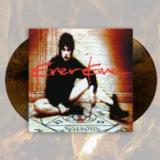
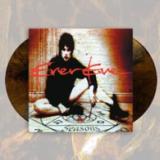
EverEve - "Seasons", "Stormbirds" & "Regret"The first three masterpieces of Germany's EverEve, (Their name is taken from a poem out of "Lord of the Rings") "Seasons" (1997), "Stormbirds" (1998), and "Regret" (1999), are deeply emotional works of art, forged in darkness, melancholy, and poetic introspection, standing today as some of the most compelling statements ever produced within the Gothic Metal movement.In the late 1990s, while countless bands attempted to define the boundaries of Gothic Metal, EverEve effortlessly rose above convention Their music was never confined by genre limitations. It drew equally from Doom Metal's oppressive weight, Gothic Rock's romantic desolation, and the emotional grandeur of Dark Wave, creating a soundscape that was uniquely their own. "Seasons " marked the beginning of this remarkable journey. A debut album rich in atmosphere and emotional depth, it introduced a band already possessing a mature artistic identity. Its songs unfold like chapters from a forgotten gothic novel, where every melody is wrapped in shadows and every lyric resonates with profound emotional sincerity.
EverEve - "Seasons", "Stormbirds" & "Regret"The first three masterpieces of Germany's EverEve, (Their name is taken from a poem out of "Lord of the Rings") "Seasons" (1997), "Stormbirds" (1998), and "Regret" (1999), are deeply emotional works of art, forged in darkness, melancholy, and poetic introspection, standing today as some of the most compelling statements ever produced within the Gothic Metal movement.In the late 1990s, while countless bands attempted to define the boundaries of Gothic Metal, EverEve effortlessly rose above convention Their music was never confined by genre limitations. It drew equally from Doom Metal's oppressive weight, Gothic Rock's romantic desolation, and the emotional grandeur of Dark Wave, creating a soundscape that was uniquely their own. "Seasons " marked the beginning of this remarkable journey. A debut album rich in atmosphere and emotional depth, it introduced a band already possessing a mature artistic identity. Its songs unfold like chapters from a forgotten gothic novel, where every melody is wrapped in shadows and every lyric resonates with profound emotional sincerity.
The follow up to her UK number 1 album This Is How Tomorrow Moves, the stark and striking fourth album by beabadoobee is named for the electricity towers that dot every major artery in the world—the strong, spindly structures that reminded Beatrice Laus of her connection to friends and family at home while she was staring down extreme disconnection and isolation on tour over the past few years.
The title can also be read as an allusion to Laus’ spiky, forceful new sound—the waves of distortion that crash and shatter across this record’s 14 songs mirroring the intense crackle you hear when walking under power lines. The pylon is also a fitting symbol for an album that reckons with the repetitive anxieties of your mid-twenties: What if I’m always going to be this way? What if life is just pylon after pylon on the road?
The album’s first single is available to stream and buy from today: “Sun Has Set” introduces Pylon as, in essence, a set of songs that began as diary entries, words that Laus thought she’d never be able to say out loud. “A lot of the songs on this record are things I wish I could have said to someone,” she says. “This song has this petty tunnel vision—it’s like, I hate you. You’re gonna stay here and listen to how much I hate you. Because I never got to say that.” The single comes accompanied by a striking first person video directed by Bea’s partner and longtime visual collaborator Jake Erland.
Ever a devotee of pure rock music—both as something to be cherished and something to be played with—Laus casts these feelings in songs that touch on classic grunge, midwest emo and ‘90s radio rock, zeroing in on a sound that is both harsher and more direct than any of her previous records. She says the music she’s loved has “always been an influence” on her music, and so for B4 she went straight to the source. A fair few of Beabadoobee’s composite influences contributed to Pylon, a fact that speaks to the goodwill and respect Laus has amassed over the course of her relatively brief career.
Hayley Williams sings on “Nothing to Prove,” a deeply anthemic indie-rock song about getting your power back from fairweather friends who just want a bit of your success. The moody “Powerlines” features a verse from Turnstile singer Brendan Yates, a master of matching vocal force with emotional nuance. Elsewhere, you’ll find contributions from Pinegrove’s Evan Stephens Hall, Deftones’ Chino Moreno, and Title Fight’s Shane Moran, as well as, on “Write Me A Letter”, production work from Laus’ longtime friends and collaborators Matty Healy and George Daniel of The 1975.
Beabadoobee will debut songs from the record on the Powerlines Tour, her first ever arena shows and biggest tour to date, taking in shows across North America, the UK and Europe this autumn-winter. The Powerlines Tour kicks off 1 October and includes stops at Madison Square Garden, The Kia Forum, The O2 and more (full routing below). Support comes from Wisp in the US, Canada and UK and Violet Grohl in France, The Netherlands, Belgium and Germany.
Born in the Philippines and raised in London, Beatrice Laus emerged as a British alternative music icon across three acclaimed albums and five EPs. She has garnered multiple BRIT Award and BBC Sound Of nominations, and won NME’s Radar award, whilst amassing over 10 billion streams worldwide and more than 12 million followers across her social channels.
This Is How Tomorrow Moves became her first record to reach number 1 on the UK Official Album Chart in 2024, following her Top 10 albums Fake It Flowers (which reached number 8) in 2020 and 2022’s Beatopia (#4). Earlier this year, beabadoobee released the one-off single ‘‘All I Did Was Dream Of You,” teaming up with Grammy-nominated best New Artist The Marías, the result of a longtime mutual creative admiration between María Zardoya and Bea.
out of Stock
Last delivered 32 days ago available to reorder, subject to availability
STEELOVER is a Belgian Melodic Rock / Metal band. The band was formed in the early 80's by three friends living in Liege, Belgium, the guitarists Pat Freson & Mel Presti and the bassist Nick Gardi. In search of a drummer, they threw their sights on Rudy Lenners (Scorpions) upon his return from Germany, having left the famous German band Scorpions. Rudy proposed to contact Vince Cardillo, a singer who had already on the one hand good experience and on the other hand he already recorded an album in London, “It will fit perfectly” explained Rudy. They all felt the magic during the first rehearsal. In no time, Steelover recorded their first album "Glove Me” which was released under the Mausoleum label. This album sold over more than 400.000 copies of which more than 76,000 in Poland. They followed with a tour across different countries like The Netherlands, Germany, France and Belgium including Forest National opening for Bon Jovi and KISS. Vince decided to leave the band. Replaced by Dani Klein, the second album was recorded but never released. Dani left the band after a short time with Mel Presti to start a new band under the name Vaya Con Dios.
The band came back in 2017 with a new E.P. (including single "Wild and Free") mixed by the legendary producer and and mixing engineer Tommy Hansen.
In 2019, Rudy Lenners greeted the audience one last time before retiring from his musical career. Vince had returned to the band at this point…after the show Vince, Pat & Nick decided to continue the Steelover adventure and in 2022 released the album “Stainless” on the Escape music label (ESM368). This was a great metal album and fans old and new longed to hear more. It’s now 2026 and Steelover are back with a brand-new recording featuring 11 tracks of hard rock / heavy metal. The band are very much in the style of that 80’s metal sound, a sort of mixture of Scorpions and Saxon if you like. These new songs all hit the mark making “Devil’s Highway” an album that needs to be checked out…
T-Spoon is a Dutch Eurodance project founded in 1991 by rapper Shalamon Baskin (known as Shamrock) and producer Remy de Groot (known as Prince Peration). They had multiple hits in the UK, Australia, Canada, Israel, Ireland, Scandinavia, South America, and, of course, their home country, the Netherlands.
The group released its debut single, “No Time To Waste,” in 1993, which became a European top‑10 hit. In the years that followed, T‑Spoon scored a series of international successes with tracks such as “A Part of My Life,” “Where R U Now" and “Take Me 2 the Limit.”
In 1997, they became known for the summer hit "Sex on the Beach" which reached the charts in the Netherlands as well as Belgium, Germany, Ireland, Scandinavia and the United Kingdom.
This brand new Greatest Hits collection is now available on vinyl and features all of T‑Spoon’s biggest successes, plus an exclusive bonus mix of “Sex on the Beach.”
T-Spoon's Greatest Hits is available as a limited edition of 1000 copies on white marble vinyl.
Katatonia released their seismic opus, ‘The Fall Of Hearts’, in 2016 to chart & media success; reaching #1 in the USA Heatseekers & #5 in the USA Hard Rock charts, #2 in Sweden's Hard Rock chart, #3 in Canada's Hard Rock chart, #4 in the UK's Rock & Metal chart, #6 in Finland, #11 in Germany & saw success in Australia with their first ever chart entry.
Katatonia had worked tirelessly touring the world since 2012's ‘Dead End Kings’, as well as expanding their fanbase through two albums on Kscope, Peaceville's sister label. 2013 saw the release of ‘Dethroned & Uncrowned’, which exploded the core of the songs on ‘Dead End Kings’ creating new moods & textures. Both releases illustrated the band’s journey toward ‘The Fall Of Hearts’, which featured a more progressive sound, a sound which provoked The Guardian to refer to the band as "bridging of the gap between metal & modern prog."
‘The Fall Of Hearts’ was the first record to feature new drummer Daniel ’Mojjo’ Moilanen with the addition of their then recently recruited guitarist Roger Öjersson (Blindead 23, ex-Tiamat), who sprinkled some blistering solos on the album. With this release, Katatonia continued to push their musical boundaries beyond the metal scene whilst drawing in new fans from across the musical spectrum, putting them on par with peers such as Opeth & Anathema, cementing their place as one of the most revered & cherished bands in modern heavy music.
This special & limited tenth anniversary pressing of 'The Fall Of Hearts' is presented on double pearl dawn vinyl, & includes gatefold sleeve.
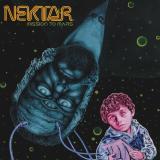
Multi-coloured vinyl LP or CD. For fans of Nektar, Van Der Graaf Generator and Progressive Rock! Formed in Germany in 1969, Nektar favoured extended compositions and concept albums over the constraints of pop. They were among the progenitors of the progressive rock movement of the 1970s as well as the jam-band scene that arose in the late 1990s. Their sound travelled well to the States, where they enjoyed Top 40 success with "A Tab in the Ocean" (1972) and "Remember the Future" (1973). Nearly 20 albums and a half-century later, the band's artistic and personal charisma has earned them masses of devoted fans. Now Nektar is broadening their horizons with the first in the "Mission To Mars" trilogy. Their first to feature new drummer Jay Dittamo, alongside longtime members Ryche Chlanda (guitars),Kendall Scott(keyboards), and original members Derek "Mo" Moore(bass) and Mick Brockett (visual environment).From the rocking title track "Mission To Mars" to the beautiful "I'll Let You In", Nektar covers all of the prog rock bases while venturing into some new melodic territories. Track listing: Mission To Mars; Long Lost Sunday; One Day Hi One Day Lo; I'll Let You In
out of Stock
Last delivered 85 days ago available to reorder, subject to availability
Swedish hard rock powerhouse THUNDERMOTHER is set to unleash a thrilling live album, Live'n'Alive! Founded in 2009 by guitarist Filippa Nässil, the band's highly acclaimed 6th studio album Dirty & Divine (2025) hit the top 3 on the Official German Rock/Metal Charts. Recorded on tour in 2025, Live'n'Alive showcases the band's sensational live energy through 19 tracks from the band's catalogue of electrifying rock anthems, from THUNDERMOTHER classics to newer hit tunes, all live and uncompromised!
Ever since the late 1950s bossa-nova revolution, Brazil’s influence on French music has been undeniable. Pierre Barouh, Georges Moustaki and a vast array of lesser known artists, all made the Musica Popular Brasileira (MPB) an axis of promotion at the service of a cool and metaphysical, modern and mixed Brazilian lifestyle. Some were seduced by the poetic languors of the bossa, some were looking for fun, and others just loved the American hybridization of jazz-bossa, jazz-samba.
What is bossa nova? One of its creators, Joao Gilberto said: "Its style, cadence, everything is samba. At the very start, we didn't call it bossa nova, we sang a little samba made up of a single note - Samba de uma nota so .... The discussion around the origins of bossa nova is therefore useless”. It is nevertheless useful to remember that these magnificent Brazilian songs, which the guitarist describes as samba, were shifted and balanced around improbable chords. "I like things that lean, the in-betweens that limp with grace," said Pierre Barrouh, quoting Jean Cocteau.
With emotion, arrangements for violin and supple guitar licks, bossa nova rapidly changed. A transformation that can be heard in the Tchic, tchic, French Bossa Nova 1963-1974 compilation, the result of a cultural reappropriation, which traveled through the United States and supplemented itself in France.
A musical revolution that has remained significant, bossa nova was born in Rio. From 1956 to 1961, Brazil lived through its golden years. In five years, the country had invented its modernist style. Elected president in 1956, Juscelino Kubitschek de Oliveira, an elegant man with a broad forehead, brandished a promising slogan: "Fifty years of progress in five years". He quickly got to work. Not worried about increasing debt, he launched the project for a new federal capital, Brasilia, designed by the communist architect Oscar Niemeyer. Volkswagen opened state-of-the-art factories and created the “fusquinha”, the Beetle. In Rio, the Vespa made its first appearance. The Arpoador Surf Club crew run into the “girl” from Ipanema, Helô Pinheiro - the tanned garota ("chick"), between a flower and mermaid, who at 17 walked by the Veloso bar, where the fiery author and composer, Tom Jobim and Vinicius de Moraes, were getting drunk on whiskey. From then on, bossa symbolized cool.
In 1958, Joao Gilberto recorded Chega de Saudade, which the directors of Philips denied, calling it "music for fagots". The marketing director, who believed in it, secretly pressed 3000 78-inch vinyls and distributed them at schools around Rio, creating a tidal wave.
American jazzmen then took over. In particular, trumpeter Dizzy Gillespie and guitarist Charlie Byrd. In November 1962, the Brazilian Ministry of Foreign Affairs funded a "Bossa-Nova" concert at Carnegie Hall in New York, inviting the genre’s pioneers. Unprepared, the show soon turned to disaster. But the troupe was invited to the White House by Jackie Kennedy. The first lady loved "the new beat" and in particular Maria Ninguem, a song by Carlos Lyra, later covered by Brigitte Bardot.
In Brazil, the 1964 military coup quickly ended this euphoria. The destructive atmosphere that ensued pushed many Brazilian musicians to leave, if not to exile. Thus, Tom Jobim, Sergio Mendes and Joao Gilberto arrived to the United States. In New York, Joao Gilberto met saxophonist Stan Getz. At the time, he was married to the Bahianese Astrud Weinert Gilberto, who had a German father. She had never sung before, but she knew how to speak English. Getz therefore asked her to replace her husband on The Girl From Ipanema. The Getz/Gilberto record with Tom Jobim on piano, was released in March 1964. Phil Ramone, the "pope of pop" was in charge of sound.
Bossa nova arrived in Paris through the classic “guitar-voice” channel (Pierre Barouh, Baden Powell, Moustaki…) But France loved jazz and Paris had already welcomed its American contributors. All these good people were to pass through Saint-Germain-des-Prés. The cabaret l'Escale became the Mecca of Latin American sound where one could find Pierre Barrouh and his friends, such as the Camara Trio, samba-jazz aces, whose only record was published by the Saravah label. With a band strangely called Les Masques (a band that included Nicole Croisille and Pierre Vassiliu, among others), the Camara Trio recorded an interesting Brazilian Sound, including the track Il faut tenir which is present on this tasty compilation of rarities.
Other enlightened musicians can also be found on the compilation, such as Jean-Pierre Sabar (songwriter for Hardy, Auffray, Leforestier ...) and the French pop rock organist Balthazar. In 1975, Sabar recorded Aurinkoinen Musiikkimatka on a Finnish label, which featured the crazy Vai, Vai, included on this record. We are now following the footsteps of Brazilian electronic musicians such as Sergio Mendes, Eumir Deodato or Marcos Valle who created funk and disco sounds on their keyboards and synthesizers. A style that influenced Véronique Sanson when she wrote Jusqu’à la Tombée de la nuit in 1969 for Isabelle de Funès, the niece of Louis and a great friend of Michel Berger - Sanson did end up singing this track on her 1992 Sans Regret record.
The pinnacle of exoticism and travel, Sylvia Fels’ Corto Maltese includes bongos, sea mist and ocean sounds. The title was taken from Jacky Chalard’s concept album written in 1974, Je suis vivant, mais j’ai peur (I am alive, but I am scared), based on Gilbert Deflez’s science fiction novel.
However, bossa nova extended the scope of popularity. "In the 1970s, I was a fan of Sergio Mendes, Getz / Gilberto. I fell in love with this music that I knew because I had been an orchestral singer, " explained Isabelle Aubret, who in 1971 delivered a composite record of covers by the very funky Jorge Ben, Orfeu Negro, Tom Jobim, Vinicius de Morais and Jean Ferrat. "I recorded this album for Meys Records in Paris, far from Brazil, with wonderful musicians, François Raubert, Roland Vincent, Alain Goraguer...". The latter wrote the arrangements for Casa Forte, a very percussive title borrowed from Edu Lobo, one of the initiators of the bossa who spent time in California. "Jazz and bossa came together and produced very rhythmic music. I love singing, it allows me to dream, to have fun, to feel a high on stage, and these songs brought me joy, made me swing, my singing felt like a dance.”
The world tours of French singers and their desire for the tropics, often brought them to Rio with its hills, forests, caipirinhas and tanned bodies. There are surprises though, like this Iemenja (Iemenja is the goddess of the sea in the Afro-Brazilian candomblé religion). Not unlike the composer and musician Jean-Pierre Lang, based in Sao Paulo, Claire Chevalier taught Brazil to Brazil. In 1970, the singer and painter published a 45-inch vinyl, Mon mari et mes amants (My husband and my lovers), under the improbable pseudonym of Clarinha (little Claire). She was then living in Rio, with her husband, Joël Leibovitz, who founded a band called Azimuth, and who owned a record label specialized in "sambas enredos" songs for samba school parades.
For its B side, she asked Pierre Perret to come up with lyrics for a song composed by Carlos Imperial: "Oh goddess of the sea, o goddess Iemenja, I bring a white rose to adorn your long hair ..." . "Perret came to see us, and we had fun, remembers Joël Leibovitz. We wrote Lemenja for fun, we recorded it at the Havaí studio, behind the Central do Brasil the central station. Erlon Chaves, the arranger who worked with Elis Regina, joined us" adding his share of Afro-Brazilian percussions and funky brass to the mix.
There is a common misunderstanding in Franco-Brazilian history: that bossa, admittedly hedonistic, is perceived as funny, even though the poets who wrote the texts are often philosophizing on the human condition. Its French interpreters pull it towards a carnival inspired universe, far removed from its fundamental essence. Thus, Jean Constantin covered the famous Samba da minha terra, an ode to the art of samba written by the classic Bahian composer Dorival Caymmi, renaming it with the enticing title of Pas tant de tchi tchi pompon: "On your pier there is no tchi tchi / when you arch your back, you know everything is alright ”(lyrics by Gérard Calvi). This expedited bossa aims for the absurd, but retains a certain elegance.
Indeed, Jean Constantin was not an idiot, the rather large man had a huge mustache and liked fantasy, (Les pantoufles à papa, Le pacha, inspired by cha-cha-cha-cha, salsa and jazz) but he was also the lyricist of Mon manège à moi interpreted by Edith Piaf, the composer of Mon Truc en plume by Zizi Jeanmaire and the soundtrack of François Truffaut’s 400 Blows. Le Poulpe, published in 1970, from which this bossa is extract, was arranged by Jean-Claude Vannier, an accomplice of Serge Gainsbourg’s Melody Nelson. In short: "There is enough of samba / By looking at the parasol / Because my poor cabeza / Is going to die in the sun".
Even the American actress Marpessa Down, who was at the heart of the bossa nova revolution with her role as Euridyce in Marcel Camus’ film Orfeu Negro, winner of the 1959 Cannes Palme d'or, fed the clichée with Je voudrais parler au petit cuica - "Tell me how you manage to always make people want to dance / It's true, I must admit that I cannot resist your magic" - in consequence, once can hear the cuica, a little drum inherited from the Bantu.
But bossa nova had many angles. Societal, of course, pushing actresses who were symbols of women's liberation like Brigitte Bardot, Jeanne Moreau, or Sophia Loren to engage in the exercise of accelerated bossa. In February of 1963, Sophia Loren made a record in French in Rome, Je ne t'aime plus, featuring the song De jour en jour, a bossa written by two Italians, Armando Trovajoli and Tino Fornai, which was released a little later by Barclay. Bossa accompanied the 1960s, a decade of moral liberation. Ann Sorel, who interpreted La Poupée des favellas, caused a sensation with L’amour à plusieurs, a provocative song written by Frédéric Bottom and Jean-Claude Vannier. As for the actress Andrea Parisy, she displayed her bourgeois cheekiness in Marcel Carné's Les Tricheurs before interpreting Les mains qui font du bien. And Magalie Noël, the friend of Boris Vian, who sung Johnny fais-moi mal, was hired to sing Une énorme Samba, composed by Alain Goraguer (arranger to Gainsbourg, Bobby Lapointe and Jean Ferrat) with lyrics by Frédéric Botton.
But in the end, of what wood is bossa nova made of? The answer is given by Christianne Legrand, daughter of Raymond the conductor, and sister to Michel the composer: "With me, with jà" - jà means "immediately" in Portuguese. In 1972, the singer, an expert in vocal jazz and a member of the Double Six, published Le Brésil de Christianne Legrand. Two songs included on the Tchic Tchic compilation that demonstrate how bossa, jazz, funk, rock, etc. work like a swiss army knife: the music is used to denounce broken systems, or miracles, HLM et ciné roman, Cent mille poissons dans ton filet, two songs from the O Cafona soundtrack, a successful telenovela broadcast, at the time in black and white, on TV Globo. The first was adapted in French by the fighter and friend of the Legrand tribe, Agnès Varda. The second is content with a play on words, jostling them into a summer fun.
Véronique Mortaigne
out of Stock
Last delivered 3 months ago available to reorder, subject to availability
They offer a path towards hippiesque stage shows, classic E-organ hues, excess and Sixties rock flair - played by young faces. Their genre is psychedelic rock - but do not miss out on the subtle Blues and Folk traces hidden in there! Established in 2022, the band is already awaiting the release of their second studio album called "Dawns on Mental Highways" in June and making their way onto the various stages of their home region - the Nuremberg Metropolitan area, Southern Germany. The Citadel - Vintage mixed with contemporary vibes, freshly served psychedelic lifestyle! Album description: Here is the second studio album by the German Psychedelic Rock Band The Citadel.
It is a curious mixture of musical styles reminiscent of the time around 1967, when bands experimented in the studio and paved new paths. So maybe, the album title "Dawns on Mental Highways" reflects the stance towards their music. Or maybe it hints at something different. Who can tell? All you need to do is listen, and there is a lot to hear: The singer seems to have a fragile voice, yet shouts her Dylanesque lyrics angrily from time to time. The organ player soaks half of the songs with a classic acid sound. The guitar player acts a folky one, throwing in acoustic tunes and flute, before bashing into heavy electric riffs. The bass player is unusually jumpy on his Tropicana-fused lines while the drummer dances and stomps easily as needed.
They offer a path towards hippiesque stage shows, classic E-organ hues, excess and Sixties rock flair - played by young faces. Their genre is psychedelic rock - but do not miss out on the subtle Blues and Folk traces hidden in there! Established in 2022, the band is already awaiting the release of their second studio album called "Dawns on Mental Highways" in June and making their way onto the various stages of their home region - the Nuremberg Metropolitan area, Southern Germany. The Citadel - Vintage mixed with contemporary vibes, freshly served psychedelic lifestyle! Album description: Here is the second studio album by the German Psychedelic Rock Band The Citadel.
It is a curious mixture of musical styles reminiscent of the time around 1967, when bands experimented in the studio and paved new paths. So maybe, the album title "Dawns on Mental Highways" reflects the stance towards their music. Or maybe it hints at something different. Who can tell? All you need to do is listen, and there is a lot to hear: The singer seems to have a fragile voice, yet shouts her Dylanesque lyrics angrily from time to time. The organ player soaks half of the songs with a classic acid sound. The guitar player acts a folky one, throwing in acoustic tunes and flute, before bashing into heavy electric riffs. The bass player is unusually jumpy on his Tropicana-fused lines while the drummer dances and stomps easily as needed.
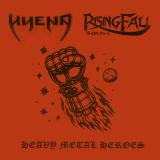
DYING VICTIMS PRODUCTIONS is proud to present Heavy Metal Heroes, a special split EP between Peru’s HYENA and Japan’s RISINGFALL, on CD and 12” vinyl formats. Heavy metal is living a global explosion, driven by underground bands that keep alive the legacy of those Heavy Metal Heroes who created eternal anthems. This titular mini-album brings together two bands separated by a great distance but united in an undying thirst for true metal. From Cajamarca, Peru’s HYENA return after touring worldwide in support of their DYING VICTIMS debut album, About Rock and Roll. Carrying forward the spirit that defined their first record, the Peruvians deliver two brand-new tracks as the first strike from their forthcoming second album. Raw and bloodthirsty, the band bring their turn-of-the-‘80s style to a boil here, more anthemic and charismatic than ever. From Tokyo, Japan’s RISINGFALL continue their ascent with new material following 2022’s DYING VICTIMS debut album Rise or Fall and last year’s self-released EP Dungeon’s Call. After their performance at Germany’s Keep It True Rising Festival, the band has established itself among today’s true torchbearers of heavy metal. Their two brand-new tracks here bring a dazzling display of old-metal values filtered through that uniquely Eastern lens. Heavy Metal Heroes stands as a statement of real underground heavy metal: forged in tradition, carried across continents, and kept alive by those who remain faithful to its sound and spirit. In support of the release, HYENA and RISINGFALL will join forces for a co-headlining triple strike of shows in Tokyo in June
Berlin lo-fi crooner Der Assistent returns with "Ultramarin", a sun-faded suite of soft-focus pop, Balearic grooves and late-night yacht moods drifting between languages, moods and references – slightly surreal, and quietly melancholic.
Following the tropical haze of its predecessor "Amnesie am Amazonas", his third album makes a slightly bigger splash: classic late-80s digital pianos, downbeat grooves and flashes of dub-reggae intertwine with subtle soprano and alto saxophone lines that drift between lounge melancholy and nocturnal jazz.
Laid-back opening cut “Wenn der Scirocco weht” pays homage to Japanese lovers rock, while the dubby downbeat title track celebrates the color blue in French, English, Italian and German, echoing situationist slogans and painter Yves Klein’s idea of “the invisible becoming visible.” Lead single “Mann am Telefon” dives into hazy yacht-pop and lo-fi soul, gradually unfolding into an instrumental outro that recalls the early synth romanticism of Vangelis.
Across the album, Der Assistent traces a playful tale of split personalities – with subtle nods to Fight Club and Blade Runner – culminating in the lush closing 80s R&B ballad “Total Confusion”.
Written, recorded, produced and mixed entirely by Der Assistent, Ultramarin also inaugurates his new imprint of the same name.
RIYL: Fishmans, Eddie Chacon, The Zenmenn.
out of Stock
Last delivered 72 days ago available to reorder, subject to availability
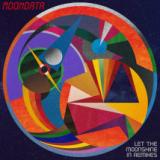
Moondata’s little-known sole single, 1984’s decidedly Balearic, jazz-funk/boogie fusion gem ‘Let The Moonshine In’, is a very important record to the Rotation Sound System crew. It has become a familiar favourite at their annual Rotation Garden Party micro-festival and formed the centrepiece of their first compilation, summer 2025’s superb Everything You’re About To Hear Is True Volume 1. It’s increasingly rare these days for an artist from the 80s to still have their master tapes but even rarer still for them to have the multitrack tapes too. This is something of the holy grail when it comes to licensing old music so when it happens the opportunity to remix and create new versions needs to be grabbed with both hands.
The original record, a genuine rarity beloved of synth-loving crate-diggers, had an unusual gestation. Originally recorded in demo form by musician Jean-Marie Gogniat, it was turned into a finished single by a group of German musicians with a little help from lyricist and vocalist Joe Mwenda, and a crew of backing vocalists whose number included a locally based American singer – a pre-fame Jennifer Rush. Fittingly, the pre-vocal instrumental mix, which has sat unreleased since 1984, is included as a bonus track on the digital edition of this new remix package. The Rotation Sound System crew’s mixes, headed up by long-serving producer Dean Meredith, sprinkle 21st century magic across Gogniat’s one-off masterpiece while retaining core elements of the original and offering nods aplenty to club-focused sounds of the 1980s. They are, in effect, the versions the track deserved – but never got – back in the mid 1980s.
To begin, Meredith reunites with long-time production partner Andrew Meecham for the pair’s first remix as Chicken Lips in three years – a typically sparse and spaced-out ‘Malfunction Dub’ with delay-laden synths, vocals and guitar snippets sit over a sparse post-electro beat and bass guitar. Meredith then joins forces with fellow Rotation Sound System member Ben Shenton for takes under their two bestknown aliases. First, they don the T-Kutt guise for some dubbed out, funky bass guitar-propelled boogie-meets-proto house action that rocks out a killer, Clavinet-expanded groove while spinning in talkbox and backing vocals.
The pair then re-emerge as Mind Fair, famed for their releases on Golf Channel Recordings and their own Rogue Cat Sounds, and deliver a warmer, deeper and more organic-sounding take that’s as languid and tactile as it is warm and saucereyed. To round off the vinyl version of the EP, Rotation Sound System’s other core members – Rob J, Rich Hall and Stuart Robinson – don the now-familiar Wrekin Havoc guise and re-invent the track as a raw, analogue-rich shuffle through 1980s electro – all squelchy synth-bass, stabbing, cut-up vocal samples, chiming synth melodies and echoing beats. The expanded digital download edition of the EP contains a trio of additional bonus rubs. Alongside instrumental versions of the T-Kutt and Mind Fair mixes, we also get a full vocal T-Kutt rework that adds back in Joe Mwenda’s beautifully delivered verses. These additional DJ tools round off a beautifully rendered set of re-imaginations of a genuine cult classic. Gogniat, the man who started it all way back in the summer of 1984, certainly approves.
out of Stock
Last delivered 4 months ago available to reorder, subject to availability
Germany's most exciting new indie voice BROCKHOFF opens a bold new chapter and announces her debut album Easy Peeler, out June 5th 2026 via PIAS Recordings. “Easy Peeler” is the ambitious culmination of BROCKHOFF’s musical coming-of-age journey. It's an album that bridges grunge-laced indie rock and early-2000s pop textures, wrapped in a deeply authentic songwriting voice. It’s a reminder that even when life feels uncomfortable, there’s beauty in being an easy peeler. For Fans of: Modern indie acts Phoebe Bridgers, Snail Mail, Soccer Mommy as well as 90s bands such as Weezer or The Cardigans Tracklist: 01. Easy Peeler 02. The Carpet Song 03. Willows 04. Sunny Day (Deadline) 05. Blue Star 06. Front Row 07. Nothing Can Be Fixed In This Place 08. Dirty Dream 09. Japanese Garden# 10. I've Stopped Getting Chills For A While Now 11. Cruel 12. Sleep It Off 13. It Never Happened 14. Hot Wheels
The Flaming Sideburns' debut album remastered 25th anniversary edition out in June via Svart Records In the beginning of the new Millennium, The Flaming Sideburns were getting ready to record our first proper album. First we rented Ismo Alanko’s old rehearsal room in Otaniemi, Espoo, and turned it into a recording facility. Old analog tape recorders, vintage microphones, a Space Echo unit, and other top equipment were brought in directly from Berlin, Germany by the album’s producer, Jürgen Hendlmeier. As producer Jürgen Hendlmeier recalls the final steps of the sessions: “Fact is, when we mastered the record at Seawolf Studios we had no real idea what to do with this equipment. We just wanted to make it louder and louder – that was all we wanted. We wanted to go to twelve instead of eleven.” When Hallelujah Rock’n’Rollah was first released, it did not sound as “natural” as it had originally been planned to be – but the album was a huge success for the band nevertheless. For this remastered edition, Hendlmeier dug deep enough to finally find the files containing all the original mixes. The album’s producer then remastered the album himself, and the end result is far more convincing. Compared to the original version—which is already very good—the album now feels as if it has been completely remixed for the better. As a bonus, on the original album some of the songs were edited shorter, but now all of them appear in their original length. -Eduardo Martinez
The Flaming Sideburns' debut album remastered 25th anniversary edition out in June via Svart Records In the beginning of the new Millennium, The Flaming Sideburns were getting ready to record our first proper album. First we rented Ismo Alanko’s old rehearsal room in Otaniemi, Espoo, and turned it into a recording facility. Old analog tape recorders, vintage microphones, a Space Echo unit, and other top equipment were brought in directly from Berlin, Germany by the album’s producer, Jürgen Hendlmeier. As producer Jürgen Hendlmeier recalls the final steps of the sessions: “Fact is, when we mastered the record at Seawolf Studios we had no real idea what to do with this equipment. We just wanted to make it louder and louder – that was all we wanted. We wanted to go to twelve instead of eleven.” When Hallelujah Rock’n’Rollah was first released, it did not sound as “natural” as it had originally been planned to be – but the album was a huge success for the band nevertheless. For this remastered edition, Hendlmeier dug deep enough to finally find the files containing all the original mixes. The album’s producer then remastered the album himself, and the end result is far more convincing. Compared to the original version—which is already very good—the album now feels as if it has been completely remixed for the better. As a bonus, on the original album some of the songs were edited shorter, but now all of them appear in their original length. -Eduardo Martinez
Brånd is one weird/post black metal act from the Upper Austrian town of Linz.
Started off in 2015 as a solo act by Vritra (also in Kringa and Weathered Crest) with the need for a form of expression free from perfection or boundaries, over the past ten years the ever-evolving project ventured into various soundscapes, from crude black metal to lo-fi ambient and from ferocious post-punk to psych downer rock, all while splitting releases with extreme underground torchbearers like Absolute Key, Calvary and Rosa Nebel.
Joined by musicians to evolve old and new ideas, Brånd debut full-length album grew from 4-track demos gathered over the last decade to become an album of richly arranged songs from all over the fields of interest, breaking from their lo-fi tradition to new horizons.
To describe thoroughly “Tåg & Nåcht” is possibly the hardest task to do, given all the influences that are skilfully intertwined and perfectly balanced. In this witches’ brew the most schooled listeners will hear some angular post-punk à la Gang Of Four sustaining pagan declamations in the vein of Fenriz folk metal excursus Isengard. Straight forward dark anarcho punk assaults are mitigated by almost new age juxtapositions. Traces of 70’s German krautrock like La Düsseldorf are melted into a heavy metal cast, while wind instrument raids that are equally James Chance and Death In June seem to drop when least expected.
The sound is crunchy and surprisingly warm, contrary to what one might expect of a band emerging from a black metal background. But right now, Brånd is so much more than this: they can master a wide range of sounds that span from 70’s space rock, passing through 80’s post-punk and UK82, reaching 90’s black metal and 2000’s blackgaze, all in one incredibly coherent album. If this sounds too good to be true, suit yourself and press Play.
Split released with Tour De Garde in US/CA.
Brown Spirits are a super-heavy psychedelic three-piece band who play raw energetic super-charged psych rock heavily influenced by krautrock, freejazz and deep funk music from the 1970s that gives them a truly unique and highly addictive sound. The group record and mix their own music to ¼-
inch analogue tape at home maintaining a strictly DIY-ethic.
Brown Spirits are Tim Wold, Agostino Soldati and Ash Buscombe. The group are from the suburbs of Melbourne, Australia, home to an ever-growing
music scene that includes Amyl and the Sniffers, King Gizzard and The Lizard Wizard, Surprise Chef, Tropical Fuck Storm and more.
The group have already released two superb critically-acclaimed album on Soul Jazz Records – ‘Cosmic Seeds’ and Solitary Transmissions’.
Soul Jazz Records are releasing three new albums from the Australian group on one day. All three albums are super-limited one-off special coloured
vinyl pressings of just 500 copies each that will all be deleted on the day of release.
These three albums were originally released (between 2017-2020) in long-deleted very short run-editions - either self-released in Australia or on an
indie German psych label. No copies of Brown Spirits #2 or Brown Spirits #3 are currently available anywhere in the world. Both of Brown Spirits two
earlier releases for Soul Jazz Records are also sold out on vinyl and these three super-limited special edition LPs will also sell out.
We’ve all experienced that feeling when a song instantly transports us back to the moment we first heard it and became completely hooked. For Linda & Norm, “Moments to Want You” by the Jerry Lillard Band carried the warm vibes of a Parisian summer in 2019. Fast-forward to 2025, they revisited the track with a complete twist, nudging it toward an AOR resurgence for the label’s Soft Rock for Hard Times series.
The original version by the Jerry Lillard Band was released in 1981 on a German rock sampler, created in protest against the closure of their rehearsal space in an old school building. “Moments to Want You” stands out for its haunting melody, heartfelt lyrics, and compelling arrangements. Inspired by these elements, Linda & Norm cast the song in a new light, leaning into ’80s-tinged guitar pop à la Trevor Horn, with hints of psych bedroom pop in a distinctly Californian fashion.
Joining the release are two favorite artists of theirs, further expanding the song’s potential into dancefloor territory. Sydney’s own DD Mirage delivers the smoky, dubby disco blend we’ve admired since their debut album, while seasoned producer Justin Van Der Volgen brings the B-side magic, echoing the authentic stripped-back dub approach in the vein of Pettibone and Baker. To round it out, an instrumental version, along with an extended mix courtesy of Justin, complements the release, making it a 12” worth pulling out whenever the moment calls.
out of Stock
Last delivered 5 months ago available to reorder, subject to availability
BCUC – Bantu Continua Uhuru Consciousness – have been channeling the spirit of Soweto for over twenty years. Indigenous funk, hip-hop consciousness, and punk rock energy fused into something utterly original and deeply rooted. Their mantra: Music for the people, by the people, with the people. From humble beginnings rehearsing in a shipping container, a stone's throw from the church where Desmond Tutu organized the escape of the most wanted anti-Apartheid activists, they kept believing in their dream of self-empowerment. Today they command festival stages worldwide: Glastonbury West Holts, Roskilde, Afropunk Brooklyn, WOMAD, Fusion, Sziget, FMM Sines, Beaches Brew, Boomtown, Colours of Ostrava, Couleur Café – to name just a few. In 2023, BCUC were honoured with the prestigious WOMEX Artist Award, an accolade usually reserved for more established artists, in recognition of their fearless work and transcendent live performances.
THE ROAD IS NEVER EASY
The Road Is Never Easy is BCUC's fifth album and their debut on Outhere Records. On this new offering, BCUC take listeners on another Afro-psychedelic journey into the soul of Soweto. It feels like a gospel sermon colliding with a punk concert, "guaranteed to touch untapped corners of your soul" (OkayAfrica). BCUC's music is deeply rooted in history and echoes the voices of the ones who came before. The road was never easy for the people of Soweto who originally came to work in the mines of Egoli, the City of Gold, Johannesburg. When apartheid finally ended after a long struggle, it was hoped that life would improve. But more than 30 years later, many of those initial hopes and dreams are still waiting to be fulfilled. This album is about that struggle. The album contains 10 brand new songs – a record for BCUC, whose previous albums featured an average of 3 songs. It represents the culmination of more than two decades of performing together and building a reputation as a powerful live act. These ten songs encapsulate that same live energy, each one building gradually and drawing you into BCUC's Afro-psychedelic stream of consciousness. It's a seismic tour de force through life in Soweto today. Songs like Amakhandela (Breaking All the Chains) connect history to daily life: "How is this precious metal inflicting so much pain in us," sing BCUC, "this government has been telling us we are free, but we don't benefit from being free." The album also talks about all the hopes and dreams that remain: "I have too many wishes and dreams in my head," BCUC sing in Um duma khanda, "I think I am losing my mind". The album ends with the soothing Matla a rona ke Bophelo, "our strength is life", praising the spirits and thanking the elders for protection. The Road Is Never Easy is about the harsh reality of life in Soweto, where "people always carry heavy loads". BCUC are street poets trying to deal with that burden: sometimes revolutionary, sometimes soothing, but always hopeful and compassionate. "When you are from Soweto you can't retreat nor surrender." (Sebenzela)
RECORDING
The album was largely recorded in Munich, Germany during tour breaks over two sessions, each three days long. It took place in a small studio located in a German WW II bunker converted into rehearsal spaces. The songs were recorded in one take altogether in one room, with only a few overdubs added, mainly backing vocals, by BCUC at Fourways studio in Johannesburg. BCUC have created their own distinctive way of writing, or rather, finding and creating their songs. The recording process is like an improvised live performance. They bring their ideas into a zone where the music, the rhythm and the spirits take over until the song starts to form. In this Afro-psychedelic zone BCUC create their unique poetry that feeds on the dreams still dreamt, the hopes, the fears and the temptations lingering everywhere. BCUC's songs need to breathe and time to build. The right take was the one when the song took over, and just like their live performances, no one knew beforehand where the song would take them. During the recording, BCUC just let it all flow out: inner turmoil, cries of rebellion, but also resilience and a search for healing, love, unity and compassion. You don't have to be from Soweto to feel the deep meaning and impact of this music. In these times of so much hate and division, BCUC are like a campfire for people to gather around.
PRODUCTION & ARTWORK
"BCUC have a unique magic," says Outhere's Jay Rutledge, who produced the album. "It blew our minds. It's like punk and pure gospel at the same time. Their music can make you dance and it can make you cry, all at the same time. And when the song is over, you feel you're not alone in this world anymore. We felt compelled to do this." The album cover is based on a matchbox design, matches being a common household item in South Africa even today. "These were the matches people used to burn government buildings and cars," explain BCUC. Little messages, addresses, or phone numbers used to be scribbled on the back of these boxes; each one a reminder of the strength, resilience, and resistance that once drove the struggle for freedom in Soweto. BCUC keep this flame burning. The Road Is Never Easy is a heavy spiritual road trip, a deep dive into the subconscious of Soweto and a quest for truth, justice and sanity in this crazy world. BCUC tackle the harsh realities of the voiceless, guided by the spirit world of their ancestors. Rather than reinforcing stereotypes of poverty, BCUC's portrayal of Africa is one rich in tradition, rituals and beliefs. "We bring fun and Afro-psychedelic fire from the hood," says vocalist Kgomotso Mokone.
out of Stock
Last delivered 5 months ago available to reorder, subject to availability
Multi-coloured vinyl LP or CD. For fans of Nektar, Van Der Graaf Generator and Progressive Rock! Formed in Germany in 1969, Nektar favoured extended compositions and concept albums over the constraints of pop. They were among the progenitors of the progressive rock movement of the 1970s as well as the jam-band scene that arose in the late 1990s. Their sound travelled well to the States, where they enjoyed Top 40 success with "A Tab in the Ocean" (1972) and "Remember the Future" (1973). Nearly 20 albums and a half-century later, the band's artistic and personal charisma has earned them masses of devoted fans. Now Nektar is broadening their horizons with the first in the "Mission To Mars" trilogy. Their first to feature new drummer Jay Dittamo, alongside longtime members Ryche Chlanda (guitars),Kendall Scott(keyboards), and original members Derek "Mo" Moore(bass) and Mick Brockett (visual environment).From the rocking title track "Mission To Mars" to the beautiful "I'll Let You In", Nektar covers all of the prog rock bases while venturing into some new melodic territories. Track listing: Mission To Mars; Long Lost Sunday; One Day Hi One Day Lo; I'll Let You In
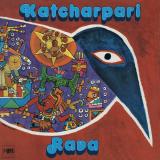
The breakthrough album. Enrico Rava's second solo record, recorded in Milan in January 1973 and released on the German BASF label, is nothing less than a cornerstone of Italian jazz-rock - the record that caught Manfred Eicher's attention and opened the doors to ECM. Rava himself has called it his breakthrough, and history proved him right.
The lineup is killer: John Abercrombie on guitar, Bruce Johnson on bass, Chip White on drums. Four musicians operating at the absolute peak of early seventies fusion energy - electric, cosmopolitan, burning with that particular fire that only existed in that brief window when jazz met rock and nobody knew the rules yet. Abercrombie, already on his way to becoming one of the most distinctive voices in electric jazz guitar, delivers some of his most ferocious early work here. White's drumming is relentless, pushing the music forward with an intensity that never lets up.
If Miles' Bitches Brew-era speaks to you, if Ian Carr's Nucleus gets you moving, if you know Sun Ra's Lanquidity and Don Cherry's Relativity Suite by heart - this is essential listening. Rava's vision was already fully formed: South American rhythms, Mediterranean warmth, free jazz ferocity, rock power - all flowing together without borders or categories. By the early seventies, Rava had absorbed everything - the New Thing, the European free scene, the electric revolution coming out of Miles' studio - and forged something entirely his own.
The seven tracks cover serious ground. "Bunny's Pie" introduces the music with an almost cosmic atmosphere of suspense, hovering in that liminal space before it trails off into the up-tempo vibrant frenzy of "Trial N. 5" - Abercrombie and Rava trading swirling solos at full intensity, the rhythm section locked in tight. "Dimenticare Stanca" moves from Rava's expressive balladic intro into pure funk, guitar and trumpet steering over the rhythmic drive with absolute confidence. The title track carries the lyrical feel and cadence of an Incan-Peruvian folksong - that cosmopolitan spirit made audible. "Fluid Connection" rides a funky bass riff into fusion heaven, with standout trumpet and guitar solos that build and release with perfect tension. "Cheerin' Cherry" pays homage to the great Don Cherry - Rava's spiritual mentor and fellow traveler in world music - exploring a North African soundscape that points toward the global jazz to come. Johnson's "Peace" closes the album with a minute and a half of serene, blissful calm - a moment of stillness after the storm.
This audiophile reissue - cut from the original masters, pressed by Pallas in Germany on 180gm vinyl, housed in a thick laminated hand-glued gatefold - does full justice to an album that remains a collector's holy grail.
New “Inversions” of drone rock pioneers Earth’s debut release. A collaboration between Dylan Carlson and Black Noi$e (Armand Hammer, Danny Brown, Earl Sweatshirt) formed in mutual respect and appreciation for one another. Both artists were intrigued by the creation of vast musical landscapes and the connection of music, with its ability to transport the listener. The music of Earth was recognised and celebrated for moving at a glacial pace and yet this new collaboration surprisingly saw Black Noi$e slowing things down even further.
The debut, which originally came out in 1991, notably featured Kelly Canary and Kurt Cobain on vocals on the tracks “A Bureaucratic Desire for Revenge Part 2” and “Divine and Bright”. Black Noi$e reimagines the original recordings with his experimental sensibility and innovative multi-instrumental, cross genre exploration. Applying contemporary electronics to the heavy droning bass and guitars and languid rhythms, this inversion oscillates and reverberates with a different kind of energy whilst simultaneously highlighting the much loved low slow and distorted properties of the original.
‘Extra Capsular Extraction’ was the first music Dylan made with Earth and his first time in a recording studio, which he recalls at the time as being “terribly exciting”. It also marked the first time collaborating with others and seeing it reified into a tangible object or product, a spirit that Dylan has carried through to the present. The original album is a document of a specific period and Dylan’s creative development. These inversions of Extra Capsular Extraction are, to quote Dylan, “an exciting way to reintegrate them into the present time and with my more expanded conceptions of musical endeavours”.
"Doom-metal innovators" Pitchfork.
"With guitars ramped up to the nth degree, but tuned to gut-wrenchingly low frequencies, Earth carved out a veritable canyon of pure molten drone, one which would have a profound influence on modern metal music." The Quietus
REVNOIR is one of the most exciting new forces to emerge in the rock and metal world. Officially unveiled in September 2023, the project has been quietly evolving behind the scenes for nearly two years, led by the talented trio Maxime Rodriguez-Medallo, Julien Ho-Tong, and Kaz Nakazawa. Blending elements of modern rock, crushing metal, and dark electro, REVNOIR crafts a powerful, melodic sound that resonates with both emotional depth and cinematic intensity. Since their formation, the band has made impressive waves—already surpassing 1 million Spotify streams across their four latest singles and building a loyal listenership with over 70,000 unique monthly listeners on the platform.
Their explosive live energy was on full display when they joined Future Palace on a European tour and later proved their rising star status with a sold-out headline show at La Maroquinerie in Paris (550 capacity) in April 2025. Now signed to Arising Empire, REVNOIR are gearing up for their next big chapter: supporting Coldrain on their massive UK/EU headline tour this winter. Spanning 17 dates across 10 countries, including major stops in the UK, Germany, France, Netherlands, and more, the tour marks Coldrain’s first European run in over four years and is set to draw thousands of fans each night. As main support on every date, REVNOIR will be performing in some of the biggest venues of their career so far—introducing their sound to a whole new wave of international listeners and firmly cementing their place among the most promising heavy acts of this new generation.
Shoreline’s new album Is This The Low Point Or The Moment After? is built around an unanswerable question: when you hit rock bottom, can you tell where things begin to turn? Meant to be heard front to back, the record starts in a subdued, reflective place, grows progressively heavier, and ultimately lands on a more hopeful note. Drawing from the current wave of emo and hardcore while reflecting the collision of Germany’s alternative scenes, the album shows a band with a clear musical vision focused on big melodies, heavy riffs, and an honest DIY punk foundation.
With `The devil's door' And Also The Trees, one true original Post-Punk/New Wave band, presents a quiet storm of an album. At times filmic, poetic and intense with an undercurrent of dark psychedelia. It completes a trilogy of works `The Bone Carver', `Mother-of-pearl Moon' and now `The devil's door' created by the current line-up. Here there are signature `And also the trees' poetic lyrics, orchestral guitar and soundtrack influenced songs inspired by newsreel, oil paintings and folklore. But with this work we have the addition of some surprising instruments that skew the album towards a world where John Barry meets Bela Bartok. And also the trees (AATT) formed during the original post-punk era in rural Worcestershire, an environment that has provided a constant inspiration to a group whose music has often explored the dark underbelly as well as the beauty of the British countryside. They are renowned for their captivating live performances, a unique style of mandolin-like electric guitar, evocative lyrics and dark jazz rhythms - not to mention a creative independence fiercely preserved for over four decades. Back then AATT immediately caught the attention of Robert Smith of The Cure, who invited them to tour with his group on several occasions. Smith was also involved with their early recordings alongside his bandmate Lol Tolhurst, who produced their first records. This longterm friendship and mutual respect was further solidified when AATT were invited to perform at the Robert Smith curated 2018 Meltdown festival in London. This July AATT appear as The Cure's special guests at the Nimes festival. Founded by singer Simon Jones and his guitarist brother Justin, AATT have maintained a continuous presence on the post-punk, and alternative rock scenes worldwide, with a solid fanbase e.g. in Germany.
Alongside with the release of the new album “Tote Winkel”, Sankt Otten will be delighting us with another limited vinyl bonus release. “Hymnen und Helden” (hymns and heroes) is a collection of cover versions created over the last few years. As the album title suggests, it pays homage to self-proclaimed musical hymns and heroes from the seventies and eighties.
HYMNEN UND HELDEN – track by track: A well-known Moog sequence leads us on the way into the cover album. Giorgio Moroders 1977 disco classic “I feel love” has been tackled here. Sankt Ottens instrumental interpretation starts out familiar, but ends in a slightly disturbing disharmony of mellotron and ebow guitar.
The instrumental version of the melancholy Wipers anthem from 1983 starts with a rather unusually fast 808 beat for Sankt Otten. The 80s electronic echoes suit the punk rock earworm “Doom Towen” surprisingly well.
Without Deutsch Amerikanische Freundschaft, more unusual electronic music would hardly have been conceivable in Germany in the early 1980s. “Alles ist gut” tribute to this band and singer Gabi Delgado-Lopez, who passed away in 2020 and with whom they shared the festival stage in 2015. Gabi‘s lyrics are rendered by text- to-speech software with the voice of an unknown Claudia.
“Wishing (If I had a photograph of you)” was made famous in 1982 by A Flock of Seagulls. This record was regularly played on Stephan Ottens turntable back then. Reason enough to remember this with “Sehnen (Hät- te Ich von dir eine Fotografie)”. The recordings for this album were made in 2007 and have been updated and completed in the last year. Carsten Sandkämper, who was also featured on Sankt Ottens debut album “Eine kleine Traurigkeit”, contributed the vocals and lyrics.
The Swiss band Grauzone became famous with the NDW hit “Eisbär”. Instead of this title, they took on the B-side of this single with “Ich liebe sie”. A synthpop love song full of innocence, stylishly sung by Carsten San- kämper and refined with Kraftwerk-like choral sounds and an herbaceous motorik beat.
The band has enjoyed a personal friendship with Harald Grosskopf since their collaboration in 2013 on the album “Messias Maschine”. With “So weit, so gut”, they take on his little hit from the album “Synthesist”, which is one of the gems of the synthesizer albums of the eighties.
“Kriegsmaschinen, fahrt zur Hölle” is an anti-war song from 1974 by Günter Schickert, the Berlin master of the echo guitar. Unfortunately, the lyrics are still relevant. Oliver Klemm contributes the delay guitars and Stephan Otten puts the lyrics through a vocoder. Sankt Otten compress the 17-minute original to just under 5 minutes and move it musically from the 70s to the 80s.
Sankt Otten’s adaptation of David Bowies “Heroes” is equipped with warm Juno 106 sounds, ebow guitar and synthesizer pads. The German “Helden” version, known from the movie Christiane F. – Wir Kinder vom Bahnhof Zoo, is sung in a touching way by Carsten Sandkämper.
New York-based Rafael Anton Irisarri was responsible for mastering the record. As part of the series with graphic covers, this die-cut artwork was also created by Mexican designer Daniel Castrejon. The one time only vinyl pressing, limited to 350 copies, comes in a beautifully designed die-cut cover and colored vinyl. The Osnabrück duo Sankt Otten, founded in 1999, have been releasing on Denovali since 2009. The band has dedicated itself to the holy trinity of Krautrock, Ambient and contemporary Electronics.
d Sehnen [Haette ich von Dir eine Fotografie]
out of Stock
Last delivered 7 months ago available to reorder, subject to availability
At the start of this summer, following a three-year hiatus for Daphni (punctuated only by his first ever collaborative Daphni track ‘Unidos’ alongside Sofia Kourtesis), he dropped ‘Sad Piano House’. The track represented something of a continuation in the Daphni catalogue, its roots growing from Cherry’s ‘Cloudy’ and its subsequent Kelbin remix, something in that song’s makeup having a profound effect when played on dancefloors by Snaith and countless others. ‘Sad Piano House’ deployed more intangibly irresistible bendy piano to equally satisfying effect and continues to achieve similarly rhapsodic dancefloor saturation.
Though a sizeable gap for Daphni releases, between Cherry and Butterfly however of course sits Honey, the latest Caribou album and one that saw the more instantaneous and dancefloor leaning traits of Daphni peaking through the cracks more than ever before. This blurring of the lines leads to an intriguing collaboration in Butterfly’s lead single ‘Waiting So Long (feat. Caribou)’. An unlikely duo - in that both artists are the same man, Dan Snaith - ‘Waiting So Long’ is not so much an identity crisis, ego trip, or the result of a chemical spill in the Snaith laboratory. It’s simply a track that Snaith felt for the first time belongs to both aliases, and might appeal to fans of both. He has never sung on a Daphni track before, and did not set out with the intention to do so this time, and yet this strange billing was born.
Daphni music has always been Snaith’s way of hitting directly to the core of the dancefloors he spends so much of his time playing to, and those dancefloors have been steadily expanding as his name grows, with the music following suit. This album however also draws from further back with a definite kinship to the very first Daphni album, the invigorating bag of ideas that was Jiaolong.
Butterfly is a showcase of the wonderful variety and surprising twists and turns that made that album such an exciting new prospect and that still to this day make Snaith such an intriguing DJ. There are more heavy hitters here, tracks that fill those dancefloors better than anyone, like ‘Clap Your Hands’ which picks up the energy of ‘Sad Piano House’ and flips it, exposing the gritty and intoxicating underbelly of Snaith’s hitmaking side, while retaining the playful urgency that runs through all of his work of late. Meanwhile ‘Hang’’s comic-strip horns are unpinned by gleeful force, unrelenting and thrillingly unshakeable. Elsewhere though comes a clutch of other tunes that might creep out somewhere more off the beaten path, a path Snaith has never stopped seeking in amongst his larger billings. ‘Lucky’ is squirmy and elusively intoxicating, ‘Invention’ skitters down meandering, inviting corridors, ‘Talk To Me’ grumbles and broods in the murk, and ‘Miles Smiles’ could roll on endlessly, so confident in its groove. There are no obvious peaks in these tracks or unifying moments, in fact many of them really have no business being on the dancefloor at all, and yet in the right setting, they could be the most fun to be had all night.
One such club is a good microcosm for the ethos of Butterfly as a whole. “Around the time I was finishing up this album I played a long set in a club called Open Ground in Wuppertal, Germany.” Snaith recalls, “It’s kind of, in one sense, the platonic ideal of the kind of club I’d want to play in. Every single decision has been taken, at great expense, with the aim of making the perfect sounding medium sized club room. But on top of it being the perfect acoustic environment it also is run by an amazing collection of people in a way that gives it a sense of community that dance music at its best provides. It is an absolute pleasure to play in that room to a crowd of people who come from all over. Playing in there you feel like you can play anything, and I played works in progress of pretty much every track on this album in my set there. Don’t get me wrong, I love playing a short set at a festival or in a more raw warehouse kind of club where you bang it out and only really functional music works but on record I guess the point of these Daphni records is to keep in mind a more expansive idea of dance music where the parameters are broad and the church is broad. I think that actually, putting really functional stuff next to weirder tracks (both on an album and in a dj set) might be the thing that’s still most interesting to me.”
This is the feeling that’s most palpable on Butterfly, and in every single time you see Snaith DJ. Right from the inception of the Daphni alias - and even before that – the thrill of trying stuff out, pushing at the boundaries has always been there and on Butterfly is present in all its twists and turns. It leaps all over the place and yet it hangs together, never feeling like a grab bag of dancefloor utilities but rather a distillation of all the strings to Snaith’s bow, exhilaratingly human and unified by one singular concept – simple and joyful exploration.
out of Stock
Last delivered 86 days ago available to reorder, subject to availability
The journey through French-speaking pop archives continues with this fifth volume, packed with fuzz, gimmicks, and dissent. Far from the charts, the selected tracks display a great creative freedom, often backed by corrosive humor. Welcome to the surprising, kaleidoscopic, and colorful world of the late sixties and early seventies, Wizzz!
Born in Montauban, Robert Pico stumbled into music by chance when he met René Vaneste, then artistic director at Pathé-Marconi. René brought him to Paris to record his first 45 RPM EP in 1964. A year later, Pierre Perret introduced him to Vogue, where he recorded his second album with Claude Nougaro’s orchestra. Sylvie Vartan then introduced him to RCA, where he recorded four singles, including the astonishing "Chien Fidèle," a track backed by a hair-rising fuzz guitar. Alongside his solo career, he also composed for other artists like Alain Delon (the song was recorded but remains unreleased), Magali Noël, Bourvil, and Georges Guétary. In the Paris of the sixties, he mingled with Mireille Darc, Elsa Martinelli, Marie Laforêt, France Gall, Françoise Hardy, Petula Clark, Régine, Dani, Serge Gainsbourg, Joe Dassin, Franck Fernandel, Charles Level, and Roland Vincent. Despite his efforts and winning a Grand Prix Sacem for his final record, Robert Pico didn’t achieve the expected success in show business and decided to leave Paris and return to the Southwest, where he devoted himself to writing. He is the author of 23 books (including Delon et Compagnie, Jean-Marc Savary Editions 2025, a memoir about his youth and his many encounters). Today, he is relieved to never have become a celebrity and devotes himself to his work with passion.
In 1969, the Franco-Italian movie Erotissimo was released, directed by Gérard Pirès (who later directed Taxi in 1998, written and produced by Luc Besson). This pop comedy features Annie Girardot, Jean Yanne, Francis Blanche, Serge Gainsbourg, Nicole Croisille, Jacques Martin, and Patrick Topaloff. The soundtrack was written by Michel Polnareff and William Sheller, with lyrics by Jean-Lou Dabadie. "La Femme Faux-cils," performed by Annie Girardot. It recounts the feelings of a rich CEO's wife who seeks to develop her sex appeal under the influence of advertisement and magazines. Groovy, sparkling and light, this track, with ITS lush arrangements humorously critiques consumer society and feminine beauty standards.
“Je suis l’Etat” (1967) is the flagship track of the first EP by singer-songwriter Spauv Georges, aka Georges Larriaga, better known as Jim Larriaga (1941-2022). Born into a family of bakers, the young man was initially planning to become a hairdresser when he discovered English-speaking music through Elvis Presley and the Beatles. After this revelation, he decided he would become a songwriter and gave himself five years to succeed. He recorded his first two EP’s independently for RCA under the pseudonym Spauv Georges; meaning “that poor George”, a nickname given to him by the mother of her friend Jean-Pierre Prévotat (future drummer of the Players, Triangle, or Johnny Hallyday). Portraying a depressed and eccentric young man, Spauv Georges created corrosive and amusing songs that didn’t reach a wide audience, despite a TV appearance with Jean-Christophe Averty.
Supported by his loyal friend and fellow songwriter Jean-Max Rivière, Georges Larriaga met the future singer Carlos in the early '70s, then Sylvie Vartan’s assistant. He wrote songs for Carlos, including the popular "La vie est belle," "Y’a des indiens partout," and "La cantine", which went onto become a huge hit in 1972. He also composed for Claude François (“Anne-Marie”, 1971), Charlotte Julian (“Fleur de province”, 1972), helped launch child singer Roméo (who sold 4 million records), and later wrote the hit "Pas besoin d’éducation sexuelle" (1975) for the young Julie Bataille. In 1971, Jim recorded an album for Disc'Az: “L’univers étrange et fou de Jim Larriaga”, which featured pop gems like “La maison de mon père”.
The story of the song "Zoé" began when Pierre Dorsay, artistic director at Vogue Records, asked Swiss singer and musician Pierre Alain to write a song for a new female singer. The inspiration came when he realized that Zoé (the artist's name) was also the name of France's first atomic battery, created in 1948, which consisted of uranium oxide immersed in heavy water! The lyrics reflect a bubbling energy that must be handled with caution, while the instrumentation echoes this atomic theme, notably with the use of a theremin.
Zoé’s career lasted only as long as a single 45 RPM, but it seems Christine Fontane was the vocalist behind this pseudonym, who is known for several EPs, a good "popcorn" album in 1964, and a handful of children’s singles in the '70s. Regardless, the photograph on the cover is of a different girl entirely.
Later, Pierre Alain continued his career, writing songs for himself, Marie Laforêt, Danièle Licari, Alice Dona, Arlette Zola (3rd place in Eurovision 1982), and achieving multiple gold and platinum records in Canada. Also an inventor with several patents, president of the Romande Academy, and head of the French Alliance in Geneva, he now composes atonal music, books, and poetry. Moreover, he is also the host of "Les Mardis de Pierre Alain" at "Le P'tit Music'Hohl" in Geneva.
Filled with oriental choruses and fuzz guitar, "Fou" is from Jacques Da Sylva's only EP released by Vogue in 1967. Despite the quality of this recording, all traces of this singer disappear after this first effort.
Valentin is a baroque pop singer born in Belgium. He is the songwriter and composer of most of the tracks on his three singles released in the late 60s in Canada. A legend says that he reincarnated himself as Jacky Valentin during the 1970s for a rock'n'roll revival career in Belgium, but his older brother sadly debunked this story. Valentin's first two singles were arranged by Claude Rogen, a Parisian session pianist who had come to Canada to promote the song “Mister A Gogo”, a cover of David Bowie’s “Laughing Gnome”, adapted by singer Delphine, his wife at the time. Far from his usual network, Claude Rogen arranged music for Polydor, including the arrangements for “Je suis un vagabond” in 1969, a jerk tune with string arrangements and a furious optimism.
Jacques Malia wrote, composed, and recorded his only 45 EP for Festival in 1966. “Histoire de gitan” is an incredible beat track with bohemian scat that tells the story of a gypsy musician who came to Paris to make it in the Music-Hall, to no avail. The hero of the song and its author probably shared a similar fate, as Jacques Malia faded into anonymity after this remarkable attempt.
Bernard Jamet recorded two EPs for Barclay in the late sixties and co-wrote several songs with Christine Pilzer, Pascal Danel, and prolific songwriters Michel Delancray and Mya Simile. The track “Raison Légale” (1968), his masterpiece, immerses the listener in a courtroom right when a murderer is being judged, with jerk rhythm and free arrangements. A unique, paranoid, judicial, and psychedelic oddity.
Jean-Pierre Lebrot-Millers started his career in show business in 1967 as a singer and songwriter for the Philips label. After three singles, he wrote several songs of a new kind with his friend Pierre Halioche, in the midst of the sexual liberation movement and the democratization of drugs. With provocative lyrics, “Les filles du hasard” and “Barbara au Chapeau Rose” were released on a Philips singles in 1968. The character of Barbara was inspired by a queen of Parisian nightlife during the psychedelic years: model Charlotte Martin, who dated Eric Clapton from 1965 to 1968, then Jimmy Page from 1970 to 1983. Jean-Claude Petit’s arrangements, with a table-filled intro, soul brass, and Hendrixian guitar, emphasize the flamboyance of a hedonistic and sexy character, whose dog is named Junkie because “Junkie est un nom exquis”! The track was recorded live in three takes with a full orchestra.
Upon its release, the record was censored by Europe 1 and RTL due to its references to drug use. Jean-Pierre Lebrot was then banned from the airwaves and later dismissed by his record label. He changed his artist name to Jean-Pierre Millers, while his companion Pierre Halioche became D. Dolby for a new dreamy composition, “Chilla”, which Jean-Pierre produced himself with arrangements by Jean Musy. Once again, the song was immediately censored everywhere. After this setback, he decided to stop singing and started taking on odd jobs to support his Swedish wife and their son until the day he met Jean-Pierre Martin, then production manager at Decca, who had worked with Manu Dibango. Martin offered Jean-Pierre Lebrot-Millers, then employed at Rank Xerox, the position of artistic director at Decca. He accepted and became, a year later, promotion director (radio, press, TV). He worked on Julio Iglesias’s first album for Decca, which became a massive hit and allowed him to meet Claude Carrère. The latter asked him to write new songs and find their performers, much like a “talent scout.” It’s through him that Jean-Pierre discovered Julie Pietri and Corinne Hermès. He composed “Ma Pompadour” for Ringo, Sheila’s husband, and took the microphone again for the syncope hit “Rendez-Vous” in 1982.
That same year, Jean-Pierre Lebrot-Millers tried to release a track for which he had heavily gone into debt: “Si la vie est un cadeau”. Having recorded it in London, he presented it to numerous professionals, all of whom refused to get involved. The same thing happened with Antenne 2 and the Sacem when he proposed the song as France’s entry for Eurovision. He then met Haïm Saban, who was producing cartoon soundtracks and had just launched the Goldorak theme song. Saban, having listened to the song, declared it had the potential to become a hit. He sent Jean-Pierre and Corinne Hermès to meet the CEO of the Luxembourg radio and television network. The latter received them, asked to hear a verse and chorus a cappella in his office, and immediately hired them to represent Luxembourg at Eurovision 1983. They reworked the arrangements and recorded a new version with Haïm Saban as co-producer. The song ended up winning Eurovision 1983, a great comeback for our hero. He continued producing and hung out with the band Nacash in Belgium when a couple came to introduce their daughter for an impromptu audition in a hotel room. The girl sang “Les démons de minuit” while dancing to a radio cassette. Impressed, he had her take singing lessons for a year and composed a song for her (for which he had the melody and title, but no lyrics). This required him to go on the hunt for a lyricist, who ended up being Guy Carlier. They recorded the song, which was initially a ballad, at Bernard Estardy’s CBE studio, and gave the singer a new name: Melody. They showed the song around their industry network without success. Later, Estardy called Jean-Pierre to suggest changing the rhythm and making it pop-rock. Orlando, Dalida’s brother, liked the result and decided to co-produce the track. “Y’a pas que les grands qui rêvent » became a classic hit. The song has since been covered by Juliette Armanet (as a ballad, like the original) and Valentina.
Born into an aristocratic Breton family, Hervé Mettais-Cartier worked as a DJ at Queen Kiss, a nightclub in Poitiers, where he formed the band Les Concentrés with Michel (an actor) and Christian (a radio technician). Together, they created a repertoire of whimsical songs (“Ma bique est morte”, “J’suis un salaud”, “Fils de dégénéré”...) that they performed on stage dressed in white (in homage to “concentrated milk”). They performed at Bliboquet and Olympia in 1968 for the 10th edition of the “Relais de la chanson Française” organized by L’Humanité-Dimanche and Nous les Garçons et les Filles, sponsored by Pepsi Cola. Winners in the author-composer category, alongside Danish singer Dorte, their visibility allowed them to record a 45, and appear on television in Jean-Christophe Averty’s show. The A-side of the disc features Bruno le ravageur, a casatchok dedicated to Bruno Caquatrix, the director of Olympia, nicknamed in the song “Coq Atroce” or “croque-actrices”. The B-side is dedicated to “Fils de dégénéré”, a quirky tribute to Hervé's aristocratic roots, mixing absurdity with sophisticated vocal harmonies.
After Les Concentrés, Hervé Mettais-Cartier formed the duo La Paire et sa Bêtise with his friend Olivier Robert. They performed in Parisian cabarets and toured with Pierre Vassiliu. In the late 1970s, Hervé began a solo career. He recorded two albums for the Motors label in 1978 and 1979, which did not achieve their anticipated success due to lack of promotion. In 1980, he met Bernadette, with whom he started a family and created a “Chansons à voir” (songs to see) show that he performed until his death at the end of 2024.
Publicité comes from the final EP by the Missiles (Ducretet Thomson, 1966), a disc that also includes “La (nouvelle) guerre de cent ans”, featured on Volume 4 of our Wizzz! series. Please refer to the booklet for the story of the band.
“He’s 1.82 meters tall, 28 years old, weighs 135 kg, is black and Belgian”: this is the description of singer Hegesippe on the back of his sole single (Decca, 1967). He appears on the album cover wearing a Greek toga, like a hippie gag – we are at the end of the year 1967. In “Le crédo d’Hegesippe”, this former bodyguard of Antoine and the Charlots plays the delightful card of the thick brute converted to Flower-Power and non-violence, with arrangements by Jean-Daniel Mercier, aka Paul Mille.
“Ethéro-disco” was released on a promotional record for clients of the Maréchal company (Liège, Belgium) for the New Year 1979. Over a funky rhythm, celebrity impersonations (Brigitte Bardot, Jacques Dutronc, Fernandel…) deliver an enigmatic text about pharmaceutical products like ether, bismuth, and aspartate. The track was composed by Dan Sarravah (responsible for Joanna's “Hold-up inusité” featured on Wizzz! Volume 3) and Tony Talado, who was also a singer (one 45 in 1967), songwriter (with over a dozen credits between 1964 and 1985 in various styles from surf music to disco), author (Devenez Végétarien, Dricot Editions, 1985), ad designer, and psychologist.
Décollez-les is on the A-side of Mamlouk's only single, a pseudonym for Marsel Hurten, who is known for his work on several EPs in the late sixties, as well as composing music for Hervé Vilard’s “Capri, c’est fini”, Claude Channes' “La Haine”, Annie Philippe’s “On m’a toujours dit”, and Nancy Holloway’s “Panne de Cœur”.
This strange song, with Afrobeat horns and absurd dialogues between a chef and his kitchen staff, is the result of a collaboration between Marsel Hurten and one of his neighbors, a photographer from Pavillon-sous-Bois (93), where the musician settled after returning from the Algerian War. A music video was shot to promote the record.
Marsel Hurten was born in Tourcoing (59) into a musical family. At a young age, he joined the brass band founded by his grandfather, playing the piston before studying trumpet at the conservatory, as well as teaching himself how to play the guitar. As an orchestra musician, he toured in France, Belgium, Germany, and England. He released a series of solo 45’s between 1965 and 1968 for the DMF and Az labels before stopping recording to focus on working for other artists (Gilles Olivier, Noëlle Cordier…).
“L’amour nu” (Vogue, 1971) is the work of the short-lived Belgian band Mozaïque. The track, written by singer Jacques Albin, closely resembles another of his compositions, “Carré Blanc”, which he recorded in 1969 for Disc’AZ.
Represented by the Lumi Son micro-label based in Marignane (Côte d'Azur), Jean-Marc Garrigues released two 45 RPMs in the late sixties, defending the French jerk sound. The song “Je dis Non” is a short, joyful ode to youth, pop music, and rebellion.
Songwriter and performer Jacques Penuel released three singles. The first one, “Astronef 328” (Fontana, 1969), features a dizzying series of chords punctuated by sound effects, a sci-fi story, and arrangements by Jean-Claude Vannier.
We would like to sincerely thank Pierre Alain, Moon Blaha, Marsel Hurten, Bastien Larriaga, Jean-Pierre Lebrot-Millers, Bernadette Mettais-Cartier, Robert Pico, Olivier Robert, Claude Rogen, Micky Segura.
out of Stock
Last delivered 8 months ago available to reorder, subject to availability
When people think of Yacht Rock-those smooth, sun-drenched sounds that once drifted from Californian radio stations in the late '70s and early '80s-they rarely imagine it echoing through rehearsal rooms in Hamburg or Linz. Yet even far from the Pacific coastline, the appeal of shimmering chords, laid-back grooves, and polished production found fertile ground.
This compilation gathers rare and overlooked tracks from Germany and Austria. These artists embraced West Coast aesthetics with sincerity and subtle twists, resulting in music that feels both familiar and refreshingly new-smooth sounds for cloudy skies. So drop anchor, pour something cool, and enjoy this unexpected cruise through the lesser-charted waters of Euro Yacht Rock.
Our journey begins in Austria, where Reflection's Because (1981) set the tone with blue-eyed soul and analogue warmth-a sunlit blend of Doobie Brothers polish and local charm. Its creator, Dieter Heyduk, reappears with Austrian Sky, a heartfelt nod to his homeland that fuses mountain calm with oceanic longing.
From the North Sea island of Föhr, Ara Pacis dreamed of California on their 1979 self-release To the Westcoast. Inspired by Steely Dan and Lake, they turned German rock precision into breezy, melodic sophistication. Meanwhile, in Düsseldorf, Mainpoint fused funk and jazz-rock on Frisbee, their 1980 single bursting with rhythmic drive and optimism before the tide of the Neue Deutsche Welle swept such grooves aside.
Bremerhaven's Nuages offered the compilation's only instrumental gem, Strange Weekend (1985)-a gentle blend of jazz-funk and rock and largely lost to time. Its cool restraint captures the European interpretation of Californian ease.
Around the same period, British traveler Gavin James recorded River of Laughter in southern Germany, backed by the blues-rock band Black Cat Bone. His acoustic reflections on water and flow mirrored the soft, meditative pulse at Yacht Rock's core.
Berlin's Top Spin kept things playful with Bikin (1985), a funk-fusion snapshot of urban joy that showcased the city's finest session players. From the Ruhr area, the Jan Pack Band is up next. While not a typical Yacht Rock track, Cable Dance is driven by an effortless, groovy '80s vibe.
Peter Seiler's Goldfinger project reimagined Walkin' in the Sand as a relaxed reggae-tinged track, while Munich's Major Seven closed the voyage with Silverboat, a wistful soft rock ballad gliding between melancholy and light.
Across these hidden harbors of German and Austrian pop, the West Coast dream took on new forms-reflected in rivers, skies, and studio lights half a world away from L.A. Under and Above the Clouds celebrates that spirit: the enduring pull of smooth music, wherever it's made.
out of Stock
Last delivered 10 months ago available to reorder, subject to availability
Rufus Wainwright's I'm a Stranger Here Myself - Wainwright Does Weill is a compelling tribute album that delves into the rich and complex songbook of German-American composer Kurt Weill. Known for his theatrical flair and vocal prowess, Wainwright brings a unique interpretation to Weill's compositions, which are celebrated for their fusion of classical, cabaret, and jazz elements. Premiering in May 2023 at New York City's Café Carlyle, "Wainwright Does Weill" marked Wainwright's first extensive exploration of Weill's repertoire. Rufus Wainwright’s fascination with Kurt Weill’s music goes back for decades — in his early twenties he wore out the vinyl grooves of Teresa Stratas’ famous Weill album. While Weill‘s musical influence can be heard in Wainwright‘s own songs, he had never dedicated an entire evening to singing the German musician’s songs, until now. With the Pacific Jazz Orchestra under the baton of Chris Walden, he has expanded the orchestral palette for his approach to Kurt Weill.
STANDFIRST Titanic, the project spearheaded by Mabe Fratti and Hector Tosta (aka I. la Católica), return with a sumptuous and life-affirming new album.
In her sensational 1929 biography Tiger Woman, dancer and socialite Betty May claimed her ‘coster’s eye’ meant she liked to wear as many colours as possible. “Colours to me are like children to a loving mother. Each is my favourite, yet I can never bring myself to deny the others by preferring one.” May’s bold and inclusive strategy is one that manages to transfer itself, almost a century later, to Hagen, the new record by Titanic.
Many will know Titanic as the Mexico City-based brainchild of cellist and singer Mabe Fratti and multiinstrumentalist Hector Tosta who is now operating under the pseudonym, I. la Católica, (taken, rather unusually, from the name of the street the pair live on). With Hagen, and their previous release, Vidrio, (2023), the pair are creating a distinctive signature sound in modern alternative pop music. Nobody else sounds quite like them. Both records have an open hearted nature and simple, winning melodies that play off against a taste for drama, spectacular orchestration and a feeling of otherworldly mystery. Hagen is the more ambitious, sometimes more mystical effort. From the opening handclaps of ‘Lágrima del Sol’, (a wonderfully uptempo playground chant translating as a tear from the sun but, surely, not referencing the brand of pineapple wine?), the record dances its way through various mid-to-late-eighties inspirations, lush and widescreen passages of melancholy and vertiginous contrasts.
Mystery is often found in the simple but slightly odd song titles. English translations of various track titles give, ‘you swallowed the gum’, ‘leak’, ‘a tear from the sun’, ‘raising the trophy’ ‘digging dimensions’, ‘the owner’, ‘the decapitated hen’ and ‘the trap is exposed’. All denote striking images, metaphysical hints and emotional cues or simple, even childlike actions. Though Fratti and Tosta don’t reveal its provenance, the album’s title could even be a crafty play on words: the listener would be forgiven in thinking the moments of brash contrast and eyebrow raising theatricalism in the music constitute a musical nod to German punk chanteuse, Nina Hagen.
On Hagen, singer and cellist Mabe Fratti once again displays her brilliant knack of speaking to us directly. There is never the suspicion of her playing to the gallery, and the directness of many of the lyrics don’t allow it. Parallel to this, Fratti has an almost magical ability to give Hector Tosta’s melodies, and her and Tosta’s lyrics ones imbued with an insight and meaning that feels otherworldly. Tosta admitted it was “pretty wild to hear Mabe take the interpretations to a different place” and the listener can pick up on the delight Fratti takes in (literally) adding a voice to the many narratives.
Two examples can be shown here: ‘Gotera’ (Leak) uses harsh slashes of cello and tough, gunfire-like guitars and drums and multiple vocal lines that could be acting as a Greek chorus. They play off brilliantly against Fratti’s soft, slightly baleful vocal take that delivers lyrics such as: ‘nobody knows where the leak is / but I know where it is / they fight in front of the door and / nobody can go in’. With ‘La Gallina Degollada’ the somewhat blithe melody melody line, sung with what could be sarcastic brio by Fratti, plays against an itchting rhythm and rasping guitar part. The punch comes when you see that the song is about a chicken that has been decapitated and read lyrics such as: ‘I already saw it, it moved, the decapitated chicken’ / ‘could it be that I'm broken’ and ‘Two people hurt each other by thinking that they no longer agree’/ ‘Hours pass and the chicken represents what scares me’.
There may be death and fights to deal with, but there is also a quality of chirpy self-reliance about Hagen that is a key part of its nature. Like Betty May and her colourful outfits, Hagen’s sound often revels in its own sense of richness. Throughout, the record delivers vaulting string sections or glutinous guitar squeals that could, like the powerful, driving ‘Escarbo Dimensiones’ (Digging Dimensions) have come directly from a glossy 1980s TV series. Fratti sees this “glam sound” developed by Tosta on the aforementioned track and ‘Te Tragaste el Chicle’ (You Swallowed The Gum), as moments that were truly “revealing” for the album as a whole during its making.
What else? The thud and thump of ‘La Trampa Sale’ (The Trap is Exposed), and its sudden change of tempo and mood betrays a monstrously ambitious piece of music, the players almost greedily creating the sounds. Other moments are heart wrenching: ‘Libra’ ends on a poppy chord switch that cleverly ramps up the emotion inherent in the music’s notation. You could almost imagine a teenager in a bedroom forty years ago, rewinding the track over and over on a small, cheap cassette player, unable to get enough of that sugarsweet switch. Elsewhere, Oneohtrix Point Never adds stardust and an unearthly sense of space on the changeable, slightly moody meditation, ‘Pájaro de Fuego’ (Firebird). The record ends with ‘Alzando el Trofeo’ (Lifting the Trophy), a track that could soundtrack a state wedding, what with its beautiful cascading piano parts, a sugary vocal and short triumphal guitar riffs that add a rich patina to the overall sound. Fratti: “When I doubled those vocals on ‘Alzando el Trofeo’ I felt there was an epiphany happening, right at that moment.”
Making a good record is a team game. Tosta and Fratti recall seeing Randall from Circular Ruin Studios in NYC “tweak the drums in ‘Libra’ to make that amazing effect of the gated reverb”, or the shaping of ‘Gotera’, “when (recording engineer) Nate Salon added some synths to the track.” Drummer Eli Keszler, “an amazing and versatile player” had the songs down pat in a couple of days” and, according to Tosta, Oneohtrix Point Never “just came to one of the sessions and we hung out, and after all the recordings he and Nate were together in some studio and out of nowhere they sent us some beautiful tracks for ‘Pájaro de Fuego’! Fratti concurs. “He decided that he wanted to record because he was listening to the record (Nate works closely with him) and he really liked it! It was a total honour, indeed!”
Bedazzled by the playing, the skyscraping ambition in the arrangements and the giddy moments of contrast thrown up by Hagen, we could allow ourselves a brief moment of flippancy and state that Titanic’s new record is Yacht Rock meets Aeschylus, full-on. It’s also worth speculating that, in this hyper-sensitive, intemperate age, Titanic’s music has the power, however fleetingly, to heal hurts. Hagen is a brilliant showcase for a fresh and enriching form of pop music: displaying a magpie eye for what glints and plundering what has gone before.
Like Vidrio, Hagen was partially and additionally recorded at Fratti and Tosta’s house, aka Tinho Studios in Mexico City, as well as Golden Girl Studios & Circular Ruin Studios in New York City. Mixing was done by Santiago Parra in Pedro y el Lobo Studios, Mexico City and mastered by Rafael Anton Irisarri at Black Knoll Studios, New York City. The recording engineer was Nate Salon.
Hagen featured Mabe Fratti on cello, vocals & backing vocals, I. la Católica on guitar, keyboards, prepared piano, bass & backing vocals, drums by Eli Keszler and synths in ‘Pájaro de Fuego’ from Daniel Lopatin and Nate Salon.
All compositions on Hagen are written by I. la Católica, except ‘Escarbo Dimensiones’ & ‘Pájaro de Fuego’, which were composed by I. la Católica and Mabe Fratti. The record was produced by I. la Católica and co-produced by Nate Salon & Mabe Fratti. And all lyrics are by I. la Católica except ‘Escarbo Dimensiones’, ‘Gotera’, ‘Gallina degollada’ & ‘Pájaro de Fuego’, which were written by I. la Católica & Mabe Fratti.
out of Stock
Last delivered 12 months ago available to reorder, subject to availability
STANDFIRST Titanic, the project spearheaded by Mabe Fratti and Hector Tosta (aka I. la Católica), return with a sumptuous and life-affirming new album.
In her sensational 1929 biography Tiger Woman, dancer and socialite Betty May claimed her ‘coster’s eye’ meant she liked to wear as many colours as possible. “Colours to me are like children to a loving mother. Each is my favourite, yet I can never bring myself to deny the others by preferring one.” May’s bold and inclusive strategy is one that manages to transfer itself, almost a century later, to Hagen, the new record by Titanic.
Many will know Titanic as the Mexico City-based brainchild of cellist and singer Mabe Fratti and multiinstrumentalist Hector Tosta who is now operating under the pseudonym, I. la Católica, (taken, rather unusually, from the name of the street the pair live on). With Hagen, and their previous release, Vidrio, (2023), the pair are creating a distinctive signature sound in modern alternative pop music. Nobody else sounds quite like them. Both records have an open hearted nature and simple, winning melodies that play off against a taste for drama, spectacular orchestration and a feeling of otherworldly mystery. Hagen is the more ambitious, sometimes more mystical effort. From the opening handclaps of ‘Lágrima del Sol’, (a wonderfully uptempo playground chant translating as a tear from the sun but, surely, not referencing the brand of pineapple wine?), the record dances its way through various mid-to-late-eighties inspirations, lush and widescreen passages of melancholy and vertiginous contrasts.
Mystery is often found in the simple but slightly odd song titles. English translations of various track titles give, ‘you swallowed the gum’, ‘leak’, ‘a tear from the sun’, ‘raising the trophy’ ‘digging dimensions’, ‘the owner’, ‘the decapitated hen’ and ‘the trap is exposed’. All denote striking images, metaphysical hints and emotional cues or simple, even childlike actions. Though Fratti and Tosta don’t reveal its provenance, the album’s title could even be a crafty play on words: the listener would be forgiven in thinking the moments of brash contrast and eyebrow raising theatricalism in the music constitute a musical nod to German punk chanteuse, Nina Hagen.
On Hagen, singer and cellist Mabe Fratti once again displays her brilliant knack of speaking to us directly. There is never the suspicion of her playing to the gallery, and the directness of many of the lyrics don’t allow it. Parallel to this, Fratti has an almost magical ability to give Hector Tosta’s melodies, and her and Tosta’s lyrics ones imbued with an insight and meaning that feels otherworldly. Tosta admitted it was “pretty wild to hear Mabe take the interpretations to a different place” and the listener can pick up on the delight Fratti takes in (literally) adding a voice to the many narratives.
Two examples can be shown here: ‘Gotera’ (Leak) uses harsh slashes of cello and tough, gunfire-like guitars and drums and multiple vocal lines that could be acting as a Greek chorus. They play off brilliantly against Fratti’s soft, slightly baleful vocal take that delivers lyrics such as: ‘nobody knows where the leak is / but I know where it is / they fight in front of the door and / nobody can go in’. With ‘La Gallina Degollada’ the somewhat blithe melody melody line, sung with what could be sarcastic brio by Fratti, plays against an itchting rhythm and rasping guitar part. The punch comes when you see that the song is about a chicken that has been decapitated and read lyrics such as: ‘I already saw it, it moved, the decapitated chicken’ / ‘could it be that I'm broken’ and ‘Two people hurt each other by thinking that they no longer agree’/ ‘Hours pass and the chicken represents what scares me’.
There may be death and fights to deal with, but there is also a quality of chirpy self-reliance about Hagen that is a key part of its nature. Like Betty May and her colourful outfits, Hagen’s sound often revels in its own sense of richness. Throughout, the record delivers vaulting string sections or glutinous guitar squeals that could, like the powerful, driving ‘Escarbo Dimensiones’ (Digging Dimensions) have come directly from a glossy 1980s TV series. Fratti sees this “glam sound” developed by Tosta on the aforementioned track and ‘Te Tragaste el Chicle’ (You Swallowed The Gum), as moments that were truly “revealing” for the album as a whole during its making.
What else? The thud and thump of ‘La Trampa Sale’ (The Trap is Exposed), and its sudden change of tempo and mood betrays a monstrously ambitious piece of music, the players almost greedily creating the sounds. Other moments are heart wrenching: ‘Libra’ ends on a poppy chord switch that cleverly ramps up the emotion inherent in the music’s notation. You could almost imagine a teenager in a bedroom forty years ago, rewinding the track over and over on a small, cheap cassette player, unable to get enough of that sugarsweet switch. Elsewhere, Oneohtrix Point Never adds stardust and an unearthly sense of space on the changeable, slightly moody meditation, ‘Pájaro de Fuego’ (Firebird). The record ends with ‘Alzando el Trofeo’ (Lifting the Trophy), a track that could soundtrack a state wedding, what with its beautiful cascading piano parts, a sugary vocal and short triumphal guitar riffs that add a rich patina to the overall sound. Fratti: “When I doubled those vocals on ‘Alzando el Trofeo’ I felt there was an epiphany happening, right at that moment.”
Making a good record is a team game. Tosta and Fratti recall seeing Randall from Circular Ruin Studios in NYC “tweak the drums in ‘Libra’ to make that amazing effect of the gated reverb”, or the shaping of ‘Gotera’, “when (recording engineer) Nate Salon added some synths to the track.” Drummer Eli Keszler, “an amazing and versatile player” had the songs down pat in a couple of days” and, according to Tosta, Oneohtrix Point Never “just came to one of the sessions and we hung out, and after all the recordings he and Nate were together in some studio and out of nowhere they sent us some beautiful tracks for ‘Pájaro de Fuego’! Fratti concurs. “He decided that he wanted to record because he was listening to the record (Nate works closely with him) and he really liked it! It was a total honour, indeed!”
Bedazzled by the playing, the skyscraping ambition in the arrangements and the giddy moments of contrast thrown up by Hagen, we could allow ourselves a brief moment of flippancy and state that Titanic’s new record is Yacht Rock meets Aeschylus, full-on. It’s also worth speculating that, in this hyper-sensitive, intemperate age, Titanic’s music has the power, however fleetingly, to heal hurts. Hagen is a brilliant showcase for a fresh and enriching form of pop music: displaying a magpie eye for what glints and plundering what has gone before.
Like Vidrio, Hagen was partially and additionally recorded at Fratti and Tosta’s house, aka Tinho Studios in Mexico City, as well as Golden Girl Studios & Circular Ruin Studios in New York City. Mixing was done by Santiago Parra in Pedro y el Lobo Studios, Mexico City and mastered by Rafael Anton Irisarri at Black Knoll Studios, New York City. The recording engineer was Nate Salon.
Hagen featured Mabe Fratti on cello, vocals & backing vocals, I. la Católica on guitar, keyboards, prepared piano, bass & backing vocals, drums by Eli Keszler and synths in ‘Pájaro de Fuego’ from Daniel Lopatin and Nate Salon.
All compositions on Hagen are written by I. la Católica, except ‘Escarbo Dimensiones’ & ‘Pájaro de Fuego’, which were composed by I. la Católica and Mabe Fratti. The record was produced by I. la Católica and co-produced by Nate Salon & Mabe Fratti. And all lyrics are by I. la Católica except ‘Escarbo Dimensiones’, ‘Gotera’, ‘Gallina degollada’ & ‘Pájaro de Fuego’, which were written by I. la Católica & Mabe Fratti.
out of Stock
Last delivered 12 months ago available to reorder, subject to availability
L.A.B return with a brand new remix album L.A.B In Dub. The ten-track album features an array of dubbed-out L.A.B remixes by Italian producer & remixer Paolo Baldini DubFiles. Eight tracks are also accompanied by a Live Mixdown Video. With the tracks hand picked from L.A.B"s catalogue, L.A.B In Dub see"s Baldini bring a new light with his dubbed-out versions. Combining a range of L.A.B"s eclectic sounds including funk-inspired tune "Fashion Dread" and reggae-pop fan favourite "Why Oh Why", the album sees Baldini bring his signature dub-filtered sound, approaching each track with with his analogue techniques inspired by Jamaican pioneers King Tubby and Scientist. Following on from multiple number one singles & albums, alongside a growing list of platinum sales & awards across New Zealand & Australia, this is the band"s first ever full length remix album in collaboration with Loop and German-based Dub-focused label Echo Beach, further cementing L.A.B as one of NZ"s hardest working acts. This is a project which has been in the works for a number of years, and has continued to expand as L.A.B"s catalogue has grown.
out of Stock
Last delivered 65 days ago available to reorder, subject to availability
Don your bandanas, leather jackets and distressed jeans, because heavy metal is about to shine brighter than ever as Swedish newcomers BOMBER bring back the hottest era in hard rock history. Asserting their own trademark blend of 70s and 80s inspired classic and hard rock with catchy hooks, top-notch guitar solos and a vibrant aesthetic, BOMBER brings you their debut album, Nocturnal Creatures, via Napalm Records! After explosive live shows in Sweden and a subsequent tour of Germany, the hard rockers prove that the glorious era of rock isn’t over and that they’re already setting the highest standards on Nocturnal Creatures. On ten powerful tracks, BOMBER turns the night into an intoxicating adventure that convinces both old and new fans of the prominent classic and hard rock genre. Album opener and title track “Nocturnal Creatures” opens the gates with epic storytelling and interludes the following passionate ride through “Zarathustra”. With fiery vocals, melodic guitars and untamable drum-play, the track gets the listener’s pulse pumping, while “Fever Eyes” ensnares with wistful weeping choirs and guarantees a quickly increasing temperature. “Black Pants Magic” emerges into an unforgettable high-class rock experience through its industrious and catchy hook, while songs like “A Walk Of Titans (Hearts Will Break)” and “You’ve Got Demons” surprise with dynamic melodies and Anton Sköld’s powerful voice. On “The Tiger”, BOMBER send their listeners right into the eye of a raging thunderstorm of riffs driven by brilliant grooves, while “Kassiopeia” sets the strings on fire with its marvelous solos. Bursting album closer “Aurora” presents Nocturnal Creatures’ crowning achievement, bringing the 40-minute escapade to the edge of the world. With their new studio album, Nocturnal Creatures, the rising stars of Sweden establish a milestone in the legacy of hard rock that leads the once so majestic genre to new glory – marked by their very own special vision!
Igorrr ist das visionäre Projekt des französischen Multi-Instrumentalisten und Produzenten Gautier Serre, der seit zwanzig Jahren unter diesem Namen operiert. Seit der Unterzeichnung bei Metal Blade Records im Jahr 2017 hat sich Igorrr von einem Ein-Mann-Projekt zu einer vollständigen Bandidentität entwickelt, wobei Gautier als Mastermind und kreative Leitfigur fungiert.Das Projekt ist bekannt für seine kompromisslose Verschmelzung von Classical, Death Metal, Electronic und Breakcore - eine Musik, die sowohl von Bach und Chopin als auch von Cannibal Corpse, Aphex Twin und Meshuggah inspiriert ist. Mit jedem Album überrascht Igorrr selbst die treuesten Fans mit radikaler Vitalität und experimentellen Wendungen.Current Lineup:• Gautier Serre: Machines• Jb Le Bail: Vocals• Marthe Alexandre: Vocals• Remi Serafino: Drums• Martyn Clément: GuitarsAktiv seit: 2005Herkunft: FrankreichCHART-ERFOLGE & STREAMING-ZAHLEN• #12 Official German Album Charts (Spirituality & Distortion)• #57 Swiss Official Album Charts (Spirituality & Distortion)• US Billboard Charts: Multiple Top 10 Positionen• Über 74 Millionen Streams auf Spotify gesamt• 255.000 Follower auf Spotify• 28 Millionen Streams für "Spirituality & Distortion" alleinLIVE-PERFORMANCE & TOURNEEN• Massive Headlining-Tour in Europa (1.500-2.000 Kapazität)• Ausverkaufte US-Shows: Regent Theater LA (1.100), Irving Plaza NYC (1.110), The Crocodile Seattle (750)• Major Festival-Auftritte: Hellfest, Wacken, Download, Sweden Rock, Graspop, Nova Rock, Bloodstock• Weitere US-Shows für 2026 geplantSPECIAL FEATURES• Gastauftritte: Scott Ian (Anthrax), Trey Spruance (Mr. Bungle), Mike Leon (Soulfly)• Echter Chor in Kirche aufgenommen für authentische AtmosphärePLAYLISTING-ERFOLGSpotify: All New Metal, Alternative Metal, Kickass Metal, New Music Friday (USA/UK)Apple Music: Avant-Garde Metal Essentials, Extreme Metal, Metal Rewind, Breaking MetalDeezer: Industrial, Metal Radar, French Metal
out of Stock
Last delivered 4 months ago available to reorder, subject to availability
Igorrr ist das visionäre Projekt des französischen Multi-Instrumentalisten und Produzenten Gautier Serre, der seit zwanzig Jahren unter diesem Namen operiert. Seit der Unterzeichnung bei Metal Blade Records im Jahr 2017 hat sich Igorrr von einem Ein-Mann-Projekt zu einer vollständigen Bandidentität entwickelt, wobei Gautier als Mastermind und kreative Leitfigur fungiert.Das Projekt ist bekannt für seine kompromisslose Verschmelzung von Classical, Death Metal, Electronic und Breakcore - eine Musik, die sowohl von Bach und Chopin als auch von Cannibal Corpse, Aphex Twin und Meshuggah inspiriert ist. Mit jedem Album überrascht Igorrr selbst die treuesten Fans mit radikaler Vitalität und experimentellen Wendungen.Current Lineup:• Gautier Serre: Machines• Jb Le Bail: Vocals• Marthe Alexandre: Vocals• Remi Serafino: Drums• Martyn Clément: GuitarsAktiv seit: 2005Herkunft: FrankreichCHART-ERFOLGE & STREAMING-ZAHLEN• #12 Official German Album Charts (Spirituality & Distortion)• #57 Swiss Official Album Charts (Spirituality & Distortion)• US Billboard Charts: Multiple Top 10 Positionen• Über 74 Millionen Streams auf Spotify gesamt• 255.000 Follower auf Spotify• 28 Millionen Streams für "Spirituality & Distortion" alleinLIVE-PERFORMANCE & TOURNEEN• Massive Headlining-Tour in Europa (1.500-2.000 Kapazität)• Ausverkaufte US-Shows: Regent Theater LA (1.100), Irving Plaza NYC (1.110), The Crocodile Seattle (750)• Major Festival-Auftritte: Hellfest, Wacken, Download, Sweden Rock, Graspop, Nova Rock, Bloodstock• Weitere US-Shows für 2026 geplantSPECIAL FEATURES• Gastauftritte: Scott Ian (Anthrax), Trey Spruance (Mr. Bungle), Mike Leon (Soulfly)• Echter Chor in Kirche aufgenommen für authentische AtmosphärePLAYLISTING-ERFOLGSpotify: All New Metal, Alternative Metal, Kickass Metal, New Music Friday (USA/UK)Apple Music: Avant-Garde Metal Essentials, Extreme Metal, Metal Rewind, Breaking MetalDeezer: Industrial, Metal Radar, French Metal
out of Stock
Last delivered 6 months ago available to reorder, subject to availability
The Belgian leading punk band The Kids, founded by Ludo Mariman, made their debut in 1978 with their landmark titleless album, surely deserving to be part of the global top list of great seventies punk albums. After another four studio albums, the band called it a day... only to resurface a good ten years later, at the end of the 1990s. Since then, The Kids have become an international cult punk band, much in demand in Belgium and abroad (USA, Germany, France, Italy, Japan…), mainly focusing on their initial seventies punk repertoire, with many classic songs that have effortlessly survived the ravages of time.
The Kids are still the most angry Belgian band, which says a lot about the eagerness and sharpness of Ludo Mariman and his mates. The Kids, for sure, still are an absolute top band!
"Flabbergasted" was recorded early 2001 at the AB Club in Brussels and released the following year on CD, which sold out quickly. Starman Records issued the album in 2015, making it available on vinyl for the very first time, with restored audio and entirely new artwork. Sold out long ago, it was followed by a second print run in 2023 on limited colored vinyl. An album you can’t miss—sharp as a razor blade and containing many of The Kids' classics, along with a couple of contemporary punk covers. The band still tours actively and will celebrate, in 2026, their 50th anniversary.
This deluxe 2025 vinyl edition of The Grateful Dead's Grayfolded was pressed at Optimal in Germany, known for their high end audiophile pressings.In 1993 Canadian composer John Oswald was invited by Phil Lesh to transform historical recordings of the Dead into something new, along the lines of what they had attempted in their Anthem of the Sun album.
Oswald chose to focus on the Dead’s Dark Star, which, over the courseof a quarter century, they had expanded and transformed in myriad waysin live performances. Oswald was given access to the Vaults, whereover the course of a month, with the guidance of the Dead's resident archivist Dick Latvala, he collected 105 performances, which throughthe following year he formed, folded, fondled, and finessed into a kaleidoscopic unstuck-in-time documentary of the Grateful Dead in someof their most psychedelic, symphonic, and rocking excursions— asingular 110-minute fantasy performance.Here it is, Deadheads, the ultimate Dark Star is now on vinyl. Deluxe audiophile pressing cut in Toronto under the watchful ears of John Oswald. Elaborately printed packaging in a heavy duty triple gatefold jacket includes liner notes by musicologist Rob Bowman featuring interviews with Jerry Garcia, Phil Lesh, and Robert Hunter plus six"time maps" which chart the source concerts of Dark Star.Music performed by The Grateful Dead (c) Grateful Dead Productions Inc. & Ice Nine Publishing Inc.
Taken from over 100 performances of Dark Star recorded between 1968 and 1993. Built, layered and "folded"to produce one large, new re-composed Dark Star.John Oswald is best known as the the creator of the music genre Plunderphonics, an appropriative form of recording studio creation which he began to develop in the late sixties. This has got him in trouble with, and also generated invitations from major record labels and musical icons. Meanwhile, in the í90ís he began, with several commissions from the Kronos Quartet, to compose scores for classical musicians and orchestras, the latest of which is an orchestral work,commissioned by the BBC, combining aspects of The Beatles, Gyˆrgy Ligeti, and Terry Riley. He also improvises on the saxophone in various settings, dances, and is a successful visual artist, best known for the chronophotic series Stillnessence