The long-overdue revival of Bim Sherman’s catalog begins here. These essential recordings will become widely available again for the first time in decades, opening a new chapter in the appreciation of one of Jamaica’s most distinctive voices and representing a major moment for reggae and dub aficionados around the world. This reissue series will not only preserve his legacy but will also offer listeners the chance to experience the depth and timeless resonance of Sherman’s work in its full glory.
Bim Sherman—born Jarret Lloyd Vincent, in Westmoreland, Jamaica—holds a unique place in reggae history. Emerging in the mid 70s, his ethereal, haunting vocal style quickly set him apart from his contemporaries. He was soon collaborating with the top producers and musicians of the era, including Adrian Sherwood and the On-U Sound collective, bridging the gap between roots reggae and experimental dub and laying the groundwork for the fusion of Jamaican sounds with the vibrant underground scene in the UK. His career, from Kingston to London to Mumbai, was marked by an artistic daring and spiritual intensity that has earned him enduring respect across generations.
The centerpiece of this reissue campaign is Ghetto Dub from 1988, a record that distills Sherman’s artistry into its most potent form. Originally released in a limited number, the album embodies the stark yet soulful beauty of dub production. With its reverb-drenched drums, cavernous basslines, and echo-laden atmospherics, Ghetto Dub transforms Sherman’s various tracks into spectral presences that drift in and out of the mix. The arrangement and production—minimal yet profoundly textured—captures both the raw urgency of Jamaican street culture and the forward-looking experimentation of the UK dub scene. Each track unfolds like a meditation, balancing grit with grace, density with space. Ghetto Dub is more than an album; it is an immersive soundscape that reaffirms Bim Sherman as one of reggae’s most otherworldly and visionary figures.
Cerca:new ground generations
- 1
Following the celebrated reissue of Classics Vol. 1, Metroplex unveils Model 500 - Classics Vol. 2, a powerful new collection of essential works from Juan Atkins--pioneer of Techno and architect of some of the most forward-thinking electronic music ever recorded. Bringing together key cuts, rare mixes, and long-sought favorites from across Atkins' groundbreaking output, this compilation highlights the full spectrum of his sonic universe: deep, rolling machine funk, shimmering electro-techno hybrids, and timeless futurist grooves that helped shape generations of electronic artists. Each track has been carefully remastered to enhance its original energy while preserving the raw spirit and space that define the Model 500 sound. From expansive, atmospheric journeys to soulful vocal transmissions and Detroit-powered rhythmic science, Classics Vol. 2 presents Juan Atkins at his most inspired--an essential document of a visionary whose influence continues to echo across dancefloors worldwide. Three decades on, these tracks have lost none of their immediacy, imagination, or futuristic pull. Restored for a new era, Classics Vol. 2 celebrates the legacy of Model 500 with pristine sound and renewed force. Pure Detroit heritage. Eternal future music.
Brighter Discs opens with its first release from label founders Kamma & Masalo. Born out of Brighter Days, the duo’s long running party series since 2014. A colourful get together where generations mix freely, DJ legends share space with new voices, and the dancefloor is treated as common ground. Brighter Discs carries this same spirit into recorded form, a natural continuation following the Brighter Days compilation previously released on Rush Hour.
Brighter Discs starts things off with ‘Can’t Fake The Feeling’, built around the original vocal by Renee Mohannon, taken from the 1989 release produced by house music pioneer Joe Smooth. The vocal is fully cleared and officially licensed, with everything surrounding it newly written and produced, resulting in a club track that honours the emotional core of the original vocal while giving it new space to shine.
The ‘Club Mix’ unfolds with immediate lift, a classic yet upfront house energy carried by Kamma & Masalo’s elevating instrumentation moving in lockstep with Renee Mohannon’s vocal. A pure club track celebrating dance music to the fullest.
On the flip you will find K&M’s ‘Unity Dub’, a darker, percussion driven workout that strips things back and presents the track in a different light. A twilight version that highlights the duo’s versatility and deep dancefloor understanding.
Kamma & Masalo have tested both cuts extensively while touring, from sun soaked festival stages to esoteric club spaces. Each version has been shaped in real rooms and refined on the road, ensuring the tracks are heard in their best possible form.
All produced with care and free-spirited party energy, Brighter Discs 001 marks the beginning!
- A1: Rocking Chair
- A2: Le Train
- A3: Golden Sun
- A4: Miroir
- A5: Voyage Mental
- A6: Surprises
- B1: Je Comprends Pas
- B2: Respire
- B3: Sentimental Lies
- B4: Force Invisible
- B5: C’est Quoi Ces Gens
- B6: My Two Hours Of Sleep
- B7: Astrale Maison
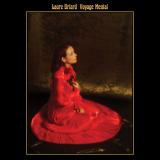
Every so often in music, we come across voices that achieve a certain timelessness, so naturally do they encapsulate both past and present. Laure Briard is one of these voices, retro in form but contemporary at heart, spanning a career rich in aesthetic twists and turns, never without her signature magic, a special kind of eternal filter. Her first album, Révélation (2015), reveals her yé-yé influences, a testament to her love for ‘60s French pop music. Her second studio album, Sur la piste de danse (2016), follows in this vein and finds Laure accompanied as always by her long-time bandmates who share an affinity for warm, catchy arrangements that never lose their appeal. Her tour of Brazil marks a turning point in her career, introducing her to the local indie scene and thus launching her collaboration with the band Boogarins, as well as inspiring the release of multiple EPs composed and performed in Portuguese. Today, her music is embellished by touches of bossa nova and a folk sensibility, boasting increasingly intricate arrangements, as exemplified by her 2019 release, Un peu plus d'amour s'il vous plaît. Several years later, the Californian desert captures the musician’s imagination with Ne pas trop rester bleue, a poignant musical journey inspired by the rich history of Western legends and the role they play in shaping our collective consciousness.
In Voyage Mental, Laure Briard draws upon an inner energy unearthed during a new stage in her life, where the thrill of spontaneous adventure is not accessible in quite the same way. The result is a collection of sophisticated, introspective songs, narrating a young mother’s quest for balance in the face of routine. The album, nostalgic but always tethered to the present moment, is also the fruit of her collaboration with Gaëtan Nonchalant, a talented musician known for coaxing poetry out of the mundane. The two of them co-wrote and recorded five tracks at Studio Nocturne, accompanied by her long-time sidekick Pieuvre, aka Vincent Guyot, Léo Blomov, Pierre-Louis Vizioz, and Hedi Bensalem. The gentle pop opener “Rocking Chair” sways steadily to the rhythm of dynamic drums, followed by “Train,” a ballad that extends an invitation to set sail and daydream alone. The folk escapade continues with “Golden Sun,” a duet featuring the 1960s cult American musician F.J. McMahon, who Laure contacted via the internet on a whim. “Golden Sun” is an unlikely encounter between two generations and two cultures, giving new life to an old forgotten demo on the other side of the Atlantic. And while Laure sings of wide open spaces, cowboys, and sunsets sinking into the sea, we feel the city surrounding her in “Miroir,” a song composed by Hedi Bensalem that laments the suffocation of living in a crowded metropolis where the sky is a distant gray smudge. This pressing need for air, this search for rest and total disconnection, is one of the album's central themes. It may also explain the ever-present sense of nostalgia that pervades the songs, a welcome respite in our current era of doomscrolling and darkness. Along the way, Laure soothes us with melancholy guitar, delivers poetry set to scattered piano notes, and takes us by the hand during lively, uptempo passages. We climb onto her wings, never straying too far from the ground, soaring joyfully above her moods.
The Éthiopiques series returns! Essential archive recordings from an extremely fruitful period in Ethiopian music.
Before “Swinging Addis” took over the world, there was Moussié Nerses Nalbandian — the Armenian-born composer who shaped modern Ethiopian music. Mentor, arranger, and pioneer, he laid the foundations of Ethio-jazz.
This Éthiopiques volume revives his forgotten legacy, recorded live by Either/ Orchestra First issue ever with new exclusive photos and in depth liner 8-page insert.
“Ethiopian jazzmen are the best musicians that we have seen so far in Africa.
They really are promising handlers of jazz instruments.”
Wilbur De Paris
(1959, after a concert in Addis Ababa)
አዲስ፡ዘመን። *Addis zèmèn* **A new era.**
The time is the mid-1950s and early 1960s, just before "Swinging Addis" bloomed – or rather boomed – onto the scene. Brass instruments are still dominant, but the advent of the electric guitar, and the very first electronic organs, are just around the corner. Rock’n'Roll, R’n’B, Soul and the Twist have not yet barged their way in. Addis Ababa is steeped in the big band atmosphere of the post-war era, with Glenn Miller's *In the* *Mood* as its world-wide theme song, neck and neck with the Latin craze that was in vogue at the same period. Life has become enjoyable once again, with the return of peace after the terrible Italian Fascist invasion of Ethiopia (1935-1941). The redeployment of modern music is part and parcel of the postwar reconstruction. *Addis zèmèn* – a new era – is the watchword of the postwar period, just as it was all across war-torn Europe.
The generation who were the young parents of baby boomers** were the first to enjoy this musical renaissance, before the baby boomers themselves took over and forever super-charged the soundtrack of the final days of imperial reign. Music is Ethiopia's most popular art form, and very often serves as the best barometer for the upsurge of energy that is critical for reconstruction. Whether it be jazz in Saint-Germain-des-Prés or the *zazous* who revolutionised both jazz and French *chanson* after the *Libération*, be it Madrid's post-Franco Movida, or Dada, the Surrealists and *les années folles* that followed World War I, the periods just after mourning and hardship always give rise to brighter and more tuneful tomorrows. Addis Ababa, as the country's capital, and the epicentre of change, was no exception to this vital rule.
**Two generations of Nalbandian musicians**
Nersès Nalbandian belonged to a family of Armenian exiles, who had moved to Ethiopia in the mid-1920s. The uncle Kevork arrived along with the fabled "*Arba Lidjotch*", the** "*40 Kids*", young Armenian orphans and musicians that the Ras Tafari had recruited when he visited Jerusalem in 1924, intending to turn their brass band into the official imperial band. If Kevork Nalbandian was the one who first opened the way of modernism, pushing innovation so far as to invent musical theatre, it was his nephew Nersès who would go on to become, from the 1940s and until his death in 1977, a pivotal figure of modern Ethiopian music and of the heights it. Going all the way back to the 1950s. Nothing less. And it is Nersès who is largely to thank for the brassy colours that so greatly contributed to the international renown of Ethiopian groove. While the younger generations today venture timidly into the genealogy of their country's modern music, often losing their way amidst a distinctly xenophobic historiographical complacency, many survivors of the imperial period are still around to bear witness and pay tribute to the essential role that "Moussié Nersès" played in the rise of Abyssinia's musical modernity.
Given the year of his birth (15 March 1915), no one knows for sure if Nersès Nalbandian was born in Aintab, today Gaziantep (Turkiye/former Ottoman Empire) or on the other side of the border in Alep, Syria... What is certain is that his family, like the entire Armenian community, was amongst the victims of the genocide perpetrated by the Turks. Alep, the place of safety – today in ruins.
Before Nersès then, there was uncle Kevork (1887-1963). For a quarter of a century, he was a whirlwind of activity in music teaching and theatrical innovation. *Guèbrè Mariam le Gondaré* (የጎንደሬ ገብረ ማርያም አጥቶ ማግኘት, 1926 EC=1934) is his most famous creation. This play included "ten Ethiopian songs" — a totally innovative approach. According to his autobiographical notes, preserved by the Nalbandian family, Kevork indicates that he composed some 50 such pieces over the course of his career. This shows just how much he understood, very early on, the critical importance of song as Ethiopia's crowning artistic form. Indeed, for Ethiopian listeners, the most important thing is the lyrics, with all their multifarious mischief, far more than a strong melody, sophisticated arrangements or even an exceptional voice. (This is also why Ethiopians by and large, and beginning with the artists and producers themselves, believed for a long time — and wrongly — that their music could not possibly be exported, and could never win over audiences abroad, who did not speak the country's languages).
Last but not least, one of Kevork's major contributions remains composing Ethiopia's first national anthem – with lyrics by Yoftahé Negussié.
Nersès Nalbandian moved to Ethiopia at the end of the 1930s, at the behest of his ground-breaking uncle. Proficient in many instruments (pretty much everything but the drums), conductor, choir director, composer, arranger, adapter, creator, piano tuner, purveyor of rented pianos,... he was above all an energetic and influential teacher. From 1946 onwards, thanks to Kevork's connexion, Nersès was appointed musical director of the Addis Ababa Municipality Band. In just a few years, Nersès transformed it into the first truly modern ensemble, thanks to the quality of his teaching, his choice of repertoire, and the sophistication of his arrangements. It was this group that would go on to become the orchestra of the Haile Selassie Theatre shortly after its inauguration in 1955, which was a major celebration of the Emperor's jubilee, marking the 25th anniversary of his on-again-off-again reign.
At some point or other in his long career, Nersès Nalbandian had a hand in the creation of just about every institutional band (Municipality Band, Police Orchestra, Imperial Bodyguard Band, Army Band, Yared Music School…), but it was with the Haile Selassie Theatre – today the National Theatre – that his abilities were most on display, up until his death in 1977. To this must be added the development of choral singing in Ethiopia, hitherto unknown, and a sort of secret garden dedicated to the memory of Armenian sacred music, and brought together in two thick, unpublished volumes. Shortly before his death (November 13, 1977), he was appointed to lead the impressive Ethiopian delegation at Festac in Lagos, Nigeria (January-February 1977).
His status as a stateless foreigner regularly excluded him from the most senior positions, in spite of the respect he commanded (and commands to this day) from the musicians of his era. Naturally gifted and largely self-taught, Nerses was tirelessly curious about new musical developments, drawing inspiration from the very first imported records, and especially from listening intensely to the musical programmes broadcast over short-wave radio – BBC *First*. A prolific composer and arranger, he was constantly mindful of formalising and integrating Ethiopian parameters (specific “musical modes”, pentatonic scale, and the dominance of ternary rhythms) into his “modernisation” of the musical culture, rather than trying to over-westernise it. It even seems very probable that *Moussié* Nerses made a decisive contribution to the development of tighter music-teaching methods, in order to revitalise musical education during this period of prodigious cultural ferment. Flying in the face of all the historiographical and musicological evidence, it is taken as sacrosanct dogma that the four musical modes or chords officially recognised today, the *qǝñǝt* or *qiñit* (ቅኝት), are every bit as millennial as Ethiopia itself. It would appear however that some streamlining of these chords actually took place in around 1960. It was only from this time onward that music teaching was structured around these four fundamental musical modes and chords: *Ambassel*, *Bati*, *Tezeta* and *Antchi Hoyé*. A historical and musical “details” that is, apparently, difficult to swallow, especially if that should honour a *foreigner*. Modern Ethiopian music has Nersès to thank for many of its standards and, to this day, it is not unusual for the National Radio to broadcast thunderous oldies that bear unmistakable traces of his outrageously groovy touch.
- A1: Delightful 3 38:00
- A2: Freaky Dancin' 3 42:00 7" Edit
- A3: Tart Tart 4 18:00
- A4: 24 Hour Party People 3 20:00 Radio Edit
- A5: Wrote For Luck 3 41:00 7" Edit 18:39:00
- B1: Lazyitis - One Armed Boxer (With Karl Denver) 3 53:00
- B2: Hallelujah 3 46:00 Oakenfold 7" Edit
- B3: Step On 4 20:00 7" Edit
- B4: Kinky Afro 3 58:00 Radio Edit
- B5: Loose Fit 3 46:00 Radio Edit 19:43:00
- C1: Judge Fudge 3 58:00 7" Edit
- C2: Stinkin' Thinkin' 4 18:00 Hague 7
- C3: Sunshine & Love 3 23:00 7" Edit
- C4: Angel 4 05:00 Edit 15:44:00
- D1: Hallelujah (Club Mix) 6 29:00
- D2: Step On (Twistin' My Melon Mix) 5 55:00
- D3: W F.l. (Think Abou The Future Mix) 7 05:00 19:29:00
Black Vinyl[28,99 €]
2025-2026 marks the 40th anniversary of the Happy Mondays, a milestone celebration of one of Britain's most iconic and era-defining bands.
To celebrate, London Records will launch a series of special anniversary releases, beginning with a fully remastered brand-new compilation: The Factory Singles. This definitive collection captures the band's ground-breaking output from 1985-1992, celebrating their pivotal role in shaping UK music culture. Classic remixes from Paul Oakenfold, Andrew Weatherall, Terry Farley and Jon Carter make up bonus tracks on the 2CD and 2LP.
The release will be available across multiple formats, appealing to collectors and fans alike.
Complementing the physical editions, a series of brand-new digital remixes will be unveiled from world-renowned artists Daniel Avery, Paul Oakenfold, Mella Dee, and Shadow Child and more, bridging the Mondays' legacy with today's electronic innovators, and a revisit from Paul Oakenfold.
This campaign marks the beginning of an extensive celebration of the Happy Mondays' 40-year legacy, bringing their iconic sound to both devoted fans and new generations
- A1: Rare Pleasure - Let Me Down Easy
- A2: The Family Tree - 150Th Psalm
- A3: Roslyn &Amp; Charles - Come Go With Me
- A4: Hyla Parker - Joe
- A5: The Julius Brockington Ensemble - Let The Holy Spirit
- A6: Vera Powell - I Didn&Apos;T Know How Happy I Could Be
- B1: The Family Tree - As
- B2: Roslyn &Amp; Charles - Told To Tell You
- B3: Sherm Reb Nesbary - Don&Apos;T Make Me Sorry For Loving You
- B4: The Julius Brockington Ensemlbe - Light Of My Soul
- B5: Brooklyn People - Boogie People
- B6: Roslyn &Amp; Charles - God Is
- B7: The Family Tree - Brand New Day
This is the story of how a tiny label from New Jersey changed the course of music history not once but twice.
Cheri Records was established in 1974 in New Jersey and run by one Boo Frazier. Cheri's output was limited, producing a catalogue of just eleven releases between the years 1974 and 1982. On the face of it, this appears to be insubstantial output. However, if you dig a little deeper, the quality released on Cheri Records reveals an exceptional legacy of groundbreaking music.
A dark horse in the world of record labels, a true unsung legend that would go on to alter the course of musical history and intersect with a remarkable array of talented artists, bands and DJs. From Rare Pleasure; Sandy Barber; Julius Brockington; Boo Frazier; Patrick Adams; Tom Moulton; Larry Levan and MF Doom: Cheri Records has directly impacted their artistry in significant ways. Cheri's influence even extends into the present, with DJ icons like David Morales, Dave Lee, Danny Krivit, and Colin Curtis continuing to champion its contributions.
This compilation brings together the most compelling tracks from the Cheri Records catalogue, shedding light on the label's extraordinary story and underscoring the idea that music, no matter how unassuming its origins, can transcend boundaries and reshape, influence and inform music to come for future generations.
This collection also represents the start of a new series here on Miles Away, a series that will delve into the labels and studios that were responsible for leaving a lasting imprint on the musical world. We've named this seriesEchoes From,and this compilation will be the first of many.
The vinyl package comes in a gatefold sleeve with in-depth liner notes and features interviews with Colin Curtis and David Morales. Also available on CD and digitally.
In 2025, Roger 23 makes his return to Night Defined Recordings. Following his 2022 album “Bounds of a Moral Principle and Established Standard Behavior”, the unmistakable Saarländer revisits his teenage memories of the Saarbrücken-Leicester connection through a collaboration with his UK kindred spirit, Tom Dicicco. In just two months, the duo has created a collection of ten tracks rich in sonic depth, embodying their dedication to and belief in the power of exploration.
In a world where it’s easy to point fingers or resist change, Tom Dicicco and Roger 23 choose a different path. They see creativity not just as self-expression but as a way to inspire future generations. Their mission is to challenge norms, trust the process, and create with purpose.
This album is more than just a musical project — it’s a statement that true innovation arises from freedom and risk-taking. The journey has taught them more than music production — it has reinforced the importance of conviction and trusting their vision. Their work serves as a reminder that leadership is about breaking new ground and inspiring others to do the same.
WE CANNOT COMPLAIN, IF WE DON’T DO IT BETTER
for UK: please contact Rubadub
Book[37,40 €]
In the final month of 2024, Meitei arrived in Beppu, a city long steeped in vapor, myth, and mineral memory. Invited to create onsen ambient music commemorating Beppu’s 100th anniversary, he immersed himself in the city’s geothermal psychogeography, where sound rises from the ground and time clings to mist.
Known for his Lost Japan (Shitsu-nihon) works, which channel forgotten eras into flickering auditory relics, Meitei took residence in the warehouse of Yamada Bessou, a century-old inn perched by the bay. Over two weeks, he listened intently to steam, to stone, to the atmosphere itself. The resulting work, Sen’nyū, traces the inner spirit of onsen culture. Like water finding its path, the music emerged with quiet inevitability, shaped by Meitei’s synesthetic sensibility and deep attunement to place.
Equipped with a microphone, he wandered Beppu’s sacred sites: Takegawara Onsen, Bouzu Jigoku, Hebin-yu, and the private baths of Yamada Bessou. There, he captured the breath of the springs, bubbling mud, hissing vents, wind against bamboo, and the murmurs of daily visitors. These field recordings became the sonic bedrock of Sen’nyū, an act of deep listening that attempts to render even the rising mist and shifting heat into sound.
Unfolding as a single, continuous piece, Sen’nyū drifts like fog through sulfur and stone. It traverses the veiled madness of Bouzu Jigoku, the spectral resonance of Yamada Bessou’s inner bath, and the hushed voices of Takegawara Onsen. It is a gesture of quiet reverence, for water’s patience, the land’s memory, and the hands that have bathed here for generations.
Where Meitei’s earlier works conveyed his personal impression of a fading Japan, Sen’nyū is grounded in tactile presence, music not imagined but encountered. Here, his practice moves closer to the spirit of kankyō ongaku, environmental music born from place, shaped by it, and inseparable from it.
As part of the project, Meitei conceived a two-day public sound installation inside Takegawara Onsen, culminating in a live performance. Bathers soaked in mineral-rich waters while submerged in sound, an embodied ritual of place, body, and listening.
Sen’nyū marks Meitei’s first full-length work centered entirely on onsen and opens a new chapter of his Lost Japan project under the expanded title 失日本百景 (One Hundred Lost Views of Japan), a series exploring extant sites of longing still quietly breathing within contemporary life. The album will be accompanied by Meitei’s first photo book, a visual document of his time in Beppu. A new layer is added to the world he has, until now, built only through sound.
Sen’nyū continues Meitei’s devotion to Japan as subject, while opening new terrain: both ritual and remembrance, an immersion into the mineral soul of Beppu.
The album SATO was made by the Ukrainian Crimean Tatar pianist and composer Usein Bekirov.
SATO was created during the difficult wartime for Usein’s motherland Ukraine and for the author himself.
Despite circumstances, the compositions of SATO express the ideas of the beauty and revival of Ukrainian music, a part of which is Crimean Tatar folklore.
The uniqueness of the release is caused both by the concept of the album and by the performers' star crew.
The jazz sound of the compositions of SATO is directed to the stylistic course of ethno-jazz and world music.
Rhythms and melodies of colorful Crimean Tatar folk music became the main source of inspiration in the creation of the album.
We can find both Usein's original author's themes, skillfully stylized to the oriental sound,
and referenced to the classic jazz vocabulary in its juicy riffs and grooves with features of fusion and funk music.
The name of the album reflected the inheritance of generations through music.
Sato is not only a folk instrument but also the name of the first Crimean Tatar jazz band, which made the first jazz arrangements of Crimean Tatar songs.
The music of this band became the basic musical experience of Usein Bekirov, because one of the members of the group was his father Riza Bekirov, to whom the album is dedicated.
The author and producer of the album is Usein Bekirov - Ukrainian pianist, composer, arranger, sound producer, and author of music for a number of films and theater performances.
Usein Bekirov cooperates with both foreign and Ukrainian musicians of the highest rank.
This is evidenced by the participants of the album Sato: Dennis Chambers, Randy Brecker, James Genus, Mike Stern, Ada Rovatti (USA), Hadrien Feraud (France), and Cenk Erdogan (Turkey).
Each performer reinterprets the author's material of Usein Bekirov through the prism of his own experience, character, and manner of performance, which was expressed in the daring stylistic combinations within a jazz style.
A special role in the creation of the album was taken by the participants of the recordings, especially, legendary jazzmen Dennis Chambers, Randy Brecker, James Genus, Mike Stern.
Their ideological and creative support became an important part of the creativity process.
Musicians expressed their impressions in small addresses for the audience.
One of the reviews of the musicians:
"The process of recording compositions was really exciting! This music reflects Usein's national origin and sense of his native culture.
It is full of real emotions. Actually, this music is quite difficult, but it is very well written and produced!
I sincerely hope you will notice this album, which also took part in Dennis Chambers, James Genus, Mike Stern, Ada Rovatti, and others.
I think it's going to be a really special album, can't wait to hear the final version.
When you hear about the premiere, I highly recommend listening to this new album created by Usein Bekirov.
It will be great!" Randy Brecker
Since its founding back in 2014, Blume has carved a unique place in cultural landscape, issuing free-standing works, spanning the historical and contemporary, that represent singular gestures of creativity within the field of experimental sound. Joining their broad efforts in building networks of context and understanding that already includes the works by Werner Durand, Sarah Hennies, Bruce Nauman, John Butcher, Jocy de Oliveira, Mary Jane Leach, Valentina Magaletti, Alvin Curran, Julius Eastman, Alvin Lucier, and others, Blume return with the first ever vinyl release to attend to James Tenney’s legendary “Postal Pieces”, Marking the first ever appearance of five of the suite’s works - “Maximusic, for Max Neuhaus” (1965), “Having Never Written a Note for Percussion, for John Bergamo” (1971), “FFor Percussion Perhaps, or... Night, for Harold Budd” (1971), “Cellogram, for Joel Krosnick” (1971), and “Beast, for Buell Neidlinger” (1971) - on vinyl, drawing upon recordings made in 2003, by the Amsterdam based ensemble, The Barton Workshop, under the direction of James Fulkerson. Among the most important and highly regarded efforts in Tenney’s canon of compositions, as well as within the history of 20th Century music, these five pieces represent a crucial bridge between Fluxus-oriented conceptualism, minimalism, and the microtonal complexities that would emerge in their wakes. Issued in a highly limited vinyl edition of 300 copies, it includes exact replicas of the original postcard graphic scores, and features newly commissioned liner notes by Bradford Bailey, Blume’s brand new edition takes great steps to centring Tenney at the eye the storm during some of experimental music’s most important years.
A student of composition under Carl Ruggles, John Cage, Harry Partch, and Edgard Varèse - remaining close to all of them, and later performing in both Cage and Partch’s ensembles - as well as acoustics, information theory, and tape music composition under Lejaren Hiller, James Tenney carved a wide path within the contexts of experimental and avant-garde music during the second half of the 20th Century. Not only was he a tangible bridge between the generations of composer’s who laid much of the groundwork and the later movements of Fluxus, Minimalism, and the broader practices of experimental music, but Tenney is credited as having contributed one of the earliest applications of gestalt theory and cognitive science to music in 1961, before helping to pioneer the field of computer music at Bell Labs, during the following years.
Over the course of his career, Tenney produced music of such complexity and sophistication - paying little mind to the seductions of taste or dominant tropes of its own moment - that his work and legacy have largely remained under-recognised by the broader publics that have attended to most of his peers. Perhaps more pertinently, the body of work he produced can be perceived as too varied and complex to fit neatly within standard creative histories or critical frameworks, comprising harmonically complex works for acoustic instrumentation, musique concrète, the groundbreaking 1961 “plunderphonic” composition, “Collage No.1 (Blue Suede) (for tape)” - sampling and manipulating a recording of Elvis Presley - as well as algorithmic and computer synthesized music. Even here, within this single decade, a clear image of Tenney’s endeavours remains elusive. In addition to penning important theoretical texts, he collaborated and / or played with Max Neuhaus, La Monte Young, Steve Reich, Philip Glass, Michael Snow, Terry Riley, and numerous others; was an active member of Fluxus; starred in and composed music for Stan Brackage’s films; regularly worked with the Judson Dance Theater; co-founded and played in the ensemble, Tone Roads, with Malcolm Goldstein and Philip Corner; was a vocal advocate of the works of Conlon Nancarrow and Charles Ives, playing a significant part in the revival of both of their legacies; and regularly collaborated as a composer, musician, and actor with his then-partner, the artist Carolee Schneemann, notably co-starring in her film, “Fuses” (1965) and her legendary 1964 performance, “Meat Joy”, as well as creating sound collages for her films “Viet Flakes” (1965) and “Snows” (1970). Curiously, for a relatively absent figure in the historical and critical narratives, Tenney seems to have been the thread that bound multiple generations and disciplines of avant-garde practice in New York during this period.
Tenney was deeply invested in the quality and perception of sound. By 1970, this led him back to composing exclusively for acoustic instrumentation (though sometimes processed with tape delay) - in most cases utilising non-well tempered tuning systems to explore harmonic perception - a practice that he would remain steadfast to for the remainder of his life. This development roughly corresponded with his relocation to California, at the outset of the 1970s, following an invitation to teach at the newly founded music department at California Institute of the Arts (CalArts) in Valencia. Finding himself in regular contact with the harpist Susan Allen and the artist Allison Knowles, as well as at a great distance from many of his friends, in 1971 he completed (with the assistance of Knowles and Marie McRoy) “The Postal Pieces”, a project he had begun in 1965.
A suite of eleven compositions, “The Postal Pieces”, stands among Tenney’s well known and celebrated compositions, and illuminates the dualities embraced by the composer, notably his use of sound to develop consciousness in and of others, and his willingness to draw on elements and observations of everyday life; citing his strong dislike of writing letters as being the primary inspiration for their inception. In lieu, he conceived to send his friends - John Bergamo, Allison Knowles, Pauline Oliveros, La Monte Young, Harold Budd, Philip Corner, Joel Krosnick, Buell Neidlinger, Susan Allen, Max Neuhaus, and Malcolm Goldstein - short scores on the back of postcards. The suite is composed around three themes: Tenney’s concept of swell form (utilizing repetition and progressing through a structurally symmetrical arch), intonation, and the desire to produce “meditative perceptual states”.
A hugely important addition to Blume’s ever expanding efforts in context building and networks of creative practice, James Tenney’s “Post Pieces” is issued in a highly limited vinyl edition of 300 copies, which includes a exact replicas of the original postcard graphic scores, and features newly commissioned liner notes by Bradford Bailey.
fabric Originals is proud to announce the release of the highly anticipated collaborative EP by Irish-born DJ, producer, and label owner Mano Le Tough, one of the most celebrated names in underground house and techno, and electronic musician and DJ Perel—who was the first German artist to sign to James Murphy's seminal dance-punk label DFA Records.
This EP marks the second release in the label’s new series, 'Future Memories,' which pairs together a legendary producer with new talent to create groundbreaking music that bridges generations.
The 'Future Memories' series is fabric Originals' latest initiative to celebrate the legacy of electronic music while paving the way for future innovation. By pairing seasoned veterans with promising newcomers, the series aims to create timeless tracks that resonate across generations. Mano Le Tough and Perel comes hot off the heels of our 1st release – by UK Garage royalty MJ Cole and rising UK techno X Dubstep producer and one half of Wisdom Teeth, K-LONE.
The final volume of this mammoth collection of music from Bristolian electronic music pioneer Krust is finally upon us, and like the previous parts of this collection it boasts an assemblage of music of different energies, vibes and feelings. The music contained within spans decades yet somehow refuses to be locked to one 'era' or 'style'. This is what makes this release unmissable for the hardcore fan, newcomer or completist.
'Irrational Numbers' is a meticulously curated collection of five parts, available on both vinyl and digital formats. The compilation is a treasure trove of hand-picked records and archival gems from Krust's extensive discography, thoughtfully remastered and presented anew for both devoted fans and newcomers.
'Irrational Numbers' features a dizzying array of self-released 12" cuts, exclusive unreleased VIPs and dub-plates, alongside epic major label widescreen classics. It's an unmissable journey through the sonic output of one of the UK's most distinctive and forward-looking producers.
Featured on part 5 are some groundbreaking entries into Krust's massive back catalogue. The live bass driven jazz inflected 'Second Movement' from his acclaimed 'Coded Language' LP jostles alongside the speaker smashing machine funk of 'Break Ya Neck' as well as a couple of more recent productions including the sleek and sinister 'The Portal', which is undeniably the man at his best, in full electronic stealth mode.
For longtime Krust enthusiasts, this project serves as a fond reminder of the boundless creativity and originality that flourished during the early 1990s and beyond. For those new to his work, it presents an enthralling introduction to innovative electronic music that has comfortably set the tone for generations to come. Get ready to experience the evolution of sound and immerse yourself in the visionary artistry of Krust.
Groundbreaking release from the early 80's produced with rather primitive synthesizers with as result "A Dog in the Night" a track with a thick sound, unusual for its time. Credited as "the sound of the future" in those days and sounding reevant today. The piece produced by Stefano Zito and arranged by Stefano Galante is after 40 years among the favorites of collectors and followers of Italo-Disco, being noted among the songs to be re-edited by Danilo Braca, the New York based Italian Dj known for his creativity! He manages to create wonderful reconstructions, often considered "works of art". Such as the version he remixed and revisited, with the strings played and recorded by Layer Bows, but above all with the additional lyrics written and performed by the superlative SuperJaimie (aka Charlotte Balibar); with her voice she gives a completely different air to this Italo-Disco jewel, now worthy of being brought to the attention of the new generations. Such a gem, made available again on high quality vinyl!
Mannequin Records presents a special release that bridges two generations of electronic body music: DAF’s iconic track “El Que” reimagined by French techno and EBM pioneer Terence Fixmer.
A lifelong admirer of DAF, Fixmer has been playing El Que in his DJ sets for years, considering it one of the band’s most enduring and powerful pieces. His connection to the track and to DAF’s groundbreaking legacy is the core inspiration behind these two new remixes, created with both reverence and bold creative vision.
On the “El Que (Terence Fixmer Leather Remix)”, Fixmer remains close to the original’s raw, muscular pulse while injecting a sharp, modern club sensibility. The remix builds on DAF’s unmistakable rhythmics but adds a contemporary momentum that feels like a natural extension of the band’s DNA. “It was like imagining what I would do if I were a member of DAF today,” Fixmer says.
The second version, “El Que (Terence Fixmer Drive Remix)”, ventures deeper into Fixmer’s own territory: darker, hypnotic, and peak-time focused. Tension and release are crafted with surgical precision, taking the original’s spirit into a harder-edged, suspense-driven sound world. It’s a version built for late-night floors without ever losing the soul of El Que.
Fixmer explains:
“I’ve been playing DAF’s El Que in many of my DJ sets for years. It’s a track I deeply loved from the first listen. I’m super proud to have remixed DAF — one of my cult bands and a major influence on my sound and electronic universe. For the "Leather Remix", I wanted to stay close to the original while bringing modernity and club momentum. For the "Drive Remix", I pushed the track toward darker, peak-time and hypnotic techno, keeping the soul of the original intact. I wanted to make versions that make you think: ‘I know this track… but wait — what is this version? I want it!’ When I tested them, that’s exactly what happened.”
DAF remains one of the most influential bands in electronic music history. These new remixes by Terence Fixmer reinforce the timeless power of El Que while offering two striking, club-ready perspectives for a new generation of listeners.
- 1: Fuenarinu
- 2: Kaendaiko
- 3: Tsubakishishaku No Yuigon
- 4: Tengindoujiken
- 5: Kindaichikousuke Nishie Yuku
- 6: Ougonno Furuuto (Flute)
- 7: Yubi
- 8: A=X, B=X A=B
- 9: Chi To Suna
- 10: Tabiyukumonoyo
- 11: Akuma Fuewo Fukite Owaru
We've got a bit of an obsession with Hozan Yamamoto here at Mr Bongo! A legend of Japanese jazz, he is rightly regarded as a true master and was recognised as a "living national treasure" by the Japanese government in 2002. Over five decades he pushed the genre into new directions, absorbing fusion, funk, spiritual jazz and many other sounds, resulting in a discography studded with gems of rare beauty. Exploring his back catalogue has taken us on an engrossing journey that now sees us reissuing another work from this ground-breaking musician.
Though not translating perfectly into English 'Akuma Ga Kitarite Fue Wo Fuku', (kitarite has not been a modern expression in Japanese) roughly means 'The Devil Comes Playing The Flute' / 'The Devil Is Coming While Blowing The Whistle' or 'Devils Flute’. It is the original soundtrack to Kôsei Saitô’s 1979 mystery and suspense movie, ‘Devil’s Flute’. The film is based on a story by the famous author, Seishi Yokomizo, and is centred around a much-loved fictional Japanese detective, Kosuke Kindaichi. A Japanese Sherlock Holmes that has been popular for generations.
Hozan Yamamoto was invited to compose the soundtrack directly by the producer of the film, Haruki Kadokawa. Mr Kadokawa also hired keyboard player and producer Yu Imai as assistant producer on the project, resulting in a stunning cosmic, breaks and beats-laden, funk, disco soundtrack extravaganza.
When it comes to the soundtrack and the technology of the time, Hozan Yamamoto and Yu Imai got inventive, tripped out, funked up, and experimented, creating a quirky soundtrack masterpiece that needed to be heard more outside of Japan. Differing from the more traditional Japanese music orientation of some of his other albums such as 'Beautiful Bamboo-Flute' (also released on Mr Bongo) the album showcases a number of genres, from lush atmospheric incidental music to disco and funk grooves, experimental nuggets, drum and flute workouts, to neo-classical and more.
A special record that showcases the further depths of this wonderful musician's talents.
- A1: Delightful 3:38:00
- A2: Freaky Dancin' 3:42:00 7" Edit
- A3: Tart Tart 4:18:00
- A4 24: Hour Party People 3:20:00 Radio Edit
- A5: Wrote For Luck 3:41:00 7" Edit 18:39:00
- B1: Lazyitis - One Armed Boxer (With Karl Denver) 3:53:00
- B2: Hallelujah 3:46:00 Oakenfold 7" Edit
- B3: Step On 4:20:00 7" Edit
- B4: Kinky Afro 3:58:00 Radio Edit
- B5: Loose Fit 3:46:00 Radio Edit 19:43:00
- C1: Judge Fudge 3:58:00 7" Edit
- C2: Stinkin' Thinkin' 4:18:00 Hague 7
- C3: Sunshine & Love 3:23:00 7" Edit
- C4: Angel 4:05:00 Edit 15:44:00
- D1: Hallelujah (Club Mix) 6:29:00
- D2: Step On (Twistin' My Melon Mix) 5:55:00
- D3: W.f.l. (Think Abou The Future Mix) 7:05:00 19:29:00
Yellow / Magenta Vinyl[32,73 €]
2025-2026 marks the 40th anniversary of the Happy Mondays, a milestone celebration of one of Britain's most iconic and era-defining bands.
To celebrate, London Records will launch a series of special anniversary releases, beginning with a fully remastered brand-new compilation: The Factory Singles. This definitive collection captures the band's ground-breaking output from 1985-1992, celebrating their pivotal role in shaping UK music culture. Classic remixes from Paul Oakenfold, Andrew Weatherall, Terry Farley and Jon Carter make up bonus tracks on the 2CD and 2LP.
The release will be available across multiple formats, appealing to collectors and fans alike.
Complementing the physical editions, a series of brand-new digital remixes will be unveiled from world-renowned artists Daniel Avery, Paul Oakenfold, Mella Dee, and Shadow Child and more, bridging the Mondays' legacy with today's electronic innovators, and a revisit from Paul Oakenfold.
This campaign marks the beginning of an extensive celebration of the Happy Mondays' 40-year legacy, bringing their iconic sound to both devoted fans and new generations
- All Along The Watchtower
- I Can't Get No Satisfaction
- Sanningens Silverflod
- Tegenborgsvalsen
- All Makt Åt Folket
- Svarta Pärla
Legendary and pioneering Träd, Gräs och Stenar is considered Sweden's oldest rock band to introduce psychedelic underground music. The group originally formed in 1967 as International Harvester, later became Harvester, and eventually evolved into Träd, Gräs och Stenar. Their unique blend of psychedelic rock and traditional Swedish folk music was groundbreaking at the time-and still resonates with new generations of listeners today. This long-awaited "Green Album" from 1970 marks their very first release under the name Träd, Gräs och Stenar. Now, for the first time since its original release, it's being reissued on vinyl-complete with rare photos, an in-depth story, and a 30x60 cm poster. Decades later, the band continues to perform under the name TRÄDEN, now with only one original member. He is joined by a new generation of acclaimed musicians, who are keeping the spirit alive and carrying the sounds and legacy of Träd, Gräs och Stenar into the future.
- A1: Memorabilia (Non-Stop Ecstatic Dancing Version) – Remastered
- A2: Where Did Our Love Go? (Non-Stop Ecstatic Dancing Version) –Remastered
- A3: What! (Non-Stop Ecstatic Dancing Version) – Remastered
- B1: A Man Could Get Lost (Non-Stop Ecstatic Dancing Version) – Remastered
- B2: Chips On My Shoulder (Non-Stop Ecstatic Dancing Version) –Remastered
- B3: Sex Dwarf (Non-Stop Ecstatic Dancing Version) – Remastered
- C1: Torch (12" Version) – Remastered
- C2: Insecure Me? (12" Version) – Remastered
- C3: A Man Could Get Lost (Jon Pleased Wimmin Remix) - Previously Promo Only
- D1: Bedsitter (Erasure Remix) - Previously On Keychains Box Set Only
- D2: What! (12" Version) – Remastered
- D3: So (12" Version) – Remastered
Soft Cell’s second long-player was the groundbreaking mini-LP ‘NonStop Ecstatic Dancing’… the world’s first remix album and a huge influence on subsequent generations of clubbers, DJs and remixers. Reissue of the original album, remastered, and bolstered by the inclusion of extended versions of its two related hit singles – ‘Torch’ and ‘What!’ – and bring it up to date with a second disc of unreleased mixes and highlights from 2007’s long-deleted ‘Heat – The Remixes’. The release will be laser-focussed to celebrate Soft Cell’s pioneering work in the clubs of Leeds, London, New York and Berlin and clear the decks for our next full deluxe edition ‘The Art Of Falling Apart’ in Q3 2025. Barring the super 6CD version would follow the formats that were so successful for ‘Non-Stop Erotic Cabaret’ reissue with a 2CD and 2LP coloured as the physical versions with a digital deluxe mirroring the 2CD set. We know this artist has a wide appeal AND a solid fanbase and this album is also legendary in DJ / club / electronic circles.
The Montreal rapper's new opus is at once deeply introspective and a wide-eyed embrace of the world. Produced by longtime collaborators Adrian X and Kevin Figs, this sonically adventurous follow-up to her two-part debut Godspeed: Baptism (Prelude), released in 2020, and Godspeed: Elevated (2021) finds her stretching her wings lyrically, vocally and musically.
Naya Ali's journey to We Did The Damn Thing took hard work, sacrifice, faith, and sweat, as represented on the album cover : “Our sweat has trickled down from our braids for generations”. The song The Heist completely embodies the cutthroat energy and hard work that fuels Naya’s music. Yet, We Did The Damn Thing shows there’s more to her artistry. From the dark, ominous More Life, Less Names, a defiant anthem about protecting your peace, to the country-inspired renegade spirit of Turning Tables, and the Afrobeats-infused warmth of Life, where she stepped out of her comfort zone by singing instead of rapping, it is clear that Naya Ali has decided to embrace her versatility as an artist. Beyond the classic, 808-heavy beats, We Did The Damn Thing is a gospel-infused album grounded in live instruments, especially the electric guitar. Naya also took on a larger role in production, leading the choirs and working on vocal production for the songs Life, Jericho and Freedom Creepin.
I Will Find You” takes listeners on a journey through Mathame’s greatest inspiration, Franchino, who’s love for electronic music inspired not only the brothers, but the entire nation. As this track reveals itself, the duo’s devotion to creating meaningful music that is deeply rooted in their own influences reverberates throughout as they translate its gripping sonic identity through their own, distinct lens.
Throughout their career, Mathame (brothers Matteo and Amedeo Giovanelli), have been elevating fans to new heights through their sophisticated compositions that infuse cinematic soundscapes with ethereal energies and raw, real emotions that command movement. While Franchino’s version of this track was originally introduced in 1993 and influenced some legends of the italian progressive techno pioneer scene such as Ricky Le Roi and Mauro Picotto, the Mathame record is actually a rework of Clannad’s theme song from the soundtrack of the 1992 film “The Last of Mohicans”, which the duo first incorporated into performances during their 2019 Cercle set in Mexico City.
“I Will Find You” has since become an anthemic and defining element of Mathame's performances, inclusive of the duo’s 2023/2024 world tour, and has already garnered critical acclaim. The release of “I Will Find You” carries a special endorsement from its original composers, Clannad. The Grammy and BAFTA award-winning band has expressed their delight in seeing their music embraced and reinterpreted by not only new generations, but new genres, as the duo breathe new life into the track's legacy.
From the solitude of volcanic Mount Etna to stages around the world, Italian DJ and producer duo Mathame connect audiences around the globe through transportive music that transcends genres, generations and dimensions. More than another DJ duo, Mathame are sonic alchemists whose productions unfold as poignant odysseys that blur the lines between reverie and reality. Defying convention through their sound, the brothers masterfully immerse listeners into the futuristic realms they conjure, pulsating with sensorial magic and ethereal energies that linger in the air akin to candles in a great cathedral. Their first LP, “MEMO” was a technically driven masterpiece, paving the way for colossal collaborations with global talents like Tiësto and John Summit and amassing over 6 Million streams on Spotify and support from the likes of industry authorities such as Forbes’ 15 Best Albums List of 2023.
The arrival of their solo record “I Will Find You” signals a return to their shared artistic vision and will be released in tandem with the announcement of the duo’s Ibiza Residency concept - NEO - at the beloved electronic temple, Amnesia. Born from an inspirational journey in Tokyo, Japan this past year, Mathame will introduce their most groundbreaking concept to date that masterfully blends the worlds of technology, artificial intelligence and their profound performances with a sense of mysticism that dances between what is seen and what is heard. The cinematic experience - complete with a setup, development and climax - will take place at Amnesia under the HORIZON framework from June 7 to July 5, and from September 13 to 27, with each chapter boasting an eclectic lineup of performances from the likes of The Blaze (DJ Set), Mind Against, NTO and more.
Pique is the sensational debut solo album from Dora Morelenbaum, one of the key talents spearheading Brazil’s new musical wave. A member of the Latin Grammy award-winning band, Bala Desejo, Dora showcases a new side to her solo productions on this special LP. Whereas Dora’s first solo EP, Vento de Beirada, was a leap of faith, Pique sees her soaring as one of Brazil’s standout stars, emboldened, emphatic but ever elegant. Building bridges between past and present, it’s a funkier, more groove-based affair, weaved together with those signature, slower, celestial tracks. Touching on disco, MPB, soul, R&B and jazz, the album is enriched with an indie pop aesthetic courtesy of fellow Brazilian star and co-producer, Ana Frango Elétrico.
With an ethereal, enveloping air few can match, Dora’s gift shines through both the serene and the spirited songs contained within. The blissful, sun-soaked ‘Não Vou Te Esquecer’ opens, before the funk-fuelled, feel-good ‘Venha Comigo’ and ‘Sim, Não.’ give a glimpse of the creativity bursting from the production partnership between Dora and Ana Frango Elétrico. Elsewhere, the album reclines into hazy lean-back realms via ‘A Melhor Saída’ and ‘Petricor’, virtuoso jazz funk in the form of ‘VW Blue’ and radiant MPB through the album’s title track ‘Pique’.
The drumming is tight, fresh and swung, the horns and strings deftly arranged, as funk-driven basslines and strutting guitars mesh with playful production touches that give an added vibrancy to the record. It is an album that exhibits every side of Dora and one she has been involved in from the ground up, from the songwriting, singing, arrangement and production to booking the studio time and sourcing the artwork designer, Maria Cau Levy.
An exchange of musical ideas powers every great scene and Rio’s contemporary landscape is no different - a family of interconnected musicians and friends that collaborate on each other’s productions. Pique is graced by a wealth of these leading Brazilian lights including her Bala Desejo bandmates Lucas Nunes, Julia Mestre and Zé Ibarra, as well as Guilherme Lirio, Alberto Continentino and Tom Veloso to name just a handful. This exchange crosses generations merging tradition with modernity. In a full circle moment, Dora’s parents Paula and Jaques Morelenbaum, who featured in countless recordings from Tom Jobim's Nova Banda and Ryuichi Sakamoto to Gal Costa and Gilberto Gil, join on the album through backing vocals and arrangement.
Pique sees Dora embrace a freedom through fresh forms, showcasing the depth and diversity of her creative artistry. An infinitely listenable release that nods to Brazilian greats like Gal Costa, Banda Black Rio and Lincoln Olivetti, fused with the indie pop edge of Ana’s production. The result is truly unique and sure to be a future Brazilian classic.
No one has lived a life quite like Marcos Valle. He became an overnight international sensation, fled a military dictatorship, dodged the Vietnam war draft, had his music sung by Homer Simpson, made enemies with Marlon Brando, and became an unsuspecting fitness guru for multiple generations. But to truly understand the great Brazilian composer, arranger, singer and multi instrumentalist, one must listen to his music.
Lead Single (Life Is What It Is) : Between the release of his first album in 1962 and today, Marcos Valle has released twenty-two studio albums traversing definitive bossa nova, classic samba, iconic disco pop, psychedelic rock, nineties dance and orchestral music. He has also had his songs recorded by some of the all time greats, including Frank Sinatra, Sarah Vaughn, Sergio Mendes, Elis Regina, and (last but not least), Emma Button of the Spice Girls. He has also had his music sampled by Jay-Z, Kanye West, Pusha T and many more.
With his twenty-third studio album Túnel Acustico, Valle set out to bring it all together.
“I believe my music is many things. It goes in different directions. I have many different ways of writing music, sometimes it’s melodies and harmony, sometimes the groove is the focus. But all the music I have made over my sixty year career is unified. It is all natural and it is all sincere. And this is what I wanted to bring to my new album.”
A prominent feature of Valle’s career has been his dual residence between Brazil and the USA. Originally moving over in the mid-sixties on the back of bossa nova’s international proliferation, Valle toured with Sergio Mendes and became hugely in demand as a composer and arranger. But the Vietnam War loomed and the threat of being drafted saw him return to Brazil. He spent the following years in Rio writing music for TV and film, as well as four cult favourite albums in collaboration with some of Brazil’s most groundbreaking musicians including Milton Nascimento, Azymuth, Som Imaginario and O Terco.
By 1975, Brazil's military dictatorship was at its most oppressive, making living and working increasingly difficult. Valle moved back to the US where he would reside in LA, writing songs for, and collaborating with the likes of Eumir Deodato, Airto Moreira, Chicago, Sarah Vaughn and Leon Ware, amongst others.
Túnel Acústico features two songs originally conceived during Valle’s time on the West Coast: “Feels So Good”, a stirring two-step soul triumph written in 1979 with soul icon Leon Ware, and the sublime AOR disco track “Life Is What It Is”, composed around the same time, with percussionist Laudir De Oliveira from the group Chicago.
Built around an unfinished demo Marcos found on a shelf in his house 44 years after it was made, the “Feels So Good” demo was restored with the help of producer Daniel Maunick, who also utilised AI stem-separation to remove the placeholder vocal ad-libs. Valle added Portuguese lyrics to sit alongside Ware’s vocal hook, as well as extra keyboards and percussion.
Also written in late seventies LA, “Life Is What Is It” was co-penned by Laudir De Oliveira from the band Chicago and first released on the bands’ Chicago 13 album with lyrics by Robert Lamb. Another nod to his good times in LA, Valle recorded his own version for Túnel Acústico, upping the tempo and deepening the groove for a blast of irresistible summer soul.
On Túnel Acústico, Valle's core band features two members of the renowned Brazilian jazz-funk group Azymuth: Alex Malheiros on bass and Renato Massa on drums. The rhythm section is completed by percussionist Ian Moreira, with additional contributions from guitarist Paulinho Guitarra and trumpeter Jesse Sadoc.
The contemporarily composed music on Túnel Acústico features an impressive lineup of guest lyricists, including renowned Brazilian artists: Joyce Moreno (Bora Meu Vem), Céu (Nao Sei), and Moreno Veloso (Palavras Tão Gentis) as well as Valle's brother Paulo Sergio Valle (Tem Que Ser Feliz).
The album closes with "Thank You Burt (For Bacharach)", a tribute to the legendary composer who passed away in 2023.
Túnel Acústico will be released on 20th September 2024 via Far Out Recordings. Valle is set to tour Europe and America in support of the album.
Pique is the sensational debut solo album from Dora Morelenbaum, one of the key talents spearheading Brazil’s new musical wave. A member of the Latin Grammy award-winning band, Bala Desejo, Dora showcases a new side to her solo productions on this special LP. Whereas Dora’s first solo EP, Vento de Beirada, was a leap of faith, Pique sees her soaring as one of Brazil’s standout stars, emboldened, emphatic but ever elegant. Building bridges between past and present, it’s a funkier, more groove-based affair, weaved together with those signature, slower, celestial tracks. Touching on disco, MPB, soul, R&B and jazz, the album is enriched with an indie pop aesthetic courtesy of fellow Brazilian star and co-producer, Ana Frango Elétrico.
With an ethereal, enveloping air few can match, Dora’s gift shines through both the serene and the spirited songs contained within. The blissful, sun-soaked ‘Não Vou Te Esquecer’ opens, before the funk-fuelled, feel-good ‘Venha Comigo’ and ‘Sim, Não.’ give a glimpse of the creativity bursting from the production partnership between Dora and Ana Frango Elétrico. Elsewhere, the album reclines into hazy lean-back realms via ‘A Melhor Saída’ and ‘Petricor’, virtuoso jazz funk in the form of ‘VW Blue’ and radiant MPB through the album’s title track ‘Pique’.
The drumming is tight, fresh and swung, the horns and strings deftly arranged, as funk-driven basslines and strutting guitars mesh with playful production touches that give an added vibrancy to the record. It is an album that exhibits every side of Dora and one she has been involved in from the ground up, from the songwriting, singing, arrangement and production to booking the studio time and sourcing the artwork designer, Maria Cau Levy.
An exchange of musical ideas powers every great scene and Rio’s contemporary landscape is no different - a family of interconnected musicians and friends that collaborate on each other’s productions. Pique is graced by a wealth of these leading Brazilian lights including her Bala Desejo bandmates Lucas Nunes, Julia Mestre and Zé Ibarra, as well as Guilherme Lirio, Alberto Continentino and Tom Veloso to name just a handful. This exchange crosses generations merging tradition with modernity. In a full circle moment, Dora’s parents Paula and Jaques Morelenbaum, who featured in countless recordings from Tom Jobim's Nova Banda and Ryuichi Sakamoto to Gal Costa and Gilberto Gil, join on the album through backing vocals and arrangement.
Pique sees Dora embrace a freedom through fresh forms, showcasing the depth and diversity of her creative artistry. An infinitely listenable release that nods to Brazilian greats like Gal Costa, Banda Black Rio and Lincoln Olivetti, fused with the indie pop edge of Ana’s production. The result is truly unique and sure to be a future Brazilian classic.
No one has lived a life quite like Marcos Valle. He became an overnight international sensation, fled a military dictatorship, dodged the Vietnam war draft, had his music sung by Homer Simpson, made enemies with Marlon Brando, and became an unsuspecting fitness guru for multiple generations. But to truly understand the great Brazilian composer, arranger, singer and multi instrumentalist, one must listen to his music.
Lead Single (Life Is What It Is) : Between the release of his first album in 1962 and today, Marcos Valle has released twenty-two studio albums traversing definitive bossa nova, classic samba, iconic disco pop, psychedelic rock, nineties dance and orchestral music. He has also had his songs recorded by some of the all time greats, including Frank Sinatra, Sarah Vaughn, Sergio Mendes, Elis Regina, and (last but not least), Emma Button of the Spice Girls. He has also had his music sampled by Jay-Z, Kanye West, Pusha T and many more.
With his twenty-third studio album Túnel Acustico, Valle set out to bring it all together.
“I believe my music is many things. It goes in different directions. I have many different ways of writing music, sometimes it’s melodies and harmony, sometimes the groove is the focus. But all the music I have made over my sixty year career is unified. It is all natural and it is all sincere. And this is what I wanted to bring to my new album.”
A prominent feature of Valle’s career has been his dual residence between Brazil and the USA. Originally moving over in the mid-sixties on the back of bossa nova’s international proliferation, Valle toured with Sergio Mendes and became hugely in demand as a composer and arranger. But the Vietnam War loomed and the threat of being drafted saw him return to Brazil. He spent the following years in Rio writing music for TV and film, as well as four cult favourite albums in collaboration with some of Brazil’s most groundbreaking musicians including Milton Nascimento, Azymuth, Som Imaginario and O Terco.
By 1975, Brazil's military dictatorship was at its most oppressive, making living and working increasingly difficult. Valle moved back to the US where he would reside in LA, writing songs for, and collaborating with the likes of Eumir Deodato, Airto Moreira, Chicago, Sarah Vaughn and Leon Ware, amongst others.
Túnel Acústico features two songs originally conceived during Valle’s time on the West Coast: “Feels So Good”, a stirring two-step soul triumph written in 1979 with soul icon Leon Ware, and the sublime AOR disco track “Life Is What It Is”, composed around the same time, with percussionist Laudir De Oliveira from the group Chicago.
Built around an unfinished demo Marcos found on a shelf in his house 44 years after it was made, the “Feels So Good” demo was restored with the help of producer Daniel Maunick, who also utilised AI stem-separation to remove the placeholder vocal ad-libs. Valle added Portuguese lyrics to sit alongside Ware’s vocal hook, as well as extra keyboards and percussion.
Also written in late seventies LA, “Life Is What Is It” was co-penned by Laudir De Oliveira from the band Chicago and first released on the bands’ Chicago 13 album with lyrics by Robert Lamb. Another nod to his good times in LA, Valle recorded his own version for Túnel Acústico, upping the tempo and deepening the groove for a blast of irresistible summer soul.
On Túnel Acústico, Valle's core band features two members of the renowned Brazilian jazz-funk group Azymuth: Alex Malheiros on bass and Renato Massa on drums. The rhythm section is completed by percussionist Ian Moreira, with additional contributions from guitarist Paulinho Guitarra and trumpeter Jesse Sadoc.
The contemporarily composed music on Túnel Acústico features an impressive lineup of guest lyricists, including renowned Brazilian artists: Joyce Moreno (Bora Meu Vem), Céu (Nao Sei), and Moreno Veloso (Palavras Tão Gentis) as well as Valle's brother Paulo Sergio Valle (Tem Que Ser Feliz).
The album closes with "Thank You Burt (For Bacharach)", a tribute to the legendary composer who passed away in 2023.
Túnel Acústico will be released on 20th September 2024 via Far Out Recordings. Valle is set to tour Europe and America in support of the album.
- A1: Wtp (Feat Metronomy) (4 26)
- A2: Beat Of Your Heart (Feat Asdis) (3 31)
- A3: Dirty Pleasures (Feat Lorenz Rhode & Jake Shears) (5 34)
- A4: Honey Boy (Feat Benjamin Ingrosso, Nile Rodgers & Shenseea) (3 50)
- B1: Paradisco (Feat Datebull) (7 08)
- B2: Paradise (Feat Sophie & The Giants) (3 19)
- B3: Bad Company (4 44)
- B4: Contact (Feat Yung Bae & Tobi) (5 04)
- C1: Can't Stop Loving You (Feat Morgan) (3 16)
- C2: Substitution (Feat Kungs & Julian Perretta) (3 03)
- C3: Heartbreaker (Feat Chromeo) (3 51)
- C4: Something On My Mind (Feat Duke Dumont & Nothing But Thieves) (3 38)
- D1: Higher Ground (Feat Roosevelt) (4 35)
- D2: All My Life (Feat The Magician) (3 25)
- D3: Die Maschine (Feat Friedrich Liechtenstein) (8 46)
Purple Disco Machine's third studio album "Paradise" will be released on September 20th. On the album, Purple Disco Machine has collaborated with artists such as Metronomy, Jake Shears, Duke Dumont, Sophie and the Giants, Nothing But Thieves and many more.
With over 1.8 billion streams worldwide, a Grammy win for Best Remix for Lizzo's "About Damn Time" in 2023 and being named Beatport's #2 artist of all time, Purple Disco Machine continues to dominate the global dance music scene with each new release. His recent successes include collaborations with international superstars Nile Rodgers, Benjamin Ingrosso and Shenseea on 'Honey Boy'.
Purple Disco Machine grew up in Dresden and developed his passion for disco and house music, which has seen him become a worldwide radio and streaming sensation with hits such as "Hypnotized", "Fireworks", "Dopamine", "In The Dark" and "Substitution". Beyond radio, Purple Disco Machine is a respected force among DJs worldwide, while the tracks 'Body Funk', 'Dished (Male Stripper)', 'Playbox' and 'Devil In Me feat. Duane Harden & Joe Killington' continue to dominate dance floors. Purple Disco Machine has remixed tracks for Dua Lipa, Mark Ronson, Calvin Harris, Sir Elton John & Britney Spears, Fatboy Slim, the Rolling Stones, Ryan Gosling's "I'm Just Ken" and many more
The maestro of nu disco is also a dedicated performer. His energizing festival appearances include Coachella, Tomorrowland, Lollapalooza, Ibiza and many more. Purple Disco Machine will embark on his own sold-out PARADISE tour of mainland Europe in the fall.
Purple Disco Machine's influence on the global dance scene is undeniable. His tireless commitment to inclusion and diversity in music ensures that his legacy will endure for generations to come.
The album PARADISE is another homage to the new age of disco and surprises with numerous top-class dance features, as well as of course the big hits of recent months.
No one has lived a life quite like Marcos Valle. He became an overnight international sensation, fled a military dictatorship, dodged the Vietnam war draft, had his music sung by Homer Simpson, made enemies with Marlon Brando, and became an unsuspecting fitness guru for multiple generations. But to truly understand the great Brazilian composer, arranger, singer and multi instrumentalist, one must listen to his music.
Lead Single (Life Is What It Is) : Between the release of his first album in 1962 and today, Marcos Valle has released twenty-two studio albums traversing definitive bossa nova, classic samba, iconic disco pop, psychedelic rock, nineties dance and orchestral music. He has also had his songs recorded by some of the all time greats, including Frank Sinatra, Sarah Vaughn, Sergio Mendes, Elis Regina, and (last but not least), Emma Button of the Spice Girls. He has also had his music sampled by Jay-Z, Kanye West, Pusha T and many more.
With his twenty-third studio album Túnel Acustico, Valle set out to bring it all together.
“I believe my music is many things. It goes in different directions. I have many different ways of writing music, sometimes it’s melodies and harmony, sometimes the groove is the focus. But all the music I have made over my sixty year career is unified. It is all natural and it is all sincere. And this is what I wanted to bring to my new album.”
A prominent feature of Valle’s career has been his dual residence between Brazil and the USA. Originally moving over in the mid-sixties on the back of bossa nova’s international proliferation, Valle toured with Sergio Mendes and became hugely in demand as a composer and arranger. But the Vietnam War loomed and the threat of being drafted saw him return to Brazil. He spent the following years in Rio writing music for TV and film, as well as four cult favourite albums in collaboration with some of Brazil’s most groundbreaking musicians including Milton Nascimento, Azymuth, Som Imaginario and O Terco.
By 1975, Brazil's military dictatorship was at its most oppressive, making living and working increasingly difficult. Valle moved back to the US where he would reside in LA, writing songs for, and collaborating with the likes of Eumir Deodato, Airto Moreira, Chicago, Sarah Vaughn and Leon Ware, amongst others.
Túnel Acústico features two songs originally conceived during Valle’s time on the West Coast: “Feels So Good”, a stirring two-step soul triumph written in 1979 with soul icon Leon Ware, and the sublime AOR disco track “Life Is What It Is”, composed around the same time, with percussionist Laudir De Oliveira from the group Chicago.
Built around an unfinished demo Marcos found on a shelf in his house 44 years after it was made, the “Feels So Good” demo was restored with the help of producer Daniel Maunick, who also utilised AI stem-separation to remove the placeholder vocal ad-libs. Valle added Portuguese lyrics to sit alongside Ware’s vocal hook, as well as extra keyboards and percussion.
Also written in late seventies LA, “Life Is What Is It” was co-penned by Laudir De Oliveira from the band Chicago and first released on the bands’ Chicago 13 album with lyrics by Robert Lamb. Another nod to his good times in LA, Valle recorded his own version for Túnel Acústico, upping the tempo and deepening the groove for a blast of irresistible summer soul.
On Túnel Acústico, Valle's core band features two members of the renowned Brazilian jazz-funk group Azymuth: Alex Malheiros on bass and Renato Massa on drums. The rhythm section is completed by percussionist Ian Moreira, with additional contributions from guitarist Paulinho Guitarra and trumpeter Jesse Sadoc.
The contemporarily composed music on Túnel Acústico features an impressive lineup of guest lyricists, including renowned Brazilian artists: Joyce Moreno (Bora Meu Vem), Céu (Nao Sei), and Moreno Veloso (Palavras Tão Gentis) as well as Valle's brother Paulo Sergio Valle (Tem Que Ser Feliz).
The album closes with "Thank You Burt (For Bacharach)", a tribute to the legendary composer who passed away in 2023.
Túnel Acústico will be released on 20th September 2024 via Far Out Recordings. Valle is set to tour Europe and America in support of the album.
fabric, the iconic hub of electronic music culture, proudly announces its latest addition to the fabric mix series: "fabric Presents The Streets". This eagerly anticipated compilation marks a milestone in the illustrious history of the UK institution, as they join forces to commemorate 25 years of groundbreaking club nights and genre-defining mixes. The release is accompanied by original material from The Streets in the form of two singles, the first to be shared is “No Better Than Chance”.
fabric Presents The Streets" is more than just a mix; it's a sonic journey through the pulsating veins of UK nightlife. Skinner's deft curation transcends mere selection; from the gritty beats of underground garage and bass music to the icy melodies of UK rap and grime, Skinner weaves together a tapestry of sounds that encapsulates the essence of fabric's legendary atmosphere. The compilation album will also be available in the iconic fabric CD tins.
fabric itself stands as a bastion of innovation and inclusion within the electronic music community. For 25 years, it has been a sanctuary for music lovers, a breeding ground for artistic evolution, and a beacon of diversity in an ever-changing landscape. Its impact on UK nightlife cannot be overstated; fabric is not just a club, but a cultural institution that has shaped the tastes and trends of generations. To commemorate the 25-year journey, fabric's labels will release a collection of exclusives. These will include five special ‘fabric presents’ compilation releases, ‘fabric Presents Shygirl’ was the first to be shared in March.
In addition to the mix album, fabric and The Streets unveil the brand new original single "No Better Than Chance," an electrifying track that encapsulates the spirit of both fabric and The Streets.
“I’ve spent many nights wasted but not wasted any nights in fabric over the years. The dedication to underground music and innovation, the way the bodysonic bass transducers sent the sounds through your body via your feet, the queues, the camaraderie and a real sense of being part of something that people will remember through the haze as the home of some of the greatest moments of their lives. When I was asked to do a mix for the anniversary series I couldn’t wait to get on with it. fabric has become one of the homes of bass music and that’s some of the music I’ve been playing out the most. It’s a pleasure to follow in the footsteps of so many incredible DJ’s in the fabric, FABRICLIVE and fabric presents series and be part of their celebration. Here’s to many more decades of hedonism.” - Mike Skinner
As fabric celebrates its silver jubilee, "fabric Presents The Streets" stands as a testament to the club's enduring legacy and commitment to pushing boundaries. This co
In a mesmerizing fusion of two beatsmiths, the renowned Instrumental hip hop virtuosos Thelonious Coltrane and Miller Gold have joined forces to create an unparalleled vinyl release, set to captivate music a¦cionados worldwide. This groundbreaking collaboration seamlessly blends the innovative drumbreaks mastery of Thelonious Coltrane with the synth compositions of Miller Gold. With a collective legacy spanning decades, these two luminaries have rede¦ned the boundaries of instrumental hip hop, in§uencing generations with their distinctive styles. The forthcoming vinyl release promises an immersive journey through the rich tapestry of future sound of instrumental hip hop, offering listeners a transcendent experience that harkens back to the golden age of the genre while pushing the boundaries of contemporary musical expression. From exhilarating improvisations to hauntingly beautiful melodies, each track on the album showcases the unparalleled artistry of Thelonious Coltrane and Miller Gold. Speaking about the collaboration, Thelonious Coltrane expressed his enthusiasm, stating, "Working with Miller has been a true privilege. Our shared passion for music and our deep respect for each other's craft have fueled this collaboration, resulting in something truly special." Speaking about the collaboration, Thelonious Coltrane expressed his enthusiasm, stating, "Working with Miller has been a true joy. Our shared passion for music and our deep respect for each other's craft have fueled this collaboration, resulting in something trulyspecial." The vinyl release is poised to reignite interest in the timeless allure of instrumental hip hop, drawing both seasoned enthusiasts and newcomers alike into its spellbinding embrace. With its evocative melodies and virtuosic performances, this collaboration between Thelonious Coltrane and Miller Gold promises to leave an indelible mark on the landscape of contemporary instrumental hip hop. Stay tuned for anticipated vinyl album
- Betty's classic third album, originally released by Island Records in 1975 - New vinly pressing on Metallic Gold colored wax - Featuring Betty's band Funk House - Booklet includes liner notes by John Ballon interviewing Betty plus full lyrics - Newly remastered from the original analog tapes by Kevin Gray at Cohearent Audio // In the 1970s, Betty Davis defied genre and gender by pushing her voice to extremes and embracing the erotic. She articulated a kind of pre-punk, funk-blues fusion that had yet to be normalized in mainstream music - a style that few musicians have come close to replicating. As one of the first Black women to write, arrange, and produce her own albums, Betty was a visionary who disregarded industry boundaries and constraints. Raw, unapologetic, and in full control, Betty paved the way for generations of future artists who said 'funk you' to the music industry and social norms. In 1975, Betty Davis's star was on the rise. With the backing of Island Records and a new band, Funk House, Betty's third album, Nasty Gal, leans into the hyper-sexualized persona with which her critics were so obsessed. She raps, purrs, shrieks, and moans on top of Funk House's manic funk-rock and lays claim to the "bad girl" anthems that now saturate the music industry. Mastered from the original tapes, Nasty Gal showcases Betty's groundbreaking work as a performer, writer, and producer.
- 1: You Got It 3.33
- 2: Got The Love 3.50
- 3: Pick Up The Pieces .58
- 4: Person To Person 3.39
- 5: Work To Do 4.22
- 1: Nothing You Can Do 4.08
- 2: Just Want To Love You Tonight 3.58
- 3: Keepin’ It To Myself 4.01
- 4: I Just Can’t Give You Up 3.29
- 5: There’s Always Someone Waiting .3
Widely and rightly regarded as one of the best ever soul and funk bands, the now legendary Average White Band tore-up
the rule book and conquered the US, UK & International charts with a series of soul and disco hits between 1974 and 1980.
AWB’s repertoire has been a source of inspiration and influence for many R&B acts and they are one of the most sampled
bands in history, remaining relevant today, continuing to reach new generations of younger audiences.
•Snoop Dogg, Fatboy Slim, Ice Cube, Puff Daddy, TLC, Rick Ross, will.i.am and Mark Ronson amongst countless others, have
all borrowed sections of their grooves.
AWB’ (aka ‘The White Album’) is the 2nd album by AWB and their first for Atlantic Records produced by the legendary Arif
Mardin, originally released in 1974. The album reached #6 in the UK Albums Chart and #1 in the USA.
‘AWB’ includes the ground-breaking classic ‘Pick Up The Pieces’, also reaching #6 in the UK, as well as the coveted #1 spot
in the USA.
AWB are touring the UK in April and May 2024, “taking the album on the road”
This 50th Anniversary celebratory half-speed master version has been newly mastered by Phil Kinrade, and expertly cut
using transfers of the original audio tapes using precision half-speed mastering by Barry Grint at AIR Mastering, London
and is pressed on heavyweight 180g vinyl, with a 4-page insert.
Volume 4 of Krust's career spanning collection is here, boasting some serious deep dives into his archives alongside some serious classics that every DJ and listener should own! Once again, this collection shows the breadth of Krust's anachronistic style and original flavour. Often imitated, but never bettered, this latest instalment once again shows it should be done. Truly original and engaging music from the streets of Bristol.
'Irrational Numbers' is a meticulously curated collection of five parts, available on both vinyl and digital formats. The compilation is a treasure trove of hand-picked records and archival gems from Krust's extensive discography, thoughtfully remastered and presented anew for both devoted fans and newcomers.
'Irrational Numbers' features a dizzying array of self-released 12" cuts, exclusive unreleased VIPs and dub-plates, alongside epic major label widescreen classics. It's an unmissable journey through the sonic output of one of the UK's most distinctive and forward-looking producers.
Volume 4 offers up the dubplate only mix of 'Asian Love Dance' for example, the anthemic 'Jazz Note II' for the heads and futuristic roller '21st Century' as well the groundbreaking 'Coded Language' featuring the stellar vocal talents of NYC poet and MC Saul Williams.
For longtime Krust enthusiasts, this project serves as a fond reminder of the boundless creativity and originality that flourished during the early 1990s and beyond. For those new to his work, it presents an enthralling introduction to innovative electronic music that has comfortably set the tone for generations to come. Get ready to experience the evolution of sound and immerse yourself in the visionary artistry of Krust.
There’s a connection between the musical history of the Mediterranean that can’t be explained through academia alone. It’s an expression of simultaneous grief and celebration that trespasses cultures and generations; and demands to be felt, or even better, danced, to be understood. The same spirit weaves Rebetiko from the ashes of the Ottoman empire to the heavy Hafla soundtracks on the Koliphone label in ‘70s Jaffa, or rebellious Turkish psychedelic music to the first generation of surf guitarist migrants in America. It's an infectious feeling that travelled and evolved wherever it was called, and that passion is embodied in “Back to the Taverna”, the new album by Berlin based bouzouki quintet, Cherry Bandora.
On the milestone of their third release, original members Liad Vanounou (Bouzouki) and Lorena Atrakci (Vocals) have bolstered their sound with longtime friends and collaborators Moshe ‘Moosh’ Lahav on Keyboards and flute, Tamir ‘Hassan’ Chen on Bass and Nimrod Lieberman on Drums to create an album celebrating the ecstasy of being able to drink and perform together again, freed from the anathema of the last years. The band has evolved considerably since their beginnings ten years ago as an Agean-influenced part of the local Balkan Swing scene; the most significant addition being the deployment of “The Hardest Working Man in Tropical Music” Alex Figueira as musical director for this album. His scorched fingerprints are unmissable throughout the extended psychedelic breakdowns and percussive overdubs that make “Back to the Taverna” such a dynamic offering.
Cherry Bandora have always been a very personal band; collecting songs from nearby cultures and history and blending them into their own experience by developing new arrangements or lyrics, just as musicians from those times would have. Lorena delights in expressing herself away from her mother tongue or providing modern lyrics for an updated feeling, as she does to the beloved Turkish standard, “Rampi Rampi”. In this interpretation she uses her native Hebrew in a saucy lockdown-delivery-guy romance... This track also features Baris Öner from local Turkish rock band Kara Delik on his signature flanging Saz.
Singing in Greek, English, Turkish and Hebrew was also a natural choice on the album, representing the “multikulti” area of Berlin that the band lives and records in. These languages would all be heard on the street as they walked to record in the analog Studio Wong in Kreuzberg.
“As descendants of Mizrahi Jews (Jewish migrants from non-European countries), growing up listening both to Beatles and Umm Kulthum, playing in jazz music departments in high school, and now living in Kruezkölln, we basically pay tribute and revive this shared heritage in the context of the global music scene of today” says Lorena.
The opening track, The Sound Of Baglama, is an interpretation of the anthemic Tsitsanis homage to the tavernas and sweethearts of Thessaloniki. It lays the ground for what to expect from Cherry Bandora’s exceptional live performances, featuring effortless switch-ups between surf rock choruses and laid-back verses dipping into Persian disco funk. This song will be accompanied by a tour-collage “found footage” style film clip in production at this
time.
Cherry Bandoras show their dedication to the bit with a rousing English version of the canonical rembetiko tune Dimitroula Mou. This amour song, popular with generations of female singers, is accompanied by real studio plate smashing, a ritual which sealed their final session for the album. 2 bonus tracks are included on the digital release, both a little more raw from the band’s home studio: the reeling dervish Rubi Rubi (which will be released as a second single with a video clip) and the emotionally dense and hypnotic slow burner Esý.
The album will be released digitally and on vinyl as a collaboration between Rebel Up Records (Belgium) and Rumi Sounds (Berlin) on Friday 3 november 2023 and is a prime example of what a raunchy, open minded and tireless bouzouki band can do as they hit their prime.
An extensive highlighted review will appear in Songlines magazine #135 December issue and the track ‘Benimde Canim Var’ will be featured on their free compilation. Also radioplay on Radio Campus France playlist (allover) during November and December.
Known for being part of the INNA DE YARD family for almost 20 years, Jamaican singer extraordinaire DERAJAH is a major figure in Kingston music scene. He is the bridge between the old and new generations, passing the knowledge from the elders to the youths. We are delighted to present his latest effort in collaboration with A-class studio band The 18th Parallel: ‘PROSPERITY’. A showcase album of 6 songs with dub versions produced between Geneva, Switzerland and Kingston, Jamaica. With the expert touch of mixing maestro Westfinga, the 11 tracks of ‘Prosperity’ are sonic masterpieces, timeless and innovative.
In between the raw and brutal sound of 80’s Jamaican rub a dub and today’s sophisticated and polished modern sound. Derajah's raw and emotive vocals paint vivid pictures of struggle and resilience, carrying a profound message of social consciousness and resistance against oppressive forces, while The 18th Parallel's ultra-solid riddims create a rich tapestry of sound that will transport you to the heart of roots reggae. With its impeccable production quality, ‘Prosperity’ captures the essence of reggae's golden era.
This groundbreaking album is a testament to the enduring power of music to inspire, uplift, and ignite change.
The story towards the creation of this album also needs to be shared. As Fruits Records members were in Jamaica on tour and to record their first projects, they crossed Derajah paths a couple times without getting a chance to work together. But this was enough to set a strong foundation to a relationship that goes way beyond the musical side only. A few years after this meeting, one phone call only was enough to start the process. The rest is pure magic! Spontaneity, trust and loyalty became the guidelines for the creation of this gem, which stand out of time and space, and aim to carry on its path anyone seeking for knowledge, love and prosperity.
The iconic voice of Luzmila Carpio rings out from the Andes, spreading messages of indigenous struggle, female empowerment and unceasing love for both the people and planet around us. An undeniable icon of Bolivian Andean culture whose career spans multiple decades, Luzmila has released more than 25 albums (there’s a reason that Rolling Stone described her as”one of the most prolific indigenous singers of South America”), inspiring millions while singing in both her native Aymara-Quechua language and Spanish. Yet Luzmila Carpio isn’t someone who’s content to simply rest on her laurels; she continues to take risks and push her music into vibrant new soundworlds. On new album Inti Watana: El Retorno del Sol (her first LP in a decade), she’s teamed up with Argentinian producer Leonardo Martinelli (a.k.a. Tremor), a ZZK veteran who’s spent the bulk of his career finding the common ground between Latin American folk rhythms and modern electronics. Building off the momentum created by 2015’s Luzmila Carpio Meets ZZK collection in which her music was reworked by not only Tremor, but standout electronic artists like Nicola Cruz, Chancha Vía Circuito and El Búho this new album is meant to stretch across genres, generations and continents, with Luzmila’s sonorous, occasionally birdsong-inspired vocalizations gracefully gliding amongst ambient textures, programmed beats and (of course) a bevy of traditional instrumentation from around the globe. Over the course of the LP, Bolivian charangos and quenas sit comfortably alongside the sounds of harmonium, violin, acoustic and electric guitar, Argentinian bombo leguero and sacha guitar, Armenian duduk and a litany of Asian percussion. Inti Watana: El Retorno del Sol which will be accompanied by a full length documentary might not sound like previous Luzmila Carpio releases, but on a spiritual, political and lyrical level, her core values remain unchanged. A native of Bolivia’s Potosí region, she’s long been a beacon for indigenous communities in not just her home country, but throughout Latin America, her voice inspiring joy and pride amongst ancient peoples whose culture and inherent beauty are often overlooked. Her pursuit of music a field traditionally dominated by men in Andean communities long ago made her a pillar of women’s empowerment, but Carpio has also been a vocal proponent for social change, using her influence to advocate not just for the rights of women, but for the protection and increased visibility of all indigenous people. Yet it’s the planet itself that Carpio is most passionate about, and she’s devoted much of her new album to conversations with Mother Earth and Father Sun
Rare Jazz-Funk album from 1978 by Headhunters founder.
Featuring an all-star line-up including Herbie Hancock.
Originally released in 1978 on Tobisha EMI Japan.
First vinyl reissue outside of Japan released in collab w/Totown Records. Comes with double side insert.
Paul Jackson (born in Oakland, California in 1947) needs little introduction. Paul began playing bass at the age of nine and was considered by many of his teachers to be a musical prodigy. Jackson was known as a “Musician’s Musician” and shaped a sound that launched a new direction in contemporary music: the so-called ‘Pulse Playing’, a trademark sound of close-meshed funk grooves combined with sensational rhythms. With this innovative approach, he influenced entire generations of jazz and funk musicians to come. Paul’s compositions were sampled by big acts from the likes of Prince, TLC, Mobb Deep and NWA…just to name a few.
Paul Jackson was a founding member of the Headhunters under Herbie Hancock (THE group responsible for their ground-breaking fusion and jazz-funk compositions that took the world by storm in the 70’s). The solid union between Hancock and Jackson has been especially evident in the many international tours they have made together…not to mention that he participated on most of the Headhunters albums and Herbie’s solo albums.
Paul has also worked as a producer and as a studio/live musician alongside acts such as Santana, Sonny Rollins and The Pointer Sisters. He was a frequent guest performer at renowned international festivals such as the Montreux and Newport events. Jackson’s composing has not gone without recognition and was nominated for Grammy Awards in 1974, 1975 and 1976. Like other highly talented, creatively motivated engineers of music, Paul has expanded his career to other mediums such as playing on blockbuster movie soundtracks such as “Death wish” and “Dirty Harry”.
Paul Jackson also wrote five solo albums worth listening to – including the monster of an album that is known as “Black Octopus” which is considered to be a kind of lost Headhunters album.
His debut album “Black Octopus” saw the light of day in 1978 and is a total piece of art filled with abstract sticky funky grooves, floating electric piano playing, strong thumping bass lines, raw heavy drums and amazing vocal acrobatics (Jackson himself takes vocals in 3 out of 5 songs, and his soulful singing voice strikes an emotional chord that does not go unnoticed).
On “Black Octopus” you’ll also find some of the best all-star musicians from the likes of Alphonse Mouzon (Roy Ayers, Betty Davis, Azar Lawrence)…and last but not least fellow Headhunters Bennie Maupin and Herbie Hancock himself.
With “Black Octopus” Paul Jackson wrote the book on how a jazz-funk-fusion album should sound like. The fact that the album was only distributed in Japan at the time (Jackson resided in Tokyo since the late 70’s, where he passed away in 2021) continues to increase its reputation as an album that is VERY hard to find. This is a must-have gem…not only for fans of jazz, funk and rare grooves, but also for DJs and collectors around the globe.
- A1: Mamadou Tangoudia - Kori
- A2: Halima Kissima Touré - Koolo Fune
- A3: Lassana Hawa Cissokho - Ñogome
- B1: Hadja Soumano - Nteri Diaba
- B2: Naïny Diabaté - Sankoy Djeli
- B3: Mah Kouyaté - Soso
- C1: Halima Kissima Touré - Alla Da Fo Ña
- C2: Ami Traoré - Tenedo
- C3: Babani Koné - Soyeba
- C4: Kaniba Oulé Kouyaté - Songne Bela
- D1: Diaby Doua - Boliñaame
- D2: Diobo Fode - Yexu
- D3: Halima Kissima Touré - Duna
- D4: Hadja Soumano - Ayebo
The Soninke collective consciousness finds its origins in a founding myth, a blood pact: the legend of Biida and the decadence of the empire of Ghana or Wagadu (evoked by Léopold Sédar Senghor as a land of plenty in his poem Le Kaya Magan). From the 3rd century AD, gathered in the region of Sahel, on the edge of the Sahara desert, the Soninko ruled over their kingdom and its capital Kumbi Saleh. According to folklore, they were blessed with abundant rain and nuggets of gold could be picked directly from the ground.
They owed this prosperity to a providential but cruel protector: the Wagadu Biida, a seven-headed serpent who lived at the bottom of the Kumbi well. Every year, as a reward for his favours, the Biida demanded an offering: the life of the most beautiful virgin woman in the community. Sacrifices took place for generations, until the 13th century AD, when fate chose Siya Yatabéré, Maamadi Sehedunxote's sweetheart...
Centuries later in 1977, Gaye Mody Camara, a young Soninke raised in Mali's Kayes region, settled in France to found his own empire. Initially selling wax, kola nuts and other goods in his Parisian outlets, he rapidly started distributing cassette tapes and eventually producing a multitude of recordings for his own label: Camara Production.
Crossing paths and collaborating over the next four decades with legendary artists, griots and industry moguls like Boncana Maïga, Jean-Philippe Rykiel, Ganda Fadiga, Diaby Doua or Ibrahima Sylla, Camara became one of the great independent music producers of his generation, and a pilar of the Parisian Soninke diaspora.
Released in close collaboration with Gaye Camara and with the assistance of Daouda N'diaye, one of A.P.S' (Association pour la Promotion de la langue et de la culture Soninké) historical members, this selection of songs and accompanying notes aim to shed a light on an intricate culture and its modern music, injustifiably unknown outside of West Africa and the various Soninko diasporas around the world.
From Malian Zouk to Mauritanian Reggae and other psychedelic groovers originally released on cassettes or digitally, we have given the utmost attention to bringing this music to a new format. It has been carefully remastered and pressed on a couple of 180g vinyls, with riso printed liner notes.
- A1: Noonday Yellows
- A2: Rain
- A3: Dusk
- A4: The Jantzen Rag (Raccoons)
- A5: Pleasant, This Garden
- B1: Bedroom Of The Absent Child Lost Creek Suite
- B2: Bedroom Of The Absent Child Lost Creek Suite Into The Groves
- B3: Bedroom Of The Absent Child Lost Creek Suite Warm Pathways
- B4: Bedroom Of The Absent Child Lost Creek Suite Sunny Banks
- B5: Bedroom Of The Absent Child Lost Creek Suite Fragrant Duff
- B6: Bedroom Of The Absent Child Lost Creek Suite Beaver's Pond
- B7: Track 12
Black Vinyl[22,48 €]
Written and recorded between 1972 and 1982 in Western Oregon, Back to the Woodlands is a previously unreleased, and nearly lost, album made by Ernest Hood during the same era as his near mythical album Neighborhoods . A visionary combination of field recordings, zithers, and synthesizers, Back to the Woodlands offers an unprecedented depth of access to this singular artistic mind. Born into a musical family, Ernest Hood began a promising career as a jazz guitarist during the 1940s, touring internationally with his brother Bill Hood and the saxophonist Charlie Barnet , before contracting polio in his late twenties. The disease left Ernest unable to play the guitar and confined him to a wheelchair for the rest of his life. It also forced him to adapt and innovate around his musical practices in the face of adversity; Hood's value of sound matured with a remarkably democratic and nonhierarchical approach and application. Taking up the zither, a less physically-demanding stringed instrument to the guitar, embarking upon the unprecedented process of incorporating field recordings into his work as early as 1956, and eventually discovering the synthesizer, Hood's music became imbued with optimism and subtle cultural critique. This ethos and technique - refined over the coming decades - would lay the groundwork for a sprawling body of radio work, mail order recordings for homebound listeners, and Neighborhoods , self- issued as a small vinyl edition in 1975. Where Neighborhoods , a nostalgic opus, drawing from a well of collective memory of the 1950s, is defined by traces of human activity, Back to the Woodlands leaves the modern world behind, delving into Hood's love for nature. Only recently discovered in his archives, the album dramatically expands his concept of "musical cinematography," imagistically triggering states of sensory memory from within its zither and synthesizer melodies, intertwined with field recordings made during Hood's extensive travels throughout Oregon. If Neighborhoods is a retreat into the gauzy joys of a romanticized past, Back to the Woodlands is an immersion in the timeless sanctuary of the natural world. A fascinating counterpoint to its predecessor, Back to the Woodlands brings us even closer to Hood's belief in the transportive qualities of sound; that field recordings could serve as a vehicle for the imagination and liberation, particularly for those with similar mobile disabilities as his own. Across the album's twelve compositions, the rippling instrumental harmonics - shifting between abstraction and playful melody - fold so seamlessly into the birdsong, bubbling brooks, and other environmental ambiences, that they often give the impression of having been recording within the landscapes toward which they whisper. Falling somewhere between the immersive calm of healing music and New Age, the creative field recording practices of sound ecologists world building for Folkways, and the jazz infected ambiences during Obscure / Editions EG's highest heights, Back to the Woodlands sculpts an singular proximity of music for its moment; a form of ambient sonic realism that draws the consciousness toward its surroundings as much as within. Working closely with his estate to maintain his original vision, Freedom to Spend has restored and remastered this never before released, lost masterpiece by Ernest Hood from the original tapes. Ernest Hood's Back to the Woodlands will be issued on vinyl, as well as on CD in combination with its contemporary Where the Woods Begin , with new liner notes by Michael Klausman . On behalf of Ernest Hood and Freedom To Spend, a portion of the proceeds from this release will benefit Oregon Wild, an organization dedicated to protecting and restoring Oregon's wildlands, wildlife, and waters as an enduring legacy for future generations.
- 1: Fantastic Damage
- 2: Squeegee Man Shooting
- 3: Deep Space 9Mm
- 4: Tuned Mass Damper
- 5: Dead Disnee
- 6: Delorean
- 7: Truancy
- 8: The Nang, The Front, The Bush & The Shit
- 9: Accidents Don't Happen
- 10: Stepfather Factory
- 11: T.o.j
- 12: Dr. Hellno & The Praying Mantus
- 13: Lazerfaces' Warning
- 14: Innocent Leader
- 15: Constellation Funk
- 16: Blood
El-P - Fantastic Damage - 20th Anniversary Reissue. Fantastic Damage marked the beginning of El-P’s career as a solo artist, following a groundbreaking career as frontman and producer of legendary NYC underground hip hop crew, Company Flow. Fan Dam was a foundational release for his fledgling record label Definitive Jux, which would soon establish itself as an iconic juggernaut of independent rap in the wake of trailblazing solo records by El-P and label mates Aesop Rock, Cannibal Ox, RJD2, Murs, and more. The template El-P established on Fantastic Damage - a singular aesthetic pairing futuristic, post B-Boy production style with insightful, provocative & often prescient subject matter - was met with accolades across the media landscape, including Rolling Stone, Entertainment Weekly, Pitchfork, NME, VIBE, and SPIN among many others. The impact and influence of Fantastic Damage established it as one of the most important independent releases of its era, and charted a course to be followed by generations of artists in its wake. The album has been widely unavailable since El-P put Def Jux on hiatus in 2010, making it ripe for rediscovery in the new music ecosystem due to El-P’s monumental success with Run The Jewels. Credits
The third release from Night Dreamer’s essential “Direct-to-Disc” sessions sees an incredible meeting between legendary US saxophonist Gary Bartz and leading UK spiritual jazz ensemble, Maisha, featuring two Bartz classics and three brand new joint songs written by both Bartz & Maisha in close collaboration.
Having cut his teeth playing with the likes of Charles Mingus, Max Roach, Art Blakey and finally in 1970, Miles Davis at the peak of his electric period, Gary Bartz became a leading figure of the early-to-mid 70s spiritual jazz movement, releasing a string of ground-breaking albums on legendary NYC jazz label Prestige Records with his NTU Troop, featuring classics such as “Celestial Blues”, “Uhuru Dance” and “I’ve Known Rivers”, before collaborating on Blue Note Records with the Mizell Brothers on the anthemic jazz funk of “Music Is My Sanctuary”. An oeuvre much loved by soul jazzers and hip hop fans alike.
Led by drummer Jake Long, Maisha have been central to the UK’s jazz explosion, and have fast become the UK’s most exciting and in-demand young spiritual jazz ensemble, from steller shows at Jazz re:freshed, Total Refreshment Centre & Church of Sound and supporting the Sun Ra Arkestra, to releasing their critically acclaimed debut LP, “There Is A Place” on Gilles Peterson’s Brownswood Recordings in 2018. Theirs is an organic & explosive sound that blends influences from afrobeat and broken beat to Persian music, with a deep love and understanding of jazz, particularly the heritage of spiritual jazz led by titans such as Pharoah Sanders, Alice Coltrane and of course, Gary Bartz.
Which makes this collaboration even more special. Bartz was first invited to share a stage with Maisha by Gilles Peterson to headline the inaugural We Out Here festival. Their chemistry was rich and instantaneous, certainly a two-way street, with the young musicians reinvigorating the legend’s performance and wowing the intergenerational festival audience. A European tour followed, including a London Jazz Festival highlight at the Royal Festival Hall, celebrating the 50th anniversary of his album “Another Earth”, originally featuring fellow legends, Pharoah Sanders, Charles Tolliver, Stanley Cowell, and John Coltrane’s own bassist, Reggie Workman.
Now the relationship has evolved into a special straight-to-disc recording for Night Dreamer Records, that captures the vitality of their collaboration. Whilst Bartz and Maisha reinvent classic Bartz compositions “Uhuru Sasa” and “Dr Follows Dance”, extending the pieces into long piece improvised grooves, their recording session gave birth to three brand new joint compositions, written the very same day. These include the propulsive “Leta’s Dance” that magically combines the Bartz’ soulful musical lyricism with Maisha’s African-jazz influences, and the organic jazz
funk of “Harlem to Haarlem”, featuring a hot solo from guest trumpeter Axel Kaner-Lidstrom of Cykada & Levitation Orchestra fame.
Like previous Night Dreamer efforts from afrobeat star Seun Kuti & Egypt 80, and the beautiful collaboration between Brazilian stars Seu Jorge & Rogê, the album was recorded in Haarlem’s Artone Studio, a stones throw from Amsterdam, in just one-take, straight-to-disc, avoiding post-production embellishments and retaining the purity of the performance lost in modern recording techniques.
This record really is an event, in and of itself, a meeting of talents, minds, generations and zeitgeist moments, captured in a unique and pure manner. The music does not disappoint, as Maisha have been inspired to reach new heights whilst we find Bartz truly reinvigorated, and both artists in tune to the spirit of the other.
Recorded direct-to-disc @ Artone Studio, Haarlem, The Netherlands on Tuesday 29th Wednesday 30th October 2019
The roots of Naima Bock’s music are far reaching. Born in
Glastonbury to a Brazilian father and a Greek mother, Naima spent
her early childhood in Brazil before eventually returning to England
and various homes in South East London. This heritage combines
with more recent pursuits in Naima’s music. From the Brazilian
standards that the family listened to while driving to the beach, to the
European folk traditions she tapped into on her own, and the pursuits
that interest her today - studies in archaeology, work as a gardener,
and walking the world’s great trails - Naima’s music draws from
family, the earth and music handed down through generations.
Naima’s debut album, ‘Giant Palm’, is undoubtedly infused with the
Brazilian music of her youth and regular family visits. She found
inspiration in “the percussion, the melodies, chords - and particularly
the poetic juxtaposition of tragedy and beauty held within the lyrics.”
By the age of 15, Naima was embedded in the music scene of SouthEast London, eventually forming Goat Girl with school friends and
touring the world. After six years playing bass in Goat Girl, Naima left
the band to try something new. She set up a gardening company and
started a degree at University College London in archaeology
because, as she jokes, “I liked being near the ground.” During this
time, she wrote music, played guitar, learned violin, worked with evershifting South-London collective Broadside Hacks, and met producer
and arranger Joel Burton through Memorials of Distinction labelhead
Josh Cohen. Joel’s burgeoning interest in Western classical music,
global folk music, and experience in large scale arrangement and
orchestration informed the collaborative process that eventually
culminated in ‘Giant Palm’.
Recorded with the help of over 30 musicians (including Josh Cohen
on synth / electronics) by Dan Carey of Speedy Wunderground at his
studio space in Streatham, South-East London, and engineered by
Syd Kemp, the songs on ‘Giant Palm’ represent a snapshot of a
specific feeling, of brief moments in Naima’s life that make up a larger
whole.
The expansive yet delicate arrangements highlight Naima’s love for
the collectivist values of traditional folk music, in which songs belong
to everyone, and singing can take on countless forms without the
need to exactly replicate something. “All the other representations
that I’d had of singing felt so unattainable,” she recalls. ‘Giant Palm’
finds Naima bucking these expectations to let her unique voice and
sense of communal creativity flourish.
Clear Vinyl
I met Thomas Roussel in 2017 at a Pigalle fashion show in Paris. As always with Stéphane Ashpool, the designer of Pigalle, casting is perfect and the clothes are modern and groundbreaking. But my eyes and ears were intrigued by this retro-futuristic instrument next to me, the Cristal Baschet. French composer and conductor Thomas Roussel wrote the soundtrack of the show.
He add this magnificent instrument in his "not very classical" orchestra, this is what I immediately loved with him!
He invited us into his world of classical music with a fresh twist, simplicity and audacity.
At the same time I was scratching my head to find something different to celebrate the 15th anniversary of Ed Banger records.
For a long time I had this idea of mixing both electronic and classical music together. Exactly like my heroes Metallica did in 1999 with the Symphonic orchestra of San Francisco! Thomas Roussel seems the perfect man for this crazy idea. We did Ed Banger 15 together and we became friends.
Thomas Roussel grew up in Dijon, spent his days at the conservatory and his nights at L’An-Fer, one of the most respected Techno club in France. Probably the reason why he ended up working with Jeff Mills, on two projects mixing Jeff’s 909 and a classical orchestra.
By experimenting new ways of using an orchestra, by creating state-of-the-art scenography and producing more ambitious music he quickly became the man in charge of everything "classica". The list of his collaborations is too long and will ruin this little introduction.
It could sounds like this : Chanel, Apple, Cartier, Kenzo, Nike, Dior…
Performing from Paris to Macau, from Monte Carlo to Dubai and from New York to Beijing!
In 2017 Thomas Roussel released his first album as Prequell with Universal Music.
A successful collaboration that really allows Thomas Roussel to become an artist.
In 2022 Ed Banger records is proud to release Thomas Roussel "LATE METAL" a 3 tracks EP.
Where uplifting orchestration and electronic music composing collide. The perfect soundtrack of a block buster movie mixing George Lucas & Christopher Nolan generations. It’s also a marker of our time, music boundaries are explosing. It’s time to hear the London Symphony Orchestra’s strings battling with a Drum’n’Bass beat, a way to DEIFIED classical music.
It’s also a record for your eyes. Art director Andy Picci created an algorthym and gave life to a mercury abstract form. This collaboration
marks the need for Thomas Roussel to always push the boundaries and take his project to another LEVEL.
- A1: Sleepwalkers
- A2: Money For All
- A3: Do You Know Me Now?
- A4: Angels
- B1: World Citizen - I Won't Be Disappointed
- B2: Five Lines
- B3: The Day The Earth Stole Heaven
- B4: Modern Interiors
- C1: Exit - Delete
- C2: Pure Genius
- C3: Wonderful World
- C4: Transit
- D1: World Citizen
- D2: The World Is Everything
- D3: Thermal
- D4: Sugarfuel
- D5: Trauma
REMASTERED
Grönland Records announce a revised, remastered reissue of “Sleepwalkers” by DAVID SYLVIAN. Available as a gatefold 2LP with exclusive art print and as a gatefold digipack CD, this new edition also features the previously unreleased track “Modern Interiors”.
in the 00s, DAVID SYLVIAN produced two of his strongest and most solitary statements, BLEMISH and MANAFON. but those records don’t tell the whole story. during that the same period, SYLVIAN created an alternate body of work: a series of collaborations and side projects with leading talents of pop and improv, electronic and contemporary classical music. the best of these recordings are gathered here on SLEEPWALKERS, meticulously sequenced and remixed: the fruits of one-off meetings and lifelong partnerships, they jump from bliss to intrigue, romance to sensuality, as arch experiments lead into the lushest pop.
the single ‘world citizen – i won’t be disappointed,’ written with RYUICHI SAKAMOTO, is a sublime example, with an impeccable melody and lyric warmed by SYLVIAN’S gorgeous tenor. SYLVIAN has worked with SAKAMOTO for close to three decades. by contrast, on ‘pure genius,’ a collaboration with CHRIS VRENNA aka tweaker, he sounds like he’s walked into a heist flick, singing the part of a delusional, dangerous bedroom genius. as sylvian explains, tracks like this ‘give me a chance to write in a way that’s completely non-personal, playful. it’s an exercise of some kind, working within the parameters of a given assignment.’
intrigue of a different kind drives ‘sugarfuel,’ with music by JEAN-PHILIPPE VERDIN, aka READYMADE FC. the lyrics offered ‘an opportunity to grapple with a more overt sexual theme than anything i’d previously attempted, as suggested by a vocal sample in the original track provided, a threateningly insistent ‘i’m on your side.’ so i took that as my point of entry and ran with it. i would love to write more on this subject should i find the right context. you’re always aware of walking a thin line exploring sexuality with language alone. the failings of the great and the good are strewn all around.’
NINE HORSES’ ‘wonderful world’ strolls in on a black tie bassline and the echoing coos of swedish chanteuse STINA NORDENSTAM, whose high chirps brush hands with SYLVIAN’S lead; there’s the blistering ‘money for all’ by FRIEDMAN and SYLVIAN, an oblique response to the fallout of 9/11 and the war on iraq. this is followed by the last known recording of SYLVIAN’S singing voice in over a decade, ‘do you know me now?’, a live studio recording later augmented by JAN BANG, EIVIND AARSET and ERIK HONORÉ. it’s certainly a title that’s become more relevant over time as SYLVIAN, in the latter stages of his career, repeatedly comes face to face with a new generation of admirers fixated on the life and times of the band formed by his younger self. SYLVIAN is one of only a handful of musicians to have successfully moved on from overt pop beginnings into a domain all his own but is consistently plagued by the misguided desires or expectations of some unfamiliar with his evolution to do a u-turn, pick up where he left off in the late 90s. although this compilation, as well as his writing for NINE HORSES, adequately shows SYLVIAN’S traditional love of melody is
intact, that it’s consistently remained part of his output, there’s no denying his focus has shifted, evolved.
the refusal to embrace complacency, the need to cover new ground ‘as older generations of popular musicians have a moral duty to explore despite, or because of, the greater possibility of failure’ will, i believe, lead to a reassessment of his later work that embraces a sightly more complex relationship with what we’re referring to as ‘melodic’, accompanied by an exploration of improvisation without dogma or beholden to any ‘givens’ for which he’s not infrequently been castigated. for SYLVIAN, there are no such boundaries. it’s obvious that different facets of his work co-exist without conflict but not necessarily for the majority of his audience. again, this places SYLVIAN in the odd, rare, unenviable(?) position of moving forwards leaving many in his devoted audience behind as, should he decide to return to music, it’s unlikely he’ll be aiming to placate an audience in love with work that preceded the 00s. in fact we’ve no idea where new work, should it surface, may lead.
SLEEPWALKERS also spotlights the innovators who contributed to MANAFON and BLEMISH. CHRISTIAN FENNESZ hangs a crackling, shimmering curtain behind the vocal on ‘transit,’ matching his signature mass of sui generis sounds to sylvian’s stately performance. and the title track began with an instrumental handed to SYLVIAN by MARTIN BRANDLMAYR of POLWECHSEL, soon after the first recording session for MANAFON. spite crackles in the gaps between the percussion, and onkyo artists TOSHIMARU NAKAMURA and SACHIKO M set the stage for the scathing lyrics in the chorus.
it cuts close to the bone and so do the two spoken word cuts, ‘angel’ and ‘thermal,’ produced by SAMADHISOUND recording artists JAN BANG and ERIK HONORÉ (and featuring ARVE HENRIKSEN on trumpet). SYLVIAN describes the latter work as a ‘love poem’ to his daughter. ‘‘thermal’ reflects on a period when our time in sonoma, ca was coming to an end. we’d stayed in temporary accommodation which had lulled us into a false sense of security. we had pear, apple, lemon, and figs trees growing in the yard. a small but exotic paradise. a cocoon. but the cracks were beginning to show in the relationship between ex-wife INGRID CHAVEZ and i which is where i think this underlying sense of anxiety, which runs throughout the poem, is derived from, coupled with the need to provide physical and spiritual stability to the children, the youngest of whom was just under two at the time. the poem is addressed to her. our world was dissipating, coming apart at the seams, but we were an island unto ourselves.’
‘five lines’ marked the start of a new partnership with acclaimed young composer DAI FUJIKURA, who at the time of recording was also working on remixes of MANAFON for what became DIED IN THE WOOL. the string quartet was performed by the celebrated ICE ENSEMBLE and written for SYLVIAN, who FUJIKURA cites as an early influence. says SYLVIAN, ‘the composition moves through numerous changes in time signature but as i had no knowledge of what these were i just relied on my gut instinct, and responded, as i always do, with what felt right to me, composing an entirely new melody in the process. some months later i was working in a studio in london and dai dropped by. i rather tentatively asked if he’d like to hear a rough mix of the song as it stood, painfully aware that my contribution might make no sense to him at all but, to my relief he loved the result.’
there’s one further new addition to this collection, the first official release of a track composed in response to the tsunami in fukushma, ‘modern interiors’, featuring SYLVIAN once again in collaboration with BANG and AARSET.
like 2000s EVERYTHING AND NOTHING, SLEEPWALKERS is a retrospective of a particular decade when SYLVIAN was free of major label interference and could follow his own instincts without having to explaining himself – but it’s also an eye-opening complement to his solo releases. as SYLVIAN explains, ‘some collaborations seem to be a one-off exchange but you can never be too certain of that fact. others have been long term. in this respect, RYUICHI comes to mind. there’s others with whom you hope to continue working as you feel you’ve barely scratched the surface. other times offers come out of the blue, welcome, inspired. regardless, it’s wonderfully explorative to have so many possibilities to juggle with. each collaboration seems timely. it’s as if there’s a rightness to the exchange at a given moment in time.’
in the meantime, we hope you enjoy the work presented here, personally selected, remixed and sequenced and entirely remastered. these are the orphans, abused, estranged, exotic, migrating from diverse corners of the globe, brought together under one roof which they're learning to share despite their differences.
‘as many of you will already be aware, despite relatively continuous work on solo albums, i’ve maintained strong ties with a number of musicians throughout my life in one context or another. on this new collection, let’s call it SLEEPWALKERS 2.0, a selection of collaborative work produced over the period encompassing blemish through to manafon, i’ve included compositions by nine horses as well as more fleeting flirtations and one-offs. neglected offspring. represented also is long term friend and writing partner, RYUICHI SAKAMOTO, as well as more recent but potentially equally productive partnerships such as CHRISTIAN FENNESZ, ARVE HENRIKSEN and contemporary classical composer DAI FUJIKURA.
i hope you enjoy the work presented here, personally selected, remixed and sequenced and entirely remastered. these are the orphans, abused, estranged, exotic, migrating from diverse corners of the globe, brought together under one roof which they're learning to share despite their differences.
we contain multitudes. we’re nothing if not contradictory.’
DAVID SYLVIAN, 2010
(consistency is contrary to nature, contrary to life: aldous huxley)
Famed free jazz concert registration of an early New Direction for the Art performance. Recorded in 1971. Old-style Gatefold LP, with rare photographs & extensive liner notes by Alan Cummings.
The performance by Takayanagi Masayuki New Direction for the Art at the Gen’yasai festival on August 14, 1971 was an intense, bruising collision between the radical, anti-establishment politics of the period in Japan and the febrile avant-garde music that had begun to emerge a few years before. The ferocious performance that you can hear here was received with outright hostility by the audience, who responded first with catcalls and later with showers of debris that were hurled at the performers. Takayanagi though described the group’s performance to jazz magazine Swing Journal as a success, “an authentic and realistic depiction of the situation”.
In 1962, Takayanagi, bassist Kanai Hideto and painter Kageyama Isamu went on to form an AACM-style musicians’ collective called the New Century Music Research Institute. Every Friday, members gathered at Gin-Paris, a chanson bar in the fashionable Ginza district of Tokyo, to push the outer limits of jazz creativity.
But the pivotal moment for his music was the creation a new trio version of his New Directions group in August 1969, with the free bassist Yoshizawa Motoharu and a young drummer Toyozumi (Sabu) Yoshisaburō. Experiments eventually led to the creation of two basic frameworks for improvisation that Takayagi referred to as Mass Projection and Gradually Projection.
“La Grima” (tears), the piece that was played at the Gen’yasai festival, is a mass projection and listening to it, you can get a clear sense of what Takayanagi was aiming at. Mass projection involves a dense, speedy and chaotic colouring in of space that destroys the listener’s perception of time, and thus of musical development.
The ferocity of the performance of “La Grima” at the Gen’yasai Festival in Sanrizuka on August 14, 1971 was consciously grounded by Takayanagi in a particular historical moment, ripe with conflict and violence. A month after the festival, on September 16, three policemen would die during struggles at the site. This was the context that the three-day Gen’yasai Festival existed within. The line-up reflected the radical politics of the movement, with leading free jazz musicians like Takayanagi, Abe Kaoru, and Takagi Mototeru appearing alongside radical ur-punkers Zuno Keisatsu, heavy electric blues bands like Blues Creation, and Haino Keiji’s scream-jazz unit Lost Aaraaff.
New Direction for the Arts trio topped the bill on the opening day, playing an aggressive, uncompromising “mass projection” set of polyphonic improvisation. Alongside drummer Hiroshi Yamazaki and saxophonist Kenji Mori, Takayanagi soloed hard and continuously for forty minutes. This was performance as precisely calibrated metaphor: three musicians responding to the demands of the moment with instinctive force and fury, untethered by rules, leaderless yet not rudderless (the direction part of the group’s name was no accident). The piece was entitled La Grima – tears - and the fusion between the palpable anger of the performance and hopeless sadness of its title were also perfectly apt for the situation. This was a fight that the state was always going to win. Yet, by all accounts, the band’s set went down like a fart at a funeral. The band were showered with catcalls and debris throughout, and by chants of “go home” when the music finally came to an end.
However, looking back at the event in the year-end issue of Japan’s leading jazz magazine, Swing Journal, Takayanagi was surprisingly upbeat: New Directions brought a solid political consciousness to our performance and succeeded in an authentic and realistic depiction of the situation. But journalism revealed its superficiality in its inability to penetrate the core of the music. I don’t know much about anyone else, but we at least left behind a competent record.
It’s a fascinating statement in many ways. Perhaps on one-hand it can be read as stubborn, solipsistic and self-justifying, yet in conjunction with his statement in 1971 there are points that guide us towards an understanding of just what Takayanagi intended with his performance at the festival. As Kitazato Yoshiyuki has argued, it becomes an almost religious act, directed at the earth deities of the land. A union of anger, sorrow and malevolence that can be placed nowhere effective, all it can do is find expression and channeling. The forcible land seizures at Narita, the eviction of farmers from land that had been in families for generations, the destruction of communities: none of this can be prevented, not least by an artistic action. All that can be done is an attempt to mark the land itself, to soak it with the combined force of emotions and the volume of the performances, to bury something there that cannot be drowned out, even by the coming roar of jet engines.
- A1: Suzanne Ciani - Rain
- A2: Harold Budd - La Casa Bruja
- A3: Bryce Dessner - Lullaby (Song For Octave)
- A4: David Lang - Spartan Arcs
- A5: Brian Eno, Roger Eno - Celeste
- B1: Julia Wolfe - Earring
- B2: Nico Muhly - Etude N 3 Running
- B3: Caroline Shaw - Gustave Le Gray
- C1: Melaine Dalibert - 6+6*
- C2: Moondog - Prelude N 1 In A Minor
- C3: Timo Andres - Wise Words
- C4: Peter Garland - Nostalgia
- C5: Philip Glass - Etude N 6
- D1: Sylvain Chauveau – Mineral*
- D2: Philip Glass - Etude N 16
- D3: Ezio Bosso - Before 6
- D4: Ryuichi Sakamoto – Solitude*
- D5: Melaine Dalibert – Epilogue
France pianist Vanessa Wagner continues her exploration of the minimalist repertoire by introducing her audience to pieces, many rare or unpublished, by acclaimed composers, young pianists, and genre-bending personalities from the ambient and electronic scenes. In France or even Europe, Vanessa Wagner is practically the only "classical" pianist to tackle this contemporary and timeless repertoire. Study of The Invisible features interpretations of pieces by a spectrum of composers that includes Suzanne Ciani, Harold Budd, David Lang, Bryce Dessner and Phillip Glass.
Described by Le Monde as ‘the most delightfully singular pianist of her generation’, and by Libération as ‘one of the most curious and captivating pianists on the French scene, Vanessa Wagner is able to balance parallel careers. As well as performing a classic solo, chamber and concert repertoire on stages all over the world, through her output on InFiné she is continuously exploring paths that are equally personal, but perhaps more intimate. Study Of The Invisible sees her breaking new ground in a musical tradition, in a way that no other ‘classical’ pianist in France and Europe currently does. Often described as ‘minimalist’, it’s a musical tradition that covers a multitude of singular styles and musical personalities and that spans generations.
Study Of The Invisible seeks out the mysterious world that lives behind the score, the imperceptible links that unite these silences and harmonies, but also the inner resources that this music can bring to light. With this record and this journey, whose apparent melancholy ultimately proves to be powerfully comforting, Vanessa Wagner continues to give a new scale to a music which proves to be above all radiant and luminous.
*are Vinyl exclusive tracks
- 1: Summer's Children
- 2: Joyous Lake
- 3: Treetops
- 4: The Big Deep
- 5: Mumbly-Peg
- 6: Slow Fawns
- 7: Camp Sunfrost
- 8: Overlook Mountain House
- 9: Saw Teeth
- 10: Witch Water
- 11: Magic Meadow
- 12: Summer's End
A Letter from TreeTops is the debut album from Pneumatic Tubes, the solo project of multi-instrumentalist Jesse Chandler. Grounded here in his own bucolic makings, Chandler opens his imagination to the world with this very personal and contemplative album. It’s a kind of American Kosmiche Music, a paean to the wild landscapes of the Adirondacks and Catskills of Upstate New York where he grew up. (TreeTops is the name of a summer camp, fondly remembered by several generations of the Chandler family.)
The album came to Chandler almost as an automatic transmission. Shortly after the death of his father, he holed up alone in the old family home with a few synths, a couple of vintage keyboards, percussion instruments and of course his beloved flutes and clarinets - the “pneumatic tubes” of his nom de plume. Channelling raw memory and landscape, Chandler laid down most of the material for this mystical and elegiac suite of music in just a few days. He later called on some talented friends to flesh out the final recordings; Paul Alexander on bass, Bill Campbell on drums, Marissa Nadler backing vocals and Robert Gomez on electric guitar.
The result is a series of beautifully faded musical photographs. Gentle melodies are propelled along by synth arpeggiators or laidback sidestick and felt beater drums. Chandler’s wind instruments are woven throughout like wild vines binding the elements together. Towards the end of the album an underlying note of melancholy swells into grief during the very moving Witch Water, which is subtly underpinned with Marissa Nadler’s haunting voice. The clouds soon clear, the mountains reappear, and the wheel of the year and of the generations turns again as A Letter from TreeTops signs off with the same lilting melody on which it began.
Originally hailing from Woodstock, New York and now living in Denton, Texas, Jesse Chandler is the keyboard and woodwinds player for the bands Midlake and Mercury Rev. His particular warmth as a composer and improviser is informed by a childhood ensconced in the mystical Catskill mountains, where he absorbed the area’s rich musical history and developed a fascination with keyboard and woodwind instruments.
A Letter from TreeTops is not his first appearance on Ghost Box, he also contributed organ and flute on the Soundcarriers’ incredible Entropicalia album.
Evocative liner notes are provided by Justin Hopper, author of Old Weird Albion and writer of the Ghost Box spoken word album Chanctonbury Rings. By happy coincidence Hopper also grew up in New York State and has his own deep connection to the landscapes there.
Domino are immensely proud to announce the signing of my bloody
valentine, with new physical editions of the band’s seminal catalogue
being made available. ‘Isn’t Anything’ and ‘loveless’ have been
mastered fully analogue for deluxe LPs and also mastered from new
hi-res uncompressed digital sources for standard LPs, with each
being made available widely for the first time ever. Fully analogue
cuts of ‘m b v’ will also be available on deluxe and standard LPs
globally for the first time.
my bloody valentine, the quartet of Bilinda Butcher, Kevin Shields,
Deb Googe and Colm Ó Cíosóig, are widely revered as one of the
most ground-breaking and influential groups of the past forty years.
During an era in which guitar bands denoted, at best, a retroclassicism, not only did my bloody valentine sound unlike any of their
contemporaries, the band achieved the rare feat of sounding like the
future.
With their debut album, ‘Isn’t Anything’ (originally released in 1988),
my bloody valentine revolutionised alternative music and heralded a
new approach to guitar music for generations to come. The album
birthed a sound which became a template for thousands of new
subgenres, heralding a new approach to guitar music and studio
production. Not only was it a new type of music, it paved the way for a
new type of journalism; inciting comparisons to elemental
phenomenon, tapping into how the music affected the psyche.
Shields and Butcher frequently sang in a similar vocal range that
allowed their voices to blend together. This had the effect of making
their gender indistinguishable, to the point where their voices could
be used as another melodic layer to complement the vertigo-inducing
sounds made by Shields’ guitars. It is a record characterised by the
ominous sense of space that inhabits many of its songs, which
veered between the harried and propulsive, to the subdued and eerie.
A ground-breaking new collaboration for fans of African music (Ali Farka Touré, Oumou Sangaré) as well as contemporary orchestral music (Max Richter, Olafur Arnalds, the London Symphony Orchestra)
Kôrôlén is a very special collaboration between two titans in music: Toumani Diabaté, the Grammy-winning Malian kora virtuoso, and the London Symphony Orchestra, renowned worldwide for their performances of orchestral music on record, film and stage.
Diabaté, a griot whose musical lineage stretches back generations, is well known as one of the most creative musicians on the African continent, and is almost single-handedly responsible for bringing the iconic sound of the kora to worldwide audiences. No stranger to a genre-defying collaboration, he has recorded two Grammy-winning albums alongside desert blues pioneer Ali Farka Touré, as well as projects with Taj Mahal, Björk, Béla Fleck, Damon Albarn and Afrocubism.
Commissioned as a special project by the Barbican Centre in London and produced by World Circuit, these recordings feature Diabaté and his group of eminent Malian musicians (including Kasse Mady Diabaté and Lassana Diabaté), accompanied by the soaring presence of the LSO, in dedicated arrangements by Nico Muhly and Ian Gardiner and conducted by Clark Rundell.
The title bestowed by Diabaté on this unique and groundbreaking release, ‘Kôrôlén’, translates from the Mandinka language as ‘ancestral’ - a fitting theme for an album that brings together ancient griot melodies and Western orchestral arrangements, resulting in an achingly beautiful and fresh Afro-neo-classical sound that will appeal to admirers of African, traditional and new classical, and ambient music.
Svart Records is proud to present The Limit. Punk & Doom originators go straight to the soul of heavy rock on their new album Caveman Logic to be released via Svart Records on the 9th of April 2021. More than a super-group, The Limit goes over the edge, to deliver real-deal, soulful Rock and Roll. Consisting of members of legendary Punk instigators The Stooges, the founders of Doom Rock Pentagram, legendary NYC Punk originators Testors and infamous Portugese metal band Dawnrider, The Limit break out from the foundations of heavy rock and defy all expectations, to show a new generation what doom and punk really means. On the new album Caveman Logic, Bobby Liebling, singer and main-man of Pentagram, one of the originators of early Doom Rock and an inspiration for generations of Heavy Rock fans, on vocals, gives the performance of his career, singing like his life depended on it. Sonny Vincent, enigmatic legend of the early NYC Max's Kansas City, CBGB Punk scene with his band Testors, having been on the road and recording with members of The Velvet Underground, lays down the guitar driven songs, his writing bearing all the hallmarks of ground-breaking Rock history in it’s filthy DNA. Phenomenal bass playing from Jimmy Recca, ex- The Stooges, and Ron Asheton’s New Order, gives The Limit the intense and world-class, speaker-destroying bottom end. Joined by Hugo Conim on Guitar and João Pedro Ventura on Drums from Portuguese band Dawnrider, The Limit fuses star-dust pedigree with an organic incendiary chemistry that’s instantly raw and real. A dream come true to those that know their Doom/Punk history, The Limit brings the past right up to date on Caveman Logic, with an essential, burning passion at the heart of their songs. Seldom has a collaboration of well known stars in music sounded so vigorous and frenzied as The Limit’s caveman-like roar. The Limit is an astoundingly fresh and hot-blooded shot to the veins that Heavy Rock needs in this day and age. Conjured forth by stone-age pioneers, Caveman Logic goes to the heart of impassioned Heavy Rock and Punk, to deliver the basic and vital elements often missing in so much of today’s music. If you want primitive and straight to the soul primal rock, fresh from the grave and exhumed for a new unwitting future, look no further than Caveman Logic. This is it.
The third release from Night Dreamer’s essential “Direct-to-Disc” sessions sees an incredible meeting between legendary US saxophonist Gary Bartz and leading UK spiritual jazz ensemble, Maisha, featuring two Bartz classics and three brand new joint songs written by both Bartz & Maisha in close collaboration. Having cut his teeth playing with the likes of Charles Mingus, Max Roach, Art Blakey and finally in 1970, Miles Davis at the peak of his electric period, Gary Bartz became a leading figure of the early-to-mid 70s spiritual jazz movement, releasing a string of ground-breaking albums on legendary NYC jazz label Prestige Records with his NTU Troop, featuring classics such as “Celestial Blues”, “Uhuru Dance” and “I’ve Known Rivers”, before collaborating on Blue Note Records with the Mizell Brothers on the anthemic jazz funk of “Music Is My Sanctuary”. An oeuvre much loved by soul jazzers and hip hop fans alike. Led by drummer Jake Long, Maisha have been central to the UK’s jazz explosion, and have fast become the UK’s most exciting and in-demand young spiritual jazz ensemble, from steller shows at Jazz re:freshed, Total Refreshment Centre & Church of Sound and supporting the Sun Ra Arkestra, to releasing their critically acclaimed debut LP, “There Is A Place” on Gilles Peterson’s Brownswood Recordings in 2018. Theirs is an organic & explosive sound that blends influences from afrobeat and broken beat to Persian music, with a deep love and understanding of jazz, particularly the heritage of spiritual jazz led by titans such as Pharoah Sanders, Alice Coltrane and of course, Gary Bartz. Which makes this collaboration even more special. Bartz was first invited to share a stage with Maisha by Gilles Peterson to headline the inaugural We Out Here festival. Their chemistry was rich and instantaneous, certainly a two-way street, with the young musicians reinvigorating the legend’s performance and wowing the intergenerational festival audience. A European tour followed, including a London Jazz Festival highlight at the Royal Festival Hall, celebrating the 50th anniversary of his album “Another Earth”, originally featuring fellow legends, Pharoah Sanders, Charles Tolliver, Stanley Cowell, and John Coltrane’s own bassist, Reggie Workman. Now the relationship has evolved into a special straight-to-disc recording for Night Dreamer Records, that captures the vitality of their collaboration. Whilst Bartz and Maisha reinvent classic Bartz compositions “Uhuru Sasa” and “Dr Follows Dance”, extending the pieces into long piece improvised grooves, their recording session gave birth to three brand new joint compositions, written the very same day. These include the propulsive “Leta’s Dance” that magically combines the Bartz’ soulful musical lyricism with Maisha’s African-jazz influences, and the organic jazz funk of “Harlem to Haarlem”, featuring a hot solo from guest trumpeter Axel Kaner-Lidstrom of Cykada & Levitation Orchestra fame. Like previous Night Dreamer efforts from afrobeat star Seun Kuti & Egypt 80, and the beautiful
collaboration between Brazilian stars Seu Jorge & Rogê, the album was recorded in Haarlem’s Artone Studio, a stones throw from Amsterdam, in just one-take, straight-to-disc, avoiding postproduction embellishments and retaining the purity of the performance lost in modern recording techniques. This record really is an event, in and of itself, a meeting of talents, minds, generations and zeitgeist moments, captured in a unique and pure manner. The music does not disappoint, as Maisha have been inspired to reach new heights whilst we find Bartz truly reinvigorated, and both artists in tune to the spirit of the other.
- A1: Welcome" (Feat Phuzekhemisi)
- A2: City In Lights" (Feat Georgia, Mahotella Queens, Otim Alpha & Nick Zinner)
- A3: The River" (Feat Muzi, Zola 7 & Mahotella Queens) (
- A4: Bittersweet Escape" (Feat Mr Jukes, Nonku Phiri & Bcuc)
- B1: Johannesburg" (Feat Gruff Rhys, Morena Leraba, Radio 123 & Sibot)
- B2: Become The Tiger" (Feat Sibot, Damon Albarn & Mr Jukes)
- B3: Africa To The World" (Feat Infamous Boiz, Dominowe, Otim Alpha, Mahotella Queens, Nick Zinner, Remi Kabaka & Radio 123)
- B4: Absolutely Everything Is Pointing Towards The Light" (Feat Gruff Rhys & Zolani Mahola)
- C1: Mama" (Feat Otim Alpha, Georgia & Radio 123)
- C2: Where Will This Lead Us To?" (Feat Moonchild Sanelly, Radio 123 & Blue May)
- C3: Morals" (Feat Moonchild Sanelly, Mahotella Queens, Muzi & Mr Jukes)
- C4: Taranau" (Feat Otim Alpha & Gruff Rhys)
- D1: No Games" (Feat Sho Madjozi, Pote, Moonchild Sanelly, Ghetts, Muzi & Radio 123)
- D2: The Return Of Bacardi" (Feat Dj Spoko & Faka)
- D3: Sizi Freaks" (Feat Infamous Boiz & Moonchild Sanelly)
- D4: I Can’t Move" (Feat Damon Albarn, Moonchild Sanelly, Mr Jukes, Sibot & Blue May)
- D5: See The World" (Feat Mahotella Queens, Damon Albarn & Gruff Rhys)
Music collective Africa Express announce the release of a brand new studio album titled EGOLI, coming on the newly created Africa Express Records imprint.
Hailed as the most revolutionary force in popular music for two decades, Africa Express was founded in 2006 and brings together musicians from different cultures, genres and generations to break boundaries and offer a new perspective on Africa and its music.
Each record and event is unique, based upon on-the-spot collaboration and filled with unique moments of magic; the collective have hosted trips and concerts in Nigeria, Democratic Republic of Congo, Ethiopia, Mali and UK to date.
Africa Express travelled to South Africa in January of last year to complete an electronic album in just 7 days, a week of discovery, collaboration and music-making. The result is EGOLI - 18 tracks capturing the fresh, joyous sounds of Afro Futurism, straight out of Johannesburg.
Featured artists include Damon Albarn, Blue May, Gruff Rhys, Georgia, Ghetts, Mr Jukes, Nick Zinner, Remi Kabaka, Otim Alpha and Poté as well as emerging and established stars of the buzzing South African music scene including BCUC, Blk Jks, Dominowe, Faka, Infamous Boiz, DJ Spoko, Mahotella Queens, Moonchild Sanelly, Muzi, Morena Leraba, Nonku Phiri, Radio 123, Sibot, Sho Madjozi, Zola 7, Zolani Mahola (Freshly Ground) and Maskandi guitar legend Phuzekhemisi.
It is said that every generation casts its mind back to a previous era in times of crisis; the resources that will allow us to decode the questions of our moment may lie in the myths of another era.
Le Renard Bleu, the new musical and cinematic collaboration between Lafawndah and composer Midori Takada, and filmmakers Partel Oliva, takes a cross- generational echo as ground zero for recovering a crucial myth for uncertain times: the blue fox.
As transmitted by Takada, the fox appears in both ancient Senegalese and Japanese folktales as the trickster archetype; belonging both to the heavens and to the earth, the fox is the agent of chaotic good, shaking the world up when its energy has become stagnant. Above all else, the fox is famous for its cunning nature.
Renard Bleu marks the first new music released by Takada in nearly twenty years; it would be difficult to overstate the importance of her return to the public eye. Her first solo record, 1983's Through the Looking Glass, has been rediscovered and heralded as a lost classic; the influence of her percussion trio, the Mkwaju Ensemble, continues to permeate and inspire a new generation entranced by its lucid beauty, playfulness, and sensual patience. Takada has performed in numerous film score orchestras, including the ensemble for Akira Kurasawa's Dreams, coincidentally a key influence on Renard Bleu.
In the ensuing years, Takada has worked closely with theater group the Suzuki Company of Toga on productions of Electra and King Lear, an experience, she says, that allowed her to pursue 'a unity of music, body and space.' Recent live solo performances have evinced the depths of her exploration of all three.
Equally, it is Lafawndah's freedom of tone, decentralized maps of ancient and modern music cultures, and alloying of devotional intensity with modern songcraft casts her as a distinct relative of Midori Takada's.
Over the course of two EPs, self- directed music videos, and countless live performances, Lafawndah has drawn out an uncompromising exploration of how theater, situational intervention, and choreography can amplify the affective palate of forward pop music. One can trace the influence of artists such as Meredith Monk, Carlos Sara, and Andy Kaufman as much as musical antecedents AR Rahmann, Missy Elliott, or Geinoh Yamashirogumi.
It is in a mutual commitment to this unity that Lafawndah, Takada and Partel Oliva find fertile aesthetic common ground.
The music of Renard Bleu originated in Takada's preoccupation with the legend of the fox; after constructing a vivid instrumental composition dramatizing the spirit animal's journeys through waterphone, bells, marimba and various forms of drums, Lafawndah responded - in her inimitable mix of fairytale and undertow-- with melodies and lyrics capturing a dialogue between her and the fox himself. Eventually, the duo met in Tokyo for a week of communing with the material at Avaco Creative Studios, where new elements were composed on site.
Created in partnership with KENZO and premiered today via their channels, it was Partel Oliva who imagined a contemporary cinematic frame for the myth of the fox to re- appear, creating a hybrid of choreography and narrative around Takada and Lafawndah's performance of their joint composition (also titled Le Renard Bleu.) Returning to film in Japan for the third time, Partel Oliva's moving image work (Club Ark Eternal, The Pike and the Shield) has set the standard for and revolutionized the fashion art film. Their deployment of original music, dance, and a highly stylized mis en scene coalesces here in the casting of Los Angeles krump artist Qwenga as the eponymous fox, stalking the halls of the ancient Noh theater in which Takada and Lafawnda's performance takes place.
Why call up the myth of the fox now In Le Renard Bleu, Lafawndah and Takada's collapsing of distance between generations, styles, and milieus intimates that the relationship to time must be shaken. The future lies in fragments in the past; to remember is to recover it; the fox rises to thicken the plot.
THE ASSISTENZ is the culmination of a four year creative hot streak as vivid as any part of CRISTAN VOGEL's long career. The trio of dance oor-oriented records formed by 2012's The Inertials, 2014's Polyphonic Beings and now THE ASSISTENZ are sensual pleasures rst and foremost: a lifetime of study of frequencies and rhythms on the frontline of the world's clubs has been put into the creation of sounds that interface with the nervous system and emotional re- sponses with extraordinary immediacy. But there's much more too: together with the more ab- stracted album Eselsbru¨cke, these form an enticing sonic narrative, encoded themes running through them, each part revealing more about the whole. THE ASSISTENZ, then, is many things: a personal document, a tribute to Copenhagen where it was recorded and after whose famous cemetery it is named - but also the nal piece in this bigger puzzle, which unlocks untold secrets from the previous three records.
There's a deeper history, of course. CRISTIAN's productions going back to the start of the 1990s have woven their way into the fabric of underground culture. His own recent remasters of his early albums, and the Sub Rosa Classics 1993-1998 collections have shown just how potent his early work remains. But his new work exists in a very different world to those past works, and is far removed from the recent electronic generations who he has in uenced too. In fact, as you listen to THE ASSISTENZ, you realise that there's no point making comparisons with other elec- tronic producers at all. While you will certainly hear some of the most fundamental and enduring vectors of underground music - dub, electro, acid, funk - owing through the tracks, even those things are rebuilt from the molecular level, created completely afresh with new, precise, but some- what skewed vision.
CRISTIAN's understanding of music now is spectral. That is to say, with every step through his exploration of sound over the years, he has made more and more detailed analyses of the specif- ic frequencies that make up speci c sounds and produce speci c effects on the human mind and body. And as a result, his own sound synthesis - increasingly done via the Kyma programming platform - is more and more able to reach beyond the 'synthetic' and impact in uncanny and wonderful ways. The most obvious sense of this is the way his sounds touch on the human voice: not just in the chattering, shimmering, singing tones of THE ASSISTENZ's ghostly centrepiece 'Barefoot Agnete', in the alien radio signals of 'The Merman's Dream' or even in the subliminal 'aaah's hiding in the background of the noisy 'Vessels', but in the way any sound, anywhere in any track can sound peculiarly vocal, heard from the right angle.
And it's not just the boundary between human and non-human, or that between acoustic and synthetic, that get blurred to the point of non-existence. CRISTAN's creative methodology now is all about leaving you so uncertain about where anything came from, or what scale the sounds are operating on, that you have no choice but to let go of preconceptions and standardised criti- cal faculties and go with it. Sometimes that can take you to places where darkness and physical- ity close in on you as on 'Vessels' or 'Telemorphosis', or into haunted spaces on the edge of the void like those of 'Snowcrunch' and 'Barefoot Agnete', but even in those, there is euphoria. And in the voluptuousness of 'Hold' or the body-rocking funk of 'Cubic Haze', all the abstraction is grounded in the sheer pleasure of your own bodily responses to the sound.
So many of the science ction dreams of the 1990s are now (virtual) reality. We live in a time when social networks consciously manipulate our emotions, where data is money, where ma- chines learn, where images can't be trusted, and where the synthetic can feel more real than real. Over some 25 years, CRISTIAN's experiments have traced much of this weirdness and evolved with it, and his understanding of synthesis and algorithmic processes to create structure makes him one of the most important composers working today. But THE ASSISTENZ doesn't just ex- periment with the interfaces between mind, body and machine: it expresses those relationships in ways that are beautiful, troubling, moving and scary, and which even make you want to dance. Together with the preceding three albums it enacts a glorious, endlessly-explorable mapping of just what electronic music can do.
Vinyl Only!
Anyone who followed the development of house music made in the usa in the last decade will certainly have met the art of Fred Peterkin aka Fred P aka Black Jazz Consortium.
His musical set phrase isn't following new trends. Fred is often simply melting shuffling percussions with elementary melodies. but he does it in a sense that the heavy used and abused phrase "deepness" finally gets a fresh truthfully new meaning.
This new project is directed by Miho in collaboration with Robert Drewek, the owner of respected label RAWAX. It is a special edition 'RAWAX - AIRA EP vinyl series".
Concept and mission will always be, to connect and invite great musicians who produce and create "essence of the real music', not following the trend but let the music speak itself with groove, melody, vibe, energy and soul....
Roland has made evolution in dance music all over the world in 80's, Music needed those machines, and machines needed those creators of music. AIRA are not rehashing of the legendary original TR or TB, But respecting those great machines from the past, AIRA continues to evolve toward into the future simultaneously, newly developed, new generations tools to keep the music alive and to bring more possibilities for the future.We seeks out this exciting movement of dance music history, as the music lover who has actual experience the flow of this evolution, and connections between musicians and machines to make their musical pieces on this project to inspire listeners and to challenge the genres they represent by each series.
- 1