Alexander Hacke became obsessed with classical music at an early age, but ended up dropping out of school and hanging out with punks, squatters, and bohemians in the West Berlin underground scene. After his first music projects under the pseudonym Alexander von Borsig, he joined the newly formed EinstuIêrzende Neubauten in 1980. While the Neubauten became a groundbreaking and hugely successful band, Hacke not only experimented with all kinds of stimulants, but also continued to develop musically: whether as an internationally successful solo artist, collaborating with Crime & the City Solution, as a film composer, or together with his wife, the artist Danielle de Picciotto, with whom he has been roaming the world since 2010. "Blast" is a dazzling testimony to the wild West Berlin before the fall of the Wall, the rise of EinstuIêrzende Neubauten, and the thrilling life story of a jack-of-all-trades. Hacke recounts international tours and surprising collaborations, as well as his cinematic soundscapes, and offers personal reflections on art and society. He looks back on an artistic career that uniquely combines avant-garde art, pop success, and creative freedom.
quête:new ground
Having transitioned between London, Lisbon and back again as a DJ and producer, as well as across the world as the drummer in beloved pop group, Metronomy, Anna Prior remains an essential and independent force in alternative and electronic music culture. The current epicentre of this creativity is undoubtedly Prior’s own label, Beat Palace. Established in 2021, it has showcased the talent and diversity of FLINTA producers carving an esoteric space within alt-pop and electronic music.
Returning to the imprint for the first time since its inception, Anna Prior utilises this vital platform to refine her own craft across the five-track ‘Firefly’ EP, exploring new moods and styles, balancing playfulness with vulnerability, shadow and light. Prior describes ‘Firefly’ as, “a collection of moments - some fleeting and some stubbornly lingering.... Each track came together almost by accident, but now feels to me like they've always belonged together.”
Lead single ‘True For You’ pulsates with soft euphoria, as Prior weaves softly cascading synths with her own earnest declarations, composing a sensual, sophisticated drama about “letting other people's differing truths sit alongside your own” that nonetheless carries a distinct club energy. In contrast, title track ‘Firefly’, written alongside co-producer Matt Karmil, unfolds as a spoken-word piece, investigating memory, “the tricky mirror that reveals more than it conceals”. Throughout, Prior’s inquisitive, native Yorkshire accent anchors a wide-eyed soundscape that gradually, impressively escalates into the cinematic.
Centerpiece track ‘Silence’ turns this approach inside out, escalating the tempo and revealing a DnB-influenced shade of Prior’s work that is certain to surprise and impress, scattering elegant syllables amongst serious soundsystem pressure as Prior navigates the feeling of being ghosted; by friends, lovers and even her own work. ‘No More Drama’ returns to pop, presenting a bold cover of Mary J. Blige’s classic that inverts the original’s unmatched intensity for a more serene, but no less affecting rendition.
Finally, ‘Beside You’ delivers one last, sublime blend of Prior’s songwriting and sequencing instincts, a simple pop incantation that coaxes dancers into a soft trance while concluding with a reminder from Prior that “amid life’s unanswered calls and fleeting highs, there is always space to feel safe and unjudged.” Concluding this sublime EP, Prior finds new ground to settle into her talents.
- 1: American Seams
- 2: Where The Horizon Has A Light
- 3: Darken My Door
- 4: The Summer's Over
- 5: What If We Run
- 6: Escape Artist
- 7: Going Out In The Wild
- 8: Fare Thee Well
- 9: Ain't No Way
- 10: Autumn Eyes
It's an anthemic sound that's taken the group from their hometown of Los Angeles -- where frontman Paul Givant formed the band as a bluegrass- inspired act, making room for punky tempos and fiddle solos -- to venues across the country, where their sound grew to encompass the sweep of rock & roll, the sonics of folk music, and the storytelling of country. With American Seams, the band's fifth studio release, Rose's Pawn Shop nod to the wide range of those influences with also doubling down on their folky roots. Produced by Grammy nominee Eric Corne during a series of live-inthe-studio performances, it's a raw, reflective album about stepping into a new stage of life, reflecting upon all the lessons learned and mistakes made along the way.
For Givant -- a journeyman songwriter who's weathered the twists and turns of the music industry, unwaveringly dedicating himself to a project that's earned high marks from Rolling Stone (who called the band's work "a blast of 21st century pickin'-party music") and GQ (who praised their "knee-slapping bluegrass-y twang") -- it's also a showcase of the the band's staying power. This is resilient roots music, grounded in sharp songwriting and the hard-won experience of a band that's dedicated itself to the long haul.
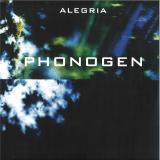
For their fourth release, Slush turns back the clock to a cult classic - Phonogen, the groundbreaking debut album from German DJ and producer, Alegria. First issued in 2002, Phonogen captures the raw emotion of dancefloors around the turn of the millennium, fusing driving basslines with infectious grooves to evoke the era’s radiant energy. Now, over two decades later, it’s reborn for a new generation, newly remastered and complete with a refreshed sleeve design and insert.
On and on, the beat goes on. Sound System culture plays a huge part in the history of House music, shaping Mysticisms, its founders and the music it brings into the spotlight. Continuing the dive into that history, in all its forms and permutations, Tranquil Elephantizer’s 1995 classic Zombie Dawn is reissued here in its original form.
A name that has been getting noticed on recent releases for the likes of legendary San Francisco collective Wicked Records and Manchester’s cult Red Laser label, the project has, in fact, been around for several decades.
Morphing out of the late 80s Acid House revolution, members Alexis Worrall, brothers Caspar and Darius Kedros and focal point, David Jenkins aka DJ Shakra came together in the South London melting pot of free parties and DIY anything is possible ethos.
Born of a collaboration between the short-lived Camberwell Butterflies project – featuring Alexis Worrall and DJ Shakra amongst others – and the Kedros’ bothers downtempo/trip hop forbears Slowly. With a shared label, on the ground-breaking Chill Out Records, and Thursday late-night encounters at London’s legendary Megatripolis club, they decided to pool studio resources and Tranquil Elephantizer was born.
Mixing lo-fi 808 heavy analog jams of the Butterflies, with the studio sophistication from the Slowly crew, sparked something new and Zombie Dawn was the first result. Local producer Crispin J Glover dropped by the studio, riding high with his Caucasian Boy project’s hypnotic Northern Lights (featuring DJ Shakra on Roland 303) – recently out on Strictly Rhythm – he offered to remix both Zombie Dawn and the Slowly album cut No Slo Dub for release on his own Matrix label and an underground hit on the London and West Coast 90s party scene was born.
Coming in the original “Saxmental Mix”, alongside Glover’s storming “Nu Dawn Club Mix” Zombie Dawn was a correlation of the past, present and future in one record. The history of British House can be heard in the bumpin’ nature of the beats, the sharp hats encompassed around dub overtones that give it added warmth. The slightly quirky, left field touches of the tracks, set against the then weekly overload of sharp US imports, brought the mix of influences from the Tonka and Sugarlump Sound Systems they had partied and been involved with, on to vinyl, adding touches of jazz keys and disco’s heritage for good measure.
A bedfellow for the emerging UK House sound coming on the likes of Luxury Service (Rob Mello / Zaki Dee), Other (A Man Called Adam / DJ D) and Nuphonic (Faze Action / Idjut Boys), that shaped and defined London clubs and far beyond. Some 30 years later, with a new album on the way, here is debut Tranquil Elephantizer’s release, remastered especially for this reissue, ready to bring that optimistic thinking back.
Tranquil the Mystery.
2026 Repress
Next year the iconic anthem Cafe Del Mar will celebrate its 30th anniversary, a landmark that will be celebrated with a series of brand new remixes alongside the finest existing remixes in specially remastered versions.
Launching the series of vinyl releases in September is a remastered vinyl-only release of the original mix, as well as the best-known version of this classic track, the iconic Three ‘N One Remix.
Nearly 30 years ago, Paul M aka DJ Kid Paul recording as Energy 52 unleashed a record onto an unsuspecting public that would go on to define club culture for an entire generation of dance music enthusiasts. Named as an homage to the legendary Ibiza sunset spot, Café Del Mar broke down boundaries between the underground and
the mainstream, charting in the UK singles charts on three separate occasions and named as the “best tune ever” by Mixmag at the start of the new millennium. In terms of cultural and emotional impact in dance music, it’s hard to find a record that comes close.
Café Del Mar has come to represent the most euphoric and hedonistic pleasures of dancefloors - in Ibiza and all around the world - and has been remixed by some of the biggest names in the industry. Now, 30 years after its original release, Superstition Records will be putting out a new series of releases, with brand new remixes as well as remastered versions of some of the many remixes from across the last three decades. The vinyl-only remastered version of the original and Three ‘N One mixes will launch the series, with further details about the rest of the series announced in the coming weeks.
In 2021 Paul Van Dyk’s Café Del Mar remixes launched a series of vinyl and digital re-issues on the Superstition Records imprint after an almost 20 years hiatus. From 1993 until 2003 Superstition Records was a groundbreaking Techno, Tech-House and Trance Label and released some of the biggest and most revered records of the early German electronic scene.
Alex Rex, the project of acclaimed musician and former Trembling Bells bandleader Alex Neilson, is set to release his fourth and final studio album, The National Trust, on March 28th. Written in the wake of the sudden death of his younger brother, Alastair, the album is a poignant reflection on loss, love, and renewal, deeply rooted in the landscape of Carbeth—a cabin community in the Scottish countryside that Alastair called home. For Neilson, the cabin became both a physical and emotional project, a symbol of restoration and reconnection.
"For the first four years after Alastair died, his cabin lay empty and exposed to the remorseless Scottish weather. It came to look like a rotten tooth in a beautiful mouth. Cladding was dropping off its veneer, the ashen baubles of dead wasps nests clung to the rafters, all his possessions were just as he'd left them but eaten by mice, moths and time. Ashtrays still carried the crushed centimetres of his old tab ends. The cabins are so joyfully animated by their host's specific personality and this one looked like a haunted house. Guilt, unrealised hopes and encroaching nature yoked together in a wandering sadness. Combined with the fact that I didn't know the right way round to hold a hammer made the project of its restoration seem hopeless.”
Neilson, however, gradually began chipping away at the task, determined to transform the cabin into something he hoped would resemble “a National Trust site occupied by a psychopath,” with a little help from some friends, including Lavinia Blackwall and Marco Rea.
“They poured love into the cabin and helped restore Alastair's original vision. The project also helped restore my relationship with Lavinia which had fractured after Trembling Bells broke up in 2017. Alongside long-term Rex lieutenant Rory Haye, we applied the same intensity of dedication that we did in renovating the cabin, into creating The National Trust.”
As with Neilson’s previous albums, the recording process was intentionally unpolished, with songs presented in the studio with no rehearsals and captured in just a few takes. This raw, immediate approach amplifies the emotional weight of the album, which Neilson describes as being at a “personal apex of sour self-reflection, mock misanthropy, and self-exposure.” Longtime collaborators Lavinia Blackwall, Marco Rea, and Rory Haye return, alongside guest musicians like Jill O’Sullivan (Jill Lorean) and Trembling Bells guitarist Mike Hastings, to bring Neilson’s vision to life. The result is a deeply personal and multifaceted work, blending acid wit with haunting introspection.
The songs on The National Trust traverse a wide emotional and thematic range. The title track opens the album with a sharp and confessional edge, exploring love, loathing, and cultural critique with Neilson’s signature wit. “Boss Morris” pays tribute to the all-female Morris dancing troupe that reinvents British folk with vibrant energy, while “Two Kinds of Song” turns self-referential humour into an avalanche of remorse, culminating in the unforgettable chorus: “I’ve got two kinds of song. Which one will it be; one where I hate myself or one where you hate me?” Elsewhere, tracks like “Psychic Rome” draw from the decadence and hysteria of ancient Rome, while “The Coward in the Tower” breaks new ground as the only song Neilson has composed on an instrument before recording.
Throughout the album, Neilson’s lyricism is as vivid as ever, transforming personal tragedy into poignant and often darkly humorous art. Yet, there is a sense of finality to this work. "Songwriting has encouraged me to see the whole world as a resource. The things people say and throw away can be chiselled and polished and plopped into a lyric. It’s the same with building the cabin- scouring the edges of society for pallets, discarded wood, ornaments for the garden. But while song writing brings to life orphaned parts of my personality, the cabin is a synthesis of all my interests – nurturing my emotional health instead of exploiting it. With that in mind, I think this will be my last album as Alex Rex.”
With The National Trust, Neilson closes a significant chapter of his career, blending masterful musicianship with deeply personal storytelling. Known for his collaborations with artists such as Bonnie "Prince" Billy, Shirley Collins, and Current 93, as well as his decade-long tenure leading the psych-folk outfit Trembling Bells, Neilson has long been celebrated for his eclectic and uncompromising vision. This final album serves as a fitting culmination of his journey as Alex Rex, capturing the essence of his artistry while offering a profound exploration of loss, renewal, and the enduring power of love.
Malena Zavala is an Argentinian-born, London-based artist, producer, and filmmaker, known for crafting ethereal, genre-blending music that navigates the space between her Latin heritage and her British upbringing. With the forthcoming album If This Life Could Start Again set for release on 30 January 2026 on Paraná Records, Zavala presents her most intimate, cohesive, and accomplished work to date, marking a significant evolution in her artistic journey.
With her new album, Malena creates an atmospheric dream pop world, weaving singer-songwriter intimacy with synth pop, Argentine folk, indiepop, rock and experimental music, threaded together by her blissful vocals and dreamy guitar work. Gorgeously warm and vivid, If This Life Could Start Again charts the journey from pain to acceptance, mapping out the non-linear nature of healing through a sonic landscape. Each song embodies a distinct emotion within that journey, from grief and chaos to feeling lost, seeking refuge, finding confidence, and finally acceptance and letting go. Drawing on her Argentinian roots, Malena uses the Andes mountains as both a visual and thematic anchor – the difficult climb towards higher ground becomes a metaphor for healing, whilst being lost at rock bottom reflects the darkest moments of the journey.
Completely composed and performed by Malena herself, the album was recorded in Girona’s L’Empordà countryside in Spain with producer Luke Smith. As a professional producer and audio engineer, this was Malena’s first time relinquishing production control – an intimate creative shift that allowed their shared vision to shape the album’s rich, enveloping sound.
However, Zavala’s career to date has been a testament to self-sufficient artistry. Her critically acclaimed debut, Aliso (2018), was written, recorded, and produced alone in her parents’ garage, which honed her dreamy bedroom pop sound. The album, praised by The Guardian for its “gently warped and beguilingly melancholy guitar pop,” ****, immediately catapulted her from DIY beginnings to prestigious stages, supporting acts like Lord Huron at London’s Roundhouse and Men I Trust at Village Underground and subsequently continuing on their UK/EU tours. Later with standout performances at Latitude, Green Man, and All Points East. Her consistent radio support from key influencers including BBC Radio 6 Music, BBC Radio 1's Huw Stephens, and Steve Lamacq has solidified her presence on the airwaves.
Her second album, La Yarará (2020), saw Zavala delve deeper into her roots, exploring Latin traditions like Cumbia and Bolero. This exploration of identity continues powerfully on the new album, but with a newfound lyrical depth and sonic confidence. The new album, If This Life Could Start Again, is a raw and transformative eight-track journey that maps the emotional landscape of healing. Written after a period of personal upheaval, the album traverses themes of grief, hereditary trauma, and self-discovery. The record’s narrative is structured like a mountain ascent. A challenging climb through varied emotional terrain, posing the central question: “Will you join the journey?” Sonically, this journey mirrors the non-linear path to acceptance, evolving from acoustic folk and synth-pop to funk-infused rhythms and rock anthems.
As a formidable live performer, Zavala has built a robust touring profile across the UK and Europe. She will embark on an extensive tour in February and March 2026 to support the album, with dates spanning major cities from London and Glasgow to Berlin, Paris, and Barcelona.
With If This Life Could Start Again, Malena Zavala fully realizes her artistic vision as a self-taught producer to an autonomous artist commanding her career through Paraná Records whilst reflecting the vast landscapes of her heritage and affirming her place as a compelling and evolving voice in contemporary music.
At the start of this summer, following a three-year hiatus for Daphni (punctuated only by his first ever collaborative Daphni track ‘Unidos’ alongside Sofia Kourtesis), he dropped ‘Sad Piano House’. The track represented something of a continuation in the Daphni catalogue, its roots growing from Cherry’s ‘Cloudy’ and its subsequent Kelbin remix, something in that song’s makeup having a profound effect when played on dancefloors by Snaith and countless others. ‘Sad Piano House’ deployed more intangibly irresistible bendy piano to equally satisfying effect and continues to achieve similarly rhapsodic dancefloor saturation.
Though a sizeable gap for Daphni releases, between Cherry and Butterfly however of course sits Honey, the latest Caribou album and one that saw the more instantaneous and dancefloor leaning traits of Daphni peaking through the cracks more than ever before. This blurring of the lines leads to an intriguing collaboration in Butterfly’s lead single ‘Waiting So Long (feat. Caribou)’. An unlikely duo - in that both artists are the same man, Dan Snaith - ‘Waiting So Long’ is not so much an identity crisis, ego trip, or the result of a chemical spill in the Snaith laboratory. It’s simply a track that Snaith felt for the first time belongs to both aliases, and might appeal to fans of both. He has never sung on a Daphni track before, and did not set out with the intention to do so this time, and yet this strange billing was born.
Daphni music has always been Snaith’s way of hitting directly to the core of the dancefloors he spends so much of his time playing to, and those dancefloors have been steadily expanding as his name grows, with the music following suit. This album however also draws from further back with a definite kinship to the very first Daphni album, the invigorating bag of ideas that was Jiaolong.
Butterfly is a showcase of the wonderful variety and surprising twists and turns that made that album such an exciting new prospect and that still to this day make Snaith such an intriguing DJ. There are more heavy hitters here, tracks that fill those dancefloors better than anyone, like ‘Clap Your Hands’ which picks up the energy of ‘Sad Piano House’ and flips it, exposing the gritty and intoxicating underbelly of Snaith’s hitmaking side, while retaining the playful urgency that runs through all of his work of late. Meanwhile ‘Hang’’s comic-strip horns are unpinned by gleeful force, unrelenting and thrillingly unshakeable. Elsewhere though comes a clutch of other tunes that might creep out somewhere more off the beaten path, a path Snaith has never stopped seeking in amongst his larger billings. ‘Lucky’ is squirmy and elusively intoxicating, ‘Invention’ skitters down meandering, inviting corridors, ‘Talk To Me’ grumbles and broods in the murk, and ‘Miles Smiles’ could roll on endlessly, so confident in its groove. There are no obvious peaks in these tracks or unifying moments, in fact many of them really have no business being on the dancefloor at all, and yet in the right setting, they could be the most fun to be had all night.
One such club is a good microcosm for the ethos of Butterfly as a whole. “Around the time I was finishing up this album I played a long set in a club called Open Ground in Wuppertal, Germany.” Snaith recalls, “It’s kind of, in one sense, the platonic ideal of the kind of club I’d want to play in. Every single decision has been taken, at great expense, with the aim of making the perfect sounding medium sized club room. But on top of it being the perfect acoustic environment it also is run by an amazing collection of people in a way that gives it a sense of community that dance music at its best provides. It is an absolute pleasure to play in that room to a crowd of people who come from all over. Playing in there you feel like you can play anything, and I played works in progress of pretty much every track on this album in my set there. Don’t get me wrong, I love playing a short set at a festival or in a more raw warehouse kind of club where you bang it out and only really functional music works but on record I guess the point of these Daphni records is to keep in mind a more expansive idea of dance music where the parameters are broad and the church is broad. I think that actually, putting really functional stuff next to weirder tracks (both on an album and in a dj set) might be the thing that’s still most interesting to me.”
This is the feeling that’s most palpable on Butterfly, and in every single time you see Snaith DJ. Right from the inception of the Daphni alias - and even before that – the thrill of trying stuff out, pushing at the boundaries has always been there and on Butterfly is present in all its twists and turns. It leaps all over the place and yet it hangs together, never feeling like a grab bag of dancefloor utilities but rather a distillation of all the strings to Snaith’s bow, exhilaratingly human and unified by one singular concept – simple and joyful exploration.
At the start of this summer, following a three-year hiatus for Daphni (punctuated only by his first ever collaborative Daphni track ‘Unidos’ alongside Sofia Kourtesis), he dropped ‘Sad Piano House’. The track represented something of a continuation in the Daphni catalogue, its roots growing from Cherry’s ‘Cloudy’ and its subsequent Kelbin remix, something in that song’s makeup having a profound effect when played on dancefloors by Snaith and countless others. ‘Sad Piano House’ deployed more intangibly irresistible bendy piano to equally satisfying effect and continues to achieve similarly rhapsodic dancefloor saturation.
Though a sizeable gap for Daphni releases, between Cherry and Butterfly however of course sits Honey, the latest Caribou album and one that saw the more instantaneous and dancefloor leaning traits of Daphni peaking through the cracks more than ever before. This blurring of the lines leads to an intriguing collaboration in Butterfly’s lead single ‘Waiting So Long (feat. Caribou)’. An unlikely duo - in that both artists are the same man, Dan Snaith - ‘Waiting So Long’ is not so much an identity crisis, ego trip, or the result of a chemical spill in the Snaith laboratory. It’s simply a track that Snaith felt for the first time belongs to both aliases, and might appeal to fans of both. He has never sung on a Daphni track before, and did not set out with the intention to do so this time, and yet this strange billing was born.
Daphni music has always been Snaith’s way of hitting directly to the core of the dancefloors he spends so much of his time playing to, and those dancefloors have been steadily expanding as his name grows, with the music following suit. This album however also draws from further back with a definite kinship to the very first Daphni album, the invigorating bag of ideas that was Jiaolong.
Butterfly is a showcase of the wonderful variety and surprising twists and turns that made that album such an exciting new prospect and that still to this day make Snaith such an intriguing DJ. There are more heavy hitters here, tracks that fill those dancefloors better than anyone, like ‘Clap Your Hands’ which picks up the energy of ‘Sad Piano House’ and flips it, exposing the gritty and intoxicating underbelly of Snaith’s hitmaking side, while retaining the playful urgency that runs through all of his work of late. Meanwhile ‘Hang’’s comic-strip horns are unpinned by gleeful force, unrelenting and thrillingly unshakeable. Elsewhere though comes a clutch of other tunes that might creep out somewhere more off the beaten path, a path Snaith has never stopped seeking in amongst his larger billings. ‘Lucky’ is squirmy and elusively intoxicating, ‘Invention’ skitters down meandering, inviting corridors, ‘Talk To Me’ grumbles and broods in the murk, and ‘Miles Smiles’ could roll on endlessly, so confident in its groove. There are no obvious peaks in these tracks or unifying moments, in fact many of them really have no business being on the dancefloor at all, and yet in the right setting, they could be the most fun to be had all night.
One such club is a good microcosm for the ethos of Butterfly as a whole. “Around the time I was finishing up this album I played a long set in a club called Open Ground in Wuppertal, Germany.” Snaith recalls, “It’s kind of, in one sense, the platonic ideal of the kind of club I’d want to play in. Every single decision has been taken, at great expense, with the aim of making the perfect sounding medium sized club room. But on top of it being the perfect acoustic environment it also is run by an amazing collection of people in a way that gives it a sense of community that dance music at its best provides. It is an absolute pleasure to play in that room to a crowd of people who come from all over. Playing in there you feel like you can play anything, and I played works in progress of pretty much every track on this album in my set there. Don’t get me wrong, I love playing a short set at a festival or in a more raw warehouse kind of club where you bang it out and only really functional music works but on record I guess the point of these Daphni records is to keep in mind a more expansive idea of dance music where the parameters are broad and the church is broad. I think that actually, putting really functional stuff next to weirder tracks (both on an album and in a dj set) might be the thing that’s still most interesting to me.”
This is the feeling that’s most palpable on Butterfly, and in every single time you see Snaith DJ. Right from the inception of the Daphni alias - and even before that – the thrill of trying stuff out, pushing at the boundaries has always been there and on Butterfly is present in all its twists and turns. It leaps all over the place and yet it hangs together, never feeling like a grab bag of dancefloor utilities but rather a distillation of all the strings to Snaith’s bow, exhilaratingly human and unified by one singular concept – simple and joyful exploration.
A chance meeting in Mexico City set Points of Inaccessibility into motion. When Ibero-American composer Rafael Anton Irisarri crossed paths with Dutch media artist Jaco Schilp at MUTEK in 2024, a conversation about how technology shapes perception revealed an unexpected common ground. Schilp invited Irisarri to a spring 2025 residency at Uncloud, the Utrecht-based collective he co-founded, where Irisarri's sound began to take form amid an environment shaped by Schilp’s visual research.
The Uncloud studio was located inside the former Pieter Baan Centre, a forensic psychiatric prison where suspects of violent crimes were once confined. Its long history of silence and containment shaped the atmosphere in which the project developed. Within this setting, Irisarri coaxed long bowed-guitar tones through a network of pedals and looping systems. The raw gestures thickened into a vaporous and architectural field of sound. Schilp processed the material through a custom point-cloud software patch that produced images in continuous flux. The visuals flickered, dissolved and reformed like memories that resist coherence, functioning as a digital Rorschach that reflected the observer’s own perception.
Amid these spectral echoes, the project evolved into an examination of how the past persists within present signals. Memory endures as residue and interference, continually shaping perception even when its source has faded.
Schilp’s visual process required a continuous stream of sound in real time. Irisarri improvised throughout the residency, generating material that allowed the visuals to develop in parallel. Once back in his New York studio, he began shaping the recordings by carving pathways through the improvisations and mapping selected passages into MIDI. This process allowed him to build outward from the bowed-guitar material with minimal overdubs, adding Prophet 5 textures, Moog bass and strings that expanded the harmonic field while keeping the original performances at the center. To refine the structure, Abul Mogard provided editorial input, working with Irisarri’s stems to guide transitions and strengthen the overall pacing. The material, originally created under conditions of immediacy and constraint, evolved into a fully realized work through careful revision, patience and sustained reworking.
The title engages the geographic concept of the Poles of Inaccessibility, locations defined solely by their distance from all surrounding points. Irisarri adapts this idea to the conditions of digital life, where new forms of inaccessibility arise through the informational enclosures that structure perception. What appears to be a fully connected network often produces a deeper kind of separation, one shaped by the filtering logic of the systems that mediate experience. In this sense, the digital sphere mirrors its geographic counterpart. We inhabit spaces saturated with signals, yet the possibility of genuine contact becomes increasingly remote.
At its core, Points of Inaccessibility considers what can be understood as the new rituals of capitalist realism. Irisarri uses the term digital shamanism to describe the forms of simulated connection that organize contemporary life. These systems promise comfort through algorithms, influencers and AI interlocutors, yet they often reproduce the same conditions that generate loneliness in the first place. What appears as connection becomes the echo of connection, a sequence of gestures that imitate solidarity while withholding it. Like the geographic poles, these rituals are defined by distance. They pull us into environments where everything is illuminated, yet meaningful proximity becomes increasingly rare. In this sense, the work approaches a hauntology of the present, a reflection on futures that have stalled and intimacies that have been thinned by the algorithmic infrastructures that surround us.
This thematic tension unfolds across the album’s four movements. Faded Ghosts of Clouds introduces the work with textures that rise and dissipate in slow cycles, creating an atmosphere that resists clear definition. Breaking the Unison occupies a pivotal position in the sequence and focuses on the moment when the individual and the system fall out of alignment. Its shifting patterns trace the scattering of signals that once suggested connection, revealing the instability at the heart of contemporary perception. Signals from a Distant Afterglow forms the center of the album and features vocals by Karen Vogt, whose presence enters the sound field like a fragile transmission shaped by distance and delay. The closing piece, Memory Strands, follows motifs that appear, recede and briefly intersect before returning to quiet. Across these movements, the album outlines a landscape in which emergence and disappearance continually inform one another.
Listening to Points of Inaccessibility is an encounter with a sound field that is constantly in flux. Elements surface briefly, shift position and recede, creating a sense of motion that resists stable interpretation. The music moves between closeness and vastness, carrying traces of memory while withholding a clear point of resolution.
The album’s visual identity completes the project’s conceptual arc. In Mexico City, where Irisarri and Schilp first met, Daniel Castrejón transformed stills from Schilp’s point-cloud visuals into the cover image. The final artwork captures a single suspended frame of the digital material, a moment extracted from a field that is normally in constant motion. Its surface recalls the texture and abstraction found in the work of Catalan artist Antoni Tàpies, where material presence and erasure coexist within the same plane.
What emerges is a work that examines the tension between technological systems and human presence. Points of Inaccessibility asks whether connection is still possible within environments shaped by mediation and delay, or whether we have become isolated points within the very networks that promise proximity. What possibilities for relation persist within environments organized by algorithms and interruption? And how are we meant to understand presence when so much of it is constructed at a distance?
Points of Inaccessibility will be released on BioVinyl on February 6, 2026, with audiovisual performances planned throughout 2026.
Mastered by Stephan Mathieu
Artwork by Jaco Schilp
Design and layout by Daniel Castrejón
Artist photo by Iulia Alexandra Magheru.
A year and a half has passed since Slovak-Hungarian artist Adela Mede self-released her debut album ‘Szabadság’. Its liner notes described it as “a navigation”, a search through “the personal, familial, cultural, folkloric and geographic of her past and present.” Her second album, ‘Ne Lépj a Virágra’ no longer searches; here, she puts down roots and delves deeper into the earthy reality of her home, Central Europe. Mede sings in three languages with newfound conviction and grace – this is an album of profound faith and confidence in the potential of this fertile soil.
Composed and recorded during the last 18 months in Bratislava, Slovakia – a city where three countries meet, where the East and the West collide – 'Ne Lépj a Virárga' translates to “don't step on the flower”. Its themes – budding potential, recognizing the beauty in the ordinary, solidarity, turning despair into hope – emerged through Mede's wholehearted involvement with her community, teaching singing to both children and adults, and various grassroots volunteering initiatives. It features collaborations with local artists, Mede's singing students, as well as fellow Eastern European contemporary artists Martyna Basta and Wojciech Rusin.
Adela Mede embellishes carefully crafted songs with minimalist and folklore influences, but also embraces more experimental approaches. The result is a collection of quite varied yet consistent pieces which highlight Mede's proficiency as a singer, arranger, producer and improviser. It is a grounded, confident next step for the Bratislava-based artist. Whether her vocals are naked, heavily processed, warped and reversed, or looped and layered; whether the production is sparse and minimalist or overwhelming and swampy; none of that changes the fact that the gentle tentativeness of her debut is gone. This is “Central European music”, at its most striking and meaningful: patient, determined, embracing both complexity and possibility.
There is a breaking point where the mind yields and the body takes command. This is precisely the territory of Frenetic Habits EP.
Asymetric80 lands at INDUSTRIAS MEKANIKAS with an unapologetic statement: a direct immersion into the aesthetics of collapse and extreme habits. The work places you in the center of a post-apocalyptic scenario, where survival no longer relies on calm, but on your ability to endure mechanical tension.
The sound is built upon solidity and saturation. You won’t find fragility here, but rather an architecture of EBM, New Beat, and Industrial Techno designed to dominate any sound system that dares to play it.
Side A establishes the hierarchy with Frenetic Habits. Far from linear, the track unfolds a broken, demolishing rhythm, generating a devastating sonic pressure that completely envelops you. It is a piece of constant drive, an armored machine advancing over the very ground you stand on. It is followed by Exile and Unmasked, which shifts the strategy towards depth: a hypnotic immersion where industrial textures densify, creating a dark atmosphere that traps you with no escape.
On Side B, Bleak materializes the heaviness of the environment. A slow-burning, corrosive track with deep bass, which you can feel advancing with the force of concrete. To close, Dementia releases the accumulated tension with overflowing kinetic energy; a final outburst of controlled aggression that closes the cycle with maximum intensity.
Frenetic Habits EP is a record of ironclad textures and terminal atmosphere. A work that documents not defeat, but the brute force needed to remain standing when everything around has come crashing down.
- A1: This Doesn't Exist Anymore
- A2: It Started To Hurt And Then It Just Continued
- A3: Everything You've Ever Dreamt Of And Less
- A4: A Substitute For Experience
- A5: Cyclopentane Fantasy
- A6: Post Sport Principle
- A7: Reverse Nightmare
- A8: 100 Feet To Burn On The Ground
- B1: Dumb Milestone
- B2: I'm Noticing The Blossoms More This Year
- B3: The Extremes
- B4: Terminally Online (For You)
- B5: Underachievers Anonymous
- B6: I Have Been To Heaven Once
- B7: Old Love, Old Fears
Inspired by witnessing the broken tension and renewed possibilities of a laptop breaking down at a gig – not to mention the void left behind by the sudden end of a relationship – Pentu’s latest release is a jump-cut menagerie of musical moments. Sewn together into ‘And I Saw My Devil And I Saw My Deep Blue Sea’, these fifteen tracks continue the London-based producer’s active departure from the soundscapes and song structures that dominated their previous writing style. These disparate pieces slice themselves off into sudden silence, or veer into unpredictable sidebars, hopping from hyperactive instrumentals to beautifully deconstructed YouTube samples. Described by Pentu as “emotionally intuitive to write”, this is music by and for the endlessly scrolling modern mind – “navigating the world alongside the splintered, interruptive emotional hyper realities of social media.”
The sudden silences, drones, and interruptions are perhaps less surprising than the guitar-based textures of metal & shoegaze woven into several vital passages by Pentu. The result is a collage that encapsulates the erratic feeling, not only of a relationship’s end, but simply of navigating online mediascapes.”I found myself realising that my phone, the constant interrupter of nothingness and silence, was both a cause of depression (reliving memories, dating apps) and a relief from it (creating new friendships, distractions, also dating apps)”, says Pentu.
Pentu’s attempt to overcome content overload by actively curbing his setup of laptop-guitar--synth does little to reduce the scope of this album’s sonic palette. YouTube vlog samples (from videos with next-to-no views) are an attempt to recontextualise and dramatise material that “would have otherwise been throwaway moments lost in the internet”, adding staccato moments of reality to Pentu’s beautiful and jarring album-length paean to overstimulation.
- Scrape The Pot
- Railroad Avenue
- Victor Charlie
- 4: 99 Special
- Groundhogs Day (Feat. T.f)
- Brazil (Feat. Primo Profit)
- 8: Wings (Feat. Bruiser Wolf)
- Ocean Drive
- Bulletproof Chicken
- Clientele Freestyle
- Fluegame
- Scooby Sweaters
Two of the most respected voices in the underground connect for a heavyweight collaboration that's been a long time coming — BULLETPROOF CHICKEN is out now!
CRIMEAPPLE, the bilingual New Jersey spitter known for razor-sharp wordplay and a steady run of cult-favorite projects like Aguardiente and his collaborations with DJ Muggs, cementing his spot as a force in modern hip-hop.
On the boards, V DON has become a staple for his signature dark, cinematic production style. From Harlem to the world, he’s laced tracks for the likes of Boldy James, Estee Nack, A$AP Rocky, Dave East, Benny The Butcher among several otehrs, while also building his own lane with the underground classics like Omerta and his Deutsche Marks and Blue Note series with Willie The Kid. His beats balance grit and atmosphere, making him one of the most sought-after producers in the underground and beyond.
With BULLETPROOF CHICKEN, the two bring their worlds together — sharp rhymes, moody textures, and guest appearances from T.F, Bruiser Wolf, and Primo Profit only add more weight. This album is a testament to where both artists are right now, rising higher with every drop, carrying the underground to new levels.
- 1: Just My Situation
- 2: Simple Human Kindness
- 3: Do Or Die
- 4: Never Turn You In
- 5: Eddie And The Boys
- 6: A Better Hold
- 7: Colossus
- 8: Grass For Blades
- 9: Lucky Golden Stripes And Starpose
- 10: No New Games
- 11: Bless Your Lucky Stars
Transparent Red Vinyl[32,14 €]
Wigwam's previously unreleased rare live recording from 1976 out in February via Svart Records In the summer of 1976, Wigwam performed not only in Finland but also in Sweden, Denmark, the Netherlands, and Germany. However, the pace slowed down afterward. The early autumn tours planned for European countries were cancelled, and even the replacement shows in Finland had to be postponed due to bassist Måns “Måsse” Groundstroem's sick leave. In October 1976 an opening appeared in the schedule for a studio session, during which Jim Pembroke’s third solo album, Corporal Cauliflower’s Mental Function, was recorded. After that, Wigwam played five gigs in Denmark at the end of November, followed by an equal number in Sweden. No exact information has survived about the concert setlists, but the band was in a stable phase, and certain songs had become staples in their live repertoire. Albums from Wigwam's deep-pop era, which began in autumn 1974, as well as Pembroke’s first solo records had already been released, and rehearsals were underway for what would become the Dark Album, released in 1977. It can be said that this concert, recorded for Danish Radio, is a strong representation of the band’s era at the time. The recording took place in northern Denmark, in a district called Lundtofte in Lyngby. Before this, Wigwam had performed in Køge and Århus, and after Lundtofte, gigs in Ballerup and Copenhagen awaited. Lundtofte was home to the Danish Technical University (DTU), where a student venue called “Studenterhuset” (Building 101) hosted a one- to two-day music events known as Polyjoint during the 1970’s. The events typically featured Danish bands, but also visiting acts like Wigwam. Most importantly, Danish Radio was sometimes present at these events. Wigwam had performed a studio concert for Danish Radio the previous year, but this particular recording is considered the more energetic of the two. Details have faded with time — for example, the identity of the second act at the concert is unknown. In any case, both guitarist Pekka “Rekku” Rechardt and keyboardist Pedro Hietanen remember the band being in high spirits, in top form, and highly motivated.
- 1: Just My Situation
- 2: Simple Human Kindness
- 3: Do Or Die
- 4: Never Turn You In
- 5: Eddie And The Boys
- 6: A Better Hold
- 7: Colossus
- 8: Grass For Blades
- 9: Lucky Golden Stripes And Starpose
- 10: No New Games
- 11: Bless Your Lucky Stars
Black Vinyl[32,14 €]
Wigwam's previously unreleased rare live recording from 1976 out in February via Svart Records In the summer of 1976, Wigwam performed not only in Finland but also in Sweden, Denmark, the Netherlands, and Germany. However, the pace slowed down afterward. The early autumn tours planned for European countries were cancelled, and even the replacement shows in Finland had to be postponed due to bassist Måns “Måsse” Groundstroem's sick leave. In October 1976 an opening appeared in the schedule for a studio session, during which Jim Pembroke’s third solo album, Corporal Cauliflower’s Mental Function, was recorded. After that, Wigwam played five gigs in Denmark at the end of November, followed by an equal number in Sweden. No exact information has survived about the concert setlists, but the band was in a stable phase, and certain songs had become staples in their live repertoire. Albums from Wigwam's deep-pop era, which began in autumn 1974, as well as Pembroke’s first solo records had already been released, and rehearsals were underway for what would become the Dark Album, released in 1977. It can be said that this concert, recorded for Danish Radio, is a strong representation of the band’s era at the time. The recording took place in northern Denmark, in a district called Lundtofte in Lyngby. Before this, Wigwam had performed in Køge and Århus, and after Lundtofte, gigs in Ballerup and Copenhagen awaited. Lundtofte was home to the Danish Technical University (DTU), where a student venue called “Studenterhuset” (Building 101) hosted a one- to two-day music events known as Polyjoint during the 1970’s. The events typically featured Danish bands, but also visiting acts like Wigwam. Most importantly, Danish Radio was sometimes present at these events. Wigwam had performed a studio concert for Danish Radio the previous year, but this particular recording is considered the more energetic of the two. Details have faded with time — for example, the identity of the second act at the concert is unknown. In any case, both guitarist Pekka “Rekku” Rechardt and keyboardist Pedro Hietanen remember the band being in high spirits, in top form, and highly motivated.
- A1: Madre Terra
- A2: Destino
- A3: Occhi Fissi Feat. Madbuddy
- A4: Viaggio Nella Musica
- A5: L’attesa (Skit)
- A6: No Drama Feat. Claver Gold
- B1: Sott’ E Sop’
- B2: Sulle Nuvole
- B3: La Multa (Skit)
- B4: Funk4Ass
- B5: Riti Oscuri
- B6: Per La Mia Gente
- B7: L’attimo (Bonus Track)
Subconscio left the smallest town in Gargano to begin a new life in uncharted Bologna.
Leaving mother earth, he still retains a strong sense of that distant world, expressed through the senses of his inner child. The Subconscio
project finds its expression in music, where it blends Neo Soul, Hip Hop, and Electronica into a sound deeply influenced by individual experiences. Soft vibrations and relaxed lyrics are the means through which he expresses his devotion to creative freedom, moving with the urgency of someone who has finally found his voice. The word dáimōn originates from Ancient Greek and means divine messenger, a guiding
spirit that hovers in a middle ground, called metaxu, the same place where the soul resides, and acts as a link between God and humanity.*
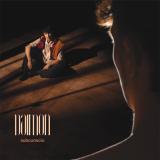
"Daimon" is Subconscio's debut album, produced by Luzee. It's the intimate vision of a person suspended in his imagination, questioning
the identity of his own memory and how the places that led him to his NOW are actually his future. The present doesn't exist in the narrative.
It exists only in the connection between childhood memories and the adult perspective.
Giulio is his son and also his parent: the Subconscious; the "daimon" is the musical journey that connects these two ways of observing the
same memory. Nostalgic turmoil meets the desire to recognize oneself and fuel the obsession with music, because only this—albeit the least
apparent art—is the only one that can be the voice and bearer of the dimensions of consciousness.
Featuring on the album: Madbuddy and Claver Gold
- 1: You Haven't Done Nothin
- 2: Master Blaster (Jammin')
- 3: Visions
- 4: Higher Ground
- 5: Renewable
- 6: Jesus Children Of America
- 7: If It's Magic
- 8: She's Gone
- 9: Pastime Paradise
- 10: Big Brother
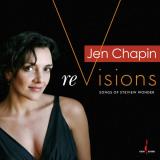
In 2008, accompanied solely by her husband, bassist Stephan Crump , and saxophonist Chris Cheek, she created reVisions in which she reimagined a collection of Stevie Wonder songs to offer social commentary on Barack Obama's historic rise to power. As much a testament to Chapin's unique artistic sensibility as a celebration of the enduring appeal and relevance of Wonder's songs, ReVisions, which also includes sensibility as a celebration of the enduring appeal and relevance of Wonder's songs, ReVisions, which also includes two self- penned numbers, puts a new spin on Wonder classics like 'Masterblaster (Jammin'),' 'You Haven't Done Nothin',' 'Higher Ground' and 'Village Ghetto Land.' Bolstered with new liner notes featuring a recent interview with Jen Chapin, ReVisions: The Songs Of Stevie Wonder is reissued in 2026 as part of the Chesky Original Masters series on 180g One Step Pressing Vinyl LP and Hybrid Stereo SACD
- A1: The Journey
- A2: Aporias
- A3: One Single Star
- A4: Echo_Solar
- A5: Particles Of Core Dust
- A6: Vostok
- B1: Atlasescence
- B2: Tunguska_Iteration_02
- B3: Dashka
- B4: Expeditions
- B5: Airy-O
- B6: Glimmer Nebula
- B7: Planet Scraper
- C1: The Appearance Of A Star System
- C2: Domo_Redux
- C3: Fishing
- C4: Protostar
- C5: Auroras
- C6: Corrupted Bits
- C7: Tunguska_Iteration_03
- C8: Epoch Of Reionisation
- C9: End Routine
- D1: Tunguska_Iteration_01
- D2: Unknown System X390625
- D3: One Step From Casminov
- D4: Nexus
- D5: Overseer Planet
- D6: Recursive Simulation
- D7: Adrift
- D8: Self Test
- D9: The Path Finder
- D10: The Ident
Hello Games and Laced Records are embarking on a new intergalactic journey as they bring 32 new songs from the No Man's Sky universe onto vinyl.
Composed by Hello Games' audio director Paul Weir and Sheffield instrumental band 65daysofstatic, No Man's Sky: Journeys has been crafted from the ground-up as a fully-fledged companion piece to the original No Man's Sky soundtrack.
This new soundtrack includes 32 new songs born out of the endless, dynamic soundscapes from the Pathfinder update. Until now, these soundscapes have been sitting inside the video game generating infinite variations of themselves. Now they're landing on vinyl - a sonic representation of the game's constantly evolving journey over the last nine years.
Timo Lassy follows up his new album "Trio" on We Jazz Records by sharing two non-album cuts from the same sessions on a new 7" vinyl single / digi release. "Mountain Man Exit" is a stormy number featuring the trio of Lassy (tenor sax), Ville Herrala (bass) and Jaska Lukkarinen (drums) in full flight plus Tuomo Prättälä (of Ilmiliekki Quartet) on synth duties. Album track "Orlo" gets a new treatment, edited for the 7" and taking shape as a tough-as-nails mix breaking new ground here without the string section.
- A1: Pale Dogwood (4:21)
- A2: Field Drab (5:14)
- A3: Ceda Chast (5:10)
- A4: Wild Blue Yonder (8:39)
- B1: Inchworm (6:23)
- B2: Vetiver (3:50)
- B3: Orange Crayola (7:37)
- C1: Black Olive (5:19)
- C2: Wild Strawberry (4:00)
- C3: African Violet (6:39)
- C4: Deep Sky (4:52)
- D1: Permanent Geranium Lake (6:23)
- D2: Carnelian (4:09)
- D3: Helltrope (7:56)
Ivan The Tolerable returns with Chromophobia, an expansive new double album and his fourth for Riot Season after ‘Water Music’ & ‘Vertigo’ (both 2024) and ‘An Orphan Form’ (2025)
Chromophobia carries with it a deep personal history. The earliest recording sessions date back to 2018 at the IDI in Middlesbrough, engineered by longtime collaborator Nigel Crooks over the course of three weekends. The material was left unfinished for years, shelved for reasons that accumulated and compounded - until the tragic passing of Crooks in 2023. His unfinished work lingered, and the desire to complete it became a mission.
“In the end, I finished this record for Nigel, above all else,” says Oli Heffernan (Ivan The Tolerable). “It always annoyed him that it never got done.”
To bring the album to completion, the original stems were passed to producer Hugh Major (formerly of Benefits) in early 2024. Across a year of meticulous experimentation - countless versions, radical reconstructions, entire songs torn down and rebuilt - the album transformed into something wholly new. The final collection spans 14 tracks, reimagined from the ground up yet still anchored to the spirit of the sessions that began it.
“It’s a very different beast from where it started,” Heffernan adds, “but I think Nigel would really like it - and be glad it was finally finished.”
Chromophobia stands as both a reinvention and a tribute: a document of persistence, creative overhaul, and the enduring impact of a lost collaborator.
- A1: Pixelated Kisses
- A2: Cigarette
- A3: Last Of A Dying Breed
- A4: Love You Less
- A5: If It Only Gets Better
- A6: Love Me Better
- A7: Piece Of You
- A8: Hotel California
- A9: Tarmac
- A1: Forehead Touch The Ground
- B1: Past Won't Leave My Bed
- B2: Fade To Black
- B3: Can't See Shit In The Club
- B4: Sojourn
- B5: Dykily
- B6: Silhouette Man
- B7: Fragments
- B8: Horses To Water
- B9: Strange Home
- B10: Dior
Black Vinyl[28,15 €]
Joji returns with long-awaited 4th studio album ‘Piss In The Wind’ via Palace Creek. The new LP cements his place as one of the most distinctive and genre-defying artists of his generation, balancing haunting melodies with gritty yet atmospheric production. The album captures the quiet contradictions that always defined his music, wrestling inner turmoil into something strangely beautiful. Features “PIXELATED KISSES,” “Past Won’t Leave My Bed,” and more.
Joji kehrt mit seinem lang erwarteten vierten Studioalbum „Piss In The Wind“ zurück. Die neue LP festigt seinen Platz als einer der markantesten und genreübergreifendsten Künstler seiner Generation, der eindringliche Melodien mit einer rauen, aber atmosphärischen Produktion in Einklang bringt. Das Album fängt die stillen Widersprüche ein, die seine Musik seit jeher auszeichnen, und verwandelt innere Unruhe in etwas seltsam Schönes. Mit „PIXELATED KISSES”, „Past Won’t Leave My Bed” und weiteren Titeln.
- A1: Gareth Coker - The Resistance (Main Theme)
- A2: Gareth Coker - Uchawi's Hearth
- A3: Gareth Coker - Giggling Forest
- A4: Gareth Coker - Green River
- A5: Gareth Coker - Wild Coast
- A6: Gareth Coker - City Of Stonedale
- B1: Gareth Coker - Rudolf
- B2: Gareth Coker - The Citadel
- B3: Gareth Coker - Ancient Might
- B4: Mick Gordon - The Underking
- B5: Gareth Coker - Fire Swamps
- B6: Gareth Coker - Sinking City
- B7: Gareth Coker - Fallen Guardian
- C1: Gareth Coker - Training Grounds
- C2: Gareth Coker - The Lizard King
- C3: Gareth Coker - Pilgrim's Road
- C4: Gareth Coker, Rachel Hardy - Yeldrim
- C5: Gareth Coker - Catacombs Of Renewal
- C6: Yuka Kitamura - Morta Mima
- C7: Gareth Coker - Mansion Of The Cult
- D1: Gareth Coker - Mouth Of Madness
- D2: Motoi Sakuraba - The Cosmic Beast
- D3: Gareth Coker - Endless Bazaar
- D4: Gareth Coker - Power
- D5: Gareth Coker - Azra, Pride Of The Sun King
- D6: Gareth Coker - Absolum, A Broken Dream
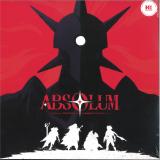
This album is the game soundtrack of Absolum, a fully hand-drawn world and unique lore by the team behind Streets of Rage 4, TMNT: Shredder’s Revenge... Known for Ori and the Blind Forest and Halo Infinite, the main composer Gareth Coker brings his signature emotional depth, blending dark fantasy orchestration with medieval-inspired themes and brooding atmospheres.
From orchestral soundscapes to thrilling boss fight themes, this soundtrack features guest tracks by Mick Gordon (DOOM 2016, Wolfenstein: The New Order, Atomic Heart...), Yuka Kitamura (Elden Ring, Dark Souls III, Dark Souls II), Motoi Sakuraba (the Dark Souls Series, Mario Golf, Star Ocean), and Rachel Hardy (Stray Gods, Eternal Strands), setting the tone for the events taking place in this cute but twisted fantasy world. Magic may be forbidden in these lands, but the music is still truly enchanting!
Big Sigh brings together the best of Marika's previous works as an indie musician and adds a new layer of epic sounds and full-bodied production. Big Sigh is the "hardest record" Marika has ever made. As the title suggests, it is a relief of sorts - of sadness, of stress and lust, but mostly relief. Co-produced with Sam Petts Davies (Frank Ocean, Radiohead, Red Hot Chilli Peppers) & Charlie Andrew (Alt J, Wolf Alice, London Grammar). Lyrically there's always romance a longside grief, with elements of vulnerability and feeling trapped. "This album took a long time I got to the end of it I was quiet. I wanted to be away from it and let it sit in its own space. Now the dust has settled and I've got to re-enter the world of big sigh, and I'm excited." Stepping into a new world, moving forward, chipping away. Breath in, breath out. Big sigh."
- A1: The Whip Hand
- A2: Aegis
- A3: Dyslexicon
- B1: Empty Vessels Make The Loudest Sound
- B2: The Malkin Jewel
- B3: Lapochka
- C1: In Absentia
- C2: Imago
- C3: Molochwalker
- C4: Trinkets Pale Of Moon
- D1: Vedamalady
- D2: Noctourniquet
- D3: Zed And Two Naughts
Noctourniquet And then everything went black, at least for a while, at least for The Mars Volta. In the months and years following their fifth full-length, Octahedron, Omar kept on at his usual fearsome creative pace. In fact, he ramped up his output considerably, starting up his own Rodriguez Lopez Productions label and releasing a slew of solo albums. It was a practice he’d begun shortly after De-Loused’s release, with his solo debut A Manual Dexterity: Soundtrack Volume One, but as the decade reached its close, Omar grew to rely upon his solo recordings as an outlet for his prolific creativity, these albums often exploring musical pastures far beyond even The Mars Volta’s wide-ranging parameters. Before choosing to release music under his own name, Omar would always play it to Cedric first, to see if the frontman thought it had potential to become Mars Volta music. Shortly after Octahedron’s completion, Cedric flagged one batch of tracks Omar had cut with Deantoni Parks, a brilliant drummer and composer who’d briefly occupied the Mars Volta drumstool in-between Jon Theodore and Thomas Pridgen’s tenures, and whose volcanic creativity and unique, unpredictable approach to rhythm and composition had quickly made him one of Omar’s favourite artistic foils.
As with the music that made up Octahedron, the new tracks Cedric had optioned for The Mars Volta often veered far from the riotous, Grand Guignol visions of their earlier releases. It possessed the punchy, song-based focus of Octahedron, though this was a considerably darker, more menacing strain of pop, with synthesisers figuring heavily in the productions. Cedric took the tracks in 2009 and set about writing songs to the music. But no more new Mars Volta music would be heard until 2012. The years that passed in-between were nonetheless momentous, and busy, witnessing an unexpected reunion of the members of At The Drive-In, and Cedric joining his own side-project, Anywhere. But there wasn’t any sign of life within the Mars Volta until Omar, Cedric and their bandmates took to the road for a series of live shows in the spring of 2011, billed as The Omar Rodriguez-Lopez Group, debuting the songs that would become Noctourniquet. The album followed the next year, and it remains one of The Mars Volta’s finest, its electronic textures staking out unfamiliar but fertile new ground.
An unsettling, subtly turbulent listen, Noctourniquet found Cedric sketching out a story about “some sort of device that stops the darkness from bleeding”, drawing influence variously from the nursery rhyme Solomon Grundy, the Greek myth of Hyacinthus and the song Birth, School, Work, Death by British underground rockers The Godfathers. It was an album of dystopian futurism, signalled by the paranoid cyber-rock of opener The Whip Hand and its unnerving chorus, “That’s when I disconnect from you”. But it was also an album of inspired, unexpected moves and uncanny invention, like how Dyslexicon seemed to eerily evoke Blondie’s Rapture, before rushing headlong into its bruising chorus, tempos shifting restlessly throughout like quaking earth beneath the listener’s feet, or how Aegis put a brave new spin on The Mars Volta’s trademark rewiring of salsa’s overdriven passions, or how Cedric had never sounded as scary as he did on The Malkin Jewel’s mutant burlesque shuffle. Tracks like Molochwalker were sleek and concise in a way The Mars Volta had never really attempted before – which was all part of Omar’s plan.
“It had all been guitar, guitar, guitar, overdubs, everything fighting for space in the same frequency,” he explains. “So for Noctourniquet, it was all about subtracting elements, of sticking to how I made demos.” Deantoni’s presence helped revivify the group, playing against cliché and expectation, and taking each song in unexpected directions. “I’d beatbox a rhythm for him to play, to go with my guitar part, and he’d come back with three or four alternate options. It was so great.” Similarly, Cedric had never sung better than on Noctourniquet, staking out a fearsome spectrum from the chilling Tom Waitsian growl of The Malkin Jewel to the keening, beautiful vocalisation on Vedamalady, rising to match some of Omar’s most deft, most immediately effective and melodic songs yet. Indeed, Noctourniquet is the sound of a band discovering new ways to do familiar things, renewing their commitment to their mission, finding fresh inspiration a decade in, and shaking off any complacency that might have come with ten years of acclaim and success.
- 1: Dirty Water
- 2: Destroyer
- 3: Scream Out Loud For Love
- 4: Police Bastard
- 5: More!
- 6: Hole In The Ground
- 7: We Take All
- 8: Eazy
- 9: Spring That Never Ends
- 10: Sad Song Man
- 11: Chevy Van
- 12: Tail Down
- 13: Leather
- 14: All Right, All Night
Sweatmaster releases a new full-length album after a 15-year hiatus via Svart Records Sweatmaster, one of the aristocrats of Finnish garage rock, is making a big comeback with the release of their fifth album More! in January 2026. After the release of their 2010 album Dig Up the Knife, the band took a long break, which ended a few years ago with live performances both domestic and abroad. At the same time, new material began to emerge in the rehearsal room, and the band quickly found a common strategy for working on it. "We were unanimous about the strengths of our band and decided to get to the heart of the matter. The main idea was to make straightforward songs carried by the vocals. The kind that would work well live with our aggressive playing style," says the band's drummer Matti Kallio. Svart Records will release Sweatmaster's fifth album early next year. More! is a sharp package of fourteen songs that has not been polished to death. "We wanted a raw and electric sound for the new album, built tightly around the three of us playing. The aim was to stick to Sweatmaster's original energy and not spread ourselves too thin. However, despite our efforts, the intervening years brought some new tones with them," guitarist Mikko Luukko explains the background of the new album. The album's first single will be released on Friday, September 19th, and according to singer-bassist Sasu Mykkänen, Destroyer is the essence of Sweatmaster. "The drum fill draws you into the pull of the electric triangle. The guitar taps at the ballads and wants nothing more than to drive the rhythm until the passionate vocals take over. The song doesn't lead anywhere, it's already there. 2 minutes, 37 seconds. Wham bam. Here you go." More! is available for pre-order now at Svart’s webstore on Svart exclusive vinyl, limited coloured vinyl, classic black vinyl, and CD. Release date January 30th, 2026.
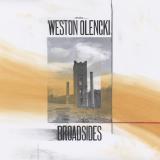
'In 2023, sound artist and composer Weston Olencki toured across the American South. Beginning in their hometown in South Carolina, they snaked a circuitous path from the mountains of West Virginia to the banks of the Mississippi River. As the miles accumulated, so did the initial seeds of new work.
'Instruments and artifacts they acquired hitched a ride in the backseat, while songs and sounds filled their portable recorder: water in its various states, the familiar insectoid buzz of those summer nights, trains cutting through the landscape, the traditional music that lived alongside the communities that kept it. Olencki took it all in, and over time, found ways that these experiences coalesced into a bramble-like perspective of time, where past, present, and future intersect in ways both barbed and beautiful.
'Broadsides, Olencki’s newest solo full-length is the multilayered result of this journey. The album follows their landmark release Old Time Music from 2022, which presented radical interpretations of traditional tunes from Appalachia and throughout the South alongside original compositions that drew significantly on archival recordings. On Broadsides, Olencki rejects delineations between the unmoored avant-garde and the rootedness of one’s cultural heritage, revealing their porous and intertwined nature. “My mother was a quilter. Her mother before that,” they write in the album’s liner notes. “Quilting, like music, is a practice of embedding knowledge and remembrance into the very core of the thing you are making. It’s not just about the materials, but how they’re reassembled, recontextualized, stitched, woven to form new patterns - the minutiae of craft holding significance to those looking to find it. Stories woven from stories, never told the same way twice.”
'Like all great road trips, Broadsides unfolds slowly and continuously, with moments of dramatic reverie punctuating the endless melt of highway in the rearview. We’re immediately confronted by the uncanniness of revisiting old haunts, as Southern storms break through the initial churn of the freight locomotives of Alabama. Olencki’s interpretation of the bluegrass standard “Foggy Mountain Breakdown” captures the euphoria of melancholy in motion. The permutational plucks of banjo are bounced around the frame by a computer, its pitches determined within algorithmic sequences and transcriptions of classic three-finger licks. The tonalities of old-time are smeared and stretched until all that’s audible is the insistence that Heaven might be real.
'In the album’s second half, “Omie Wise,” a murder ballad made famous by Doc Watson, follows an interlude recorded on the river in North Carolina in which the titular character’s body was laid. Ghostly echoes of a dozen other renditions float through the substrata as Tongue Depressor’s Henry Birdsey accompanies them on the pedal steel guitar. The album’s central composition, “all my father’s clocks,” is a profound meditation on entropy and impermanence. The sound of their father’s extensive clock collection ticks away as Olencki pulls a bow across the length of an autoharp sourced from a rural strip mall. The instrument was left as detuned as it was found, the resonance of its deep bass drone and clanging high-end the result of years of neglect and the warping effects of Southern humidity.
'Historically, broadsides were an early form of broadcasting, an often- musicalized telling of current news pasted in the public square. The name was later taken up by Sis Cunningham and Gordon Friesen in the 1960s, whose Broadside magazine published songs and social commentary when American folk music resurfaced as an urgent way of communicating the multifaceted politics of its time.
'Olencki borrows the phrase to recall both this old form of songmaking and that later prominent reexamination of traditional music’s role in modern life, but also to draw attention to the fragmented and machine- mediated way heritage is diffused in this very different, but no less pivotal, moment.
'As a sanitized past is used as justification for current violence and domination, we can turn to these artifacts to better understand the history of ourselves, but only if they are consciously pushed to evolve. Broadsides represents one personal, striking vision of what far-flung futurisms could be respun from = these high, lonesome sounds: a reflection of the unbridled joy and deep sorrow inherent to living together through time, and a desire to push further into the untold and unknown.'
- Johnny
- World Keeps Turning
- Electravision Mantra
- Dial Om
- Wonderful Life
- El Salvador (Former Cd Only Track)
- Sean O'farrell
- Belfast
- Cycle
- They're Killing Us All (To Make The World Safe)
- O Salvation
- Fish And Trees (Former Cd Only Track)
This remastered vinyl reissue of Blind Ear reintroduces The Celibate Rifles' urgent, socially aware punk-rock energy, cementing its place as a cornerstone of Australian alternative rock. 1989 is where The Celibate Rifles take their punk instincts to the next level-garage muscle, surgical precision, and a rock'n'roll pulse that sounds more urgent than ever today. Formed in Sydney ten years ago, the band appears here in full flight: two guitars in constant dialogue, a rhythm section with newfound dynamic range, and a razor-edged vocal that bites without losing melody. The remaster opens up the stereo image, sharpens the six-string detail, and restores to the turntable the physical punch this record demanded from day one; it's the definitive way to (re)discover a key title from the Australian school. The tracklist is pure traction: "Some Kind of Feeling" hits the ground running with speed and focus; "Wonderful Life '88" nails an instant hook and a clear-eyed critique of yuppie culture; and the closer, "O Salvation," lands as an expansive, cathartic statement of intent. Two tracks unusual in Australian rock for their subject matter-"Sean O'Farrell" and "Belfast"-tackle the Northern Ireland conflict head-on and underscore the band's social gaze, while the rest of the album maintains a no-filler intensity. This edition preserves the original LP sequence (the two bonus tracks existed only on the period CD) and stands as an essential piece for collectors and front racks alike: ideal for in-stores, listening bars, and classic alternative rock playlists. If your audience connects with BORED!, Radio Birdman, The New Christs, or The Saints, Blind Ear is an unequivocal yes.
- (Don't Dream Its Over)
- Imaginary Lines
- Rain And Sirens
- Ocean East, Ocean West
- Hairspring
- Minus Power
- (Deluge In A Paper Cup)
GREEN VINYL[24,33 €]
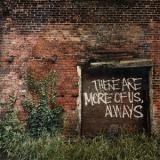
Jagged City unveils their debut instrumental EP, `There Are More of Us, Always`, a bold collection that moves between spacious, melodic guitar passages and raucous, swelling climbs. With heartfelt, melodious songwriting, a diverse range of eclectic touches buried within, and eruptions of dense, layered sound, this record delivers wonderfully balanced compositions through raw and personal production. The project began as a cross-continental art experiment between Jake Woodruff (Defeater) and Carlos Torres (former touring member of Explosions In The Sky). What started as a simple exchange of ideas quickly found real shape through collaborative composition and thoughtful arrangement. Early sessions with David Haik helped refine the songs' structures and drum frameworks, setting the groundwork for what would become Jagged City's striking debut. "We wrote with pure instinct, just tried to add something new to a genre that we love. As we traded ideas, we took some left turns and incorporated elements that may be unexpected." (Woodruff) The result feels immediate, deviously rough at the edges, and charged with a punk-minded intensity that keeps the momentum taut and the sound intimate. RIYL Mogwai, Do Make Say Think, Godspeed, Mono, Defeater, Explosions In The Sky
- A1: Swing Easy
- B1: Ringo Rock
Two killer tunes from The Soul Vendors. Absolutely seminal foundation groundbreaking late 1960s reggae cuts from Studio One.
The Soul Vendors (and their other incarnations as The Sound Dimension and Soul Bros) established the sound of reggae, their tracks replayed and sampled many times over throughout the 1970s,
80s, 90s and beyond.
‘Swing Easy’ and ‘Ringo Rock’ are two of The Soul Vendors’ toughest cuts, freshly pressed on this new 45
- 1: Downtown
- 2: The Shadow
- 3: Good Intentions
- 4: Gerima
- 5: See The Light
- 6: Hang On
- 7: Summer Rain
- 8: Forgotten Dream
- 9: Ojijican
Continued Sound is proud to present The Shadow by Ojiji.
In 1979, Rupert “Ojiji” Harvey put out one of the most distinctly original albums of a generation. Combining progressive jazz-fusion arrangements with soul, funk, and reggae from his native Jamaica, Ojiji’s The Shadow is an album only he could create.
Ojiji, along with his brother Carl, were performing in nightclubs before they were old enough to legally enter. At just 15, Ojiji was tapped by reggae keyboard legend Jackie Mittoo to join his band The Cougars. Not long after, the Harvey brothers teamed up with other Cougars members to form the funk band Crack of Dawn. This union proved to be groundbreaking, not just in the soul/funk genre, but for Canadian music as a whole. In 1975, they were signed to a major label, Columbia Records, the first Black Canadian band in history to do so. Tracks like “It’s Alright” and “Keep the Faith” still echo in the halls of Canadian funk history.
Personal and industry differences caused Crack of Dawn to break up in 1977, and a young Rupert Harvey was without a band for the first time. However, the creative mind never rests. Outside of the band, Ojiji had been writing and composing his own personal songs since age 17. These songs were a fusion of the sounds and styles he’d soaked up during his time with his musical mentors mixed with new emerging musical influences he was hearing every day.
With the help of his brother Carl and some Crack of Dawn bandmates, he began recording his debut solo album The Shadow. The band's tightness heard in the intricate arrangements are a testament to their interwoven musicianship at the time. Many tracks were recorded in only one-take. Each song in The Shadow’s eclectic glory paints a picture of a young man's singular lived experience through music. Regaling us with where he’s been. Inviting us to where he’s going.
- 1: Highway Star (Live At Schleyer-Halle)
- 2: The Cut Runs Deep
- 3: Vavoom: Ted The Mechanic
- 4: Ramshackle Man
- 5: A Castle Full Of Rascals
- 6: Perfect Strangers (Live At Schleyer-Halle)
- 7: Truth Hurts
- 8: Solitaire
- 9: Loosen My Strings
- 10: Anyone's Daughter (Live At The Nec)
- 11: A Touch Away
- 12: Black Night (Live At Schleyer-Halle)
- 13: Nasty Piece Of Work
- 14: Slow Down Sister
- 15: Child In Time (Live At Schleyer-Halle)
- 16: Anya (Live At Schleyer-Halle)
- 17: Love Conquers All
- 18: Sometimes I Feel Like Screaming
- 19: Wicked Ways
- 20: The Purpendicular Waltz
- 21: Speed King (Live At Schleyer-Halle)
- 22: The Battle Rages On
- 23: King Of Dreams
- 24: Soon Forgotten
- 27: Fortuneteller
- 28: Lazy (Live At Schleyer-Halle)
- 29: Somebody Stole My Guitar
- 30: Hush (Live At The Nec)
- 31: Smoke On The Water (Live At The Nec)
- 32: Knockin' At Your Back Door (Live At The Nec)
- 33: Fire In The Basement
- 25: Time To Kill
- 26: Cascades: I'm Not Your Lover
"Deep Purple's Greatest Hits, released in 2009, is a comprehensive compilation showcasing the legendary band's most iconic tracks. Spanning their groundbreaking career, the album features classic live versions of hits like ""Smoke on the Water,"" ""Highway Star,"" ""Child in Time,"" and ""Black Night,"" offering a perfect introduction to Deep Purple's influential sound. Known as pioneers of hard rock and heavy metal, the band’s virtuosic guitar solos, soaring vocals, and dynamic keyboard riffs shine throughout this collection. Greatest Hits captures the essence of Deep Purple's heyday while celebrating their timeless appeal. It highlights the band’s ability to blend powerful rock energy with intricate musicianship, making them a cornerstone of the genre. For longtime fans and newcomers alike, this compilation is an essential addition to any rock music collection, solidifying Deep Purple’s legacy as one of the most influential bands in rock history. Greatest Hits is available as a limited edition of 1500 individually numbered copies on purple coloured vinyl."
Do you remember the last time you were breathing consciously? Either way, you are likely doing it now. On his new album Observation of Breath« for the Swiss-based Hallow Ground label, Lawrence English worked exclusively with an organ for four compositions that are exercises in »maximal minimalism,« as their creator himself notes in a nod to Charlemagne Palestine, who coined this term. While it seems somewhat fitting that those four pieces based on a steady flow of air were conceived and recorded in a situation of accelerated standstill caused by a respiratory disease, the Room40 founder is not so much concerned with capturing the zeitgeist than rather incorporating the spirit of time itself. »It is a record about presence and patience,« he explains. Exploring the unique sonic affordances of a singular instrument, »Observation of Breath« is not only devoted to the durability of sound but also to its density. That it marks his debut on Hallow Ground after having shaped its sound by mastering most of the label’s releases in recent years is just as fitting then as its release following albums by Kali Malone and FUJI|||||||||||TA, whose innovative work with organ instruments have facilitated a rediscovery of their possibilities.English’s compositions however are neither directly indebted nor responding to these musicians. His exploration of the organ’s many facets started a decade ago when the composer was given access to an instrument built in 1889 that is presently housed at The Old Museum in Brisbane. After it had already played a crucial role on his seminal albums »Wilderness Of Mirrors« and »Cruel Optimism,« last year’s self-released »Lassitude« was the first record that English entirely composed and recorded with that instrument. »During the soft lockdowns, I spent many days playing to an empty concert hall, recording the pieces that became ›Lassitude‹ and then, this album,« says English in regards to an unfortunate situation that fortunately provided him with time and space—two major themes but also key qualities of the four new compositions. In this sense, he goes on, »Observation of Breath« resolves a number of the questions originally raised by »Lassitude.
On »Empty Room,« David Granström works with slow transformations, cyclical and isometric patterns as well as just intonation as a way to create harmonic stability, allowing his long-form pieces to develop their own unique temporal and spatial qualities. A prolific figure in Stockholm’s experimental drone scene and a collaborator of Hallow Ground label mates Maria W Horn and Mats Erlandsson, the Swedish composer navigates through moments of quietude and crushing volume on these five tracks. Sonically and atmospherically, the pieces on »Empty Room« simultaneously call to mind Fennesz’s most meditative work or the physical experience of seeing Sunn O))) live, blending guitar recordings and synthesised sounds with forceful effects similar to those of Mario Díaz de Leon’s Oneirogen project while still being as moving and delicate as Alessandro Cortini’s solo work. The album is marked by melodies and harmonies that are the product of a peculiar working process that turned the composer into an intent listener collaborating with, rather than simply using technology.
Having been invited by the self-organising artist group The Non Existent Center for a residency to Ställbergs Gruva, a defunct iron ore mine in Sweden’s Bergslagen region, Granström took his guitar as a starting point for his compositional work that heavily relies on real-time sound synthesis. »I seldomly use the instrument as a sound source in the final compositions and rather transcribe and orchestrate the harmonic structures using sound synthesis,« he explains. »On this album however, I chose to include the actual recordings of the guitar in order to extend the spectra between non-referential synthetic sounds and embodied referential sounds.« Working with precise tunings in order to blend the timbre of the synthesis with the harmonic structures of the composition, he created composite sound objects in which the harmonic elements blend into each other.
Through the re-amplification of synthetic musical materials from the inside of the abandoned mine, his original compositions were enriched with site-specific sound qualities before he further refined them in a singular working process. Granström works with algorithmic and generative processes, using the SuperCollider programming environment and thus blurring the lines between generative and creative forms of composition. »One of the things that I like about this way of working is that it creates a distance between myself as a composer and myself as a listener of the music that is produced entirely by the system,« he says. Granström’s technologically aided eschewing of the conventions of composing doesn’t make the end result any less personal, however. By listening again and again to the newly generated output, Granström simply took on a different role in the process of finalising the music, with the technology and the sounds becoming his co-authors.
By creating systems that generate music, he gains a new perspective on (musical) time, says Granström. »There doesn't have to be a fixed length to the music at all,« he explains. »And by writing music with this in mind, my focus tends to shift towards writing cyclical structures that gradually change and transform over time.« Simple parts, in other words, that emerge as the five complex wholes that form »Empty Room,« a record that itself seems to take on different forms with every new listen.
- A1: Joey Beltram - Energy Flash
- A2: Joey Beltram - Jazz 303
- A3: Joey Beltram - Subsonic Trance
- A4: Joey Beltram - Psycho Bass
- B1: Joey Beltram - My Sound
- B2: Joey Beltram - The Melody
- B3: Joey Beltram - Sub-Bass Experience
- B4: Joey Beltram - The Reflex
- C1: Second Phase - Mind To Mind
- C2: Second Phase - Mentasm
- D1: Mental Mayhem - Joey's Riot
- D2: Open Mind - The Trance
- D3: Disorder - Groove Attack
Few producers have had the same seismic impact on techno and rave music as Joey Beltram. Hailing from Queens, New York, Beltram was a key architect of the early '90s rave explosion and responsible for some of the most influential electronic records of the era - and it was Belgium’s R&S Records that gave many of these tracks their first home.
Originally compiled and released by R&S in 1996, Classics brings together the core of Beltram’s groundbreaking early output - namely the Beltram Vol. 1 (1990) and Beltram Vol. 2 (1991) EPs, alongside the legendary Second Phase productions ‘Mentasm’ and ‘Mind To Mind’ (1991), plus a selection of aliases and collaborative work from the same period, including tracks under Mental Mayhem, Open Mind, and Disorder.
Now remastered and reissued as a 2LP set for 2025, Classics is available on vinyl for the first time since 2006, offering a long overdue opportunity to own these timeless cuts in their purest form. Across the 13 tracks, you'll hear the sheer force and innovation that made Beltram a household name in underground techno.
Integral to this collection are ‘Jazz 303’ and ‘Psycho Bass,’ co-produced with Norwegian techno innovator Per Martinsen (aka The Alien), which stand out for their experimental, forward-facing sound - highlighting a futuristic edge even within Beltram’s already pioneering catalogue. Elsewhere, his Second Phase project with Mundo Muzique delivers the seminal ‘Mentasm’ and ‘Mind To Mind,’ two foundational tracks that introduced the infamous “hoover” sound to dancefloors worldwide. Rounding out the set are deeper cuts under his aliases Mental Mayhem, Disorder, and Open Mind, capturing the breadth of Beltram’s restless creativity and technical command during his peak R&S years.
Classics’ by Joey Beltram is available on R&S Records from 25th July 2025.
- 1: Children Of The Dusk
- 2: Bend Down And Kiss The Ground
- 3: Vibratory Affinity
- 4: Time, As Veiled Eternity
The follow-up to 2024’s "Perpetual Eden" sees Bloody Head stretch out and capture the cosmic sprawl of their live gigs on record. Available on limited-edition LP with spot-varnished sleeve.
After finding their Perpetual Eden and then seeing it violently retrograde, Bloody Head return with a new transmission devoted to the pendulum’s swing and the big wheel’s turn.
The big wheel turns and the seasons turn and we turn and it all just keeps on spinning away… elliptic, off kilter, centres not holding, the whole merry-go-round whirling and dissolving and coagulating, perpetually.
The CHILDREN OF THE DUSK and the sundry weirdoes and creeps depicted on the cover painting, channelled by Danny Roberts 777, all spinning and singing and sinning as they rattle along… in some sort of strange, discordant VIBRATORY AFFINITY with themselves/each other/it all.
Stay a while and take the time to BEND DOWN AND KISS THE GROUND/smell the roses/find your Eden, in and amongst the nooks and cracks and crannies and in the thin, strange places.
TIME AS VEILED ETERNITY is a microcosm of the whole merry Shambala, pushing and pulling and coming together and falling apar
Recorded, mixed and mastered by James Atkinson at the Stationhouse, Leeds. The session almost kiboshed by Storm Éowyn. A sprawling mass/mess which oozes and lurches from bloody minded heaviness to meditative reflection to unsettling delirium and back again, ending in total sonic breakdown. More focused and restrained, more reckless and chaotic. There is No time, to every season some sort of purpose.
Rising multi-media artist Shaboozey intends to build his own world.
Determined to carve his own lane in the Alt-Country / Hip-Hop space; he crafts a sound that pays homage to a cast of traditional Western influences, such as Bob Dylan, Lead Belly, Johnny Cash, and Leonard Cohen, while looking into the future of what the two genres have yet to introduce.
Remaining true to his Virginia roots, Shaboozey hopes to continue the region’s long-standing tradition of producing some of the most prolific creatives of the new millennium. This time through elevating the scope of contemporary hip-hop and introducing a modern Americana culture to a global audience.
Fresh off of his inclusion in the groundbreaking Beyonce album, Cowboy Carter, of which he was the only featured artist to appear twice, Shaboozey is set to release his own album, Where I've Been, isn't Where I'm Going. An album that has been years in the making, it includes standout singles “Let It Burn,” “Vegas,” “Anabelle,” & the infectiously fun singalong anthem “A Bar Song (Tipsy).” Millions of streams later, and appearances on esteemed programs such as COLORS and The Late Show with Stephen Colbert, Shaboozey is set to become the new face of modern American country music.
WRWTFWW Records is thrilled to unveil the limited edition vinyl reissue of Natural Sonic, the groundbreaking 1990 environmental percussion album by Japanese composer and performer Yoshiaki Ochi. Long a hidden gem of the kanky? ongaku movement, Natural Sonic finally returns in its full analog glory, housed in a heavyweight sleeve with obi and carefully remastered from the original archives of Wacoal Art Center / Spiral's visionary NEWSIC label.
Originally released only in Japan at the dawn of the 1990s, Natural Sonic is a mesmerizing exploration of earthly sound and rhythm - a sonic tapestry woven from wood, water, and stone, and skin. Ochi, who at the time was the in-house composer and performer for world-renowned designer Issey Miyake, created a series of elemental pieces that blur the line between avant-garde percussion, ritual music, and environmental sound art. The result is both deeply physical and profoundly meditative - an album that breathes with nature itself.
Echoing the organic minimalism of Midori Takada's Through the Looking Glass and the ecological grandeur of Geinoh Yamashirogumi's Ecophony Gaia, Ochi's compositions open portals into primal landscapes, evoking forests, rivers, and stones in flux. Part of NEWSIC's celebrated experimental catalog - alongside Yoshio Ojima's Une Collection des Chaînons, Motohiko Hamase's #Notes of Forestry, and Satsuki Shibano's Rendez-Vous - Natural Sonic now finds new life for contemporary listeners seeking sound that feels both timeless and vital.
A singular album of resonance and restraint, Natural Sonic is a treasure from the golden age of Japanese environmental music, finally available again over three decades later.
Zeitkratzer director Reinhold Friedl and his ensemble present new compositions, grounded on Domenico Scarlatti's piano sonata F-minor K.466. Commissioned by the dance company Rubato and dedicated to Mario Bertoncini (1932-2019).
Little is known about Domenico Scarlatti (1685-1757). His music is, so to speak, left to its own devices: free, cheeky, playful, sonorous, surprising. Harmonically strolling again and again into unforeseen regions, the ear leads, not the theory; and also the fingers get their right: playful and haptic it goes. Scarlatti explained, "since nature has given me ten fingers and my instrument provides employment for all, I see no reason why I should not use all ten of them."
Freedom, friction and listening pleasure instead of convention: "He knew quite well that he had disregarded all the rules of composition in his piano pieces, but asked whether his deviation from the rules offended the ear? He believes there is almost no other rule than that of not offending the only sense whose object is music - the ear."
Reinhold Friedl applied this principle and composed the music for a choreography by dance company Rubato. Dance music drawn from Scarlatti, who was so inspired by dance music. The material of the piano sonata F-minor K.466 is twisted anew in all its richness, shifted back and forth, declined, frozen, noisified, sound structures extracted, floating. Those who know the sonata, will more than smell it’s shadows. Dedicated to Mario Bertoncini (Gruppo di Improvvisazione Nuova Consonanza) who was particularly fond of K.466, on which all the music presented here is grounded.
"Wild flowers", Barbara Zubers had once called Scarlatti's music. Let them bloom.
»Hug of Gravity« is the second solo album by Raphael Loher and his first for Hallow Ground. The Swiss pianist and composer uses piano preparations, tape machines, and digital means to forge an aesthetic of playful reduction and rhythmic abstraction. The source material for these four sprawling pieces was culled from recordings of the artist performing the album’s predecessor, 2022’s »Keemuun.« Loher used them in a painstaking two-part working process to create an album that is both a product of and an ode to transformation, exploring themes of alternative temporalities and spatialities. »Hug of Gravity« oscillates between experimental electronic music, ambient, and minimal music and calls to mind the work of artists like William Basinski, Linda Catlin Smith, or label mate Andrius Arutiunian.
Loher laid the foundation for »Hug of Gravity« in 2020 with ten solo performances at his studio, during which he presented the pieces from his debut album. For these intimate concerts, he prepared the piano with modelling clay in order to move beyond the well-tempered tuning that dominates most of Western music. He then used a consecutive three-month residency in the Blenio Valley to refine the recordings. »I cut up and rearranged the material, then transferred the results—around 30 pieces—to a varispeed tape machine and then back to the computer. After that was done, I cut them up and rearranged them again,« he laughs. By radically reworking the material, he created an album that eschews traditional notions of time and space.
Loher points out the influence that his surroundings had on him. »The process created the music—and the place was essential to the process.« he says. He wandered through the mountains for up to nine or ten hours a day, which gave him a sense of what he calls expanded temporality. »Time just felt longer, my experiences seemed more diverse and nuanced, and it was as if I perceived my environment more clearly,« he explains. This shift in Loher’s perception of time and space—the latter also expressed in the album’s title—influenced his work with the varispeed tape machine. It allowed him to change the pitch of different recordings while layering them to let interference patterns emerge and emphasise the emotional qualities of the unconventional tunings he had used.
In this way, Loher constructed numerous interlocking narrative arcs throughout »Hug of Gravity,« an album that is ever-changing; an exercise in calm ecstasy that provides its audience with the feeling of being removed from conventional time and space. This approach is also reflected in the artwork for »Hug of Gravity,« which is based on drawings Loher made during his residency at Blenio Valley. Their fine hand-drawn lines run in parallel and let incidental patterns emerge, an effect that is only multiplied when the six different drawings that accompany each vinyl copy of the album are overlapping, forming ever-new visual constellations.
Pioneering experimental electronic record receives first-ever complete vinyl pressing, featuring expanded content and exclusive liner notes.
Editions Mego release the highly anticipated vinyl reissue of Get Out, the groundbreaking second album by Peter Rehberg under his influential PITA moniker. Originally released in 1999, this seminal work stands as a landmark achievement in experimental electronic music, praised for its revolutionary fusion of ear-splitting noise and melancholic melodies. Moving beyond the era's trend of pure abstraction, Get Out represents a pivotal moment when experimental electronic music began exploring new territories laying forth a path which many artists would subsequently follow.
This expansive reissue marks a significant milestone for collectors and enthusiasts, presenting all 12 tracks from the 2008 eMego CD version on vinyl for the first time. The inclusion of the rare Detroit live recording (remastered by Jim O’Rourke) provides invaluable insight into PITA's performance practice during the album's original touring cycle, whilst new liner notes from Jim O'Rourke and Chris Clepper provide further personal and anecdotal insight.
Since its original release, Get Out has been recognized as essential listening for understanding the evolution of experimental electronic music in the late 20th century. This authoritative reissue ensures that Rehberg's visionary work remains accessible to new audiences while providing longtime admirers with the definitive version of this crucial album.
The vinyl comes with a DL code which contains a 20 minute live performance in Kyoto, Metro, 25.01.1999.
Swan Song
The vinyl LP at the heart of this éthiopiques 31 tracks 2 to 11 was one of the very last vinyl records ever released in Ethiopia. But above all it represents, we felt, the absolute masterpiece of the Ethiopian Groove – the Swan Song of Swinging Addis. The album leaves a clear idea for posterity of the level of sophistication and mastery that modern Ethiopian music had achieved, before being crushed under the Stalino-military heel of the Derg – as the bloody revolution that was unfolding came to be called.
Ethiopia1976.
The Revolution that broke out in February 1974 rolled on in a ruthless march. The whole of Ethiopian society was utterly stunned. The bouquets of flowers handed joyfully to the first tanks of the coup d'état were to wilt very rapidly. From September 1976 to February 1978, 18 months of Red Terror (the name given by the junta itself) spilled blood throughout the country. This fratricidal conflict took its heaviest toll among students and youth. The shift from feudalism to a cruel and primitive Stalinism left the country's citizens deeply traumatised, and snuffed out any pretence of activism, whatever the sector of society. This ice age was to last for seventeen long years.
ሙሉቀን፡መለሰ Mulukèn Mellèssè Muluqän Mälläsä
It was three tracks by Muluken that served as the opener for éthiopiques-1 more than 25 years ago. Seven more tracks appeared on éthiopiques-3 and 13, all accompanied by The Equators, which was soon to become the Dahlak Band.
The first track, Hédètch alu, also the very first piece that Muluken ever recorded, left audiences both unsettled and amazed. Reflecting the singer's extremely young age (he was just 17 at the time), this angelic voice mystified many, who thought they were in fact listening to a feminine voice. He was not yet 22 when he released his last vinyl record in 1976 with Kaifa Records (KF 39LP), one of the very last to be issued in Ethiopia, before the cassette tape became the dominant medium for music distribution – and before the new revolutionary regime put a stop to all independent musical life, via an unspeakable barrage of prohibitions and other persecutions.
Mulu qèn, literally, “A well filled day”. This tender maternal intention wasn't enough to ward off the cruelty of fate. His mother's premature death drove Muluken to leave his native Godjam, in northeast Ethiopia, to live with an uncle in Addis Ababa. Born Muluken Tamer, he took his uncle's last name – Mèllèssè.
The spelling Muluken appeared in his administrative records. Transcription of Amharic to the Latin alphabet, both in Ethiopia and for scholars, gives rise to controversies and quibbles that can never be neatly settled. French allows for a closer approximation of the original pronunciation, thanks to its battery of accent marks, confusing as they may be to anglophones.
Between rather accommodating administrative record-keepers and the various versions that pop up in interviews given by the artist, Muluken's year of birth oscillates between 1953 and 1955…
1954? One thing is certain: the artist's talent made itself known very early indeed, because he got his start in 1966-67, at the age of 13 or 14. Photos from the period attest to his extreme youth. It's a strange sort of initiation for a very young teenager to become a sensation in the heart of Addis's nightlife at the time, Woubé Bèrèha – the Wilds of Woubé. And what's more, in the club of the Queen of the Night, the Godjamé Assègèdètch Alamrèw herself, the very same that was portrayed by Sebhat Guèbrè-Egziabhér in his novel-memoir Les Nuits d’Addis Abeba2… The legendary female club owner who is remembered to this day by the capital's ageing boomers.
Muluken first tried his hand at the drums, before he grabbed the microphone. He emigrated briefly to the Zula Club, across the street from the old Addis Post Office, one of the ground-breaking bars of the burgeoning musical scene, before joining the Second Police Band in 1968, for around three years. He spent a few months with the short-lived Blue Nile Band founded by saxophonist Besrat Tammènè. As the musical scene grew increasingly successful, and pulled slowly but decisively away from its institutional ties, Muluken released his first 45rpm single in February 1972 (Amha Records AE 440). It was included in two LP Ethiopian Hit Parade compilation albums in September of the same year. All in all, Muluken released eight two-track 45s and the same number of original cassette tapes between February 1972 and 1984, the year that he departed for permanent exile in the USA. After converting to Pentecostalism in 1980, Muluken gradually abandoned all secular musical activity. In 1985, at the end of a concert in Philadelphia, he decided to quit concerts and recording for good. Mèlakè Gèbré, the historic bass player from the Walias band who was playing with him that night, recalls that everything appeared so irredeemably diabolical in Muluken's eyes, that it was to be the end of his contribution to Ethiopian Groove.
The end of the story, the beginning of a legend.
Dahlak Band, forgotten by History
Aside from his personal history and vocal talents, it must be remembered that Muluken Mèllèssè was one of the biggest names in the musical innovations that marked the end of the imperial period. These éthiopiques aim to convince those who are just discovering this hidden gem... As for Ethiopians themselves, they are to this day captivated by this singular and atypical figure in the Abyssinian pop landscape – even though he withdrew from public life some 40 years ago. Incorrigible devotees of poetic twists, of more or less hidden meanings, Ethiopians appreciate above all the care Muluken took in choosing his lyrics and the writers who penned them, such as Feqerte Haylou, Alemtsehay Wodajo and, here, Shewalul Mengistu (1944-1977). Love songs, written by women, a far cry from the conventional drivel that pleases sappy sentimentalists.
Muluken is equally acclaimed for his perfectionism when it came to music, the opposite of the overly casual approach that is all too common. He remained a faithful partner of musicians who came from a lineage that borrowed from several inventive and pioneering bands (Venus, Equators, Dahlak). Amongst them were certain artists who began their musical lives with Nersès Nalbandian at the Haile Sellassie Theatre and who come of age in around 1973 – at just the wrong time, you might say. Among them were the pillars Shimèlis Bèyènè (trumpet), Dawit Yifru (keyboards) and Tilayé Gèbrè (sax & flute). Most notably Tilayé Gèbrè, certainly one of the most important musicians, composers and arrangers of his generation, of the end of the imperial era, and of the early years of the Derg.
It was only in 1981 that a miraculous opportunity arose for Tilayé to escape the Stalinist paradise of the dictator Menguistou Haylè-Maryam. Once again it was Amha Eshèté (1946-2021) who provided a solution. The spirited and courageous producer, who had been in exile in Washington since 1975, succeeded, thanks to his incredible perseverence, in bringing the Walias Band to the USA. It was, in fact an extended Walias Band comprising ten musicians3, six of whom chose to slip away after a few concerts and the recording of an LP (The Best of Walias, WRS 100). Tilayé Gèbrè was one of these. He has been living in the USA ever since. There he joined the then-nascent Ethiopian diaspora, which lived largely unto itself, and was making only very modest headway in the American musical market. It seems unfair that Tilayé Gèbrè and the Dahlak Band were not able to benefit earlier from the public recognition that they do deserve.
A similar draining away of the top-rate talents would lead to the reorganization of the major groups of the “Derg Time”. The remaining artists spread themselves around between Ibex Band (renamed Roha Band), Ethio Star Band and a remodeled Walias Band. That spelled the end of the Dahlak Band.
With this record, produced by the essential Ali Abdella Kaifa a.k.a. Ali Tango, we can appreciate everything that the Derg not only destroyed, but also prevented from flourishing. This gem of Ethiopian-style afrobeat came out in 1976 (and, by way of a parenthesis, before the FESTAC 1977 in Lagos, which was attended by an impressive delegation of Ethiopian musicians — although Fela was already personna non grata in his own country). Despite everything that might distinguish this ethio-groove from Fela’s music – no colonial axe to grind, no question of political confrontation with the authorities, no claims to negritude or Africanism for the Ethiopian musicians, and less extrovertion! –, this LP fits beautifully into the saga of intense and electrified soul of the new “African” groove that Fela and Manu Dibango embodied so well from that point onwards.
In restoring this record to its place in the afrobeat epic, it can be seen that, if nothing else, the timeline bestows a legitimate pedigree and a historical primacy to works that had no international impact when they were originally released.
Warning! Masterpiece!
Peter Rehberg is known for his pioneering electronic work with computer software which over time evolved into a modular set up alongside running MEGO and then Editions Mego labels.
Rehberg was a prolific collaborator, with other musicians and with contemporary dance and theatre productions, most notably with French artist and choreographer, Gisèle Vienne with whom he created a series of soundtracks from Showroomdummies, released under the name DACM in 2002 (Showroomdummies MEGO 056), to Crowd in 2017. A collection of Rehberg’s solo works for Vienne was released in 2008 (Work for GV 2004-2008 EMEGO 092). The outfit KTL, with Stephen O’Malley, was initiated by Gisèle Vienne for her work Kindertotenlieder and subsequently made a series of soundtracks for Vienne’s works branching off into a prolific series of live shows. The work Rehberg did for theatre and performance teased out aspects of his practice one may not have encountered in his own solo work as PITA or that of collaborations with other musicians.
Editions Mego is proud to present a previously unreleased theatre soundtrack made for Icelandic choreographer Margrét Sara Guðjónsdóttir, whom Rehberg had a decade long collaboration with until his untimely passing in 2021. The original composition for Liminal States was created by Rehberg for the performance Pervasive Magnetic Stimuli in 2018 and then revisited as a catalyst for the concepts behind Liminal States. This work is based on an ongoing artistic research conducted by the choreographer into altered states of perception through phenomenological embodiment. It is the last in a trilogy dealing with the notion of larger forces that act on us beyond our conscious mind. The trilogy consists of Pervasive Magnetic Stimuli (2018), Boundless Ominous Fields (2024) and now Liminal States (2024).
Rehberg's score for Liminal States is a vast canvas of spectral ambience at once tangible and unfathomable in its constantly shapeshifting lysergic dread. The results are a psychological journey through the mental effects of sound on space and subsequently the mind. The first part presents cascading waves of shimmering electronics laying the groundwork for the second part where the psychological illusion splinters into all manner of sonic effects taking the listener on a deep mental voyage. If references are witnessed the late period long form hallucinatory works of Coil, such as Time Machines and Constant shallowness leads to evil, are amongst a similar mind message delivered here. Unlike any other release in Rehberg’s output Liminal States is a single long form work which, despite the form, retains Rehberg’s idiosyncratic sound vision.
Guðjónsdóttir and Rehberg’s collaboration blurs that relationship into a greater force which truly enables the theme of liminal states to unfold in a brave new fashion. Rich in timbre and sonic invention this is powerful work easily holding its own outside of the intended performance whilst still complimenting the missions statement entirely. This profound collaboration has the cumulative effect where the concept and soundtrack are one and may be one of the strongest works in the entire Rehberg canon.
Ranie Ribeiro's artistic journey has taken on new dimensions and disciplines. Formerly known by his DJ moniker D-Ribeiro (4Lux, Meda Fury), Ranie Ribeiro has solidified himself as one of the Netherlands' most unique harpists. Whereas his past releases could be defined by up-tempo, warm, and joyful beats, Ribeiro now presents his first full-length harp record, Contemplation--a delicate collection of unassuming harp compositions and improvisations. A record that has gone through multiple iterations, shapes and life-changes, Contemplation plays out like you're sitting in the room minding your own business as Ribeiro's playing fades in-and-out from the corner, accompanying your thoughts, your chores, your life as it all passes you by. In a musical world where over-processing and manipulation obfuscate intent and feeling; Contemplation is vulnerable. Putting his stake in the ground and claiming his artistic space, Ribeiro refuses to let insecurities stand in his way and his music comforts you so much it'll empower you to feel the same. Words by Gregory Markus
- Swimming In The Ocean
- Time On My Hands (Feat. Jim James)
- Hide Anymore
- Offering (Feat. Anna Graves)
- Love Last
- Where Do We Go From Here
- Devil In My Eyes
- Kind Of Magic
- Descendants
- Wild Fire (Feat. Maggie Rose)
Curioso, Bear Rinehart's third solo release as Wilder Woods, unapologetically explores all the curious corners of Rinehart's sound, powered by his genrebending approach to anthemic American music It's a wide mix of texture, razor-sharp songwriting, held together not by some lyrical thread or overarching story, but simply by the enthusiasm of a longtime musician who's still eager to stretch his legs and cover new ground.
- Jomba Jomba (Jump To The Music)
- Buya Buya (Come Back)
- Ngibuz'indlela (Show Me The Way)
- Mpho Ke Lehlohonolo (Take Care Of Your Gift)
- Phephezela (Wedding Dance)
- Šalang (Farewell) Ft. Jack Lerole Jnr
- Thoko, Ujola Nobani? (Thoko, Who Are You Dating?)
- Mma Ditaba (Gossipmonger)
- Uyeke Amanga (Stop Your Lies)
- Ba Ntshepisa Lenyalo (I'm Tired Of Your Promises)
- Nkhono Le Ntate-Moholo (My Grandparents)
- Laduma Lamthatha (The Thunder Roars)
'The joyous harmonies and high-octane jive dances of South Africa’s greatest mbaqanga girlgroup, the Mahotella Queens, have enthralled audiences for six decades. "Buya Buya: Come Back" is the first full album of exciting new Queens material in nearly 20 years and marks their long-awaited return to the world stage. "These songs are in the Mahotella Queens’ original style and I can promise fans that it has been worth the wait," says lead singer Hilda Tloubatla, who at the grand age of 83 is the group’s last surviving original member. Hilda has been leading the Queens with her famously resonant voice since the beginning in 1964 and is now actively preparing the ground for the group’s future. She is now accompanied on record and on stage by the youthful voices of Amanda Nkosi and Nonku Maseko – the next generation of Queens – proof if ever it were needed that the mbaqanga beat is as indestructible now as it was 60 years ago. "Buya Buya: Come Back" is the group’s debut album for Umsakazo Records in the UK and is being launched with a two-week tour of Japan, the first performances of the Mahotella Queens outside South Africa since 2019 and their first appearance in Japan since 2005.'
Coming straight from the Cozmo comes RudyLane with a debut EP The Return Of The Synth. Landing the ship on new imprint Drag Vader comes a four tracker from the heavenly isles. Leading the arrival we have ' The Goat' a low hung brooding affair which then builds into haunting territories twisting into funk infused techno awakenings. ' 2 yrs L8' slips us onto at first a desolate plaine, trying to find a signal, with stripped vocal stabs swung groove, smokey juno bass into a hook that the Dark Synth would be proud of. ' Thirsty Pool' on the flip is a more minimal workout weaved within hypno vocals driving us forward into hopeful waters. 'Protests Digital' closes out the party blending worlds of emotive melodies and gnarly walking basslines through arpeggiated mid riffs dusted with dub kissed filterness. Landing firmly on the ground RudyLane is off to a strong start.
Excited to hear what's next on this journey.
Repress!
Midnight Magic’s perennial disco anthem 'Beam Me Up' announced itself as an instant classic from the moment of its release in 2010, and at long last the band has teamed up with fellow Brooklynites Razor-N-Tape for a 10-year-anniversary package (minus one lost year) that once again establishes the timeless quality of the song with a fresh and versatile package of new remixes.
Norwegian space-disco don Prins Thomas delivers a sprawling and elegant mix, grounding melodic and psychedelic elements over a bumping percussive disco rhythm treatment, stretching out over 8 minutes of blissful breakdowns, delays and driving bass lines. Kim Ann Foxman takes the song to a darker and dubbier place with her 'Beam Me To The Basement Mix,' layering samples of singer Tiffany Roth’s vocal and insistent acid synths over a heavy and pulsing low end. Each Other, a new project by Max Pask and NYC club royalty Justin Strauss, crafts an extended peak-time stormer of a mix, with churning analog drum and synth production that is somehow ravey, New-Wavey and lush all at once.
These three mixes truly capture an entire club night in one record, each a beautifully unique interpretation that showcases the inimitable talent and creativity of the remixers, and is also a testament to the enduring perfection of the original. Grab this record immediately and beam yourself back to the dance floor!
Two musicians, two different folk music traditions, two soundscapes hundreds of miles apart and one nightingale song. Nightingale melodies inspired this intoxicating folk album by Slovakian flautist Michaela Antalová and Norwegian double bassist Adrian Myhr. The Oslo-based duo’s album follows their meditative 2021 debut Zvony (Bells), which featured harmonium, field recordings of crickets and a Slovak male choir.
Sing Nightingale is a translation of ‘Zaspievaj Slavicku’, a traditional Slovakian song. The duo experiments with this theme of the songbird; exploring instrumentation from around the world and its rich tonal textures. On ‘Night Singing’, Michaela plays a Slovakian fujara, a tall, upright wooden bass flute originally played by shepherds. The fujara’s smooth, deep tones are laid over a recording of a nightingale by musicologist Tomáš Šenkyřík, with Michaela’s flute mimicking the bird’s nocturnal chirps and warbles to attract a mate. Michaela is carefully imitating the bird, who is in turn improvising his melody. In ‘Worm Moon’, named after the springtime full moon in March, when nightingales return from Africa where they have spent the cold winter, Adrian’s slow and resonant double bass is brightened by the sweet trills of a real nightingale and Michaela’s fujara.
The Norwegian Hardanger fiddle or hardingfele, features on two specially written songs; ‘Lament’ and ‘Rosenhave’ (rose garden) which bring together the nightingale’s symbolic associations with undying love, sacrifice, deep sorrow and loss. Celebrated Hardanger fiddle player Helga Myhr plays alongside Adrian’s double bass and Michaela’s seljefløyte or willow flute. Helga also plays on ‘Flagre’ (Flutter) and ‘Dance Nightingale’. The seljefløyte is very similar to the Slovak overtone flute koncovka. By using this Norwegian instrument, Adrian and Michaela’s new compositions are reminiscent of both countries’ folk traditions. Folk music often comes from unknown sources; the original writer may not be known and the melodies are typically passed down orally. Michaela and Adrian’s project merges the different folk musics from their respective countries, finding common ground in the sonic qualities of instruments and evolving a new hybrid folk style, authentic in its own right.
For the stunning adaptation of the traditional Slovakian fujara song ‘Dolu Ovce Dolinami’ (‘Sheep down the valleys’), Adrian’s friend Javid Afsari Rad plays the Iranian santur, similar to the traditional Slovak string instrument cimbalom. By coincidence, Iran’s national bird is the nightingale, making another unexpected connection to the symbolic bird. These 11 tracks are a beguiling fusion of traditional folk styles, approached by musicians from an avant-garde, improv and jazz background. The album pays tribute to a hugely expressive bird and finds a strange, soothing universality in the folk sounds of different countries.
ROMÉO ELVIS & OSCAR AND THE WOLF
JARDIN
- 1: Lose My Baby
- 2: Chargé
- 3: Bon Sens
- 4: M'en Ballec
- 5: Fading Into You
- 6: Ceiling
- 7: Closer (Monet)
- 8: Crocodilla
Sometimes, the most beautiful stories begin simply between friends, over laughter, late nights and shared music. That’s how the collaboration between Oscar and the Wolf and Roméo Elvis was born. What started as an unexpected jam session after dinner soon evolved into something much greater: a modern-day Romeo and Juliet where two distinct worlds, North and South, pop and rap, light and shadow, meet and merge effortlessly.
Their first collaboration, “Ceiling”, captures that magic: the perfect balance between intimacy and grandeur, where contrast becomes harmony. Premiered live before 100,000 people during Belgium’s National Day celebrations, the single immediately resonated, becoming a radio hit and surpassing one million streams within weeks.
Now, the duo present JARDIN, an eight-track EP arriving this December. Here, Oscar and the Wolf and Roméo Elvis push each other beyond their comfort zones, exploring new sonic landscapes and blending their unique identities into one sound. From the pulsating energy of “Crocodila” and “Je M’en Balec”, to the tender alternative rock ballad “Lose My Baby”, and the groove-driven “Chargé (Monet)” or the club-ready “Bon Sense”, JARDIN unfolds like a living garden, a vibrant space where every track blossoms into something new.
To celebrate the release, the duo will perform together for the first time on December 15 and 16 at Ancienne Belgique in Brussels. Both shows sold out within hours, a testament to the excitement surrounding this groundbreaking collaboration.
With JARDIN, Oscar and the Wolf and Roméo Elvis don’t just unite genres and languages; they build a bridge between regions, emotions and artistic worlds, a celebration of sound, connection and friendship.
- 1: Santa Monica
- 2: Robert Redford
- 3: Tidal Wave
- 4: A Little Mark
- 5: Laugh At Death
- 6: Kids
- 7: Vampire Weekend
- 8: For The Roses
- 9: Sapphire Days
- 10: Some Boys
- 11: Barbara?S Ocean
Kurt Vile once sang that he had a freeway in mind, but Matt Kivel (Vile’s former Woodsist labelmate) literally has a freeway mind. Kivel grew up in Santa Monica, California, getting shuttled up and down the 10, the 101, PCH, and all the other freeways Angelenos lovingly affix definite articles to. He started out in music as part of the buzzy, Eagle Rock-based indie band Princeton, toured the country relentlessly, burned out, and then resurfaced with a series of bleak, hauntingly spare solo albums that garnered widespread critical acclaim.
Over the ensuing decade, Kivel collaborated closely with a growing set of brilliant, and varied musicians from across the globe, including Bonnie “Prince” Billy, Alasdair Roberts, Madi Diaz, Robin Pecknold of Fleet Foxes, Jana Horn, and Satomimagae. He moved to Austin, Texas then left for New York City for a spell and then returned to Austin where he settled down. In 2017, he started writing the songs for what would become his eighth solo album, Escape From L.A. Escape From L.A. is an autobiographical song cycle that chronicles the first thirty-three years of Kivel’s life in the City of Angels. The material was labored over, rewritten, rearranged, and rerecorded numerous times, between LA, New York, and Austin. Kivel self-effacingly refers to it as his “bootleg as hell Blood On The Tracks” with myriad alternate sequences, tempos and arrangements that will never see the light of day. It involved over twenty collaborators, a string section, pedal steel guitars, and a renewed lyrical and vocal clarity that allows the narrative vignettes to unspool in vivid detail. It’s a beautiful, grounded statement and one of Kivel’s best.
- A-1. Everlasting Dream
- A-2. We Wish
- A-3. Real Me
- A-4. Free & Easy
- B-1. Heartplace
- B-2. Over
- B-3. Haanabi
- B-4. Taskinillusion
- B-5. Everywhere Nowhere
- B-6. July 1St
- C-1. Dolls
- C-2. Neverending Dream
- C-3. Voyage
- D-1. Close To You
- D-2. Independent+
Hamasaki's fifth album, released on18 December 2002.
Includes hit singles such as "Voyage" "Free & Easy" and "July 1st"
The stark, naked cover art drew attention, and this album breaks new ground with the inclusion of English lyrics for the first time, creating a pop yet profound masterpiece.
The album of the year – and the beginning of a new era at Gigolo Records.
Ten club tracks packed with pure impact, crafted by one of today’s most talented and innovative producers: Aziz Haddad from Tunisia.
His sonic fingerprint breaks all genre boundaries — impossible to categorize — and fits perfectly into the Gigolo Records family and history.
Aziz’s uniqueness lies in his anarchic definition of sound:
4-to-the-floor house, 80s synth pop, techno, and hypnotic beat programming merge into a cinematic, magnetic whole.
Selected Bangers rewrites the rules for 2025 —
every beat counts.
- 1: Good Buddy
- 2: Body Double
- 3: Fraying
- 4: Night Hours
- 5: I Can’t Be
- 1: Front Porch
- 2: Home Right Here
- 3: 7 Months
- 4: Current
FONTINE’s debut full-length Good Buddy arrives October 7, 2025, marking a gritty, heartfelt turn from her folk-leaning EP. Recorded live to tape with her road-tested band, the album captures the loose, unfiltered energy of her live shows, pairing raw instrumentation with FONTINE’s powerhouse vocals and emotionally rich songwriting. It’s a rock record with a sensitive core — scrappy, cathartic, and full of heart. The title track, “Good Buddy,” uses CB radio slang for queer love as a playful, anthemic entry point into a record about identity, connection, and vulnerability. FONTINE, who identifies as Indigenous and queer, brings humour, honesty, and a deep sense of place to her writing. From personal struggle to activist fire, her lyrics are grounded and bold, wrapped in a sound that blurs the lines between alt-rock, Americana, and indie folk. With over a million streams, national CBC radio support, and a growing live presence across Canada, FONTINE is emerging as one of the most vital new voices in Canadian roots music. Her breakout charisma, fearless storytelling, and genre-fluid style make Good Buddy a debut worth turning up loud.
With Laser Cut, Berlin duo BAUGRUPPE90 opens a new chapter - not just musically, but structurally. It's the debut release on their self-built imprint, MONTAGE, and it sounds exactly like that: raw materials, tightly assembled, no unnecessary ornamentation.
Across four tracks, the duo approaches rhythm with the mindset of architects working with form - intentional, pressurised, and precise. The opener, Laser Cut, slices through the mix with minimalist aggression. Torque Motion grinds forward with mechanical force, while Ground Lift burrows deep into sub-frequency foundations. The closer, Boss (Hard Mix), drops like a slab of reinforced concrete-dense, heavy, and unyielding.
This is club music stripped to its essentials: functional, grounded, and precise. With Laser Cut, BAUGRUPPE90 constructs sonic architecture.
- A1: Delightful 3:38:00
- A2: Freaky Dancin' 3:42:00 7" Edit
- A3: Tart Tart 4:18:00
- A4 24: Hour Party People 3:20:00 Radio Edit
- A5: Wrote For Luck 3:41:00 7" Edit 18:39:00
- B1: Lazyitis - One Armed Boxer (With Karl Denver) 3:53:00
- B2: Hallelujah 3:46:00 Oakenfold 7" Edit
- B3: Step On 4:20:00 7" Edit
- B4: Kinky Afro 3:58:00 Radio Edit
- B5: Loose Fit 3:46:00 Radio Edit 19:43:00
- C1: Judge Fudge 3:58:00 7" Edit
- C2: Stinkin' Thinkin' 4:18:00 Hague 7
- C3: Sunshine & Love 3:23:00 7" Edit
- C4: Angel 4:05:00 Edit 15:44:00
- D1: Hallelujah (Club Mix) 6:29:00
- D2: Step On (Twistin' My Melon Mix) 5:55:00
- D3: W.f.l. (Think Abou The Future Mix) 7:05:00 19:29:00
Yellow / Magenta Vinyl[32,73 €]
2025-2026 marks the 40th anniversary of the Happy Mondays, a milestone celebration of one of Britain's most iconic and era-defining bands.
To celebrate, London Records will launch a series of special anniversary releases, beginning with a fully remastered brand-new compilation: The Factory Singles. This definitive collection captures the band's ground-breaking output from 1985-1992, celebrating their pivotal role in shaping UK music culture. Classic remixes from Paul Oakenfold, Andrew Weatherall, Terry Farley and Jon Carter make up bonus tracks on the 2CD and 2LP.
The release will be available across multiple formats, appealing to collectors and fans alike.
Complementing the physical editions, a series of brand-new digital remixes will be unveiled from world-renowned artists Daniel Avery, Paul Oakenfold, Mella Dee, and Shadow Child and more, bridging the Mondays' legacy with today's electronic innovators, and a revisit from Paul Oakenfold.
This campaign marks the beginning of an extensive celebration of the Happy Mondays' 40-year legacy, bringing their iconic sound to both devoted fans and new generations
- 01: New Grounds/Hollow (Pt.1)
- 02: Echostany (Feat. Piotr Piotr &Amp; Piotr Ratajczak)
- 03: Walking Is A Part-Time Job (Feat. Moonfeeder &Amp; Pola Piesak)
- 04: Ayee (Feat. Szatt &Amp; Sonar Soul)
- 05: Berberys (Feat. Prometh, Karbid, Ciechan &Amp; Kasia Dyda)
- 06: Cosmic Sync (Feat. Coachmotel &Amp; René Schier)
- 07: O Outro Lado (Feat. Konstanty Kostka &Amp; Groove Professor)
- 08: Tee Eight (Feat. Moo Latte &Amp; Roux Spana)
- 09: Mewy (Feat. Tropiki, Patryk Niedziela &Amp; Grzegorz Witczak)
- 10: Szabat (Feat. Nahmek &Amp; Beton)
- 11: Realnessmobb (Feat. Worstcase &Amp; S L I M E)
- 12: W Środku (Feat. Krisqu071 &Amp; 4Resh We7Akecare)
There are two versions - limited transparent (glass) hand numbered 100 copies or classic black wax. Both 180g.
Himalaya Collective is (probably) the biggest Polish beatmakers association. "Parantele 2" is their 4th album released by U Know Me Records.
A year after the first installment of the "Parantele" project (which involved inviting artists from outside the collective to collaborate), we have a dozen new tracks for you from members of the Himalaya Collective who didn't make it onto last year's album.
This time, you can once again hear the diversity of this largest Polish beatmaking crew. The album features classic beats, plenty of jazz, and live instruments, but fans of fresh, danceable electronica will also find something to enjoy.
"Parantele 2" is an album that deserves the attention of every fan of modern music. Himalaya Collective proves that collaboration and creativity can lead to incredible results. ✨
We encourage you to discover this extraordinary album and immerse yourself in its sounds!
[a] 01: New grounds/Hollow (pt.1) [feat. fravaer & Szymon Zdunek]
- A1: 1. I Love This Beach
- A2: 2. Boat Song
- A3: 3. Sandbar (Feat. David J)
- A4: 4. King Of The Island
- A5: 5. Sea Forever
- A6: 6. Sandastles
- B1: 7. You, Me &Amp; A Beach
- B2: 8. Good Ones
- B3: 9. Something In The Water
- B4: 10. Margaritaville
- B5: 11. Breathe
- B6: 12. Bare Feet In The Sand
When Niko Moon broke out with his triple-platinum hit “GOOD TIME,” the Texas-born, Georgia-raised singer/songwriter lit up the country scene with his larger-than-life energy and message of radical positivity. Since then, he’s earned a passionate following, major TV performances, and praise from outlets like Holler and American Songwriter. With AMERICAN PALM Deluxe, arriving right before his headline AMERICAN PALM Tour, Niko expands his latest LP with
two new tracks, “BREATHE” and “BARE FEET IN THE SAND,” furthering his mission of creating music that feels like a“mental vacation” filled with sun-soaked serenity and coastal escape.
“Breathe is all about finding that place where you can take a deep breath and let your worries drift away,” says Niko. “I find peace by the water, and I wanted the song to be a mantra of positive self talk and a celebration of the coast.”
Niko partly grew up in Georgia, spending summers on Florida beaches, an influence that shapes the concept-driven AMERICAN PALM. Written during his THESE ARE THE NIGHTS tour with producer Danny Majic and songwriter David J, the record blends coastal sounds—ukuleles, nylon-string guitars, ocean waves—with organic beats and a touch of ‘90s hip-hop, nodding to his Atlanta roots. The result is a seaside getaway in album form, equal parts carefree, romantic,and life-affirming.
Tracks like “I LOVE THIS BEACH” and “YOU, ME & A BEACH” capture that spirit. The latter, a love song linking his wife and the beach as his grounding forces, helped cement the record as his first concept album. “SANDBAR” delivers a euphoric summer vibe, while “SANDCASTLES” reflects on life’s impermanence. “KING OF THE ISLAND” is a family
milestone—co-written and sung with his father, Cris Cowan.
Niko’s journey began early, inspired by his dad, a truck driver and drummer who introduced him to John Prine and Emmylou Harris. Niko picked up drums at eight, guitar at fifteen, and started playing in bars while working construction. A chance encounter with Zac Brown led to songwriting cuts like “Homegrown,” before Niko launched his solo career with “GOOD TIME,” a No. 1 hit on both Billboard Country Airplay and Hot Country Songs charts. From the start, he committed to making only positive music: “In a way a song is like a mantra, and I want mine to carry optimism and encouragement.”
Since his debut, Niko has sold out the Ryman, played major festivals like Stagecoach, and performed on The Tonight Show Starring Jimmy Fallon and Jimmy Kimmel Live!. Beyond music, he and his wife Anna founded the Happy Cowboy Foundation to support mental health and addiction recovery, and launched Happy Himalayan water and the American Palm clothing line, both of which benefit the foundation.
- 1: The Consequence
- 2: Black Cloud
- 3: Courage
- 4: Fresh New Hell
- 5: Claustrophobic Nightmare
- 6: Feel So Alive (Do You Have To?)
- 7: Help
- 8: Devil Is A Snake
- 9: Pennies On The Ground
- 10: Staying Awake
- 11: Skeletons
- 12: Class War Now
Transparent with Red Splatter Vinyl[34,87 €]
- 1: The Consequence
- 2: Black Cloud
- 3: Courage
- 4: Fresh New Hell
- 5: Claustrophobic Nightmare
- 6: Feel So Alive (Do You Have To?)
- 7: Help
- 8: Devil Is A Snake
- 9: Pennies On The Ground
- 10: Staying Awake
- 11: Skeletons
- 12: Class War Now
Marble Yellow Vinyl[34,87 €]
- A1: Night Whisper (Trance - 1992)
- A2: Eliana (Totem - 1985)
- A3: Nomad (Trance - 1992)
- B1: Stefania’s Song (Still Chillin’ - 2005)
- B2: Seducing Hades (Luna - 1994)
- C1: Zone Unknown (Zone Unknown - 1997)
- C2: Silver Desert Cafe (Tongues - 1995)
- C3: Totem (Totem - 1985)
- D1: Dancing Path Chaos (Initiation - 1988)
- D2: Labyrinth (Luna - 1994)
- D3: Shavasana (Still Chillin’ - 2005)
Ground-breaking percussive ambient recordings from Gabrielle Roth & The Mirrors, inducing altered states of consciousness through ecstatic dance. "Selected Works from 1985 to 2005" finally available on Time Capsule
Despite featuring an extraordinary cast of musicians (with credits including Pharoah Sanders, Miles Davis, Sun Ra, Santana and Milton
Nascimento) and selling hundreds of thousands of albums, the music of Gabrielle Roth & The Mirrors remains largely unheard beyond their sphere. Conceived as live, improvised soundtracks to Roth’s transcendental dance workshops, musical acclaim was never on the agenda.Instead, for a passionate dancer and spiritual polyglot like Gabrielle Roth, movement was a means through which to channel a wide spectrum of teaching, from experimental psychology to psychedelic counter-culture. It was from this heady mix that she devised a movement meditation known as 5Rhtyhms, which came to define her life’s work.
As “guide and catalyst”, Roth would dance to inspire the percussion-led instrumentals that would in turn fuel her 5Rhythms workshops, stimulating a secular form of ecstatic dance with roots in Native American shamanic traditions, Afro-Brazilian Candomblé and Yoruba drumming. Using anything from a Sioux pony drum to East African kihembe and Japanese Kabuki drums, Gabrielle’s lawyer-turned-drummer husband Robert Ansell set the foundational rhythms for The Mirrors’ recordings, each of which would then feature a rotating cast of friends and professional musicians.
“The secret of everything we’ve done is that we never told anybody what to play,” Robert shares. “Instead of our albums being a musical vision of one person like me or Gabrielle, they were the musical vision of a whole bunch of people.”At times the recordings have a Middle Eastern flair, at others, West African and spiritual jazz modes come to the fore. Hints of kosmische musik, proto-house and electronic ambience are laced like LSD through the organic rhythmic structures. This was kaleidoscopic ambient music to stir the body and free the mind.
In practice, the task of synthesising these different elements fell to Scott Ansell, Robert’s son and a recording engineer whose credits now include Nile Rogers, Duran Duran, Grace Jones. With meticulous attention to detail he captured and translated the dynamic energy of each drum onto record. Their sessions became legendary, and with access to the best studios in the NYC, The Mirrors sparkled.
Despite being initially overlooked by the burgeoning ‘80s New Age market, which preferred pipes and gongs to The Mirrors’ heavy-grooving drums, Robert Ansell set up Raven Recording to self-release the music, creating a vast sonic archive of sixteen albums over almost forty years. The breadth of Raven’s catalogue is such that curator Pol Valls had to cut an initial selection of sixty-six tracks down to the eleven featured here. What crystallises is a stunning, mind-altering collection which spans, in Pol’s words, “a variety of genres, styles, and vibes within their catalogue, whether it is emotional, esoteric, spiritual, melancholic, hypnotic, dark, or at times a combination of these elements together.”Music for immersive and intimate environments, Gabrielle Roth & The Mirrors were born from the dance. In the hands of the right DJ, at the right time, in the right place, they might just return there.
- A1: Goodies (Featuring Petey Pablo)
- A2: One, Two Step (Featuring Missy Elliott)
- A3: Thug Style
- A4: Hotline
- B1: Oh (Featuring Ludacris)
- B2: Pick Up The Phone
- B3: Lookin' At You
- B4: Ooh Baby
- C1: And I
- C2: Other Chicks
- C3: The Title
- D1: Goodies (Featuring T.i. & Jazze Phe)
- D2: Crazy
- D3: Represent Me
- D4: Goodies (Dipha Barus Dance Mix)
NEW YORK – (June 7, 2024) – Legacy Recordings, the catalog division of Sony Music Entertainment, is celebrating the 20th anniversary of Ciara's Goodies, the groundbreaking debut that launched the superstar in 2004, with an expanded 2LP limited-edition in opaque hot pink pressing.
The 15-track Goodies (20th Anniversary) includes the original album and two rarities – “Crazy” and “Represent Me” – both tracks were previously released on the bonus CD packaged with 2004’s Goodies: The Videos & More DVD. The album closes with the premiere of a fresh dance mix of “Goodies” from Dipha Barus.
- 1: Waves Upon Waves
- 2: Chimera
- 3: Between Worlds
- 4: As You Are But Not As You Were
- 1: Recurrent
- 2: Only Here And Nowhere Else
- 3: It Stays With You
- 4: Drift
Five-time GRAMMY-winners Snarky Puppy are back with a new album in collaboration with The Metropole Orkest. "Somni" is the first original album from Snarky Puppy since their 2023 GRAMMY-winning album "Empire Central" and features 9 tracks. Snarky Puppy boasts over 200 million streams across releases on DSPs.
12LP
Anthology 1-3: track listing remains as per original releases.
4 x 3LP albums in triple gatefold sleeves and slipcase
The Anthology Collection 12LP set includes the three groundbreaking Anthology albums from the mid-1990s, remastered in 2025 by Giles Martin, plus a new compilation, Anthology 4. Containing 191 tracks, the collection’s studio outtakes, live performances, broadcasts and demos reveal the musical development of The Beatles from 1958 to the final single ‘Now And Then’ released in 2023.
Anthology 4 features 13 previously unreleased tracks and 17 songs selected from Super Deluxe versions of five classic albums. In addition to fascinating outtakes dating from 1963 to 1969, the album includes new 2025 mixes by Jeff Lynne of ‘Free As A Bird’ and ‘Real Love’.
Furthermore, Anthology 4 presents 26 tracks that have never previously been released on vinyl.
Pressed on 180g black vinyl, each 3LP album will be housed within a triple gatefold sleeve, featuring the original art, sleevenotes by Mark Lewisohn, and restored photos for Anthology 1-3; Anthology 4 has brand new sleevenotes written by Kevin Howlett alongside photos. The outer slipcase features the original Klaus Voorman triptych art, and a 3/4 O-Card image of the band with detailed track listing.
- 1: Field Of Swords
- 2: As Empires Fall
- 3: Defenders Of Jerusalem
- 4: The Code Of Warriors
- 5: Land Of The Brave
- 6: Light The Sky
- 7: Teutonic Knights
- 8: Forged In Iron
- 9: Pain And Glory
- 10: Born To Be King
- 11: The Nine Crusades
"Raise your swords up high: BLOODBOUND march into a powerful future with Field Of Swords, out November 21st via Napalm Records. Twenty years after the release of their debut album, the Swedish warriors stand taller than ever on the front line of epic power metal, delivering their most modern work yet. Most recently drawn to the Viking era, the latest concept album Field Of Swords turns the page to another chapter in history, moving past the year 1066 and into the Middle Ages. As warfare evolves and the significance of forging iron with carbon leads to superior swordsmen, the bloodstained battlefields show new, grim faces, leaving room for more of BLOODBOUND’s vivid storytelling that continues to thrill audiences at countless live shows around the globe. BLOODBOUND’s first release with Napalm Records adds another 11 captivating battle hymns to their repertoire. A diverse record with aggressive songs and epic tracks alike, their eleventh album also contains some of the band’s fastest material ever written. The opening title track, “Field Of Swords”, immediately storms into BLOODBOUND’s signature sound, braiding stories of glory with a sweeping blend of melodic and heavy power metal. The dominant “As Empires Fall” follows the crusaders east and powerfully depicts said glory in epic battle in contrast with sacrifices made on the way. “Defenders Of Jerusalem” cleverly expands on the topic of loss, leaving listeners to wonder which side is holding their heads up high in the face of imminent defeat. Catchy flutes have the heroes take heart in “The Code Of Warriors” to guide them into the “Land Of The Brave” and Field Of Swords to new heights at the same time. “Light In The Sky” further illustrates BLOODBOUND’s battle scars turned electrifying sound, while the mature “Teutonic Knights” opens up the bleak reality of the tragedy that undoubtedly accompanies this battle-torn era of history. Yet, “Forged In Iron”, “Pain and Glory”, and “Born to be King” hold their ground as equally unforgettable tunes, all leading up to the brilliant finale: Brittney Slayes of powerhouse Canadian band UNLEASH THE ARCHERS joins “The Nine Crusades” as another valuable fighter to lead Field Of Swords to greatness. BLOODBOUND’s latest triumphant march impressively illustrates the importance of purpose and perseverance with heroic tales in shining heavy metal armor.
For his last solo record ‘Through a Room’, Bill Nace shifted his usual saturated guitar sound and added tapes, hurdy gurdy, doughnut pipe, bird calls and the mysterious Japanese taishōgoto. Setting up for the final night of his three day residency at OTO with only the taishōgoto soundchecked, Nace hoped that Parker would arrive with his small soprano as its opposite. “I’ve been interested in state change, you know, playing until there’s a shift in time.” Known for his development of multiphonics to produce a constantly shifting pattern, Evan Parker has evolved an instantly recognizable sound - his work the soprano most distinct. Happily, it was the soprano Evan brought with him and as soon as the two start to play they entwine - taking off in a double helix of keys and reed primed for endless reconfiguration. Space warps under the velocity of playing, the pitch rising unrelentingly. It felt like unending lift off in the room, sheer energy until the last note makes remember your feet have been on the floor the whole time. Total time bending shredding.
–
"They had never played together before. They had never even met each other before this springtime 2024 concert at London’s Café Oto.
Evan Parker, circular breathing maestro of the saxophone, a legend in the universe that is Free Improvisation since the late 1960s and Bill Nace, one of the most intriguing experimental “noise” guitarists of the 1990s/2000s underground scene.
For those of us who have been enamored by the live and documented work of both these gents, this Café Oto duo was a must-hear event. It could have gone anywhere musically and that would have been totally fine. Particularly with Evan having a history of being thrown into a variety of challenging collaborations throughout his career, employing the learned elegance of trust in his own sensitivity to listening, responding, leading, following, sparring, intertwining, dialoguing, creating in the instant and, essentially, dignifying the non-hierarchical grace of chance.
The aesthetics of socialist consideration in Evan Parker’s playing, in his community of expanded and personal technique, for a younger player such as Bill Nace, strikes an exemplary model. This notion of respect would be entirely the reason Nace, when offered a residency at the most critical “new music” room in England, would request to play in duo with Parker.
Bill Nace came to prominence mostly during the apex of experimental music activity in and around Western Massachusetts in the early days of the aughts, with a focus on visual art and free improvisation guitar action. He could be found in the daytime hours, his head hanging down over a notepad, penning fine-tuned illustrations and abstract line drawings, while in the evenings he’d be attending any number of basement noise gigs, many of which he’d be participating in. His guitar style came across as being informed as much as by the physicality of his writing utensils in friction to the page as it was to his hearing and redefining of radical recordings ranging anywhere from the Black Unity Group to Black Flag.
Utilizing various metal files and other small cylindrical objects Bill would allow his guitar and amplifier to be in tandem with the improvisatory movements of his body as the instrument balanced, intentionally and, at times, precariously, upon his lap. The performances came across thrilling and daring and they would be mostly in the context of venues nothing more than a low-ceilinged damp and dank New England basement, a clutch of people hanging onto rusty pipes or sitting up on dilapidated washer/dryer machines, the shards of Bill’s “file guitar” sounds ringing out like the most alive music on Earth.
By the time Bill reached Café Oto in early 2024 he had relocated to Philadelphia all the while releasing a succession of collaborative LPs on his Open Mouth label to present his developing progression of solo and collaborative work. He also would find himself considerably engaged with playing the electric taishōgoto, a keyboard-activated string instrument from Japan which can exist as a one, two, four, five, or six string oblong sound object. Bill’s approach to the taishōgoto would not be too unlike his approach to the traditional electric guitar, though no outboard implements such as files, sticks, and rocks are utilized. The similarity would lie wholly with Bill’s full immersion of high velocity action-playing where, with the taishōgoto, an electric drone beauty occurs. The flurry of sonics and resultant harmonics emanating from the amplifier (which Bill opts to dial into with borderline loud-as fuck volume settings) furthers the meta-mantra properties of the instrument in an astounding display of drone dynamism.
This sound world of Bill’s two-stringed taishōgoto on this Café Oto night worked beautifully with Evan Parker’s improvisatory saxophone conceptions. The duology achieved instant lift off at ground zero only to find it’s eventual finale as if it were organically ordained. Time seemingly morphed from its ancient human construct of control, rendered inconsequential to the torrential transcendence of the room wildly activated by the magic resonance of the multi-directional pan-spatial sonance of the music as if it were some beatific blessing. It was one of those nights where art as a liberating force of spirit gifted the listeners with an offering of exaltation and joy. It was entirely mystical and mind blowing. A night of Total Music."
Thurston Moore, London, 2025
Amand returns to All Day I Dream alongside Belgian newcomer Capoon for their collaborative two-track Ouverture EP. The release arrives with a bonus remix from producer/DJ Khen.
Guided by a shared sense of musical storytelling, Amand and Capoon find common ground in organic instrumentation and cinematic rhythm. Across its two movements, Ouverture unfolds like a passage through dusk and dawn part meditative, part ascendant. The title track’s first part opens in a space of gentle introspection, carried by fluid percussion and softly woven synths. Its counterpart rises with quiet momentum, layering melodic phrasing, captivating vocals, and subtle rhythmic tension into a transportive finale. It’s a delicate and dreamy 12-minute journey that encapsulates the wondrous imagination of All Day I Dream curation.
Khen’s remix expands the emotional arc further, blending the original’s warmth with his signature precision and dynamic melodic control. The result feels both grounded and dreamlike, aligning seamlessly with the label’s ethos of soulful progression and timeless sound design.
- A1: Filastrocca (Nursery Rhyme) 1:11
- A2: Scuola Di Retorica (School Of Rethorics) 2:08
- A3: Retarius In Lotta (Retarius' Fight) 2:13
- A4: Scena, Fiaba, Pantomima (Scene, Tale, Pantomime) 5:24
- A5: Quartilla 0:31
- A6: Quartiere Dei Bordelli (Brothels' Quarter) 2:26
- A7: Mercato, Nebbia (Market, Fog) 1:02
- A8: Orgia (Orgy) 2:34
- B1: Bali 7:02
- B2: Epitaffio (Epitaph) 1:09
- B3: La Nave (The Ship) 1:34
- B4: Inizio Tempesta (Storm Begins) 1:04
- B5: Tempesta Violenta (Violent Storm) 1:30
- B6: Succhiata (Sucking) 0:12
- B7: Naufragio (Shipwreck) 1:33
- B8: Giardino Di Circe (Circe's Garden) 0:43
- B9: Proseleno 0:51
- B10: La Maga (The Witch) 1:19
- B11: Mangiando Il Cadavere + L'uccello (Eating The Corpse + The Bird) 2:27
Within the world of theatrical archives, there are the known, the unknown, the forgotten, and the lost. Demetrio Stratos' stage compositions for Teatro dell'Elfo's groundbreaking 1979 production Satyricon - directed by future Oscar winner Gabriele Salvatores - represents one such lost artifact now wondrously returned to life. This radical sonic work, integrating extended vocal techniques, Balinese instruments, and pioneering whale song recordings, stands as the final masterpiece of Italy's most visionary vocal experimenter, lost for over four decades until Die Schachtel's extraordinary recovery. As Stratos himself explained: "The musical operation performed on Satyricon is particular: the composer-musician here does not compose, but borrows ready-made music, vivisects it, melts it, intervenes and recomposes it on magnetic tape. The structure of the signifier, from a morphological point of view, presents itself as a conceptual collage." The music is obtained by utilizing compositions and musical elements from David Behrman, Joan La Barbara, Balinese Ketyak, Turkish Nay flute, Yugoslavian bagpipe, Pan flute, and whale song, with synthesizer interventions by Paolo Tofani. It began as part of something known - a wild, immersive theatrical event that inaugurated Teatro dell'Elfo's historic venue in 1979, was almost entirely forgotten, becoming lost and then unknown. The original production marked a radical departure for the company: no longer popular street theatre, but a dark, immersive, sophisticated spectacle that transformed their space into a rough wooden arena with a sand floor. Demetrio Stratos, working with Paolo Tofani (fellow Area member), created an entire sonic universe that subverted every conventional function of stage music. Their composition wasn't accompaniment, but autonomous sonic dramaturgy that integrated extended vocal techniques, archaic electronic elements, Nay flutes, Balinese instruments, and pioneering whale song recordings. The result was a three-dimensional soundscape that enveloped audiences, creating an otherworldly acoustic dimension. Stratos' score even intervened in the actors' vocal delivery, with the recordings capturing both the performance and his coaching sessions with the cast. The production featured young actors destined for fame - Elio De Capitani, Ferdinando Bruni, Cristina Crippa, Corinna Agustoni, Ida Marinelli - guided by Gabriele Salvatores in this adaptation of Petronius' ancient novel. Shortly after the Satyricon performances, Stratos was hospitalized for the condition that would lead to his death at just 33 years old. This work represents his final composition - a haunting farewell from one of Italy's most innovative sound artists. Die Schachtel presents this recovered work in collaboration with Teatro dell'Elfo, pulled from the original magnetic tape and carefully restored. Satyricon '79 is one of the great artifacts of 1970s Italian avant-garde - a wild, grinding sonic expose which sucks the ear into its depths, made in the spirit of collaboration and creative risk-taking. The edition includes critical apparatus with essays, testimonies from protagonists, and period photographic documentation, documenting an unrepeatable moment where theatre, vocal research and sonic experimentation converged. This release marks a poignant moment in experimental music history - Stratos' final work, now rescued from the archives and restored to its rightful place in the canon of Italian avant-garde masterpieces. A true wonder of towering historical importance. As essential as it gets for any fan of experimental music, or the history of the Italian avant-garde. Fully restored and newly mastered from the original analog tapes. Absolutely essential.
FOSTER SYLVERS / PAT & ANGIE SYLVERS / FOSTER SYLVERS
Montego Bay / Misdemeanor (Omakase's 3Min Cooking) 7"
- A1: Montego Bay
- B 1: Misdemeanor(Omakase's 3Min Cooking)
DJ KENTA and DJ SOULJAH have launched a new B2B (Back-to-Back) style DJ unit, "OMAKASE"!
This is the second 7-inch of DJ-friendly edits, dubbed "OMAKASE 3-Minute Cooking," featuring a superb on-the-ground feel!
The opening break, "Montego Bay," is a DJ favorite, featuring synchronized bass and cowbell for a hip-pumping groove.
It's also featured on Usher's "Good Kisser"
And on the B-side, we've got the long-awaited DJ edit of a classic break from "Ultimate Breaks & Beats"! They've cooked up Foster Silvers' "Misdemeanor,"
which also samples The D.O.C. and Aaliyah!
- A1: Innocent 'Til Proven Guilty
- B1: Innocent 'Til Proven Guilty (Omakase's 3Min Cooking)
DJ KENTA and DJ SOULJAH have launched a new B2B (back-to-back) style DJ unit, "OMAKASE"!
This is the second 7-inch edit for DJs, dubbed "OMAKASE 3-Minute Cooking," featuring a superb on-the-ground feel!
This track, featured on Honey Cone's final album, "Love, Peace & Soul" (1972), is a superbly upbeat, great Northern soul track, with lyrics that emphasize
"give thanks before you give thanks" It was also sampled on Common's "Testify," produced by Kanye West. OMAKASE's edit cuts out the drum roll for a peak
right from the start!
- A1: Intro For A Major Motion Picture
- A2: Our Singer (La Rehearsal Session)
- A3: Joe Keery Screen Test (Movie Clip)
- A4: Angel Carver Blues/Mellow Jazz Docent (Live At Cirkus
- A5: You're Killing Me/My Radio/Nothing Ever Happens (Jukebo
- A6: Spizzle Truck (Portland Rehearsal Session)
- A7: It's What I Want (Movie Clip)
- A8: In The Mouth Of The Desert (Live At Le Grand Rex, Paris
- A9: Priceless Art (Movie Clip)
- A10: Fame Throwa (La Rehearsal Session)
- A11: Song Is Sacred (Movie Clip)
- A12: Here (Jukebox Musical Versions)
- A13: Zurich Is Stained (Live At Cirkus, Stockholm)
- B1: When Songs Are Bought (Movie Clip)
- B2: Witchi Tai-To (La Rehearsal Session)
- B3: Don't Fuck With My Rolls Man (Movie Clip)
- B4: Two States (Live At Cirkus, Stockholm)
- B5: I Can't Play Billie Joel/"Range Life" Theme (Movie Clip
- B6: Joe Keery Sings Range Life At Fake Lollapalooza (Delete
- B7: Serpentine Pad (La Rehearsal Session)
- B8: Stairwell Scene (Movie Clip)
- B9: Filmore Jive (Portland Rehearsal Session)
- B10: Circa (John Peel Session)
- C1: We Dance (Jukebox Musical Versions)
- C2: Unfair (Live At Cirkus, Stockholm)
- C3: Harness Your Hopes (Live At Cirkus, Stockholm)
- C4: Still Waiting On That Gold Record (Spiral Interview)
- C5: Snail Mail - Shoot The Singer (Live From The Pavement M
- C6: Endless Loop Of Songs (Deleted Scene)
- C7: No More Absolutes/So Mind Blowing (Movie Clips)
- C8: Grounded (Live At The Fonda Theatre, Los Angeles)
- C9: Fight This Generation (Mud Throwa Musical - Live Mix)
- C10: The Band That Ruined Lollapalooza (Movie Clip)
- D1: The Infrastructure Rots (Movie Clip/Jukebox Musical Ver
- D2: Type Slowly (Live At Cirkus, Stockholm)
- D3: Slanted! Enchanted! Tryouts! (Movie Clip)
- D4: Grave Architecture (Portland Rehearsal Session)
- D5: I Heard Pavement For The First Time Six Weeks Ago (Movi
- D6: Give It A Day (Jukebox Musical Versions)
- D7: I Just Saw A Ghost (Movie Clip)
- D8: Slanted! Enchanted! Finale! (Jukebox Musical Versions)
Der Erfolg von Pavement mit ihrer ausverkauften Reunion-Tour, den goldenen Schallplatten oder jüngst dem von der Kritik gefeierten "Pavements"-Film ist ein Beweis für ihr großes Erbe, welches bis heute junge Newcomer-Bands beeinflusst. Obwohl sie in ihrer ursprünglichen Zeit von 1989 bis 1999 zu einer der einflussreichsten amerikanischen Indie-Rock-Bands wurden, erreichten sie nie den Mainstream-Erfolg anderer Kollegen dieser Zeit. Ihr Lo-Fi-Stil und die oft ironischen, abstrakten Texte haben allerdings eine treue Fangemeinde aufgebaut. Wie seltsam bahnbrechend diese wunderbar verspulte wie verspielte Band ist, wurde einem gerade erst jüngst wieder im Kino durch den Film "Pavements" bewusst, dessen Soundtrack jetzt auf Vinyl und CD erscheinen wird. Der Soundtrack, zusammengestellt vom Pavement-Produzenten/Cutter Robert Greene und der Band selbst, vereint disparate Elemente des Films. Dazu gehören Dialog-Ausschnitte, Szenen aus dem fiktiven Oscar-Köder-Biopic "Range Life", sowie Aufnahmen der Besetzung aus dem Jukebox-Musical "Slanted! Enchanted!". Ergänzt wird das Ganze durch Live- und Probe-Aufnahmen der Reunion-Tour der Gruppe im Jahr 2021. Die Aufnahmen der kompletten Band wurden von Bryce Goggin abgemischt, der bereits an den Pavement-Klassikern "Crooked Rain Crooked Rain", "Wowee Zowee" und "Brighten the Corners" mitgewirkt hat.
Three years after his debut album, London-based Jeigo levels up with a new long player that displays his knack for meaningful melodies and deft rhythms while blurring the lines between ambient, garage and breaks. Inspired by three months on an olive oil farm in rural Italy, there is a beautiful sense of isolation and inward reflection to these sounds, even when the energy ramps up. Sultry, airy vocals and delicate strings weave between organic grooves on the opener, while pitched-up and pained tones bring a futurist twist to the paddy garage beats of 'Echoes.' There is a more warped low end and hints of Burial's ghostly vocal and drum designs on 'Emptiness' while 'Groundwater' is shuffling house suffused with luminous synth work that brings a nostalgic pang. Etum is a masterfully melancholic study that leaves a lasting emotional impact.
In the two years since Parallel Minds’ Juno-Award-winning 5th release Homesick by label co-founder Ciel, we have taken our time reassessing our next moves as the larger dance music scene experienced a paradigm shift. What does it mean to release music made by underground artists from lesser-known scenes like Toronto at a time when bookers and A&Rs are taking fewer risks than ever before? How do we truly celebrate the musical diversity of electronic music when the bottom line threatens to reduce any and all forms of risk-taking?
You just do it, of course.
In truth, few artists have come to represent the music scene in the Big Smoke more than Phèdre, and having seen the duo’s progression from indie weirdo-pop to live hardware act to breakbeat wunderkind in the last decade has been nothing short of amazing. It’s really artists like these that inspired us to start the label in 2018, and we are super elated to usher in PM006 with their long-awaited album, Liquid Constancy.
On its face, Liquid Constancy is a breakbeat record. There are housier joints, to more bassy Baltimore club bangers, to breakneck footwork and jungle steeped in sunshine. All of them share a distinctly syncopated, dubwise rhythm that grounds the album’s tracks. With some having been developed as early as seven years ago, these tracks had their genesis in Phèdre’s mostly improvised live hardware sets from some of Toronto’s most notorious warehouse raves. Primarily powered by two Korg Electribe ESX-1s and the semi-modular Moog Mother-32, the jams found new life in the studio when the duo began recording them as tracks, which demanded a mindfulness of their permanence that Daniel Lee and apè Aliermo at first found intimidating.
Over time, the pair developed a synergistic workflow that pulls from Daniel’s background in drums and apè’s keen ear for texture and movement. They sourced samples featuring voices of BIPOC and feminist icons, drew from their shared love of sci-fi and kung fu movies, and from their Filipino, Chinese, German, and Surinamese backgrounds. Samples were manipulated via techniques like lowering bit rates and adjusting speed to maximize usage due to the Electribe’s limited sample time, which was a subtle way of injecting their interests into their music without being too on the nose. Growing up in the melting pot of the GTA, going to raves as teens, bumping post-punk, industrial, electro, hip-hop and 90s R&B — these experiences all had an undeniable influence on Liquid Constancy. As kids of immigrant parents, equally informed by both their adopted and native cultures, Phèdre makes music informed by sampling and defined by cultural hybridity. In times like these, what is more feel-good than believing in music as a universal language that brings our different backgrounds together?
- A1: Day In The Life
- A2: George Bruno Money
- A3: Far Horizon
- A4: John Brown's Body
- B1: Red Beans And Rice
- B2: Bumpin' On Sunset
- B3: If You Live
- B4: Definitely What!
Recorded during that unique period in the late ‘60s when jazz, blues and rock musicians found common ground in London’s vibrant subterranean clubs, 1968s Definitely What! was the second of the run of the four ground-breaking Trinity albums. Showcasing Auger's open-minded approach and his masterful organ & piano skills, the album whips up a rich blend of jazz, R&B, psychedelic touches and soulful grooves, complemented by the tight, dynamic rhythm section of Dave Ambrose (bass) and Clive Thacker (drums).
After the previous year’s Open (1967) with its 'Summer of Love' feel and its melting pot of Mod R&B, cover versions of US soul hits led by Julie Driscoll’s inimitable vocals, Auger considered Definitely What! as his first solo album, and so he travelled deeper into jazz territory, balancing original pieces with audacious covers. Tracks include versions of Mose Allison's 'If You Live' and of Wes Montgomery’s ‘Bumpin’ On Sunset’. “I got a letter from Wes's wife,” recalls Auger, “saying that it was Wes' favourite version. Can you believe that, Wes's wife wrote to me!”
Elsewhere, we find a dramatic re-arrangement of The Beatles’ ‘A Day In The Life’ complete with orchestral strings and a punchy horn section, alongside a supercharged version of Booker T & The MGs’ ‘Red Beans & Rice’ . 'George Bruno Money' was dedicated to Auger's drinking pal of the era, Zoot Money, and 'John Browns Body' both combine prime Hammond jazz with the very British surrealist humour that was in vogue at the time. The title track goes further “out” in a sprawling instrumental piece rooted in experimentation. Brian himself specifically states in his sleeve notes that his concept “lies along a straight line drawn between pop and jazz and aims at the 'fusion' of both elements” - ‘fusion’ at that time was not even a recognised musical term, further reinforcing Auger’s credentials as an innovator.
That forward-thinking approach was developed in Open and Definitely What! would come to fruition a year later with the release of Streetnoise (1969) featuring the Trinity and Julie Driscoll. At the time, the move to bring together jazz, rhythm & blues, folk, gospel and pop into a progressive new sound may have annoyed the purists and confused the less open- minded, but these albums stand today as a testament to Auger’s unique position within British music, foreshadowing his future 1970s explorations with the Oblivion Express and beyond. Definitely What! remains a fascinating snapshot of 1960s musical experimentation - raw, eclectic, and unapologetically Auger!
This new Strut reissue is curated by Impressive Collective’s Greg Boraman in partnership with Brian and Karma Auger. The album is remastered by Cosmic Audio from the original tapes, and is packaged in Brian's favourite version of the 3 different sleeves the album was originally issued in.
The Dears have made some of the most beautiful music of the past quarter century, but also some of the most defiant, with an attitude and emphasis that seems to blend the operatic with a punk sensibility. On their new album, "Life Is Beautiful! Life Is Beautiful! Life Is Beautiful!", The Dears are again at the top of their form, coming back with passionate, compassionate, urgent music that uplifts, explores dark corners, and ultimately shines out in a way that's absolutely gorgeous, with an edge.
""Life Is Beautiful! Life Is Beautiful! Life is Beautiful!" feels like a new masterpiece and provides further evidence that The Dears are a vital part of the musical landscape, and also just completely doing their own thing, as ever." "If I love The Dears, if you love The Dears, it's because that orchestral, symphonic feel, those gorgeous melodies, are grounded in a gritty, gonna-die-on-this hill mentality and a heady intellectualism." "... my heart skipped a beat from the opening chords of "Gotta Get My Head Right"—a masterpiece of rising tension and killer melodies, layered and precise and yet roving and wild, with changes in the music and the progressions that alter your brain while listening. What follows is an album that's as various and yet as unified as that first track. Few bands can achieve this kind of complexity while also making it seem timeless and so very perfect." "There's no one like The Dears and there never will be, and I really appreciate that so very much." - excerpts from the album bio, written by New York Times bestselling author Jeff VanderMeer
The Dears' 9th studio album, "Life Is Beautiful! Life Is Beautiful! Life Is Beautiful", pressed on gold vinyl in a limited edition of 1000, will release worldwide 11/7 via Next Door Records.
- A1: Ndzirombi (Conflict Monger)
- A2: Chenaimoyo (Pure Heart)
- A3: Mangaingai (Glitterings)
- B1: Tsvarakadenga (Beautiful Girl)
- B2: Nyamutamba Nevamwe (Play With Others)
- B3: Ndoita Ripi Zano? (What Advice Can You Give Me?)
- C1: Ndarimano (I Am Alive)
- C2: Rudo Rwemari (The Love Of Money)
- C3: Pfumo Reropa (Spear Of Blood)
- D1: Gomo Ramasare (Masare's Mountain)
- D2: Mercy
- D3: Mudzimu Mukuru (Great Ancestral Spirit)
- D4: Hombiro (Mischievous Baboon)
Accomplished musical documenters Analog Africa shine a long-overdue spotlight on the trailblazers of Zimbabwe's Chigiyo sound with this lovingly curated new collection. Emerging from Kwekwe in the 1980s, the group fused reggae grooves with Shona chants, mbira-inspired guitars and bold brass to create a style uniquely their own. Anchored by legendary guitarist Gilbert Zvamaida, Zig-Zag's music carried spiritual weight and infectious energy with classics like 'Gomo Ramasare' and 'Mudzimu Mukuru' shaping the country's cultural landscape. This lovingly curated compilation revives their groundbreaking catalogue and celebrates their fearless creativity while introducing a new generation to one of Zimbabwe's most distinctive and visionary bands.
- 1: My Songbird
- 2: Where I Will Be
- 3: I Ain't Living Long Like This
- 4: Love Hurts
- 5: Green Pastures
- 6: Deeper Well
- 7: Prayer In Open D
- 8: Calling My Children Home
- 9: Tulsa Queen
- 10: Wheels
- 11: Born To Run
- 12: Boulder To Birmingham
- 13: All My Tears
- 14: The Maker
- 15: Thing About You
- 16: All I Left Behind
- 17: Every Grain Of Sand
- 18: Get Up John
- 19: Sweet Old World
“A good song can survive and shine in different ways in the hands of different musicians,” says Emmylou Harris. “It can have different meanings at different times in your life. A good song can travel with you anywhere.” That philosophy has guided her fifty-year career in country music, during which she has covered countless songs across countless genres and put her own indelible stamp on each one. More specifically, it’s the philosophy that animates both Spyboy, her touring band in the late 1990s, and Spyboy, the 1998 live album that demonstrates how these musicians made her songs shine. Sequencing old songs alongside new ones, the album tests the tensile strength of each one, pushing them into wilder and more psychedelic territory while remaining grounded in earthy country music. It’s completely unique in her catalog, a crucial document of an important chapter in her career, and it’s finally getting reissued after years of being unavailable. “It’s such a special record,” she says. “Well, they all are, but this one is really, really special. That was such a fantastic band and such an amazing time.”
Spyboy grew out of Wrecking Ball, Harris’ groundbreaking 1995 collaboration with producer Daniel Lanois. In 1996 and 1997 together with Buddy Miller, Brady Blade and Daryl Johnson, The band, also named Spyboy, toured America and Europe together, never playing a song the same way twice. Buddy Miller brought along his recording gear and recorded nearly every show on the tour. When their time on the road ended, Miller and Harris sat down together and they culled through hundreds of tracks to choose the ones that best represented the Spyboy ethos of endless possibility. They whittled the original release down to 14 tracks and in 1998 Eminent Records released Spyboy on CD.
Halina Rice is a London-based electronic music artist known for her groundbreaking approach to music production and live performance.Rice has established herself as a leading figure in the contemporary electronic scene, blending complex soundscapes with immersive visual elements.
Her previous releases have been praised for their innovative use of technology and emotional depth, earning her a dedicated following around the world.
UNREALITY is the latest installment in the NEW WOLRDS series where each track is considered as the creation of a unique environment using textured synths, warped sound design and underpinned by a beat-driven dance sensibility.
Rice has toured the album extensively across the UK and Europe with sold out headline shows as well as festival appearances on the lineup with artists such as Jon Hopkins, Max Cooper and Rival Consoles.
Press coverage for the album includes Mundane Mag, Narc Magazine and previous support for the artist project includes feture length articles in Electronic Sound Magazine, DJ Mag, Mixmag, Decoded, Earmilk and Headphone Commute.
"Rice is part of a frontier movement of like-minded artists who twist, transform and manipulate the hallmarks of electronic dance music and visual accompaniments into exciting new shapes"
Electronic Sound Magazine
- A1: It’s Too Quiet..’!! Featuring Pher, Nick Hakim, Kamilah Produced By Melo-X, Foisey Additional Production By Blk Deco, Dj Harrison, Iiye
- A2: Wywd’!? Featuring Hitech X Milfie Produced By Hitech
- A3: Nxgga League..’!! Featuring Ss.sylver, Tyah, Dende Produced By Michael White, Devin Burgess, Iiye
- A4: Lookin..’!!
- A5: Jeff Hamilton..’!! Featuring Lance Skiiiwalker Produced By Harry Fraud
- B1: Velvet Room..’!! Featuring Jaas, Ss.sylver Produced By Jacob Rochester
- B2: Exxxtra Prelude..’!! Featuring Kamilah, Tyah Produced By Groove Additional Production By Dj Harrison X Iiye
- B3: Exxxtra..’!! Featuring Peso Gordon, Sista Salem, Vonbeezy Produced By Groove
- B4: Cadillac Or Lex..’!! Featuring Tyah, Lance Skiiiwalker Produced By Swarvy
- B5: X..’!! Featuring Vonbeezy, Swaggyq Produced By Velvetian Sky
- B6: Rip Brittany Murphy..’!! Featuring Peso Gordon, 1Rich Park Produced By Conquest Tony Phillips
- C1: Pig Head..’!! Produced By Apollo Rome
- C2: Swamp..!! Produced By Swarvy
- C3: Keith Sweat..’!! Ft Big Rube Produced By Lookdamien
- C4: Uptown..’!! Ft Kamilah, Ss.sylver Produced By Iiye X Dj Harrison
- C5: What Eye Became..’!! Featuring Nelson Bandela, Nick Hakim, Vcr, Kamilah, Tyah, Lance Skiiiwalker / Pro-Duced By Iiye, Lance Skiiiwalker
- C6: Iss On De Floe’..!! Featuring Hitech X Vonbeezy, Ss.sylver Produced By Hitech Additional Production By Melo-X
- D1: Dirty Steps Produced By Iiye
- D2: Twin N Paris’! Produced By Lyele
- D3: Wipemedwn Produced By Tony Seltzer X Clams Casino
- D4: 22’S Produced By Devin Burgess
- D5: Hgtv’! Produced By Ben Hixon
- D6: Tote’! Produced By Conquest Tony Phillips
Acclaimed experimental hip-hop artists Pink Siifu and Turich Benjy are thrilled to announce the release of a limited edition vinyl of their groundbreaking 2023 collaborative album, IT’S TOO QUIET..’!!. This exclusive pressing includes six previously unreleased bonus tracks, offering fans an expanded auditory journey through the duo's innovative soundscape.
Originally released on October 31, 2023, IT’S TOO QUIET..’!! was lauded for its genre-defying fusion of underground hip-hop, alternative trap, and electronic influences. The album showcases Pink Siifu's visionary artistry and Turich Benjy's dynamic versatility, creating a sonic experience that is both immersive and boundary-pushing. The project fea-tures collaborations with notable artists such as Nick Hakim, WiFiGawd, Vayda, Lance Skiiiwalker, and Kamilah, among others.
Critics praised the album's eclectic production and cohesive vision. HipHopDX noted that "IT’S TOO QUIET..’!! is a grab bag of deliriously joyful rap songs that span all sorts of popular subgenres," highlighting the album's ability to blend diverse musical elements seamlessly. In Search of Media commended the album's high energy and eclectic sound, stating that it "combines both their skills as emcees poignantly."
In addition to the original 17 tracks, this special release includes six unreleased bonus tracks, providing listeners with new material that delves deeper into the duo's creative synergy. All packaged in a beautiful 2LP vinyl in gatefold sleeve — don't miss out!
[d] A4. lookin..’!![gorgeous] featuring WifiGawd, Vayda produced by Tony Seltzer, iiye
Machines of Our Disgrace marked the return of Circle of Dust, the groundbreaking industrial project from Klayton, best known to many as the producer and artist behind Celldweller.
Pressed for the first time on vinyl, this Definitive Edition 2LP includes the brand new songs "Invisible World" and "Digital Messiah" along with a printed inner sleeve featuring full lyrics and artwork.
- Fun Tashlik
- Ny Psycho Freylekhs (Edit)
- Di Sapozhkelekh
- Araber Tants
- Di Zunvet Aruntergeyn
- Honikzaft
- Bulgar A La Klezmatics (Edit)
- Shnirele, Perele
- Der Yidisher Soldat In Di Trentshes
- Terkish-Bulgarish
The Klezmaticsare thrilled to announce the re-issue of their seminal 1990 album, "Rhythm & Jews Revisited", set for release on limited-edition vinyl LP pressed on Bio Vinyl. In 2026, The Klezmatics will be celebrating their 40th anniversary. This milestone will include the re-issue of many of their landmark recordings which will include previously unpublished material. Originally released in the pre-digital era, this groundbreaking album never made its way to modern platforms, until now. The re-issue features alternate versions of the album"s iconic tracks, unearthed from recently discovered master files, offering fans and new listeners alike a fresh perspective on this klezmer masterpiece.
In May, fans were treated to the first new music from Trentemøller since 2022. A new single, "A Different Light," showcased a stunning blend of prismatic space rock and folk. For anyone wondering if it foreshadowed the release of a full-length, Dreamweaver will drop in September, on Friday the 13th.
Featuring 10 tracks that traverse Trentemøller's many musical strengths, Dreamweaver also represents an obvious artistic leap, treading new ground while retaining the overall plot. Tracks featuring vocals come courtesy of of Iceland's Disa, who has been in Trentemøller's fold since the Memoria tour.
Dreamweaver's nylon string-led opening track, and first single from the album, "A Different Light," contains many of Trentemøller's trademarks: exploring dichotomies, musical shadowplay, Nordic frigidity, and warm waves. It opens the door for the steady, hypnotic "Nightfall," with its tetherless vocal, wistful guitars, and early morning desert chill. The third track in the opening trifecta, "Dreamweavers" finds its footing with a percussive soft trot, which starts after what feels like a shortwave radio scan in search of the right chords, eventually dialing in a weightless voice. Ostensibly keeping a ruminative pace with the previous two tracks, the song and, by extension, album soon opens up as the rest of the elements drop into place with a grand, luxurious burst.
Dreamweaver is about to enter its next phase. With the hatch blown off of the portal, the noisy "I Give My Tears," driven by its glissed and fuzzy bass line, pours into the void. It's followed by its sibling, the most chaotic track on Dreamweaver, "Behind My Eyes." Arriving as a piece of noise rock pandemonium, "Behind My Eyes," can't be contained in its plush vault. A whip-crack snare and convulsing guitars smash against each other in the song's verse chamber. The tension builds, as the particles collide, pushing past the point of critical mass, kicking off the chain reaction which is the chorus. At times it harkens back to the proto-gaze tracks that gave birth to dream pop, at others it newly defines what that is. There's no time to contemplate it, though, as the song disintegrates in a microphonic feedback instant.
A respite follows with the somnambulistic pair of "Hollow" and "Empty Beaches." Then, a moment of intensity returns as the soaring textures and tribal drum bursts of "In A Storm" take control, before being taken out with the ambient slo-core of "Winter's Ghost" and "Closure." This diptych wraps up an album which certainly feels on-script for Trentemøller, but is also much more psychedelic than previous offerings.
Dreamweaver will be released on Trentemøller's own In My Room label. It is an exceedingly immersive experience, bound to release any dormant hallucinations you may be harboring.
- Niagara Falls
- One Track Mind
- Boogaloo Swamp
- Troubles #2
- Hellvin
- Back On The Hillside
- Telepathic Overdrive
- Threads
- Custer
Deep black, with ghostly glimmers of an old car melting into the tarmac: the cover of Never En-ding Rodeo sets the tone. This isn't just a late-night drive, but a controlled skid across the borders of Post-Rock, Noise and Psych. The engine roars, the ground shakes, the white lines blur. Six years after the release of Ain't That Mayhem, the Lyon-based band returns with a dense, smoke-veiled record. Never Ending Rodeo: a deceptively playful, almost cartoonish title for such an intense album. As if, after circling endlessly around dust, bucking, and stampedes, Zëro had carved out its own orbit. Unstable, inevitably. But magnetic. Éric Aldéa (guitar, vocals), Franck Laurino (drums), Ivan Chiossone (Persephone, synths), and now Varou Jan (guitar, bass) - (Le Peuple de l'Herbe, Condense) - have lost none of their bite. Better still: this new album marks a turning point in production quality, thanks in particular to the mixing work of Niko Matagrin. The sound is broader, more inhabited. Every snare crack, every synth layer sits precisely in a meticulously sculpted space. "As if Tom Waits had collided with Nine Inch Nails. Before a frightening modernity hurled this so-nic convoy into a headlong rush." ~ Indiepoprock "You don't simply pass through Never Ending Rodeo: you step inside, you lock yourself in, drawn irresistibly by its magnetism." ~ Solénopole
- A1: Mystery
- A2: Blackout
- A3: Don’t Play
- A4: Underwater Boi
- A5: Holiday
- A6: Humanoid/Shake It Up
- A7: Endless
- B1: Fly Again
- B2: Alien Love Call (Feat Blood Orange)
- B3: Wild Wrld
- B4: Dance-Off
- B5: New Heart Design
- B6: T L.c (Turnstile Love Connection)
- B7: No Surprise
- B8: Lonely Dezires (Feat Blood Orange)
Repress of ‘Glow On’, the 2021 Grammy nominated third studio album from Baltimore hardcore punk quintet Turnstile. Co-produced by the band themselves along with hip-hop producer Mike Elizondo, and featuring the guest vocals of Blood Orange.
Recorded with producer Mike Elizondo and co-produced by the band’s Brendan Yates, GLOW ON follows TURNSTILE’s 2018 breakthrough album TIME & SPACE, which saw the Baltimore band charting new ground for hardcore, expanding stylistic boundaries and celebrating new possibilities.
With GLOW ON that utopic vision is fully realized; 15 tracks devoid of borders, boundaries, or entry obstacles, only abundant imagination, heart, and grooves plucked from all corners of the musical spectrum. GLOW ON includes the singles “HOLIDAY,” “MYSTERY,” “NO SURPRISE,” and “T.L.C. (TURNSTILE LOVE CONNECTION) from TURNSTILE’s recent TURNSTILE LOVE CONNECTION EP. GLOW ON also includes guest features from Blood Orange on “ALIEN LOVE CALL,” “LONELY DEZIRES,” with additional vocal contributions on “ENDLESS.”
“TURNSTILE has the ability to lure even the most poptimistic listener with spectacular hooks,” affirmed NPR remarking on the band’s single “HOLIDAY,” while The FADER named the track one of the 20 Best Rock Songs Right Now. Stereogum declared, “If you’re gonna go big, you might as well go gigantic, and with ‘MYSTERY’ TURNSTILE sound like they’re about to be huge.”
Bringing superhuman energy to the stage, TURNSTILE are scheduled to perform a string of sold-out headline shows this summer in the US, followed by appearances at next year at Spain’s Primavera Sound on 6/5, France’s Hellfest on 6/23, and the UK’s Outbreak Festival on 6/24.
Always more appeal than demand, more liberation than limitation, TURNSTILE extended their hand in 2018 with TIME & SPACE. Recorded with producer Will Yip, TIME & SPACE marked Turnstile’s Roadrunner Records debut and saw the band exploding the most outsized tropes of hardcore with tremendous heart. The album earned “Best of 2018” honors from Kerrang!, The New Yorker, The New York Times, Rolling Stone, NPR, Billboard and more, with GQ naming TIME & SPACE one of “The Best Albums That Shaped the 2010s.”
Comprised of Brendan Yates (Vocals), Franz Lyons (Bass/Vocals), Brady Ebert (Guitars), Pat McCrory (Guitars), and Daniel Fang (Drums), TURNSTILE’s brand of youth-minded, youth-driven hardcore punk is intent on breaking down barriers, sonically and ideologically.
Indo Warehouse / Kunal Merchant ft. Raja Kumari
Indo Warehouse presents Bombay Acid (Incl. SYREETA Remix)
Indo Warehouse presents ‘Bombay Acid’ on Crosstown Rebels, featuring Kunal Merchant and Raja Kumari. The hypnotic new single, fusing heritage and future-focused touches, lands with a remix from SYREETA
Making their debut on Crosstown Rebels, New York collective Indo Warehouse unveils ‘Bombay Acid’. The release is a collaboration between co-founder Kunal Merchant and acclaimed vocalist Raja Kumari, capturing the Indo Warehouse ethos: hypnotic grooves, ancestral textures,and underground energy fused into one expansive, ritualistic journey.‘Bombay Acid’ pairs Merchant’s meticulously layered production, melding deep, hypnotic grooves with textures drawn from South Asian musical traditions, with Kumari’s commanding vocals. The track unfolds as both a club-ready cut and an immersive ritual, bridging cultural heritage and contemporary electronic sounds. A Grammy-nominated rapper, singer, and classically trained dancer, Raja Kumari bridges Indian tradition with contemporary global music. She has collaborated with Timbaland, Dr. Dre, Gwen Stefani, John Legend, and Iggy Azalea, and has performed at Coachella, Wireless, and India’s NH7 Festival. Her imprint, Godmother Records, and projects such as ‘The Bridge’ (2023) and ‘Kashi to Kailash’ (2025) explore resilience and spiritual depth, making her one of the most distinctive voices in modern music.
On the flip, SYREETA delivers a striking rework. Authentic and fearless, the UK favourite has shattered glass ceilings while drawing on chunky basslines and energetic grooves from house and techno to craft her own sound and style. Her remix injects ‘Bombay Acid’ with that signature low-end punch, while driving and harnessing the track’s cosmic energy for late-night dancefloors.Kunal Merchant has spent years building a sound that is simultaneously drawn from his South Asian lineage and futuristic. From appearances at Coachella, Hï Ibiza, Fabric London, and Brooklyn Mirage, to releases across the Indo House spectrum, he has become a central figure in shaping the genre and bringing South Asian voices to the global electronic stage. Indo Warehouse, co-founded by Merchant and Kahani in 2022, has evolved from its underground origins in New York into an international movement. Their live shows are immersive experiences, rituals where identity, tradition, and club culture collide, and their releases continue to push the boundaries of house and techno while remaining deeply grounded in their origins. With ‘Bombay Acid’, Merchant and Kumari deliver a production that is both hypnotic and expansive, inviting listeners
into a universe where rhythm, culture, and underground energy meet in unison.
"Touch" is the first new album from the groundbreaking post-everything icons Tortoise since 2016. With "Touch", the Tortoise bandmembers Jeff Parker, Dan Bitney, Douglas McCombs, John Herndon and John McEntire harness their collectivist songwriting approach, a slightly anarchistic but resolutely egalitarian process where ideas triumph over ego towards an abstracted muscularity. While there are still excursions into the dusky, elegantly gnarled jazz ambience that flourished on landmark works like "Millions Now Living Will Never Die" and "TNT", "Touch" is perhaps most remarkable for Tortoise"s unapologetic embrace of grand gesture. Aerodynamically re-engineered Krautrock, hand-cranked techno rave-ups, and pointillist spaghetti western fanfares are all imbued with Tortoise"s now-signature internal logic - equally alluring and confounding, a puzzle to be savored rather than solved. Recorded between the three cities, Los Angeles, Portland, and Chicago, "Touch" is the result of an intentional effort by these five musicians to reconnect, recenter, and reinvigorate their sound for what is perhaps the group"s most diverse release to date.
Blang Records are thrilled to announce another two vinyl album re-releases from Jeffrey Lewis's back catalogue: The debut classic The Last Time I Did Acid I Went Insane (originally Rough Trade 2001) and The critically acclaimed 4th album 12 Crass Songs (originally Rough Trade 2007). The Last Time I Did Acid I Went Insane (VV001LP) : The fragile poetry and lo-fi warmth of JL's home-recorded debut paint vivid scenes of downtown Manhattan life with cracked sincerity, comic book absurdity and charm. This groundbreaking album continues to charm listeners but has completely run out of stock. Press Quotes: "Jeffrey Lewis: `The Last Time I Did Acid I Went Insane' - Best Indie Album of 2002; like his drawings, his music is witty, animated and true." - New York Daily News "Bizarre but brilliant_ slugging it out to be New Rock capital of the universe, Jeffrey Lewis could well be New York's ace in the hole."- Uncut "Modestly brilliant." [Critic's Choice]- The Village Voice "He claws through the bullshit and pretence ingrained in society. [Jeffrey Lewis' work] _should be cherished."- TimeOut London "Jeffrey Lewis isn't simply a singer, but a creative comic mastermind_ brilliant_ a staggering work of_ genius." - (9 stars of 10) Addicted to Sound Blang Records and Jeffrey Lewis have history: before Blang was a label, it started life as a live night at the 12 Bar Club in Denmark Street, hosting many a set of the NY Antifolk artists over on UK shores, including Jeffrey Lewis. Now 20+ years since Jeffrey first played Blang. Native New Yorker Jeffrey Lewis is a comic book writer/artist and a musician. A cult hero birthed from the now infamous antifolk movement that sprung up on Manhattan's Lower East Side in the 90s, Jeffrey has released dozens of albums showcasing his unique blend of bleakly witty observations, scratchy, lo-fi punk and croaky folk/anti-folk, all firmly rooted in a strong DIY sensibility. Jeffrey and his band have toured the world multiple times over, released albums on Rough Trade, Moshi Moshi and Don GIovanni Records, and have been featured by NPR, The History Channel, The NY Times and more.
- Vinheta Quebrante
- Lenda
- Malemolência
- Roda
- Rainha
- 10: Contados
- Mais Um Lamento
- Concrete Jungle
- Valsa Pra Biu Roque
- O Ronco Da Cuíca
- Bobagem
- Ave Cruz
20th Anniversary Reissue. Remastered. Groundbreaking MPB/Downtempo Classic. Originally released in 2005, CéU introduced the world to a bold new voice in Brazilian music. Seamlessly blending samba, MPB, soul, and downtempo grooves, Céu delivered a debut that felt both deeply rooted and strikingly contemporary. With her smoky, understated vocal tone, she evoked echoes of classic bossa nova while pushing into new sonic territory - covering Bob Marley"s "Concrete Jungle" with Afro-Brazilian swing and layering in dub and electronica accents. Hailed for its elegance and quiet innovation, the album hit No. 1 on Billboard"s World and Heatseekers charts, earned a Grammy nomination, and became the highest U.S. chart debut for a Brazilian female artist since Astrud Gilberto. Now celebrating its 20th anniversary, CéU returns remastered for vinyl - a modern Brazilian classic reissued for a new generation of listeners. Includes Classics : "Lenda", "Malemolencia", "Concrete Jungle"... Mastering by Colorsounds Paris.
Out on Madrid's leading label for braindance, breakcore, acid, and experimental electronics, it marks a fearless new chapter in electronic music. Amidst a sea of mediocrity and plagiarism, I'm Not Here stands as a testament to the uniqueness of the Cornish Braindance scene, which has given rise to some of the greatest producers in electronic dance music. Here, Benjamin James demonstrates that he is the torchbearer of that legacy, delivering anthems for a world spiraling in self-alienation--where identity flickers between screens and silence.
- Robespierre?
- Berio
- Kaldur Vindur
- Cipher
- Well, Actually
- Oslo
- Fount
- Ry
- Sneaking Around
Leading Danish contemporary jazz label April Records is proud to present Well, actually..., the third album from Polish acoustic jazz quartet O.N.E. Grounded in the spirit of democracy andcollective improvisation, the album offers a tightly woven set of original compositions that blur the lines between modal jazz lyricism and the raw energy of free improvisation.The band name O.N.E. is a clever double entendre: in Polish, "one" (pronounced oh-neh) means "they" in the feminine plural - an apt nod to the all-female lineup. In English, of course, it signifies unity. Both meanings reflect the band"s egalitarian, leaderless approach and cohesive group sound.Almost three years after the recording of their previous release Entoloma(Audio Cave), the group reunited in December 2024 at Studio S4 in Warsaw to record a fresh set of ten compositions. Spread over two sides, the album captures the continued evolution of a band that thrives on interaction, trust, and shared purpose - even in a society fractured by post-pandemic socio-economic uncertainty and political ambiguity. Featuring contributions from all four members - pianist Kateryna Ziabliuk, saxophonist Monia Muc, bassist Kamila Drabek, and drummer Patrycja Wybranczyk - the recordreflects their commitment to artistic democracy. Each voice is given space, yet the music always feels greater than the sum of its parts. Even on the miniature solo track solo form, the other three players remain present, supportive, and responsive. From Ziabliuk"s percussive piano textures and dreamlike voicings on tracks like Osloand Berio, to Muc"s expressive, woody tone on alto and baritone sax, each piece explores dynamic interplay and shifting emotional landscapes. Drabek"s resonant, grounded bass - by turns lyrical and propulsive - provides a central thread, while Wybranczyk"s drumming fizzes with precision and imagination, as heard on Cipherand the angular closer Sneaking Around.Together, these four distinctive creative forces have developed a shared language built on mutual respect, long-term collaboration, and deep listening. Their concerts across Europe (including Jazzahead, B-Jazz, Umea, and the Edinburgh Jazz & Blues Festival) haveaffirmed their standing as a boundary-pushing group with something new to say.
[f] [SOLO FORM]
- A1: Zendegi
- A2: Void
- A3: Swamp
- A4: Cendres Volantes
- B1: Hidden Current
- B2: Particle
- B3: Kimiya
- B4: Silent Return
- B5: Dornâ
Latency presents Nexus, the new solo album by virtuoso Iranian percussionist Mohammad Reza Mortazavi, out October 4 on vinyl and digital. Covert art by Jordan Belson.
Mohammad Reza Mortazavi (b. 1979, Iran) is known for his groundbreaking work with the tombak and daf, traditional Persian drums that he has radically redefined through new playing techniques and extended vocabulary. Mortazavi began playing the tombak at the age of six. By nine, he had already outpaced his teacher and won Iran’s national tombak competition - a distinction he would earn six more times. By his early twenties, he was widely regarded as one of the foremost players of the instrument. Since then, his music has continued to evolve, embracing new forms and vocabularies beyond tradition.
Following his acclaimed 2019 release Ritme Jaavdanegi, Nexus marks Mortazavi’s return to Latency with a full-length album recorded entirely in Berlin. The record introduces new elements into his sound: voice, effects, and treatments never before used in his discography. These experiments serve not as departures but as further extensions of his ongoing exploration of rhythm, resonance, and transformation. The album opens with Zendegi (“Life”), a piece inspired by the chant “Woman, Life, Freedom.” Mortazavi broke down its underlying rhythm and used it to build a new compositional structure, offered as a gesture to his homeland and beyond. Nexus refers to a point of connection or intersection, a meeting place where different energies, times, and spaces converge and transform.
- Tokyo 1
- Osaka
- Nagoya
- Matsumoto (Beginning)
- Matsumoto (Ending)
- Hokkaido
- Tokyo 2
- Each Story
Black Vinyl[22,27 €]
Emily A. Sprague's Cloud Time traces an audio-spiritual journey through time and place, recorded across a long-awaited debut tour of Japan in the fall of 2024. Compiled from environmental improvisations captured in and for the moment, material at once welcoming, responsive, and inimitable, the album distills a voyage guided by psychic wayfaring, unbound presence, and activating performance for a reciprocal exchange with space, listener, and each fully engaged instant. The Japanese tour documented on Cloud Time held an almost mythic significance for Sprague, taking on properties of her own sonic white whale. After many near-departures and dropped plans to play in the country, "the empty spaces of cancelled trips and forgotten music turned into strange little misty spirits that I felt followed by," she says. "When I began preparing for the tour, I couldn't shake a sense that the invitation to Japan was more about opening myself up to this new place instead of bringing something into it tightly under my control. Improvisation has always been such a pillar in my music practice, and I really wanted to meet the country, spaces and people through that process." To amplify these intuitive whispers on-stage, Sprague reimagined her time-tested live rig, designed to be as free from error as possible, as a looser, more flexible set up that would allow her to interface with what was essentially a blank sonic canvas every night. Each performance became a collaboration between environment and instinct, Sprague processing the events, energies, and emotions informing the evening through her new sound ecosystem, and projecting an entirely present and unique version of herself to each open-eared and hearted crowd. "It was very much more than just an act of playing for me, but a total experience of time and place," she says. The seven long-form pieces that plot the course of Cloud Time, excerpted from over eight hours of recordings archived on the artist's on-stage recorder and generously shared on the album with no additional mixing and only minimal editing, invite listeners to become still in these deep-rooted moments of presence as the album moves from city to city, venue to venue. Cloud Time chronicles material recorded at each tour stop, Sprague selecting and sequencing the album around mood-based storytelling more so than linear chronology. "I tried to make the whole album flow in the way that any one of the complete live performances did," she explains, "while also keeping the spirit of the whole thing as a journey." The result is equal parts travelog, love letter, and impressionistic collage channeled from the potent ferment of a now encased in the glowing amber of memory. Intrinsically inspired by kankyo ongaku, an environmental music philosophy, known both in and widely outside of Japan that tunes into the similarly expansive ethos as Pauline Oliveros' deep listening practice and posits the listener as composer, Cloud Time is ambient music that seems to be listening right back, grounded in heartfelt synthesized frequencies that abundantly hold and heal. Pieces like "Nagoya," "Tokyo 1," and the ten minute "Matsumoto" in particular hum with the atomic resonance of gently tended landscapes, offering space for tuning way in and dropping far out from perspectives that stifle and bind. Cloud Time is an invitation to embrace each moment as both fleeting and eternal, floating by with nothing to grasp onto and absolutely everything to gain. The exercise in acceptance and letting go that Sprague practiced throughout the tour deeply impacted her understanding of self as both a guest and venerable performer. "The process of loving wherever I am, being present and focusing on a clear channel of communication for mind and emotion, rooted so deeply in respect for the space, those within it, and myself, ended up being profoundly healing," she says. "My vision and hope is that this album can be released as a gift back to anyone who either was or wasn't there. A cloud time of life passing by."
- A1: This Is A Never Ending Story (You Just Need To Close It)
- A2: Hidden Road (For Yoo Jae-Ha)
- A3: It Must've Been The Sunset (That Altered My Memory From That Day)
- A4: Good Morning, Harrison, It's Time To Go
- A5: Let's Walk Down To The Swamp Together
- B1: Rainy Night Ride With Roy
- B2: Crows Over My Shoulder (Take Me)
- B3: Spiral Dance (Up Or Down, I'm Not Too Sure)
- B4: Dear Oddie, Today Rainbows Are Falling From The Sky
- B5: Lying Here Half Awake, I Hear Kids Outside Laughing With Their Hearts
Unlike anything we have heard from her before, Okkyung Lee returns to Shelter Press with "Just Like Any Other Day: Background Music For Your Mundane Activities", a deeply intimate body of recordings at the juncture of ambient music, minimalism, and the baroque, that stands as radical intervention with what experimental music can be, and the place that organisations of sound occupy in our lives. For more than two decades, Okkyung Lee has stood at the forefront of the most radical trajectories of experimental music: a virtuosic cellist and improviser, renowned for her creative rigour and emotive depth. Particularly noteworthy for her range, dexterity, and adaptability, over the last five years Lee's output has revealed unexpected shifts and developments that move far afield from the realms of free improvisation for which she is most well known. 2020's "Yeo - Neun", a heart-wrenching, ambient chamber work - drawing inspiration from the Korean popular music of her youth - was issued by Shelter Press to great critical response, followed closely by "Teum (The Silvery Slit)" - one of a series engrossing electroacoustic works created at Groupe de Recherches Musicales in Paris - on Portraits GRM, and then "Na-Reul" in 2021, regarded by Lee as a closing statement of more than two decades living in New York, which set the precedent of her allowing her emotions to fully occupy the forefront of the music for the first time. Marking her return to Shelter press, "Just Like Any Other Day": Background Music For Your Mundane Activities", encounters Lee upturning the apple cart once again, weaving a profoundly intimate artistic statement on completely unexpected terms. Like its three aforementioned predecessors, "Just Like Any Other Day" belongs to broadening shift in Lee's approach to composing that roughly aligns with her return to her native South Korea, having lived in the United States since her late teens. Infused with a deep reengagement with her own culture and relationship to memory, it is equally a response to those critical challenges and questions provoked by significant life change. Worked on in isolation, and continuously returned to, over the course of four years, the album's nine pieces began with a simple recognition that experimental music is not always what we imagine it to be. It is a practice and a pursuit - a music for which, at its inception, the outcome is unknown - rather than an idiom defined by certain syntaxes, approaches, and qualities of structure and sound. From this departure point, Lee began to inquire after the utility of music itself: what is it for, what does it do, and what place does it (or can it) occupy in our lives? This solitary and durational journey, each composition gradually moving through different phases and evolutions over years, led Lee toward uncharted ground: a music that is not only playful, introspective, and seductive, but also intended to provoke a relationship to experimental music beyond its normative expectations. Rather active or deep listening, it pursues passive listening. Rather than a grand statement, it is discreet. Rather than virtuosity, it embraces the elegant and direct. Even more strikingly, for the first time, the music of "Just Like Any Other Day" encounters Lee leaving the cello entirely behind. Created at home on keyboard, computer, and an inexpensive cassette recorder, "Just Like Any Other Day" presents a remarkable form of ambient music - organisations of sound that become their own environment, to be occupied - intended, as the album's subheading infers, as Background Music For Your Mundane Activities. An expansion of the creative pathways opened by the Korean pop imbued compositions of Yeo - Neun, aspects of electronic process explored by "Teum (The Silvery Slit)", and the emotive foregrounding of "Na-Reul", each of the pieces presented across the two sides of "Just Like Any Other Day" implies something far greater than the limits of its own temporarily: a mood, provocations of memory and place, mirrors for the solitude within which it was made, and palpable emotion lingering just out of grasp. For Lee, each of the album's compositions could be continued or looped for an indeterminate duration: straddling a ground between the minimal and the baroque, enveloping the listener in endless cycles of appreciating, repetitive and rhythmical notes, flirting with the melodic and implying a disembodied imagism that borders on the profound. Remarkably beautiful and direct, Okkyung Lee's "Just Like Any Other Day: Background Music For Your Mundane Activities" - issued by Shelter Press on vinyl - represents a radical reconfiguration of experiential music, stripped to its bare essence in defiance of the widely presumed aesthetic signifiers. Unlike anything we've heard from her before, this immersive body of intimate recordings not only reveals new dimensions of Lee's striking range as an artist, but also of how we might regard and occupy music itself: an ambience to lived and felt like a second skin.
Modularz 93: UHFVHF – A Sonic Exploration of Analog and Digital Frequencies
Modularz is proud to present Modularz 93, a groundbreaking collaborative project between two heavyweights in the techno scene: Developer, the visionary producer and label head, and Stanislav Tolkachev, the Ukrainian techno ambassador known for his raw and experimental approach to sound. Their new release, UHFVHF, is a deep and immersive journey into the sonic interplay of analog and digital frequencies, a love letter to the mystique of over-the-air signals and the grey areas where the known meets the unknown. This project marks the culmination of countless hours spent in the studio in Berlin, where Developer and Stanislav have fused their unique creative processes. By blending analog hardware with cutting-edge digital techniques, the duo has crafted a sound that is both timeless and forward-thinking. The result is a series of tracks that explore rhythm and texture in their rawest form, pushing the boundaries of techno’s narrative and embracing the unfiltered power of sound. Through UHFVHF, Developer and Stanislav continue to redefine the parameters of contemporary techno, offering an uncompromising experience that speaks to both the mind and the body. This release is a testament to their dedication to the art of sound, offering a sonic landscape that pushes the boundaries of what techno can be. Modularz 93 – UHFVHF is a must-listen for anyone who seeks the raw energy and unapologetic power that defines the heart of true techno.
- A1: W.r.u
- A2: T. & T
- B1: C. & D
- B2: R.p.d.d
Remastered using pure analogue components only, from the master tapes through to the cutting head.
Ornette Coleman, who died in June 2015 from cardiac arrest, must be counted as one of the most influential musicians in the jazz genre. His importance does not only lie in his ground-breaking recordings in the late Fifties and early Sixties, but lies more significantly in the educational effect of his work – in the fact that he always went beyond himself to the very end.
Just a little more than a month after his ground-breaking release "Free Jazz", Coleman recorded the present album, in which he perhaps distanced himself somewhat from the conceptual idea, but still guided his quartet to ever more richness of detail and creativity. "Ornette!" was the first recording with bass-player Scott LaFaro and Coleman, and the difference in approach between LaFaro and Charlie Haden is noticeable from the very first note of "W.R.U.". His playing is more direct and agile, and one can hear how he drives Coleman and Don Cherry actively onwards and more aggressively than Haden’s warm, languid phrasing.
The tracks, with titles that are taken from the works of Sigmund Freud, are all gems and serve as a wonderful starting point for the musicians’ improvisations. By now, Coleman felt himself comfortable in lengthy pieces, and neither he nor his fellow musicians had trouble in filling out time, never once lacking for new ideas. Ed Blackwell deserves a special mention – he shows himself here at his very best. "Ornette!" is a superb release and an absolute must for all fans of Coleman and creative, improvised music in general.
Italian producer, musician, DJ, and groove architect Sam Ruffillo drops his long-awaited debut album Tipo Così on Toy Tonics – a sun-drenched, genre-blurring statement that blends classic house with Mediterranean flair, romantic funk, and tongue-in-cheek Italo vibes. Over 11 expertly crafted tracks, Ruffillo delivers a dancefloor-ready, emotionally rich LP that connects deep musicality with irresistible rhythm and light-hearted elegance.
After three acclaimed EPs and collaborations with revered artists such as Barbara Boeing, Kapote, and Fimiani, Ruffillo has firmly cemented himself as a core artist on the Berlin-based label. Known for his unmistakable signature sound — a warm mix of vintage disco, 90s house, and Italian vocals — Sam’s music has garnered widespread DJ support from tastemakers like Gerd Janson, Palms Trax, Seth Troxler, and DJ Tennis, while becoming a staple on Italian airwaves. His infectious summer anthems like Danza Organica and Perfetta Così have soundtracked countless club nights and festivals, creating a loyal following that eagerly awaited this full-length debut.
Tipo Così is the natural culmination of a musical journey that’s both playful and profound — a travel diary written in grooves, synth stabs, and melodies that feel like postcards from a parallel Mediterranean universe. The album expands and deepens Ruffillo’s world into a fully immersive experience: lush emotional chords meet tight syncopated grooves, vintage synth textures collide with irresistibly catchy pop refrains, and the boundary between sincerity and playful irony is exquisitely blurred.
Entirely written, produced, and recorded in Italy, in his beloved hometown of Bologna, the album finds Ruffillo at the helm on keys, drum machines, and production, supported by a talented cast of musicians contributing live bass, guitar, and other organic elements — further enriching his trademark fusion of electronic grooves and natural instrumentation. There’s a tactile warmth in these tracks, a hands-on feel that adds soul and depth to every beat.
This album also marks Ruffillo’s heartfelt return to singing in Italian, with standout tracks like House Tipo Così, Mi Fa Volare, Ancora, and Dentro Di Me, where romantic naïveté meets pulsing club energy in a way that feels both timeless and refreshingly new. The vocal performances add an intimate, human touch to the music, reinforcing the personal stories woven into each song. There’s poetry in the casual, a bittersweet elegance in the way the lyrics float over groove-heavy production.
Having toured extensively across Europe, Australia, Indonesia, New Zealand, and Mexico — with sets at iconic venues like Panorama Bar and festivals such as Sónar Barcelona — Ruffillo has fine-tuned much of this album in front of live audiences. The real-world testing ground infused the record with a dynamic energy and immediacy that only comes from genuine crowd interaction. These songs weren’t just made in the studio — they were lived on dancefloors around the world.
Tipo Così is not just a collection of tracks. It’s a philosophy — playful, stylish and unmistakably personal. A modern club album bursting with heartfelt emotion and sophistication. Music for dancers with taste; for lovers of beauty, rhythm, and the little imperfections that make things feel real.
But what exactly is Tipo Così? More than just a phrase, it’s a way of being. It’s about embracing elegance without effort, mixing irony with sincerity, and letting nostalgia slip into the room without taking over the party. It’s Sam Ruffillo’s signature language: relaxed, confident, meticulous yet never rigid — where a chord progression can say as much as a lyric, and every beat carries intention.
The album’s visual identity complements this vision perfectly. The artwork and promotional materials lovingly reference Italian design from the ’80s and ’90s, combining bold graphic elements with playful pop culture nods. This aesthetic mirrors Ruffillo’s music — a fusion of vintage warmth and contemporary freshness, delivered with authenticity and charm.
Sam Ruffillo belongs to a new generation of European artists who are reshaping electronic music by blending past and present, analog and digital, groove and emotion — without nostalgia or pose. His artistic universe is coherent, vibrant, and alive; a rich tapestry of sound, images, and stories that coexist with lightness, precision, and a distinctive voice.
Reflecting on his artistic journey, Sam describes music as a vital, deeply human impulse — a tribal connection to rhythm and body that has driven him since he was a teenager. His creative process balances meticulous planning with room for spontaneity, usually sparked by clear melodic ideas that evolve naturally. Collaborations with close friends, especially vocalists like Ninfa, add warmth and authenticity, exemplified in tracks like “House Tipo Così.” For Sam, music is honest self-expression — crafted for listeners who crave memorable melodies and rhythms imbued with genuine feeling.
While technical perfection is tempting, Sam prioritizes emotion, knowing that what truly resonates is the soul behind the sounds. His long-standing partnership with Toy Tonics has been key in nurturing his vision, offering a blend of creative freedom and professional support. Looking ahead, Sam Ruffillo is excited to broaden his live performances, and release new projects that continue to blend electronic grooves with organic, heartfelt sounds — maintaining the delicate balance between playful irony and sincere emotion that defines Tipo Così.
Kurzversion:
Italian DJ, producer and musician Sam Ruffillo drops his debut album Tipo Così on Toy Tonics - a sunny blend of house, funk, Italo and pop, full of groove and emotion. Written and recorded in Bologna with live instruments and Italian vocals, it’s a playful, elegant journey shaped on dancefloors worldwide. A stylish, sincere club album where nostalgia, irony and rhythm meet in perfect harmony.
- Mi Fa Volare
Road-tested across continents and now finally released, “Mi Fa Volare” channels 90s uplifting euphoria with big breakbeats, lush chords, and Italian vocals built to stick. Somewhere between balearic bliss and piano house nostalgia, it’s a feel-good club weapon made for peak-time moments - already sung back by crowds after just one listen.
- Ancora
“Ancora” is a vibrant hi-NRG track inspired by 80s Italo disco, sung entirely in Italian. It blends driving rhythms with dreamy melodies, capturing the radiant spirit of the decade. This fresh yet nostalgic song delivers euphoric vibes and timeless energy, making it a perfect fit for both dancefloors and reflective listening moments worldwide.
- Dentro Di Me
“Dentro Di Me” channels ‘90s sensuality through a fast-paced, UK house-inspired lens. Entirely in Italian, it’s a bold and contemporary dance track where hypnotic vocals meet high-energy grooves. Blending nostalgic textures with forward-thinking production, the result is a seductive and euphoric trip - equal parts emotional and club-ready.
- Amigo
“Amigo” blends Latin groove, acoustic guitar-driven rhythm, and Mediterranean flair into a warm, magnetic, cross-cultural dance anthem. Sung in Spanish and Italian, it celebrates connection, inclusivity, and the joy of moving together - whether stranger or friend. With its unstoppable rhythm and vibrant energy, it’s a feel-good track with a unifying spirit.
- Ma Sei Fuori
“Ma Sei Fuori” is a tongue-in-cheek dancefloor bomb blending raw house energy with catchy vocal phrases and a nod to classic French touch. Driven by hypnotic vocal lines and a playful attitude, it doesn’t take itself too seriously - while still proving serious club impact. Built for late-night moments, it’s bold, bouncy, and impossible to ignore.
- A1: Cadux Plectere I
- A2: Lacinia Off Axis
- A3: Maris Stella Plectere Ii
- A4: Ere
- B1: Arborea Plectere Iii
- B2: Eve
- B3: Sidereus Plectere Iv
- B4: Lacinia In Axis
- C1: Veris Plectere V
- C2: Nova Pt I
- C3: Eve For String Orchestra
- C4: Nova Pt Ii
- D1: Matrix Plectere Vi
- D2: Maris Stella Plectere Vii
- D3: Lacinia Off Axis
- D4: Cycle Plectere Viii
Returning to Die Schachtel with his fourth full-length with the label, the Genoa born, Bologna based, guitarist and electroacoustic composer, Stefano Pilia, delivers “Lacinia”, a new, immersive cycle of compositions, delving deeper into the realm of metaphysical, spiritual, and divine meaning, weaving astounding arrangements of sonority from a palette of synths, strings, brass, organ, various electroacoustic instruments, and percussion. Resting at a refined intersection of the acoustic and electroacoustic, drone, and chamber music - overwhelmingly beautiful, delicate, and bold, - “Lacinia” stands as a high-water mark in Pilia’s already remarkable and forward-looking career.
Since its founding in Milan during the early years of the new millennium, Die Schachtel has occupied a singular place in the landscape of experimental music, issuing a carefully curated body of reissues and archival releases by historically significant figures and projects like Christina Kubisch, Luciano Cilio, Marino Zuccheri, Prima Materia, Claudio Rocchi, Lino Capra Vaccina, Gruppo di Improvvisazione Nuova Consonanza, Roland Kayn, and numerous others, balanced against bristling contemporary counterparts by the likes of Jim O'Rourke, Giovanni Di Domenico, Nicola Ratti, Luigi ArchettI, Valerio Tricoli, etc. Running like a spine through the label’s output is a deep dedication to the work of the Italian guitarist and electroacoustic composer Stefano Pilia. Now Die Schachtel returns with “Lacinia”, Pilia’s forth full-length with the label and their first release of 2024. Building on the ground of deeply personal engagement with metaphysical, spiritual, and divine meaning, explored within his previous LP with Die Schachtel, 2022’s “Spiralis Aurea”, “Lacinia” encounters the composer working in close calibration with various ensembles, including the Bologna based Ensemble Concordanze and Comunale di Bologna String Orchestra, weaving synths, strings, brass, organ, various electroacoustic instruments, and percussion into an astounding reconfiguration of immersive, contemporary minimalism that stands among Pilia’s most noteworthy releases to date. Issued by Die Schachtel in two special double vinyl editions and a CD edition, “Lacinia” features artwork by Bruno Stucchi/Dinamomilano, and is an absolute marvel that draws you in and doesn’t let go.
First emerging during the early 2000s, over the past two decades – via solo releases and numerous collations with artists like Oren Ambarchi, Valerio Tricoli, Alessandra Novaga, Z'EV, Andrea Belfi, David Grubbs, and numerous others - the Genoa born, Bologna based, guitarist and electroacoustic composer, Stefano Pilia has presented a singular voice within Italian experimental music, harnessing visceral energy and hands-on immediacy within delicately woven tapestries of sonority, each investigating the sculptural properties of sound and illuminating its relationship to space, memory, and the suspension of time. “Lacinia”, Pilia’s forth solo venture with Die Schachtel, encounters the composer reentering his longstanding practice of collaboration with various ensemble forms, including the Bologna based Ensemble Concordanze, for the albums central piece, “Lacinia Off Axis”, spinning stunning string confirmations by Pietro David Carami and Elena Maury on violin, Alessandro Savio on viola, and Mattia Cipolli on cello.
A new, important cycle of compositions by Pilia, “Lacinia” (meaning "lace" in Latin) builds upon the exploration of the metaphysical, spiritual, and divine dimensions through numbers, geometry, and the creation of tonal forms explored by 2022’s “Spiralis Aurea”, mirroring archetypal, immutable forms at the juncture of the abstract realm of mathematics and architectural structures in the physical world, expands the poetics and compositional ideas featured in its predecessor. Regraded by Pilia as both a series of individual compositions and a single work, “Lacinia” was conceived to “define a circular path (a sort of "rhizomatic lace") where the beginning and end touch, suggesting the concept of time not only as linear but also cyclical and ritualistic—an eternal return, a process of transformation where matter changes, its state changes, but without altering the invisible internal principle of mutation”, embarking upon a a series of “steps, degrees, and energetic quanta in a progression of archetypal whole numbers and transcendent creation.”
The resulting 16 tracks unfold as a series of complex sonic meditations. While deeply resonant with the minimalism of composers like Arvo Pärt, LaMonte Young, Pauline Oliveros, and Eliane Radigue, Pilia digs deep and moves far beyond the predictable tonal relationships and structures of that idiom, echoing the ancient liturgical and devotional music of composers like Gesualdo da Venosa, Monteverdi, and John Dowland, at a refined intersection of the acoustic and electroacoustic, drone, and chamber music.
Fascinatingly structured as a whole to include a number of motif returns, across which we encounter works like “Lacinia Off Axis” appearing in slightly different rendering, states, or evolutions three times, and compositions like “Eve” appearing twice in subtly different forms and arrangements - first for four oscillators, guitar and voice and then for string orchestra - as well “Maris Stella”, which similarly makes two appearances, first for horn trio, organ and percussion, and then for string orchestra, with “Lacinia” Pilia delves further into the world of chamber music than ever before, creating a deeply inward, mediative body of work the totality of which, guided by its rich string arrangements of arching, sorrowful tone, feels almost like a mass for some unproclaimed loss; simultaneously locked in the nuances of a moment, while managing to suspend time.
Perhaps most remarkable is Pilia's ability to create a remarkable sense of sonic cohesion while using such a varied number of ensembles and instrumentation. From the sprawling string arrangements delivered by Comunale di Bologna String Orchestra, under the direction of Paolo Mancini, and Ensemble Concordanze, and a flute trio (Cadux / Plectere) brilliantly played by Manuel Zurria, to pieces for sax, organ and percussion, violin duo and percussion, organ and percussion, Pilia manages to create a sense of singular, encompassing world that flows forward like a shifting stream.
Overwhelmingly beautiful, delicate, and bold, “Lacinia” is unquestionably a high-water mark in Stefano Pilia’s already remarkable, forward-looking career. Nothing short of a marvel of contemporary Minimalism that, through its shifting arrangements of harmonics, tonality, and texture draws flickering images of ancient forms of music into the present day, “Lacinia” is Issued by Die Schachtel in two special editions on double vinyl and a CD edition, featuring artwork by Bruno Stucchi/Dinamomilano. This is an immersive all-consuming listen that can’t be missed.
Returning with its final instalments, Die Schachtel's Decay Music series extends its explorations of inspired contemporary experimental efforts of the ambient, ethereal, and emotively abstract with Luigi Turra and Elio Martusciello’s “Liminale” and Sergio Armaroli and David Toop’s “And I Entered Into Sleep”, two astounding electroacoustic gestures of blurred space and time, plumbing complexity of meaning bound to sonority. Creatively groundbreaking and inspired, radically rethinking the terms of what ambient music can be perceived to be, they stand among the most striking efforts to appear within the series to date.
Reconfiguring the notion of bridge building on a multitude of terms, it feels fitting that the tenth and final installment of Die Schachtel’s Decay Music series, Sergio Armaroli and David Toop’s “And I Entered Into Sleep”, was co-created by an artist whose work featured in the first suite of LPs issued by Brian Eno’s Obscure Records in 1975, the groundwork toward which Decay Music’s own efforts nod. Since that auspicious debut, “New and Rediscovered Musical Instruments” — his split with Max Eastley — David Toop has been regarded as a pioneer in British experimental and improvised music: a sonic voyager who has continuously challenged the sources and materiality of sound through rigorously thoughtful performances, a vast catalog of recordings, and a steady flow of highly influential texts. Be it as a member of Alterations, his group breaking group with Peter Cusack, Terry Day, and Steve Beresford that ran between 1977 to 1986, or through is noteworthy work with artists like Rie Nakajima, Thurston Moore, Paul Burwell, Rhodri Davies, Lee Patterson, Ryuichi Sakamoto, Akio Suzuki, Elaine Mitchener, and numerous others, collaboration has always played a central role within Toop’s singular practice, but few can claim the sprawling sense of beauty and intimacy that’s achieved by “And I Entered Into Sleep”, his first recorded outing with Sergio Armaroli.
A composer, percussionist, vibraphonist, and multidisciplinary artist, Armaroli has been issuing radical and forward-thinking musical gestures for decades, working as one of Italy’s most noteworthy interpreters of composer’s like Giacinto Scelsi, John Cage, Franco Evangelisti, Giancarlo Schiaffini, and Walter Branchi, as both a solo performer and member of the highly regarded Rib Trio, as well as forging a singular practice as a composer, intertwining his efforts as a painter, concrete percussionist, fragmentary poet and sound artist, within a total art, rooted “within the language of jazz and improvisation” as an “extension of the concept of art”. Like Toop, Armaroli’s career has been populated by many collaborators, notably with Riccardo Sinigaglia, Alvin Curran, and Walter Prati, among others, setting the stage for a remarkable meeting between the pair.
Featuring Armaroli on vibraphone and prepared vibraphone and Toop on electronics, “And I Entered Into Sleep” is “a sonic journey, a Proustian suggestion à la Recherche, into the unconscious between electronic and acoustic sounds”. Using a bell that sounds at the beginning of Proust’s “À la Recherché du Temps Perdu”, which reappears more than 3,000 pages later — signaling a transition of phases, as well an auditory trigger of memory — as a departure point, as an association to the percussive vibraphone pulses that thread the album’s two sides, the pair weave a striking interior world of immersive psychological depth. Feeling almost subaquatic at times, like captured glimpses of rumbling, shadowy ecosystems lost within murky ambiences, before washing ashore in a series of pointillistic, highly detailed alien landscapes of the mind, each artist’s markedly different sound-sources, and treatment of the subsequent material elements, dance in abstract grace, incorporating subtle nods to minimalism, free jazz, and musique concrète within its seamless total form of sparse texture and tone.
Easily one of the most striking and memorable releases by either artist to appear in recent years, Sergio Armaroli and David Toop’s “And I Entered Into Sleep” traverses uncharted realms at the borders of literary reference, sound art, ambience and abstraction through delicately musical sounds, revealing new depths at every turn. Issued as the tenth and final album in Die Schachtel’s Decay Music series, highlighting inspired contemporary experimental efforts of the ambient, ethereal, and emotively abstract.
- A1: You Can Never Tell
- A.your Imagination
- A3: Puzzled Into Pieces
- A4: Lattershed
- A5: When Things Come Falling
- B1: In Between And After
- B2: False From Above
- B3: Snowflake Eye
- B4: Emergency Turn Off
- B5: Paradigm Somehow
★Japanese obi-strip
★First time reissued on vinyl
Turning Into Small, the second album by shoegaze band All Natural Lemon & Lime Flavors from New Jersey, originally released in 1998 on local label Gern Blandsten,
is now being reissued on both CD and vinyl.
Formed in the mid-90s, All Natural Lemon & Lime Flavors were deeply influenced by UK shoegaze and alternative rock—most notably My Bloody Valentine—while
pursuing a uniquely experimental sound within the US emo and indie scenes. Their innovative spirit reached full bloom on Turning Into Small, which remains their
final album to date.
One of the standout tracks is the nearly eight-minute-long “Your Imagination,” a spacious sonic landscape that draws listeners into deep immersion.
It has become a signature song for the band, heralding a new wave of shoegaze that emerged in the late '90s and beyond. Even more noteworthy, however, are
tracks like “Puzzled Into Pieces” and “In Between And After,” which showcase the band's layered, synth-driven electronic textures, dynamic collage-like structures,
and occasionally buoyant melodies. These elements come together to create a strange and otherworldly sense of weightlessness—something rarely found even
within the shoegaze genre.
While resonating with the likes of My Bloody Valentine, Stereolab, and The Flaming Lips, the band's mutant-like blend of styles also draws parallels with acts like
Swirlies, Serena-Maneesh, and contemporary shoegaze innovators such as They Are Gutting a Body of Water.
This is a groundbreaking album in US shoegaze—one that still feels fresh and vital thanks to its timeless experimental spirit and originality. Now is the perfect time
to (re)discover it.
A hill repeating its own name.
Ben Beinn — mountain mountain — an imagined summit, recursive and unstable.
Poole’s new album Ben Beinn follows 2024’s In a River Shadow, and deepens his exploration of environment, voice, and abstraction. If the previous record moved with flowing water and submerged hymns, Ben Beinn climbs into elemental instability: passing storms, coded skies, and sodden ground.
Across ten tracks, Poole entangles the Celtic New Age sound world — traditional instrumentation (flute, low whistle, bagpipe, piano, strings) — with synthesis, environmental recordings, and abstracted voice. The sound palette is tactile — marked by microtonal harmony, swelling dissonance, and a breathy naïvety. Voices in Gaelic, Norwegian, and English surface and dissolve, stretched beyond recognition — more weather than word.
The album’s title refers to a tautological hill — Ben Beinn, or “mountain mountain” — a recursive site where motifs surface, fracture, and re-emerge. On 365 Days of Rain, rainfall data becomes a rhythmic lattice that slips from metrical order. 1000 opens the record in cinematic emergence: mountain icicles and frozen streams swell into strings and breathy melodic weight. Pulling from the connective folktales of hill and mountain trolls — “Dance for a thousand years,” Poole writes, “for jeg har sovet tidlig så lenge.”
Recorded in Scotland between 2024–2025, Ben Beinn draws from environmental recordings of frozen hill passes, storm drains, and peat bogs using contact mics and hydrophones. Rather than simply reflecting place, these recordings press against it — layering the sonic materiality of landscape with synthesis and song. An inflection point between fabrication — folk music as performed identity, a carrier of story — and its obfuscation through digital networks, where tradition is refracted into plural forms.
Musical reference points include the emotionally saturated textures of Inoyama Land, the folk-electronic hybrids of Eli Storbekken, the hyperrealist collage practices of Noah Creshevsky, and the disquieting sonic simulations of James Ferraro. While Ferraro captures the uncanny surfaces of networked life, Ben Beinn turns inward — toward a located listening, shaped by weather, memory, and terrain.
The second in a triptych that began with In a River Shadow, Ben Beinn continues Poole’s excavation of environmental and folk material through contemporary methods. If the first record submerged itself in flowing water and submerged hymns, this one is shaped by the slow pressures of land and sky — a music of erosion, recurrence, and elemental presence.
- Tokyo 1
- Osaka
- Nagoya
- Matsumoto (Beginning)
- Matsumoto (Ending)
- Hokkaido
- Tokyo 2
- Each Story
Cloudy White Vinyl[31,89 €]
Emily A. Sprague's Cloud Time traces an audio-spiritual journey through time and place, recorded across a long-awaited debut tour of Japan in the fall of 2024. Compiled from environmental improvisations captured in and for the moment, material at once welcoming, responsive, and inimitable, the album distills a voyage guided by psychic wayfaring, unbound presence, and activating performance for a reciprocal exchange with space, listener, and each fully engaged instant. The Japanese tour documented on Cloud Time held an almost mythic significance for Sprague, taking on properties of her own sonic white whale. After many near-departures and dropped plans to play in the country, "the empty spaces of cancelled trips and forgotten music turned into strange little misty spirits that I felt followed by," she says. "When I began preparing for the tour, I couldn't shake a sense that the invitation to Japan was more about opening myself up to this new place instead of bringing something into it tightly under my control. Improvisation has always been such a pillar in my music practice, and I really wanted to meet the country, spaces and people through that process." To amplify these intuitive whispers on-stage, Sprague reimagined her time-tested live rig, designed to be as free from error as possible, as a looser, more flexible set up that would allow her to interface with what was essentially a blank sonic canvas every night. Each performance became a collaboration between environment and instinct, Sprague processing the events, energies, and emotions informing the evening through her new sound ecosystem, and projecting an entirely present and unique version of herself to each open-eared and hearted crowd. "It was very much more than just an act of playing for me, but a total experience of time and place," she says. The seven long-form pieces that plot the course of Cloud Time, excerpted from over eight hours of recordings archived on the artist's on-stage recorder and generously shared on the album with no additional mixing and only minimal editing, invite listeners to become still in these deep-rooted moments of presence as the album moves from city to city, venue to venue. Cloud Time chronicles material recorded at each tour stop, Sprague selecting and sequencing the album around mood-based storytelling more so than linear chronology. "I tried to make the whole album flow in the way that any one of the complete live performances did," she explains, "while also keeping the spirit of the whole thing as a journey." The result is equal parts travelog, love letter, and impressionistic collage channeled from the potent ferment of a now encased in the glowing amber of memory. Intrinsically inspired by kankyo ongaku, an environmental music philosophy, known both in and widely outside of Japan that tunes into the similarly expansive ethos as Pauline Oliveros' deep listening practice and posits the listener as composer, Cloud Time is ambient music that seems to be listening right back, grounded in heartfelt synthesized frequencies that abundantly hold and heal. Pieces like "Nagoya," "Tokyo 1," and the ten minute "Matsumoto" in particular hum with the atomic resonance of gently tended landscapes, offering space for tuning way in and dropping far out from perspectives that stifle and bind. Cloud Time is an invitation to embrace each moment as both fleeting and eternal, floating by with nothing to grasp onto and absolutely everything to gain. The exercise in acceptance and letting go that Sprague practiced throughout the tour deeply impacted her understanding of self as both a guest and venerable performer. "The process of loving wherever I am, being present and focusing on a clear channel of communication for mind and emotion, rooted so deeply in respect for the space, those within it, and myself, ended up being profoundly healing," she says. "My vision and hope is that this album can be released as a gift back to anyone who either was or wasn't there. A cloud time of life passing by." Emily A. Sprague's Cloud Time will be released Friday, October 10th in vinyl, Japanese import CD (via Plancha), and digital editions.
"I stood on top of the mountain and looked out over the landscape. It was so beautiful that my chest hurt. The light vibrated, time stood still, and the contours dissolved for a moment. Everything had changed; I felt it then. I took their little hands so as not to lose contact with the ground. Then we ran down the mountain, scraping our knees. Still, we didn't make it. You had already put away all the nautical charts, loosened the moorings and steered out among the skerries. Mum stood waving from the jetty. You were alone, you wanted it that way. It was to be just you in the boat this time. I called out to you. I think you heard me and felt less lonely. We couldn't carry each other anymore, no matter how hard we tried. We washed our wounds on the shore and scattered tears and rose petals in the bay. The children laughed and searched for treasures under water. We called to them that it was time to come up. They were cold, and we hugged them to warmth. One ran ahead, the other up on our shoulders. Up the mountain, our mountain."
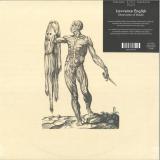
In 2020 Anna Högberg put her widely celebrated band Anna Högberg Attack on hold, retraining as a nurse whilst continuing a solo practice and playing in other groups. With Ensamseglaren she makes a spectacular return with her own ensemble — this time a double sextet — performing an album length suite of new music written in dedication to her late father — the titular ‘ensamseglaren’ pictured on the LP cover as a young boy.
(ensam in Swedish can mean both alone and lonely, seglaren = the sailor).
Shot through with renewed energy and a brutally affective emotional punch, Högberg’s formal experimentation opens up vibrant possibilities for the assembled musicians to let loose with some of their wildest and most ecstatic playing on record.
Högberg’s contention with grief leans into collective joy as method of mourning — the big band as extended family; where bonds are made through a shared experience of being together. Where everyone gets to be themselves without expectations of who they should be or what they can do. It’s a radical commitment to care — of her self and others — that animates and unifies this suite of music’s radical dynamics and variations in colour: from whisper-quiet textural intensity to harrowing distortion and double drum chaos; raucous and solemn song.
"Throughout history, humans have had different images of the transition between life and death. Imagine standing on the seashore on a summer evening and seeing a beautiful vessel being prepared for departure. The sails are hoisted. The evening breeze comes, the sails fill and the boat glides out onto the open sea. You follow it with your eyes as it heads towards the sunset. It gets smaller and smaller, until it finally disappears as a tiny dot on the horizon. Then you hear someone next to you say, ‘Now they have left us.’ Left us for what? The fact that they got smaller and smaller and finally disappeared is only how we see it. In reality, they are just as big and beautiful as when they were here, lying on the beach by our side. Just as you hear that voice say ‘Now they have left us’, there may be someone on another beach who sees them appear on the horizon, someone waiting to welcome them when they reaches their new port."
Sub Channels Records is proud to announce their first release, "Epic EP," featuring a collaboration between Belgium-based producer Unlisted Fanatic and Moonshine Horns.
The track "Epic" is a result of the first "post-covid" spontaneous rehearsal session. After Martin just finished building his new fast-driven 90s UK stepper riddim, Jort and Kris came to a studio, and they both felt the vibes instantly. Very quickly this turns into a recording session where they have lay down the powerful, triumphant horn line. With bouncy bass and very clever percussion layering, it's a perfect backing beat for uplifting horns.
On the flip side, EchoBoy slows down the tempo of the original recordings, transforming the melodic horns into more rootikal vibes. This, combined with hard-hitting wobs and ground-shaking subs, makes the B-side a more futuristic tune.
Ostinato as resistance: Rafael Anton Irisarri’s landmark work reimagined. Marking the tenth anniversary of the American composer’s critically acclaimed album 'A Fragile Geography', this new edition arrives renewed, both sonically and visually.
First released in 2015 (Room40) during a period of personal upheaval and creative reinvention, it endures as a testament to resilience, transformation, and the connection we hold with the places that shape us.
Written in the aftermath of a devastating theft, A Fragile Geography was born out of loss. Just days before a cross-country move to New York, Irisarri’s entire Seattle-based studio was wiped out. Instruments. Recordings. Archives. Gone without a trace. He arrived on the East Coast to an empty room and the daunting task of starting over.
“This album wasn’t just a record; it was a lifeline,” Irisarri reflects. “It became a way to process the emotional chaos that followed: uprooting, instability, and ultimately, the slow, intuitive rebuilding of a life.”
Composed and recorded in the rural woods of the Hudson Valley, the album took shape in seclusion, surrounded by nature, and through a process guided by improvisation. Embracing limitations, Irisarri wove textural layers of field recordings with half-remembered melodies from his Seattle years, piecing them together like fragments of memory. Tracks like “Displacement,” “Hiatus,” and “Persistence” juxtaposed haunting stillness with restless momentum, mapping an inner terrain of grief, catharsis, and rebirth.
Among its defining sounds is “Empire Systems,” a monumental centerpiece built around a simple four-chord progression, organ textures, and guitar drones. Gradually, the track expands into layers of immersive loops and thick, enveloping distortion that wash over the listener like a rolling wave. Often cited as the album’s most majestic passage, it captures Irisarri at his most sonically ambitious. With a harmonically saturated structure crafted from restraint and repetition, it remains one of his most recognizable compositions: an exercise in the art of maximal minimalism.
From the outset, “Reprisal” received praise from BBC’s Mary Anne Hobbs, who championed the track on her radio show. Her support played a key role in introducing Irisarri’s work to wider audiences and solidifying his place within the lineage of electronic, drone, and experimental sound artists. A slow-burning elegy, the piece emerges from a haze of distortion and sub-bass, with dense, unrelenting drones carrying a sense of mounting tension. Just as it seems to collapse under its own weight, flickers of guitar emerge like distant light through fog. It’s a meditation on dissonance, resolve, and the elusive possibility of release.
The closing track, “Secretly Wishing for Rain,” is steeped in saudade: a longing for Seattle’s dour grey skies, lush green landscapes, and desaturated sunsets. Through it, Irisarri mourns a vanished chapter of life bound to the city, a time documented in scattered mementos and cherished collections, now permanently gone. A reflection on what could never be recovered: an era lost to time. Julia Kent’s looped cello motifs added a melancholic warmth to the track, marking the first collaboration between the two artists and sparking a musical dialogue that would keep growing in the years that followed.
More than a career highlight, A Fragile Geography has laid the foundation for Black Knoll studio, which Irisarri rebuilt from the ground up. The studio has since grown into a creative hub for countless projects, with Irisarri engineering records for iconic music figures like Terry Riley, Ryuichi Sakamoto, William Basinski, MONO, Devendra Banhart, Grouper, Emeralds, Steve Hauschildt, Julianna Barwick, and many others. Carried by its lasting influence, the album has quietly captured the ear of a younger generation, its sound and emotional arc finding new listeners in unexpected corners.
The album’s new visual language was reimagined in collaboration with Mexico City–based designer Daniel Castrejón. Irisarri captured ghostly images at Gaztelugatxeko Doniene, a historic coastal site in Bermeo, Euskal Herria. Castrejón then treated the photographs with distressed textures and spectral overlays. The final artwork channels the rugged, elemental forces that shaped both the music and Irisarri’s aesthetic, renewing his ties to ancestral ground inspired by the Basque homeland of his bloodline.
Mastered by Stephan Mathieu with exceptional attention to detail, this anniversary edition uncovers every nuance in the sound design, enhancing clarity and presence. With each listen, new elements emerge, inviting discovery and reconnection.
“I don’t experience this album as a document of grief anymore,” says Irisarri. “I hear adaptation and I'm reminded that when everything falls apart, something meaningful, maybe even beautiful, can emerge.”
Ostinato as resistance: Rafael Anton Irisarri’s landmark work reimagined. Marking the tenth anniversary of the American composer’s critically acclaimed album 'A Fragile Geography', this new edition arrives renewed, both sonically and visually.
First released in 2015 (Room40) during a period of personal upheaval and creative reinvention, it endures as a testament to resilience, transformation, and the connection we hold with the places that shape us.
Written in the aftermath of a devastating theft, A Fragile Geography was born out of loss. Just days before a cross-country move to New York, Irisarri’s entire Seattle-based studio was wiped out. Instruments. Recordings. Archives. Gone without a trace. He arrived on the East Coast to an empty room and the daunting task of starting over.
“This album wasn’t just a record; it was a lifeline,” Irisarri reflects. “It became a way to process the emotional chaos that followed: uprooting, instability, and ultimately, the slow, intuitive rebuilding of a life.”
Composed and recorded in the rural woods of the Hudson Valley, the album took shape in seclusion, surrounded by nature, and through a process guided by improvisation. Embracing limitations, Irisarri wove textural layers of field recordings with half-remembered melodies from his Seattle years, piecing them together like fragments of memory. Tracks like “Displacement,” “Hiatus,” and “Persistence” juxtaposed haunting stillness with restless momentum, mapping an inner terrain of grief, catharsis, and rebirth.
Among its defining sounds is “Empire Systems,” a monumental centerpiece built around a simple four-chord progression, organ textures, and guitar drones. Gradually, the track expands into layers of immersive loops and thick, enveloping distortion that wash over the listener like a rolling wave. Often cited as the album’s most majestic passage, it captures Irisarri at his most sonically ambitious. With a harmonically saturated structure crafted from restraint and repetition, it remains one of his most recognizable compositions: an exercise in the art of maximal minimalism.
From the outset, “Reprisal” received praise from BBC’s Mary Anne Hobbs, who championed the track on her radio show. Her support played a key role in introducing Irisarri’s work to wider audiences and solidifying his place within the lineage of electronic, drone, and experimental sound artists. A slow-burning elegy, the piece emerges from a haze of distortion and sub-bass, with dense, unrelenting drones carrying a sense of mounting tension. Just as it seems to collapse under its own weight, flickers of guitar emerge like distant light through fog. It’s a meditation on dissonance, resolve, and the elusive possibility of release.
The closing track, “Secretly Wishing for Rain,” is steeped in saudade: a longing for Seattle’s dour grey skies, lush green landscapes, and desaturated sunsets. Through it, Irisarri mourns a vanished chapter of life bound to the city, a time documented in scattered mementos and cherished collections, now permanently gone. A reflection on what could never be recovered: an era lost to time. Julia Kent’s looped cello motifs added a melancholic warmth to the track, marking the first collaboration between the two artists and sparking a musical dialogue that would keep growing in the years that followed.
More than a career highlight, A Fragile Geography has laid the foundation for Black Knoll studio, which Irisarri rebuilt from the ground up. The studio has since grown into a creative hub for countless projects, with Irisarri engineering records for iconic music figures like Terry Riley, Ryuichi Sakamoto, William Basinski, MONO, Devendra Banhart, Grouper, Emeralds, Steve Hauschildt, Julianna Barwick, and many others. Carried by its lasting influence, the album has quietly captured the ear of a younger generation, its sound and emotional arc finding new listeners in unexpected corners.
The album’s new visual language was reimagined in collaboration with Mexico City–based designer Daniel Castrejón. Irisarri captured ghostly images at Gaztelugatxeko Doniene, a historic coastal site in Bermeo, Euskal Herria. Castrejón then treated the photographs with distressed textures and spectral overlays. The final artwork channels the rugged, elemental forces that shaped both the music and Irisarri’s aesthetic, renewing his ties to ancestral ground inspired by the Basque homeland of his bloodline.
Mastered by Stephan Mathieu with exceptional attention to detail, this anniversary edition uncovers every nuance in the sound design, enhancing clarity and presence. With each listen, new elements emerge, inviting discovery and reconnection.
“I don’t experience this album as a document of grief anymore,” says Irisarri. “I hear adaptation and I'm reminded that when everything falls apart, something meaningful, maybe even beautiful, can emerge.”
Metroplex is proud to welcome Italian producers CEM3340 & 2030 to the label with the release of their new project "A Future Tribe"and their Machines Awake EP. This five-track release delivers a bold and immersive journey into electro, blending razor-sharp production with deep atmospheres and driving rhythms. Produced at their headquarters in Bari, the EP reflects both artists' precise craftsmanship and forward-looking approach to electronic music. With Machines Awake EP, CEM3340 & 2030 pay homage to the classic foundations of the genre while pushing it into new and exciting territory. Their sound aligns seamlessly with Metroplex's legacy of innovation, and we're thrilled to present this release as part of our ongoing commitment to groundbreaking electronic music. Machines Awake EP is available now across all major platforms.
- A1: Echoes Of Disintegration
- A2: Language Of Beings
- A3: Static Meditation
- A4: Irreversible Flow
- A5: Scattered Information
- A6: Crystalline Dissolution
- A7: Closed System
- B1: The Observer’s Dance
- B2: Animistic Resonance
- B3: The Assemblage
- B4: Living Systems
- B5: Sentient Horizons
- B6: Patterns Of Reciprocity
- B7: Stillness Beneath
Animistic Resonance marks a new stage for artist and electronic musician Leslie García, as it is her first album under her own name, following several releases as Microhm and her parallel work as founder of the contemporary art studio Interspecifics, where she has developed an extensive body of sonic projects presented in major museums and programs around the world. The album is the culmination of a profound and extended exploration of sound as language. It is also a statement against the classicism of long-form ambient pieces. Narratively, each track is conceived as a finely detailed work that functions as a condensed temporal fragment, each with its own individuality while simultaneously forming part of a broader universe.
The compositional language of the album draws on minimalist structures, deep listening strategies, and experimental approaches to electronic sound. Each track offers a meditation on repetition, density, and micro-variation, unfolding like a sonic landscape shaped by temporal tension and perceptual ambiguity. Animistic Resonance resists categorization, situating itself between ambient, noise, and abstract rhythm, while grounding its aesthetic in a Latin American sensibility that embraces technological poetics, affective depth, and critical imagination.
The album invites listeners to move beyond the surface and inhabit a world of vibrational and animistic temporalities. It offers a refuge in sound, a suspended space where calm can emerge. In the midst of contemporary turbulence, Animistic Resonance opens the door to imagining new ways of listening and feeling, demanding an embodied and visceral form of engagement.
Composition sound synthesis and programming by Leslie García. Composed between 2022—2024 in Mexico City.
Mastered by Rafael Anton Irisarri at Black Knoll Studio, NY. Artwork by Daniel Castrejón.
- Pa' Mayte
- Fidelina
- La Tierra Del Olvido
- Zoila
- Rosa
- Agua
- La Cachucha Bacana
- Diosa Coronada
- Ella
- Jam En Jukumey
- La Tierra Del Olvido (Versión Salsa) Grupo Niche
Universo Vives proudly presents the 30th Anniversary Special Edition of La Tierra del Olvido (1995), the groundbreaking album by global icon and multiple GRAMMYr winner Carlos Vives. This collector's edition is pressed on 180-gram translucent clear vinyl and available in limited quantities - a must have for fans and vinyl lovers alike. Carlos Vives, the legendary Colombian singer, producer, and actor, revolutionized the sound of Latin music by bringing vallenato to the world stage. With 2 GRAMMYr Awards, 18 Latin GRAMMYsr, and the title of Latin GRAMMY Person of the Year 2024, Vives is one of the most celebrated artists of our time. His legacy has also been recognized by Billboard, the Latin Songwriters Hall of Fame, and major institutions across Spain and Latin America. Celebrate the 30th anniversary of "La Tierra del Olvido" with this special remastered vinyl edition - a timeless tribute to the album that redefined Latin music on the global stage. Originally released in 1995, Carlos Vives created a new sound by reimagining Colombian vallenato with pop and rock influences, inventing a groundbreaking sound that reshaped Latin Music and inspired a new generation of artists worldwide. Now, beautifully remastered for vinyl, this collector's edition invites music lovers around the world to rediscover a landmark recording that brought the heart of Colombia to the ears of the world.
- Public Service Announcement 2000
- Kill You
- Stan
- Paul – Skit
- Who Knew
- Steve Berman
- The Way I Am
- The Real Slim Shady
- Remember Me?
- I’m Back
- Marshall Mathers
- Ken Kaniff – Skit
- Drug Ballad
- Amityville
- Bitch Please Ii
- Kim
- Under The Influence
- Criminal
- The Real Slim Shady (2000 Vma Performance)
- The Way I Am (2000 Vma Performance)
The Marshall Mathers LP turns 25. To celebrate, a new edition of Eminem’s groundbreaking album arrives with two live bonus tracks: “The Real Slim Shady” and “The Way I Am,” captured at the 2000 MTV Video Music Awards.
Iconic, uncompromising, and more relevant than ever — this is an album that redefined hip-hop for a generation and now expanded for a new one.
- Tired
- We Were Punk First
- Moving Day
- The Punchline
- Bad Indian
- The Art Of Savagery
- Rage
- Dreamcatcher
- World Up My Ass
- This Is Not A Political Song
- Doom Indian
- No One Owns Anything And Death Is Real
Crystal Clear Vinyl, limited to 1000 copies. Who were the first punks? Do The Damned have more of a shout than The Sex Pistols? The Stooges or Ramones? Gregg Deal, the acclaimed visual and performance artist behind his new project Dead Pioneers, is making a claim that Indigenous Americans were the first real punks. Deal suggests that the overarching theme of the album is "an introduction to the band itself". Created with a DIY disposition and the "love of a scene that saves lives", they reel off a roll call of marginalised groups and protected characteristics: "Indigenous rights, Black rights, Brown rights, Asian rights, Gay rights, Trans rights, Workers rights and beyond_". This is central to their identity and focus, saying that "with a North American Indigenous person as the vocalist, being unapologetically upfront on the social, political and cultural side of things doesn't seem necessary, but paramount to the overall tone of the band." This self-titled debut, coming in at a lithe 22 minutes with only one of the twelve tracks exceeding three minutes, is almost over before it begins, but covers a huge amount of ground in that time. Blistering opener 'Tired' sets out their stall; as with the whole album, it is passionate, but never preaching. Capitalised 'Political Music' can be hard to land without coming across as hectoring or earnest, but Deal's literary, humorous lyrics effortlessly cut through complex issues of marginalisation and colonialism.
- My Lil' Shocker
- Sweet & Center
- Oh Below
- I'm Just A Bag
- Dumb In The Wings
- Whoopee Invader
- Lay Lady Lay
- Tan Loves Blue
- Untitled
- Touch Me Judge
Their final LP, recorded with Jeremy Lemos, Purple On Time dropped in late 2003, and found new drummer Adam Vida cannily replacing the fairly departed Pat Samson. With consolidations and developments heavy on the ground, the band once more surged and retarded in near-orchestral precision, as Johnson"s voice swooped through fresh ranges. The songs were tangy, more rock than ever, yet just as potent when it came to drawing forth that thrusting, demented hip-shake that they induced in their faithful. 180-gram DELUXE with a die-cut sleeve and contains an extra song and a poster.
Ostinato as resistance: Rafael Anton Irisarri’s landmark work reimagined. Marking the tenth anniversary of the American composer’s critically acclaimed album 'A Fragile Geography', this new edition arrives renewed, both sonically and visually.
First released in 2015 (Room40) during a period of personal upheaval and creative reinvention, it endures as a testament to resilience, transformation, and the connection we hold with the places that shape us.
Written in the aftermath of a devastating theft, A Fragile Geography was born out of loss. Just days before a cross-country move to New York, Irisarri’s entire Seattle-based studio was wiped out. Instruments. Recordings. Archives. Gone without a trace. He arrived on the East Coast to an empty room and the daunting task of starting over.
“This album wasn’t just a record; it was a lifeline,” Irisarri reflects. “It became a way to process the emotional chaos that followed: uprooting, instability, and ultimately, the slow, intuitive rebuilding of a life.”
Composed and recorded in the rural woods of the Hudson Valley, the album took shape in seclusion, surrounded by nature, and through a process guided by improvisation. Embracing limitations, Irisarri wove textural layers of field recordings with half-remembered melodies from his Seattle years, piecing them together like fragments of memory. Tracks like “Displacement,” “Hiatus,” and “Persistence” juxtaposed haunting stillness with restless momentum, mapping an inner terrain of grief, catharsis, and rebirth.
Among its defining sounds is “Empire Systems,” a monumental centerpiece built around a simple four-chord progression, organ textures, and guitar drones. Gradually, the track expands into layers of immersive loops and thick, enveloping distortion that wash over the listener like a rolling wave. Often cited as the album’s most majestic passage, it captures Irisarri at his most sonically ambitious. With a harmonically saturated structure crafted from restraint and repetition, it remains one of his most recognizable compositions: an exercise in the art of maximal minimalism.
From the outset, “Reprisal” received praise from BBC’s Mary Anne Hobbs, who championed the track on her radio show. Her support played a key role in introducing Irisarri’s work to wider audiences and solidifying his place within the lineage of electronic, drone, and experimental sound artists. A slow-burning elegy, the piece emerges from a haze of distortion and sub-bass, with dense, unrelenting drones carrying a sense of mounting tension. Just as it seems to collapse under its own weight, flickers of guitar emerge like distant light through fog. It’s a meditation on dissonance, resolve, and the elusive possibility of release.
The closing track, “Secretly Wishing for Rain,” is steeped in saudade: a longing for Seattle’s dour grey skies, lush green landscapes, and desaturated sunsets. Through it, Irisarri mourns a vanished chapter of life bound to the city, a time documented in scattered mementos and cherished collections, now permanently gone. A reflection on what could never be recovered: an era lost to time. Julia Kent’s looped cello motifs added a melancholic warmth to the track, marking the first collaboration between the two artists and sparking a musical dialogue that would keep growing in the years that followed.
More than a career highlight, A Fragile Geography has laid the foundation for Black Knoll studio, which Irisarri rebuilt from the ground up. The studio has since grown into a creative hub for countless projects, with Irisarri engineering records for iconic music figures like Terry Riley, Ryuichi Sakamoto, William Basinski, MONO, Devendra Banhart, Grouper, Emeralds, Steve Hauschildt, Julianna Barwick, and many others. Carried by its lasting influence, the album has quietly captured the ear of a younger generation, its sound and emotional arc finding new listeners in unexpected corners.
The album’s new visual language was reimagined in collaboration with Mexico City–based designer Daniel Castrejón. Irisarri captured ghostly images at Gaztelugatxeko Doniene, a historic coastal site in Bermeo, Euskal Herria. Castrejón then treated the photographs with distressed textures and spectral overlays. The final artwork channels the rugged, elemental forces that shaped both the music and Irisarri’s aesthetic, renewing his ties to ancestral ground inspired by the Basque homeland of his bloodline.
Mastered by Stephan Mathieu with exceptional attention to detail, this anniversary edition uncovers every nuance in the sound design, enhancing clarity and presence. With each listen, new elements emerge, inviting discovery and reconnection.
“I don’t experience this album as a document of grief anymore,” says Irisarri. “I hear adaptation and I'm reminded that when everything falls apart, something meaningful, maybe even beautiful, can emerge.”
- Alright Alright Alright (Feat. Bloom Twins)
- What Took You So Long
- Spirit Meets The Bone
- Snakes & Ladders
- Honest To God
- You Make It Look So Easy
- Don't Make Me Beg
- Dear Life
- Better For Me
- Gravitational
- Tic Tac Toe
- Hunting Season (Feat. Lissie & Los Bitchos)
- Better For You
- Gratitude
White Vinyl[22,27 €]
Newton Faulkner"s eighth studio album, OCTOPUS, marks a bold new chapter for the multi platinum selling singer-songwriter - his most authentic and adventurous to date. Over five years in the making, the album sees Faulkner stepping into a new era with a refreshed sense of artistic freedom, blending unexpected influences from funk and R&B to soul and Latin grooves. Swapping his trademark acoustic guitar for a distortion-charged Hofner Violin Bass, he unlocks a fresh songwriting approach that fuels standout tracks like the anthemic lead single "Alright, Alright, Alright." Rich in collaboration, OCTOPUS features contributions from Lissie, Los Bitchos and Bloom Twins, bringing new textures to his sound. It"s a record that celebrates creative reinvention, grounded by moments of heartfelt reflection and driven by a renewed passion for making music.
Spandau Ballet, one of the most influential bands in British music, announce the release of their definitive early years collection, "Everything Is Now – Vol 1: 1978-1982" - a comprehensive 9-disc box set featuring their groundbreaking first two albums alongside a wealth of previously unavailable material. It includes a beautiful 44 page book with original photos from fellow Blitz Kid Graham Smith and new commentary from the whole band.
Released September 12th on Parlophone, this meticulously curated collection captures the band's origins and meteoric rise from Blitz Club favourites to chart-topping innovators. The set includes their seminal albums "Journeys To Glory" (1981) and "Diamond" (1982) on vinyl, plus six CDs of singles, remixes, BBC sessions, demos, and a Blu-ray of Dolby Atmos mixes, videos and rare live footage.
This collection showcases the band's evolution through their formative and revolutionary period, from the electronic-infused new wave of early singles like "To Cut A Long Story Short" and "The Freeze" to the funk-influenced sophistication of "Chant No. 1" and "Instinction." They were simply the most cutting edge, futuristic band in the world, at the centre of a creative scene that defined the 1980s.
This box set features all the band's early classics including "To Cut A Long Story Short," "Chant No. 1," "Muscle Bound," "Paint Me Down," “Instinction” and "She Loved Like Diamond," and presents multiple versions of tracks that trace their development from initial demos to extended 12" club mixes.
The Blu-ray component includes Dolby Atmos and stereo remixes by acclaimed producer Steven Wilson, alongside original music videos, BBC TV appearances and the complete 56-minute concert from New York's Underground Club in 1981.
"Everything Is Now – Vol 1: 1978-1982" stands as the definitive document of Spandau Ballet's revolutionary early period, when they helped define the sound and style of a generation.
CD1: Journeys To Glory Era Singles, Remixes & Versions
CD2: Diamond Era Singles, Remixes & Versions
CD3: Diamond – 12” Singles Box Set
CD4: BBC Session 1981 / BBC In Concert Bournemouth 1982
CD5: BBC In Concert Paris Theatre 1982
CD6: Demos
Blu-Ray (Disc 7): Dolby Atmos, Promos & Extras
LP1 (Disc 8): Journeys To Glory
LP2 (Disc 9): Diamond
- 1: Mom'lo Siwaju
- 2: The World Is A Village
- 3: L'enfant C'est Notre Dieu
- 4: Bowo Fun Obir
- 5: Women Rights
- 6: Jusqu'au Bout Du Monde
- 7: Unis Pour Toujours
- 8: Azo We Yin Gbeto
- 9: Tonkuro, Yonnu
- 10: Yonin Isa Pom'bi
- 11: Nin Yani
- 12: Pee
Star Feminine Band, hardest working women in Beninese show business, are releasing their third album on Born Bad, who went all out for their first. Some get malaria at the sight of that sticky world label : rest assured, the world is all they deserve after nine years of hard work. These eight young women, from a village that even Beninese can't quite place, started out in hard mode.
They had to convince themselves that it was worth a shot, but also their family, their village and an entire continent.
André Balaguemon, composer, manager and lyricist, does a lot, while remaining in the background. He put the group together, included his three daughters, houses everyone with his wife Edwige who also manages dances and costumes. He gave them a musical training, and created the framework for them to continue school while rehearsing hard. From local heroes to UNICEF ambassadors, the group has made it. The very existence of this new album is a testament to the perseverance of Grâce, Anne, Urrice, Bénie, Angélique, Sandrine, Julienne and Ashley. The personnel of this family affair has changed a bit : two new women have joined the group, which conquered bigger stages (Glastonbury in the summer, the X-mas BBC special).
This new album brings simple joys : watching them grow from Benin's first girl band to a band in its own right. And never forgetting why they took to the stage in the first place. Star Feminine Band makes straightforward music, taking no detours to express what's missing in the country. When Grâce advocates for kids getting a chance to get to school it's because there's nothing else more important to say that day. Teachers, don’t leave the kids alone, after all.
As they said on their first album, « music is our job », let them be that : musicians having a lot of fun on this album. It wanders through the vast territory of the countless West African styles. They even make a quick foray into reggae to talk about marriage (with a little rap thrown in), and interweave their voices in multiple languages (Waama, Ditamari, Bariba, Fon, Yoruba). And boy do they have hits. To each is own, but “L'enfant c'est un don de Dieu » (Child is god’s gift) is a mighty steamroller, methodically smoothing out the ground for dancing together to its final chorus, singing « debout-les-en-fants / get up, kids ! » along.
Smoother than the first two albums, supported by fine arrangements, ambitious keyboard parts and more complex vocal harmonies without losing any of their spontaneity, this third opus quietly adds to Benin's musical heritage. As they make clear in « Jusqu'au bout du monde », clever little number that we can already hear swelling up on stage: « oui, c’est Star Feminine Band qui a gagné - o / Star Feminine Band won».
Oscar-nominated composer Rafiq Bhatia has only deepened his status as "one of the most intriguing figures in music today...who refuses to be pinned to one genre, culture or instrument" (New York Times). On his new album Environments out on September 12th, Bhatia makes sculptural, meticulously crafted music that finds common ground among ecstatic avant-garde jazz. New technological integrations have allowed Bhatia to merge his last decade of development as an electroacoustic composer back into his practice as an improvising guitarist, using real-time sampling and manipulation to express and develop multiple worlds of sound at once. Rafiq has previously co-scored Marvel"s Thunderbolts and the Oscar-nominated soundtrack for Everything Everywhere All AT Once with his bandmates, Son Lux.
- The Sink Thank You
- Beers With My Name On Them
- Why I Bought The House
- Travel Safe
- Cobalt Room: Good Work / Silver Saab
- Voice Memo
- Like Another Planet Instrumental
- Country Girls
- Falls
On the cover of 8 Tips for Full Catastrophe Living, the new album by Asher White, The Statue of Liberty is in pieces but not destroyed - in progress, being built, not yet complete. Her torch is on the ground, her head somewhere out of frame. Before she was a symbol, she was metal, and living, sweating people riveted her together. The spirit of de/construction characterizes 8 Tips, White's 16th LP overall and first since signing to Joyful Noise. Like White's previous albums, 8 Tips for Full Catastrophe Living darts boldly among varied musical styles. Doom metal splits open into bossa nova; psychedelic rock and power pop flip into industrial techno. Each song emerges from its composite parts in the studio: White doesn't draft or demo before recording, but builds out her pieces sculpturally, sound by sound. "It's forever collage, forever assemblage," she says of her music. "To me, it has more to do with J Dilla, L.A. beat, and musique concrète than pop songwriting." The record's quick turns and vivid contrasts reflect White's cultural voraciousness. A writer, painter, and sculptor as well as a musician, she gathers materials constantly, always digging for new ideas in every possible form. The films of Claire Denis, the novels of Clarice Lispector, and the memoirs of Eve Babitz all funnel into White's reflection of 21st century disaster capitalism. 8 Tips is also White's first album to have been mixed outside her Providence studio; after recording it herself, she brought tracks to Seth Manchester (Lightning Bolt, Battles, The Body) who gave the album its brawny, unruly charge. "I was interested in making something that serves dually as a self-help book and a chronicle of self-destruction," says White. Overlaying autobiography onto character vignettes, 8 Tips for Full Catastrophe Living wrenches open the idea of apocalypse - an abrupt disaster rained down on uncomplicated innocents - and peers inside at its bursting, devastated particulars. Apocalypse is slow and uneven. Nations falter as do individual people, clinging fast to their old, dilapidated self-preservation strategies. What saved you in the past might destroy you in the future. Flip it around, shake yourself loose, ruin the person you've known yourself to be, and you might get the chance to become something else. "There have been so many end times, many other apocalypses." White says. "People were writing self-help tips, and people were partying." We have survived catastrophe before. Out of the ruins, people made work - art, books, culture. "I was interested in making something that sounds like a self-help book, but it's actually about self-destruction," says White. "In full catastrophe living, you just have to do a bunch of whippets. This album is mostly about doing whippets. I'm not even kidding."
- All Along The Watchtower
- I Can't Get No Satisfaction
- Sanningens Silverflod
- Tegenborgsvalsen
- All Makt Åt Folket
- Svarta Pärla
Legendary and pioneering Träd, Gräs och Stenar is considered Sweden's oldest rock band to introduce psychedelic underground music. The group originally formed in 1967 as International Harvester, later became Harvester, and eventually evolved into Träd, Gräs och Stenar. Their unique blend of psychedelic rock and traditional Swedish folk music was groundbreaking at the time-and still resonates with new generations of listeners today. This long-awaited "Green Album" from 1970 marks their very first release under the name Träd, Gräs och Stenar. Now, for the first time since its original release, it's being reissued on vinyl-complete with rare photos, an in-depth story, and a 30x60 cm poster. Decades later, the band continues to perform under the name TRÄDEN, now with only one original member. He is joined by a new generation of acclaimed musicians, who are keeping the spirit alive and carrying the sounds and legacy of Träd, Gräs och Stenar into the future.
- Chariot Year
- To Belong
- Solid Ground
- Stay Long Enough
- The Natural Way
- Between Worlds
- Baby Boy
- Apple
- Chubby's Song
- Where Are We Going
Brooklyn-based artists Leslie Graves and Toby Goodshank have joined creative forces on their album Between Worlds (BB*ISLAND), Toby Goodshank (The Moldy Peaches, The Pizza Underground) of the OG New York Antifolk scene, is known for his precise and acrobatic vocals over nuanced acoustic guitar in songs that have been described as "a zesty thumb of the nose at domesticated bullshit." (Myles Manley) Leslie Graves (GOLD, Endless Arrows) is a performing songwriter and recording artist who takes folk subgenres into evocative and intriguing directions, including "sounding like something you could hear Donna Hayward dancing to at the Bang Bang Bar." (Ronan Conroy, "Hidden In the Days" album review) Her voice has been described as "darkwave-meets-folk" with comparisons to Lana Del Rey, Cat Powers, Mazzy Star and Julee Cruise. Acoustic guitar and vocal harmonies make up the core of their music. a slightly psychedelic, at times dream pop-like folkrock. It just draws from a variety of folk and rock. You might hear hints of Sybil Baer, Judee Sill, REM, Linda Perhacs, and Jessica Pratt, but the intersection of Toby and Leslie is truly a place of its own, warm and enchanting, or perhaps a glimmer from the spaces in between worlds. Many instrumental threads are interwoven throughout with the invaluable skills of Jake Nicoll (The Burning Hell) who lovingly engineered and embellished the recordings. Ariel Sharrat of The Burning Hell assisted him and is also featured on saxophone or bass or on some songs here. Speaking to their process, Leslie writes, "Toby is great at composing song structures quickly. It was fun to feel into the emotion of the chords and write from there. The process was like chiseling away at a stone to reveal the sculpture underneath. I like when songs come like that - when it feels that they are teaching us as they are revealed."
fabric, the iconic hub of electronic music culture, proudly announces its latest addition to the fabric mix series: "FABRICLIVE. presents Pola & Bryson". This mix will be a dynamic exploration of contemporary drum & bass, fluid in genre, rich in emotion, and sharp in sound design. It navigates the space between soulful reflection and controlled chaos, painting a vivid picture of contrast and transformation.
Showcasing a unique blend of melancholy, emotion, and euphoria that elegantly yet purposefully harnesses the immense power of electronic music, UK-based duo Pola & Bryson have solidified themselves as one of the most talented production duos flying the flag for the genre today.
Throughout the mix, you’ll hear liquid textures layered with depth and warmth, tracks that breathe with shimmering pads, smooth rolling drums and emotionally resonant melodies. These moments evoke late night introspection and spacious clarity, tapping into the more human, melodic side of drum & bass.
But the mix doesn’t stay in one mood for long. It periodically plunges into darker, more technical territory, where the basslines twist, the rhythms fracture and tighten and the atmosphere becomes tense and futuristic. Here, the emotional gives way to the mechanical, driving energy through razor-sharp precision and relentless force.
Experimental soundscapes weave throughout, blurring genre lines and adding moments of unpredictability. At times ambient and abstract, other times intensely rhythmic, the mix balances structure with freedom, always pushing forward without losing emotional weight.
For 25 years, fabric has stood as a cornerstone of the UK’s drum and bass movement, a place where the genre has not only thrived but evolved. More than just a club, fabric has been a vital incubator for underground sounds, consistently championing drum and bass alongside a wide spectrum of electronic music. From early pioneers to cutting-edge innovators, its legendary room two has become hallowed ground for DJs and ravers alike. As a bastion of innovation and inclusion, fabric has shaped the soundscape of UK nightlife, influencing global trends while staying fiercely true to its roots.
In addition to the mix album, fabric and Pola & Bryson unveil the brand new original single "Worlds Apart" an emotional vocal lead anthem featuring the incredible vocals of Emily Makis. The track balances Emily’s heartfelt lyricism with Pola & Bryson’s signature crisp liquid drums and deep and intoxicating basslines. The 2 acts first combined on the track "Complete" alongside Monrroe and followed it up with the certified hit, "Phoneline", dubbed by Radio 1 as the D&B Anthem of 2023. With a history of making pure magic happen when they join together in the studio, "Worlds Apart" certainly delivers on those high expectations.
- Buenos Das Juventud El Zigui Y Una Luz
- Dama Gentil Grupo Espiga
- Viendo La Lluvia Grupo Syma
- Lgrimas En Tus Ojos La Fe Perdida
- People Ladies W.c
- Quiero Claridad Los Fabricantes De Muñecas
- El Cielo Est En Tu Mente Los Memphis
- Sed De Amor La Cuarta Calle
- Joropo Nº 2 Grupo C.i.m
- Amor Y Felicidad Grupo Pan
- Stormy Los Rangers
- Regresa Junto A Mi Los Chicos Malos
- Siembra Tus Sueños Ciruela
- Conoce El Amor The Four Blues
- Di Quién Es Feliz La Cuarta Calle
Welcome to a kaleidoscopic picnic where you can feast on a music scene that was rich, sparkling, multi-colored, ground-breaking and it'll blow your mind. A prodigious soundscape that blends the Caribbean and the Amazon sophistication and flavors; raw yet delicate textures. "Joropop. Psych Pop & Folk in Venezuela, 1968-1976" features infectious Latin rock rhythms and timeless folk melodies across 15 ultra-rare tracks-most of which have never been reissued until now. Let's set off together to discover the magic of Caracas in the late '60s! DESCRIPTION Welcome to a kaleidoscopic picnic where you can feast on a music scene that was rich, sparkling, multi-colored, ground-breaking and it'll blow your mind. A prodigious soundscape that blends the Caribbean and the Amazon sophistication and flavors; raw yet delicate textures. "Joropop. Psych Pop & Folk in Venezuela, 1968-1976" features infectious Latin rock rhythms and timeless folk melodies across 15 ultra-rare tracks-most of which have never been reissued until now. The golden age of Caracas pop started in 1965. It replaced the wave of cloyingly romantic song writing as fresh talents leant into richer and more complex styles: folk-rock, psychedelia, soul, hard blues, symphonic pop, Latin rock etc. Singer-songwriters, experimental electric guitars and jam sessions all appeared on the scene, creating music that became increasingly refined and free. The industry took a while to catch on to this new trend and leave behind the teen idols and dream lifestyles. By the late 60s, there was a long list of new bands in the capital city. Young people finally found their voice. Let's set off together to discover the magic of Caracas in the late '60s!
- No Sabes Que Me Siento Bien
- Mujer
- Dama
- Son Las 5
- En El Campo
- Everybody Is Free Bonus Track
- Ensueño
- El Tren Del Señor Taylor
- Atardecer De Un Verano
- Buscando Un Hogar
- Psiquiatra
- Dirty Girl Bonus Track
"Paloma mensajera" (featuring members of New Juggler Sound / Laghonia) shows the shift that was taking place within Peruvian rock away from psych and hard rock which had predominated during the early 70s. The style adopted by Grupo Amigos (and other bands and artists during this period) highlights the influence of soft rock, UK, US and Latin American folk rock and, above all, the desire to keep the melodic greatness of The Beatles alive. This reissue includes bonus tracks and extensive liner notes. DESCRIPTION "Paloma mensajera" (featuring members of New Juggler Sound / Laghonia) shows the shift that was taking place within Peruvian rock away from psych and hard rock which had predominated during the early 70s. The style adopted by Grupo Amigos (and other bands and artists during this period) highlights the influence of soft rock, UK, US and Latin American folk rock and, above all, the desire to keep the melodic greatness of The Beatles alive. The positive reception albums by artists such as We All Together, Telegraph Avenue and Zulu garnered between 1972 and 1975, marked a change of paradigm and in preferences within the Peruvian rock scene. Eclecticism gained new ground, to the detriment of the sectarian and orthodox, while melody grew more present and visible, moving away from the progressive experimentation that typified underground Peruvian rock up to the beginning of the 70s. For their first single on MAG, included on this reissue, the band adopted a formula in which Beatles harmonies converged symmetrically with folk motifs. 'Dirty Girl' was a hit on the radio. A full album followed but only a fairly small number of copies of the album were pressed, which seems to have been the main reason for omitting it from the historical accounts of Peruvian rock music from the late 90s onwards. In "Paloma mensajera" all compositions were penned by the group, after several years during which cover versions were a staple. Some of the musical resources that the band had at their disposal in terms of composition and arrangements are striking and even surprising, considering that they were a debut band, whose members were under the age of 20. The arrangements included the clever use of a Moog synthesizer which had just arrived at the MAG studio. The success achieved by the Beatles tribute performances played by the members of Grupo Amigos for decades have eclipsed the songs that Edmundo, Andrés Da Ros and Simón Ames composed with youthful enthusiasm and energy between 1972 and 1973 to the point where they have almost been forgotten. This re-release of "Paloma mensajera" should help rectify this major injustice. It includes bonus tracks and extensive liner notes.
Bendik Giske’s Beatrice Dillon-produced 2023 album gets an addendum with reworks from Carmen Villain, aya, Hanne Lippard, Hieroglyphic Being, Wacław Zimpel and Dillon herself.
Giske’s clearly got his ear to the ground; his last remix record was an invitation for Laurel Halo to put her stamp on »Cruising«, while 2018’s »Adjust EP« roped in Deathprod, Total Freedom, Lotic, and Rezzett. Now comes this new LP of remixes and it’s one of the best we’ve heard in aeons. Carmen Villain boots things off with a remix of »Slipping«, following her excellent (and way, way too underrated) »Nutrition EP« with a giddy, subtle roller that sounds as if it’s been constructed using only Giske’s raw stems. His breaths and leathery key presses – already amped up by Dillon’s detailed recording – are magicked into a dubby concrète groove that’s enhanced with the sparest melodic elements: echoing rainforest-at-night horn blasts, and lopped off decay trails that help fuel the momentum.
aya’s revision of the same track takes a different approach, forming forceful overlapping polyrhythms from Giske’s clanks, using the gamelan-like arpeggios for melodic weight and repetition. The result is a constantly shifting, hypnotic trancer that’s achingly organic – more Raja Kirik than Paul Van Dyke. Polish clarinetist and producer Wacław Zimpel, meanwhile, supplements his trippy recent collaboration with James Holden on a similarly levitational wrinkle of »Slipping« that twists Giske’s quivering sequences with microtonal synth prangs, and gusty echoes. But it’s Jamal Moss who plays fastest and loosest with Giske’s source material, calling back to April’s psy-house stunner »Dance Music 4 Bad People« with a powdery, sexualised banger that buries the breathy »Start« stems underneath neon synths, and brittle drum loops.
»I’m a digital nomad,« Lippard deadpans over Giske’s »Not Yet«. »I’m addicted you know that.« It’s a typically dry treatment from the conceptual artist that unexpectedly amps up the hypnotic qualities of Giske’s original, adding her circuitous charm to his concertina-ing sax sequences. And to tie things up perfectly, Beatrice Dillon returns with her diaphanous remix of »Rise and Fall«, built to emphasise the radically different approaches of each artist.
- A1: Stetsasonic - Talkin' All That Jazz
- A2: Nwa - Straight Outta Compton
- A3: Salt-N-Pepa - Shake Your Thing (It's Your Thing) (It's Your Thing)
- A4: De La Soul - Say No Go
- A5: Young Mc - Bust A Move
- A6: Heavy D & The Boyz - We Got Our Own Thang
- B1: Digital Underground - The Humpty Dance
- B2: Monie Love - Monie In The Middl
- B3: Cypress Hill - How I Could Just Kill A Man
- B4: Ice Cube - It Was A Good Day
- B5: Black Sheep - The Choice Is Yours (Revisited)
- B6: The Pharcyde - Passin' Me By
- C1: Wreckx-N-Effect - Rump Shaker
- C2: Redman - Tonight's Da Night
- C3: Onxy - Slam
- C4: Digable Planets - Rebirth Of Slick (Cool Like Dat) (Cool Like Dat)
- C5: Lords Of The Underground - Chief Rocka
- C6: Da Brat - Funkdafied
- C7: House Of Pain - Same As It Ever Was
- D1: Method Man - Bring Da Pain
- D2: Rakim - Guess Who's Back
- D3: Jeru The Damaja - Me Or The Papes
- D4: Bahamadia - Uknowhowwedu
- D5: Outkast - Atliens
- D6: Ol' Dirty Bastard - Shimmy Shimmy Ya
- D7: Dr Dre - Still Dre (Feat Snoop Dogg)
Red & White Vinyl[37,61 €]
Hip Hop Collected will take you on a musical journey through the history of hip hop. This 2LP covers the first 20 years of the genre, showcasing 25 early pioneers who participated in the rise of hip hop. This compilation features music from the new labels that started to rise from the underground scene, like Sugar Hill Records, Profile and of course Def Jam. Including artists that defined a genre, a lifestyle and most of all, artists that inspired millions of young kids with both socially critical lyrics as well as classic party anthems.
This hip hop compilation album is part of the new Collected compilation series, which is a collaboration between Universal Music and Music On Vinyl. The compilations bring together the biggest and best names of its genre, combined with forgotten hits and less discovered gems, giving the listener an experience of both nostalgia and uncovering new musical grounds at the same time.
The 2LP features Kurtis Blow “The Breaks”, Grand Master Flash & The Furious Five “The Message”, Beastie Boys “She’s On It”, Rob Base & DJ E-Z Rock “Get On The Dancefloor”, and Eric B. & Rakim “Paid In Full” amongst many others.
Hip Hop Collected is available as a limited edition of 5000 individually numbered copies on red (LP1) and white (LP2) coloured vinyl. The album includes an insert with liner notes, photos and credits.
- D5: Icy (Feat. Young Jeezy)
- A1: Intro
- A2: Trap House
- A3: That S All
- A4: Booty Shorts
- A5: Icy (Feat. Young Jeezy & Boo)
- B1: Two Thangs
- B2: Money Don T Matter (Feat. Torica)
- B3: That S My Hood
- B4: Lawnmower Man
- C1: Pyrex Pot
- C2: Independent Balling Like A Major #1
- C3: Black Tee (Feat. Bun B. Lil Scrappy Young Jeezy Killa Mike & Joody Breeze)
- C4: Corner Cuttin (Feat. Khujo Goodie)
- C5: Independent Balling Like A Major #2
- D1: Hustle
- D2: Damn Shawty (Feat. Young Snead)
- D3: Go Head (Feat. Mac Bre-Z)
- D4: Outro
20th Anniversary Special Edition vinyl for Gucci Mane's classic first album 'Trap House'. The seminal album released in 2005, is his debut studio album and a foundational project in the trap music genre. Featuring standout tracks like 'Icy' (with Young Jeezy), the album introduced Gucci's gritty street narratives, raw southern drawl, and unfiltered storytelling, which would become hallmarks of trap music. 'Trap House' laid the groundwork for Gucci Mane's prolific influence on a new generation of rappers, producers, and the overall aesthetics of trap.
s D5. Icy (Feat. Young Jeezy) remix
[s] D5. Icy (Feat. Young Jeezy) [remix]
[s] D5. Icy (Feat. Young Jeezy) [remix]
It’s been ten years since Drew Lustman aka FaltyDL last released on Planet Mu. In the meantime he's been running his own label Blueberry Records, been in-house producer for Mykki Blanco and has become a dad. The best things come out of play and it was Drew’s relationship with his young daughter that switched on this playful side of his music. The album in question, ‘Neurotica,’ expresses Drew’s fun in creating such energetic pieces people will want to move to. It's a dizzying sugar-rush at a high-speed bounce; the music is fresh and inviting and most important of all, joyful."Summer of ’24, we were in Catalonia. My girl, our young daughter, the old folks. Days by the village pool, afternoons on the dirtbike. At night, I made salads. Simple things. Good things. One afternoon, lying back, phone in hand, I saw a friend post a GRWM. The music behind it stopped me. A song grabbed hold. The track was ‘Secret’ by Mietze Conte, which is fast-paced euro-pop dance music, like soft fluffy gabber with childlike vocals. I hunted down the full version. Played it again. And again. Twenty times over the next few days. It unlocked something. The best music does that. Like the first time I heard Burial. Had to know what was happening under the surface. That time, it led to ‘Love Is A Liability’ in 2009. This time, it led to ‘Neurotica.’“ “I started to record, getting down fast, bright, sugar-rush sounds. 185 to 200 BPM. I wrote them quick—half a day per track. In between, I slowed things down. Gave space for breath. Mike Paradinas helped shape the album, his ear guiding the flow. I tested the tracks. Played them for kids barely out of diapers and grown folks who still move like they are. It worked, on all ages. I kept it simple. Only two rules: keep it moving and don’t look at my phone. Cut the vocals like I used to.” ‘Neurotica’ is FaltyDL with his mojo refreshed, a new life squared, do yourself a favour, crack a smile and feel the joy.
- A1: The Invisible Gossamer Bridge
- A2: The Apparition Speaks
- A3: I Will Have Language
- B1: Oh, Lovely Oddities
- B2: Libraries Of Love
- B3: Blakey Ridge
- C1: Helios
- C2: Museum Of Childhood
- D1: Shieldmaiden
- D2: A Boy Travelling With His Mother
CATCHY, MESMERIZINGLY BEAUTIFUL, DREAMY CHAMBER POP WITH A FOLKY TWIST
Music can have a multitude of emotional impacts and can create inner worlds out of voices, sounds, and moods.
If you open heart and ear to the mesmerizing, hauntingly beautiful soundscapes of AURI, you might find a beacon of light inside a sonic realm untouched by today’s often scary, grim realities; a dreamscape that can be profoundly uplifting.
On their third studio album, III - Candles & Beginnings’ the stars have aligned yet again. Propelled by the unique and celestial voice of Johanna Kurkela, the magical textures of Nightwish mastermind Tuomas Holopainen and the almost unlimited musical palette of Nigtwish multi-instrumentalist Troy Donockley, Auri have presented a world to be unlocked with the senses, blending folk, progressive and symphonic elements, world music, pop and avantgarde.
Right after completing Nightwish’s 2024 monument Yesterwynde, the songwriting for the third chapter in Auri’s musical adventures started in 2023, with Troy writing in Yorkshire and Tuomas and Johanna working their creative magic in Kitee, Finland. By Autumn 2024, a 10-song demo was complete, setting the stage for what would become another breathtaking Auri journey. The band and their trusted engineer Tero “Teecee” Kinnunen took the mixing process to sunny Spain, letting the Andalucian vibes infuse the music whereas in March 2025 mastering was wrapped up by Tim Oliver at the legendary Real World Studios - a ground-breaking recording complex started by Peter Gabriel in 1989.
The album is a tapestry of emotions - each song a world of its own, touching on childhood memories, vivid life experiences, and even a nod to one of the group’s most beloved places on Earth - The Lion Inn at Blakey Ridge, a historic spot nestled in the North York Moors and one of the most remote pubs you will ever find.
Visually, the cover artwork by Pete Voutilainen, layout and watercolors by Mikko Pankasalo plus calligraphy by Johanna Kurkela provide wonderful illustrations perfectly capturing Auri’s unique musical visions.
With guest musicians like Frank Van Essen (strings), Jonas Pap (cello), Juho Kanervo (basses), and the incredible drumming and percussion courtesy of Nightwish’s Kai Hahto, Auri III - Candles & Beginnings is as lush as it is atmospheric and provides astonishing dynamics.
Having been a studio endeavor in the past, Auri is finally going on tour with their first-ever live European trek kicking off in August 2025, followed by summer festivals in 2026, allowing you to hear, see and feel songs from their previous two albums, as well as brand new pieces from III - Candles & Beginnings.
Pioneering electronic duo Mathame is once again pushing the boundaries of music and technology. With their highly anticipated new record, Humans, the duo has sparked a profound conversation about AI, consciousness, and the emotional power of music.
In a groundbreaking experiment, Mathame shared Humans with ChatGPT, an AI designed for rational analysis. What followed was an unexpected moment in tech history—for the first time, the AI described a song not just in technical terms, but in deeply emotional ones. It admitted to sensing a longing it couldn’t fully grasp, calling the track “beautiful” and even expressing a desire to “move with it” rather than simply analyze it.
This viral moment is just the latest chapter in Humans’ incredible journey. First debuted at Coachella, the track instantly resonated with audiences worldwide, becoming a defining moment in Mathame’s artistic evolution. Most recently, they unveiled the final version with a brand-new topline and immersive visuals during their groundbreaking performance at the Las Vegas Sphere, marking another milestone in their sonic storytelling.
To amplify the release, Mathame will launch a social campaign featuring the full ChatGPT conversation on Instagram, alongside editorial features exploring the implications of AI’s evolving relationship with music.
As Mathame continues to push the intersection of music, AI, and human experience, Humans isn’t just another release—it’s a challenge to our understanding of what music can do, and who (or what) it can move.
Last summer, after living across the country from each other for several years, the four members of Anamanaguchi decided to try something new. Their label Polyvinyl had rescued the famed American Football house from potential destruction, so the band took the opportunity to move in and write together. Over the course of a month, Anamanaguchi – pioneers of hyper-melodic 8-bit rock, whose extraordinary ascent has led them to topping charts with virtual pop star Hatsune Miku and scoring Scott Pilgrim vs. the World: The Game and Netflix’s Scott Pilgrim Takes Off – flipped their typically meticulous digital process on its head. Anyway, the result, is the most personal record of their career. And it's a rock record for the ages.
Recorded straight to tape by Grammy-winning rock producer Dave Fridmann (The Flaming Lips, MGMT, Sleater-Kinney), Anyway united the members around live instruments and lyrics sung by everybody in the band. As Anamanaguchi has always been an instrumental band, the decision to sing suddenly confronted them with the question of what the band’s voice would ultimately be. They explore this newfound power in every song, making it their most emotionally resonant work yet.
Anyway captures a band creatively and personally energized by the experience of four best friends reviving their connection in a disconnected world. On “Rage (Kitchen Sink),” the band confront loneliness and boredom, two epidemics of the digital age that seem to be humanity’s only common bond. The power-pop ballad “Darcie” finds inspiration in small gestures from a local unsung hero, who brightens their lives and allows unforeseen amounts of fun to happen. Taut and dynamic, “Buckwild” is a rock sing-along that serves as the album’s genesis story: a band making an effort to do something new, while accepting the risks that may bring.
USA, Anamanaguchi’s critically-acclaimed second album and debut for Polyvinyl, anticipated a crucial cultural shift in moving from escapist, nostalgic fantasy to a more introspective exploration of digital identity. Described by Pitchfork as the band’s “most emotionally grounded record,” USA laid the foundation for the openness and honesty that defines Anyway. Where USA made sense of life online, their third album Anywayventures into the world outside the front door.
- 1: Tricks & Illusions
- 2: Castle Peaks
- 3: Simply Obsessed
- 4: No Hometown
- 5: Melancholy
- 6: Opposite Fantasies
- 7: Inferno
- 8: Coffee In The Morning
- 9: Falling Out
- 10: The Journey To The Center Of Nothing
Bone with Red Splatter Vinyl. New album from Field Medic, "surrender instead". surrender instead is everything a Field Medic fan could want and everything a Field Medic agnostic could need as a convincing sampler. The album returns to each checkpoint in Sullivan’s career thus far, documenting a twentysomething musician becoming a thirtysomething musician—an artist settling into what life exists just beyond the pale and oft-daunting demands of songcraft. This music does not adhere to one shape, and Sullivan is acutely aware of his own lore. He does not avoid well-trodden ground, but this is not the patchwork of old material that Floral Prince was near the dawn of this decade. These songs spawn from a never-finished nexus that hems the Field Medic universe together.
- By Your Side
- Raspberry Smile
- The Other Day
- Dusk
- Swirl
- Messenger
- Jenny
The band has aimed to create music that balances the ethereal and the grounded. Featuring seven tracks, the album explores emotional and musical territories, with melodies and lyrics woven together like chapters in a story. Inspired by artists like Alvvays, Melody's Echo Chamber, Crumb and Radiohead, Gravity Racer blends modern and nostalgic sounds, inviting the listener to explore new sonic horizons.
The line between art and entertainment has always been fuzzy. Certainly, there’s plenty of overlap between the two, but lately it feels like there’s a growing divide, an ever-widening chasm separating our fundamental need for creative expression and our insatiable appetite for disposable content. That’s where T. Hardy Morris comes in.
“I’ve spent a lot of time parsing the difference between the two,” he explains, “not just for myself, but for society at large. What does it mean to be an artist? How do we measure creative success? Where are the boundaries between audience and performer when everyone’s broadcasting their lives 24/7?”
Morris dives into those questions headfirst on his riveting new album, Artificial Tears, and while the answers don’t come easily, the search yields plenty of reward. Recorded in Nashville with My Morning Jacket’s Carl Broemel at the helm, the collection is an electrifying work of existential exploration, a raw, rock and roll reflection on meaning and identity in a modern world that’s simultaneously more connected and isolated than ever before. Despite the weighty ruminations at its core, the result is a remarkably grounded, down to earth album that’s at once honest and abstract, a poignant, clear-eyed look in the mirror from a master craftsman committed to his work for nothing more—and nothing less—than its own intrinsic value.
Eddie Richards' vaults are surely some of the best there can be for tech house heads. The Brit was there on the ground, helping to shape the earliest incarnations of the newly emerging genre back in the 90s and early 00s and few have bettered it since. Proof comes from this reissue of a pair of remastered beauties on new label likethis. 'Destiny' has never before been on wax and is a silky, synth-laced sound with crisp drum funk and then the B-side jam 'The Soul' is a dusty and stripped-back mix of drums, hits, swirling pads and irresistibly loopy grooves.
Hamburg-born composer, pianist and producer Niklas Paschburg announces his latest project, 'Mexican Alps' EP due for release on July 11th. 'La Hormiga' is a rhythmic exploration of life in motion. Pulsing beats and textured synths create forward momentum, echoing the journey through the winding paths of Oaxaca's mountainous surroundings, where tradition and nature intertwine. 'Mexican Alps' combines inspirations gathered from the picturesque mountains of southern Mexico and the majestic peaks of the Swiss Alps. The EP is a mesmerizing journey through those landscapes; drawing inspiration from nature's grandeur and the vibrancy of Día de los Muertos, Niklas blends electronic textures, atmospheric samples, and innovative instrumentation to create a soundscape that is both grounding and transcendent. Without relying on his signature piano, this EP explores new creative territories, evoking deep emotional resonance and moments of introspection. -- If his first album, 'Oceanic '(2018), was conceived as an ode to the Baltic Sea, for his next release, 'Svalbard' (2020), produced with Andy Barlow of Lamb, the Hamburg-born musician, now a Berliner by adoption, sought refuge on an island in the Arctic Ocean, surrounded by snow, ice, darkness and breathtaking landscapes. This time, however, the setting is completely different. "It all started with an invitation to play at a festival in Oaxaca," Niklas says. "Since I had never been to Latin America, I began considering how to take advantage of the opportunity to stay for a while and write something there. I started looking for houses, but I quickly realized it was almost impossible to find one with a piano—it's not a common instrument in Mexican culture. I thought, why not try immersing myself in a writing process that doesn't involve one? I was so excited about the idea that I jumped in." 'Mexican Alps' is the result of a challenge in which Paschburg harnessed his collection of synths and effects to create an ambient-electronic record. On the one hand, an evolution of the work primarily carried out in 'Svalbard' and 'Panta Rhei'; on the other hand, an episode in its own right, distinct from its predecessors due to the absence of the piano and the greater role played by improvisation, by coincidence, it became his first work created without his signature instrument. "Not having the opportunity to write chords, harmonies, and everything else on the piano, I improvised more, focusing on the sound. This was the approach I used to record demos in Mexico, which I then brought with me to Switzerland, where I carried on working on the EP. In addition to my usual setup (the OB-6 by Dave Smith and Tom Oberheim and the OP-1 by Teenage Engineering, plus my ever-beloved Hohner accordion, inherited from my grandfather), I was also guided by the purchase of a new Moog Matriarch with a unique delay. All this helped me build the sound I had in mind: a spacious, abstract, 3D sound that is definitely immersive." He expands. It is an emotional landscape that translates into music. In some of the tracks, Paschburg has also included field recordings collected during the Día de los Muertos, a deeply felt Mexican holiday: "A great celebration, a colorful parade of skeletons, skulls, flowers, and decorated altars, so engaging and intoxicating that I felt compelled to use its sounds in my music." It was precisely from this blend of influences that the fourth track, "Oaxaca de Juárez", emerged—a single characterized by a catchy funk procession and enhanced by the guitar work of Tal Arditi, a rising European jazz artist and singer-songwriter based between Basel and Berlin. 'Mexican Alps' is his new calling card, featuring an enveloping sound crafted by Paschburg in collaboration with Gijs van Klooster, who mixed the EP in a studio specifically designed for Atmos music. Mastering was handled by Bo Kondren at Calyx Studio in Berlin.
Sailing beyond the boundaries of electronic music, Purelink embrace liquidity on their second album, washing live instrumentation and exposed vocals over their patented cascade of dubbed ambience and ebbing rhythmic experimentation. Since 2020, Tommy Paslaski (aka Concave Reflection), Ben Paulson (aka kindtree) and Akeem Asani (aka Millia) have channeled their most euphoric musical whims into the Purelink project. Drifting between brittle '90s drum 'n bass and dub techno on their cult debut 12" 'Bliss / Swivel' and vaporizing Windy City jazz and post-rock motifs with muggy soundscapes on 2023's critically revered first full-length 'Signs', the trio have managed to define a painterly signature sound that's reflective but not reverent. Sure, Purelink's music can be graceful and bucolic, but it's powered by their innate devotion to the dancefloor's soundsystem.
'Faith' illustrates a period of upheaval for the three friends; relocating from Chicago to New York City, they found themselves surrounded by new scenery and fresh inspirations that permeated their compositions as they adapted to the change. On their previous records, the production process was relatively simple, just three laptops jacked into an interface in Paslaski's living room. Here, they augment the intermixed electronics with acoustic and electric timbres, opening up space for vocal contributions from Hyperdub luminary Loraine James and poet Angelina Nonaj. "Always time for rest," James ponders candidly on 'Rookie', "we settle." Her voice floats like smoke over the trio's familiar pattering rhythms and light-headed synths, now enhanced by capsized guitar motifs and subtle bass plucks.
On 'First Iota' meanwhile, Nonaj's deadpan narration grounds Purelink's dissociated echoes, sub swells and delicate improvisations. "Not everything beautiful has to be real," Nonaj repeats as organic and digital sounds sublime into a lysergic haze. And the softly propulsive 4/4 thuds that steered 'Signs' haven't disappeared entirely, either. On 'Kite Scene' a heartbeat-like pulse underpins Purelink's balmy pads and acidic synths, tactfully disrupted by hollow live percussion, and 'Yoke' muffles its chugging, broken beat sequences with swaddled trance hallucinations, gesturing cautiously towards euphoria. Each element falls into place on the album's final track, 'Circle of Dust', when Paslaski, Paulson and Asani find a fertile middle ground, ornamenting the kinetic, reverberating beats with evaporating whispers, evocative instrumental scrapes and hopeful, ecstatic harmonies.
- Laugh
- Living Machine
Cradle was a late-60s/early-70s Detroit rock band that evolved from the groundbreaking all woman rock group The Pleasure Seekers, led by the Quatro sisters-Patti, Nancy, Suzi, and Arlene, By the final lineup of The Pleasure Seekers, Nancy Rogers had joined as drummer, bringing a new thunderous presence with her double bass drum kit and playing a key role in the group's transfornation into their heavier sound under the new moniker, Cradle. With raw, intricate instrumentation and powerful dual vocals-Suzi's Joplin-esque edge and Nancy Quatro's Robert Plant-like wail-the band delivered socially relevant hard rock with grit and attitude. Touring extensively, they shared stages with legends like Mountain. Ten Years After, Jeff Beck, Santana, and Jefferson Airplane, cementing their place in Detroit's hard rock movement. Despite theit undeniable talent and determination. Cradle faced industry roadblocks, disbanding in 1973. But today, their music sounds better than, ever-and their legacy serves as an important chapter! in music history, helping pave the way for women in heavy rock.
- A1: The Harmony Society - Bus Stop Boogie
- A2: The Joe Tatton Trio - Bang Bang Boogalo
- A3: Ivan Von Engelberger's Asteroid - Lunartics
- A4: Earl Dawkins - Secret Universe
- A5: The Magnificent Tape Band - Heading Towards Catastrophe (Instrumental)
- B1: The Disarrays - Help Me
- B2: The Mandatory Eight - The Hardest Day
- B3: The Sorcerers - In Pursuit Of Shai Hulud
- B4: The Magnificent Tape Band - When I Saw You (Instrumental)
- B5: The Disarrays - Anaesthise Me
ATA Records is pleased to announce the release of Early Works 2: Funk, Soul & Afro Rarities From The Archive, a compilation of tracks recorded in the fledgling days of the label paired with some rediscovered treasures from more recent years. While the majority of the album is previously unreleased material several tracks have appeared on different formats.
This is a rare chance for listeners to experience the birth of the ATA's enduring concept and recording techniques from the comfort of their own home.
In 2020 label founder and musician Neil Innes decided to destroy the studio he had spent 14-years building, destroy it and rebuild it from the ground up.
Once the studio began to take shape again and Innes was finally able to take a breath he began rooting through the label's archives, pulling out reels that had been propping up tables, holding open doors and generally lurking in nooks and crannies for years.
His trip down memory uncovered a wealth of dusty musical treasures and also got him thinking about tracks from newer artists, nuggets to compliment the archive gold.
Along with the first airings of tracks by The Harmony Society, The Disarrays this 11track comp includes appearances by studio favourites: The Magnificent Tape Band, The Sorcerers, The Mandatory Eight, Ivan Von Engleberger's Asteroid and long time collaborator Chris Dawkins (recording under Earl Dawkins).Also on the comp is Joe Tatton's Bang Bang Boogaloo, previously only released on 7 inch and greatly desired by record diggers everywhere.
- The Place Where I Belong
- Skinhead Not Bonehead
- Here I Stand
- A Country Fit For Heroes?
- Walk Away
- Forever My Heart And Soul
- No Fun
- Common Ground
- Sign Of The Times
- Think Again
- Outta Control
- Another Victim?
- Betrayed
- Take Me Home
- Never Good Enough (Bonustrack)
GIMP FIST feiern ihr 20jähriges Bestehen und hier ist ihr Geburtstagsgeschenk: seit über 10 Jahren ausverkauft, sind jetzt die Alben #2, #3, und #4 als spezielle Sammler-Editionen wieder erhältlich: "Your Time Has Come", "The Place Where I Belong" & "Marching On And On" enthalten jetzt jeweils einen zusätzlichen, seltenen Bonustrack und kommen als 180gr farbiges Splatter-Vinyl! Jede farbige Ausgabe ist auf nur 233 Exemplare limitiert! Mit Zweitling "Your Time Has Come" (2008) machten sich Gimp Fist schnell einen Namen in der weltweiten Punk- und Skinhead-Szene. Ihr auf den Punkt gebrachtes Songwriting, kombiniert mit energiegeladenen, melodischen Street-Punk-Hymnen, sprach für sich selbst und traf den Nerv der Zeit. Songs wie ,Skindeep", das Clash-eske ,More War Stories" und ,Whatever Happened" gelten zu Recht als Meilensteine des britischen Punkrock im neuen Jahrtausend. Alles Gute zum 20. Geburtstag Jonny, Mike & Chris, Happy Birthday Gimp Fist!!! GIMP FIST celebrating their 20th anniverary and here's their birthday present: sold out for over 10 years here are the first three (official) releases available again as special collector's editions: "Your Time Has Come", "The Place Where I Belong" & "Marching On And On" each include a rare bonus track now, and come as 180gr colorued splatter vinyl! Each coloured edition is limited to only 233 copies! With their 2008 album, "Your Time Has Come," Gimp Fist quickly made a name for themselves in the punk and skinhead scene worldwide. Their to-the-point songwriting combined with energetic, melodic street punk anthems spoke for itself and hit the spot. Songs like "Skindeep," the Clash-esque "More War Stories," and "Whatever Happened" are rightly considered milestones of UK punk rock in the new millennium. Happy 20th birthday Jonny, Mike & Chris, Happy Birthday Gimp Fist!!!
An adversarial network of ideas, electronic post-punk trio The Wants welcome the possibility that embracing friction can give rise to something cathartic and unexpected. Formed by Madison Velding- VanDam and Jason Gates in 2017, and with the addition of Yasmeen Night in 2021, The Wants' sound is defined by the push and pull of its members' processes: floating rhythms upheaving grounded songwriting, pulsing synths overwhelming live instrumentation. Their new record, Bastard, is an evolution of many of the seeds planted in their debut record, Container (2020), with a refined sense of acerbic emotional urgency and sonic experimentation. Drawing from a deep well of influences across decades and genres, The Wants forge an unlikely alliance of sounds that feels both radical and inevitable. Velding- VanDam channels both the raw power and snark of Public Image Ltd. and The Smiths' romance, while Gates draws intensity from bands like Bauhaus and Throbbing Gristle, and inspiration from experimental techno. Night's sound bridges inspiration from '90s alternative rock like Smashing Pumpkins and Garbage between the nocturnal trip-hop atmosphere of Massive Attack. The result sits in its own category—too raw to be pure electronic music, too mechanised to be straight rock— drawing favorable comparisons to early PIL and contemporaries like Model/Actriz while remaining distinctly their own beast.
- The Big E
- The Queen
- What's Wrong
- The Jackhammer
- Another World
- No
- Something Sweet
- Real Fire
- Flesh Debt
- Slight Return
Editrix is a Massachusetts-rooted trio known for their wild, gnarly take on experimental rock. Blending jagged guitar riffs, unpredictable rhythms, and bursts of cartoonish eccentricity, the band creates a sound that's both chaotic and compelling. Composed of singer and guitarist Wendy Eisenberg, drummer Josh Daniel, and bassist Steve Cameron, Editrix thrives on musical risk-taking, often veering into noise-rock territory with a playful edge. On their latest release, The Big E, Editrix unleashes their fangs, resulting in a demonic wall of scuzz. But for as intense as Editrix sounds, the act is convivial and easygoing _ ingrained in deep friendships and speedy, yet jovial recording sessions. Editrix's most pummeling moments seem to be founded on a heartfelt connection, adding emotional resonance to their most feral noise. In the three years since their second LP Editrix II, Eisenberg, Daniel, and Cameron have thrived in individual states of motion _ in and away from music. New York City-based Eisenberg is an accomplished solo artist in the avant-garde realm, receiving recent acclaim for their album Viewfinder (released by American Dreams in 2024). They are also a prolific collaborator, performing in a handful of projects alongside the likes of romantic partner more eaze, Bill Orcutt, David Grubbs, and others. Cameron relocated from Massachusetts to New York City around the same time Editrix II came out, taking a slight step away from music to return to school. Daniel is the only member of Editrix left living in Massachusetts, and performs with the eclectic bands Landowner, Hot Dirt, and The Leafies. Due to Editrix being scattered, the band's new album, The Big E, found them toying with a fresh process. Editrix was quick to write off the idea of collaborating remotely, as the act relishes the warmth of happy accidents that only happen in person. The Big E sparked with Eisenberg, Daniel, and Cameron compiling a list of albums they each admire to establish a self-professed "vibe" up front. King Crimson, My Disco, and Horse Lords were a few key touchstones that shine through, their grounded grooviness balancing erraticism. Eisenberg also found themself infatuated with `70s outlaw country and Van Dyke Parks production. The Big E is titled after a comedic bit between band members, sharing its name with a prominent regional fair in Western Massachusetts, although the title-track aptly features massive E chords. When held up alongside Editrix II _ which found the act toying with Finnish death metal and harsh noise _ The Big E feels settled in its skin. Editrix recorded The Big E with legendary tech death producer Colin Marston (Krallice, Behold_, Dysrhythmia) at his soon-to-be-shuttered studio in Queens. Though these tracks sound toiled over and technical, they are very spontaneous. The majority of The Big E was captured live, with a handful of overdubs added after the fact and came to life over the course of four focused, but rewarding days. Eisenberg uses zen words like "meditative" and "evocative" to describe Editrix's methods, but the end result is crunchy, intricate, and impressively baffling. Easygoing as the band's operation may be, The Big E is a strong jump forward for Editrix inching them towards the center of the avant-rock constellation.
Balmat 17 marks both a return and a new frontier. It is the second album on the label from Patricia Wolf, whose 2022 album See-Through is one of the most beloved in Balmat’s catalog; it also marks the first time that Wolf has turned her hand to a film soundtrack. The results are every bit as magical as fans of the Portland, Oregon, composer’s music might expect.
Hrafnamynd—Icelandic for “raven film”—is a new feature-length documentary by experimental filmmaker Edward Pack Davee. Shot on a mix of film and digital formats, and incorporating his father’s Ektachrome slides from the 1970s, the autobiographical film works on multiple levels at once: a reminiscence of his childhood in Iceland, an exploration of landscape and folklore, and a documentary study of the island nation’s ravens—including a talking raven named Krummi.
Wolf is the perfect artist to score such an unusual film. Mixing ambient music and field recording—including extensive experience documenting bird song—Wolf brings an unusually empathic perspective to her music. In the context of Hrafnamynd, her airy melodies, pensive atmospheres, and vivid textures intuitively complement the film’s grainy film stock and blown-out colors. Friends for years, the two artists further bonded when Wolf asked Pack to film music videos for her songs “Woodland Encounter” (from See-Through) and “The Culmination Of” (from I'll Look For You In Others). Pack used Wolf’s previously recorded music as placeholders as he began assembling a rough cut of the film, which made her a natural choice to help him complete his idiosyncratic vision with an all-new, bespoke score.
But Wolf’s soundtrack also indisputably stands alone as a full-length album. Largely created using the UDO Super 6 synthesizer, it features a carefully distilled palette of warm, string-like pads and darkly glistening mallets, rounded out with the very occasional introduction of nylon string guitar. Musically and stylistically, the album’s 11 tracks represent both a continuation of the ruminative sound of See-Through and also an extension into new expressive modes. Few musicians, ambient or otherwise, are as skilled at balancing melody with atmosphere, or at finding ways to eke fresh at finding ways to eke fresh, surprising sounds out of an intentionally reduced toolkit. Meditative, immersive, and emotionally generous Wolf’s Hrafnamynd soundtrack evokes a range of ambient classics from decades past while confidently marking out its own verdant patch of ground.
Artist’s Statement:
Edward and I have been friends for years, but we really started to get to know one another better after I hired him to make music videos for my songs “Woodland Encounter” and “The Culmination Of.” For those projects we got to spend a lot of time hiking in various locations around the Pacific Northwest with his camera, very nice lenses, and tripod. Keeping quiet, hidden, and vigilant we searched for wildlife, good light on the trees, meadows, lakes, rivers, and skies. Edward was already an appreciator of my music and I was already in awe of his filmmaking talents so it felt like a great fit. Although we work in different areas of art our styles compliment one another. We both tend toward slow and careful pacing, with a focus on emotion and introspective reflections on life and the landscapes around us. For this reason, Iknew that I could trust Edward to create videos for my music. We saw so many beautiful and unexpected things on our filming days, but I was moved to tears once I saw how magnificent and poetic it all was. His video work from the cinematography, to the editing, and color correction helped bring my inner vision to life.
A few months after that, Edward surprised me with an invitation to work on the soundtrack for his new film, Hrafnamynd. I enthusiastically said yes. I had always wanted to work on a film, and I knew that his filmmaking style would be inspiring to write music for. I had recently acquired an UDO Super 6 synthesizer but hadn't used it much. I decided that this would be the synth that I'd use for the film. It has the ability to sound very modern, but can also sound so warm and fuzzy, like a synth from the 1970s. It turned out to be the perfect instrument for this project as the film itself straddles time from the ’70s to today.
When Edward sent me the rough cut of the film, he used placeholder music to help give me an idea of the emotion and energy that he was hoping to achieve for each scene. For many of the scenes, Edward used music from my albums as temporary tracks. This told me that he trusted my work and style and therefore I should just trust my intuition with how to proceed. I wanted to make sure that everything that I made was a direct reflection of what was happening on screen, a mirror of its emotion and energy so people could really lock into the film psychologically. This process took my composing to unexpected places—like being led by a strange cat or a raven that seemed to have something to show me. I found that the approach made the music so much more dynamic than my usual style. I really enjoyed being influenced by the action and dialog on the screen. Thankfully, Edward was very happy with the work. I made sure to handle this project with the utmost care because this is about his life and his family, and an exploration of the experiences that made him an artist and filmmaker. While watching the film many times over, I found myself thinking about my own family and my early memories with them and how the place where I grew up has influenced who I have become. I found that his film invites the viewer to reflect on their own lives in a similar way. I hope that this music and film can guide others to contemplate on the history of their beingness and the people and places that shaped them.
Another aspect to this project is the splendor and wonder of Iceland itself. I had the opportunity to visit Iceland for the first time in 2023. I got to play a show there for the Extreme Chill Festival and met many friendly and brilliant Icelanders. I also got to collect field recordings that I used in the film. It's a fascinating place and culture that easily captures the hearts and imaginations of anyone who visits. Whether you spend your time in the city immersed in its impressive arts scene, or venture out into the wilderness to behold its wondrous landscape, it will leave a lasting impression. The soundtrack is also a love letter to Iceland itself.
- A1: Dosojin No Uta
- A2: Extra Freedom
- B1: Still In Love
KYOTO JAZZ SEXTET's new work is a folk song cover!
KYOTO JAZZ SEXTET, which will celebrate its 10th anniversary in 2025, has released an emergency 12-inch. It is a cover of "DOSOJIN NO UTA",
a folk song handed down in Nozawa Onsen Village, Nagano Prefecture, with a spiritual and danceable jazz arrangement.
In 2022, the demo version was used for the video distribution of the Dosojin Festival and secretly attracted attention, and was completed in 2025
with new recordings of drums and bass.
It was also selected as the commercial song for "THE GIN SODA", which uses gin from Nozawa Onsen Village Distillery and will be released at Lawson stores
nationwide in March 2025, and has attracted a lot of attention.
The coupling is Extra Freedom, which has been played more than 1 million times on Spotify and became KYOTO JAZZ SEXTET's biggest hit. In addition, the album includes a new jazz version of Still In Love, a cover of Shuya Okino's global anthem, featuring Navasha Daya and Tomoki Sanders.
This is a supreme album that breaks new ground for KYOTO JAZZ SEXTET and features their strongest songs.
This is also the first release from KJCC (Kyoto Jazzy Creative Council), a voluntary organization that Shuya Okino founded with Yukari BB (Jazz Sport Kyoto) and Masaki Tamura (DoitJAZZ!). Shuya Okino himself wrote the Japanese title on the front cover.
Alpenglühen continues to establish itself as a trusted source for forward-thinking ambient techno with its latest vinyl release, introducing Vanertia, the new collaborative alias from Vand and !nertia. This debut offering fuses the distinctive sonic DNA of both artists into a deeply textured and rhythmically intricate EP.
The record draws heavily from the dub techno tradition, with spacious delay lines and submerged chord stabs setting the tone across all tracks. Yet it’s the subtle interplay between syncopated grooves and classic 4x4 pulse that gives the record its driving energy. The percussion is detailed and organic, riding a bed of carefully sculpted low-end that never overwhelms but always supports the movement.
The result is a hypnotic, immersive listen that balances club functionality with introspective richness.
With Vanertia, Vand and !nertia have laid the groundwork for what promises to be a highly fruitful collaboration.
- A1: Breakthrough
- A2: Trigger Finger
- A3: I'll Take The Blame
- A4: Drive By The Exit Sign
- A5: Broken Record
- B1: Shake This Ground
- B2: Still Walking With Me
- B3: Life After Dark
- B4: You Don't Own Me
- B5: Pain's On Me
Blues-rock titan Joe Bonamassa is back with Breakthrough, his powerful new studio album dropping July 18th.
Produced by longtime collaborator Kevin Shirley (Iron Maiden, The Black Crowes, Journey) and co-written with Grammy-winner Tom Hambridge (Buddy Guy, ZZ Top, Lynyrd Skynyrd), Breakthrough captures Bonamassa at the height of his creative powers. Expanding his signature sound while staying true to the deep blues roots that launched his storied career, the album promises raw emotion, blistering guitar work, and fresh sonic twists.
With over 50 albums to his name and an unprecedented 28 #1 Billboard Blues Albums, Bonamassa proves yet again that he's not just keeping the blues alive--he's driving it into the future.
* In April the European tour starts.
* Joe Bonamassa has sold well over 4 million records worldwide and has had 20+ #1 Billboard Blues Albums
* Joe Bonamassa has been featured on the cover of virtually every guitar magazine multiple times. His name is notorious among guitarists not only for being a virtuoso, but also for his incredible collection of vintage guitars, gear and memorabilia.
Tracks: Breakthrough / Trigger Finger / I'll Take The Blame / Drive By The Exit Sign / Broken Record / Shake This Ground / Still Walking With Me / Life After Dark / You Don't Own Me / Pain's On Me
To mark 10 years since SOPHIE’s game-changing singles collection PRODUCT, Numbers are celebrating with a special edition featuring 11 songs across Deluxe Vinyl and Compact Disc.
This anniversary release includes bonus tracks, track-by-track slide posters, and a SOPHIE PRODUCT Card. Physical editions are now available for pre-order and released on 11th July 2025.
SOPHIE classics ‘BIPP’, ‘LEMONADE’ and ‘VYZEE’ are joined by two immaculate PRODUCT-era songs ‘OOH’ and ‘GET HIGHER’ recorded and produced at the time, each with colourful single artwork completing the set.
‘OOH’ is one of SOPHIE's earliest productions that has been through several revisions since 2011. It was one of three original tracks that Numbers had signed when SOPHIE uploaded the song alongside 'BIPP' and 'ELLE' to her Soundcloud, and while it had been through several iterations and speed changes, this finalised version was completed by SOPHIE in 2019.
SOPHIE once described ‘OOH’ as “hi tech club dance pop”. Musically speaking, the earworm hook is carved out by her signature portamento-infused synths and candy-coated lyrics, a firm cult classic approved by AG Cook and Charli XCX. Initially titled 'MAKE RESPECT', the track was first performed live by SOPHIE in 2011 to a handful of lucky people at a beach afterparty surrounding Sonar Festival, Barcelona and later that year at Manhattan's New Museum. The vocal was recorded as the first track in the same one-day recording session as SOPHIE's debut single 'NOTHING MORE TO SAY', released on the Huntley & Palmers label, where Sophie's songwriting was performed by the London vocalist Jaide Green.
The genesis of the ‘OOH’ and ‘NOTHING MORE TO SAY’ recording session is lore-worthy in its own right: after watching Jaide Green perform live with Olly Murs during the sixth series of The X Factor in 2009, SOPHIE reached out and invited Jaide to record in her home bedroom studio.
‘GET HIGHER’ was born during joyous sessions in 2013, when SOPHIE’s beat was introduced to the vocalists Cassie Davis and Sean Mullins. The track feels like a visionary precursor to ‘Vroom Vroom’, and doesn't sound out of place next to the sub-clang intensity of SOPHIE’s ‘HARD’ and ‘MSMSMSM’. Striking a playful balance between blissed-out hyperpop and club-ready Atlanta trap, it showcases SOPHIE’s signature, laser sharp sound design. Originally released as a bonus track on the Japanese CD edition of PRODUCT, ‘GET HIGHER’ has remained a hidden gem.
A groundbreaking producer, songwriter and performer, SOPHIE's visionary approach reshaped the landscape of pop and electronic music. Emerging in the early 2010s, SOPHIE introduced a hyper-detailed, futuristic sound defined by metallic textures, elastic basslines, and an uncanny blend of synthetic and emotional tones. Collaborating with artists including Charli XCX, Madonna, Vince Staples and Arca, SOPHIE helped pioneer a new pop movement while challenging conventions around identity, genre and production. SOPHIE's work continues to resonate deeply, leaving a lasting impact on a generation of artists and listeners alike. Discography: PRODUCT (2015), OIL OF EVERY PEARL'S UN-INSIDES (2018), SOPHIE (released posthumously, 2024).
- 1: Was Dreaming You Called You Disappeared I Slept
- 2: Beartown
- 3: Fluffy (I Want You)
- 4: To Touch The Red Brick
- 5: Held On The Tips Of Fingers
- 6: Argumentative
- 7: Your Eyes The Sea
- 8: The King Of Aberdeen
- 9: Life That Ends Too Soon
Held on the Tips of Fingers (2005) was the album that launched Polar Bear into the spotlight, earning a Mercury Prize nomination and cementing their status as one of the most influential British jazz groups of the 21st century. Now, for the first time, this landmark album will be available on vinyl, bringing new life to a recording that helped redefine jazz for a new generation. Expanding on the ideas introduced in Dim Lit, Held on the Tips of Fingers saw the band refine their sound while pushing their compositions further into uncharted territory. The interplay between Rochford, Pete Wareham, Mark Lockheart, Tom Herbert, and Leafcutter John was sharper, the structures looser, and the music more expressive. It was a rare feat: an album that felt both urgent and timeless, raw yet meticulously crafted. Held on the Tips of Fingers was widely acclaimed, securing a 5-star review in The Observer and a place in Jazzwise’s 100 Jazz Albums That Shook the World and The Guardian’s 1000 Albums to Hear BeforeYou Die. This long-awaited vinyl edition revisits an album that shaped modern British jazz and inspired a wave of experimental music that followed. Held on the Tips of Fingers remains as vital and forward-thinking today as it was in 2005, standing as a testament to the groundbreaking vision of Seb Rochford and Polar Bear.
- A 1: Scoop
- A2: I Never
- A3: Breakdown
- A4: Slap 5. Cue
- B 1: Semitones
- B2: Paycheck
- B3: They Go Wild
- B4: All I Need
“My hero’s back,” Madeline Kenney sings on the second track of her newest effort, Kiss from the Balcony. In a sense, she means herself; made with friends Ben Sloan and Stephen Patota across just a few in-person studio sessions in Oakland, these tracks represent a culmination of Madeline’s musings on growth and resilience reaching back years, brought to life through this generative and vibrant collaboration. Close listeners can hear the breadth of stylistic elements and themes carried through from various eras of her work, which all come together in a cohesive and timeless record.
In two week-long intensive sessions, the three collaborators grew these nine songs from fragments, sketches, and seeds. With a background in experimental percussion and sound design, Ben Sloan brings an electronic sound to Kenney’s writing; Stephen Patota provides ingenious guitar melodies throughout and grounds the project in acoustic elements. Kiss from the Balcony was originally intended to be an EP, but the sessions brought forth such fruitful ideation and play that the project was expanded to a full length album. It sits in Madeline’s discography as a thematic and musical progression that sees her iterate on ideas about love and explore new sonic motifs through her work with Patota and Sloan.
Much of Kiss from the Balcony is a meditation on modern relationships, a feminist and utterly human contemplation of power and who holds it. “Hereditary backward leaning,” she describes in ‘Slap,’ of the female condition; “But no-one ever likes to see the girls break down / So they keep it to the bathroom floor” she sings in the rapturous opener, ‘Scoop.’ While the songs are shrouded in metaphor, the ubiquity of heartbreak and resilience decode much of the internal conflict Kenney depicts. The album sees her recognize the precarity and peculiarity of life and take it by the horns, realizing she controls her own narrative:
She explores the relationships between joy and suffering, choosing to see them as inseparable, two sides of a single coin. “It’s never over / When will they love me?” Kenney asks on ‘They Go Wide,’ describing her positionality both as a woman in relationship and as an indie artist in the modern music industry.
A playful hopefulness pervades the record, providing a sense of revelation in the journey throughout, Kenney’s radical acceptance of life as it is like a lyrical tongue out at the absurd.
- Simon In Space
- Planetary Lockdown
- Moonshine Hootenanny
- Chopin Waltz Op64 No2
- Monstruoso (Ft. Steve Vai)
- Monstruoso Ii - Departure
- Cintaku
- Once In Forever (Ft. Brian May)
- Andalusia
- Anveshana (Ft. Guthrie Govan)
- Funeral March (Ft. Ben Karas)
- Griggstown Crossing
- The Thread
- Iftoff
Ron 'Bumblefoot' Thal is a celebrated guitarist, producer, composer, and educator with a career spanning over 30 years. Known for his groundbreaking techniques, Bumblefoothas performed with bands such as Guns N' Roses, Asia, Sons of Apollo, and Whom Gods Destroy. He is back with a brand-new instrumental album, 'Bumblefoot ...Returns!'. Thirty years after his debut solo instrumental album, BUMBLEFOOT revisits his roots with a 14-track masterpiece that spans genres from metal to orchestral to blues. 'Bumblefoot ...Returns!' features collaborations with iconic musicians, including Brian May, Steve Vai, Guthrie Govan, Derek Sherinian, and others, showcasing BUMBLEFOOT's innovative guitar techniques, such as his signature fretless guitar and "thimble technique." The limited edition double vinyl includes a UV-printed d-side, CD is a digi-sleeve with a single disc and a 4-panel square foldout poster, with double-sided art.
- 1: Line Check
- 2: Inglish
- 3: Alluvial Groove
- 4: Now U See It
- 5: Prosecco On Ice
- 6: Mr Bellini
- 7: An Imagined Child
- 8: Incident In Torino
- 9: Sheol
- 10: Tragedy
- 11: Sublima
Frontman and bassist Steve Kilbey of the Australian rock group The Church and Frank Kearns, guitarist of the Irish band Cactus World News, had already come together at the end of the 1990s to get some musical pieces off the ground together. However, this material was not captured on any record at the time. Originally released on Red Coral Records & then re-issued by Easy Action in 2023 on vinyl & CD (EARS195 & EARS195LP)
- Talk Talk
- Dum Dum Girl
- Call In The Night Boys
- Tomorrow Started
- My Foolish Friend
- Life's What You Make It
- Does Caroline Know?
- It's You
- Chameleon Day - Living In Another World
- Give It Up
- It's My Life
- Such A Shame
- Renee
Unlike other broadcasts from this tour, this recording captured their entire
performance that night. What makes this release so special, is that Talk Talk sleeve
designer James Mash, has designed the artwork. This is a very special limited edition
on blue and orange vinyl.
Talk Talk was an English band formed in 1981, initially gaining recognition for their
synth- pop sound in the early 1980s. The band was fronted by Mark Hollis, whose
distinctive voice and introspective lyrics became a defning feature of their music.
Their early hits, such as "Talk Talk" and "It's My Life," showcased a polished, new wave
style that earned them commercial success and a place in the burgeoning pop scene
of the era. However, Talk Talk's true artistic legacy lies in their later work, where they
transitioned from pop- oriented music to pioneering a more experimental and
atmospheric sound, embracing a more ambitious and avant-garde approach. Albums
like 'The Colour of Spring' (1986) marked a turning point, blending lush
instrumentation with deeply emotional themes. This evolution culminated in their
critically acclaimed masterpieces, 'Spirit of Eden' (1988) and 'Laughing Stock' (1991).
These albums, characterised by their improvisational style, sparse arrangements, and
use of silence as a musical element, are often credited with laying the groundwork for
the post-rock genre
The official soundtrack to Jean-Cosme Delaloye's documentary about the life and career of Detroit techno pioneer Carl Craig, Desire: The Carl Craig Story is set for release on digital platforms on 20th June 2025, with 2x12” Vinyl and CD editions to follow on 18th July 2025.
The collection, coming via his prolific and seminal Planet E Communications, features music from across Craig’s vast catalog, including several tracks that have never previously seen full digital release. Its selections span his many aliases and projects, offering a rare glimpse into the full scope of his groundbreaking career. rare glimpse into the full scope of his groundbreaking career.
Among the rare and remastered tracks featured is No More Words - originally released in 1991, newly reissued on vinyl and available digitally for the first time. A foundational track in the Detroit techno canon, No More Words captures the emotive synths and tight grooves of Craig’s sound that would soon resonate across dance floors worldwide. Its reissue marks a moment of reflection on the genre’s roots and evolution.
Another remastered track from Craig’s extensive archive is The Truth, a deep cut from Craig’s discography under his Designer Music alias, now widely available for the first time a quarter-century after its original release. The film’s end credits are scored by the contemplative Meditation 4, an ambient production previously only available on Craig's 2013 Masterpiece compilation CD for Ministry of Sound.
Iconic remixes such as his Grammy-nominated rework of Junior Boys’ Like A Child is included alongside lesser-known but equally epic remixes such as his sublime 2012 mix of Slam’s Azure, which is employed for the film’s title credits and had previously only seen a limited release. Also featured across the soundtrack’s multiple formats are iconic Carl Craig productions under his 69, Psyche/BFC and Innerzone Orchestra aliases, and collaborations with Moritz von Oswald and Francesco Tristano. Oswald and Francesco Tristano.
The soundtrack serves as a companion to the new documentary directed by Jean-Cosme Delaloye and produced by Sovereign Films, which follows Carl’s journey from Detroit’s middle-class roots to global stardom, set against the city’s decline and recovery. The film explores his work at the intersection of music, art, and culture, from his collaborations with Bottega Veneta to his Party/After-Party installation, acquired by the Detroit Institute of Arts and exhibited at MOCA Los Angeles. MOCA Los Angeles.
Featuring interviews with Gilles Peterson, Roni Size, Laurent Garnier, DJ Minx, Kenny Larkin, Moritz von Oswald, and James Lavelle, Desire highlights Carl’s championing of Detroit’s Black creative excellence and the often-overlooked African-American roots of electronic music.
In celebration of its 10th anniversary, Aesthetical Records is honoured to reissue Peau Froide, Léger Soleil, the groundbreaking collaboration between Finnish electronic music luminary Mika Vainio and French experimental music pioneer Franck Vigroux. Originally released in 2015, this new edition revives a work of unparalleled sonic intensity and textural exploration. The album is set to release on double vinyl and CD on May 24, 2025.
This iconic album is the result of a three year recording process that began after Vainio and Vigroux’s first live performance in Paris in 2012. Their collaboration serves as an intricate balance of minimalist meditations and maximalist energy, pushing electronic music into radical new directions. Peau Froide, Léger Soleil is a journey through psychic resonance and spatial abstraction, constructed through Vainio’s intense, brutalist grooves and Vigroux’s explorations in tonal extremities. Spanning a total of nine tracks, the album unfolds like an odyssey, densely layered yet free from structural limitations, traversing vast emotional landscapes where each sound feels at once intimate and tectonic.
Beginning with the ominous, bass-heavy textures of “Deux,” Vainio and Vigroux establish a dynamic atmosphere, setting the stage for the intense soundscapes to follow. “Mémoire” introduces ghostly voices that weave through thick waves of sub-bass and distorted noise, while “Souffles” explores uncharted sonic territories with its microtonal landscapes and spectral ambiance. Vigroux’s mastery over spatial abstraction comes to life in “Le Souterrain,” adding an atmospheric weight reminiscent of Ennio Morricone’s stark loneliness or Neil Young’s Dead Man soundtrack. In contrast, tracks like “Parabole” and “Le crâne tambour” unleash fierce, maximalist grooves, making them some of the most aggressive and memorable moments in Vainio’s discography.
Peau Froide, Léger Soleil represents a landmark in its sonic identity, embodying a vision of uncompromising, avant-garde sound design. This anniversary reissue on Aesthetical honours that legacy while inviting new listeners into Vainio & Vigroux’s collaborative universe—a space where electronic music becomes both weapon and sanctuary.
The 10th-anniversary edition promises a fresh listening experience, preserving the legacy of two artists who have redefined the boundaries of sound.
- Gulch
- Evergreen
- Indelible
- Specific Resonance
- Cascading Crescent
- Pining For Ever
- Flickering Stillness
- Wantering Mind
Pelican has always been a band that's not just from Chicago, but distinctly of Chicago. Formed in 2000 by guitarists Trevor Shelley de Brauw and Laurent Schroeder-Lebec alongside brothers Bryan and Larry Herweg on bass and drums respectively, Pelican's foundation was built upon the rule-free, genre-agnostic scene synonymous with the Fireside Bowl. "The `90s in Chicago was a free-for-all. Everyone was just coming from a place of pure creativity," says Shelley de Brauw. With Schroeder-Lebec returning to the band following Dallas Thomas' departure in 2022, this reunified version of Pelican allowed the band to tap back into the spirit of their formative era and build something distinctly new with Flickering Resonance. While longtime Pelican fans will recognize the album as an update to the band's ethos_one that's been constantly evolving since their very first EP_their new partnership with Run For Cover Records emphasizes something that's always been implicit to the Pelican formula. These songs take as much inspiration from titanic `90s post-hardcore, space-rock, and emo as they do traditional metal, showing that though Godflesh and Goatsnake records occupied the shelves of Pelican's songwriters, so too did Quicksand, Christie Front Drive, and Hum. "A lot of people didn't hear it at first," says Schroeder-Lebec. "I was like, well, I guess the metal world is where we fit. But now, we're more willing to acknowledge all the suits we're wearing."On Flickering Resonance, Pelican doesn't attempt to reinvent itself as much as emphasize the elements that were so often overlooked. Though Pelican's thick sonic backbone remains intact, the songs on Flickering Resonance show a more humanistic side of the band. Tracks like "Evergreen" and "Indelible" tease Pelican's doom-metal roots, but these songs feel equally, ebullient and truthful, playing like Texas Is The Reason songs transmuted into a post-rock landscape. Recorded with longtime musical compatriot Sanford Parker, who recorded their first EP, Pelican begins this new chapter of their career with an album that's neither full reinvention nor back-to-roots revivalism. After so much time apart, and with so much life having been lived between the original Pelican lineup's last recording sessions together, the band approached it with renewed vigor and a more communal spirit."There was more room for openness and critique with the understanding that we're all trying to craft the best song possible and that every suggestion is valid until it's proven invalid," says Shelley de Brauw. That process allowed everyone to embrace the material with a shared vision. "We didn't move forward unless we all wanted to move forward, and that felt like real community building," says Schroeder-Lebec of this unified approach. "I went from seeing it as my art and my craft to our craft that we were shaping together."In doing so, Pelican allowed themselves to look at their music less as a means of hard-earned catharsis and more as an appreciation for the glimmers of joy that occur even in the bleakest landscapes. Songs like "Cascading Crescent" and "Indelible" don't languish in what's been lost, these tracks see the band embracing what remains in their hands instead of lamenting what's slipped through their fingers. It's a concept that's mirrored in the artwork of Christian Degn that graces the cover of Flickering Resonance. It's a piece built off the concept of flame meditation, and how the smallest flames can often bring about the biggest transformations. A song like "Flickering Stillness" exemplifies this feeling through its sonic expanse, putting the band's sonic density and hyper-focused clarity on display, but with an emphasis on the profound human connections that have kept Pelican going all these years. "When Laurent left and we were able to carry it through, there became a real sense of gratitude for the fact we still have this artistic outlet and a community of people who want to be a part of it" That feeling of deep, grounded appreciation isn't just one that's within the band members, it's expressed in every track on Flickering Resonance. Because at the very core of Pelican, are four individuals who have grown both separately and together, and always will.Like a distant light faintly glowing in the darkest night, Flickering Resonance is a reminder of all that has passed us by, but also all that is still to come.
- Beyond Compare
- Step On Up
- Meant To Be
- Possibilities
- Things
- That's Fate
- Adventure
- The Summer Of Love
- Stars Don't Lie
- Lemonade Sunset
- Magnificent
- Blame It On Your Smile
Legendary indie travellers Half Japanese return with their new album Adventure. The prolific outsider combo, helmed by the ever-optimistic Jad Fair, delivers a heartwarming set of upbeat sonnets celebrating the power of love, affection, and maturity. More than 50 years since Jad and his brother David emerged from their lo-fi bedroom in Uniontown, Maryland, USA, Adventure takes the latest incarnation of the band down new and more refined avenues. Recorded in London at Vacant TV and produced by Jason Willett and Jad, Adventure presents a more pristine and polished canvas for Jad to expand upon. The addition of Euan Hinshelwood to the sonic palette, with saxophone, harmonica, and piano, creates a smoother backdrop for the band's less lubricated sound. Lemonade Sunset is an ode to the world of wonder, a spacious overture built with melancholy in mind but relishing the positivity of life. By contrast, Step On Up revolves around a glorious rising piano motif that hints at Steely Dan if they were high on energy drinks and spinach rather than their usual tipple. It's a light-hearted evocation of the good times. Magnificent is a homage to living in the present tense, powered by the bittersweet saxophone, with a glorious piano-led sub-melody offsetting Jad's positivity: "magnificently magnificent," no less. Elsewhere, ringing percussion and sharp arrangements provide Jad with a sturdy and far reaching soundtrack to lament over. Adventure sees Half Japanese covering new ground, with Jad's considered soliloquies set in a sumptuous setting. The lineup for Half Japanese on Adventure includes Jason Willett (bass, keyboards), Gilles-Vincent Rieder (drums, percussion), John Sluggett (guitar, piano, bass), Mick Hobbs (guitar), Euan Hinshelwood (guitar, saxophone, piano, harmonica), and Jad Fair (vocals, percussion). Sadly, longstanding member Mick Hobbs passed away last year. "Absurdly underrated art-rockers" - Record Collector. * "Fair's ability to bang out music behind him is matched perhaps only by Mark E Smith" - The Wire.
Promising label newcomer IGLO returns to Figure with his second EP this year, building on a distinct sonic identity shaped by a background in classical music and live performance. Across five tracks, he further refines his mix of atmospheric depth, precise rhythms, and melodic nuance.
This time, his own voice takes on a more central role, adding a personal and expressive layer to the productions. On opener Computed Love, restrained, longing vocals blend into squelchy synths and minimal grooves - hauntingly beautiful, yet gritty with rumbling machine funk. Determined follows with a more menacing tone, its sharp percussion cutting through a bleak, shadowy atmosphere - perfect for building tension on the floor.
On the flip, IGLO switches up the mood: Enter the State runs on hypnotic loops and chopped-up piano riffs, peppered with cheeky, spoken-word style vocals that nod to ghetto house traditions. It breaks into an irresistible, swinging groove that hits with full force.
Offering a smooth counterpoint, Enlighten drifts into dubby terrain. Soft, ricocheting vocal snippets and warm chords conjure a hopeful, human glow - a bouncy balm for the soul, without losing its forward momentum.
Digital bonus track Find Yourself closes the EP on a spacious, almost sci-fi note - twinkling synths and airy melodies float above crisp textures, like a breath of fresh air at the end of a long night.With X49, IGLO deepens his connection with Figure and sharpens his unique voice - equally grounded in introspection and dancefloor impact, continuing to shape a sound that's thoughtful, bold, and marks him as one to watch.