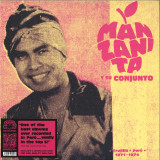
Repressed on red vinyl!
Belgium, not the first place you'd think of when it comes to Latin or Afro funk. Yet one of the greatest records to blend both styles came from the small northern European country, masterminded by Nico Gomez and his Afro Percussion Inc.
Ritual was originally released in 1971 on the Dutch label Omega International (Gomez was born in Holland before moving to Belgium in the late 40s) and is being reissued by Mr Bongo in 2013, bringing its blazing funk grooves to both new ears and those already tuned in to this masterpiece's legacy.
Across its 11 tracks Ritual delivers the kind of production, arrangement and musicianship that rightfully belong in a dictionary next to the definition of professional. Gomez' band was tight and they knew it, showing it off on their covers of Perez Prado's 'Caballo Negro' and 'Lupita' by injecting the originals with a deep funk that blends both Afro and Latin influences. On 'Samba De Una Nota So' and 'El Condor Pasa', another pair of covers, they switch to soulful downtempo with mesmerising ease. The title cut remains one of the album's highlights, a devastating dancefloor groove with horns to match that has aged beautifully and was heavily sampled by Liquid People for 'The Dragon'. 'Pa! Pa! Pa! Pa!' adds touches of rock with fuzzy guitars for one of the album's headier experiences.
Cerca:new latin age
The start of the new "Live At Fabrik Hamburg" series on Jazzline in
cooperation with the legendary venue and NDR Kultur - is this previously
unreleased concert from jazz greats Freddie Hubbard and McCoy Tyner
from 1986
It will be released as a double CD in a three-part digipak and as a triple LP in a
triple gatefold cover that includes detailed Liner notes by Michael Laages. In the
Altonaer Fabrik in 1986, the master trumpeter Freddie Hubbard was a guest in the
trio of one of the most important pianists of contemporary jazz: McCoy Tyner,
whose extremely powerful attack always added percussive power of the most
energetic kind to his virtuoso playing.
McCoy Tyner died in March 2020, the recording from 1986 (he was 58 years old
at the time) show him at the height of the unmistakable jazz expression that
defined him. His piano and the enormous radiance of the Hubbard trumpet (born
in the same year as Tyner in 1938, but died in 2008) are the outstanding
protagonists. But the recording also features bassist Avery Sharpe, born in 1954
and with excellent acoustic and electrical credentials, as well as Louis Hayes, still
today the most indestructible of all modern drummers at well over 80 years of
age. Together they refine the nine titles of this two- hour concert on this truly
remarkable evening of music!
Wewantsounds is delighted to reissue Sylvia Robinson's super rare soul LP released in 1975 on her Vibration label, part of her All-Platinum/Stang/Turbo empire. A few years later, she would bring hip hop to the international stage producing "Rapper's Delight" in 1979 and "The Message" in 1982. "Sweet Stuff" features several Sylvia cult classics including "Private Performance," "Soul Je T'aime", a cover of Serge Gainsbourg's "Je T'aime Moi Non Plus" and the mellow favourite "Sho Nuff Boogie" recorded with The Moments. As bonus tracks, the release features "Sho Nuff Boogie, Part 2" which only came out as the single's b-side at the time and the long version of "Soul Je T'aime", all packaged in the album's original artwork.
Born and raised in New York, Sylvia Robinson began recording at a young age under the name "Little Sylvia" in the early 1950s. She gained exposure when she teamed up with Mickey Baker scoring a hit in 1956 with "Love Is Strange" as Mickey & Sylvia. She went on to record many singles during the late 50s and 60s before setting up her own label, All Platinum Records in 1966 followed by Stang Records and Vibration. Through these labels, she had several hit records in the 70s as a producer including The Moments' "Love On A Two Way Street" and Shirley & Co's "Shame Shame Shame".
Sylvia Robinson continued to record as a solo artist shortening her name as 'Sylvia'. She got a massive hit of her own with "Pillow Talk" in 1973, a song she'd originally penned with Al Green in mind. The song went to nr 3 in the charts and started a string of other hits over the next few years. In 1973 she covered Serge Gainsbourg's 1969 megahit "Je T'aime Moi Non Plus" renaming it here "Soul Je T'aime" and duetting with Fania Records' Latin soul singer Ralfi Pagan.
The following year was also busy for the singer and producer with three singles that went to the R&B chart: the Soul Ballad "Alfredo", the Funky "Private Performance" and "Sho Nuff Boogie," sung with The Moments. They are all featured on the album "Sweet Stuff" which was released in 1975. Interestingly the song "Sweet Stuff" notoriously sampled by J Dilla for "Crushin'" doesn't appear on this album even if "Sho Nuff Boogie" sounds very much like a forerunner of the song with its similar languorous pace and almost identical melody. "Sweet Stuff" is packed with other tasty soul songs including "I Can't Help It", "The Notion" and "Love Is The Only Thing."
Four years later in 1979, Sylvia Robinson would make another genius move with the launch of Sugarhill Records and the Sugarhill Gang's single "Rapper's Delight" but that's another chapter of Sylvia Robinson's life. Wewantsounds is delighted to reissue one of her rarest albums from her best 70s period for the first time in decades and make it available on vinyl.
Following the 70s Peruvian cumbia compilation by Ranil last year, Analog Africa returns to Latin America to highlight the work of one of Perú’s undisputed masters of the electric guitar: Manzanita. This 13th release in the Limited Dance Edition Series includes 14 mostly instrumental compositions of electrifying Peruvian cumbia and guaracha. Manzanita's unique guitar lines rest on confident foundations that shifts gears effortlessly. Limited Edition LP in Gatefold Cover pressed on 180g high quality virgin vinyl
"I was in Lima, hanging out with collector-extraordinaire Victor Zela, who had spent the previous few years pouring his passion for Peruvian Cumbia into the blog „la cumbia de mis viejos“, a trove of incredible music. But after the birth of his first child, his priorities shifted and he decided to part with some of his rarest LPs. I was one of the lucky few given an early chance to examine his treasures, and when I picked up the album Manzaneando com Manzanita, Victor said: “Take it! its one of the best LPs ever recorded in Perú … easily in the top five”. That was all the encouragement I needed … two years later many of the songs from that masterpiece have made it onto Manzanita y su Conjunto, a compilation of electrifying Cumbia sides from Manzanita’s golden era.
Berardo Hernández – better known as Manzanita – first surfaced during the psychedelic Cumbia craze. At the head of the scene were the magnificent Los Destellos, whose leader, Enrique Delgado, was such a six-string wizard that other guitarists found it impossible to escape his shadow. But when Manzanita arrived, his electric criollo style sent shockwaves through Lima’s music scene and posed a serious threat to Delgado’s dominance as king of the Peruvian guitar.
Manzanita had come to Lima from the coastal city of Trujillo, five hundred miles up the coast – a place where Spanish, African and indigenous populations had been living and making music together for centuries – and came of age at a time when the first wave of psychedelic rock from the US and UK was starting to sweep the airwaves. But the sounds of Cream and Hendrix disappeared from the radio just as quickly in 1968 when Juan Velasco seized control of the country in a military coup. The new regime, which favoured local traditions over cultural ‘imports’ from the north, was a blessing in disguise for the Peruvian music scene.
Record labels flourished as new bands, raised on a hybrid diet of electric guitars and Cuban rhythms, rushed in to fill the vacuum created by the lack of imported rock. A new genre, known as Peruvian cumbia, was born and Manzanita quickly became one of its most original voices.
Starting in 1969, Manzanita y su Conjunto released a steady stream of singles that used Cuban guaracha rhythms as the foundation for dazzling electric guitar lines. After countless 45s and several years on the touring circuit, the band signed to Virrey, an important Peruvian label, and recorded two LPs acknowledged as masterpieces among aficionados of tropical music. Most of the songs on Analog Africa’s new compilation Manzanita y su Conjunto are drawn from those legendary sessions of 1973 and 74.
Although he scored a few more hits in the later 70s, his dissatisfaction with the music industry caused him to withdraw from the scene for several years; and when he finally retired for good, the golden age of Peruvian cumbia was a distant memory. But when Manzanita was at the top of his game he had few equals. Victor Zela was right: this is some of the best music ever recorded in Perú."
Transmeridian is the first album from Departure Lounge (ex-Bella Union) in 19 years. It features all four original members plus a guest appearance from legendary REM guitarist, Peter Buck, one of many long-standing admirers of a band that embodied a lost age of reflective, experimental pop music coming to the fore at the turn of the Millennium alongside The Beta Band, Tunng, Boards Of Canada and Gorky’s Zygotic Mynci.
The surprise new album, named after the defunct ‘golden age of aviation’ cargo airline for which singer/guitarist Tim Keegan’s dad was chief pilot, is released on Violette Records (formed by Michael Head (Shack, The Pale Fountains) and Matt Lockett ) on digital and vinyl formats on Fri 26 March 2021.
Originally scooped up by Simon Raymonde’s Bella Union label (labelmates with John Grant’s Czars) following the self-funded release of their debut album Out Of Here (1999), Departure Lounge’s sophomore outing, Too Late To Die Young (2002) was equally acclaimed and was honoured as the first ever Album Of The Week on the emergent BBC 6 Music. The band toured extensively in the UK, Europe and the US, including outings with The Go-Betweens, Morcheeba, Paul Heaton and Robyn Hitchcock, peers whose stylistic contrasts reflect the eclectic nature of Departure Lounge themselves.
Calling a halt in late 2002, citing family and geographical reasons (drummer Lindsay lives in Nashville, where their second album Jetlag Dreams (2001) was recorded), the four members remained firm friends and occasional collaborators, before reuniting in late 2019 for shows at The Green Door Store, Brighton and The Lexington, London, ostensibly to support the digital reissues of their first three cult-classic albums. With no plans other than to make some new music, the next day they set off for Middle Farm Studios, Devon.
Tim Keegan (vocals/guitar), Chris Anderson (lead guitars/keyboards/bass), Lindsay Jamieson(drums/keyboards) and Jake Kyle (bass/guitar/drums) channelled their evident joy at being back together into a complete 13-track album, largely conceived and recorded in just one 24-hour session in the company of studio owner and co-producer, Peter Miles. Ranging from soulful Americana to piano and mellotron-fuelled melancholia via pastoral musings on the nature of post-youth and eerie Spaghetti Western-tinged instrumentals, the next leg on the Departure Lounge journey is a multi-mood expression of pure artistic freedom.
The ‘leak’ of instrumental track Al Aire Libre (remixed by Parisian groovemeister Kid Loco) in October 2020 gave little away as to what fans could expect from a new Departure Lounge record, the track going gracefully everywhere and nowhere on a whistled Latino breeze. First single proper, Mercury In Retrograde, covered in the twinkling lights of a music box Casio CZ101 melody, turned the clock back - this was an old live favourite that never got past the studio door. Unfinished business brought to a happy conclusion, the single returned Keegan’s honest and distinctive lyrical voice back to British music at just the time listeners needed it.
It was an emotional thread, rather than one musical style, which gave the first three Departure Lounge albums their coherence. The songs told the story of the band. Transmeridian has the same sense of deeply connected musical energy. The purring, campfire acoustica of Timber and So Long bear no obvious resemblance to the ethereal, end-of-the-evening, piano-led interlude Paging Marco Polo, whilst the quasi-glam stomp of Mr Friendly would normally have no business sharing space with the strange, spacey Gurnard Pines (named after an abandoned holiday camp on the Isle Of Wight). Yet the journey’s ebb and flow, accelerations and pauses make for compelling, grown-up listening. Australia, showcasing the chiming Rickenbacker 12-string of Athens, GA’s finest guitar slinger, leaves no doubt that Departure Lounge’s pop sensibilities also remain solidly intact.
These four friends from different musical backgrounds came together originally with the stated aim of ‘creating music to soothe the troubled soul’. Citing their love of (and placing on record their debt to) influences including Robert Wyatt, Nick Drake, Talk Talk, Lou Reed, Arvo Pärt and Cocteau Twins, the band’s diversity of taste is reflected in the music they create.
Transmeridian is only the second full-length LP released by Violette Records, formed by Michael Head (Shack, The Pale Fountains) and Matt Lockett as a platform for Head’s work and developing into a respected independent label as well as multi-disciplinary event organiser, drawing in outsiders working in music, literature, art and design. The label continues to host live events whenever possible and recently initiated an ELP (halfway between and EP and an LP) vinyl series, putting out acclaimed releases by The Pistachio Kid and Studio Electrophonique.
Long sought after by collectors, DJs and lovers of hard salsa and boogaloo alike, 'Yo Traigo Boogaloo' is now lovingly reissued in replica form with the original cover art, remastered from the studio tapes, reproducing that magical MAG studio sound for today's aficionados to enjoy like it was 1969 all over again. Alfredo Linares is a globetrotting pianist, composer, bandleader and producer from Peru with a long, prolific career in latin music. His long sought after by DJs and collectors of hard salsa and boogaloo alike, 'Yo Traigo Boogaloo' is now lovingly reissued in replica form with the original cover art, remastered from the studio tapes, reproducing that magical MAG studio sound for today's aficionados to enjoy like it was 1969 all over again. Details: Alfredito "Sabor" Linares is a globetrotting pianist, composer, bandleader and producer from Lima, Peru with a long, prolific career in hot Latin music spanning more than half a century. Though Linares has come to recent international fame through his work with William "Quantic" Holland, he was already quite popular and famous in his adopted countries of Colombia and Venezuela in the 1970s and 80s during the salsa boom. However, his career began in Lima, backing timbalero Ñico Estrada at age 17 in 1961, and Alfredito's first notable recording as a sideman was a few years later on the now legendary 'El Combo de Pepe' album for IEMPSA/Odeon. Subsequently Linares would advance his career by recording two fabulous records under his own capable leadership as Alfredo Linares Y Su Sonora at the end of the decade for the MAG label. These releases capitalized on recent developments in New York Latin music, namely Latin jazz, boogaloo, descarga (jam session) and what would later be marketed as "salsa" with roots in the Cuban guaguancó and guaracha genres. One can hear direct inspiration coming from Joe Cuba, Ricardo Ray, and Eddie Palmieri, especially on the first album, 'El Pito', and yet by the second record, there are plenty of original tunes as well. More importantly there is a 'swing' and assertiveness to the playing (and arrangements) that prove every bit as authentic, tough and danceable as their New York inspirations. As Linares himself recounts, "In that era, we fought against a generation that was half-blind, because the people who understood what we were doing were few. We had to fight hard for our space in Perú, that's where the swing comes from." That special 'swing' also emanated from Linares' ace backing band, which happened to be a talented stable of MAG studio musicians who all understood Cuban and jazz music: percussionists Mario Allison and Coco Lagos, bassist Joey di Roma, Kiko Fuentes and Carlos Muñoz on lead vocals and Melcochita on coro (vocal chorus). According to Linares, the studio band was "open-ended, some musicians came some days, others on other days_Nilo Espinoza on saxophone, Betico Salas and Tito Chicoma on trumpets. Otto de Rojas played piano, and so did Charlie Palomares, who played vibraphone. Another good musician was guitarist Carlos Hayre." Though the recordings were cut "live in the studio" and many were basically composed on the spot, the intrinsic strength and maturity of the performances on 'Yo Traigo Boogaloo' stand the test of time as one of Peru's most important contributions to tropical music across the decades, establishing Alfredito Linares as a master of the idiom and serving as a harbinger for great things to come for him in Colombia and Venezuela. Long sought after by collectors, DJs and lovers of hard salsa and boogaloo alike, 'Yo Traigo Boogaloo' is now lovingly reissued in replica form with the original cover art, remastered from the studio tapes, reproducing that magical MAG studio sound for today's aficionados to enjoy like it was 1969 all over again. Pablo E Yglesias DJ Bongohead of Peace & Rhythm
Scottish trumpeter Malcolm Strachan is a founder member of top UK funk/jazz-funk band The Haggis Horns as well as being one of the busiest session musicians in the UK today. In a professional career spanning 20 years, he's recorded with the likes of Mark Ronson, Amy WineHouse, Corinne Bailey Rae, Jamiroquai, Martha Reeves and The Vandellas, Jesse Glynne, The Craig Charles Fantasy Funk Band, Black Honey, The New Mastersounds and Blue Note saxophone legend Lou Donaldson. Now he's finally releasing his first solo album, aptly titled "About Time", on Haggis Records and he's going back to his original roots... Jazz.
The album is a collection of original compositions, all written and arranged by Malcolm, which are firmly rooted in the classic acoustic modern jazz style typified by the great 60's and 70's recordings on the legendary Blue Note Records label. A nice variation of themes and tempos feature throughout the album. From full-on latin vibes to beautiful ballads, soul jazz grooves to cinematic soundtrack flavours, all woven together by a great group of experienced musicians.
Malcolm's core quartet is himself on trumpet/flugelhorn, fellow Haggis Horns members George Cooper (piano) and Erroll Rollins (drums), plus Courtny Tomas on double bass. Featured guests are Atholl Ransome on tenor sax (The Haggis Horns), Rob Mitchell on baritone sax (Abstract Orchestra) and Danny Barley on Trombone. Strings are courtesy of Richard Curran and the percussionist is one of the finest session players in Europe, Karl Vanden Bossche (Incognito, Robert Palmer, Joss Stone, The Gorillaz, Sade, Blur - He and Malcolm met while touring with Mark Ronson)
Malcolm's love of jazz comes from his parents. Aged 7, his jazz musician father gave him a trumpet. From then on, jazz was his life. His musical education came via music teachers, youth jazz orchestras and jazz summer schools but mostly from his dad's record collection listening to Art Blakey and Dizzy Gillespie records and learning to improvise and solo by ear. At 18, he enrolled at Leeds College of Music and quickly immersed himself in the city's vibrant acid jazz, funk and soul scene and from making his recording debut in 1999 with The New Mastersounds, jazz was his musical passion but took a back seat to funk/soul/pop which were the day job. Until now.
Jazz is back. The wait is over. It really is "About Time" for Malcolm Strachan.
50 years ago, a young Panamanian singer by the name of Ralph Weeks, who a few years prior had cut his teeth in the US music landscape with the group Johnny & The Expressions, self-produced and independently released a record with an absolute monster of a soul ballad called "Something Deep Inside." It was a song that Weeks had come up with on the spot during one of many gigs in the heart of Brooklyn's Prospect Heights, at the time a cultural hub and community for many Panamanians living in the borough. Along with his group, The Telecasters, Weeks often played at a Panamanian-owned club in the neighborhood called 4 Star's (STA4R's) which would independently sponsor the release of the tune on a 7-inch single.
Fast forward to 2019, where a serendipitous meeting between Ralph Weeks and Names You Can Trust turned into a solid formation of musical synchronicity, bonded over a shared belief in musical fusion, a weaving of musical threads that was similarly the foundation of that earlier era in Panama. It's a fusion that has become a constant theme throughout the Names You Can Trust catalog in the last 10 years, connecting the dots from NY, the Caribbean and Latin America. An immediate plan was put into motion: return Weeks to a studio atmosphere that had eluded him in the preceding decades, a vibe and live musical presence that would be reminiscent of his time recording with The Telecasters and The Exciters in Panama.
In the ultimate tribute to Weeks and that foundation, NYCT label mates Combo Lulo unpacked the 50-year old original tune and refashioned it into a timeless rocksteady ballad. It was an opportunity for Weeks to acquaint himself with a new band and a new generation of musical talent. Ultimately, it was an unexpected chance for Weeks to reconnect to the music he wrote one fateful evening in a Brooklyn club. For Combo Lulo, Names You Can Trust, and now the rest of his musical admirers, it's a chance to hear how gracefully Weeks' voice has aged, still silky smooth with those beloved falsetto runs, sweet and rounded like a barrel-aged añejo rum. It's a testament to the timelessness of Weeks' original music, and certainly another reminder of how far and wide even the smallest of musical blips can spread.
Presented as a double-sided bilingual 45 single, both versions of Weeks' classic tune, "Algo Muy Profundo" and "Something Deep Inside," have been formatted in the traditional Jamaican style, skillfully cut live and mixed under the guidance of NYCT and Combo Lulo's talented musicians. It's a tribute to a brilliant record and an unsung architect of Latin American sweet soul, but also a love letter to a very particular NY-Caribbean fusion that theoretically could have happened 50 years ago, depending on the borough you resided in. After all, there was always something deep inside. Comes with NYCT / STA4R'S Company Sleeve & Liner Notes.
Latin orchestra meets Greek bouzouki!!! A true hybrid musical dream, emerging and blending the sound from the migrant communities of 60’s New York. Greek bouzouki wizard Yannis Tatassopoulos injects his electrifying playing into the Latin beats of Roger ‘King’ Mozian. Together these dukes of sound generate a tornado! Non-conventional and ultra refined crossover madness from the Space-Age. Mambo Gitano!
The Jazz Diaries is proud to announce NYC’s favorite underground papi Toribio will be releasing his sophomore EP June 14th 2019. Hot of-the-heels of his Gator Boots 12” for Soul Clap, which received hands in the air support from Seth Troxler, Adam Port, and Soul Clap, Toribio makes you feel at home in the club with his expressive new EP - Capicua!
Growing up playing Dominican percussion instruments from an early age, and being a staple DJ in the NYC circuit for the last 7+ years playing with a who’s who of DJs (Danny Krivit, Rick Wilhite, Louie Vega etc), Toribio expands the palette of what dance music is, fusing his Dominican roots, afro-cuban latin riddims and 90s hip-hop to create a cultural melting pot that signals a change in the guard for NYC House Music.
As Toribio rightly puts…
“Capicua!” is an expression Dominicans yell as they slam the last domino of a certain hand with belligerent righteousness. It means you win on both sides of the table no matter which way you look at it. Top to bottom. This my musical way of saying in a Dominican style... I won on both sides with this record.
This is certainly true of EP opener ‘Get Up’, which hits you on the upside with a nasty dose of p-funk over a bed of live and programmed house riddims. The record showcases Toribio’s penchant for the funky, yet rhythmically inquisitive. It is this trademark sound that permeates the record and continues its way through the acid tinged ‘Make Your Mark’, where long time friend and collaborator Byron the Aquarius steps in on remix duties - providing a lush reprise from the frenetic afro-cuban percussion found in the original mix.
Last but not least, Toribio rounds of the EP with a sensual, take your girl home cover of ‘Household’ by Totally Enormous Extinct Dinosaurs. The tune showcases the broad depth of Toribio’s musical portrait, prominently featuring his voice and guitar, further giving credence to the musicality and diasporic nature of the new Nu York, and further cementing Toribio’s place in it for years to come.
Since 2010, Buyepongo has led a steadily growing Los Angeles underground movement that combines the vast influence of traditional tropical sounds with the streetwise edges of the Latin American diaspora. Much like their name implies (translation: to cause a ruckus), their hybrid style is focused on the celebration, an infectious, energetic vibe that is universally and rhythmically connected. It'll get your feet moving, and much like many of the records from the golden age of cumbia, these two offerings demonstrate an updated and adapted reverence for the roots that is truly distinct to their own unique place and time.
For the group's latest single, that place, the sprawling Latinx scene east of Los Angeles, met head on with the east coast hot pot of Brooklyn. Recorded and produced in collaboration with Names You Can Trust during the band's serendipitous 2017 trip to NYC, this new release takes two of Buyepongo's most fan-favored and party-tested original songs, two that had yet to be recorded, and combines them with the NYCT forty-five ethos: a stripped-down, warm analog recording that perfectly captures Buye's live, bring-the-ruckus style in the room as it happened. "Por La Vida" romps over the A-side, a modern-day classic in the making whose lyrics (how beautiful is life, always full of surprises...) compliment a sunny, easy-going house party vibe, while "Miri" on the flip evolves from a loping, almost reggae groove into a transcendent journey through Caribbean feel-good sounds.
righteous expensive: motohiko hamase's 1986 album "reminiscence" scores a decent prize at online vinyl selling platforms and it is worth each coin!
it's a perfect "refuge from nasty reality", as the glorious british 20jazzfunkgreats blog once said. and it comes from a man that knows his trade: bass play - an artisan on which he also already wrote many theoretical books in his more than four decades long career.
in the 1970's hamase was no stranger to tokyo's vibrant jazz scene. together with jazz pianist tsuyoshi yamamoto and jazz-rock guitar-ist kazumi watanabe he played in the isao suzuki sextet and was part of their classic landmark jazz-funk album "ako's dream" from 1976.
in the following years he also participated on records like mikio masuda's latin-funk-jazz gem "moon stone" or japanese female jazz singer, actress, and essayist minami yasuda's last album "moritato". in the early 1980ees his work shifted from pure jazz to electronic and ambient spheres and he started to compose his own music around his deeply emotional bass play.
from 1985 to 1993, hamase released five solo albums. just recently studio mule dropped his first one, "intaglio", in a new recording that sounds as stunning as the original release from 1986.
now the previously mentioned "reminiscence", his second work for the celebrated defunct japanese new age record label shi zen, follows in a fresh shape on studio mule.
as the original, it features deeply touching moments of sheer pristine perfection and distributes hamase's inner emotional landscape with a bewitching bass performance. a soothingly beauty of an album, that reflects hamase's search for spaces of melancholy.
a rhizome of soundscapes that capture, settle and sound elusive while simultaneously being awe-inspiring. as for "intaglio", the 66-years old artist gathered again some befriended musicians, rented a studio, staged his gear and recorded most of the original "reminis-cence" material new, while keeping the moving musical story arc of the original album alive in a fresh wrapping.
the result is a dazzling, blue mood seething, strongly hypnotic longplayer, full of personality and hybrid ambient electronic jazz spheres that open doors to unheard sound universes and that perfectly work for all those stress-relieved souls that love the disclosure of the mind and seek for a "refuge from nasty reality".
Compilation of the works by MJ Lallo, weird harmonizing mantras layered with drummachine rhythms.. Very psychedelic compositions where she uses her voice to create all kinds of sound(scapes)
.
Take Me With You is a revelatory voyage through the captivating universe of voice artist and poet MJ Lallo. The works on this 2LP compilation were all recorded in her home studio between 1982 and 1997, primarily using drum computer, synth and her own voice processed through a Yamaha SPX 90 digital effects unit. They range from wordless harmonizer mantras and primitive drum computer meditations, to psychedelic latin dance-floor anthems and synth-drenched end-of-the-nighters. Lallo has created her own inimitable galaxy of sound where the human voice, liberated from the constraints of language and abstracted using digital technology, is able to explore the outer realms of human expression, like Joan La Barbara with an Eventide and a new-age sensibility. Although Lallo's flight path is distinctly her own, her journey converges with other travellers as diverse as Jon Hassell, Laraaji, Stereolab, William Aura, Laurie Anderson, Meredith Monk, Gertrude Stein and even Terry Gilliam (whose film Brazil was a big influence on Lallo). Like something beamed in from another planet, Lallo's work is both fascinatingly strange and strangely familiar, and will leave a lasting impression for lightyears to come. Double gatefold LP, remastered DDM pressing.
[E B1 | Midnight in the Sky
"Uplifting boogie grooves to set your spirit free." (Paul Kane / Jordan Valley Records)
When The Unbelievable Two appeared on the scene in 2014, their pure underground, analogue boogie and disco sound mirrored what was going on in the vinyl infected bars and small cellar clubs in their hometown of Hamburg/Germany. "The Unbelievable Two" was inspired by the golden age of the genres, played live with skills and insight. Four years later, boogie and disco are all around us. So it is about time that these pioneers release their second album. Honest and authentic, "Power Plant" recalls late 1970s New York Disco and mid 1908s UK Boogie.
The Unbelievable Two still is Mzuzu and Mucka, who lead us through nine new songs of speedy disco, down low boogie and even some smokin' reggae. Recorded in late 2017 and through the spring of 2018, "Power Plant" tells stories beyond the surface level. "Even though our music is purely instrumental, it doesn't mean we haven't got anything to say," explains Mzuzu, a respected and well-travelled vinyl DJ on the Germany funk/disco scene. "Boogie and disco are a universal language. With the influence of Afro, Latin, Reggae, even European electronic music you do not need a lot of words to tell a story which gets everybody connected. These songs are about our friends, our everyday life, how we life and what we feel."
"Power Plant" is available as a limited edition vinyl LP (300 copies).
Twenty-eight Years Ago, Pissed-off Twelve-year-olds Around The Universe Discovered A New Planet, A Black Planet. Public Enemy's Aggressive, Benihana Beats And Incendiary Lyrics Instilled Fear Among Parents And Teachers Everywhere, Even In The Border Town Of Laredo, Texas, Home Of The Future Founders Of The Latin-funk-soul-breaks Super Group, Brownout. The Band's Sixth Full-length Album (out May 25th) Fear Of A Brown Planet Is A Musical Manifesto Inspired By Public Enemy's Music And Revolutionary Spirit.
Chuck D., The Bomb Squad, Flava Flav And The Rest Of The P.e. Posse Couldn't Possibly Have Expected That Their Golden-era Hip Hop Albums Would Sow The Seeds For Countless Public Enemy Sleeper Cells, One That Would Emerge Nearly Three Decades Later In Austin, Texas. Greg Gonzalez (bass) Remembers A Kid Back In Junior High Hipped Him To The Fact That Public Enemy's bring The Noise' Is Built On James Brown Samples, While A Teenaged Beto Martinez (guitar) Alternated Between Metal And Hip-hop In His Walk-man, And Adrian Quesada (guitar/keys) Remembers Falling In Love With Public Enemy's Sound At An Early Age. when I Got Into Hip Hop, I Was Looking For This Aggressive Outlet . . . And I Didn't Even Understand What They Were Pissed Off About, Because I Was Twelve And Lived In Laredo . . . But I Loved It And I Felt Angry Along With Them.'
Joseph Abajian (fat Beats' Owner) Must Have Sensed The Deep Hip-hop Well Lying Beneath The Versatile Band's Latin-funk Veneer. i Thought Their Sound Would Work Covering Public Enemy Songs,' Abajian Says, And, it Was Good To Know They Were P.e. Fans . . . We Came Up With A Track Listing And They Went To Work.' Despite The Band's Eagerness To Work On New Original Material (an Album Of Original Songs Is Slated For Next Year), They Couldn't Pass Up The Opportunity To Pay Homage To This Iconic And Influential Posse.
Translating Sample-based Music To A Live Band Turned Out To Be More Of A Challenge Than They Anticipated. Adrian Tried To Get Inside The Bomb Squad's (public Enemy's Producers/beat-making Team) Head In Order To Find The Inspiration To Reinterpret P.e.'s Songs: imagine The Bomb Squad Going Back In Time And Getting The J.b.s (james Brown's Funky Backing Band) In The Studio And Setting Up A Couple Analog Synths And Then Playing Those Songs.' While Some Songs Closely Follow The Original Musical Blueprint, Others Use The Source Breakbeats As Jumping-off Points Later Sweetened By Trombonist Mark speedy' Gonzales' Horn Arrangements, Synth Wizardry Courtesy Of Friend-of-the-band Peter Stopschinski, And Dj Trackstar's Turntable Scratches. But Don't Listen Expecting To Hear Paint-by-numbers Recreations Of Classic Public Enemy Jams. our Approach Is Never In The Tribute Sense,' Adrian Explains. we've Always Taken It And Made It Our Own, Whether It's The Brown Sabbath Thing Or This Public Enemy Thing.' Coming Off Numerous Tours As Brown Sabbath And Even A Stint Backing The Late Legend Prince, Brownout Is Arguably The Tightest And Funkiest Band On The Road Today And They're Psyched To Bring This Revolutionary Music To The People. For A Band Without An Overt Political Agenda, They Collectively Couldn't Resist The Opportunity To Play This Music Live, Especially Now. if There's Any Way That We Can Use The Already Political And Protest Nature (of P.e.'s Music), We Would Like To Try,' Beto Says. the Album's Title, Fear Of Brown Planet Is Definitely A Relevant Idea Today And We're Not Afraid To Put It Out There, Because We Want To Speak Out.' By Reinterpreting These Hip Hop Classics In Their Unique Style And Channeling The Spirit Of Public Enemy That First Echoed Around The World And Captured Their Imaginations All Those Years Ago, Brownout Is Doing Exactly That.
Following the recent reissues of Jose Mauro's Obnoxius, Piri's Voces Querem Mate and Victor Assis Brasil's Toca Antonio Carlos Jobim, Far Out Recordings presents a second album from Victor Assis Brasil from the treasure trove of the Quartin Records catalogue, Esperanto. Over the course of the 1960s, Roberto Quartin released more than 20 albums in Brazil on his label Forma, by artists including the likes of Eumir Deodato, Quarteto Em Cy, Baden Powell and Vinicius De Moraës. Selling the rights of Forma to Polygram in 1969, Quartin struck out for pastures new at the dawn of the 1970s with the launch of his self-titled label. Significant works and high-water marks for Brazilian music overall followed in that decade's first year. These singular gems in Brazilian music, difficult to categorise yet compellingly beautiful, have for too long gone unheard.Gifted his first saxophone by his aunt at the age of fourteen, only four years later the inherently gifted and determined young musician Victor Assis Brasil recorded his debut album, with a second to follow only a year later. The prodigious young carioca was subsequently granted a place to study at Berklee College of Music, where he played alongside the likes of Dizzy Gillespie, Clark Terry, Chick Corea and Ron Carter. It was also during this period he recorded Esperanto and Toca Antonio Carlos Jobim with Roberto Quartin, upon returning to Brazil in the summer of 1970.Recorded in the same sessions as the Toca Antonio Carlos Jobim album, Esperanto consists of five deep jazz cuts: original compositions except for a heavy-swinging latin-jazz cover of Jimmy Heath's 'Ginger Bread Boy', alongside more moments of wild frenetic jazz, like 'Quarenta Graus A Sombra', amongst more melancholic, but no less captivating compositions like 'Marilia' and 'Ao Amigo Quartin'. Esperanto's influences span both American continents, finding a meeting point for Latin jazz and North American post-bop, with Roberto Quartin's perfectionist approach to sound elevating the already incandescent music to divine new heights. The band consists of some mercurial greats of Brazilian music: Dom Salvador (bass), Edison Machado (drums), Helio Delmiro (guitar) and Edson Lobo (Bass).Victor Assis Brasil passed away aged just thirty-five, due to a rare circulatory disease, but by this point his status was already cemented as one of the most talented musicians in Brazil's history.
Belgium, not the first place you'd think of when it comes to Latin or Afro funk. Yet one of the greatest records to blend both styles came from the small northern European country, masterminded by Nico Gomez and his Afro Percussion Inc.
Ritual was originally released in 1971 on the Dutch label Omega International (Gomez was born in Holland before moving to Belgium in the late 40s) and is being reissued by Mr Bongo in 2013, bringing its blazing funk grooves to both new ears and those already tuned in to this masterpiece's legacy.
Across its 11 tracks Ritual delivers the kind of production, arrangement and musicianship that rightfully belong in a dictionary next to the definition of professional. Gomez' band was tight and they knew it, showing it off on their covers of Perez Prado's 'Caballo Negro' and 'Lupita' by injecting the originals with a deep funk that blends both Afro and Latin influences. On 'Samba De Una Nota So' and 'El Condor Pasa', another pair of covers, they switch to soulful downtempo with mesmerising ease. The title cut remains one of the album's highlights, a devastating dancefloor groove with horns to match that has aged beautifully and was heavily sampled by Liquid People for 'The Dragon'. 'Pa! Pa! Pa! Pa!' adds touches of rock with fuzzy guitars for one of the album's headier experiences.